Kannada literature during this period consisted of writings relating to the socio-religious developments of the Veerashaiva and Vaishnava faiths, and to a lesser extent to that of Jainism. Writing on secular topics was popular throughout this period. Authorship of these writings was not limited to poets and scholars alone. Significant literary contributions were made by members of the royal family, their ministers, army commanders of rank, nobility and the various subordinate rulers. In addition, a vast body of devotional folk literature was written by musical bards, mystics and saint-poets, influencing society in the empire. Writers of this period popularised use of the native metres: shatpadi (six-line verse), sangatya (compositions meant to be sung to the accompaniment of a musical instrument), and tripadi (three-line verse). (Full article...)
Image 2
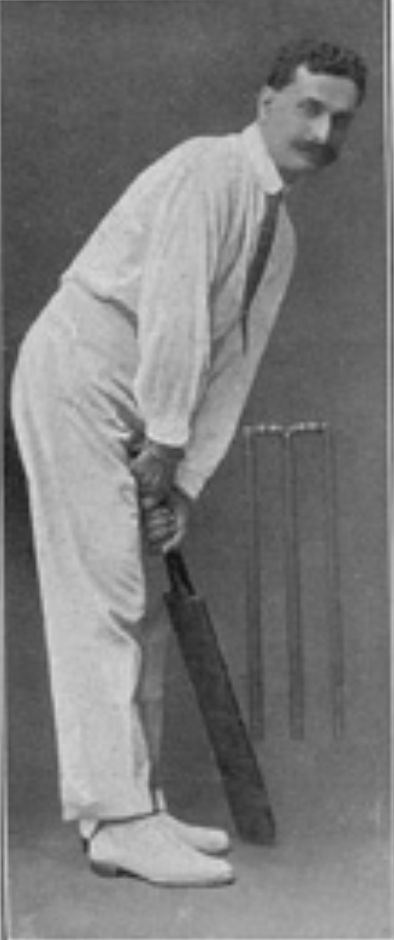
Robert Montagu Poore, CIE, DSO (20 March 1866 – 14 July 1938) was a cricketer and British army officer who, whilst serving in South Africa in 1896, played in three Tests for the South African cricket team. Much of his cricket was played when he held the rank of major, but he eventually became a brigadier-general. "Of all the people in the history of the game," wrote Leo Cooper in an introduction to A. A. Thomson's Odd Men In, "he seems to stand for the Eccentric Ideal." (Full article...)
Image 3
Keechaka Vadham (transl. The Extermination of Keechaka) is an Indian silent film produced, directed, filmed and edited by R. Nataraja Mudaliar. The first film to have been made in South India, it was shot in five weeks at Nataraja Mudaliar's production house, India Film Company. As the members of the cast were Tamils, Keechaka Vadham is considered to be the first Tamil film. No print of it is known to have survived, making it a lost film.
The screenplay, written by C. Rangavadivelu, is based on an episode from the Virata Parva segment of the Hindu epicMahabharata, focusing on Keechaka's attempts to woo Draupadi. The film stars Raju Mudaliar and Jeevarathnam as the central characters. (Full article...)
Image 4
Territory of the Western Chalukyas (c. 1100 CE) in India (modern boundaries shown) and the empire's capital, Kalyani, in the modern Bidar district, Karnataka state, India A large body of Western Chalukya literature in the Kannada language was produced during the reign of the Western Chalukya Empire (973–1200 CE) in what is now southern India. This dynasty, which ruled most of the western Deccan in South India, is sometimes called the Kalyani Chalukya dynasty after its royal capital at Kalyani (now Basavakalyan), and sometimes called the Later Chalukya dynasty for its theoretical relationship to the 6th-century Chalukya dynasty of Badami. For a brief period (1162–1183), the Kalachuris of Kalyani, a dynasty of kings who had earlier migrated to the Karnataka region from central India and served as vassals for several generations, exploited the growing weakness of their overlords and annexed the Kalyani. Around 1183, the last Chalukya scion, Someshvara IV, overthrew the Kalachuris to regain control of the royal city. But his efforts were in vain, as other prominent Chalukya vassals in the Deccan, the Hoysalas, the Kakatiyas and the Seunas destroyed the remnants of the Chalukya power.
Kannada literature from this period is usually categorised into the linguistic phase called Old-Kannada. It constituted the bulk of the Chalukya court's textual production and pertained mostly to writings relating to the socio-religious development of the Jain faith. The earliest well-known writers belonging to the Shaiva faith are also from this period. Under the patronage of Kalachuri King Bijjala II, whose prime minister was the well-known Kannada poet and social reformerBasavanna, a native form of poetic literature called Vachana literature (lit "utterance", "saying" or "sentence") proliferated. The beginnings of the Vachana poetic tradition in the Kannada-speaking region trace back to the early 11th century. Kannada literature written in the champumetre, composed of prose and verse, was popularised by the Chalukyan court poets. However, with the advent of the Veerashaiva (lit, "brave devotees of the god Shiva") religious movement in the mid-12th century, poets favoured the native tripadi (three-line verse composed of eleven ganas or prosodic units), hadugabba (song-poem) and free verse metres for their poems. (Full article...)
Image 5
Monier Williams, elected as the second Boden Professor of Sanskrit in 1860; this photograph was taken by Lewis Carroll. The election in 1860 for the position of Boden Professor of Sanskrit at the University of Oxford was a competition between two candidates offering different approaches to Sanskrit scholarship. One was Monier Williams, an Oxford-educated Englishman who had spent 14 years teaching Sanskrit to those preparing to work in British India for the East India Company. The other, Max Müller, was a German-born lecturer at Oxford specialising in comparative philology, the science of language. He had spent many years working on an edition of the Rig Veda (an ancient collection of Vedic Sanskrit hymns) and had gained an international reputation for his scholarship. Williams, in contrast, worked on later material and had little time for the "continental" school of Sanskrit scholarship that Müller exemplified. Williams regarded the study of Sanskrit as a means to an end, namely the conversion of India to Christianity. In Müller's opinion, his own work, while it would assist missionaries, was also valuable as an end in itself.
The election came at a time of public debate about Britain's role in India in the wake of the Indian Rebellion of 1857. Opinions were divided on whether greater efforts should be made to convert India or whether to remain sensitive to local culture and traditions. Both men battled for the votes of the electorate (the Convocation of the university, consisting of over 3,700 graduates) through manifestos and newspaper correspondence. Williams laid great stress in his campaign on the intention of the original founder of the chair, that the holder should assist in converting India through dissemination of the Christian scriptures. Müller's view was that his work on the Rig Veda was of great value for missionary work, and published testimonials accordingly. He also wanted to teach wider subjects such as Indian history and literature to assist missionaries, scholars, and civil servants – a proposal that Williams criticised as not in accordance with the original benefactor's wishes. The rival campaigns took out newspaper advertisements and circulated manifestos, and different newspapers backed each man. Although generally regarded as superior to Williams in scholarship, Müller had the double disadvantage (in the eyes of some) of being German and having liberal Christian views. Some of the newspaper pronouncements in favour of Williams were based on a claimed national interest of having an Englishman as Boden professor to assist with the work of governing and converting India. (Full article...)
In Tests, Sehwag has scored centuries against all the Test-cricket playing nations except Bangladesh and Zimbabwe, and is fifth on the list of leading Test century makers for India. In 2001, he became the eleventh Indian player to score a century on Test debut, with 105 runs against South Africa. His centuries have been scored at fourteen cricket grounds, eight of which were outside India. He has made six scores of 200 runs or more, of which a record three have come against Pakistan. One such innings, the 254 in Lahore, had him involved in a 410-run partnership with Rahul Dravid, which came within 3 runs of breaking the record for the highest first-wicket partnership in Tests, set by Pankaj Roy and Vinoo Mankad. The innings took only 247 balls and was the highest score at faster than a run a ball. Sehwag is the first Indian to score a triple century (300 or more runs), and has done so twice—309 against Pakistan in Multan in 2004 and 319 against South Africa in Chennai in 2008. The latter is the fastest triple century in Test cricket, the 300 coming up off just 278 balls, and is also the highest score with a strike rate over 100. It was also rated as one of the top 10 Test innings of all time by the ICC rankings, and received special mention along with his 201* in Galle, in which he carried his bat as he was named the Wisden Leading Cricketer in the World in 2008. He is one of the only four batsmen to score two triple centuries, alongside Sir Donald Bradman, Brian Lara and Chris Gayle. He scored 12 centuries that have been converted to scores of 150 or greater, a record for the most consecutive hundreds of over 150. He has been dismissed five times in the nineties. (Full article...)
Image 2
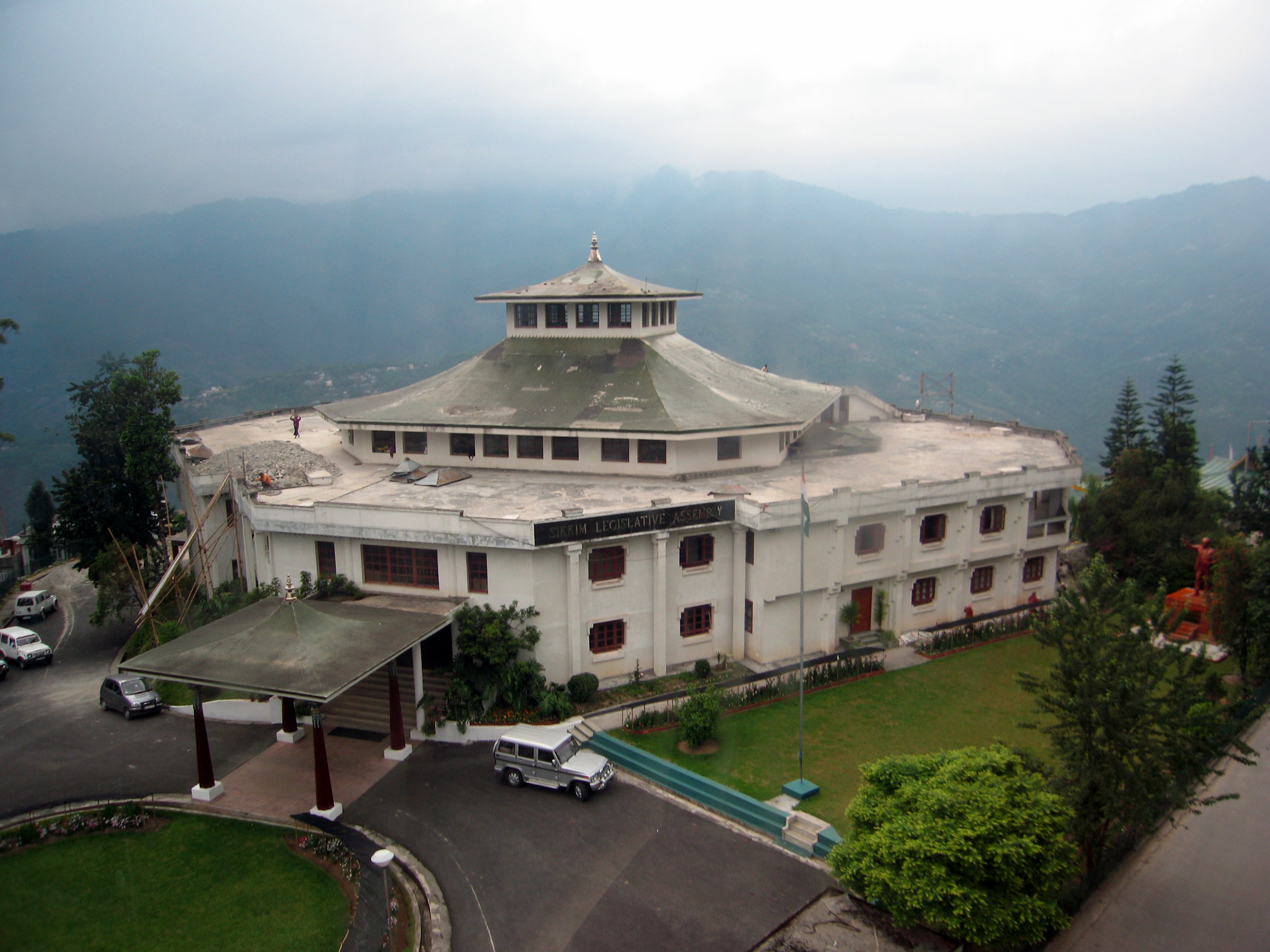
The Sikkim Legislative Assembly is the unicameral legislature of the state of Sikkim, in Northeast India. The seat of the Legislative Assembly is at Gangtok, the capital of the state. The assembly sits for a term of five years, unless it is dissolved earlier. Sikkim is the second-smallest state in India, covering 7,096 km2 (2,740 sq mi); which accounts for 0.2 per cent of the total area of India. The current population of Sikkim is 6.32 lakhs (630,000), making it the least populous state in India. Established in 1975, the Sikkim Legislative Assembly consists of 32 members elected directly from single-seat constituencies using the first-past-the-post system.
Since the independence of India, the Scheduled Tribes (ST) and the Scheduled Castes (SC) and have been given reservation status, guaranteeing political representation, and the Constitution lays down the general principles of positive discrimination for SCs and STs. In Sikkim, the Scheduled Tribes primarily include the Bhutia, Lepcha, Limboo and Tamang communities. Twelve constituencies are reserved for the Scheduled Tribes. Among these, reservations are granted only to members of the Bhutia-Lepcha (BL) community. Despite being recognized as Scheduled Tribes in 2002, no seats have been reserved for the Limboo and Tamang communities in the Sikkim Legislative Assembly. Two constituencies (West Pendam and Salghari–Zoom) are reserved for people of the Scheduled Castes (SC). One constituency (Sangha) is reserved for registered Buddhist monks and nuns from the state's monasteries. (Full article...)
Shetty had a string of releases in 2010. She portrayed a prostitute in Krish's Vedam, which won her the Filmfare Award for Best Telugu Actress. Despite critical acclaim, the film failed at the box office. None of her other releases in 2010 succeeded commercially, except for her sole Tamil release of the year, the masala Singam. The following year, Anushka had two releases, both in Tamil. She reprised her Vedam role in its remake Vaanam, then appeared as an advocate in the A. L. Vijay-directed Deiva Thirumagal, a loose adaptation of the American film I Am Sam (2001). The following year, she also had two releases: Thaandavam in Tamil, and Damarukam in Telugu. Her first release in 2013 was Suraj's Tamil masala Alex Pandian, a critical and commercial failure. This was followed by Mirchi in Telugu, Singam II (where she reprised her role from Singam), and Selvaraghavan's Tamil romantic fantasyIrandaam Ulagam where she played three distinct roles. Her sole release of 2014 was K. S. Ravikumar's Lingaa. (Full article...)
Image 4
The Padma Bhushan is the third-highest civilian award of the Republic of India. Instituted on 2January 1954, the award is given for "distinguished service of a high order", without distinction of race, occupation, position, or sex. The recipients receive a Sanad, a certificate signed by the President of India and a circular-shaped medallion with no monetary association. The recipients are announced every year on Republic Day (26January) and registered in The Gazette of India—a publication used for official government notices and released weekly by the Department of Publication, under the Ministry of Urban Development. The conferral of the award is not considered official without its publication in the Gazette. The name of a recipient, whose award has been revoked or restored, both of which require the authority of the President, is archived and they are required to surrender their medal when their name is struck from the register. As of 2019[update], none of the conferments of Padma Bhushan during the 2010s have been revoked or restored. The recommendations are received from all the state and the union territory governments, as well as from Ministries of the Government of India, the Bharat Ratna and the Padma Vibhushan awardees, the Institutes of Excellence, the Ministers, the Chief Ministers and the Governors of State, and the Members of Parliament including private individuals.
When instituted in 1954, the Padma Bhushan was classified as "Dusra Varg" (Class II) under the three-tier Padma Vibhushan awards, which were preceded by the Bharat Ratna in hierarchy. On 15January 1955, the Padma Vibhushan was reclassified into three different awards as the Padma Vibhushan, the Padma Bhushan and the Padma Shri. The criteria included "distinguished service of a high order in any field including service rendered by Government servants", but excluded those working with the public sector undertakings with the exception of doctors and scientists. The 1954 statutes did not allow posthumous awards; this was subsequently modified in the January 1955 statute. The design was also changed to the form that is currently in use; it portrays a circular-shaped toned bronze medallion 1+3⁄4 inches (44 mm) in diameter and 1⁄8 inch (3.2 mm) thick. The centrally placed pattern made of outer lines of a square of 1+3⁄16 inches (30 mm) side is embossed with a knob carved within each of the outer angles of the pattern. A raised circular space of diameter 1+1⁄16 inches (27 mm) is placed at the centre of the decoration. A centrally located lotus flower is embossed on the obverse side of the medal and the text "Padma" is placed above and the text "Bhushan" is placed below the lotus written in Devanagari script. The State Emblem of India is displayed in the centre of the reverse side, together with the national motto of India, "Satyameva Jayate" (Truth alone triumphs) in Devanagari script, which is inscribed on the lower edge. The rim, the edges and all embossing on either side is of standard gold with the text "Padma Bhushan" of gold gilt. The medal is suspended by a pink riband 1+1⁄4 inches (32 mm) in width with a broad white stripe in the middle. It is ranked fifth in the order of precedence of wearing of medals and decorations of the Indian civilian and military awards. (Full article...)
Image 5
Shetty on the set of Nach Baliye 5 as judge in 2018 Shilpa Shetty is an Indian actress, businesswoman and former model. Known primarily for her work in Hindi films, she has also appeared in Telugu, Kannada and Tamil films. Shetty made her acting debut opposite Shah Rukh Khan in the 1993 thriller Baazigar. Shetty's performance earned her two Filmfare Awards nominations for Lux New Face of the Year and Best Supporting Actress. She subsequently earned wide recognition with dual roles in the 1994 action-comedy Main Khiladi Tu Anari. After initial success, Shetty's films fared poorly at the box office for the next five years. Films Shetty starred in including action drama Aag, romantic drama Aao Pyaar Karen, comedy Haathkadi and Chhote Sarkar proved to be financially unsuccessful. However, Shetty received Best Supporting Actress at the Zee Gold Bollywood Awards for romantic drama Pardesi Babu.
The 2000 romantic drama Dhadkan marked a turning point in her career, earning her several nominations in the Best Actress category at various award ceremonies. Shetty rose to prominence by featuring as the lead female in top-grossing films such as family drama Apne, police drama Garv: Pride and Honour and musical drama Life in a... Metro. Her comic performance as an eccentric fisherwoman in 2002 action-drama release Rishtey earned her a nomination for the Filmfare Best Supporting Actress Award. Shetty became a global figure after winning the 2007 British reality television series Celebrity Big Brother, after comments made by other contestants about Shetty fell afoul of Ofcom rules and caused an international controversy over racism. (Full article...)
Image 6
Aamir Khan is an Indian actor, filmmaker, and television personality. Khan first appeared on screen at the age of eight in a minor role in his uncle Nasir Hussain's film Yaadon Ki Baaraat (1973). In 1983, he acted in and worked as an assistant director on Paranoia, a short film directed by Aditya Bhattacharya, following which he assisted Hussain on two of his directorial ventures—Manzil Manzil (1984) and Zabardast (1985). As an adult, Khan's first acting project was a brief role in the 1984 experimental social drama Holi.
Enthiran (transl. Robot) is a 2010 Indian Tamil-languagescience fiction film directed by S. Shankar and produced by Kalanithi Maran. Shankar wrote the screenplay and co-wrote the dialogues with Sujatha and Madhan Karky. The film stars Rajinikanth and Aishwarya Rai with Danny Denzongpa, Santhanam, and Karunas playing supporting roles. The musical score was composed by A. R. Rahman while the cinematography, visual effects, editing, and art direction were handled by R. Rathnavelu, V. Srinivas Mohan, Anthony, and Sabu Cyril respectively. The film's story revolves around a scientist's struggle to control his creation, an android robot whose software is upgraded to give it the ability to comprehend and generate human emotions. The plan backfires when the robot falls in love with the scientist's fiancée and is further manipulated by a rival scientist to bring destruction to all who stand in its way. The film was dubbed into Hindi as Robot.
Produced on an estimated budget of ₹1.32 billion, Enthiran was released on 1 October 2010 and yielded a revenue of ₹1.79 billion according to a report by the Sun TV Network. The film garnered awards and nominations in several categories, with particular praise for its cinematography, visual effects, art direction, costume design, and Rajinikanth's performance. The film has won 25 awards from 38 nominations. (Full article...)
Image 8
Shahid Kapoor and Priyanka Chopra received several nominations for their respective performances in Kaminey. Kaminey (English: Rascal) is a 2009 Indian action thriller film directed by Vishal Bhardwaj and produced by Ronnie Screwvala. Shahid Kapoor, Priyanka Chopra, and Amol Gupte star in the lead roles. The film's screenplay was written by Bhardwaj, Abhishek Chaubey, Sabrina Dhawan, and Supratik Sen. Bhardwaj also composed the soundtrack of the film, with lyrics written by Gulzar. Kaminey was edited by A. Sreekar Prasad, and Meghna Manchanda Sen, and the cinematography was provided by Tassaduq Hussain. Set against the backdrop of the Mumbai underworld, the film focuses on the rivalry between identical twin brothers both played by Kapoor, one with a lisp and the other with a stutter, over the course of a single day.
Made on a budget of ₹350 million (US$4.9 million), Kaminey released on 14 August 2009 to critical acclaim and was a commercial success, grossing over ₹710 million (US$10 million). The film's soundtrack was also a critical and commercial success, with the song "Dhan Te Nan" topping the charts. Over the years, Kaminey achieved cult status. The film garnered awards and nominations in several categories, with praise for its direction, performance of the cast, screenplay, musical score, cinematography, editing and sound design. (Full article...)
Districts of West Bengal The West Bengal is an Indian state located in eastern portion of the country. As of year 2025, the state is divided into 23 districts and 5 administrative divisions.
Kaif at the 2006 IIFA Awards Katrina Kaif (born 16 July 1983) is a British actress who predominantly appears in Hindi films. She made her film debut in 2003 with the drama Boom, a box office bomb. She then played the titular princess in the Telugu film Malliswari (2004). Kaif had her first success in Bollywood when she appeared opposite Salman Khan in David Dhawan's romantic comedy Maine Pyaar Kyun Kiya? (2005). Her another film that year—Ram Gopal Varma's political thriller Sarkar—was also financially successful at the box office. The musical romance Humko Deewana Kar Gaye (2006) saw Kaif pair opposite Akshay Kumar for the first of many films, though the film was a financial failure.
Beginning with Namastey London, the year 2007 marked a turning point in her career when all four releases proved to be successful at the box-office. Among these were two of the highest grossing productions of the year — the comedies Partner and Welcome. In 2008, Kaif's first two releases of that year—the action thriller Race and the action comedy Singh Is Kinng—emerged as hugely successful and among the highest-grossing Bollywood films of the year. However, her final release of the year—the musical comedy Yuvvraaj—was a major box-office failure. In 2009, Kaif received a nomination for the Filmfare Award for Best Actress for her performance in Kabir Khan's terrorism drama New York. Later that year, she starred opposite Ranbir Kapoor in the comedy Ajab Prem Ki Ghazab Kahani. In 2010, Kaif portrayed the role of a politician in Prakash Jha's political thriller Raajneeti and an aspiring actress in Tees Maar Khan. While the former was a box-office hit, the latter was a critical and commercial failure. (Full article...)
Image 12
Khan in 2015 Irrfan Khan (7 January 1967– 29 April 2020) was an Indian actor who worked in Indian and British-American films. His on-screen debut was a minor role in Mira Nair's Salaam Bombay! in 1988. He followed this with appearances in a variety of television shows in the late 1980s to 1990s including playing ʽAbd al-Qadir Badayuni in Bharat Ek Khoj (1988), Makhdoom Mohiuddin in Kahkashan (1991), Vladimir Lenin in Lal Ghas Per Neele Ghodey (1992), a dual role in Chandrakanta (1994), and Valmiki in Jai Hanuman (1997). Khan found his television work unfulfilling and considered quitting acting.
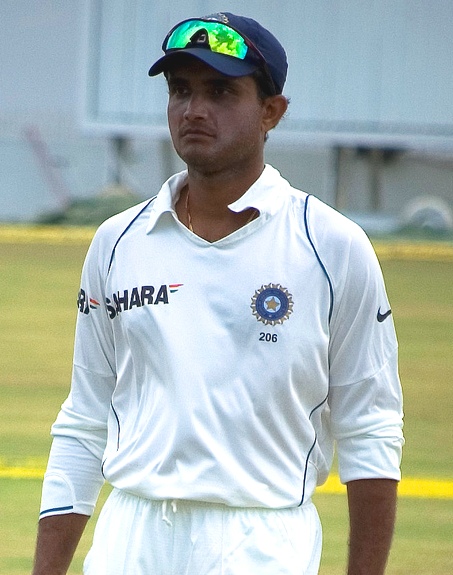
Ganguly scored a century on Test debut, against England in Lord's in June 1996. He became the 10th Indian player to perform the feat, and the third player to score a century on debut at the ground. In the next match at Trent Bridge, he made 136 and became the third batsman to make a century in each of his first two innings. He is eighth in the list of leading Test century makers for India. His highest score of 239—his only double century—was made against Pakistan in 2007 at the M. Chinnaswamy Stadium, Bangalore. He made centuries against all Test-cricket playing nations except South Africa and West Indies. His centuries have been scored in fourteen cricket grounds, including eight outside India. He ended up in the nineties on four occasions—including two scores of 99. (Full article...)
Image 14
Haasan in 2014
Shruti Haasan is an Indian actress and singer who works in Telugu, Tamil and Hindi films. She started her career as a playback singer at the age of six in the 1992 Tamil film Thevar Magan. She had a brief role in her father, Kamal Haasan's Tamil-Hindi directorial Hey Ram (2000) as a child artist. Haasan's first major appearance was in the Hindi film Luck (2009), in which she played a dual role of a woman avenging her twin sister's death. She played the female lead in the films Anaganaga O Dheerudu and 7 Aum Arivu; both were released in 2011 and together earned her the Best Female Debut – South at the 59th Filmfare Awards South ceremony.
The Pampa Award (or Pampa Prashasti) is a literary award in the Indian state of Karnataka. The award was established in 1987 by the government of Karnataka. It is the highest literary honor conferred by the Department of Kannada and Culture, Government of Karnataka State, and recognises works written in the Kannada language (1 of the 22 official languages of India).
The award is named after the first Kannada poet Adikavi Pampa. The award originally comprised a cash prize of ₹1 lakh (US$1,400), a shawl, a citation and a memento. The cash prize was increased to ₹3 lakh (US$4,200) in 2008. Prior to 1996, the awards were given for a best single work by a Kannada writer. Since then, the award has been given to writers for their lifetime contribution to the Kannada literature. The Pampa Prashasti is presented by the Chief Minister, during the Kadambotsava, a cultural festival held annually in Pampa's hometown of Banavasi in Uttara Kannada district. (Full article...)
Aadukalam (transl. Arena) is a 2011 Indian Tamil-language drama film written and directed by Vetrimaaran and produced by S. Kathiresan. Vetrimaaran co-wrote the dialogues with Vikram Sugumaran. The film stars Dhanush and Taapsee Pannu with Kishore, V. I. S. Jayapalan, Naren, and Murugadoss playing supporting roles. The musical score was composed by G. V. Prakash Kumar while the cinematography and editing were respectively handled by Velraj and Kishore Te. The film's story revolves around Karuppu who is the understudy of an experienced cockfighter, Pettaikaran. When Karuppu wins in a cockfight against Pettaikaran's rival Rathnasamy, Pettaikaran, who is initially happy, becomes jealous of Karuppu's newfound popularity and plots his downfall.
Produced on a budget of ₹150-200 million, Aadukalam was released on 14 January 2011 and grossed ₹300 million according to a February 2011 report by The Economic Times. The film garnered awards and nominations in several categories, with particular praise for its direction, screenplay, Dhanush's performance, music, cinematography, and editing. The film has won 33 awards from 52 nominations. (Full article...)
The president is elected by the Electoral College composed of elected members of the parliament houses, the Rajya Sabha and the Lok Sabha, and also members of the Vidhan Sabha, the state legislative assemblies. Presidents may remain in office for a tenure of five years, as stated by article 56, part V, of the Constitution of India. In the case where a president's term of office is terminated early or during the absence of the president, the vice president assumes office. By article 70 of part V, the parliament may decide how to discharge the functions of the president where this is not possible, or in any other unexpected contingency. (Full article...)
Image 19
The Padma Bhushan is the third-highest civilian award of the Republic of India. Instituted on 2January 1954, the award is given for "distinguished service of a high order", without distinction of race, occupation, position, or sex. The recipients receive a Sanad, a certificate signed by the President of India and a circular-shaped medallion with no monetary association. The recipients are announced every year on Republic Day (26January) and registered in The Gazette of India, a publication used for official government notices and released weekly by the Department of Publication, under the Ministry of Urban Development. The conferral of the award is not considered official without its publication in the Gazette. The names of recipients whose awards have been revoked or restored, both of which require the authority of the President, are archived, and recipients who are struck from the register are required to surrender their medals; none of the conferments of Padma Bhushan during 1990–1999 have been revoked or restored. The recommendations are received from all the state and the union territory governments, as well as from Ministries of the Government of India, the Bharat Ratna and the Padma Vibhushan awardees, the Institutes of Excellence, the Ministers, the Chief Ministers and the Governors of State, and the Members of Parliament including private individuals.
When instituted in 1954, the Padma Bhushan was classified as "Dusra Varg" (Class II) under the three-tier Padma Vibhushan awards, which were preceded by the Bharat Ratna in hierarchy. On 15January 1955, the Padma Vibhushan was reclassified into three different awards as the Padma Vibhushan, the Padma Bhushan and the Padma Shri. The criteria included "distinguished service of a high order in any field including service rendered by Government servants", but excluded those working with the public sector undertakings with the exception of doctors and scientists. The 1954 statutes did not allow posthumous awards; this was subsequently modified in the January 1955 statute. The design was also changed to the form that is currently in use; it portrays a circular-shaped toned bronze medallion 1+3⁄4 inches (44 mm) in diameter and 1⁄8 inch (3.2 mm) thick. The centrally placed pattern made of outer lines of a square of 1+3⁄16 inches (30 mm) side is embossed with a knob carved within each of the outer angles of the pattern. A raised circular space of diameter 1+1⁄16 inches (27 mm) is placed at the centre of the decoration. A centrally located lotus flower is embossed on the obverse side of the medal and the text "Padma" is placed above and the text "Bhushan" is placed below the lotus written in Devanagari script. The State Emblem of India is displayed in the centre of the reverse side, together with the national motto of India, "Satyameva Jayate" (Truth alone triumphs) in Devanagari script, which is inscribed on the lower edge. The rim, the edges and all embossing on either side is of standard gold with the text "Padma Bhushan" of gold gilt. The medal is suspended by a pink riband 1+1⁄4 inches (32 mm) in width with a broad white stripe in the middle. It is ranked fifth in the order of precedence of wearing of medals and decorations of the Indian civilian and military awards. (Full article...)
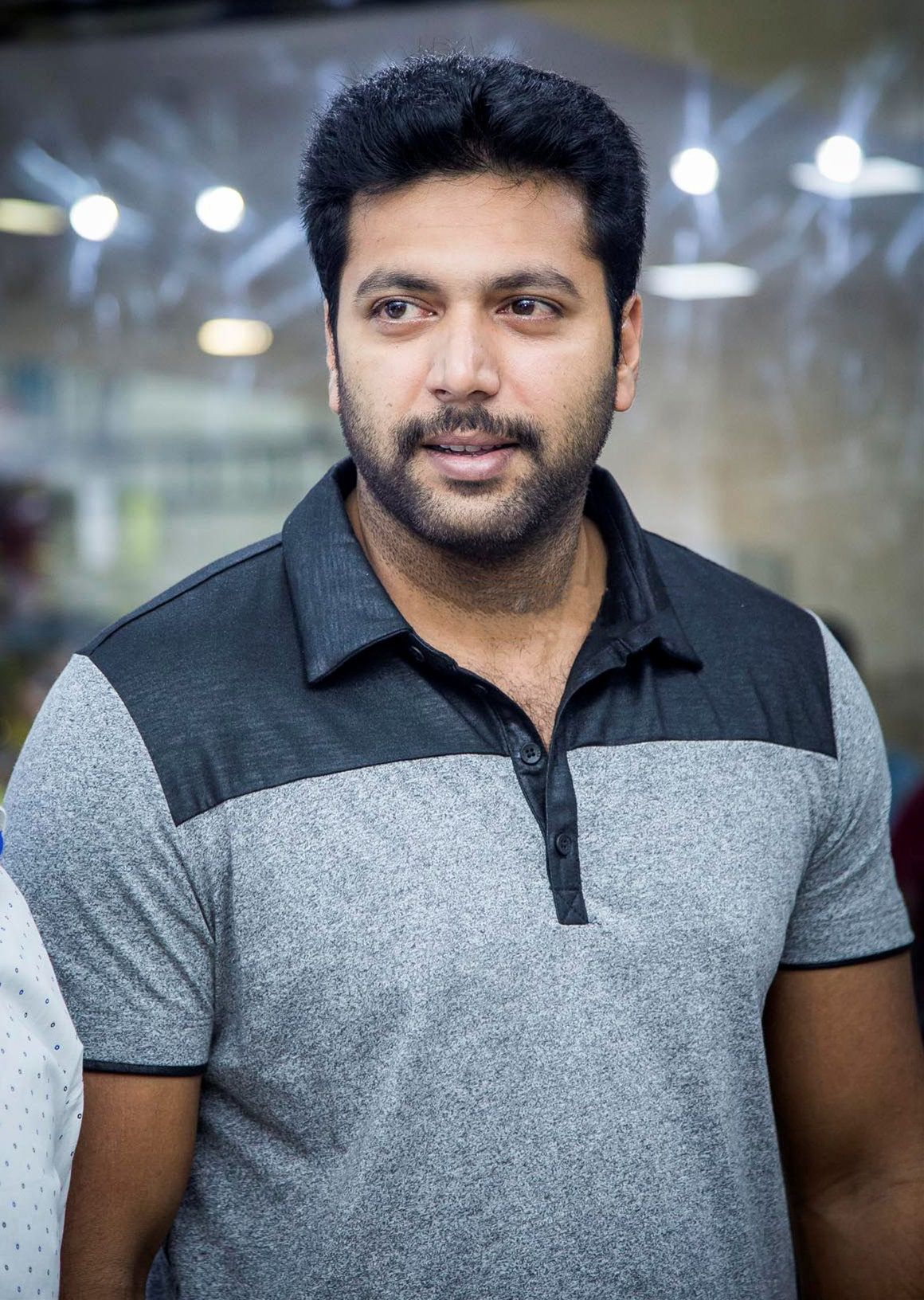
Thani Oruvan is a 2015 Indian Tamil-language action thriller film directed by Mohan Raja, who also co-wrote the screenplay and dialogues with the duo Subha. The film features Jayam Ravi, Arvind Swami and Nayanthara in the lead roles. Thambi Ramaiah, Ganesh Venkatraman, Mugdha Godse and Nassar play supporting roles. The film's story focuses on Mithran (Ravi), an IPS officer, who learns of the plans of scientist and businessman Siddharth Abhimanyu (Swami) to sabotage a deal to make generic medicines available at low cost for poor people. Siddharth succeeds in his plan and begins indulging in a game of cat and mouse with Mithran. The rest of the story revolves around how Mithran overcomes the obstacles set by Siddharth. Produced by Kalpathi S. Aghoram, Kalpathi S. Ganesh and Kalpathi S. Suresh under their company AGS Entertainment, the film's soundtrack and score were composed by Hiphop Tamizha. Ramji and Gopi Krishna handled the cinematography and editing respectively.
Made on a budget of ₹200 million, Thani Oruvan was released on 28 August 2015 and received positive reviews. It was commercially successful, grossing ₹1.05 billion worldwide. The film won 21 awards from 37 nominations; its direction, story, screenplay, performances of the cast members and music have received the most attention from award groups. (Full article...)
Dharma Productions' first release came in 1980 with the Raj Khosla–directed Dostana, starring Amitabh Bachchan, Shatrughan Sinha and Zeenat Aman, which was a commercial success. However, their subsequent releases, Duniya (1984) and Muqaddar Ka Faisla (1987) performed poorly at the box office. Their first release of the 1990s, the Bachchan-starring thriller Agneepath (1990) garnered critical acclaim but was a commercial failure. The company's next releases were the thriller Gumrah (1993) and the comedy Duplicate (1998), both directed by Mahesh Bhatt. In 1998, Yash Johar's son, Karan Johar made his directorial debut with the romantic drama Kuch Kuch Hota Hai, starring Shah Rukh Khan, Kajol, Rani Mukerji and Salman Khan. The film was the highest-grossing Bollywood film of 1998, and established Dharma Productions as a leading production company in India. Their subsequent releases, the ensemble family drama Kabhi Khushi Kabhie Gham (2001), and the romantic comedy-drama Kal Ho Naa Ho (2003) and the musical romantic drama Kabhi Alvida Naa Kehna (2006), all starring Shah Rukh Khan, were top-grossing Hindi films in domestic and overseas markets. (Full article...)
Image 23
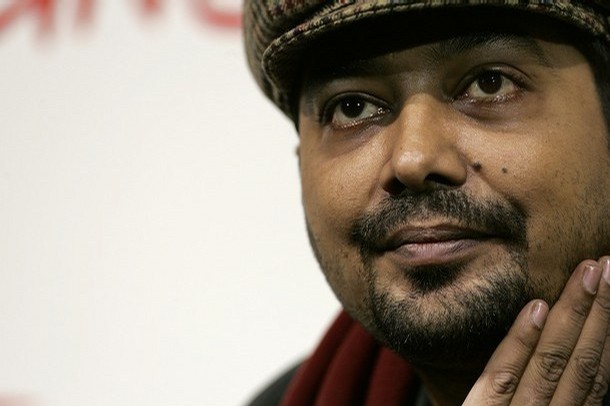
Kashyap attending the Rome Film Festival in 2007. Anurag Kashyap is an Indian filmmaker and actor, known for his work in Hindi cinema. After writing a television series Kabhie Kabhie (1997), Kashyap co-wrote Ram Gopal Varma's crime drama Satya (1998). He later wrote and directed a short television film, Last Train to Mahakali (1999), and made his feature film debut with the yet-unreleased film Paanch. He next directed Black Friday (2007), a film on the 1993 Bombay bombings. Its release was barred by India's Censor Board for two years, but was eventually released in 2007 to positive reviews. The same year, he directed the critical and commercial failure No Smoking. Return of Hanuman (2007), an animated film, was Kashyap's next directorial venture. In 2009, he directed Dev.D, a modern-day take on Sarat Chandra Chattopadhyay's Bengali novel Devdas, along with the political dramaGulaal. Despite positive reviews, the latter was a box-office failure.
Priyanka Chopra won several awards, including the National and Filmfare awards for Best Actress for her performance in Fashion Fashion is a 2008 Indian drama film directed by Madhur Bhandarkar and produced by UTV Motion Pictures. The film features Priyanka Chopra in the lead role, with Kangana Ranaut, Mugdha Godse, Arbaaz Khan and Arjan Bajwa in supporting roles as well as several professional fashion models playing themselves. Bhandarkar co-wrote the film with Ajay Monga and Anuraadha Tewari. Deven Murdeshwar edited the film while the cinematography was provided by Mahesh Limaye. Salim–Sulaiman composed the musical score, with lyrics written by Irfan Siddiqui and Sandeep Nath. The film focuses on the transformation of Meghna Mathur, an aspiring fashion model played by Chopra, from a small-town girl to a supermodel in the Indian fashion industry.
Produced on a budget of ₹180 million (US$2.5 million), Fashion was released on 29 October 2008 to critical acclaim and box-office success. It grossed ₹600 million (US$8.4 million) and was noted for being commercially successful despite being a women-centric film with no male lead. Fashion received various awards and nominations, with praise for its direction, the performance of the cast, screenplay, editing, musical score, and costume design. (Full article...)
Hampi was the capital of the Vijayanagara Empire from 1336 to 1565 (as Vijayanagara), when it was abandoned. It was a fortified city. Chronicles left by Persian and European travellers, particularly the Portuguese, say that Hampi was a prosperous, wealthy and grand city near the Tungabhadra River, with numerous temples, farms and trading markets. Hampi-Vijayanagara is estimated to be the world's second-largest city by 1500, after Beijing, and probably India's richest at that time, attracting traders from Persia and Portugal. The Vijayanagara Empire was defeated by a coalition of Muslim sultanates; its capital was conquered, pillaged and destroyed by Muslim armies in 1565, after which Hampi remained in ruins. (Full article...)
Image 3
The 2024 Indian Premier League (also known as IPL 17 and branded as TATA IPL 2024) was the 17th edition of the Indian Premier League. The tournament featured ten teams competing in 74 matches from 22 March to 26 May 2024. It was held across 13 cities in India, with Chennai hosting the opening ceremony and the final as the defending champions.
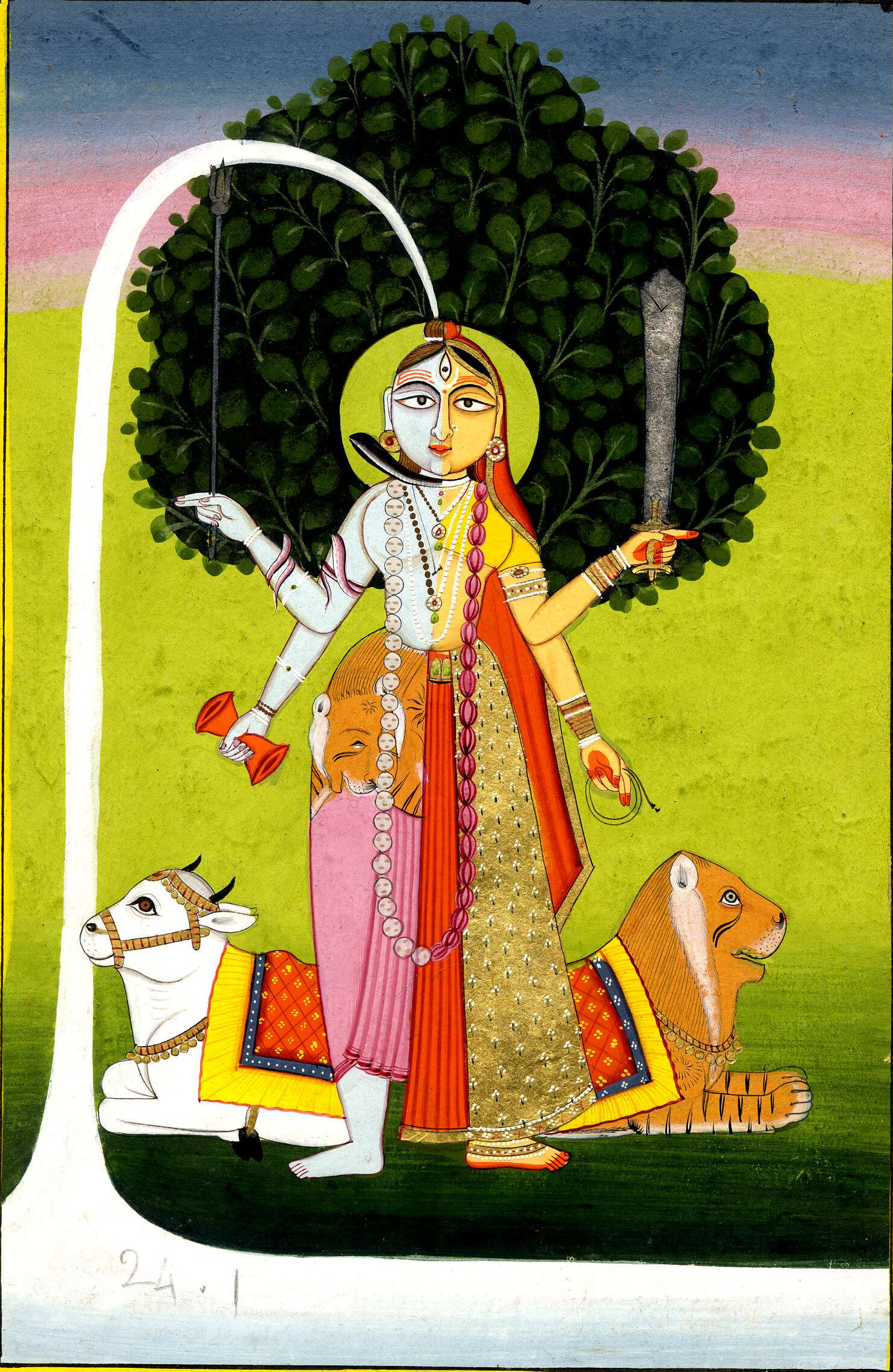
A painting of Ardhanarishvara drawn about the 1800's.Ardhanarishvara is a form of the Hindu god Shiva joined together with the Hindu goddess Parvati. Ardhanarishvara in statues and drawings is showed as a half-male and half-female. (Full article...)
Image 6
A missed-call icon A missed call is a telephone call that is deliberately terminated by the caller before being answered by its intended recipient, in order to communicate a pre-agreed message. It is a form of one-bit messaging.
Missed calls were common in emerging markets where mobile phones with limited outgoing calls were widely used; as the call is not actually completed and connected, it does not carry a cost to the caller, hence they can conserve their remaining prepaid credit. Specific patterns of consecutive missed calls have been developed in some countries to denote specific messages. Missed calls are also referred to in some parts of Africa as beeping, flashing in Nigeria, a flashcall in Pakistan, miskol in the Philippines and Indonesia, and ring-cut in Sri Lanka. (Full article...)
Image 7
The Andaman and Nicobar Islands is a union territory of India comprising 836 islands, of which only 31 are inhabited. The islands are grouped into two main clusters: the northern Andaman Islands and the southern Nicobar Islands, separated by the 150 km (93 mi)-wide Ten Degree Channel. The capital and largest city of the territory, Port Blair (officially Sri Vijaya Puram), is located approximately 1,190 km (740 mi) from Chennai and 1,255 km (780 mi) from Kolkata in mainland India. The islands are situated between the Bay of Bengal to the west and the Andaman Sea to the east. The northernmost point is 901 km (560 mi) from the mouth of the Hooghly River. Indira Point, located at 6°45'10″N and 93°49'36″E on the southern tip of Great Nicobar, is the southernmost point of India.
The Indian cricket team is a two-time world champion. In addition to winning the 1983 Cricket World Cup, India was also the first country to win the Cricket World Cup on home soil in 2011. They were also runners-up at the 2003 Cricket World Cup and semifinalists four times (1987, 1996, 2015, 2019). India's historical win–loss record at the cricket world cup is 53–29, with 1 match being tied and another being abandoned due to rain. (Full article...)
Image 9
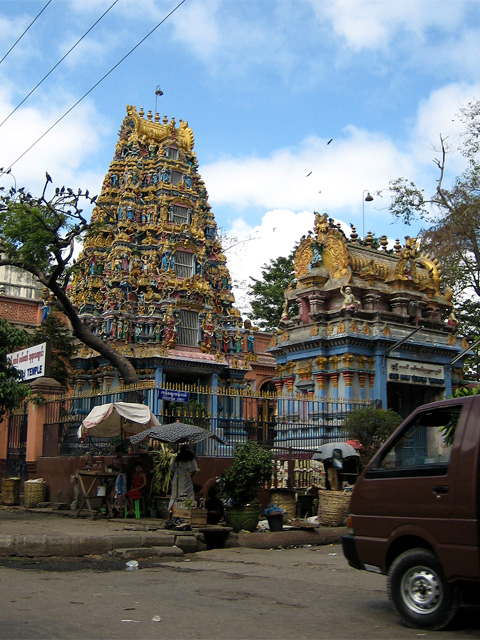
Shri Kali Temple, Burma, a Hindu temple with Dravidian architecture in YangonBurmese Indians are a group of people of Indian origin who live in Myanmar (Burma). The term 'Burmese Indian' refers to a broad range of people from South Asia, most notably from present-day countries such as India and Bangladesh. While Indians have lived in Burma for many centuries, most of the ancestors of the current Burmese Indian community emigrated to Burma from the start of British rule in the mid-19th century to the separation of British Burma from British India in 1937. During colonial times, ethnic Indians formed the backbone of the government and economy serving as soldiers, civil servants, merchants, moneylenders, mobile laborers and dock workers. A series of anti-Indian riots in the 1930s and mass emigration at the onset of the Japanese invasion of Burma in 1942 were followed in the 1960s by the forced migration of hundreds of thousands of ethnic Indians, exacerbated by internal conflict in Myanmar.
Burmese Indians today are estimated to account for approximately 5% (about 2.0–2.5 million people) of the population of Burma and are concentrated largely in the two major cities (Yangon and Mandalay) and former colonial towns (Pyin U Lwin and Kalaw). They wield considerable influence and control over the Burmese economy and have a major socio-cultural presence within the country. Amongst the well-known Burmese Indians is S N Goenka, a leading practitioner and teacher of vipassanā meditation and Helen, a well-known Bollywood film actress who is also of Anglo-Burmese descent. (Full article...)
Image 10
The 2020–21 season was the 101st season of Sporting Club East Bengal (EB or SCEB). Established in 1920, the club celebrated its centennial on 1 August 2020. Due to the COVID-19 pandemic, the Indian football season started on 1 August 2020 and is scheduled to end on 31 May 2021, with competitive matches occurring between November and March. The club competed in the Indian Super League (ISL) for the first time and finished their first ISL season in ninth place with 17 points.
Before the start of the season, East Bengal was very active in the transfer market. The club precontracted over 20 Indian players with many signing long-term contracts and being assigned to the reserve team. Only a few players were retained from the previous season. Of them, Prakash Sarkar and Boithang Haokip were not registered in the ISL squad. East Bengal and Quess Corp's joint venture was terminated, and the club inked a partnership with Shree Cement as their principal investor in September. Robbie Fowler was appointed as the team's head coach. Forward Bright Enobakhare was signed in the winter transfer window as the seventh foreigner. Another foreign player, Callum Woods, was also signed as a reserve defender. (Full article...)
Mistry was an aide to the maharaja, Bhupinder Singh of Patiala, an association that continued until the maharaja's death, and was referred to as the 'grand old man of Indian cricket'. (Full article...)
Image 12
Three athletes from India qualified for the 2014 Winter Olympics in Sochi, Russia, held between 7 and 23 February 2014. The country's participation in Sochi marked its ninth appearance at the Winter Olympics since its debut in 1964.
The Ross Island Prison Headquarters, 1872 Ross Island Penal Colony was a convict settlement that was established in 1858 in the remote Andaman Islands by the British colonial government in India, primarily to jail a large number of prisoners from the Indian Rebellion of 1857, also known as the Indian Mutiny. With the establishment of the penal colony at Ross Island, the British administration made it the administrative headquarters for the entire group of Andaman and Nicobar Islands and built bungalows and other facilities on the site. This colony was meant as "manageable models of colonial governance and rehabilitation". The Chief Commissioner's residence was located at the highest point on the island. Over time, several other islands including Chatham and Viper were used for the penal colony.
The penal colony became infamous as "Kalapani" or "black water" for the brutalities inflicted by the British authorities on the political prisoners from India, and most of whom had died by 1860 due to illness and torture suffered during the initial stages of the clearance of the forest to establish the colony. In later years the colony experimented for a short time with civilizing the indigenous people of Andamans. The penal colony was used as an experimental station for various methods of torture and medical tests During World War II, the island was invaded by the Japanese army, forcing the British to evacuate. The administrative buildings were destroyed but the penal colony remained. After the Allied forces reoccupied the island the penal colony was disbanded on 7 October 1945. (Full article...)
... that Colonel Hugh Pettigrew observed that troops who thought that the Scottish Highlands resembled Waziristan on India's North West Frontier were "of little use to anyone"?


.svg)

 Featured article –













.jpg)


,_signed_image_for_Walter_Nash_(NZ_Prime_Minister),_1958_(16017609534).jpg)


.jpg)


 Good article –






_(cropped).jpg)


