

m Removed empty portal template using script |
imported>CareyTorgerson m refined citations to improve readability and updated info per standard format |
||
| Line 1: | Line 1: | ||
{{ | {{short description|none}} <!-- "none" is preferred when the title is sufficiently descriptive; see [[BP:SDNONE]] --> | ||
{{See also| Indian English literature}} | |||
{{For|the journal|Indian Literature (journal)}} | {{For|the journal|Indian Literature (journal)}} | ||
{{Multiple issues| | {{Multiple issues| | ||
{{More footnotes}} | {{More footnotes needed|date=December 2015}} | ||
{{Cleanup|reason=Vaguely discursive prose without significant analysis or commentary, Cryptic references.}} | {{Cleanup|reason=Vaguely discursive prose without significant analysis or commentary, Cryptic references.|date=December 2015}} | ||
}} | }} | ||
{{Use Indian English}} | {{Use Indian English|date=December 2015}} | ||
{{Use dmy dates}} | {{Use dmy dates|date=May 2024}} | ||
{{Culture of India}} | {{Culture of India}} | ||
| Line 12: | Line 13: | ||
{{History of literature by era}} | {{History of literature by era}} | ||
'''Indian literature''' refers to the literature produced on the [[Indian subcontinent]] until 1947 and in the [[India|Republic of India]] thereafter. The | '''Indian literature''' refers to the literature produced on the [[Indian subcontinent]] until 1947 and in the [[India|Republic of India]] thereafter. The [[Eighth Schedule to the Constitution of India]] has [[Scheduled languages of India|22 officially recognised languages]]. [[Sahitya Akademi]], India's highest literary body, also has [[Sahitya Akademi#Recognised literary languages|24 recognised literary languages]]. | ||
The earliest works of Indian literature were [[oral literature|orally]] transmitted. [[Sanskrit literature]] begins with the [[oral literature]] of the [[Rig Veda]], a collection of literature dating to the period 1500–1200 BCE. The Sanskrit epics ''[[Ramayana]]'' and ''[[Mahabharata]]'' were subsequently codified and appeared towards the end of the 2nd millennium BCE. [[classical language|Classical Sanskrit]] literature developed rapidly during the first few centuries of the first millennium BCE,<ref>{{cite journal | title=A Brief on Indian Literature and Languages | author=Narayanrao, H.L. | journal=Journal of Education and Practice | volume=2 | issue=3 | pages=46 | issn=2222-288X}}</ref> as did | The earliest works of Indian literature were [[oral literature|orally]] transmitted. [[Sanskrit literature]] begins with the [[oral literature]] of the [[Rig Veda]], a collection of literature dating to the period 1500–1200 BCE. The Sanskrit epics ''[[Ramayana]]'' and ''[[Mahabharata]]'' were subsequently codified and appeared towards the end of the 2nd millennium BCE. [[classical language|Classical Sanskrit]] literature developed rapidly during the first few centuries of the first millennium BCE,<ref>{{cite journal | title=A Brief on Indian Literature and Languages | author=Narayanrao, H.L. | journal=Journal of Education and Practice | volume=2 | issue=3 | pages=46 | issn=2222-288X}}</ref> as did the [[Pāli Canon]] and [[Tamil Language|Tamil]] [[Sangam literature]].{{citation needed|date=November 2023}} [[Ancient Meitei literature|Ancient Meitei]] appeared in the 1st century CE with sacred musical compositions like the [[Ougri]],<ref name="Ayyappappanikkar 1997 326">—{{Cite book |last=Ayyappappanikkar |url=https://books.google.com/books?id=KYLpvaKJIMEC&pg=PA326 |title=Medieval Indian Literature: Surveys and selections |date=1997 |publisher=[[Sahitya Akademi]] |isbn=978-81-260-0365-5 |pages=326|author-link=Ayyappa Paniker}}<br >—{{Cite book |last=Singh |first=Khelchandra Ningthoukhongjam |chapter-url=https://archive.org/details/in.ernet.dli.2015.466183/page/n81/mode/2up |title=History of Old Manipuri Literature |publisher=[[Digital Library of India]]; [[Internet Archive]] |others=[[Manipur University]] Library; North Eastern States Libraries |location=India |pages=81, 82, 83 |language=mni |chapter=Ougri |author-link=Ningthoukhongjam Khelchandra}}<br />—{{Cite book |last=Singh |first=Ch Manihar |url=https://books.google.com/books?id=yiBkAAAAMAAJ |title=A History of Manipuri Literature |publisher=[[Sahitya Akademi]] |year=1996 |isbn=978-81-260-0086-9 |location=India |pages=13, 14, mni |chapter=The Early Period (Ritual Songs) : Ougri |quote=Again from amongst the songs mentioned above, 'Ougri' and 'Khencho', in view of their more archaic diction and much advanced historical allusions, may be considered earlier than the rest. ... 'Ougri' is referred to as sung at the coronation of Nongdā Lāiren Pākhangbā, which took place in 33 A.D. ...}}<br />—{{Cite book |last=Ayyappappanikkar |url=https://books.google.com/books?id=KYLpvaKJIMEC&pg=PA329 |title=Medieval Indian Literature: Surveys and selections |date=1997 |publisher=[[Sahitya Akademi]] |isbn=978-81-260-0365-5 |pages=329|author-link=Ayyappa Paniker}}</ref> and heroic narratives like the [[Numit Kappa]].<ref name="Taylor & Francis">—{{Cite book |last1=Wouters |first1=Jelle J. P. |url=https://books.google.com/books?id=YseEEAAAQBAJ&q=Numit+Kappa+1st&pg=PT473 |title=The Routledge Companion to Northeast India |last2=Subba |first2=Tanka B. |date=2022-09-30 |publisher=[[Taylor & Francis]] |isbn=978-1-000-63699-4 |pages=473|quote=... Numit Kappa, a Meitei text from the 1st century CE, is particularly relevant and insightful in examining this peculiar relationship between power and violence. The text is recited as incantations during chupsaba, a cleansing ritual for 'violent' death...}}<br />—{{Cite journal |date=2009-10-03 |title=Shooting the Sun: A Study of Death and Protest in Manipur |url=https://www.epw.in/journal/2009/40/special-articles/shooting-sun-study-death-and-protest-manipur.html |journal=[[Economic and Political Weekly]]|publication-place=[[Austin, USA]] |volume=44 |issue=40 |quote=... Numit Kappa gives one such version. Considered one of the earliest known literary compositions in Meitei script, it is dated to the first century AD... |via=[[University of Texas]]}}<br />—{{Cite book |last=Singh |first=Khelchandra Ningthoukhongjam |chapter-url=https://archive.org/details/in.ernet.dli.2015.466183/page/n95/mode/2up |title=History of Old Manipuri Literature |publisher=[[Digital Library of India]]; [[Internet Archive]] |others=[[Manipur University]] Library; North Eastern States Libraries |location=India |pages=95, 96 |language=mni |chapter=Numit Kappa |author-link=Ningthoukhongjam Khelchandra}}<br />—{{Cite journal |last=Kshetrimayum |first=Jogendro |date=2009 |title=Shooting the Sun: A Study of Death and Protest in Manipur |url=https://www.jstor.org/stable/25663656 |journal=Economic and Political Weekly |volume=44 |issue=40 |pages=48–54 |jstor=25663656 |issn=0012-9976}}</ref> | ||
In the medieval period, literature in [[Kannada literature|Kannada]] and [[Telugu literature|Telugu]] appeared in the 9th and 10th centuries respectively.<ref>"Kannada literature", ''Encyclopædia Britannica'', 2008. Quote: "The earliest literary work is the Kavirajamarga (c. AD 900), a treatise on poetics based on a Sanskrit model."</ref> Later, literature in [[Marathi language|Marathi]], [[Gujarati language|Gujarati]], [[Bengali language|Bengali]], [[Assamese language|Assamese]], [[Odia language|Odia]], | In the medieval period, literature in [[Kannada literature|Kannada]] and [[Telugu literature|Telugu]] appeared in the 9th and 10th centuries, respectively.<ref>"Kannada literature", ''Encyclopædia Britannica'', 2008. Quote: "The earliest literary work is the Kavirajamarga (c. AD 900), a treatise on poetics based on a Sanskrit model."</ref> Later, literature in [[Marathi language|Marathi]], [[Gujarati language|Gujarati]], [[Bengali language|Bengali]], [[Assamese language|Assamese]], [[Odia language|Odia]], and [[Maithili language|Maithili]] appeared. Thereafter literature in various dialects of [[Hindi]], [[Persian literature|Persian]] and [[Urdu]] began to appear as well. In 1913, [[Bengali poetry|Bengali poet]] [[Rabindranath Tagore]] became [[Nobel laureates of India|India's first Nobel laureate in literature]].<ref>{{Cite web |title=The Nobel Prize in Literature 1913 |url=https://www.nobelprize.org/prizes/literature/1913/summary/ |access-date=2024-02-23 |website=NobelPrize.org}}</ref>{{verify source|date=November 2023}} | ||
==In archaic Indian languages== | ==In archaic and ancient Indian languages== | ||
{{History of literature by region or country}} | {{History of literature by region or country}} | ||
===Vedic literature=== | === Sanskrit literature === | ||
====Vedic literature==== | |||
{{main|Vedas}} | {{main|Vedas}} | ||
Examples of early works written in [[Vedic Sanskrit]] include, the core [[Vedas]] and [[Upanishads]]. Other examples include the [[Sulba Sutras]], which are some of the earliest texts on [[geometry]]. | Examples of early works written in [[Vedic Sanskrit]] include, the core [[Vedas]] and [[Upanishads]]. Other examples include the [[Sulba Sutras]], which are some of the earliest texts on [[geometry]].{{citation needed|date=November 2023}}{{verify source|date=November 2023}} | ||
===Epic Sanskrit literature=== | ====Epic Sanskrit literature==== | ||
{{main|Indian epic poetry}} | {{main|Indian epic poetry}} | ||
[[Ved Vyasa]]'s ''[[Mahabharata]]'' and [[Valmiki]]'s ''[[Ramayana]]'', written in Epic Sanskrit, are regarded as the greatest Sanskrit epics. | [[Ved Vyasa]]'s ''[[Mahabharata]]'' and [[Valmiki]]'s ''[[Ramayana]]'', written in Epic Sanskrit, are regarded as the greatest Sanskrit epics.{{citation needed|date=November 2023}}{{verify source|date=November 2023}} | ||
===Classical Sanskrit literature=== | ====Classical Sanskrit literature==== | ||
{{main|Sanskrit literature}} | {{main|Sanskrit literature}} | ||
The famous poet and playwright [[Kālidāsa]] wrote one epic: ''[[Raghuvamsha]]'' (''Dynasty of Raghu''); it was written in Classical Sanskrit rather than Epic Sanskrit. Other examples of works written in Classical Sanskrit include the [[Pāṇini]]'s ''[[Ashtadhyayi]]'', which standardised the grammar and phonetics of Classical Sanskrit. The ''[[Manusmriti|Laws of Manu]]'' (मनुस्मृति) is a famous text in Hinduism. [[Kālidāsa]] is often considered to be the greatest playwright in Sanskrit literature and one of the greatest poets in Sanskrit literature; his ''[[Abhijñānaśākuntalam|Recognition of Shakuntala]]'' (अभिज्ञानशाकुन्तलम्) and ''[[Meghaduuta]]'' are Kalidasa's most famous play and poem respectively. Other famous plays include ''[[Mṛcchakatika|Mricchakatika]]'' by [[Shudraka]], ''[[Svapnavasavadattam|Svapna Vasavadattam]]'' by [[Bhasa]], and ''Ratnavali'' by Sri Harsha. Later poetic works include ''[[Gita Govinda]]'' by [[Jayadeva]]. Some other famous works are [[Chanakya]]'s ''[[Arthashastra]]'' and [[Vatsyayana]]'s ''[[Kamasutra]]''. | The famous poet and playwright [[Kālidāsa]] wrote one epic: ''[[Raghuvamsha]]'' (''Dynasty of Raghu''); it was written in Classical Sanskrit rather than Epic Sanskrit. Other examples of works written in Classical Sanskrit include the [[Pāṇini]]'s ''[[Ashtadhyayi]]'', which standardised the grammar and phonetics of Classical Sanskrit. The ''[[Manusmriti|Laws of Manu]]'' (मनुस्मृति) is a famous text in Hinduism. [[Kālidāsa]] is often considered to be the greatest playwright in Sanskrit literature and one of the greatest poets in Sanskrit literature; his ''[[Abhijñānaśākuntalam|Recognition of Shakuntala]]'' (अभिज्ञानशाकुन्तलम्) and ''[[Meghaduuta]]'' are Kalidasa's most famous play and poem respectively. Other famous plays include ''[[Mṛcchakatika|Mricchakatika]]'' by [[Shudraka]], ''[[Svapnavasavadattam|Svapna Vasavadattam]]'' by [[Bhasa]], and ''Ratnavali'' by Sri Harsha. Later poetic works include ''[[Gita Govinda]]'' by [[Jayadeva]]. Some other famous works are [[Chanakya]]'s ''[[Arthashastra]]'' and [[Vatsyayana]]'s ''[[Kamasutra]]''.{{citation needed|date=November 2023}}{{verify source|date=November 2023}} | ||
=== | ====Classical Odia literature==== | ||
=== Ancient Meitei literature === | |||
{{Main|Ancient Meitei literature}} | |||
{{Quote box | |||
| quote = "The beginning of this [[old Manipuri literature]] (as in the case of [[Newari language|Newari]]) may go back to 1500 years, or even 2000 years, from now."<ref>—{{Cite book |title=[[Indian Literature (journal)|Indian Literature]] – Volume 14 – Page 20 |publisher=[[Sahitya Akademi]] |year=1971 |edition=Volume 14 – Page 20 |pages=20|quote= The beginning of this old Manipuri literature (as in the case of Newari) may go back to 1500 years, or even 2000 years, from now.}}<br />—{{Cite book |last=Siṃha |first=Niṃthaukhoṃjama Khelacandra |url=https://books.google.com/books?id=EpAOAAAAMAAJ |title=Manipuri Language: Status and Importance |publisher=N. Tombi Raj Singh |year=1975 |pages=34, mni |quote=The beginning of this old Manipuri literature (as in the case of Newari) may go back to 1500 years, or even 2000 years, from now... |author-link=Ningthoukhongjam Khelchandra}}<br />—{{Cite book |last=Sanajaoba |first=Naorem |url=https://books.google.com/books?id=-CzSQKVmveUC&dq=manipuri+court+language&pg=PA290 |title=Manipur, Past and Present: The Heritage and Ordeals of a Civilization |date=1988 |publisher=Mittal Publications |isbn=978-81-7099-853-2 |pages=290}}</ref> | |||
| source = —[[Suniti Kumar Chatterji]], [[Padma Vibhushan]] awardee Indian scholar | |||
|width = 28% | |||
|style = min-width: 15em | |||
|bgcolor = #FFE0BB | |||
|align = right | |||
}} | |||
Some of the ancient literature of [[Meitei language]] (also known as [[Manipuri language]]) include the [[Ougri]] ({{circa|1st century CE}} musical composition),<ref name="Ayyappappanikkar 1997 326"/> the [[Numit Kappa]] ({{circa|1st century CE}} narrative work),<ref name="Taylor & Francis"/> the [[Poireiton Khunthok]] ({{circa|3rd century CE}} narrative work),<ref>—{{Cite book |last=Singh |first=Khelchandra Ningthoukhongjam |chapter-url=https://archive.org/details/in.ernet.dli.2015.466183/page/n121/mode/2up?view=theater |title=History of Old Manipuri Literature |publisher=[[Digital Library of India]] |others=[[Manipur University]] Library, Imphal |location=India |pages=121, 122, mni |chapter=Poireiton Khunthokpa |quote=The Poireiton Khunthokpa, is the most conspicuous one of all pre-Garibniwaz manuscripts. From a linguistic point of view, it seems to be much earlier than any of the books yet come under our view. Circumstantial and other incidental evidences would confirm that the book might have been of the time of the third century A. D. It describes the colonization of the valley by a band of people from the land of Death under Poireiton. They first established their colony near the Langol Hill; probably the vast area between the Koubru Hill and the Langol Hill was their kingdom. --Report on the Archaeological studies in Manipur Bulletin No. 1-by W. Yumjao Singh, pp 18-19. |author-link=Ningthoukhongjam Khelchandra}}<br />—{{Cite book |last=Bhaṭṭācāryya |first=Haridāsa |url=https://books.google.com/books?id=Wy88AAAAMAAJ&q=poireiton+Khunthok+century |title=The Cultural Heritage of India: Languages and literatures |publisher=[[Ramakrishna Mission Institute of Culture|Ramakrishna Mission, Institute of Culture]] |others=[[University of Michigan]] |year=1953 |location=India |pages=663|quote=... The beginnings of this Old Manipuri literature may go back to 1,500 years or even 2,000 years from now. ... Poireiton Khunthok, a prose work describing the settlement of some Meithei tribes, is the oldest work in Manipuri going back to the third century A.D. ... |author-link=Haridas Bhattacharya}}</ref> the ''Khencho'' (pre-7th century CE musical composition),<ref>—{{Cite book |last=Singh |first=Khelchandra Ningthoukhongjam |chapter-url=https://archive.org/details/in.ernet.dli.2015.466183/page/n97/mode/2up |title=History of Old Manipuri Literature |publisher=[[Digital Library of India]]; [[Internet Archive]] |others=[[Manipur University]] Library; North Eastern States Libraries |location=India |pages=97, 98 |language=mni |chapter=Khencho |author-link=Ningthoukhongjam Khelchandra}}<br />—{{Cite book |last=Ayyappappanikkar |url=https://books.google.com/books?id=KYLpvaKJIMEC&pg=PA330 |title=Medieval Indian Literature: Surveys and selections |date=1997 |publisher=[[Sahitya Akademi]] |isbn=978-81-260-0365-5 |pages=330|author-link=Ayyappa Paniker}}<br />—{{Cite book |last=Singh |first=Ch Manihar |url=https://books.google.com/books?id=yiBkAAAAMAAJ |title=A History of Manipuri Literature |publisher=[[Sahitya Akademi]] |year=1996 |isbn=978-81-260-0086-9 |location=India |pages=14, 15, mni |chapter=The Early Period (Ritual Songs) |quote=... 'Khencho' is quite obscure and entirely unintelligible to the present generation though it forms an inseparable element of the daily proceedings of the festival. ...}}</ref> 6th-7th century CE copper plate inscriptions of king Khongtekcha,<ref>—{{Cite web |title=মণিপুরি ভাষা ও লিপি – এল বীরমঙ্গল সিংহ {{!}} আপনপাঠ ওয়েবজিন |date=16 September 2021 |url=https://aponpath.com/manipuri-bhasa-o-lipi-l-birmangal-singh/ |language=bn}}<br />—{{Cite book |last=Devi |first=Yumlembam Gopi |url=https://books.google.com/books?id=gxqeDwAAQBAJ&q=8th%20century%20copper%20plate%20inscription%20manipur&pg=PA25 |title=Glimpses of Manipuri Culture |date=16 June 2019 |isbn=978-0-359-72919-7 |pages=25 |publisher=Lulu.com}}<br />—{{Cite book |last=Paniker |first=K. Ayyappa |url=https://books.google.com/books?id=KYLpvaKJIMEC&q=8th%20century%20copper%20plate%20inscription%20manipur&pg=PA325 |title=Medieval Indian Literature: Surveys and selections (Assamese-Dogri) |date=1997 |publisher=[[Sahitya Akademi]] |isbn=978-81-260-0365-5 |pages=325}}<br />—{{Cite book |last=Sen |first=Sipra |url=https://books.google.com/books?id=bQQNCU-QWBAC&q=8th%20century%20copper%20plate%20inscription%20manipur&pg=PA28 |title=Tribes and Castes of Manipur: Description and Select Bibliography |date=1992 |publisher=Mittal Publications |isbn=978-81-7099-310-0 |pages=28}}</ref> the [[Panthoibi Khonggul]] ({{circa|8th century CE}} narrative work),<ref>—{{Cite book |last=Devi |first=Dr Yumlembam Gopi |url=https://books.google.com/books?id=gxqeDwAAQBAJ&dq=panthoibi+khongul&pg=PA119 |title=Glimpses of Manipuri Culture |date=16 June 2019 |publisher= Lulu.com|isbn=978-0-359-72919-7 |pages=119|quote=... the text Panthoibi Khongul generally believed to have been written by Akoijam Tomboy during the reign of King Khongtekcha Yoiremba (763 A.D.) ...}}<br />—{{Cite book |last=Mukherjee |first=Sujit |url=https://books.google.com/books?id=YCJrUfVtZxoC&dq=panthoibi+khongul&pg=PA280 |title=A Dictionary of Indian Literature: Beginnings-1850 |publisher=[[Orient Blackswan]] |year=1998 |isbn=978-81-250-1453-9 |pages=280|quote=Panthoibi khongul ( ? C; Manipuri ) : prose narrative, the original of which was believed to have been composed in ancient Meitei language in first half of 8th century AD ... |author-link=Sujit Mukherjee}}<br />—{{Cite web |others=[[Ministry of Culture (India)|Ministry of Culture, Government of India]] |title=The relationship between Thang-Ta & Meitei Pung maintained by our Ancient ... |url=https://ccrtindia.gov.in/wp-content/fellowship_research_project/TherelationshipbetweenThangtaandMeiteiPungmaintainedbyourAncientGurus.pdf |website=ccrtindia.gov.in |publisher=[[Centre for Cultural Resources and Training]] |page=4}}</ref> the [[Loiyumpa Silyel]] (c. Written Constitution drafted in 429 CE, and finalised in 11th-12th century CE), etc.<ref>—{{Cite book |last=Sanajaoba |first=Naorem |url=https://books.google.com/books?id=vO-vtI8NuxIC&dq=loyumba+shinyen+final+document&pg=PP2 |title=Manipur: Treatise & Documents |date=1993 |publisher=Mittal Publications |isbn=978-81-7099-399-5 |pages=2|quote=Manipur, known as 'Meetei Leipak' or 'Kangleipak' in the two millennia old Meetei manuscripts had experienced some form of constitutional government under a proto-Constitution in 429 A.D. which was reduced to a final format in 1110 A.D. Constitution entitled 'Loiyamba Shinyen' during the regime of King Loyumba.}}<br />—{{Cite book |last=Singh |first=Khelchandra Ningthoukhongjam |chapter-url=https://archive.org/details/in.ernet.dli.2015.466183/page/n142/mode/2up |title=History of Old Manipuri Literature |publisher=[[Digital Library of India]]; [[Internet Archive]] |others=[[Manipur University]] Library; North Eastern States Libraries |location=India |pages=142 |language=mni |chapter=Loiyumba Shinyen – Waayen Pathaap |author-link=Ningthoukhongjam Khelchandra}}<br />—{{Cite book |last=Sanajaoba |first=Naorem |url=https://books.google.com/books?id=9eYC4tjzyi4C&dq=loyumba+shinyen+written+constitution&pg=PA304 |title=Law and Society: Strategy for Public Choice, 2001 |date=1991 |publisher=Mittal Publications |isbn=978-81-7099-271-4 |pages=304|quote=The constitutionalism had developed with the adoption of a prototype of a constitution in 429 A.D. which was finally moulded into the written constitution in 1110 A.D., called 'Loyumba Shinyen' till it was substituted by Manipur State Constitution Act, 1947 which operated till Manipur's merger with India on 15 October 1949.}}</ref> | |||
The | ===Prakrit literature=== | ||
Many of [[Aśvaghoṣa]]'s plays were written in Shauraseni as were a sizable number of Jain works and [[Rajashekhara (Sanskrit poet)|Rajasekhara]]'s ''Karpuramanjari''. Canto 13 of the [[Bhaṭṭikāvya]]<ref>Fallon, Oliver. 2009. Bhatti's Poem: The Death of Rávana (Bhaṭṭikāvya). New York: [[Clay Sanskrit Library]][http://www.claysanskritlibrary.org/] {{Webarchive|url=https://web.archive.org/web/20190707040843/http://www.claysanskritlibrary.org/|date=7 July 2019}}. {{ISBN|978-0-8147-2778-2}} | {{ISBN|0-8147-2778-6}} |</ref> is written in what is called "like the vernacular" (''bhāṣāsama''), that is, it can be read in two languages simultaneously: Prakrit and [[Sanskrit]].<ref>Narang, Satya Pal. 2003. An Analysis of the Prākṛta of Bhāśā-sama of the Bhaṭṭi-kāvya (Canto XII). In: Prof. Mahapatra G.N., Vanijyotih: Felicitation Volume, Utkal University, *Bhuvaneshwar.</ref> | |||
===Pali literature=== | ===Pali literature=== | ||
{{Main|Pali Canon|Pali literature}} | {{Main|Pali Canon|Pali literature}} | ||
The [[ | The canonical Pali literature includes [[Buddhist]] [[Sutta Piṭaka|discourses]] (''suttas''), [[Abhidharma]] works, poetry, works on monastic discipline (''[[vinaya]]''), and the ''[[Jataka tales]]''.{{citation needed|date=November 2023}}{{verify source|date=November 2023}} | ||
===Tamil literature=== | |||
====Sangam literature==== | |||
=== | |||
{{Main|Sangam literature}} | {{Main|Sangam literature}} | ||
The | The [[Sangam literature]] ([[Tamil language|Tamil]]: சங்க இலக்கியம், ''Sanga ilakkiyam)'' is the ancient [[Tamil literature]] of the period in the [[history of South India]] (known as the [[Thamizhagam]] or the [[Tamilagam]]) spanning from {{Circa|300 BCE}} to 300 CE ([[Akananuru]] (1, 15, 31, 55, 61, 65, 91, 97, 101, 115, 127, 187, 197, 201, 211, 233, 251, 265, 281, 311, 325, 331, 347, 349, 359, 393, 281, 295), [[Kuṟuntokai|Kurunthogai]] (11), [[Naṟṟiṇai|Natrinai]] (14, 75) are dated before 300 BCE).<ref>There are some who claim earlier dates (up to 600 BCE). Others cite as late as 2BCE. The date of 300 BCE may represent a middle-of-the road consensus view; e.g. see the well-received textbook ''Ancient India'', [[Upinder Singh]], 2009, p. 15. However, it is quite likely that the songs existed in oral tradition well before this date.</ref><ref>Kamil Veith Zvelebil, ''Companion Studies to the History of Tamil Literature'', p. 12</ref><ref>K.A. Nilakanta Sastry, ''A History of South India,'' OUP (1955) p. 105</ref><ref>{{usurped|1=[https://web.archive.org/web/20100707000020/http://www.ciil-classicaltamil.org/project1.html Classical Tamil]}}</ref><ref>{{cite web|url=http://jainology.blogspot.com/2009/07/history-vandalised.html|title=Jain History of Tamil Nadu vandalised|author=T.S. Subramanian|date=2009-07-10|access-date=2011-06-03|quote=The six Tamil-Brahmi inscriptions of the 2nd century B.C. on the brow of five caverns on the Kazhugumalai hill near Mankulam, 38 km from Madurai, are the most ancient ones in Tamil Nadu and establish the historical facts that the Pandyan king Nedunchezhiyan ruled in the 2nd century B.C. and that Sangam literature dates back to the same period.}}</ref> This collection contains 2381 poems in [[Tamil language|Tamil]] composed by 473 poets, some 102 of whom remain anonymous.<ref>George L. Hart III, ''The Poems of Ancient Tamil,'' U of California P, 1975.</ref> | ||
Most of the available Sangam literature is from the [[Third Sangam]],<ref>{{Cite book|url=https://books.google.com/books?id=Uu3QelRpmsgC&q=third+sangam&pg=PR8|title=Shilappadikaram: (The Ankle Bracelet)|last=Iḷaṅkōvaṭikaḷ|publisher=New Directions Publishing|isbn=9780811200011 | Most of the available Sangam literature is from the [[Third Sangam]],<ref>{{Cite book|url=https://books.google.com/books?id=Uu3QelRpmsgC&q=third+sangam&pg=PR8|title=Shilappadikaram: (The Ankle Bracelet)|last=Iḷaṅkōvaṭikaḷ|date=1965-01-01|publisher=New Directions Publishing|isbn=9780811200011}}</ref> this period is known as the [[Sangam period]], which refers to the prevalent Sangam legends claiming literary academies lasting thousands of years, giving the name to the corpus of literature.<ref>''Irayanaar Agapporul'' dated to c. 750 CE first mentioned the Sangam legends. An inscription of the early tenth century CE mentions the achievements of the early [[Pandya]] kings of establishing a ''Sangam'' in [[Madurai]]. See K.A. Nilakanta Sastry, ''A History of South India'', OUP (1955) p. 105</ref><ref>"The latest limit of ''[[Ettutokai]]'' and ''[[Pattupattu]]'' may be placed around 700 AD...." – Vaiyapuri Pillai, ''History of Tamil language and literature'' p. 38.</ref><ref>"...the Tamil language of these brief records achieved a flowering during the first centuries of the Common Era, culminating in the emergence of a poetic corpus of very high quality [...] To this corpus the name ''sangam poetry'' was added soon afterwards...." [[Burton Stein]], ''A History of India'' (1998), Blackwell p. 90.</ref> The Only religious poems among the shorter poems occur in ''[[paripaatal]]''. The rest of the corpus of Sangam literature deals with human relationship and emotions.<ref>See K.A. Nilakanta Sastri, ''A History of South India, OUP (1955) pp. 330–335''</ref> | ||
Sangam literature deals with emotional and material topics such as love, war, governance, trade and bereavement.<ref>Chera, Chola, Pandya: Using Archaeological Evidence to Identify the Tamil Kingdoms of Early Historic South India – Abraham, Shinu Anna, Asian Perspectives – Volume 42, Number 2, Fall 2003, pp. 207–223 University of Hawaii Press</ref> Some of the greatest Tamil scholars, like [[Thiruvalluvar]], who wrote on ethics, and on the various issues of life like virtue, wealth and love, or the Tamil poet [[Mamulanar]], who explored historical incidents that happened in India, lived during the Sangam period.<ref>Morality and Ethics in Public Life by Ravindra Kumar p.92</ref><ref>Essays on Indian Society by Raj Kumar p.71</ref> | Sangam literature deals with emotional and material topics such as love, war, governance, trade and bereavement.<ref>Chera, Chola, Pandya: Using Archaeological Evidence to Identify the Tamil Kingdoms of Early Historic South India – Abraham, Shinu Anna, Asian Perspectives – Volume 42, Number 2, Fall 2003, pp. 207–223 University of Hawaii Press</ref> Some of the greatest Tamil scholars, like [[Thiruvalluvar]], who wrote on ethics, and on the various issues of life like virtue, wealth and love, or the Tamil poet [[Mamulanar]], who explored historical incidents that happened in India, lived during the Sangam period.<ref>Morality and Ethics in Public Life by Ravindra Kumar p.92</ref><ref>Essays on Indian Society by Raj Kumar p.71</ref> | ||
==In common Indian languages== | ====Bhakti literature==== | ||
The [[Bhakti Movement]] was a significant religious movement in medieval [[Hinduism]]<ref name="Schomer_McLeod1987">{{cite book |title=The Sants: Studies in a Devotional Tradition of India |editor1-first=Karine |editor1-last=Schomer |editor2-first=W. H. |editor2-last=McLeod |publisher=Motilal Banarsidass |year=1987 |isbn=9788120802773 }}</ref>{{Rp|p=1}} that sought to bring religious reforms to all strata of society by adopting the method of [[Bhakti|devotion]] to achieve salvation.<ref name="cbseindiatoday">{{Cite web|url=https://www.indiatoday.in/education-today/gk-current-affairs/story/-crashcourse-cbse-class-12-history-bhakti-movement-s-emergence-and-influence-1438286-2019-01-24|title=CBSE Class 12 History #CrashCourse: Bhakti movement's emergence and influence|last1=India Today Web Desk New|date=24 January 2019|website=India Today}}</ref> Originating in [[Tamilakam]] during 6th century CE,<ref>{{Cite book |last=Pillai |first=P. Govinda |chapter-url=https://books.google.com/books?id=sep5EAAAQBAJ&dq=bhakti+movement+tamil+country&pg=PT46 |title=The Bhakti Movement: Renaissance or Revivalism? |date=2022-10-04 |publisher=Taylor & Francis |isbn=978-1-000-78039-0 |pages=Thirdly, the movement had blossomed first down south or the Tamil country|chapter=Chapter 11}}</ref><ref>{{cite book|first= John |last= Hawley |date= 2015 |title= A Storm of Songs: India and the Idea of the Bhakti Movement |publisher= Harvard University Press |isbn=978-0-674-18746-7 | page=87 }}</ref><ref>{{Cite book |last=Padmaja |first=T. |url=https://books.google.com/books?id=pzgaS1wRnl8C&dq=bhakti+movement+tamilakam&pg=RA1-PA37 |title=Temples of Kr̥ṣṇa in South India: History, Art, and Traditions in Tamil nāḍu |date=2002 |publisher=Abhinav Publications |isbn=978-81-7017-398-4}}</ref><ref>{{Cite book |last1=Nair |first1=Rukmini Bhaya |url=https://books.google.com/books?id=u6XFDwAAQBAJ&dq=bhakti+movement+tamilakam&pg=PT29 |title=Keywords for India: A Conceptual Lexicon for the 21st Century |last2=de Souza |first2=Peter Ronald |date=2020-02-20 |publisher=Bloomsbury Publishing |isbn=978-1-350-03925-4}}</ref> it gained prominence through the poems and teachings of the Vaishnava [[Alvars]] and Shaiva [[Nayanars]] before spreading northwards.<ref name="Schomer_McLeod1987"/>{{Rp|p=1}} It swept over east and north India from the 15th century onwards, reaching its zenith between the 15th and 17th century CE.<ref name="Schomer_McLeod1987"/>{{Rp|pp=1–2}} From the 14th to the 18th centuries, India's literary traditions went through a period of drastic change because of the spread of the [[Bhakti movement]] in the northern parts of India, resulting in the emergence of devotional poets like [[Kabir|Kabīr]], [[Tulsidas|Tulsīdās]], and [[Guru Nanak|Guru Nānak]]. This period was characterised by a varied and wide spectrum of thought and expression; as a consequence, medieval Indian literary works differed significantly from classical traditions.{{sfn|Das|2005}} | |||
== In modern Indian languages {{anchor|In common Indian languages}} == | |||
=== Sahitya Akademi recognised & scheduled languages === | |||
{{Further|Sahitya Akademi#Recognised literary languages|Scheduled languages of India}} | |||
===Assamese literature=== | ====Assamese literature==== | ||
{{unreferenced section}} | {{unreferenced section|date=April 2013}} | ||
{{main|Assamese literature}} | {{main|Assamese literature}} | ||
{{see also|:Category:Assamese-language books|Buranjis|Assamese poetry}} | {{see also|:Category:Assamese-language books|Buranjis|Assamese poetry}} | ||
[[File:Laksminath_Bezbaruah.jpg|thumb|{{center|[[Lakshminath Bezbaroa]], Assamese poet, novelist and playwright of modern [[Assamese literature]]}}]] | [[File:Laksminath_Bezbaruah.jpg|thumb|{{center|[[Lakshminath Bezbaroa]], Assamese poet, novelist and playwright of modern [[Assamese literature]]}}]] | ||
The Buddhist [[Charyapada]]s are often cited as the earliest example of Assamese literature. The Charyapadas are [[Vajrayana]] Buddhist songs composed in the 8th to 12th centuries.<ref>{{Cite web|title=The writers of the Charyapada, the Mahasiddhas or Siddhacharyas, belonged to the various regions of Assam, Bengal, Orissa and Bihar.|url=https://sites.google.com/site/charyapada/|access-date=2020-07-14|website=sites.google.com}}</ref><ref>{{Cite book|last1=Shaw|first1=Miranda|title=Passionate Enlightenment::Women in Tantric Buddhism|last2=Shaw|first2=Miranda|publisher=Princeton University Press|isbn=978-0-691-01090-8}}</ref> These writings bear similarities to Oriya and Bengali languages as well. The phonological and morphological traits of these songs, some of which are extant, bear very strong resemblance to Assamese. | The Buddhist [[Charyapada]]s are often cited as the earliest example of Assamese literature. The Charyapadas are [[Vajrayana]] Buddhist songs composed in the 8th to 12th centuries.<ref>{{Cite web|title=The writers of the Charyapada, the Mahasiddhas or Siddhacharyas, belonged to the various regions of Assam, Bengal, Orissa and Bihar.|url=https://sites.google.com/site/charyapada/|access-date=2020-07-14|website=sites.google.com}}</ref><ref>{{Cite book|last1=Shaw|first1=Miranda|title=Passionate Enlightenment::Women in Tantric Buddhism|last2=Shaw|first2=Miranda|date=1995|publisher=Princeton University Press|isbn=978-0-691-01090-8}}</ref> These writings bear similarities to Oriya and Bengali languages as well. The phonological and morphological traits of these songs, some of which are extant, bear very strong resemblance to Assamese.{{citation needed|date=November 2023}}{{verify source|date=November 2023}} | ||
A comprehensive introductory book ''Assamese Language-Literature & Sahityarathi Lakshminath Bezbaroa'' originally authored by leading Assamese littérateur of ''Awahon-Ramdhenu Era'' and pioneer Assam economist [[Bhabananda Deka]] together with his three deputies, Parikshit Hazarika, Upendra Nath Goswami and | A comprehensive introductory book ''Assamese Language-Literature & Sahityarathi Lakshminath Bezbaroa'' originally authored by leading Assamese littérateur of ''Awahon-Ramdhenu Era'' and pioneer Assam economist [[Bhabananda Deka]] together with his three deputies, Parikshit Hazarika, Upendra Nath Goswami and Prabhat Chandra Sarma, was published in 1968. This book was officially released in New Delhi on 24 Nov 1968 by then President of India [[Zakir Husain]] in commemoration of the birth centenary celebration of doyen of Assamese literature [[Lakshminath Bezbaroa]]. After almost half a century, this historic book has been recovered and re-edited by Assamese award-winning short-story writer & novelist Arnab Jan Deka, which was published by Assam Foundation-India in 2014.<ref>{{cite news|last1=Sentinel|first1=The|title=Documentary film, books on Bhabananda–Nalini Prava|url=http://www.sentinelassam.com/ghy_city/story.php?sec=1&subsec=0&id=211080&dtP=2014-12-04&ppr=1#.VJpNfsAHI|access-date=24 December 2014|date=4 December 2014|url-status=dead|archive-url=https://web.archive.org/web/20150924100737/http://www.sentinelassam.com/ghy_city/story.php?sec=1&subsec=0&id=211080&dtP=2014-12-04&ppr=1#.VJpNfsAHI|archive-date=24 September 2015}}</ref> | ||
===Bengali literature=== | ====Bengali literature==== | ||
{{main|Bengali literature}} | {{main|Bengali literature}} | ||
{{see also|Bengali novels|Bengali poetry|Bengali science fiction}} | {{see also|Bengali novels|Bengali poetry|Bengali science fiction}} | ||
| Line 82: | Line 92: | ||
The first evidence of Bengali literature is known as Charyapada or Charyageeti, which were Buddhist hymns from the 8th century. Charyapada is in the oldest known written form of Bengali. The famous Bengali linguist [[Hara Prasad Shastri]] discovered the palm leaf Charyapada manuscript in the Nepal Royal Court Library in 1907. | The first evidence of Bengali literature is known as Charyapada or Charyageeti, which were Buddhist hymns from the 8th century. Charyapada is in the oldest known written form of Bengali. The famous Bengali linguist [[Hara Prasad Shastri]] discovered the palm leaf Charyapada manuscript in the Nepal Royal Court Library in 1907. | ||
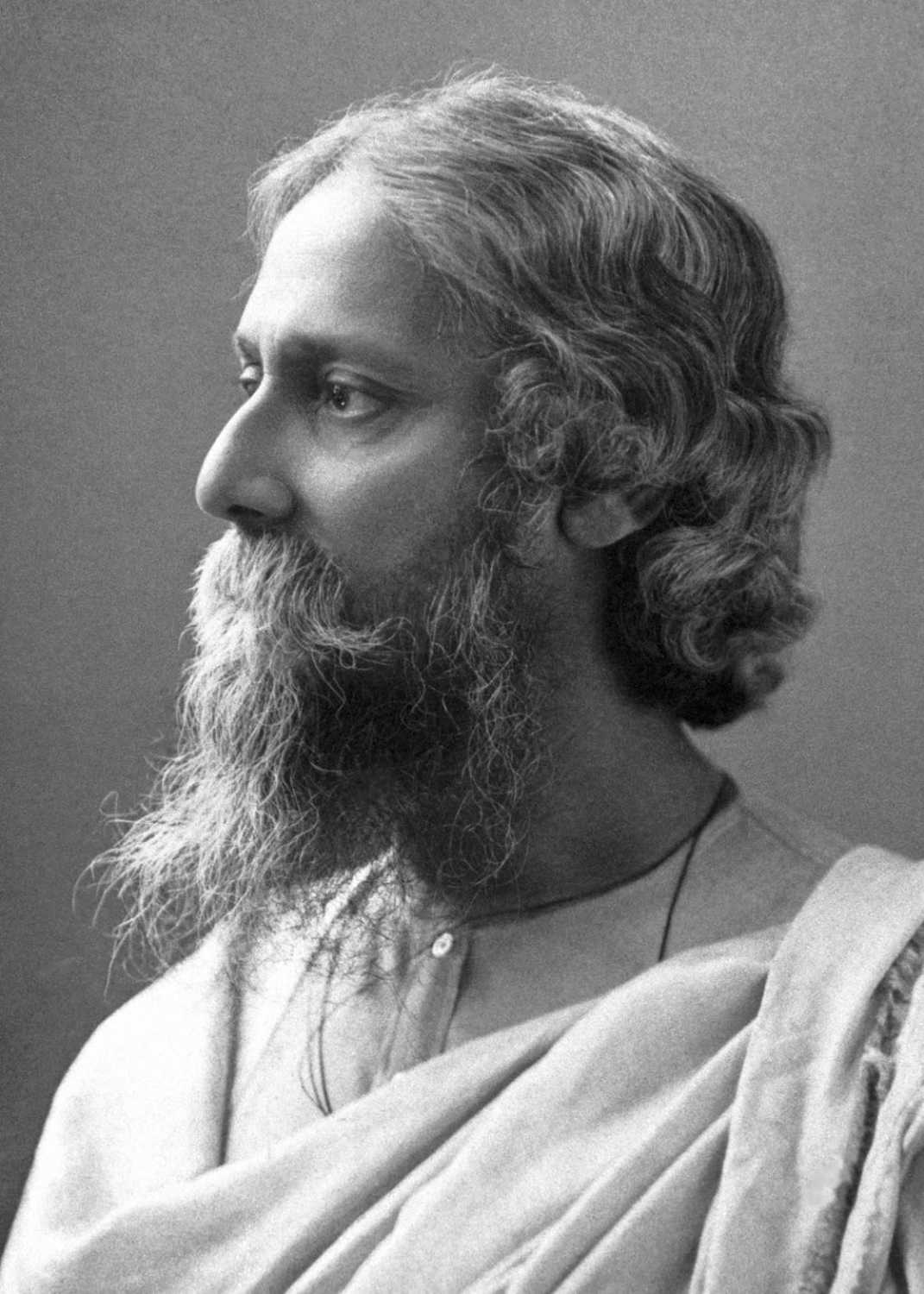
The most internationally famous [[Bengali language|Bengali]] writer is Nobel laureate [[Rabindranath Tagore]], who received the [[Nobel Prize for Literature]] in 1913 for his work "Gitanjali". He wrote the national anthem of India and Bangladesh namely, "Jana Gana Mana" and "Amar Sonar Bangla", respectively. He was the first Asian who won the Nobel Prize. | The most internationally famous [[Bengali language|Bengali]] writer is Nobel laureate [[Rabindranath Tagore]], who received the [[Nobel Prize for Literature]] in 1913 for his work "Gitanjali". He wrote the national anthem of India and Bangladesh namely, "Jana Gana Mana" and "Amar Sonar Bangla", respectively. He was the first Asian who won the Nobel Prize. | ||
Rabindranath has written an enormous number of poems, songs, essays, novels, plays and short stories. His songs remain popular and are still widely sung in Bengal. | Rabindranath has written an enormous number of poems, songs, essays, novels, plays and short stories. His songs remain popular and are still widely sung in Bengal.{{citation needed|date=November 2023}}{{verify source|date=November 2023}} | ||
====Hindi literature==== | |||
{{main|Hindi literature}} | {{main|Hindi literature}} | ||
Hindi literature started as religious and philosophical poetry in medieval periods in dialects like [[Avadhi]] and [[Brij]]. The most famous figures from this period are [[Kabir]] and [[Tulsidas]]. In modern times, the [[Dehlavi dialect]] of the [[Hindi Belt]] became more prominent than [[Sanskrit language|Sanskrit]]. | Hindi literature started as religious and philosophical poetry in medieval periods in dialects like [[Avadhi]] and [[Brij]]. The most famous figures from this period are [[Kabir]] and [[Tulsidas]]. In modern times, the [[Dehlavi dialect]] of the [[Hindi Belt]] became more prominent than [[Sanskrit language|Sanskrit]].{{citation needed|date=November 2023}}{{verify source|date=November 2023}} | ||
===Gujarati literature=== | ====Gujarati literature==== | ||
{{main|Gujarati literature}} | {{main|Gujarati literature}} | ||
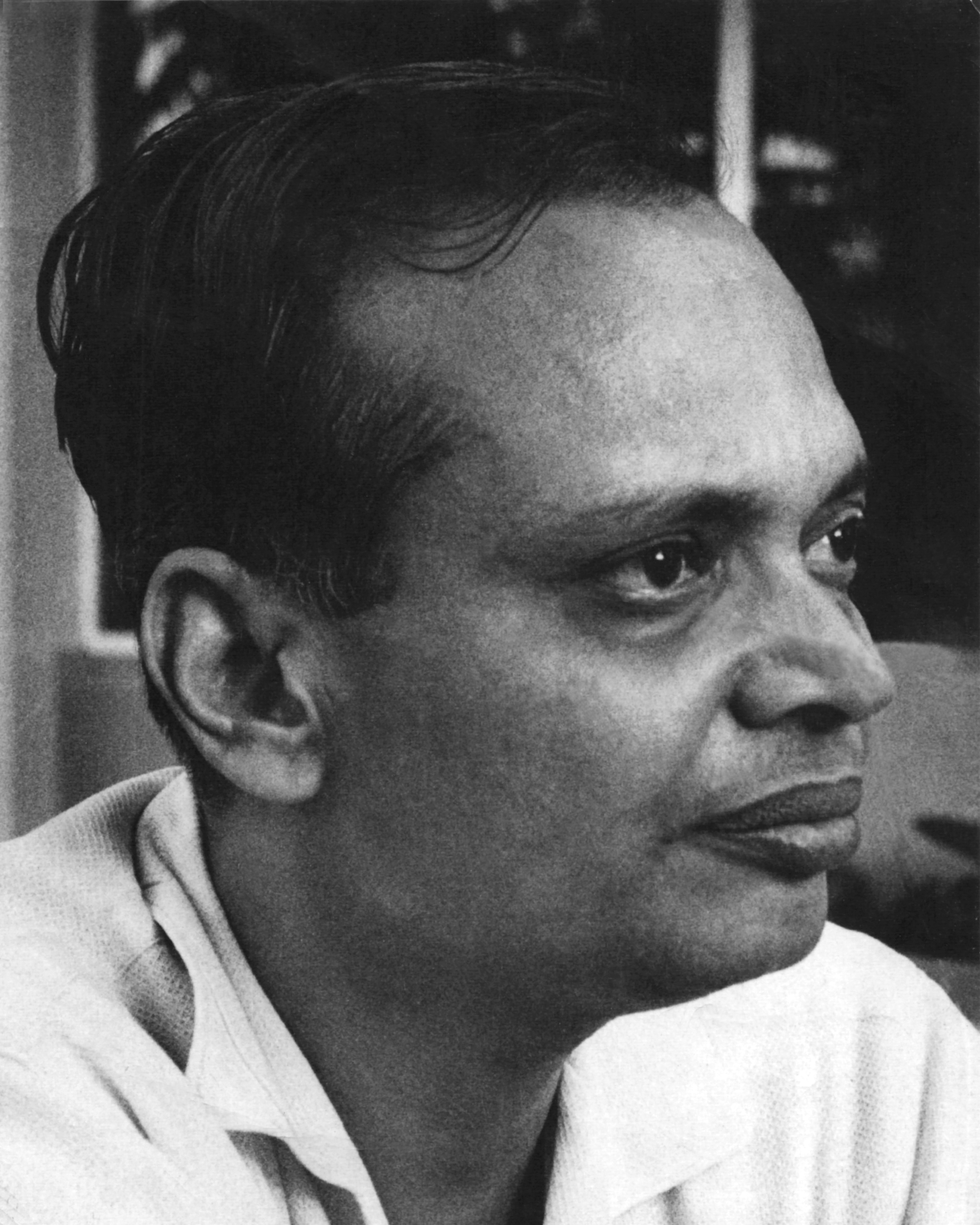
[[File:Suresh Joshi in 1955.jpg|left|thumb|[[Suresh Joshi]] is known as father of modern [[Gujarati language|Gujarati]] literature.]] | [[File:Suresh Joshi in 1955.jpg|left|thumb|[[Suresh Joshi]] is known as father of modern [[Gujarati language|Gujarati]] literature.]] | ||
Gujarati literature's history may be traced to 1000 | Gujarati literature's history may be traced to 1000 CE.{{citation needed|date=November 2023}}{{verify source|date=November 2023}} | ||
===Kannada literature=== | ====Kannada literature==== | ||
[[File:U R Ananthamurthy.jpg|thumb|left|200px|Kannada writer and [[Jnanpith Award]] winner for the year 1994, [[U. R. Ananthamurthy]]]] | [[File:U R Ananthamurthy.jpg|thumb|left|200px|Kannada writer and [[Jnanpith Award]] winner for the year 1994, [[U. R. Ananthamurthy]]]] | ||
{{main|Kannada literature}} | {{main|Kannada literature}} | ||
{{see also|Medieval Kannada literature|Kannada poetry}} | |||
The oldest existing record of Kannada prose is the [[Halmidi inscription]] of 450 CE, and poetry in ''tripadi'' metre is the [[Kappe Arabhatta]] record of 700 CE. The folk form of literature began earlier than any other literature in Kannada. ''Gajashtaka'' (800 CE) by King Shivamara II, ''Chudamani'' (650 CE) by Thumbalacharya are examples of early literature now considered extinct. ''[[Kavirajamarga]]'' by King Nripatunga [[Amoghavarsha]] I (850 CE) is the earliest existing literary work in Kannada. It is a writing on literary criticism and poetics meant to standardise various written Kannada dialects used in literature in previous centuries. The book makes reference to Kannada works by early writers such as King [[Durvinita]] of the 6th century and Ravikirti, the author of the Aihole record of 636 CE. An early [[Extant literature|extant]] prose work, the ''Vaddaradhane'' by Shivakotiacharya of 900 CE provides an elaborate description of the life of Bhadrabahu of [[Shravanabelagola]]. Since the earliest available Kannada work is one on grammar and a guide of sorts to unify existing variants of Kannada grammar and literary styles, it can be safely assumed that literature in Kannada must have started several centuries earlier.<ref name="extinct_works5">{{cite web |title=History of the Kannada Literature-I |url=http://www.kamat.com/kalranga/kar/literature/history1.htm |author=Jyotsna Kamat |publisher=Kamat's Potpourri |work=Kamat's Potpourri, 4 November 2006 |access-date=2006-11-25}}</ref> | The oldest existing record of Kannada prose is the [[Halmidi inscription]] of 450 CE, and poetry in ''tripadi'' metre is the [[Kappe Arabhatta]] record of 700 CE. The folk form of literature began earlier than any other literature in Kannada. ''Gajashtaka'' (800 CE) by King Shivamara II, ''Chudamani'' (650 CE) by Thumbalacharya are examples of early literature now considered extinct. ''[[Kavirajamarga]]'' by King Nripatunga [[Amoghavarsha]] I (850 CE) is the earliest existing literary work in Kannada. It is a writing on literary criticism and poetics meant to standardise various written Kannada dialects used in literature in previous centuries. The book makes reference to Kannada works by early writers such as King [[Durvinita]] of the 6th century and Ravikirti, the author of the Aihole record of 636 CE. An early [[Extant literature|extant]] prose work, the ''Vaddaradhane'' by Shivakotiacharya of 900 CE provides an elaborate description of the life of Bhadrabahu of [[Shravanabelagola]]. Since the earliest available Kannada work is one on grammar and a guide of sorts to unify existing variants of Kannada grammar and literary styles, it can be safely assumed that literature in Kannada must have started several centuries earlier.<ref name="extinct_works5">{{cite web |title=History of the Kannada Literature-I |url=http://www.kamat.com/kalranga/kar/literature/history1.htm |author=Jyotsna Kamat |publisher=Kamat's Potpourri |work=Kamat's Potpourri, 4 November 2006 |access-date=2006-11-25}}</ref> | ||
[[Adikavi Pampa|Pampa]] who popularised [[Champu]] style | [[Adikavi Pampa|Pampa]] who popularised [[Champu]] style in Karnataka wrote the epic "[[Vikramarjuna Vijaya]]". He also wrote "[[Adipurana]]". Other famous poets like Ponna wrote "shantinatapurana", "Bhuvanaikaramabhyudaya", "Jinaksharamale", and "gatapratyagata". Ranna wrote "Shantipurana" and "Ghadayudha". The Jain poet [[Nagavarma II]] wrote "Kavyavalokana", "Karnatabhashabhushana" and "Vardhamanapurana" . Janna was the author of "Yashodhara Charitha". Rudhrabhatta and Durgashima wrote "Jagannatha Vijaya" and "Panchatantra" respectively. The works of the medieval period are based on [[Jainism|Jain]] and [[Hinduism|Hindu]] principles. The [[Vachana|Vachana Sahitya]] tradition of the 12th century is purely native and unique in world literature.<ref name="classical">{{cite news|url=http://www.hindu.com/2005/05/27/stories/2005052703230500.htm|archive-url=https://web.archive.org/web/20070105151817/http://www.hindu.com/2005/05/27/stories/2005052703230500.htm|url-status=dead|archive-date=5 January 2007|title=Declare Kannada a classical language|access-date=2007-06-29|location=Chennai, India|work=[[The Hindu]]|date=27 May 2005}}</ref> | ||
===Kashmiri literature=== | ====Kashmiri literature==== | ||
{{main|Kashmiri literature}} | {{main|Kashmiri literature}} | ||
=== | ====Konkani literature==== | ||
Konkani is a language with a complex and much-contested history. It is one of the few Indian languages to be written in five scripts—Roman, Nagari, Kannada, Persian-Arabic and Malayalam-and also has an extensive oral literature.{{citation needed|date=November 2023}}{{verify source|date=November 2023}} | |||
= | |||
Konkani is a language with a complex and much-contested history. It is one of the few Indian languages to be written in five scripts—Roman, Nagari, Kannada, Persian-Arabic and Malayalam-and also has an extensive oral literature. | |||
===Malayalam literature=== | ====Malayalam literature==== | ||
{{main|Malayalam literature}} | {{main|Malayalam literature}} | ||
Even up to 500 years since the start of the [[Malayalam calendar]] which commenced in 825 | Even up to 500 years since the start of the [[Malayalam calendar]] which commenced in 825 CE, Malayalam literature remained in preliminary stage. During this time, Malayalam literature consisted mainly of various genres of songs.{{citation needed|date=November 2023}}{{verify source|date=November 2023}} | ||
===Maithili literature=== | ====Maithili literature==== | ||
{{main|Maithili literature}} | {{main|Maithili literature}} | ||
Maithili literature is the entire collection of poetry, novels, short stories, documents and other writings in the [[Maithili language]] | Maithili literature is the entire collection of poetry, novels, short stories, documents and other writings in the [[Maithili language]]. | ||
The Maithili script, Mithilakshara or Tirhuta as it is popularly known, is of a great antiquity. The ''[[Lalitavistara]]'' mentions the Vaidehi script. Early in the latter half of the 7th century | The Maithili script, Mithilakshara or Tirhuta as it is popularly known, is of a great antiquity. The ''[[Lalitavistara]]'' mentions the Vaidehi script. Early in the latter half of the 7th century CE, a marked change occurred in the northeastern alphabet, and the inscriptions of Adityasena exhibit this change for the first time. The eastern variety develops and becomes the Maithili script, which comes into use in Assam, Bengal, and Nepal. The earliest recorded epigraphic evidence of the script is found in the Mandar Hill Stone inscriptions of Adityasena in the 7th century CE, now fixed in the Baidyanath temple of [[Deoghar]].<ref>Choudhary, R. (1976). [https://books.google.com/books?lr=&id=C0f898HDLAYC&pg=PA1 ''A survey of Maithili literature'']. Ram Vilas Sahu.</ref> | ||
The language of the Buddhist [[Songs of realization|dohas]] is described as belonging to the mixed Maithili—Kamrupi language.<ref>{{cite book |author=Barua, K. L. |year=1933 |title=Early history of Kamarupa |location=Shillong |publisher=Published by the Author |url=https://archive.org/details/EarlyHistoryOfKamarupa}}</ref> | The language of the Buddhist [[Songs of realization|dohas]] is described as belonging to the mixed Maithili—Kamrupi language.<ref>{{cite book |author=Barua, K. L. |year=1933 |title=Early history of Kamarupa |location=Shillong |publisher=Published by the Author |url=https://archive.org/details/EarlyHistoryOfKamarupa}}</ref> | ||
===Meitei literature=== | ==== Modern Meitei literature {{anchor|Meitei literature}} ==== | ||
{{ | {{Distinguish|#Ancient Meitei literature}} | ||
Meitei literature is | {{Main|Meitei literature{{!}}Modern Meitei literature}} | ||
{{Further|Meitei language in Bangladesh}} | |||
Modern Meitei literature, the descendant of [[Ancient Meitei literature]], is written in [[modern Meitei language]] (also known as [[Manipuri language]]), composed by writers from Manipur, Assam, Tripura, Myanmar and Bangladesh. The history of Meitei literature can be traced back to thousands of years with the flourish of [[Meitei civilization]]. {{Langnf|mni|[[Khamba Thoibi Sheireng]]|Epic of [[Khamba Thoibi]]}}, the [[Indian epic poetry#Longest Indian epics|third longest Indian epic poem]], next to the [[Mahabharata]] and the [[Ramayana]], is a Meitei [[epic poem]], based on the classic tale of [[Khamba and Thoibi]],<ref>—{{Cite web |last=KanglaOnline |date=2011-04-04 |title=The great Meitei Reconciliation Process: Revisiting the classical folklore on "Emoinu Chakhong Ngahongbi" by Late Shri Ningomabam Angouton Meetei – KanglaOnline |url=https://kanglaonline.in/2011/04/the-great-meitei-reconciliation-process-revisiting-the-classical-folklore-on-emoinu-chakhong-ngahongbi/ |access-date=2023-11-12|quote=... The folklore of Emoinu Celebration from the story "Washak Ngakpa" meaning Keeping the Promise, written by Late Shri Ningombam Angouton Meetei and the classical love story "Khamba -Thoibi" are classical examples of successful reconciliation process of the old Meitei factions...}}<br />—{{Cite book |last=Delhi |first=All India Radio (AIR), New |chapter-url=https://books.google.com/books?id=xf_2DwAAQBAJ&dq=manipuri+classics&pg=PA7 |title=AKASHVANI: Vol. XXXIII, No. 12 ( 17 MARCH, 1968 ) |date=1968-03-17 |publisher=[[All India Radio]] (AIR), New Delhi |location=India |pages=7, 8|chapter=Some Classics of Manipur |author-link=All India Radio}}<br />—{{Cite book |last=Bond |first=Ruskin |chapter-url=https://books.google.com/books?id=NZv0AwAAQBAJ&pg=PT4 |title=The Penguin Book of Classical Indian Love Stories and Lyrics |date=2000-10-14 |publisher=[[Penguin UK]] |isbn=978-93-5118-814-8 |pages=3, 4|chapter=The Story of Khamba and Thoibi |author-link=Ruskin Bond}}</ref> having 39,000 lines, is regarded as the [[national epic]] of the [[Manipuris]].<ref>—{{Cite book |last=George |first=K. M. |url=https://books.google.com/books?id=m1R2Pa3f7r0C&dq=Khamba+Thoibi+Sheireng&pg=PA258 |title=Modern Indian Literature, an Anthology: Surveys and poems |date=1992 |publisher=[[Sahitya Akademi]] |isbn=978-81-7201-324-0 |location=India |pages=258|quote=H. Anganghal Singh's Khamba Thoibi Sheireng (Poem on Khamba Thoibi, 1940) is a national epic of the Manipuris based on the story of Khamba and Thoibi of Moirang. The poet composes the whole epic in the Pena Saisak style of folk ballads sung by minstrels or bards popular in Manipur.}}<br />—{{Cite book |last=Datta |first=Amaresh |url=https://books.google.com/books?id=zB4n3MVozbUC&dq=Khamba+Thoibi+Sheireng&pg=PA1186 |title=Encyclopaedia of Indian Literature: Devraj to Jyoti |publisher=[[Sahitya Akademi]] |year=1988 |isbn=978-81-260-1194-0 |location=India |pages=1186}}<br />—{{Cite book |last=Das |first=Sisir Kumar |url=https://books.google.com/books?id=sqBjpV9OzcsC&dq=Khamba+Thoibi+Sheireng&pg=PA190 |title=A History of Indian Literature: 1911-1956, struggle for freedom : triumph and tragedy |publisher=[[Sahitya Akademi]] |year=2005 |isbn=978-81-7201-798-9 |pages=190|quote=His epic Singel Indu was published in 1938 which was followed by his magnum opus Khamba Thoibi Sheireng (1940), a poem of 39000 lines, considered to be the 'national' epic of the Manipuris, written in the Pena Saisak style of folk ballads.}}</ref> | |||
===Marathi literature=== | ====Marathi literature==== | ||
{{main|Marathi literature}} | {{main|Marathi literature}} | ||
[[Marathi language|Marathi]] literature began with saint-poets like [[Dnyaneshwar]], [[Tukaram]], [[Samarth Ramdas|Ramdas]], and [[Eknath]]. Modern Marathi literature was marked by a theme of social reform. | [[Marathi language|Marathi]] literature began with saint-poets like [[Dnyaneshwar]], [[Tukaram]], [[Samarth Ramdas|Ramdas]], and [[Eknath]]. Modern Marathi literature was marked by a theme of social reform.{{citation needed|date=November 2023}}{{verify source|date=November 2023}} | ||
====Nepali literature==== | |||
==== | |||
{{main|Nepali literature}} | {{main|Nepali literature}} | ||
===Odia literature=== | ====Odia literature==== | ||
{{main|Odia literature}} | {{main|Odia literature}} | ||
Odia language | Odia is another ancient and rich language among the various language groups in the Indian subcontinent. Ashokan Inscriptions of 3rd cenctury BC at Dhauli and Jaugarh is the ancient unchanged evidence of Odia language. Odia language literary history started with the Kharavel's [[Hatigumpha inscription]] (40 B.C.) was the real evidence of past Odia cultural, political, ritual and social status and it is the first poetic stake inscription.<ref>{{cite book|title=CLASSICL ODIA IN HISTORICAL PERSPECTIVE|date=2015|publisher=Odisha Sahitya Akademi {{!}}Government of Odisha|location=Sanskruti Bhawan, Bhubaneswar-14, Odisha|isbn=978-81-7586-198-5|page=94}}</ref><ref>{{cite book |last1=Prusty |first1=Subrat Kumar |title=Odia Bhasa Sahitya Parichaya |date=2007 |publisher=A.K. Mishra publishers Pvt. Ltd, Satyabhama, Roxy lane, Badambadi, Cuttack-0, Odisha. |location=Cuttack |isbn=978-81-921347-1-0 |pages=131–8|edition=1st}}</ref> Though [[Ashoka]] created many [[Edicts of Ashoka|rock edicts]] and inscriptions before [[Kharavela]], his instructions for administration were written in a rude and chocked language. On the other hand, the Hatigumpha inscriptions show the flexibility of a language in a sweet flow.<ref>{{cite book|last1=Prusty|first1=Subrat Kumar|title=BHASA O JATIYATA|date=2010|publisher=with finical assistance by Dept. of Culture, Govt. of Odisha|location=Bidyadharpur, Jajpur|page=22|edition=1}}</ref><ref>{{cite book|author1=Debi Prasanna Pattanayak|author2=Subrat Kumar Prusty|title=A Report on classical status of Odia Language|date=2013|publisher=Department of Culture, Govt. Of Odisha|location=Bhubaneswar, Odisha|page=90|edition=1st}}</ref><ref>{{cite book|author1=Debi Prasanna Pattanayak|author2=Subrat Kumar Prusty|chapter=Why not Odia? |title=CLASSICAL ODIA|date=2013|publisher=KIIS Foundation, New Delhi|location=D-82, Maitri Vihar, Chandrasekharpur, Bhubaneswar, Odisha, 755001|isbn=978-81-925616-3-9|page=XXI, 33|edition=1st}}</ref><ref>{{cite book|title=CLASSICL ODIA IN HISTORICAL PERSPECTIVE|date=2015|publisher=Odisha Sahitya Akademi|location=Sanskruti Bhawan, Bhubaneswar-14, Odisha|isbn=978-81-7586-198-5|page=38}}</ref> | ||
The buddhist charyapadas written in the 7th century CE on the period of [[Bhauma-Kara dynasty]] . Odia has a rich literary heritage, the medieval period dating back to the 13th century. [[Sarala Das]] who lived in the 14th century is known as the [[Vyasa]] of Odisha. He translated the [[Mahabharata]] into Odia.{{citation needed|date=November 2023}}{{verify source|date=November 2023}} | |||
===Punjabi literature=== | ====Punjabi literature==== | ||
{{main|Punjabi literature}} | {{main|Punjabi literature}} | ||
The | {{citation needed|date=November 2023}}{{verify source|date=November 2023}}The first work considered to be Punjabi literature is <mark>the 16th century biography of Guru Nanak, Janam-sakhi, written by his companion Bhai Bala</mark>. However, some say that Punjabi literature may have evolved much earlier, perhaps in the 9th or 10th centuries, based on the high level of Punjabi poetry written by Baba Farid, Guru Nanak, and Bhai Gurdas. Baba Farid (1173–1266) is often considered the first major Punjabi poet, and his Sufi poetry was compiled after his death in the Adi Granth. | ||
Bharatpedia | |||
====Sindhi literature==== | |||
=== | |||
= | |||
{{main|Sindhi literature}} | {{main|Sindhi literature}} | ||
<!-- Sindhi literature after 1947 partition between India and Pakistan was in doldrums. The Sindhi's who have migrated from Sind, Pakistan were more involved in survival. However, post partition literature was mainly in demonstrating love for Sind, remembering the Sind and craving for the unification of India & Pakistan. | <!-- Sindhi literature after 1947 partition between India and Pakistan was in doldrums. The Sindhi's who have migrated from Sind, Pakistan were more involved in survival. However, post partition literature was mainly in demonstrating love for Sind, remembering the Sind and craving for the unification of India & Pakistan. | ||
| Line 224: | Line 159: | ||
Within 2 decades it became clear to all, that the Sindhi language written as well as spoken was gradually declining. Many Sindhi's specially in major cities, preferred to teach Hindi & English to their children, so that their financial future was secure. Therefore the main thrust and debate for all writers and thinkers was 'How to Keep Sindhi Literature Alive'. | Within 2 decades it became clear to all, that the Sindhi language written as well as spoken was gradually declining. Many Sindhi's specially in major cities, preferred to teach Hindi & English to their children, so that their financial future was secure. Therefore the main thrust and debate for all writers and thinkers was 'How to Keep Sindhi Literature Alive'. | ||
By 90's all Sindhi Schools in Cities like Mumbai and Ahemdabad were closed. The only newspaper published from Mumbai, 'Hindvasi' was also closed, other weeklies and dailies in Sindhi have long back closed down. Old generation only read religious books like Ramayana | By 90's all Sindhi Schools in Cities like Mumbai and Ahemdabad were closed. The only newspaper published from Mumbai, 'Hindvasi' was also closed, other weeklies and dailies in Sindhi have long back closed down. Old generation only read religious books like Ramayana – Mahabharat – Bhagwat etc. | ||
Today, an attempt is made to keep Sindhi culture alive by few editors like Jairam Rupani, Shri Lakhmi Khilani by publishing magazine in English language.--> | Today, an attempt is made to keep Sindhi culture alive by few editors like Jairam Rupani, Shri Lakhmi Khilani by publishing magazine in English language.--> | ||
===Tamil literature=== | ====Tamil literature==== | ||
{{main|Tamil literature}} | {{main|Tamil literature}} | ||
[[Tamil language|Tamil]] literature has a rich and long literary tradition spanning more than 2500 years ([[Sangam period]]: 5th century | [[Tamil language|Tamil]] literature has a rich and long literary tradition spanning more than 2500 years ([[Sangam period]]: 5th century BCE-3rd century CE.) [[Tolkaappiyam]] (3rd century BCE) has been credited as the oldest work in Tamil available today.{{citation needed|date=November 2023}}{{verify source|date=November 2023}} | ||
====Telugu literature==== | |||
{{main|Telugu literature}} | |||
Telugu, the Indian language with the third largest number of speakers (after Hindi & Bengali), is rich in literary traditions. Literature has existed from 300 BCE in the form of inscriptions. The earliest written literature dates back to the 7th century CE.{{citation needed|date=November 2023}}{{verify source|date=November 2023}} | |||
=== | ====Urdu literature==== | ||
{{main| | {{main|Urdu literature}} | ||
Among other traditions, Urdu poetry is a fine example of linguistic and cultural synthesis. [[Arab]] and [[Persian language|Persian]] vocabulary based on the Hindi language resulted in a vast and popular class of ghazal literature, usually written by Muslims in contexts ranging from romance and society to philosophy and Tassawuf (Sufism).{{citation needed|date=November 2023}}{{verify source|date=November 2023}} | |||
=== Sahitya Akademi recognised but non scheduled languages === | |||
{{Further|Sahitya Akademi#Recognised literary languages|Scheduled languages of India}} | |||
[[ | ==== Indian English literature {{anchor|English literature}} ==== | ||
{{main|Indian English literature}} | |||
{{further|Indian English}} | |||
In the 20th century, several Indian writers have distinguished themselves not only in traditional [[Languages of India|Indian languages]] but also in English, a language inherited from [[British raj|the British]]. As a result of British colonisation, India has developed its own unique dialect of English known as [[Indian English]].{{citation needed|date=November 2023}}{{verify source|date=November 2023}} | |||
====Rajasthani literature==== | |||
{{main|Rajasthani literature}} | |||
=== | === Non Sahitya Akademi recognised & non scheduled languages {{anchor|In non Sahitya Akademi recognised & non scheduled languages}} === | ||
{{Further|Sahitya Akademi#Recognised literary languages|Scheduled languages of India}} | |||
==== | ====Bhojpuri literature==== | ||
{{main|Bhojpuri literature}} | |||
==== | ====Chhattisgarhi literature==== | ||
Literature in Chhattisgarh reflects the regional consciousness and the evolution of an identity distinct from others in Central India.{{citation needed|date=November 2023}}{{verify source|date=November 2023}} | |||
====Kodava literature==== | |||
When Kodava was written, it was usually with Kannada script, sometimes with minor modifications.{{citation needed|date=November 2023}}{{verify source|date=November 2023}} | |||
====Mizo literature==== | |||
{{main|Mizo literature}} | |||
'''Mizo literature''' is the [[literature]] written in [[Mizo language|Mizo ṭtawng]], the principal language of the [[Mizo peoples]], which has both [[Written language|written]] and [[oral tradition]]s. It has undergone a considerable change in the 20th century. The language developed mainly from the [[Lushai language]], with significant influence from [[Lai languages|Pawi language]], [[Paite language]] and [[Hmar language]], especially at the literary level.<ref>{{Cite web|url=https://www.vanglaini.org/index.php?option=com_content&view=article&id=12917:mizo-tihin-tawng-a-nei-lo-tih-kha&catid=105:articles&Itemid=466/|title=Vanglaini|website=vanglaini.org|access-date=2019-07-31|archive-date=13 November 2020|archive-url=https://web.archive.org/web/20201113115510/https://www.vanglaini.org/index.php?option=com_content&view=article&id=12917%3Amizo-tihin-tawng-a-nei-lo-tih-kha&catid=105%3Aarticles&Itemid=466%2F|url-status=dead}}</ref> | |||
[[ | ====Nagpuri literature==== | ||
{{Main|Nagpuri literature}} | |||
Nagpuri literature refers to literature in the [[Nagpuri language]], the language of [[Jharkhand]], [[Chhattisgarh]] and [[Odisha]]. The earliest literature started in the nagpuri language when the [[Nagvanshis of Chotanagpur|Nagvanshi]] king and king of [[Ramgarh Raj]] started writing poetry in the 17th century. Since then, various literature has been written.<ref>{{Cite web|url=https://www.telegraphindia.com/jharkhand/giant-new-chapter-for-nagpuri-poetry/cid/362632|title=Giant new chapter for Nagpuri poetry|website=telegraphindia|date=5 November 2012|access-date=6 October 2022}}</ref> Although in the present century, Nagpuri was never considered worthy of literary development, a small but dedicated writers have engaged in writing short stories, plays and poetry.<ref>{{Cite web|url=https://www.researchgate.net/publication/342833425|title=JOURNAL OF CRITICAL REVIEWS A Study of the Special Features of Nagpuri Language of Jharkhand|publisher=research gate|date=July 2020|access-date=6 October 2022}}</ref> | |||
===Tripuri literature=== | ====Tripuri literature==== | ||
{{main|Tripuri literature}} | {{main|Tripuri literature}} | ||
Tripuri(Kokborok/Tiprakok) is the native language of Tripuri people in present Tripura state in North East of India. | Tripuri(Kokborok/Tiprakok) is the native language of Tripuri people in present Tripura state in North East of India.{{citation needed|date=November 2023}}{{verify source|date=November 2023}} | ||
====Tulu literature==== | |||
===Tulu literature=== | |||
{{main|Tulu literature}} | {{main|Tulu literature}} | ||
The written literature of Tulu is not as large as the literature of other literary Dravidian languages such as Tamil. | The written literature of Tulu is not as large as the literature of other literary Dravidian languages such as Tamil.{{citation needed|date=November 2023}}{{verify source|date=November 2023}} | ||
= | |||
{{ | |||
==In foreign languages== | ==In foreign languages== | ||
| Line 286: | Line 218: | ||
===Indian Persian literature=== | ===Indian Persian literature=== | ||
{{main|Persian language in the Indian subcontinent}} | {{main|Persian language in the Indian subcontinent}} | ||
During the early Muslim period, Persian became the official language of the northern part of Indian subcontinent, used by most of the educated and the government. The language had, from its earliest days in the 11th century | During the early Muslim period, Persian became the official language of the northern part of Indian subcontinent, used by most of the educated and the government. The language had, from its earliest days in the 11th century CE, been imported to the subcontinent by various culturally Persianised [[Central Asia]]n [[Turkic peoples|Turkic]] and [[Afghans|Afghan]] dynasties.<ref>Sigfried J. de Laet. [https://books.google.com/books?id=PvlthkbFU1UC&dq=persian+language+in+anatolia&pg=PA734 ''History of Humanity: From the seventh to the sixteenth century''] UNESCO, 1994. {{ISBN|9231028138}} p 734</ref> | ||
==Literature from North East India== | |||
{{main|Literature from North East India}} | {{main|Literature from North East India}} | ||
{{Further|#Ancient Meitei literature|#Assamese literature|#Modern Meitei literature}} | |||
[[Literature from North East India]] included [[Assamese literature]], [[Meitei literature|Meitei or Manipuri literature]], Naga literature, among others. Ancient India has many intensive examples, like that of the incredible verses translated from the [[Ramayana]], named ''Saptakanda Ramayana''. Choral songs known as [[Oja-Pali]],<ref>{{Cite web|title=Ojapali – A performing art form of Assam|url=https://www.oknortheast.com/2012/03/ojapali-performing-art-form-of-assam.html?m=1|access-date=2021-01-22|website=oknortheast.com}}</ref> and theater performances, known as ''Panchali'', were also an extensive part of [[Assamese literature]].<ref>{{Cite journal|last=Barua|first=Hem|date=1957|title=Assamese literature|url=https://www.jstor.org/stable/23328613|journal=Indian Literature|volume=1|issue=1|pages=65–68|jstor=23328613 |issn=0019-5804}}</ref> | |||
[[ | ==Awards== | ||
In contemporary Indian literature, there are two major literary awards; these are the [[List of Sahitya Akademi fellows|Sahitya Akademi Fellowship]] and the [[Jnanpith Award]]. Eight Jnanpith Awards each have been awarded in Hindi and [[Kannada language|Kannada]], followed by five in [[Bengali language|Bengali]] and [[Malayalam language|Malayalam]], four in [[Odia language|Odia]], [[Gujarati language|Gujarati]], [[Marathi language|Marathi]], [[Telugu language|Telugu]] and [[Urdu language|Urdu]],<ref>{{Cite web|url=http://jnanpith.net/|title=Jnanpith {{!}} Home|website=jnanpith.net|access-date=2019-07-31}}</ref><ref name=award2008>{{cite news|url=http://www1.timesofindia.indiatimes.com/Delhi/Kunwar_Narayan_to_be_awarded_Jnanpith/articleshow/3752703.cms|title=Kunwar Narayan to be awarded Jnanpith|date=24 November 2008|newspaper=The Times of India|access-date=2008-11-25|url-status=dead|archive-url=https://archive.today/20121205234801/http://www1.timesofindia.indiatimes.com/Delhi/Kunwar_Narayan_to_be_awarded_Jnanpith/articleshow/3752703.cms|archive-date=5 December 2012}}</ref> two each in [[Assamese language|Assamese]], [[Konkani language|Konkani]] and [[Tamil language|Tamil]], and one each in [[Sanskrit]] and Kashmiri۔{{citation needed|date=November 2023}}{{verify source|date=November 2023}} | |||
* [[List of Sahitya Akademi fellows|Sahitya Akademi Fellowship]] | * [[List of Sahitya Akademi fellows|Sahitya Akademi Fellowship]] | ||
* [[Jnanpith Award]] | * [[Jnanpith Award]] | ||
| Line 301: | Line 235: | ||
==See also== | ==See also== | ||
{{Portal|India|Literature}} | |||
*[[Indian epic poetry]] | *[[Indian epic poetry]] | ||
*[[Indian Literature (journal)|''Indian Literature'' (journal)]] | *[[Indian Literature (journal)|''Indian Literature'' (journal)]] | ||
*[[Indian poetry]] | *[[Indian poetry]] | ||
*[[List of ancient Indian writers]] | |||
*[[Literature from North East India]] | *[[Literature from North East India]] | ||
*[[Stephanian | *[[Stephanian school of literature]] | ||
*[[List of countries and territories where Hindustani is an official language]] | |||
==Footnotes== | ==Footnotes== | ||
| Line 313: | Line 248: | ||
==External links== | ==External links== | ||
*[http:// | {{Commons category|Literature of India}} | ||
{{Wikiquote}} | |||
{{EB1911 poster|Hindōstānī Literature}} | |||
*{{usurped|1=[https://web.archive.org/web/20080121011533/http://indohistory.com/literature.html Indian Literature on Indohistory]}} | |||
*[http://indianreview.in Indian Literature, Fiction and Poetry Magazine] | *[http://indianreview.in Indian Literature, Fiction and Poetry Magazine] | ||
*[http://lawpark.jimdo.com/other-lists-1/south-asian-canonical-texts/ South Asian Canonical Texts]{{dead link|bot=InternetArchiveBot |fix-attempted=yes }} | *[http://lawpark.jimdo.com/other-lists-1/south-asian-canonical-texts/ South Asian Canonical Texts]{{dead link|date=December 2017 |bot=InternetArchiveBot |fix-attempted=yes }} | ||
{{India topics}} | {{India topics}} | ||
{{Asian topic|| literature}} | {{Asian topic|| literature}} | ||
{{Authority control}} | |||
{{DEFAULTSORT:Indian Literature}} | {{DEFAULTSORT:Indian Literature}} | ||
[[Category:Indian literature| ]] | [[Category:Indian literature| ]] | ||
Latest revision as of 06:46, 14 March 2026
 | This article has multiple issues. Please help improve it or discuss these issues on the talk page. (Learn how and when to remove these template messages)
|


| Part of a series on the |
| Culture of India |
|---|
 |
| Society |
| Topics |
| Symbols |

| Indian literature |
|---|
Template:History of literature by era
Indian literature refers to the literature produced on the Indian subcontinent until 1947 and in the Republic of India thereafter. The Eighth Schedule to the Constitution of India has 22 officially recognised languages. Sahitya Akademi, India's highest literary body, also has 24 recognised literary languages.
The earliest works of Indian literature were orally transmitted. Sanskrit literature begins with the oral literature of the Rig Veda, a collection of literature dating to the period 1500–1200 BCE. The Sanskrit epics Ramayana and Mahabharata were subsequently codified and appeared towards the end of the 2nd millennium BCE. Classical Sanskrit literature developed rapidly during the first few centuries of the first millennium BCE,[1] as did the Pāli Canon and Tamil Sangam literature.[citation needed] Ancient Meitei appeared in the 1st century CE with sacred musical compositions like the Ougri,[2] and heroic narratives like the Numit Kappa.[3] In the medieval period, literature in Kannada and Telugu appeared in the 9th and 10th centuries, respectively.[4] Later, literature in Marathi, Gujarati, Bengali, Assamese, Odia, and Maithili appeared. Thereafter literature in various dialects of Hindi, Persian and Urdu began to appear as well. In 1913, Bengali poet Rabindranath Tagore became India's first Nobel laureate in literature.[5][verification needed]
In archaic and ancient Indian languages[edit | edit source]
Template:History of literature by region or country
Sanskrit literature[edit | edit source]
Vedic literature[edit | edit source]
Examples of early works written in Vedic Sanskrit include, the core Vedas and Upanishads. Other examples include the Sulba Sutras, which are some of the earliest texts on geometry.[citation needed][verification needed]
Epic Sanskrit literature[edit | edit source]
Ved Vyasa's Mahabharata and Valmiki's Ramayana, written in Epic Sanskrit, are regarded as the greatest Sanskrit epics.[citation needed][verification needed]
Classical Sanskrit literature[edit | edit source]
The famous poet and playwright Kālidāsa wrote one epic: Raghuvamsha (Dynasty of Raghu); it was written in Classical Sanskrit rather than Epic Sanskrit. Other examples of works written in Classical Sanskrit include the Pāṇini's Ashtadhyayi, which standardised the grammar and phonetics of Classical Sanskrit. The Laws of Manu (मनुस्मृति) is a famous text in Hinduism. Kālidāsa is often considered to be the greatest playwright in Sanskrit literature and one of the greatest poets in Sanskrit literature; his Recognition of Shakuntala (अभिज्ञानशाकुन्तलम्) and Meghaduuta are Kalidasa's most famous play and poem respectively. Other famous plays include Mricchakatika by Shudraka, Svapna Vasavadattam by Bhasa, and Ratnavali by Sri Harsha. Later poetic works include Gita Govinda by Jayadeva. Some other famous works are Chanakya's Arthashastra and Vatsyayana's Kamasutra.[citation needed][verification needed]
Classical Odia literature[edit | edit source]
Ancient Meitei literature[edit | edit source]
—Suniti Kumar Chatterji, Padma Vibhushan awardee Indian scholar
Some of the ancient literature of Meitei language (also known as Manipuri language) include the Ougri (c. 1st century CE musical composition),[2] the Numit Kappa (c. 1st century CE narrative work),[3] the Poireiton Khunthok (c. 3rd century CE narrative work),[7] the Khencho (pre-7th century CE musical composition),[8] 6th-7th century CE copper plate inscriptions of king Khongtekcha,[9] the Panthoibi Khonggul (c. 8th century CE narrative work),[10] the Loiyumpa Silyel (c. Written Constitution drafted in 429 CE, and finalised in 11th-12th century CE), etc.[11]
Prakrit literature[edit | edit source]
Many of Aśvaghoṣa's plays were written in Shauraseni as were a sizable number of Jain works and Rajasekhara's Karpuramanjari. Canto 13 of the Bhaṭṭikāvya[12] is written in what is called "like the vernacular" (bhāṣāsama), that is, it can be read in two languages simultaneously: Prakrit and Sanskrit.[13]
Pali literature[edit | edit source]
The canonical Pali literature includes Buddhist discourses (suttas), Abhidharma works, poetry, works on monastic discipline (vinaya), and the Jataka tales.[citation needed][verification needed]
Tamil literature[edit | edit source]
Sangam literature[edit | edit source]
The Sangam literature (Tamil: சங்க இலக்கியம், Sanga ilakkiyam) is the ancient Tamil literature of the period in the history of South India (known as the Thamizhagam or the Tamilagam) spanning from c. 300 BCE to 300 CE (Akananuru (1, 15, 31, 55, 61, 65, 91, 97, 101, 115, 127, 187, 197, 201, 211, 233, 251, 265, 281, 311, 325, 331, 347, 349, 359, 393, 281, 295), Kurunthogai (11), Natrinai (14, 75) are dated before 300 BCE).[14][15][16][17][18] This collection contains 2381 poems in Tamil composed by 473 poets, some 102 of whom remain anonymous.[19]
Most of the available Sangam literature is from the Third Sangam,[20] this period is known as the Sangam period, which refers to the prevalent Sangam legends claiming literary academies lasting thousands of years, giving the name to the corpus of literature.[21][22][23] The Only religious poems among the shorter poems occur in paripaatal. The rest of the corpus of Sangam literature deals with human relationship and emotions.[24]
Sangam literature deals with emotional and material topics such as love, war, governance, trade and bereavement.[25] Some of the greatest Tamil scholars, like Thiruvalluvar, who wrote on ethics, and on the various issues of life like virtue, wealth and love, or the Tamil poet Mamulanar, who explored historical incidents that happened in India, lived during the Sangam period.[26][27]
Bhakti literature[edit | edit source]
The Bhakti Movement was a significant religious movement in medieval Hinduism[28]: that sought to bring religious reforms to all strata of society by adopting the method of devotion to achieve salvation.[29] Originating in Tamilakam during 6th century CE,[30][31][32][33] it gained prominence through the poems and teachings of the Vaishnava Alvars and Shaiva Nayanars before spreading northwards.[28]: It swept over east and north India from the 15th century onwards, reaching its zenith between the 15th and 17th century CE.[28]: From the 14th to the 18th centuries, India's literary traditions went through a period of drastic change because of the spread of the Bhakti movement in the northern parts of India, resulting in the emergence of devotional poets like Kabīr, Tulsīdās, and Guru Nānak. This period was characterised by a varied and wide spectrum of thought and expression; as a consequence, medieval Indian literary works differed significantly from classical traditions.[34]
In modern Indian languages [edit | edit source]
Sahitya Akademi recognised & scheduled languages[edit | edit source]
Assamese literature[edit | edit source]
 | This section does not cite any sources. (April 2013) |

The Buddhist Charyapadas are often cited as the earliest example of Assamese literature. The Charyapadas are Vajrayana Buddhist songs composed in the 8th to 12th centuries.[35][36] These writings bear similarities to Oriya and Bengali languages as well. The phonological and morphological traits of these songs, some of which are extant, bear very strong resemblance to Assamese.[citation needed][verification needed]
A comprehensive introductory book Assamese Language-Literature & Sahityarathi Lakshminath Bezbaroa originally authored by leading Assamese littérateur of Awahon-Ramdhenu Era and pioneer Assam economist Bhabananda Deka together with his three deputies, Parikshit Hazarika, Upendra Nath Goswami and Prabhat Chandra Sarma, was published in 1968. This book was officially released in New Delhi on 24 Nov 1968 by then President of India Zakir Husain in commemoration of the birth centenary celebration of doyen of Assamese literature Lakshminath Bezbaroa. After almost half a century, this historic book has been recovered and re-edited by Assamese award-winning short-story writer & novelist Arnab Jan Deka, which was published by Assam Foundation-India in 2014.[37]
Bengali literature[edit | edit source]


The first evidence of Bengali literature is known as Charyapada or Charyageeti, which were Buddhist hymns from the 8th century. Charyapada is in the oldest known written form of Bengali. The famous Bengali linguist Hara Prasad Shastri discovered the palm leaf Charyapada manuscript in the Nepal Royal Court Library in 1907. The most internationally famous Bengali writer is Nobel laureate Rabindranath Tagore, who received the Nobel Prize for Literature in 1913 for his work "Gitanjali". He wrote the national anthem of India and Bangladesh namely, "Jana Gana Mana" and "Amar Sonar Bangla", respectively. He was the first Asian who won the Nobel Prize. Rabindranath has written an enormous number of poems, songs, essays, novels, plays and short stories. His songs remain popular and are still widely sung in Bengal.[citation needed][verification needed]
Hindi literature[edit | edit source]
Hindi literature started as religious and philosophical poetry in medieval periods in dialects like Avadhi and Brij. The most famous figures from this period are Kabir and Tulsidas. In modern times, the Dehlavi dialect of the Hindi Belt became more prominent than Sanskrit.[citation needed][verification needed]
Gujarati literature[edit | edit source]

Gujarati literature's history may be traced to 1000 CE.[citation needed][verification needed]
Kannada literature[edit | edit source]

The oldest existing record of Kannada prose is the Halmidi inscription of 450 CE, and poetry in tripadi metre is the Kappe Arabhatta record of 700 CE. The folk form of literature began earlier than any other literature in Kannada. Gajashtaka (800 CE) by King Shivamara II, Chudamani (650 CE) by Thumbalacharya are examples of early literature now considered extinct. Kavirajamarga by King Nripatunga Amoghavarsha I (850 CE) is the earliest existing literary work in Kannada. It is a writing on literary criticism and poetics meant to standardise various written Kannada dialects used in literature in previous centuries. The book makes reference to Kannada works by early writers such as King Durvinita of the 6th century and Ravikirti, the author of the Aihole record of 636 CE. An early extant prose work, the Vaddaradhane by Shivakotiacharya of 900 CE provides an elaborate description of the life of Bhadrabahu of Shravanabelagola. Since the earliest available Kannada work is one on grammar and a guide of sorts to unify existing variants of Kannada grammar and literary styles, it can be safely assumed that literature in Kannada must have started several centuries earlier.[38] Pampa who popularised Champu style in Karnataka wrote the epic "Vikramarjuna Vijaya". He also wrote "Adipurana". Other famous poets like Ponna wrote "shantinatapurana", "Bhuvanaikaramabhyudaya", "Jinaksharamale", and "gatapratyagata". Ranna wrote "Shantipurana" and "Ghadayudha". The Jain poet Nagavarma II wrote "Kavyavalokana", "Karnatabhashabhushana" and "Vardhamanapurana" . Janna was the author of "Yashodhara Charitha". Rudhrabhatta and Durgashima wrote "Jagannatha Vijaya" and "Panchatantra" respectively. The works of the medieval period are based on Jain and Hindu principles. The Vachana Sahitya tradition of the 12th century is purely native and unique in world literature.[39]
Kashmiri literature[edit | edit source]
Konkani literature[edit | edit source]
Konkani is a language with a complex and much-contested history. It is one of the few Indian languages to be written in five scripts—Roman, Nagari, Kannada, Persian-Arabic and Malayalam-and also has an extensive oral literature.[citation needed][verification needed]
Malayalam literature[edit | edit source]
Even up to 500 years since the start of the Malayalam calendar which commenced in 825 CE, Malayalam literature remained in preliminary stage. During this time, Malayalam literature consisted mainly of various genres of songs.[citation needed][verification needed]
Maithili literature[edit | edit source]
Maithili literature is the entire collection of poetry, novels, short stories, documents and other writings in the Maithili language.
The Maithili script, Mithilakshara or Tirhuta as it is popularly known, is of a great antiquity. The Lalitavistara mentions the Vaidehi script. Early in the latter half of the 7th century CE, a marked change occurred in the northeastern alphabet, and the inscriptions of Adityasena exhibit this change for the first time. The eastern variety develops and becomes the Maithili script, which comes into use in Assam, Bengal, and Nepal. The earliest recorded epigraphic evidence of the script is found in the Mandar Hill Stone inscriptions of Adityasena in the 7th century CE, now fixed in the Baidyanath temple of Deoghar.[40]
The language of the Buddhist dohas is described as belonging to the mixed Maithili—Kamrupi language.[41]
Modern Meitei literature [edit | edit source]
Modern Meitei literature, the descendant of Ancient Meitei literature, is written in modern Meitei language (also known as Manipuri language), composed by writers from Manipur, Assam, Tripura, Myanmar and Bangladesh. The history of Meitei literature can be traced back to thousands of years with the flourish of Meitei civilization. Khamba Thoibi Sheireng (Meitei for 'Epic of Khamba Thoibi'), the third longest Indian epic poem, next to the Mahabharata and the Ramayana, is a Meitei epic poem, based on the classic tale of Khamba and Thoibi,[42] having 39,000 lines, is regarded as the national epic of the Manipuris.[43]
Marathi literature[edit | edit source]
Marathi literature began with saint-poets like Dnyaneshwar, Tukaram, Ramdas, and Eknath. Modern Marathi literature was marked by a theme of social reform.[citation needed][verification needed]
Nepali literature[edit | edit source]
Odia literature[edit | edit source]
Odia is another ancient and rich language among the various language groups in the Indian subcontinent. Ashokan Inscriptions of 3rd cenctury BC at Dhauli and Jaugarh is the ancient unchanged evidence of Odia language. Odia language literary history started with the Kharavel's Hatigumpha inscription (40 B.C.) was the real evidence of past Odia cultural, political, ritual and social status and it is the first poetic stake inscription.[44][45] Though Ashoka created many rock edicts and inscriptions before Kharavela, his instructions for administration were written in a rude and chocked language. On the other hand, the Hatigumpha inscriptions show the flexibility of a language in a sweet flow.[46][47][48][49] The buddhist charyapadas written in the 7th century CE on the period of Bhauma-Kara dynasty . Odia has a rich literary heritage, the medieval period dating back to the 13th century. Sarala Das who lived in the 14th century is known as the Vyasa of Odisha. He translated the Mahabharata into Odia.[citation needed][verification needed]
Punjabi literature[edit | edit source]
[citation needed][verification needed]The first work considered to be Punjabi literature is the 16th century biography of Guru Nanak, Janam-sakhi, written by his companion Bhai Bala. However, some say that Punjabi literature may have evolved much earlier, perhaps in the 9th or 10th centuries, based on the high level of Punjabi poetry written by Baba Farid, Guru Nanak, and Bhai Gurdas. Baba Farid (1173–1266) is often considered the first major Punjabi poet, and his Sufi poetry was compiled after his death in the Adi Granth.
Bharatpedia
Sindhi literature[edit | edit source]
Tamil literature[edit | edit source]
Tamil literature has a rich and long literary tradition spanning more than 2500 years (Sangam period: 5th century BCE-3rd century CE.) Tolkaappiyam (3rd century BCE) has been credited as the oldest work in Tamil available today.[citation needed][verification needed]
Telugu literature[edit | edit source]
Telugu, the Indian language with the third largest number of speakers (after Hindi & Bengali), is rich in literary traditions. Literature has existed from 300 BCE in the form of inscriptions. The earliest written literature dates back to the 7th century CE.[citation needed][verification needed]
Urdu literature[edit | edit source]
Among other traditions, Urdu poetry is a fine example of linguistic and cultural synthesis. Arab and Persian vocabulary based on the Hindi language resulted in a vast and popular class of ghazal literature, usually written by Muslims in contexts ranging from romance and society to philosophy and Tassawuf (Sufism).[citation needed][verification needed]
Sahitya Akademi recognised but non scheduled languages[edit | edit source]
Indian English literature [edit | edit source]
In the 20th century, several Indian writers have distinguished themselves not only in traditional Indian languages but also in English, a language inherited from the British. As a result of British colonisation, India has developed its own unique dialect of English known as Indian English.[citation needed][verification needed]
Rajasthani literature[edit | edit source]
Non Sahitya Akademi recognised & non scheduled languages [edit | edit source]
Bhojpuri literature[edit | edit source]
Chhattisgarhi literature[edit | edit source]
Literature in Chhattisgarh reflects the regional consciousness and the evolution of an identity distinct from others in Central India.[citation needed][verification needed]
Kodava literature[edit | edit source]
When Kodava was written, it was usually with Kannada script, sometimes with minor modifications.[citation needed][verification needed]
Mizo literature[edit | edit source]
Mizo literature is the literature written in Mizo ṭtawng, the principal language of the Mizo peoples, which has both written and oral traditions. It has undergone a considerable change in the 20th century. The language developed mainly from the Lushai language, with significant influence from Pawi language, Paite language and Hmar language, especially at the literary level.[50]
Nagpuri literature[edit | edit source]
Nagpuri literature refers to literature in the Nagpuri language, the language of Jharkhand, Chhattisgarh and Odisha. The earliest literature started in the nagpuri language when the Nagvanshi king and king of Ramgarh Raj started writing poetry in the 17th century. Since then, various literature has been written.[51] Although in the present century, Nagpuri was never considered worthy of literary development, a small but dedicated writers have engaged in writing short stories, plays and poetry.[52]
Tripuri literature[edit | edit source]
Tripuri(Kokborok/Tiprakok) is the native language of Tripuri people in present Tripura state in North East of India.[citation needed][verification needed]
Tulu literature[edit | edit source]
The written literature of Tulu is not as large as the literature of other literary Dravidian languages such as Tamil.[citation needed][verification needed]
In foreign languages[edit | edit source]
Indian Persian literature[edit | edit source]
During the early Muslim period, Persian became the official language of the northern part of Indian subcontinent, used by most of the educated and the government. The language had, from its earliest days in the 11th century CE, been imported to the subcontinent by various culturally Persianised Central Asian Turkic and Afghan dynasties.[53]
Literature from North East India[edit | edit source]
Literature from North East India included Assamese literature, Meitei or Manipuri literature, Naga literature, among others. Ancient India has many intensive examples, like that of the incredible verses translated from the Ramayana, named Saptakanda Ramayana. Choral songs known as Oja-Pali,[54] and theater performances, known as Panchali, were also an extensive part of Assamese literature.[55]
Awards[edit | edit source]
In contemporary Indian literature, there are two major literary awards; these are the Sahitya Akademi Fellowship and the Jnanpith Award. Eight Jnanpith Awards each have been awarded in Hindi and Kannada, followed by five in Bengali and Malayalam, four in Odia, Gujarati, Marathi, Telugu and Urdu,[56][57] two each in Assamese, Konkani and Tamil, and one each in Sanskrit and Kashmiri۔[citation needed][verification needed]
See also[edit | edit source]

- Indian epic poetry
- Indian Literature (journal)
- Indian poetry
- List of ancient Indian writers
- Literature from North East India
- Stephanian school of literature
- List of countries and territories where Hindustani is an official language
Footnotes[edit | edit source]
- ↑ Narayanrao, H.L. "A Brief on Indian Literature and Languages". Journal of Education and Practice. 2 (3): 46. ISSN 2222-288X.
- ↑ 2.0 2.1 —Ayyappappanikkar (1997). Medieval Indian Literature: Surveys and selections. Sahitya Akademi. p. 326. ISBN 978-81-260-0365-5.
—Singh, Khelchandra Ningthoukhongjam. "Ougri". History of Old Manipuri Literature (in ꯃꯤꯇꯩ ꯂꯣꯟ). Manipur University Library; North Eastern States Libraries. India: Digital Library of India; Internet Archive. pp. 81, 82, 83.
—Singh, Ch Manihar (1996). "The Early Period (Ritual Songs) : Ougri". A History of Manipuri Literature. India: Sahitya Akademi. pp. 13, 14, mni. ISBN 978-81-260-0086-9.Again from amongst the songs mentioned above, 'Ougri' and 'Khencho', in view of their more archaic diction and much advanced historical allusions, may be considered earlier than the rest. ... 'Ougri' is referred to as sung at the coronation of Nongdā Lāiren Pākhangbā, which took place in 33 A.D. ...
—Ayyappappanikkar (1997). Medieval Indian Literature: Surveys and selections. Sahitya Akademi. p. 329. ISBN 978-81-260-0365-5. - ↑ 3.0 3.1 —Wouters, Jelle J. P.; Subba, Tanka B. (30 September 2022). The Routledge Companion to Northeast India. Taylor & Francis. p. 473. ISBN 978-1-000-63699-4.
... Numit Kappa, a Meitei text from the 1st century CE, is particularly relevant and insightful in examining this peculiar relationship between power and violence. The text is recited as incantations during chupsaba, a cleansing ritual for 'violent' death...
—"Shooting the Sun: A Study of Death and Protest in Manipur". Economic and Political Weekly. 44 (40). Austin, USA. 3 October 2009 – via University of Texas.... Numit Kappa gives one such version. Considered one of the earliest known literary compositions in Meitei script, it is dated to the first century AD...
—Singh, Khelchandra Ningthoukhongjam. "Numit Kappa". History of Old Manipuri Literature (in ꯃꯤꯇꯩ ꯂꯣꯟ). Manipur University Library; North Eastern States Libraries. India: Digital Library of India; Internet Archive. pp. 95, 96.
—Kshetrimayum, Jogendro (2009). "Shooting the Sun: A Study of Death and Protest in Manipur". Economic and Political Weekly. 44 (40): 48–54. ISSN 0012-9976. JSTOR 25663656. - ↑ "Kannada literature", Encyclopædia Britannica, 2008. Quote: "The earliest literary work is the Kavirajamarga (c. AD 900), a treatise on poetics based on a Sanskrit model."
- ↑ "The Nobel Prize in Literature 1913". NobelPrize.org. Retrieved 23 February 2024.
- ↑ —Indian Literature – Volume 14 – Page 20 (Volume 14 – Page 20 ed.). Sahitya Akademi. 1971. p. 20.
The beginning of this old Manipuri literature (as in the case of Newari) may go back to 1500 years, or even 2000 years, from now.
—Siṃha, Niṃthaukhoṃjama Khelacandra (1975). Manipuri Language: Status and Importance. N. Tombi Raj Singh. pp. 34, mni.The beginning of this old Manipuri literature (as in the case of Newari) may go back to 1500 years, or even 2000 years, from now...
—Sanajaoba, Naorem (1988). Manipur, Past and Present: The Heritage and Ordeals of a Civilization. Mittal Publications. p. 290. ISBN 978-81-7099-853-2. - ↑ —Singh, Khelchandra Ningthoukhongjam. "Poireiton Khunthokpa". History of Old Manipuri Literature. Manipur University Library, Imphal. India: Digital Library of India. pp. 121, 122, mni.
The Poireiton Khunthokpa, is the most conspicuous one of all pre-Garibniwaz manuscripts. From a linguistic point of view, it seems to be much earlier than any of the books yet come under our view. Circumstantial and other incidental evidences would confirm that the book might have been of the time of the third century A. D. It describes the colonization of the valley by a band of people from the land of Death under Poireiton. They first established their colony near the Langol Hill; probably the vast area between the Koubru Hill and the Langol Hill was their kingdom. --Report on the Archaeological studies in Manipur Bulletin No. 1-by W. Yumjao Singh, pp 18-19.
—Bhaṭṭācāryya, Haridāsa (1953). The Cultural Heritage of India: Languages and literatures. University of Michigan. India: Ramakrishna Mission, Institute of Culture. p. 663.... The beginnings of this Old Manipuri literature may go back to 1,500 years or even 2,000 years from now. ... Poireiton Khunthok, a prose work describing the settlement of some Meithei tribes, is the oldest work in Manipuri going back to the third century A.D. ...
- ↑ —Singh, Khelchandra Ningthoukhongjam. "Khencho". History of Old Manipuri Literature (in ꯃꯤꯇꯩ ꯂꯣꯟ). Manipur University Library; North Eastern States Libraries. India: Digital Library of India; Internet Archive. pp. 97, 98.
—Ayyappappanikkar (1997). Medieval Indian Literature: Surveys and selections. Sahitya Akademi. p. 330. ISBN 978-81-260-0365-5.
—Singh, Ch Manihar (1996). "The Early Period (Ritual Songs)". A History of Manipuri Literature. India: Sahitya Akademi. pp. 14, 15, mni. ISBN 978-81-260-0086-9.... 'Khencho' is quite obscure and entirely unintelligible to the present generation though it forms an inseparable element of the daily proceedings of the festival. ...
- ↑ —"মণিপুরি ভাষা ও লিপি – এল বীরমঙ্গল সিংহ | আপনপাঠ ওয়েবজিন" (in Bengali). 16 September 2021.
—Devi, Yumlembam Gopi (16 June 2019). Glimpses of Manipuri Culture. Lulu.com. p. 25. ISBN 978-0-359-72919-7.
—Paniker, K. Ayyappa (1997). Medieval Indian Literature: Surveys and selections (Assamese-Dogri). Sahitya Akademi. p. 325. ISBN 978-81-260-0365-5.
—Sen, Sipra (1992). Tribes and Castes of Manipur: Description and Select Bibliography. Mittal Publications. p. 28. ISBN 978-81-7099-310-0. - ↑ —Devi, Dr Yumlembam Gopi (16 June 2019). Glimpses of Manipuri Culture. Lulu.com. p. 119. ISBN 978-0-359-72919-7.
... the text Panthoibi Khongul generally believed to have been written by Akoijam Tomboy during the reign of King Khongtekcha Yoiremba (763 A.D.) ...
—Mukherjee, Sujit (1998). A Dictionary of Indian Literature: Beginnings-1850. Orient Blackswan. p. 280. ISBN 978-81-250-1453-9.Panthoibi khongul ( ? C; Manipuri ) : prose narrative, the original of which was believed to have been composed in ancient Meitei language in first half of 8th century AD ...
—"The relationship between Thang-Ta & Meitei Pung maintained by our Ancient ..." (PDF). ccrtindia.gov.in. Ministry of Culture, Government of India. Centre for Cultural Resources and Training. p. 4.{{cite web}}: CS1 maint: others (link) - ↑ —Sanajaoba, Naorem (1993). Manipur: Treatise & Documents. Mittal Publications. p. 2. ISBN 978-81-7099-399-5.
Manipur, known as 'Meetei Leipak' or 'Kangleipak' in the two millennia old Meetei manuscripts had experienced some form of constitutional government under a proto-Constitution in 429 A.D. which was reduced to a final format in 1110 A.D. Constitution entitled 'Loiyamba Shinyen' during the regime of King Loyumba.
—Singh, Khelchandra Ningthoukhongjam. "Loiyumba Shinyen – Waayen Pathaap". History of Old Manipuri Literature (in ꯃꯤꯇꯩ ꯂꯣꯟ). Manipur University Library; North Eastern States Libraries. India: Digital Library of India; Internet Archive. p. 142.
—Sanajaoba, Naorem (1991). Law and Society: Strategy for Public Choice, 2001. Mittal Publications. p. 304. ISBN 978-81-7099-271-4.The constitutionalism had developed with the adoption of a prototype of a constitution in 429 A.D. which was finally moulded into the written constitution in 1110 A.D., called 'Loyumba Shinyen' till it was substituted by Manipur State Constitution Act, 1947 which operated till Manipur's merger with India on 15 October 1949.
- ↑ Fallon, Oliver. 2009. Bhatti's Poem: The Death of Rávana (Bhaṭṭikāvya). New York: Clay Sanskrit Library[1] Archived 7 July 2019 at the Wayback Machine. ISBN 978-0-8147-2778-2 | ISBN 0-8147-2778-6 |
- ↑ Narang, Satya Pal. 2003. An Analysis of the Prākṛta of Bhāśā-sama of the Bhaṭṭi-kāvya (Canto XII). In: Prof. Mahapatra G.N., Vanijyotih: Felicitation Volume, Utkal University, *Bhuvaneshwar.
- ↑ There are some who claim earlier dates (up to 600 BCE). Others cite as late as 2BCE. The date of 300 BCE may represent a middle-of-the road consensus view; e.g. see the well-received textbook Ancient India, Upinder Singh, 2009, p. 15. However, it is quite likely that the songs existed in oral tradition well before this date.
- ↑ Kamil Veith Zvelebil, Companion Studies to the History of Tamil Literature, p. 12
- ↑ K.A. Nilakanta Sastry, A History of South India, OUP (1955) p. 105
- ↑ Classical Tamil[usurped]
- ↑ T.S. Subramanian (10 July 2009). "Jain History of Tamil Nadu vandalised". Retrieved 3 June 2011.
The six Tamil-Brahmi inscriptions of the 2nd century B.C. on the brow of five caverns on the Kazhugumalai hill near Mankulam, 38 km from Madurai, are the most ancient ones in Tamil Nadu and establish the historical facts that the Pandyan king Nedunchezhiyan ruled in the 2nd century B.C. and that Sangam literature dates back to the same period.
- ↑ George L. Hart III, The Poems of Ancient Tamil, U of California P, 1975.
- ↑ Iḷaṅkōvaṭikaḷ (1 January 1965). Shilappadikaram: (The Ankle Bracelet). New Directions Publishing. ISBN 9780811200011.
- ↑ Irayanaar Agapporul dated to c. 750 CE first mentioned the Sangam legends. An inscription of the early tenth century CE mentions the achievements of the early Pandya kings of establishing a Sangam in Madurai. See K.A. Nilakanta Sastry, A History of South India, OUP (1955) p. 105
- ↑ "The latest limit of Ettutokai and Pattupattu may be placed around 700 AD...." – Vaiyapuri Pillai, History of Tamil language and literature p. 38.
- ↑ "...the Tamil language of these brief records achieved a flowering during the first centuries of the Common Era, culminating in the emergence of a poetic corpus of very high quality [...] To this corpus the name sangam poetry was added soon afterwards...." Burton Stein, A History of India (1998), Blackwell p. 90.
- ↑ See K.A. Nilakanta Sastri, A History of South India, OUP (1955) pp. 330–335
- ↑ Chera, Chola, Pandya: Using Archaeological Evidence to Identify the Tamil Kingdoms of Early Historic South India – Abraham, Shinu Anna, Asian Perspectives – Volume 42, Number 2, Fall 2003, pp. 207–223 University of Hawaii Press
- ↑ Morality and Ethics in Public Life by Ravindra Kumar p.92
- ↑ Essays on Indian Society by Raj Kumar p.71
- ↑ 28.0 28.1 28.2 Schomer, Karine; McLeod, W. H., eds. (1987). The Sants: Studies in a Devotional Tradition of India. Motilal Banarsidass. ISBN 9788120802773.
- ↑ India Today Web Desk New (24 January 2019). "CBSE Class 12 History #CrashCourse: Bhakti movement's emergence and influence". India Today.
- ↑ Pillai, P. Govinda (4 October 2022). "Chapter 11". The Bhakti Movement: Renaissance or Revivalism?. Taylor & Francis. pp. Thirdly, the movement had blossomed first down south or the Tamil country. ISBN 978-1-000-78039-0.
- ↑ Hawley, John (2015). A Storm of Songs: India and the Idea of the Bhakti Movement. Harvard University Press. p. 87. ISBN 978-0-674-18746-7.
- ↑ Padmaja, T. (2002). Temples of Kr̥ṣṇa in South India: History, Art, and Traditions in Tamil nāḍu. Abhinav Publications. ISBN 978-81-7017-398-4.
- ↑ Nair, Rukmini Bhaya; de Souza, Peter Ronald (20 February 2020). Keywords for India: A Conceptual Lexicon for the 21st Century. Bloomsbury Publishing. ISBN 978-1-350-03925-4.
- ↑ Das 2005.
- ↑ "The writers of the Charyapada, the Mahasiddhas or Siddhacharyas, belonged to the various regions of Assam, Bengal, Orissa and Bihar". sites.google.com. Retrieved 14 July 2020.
- ↑ Shaw, Miranda; Shaw, Miranda (1995). Passionate Enlightenment::Women in Tantric Buddhism. Princeton University Press. ISBN 978-0-691-01090-8.
- ↑ Sentinel, The (4 December 2014). "Documentary film, books on Bhabananda–Nalini Prava". Archived from the original on 24 September 2015. Retrieved 24 December 2014.
- ↑ Jyotsna Kamat. "History of the Kannada Literature-I". Kamat's Potpourri, 4 November 2006. Kamat's Potpourri. Retrieved 25 November 2006.
- ↑ "Declare Kannada a classical language". The Hindu. Chennai, India. 27 May 2005. Archived from the original on 5 January 2007. Retrieved 29 June 2007.
- ↑ Choudhary, R. (1976). A survey of Maithili literature. Ram Vilas Sahu.
- ↑ Barua, K. L. (1933). Early history of Kamarupa. Shillong: Published by the Author.
- ↑ —KanglaOnline (4 April 2011). "The great Meitei Reconciliation Process: Revisiting the classical folklore on "Emoinu Chakhong Ngahongbi" by Late Shri Ningomabam Angouton Meetei – KanglaOnline". Retrieved 12 November 2023.
... The folklore of Emoinu Celebration from the story "Washak Ngakpa" meaning Keeping the Promise, written by Late Shri Ningombam Angouton Meetei and the classical love story "Khamba -Thoibi" are classical examples of successful reconciliation process of the old Meitei factions...
—Delhi, All India Radio (AIR), New (17 March 1968). "Some Classics of Manipur". AKASHVANI: Vol. XXXIII, No. 12 ( 17 MARCH, 1968 ). India: All India Radio (AIR), New Delhi. pp. 7, 8.{{cite book}}: CS1 maint: multiple names: authors list (link)
—Bond, Ruskin (14 October 2000). "The Story of Khamba and Thoibi". The Penguin Book of Classical Indian Love Stories and Lyrics. Penguin UK. pp. 3, 4. ISBN 978-93-5118-814-8. - ↑ —George, K. M. (1992). Modern Indian Literature, an Anthology: Surveys and poems. India: Sahitya Akademi. p. 258. ISBN 978-81-7201-324-0.
H. Anganghal Singh's Khamba Thoibi Sheireng (Poem on Khamba Thoibi, 1940) is a national epic of the Manipuris based on the story of Khamba and Thoibi of Moirang. The poet composes the whole epic in the Pena Saisak style of folk ballads sung by minstrels or bards popular in Manipur.
—Datta, Amaresh (1988). Encyclopaedia of Indian Literature: Devraj to Jyoti. India: Sahitya Akademi. p. 1186. ISBN 978-81-260-1194-0.
—Das, Sisir Kumar (2005). A History of Indian Literature: 1911-1956, struggle for freedom : triumph and tragedy. Sahitya Akademi. p. 190. ISBN 978-81-7201-798-9.His epic Singel Indu was published in 1938 which was followed by his magnum opus Khamba Thoibi Sheireng (1940), a poem of 39000 lines, considered to be the 'national' epic of the Manipuris, written in the Pena Saisak style of folk ballads.
- ↑ CLASSICL ODIA IN HISTORICAL PERSPECTIVE. Sanskruti Bhawan, Bhubaneswar-14, Odisha: Odisha Sahitya Akademi |Government of Odisha. 2015. p. 94. ISBN 978-81-7586-198-5.
{{cite book}}: CS1 maint: location (link) - ↑ Prusty, Subrat Kumar (2007). Odia Bhasa Sahitya Parichaya (1st ed.). Cuttack: A.K. Mishra publishers Pvt. Ltd, Satyabhama, Roxy lane, Badambadi, Cuttack-0, Odisha. pp. 131–8. ISBN 978-81-921347-1-0.
- ↑ Prusty, Subrat Kumar (2010). BHASA O JATIYATA (1 ed.). Bidyadharpur, Jajpur: with finical assistance by Dept. of Culture, Govt. of Odisha. p. 22.
- ↑ Debi Prasanna Pattanayak; Subrat Kumar Prusty (2013). A Report on classical status of Odia Language (1st ed.). Bhubaneswar, Odisha: Department of Culture, Govt. Of Odisha. p. 90.
- ↑ Debi Prasanna Pattanayak; Subrat Kumar Prusty (2013). "Why not Odia?". CLASSICAL ODIA (1st ed.). D-82, Maitri Vihar, Chandrasekharpur, Bhubaneswar, Odisha, 755001: KIIS Foundation, New Delhi. p. XXI, 33. ISBN 978-81-925616-3-9.
{{cite book}}: CS1 maint: location (link) - ↑ CLASSICL ODIA IN HISTORICAL PERSPECTIVE. Sanskruti Bhawan, Bhubaneswar-14, Odisha: Odisha Sahitya Akademi. 2015. p. 38. ISBN 978-81-7586-198-5.
{{cite book}}: CS1 maint: location (link) - ↑ "Vanglaini". vanglaini.org. Archived from the original on 13 November 2020. Retrieved 31 July 2019.
- ↑ "Giant new chapter for Nagpuri poetry". telegraphindia. 5 November 2012. Retrieved 6 October 2022.
- ↑ "JOURNAL OF CRITICAL REVIEWS A Study of the Special Features of Nagpuri Language of Jharkhand". research gate. July 2020. Retrieved 6 October 2022.
- ↑ Sigfried J. de Laet. History of Humanity: From the seventh to the sixteenth century UNESCO, 1994. ISBN 9231028138 p 734
- ↑ "Ojapali – A performing art form of Assam". oknortheast.com. Retrieved 22 January 2021.
- ↑ Barua, Hem (1957). "Assamese literature". Indian Literature. 1 (1): 65–68. ISSN 0019-5804. JSTOR 23328613.
- ↑ "Jnanpith | Home". jnanpith.net. Retrieved 31 July 2019.
- ↑ "Kunwar Narayan to be awarded Jnanpith". The Times of India. 24 November 2008. Retrieved 25 November 2008.
{{cite news}}: CS1 maint: deprecated archival service (link)
External links[edit | edit source]
- Indian Literature on Indohistory[usurped]
- Indian Literature, Fiction and Poetry Magazine
- South Asian Canonical Texts[permanent dead link]
