




WikiDwarfBOT (talk | contribs) m →References: Replace {{Source}} tag |
imported>Citation bot Add: title, date. Changed bare reference to CS1/2. | Use this bot. Report bugs. | Suggested by RoanokeVirginia | #UCB_toolbar |
||
| Line 1: | Line 1: | ||
{{short description|Indic language}} | |||
{{Use Indian English|date=May 2020}} | |||
{{Use dmy dates|date=April 2020}} | |||
{{Infobox language | {{Infobox language | ||
| name = Odia | | name = Odia | ||
| nativename = ଓଡ଼ିଆ | |||
| pronunciation = {{IPA-or| | | nativename = ଓଡ଼ିଆ | ||
| region = [[Odisha]], [[ | | pronunciation = {{IPA-or|oˈɽia||Or-ଓଡ଼ିଆ.oga}} | ||
| ethnicity = [[Odia people|Odias]] | | states = [[India]] | ||
| speakers = {{sigfig| | | region = [[Odisha]]{{efn|parts of [[Jharkhand]], [[Chhattisgarh]], [[West Bengal]] and [[Andhra Pradesh]] that are near the border with Odisha}} | ||
| date = | | ethnicity = [[Odia people|Odias]] | ||
| ref = <ref>{{cite web|title=Scheduled Languages in descending order of speaker's strength | | speakers = {{sigfig|34.5|2}} million<!--34.3M India 2011, remainder from Ethn.22--> | ||
| familycolor = Indo-European | | date = 2011–2019 | ||
| fam2 = [[Indo-Iranian languages|Indo-Iranian]] | | ref = <ref name="Ethnologue_ory">{{e22|ory}}</ref><ref>{{cite web|title=Scheduled Languages in descending order of speaker's strength – 2011|url=http://www.censusindia.gov.in/2011Census/Language-2011/Statement-1.pdf|publisher=[[Registrar General and Census Commissioner of India]]}}</ref> | ||
| fam3 = [[Indo-Aryan languages|Indo-Aryan]] | | speakers2 = [[Second language|L2 speakers]]: {{sigfig|3.6|1}} million<ref name="Ethnologue_ory"/> | ||
| fam4 = [[ | | familycolor = Indo-European | ||
| | | fam2 = [[Indo-Iranian languages|Indo-Iranian]] | ||
| script = [[Odia | | fam3 = [[Indo-Aryan languages|Indo-Aryan]] | ||
| nation = {{IND}} | | fam4 = [[Eastern Indo-Aryan languages|Eastern]] | ||
| iso1 = or | | ancestor = [[Prakrit]] | ||
| iso2 = ori | | ancestor2 = [[Magadhi Prakrit]] | ||
| iso3 = ori | | ancestor3 = Odra Prakrit | ||
| lc1 = ory | | ancestor4 = Early Odia | ||
| ld1 = Odia | | dia1 = [[Baleswari Odia|Northern]], Northwestern, Central, [[Ganjami Odia|Southern]], [[Sambalpuri language|Western]], [[Desia language|Desia]], Tribal-Community dialects | ||
| lc2 = spv | | script = [[Odia script]]<br/>[[Odia Braille]] | ||
| ld2 = [[Sambalpuri language|Sambalpuri]] | | nation = {{IND}}<br /> | ||
| lc3 = ort | * [[Odisha]] | ||
| ld3 = Adivasi Odia (Kotia) | * [[Jharkhand]]<ref name="The Avenue Mail">{{cite news |title=Jharkhand gives second language status to Magahi, Angika, Bhojpuri and Maithili |url=https://www.avenuemail.in/ranchi/jharkhand-gives-second-language-status-to-magahi-angika-bhojpuri-and-maithili/118291/ |work=The Avenue Mail |date=21 March 2018 |access-date=30 April 2019 |archive-url=https://web.archive.org/web/20190328090028/https://www.avenuemail.in/ranchi/jharkhand-gives-second-language-status-to-magahi-angika-bhojpuri-and-maithili/118291/ |archive-date=28 March 2019 |url-status=live }}</ref> (additional) | ||
| lc4 = dso | * [[West Bengal]]<ref>{{Cite web|url=http://www.bareactslive.com/WB/WB492.HTM|title=West Bengal Official Language Act, 1961|website=www.bareactslive.com|access-date=17 September 2020}}</ref><ref>{{cite magazine |url=https://www.indiatoday.in/pti-feed/story/kamtapuri-rajbanshi-make-it-to-list-of-official-languages-in-1179890-2018-02-28|title=Kamtapuri, Rajbanshi make it to list of official languages in |last=Roy |first=Anirban |date=28 February 2018 |magazine=[[India Today]] |access-date=30 March 2018 |archive-url=https://web.archive.org/web/20180330143710/https://www.indiatoday.in/pti-feed/story/kamtapuri-rajbanshi-make-it-to-list-of-official-languages-in-1179890-2018-02-28 |archive-date=30 March 2018 |url-status=live }}</ref> (additional) | ||
| ld4 = Desiya (duplicate of [ort])<ref>Hammarström (2015) Ethnologue 16/17/18th editions: a comprehensive review: online appendices</ref> | | agency = [[Odisha Sahitya Akademi]], [[Government of Odisha]]<ref name="osa">{{cite web | url=http://www.orissaculture.gov.in/osa.asp | title=Odisha Sahitya Academy | publisher=Department of Culture, Government of Odisha | access-date=9 March 2016 | archive-date=4 March 2016 | archive-url=https://web.archive.org/web/20160304034534/http://www.orissaculture.gov.in/osa.asp | url-status=dead }}</ref> | ||
| | | iso1 = or | ||
| | | iso2 = ori | ||
| notice = India | | iso3 = ori | ||
| glotto = macr1269 | | lc1 = ory | ||
| glottoname = | | ld1 = Odia | ||
| glottorefname = Macro-Oriya | | lc2 = spv | ||
| notice2 = IPA | | ld2 = [[Sambalpuri language|Sambalpuri]] | ||
| lc3 = ort | |||
| ld3 = Adivasi Odia (Kotia) | |||
| lc4 = dso | |||
| ld4 = [[Desia language|Desiya]] (duplicate of [ort])<ref>Hammarström (2015) Ethnologue 16/17/18th editions: a comprehensive review: online appendices</ref> | |||
| image = [[File:Odia script.png|200px]] | |||
| imagecaption = 'Odia' in [[Odia script]] | |||
| notice = India | |||
| glotto = macr1269 | |||
| glottoname = Macro-Oriya (Odra) | |||
| glottorefname = Macro-Oriya | |||
| glotto2 = oriy1255 | |||
| glottoname2 = Odia | |||
| notice2 = IPA | |||
| map = Odia map.svg | |||
| mapcaption = {{Legend|#ff55dd|Odia majority or plurality}} | |||
{{Legend|#ffaaee|Significant Odia minority}} | |||
}} | |||
{{Contains special characters | |||
| special = [[Odia language|Odia]] text | |||
| fix = Help:Multilingual support#Odia | |||
| characters = Odia script | |||
}} | }} | ||
== | '''Odia''' {{IPAc-en|ə|ˈ|d|i:|ə}}<ref>[https://www.lexico.com/en/definition/odia "Odia"], ''Lexico''.</ref> ({{lang|or|ଓଡ଼ିଆ}}, [[ISO 15919|ISO]]: {{transl|or|ISO|Oṛiā}}, {{IPA-or|oˈɽia|pron|Or-ଓଡ଼ିଆ.oga}};<ref>{{Cite web|url=http://www.prsindia.org/billtrack/the-constitution-one-hundred-and-thirteenth-amendment-bill-2010-1054/|title=PRS {{!}} Bill Track {{!}} The Constitution (113th Amendment) Bill, 2010|website=www.prsindia.org|language=en|access-date=2018-01-31}}</ref> formerly rendered '''Oriya''' {{IPAc-en|ɒ|'|r|iː|ə}}) is an [[Indo-Aryan languages|Indo-Aryan language]] spoken in the [[Indian state]] of [[Odisha]].<ref>{{cite web|url=https://www.internetworldstats.com/languages.htm|title=World Languages – Countries A to G – Internet World Stats|website=www.internetworldstats.com|access-date=30 January 2019}}</ref> It is the [[Languages with official status in India|official language]] in [[Odisha]] (formerly rendered Orissa)<ref>{{Cite news|url=https://www.hindustantimes.com/delhi-news/constitution-amended-orissa-is-odisha-oriya-is-odia/story-ueHHnEL8pOLbup8JuT1UOP.html?isab=true&meta-geo=----|title=Constitution amended: Orissa is Odisha, Oriya is Odia|date=2011-09-06|work=hindustantimes.com/|access-date=2018-01-31|language=en}}</ref> where native speakers make up 82% of the population,<ref name="LSI-Orissa">{{cite book |last= Mahapatra |first= B.P. |title= Linguistic Survey of India: Orissa |year=2002 |publisher= Language Division, Office of the Registrar General |location= Kolkata, India |page=14 |url= http://www.censusindia.gov.in/2011-documents/lsi/lsi_orissa/1_orissa_vol_from_first_page_to_page_no_18.pdf |access-date= 20 February 2014}}</ref> and it is also spoken in parts of [[West Bengal]],<ref>{{cite news|url=https://www.thehindu.com/todays-paper/tp-national/tp-otherstates/Ordeal-of-Oriya-speaking-students-in-West-Bengal-to-end-soon/article16600272.ece|title=Ordeal of Oriya-speaking students in West Bengal to end soon|date=21 May 2009|access-date=30 January 2019|work=The Hindu}}</ref> [[Jharkhand]] and [[Chhattisgarh]].<ref>{{cite web|url=https://www.dailypioneer.com/2013/state-editions/govt-to-provide-study-facility-to-odia-speaking-people-in-state.html|title=Govt to provide study facility to Odia-speaking people in State|first=The|last=Pioneer|website=The Pioneer|access-date=30 January 2019}}</ref> Odia is one of the many [[Languages with official status in India|official languages of India]]; it is the official language of Odisha and the second official language of Jharkhand.<ref>{{cite web |url= http://ibnlive.in.com/news/oriya-gets-its-due-in-neighbouring-state/181258-60-117.html |archive-url= https://web.archive.org/web/20120815161939/http://ibnlive.in.com/news/oriya-gets-its-due-in-neighbouring-state/181258-60-117.html |url-status= dead |archive-date= 2012-08-15 |title= Oriya gets its due in neighbouring state- Orissa- IBNLive |work= Ibnlive.in.com |date= 2011-09-04 |access-date= 2012-11-29}}</ref><ref>{{cite web |author= Naresh Chandra Pattanayak |url= http://articles.timesofindia.indiatimes.com/2011-09-01/bhubaneswar/29953104_1_oriya-jharkhand-assembly-jharkhand-cabinet |archive-url= https://archive.today/20120707035944/http://articles.timesofindia.indiatimes.com/2011-09-01/bhubaneswar/29953104_1_oriya-jharkhand-assembly-jharkhand-cabinet |url-status= dead |archive-date= 2012-07-07 |work= [[The Times of India]] |title= Oriya second language in Jharkhand|date= 2011-09-01}}</ref><ref>{{cite web |url= http://daily.bhaskar.com/article/BIH-bengali-Oriya-among-12-dialects-as-2nd-language-in-jharkhand-2392920.html |title= Bengali, Oriya among 12 dialects as 2nd language in Jharkhand |publisher= daily.bhaskar.com |date= 2011-08-31 |access-date= 2012-11-29}}</ref> The language is also spoken by a sizeable population of at least 1 million people in [[Chhattisgarh]]. | ||
A | |||
: | Odia is the sixth Indian language to be designated a [[Languages of India#Classical|Classical language]], on the basis of having a long literary history and not having borrowed extensively from other languages.<ref>{{Cite web |url=http://odisha.gov.in/e-magazine/orissareview/2014/mar/engpdf/5-14.pdf |title=Archived copy |access-date=9 December 2018 |archive-url=https://web.archive.org/web/20151125073157/http://odisha.gov.in/e-magazine/orissareview/2014/mar/engpdf/5-14.pdf |archive-date=25 November 2015 |url-status=dead}}</ref><ref name="Hindu">{{cite news |title= Odia gets classical language status |url=http://www.thehindu.com/news/national/odia-gets-classical-language-status/article5709028.ece |access-date= 20 February 2014 |newspaper=The Hindu|date= 20 February 2014 }}</ref><ref>{{cite web |url=http://www.telegraphindia.com/1140221/jsp/frontpage/story_18004148.jsp#.U4Vkwljk4xA|title= Odia becomes sixth classical language |work= The Telegraph |access-date= 29 March 2015 }}</ref><ref>{{cite web |url= http://timesofindia.indiatimes.com/city/bhubaneswar/Milestone-for-state-as-Odia-gets-classical-language-status/articleshow/30779140.cms |title= Milestone for state as Odia gets classical language status |work= The Times of India |access-date= 29 March 2015}}</ref> The earliest known inscription in Odia dates back to the 10th century CE.<ref>{{cite book |title= Classical Odia |first1=Debi Prasanna |last1= Pattanayak |first2=Subrat Kumar |last2= Prusty |publisher= KIS Foundation |location= [[Bhubaneswar]] |url= http://www.orissalinks.com/odia/classical3.pdf#16 |page=54 |access-date= 26 July 2016}}</ref> | ||
:''All human beings are born free and equal in dignity and rights. They are endowed with reason and conscience and should act towards one another in a spirit of brotherhood. | ==History== | ||
Odia is an [[Eastern Indo-Aryan language]] belonging to the Indo-Aryan language family. It is thought to be directly descended from an Odra [[Magadhi Prakrit|Prakrit]], which was spoken in east India over 1,500 years ago, and is the primary language used in early [[Jainism|Jain]] and Buddhist texts.<ref name="The Harvard Lecture">Misra, Bijoy (11 April 2009). [http://www.odia.org/articles/harvardLecture.pdf Oriya Language and Literature] (PDF) (Lecture). Languages and Literature of India. Harvard University.</ref> Odia appears to have had relatively little influence from [[Persian language|Persian]] and [[Arabic language|Arabic]], compared to other major Indo-Aryan languages.<ref>{{cite web |title=Odia Language |url=https://www.odishatourism.net/odisha-language/ |website=Odisha Tourism}}</ref> | |||
[[File:East-magadhan-proto-languages.png|400px|thumb|The proto-languages of eastern [[Magadhan]]; the split and descent of Proto-Odra (Odra Prakrit), the ancestor of the modern Odia language, from Proto-Magadhan (Magadhi Prakrit)<ref>{{harvcol|Toulmin|2006|p=306}}</ref>]] | |||
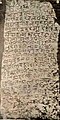
[[File:Odia- Urajam inscription.jpg|150px|thumb|Urajam inscription in Old Odia, royal charter of Eastern Ganga dynasty (1051 CE)]] | |||
The history of the Odia language is divided into eras: | |||
* Proto Odia (12th century and earlier): Inscriptions from 10th century onwards provide evidence for the existence of the Old Odia language, although the earliest known inscription that actually contains Odia lines is dated to 1249 CE.<ref>{{cite book |author=B. P. Mahapatra |title=Constitutional languages |url=https://books.google.com/books?id=yU8nq-C6wnoC&pg=PA389 |year=1989 |publisher=Presses Université Laval |isbn=978-2-7637-7186-1 |page=389 |quote=Evidence of Old Oriya is found from early inscriptions dating from the 10th century onwards, while the language in the form of connected lines is found only in the inscription dated 1249 A.D.}}</ref> | |||
* Early Middle Odia (1200–1400): The earliest use of prose can be found in the ''[[Madala Panji]]'' of the [[Jagannath Temple, Puri|Jagannath Temple at Puri]], which dates back to the 12th century. Such works as ''Shishu Veda'', ''Amara Kosha'', ''Gorakha Samhita'', ''Kalasha Chautisha'', and ''Saptanga'' are written in this form of Odia.<ref name="patnaik 1989">{{cite book |last= Patnaik |first=Durga|title=Palm Leaf Etchings of Orissa |year=1989 |publisher= Abhinav Publications |place=New Delhi |isbn= 978-8170172482 |url= {{Google books |id=90_qAeMT1bwC |page=11 |plainurl=yes}} |page=11}}</ref><ref name="panda">{{cite book |last=Panda |first=Shishir |title= Medieval Orissa: A Socio-economic Study |year=1991 |publisher= Mittal Publications |place=New Delhi |isbn= 978-8170992615 |url={{Google books|id=C_LT5Q-f3YEC |page=106 |plainurl= yes}}|page=106}}</ref><ref name="patnaik 1997">{{cite book |last= Patnaik |first=Nihar |title =Economic History of Orissa |year=1997 |publisher= Indus Publishing |place=New Delhi |isbn= 978-8173870750 |url= {{Google books |id= 1AA9W9_4Z9gC |page=149 |plainurl=yes}} |page= 149}}</ref> | |||
* Middle Odia (1400–1700): [[Sarala Das]] writes the ''[[Vilanka Ramayana]]''.<ref name="Sukhdeva2002">{{cite book |author=Sukhdeva |title=Living Thoughts of the Ramayana |url={{Google books|id=BMyxwk5g3NEC&pg=PT7|plainurl=yes}}|year=2002 |publisher=Jaico Publishing House |isbn=978-81-7992-002-2 |pages=7}}</ref><ref name="Mukherjee1998">{{cite book |author=Sujit Mukherjee |title=A Dictionary of Indian Literature: Beginnings-1850 |url={{Google books|id=YCJrUfVtZxoC&pg=PA420|plainurl=yes}}|date=1998 |publisher=Orient Blackswan |isbn=978-81-250-1453-9 |pages=420}}</ref> Towards the 16th century, poets emerged around the [[Vaishnavism|Vaishnava]] leader [[Acyutananda|Achyutananda]], These five poets are [[Balarama Dasa|Balaram Das]], [[Jagannatha Dasa (Odia poet)|Jagannatha Das]], Achyutananda, [[Ananta Dasa|Ananta Das]] and [[Jasobanta Dasa|Jasobanta Das]]. | |||
* Late Middle Odia (1700–1850): ''Ushabhilasa'' of Sisu Sankara Das, the ''Rahasya Manjari'' of Deba Durlabha Dasa and the ''Rukmini Bibha'' of Kartika Dasa were written. A new form of metrical epic-poems (called ''Chhanda-Kabya'') evolved during the beginning of the 17th century when Ramachandra Pattanayaka wrote ''Haravali.'' [[Upendra Bhanja]] took a leading role in this period- his creations ''Baidehisha Bilasa'', ''Koti Brahmanda Sundari'', ''Labanyabati'' were landmarks in Odia Literature. [[Dinakrushna Das]]'s ''Rasokallola'' and [[Abhimanyu Samantasinhara|Abhimanyu Samanta Singhara]]'s ''Bidagdha Chintamani'' are prominent Kavyas of this time. Four major poets emerged in the end of the era are [[Baladeba Ratha|Baladeba Rath]], [[Bhima Bhoi]], [[Brajanath Badajena]] and Gopala Krushna Pattanaik. | |||
* Modern Odia (1850 till present day): The first Odia printing typeset was cast in 1836 by the Christian missionaries which made a great revolution in Odia literature and language. | |||
===Charyapada of 8th Century and its affinity with Odia=== | |||
The beginning of Odia poet coincides with the development of ''Charya sahitya'', the literature started by [[Vajrayana]] Buddhist poets such as in the [[Charyapada]]. This literature was written in a specific metaphor called [[twilight language]] and prominent poets included [[Luipa]], [[Tilopa]] and [[Kanha (poet)|Kanha]]. Quite importantly, the [[raga]]s that are mentioned for singing the Charyapadas are found abundantly in later Odia literature. | |||
===Poet Jayadeva's literary contribution=== | |||
[[Jayadeva]] was a Sanskrit poet. He was born in an [[Utkala Brahmin]] family of Puri in circa 1200 CE. He is most known for his composition, the epic poem [[Gita Govinda]], which depicts the divine love of the Hindu deity Krishna and his consort, Radha, and is considered an important text in the Bhakti movement of Hinduism. About the end of the 13th century and the beginning of the 14th, the influence of [[Works of Jayadeva|Jayadeva's literary contribution]] changed the pattern of versification in Odia.{{Citation needed|date=May 2011}} | |||
==Geographical distribution== | |||
===India=== | |||
Odia is mainly spoken in the state of Odisha, but there are significant Odia-speaking populations in the neighbouring states, such as [[Andhra Pradesh]], [[Madhya Pradesh]], [[Jharkhand]], [[West Bengal]] and [[Chhattisgarh]].<ref>{{cite book |author=James Minahan |title=Ethnic Groups of South Asia and the Pacific: An Encyclopedia |url=https://books.google.com/books?id=abNDLZQ6quYC&pg=PA233 |year=2012 |publisher=ABC-CLIO |isbn=978-1-59884-659-1 |page=233}}</ref> | |||
Due to the increasing migration of labour, the west Indian state of [[Gujarat]] also has a significant population of Odia speakers.<ref name="The Times of India 2003">{{cite web | title=A Little Orissa in the heart of Surat – Ahmedabad News | website=The Times of India | date=2003-05-18 | url=https://timesofindia.indiatimes.com/city/ahmedabad/A-Little-Orissa-in-the-heart-of-Surat/articleshow/46707510.cms | access-date=2019-07-12}}</ref> Significant numbers of Odia speakers can also be found in the cities of [[Vishakhapatnam]], [[Hyderabad, India|Hyderabad]], [[Pondicherry (city)|Pondicherry]], [[Bangalore]], [[Chennai]], [[Goa]], [[Mumbai]], [[Raipur]], [[Jamshedpur]], [[Baroda]], [[Ahmedabad]], [[New Delhi]], [[Guwahati]], [[Shillong]], [[Pune]], [[Gurgaon]], [[Jammu]] and [[Silvassa]]<ref>{{cite book|author1=Danesh Jain|author2=George Cardona|title=The Indo-Aryan Languages|url=https://books.google.com/books?id=OtCPAgAAQBAJ&pg=PA445|year=2007|publisher=Routledge|isbn=978-1-135-79711-9|page=445}}</ref> According to 2011 census, 3.1% of Indians in India are Odia speakers,<ref>{{cite web |title=Number of Odia speaking people declines: Census report |url=https://sambadenglish.com/number-of-odia-speaking-people-declines-census-report/ |website=sambad |date=18 July 2018 |publisher=sambad |access-date=24 March 2020}}</ref> of which 93% belong to Odisha. | |||
===Foreign countries=== | |||
The Odia diaspora constitute a sizeable number in several countries around the world, totalling the number of Odia speakers on a global scale to 50 million.<ref name="Encyclopedia Britannica">{{cite web | title=Oriya language | website=Encyclopedia Britannica | url=https://www.britannica.com/topic/Oriya-language | access-date=2020-07-02|quote=Oriya language, also spelled Odia, Indo-Aryan language with some 50 million speakers.}}</ref><ref name="Anthropology2003">{{cite book |author= Institute of Social Research and Applied Anthropology |title= Man and Life |url={{Google books |id=DJGAAAAAMAAJ |plainurl= yes}} |access-date=31 July 2012 |year=2003 |publisher= Institute of Social Research and Applied Anthropology |volume=29 }}</ref>{{page needed|date=March 2018}}{{qn|date=March 2018}} It has a significant presence in eastern countries such as [[Thailand]], [[Indonesia]], mainly carried by the [[sadhaba]], ancient traders from Odisha who carried the language along with the culture during the [[Maritime history of Odisha|old-day trading]],<ref name="Behera2002">{{cite book |author= Subhakanta Behera |title= Construction of an identity discourse: Oriya literature and the Jagannath cult (1866–1936) |url= {{Google books |id=hbVjAAAAMAAJ |plainurl=yes}} |access-date= 31 July 2012 |year=2002 |publisher= Munshiram Manoharlal Publishers }}</ref> and in western countries such as the [[United States]], [[Canada]], [[Australia]] and [[England]]. The language has also spread to [[Burma]], [[Malaysia]], [[Fiji]], [[Mauritius]], [[Sri Lanka]] and [[Middle East]] countries.<ref name="Anthropology2003" /> It is spoken as a native tongue by the [[Bonaz]] community in northeastern [[Bangladesh]]. | |||
== Standardization and dialects == | |||
===Major varieties or dialects=== | |||
* [[Baleswari Odia|Baleswari]] (Northern Odia): Spoken in [[Balasore district|Baleswar]], [[Bhadrak district|Bhadrak]], [[Mayurbhanj]] and [[Kendujhar district|Kendujhar]] districts of Odisha and southern parts of undivided [[Midnapore]] of West Bengal. The variant spoken in [[Balasore district|Baleswar]] is called ''Baleswaria''. | |||
* Kataki (Central Odia):<ref>{{Cite web|url=https://glottolog.org/resource/languoid/id/mugh1242|title=Mughalbandi|website=Glottolog}}</ref> Spoken in [[Cuttack district|Cuttack]], [[Jajpur district|Jajpur]], [[Jagatsinghpur district|Jagatsinghpur]], [[Kendrapara district|Kendrapara]], [[Dhenkanal district|Dhenkanal]], [[Anugul district|Anugul]], [[Debagarh district|Debagarh]] and parts of [[Boudh district|Boudh]] districts of Odisha with regional variations. The Cuttack variant is known as Katakia. | |||
:*Khurda Odia (standard register dialect): Spoken in [[Khordha district|Khordha]], [[Puri district|Puri]] and [[Nayagarh district|Nayagarh]] districts of Odisha.<ref name="dsal1">{{cite web |title=LSI Vol-5 part-2 |publisher=dsal |page=369, 382 |url=http://dsal.uchicago.edu/books/lsi/lsi.php?volume=5-2&pages=466#page/398/mode/1up}}</ref> | |||
* [[Ganjami Odia|Ganjami]] (Southern Odia): Spoken in [[Ganjam district|Ganjam]], [[Gajapati district|Gajapati]] and parts of [[Kandhamal district|Kandhamal]] districts of Odisha, [[Srikakulam district|Srikakulam]] district of Andhra Pradesh. The variant spoken in [[Berhampur]] is also known as ''Berhampuria''. | |||
* Sundargadi (Northwestern Odia): Spoken in [[Sundergarh district|Sundergarh]] and parts of adjoining districts of Odisha and the districts of [[Jashpur district|Jashpur]] of Chhattisgarh and [[Simdega district|Simdega]] of Jharkhand.<ref>{{Cite web|url=https://glottolog.org/resource/languoid/id/nort2659|title=Northwestern Oriya|website=Glottolog}}</ref><ref name="dsal">{{cite web |title=LSI Vol-5 part-2 |publisher=dsal |page=403 |url=http://dsal.uchicago.edu/books/lsi/lsi.php?volume=5-2&pages=466#page/420/mode/1up}}</ref> | |||
* [[Sambalpuri language|Sambalpuri]] (Western Odia): It is the western dialect/variety of Odia language with the core variant spoken in [[Sambalpur district|Sambalpur]], [[Jharsuguda district|Jharsuguda]], [[Bargarh district|Bargarh]], [[Balangir district|Balangir]] and [[Subarnapur district|Subarnapur]] districts, along with parts of [[Nuapada district|Nuapada]] and western parts of [[Boudh district|Boudh]] districts of Odisha. Also spoken in parts of [[Raigarh district|Raigarh]], [[Mahasamund district|Mahasamund]] and [[Raipur district|Raipur]] districts of Chhattisgarh. A 2006 survey of the varieties spoken in four villages in Western Odisha found out that Sambalpuri share three-quarters of their basic vocabulary with Standard Odia and has 75%–76% lexical similarity with Standard Odia.{{sfn|Mathai|Kelsall|2013|pp=4–6|ps =. The precise figures are 75{{ndash}}76%. This was based on comparisons of 210-item wordlists.}}<ref>{{Cite web|url=https://www.ethnologue.com/language/spv|title=Sambalpuri|website=Ethnologue}}</ref><ref>{{cite web |last1=CENSUS OF INDIA 2011 |title=LANGUAGE |url=http://censusindia.gov.in/2011Census/C-16_25062018_NEW.pdf |publisher=Government of India |page=7}}</ref> | |||
* [[Desia language|Desia]] (Southwestern Odia/Koraputi): Spoken in southwestern districts of [[Nabarangpur district|Nabarangpur]], [[Rayagada district|Rayagada]], [[Koraput district|Koraput]], [[Malkangiri district|Malkangiri]] and southern parts of [[Kalahandi district|Kalahandi]] districts of Odisha and in the hilly regions of [[Vishakhapatnam]] and, [[Vizianagaram]] districts of Andhra Pradesh.<ref name="Census 2011"> | |||
{{cite web |last1=CENSUS OF INDIA 2011 |title=LANGUAGE |url=http://censusindia.gov.in/2011Census/C-16_25062018_NEW.pdf |publisher=Government of India |page=7}}</ref> A variant spoken in [[Koraput]] is also known as ''Koraputia''. | |||
'''Minor regional dialects''' | |||
* Medinipuri Odia (Medinipuria): Spoken in parts of undivided [[Midnapore]] district of West Bengal.<ref>{{Cite web|url=https://glottolog.org/resource/languoid/id/midn1239|title=Midnapore Oriya|website=Glottolog}}</ref> | |||
* [[Singhbhumi Odia]]: Spoken in parts of [[East Singhbhum]], [[West Singhbhum]] and [[Saraikela-Kharsawan]] district of [[Jharkhand]]. | |||
* [[Phulbani Odia]]: spoken in [[Kandhamal]] and in parts of [[Boudh district]]. | |||
* [[Kalahandia|Kalahandia Odia]]: Variant of Odia spoken in [[Kalahandi district|Kalahandi]] and [[Nuapada district]]s and neighbouring districts of [[Chhattisgarh]]. | |||
* Debagadia Odia: Variant of Odia spoken in [[Debagarh district]] and the adjoining [[Rairakhol]] area. It is known as Debgadia or Deogarhia. | |||
===Major Tribal and Community dialects/Sociolects=== | |||
* [[Bodo Parja language|Bodo Parja]] (Jharia): dialect of Odia spoken by the Parang Proja tribe of [[Koraput district|Koraput]] and neighbouring districts of Odisha. | |||
* [[Bhatri language|Bhatri]]: variety spoken by the [[Bhottada]] tribe in Odisha and Chhattisgarh.<ref>{{cite web|url=https://www.ethnologue.com/language/bgw |title=Bhatri |publisher=Ethnologue |access-date=2021-08-20 }}</ref><ref>Masica (1991:16)</ref> | |||
* [[Reli language|Reli]]: dialect of Odia spoken by the [[Reli people]] in the [[Koraput district|Koraput]] and [[Rayagada district]]s of southern Odisha and bordering districts of Andhra Pradesh. | |||
* [[Kupia language|Kupia]]: dialect of Odia spoken by [[Valmiki (caste)|Valmiki]] people of Odisha and Andhra Pradesh, mostly in [[Malkangiri district|Malkangiri]], [[Koraput district|Koraput]], [[Srikakulam]], [[Vizianagaram]], [[East Godavari district|East Godavari]] and [[Visakhapatnam district|Visakhapatnam]] districts. | |||
'''Minor sociolects''' | |||
Odia minor dialects include:<ref>{{cite book |url= https://books.google.com/books?id=qxxnZ4XxUbsC&pg=PA53 |title= Tribal and Indigenous People of India: Problems and Prospects |authors= Rabindra Nath Pati, Jagannatha Dash |publisher= APH PUBLISHING CORPORATION |year=2002 |isbn= 81-7648-322-2 |location= New Delhi |pages= 51–59}}</ref> | |||
* Bhuyan: Tribal dialect spoken in Northern Odisha. | |||
* Kurmi: Northern Odisha and Southwest Bengal. | |||
* Sounti: Spoken in Northern Odisha and Southwest Bengal. | |||
* Bathudi: Spoken in Northern Odisha and Southwest Bengal. | |||
* Kondhan: Tribal dialect spoken in Western Odisha. | |||
* Agharia: Spoken by [[Agharia]] community in districts of Western Odisha and Chhattisgarh. | |||
* Bhulia: Spoken by [[Bhulia]] community in districts of Western Odisha and Chhattisgarh. | |||
* Matia: Tribal dialect spoken in Southern Odisha. | |||
==Phonology== | |||
[[File:Odia phonology.webm|thumb|Pronunciation of [[Odia alphabet]].]] | |||
Odia has 30 consonant phonemes, 2 semivowel phonemes and 6 vowel phonemes. | |||
{|class="wikitable" style="text-align:center" | |||
|+Odia vowel phonemes<ref name=":0">{{harvcoltxt|Ray|2003|p=526}}</ref><ref name="cardona">{{cite book |last1=Cardona |first1=George |last2=Jain |first2=Danesh |title=The Indo-Aryan Languages |date=2003 |page=488|isbn=9781135797119 |url=https://books.google.com/books?id=OtCPAgAAQBAJ}}</ref> | |||
! ||[[Front vowel|Front]]||[[Central vowel|Central]]||[[Back vowel|Back]] | |||
|- | |||
![[High vowel|High]] | |||
|{{IPA link|i}}|| ||{{IPA link|u}} | |||
|- | |||
![[Mid vowel|Mid]] | |||
|{{IPA link|e}}|| ||{{IPA link|o}} | |||
|- | |||
![[Low vowel|Low]] | |||
| ||{{IPA link|ä|a}}||{{IPA link|ɔ}} | |||
|} | |||
Length is not contrastive. All vowels except {{IPA|/o/}} have [[nasal vowel|nasal]] counterparts, but these are not always contrastive. Final vowels are pronounced in the standard language, e.g. Odia {{IPA|[pʰulɔ]}} contra [[Bengali language|Bengali]] {{IPA|[pʰul]}} "flower".<ref>{{harvcoltxt|Ray|2003|pp=488–489}}</ref> | |||
{|class="wikitable" style=text-align:center | |||
|+Odia consonant phonemes<ref name=":0" /><ref>Neukom, Lukas; Patnaik, Manideepa (2003)</ref> | |||
! colspan="2"| | |||
! [[Labial consonants|Labial]] | |||
! [[Alveolar consonants|Alveolar]]<br>/[[Dental consonants|Dental]] | |||
! [[Retroflex consonants|Retroflex]] | |||
! [[Postalveolar consonant|Post alv.]]/<br>[[Palatal consonants|Palatal]] | |||
! [[Velar consonants|Velar]] | |||
! [[Glottal consonants|Glottal]] | |||
|- | |||
! colspan="2"| [[Nasal consonant|Nasal]] | |||
| {{IPAlink|m}} | |||
| {{IPAlink|n}} | |||
| {{IPAlink|ɳ}} | |||
| | |||
| {{IPAlink|ŋ}} | |||
| | |||
|- | |||
! rowspan="4"| [[Stop consonant|Stop]]/<br>[[Affricate consonant|Affricate]] | |||
! {{small|[[Voicelessness|voiceless]]}} | |||
| {{IPAlink|p}} | |||
| {{IPAlink|t̪|t}} | |||
| {{IPAlink|ʈ}} | |||
| {{IPAlink|tʃ}} | |||
| {{IPAlink|k}} | |||
| | |||
|- | |||
! {{small|[[Aspirated consonant|voiceless aspirated]]}} | |||
| {{IPAlink|pʰ}} | |||
| {{IPAlink|tʰ}} | |||
| {{IPAlink|ʈʰ}} | |||
| {{IPAlink|tʃʰ}} | |||
| {{IPAlink|kʰ}} | |||
| | |||
|- | |||
! {{small|[[Voice (phonetics)|voiced]]}} | |||
| {{IPAlink|b}} | |||
| {{IPAlink|d̪|d}} | |||
| {{IPAlink|ɖ}} | |||
| {{IPAlink|dʒ}} | |||
| {{IPAlink|ɡ}} | |||
| | |||
|- | |||
! {{small|[[Murmured voice|voiced aspirated]]}} | |||
| {{IPAlink|bʱ}} | |||
| {{IPAlink|dʱ}} | |||
| {{IPAlink|ɖʱ}} | |||
| {{IPAlink|dʒʱ}} | |||
| {{IPAlink|ɡʱ}} | |||
| | |||
|- | |||
! colspan="2"| [[Fricative consonant|Fricative]] | |||
| | |||
| {{IPAlink|s}} | |||
| | |||
| | |||
| | |||
| {{IPAlink|ɦ}} | |||
|- | |||
! colspan="2"|[[Trill consonant|Trill]]/[[Flap consonant|Flap]] | |||
| | |||
| {{IPAlink|ɾ}} | |||
| {{IPAlink|ɽ}}~{{IPA link|ɽʰ}} | |||
| | |||
| | |||
| | |||
|- | |||
! colspan="2"|[[Lateral consonant#Approximants|Lateral approximant]] | |||
| | |||
| {{IPAlink|l}} | |||
| {{IPA link|ɭ}} | |||
| | |||
| | |||
| | |||
|- | |||
! colspan="2" |[[Approximant consonant|Approximant]] | |||
|{{IPA link|w}} | |||
| | |||
| | |||
|{{IPA link|j}} | |||
| | |||
| | |||
|} | |||
Odia retains the [[voiced retroflex lateral approximant]] {{IPAblink|ɭ}},<ref>Masica (1991:97)</ref> among the Eastern Indo-Aryan languages. The [[Voiced velar nasal|velar nasal]] {{IPAblink|ŋ}} is given phonemic status in some analyses, as it occurs also as a Final velar nasal [ŋ]. E.g.- ଏବଂ- ebaṅ (ebɔŋ)<ref>{{cite book|author1=Danesh Jain|author2=George Cardona|title=The Indo-Aryan Languages|url=https://books.google.com/books?id=OtCPAgAAQBAJ&pg=PA445|year=2007|publisher=Routledge|isbn=978-1-135-79711-9|page=490}}</ref> Nasals assimilate for [[place of articulation|place]] in nasal–stop clusters. {{IPA|/ɖ ɖʱ/}} have the [[flap consonant|flap]] [[allophone]]s {{IPA|[ɽ ɽʱ]}} in [[intervocalic]] position and in final position (but not at [[morpheme]] boundaries). Stops are sometimes [[aspiration (phonetics)|deaspirated]] between {{IPA|/s/}} and a vowel or an [[open syllable]] {{IPA|/s/}}+vowel and a vowel. Some speakers distinguish between single and [[geminate consonant]]s.<ref>{{harvcoltxt|Ray|2003|pp=490–491}}</ref> | |||
==Grammar== | |||
{{Main|Odia grammar}} | |||
Odia retains most of the [[Grammatical case|cases]] of [[Sanskrit]], though the nominative and vocative have merged (both without a separate marker), as have the accusative and dative. There are three genders (masculine, feminine and neuter) and two grammatical numbers (singular and plural). However there are no grammatical gender. The usage of gender is semantic, i.e. to differentiate male member of a class from female member.<ref name="Jain Cardona 2007 p. 450">{{cite book | last1=Jain | first1=D. | last2=Cardona | first2=G. | title=The Indo-Aryan Languages | publisher=Taylor & Francis | series=Routledge language family series | year=2007 | isbn=978-1-135-79711-9 | url=https://books.google.com/books?id=OtCPAgAAQBAJ&pg=PA450 | access-date=2020-08-01 | page=450}}</ref> There are three true tenses (present, past and future), others being formed with auxiliaries. | |||
==Writing system== | |||
{{main|Odia alphabet|Odia braille}} | |||
[[File:Evolution of Oriya Language.jpg|thumb|A detailed chart depicting evolution of the Odia script as displayed in a museum at [[Ratnagiri, Odisha]]]] | |||
The Odia language uses Odia script (also known as the Kalinga script). It is a Brahmic script used to write primarily Odia language and others like Sanskrit and several minor regional languages. The script has developed over nearly 1000 years with the earliest trace of the script being dated to 1051 AD. It is a syllabic alphabet or an abugida, wherein all consonants have an inherent vowel embedded within. | |||
Odia is a syllabic alphabet or an abugida wherein all consonants have an inherent vowel embedded within. Diacritics (which can appear above, below, before, or after the consonant they belong to) are used to change the form of the inherent vowel. When vowels appear at the beginning of a syllable, they are written as independent letters. Also, when certain consonants occur together, special conjunct symbols are used to combine the essential parts of each consonant symbol. | |||
The curved appearance of the Odia script is a result of the practice of writing on palm leaves, which have a tendency to tear if you use too many straight lines.<ref name="Caldwell 1998 p. 125">{{cite book | last=Caldwell | first=R. | title=A Comparative Grammar of the Dravidian Or South-Indian Family of Languages | publisher=Asian Educational Services | year=1998 | isbn=978-81-206-0117-8 | url=https://books.google.com/books?id=5PPCYBApSnIC&pg=PA519 | access-date=2020-05-26 | page=125}}</ref> | |||
=== Odia Script === | |||
{|class="wikitable nounderlines Unicode" style="border-collapse:collapse;background:#FFFFFF;text-align:center" | |||
|+ '''Vowels''' {{lang|or|ସ୍ୱର ବର୍ଣ୍ଣ}} | |||
|- | |||
|| <span style="font-size:150%">{{lang|or|ଅ}}</span> | |||
|| <span style="font-size:150%">{{lang|or|ଆ}}</span> | |||
|| <span style="font-size:150%">{{lang|or|ଇ}}</span> | |||
|| <span style="font-size:150%">{{lang|or|ଈ}}</span> | |||
|| <span style="font-size:150%">{{lang|or|ଉ}}</span> | |||
|| <span style="font-size:150%">{{lang|or|ଊ}}</span> | |||
|| <span style="font-size:150%">{{lang|or|ଋ}}</span> | |||
|| <span style="font-size:150%">{{lang|or|ୠ}}</span> | |||
|| <span style="font-size:150%">{{lang|or|ଌ}}</span> | |||
|| <span style="font-size:150%">{{lang|or|ୡ}}</span> | |||
|| <span style="font-size:150%">{{lang|or|ଏ}}</span> | |||
|| <span style="font-size:150%">{{lang|or|ଐ}}</span> | |||
|| <span style="font-size:150%">{{lang|or|ଓ}}</span> | |||
|| <span style="font-size:150%">{{lang|or|ଔ}}</span> | |||
|} | |||
{|class="wikitable nounderlines Unicode" style="border-collapse:collapse;background:#FFFFFF;text-align:center" | |||
|+ '''Consonants''' {{lang|or|ବ୍ୟଞ୍ଜନ ବର୍ଣ୍ଣ}} | |||
|- | |||
|| <span style="font-size:150%">{{lang|or|କ}}</span> | |||
|| <span style="font-size:150%">{{lang|or|ଖ}}</span> | |||
|| <span style="font-size:150%">{{lang|or|ଗ}}</span> | |||
|| <span style="font-size:150%">{{lang|or|ଘ}}</span> | |||
|| <span style="font-size:150%">{{lang|or|ଙ}}</span> | |||
|- | |||
|| <span style="font-size:150%">{{lang|or|ଚ}}</span> | |||
|| <span style="font-size:150%">{{lang|or|ଛ}}</span> | |||
|| <span style="font-size:150%">{{lang|or|ଜ}}</span> | |||
|| <span style="font-size:150%">{{lang|or|ଝ}}</span> | |||
|| <span style="font-size:150%">{{lang|or|ଞ}}</span> | |||
|- | |||
|| <span style="font-size:150%">{{lang|or|ଟ}}</span> | |||
|| <span style="font-size:150%">{{lang|or|ଠ}}</span> | |||
|| <span style="font-size:150%">{{lang|or|ଡ}}</span> | |||
|| <span style="font-size:150%">{{lang|or|ଢ}}</span> | |||
|| <span style="font-size:150%">{{lang|or|ଣ}}</span> | |||
|- | |||
|| <span style="font-size:150%">{{lang|or|ତ}}</span> | |||
|| <span style="font-size:150%">{{lang|or|ଥ}}</span> | |||
|| <span style="font-size:150%">{{lang|or|ଦ}}</span> | |||
|| <span style="font-size:150%">{{lang|or|ଧ}}</span> | |||
|| <span style="font-size:150%">{{lang|or|ନ}}</span> | |||
|- | |||
|| <span style="font-size:150%">{{lang|or|ପ}}</span> | |||
|| <span style="font-size:150%">{{lang|or|ଫ}}</span> | |||
|| <span style="font-size:150%">{{lang|or|ବ}}</span> | |||
|| <span style="font-size:150%">{{lang|or|ଭ}}</span> | |||
|| <span style="font-size:150%">{{lang|or|ମ}}</span> | |||
|- | |||
|| <span style="font-size:150%">{{lang|or|ଯ}}</span> | |||
|| <span style="font-size:150%">{{lang|or|ୟ}}</span> | |||
|| <span style="font-size:150%">{{lang|or|ର}}</span> | |||
|| <span style="font-size:150%">{{lang|or|ଳ}}</span> | |||
|| <span style="font-size:150%">{{lang|or|ଲ}}</span> | |||
|| <span style="font-size:150%">{{lang|or|ୱ}}</span> | |||
|- | |||
|| <span style="font-size:150%">{{lang|or|ଶ}}</span> | |||
|| <span style="font-size:150%">{{lang|or|ଷ}}</span> | |||
|| <span style="font-size:150%">{{lang|or|ସ}}</span> | |||
|| <span style="font-size:150%">{{lang|or|ହ}}</span> | |||
|- | |||
|| <span style="font-size:150%">{{lang|or|ଡ଼}}</span> | |||
|| <span style="font-size:150%">{{lang|or|ଢ଼}}</span> | |||
|| <span style="font-size:150%">{{lang|or|କ୍ଷ}}</span> | |||
|} | |||
{|class="wikitable nounderlines Unicode" style="border-collapse:collapse;background:#FFFFFF;text-align:center" | |||
|+ '''Diacritics''' | |||
|- | |||
|| <span style="font-size:150%">{{lang|or|ା}}</span> | |||
|| <span style="font-size:150%">{{lang|or|ି}}</span> | |||
|| <span style="font-size:150%">{{lang|or|ୀ}}</span> | |||
|| <span style="font-size:150%">{{lang|or|ୁ}}</span> | |||
|| <span style="font-size:150%">{{lang|or|ୂ}}</span> | |||
|| <span style="font-size:150%">{{lang|or|ୃ}}</span> | |||
|| <span style="font-size:150%">{{lang|or|ୄ}}</span> | |||
|| <span style="font-size:150%">{{lang|or|ୢ}}</span> | |||
|| <span style="font-size:150%">{{lang|or|ୣ}}</span> | |||
|| <span style="font-size:150%">{{lang|or|େ}}</span> | |||
|| <span style="font-size:150%">{{lang|or|ୈ}}</span> | |||
|| <span style="font-size:150%">{{lang|or|ୋ}}</span> | |||
|| <span style="font-size:150%">{{lang|or|ୌ}}</span> | |||
|} | |||
{|class="wikitable nounderlines Unicode" style="border-collapse:collapse;background:#FFFFFF;text-align:center" | |||
|+ '''Signs, Punctuation''' | |||
|- | |||
|| <span style="font-size:150%">{{lang|or|ଂ}}</span> | |||
|| <span style="font-size:150%">{{lang|or|ଃ}}</span> | |||
|| <span style="font-size:150%">{{lang|or|ଁ}}</span> | |||
|| <span style="font-size:150%">{{lang|or|୍}}</span> | |||
|| <span style="font-size:150%">{{lang|or|଼}}</span> | |||
|| <span style="font-size:150%">{{lang|or|।}}</span> | |||
|| <span style="font-size:150%">{{lang|or|॥}}</span> | |||
|| <span style="font-size:150%">{{lang|or|ଽ}}</span> | |||
|| <span style="font-size:150%">{{lang|or|ଓଁ}}</span> | |||
|| <span style="font-size:150%">{{lang|or|୰}}</span> | |||
|} | |||
{|class="wikitable nounderlines Unicode" style="border-collapse:collapse;background:#FFFFFF;text-align:center" | |||
|+ '''Numbers''' {{lang|or|ସଂଖ୍ୟା}} | |||
|- | |||
|| <span style="font-size:150%">{{lang|or|୦}}</span> | |||
|| <span style="font-size:150%">{{lang|or|୧}}</span> | |||
|| <span style="font-size:150%">{{lang|or|୨}}</span> | |||
|| <span style="font-size:150%">{{lang|or|୩}}</span> | |||
|| <span style="font-size:150%">{{lang|or|୪}}</span> | |||
|| <span style="font-size:150%">{{lang|or|୫}}</span> | |||
|| <span style="font-size:150%">{{lang|or|୬}}</span> | |||
|| <span style="font-size:150%">{{lang|or|୭}}</span> | |||
|| <span style="font-size:150%">{{lang|or|୮}}</span> | |||
|| <span style="font-size:150%">{{lang|or|୯}}</span> | |||
|} | |||
==Literature== | |||
{{main|Odia literature}} | |||
The earliest literature in Odia language can be traced to the Charyapadas composed in the 7th to 9th centuries.<ref>{{Cite book|title = Medieval Indian Literature: Surveys and selections|url = {{Google books|id=KYLpvaKJIMEC|plainurl=yes}}|publisher = Sahitya Akademi|date = 1997-01-01|isbn = 9788126003655}}</ref> Before Sarala Das, the most important works in Odia literature are the Shishu Veda, Saptanga, Amara Kosha, Rudrasudhanidhi, Kesaba Koili, Kalasha Chautisha etc.<ref name="patnaik 1989" /><ref name="panda" /><ref name="patnaik 1997" /> In the 14th century, the poet [[Sarala Das]] wrote the Sarala Mahabharata, Chandi Purana, and Vilanka Ramayana, in praise of the goddess [[Durga]]. Rama-Bibaha, written by Arjuna Dasa, was the first long poem written in the Odia language. | |||
The following era is termed the [[Odia Literature|Panchasakha Age]] and stretches until the year 1700. The period begins with the writings of [[Shri Chaitanya Mahaprabhu]] whose Vaishnava influence brought in a new evolution in Odia literature. Notable religious works of the Panchasakha Age include those of [[Balarama Dasa]], [[Jagannatha Dasa (Odia poet)|Jagannatha Dasa]], Yasovanta, Ananta and [[Acyutananda]]. The authors of this period mainly translated, adapted, or imitated Sanskrit literature. Other prominent works of the period include the Usabhilasa of Sisu Sankara Dasa, the Rahasya-manjari of Debadurlabha Dasa and the Rukmini-bibha of Kartikka Dasa. A new form of novels in verse evolved during the beginning of the 17th century when Ramachandra Pattanayaka wrote Haravali. Other poets like Madhusudana, [[Bhima Bhoi]], Dhivara, Sadasiva and Sisu Isvara-dasa composed another form called [[Kāvya|kavyas]] (long poems) based on themes from Puranas, with an emphasis on plain, simple language. | |||
However, during the [[Odia literature#Age of Upendra Bhanja|Bhanja Age]] (also known as the Age of Riti Yuga) beginning with turn of the 18th century, verbally tricky Odia became the order of the day. Verbal jugglery, eroticism characterise the period between 1700 and 1850, particularly in the works of the era's eponymous poet [[Upendra Bhanja]] (1670–1720). Bhanja's work inspired many imitators of which the most notable is Arakshita Das. Family chronicles in prose relating religious festivals and rituals are also characteristic of the period. | |||
The first Odia printing typeset was cast in 1836 by Christian missionaries. Although the handwritten Odia script of the time closely resembled the [[Bengali alphabet|Bengali]] and [[Assamese alphabet|Assamese scripts]], the one adopted for the printed typesets was significantly different, leaning more towards the [[Tamil script]] and [[Telugu script]]. [[Amos Sutton]] produced an Oriya Bible (1840), Oriya Dictionary (1841–43) and<ref>Biswamoy Pati Situating social history: Orissa, 1800–1997 p30</ref> ''An Introductory Grammar of Oriya'' (1844).<ref>The Encyclopaedia of Indian Literature (Volume Two) (Devraj To Jyoti): 2 p1030 ed. Amaresh Datta – 2006 "Amos Sutton also prepared a dictionary named Sadhu bhasharthabhidhan, a vocabulary of current Sanskrit terms with Odia definitions which was also printed in Odisha Mission Press in 1844."</ref> | |||
Odia has a rich literary heritage dating back to the thirteenth century. [[Sarala Dasa]] who lived in the fourteenth century is known as the [[Vyasa]] of Odisha. He translated the [[Mahabharata]] into Odia. In fact, the language was initially standardised through a process of translating classical Sanskrit texts such as the Mahabharata, [[Ramayana]] and Srimad Bhagabata Gita. The translation of the Srimad Bhagabata Gita by Jagannatha Dasa was particularly influential on the written form of the language. Odia has had a strong tradition of poetry, especially [[worship|devotional]] poetry. | |||
Other eminent Odia poets include [[Kabi Samrat Upendra Bhanja]] and [[Kavisurya Baladev Rath|Kabisurya Baladev Ratha]]. | |||
Classical Odia literature is inextricably tied to music, and most of it was written for singing, set to traditional Odissi ragas and talas. These compositions form the core of the system of [[Odissi music]], the classical music of the state. | |||
Prose in the language has had a late development. | |||
Three great poets and prose writers, [[Kabibar Radhanath Ray]] (1849–1908), [[Fakir Mohan Senapati]] (1843–1918) and [[Madhusudan Rao]] (1853–1912) made Odia their own. They brought in a modern outlook and spirit into Odia literature. Around the same time the modern drama took birth in the works of Rama Sankara Ray beginning with Kanci-Kaveri (1880). | |||
Among the contemporaries of Fakir Mohan, four novelists deserve special mention: Aparna Panda, Mrutyunjay Rath, Ram Chandra Acharya and Brajabandhu Mishra. Aparna Panda's Kalavati and Brajabandhu Mishra's Basanta Malati were both published in 1902, the year in which Chha Mana Atha Guntha came out in the book form. Brajabandhu Mishra's Basanta Malati, which came out from Bamanda, depicts the conflict between a poor but highly educated young man and a wealthy and highly egoistic young woman whose conjugal life is seriously affected by ego clashes. Through a story of union, separation and reunion, the novelist delineates the psychological state of a young woman in separation from her husband and examines the significance of marriage as a social institution in traditional Indian society. Ram Chandra Acharya wrote about seven novels during 1924–1936. All his novels are historical romances based on the historical events in Rajasthan, Maharashtra and Odisha. Mrutyunjay Rath's novel, Adbhuta Parinama, published in 1915, centres round a young Hindu who gets converted to Christianity to marry a Christian girl. | |||
One of the great writers in the 19th century was Pandit [[Krushna Chandra Kar]] (1907–1995) from Cuttack, who wrote many books for children like ''Pari Raija, Kuhuka Raija, Panchatantra, Adi Jugara Galpa Mala'', etc. He was last felicitated by the Sahitya Academy in the year 1971–72 for his contributions to Odia literature, development of children's fiction, and biographies. | |||
One of the prominent writers of the 19th and 20th centuries was Muralidhar Mallick (1927–2002). His contribution to Historical novels is beyond words. He was last felicitated by the Sahitya Academy in the year 1998 for his contributions to Odia literature. His son Khagendranath Mallick (born 1951) is also a writer. His contribution towards poetry, criticism, essays, story and novels is commendable. He was the former President of Utkal Kala Parishad and also former President of Odisha Geeti Kabi Samaj. Presently he is a member of the Executive Committee of Utkal Sahitya Samaj. Another illustrious writer of the 20th century was Mr. Chintamani Das. A noted academician, he was written more than 40 books including fiction, short stories, biographies and storybooks for children. Born in 1903 in Sriramachandrapur village under Satyabadi block, Chintamani Das is the only writer who has written biographies on all the five 'Pancha Sakhas' of Satyabadi namely Pandit Gopabandhu Das, Acharya Harihara, Nilakantha Das, Krupasindhu Mishra and Pandit Godabarisha. Having served as the Head of the Odia department of Khallikote College, Berhampur, Chintamani Das was felicitated with the Sahitya Akademi Samman in 1970 for his outstanding contribution to Odia literature in general and Satyabadi Yuga literature in particular. Some of his well-known literary creations are 'Bhala Manisha Hua', 'Manishi Nilakantha', 'Kabi Godabarisha', 'Byasakabi Fakiramohan', 'Usha', 'Barabati'. | |||
20th century writers in Odia include Pallikabi [[Nanda Kishore Bal]], [[Gangadhar Meher]], Chintamani Mahanti and [[Kuntala Kumari Sabat]], besides Niladri Dasa and [[Gopabandhu Das]]. The most notable novelists were Umesa Sarakara, Divyasimha Panigrahi, [[Gopala Chandra Praharaj]] and [[Kalindi Charan Panigrahi]]. Sachi Kanta Rauta Ray is the great introducer of the ultra-modern style in modern Odia poetry. Others who took up this form were Godabarisha Mohapatra, [[Mayadhar Mansingh]], [[Nityananda Mahapatra]] and Kunjabihari Dasa. Prabhasa Chandra Satpathi is known for his translations of some western classics apart from Udayanatha Shadangi, Sunanda Kara and Surendranatha Dwivedi. Criticism, essays and history also became major lines of writing in the Odia language. Esteemed writers in this field were Professor Girija Shankar Ray, Pandit Vinayaka Misra, Professor Gauri Kumara Brahma, Jagabandhu Simha and [[Harekrushna Mahatab]]. Odia literature mirrors the industrious, peaceful and artistic image of the [[Odia people]] who have offered and gifted much to the Indian civilisation in the field of art and literature. Now Writers [[Manoj Das]]'s creations motivated and inspired people towards a positive lifestyle. Distinguished prose writers of the modern period include [[Baidyanath Misra]], [[Fakir Mohan Senapati]], [[Madhusudan Das]], Godabarisha Mohapatra, Kalindi Charan Panigrahi, [[Surendra Mohanty]], [[Manoj Das]], [[Kishori Charan Das]], Gopinath Mohanty, Rabi Patnaik, Chandrasekhar Rath, Binapani Mohanty, Bhikari Rath, [[Jagadish Mohanty]], [[Sarojini Sahoo]], [[Yashodhara Mishra]], Ramchandra Behera, Padmaja Pal. But it is poetry that makes modern Odia literature a force to reckon with. Poets like [[Kabibar Radhanath Ray]], Sachidananda Routray, Guruprasad Mohanty, Soubhagya Misra, [[Ramakanta Rath]], Sitakanta Mohapatra, Rajendra Kishore Panda, Pratibha Satpathy have made significant contributions towards Indian poetry. | |||
[[Anita Desai]]'s novella, ''Translator Translated'', from her collection ''The Art of Disappearance'', features a translator of a fictive Odia short story writer; the novella contains a discussion of the perils of translating works composed in regional Indian languages into English. | |||
Four writers in Odia – [[Gopinath Mohanty]], [[Sachidananda Routray]], [[Sitakant Mahapatra]] and [[Pratibha Ray]] – have been awarded the [[Jnanpith Award|Jnanpith]], an Indian literary award. | |||
== Sample text == | |||
The following is a sample text in Odia of Article 1 of the [[Universal Declaration of Human Rights]] ({{lang|or|ମାନବିକ ଅଧିକାରର ସାର୍ବଜନୀନ ଘୋଷଣା}}): | |||
'''Odia in the Odia script''' | |||
:{{lang|or|'''ଅନୁଚ୍ଛେଦ ୧:''' ସମସ୍ତ ମଣିଷ ଜନ୍ମକାଳରୁ ସ୍ୱାଧୀନ ଏବଂ ମର୍ଯ୍ୟାଦା ଓ ଅଧିକାରରେ ସମାନ । ସେମାନଙ୍କଠାରେ ବୁଦ୍ଧି ଓ ବିବେକ ନିହିତ ଅଛି ଏବଂ ସେମାନଙ୍କୁ ପରସ୍ପର ପ୍ରତି ଭ୍ରାତୃତ୍ୱ ମନୋଭାବରେ ବ୍ୟବହାର କରିବା ଉଚିତ୍ ।}} | |||
'''Odia in [[International Alphabet of Sanskrit Transliteration|IAST]]''' | |||
:'''Anuccheda eka:''' Samasta maṇiṣa janmakāḷaru swādhīna ebaṅ marẏyādā o adhikārare samāna. Semānaṅkaṭhāre buuddhi o bibeka nihita achi ebaṅ semānaṅku paraspara prati bhrātr̥twa manobhābare byabahāra karibā ucit. | |||
'''Odia in the [[International Phonetic Alphabet|IPA]]''' | |||
:{{IPA|ɔnut͡ʃt͡ʃʰed̪ɔ ekɔ}}: {{IPA|sɔmɔst̪ɔ mɔɳisɔ d͡ʒɔnmɔkäɭɔɾu swäd̪ʱinɔ ebɔŋ mɔɾd͡ʒjäːd̪ä o ɔd̪ʱikäɾɔɾe sɔmänɔ. semän̪ɔŋkɔʈʰäɾe bud̪d̪ʱi o bibekɔ niɦit̪ɔ ɔt͡ʃʰi ebɔŋ semänɔŋku pɔɾɔspɔɾɔ pɾɔt̪i bʱɾät̪ɾut̪wɔ mɔnobʱäbɔɾe bjɔbɔɦäɾɔ kɔɾibä ut͡ʃit̪}} | |||
'''Gloss''' | |||
:'''Article 1:''' All human beings from birth are free and dignity and rights are equal. Their reason and intelligence endowed with and they towards one another in a brotherhood spirit behaviour to do should. | |||
'''Translation''' | |||
:'''Article 1:''' All human beings are born free and equal in dignity and rights. They are endowed with reason and conscience and should act towards one another in a spirit of brotherhood. | |||
==Software== | |||
Google introduced the first automated translator for Odia in 2020.<ref>{{cite web |last1=Statt |first1=Nick |title=Google Translate supports new languages for the first time in four years, including Uyghur |url=https://www.theverge.com/2020/2/26/21154417/google-translate-new-languages-support-odia-tatar-turkmen-uyghur-kinyarwanda |website=The Verge |access-date=27 February 2020 |language=en |date=26 February 2020}}</ref> | |||
Microsoft too incorporated Odia in its automated translator later that year. <ref>{{Cite web|url=https://www.microsoft.com/en-us/translator/blog/2020/08/13/odia-language-text-translation-is-now-available-in-microsoft-translator/|title = Odia Language Text Translation is Now Available in Microsoft Translator|date = 13 August 2020}}</ref> | |||
==See also== | |||
* [[Brahmic scripts]] | |||
* [[Languages of India]] | |||
* [[Languages with official status in India]] | |||
* [[Laxmi Puran]] | |||
* [[List of languages by number of native speakers in India]] | |||
* [[Madala Panji]] | |||
==Notes== | |||
{{notelist}} | |||
==References== | ==References== | ||
{{ | {{Reflist}} | ||
==Further reading== | |||
{{Refbegin|40em}} | |||
* {{cite book|last=Tripathi|first=Kunjabihari|title=The Evolution of Oriya Language and Script|year=1962|publisher=Utkal University|place=Cuttack|url=http://ktpress.org.in/pdf/evolution_of_oriya_language.pdf|url-status=usurped|archive-url=https://web.archive.org/web/20130510155332/http://ktpress.org.in/pdf/evolution_of_oriya_language.pdf|archive-date=2013-05-10}} | |||
* {{cite book|last=Masica|first=Colin|year=1991|title=The Indo-Aryan Languages|series=Cambridge Language Surveys|place=Cambridge|publisher=Cambridge University Press|isbn=978-0-521-29944-2}} | |||
* {{cite book|last1=Neukom|first1=Lukas|last2=Patnaik|first2=Manideepa|title=A Grammar of Oriya|year=2003|publisher=University of Zurich|place=Zurich|series=Arbeiten des Seminars für Allgemeine Sprachwissenschaft der Universität Zürich|number=17|isbn=9783952101094}} | |||
* {{cite book|last=Ray|first=Tapas S.|pages=485–522|chapter=Oriya|title=The Indo-Aryan Languages|editor1-last=Cardona|editor1-first=George|editor2-last=Jain|editor2-first=Dhanesh|year=2003|publisher=Routledge|isbn=978-0-7007-1130-7}} | |||
* {{cite book |title=Tribal and Indigenous People of India: Problems and Prospects |authors=Rabindra Nath Pati, Jagannatha Dash |publisher=APH PUBLISHING CORPORATION |year=2002 |isbn=81-7648-322-2 |location=India |pages=51–59}} | |||
* Ghosh, A. (2003). ''An ethnolinguistic profile of Eastern India: a case of South Orissa''. Burdwan: Dept. of Bengali (D.S.A.), University of Burdwan. | |||
* Mohanty, Prasanna Kumar (2007). ''The History of: History of Oriya Literature'' (Oriya Sahityara Adya Aitihasika Gana). | |||
* {{cite web|url=http://www.odia.org/articles/harvardLecture.pdf |title=Oriya Language and Literature |publisher=O<!--m-->dia.org |access-date=2012-11-29}} | |||
* {{cite thesis|type=Ph.D.|first=Mathew W S|last=Toulmin|title=Reconstructing linguistic history in a dialect continuum: The Kamta, Rajbanshi, and Northern Deshi Bangla subgroup of Indo-Aryan|url=https://digitalcollections.anu.edu.au/handle/1885/45743|publisher=The Australian National University|year=2006}} | |||
*{{Cite report| last1 = Mathai| first1 = Eldose K.|last2 = Kelsall| first2 = Juliana| year = 2013| title = Sambalpuri of Orissa, India: A Brief Sociolinguistic Survey| series = SIL Electronic Survey Reports| url = https://www.sil.org/resources/publications/entry/54878}} | |||
{{Refend}} | |||
{{ | ==External links== | ||
{{interwiki|code=or}} | |||
{{wikivoyage|Odia phrasebook|Odia|a phrasebook}} | |||
{{commonscat}} | |||
* {{Curlie|Science/Social_Sciences/Linguistics/Languages/Natural/Indo-European/Indo-Iranian/Indo-Aryan/Oriya/}} | |||
* [[w:or:Main page|Odia Wikipedia]] | |||
* Praharaj, G.C. [https://dsalsrv04.uchicago.edu/dictionaries/praharaj/ Purnachandra Odia Bhashakosha] (Odia-English dictionary). Cuttack: Utkal Sahitya Press, 1931–1940. | |||
* [https://books.google.com/books?id=b7tmlF2a7fcC&printsec=frontcover&dq=oriya&as_brr=3 A Comprehensive English-Oriya Dictionary (1916–1922)] | |||
{{Odia language}} | |||
{{Languages of India}} | |||
{{Eastern Indo-Aryan languages}} | |||
{{Odisha}} | |||
{{Authority control}} | |||
{{ | {{DEFAULTSORT:Odia Language}} | ||
[[Category:Odia language| ]] | |||
[[Category:Eastern Indo-Aryan languages]] | |||
[[Category:Official languages of India]] | |||
[[Category:Subject–object–verb languages]] | |||
[[Category:Classical Language in India]] | |||
[[Category:Articles containing video clips]] | |||
[[Category:Languages of Odisha]] | |||
[[Category:Languages of Jharkhand]] | |||
[[Category:Languages attested from the 3rd century BC]] | |||
Revision as of 18:24, 30 August 2021
| Odia | |
|---|---|
| ଓଡ଼ିଆ | |
 'Odia' in Odia script | |
| Pronunciation | [oˈɽia] ( listen) listen) |
| Native to | India |
| Region | Odisha[lower-alpha 1] |
| Ethnicity | Odias |
Native speakers | 35 million (2011–2019)[1][2] L2 speakers: 4 million[1] |
Early forms | Prakrit
|
| Dialects | |
| Odia script Odia Braille | |
| Official status | |
Official language in |  India India |
| Regulated by | Odisha Sahitya Akademi, Government of Odisha[6] |
| Language codes | |
| ISO 639-1 | or |
| ISO 639-2 | ori |
| ISO 639-3 | ori – inclusive codeIndividual codes: ory – Odiaspv – Sambalpuriort – Adivasi Odia (Kotia)dso – Desiya (duplicate of [ort])[7] |
| Glottolog | macr1269 Macro-Oriya (Odra)oriy1255 Odia |
 Odia majority or plurality
Significant Odia minority | |
Odia /əˈdiːə/[8] (ଓଡ଼ିଆ, ISO: Oṛiā, pronounced [oˈɽia] (listen);[9] formerly rendered Oriya /ɒˈriːə/) is an Indo-Aryan language spoken in the Indian state of Odisha.[10] It is the official language in Odisha (formerly rendered Orissa)[11] where native speakers make up 82% of the population,[12] and it is also spoken in parts of West Bengal,[13] Jharkhand and Chhattisgarh.[14] Odia is one of the many official languages of India; it is the official language of Odisha and the second official language of Jharkhand.[15][16][17] The language is also spoken by a sizeable population of at least 1 million people in Chhattisgarh.
Odia is the sixth Indian language to be designated a Classical language, on the basis of having a long literary history and not having borrowed extensively from other languages.[18][19][20][21] The earliest known inscription in Odia dates back to the 10th century CE.[22]
History
Odia is an Eastern Indo-Aryan language belonging to the Indo-Aryan language family. It is thought to be directly descended from an Odra Prakrit, which was spoken in east India over 1,500 years ago, and is the primary language used in early Jain and Buddhist texts.[23] Odia appears to have had relatively little influence from Persian and Arabic, compared to other major Indo-Aryan languages.[24]


The history of the Odia language is divided into eras:
- Proto Odia (12th century and earlier): Inscriptions from 10th century onwards provide evidence for the existence of the Old Odia language, although the earliest known inscription that actually contains Odia lines is dated to 1249 CE.[26]
- Early Middle Odia (1200–1400): The earliest use of prose can be found in the Madala Panji of the Jagannath Temple at Puri, which dates back to the 12th century. Such works as Shishu Veda, Amara Kosha, Gorakha Samhita, Kalasha Chautisha, and Saptanga are written in this form of Odia.[27][28][29]
- Middle Odia (1400–1700): Sarala Das writes the Vilanka Ramayana.[30][31] Towards the 16th century, poets emerged around the Vaishnava leader Achyutananda, These five poets are Balaram Das, Jagannatha Das, Achyutananda, Ananta Das and Jasobanta Das.
- Late Middle Odia (1700–1850): Ushabhilasa of Sisu Sankara Das, the Rahasya Manjari of Deba Durlabha Dasa and the Rukmini Bibha of Kartika Dasa were written. A new form of metrical epic-poems (called Chhanda-Kabya) evolved during the beginning of the 17th century when Ramachandra Pattanayaka wrote Haravali. Upendra Bhanja took a leading role in this period- his creations Baidehisha Bilasa, Koti Brahmanda Sundari, Labanyabati were landmarks in Odia Literature. Dinakrushna Das's Rasokallola and Abhimanyu Samanta Singhara's Bidagdha Chintamani are prominent Kavyas of this time. Four major poets emerged in the end of the era are Baladeba Rath, Bhima Bhoi, Brajanath Badajena and Gopala Krushna Pattanaik.
- Modern Odia (1850 till present day): The first Odia printing typeset was cast in 1836 by the Christian missionaries which made a great revolution in Odia literature and language.
Charyapada of 8th Century and its affinity with Odia
The beginning of Odia poet coincides with the development of Charya sahitya, the literature started by Vajrayana Buddhist poets such as in the Charyapada. This literature was written in a specific metaphor called twilight language and prominent poets included Luipa, Tilopa and Kanha. Quite importantly, the ragas that are mentioned for singing the Charyapadas are found abundantly in later Odia literature.
Poet Jayadeva's literary contribution
Jayadeva was a Sanskrit poet. He was born in an Utkala Brahmin family of Puri in circa 1200 CE. He is most known for his composition, the epic poem Gita Govinda, which depicts the divine love of the Hindu deity Krishna and his consort, Radha, and is considered an important text in the Bhakti movement of Hinduism. About the end of the 13th century and the beginning of the 14th, the influence of Jayadeva's literary contribution changed the pattern of versification in Odia.[citation needed]
Geographical distribution
India
Odia is mainly spoken in the state of Odisha, but there are significant Odia-speaking populations in the neighbouring states, such as Andhra Pradesh, Madhya Pradesh, Jharkhand, West Bengal and Chhattisgarh.[32]
Due to the increasing migration of labour, the west Indian state of Gujarat also has a significant population of Odia speakers.[33] Significant numbers of Odia speakers can also be found in the cities of Vishakhapatnam, Hyderabad, Pondicherry, Bangalore, Chennai, Goa, Mumbai, Raipur, Jamshedpur, Baroda, Ahmedabad, New Delhi, Guwahati, Shillong, Pune, Gurgaon, Jammu and Silvassa[34] According to 2011 census, 3.1% of Indians in India are Odia speakers,[35] of which 93% belong to Odisha.
Foreign countries
The Odia diaspora constitute a sizeable number in several countries around the world, totalling the number of Odia speakers on a global scale to 50 million.[36][37][page needed][need quotation to verify] It has a significant presence in eastern countries such as Thailand, Indonesia, mainly carried by the sadhaba, ancient traders from Odisha who carried the language along with the culture during the old-day trading,[38] and in western countries such as the United States, Canada, Australia and England. The language has also spread to Burma, Malaysia, Fiji, Mauritius, Sri Lanka and Middle East countries.[37] It is spoken as a native tongue by the Bonaz community in northeastern Bangladesh.
Standardization and dialects
Major varieties or dialects
- Baleswari (Northern Odia): Spoken in Baleswar, Bhadrak, Mayurbhanj and Kendujhar districts of Odisha and southern parts of undivided Midnapore of West Bengal. The variant spoken in Baleswar is called Baleswaria.
- Kataki (Central Odia):[39] Spoken in Cuttack, Jajpur, Jagatsinghpur, Kendrapara, Dhenkanal, Anugul, Debagarh and parts of Boudh districts of Odisha with regional variations. The Cuttack variant is known as Katakia.
- Ganjami (Southern Odia): Spoken in Ganjam, Gajapati and parts of Kandhamal districts of Odisha, Srikakulam district of Andhra Pradesh. The variant spoken in Berhampur is also known as Berhampuria.
- Sundargadi (Northwestern Odia): Spoken in Sundergarh and parts of adjoining districts of Odisha and the districts of Jashpur of Chhattisgarh and Simdega of Jharkhand.[41][42]
- Sambalpuri (Western Odia): It is the western dialect/variety of Odia language with the core variant spoken in Sambalpur, Jharsuguda, Bargarh, Balangir and Subarnapur districts, along with parts of Nuapada and western parts of Boudh districts of Odisha. Also spoken in parts of Raigarh, Mahasamund and Raipur districts of Chhattisgarh. A 2006 survey of the varieties spoken in four villages in Western Odisha found out that Sambalpuri share three-quarters of their basic vocabulary with Standard Odia and has 75%–76% lexical similarity with Standard Odia.[43][44][45]
- Desia (Southwestern Odia/Koraputi): Spoken in southwestern districts of Nabarangpur, Rayagada, Koraput, Malkangiri and southern parts of Kalahandi districts of Odisha and in the hilly regions of Vishakhapatnam and, Vizianagaram districts of Andhra Pradesh.[46] A variant spoken in Koraput is also known as Koraputia.
Minor regional dialects
- Medinipuri Odia (Medinipuria): Spoken in parts of undivided Midnapore district of West Bengal.[47]
- Singhbhumi Odia: Spoken in parts of East Singhbhum, West Singhbhum and Saraikela-Kharsawan district of Jharkhand.
- Phulbani Odia: spoken in Kandhamal and in parts of Boudh district.
- Kalahandia Odia: Variant of Odia spoken in Kalahandi and Nuapada districts and neighbouring districts of Chhattisgarh.
- Debagadia Odia: Variant of Odia spoken in Debagarh district and the adjoining Rairakhol area. It is known as Debgadia or Deogarhia.
Major Tribal and Community dialects/Sociolects
- Bodo Parja (Jharia): dialect of Odia spoken by the Parang Proja tribe of Koraput and neighbouring districts of Odisha.
- Bhatri: variety spoken by the Bhottada tribe in Odisha and Chhattisgarh.[48][49]
- Reli: dialect of Odia spoken by the Reli people in the Koraput and Rayagada districts of southern Odisha and bordering districts of Andhra Pradesh.
- Kupia: dialect of Odia spoken by Valmiki people of Odisha and Andhra Pradesh, mostly in Malkangiri, Koraput, Srikakulam, Vizianagaram, East Godavari and Visakhapatnam districts.
Minor sociolects
Odia minor dialects include:[50]
- Bhuyan: Tribal dialect spoken in Northern Odisha.
- Kurmi: Northern Odisha and Southwest Bengal.
- Sounti: Spoken in Northern Odisha and Southwest Bengal.
- Bathudi: Spoken in Northern Odisha and Southwest Bengal.
- Kondhan: Tribal dialect spoken in Western Odisha.
- Agharia: Spoken by Agharia community in districts of Western Odisha and Chhattisgarh.
- Bhulia: Spoken by Bhulia community in districts of Western Odisha and Chhattisgarh.
- Matia: Tribal dialect spoken in Southern Odisha.
Phonology
Odia has 30 consonant phonemes, 2 semivowel phonemes and 6 vowel phonemes.
| Front | Central | Back | |
|---|---|---|---|
| High | i | u | |
| Mid | e | o | |
| Low | a | ɔ |
Length is not contrastive. All vowels except /o/ have nasal counterparts, but these are not always contrastive. Final vowels are pronounced in the standard language, e.g. Odia [pʰulɔ] contra Bengali [pʰul] "flower".[53]
| Labial | Alveolar /Dental |
Retroflex | Post alv./ Palatal |
Velar | Glottal | ||
|---|---|---|---|---|---|---|---|
| Nasal | m | n | ɳ | ŋ | |||
| Stop/ Affricate |
p | t | ʈ | tʃ | k | ||
| pʰ | tʰ | ʈʰ | tʃʰ | kʰ | |||
| b | d | ɖ | dʒ | ɡ | |||
| bʱ | dʱ | ɖʱ | dʒʱ | ɡʱ | |||
| Fricative | s | ɦ | |||||
| Trill/Flap | ɾ | ɽ~ɽʰ | |||||
| Lateral approximant | l | ɭ | |||||
| Approximant | w | j | |||||
Odia retains the voiced retroflex lateral approximant [ɭ],[55] among the Eastern Indo-Aryan languages. The velar nasal [ŋ] is given phonemic status in some analyses, as it occurs also as a Final velar nasal [ŋ]. E.g.- ଏବଂ- ebaṅ (ebɔŋ)[56] Nasals assimilate for place in nasal–stop clusters. /ɖ ɖʱ/ have the flap allophones [ɽ ɽʱ] in intervocalic position and in final position (but not at morpheme boundaries). Stops are sometimes deaspirated between /s/ and a vowel or an open syllable /s/+vowel and a vowel. Some speakers distinguish between single and geminate consonants.[57]
Grammar
Odia retains most of the cases of Sanskrit, though the nominative and vocative have merged (both without a separate marker), as have the accusative and dative. There are three genders (masculine, feminine and neuter) and two grammatical numbers (singular and plural). However there are no grammatical gender. The usage of gender is semantic, i.e. to differentiate male member of a class from female member.[58] There are three true tenses (present, past and future), others being formed with auxiliaries.
Writing system

The Odia language uses Odia script (also known as the Kalinga script). It is a Brahmic script used to write primarily Odia language and others like Sanskrit and several minor regional languages. The script has developed over nearly 1000 years with the earliest trace of the script being dated to 1051 AD. It is a syllabic alphabet or an abugida, wherein all consonants have an inherent vowel embedded within.
Odia is a syllabic alphabet or an abugida wherein all consonants have an inherent vowel embedded within. Diacritics (which can appear above, below, before, or after the consonant they belong to) are used to change the form of the inherent vowel. When vowels appear at the beginning of a syllable, they are written as independent letters. Also, when certain consonants occur together, special conjunct symbols are used to combine the essential parts of each consonant symbol.
The curved appearance of the Odia script is a result of the practice of writing on palm leaves, which have a tendency to tear if you use too many straight lines.[59]
Odia Script
| ଅ | ଆ | ଇ | ଈ | ଉ | ଊ | ଋ | ୠ | ଌ | ୡ | ଏ | ଐ | ଓ | ଔ |
| କ | ଖ | ଗ | ଘ | ଙ | |
| ଚ | ଛ | ଜ | ଝ | ଞ | |
| ଟ | ଠ | ଡ | ଢ | ଣ | |
| ତ | ଥ | ଦ | ଧ | ନ | |
| ପ | ଫ | ବ | ଭ | ମ | |
| ଯ | ୟ | ର | ଳ | ଲ | ୱ |
| ଶ | ଷ | ସ | ହ | ||
| ଡ଼ | ଢ଼ | କ୍ଷ |
| ା | ି | ୀ | ୁ | ୂ | ୃ | ୄ | ୢ | ୣ | େ | ୈ | ୋ | ୌ |
| ଂ | ଃ | ଁ | ୍ | ଼ | । | ॥ | ଽ | ଓଁ | ୰ |
| ୦ | ୧ | ୨ | ୩ | ୪ | ୫ | ୬ | ୭ | ୮ | ୯ |
Literature
The earliest literature in Odia language can be traced to the Charyapadas composed in the 7th to 9th centuries.[60] Before Sarala Das, the most important works in Odia literature are the Shishu Veda, Saptanga, Amara Kosha, Rudrasudhanidhi, Kesaba Koili, Kalasha Chautisha etc.[27][28][29] In the 14th century, the poet Sarala Das wrote the Sarala Mahabharata, Chandi Purana, and Vilanka Ramayana, in praise of the goddess Durga. Rama-Bibaha, written by Arjuna Dasa, was the first long poem written in the Odia language.
The following era is termed the Panchasakha Age and stretches until the year 1700. The period begins with the writings of Shri Chaitanya Mahaprabhu whose Vaishnava influence brought in a new evolution in Odia literature. Notable religious works of the Panchasakha Age include those of Balarama Dasa, Jagannatha Dasa, Yasovanta, Ananta and Acyutananda. The authors of this period mainly translated, adapted, or imitated Sanskrit literature. Other prominent works of the period include the Usabhilasa of Sisu Sankara Dasa, the Rahasya-manjari of Debadurlabha Dasa and the Rukmini-bibha of Kartikka Dasa. A new form of novels in verse evolved during the beginning of the 17th century when Ramachandra Pattanayaka wrote Haravali. Other poets like Madhusudana, Bhima Bhoi, Dhivara, Sadasiva and Sisu Isvara-dasa composed another form called kavyas (long poems) based on themes from Puranas, with an emphasis on plain, simple language.
However, during the Bhanja Age (also known as the Age of Riti Yuga) beginning with turn of the 18th century, verbally tricky Odia became the order of the day. Verbal jugglery, eroticism characterise the period between 1700 and 1850, particularly in the works of the era's eponymous poet Upendra Bhanja (1670–1720). Bhanja's work inspired many imitators of which the most notable is Arakshita Das. Family chronicles in prose relating religious festivals and rituals are also characteristic of the period.
The first Odia printing typeset was cast in 1836 by Christian missionaries. Although the handwritten Odia script of the time closely resembled the Bengali and Assamese scripts, the one adopted for the printed typesets was significantly different, leaning more towards the Tamil script and Telugu script. Amos Sutton produced an Oriya Bible (1840), Oriya Dictionary (1841–43) and[61] An Introductory Grammar of Oriya (1844).[62]
Odia has a rich literary heritage dating back to the thirteenth century. Sarala Dasa who lived in the fourteenth century is known as the Vyasa of Odisha. He translated the Mahabharata into Odia. In fact, the language was initially standardised through a process of translating classical Sanskrit texts such as the Mahabharata, Ramayana and Srimad Bhagabata Gita. The translation of the Srimad Bhagabata Gita by Jagannatha Dasa was particularly influential on the written form of the language. Odia has had a strong tradition of poetry, especially devotional poetry.
Other eminent Odia poets include Kabi Samrat Upendra Bhanja and Kabisurya Baladev Ratha.
Classical Odia literature is inextricably tied to music, and most of it was written for singing, set to traditional Odissi ragas and talas. These compositions form the core of the system of Odissi music, the classical music of the state.
Prose in the language has had a late development.
Three great poets and prose writers, Kabibar Radhanath Ray (1849–1908), Fakir Mohan Senapati (1843–1918) and Madhusudan Rao (1853–1912) made Odia their own. They brought in a modern outlook and spirit into Odia literature. Around the same time the modern drama took birth in the works of Rama Sankara Ray beginning with Kanci-Kaveri (1880).
Among the contemporaries of Fakir Mohan, four novelists deserve special mention: Aparna Panda, Mrutyunjay Rath, Ram Chandra Acharya and Brajabandhu Mishra. Aparna Panda's Kalavati and Brajabandhu Mishra's Basanta Malati were both published in 1902, the year in which Chha Mana Atha Guntha came out in the book form. Brajabandhu Mishra's Basanta Malati, which came out from Bamanda, depicts the conflict between a poor but highly educated young man and a wealthy and highly egoistic young woman whose conjugal life is seriously affected by ego clashes. Through a story of union, separation and reunion, the novelist delineates the psychological state of a young woman in separation from her husband and examines the significance of marriage as a social institution in traditional Indian society. Ram Chandra Acharya wrote about seven novels during 1924–1936. All his novels are historical romances based on the historical events in Rajasthan, Maharashtra and Odisha. Mrutyunjay Rath's novel, Adbhuta Parinama, published in 1915, centres round a young Hindu who gets converted to Christianity to marry a Christian girl.
One of the great writers in the 19th century was Pandit Krushna Chandra Kar (1907–1995) from Cuttack, who wrote many books for children like Pari Raija, Kuhuka Raija, Panchatantra, Adi Jugara Galpa Mala, etc. He was last felicitated by the Sahitya Academy in the year 1971–72 for his contributions to Odia literature, development of children's fiction, and biographies.
One of the prominent writers of the 19th and 20th centuries was Muralidhar Mallick (1927–2002). His contribution to Historical novels is beyond words. He was last felicitated by the Sahitya Academy in the year 1998 for his contributions to Odia literature. His son Khagendranath Mallick (born 1951) is also a writer. His contribution towards poetry, criticism, essays, story and novels is commendable. He was the former President of Utkal Kala Parishad and also former President of Odisha Geeti Kabi Samaj. Presently he is a member of the Executive Committee of Utkal Sahitya Samaj. Another illustrious writer of the 20th century was Mr. Chintamani Das. A noted academician, he was written more than 40 books including fiction, short stories, biographies and storybooks for children. Born in 1903 in Sriramachandrapur village under Satyabadi block, Chintamani Das is the only writer who has written biographies on all the five 'Pancha Sakhas' of Satyabadi namely Pandit Gopabandhu Das, Acharya Harihara, Nilakantha Das, Krupasindhu Mishra and Pandit Godabarisha. Having served as the Head of the Odia department of Khallikote College, Berhampur, Chintamani Das was felicitated with the Sahitya Akademi Samman in 1970 for his outstanding contribution to Odia literature in general and Satyabadi Yuga literature in particular. Some of his well-known literary creations are 'Bhala Manisha Hua', 'Manishi Nilakantha', 'Kabi Godabarisha', 'Byasakabi Fakiramohan', 'Usha', 'Barabati'.
20th century writers in Odia include Pallikabi Nanda Kishore Bal, Gangadhar Meher, Chintamani Mahanti and Kuntala Kumari Sabat, besides Niladri Dasa and Gopabandhu Das. The most notable novelists were Umesa Sarakara, Divyasimha Panigrahi, Gopala Chandra Praharaj and Kalindi Charan Panigrahi. Sachi Kanta Rauta Ray is the great introducer of the ultra-modern style in modern Odia poetry. Others who took up this form were Godabarisha Mohapatra, Mayadhar Mansingh, Nityananda Mahapatra and Kunjabihari Dasa. Prabhasa Chandra Satpathi is known for his translations of some western classics apart from Udayanatha Shadangi, Sunanda Kara and Surendranatha Dwivedi. Criticism, essays and history also became major lines of writing in the Odia language. Esteemed writers in this field were Professor Girija Shankar Ray, Pandit Vinayaka Misra, Professor Gauri Kumara Brahma, Jagabandhu Simha and Harekrushna Mahatab. Odia literature mirrors the industrious, peaceful and artistic image of the Odia people who have offered and gifted much to the Indian civilisation in the field of art and literature. Now Writers Manoj Das's creations motivated and inspired people towards a positive lifestyle. Distinguished prose writers of the modern period include Baidyanath Misra, Fakir Mohan Senapati, Madhusudan Das, Godabarisha Mohapatra, Kalindi Charan Panigrahi, Surendra Mohanty, Manoj Das, Kishori Charan Das, Gopinath Mohanty, Rabi Patnaik, Chandrasekhar Rath, Binapani Mohanty, Bhikari Rath, Jagadish Mohanty, Sarojini Sahoo, Yashodhara Mishra, Ramchandra Behera, Padmaja Pal. But it is poetry that makes modern Odia literature a force to reckon with. Poets like Kabibar Radhanath Ray, Sachidananda Routray, Guruprasad Mohanty, Soubhagya Misra, Ramakanta Rath, Sitakanta Mohapatra, Rajendra Kishore Panda, Pratibha Satpathy have made significant contributions towards Indian poetry.
Anita Desai's novella, Translator Translated, from her collection The Art of Disappearance, features a translator of a fictive Odia short story writer; the novella contains a discussion of the perils of translating works composed in regional Indian languages into English.
Four writers in Odia – Gopinath Mohanty, Sachidananda Routray, Sitakant Mahapatra and Pratibha Ray – have been awarded the Jnanpith, an Indian literary award.
Sample text
The following is a sample text in Odia of Article 1 of the Universal Declaration of Human Rights (ମାନବିକ ଅଧିକାରର ସାର୍ବଜନୀନ ଘୋଷଣା):
Odia in the Odia script
- ଅନୁଚ୍ଛେଦ ୧: ସମସ୍ତ ମଣିଷ ଜନ୍ମକାଳରୁ ସ୍ୱାଧୀନ ଏବଂ ମର୍ଯ୍ୟାଦା ଓ ଅଧିକାରରେ ସମାନ । ସେମାନଙ୍କଠାରେ ବୁଦ୍ଧି ଓ ବିବେକ ନିହିତ ଅଛି ଏବଂ ସେମାନଙ୍କୁ ପରସ୍ପର ପ୍ରତି ଭ୍ରାତୃତ୍ୱ ମନୋଭାବରେ ବ୍ୟବହାର କରିବା ଉଚିତ୍ ।
Odia in IAST
- Anuccheda eka: Samasta maṇiṣa janmakāḷaru swādhīna ebaṅ marẏyādā o adhikārare samāna. Semānaṅkaṭhāre buuddhi o bibeka nihita achi ebaṅ semānaṅku paraspara prati bhrātr̥twa manobhābare byabahāra karibā ucit.
Odia in the IPA
- ɔnut͡ʃt͡ʃʰed̪ɔ ekɔ: sɔmɔst̪ɔ mɔɳisɔ d͡ʒɔnmɔkäɭɔɾu swäd̪ʱinɔ ebɔŋ mɔɾd͡ʒjäːd̪ä o ɔd̪ʱikäɾɔɾe sɔmänɔ. semän̪ɔŋkɔʈʰäɾe bud̪d̪ʱi o bibekɔ niɦit̪ɔ ɔt͡ʃʰi ebɔŋ semänɔŋku pɔɾɔspɔɾɔ pɾɔt̪i bʱɾät̪ɾut̪wɔ mɔnobʱäbɔɾe bjɔbɔɦäɾɔ kɔɾibä ut͡ʃit̪
Gloss
- Article 1: All human beings from birth are free and dignity and rights are equal. Their reason and intelligence endowed with and they towards one another in a brotherhood spirit behaviour to do should.
Translation
- Article 1: All human beings are born free and equal in dignity and rights. They are endowed with reason and conscience and should act towards one another in a spirit of brotherhood.
Software
Google introduced the first automated translator for Odia in 2020.[63] Microsoft too incorporated Odia in its automated translator later that year. [64]
See also
- Brahmic scripts
- Languages of India
- Languages with official status in India
- Laxmi Puran
- List of languages by number of native speakers in India
- Madala Panji
Notes
- ↑ parts of Jharkhand, Chhattisgarh, West Bengal and Andhra Pradesh that are near the border with Odisha
References
- ↑ 1.0 1.1 Odia language at Ethnologue (22nd ed., 2019)
- ↑ "Scheduled Languages in descending order of speaker's strength – 2011" (PDF). Registrar General and Census Commissioner of India.
- ↑ "Jharkhand gives second language status to Magahi, Angika, Bhojpuri and Maithili". The Avenue Mail. 21 March 2018. Archived from the original on 28 March 2019. Retrieved 30 April 2019.
- ↑ "West Bengal Official Language Act, 1961". www.bareactslive.com. Retrieved 17 September 2020.
- ↑ Roy, Anirban (28 February 2018). "Kamtapuri, Rajbanshi make it to list of official languages in". India Today. Archived from the original on 30 March 2018. Retrieved 30 March 2018.
- ↑ "Odisha Sahitya Academy". Department of Culture, Government of Odisha. Archived from the original on 4 March 2016. Retrieved 9 March 2016.
- ↑ Hammarström (2015) Ethnologue 16/17/18th editions: a comprehensive review: online appendices
- ↑ "Odia", Lexico.
- ↑ "PRS | Bill Track | The Constitution (113th Amendment) Bill, 2010". www.prsindia.org. Retrieved 31 January 2018.
- ↑ "World Languages – Countries A to G – Internet World Stats". www.internetworldstats.com. Retrieved 30 January 2019.
- ↑ "Constitution amended: Orissa is Odisha, Oriya is Odia". hindustantimes.com/. 6 September 2011. Retrieved 31 January 2018.
- ↑ Mahapatra, B.P. (2002). Linguistic Survey of India: Orissa (PDF). Kolkata, India: Language Division, Office of the Registrar General. p. 14. Retrieved 20 February 2014.
- ↑ "Ordeal of Oriya-speaking students in West Bengal to end soon". The Hindu. 21 May 2009. Retrieved 30 January 2019.
- ↑ Pioneer, The. "Govt to provide study facility to Odia-speaking people in State". The Pioneer. Retrieved 30 January 2019.
- ↑ "Oriya gets its due in neighbouring state- Orissa- IBNLive". Ibnlive.in.com. 4 September 2011. Archived from the original on 15 August 2012. Retrieved 29 November 2012.
- ↑ Naresh Chandra Pattanayak (1 September 2011). "Oriya second language in Jharkhand". The Times of India.
{{cite web}}: CS1 maint: deprecated archival service (link) - ↑ "Bengali, Oriya among 12 dialects as 2nd language in Jharkhand". daily.bhaskar.com. 31 August 2011. Retrieved 29 November 2012.
- ↑ "Archived copy" (PDF). Archived from the original (PDF) on 25 November 2015. Retrieved 9 December 2018.
{{cite web}}: CS1 maint: archived copy as title (link) - ↑ "Odia gets classical language status". The Hindu. 20 February 2014. Retrieved 20 February 2014.
- ↑ "Odia becomes sixth classical language". The Telegraph. Retrieved 29 March 2015.
- ↑ "Milestone for state as Odia gets classical language status". The Times of India. Retrieved 29 March 2015.
- ↑ Pattanayak, Debi Prasanna; Prusty, Subrat Kumar. Classical Odia (PDF). Bhubaneswar: KIS Foundation. p. 54. Retrieved 26 July 2016.
- ↑ Misra, Bijoy (11 April 2009). Oriya Language and Literature (PDF) (Lecture). Languages and Literature of India. Harvard University.
- ↑ "Odia Language". Odisha Tourism.
- ↑ (Toulmin 2006:306)
- ↑ B. P. Mahapatra (1989). Constitutional languages. Presses Université Laval. p. 389. ISBN 978-2-7637-7186-1.
Evidence of Old Oriya is found from early inscriptions dating from the 10th century onwards, while the language in the form of connected lines is found only in the inscription dated 1249 A.D.
- ↑ 27.0 27.1 Patnaik, Durga (1989). Palm Leaf Etchings of Orissa. New Delhi: Abhinav Publications. p. 11. ISBN 978-8170172482.
- ↑ 28.0 28.1 Panda, Shishir (1991). Medieval Orissa: A Socio-economic Study. New Delhi: Mittal Publications. p. 106. ISBN 978-8170992615.
- ↑ 29.0 29.1 Patnaik, Nihar (1997). Economic History of Orissa. New Delhi: Indus Publishing. p. 149. ISBN 978-8173870750.
- ↑ Sukhdeva (2002). Living Thoughts of the Ramayana. Jaico Publishing House. p. 7. ISBN 978-81-7992-002-2.
- ↑ Sujit Mukherjee (1998). A Dictionary of Indian Literature: Beginnings-1850. Orient Blackswan. p. 420. ISBN 978-81-250-1453-9.
- ↑ James Minahan (2012). Ethnic Groups of South Asia and the Pacific: An Encyclopedia. ABC-CLIO. p. 233. ISBN 978-1-59884-659-1.
- ↑ "A Little Orissa in the heart of Surat – Ahmedabad News". The Times of India. 18 May 2003. Retrieved 12 July 2019.
- ↑ Danesh Jain; George Cardona (2007). The Indo-Aryan Languages. Routledge. p. 445. ISBN 978-1-135-79711-9.
- ↑ "Number of Odia speaking people declines: Census report". sambad. sambad. 18 July 2018. Retrieved 24 March 2020.
- ↑ "Oriya language". Encyclopedia Britannica. Retrieved 2 July 2020.
Oriya language, also spelled Odia, Indo-Aryan language with some 50 million speakers.
- ↑ 37.0 37.1 Institute of Social Research and Applied Anthropology (2003). Man and Life. Vol. 29. Institute of Social Research and Applied Anthropology. Retrieved 31 July 2012.
- ↑ Subhakanta Behera (2002). Construction of an identity discourse: Oriya literature and the Jagannath cult (1866–1936). Munshiram Manoharlal Publishers. Retrieved 31 July 2012.
- ↑ "Mughalbandi". Glottolog.
- ↑ "LSI Vol-5 part-2". dsal. p. 369, 382.
- ↑ "Northwestern Oriya". Glottolog.
- ↑ "LSI Vol-5 part-2". dsal. p. 403.
- ↑ Mathai & Kelsall 2013, pp. 4–6. The precise figures are 75–76%. This was based on comparisons of 210-item wordlists.
- ↑ "Sambalpuri". Ethnologue.
- ↑ CENSUS OF INDIA 2011. "LANGUAGE" (PDF). Government of India. p. 7.
{{cite web}}: CS1 maint: numeric names: authors list (link) - ↑
CENSUS OF INDIA 2011. "LANGUAGE" (PDF). Government of India. p. 7.
{{cite web}}: CS1 maint: numeric names: authors list (link) - ↑ "Midnapore Oriya". Glottolog.
- ↑ "Bhatri". Ethnologue. Retrieved 20 August 2021.
- ↑ Masica (1991:16)
- ↑ Tribal and Indigenous People of India: Problems and Prospects. New Delhi: APH PUBLISHING CORPORATION. 2002. pp. 51–59. ISBN 81-7648-322-2.
- ↑ 51.0 51.1 Ray (2003:526)
- ↑ Cardona, George; Jain, Danesh (2003). The Indo-Aryan Languages. p. 488. ISBN 9781135797119.
- ↑ Ray (2003:488–489)
- ↑ Neukom, Lukas; Patnaik, Manideepa (2003)
- ↑ Masica (1991:97)
- ↑ Danesh Jain; George Cardona (2007). The Indo-Aryan Languages. Routledge. p. 490. ISBN 978-1-135-79711-9.
- ↑ Ray (2003:490–491)
- ↑ Jain, D.; Cardona, G. (2007). The Indo-Aryan Languages. Routledge language family series. Taylor & Francis. p. 450. ISBN 978-1-135-79711-9. Retrieved 1 August 2020.
- ↑ Caldwell, R. (1998). A Comparative Grammar of the Dravidian Or South-Indian Family of Languages. Asian Educational Services. p. 125. ISBN 978-81-206-0117-8. Retrieved 26 May 2020.
- ↑ Medieval Indian Literature: Surveys and selections. Sahitya Akademi. 1 January 1997. ISBN 9788126003655.
- ↑ Biswamoy Pati Situating social history: Orissa, 1800–1997 p30
- ↑ The Encyclopaedia of Indian Literature (Volume Two) (Devraj To Jyoti): 2 p1030 ed. Amaresh Datta – 2006 "Amos Sutton also prepared a dictionary named Sadhu bhasharthabhidhan, a vocabulary of current Sanskrit terms with Odia definitions which was also printed in Odisha Mission Press in 1844."
- ↑ Statt, Nick (26 February 2020). "Google Translate supports new languages for the first time in four years, including Uyghur". The Verge. Retrieved 27 February 2020.
- ↑ "Odia Language Text Translation is Now Available in Microsoft Translator". 13 August 2020.
Further reading
- Tripathi, Kunjabihari (1962). The Evolution of Oriya Language and Script (PDF). Cuttack: Utkal University. Archived from the original on 10 May 2013.
- Masica, Colin (1991). The Indo-Aryan Languages. Cambridge Language Surveys. Cambridge: Cambridge University Press. ISBN 978-0-521-29944-2.
- Neukom, Lukas; Patnaik, Manideepa (2003). A Grammar of Oriya. Arbeiten des Seminars für Allgemeine Sprachwissenschaft der Universität Zürich. Zurich: University of Zurich. ISBN 9783952101094.
- Ray, Tapas S. (2003). "Oriya". In Cardona, George; Jain, Dhanesh (eds.). The Indo-Aryan Languages. Routledge. pp. 485–522. ISBN 978-0-7007-1130-7.
- Tribal and Indigenous People of India: Problems and Prospects. India: APH PUBLISHING CORPORATION. 2002. pp. 51–59. ISBN 81-7648-322-2.
- Ghosh, A. (2003). An ethnolinguistic profile of Eastern India: a case of South Orissa. Burdwan: Dept. of Bengali (D.S.A.), University of Burdwan.
- Mohanty, Prasanna Kumar (2007). The History of: History of Oriya Literature (Oriya Sahityara Adya Aitihasika Gana).
- "Oriya Language and Literature" (PDF). Odia.org. Retrieved 29 November 2012.
- Toulmin, Mathew W S (2006). Reconstructing linguistic history in a dialect continuum: The Kamta, Rajbanshi, and Northern Deshi Bangla subgroup of Indo-Aryan (Ph.D.). The Australian National University.
- Mathai, Eldose K.; Kelsall, Juliana (2013). Sambalpuri of Orissa, India: A Brief Sociolinguistic Survey (Report). SIL Electronic Survey Reports.
External links
- Odia language at Curlie
- Odia Wikipedia
- Praharaj, G.C. Purnachandra Odia Bhashakosha (Odia-English dictionary). Cuttack: Utkal Sahitya Press, 1931–1940.
- A Comprehensive English-Oriya Dictionary (1916–1922)
Template:Eastern Indo-Aryan languages


- Pages using the JsonConfig extension
- Language articles citing Ethnologue 22
- Pages with plain IPA
- Ill-formatted infobox-language images
- ISO language articles citing sources other than Ethnologue
- Odia language
- Eastern Indo-Aryan languages
- Official languages of India
- Subject–object–verb languages
- Classical Language in India
- Languages of Odisha
- Languages of Jharkhand
- Languages attested from the 3rd century BC