







Dravida Munnetra Kazhagam <!-- No native name as per WP:NOINDICSCRIPTS --> | |
|---|---|
 | |
| Abbreviation | DMK |
| President | M. K. Stalin |
| General Secretary | Duraimurugan |
| Parliamentary Chairperson | Kanimozhi Karunanidhi |
| Lok Sabha leader | T. R. Baalu |
| Rajya Sabha leader | Tiruchi Siva |
| Treasurer | T. R. Baalu |
| Founder | C. N. Annadurai |
| Founded | 17 September 1949 |
| Split from | Dravidar Kazhagam |
| Preceded by | Justice Party (1917–1944)<br />Dravidar Kazhagam<br />(1944–1949) |
| Headquarters | Anna Arivalayam,<br />367–369, Anna Salai, Teynampet, Chennai - 600018, Tamil Nadu, India |
| Student wing | Maanavar Ani |
| Youth wing | Ilaignar Ani |
| Women's wing | Magalir Ani |
| Labour wing | Labour Progressive Federation (LPF) |
| Ideology |
|
| Political position | Centre-left<ref>"Ideology of DMK". DMK. Retrieved 16 March 2026.</ref><ref>"In the Dravidian heartland, a statue for Marx in the heart of Chennai: Stalin keeps the red in good humour". The Statesman. Retrieved 16 March 2026.</ref> |
| ECI Status | State Party<ref>"List of Political Parties and Election Symbols main Notification Dated 18.01.2013" (PDF). India: Election Commission of India. 2013. Retrieved 9 May 2013.</ref> |
| Alliance |
Former Alliances
|
| Seats in Lok Sabha | 22 / 543 |
| Seats in Rajya Sabha | 10 / 245 |
| Seats in State Legislative Assemblies | Template:Show |
| Number of states and union territories in government | 1 / 31 |
| Election symbol | |
 <br />Rising Sun <br />Rising Sun | |
| Party flag | |
 | |
| Website | |
{{URL|example.com|optional display text}} | |
| Articles related to |
| Dravidian politics |
|---|
The Dravida Munnetra Kazhagam (ta; transl. Dravidian Progressive Federation;[2] abbr. DMK) is an Indian secular progressive political party based in the state of Tamil Nadu, where it is currently the ruling party, and the union territory of Puducherry, where it is currently the main opposition.<ref>"Dravida Munnetra Kazhagam (DMK)". Business Standard India. Retrieved 10 August 2019.</ref>
The DMK was founded on 17 September 1949 by C. N. Annadurai as a breakaway faction from the Dravidar Kazhagam, headed by Periyar.<ref>"September which split Dravidians, Periyar weds Maniyammai". thenewsminute.com. 14 September 2016. Retrieved 10 August 2019.</ref><ref>"Periyar and Anna conflict over electoral politics". newsminute.com. 19 September 2018. Retrieved 10 August 2019.</ref><ref>"Karunanidhi: Administrator par excellence". downtoearth.org.in. 8 August 2018. Retrieved 10 August 2019.</ref> The DMK was headed by Annadurai as the general secretary from 1949 until his death on 4 February 1969.<ref>"3 February 1969: C. N. Annadurai, chief minister of Tamil Nadu, died". What Happened on This Day in History – Maps of India. 3 February 2014. Retrieved 10 August 2019.</ref> He also served as the chief minister of Tamil Nadu from 1967 to 1969. Under Annadurai, in 1967 the DMK became the first party other than the Indian National Congress to win state-level elections with a clear majority on its own in India. M. Karunanidhi followed Annadurai as the first president of the party from 1969 until his death on 7 August 2018.<ref name=":0">"M Karunanidhi passes away". @businessline. 7 August 2018. Retrieved 10 August 2019.</ref> He also served as the chief minister for five non-consecutive terms, in two of which he was dismissed by the Union government.<ref>"In pictures: M. Karunanidhi, the five-term Chief Minister". The Hindu. 7 August 2018. ISSN 0971-751X. Retrieved 10 August 2019.</ref> After Karunanidhi's death, his son and former deputy, M. K. Stalin, succeeded as the party president and as a chief minister of Tamil Nadu from May 2021.<ref>"Karunanidhi appoints Stalin as Tamil Nadu deputy CM". Mint. 29 May 2009. Retrieved 10 August 2019.</ref>
The DMK became the fifth-largest party in the Lok Sabha after the 2024 Indian general election.<ref>"Lok Sabha", Wikipedia, 16 February 2025, retrieved 18 February 2025</ref> It currently holds 126 seats in the Tamil Nadu Legislative Assembly, where the DMK-led Secular Progressive Alliance holds 159 out of 234 seats.<ref name=":1">"Assembly election 2021: DMK almost swept entire Tamil Nadu; western region went with AIADMK". Deccan Herald. 3 May 2021. Retrieved 25 June 2024.</ref>
History
Origins and foundation
.jpg)
DMK traces its roots to the Justice Party founded by C. Natesa Mudaliar in 1916, in the presence of P. Theagaraya Chetty, P. T. Rajan, T. M. Nair, Arcot Ramasamy Mudaliar and a few others in Victoria Public Hall Madras Presidency.<ref>"100 years of Justice Party, a movement which defined Tamil Nadu politics". 20 November 2016.</ref> The Justice Party, whose objectives included social equality and justice, came to power in the first general elections to the Madras Presidency in 1920.[3] Communal division between Brahmins and non-Brahmins began in the presidency during the late-19th and early-20th century, mainly due to caste prejudices and disproportionate Brahminical representation in government jobs. The Justice Party's foundation marked the culmination of several efforts to establish an organization to represent the non-Brahmins in Madras and is seen as the start of the Dravidian movement.[4]<ref>"A century of reform The Dravidian movement has left its progressive imprint on Tamil Nadu". Manuraj Shunmugasundaram. 22 November 2016. Retrieved 8 August 2018.</ref><ref>"The Inner Grammar Of Dissent Lives". K.S. Chalam. Outlook India. 12 December 2016. Retrieved 8 August 2018.</ref> In 1935, Periyar, a popular reformist leader at that time, joined the Justice Party.
In the 1937 elections, the Justice Party lost and the Indian National Congress under C. Rajagopalachari (Rajaji) came to power in Madras Presidency. Rajaji's introduction of Hindi as a compulsory subject in schools led to the anti-Hindi agitations, led by Periyar and his associates.<ref>Veeramani, K. (19 November 2015). "Torch-bearer of reform". The Hindu. ISSN 0971-751X. Retrieved 10 August 2019.</ref><ref>Vēṇu, Ē Es (1979). Why South Opposes Hindi. Justice Publications. p. 13.</ref><ref>dspace.vidyanidhi.org.in. p. 192 & 193 https://web.archive.org/web/20110721181844/http://dspace.vidyanidhi.org.in:8080/dspace/bitstream/2009/4724/6/MAU-1982-082-5.pdf. Archived from the original (PDF) on 21 July 2011. Retrieved 2 September 2025. {{cite web}}: Missing or empty |title= (help)</ref>
In August 1944, Periyar created the 'Dravidar Kazhagam' (DK) movement out of the Justice Party and the Self-Respect Movement at the Salem Provincial Conference.[5] The DK, conceived as a movement and not a political party, insisted on an independent nation for Dravidians called Dravida Nadu consisting of areas that were covered under the Madras Presidency.[5]
Over the years, many disagreements arose between Periyar and his followers. In 1949, C. N. Annadurai and other members decided to take part in electoral politics and Periyar had strong objection on it. Annadurai and several of his followers decided to split from the DK movement and form the DMK.<ref>"Priest-less weddings in TN VIP families". Sify News. Archived from the original on 8 February 2005. Retrieved 11 November 2013.</ref>[6]
The Dravidian philosophy played a key role in the DMK at the helm of administration. It was described it as the earliest subaltern movement in the history of the Indian subcontinent politics to have political representation from former lower castes. This led to greater political participation, which improved representation of the emergent strata, enriched civic life, and subsequently strengthened pluralist democracy in the region.<ref>Subramanian, Narendra (1 November 2002). "Identity Politics and Social Pluralism: Political Sociology and Political Change in Tamil Nadu". Commonwealth & Comparative Politics. 40 (3): 125–139. doi:10.1080/713999599. ISSN 1466-2043.</ref>
C. N. Annadurai era (1949–1969)

The DMK's initial participation in electoral politics, in the 1957 legislative assembly elections, was mixed. While it won 15 seats, many prominent leaders such as Annadurai and V. R. Nedunchezhiyan were defeated. It fared somewhat better in the 1962 elections, winning 50 seats and becoming the main opposition party.<ref>"1962 Madras State Election Results, Election Commission of India" (PDF). Archived from the original (PDF) on 27 January 2013. Retrieved 19 April 2009.</ref>
Anti-Hindi Imposition agitations
The DMK inherited the anti-Hindi imposition policies of its parent organization, DK. Founder C.N. Annadurai had earlier participated in the anti-Hindi imposition agitations during 1938–40 and throughout the 1940s.
In July 1953, the DMK launched an agitation against the Union government's proposed name-change of Kallakudi to Dalmiapuram. They claimed that the town's proposed new name, proposed to be named after Ramkrishna Dalmia, symbolized the exploitation of South India by the North.[7]<ref>Sachi Sri Kantha (16 September 2009). "Anna in the dock (1953)". Anna's Birth Centennial Anthology Part 3. Sangam.org. Retrieved 24 November 2009.</ref> On 15 July, M. Karunanidhi and other DMK members removed the Hindi name from Dalmiapuram railway station's name board and protested on the tracks. In the altercation with the police that followed the protests, two DMK members lost their lives, and several others, including Karunanidhi and Kannadasan, were arrested.[8]
The DMK continued its anti-Hindi Imposition policies throughout the 1950s, along with the secessionist demand for Dravida Nadu, which initially adopted a more radical stance than the Dravida Kazhagam.[9] On 28 January 1956, Annadurai, along with Periyar and Rajaji, signed a resolution passed by the Academy of Tamil Culture endorsing the continuation of English as the official language.<ref>Modern India rejects Hindi. Association for the Advancement of the National Languages of India. 1958. p. 29.</ref>[10] On 21 September 1957, the DMK convened an anti-Hindi conference to protest against the imposition of Hindi. It observed 13 October 1957 as "anti-Hindi day".<ref>"A script which Karuna would never imagined in TN". Business Standard. Business Standard Ltd. Press Trust of India. 16 May 2009. Archived from the original on 1 December 2009. Retrieved 24 November 2009.</ref>[11]
On 31 July 1960, another open-air anti-Hindi conference was held in Kodambakkam, Madras.[12] In November 1963, DMK dropped its secessionist demand in the wake of the Sino-Indian War and the passage of the anti-secessionist 16th Amendment to the Indian Constitution. The anti-Hindi stance remained and hardened with the passage of Official Languages Act of 1963.[13] The DMK's view on Hindi's eligibility for official language status were reflected in Annadurai's response to the "numerical superiority of Hindi" argument: "If we had to accept the principle of numerical superiority while selecting our national bird, the choice would have fallen not on the peacock but on the common crow."<ref>Venkatachalapathy, A. R. (20 December 2007). "Tongue tied". India Today.</ref>
Formation of state government
In the 1967 assembly election, DMK came to power in the Madras State, 18 years after its formation and 10 years after it had first entered electoral politics. This began the Dravidian era in the Madras province, which later became Tamil Nadu. In 1967, the Congress lost nine states to opposition parties, but it was only in Madras that a single non-Congress Party won a majority.[14] The electoral victory of 1967 is also reputed to be an electoral fusion among the non-Congress parties to avoid a split in the opposition votes. Rajagopalachari, a former senior leader of the Congress Party, had by then left the Congress and launched the right-wing Swatantra Party. He played a vital role in bringing about the electoral fusion amongst the opposition parties to align against the Congress.<ref>Viswanathan, S (10–23 April 2004). "Dravidian power". Frontline. Archived from the original on 3 March 2008. Retrieved 19 February 2008.</ref> Following the DMK's victory in the 1967 election, Annadurai formed a cabinet that was the youngest in India at the time.<ref>Venkatachalapathy, AR (10 April 2008). "C.N. Annadurai – Politician, 1909–1969". Archived from the original on 12 January 2009. Retrieved 20 December 2008.</ref>
Other achievements
Self-respect marriages were legalized in India during Annadurai's tenure. Such marriages did not involve priests presiding over the ceremonies, and thus a Brahmin was not needed to carry out the wedding.<ref>Venkatesh, MR (7 June 2004). "Solidarity show at wedding – ADMK's brickbats on cauvery mixes with Pranab's bonhomie". The Telegraph. Calcutta. Archived from the original on 16 August 2009. Retrieved 20 December 2008.</ref> Self-respect marriages were a brainchild of Periyar, who regarded the then conventional marriages as mere financial arrangements which led to great debt through dowry in many cases. Self-respect marriages, according to him, encouraged inter-caste marriages and caused arranged marriages to be replaced by love marriages.[15]
Annadurai's party was among the first in India to include a promise of subsidized rice in its election manifesto. He promised one rupee a measure of rice, which he initially implemented once in government, but had to withdraw later. Subsidizing rice costs are still used as an election promise in Tamil Nadu.<ref>"Rice promises stir Tamil Nadu". Rediff.com. 19 April 2006. Archived from the original on 7 September 2008. Retrieved 20 December 2008.</ref>
It was Annadurai's government that renamed Madras State to Tamil Nadu, its present-day name. The name change itself was first presented in the Rajya Sabha by Bhupesh Gupta, a communist MP from West Bengal, but was then defeated.[16] With Annadurai as chief minister, the state assembly succeeded in passing the bill renaming the state.[citation needed]
Annadurai's government introduced a two-language policy, favoring Tamil and English over Hindi, which marked a significant shift from the previously proposed three language formula. The three-language formula, which was implemented in the neighboring states of Karnataka, Andhra Pradesh and Kerala, mandated students to study three languages: the regional language, English, and Hindi.[17]
M. Karunanidhi era (1969–2018)

In 1969, after Annadurai's death, M. Karunanidhi was elected as his successor, defeating rival candidate V. R. Nedunchezhiyan. Karunanidhi headed the DMK until his own death in 2018.<ref name=":0" /> He was also appointed as the chief minister of Tamil Nadu on 10 February 1969, sworn in by then Governor Sardar Ujjal Singh.<ref>"Milestones in a long journey". Frontline. 17 August 2018. Retrieved 17 November 2025.</ref>
In the 1970s, M. G. Ramachandran (M.G.R.), a popular actor and the party treasurer, had a political feud with the party president Karunanidhi. In 1972, M.G.R. called for a boycott of the party's General Council. The crisis led to a call for a corruption probe by M.G.R. leading to his suspension from the General Council by the high-power committee of DMK.[citation needed] M.G.R. left the DMK and created a new political party, the All India Anna Dravida Munnetra Kazhagam (AIADMK).[18]
In 1976, during the emergency period,<ref>"EMERGENCY", Indira Gandhi and the Years that Transformed India, Yale University Press, pp. 192–223, 10 June 2025, doi:10.2307/jj.28697857.15, ISBN 978-0-300-28369-3, retrieved 11 September 2025{{citation}}: CS1 maint: work parameter with ISBN (link)</ref> prime minister Indira Gandhi dismissed the Karunanidhi government,<ref>"An island of democracy". Frontline. Archived from the original on 12 February 2025. Retrieved 11 September 2025.</ref> fifty days before his tenure ended, citing failure to maintain law and order, implement emergency measures, uphold national discipline, and promote economic development.<ref>"Mrs. Gandhi Dismisses Opposition Government of a State and Takes Over Rule (Published 1976)". 1 February 1976. Retrieved 11 September 2025.</ref><ref>"The political journey of M Karunanidhi: A timeline - End of an era". The Economic Times. Retrieved 11 September 2025.</ref> The Sarkaria commission later investigated the DMK government for alleged irregularities in awarding tenders related to the Veeranam drainage project.<ref>"What the Sarkaria Commission said". The Hindu. 10 June 2001. Archived from the original on 5 December 2010. Retrieved 11 November 2013.</ref> However, no corruption charges were formally proven against Karunanidhi in the court.<ref>"Karunanidhi a visionary and a reformist pushing for social justice: Biographer Vasanthi". www.daijiworld.com. Retrieved 11 September 2025.</ref><ref>"Karunanidhi: Tamil Nadu politics' ultimate comeback man". The Indian Express. 9 August 2018. Archived from the original on 7 December 2022. Retrieved 11 September 2025.</ref>
The interim report of the Jain Commission, which oversaw the investigation into Rajiv Gandhi's assassination, indicted Karunanidhi for abetting the Liberation Tigers of Tamil Eelam (LTTE).<ref>Chawla, Prabhu (17 November 1997). "Jain Commission Revelations: Damning the DMK". India Today. Archived from the original on 24 September 2015. Retrieved 11 November 2013.</ref> The interim report recommended that Tamil Nadu Chief Minister M. Karunanidhi and the DMK party be held responsible for abetting Rajiv Gandhi's murderers. The final report contained no such allegations.<ref>"No adverse comments on DMK leaders in Jain report". The Hindu. Chennai, India. 14 February 2004. Archived from the original on 28 February 2004. Retrieved 11 November 2013.</ref>
Elections under Karunanidhi's presidency
 | This section needs additional citations for verification. (November 2025) |
- DMK lost the 1977 Assembly elections to the AIADMK, and stayed out of power in the state until 1989.[19] After MGR's death in December 1987, AIADMK split into two factions led by MGR's wife Janaki and Jayalalithaa. The DMK returned to power in the 1989 state assembly elections and for the third time, Karunanidhi took over as the chief minister in January 1989.
- The 1991 Lok Sabha election was held with the backdrop of DMK government having dissolved within two years of formation due to pressure from ex-Prime Minister Rajiv Gandhi leading an alliance with Samajwadi Janata Party. In the same year, Rajiv Gandhi was killed by a suicide bomber during his election campaign, and due to DMK's pro-Tamil stance and the dismissal of the state government mid-campaign by Rajiv, public sentiments were against DMK and instead in favor of the AIADMK–Congress alliance, causing the DMK to not win any seats in the Parliament.
- In the 1996 state elections, DMK came to power on strength of corruption charges against Jayalalithaa and their alliance with Tamil Maanila Congress (TMC), headed by G.K. Moopanar.
- In 2001, the AIADMK, on strength of a strong alliance and anti-incumbency factor against DMK, came back to power in the state assembly elections.
- In the 2004 general election, DMK formed an alliance with Congress, the Marumalarchi Dravida Munnetra Kazhagam (MDMK), and the Pattali Makkal Katchi (PMK). The alliance won all 40 seats of the state including Puducherry. The DMK held 7 ministerial posts in the central government cabinet.
- Two years later in 2006, the same alliance won in the state assembly elections and the DMK formed a minority government in the state with help from Congress. M Karunanidhi became the Chief Minister of the state for the fifth time. The DMK-Congress alliance was also successful in the 2009 general elections.
- In the 2011 Assembly elections, held in the wake of the 2G case and allegations of nepotism, the DMK won only 23 seats, 127 seats less than earlier.
- In the 2014 general election, DMK failed to win any seats.
- In the 2016 state assembly elections, DMK won 89 seats. This was the most number for a single opposition party in the history of the Tamil Nadu legislative assembly.
Favouritism towards family members
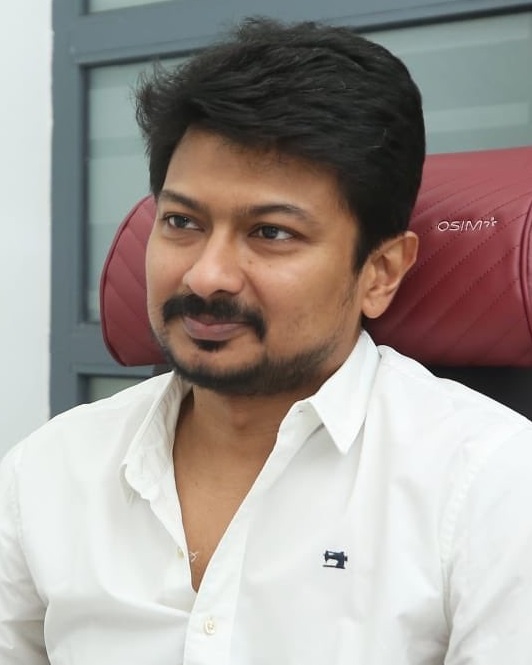
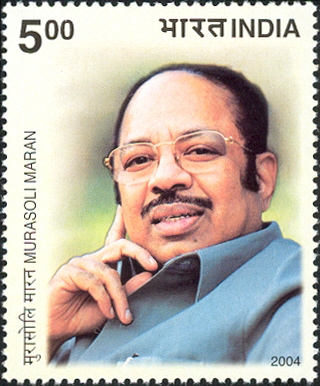
Karunanidhi has faced accusations and criticism of favouring family members for prominent political and constitutional positions. His supporters have denied these allegations, describing the appointments as based on political trust and experience.<ref>Isaac, Anna (8 August 2018). "Nepotism or survival? Why Karunanidhi chose family when it came to New Delhi". The News Minute. Retrieved 18 November 2025.</ref> Karunanidhi's nephew, Murasoli Maran, was a Union Minister under multiple governments.<ref>"Maran – the eyes and ears of DMK in Delhi". Indiainfo.com. Archived from the original on 17 June 2011. Retrieved 11 November 2013.</ref> M. K. Stalin was elected as the Mayor of Chennai and later as the deputy chief minister of Tamil Nadu.<ref>"Politics: Special Series; M K Stalin". India Today. 1 November 1999. Archived from the original on 24 September 2015. Retrieved 11 November 2013.</ref> Karunanidhi's daughter Kanimozhi has been appointed as the Rajya Sabha MP twice in 2007 and 2013.<ref>"Kanimozhi, D Raja take oath as Rajya Sabha members". timesofindia. 26 July 2007.</ref><ref>"Kanimozhi wins Rajya Sabha polls, so does Raja". indiatoday. 27 June 2013. Retrieved 27 June 2013.</ref> Karunanidhi's nephew's son Dayanidhi Maran had been appointed as a Union Minister in 2004.<ref>"Dayanidhi Maran hands over resignation to DMK chief". India Today. 19 October 2008. Retrieved 26 October 2024.</ref> Karunanidhi's grandson, M. K. Stalin's son, Udhayanidhi Stalin, has been elected as an MLA in the state assembly.<ref>"Tamil Nadu: Udhayanidhi Stalin wins big, cements claim to political legacy". timesofindia. 3 May 2021.</ref> Karunanidhi is also accused of allowing Azhagiri to function as an extraconstitutional authority in Madurai.<ref>"Charge sheet filed against Azhagiri in Kiruttinan case". The Hindu. Chennai, India. 19 August 2003. Archived from the original on 22 November 2003. Retrieved 11 November 2013.</ref>
M. K. Stalin era (2018–present)
Karunanidhi died on 7 August 2018, leaving the party in the hands of his son, M. K. Stalin. Stalin had been appointed as the working president in January 2017 when his father's health started declining and had previously been named heir apparent by his father. Stalin thus became the second DMK president since the party's inception.<ref>"MK Stalin takes charge of DMK after 51 years in politics: Fighting a dynastic battle, the 65-year-old learnt it the hard way". Firstpost. 28 August 2018. Retrieved 29 December 2019.</ref>
.jpg)
On 25 March 2018, the DMK held a statewide conference in Erode and M. K. Stalin released five slogans at the conference. They were:<ref>"ஐம்பெரும் முழக்கங்கள்: ஈரோடு மண்டல மாநாட்டில் ஸ்டாலின் உரை". Samayam Tamil (in தமிழ்). 25 March 2018. Retrieved 11 August 2019.</ref><ref>மின்னம்பலம் (17 February 2019). "ஸ்டாலின் முன்வைத்த ஐம்பெரும் முழக்கங்கள்!". மின்னம்பலம் (in தமிழ்). Retrieved 11 August 2019.</ref><ref>Lakshmi, Priya (25 March 2018). "மதவெறியை மாய்ப்போம்– அதிகார குவியலை அடித்து நொறுக்குவோம்: திமுகவின் 5 முழக்கங்களை அறிவித்த ஸ்டாலின்". oneindia.com (in தமிழ்). Retrieved 11 August 2019.</ref>
- Let us keep an eye on the Kalaignar's command
- Let us grow and admire Tamil
- Let us crush the power pile
- Let us protect humanity from extremism
- Let us grow a prosperous Tamil Nadu
During 2025 end the DMK constituted a committee headed by Kanimozhi, to prepare the manifesto for the 2026 Tamil Nadu Assembly election.<ref>Bureau, The Hindu (17 December 2025). "Kanimozhi to head DMK's 2026 Assembly election manifesto committee". The Hindu. ISSN 0971-751X. Retrieved 5 January 2026. {{cite news}}: |last= has generic name (help)</ref> MK Stalin launched the party's election manifesto portal on 3 January 2026 at the party headquarters.<ref name=":2">"Tamil Nadu elections: Stalin launches DMK manifesto portal 2026; alliance with Congress under spotlight". The Times of India. 3 January 2026. ISSN 0971-8257. Retrieved 5 January 2026.</ref> Over 14,000 suggestions received was received from citizens across the state on the day day one.<ref>Bureau, The Hindu (4 January 2026). "DMK receives 14,318 suggestions for manifesto on day one". The Hindu. ISSN 0971-751X. Retrieved 5 January 2026. {{cite news}}: |last= has generic name (help)</ref><ref name=":2" />
Elections under M.K. Stalin presidency
- In the 2019 general election,<ref>"Secular Progressive Alliance will romp home in Lok Sabha polls". Business Standard India. Press Trust of India. 31 March 2019. Retrieved 29 December 2019.</ref><ref>"DMK-led front in TN christened "Secular Progressive Alliance"". Business Standard India. Press Trust of India. 15 March 2019. Retrieved 29 December 2019.</ref> DMK contested as part of the United Progressive Alliance led by the Indian National Congress. The alliance secured 38 out of 39 seats in Tamil Nadu with a 52% vote share.<ref>Govardan, D. (24 May 2019). "M K Stalin wins big but gains little in Tamil Nadu". The Times of India. Retrieved 29 December 2019.</ref><ref>""Amazed North, United South, Astounded India": MK Stalin On DMK Poll Wins". NDTV.com.</ref> and won in Puducherry.<ref>"Final Voter turnout of Phase 1 to Phase 7 of the Lok Sabha Elections 2019". Election Commission of India. Archived from the original on 25 May 2019. Retrieved 11 September 2025.</ref><ref>"Lok Sabha Elections Party Wise Result". The Times of India. Retrieved 11 September 2025.</ref>
- The DMK-led Secular Progressive alliance secured a majority in the 2019 Tamil Nadu local body elections.<ref>"DMK alliance wins Tamil Nadu rural local body polls". The Times of India. 3 January 2020. Retrieved 24 March 2020.</ref><ref>Nath, Akshaya (4 January 2020). "Tamil Nadu local body poll results: DMK wins 243 district panchayat wards, AIADMK 214; counting underway". India Today. Retrieved 24 March 2020.</ref>
- In the 2021 state assembly election, the Secular Progressive Alliance won a majority by securing 159 seats out of 234 seats with a 46% vote share.<ref>"Tamil Nadu General Legislative Election 2021". Election Commission of India. Archived from the original on 2 September 2021. Retrieved 2 September 2025.</ref><ref>"IndiaVotes AC: Tamil Nadu 2021". IndiaVotes. Retrieved 2 September 2025.</ref><ref>Sushanth. "Tamil nadu Assembly Election Results 2021". Mathrubhumi. Retrieved 2 September 2025.</ref> Analysts partly attributed the victory to political developments within the AIADMK, including the rise and decline of V.K. Sasikala, and subsequent internal leadership challenges.<ref name=":1" />
- In the 2024 general election, as part of the INDIA Alliance, the DMK contested 21 constituencies. The alliance won all 40 seats in Tamil Nadu and Puducherry, resulting in a clean sweep in the region.<ref>"Tamil Nadu election results 2024: DMK alliance sweeps Cuddalore, Villupuram, and Kallakurichi". The Hindu. 4 June 2024. Retrieved 4 June 2024.</ref>
Party ideology
Template:Social democracy sidebar Template:Socialism sidebar Dravida Munnetra Kazhagam follows the principle of Duty, Dignity, and Discipline, as instructed by C. N. Annadurai. This involves protecting democratic rights in politics, establishing a non-dominant society, and carrying out reform work based on rationality to promote the revival of Dravidian ideology. The party aims to overcome poverty in the economic sphere and provide means for the well-being of all on an equitable basis. The party also aims to develop and promote the respective state languages without allowing other languages to dominate. The party believes in promoting the decentralization of powers from the Union government and creating autonomy in the states and federalism at the center.<ref>"Party ideology". DMK.</ref>
Dravidian nationalism
The anti-Hindi Imposition agitations of 1965 forced the central government to abandon its efforts to use Hindi as the only official language of the country.
State autonomy
After The Emergency invoked by Indira Gandhi, more state powers like education and medical care were moved from state control to national control. At the state conference in Trichy after the death of Annadurai, Karunanidhi announced the adoption of the "state autonomy" principle to advocate for state self-governance. In April 1974, the DMK government brought in a resolution in the House urging the centre to accept the Rajamannar Committee recommendations on state autonomy and amend the Constitution of India to pave the way for a truly federal system.[1]
Social justice
The DMK has been involved in the protest for OBC reservation, ensuring the provision legalizing OBC reservation.<ref>"THE CONSTITUTION (FIRST AMENDMENT) ACT, 1951| National Portal of India". www.india.gov.in.</ref><ref>"protest of Periyar and Anna".</ref> The party holds OBC welfare as a tenet of its core ideology<ref>"Stalin welcomes Supreme court order favouring OBC reservation in medical courses". The Economic Times. 8 January 2022.</ref> and has implemented reservation related policies in favour of OBCs <ref>"source article". 29 March 2021.</ref> and SCs.<ref>"Temple to honour DMK leader Karunanidhi to be built in Tamil Nadu". The Indian Express. 25 August 2019.</ref>
The DMK reconstituted the disabled persons welfare board to Differently Abled Persons Departments and changed official terms for transgender individuals to more respectful terms like "Thirunangai" and "Thirunambi".<ref name="Nadika">N, Nadika (7 August 2018). "Self-respect weddings to transgender rights: Karunanidhi, a leader of minorities". newsminute.com. Retrieved 24 March 2020.</ref>
Party symbol
The party's election symbol is the "sun rising from between two mountains", with a black and red flag pictured. The symbol was inspired by the Karunanidhi's 1950s play Udaya Suryan and is intended to signify the "rising" spirit of the Dravidian people.<ref>"The story of Udaya Suriyan: How the rising sun became the symbol of DMK". 14 May 2016.</ref>
In the 1957 poll, the DMK was not recognized by the Election Commission. The party was grouped as independents and was not united by its rising sun symbol and was forced to contest under the rooster symbol.<ref>Isaac, Anna (n.d.). "The story of Udaya Suriyan: How the rising sun became the symbol of DMK". thenewsminute.com. Retrieved 24 March 2020.</ref>
Electoral history
Lok Sabha Elections

Legislative Assembly elections
Template:Vertical bar chartTemplate:Vertical bar chart
| Year | Assembly | Party leader | Seats contested | Seats won | Change in seats | Percentage of votes | Vote swing | Popular vote | Outcome |
|---|---|---|---|---|---|---|---|---|---|
| 1972 | 5th | [[M. Karunanidhi]] | 3 | Template:Composition bar compact | 
|
0.26% |
|
36,466 | Lost |
| 1978 | 6th | 2 | Template:Composition bar compact |
|
0.03% |  0.23% 0.23%
|
6,547 |
| Year | Assembly | Party leader | Seats contested | Seats won | Change in seats | Percentage of votes | Vote swing | Popular vote | Outcome |
|---|---|---|---|---|---|---|---|---|---|
| 1978 | 6th | [[M. Karunanidhi]] | 3 | Template:Composition bar compact |
|
0.13% |
|
16,437 | Lost |
| Year | Assembly | Party leader | Seats contested | Seats won | Change in seats | Percentage of votes | Vote swing | Popular vote | Outcome |
|---|---|---|---|---|---|---|---|---|---|
| 1970 | 4th | [[M. Karunanidhi]] | 1 | Template:Composition bar compact |
|
0.02% |
|
1,682 | Lost |
Current office bearers and prominent members
| Member | Position in Government | Party Position |
|---|---|---|
| M. K. Stalin | President | |
| Duraimurugan |
|
General Secretary |
| T. R. Baalu |
|
Treasurer and Lok Sabha Leader |
| K. N. Nehru |
|
Party Principal Secretary |
| I. Periyasamy |
|
Deputy General Secretary |
| Tiruchi Siva<ref>"DMK MP Tiruchi Siva appointed new party deputy general secretary". DT Next. 11 April 2025.</ref><ref>"Stalin sacks Ponmudy from party post over his 'vulgar' remarks". DT Next. 11 April 2025.</ref> |
|
Deputy General Secretary |
| A. Raja |
|
Deputy General Secretary |
| Anthiyur P. Selvaraj |
|
Deputy General Secretary |
| Kanimozhi Karunanidhi |
| |
| R. S. Bharathi<ref>"R. S. Bharathi profile". Rajya Sabha.</ref> |
|
Organization Secretary |
| T. K. S. Elangovan<ref>"TKS Elangovan profile". Government of India.[permanent dead link]</ref> |
|
Official Spokesperson |
| Udhayanidhi Stalin |
|
Youth Wing Secretary |
| Dr. T R B Rajaa |
|
Information Technology Wing Secretary |
| Helena Davidson |
|
Women's Wing Secretary |
| CVMP Ezhilarasan |
|
Students' Wing Secretary |
| Dayanidhi Maran |
|
Sports Wing Secretary |
| Palanivel Thiagarajan |
|
Assets Committee Secretary |
| Dr Ezhilan Naganathan |
|
Medical Wing Secretary |
| M M Abdulla |
|
NRI Wing Secretary |
List of party leaders
Presidents
| No. | Portrait | Name<br/>(Birth–Death) | Term in office | ||
|---|---|---|---|---|---|
| Assumed office | Left office | Time in office | |||
| 1 |
|
M. Karunanidhi<br/><small>(1924–2018)</small> | 27 July 1969 | 7 August 2018 | 49 years, 11 days |
| 2 | 
|
M. K. Stalin<br/><small>(born in 1953)</small> | 28 August 2018 | incumbent | 7 years, 347 days |
Working President
| No. | Portrait | Name<br/>(Birth–Death) | Term in office | ||
|---|---|---|---|---|---|
| 1 |
|
M. K. Stalin<br/><small>(born in 1953)</small> | 4 January 2017 | 27 August 2018 | 1 year, 235 days |
General Secretaries
| No. | Portrait | Name<br/>(Birth–Death) | Term in office | ||
|---|---|---|---|---|---|
| Assumed office | Left office | Time in office | |||
| 1 | 
|
C. N. Annadurai<br/><small>(1909–1969)</small> | 17 September 1949 | 24 April 1955 | 13 years, 350 days |
| 25 September 1960 | 3 February 1969 | ||||
| 2 |  <!-- Do not use placeholder images per WP:IPH --> <!-- Do not use placeholder images per WP:IPH -->
|
V. R. Nedunchezhiyan<br/><small>(1920–2000)</small> | 24 April 1955 | 24 September 1960 | 13 years, 254 days |
| 4 February 1969 | 16 May 1977 | ||||
| 3 | 
|
K. Anbazhagan<br/><small>(1922–2020)</small> | 17 May 1977 | 7 March 2020 | 42 years, 295 days |
| 4 | <!-- Do not use placeholder images per WP:IPH -->
|
Duraimurugan<br/><small>(born in 1938)</small> | 9 September 2020 | Incumbent | 5 years, 335 days |
List of chief ministers
Chief Minister of Madras State
| No. | Portrait | Name<br/>(Birth–Death) | Term in office | Assembly<br/>(Election) | Elected constituency | Ministry | ||
|---|---|---|---|---|---|---|---|---|
| Assumed office | Left office | Time in office | ||||||
| 1 |
|
C. N. Annadurai<br/><small>(1909–1969)</small> | 6 March 1967 | 13 January 1969 | 1 year, 313 days | 4th<br/>(1967) | Member of the Legislative Council | Annadurai |
Chief Ministers of Tamil Nadu
| No. | Portrait | Name<br />(Birth–Death) | Term in office | Ministry | Constituency | Assembly<br />Election | ||
|---|---|---|---|---|---|---|---|---|
| Start | End | Duration<br />in days | ||||||
| 1 |
|
C. N. Annadurai<br /><small>(1909–1969)</small> | 14 January 1969 | 3 February 1969 | 20 days | Annadurai | Tamil Nadu Legislative Council | 4th<br /><small>(1967)</small> |
| Acting | <!-- Do not use placeholder images per WP:IPH -->
|
V. R. Nedunchezhiyan<br /><small>(1910–1988)</small> | 3 February 1969 | 10 February 1969 | 7 days | Nedunchezhiyan I | Triplicane | 4th<br /><small>(1967)</small> |
| 2 |
|
M. Karunanidhi<br /><small>(1924–2018)</small> | 10 February 1969 | 14 March 1971 | 2 years, 32 days | Karunanidhi I | Saidapet | 4th<br /><small>(1967)</small> |
| 15 March 1971 | 31 January 1976 | 4 years, 322 days | Karunanidhi II | 5th<br />(1971) | ||||
| 27 January 1989 | 30 January 1991 | 2 years, 3 days | Karunanidhi III | Harbour | 11th<br />(1989) | |||
| 13 May 1996 | 13 May 2001 | 5 years, 0 days | Karunanidhi IV | Chepauk | 11th<br />(1996) | |||
| 13 May 2006 | 15 May 2011 | 5 years, 2 days | Karunanidhi V | 13th<br />(2006) | ||||
| 3 |
|
M. K. Stalin<ref>https://www.ndtv.com/india-news/mk-stalin-dmk-chief-takes-oath-as-tamil-nadu-chief-minister-243677 [bare URL]</ref><ref>"M.K. Stalin appointed Tamil Nadu CM, swearing-in on May 7". The Hindu. 5 May 2021. ISSN 0971-751X. Retrieved 11 September 2024.</ref><br /><small>(born 1953)</small> | 7 May 2021 | Incumbent | 5 years, 95 days | Stalin | Kolathur | 16th<br />(2021) |
List of deputy chief ministers
Deputy Chief Minister of Tamil Nadu
| No. | Portrait | Name<br />(Birth–Death) | Term in office | Assembly<br />(Election) | Elected constituency | Chief Minister | ||
|---|---|---|---|---|---|---|---|---|
| Assumed office | Left office | Time in office | ||||||
| 1 |
|
M. K. Stalin<br /><small>(1953–)</small> | 29 May 2009 | 15 May 2011 | 1 year, 351 days | 13th<br />(2006) | Thousand Lights | <br />M. Karunanidhi
|
| 2 | 
|
Udhayanidhi Stalin<br /><small>(1977–)</small> | 28 September 2024 | Incumbent | 1 year, 316 days | 16th<br />(2021) | Chepauk-Thiruvallikeni | <br />M. K. Stalin
|
Chief Ministers of Puducherry
| No. | Portrait | Name
<small>(Birth–Death)</small> |
<small>Elected constituency</small> | Term of office | [[Puducherry Legislative Assembly|Template:Black]]<br />([[Elections in Puducherry|Template:Black]]) | Appointed by<br><small>[[List of lieutenant governors of Puducherry|Template:Black]]</small> | ||
|---|---|---|---|---|---|---|---|---|
| Assumed office | Left office | <small>Time in office</small> | ||||||
| 1 | <!-- Do not use placeholder images per WP:IPH -->
|
M. O. H. Farook<br /><small>(1937–2012)</small> | Kalapet | 17 March 1969 | 2 January 1974 | 4 years, 291 days | 3rd<br />(1969 <br>election) | B. D. Jatti |
| 2 | <!-- Do not use placeholder images per WP:IPH -->
|
M. D. R. Ramachandran<br /><small>(Unknown)</small> | Mannadipet | 16 January 1980 | 23 June 1983 | 3 years, 158 days | 6th<br />(1980 <br>election) | B. T. Kulkarni |
| 3 | 8 March 1990 | 2 March 1991 | 359 days | 8th<br />(1990 <br>election) | Chandrawati | |||
| 4 | .jpg)
|
R. V. Janakiraman<br /><small>(1941–2019)</small> | Nellithope | 26 May 1996 | 21 March 2000 | 3 years, 300 days | 10th<br />(1996<br>election) | Rajendra Kumari Bajpai |
List of Leaders of the Opposition
Tamil Nadu Legislative Assembly
| No. | Portrait | Name
<small>(Birth–Death)</small> |
<small>Elected constituency</small> | Term of office | Template:Black<br /><small>Template:Black</small> | Appointed by<br>Template:Black | ||
|---|---|---|---|---|---|---|---|---|
| Assumed office | Left office | <small>Time in office</small> | ||||||
| 1 |
|
M. Karunanidhi<br /><small>(1924–2018)</small> | Anna Nagar | 25 July 1977 | 17 February 1980 | 5 years, 259 days | 6th<br />(1977) | Munu Adhi |
| 27 June 1980 | 18 August 1983 | 7th<br />(1980) | K. Rajaram | |||||
| 2 |
|
K. Anbazhagan<br /><small>(1922–2020)</small> | Harbour | 24 May 2001 | 14 April 2006 | 4 years, 325 days | 12th<br />(2001) | K. Kalimuthu |
| 3 |
|
M. K. Stalin<br /><small>(born 1953)</small> | Kolathur | 4 June 2016 | 3 May 2021 | 4 years, 333 days | 15th<br />(2016) | P. Dhanapal |
Pondicherry/Puducherry Legislative Assembly
| No. | Portrait | Name
<small>(Birth–Death)</small> |
<small>Elected constituency</small> | Term of office | [[Puducherry Legislative Assembly|Template:Black]]<br />([[Elections in Puducherry|Template:Black]]) | ||
|---|---|---|---|---|---|---|---|
| Assumed office | Left office | Time in office | |||||
| 1 | <!-- Do not use placeholder images per WP:IPH -->
|
R.V. Janakiraman | Nellithope | 22 March 2000 | 15 May 2001 | 1 year, 54 days | 10th<br />(1996 election) |
| 16 May 2001 | 11 May 2006 | 4 years, 360 days | 11th<br />(2001 election) | ||||
| 2 | <!-- Do not use placeholder images per WP:IPH -->
|
A. M. H. Nazeem | Karaikal | 29 May 2006 | May 2011 | 5 years, 0 days | 12th<br />(2006 election) |
| 3 | <!-- Do not use placeholder images per WP:IPH -->
|
R. Siva | Villianur | 8 May 2021<ref>"Four-time MLA R Siva appointed leader of DMK legislature party in Puducherry". The New Indian Express. 8 May 2021. Retrieved 11 August 2022.</ref> | Incumbent | 5 years, 94 days | 15th<br />(2021 election) |
Madras State Legislative Assembly
| Leader of the Opposition | Term Start | Term End | Duration |
|---|---|---|---|
| V. R. Nedunchezhiyan | 29 March 1962 | 28 February 1967 | 4 years, 337 days |
List of Speakers & Deputy Speakers of the Tamil Nadu Legislative Assembly
| No. | Name | Deputy<br>Speaker | Took<br> office | Left<br> office | Duration |
|---|---|---|---|---|---|
| 1 | Pulavar K. Govindan | G. R. Edmund | 22 February<br>1969 | 14 March<br> 1971 | 2 years, 20 days |
| N. Ganapathy | 3 August<br> 1973 | 3 July<br> 1977 | 3 years, 334 days | ||
| 2 | K. A. Mathiazagan | P. Seenivasan | 24 March<br> 1971 | 2 December<br> 1972 | 1 year, 253 days |
| Acting | P. Seenivasan<br> (Acting Speaker) | 2 December<br> 1972 | 3 August<br> 1973 | 1 year, 172 days | |
| 3 | M. Tamilkudimagan | V. P. Duraisamy | 8 February<br> 1989 | 30 June<br> 1991 | 2 years, 172 days |
| 4 | P. T. R. Palanivel Rajan | Parithi Ilamvazhuthi | 23 May<br> 1996 | 21 May<br> 2001 | 4 years, 363 days |
| 5 | R. Avudaiappan | V. P. Duraisamy | 19 May<br> 2006 | 15 May<br> 2011 | 4 years, 361 days |
| 6 | M. Appavu | K. Pitchandi | 12 May<br> 2021 | Incumbent | 5 years, 90 days |
List of union cabinet ministers
V. P. Singh ministry (1989–90)
| # | Portrait | Minister<br>(Birth-Death)<br>Constituency | Term of office | Portfolio | Ministry | Prime Minister | |||
|---|---|---|---|---|---|---|---|---|---|
| From | To | Period | |||||||
| 1 | 
|
Murasoli Maran<br>(1934–2003)<br>MP for Chennai South | <small>2 December</small><br>1989 | <small>10 November</small><br>1990 | 343 days | Minister of Urban Development | [[V. P. Singh ministry|Template:Black]] | V. P. Singh | |
H.D Devegowda Ministry (1996–97)
| No. | Portrait | Portfolio | Name<br />(Birth–Death) | Term in office | Constituency<br />(House) | Prime Minister | |||
|---|---|---|---|---|---|---|---|---|---|
| Assumed office | Left office | Time in office | |||||||
| 1 |
|
<small>Minister of Industry</small> | Murasoli Maran<br /><small>(1934–2003)</small> | <small>1 June</small><br> 1996 | <small>21 April</small><br>1997 | 324 days | Chennai Central<br /><small>(Lok Sabha)</small> | H. D. Deve Gowda | |
| 2 | <!-- Do not use placeholder images per WP:IPH -->
|
<small>Minister of Surface Transport</small> | T. G. Venkatraman<br /><small>(1931–2013)</small> | <small>1 June</small><br> 1996 | <small>21 April</small><br>1997 | 324 days | Tindivanam<br /><small>(Lok Sabha)</small> | ||
| 3 | <!-- Do not use placeholder images per WP:IPH -->
|
<small>Minister of Defence</small><br />(MoS) | N. V. N. Somu<br /><small>(–)</small> | <small>6 July</small><br> 1996 | <small>21 April</small><br>1997 | 289 days | Chennai North<br /><small>(Lok Sabha)</small> | ||
| 4 | 
|
<small>Minister of Petroleum & Natural Gas</small><br />(MoS) | T. R. Baalu<br /><small>(born 1941)</small> | <small>6 July</small><br> 1996 | <small>21 April</small><br>1997 | 289 days | Chennai South<br /><small>(Lok Sabha)</small> | ||
I.K Gujral Ministry (1997–98)
| No. | Portrait | Portfolio | Name<br />(Birth–Death) | Term in office | Constituency<br />(House) | Prime Minister | |||
|---|---|---|---|---|---|---|---|---|---|
| Assumed office | Left office | Time in office | |||||||
| 1 |
|
<small>Minister of Industry</small> | Murasoli Maran<br /><small>(1934–2003)</small> | <small>21 April</small><br>1997 | <small>19 March</small><br>1998 | 332 days | Chennai Central<br /><small>(Lok Sabha)</small> | I. K. Gujral | |
| 2 | <!-- Do not use placeholder images per WP:IPH -->
|
<small>Minister of Surface Transport</small> | T. G. Venkatraman<br /><small>(1931–2013)</small> | <small>21 April</small><br>1997 | <small>19 March</small><br>1998 | 332 days | Tindivanam<br /><small>(Lok Sabha)</small> | ||
| <small>Minister of Urban Affairs & Employment</small> | <small>14 November</small><br>1997 | <small>12 December</small><br>1997 | 28 days | ||||||
| 3 |
|
<small>Minister of Petroleum & Natural Gas</small><br />(MoS) | T. R. Baalu<br /><small>(born 1941)</small> | <small>21 April</small><br>1997 | <small>19 March</small><br>1998 | 332 days | Chennai South<br /><small>(Lok Sabha)</small> | ||
| <small>Minister of Non-Conventional Energy Sources</small><br />(MoS) | <small>11 January</small><br>1998 | <small>19 March</small><br>1998 | 67 days | ||||||
| 4 | <!-- Do not use placeholder images per WP:IPH -->
|
<small>Minister of Defence</small><br />(MoS) | N. V. N. Somu<br /><small>(–)</small> | <small>21 April</small><br>1997 | <small>14 November</small><br>1997<br /><small>(died in office)</small> | 207 days | Chennai North<br /><small>(Lok Sabha)</small> | ||
Third Atal Bihari Vajpayee Ministry (1999–2004)
| No. | Portrait | Portfolio | Name<br />(Birth–Death) | Term in office | Constituency<br />(House) | Prime Minister | |||
|---|---|---|---|---|---|---|---|---|---|
| Assumed office | Left office | Time in office | |||||||
| 1 |
|
<small>Minister of Commerce & Industry</small> | Murasoli Maran<br /><small>(1934–2003)</small> | <small>13 October</small><br>1999 | <small>9 November</small><br>2002 | 3 years, 27 days | Chennai Central<br /><small>(Lok Sabha)</small> | Atal Bihari Vajpayee | |
| <small>Minister without portfolio</small> | <small>9 November</small><br>2002 | <small>23 November</small><br>2003 | 1 year, 14 days | ||||||
| 2 |
|
<small>Minister of Environment & Forests</small> | T. R. Baalu<br /><small>(born 1941)</small> | <small>13 October</small><br>1999 | <small>21 December</small><br>2003 | 4 years, 69 days | Chennai South<br /><small>(Lok Sabha)</small> | ||
| 3 | 
|
<small>Minister of Rural Development</small><br />(MoS) | A. Raja<br /><small>(born 1963)</small> | <small>13 October</small><br>1999 | <small>30 September</small><br>2001 | 1 year, 352 days | Perambalur<br /><small>(Lok Sabha)</small> | ||
| <small>Minister of Health & Family Welfare</small><br />(MoS) | <small>30 September</small><br>2000 | <small>21 December</small><br>2003 | 3 years, 82 days | ||||||
First Manmohan Singh Ministry (2004–2009)
| No. | Portrait | Portfolio | Name<br />(Birth–Death) | Term in office | Constituency<br />(House) | Prime Minister | |||
|---|---|---|---|---|---|---|---|---|---|
| Assumed office | Left office | Time in office | |||||||
| 1 |
|
<small>Minister of Environment and Forests</small> | A. Raja<br /><small>(born 1963)</small> | <small>23 May</small><br>2004 | <small>15 May</small><br>2007 | 2 years, 357 days | Perambalur<br /><small>(Lok Sabha)</small> | Manmohan Singh | |
| <small>Minister of Communications & Information Technology</small> | <small>15 May</small><br>2007 | <small>22 May</small><br>2009 | 2 years, 7 days | ||||||
| 2 | 
|
<small>Minister of Communications & Information Technology</small> | Dayanidhi Maran<br /><small>(born 1966)</small> | <small>23 May</small><br>2004 | <small>15 May</small><br>2007 | 2 years, 357 days | Chennai Central<br /><small>(Lok Sabha)</small> | ||
| 3 |
|
<small>Minister of Road Transport and Highways</small> | T. R. Baalu<br /><small>(born 1941)</small> | <small>23 May</small><br>2004 | <small>22 May</small><br>2009 | 4 years, 364 days | Chennai South<br /><small>(Lok Sabha)</small> | ||
| <small>Minister of Shipping</small> | <small>25 May</small><br> 2004 | <small>2 September</small><br>2004[lower-alpha 1] | 100 days | ||||||
| 4 | <!-- Do not use placeholder images per WP:IPH -->
|
<small>Minister of Law and Justice</small><br>(MoS) | K. Venkatapathy<br /><small>(born 1946)</small> | <small>23 May</small><br>2004 | <small>22 May</small><br>2009 | 4 years, 364 days | Cuddalore<br /><small>(Lok Sabha)</small> | ||
| 5 | .jpg)
|
<small>Minister of Home Affairs</small><br>(MoS) | S. Regupathy<br /><small>(born 1950)</small> | <small>23 May</small><br>2004 | <small>15 May</small><br>2007 | 2 years, 357 days | Pudukkottai<br /><small>(Lok Sabha)</small> | ||
| <small>Minister of Environment and Forests</small><br>(MoS) | <small>15 May</small><br>2007 | <small>22 May</small><br>2009 | 2 years, 7 days | ||||||
| 6 | .jpg)
|
<small>Minister of Commerce and Industry</small><br>(MoS) | S. S. Palanimanickam<br /><small>(born 1950)</small> | <small>23 May</small><br>2004 | <small>25 May</small><br> 2004 | 2 days | Thanjavur<br /><small>(Lok Sabha)</small> | ||
| <small>Minister of Finance</small><br><small>(Revenue, from 29 January 2006)</small><br>(MoS) | <small>25 May</small><br> 2004 | <small>22 May</small><br>2009 | 4 years, 362 days | ||||||
| 7 | .jpg)
|
<small>Minister of Social Justice and Empowerment</small><br>(MoS) | Subbulakshmi Jagadeesan<br /><small>(born 1947)</small> | <small>23 May</small><br>2004 | <small>22 May</small><br>2009 | 4 years, 364 days | Tiruchengode<br /><small>(Lok Sabha)</small> | ||
| 8 | .jpg)
|
<small>Minister of Home Affairs</small><br>(MoS) | V. Radhika Selvi<br /><small>(born 1976)</small> | <small>18 May</small><br>2007 | <small>22 May</small><br>2009 | 2 years, 4 days | Tiruchendur<br /><small>(Lok Sabha)</small> | ||
Second Manmohan Singh Ministry (2009–2014)
| No. | Portrait | Portfolio | Name<br />(Birth–Death) | Term in office | Constituency<br />(House) | Prime Minister | |||
|---|---|---|---|---|---|---|---|---|---|
| Assumed office | Left office | Time in office | |||||||
| 1 |
|
<small>Minister of Communications & Information Technology</small> | A. Raja<br /><small>(born 1963)</small> | <small>28 May</small><br>2009 | <small>15 November</small><br>2010<br><ref>"Telecom Minister A Raja resigns; PM to keep charge of Telecom ministry". The Economic Times. 15 November 2010. ISSN 0013-0389. Retrieved 11 September 2024.</ref><ref>"Raja resigns over 2G spectrum issue". Business Today. 15 November 2010. Retrieved 11 September 2024.</ref><ref>"CBI arrests former Telecom Minister A. Raja". The Hindu. 2 February 2011. ISSN 0971-751X. Retrieved 11 September 2024.</ref> | 1 year, 171 days | Nilgiris<br /><small>(Lok Sabha)</small> | Manmohan Singh | |
| 2 |
|
<small>Minister of Textiles</small> | Dayanidhi Maran<br /><small>(born 1966)</small> | <small>28 May</small><br>2009 | <small>12 July</small><br>2011<br><ref>"Dayanidhi Maran resigns from Cabinet". BusinessLine. 7 July 2011. Retrieved 11 September 2024.</ref><ref>"Dayanidhi Maran resigns from Union Cabinet". The Times of India. 8 July 2011. ISSN 0971-8257. Retrieved 11 September 2024.</ref> | 2 years, 45 days | Chennai Central<br /><small>(Lok Sabha)</small> | ||
| 3 | 
|
<small>Minister of Chemicals & Fertilizers</small> | M. K. Alagiri<br /><small>(born 1951)</small> | <small>28 May</small><br>2009 | <small>21 March</small><br>2013<ref>"Karunanidhi denies reports on Alagiri's resignation". The Hindu. 7 January 2011. ISSN 0971-751X. Retrieved 11 September 2024.</ref> | 3 years, 297 days | Madurai<br /><small>(Lok Sabha)</small> | ||
| 4 | 
|
<small>Minister of Social Justice and Empowerment</small><br>(MoS) | D. Napoleon<br /><small>(born 1963)</small> | Perambalur<br /><small>(Lok Sabha)</small> | |||||
| 5 | .jpg)
|
<small>Minister of Health & Family Welfare</small><br>(MoS) | <small>S. Gandhiselvan</small><br /><small>(born 1963)</small> | Namakkal<br /><small>(Lok Sabha)</small> | |||||
| 6 |
|
<small>Minister of Finance</small><br><small>(Revenue)</small><br>(MoS) | <small>S. S. Palanimanickam</small><br /><small>(born 1950)</small> | Thanjavur<br /><small>(Lok Sabha)</small> | |||||
| 7 | .jpg)
|
<small>Minister of Information & Broadcasting</small><br>(MoS) | <small>S. Jagathrakshakan</small><br /><small>(born 1950)</small> | <small>28 May</small><br>2009 | <small>28 October</small><br>2012 | 3 years, 153 days | Arakkonam<br /><small>(Lok Sabha)</small> | ||
| <small>Minister of New & Renewable Energy</small><br>(MoS) | <small>28 October</small><br>2012 | <small>2 November</small><br>2012 | 5 days | ||||||
| <small>Minister of Commerce & Industry</small><br />(MoS) | <small>2 November</small><br>2012 | <small>21 March</small><br>2013<ref>"5 DMK ministers quit, PM accepts their resignations". The Economic Times. 20 March 2013. Retrieved 11 September 2024.</ref> | 139 days | ||||||
List of Deputy Speaker of Lok Sabha
| Portrait | Name<br><small>(Birth–Death)</small> | Elected constituency | Lok Sabha<br><small>(Election)</small> | Speaker | Assumed office | Left office | Time in office | Prime Minister |
|---|---|---|---|---|---|---|---|---|
| <!-- Do not use placeholder images per WP:IPH -->
|
G. Lakshmanan<br><small>(1924–2001)</small> | Chennai North | 7th<br><small>(1980)</small> | Balram Jakhar<br><small>(INC)</small> | 1 December 1980 | 31 December 1984 | 4 years, 30 days | Indira Gandhi |
Splits and offshoots
There are two major parties that have been formed as a result of splits from the DMK, which are
- All India Anna Dravida Munnetra Kazhagam (AIADMK), founded on 17 October 1972 by the former Chief Minister of Tamil Nadu M. G. Ramachandran (M.G.R.).
- Marumalarchi Dravida Munnetra Kazhagam (MDMK), founded on 6 May 1994 by Member of Parliament, Rajya Sabha Vaiko.
Political lineage and offsprings of DMK
Media

Dravida Munnetra Kazhagam party runs two newspapers: an English weekly named The Rising Sun and a Tamil daily named Murasoli.<ref>"DMK homepage". Dravida Munnetra Kazhagam. Retrieved 11 November 2013.</ref>
Kalaignar TV is a TV channel group started on 15 September 2007 and managed by Kanimozhi Karunanidhi and Dayalu Ammal, the daughter and wife of Karunanidhi. The group has multiple sister channels: Kalaignar Isai Aruvi (24×7 Tamil music channel), Kalaignar Seithigal (24×7 Tamil news channel), Kalaignar Sirippoli (24×7 Tamil comedy channel), Kalaignar Chithiram (24×7 Tamil cartoon channel), Kalaignar Murasu(24×7 Tamil movie channel) and Kalaignar Asia.<ref>"Kalaignar Channel". Kalaignar Channel. Retrieved 11 November 2013.</ref>
See also
- Politics of Tamil Nadu
- All India Anna Dravida Munnetra Kazhagam
- 2G spectrum case
- Granite scam in Tamil Nadu
- Controversy of arrests in Tamil Nadu about construction of flyovers
- Dinakaran attack
- Leelavathi murder
- Kallakudi demonstration
- Assassination of Rajiv Gandhi
- Politics of India
- List of political parties in India
- Indian National Developmental Inclusive Alliance
References
- ↑ 1.0 1.1 Palanithurai 1997, pp. 21–22.
- ↑ Rubinoff 1997, p. 2829.
- ↑ Radhan 2002, p. 187.
- ↑ Fishman & Garcia 2010, pp. 230–.
- ↑ 5.0 5.1 Dirks 2001, p. 263.
- ↑ Ram 1977.
- ↑ Mills & Sen 2004, p. 151.
- ↑ Ramaswamy 1997, p. 8.
- ↑ Jaffrelot 2003, p. 244.
- ↑ Copley 1978, p. 311.
- ↑ Swaminathan 1974, p. 8.
- ↑ Venu 1979, p. 76.
- ↑ Rajagopalan 2001, pp. 153–156.
- ↑ Chakrabarty 2008, pp. 110–111.
- ↑ Hodges 2005.
- ↑ Rajagopalan 2001, pp. 152–154.
- ↑ Hardgrave 1965.
- ↑ Hardgrave 1973.
- ↑ Murali 2007, p. 82.
Notes
- ↑ The ministry's competences were transferred to the Ministry of Shipping, Road Transport and Highways in September 2004.
Publications
- Ahuja, M. L. (1998). Electoral politics and general elections in India, 1952–1998. New Delhi: Mittal Publication. ISBN 978-81-7099-711-5.
- Chakrabarty, Bidyut (2008). Indian Politics and Society Since Independence. Routledge. ISBN 978-0-415-40868-4.
- Copley, Antony R. H. (1978). The political career of C. Rajagopalachari, 1937–1954: a moralist in politics. Macmillan.
- Dirks, Nicholas B. (2001). Castes of Mind: Colonialism and the Making of Modern India. Princeton University Press. ISBN 978-0-691-08895-2.
- Fishman, Joshua; Garcia, Ofelia (2010). Handbook of Language and Ethnic Identity:The Success-Failure Continuum in Language and Ethnic Identity Efforts (Volume 2): The Success-Failure Continuum in Language and Ethnic Identity Efforts. Oxford University Press, USA. pp. 230–. ISBN 978-0-19-539245-6. Retrieved 7 July 2016.
- Hardgrave, Robert L. (1 August 1965). "The Riots in Tamilnad: Problems and Prospects of India's Language Crisis". Asian Survey. 5 (8): 399–407. doi:10.2307/2642412. ISSN 0004-4687. JSTOR 2642412.
- Hardgrave, Robert L. (1 March 1973). "Politics and the Film in Tamilnadu: The Stars and the DMK". Asian Survey. 13 (3): 288–305. doi:10.2307/2643038. hdl:2152/34387. ISSN 0004-4687. JSTOR 2643038.
- Hodges, Sara (2005). "Revolutionary family life and the Self Respect movement in Tamil south India". Contributions to Indian Sociology. 39 (2): 251–277. doi:10.1177/006996670503900203. S2CID 144419547.
- Jaffrelot, Christophe (2003). India's silent revolution: the rise of the low castes in North Indian politics. C. Hurst & Co. ISBN 1-85065-398-4.
- Krishnan, Rajan Kurai; Sriramachandran, Ravindran; Subagunarajan, V. M. S. (2022). Rule of the Commoner: DMK and Formations of the Political in Tamil Nadu, 1949–1967. Cambridge University Press. ISBN 978-1-009-19717-5.
- Mills, James H.; Sen, Satadru (2004). Confronting the body: the politics of physicality in colonial and post-colonial India. Anthem Press. ISBN 978-1-84331-033-4.
- Murali, Geetha Kamalakshi (2007). Tracing the Signs: Voter Mobilization and the Functionality of Ideas in Tamil Nadu. CA: University of California, Berkeley. ISBN 9780549737612.
- Omvedt, Gail (2006). Dalit Visions: The Anti-caste Movement and the Construction on an Indian Identity. Orient Longman. ISBN 978-81-250-2895-6.
- Palanithurai, Ganapathy (1997). Polyethnicity in India and Canada: Possibilities for Exploration. M.D. Publications Pvt. Ltd. ISBN 978-8-175-33039-9.
- Radhan, O.P. (2002). "A Time-Bound Plan for Muslim India". Encyclopaedia of Political Parties. Anmol Publications. ISBN 978-81-7488-865-5.
- Rajagopalan, Swarna (2001). State and nation in south Asia. Lynne Rienner Publishers. ISBN 978-1-55587-967-9.
- Ram, N. (1977). Barnett, Marguerite Ross (ed.). "Pre-History and History of the DMK". Social Scientist. 6 (5): 59–91. doi:10.2307/3520089. ISSN 0970-0293. JSTOR 3520089.
- Ramaswamy, Sumathi (20 November 1997). "5.29 The Warrior Devotee". Passions of the Tongue: Language Devotion in Tamil India, 1891–1970. University of California Press. ISBN 978-0-520-20805-6.
- Rana, Mahendra Singh (2006). India votes: Lok Sabha & Vidhan Sabha elections 2001–2005. New Delhi: Sarup & Sons. ISBN 978-81-7625-647-6.
- Rubinoff, Arthur G. (1997). "General Elections, 1996: Local Issues Dominate in Andhra Pradesh and Tamil Nadu". Economic and Political Weekly. 32 (43): 2829–2835. ISSN 0012-9976. JSTOR 4406016.
- Subramanian, Narendra (1 November 2002). "Identity Politics and Social Pluralism: Political Sociology and Political Change in Tamil Nadu". Commonwealth & Comparative Politics. 40 (3): 125–139. doi:10.1080/713999599. S2CID 153856033.
- Swaminathan, S. (1974). Karunanidhi: man of destiny. Affiliated East-West Press. ISBN 9780333902127.
- Venu, E.Es. (1979). Why South opposes Hindi. Justice Publications.
- "Tamil Nadu Legislative Assembly Quadrennial Review 1957–62" (PDF). Fort St. George, Madras: Legislative Assembly Department. June 1962.
- "Tamil Nadu Legislative Assembly Quadrennial Review 1962–67" (PDF). Fort St. George, Madras: Legislative Assembly Department. June 1967.
- "Tamil Nadu Legislative Assembly Quadrennial Review 1967–70" (PDF). Fort St. George, Madras: Legislative Assembly Department. June 1971. Archived from the original (PDF) on 2 December 2013.
- "Tamil Nadu Legislative Assembly Quadrennial Review 1971–76" (PDF). Fort St. George, Madras: Legislative Assembly Department. June 1976.
- "Tamil Nadu Legislative Assembly Quadrennial Review 1977–80" (PDF). Fort St. George, Madras: Legislative Assembly Department. 1980.
- "Statistical report on Tamil Nadu Assembly elections 1984" (PDF). New Delhi: Election Commission of India. 1984.
- "Statistical report on Tamil Nadu Assembly elections 2001" (PDF). New Delhi: Election Commission of India. 2001.
- "Statistical report on Tamil Nadu Assembly elections 2011" (PDF). New Delhi: Election Commission of India. 2011.
- "Statistical report on Tamil Nadu Assembly general elections 1980" (PDF). New Delhi: Election Commission of India. 1980.
- "Statistical report on Tamil Nadu Assembly general elections 1989" (PDF). New Delhi: Election Commission of India. 1989.
- "Statistical report on Tamil Nadu Assembly general elections 1991" (PDF). New Delhi: Election Commission of India. 1991.
- "Statistical report on Tamil Nadu Assembly general elections 1996" (PDF). New Delhi: Election Commission of India. 1996. Archived from the original (PDF) on 7 October 2010.
- "Statistical report on Tamil Nadu Assembly general elections 2006" (PDF). New Delhi: Election Commission of India. 2006.*"General Election Results 2024". Election Results. 2024.
External links
{{URL|example.com|optional display text}}- Dravida Munnetra Kazhagam — entry at Encyclopædia Britannica
Template:Dravida Munnetra Kazhagam Template:Dravidian politics

<!-- The Portals link needs to be reconfigured for proper display. Please assist-->