


No edit summary |
Page updated with relevant improvements |
||
| Line 1: | Line 1: | ||
{{more footnotes|date=March 2016}} | {{Short description|Indian dynasty based in Deccan}} | ||
{{more footnotes needed|date=March 2016}} | |||
{{use dmy dates|date=November 2016}} | {{use dmy dates|date=November 2016}} | ||
{{use Indian English|date=November 2016}} | {{use Indian English|date=November 2016}} | ||
{{Infobox country | {{Infobox country | ||
|conventional_long_name = Vishnukundina dynasty | | conventional_long_name = Vishnukundina dynasty | ||
|common_name = Vishnukundina | | common_name = Vishnukundina | ||
|era | | era = [[Middle Kingdoms of India|Classical India]] | ||
|year_start | | year_start = 420 | ||
|year_end | | year_end = 624 | ||
|p1 | | p1 = Vakataka dynasty | ||
|s1 | | s1 = Eastern Chalukyas | ||
| s2 | | s2 = Pallava Dynasty | ||
|image_map | | image_map = {{South Asia in 500 CE|center|{{center|The Vishnukundinas and neighbouring South Asian polities {{Circa|500 CE}}.<ref>{{cite book |last1=Schwartzberg |first1=Joseph E. |title=A Historical atlas of South Asia |date=1978 |publisher=University of Chicago Press |location=Chicago |page=26,146 |isbn=0226742210 |url=https://dsal.uchicago.edu/reference/schwartzberg/pager.html?object=063 |archive-date=12 January 2024 |access-date=1 May 2022 |archive-url=https://web.archive.org/web/20240112181611/https://dsal.uchicago.edu/reference/schwartzberg/pager.html?object=063 |url-status=dead }}</ref>}}|{{Annotation|125|157|[[File:Rectangle (plain).svg|50px]]}}||none}} | ||
|image_map_caption = | | image_map_caption = | ||
|capital | | capital = [[Denduluru]]<br />[[Amaravathi village, Guntur district|Amaravati]] | ||
|common_languages | | common_languages = [[Sanskrit language|Sanskrit]]<br/>[[Prakrit language|Prakrit]] | ||
|religion | | religion = [[Hinduism]]<br/>[[Jainism]] | ||
|government_type | | government_type = Monarchy | ||
|leader1 | | leader1 = [[Govinda Varma I]] | ||
|leader2 | | leader2 = Vikramendra Varma II | ||
|leader3 | | leader3 = Govinda Varma II | ||
|title_leader | | title_leader = Janasraya | ||
|demonym=|area_km2=|area_rank=|GDP_PPP=|GDP_PPP_year=|HDI=|HDI_year=|today= | | demonym = | ||
{{ | | area_km2 = | ||
| area_rank = | |||
The '''Vishnukundina dynasty''' ([[IAST]]: | | GDP_PPP = | ||
| GDP_PPP_year = | |||
| HDI = | |||
| HDI_year = | |||
| today = | |||
| image_coat = VishnukundinCastCpr1.jpg | |||
| coa_size = 270px | |||
| symbol_type = {{center|Vishnukundina Empire, 420–674 AD, cast copper, 4.65g, [[Vidarbha]] ([[Maharashtra]]), Bull type.}} | |||
}} | |||
The '''Vishnukundina dynasty''' ([[IAST]]: Viṣṇukuṇḍina, sometimes Viṣukuṇḍin) was an Indian dynasty that ruled over parts of present-day [[Andhra Pradesh]], [[Telangana]], [[Maharashtra]], [[Odisha]] and other parts of southern India between the 5th and 7th centuries. They emerged as an independent power during the reign of Madhava Varma, who conquered coastal Andhra from the [[Salankayana dynasty|Salankayanas]] and established their capital at [[Denduluru]] near [[Eluru]]. Their rule significantly shaped the history of the [[Deccan Plateau|Deccan]] region. However, their reign ended with the conquest of eastern Deccan by the [[Chalukya dynasty|Chalukya]] king [[Pulakeshin II]], who appointed his brother, [[Kubja Vishnuvardhana]], as viceroy. Vishnuvardhana later declared independence, founding the [[Eastern Chalukyas|Eastern Chalukya]] dynasty. | |||
The | == Etymology == | ||
The dynasty is usually referred to as the Viṣṇukuṇḍins, but the question was reviewed by S. Sankaranarayanan who closely examined the philogical evidence and concluded that Vishṇukuṇḍi was the grammatically correct form of the name.<ref>S. Sankaranarayanan, ''The Vishṇukuṇḍis and their Times: an Epigraphical Study'' (Delhi: Agam Prakashan, 1977), p. 1.</ref> Although this is technically correct, historians continue to use Viṣukuṇḍin because it is well established in the literature, having been used by [[K. A. Nilakanta Sastri]] and [[Dineshchandra Sircar]].<ref>Among many that could be cited, a recent case in Vincent Tournier, “A Tide of Merit: Royal Patrons, Tāmraparṇīya monks, and the Buddha’s Awakening in 5th–6th century Āndhradeśa,” ''Indo-Iranian Journal'' (2018) 61, no.1 (2018), pp. 20-96 https://shs.hal.science/halshs-02436883</ref> | |||
==Origin== | ==Origin== | ||
The early rulers of the dynasty migrated from eastern Deccan to the west Deccan in search of employment and under the [[Vakataka]]s they might have attained feudatory status.<ref>{{cite web |last=Vasumati |first=E. |year=1969 |title=Telugu Literature in the Qutub Shahi Period |url=https://books.google.com/books?id=xdUUZ2WYurIC&q=Vinukonda+vishnukundinapuram |publisher=Abul Kalam Azad Oriental Research Institute |via=Google Books}}</ref> | |||
During the reign of Madhava Varma, they became independent and conquered coastal [[Coastal Andhra|Andhra]] from the [[Salankayana]]s and established their capital at Denduluru<ref>{{cite web|url=https://books.google.com/books?id=O7J7PqrK4Z0C&q=vishnukundin+Dendulur|title=Journal of the Andhra Historical Society|first1=Andhra Historical Research Society, Rajahmundry|last1=Madras|first2=Andhra Historical Research|last2=Society|date=14 January 2018|publisher=Andhra Historical Research Society.|via=Google Books}}</ref> near [[Eluru]], [[West Godavari district]]. Some modern historians from Telangana suggest that the dynasty initially ruled from Indrapalanagara (in present-day [[Nalgonda district]] of Telangana), and later shifted to [[Denduluru]], and [[Amaravathi, Guntur district|Amaravathi]].<ref>{{Cite journal |last=Sarma |first=A. Rajeswara |date=2009 |title=Indrapura: The capital city of Vishnukundi dynasty |url=https://www.jstor.org/stable/44147663 |journal=Proceedings of the Indian History Congress |volume=70 |pages=138–141 |issn=2249-1937 |jstor=44147663}}</ref> | |||
During the reign of Madhava Varma, they became independent and conquered coastal [[Coastal Andhra|Andhra]] from the [[Salankayana]]s and established their capital at Denduluru<ref>{{cite web|url=https://books.google.com/books?id=O7J7PqrK4Z0C&q=vishnukundin+Dendulur|title=Journal of the Andhra Historical Society|first1=Andhra Historical Research Society, Rajahmundry|last1=Madras|first2=Andhra Historical Research|last2=Society|date=14 January 2018|publisher=Andhra Historical Research Society.|via=Google Books}}</ref> near [[Eluru]], [[West Godavari district]]. | |||
==Chronology== | ==Chronology== | ||
| Line 38: | Line 49: | ||
===Govinda Varma I=== | ===Govinda Varma I=== | ||
Govinda Varma I took the | Govinda Varma I took the princely title of Maharaja and his son Madhava Varma I was the founder of the power based on grants from Sriparvata (Nagarjunakonda) and Indrapalagutta.<ref>{{cite book|url=https://books.google.com/books?id=MazdaWXQFuQC&q=vishnukundin+founder&pg=PA89|title=Indian History|year=1988|publisher=Allied Publishers|isbn=9788184245684|via=Google Books}}</ref> | ||
=== Madhava Varma I === | === Madhava Varma I === | ||
| Line 45: | Line 56: | ||
<!--Need more information--> | <!--Need more information--> | ||
=== | === Madhava Varma II === | ||
[[Madhava Varma II]] ({{circa|440|460}}) was the most powerful ruler of Vishnukundina dynasty and his reign was its golden age. Under him the dynasty reached its greatest territorial extent. He married Vakataka Mahadevi, who was the mother of his son Vikramendra Varma I. She may have been the daughter of [[Prithivishena II|Prithvishena II]], who Madhava Varma II married after defeating her father.<ref>{{citation | editor-first=N.|editor-last=Venkataramanayya | title=Report on Epigraphy |publisher=Andhra Pradesh (India) Department of Archaeology and Museums| series=Andhra Pradesh Government Epigraphical Series | year=1966 | url=https://books.google.com/books?id=FDvlu9kQyAsC | page=87}}</ref> Alternatively, she may have been the daughter or granddaughter of [[Harisena]], married during the height of the latter's rule.<ref>{{cite book | last1=Majumdar | first1=Ramesh Chandra | author-link1=R. C. Majumdar | author-link2=Anant Sadashiv Altekar | last2=Altekar | first2=Anant Sadashiv | title=The Vakataka - Gupta Age Circa 200-550 A.D. | publisher=Motilal Banarsidass Publishing House | year=1967 | isbn=978-81-208-0026-7 | url=https://books.google.com/books?id=OswUZtL1_CUC&pg=PA122 | page=122 }}</ref><ref>{{cite book | last=Spink | first=Walter | author-link=Walter Spink | title=Ajanta: History and Development | publisher=BRILL | year=2018 | isbn=978-90-474-1635-7 | url=https://books.google.com/books?id=rqWODwAAQBAJ&pg=PA121 | page=121 }}</ref> | |||
By the middle of the 5th century, the | By the middle of the 5th century, the Vishnukundina dynasty rose to imperial heights. A princess of the then powerful ruling family of the [[Deccan Plateau|Deccan]] the [[Vakataka]]s was given in marriage to Madhava Varma's son, Vikramendra Varma. | ||
This alliance | This alliance enabled them to extend their influence to the east coast and vanquish the petty chieftains lingering on in that area. Madhava Varma II led his arms against [[Ananda Gotrika]]s who were ruling over [[Guntur]], [[Tenali]] and [[Ongole]], probably enjoying subordinate position under the [[Pallavas]] of [[Kanchipuram]]. | ||
After occupying these areas from the | After occupying these areas from the Ananda Gotrikas, Madhava Varma II made Amarapura (modern [[Amaravathi village, Guntur district|Amaravati]]) his capital. Keeping in view the constant threat from the [[Pallava]]s, he created an outpost to check their activities and appointed his son, Deva Varma and after his death the grandson Madhava Varma III as its [[Viceroy]]. | ||
Madhava Varma II next turned his attention against the [[Vengi]] kingdom which was under the [[Salankayana]]s. The Vengi region was annexed. The [[Godavari]] tract became part of the Vishnukundina territory. After these conquests the capital might have been shifted to [[Bezwada]] ([[Vijayawada]]), a more central location than Amarapura. These extensive conquests | [[File:Undavalli Caves, Vijayawada, Guntur, Andhra Pradesh, India (2018) 1.jpg|thumb|Undavalli Caves, Vijayawada, Guntur, Andhra Pradesh]] | ||
Madhava Varma II next turned his attention against the [[Vengi]] kingdom which was under the [[Salankayana]]s. The Vengi region was annexed. The [[Godavari]] tract became part of the Vishnukundina territory. After these conquests the capital might have been shifted to [[Bezwada]] ([[Vijayawada]]), a more central location than Amarapura. These extensive conquests made him the lord of [[Dakshinapatha]] (southern country). After these various conquests Madhava Varma performed many [[Asvamedha]], [[Rajasuya]] and other [[Historical Vedic religion|Vedic sacrifices]]. | |||
=== Successors of Madhava Varma II === | === Successors of Madhava Varma II === | ||
| Line 60: | Line 73: | ||
===Vikramendra Varma II=== | ===Vikramendra Varma II=== | ||
With the accession of Vikramendra Varma II (555–569), the fortunes of the Vishnukundina family were restored. To have immediate access to the Kalinga region, he shifted his capital from Bezwada to Lenduluru (modem [[Denduluru]] in the [[West Godavari district]]). He repulsed the attack of the [[Pallava]] ruler Simhavarman. He was successful enough to restore the fortunes of the Vishnukundinas in the Kalinga region. His son Govinda Varma II enjoyed a comparatively short period of rule (569–573). | With the accession of Vikramendra Varma II (555–569), the fortunes of the Vishnukundina family were restored. To have immediate access to the Kalinga region, he shifted his capital from Bezwada to Lenduluru (modem [[Denduluru]] in the [[West Godavari district]]). He repulsed the attack of the [[Pallava]] ruler [[Simhavarman III|Simhavarman]]. He was successful enough to restore the fortunes of the Vishnukundinas in the Kalinga region. His son Govinda Varma II enjoyed a comparatively short period of rule (569–573). | ||
=== | ===Janassraya Madhava Varma IV=== | ||
The Vishnukundina empire set about again to imperial expansion and cultural prosperity under its able ruler | The Vishnukundina empire set about again to imperial expansion and cultural prosperity under its able ruler Janassraya Madhava Varma IV (573–621).<ref>{{cite book |last=Chanda |first=Ratna |title=Kumāradāsa: A Study |year=1990 |publisher=Sanskrit Pustak Bhandar}}</ref> This prudent king spent his early years of rule in consolidating his position in Vengi. The later part of his reign is marked by wars and annexations. In his 37th regnal year, he suppressed the revolt of his subordinate chief the Durjaya Pruthvi Maharaja in Guddadivishya (modern [[Ramachandrapuram, East Godavari|Ramachandrapuram]] in the [[East Godavari]] district).<ref>{{cite book |last=Swaminathan |first=C. R. |title=Janakiharana of Kumaradasa: A Study |year=2000 |publisher=Motilal Banarsidass}}</ref> | ||
Madhava Varma IV had to face the [[Chalukya]]n onslaught in his last years of rule. By about 616, [[Pulakeshin II]] and his brother [[Kubja Vishnuvardhana]] conquered Vengi from the Vishnukundinas and the [[Pithapuram]] area from their subordinate Durjayas. In 621 in his 48th regnal year, Madhava crossed the Godavari probably to oust the Chalukyas from his territories. However, he lost his life on the battlefield. His son Manchana Bhattaraka also might have been expelled by the Chalukyas. Thus the Vishnukundina rule was brought to a close by 624. [[File:East-Hem 600ad.jpg|thumb|Greatly reduced Vishnukundina territory in 600 AD, along with the [[Chalukya dynasty|Chalukyas]] advancing at their border]] | Madhava Varma IV had to face the [[Chalukya]]n onslaught in his last years of rule. By about 616, [[Pulakeshin II]] and his brother [[Kubja Vishnuvardhana]] conquered Vengi from the Vishnukundinas and the [[Pithapuram]] area from their subordinate Durjayas. In 621 in his 48th regnal year, Madhava crossed the Godavari probably to oust the Chalukyas from his territories. However, he lost his life on the battlefield. His son Manchana Bhattaraka also might have been expelled by the Chalukyas. Thus the Vishnukundina rule was brought to a close by 624. [[File:East-Hem 600ad.jpg|thumb|Greatly reduced Vishnukundina territory in 600 AD, along with the [[Chalukya dynasty|Chalukyas]] advancing at their border]]<ref>{{cite book |last1=Ramakrishna |first1=G. |last2=Gayathri |first2=N. |last3=Chattopadhyaya |first3=Debiprasad |title=An Encyclopaedia of South Indian Culture |year=1983 |publisher=K.P. Bagchi}}</ref> | ||
==Vishnukundina country== | ==Vishnukundina country== | ||
| Line 72: | Line 85: | ||
==Administration== | ==Administration== | ||
For administrative convenience, the empire was divided into a number of ''Rashtras'' and '' | For administrative convenience, the empire was divided into a number of ''Rashtras'' and ''[[Vishaya]]s''. Inscriptions refer to Palki Rashtra, Karma Rashtra, Guddadi Vishaya, etc.<ref>{{Cite web |title=History of The Andhras Upto 1565 AD {{!}} PDF {{!}} Religion And Belief |url=https://www.scribd.com/document/195588971/History-of-the-Andhras-upto-1565-AD |access-date=2025-08-05 |website=Scribd |language=en}}</ref> | ||
Madhava Varma III appointed members of the royal family as [[Viceroy]]s for various areas of the kingdom. | Madhava Varma III appointed members of the royal family as [[Viceroy]]s for various areas of the kingdom. | ||
| Line 86: | Line 99: | ||
The Hastikosa was the officer-in-charge of elephant forces and the Virakosa was the officer-in-charge of land forces. | The Hastikosa was the officer-in-charge of elephant forces and the Virakosa was the officer-in-charge of land forces. | ||
These officers issued | These officers also issued grants on behalf of their monarchs. | ||
===Taxes=== | ===Taxes=== | ||
[[File:VishnukundinCastCpr2.jpg|thumb|Vishnukundina Empire, 420–674 AD, Cast Copper, 7.80g, Vidarbha (Maharashtra), Lion type.]] | |||
There may have been well-organized administrative machinery for the collection of land revenue.{{Citation needed|date=November 2010}} | There may have been well-organized administrative machinery for the collection of land revenue.{{Citation needed|date=November 2010}} | ||
Agrahara villages enjoyed tax exemptions. Sixteen types of coins of the Vishnukundina rulers have been found by archaeologists. | Agrahara villages enjoyed tax exemptions. Sixteen types of coins of the Vishnukundina rulers have been found by archaeologists. | ||
| Line 95: | Line 109: | ||
All the records of the Vishnukundinas and the kings prior to the Madhava Varma II seem to be patrons of [[Hinduism]]. | All the records of the Vishnukundinas and the kings prior to the Madhava Varma II seem to be patrons of [[Hinduism]]. | ||
From the time of the accession of Madhava Varma II, an aggressive self-assertion of the [[Vedic | From the time of the accession of Madhava Varma II, an aggressive self-assertion{{Citation needed|date=February 2024}} of the [[Śrauta|Vedic Hinduism]] occurred. Elaborate Vedic ceremonies like [[Rajasuya]], [[Sarvamedha]], and [[Aswamedha]] were undertaken. The celebration of all these sacrifices represents the traditional spirit of the Brahmanical revival{{Citation needed|date=February 2024}}. Some of the rulers referred to themselves as 'Parama Mahesvaras'. The inscriptions refer to their family deity Sri Parvata Swami.{{citation needed|date=November 2022}} | ||
The names of rulers like Madhava Varma and Govinda Varma show their [[Vaishnavite]] leanings. Thus both the [[Hindu]] sects of [[Saivism]] and [[Vaishnavism]] might have received equal patronage from them. | The names of rulers like Madhava Varma and Govinda Varma show their [[Vaishnavite]] leanings. Thus both the [[Hindu]] sects of [[Saivism]] and [[Vaishnavism]] might have received equal patronage from them. | ||
==Literature== | ==Literature== | ||
The Vishnukundinas were also great patrons of learning. They established colleges for Vedic learning. Learned [[Brahmin]]s were encouraged by gifts of lands and colleges were established for the propagation of [[Historical Vedic religion|Vedic]] studies. Indra Bhattaraka established many schools for imparting education on Vedic literature. The performance of several elaborate Vedic ceremonies by Madhava Varma is evidence of the faith of the rulers in [[Vedic | [[File:1 1149A old telugu language-Vishnu Kundi indravarma sasanam 6th century 1.jpg|thumb|Old Telugu Script – Vishnukundina Indra Varma Sasanam 6th century]] | ||
The Vishnukundinas were also great patrons of learning. They established colleges for Vedic learning. Learned [[Brahmin]]s were encouraged by gifts of lands and colleges were established for the propagation of [[Historical Vedic religion|Vedic]] studies. Indra Bhattaraka established many schools for imparting education on Vedic literature. The performance of several elaborate Vedic ceremonies by Madhava Varma is evidence of the faith of the rulers in [[Śrauta|Vedic Hinduism]] and the popularity of Vedic learning with the people during this period. | |||
Some of the Vishnukundina kings were credited with authorship of several books. Vikramendra Varma I was described as ''Mahakavi'' – a great poet in a record. Further, an incomplete work on Sanskrit poetics called 'Janasraya Chando Vichiti' was attributed to Madhava Varma IV who bore the title of 'Janasraya'. [[Sanskrit]] enjoyed royal patronage. | Some of the Vishnukundina kings were credited with authorship of several books. Vikramendra Varma I was described as ''Mahakavi'' – a great poet in a record. Further, an incomplete work on Sanskrit poetics called 'Janasraya Chando Vichiti' was attributed to Madhava Varma IV who bore the title of 'Janasraya'. [[Sanskrit]] enjoyed royal patronage. | ||
== Art and Architecture == | == Art and Architecture == | ||
Being great devotees of [[Shiva|Siva]], the Vishnukundinas seem to have been responsible for the construction of a number of cave temples dedicated to Siva. The cave structures at Bezwada ([[Vijayawada]]), Mogalrajapuram, [[Undavalli caves]], and Bhairavakonda were dated to this period. Though some of these cave temples were attributed to the [[Pallava]] Mahendra Varman I, the emblems found on the caves and the areas being under the rule of the Vishnukundinas during this period clearly show that these were contributions of the Vishnukundinas. The big four-storeyed cave at Undavalli and the 8 cave temples in Bhairavakonda in [[Nellore district]] show however clear resemblances with the architecture of Pallava Mahendra Varman's period. | Being great devotees of [[Shiva|Siva]], the Vishnukundinas seem to have been responsible for the construction of a number of cave temples dedicated to Siva. The cave structures at Bezwada ([[Vijayawada]]), Mogalrajapuram, [[Undavalli caves]], and Bhairavakonda were dated to this period. Though some of these cave temples were attributed to the [[Pallava]] Mahendra Varman I, the emblems found on the caves and the areas being under the rule of the Vishnukundinas during this period clearly show that these were contributions of the Vishnukundinas. The big four-storeyed cave at Undavalli and the 8 cave temples in Bhairavakonda in [[Nellore district]] show however clear resemblances with the architecture of Pallava Mahendra Varman's period. | ||
==See also== | ==See also== | ||
{{APhistory}} | |||
{{HistoryOfSouthAsia}} | |||
*[[Vakataka]] | *[[Vakataka]] | ||
*[[Salankayana]] | *[[Salankayana]] | ||
| Line 133: | Line 144: | ||
* {{commons category-inline|Vishnukundina Empire}} | * {{commons category-inline|Vishnukundina Empire}} | ||
{{Medieval Deccan}} | |||
{{Middle kingdoms of India}} | {{Middle kingdoms of India}} | ||
{{Andhra Pradesh}} | |||
{{Telangana}} | {{Telangana}} | ||
[[Category:History of Andhra Pradesh]] | [[Category:History of Andhra Pradesh]] | ||
[[Category:History of Telangana]] | |||
[[Category:History of Maharashtra]] | |||
[[Category:Dynasties of India]] | [[Category:Dynasties of India]] | ||
[[Category:Hindu dynasties]] | [[Category:Hindu dynasties]] | ||
[[Category:420 establishments]] | [[Category:420 establishments]] | ||
[[Category:624 disestablishments]] | [[Category:624 disestablishments]] | ||
[[Category:States and territories disestablished in the 7th century]] | |||
Revision as of 19:56, 22 March 2026
 | This article includes a list of general references, but it remains largely unverified because it lacks sufficient corresponding inline citations. (March 2016) |
Vishnukundina dynasty | |||||||||||
|---|---|---|---|---|---|---|---|---|---|---|---|
| 420–624 | |||||||||||
 Vishnukundina Empire, 420–674 AD, cast copper, 4.65g, Vidarbha (Maharashtra), Bull type. | |||||||||||
| Template:South Asia in 500 CE | |||||||||||
| Capital | Denduluru Amaravati | ||||||||||
| Common languages | Sanskrit Prakrit | ||||||||||
| Religion | Hinduism Jainism | ||||||||||
| Government | Monarchy | ||||||||||
| Janasraya | |||||||||||
| Historical era | Classical India | ||||||||||
• Established | 420 | ||||||||||
• Disestablished | 624 | ||||||||||
| |||||||||||

The Vishnukundina dynasty (IAST: Viṣṇukuṇḍina, sometimes Viṣukuṇḍin) was an Indian dynasty that ruled over parts of present-day Andhra Pradesh, Telangana, Maharashtra, Odisha and other parts of southern India between the 5th and 7th centuries. They emerged as an independent power during the reign of Madhava Varma, who conquered coastal Andhra from the Salankayanas and established their capital at Denduluru near Eluru. Their rule significantly shaped the history of the Deccan region. However, their reign ended with the conquest of eastern Deccan by the Chalukya king Pulakeshin II, who appointed his brother, Kubja Vishnuvardhana, as viceroy. Vishnuvardhana later declared independence, founding the Eastern Chalukya dynasty.
Etymology
The dynasty is usually referred to as the Viṣṇukuṇḍins, but the question was reviewed by S. Sankaranarayanan who closely examined the philogical evidence and concluded that Vishṇukuṇḍi was the grammatically correct form of the name.[1] Although this is technically correct, historians continue to use Viṣukuṇḍin because it is well established in the literature, having been used by K. A. Nilakanta Sastri and Dineshchandra Sircar.[2]
Origin
The early rulers of the dynasty migrated from eastern Deccan to the west Deccan in search of employment and under the Vakatakas they might have attained feudatory status.[3]
During the reign of Madhava Varma, they became independent and conquered coastal Andhra from the Salankayanas and established their capital at Denduluru[4] near Eluru, West Godavari district. Some modern historians from Telangana suggest that the dynasty initially ruled from Indrapalanagara (in present-day Nalgonda district of Telangana), and later shifted to Denduluru, and Amaravathi.[5]
Chronology
The Vishnukundina reign might be fixed between the end of the Salankayana and the rise of the Eastern Chalukyan power in 624. Some historians mention Vishnukundinas' reign was from 420 to 624, while some other historians say their reign was from the early 5th century to the 7th century.
Govinda Varma I
Govinda Varma I took the princely title of Maharaja and his son Madhava Varma I was the founder of the power based on grants from Sriparvata (Nagarjunakonda) and Indrapalagutta.[6]
Madhava Varma I
The reign of Madhava Varma (c. 420 – c. 455). He was the founder of the Vishnukundina power.
Madhava Varma II
Madhava Varma II (c. 440 – c. 460) was the most powerful ruler of Vishnukundina dynasty and his reign was its golden age. Under him the dynasty reached its greatest territorial extent. He married Vakataka Mahadevi, who was the mother of his son Vikramendra Varma I. She may have been the daughter of Prithvishena II, who Madhava Varma II married after defeating her father.[7] Alternatively, she may have been the daughter or granddaughter of Harisena, married during the height of the latter's rule.[8][9]
By the middle of the 5th century, the Vishnukundina dynasty rose to imperial heights. A princess of the then powerful ruling family of the Deccan the Vakatakas was given in marriage to Madhava Varma's son, Vikramendra Varma.
This alliance enabled them to extend their influence to the east coast and vanquish the petty chieftains lingering on in that area. Madhava Varma II led his arms against Ananda Gotrikas who were ruling over Guntur, Tenali and Ongole, probably enjoying subordinate position under the Pallavas of Kanchipuram.
After occupying these areas from the Ananda Gotrikas, Madhava Varma II made Amarapura (modern Amaravati) his capital. Keeping in view the constant threat from the Pallavas, he created an outpost to check their activities and appointed his son, Deva Varma and after his death the grandson Madhava Varma III as its Viceroy.
_1.jpg)
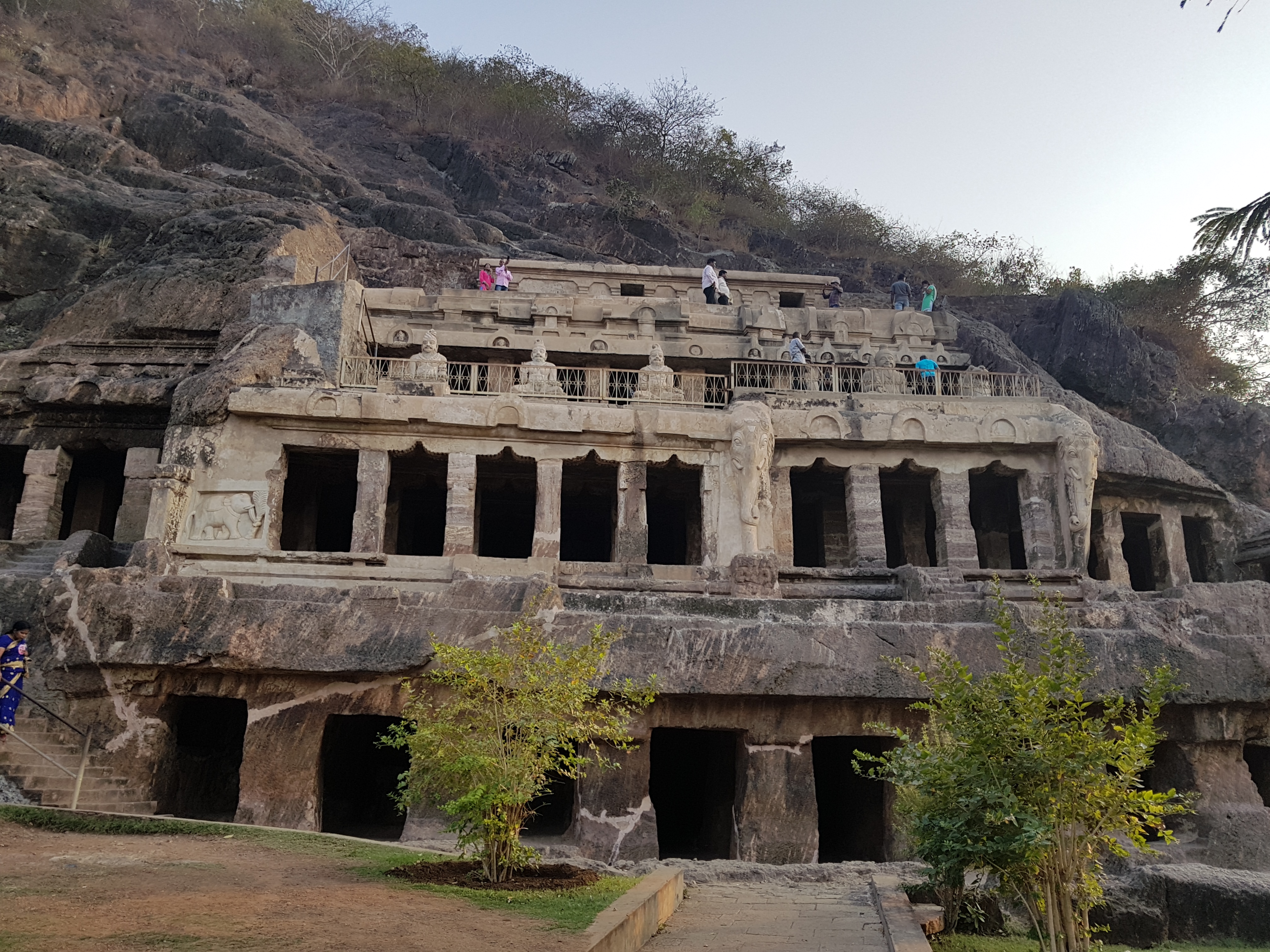
Madhava Varma II next turned his attention against the Vengi kingdom which was under the Salankayanas. The Vengi region was annexed. The Godavari tract became part of the Vishnukundina territory. After these conquests the capital might have been shifted to Bezwada (Vijayawada), a more central location than Amarapura. These extensive conquests made him the lord of Dakshinapatha (southern country). After these various conquests Madhava Varma performed many Asvamedha, Rajasuya and other Vedic sacrifices.
Successors of Madhava Varma II
The fortunes of the Vishnukundinas were at a low point during the reign of the next ruler Vikramendra Varma I (508–528). The next two and half decades also experienced the constant strife and dynastic struggles during the reign of Indra Bhattaraka Varma (528–555). Though Indra Bhattaraka could not withstand the hostile Kalinga subordinate, Indra Varma and lost his life in battle. The Vishnukundinas lost their Kalinga possessions north of the Godavari.
Vikramendra Varma II
With the accession of Vikramendra Varma II (555–569), the fortunes of the Vishnukundina family were restored. To have immediate access to the Kalinga region, he shifted his capital from Bezwada to Lenduluru (modem Denduluru in the West Godavari district). He repulsed the attack of the Pallava ruler Simhavarman. He was successful enough to restore the fortunes of the Vishnukundinas in the Kalinga region. His son Govinda Varma II enjoyed a comparatively short period of rule (569–573).
Janassraya Madhava Varma IV
The Vishnukundina empire set about again to imperial expansion and cultural prosperity under its able ruler Janassraya Madhava Varma IV (573–621).[10] This prudent king spent his early years of rule in consolidating his position in Vengi. The later part of his reign is marked by wars and annexations. In his 37th regnal year, he suppressed the revolt of his subordinate chief the Durjaya Pruthvi Maharaja in Guddadivishya (modern Ramachandrapuram in the East Godavari district).[11]
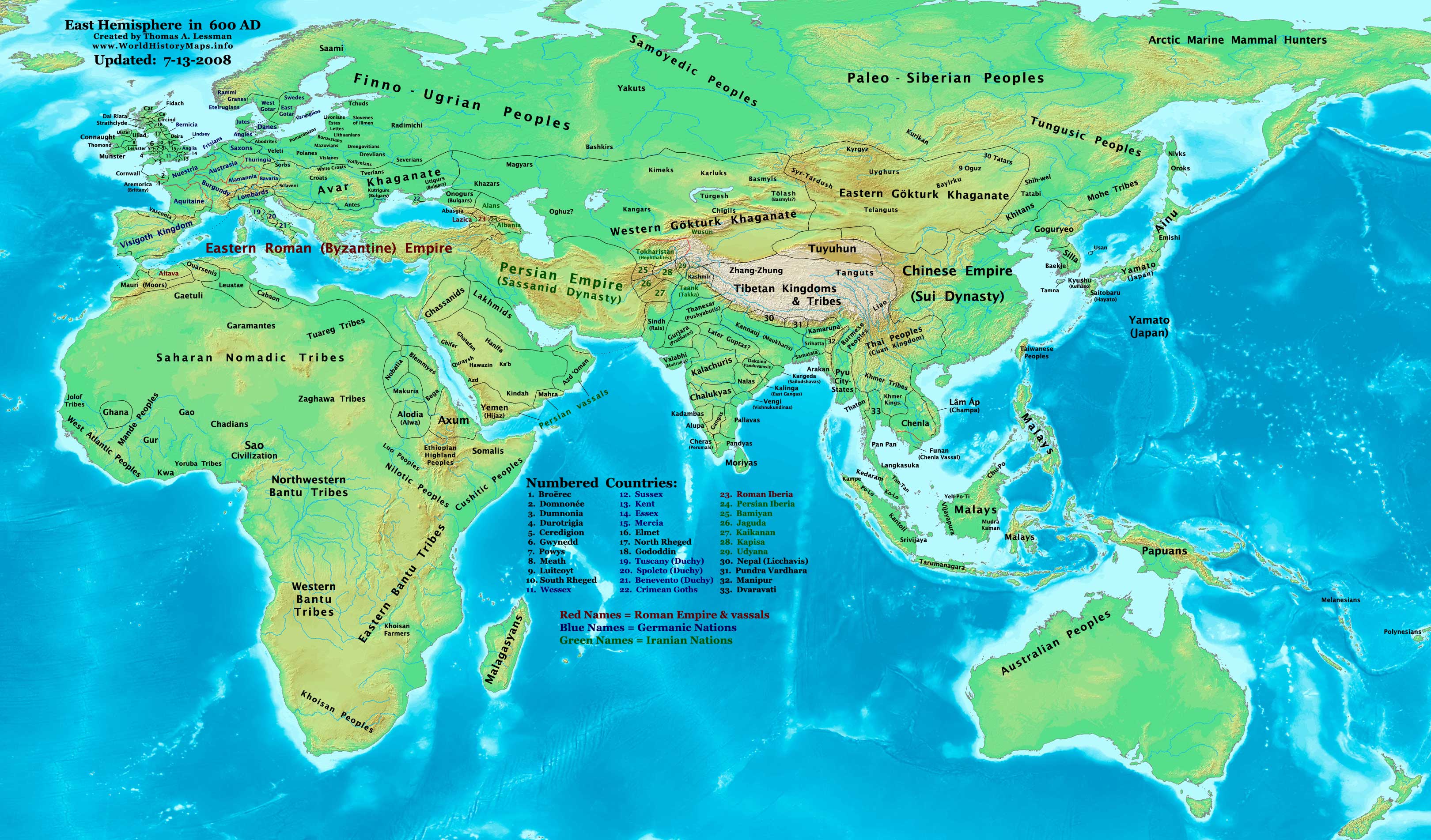
Madhava Varma IV had to face the Chalukyan onslaught in his last years of rule. By about 616, Pulakeshin II and his brother Kubja Vishnuvardhana conquered Vengi from the Vishnukundinas and the Pithapuram area from their subordinate Durjayas. In 621 in his 48th regnal year, Madhava crossed the Godavari probably to oust the Chalukyas from his territories. However, he lost his life on the battlefield. His son Manchana Bhattaraka also might have been expelled by the Chalukyas. Thus the Vishnukundina rule was brought to a close by 624.

Vishnukundina country
They had three important cities, Indrapalanagara, Denduluru, and Amaravati.
Administration
For administrative convenience, the empire was divided into a number of Rashtras and Vishayas. Inscriptions refer to Palki Rashtra, Karma Rashtra, Guddadi Vishaya, etc.[13]
Madhava Varma III appointed members of the royal family as Viceroys for various areas of the kingdom.
The king was the highest court of appeal in the administrator of justice. The Vishnukundina rulers established various kinds of punishments for various crimes. They were known for their impartial judgment and high sense of justice.
Army
Their army consisted of traditional fourfold divisions:
- Elephants
- Chariots
- Cavalry
- Infantry
The Hastikosa was the officer-in-charge of elephant forces and the Virakosa was the officer-in-charge of land forces. These officers also issued grants on behalf of their monarchs.
Taxes

There may have been well-organized administrative machinery for the collection of land revenue.[citation needed] Agrahara villages enjoyed tax exemptions. Sixteen types of coins of the Vishnukundina rulers have been found by archaeologists.
Religion
All the records of the Vishnukundinas and the kings prior to the Madhava Varma II seem to be patrons of Hinduism.
From the time of the accession of Madhava Varma II, an aggressive self-assertion[citation needed] of the Vedic Hinduism occurred. Elaborate Vedic ceremonies like Rajasuya, Sarvamedha, and Aswamedha were undertaken. The celebration of all these sacrifices represents the traditional spirit of the Brahmanical revival[citation needed]. Some of the rulers referred to themselves as 'Parama Mahesvaras'. The inscriptions refer to their family deity Sri Parvata Swami.[citation needed]
The names of rulers like Madhava Varma and Govinda Varma show their Vaishnavite leanings. Thus both the Hindu sects of Saivism and Vaishnavism might have received equal patronage from them.
Literature

The Vishnukundinas were also great patrons of learning. They established colleges for Vedic learning. Learned Brahmins were encouraged by gifts of lands and colleges were established for the propagation of Vedic studies. Indra Bhattaraka established many schools for imparting education on Vedic literature. The performance of several elaborate Vedic ceremonies by Madhava Varma is evidence of the faith of the rulers in Vedic Hinduism and the popularity of Vedic learning with the people during this period.
Some of the Vishnukundina kings were credited with authorship of several books. Vikramendra Varma I was described as Mahakavi – a great poet in a record. Further, an incomplete work on Sanskrit poetics called 'Janasraya Chando Vichiti' was attributed to Madhava Varma IV who bore the title of 'Janasraya'. Sanskrit enjoyed royal patronage.
Art and Architecture
Being great devotees of Siva, the Vishnukundinas seem to have been responsible for the construction of a number of cave temples dedicated to Siva. The cave structures at Bezwada (Vijayawada), Mogalrajapuram, Undavalli caves, and Bhairavakonda were dated to this period. Though some of these cave temples were attributed to the Pallava Mahendra Varman I, the emblems found on the caves and the areas being under the rule of the Vishnukundinas during this period clearly show that these were contributions of the Vishnukundinas. The big four-storeyed cave at Undavalli and the 8 cave temples in Bhairavakonda in Nellore district show however clear resemblances with the architecture of Pallava Mahendra Varman's period.
See also
| Part of a series on |
| Andhra Pradesh and Telangana |
|---|
 |
| History and Kingdoms |
| Outline of South Asian history |
|---|
_without_national_boundaries.svg) |
References
- ↑ S. Sankaranarayanan, The Vishṇukuṇḍis and their Times: an Epigraphical Study (Delhi: Agam Prakashan, 1977), p. 1.
- ↑ Among many that could be cited, a recent case in Vincent Tournier, “A Tide of Merit: Royal Patrons, Tāmraparṇīya monks, and the Buddha’s Awakening in 5th–6th century Āndhradeśa,” Indo-Iranian Journal (2018) 61, no.1 (2018), pp. 20-96 https://shs.hal.science/halshs-02436883
- ↑ Vasumati, E. (1969). "Telugu Literature in the Qutub Shahi Period". Abul Kalam Azad Oriental Research Institute – via Google Books.
- ↑ Madras, Andhra Historical Research Society, Rajahmundry; Society, Andhra Historical Research (14 January 2018). "Journal of the Andhra Historical Society". Andhra Historical Research Society. – via Google Books.
{{cite web}}: CS1 maint: multiple names: authors list (link) - ↑ Sarma, A. Rajeswara (2009). "Indrapura: The capital city of Vishnukundi dynasty". Proceedings of the Indian History Congress. 70: 138–141. ISSN 2249-1937. JSTOR 44147663.
- ↑ Indian History. Allied Publishers. 1988. ISBN 9788184245684 – via Google Books.
- ↑ Venkataramanayya, N., ed. (1966), Report on Epigraphy, Andhra Pradesh Government Epigraphical Series, Andhra Pradesh (India) Department of Archaeology and Museums, p. 87
- ↑ Majumdar, Ramesh Chandra; Altekar, Anant Sadashiv (1967). The Vakataka - Gupta Age Circa 200-550 A.D. Motilal Banarsidass Publishing House. p. 122. ISBN 978-81-208-0026-7.
- ↑ Spink, Walter (2018). Ajanta: History and Development. BRILL. p. 121. ISBN 978-90-474-1635-7.
- ↑ Chanda, Ratna (1990). Kumāradāsa: A Study. Sanskrit Pustak Bhandar.
- ↑ Swaminathan, C. R. (2000). Janakiharana of Kumaradasa: A Study. Motilal Banarsidass.
- ↑ Ramakrishna, G.; Gayathri, N.; Chattopadhyaya, Debiprasad (1983). An Encyclopaedia of South Indian Culture. K.P. Bagchi.
- ↑ "History of The Andhras Upto 1565 AD | PDF | Religion And Belief". Scribd. Retrieved 5 August 2025.
Bibliography
- Durga Prasad, History of the Andhras up to 1565 A. D., P. G. PUBLISHERS, GUNTUR (1988)
- South Indian Inscriptions [1]
- Nilakanta Sastri, K.A. (1955). A History of South India, OUP, New Delhi (Reprinted 2002).
External links
- Map of find-spots of inscriptions issued by Vishnukundinas and other neighbouring dynasties
