






m Removed empty portal template using script |
No edit summary |
||
| Line 1: | Line 1: | ||
{{Short description|none}} | |||
The state of [[Bihar]] ({{langx|hi|बिहार}}) in [[East India|eastern India]], is one of the oldest inhabited places in the world with a history going back 3000 years. The rich culture and heritage of Bihar is evident from the innumerable ancient [[monument]]s that are dotted all over the [[States and territories of India|state]]. Bihar is home to many tourist attractions and is visited by large numbers of tourists from all over the world.<ref name="tourism website">{{cite web |url=http://www.tourism.gov.in/survey/BIHAR%20TOURISM%20ANNUAL%20STATISTICS%20%20REPORT%20Final.pdf |title=Incredible !ndia |access-date=2011-02-26 |url-status=dead |archive-url=https://web.archive.org/web/20101222105539/http://www.tourism.gov.in/survey/BIHAR%20TOURISM%20ANNUAL%20STATISTICS%20%20REPORT%20Final.pdf |archive-date=2010-12-22 }} Statics Tourism in Bihar on [[Indian Government]]'s [http://www.tourism.gov.in tourism website] {{webarchive|url=https://web.archive.org/web/20081008053507/http://tourism.gov.in/ |date=2008-10-08 }}</ref> Around total 6 million tourists visit Bihar every year.<ref name="tourism website" /> | |||
[[File:Mahabodhitemple.jpg|thumb|[[Mahabodhi Temple]], Bodh Gaya]] | |||
[[File:Nalanda University ruins.JPG|thumb|Ruins of [[Nalanda Mahavihara]]]] | |||
== | [[File:Rohtasgarh Fort 5.jpg|thumb|[[Rohtas Fort, India|Rohtasgarh Fort]] at [[Rohtas district|Rohtas]]]] | ||
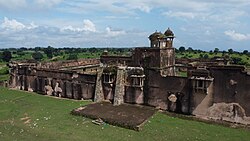
[[File:Fort of Darbhanga.jpg|thumb|[[Darbhanga Fort]] in [[Darbhanga]]]] | |||
[[File:Shershah Tomb Surrounded by lake water.jpg|thumb|[[Tomb of Sher Shah Suri|Sher Shah Suri Tomb]] at [[Sasaram]]]] | |||
[[File:Maa Mundeshwari Devi.jpg|thumb|[[Mundeshwari Temple]] in [[Kaimur district|Kaimur]]]] | |||
[[File:Sun-temple_DEO_Aurangabad_Bihar,India.jpg|thumb|[[Deo Sun Temple]] in [[Aurangabad district, Bihar|Aurangabad]]]] | |||
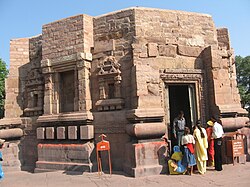
[[File:Janaki kund, Sitamarhi, Bihar.jpg|thumb|[[Sita Kund|Janaki Kund]] at [[Sitamarhi]]]] | |||
[[File:Vidhnudham mandir ganpatganj supaul.jpg|thumb|This is an image of vishnu dham temple]] | |||
[[Megasthenes]] (B.C. 350–290 B.C.) visited the region in reign of [[Chandragupta Maurya]].<ref>[http://websfor.org/alexander/arrian/book5a.asp v,6]</ref> His observations were recorded in ''[[Indica (Megasthenes)|Indika]]''. [[Dionysius (ambassador)|Dionysius]] was son of [[Megasthenes]], who visited [[Pataliputra]] in reign of [[Ashoka]]. [[Xuanzang|Hsuan-Tsang]] and [[I Ching (monk)|I Ching]] visited [[Nalanda]] to study in the 7th century. This state is the place of [[Mahavira]], the 24th and last [[Tirthankara]], [[Aryabhata]], [[Ashoka|Great Ashoka]], [[Chanakya]], [[Gautama Buddha]], [[Mahavira]], [[Guru Gobind Singh]], [[Chandragupta Maurya]], [[Vātsyāyana]], [[Sher Shah Suri]], [[Maa Tara Chandi Temple]], and many other great historical figures.<ref>[http://perseus.mpiwg-berlin.mpg.de/cgi-bin/ptext?lookup=Plin.+Nat.+6.21 Pliny the Elder, "The Natural History", Chap. 21] {{webarchive|url=https://web.archive.org/web/20130728023626/http://perseus.mpiwg-berlin.mpg.de/cgi-bin/ptext?lookup=Plin.%2BNat.%2B6.21 |date=2013-07-28 }}</ref> | |||
Bihar ranked 8th in the top 10 states/UTs of India in number of foreign tourist visits in 2017.<ref>{{cite news |url=http://tourism.gov.in/sites/default/files/Other/ITS_Glance_2018_Eng_Version_for_Mail.pdf |title=India Tourism Statistics at a Glance 2018 |access-date=11 November 2018 |archive-date=11 November 2018 |archive-url=https://web.archive.org/web/20181111093327/http://tourism.gov.in/sites/default/files/Other/ITS_Glance_2018_Eng_Version_for_Mail.pdf |url-status=live }}</ref> The year 2019, saw highest number of tourists in Bihar, with over 35 million tourists, including 11.9 million foreign tourists.<ref>{{cite news |url=https://timesofindia.indiatimes.com/city/patna/2019-saw-highest-number-of-tourists/articleshow/74013593.cms |title=2019 saw highest number of tourists in Bihar |access-date=21 November 2021 |archive-date=11 December 2020 |archive-url=https://web.archive.org/web/20201211222042/https://timesofindia.indiatimes.com/city/patna/2019-saw-highest-number-of-tourists/articleshow/74013593.cms |work=Times of India |url-status=live }}</ref> | |||
==Monuments and museums== | |||
{{multiple image | {{multiple image | ||
| Line 21: | Line 39: | ||
| footer_background = #ED9D0B | | footer_background = #ED9D0B | ||
| footer_align = center | | footer_align = center | ||
| footer = [[Mahabodhi Temple]] <small>(an [[UNESCO World Heritage Site]])</small>, [[Nalanda]], [[Vikramashila]], [[Cyclopean Wall of Rajgir]], [[Kesaria stupa]], [[Pillars of Ashoka]] | | footer = [[Mahabodhi Temple]] <small>(an [[UNESCO World Heritage Site]])</small>, [[Nalanda]]<small>(an [[UNESCO World Heritage Site]])</small>, [[Vikramashila]], [[Cyclopean Wall of Rajgir]], [[Kesaria stupa]], [[Pillars of Ashoka]] | ||
| header = Monuments of Bihar | | header = Monuments of Bihar | ||
| header_background = #F68A06 | | header_background = #F68A06 | ||
| Line 36: | Line 54: | ||
| image4 = Bihar museum.jpg | | image4 = Bihar museum.jpg | ||
| image5 = Patna Museum - General View (9221515542).jpg | | image5 = Patna Museum - General View (9221515542).jpg | ||
| image6 = | | image6 = | ||
| footer_background = #ED9D0B | | footer_background = #ED9D0B | ||
| footer_align = center | | footer_align = center | ||
| Line 45: | Line 63: | ||
=== Monuments === | === Monuments === | ||
{{ | {{Main|List of Monuments of National Importance in Bihar|List of State Protected Monuments in Bihar|label 1=Monuments of National Importance in Bihar|label 2=State Protected Monuments in Bihar}} '''Mahabodhi Mahavihar''', (literally: "Great Awakening Temple"), a [[UNESCO World Heritage Site]], is an ancient, but much rebuilt and restored, [[Buddhism|Buddhist]] temple in Bodh Gaya, marking the location where the [[Gautama Buddha|Buddha]] is said to have attained [[Enlightenment (Buddhism)|enlightenment]].<ref>{{cite web|title=World Heritage Day: Five must-visit sites in India|url=http://www.hindustantimes.com/travel/world-heritage-day-five-must-visit-sites-in-india/article1-1338551.aspx|url-status=dead|archive-url=https://web.archive.org/web/20150814145305/http://www.hindustantimes.com/travel/world-heritage-day-five-must-visit-sites-in-india/article1-1338551.aspx|archive-date=2015-08-14}}</ref> Bodh Gaya (in [[Gaya district]]) is about {{convert|96|km|0|abbr=on}} from [[Patna]], [[Bihar]] state, [[India]]. [[Nalanda|Nalanda Mahavihara]], a [[UNESCO World Heritage Site]], is an worlds oldest university situated in [[Nalanda district|Nalanda]], [[Bihar]]. It comprises the archaeological remains of a monastic and scholastic institution dating from the 3rd century BCE to the 13th century CE. It includes stupas, shrines, viharas (residential and educational buildings) and important art works in stucco, stone and metal. Nalanda stands out as the most ancient university of the Indian Subcontinent. [[Archaeological Survey of India]] has recognized 72 [[List of Monuments of National Importance in Bihar|monuments in Bihar]] as [[Monument of National Importance|Monuments of National Importance]]. Furthermore, [[Archaeological Survey of India]] has recognized 30 additional monument as [[List of State Protected Monuments in Bihar|protected monuments]] in Bihar. These monument identifier is monuments and distributed across the [[List of Monuments of National Importance in Bihar|Bihar]]. | ||
{| | {| | ||
| valign="top" | | | valign="top" | | ||
==== | ==== Archaeological ==== | ||
* [[Pillars of Ashoka|Ashoka Pillars]] | * [[Pillars of Ashoka|Ashoka Pillars]] | ||
| Line 70: | Line 88: | ||
| valign="top" | | | valign="top" | | ||
==== Historical | ==== Historical sites ==== | ||
* [[Cyclopean Wall of Rajgir]] | * [[Cyclopean Wall of Rajgir]] | ||
* [[Mahabodhi Temple]] | * [[Mahabodhi Temple]] | ||
| Line 98: | Line 116: | ||
* [[Ajatshatru Fort]] | * [[Ajatshatru Fort]] | ||
* [[Navlakha Palace]] | * [[Navlakha Palace]] | ||
* [[Anandbagh Palace]] | |||
* [[Nargona Palace]] | |||
| valign="top" | | | valign="top" | | ||
| valign="top" | | | valign="top" | | ||
==== Inscription | ==== Inscription sites ==== | ||
*[[Vadathika Cave Inscription|Vadathika Inscription]] | *[[Vadathika Cave Inscription|Vadathika Inscription]] | ||
| Line 108: | Line 128: | ||
*[[Barabar Caves|Barabar]] [[Gopika Cave Inscription|Inscription]] | *[[Barabar Caves|Barabar]] [[Gopika Cave Inscription|Inscription]] | ||
==== Ancient | ==== Ancient cities ==== | ||
*[[Nalanda]] | *[[Nalanda]] | ||
| Line 122: | Line 142: | ||
| valign="top" | | | valign="top" | | ||
==== History | ==== History museums ==== | ||
* [[Bihar Museum]] | * [[Bihar Museum]] | ||
* [[Patna Museum]] | * [[Patna Museum]] | ||
| Line 128: | Line 148: | ||
* [[Gandhi Sangrahalaya, Patna]] | * [[Gandhi Sangrahalaya, Patna]] | ||
* [[Buddha Samyak Darshan Museum and Memorial Stupa|Budha Samyak Darshan Museum and Memorial Stupa]] | * [[Buddha Samyak Darshan Museum and Memorial Stupa|Budha Samyak Darshan Museum and Memorial Stupa]] | ||
* [[Begusarai Museum]] | |||
| valign="top" | | | valign="top" | | ||
| valign="top" | | | valign="top" | | ||
==== Archaeology | ==== Archaeology museums ==== | ||
* [[Archaeological Museum, Nalanda]] | * [[Archaeological Museum, Nalanda]] | ||
* [[Archaeological Museum, Bodh Gaya]] | * [[Archaeological Museum, Bodh Gaya]] | ||
* [[Archaeological Museum, Vaishali]] | * [[Archaeological Museum, Vaishali]] | ||
*[[Archaeological Museum, Vikramshila]] | *[[Archaeological Museum, Vikramshila]] | ||
*[[Vachaspati Sangrahālaya]], Madhubani | |||
| valign="top" | | | valign="top" | | ||
| valign="top" | | | valign="top" | | ||
==== | ==== Craft museums ==== | ||
*[[Chandradhari Museum]] | *[[Chandradhari Museum]] | ||
*[[Jalan Museum]] | *[[Jalan Museum]] | ||
| Line 149: | Line 171: | ||
* [[Srikrishna Science Centre]] | * [[Srikrishna Science Centre]] | ||
* [[Dr. A.P.J Abdul Kalam Science City]] | * [[Dr. A.P.J Abdul Kalam Science City]] | ||
* [[Darbhanga Planetarium]] | |||
| valign="top" | | | valign="top" | | ||
| Line 155: | Line 178: | ||
|} | |} | ||
== Religious | == Religious tourism == | ||
Bihar one of the most sacred place of various religions like [[Hinduism]], [[Buddhist pilgrimage|Buddhism]], [[Mahaveer#Birth of Prince Vardhaman|Jainism]], [[Takht (Sikhism)|Sikhism | Bihar is one of the most sacred place of various religions like [[Hinduism]], [[Buddhist pilgrimage|Buddhism]], [[Mahaveer#Birth of Prince Vardhaman|Jainism]], [[Takht (Sikhism)|Sikhism]], Many [[tourist]]s travel to Bihar to visit their [[pilgrimage]]. [[Mahabodhi Temple]], a [[Buddhist]] [[shrine]] and [[UNESCO World Heritage Site]], is also situated in [[Bodh Gaya]]. A [[Mahavir Mandir]], Patna having second highest budget in [[North India]] after the famous [[Vaishno Devi]] shrine.<ref>{{cite web|title=Mandir trust submits Rs 35-cr budget | Patna News|website=[[The Times of India]]|url=https://timesofindia.indiatimes.com/Cities/Patna/Mandir_trust_submits_Rs_35-cr_budget/articleshow/3017191.cms|url-status=live|archive-url=https://web.archive.org/web/20080510061347/http://timesofindia.indiatimes.com/Cities/Patna/Mandir_trust_submits_Rs_35-cr_budget/articleshow/3017191.cms|archive-date=2008-05-10|access-date=2008-09-29}} Budget of [[Mahavir Mandir]]</ref> | ||
=== | === Dharmic religions === | ||
{{See also|List of Hindu temples in Bihar|List of Jain temples in Bihar|label 1=Hindu temples in Bihar|label 2=Sikh temples in Bihar|label 3=Buddhist temples in Bihar|label 4=Jain temples in Bihar}} | {{See also|List of Hindu temples in Bihar|List of Jain temples in Bihar|label 1=Hindu temples in Bihar|label 2=Sikh temples in Bihar|label 3=Buddhist temples in Bihar|label 4=Jain temples in Bihar}} | ||
The term '[[Bihar]]' derives from the Sanskrit word '[[Vihāra]]', which means abode and it itself explains the relation of Bihar with the viharas, used as the [[Buddhism|Buddhist]] abode. The land of Bihar is considered to be the richest one in context of Buddhism as it showered the divine light of enlightenment on a young ascetic, [[Siddhartha Gautama]], in [[Bodh Gaya]] under [[Bodhi Tree]]. This makes [[Bodh Gaya]] is a holiest site in [[Buddhism]] and place of pilgrimage associated with the [[Mahabodhi Temple]] Complex in [[Gaya district]] in the [[India]]n [[States and union territories of India|state]] of [[Bihar]]. The [[Gautama Buddha]] preached many sermons in different places of like [[Vaishali (ancient city)|Vaishali]] and [[Rajgir]]. Even after His [[Mahaparinirvana|Mahaprinirvana]], disciples carried on the doctrine of [[Buddhism]] in the regions of [[Magadha (Mahajanapada)|Magadha]], [[History of Bihar#Late Vedic Kingdoms|Bihar]]. [[Gautama Buddha]]'s disciples opened several monasteries and Universities such as [[Nalanda University]] and [[Vikramshila University]]. [[Magadha (Mahajanapada)|Magadha]] emperor [[Ashoka|Ashoka the Great]] became a [[Buddhism|Buddhist]] and made [[Buddhism]] [[state religion]] and spread its [[Buddhist ethics|doctrine]], in different parts of India and abroad. | |||
The term '[[Bihar]]' derives from the Sanskrit word '[[Vihāra]]', which means abode and it itself explains the relation of Bihar with the viharas, used as the [[Buddhism|Buddhist]] abode. The land of Bihar is considered to be the richest one in context of Buddhism as it showered the divine light of enlightenment on a young ascetic, [[Siddhartha Gautama]], in [[Bodh Gaya]] under [[Bodhi Tree]]. This makes [[Bodh Gaya]] is a holiest site in [[Buddhism]] and place of pilgrimage associated with the [[Mahabodhi Temple]] Complex in [[Gaya district]] in the [[India]]n [[States and union territories of India|state]] of [[Bihar]]. The [[Gautama Buddha]] preached many sermons in different places of like [[Vaishali (ancient city)|Vaishali]] and [[Rajgir]]. Even after His [[Mahaparinirvana|Mahaprinirvana]], disciples carried on the doctrine of [[Buddhism]] in the regions of [[Magadha]], [[History of Bihar#Late Vedic Kingdoms|Bihar]]. [[Gautama Buddha]]'s disciples opened several monasteries and Universities such as [[Nalanda University]] and [[Vikramshila University]]. [[Magadha]] emperor [[Ashoka|Ashoka the Great]] became a [[Buddhism|Buddhist]] and made [[Buddhism]] [[state religion]] and spread its [[Buddhist ethics|doctrine]], in different parts of India and abroad. | |||
The capital of Bihar, [[Patna]] is one of the holiest city in [[Sikhism]], as [[Sikh Gurus|The tenth Guru of the Sikhs]] [[Guru Gobind Singh]] was born here in 1666 and spent his early years before moving to Anandpur.<ref name="Johar 1979 23">{{cite book | last = Johar | first = Surinder Singh | title = Guru Gobind Singh: A Study | publisher = Marwah Publications | year = 1979 | pages = 23 }}</ref> Patna was also honoured by visits from [[Guru Nanak]] in 1509 as well as [[Guru Tegh Bahadur]] in 1666. [[Takht Shri Harmandir Saheb]], one of the [[Takht (Sikhism)|Five Takhts]] of the [[Sikhism]], is a [[Gurdwara]] situated in [[Patna Sahib|Patna]] and it is made in remembrance of the birthplace of [[Guru Gobind Singh]], [[Sikh Gurus|The tenth Guru of the Sikhs]].<ref name="Johar 1979 23" /> [[Gurdwara Pahila Bara]], also known as [[Gurdwara Ghai Ghat]], is dedicated to [[Guru Nanak Dev]], who during his visit in to Patna stayed here in 1509 and later by [[Guru Tegh Bahadur]] along with his family visited this place in 1666.<ref>{{cite web |url=http://www.gurbaani.com/gurd/gurdawaras6.htm |title= | The capital of Bihar, [[Patna]] is one of the holiest city in [[Sikhism]], as [[Sikh Gurus|The tenth Guru of the Sikhs]] [[Guru Gobind Singh]] was born here in 1666 and spent his early years before moving to Anandpur.<ref name="Johar 1979 23">{{cite book | last = Johar | first = Surinder Singh | title = Guru Gobind Singh: A Study | publisher = Marwah Publications | year = 1979 | pages = 23 }}</ref> Patna was also honoured by visits from [[Guru Nanak]] in 1509 as well as [[Guru Tegh Bahadur]] in 1666. [[Takht Shri Harmandir Saheb]], one of the [[Takht (Sikhism)|Five Takhts]] of the [[Sikhism]], is a [[Gurdwara]] situated in [[Patna Sahib|Patna]] and it is made in remembrance of the birthplace of [[Guru Gobind Singh]], [[Sikh Gurus|The tenth Guru of the Sikhs]].<ref name="Johar 1979 23" /> [[Gurdwara Pahila Bara]], also known as [[Gurdwara Ghai Ghat]], is dedicated to [[Guru Nanak Dev]], who during his visit in to Patna stayed here in 1509 and later by [[Guru Tegh Bahadur]] along with his family visited this place in 1666.<ref>{{cite web |url=http://www.gurbaani.com/gurd/gurdawaras6.htm |title=Historical Sikh Gurdawaras in Bihar - India |access-date=2010-02-01 |url-status=live |archive-url=https://web.archive.org/web/20100111054434/http://www.gurbaani.com/gurd/gurdawaras6.htm |archive-date=2010-01-11 }} [[Gurdwara Pahila Bara]]</ref> [[Gurdwara Gobind Ghat]] - is where the child [[Guru Gobind Singh]] used to play with his playmates on the bank of the [[Ganges]]. It is situated on the bank of river [[Ganges]] and hardly 200 yards from [[Takht Shri Harmandir Saheb]]. It is also known as [[Gurdwara Kangan Ghat]].<ref>{{cite web |url=http://www.takhatpatnasahib.com/Gurdwara-Kangan-Ghat.aspx |title=Gurdwara Kangan Ghat |access-date=2010-02-01 |url-status=dead |archive-url=https://web.archive.org/web/20090527214504/http://www.takhatpatnasahib.com/Gurdwara-Kangan-Ghat.aspx |archive-date=2009-05-27 }} Gurdwara Gobind Ghat</ref> [[Gurdwara Guru ka Bagh|Guru ka Bagh]] and [[Gurdwara Bal Leela]] is situated near [[Takht Shri Harmandir Saheb|birthplace]] of [[Guru Gobind Singh]].<ref>{{cite web|title=Gurdwara Guru Ka Bagh|url=http://www.takhatpatnasahib.com/Gurdwara-Guru-Ka-Bagh.aspx|url-status=dead|archive-url=https://web.archive.org/web/20120217005152/http://www.takhatpatnasahib.com/Gurdwara-Guru-Ka-Bagh.aspx|archive-date=2012-02-17|access-date=2012-08-15}} Gurdwara Guru ka Bagh</ref>- This place is just few meters away from Takhat Patna Sahib. Guru ji were playing with other children during his childhood. [[Gurdwara Bal Leela]] is also known as [[Maini Sangat]].<ref>{{cite web |url=http://www.takhatpatnasahib.com/Gurdwara-Bal-Leela.aspx |title=Gurdwara Baal Leela |access-date=2010-02-01 |url-status=dead |archive-url=https://web.archive.org/web/20090527213026/http://www.takhatpatnasahib.com/Gurdwara-Bal-Leela.aspx |archive-date=2009-05-27 }} Gurdwara Bal Leela</ref> [[Gurdwara Handi Sahib]] was built in the memory of [[Guru Teg Bahadur]]. As [[Guru Teg Bahadur]] with [[Mata Gujri]] and [[Bala Preetam]] stayed here in 1728<ref>{{cite web |url=http://www.takhatpatnasahib.com/Gurdwara-Haandi-Saheb.aspx |title=Gurdwara Haandi Sahib |access-date=2010-02-01 |url-status=dead |archive-url=https://web.archive.org/web/20090527214459/http://www.takhatpatnasahib.com/Gurdwara-Haandi-Saheb.aspx |archive-date=2009-05-27 }} Gurdwara Handi Sahib</ref> | ||
[[Rajgir]] is birthplace of [[Munisuvrata]], the twentieth [[Tirthankara|Jain tirthankara]] and [[Pawapuri]] is nirvana place of [[Mahavira]] the last [[Tirthankara|Jain tirthankara]]. [[Pataliputra]] and [[Vaishali (ancient city)|Vaishali]] is significant religious place in [[Jainism]]. [[Champapuri]] is a Jain pilgrimages where all the [[Panch Kalyanaka|five kalyanaks]] of | [[Rajgir]] is birthplace of [[Munisuvrata]], the twentieth [[Tirthankara|Jain tirthankara]] and [[Pawapuri]] is nirvana place of [[Mahavira]] the last [[Tirthankara|Jain tirthankara]]. [[Pataliputra]] and [[Vaishali (ancient city)|Vaishali]] is significant religious place in [[Jainism]]. [[Champapuri]] is a Jain pilgrimages where all the {{transliteration|hi|italic=no|[[Panch Kalyanaka|five kalyanaks]]}} of Lord [[Vasupujya]] have taken place. The tallest statue of [[Tirthankara|Jain tirthankara]] [[Vasupujya]] which stands 31 feet in height was built in [[Champapuri]] in 2014. The Panch Kalyanak Pratishtha Mahotsav of the statue was done from 27 Feb to 3 Mar 2014. [[Kamaldah Jain Temple]] is the oldest Jain temple in [[Patna]] built in 18th century. This temple belonging to digambar sect of Jainism, is dedicated to [[Neminatha]], the 22nd tirthankara. This place has traditionally been associated with the birth of the renowned Jain teacher, [[Sthulabhadra]]. | ||
{| | {| | ||
| Line 191: | Line 194: | ||
==== Hindu pilgrimages ==== | ==== Hindu pilgrimages ==== | ||
* [[Vishnupada Temple]] | * [[Vishnupada Temple]] | ||
*[[Mahavir Mandir]] | * [[Mahavir Mandir]] | ||
* [[Deo Surya Mandir|Sun Temple, Deo]] | * [[Deo Surya Mandir|Sun Temple, Deo]] | ||
* [[Ajgaibinath Dham|Ajgaibinath Temple]] | |||
* [[Sundernath|Sundernath Temple]] | |||
* [[Sita Kund|Punaura Dham]] | |||
* [[Jaimangla Garh Temple]] | |||
* [[Mundeshwari Temple]] | * [[Mundeshwari Temple]] | ||
*[[Mangla Gauri Temple]] | * [[Maa Jaleshwari Temple]] | ||
*[[Aami Mandir]] | * [[Mangla Gauri Temple]] | ||
* [[Aami Mandir]] | |||
* [[Shitala Mata Temple, Patna|Shitala Mata Temple]] | * [[Shitala Mata Temple, Patna|Shitala Mata Temple]] | ||
*[[Shyama Mai Temple]] | * [[Shyama Mai Temple]] | ||
*[[Ahalya Sthan]] | * [[Ahalya Sthan]] | ||
* [[ | * [[Kusheshwar Asthan]] | ||
* [[Chandika Sthan]] | * [[Chandika Sthan]] | ||
*[[Maa Tara Chandi Temple]] | * [[Umga Sun Temple]] | ||
* [[Maa Tara Chandi Temple]] | |||
* [[Thawe Mandir|Thawe mandir]] | * [[Thawe Mandir|Thawe mandir]] | ||
*[[Singheshwar (community development block)|Singheshwar Temple]] | * [[Haleshwar Sthan]] | ||
*[[ | * [[Ashokdham Temple]] | ||
* [[Singheshwar (community development block)|Singheshwar Temple]] | |||
* [[Kapileshwar Temple, Bihar|Kapileshwar Asthan]] | |||
* [[Tintoliya temple]] | |||
| valign="top" | | | valign="top" | | ||
| valign="top" | | | valign="top" | | ||
| Line 225: | Line 238: | ||
| valign="top" | | | valign="top" | | ||
==== | ==== Buddhist pilgrimages ==== | ||
* [[Mahabodhi Temple]], [[Bodh Gaya]] | * [[Mahabodhi Temple]], [[Bodh Gaya]] | ||
*[[Hsuen Tsang Memorial]] | *[[Hsuen Tsang Memorial]] | ||
| Line 244: | Line 257: | ||
| valign="top" | | | valign="top" | | ||
==== Jain pilgrimages | ==== Jain pilgrimages ==== | ||
* [[Jal Mandir]], [[Pawapuri]] | * [[Jal Mandir]], [[Pawapuri]] | ||
* [[Lachhuar Jain | * [[Lachhuar Jain temple]] | ||
* [[Jain temple, Kundalpur (Bihar)|Siddha Kshetra, Kundalpur]] | * [[Jain temple, Kundalpur (Bihar)|Siddha Kshetra, Kundalpur]] | ||
* [[Kamaldah Jain temple|Siddha Kshetra Kamaldahji]] | * [[Kamaldah Jain temple|Siddha Kshetra Kamaldahji]] | ||
* [[Siddha Kshetra Mandargiri]] | * [[Siddha Kshetra Mandargiri]] | ||
* [[Champapuri]] | * [[Champapuri]] | ||
* [[Siddha Kshsetra Gunawaji]] | * [[Siddha Kshsetra Gunawaji]] | ||
* [[Rajgir]] | * [[Rajgir]] | ||
|} | |} | ||
=== | ===Abrahamic religions=== | ||
[[Maner Sharif]] is the place where [[Makhdum Daulat]] in 1608 | [[Maner Sharif]] is the place where [[Makhdum Daulat]] in 1608 died. It was then in 1616 that [[Ibrahim Khan (governor of Bihar)|Ibrahim Khan]], Governor of [[Bihar]] who was also his disciple, finished the construction of his [[mausoleum]]. [[Bihar Sharif]] and [[Phulwari Sharif]] is [[sufism]] center which has cultural past. [[Sher Shah Suri Masjid|Sher Shah Suri Mosque]], also known as Shershahi, was built in [[Afghan architecture]] by [[Sher Shah Suri]] during1540-1545 to commemorate his reign. [[Pathar ki Masjid]] situated on the bank of the [[holy river]] [[Ganges]] in [[Patna]] and it was built by Parvez Shah, son of Jahangir, in 1621. | ||
[[Padari ki haveli|Virgin Mary Church]], also as [[Padari ki haveli]], is the oldest [[Church (building)|church]] in [[Bihar]] and it was built in 1713 in [[Patna]] by [[Roman Catholics]]. . [[Holy Saviour Church, Arrah|Holy Saviour Church]] of [[Arrah]] is also historically important site. | [[Padari ki haveli|Virgin Mary Church]], also as [[Padari ki haveli]], is the oldest [[Church (building)|church]] in [[Bihar]] and it was built in 1713 in [[Patna]] by [[Roman Catholics]]. . [[Holy Saviour Church, Arrah|Holy Saviour Church]] of [[Arrah]] is also historically important site. | ||
| Line 264: | Line 277: | ||
| valign="top" | | | valign="top" | | ||
==== Islam | ==== Islam pilgrimages ==== | ||
* [[Maner Sharif]] | * [[Maner Sharif]] | ||
* [[Bihar Sharif]] | * [[Bihar Sharif]] | ||
| Line 286: | Line 299: | ||
| valign="top" | | | valign="top" | | ||
| valign="top" | | | valign="top" | | ||
|} | |} | ||
== Architectural | == Architectural tourism == | ||
{{multiple image | {{multiple image | ||
| Line 313: | Line 324: | ||
| header_background = #F68A06 | | header_background = #F68A06 | ||
}} | }} | ||
The first significant architectural pieces in Bihar date back to the [[Vedic period]]. While the [[Mauryan | The first significant architectural pieces in Bihar date back to the [[Vedic period]]. While the [[Mauryan Empire|Mauryan period]] marked a transition to the use of brick and stone, wood remained the material of choice. Evidence of ancient structures have been found in recent excavations in Kumrahar, in modern-day [[Patna]]. Remains of an 80-pillared hall have also been unearthed. The Buddhist [[stupa]], a dome-shaped monument, was and is used in Bihar as a commemorative monument used to enshrine sacred relics.<ref name="Ency">Encyclopædia Britannica (2008). ''Pagoda''.</ref> Many stupas, like those at [[Nalanda]] and [[Vikramshila]], were originally built as brick and masonry mounds during the reign of [[Ashoka]] (273 BCE - 232 BCE). Fortified cities with stūpas, ''[[vihara]]s'', and temples were constructed during the [[Maurya Empire]] (c. 321–185 BCE).<!--<ref name=Chandra/>--> [[Guard rail]]s—consisting of posts, crossbars, and a coping—became a safety feature surrounding a stupa.<!--<ref name=Chandra/>--> Some of Buddhist architecture blended with [[Roman architecture|Roman]] and [[Architecture of ancient Greece|Hellenestic architecture]] to give rise to unique new styles, such as the [[Greco-Buddhist]] style.<ref name="moffett">Moffett, M.; Fazio, M.; and Lawrence Wodehouse (2003). ''A World History of Architecture''. McGraw-Hill Professional. 75. {{ISBN|0-07-141751-6}}.</ref> Vedic and Mauryan structure was largely suffered damage at the hands of [[Mughal Empire|Mughal raiders]] in the 12th century.<ref name="Scott">{{cite journal|last=Scott|first=David|date=May 1995|title=Buddhism and Islam: Past to Present Encounters and Interfaith Lessons|journal=Numen|volume=42|issue=2|pages=141–155|doi=10.1163/1568527952598657|jstor=3270172}}</ref> Though parts of the Bihar have been excavated, much of its ancient architecture still lies buried beneath the modern city. [[Persia]]n influence can be seen in surviving Mughal tombs made of sandstone and marble.<ref name="eb-mughalarch">''Mughal architecture''. Encyclopædia Britannica (2008)</ref> Surviving Mughal architecture includes [[Sher Shah Suri Tomb]], built by [[Sher Shah Suri]] and his successor. [[Ibrahim Khan (governor of Bihar)|Ibrahim Khan]], Governor of [[Bihar]] and a disciple of [[Makhdum Daulat]], oversaw the completion of Makhdum Daulat [[mausoleum]] in 1616.<ref>{{cite web|title=Sufi Circuit|url=http://discoverbihar.bih.nic.in/pages/sufi_circuit.htm|url-status=dead|archive-url=https://web.archive.org/web/20081210150820/http://discoverbihar.bih.nic.in/pages/sufi_circuit.htm|archive-date=10 December 2008|access-date=29 November 2008}}</ref> Another example of Mughal architecture is the building at [[Maner Sharif]]. The domed building features walls adorned with intricate designs and a ceiling full of inscriptions from the [[Quran]]. [[Patna High Court]], [[Bihar Vidhan Sabha]], [[Bihar Vidhan Parishad]], Transport Bhawan, Patna, [[Golghar]] [[St. Mary's Church, Patna|St. Mary's Church]] and [[Patna Museum]] are some example of [[Indo-Saracenic]] Architectures. | ||
{| | {| | ||
| valign="top" | | | valign="top" | | ||
| Line 338: | Line 349: | ||
* [[Raj Mahal]] | * [[Raj Mahal]] | ||
* [[Munger Fort]] | * [[Munger Fort]] | ||
* [[Darbhanga Fort]] | * [[Darbhanga Fort]]<ref name=":0">{{Cite web |url=https://www.betterworldbooks.com/product/detail/Mithila--Udit-Narayan--Raj-Darbhanga--Koshi-River--List-of-Kings-of-Mithila--Banaili--History-of-Mithila--Maithili-Language-9781156538036 |title=History of Mithila}}</ref> | ||
* [[Deo Fort]] | * [[Deo Fort]] | ||
* [[Buxar Fort]] | * [[Buxar Fort]] | ||
* Navratna Palace in Champanagar | * Navratna Palace in Champanagar | ||
* [[Navlakha Palace]] | * [[Navlakha Palace]] | ||
* [[Nargona Palace]] | |||
* [[Anandbagh Palace]] | |||
| valign="top" | | | valign="top" | | ||
| Line 352: | Line 365: | ||
|} | |} | ||
==Ecological | ==Ecological tourism== | ||
=== National | === National parks, sanctuaries, and safaris === | ||
{{multiple image | {{multiple image | ||
| perrow = 2 | | perrow = 2 | ||
| Line 379: | Line 392: | ||
| valign="top" | | | valign="top" | | ||
==== National | ==== National park ==== | ||
* [[Valmiki National Park]] | * [[Valmiki National Park]] | ||
| valign="top" | | | valign="top" | | ||
| Line 396: | Line 409: | ||
*[[Vikramshila Gangetic Dolphin Sanctuary]] | *[[Vikramshila Gangetic Dolphin Sanctuary]] | ||
*[[Valmiki Wildlife Sanctuary]] | *[[Valmiki Wildlife Sanctuary]] | ||
*[[Kusheshwar Asthan|Kusheshwar Asthan Bird Sanctuary]] | |||
| valign="top" | | | valign="top" | | ||
| Line 403: | Line 417: | ||
* [[Rajgir Zoo Safari|Rajgir Nature Safari]] | * [[Rajgir Zoo Safari|Rajgir Nature Safari]] | ||
==== Botanical | ==== Botanical and zoological park ==== | ||
* [[Sanjay Gandhi Jaivik Udyan, Patna|Sanjay Gandhi Jaivik Udyan]] | * [[Sanjay Gandhi Jaivik Udyan, Patna|Sanjay Gandhi Jaivik Udyan]] | ||
* Mega Biodiversity Park in Araria district<ref> | * Mega Biodiversity Park in Araria district<ref>{{Cite web|url=https://www.newindianexpress.com/nation/2019/jul/09/national-dolphin-research-centre-to-come-up-in-patna-this-year-deputy-cm-sushil-kumar-modi-2001241.html|title=National Dolphin Research Centre to come up in Patna this year: Deputy CM Sushil Kumar Modi|work=New Indian Express}}</ref> | ||
* Biodiversity Park, Deo in Aurangabad district <ref>{{Cite web|url=https://www.livehindustan.com/bihar/aurangabad/story-biodiversity-park-will-open-to-the-general-public-next-year-page-4-flyer-9060135.html|title=अगले साल आम लोगों के लिए खुल जाएगा जैव विविधता पार्क पेज 4 फ्लायर |work=Live Hindustan}}</ref> | |||
| | |||
| | |||
|} | |} | ||
=== | === Water bodies === | ||
{{multiple image | {{multiple image | ||
| perrow = 2 | | perrow = 2 | ||
| Line 436: | Line 448: | ||
| valign="top" | | | valign="top" | | ||
==== | ==== Rivers ==== | ||
* [[Ajay River]] | * [[Ajay River]] | ||
* [[Bagmati]] | * [[Bagmati]] | ||
| Line 442: | Line 454: | ||
* [[Bhutahi Balan]] | * [[Bhutahi Balan]] | ||
* [[Gandak]] | * [[Gandak]] | ||
* [[Ganges]] | * [[Ganges]]<ref>[[Sunil Vaidyanathan]], Rivers of India, {{ISBN|978-8189738884}}, 2012</ref> | ||
* [[Ghaghra]] | * [[Ghaghra]] | ||
* [[Phalgu]] | * [[Phalgu]] | ||
| Line 457: | Line 469: | ||
| valign="top" | | | valign="top" | | ||
==== | ==== Waterfalls ==== | ||
* [[Dhua Kund|Dhua Kund Falls]] | * [[Dhua Kund|Dhua Kund Falls]] | ||
*[[Kakolat|Kakolat Waterfall]] | *[[Kakolat|Kakolat Waterfall]] | ||
| Line 465: | Line 477: | ||
* [[North Tank Waterfall]] | * [[North Tank Waterfall]] | ||
*[[Telhar|Telhar Waterfall]] | *[[Telhar|Telhar Waterfall]] | ||
*Tutla Bhawani Waterfall | *[[Tutla Bhawani Waterfall]] | ||
*[[Kashish Waterfall]] | *[[Kashish Waterfall]] | ||
| Line 471: | Line 483: | ||
| valign="top" | | | valign="top" | | ||
==== | ==== Springs (hydrosphere) ==== | ||
* [[Manjhar Kund]] | * [[Manjhar Kund]] | ||
* [[Dhua Kund]] | * [[Dhua Kund]] | ||
* [[Sita Kund]] | * [[Sita Kund]] | ||
* [[Surya Kund]] | * [[Surya Kund]] | ||
*[[ | * [[Brahmakund]] | ||
* [[Rishi Kund]] | * [[Rishi Kund]] | ||
* [[North Tank]] | * [[North Tank]] | ||
* [[Gautam Ashram|Gautam Kund]] | |||
| valign="top" | | | valign="top" | | ||
| valign="top" | | | valign="top" | | ||
==== | ==== Lakes ==== | ||
* [[Anupam Lake]] | * [[Anupam Lake]] | ||
* [[Kharagpur Lake]] | * [[Kharagpur Lake]] | ||
| Line 490: | Line 503: | ||
*[[Matsyagandha Lake]] | *[[Matsyagandha Lake]] | ||
==== | ==== Ponds ==== | ||
*[[Mangal Talab]] | *[[Mangal Talab]] | ||
*[[Pandu Pokhar]] | *[[Pandu Pokhar]] | ||
====Dams and reservoirs==== | |||
* [[Indrapuri Barrage]] | * [[Indrapuri Barrage]] | ||
|} | |} | ||
| Line 516: | Line 528: | ||
| footer_background = #ED9D0B | | footer_background = #ED9D0B | ||
| footer_align = center | | footer_align = center | ||
| footer = Hills in Gaya, [[Rajgir | | footer = Hills in Gaya, [[Rajgir Hills]] | ||
| header = Hills | | header = Hills | ||
| header_background = #F68A06 | | header_background = #F68A06 | ||
| Line 550: | Line 562: | ||
* [[Gridhakuta Hills]] | * [[Gridhakuta Hills]] | ||
* [[Gurpa Hills]] | * [[Gurpa Hills]] | ||
* [[Kavadol Hills]]/[[Kauvadol | * [[Kavadol Hills]]/[[Kauvadol]] | ||
* [[Kaimur Range]] | * [[Kaimur Range]] | ||
* [[Mandar Hills]] | * [[Mandar Hills]] | ||
| Line 582: | Line 594: | ||
|} | |} | ||
== Adventure | == Adventure tourism == | ||
* | * Pandu Pokhar<ref>{{Cite web|url=http://bstdc.bih.nic.in/pandu_pokhar.htm|title=Pandu Pokhar in Bihar}}</ref> | ||
== Event | == Event tourism == | ||
{{multiple image | {{multiple image | ||
| perrow = 2 | | perrow = 2 | ||
| Line 616: | Line 628: | ||
| valign="top" | | | valign="top" | | ||
=== Cultural | === Cultural events === | ||
* [[Barabar Caves|Rajgir Mahotsav]] | * [[Barabar Caves|Rajgir Mahotsav]] | ||
| Line 622: | Line 634: | ||
*[[Patna Sahib Mahotsav]] | *[[Patna Sahib Mahotsav]] | ||
* [[Patna Film Festival]] | * [[Patna Film Festival]] | ||
*[[Darbhanga Film Festival]] | |||
*[[Bodhisattava International Film Festival]] | *[[Bodhisattava International Film Festival]] | ||
| | | | ||
|valign="top"| | |valign="top"| | ||
=== Traditional | === Traditional festivals === | ||
*[[Chhath]] | *[[Chhath]] | ||
* [[Sama Chakeva]] | *[[Sama Chakeva]] | ||
*[[Jivitputrika]] | *[[Jivitputrika]] | ||
*[[Jur Sital]] | |||
|} | |} | ||
== Cultural | == Cultural tourism == | ||
{{ | {{Main|Bihari culture}} | ||
== | == Gastronomical tourism == | ||
{{Main|Bihari cuisine}} | |||
==Educational | ==Educational tourism== | ||
In the past, tourism in the region was purely based on [[educational tourism]], as Bihar was home of some prominent ancient universities like [[Nalanda]] and [[Vikramashila]].<ref name="Wriggins, Sally Hovey 1996"/><ref>[http://etext.library.adelaide.edu.au/f/fa-hien/f15l/ ''A Record of Buddhistic Kingdoms: Being an account by the Chinese Monk Fa-Hien of his travels in India and Ceylon (A.D. 399–414) in search of the Buddhist Books of Discipline'']. Oxford, Clarendon Press. Reprint: New York, Paragon Book Reprint Corp. 1965. {{ISBN|0-486-21344-7}} {{webarchive|url=https://web.archive.org/web/20090124223922/http://etext.library.adelaide.edu.au/f/fa-hien/f15l/|date=24 January 2009}}</ref>{{relevance inline|I don't think this fits in an encyclopaedic summary when there are separate articles for history and tourism.|date=January 2020}} | In the past, tourism in the region was purely based on [[educational tourism]], as Bihar was home of some prominent ancient universities like [[Nalanda]] and [[Vikramashila]].<ref name="Wriggins, Sally Hovey 1996">Wriggins, Sally Hovey. ''Xuanzang: A Buddhist Pilgrim on the Silk Road''. Westview Press, 1996. Revised and updated as ''The Silk Road Journey With Xuanzang''. Westview Press, 2003. {{ISBN|0-8133-6599-6}}.</ref><ref>[http://etext.library.adelaide.edu.au/f/fa-hien/f15l/ ''A Record of Buddhistic Kingdoms: Being an account by the Chinese Monk Fa-Hien of his travels in India and Ceylon (A.D. 399–414) in search of the Buddhist Books of Discipline'']. Oxford, Clarendon Press. Reprint: New York, Paragon Book Reprint Corp. 1965. {{ISBN|0-486-21344-7}} {{webarchive|url=https://web.archive.org/web/20090124223922/http://etext.library.adelaide.edu.au/f/fa-hien/f15l/|date=24 January 2009}}</ref>{{relevance inline|I don't think this fits in an encyclopaedic summary when there are separate articles for history and tourism.|date=January 2020}} | ||
== | == Tourists == | ||
{| class="wikitable sortable" | {| class="wikitable sortable" | ||
|+Number of | |+Number of tourists visiting Bihar<ref>{{Cite web|title=jcreview|url=http://www.jcreview.com/fulltext/197-1587482899.pdf}} {{Cite web|title=tourism.gov.in |url=https://tourism.gov.in/sites/default/files/2020-08/Figures.pdf}}</ref> | ||
! rowspan="2" |Year | ! rowspan="2" |Year | ||
! colspan="3" |Tourists | ! colspan="3" |Tourists | ||
! colspan="3" |% Growth (YoY) | ! colspan="3" |% Growth (YoY) | ||
! colspan="2" |State | ! colspan="2" |State rank | ||
|- | |- | ||
!Domestic | !Domestic | ||
| Line 853: | Line 864: | ||
|{{decrease}}9 | |{{decrease}}9 | ||
|} | |} | ||
==Connectivity and access== | ==Connectivity and access== | ||
| Line 863: | Line 870: | ||
* '''By air''' | * '''By air''' | ||
Patna has its own airport known as [[Lok Nayak Jayaprakash Airport]] or [[Lok Nayak Jayaprakash Airport|Airport Patna]]. It is a national airport and it is connected to all major cities of India via daily flights. | Patna has its own airport known as [[Lok Nayak Jayaprakash Airport]] or [[Lok Nayak Jayaprakash Airport|Airport Patna]]. It is a national airport and it is connected to all major cities of India via daily flights. | ||
[[Gaya Airport]] is the only international airport in Bihar and [[Jharkhand]] which 96 km from Patna. It is an international airport which is connected to Colombo, Sri Lanka through two airline operators: [[Bangkok]], [[Thailand]], [[Singapore]], and [[Bhutan]]. | [[Gaya Airport]] is the only international airport in Bihar and [[Jharkhand]] which 96 km from Patna. It is an international airport which is connected to Colombo, Sri Lanka through two airline operators: [[Bangkok]], [[Thailand]], [[Singapore]], and [[Bhutan]].Third Domestic Airport is [[Darbhanga Airport]]. | ||
* '''By rail''' | * '''By rail''' | ||
Bihar is strategically located in the main line of the [[East Central Railway]] and therefore connected with important cities of India and most cities within Bihar. | Bihar is strategically located in the main line of the [[East Central Railway]] and therefore connected with important cities of India and most cities within Bihar. | ||
* '''By road''' | * '''By road''' | ||
The cities of Bihar are well connected by public transport including both private and government transport. The cities are interconnected as well as connected with the capital. The roadways also connected to adjacent states and regular bus service is available for different cities of adjacent states like [[Jharkhand]], [[West Bengal]], [[Uttar Pradesh]]. The roadways also connects to [[Nepal]]. To boost the state roadways, the state government have introduced [[Mercedes Benz]] luxury buses. The Mercedes luxury buses, 92 in number, ply between 17 routes including [[Patna]], [[Bhagalpur]], [[Gaya, India|Gaya]], [[Ranchi]] and [[Jamshedpur]]. | The cities of Bihar are well connected by public transport including both private and government transport. The cities are interconnected as well as connected with the capital. The roadways also connected to adjacent states and regular bus service is available for different cities of adjacent states like [[Jharkhand]], [[West Bengal]], [[Uttar Pradesh]]. The roadways also connects to [[Nepal]]. To boost the state roadways, the state government have introduced [[Mercedes-Benz]] luxury buses. The Mercedes luxury buses, 92 in number, ply between 17 routes including [[Patna]], [[Bhagalpur]], [[Gaya, India|Gaya]], [[Ranchi]] and [[Jamshedpur]]. | ||
==See also== | ==See also== | ||
{{Portal|India|Society}} | |||
* [[Tourism in Patna]] | * [[Tourism in Patna]] | ||
* [[Tourism in India]] | * [[Tourism in India]] | ||
* [[Tourism in North East India]] | * [[Tourism in North East India]] | ||
* [[List of World Heritage Sites in India]] | * [[List of World Heritage Sites in India]] | ||
* [[List of national parks of India]] | * [[List of national parks of India]] | ||
| Line 905: | Line 907: | ||
* [[Coral reefs in India]] | * [[Coral reefs in India]] | ||
* [[List of stadiums in India]] | * [[List of stadiums in India]] | ||
== | ==References== | ||
{{Reflist|3}} | {{Reflist|3}} | ||
| Line 916: | Line 917: | ||
* [http://tourismbihar.org/ Official website Of Directorate of Tourism, Bihar] | * [http://tourismbihar.org/ Official website Of Directorate of Tourism, Bihar] | ||
* [http://bstdc.bih.nic.in/ Official website Of Bihar Tourism Development Corporation] | * [http://bstdc.bih.nic.in/ Official website Of Bihar Tourism Development Corporation] | ||
* [https://www.bihartrip.com/ Bihar Trip] | |||
{{Bihar}} | |||
{{Tourist sites in Bihar}} | {{Tourist sites in Bihar}} | ||
{{Tourism in India}} | {{Tourism in India}} | ||
Latest revision as of 21:54, 9 March 2026
The state of Bihar (Hindi: बिहार) in eastern India, is one of the oldest inhabited places in the world with a history going back 3000 years. The rich culture and heritage of Bihar is evident from the innumerable ancient monuments that are dotted all over the state. Bihar is home to many tourist attractions and is visited by large numbers of tourists from all over the world.[1] Around total 6 million tourists visit Bihar every year.[1]


Megasthenes (B.C. 350–290 B.C.) visited the region in reign of Chandragupta Maurya.[2] His observations were recorded in Indika. Dionysius was son of Megasthenes, who visited Pataliputra in reign of Ashoka. Hsuan-Tsang and I Ching visited Nalanda to study in the 7th century. This state is the place of Mahavira, the 24th and last Tirthankara, Aryabhata, Great Ashoka, Chanakya, Gautama Buddha, Mahavira, Guru Gobind Singh, Chandragupta Maurya, Vātsyāyana, Sher Shah Suri, Maa Tara Chandi Temple, and many other great historical figures.[3]
Bihar ranked 8th in the top 10 states/UTs of India in number of foreign tourist visits in 2017.[4] The year 2019, saw highest number of tourists in Bihar, with over 35 million tourists, including 11.9 million foreign tourists.[5]
Monuments and museums[edit | edit source]


.jpg)

.jpg)


.jpg)
Monuments[edit | edit source]
Mahabodhi Mahavihar, (literally: "Great Awakening Temple"), a UNESCO World Heritage Site, is an ancient, but much rebuilt and restored, Buddhist temple in Bodh Gaya, marking the location where the Buddha is said to have attained enlightenment.[6] Bodh Gaya (in Gaya district) is about 96 km (60 mi) from Patna, Bihar state, India. Nalanda Mahavihara, a UNESCO World Heritage Site, is an worlds oldest university situated in Nalanda, Bihar. It comprises the archaeological remains of a monastic and scholastic institution dating from the 3rd century BCE to the 13th century CE. It includes stupas, shrines, viharas (residential and educational buildings) and important art works in stucco, stone and metal. Nalanda stands out as the most ancient university of the Indian Subcontinent. Archaeological Survey of India has recognized 72 monuments in Bihar as Monuments of National Importance. Furthermore, Archaeological Survey of India has recognized 30 additional monument as protected monuments in Bihar. These monument identifier is monuments and distributed across the Bihar.
Archaeological[edit | edit source] |
Historical sites[edit | edit source] |
Forts[edit | edit source] |
Inscription sites[edit | edit source]Ancient cities[edit | edit source] |
Museums[edit | edit source]
History museums[edit | edit source] |
Archaeology museums[edit | edit source] |
Craft museums[edit | edit source]Science museums[edit | edit source] |
Religious tourism[edit | edit source]
Bihar is one of the most sacred place of various religions like Hinduism, Buddhism, Jainism, Sikhism, Many tourists travel to Bihar to visit their pilgrimage. Mahabodhi Temple, a Buddhist shrine and UNESCO World Heritage Site, is also situated in Bodh Gaya. A Mahavir Mandir, Patna having second highest budget in North India after the famous Vaishno Devi shrine.[7]
Dharmic religions[edit | edit source]
The term 'Bihar' derives from the Sanskrit word 'Vihāra', which means abode and it itself explains the relation of Bihar with the viharas, used as the Buddhist abode. The land of Bihar is considered to be the richest one in context of Buddhism as it showered the divine light of enlightenment on a young ascetic, Siddhartha Gautama, in Bodh Gaya under Bodhi Tree. This makes Bodh Gaya is a holiest site in Buddhism and place of pilgrimage associated with the Mahabodhi Temple Complex in Gaya district in the Indian state of Bihar. The Gautama Buddha preached many sermons in different places of like Vaishali and Rajgir. Even after His Mahaprinirvana, disciples carried on the doctrine of Buddhism in the regions of Magadha, Bihar. Gautama Buddha's disciples opened several monasteries and Universities such as Nalanda University and Vikramshila University. Magadha emperor Ashoka the Great became a Buddhist and made Buddhism state religion and spread its doctrine, in different parts of India and abroad.
The capital of Bihar, Patna is one of the holiest city in Sikhism, as The tenth Guru of the Sikhs Guru Gobind Singh was born here in 1666 and spent his early years before moving to Anandpur.[8] Patna was also honoured by visits from Guru Nanak in 1509 as well as Guru Tegh Bahadur in 1666. Takht Shri Harmandir Saheb, one of the Five Takhts of the Sikhism, is a Gurdwara situated in Patna and it is made in remembrance of the birthplace of Guru Gobind Singh, The tenth Guru of the Sikhs.[8] Gurdwara Pahila Bara, also known as Gurdwara Ghai Ghat, is dedicated to Guru Nanak Dev, who during his visit in to Patna stayed here in 1509 and later by Guru Tegh Bahadur along with his family visited this place in 1666.[9] Gurdwara Gobind Ghat - is where the child Guru Gobind Singh used to play with his playmates on the bank of the Ganges. It is situated on the bank of river Ganges and hardly 200 yards from Takht Shri Harmandir Saheb. It is also known as Gurdwara Kangan Ghat.[10] Guru ka Bagh and Gurdwara Bal Leela is situated near birthplace of Guru Gobind Singh.[11]- This place is just few meters away from Takhat Patna Sahib. Guru ji were playing with other children during his childhood. Gurdwara Bal Leela is also known as Maini Sangat.[12] Gurdwara Handi Sahib was built in the memory of Guru Teg Bahadur. As Guru Teg Bahadur with Mata Gujri and Bala Preetam stayed here in 1728[13]
Rajgir is birthplace of Munisuvrata, the twentieth Jain tirthankara and Pawapuri is nirvana place of Mahavira the last Jain tirthankara. Pataliputra and Vaishali is significant religious place in Jainism. Champapuri is a Jain pilgrimages where all the five kalyanaks of Lord Vasupujya have taken place. The tallest statue of Jain tirthankara Vasupujya which stands 31 feet in height was built in Champapuri in 2014. The Panch Kalyanak Pratishtha Mahotsav of the statue was done from 27 Feb to 3 Mar 2014. Kamaldah Jain Temple is the oldest Jain temple in Patna built in 18th century. This temple belonging to digambar sect of Jainism, is dedicated to Neminatha, the 22nd tirthankara. This place has traditionally been associated with the birth of the renowned Jain teacher, Sthulabhadra.
Hindu pilgrimages[edit | edit source]
|
Sikh pilgrimages[edit | edit source]
|
Buddhist pilgrimages[edit | edit source] |
Jain pilgrimages[edit | edit source] |
Abrahamic religions[edit | edit source]
Maner Sharif is the place where Makhdum Daulat in 1608 died. It was then in 1616 that Ibrahim Khan, Governor of Bihar who was also his disciple, finished the construction of his mausoleum. Bihar Sharif and Phulwari Sharif is sufism center which has cultural past. Sher Shah Suri Mosque, also known as Shershahi, was built in Afghan architecture by Sher Shah Suri during1540-1545 to commemorate his reign. Pathar ki Masjid situated on the bank of the holy river Ganges in Patna and it was built by Parvez Shah, son of Jahangir, in 1621.
Virgin Mary Church, also as Padari ki haveli, is the oldest church in Bihar and it was built in 1713 in Patna by Roman Catholics. . Holy Saviour Church of Arrah is also historically important site.
In 2012, the Universal House of Justice announced the locations of the first local Baháʼí Houses of Worship that would be built. One of the specified locations was in Bihar Sharif, Bihar, India.[14] In April 2020, the design for the Bihar Sharif House of Worship was unveiled.[15] In February 2021, a groundbreaking ceremony for the temple was held.[16]
Islam pilgrimages[edit | edit source] |
Christian pilgrimages[edit | edit source] |
Bahai pilgrimages[edit | edit source] |
Architectural tourism[edit | edit source]


.jpg)


The first significant architectural pieces in Bihar date back to the Vedic period. While the Mauryan period marked a transition to the use of brick and stone, wood remained the material of choice. Evidence of ancient structures have been found in recent excavations in Kumrahar, in modern-day Patna. Remains of an 80-pillared hall have also been unearthed. The Buddhist stupa, a dome-shaped monument, was and is used in Bihar as a commemorative monument used to enshrine sacred relics.[17] Many stupas, like those at Nalanda and Vikramshila, were originally built as brick and masonry mounds during the reign of Ashoka (273 BCE - 232 BCE). Fortified cities with stūpas, viharas, and temples were constructed during the Maurya Empire (c. 321–185 BCE). Guard rails—consisting of posts, crossbars, and a coping—became a safety feature surrounding a stupa. Some of Buddhist architecture blended with Roman and Hellenestic architecture to give rise to unique new styles, such as the Greco-Buddhist style.[18] Vedic and Mauryan structure was largely suffered damage at the hands of Mughal raiders in the 12th century.[19] Though parts of the Bihar have been excavated, much of its ancient architecture still lies buried beneath the modern city. Persian influence can be seen in surviving Mughal tombs made of sandstone and marble.[20] Surviving Mughal architecture includes Sher Shah Suri Tomb, built by Sher Shah Suri and his successor. Ibrahim Khan, Governor of Bihar and a disciple of Makhdum Daulat, oversaw the completion of Makhdum Daulat mausoleum in 1616.[21] Another example of Mughal architecture is the building at Maner Sharif. The domed building features walls adorned with intricate designs and a ceiling full of inscriptions from the Quran. Patna High Court, Bihar Vidhan Sabha, Bihar Vidhan Parishad, Transport Bhawan, Patna, Golghar St. Mary's Church and Patna Museum are some example of Indo-Saracenic Architectures.
Building[edit | edit source] |
Gate[edit | edit source] |
Forts[edit | edit source]
|
Statue[edit | edit source] |
Ecological tourism[edit | edit source]
National parks, sanctuaries, and safaris[edit | edit source]


National park[edit | edit source] |
Sanctuary[edit | edit source]
|
Safari[edit | edit source]Botanical and zoological park[edit | edit source]
|
Water bodies[edit | edit source]


Rivers[edit | edit source] |
Waterfalls[edit | edit source] |
Springs (hydrosphere)[edit | edit source] |
Lakes[edit | edit source]Ponds[edit | edit source]Dams and reservoirs[edit | edit source] |
Hills and caves[edit | edit source]


Hills[edit | edit source] |
Caves[edit | edit source] |
Adventure tourism[edit | edit source]
- Pandu Pokhar[26]
Event tourism[edit | edit source]


Chhath, a is an ancient and major Vedic festival celebrated in Bihar. It is celebrated twice a year: once in the summers, called the Chaiti Chhath, and once around a week after Deepawali, called the Karthik Chhath. The Karthik Chhath is more popular because winters are the usual festive season in Bihar.
Fair[edit | edit source] |
Cultural events[edit | edit source] |
Traditional festivals[edit | edit source] |
Cultural tourism[edit | edit source]
Gastronomical tourism[edit | edit source]
Educational tourism[edit | edit source]
In the past, tourism in the region was purely based on educational tourism, as Bihar was home of some prominent ancient universities like Nalanda and Vikramashila.[27][28][relevant?]
Tourists[edit | edit source]
| Year | Tourists | % Growth (YoY) | State rank | |||||
|---|---|---|---|---|---|---|---|---|
| Domestic | Foreign | Total | Domestic | Foreign | Total | Domestic | Foreign | |
| 2001 | 6061168 | 85673 | 6146841 | - | - | - | ||
| 2002 | 6860207 | 112873 | 6973080 |  +13.18 +13.18
|
+31.75
|
+13.44
|
||
| 2003 | 6044710 | 60820 | 6105530 |  -11.89 -11.89
|
-46.12
|
-12.44
|
||
| 2004 | 8097456 | 38118 | 8135574 | +33.96
|
-37.33 | +33.25
|
||
| 2005 | 6880685 | 63321 | 6944006 | -15.03
|
+66.12
|
-14.65
|
||
| 2006 | 10670268 | 94446 | 10764714 | +55.08
|
+49.15
|
+55.02
|
||
| 2007 | 10352887 | 177362 | 10530249 | -2.97
|
+87.79
|
-2.18
|
||
| 2008 | 11889611 | 345572 | 12235183 | +14.84
|
+94.84
|
+16.19
|
||
| 2009 | 15784679 | 423042 | 16207721 | +32.76
|
+22.42
|
+32.47
|
||
| 2010 | 16042725 | 540686 | 16583411 | +1.63
|
+27.81
|
+2.32
|
||
| 2011 | 18397490 | 972487 | 19369977 | +14.68
|
+79.86
|
+16.80
|
||
| 2012 | 21447099 | 1096933 | 22544032 | +16.58
|
+12.80
|
+16.39
|
||
| 2013 | 21588306 | 765835 | 22354141 | +0.66
|
-30.18
|
-0.84
|
||
| 2014 | 22544377 | 829508 | 23373885 | +4.43
|
+8.31
|
+4.56
|
||
| 2015 | 28029118 | 923737 | 28952855 | +24.33
|
+11.36
|
+23.87
|
||
| 2016 | 28516127 | 1010531 | 29526658 | +1.74
|
+9.40
|
+1.98
|
||
| 2017 | 32414063 | 1082705 | 33496768 | +13.67
|
+7.14
|
+13.45
|
||
| 2018 | 33621613 | 1087971 | 34709584 | +3.73
|
+0.49
|
+3.62
|
7 | |
| 2019 | 33990038 | 1093141 | 35083179 | +1.10
|
+0.48
|
+1.08
|
15 | 9
|
Connectivity and access[edit | edit source]
Bihar is also an important transit point for the tourists dropping in from the other states of India. Bihar is well-connected by air, rail and road transport.
- By air
Patna has its own airport known as Lok Nayak Jayaprakash Airport or Airport Patna. It is a national airport and it is connected to all major cities of India via daily flights. Gaya Airport is the only international airport in Bihar and Jharkhand which 96 km from Patna. It is an international airport which is connected to Colombo, Sri Lanka through two airline operators: Bangkok, Thailand, Singapore, and Bhutan.Third Domestic Airport is Darbhanga Airport.
- By rail
Bihar is strategically located in the main line of the East Central Railway and therefore connected with important cities of India and most cities within Bihar.
- By road
The cities of Bihar are well connected by public transport including both private and government transport. The cities are interconnected as well as connected with the capital. The roadways also connected to adjacent states and regular bus service is available for different cities of adjacent states like Jharkhand, West Bengal, Uttar Pradesh. The roadways also connects to Nepal. To boost the state roadways, the state government have introduced Mercedes-Benz luxury buses. The Mercedes luxury buses, 92 in number, ply between 17 routes including Patna, Bhagalpur, Gaya, Ranchi and Jamshedpur.
See also[edit | edit source]

- Tourism in Patna
- Tourism in India
- Tourism in North East India
- List of World Heritage Sites in India
- List of national parks of India
- List of lakes of India
- List of waterfalls in India
- List of State Protected Monuments in India
- List of beaches in India
- Incredible India
- List of Geographical Indications in India
- Medical tourism in India
- List of botanical gardens in India
- List of hill stations in India
- List of gates in India
- List of zoos in India
- List of protected areas of India
- List of aquaria in India
- List of forts in India
- List of forests in India
- Buddhist pilgrimage sites in India
- Hindu pilgrimage sites in India
- List of rock-cut temples in India
- Wildlife sanctuaries of India
- List of rivers of India
- List of mountains in India
- List of ecoregions in India
- Coral reefs in India
- List of stadiums in India
References[edit | edit source]
- ↑ 1.0 1.1 "Incredible !ndia" (PDF). Archived from the original (PDF) on 2010-12-22. Retrieved 2011-02-26. Statics Tourism in Bihar on Indian Government's tourism website Archived 2008-10-08 at the Wayback Machine
- ↑ v,6
- ↑ Pliny the Elder, "The Natural History", Chap. 21 Archived 2013-07-28 at the Wayback Machine
- ↑ "India Tourism Statistics at a Glance 2018" (PDF). Archived (PDF) from the original on 11 November 2018. Retrieved 11 November 2018.
- ↑ "2019 saw highest number of tourists in Bihar". Times of India. Archived from the original on 11 December 2020. Retrieved 21 November 2021.
- ↑ "World Heritage Day: Five must-visit sites in India". Archived from the original on 2015-08-14.
- ↑ "Mandir trust submits Rs 35-cr budget | Patna News". The Times of India. Archived from the original on 2008-05-10. Retrieved 2008-09-29. Budget of Mahavir Mandir
- ↑ 8.0 8.1 Johar, Surinder Singh (1979). Guru Gobind Singh: A Study. Marwah Publications. p. 23.
- ↑ "Historical Sikh Gurdawaras in Bihar - India". Archived from the original on 2010-01-11. Retrieved 2010-02-01. Gurdwara Pahila Bara
- ↑ "Gurdwara Kangan Ghat". Archived from the original on 2009-05-27. Retrieved 2010-02-01. Gurdwara Gobind Ghat
- ↑ "Gurdwara Guru Ka Bagh". Archived from the original on 2012-02-17. Retrieved 2012-08-15. Gurdwara Guru ka Bagh
- ↑ "Gurdwara Baal Leela". Archived from the original on 2009-05-27. Retrieved 2010-02-01. Gurdwara Bal Leela
- ↑ "Gurdwara Haandi Sahib". Archived from the original on 2009-05-27. Retrieved 2010-02-01. Gurdwara Handi Sahib
- ↑ "Plans to build new Houses of Worship announced". Baháʼí World News Service. Baháʼí International Community. 22 April 2012. Retrieved 2012-04-22.
- ↑ "Local Temple design unveiled in India". Bahá’í World News Service. 29 April 2020. Retrieved 1 November 2020.
- ↑ "Ground broken for first local Bahá'í temple in India". Bahá’í World News Service. 21 February 2021. Retrieved 25 February 2021.
- ↑ Encyclopædia Britannica (2008). Pagoda.
- ↑ Moffett, M.; Fazio, M.; and Lawrence Wodehouse (2003). A World History of Architecture. McGraw-Hill Professional. 75. ISBN 0-07-141751-6.
- ↑ Scott, David (May 1995). "Buddhism and Islam: Past to Present Encounters and Interfaith Lessons". Numen. 42 (2): 141–155. doi:10.1163/1568527952598657. JSTOR 3270172.
- ↑ Mughal architecture. Encyclopædia Britannica (2008)
- ↑ "Sufi Circuit". Archived from the original on 10 December 2008. Retrieved 29 November 2008.
- ↑ "History of Mithila".
- ↑ "National Dolphin Research Centre to come up in Patna this year: Deputy CM Sushil Kumar Modi". New Indian Express.
- ↑ "अगले साल आम लोगों के लिए खुल जाएगा जैव विविधता पार्क पेज 4 फ्लायर". Live Hindustan.
- ↑ Sunil Vaidyanathan, Rivers of India, ISBN 978-8189738884, 2012
- ↑ "Pandu Pokhar in Bihar".
- ↑ Wriggins, Sally Hovey. Xuanzang: A Buddhist Pilgrim on the Silk Road. Westview Press, 1996. Revised and updated as The Silk Road Journey With Xuanzang. Westview Press, 2003. ISBN 0-8133-6599-6.
- ↑ A Record of Buddhistic Kingdoms: Being an account by the Chinese Monk Fa-Hien of his travels in India and Ceylon (A.D. 399–414) in search of the Buddhist Books of Discipline. Oxford, Clarendon Press. Reprint: New York, Paragon Book Reprint Corp. 1965. ISBN 0-486-21344-7 Archived 24 January 2009 at the Wayback Machine
- ↑ "jcreview" (PDF). "tourism.gov.in" (PDF).
External links[edit | edit source]
- Bihar Tourism Best Places
- Bihar Tourism Official website
- Official website Of Directorate of Tourism, Bihar
- Official website Of Bihar Tourism Development Corporation
- Bihar Trip


