



m Removed empty portal template using script |
m minor edit |
||
| Line 1: | Line 1: | ||
{{for multi|the district|Sialkot District|other uses}} | {{pp|small=yes}} | ||
{{for-multi|the district|Sialkot District|other uses}} | |||
{{Use Pakistani English|date=September 2021}} | {{Use Pakistani English|date=September 2021}} | ||
{{Use dmy dates|date=April 2021}} | {{Use dmy dates|date=April 2021}} | ||
{{Infobox settlement | {{Infobox settlement | ||
| official_name | | official_name = | ||
| name | | name = Sialkot | ||
| native_name | | native_name = {{lang|ur|{{Nastaliq|سیالکوٹ}}}} | ||
| other_name | | other_name = | ||
| nicknames | | nicknames = ''City of [[Muhammad Iqbal|Iqbal]]''<ref>{{cite news|url=https://nation.com.pk/07-Nov-2019/ji-demands-sialkot-wide-holiday-on-allama-iqbal-s-birthday|title=JI demands Sialkot-wide holiday on Allama Iqbal's birthday|date=7 November 2019|access-date=7 January 2022|work=The Nation (newspaper)}}</ref> | ||
| settlement_type | | settlement_type = [[City]] | ||
| image_skyline | | image_skyline = {{multiple image|total_width=280px|perrow=1/2/1/|border=infobox|caption_align = center | ||
| | | image1 = Clock Tower, Sialkot 21.jpg | ||
| | |caption1 = [[Clock Tower, Sialkot]] | ||
| | | image2 = Iqbal Manzil the birthplace of Iqbal.JPG | ||
| | |caption2 = [[Iqbal Manzil]] | ||
| | | image3 = Ugoki_Park.png | ||
| | |caption3 = Fatima Jinnah Park | ||
| | | image4 = Bab ay Sialkot.jpg | ||
|caption4 = Sialkot Gate | |||
| map_alt | | image5 = Garrison Masjid Sialkot.jpg | ||
| map_caption | |caption5 = Garrison Masjid Sialkot | ||
| coordinates | }} | ||
| pushpin_map | | mapsize = | ||
| pushpin_label_position | | map_alt = | ||
| pushpin_mapsize | | map_caption = | ||
| pushpin_relief | | coordinates = {{Coord|32|29|33|N|74|31|52|E|type:city_region:PK|display=inline,title}} | ||
| pushpin_map_caption | | pushpin_map = Punjab Pakistan#Pakistan | ||
| subdivision_type | | pushpin_label_position = left | ||
| subdivision_name | | pushpin_mapsize = | ||
| subdivision_type1 | | pushpin_relief = | ||
| subdivision_name1 | | pushpin_map_caption = Location in Pakistan | ||
| subdivision_type2 | | subdivision_type = Country | ||
| subdivision_name2 | | subdivision_name = {{PAK}} | ||
| subdivision_type3 | | subdivision_type1 = [[Subdivisions of Pakistan|Province]] | ||
| subdivision_name3 | | subdivision_name1 = {{flagicon|Punjab, Pakistan}} [[Punjab, Pakistan|Punjab]] | ||
| image_blank_emblem | | subdivision_type2 = [[Divisions of Pakistan|Division]] | ||
| blank_emblem_type | | subdivision_name2 = [[Gujranwala Division|Gujranwala]] | ||
| blank_emblem_alt | | subdivision_type3 = [[Districts of Pakistan|District]] | ||
| blank_name_sec1 | | subdivision_name3 = [[Sialkot District|Sialkot]] | ||
| blank_info_sec1 | | image_blank_emblem = Municipal Corporation Sialkot.jpg | ||
| population_total | | blank_emblem_type = Municipal Corporation logo | ||
| population_rank | | blank_emblem_alt = Municipal Corporation Sialkot | ||
| population_blank1_title | | blank_name_sec1 = Old name | ||
| population_blank1 | | blank_info_sec1 = [[Sagala]]<ref>{{cite book|last1=Tarn|first1=William Woodthorpe|title=The Greeks in Bactria and India|date=24 June 2010|publisher=Cambridge University Press|isbn=9781108009416|page=171|url=https://books.google.com/books?id=-HeJS3nE9cAC&q=Sagala+Sialkot&pg=PA171|access-date=17 March 2017}}</ref> or Sakala<ref>{{cite news|author1=Mushtaq Soofi|title=Ravi and Chenab: demons and lovers|url=https://www.dawn.com/news/779563/ravi-and-chenab-demons-and-lovers-2|access-date=17 March 2017|work=DAWN.COM|date=18 January 2013}}</ref> | ||
| population_blank2_title | | population_total = 911,817 | ||
| population_blank2 | | population_rank = [[List of largest cities in Pakistan|12th, Pakistan]] | ||
| population_as_of | | population_blank1_title = [[Municipal Corporation]] | ||
| population_footnotes | | population_blank1 = | ||
| total_type | | population_blank2_title = [[Sialkot Cantonment|Cantonment]] | ||
| area_total_km2 | | population_blank2 = | ||
| elevation_m_min | | population_as_of = [[2023 Pakistani census|2023]] | ||
| elevation_m_max | | population_footnotes = <ref>{{cite web|url=http://www.citypopulation.de/en/pakistan/punjab/sialkot/7320106__sialkot|title=Sialkot (Punjab): Municipal Corporation – Population Statistics, Maps, Charts, Weather and Web Information|website=www.citypopulation.de}}</ref> | ||
| population_demonym | | total_type = City | ||
| population_density_km2 | | area_total_km2 = 135 | ||
| government_type | | elevation_m_min = | ||
| leader_title | | elevation_m_max = | ||
| leader_name | | population_demonym = Sialkoti | ||
| leader_title1 | | population_density_km2 = auto | ||
| leader_name1 | | government_type = Municipal Corporation | ||
| leader_title2 | | leader_title = Mayor | ||
| leader_name = None<ref name="tn">{{cite news|url=https://nation.com.pk/31-Dec-2021/administrators-appointments-planned-as-punjab-lg-system-dissolves-today|title=Administrators' appointments planned as Punjab LG system dissolves today|date=31 December 2021|access-date=7 January 2022|work=The Nation (newspaper)}}</ref> | |||
| leader_title1 = Deputy Mayor | |||
| | | leader_name1 = None <ref name="tn"/> | ||
| government_footnotes | | leader_title2 = [[Deputy Commissioner (Pakistan)|Deputy Commissioner]] | ||
| postal_code_type | | leader_name2 = Muhammad Iqbal<ref>{{cite news|url=https://www.dawn.com/news/1801923/sialkot-dc-transferred|title=Sialkot DC transferred|date=31 December 2023|access-date=31 December 2023|work=Dawn (newspaper)}}</ref> | ||
| postal_code | | leader_title3 = | ||
| area_code | | leader_name3 = | ||
| area_code_type | | government_footnotes = <ref name="mcorp-web">{{cite web|url=http://www.mcsialkot.lgpunjab.org.pk/Administrative-Setup.html|title=MC Sialkot: Administrative Setup|publisher=Local Government Punjab|access-date=27 April 2018|archive-date=28 April 2018|archive-url=https://web.archive.org/web/20180428182413/http://www.mcsialkot.lgpunjab.org.pk/Administrative-Setup.html|url-status=dead}}</ref> | ||
| timezone1 | | postal_code_type = [[Postal codes in Pakistan|Postal code]] | ||
| utc_offset1 | | postal_code = 51310 | ||
| website | | area_code = 052 | ||
| area_code_type = [[List of dialing codes of Pakistan|Calling code]] | |||
| timezone1 = [[Pakistan Standard Time|PST]] | |||
| utc_offset1 = +5 | |||
| website = {{url|https://sialkot.punjab.gov.pk/}} | |||
}} | }} | ||
'''Sialkot''' ({{ | '''Sialkot''' ([[Punjabi language|Punjabi]], {{langx|ur|{{Nastaliq|سيالكوٹ}}}}) is a city located in [[Punjab, Pakistan]]. It is the capital of the [[Sialkot District]] and the [[List of cities in Pakistan by population|12th most populous city in Pakistan]] as well as the [[List of cities in Punjab, Pakistan by population|7th largest city in Punjab]]. The boundaries of Sialkot are joined by [[Jammu]] in the north east, the districts of [[Narowal District|Narowal]] in the southeast, [[Gujranwala District|Gujranwala]] in the southwest and [[Gujrat District|Gujrat]] in the northwest. | ||
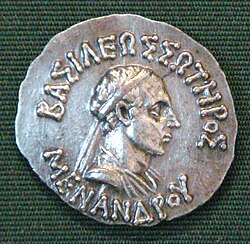
Sialkot is believed to be the successor of | Sialkot is believed to be the successor city of [[Sagala]], the capital of the [[Madra Kingdom|Madra kingdom]] which was destroyed by [[Alexander the Great]] in 326 BCE. It was made capital of the [[Indo-Greek kingdom]] by [[Menander I]] in the 2nd century BCE — a time during which the city greatly prospered as a major center for trade and Buddhist thought.<ref name="google1">{{cite book|last1=McEvilley|first1=Thomas|title=The Shape of Ancient Thought: Comparative Studies in Greek and Indian Philosophies|date=2012|publisher=Skyhorse Publishing|isbn=9781581159332|url=https://books.google.com/books?id=gbjelOMYyN8C&q=sagala+sialkot&pg=PT568|access-date=2 June 2017}}</ref> In the 6th century CE, it again become capital of the [[Taank Kingdom]], which ruled Punjab for the next two centuries. Sialkot continued to be a major political center until it was eclipsed by [[Lahore]] around the turn of the first millennium CE.<ref name=":7" /> Sialkot was the capital of the [[Punjabi Muslims|Punjabi Muslim]] ruler [[Jasrat|Jasrat Khokhar]] who reigned over most of Punjab and Jammu in the early 15th century.<ref>{{Cite book |last=Slaje |first=Walter |author-link=Walter Slaje |title=The Atharvaveda and its Paippaladasakha. Historical and Philological Papers on a Vedic Tradition |date=2007 |publisher=[[Shaker Verlag]] |isbn=978-3-8322-6255-6 |editor-last=Griffiths |editor-first=Arlo |page=342 |chapter=Three Bhattas, Two Sultans, and the Kashmirian Athavaveda |editor-last2=Schmiedchen |editor-first2=Annette |chapter-url=https://www.academia.edu/7517541}}</ref><ref name=Lal>{{Cite journal|author-link=K. S. Lal |last=Lal |first=K. S. |date=1958 |title=Jasrat Khokhar |url=https://www.jstor.org/stable/44145212 |journal=Proceedings of the Indian History Congress |volume=21 |pages=274–281 |jstor=44145212 |issn=2249-1937}}</ref> Under the [[Mughal Empire]], especially [[List of emperors of the Mughal Empire|Mughal emperor]], [[Aurangzeb]]'s reign, Sialkot became known as a great centre of [[Ulama|Islamic scholarship]] and thought,<ref>{{Cite book |url=https://books.google.com/books?id=cmDVAAAAMAAJ&q=sialkot+greece |title=The Pakistan Review |date=1968 |publisher=Ferozsons Limited}}</ref> and attracted scholars because of the widespread availability of paper in the city.<ref>{{Cite book |last=Sahay |first=Binode Kumar |url=https://books.google.com/books?id=AK42AAAAIAAJ&q=sialkot+paper |title=Education and learning under the great Mughals, 1526–1707 A.D. |date=1968 |publisher=New Literature Pub. Co.}}</ref> | ||
Sialkot | Sialkot city was the birthplace of the [[Islamic poetry|Islamic poet]] and philosopher [[Muhammad Iqbal]], a leading figure of the [[Pakistan Movement]].<ref name="auto1">{{Cite book |last1=Bentlage |first1=Björn |url=https://books.google.com/books?id=ZtY6DQAAQBAJ&pg=PA267 |title=Religious Dynamics under the Impact of Imperialism and Colonialism: A Sourcebook |last2=Eggert |first2=Marion |last3=Krämer |first3=Hans-Martin |last4=Reichmuth |first4=Stefan |date=2016-10-11 |publisher=BRILL |isbn=978-90-04-32900-3 |pages=267 |language=en}}</ref><ref name="Lelyveld-Martin2004">{{citation |last=Lelyveld |first=David |title=Encyclopedia of Islam and the Muslim World: A-L |page=356 |year=2004 |editor-last=Martin |editor-first=Richard C. |chapter=Muhammad Iqbal |chapter-url=https://www.encyclopedia.com/religion/encyclopedias-almanacs-transcripts-and-maps/iqbal-muhammad-c-1877-1938 |publisher=Macmillan |isbn=978-0-02-865604-5 |quote=Muhammad Iqbal, South Asian poet and ideological innovator, wrote poetry in Urdu and Persian and discursive prose, primarily in English, of particular significance in the formulation of a national ethos for Pakistan.}}</ref><ref name="Sevea2012-2">{{citation |last=Sevea |first=Iqbal Singh |title=The Political Philosophy of Muhammad Iqbal: Islam and Nationalism in Late Colonial India |pages=14– |year=2012 |url=https://books.google.com/books?id=VrItm_F6wncC&pg=PA14 |publisher=Cambridge University Press |isbn=978-1-107-00886-1 |quote=In 1930, he presided over the meeting of the All-India Muslim League in Allahabad. It was here that he delivered his famous address in which he outlined his vision of a cultural and political framework that would ensure the fullest development of the Muslims of India.}}</ref> The city has been noted for its entrepreneurial spirit and productive business climate which have made Sialkot an example of a small Pakistani city that has emerged as a "world-class manufacturing hub."<ref name="economist">{{cite news |title=Pakistan's business climate If you want it done right |url=https://www.economist.com/news/asia/21709344-how-small-pakistani-city-became-world-class-manufacturing-hub-if-you-want-it-done-right |access-date=2 June 2017 |agency=The Economist |date=27 October 2017}}</ref> The relatively small city exported approximately $2.5 billion worth of goods in 2017, or about 10% of Pakistan's total exports.<ref name="economist" /><ref name="Naz">{{cite web|last1=Naz|first1=Neelum|title=Historical Perspective of Urban Development of Gujranwala|url=https://www.academia.edu/9127199|publisher=Dept. of Architecture, UET, Lahore|access-date=22 December 2017}}</ref> The city has been labeled as the ''Football manufacturing capital of the World'',<ref>{{Cite web |title=World's Football Manufacturing Capital in Pakistan Gets a Green Makeover| date=25 November 2022 |url=https://www.adb.org/news/videos/world-s-football-manufacturing-capital-pakistan-gets-green-makeover#:~:text=If%2520you%2520have%2520ever%2520played,World%2520Cup%2520in%2520Doha%252C%2520Qatar.&ved=2ahUKEwja1NLpi9T7AhVxwjgGHQKMARYQFnoECAsQBQ&usg=AOvVaw1cGWtOMkcj9wAvA_Rfhy4r |access-date=2022-11-29}}</ref> as it produces over 70% of all [[Association football|footballs]] manufactured in the world.<ref>{{Cite web |url=https://www.adb.org/news/videos/world-s-football-manufacturing-capital-pakistan-gets-green-makeover&ved=2ahUKEwjosMrditT7AhXv6zgGHfPRD7YQFnoECAsQAQ&usg=AOvVaw1cGWtOMkcj9wAvA_Rfhy4r |access-date=2022-11-29 |title=Asian Development Bank}}</ref> [[Sialkot International Airport]]; Pakistan's first privately owned public airport is located 14km west of Sialkot.<ref name="economist" /><ref name=":11">{{Cite book |last1=Mehmood |first1=Mirza, Faisal |url=https://books.google.com/books?id=P5pvAwAAQBAJ&q=sialkot+gujranwala+gujrat+golden+triangle&pg=PA2 |title=An assessment of industrial employment skill gaps among university graduates: In the Gujrat-Sialkot-Gujranwala industrial cluster, Pakistan |last2=Ali |first2=Jaffri, Atif |last3=Saim |first3=Hashmi, Muhammad |date=21 April 2014 |publisher=Intl Food Policy Res Inst |pages=2}}</ref><ref>{{cite web |last1=Azhar |first1=Annus |last2=Adil |first2=Shahid |title=Effect of Agglomeration on Socio-Economic Outcomes: A District Level Panel study of Punjab |url=http://www.pide.org.pk/psde/pdf/AGM32/papers/Effect%20of%20Agglomeration%20on%20Socio-Economic%20Outcomes.pdf |access-date=2 June 2017 |publisher=Pakistan Institute of Developmental Economics}}</ref> | ||
The city has been | |||
==History== | ==History== | ||
{{Main|History of Sialkot}} | {{Main|History of Sialkot}} | ||
===Ancient=== | ===Ancient=== | ||
====Founding==== | ====Founding==== | ||
{{Main|Sagala}} | {{Main|Sagala}} | ||
Sialkot | Sialkot was the likely capital of the [[Madra kingdom]] [[Sagala]], Sakala ({{langx|sa|साकला}}), or Sangala ({{langx|grc|Σάγγαλα}}) mentioned in the ''[[Mahabharata]]'', a Sanskrit epic of ancient India, as occupying a similar area as Greek accounts of Sagala.<ref>{{Cite book |last1=Wilson |first1=Horace Hayman |url=https://archive.org/details/bub_gb_w3kWAAAAYAAJ |title=Ariana Antiqua: A Descriptive Account of the Antiquities and Coins of Afghanistan |last2=Masson |first2=Charles |date=1841 |publisher=East India Company |page=[https://archive.org/details/bub_gb_w3kWAAAAYAAJ/page/n228 197] |language=en |quote=sangala rebuilt.}}</ref><ref name="Kumar2000">{{cite book |last1=Kumar |first1=Rakesh |title=Ancient India and World |date=2000 |publisher=Classical Publishing Company |page=68 |language=English}}</ref><ref name="Rapson1960">{{cite book |last1=Rapson |first1=Edward James |title=Ancient India: From the Earliest Times to the First Century A. D. |date=1960 |publisher=Susil Gupta |page=88 |language=English |quote=Sakala, the modern Sialkot in the Lahore Division of the Punjab, was the capital of the Madras who are known in the later Vedic period (Brihadaranyaka Upanishad).}}</ref><ref name="Skyhorse Publishing">{{cite book |last1=McEvilley |first1=Thomas |url=https://books.google.com/books?id=gbjelOMYyN8C&q=sagala+sialkot&pg=PT568 |title=The Shape of Ancient Thought: Comparative Studies in Greek and Indian Philosophies |date=2012 |publisher=Skyhorse Publishing |isbn=9781581159332 |accessdate=2 June 2017}}</ref><ref>{{Cite book |last=Cohen |first=Getzel M. |url=https://books.google.com/books?id=3aabFPHxRPUC&q=sagala+location&pg=PA324 |title=The Hellenistic Settlements in the East from Armenia and Mesopotamia to Bactria and India |date=2013-06-02 |publisher=University of California Press |isbn=9780520953567 |language=en}}</ref><ref>{{Cite book |last1=Kim |first1=Hyun Jin |url=https://books.google.com/books?id=z-w0DwAAQBAJ&q=sagala+sialkot+-kenya&pg=PA260 |title=Eurasian Empires in Antiquity and the Early Middle Ages: Contact and Exchange between the Graeco-Roman World, Inner Asia and China |last2=Vervaet |first2=Frederik Juliaan |last3=Adali |first3=Selim Ferruh |date=2017-10-05 |publisher=Cambridge University Press |isbn=9781107190412 |language=en}}</ref><ref>{{Cite book |last=Congress |first=Indian History |url=https://books.google.com/books?id=JzdWAAAAYAAJ&q=sagala+sialkot+-kenya |title=Proceedings, Indian History Congress |date=2007 |language=en}}</ref><ref name="dhillon">{{cite book|url=https://books.google.com/books?id=OXtVDgAAQBAJ&q=sialkot+garrison&pg=PT102|title=Janamsakhis: Ageless Stories, Timeless Values|last1=Dhillon|first1=Harish|date=2015|publisher=Hay House, Inc|isbn=9789384544843|access-date=3 June 2017}}</ref> The city may have been inhabited by the ''[[Saka]]'', or [[Scythians]], from [[Central Asia]] who had migrated into the Subcontinent.<ref>{{Cite book |last=Society |first=Panjab University Arabic and Persian |url=https://books.google.com/books?id=h_lWAAAAMAAJ&q=saka |title=Journal |date=1964 |language=en}}</ref> The region was noted in the ''Mahabharata'' for the "loose and Bacchanalian" women who lived in the woods there.<ref name=":17">{{Cite book |last1=Wilson |first1=Horace Hayman |url=https://archive.org/details/bub_gb_w3kWAAAAYAAJ |title=Ariana Antiqua: A Descriptive Account of the Antiquities and Coins of Afghanistan |last2=Masson |first2=Charles |date=1841 |publisher=East India Company |page=[https://archive.org/details/bub_gb_w3kWAAAAYAAJ/page/n227 196] |quote=sangala rebuilt.}}</ref> The city was said to have been located in the ''Sakaladvipa'' region between the [[Chenab River|Chenab]] and [[Ravi River|Ravi]] rivers, now known as the [[Rechna Doab|''Rechna'' Doab]]. | ||
==== Greek ==== | ==== Greek ==== | ||
The ''[[ | The ''[[Anabasis of Alexander]]'', written by the Roman-Greek historian [[Arrian]], recorded that Alexander the Great captured [[Sagala|ancient Sialkot]], recorded as '''Sagala,''' from the ''Cathaeans,'' who had entrenched themselves there.<ref>{{Cite book|url=https://books.google.com/books?id=rlcIAAAAQAAJ&q=sangala|title=The Anabasis of Alexander, Or the History of the Wars and Conquests of Alexander the Great|last=Arrian|date=1884|publisher=Hodder and Stoughton}}</ref><ref name=":2">{{Cite book|url=https://books.google.com/books?id=kngnd0GlUc4C&q=sangala+sialkot&pg=PA157|title=Alexander the Great: Lessons from History's Undefeated General|last=Yenne|first=Bill|date=13 April 2010|publisher=St. Martin's Press|isbn=9780230106406}}</ref><ref name="dhillon" /> The city had been home to 80,000 residents on the eve of Alexander's invasion,<ref name=":2" /> but was razed as a warning against any other nearby cities that might resist his invasion.<ref name=":2" /> | ||
==== Indo-Greek ==== | ==== Indo-Greek ==== | ||
| Line 94: | Line 98: | ||
The ancient city was rebuilt, and made capital by the [[Indo-Greek]] king [[Menander I]] of the [[Euthydemid dynasty]], in the 2nd century BCE.<ref name=":3">{{Cite book|url=https://books.google.com/books?id=-HeJS3nE9cAC&q=euthymedia+ptolemy&pg=PA89|title=The Greeks in Bactria and India|last=Tarn|first=William Woodthorpe|date=24 June 2010|publisher=Cambridge University Press|isbn=9781108009416}}</ref> The rebuilt city was shifted slightly from the older city, as rebuilding on exactly the same spot was considered inauspicious.<ref name=":1">{{Cite book|url=https://books.google.com/books?id=w3kWAAAAYAAJ&q=sangala+rebuilt&pg=PA197|title=Ariana Antiqua: A Descriptive Account of the Antiquities and Coins of Afghanistan|last1=Wilson|first1=Horace Hayman|last2=Masson|first2=Charles|date=1841|publisher=East India Company}}</ref> | The ancient city was rebuilt, and made capital by the [[Indo-Greek]] king [[Menander I]] of the [[Euthydemid dynasty]], in the 2nd century BCE.<ref name=":3">{{Cite book|url=https://books.google.com/books?id=-HeJS3nE9cAC&q=euthymedia+ptolemy&pg=PA89|title=The Greeks in Bactria and India|last=Tarn|first=William Woodthorpe|date=24 June 2010|publisher=Cambridge University Press|isbn=9781108009416}}</ref> The rebuilt city was shifted slightly from the older city, as rebuilding on exactly the same spot was considered inauspicious.<ref name=":1">{{Cite book|url=https://books.google.com/books?id=w3kWAAAAYAAJ&q=sangala+rebuilt&pg=PA197|title=Ariana Antiqua: A Descriptive Account of the Antiquities and Coins of Afghanistan|last1=Wilson|first1=Horace Hayman|last2=Masson|first2=Charles|date=1841|publisher=East India Company}}</ref> | ||
Under Menander's rule, the city greatly prospered as a major trading centre renowned for its silk | Under Menander's rule, the city greatly prospered as a major trading centre renowned for its silk.<ref>{{cite book |last1=McEvilley |first1=Thomas |url=https://books.google.com/books?id=gbjelOMYyN8C&q=sagala+sialkot&pg=PT568 |title=The Shape of Ancient Thought: Comparative Studies in Greek and Indian Philosophies |date=2012 |publisher=Skyhorse Publishing |isbn=9781581159332 |access-date=2 June 2017}}</ref><ref name="dhillon" /> Menander embraced Buddhism in Sagala, after an extensive debating with the Buddhist monk [[Nagasena]], as recorded in the Buddhist text ''[[Milinda Panha]]''.<ref name="Skyhorse Publishing"/><ref>{{Cite book |last=Pesala (Bhikkhu.) |url=https://books.google.com/books?id=CV77jyBU1WgC&pg=PR19 |title=The Debate of King Milinda: An Abridgement of the Milinda Pañha |date=1991 |publisher=Motilal Banarsidass Publ. |isbn=978-81-208-0893-5 |pages=19 |language=en}}</ref> the text offers an early description of the city's cityscape and status as a prosperous trade centre with numerous green spaces.<ref>{{Cite book|url=https://books.google.com/books?id=g31EAQAAMAAJ&q=he+Questions+of+King+Milinda,+translated+by+T.+W.+Rhys+Davids,+1890|title=The Questions of King Milinda|last=Davids|first=Thomas William Rhys|date=1894|publisher=Clarendon Press}}</ref> Following his conversion, Sialkot developed as a major centre for Buddhist thought.<ref>{{Cite book|url=https://books.google.com/books?id=gbjelOMYyN8C&q=sagala+sialkot&pg=PT568|title=The Shape of Ancient Thought: Comparative Studies in Greek and Indian Philosophies|last=McEvilley|first=Thomas|date=7 February 2012|publisher=Skyhorse Publishing, Inc.|isbn=9781581159332}}</ref> | ||
Ancient Sialkot was recorded by [[Ptolemy]] in his 1st century CE work, [[Geography (Ptolemy)|''Geography,'']]<ref>{{Cite book|url=https://books.google.com/books?id=nB-2AAAAIAAJ&q=euthydemus+sialkot+ptolemy|title=Journal of Indian History|date=1960}}</ref><ref name=":3" /> in which he refers to the city as [[Euthydemia|Euthymedia]] (''Εύθυμέδεια'').<ref>{{Cite book|url=https://books.google.com/books?id=3aabFPHxRPUC&q=euthydemia+beyer&pg=PA324|title=The Hellenistic Settlements in the East from Armenia and Mesopotamia to Bactria and India|last=Cohen|first=Getzel M.|date=2 June 2013|publisher=University of California Press|isbn=9780520953567}}</ref> | Ancient Sialkot was recorded by [[Ptolemy]] in his 1st century CE work, [[Geography (Ptolemy)|''Geography,'']]<ref>{{Cite book|url=https://books.google.com/books?id=nB-2AAAAIAAJ&q=euthydemus+sialkot+ptolemy|title=Journal of Indian History|date=1960}}</ref><ref name=":3" /> in which he refers to the city as [[Euthydemia|Euthymedia]] (''Εύθυμέδεια'').<ref>{{Cite book|url=https://books.google.com/books?id=3aabFPHxRPUC&q=euthydemia+beyer&pg=PA324|title=The Hellenistic Settlements in the East from Armenia and Mesopotamia to Bactria and India|last=Cohen|first=Getzel M.|date=2 June 2013|publisher=University of California Press|isbn=9780520953567}}</ref> | ||
==== Alchon Huns ==== | ==== Alchon Huns ==== | ||
Around 460 CE, the [[Alchon Huns]] invaded the region from Central Asia,<ref>{{Cite book|url=https://books.google.com/books?id=mi45DwAAQBAJ&q=taxila+huns+sialkot&pg=PA260|title=Eurasian Empires in Antiquity and the Early Middle Ages: Contact and Exchange between the Graeco-Roman World, Inner Asia and China|last1=Kim|first1=Hyun Jin|last2=Vervaet|first2=Frederik Juliaan|last3=Adalı|first3=Selim Ferruh|date=30 September 2017|publisher=Cambridge University Press|isbn=9781108121316}}</ref> forcing the ruling family of nearby [[Taxila]] to seek refuge in Sialkot.<ref>{{Cite book|url=https://books.google.com/books?id=KqWGlV6uRDkC&q=sialkot+huns&pg=PA47|title=History of the Punjabees|last=Nanda|first=J. N.|date=2010|publisher=Concept Publishing Company|isbn=9788180696510}}</ref> Sialkot itself was soon captured, and the city was made | Around 460 CE, the [[Alchon Huns]] invaded the region from Central Asia,<ref>{{Cite book|url=https://books.google.com/books?id=mi45DwAAQBAJ&q=taxila+huns+sialkot&pg=PA260|title=Eurasian Empires in Antiquity and the Early Middle Ages: Contact and Exchange between the Graeco-Roman World, Inner Asia and China|last1=Kim|first1=Hyun Jin|last2=Vervaet|first2=Frederik Juliaan|last3=Adalı|first3=Selim Ferruh|date=30 September 2017|publisher=Cambridge University Press|isbn=9781108121316}}</ref> forcing the ruling family of nearby [[Taxila]] to seek refuge in Sialkot.<ref>{{Cite book|url=https://books.google.com/books?id=KqWGlV6uRDkC&q=sialkot+huns&pg=PA47|title=History of the Punjabees|last=Nanda|first=J. N.|date=2010|publisher=Concept Publishing Company|isbn=9788180696510}}</ref> Sialkot itself was soon captured, and the city was made a significant centre of the Alchon Huns around 515,<ref>{{Cite book|url=https://books.google.com/books?id=xYelDQAAQBAJ&q=sialkot+toramana&pg=PT177|title=A History of India|last1=Kulke|first1=Hermann|last2=Rothermund|first2=Dietmar|date=27 May 2016|publisher=Routledge|isbn=9781317242123}}</ref> during the reign of [[Toramana]].<ref name=":4">{{Cite book|url=https://books.google.com/books?id=lHBEAQAAIAAJ&q=hindu+shahi+sagala|title=Gandhara, the Buddhist heritage of Pakistan: Legends, monasteries, and paradise|last1=Drachenfels|first1=Dorothee von|last2=Luczanits|first2=Christian|last3=Deutschland|first3=Kunst-und Ausstellungshalle der Bundesrepublik|date=2008|publisher=Kunst- und Ausstellungshalle der Bundesrepublik Deutschland; Mainz : Verlag Philipp von Zabern|isbn=9783805339575}}</ref> During the reign of his son, [[Mihirakula]], the empire reached its zenith.<ref>{{Cite book|url=https://books.google.com/books?id=FcKtIPVQ6REC&q=mihirakula+sialkot&pg=PA142|title=History of Civilizations of Central Asia: The crossroads of civilizations: A.D. 250 to 750|last=Dani|first=Ahmad Hasan|date=1999|publisher=Motilal Banarsidass|isbn=9788120815407}}</ref> The Alchon Huns were defeated in 528 by a coalition of princes led by [[Yashodharman|Prince Yashodharman]]<ref name=":4" /> | ||
==== Late antiquity ==== | ==== Late antiquity ==== | ||
The city was visited by the Chinese traveller [[Xuanzang]] in 633,<ref>{{Cite book|url=https://books.google.com/books?id=eSYKO5zLgZkC&q=sialkot+xuanzang&pg=PT76|title=The Silk Road Journey With Xuanzang|last=Wriggins|first=Sally|date=6 August 2008|publisher=Basic Books|isbn=9780786725441}}</ref> who recorded the city's name | The city was visited by the Chinese traveller [[Xuanzang]] in 633,<ref>{{Cite book|url=https://books.google.com/books?id=eSYKO5zLgZkC&q=sialkot+xuanzang&pg=PT76|title=The Silk Road Journey With Xuanzang|last=Wriggins|first=Sally|date=6 August 2008|publisher=Basic Books|isbn=9780786725441}}</ref> who recorded the city's name the ''She-kie-lo.''<ref>{{Cite book|url=https://books.google.com/books?id=6p2XCgAAQBAJ&q=sialkot+xuanzang&pg=PA113|title=The World of the Skandapurāṇa|last=Bakker|first=Hans|date=16 July 2014|publisher=BRILL|isbn=9789004277144}}</ref> Xuanzang reported that the city had been rebuilt approximately 15 ''[[Li (unit)|li]],'' or 2.5 miles, away from the city ruined by Alexander the Great.<ref>{{Cite book|url=https://books.google.com/books?id=p4AXM4MbyL0C&q=sangala+hill+alexander&pg=PA192|title=Four Reports Made During the Years 1862-63-64-65 by Alexander Cunningha M: 2|date=1871|publisher=Government central Press}}</ref> During this time, Sialkot served as the political nucleus of the North [[Punjab, Pakistan|Punjab]] region.<ref name=":5">{{Cite book|url=https://books.google.com/books?id=EIAyDwAAQBAJ&q=Sialkot&pg=PT170|title=The Geopolitical Orbits of Ancient India: The Geographical Frames of the Ancient Indian Dynasties|last=Chakrabarty|first=Dilip K.|date=18 October 2010|publisher=Oxford University Press|isbn=9780199088324}}</ref> The city was then invaded in 643 by princes from [[Jammu]], who held the city until the Muslim invasions during the medieval era.<ref name=":6">{{Cite book|url=https://books.google.com/books?id=7JQbAQAAIAAJ&q=mughal+sialkot&pg=PA442|title=The Imperial Gazetteer of India|last=Hunter|first=Sir William Wilson|date=1887|publisher=Trübner & Company|isbn=978-81-7019-117-9 }}</ref> | ||
===Medieval=== | ===Medieval=== | ||
Around the year 1000, Sialkot began to decline in importance as the nearby city of Lahore rose to prominence.<ref name=":7">{{Cite book|url=https://books.google.com/books?id=CgbsAAAAMAAJ&q=%22hindu+Shahi%22+sialkot|title=Man & Development|date=2007|publisher=Centre for Research in Rural and Industrial Development}}</ref> Following | Around the year 1000, Sialkot began to decline in importance as the nearby city of Lahore rose to prominence.<ref name=":7">{{Cite book|url=https://books.google.com/books?id=CgbsAAAAMAAJ&q=%22hindu+Shahi%22+sialkot|title=Man & Development|date=2007|publisher=Centre for Research in Rural and Industrial Development}}</ref> Following the fall of [[Lahore]] to the [[Ghaznavid Empire]] in the early 11th century, the capital of the [[Hindu Shahi]] empire was shifted from Lahore to Sialkot.<ref>{{cite book|last1=Bosworth|first1=C. Edmund|title=Historic Cities of the Islamic World|date=2007|publisher=Brill|isbn=978-9047423836|url=https://books.google.com/books?id=CgawCQAAQBAJ&q=Lahore&pg=PA305|access-date=26 December 2017}}</ref> Ghaznavid expansion in northern Punjab encouraged local [[Khokhar]] tribes to stop paying tribute to the Rajas of Jammu.<ref name=":8">{{Cite book|url=https://books.google.com/books?id=75FlxDhZWpwC&q=ghuri+fort+sialkot&pg=PA238|title=Al-Hind the Making of the Indo-Islamic World: The Slave Kings and the Islamic Conquest : 11Th-13th Centuries|last=Wink|first=André|date=1997|publisher=BRILL|isbn=9004102361}}</ref> | ||
Sialkot became a part of the medieval [[Sultanate of Delhi]] after [[Muhammad of Ghor | Sialkot became a part of the medieval [[Sultanate of Delhi]] after [[Muhammad of Ghor]] conquered [[Punjab region|Punjab]] in 1185.<ref name=":5" /> Ghauri was unable to conquer the larger city of [[Lahore]], but deemed Sialkot important enough to warrant a garrison.<ref name=mehta>{{cite book|last1=Mehta|first1=Jaswant Lal|title=Advanced Study in the History of Medieval India, Volume 1|date=1980|publisher=Sterling Publishers Pvt. Ltd|isbn=9788120706170|url=https://books.google.com/books?id=iUk5k5AN54sC&q=Khusrau+Malik+sialkot&pg=PA76|access-date=3 June 2017}}</ref><ref name=dhillon/> He also extensively repaired the [[Sialkot Fort]] around the time of his conquest of Punjab,<ref name=":8" /> and left the region in charge of Hussain Churmali while he returned to [[Ghazni]].<ref name=":9">{{Cite book|url=https://books.google.com/books?id=bTyRYXtxMSEC&q=+sialkot&pg=PA100|title=The history of Hindustan. Vol. 1|last=Firishtah|first=Muḥammad Qāsim Hindū Shāh Astarābādī|date=2003|publisher=Motilal Banarsidass |isbn=9788120819948}}</ref> Sialkot was then quickly laid siege to by Khokhar tribesmen,<ref name=":15">{{Cite book|url=https://books.google.com/books?id=pzZFUcDpDzsC&q=medieval+sialkot&pg=PA90|title=Historical Dictionary of Medieval India|last=Khan|first=Iqtidar Alam|date=25 April 2008|publisher=Scarecrow Press|isbn=9780810855038}}</ref> and [[Khusrau Malik]],<ref name=mehta/> the last Ghaznavid sultan, though he was defeated during Ghauri's return to Punjab in 1186.<ref name=":9" /><ref name=":15" /> | ||
In the 1200s, Sialkot was the only area of western Punjab that was ruled by the [[Mamluk dynasty (Delhi)|Mamluk Sultanate]] in Delhi.<ref name=":16">{{Cite book|url=https://books.google.com/books?id=Xi3cAAAAMAAJ&q=sialkot+mongols|title=A military history of medieval India|last=Sandhu|first=Gurcharn Singh|date=January 2003|publisher=Vision Books|isbn=9788170945253}}</ref> The area had been captured by the [[Ghurid dynasty|Ghauri]] prince [[Taj al-Din | In the 1200s, Sialkot was the only area of western Punjab that was ruled by the [[Mamluk dynasty (Delhi)|Mamluk Sultanate]] in Delhi.<ref name=":16">{{Cite book|url=https://books.google.com/books?id=Xi3cAAAAMAAJ&q=sialkot+mongols|title=A military history of medieval India|last=Sandhu|first=Gurcharn Singh|date=January 2003|publisher=Vision Books|isbn=9788170945253}}</ref> The area had been captured by the [[Ghurid dynasty|Ghauri]] prince [[Taj al-Din Yildiz]], but was recaptured by Sultan [[Iltutmish]] in 1217.<ref name=":16" /> Around 1223, [[Jalal al-Din Mangburni]], the last king of the [[Anushtegin dynasty]] of Central Asia that had fled invasion of [[Genghis Khan]] there, briefly captured Sialkot and Lahore,<ref>{{Cite book|url=https://books.google.com/books?id=18EKAQAAIAAJ&q=sialkot|title=History of medieval India (1000–1740 A.D.)|last=Sharma|first=L. P.|date=1987|publisher=Konark Publishers|isbn=9788122000429}}</ref> before being driven out by Iltutmish's forces towards [[Uch Sharif]].<ref>{{Cite book|url=https://books.google.com/books?id=CgawCQAAQBAJ&q=Lahore&pg=PA305|title=Historic Cities of the Islamic World|last=Bosworth|first=C. Edmund|date=26 December 2007|publisher=BRILL|isbn=9789047423836}}</ref> During the 13th century, [[Imam Ali-ul-Haq]], Sialkot's most revered [[Sufism|Sufi]] warrior-saint,<ref>{{Cite book|url=https://books.google.com/books?id=J_wbAAAAMAAJ&q=Imam+Ali-ul-Haq+premier+saint|title=Hand Book of Important Places in West Pakistan|last=Hasan|first=Masudul|date=1965|publisher=Pakistan Social Service Foundation}}</ref> arrived from [[Arabian Peninsula|Arabia]], and began his missionary work in the region that successfully converted large numbers of Hindus to Islam, thereby transforming Sialkot into a largely Muslim city.<ref>{{Cite book|url=https://books.google.com/books?id=CSRuAAAAMAAJ&q=Imam+Ali+sialkot+convert|title=Pakistan Pictorial|date=1986|publisher=Pakistan Publications}}</ref> The saint later died in battle, and is revered as a martyr.<ref name=":12">{{Cite book|url=https://books.google.com/books?id=HlQIAAAAQAAJ&q=sialkot+jehangir&pg=PA129|title=The Arāīs̲h-i-maḥfil: Or, The Ornament of the Assembly|last=Afsos|first=Sher ʻAlī Jaʻfarī|date=1882|publisher=J. W. Thomas, Baptist Mission Press}}</ref> | ||
Sialkot | Sialkot became capital of Punjabi warlord and ruler [[Jasrat|Jasrat Khokhar]]'s kingdom in the early 15th century.<ref name=Lal/><ref name=":13">{{Cite book|url=https://books.google.com/books?id=4C9EDwAAQBAJ&q=sialkot&pg=PT76|title=Early Nineteenth-Century Panjab|last1=Grewal|first1=J. S.|last2=Banga|first2=Indu|date=22 December 2015|publisher=Taylor & Francis|isbn=9781317336945}}</ref> Jasrat Khokhar conquered most of Punjab from the Delhi sultanate in a series of campaigns between 1421 and 1442. He also conquered [[Jammu]] after defeating its ruler Bhim Dev in 1423.<ref name=Lal/> This was the golden period of Sialkot. Later, Sultan [[Bahlul Khan Lodi]] captured the city after Jasrat Khokhar's death and granted custodianship of the city to Jammu's Raja Biram Dev, after he helped Bahlol in defeating the [[Khokhar]]s.<ref name=":13" /> Sialkot was sacked by [[Malik Tazi Bhat]] of Kashmir, who attacked Sialkot after the governor of Punjab, Tatar Khan, had left the city undefended during one of his military campaigns.<ref>{{Cite book|url=https://books.google.com/books?id=thSltS4Xg4MC&q=medieval+sialkot&pg=PA211|title=Medieval Kashmir|publisher=Atlantic Publishers & Distri}}</ref> | ||
Sialkot was captured by armies of | Sialkot was captured by the armies of Babur in 1520,<ref>{{cite book|url=https://books.google.com/books?id=sxhAtCflwOMC&q=sialkot+1524&pg=PA226|title=A Comprehensive History of Medieval India: Twelfth to the Mid-Eighteenth Century|last1=Ahmed|first1=Farooqui Salma|date=2011|publisher=Pearson Education India|isbn=9788131732021|access-date=3 June 2017}}</ref> when the Mughal commander Usman Ghani Raza advanced towards Delhi during the initial conquest of [[Babur]]. Babur recorded a battle with [[Gujjar]] raiders, who had attacked Sialkot, and allegedly mistreated its inhabitants.<ref>{{blockquote|29th December: We dismounted at Sialkot. If one enters Hindustan the [[Jat]]s and [[Gujjar]]s always pour down in countless hordes from hill and plain for loot of bullocks and buffalo. These ill-omened peoples are senseless oppressors. Previously, their deeds did not concern us because the territory was an enemy's. But they did the same senseless deeds after we had captured it. When we reached Sialkot, they swooped on the poor and needy folk who were coming out of the town to our camp and stripped them bare. I had the witless brigands apprehended, and ordered a few of them to be cut to pieces.''Babur Nama'' page 250 published by Penguin}}</ref> In 1525–1526, Alam Khan, uncle of Sultan [[Ibrahim Lodi]], invaded from Afghanistan and was able to capture Sialkot with the aid of Mongol forces.<ref>{{Cite book|url=https://books.google.com/books?id=Ip5CAAAAcAAJ&q=Alem+Khan&pg=PA77|title=History of the Afghans|last=al-Harawī|first=Niʻmatallāh|date=1829|publisher=Oriental Translation-Fund}}</ref> | ||
===Pre-modern=== | ===Pre-modern=== | ||
==== Mughal ==== | ==== Mughal ==== | ||
[[Abdul Hakim Sialkoti]] was a 16th-17th century [[Mughal Empire|Mughal-era]] [[Ulama|Islamic scholar]], [[Schools of Islamic theology|Islamic theologian]], and [[Islamic philosophy|Islamic philosopher]] from Sialkot. He became the most influential Islamic scholar in the Mughal imperial court, and taught in the imperial ''[[Madrasa|madrassa]].''<ref name="nasr">{{Cite book |last1=Nasr |first1=Seyyed Hossein |url=https://books.google.com/books?id=uPWLvDmhaIsC&pg=PT1064 |title=History of Islamic Philosophy |last2=Leaman |first2=Oliver |date=2013 |publisher=Routledge |isbn=978-1-136-78043-1 |pages=1064–1065 |language=en}}</ref><ref name="schimmel2">{{Cite book |last=Schimmel |first=Annemarie |url=https://books.google.com/books?id=wfVgEAAAQBAJ&pg=PA94 |title=Islam in the Indian Subcontinent |date=2022 |publisher=BRILL |isbn=978-90-04-49299-8 |pages=94–96 |language=en}}</ref><ref>{{cite book |last=Nisa |first=Nahim-Un |url=https://archive.org/details/moulanaabdulhakeemsialkotid1067a.d.lifeandworksbynahimunnisa/mode/1up |title=Moulana Abdul Hakeem Sialkoti (d 1067 A. D.): Life And Works |date=1997 |publisher=[[Aligarh Muslim University]] |location=Agra |language=ur}}</ref> After Abdul Hakim Sialkoti's death in 1656, his son Maulvī Abdullah became chief scholar of Sialkot, and his ''madrassa'' became a centre of learning.<ref>{{Cite book |last1=Casalini |first1=Cristiano |url=https://books.google.com/books?id=h98eEAAAQBAJ&pg=PA137 |title=Education beyond Europe: Models and Traditions before Modernities |last2=Choi |first2=Edward |last3=Woldegiyorgis |first3=Ayenachew A. |date=2021 |publisher=BRILL |isbn=978-90-04-44147-7 |pages=137 |language=en}}</ref> | |||
During the [[Akbar]] era, Sialkot's ''[[pargana]]'' territory was placed in the ''jagir'' [[Jagir|custodianship]] of [[Raja Man Singh]], who would repair the city's fort, and sought to increase its population and develop its economy.<ref>{{Cite book|url=https://books.google.com/books?id=4y9zAAAAMAAJ&q=sialkot+akbar|title=Punjab, the land of beauty, love, and mysticism|last=Quddus|first=Syed Abdul|date=1992|publisher=Royal Book Co.|isbn=9789694071305}}</ref> In 1580 [[Yousuf Shah Chak]] of [[Kashmir]] sought refuge in the city during his exile from the Valley of Kashmir.<ref>{{Cite book|url=https://books.google.com/books?id=2U9uAAAAMAAJ&q=sialkot+jehangir|title=The Kachhwahas under Akbar and Jahangir|last=Khan|first=Refaqat Ali|date=1976|publisher=Kitab Pub. House}}</ref> Paper-makers from Kashmir migrated to the city during the Akbar period,<ref>{{Cite book|url=https://books.google.com/books?id=dfAJAQAAIAAJ&q=sialkot+paper+kashmir|title=Iqbal Manzil, Sialkot: An Introduction|last=Khan|first=Ahmad Nabi|date=1977|publisher=Department of Archaeology & Museums, Government of Pakistan}}</ref> and Sialkot later became renowned as the source of the prized Mughal ''Hariri'' paper – known for its brilliant whiteness and strength.<ref name=":12" /> The city's metalworkers also provided the Mughal crown with much of its weaponry.<ref>{{Cite book|url=https://books.google.com/books?id=63oMAQAAMAAJ&q=sialkot|title=Aurangzeb|last=Elphinstone|first=Mountstuart|date=2008|publisher=Oxford University Press|isbn=9780195475753}}</ref> | During the early Mughal era, Sialkot was made part of the ''subah,'' or "province", of Lahore.<ref name=":6" /> According to Sikh tradition, [[Guru Nanak]], the founder of [[Sikhism]], visited the city<ref name="Dhillon">Dhillon, Iqbal S. (1998). ''Folk Dances of Panjab''. Delhi: National Book Shop.</ref> sometime in the early 16th century. He is said to have met Hamza Ghaus, a prominent Sufi mystic based in Sialkot, at a site now commemorated by the city's [[Gurdwara Beri Sahib]]. | ||
During the [[Akbar]] era, Sialkot's ''[[pargana]]'' territory was placed in the ''jagir'' [[Jagir|custodianship]] of [[Raja Man Singh]], who would repair the city's fort, and sought to increase its population and develop its economy.<ref>{{Cite book|url=https://books.google.com/books?id=4y9zAAAAMAAJ&q=sialkot+akbar|title=Punjab, the land of beauty, love, and mysticism|last=Quddus|first=Syed Abdul|date=1992|publisher=Royal Book Co.|isbn=9789694071305}}</ref> In 1580, [[Yousuf Shah Chak]] of [[Kashmir]] sought refuge in the city during his exile from the Valley of Kashmir.<ref>{{Cite book|url=https://books.google.com/books?id=2U9uAAAAMAAJ&q=sialkot+jehangir|title=The Kachhwahas under Akbar and Jahangir|last=Khan|first=Refaqat Ali|date=1976|publisher=Kitab Pub. House}}</ref> Paper-makers from Kashmir migrated to the city during the Akbar period,<ref>{{Cite book|url=https://books.google.com/books?id=dfAJAQAAIAAJ&q=sialkot+paper+kashmir|title=Iqbal Manzil, Sialkot: An Introduction|last=Khan|first=Ahmad Nabi|date=1977|publisher=Department of Archaeology & Museums, Government of Pakistan}}</ref> and Sialkot later became renowned as the source of the prized Mughal ''Hariri'' paper – known for its brilliant whiteness and strength.<ref name=":12" /> The city's metalworkers also provided the Mughal crown with much of its weaponry.<ref>{{Cite book|url=https://books.google.com/books?id=63oMAQAAMAAJ&q=sialkot|title=Aurangzeb|last=Elphinstone|first=Mountstuart|date=2008|publisher=Oxford University Press|isbn=9780195475753}}</ref> | |||
During the reign of [[Jahangir]], the post was given to Safdar Khan, who rebuilt the city's fort, and oversaw a further increase in Sialkot's prosperity.<ref name=":12" /> Numerous fine houses and gardens were built in the city during the Jehangir period.<ref>{{Cite book|url=https://books.google.com/books?id=dfAJAQAAIAAJ&q=Rang+Mahal|title=Iqbal Manzil, Sialkot: An Introduction|last=Khan|first=Ahmad Nabi|date=1977|publisher=Department of Archaeology & Museums, Government of Pakistan}}</ref> During the [[Shah Jahan]] period, the city was placed under the rule of [[Ali Mardan Khan]].<ref name=":14"/> | During the reign of [[Jahangir]], the post was given to Safdar Khan, who rebuilt the city's fort, and oversaw a further increase in Sialkot's prosperity.<ref name=":12" /> Numerous fine houses and gardens were built in the city during the Jehangir period.<ref>{{Cite book|url=https://books.google.com/books?id=dfAJAQAAIAAJ&q=Rang+Mahal|title=Iqbal Manzil, Sialkot: An Introduction|last=Khan|first=Ahmad Nabi|date=1977|publisher=Department of Archaeology & Museums, Government of Pakistan}}</ref> During the [[Shah Jahan]] period, the city was placed under the rule of [[Ali Mardan Khan]].<ref name=":14"/> | ||
| Line 126: | Line 132: | ||
==== Post-Mughal ==== | ==== Post-Mughal ==== | ||
Following the decline of the Mughal empire after the death of Emperor Aurangzeb in 1707, Sialkot and its outlying districts were left undefended and forced to defend itself. In 1739, the city was captured by [[Nader Shah]] of Persia during [[Nader Shah's invasion of the Mughal Empire|his invasion of the Mughal Empire]].<ref name=":10">{{Cite book|url=https://books.google.com/books?id=RzBAAQAAMAAJ&q=sialkot&pg=PA92|title=History of the Panjáb from the Remotest Antiquity to the Present Time|last=bahādur.)|first=Muḥammad Laṭīf (Saiyid, khān|date=1891|publisher=Calcutta Central Press Company, limited}}</ref> The city was placed under the governorship of [[Zakariya Khan Bahadur|Zakariya Khan]], the Mughal Viceroy of Lahore, who in return for the city promised to pay tribute to the [[Afsharid dynasty|Persian crown]].<ref name=":10" /> | Following the decline of the Mughal empire after the death of Emperor Aurangzeb in 1707, Sialkot and its outlying districts were left undefended and forced to defend itself. In 1739, the city was captured by [[Nader Shah]] of Persia during [[Nader Shah's invasion of the Mughal Empire|his invasion of the Mughal Empire]].<ref name=":10">{{Cite book|url=https://books.google.com/books?id=RzBAAQAAMAAJ&q=sialkot&pg=PA92|title=History of the Panjáb from the Remotest Antiquity to the Present Time|last=bahādur.)|first=Muḥammad Laṭīf (Saiyid, khān|date=1891|publisher=Calcutta Central Press Company, limited}}</ref> The city was placed under the governorship of [[Zakariya Khan Bahadur|Zakariya Khan]], the Mughal Viceroy of Lahore, who in return for the city promised to pay tribute to the [[Afsharid dynasty|Persian crown]].<ref name=":10" /> After that [[Nader Shah]] went to [[India]] where in [[Karnal]], Rao Bal Kishan fought against him with their 5000 soldiers who hailed from [[Ahirwal]] on 24, February 1739. Witnessing this, [[Nader Shah]] was shocked but impressed by Rao Bal Kishan's fighting skills. Later when Nadir Shah reached Delhi he told Muhammad Shah about Rao Bal Kishan's<ref>{{Cite book |last=Fox |first=Richard Gabriel |url=https://books.google.com/books?id=CAXULggU0QMC&q=rao+balkishan |title=Realm and Region in Traditional India |date=1977 |publisher=Duke University, Program in Comparative Studies on Southern Asia |isbn=978-0-916994-12-9 |language=en}}</ref> bravery, on which [[Muhammad Shah]] ordered to make a "Chhatri" to honour Rao Bal Kishan at Karnal which still can be found.<ref>[https://books.google.com/books?id=p69GMA226bgC&dq=rao+balkishan+singh&pg=PA50 Followers of Krishna: Yadavas of India], page 50</ref> | ||
In the wake of the Persian invasion, Sialkot fell under the control of Pashtun powerful families from [[Multan]] and [[Afghanistan]] – the [[Kakazai]] and [[Shirani (Pashtun tribe)|Sherwani]]s.<ref name=":14">{{Cite book|url=https://books.google.com/books?id=rCMKAQAAIAAJ&q=sialkot+%22shah+jahan%22&pg=PA328|title=Imperial Gazetteer of India ...|last1=Cotton|first1=James Sutherland|last2=Burn|first2=Sir Richard|last3=Meyer|first3=Sir William Stevenson|date=1908|publisher=Clarendon Press}}</ref> Sialkot was crept upon by Ranjit Deo of [[Jammu]], who pledged nominal allegiance to the Mughal crown in Delhi.<ref name=":14" /> Ranjit Deo did not conquer Sialkot city from the Pashtun families which held the city, but switched allegiance to the Pashtun ruler [[Ahmed Shah Durrani]] in 1748,<ref name=":14" /> effectively ending Mughal influence in Sialkot. The city and three nearby districts were amalgamated into the [[Durrani Empire]].<ref name=":6" /> | |||
In the wake of the Persian invasion, Sialkot fell under the control of Pashtun powerful families from [[Multan]] and [[Afghanistan]] – the [[ | |||
==== Sikh ==== | ==== Sikh ==== | ||
| Line 138: | Line 143: | ||
====British==== | ====British==== | ||
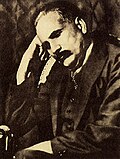
[[File:Iqbal.jpg|thumb|upright|left|[[Muhammad Iqbal]], the philosopher-poet credited inspiring the [[Pakistan Movement]], was born in Sialkot in 1877.]] | [[File:Iqbal.jpg|thumb|upright|left|[[Muhammad Iqbal]], the philosopher-poet credited inspiring the [[Pakistan Movement]], was born in Sialkot in 1877.]] | ||
Sialkot, along with Punjab as a whole, was captured by the British following their victory over the Sikhs at the [[Battle of Gujrat]] in February 1849. During the British | Sialkot, along with Punjab as a whole, was captured by the British following their victory over the Sikhs at the [[Battle of Gujrat]] in February 1849. During the British period, an official known as The Resident who would, in theory, advise the Maharaja of [[Kashmir]] would reside in Sialkot during the wintertime.<ref>{{cite book|last1=Ingall|first1=Francis|title=The Last of the Bengal Lancers|url=https://books.google.com/books?id=gW5-AwAAQBAJ&q=sialkot&pg=PA71|date=1989|publisher=Pen and Sword|isbn=9781473815872|access-date=11 October 2017}}</ref> | ||
During the [[Sepoy Mutiny]] of 1857, the two Bengal regiments based in Sialkot rebelled against the [[East India Company]],<ref>{{cite book|first=Kim A.|last=Wagner|page=105|title=The Skull of Alum Beg. The Life and Death of a Rebel of 1857|year=2018|isbn=978-0-19-087023-2}}</ref> while their native servants also took up arms against the British.<ref>{{cite book|last1=Kaye|first1=John|title=Kaye's and Malleson's History of the Indian Mutiny of 1857-8|date=2010|publisher=Cambridge University Press|isbn=9781108023245|url=https://books.google.com/books?id=TogAVyystu0C&q=sialkot&pg=PA472|access-date=11 October | During the [[Sepoy Mutiny]] of 1857, the two Bengal regiments based in Sialkot rebelled against the [[East India Company]],<ref>{{cite book|first=Kim A.|last=Wagner|page=105|title=The Skull of Alum Beg. The Life and Death of a Rebel of 1857|year=2018|publisher=Oxford University Press |isbn=978-0-19-087023-2}}</ref> while their native servants also took up arms against the British.<ref>{{cite book|last1=Kaye|first1=John|title=Kaye's and Malleson's History of the Indian Mutiny of 1857-8|date=2010|publisher=Cambridge University Press|isbn=9781108023245|url=https://books.google.com/books?id=TogAVyystu0C&q=sialkot&pg=PA472|access-date=11 October 2017}}</ref> | ||
The British-Raj fought in The [[Second Boer War|Second Boer War (1899-1902)]]. A [[Prisoner-of-war camp|POW camp]] was located in Sialkot and it held many detained [[Boers|Boer]] Prisoners-of-War.<ref>{{Cite web |last=Plaut |first=Martin |date=2020-05-31 |title=How India Helped Britain Win its ‘Dirty’ War in South Africa |url=https://martinplaut.com/2020/05/31/how-india-helped-britain-win-its-dirty-war-in-south-africa/ |access-date=2025-12-08 |website=Martin Plaut |language=en}}</ref> | |||
In 1877, the Sialkot native poet [[Allama Iqbal]], who is credited for inspiring the [[Pakistan Movement]], was born into a [[Kashmiris|Kashmiri]] family that had converted to [[Islam]] from [[Hinduism]] in the early 1400s.<ref>{{Cite book|url=https://books.google.com/books?id=svYphqj8h7UC&q=iqbal+sialkot+kashmiri+hindu&pg=PA1|title=Iqbal: Makers of Islamic Civilization|last=Mir|first=Mustansir|date=2006|publisher=I.B.Tauris|isbn=9781845110949}}</ref> He is considered to be one of the leading [[Islamic thought]]<ref>{{Cite journal |last=Azad |first=Hasan |date=2014 |title=Reconstructing the Muslim Self: Muhammad Iqbal, Khudi, and the Modern Self |journal=Islamophobia Studies Journal |volume=2 |issue=2 |pages=14–28 |doi=10.13169/islastudj.2.2.0014 |jstor=10.13169/islastudj.2.2.0014 |doi-access=free}}</ref> leaders and [[Islamic revivalist]]s<ref name="IqbalSinghZakaria1981">{{citation |last1=Iqbal |first1=Sir Muhammad |title=Shikwa and Jawab-i-shikwa |year=1981 |url=https://books.google.com/books?id=SeiAAAAAIAAJ |publisher=Oxford University Press |language=en, ur |isbn=978-0-19-561324-7 |quote="Iqbal it is true, is essentially a poet of Islam" (from the foreword by Rafiq Zakaria, p. 9) |last2=Zakaria |first2=Rafiq |author-link1= |author-link2=Rafiq Zakaria |translator-last=Singh |translator-first=Khushwant}}</ref><ref name="Robinson1996">{{citation |last=Robinson |first=Francis |title=The Cambridge Illustrated History of the Islamic World |pages=283– |year=1996 |url=https://books.google.com/books?id=Fz5kgjMDnOIC&pg=PA283 |publisher=Cambridge University Press |isbn=978-0-521-66993-1 |quote=In India, the ghazal and mathnawi forms were adapted in Urdu to express new social and ideological concerns, beginning in the work of the poet Altaf Husayn Hali (1837–1914) and continuing in the poetry of Muhammad Iqbal (1877–1938). In the poetry of Iqbal, which he wrote in Persian, to speak to a wider Muslim audience, as well as Urdu, a memory of the past achievements of Islam is combined with a plea for reform. He is considered the greatest Urdu poet of the twentieth century.}}</ref> of the 20th century, and is also widely regarded as having animated the pulse for the Pakistan Movement.<ref name="auto1"/><ref name="Lelyveld-Martin2004"/><ref name="Sevea2012-2"/><ref name="Sheikh">{{cite book |last=Sheikh |first=Naveed Shahzad |title=The New Politics of Islam: Pan-Islamic Foreign Policy in a World of States |publisher=Routledge |year=2007 |isbn=978-0-415-44453-8 |page=83}}</ref> | |||
In [[August 1947]], nine years after Iqbal's death, the [[partition of India]] gave way to the establishment of [[Pakistan]], a newly independent [[Islamic state]] in which Iqbal is honoured as the [[national poet]]. He is also known in Pakistani society as ''{{Transliteration|ur|Hakim ul-Ummat}}'' ({{Literal translation|The Wise Man of the [[Ummah]]}}) and as {{Transliteration|ur|Mufakkir-e-Pakistan}} ({{Literal translation|The Thinker of Pakistan}}).<ref name="Iqbal Academy Pakistan2">{{Cite web |title=Allama Muhammad Iqbal |url=http://www.allamaiqbal.com/ |url-status=dead |archive-url=https://web.archive.org/web/20140221223540/http://www.allamaiqbal.com/ |archive-date=21 February 2014 |access-date=10 March 2004 |website=www.allamaiqbal.com}}</ref> The anniversary of his birth (''Yom-e Weladat-e Muḥammad Iqbal''), 9 November, is observed as a [[Public holidays in Pakistan|public holiday in Pakistan]].<ref>Justice Dr. [[Nasim Hasan Shah]], "Role of Iqbal in the creation of Pakistan" in ''The All-Pakistan Legal Decisions'', Volume 35, Part 1, 1983, p. 208</ref><ref>{{Cite web |date=2024-02-05 |title=Public holidays in Pakistan - Local Pakistan |url=https://www.local.com.pk/working/public-holidays/ |access-date=2024-11-19 |website=www.local.com.pk |language=en}}</ref>[[File:Iqbal Manzil.jpg|thumb|Iqbal Manzil, the residence of Allama Iqbal.]] | |||
Sialkot's modern prosperity began during the colonial era.<ref name="Anwar">{{cite book | url=https://books.google.com/books?id=fNUaBgAAQBAJ&q=1930s+in+Faisalabad&pg=PT119 | title=Infrastructure Redux: Crisis, Progress in Industrial Pakistan & Beyond | publisher=Palgrave Macmillan | author=Nausheen Anwar | year=2014 | page=119 | location=Pakistan | isbn=978-1-137-44818-7}}</ref> The city had been known for its paper making and ironworks prior to the colonial era,<ref name="Anwar" /> and became a centre of metalwork in the 1890s. Surgical instruments were being manufactured in Sialkot for use throughout [[British India]] by the 1920s. The city also became a centre for sports goods manufacturing for British troops stationed along with the [[North-West Frontier Province (1901–2010)|North West Frontier]] due to the availability of nearby timber reserves.<ref name="Anwar" /> | Sialkot's modern prosperity began during the colonial era.<ref name="Anwar">{{cite book | url=https://books.google.com/books?id=fNUaBgAAQBAJ&q=1930s+in+Faisalabad&pg=PT119 | title=Infrastructure Redux: Crisis, Progress in Industrial Pakistan & Beyond | publisher=Palgrave Macmillan | author=Nausheen Anwar | year=2014 | page=119 | location=Pakistan | isbn=978-1-137-44818-7}}</ref> The city had been known for its paper making and ironworks prior to the colonial era,<ref name="Anwar" /> and became a centre of metalwork in the 1890s. Surgical instruments were being manufactured in Sialkot for use throughout [[British India]] by the 1920s. The city also became a centre for sports goods manufacturing for British troops stationed along with the [[North-West Frontier Province (1901–2010)|North West Frontier]] due to the availability of nearby timber reserves.<ref name="Anwar" /> | ||
As a result of the city's prosperity, large numbers of migrants from [[Jammu region]] of [[Jammu and Kashmir (princely state)| Jammu and Kashmir]] came to the city in search of employment.<ref name="Anwar" /> At the end of [[World War II]], the city was considered the second most industrialised in Punjab, after Amritsar.<ref name="Anwar"/> Much of the city's infrastructure was paid for by local taxes,<ref name="Anwar"/> and the city was one of the few in British India to have its own electric utility company.<ref name="Anwar" /> | As a result of the city's prosperity, large numbers of migrants from [[Jammu region]] of [[Jammu and Kashmir (princely state)|Jammu and Kashmir]] came to the city in search of employment.<ref name="Anwar" /> At the end of [[World War II]], the city was considered the second most industrialised in [[British Punjab]], after Amritsar.<ref name="Anwar"/> Much of the city's infrastructure was paid for by local taxes,<ref name="Anwar"/> and the city was one of the few in British India to have its own electric utility company.<ref name="Anwar" /> | ||
====Partition==== | ====Partition==== | ||
The | The religiopolitical slogan ''[[Pakistan Ka Matlab Kya La Ilaha Illallah|Pakistan ka matlab kya, La ilaha il-Allah]]'' ({{langx|ur|{{Nastaliq|پاکستان کا مطلب کیا لاالہ الا اللہ}}}} — ; ''lit.'' ''What does Pakistan mean?... [[Shahada|There is no God but Allah]]'') was a couplet and political slogan coined in 1943 by Sialkot-born and raised poet Asghar Saudai.<ref name="auto">{{cite book |last=Ḥasan |first=Khālid |url=https://books.google.com/books?id=SgxlAAAAMAAJ&q=Pakistan+ka+matlab+kya |title=Remembrances |publisher=Vanguard |year=2001 |isbn=9789694023526 |accessdate=29 October 2018}}</ref><ref name="auto2">{{Cite web |date=2007-08-14 |title=An unsung national hero |url=https://www.dawn.com/news/261147/an-unsung-national-hero |access-date=2024-12-08 |website=Dawn |language=en}}</ref><ref>{{cite book |last=Ayres |first=Alyssa |url=https://books.google.com/books?id=FddJQi1dQ30C&pg=PA194 |title=Speaking Like a State: Language and Nationalism in Pakistan |publisher=Cambridge University Press |year=2009 |isbn=978-0-521-51931-1 |page=194}}</ref> The slogan became a battle cry and greeting for the [[Muslim League (Opposition)|Muslim League]], which was struggling for an [[Pakistan Movement|independent country for the Muslims of South Asia]], when [[World War II]] ended and the independence movement geared up.<ref name="auto"/> This slogan shows the religious identity of Pakistan too.<ref>{{cite book |last=Ayres |first=Alyssa |title=Religion and Conflict in South and Southeast Asia: Disrupting Violence |publisher=Routledge |year=2006 |isbn=978-1-134-15306-0 |editor1=Linell E. Cady |page=111 |chapter=Religious Violence beyond Borders |editor2=Sheldon W. Simon |chapter-url=https://books.google.com/books?id=ccJ8AgAAQBAJ&pg=PA111}}</ref> | ||
While Muslim refugees had poured into the city escaping riots elsewhere, Sialkot's Hindu and Sikh communities began fleeing in the opposite direction towards India.<ref name="azadi"/> They initially congregated in fields outside the city, where some of Sialkot's Muslims would bid farewell to departing friends.<ref name="azadi"/> Hindu and Sikh refugees were unable to exit Pakistan towards Jammu on account of conflict in Kashmir, and were instead required to transit via Lahore.<ref name="azadi"/> | The first communal riots between Hindus/Sikhs and Muslims took place on 24 June 1946,<ref name="azadi">{{cite book|last1=Nahal|first1=Chaman|title=Azadi|date=2001|publisher=Penguin Books India|isbn=9780141007502}}</ref> a day after the resolution calling for the establishment of Pakistan as a separate state. Sialkot remained peaceful for several months while communal riots had erupted in [[Lahore]], [[Amritsar]], [[Ludhiana]], and [[Rawalpindi]].<ref name="azadi"/> The predominantly Muslim population supported the [[All-India Muslim League|Muslim League]] and the [[Pakistan Movement]]. | ||
While Muslim refugees had poured into the city, escaping riots elsewhere, Sialkot's Hindu and Sikh communities began fleeing in the opposite direction towards India.<ref name="azadi"/> They initially congregated in fields outside the city, where some of Sialkot's Muslims would bid farewell to departing friends.<ref name="azadi"/> Hindu and Sikh refugees were unable to exit Pakistan towards Jammu on account of the conflict in Kashmir, and were instead required to transit via Lahore.<ref name="azadi"/> | |||
====Post-independence==== | ====Post-independence==== | ||
After independence in 1947 the [[Hindu]] and Sikh minorities migrated to India, while Muslim refugees from India settled in Sialkot. The city had suffered significant losses as a result of communal rioting that erupted | After independence in 1947, the [[Hindu]] and Sikh minorities migrated to India, while Muslim refugees from India settled in Sialkot. The city had suffered significant losses as a result of communal rioting that erupted following the Partition.<ref name="anwar"/> 80% of Sialkot's industry had been destroyed or abandoned, and the working capital fell by an estimated 90%.<ref name="anwar"/> The city was further stressed by the arrival of 200,000 migrants, mostly from [[Jammu]],<ref name="anwar"/> who had arrived in the city.<ref name="anwar"/> | ||
Following the demise of industry in the city, the government of [[West Pakistan]] prioritised the re-establishment of Punjab's decimated industrial base.<ref name="anwar"/> The province lead infrastructure projects in the area, and allotted abandoned properties to newly arrived refugees.<ref name="anwar"/> Local entrepreneurs also rose to fill the vacuum created by the departure of Hindu and Sikh businessmen.<ref name="anwar"/> By the 1960s, the provincial government laid extensive new roadways in the district, | Following the demise of industry in the city, the government of [[West Pakistan]] prioritised the re-establishment of Punjab's decimated industrial base.<ref name="anwar"/> The province lead infrastructure projects in the area, and allotted abandoned properties to newly arrived refugees.<ref name="anwar"/> Local entrepreneurs also rose to fill the vacuum created by the departure of Hindu and Sikh businessmen.<ref name="anwar"/> By the 1960s, the provincial government has laid extensive new roadways in the district, connecting it to trunk roads that eventually linked the region to the seaport in [[Karachi]].<ref name="anwar"/> | ||
During the [[Indo-Pakistani War of 1965]], when Pakistani troops arrived in Kashmir, the Indian Army counterattacked in the Sialkot Sector. The Pakistan Army successfully defended the city and the people of Sialkot came out in full force to support the troops.<ref name="Book">K Conboy, "Elite Forces of India and Pakistan" {{ISBN|1-85532-209-9}}, page 9</ref> In 1966, [[Government of Pakistan]] awarded a special flag of [[Hilal-e-Istaqlal]] to Sialkot, along with [[Lahore]] and [[Sargodha]] | During the [[Indo-Pakistani War of 1965]], when Pakistani troops arrived in Kashmir, the Indian Army counterattacked in the Sialkot Sector. The Pakistan Army successfully defended the city, and the people of Sialkot came out in full force to support the troops.<ref name="Book">K Conboy, "Elite Forces of India and Pakistan" {{ISBN|1-85532-209-9}}, page 9</ref> In 1966, the [[Government of Pakistan]] awarded a special flag of ''[[Hilal-e-Istaqlal]]'' to Sialkot, along with the cities of [[Lahore]] and [[Sargodha]], for their brave resistance against the opposing armed forces.<ref>{{cite web|title=Commemorating Sept 1965: Nation celebrates Defence Day with fervour|url=https://tribune.com.pk/story/601035/commemorating-sept-1965-nation-celebrates-defence-day-with-fervour|work=[[The Express Tribune]]|date=7 September 2013}}</ref> Historians estimate that the armored battles in the [[Sialkot District|Sialkot sector]], such as the [[Battle of Chawinda]], were among the largest tank battles in the entire history, outmatched only by a few [[World War II]] tank battles, including the [[Battle of Kursk]].<ref>''[https://web.archive.org/web/20060503042035/http://www.bharat-rakshak.com/IAF/Books/Synopsis.html The India-Pakistan Air War of 1965]'', Synopsis. Retrieved 26 May 2008 at the [[Internet Archive]]</ref><ref>{{Cite web |last=Ali |first=Waqas |date=2016-05-17 |title=Battle of Chawinda - Graveyard Of Indian Tanks – The Largest Tank Battle since WWII {{!}} War History Online |url=https://www.warhistoryonline.com/history/battle-chawinda-largest-tank-battle-since-wwii.html |access-date=2025-10-29 |website=warhistoryonline |language=en}}</ref> | ||
==Geography== | ==Geography== | ||
===Climate=== | ===Climate=== | ||
Sialkot features a [[humid subtropical climate]] (''Cwa'') under the [[Köppen climate classification]], | {{Climate chart|Sialkot|5.4|17.4|41.3|8.3|21.2|50.4|13.0|26.2|52.4|18.1|32.9|36.9|22.8|38.2|18.9|25.4|38.8|67.8|25.6|34.7|293.2|25.4|33.5|299.5|23.6|33.1|102.7|17.5|31.1|22.8|10.9|25.9|9.6|6.0|20.2|13.6|float=left|clear=none}} | ||
Sialkot features a [[humid subtropical climate]] (''Cwa'') under the [[Köppen climate classification]], characterized by four different seasons. The post-monsoon season from mid-September to mid-November remains relatively hot during the daytime, but nights are considerably cooler, with low humidity. In the winter, from mid-November to March, daytime temperatures vary from mild to warm, accompanied by occasional heavy rainfalls. Furthermore, temperatures in winter may drop to {{convert|0|C|F|disp=or}}, but maxima are very rarely less than {{convert|15|C|F|disp=or}}. | |||
{{Weather box | {{Weather box | ||
| location = Sialkot | | location = Sialkot (1991-2020) | ||
| single line = Y | | single line = Y | ||
| metric first = Y | | metric first = Y | ||
| Jan record high C = 26.1 | | Jan record high C = 26.1 | ||
| Feb record high C = 30.0 | | Feb record high C = 30.0 | ||
| Mar record high C = | | Mar record high C = 36.5 | ||
| Apr record high C = | | Apr record high C = 43.3 | ||
| May record high C = 47.3 | | May record high C = 47.3 | ||
| Jun record high C = 48.9 | | Jun record high C = 48.9 | ||
| Line 177: | Line 191: | ||
| Nov record high C = 33.3 | | Nov record high C = 33.3 | ||
| Dec record high C = 27.2 | | Dec record high C = 27.2 | ||
| Jan high C = | | Jan high C = 17.4 | ||
| Feb high C = 21. | | Feb high C = 21.2 | ||
| Mar high C = | | Mar high C = 26.2 | ||
| Apr high C = 32. | | Apr high C = 32.9 | ||
| May high C = 38. | | May high C = 38.2 | ||
| Jun high C = | | Jun high C = 38.8 | ||
| Jul high C = 34. | | Jul high C = 34.7 | ||
| Aug high C = 33. | | Aug high C = 33.4 | ||
| Sep high C = 33. | | Sep high C = 33.1 | ||
| Oct high C = 31. | | Oct high C = 31.1 | ||
| Nov high C = | | Nov high C = 25.9 | ||
| Dec high C = 20. | | Dec high C = 20.2 | ||
| year high C = | | year high C = | ||
| Jan mean C = 11. | | Jan mean C = 11.4 | ||
| Feb mean C = | | Feb mean C = 14.8 | ||
| Mar mean C = | | Mar mean C = 19.4 | ||
| Apr mean C = 25. | | Apr mean C = 25.5 | ||
| May mean C = 30. | | May mean C = 30.5 | ||
| Jun mean C = 32. | | Jun mean C = 32.1 | ||
| Jul mean C = | | Jul mean C = 30.2 | ||
| Aug mean C = 29. | | Aug mean C = 29.4 | ||
| Sep mean C = | | Sep mean C = 28.3 | ||
| Oct mean C = | | Oct mean C = 24.3 | ||
| Nov mean C = | | Nov mean C = 18.4 | ||
| Dec mean C = | | Dec mean C = 13.2 | ||
| year mean C = | | year mean C = | ||
| Jan low C = 5. | | Jan low C = 5.4 | ||
| Feb low C = | | Feb low C = 8.3 | ||
| Mar low C = | | Mar low C = 13.0 | ||
| Apr low C = | | Apr low C = 18.1 | ||
| May low C = 22. | | May low C = 22.8 | ||
| Jun low C = 25. | | Jun low C = 25.4 | ||
| Jul low C = 25. | | Jul low C = 25.6 | ||
| Aug low C = | | Aug low C = 25.4 | ||
| Sep low C = | | Sep low C = 23.6 | ||
| Oct low C = | | Oct low C = 17.5 | ||
| Nov low C = 9 | | Nov low C = 10.9 | ||
| Dec low C = | | Dec low C = 6.0 | ||
| year low C = | | year low C = | ||
| Jan record low C = −3.0 | | Jan record low C = −3.0 | ||
| Feb record low C = -1.0 | | Feb record low C = -1.0 | ||
| Line 221: | Line 235: | ||
| Apr record low C = 9.0 | | Apr record low C = 9.0 | ||
| May record low C = 13.4 | | May record low C = 13.4 | ||
| Jun record low C = | | Jun record low C = 17.6 | ||
| Jul record low C = 19. | | Jul record low C = 19.4 | ||
| Aug record low C = 18.7 | | Aug record low C = 18.7 | ||
| Sep record low C = 13.3 | | Sep record low C = 13.3 | ||
| Line 228: | Line 242: | ||
| Nov record low C = 3.0 | | Nov record low C = 3.0 | ||
| Dec record low C = −0.6 | | Dec record low C = −0.6 | ||
| | |year record low C = -3.0 | ||
| Jan | | precipitation colour = green | ||
| Feb | | Jan precipitation mm = 41.3 | ||
| Mar | | Feb precipitation mm = 50.4 | ||
| Apr | | Mar precipitation mm = 52.4 | ||
| May | | Apr precipitation mm = 36.9 | ||
| Jun | | May precipitation mm = 18.9 | ||
| Jul | | Jun precipitation mm = 67.8 | ||
| Aug | | Jul precipitation mm = 293.2 | ||
| Sep | | Aug precipitation mm = 299.5 | ||
| Oct | | Sep precipitation mm = 102.7 | ||
| Nov | | Oct precipitation mm = 22.4 | ||
| Dec | | Nov precipitation mm = 9.6 | ||
| year | | Dec precipitation mm = 13.6 | ||
| source 1 = NOAA (1971–1990)<ref name= NOAA>{{cite web | | year precipitation mm = | ||
|unit precipitation days = 1.0 mm | |||
|Jan precipitation days = 3.6 | |||
|Feb precipitation days = 4.6 | |||
|Mar precipitation days = 5.1 | |||
|Apr precipitation days = 4.3 | |||
|May precipitation days = 3.6 | |||
|Jun precipitation days = 6.5 | |||
|Jul precipitation days = 13.3 | |||
|Aug precipitation days = 12.4 | |||
|Sep precipitation days = 6.4 | |||
|Oct precipitation days = 2.0 | |||
|Nov precipitation days = 1.2 | |||
|Dec precipitation days = 1.7 | |||
| source 1 = [[NOAA]] (extremes 1971–1990),<ref name= NOAA>{{cite web | |||
|url = ftp://ftp.atdd.noaa.gov/pub/GCOS/WMO-Normals/RA-II/PK/41600.TXT | |url = ftp://ftp.atdd.noaa.gov/pub/GCOS/WMO-Normals/RA-II/PK/41600.TXT | ||
|title = Sialkot Climate Normals 1971–1990 | |title = Sialkot Climate Normals 1971–1990 | ||
|publisher = [[National Oceanic and Atmospheric Administration]] | |publisher = [[National Oceanic and Atmospheric Administration]] | ||
|access-date = 16 January | |archive-url = https://web.archive.org/web/20201024153047/ftp://ftp.atdd.noaa.gov/pub/GCOS/WMO-Normals/RA-II/PK/41600.TXT | ||
| date = | |archive-date = 2020-10-24 | ||
| | |url-status = dead | ||
|access-date = 16 January 2013}}</ref><ref name=WMOCLINO>{{cite web |url=https://www.nodc.noaa.gov/archive/arc0216/0253808/2.2/data/0-data/Region-2-WMO-Normals-9120/Pakistan/CSV/Sialkot_41600.csv |title=Sialkot Climate Normals 1991–2020 |work=World Meteorological Organization Climatological Standard Normals (1991–2020) |publisher=National Oceanic and Atmospheric Administration |access-date=17 September 2023}}</ref> | |||
|source 2 = Meteomanz (extremes since 2000)<ref>{{Cite web |title=Sialkot - Weather data by months |url=http://www.meteomanz.com/sy3?l=1&cou=2200&ind=41600&m1=05&y1=2000&m2=05&y2=2025 |access-date=12 May 2025 |website=meteomanz}}</ref> | |||
|date = May 2025 | |||
}} | }} | ||
===Cityscape=== | ===Cityscape=== | ||
Sialkot's core is composed of the densely populated old city, while north of the city lies the vast colonial era [[Sialkot Cantonment]] – characterised by wide streets and large lawns. The city's industries have evolved in a "ribbon-like" pattern along the cities main arteries,<ref name="anwar"/> and are almost entirely dedicated to export.<ref name="anwar"/> The city's sporting good firms are not concentrated in any part of the city, but are instead spread throughout Sialkot.<ref name="anwar"/> Despite the city's overall prosperity, the local government has failed to meet Sialkot's basic infrastructure needs.<ref name="Dinh"/> | Sialkot's core is composed of the densely populated old city, while north of the city lies the vast colonial era [[Sialkot Cantonment]] – characterised by wide streets and large lawns. The city's industries have evolved in a "ribbon-like" pattern along the cities main arteries,<ref name="anwar"/> and are almost entirely dedicated to export.<ref name="anwar"/> The city's sporting good firms are not concentrated in any part of the city, but are instead spread throughout Sialkot.<ref name="anwar"/> Despite the city's overall prosperity, the local government has failed to meet Sialkot's basic infrastructure needs.<ref name="Dinh"/> | ||
== Demographics == | |||
{{Historical populations|1951|156,378|1961|167,294|1972|203,650|1981|302,009|1998|421,502|2017|655,852|2023|911,817|align=right|percentages=pagr|footnote=Sources:<ref>{{cite web |title=Population by administrative units 1951-1998 |url=https://www.pbs.gov.pk/sites/default/files/population/1998/administrative_units.pdf |publisher = [[Pakistan Bureau of Statistics]]}}</ref><ref name="census2017">{{cite web|url=http://www.pbscensus.gov.pk/sites/default/files/bwpsr/punjab/SIALKOT_BLOCKWISE.pdf|title=POPULATION AND HOUSEHOLD DETAIL FROM BLOCK TO DISTRICT LEVEL: PUNJAB (SIALKOT DISTRICT)|date=3 January 2018|access-date=27 April 2018|publisher=[[Pakistan Bureau of Statistics]]|archive-date=16 May 2018|archive-url=https://web.archive.org/web/20180516112620/http://www.pbscensus.gov.pk/sites/default/files/bwpsr/punjab/SIALKOT_BLOCKWISE.pdf|url-status=dead}}</ref>}} | |||
=== Religion === | |||
{{bar box|width=300px|barwidth=200px|cellpadding="0"|title=Religion in Sialkot <ref name="2023 census">{{cite web|title=District Wise Results / Tables (Census - 2023)|url= https://www.pbs.gov.pk/sites/default/files/population/2023/tables/punjab/dcr/table_9.pdf |website=www.pbscensus.gov.pk|publisher=[[Pakistan Bureau of Statistics]]}}</ref>|titlebar=#Fcd116|left1=Religion|right1=Percent|float=right|bars={{bar percent| | |||
[[Islam]]|green|96}} | |||
{{bar percent|Christianity|blue|3.77}} | |||
{{bar percent|Others|grey|0.23}}}}Sialkot is a religiously homogenous city with 96 percent of its population being [[Muslims|Muslim]] and following [[Islam]]. The principal minority is Christians who make up 3.77 percent of the population.<ref>{{cite web |title=District Wise Results / Tables (Census - 2023) |url=https://www.pbs.gov.pk/sites/default/files/population/2023/tables/punjab/dcr/table_9.pdf |website=www.pbscensus.gov.pk |publisher=[[Pakistan Bureau of Statistics]]}}</ref> During the 13th century, [[Imam Ali-ul-Haq]], Sialkot's most revered [[Sufism|Sufi]] warrior-saint,<ref>{{Cite book |last=Hasan |first=Masudul |url=https://books.google.com/books?id=J_wbAAAAMAAJ&q=Imam+Ali-ul-Haq+premier+saint |title=Hand Book of Important Places in West Pakistan |date=1965 |publisher=Pakistan Social Service Foundation}}</ref> arrived from [[Arabian Peninsula|Arabia]], and began his [[Dawah]] in the region that successfully converted large numbers of the native population to Islam, thereby transforming Sialkot into a largely Muslim city.<ref>{{Cite book |url=https://books.google.com/books?id=CSRuAAAAMAAJ&q=Imam+Ali+sialkot+convert |title=Pakistan Pictorial |date=1986 |publisher=Pakistan Publications}}</ref> The saint later died in battle, and is revered as a [[Shahid]] by the locals.<ref name=":122">{{Cite book |last=Afsos |first=Sher ʻAlī Jaʻfarī |url=https://books.google.com/books?id=HlQIAAAAQAAJ&q=sialkot+jehangir&pg=PA129 |title=The Arāīs̲h-i-maḥfil: Or, The Ornament of the Assembly |date=1882 |publisher=J. W. Thomas, Baptist Mission Press}}</ref> | |||
<div style="overflow-x:auto; border: 1px solid #AAA; padding-left: 0.1em; padding-right: 0.1em"> | |||
{| class="wikitable sortable" | |||
|+ Religious groups in Sialkot City (1868−2023){{efn|1881-1941: Data for the entirety of the town of Sialkot, which included Sialkot Municipality and Sialkot Cantonment.<ref name="Census1941"/>{{rp|32}}.{{br}}2017-2023: Urban population of Sialkot Tehsil.}} | |||
! rowspan="2" |[[Religion in Pakistan|Religious]]<br>group | |||
! colspan="2" |1868<ref name="Census1868">{{cite web|url=https://www.jstor.org/stable/saoa.crl.25057644 |jstor=saoa.crl.25057644 |access-date=7 July 2024 |title=Report on the census of the Punjab taken on 10th January, 1868. |year=1868 |pages=66 |last1=(India) |first1=Punjab }}</ref> | |||
! colspan="2" |1881<ref name="Census1881">{{cite web|url=https://www.jstor.org/stable/saoa.crl.25057656 |jstor=saoa.crl.25057656 |access-date=31 March 2024 |title=Census of India, 1881 Report on the Census of the Panjáb Taken on the 17th of February 1881, vol. I. |year=1881 }}</ref><ref name="Census1881B">{{cite web|url=https://www.jstor.org/stable/saoa.crl.25057657 |jstor=saoa.crl.25057657 |access-date=31 March 2024 |title=Census of India, 1881 Report on the Census of the Panjáb Taken on the 17th of February 1881, vol. II. |year=1881 |pages=520 }}</ref><ref name="Census1881C">{{cite web|url=https://www.jstor.org/stable/saoa.crl.25057658 |jstor=saoa.crl.25057658 |access-date=31 March 2024 |title=Census of India, 1881 Report on the Census of the Panjáb Taken on the 17th of February 1881, vol. III. |year=1881 |pages=250 }}</ref> | |||
! colspan="2" |1891<ref name="Census1891">{{cite web|url=https://www.jstor.org/site/SAOA/SouthAsiaOpenArchivesSAOA/CensusReports-1891-26575632/|title=CENSUS OF INDIA, 1891 GENERAL TABLES BRITISH PROVINCES AND FEUDATORY STATES VOL I|access-date=17 January 2023}}</ref>{{rp|68}} | |||
! colspan="2" |1901<ref name="Census1901">{{cite web|url=https://www.jstor.org/site/SAOA/SouthAsiaOpenArchivesSAOA/CensusReports-1901-26575826/|title=CENSUS OF INDIA, 1901 VOLUME I-A INDIA PART II-TABLES|access-date=17 January 2023}}</ref>{{rp|44}} | |||
! colspan="2" |1911<ref name="Census1911">{{cite web|url=https://www.jstor.org/site/SAOA/SouthAsiaOpenArchivesSAOA/CensusReports-1911-26575903/|title=CENSUS OF INDIA, 1911 VOLUME XIV PUNJAB PART II TABLES|access-date=17 January 2023}}</ref>{{rp|20}} | |||
! colspan="2" |1921<ref name="Census1921">{{cite web|url=https://www.jstor.org/site/SAOA/SouthAsiaOpenArchivesSAOA/CensusReports-1921-26575918/|title=CENSUS OF INDIA, 1921 VOLUME XV PUNJAB AND DELHI PART II TABLES|access-date=17 January 2023}}</ref>{{rp|23}} | |||
! colspan="2" |1931<ref name="Census1931">{{cite web|url=https://www.jstor.org/site/SAOA/SouthAsiaOpenArchivesSAOA/CensusReports-1931-26575928/|title=CENSUS OF INDIA, 1931 VOLUME XVII PUNJAB PART II TABLES|access-date=17 January 2023}}</ref>{{rp|26}} | |||
! colspan="2" |1941<ref name="Census1941">{{cite web|url=https://www.jstor.org/site/south-asia-open-archives/saoa/censusofindia1941-28216851/|title=CENSUS OF INDIA, 1941 VOLUME VI PUNJAB|access-date=17 January 2023}}</ref>{{rp|32}} | |||
! colspan="2" |2017<ref name="Census2017B">{{cite web|url=https://www.pbs.gov.pk/content/final-results-census-2017|title=Final Results (Census-2017)|access-date=17 January 2023}}</ref> | |||
! colspan="2" |2023<ref name="Census2023B">{{cite web|url=https://www.pbs.gov.pk/digital-census/detailed-results|title=7th Population and Housing Census - Detailed Results Table-9 Population by sex, religion and rural/urban|website=Pakistan Bureau of Statistics|access-date=6 August 2024}}</ref> | |||
|- | |||
![[Population|{{abbr|Pop.|Population}}]] | |||
!{{Abbr|%|percentage}} | |||
!{{abbr|Pop.|Population}} | |||
!{{Abbr|%|percentage}} | |||
!{{abbr|Pop.|Population}} | |||
!{{Abbr|%|percentage}} | |||
!{{abbr|Pop.|Population}} | |||
!{{Abbr|%|percentage}} | |||
!{{abbr|Pop.|Population}} | |||
!{{Abbr|%|percentage}} | |||
!{{abbr|Pop.|Population}} | |||
!{{Abbr|%|percentage}} | |||
!{{abbr|Pop.|Population}} | |||
!{{Abbr|%|percentage}} | |||
!{{abbr|Pop.|Population}} | |||
!{{Abbr|%|percentage}} | |||
!{{abbr|Pop.|Population}} | |||
!{{Abbr|%|percentage}} | |||
!{{abbr|Pop.|Population}} | |||
!{{Abbr|%|percentage}} | |||
|- | |||
| [[Islam]] [[File:Star and Crescent.svg|15px]] | |||
| 16,580 | |||
| {{Percentage | 16580 | 25337 | 2 }} | |||
| 28,865 | |||
| {{Percentage | 28865 | 45762 | 2 }} | |||
| 31,920 | |||
| {{Percentage | 31920 | 55087 | 2 }} | |||
| 39,350 | |||
| {{Percentage | 39350 | 57956 | 2 }} | |||
| 40,613 | |||
| {{Percentage | 40613 | 64869 | 2 }} | |||
| 44,846 | |||
| {{Percentage | 44846 | 70619 | 2 }} | |||
| 69,700 | |||
| {{Percentage | 69700 | 100973 | 2 }} | |||
| 90,706 | |||
| {{Percentage | 90706 | 138708 | 2 }} | |||
| 653,346 | |||
| {{Percentage | 653346 | 680864 | 2 }} | |||
| 885,336 | |||
| {{Percentage | 885336 | 922349 | 2 }} | |||
|- | |||
| [[Hinduism]] [[File:Om.svg|15px]]{{efn|name=ad-dharmi|1931-1941: Including [[Ad-Dharmi]]s}} | |||
| 6,148 | |||
| {{Percentage | 6148 | 25337 | 2 }} | |||
| 12,751 | |||
| {{Percentage | 12751 | 45762 | 2 }} | |||
| 17,978 | |||
| {{Percentage | 17978 | 55087 | 2 }} | |||
| 13,433 | |||
| {{Percentage | 13433 | 57956 | 2 }} | |||
| 15,417 | |||
| {{Percentage | 15417 | 64869 | 2 }} | |||
| 15,808 | |||
| {{Percentage | 15808 | 70619 | 2 }} | |||
| 18,670 | |||
| {{Percentage | 18670 | 100973 | 2 }} | |||
| 29,661 | |||
| {{Percentage | 29661 | 138708 | 2 }} | |||
| 1,102 | |||
| {{Percentage | 1102 | 680864 | 2 }} | |||
| 1,347 | |||
| {{Percentage | 1347 | 922349 | 2 }} | |||
|- | |||
| [[Sikhism]] [[File:Khanda.svg|15px]] | |||
| 1,295 | |||
| {{Percentage | 1295 | 25337 | 2 }} | |||
| 1,942 | |||
| {{Percentage | 1942 | 45762 | 2 }} | |||
| 1,797 | |||
| {{Percentage | 1797 | 55087 | 2 }} | |||
| 2,236 | |||
| {{Percentage | 2236 | 57956 | 2 }} | |||
| 4,290 | |||
| {{Percentage | 4290 | 64869 | 2 }} | |||
| 3,433 | |||
| {{Percentage | 3433 | 70619 | 2 }} | |||
| 4,931 | |||
| {{Percentage | 4931 | 100973 | 2 }} | |||
| 8,431 | |||
| {{Percentage | 8431 | 138708 | 2 }} | |||
| {{N/a}} | |||
| {{N/a}} | |||
| 66 | |||
| {{Percentage | 66 | 922349 | 2 }} | |||
|- | |||
| [[Christianity]] [[File:Christian cross.svg|15px]] | |||
| 13 | |||
| {{Percentage | 13 | 25337 | 2 }} | |||
| {{N/a}} | |||
| {{N/a}} | |||
| 2,283 | |||
| {{Percentage | 2283 | 55087 | 2 }} | |||
| 1,650 | |||
| {{Percentage | 1650 | 57956 | 2 }} | |||
| 3,222 | |||
| {{Percentage | 3222 | 64869 | 2 }} | |||
| 5,033 | |||
| {{Percentage | 5033 | 70619 | 2 }} | |||
| 6,095 | |||
| {{Percentage | 6095 | 100973 | 2 }} | |||
| 5,157 | |||
| {{Percentage | 5157 | 138708 | 2 }} | |||
| 25,433 | |||
| {{Percentage | 25433 | 680864 | 2 }} | |||
| 34,811 | |||
| {{Percentage | 34811 | 922349 | 2 }} | |||
|- | |||
| [[Jainism]] [[File:Jain_Prateek_Chihna.svg|15px]] | |||
| {{N/a}} | |||
| {{N/a}} | |||
| 876 | |||
| {{Percentage | 876 | 45762 | 2 }} | |||
| 1,105 | |||
| {{Percentage | 1105 | 55087 | 2 }} | |||
| 1,272 | |||
| {{Percentage | 1272 | 57956 | 2 }} | |||
| 1,310 | |||
| {{Percentage | 1310 | 64869 | 2 }} | |||
| 1,472 | |||
| {{Percentage | 1472 | 70619 | 2 }} | |||
| 1,570 | |||
| {{Percentage | 1570 | 100973 | 2 }} | |||
| 2,790 | |||
| {{Percentage | 2790 | 138708 | 2 }} | |||
| {{N/a}} | |||
| {{N/a}} | |||
| {{N/a}} | |||
| {{N/a}} | |||
|- | |||
| [[Zoroastrianism]] [[File:Faravahar.svg|15px]] | |||
| {{N/a}} | |||
| {{N/a}} | |||
| {{N/a}} | |||
| {{N/a}} | |||
| 4 | |||
| {{Percentage | 4 | 55087 | 2 }} | |||
| 9 | |||
| {{Percentage | 9 | 57956 | 2 }} | |||
| 17 | |||
| {{Percentage | 17 | 64869 | 2 }} | |||
| 27 | |||
| {{Percentage | 27 | 70619 | 2 }} | |||
| 7 | |||
| {{Percentage | 7 | 100973 | 2 }} | |||
| {{N/a}} | |||
| {{N/a}} | |||
| {{N/a}} | |||
| {{N/a}} | |||
| 0 | |||
| {{Percentage | 0 | 922349 | 2 }} | |||
|- | |||
| [[Buddhism]] [[File:Dharma_Wheel_(2).svg|15px]] | |||
| {{N/a}} | |||
| {{N/a}} | |||
| {{N/a}} | |||
| {{N/a}} | |||
| 0 | |||
| {{Percentage | 0 | 55087 | 2 }} | |||
| 6 | |||
| {{Percentage | 6 | 57956 | 2 }} | |||
| 0 | |||
| {{Percentage | 0 | 64869 | 2 }} | |||
| 0 | |||
| {{Percentage | 0 | 70619 | 2 }} | |||
| 0 | |||
| {{Percentage | 0 | 100973 | 2 }} | |||
| {{N/a}} | |||
| {{N/a}} | |||
| {{N/a}} | |||
| {{N/a}} | |||
| {{N/a}} | |||
| {{N/a}} | |||
|- | |||
| [[Ahmadiyya]] [[File:Liwa-e-Ahmadiyya_1-2.svg|15px]] | |||
| {{N/a}} | |||
| {{N/a}} | |||
| {{N/a}} | |||
| {{N/a}} | |||
| {{N/a}} | |||
| {{N/a}} | |||
| {{N/a}} | |||
| {{N/a}} | |||
| {{N/a}} | |||
| {{N/a}} | |||
| {{N/a}} | |||
| {{N/a}} | |||
| {{N/a}} | |||
| {{N/a}} | |||
| {{N/a}} | |||
| {{N/a}} | |||
| 958 | |||
| {{Percentage | 958 | 680864 | 2 }} | |||
| 339 | |||
| {{Percentage | 339 | 922349 | 2 }} | |||
|- | |||
| Others | |||
| 1,301 | |||
| {{Percentage | 1301 | 25337 | 2 }} | |||
| 1,328 | |||
| {{Percentage | 1328 | 45762 | 2 }} | |||
| 0 | |||
| {{Percentage | 0 | 55087 | 2 }} | |||
| 0 | |||
| {{Percentage | 0 | 57956 | 2 }} | |||
| 0 | |||
| {{Percentage | 0 | 64869 | 2 }} | |||
| 0 | |||
| {{Percentage | 0 | 70619 | 2 }} | |||
| 0 | |||
| {{Percentage | 0 | 100973 | 2 }} | |||
| 1,963 | |||
| {{Percentage | 1963 | 138708 | 2 }} | |||
| 25 | |||
| {{Percentage | 25 | 680864 | 2 }} | |||
| 450 | |||
| {{Percentage | 450 | 922349 | 2 }} | |||
|- | |||
! Total population | |||
! 25,337 | |||
! {{Percentage | 25337 | 25337 | 2 }} | |||
! 45,762 | |||
! {{Percentage | 45762 | 45762 | 2 }} | |||
! 55,087 | |||
! {{Percentage | 55087 | 55087 | 2 }} | |||
! 57,956 | |||
! {{Percentage | 57956 | 57956 | 2 }} | |||
! 64,869 | |||
! {{Percentage | 64869 | 64869 | 2 }} | |||
! 70,619 | |||
! {{Percentage | 70619 | 70619 | 2 }} | |||
! 100,973 | |||
! {{Percentage | 100973 | 100973 | 2 }} | |||
! 138,708 | |||
! {{Percentage | 138708 | 138708 | 2 }} | |||
! 680,864 | |||
! {{Percentage | 680864 | 680864 | 2 }} | |||
! 922,349 | |||
! {{Percentage | 922349 | 922349 | 2 }} | |||
|} | |||
</div> | |||
=== Languages === | |||
{{Pie chart | |||
| caption = Urban population of [[Sialkot Tehsil]] (2023) | |||
| value1 = 85.71 | |||
| label1 = Punjabi | |||
| color1 = Crimson | |||
| value2 = 10.40 | |||
| label2 = Urdu | |||
| color2 = Green | |||
| value3 = 2.85 | |||
| label3 = Pashto | |||
| color3 = Yellow | |||
| value4 = 0.36 | |||
| label4 = Sindhi | |||
| color4 = Orange | |||
| value5 = 0.31 | |||
| label5 = Saraiki | |||
| color5 = black | |||
| value6 = 0.73 | |||
| label6 = Others | |||
| color6 = grey | |||
}} | |||
There are a multitude of languages spoken in Sialkot, in the 2023 census 85.71% of the population spoke [[Punjabi language|Punjabi]], 10.40% spoke [[Urdu]], 2.85% spoke [[Pashto]], 0.36% [[Sindhi language|Sindhi]] and 0.31% spoke [[Saraiki language|Saraiki]] while 0.73% spoke other smaller languages.<ref>{{Cite web|title=First Digital Census: Understanding Its Importance and Process - Pakistan Bureau of Statistics population|url=https://www.pbs.gov.pk/census/|website=Pakistan Bureau of Statistics|access-date=2025-11-28|language=en-US}}</ref> | |||
== Economy == | == Economy == | ||
Sialkot is a wealthy city relative to the rest of Pakistan, with a GDP (nominal) of $13 Billions and a per capita income in 2021 estimated at $18500.<ref name="anwar">{{cite book|last1=Anwar|first1=Nausheen|title=Infrastructure Redux: Crisis, Progress in Industrial Pakistan & Beyond|date=2014|publisher=Springer|isbn=9781137448170|url=https://books.google.com/books?id=fNUaBgAAQBAJ&q=sialkot&pg=PT84|access-date=11 October | Sialkot is a wealthy city relative to the rest of Pakistan, with a GDP (nominal) of $13 Billions and a per capita income in 2021 estimated at $18500.<ref name="anwar">{{cite book|last1=Anwar|first1=Nausheen|title=Infrastructure Redux: Crisis, Progress in Industrial Pakistan & Beyond|date=2014|publisher=Springer|isbn=9781137448170|url=https://books.google.com/books?id=fNUaBgAAQBAJ&q=sialkot&pg=PT84|access-date=11 October 2017}}</ref> The city was considered to be one of [[British India]]'s most industrialised cities,<ref name="anwar" /> though its economy would later be largely decimated by violence and capital flight following the [[Partition of India|Partition]].<ref name="anwar" /> The city's economy rebounded, and Sialkot now forms part of the relatively industrialised region of northern Punjab that is sometimes referred to as the ''Golden Triangle.''<ref name=":11" /> | ||
Sialkot has been noted by Britain's ''[[The Economist]]'' magazine as a "world-class manufacturing hub" with strong export industries.<ref name="economist" /> As of 2017, Sialkot exported US$2.5 billion worth of goods which is equal to 10% of Pakistan's total exports (US$25 billion).<ref name="economi" /> 250,000 residents are employed in Sialkot's industries,<ref name="anwar" /> with most enterprises in the city being small and funded by family savings.<ref name="Dinh" /> Sialkot's Chamber of Commerce had over 6,500 members in 2010, with most active in the leather, sporting goods, and surgical instruments industry.<ref name="Dinh" /> The [[Sialkot Dry Port]] offers local producers quick access to Pakistani Customs, as well as to logistics and transportation.<ref name="economist" /> [[File:Bab_ay_Sialkot.jpg|thumb|Sialkot Gate]] | Sialkot has been noted by Britain's ''[[The Economist]]'' magazine as a "world-class manufacturing hub" with strong export industries.<ref name="economist" /> As of 2017, Sialkot exported US$2.5 billion worth of goods which is equal to 10% of Pakistan's total exports (US$25 billion).<ref name="economi" /> 250,000 residents are employed in Sialkot's industries,<ref name="anwar" /> with most enterprises in the city being small and funded by family savings.<ref name="Dinh" /> Sialkot's Chamber of Commerce had over 6,500 members in 2010, with most active in the [[Leather production processes|leather]], sporting goods, and surgical instruments industry.<ref name="Dinh" /> The [[Sialkot Dry Port]] offers local producers quick access to Pakistani Customs, as well as to logistics and transportation.<ref name="economist" /> [[File:Bab_ay_Sialkot.jpg|thumb|Sialkot Gate]] | ||
Despite being cut off from its historic economic heartland in [[Kashmir]], Sialkot has managed to position itself into one of Pakistan's most prosperous cities, exporting up to 10% of all Pakistani exports.<ref name=economist/> Its sporting goods firms have been particularly successful, and have produced items for global brands such as [[Nike, Inc.|Nike]], [[Adidas]], [[Reebok]], and [[Puma (brand)|Puma]].<ref name="anwar"/> Balls for the [[2014 FIFA World Cup]], [[2018 FIFA World Cup]] and [[2022 FIFA World Cup]] were made by [[Forward Sports]], a Sialkot-based company.<ref name=FIFA/> | Despite being cut off from its historic economic heartland in [[Kashmir]], Sialkot has managed to position itself into one of Pakistan's most prosperous cities, exporting up to 10% of all Pakistani exports.<ref name=economist/> Its sporting goods firms have been particularly successful, and have produced items for global brands such as [[Nike, Inc.|Nike]], [[Adidas]], [[Reebok]], and [[Puma (brand)|Puma]].<ref name="anwar"/> Balls for the [[2014 FIFA World Cup]], [[2018 FIFA World Cup]] and [[2022 FIFA World Cup]] were made by [[Forward Sports]], a Sialkot-based company.<ref name=FIFA/> The city has been labeled as the ''Football manufacturing capital of the World'',<ref>{{Cite web |date=25 November 2022 |title=World's Football Manufacturing Capital in Pakistan Gets a Green Makeover |url=https://www.adb.org/news/videos/world-s-football-manufacturing-capital-pakistan-gets-green-makeover#:~:text=If%2520you%2520have%2520ever%2520played,World%2520Cup%2520in%2520Doha%252C%2520Qatar.&ved=2ahUKEwja1NLpi9T7AhVxwjgGHQKMARYQFnoECAsQBQ&usg=AOvVaw1cGWtOMkcj9wAvA_Rfhy4r |access-date=2022-11-29}}</ref> as it produces over 70% of all [[Association football|footballs]] manufactured in the world.<ref>{{Cite web |title=Asian Development Bank |url=https://www.adb.org/news/videos/world-s-football-manufacturing-capital-pakistan-gets-green-makeover&ved=2ahUKEwjosMrditT7AhXv6zgGHfPRD7YQFnoECAsQAQ&usg=AOvVaw1cGWtOMkcj9wAvA_Rfhy4r |access-date=2022-11-29}}</ref> | ||
Sialkot's business community has joined with the local government to maintain the city's infrastructure, as the local government has limited capacity to fund such maintenance.<ref name="anwar"/> The business community was instrumental in the establishment of Sialkot's Dry Port in 1985,<ref name="Dinh">{{cite book|last1=Dinh|first1=Hinh|title=Tales from the Development Frontier: How China and Other Countries Harness Light Manufacturing to Create Jobs and Prosperity|date=2011|publisher=World Bank|isbn=9780821399897}}</ref> and further helped re-pave the city's roads.<ref name="economist" /> Sialkot's business community also largely funded the [[Sialkot International Airport]]—opened in 2011 as Pakistan's first privately owned public airport.<ref name=economist/> | Sialkot's business community has joined with the local government to maintain the city's infrastructure, as the local government has limited capacity to fund such maintenance.<ref name="anwar"/> The business community was instrumental in the establishment of Sialkot's Dry Port in 1985,<ref name="Dinh">{{cite book|last1=Dinh|first1=Hinh|title=Tales from the Development Frontier: How China and Other Countries Harness Light Manufacturing to Create Jobs and Prosperity|date=2011|publisher=World Bank|isbn=9780821399897}}</ref> and further helped re-pave the city's roads.<ref name="economist" /> Sialkot's business community also largely funded the [[Sialkot International Airport]]—opened in 2011 as Pakistan's first privately owned public airport.<ref name=economist/> | ||
Sialkot is also the only city in Pakistan to have its very own commercial airline, [[AirSial|Airsial]]. This airline is managed by the business community of Sialkot based at the Sialkot Chamber of Commerce and Industries and offers | Sialkot is also the only city in Pakistan to have its very own commercial airline, [[AirSial|Airsial]]. This airline is managed by the business community of Sialkot based at the Sialkot Chamber of Commerce and Industries and offers direct flights from Sialkot to [[Bahrain]], [[Oman]], [[Qatar]], [[Saudi Arabia]], and the [[United Arab Emirates]].<ref>{{Cite web |last=Rizvi |first=Muzaffar |date=2022-08-22 |title=AirSial gets nod to start international flights |url=https://www.khaleejtimes.com/business/airsial-gets-nod-to-start-international-flights |access-date=2022-09-02 |website=Khaleej Times |language=en}}</ref> | ||
=== Industry === | === Industry === | ||
Sialkot is the world's largest producer of hand-sewn [[ball (association football)|football]]s, with local factories manufacturing 40–60 million footballs a year, amounting to roughly 60% of world production.<ref>{{cite book|last1=Eriksen|first1=Thomas Hylland|title=Globalization: The Key Concepts|date=2007|publisher=Berg|isbn=9781847886101|url=https://books.google.com/books?id=trYXD-uXHsMC&q=sialkot+economy&pg=PT71|access-date=11 October | Sialkot is the world's largest producer of hand-sewn [[ball (association football)|football]]s, with local factories manufacturing 40–60 million footballs a year, amounting to roughly 60% of world production.<ref>{{cite book|last1=Eriksen|first1=Thomas Hylland|title=Globalization: The Key Concepts|date=2007|publisher=Berg|isbn=9781847886101|url=https://books.google.com/books?id=trYXD-uXHsMC&q=sialkot+economy&pg=PT71|access-date=11 October 2017}}</ref> Since the [[2014 FIFA World Cup]], footballs for the official matches are being made by [[Forward Sports]], a company based in Sialkot.<ref name="FIFA">{{Cite web |date=9 June 2014 |title=Brazilian ambassador unveils Pak made FIFA soccer ball |url=http://www.thenews.com.pk/article-150235-Brazilian-ambassador-unveils-Pak-made-FIFA-soccer-ball |archive-url=https://web.archive.org/web/20140612083157/http://www.thenews.com.pk/article-150235-Brazilian-ambassador-unveils-Pak-made-FIFA-soccer-ball |archive-date=12 June 2014 |website=The News International}}</ref> Clustering of sports goods industrial units has allowed for firms in Sialkot to become highly specialised, and to benefit from joint action and external economies.<ref>{{cite book|editor1-last=Jovanović|editor1-first=Miroslav N.|title=Economic integration and spatial location of firms and industries: transnational corporations and search for evidence|date=2007|publisher=Edward Elgar|isbn=9781845425838|page=468|url=https://books.google.com/books?id=1fMJAQAAMAAJ&q=sialkot+economy|access-date=11 October 2017}}</ref> There is a well-applied child labour ban, the [[Atlanta Agreement]], in the industry since a 1997 outcry,<ref>{{cite news|url=http://www.spiegel.de/international/world/0,1518,683873,00.html|title=The Football Stitchers of Sialkot|author=Hasnain Kazim|date=16 March 2010|newspaper=Spiegel International|access-date=7 November 2011}}</ref> and the local industry now funds the Independent Monitoring Association for Child Labour to regulate factories.<ref name="Dinh" /> | ||
Sialkot is also the world's largest centre of surgical instrument manufacturing.<ref>{{Cite web|url=http://www.fairmedtrade.org.uk|title=BMA – Fair Medical Trade|website=www.fairmedtrade.org.uk|access-date=3 September 2017|archive-url=https://web.archive.org/web/20120308134934/http://www.fairmedtrade.org.uk/|archive-date=8 March 2012|url-status=dead}}</ref> Sialkot was first noted to be a centre of metalwork in the 1890s, and the city's association with surgical instruments came from the need to repair, and subsequently manufacture, surgical instruments for the nearby Mission hospital. By the 1920s, surgical instruments were being manufactured for use throughout [[British India]], with demand boosted by further by [[World War II]].<ref name=EP /> | Sialkot is also the world's largest centre of surgical instrument manufacturing.<ref>{{Cite web|url=http://www.fairmedtrade.org.uk|title=BMA – Fair Medical Trade|website=www.fairmedtrade.org.uk|access-date=3 September 2017|archive-url=https://web.archive.org/web/20120308134934/http://www.fairmedtrade.org.uk/|archive-date=8 March 2012|url-status=dead}}</ref> Sialkot was first noted to be a centre of metalwork in the 1890s, and the city's association with surgical instruments came from the need to repair, and subsequently manufacture, surgical instruments for the nearby Mission hospital. By the 1920s, surgical instruments were being manufactured for use throughout [[British India]], with demand boosted by further by [[World War II]].<ref name=EP /> | ||
| Line 273: | Line 596: | ||
The city's surgical instrument manufacturing industry benefits from a clustering effect, in which larger manufacturers remain in close contact with smaller and specialised industries that can efficiently perform contracted work.<ref name=EP>{{cite web|url=http://emergingpakistan.gov.pk/sectors/surgical-goods/ |title=Surgical Goods |archive-url=https://web.archive.org/web/20200628033619/http://emergingpakistan.gov.pk/sectors/surgical-goods/ |date=19 December 2017|archive-date=28 June 2020|website=Emerging Pakistan, Government of Pakistan website|access-date=30 January 2022|url-status=dead}}</ref> The industry is made up of a few hundred small and medium size enterprises, supported by thousands of subcontractors, suppliers, and those providing other ancillary services. The bulk of exports are destined for the United States and [[European Union]].<ref name=EP /> | The city's surgical instrument manufacturing industry benefits from a clustering effect, in which larger manufacturers remain in close contact with smaller and specialised industries that can efficiently perform contracted work.<ref name=EP>{{cite web|url=http://emergingpakistan.gov.pk/sectors/surgical-goods/ |title=Surgical Goods |archive-url=https://web.archive.org/web/20200628033619/http://emergingpakistan.gov.pk/sectors/surgical-goods/ |date=19 December 2017|archive-date=28 June 2020|website=Emerging Pakistan, Government of Pakistan website|access-date=30 January 2022|url-status=dead}}</ref> The industry is made up of a few hundred small and medium size enterprises, supported by thousands of subcontractors, suppliers, and those providing other ancillary services. The bulk of exports are destined for the United States and [[European Union]].<ref name=EP /> | ||
Sialkot first became a centre for sporting goods manufacturing during the colonial era. Enterprises were initially inaugurated for the recreation of British troops stationed along the [[North-West Frontier Province (1901–2010)|North West Frontier]].<ref name="anwar" /> Nearby timber reserves served to initially allure the industry to Sialkot.<ref name="anwar" /> The city's Muslim craftsmen generally manufactured the goods, while Sikh and Hindu merchants of the Sindhi ''Bania'', ''Arora'', and Punjabi ''Khatri'' castes acted like middle men to bring goods to market.<ref name="anwar" /> Sialkot now produces a wide array of sporting goods, including footballs and hockey sticks, cricket gear, gloves that are used in international games comprising the Olympics and World Cups.<ref name="news"/><ref name="economist" /> | Sialkot first became a centre for sporting goods manufacturing during the colonial era. Enterprises were initially inaugurated for the recreation of British troops stationed along the [[North-West Frontier Province (1901–2010)|North West Frontier]].<ref name="anwar" /> Nearby timber reserves served to initially allure the industry to Sialkot.<ref name="anwar" /> The city's Muslim craftsmen generally manufactured the goods, while Sikh and Hindu merchants of the Sindhi ''Bania'', ''Arora'', and Punjabi ''Khatri'' castes acted like middle men to bring goods to market.<ref name="anwar" /> Sialkot now produces a wide array of sporting goods, including footballs and hockey sticks, cricket gear, gloves that are used in international games comprising the Olympics and World Cups.<ref name="news">{{Cite web |date=10 October 2020 |title=Sialkot vital economic, industrial hub of country |url=https://www.thenews.com.pk/print/727148-sialkot-vital-economic-industrial-hub-of-country |access-date=29 October 2020 |website=www.thenews.com.pk}}</ref><ref name="economist" /> | ||
Sialkot is also noted for its leather goods. Leather for footballs is sourced from nearby farms,<ref name="Dinh" /> while Sialkot's leather workers craft some of Germany's most prized leather ''[[lederhosen]]'' trousers.<ref name="economist" /> | Sialkot is also noted for its leather goods. Leather for footballs is sourced from nearby farms,<ref name="Dinh" /> while Sialkot's leather workers craft some of Germany's most prized leather ''[[lederhosen]]'' trousers.<ref name="economist" /> | ||
Sialkot also has a large share in the agricultural sector. It predominantly produces [[Basmati rice]] varieties, [[wheat]] and [[sugarcane]]. Its area is {{cvt|3,015|km2}}, at least {{cvt|642,624|acre}} are under cultivation. Potato and sunflower were evident among the minor crops of the district.<ref name="Sialkot">{{Cite web|title= Sialkot — a city with many feathers in its cap|url=https://www.dawn.com/news/1625404|website=Dawn|date=24 May 2021|access-date=10 June 2021}}</ref> | Sialkot also has a large share in the agricultural sector. It predominantly produces [[Basmati rice]] varieties, [[wheat]] and [[sugarcane]]. Its area is {{cvt|3,015|km2}}, at least {{cvt|642,624|acre}} are under cultivation. Potato and sunflower were evident among the minor crops of the district.<ref name="Sialkot">{{Cite web|title= Sialkot — a city with many feathers in its cap|url=https://www.dawn.com/news/1625404|website=Dawn|date=24 May 2021|access-date=10 June 2021}}</ref> | ||
=== Public-Private Partnerships === | === Public-Private Partnerships === | ||
Sialkot has a productive relationship between the civic administration and the city's entrepreneurs,<ref>{{Cite news|url=https://www.economist.com/news/asia/21709344-how-small-pakistani-city-became-world-class-manufacturing-hub-if-you-want-it-done-right|title=If you want it done right|newspaper=The Economist|date=27 October 2016|access-date=1 February | Sialkot has a productive relationship between the civic administration and the city's entrepreneurs,<ref>{{Cite news|url=https://www.economist.com/news/asia/21709344-how-small-pakistani-city-became-world-class-manufacturing-hub-if-you-want-it-done-right|title=If you want it done right|newspaper=The Economist|date=27 October 2016|access-date=1 February 2018}}</ref> that dates to the colonial era. Sialkot's infrastructure was paid for by local taxes on industry,<ref name="anwar" /> and the city was one of the few in British Raj to have its own electric utility company.<ref name="anwar" /> | ||
Modern Sialkot's business community has assumed responsibility for developing infrastructure when the civic administration is unable to deliver requested services.<ref name="economist" /> The city's Chamber of Commerce established the [[Sialkot Dry Port]], the country's first dry-port in 1985 to reduce transit times by offering faster customs services.<ref name="economist" /> Members of the Chamber of Commerce allowed paid fees to help resurface the city's streets.<ref name="economist" /> The [[Sialkot International Airport]] was established by the local businesses community, is the only private airport in Pakistan.<ref name="economi">{{cite news|title=How a small Pakistani city became a world-class manufacturing hub|url=https://www.economist.com/news/asia/21709344-how-small-pakistani-city-became-world-class-manufacturing-hub-if-you-want-it-done-right|access-date=29 October 2016|newspaper=[[The Economist]]|date=29 October | Modern Sialkot's business community has assumed responsibility for developing infrastructure when the civic administration is unable to deliver requested services.<ref name="economist" /> The city's Chamber of Commerce established the [[Sialkot Dry Port]], the country's first dry-port in 1985 to reduce transit times by offering faster customs services.<ref name="economist" /> Members of the Chamber of Commerce allowed paid fees to help resurface the city's streets.<ref name="economist" /> The [[Sialkot International Airport]] was established by the local businesses community, is the only private airport in Pakistan.<ref name="economi">{{cite news|title=How a small Pakistani city became a world-class manufacturing hub|url=https://www.economist.com/news/asia/21709344-how-small-pakistani-city-became-world-class-manufacturing-hub-if-you-want-it-done-right|access-date=29 October 2016|newspaper=[[The Economist]]|date=29 October 2016}}</ref> | ||
== Transportation == | == Transportation == | ||
| Line 300: | Line 623: | ||
==Notable people== | ==Notable people== | ||
{{main|List of people from Sialkot}} | {{main|List of people from Sialkot}} | ||
==Twin towns – sister cities== | ==Twin towns – sister cities== | ||
| Line 334: | Line 636: | ||
* [[Shivala Teja Singh temple]] | * [[Shivala Teja Singh temple]] | ||
{{Portal bar|Geography|Asia|Pakistan|Punjab}} | |||
== Notes == | |||
{{notelist}} | |||
==References== | ==References== | ||
| Line 351: | Line 656: | ||
[[Category:Sialkot| ]] | [[Category:Sialkot| ]] | ||
[[Category: | [[Category:India–Pakistan war of 1965]] | ||
[[Category:Cities and towns in Sialkot District]] | [[Category:Cities and towns in Sialkot District]] | ||
[[Category:Cities in Punjab (Pakistan)]] | [[Category:Cities in Punjab (Pakistan)]] | ||
[[Category:Populated places in Punjab, Pakistan]] | [[Category:Populated places in Punjab, Pakistan]] | ||
Revision as of 12:29, 19 March 2026
Sialkot
سیالکوٹ | |
|---|---|
 Municipal Corporation logo | |
| Nicknames: | |
| Lua error in Module:Location_map at line 851: Unable to find the specified location map definition: "Module:Location map/data/Punjab Pakistan" does not exist. | |
| Coordinates: 32°29′33″N 74°31′52″E / 32.49250°N 74.53111°E | |
| Country |  Pakistan Pakistan |
| Province | Template:Country data Punjab, PakistanScript error: The function "pwarning" does not exist. Punjab |
| Division | Gujranwala |
| District | Sialkot |
| Government | |
| • Type | Municipal Corporation |
| • Mayor | None[2] |
| • Deputy Mayor | None [2] |
| • Deputy Commissioner | Muhammad Iqbal[3] |
| Area | |
| • City | 135 km2 (52 sq mi) |
| Population | |
| • City | 911,817 |
| • Rank | 12th, Pakistan |
| • Density | 6,800/km2 (17,000/sq mi) |
| Demonym | Sialkoti |
| Time zone | UTC+5 (PST) |
| Postal code | 51310 |
| Calling code | 052 |
| Old name | Sagala[6] or Sakala[7] |
| Website | sialkot |


Sialkot (Punjabi, Urdu: سيالكوٹ) is a city located in Punjab, Pakistan. It is the capital of the Sialkot District and the 12th most populous city in Pakistan as well as the 7th largest city in Punjab. The boundaries of Sialkot are joined by Jammu in the north east, the districts of Narowal in the southeast, Gujranwala in the southwest and Gujrat in the northwest.
Sialkot is believed to be the successor city of Sagala, the capital of the Madra kingdom which was destroyed by Alexander the Great in 326 BCE. It was made capital of the Indo-Greek kingdom by Menander I in the 2nd century BCE — a time during which the city greatly prospered as a major center for trade and Buddhist thought.[8] In the 6th century CE, it again become capital of the Taank Kingdom, which ruled Punjab for the next two centuries. Sialkot continued to be a major political center until it was eclipsed by Lahore around the turn of the first millennium CE.[9] Sialkot was the capital of the Punjabi Muslim ruler Jasrat Khokhar who reigned over most of Punjab and Jammu in the early 15th century.[10][11] Under the Mughal Empire, especially Mughal emperor, Aurangzeb's reign, Sialkot became known as a great centre of Islamic scholarship and thought,[12] and attracted scholars because of the widespread availability of paper in the city.[13]
Sialkot city was the birthplace of the Islamic poet and philosopher Muhammad Iqbal, a leading figure of the Pakistan Movement.[14][15][16] The city has been noted for its entrepreneurial spirit and productive business climate which have made Sialkot an example of a small Pakistani city that has emerged as a "world-class manufacturing hub."[17] The relatively small city exported approximately $2.5 billion worth of goods in 2017, or about 10% of Pakistan's total exports.[17][18] The city has been labeled as the Football manufacturing capital of the World,[19] as it produces over 70% of all footballs manufactured in the world.[20] Sialkot International Airport; Pakistan's first privately owned public airport is located 14km west of Sialkot.[17][21][22]
History
Ancient
Founding
Sialkot was the likely capital of the Madra kingdom Sagala, Sakala (Sanskrit: साकला), or Sangala (Ancient Greek: Σάγγαλα) mentioned in the Mahabharata, a Sanskrit epic of ancient India, as occupying a similar area as Greek accounts of Sagala.[23][24][25][26][27][28][29][30] The city may have been inhabited by the Saka, or Scythians, from Central Asia who had migrated into the Subcontinent.[31] The region was noted in the Mahabharata for the "loose and Bacchanalian" women who lived in the woods there.[32] The city was said to have been located in the Sakaladvipa region between the Chenab and Ravi rivers, now known as the Rechna Doab.
Greek
The Anabasis of Alexander, written by the Roman-Greek historian Arrian, recorded that Alexander the Great captured ancient Sialkot, recorded as Sagala, from the Cathaeans, who had entrenched themselves there.[33][34][30] The city had been home to 80,000 residents on the eve of Alexander's invasion,[34] but was razed as a warning against any other nearby cities that might resist his invasion.[34]
Indo-Greek

The ancient city was rebuilt, and made capital by the Indo-Greek king Menander I of the Euthydemid dynasty, in the 2nd century BCE.[35] The rebuilt city was shifted slightly from the older city, as rebuilding on exactly the same spot was considered inauspicious.[36]
Under Menander's rule, the city greatly prospered as a major trading centre renowned for its silk.[37][30] Menander embraced Buddhism in Sagala, after an extensive debating with the Buddhist monk Nagasena, as recorded in the Buddhist text Milinda Panha.[26][38] the text offers an early description of the city's cityscape and status as a prosperous trade centre with numerous green spaces.[39] Following his conversion, Sialkot developed as a major centre for Buddhist thought.[40]
Ancient Sialkot was recorded by Ptolemy in his 1st century CE work, Geography,[41][35] in which he refers to the city as Euthymedia (Εύθυμέδεια).[42]
Alchon Huns
Around 460 CE, the Alchon Huns invaded the region from Central Asia,[43] forcing the ruling family of nearby Taxila to seek refuge in Sialkot.[44] Sialkot itself was soon captured, and the city was made a significant centre of the Alchon Huns around 515,[45] during the reign of Toramana.[46] During the reign of his son, Mihirakula, the empire reached its zenith.[47] The Alchon Huns were defeated in 528 by a coalition of princes led by Prince Yashodharman[46]
Late antiquity
The city was visited by the Chinese traveller Xuanzang in 633,[48] who recorded the city's name the She-kie-lo.[49] Xuanzang reported that the city had been rebuilt approximately 15 li, or 2.5 miles, away from the city ruined by Alexander the Great.[50] During this time, Sialkot served as the political nucleus of the North Punjab region.[51] The city was then invaded in 643 by princes from Jammu, who held the city until the Muslim invasions during the medieval era.[52]
Medieval
Around the year 1000, Sialkot began to decline in importance as the nearby city of Lahore rose to prominence.[9] Following the fall of Lahore to the Ghaznavid Empire in the early 11th century, the capital of the Hindu Shahi empire was shifted from Lahore to Sialkot.[53] Ghaznavid expansion in northern Punjab encouraged local Khokhar tribes to stop paying tribute to the Rajas of Jammu.[54]
Sialkot became a part of the medieval Sultanate of Delhi after Muhammad of Ghor conquered Punjab in 1185.[51] Ghauri was unable to conquer the larger city of Lahore, but deemed Sialkot important enough to warrant a garrison.[55][30] He also extensively repaired the Sialkot Fort around the time of his conquest of Punjab,[54] and left the region in charge of Hussain Churmali while he returned to Ghazni.[56] Sialkot was then quickly laid siege to by Khokhar tribesmen,[57] and Khusrau Malik,[55] the last Ghaznavid sultan, though he was defeated during Ghauri's return to Punjab in 1186.[56][57]
In the 1200s, Sialkot was the only area of western Punjab that was ruled by the Mamluk Sultanate in Delhi.[58] The area had been captured by the Ghauri prince Taj al-Din Yildiz, but was recaptured by Sultan Iltutmish in 1217.[58] Around 1223, Jalal al-Din Mangburni, the last king of the Anushtegin dynasty of Central Asia that had fled invasion of Genghis Khan there, briefly captured Sialkot and Lahore,[59] before being driven out by Iltutmish's forces towards Uch Sharif.[60] During the 13th century, Imam Ali-ul-Haq, Sialkot's most revered Sufi warrior-saint,[61] arrived from Arabia, and began his missionary work in the region that successfully converted large numbers of Hindus to Islam, thereby transforming Sialkot into a largely Muslim city.[62] The saint later died in battle, and is revered as a martyr.[63]
Sialkot became capital of Punjabi warlord and ruler Jasrat Khokhar's kingdom in the early 15th century.[11][64] Jasrat Khokhar conquered most of Punjab from the Delhi sultanate in a series of campaigns between 1421 and 1442. He also conquered Jammu after defeating its ruler Bhim Dev in 1423.[11] This was the golden period of Sialkot. Later, Sultan Bahlul Khan Lodi captured the city after Jasrat Khokhar's death and granted custodianship of the city to Jammu's Raja Biram Dev, after he helped Bahlol in defeating the Khokhars.[64] Sialkot was sacked by Malik Tazi Bhat of Kashmir, who attacked Sialkot after the governor of Punjab, Tatar Khan, had left the city undefended during one of his military campaigns.[65]
Sialkot was captured by the armies of Babur in 1520,[66] when the Mughal commander Usman Ghani Raza advanced towards Delhi during the initial conquest of Babur. Babur recorded a battle with Gujjar raiders, who had attacked Sialkot, and allegedly mistreated its inhabitants.[67] In 1525–1526, Alam Khan, uncle of Sultan Ibrahim Lodi, invaded from Afghanistan and was able to capture Sialkot with the aid of Mongol forces.[68]
Pre-modern
Mughal
Abdul Hakim Sialkoti was a 16th-17th century Mughal-era Islamic scholar, Islamic theologian, and Islamic philosopher from Sialkot. He became the most influential Islamic scholar in the Mughal imperial court, and taught in the imperial madrassa.[69][70][71] After Abdul Hakim Sialkoti's death in 1656, his son Maulvī Abdullah became chief scholar of Sialkot, and his madrassa became a centre of learning.[72]
During the early Mughal era, Sialkot was made part of the subah, or "province", of Lahore.[52] According to Sikh tradition, Guru Nanak, the founder of Sikhism, visited the city[73] sometime in the early 16th century. He is said to have met Hamza Ghaus, a prominent Sufi mystic based in Sialkot, at a site now commemorated by the city's Gurdwara Beri Sahib.
During the Akbar era, Sialkot's pargana territory was placed in the jagir custodianship of Raja Man Singh, who would repair the city's fort, and sought to increase its population and develop its economy.[74] In 1580, Yousuf Shah Chak of Kashmir sought refuge in the city during his exile from the Valley of Kashmir.[75] Paper-makers from Kashmir migrated to the city during the Akbar period,[76] and Sialkot later became renowned as the source of the prized Mughal Hariri paper – known for its brilliant whiteness and strength.[63] The city's metalworkers also provided the Mughal crown with much of its weaponry.[77]
During the reign of Jahangir, the post was given to Safdar Khan, who rebuilt the city's fort, and oversaw a further increase in Sialkot's prosperity.[63] Numerous fine houses and gardens were built in the city during the Jehangir period.[78] During the Shah Jahan period, the city was placed under the rule of Ali Mardan Khan.[79]
The last Mughal emperor, Aurangzeb, appointed Ganga Dhar as faujdar of the city until 1654.[80] Rahmat Khan was then placed in charge of the city, and would build a mosque in the city.[81] Under Aurangzeb's reign, Sialkot became known as a great centre of Islamic thought and scholarship,[82][83] and attracted scholars because of the widespread availability of paper in the city.[84]
Post-Mughal
Following the decline of the Mughal empire after the death of Emperor Aurangzeb in 1707, Sialkot and its outlying districts were left undefended and forced to defend itself. In 1739, the city was captured by Nader Shah of Persia during his invasion of the Mughal Empire.[85] The city was placed under the governorship of Zakariya Khan, the Mughal Viceroy of Lahore, who in return for the city promised to pay tribute to the Persian crown.[85] After that Nader Shah went to India where in Karnal, Rao Bal Kishan fought against him with their 5000 soldiers who hailed from Ahirwal on 24, February 1739. Witnessing this, Nader Shah was shocked but impressed by Rao Bal Kishan's fighting skills. Later when Nadir Shah reached Delhi he told Muhammad Shah about Rao Bal Kishan's[86] bravery, on which Muhammad Shah ordered to make a "Chhatri" to honour Rao Bal Kishan at Karnal which still can be found.[87] In the wake of the Persian invasion, Sialkot fell under the control of Pashtun powerful families from Multan and Afghanistan – the Kakazai and Sherwanis.[79] Sialkot was crept upon by Ranjit Deo of Jammu, who pledged nominal allegiance to the Mughal crown in Delhi.[79] Ranjit Deo did not conquer Sialkot city from the Pashtun families which held the city, but switched allegiance to the Pashtun ruler Ahmed Shah Durrani in 1748,[79] effectively ending Mughal influence in Sialkot. The city and three nearby districts were amalgamated into the Durrani Empire.[52]
Sikh
Sikh chieftains of the Bhangi Misl state encroached upon Sialkot, and had gained full control of the Sialkot region by 1786,[79][64] Sialkot was portioned into 4 quarters, under the control of Sardar Jiwan Singh, Natha Singh, Sahib Singh, and Mohar Singh, who invited the city's dispersed residents back to the city.[64]
The Bhangi rulers engaged in feuds with the neighbouring Sukerchakia Misl state by 1791,[79] and would eventually lose control of the city. The Sikh Empire of Ranjit Singh captured Sialkot from Sardar Jiwan Singh in 1808.[85] Sikh forces then occupied Sialkot until the arrival of the British in 1849.[88]
Modern
British

Sialkot, along with Punjab as a whole, was captured by the British following their victory over the Sikhs at the Battle of Gujrat in February 1849. During the British period, an official known as The Resident who would, in theory, advise the Maharaja of Kashmir would reside in Sialkot during the wintertime.[89]
During the Sepoy Mutiny of 1857, the two Bengal regiments based in Sialkot rebelled against the East India Company,[90] while their native servants also took up arms against the British.[91]
The British-Raj fought in The Second Boer War (1899-1902). A POW camp was located in Sialkot and it held many detained Boer Prisoners-of-War.[92]
In 1877, the Sialkot native poet Allama Iqbal, who is credited for inspiring the Pakistan Movement, was born into a Kashmiri family that had converted to Islam from Hinduism in the early 1400s.[93] He is considered to be one of the leading Islamic thought[94] leaders and Islamic revivalists[95][96] of the 20th century, and is also widely regarded as having animated the pulse for the Pakistan Movement.[14][15][16][97]
In August 1947, nine years after Iqbal's death, the partition of India gave way to the establishment of Pakistan, a newly independent Islamic state in which Iqbal is honoured as the national poet. He is also known in Pakistani society as Hakim ul-Ummat (lit. 'The Wise Man of the Ummah') and as Mufakkir-e-Pakistan (lit. 'The Thinker of Pakistan').[98] The anniversary of his birth (Yom-e Weladat-e Muḥammad Iqbal), 9 November, is observed as a public holiday in Pakistan.[99][100]

Sialkot's modern prosperity began during the colonial era.[101] The city had been known for its paper making and ironworks prior to the colonial era,[101] and became a centre of metalwork in the 1890s. Surgical instruments were being manufactured in Sialkot for use throughout British India by the 1920s. The city also became a centre for sports goods manufacturing for British troops stationed along with the North West Frontier due to the availability of nearby timber reserves.[101]
As a result of the city's prosperity, large numbers of migrants from Jammu region of Jammu and Kashmir came to the city in search of employment.[101] At the end of World War II, the city was considered the second most industrialised in British Punjab, after Amritsar.[101] Much of the city's infrastructure was paid for by local taxes,[101] and the city was one of the few in British India to have its own electric utility company.[101]
Partition
The religiopolitical slogan Pakistan ka matlab kya, La ilaha il-Allah (Urdu: پاکستان کا مطلب کیا لاالہ الا اللہ — ; lit. What does Pakistan mean?... There is no God but Allah) was a couplet and political slogan coined in 1943 by Sialkot-born and raised poet Asghar Saudai.[102][103][104] The slogan became a battle cry and greeting for the Muslim League, which was struggling for an independent country for the Muslims of South Asia, when World War II ended and the independence movement geared up.[102] This slogan shows the religious identity of Pakistan too.[105]
The first communal riots between Hindus/Sikhs and Muslims took place on 24 June 1946,[106] a day after the resolution calling for the establishment of Pakistan as a separate state. Sialkot remained peaceful for several months while communal riots had erupted in Lahore, Amritsar, Ludhiana, and Rawalpindi.[106] The predominantly Muslim population supported the Muslim League and the Pakistan Movement.
While Muslim refugees had poured into the city, escaping riots elsewhere, Sialkot's Hindu and Sikh communities began fleeing in the opposite direction towards India.[106] They initially congregated in fields outside the city, where some of Sialkot's Muslims would bid farewell to departing friends.[106] Hindu and Sikh refugees were unable to exit Pakistan towards Jammu on account of the conflict in Kashmir, and were instead required to transit via Lahore.[106]
Post-independence
After independence in 1947, the Hindu and Sikh minorities migrated to India, while Muslim refugees from India settled in Sialkot. The city had suffered significant losses as a result of communal rioting that erupted following the Partition.[107] 80% of Sialkot's industry had been destroyed or abandoned, and the working capital fell by an estimated 90%.[107] The city was further stressed by the arrival of 200,000 migrants, mostly from Jammu,[107] who had arrived in the city.[107]
Following the demise of industry in the city, the government of West Pakistan prioritised the re-establishment of Punjab's decimated industrial base.[107] The province lead infrastructure projects in the area, and allotted abandoned properties to newly arrived refugees.[107] Local entrepreneurs also rose to fill the vacuum created by the departure of Hindu and Sikh businessmen.[107] By the 1960s, the provincial government has laid extensive new roadways in the district, connecting it to trunk roads that eventually linked the region to the seaport in Karachi.[107]
During the Indo-Pakistani War of 1965, when Pakistani troops arrived in Kashmir, the Indian Army counterattacked in the Sialkot Sector. The Pakistan Army successfully defended the city, and the people of Sialkot came out in full force to support the troops.[108] In 1966, the Government of Pakistan awarded a special flag of Hilal-e-Istaqlal to Sialkot, along with the cities of Lahore and Sargodha, for their brave resistance against the opposing armed forces.[109] Historians estimate that the armored battles in the Sialkot sector, such as the Battle of Chawinda, were among the largest tank battles in the entire history, outmatched only by a few World War II tank battles, including the Battle of Kursk.[110][111]
Geography
Climate
| Sialkot | ||||||||||||||||||||||||||||||||||||||||||||||||||||||||||||
|---|---|---|---|---|---|---|---|---|---|---|---|---|---|---|---|---|---|---|---|---|---|---|---|---|---|---|---|---|---|---|---|---|---|---|---|---|---|---|---|---|---|---|---|---|---|---|---|---|---|---|---|---|---|---|---|---|---|---|---|---|
| Climate chart (explanation) | ||||||||||||||||||||||||||||||||||||||||||||||||||||||||||||
| ||||||||||||||||||||||||||||||||||||||||||||||||||||||||||||
| ||||||||||||||||||||||||||||||||||||||||||||||||||||||||||||
Sialkot features a humid subtropical climate (Cwa) under the Köppen climate classification, characterized by four different seasons. The post-monsoon season from mid-September to mid-November remains relatively hot during the daytime, but nights are considerably cooler, with low humidity. In the winter, from mid-November to March, daytime temperatures vary from mild to warm, accompanied by occasional heavy rainfalls. Furthermore, temperatures in winter may drop to 0 °C or 32 °F, but maxima are very rarely less than 15 °C or 59 °F.
| Climate data for Sialkot (1991-2020) | |||||||||||||
|---|---|---|---|---|---|---|---|---|---|---|---|---|---|
| Month | Jan | Feb | Mar | Apr | May | Jun | Jul | Aug | Sep | Oct | Nov | Dec | Year |
| Record high °C (°F) | 26.1 (79.0) |
30.0 (86.0) |
36.5 (97.7) |
43.3 (109.9) |
47.3 (117.1) |
48.9 (120.0) |
44.4 (111.9) |
41.1 (106.0) |
39.0 (102.2) |
37.2 (99.0) |
33.3 (91.9) |
27.2 (81.0) |
48.9 (120.0) |
| Average high °C (°F) | 17.4 (63.3) |
21.2 (70.2) |
26.2 (79.2) |
32.9 (91.2) |
38.2 (100.8) |
38.8 (101.8) |
34.7 (94.5) |
33.4 (92.1) |
33.1 (91.6) |
31.1 (88.0) |
25.9 (78.6) |
20.2 (68.4) |
29.4 (85.0) |
| Daily mean °C (°F) | 11.4 (52.5) |
14.8 (58.6) |
19.4 (66.9) |
25.5 (77.9) |
30.5 (86.9) |
32.1 (89.8) |
30.2 (86.4) |
29.4 (84.9) |
28.3 (82.9) |
24.3 (75.7) |
18.4 (65.1) |
13.2 (55.8) |
23.1 (73.6) |
| Average low °C (°F) | 5.4 (41.7) |
8.3 (46.9) |
13.0 (55.4) |
18.1 (64.6) |
22.8 (73.0) |
25.4 (77.7) |
25.6 (78.1) |
25.4 (77.7) |
23.6 (74.5) |
17.5 (63.5) |
10.9 (51.6) |
6.0 (42.8) |
16.8 (62.3) |
| Record low °C (°F) | −3 (27) |
−1.0 (30.2) |
3.0 (37.4) |
9.0 (48.2) |
13.4 (56.1) |
17.6 (63.7) |
19.4 (66.9) |
18.7 (65.7) |
13.3 (55.9) |
8.5 (47.3) |
3.0 (37.4) |
−0.6 (30.9) |
−3.0 (26.6) |
| Average precipitation mm (inches) | 41.3 (1.63) |
50.4 (1.98) |
52.4 (2.06) |
36.9 (1.45) |
18.9 (0.74) |
67.8 (2.67) |
293.2 (11.54) |
299.5 (11.79) |
102.7 (4.04) |
22.4 (0.88) |
9.6 (0.38) |
13.6 (0.54) |
1,008.7 (39.7) |
| Average precipitation days (≥ 1.0 mm) | 3.6 | 4.6 | 5.1 | 4.3 | 3.6 | 6.5 | 13.3 | 12.4 | 6.4 | 2.0 | 1.2 | 1.7 | 64.7 |
| Source 1: NOAA (extremes 1971–1990),[112][113] | |||||||||||||
| Source 2: Meteomanz (extremes since 2000)[114] | |||||||||||||
Cityscape
Sialkot's core is composed of the densely populated old city, while north of the city lies the vast colonial era Sialkot Cantonment – characterised by wide streets and large lawns. The city's industries have evolved in a "ribbon-like" pattern along the cities main arteries,[107] and are almost entirely dedicated to export.[107] The city's sporting good firms are not concentrated in any part of the city, but are instead spread throughout Sialkot.[107] Despite the city's overall prosperity, the local government has failed to meet Sialkot's basic infrastructure needs.[115]
Demographics
| Year | Pop. | ±% p.a. |
|---|---|---|
| 1951 | 156,378 | — |
| 1961 | 167,294 | +0.68% |
| 1972 | 203,650 | +1.80% |
| 1981 | 302,009 | +4.48% |
| 1998 | 421,502 | +1.98% |
| 2017 | 655,852 | +2.35% |
| 2023 | 911,817 | +5.65% |
| Sources:[116][117] | ||
Religion
Sialkot is a religiously homogenous city with 96 percent of its population being Muslim and following Islam. The principal minority is Christians who make up 3.77 percent of the population.[119] During the 13th century, Imam Ali-ul-Haq, Sialkot's most revered Sufi warrior-saint,[120] arrived from Arabia, and began his Dawah in the region that successfully converted large numbers of the native population to Islam, thereby transforming Sialkot into a largely Muslim city.[121] The saint later died in battle, and is revered as a Shahid by the locals.[122]
| Religious group |
1868[124] | 1881[125][126][127] | 1891[128]:68 | 1901[129]:44 | 1911[130]:20 | 1921[131]:23 | 1931[132]:26 | 1941[123]:32 | 2017[133] | 2023[134] | ||||||||||
|---|---|---|---|---|---|---|---|---|---|---|---|---|---|---|---|---|---|---|---|---|
| Pop. | % | Pop. | % | Pop. | % | Pop. | % | Pop. | % | Pop. | % | Pop. | % | Pop. | % | Pop. | % | Pop. | % | |
Islam 
|
16,580 | 65.44% | 28,865 | 63.08% | 31,920 | 57.94% | 39,350 | 67.9% | 40,613 | 62.61% | 44,846 | 63.5% | 69,700 | 69.03% | 90,706 | 65.39% | 653,346 | 95.96% | 885,336 | 95.99% |
Hinduism  [lower-alpha 2] [lower-alpha 2]
|
6,148 | 24.26% | 12,751 | 27.86% | 17,978 | 32.64% | 13,433 | 23.18% | 15,417 | 23.77% | 15,808 | 22.38% | 18,670 | 18.49% | 29,661 | 21.38% | 1,102 | 0.16% | 1,347 | 0.15% |
Sikhism 
|
1,295 | 5.11% | 1,942 | 4.24% | 1,797 | 3.26% | 2,236 | 3.86% | 4,290 | 6.61% | 3,433 | 4.86% | 4,931 | 4.88% | 8,431 | 6.08% | N/A | N/A | 66 | 0.01% |
Christianity 
|
13 | 0.05% | N/A | N/A | 2,283 | 4.14% | 1,650 | 2.85% | 3,222 | 4.97% | 5,033 | 7.13% | 6,095 | 6.04% | 5,157 | 3.72% | 25,433 | 3.74% | 34,811 | 3.77% |
Jainism 
|
N/A | N/A | 876 | 1.91% | 1,105 | 2.01% | 1,272 | 2.19% | 1,310 | 2.02% | 1,472 | 2.08% | 1,570 | 1.55% | 2,790 | 2.01% | N/A | N/A | N/A | N/A |
Zoroastrianism 
|
N/A | N/A | N/A | N/A | 4 | 0.01% | 9 | 0.02% | 17 | 0.03% | 27 | 0.04% | 7 | 0.01% | N/A | N/A | N/A | N/A | 0 | 0% |
Buddhism .svg)
|
N/A | N/A | N/A | N/A | 0 | 0% | 6 | 0.01% | 0 | 0% | 0 | 0% | 0 | 0% | N/A | N/A | N/A | N/A | N/A | N/A |
Ahmadiyya 
|
N/A | N/A | N/A | N/A | N/A | N/A | N/A | N/A | N/A | N/A | N/A | N/A | N/A | N/A | N/A | N/A | 958 | 0.14% | 339 | 0.04% |
| Others | 1,301 | 5.13% | 1,328 | 2.9% | 0 | 0% | 0 | 0% | 0 | 0% | 0 | 0% | 0 | 0% | 1,963 | 1.42% | 25 | 0% | 450 | 0.05% |
| Total population | 25,337 | 100% | 45,762 | 100% | 55,087 | 100% | 57,956 | 100% | 64,869 | 100% | 70,619 | 100% | 100,973 | 100% | 138,708 | 100% | 680,864 | 100% | 922,349 | 100% |
Languages
- Punjabi (85.7%)
- Urdu (10.4%)
- Pashto (2.85%)
- Sindhi (0.36%)
- Saraiki (0.31%)
- Others (0.73%)
There are a multitude of languages spoken in Sialkot, in the 2023 census 85.71% of the population spoke Punjabi, 10.40% spoke Urdu, 2.85% spoke Pashto, 0.36% Sindhi and 0.31% spoke Saraiki while 0.73% spoke other smaller languages.[135]
Economy
Sialkot is a wealthy city relative to the rest of Pakistan, with a GDP (nominal) of $13 Billions and a per capita income in 2021 estimated at $18500.[107] The city was considered to be one of British India's most industrialised cities,[107] though its economy would later be largely decimated by violence and capital flight following the Partition.[107] The city's economy rebounded, and Sialkot now forms part of the relatively industrialised region of northern Punjab that is sometimes referred to as the Golden Triangle.[21]
Sialkot has been noted by Britain's The Economist magazine as a "world-class manufacturing hub" with strong export industries.[17] As of 2017, Sialkot exported US$2.5 billion worth of goods which is equal to 10% of Pakistan's total exports (US$25 billion).[136] 250,000 residents are employed in Sialkot's industries,[107] with most enterprises in the city being small and funded by family savings.[115] Sialkot's Chamber of Commerce had over 6,500 members in 2010, with most active in the leather, sporting goods, and surgical instruments industry.[115] The Sialkot Dry Port offers local producers quick access to Pakistani Customs, as well as to logistics and transportation.[17]

Despite being cut off from its historic economic heartland in Kashmir, Sialkot has managed to position itself into one of Pakistan's most prosperous cities, exporting up to 10% of all Pakistani exports.[17] Its sporting goods firms have been particularly successful, and have produced items for global brands such as Nike, Adidas, Reebok, and Puma.[107] Balls for the 2014 FIFA World Cup, 2018 FIFA World Cup and 2022 FIFA World Cup were made by Forward Sports, a Sialkot-based company.[137] The city has been labeled as the Football manufacturing capital of the World,[138] as it produces over 70% of all footballs manufactured in the world.[139]
Sialkot's business community has joined with the local government to maintain the city's infrastructure, as the local government has limited capacity to fund such maintenance.[107] The business community was instrumental in the establishment of Sialkot's Dry Port in 1985,[115] and further helped re-pave the city's roads.[17] Sialkot's business community also largely funded the Sialkot International Airport—opened in 2011 as Pakistan's first privately owned public airport.[17]
Sialkot is also the only city in Pakistan to have its very own commercial airline, Airsial. This airline is managed by the business community of Sialkot based at the Sialkot Chamber of Commerce and Industries and offers direct flights from Sialkot to Bahrain, Oman, Qatar, Saudi Arabia, and the United Arab Emirates.[140]
Industry
Sialkot is the world's largest producer of hand-sewn footballs, with local factories manufacturing 40–60 million footballs a year, amounting to roughly 60% of world production.[141] Since the 2014 FIFA World Cup, footballs for the official matches are being made by Forward Sports, a company based in Sialkot.[137] Clustering of sports goods industrial units has allowed for firms in Sialkot to become highly specialised, and to benefit from joint action and external economies.[142] There is a well-applied child labour ban, the Atlanta Agreement, in the industry since a 1997 outcry,[143] and the local industry now funds the Independent Monitoring Association for Child Labour to regulate factories.[115]
Sialkot is also the world's largest centre of surgical instrument manufacturing.[144] Sialkot was first noted to be a centre of metalwork in the 1890s, and the city's association with surgical instruments came from the need to repair, and subsequently manufacture, surgical instruments for the nearby Mission hospital. By the 1920s, surgical instruments were being manufactured for use throughout British India, with demand boosted by further by World War II.[145]
The city's surgical instrument manufacturing industry benefits from a clustering effect, in which larger manufacturers remain in close contact with smaller and specialised industries that can efficiently perform contracted work.[145] The industry is made up of a few hundred small and medium size enterprises, supported by thousands of subcontractors, suppliers, and those providing other ancillary services. The bulk of exports are destined for the United States and European Union.[145]
Sialkot first became a centre for sporting goods manufacturing during the colonial era. Enterprises were initially inaugurated for the recreation of British troops stationed along the North West Frontier.[107] Nearby timber reserves served to initially allure the industry to Sialkot.[107] The city's Muslim craftsmen generally manufactured the goods, while Sikh and Hindu merchants of the Sindhi Bania, Arora, and Punjabi Khatri castes acted like middle men to bring goods to market.[107] Sialkot now produces a wide array of sporting goods, including footballs and hockey sticks, cricket gear, gloves that are used in international games comprising the Olympics and World Cups.[146][17]
Sialkot is also noted for its leather goods. Leather for footballs is sourced from nearby farms,[115] while Sialkot's leather workers craft some of Germany's most prized leather lederhosen trousers.[17]
Sialkot also has a large share in the agricultural sector. It predominantly produces Basmati rice varieties, wheat and sugarcane. Its area is 3,015 km2 (1,164 sq mi), at least 642,624 acres (260,061 ha) are under cultivation. Potato and sunflower were evident among the minor crops of the district.[147]
Public-Private Partnerships
Sialkot has a productive relationship between the civic administration and the city's entrepreneurs,[148] that dates to the colonial era. Sialkot's infrastructure was paid for by local taxes on industry,[107] and the city was one of the few in British Raj to have its own electric utility company.[107]
Modern Sialkot's business community has assumed responsibility for developing infrastructure when the civic administration is unable to deliver requested services.[17] The city's Chamber of Commerce established the Sialkot Dry Port, the country's first dry-port in 1985 to reduce transit times by offering faster customs services.[17] Members of the Chamber of Commerce allowed paid fees to help resurface the city's streets.[17] The Sialkot International Airport was established by the local businesses community, is the only private airport in Pakistan.[136]
Transportation

Highways
A dual-carriageway connects Sialkot to the nearby city of Wazirabad, with onward connections throughout Pakistan via the N-5 National Highway, while another dual carriageway connects Sialkot to Daska, and onwards to Gujranwala and Lahore. Sialkot and Lahore are also connected through the motorway M11.[citation needed]
Rail
The Sialkot Junction railway station is the city's main railway station and is serviced by the Wazirabad–Narowal Branch Line of the Pakistan Railways. The Allama Iqbal Express travels daily from Sialkot to Karachi via Lahore, and then back to Sialkot.[citation needed]
Air

The Sialkot International Airport is located about 20 km from the center of the city near Sambrial. It was established in 2007 by spending 4 billion rupees by Sialkot business community. It is Pakistan's only privately owned public airport,[17] and offers flights throughout Pakistan, with also direct flights to Bahrain, Oman, Saudi Arabia, Qatar, the United Arab Emirates, France, the UK and Spain.[citation needed]
Notable people
Twin towns – sister cities
Sialkot is twinned with:
 Bolingbrook, Illinois, United States[149]
See also
- Sialkot Chamber of Commerce and Industry
- List of educational institutions in Sialkot
- List of cities in Punjab, Pakistan by area
- Sialkot Stallions
- Shivala Teja Singh temple
Notes
- ↑ 1881-1941: Data for the entirety of the town of Sialkot, which included Sialkot Municipality and Sialkot Cantonment.[123]:32.2017-2023: Urban population of Sialkot Tehsil.
- ↑ 1931-1941: Including Ad-Dharmis
References
- ↑ "JI demands Sialkot-wide holiday on Allama Iqbal's birthday". The Nation (newspaper). 7 November 2019. Retrieved 7 January 2022.
- ↑ 2.0 2.1 "Administrators' appointments planned as Punjab LG system dissolves today". The Nation (newspaper). 31 December 2021. Retrieved 7 January 2022.
- ↑ "Sialkot DC transferred". Dawn (newspaper). 31 December 2023. Retrieved 31 December 2023.
- ↑ "MC Sialkot: Administrative Setup". Local Government Punjab. Archived from the original on 28 April 2018. Retrieved 27 April 2018.
- ↑ "Sialkot (Punjab): Municipal Corporation – Population Statistics, Maps, Charts, Weather and Web Information". www.citypopulation.de.
- ↑ Tarn, William Woodthorpe (24 June 2010). The Greeks in Bactria and India. Cambridge University Press. p. 171. ISBN 9781108009416. Retrieved 17 March 2017.
- ↑ Mushtaq Soofi (18 January 2013). "Ravi and Chenab: demons and lovers". DAWN.COM. Retrieved 17 March 2017.
- ↑ McEvilley, Thomas (2012). The Shape of Ancient Thought: Comparative Studies in Greek and Indian Philosophies. Skyhorse Publishing. ISBN 9781581159332. Retrieved 2 June 2017.
- ↑ 9.0 9.1 Man & Development. Centre for Research in Rural and Industrial Development. 2007.
- ↑ Slaje, Walter (2007). "Three Bhattas, Two Sultans, and the Kashmirian Athavaveda". In Griffiths, Arlo; Schmiedchen, Annette (eds.). The Atharvaveda and its Paippaladasakha. Historical and Philological Papers on a Vedic Tradition. Shaker Verlag. p. 342. ISBN 978-3-8322-6255-6.
- ↑ 11.0 11.1 11.2 Lal, K. S. (1958). "Jasrat Khokhar". Proceedings of the Indian History Congress. 21: 274–281. ISSN 2249-1937. JSTOR 44145212.
- ↑ The Pakistan Review. Ferozsons Limited. 1968.
- ↑ Sahay, Binode Kumar (1968). Education and learning under the great Mughals, 1526–1707 A.D. New Literature Pub. Co.
- ↑ 14.0 14.1 Bentlage, Björn; Eggert, Marion; Krämer, Hans-Martin; Reichmuth, Stefan (11 October 2016). Religious Dynamics under the Impact of Imperialism and Colonialism: A Sourcebook. BRILL. p. 267. ISBN 978-90-04-32900-3.
- ↑ 15.0 15.1 Lelyveld, David (2004), "Muhammad Iqbal", in Martin, Richard C. (ed.), Encyclopedia of Islam and the Muslim World: A-L, Macmillan, p. 356, ISBN 978-0-02-865604-5,
Muhammad Iqbal, South Asian poet and ideological innovator, wrote poetry in Urdu and Persian and discursive prose, primarily in English, of particular significance in the formulation of a national ethos for Pakistan.
- ↑ 16.0 16.1 Sevea, Iqbal Singh (2012), The Political Philosophy of Muhammad Iqbal: Islam and Nationalism in Late Colonial India, Cambridge University Press, pp. 14–, ISBN 978-1-107-00886-1,
In 1930, he presided over the meeting of the All-India Muslim League in Allahabad. It was here that he delivered his famous address in which he outlined his vision of a cultural and political framework that would ensure the fullest development of the Muslims of India.
- ↑ 17.00 17.01 17.02 17.03 17.04 17.05 17.06 17.07 17.08 17.09 17.10 17.11 17.12 17.13 "Pakistan's business climate If you want it done right". The Economist. 27 October 2017. Retrieved 2 June 2017.
- ↑ Naz, Neelum. "Historical Perspective of Urban Development of Gujranwala". Dept. of Architecture, UET, Lahore. Retrieved 22 December 2017.
- ↑ "World's Football Manufacturing Capital in Pakistan Gets a Green Makeover". 25 November 2022. Retrieved 29 November 2022.
- ↑ "Asian Development Bank". Retrieved 29 November 2022.
- ↑ 21.0 21.1 Mehmood, Mirza, Faisal; Ali, Jaffri, Atif; Saim, Hashmi, Muhammad (21 April 2014). An assessment of industrial employment skill gaps among university graduates: In the Gujrat-Sialkot-Gujranwala industrial cluster, Pakistan. Intl Food Policy Res Inst. p. 2.
{{cite book}}: CS1 maint: multiple names: authors list (link) - ↑ Azhar, Annus; Adil, Shahid. "Effect of Agglomeration on Socio-Economic Outcomes: A District Level Panel study of Punjab" (PDF). Pakistan Institute of Developmental Economics. Retrieved 2 June 2017.
- ↑ Wilson, Horace Hayman; Masson, Charles (1841). Ariana Antiqua: A Descriptive Account of the Antiquities and Coins of Afghanistan. East India Company. p. 197.
sangala rebuilt.
- ↑ Kumar, Rakesh (2000). Ancient India and World. Classical Publishing Company. p. 68.
- ↑ Rapson, Edward James (1960). Ancient India: From the Earliest Times to the First Century A. D. Susil Gupta. p. 88.
Sakala, the modern Sialkot in the Lahore Division of the Punjab, was the capital of the Madras who are known in the later Vedic period (Brihadaranyaka Upanishad).
- ↑ 26.0 26.1 McEvilley, Thomas (2012). The Shape of Ancient Thought: Comparative Studies in Greek and Indian Philosophies. Skyhorse Publishing. ISBN 9781581159332. Retrieved 2 June 2017.
- ↑ Cohen, Getzel M. (2 June 2013). The Hellenistic Settlements in the East from Armenia and Mesopotamia to Bactria and India. University of California Press. ISBN 9780520953567.
- ↑ Kim, Hyun Jin; Vervaet, Frederik Juliaan; Adali, Selim Ferruh (5 October 2017). Eurasian Empires in Antiquity and the Early Middle Ages: Contact and Exchange between the Graeco-Roman World, Inner Asia and China. Cambridge University Press. ISBN 9781107190412.
- ↑ Congress, Indian History (2007). Proceedings, Indian History Congress.
- ↑ 30.0 30.1 30.2 30.3 Dhillon, Harish (2015). Janamsakhis: Ageless Stories, Timeless Values. Hay House, Inc. ISBN 9789384544843. Retrieved 3 June 2017.
- ↑ Society, Panjab University Arabic and Persian (1964). Journal.
- ↑ Wilson, Horace Hayman; Masson, Charles (1841). Ariana Antiqua: A Descriptive Account of the Antiquities and Coins of Afghanistan. East India Company. p. 196.
sangala rebuilt.
- ↑ Arrian (1884). The Anabasis of Alexander, Or the History of the Wars and Conquests of Alexander the Great. Hodder and Stoughton.
- ↑ 34.0 34.1 34.2 Yenne, Bill (13 April 2010). Alexander the Great: Lessons from History's Undefeated General. St. Martin's Press. ISBN 9780230106406.
- ↑ 35.0 35.1 Tarn, William Woodthorpe (24 June 2010). The Greeks in Bactria and India. Cambridge University Press. ISBN 9781108009416.
- ↑ Wilson, Horace Hayman; Masson, Charles (1841). Ariana Antiqua: A Descriptive Account of the Antiquities and Coins of Afghanistan. East India Company.
- ↑ McEvilley, Thomas (2012). The Shape of Ancient Thought: Comparative Studies in Greek and Indian Philosophies. Skyhorse Publishing. ISBN 9781581159332. Retrieved 2 June 2017.
- ↑ Pesala (Bhikkhu.) (1991). The Debate of King Milinda: An Abridgement of the Milinda Pañha. Motilal Banarsidass Publ. p. 19. ISBN 978-81-208-0893-5.
- ↑ Davids, Thomas William Rhys (1894). The Questions of King Milinda. Clarendon Press.
- ↑ McEvilley, Thomas (7 February 2012). The Shape of Ancient Thought: Comparative Studies in Greek and Indian Philosophies. Skyhorse Publishing, Inc. ISBN 9781581159332.
- ↑ Journal of Indian History. 1960.
- ↑ Cohen, Getzel M. (2 June 2013). The Hellenistic Settlements in the East from Armenia and Mesopotamia to Bactria and India. University of California Press. ISBN 9780520953567.
- ↑ Kim, Hyun Jin; Vervaet, Frederik Juliaan; Adalı, Selim Ferruh (30 September 2017). Eurasian Empires in Antiquity and the Early Middle Ages: Contact and Exchange between the Graeco-Roman World, Inner Asia and China. Cambridge University Press. ISBN 9781108121316.
- ↑ Nanda, J. N. (2010). History of the Punjabees. Concept Publishing Company. ISBN 9788180696510.
- ↑ Kulke, Hermann; Rothermund, Dietmar (27 May 2016). A History of India. Routledge. ISBN 9781317242123.
- ↑ 46.0 46.1 Drachenfels, Dorothee von; Luczanits, Christian; Deutschland, Kunst-und Ausstellungshalle der Bundesrepublik (2008). Gandhara, the Buddhist heritage of Pakistan: Legends, monasteries, and paradise. Kunst- und Ausstellungshalle der Bundesrepublik Deutschland; Mainz : Verlag Philipp von Zabern. ISBN 9783805339575.
- ↑ Dani, Ahmad Hasan (1999). History of Civilizations of Central Asia: The crossroads of civilizations: A.D. 250 to 750. Motilal Banarsidass. ISBN 9788120815407.
- ↑ Wriggins, Sally (6 August 2008). The Silk Road Journey With Xuanzang. Basic Books. ISBN 9780786725441.
- ↑ Bakker, Hans (16 July 2014). The World of the Skandapurāṇa. BRILL. ISBN 9789004277144.
- ↑ Four Reports Made During the Years 1862-63-64-65 by Alexander Cunningha M: 2. Government central Press. 1871.
- ↑ 51.0 51.1 Chakrabarty, Dilip K. (18 October 2010). The Geopolitical Orbits of Ancient India: The Geographical Frames of the Ancient Indian Dynasties. Oxford University Press. ISBN 9780199088324.
- ↑ 52.0 52.1 52.2 Hunter, Sir William Wilson (1887). The Imperial Gazetteer of India. Trübner & Company. ISBN 978-81-7019-117-9.
- ↑ Bosworth, C. Edmund (2007). Historic Cities of the Islamic World. Brill. ISBN 978-9047423836. Retrieved 26 December 2017.
- ↑ 54.0 54.1 Wink, André (1997). Al-Hind the Making of the Indo-Islamic World: The Slave Kings and the Islamic Conquest : 11Th-13th Centuries. BRILL. ISBN 9004102361.
- ↑ 55.0 55.1 Mehta, Jaswant Lal (1980). Advanced Study in the History of Medieval India, Volume 1. Sterling Publishers Pvt. Ltd. ISBN 9788120706170. Retrieved 3 June 2017.
- ↑ 56.0 56.1 Firishtah, Muḥammad Qāsim Hindū Shāh Astarābādī (2003). The history of Hindustan. Vol. 1. Motilal Banarsidass. ISBN 9788120819948.
- ↑ 57.0 57.1 Khan, Iqtidar Alam (25 April 2008). Historical Dictionary of Medieval India. Scarecrow Press. ISBN 9780810855038.
- ↑ 58.0 58.1 Sandhu, Gurcharn Singh (January 2003). A military history of medieval India. Vision Books. ISBN 9788170945253.
- ↑ Sharma, L. P. (1987). History of medieval India (1000–1740 A.D.). Konark Publishers. ISBN 9788122000429.
- ↑ Bosworth, C. Edmund (26 December 2007). Historic Cities of the Islamic World. BRILL. ISBN 9789047423836.
- ↑ Hasan, Masudul (1965). Hand Book of Important Places in West Pakistan. Pakistan Social Service Foundation.
- ↑ Pakistan Pictorial. Pakistan Publications. 1986.
- ↑ 63.0 63.1 63.2 Afsos, Sher ʻAlī Jaʻfarī (1882). The Arāīs̲h-i-maḥfil: Or, The Ornament of the Assembly. J. W. Thomas, Baptist Mission Press.
- ↑ 64.0 64.1 64.2 64.3 Grewal, J. S.; Banga, Indu (22 December 2015). Early Nineteenth-Century Panjab. Taylor & Francis. ISBN 9781317336945.
- ↑ Medieval Kashmir. Atlantic Publishers & Distri.
- ↑ Ahmed, Farooqui Salma (2011). A Comprehensive History of Medieval India: Twelfth to the Mid-Eighteenth Century. Pearson Education India. ISBN 9788131732021. Retrieved 3 June 2017.
- ↑
29th December: We dismounted at Sialkot. If one enters Hindustan the Jats and Gujjars always pour down in countless hordes from hill and plain for loot of bullocks and buffalo. These ill-omened peoples are senseless oppressors. Previously, their deeds did not concern us because the territory was an enemy's. But they did the same senseless deeds after we had captured it. When we reached Sialkot, they swooped on the poor and needy folk who were coming out of the town to our camp and stripped them bare. I had the witless brigands apprehended, and ordered a few of them to be cut to pieces.Babur Nama page 250 published by Penguin
- ↑ al-Harawī, Niʻmatallāh (1829). History of the Afghans. Oriental Translation-Fund.
- ↑ Nasr, Seyyed Hossein; Leaman, Oliver (2013). History of Islamic Philosophy. Routledge. pp. 1064–1065. ISBN 978-1-136-78043-1.
- ↑ Schimmel, Annemarie (2022). Islam in the Indian Subcontinent. BRILL. pp. 94–96. ISBN 978-90-04-49299-8.
- ↑ Nisa, Nahim-Un (1997). Moulana Abdul Hakeem Sialkoti (d 1067 A. D.): Life And Works (in اردو). Agra: Aligarh Muslim University.
- ↑ Casalini, Cristiano; Choi, Edward; Woldegiyorgis, Ayenachew A. (2021). Education beyond Europe: Models and Traditions before Modernities. BRILL. p. 137. ISBN 978-90-04-44147-7.
- ↑ Dhillon, Iqbal S. (1998). Folk Dances of Panjab. Delhi: National Book Shop.
- ↑ Quddus, Syed Abdul (1992). Punjab, the land of beauty, love, and mysticism. Royal Book Co. ISBN 9789694071305.
- ↑ Khan, Refaqat Ali (1976). The Kachhwahas under Akbar and Jahangir. Kitab Pub. House.
- ↑ Khan, Ahmad Nabi (1977). Iqbal Manzil, Sialkot: An Introduction. Department of Archaeology & Museums, Government of Pakistan.
- ↑ Elphinstone, Mountstuart (2008). Aurangzeb. Oxford University Press. ISBN 9780195475753.
- ↑ Khan, Ahmad Nabi (1977). Iqbal Manzil, Sialkot: An Introduction. Department of Archaeology & Museums, Government of Pakistan.
- ↑ 79.0 79.1 79.2 79.3 79.4 79.5 Cotton, James Sutherland; Burn, Sir Richard; Meyer, Sir William Stevenson (1908). Imperial Gazetteer of India ... Clarendon Press.
- ↑ Singh, Chetan (1991). Region and empire: Panjab in the seventeenth century. Oxford University Press. ISBN 9780195627596.
- ↑ Khan, Ahmad Nabi (1977). Iqbal Manzil, Sialkot: An Introduction. Department of Archaeology & Museums, Government of Pakistan.
- ↑ Rajput, J. S.; (India), National Council of Educational Research and Training (2004). Encyclopaedia of Indian Education: A-K. NCERT. ISBN 9788174503039.
- ↑ The Pakistan Review. Ferozsons Limited. 1968.
- ↑ Sahay, Binode Kumar (1968). Education and learning under the great Mughals, 1526–1707 A.D. New Literature Pub. Co.
- ↑ 85.0 85.1 85.2 bahādur.), Muḥammad Laṭīf (Saiyid, khān (1891). History of the Panjáb from the Remotest Antiquity to the Present Time. Calcutta Central Press Company, limited.
{{cite book}}: CS1 maint: multiple names: authors list (link) - ↑ Fox, Richard Gabriel (1977). Realm and Region in Traditional India. Duke University, Program in Comparative Studies on Southern Asia. ISBN 978-0-916994-12-9.
- ↑ Followers of Krishna: Yadavas of India, page 50
- ↑ Zutshi, Chitralekha (2003), Language of belonging: Islam, regional identity, and the making of Kashmir, Oxford University Press/Permanent Black. Pp. 359, ISBN 978-0-19-521939-5
- ↑ Ingall, Francis (1989). The Last of the Bengal Lancers. Pen and Sword. ISBN 9781473815872. Retrieved 11 October 2017.
- ↑ Wagner, Kim A. (2018). The Skull of Alum Beg. The Life and Death of a Rebel of 1857. Oxford University Press. p. 105. ISBN 978-0-19-087023-2.
- ↑ Kaye, John (2010). Kaye's and Malleson's History of the Indian Mutiny of 1857-8. Cambridge University Press. ISBN 9781108023245. Retrieved 11 October 2017.
- ↑ Plaut, Martin (31 May 2020). "How India Helped Britain Win its 'Dirty' War in South Africa". Martin Plaut. Retrieved 8 December 2025.
- ↑ Mir, Mustansir (2006). Iqbal: Makers of Islamic Civilization. I.B.Tauris. ISBN 9781845110949.
- ↑ Azad, Hasan (2014). "Reconstructing the Muslim Self: Muhammad Iqbal, Khudi, and the Modern Self". Islamophobia Studies Journal. 2 (2): 14–28. doi:10.13169/islastudj.2.2.0014. JSTOR 10.13169/islastudj.2.2.0014.
- ↑ Iqbal, Sir Muhammad; Zakaria, Rafiq (1981), Shikwa and Jawab-i-shikwa (in English and اردو), translated by Singh, Khushwant, Oxford University Press, ISBN 978-0-19-561324-7,
"Iqbal it is true, is essentially a poet of Islam" (from the foreword by Rafiq Zakaria, p. 9)
- ↑ Robinson, Francis (1996), The Cambridge Illustrated History of the Islamic World, Cambridge University Press, pp. 283–, ISBN 978-0-521-66993-1,
In India, the ghazal and mathnawi forms were adapted in Urdu to express new social and ideological concerns, beginning in the work of the poet Altaf Husayn Hali (1837–1914) and continuing in the poetry of Muhammad Iqbal (1877–1938). In the poetry of Iqbal, which he wrote in Persian, to speak to a wider Muslim audience, as well as Urdu, a memory of the past achievements of Islam is combined with a plea for reform. He is considered the greatest Urdu poet of the twentieth century.
- ↑ Sheikh, Naveed Shahzad (2007). The New Politics of Islam: Pan-Islamic Foreign Policy in a World of States. Routledge. p. 83. ISBN 978-0-415-44453-8.
- ↑ "Allama Muhammad Iqbal". www.allamaiqbal.com. Archived from the original on 21 February 2014. Retrieved 10 March 2004.
- ↑ Justice Dr. Nasim Hasan Shah, "Role of Iqbal in the creation of Pakistan" in The All-Pakistan Legal Decisions, Volume 35, Part 1, 1983, p. 208
- ↑ "Public holidays in Pakistan - Local Pakistan". www.local.com.pk. 5 February 2024. Retrieved 19 November 2024.
- ↑ 101.0 101.1 101.2 101.3 101.4 101.5 101.6 Nausheen Anwar (2014). Infrastructure Redux: Crisis, Progress in Industrial Pakistan & Beyond. Pakistan: Palgrave Macmillan. p. 119. ISBN 978-1-137-44818-7.
- ↑ 102.0 102.1 Ḥasan, Khālid (2001). Remembrances. Vanguard. ISBN 9789694023526. Retrieved 29 October 2018.
- ↑ "An unsung national hero". Dawn. 14 August 2007. Retrieved 8 December 2024.
- ↑ Ayres, Alyssa (2009). Speaking Like a State: Language and Nationalism in Pakistan. Cambridge University Press. p. 194. ISBN 978-0-521-51931-1.
- ↑ Ayres, Alyssa (2006). "Religious Violence beyond Borders". In Linell E. Cady; Sheldon W. Simon (eds.). Religion and Conflict in South and Southeast Asia: Disrupting Violence. Routledge. p. 111. ISBN 978-1-134-15306-0.
- ↑ 106.0 106.1 106.2 106.3 106.4 Nahal, Chaman (2001). Azadi. Penguin Books India. ISBN 9780141007502.
- ↑ 107.00 107.01 107.02 107.03 107.04 107.05 107.06 107.07 107.08 107.09 107.10 107.11 107.12 107.13 107.14 107.15 107.16 107.17 107.18 107.19 107.20 107.21 Anwar, Nausheen (2014). Infrastructure Redux: Crisis, Progress in Industrial Pakistan & Beyond. Springer. ISBN 9781137448170. Retrieved 11 October 2017.
- ↑ K Conboy, "Elite Forces of India and Pakistan" ISBN 1-85532-209-9, page 9
- ↑ "Commemorating Sept 1965: Nation celebrates Defence Day with fervour". The Express Tribune. 7 September 2013.
- ↑ The India-Pakistan Air War of 1965, Synopsis. Retrieved 26 May 2008 at the Internet Archive
- ↑ Ali, Waqas (17 May 2016). "Battle of Chawinda - Graveyard Of Indian Tanks – The Largest Tank Battle since WWII | War History Online". warhistoryonline. Retrieved 29 October 2025.
- ↑ "Sialkot Climate Normals 1971–1990". National Oceanic and Atmospheric Administration. Archived from the original on 24 October 2020. Retrieved 16 January 2013.
- ↑ "Sialkot Climate Normals 1991–2020". World Meteorological Organization Climatological Standard Normals (1991–2020). National Oceanic and Atmospheric Administration. Retrieved 17 September 2023.
- ↑ "Sialkot - Weather data by months". meteomanz. Retrieved 12 May 2025.
- ↑ 115.0 115.1 115.2 115.3 115.4 115.5 Dinh, Hinh (2011). Tales from the Development Frontier: How China and Other Countries Harness Light Manufacturing to Create Jobs and Prosperity. World Bank. ISBN 9780821399897.
- ↑ "Population by administrative units 1951-1998" (PDF). Pakistan Bureau of Statistics.
- ↑ "POPULATION AND HOUSEHOLD DETAIL FROM BLOCK TO DISTRICT LEVEL: PUNJAB (SIALKOT DISTRICT)" (PDF). Pakistan Bureau of Statistics. 3 January 2018. Archived from the original (PDF) on 16 May 2018. Retrieved 27 April 2018.
- ↑ "District Wise Results / Tables (Census - 2023)" (PDF). www.pbscensus.gov.pk. Pakistan Bureau of Statistics.
- ↑ "District Wise Results / Tables (Census - 2023)" (PDF). www.pbscensus.gov.pk. Pakistan Bureau of Statistics.
- ↑ Hasan, Masudul (1965). Hand Book of Important Places in West Pakistan. Pakistan Social Service Foundation.
- ↑ Pakistan Pictorial. Pakistan Publications. 1986.
- ↑ Afsos, Sher ʻAlī Jaʻfarī (1882). The Arāīs̲h-i-maḥfil: Or, The Ornament of the Assembly. J. W. Thomas, Baptist Mission Press.
- ↑ 123.0 123.1 "CENSUS OF INDIA, 1941 VOLUME VI PUNJAB". Retrieved 17 January 2023.
- ↑ (India), Punjab (1868). "Report on the census of the Punjab taken on 10th January, 1868". p. 66. JSTOR saoa.crl.25057644. Retrieved 7 July 2024.
- ↑ "Census of India, 1881 Report on the Census of the Panjáb Taken on the 17th of February 1881, vol. I." 1881. JSTOR saoa.crl.25057656. Retrieved 31 March 2024.
- ↑ "Census of India, 1881 Report on the Census of the Panjáb Taken on the 17th of February 1881, vol. II". 1881. p. 520. JSTOR saoa.crl.25057657. Retrieved 31 March 2024.
- ↑ "Census of India, 1881 Report on the Census of the Panjáb Taken on the 17th of February 1881, vol. III". 1881. p. 250. JSTOR saoa.crl.25057658. Retrieved 31 March 2024.
- ↑ "CENSUS OF INDIA, 1891 GENERAL TABLES BRITISH PROVINCES AND FEUDATORY STATES VOL I". Retrieved 17 January 2023.
- ↑ "CENSUS OF INDIA, 1901 VOLUME I-A INDIA PART II-TABLES". Retrieved 17 January 2023.
- ↑ "CENSUS OF INDIA, 1911 VOLUME XIV PUNJAB PART II TABLES". Retrieved 17 January 2023.
- ↑ "CENSUS OF INDIA, 1921 VOLUME XV PUNJAB AND DELHI PART II TABLES". Retrieved 17 January 2023.
- ↑ "CENSUS OF INDIA, 1931 VOLUME XVII PUNJAB PART II TABLES". Retrieved 17 January 2023.
- ↑ "Final Results (Census-2017)". Retrieved 17 January 2023.
- ↑ "7th Population and Housing Census - Detailed Results Table-9 Population by sex, religion and rural/urban". Pakistan Bureau of Statistics. Retrieved 6 August 2024.
- ↑ "First Digital Census: Understanding Its Importance and Process - Pakistan Bureau of Statistics population". Pakistan Bureau of Statistics. Retrieved 28 November 2025.
- ↑ 136.0 136.1 "How a small Pakistani city became a world-class manufacturing hub". The Economist. 29 October 2016. Retrieved 29 October 2016.
- ↑ 137.0 137.1 "Brazilian ambassador unveils Pak made FIFA soccer ball". The News International. 9 June 2014. Archived from the original on 12 June 2014.
- ↑ "World's Football Manufacturing Capital in Pakistan Gets a Green Makeover". 25 November 2022. Retrieved 29 November 2022.
- ↑ "Asian Development Bank". Retrieved 29 November 2022.
- ↑ Rizvi, Muzaffar (22 August 2022). "AirSial gets nod to start international flights". Khaleej Times. Retrieved 2 September 2022.
- ↑ Eriksen, Thomas Hylland (2007). Globalization: The Key Concepts. Berg. ISBN 9781847886101. Retrieved 11 October 2017.
- ↑ Jovanović, Miroslav N., ed. (2007). Economic integration and spatial location of firms and industries: transnational corporations and search for evidence. Edward Elgar. p. 468. ISBN 9781845425838. Retrieved 11 October 2017.
- ↑ Hasnain Kazim (16 March 2010). "The Football Stitchers of Sialkot". Spiegel International. Retrieved 7 November 2011.
- ↑ "BMA – Fair Medical Trade". www.fairmedtrade.org.uk. Archived from the original on 8 March 2012. Retrieved 3 September 2017.
- ↑ 145.0 145.1 145.2 "Surgical Goods". Emerging Pakistan, Government of Pakistan website. 19 December 2017. Archived from the original on 28 June 2020. Retrieved 30 January 2022.
- ↑ "Sialkot vital economic, industrial hub of country". www.thenews.com.pk. 10 October 2020. Retrieved 29 October 2020.
- ↑ "Sialkot — a city with many feathers in its cap". Dawn. 24 May 2021. Retrieved 10 June 2021.
- ↑ "If you want it done right". The Economist. 27 October 2016. Retrieved 1 February 2018.
- ↑ "About". bolingbrook.com. Village of Bolingbrook. Retrieved 31 October 2022.


