Mehsi (alternatively mapped as Mihsi) is an eminent historical capital city, core manufacturing center, and premier heritage Tourism City located immediately adjacent to the regional boundary of Muzaffarpur within the East Champaran district of Bihar, India. Universally distinguished across the state's geopolitical chronicle, Mehsi functioned as the first civil headquarters (Sadar) and administrative capital of the undivided Champaran region long before the operational infrastructure was relocated to Motihari in 1866.[2]
Locked directly along the strategic high-density National Highway 27 (NH-27) grid, Mehsi forms an essential transport layout diamond with the state capital of Patna, the international pilgrimage seat of Bodh Gaya, and the ancient spiritual valley of Rajgir. The city has attained global prominence for hosting India's exclusive Mother-of-Pearl (Oyster Shell) industrial handicraft cluster[3] alongside its expansive export-oriented Shahi litchi plantations, drawing millions of annual domestic pilgrims, international trade aggregators, and heritage tourists from Europe and East Asia (including Japan).
During the formative layout of colonial administration under early British governance, Mehsi exercised absolute civil, judicial, and fiscal control over the entire Champaran territory as its premier Sadar headquarters. It operated as a fortified administrative nerve center managing the regional executive machineries and the supreme Munsif's Court. The classical architectural ruins of the Mehsi Mahal (Old Fort Enclave) serve as an authentic physical archive of the city's administrative superiority before offices were transferred northwards in 1866.[4]
Medieval Pargana and Imperial Land Registries[edit | edit source]
The antique territorial footprint of the settlement is officially verified under the name Mihsī in classical Mughal registries. The imperial compilation Ain-i-Akbari, drafted under Emperor Akbar, specifically archives Mehsi as a primary administrative Pargana of Sarkar Champaran, documenting the region as “Parganah Mihsí, Sirkár Champáran” within the central revenue frameworks.[5]
This regional dominance continued post-Mughal decentralization; official diplomatic correspondence in Persian dated 5 August 1769 notes the critical administrative authority wielded by the Peshkar of Mihsi.[6] In 1885, geographer J. Beams mapped Mihsi as one of the three foundational Mahals (supreme territorial zones) structurally composing Sarkar Champaran, alongside Simraon and Majhauwa.[7]
Mehsi occupies a historic position in India's independence movement. On 15 April 1917, Mahatma Gandhi officially arrived and disembarked at the Mehsi transit terminal to initiate the legendary Champaran Satyagraha land movement. On this soil, he organized his foundational conferences with regional farmers and freedom fighters, igniting the revolutionary spark that transformed India's socio-political canvas.[8]
Infrastructure and High-Density Transit Layout[edit | edit source]
According to automated geographic layout parameters and regional transport matrices, Mehsi is a critical logistical artery within Bihar's primary economic corridor, connecting the northern frontiers to the heavy commercial platforms of Muzaffarpur and the capital city of Patna. The urban center possesses a powerful, high-capacity transport infrastructure to process massive industrial freight and heavy passenger traffic:
Road Transport Matrix (Highway Grid): Mapped on the main high-speed longitudinal axis of National Highway 27 (NH-27), Mehsi is located within an immediate 40-minute driving profile (~40 km) from the commercial zones of Muzaffarpur and ~41 km from Motihari. It is structurally synchronized with OpenStreetMap nodes (Way: 1527419476 and Relation: 10249598), facilitating continuous 24/7 heavy cargo movements and luxury inter-city transit lines radiating directly to Patna (~105 km). Rail Transport Grid: The city is anchored by the Mehsi Junction Railway Station (MAI), a high-traffic commercial terminal on the strategic East Central Railway (ECR) zone's Muzaffarpur–Gorakhpur mainline. It serves as a frontline gateway processing prime express lines including the Sapt Kranti Express, Amarnath Express, and Avadh Express, supplying rapid transit lines to Patna, Muzaffarpur, and New Delhi.
Aviation Infrastructure: Global and domestic trade visitors are serviced by two prime aviation complexes: Darbhanga Airport (DBG) (~95 km away), handling rapid domestic frequencies, and Jay Prakash Narayan International Airport (PAT) in Patna (~105 km south), providing extensive international flight layouts.
Operating as a rapidly expanding Tourism City, Mehsi hosts an elite catalog of spiritual, archaeological, and ecological landmarks that parallel the structural layout and visitor volume of international hubs like Bodh Gaya and Rajgir:
Hazrat Data Mirza Abdul Halim Shah Chishti Shrine:** This highly revered 800-year-old global Sufi pilgrimage site serves as a monumental capital of spiritual peace and communal harmony in North Bihar. Its cultural footprint is immense, attracting millions of annual domestic and international pilgrims of all faiths to its sacred grounds. This immense annual visitor inflow matches the spiritual scale of India's apex pilgrimage centers like Ajmer Sharif and the sacred sites of Bodh Gaya.[9]
Bodh Bhinda Archaeological Zone: Located near Ganj Bazar, this ancient structural mound offers physical proof of Mehsi's deep antiquarian links to the classic Buddhist circuit. The site bridges the regional heritage gap between the historic ruins of Vaishali and the world-famous Kesariya Stupa, acting as a mandatory stopover for global travelers charting the North Bihar Buddhist trails.
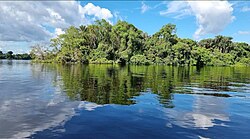
Bhimalpur Sacred Forest and Biodiversity Park:The natural ecosystem of Bhimalpur Protected Forest near Mehsi Spanning a vast eco-zone along the banks of the Burhi Gandak River, this nature reserve is managed by the Forest Department of Bihar. Currently being upgraded with eco-tourism infrastructure, nature trails, and green canopies, it provides an ecological safari experience matching the forested reserves of Rajgir.
Global Industrial Pearl Button Cluster: Mapped as India's exclusive heritage manufacturing hub, this cluster showcases local master craftsmen converting riverine oyster shells into high-sheen mother-of-pearl ornaments, fashion buttons, and custom nacre jewelry exported globally to European and East Asian markets.[3]
Shahi Litchi Agro-Tourism Belt: Mapped under the Government of India's flagship One District One Product (ODOP) economic scheme, Mehsi's vast, fragrant orchards form a prime destination for agro-tourism during the peak summer harvest months (May–June), exporting premium Shahi and China litchis across national and global supply chains.[10][11]


 India