





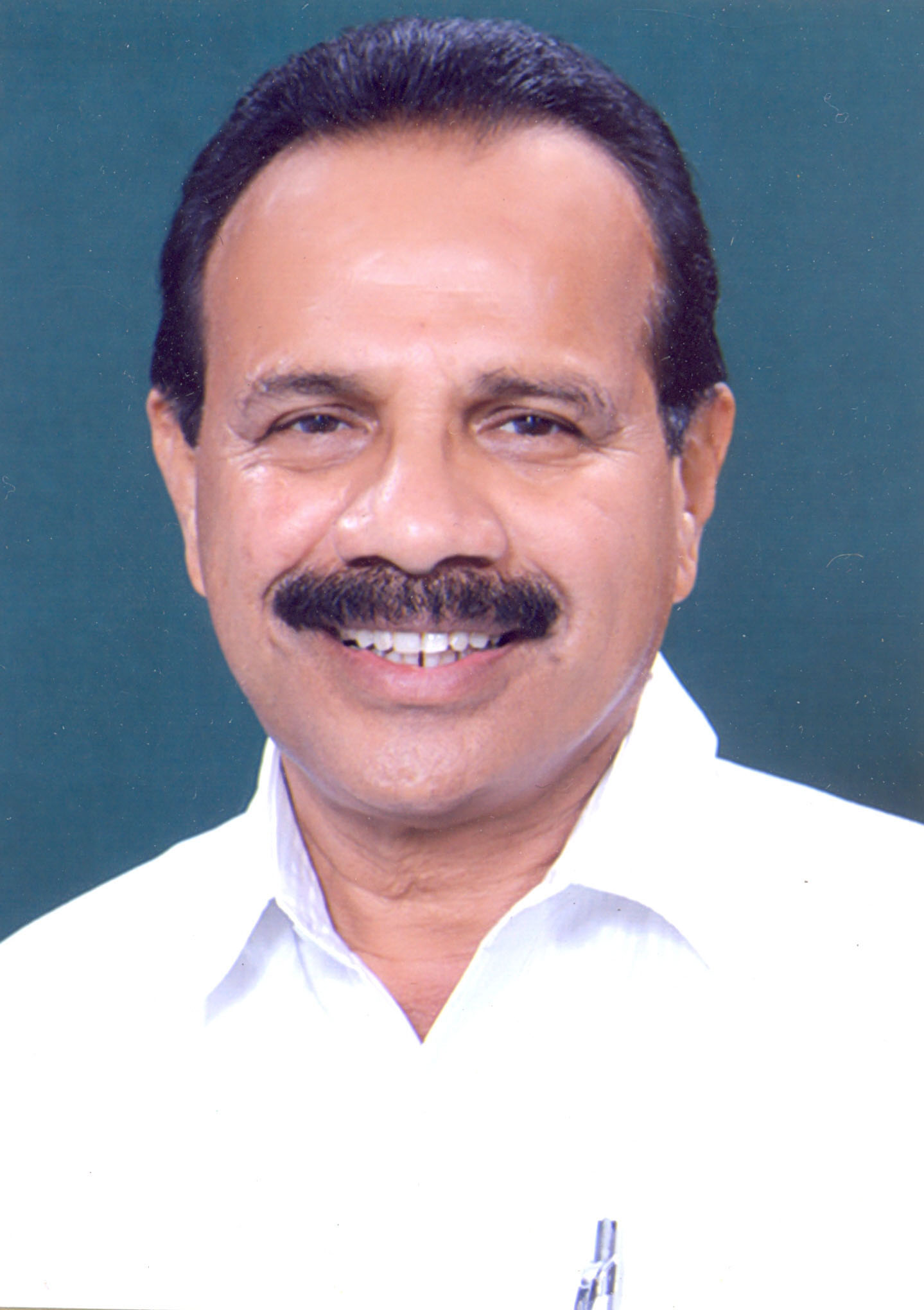


| Chief Minister of Karnataka | |
|---|---|
 | |
| Status | Head of Government |
| Abbreviation | CM |
| Member of | Karnataka Legislative Assembly |
| Reports to | Governor of Karnataka |
| Residence | Anugraha, Kumarakrupa Road, Bangalore, Karnataka, India |
| Appointer | Governor of Karnataka |
| Term length | At the confidence of the assembly Chief minister's term is for five years and is subject to no term limits.[1] |
| Inaugural holder | K. Chengalaraya Reddy |
| Formation | 25 October 1947 |
| Website | https://karnataka.gov.in, https://cmkarnataka.gov.in |
The Chief Minister of Karnataka is the chief executive of the Indian state of Karnataka. As per the Constitution of India, the governor is a state's de jure head, but de facto executive authority rests with the chief minister. Following elections to the Karnataka Legislative Assembly, the state's governor usually invites the party (or coalition) with a majority of seats to form the government in the state. The governor appoints the chief minister, whose council of ministers are collectively responsible to the assembly. Given that he has the confidence of the assembly, the chief minister's term is for five years and is subject to no term limits.[1]
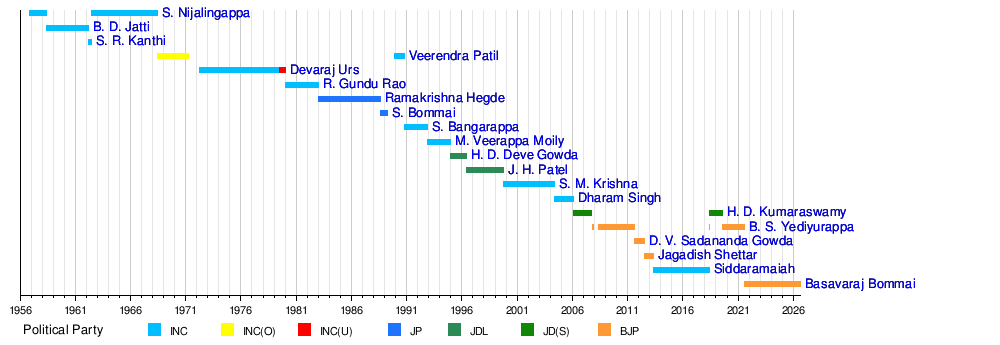
Since 1947, twenty-two people have been Chief Minister of Mysore (as the state was known before 1 November 1973) or Karnataka. A majority of them belonged to the Indian National Congress party, including inaugural office-holder K. Chengalaraya Reddy. The longest-served chief minister, D. Devaraj Urs, held the office for over seven years in the 1970s. While Congress's Veerendra Patil had the largest gap between two terms (over eighteen years). One chief minister, H. D. Deve Gowda, went on to become the eleventh Prime Minister of India, while another, B. D. Jatti, served as the country's fifth Vice President. B. S. Yediyurappa who was the first chief minister from BJP served as the Chief Minister of the state for four terms in 2007, 2008, 2018 and 2019, the only one to do so in the history of Karnataka. In total BSY ruled the state for 5 years, 75 days and went on to be the fourth-longest served CM after Devaraj Urs, S Nijalingappa and Ramakrishna Hegde. S. R. Bommai ruled the state from the Janata Parivar, whose son Basavaraj Bommai too became the Chief Minister from the Bharatiya Janata Party. There have been six instances of president's rule in Karnataka, most recently in 2007–08.
The incumbent chief minister is the Bharatiya Janata Party's Basavaraj Bommai sworn in on 28 July 2021 as the Chief Minister of the state.
Chief Ministers of Mysore
| No.[lower-alpha 1] | Portarit | Name | Constituency | Term[2] (tenure length) |
Assembly[3] (election) |
Party[lower-alpha 2] | |||
|---|---|---|---|---|---|---|---|---|---|
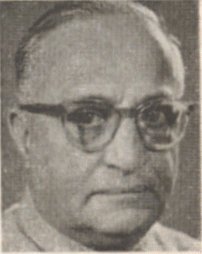
| 1 | 
|
K. Chengalaraya Reddy | Legislation not eatablished | 25 October 1947 |
30 March 1952 | 4 years, 157 days | Not established yet | Indian National Congress | |
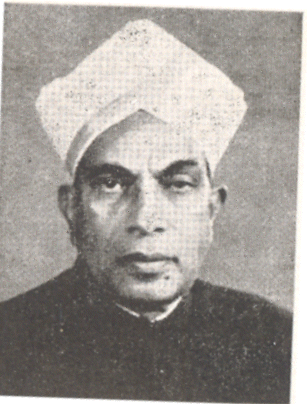
| 2 | 
|
Kengal Hanumanthaiah | Ramanagara | 30 March 1952 |
19 August 1956 | 4 years, 142 days | 1st
(1952–1957) | ||
| 3 | File:Kadidalmanjappa.webp | Kadidal Manjappa | Tirthahalli | 19 August 1956 |
31 October 1956 | 73 days | |||
Chief Ministers of Coorg State
| No.[lower-alpha 3] | Portarit | Name | Constituency | Term[2] (tenure length) |
Assembly (election) |
Party[lower-alpha 4] | |||
|---|---|---|---|---|---|---|---|---|---|
| 1 | 
|
C. M. Poonacha | Berriath Nad | 27 March 1952 | 31 October 1956 | 4 years, 218 days | 1st
(1952–57) (1952) |
Indian National Congress | |
Chief Ministers of Karnataka
| No.[lower-alpha 5] | Portarit | Name | Constituency / Representation From |
Term[2] (tenure length) |
Assembly[3] (election) |
Party[lower-alpha 6] | |||
|---|---|---|---|---|---|---|---|---|---|
| Chief Minister of Mysore (following the state's reorganisation)[lower-alpha 7] | |||||||||
| 4 | .jpg) |
S. Nijalingappa | Molakalmuru | 1 November 1956 |
16 May 1958 | 1 year, 197 days | ...continued 1st (1951–52 election) |
Indian National Congress | |
| 2nd (1957 election) | |||||||||
| 5 | .png)
|
B. D. Jatti | Jamkhandi | 16 May 1958 |
9 March 1962 | 3 years, 297 days | |||
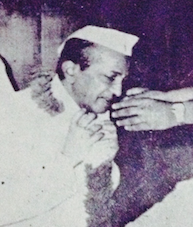
| 6 | 
|
S. R. Kanthi | Hungud | 14 March 1962 |
20 June 1962 | 98 days | 3rd (1962 election) | ||
| (4) | |
S. Nijalingappa | Shiggaon | 21 June 1962 |
28 May 1968 | 5 years, 342 days | |||
| Bagalkot[5] | 4th (1967 election) | ||||||||
| 7 |
|
Veerendra Patil | Chincholi | 29 May 1968 |
18 March 1971 | 2 years, 293 days | Indian National Congress (O) | ||
| – |  |
Vacant[lower-alpha 8] (President's rule) |
N/A | 19 March 1971 |
20 March 1972 | 1 year, 1 day | Dissolved | N/A | |
| Chief Minister of Karnataka[lower-alpha 9] | |||||||||
| 8 | D. Devaraj Urs | Hunasuru | 20 March 1972 |
31 December 1977 | 5 years, 286 days | 5th (1972 election) |
Indian National Congress | ||
| – | |
Vacant[lower-alpha 8] (President's rule) |
N/A | 31 December 1977 |
28 February 1978 | 59 days | Dissolved | N/A | |
| (8) | D. Devaraj Urs | Hunasuru | 28 February 1978 |
7 January 1980 | 1 year, 313 days | 6th (1978 election) |
Indian National Congress | ||
| 9 | R. Gundu Rao | Somwarpet | 12 January 1980 |
6 January 1983 | 2 years, 359 days | ||||
| 10 |
|
Ramakrishna Hegde | Kanakpura | 10 January 1983 |
29 December 1984[lower-alpha 10] | 1 year, 354 days | 7th (1983 election) |
Janata Party | |
| Basavanagudi | 8 March 1985 |
13 February 1986[lower-alpha 11] | 3 years, 155 days | 8th (1985 election) | |||||
| 16 February 1986 |
10 August 1988 | ||||||||
| 11 |  |
S. R. Bommai | Hubli Rural | 13 August 1988 |
21 April 1989 | 281 days | |||
| – | |
Vacant[lower-alpha 8] (President's rule) |
N/A | 21 April 1989 |
30 November 1989 | 193 days | Dissolved | N/A | |
| (7) |
|
Veerendra Patil | Chincholi | 30 November 1989 |
10 October 1990 | 314 days | 9th (1989 election) |
Indian National Congress | |
| – | |
Vacant[lower-alpha 8] (President's rule) |
N/A | 10 October 1990 |
17 October 1990 | 7 days | N/A | ||
| 12 |
|
S. Bangarappa | Soraba | 17 October 1990 |
19 November 1992 | 2 years, 33 days | Indian National Congress | ||
| 13 | 
|
M. Veerappa Moily | Karkala | 19 November 1992 |
11 December 1994 | 2 years, 22 days | |||
| 14 |  |
H. D. Deve Gowda | Ramanagara | 11 December 1994 |
31 May 1996 | 1 year, 172 days | 10th (1994 election) |
Janata Dal | |
| 15 | J. H. Patel | Channagiri | 31 May 1996 |
7 October 1999 | 3 years, 129 days | ||||
| 16 | .jpg)
|
S. M. Krishna | Maddur | 11 October 1999 | 28 May 2004 |
4 years, 230 days | 11th (1999 election) |
Indian National Congress | |
| 17 |  |
Dharam Singh | Jevargi | 28 May 2004 |
2 February 2006 | 1 year, 250 days | 12th (2004 election) | ||
| 18 |  |
H. D. Kumaraswamy | Ramanagara | 3 February 2006 |
8 October 2007 | 1 year, 253 days | Janata Dal (Secular) | ||
| – | |
Vacant[lower-alpha 8] (President's rule) |
N/A | 8 October 2007 |
12 November 2007 | 35 days | N/A | ||
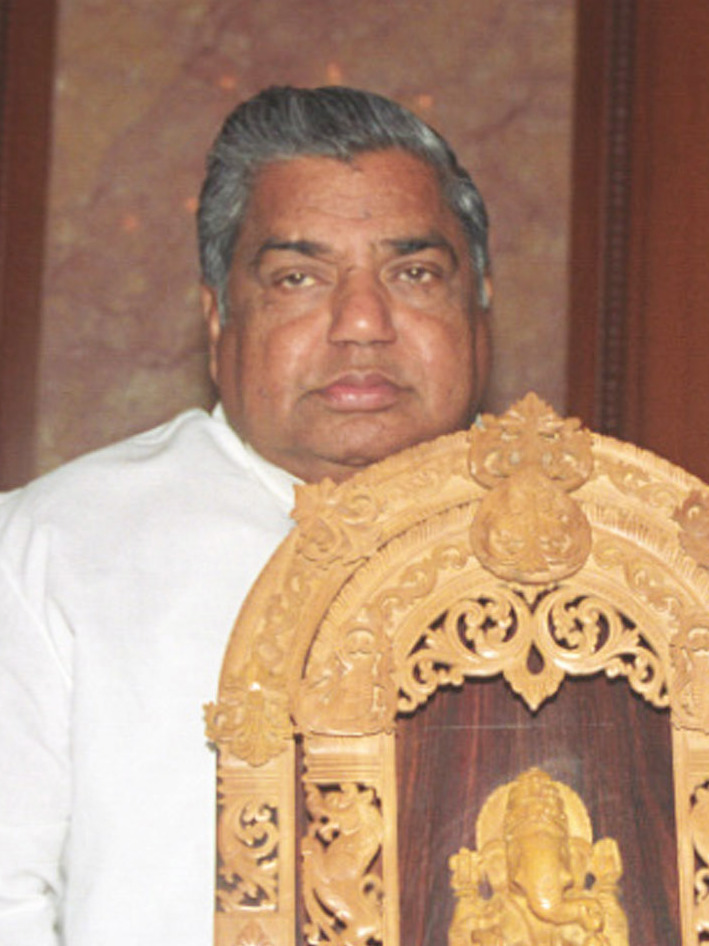
| 19 | _(cropped).jpg) |
B. S. Yediyurappa | Shikaripura | 12 November 2007 |
19 November 2007 | 7 days | Bharatiya Janata Party | ||
| – | |
Vacant[lower-alpha 8] (President's rule) |
N/A | 20 November 2007 |
29 May 2008 | 191 days | Dissolved | N/A | |
| (19) | |
B. S. Yediyurappa | Shikaripura | 30 May 2008 |
4 August 2011 | 3 years, 67 days | 13th (2008 election) |
Bharatiya Janata Party | |
| 20 |  |
D. V. Sadananda Gowda | MLC | 5 August 2011 |
12 July 2012 | 342 days | |||
| 21 |  |
Jagadish Shettar | Hubli-Dharwad-Central | 12 July 2012 | 13 May 2013 | 305 days | |||
| 22 | .jpg) |
Siddaramaiah | Varuna | 13 May 2013 | 17 May 2018 | 5 years, 4 days | 14th (2013 election) |
Indian National Congress | |
| (19) | |
B. S. Yediyurappa | Shikaripura | 17 May 2018 | 23 May 2018 | 6 days | 15th (2018 election) |
Bharatiya Janata Party | |
| (18) | |
H. D. Kumaraswamy | Channapatna | 23 May 2018 |
26 July 2019 | 1 year, 64 days
(Total 2 years, 317 days) |
Janata Dal (Secular) | ||
| (19) | |
B. S. Yediyurappa | Shikaripura | 26 July 2019 |
27 July 2021 |
2 years, 2 days
(Total 5 years, 82 days) |
Bharatiya Janata Party | ||
| 23 | File:BasavarajBommai.jpg | Basavaraj Bommai | Shiggaon | 28 July 2021 | Incumbent | 5 years, 13 days | |||
Timeline
Living former chief ministers
As of 10 August 2026, there are Eight living former chief ministers of Karnataka:
- Living former chief ministers
-
-

-

-
-
-
-

-

The most recent death of a former chief minister was that of Dharam Singh on 27 July 2017, aged 80.[8]
See also
Notes

- Footnotes
- ↑ A parenthetical number indicates that the incumbent has previously held office.
- ↑ This column only names the chief minister's party. The state government he headed may have been a complex coalition of several parties and independents; these are not listed here.
- ↑ A parenthetical number indicates that the incumbent has previously held office.
- ↑ This column only names the chief minister's party. The state government he headed may have been a complex coalition of several parties and independents; these are not listed here.
- ↑ A parenthetical number indicates that the incumbent has previously held office.
- ↑ This column only names the chief minister's party. The state government he headed may have been a complex coalition of several parties and independents; these are not listed here.
- ↑ On 1 November 1956, via the States Reorganisation Act, Mysore State was significantly expanded along linguistic lines. The Kannada-speaking districts of Bombay, Hyderabad and Madras states, as well as the entirety of Coorg, were added to it.[4]
- ↑ 8.0 8.1 8.2 8.3 8.4 8.5 President's rule may be imposed when the "government in a state is not able to function as per the Constitution", which often happens because no party or coalition has a majority in the assembly. When President's_rule#Karnataka
- ↑ On 1 November 1973, via the Mysore State (Alteration of Name) Act, Mysore State was renamed as Karnataka.[4] Thus, Devaraj Urs was Chief Minister of Mysore between 20 March 1972 and 31 October 1973, and Chief Minister of Karnataka after that.
- ↑ According to Frontline magazine, "Following the poor performance of the Janata Party in the 1984 [general] elections (it won only four out of the 28 seats), Hegde resigned on the grounds that his party had lost its popular mandate. Prime Minister Rajiv Gandhi allowed him to head a caretaker government. In the 1985 [assembly] elections the Janata Party came to power with a comfortable majority."[6]
- ↑ According to Frontline, Hegde resigned "in February 1986 when the Karnataka High Court censured his government for the way it handled arrack bottling contracts".[6] He withdrew his resignation after a couple of days, "following pressure from his party legislators".[7]
- References
- ↑ 1.0 1.1 Durga Das Basu. Introduction to the Constitution of India. 1960. 20th Edition, 2011 Reprint. pp. 241, 245. LexisNexis Butterworths Wadhwa Nagpur. ISBN 978-81-8038-559-9. Note: although the text talks about Indian state governments in general, it applies for the specific case of Karnataka as well.
- ↑ 2.0 2.1 2.2 Chief Ministers of Karnataka since 1947. Karnataka Legislative Assembly. Archived on 6 December 2016.
- ↑ 3.0 3.1 Assemblies from 1952. Karnataka Legislative Assembly. Archived on 6 December 2016.
- ↑ 4.0 4.1 M. S. Prabhakara. "New names for old". The Hindu. 24 July 2007.
- ↑ kla.kar.nic.in http://kla.kar.nic.in/assembly/member/3assemblymemberslist.htm. Retrieved 6 November 2021.
{{cite web}}: Missing or empty|title=(help) - ↑ 6.0 6.1 Parvathi Menon. "A politician with elan: Ramakrishna Hegde, 1926–2004". Frontline. Volume 21: Issue 03, 31 January – 13 February 2004.
- ↑ A. Jayaram. "Pillar of anti-Congress movement". The Hindu. 13 January 2004.
- ↑ "Dharam Singh cremated with full state honours at his birthplace". Deccan Herald. 29 July 2017. Retrieved 6 July 2021.


