



robot: Update article (please report if you notice any mistake or error in this edit) |
imported>HAUDesiree No edit summary |
||
| Line 1: | Line 1: | ||
{{ | {{Short description|none}} <!-- "none" is preferred when the title is sufficiently descriptive; see [[WP:SDNONE]] --> | ||
{{Use dmy dates|date=December 2020}} | {{Use dmy dates|date=December 2020}} | ||
{{Use Indian English|date=July 2015}} | {{Use Indian English|date=July 2015}} | ||
{{Neoliberalism sidebar}} | {{Neoliberalism sidebar}} | ||
{{ | {{Capitalism sidebar}}The '''economic liberalisation in India''' refers to the series of policy changes aimed at [[open economy|opening]] up the [[Economy of India|country's economy]] to the world, with the objective of making it more market-oriented and [[Consumption (economics)|consumption]]-driven. The goal was to expand the role of private and foreign investment, which was seen as a means of achieving economic growth and development.<ref name="originalreport">{{cite report |title=India – Structural Adjustment Credit Project (English) – Presidents report |pages=1 |url=https://documents.worldbank.org/en/publication/documents-reports/documentdetail/999451468260069468/india-structural-adjustment-credit-project |publisher=World Bank |date=12 November 1991 }}</ref><ref name="worldbank">{{cite web |title=Structural adjustments in India – a reportof the Independent Evaluation Group (IEG |url=http://lnweb90.worldbank.org/oed/oeddoclib.nsf/DocUNIDViewForJavaSearch/0586CC45A28A2749852567F5005D8C89 |publisher=World Bank |access-date=30 October 2018 |archive-url=https://web.archive.org/web/20190509212112/http://lnweb90.worldbank.org/oed/oeddoclib.nsf/DocUNIDViewForJavaSearch/0586CC45A28A2749852567F5005D8C89 |archive-date=9 May 2019 |url-status=dead }}</ref> Although some attempts at liberalisation were made in 1966 and the early 1980s, a more thorough liberalisation was initiated in 1991. | ||
The '''economic liberalisation in India''' refers to the [[ | |||
The liberalisation process was prompted by a balance of payments crisis that had led to a severe recession, [[dissolution of the Soviet Union]] leaving the United States as the sole superpower, and the sharp rise in oil prices caused by the [[Gulf War]] of 1990–91. India's foreign exchange reserves fell to dangerously low levels, covering less than three weeks of imports. The country had to airlift gold to secure emergency loans. Trade disruptions with the USSR and a decline in remittances from Gulf countries further intensified the crisis. Political instability and a rising fiscal deficit added to the economic strain. In response, India approached the [[International Monetary Fund]] (IMF) and the [[World Bank]] for assistance. These institutions made financial support conditional on the implementation of structural adjustment programs. The liberalisation was not purely voluntary, but largely undertaken under pressure from the [[International Monetary Fund|IMF]] and [[World Bank]], which required sweeping economic reforms in exchange for loans. The crisis in 1991 forced the government to initiate a comprehensive reform agenda, including Liberalisation, Privatisation and Globalisation, referred to as LPG reforms. At his now famous budget speech that instituted the reforms, [[Manmohan Singh]] said on 24 July 1991: "Let the whole world hear it loud and clear. India is now wide awake."<ref>{{Cite web |title=Manmohan Singh, India's prime minister from 2004 to 2014, has died |website=[[NPR]] |date=26 December 2024 |url=https://www.npr.org/2024/12/26/1045646076/manmohan-singh-dies-india |last1=Pathak |first1=Sushmita }}</ref> | |||
The reform process had significant effects on the Indian economy, leading to an increase in [[Foreign investment in India|foreign investment]] and a shift towards a more services-oriented economy. The impact of India's economic liberalisation policies on various sectors and social groups has been a topic of ongoing debate. While the policies have been credited with attracting foreign investment, some have expressed concerns about their potential negative consequences. One area of concern has been the environmental impact of the liberalisation policies, as industries have expanded and regulations have been relaxed to attract investment. Additionally, some critics argue that the policies have contributed to widening income inequality and social disparities, as the benefits of economic growth have not been equally distributed across the population. | |||
==Pre-liberalisation policies== | |||
{{Further|Economic history of India|Licence Raj}}Indian [[economic policy]] after [[Indian independence movement|independence]] was influenced by the colonial experience (which was exploitative in nature and had begun as a takeover by a British trading company)<ref>{{Cite book |last=Malhotra |first=Aditi |url=https://library.oapen.org/handle/20.500.12657/57067 |title=India in the Indo-Pacific: Understanding India's security orientation towards Southeast and East Asia |date=2022 |publisher=Verlag Barbara Budrich |isbn=978-3-8474-2474-1 |pages=136 |hdl=20.500.12657/57067 |language=English |quote=There was a perpetual fear of foreign influence on the Indian economy. This fear emanated from India’s experience with the East India Company, which had entered the subcontinent as a trading entity in 1757 and later metamorphosed into a colonial power that ruled for almost two centuries.}}</ref> and by those leaders', particularly prime minister [[Nehru]]'s exposure to [[Fabian socialism]].<ref>{{cite book |last1=Misra |first1=O.P |title=Economic thought of Gandhi and Nehru: a comparative analysis |date=1995 |publisher=MD Publications Pvt. Ltd |location=New Delhi |isbn=978-81-85880-71-6 |page=66 |url=https://books.google.com/books?id=IxGDqOU03h4C&dq=1995.+Economic+Thought+of+Gandhi+and+Nehru%3A+A+Comparative+Analysis.+M.D.+Publications&pg=PP17}}</ref> Under the [[Congress party]] governments of Nehru, and his successors' policy tended towards [[protectionist|protectionism]], with a strong emphasis on [[import substitution industrialization]] under state monitoring, [[state intervention]] at the micro level in all businesses especially in labour and financial markets, a large [[public sector]], business regulation, and [[central planning]].<ref name="kirit-1">{{cite web|author1=Kelegama, Saman|author2=Parikh, Kirit|title=Political Economy of Growth and Reforms in South Asia|year=2000|version=Second Draft|url=http://www.eldis.org/static/DOC12473.htm|url-status=dead|archive-url=https://web.archive.org/web/20060211121955/http://www.eldis.org/static/DOC12473.htm|archive-date=11 February 2006}}</ref> | |||
During the brief rule by the [[Janata party]] in late 1970s, the government seeking to promote economic self-reliance and indigenous industries, required multi-national corporations to go into partnership with Indian corporations. The policy proved controversial, diminishing foreign investment and led to the high-profile exit of corporations such as [[Coca-Cola]] and [[IBM]] from India.<ref name="IMM">{{cite book|title=India: From Midnight To Millennium and Beyond|author=Shashi Tharoor|pages=164–66|publisher=Arcade Publishing|year=2006|isbn=978-1-55970-803-6 }}</ref> | |||
In the 1990s, Coca-Cola re-entered the Indian market and faced competition from domestic cola companies such as [[Campa Cola|Pure Drinks Group]] and [[Bisleri|Parle Bisleri]]. However, the multinational company's marketing and distribution networks enabled it to gain a significant share of the market, leading to financial difficulties for some domestic companies, ultimately resulting in the decline and closure of much of Pure Drinks Group bottling plants and Parle Bisleri selling much of its business to Coca-Cola. | |||
The annual growth rate of the [[economy of India|Indian economy]] had averaged around 4% from the 1950s to 1980s, while per-capita income growth averaged 1.3%.<ref>{{cite web|date=12 April 2004|title=Redefining The Hindu Rate of Growth|url=http://www.financialexpress.com/news/redefining-the-hindu-rate-of-growth/104268/|work=The Financial Express}}</ref> | |||
==Reforms before 1991== | ==Reforms before 1991== | ||
=== 1966 liberalisation attempt === | === 1966 liberalisation attempt === | ||
In 1966, due to rapid inflation caused by | In 1966, due to rapid inflation caused by accompanying the [[Sino-Indian War]] and severe drought, the Indian government was forced to seek monetary aid from the [[International Monetary Fund|International Monetary Fund (IMF)]] and [[World Bank]].<ref>{{Cite journal|last=Srinivas|first=V.|date=27 March 2018|title=India's IMF Programmes—1966 and 1981: An Analytical Review|journal=Indian Journal of Public Administration|language=en-US|volume=64|issue=2|pages=219–227|doi=10.1177/0019556117750897|s2cid=188184832|issn=0019-5561}}</ref> Pressure from the{{which|date=November 2025}} [[Bretton Woods system|Bretton Woods]] institutions caused a shift towards economic liberalisation, wherein the [[Indian rupee|rupee]] was [[Devaluation|devalued]] to combat inflation (even though devaluation results in increased import costs) and cheapen exports and the former system of tariffs and [[Export subsidy|export subsidies]] was abolished.<ref name=":0">Mukherji, R. (2000). India's Aborted Liberalization-1966. ''Pacific Affairs'', ''73''(3), 377–379. doi:10.2307/2672025</ref> However, a second poor harvest and subsequent industrial recession helped fuel political backlash against liberalisation, characterised by resentment at foreign involvement in the Indian economy and fear that it might signal a broader shift away from socialist policies.<ref name=":1">{{Cite book|last1=Bhagwati|first1=Jagdish N.|title=Foreign Trade Regimes and Economic Development: India|last2=Srinivasan|first2=T. N.|publisher=The National Bureau of Economic Research|year=1975|isbn=0-87014-531-2|pages=151–153}}</ref> As a result, trade restrictions were reintroduced and the Foreign Investments Board was established in 1968 to scrutinise companies investing in India with more than 40% foreign equity participation.<ref name=":0" /> | ||
World Bank loans continued to be taken for agricultural projects since 1972, and these continued as international seed companies that were able to enter Indian markets after the 1991 liberalisation.<ref>{{cite book|last1=Sainath|first1=P|title=Everybody loves a good drought|publisher=Sage Publications}}</ref> | World Bank loans continued to be taken for agricultural projects since 1972, and these continued as international seed companies that were able to enter Indian markets after the 1991 liberalisation.<ref>{{cite book|last1=Sainath|first1=P|title=Everybody loves a good drought|publisher=Sage Publications}}</ref> | ||
=== Economic reforms during 1980s === | === Economic reforms during the 1980s === | ||
As it became evident that the Indian economy was lagging behind its East and Southeast Asian | [[File:WAP-1_Locomotive_at_Delhi.jpg|thumb|[[Indian locomotive class WAP-1|WAP-1]] locomotive developed in 1980]] | ||
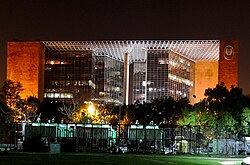
[[File:LIC_Zonal_Office.jpg|thumb|LIC Jeevan Bharti building opened in 1986]] | |||
As it became evident that the Indian economy was lagging behind its East and Southeast Asian neighbours, the governments of [[Indira Gandhi]] and subsequently [[Rajiv Gandhi]] began pursuing economic liberalisation.<ref name=":3">{{Cite book|last=Mohan|first=Rakesh|title=India Transformed: 25 Years of Economic Reforms|publisher=Brookings Institution|year=2018|isbn=9780815736622|pages=68–71}}</ref> The ''New Computer Policy of 1984'' was instrumental, as it eased import restrictions on technology, encouraged private investments, and provided incentives for software exports. This policy led to rapid growth in India's hardware and software sectors. Organizations like NASSCOM (established in 1988) supported the industry by fostering development, standardizing practices, and promoting Indian IT firms globally. India also established Software Technology Parks (STPs) to provide infrastructure, tax benefits, and faster data communications, enabling companies to export software services globally. The governments loosened restrictions on business creation and import controls while also promoting the growth of the automobile, [[Computer Age Management Services|digitalization]], telecommunications and software industries.<ref>History of Computing in India: 1955–2010, Rajaraman, V.</ref>{{page needed|date=July 2020}} Reforms under lead to an increase in the average GDP growth rate from 2.9 percent in the 1970s to 5.6 per cent, although they failed to fix systemic issues with the Licence Raj.<ref name=":3" />{{Citation needed|date=January 2022}} Despite Rajiv Gandhi's dream for more systemic reforms, the [[Bofors scandal]] tarnished his government's reputation and impeded his liberalisation efforts.<ref>{{Cite news|title=Bofors prevented Rajiv Gandhi from taking up liberalisation|work=The Economic Times|url=https://economictimes.indiatimes.com/news/politics-and-nation/bofors-prevented-rajiv-gandhi-from-taking-up-liberalisation/articleshow/54814737.cms|access-date=11 September 2020}}</ref> | |||
Growth during the 1980s was higher than in the preceding decades but fragile. It not only culminated in a crisis in June 1991 but also exhibited significantly higher variance than growth in the 1990s. Central to the high growth rate in the 1980s was the high growth of 7.6 percent during 1988–1991.<ref>{{Cite web |last=Panagariya |first=Arvind |date=March 2004 |title=India in the 1980s and 1990s: A Triumph of Reforms |url=https://www.imf.org/external/pubs/ft/wp/2004/wp0443.pdf |website=International Monetary Fund |series=IMF Working Paper WP/04/43}}</ref> | |||
The fragile but faster growth during the 1980s took place in the context of significant reforms throughout the decade but especially starting in 1985. The liberalization pushed industrial growth to a hefty 9.2 percent during the crucial high growth period of 1988–1991.<ref>{{Cite news |date=2022-07-24 |title=On this day in 1991: A landmark budget that changed India's fortunes |work=The Economic Times |url=https://economictimes.indiatimes.com/news/economy/policy/on-this-day-in-1991-a-landmark-budget-that-changed-indias-fortunes/articleshow/93090439.cms |access-date=2023-08-01 |issn=0013-0389}}</ref> | |||
=== Chandra Shekhar Singh reforms === | === Chandra Shekhar Singh reforms === | ||
{{Expand section|date=September 2020}} | {{Expand section|date=September 2020}} | ||
The [[Chandra Shekhar | The [[Chandra Shekhar]] government (1990–91) took several significant steps towards liberalisation and laid its foundation.<ref>{{cite web|title= Clipping of the New Indian Express Group – the New Indian Express-Chennai|work=The New Indian Express|url=https://epaper.newindianexpress.com/c/8158805|access-date=18 January 2016}}</ref>{{citation needed|date=December 2020}} | ||
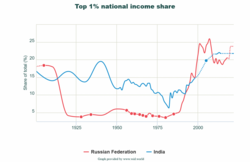
[[File:Russia v India income share.png|thumb|Unlike socialist countries like the USSR, India didn't achieve the same level of income equality post-independence.]] | |||
==Liberalisation of 1991== | ==Liberalisation of 1991== | ||
| Line 42: | Line 43: | ||
=== Crisis leading to reforms === | === Crisis leading to reforms === | ||
{{Main|1991 Indian economic crisis}}{{Expand section|date=September 2020}} | {{Main|1991 Indian economic crisis}}{{Expand section|date=September 2020}} | ||
By 1991, India still had a fixed [[exchange rate]] system, where the rupee was pegged to the value of a basket of currencies of major trading partners. India | With the liberalisation of trade in high-value goods like automobiles, electronics, fridges, washing machines, air conditioners, etc., in the 1980s, Indian imports shot up as significant components were imported.<ref>{{Cite journal |title=IMF Working Papers Volume 2004 Issue 043: India in the 1980's and 1990's: A Triumph of Reforms (2004) |url=https://www.elibrary.imf.org/view/journals/001/2004/043/001.2004.issue-043-en.xml |access-date=2024-10-04 |website=IMF eLibrary |doi=10.5089/9781451846355.001 |language=en|url-access=subscription }}</ref> With a floating exchange rate, this could've been alleviated somewhat and adjustments would have been more gradual, but India's fixed exchange rates at the time placed the entire burden on the state to maintain parity by depleting its foreign exchange reserves. Higher income earners, benefiting from import liberalisation, could now purchase foreign goods at low prices due to the fixed exchange rate, with the state absorbing the pressure on the exchange rate. | ||
The [[Gulf War|First Gulf War]] in 1991, after the Iraqi invasion of Kuwait, resulted in a huge blow to the Indian economy from a spike in oil prices and a drop in remittances from Indian expats in the Gulf region.<ref>{{Cite web |date=2022-02-24 |title=Crude above $100: How oil price shocks impacted India's economy in the past |url=https://www.indiatoday.in/diu/story/how-oil-price-shocks-impacted-india-economy-in-the-past-1917380-2022-02-24 |access-date=2024-10-04 |website=India Today |language=en}}</ref> | |||
With high growth in the automobile sector in the 1980s, the demand for oil grew significantly and thus added to the demand for foreign exchange. Additionally, India was going through large-scale socio-political turmoil due to the [[Mandal Commission protests of 1990|government's reservations for backward classes]] and [[Ram Rath Yatra|communal violence]]. All of these factors contributed to a balance of payments issue and provided stronger justification for broader liberalisation measures, which had already begun in the 1980s. Communists and socialists, who were the main political opposition to economic liberalisation, had also lost moral courage with the [[dissolution of the Soviet Union]], the rise of East and South-East Asian tigers, and even [[Opening Up and Reform Policy|China's opening up of its economy]]. | |||
With trade and investment restrictions reduced in 1980s, there were policies and initiatives to increase exports particularly electronics and IT software. However, they picked speed and scale in 1990s due to long gestation period, WTO evolution and [[Globalization|overall global trade growth.]] | |||
By 1991, India still had a fixed [[exchange rate]] system, where the rupee was pegged to the value of a basket of currencies of major trading partners. Although a fixed exchange rate system helped India to achieve currency stability, it also necessitated that the Indian Government utilize its foreign exchange reserves in the event of currency pressures in order to avoid a breach of the currency peg especially since speculators are attempting to profit of off breaking the peg. The government was close to default on its external debt<ref name="Ghosh">[http://www.globaleconomicgovernance.org/wp-content/uploads/Ghosh%20-%20India.pdf India's Pathway through Financial Crisis] {{webarchive|url=https://web.archive.org/web/20111112080531/http://www.globaleconomicgovernance.org/wp-content/uploads/Ghosh%20-%20India.pdf|date=12 November 2011}}. [[Arunabha Ghosh]]. Global Economic Governance Programme. Retrieved 2 March 2007.</ref><ref name="IMF">[http://www.uoit.ca/sas/Macroeconomic%20Issues/What1991CrisisIndia.pdf What Caused the 1991 Currency Crisis in India?] {{Webarchive|url=https://web.archive.org/web/20130902172252/http://www.uoit.ca/sas/Macroeconomic%20Issues/What1991CrisisIndia.pdf|date=2 September 2013}}, IMF Staff Papers, Valerie Cerra and Sweta Chaman Saxena.</ref> and [[foreign exchange reserves]] had reduced to the point that India could barely finance two weeks' worth of imports. | |||
=== Liberalisation of 1991 === | === Liberalisation of 1991 === | ||
The collapse of the [[Chandra Shekhar government]] in the midst of the crisis and the [[assassination of Rajiv Gandhi]] led to the election of a new Congress government led by [[P. V. Narasimha Rao]].<ref name=":5">{{Cite book|last=Mohan, Rakesh. | [[File:Visit of Narasimha Rao, Indian Minister for Foreign Affairs, to the CEC (cropped).jpg|thumb|P. V. Narasimha Rao]] | ||
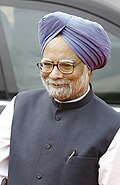
[[File:Manmohansingh04052007.jpg|thumb|Manmohan Singh]] | |||
The collapse of the [[Chandra Shekhar government]] in the midst of the crisis and the [[assassination of Rajiv Gandhi]] led to the election of a new Congress government led by [[P. V. Narasimha Rao]].<ref name=":5">{{Cite book|last=Mohan, Rakesh.|title=India Transformed : Twenty-Five Years of Economic Reforms.|date=2018|publisher=Brookings Institution Press|isbn=978-0-8157-3662-2|location=Washington, DC|pages=44–49|oclc=1056070747}}</ref> He selected Amar Nath Verma to be his Principal Secretary and [[Manmohan Singh]] to be finance minister and gave them complete support in doing whatever they thought was necessary to solve the crisis.<ref name=":5" /> Verma helped draft the New Industrial Policy alongside Chief Economic Advisor [[Rakesh Mohan]], and it laid out a plan to foster Indian industry in five points.<ref name=":4">Verma, A. N. (1991). ''Statement on Industrial Policy'' (India, Ministry of Industry). New Delhi: Government of India.</ref><ref>{{Cite web|last=Mital|first=Ankit|date=27 August 2016|title=The people behind the Great Men of 1991|url=https://www.livemint.com/Sundayapp/yxBuBRN3kdBr7AO026sHxI/The-people-behind-the-Great-Men-of-1991.html|access-date=6 September 2020|website=Livemint|language=en}}</ref> | |||
* Firstly, it abolished the License Raj by removing licensing restrictions for all industries except for 18 that "related to security and strategic concerns, social reasons, problems related to safety and overriding environmental issues."<ref name=":4" /> | |||
* To incentivise foreign investment, it laid out a plan to pre-approve all investment up to 51% foreign equity participation, allowing foreign companies to bring modern technology and industrial development.<ref name=":5" /><ref name=":4" /> To further incentivise technological advancement, the old policy of government approval for foreign technology agreements was scrapped. | |||
* The fourth point proposed to dismantle public monopolies by floating shares of public sector companies and limiting public sector growth to essential infrastructure, goods and services, mineral exploration, and defense manufacturing.<ref name=":5" /><ref name=":4" /> | |||
* Finally the concept of an MRTP company, where companies whose assets surpassed a certain value were placed under government supervision, was scrapped.<ref name=":5" /><ref>{{Cite web|title=Monopolies and Restrictive Trade Practices Act 1970 – GKToday|date=14 September 2011 |url=https://www.gktoday.in/gk/the-monopolies-and-restrictive-trade-practices-act-1970/|access-date=10 September 2020|language=en-US}}</ref> | |||
In August 1991, the [[Reserve Bank of India]] (RBI) Governor established the Narasimham Committee to recommend changes to the financial system.<ref>{{Cite web|title=First Narasimham Committee – GKToday|url=https://www.gktoday.in/gk/first-narasimham-committee/|access-date=11 September 2020|language=en-US}}</ref> Recommendations included reducing the [[statutory liquidity ratio]] (SLR) and [[cash reserve ratio]] (CRR) from 38.5% and 15% respectively to 25% and 10% respectively, allowing market forces to dictate interest rates instead of the government, placing banks under the sole control of the RBI, and reducing the number of public sector banks.<ref>{{Cite web|last=Akrani|first=Gaurav|title=Narasimham Committee Report 1991 1998 – Recommendations|url=https://kalyan-city.blogspot.com/2010/09/narasimham-committee-report-1991-1998.html|access-date=12 September 2020}}</ref> The government heeded some of these suggestions, including cutting the SLR and CRR rates, liberalizing interest rates, loosening restrictions on private banks, and allowing banks to open branches free from government mandate.<ref>{{Cite web|title=First Narasimham Committee – GKToday|url=https://www.gktoday.in/gk/first-narasimham-committee/|access-date=12 September 2020|language=en-US}}</ref><ref name=":7" /> | Meanwhile, Manmohan Singh worked on a new budget that would come to be known as the Epochal Budget.<ref name=":6">{{Cite web|title=Everything about Manmohan Singh's Epochal Budget that marked the beginning of economic liberalisation|url=https://www.freepressjournal.in/webspecial/everything-about-manmohan-singhs-epochal-budget-that-marked-the-beginning-of-economic-liberalisation|access-date=6 September 2020|website=Free Press Journal|language=en}}</ref> The primary concern was getting the fiscal deficit under control, and he sought to do this by [[Austerity|curbing government expenses]]. Part of this was the [[disinvestment]] in public sector companies, but accompanying this was a reduction in subsidies for fertilizer and abolition of subsidies for sugar.<ref name=":7">{{Cite web|date=18 January 2016|title=1991: Economic Reforms|url=https://indiabefore91.in/1991-economic-reforms|access-date=10 September 2020|website=India Before 1991|language=en}}</ref> He also dealt with the depletion of foreign exchange reserves during the crisis with a 19 per cent devaluation of the rupee with respect to the US dollar, a change which sought to make exports cheaper and accordingly provide the necessary foreign exchange reserves.<ref>{{Cite web|date=29 March 2007|title=Devaluation of the Rupee: Tale of Two Years, 1966 and 1991|url=http://www.ccs.in/ccsindia/policy/money/studies/wp0028.pdf|url-status=live|archive-url=https://web.archive.org/web/20070329195215/http://www.ccs.in/ccsindia/policy/money/studies/wp0028.pdf|archive-date=29 March 2007|access-date=11 September 2020}}</ref><ref>{{cite journal | url=http://www.jstor.org/stable/41626979 | jstor=41626979 | title=Rupee Devaluation: Real Issues | last1=Jadhav | first1=N. | journal=Economic and Political Weekly | year=1991 | volume=26 | issue=36 | pages=2119–2120 }}</ref> The devaluation made petroleum more expensive to import, so Singh proposed to lower the price of kerosene to benefit the poorer citizens who depended on it while raising petroleum prices for industry and fuel.<ref>Singh, M. (24 July 1991). ''Budget 1991–1992'' [PDF]. New Delhi: Government of India Ministry of Finance. pp. 11.</ref> Manmohan Singh presented the budget alongside his outline for broader reform.<ref name=":6" /> During the speech he laid out a new trade policy oriented towards promoting exports and removing import controls.<ref name=":8">Singh, M. (24 July 1991). ''Budget 1991–1992'' [PDF]. New Delhi: Government of India Ministry of Finance.</ref> Specifically, he proposed limiting tariff rates to no more than 150 percent while also lowering rates across the board, reducing [[Excise|excise duties]], and abolishing export subsidies.<ref name=":8" /> | ||
In August 1991, the [[Reserve Bank of India]] (RBI) Governor established the Narasimham Committee to recommend changes to the financial system.<ref>{{Cite web|title=First Narasimham Committee – GKToday|date=21 April 2011 |url=https://www.gktoday.in/gk/first-narasimham-committee/|access-date=11 September 2020|language=en-US}}</ref> Recommendations included reducing the [[statutory liquidity ratio]] (SLR) and [[cash reserve ratio]] (CRR) from 38.5% and 15% respectively to 25% and 10% respectively, allowing market forces to dictate interest rates instead of the government, placing banks under the sole control of the RBI, and reducing the number of public sector banks.<ref>{{Cite web|last=Akrani|first=Gaurav|title=Narasimham Committee Report 1991 1998 – Recommendations|url=https://kalyan-city.blogspot.com/2010/09/narasimham-committee-report-1991-1998.html|access-date=12 September 2020}}</ref> The government heeded some of these suggestions, including cutting the SLR and CRR rates, liberalizing interest rates, loosening restrictions on private banks, and allowing banks to open branches free from government mandate.<ref>{{Cite web|title=First Narasimham Committee – GKToday|date=21 April 2011 |url=https://www.gktoday.in/gk/first-narasimham-committee/|access-date=12 September 2020|language=en-US}}</ref><ref name=":7" /> | |||
On 12 November 1991, based on an application from the Government of India, World Bank sanctioned a structural adjustment loan/credit that consisted of two components – an IBRD loan of $250 million to be paid over 20 years, and an IDA credit of SDR 183.8 million (equivalent to $250 million) with 35 years maturity, through India's ministry of finance, with the President of India as the borrower. The loan was meant primarily to support the government's program of stabilization and economic reform. This specified deregulation, increased foreign direct investment, liberalisation of the trade regime, reforming domestic interest rates, strengthening capital markets (stock exchanges), and initiating public enterprise reform (selling off public enterprises).<ref name="1991wbreport">{{cite web|title=World bank report P-5678-IN – report of the IBRD and IDA on a proposed structural adjustment loan to India|url=http://documents.worldbank.org/curated/en/999451468260069468/pdf/multi0page.pdf|access-date=30 October 2018|publisher=World Bank}}</ref> As part of a bailout deal with the IMF, India was forced to pledge 20 tonnes of gold to [[Union Bank of Switzerland]] and 47 tonnes to the [[Bank of England]] and Bank of Japan.<ref name="reform">[https://www.nytimes.com/1991/06/29/world/economic-crisis-forcing-once-self-reliant-india-to-seek-aid.html Economic Crisis Forcing Once Self-Reliant India to Seek Aid], ''The New York Times'', 29 June 1991</ref> | On 12 November 1991, based on an application from the Government of India, World Bank sanctioned a structural adjustment loan/credit that consisted of two components – an IBRD loan of $250 million to be paid over 20 years, and an IDA credit of SDR 183.8 million (equivalent to $250 million) with 35 years maturity, through India's ministry of finance, with the President of India as the borrower. The loan was meant primarily to support the government's program of stabilization and economic reform. This specified deregulation, increased foreign direct investment, liberalisation of the trade regime, reforming domestic interest rates, strengthening capital markets (stock exchanges), and initiating public enterprise reform (selling off public enterprises).<ref name="1991wbreport">{{cite web|title=World bank report P-5678-IN – report of the IBRD and IDA on a proposed structural adjustment loan to India|url=http://documents.worldbank.org/curated/en/999451468260069468/pdf/multi0page.pdf|access-date=30 October 2018|publisher=World Bank}}</ref> As part of a bailout deal with the IMF, India was forced to pledge 20 tonnes of gold to [[Union Bank of Switzerland]] and 47 tonnes to the [[Bank of England]] and Bank of Japan.<ref name="reform">[https://www.nytimes.com/1991/06/29/world/economic-crisis-forcing-once-self-reliant-india-to-seek-aid.html Economic Crisis Forcing Once Self-Reliant India to Seek Aid], ''The New York Times'', 29 June 1991</ref> | ||
The reforms drew heavy scrutiny from opposition leaders. The New Industrial Policy and 1991 Budget was decried by opposition leaders as "command budget from the IMF" and worried that withdrawal of subsidies for fertilizers and hikes in oil prices would harm lower and middle-class citizens.<ref name=":6" /> Critics also derided devaluation, fearing it would worsen runaway inflation that would hit the poorest citizens the hardest while doing nothing to fix the trade deficit.<ref> | The reforms drew heavy scrutiny from opposition leaders. The New Industrial Policy and 1991 Budget was decried by opposition leaders as "command budget from the IMF" and worried that withdrawal of subsidies for fertilizers and hikes in oil prices would harm lower and middle-class citizens.<ref name=":6" /> Critics also derided devaluation, fearing it would worsen runaway inflation that would hit the poorest citizens the hardest while doing nothing to fix the trade deficit.<ref>{{cite journal | url=http://www.jstor.org/stable/41498462 | jstor=41498462 | title=Wishful Thinking on Devaluation | journal=Economic and Political Weekly | year=1991 | volume=26 | issue=29 | page=1724 }}</ref> In the face of vocal opposition, the support and political will of the prime minister was crucial in order to see through the reforms.<ref>{{Cite web|last=Balachandran|first=Manu|title=The real architect of India's economic reforms wasn't Manmohan Singh|url=https://qz.com/india/799883/how-narasimha-rao-fixed-the-indian-economy-and-the-congress-party-only-to-be-forgotten/|access-date=6 September 2020|website=Quartz India|date=6 October 2016 |language=en}}</ref> Rao was often referred to as ''[[Chanakya]]'' for his ability to steer tough economic and political legislation through the parliament at a time when he headed a [[minority government]].<ref name="frontline">{{cite journal|author=V. Venkatesan|date=14 January 2005|title=Obituary: A scholar and a politician|url=http://www.hindu.com/thehindu/thscrip/print.pl?file=20050114008013000.htm&date=fl2201/&prd=fline&|journal=Frontline|volume=22|issue=1|archive-url=https://web.archive.org/web/20100130013320/http://www.hinduonnet.com/fline/fl2201/stories/20050114008013000.htm|archive-date=30 January 2010|access-date=30 March 2010}}</ref><ref>[http://www.tlca.com/adults/obit-pvn.html PV Narasimha Rao Passes Away]. Retrieved 7 October 2007. {{webarchive|url=https://web.archive.org/web/20071101063203/http://www.tlca.com/adults/obit-pvn.html|date=1 November 2007}}</ref> | ||
==Impact== | ==Impact== | ||
A 2025 study found that the trade liberalization reduced crony capitalism and productivity loss in India, as politically connected firms lost some of their advantage over other firms.<ref>{{Cite journal |last1=Jävervall |first1=Sebastian |last2=Khoban |first2=Roza |date=2025 |title=The Impact of Trade Liberalization in the Presence of Political Distortions |url=https://www.aeaweb.org/articles?id=10.1257/app.20230629 |journal=American Economic Journal: Applied Economics |language=en |volume=17 |issue=3 |pages=1–41 |doi=10.1257/app.20230629 |issn=1945-7782}}</ref> | |||
=== Credit boom of the 2000s === | |||
Private investment in infrastructure significantly increased during the 2000s, driven by an influx of global finance. | |||
Reforms in India in the 1990s and 2000s aimed to increase international competitiveness in various sectors, including auto components, [[Telecommunications in India|telecommunications]], [[software]], [[Pharmaceutical industry in India|pharmaceuticals]], [[Biotechnology in India|biotechnology]], [[research and development]], and professional services. These reforms included reducing import tariffs, deregulating markets, and lowering taxes, which led to an increase in foreign investment and high economic growth. From 1992 to 2005, foreign investment increased by 316.9%, and India's GDP grew from $266 billion in 1991 to $2.3 trillion in 2018.<ref>Dutta, M. K. and Sarma, Gopal Kumar, Foreign Direct Investment in India Since 1991: Trends, Challenges and Prospects (1 January 2008).</ref><ref>{{Cite news |last=Mudgill |first=Amit |title=Since 1991, Budget size grew 19 times, economy 9 times; your income 5 times |work=The Economic Times |url=https://economictimes.indiatimes.com/markets/stocks/news/since-1991-budget-size-grew-19-times-economy-9-times-your-income-5-times/articleshow/62735382.cms?from=mdr#:~:text=At%20$2.3%20trillion,%20the%20Indian,per%20cent%20of%20the%20economy. |access-date=29 August 2020}}</ref> | |||
According to one study, wages rose on the whole, as well as wages as the labor-to-capital [[Wage share|relative share]].<ref name=":9">{{Cite journal |last1=Leblebicioğlu |first1=Asl |last2=Weinberger |first2=Ariel |date=3 December 2020 |title=Openness and factor shares: Is globalization always bad for labor? |url=http://www.sciencedirect.com/science/article/pii/S0022199620301215 |journal=Journal of International Economics |language=en |volume=128 |article-number=103406 |doi=10.1016/j.jinteco.2020.103406 |issn=0022-1996 |s2cid=229432582|url-access=subscription }}</ref> | |||
Extreme poverty reduced from 36 percent in 1993–94 to 24.1 percent in 1999–2000.<ref name=":15">{{Cite web |date=2016-01-18 |title=Impact of reforms |url=https://indiabefore91.in/impact-reforms |access-date=2022-06-15 |website=India Before 1991 |language=en}}</ref> | |||
The liberalisation policies have been criticised for increasing income inequality, concentrating wealth, worsening rural living standards, causing unemployment, and leading to an increase in farmer suicides.<ref>{{Cite journal |last=Ghosh |first=Jayati |date=2020-12-15 |title=Hindutva, Economic Neoliberalism and the Abuse of Economic Statistics in India |url=https://journals.openedition.org/samaj/6882 |journal=South Asia Multidisciplinary Academic Journal |language=fr |issue=24/25 |doi=10.4000/samaj.6882 |issn=1960-6060 |s2cid=230588392|doi-access=free }}</ref><ref name=":10" /> | |||
India also increasingly integrated its economy with the global economy. The ratio of total [[export]]s of goods and services to GDP in India approximately doubled from 7.3 percent in 1990 to 14 percent in 2000.<ref name="Asiaweek">[http://www.asiaweek.com/asiaweek/96/0412/nat1.html Local industrialists against multinationals]. Ajay Singh and Arjuna Ranawana. ''[[Asiaweek]]''. Retrieved 2 March 2007.</ref> This rise was less dramatic on the import side but was significant, from 9.9 percent in 1990 to 16.6 percent in 2000. Within 10 years, the ratio of total goods and services trade to [[Gross domestic product|GDP]] rose from 17.2 percent to 30.6 percent.<ref name=":15" /> India, however, continues to have a trade deficit, relying on foreign capital to maintain its balance of payments and as such, makes it vulnerable to external shocks.<ref>{{Cite news |last=Singh |first=Sarita Chaganti |date=2023-02-15 |title=India's January merchandise trade deficit hits 1-year low of $17.75 bln |language=en |work=Reuters |url=https://www.reuters.com/world/india/indias-jan-merchandise-trade-deficit-1775-bln-2023-02-15/ |access-date=2023-03-23}}</ref> | |||
Foreign investment in India in form of [[foreign direct investment]], [[portfolio investment]], and investment raised on international capital markets increased significantly, from US$132 million in 1991–92 to $5.3 billion in 1995–96. | |||
However, the liberalization did not benefit all parts of India equally, with urban areas benefiting more than rural areas.<ref>{{Cite journal |last1=Aghion |first1=Philippe |last2=Burgess |first2=Robin |last3=Redding |first3=Stephen J. |last4=Zilibotti |first4=Fabrizio |year=2008 |title=The Unequal Effects of Liberalization: Evidence from Dismantling the License Raj in India |url=https://www.jstor.org/stable/29730127 |journal=The American Economic Review |volume=98 |issue=4 |pages=1397–1412 |doi=10.1257/aer.98.4.1397 |issn=0002-8282 |jstor=29730127 |s2cid=966634}}</ref> States with pro-worker labor laws experienced slower industry expansion compared to those with pro-employer labor laws. This led to a "beggar-thy-neighbor" scenario, where states and cities vie to enact the most pro-capital laws at the expense of workers and other states. | |||
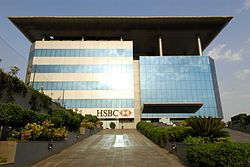
After the reforms, life expectancy and literacy rates continued to increase at roughly the same rate as before the reforms.<ref>{{Cite web|url=https://data.worldbank.org/indicator/SP.DYN.LE00.IN?locations=IN-CN|title = Life expectancy at birth, total (Years) – India, China | Data}}</ref><ref>{{Cite web|url=https://data.worldbank.org/indicator/SE.ADT.LITR.ZS?locations=IN|title = Literacy rate, adult total (% of people ages 15 and above) – India | Data}}</ref> For the first 10 years after the 1991 reforms, GDP also continued to increase at roughly the same rate as before the reforms. This was because the economic growth of the 2000s was not solely the result of liberal reforms, but also due to the boom phase of the economic cycle, which had led to an influx of foreign capital.<ref>{{Cite web|url=https://data.worldbank.org/indicator/NY.GDP.MKTP.KD.ZG?end=2002&locations=IN&start=1975|title=GDP growth (Annual %) – India | Data}}</ref><ref>{{Cite web|url=https://data.worldbank.org/indicator/NY.GDP.MKTP.CD?end=2002&locations=IN&start=1971|title=GDP (Current US$) – India | Data}}</ref>[[File:HSBC GLT PUNE.jpg|thumb|right|HSBC GLT, [[Pune]]]] | |||
By 1997, it became evident that no governing coalition would try to dismantle liberalisation, although governments avoided taking on [[Trade unions in India|trade unions]] and farmers on contentious issues such as reforming labour laws and reducing [[agricultural subsidy|agricultural subsidies]].<ref name="Gandhi-2">{{cite news|date=27 November 1997|title=That old Gandhi magic|newspaper=The Economist|url=http://www.economist.com/world/asia/displaystory.cfm?story_id=107076|access-date=17 January 2011}}</ref> By the turn of the 21st century, India had progressed towards a [[market economy]], with a substantial reduction in state control of the economy and increased financial liberalisation.<ref>{{Harvnb|Kumar|2005|p=1037}}</ref>{{Citation needed|date=January 2021}} | |||
The [[OECD|Organisation for Economic Cooperation and Development]] (OECD) <ref>{{Cite web|title=Why open markets matter – OECD|url=https://www.oecd.org/trade/understanding-the-global-trading-system/why-open-markets-matter/|access-date=2022-01-29|website=www.oecd.org}}</ref> applauded the changes, pointing to their promotion of high economic growth and increases in income: | |||
The economy then rebounded to 7.3% growth in | {{blockquote| Its annual growth in [[GDP per capita]] accelerated from just 1¼ per cent in the three decades after Independence to 7½ per cent currently, a rate of growth that will double the average income in a decade.... In service sectors where government regulation has been eased significantly or is less burdensome—such as communications, insurance, asset management and information technology—output has grown rapidly, with exports of [[information technology-enabled services]] particularly strong. In those infrastructure sectors which have been opened to competition, such as [[telecoms]] and [[civil aviation]], the private sector has proven to be extremely effective and growth has been phenomenal.|[[OECD]]<ref name="oecdindia20072">{{cite web|title=Economic survey of India 2007: Policy Brief|url=http://www.oecd.org/dataoecd/17/52/39452196.pdf|url-status=dead|archive-url=https://web.archive.org/web/20110606112149/http://www.oecd.org/dataoecd/17/52/39452196.pdf|archive-date=6 June 2011|publisher=OECD}}</ref>}} | ||
In 2006 India recorded its highest GDP growth rate of 9.6% <ref>{{cite web|title=The World Factbook|url=https://www.cia.gov/the-world-factbook/countries/india/|access-date=10 July 2013|publisher=Cia.gov|archive-date=18 March 2021|archive-url=https://web.archive.org/web/20210318202107/https://www.cia.gov/the-world-factbook/countries/india|url-status=dead}}</ref> becoming the second fastest growing major economy in the world, next only to China.<ref name="astaire2">{{cite web|title=The India Report|url=http://www.ukibc.com/ukindia2/files/India60.pdf|url-status=dead|archive-url=https://web.archive.org/web/20090114195859/http://www.ukibc.com/ukindia2/files/India60.pdf|archive-date=14 January 2009|publisher=Astaire Research}}</ref> The growth rate slowed significantly in the first half of 2012.<ref>{{cite news|date=31 May 2012|title=India growth rate slows to 5.3% in first quarter|publisher=BBC|url=https://www.bbc.co.uk/news/business-18275858|access-date=10 July 2013}}</ref> | |||
The economy then rebounded to 7.3% growth in 2014, 7.9% in 2015 and 8.2% in 2016 before falling to 6.7% in 2017, 6.5% in 2018 and 4% in 2019.<ref>{{Cite web|title=GDP growth (annual %) – India {{!}} Data|url=https://data.worldbank.org/indicator/NY.GDP.MKTP.KD.ZG?locations=IN|access-date=2022-01-29|website=data.worldbank.org}}</ref> | |||
==Later reforms== | ==Later reforms== | ||
{{More citations needed section|date=December 2015}} | {{More citations needed section|date=December 2015}} | ||
During the [[Atal Bihari Vajpayee]] administration, there were extensive liberal reforms, with the [[National Democratic Alliance|NDA Coalition]] beginning the privatisation of government-owned businesses, including hotels, VSNL, Maruti Suzuki, and airports. The coalition also implemented tax reduction policies, enacted fiscal policies aimed at reducing deficits and debts, and increased initiatives for public works.<ref>{{cite web |author=J. Bradford DeLong |year=2001 |title=India Since Independence: An Analytic Growth Narrative |url=http://www.j-bradford-delong.net/Econ_Articles/India/India_Rodrik_DeLong.PDF |url-status=dead |archive-url=https://web.archive.org/web/20161007103544/http://www.j-bradford-delong.net/Econ_Articles/India/India_Rodrik_DeLong.PDF |archive-date=7 October 2016 |access-date=25 February 2009}}</ref><ref>{{cite web |title=5 economic decisions by Atal Bihari Vajpayee that changed the face of India |date=16 August 2018 |url=https://www.moneycontrol.com/news/india/5-economic-decisions-by-atal-bihari-vajpayee-that-changed-the-face-of-india-2850581.html |publisher=Moneycontrol}}</ref> | |||
In 2011, the second [[United Progressive Alliance|UPA]] Coalition Government led by [[Manmohan Singh]] proposed the introduction of 51% Foreign Direct Investment in the retail sector. However, the decision was delayed due to pressure from coalition parties and the opposition, and it was ultimately approved in December 2012.<ref>{{cite web|date=14 September 2012|title=End of policy paralysis: Govt approves 51% FDI in multi-brand retail|url=http://zeenews.india.com/business/news/economy/govt-approves-51-fdi-in-multi-brand-retail_60309.html|access-date=10 July 2013|publisher=Zeenews.india.com}}</ref> | |||
After coming to power in 2014, the [[Narendra Modi]] led government launched several initiatives aimed at promoting economic growth and development. One of the notable programs was the "[[Make in India]]" campaign, which sought to encourage domestic and foreign companies to invest in manufacturing and production in India. The program aimed to create employment opportunities and enhance the country's manufacturing capabilities. | |||
=== Privatisation of airports === | |||
After 2014, the Indian government under the leadership of Prime Minister Narendra Modi initiated the privatisation of airports in India as part of its policy of economic liberalisation and development. Under this policy, the Airports Authority of India (AAI) has been engaging in [[Public-Private Partnership]]s (PPP) with private companies for the development, management, and operation of airports in India. This has led to the privatisation of several airports across the country, including those in [[Ahmedabad Airport|Ahmedabad]], [[Chaudhary Charan Singh International Airport|Lucknow]], [[Jaipur International Airport|Jaipur]], [[Guwahati airport|Guwahati]], [[Thiruvananthapuram International Airport|Thiruvananthapuram]], and [[Mangalore International Airport|Mangaluru]].<ref name=":16" /> | |||
While the privatisation of airports has been hailed as a step towards modernisation and efficiency, there have also been concerns about the potential impact on workers and the local communities. Critics have argued that the privatisation of airports may lead to job losses and a decline in wages, and that the focus on profit-making may lead to neglect of social and environmental concerns.There have also been controversies around the awarding of contracts to private companies, with allegations of corruption and favouritism in the selection process. However, the government has defended its privatisation policy as a necessary step towards achieving economic growth and development in the country.<ref>{{Cite news |date=2020-11-13 |title='Modi's Rockefeller': Gautam Adani and the concentration of power in India |work=Financial Times |url=https://www.ft.com/content/474706d6-1243-4f1e-b365-891d4c5d528b |access-date=2023-04-23}}</ref> | |||
Under the second NDA Government, the coal industry was opened up through the passing of the Coal Mines (Special Provisions) Bill of 2015. This effectively ended the state monopoly over the mining of the coal sector and opened it up for private, foreign investments, as well as [[private sector]] mining of coal.<ref name=":16">{{cite web|title=Parliament boost to Modi's plans: Coal, mining bills passed by Rajya Sabha|url=http://www.indiatoday.intoday.in/story/rajya-sabha-passes-coal-mining-bill-coal-mines-bill-2015-budget-session-of-parliament/1/424931.html|archive-url=https://web.archive.org/web/20150320133141/http://indiatoday.intoday.in/story/rajya-sabha-passes-coal-mining-bill-coal-mines-bill-2015-budget-session-of-parliament/1/424931.html|url-status=dead|archive-date=20 March 2015|access-date=29 March 2015|publisher=indiatoday.intotoday.in}}</ref> | |||
In the 2016 budget session of Parliament, the [[Narendra Modi]] led NDA Government pushed through the Insolvency and Bankruptcy Code to create time-bound processes for insolvency resolution of companies and individuals.<ref>{{cite news|title=Bankruptcy code biggest economic reform after GST: Finance Ministry|newspaper=The Economic Times|url=https://economictimes.indiatimes.com/news/economy/policy/bankruptcy-code-biggest-economic-reform-after-gst-finance-ministry/articleshow/52228931.cms|access-date=11 May 2016}}</ref> | |||
On 1 July 2017, the NDA Government under Modi approved the Goods and Services Tax Act, which had been first proposed 17 years earlier under the NDA Government in 2000. The act aimed to replace multiple indirect taxes with a unified tax structure.<ref>{{cite web|title=F. .No. CBEC-20/05/01/2018-GST Government of India …|url=http://cbic.gov.in/resources//htdocs-cbec/gst/order3-2018-cgst.pdf|url-status=dead|archive-url=https://web.archive.org/web/20180826225922/http://www.cbic.gov.in/resources/htdocs-cbec/gst/order3-2018-cgst.pdf|archive-date=26 August 2018|website=cbic.gov.in/|publisher=Ministry of Finance, Government of India}}</ref><ref>{{cite web|date=30 June 2017|title=GST Launch Time Midnight Parliament Session|url=https://www.hindustantimes.com/india-news/gst-launch-times-when-the-parliament-convened-for-a-session-at-midnight/story-c55g94ewrOMefUvQJVFSEO.html|access-date=20 July 2017|work=Hindustan Times}}</ref> | |||
In 2019, Finance Minister [[Nirmala Sitharaman]] announced a reduction in the base corporate tax rate from 30% to 22% for companies that do not seek exemptions, and the tax rate for new manufacturing companies was reduced from 25% to 15%. The Indian government proposed agricultural and labor reforms in 2020, but [[2020–2021 Indian farmers' protest|faced backlash from farmers]] who protested against the proposed agricultural bills. Eventually, due to the sustained protests, the [[2020 Indian agriculture acts|government repealed the agricultural bills]].<ref>{{Cite web|date=2021-05-13|title=Indian lawmakers pass farm bills amid uproar in Parliament|url=https://apnews.com/article/india-legislation-narendra-modi-bills-agriculture-e07f7b1419613cba731560cf3065a9ba|access-date=2022-01-29|website=AP NEWS|language=en}}</ref><ref>{{Cite web|date=2020-09-27|title=Explained: In the three new labour codes, what changes for workers & hirers?|url=https://indianexpress.com/article/explained/govts-new-versions-of-labour-codes-key-proposals-and-concerns-6603354/|access-date=2022-01-29|website=The Indian Express|language=en}}</ref> | |||
== Criticisms == | == Criticisms == | ||
[[File:Top_10%25_and_bottom_50%25_income_shares_in_India_1900-2021.jpg|thumb|379x379px|Top 10% and bottom 50% income shares in India 1900–2021]]After 1991, the Indian government removed some restrictions on imports of agricultural products causing a price crash while cutting subsidies for the farmers to keep government intervention to the minimum as per neoliberal ideals causing further farmer distress.<ref name=":10" /> | |||
The liberalization of the economy made India more vulnerable to global market forces, such as fluctuations in commodity prices, exchange rates and global demand for exports. This increased the country's dependence on global market forces, as it became more susceptible to external shocks and economic crises.<ref>{{Cite journal |last=Sekhar |first=C. S. C. |date=2004 |title=Agricultural Price Volatility in International and Indian Markets |url=https://www.jstor.org/stable/4415712 |journal=Economic and Political Weekly |volume=39 |issue=43 |pages=4729–4736 |issn=0012-9976 |jstor=4415712}}</ref> A commonly cited example of this is the [[2008 financial crisis]]; although the Indian banking sector had low exposure to US banking sector, the crisis still had a negative impact on the Indian economy due to lower global demand, decline in foreign investment and tightening of credit.<ref>{{Cite web |title=Impact of the international banking crisis on the Indian financial system |url=https://www.bis.org/publ/bppdf/bispap54m.pdf}}</ref> | |||
=== Employment === | |||
Initially, the liberalization policies did accelerate the pace of employment generation. However, over the years, this growth in employment has slowed down significantly. A study suggests that even supporters of liberalisation concede that the immediate impact on the labor market has been negative.<ref>{{Cite journal |last1=Jung |first1=Dong-Hyeon |last2=Choi |first2=Sung-Il |last3=Cho |first3=Jun-Hyeon |last4=Jang |first4=Ji-Yong |date=September 2007 |title=Labour Policy Reform and Labour Market after Economic Liberalization in India |url=http://journals.sagepub.com/doi/10.1177/223386590701000212 |journal=International Area Review |language=en |volume=10 |issue=2 |pages=193–219 |doi=10.1177/223386590701000212 |s2cid=153649693 |issn=1226-7031|url-access=subscription }}</ref> This is particularly true in sectors like agriculture and manufacturing, where the reforms have not satisfactorily addressed the challenges, resulting in minimal job creation despite high economic growth overall.<ref>{{Cite journal |last=Siddiqui |first=Kalim |date=2018 |title=The Political Economy of India's Postplanning Economic Reform: A Critical Review |url=https://www.jstor.org/stable/10.13169/worlrevipoliecon.9.2.0235 |journal=World Review of Political Economy |volume=9 |issue=2 |pages=235–264 |doi=10.13169/worlrevipoliecon.9.2.0235 |jstor=10.13169/worlrevipoliecon.9.2.0235 |issn=2042-891X}}</ref> | |||
The employment growth rate in the period between 2004-2005 and 2011-2012 was just 0.45% per annum, and analyses of long-term trends have indicated that periods of higher economic growth have not translated into job creation, a phenomenon often described as "jobless growth".<ref>{{Cite journal |last1=Tiwari |first1=Shivakar |last2=Kumar |first2=Surinder |date=2019-06-01 |title=Neo-liberal Macroeconomic Policy and Structural Transformation of Indian Economy: Impact on Income, Employment and Distribution |url=https://doi.org/10.1007/s41027-019-00166-9 |journal=The Indian Journal of Labour Economics |language=en |volume=62 |issue=2 |pages=219–238 |doi=10.1007/s41027-019-00166-9 |s2cid=201370554 |issn=0019-5308|url-access=subscription }}</ref> | |||
According to the [[Centre for Monitoring Indian Economy]] (CMIE), although India's population has increased, the workforce has remained stagnant at just over 400 million since 2018 and the quality of jobs has remained low.<ref>{{Cite web |title='India's Workforce Not Rising, Quality of Jobs Very Low': CMIE's Mahesh Vyas |url=https://thewire.in/economy/indias-workforce-not-rising-quality-of-jobs-very-low-cmies-mahesh-vyas |access-date=2024-01-30 |website=The Wire}}</ref> | |||
[[ | The service sector, despite its substantial contribution to India's GDP, is often characterized by high productivity but low employment generation. This is because the fastest-growing sub-sectors within services, such as software services, telecommunications, and banking, are capital intensive, not requiring as much labor as other sectors like agriculture or manufacturing. Capital-intensive industries often require the importation of machinery and technology, which can lead to increased current account deficit (with its accompanying vulnerabilities) and is considered a [[Leakage (economics)|leakage]] of domestic investment and spending. India's manufacturing sector has seen increased import intensity, meaning that a significant portion of the inputs needed for production comes from imports.<ref>{{Cite web |title=Service sector: high growth, low employment generation? |url=https://www.businesseconomics.in/service-sector-high-growth-low-employment-generation |access-date=2023-11-06 |website=www.businesseconomics.in}}</ref> | ||
India is | === Vulnerabilities from international integration === | ||
The integration into global markets has also made India susceptible to foreign monetary policies, particularly those of the U.S. Federal Reserve. Changes in the Fed's policy rates can have a direct impact on the Indian market through various channels. Rate hikes by the Fed tend to strengthen the U.S. dollar against other currencies, including the Indian rupee, which increases the debt servicing costs for Indian borrowers with loans in foreign currency. | |||
A stronger dollar can lead to capital outflows from India as the interest rate differential between the U.S. and India narrows, making India less attractive to foreign investors as [[emerging market]]s are considered 'risky'. These capital outflows can influence asset prices and increase market volatility in India, as well as deplete foreign exchange reserves and create liquidity issues. India's foreign exchange reserves are built through [[Foreign portfolio investment|foreign capital inflows]] instead of a [[Current account (balance of payments)|current account surplus]] like in the case of Russia or China. | |||
Additionally, the central bank is forced to raise interest rates in order to arrest some of the capital outflows hence reducing domestic demand and accompanying economic effects. | |||
==== Vulnerabilities from global commodity prices ==== | |||
India continues to be vulnerable to effects of global commodity prices, particularly the price of crude oil. The long-term effects include a heightened vulnerability to an increase in the import bill and Current Account Deficit, depreciation of the Indian Rupee and an inflationary impact associated with a rise in crude oil prices.<ref name=":14">{{Cite web |last=www.ETEnergyworld.com |title=India's import dependence on crude oil climbs to 87.8% in April-August 2023: PPAC - ET EnergyWorld |url=https://energy.economictimes.indiatimes.com/news/oil-and-gas/indias-import-dependence-on-crude-oil-climbs-to-87-8-in-april-august-2023-ppac/103822860 |access-date=2023-11-06 |website=ETEnergyworld.com |language=en}}</ref> | |||
India's approach to food self-sufficiency is shaped by [[Green Revolution in India|strategic state policies]] that have historically insulated it from the kind of food scarcity experienced by some African nations that are heavily reliant on food imports. | |||
Data from the Petroleum Planning & Analysis Cell of the Ministry of Oil indicates that India's import dependence for crude oil has escalated to 87.8% in August 2023, an increase from 86.5% in the prior year.<ref name=":14" /> | |||
==== Dependence on global export demand ==== | |||
Neoliberal reforms have led to a significant increase in exports as a share of the India's GDP. While this has fueled growth in some sectors, it also means that the Indian economy becomes more vulnerable to fluctuations in global market demand. Over-reliance on exports can lead to economic instability if global demand weakens or if there are competitive pressures from other countries. Moreover, this strategy often results in neglecting the domestic market and local production capacities, which can exacerbate economic inequalities and reduce self-sufficiency.<ref>{{Cite web |title=Home |url=https://www.oecd-ilibrary.org/sites/04b94da4-en/index.html?itemId=/content/component/04b94da4-en |access-date=2023-11-06 |website=www.oecd-ilibrary.org |language=en}}</ref><ref>{{Cite web |date=2021-08-01 |title=30 Years of Economic Reforms – A Saga of Growing Inequalities |url=https://www.newsclick.in/30-years-economic-reforms-saga-growing-inequalities |access-date=2023-11-06 |website=NewsClick |language=en}}</ref> | |||
India's export demand, influenced by the global market, has seen a contraction in recent times. In April 2023, India's merchandise exports contracted by 12.7%, with imports also seeing a sharp decline due to low demand in the U.S. and EU Markets. | |||
==== Impact on domestic monetary and fiscal policies ==== | |||
India's fiscal policies have been criticised by some for prioritizing the demands of foreign investors over the domestic demand and well-being of its citizens. The criticism is rooted in the observation that the Indian government has adopted a regime of fiscal austerity, where it has been reducing its fiscal deficit relative to its GDP by cutting down on revenue expenditure such as welfare, subsidies, and other services. This austerity in revenue expenditure has led to a significant reduction in government spending on welfare, such as health, [[Mahatma Gandhi National Rural Employment Guarantee Act, 2005|rural employment]], social assistance, child care centers, [[Midday Meal Scheme|midday meals]], and maternity benefits. As a consequence, the domestic demand is depressed, real wages are falling, and employment situation is dire.<ref>{{Cite web |date=2023-05-24 |title=Since 2014, the poorest communities are earning less |url=https://indianexpress.com/article/opinion/columns/since-2014-the-poorest-communities-are-earning-less-8625367/ |access-date=2023-11-07 |website=The Indian Express |language=en}}</ref><ref>{{Cite web |date=2023-10-07 |title=Who Loses, Who Gains? |url=https://rupeindia.wordpress.com/2023/10/07/who-loses-who-gains/ |access-date=2023-11-07 |website=rupeindia |language=en}}</ref><ref>{{Cite web |last=Himanshu |date=2023-03-23 |title=Worker incomes in India are still signalling tough circumstances |url=https://www.livemint.com/opinion/columns/worker-incomes-in-india-are-still-signalling-tough-circumstances-11679592796284.html |access-date=2023-11-07 |website=mint |language=en}}</ref><ref>{{Cite web |title=Narendra Modi's Decade in Power Has Brought a Shrinking Welfare Landscape to India |url=https://thewire.in/economy/narendra-modis-decade-in-power-has-brought-a-shrinking-welfare-landscape-to-india |access-date=2023-11-07 |website=The Wire}}</ref> | |||
[[B. V. R. Subrahmanyam|BVR Subrahmanyam]], the CEO of NITI Aayog said in a speech about cutting funding for Ministry of Women and Child Development “I still remember when we were cutting off … women and child – state subject – 36,000, make it 18,000 crores,” that is 360 billion rupees ($5.8bn) to 180 billion rupees ($2.9bn).<ref name="aljazeera.com">{{Cite web |title=As PM, India's Modi secretly tried to massively cut state funds |url=https://www.aljazeera.com/economy/2024/1/18/as-pm-indias-modi-secretly-tried-to-massively-cut-state-funds |access-date=2024-01-18 |website=Al Jazeera |language=en}}</ref> | |||
Additionally, the incomes of informal workers, such as food delivery platform workers, have fallen, and their net incomes have declined significantly after accounting for inflation and fuel costs.<ref>{{Cite web |title=Socio-economic Impact Assessment of Food Delivery Platform Workers |url=https://www.ncaer.org/publication/socio-economic-impact-assessment-of-food-delivery-platform-workers |access-date=2023-11-07 |website=NCAER {{!}} Quality . Relevance . Impact |language=en-US}}</ref> | |||
The government's economic policies, shaped by the desire to attract foreign capital is criticised by some for causing a deterioration in the economic condition of the working class, which potentially leads to a cycle of reduced aggregate demand, further hurting the economy and making it subservient to the interests of foreign capital at the expense of its domestic prosperity. | |||
===== Cutting of state finances ===== | |||
In a study conducted in January 2023, researchers from the National Institute of Public Finance and Policy examined state revenues. Their analysis revealed that in 17 of the 18 states they investigated, the income generated from state-level taxes diminished after implementation of GST compared to the pre-GST era. This decline was observed in terms of the percentage of the gross state domestic product (GSDP).<ref name="aljazeera.com"/> This reduction in revenue leads to states being forced to cut back on spending. | |||
=== Income Inequality === | |||
The liberalisation of the Indian economy was followed by a large increase in inequality with the income share of the top 10% of the population increasing from 35% in 1991 to 57.1% in 2014. Likewise, the income share of the bottom 50% decreased from 20.1% in 1991 to 13.1% in 2014.<ref>{{Cite web|title=India|url=https://wid.world/country/india/|access-date=2022-01-28|website=WID – World Inequality Database|language=en-US}}</ref> It has also been criticised for decreasing rural living standards, rural employment and an increase in [[Farmer suicides in India|farmer suicides]].<ref name=":10">{{Cite web|date=2017-03-11|title=Please Mind The Gap: Winners and Losers of Neoliberalism in India|url=https://www.e-ir.info/2017/03/11/please-mind-the-gap-winners-and-losers-of-neoliberalism-in-india/|access-date=2022-01-29|website=E-International Relations|language=en-US}}</ref> | |||
Income inequality in India has been a major concern, especially since 2016. The top 10% of the population holds 77% of the total national wealth, with the richest 1% acquiring 73% of the wealth generated in 2017, while the poorest half of the population, about 670 million people, saw only a 1% increase in their wealth.<ref>{{Cite web |date=2022-09-09 |title=India: extreme inequality in numbers |url=https://www.oxfam.org/en/india-extreme-inequality-numbers |access-date=2023-11-06 |website=Oxfam International |language=en}}</ref> | |||
The annual income of the bottom 20% of households in India experienced a sharp decline of 53% during the pandemic year of 2020-21 compared to their 2015-16 levels, and have yet to bounce back to pre-pandemic levels. In contrast, the top 20% of households saw their annual income increase by 39%. This challenges the neoliberal argument that economic liberalisation benefits all segments to some extent, even if it exacerbates income disparities.<ref>{{Cite web |date=2022-01-24 |title=Income of poorest fifth plunged 53% in 5 yrs; those at top surged |url=https://indianexpress.com/article/india/income-of-poorest-fifth-plunged-53-in-5-yrs-those-at-top-surged-7738426/ |access-date=2024-01-30 |website=The Indian Express |language=en}}</ref><ref>{{Cite news |date=2024-01-25 |title=Incomes up since Covid, but poorest 20% still below FY16 level: Study |url=https://timesofindia.indiatimes.com/india/incomes-up-since-covid-but-poorest-20-still-below-fy16-level-study/articleshow/107124541.cms |access-date=2024-01-30 |work=The Times of India |issn=0971-8257}}</ref> | |||
=== Poverty === | |||
[[File:Share-living-with-less-than-10-int--per-day.svg|thumb|Despite economic reforms, decline in poverty has been slow in India compared to its neighbours like China, which did not liberalise to the same extent.]] | |||
Poverty continues to persist in India, before the COVID-19 pandemic there were 59 million Indians living below $2 a day and 1,162 million living between $2.01 and $10 a day.<ref name=":11">{{Cite web |last=Kochhar |first=Rakesh |title=In the pandemic, India's middle class shrinks and poverty spreads while China sees smaller changes |url=https://www.pewresearch.org/fact-tank/2021/03/18/in-the-pandemic-indias-middle-class-shrinks-and-poverty-spreads-while-china-sees-smaller-changes/ |access-date=2022-01-31 |website=Pew Research Center |date=18 March 2021 |language=en-US}}</ref> | |||
Low government expenditure on healthcare has resulted in a healthcare quality divide between rich and poor as well as between the rural and urban population.<ref>{{Cite web|title=Private Healthcare in India: Boons and Banes|url=https://www.institutmontaigne.org/en/blog/private-healthcare-india-boons-and-banes|access-date=2022-01-31|website=Institut Montaigne|language=en}}</ref> | |||
==== Decline in consumption ==== | |||
The 2017-18 National Sample Survey on consumer expenditure in India which was leaked revealed a worrisome decline in consumer spending, marking the first such drop in 40 years. The survey indicated that the average monthly spending by an Indian fell by 3.7% to Rs 1,446 from Rs 1,501 in 2011–12. In rural areas, the decline was even sharper at 8.8%, although urban spending saw a 2% rise over the same period.<ref name=":13">{{Cite web |title=CEA Has Asked NSC to Release 2017-18 Consumer Spending Data: Report |url=https://thewire.in/economy/cea-nsc-consumer-spending-data |access-date=2023-11-06 |website=The Wire}}</ref><ref>{{Cite web |date=2019-11-15 |title=Consumer Survey 2017-18 junked due to discrepancies; new survey ordered: Govt |url=https://www.businesstoday.in/latest/economy-politics/story/govt-withholds-consumer-spending-report-for-2017-18-on-grounds-of-data-quality-238853-2019-11-15 |access-date=2023-11-06 |website=Business Today |language=en}}</ref> | |||
Despite these concerning findings, the government decided not to release the report, citing "data quality issues" and later scrapped the survey altogether. This action was seen as a rejection of evidence by the government, especially since such surveys are crucial for setting the base year for key macroeconomic data like GDP.<ref name=":13" /> | |||
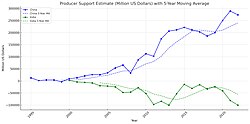
[[File:Producer Support Estimate measured as a percentage of gross farm receipts.jpg|thumb|550x550px|India's Producer Support Estimate consistently registers negative figures, suggesting that the government is more inclined towards taxing or discouraging its agricultural producers, rather than providing them with support or subsidies.<ref>{{Cite web |title=Agricultural policy - Agricultural support - OECD Data |url=http://data.oecd.org/agrpolicy/agricultural-support.htm |access-date=2023-11-09 |website=theOECD |language=en}}</ref>]] | |||
=== Agrarian crisis === | |||
Neoliberal economic policies have markedly shaped India's agricultural crisis, impacting a vast number of people since more than 70% rely on farming for their livelihood. This situation is intensified by several economic strategies, particularly those shaped by the World Trade Organization (WTO) demands. The WTO urges countries such as India to cut back on agricultural subsidies, which are crucial for sustaining food security and supporting the rural economy.<ref>{{Cite web |last=Eco-Business |date=2021-03-08 |title=India's new farming laws driven by WTO demands |url=https://www.eco-business.com/news/indias-new-farming-laws-driven-by-wto-demands/ |access-date=2023-11-09 |website=Eco-Business |language=en}}</ref> | |||
Post-1991 economic reforms explicitly rejected the need for institutional transformation in agriculture, leading to a contraction of the role of the Indian state. The state was encouraged to withdraw its protectionist disposition, making way for a free, privatised, and financialised market. The opening up of the markets exposed small farmers to volatile global market forces influenced by heavy subsidies given to agriculture sector in developed countries, against which they were not equipped to compete.<ref>{{Cite journal |last=Patnaik |first=Utsa |date=2007 |title=Neoliberalism and Rural Poverty in India |url=https://www.jstor.org/stable/4419844 |journal=Economic and Political Weekly |volume=42 |issue=30 |pages=3132–3150 |jstor=4419844 |issn=0012-9976}}</ref><ref>{{Cite web |last=Minhaz |first=Ayesha |date=2023-02-23 |title=Neoliberal damage |url=https://frontline.thehindu.com/books/neoliberal-damage-book-review-distress-in-the-fields-indian-agriculture-after-economic-liberalization-edited-by-r-ramakumar/article66507301.ece |access-date=2023-11-09 |website=Frontline |language=en}}</ref> | |||
With the withdrawal of state support and the opening up of agricultural markets, many farmers have had to take loans to keep up with the increased costs of farming, leading to a debt trap for many. The debt trap resulted in a high incidence of farmer suicides. In 2017 alone, 10,655 farmers took their lives due to these pressures.<ref>{{Cite web |title=More than 10,000 farmers, farm hands committed suicide in 2017 |url=https://www.downtoearth.org.in/news/agriculture/more-than-10-000-farmers-farm-hands-committed-suicide-in-2017-68653 |access-date=2023-11-09 |website=www.downtoearth.org.in |date=2 January 2020 |language=en}}</ref> | |||
==See also== | ==See also== | ||
| Line 118: | Line 198: | ||
* [[Hindu rate of growth]] | * [[Hindu rate of growth]] | ||
* [[Economic miracle]] | * [[Economic miracle]] | ||
*[[Indian Diaspora]] | |||
*[[Income inequality in India]] | |||
*[[Remittances to India]] | |||
==References== | ==References== | ||
{{Reflist|30em}} | {{Reflist|30em}} | ||
===Works cited=== | |||
* {{cite book |last=Kumar |first=Dharma |title=The Cambridge Economic History of India, Volume II : c. 1757–2003 |publisher=Orient Longman |location=New Delhi |year=2005 |isbn=978-81-250-2710-2}} | |||
* {{cite web |ref={{harvid|Task Force Report|2006}} |title=Economic reforms in India: Task force report |url=http://harrisschool.uchicago.edu/News/press-releases/IPP%20Economic%20Reform%20in%20India.pdf |publisher=University of Chicago |url-status=dead |archive-url=https://web.archive.org/web/20090207125338/http://harrisschool.uchicago.edu/News/press-releases/IPP%20Economic%20Reform%20in%20India.pdf |archive-date=7 February 2009}} | |||
==External links== | ==External links== | ||
* For a short educational video of the [https://web.archive.org/web/20081118121401/http://one.revver.com/watch/339183/flv/affiliate/94378 "economic history of India"]. | * For a short educational video of the [https://web.archive.org/web/20081118121401/http://one.revver.com/watch/339183/flv/affiliate/94378 "economic history of India"]. | ||
* {{cite web|url= | * {{cite web|url=https://www.reason.com/blog/show/131810.html|title=What Slumdog Millionaire can teach Americans about economic stimulus|year=2009|author=Nick Gillespie|work=Reason|access-date=6 April 2009|archive-url=https://web.archive.org/web/20090613102213/http://reason.com/blog/show/131810.html|archive-date=13 June 2009|url-status=dead}} | ||
* {{cite magazine|url=http://www.foreignaffairs.org/20060701faessay85401-p0/gurcharan-das/the-india-model.html|title=The India Model|author=Gurcharan Das|magazine=The Foreign Affairs|year=2006|url-status=dead|archive-url=https://web.archive.org/web/20090307101534/http://www.foreignaffairs.org/20060701faessay85401-p0/gurcharan-das/the-india-model.html|archive-date=7 March 2009}} | * {{cite magazine|url=http://www.foreignaffairs.org/20060701faessay85401-p0/gurcharan-das/the-india-model.html|title=The India Model|author=Gurcharan Das|magazine=The Foreign Affairs|year=2006|url-status=dead|archive-url=https://web.archive.org/web/20090307101534/http://www.foreignaffairs.org/20060701faessay85401-p0/gurcharan-das/the-india-model.html|archive-date=7 March 2009}} | ||
* {{cite journal|url=https://www.academia.edu/3347336|title=India Inc. and its Moral Discontent|journal=Economic and Political Weekly|author=Ravinder Kaur|year=2012}} | * {{cite journal|url=https://www.academia.edu/3347336|title=India Inc. and its Moral Discontent|journal=Economic and Political Weekly|author=Ravinder Kaur|year=2012}} | ||
| Line 135: | Line 222: | ||
{{economic liberalism}} | {{economic liberalism}} | ||
{{Liberalism}} | {{Liberalism}} | ||
{{United States – Commonwealth of Nations recessions}} | |||
{{DEFAULTSORT:Economic Liberalisation In India}} | {{DEFAULTSORT:Economic Liberalisation In India}} | ||
Latest revision as of 23:03, 3 May 2026
| Part of the Politics series on |
| Neoliberalism |
|---|
|
|
| Part of a series on |
| Capitalism |
|---|
|
|
The economic liberalisation in India refers to the series of policy changes aimed at opening up the country's economy to the world, with the objective of making it more market-oriented and consumption-driven. The goal was to expand the role of private and foreign investment, which was seen as a means of achieving economic growth and development.[1][2] Although some attempts at liberalisation were made in 1966 and the early 1980s, a more thorough liberalisation was initiated in 1991.
The liberalisation process was prompted by a balance of payments crisis that had led to a severe recession, dissolution of the Soviet Union leaving the United States as the sole superpower, and the sharp rise in oil prices caused by the Gulf War of 1990–91. India's foreign exchange reserves fell to dangerously low levels, covering less than three weeks of imports. The country had to airlift gold to secure emergency loans. Trade disruptions with the USSR and a decline in remittances from Gulf countries further intensified the crisis. Political instability and a rising fiscal deficit added to the economic strain. In response, India approached the International Monetary Fund (IMF) and the World Bank for assistance. These institutions made financial support conditional on the implementation of structural adjustment programs. The liberalisation was not purely voluntary, but largely undertaken under pressure from the IMF and World Bank, which required sweeping economic reforms in exchange for loans. The crisis in 1991 forced the government to initiate a comprehensive reform agenda, including Liberalisation, Privatisation and Globalisation, referred to as LPG reforms. At his now famous budget speech that instituted the reforms, Manmohan Singh said on 24 July 1991: "Let the whole world hear it loud and clear. India is now wide awake."[3]
The reform process had significant effects on the Indian economy, leading to an increase in foreign investment and a shift towards a more services-oriented economy. The impact of India's economic liberalisation policies on various sectors and social groups has been a topic of ongoing debate. While the policies have been credited with attracting foreign investment, some have expressed concerns about their potential negative consequences. One area of concern has been the environmental impact of the liberalisation policies, as industries have expanded and regulations have been relaxed to attract investment. Additionally, some critics argue that the policies have contributed to widening income inequality and social disparities, as the benefits of economic growth have not been equally distributed across the population.
Pre-liberalisation policies[edit | edit source]
Indian economic policy after independence was influenced by the colonial experience (which was exploitative in nature and had begun as a takeover by a British trading company)[4] and by those leaders', particularly prime minister Nehru's exposure to Fabian socialism.[5] Under the Congress party governments of Nehru, and his successors' policy tended towards protectionism, with a strong emphasis on import substitution industrialization under state monitoring, state intervention at the micro level in all businesses especially in labour and financial markets, a large public sector, business regulation, and central planning.[6]
During the brief rule by the Janata party in late 1970s, the government seeking to promote economic self-reliance and indigenous industries, required multi-national corporations to go into partnership with Indian corporations. The policy proved controversial, diminishing foreign investment and led to the high-profile exit of corporations such as Coca-Cola and IBM from India.[7]
In the 1990s, Coca-Cola re-entered the Indian market and faced competition from domestic cola companies such as Pure Drinks Group and Parle Bisleri. However, the multinational company's marketing and distribution networks enabled it to gain a significant share of the market, leading to financial difficulties for some domestic companies, ultimately resulting in the decline and closure of much of Pure Drinks Group bottling plants and Parle Bisleri selling much of its business to Coca-Cola.
The annual growth rate of the Indian economy had averaged around 4% from the 1950s to 1980s, while per-capita income growth averaged 1.3%.[8]
Reforms before 1991[edit | edit source]
1966 liberalisation attempt[edit | edit source]
In 1966, due to rapid inflation caused by accompanying the Sino-Indian War and severe drought, the Indian government was forced to seek monetary aid from the International Monetary Fund (IMF) and World Bank.[9] Pressure from the[which?] Bretton Woods institutions caused a shift towards economic liberalisation, wherein the rupee was devalued to combat inflation (even though devaluation results in increased import costs) and cheapen exports and the former system of tariffs and export subsidies was abolished.[10] However, a second poor harvest and subsequent industrial recession helped fuel political backlash against liberalisation, characterised by resentment at foreign involvement in the Indian economy and fear that it might signal a broader shift away from socialist policies.[11] As a result, trade restrictions were reintroduced and the Foreign Investments Board was established in 1968 to scrutinise companies investing in India with more than 40% foreign equity participation.[10]
World Bank loans continued to be taken for agricultural projects since 1972, and these continued as international seed companies that were able to enter Indian markets after the 1991 liberalisation.[12]
Economic reforms during the 1980s[edit | edit source]


As it became evident that the Indian economy was lagging behind its East and Southeast Asian neighbours, the governments of Indira Gandhi and subsequently Rajiv Gandhi began pursuing economic liberalisation.[13] The New Computer Policy of 1984 was instrumental, as it eased import restrictions on technology, encouraged private investments, and provided incentives for software exports. This policy led to rapid growth in India's hardware and software sectors. Organizations like NASSCOM (established in 1988) supported the industry by fostering development, standardizing practices, and promoting Indian IT firms globally. India also established Software Technology Parks (STPs) to provide infrastructure, tax benefits, and faster data communications, enabling companies to export software services globally. The governments loosened restrictions on business creation and import controls while also promoting the growth of the automobile, digitalization, telecommunications and software industries.[14][page needed] Reforms under lead to an increase in the average GDP growth rate from 2.9 percent in the 1970s to 5.6 per cent, although they failed to fix systemic issues with the Licence Raj.[13][citation needed] Despite Rajiv Gandhi's dream for more systemic reforms, the Bofors scandal tarnished his government's reputation and impeded his liberalisation efforts.[15]
Growth during the 1980s was higher than in the preceding decades but fragile. It not only culminated in a crisis in June 1991 but also exhibited significantly higher variance than growth in the 1990s. Central to the high growth rate in the 1980s was the high growth of 7.6 percent during 1988–1991.[16]
The fragile but faster growth during the 1980s took place in the context of significant reforms throughout the decade but especially starting in 1985. The liberalization pushed industrial growth to a hefty 9.2 percent during the crucial high growth period of 1988–1991.[17]
Chandra Shekhar Singh reforms[edit | edit source]
![[icon]](/wiki/File:Wiki_letter_w_cropped.svg) | This section needs expansion. You can help by adding to it. (September 2020) |
The Chandra Shekhar government (1990–91) took several significant steps towards liberalisation and laid its foundation.[18][citation needed]

Liberalisation of 1991[edit | edit source]
Crisis leading to reforms[edit | edit source]
| This section needs expansion. You can help by adding to it. (September 2020) |
With the liberalisation of trade in high-value goods like automobiles, electronics, fridges, washing machines, air conditioners, etc., in the 1980s, Indian imports shot up as significant components were imported.[19] With a floating exchange rate, this could've been alleviated somewhat and adjustments would have been more gradual, but India's fixed exchange rates at the time placed the entire burden on the state to maintain parity by depleting its foreign exchange reserves. Higher income earners, benefiting from import liberalisation, could now purchase foreign goods at low prices due to the fixed exchange rate, with the state absorbing the pressure on the exchange rate.
The First Gulf War in 1991, after the Iraqi invasion of Kuwait, resulted in a huge blow to the Indian economy from a spike in oil prices and a drop in remittances from Indian expats in the Gulf region.[20]
With high growth in the automobile sector in the 1980s, the demand for oil grew significantly and thus added to the demand for foreign exchange. Additionally, India was going through large-scale socio-political turmoil due to the government's reservations for backward classes and communal violence. All of these factors contributed to a balance of payments issue and provided stronger justification for broader liberalisation measures, which had already begun in the 1980s. Communists and socialists, who were the main political opposition to economic liberalisation, had also lost moral courage with the dissolution of the Soviet Union, the rise of East and South-East Asian tigers, and even China's opening up of its economy.
With trade and investment restrictions reduced in 1980s, there were policies and initiatives to increase exports particularly electronics and IT software. However, they picked speed and scale in 1990s due to long gestation period, WTO evolution and overall global trade growth.
By 1991, India still had a fixed exchange rate system, where the rupee was pegged to the value of a basket of currencies of major trading partners. Although a fixed exchange rate system helped India to achieve currency stability, it also necessitated that the Indian Government utilize its foreign exchange reserves in the event of currency pressures in order to avoid a breach of the currency peg especially since speculators are attempting to profit of off breaking the peg. The government was close to default on its external debt[21][22] and foreign exchange reserves had reduced to the point that India could barely finance two weeks' worth of imports.
Liberalisation of 1991[edit | edit source]
.jpg)

The collapse of the Chandra Shekhar government in the midst of the crisis and the assassination of Rajiv Gandhi led to the election of a new Congress government led by P. V. Narasimha Rao.[23] He selected Amar Nath Verma to be his Principal Secretary and Manmohan Singh to be finance minister and gave them complete support in doing whatever they thought was necessary to solve the crisis.[23] Verma helped draft the New Industrial Policy alongside Chief Economic Advisor Rakesh Mohan, and it laid out a plan to foster Indian industry in five points.[24][25]
- Firstly, it abolished the License Raj by removing licensing restrictions for all industries except for 18 that "related to security and strategic concerns, social reasons, problems related to safety and overriding environmental issues."[24]
- To incentivise foreign investment, it laid out a plan to pre-approve all investment up to 51% foreign equity participation, allowing foreign companies to bring modern technology and industrial development.[23][24] To further incentivise technological advancement, the old policy of government approval for foreign technology agreements was scrapped.
- The fourth point proposed to dismantle public monopolies by floating shares of public sector companies and limiting public sector growth to essential infrastructure, goods and services, mineral exploration, and defense manufacturing.[23][24]
- Finally the concept of an MRTP company, where companies whose assets surpassed a certain value were placed under government supervision, was scrapped.[23][26]
Meanwhile, Manmohan Singh worked on a new budget that would come to be known as the Epochal Budget.[27] The primary concern was getting the fiscal deficit under control, and he sought to do this by curbing government expenses. Part of this was the disinvestment in public sector companies, but accompanying this was a reduction in subsidies for fertilizer and abolition of subsidies for sugar.[28] He also dealt with the depletion of foreign exchange reserves during the crisis with a 19 per cent devaluation of the rupee with respect to the US dollar, a change which sought to make exports cheaper and accordingly provide the necessary foreign exchange reserves.[29][30] The devaluation made petroleum more expensive to import, so Singh proposed to lower the price of kerosene to benefit the poorer citizens who depended on it while raising petroleum prices for industry and fuel.[31] Manmohan Singh presented the budget alongside his outline for broader reform.[27] During the speech he laid out a new trade policy oriented towards promoting exports and removing import controls.[32] Specifically, he proposed limiting tariff rates to no more than 150 percent while also lowering rates across the board, reducing excise duties, and abolishing export subsidies.[32]
In August 1991, the Reserve Bank of India (RBI) Governor established the Narasimham Committee to recommend changes to the financial system.[33] Recommendations included reducing the statutory liquidity ratio (SLR) and cash reserve ratio (CRR) from 38.5% and 15% respectively to 25% and 10% respectively, allowing market forces to dictate interest rates instead of the government, placing banks under the sole control of the RBI, and reducing the number of public sector banks.[34] The government heeded some of these suggestions, including cutting the SLR and CRR rates, liberalizing interest rates, loosening restrictions on private banks, and allowing banks to open branches free from government mandate.[35][28]
On 12 November 1991, based on an application from the Government of India, World Bank sanctioned a structural adjustment loan/credit that consisted of two components – an IBRD loan of $250 million to be paid over 20 years, and an IDA credit of SDR 183.8 million (equivalent to $250 million) with 35 years maturity, through India's ministry of finance, with the President of India as the borrower. The loan was meant primarily to support the government's program of stabilization and economic reform. This specified deregulation, increased foreign direct investment, liberalisation of the trade regime, reforming domestic interest rates, strengthening capital markets (stock exchanges), and initiating public enterprise reform (selling off public enterprises).[36] As part of a bailout deal with the IMF, India was forced to pledge 20 tonnes of gold to Union Bank of Switzerland and 47 tonnes to the Bank of England and Bank of Japan.[37]
The reforms drew heavy scrutiny from opposition leaders. The New Industrial Policy and 1991 Budget was decried by opposition leaders as "command budget from the IMF" and worried that withdrawal of subsidies for fertilizers and hikes in oil prices would harm lower and middle-class citizens.[27] Critics also derided devaluation, fearing it would worsen runaway inflation that would hit the poorest citizens the hardest while doing nothing to fix the trade deficit.[38] In the face of vocal opposition, the support and political will of the prime minister was crucial in order to see through the reforms.[39] Rao was often referred to as Chanakya for his ability to steer tough economic and political legislation through the parliament at a time when he headed a minority government.[40][41]
Impact[edit | edit source]
A 2025 study found that the trade liberalization reduced crony capitalism and productivity loss in India, as politically connected firms lost some of their advantage over other firms.[42]
Credit boom of the 2000s[edit | edit source]
Private investment in infrastructure significantly increased during the 2000s, driven by an influx of global finance.
Reforms in India in the 1990s and 2000s aimed to increase international competitiveness in various sectors, including auto components, telecommunications, software, pharmaceuticals, biotechnology, research and development, and professional services. These reforms included reducing import tariffs, deregulating markets, and lowering taxes, which led to an increase in foreign investment and high economic growth. From 1992 to 2005, foreign investment increased by 316.9%, and India's GDP grew from $266 billion in 1991 to $2.3 trillion in 2018.[43][44]
According to one study, wages rose on the whole, as well as wages as the labor-to-capital relative share.[45]
Extreme poverty reduced from 36 percent in 1993–94 to 24.1 percent in 1999–2000.[46]
The liberalisation policies have been criticised for increasing income inequality, concentrating wealth, worsening rural living standards, causing unemployment, and leading to an increase in farmer suicides.[47][48]
India also increasingly integrated its economy with the global economy. The ratio of total exports of goods and services to GDP in India approximately doubled from 7.3 percent in 1990 to 14 percent in 2000.[49] This rise was less dramatic on the import side but was significant, from 9.9 percent in 1990 to 16.6 percent in 2000. Within 10 years, the ratio of total goods and services trade to GDP rose from 17.2 percent to 30.6 percent.[46] India, however, continues to have a trade deficit, relying on foreign capital to maintain its balance of payments and as such, makes it vulnerable to external shocks.[50]
Foreign investment in India in form of foreign direct investment, portfolio investment, and investment raised on international capital markets increased significantly, from US$132 million in 1991–92 to $5.3 billion in 1995–96.
However, the liberalization did not benefit all parts of India equally, with urban areas benefiting more than rural areas.[51] States with pro-worker labor laws experienced slower industry expansion compared to those with pro-employer labor laws. This led to a "beggar-thy-neighbor" scenario, where states and cities vie to enact the most pro-capital laws at the expense of workers and other states.
After the reforms, life expectancy and literacy rates continued to increase at roughly the same rate as before the reforms.[52][53] For the first 10 years after the 1991 reforms, GDP also continued to increase at roughly the same rate as before the reforms. This was because the economic growth of the 2000s was not solely the result of liberal reforms, but also due to the boom phase of the economic cycle, which had led to an influx of foreign capital.[54][55]

By 1997, it became evident that no governing coalition would try to dismantle liberalisation, although governments avoided taking on trade unions and farmers on contentious issues such as reforming labour laws and reducing agricultural subsidies.[56] By the turn of the 21st century, India had progressed towards a market economy, with a substantial reduction in state control of the economy and increased financial liberalisation.[57][citation needed]
The Organisation for Economic Cooperation and Development (OECD) [58] applauded the changes, pointing to their promotion of high economic growth and increases in income:
Its annual growth in GDP per capita accelerated from just 1¼ per cent in the three decades after Independence to 7½ per cent currently, a rate of growth that will double the average income in a decade.... In service sectors where government regulation has been eased significantly or is less burdensome—such as communications, insurance, asset management and information technology—output has grown rapidly, with exports of information technology-enabled services particularly strong. In those infrastructure sectors which have been opened to competition, such as telecoms and civil aviation, the private sector has proven to be extremely effective and growth has been phenomenal.
In 2006 India recorded its highest GDP growth rate of 9.6% [60] becoming the second fastest growing major economy in the world, next only to China.[61] The growth rate slowed significantly in the first half of 2012.[62]
The economy then rebounded to 7.3% growth in 2014, 7.9% in 2015 and 8.2% in 2016 before falling to 6.7% in 2017, 6.5% in 2018 and 4% in 2019.[63]
Later reforms[edit | edit source]
 | This section needs more citations. (December 2015) |
During the Atal Bihari Vajpayee administration, there were extensive liberal reforms, with the NDA Coalition beginning the privatisation of government-owned businesses, including hotels, VSNL, Maruti Suzuki, and airports. The coalition also implemented tax reduction policies, enacted fiscal policies aimed at reducing deficits and debts, and increased initiatives for public works.[64][65]
In 2011, the second UPA Coalition Government led by Manmohan Singh proposed the introduction of 51% Foreign Direct Investment in the retail sector. However, the decision was delayed due to pressure from coalition parties and the opposition, and it was ultimately approved in December 2012.[66]
After coming to power in 2014, the Narendra Modi led government launched several initiatives aimed at promoting economic growth and development. One of the notable programs was the "Make in India" campaign, which sought to encourage domestic and foreign companies to invest in manufacturing and production in India. The program aimed to create employment opportunities and enhance the country's manufacturing capabilities.
Privatisation of airports[edit | edit source]
After 2014, the Indian government under the leadership of Prime Minister Narendra Modi initiated the privatisation of airports in India as part of its policy of economic liberalisation and development. Under this policy, the Airports Authority of India (AAI) has been engaging in Public-Private Partnerships (PPP) with private companies for the development, management, and operation of airports in India. This has led to the privatisation of several airports across the country, including those in Ahmedabad, Lucknow, Jaipur, Guwahati, Thiruvananthapuram, and Mangaluru.[67]
While the privatisation of airports has been hailed as a step towards modernisation and efficiency, there have also been concerns about the potential impact on workers and the local communities. Critics have argued that the privatisation of airports may lead to job losses and a decline in wages, and that the focus on profit-making may lead to neglect of social and environmental concerns.There have also been controversies around the awarding of contracts to private companies, with allegations of corruption and favouritism in the selection process. However, the government has defended its privatisation policy as a necessary step towards achieving economic growth and development in the country.[68]
Under the second NDA Government, the coal industry was opened up through the passing of the Coal Mines (Special Provisions) Bill of 2015. This effectively ended the state monopoly over the mining of the coal sector and opened it up for private, foreign investments, as well as private sector mining of coal.[67]
In the 2016 budget session of Parliament, the Narendra Modi led NDA Government pushed through the Insolvency and Bankruptcy Code to create time-bound processes for insolvency resolution of companies and individuals.[69]
On 1 July 2017, the NDA Government under Modi approved the Goods and Services Tax Act, which had been first proposed 17 years earlier under the NDA Government in 2000. The act aimed to replace multiple indirect taxes with a unified tax structure.[70][71]
In 2019, Finance Minister Nirmala Sitharaman announced a reduction in the base corporate tax rate from 30% to 22% for companies that do not seek exemptions, and the tax rate for new manufacturing companies was reduced from 25% to 15%. The Indian government proposed agricultural and labor reforms in 2020, but faced backlash from farmers who protested against the proposed agricultural bills. Eventually, due to the sustained protests, the government repealed the agricultural bills.[72][73]
Criticisms[edit | edit source]

After 1991, the Indian government removed some restrictions on imports of agricultural products causing a price crash while cutting subsidies for the farmers to keep government intervention to the minimum as per neoliberal ideals causing further farmer distress.[48]
The liberalization of the economy made India more vulnerable to global market forces, such as fluctuations in commodity prices, exchange rates and global demand for exports. This increased the country's dependence on global market forces, as it became more susceptible to external shocks and economic crises.[74] A commonly cited example of this is the 2008 financial crisis; although the Indian banking sector had low exposure to US banking sector, the crisis still had a negative impact on the Indian economy due to lower global demand, decline in foreign investment and tightening of credit.[75]
Employment[edit | edit source]
Initially, the liberalization policies did accelerate the pace of employment generation. However, over the years, this growth in employment has slowed down significantly. A study suggests that even supporters of liberalisation concede that the immediate impact on the labor market has been negative.[76] This is particularly true in sectors like agriculture and manufacturing, where the reforms have not satisfactorily addressed the challenges, resulting in minimal job creation despite high economic growth overall.[77]
The employment growth rate in the period between 2004-2005 and 2011-2012 was just 0.45% per annum, and analyses of long-term trends have indicated that periods of higher economic growth have not translated into job creation, a phenomenon often described as "jobless growth".[78]
According to the Centre for Monitoring Indian Economy (CMIE), although India's population has increased, the workforce has remained stagnant at just over 400 million since 2018 and the quality of jobs has remained low.[79]
The service sector, despite its substantial contribution to India's GDP, is often characterized by high productivity but low employment generation. This is because the fastest-growing sub-sectors within services, such as software services, telecommunications, and banking, are capital intensive, not requiring as much labor as other sectors like agriculture or manufacturing. Capital-intensive industries often require the importation of machinery and technology, which can lead to increased current account deficit (with its accompanying vulnerabilities) and is considered a leakage of domestic investment and spending. India's manufacturing sector has seen increased import intensity, meaning that a significant portion of the inputs needed for production comes from imports.[80]
Vulnerabilities from international integration[edit | edit source]
The integration into global markets has also made India susceptible to foreign monetary policies, particularly those of the U.S. Federal Reserve. Changes in the Fed's policy rates can have a direct impact on the Indian market through various channels. Rate hikes by the Fed tend to strengthen the U.S. dollar against other currencies, including the Indian rupee, which increases the debt servicing costs for Indian borrowers with loans in foreign currency.
A stronger dollar can lead to capital outflows from India as the interest rate differential between the U.S. and India narrows, making India less attractive to foreign investors as emerging markets are considered 'risky'. These capital outflows can influence asset prices and increase market volatility in India, as well as deplete foreign exchange reserves and create liquidity issues. India's foreign exchange reserves are built through foreign capital inflows instead of a current account surplus like in the case of Russia or China.
Additionally, the central bank is forced to raise interest rates in order to arrest some of the capital outflows hence reducing domestic demand and accompanying economic effects.
Vulnerabilities from global commodity prices[edit | edit source]
India continues to be vulnerable to effects of global commodity prices, particularly the price of crude oil. The long-term effects include a heightened vulnerability to an increase in the import bill and Current Account Deficit, depreciation of the Indian Rupee and an inflationary impact associated with a rise in crude oil prices.[81]
India's approach to food self-sufficiency is shaped by strategic state policies that have historically insulated it from the kind of food scarcity experienced by some African nations that are heavily reliant on food imports.
Data from the Petroleum Planning & Analysis Cell of the Ministry of Oil indicates that India's import dependence for crude oil has escalated to 87.8% in August 2023, an increase from 86.5% in the prior year.[81]
Dependence on global export demand[edit | edit source]
Neoliberal reforms have led to a significant increase in exports as a share of the India's GDP. While this has fueled growth in some sectors, it also means that the Indian economy becomes more vulnerable to fluctuations in global market demand. Over-reliance on exports can lead to economic instability if global demand weakens or if there are competitive pressures from other countries. Moreover, this strategy often results in neglecting the domestic market and local production capacities, which can exacerbate economic inequalities and reduce self-sufficiency.[82][83]
India's export demand, influenced by the global market, has seen a contraction in recent times. In April 2023, India's merchandise exports contracted by 12.7%, with imports also seeing a sharp decline due to low demand in the U.S. and EU Markets.
Impact on domestic monetary and fiscal policies[edit | edit source]
India's fiscal policies have been criticised by some for prioritizing the demands of foreign investors over the domestic demand and well-being of its citizens. The criticism is rooted in the observation that the Indian government has adopted a regime of fiscal austerity, where it has been reducing its fiscal deficit relative to its GDP by cutting down on revenue expenditure such as welfare, subsidies, and other services. This austerity in revenue expenditure has led to a significant reduction in government spending on welfare, such as health, rural employment, social assistance, child care centers, midday meals, and maternity benefits. As a consequence, the domestic demand is depressed, real wages are falling, and employment situation is dire.[84][85][86][87]
BVR Subrahmanyam, the CEO of NITI Aayog said in a speech about cutting funding for Ministry of Women and Child Development “I still remember when we were cutting off … women and child – state subject – 36,000, make it 18,000 crores,” that is 360 billion rupees ($5.8bn) to 180 billion rupees ($2.9bn).[88]
Additionally, the incomes of informal workers, such as food delivery platform workers, have fallen, and their net incomes have declined significantly after accounting for inflation and fuel costs.[89]
The government's economic policies, shaped by the desire to attract foreign capital is criticised by some for causing a deterioration in the economic condition of the working class, which potentially leads to a cycle of reduced aggregate demand, further hurting the economy and making it subservient to the interests of foreign capital at the expense of its domestic prosperity.
Cutting of state finances[edit | edit source]
In a study conducted in January 2023, researchers from the National Institute of Public Finance and Policy examined state revenues. Their analysis revealed that in 17 of the 18 states they investigated, the income generated from state-level taxes diminished after implementation of GST compared to the pre-GST era. This decline was observed in terms of the percentage of the gross state domestic product (GSDP).[88] This reduction in revenue leads to states being forced to cut back on spending.
Income Inequality[edit | edit source]
The liberalisation of the Indian economy was followed by a large increase in inequality with the income share of the top 10% of the population increasing from 35% in 1991 to 57.1% in 2014. Likewise, the income share of the bottom 50% decreased from 20.1% in 1991 to 13.1% in 2014.[90] It has also been criticised for decreasing rural living standards, rural employment and an increase in farmer suicides.[48] Income inequality in India has been a major concern, especially since 2016. The top 10% of the population holds 77% of the total national wealth, with the richest 1% acquiring 73% of the wealth generated in 2017, while the poorest half of the population, about 670 million people, saw only a 1% increase in their wealth.[91]
The annual income of the bottom 20% of households in India experienced a sharp decline of 53% during the pandemic year of 2020-21 compared to their 2015-16 levels, and have yet to bounce back to pre-pandemic levels. In contrast, the top 20% of households saw their annual income increase by 39%. This challenges the neoliberal argument that economic liberalisation benefits all segments to some extent, even if it exacerbates income disparities.[92][93]
Poverty[edit | edit source]

Poverty continues to persist in India, before the COVID-19 pandemic there were 59 million Indians living below $2 a day and 1,162 million living between $2.01 and $10 a day.[94] Low government expenditure on healthcare has resulted in a healthcare quality divide between rich and poor as well as between the rural and urban population.[95]
Decline in consumption[edit | edit source]
The 2017-18 National Sample Survey on consumer expenditure in India which was leaked revealed a worrisome decline in consumer spending, marking the first such drop in 40 years. The survey indicated that the average monthly spending by an Indian fell by 3.7% to Rs 1,446 from Rs 1,501 in 2011–12. In rural areas, the decline was even sharper at 8.8%, although urban spending saw a 2% rise over the same period.[96][97]
Despite these concerning findings, the government decided not to release the report, citing "data quality issues" and later scrapped the survey altogether. This action was seen as a rejection of evidence by the government, especially since such surveys are crucial for setting the base year for key macroeconomic data like GDP.[96]

Agrarian crisis[edit | edit source]
Neoliberal economic policies have markedly shaped India's agricultural crisis, impacting a vast number of people since more than 70% rely on farming for their livelihood. This situation is intensified by several economic strategies, particularly those shaped by the World Trade Organization (WTO) demands. The WTO urges countries such as India to cut back on agricultural subsidies, which are crucial for sustaining food security and supporting the rural economy.[99]
Post-1991 economic reforms explicitly rejected the need for institutional transformation in agriculture, leading to a contraction of the role of the Indian state. The state was encouraged to withdraw its protectionist disposition, making way for a free, privatised, and financialised market. The opening up of the markets exposed small farmers to volatile global market forces influenced by heavy subsidies given to agriculture sector in developed countries, against which they were not equipped to compete.[100][101]
With the withdrawal of state support and the opening up of agricultural markets, many farmers have had to take loans to keep up with the increased costs of farming, leading to a debt trap for many. The debt trap resulted in a high incidence of farmer suicides. In 2017 alone, 10,655 farmers took their lives due to these pressures.[102]
See also[edit | edit source]
- Economy of India
- Globalization in India
- Licence Raj
- Hindu rate of growth
- Economic miracle
- Indian Diaspora
- Income inequality in India
- Remittances to India
References[edit | edit source]
- ↑ India – Structural Adjustment Credit Project (English) – Presidents report (Report). World Bank. 12 November 1991. p. 1.
- ↑ "Structural adjustments in India – a reportof the Independent Evaluation Group (IEG". World Bank. Archived from the original on 9 May 2019. Retrieved 30 October 2018.
- ↑ Pathak, Sushmita (26 December 2024). "Manmohan Singh, India's prime minister from 2004 to 2014, has died". NPR.
- ↑ Malhotra, Aditi (2022). India in the Indo-Pacific: Understanding India's security orientation towards Southeast and East Asia. Verlag Barbara Budrich. p. 136. hdl:20.500.12657/57067. ISBN 978-3-8474-2474-1.
There was a perpetual fear of foreign influence on the Indian economy. This fear emanated from India's experience with the East India Company, which had entered the subcontinent as a trading entity in 1757 and later metamorphosed into a colonial power that ruled for almost two centuries.
- ↑ Misra, O.P (1995). Economic thought of Gandhi and Nehru: a comparative analysis. New Delhi: MD Publications Pvt. Ltd. p. 66. ISBN 978-81-85880-71-6.
- ↑ Kelegama, Saman; Parikh, Kirit (2000). "Political Economy of Growth and Reforms in South Asia". Second Draft. Archived from the original on 11 February 2006.
- ↑ Shashi Tharoor (2006). India: From Midnight To Millennium and Beyond. Arcade Publishing. pp. 164–66. ISBN 978-1-55970-803-6.
- ↑ "Redefining The Hindu Rate of Growth". The Financial Express. 12 April 2004.
- ↑ Srinivas, V. (27 March 2018). "India's IMF Programmes—1966 and 1981: An Analytical Review". Indian Journal of Public Administration. 64 (2): 219–227. doi:10.1177/0019556117750897. ISSN 0019-5561. S2CID 188184832.
- ↑ 10.0 10.1 Mukherji, R. (2000). India's Aborted Liberalization-1966. Pacific Affairs, 73(3), 377–379. doi:10.2307/2672025
- ↑ Bhagwati, Jagdish N.; Srinivasan, T. N. (1975). Foreign Trade Regimes and Economic Development: India. The National Bureau of Economic Research. pp. 151–153. ISBN 0-87014-531-2.
- ↑ Sainath, P. Everybody loves a good drought. Sage Publications.
- ↑ 13.0 13.1 Mohan, Rakesh (2018). India Transformed: 25 Years of Economic Reforms. Brookings Institution. pp. 68–71. ISBN 9780815736622.
- ↑ History of Computing in India: 1955–2010, Rajaraman, V.
- ↑ "Bofors prevented Rajiv Gandhi from taking up liberalisation". The Economic Times. Retrieved 11 September 2020.
- ↑ Panagariya, Arvind (March 2004). "India in the 1980s and 1990s: A Triumph of Reforms" (PDF). International Monetary Fund. IMF Working Paper WP/04/43.
- ↑ "On this day in 1991: A landmark budget that changed India's fortunes". The Economic Times. 24 July 2022. ISSN 0013-0389. Retrieved 1 August 2023.
- ↑ "Clipping of the New Indian Express Group – the New Indian Express-Chennai". The New Indian Express. Retrieved 18 January 2016.
- ↑ "IMF Working Papers Volume 2004 Issue 043: India in the 1980's and 1990's: A Triumph of Reforms (2004)". IMF eLibrary. doi:10.5089/9781451846355.001. Retrieved 4 October 2024.
- ↑ "Crude above $100: How oil price shocks impacted India's economy in the past". India Today. 24 February 2022. Retrieved 4 October 2024.
- ↑ India's Pathway through Financial Crisis Archived 12 November 2011 at the Wayback Machine. Arunabha Ghosh. Global Economic Governance Programme. Retrieved 2 March 2007.
- ↑ What Caused the 1991 Currency Crisis in India? Archived 2 September 2013 at the Wayback Machine, IMF Staff Papers, Valerie Cerra and Sweta Chaman Saxena.
- ↑ 23.0 23.1 23.2 23.3 23.4 Mohan, Rakesh. (2018). India Transformed : Twenty-Five Years of Economic Reforms. Washington, DC: Brookings Institution Press. pp. 44–49. ISBN 978-0-8157-3662-2. OCLC 1056070747.
- ↑ 24.0 24.1 24.2 24.3 Verma, A. N. (1991). Statement on Industrial Policy (India, Ministry of Industry). New Delhi: Government of India.
- ↑ Mital, Ankit (27 August 2016). "The people behind the Great Men of 1991". Livemint. Retrieved 6 September 2020.
- ↑ "Monopolies and Restrictive Trade Practices Act 1970 – GKToday". 14 September 2011. Retrieved 10 September 2020.
- ↑ 27.0 27.1 27.2 "Everything about Manmohan Singh's Epochal Budget that marked the beginning of economic liberalisation". Free Press Journal. Retrieved 6 September 2020.
- ↑ 28.0 28.1 "1991: Economic Reforms". India Before 1991. 18 January 2016. Retrieved 10 September 2020.
- ↑ "Devaluation of the Rupee: Tale of Two Years, 1966 and 1991" (PDF). 29 March 2007. Archived (PDF) from the original on 29 March 2007. Retrieved 11 September 2020.
- ↑ Jadhav, N. (1991). "Rupee Devaluation: Real Issues". Economic and Political Weekly. 26 (36): 2119–2120. JSTOR 41626979.
- ↑ Singh, M. (24 July 1991). Budget 1991–1992 [PDF]. New Delhi: Government of India Ministry of Finance. pp. 11.
- ↑ 32.0 32.1 Singh, M. (24 July 1991). Budget 1991–1992 [PDF]. New Delhi: Government of India Ministry of Finance.
- ↑ "First Narasimham Committee – GKToday". 21 April 2011. Retrieved 11 September 2020.
- ↑ Akrani, Gaurav. "Narasimham Committee Report 1991 1998 – Recommendations". Retrieved 12 September 2020.
- ↑ "First Narasimham Committee – GKToday". 21 April 2011. Retrieved 12 September 2020.
- ↑ "World bank report P-5678-IN – report of the IBRD and IDA on a proposed structural adjustment loan to India" (PDF). World Bank. Retrieved 30 October 2018.
- ↑ Economic Crisis Forcing Once Self-Reliant India to Seek Aid, The New York Times, 29 June 1991
- ↑ "Wishful Thinking on Devaluation". Economic and Political Weekly. 26 (29): 1724. 1991. JSTOR 41498462.
- ↑ Balachandran, Manu (6 October 2016). "The real architect of India's economic reforms wasn't Manmohan Singh". Quartz India. Retrieved 6 September 2020.
- ↑ V. Venkatesan (14 January 2005). "Obituary: A scholar and a politician". Frontline. 22 (1). Archived from the original on 30 January 2010. Retrieved 30 March 2010.
- ↑ PV Narasimha Rao Passes Away. Retrieved 7 October 2007. Archived 1 November 2007 at the Wayback Machine
- ↑ Jävervall, Sebastian; Khoban, Roza (2025). "The Impact of Trade Liberalization in the Presence of Political Distortions". American Economic Journal: Applied Economics. 17 (3): 1–41. doi:10.1257/app.20230629. ISSN 1945-7782.
- ↑ Dutta, M. K. and Sarma, Gopal Kumar, Foreign Direct Investment in India Since 1991: Trends, Challenges and Prospects (1 January 2008).
- ↑ Mudgill, Amit. "Since 1991, Budget size grew 19 times, economy 9 times; your income 5 times". The Economic Times. Retrieved 29 August 2020.
- ↑ Leblebicioğlu, Asl; Weinberger, Ariel (3 December 2020). "Openness and factor shares: Is globalization always bad for labor?". Journal of International Economics. 128 103406. doi:10.1016/j.jinteco.2020.103406. ISSN 0022-1996. S2CID 229432582.
- ↑ 46.0 46.1 "Impact of reforms". India Before 1991. 18 January 2016. Retrieved 15 June 2022.
- ↑ Ghosh, Jayati (15 December 2020). "Hindutva, Economic Neoliberalism and the Abuse of Economic Statistics in India". South Asia Multidisciplinary Academic Journal (in français) (24/25). doi:10.4000/samaj.6882. ISSN 1960-6060. S2CID 230588392.
- ↑ 48.0 48.1 48.2 "Please Mind The Gap: Winners and Losers of Neoliberalism in India". E-International Relations. 11 March 2017. Retrieved 29 January 2022.
- ↑ Local industrialists against multinationals. Ajay Singh and Arjuna Ranawana. Asiaweek. Retrieved 2 March 2007.
- ↑ Singh, Sarita Chaganti (15 February 2023). "India's January merchandise trade deficit hits 1-year low of $17.75 bln". Reuters. Retrieved 23 March 2023.
- ↑ Aghion, Philippe; Burgess, Robin; Redding, Stephen J.; Zilibotti, Fabrizio (2008). "The Unequal Effects of Liberalization: Evidence from Dismantling the License Raj in India". The American Economic Review. 98 (4): 1397–1412. doi:10.1257/aer.98.4.1397. ISSN 0002-8282. JSTOR 29730127. S2CID 966634.
- ↑ "Life expectancy at birth, total (Years) – India, China | Data".
- ↑ "Literacy rate, adult total (% of people ages 15 and above) – India | Data".
- ↑ "GDP growth (Annual %) – India | Data".
- ↑ "GDP (Current US$) – India | Data".
- ↑ "That old Gandhi magic". The Economist. 27 November 1997. Retrieved 17 January 2011.
- ↑ Kumar 2005, p. 1037
- ↑ "Why open markets matter – OECD". www.oecd.org. Retrieved 29 January 2022.
- ↑ "Economic survey of India 2007: Policy Brief" (PDF). OECD. Archived from the original (PDF) on 6 June 2011.
- ↑ "The World Factbook". Cia.gov. Archived from the original on 18 March 2021. Retrieved 10 July 2013.
- ↑ "The India Report" (PDF). Astaire Research. Archived from the original (PDF) on 14 January 2009.
- ↑ "India growth rate slows to 5.3% in first quarter". BBC. 31 May 2012. Retrieved 10 July 2013.
- ↑ "GDP growth (annual %) – India | Data". data.worldbank.org. Retrieved 29 January 2022.
- ↑ J. Bradford DeLong (2001). "India Since Independence: An Analytic Growth Narrative" (PDF). Archived from the original (PDF) on 7 October 2016. Retrieved 25 February 2009.
- ↑ "5 economic decisions by Atal Bihari Vajpayee that changed the face of India". Moneycontrol. 16 August 2018.
- ↑ "End of policy paralysis: Govt approves 51% FDI in multi-brand retail". Zeenews.india.com. 14 September 2012. Retrieved 10 July 2013.
- ↑ 67.0 67.1 "Parliament boost to Modi's plans: Coal, mining bills passed by Rajya Sabha". indiatoday.intotoday.in. Archived from the original on 20 March 2015. Retrieved 29 March 2015.
- ↑ "'Modi's Rockefeller': Gautam Adani and the concentration of power in India". Financial Times. 13 November 2020. Retrieved 23 April 2023.
- ↑ "Bankruptcy code biggest economic reform after GST: Finance Ministry". The Economic Times. Retrieved 11 May 2016.
- ↑ "F. .No. CBEC-20/05/01/2018-GST Government of India …" (PDF). cbic.gov.in/. Ministry of Finance, Government of India. Archived from the original (PDF) on 26 August 2018.
- ↑ "GST Launch Time Midnight Parliament Session". Hindustan Times. 30 June 2017. Retrieved 20 July 2017.
- ↑ "Indian lawmakers pass farm bills amid uproar in Parliament". AP NEWS. 13 May 2021. Retrieved 29 January 2022.
- ↑ "Explained: In the three new labour codes, what changes for workers & hirers?". The Indian Express. 27 September 2020. Retrieved 29 January 2022.
- ↑ Sekhar, C. S. C. (2004). "Agricultural Price Volatility in International and Indian Markets". Economic and Political Weekly. 39 (43): 4729–4736. ISSN 0012-9976. JSTOR 4415712.
- ↑ "Impact of the international banking crisis on the Indian financial system" (PDF).
- ↑ Jung, Dong-Hyeon; Choi, Sung-Il; Cho, Jun-Hyeon; Jang, Ji-Yong (September 2007). "Labour Policy Reform and Labour Market after Economic Liberalization in India". International Area Review. 10 (2): 193–219. doi:10.1177/223386590701000212. ISSN 1226-7031. S2CID 153649693.
- ↑ Siddiqui, Kalim (2018). "The Political Economy of India's Postplanning Economic Reform: A Critical Review". World Review of Political Economy. 9 (2): 235–264. doi:10.13169/worlrevipoliecon.9.2.0235. ISSN 2042-891X. JSTOR 10.13169/worlrevipoliecon.9.2.0235.
- ↑ Tiwari, Shivakar; Kumar, Surinder (1 June 2019). "Neo-liberal Macroeconomic Policy and Structural Transformation of Indian Economy: Impact on Income, Employment and Distribution". The Indian Journal of Labour Economics. 62 (2): 219–238. doi:10.1007/s41027-019-00166-9. ISSN 0019-5308. S2CID 201370554.
- ↑ "'India's Workforce Not Rising, Quality of Jobs Very Low': CMIE's Mahesh Vyas". The Wire. Retrieved 30 January 2024.
- ↑ "Service sector: high growth, low employment generation?". www.businesseconomics.in. Retrieved 6 November 2023.
- ↑ 81.0 81.1 www.ETEnergyworld.com. "India's import dependence on crude oil climbs to 87.8% in April-August 2023: PPAC - ET EnergyWorld". ETEnergyworld.com. Retrieved 6 November 2023.
- ↑ "Home". www.oecd-ilibrary.org. Retrieved 6 November 2023.
- ↑ "30 Years of Economic Reforms – A Saga of Growing Inequalities". NewsClick. 1 August 2021. Retrieved 6 November 2023.
- ↑ "Since 2014, the poorest communities are earning less". The Indian Express. 24 May 2023. Retrieved 7 November 2023.
- ↑ "Who Loses, Who Gains?". rupeindia. 7 October 2023. Retrieved 7 November 2023.
- ↑ Himanshu (23 March 2023). "Worker incomes in India are still signalling tough circumstances". mint. Retrieved 7 November 2023.
- ↑ "Narendra Modi's Decade in Power Has Brought a Shrinking Welfare Landscape to India". The Wire. Retrieved 7 November 2023.
- ↑ 88.0 88.1 "As PM, India's Modi secretly tried to massively cut state funds". Al Jazeera. Retrieved 18 January 2024.
- ↑ "Socio-economic Impact Assessment of Food Delivery Platform Workers". NCAER | Quality . Relevance . Impact. Retrieved 7 November 2023.
- ↑ "India". WID – World Inequality Database. Retrieved 28 January 2022.
- ↑ "India: extreme inequality in numbers". Oxfam International. 9 September 2022. Retrieved 6 November 2023.
- ↑ "Income of poorest fifth plunged 53% in 5 yrs; those at top surged". The Indian Express. 24 January 2022. Retrieved 30 January 2024.
- ↑ "Incomes up since Covid, but poorest 20% still below FY16 level: Study". The Times of India. 25 January 2024. ISSN 0971-8257. Retrieved 30 January 2024.
- ↑ Kochhar, Rakesh (18 March 2021). "In the pandemic, India's middle class shrinks and poverty spreads while China sees smaller changes". Pew Research Center. Retrieved 31 January 2022.
- ↑ "Private Healthcare in India: Boons and Banes". Institut Montaigne. Retrieved 31 January 2022.
- ↑ 96.0 96.1 "CEA Has Asked NSC to Release 2017-18 Consumer Spending Data: Report". The Wire. Retrieved 6 November 2023.
- ↑ "Consumer Survey 2017-18 junked due to discrepancies; new survey ordered: Govt". Business Today. 15 November 2019. Retrieved 6 November 2023.
- ↑ "Agricultural policy - Agricultural support - OECD Data". theOECD. Retrieved 9 November 2023.
- ↑ Eco-Business (8 March 2021). "India's new farming laws driven by WTO demands". Eco-Business. Retrieved 9 November 2023.
{{cite web}}:|last=has generic name (help) - ↑ Patnaik, Utsa (2007). "Neoliberalism and Rural Poverty in India". Economic and Political Weekly. 42 (30): 3132–3150. ISSN 0012-9976. JSTOR 4419844.
- ↑ Minhaz, Ayesha (23 February 2023). "Neoliberal damage". Frontline. Retrieved 9 November 2023.
- ↑ "More than 10,000 farmers, farm hands committed suicide in 2017". www.downtoearth.org.in. 2 January 2020. Retrieved 9 November 2023.
Works cited[edit | edit source]
- Kumar, Dharma (2005). The Cambridge Economic History of India, Volume II : c. 1757–2003. New Delhi: Orient Longman. ISBN 978-81-250-2710-2.
- "Economic reforms in India: Task force report" (PDF). University of Chicago. Archived from the original (PDF) on 7 February 2009.
External links[edit | edit source]
- For a short educational video of the "economic history of India".
- Nick Gillespie (2009). "What Slumdog Millionaire can teach Americans about economic stimulus". Reason. Archived from the original on 13 June 2009. Retrieved 6 April 2009.
- Gurcharan Das (2006). "The India Model". The Foreign Affairs. Archived from the original on 7 March 2009.
- Ravinder Kaur (2012). "India Inc. and its Moral Discontent". Economic and Political Weekly.
- Aditya Gupta (2006). "How wrong has the Indian Left been about economic reforms?" (PDF). Centre for Civil Society. Archived from the original (PDF) on 26 February 2009. Retrieved 25 February 2009.
- "The India Report" (PDF). Astaire Research <<doesn't work>>. 2007. Archived from the original (PDF) on 14 January 2009.


Template:Aspects of capitalism Template:Economic liberalism Template:Liberalism Template:United States – Commonwealth of Nations recessions