



imported>Virtue1234 m made more informative |
m added references |
||
| (One intermediate revision by one other user not shown) | |||
| Line 1: | Line 1: | ||
{{Short description|Area of the historical Punjab region}} | |||
{{Use dmy dates|date=November 2016}} | {{Use dmy dates|date=November 2016}} | ||
{{Use British English|date=January 2026}} | |||
{{Infobox region | |||
| name = Majha | |||
| settlement_type = Cultural region of [[Punjab]] | |||
| image_map = {{maplink | |||
|frame=yes | |||
|frame-align=center | |||
|stroke-width=0.5 | |||
|type=shape | |||
|id=Q202822 | |||
|title=Amritsar district | |||
|fill=#33f9ff | |||
|type2=shape | |||
|stroke-width2=0.5 | |||
|id2=Q2298993 | |||
|title2=Tarn Taran district | |||
|fill2=#33f9ff | |||
|type3=shape | |||
|stroke-width3=0.5 | |||
|id3=Q146708 | |||
|title3=Gurdaspur district | |||
|fill3=#33f9ff | |||
|type4=shape | |||
|stroke-width4=0.5 | |||
|id4=Q172269 | |||
|title4=Pathankot district | |||
|fill4=#33f9ff | |||
|type5=shape | |||
|stroke-width5=0.5 | |||
|id5=Q2315527 | |||
|title5=Lahore district | |||
|fill5=#33f9ff | |||
|type6=shape | |||
|id6=Q2503839 | |||
|stroke-width6=0.5 | |||
|title6=Kasur district | |||
|fill6=#33f9ff | |||
|type7=shape | |||
|id7=Q2315579 | |||
|stroke-width7=0.5 | |||
|title7=Sialkot district | |||
|fill7=#33f9ff | |||
|type8=shape | |||
|id8=Q2281238 | |||
|stroke-width8=0.5 | |||
|title8=Gujranwala district | |||
|fill8=#33f9ff | |||
|type9=shape | |||
|id9=Q2419016 | |||
|stroke-width9=0.5 | |||
|title9=Narowal district | |||
|fill9=#33f9ff | |||
|type10=shape | |||
|id10=Q2503836 | |||
|stroke-width10=0.5 | |||
|title10=Sheikhupura district | |||
|fill10=#33f9ff | |||
|type11=shape | |||
|id11=Q2503781 | |||
|stroke-width11=0.5 | |||
|title11=Nankana Sahib district | |||
|fill11=#33f9ff | |||
|type12=shape | |||
|id12=Q45303 | |||
|stroke-width12=0.5 | |||
|title12=Gujrat district | |||
|fill12=#33f9ff | |||
|type13=shape | |||
|id13=Q114676709 | |||
|stroke-width13=0.5 | |||
|title13=Wazirabad district | |||
|fill13=#33f9ff | |||
|type14=shape | |||
|id14=Q2281213 | |||
|stroke-width14=0.5 | |||
|title14=Hafizabad district | |||
|fill14=#33f9ff | |||
|map_caption=Geographical extent of Majha (Punjab) | |||
}} | |||
| mapframe = no | |||
| named_for = ''mañjhlā'' ("middle") | |||
}} | |||
{{Punjabis}} | |||
'''Majha''' ({{small|romanized:}} ''Mājhā''; {{IPA|pa|mäˑ˩˥.dʒˑäː}}; from "mañjhlā" {{literally|middle}})<ref name="Punjabi" group="note">[[Punjabi language|Punjabi]]: ਮਾਝਾ {{small|([[Gurmukhi]])}}, {{Nastaliq|ماجھا}} {{small|([[Shahmukhi]])}}</ref><ref name=eos>{{cite encyclopedia |first= |last= |editor1-last=Singh |editor1-first=Harbans |editor1-link=Harbans Singh |title=MĀJHĀ |encyclopedia=The Encyclopedia Of Sikhism | volume=III M–R |edition=Third |pages=23–24 |publisher=Punjabi University Patiala |url=https://archive.org/details/TheEncyclopediaOfSikhism-VolumeIiiM-r/page/23/mode/1up |date=2011 |isbn=978-8-1-7380-349-9 |language=English}}</ref> is a region located in the central parts of the historical [[Punjab region]], presently split between the republics of [[Pakistan]] and [[India]].<ref name=":0">{{Cite book |last=Arora |first=Mohit |url= |title=Advances in Water Resource Planning and Sustainability |last2=Gujarati |first2=Ashwin |last3=Chandel |first3=Sumita |last4=Pateriya |first4=Brijendra |date=2023-07-12 |publisher=Springer Nature |isbn=978-981-99-3660-1 |editor-last=Rai |editor-first=Praveen Kumar |pages=43 |language=en |chapter=Assessment of River Water Dynamics and Optically Active Water Quality Parameters Over Punjab, Based on Cloud Computing Approach |quote=Majha is the region located in the central parts of the historical Punjab and is split between India and Pakistan. It is situated between the right bank of the river Beas and left bank of the river Ravi. Majha Region in Indian Punjab has four districts, viz., Amritsar, Gurdaspur, Tarn Taran, and Pathankot.}}</ref> It extends north from the right banks<ref name="banks" group="note">The left/right bank of a river is determined by looking in the direction of flow of the river (facing downstream).</ref> of the river [[Beas river|Beas]], and reaches as far north as left bank of the river [[Ravi River|Ravi]], constituting upper half of the [[Bari Doab]].<ref name=":0" /> | |||
== | The Majha region was [[partition of Punjab|partitioned]] between India and Pakistan in 1947. It includes four districts of Indian [[Punjab, India|state of Punjab]] — [[Amritsar district|Amritsar]], [[Tarn Taran district|Tarn Taran]], [[Gurdaspur district|Gurdaspur]], and [[Pathankot district|Pathankot]]. In the Pakistani [[Punjab, Pakistan|province of Punjab]], the Majha region proper includes [[Lahore District|Lahore]] and [[Kasur District|Kasur]] districts. However, it is not uncommon to include the districts of [[Gujranwala District|Gujranwala]] (including [[Hafizabad District|Hafizabad]] and [[Wazirabad district|Wazirabad]]), [[Sialkot District|Sialkot]] (including [[Narowal District|Narowal]]) and [[Sheikhupura District|Sheikhupura]] (including [[Nankana Sahib District|Nankana Sahib]]) — located in the Upper [[Rachna Doab]] — in the Majha area as well.<ref name=eos/><ref>{{Cite book |last=Sharamā |first=Rādhā |url= |title=Peasantry and the State: Early Nineteenth Century Punjab |date=2000 |publisher=K.K. Publishers and Distributors |isbn=978-81-86912-03-4 |pages=10 |language=en}}</ref> | ||
[[File:Punjabdoabs1.jpg|thumb|right|300px|A map of the Punjab region {{circa}} 1947 showing the different ''doabs''.]] | [[File:Punjabdoabs1.jpg|thumb|right|300px|A map of the Punjab region {{circa}} 1947 showing the different ''doabs''.]] | ||
People of the Majha region are given the demonym "Mājhī" or "Majhail". Most inhabitants of the region speak the [[Majhi dialect]], which is the basis of the standard register of the [[Punjabi language]] in Indian Punjab.<ref>Advanced Centre for Technical Development of Punjabi Language, Literature and Culture, Punjabi University, Patiala [http://www.learnpunjabi.org/intro1.asp Punjabi University, Patiala.]</ref> The most populous city in the area is [[Lahore]] on the Pakistani side, and [[Amritsar]] on the Indian side of the border. Majha is also the birthplace of [[Sikhism]].<ref name=eos/> | |||
==History== | |||
[[File:Map of the Lahore Division comprising the Districts of Gurdaspur, Amritsar, Lahore, Sialkot, and Gujranwala, surveyed in 1850–55. Reduced and drawn by Abdoos Sobhan, 1858 (F.4-31).jpg|thumb|Map of the Lahore Division in 1850–1855, comprising the Districts of Gurdaspur, Amritsar, Lahore, Sialkot, and Gujranwala, usually included in the Majha region.<ref name="eos" />]] | |||
The | The Majha region is called the "Sword Arm of the Country", due to it contributing disproportionately to the Officer as well as Orderly ranks of the Armies of both India and Pakistan.<ref>Mahmood, Cynthia Keppley (1996). ''Fighting for Faith and Nation: Dialogues with Sikh Militants (Contemporary Ethnography)'', p. 153. Philadelphia, University of Pennsylvania.</ref> The [[Sikh Empire]] was founded in the Majha region, and so the region is also sometimes referred to as "the cradle of the brave Sikhs".<ref>Sandhu, Gulzar Singh (2004). ''Gods on Trial and Other Stories'', p. 132. Diamond Pocket Books. {{ISBN|8128808087}}</ref> | ||
==Districts | == Districts == | ||
The following districts are classified as Majha | The following districts are classified as Majha: | ||
{| class="wikitable" | {| class="wikitable" | ||
|+ | |||
! Majha districts of Punjab, Pakistan | |||
! Majha districts of Punjab, India | |||
|- | |- | ||
|[[Lahore District|Lahore]] | |||
| [[Amritsar district|Amritsar]] | |||
|- | |- | ||
| [[ | |[[Kasur District|Kasur]] | ||
| [[Gurdaspur district|Gurdaspur]] | |||
|- | |- | ||
| [[ | ||[[Sialkot District|Sialkot]] | ||
| [[Tarn Taran district|Tarn Taran]] | |||
|- | |- | ||
|[[ | |[[Gujranwala District|Gujranwala]] | ||
|[[ | | [[Pathankot district|Pathankot]] | ||
|- | |- | ||
| [[ | |[[Narowal District|Narowal]] | ||
| | |||
|- | |- | ||
|[[Sheikhupura District|Sheikhupura]] | |||
| | |||
|- | |- | ||
|[[Nankana Sahib District|Nankana Sahib]] | |||
| | |||
|- | |- | ||
|[[Gujrat district |Gujrat]] | |||
| | |||
|- | |- | ||
|[[Wazirabad District|Wazirabad]] | |||
| | |||
|- | |- | ||
|[[Hafizabad District|Hafizabad]] | |||
| | |||
|} | |} | ||
| Line 46: | Line 139: | ||
===India=== | ===India=== | ||
* [[Harmandir Sahib|The Golden Temple]], [[Amritsar]] | * [[Harmandir Sahib|The Golden Temple]], [[Amritsar]] | ||
[[File:Amritsar- | [[File:Goldener Tempel Amritsar 2022-11-21 4.jpg|thumb|The Harmandir Sahib (Golden Temple), Amritsar]] | ||
* [[Gurdwara Sri Tarn Taran Sahib]], Tarn Taran | |||
* [[Gurdwara Sri Tarn Taran Sahib]], | |||
*[[Jallianwala Bagh]], Amritsar | *[[Jallianwala Bagh]], Amritsar | ||
* [[Bhagwan Valmiki Tirath Sthal]], Amritsar | * [[Bhagwan Valmiki Tirath Sthal]], Amritsar | ||
* [[Ram Bagh Palace]], Amritsar | * [[Ram Bagh Palace]], Amritsar | ||
* [[Partition Museum]], Amritsar | * [[Partition Museum]], Amritsar | ||
*[[Harike Wetland|Harike Pattan]] bird sanctuary, [[Tarn Taran Sahib|Tarn Taran]] | *[[Harike Wetland|Harike Pattan]] bird sanctuary, [[Tarn Taran Sahib|Tarn Taran]] | ||
*[[Durgiana Temple]], [[Amritsar]] | *[[Durgiana Temple]], [[Amritsar]] | ||
*[[Gobindgarh Fort]], [[Amritsar]] | *[[Gobindgarh Fort]], [[Amritsar]] | ||
* [[Ranjit Sagar Dam]], Pathankot | * [[Ranjit Sagar Dam]], Pathankot | ||
* [[Pul Kanjri]], [[Amritsar]] | |||
*[[Wagah-Attari border ceremony]], [[Attari]] border between India and Pakistan. | |||
*[[Pul Kanjri]], [[Amritsar]] | |||
*[[Wagah-Attari border ceremony]], [[Attari]] border between | |||
===Pakistan=== | ===Pakistan=== | ||
| Line 81: | Line 158: | ||
*[[Anarkali Bazaar]], Lahore | *[[Anarkali Bazaar]], Lahore | ||
*[[Badshahi Mosque]], Lahore | *[[Badshahi Mosque]], Lahore | ||
*[[Bagh-e-Jinnah, Lahore|Bagh-e-Jinnah]] | *[[Bagh-e-Jinnah, Lahore|Bagh-e-Jinnah]], Lahore | ||
*[[Begum Shahi Mosque]], Lahore | *[[Begum Shahi Mosque]], Lahore | ||
*[[Chauburji]], Lahore | *[[Chauburji]], Lahore | ||
*[[Data Darbar]], Lahore | *[[Data Darbar]], Lahore | ||
*[[Fakir Khana]], Lahore | *[[Fakir Khana]], Lahore | ||
| Line 94: | Line 170: | ||
*[[Hazuri Bagh]], Lahore | *[[Hazuri Bagh]], Lahore | ||
*[[Hiran Minar]], [[Sheikhupura]] | *[[Hiran Minar]], [[Sheikhupura]] | ||
*[[Lahore Fort]] | *[[Lahore Fort]], Lahore | ||
*[[Lahore Museum]], Lahore | *[[Lahore Museum]], Lahore | ||
*[[Lahore Zoo]], Lahore | *[[Lahore Zoo]], Lahore | ||
| Line 100: | Line 176: | ||
*[[Moti Masjid (Lahore Fort)|Moti Masjid]], Lahore | *[[Moti Masjid (Lahore Fort)|Moti Masjid]], Lahore | ||
*[[Neevin Mosque]], Lahore | *[[Neevin Mosque]], Lahore | ||
*[[Oonchi Mosque]], Lahore | *[[Oonchi Mosque]], Lahore | ||
*[[Sacred Heart Cathedral, Lahore|Sacred Heart Cathedral]], Lahore | *[[Sacred Heart Cathedral, Lahore|Sacred Heart Cathedral]], Lahore | ||
| Line 112: | Line 187: | ||
*[[Tomb of Allama Iqbal]], Lahore | *[[Tomb of Allama Iqbal]], Lahore | ||
*[[Tomb of Nur Jahan]], Lahore | *[[Tomb of Nur Jahan]], Lahore | ||
*[[Wagah-Attari border ceremony]], [[Attari]] border between | *[[Wagah-Attari border ceremony]], [[Attari]] border between India and Pakistan. | ||
*[[Walled City of Lahore]], Lahore | *[[Walled City of Lahore]], Lahore | ||
*[[Wazir Khan Mosque]], Lahore | *[[Wazir Khan Mosque]], Lahore | ||
*[[Zamzama]], Lahore | *[[Zamzama]], Lahore | ||
*Tomb of [[Bulleh Shah]], Kasur | |||
*[[Changa Manga]] forest, Kasur | |||
==Notable residents | ==Notable residents== | ||
*[[Manmohan Singh]] former Prime Minister of India and economist from Gah, located in present-day Pakistan. | |||
*[[Baba Deep Singh]] Ji (1682–1757). | *[[Baba Deep Singh]] Ji (1682–1757). | ||
*Nawab [[Jassa Singh Ahluwalia]] - Sikh Emperor, supreme leader of [[Dal Khalsa (Sikh Army)|Dal Khalsa]], Chief of Budha Dal, Jathedar [[Akal Takhat]]. | |||
*[[Lala Achint Ram]] - Noted freedom Fighter, Member of the Constitutional Assembly, Later Parliamentarian. | |||
*Maharaja [[Ranjit Singh]] of Punjab (1780–1839), the founder of the [[Sikh Empire]]. | *Maharaja [[Ranjit Singh]] of Punjab (1780–1839), the founder of the [[Sikh Empire]]. | ||
*[[Premchand Degra]] Bodybuilder from Gurdaspur. | |||
*[[Zubair Jhara Pehalwan]] (1990-1991) Famous Wrestler from Lahore | |||
*[[Krishan Kant]] - Former Vice President of India | |||
*[[Hari Singh Nalwa]] (1791–1837), renowned warrior and [[Commander-in-chief]] of the [[Sikh Khalsa Army]], the army of the [[Sikh Empire]]. | *[[Hari Singh Nalwa]] (1791–1837), renowned warrior and [[Commander-in-chief]] of the [[Sikh Khalsa Army]], the army of the [[Sikh Empire]]. | ||
*[[Bhai Bidhi Chand | *[[Bhai Bidhi Chand]] (1640), [[Sikh]] warrior and religious preacher at the time of [[Guru Hargobind]]. | ||
*[[Akali Phula Singh]] Ji (1761 – 1823), | *[[Akali Phula Singh]] Ji (1761 – 1823), [[Akali Nihang]] [[Sikh]] general and Jathedar of the [[Khalsa Panth]]. | ||
*[[Sham Singh Atariwala]] (1790 - 1846), the general of the [[Sikh Empire]]. | *[[Sham Singh Atariwala]] (1790 - 1846), the general of the [[Sikh Empire]]. | ||
*[[Allama Iqbal]], Pakistan's national poet. | *[[Allama Iqbal]], Pakistan's national poet. | ||
*[[Faiz Ahmed Faiz]], Urdu poet. | |||
*[[Sohail Ahmed]], Pakistani Comedian | |||
*Captain [[Arun Singh Jasrotia]], Indian military officer. | |||
*[[Musarrat Nazir]], Pakistani Punjabi folk singer of Kashmiri descent. | *[[Musarrat Nazir]], Pakistani Punjabi folk singer of Kashmiri descent. | ||
*[[Saifuddin Kitchlew]], Indian freedom fighter of Kashmiri descent. | *[[Saifuddin Kitchlew]], Indian freedom fighter of Kashmiri descent. | ||
| Line 131: | Line 217: | ||
*[[Akshay Kumar]] | *[[Akshay Kumar]] | ||
*[[Baba Gurdit Singh]], [[SS Komagata Maru]] | *[[Baba Gurdit Singh]], [[SS Komagata Maru]] | ||
*[[Satyavati Devi (born 1905)]] | |||
*[[Raza Saqib Mustafai]], Islamic Scholar | |||
*[[Bhai Maha Singh]] | *[[Bhai Maha Singh]] | ||
*[[Kapil Sharma (comedian) |Kapil Sharma]] | *[[Kapil Sharma (comedian)|Kapil Sharma]] | ||
*[[Sunanda Sharma]], Famous Female-Punjabi Singer | |||
*[[Dara Singh]] wrestler | *[[Dara Singh]] wrestler | ||
*[[Gurdial Singh Dhillon]], ex-[[speaker of Lok Sabha]], [[India]] | *[[Gurdial Singh Dhillon]], ex-[[speaker of Lok Sabha]], [[India]] | ||
| Line 142: | Line 231: | ||
*[[Surender Mohan Pathak]], [[Novelist]] | *[[Surender Mohan Pathak]], [[Novelist]] | ||
*[[Teja Singh Samundri]], founder of [[SGPC]] | *[[Teja Singh Samundri]], founder of [[SGPC]] | ||
* [[Bharti Singh]] | * [[Bharti Singh]] | ||
*[[Amrinder Gill]] | *[[Amrinder Gill]] | ||
* [[Baj Singh|Sardar Baj Singh]], Sikh general and governor.<ref>Singh, Raj Pal (1998). ''Banda Bahadur and His Times'' p. 22. Harman Pub. House, 1 Aug 1998.</ref> | * [[Baj Singh|Sardar Baj Singh]], Sikh general and governor.<ref>Singh, Raj Pal (1998). ''Banda Bahadur and His Times'' p. 22. Harman Pub. House, 1 Aug 1998.</ref> | ||
* [[Chhajja Singh Dhillon|Sardar Chhajja Singh Dhillon]], Sikh warrior of the early 18th century. | |||
* [[Chhajja Singh Dhillon|Sardar Chhajja Singh Dhillon]], | |||
* [[Prem Dhillon]] | * [[Prem Dhillon]] | ||
*[[Jordan Sandhu]] | *[[Jordan Sandhu]] | ||
* [[AP Dhillon]] | * [[AP Dhillon]] | ||
*[[Gurinder Gill]] | |||
*[[Nimrat Khaira]] | |||
*[[Ravi Thakur]] | |||
*[[Bhagat Singh]], (September 1907 – 23 March 1931) | |||
==Photo gallery== | ==Photo gallery== | ||
| Line 168: | Line 257: | ||
==See also== | ==See also== | ||
*[[Doaba]] | *[[Doaba]], cultural region in Punjab, India | ||
*[[ | *[[Bar Region|Bar]], cultural region in Punjab, Pakistan | ||
*[[ | *[[Pothohar Plateau|Pothwar]], cultural region in Punjab, Pakistan | ||
*[[ | *[[Malwa, Punjab|Malwa]], cultural region in Punjab, India | ||
*[[ | *[[Poadh]], cultural region in India | ||
*[[Doab#The Punjab Doabs|The Punjab Doabs]], geographic regions in Punjab | |||
==Notes== | ==Notes== | ||
| Line 178: | Line 268: | ||
==References== | ==References== | ||
{{ | {{Reflist}} | ||
{{Punjab, India}} | {{Punjab, India}} | ||
{{PunjabGeography}} | {{PunjabGeography}} | ||
{{GeoSouthAsia}} | {{GeoSouthAsia}} | ||
{{Authority control}} | |||
[[Category:Regions of Punjab, India]] | [[Category:Regions of Punjab, India]] | ||
[[Category:Regions of Punjab, Pakistan]] | |||
[[Category:Plains of India]] | [[Category:Plains of India]] | ||
[[Category:Plains of Pakistan]] | [[Category:Plains of Pakistan]] | ||
[[Category:Landforms of Punjab, India]] | [[Category:Landforms of Punjab, India]] | ||
[[Category: | [[Category:Landforms of Punjab (Pakistan)]] | ||
Latest revision as of 13:23, 25 March 2026
Majha | |
|---|---|
Cultural region of Punjab | |
| Named for | mañjhlā ("middle") |
| Part of a series on |
| Punjabis |
|---|
 |
 Punjab portal |
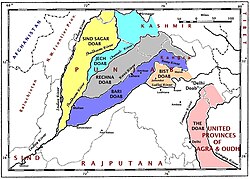
Majha ( romanized: Mājhā; Punjabi pronunciation: [mäˑ˩˥.dʒˑäː]; from "mañjhlā" lit. 'middle')[note 1][1] is a region located in the central parts of the historical Punjab region, presently split between the republics of Pakistan and India.[2] It extends north from the right banks[note 2] of the river Beas, and reaches as far north as left bank of the river Ravi, constituting upper half of the Bari Doab.[2]
The Majha region was partitioned between India and Pakistan in 1947. It includes four districts of Indian state of Punjab — Amritsar, Tarn Taran, Gurdaspur, and Pathankot. In the Pakistani province of Punjab, the Majha region proper includes Lahore and Kasur districts. However, it is not uncommon to include the districts of Gujranwala (including Hafizabad and Wazirabad), Sialkot (including Narowal) and Sheikhupura (including Nankana Sahib) — located in the Upper Rachna Doab — in the Majha area as well.[1][3]

People of the Majha region are given the demonym "Mājhī" or "Majhail". Most inhabitants of the region speak the Majhi dialect, which is the basis of the standard register of the Punjabi language in Indian Punjab.[4] The most populous city in the area is Lahore on the Pakistani side, and Amritsar on the Indian side of the border. Majha is also the birthplace of Sikhism.[1]
History[edit | edit source]
.jpg)
The Majha region is called the "Sword Arm of the Country", due to it contributing disproportionately to the Officer as well as Orderly ranks of the Armies of both India and Pakistan.[5] The Sikh Empire was founded in the Majha region, and so the region is also sometimes referred to as "the cradle of the brave Sikhs".[6]
Districts[edit | edit source]
The following districts are classified as Majha:
| Majha districts of Punjab, Pakistan | Majha districts of Punjab, India |
|---|---|
| Lahore | Amritsar |
| Kasur | Gurdaspur |
| Sialkot | Tarn Taran |
| Gujranwala | Pathankot |
| Narowal | |
| Sheikhupura | |
| Nankana Sahib | |
| Gujrat | |
| Wazirabad | |
| Hafizabad |
Tourist attractions[edit | edit source]
India[edit | edit source]

- Gurdwara Sri Tarn Taran Sahib, Tarn Taran
- Jallianwala Bagh, Amritsar
- Bhagwan Valmiki Tirath Sthal, Amritsar
- Ram Bagh Palace, Amritsar
- Partition Museum, Amritsar
- Harike Pattan bird sanctuary, Tarn Taran
- Durgiana Temple, Amritsar
- Gobindgarh Fort, Amritsar
- Ranjit Sagar Dam, Pathankot
- Pul Kanjri, Amritsar
- Wagah-Attari border ceremony, Attari border between India and Pakistan.
Pakistan[edit | edit source]

- Akbari Sarai, Lahore
- Aiwan-e-Iqbal, Lahore
- Anarkali Bazaar, Lahore
- Badshahi Mosque, Lahore
- Bagh-e-Jinnah, Lahore
- Begum Shahi Mosque, Lahore
- Chauburji, Lahore
- Data Darbar, Lahore
- Fakir Khana, Lahore
- Gurdwara Darbar Sahib Kartarpur, Kartarpur
- Gurdwara Dera Sahib, Lahore
- Gurdwara Janam Asthan, Nankana Sahib
- Gurdwara Janam Asthan Guru Ram Das, Lahore
- Haveli of Nau Nihal Singh, Lahore
- Hazuri Bagh, Lahore
- Hiran Minar, Sheikhupura
- Lahore Fort, Lahore
- Lahore Museum, Lahore
- Lahore Zoo, Lahore
- Minar-e-Pakistan, Lahore
- Moti Masjid, Lahore
- Neevin Mosque, Lahore
- Oonchi Mosque, Lahore
- Sacred Heart Cathedral, Lahore
- Samadhi of Ranjit Singh, Lahore
- Shahi Hammam, Lahore
- Shalimar Gardens, Lahore
- Sheesh Mahal, Lahore
- Sunehri Mosque, Lahore
- Tomb of Asif Khan, Lahore
- Tomb of Jahangir, Lahore
- Tomb of Allama Iqbal, Lahore
- Tomb of Nur Jahan, Lahore
- Wagah-Attari border ceremony, Attari border between India and Pakistan.
- Walled City of Lahore, Lahore
- Wazir Khan Mosque, Lahore
- Zamzama, Lahore
- Tomb of Bulleh Shah, Kasur
- Changa Manga forest, Kasur
Notable residents[edit | edit source]
- Manmohan Singh former Prime Minister of India and economist from Gah, located in present-day Pakistan.
- Baba Deep Singh Ji (1682–1757).
- Nawab Jassa Singh Ahluwalia - Sikh Emperor, supreme leader of Dal Khalsa, Chief of Budha Dal, Jathedar Akal Takhat.
- Lala Achint Ram - Noted freedom Fighter, Member of the Constitutional Assembly, Later Parliamentarian.
- Maharaja Ranjit Singh of Punjab (1780–1839), the founder of the Sikh Empire.
- Premchand Degra Bodybuilder from Gurdaspur.
- Zubair Jhara Pehalwan (1990-1991) Famous Wrestler from Lahore
- Krishan Kant - Former Vice President of India
- Hari Singh Nalwa (1791–1837), renowned warrior and Commander-in-chief of the Sikh Khalsa Army, the army of the Sikh Empire.
- Bhai Bidhi Chand (1640), Sikh warrior and religious preacher at the time of Guru Hargobind.
- Akali Phula Singh Ji (1761 – 1823), Akali Nihang Sikh general and Jathedar of the Khalsa Panth.
- Sham Singh Atariwala (1790 - 1846), the general of the Sikh Empire.
- Allama Iqbal, Pakistan's national poet.
- Faiz Ahmed Faiz, Urdu poet.
- Sohail Ahmed, Pakistani Comedian
- Captain Arun Singh Jasrotia, Indian military officer.
- Musarrat Nazir, Pakistani Punjabi folk singer of Kashmiri descent.
- Saifuddin Kitchlew, Indian freedom fighter of Kashmiri descent.
- Baba Baghel Singh, who occupied Delhi
- Akshay Kumar
- Baba Gurdit Singh, SS Komagata Maru
- Satyavati Devi (born 1905)
- Raza Saqib Mustafai, Islamic Scholar
- Bhai Maha Singh
- Kapil Sharma
- Sunanda Sharma, Famous Female-Punjabi Singer
- Dara Singh wrestler
- Gurdial Singh Dhillon, ex-speaker of Lok Sabha, India
- Jagbir Singh Chhina, freedom fighter.
- Gurpreet Singh (shooter), winner of two medals in Commonwealth Games, Delhi
- M. S. Gill, former chief Election Commissioner of India and former sports Minister of India
- Mai Bhago
- Pratap Singh Kairon, ex-Chief Minister of Punjab
- Surender Mohan Pathak, Novelist
- Teja Singh Samundri, founder of SGPC
- Bharti Singh
- Amrinder Gill
- Sardar Baj Singh, Sikh general and governor.[7]
- Sardar Chhajja Singh Dhillon, Sikh warrior of the early 18th century.
- Prem Dhillon
- Jordan Sandhu
- AP Dhillon
- Gurinder Gill
- Nimrat Khaira
- Ravi Thakur
- Bhagat Singh, (September 1907 – 23 March 1931)
Photo gallery[edit | edit source]
-
 Ranjit Sagar Dam, Shahpur Kandi
 -
 Ravi River
 -
 Emperor Akbar crowning platform, Kalanaur-Gurdaspur, India
 -
 Golden Temple and the Akal Takht, Amritsar
 -
 Badshahi Mosque, Lahore
 -
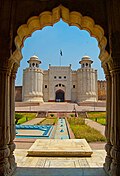 Lahore Fort, Lahore
 -
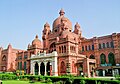 Lahore Museum, Lahore
 -
 Shalimar Gardens
 -
 Jahangir's Tomb, Lahore


.jpg)


See also[edit | edit source]
- Doaba, cultural region in Punjab, India
- Bar, cultural region in Punjab, Pakistan
- Pothwar, cultural region in Punjab, Pakistan
- Malwa, cultural region in Punjab, India
- Poadh, cultural region in India
- The Punjab Doabs, geographic regions in Punjab
Notes[edit | edit source]
References[edit | edit source]
- ↑ 1.0 1.1 1.2 1.3 Singh, Harbans, ed. (2011). "MĀJHĀ". The Encyclopedia Of Sikhism. Vol. III M–R (Third ed.). Punjabi University Patiala. pp. 23–24. ISBN 978-8-1-7380-349-9.
- ↑ 2.0 2.1 Arora, Mohit; Gujarati, Ashwin; Chandel, Sumita; Pateriya, Brijendra (12 July 2023). "Assessment of River Water Dynamics and Optically Active Water Quality Parameters Over Punjab, Based on Cloud Computing Approach". In Rai, Praveen Kumar (ed.). Advances in Water Resource Planning and Sustainability. Springer Nature. p. 43. ISBN 978-981-99-3660-1.
Majha is the region located in the central parts of the historical Punjab and is split between India and Pakistan. It is situated between the right bank of the river Beas and left bank of the river Ravi. Majha Region in Indian Punjab has four districts, viz., Amritsar, Gurdaspur, Tarn Taran, and Pathankot.
- ↑ Sharamā, Rādhā (2000). Peasantry and the State: Early Nineteenth Century Punjab. K.K. Publishers and Distributors. p. 10. ISBN 978-81-86912-03-4.
- ↑ Advanced Centre for Technical Development of Punjabi Language, Literature and Culture, Punjabi University, Patiala Punjabi University, Patiala.
- ↑ Mahmood, Cynthia Keppley (1996). Fighting for Faith and Nation: Dialogues with Sikh Militants (Contemporary Ethnography), p. 153. Philadelphia, University of Pennsylvania.
- ↑ Sandhu, Gulzar Singh (2004). Gods on Trial and Other Stories, p. 132. Diamond Pocket Books. ISBN 8128808087
- ↑ Singh, Raj Pal (1998). Banda Bahadur and His Times p. 22. Harman Pub. House, 1 Aug 1998.
| Topics |  | |
|---|---|---|
| Administration | ||
| Culture |
| |
| Divisions |
| |
| Districts | ||
| Major Cities | ||