
No edit summary |
NellDarley (talk | contribs) m Enhanced content and organization |
||
| Line 1: | Line 1: | ||
{{Short description|Regional name for the Punjabi festival of Teej}} | |||
{{Use dmy dates|date=August 2019}} | {{Use dmy dates|date=August 2019}} | ||
{{Infobox holiday | {{Infobox holiday | ||
|holiday_name = Teeyan | | holiday_name = Teeyan | ||
|official_name = Teeyan | | official_name = Teeyan Da Teohar | ||
|image = File:Giddha dance Teeyan Punjab Teej India 3.jpg | | image = File:Giddha dance Teeyan Punjab Teej India 3.jpg | ||
|caption= | | caption = Women celebrating Teeyan in traditional Punjabi clothing | ||
|type = Punjabi cultural | | type = Punjabi cultural | ||
|longtype = | | longtype = Monsoon festival/seasonal | ||
|nickname = Teej | | nickname = Teej | ||
|observedby = Women | | observedby = Punjabi Women | ||
|begins = Third | | begins = Third day of the month of Sawan | ||
|ends = | | ends = [[Full Moon]] in the month of Sawan | ||
|date = July/August | | date = July/August | ||
|observances = | | observances = | ||
| celebrations = Boliyan, Giddha | |||
}} | }} | ||
'''Teeyan''' ({{ | {{Punjabis}} | ||
'''Teeyan''' ({{langx|pa|ਤੀਆਂ}}), also known as Teeyan Da Teohar (trans: the festival of women) or [[Teej]], is a festival celebrated throughout [[Punjab]] which is dedicated to the onset of the [[monsoon]]<ref>[https://books.google.com/books?id=C_lvAAAAMAAJ&q=onset+ Good Earth Punjab Travel Guide (2006)]</ref> and focuses on daughters<ref name="teeyandamela.com">{{cite web |url=http://www.teeyandamela.com/ |title=Home |website=teeyandamela.com}}</ref><ref>Savino, Natalie (03 09 2013) Leader: New cultural group Koonj-The Flock bringing migrants together for fun, theatre and dance [http://www.heraldsun.com.au/leader/north/new-cultural-group-koonjthe-flock-bringing-migrants-together-for-fun-theatre-and-dance/story-fnglenug-1226707632938]</ref> sisters, and mothers. | |||
==Celebration== | ==Celebration== | ||
The festival is celebrated during the monsoon season from the third day of the lunar month of [[Sawan]] on the bright half, up to the full moon of | The festival is celebrated during the monsoon season from the third day of the lunar month of [[Sawan]] on the bright half, up to the full moon of Sawan (about 13 days), by women. Married women go to their maternal house to participate in the festivities.<ref name="autogenerated1">Alop Ho Raha Punjabi Virsa: Harkesh Singh KehalUnistar Books PVT Ltd {{ISBN|81-7142-869-X}}</ref> In the past, it was traditional for women to spend the whole month of Sawan with their parents.<ref name="autogenerated1"/><ref>Rainuka Dagar (2002) Identifying and Controlling Female Foeticide and Infanticide in Punjab [https://books.google.com/books?id=1QfaAAAAMAAJ&q=precaution]</ref> | ||
==Gifts== | ==Gifts== | ||
Whether or not a married woman goes to her parents, brothers take a gift set to their sisters called a 'sandhara'. A sandhara includes a Punjabi Suit/[[sari]], [[laddoo]], [[bangle]]s, [[mehndi]] (henna) and a swing.<ref name="autogenerated1"/> | Whether or not a married woman goes to her parents, brothers take a gift set to their sisters called a 'sandhara'. A sandhara includes a Punjabi Suit/[[sari]], [[laddoo]], [[bangle]]s, [[mehndi]] (henna) and a swing.<ref name="autogenerated1"/> | ||
<gallery> | <gallery> | ||
File:Boondi laddoo.JPG|Boondi laddoo | File:Boondi laddoo.JPG|[[Laddu|Boondi laddoo]] | ||
File:"Bangles..jpg|Bangles | File:"Bangles..jpg|Bangles | ||
File:Mehandi.jpg|[[Mehandi]] | File:Mehandi.jpg|[[Mehandi]] | ||
File:Shalwar kameez Colours.jpg|Punjabi suit | File:Shalwar kameez Colours.jpg|[[Punjabi suit]] | ||
File:Columpio.jpg|Swing | File:Columpio.jpg|Swing | ||
</gallery> | </gallery> | ||
== | ==Giddha and Swings== | ||
[[File:Peengh.jpg|thumb|Peengh]] | [[File:Peengh.jpg|thumb|Peengh]] | ||
The festival of | The festival of Teeyan centers on girls and women getting together in the village green and tying swings to the trees. Devendra Satyarthi collected folk songs related to the month of Sawan sung during the festival of Teeyan which were first published in his book Giddha, in 1936. Satyarthi observed that the festival is inaugurated by women singing songs welcoming the monsoon season and hoping for bountiful rains.<ref>Giddha (2015) Satyarthi, Devendra (2015) reprint by Navyug</ref> The festival gathers momentum in the Teeyan [[Giddha]], which is performed to the singing of traditional [[Boliyan]] such as the one below. | ||
[[Punjabi language|Punjabi]]: | [[Punjabi language|Punjabi]]: | ||
<blockquote> | <blockquote> | ||
''ਓੁੱਚੇ ਟਾਹਣੇ ਪੀਂਘ ਪਾ ਦੇ''<br> | ''ਓੁੱਚੇ ਟਾਹਣੇ ਪੀਂਘ ਪਾ ਦੇ''<br /> | ||
''ਜਿਥੇ ਆਪ ਹੁਲਾਰਾ ਆਵੇ''<br><ref name="autogenerated1"/> | ''ਜਿਥੇ ਆਪ ਹੁਲਾਰਾ ਆਵੇ''<br /><ref name="autogenerated1"/> | ||
</blockquote> | </blockquote>Romanization:<blockquote> | ||
''Uchay tahne peeng pa de''<br /> | |||
<blockquote> | ''jithey aap hulara aavey''<br /> | ||
''Uchay tahne peeng pa de''<br> | |||
''jithey aap hulara aavey''<br> | |||
</blockquote> | </blockquote> | ||
Translation | Translation | ||
<blockquote> | <blockquote> | ||
''Hang my swing from a high tree branch ''<br> | ''Hang my swing from a high tree branch ''<br /> | ||
''where the swing moves by itself ''<br> | ''where the swing moves by itself ''<br /> | ||
</blockquote> | </blockquote> | ||
In the past, the festival would last for as long as the girls wished ranging from a few days to four weeks. Girls would often gather to dance [[Giddha]] every day. The festival would close by the women performing the closing dance called 'Bhallho'. Bhallho or Ballo is performed by the women standing in two rows and dancing.<ref>[https://books.google.com/books?id=h_wpAAAAYAAJ&q=ballo Yash Kohli The Women of Punjab 1983]</ref> This tradition of women getting together in villages has now become mostly extinct. Brar (2007) writing about his memories of the early twentieth century Punjab, recollects that fairs were organised for the Teeyan festivities.<ref>[https://books.google.com/books?id=UUdYFH9skIkC&dq=popularity+of+teeyan&pg=PA326 East of Indus: My memories of old Punjab: Gurnam Singh Sidhu Brar]</ref> | |||
<gallery> | <gallery> | ||
File:Haryali Teej.jpg|Woman celebrating | File:Haryali Teej.jpg|Woman celebrating Teeyan | ||
File:Gidha.jpg| | File:Gidha.jpg|Women singing Boliyan | ||
File:Giddha dance Teeyan Punjab Teej India 2.jpg|Giddha dance | File:Giddha dance Teeyan Punjab Teej India 2.jpg|Giddha dance | ||
File:Teean 1.jpg|Teeyan | File:Teean 1.jpg|Teeyan Giddha | ||
File:Giddha dance Teeyan Punjab Teej India.jpg| | File:Giddha dance Teeyan Punjab Teej India.jpg|Women performing [[Kikkli]] | ||
</gallery> | </gallery> | ||
{{clear}} | {{clear}} | ||
==Food== | ==Food== | ||
The food traditionally associated | The food traditionally associated at Teeyan is: | ||
* | * [[Kheer]] ({{langx|pa|ਖੀਰ}}) is a rice pudding<ref name="autogenerated1"/> | ||
* | * [[Puri (food)|Poorhi]] ({{langx|pa|ਪੂਰ੍ਹੀ}}) is a type fried bread<ref name="autogenerated1"/> | ||
* [[ | * [[Halva|Halwa]] ({{langx|pa|ਹਲਵਾ}}) | ||
* [[malpua]] | * [[malpua|Malpura]] | ||
* Gulgullay ({{ | * Gulgullay ({{langx|pa|ਗੁਲਗੁਲੇ}}) which are made from jaggery syrup mixed with wheat flour and then made into balls, and then fried<ref name="autogenerated2"/> | ||
* Mandey ({{ | * Mandey ({{langx|pa|ਮੰਡੇ}}) are made of wheat floor but the dough is thin. The flat mandey bread is not rolled out using a rolling pin but stretched with the hands and then placed on the back of both hands before being put on the griddle to bake.<ref name="autogenerated2">Alop ho riha Punjabi virsa - bhag dooja by Harkesh Singh Kehal Unistar Book PVT Ltd {{ISBN|978-93-5017-532-3}}</ref> | ||
<gallery> | <gallery> | ||
File:Punjab Da Halwa.jpg|Punjab da halwa | File:Punjab Da Halwa.jpg|Punjab da halwa | ||
| Line 80: | Line 79: | ||
==Observance== | ==Observance== | ||
Punjabis consider | Punjabis consider Teeyan, also called Sawe, as a seasonal festival. It is celebrated especially in schools and colleges as the focus of the festival is often on young women.<ref>Punjabi Tribune (12.08.2024) accessed 18.08.2024[https://www.punjabitribuneonline.com/news/doaba/in-colleges-female-students-celebrated-it-by-wearing-giddha/]</ref> In recent years, there has been a revival of the festival. Teeyan gatherings are being held in villages and cities alike. However, the current trend is to hire banqueting halls, disc jockeys and singers. Politicians and celebrities sometimes attend such gatherings.<ref>Punjab News (12.08.2024) accessed 18.08.2024[https://punjab.news18.com/news/punjab/at-dhuri-dr-gurpreet-kaur-maan-dr-baljit-kaur-and-mla-narinder-kaur-bharaz-attended-the-festival-ak-633936.html?agreed=5]</ref> In some cases, teeyan gatherings take place in the village's open land. Women in the Punjabi diaspora organise Teeyan gatherings which provide an opportunity for women to preserve the Punjabi culture. | ||
==References== | ==References== | ||
Latest revision as of 15:46, 12 August 2025
| Teeyan | |
|---|---|
 Women celebrating Teeyan in traditional Punjabi clothing | |
| Official name | Teeyan Da Teohar |
| Also called | Teej |
| Observed by | Punjabi Women |
| Type | Monsoon festival/seasonal |
| Celebrations | Boliyan, Giddha |
| Begins | Third day of the month of Sawan |
| Ends | Full Moon in the month of Sawan |
| Date | July/August |
| Part of a series on |
| Punjabis |
|---|
 |
 Punjab portal |
Teeyan (Script error: The function "langx" does not exist.), also known as Teeyan Da Teohar (trans: the festival of women) or Teej, is a festival celebrated throughout Punjab which is dedicated to the onset of the monsoon[1] and focuses on daughters[2][3] sisters, and mothers.
Celebration[edit | edit source]
The festival is celebrated during the monsoon season from the third day of the lunar month of Sawan on the bright half, up to the full moon of Sawan (about 13 days), by women. Married women go to their maternal house to participate in the festivities.[4] In the past, it was traditional for women to spend the whole month of Sawan with their parents.[4][5]
Gifts[edit | edit source]
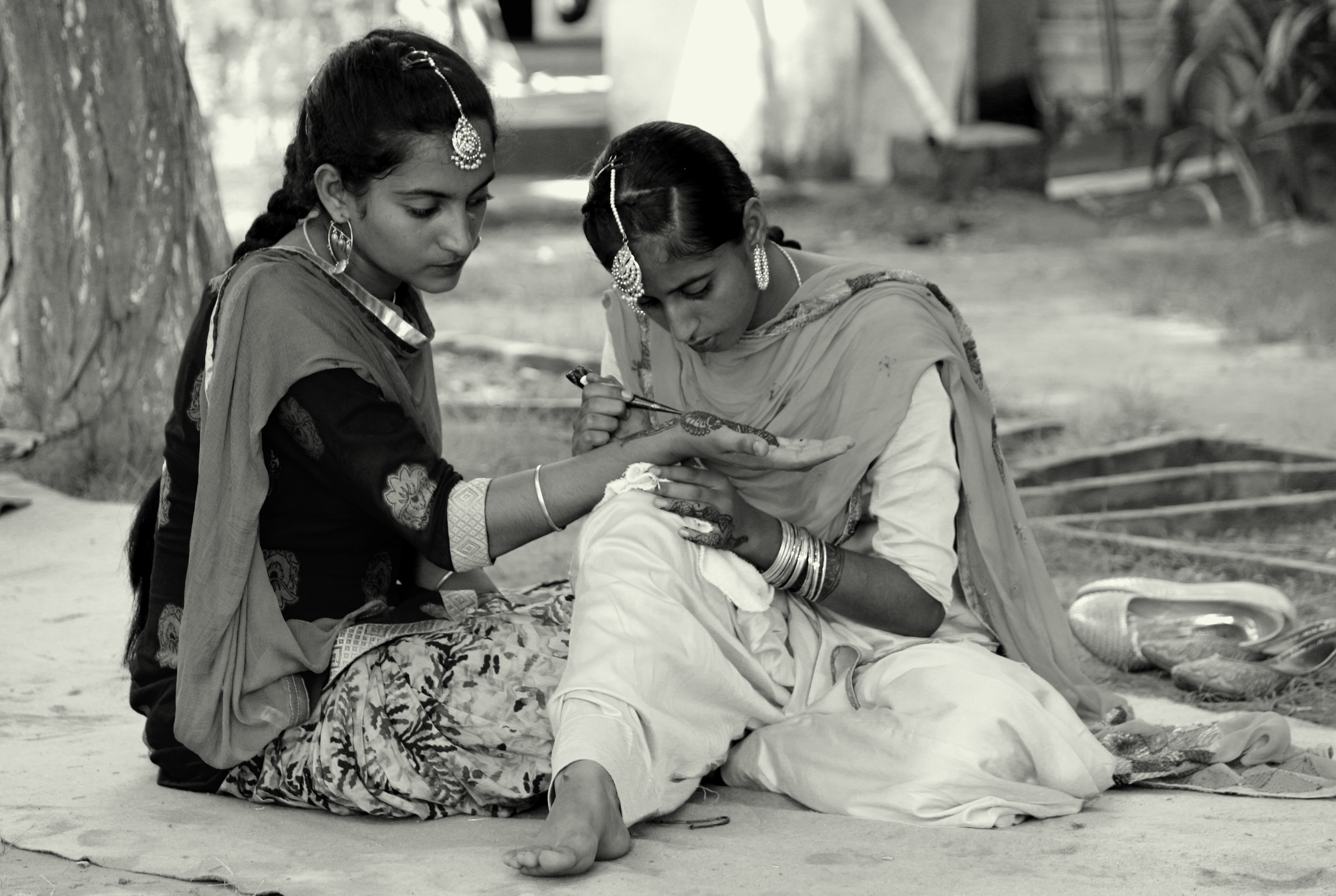
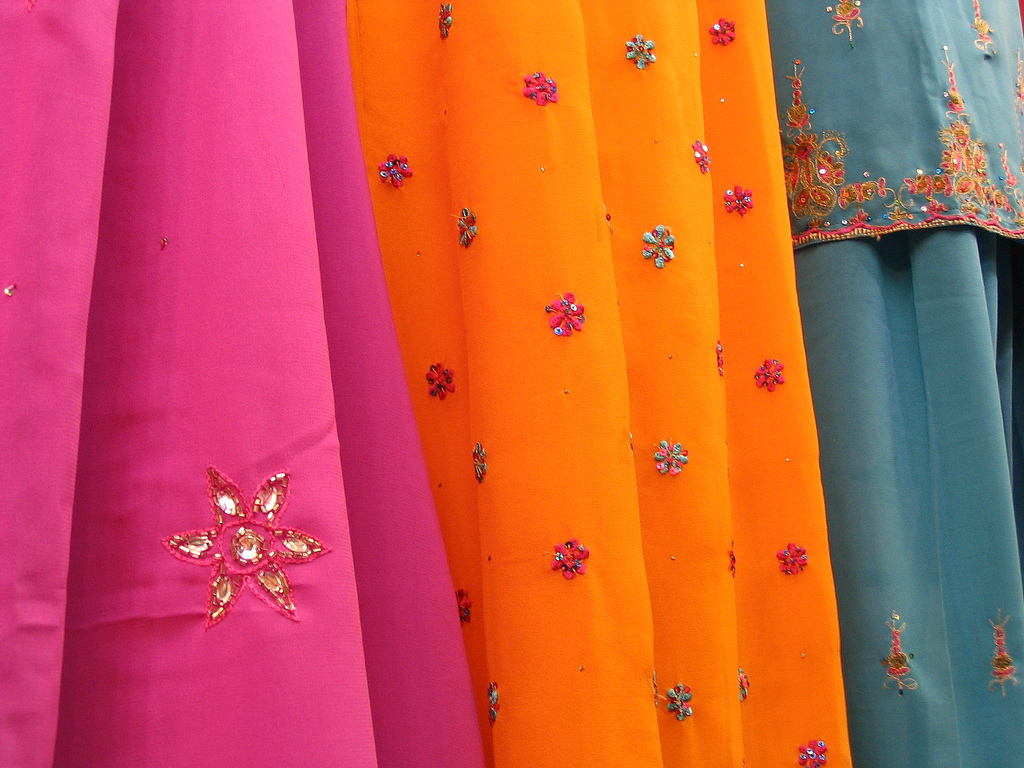
Whether or not a married woman goes to her parents, brothers take a gift set to their sisters called a 'sandhara'. A sandhara includes a Punjabi Suit/sari, laddoo, bangles, mehndi (henna) and a swing.[4]
-

-
 Bangles
 -
-
-
 Swing
Swing


Giddha and Swings[edit | edit source]

The festival of Teeyan centers on girls and women getting together in the village green and tying swings to the trees. Devendra Satyarthi collected folk songs related to the month of Sawan sung during the festival of Teeyan which were first published in his book Giddha, in 1936. Satyarthi observed that the festival is inaugurated by women singing songs welcoming the monsoon season and hoping for bountiful rains.[6] The festival gathers momentum in the Teeyan Giddha, which is performed to the singing of traditional Boliyan such as the one below.
ਓੁੱਚੇ ਟਾਹਣੇ ਪੀਂਘ ਪਾ ਦੇ
ਜਿਥੇ ਆਪ ਹੁਲਾਰਾ ਆਵੇ
[4]
Romanization:
Uchay tahne peeng pa de
jithey aap hulara aavey
Translation
Hang my swing from a high tree branch
where the swing moves by itself
In the past, the festival would last for as long as the girls wished ranging from a few days to four weeks. Girls would often gather to dance Giddha every day. The festival would close by the women performing the closing dance called 'Bhallho'. Bhallho or Ballo is performed by the women standing in two rows and dancing.[7] This tradition of women getting together in villages has now become mostly extinct. Brar (2007) writing about his memories of the early twentieth century Punjab, recollects that fairs were organised for the Teeyan festivities.[8]
-
 Woman celebrating Teeyan
 -
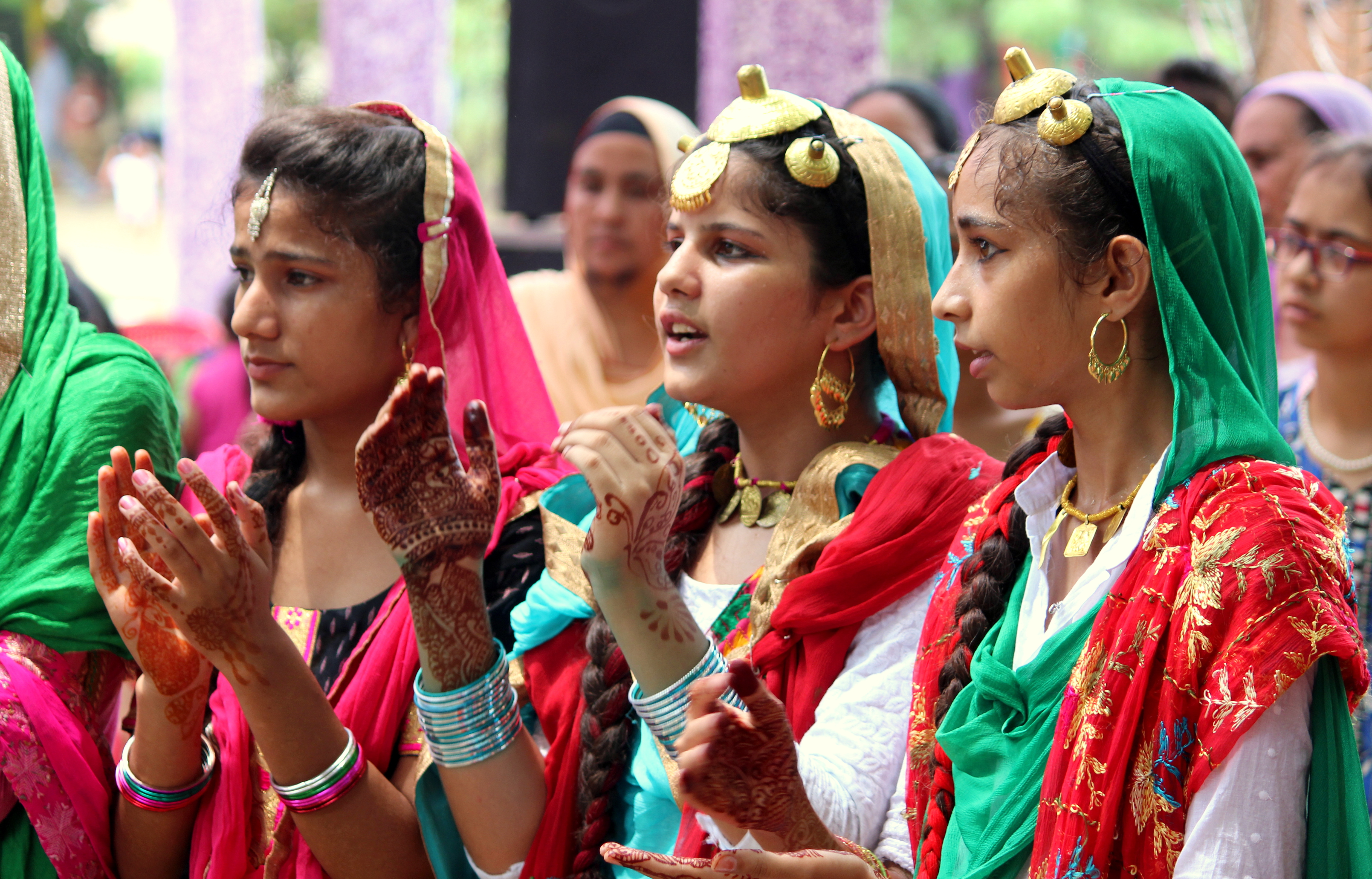 Women singing Boliyan
 -
 Giddha dance
 -
 Teeyan Giddha
 -
 Women performing Kikkli


Food[edit | edit source]
The food traditionally associated at Teeyan is:
- Kheer (Script error: The function "langx" does not exist.) is a rice pudding[4]
- Poorhi (Script error: The function "langx" does not exist.) is a type fried bread[4]
- Halwa (Script error: The function "langx" does not exist.)
- Malpura
- Gulgullay (Script error: The function "langx" does not exist.) which are made from jaggery syrup mixed with wheat flour and then made into balls, and then fried[9]
- Mandey (Script error: The function "langx" does not exist.) are made of wheat floor but the dough is thin. The flat mandey bread is not rolled out using a rolling pin but stretched with the hands and then placed on the back of both hands before being put on the griddle to bake.[9]
-
 Punjab da halwa
 -
 Malpura sweet-dish
 -
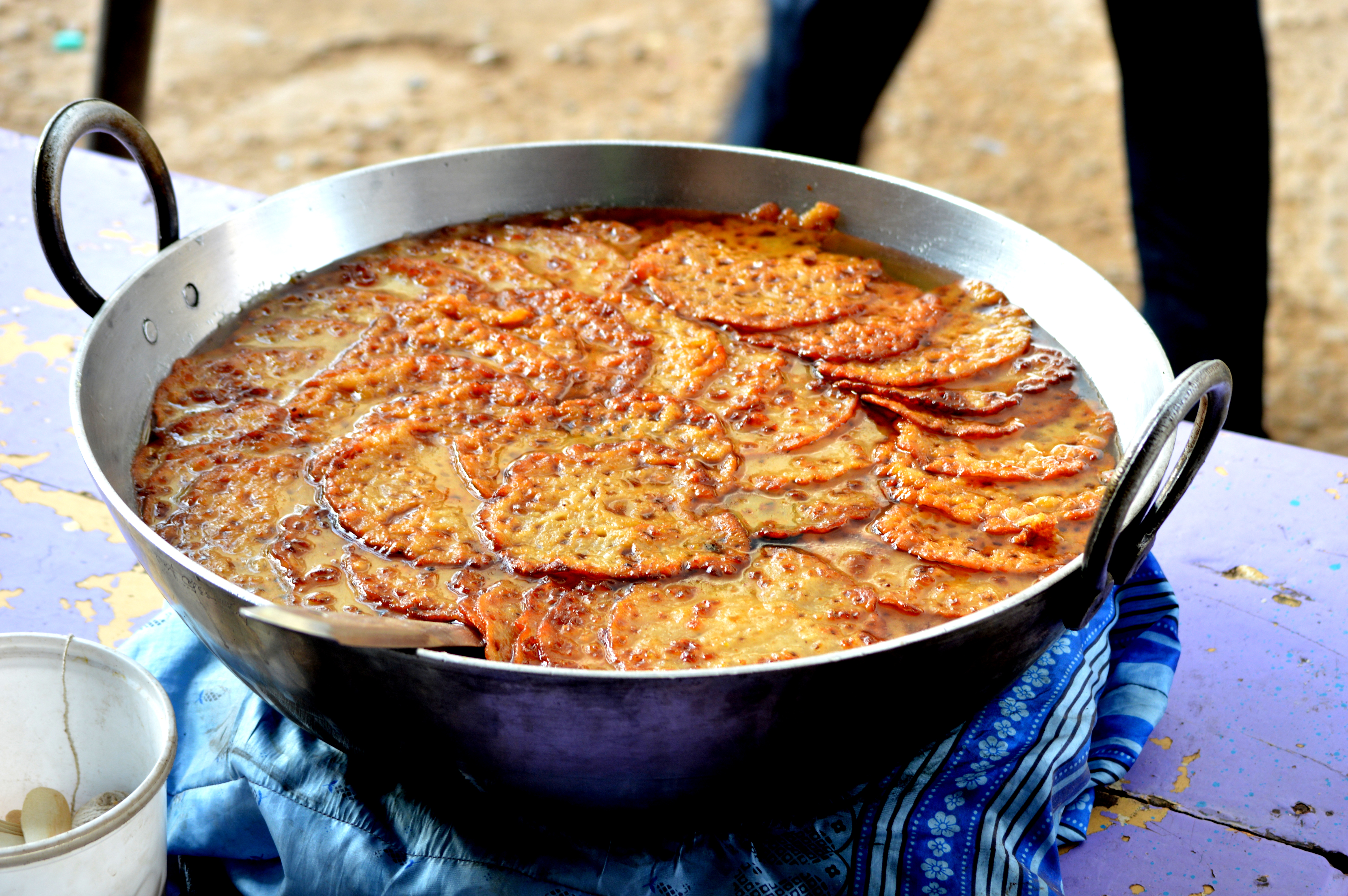 Malpura
 -
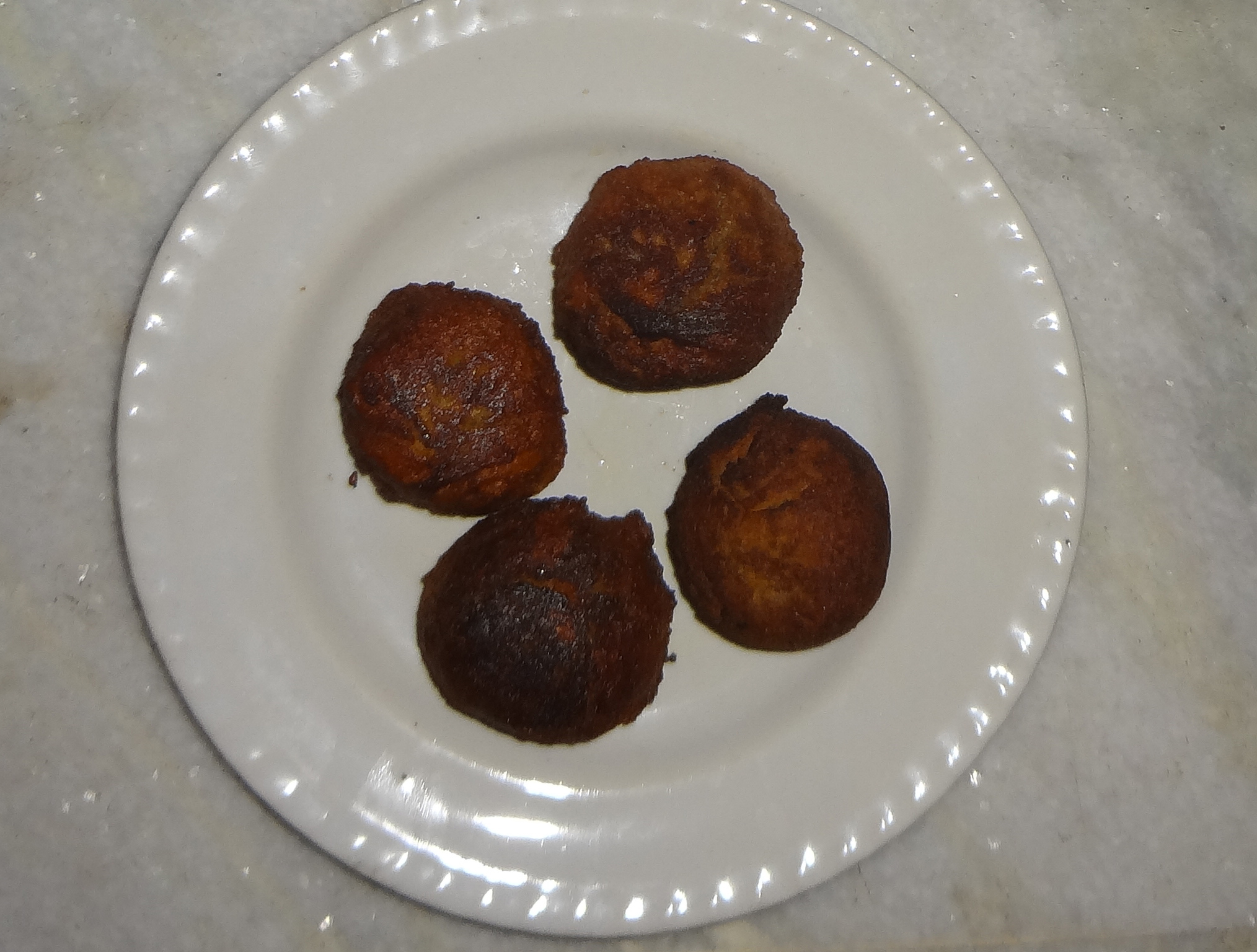 Gulgule
 -
 Kheer
Kheer


Observance[edit | edit source]
Punjabis consider Teeyan, also called Sawe, as a seasonal festival. It is celebrated especially in schools and colleges as the focus of the festival is often on young women.[10] In recent years, there has been a revival of the festival. Teeyan gatherings are being held in villages and cities alike. However, the current trend is to hire banqueting halls, disc jockeys and singers. Politicians and celebrities sometimes attend such gatherings.[11] In some cases, teeyan gatherings take place in the village's open land. Women in the Punjabi diaspora organise Teeyan gatherings which provide an opportunity for women to preserve the Punjabi culture.
References[edit | edit source]
- ↑ Good Earth Punjab Travel Guide (2006)
- ↑ "Home". teeyandamela.com.
- ↑ Savino, Natalie (03 09 2013) Leader: New cultural group Koonj-The Flock bringing migrants together for fun, theatre and dance [1]
- ↑ 4.0 4.1 4.2 4.3 4.4 4.5 Alop Ho Raha Punjabi Virsa: Harkesh Singh KehalUnistar Books PVT Ltd ISBN 81-7142-869-X
- ↑ Rainuka Dagar (2002) Identifying and Controlling Female Foeticide and Infanticide in Punjab [2]
- ↑ Giddha (2015) Satyarthi, Devendra (2015) reprint by Navyug
- ↑ Yash Kohli The Women of Punjab 1983
- ↑ East of Indus: My memories of old Punjab: Gurnam Singh Sidhu Brar
- ↑ 9.0 9.1 Alop ho riha Punjabi virsa - bhag dooja by Harkesh Singh Kehal Unistar Book PVT Ltd ISBN 978-93-5017-532-3
- ↑ Punjabi Tribune (12.08.2024) accessed 18.08.2024[3]
- ↑ Punjab News (12.08.2024) accessed 18.08.2024[4]
| Topics |  | |
|---|---|---|
| Administration | ||
| Culture |
| |
| Divisions |
| |
| Districts | ||
| Major Cities | ||
Template:Punjabi fairs and festivals
Punjabi festivals and fairs | |
|---|---|
| Punjabi festivals | |
| Fairs and others | |
