




Ajay Kumar (talk | contribs) Created a new article |
StarCkf91771 (talk | contribs) update content after review and cleaned formatting |
||
| Line 1: | Line 1: | ||
{{Short description|Zamindari | {{Short description|Zamindari Estate}} | ||
{{Use Indian English|date=December 2016}} | {{Use Indian English|date=December 2016}} | ||
{{Use dmy dates|date=March 2014}} | {{Use dmy dates|date=March 2014}} | ||
| Line 9: | Line 9: | ||
| status = | | status = | ||
| event_start = | | event_start = | ||
| year_start = 1557 CE | | year_start = 1557 CE | ||
| date_start = | | date_start = | ||
| event1 = | | event1 = | ||
| Line 24: | Line 24: | ||
| s2 = | | s2 = | ||
| flag_s2 = | | flag_s2 = | ||
| image_flag = | | image_flag = Darbhanga royal insignia.jpg | ||
| flag_type = | | flag_type = | ||
| image_coat = | | image_coat = | ||
| coa_size = | | coa_size = | ||
| symbol_type = | | symbol_type = | ||
| Line 35: | Line 35: | ||
| common_languages = [[Maithili language|Maithili]], [[Sanskrit]] | | common_languages = [[Maithili language|Maithili]], [[Sanskrit]] | ||
| religion = [[Hinduism]] | | religion = [[Hinduism]] | ||
| government_type = *Tributary to the [[Mughal Empire]] ( | | government_type = *Tributary to the [[Mughal Empire]] (1557–1684 AD) | ||
* | * De facto independent state (1684–1804 AD)<ref name="rorabacher"/> | ||
*Zamindari estate under the [[British Raj]] (1804–1947 AD) | |||
*Zamindari estate under the [[British Raj]] ( | |||
| leader1 = Raja Mahesh Thakur (first) | | leader1 = Raja Mahesh Thakur (first) | ||
| year_leader1 = | | year_leader1 = | ||
| Line 57: | Line 56: | ||
| leader9 = | | leader9 = | ||
| leader10 = | | leader10 = | ||
| title_leader = | | title_leader = | ||
| legislature = | | legislature = | ||
| today = India and Nepal | | today = India and Nepal | ||
}} | }} | ||
{{History of Bihar}} | |||
The '''Darbhanga Raj''', also known as '''Raj Darbhanga''' and the '''Khandwala dynasty''', was a chieftaincy located within the [[Mughal Empire|Mughal]] province of [[Bihar Subah|Bihar]] which controlled territories, not all contiguous, that were part of the [[Mithila (region)|Mithila region]]<ref>{{cite web|last=Thakur |first=Ripunjay Kumar |date=1 March 2022|title=Historical Geography of Early Medieval Mithila: From Videha to Tirhut.|url=https://www.academia.edu/72670545|publisher=New Archaeological & Genological Society, Kanpur, India|issn=2348-8301|access-date=21 August 2025}}</ref> now divided between India and Nepal.<ref>{{Cite book |last=Henningham |first=Stephen |url=https://books.google.com/books?id=9kCFAAAAIAAJ&q=darbhanga+raj+estate |title=A Great Estate and Its Landlords in Colonial India: Darbhanga, 1860-1942 |date=1990 |publisher=Oxford University Press |isbn=978-0-19-562559-2 |language=en}}</ref><ref>{{Cite book |last=Ram |first=Bindeshwar |url=https://books.google.com/books?id=2b_j0mNe2FwC&dq=darbhanga+raj+estate&pg=PA14 |title=Land and Society in India: Agrarian Relations in Colonial North Bihar |date=1997 |publisher=Orient Blackswan |isbn=978-81-250-0643-5 |language=en}}</ref> The rulers of Raj Darbhanga were [[Maithil Brahmins]] and their seat in the town of [[Darbhanga]] became the core of the Mithila region as the rulers were patrons of Maithil culture and the [[Maithili language]].<ref>{{Cite book |last=Rorabacher |first=J. Albert |url=https://books.google.com/books?id=HjElDwAAQBAJ&dq=darbhanga+raj+brahmin&pg=PA262 |title=Bihar and Mithila: The Historical Roots of Backwardness |date=2016-09-13 |publisher=Taylor & Francis |isbn=978-1-351-99758-4 |language=en}}</ref> | |||
At its peak, the dynasty encompassed over 4000 square miles (10,360 km<sup>2</sup>) and is described as the "largest and richest of the North Bihar zamindaris and one of the greatest zamindaris of [[British India]]".<ref>{{cite journal |last1=Henning Brown |first1=Carolyn |title=Raja and Rank in North Bihar |journal=Modern Asian Studies |date=1988 |volume=22 |issue=4 |pages=757–782 |doi=10.1017/S0026749X00015730 |jstor=312524 |s2cid=143084073 |url=https://www.jstor.org/stable/312524|url-access=subscription }}</ref> Despite not being recognised as a [[princely state]] by the British Raj, Darbhanga was larger and held more magisterial powers than many princely states, particularly those in Western India.<ref name="Ramusack2004">{{cite book |last1=Ramusack |first1=Barbara |title=The Indian Princes and Their States |date=2004 |publisher=Cambridge University Press |isbn=9781139449083 |pages=3–5 |url=https://books.google.com/books?id=Kz1-mtazYqEC&dq=zamindaris+princely+states+200+western+india&pg=PA3}}</ref> | |||
==History== | ==History== | ||
The Khandaval dynasty were [[Maithil Brahmin]]s who came into prominence during the reign of the [[Mughal emperor]] [[Akbar]]. The extent of their lands, which were not contiguous, varied over time, and by the British era, their area of ownership was smaller than the area that they were granted under earlier [[Deed#Sanad|sanad]] arrangements. A particularly significant reduction occurred when the influence of the [[British Raj]] caused them to lose control of the territories that were in Nepal but, nonetheless, their holdings were considerable. One estimate suggests that when their rule came to an end, the territories comprised around {{convert|6200|sqkm|sqmi}}, with around 4500 villages.<ref name="rorabacher">{{cite book |title=Bihar and Mithila: The Historical Roots of Backwardness |first=J. Albert |last=Rorabacher |publisher=Routledge |year=2016 |isbn=978-1-35199-757-7 |url=https://books.google.com/books?id=jWIPDQAAQBAJ&pg=PT216 |pages=255–270 |url-status=live |archive-url=https://web.archive.org/web/20180511074217/https://books.google.com/books?id=jWIPDQAAQBAJ&pg=PT216 |archive-date=11 May 2018 |df=dmy-all }}</ref> | |||
The Khandaval dynasty were [[Maithil Brahmin]]s who came into prominence | |||
===Formation=== | ===Formation=== | ||
The area that now comprises the northern part of the Indian state of Bihar was under a state of lawlessness at the end of the [[Tughlaq dynasty|Tughlaq Dynasty]]. Tughlaq had attacked and taken control of Bihar and from the end of the Tughlaq Dynasty until the establishment of the [[Mughal Empire]] in 1526 there was anarchy and chaos in the region with various [[Rajput]] clans fighting for power. | [[File:Kali Temple at Raj Nagar.jpg|left|thumb|Kali Temple at Rajnagar]] | ||
The area that now comprises the northern part of the Indian state of Bihar was under a state of lawlessness at the end of the [[Tughlaq dynasty|Tughlaq Dynasty]].<ref name="Henningham90" /> The Tughlaq had attacked and taken control of Bihar and from the end of the Tughlaq Dynasty until the establishment of the [[Mughal Empire]] in 1526 there was anarchy and chaos in the region with various [[Rajput]] clans fighting for power.<ref name="Henningham90" /> [[Akbar]], the Mughal emperor, realised that taxes from Mithila could only be collected if there was a king who could ensure peace there and by 1574 he had succeeded in defeating the Rajput Rajas of [[Tirhut]].<ref name="Henningham90">{{cite book |last1=Henningham |first1=Stephen |title=A Great Estate and Its Landlords in Colonial India: Darbhanga, 1860-1942 |date=1990 |publisher=Oxford University Press |isbn=9780195625592 |page=17 |url=https://books.google.com/books?id=Z9fHAQAACAAJ}}</ref> | |||
As per local tradition, Akbar summoned Rajpandit Chandrapati Thakur to Delhi and asked him to name one of his sons who could be made caretaker and tax collector for his lands in Mithila. Chandrapati Thakur named his middle son, Mahesh Thakur, | As per local tradition, Akbar summoned Rajpandit Chandrapati Thakur to [[Delhi]] and asked him to name one of his sons who could be made caretaker and tax collector for his lands in Mithila.<ref name="Henningham90" /> Chandrapati Thakur named his middle son, [[Mahesha Thakura|Mahesh Thakur]], whom Akbar then declared as the ruler of Mithila on the day of [[Ram Navami]] in 1557.<ref name="Henningham90" /> Akbar had been impressed with his "great erudition".<ref name="Henningham90" /> Henningham was of the opinion that Akbar made use of [[Mahesha Thakura|Mahesh Thakur]] by helping the Maithil Brahmins to displace the Rajputs as the local ruling elite.<ref name="Henningham90" /> | ||
In 1684, [[Aurangzeb]] issued a [[firman]] that had the effect of differentiating Raj Darbhanga from other estates of the region. The lands belonging to the Darbhanga family were theirs permanently and became private property rather than belonging to the empire. Raj Darbhanga from this point onwards was legally independent and no longer had to pay tribute to the [[Nawabs of Bengal]].<ref name="rorabacher"/> In a report to the Patna Committee of review, Shitab Rai, the naib diwan of Bihar, admitted that the weak state of the empire had rendered many of the zamindars, including Raj Darbhanga, independent.<ref name="Ansari2019">{{cite book|author=Tahir Hussain Ansari|title=Mughal Administration and the Zamindars of Bihar|url=https://books.google.com/books?id=kUueDwAAQBAJ|date=20 June 2019|publisher=Taylor & Francis|isbn=978-1-00-065152-2|pages=200–223}}</ref> Henningham described Raj Darbhanga as a "semi-independent chieftainship".<ref name=Henningham90 /> | |||
===Consolidation=== | ===Consolidation=== | ||
The rulers of | The rulers of Darbhanga in keeping with their elevated status, adopted the [[Kshatriya]] surname of [[Singh]] and also made use of force when it came to pursuing their interests. They defended their domains against raiders from Nepal and fought battles against local Rajput Rajas. | ||
The Raj Darbhanga also made the [[Senas of Makwanpur]] in [[Nepal]] their subordinates with the Senas having to pay tribute to the Rajas of Darbhanga.<ref name="Ansari2019" /> | |||
The Raj Darbhanga used its military to help the | The Raj Darbhanga used its military to help the Nawabs of Bengal in suppressing rebellions from [[Bettiah]], the chieftains of the [[Terai]] and [[Banjara]]s although the Rajas of Darbhanga themselves still refused to pay taxes or tribute to the Nawabs.<ref>{{cite web | url=https://books.google.com/books?id=nmYeAAAAMAAJ&q=bettiah+raj+mithila | title=Political History of Khandavala Dynasty [sic] in Mithila, 1556-1793, Volume 1 | access-date=11 April 2017 | pages=149 | url-status=live | archive-url=https://web.archive.org/web/20170412062931/https://books.google.co.uk/books?id=nmYeAAAAMAAJ&q=bettiah+raj+mithila&dq=bettiah+raj+mithila&hl=en&sa=X&ved=0ahUKEwjNjuqAs53TAhVhDsAKHelKAPIQ6AEIGjAA | archive-date=12 April 2017 | df=dmy-all | last1=Choudhary | first1=Rabindra Nath | year=1987 }}</ref> In 1750, [[Alivardi Khan]] of Bengal sent a force against Narendra Singh of Darbhanga following his refusal to remit revenue however this force was defeated.<ref name=Henningham90 /> | ||
The descendants of Mahesh Thakur gradually consolidated their power in social, agrarian, and political matters and came to be regarded as kings of [[Madhubani district|Madhubani]]. Darbhanga became the seat of power of the Raj Darbhanga family in 1762. They also had a palace at [[Rajnagar Bihar]] situated in Madhubani district. They bought land from local people. They became known as a ''Khandavala'' family (the richest landlord). | The descendants of Mahesh Thakur gradually consolidated their power in social, agrarian, and political matters and came to be regarded as kings of [[Madhubani district|Madhubani]]. Darbhanga became the seat of power of the Raj Darbhanga family in 1762. They also had a palace at [[Rajnagar Bihar]] situated in Madhubani district. They bought land from local people. They became known as a ''Khandavala'' family (the richest landlord). | ||
| Line 91: | Line 87: | ||
===British period=== | ===British period=== | ||
For a period of twenty years (1860–1880), Darbhanga Raj was placed under the [[Court of Wards (India)|Court of Wards]] by the [[British Raj]]. During this period, Darbhanga Raj was involved in litigation regarding succession. This litigation decided that the estate was impartible and succession was to be governed by primogeniture. | For a period of twenty years (1860–1880), Darbhanga Raj was placed under the [[Court of Wards (India)|Court of Wards]] by the [[British Raj]]. During this period, Darbhanga Raj was involved in litigation regarding succession. This litigation decided that the estate was impartible and succession was to be governed by primogeniture. Zamindari estates in the region, including Darbhanga, sought intervention from the Court of Wards from time to time because the stewardship of the British authorities, who invested funds wisely, had a tendency to boost their economic position. The estate had in any event been badly run prior to this time: a complex system influenced by both nepotism and sycophancy had dramatically affected the family's rental income. The bureaucratic system introduced by the Court, whose appointed officials had no ties to the area, resolved the issue although, being focussed entirely on what was best for the owners, it did so without considering the consequences for the tenants.<ref>{{cite book |title=The Limited Raj: Agrarian Relations in Colonial India, Saran District, 1793-1920 |first=Anand A. |last=Yang |pages=83–86 |publisher=University of California Press |isbn=978-0-52005-711-1 |year=1989 |url=https://books.google.com/books?id=Ck4jmD7H34UC&pg=PA83 |url-status=live |archive-url=https://web.archive.org/web/20170730224652/https://books.google.co.uk/books?id=Ck4jmD7H34UC&pg=PA83 |archive-date=30 July 2017 |df=dmy-all }}</ref> | ||
In 1875, Tirhut Railway was one such privately-owned train service which was introduced by Maharaja Lakshmeshwar Singh of Darbhanga way back in 1874 to serve the drought-hit general public in North Bihar. It is also known as the first private train of the country. [[Railway Line]] opened in [[Darbhanga]] between [[Mokama]] and Darbhanga by Local King [[Lakshmeshwar Singh]] of Raj Darbhanga through [[Tirhut Railway]]. They were the first in North Bihar<ref>{{cite news|url=https://www.etvbharat.com/english/state/bihar/palace-on-wheel-darbhangas-glorious-railway-history-lies-in-ruins/na20191026121137569|title=Darbhanga's once glorious railway history, now lies in ruins | |||
|date=26 October 2019|newspaper=[[ETV Baharat]]|access-date=28 October 2019}}</ref> | |||
Towards the end of the 19th century, 47 percent of the cropped area of the Darbhanga estate was used for the cultivation of rice.<ref>{{cite book |title=The Limited Raj: Agrarian Relations in Colonial India, Saran District, 1793-1920 |first=Anand A. |last=Yang |page=37 |publisher=University of California Press |isbn=978-0-52005-711-1 |year=1989 |url=https://books.google.com/books?id=Ck4jmD7H34UC&pg=PA37 |url-status=live |archive-url=https://web.archive.org/web/20170730230931/https://books.google.co.uk/books?id=Ck4jmD7H34UC&pg=PA37 |archive-date=30 July 2017 |df=dmy-all }}</ref> Three percent of total cultivation was given over to [[indigo]] at that time, making the estate one of the most important centres in the region for this crop prior to the introduction of chemical dyes.<ref>{{cite book |title=Peasant History of Late Pre-colonial and Colonial India |volume=8 |first=B. B. |last=Chaudhuri |publisher=Pearson Education India |year=2008 |isbn=978-8-13171-688-5 |page=420 |url=https://books.google.com/books?id=ljmIJySEm4UC&pg=PA420 |url-status=live |archive-url=https://web.archive.org/web/20170802091810/https://books.google.co.uk/books?id=ljmIJySEm4UC&pg=PA420 |archive-date=2 August 2017 |df=dmy-all }}</ref> | Towards the end of the 19th century, 47 percent of the cropped area of the Darbhanga estate was used for the cultivation of rice.<ref>{{cite book |title=The Limited Raj: Agrarian Relations in Colonial India, Saran District, 1793-1920 |first=Anand A. |last=Yang |page=37 |publisher=University of California Press |isbn=978-0-52005-711-1 |year=1989 |url=https://books.google.com/books?id=Ck4jmD7H34UC&pg=PA37 |url-status=live |archive-url=https://web.archive.org/web/20170730230931/https://books.google.co.uk/books?id=Ck4jmD7H34UC&pg=PA37 |archive-date=30 July 2017 |df=dmy-all }}</ref> Three percent of total cultivation was given over to [[indigo]] at that time, making the estate one of the most important centres in the region for this crop prior to the introduction of chemical dyes.<ref>{{cite book |title=Peasant History of Late Pre-colonial and Colonial India |volume=8 |first=B. B. |last=Chaudhuri |publisher=Pearson Education India |year=2008 |isbn=978-8-13171-688-5 |page=420 |url=https://books.google.com/books?id=ljmIJySEm4UC&pg=PA420 |url-status=live |archive-url=https://web.archive.org/web/20170802091810/https://books.google.co.uk/books?id=ljmIJySEm4UC&pg=PA420 |archive-date=2 August 2017 |df=dmy-all }}</ref> | ||
===Demise=== | ===Demise=== | ||
After the independence of India from British rule in 1947, the Government of India initiated several land reform actions and the Zamindari system was abolished. The fortunes of Darbhanga Raj dwindled. | After the independence of India from British rule in 1947, the Government of India initiated several land reform actions and the Zamindari system was abolished. The fortunes of Darbhanga Raj dwindled. The last ruler of Raj Darbhanga was [[Kameshwar Singh|Maharaja Bahadur Sir Kameshwar Singh]]. He died in 1962 without naming a successor, though many members of the family live on carrying other Maithil Brahmin surnames such as Thakur, Jha, and Shukla.<ref name="rorabacher" /> | ||
The last ruler of Raj Darbhanga was Maharaja Bahadur Sir Kameshwar Singh. He died in 1962 without naming a successor.<ref name="rorabacher"/> | |||
==Controversy== | ==Controversy== | ||
The origin of the royal family of Darbhanga is traced to a grant of the Sarkar of | The origin of the royal family of Darbhanga is traced to a grant of the Sarkar of Tirhut to Mahesh Thakur by Akbar. The supporters of the theory that Raj Darbhanga was a kingdom argue that it was held by [[privy council]], that the rulership was a hereditary one with succession governed by [[primogeniture]]. The supporters argue that by the end of the 18th century, the Sarkar of Tirhut was practically an independent kingdom until the conquest of Bengal and Bihar by the British.<ref>Jnanendra Nath Kumar – The Genealogical History of India</ref> The Raj Darbhanga was also much larger when compared with many of the princely states in Western parts of India, many of whom only contained a population of 200 people. These princely states also lacked the magisterial powers that Raj Darbhanga had.<ref name= Ramusack2004 /> Its annual income of approximately 4 million rupees was also on par with many a princely state.<ref>{{cite book |last1=Yang |first1=Anand |title=Bazaar India: Markets, Society, and the Colonial State in Bihar |date=1999 |publisher=University of California Press |pages=69–70 |isbn=9780520211001 |url=https://books.google.com/books?id=Xa8wDwAAQBAJ&q=editions:_mchmV45tZYC}}</ref> | ||
The opponents of the theory argue that Raj Darbhanga was never a kingdom but rather a [[zamindari]] with all the trappings of | The opponents of the theory argue that Raj Darbhanga was never a kingdom but rather a [[zamindari]] with all the trappings of a princely state. The rulers of Raj Darbhanga were the largest landowners in India, and thus were called Raja, and later Maharaja and Maharajadhiraja. They were given the status of ruling prince.<ref>Lakshmana Jha – Mithila: A Union Republic</ref> | ||
According to Arvind, they were "robber barons", who curried favour from the British and kept trying to be accorded gun | According to Arvind, they were "robber barons", who curried favour from the British and kept trying to be accorded [[gun salute]]s and other privileges but it never materialised.<ref>{{Cite book |last=Das |first=Arvind N. |url=https://books.google.com/books?id=UHhuAAAAMAAJ |title=The Republic of Bihar |date=1992 |publisher=Penguin Books |isbn=978-0-14-012351-7 |pages=34 |language=en}}</ref> | ||
==Rulers== | ==Rulers== | ||
[[File:maharajadbg.jpg|thumb|Maharaja [[Rameshwar Singh]] Bahadur]] | |||
Rulers of Darbhanga included: | |||
* [[Maharaja Narendra Singh|Raja Narendra Singh]] (ruled 1740 to 1760) (died 1760). He died without issue but adopted Pratap Singh, great-great-grandson of Narayan Thakur, as his successor. He is noted for his [[Battle of Kandarpi Ghat]] which he fought to free Mithila from Mughal Bengal Subah's rule. | |||
[[File:Maharaja Lakshmeshwar Singh statue - Kolkata.JPG|thumb|Statue of Maharaja [[Lakshmeshwar Singh]] at Dalhousie Square, Kolkata]] | |||
* [[Maharaja Lakshmeshwar Singh]] Bahadur (ruled 1860 to 1898) (born 25 September 1858, died 17 December 1898). He was a philanthropist. His statue (by [[Edward Onslow Ford]]) was installed in Calcutta in 1904 at Dalhousie Square as a tribute to him. Lakshmeshwar Singh was only two years old his father's death so Raj Darbhanga was placed under Ward of Court. He was the first Maharaja of Darbhanga to receive a western education, from a British tutor, Chester Macnaghten (who was later the founding principal of the [[Rajkumar College, Rajkot]]), and took over the reins of Raj Darbhanga on 25 September 1879 after attaining his majority. On 22 June 1897, he was advanced to the rank of [[Order of the Indian Empire|Knight Grand Commander of the Most Eminent Order of the Indian Empire]].<ref>{{London Gazette |issue=26864 |date=22 June 1897 |page=2}}</ref> | |||
* Maharaja [[Rameshwar Singh Bahadur]] (ruled 1898 to 1929) (born 16 January 1860, died 3 July 1929). He became Maharaja of Darbhanga after the death of his elder brother Lakshmeshwar Singh, who died without issue. He was appointed to the [[Indian Civil Service]] in 1878, serving as assistant magistrate successively at Darbhanga, Chhapra, and Bhagalpur. Maharaja died in July 1929, leaving behind two sons, Maharajkumar Kameshwar Singh and Maharajkumar Vishveshwar Singh | |||
* [[Kameshwar Singh|Maharaja Kameshwar Singh Bahadur]] (ruled 1929 to the independence of India in 1947) (born 28 November 1907, died 8 November 1962). He was member of the Council of State 1933–1946, member of the Constituent Assembly 1947–1952, and the Member of Parliament ([[Rajya Sabha]]-Upper House) 1952–1958 and 1960–1962. | |||
==Palaces== | |||
[[File:Old Darbhanga Raj Palace-Damaged by earthquake.jpg|thumb|Old Darbhanga Raj Palace, damaged by an earthquake in 1934]] | |||
[[File: | |||
Darbhanga has several palaces that were built during the Darbhanga Raj era. They include [[Nargona Palace]], which was constructed after the [[1934 Nepal–Bihar earthquake]] and has since been donated to [[Lalit Narayan Mithila University]], and [[Lakshmivilas Palace]]. which was severely damaged in the 1934 earthquake, rebuilt, and later donated to [[Kameshwar Singh Darbhanga Sanskrit University]] and [[Darbhanga Fort]]. | Darbhanga has several palaces that were built during the Darbhanga Raj era. They include [[Nargona Palace]], which was constructed after the [[1934 Nepal–Bihar earthquake]] and has since been donated to [[Lalit Narayan Mithila University]], and [[Lakshmivilas Palace]]. which was severely damaged in the 1934 earthquake, rebuilt, and later donated to [[Kameshwar Singh Darbhanga Sanskrit University]] and [[Darbhanga Fort]]. | ||
| Line 139: | Line 121: | ||
Darbhanga Raj also had several palaces in other towns in India, including the [[Navlakha Palace|Rajnagar Palace Complex]] at [[Rajnagar Bihar|Rajnagar]], in Madhubani District of Bihar, and Darbhanga House (currently the [[Loreto Convent, Tara Hall, Shimla|Loreto Convent Tara Hall]] school) at Kaithu, Shimla. | Darbhanga Raj also had several palaces in other towns in India, including the [[Navlakha Palace|Rajnagar Palace Complex]] at [[Rajnagar Bihar|Rajnagar]], in Madhubani District of Bihar, and Darbhanga House (currently the [[Loreto Convent, Tara Hall, Shimla|Loreto Convent Tara Hall]] school) at Kaithu, Shimla. | ||
[[File:Palacearea1.jpg|thumb|The palace complex at Raj Darbhanga]] | [[File:Palacearea1.jpg|thumb|The palace complex at Raj Darbhanga]] | ||
[[File:NargonaPalace.jpg|thumb|Nargona Palace]] | [[File:NargonaPalace.jpg|thumb|Nargona Palace]] | ||
==Religion== | ==Religion== | ||
The Maharajas of Darbhanga were devoted to Sanskrit traditions and were supporters of orthodox Hindu practices in both caste and religion. [[Shiva]] and [[Kali]] were the main deities of the royal family. Even though they were deeply religious, they were also secular in their outlook. The palace area in Darbhanga has three tombs of Muslim saints and a small mosque. The walls of fort at Darbhanga was designed to leave an area so that the mosque is not disturbed. The tomb of a Muslim saint is located next to Anandbagh Palace. | The Maharajas of Darbhanga were devoted to [[Sanskrit]] traditions and were supporters of orthodox Hindu practices in both caste and religion. [[Shiva]] and [[Kali]] were the main deities of the royal family. Even though they were deeply religious, they were also secular in their outlook. The palace area in Darbhanga has three tombs of Muslim saints and a small mosque. The walls of fort at Darbhanga was designed to leave an area so that the mosque is not disturbed. The tomb of a Muslim saint is located next to Anandbagh Palace. | ||
As part of their attempt to reintroduce old Hindu customs such as the study of [[Vedas]] and Vedic rites, the Maharaja reintroduced Samavedic study by inviting a few well-versed Samavedins from [[south India]] to teach there.<ref>{{cite web |url=http://www.people.fas.harvard.edu/~witzel/Veda.in.Nepal.pdf |title=Michael Witzel |access-date=2016-06-08 |url-status=live |archive-url=https://web.archive.org/web/20160910144104/http://www.people.fas.harvard.edu/~witzel/Veda.in.Nepal.pdf |archive-date=10 September 2016 |df=dmy-all }}; accessed on 13 December 2007</ref> | As part of their attempt to reintroduce old Hindu customs such as the study of [[Vedas]] and Vedic rites, the Maharaja reintroduced Samavedic study by inviting a few well-versed Samavedins from [[south India]] to teach there.<ref>{{cite web |url=http://www.people.fas.harvard.edu/~witzel/Veda.in.Nepal.pdf |title=Michael Witzel |access-date=2016-06-08 |url-status=live |archive-url=https://web.archive.org/web/20160910144104/http://www.people.fas.harvard.edu/~witzel/Veda.in.Nepal.pdf |archive-date=10 September 2016 |df=dmy-all }}; accessed on 13 December 2007</ref> | ||
Maharaja Rameshwar Singh established and was general president of Sri Bharat Dharma | Maharaja Rameshwar Singh established and was general president of Sri [[Bharat Dharma Mahamandala]], a neo-conservative Hindu organisation that sought to make Hindu scriptures available to all castes and women. He was one of the main patrons of Agamanusandhana Samiti, an organisation with the objective of publishing Tantric texts in English and other languages.<ref>''Sir John Woodroffe, Tantra and Bengal: An Indian Soul in a European''. Author: Kathleen Taylor. Page 212</ref> Many of the works published by the Agamanusandhana Samiti were edited by Sir [[John Woodroffe]]. | ||
==Cultural influence== | |||
===Music=== | |||
Darbhanga became one of the prominent centres of [[Hindustani classical music]] from the late 18th century. The kings of Raj Darbhanga were great patrons of music, art, and culture. Several famous musicians were associated with Raj Darbhanga. Prominent amongst them were Ustad Bismillah Khan, [[Gauhar Jaan]], Pandit Ram Chatur Mallik, Pandit [[Rameshwar Pathak]], and Pandit Siya Ram Tiwari. Raj Darbhanga was a main patron of [[Dhrupad]], a vocal style in Hindustani classical music. One of the three major schools of Dhrupad today is known as [[Darbhanga Gharana]].<ref>[http://www.thetribuneonline.com/art-culture.htm The importance of being Gauhar Jan] [[The Tribune (Chandigarh)|The Tribune]], 26 May 2002.</ref> | |||
Raj Darbhanga supported Murad Ali Khan, one of the foremost [[sarod]] players of his time. Khan is credited with being the first person to use metal strings and metal fingerboard plates on his sarod, which has today become the standard.<ref>{{cite book |title=Sitar and Sarod in the 18th and 19th Centuries |first=Allyn |last=Miner |page=144|publisher=Motilal Banarsidass |year=2004 |url=https://books.google.com/books?id=4nPHTCS8vfUC}}</ref> | |||
Raj Darbhanga had its own symphony orchestra and police band. There was a circular structure in front of Manokamna Temple, which was known as the bandstand. The band used to play music there in the evening. Today the floor of the bandstand is the only part still extant. | |||
===Public works=== | |||
= | |||
==Public works== | |||
* Raj Darbhanga donated 52 [[bigha]]s of land for the creation and use of the Muzaffarpur Judgeship.<ref>[http://muzaffarpur.nic.in/muz_civil2.htm Court buildings & Residential accommodation<!-- Bot generated title -->] {{webarchive|url=https://web.archive.org/web/20070928231950/http://muzaffarpur.nic.in/muz_civil2.htm |date=28 September 2007 }}</ref> | * Raj Darbhanga donated 52 [[bigha]]s of land for the creation and use of the Muzaffarpur Judgeship.<ref>[http://muzaffarpur.nic.in/muz_civil2.htm Court buildings & Residential accommodation<!-- Bot generated title -->] {{webarchive|url=https://web.archive.org/web/20070928231950/http://muzaffarpur.nic.in/muz_civil2.htm |date=28 September 2007 }}</ref> | ||
* | * Over {{cvt|1500|km|mi}} of roads were constructed by the early part of the 19th century by Raj Darbhanga, of which over {{cvt|300|km|mi}} were metalled. This resulted in the expansion of trade as well as larger markets for agricultural produce in the region.<ref>{{cite web|url=http://content.cdlib.org/xtf/view?docId=ft4779n9tq&chunk.id=d0e16412&toc.depth=1&toc.id=&brand=eschol.|title=Bazaar India|work=cdlib.org}}</ref> | ||
* Kharagpur Lake, a large reservoir, was built on the Man river in Munger District.<ref>[http://munger.nic.in/industries.htm Sringrikh, Kharagpur Hills, Munger] {{webarchive|url=https://web.archive.org/web/20090410021438/http://munger.nic.in/industries.htm |date=10 April 2009 }} accessed on 3 December 2008</ref> | * Kharagpur Lake, a large reservoir, was built on the Man river in Munger District.<ref>[http://munger.nic.in/industries.htm Sringrikh, Kharagpur Hills, Munger] {{webarchive|url=https://web.archive.org/web/20090410021438/http://munger.nic.in/industries.htm |date=10 April 2009 }} accessed on 3 December 2008</ref> | ||
* Raj Darbhanga was a pioneer of cross-breeding cattle to improve milk production. A superior milking cow breed called Hansi was introduced by Raj Darbhanga. The cow was a cross between local cows and the [[Jersey cattle|Jersey]] breed.<ref>''Handbook of Indian Agriculture''. Author – Niya Gopal Mukerji at page 476</ref> | * Raj Darbhanga was a pioneer of cross-breeding cattle to improve milk production. A superior milking cow breed called Hansi was introduced by Raj Darbhanga. The cow was a cross between local cows and the [[Jersey cattle|Jersey]] breed.<ref>''Handbook of Indian Agriculture''. Author – Niya Gopal Mukerji at page 476</ref> | ||
* [[Mithila Sanskrit Shodh Sansthan]] was established by the last Maharaja Kameshwar Singh.<ref>{{Cite web |date=2026-02-04 |title=मिथिला संस्कृत शोध संस्थान की लौटेगी पुरानी गरिमा |url=https://www.livehindustan.com/bihar/darbhanga/story-revival-of-mithila-sanskrit-research-institute-bihar-budget-announcement-brings-hope-201770145991088.html |access-date=2026-03-01 |website=www.livehindustan.com |language=hi}}</ref> | |||
==Sports== | ===Sports=== | ||
Raj Darbhanga | Raj Darbhanga promoted various sports activities. The polo ground in [[Laheriasarai]] was a major centre for polo in pre-independence times in Bihar. The winner of a major polo tournament in Calcutta is awarded the Darbhanga Cup.<ref>[http://sportal.nic.in/frontdetails1.asp?maincatid=56&linkid=186&headingid=63 Sportal – Sports Portal – GOVERNMENT OF INDIA<!-- Bot generated title -->] {{webarchive|url=https://web.archive.org/web/20071119232736/http://sportal.nic.in/frontdetails1.asp?maincatid=56&linkid=186&headingid=63 |date=19 November 2007 }}</ref> | ||
Raja Bishweshwar Singh was one of the founding members of the [[All India Football Federation]], the prime governing body for football in India. Raja Bahadur, along with Rai Bahadur Jyoti Prasad Singh of Hariharpur Estate, were the Honorary Secretaries of the federation upon its inception in 1935.<ref>{{cite web |url=http://www.the-aiff.com/federation_history.php |title=All India Football Federation |access-date=2007-04-18 |url-status=dead |archive-url=https://web.archive.org/web/20070402212905/http://www.the-aiff.com/federation_history.php |archive-date=2 April 2007 |df=dmy-all }} accessed on 18 May 2007</ref> | Raja Bishweshwar Singh was one of the founding members of the [[All India Football Federation]], the prime governing body for football in India. Raja Bahadur, along with Rai Bahadur Jyoti Prasad Singh of Hariharpur Estate, were the Honorary Secretaries of the federation upon its inception in 1935.<ref>{{cite web |url=http://www.the-aiff.com/federation_history.php |title=All India Football Federation |access-date=2007-04-18 |url-status=dead |archive-url=https://web.archive.org/web/20070402212905/http://www.the-aiff.com/federation_history.php |archive-date=2 April 2007 |df=dmy-all }} accessed on 18 May 2007</ref> | ||
==See also== | ==See also== | ||
| Line 219: | Line 157: | ||
==References== | ==References== | ||
{{Reflist | {{Reflist}} | ||
==Further reading== | ==Further reading== | ||
* [[Pratyush Kumar]], Homo Connubialis Brahmanicus: Marriage Relations Among Brahmins, Baden-Baden: Nomos (Ergon), Germany, 2025, ISBN 978-3-98740-189-3 (Print). | |||
*{{cite journal |first=Stephen |last=Henningham |title=Bureaucracy and Control in India's Great Landed Estates: The Raj Darbhanga of Bihar, 1879-1950 |journal=Modern Asian Studies |volume=17 |issue=1 |year=1983 |pages=35–57 |doi=10.1017/s0026749x00008891|s2cid=144262953 }} | *{{cite journal |first=Stephen |last=Henningham |title=Bureaucracy and Control in India's Great Landed Estates: The Raj Darbhanga of Bihar, 1879-1950 |journal=Modern Asian Studies |volume=17 |issue=1 |year=1983 |pages=35–57 |doi=10.1017/s0026749x00008891|s2cid=144262953 }} | ||
{{Nobility of the Raj}} | {{Nobility of the Raj}} | ||
| Line 230: | Line 168: | ||
[[Category:Culture of Mithila]] | [[Category:Culture of Mithila]] | ||
[[Category:Maharajas of Darbhanga]] | [[Category:Maharajas of Darbhanga| ]] | ||
[[Category:Tourism in Bihar]] | [[Category:Tourism in Bihar]] | ||
[[Category: | [[Category:Zamindars of Bihar]] | ||
[[Category:16th-century establishments in Nepal]] | [[Category:16th-century establishments in Nepal]] | ||
Latest revision as of 13:05, 11 March 2026
Raj Darbhanga | |||||||||
|---|---|---|---|---|---|---|---|---|---|
| 1557 CE–1947 CE | |||||||||
 Flag | |||||||||
| Capital | Darbhanga | ||||||||
| Common languages | Maithili, Sanskrit | ||||||||
| Religion | Hinduism | ||||||||
| Government |
| ||||||||
| Historical era | Medieval India | ||||||||
• Established | 1557 CE | ||||||||
• Disestablished | 1947 CE | ||||||||
| |||||||||
| Today part of | India and Nepal | ||||||||

| Part of a series on the |
| History of Bihar |
|---|
 |
The Darbhanga Raj, also known as Raj Darbhanga and the Khandwala dynasty, was a chieftaincy located within the Mughal province of Bihar which controlled territories, not all contiguous, that were part of the Mithila region[2] now divided between India and Nepal.[3][4] The rulers of Raj Darbhanga were Maithil Brahmins and their seat in the town of Darbhanga became the core of the Mithila region as the rulers were patrons of Maithil culture and the Maithili language.[5]
At its peak, the dynasty encompassed over 4000 square miles (10,360 km2) and is described as the "largest and richest of the North Bihar zamindaris and one of the greatest zamindaris of British India".[6] Despite not being recognised as a princely state by the British Raj, Darbhanga was larger and held more magisterial powers than many princely states, particularly those in Western India.[7]
History[edit | edit source]
The Khandaval dynasty were Maithil Brahmins who came into prominence during the reign of the Mughal emperor Akbar. The extent of their lands, which were not contiguous, varied over time, and by the British era, their area of ownership was smaller than the area that they were granted under earlier sanad arrangements. A particularly significant reduction occurred when the influence of the British Raj caused them to lose control of the territories that were in Nepal but, nonetheless, their holdings were considerable. One estimate suggests that when their rule came to an end, the territories comprised around 6,200 square kilometres (2,400 sq mi), with around 4500 villages.[1]
Formation[edit | edit source]

The area that now comprises the northern part of the Indian state of Bihar was under a state of lawlessness at the end of the Tughlaq Dynasty.[8] The Tughlaq had attacked and taken control of Bihar and from the end of the Tughlaq Dynasty until the establishment of the Mughal Empire in 1526 there was anarchy and chaos in the region with various Rajput clans fighting for power.[8] Akbar, the Mughal emperor, realised that taxes from Mithila could only be collected if there was a king who could ensure peace there and by 1574 he had succeeded in defeating the Rajput Rajas of Tirhut.[8]
As per local tradition, Akbar summoned Rajpandit Chandrapati Thakur to Delhi and asked him to name one of his sons who could be made caretaker and tax collector for his lands in Mithila.[8] Chandrapati Thakur named his middle son, Mahesh Thakur, whom Akbar then declared as the ruler of Mithila on the day of Ram Navami in 1557.[8] Akbar had been impressed with his "great erudition".[8] Henningham was of the opinion that Akbar made use of Mahesh Thakur by helping the Maithil Brahmins to displace the Rajputs as the local ruling elite.[8]
In 1684, Aurangzeb issued a firman that had the effect of differentiating Raj Darbhanga from other estates of the region. The lands belonging to the Darbhanga family were theirs permanently and became private property rather than belonging to the empire. Raj Darbhanga from this point onwards was legally independent and no longer had to pay tribute to the Nawabs of Bengal.[1] In a report to the Patna Committee of review, Shitab Rai, the naib diwan of Bihar, admitted that the weak state of the empire had rendered many of the zamindars, including Raj Darbhanga, independent.[9] Henningham described Raj Darbhanga as a "semi-independent chieftainship".[8]
Consolidation[edit | edit source]
The rulers of Darbhanga in keeping with their elevated status, adopted the Kshatriya surname of Singh and also made use of force when it came to pursuing their interests. They defended their domains against raiders from Nepal and fought battles against local Rajput Rajas.
The Raj Darbhanga also made the Senas of Makwanpur in Nepal their subordinates with the Senas having to pay tribute to the Rajas of Darbhanga.[9]
The Raj Darbhanga used its military to help the Nawabs of Bengal in suppressing rebellions from Bettiah, the chieftains of the Terai and Banjaras although the Rajas of Darbhanga themselves still refused to pay taxes or tribute to the Nawabs.[10] In 1750, Alivardi Khan of Bengal sent a force against Narendra Singh of Darbhanga following his refusal to remit revenue however this force was defeated.[8]
The descendants of Mahesh Thakur gradually consolidated their power in social, agrarian, and political matters and came to be regarded as kings of Madhubani. Darbhanga became the seat of power of the Raj Darbhanga family in 1762. They also had a palace at Rajnagar Bihar situated in Madhubani district. They bought land from local people. They became known as a Khandavala family (the richest landlord).
British period[edit | edit source]
For a period of twenty years (1860–1880), Darbhanga Raj was placed under the Court of Wards by the British Raj. During this period, Darbhanga Raj was involved in litigation regarding succession. This litigation decided that the estate was impartible and succession was to be governed by primogeniture. Zamindari estates in the region, including Darbhanga, sought intervention from the Court of Wards from time to time because the stewardship of the British authorities, who invested funds wisely, had a tendency to boost their economic position. The estate had in any event been badly run prior to this time: a complex system influenced by both nepotism and sycophancy had dramatically affected the family's rental income. The bureaucratic system introduced by the Court, whose appointed officials had no ties to the area, resolved the issue although, being focussed entirely on what was best for the owners, it did so without considering the consequences for the tenants.[11]
In 1875, Tirhut Railway was one such privately-owned train service which was introduced by Maharaja Lakshmeshwar Singh of Darbhanga way back in 1874 to serve the drought-hit general public in North Bihar. It is also known as the first private train of the country. Railway Line opened in Darbhanga between Mokama and Darbhanga by Local King Lakshmeshwar Singh of Raj Darbhanga through Tirhut Railway. They were the first in North Bihar[12]
Towards the end of the 19th century, 47 percent of the cropped area of the Darbhanga estate was used for the cultivation of rice.[13] Three percent of total cultivation was given over to indigo at that time, making the estate one of the most important centres in the region for this crop prior to the introduction of chemical dyes.[14]
Demise[edit | edit source]
After the independence of India from British rule in 1947, the Government of India initiated several land reform actions and the Zamindari system was abolished. The fortunes of Darbhanga Raj dwindled. The last ruler of Raj Darbhanga was Maharaja Bahadur Sir Kameshwar Singh. He died in 1962 without naming a successor, though many members of the family live on carrying other Maithil Brahmin surnames such as Thakur, Jha, and Shukla.[1]
Controversy[edit | edit source]
The origin of the royal family of Darbhanga is traced to a grant of the Sarkar of Tirhut to Mahesh Thakur by Akbar. The supporters of the theory that Raj Darbhanga was a kingdom argue that it was held by privy council, that the rulership was a hereditary one with succession governed by primogeniture. The supporters argue that by the end of the 18th century, the Sarkar of Tirhut was practically an independent kingdom until the conquest of Bengal and Bihar by the British.[15] The Raj Darbhanga was also much larger when compared with many of the princely states in Western parts of India, many of whom only contained a population of 200 people. These princely states also lacked the magisterial powers that Raj Darbhanga had.[7] Its annual income of approximately 4 million rupees was also on par with many a princely state.[16]
The opponents of the theory argue that Raj Darbhanga was never a kingdom but rather a zamindari with all the trappings of a princely state. The rulers of Raj Darbhanga were the largest landowners in India, and thus were called Raja, and later Maharaja and Maharajadhiraja. They were given the status of ruling prince.[17]
According to Arvind, they were "robber barons", who curried favour from the British and kept trying to be accorded gun salutes and other privileges but it never materialised.[18]
Rulers[edit | edit source]

Rulers of Darbhanga included:
- Raja Narendra Singh (ruled 1740 to 1760) (died 1760). He died without issue but adopted Pratap Singh, great-great-grandson of Narayan Thakur, as his successor. He is noted for his Battle of Kandarpi Ghat which he fought to free Mithila from Mughal Bengal Subah's rule.

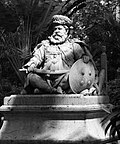
- Maharaja Lakshmeshwar Singh Bahadur (ruled 1860 to 1898) (born 25 September 1858, died 17 December 1898). He was a philanthropist. His statue (by Edward Onslow Ford) was installed in Calcutta in 1904 at Dalhousie Square as a tribute to him. Lakshmeshwar Singh was only two years old his father's death so Raj Darbhanga was placed under Ward of Court. He was the first Maharaja of Darbhanga to receive a western education, from a British tutor, Chester Macnaghten (who was later the founding principal of the Rajkumar College, Rajkot), and took over the reins of Raj Darbhanga on 25 September 1879 after attaining his majority. On 22 June 1897, he was advanced to the rank of Knight Grand Commander of the Most Eminent Order of the Indian Empire.[19]
- Maharaja Rameshwar Singh Bahadur (ruled 1898 to 1929) (born 16 January 1860, died 3 July 1929). He became Maharaja of Darbhanga after the death of his elder brother Lakshmeshwar Singh, who died without issue. He was appointed to the Indian Civil Service in 1878, serving as assistant magistrate successively at Darbhanga, Chhapra, and Bhagalpur. Maharaja died in July 1929, leaving behind two sons, Maharajkumar Kameshwar Singh and Maharajkumar Vishveshwar Singh
- Maharaja Kameshwar Singh Bahadur (ruled 1929 to the independence of India in 1947) (born 28 November 1907, died 8 November 1962). He was member of the Council of State 1933–1946, member of the Constituent Assembly 1947–1952, and the Member of Parliament (Rajya Sabha-Upper House) 1952–1958 and 1960–1962.
Palaces[edit | edit source]

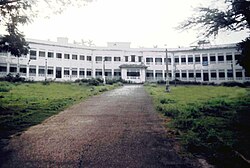
Darbhanga has several palaces that were built during the Darbhanga Raj era. They include Nargona Palace, which was constructed after the 1934 Nepal–Bihar earthquake and has since been donated to Lalit Narayan Mithila University, and Lakshmivilas Palace. which was severely damaged in the 1934 earthquake, rebuilt, and later donated to Kameshwar Singh Darbhanga Sanskrit University and Darbhanga Fort.

Darbhanga Raj also had several palaces in other towns in India, including the Rajnagar Palace Complex at Rajnagar, in Madhubani District of Bihar, and Darbhanga House (currently the Loreto Convent Tara Hall school) at Kaithu, Shimla.


Religion[edit | edit source]
The Maharajas of Darbhanga were devoted to Sanskrit traditions and were supporters of orthodox Hindu practices in both caste and religion. Shiva and Kali were the main deities of the royal family. Even though they were deeply religious, they were also secular in their outlook. The palace area in Darbhanga has three tombs of Muslim saints and a small mosque. The walls of fort at Darbhanga was designed to leave an area so that the mosque is not disturbed. The tomb of a Muslim saint is located next to Anandbagh Palace.
As part of their attempt to reintroduce old Hindu customs such as the study of Vedas and Vedic rites, the Maharaja reintroduced Samavedic study by inviting a few well-versed Samavedins from south India to teach there.[20]
Maharaja Rameshwar Singh established and was general president of Sri Bharat Dharma Mahamandala, a neo-conservative Hindu organisation that sought to make Hindu scriptures available to all castes and women. He was one of the main patrons of Agamanusandhana Samiti, an organisation with the objective of publishing Tantric texts in English and other languages.[21] Many of the works published by the Agamanusandhana Samiti were edited by Sir John Woodroffe.
Cultural influence[edit | edit source]
Music[edit | edit source]
Darbhanga became one of the prominent centres of Hindustani classical music from the late 18th century. The kings of Raj Darbhanga were great patrons of music, art, and culture. Several famous musicians were associated with Raj Darbhanga. Prominent amongst them were Ustad Bismillah Khan, Gauhar Jaan, Pandit Ram Chatur Mallik, Pandit Rameshwar Pathak, and Pandit Siya Ram Tiwari. Raj Darbhanga was a main patron of Dhrupad, a vocal style in Hindustani classical music. One of the three major schools of Dhrupad today is known as Darbhanga Gharana.[22]
Raj Darbhanga supported Murad Ali Khan, one of the foremost sarod players of his time. Khan is credited with being the first person to use metal strings and metal fingerboard plates on his sarod, which has today become the standard.[23]
Raj Darbhanga had its own symphony orchestra and police band. There was a circular structure in front of Manokamna Temple, which was known as the bandstand. The band used to play music there in the evening. Today the floor of the bandstand is the only part still extant.
Public works[edit | edit source]
- Raj Darbhanga donated 52 bighas of land for the creation and use of the Muzaffarpur Judgeship.[24]
- Over 1,500 km (930 mi) of roads were constructed by the early part of the 19th century by Raj Darbhanga, of which over 300 km (190 mi) were metalled. This resulted in the expansion of trade as well as larger markets for agricultural produce in the region.[25]
- Kharagpur Lake, a large reservoir, was built on the Man river in Munger District.[26]
- Raj Darbhanga was a pioneer of cross-breeding cattle to improve milk production. A superior milking cow breed called Hansi was introduced by Raj Darbhanga. The cow was a cross between local cows and the Jersey breed.[27]
- Mithila Sanskrit Shodh Sansthan was established by the last Maharaja Kameshwar Singh.[28]
Sports[edit | edit source]
Raj Darbhanga promoted various sports activities. The polo ground in Laheriasarai was a major centre for polo in pre-independence times in Bihar. The winner of a major polo tournament in Calcutta is awarded the Darbhanga Cup.[29]
Raja Bishweshwar Singh was one of the founding members of the All India Football Federation, the prime governing body for football in India. Raja Bahadur, along with Rai Bahadur Jyoti Prasad Singh of Hariharpur Estate, were the Honorary Secretaries of the federation upon its inception in 1935.[30]
See also[edit | edit source]
References[edit | edit source]
- ↑ 1.0 1.1 1.2 1.3 Rorabacher, J. Albert (2016). Bihar and Mithila: The Historical Roots of Backwardness. Routledge. pp. 255–270. ISBN 978-1-35199-757-7. Archived from the original on 11 May 2018.
- ↑ Thakur, Ripunjay Kumar (1 March 2022). "Historical Geography of Early Medieval Mithila: From Videha to Tirhut". New Archaeological & Genological Society, Kanpur, India. ISSN 2348-8301. Retrieved 21 August 2025.
- ↑ Henningham, Stephen (1990). A Great Estate and Its Landlords in Colonial India: Darbhanga, 1860-1942. Oxford University Press. ISBN 978-0-19-562559-2.
- ↑ Ram, Bindeshwar (1997). Land and Society in India: Agrarian Relations in Colonial North Bihar. Orient Blackswan. ISBN 978-81-250-0643-5.
- ↑ Rorabacher, J. Albert (13 September 2016). Bihar and Mithila: The Historical Roots of Backwardness. Taylor & Francis. ISBN 978-1-351-99758-4.
- ↑ Henning Brown, Carolyn (1988). "Raja and Rank in North Bihar". Modern Asian Studies. 22 (4): 757–782. doi:10.1017/S0026749X00015730. JSTOR 312524. S2CID 143084073.
- ↑ 7.0 7.1 Ramusack, Barbara (2004). The Indian Princes and Their States. Cambridge University Press. pp. 3–5. ISBN 9781139449083.
- ↑ 8.0 8.1 8.2 8.3 8.4 8.5 8.6 8.7 8.8 Henningham, Stephen (1990). A Great Estate and Its Landlords in Colonial India: Darbhanga, 1860-1942. Oxford University Press. p. 17. ISBN 9780195625592.
- ↑ 9.0 9.1 Tahir Hussain Ansari (20 June 2019). Mughal Administration and the Zamindars of Bihar. Taylor & Francis. pp. 200–223. ISBN 978-1-00-065152-2.
- ↑ Choudhary, Rabindra Nath (1987). "Political History of Khandavala Dynasty [sic] in Mithila, 1556-1793, Volume 1". p. 149. Archived from the original on 12 April 2017. Retrieved 11 April 2017.
- ↑ Yang, Anand A. (1989). The Limited Raj: Agrarian Relations in Colonial India, Saran District, 1793-1920. University of California Press. pp. 83–86. ISBN 978-0-52005-711-1. Archived from the original on 30 July 2017.
- ↑ "Darbhanga's once glorious railway history, now lies in ruins". ETV Baharat. 26 October 2019. Retrieved 28 October 2019.
- ↑ Yang, Anand A. (1989). The Limited Raj: Agrarian Relations in Colonial India, Saran District, 1793-1920. University of California Press. p. 37. ISBN 978-0-52005-711-1. Archived from the original on 30 July 2017.
- ↑ Chaudhuri, B. B. (2008). Peasant History of Late Pre-colonial and Colonial India. Vol. 8. Pearson Education India. p. 420. ISBN 978-8-13171-688-5. Archived from the original on 2 August 2017.
- ↑ Jnanendra Nath Kumar – The Genealogical History of India
- ↑ Yang, Anand (1999). Bazaar India: Markets, Society, and the Colonial State in Bihar. University of California Press. pp. 69–70. ISBN 9780520211001.
- ↑ Lakshmana Jha – Mithila: A Union Republic
- ↑ Das, Arvind N. (1992). The Republic of Bihar. Penguin Books. p. 34. ISBN 978-0-14-012351-7.
- ↑ "No. 26864". The London Gazette. 22 June 1897. p. 2.
- ↑ "Michael Witzel" (PDF). Archived (PDF) from the original on 10 September 2016. Retrieved 8 June 2016.; accessed on 13 December 2007
- ↑ Sir John Woodroffe, Tantra and Bengal: An Indian Soul in a European. Author: Kathleen Taylor. Page 212
- ↑ The importance of being Gauhar Jan The Tribune, 26 May 2002.
- ↑ Miner, Allyn (2004). Sitar and Sarod in the 18th and 19th Centuries. Motilal Banarsidass. p. 144.
- ↑ Court buildings & Residential accommodation Archived 28 September 2007 at the Wayback Machine
- ↑ "Bazaar India". cdlib.org.
- ↑ Sringrikh, Kharagpur Hills, Munger Archived 10 April 2009 at the Wayback Machine accessed on 3 December 2008
- ↑ Handbook of Indian Agriculture. Author – Niya Gopal Mukerji at page 476
- ↑ "मिथिला संस्कृत शोध संस्थान की लौटेगी पुरानी गरिमा". www.livehindustan.com (in हिन्दी). 4 February 2026. Retrieved 1 March 2026.
- ↑ Sportal – Sports Portal – GOVERNMENT OF INDIA Archived 19 November 2007 at the Wayback Machine
- ↑ "All India Football Federation". Archived from the original on 2 April 2007. Retrieved 18 April 2007. accessed on 18 May 2007
Further reading[edit | edit source]
- Pratyush Kumar, Homo Connubialis Brahmanicus: Marriage Relations Among Brahmins, Baden-Baden: Nomos (Ergon), Germany, 2025, ISBN 978-3-98740-189-3 (Print).
- Henningham, Stephen (1983). "Bureaucracy and Control in India's Great Landed Estates: The Raj Darbhanga of Bihar, 1879-1950". Modern Asian Studies. 17 (1): 35–57. doi:10.1017/s0026749x00008891. S2CID 144262953.