



>Arjayay Rm PoV + |
Addie15A4298 (talk | contribs) m update |
||
| Line 1: | Line 1: | ||
{{more footnotes|date=April 2019}} | {{Short description|Indian culture with roots in Hindi and Urdu culture}} | ||
{{more footnotes needed|date=April 2019}} | |||
{{Use dmy dates|date=April 2019}} | {{Use dmy dates|date=April 2019}} | ||
{{Use Indian English|date=April 2019}} | {{Use Indian English|date=April 2019}} | ||
[[File:Taj Mahal, Agra, India edit3.jpg|thumb|200px|[[Taj Mahal]] | [[File:Taj Mahal, Agra, India edit3.jpg|thumb|200px|The [[Taj Mahal]], a [[mausoleum]] in Uttar Pradesh, draws many visitors]] | ||
The ''' | The '''culture of [[Uttar Pradesh]]''' has been shaped by its ancient [[Hindus|Hindu]] roots, medieval and early modern [[Muslims|Muslim]] empires, and its place in the struggle for independence from colonial rule. Modern Uttar Pradesh citizens are largely rural Hindu agriculturalists, with a large minority of Muslims concentrated in its cities.<ref>{{Cite web |title=Uttar Pradesh |url=https://southasia.ucla.edu/landscapes/indian-states/uttar-pradesh/ |access-date=2025-10-19 |website=MANAS |language=en-US}}</ref> | ||
== Languages == | |||
{{Main|Languages of Uttar Pradesh}} | |||
A 2023 survey of the linguistic diversity of Uttar Pradesh found 101 different languages in the region out of the 122 languages found across India. [[Hindi]] and [[Urdu]] are collectively spoken by 80% of the population, and [[Bhojpuri language|Bohjpuri]] is also widely spoken. Five varieties of Hindi are found in the region: [[Awadhi language|Awadhi]], [[Braj Bhasha]], [[Bundeli language|Bundeli]], [[Bagheli language|Bagheli]] and [[Kannauji language|Kanauji]].<ref>{{Cite book |url=https://ruralindiaonline.org/en/library/resource/linguistic-survey-of-india---uttar-pradesh/ |title=Linguistic Survey of India - Uttar Pradesh |date=2023-07-01 |language=en}}</ref> | |||
[[Hindi|Standard Hindi]] was declared the official language of Uttar Pradesh in 1968 and is widely spoken in the region today. As of 2025 legislators in Uttar Pradesh may also communicate in four of the widely-spoken native languages Awadhi, Bhojpuri, Bundeli, and Braj Bhasha while in session.<ref name=":0">{{Cite web |title=UP Legislators Can Now Speak in Awadhi, Bhojpuri, Bundelkhandi, Braj. Why Not Urdu, Asks Opposition |url=https://thewire.in/government/up-assembly-four-regional-languages-english-opposition-urdu |access-date=2025-10-18 |website=The Wire |language=en}}</ref> Widely spoken among the [[Muslims|Muslim]] population of Uttar Pradesh, [[Urdu]] was recognized as the second official language of the state in 1989, although the law limited its official use to specific contexts.<ref name=":0" /><ref>{{Cite book |last=Experts |first=Disha |url=https://books.google.com/books?id=4D44EAAAQBAJ&q=bhojpuri+second+language+uttar+pradesh |title=Amazing Uttar Pradesh - General Knowledge for UPPSC, UPSSSC & other Competitive Exams |date=2020-07-01 |publisher=Disha Publications |isbn=978-93-90486-72-4 |language=en}}</ref> | |||
== | ==Religion== | ||
{{Main|Religion in Uttar Pradesh}} | |||
Uttar Pradesh is home to important Hindu, Muslim, and Buddhist holy sites and associated pilgrimages, including the holy city of [[Varanasi]], the sacred [[Ganges]] river, and [[Mathura]], regarded in some traditions as the birthplace of [[Krishna]] and [[Rama]]. | |||
An estimated 400 million pilgrims arrived in [[Prayagraj]] (Allahabad) to take part in the 2025 [[Kumbh Mela|Maha Kumbha Mela]], making it the world's biggest religious gathering. The event takes place once every 12 years, but smaller gatherings occur more frequently.<ref>{{Cite web |last=Iyer |first=Aishwarya S. |date=2025-01-13 |title=One of the world’s greatest religious spectacles is underway and the numbers are staggering |url=https://www.cnn.com/2025/01/12/travel/india-maha-kumbh-mela-2025-intl-hnk |access-date=2025-10-19 |website=CNN |language=en}}</ref> | |||
Another significant Hindu pilgrimage site, Varanasi, is strongly associated with death and reincarnation. Mourners bring the ashes of loved ones to be scattered here, and those near death make the pilgrimage in hopes of dying in what they regard as the home of Lord Shiva. Although a variety of funerary traditions take place in Varanasi, it's common to carry the dead down the [[Ghat|ghats]] to bathe in the Ganges prior to a funeral pyre.<ref>{{Cite web |title=Varanasi - Worship - GCSE Religious Studies Revision - WJEC |url=https://www.bbc.co.uk/bitesize/guides/zg4ymsg/revision/7 |access-date=2025-10-19 |website=BBC Bitesize |language=en-GB}}</ref> | |||
[[Holi]] celebrations also draw visitors to Uttar Pradesh with unique local traditions like the [[Lathmar Holi]]. The Lathmar Holi celebrates a story of the courtship of Krishna and [[Radha]] in which Radha and her friend drove the god from [[Barsana]] with sticks. Today, the residents of Barsana recreate this event, as the women hurl sticks at the men participating in the ritual.<ref>{{Cite web |last=Desk |first=India Today Web |date=2016-03-21 |title=What is Lathmar Holi? Why is it celebrated? |url=https://www.indiatoday.in/lifestyle/culture/story/why-is-lathmar-holi-celebrated-in-barsana-and-nandgaon-314276-2016-03-21 |access-date=2025-10-19 |website=India Today |language=en}}</ref> | |||
== Architecture == | == Architecture == | ||
{{Main|Architecture of Uttar Pradesh}} | {{Main|Architecture of Uttar Pradesh}} | ||
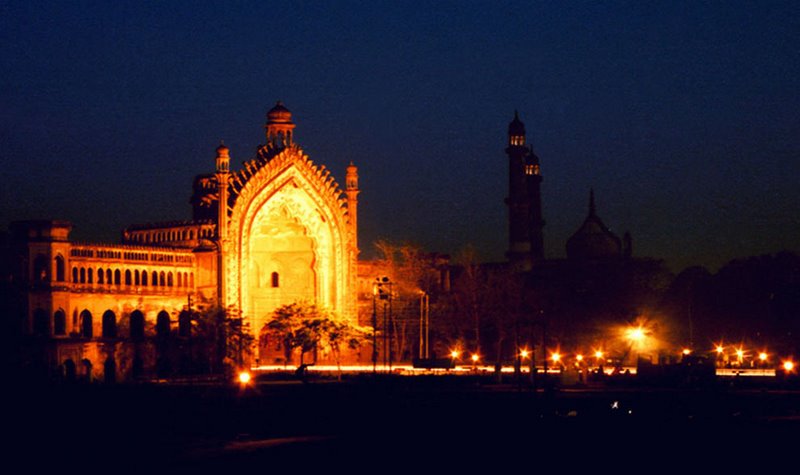
Uttar Pradesh is home to multiple [[World Heritage Site]]s celebrating the historical architecture of the region, including the [[Taj Mahal]], [[Agra Fort]] and the nearby [[Fatehpur Sikri]].<ref name="Heritage">{{cite web |title=World Heritage List |url=https://whc.unesco.org/en/list/ |access-date= |publisher=Archaeological Survey of India}}</ref> | |||
* The Agra Fort (also called the Red Fort of Agra) was the imperial city of the 16th century Mughal rulers and contains several palaces, audience halls, and mosques.<ref>{{Cite web |last=Centre |first=UNESCO World Heritage |title=Agra Fort |url=https://whc.unesco.org/en/list/251/ |access-date=2025-10-18 |website=UNESCO World Heritage Centre |language=en}}</ref> | |||
* Fatehpur Sikri ("The City of Victory") was built in three years on the order of the Mughal emperor [[Akbar]] between 1571 and 1573 to serve as the new capital city of the Mughal empire.<ref>{{Cite web |last=Centre |first=UNESCO World Heritage |title=Fatehpur Sikri |url=https://whc.unesco.org/en/list/255/ |access-date=2025-10-18 |website=UNESCO World Heritage Centre |language=en}}</ref> | |||
* The Taj Mahal is a 17th century [[mausoleum]] built by Mughal [[Emperor Shah Jahan]] in memory of his beloved wife, [[Mumtaz Mahal]].<ref>{{Cite web |last=Centre |first=UNESCO World Heritage |title=Taj Mahal |url=https://whc.unesco.org/en/list/252/ |access-date=2025-10-18 |website=UNESCO World Heritage Centre |language=en}}</ref> | |||
==Dance and Music== | ==Dance and Music== | ||
[[File:Kathak 3511900193 986f6440f6 b retouched.jpg|thumb|200px| | {{Unreferenced section|date=February 2022}} | ||
[[File:Namrata Rai Kathak Dancer.jpg|thumb|209x209px|Kathak]] | |||
[[File:Kathak 3511900193 986f6440f6 b retouched.jpg|thumb|200px| Clothing and dance indigenous to Uttar Pradesh.]] During the [[Gupta Empire|Gupta]] and [[Harsha|Harsh Vardhan]] eras, Uttar Pradesh was a centre for musical innovation. [[Swami Haridas]] was a musician who championed [[Hindustani Classical Music]]. [[Tansen]], a musician in Mughal Emperor [[Akbar]]'s court, was a disciple of [[Swami Haridas]]. | |||
[[Kathak]], | A popular form of classical dance in Northern India, [[Kathak]] originated in Uttar Pradesh in the 18th century as part of temple worship in [[Vrindavan]] and [[Mathura]].<ref>{{Cite web |date=2025-11-08 |title=Uttar Pradesh - Culture, Religion, Cuisine {{!}} Britannica |url=https://www.britannica.com/place/Uttar-Pradesh/Cultural-life |access-date=2025-11-09 |website=www.britannica.com |language=en}}</ref> [[Wajid Ali Shah]], the last [[Nawab of Awadh]], was a patron and champion of Kathak. Today, the state is home to three prominent schools of this dance form, Lucknow [[Gharana]], Jaipur Gharana and Banaras [[Gharana]]. | ||
Music personalities including [[Naushad Ali]], [[Talat Mehmood]], [[Begum Akhtar]], [[Anup Jalota]], [[Shubha Mudgal]], [[Bismillah Khan]], [[Ravi Shankar]], [[Kishan Maharaj]], [[Vikash Maharaj]], [[Hari Prasad Chaurasia]], [[Gopal Shankar Misra]], [[Siddheshwari Devi]], [[Girija Devi]] and Sir [[Cliff Richard]] were originally from Uttar Pradesh. | |||
The region's folk heritage includes songs called [[rasiya]] ( | The region's folk heritage includes songs called [[rasiya]] (especially popular in [[Braj]]), which celebrate the mythological love of [[Radha]] and [[Krishna]]. These songs are accompanied by large [[drum]]s known as [[bumb (drum)|bumb]] and are performed at many festivals. Other folk dances or folk theater forms include [[Raslila]], [[Swang (dance drama)|Swang]], [[Ramlila]] (a dramatic enactment of the entire [[Ramayana]]), [[Nautanki]], [[Naqal]] (mimicry) and [[Qawwali]]. | ||
The [[Bhatkhande Music Institute]] is situated in Lucknow. | The [[Bhatkhande Music Institute]] is situated in Lucknow. | ||
==Tourism== | ==Tourism== | ||
Uttar Pradesh attracts large number of visitors, both national and international; with more than 71 million domestic tourists (in 2003) and almost 25% of the All-India foreign tourists visiting Uttar Pradesh, it is one of the top tourist destinations in India. There are two regions in the state where a majority of the tourists go, the Hindu pilgrimage circuit and the Agra circuit. | |||
The pilgrimage circuit includes the most religiously prestigious of the cities considered holy in Hinduism on the banks of the [[Ganges]] and [[Yamuna]], rivers which are also considered sacred: [[Varanasi]], [[Ayodhya]] ( the birthplace of [[Rama]]), [[Mathura, Uttar Pradesh|Mathura]] ( the birthplace of [[Krishna]]), [[Vrindavan]] (where Lord Krishna spent his childhood), and Allahabad (Prayagraj) (the confluence or 'holy-sangam' of the Ganges-Yamuna rivers).{{citation needed|date=February 2022}} | |||
[[ | [[Dayal Bagh]] in Agra is a modern-day temple and tourist site with lifelike marble sculptures. | ||
[[Prem Mandir, Vrindavan]], is called the "temple of love." | |||
[[ | |||
==Protected areas== | ==Protected areas== | ||
| Line 67: | Line 59: | ||
* [[Dudhwa National Park]] is one of the best tiger reserves in the country. | * [[Dudhwa National Park]] is one of the best tiger reserves in the country. | ||
* [[Pilibhit Tiger Reserve]] | * [[Pilibhit Tiger Reserve]] – home to the Tiger Reserve.situated in district Pilibhit. | ||
* [[Sandi Bird Sanctuary]] | * [[Sandi Bird Sanctuary]] – houses about 20,000 migratory birds annually. | ||
* [[Katarniaghat Wildlife Sanctuary]] | * [[Katarniaghat Wildlife Sanctuary]] – the most concentrated sanctuary in India with a large population of tigers as well as [[leopards]] – situated in [[Bahraich]] and bordering [[Nepal]] is also worth a visit. | ||
Some areas require a [[Foreigners (Protected Areas) Order 1958 (India)|special permit]] for non-Indians to visit. | Some areas require a [[Foreigners (Protected Areas) Order 1958 (India)|special permit]] for non-Indians to visit. | ||
| Line 77: | Line 69: | ||
==Dress== | ==Dress== | ||
The people of Uttar Pradesh wear a variety of native- and Western-style dress. Traditional styles of dress include colourful draped garments – such as [[sari]] for women and [[dhoti]] or [[lungi]] for men – and tailored clothes such as [[salwar kameez]] for women and [[kurta]]-[[pajamas|pyjama]] for men. Men also often sport a | The people of Uttar Pradesh wear a variety of native- and Western-style dress. Traditional styles of dress include colourful draped garments – such as [[sari]] and [[ghagra choli]] for women and [[dhoti]] or [[lungi]] for men – and tailored clothes such as [[salwar kameez]] for women and [[kurta]]-[[pajamas|pyjama]] for men. Men also often sport a headgear like [[topi]] or [[pagri]]. [[Sherwani]] is a more formal male dress and is frequently worn along with [[chooridar]] on festive occasions. European-style trousers and shirts are also common among men. Young adults are most commonly found in jeans and t-shirts. | ||
==Arts and crafts== | |||
[[File:PIETRA DURA - Agra - India.png|thumb|210px|A ''[[Pietra Dura]]'' marble table top ([[Agra]])]] | |||
Uttar Pradesh includes many historical and modern centres of artistic movements and crafts, and [[Allahabad]] (Prayagraj) is home to the National Institute of Art & Craft College. | |||
=== Textile arts === | |||
[[Zardozi]] and [[chikankari]] are both traditions of embroidery that employ metal wire. | |||
[[Banarasi sari|Banarasi saris]] are similarly notable for their use of metal thread in weaving the brocade. | |||
[[Bhadohi]] produces carpets, a craft which dates back to the 16th century during the reign of [[Mughal Emperor]], [[Akbar]]<ref name="te">{{cite web |date=31 January 2009 |title=Famous for its handmade carpet industry |url=http://www.tehelka.com/story_main41.asp?filename=Ne310109worn_down.asp |url-status=dead |archive-url=https://web.archive.org/web/20110925063702/http://www.tehelka.com/story_main41.asp?filename=Ne310109worn_down.asp |archive-date=2011-09-25 |publisher=[[Tehelka]] Magazine |volume=6 |issue=4}}</ref> Bhadohi carpets received the [[Geographical Indication]] (GI) tag in 2010,<ref name="to">{{cite news |last1=Singh |first1=Binay |date=9 September 2010 |title=Famed Bhadohi carpet gets GI tag |url=http://articles.timesofindia.indiatimes.com/2010-09-09/varanasi/28226568_1_bhadohi-mirzapur-bhadohi-carpet-carpet-manufacturers-association |url-status=dead |archive-url=https://web.archive.org/web/20121105034702/http://articles.timesofindia.indiatimes.com/2010-09-09/varanasi/28226568_1_bhadohi-mirzapur-bhadohi-carpet-carpet-manufacturers-association |archive-date=5 November 2012 |work=[[The Times of India]]}}</ref> and it is one of the highest revenue-generating districts of UP. | |||
=== Pottery === | |||
Introduced by an Afghan military campaign over 500 years ago, [[Khurja pottery]] is often confused with a similar tradition in Jaipur, but received its Geographic Indication tag recognizing its uniqueness in 2015. Its artisans closely guard the secret of its distinctive blue glaze.<ref>{{Cite news |date=2015-06-01 |title=GI certificate to preserve uniqueness of Khurja pottery |url=https://timesofindia.indiatimes.com/city/lucknow/GI-certificate-to-preserve-uniqueness-of-Khurja-pottery/articleshow/47498632.cms |access-date=2025-10-17 |work=The Times of India |issn=0971-8257}}</ref> | |||
[[Gorakhpur]]'s animal sculptural tradition commonly depicts horses, elephants, camels, and oxen. It received its Geographic Indication tag in 2020.<ref>{{Cite web |title=NABARD - National Bank For Agriculture And Rural Development |url=https://www.nabard.org/gi/GIProductDetails.aspx?Id=36#:~:text=Gorakhpur's%20terracotta%20art%20spans%20generations,camels,%20goats,%20and%20oxen. |access-date=2025-10-17 |website=www.nabard.org}}</ref> | |||
Characterized by its recognizing the metallic black finish and silvery etched designs inspired by medieval [[Bidriware]], the origins of the black pottery of [[Nizamabad Assembly constituency|Nizamabad]] remain unclear. Local folklore generally places its origin in the Mughal period and attributes it to Gujarat artisans who immigrated to the Uttar Pradesh. The tradition received its [[Geographical indication|Geographic Indication]] tag in 2015.<ref>{{Cite news |date=2024-04-24 |title=Forget the pot & kettle, black is the calling in Nizamabad |url=https://timesofindia.indiatimes.com/city/lucknow/forget-the-pot-kettle-black-is-the-calling-in-nizamabad/articleshow/109557234.cms |access-date=2025-10-17 |work=The Times of India |issn=0971-8257}}</ref> | |||
== | === Jewelry and metalwork === | ||
The region is famous for its [[Jhumka (earring style)|Jhumka]] earrings and bangles from [[Firozabad]]. | |||
=== Other traditions === | |||
* [[Agra]], home since the [[Mughal Empire|Mughal]] era to Mughal crafts, including the ''[[Pietra Dura]]'', still practised today. | |||
* [[Aligarh]] is known for its [[Manja (kite)|Manja]] and Surma ([[Kohl (cosmetics)|Kohl]]). | |||
* [[Firozabad]] is known for its glasswork. | |||
* [[Moradabad]] produces metal-ware, especially brass artefacts. | |||
* [[Pilibhit]] produces wooden footwear (locally called [[Paduka]] or [[Khadaon]]) and also flutes made of wooden pipes which are exported to Europe, America and other countries. | |||
* [[Saharanpur]] produces wood-carving items. | |||
At Sarnath are also the [[Pillars of Ashoka]] and the [[Lion Capital of Ashoka]], archaeological artefacts with national significance.{{explain|date = February 2022}} [[Ghazipur]], 80 km from Varanasi, has Ganges Ghats and the Tomb of British potentate [[Lord Cornwallis]], maintained by the [[Archaeologic survey of India]]. | |||
== | == Gallery of tourist sites == | ||
<gallery widths="160px" heights="120px"> | <gallery widths="160px" heights="120px"> | ||
Image:Kumbh Mela2001.JPG|[[Kumbh Mela]], at [[ | Image:Kumbh Mela2001.JPG|[[Kumbh Mela]], at [[Prayagraj]] is the largest gathering anywhere in the world. | ||
Image:MadanMohanmandir.jpg|Madan Mohan temple in [[Vrindavan]]. | Image:MadanMohanmandir.jpg|Madan Mohan temple in [[Vrindavan]]. | ||
Image:JKTemple.JPG|[[JK Temple]] (RadhaKrishna Temple), [[Kanpur]] | Image:JKTemple.JPG|[[JK Temple]] (RadhaKrishna Temple), [[Kanpur]] | ||
| Line 130: | Line 126: | ||
Image:Bhool Bhulaiya Front View.jpg| The Bhool Bhulaiyya Front View, [[Lucknow]] | Image:Bhool Bhulaiya Front View.jpg| The Bhool Bhulaiyya Front View, [[Lucknow]] | ||
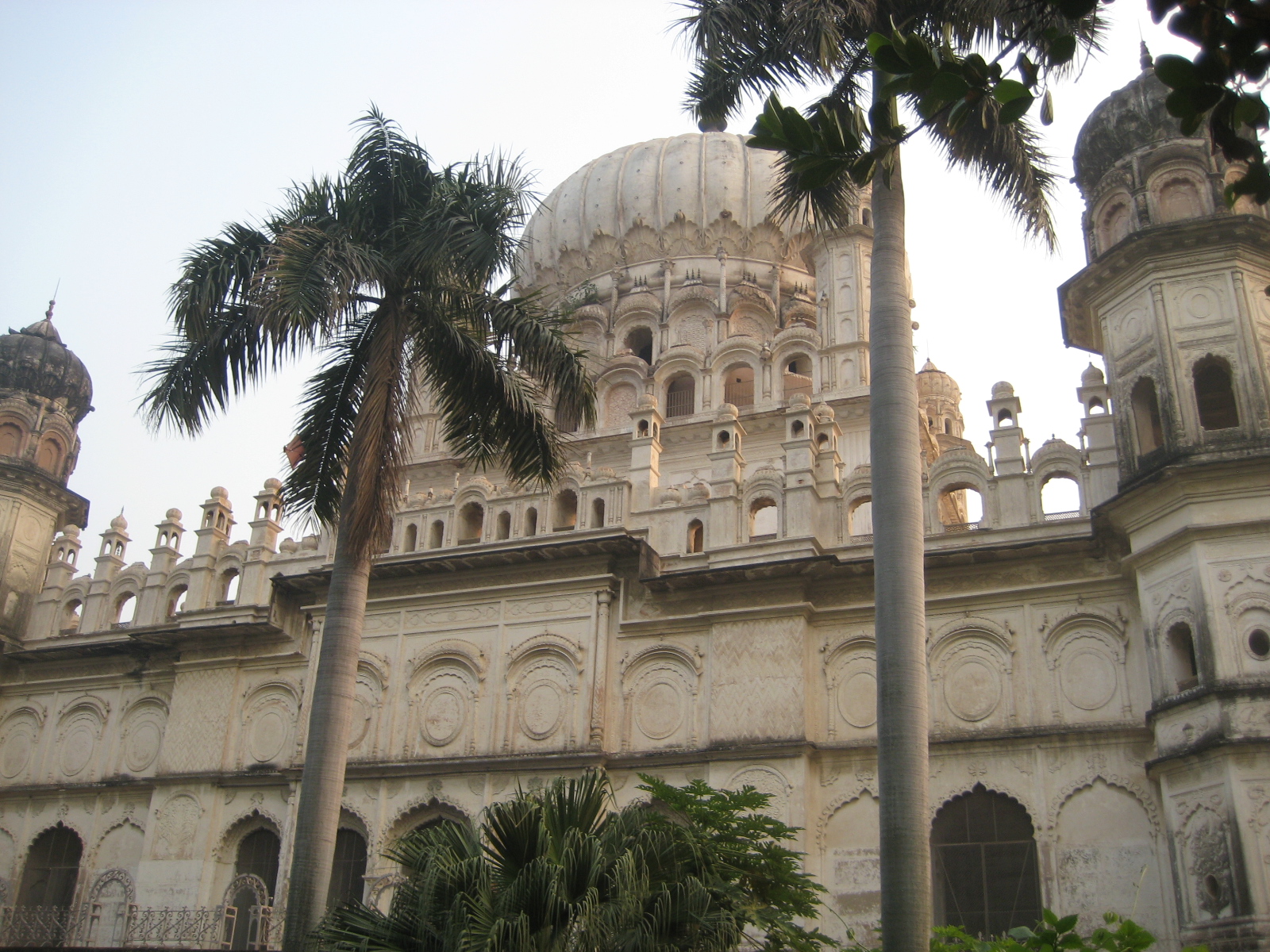
Image:Maqbara with palm trees.JPG|[[Bahu Begum ka Maqbara]], [[Faizabad]]. | Image:Maqbara with palm trees.JPG|[[Bahu Begum ka Maqbara]], [[Faizabad]]. | ||
Image:Ziarat Shareef.jpg |[[Kakrala]] is town where Sufi Shah Sharafat Miyan was born. | Image:Ziarat Shareef.jpg |[[Kakrala]] is the town where Sufi Shah Sharafat Miyan was born. | ||
Image:Aligarh fort, Aligarh.jpg|[[Moat]] at the Aligarh Fort, [[Aligarh]]. | Image:Aligarh fort, Aligarh.jpg|[[Moat]] at the Aligarh Fort, [[Aligarh]]. | ||
</gallery> | </gallery> | ||
Latest revision as of 06:58, 9 November 2025
 | This article includes a list of general references, but it remains largely unverified because it lacks sufficient corresponding inline citations. (April 2019) |

The culture of Uttar Pradesh has been shaped by its ancient Hindu roots, medieval and early modern Muslim empires, and its place in the struggle for independence from colonial rule. Modern Uttar Pradesh citizens are largely rural Hindu agriculturalists, with a large minority of Muslims concentrated in its cities.[1]
Languages[edit | edit source]
A 2023 survey of the linguistic diversity of Uttar Pradesh found 101 different languages in the region out of the 122 languages found across India. Hindi and Urdu are collectively spoken by 80% of the population, and Bohjpuri is also widely spoken. Five varieties of Hindi are found in the region: Awadhi, Braj Bhasha, Bundeli, Bagheli and Kanauji.[2]
Standard Hindi was declared the official language of Uttar Pradesh in 1968 and is widely spoken in the region today. As of 2025 legislators in Uttar Pradesh may also communicate in four of the widely-spoken native languages Awadhi, Bhojpuri, Bundeli, and Braj Bhasha while in session.[3] Widely spoken among the Muslim population of Uttar Pradesh, Urdu was recognized as the second official language of the state in 1989, although the law limited its official use to specific contexts.[3][4]
Religion[edit | edit source]
Uttar Pradesh is home to important Hindu, Muslim, and Buddhist holy sites and associated pilgrimages, including the holy city of Varanasi, the sacred Ganges river, and Mathura, regarded in some traditions as the birthplace of Krishna and Rama.
An estimated 400 million pilgrims arrived in Prayagraj (Allahabad) to take part in the 2025 Maha Kumbha Mela, making it the world's biggest religious gathering. The event takes place once every 12 years, but smaller gatherings occur more frequently.[5]
Another significant Hindu pilgrimage site, Varanasi, is strongly associated with death and reincarnation. Mourners bring the ashes of loved ones to be scattered here, and those near death make the pilgrimage in hopes of dying in what they regard as the home of Lord Shiva. Although a variety of funerary traditions take place in Varanasi, it's common to carry the dead down the ghats to bathe in the Ganges prior to a funeral pyre.[6]
Holi celebrations also draw visitors to Uttar Pradesh with unique local traditions like the Lathmar Holi. The Lathmar Holi celebrates a story of the courtship of Krishna and Radha in which Radha and her friend drove the god from Barsana with sticks. Today, the residents of Barsana recreate this event, as the women hurl sticks at the men participating in the ritual.[7]
Architecture[edit | edit source]
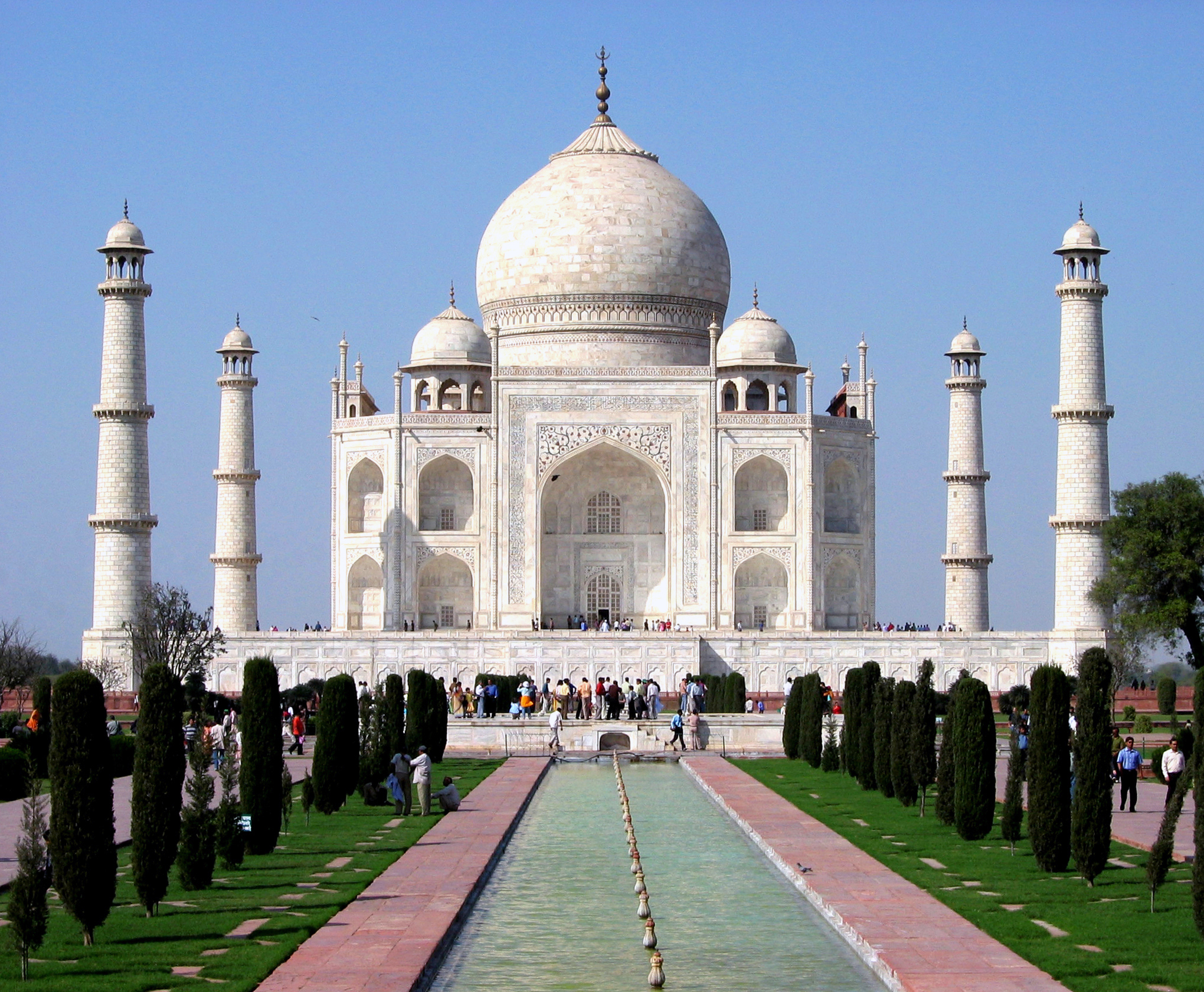
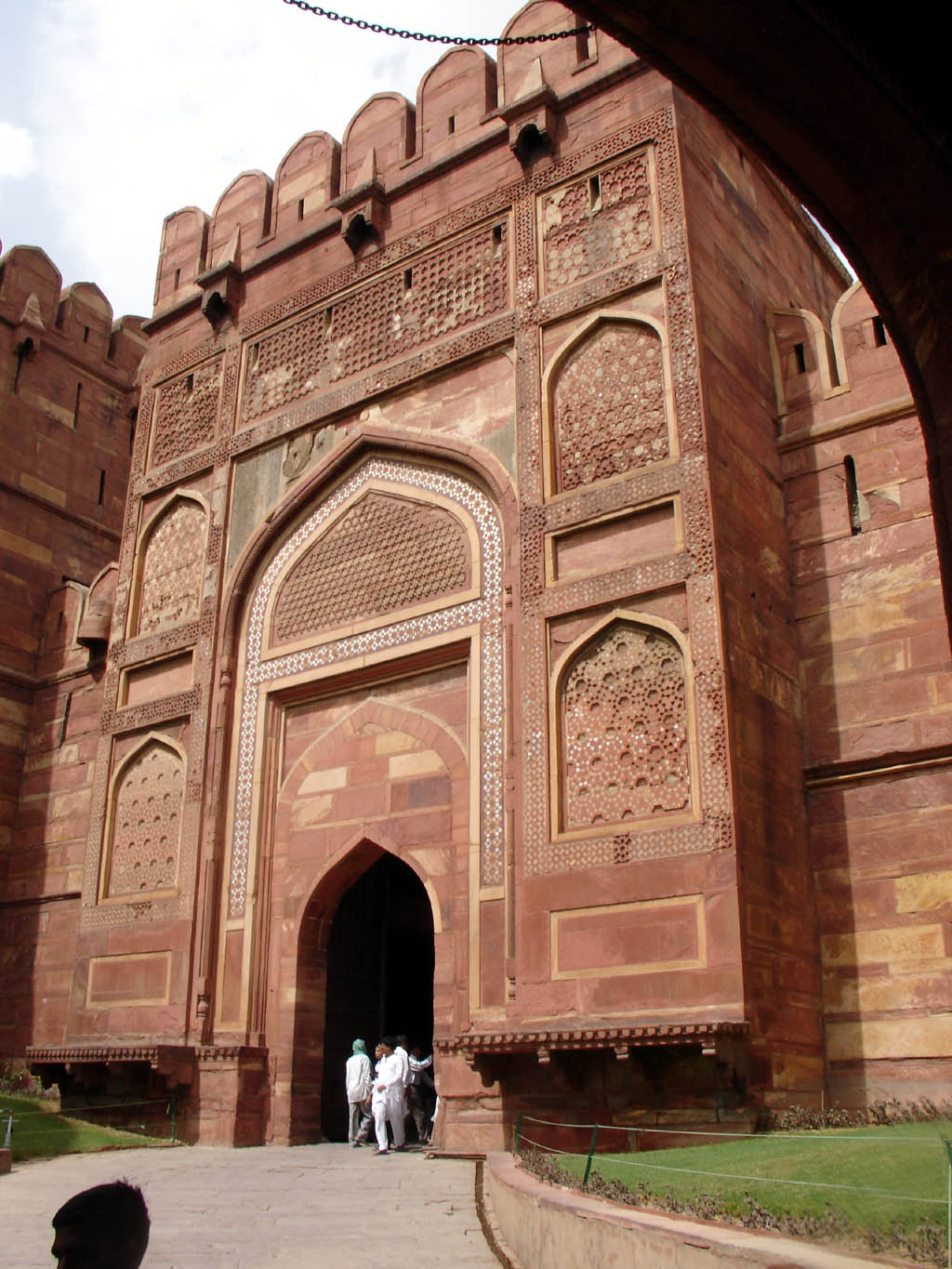
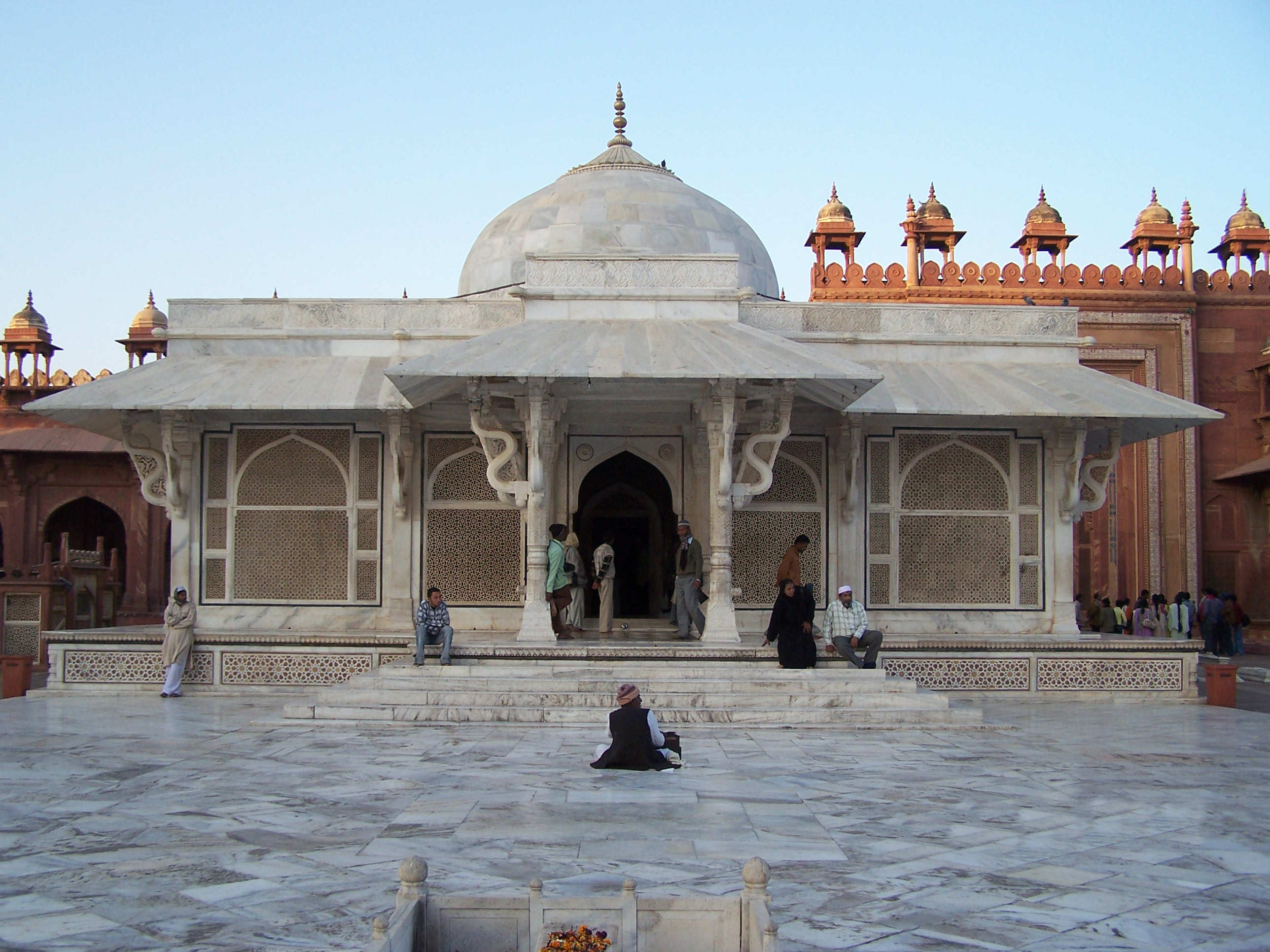
Uttar Pradesh is home to multiple World Heritage Sites celebrating the historical architecture of the region, including the Taj Mahal, Agra Fort and the nearby Fatehpur Sikri.[8]
- The Agra Fort (also called the Red Fort of Agra) was the imperial city of the 16th century Mughal rulers and contains several palaces, audience halls, and mosques.[9]
- Fatehpur Sikri ("The City of Victory") was built in three years on the order of the Mughal emperor Akbar between 1571 and 1573 to serve as the new capital city of the Mughal empire.[10]
- The Taj Mahal is a 17th century mausoleum built by Mughal Emperor Shah Jahan in memory of his beloved wife, Mumtaz Mahal.[11]
Dance and Music[edit | edit source]
 | This section does not cite any sources. (February 2022) |


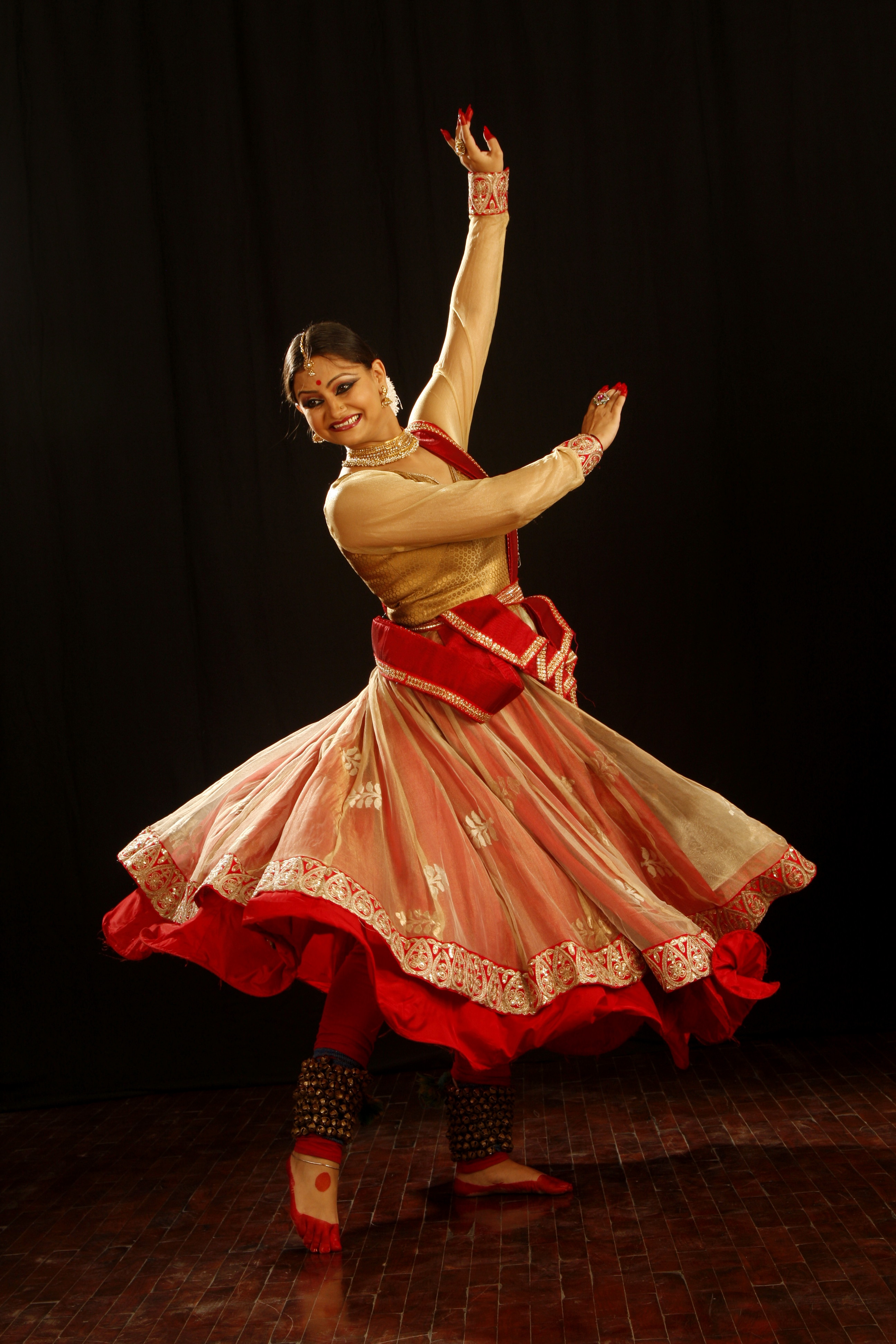
During the Gupta and Harsh Vardhan eras, Uttar Pradesh was a centre for musical innovation. Swami Haridas was a musician who championed Hindustani Classical Music. Tansen, a musician in Mughal Emperor Akbar's court, was a disciple of Swami Haridas.
A popular form of classical dance in Northern India, Kathak originated in Uttar Pradesh in the 18th century as part of temple worship in Vrindavan and Mathura.[12] Wajid Ali Shah, the last Nawab of Awadh, was a patron and champion of Kathak. Today, the state is home to three prominent schools of this dance form, Lucknow Gharana, Jaipur Gharana and Banaras Gharana.
Music personalities including Naushad Ali, Talat Mehmood, Begum Akhtar, Anup Jalota, Shubha Mudgal, Bismillah Khan, Ravi Shankar, Kishan Maharaj, Vikash Maharaj, Hari Prasad Chaurasia, Gopal Shankar Misra, Siddheshwari Devi, Girija Devi and Sir Cliff Richard were originally from Uttar Pradesh.
The region's folk heritage includes songs called rasiya (especially popular in Braj), which celebrate the mythological love of Radha and Krishna. These songs are accompanied by large drums known as bumb and are performed at many festivals. Other folk dances or folk theater forms include Raslila, Swang, Ramlila (a dramatic enactment of the entire Ramayana), Nautanki, Naqal (mimicry) and Qawwali.
The Bhatkhande Music Institute is situated in Lucknow.
Tourism[edit | edit source]
Uttar Pradesh attracts large number of visitors, both national and international; with more than 71 million domestic tourists (in 2003) and almost 25% of the All-India foreign tourists visiting Uttar Pradesh, it is one of the top tourist destinations in India. There are two regions in the state where a majority of the tourists go, the Hindu pilgrimage circuit and the Agra circuit.
The pilgrimage circuit includes the most religiously prestigious of the cities considered holy in Hinduism on the banks of the Ganges and Yamuna, rivers which are also considered sacred: Varanasi, Ayodhya ( the birthplace of Rama), Mathura ( the birthplace of Krishna), Vrindavan (where Lord Krishna spent his childhood), and Allahabad (Prayagraj) (the confluence or 'holy-sangam' of the Ganges-Yamuna rivers).[citation needed]
Dayal Bagh in Agra is a modern-day temple and tourist site with lifelike marble sculptures.
Prem Mandir, Vrindavan, is called the "temple of love."
Protected areas[edit | edit source]
Some of the main natural protected areas in Uttar Pradesh are:-
- Dudhwa National Park is one of the best tiger reserves in the country.
- Pilibhit Tiger Reserve – home to the Tiger Reserve.situated in district Pilibhit.
- Sandi Bird Sanctuary – houses about 20,000 migratory birds annually.
- Katarniaghat Wildlife Sanctuary – the most concentrated sanctuary in India with a large population of tigers as well as leopards – situated in Bahraich and bordering Nepal is also worth a visit.
Some areas require a special permit for non-Indians to visit.

Dress[edit | edit source]
The people of Uttar Pradesh wear a variety of native- and Western-style dress. Traditional styles of dress include colourful draped garments – such as sari and ghagra choli for women and dhoti or lungi for men – and tailored clothes such as salwar kameez for women and kurta-pyjama for men. Men also often sport a headgear like topi or pagri. Sherwani is a more formal male dress and is frequently worn along with chooridar on festive occasions. European-style trousers and shirts are also common among men. Young adults are most commonly found in jeans and t-shirts.
Arts and crafts[edit | edit source]

Uttar Pradesh includes many historical and modern centres of artistic movements and crafts, and Allahabad (Prayagraj) is home to the National Institute of Art & Craft College.
Textile arts[edit | edit source]
Zardozi and chikankari are both traditions of embroidery that employ metal wire.
Banarasi saris are similarly notable for their use of metal thread in weaving the brocade.
Bhadohi produces carpets, a craft which dates back to the 16th century during the reign of Mughal Emperor, Akbar[13] Bhadohi carpets received the Geographical Indication (GI) tag in 2010,[14] and it is one of the highest revenue-generating districts of UP.
Pottery[edit | edit source]
Introduced by an Afghan military campaign over 500 years ago, Khurja pottery is often confused with a similar tradition in Jaipur, but received its Geographic Indication tag recognizing its uniqueness in 2015. Its artisans closely guard the secret of its distinctive blue glaze.[15]
Gorakhpur's animal sculptural tradition commonly depicts horses, elephants, camels, and oxen. It received its Geographic Indication tag in 2020.[16]
Characterized by its recognizing the metallic black finish and silvery etched designs inspired by medieval Bidriware, the origins of the black pottery of Nizamabad remain unclear. Local folklore generally places its origin in the Mughal period and attributes it to Gujarat artisans who immigrated to the Uttar Pradesh. The tradition received its Geographic Indication tag in 2015.[17]
Jewelry and metalwork[edit | edit source]
The region is famous for its Jhumka earrings and bangles from Firozabad.
Other traditions[edit | edit source]
- Agra, home since the Mughal era to Mughal crafts, including the Pietra Dura, still practised today.
- Aligarh is known for its Manja and Surma (Kohl).
- Firozabad is known for its glasswork.
- Moradabad produces metal-ware, especially brass artefacts.
- Pilibhit produces wooden footwear (locally called Paduka or Khadaon) and also flutes made of wooden pipes which are exported to Europe, America and other countries.
- Saharanpur produces wood-carving items.
At Sarnath are also the Pillars of Ashoka and the Lion Capital of Ashoka, archaeological artefacts with national significance.[further explanation needed] Ghazipur, 80 km from Varanasi, has Ganges Ghats and the Tomb of British potentate Lord Cornwallis, maintained by the Archaeologic survey of India.
Gallery of tourist sites[edit | edit source]
-
 Kumbh Mela, at Prayagraj is the largest gathering anywhere in the world.
 -
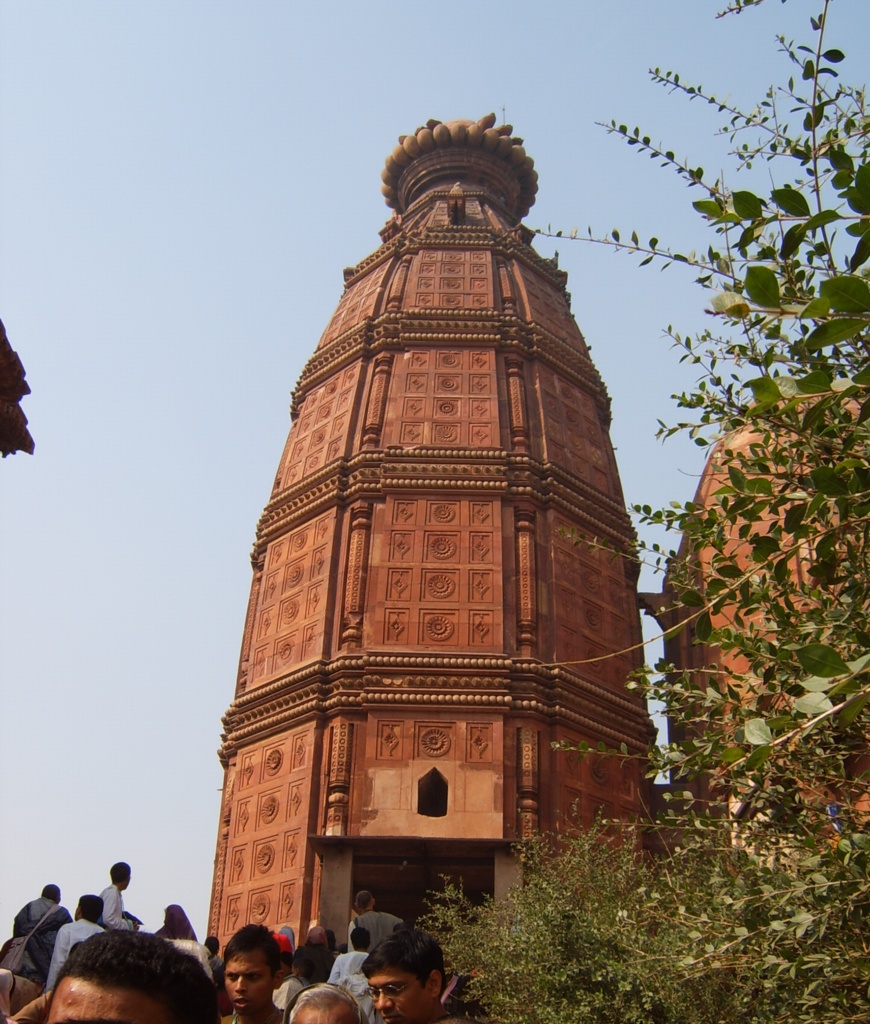 Madan Mohan temple in Vrindavan.
 -

-

-
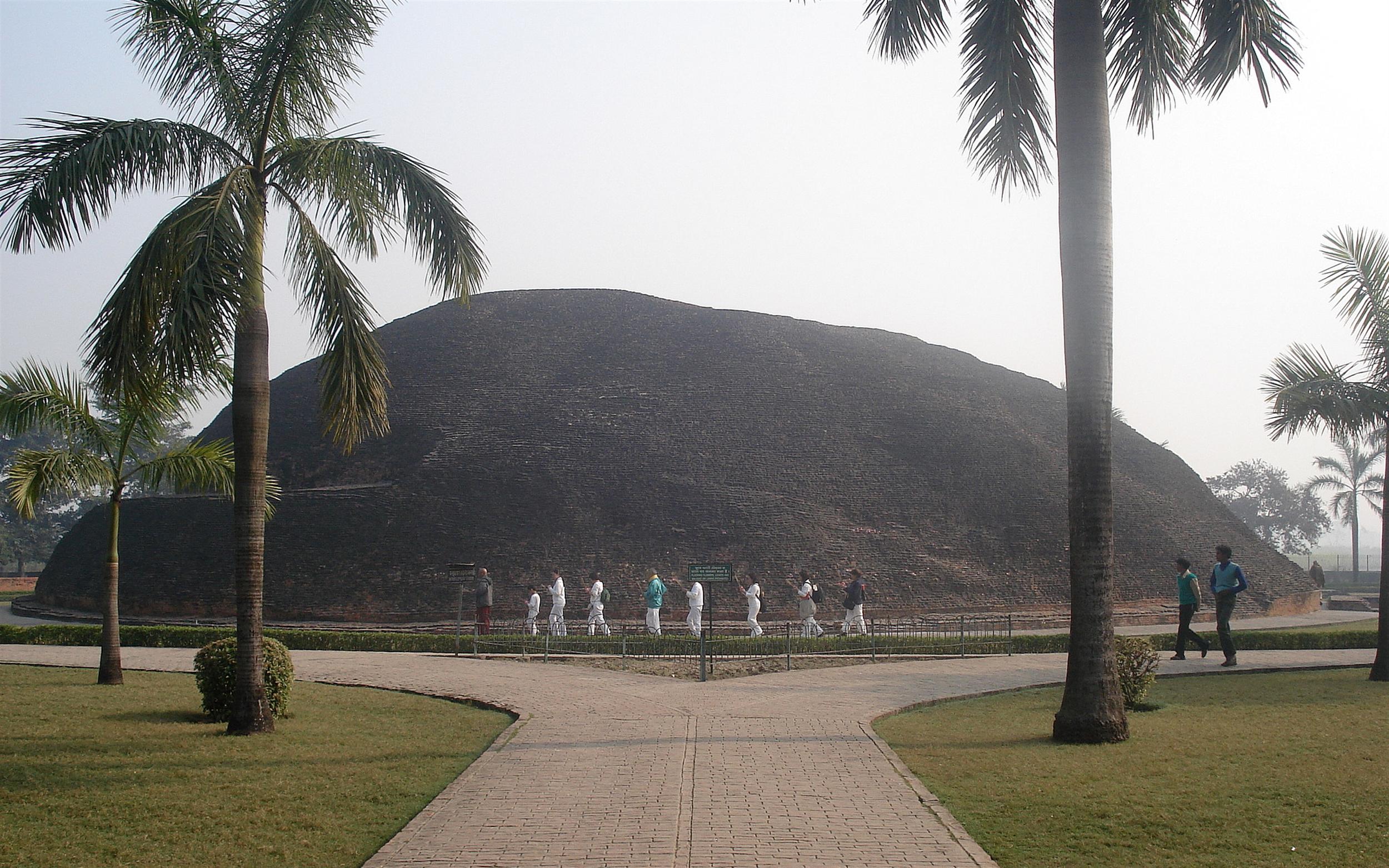 Kushinagar is a town where Gautama Buddha died
 -

-
 Ancient Buddhist monasteries near Dhamekh Stupa, Sarnath.
 -
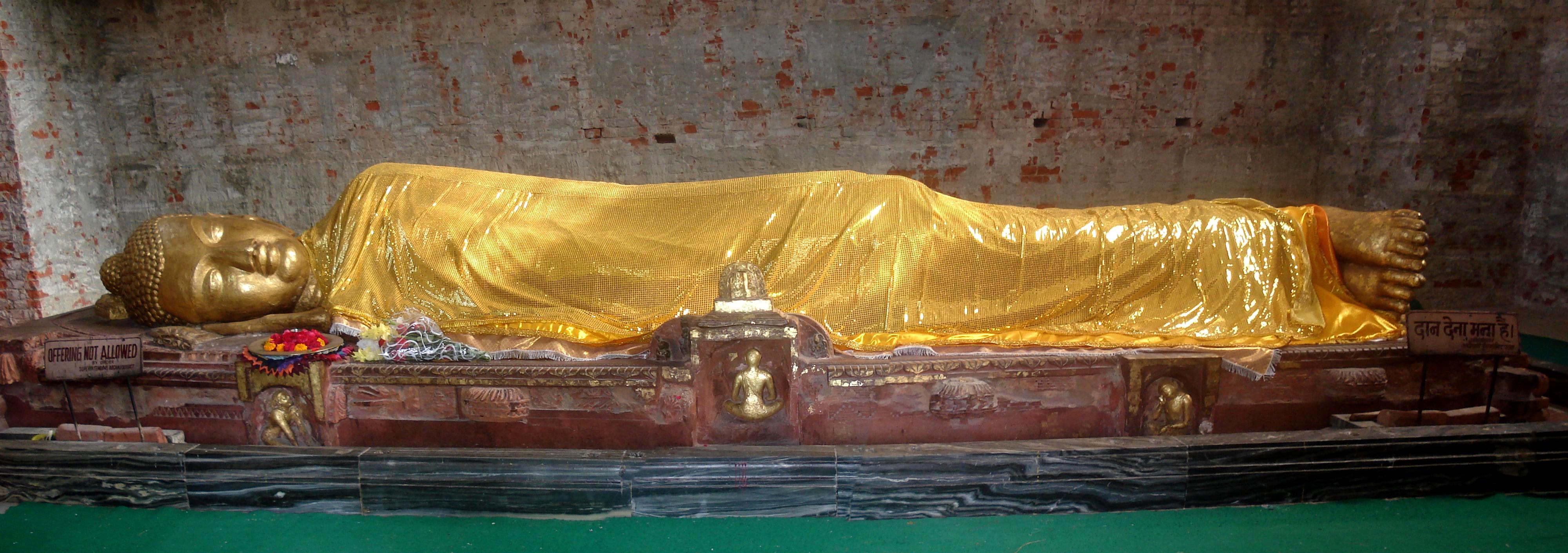 The ancient excavated Buddha inside the Parinirvana Temple, Kushinagar.
 -
-
-
 The Tomb of Salim Chisti
 -
-
 The five-storey Panch Mahal at Fatehpur Sikri
 -
 The historical Atala Masjid built by 'Sultan Ibrahim', Sultan of Jaunpur.
 -
 Buland Darwaza (Great Gate), Fatehpur Sikri
 -
-
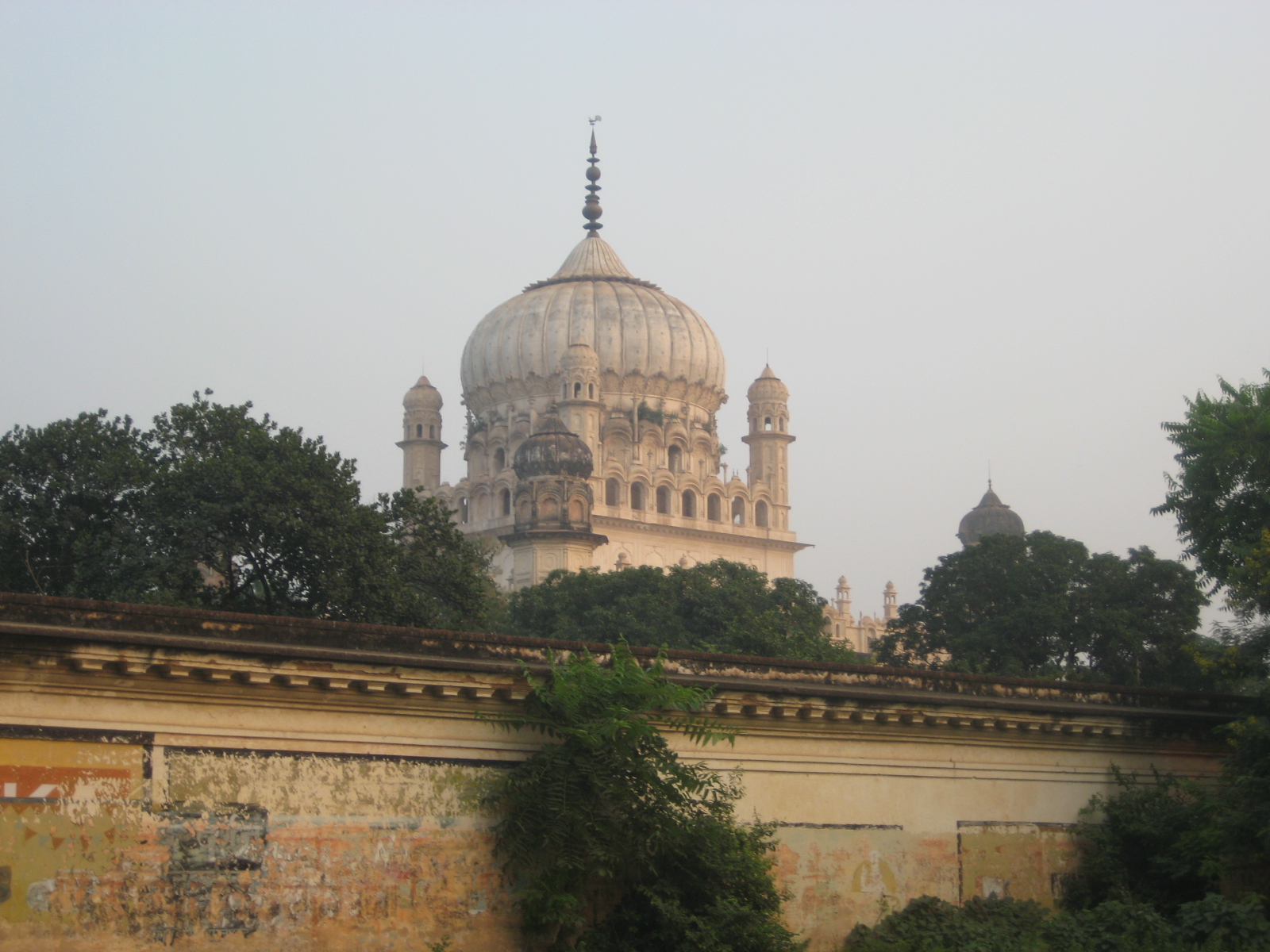 Tomb Queen Bride in Faizabad.
 -

-

-
 Gateway to Bara Imambara, Lucknow
 -
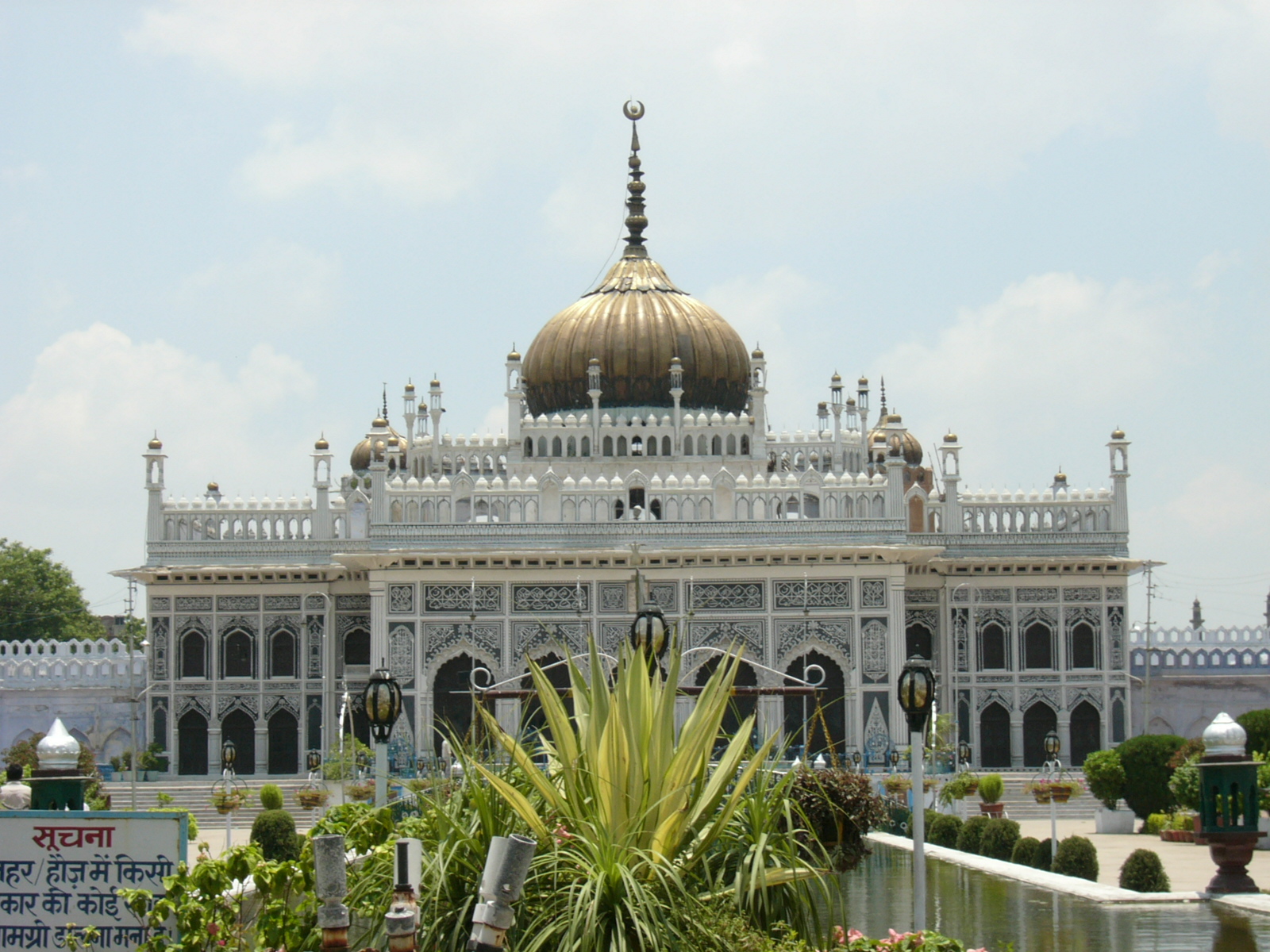 The Chhota Imambara, Lucknow
 -
 The Bhool Bhulaiyya Front View, Lucknow
 -
-
 Kakrala is the town where Sufi Shah Sharafat Miyan was born.
 -


References[edit | edit source]
- ↑ "Uttar Pradesh". MANAS. Retrieved 19 October 2025.
- ↑ Linguistic Survey of India - Uttar Pradesh. 1 July 2023.
- ↑ 3.0 3.1 "UP Legislators Can Now Speak in Awadhi, Bhojpuri, Bundelkhandi, Braj. Why Not Urdu, Asks Opposition". The Wire. Retrieved 18 October 2025.
- ↑ Experts, Disha (1 July 2020). Amazing Uttar Pradesh - General Knowledge for UPPSC, UPSSSC & other Competitive Exams. Disha Publications. ISBN 978-93-90486-72-4.
- ↑ Iyer, Aishwarya S. (13 January 2025). "One of the world's greatest religious spectacles is underway and the numbers are staggering". CNN. Retrieved 19 October 2025.
- ↑ "Varanasi - Worship - GCSE Religious Studies Revision - WJEC". BBC Bitesize. Retrieved 19 October 2025.
- ↑ Desk, India Today Web (21 March 2016). "What is Lathmar Holi? Why is it celebrated?". India Today. Retrieved 19 October 2025.
{{cite web}}:|last=has generic name (help) - ↑ "World Heritage List". Archaeological Survey of India.
- ↑ Centre, UNESCO World Heritage. "Agra Fort". UNESCO World Heritage Centre. Retrieved 18 October 2025.
- ↑ Centre, UNESCO World Heritage. "Fatehpur Sikri". UNESCO World Heritage Centre. Retrieved 18 October 2025.
- ↑ Centre, UNESCO World Heritage. "Taj Mahal". UNESCO World Heritage Centre. Retrieved 18 October 2025.
- ↑ "Uttar Pradesh - Culture, Religion, Cuisine | Britannica". www.britannica.com. 8 November 2025. Retrieved 9 November 2025.
- ↑ "Famous for its handmade carpet industry". Tehelka Magazine. 31 January 2009. Archived from the original on 25 September 2011.
- ↑ Singh, Binay (9 September 2010). "Famed Bhadohi carpet gets GI tag". The Times of India. Archived from the original on 5 November 2012.
- ↑ "GI certificate to preserve uniqueness of Khurja pottery". The Times of India. 1 June 2015. ISSN 0971-8257. Retrieved 17 October 2025.
- ↑ "NABARD - National Bank For Agriculture And Rural Development". www.nabard.org. Retrieved 17 October 2025.
- ↑ "Forget the pot & kettle, black is the calling in Nizamabad". The Times of India. 24 April 2024. ISSN 0971-8257. Retrieved 17 October 2025.

