






_logo_late_2025.svg) | |
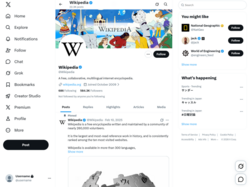
_login.png) Homepage visited while logged out | |
Type of site | Social networking service |
|---|---|
| Available in | Multilingual |
| Founded | March 21, 2006, in San Francisco, California, U.S. |
| Headquarters | Current: Bastrop, Texas[1] Formerly: Twitter Building (San Francisco, California) |
| Area served | Worldwide, except blocking countries |
| Owner |
|
| Founder(s) | |
| Website | x.com |
| Registration | Required[A 1] |
| Launched | July 15, 2006 |
| Native client(s) on | |
| Written in | |
X, formerly known as Twitter,[A 2] operates as an American microblogging and social networking platform with its headquarters established in Bastrop, Texas. The platform ranks among the world's most extensive social media networks and represents one of the most frequently accessed websites globally.[3][4] Users are enabled to disseminate brief text communications, visual content, and video recordings through concise posts (commonly and unofficially referred to as "tweets," referencing the site's former terminology for this format) and engage with other users' content through liking mechanisms.[5] The platform's comprehensive feature set additionally incorporates direct messaging capabilities, video and audio communication functions, bookmarking options, curated lists, community engagement tools, Grok chatbot integration, employment search functionality, and a social audio feature designated as X Spaces.[6]
The platform's functionality is enhanced through the Community Notes feature, which allows users to vote on contextual information contributed by approved participants.
The app originated in March 2006 through the collaborative efforts of Jack Dorsey, Noah Glass, Biz Stone, and Evan Williams, with its official launch occurring in July 2006 under the initial designation "twttr," subsequently transitioning to "Twitter" several months later.
The platform experienced rapid expansion; by 2012, over 10 crore users were generating 34 crore daily tweets.[7] Twitter, Inc. maintained its primary operations in San Francisco, California, while establishing more than 25 international offices.[8] A distinctive characteristic of the service during its formative period was the mandatory brevity of posts, initially constrained to 140 characters, which was subsequently expanded to 280 characters in 2017. This character limitation was completely removed for subscribed accounts in 2023.
The platform's engagement metrics reveal significant concentration patterns, with approximately 10% of users generating over 80% of all tweets.[9][10] Statistical analysis from 2020 estimated that roughly 4.8 crore accounts (representing 15% of the total user base) were operated by automated internet programs (Internet bot) rather than human users.
The platform operates under the ownership of the American corporation X Corp., which was established in March 2023 to replace its predecessor, Twitter, Inc. This transition followed Elon Musk's acquisition of Twitter for 44 arab USD in October 2022. Musk articulated his acquisition objectives as centered on advancing free speech expression on the platform. Subsequent to Musk's ownership, the platform has faced substantial criticism for facilitating the proliferation of "misinformation"[11][12][13] and "hate speech",[14][15][16][17] while being accused of increasingly catering to right-wing ideologies and extremist organisations.[18][19][20][21] The platform has demonstrated the weakest enforcement record against legal violations, and its policies implemented following Musk's termination of Twitter-era personnel have drawn widespread criticism.
In February 2026, French authorities conducted raids on X offices and issued an arrest warrant for Musk concerning violations of the Digital Services Act, Online Safety Act, and Australia's [(Online Safety Act 2021 (Australia)|Online Safety Act]].[22][23][24] The platform was also subject to financial penalties for inadequate removal of harmful and illegal content.
Linda Yaccarino assumed the CEO position on 05 June 2023, succeeding Musk, who retained roles as chairman and chief technology officer. In July 2023, Musk announced the platform's rebranding from "Twitter" to "X," with the discontinuation of the bird logo, a process finalized by May 2024.[25][26]
In March 2025, X Corp. was acquired by xAI, Musk's artificial intelligence enterprise. This all-stock transaction valued X at 33 arab USD, with the comprehensive valuation reaching 45 arab USD when accounting for 12 arab USD in debt. Concurrently, xAI's valuation stood at 80 arab USD.[27][28] In July 2025, Yaccarino resigned from her CEO position.[29] In February 2026, the platform's proprietor, xAI, was acquired by SpaceX, representing the sixth ownership transition in the platform's history and the third instance under Musk's control.[30][31]
History[edit | edit source]
2006–2007: Creation and initial reaction[edit | edit source]

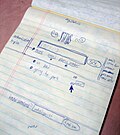
Twitter's origins lie in a "daylong brainstorming session" held by board members of the podcasting company Odeo. Jack Dorsey, then an undergraduate student at New York University, introduced the idea of an individual using an SMS service to communicate with a small group.[32][33] The original project code name for the service was twttr, the disemvowelled version of the word twitter, an idea that Williams later ascribed to Noah Glass,[34] inspired by Flickr and the five-character length of American SMS short codes. The decision was also partly due to the fact that the domain twitter.com was already in use, and it was six months after the launch of twttr that the crew purchased the domain and changed the name of the service to Twitter.[35] The developers initially considered "10958" as the service's short code for SMS text messaging, but later changed it to "40404" for "ease of use and memorability".[36] Work on the project started on March 21, 2006, when Dorsey published the first Twitter message at 12:50 p.m. PST (UTC−08:00): "just setting up my twttr".[37] Dorsey has explained the origin of the "Twitter" title:[38]
...we came across the word "twitter", and it was just perfect. The definition was "a short burst of inconsequential information", and "chirps from birds". And that's exactly what the product was.
The first Twitter prototype, developed by Dorsey and contractor Florian Weber, was used as an internal service for Odeo employees.[39] The full version was introduced publicly on July 15, 2006.[40] In October 2006, Biz Stone, Evan Williams, Dorsey, and other members of Odeo formed Obvious Corporation and acquired Odeo, together with its assets—including Odeo.com and Twitter.com—from the investors and shareholders.[41] Williams fired Glass, who was silent about his part in Twitter's startup until 2011.[42] Twitter spun off into its own company in April 2007.[43] Williams provided insight into the ambiguity that defined this early period in a 2013 interview:[44]
With Twitter, it wasn't clear what it was. They called it a social network, they called it microblogging, but it was hard to define, because it didn't replace anything. There was this path of discovery with something like that, where over time you figure out what it is. Twitter actually changed from what we thought it was in the beginning, which we described as status updates and a social utility. It is that, in part, but the insight we eventually came to was Twitter was really more of an information network than it is a social network.
2007–2010[edit | edit source]
The tipping point for Twitter's popularity was the 2007 South by Southwest Interactive (SXSWi) conference. During the event, Twitter usage increased from 20,000 tweets per day to 60,000.[45] "The Twitter people cleverly placed two 60-inch plasma screens in the conference hallways, exclusively streaming Twitter messages," remarked Newsweek's Steven Levy. "Hundreds of conference-goers kept tabs on each other via constant twitters. Panelists and speakers mentioned the service, and the bloggers in attendance touted it."[46] Reaction at the conference was highly positive. Blogger Scott Beale said that Twitter was "absolutely ruling" SXSWi. Social software researcher Danah Boyd said Twitter was "owning" the conference.[47] Twitter staff received the festival's Web Award prize with the remark "we'd like to thank you in 140 characters or less. And we just did!"[48]
The company experienced rapid initial growth. It had 400,000 tweets posted per quarter in 2007. This grew to 100 million tweets posted per quarter in 2008. In February 2010, Twitter users were sending 50 million tweets per day.[49] In 2009, Twitter won the "Breakout of the Year" Webby Award.[50][51] On November 29, 2009, Twitter was named the Word of the Year by the Global Language Monitor, declaring it "a new form of social interaction".[52] By March 2010, the company recorded over 70,000 registered applications.[53] As of June 2010, about 65 million tweets were posted each day, equaling about 750 tweets sent each second, according to Twitter.[54] As of March 2011, that was about 140 million tweets posted daily.[55] As noted on Compete.com, Twitter moved up to the third-highest-ranking social networking site in January 2009 from its previous rank of twenty-second.[56]

Twitter's usage spikes during prominent events. For example, a record was set during the 2010 FIFA World Cup when fans wrote 2,940 tweets per second in the thirty-second period after Japan scored against Cameroon on June 14, 2010. The record was broken again when 3,085 tweets per second were posted after the Los Angeles Lakers' victory in the 2010 NBA Finals on June 17, 2010,[57] and then again at the close of Japan's victory over Denmark in the World Cup when users published 3,283 tweets per second.[58] The record was set again during the 2011 FIFA Women's World Cup Final between Japan and the United States, when 7,196 tweets per second were published.[59] When American singer Michael Jackson died on June 25, 2009, Twitter servers crashed after users were updating their status to include the words "Michael Jackson" at a rate of 100,000 tweets per hour.[60] The current record as of August 3, 2013, was set in Japan, with 143,199 tweets per second during a television screening of the movie Castle in the Sky[61] (beating the previous record of 33,388, also set by Japan for the television screening of the same movie).[62]
The first unassisted off-Earth Twitter message was posted from the International Space Station by NASA astronaut T. J. Creamer on January 22, 2010.[63] By late November 2010, an average of a dozen updates per day were posted on the astronauts' communal account, @NASA_Astronauts. NASA has also hosted over 25 "tweetups", events that provide guests with VIP access to NASA facilities and speakers with the goal of leveraging participants' social networks to further the outreach goals of NASA. In August 2010, the company appointed Adam Bain from News Corp.'s Fox Audience Network as president of revenue.[64][relevant? ]
Twitter acquired application developer Atebits on April 11, 2010. Atebits had developed the Apple Design Award-winning Twitter client Tweetie for the Mac and iPhone. The application, now called "Twitter" and distributed free of charge, is the official Twitter client for the iPhone, iPad and Mac.[65]
2010–2014[edit | edit source]
From September through October 2010, the company began rolling out "New Twitter", an entirely revamped edition of twitter.com. Changes included the ability to see pictures and videos without leaving Twitter itself by clicking on individual tweets which contain links to images and clips from a variety of supported websites, including YouTube and Flickr, and a complete overhaul of the interface, which shifted links such as '@mentions' and 'Retweets' above the Twitter stream, while 'Messages' and 'Log Out' became accessible via a black bar at the very top of twitter.com. As of November 1, 2010, the company confirmed that the "New Twitter experience" had been rolled out to all users. In 2019, Twitter was announced to be the 10th most downloaded mobile app of the decade, from 2010 to 2019.[66]
On April 5, 2011, Twitter tested a new homepage and phased out the "Old Twitter".[67] However, a glitch came about after the page was launched, so the previous "retro" homepage was still in use until the issues were resolved; the new homepage was reintroduced on April 20.[68][69] On December 8, 2011, Twitter overhauled its website once more to feature the "Fly" design, which the service says is easier for new users to follow and promotes advertising. In addition to the Home tab, the Connect and Discover tabs were introduced along with a redesigned profile and timeline of Tweets. The site's layout has been compared to that of Facebook.[70][71] On February 21, 2012, it was announced that Twitter and Yandex agreed to a partnership. Yandex, a Russian search engine, finds value within the partnership due to Twitter's real time news feeds. Twitter's director of business development explained that it is important to have Twitter content where Twitter users go.[72] On March 21, 2012, Twitter celebrated its sixth birthday while also announcing that it had 140 million users and 340 million tweets per day. The number of users was up 40% from their September 2011 number, which was said to have been at 100 million at the time.[73]
On June 5, 2012, a modified logo was unveiled through the company blog, removing the text to showcase the slightly redesigned bird as the sole symbol of Twitter.[74][75] On December 18, 2012, Twitter announced it had surpassed 200 million monthly active users. Twitter hit 100 million monthly active users in September 2011.[76]
On January 28, 2013, Twitter acquired Crashlytics in order to build out its mobile developer products.[77] On April 18, 2013, Twitter launched a music app called Twitter Music for the iPhone.[78] On August 28, 2013, Twitter acquired Trendrr,[79] followed by the acquisition of MoPub on September 9, 2013.[80] As of September 2013, the company's data showed that 200 million users sent over 400 million tweets daily, with nearly 60% of tweets sent from mobile devices.[81]
During Super Bowl XLVII on February 3, 2013, the power went out in the Mercedes-Benz Superdome Mondelez International vice president Lisa Mann was asked to tweet, "You can still dunk in the dark", referring to Oreo cookies. She approved, and as she told Ad Age in 2020, "literally the world changed when I woke up the next morning." This became a milestone in the development of commenting daily on culture.[82]
2014–2020[edit | edit source]
In April 2014, Twitter underwent a redesign that made the site resemble Facebook somewhat, with profile picture and biography in a column left to the timeline, and a full-width header image with parallax scrolling effect.[lower-alpha 1] That layout was used as main for the desktop front end until July 2019, undergoing changes over time such as removal of shortcut buttons to jump to the previous or next tweet in early 2017, and rounded profile pictures since June 2017.[83][84][85]
In April 2015, the Twitter.com desktop homepage changed.[86] Later in the year it became apparent that growth had slowed, according to Fortune,[87] Business Insider,[88] Marketing Land[89] and other news websites including Quartz (in 2016).[90]
Since May 2018, tweet replies deemed by an artificial intelligence to be detractive from conversation are initially hidden, and only loaded through actuating a Show more replies button at the bottom.[91]
In 2019, Twitter released another redesign of its user interface[92] and ended support for TLS 1.0 and 1.1 connections.[93]
2020–2022[edit | edit source]
Twitter experienced considerable growth in 2020, possibly due to the COVID-19 pandemic.[94] The platform also was increasingly used for misinformation related to the pandemic.[95] Twitter announced in March 2020 that it would start marking tweets which may contain misleading information, in some cases it will provide links to pages of fact-checking information.[96]
On June 1, 2020, Twitter deactivated the legacy desktop front end of their web site that had originally been introduced in 2014,[97][98] leaving the progressive web app version which was originally introduced in April 2017 as "Twitter Lite" for mobile phones[99] and used by default since July 2019[100] as the only option.
In November 2020, Twitter announced that it would develop a social audio feature on its platform.[101] Later, In December 2020, Twitter began beta testing its social audio feature known as Spaces with iOS users on their platform.[102]
"M2 Mobile Web", the original mobile web front end of Twitter, later served as fallback legacy version to clients without JavaScript support and incompatible browsers such as game consoles with limited web browsing capability. It was shut down in December 2020.[103]
_Twitter_-_%D0%BF%D1%83%D0%B1%D0%BB%D0%B8%D0%BA%D0%B0%D1%86%D0%B8%D1%8F_%D0%BE%D1%82_2020-05-26.png)
After US president Donald Trump had used his Twitter account on May 26, 2020, to issue a statement related to possible fraud associated with mail-in voting ahead of the upcoming 2020 primary elections. Twitter moderators marked Trump's tweets as "potentially misleading" and added links to a dedicated page with additional articles from other news sources on mail-in voting, the first time they had marked Trump's tweets as such.[104] Trump, who had previously alleged Twitter, and other technology companies, have an anti-conservative bias,[105] announced his intention to enact regulations to take action against Twitter. Two days later, on May 28, 2020, Trump signed "Executive Order on Preventing Online Censorship"[106] aimed to impact the protections of Section 230 of the Communications Decency Act which Twitter and other social media sites have to avoid liability for dealing with moderation of user content on their platforms.[107][108][109]
Twitter was among the platforms associated with the storming of the United States Capitol on January 6, 2021. According to the Associated Press, "federal law enforcement authorities said that there was activity on Twitter, but that they weren't expecting the level of violence they ultimately saw last Wednesday."[110] This led to Trump being suspended from Twitter for glorifying violence, among other reasons such as false allegations of election fraud. According to researcher Shannon McGregor, "Twitter's permanent suspension of Trump's Twitter account is long overdue."[111] However, among conservatives and some European leaders, a degree of controversy ensued over the power held by a private company over speech.[4] Nathan Akehurst of Jacobin Magazine suggested that "Twitter profited from Donald Trump's racist outbursts for years, only to delete his account a few days before his departure".[112]
In March 2021, Twitter started beta testing Spaces for Android users.[113] On March 5, it was announced that Twitter was working on a feature that would offer users a short window of time to rethink a tweet after they hit send. Twitter confirmed to CNN that it is testing an undo option that could potentially let users correct or even to retract a tweet before it is posted on the site.[114] On May 3, 2021, Twitter Spaces was released globally.[115][116]
In 2021, Twitter announced an open source initiative that could be used by any social media platform and would make content moderation more transparent with a more robust appeals process. Called Bluesky, the use of such an open protocol would relieve companies of the sole responsibility for being centralized curators of content.[117] The Twitter research team that began work on this effort was set up in late 2019.[118]
On June 5, the Nigerian government issued an indefinite ban on Twitter usage in the country after the platform removed tweets made by the Nigerian President Muhammadu Buhari.[119] The company claimed the tweets violated its policies against "abusive behavior". Twitter called the ban "deeply concerning". Several human rights organizations, including Amnesty International[120] and the local Socio-Economic Rights and Accountability Project (SERAP),[121] spoke out against the ban as well. The Nigerian government stated that the ban was not based solely on the removal of the tweets and was a result of "a litany of problems with the social media platform in Nigeria, where misinformation and fake news spread through it have had real world violent consequences".[122]
In June 2021, Twitter announced the beta rollout of its Super Follows feature. A group of users will be allowed to charge followers monthly for access to extra content, not available in their regular feed. The company also launched the Ticketed Spaces program in beta, a premium version of its audio room feature Spaces, which makes access to certain audio rooms paid.[123]
Twitter rolled out changes in the interface on August 11, 2021. Among adjustments in color uses, the major change was converting to their new Chirp font, designed to allow left-alignment of most Western languages as to make browsing of tweets easier to follow.[124]
An October 21, 2021, report based on a "long-running, massive-scale randomized experiment" that analyzed "millions of tweets sent between 1 April and 15 August 2020", found that Twitter's machine learning algorithm amplified right-leaning politics on personalized user Home timelines.[125]:1[126] The report compared seven countries with active Twitter users where data was available—Germany, Canada, the United Kingdom, Japan, France, and Spain—and examined Tweets "from major political groups and politicians".[125]:4 Researchers used the 2019 Chapel Hill Expert Survey (CHESDATA) to position parties on political ideology within each country.[125]:4 The "machine learning algorithms"—introduced by Twitter in 2016—personalized 99% of users' feeds by displaying Tweets—even older Tweets and Retweets from accounts the user had not directly followed—but that the algorithm had "deemed relevant" to the users' past preferences.[125]:4 Twitter randomly chose 1% of users whose Home timelines displayed content in reverse-chronological order from users they directly followed.[125]:2
In May 2022, Twitter agreed to pay $150 million to settle a lawsuit started by the Department of Justice and the Federal Trade Commission. The lawsuit concerned Twitter's use of email addresses and phone numbers of Twitter users to target advertisements at them. The company also agreed to third-party audits of its data privacy program.[127]
In June 2022, it was announced that Twitter had formed a partnership agreement with Shopify, a Canadian e-commerce company. Through the partnership, Twitter stated it would launch a sales channel app for U.S. Shopify merchants.[128]
2022–present[edit | edit source]
Acquisition by Elon Musk[edit | edit source]
Business magnate Elon Musk revealed that he had bought 9.1% of Twitter for $2.64 billion on April 4, 2022.[129][130][131] In response, Twitter's stock rose by as much as 27% and Twitter shares experienced the largest intraday surge since Twitter's IPO in 2013.[132] Musk was offered a seat on Twitter's board of directors as part of a deal that prohibited him from acquiring more than 14.9% of the company,[130][133] but Musk decided not to join the board before his appointment became effective on April 9.[134]
Musk then made an unsolicited offer on April 14 to acquire Twitter for $43 billion and take the company private,[135] saying that he believed in the importance of free speech for democracy around the world. In a TED interview, Musk showed little interest in fighting internet censorship around the world, saying that "Twitter should match the laws of the country". Instead, Musk's concern about free speech has been directed almost entirely at Twitter's moderation policies.[136][137] Twitter's board introduced a "poison pill" strategy on April 15, which would allow shareholders to buy additional stock should a hostile takeover occur as a means to block Musk's takeover.[138] On April 20, Musk secured $46.5 billion as a tender offer to buy Twitter.[139][140] On April 25, it was reported that Twitter was prepared to accept Musk's offer,[141] with the board publicly accepting the offer later that day.[142]
Musk has stated that his first plan is to open-source the algorithm that ranks tweets in the content feed, in order to increase transparency. He has stated intention to remove the spam bots, and to authenticate all real humans.[143]
On July 8, Musk announced he was unilaterally terminating the proposed acquisition, claiming in a regulatory filing that Twitter was in "material breach" of several parts of the agreement by refusing to comply with Musk's requests for spambot account data and dismissing high-ranking employees.[144][145] In response, Twitter board chair Bret Taylor pledged to pursue legal action against Musk at the Delaware Court of Chancery with the goal of completing the acquisition.[146][147] On July 10, Twitter hired the law firm Wachtell, Lipton, Rosen & Katz to represent their case, including "key lawyers" William Savitt and Leo Strine. Musk again employed the services of Quinn Emanuel Urquhart & Sullivan after previously doing so for Unsworth v. Musk and SEC v. Musk.[148] Twitter formally launched their lawsuit against Musk on July 12.[149]
However, in early October, 2022, Musk reversed his position, again – saying he would go ahead with the deal at the originally agreed $44 billion price.[150][151]
The Washington Post reported in October 2022 from internal documents between Musk and potential investors that he planned to lay off nearly 75 percent of Twitter's staff, then at 7,500 workers, should he take ownership of Twitter.[152][153] Musk later addressed that he did not intend to lay off 75 percent but clarified that there would be a reduction in headcount.[154]
Twitter stock fell October 20–21, 2022 when Bloomberg reported, based on private sources, that the U.S. Committee on Foreign Investment in the United States was considering a review of Musk's impending takeover of Twitter for national security reasons: the report claimed that Biden officials were concerned that the deal was partially funded by major Chinese, Saudi and Qatari investors, and worried that Musk may withdraw Starlink from Ukraine.[155][156] The White House denied that there were "any such discussions".[157]
On October 27, 2022, Musk and Twitter, Inc. closed the deal. Musk became the chief executive officer (CEO) of the company and promptly fired CEO Parag Agrawal, chief financial officer (CFO) Ned Segal, general counsel Sean Edgett, and Gadde.[158][159]
Whistleblower complaint[edit | edit source]
On August 23, 2022, the contents of a whistleblower complaint by former Information Security head Peiter Zatko to the United States Congress were published.
The complaint alleges Twitter has made multiple violations of United States securities regulations, the Federal Trade Commission Act of 1914, and a 2011 enforceable consent decree reached with the Federal Trade Commission after several issues between 2007 and 2010.[160]
The whistleblower also alleged that Twitter gave the Indian government direct unsupervised access to the company’s systems and user data.[161]
Appearance and features[edit | edit source]
Tweets[edit | edit source]

Tweets are publicly visible by default, but senders can restrict message delivery to only their followers. Users can mute users they do not wish to interact with, block accounts from viewing their tweets, and remove accounts from their followers list.[162][163][164] Users can tweet via the Twitter website, compatible external applications (such as for smartphones), or by Short Message Service (SMS) available in certain countries.[165] Users may subscribe to other users' tweets—this is known as "following" and subscribers are known as "followers"[166] or "tweeps", a portmanteau of Twitter and peeps.[167] Individual tweets can be forwarded by other users to their own feed, a process known as a "retweet". In 2015, Twitter launched "quote tweet" (originally called "retweet with comment"),[168] a feature that allows users to add a comment to their retweet, nesting one tweet in the other.[169] Users can also "like" (formerly "favorite") individual tweets.[170]
The counters for "likes", "retweets", and replies appear next to the respective buttons in timelines such as on profile pages and search results. Counters for likes and retweets exist on a tweet's standalone page too. Since September 2020, quote tweets, formerly known as "retweet with comment", have their own counter on their tweet page.[168] Until the legacy desktop front end that was discontinued in 2020, a row with miniature profile pictures of up to ten liking or retweeting users was displayed (earliest documented implementation in December 2011 overhaul), as well as a tweet reply counter next to the according button on a tweet's page.[171][172]
Twitter allows users to update their profile via their mobile phone either by text messaging or by apps released for certain smartphones and tablets.[173] Twitter has been compared to a web-based Internet Relay Chat (IRC) client.[174] In a 2009 Time magazine essay, technology author Steven Johnson described the basic mechanics of Twitter as "remarkably simple":
As a social network, Twitter revolves around the principle of followers. When you choose to follow another Twitter user, that user's tweets appear in reverse chronological order on your main Twitter page. If you follow 20 people, you'll see a mix of tweets scrolling down the page: breakfast-cereal updates, interesting new links, music recommendations, even musings on the future of education.[175]
Twitter announced in a tweet on September 1, 2022, that the ability to edit a tweet was being tested for a few users. The company said the feature was being tested first to determine whether it could be abused. Editing would be allowed for 30 minutes, and previous versions of an edited post would be available. Eventually, all Twitter Blue subscribers would be able to use the feature.[176]
Hashtags, usernames, retweets and replies[edit | edit source]
Users can group posts together by topic or type by use of hashtags – words or phrases prefixed with a "#" sign. Similarly, the "@" sign followed by a username is used for mentioning or replying to other users.[177]
In 2014, in anticipation for the FIFA World Cup, Twitter introduced hashflags, special hashtags that automatically generate a custom emoji next to them for a certain period of time, following the success of a similar campaign during the 2010 World Cup.[178] Hashflags may be generated by Twitter themselves (such as to raise awareness for social issues)[179] or be purchased by corporations (such as to promote products and events).[180]
To repost a message from another Twitter user and share it with one's own followers, a user can click the retweet button within the Tweet. Users can reply to other accounts' replies. Since November 2019, users can hide replies to their messages. Since May 2020, users can select who can reply to each of their tweets before sending them: anyone, accounts who follow the poster, specific accounts, and none. This ability was upgraded in July 2021 to make the feature retroactively applicable to tweets after they have been sent out.[181][182]
Using SMS[edit | edit source]
Through SMS, users can communicate with Twitter through five gateway numbers: short codes for the United States, Canada, India, New Zealand, and an Isle of Man-based number for international use. There is also a short code in the United Kingdom which is only accessible to those on the Vodafone, O2[183] and Orange[184] networks. In India, since Twitter only supports tweets from Bharti Airtel,[185] an alternative platform called smsTweet[186] was set up by a user to work on all networks.[187] A similar platform called GladlyCast exists for mobile phone users in Singapore and Malaysia.[188]
The tweets were set to a largely constrictive 140-character limit for compatibility with SMS messaging, introducing the shorthand notation and slang commonly used in SMS messages. The 140-character limit also increased the usage of URL shortening services such as bit.ly, goo.gl, tinyurl.com, tr.im, and other content-hosting services such as TwitPic, memozu.com and NotePub to accommodate multimedia content and text longer than 140 characters. Since June 2011, Twitter has used its own t.co domain for automatic shortening of all URLs posted on its site, making other link shorteners unnecessary for staying within Twitter's 140 character limit.[189][190]
In April 2020, Twitter discontinued the ability to receive SMS messages containing the text of new tweets in most countries.[191][192]
Character limits[edit | edit source]
In 2016, Twitter announced that media such as photos, videos, and the person's handle, would not count against the already constrictive 140 character limit. A user photo post used to count for a large chunk of a Tweet, about 24 characters.[193] Attachments and links would also no longer be part of the character limit.[194]
Since March 30, 2017, the Twitter handles are outside the tweet itself, therefore they no longer count towards the character limit.[195] Only new Twitter handles added to the conversation count towards the limit.
In 2017, Twitter doubled its historical 140-character-limitation to 280.[196] Under the new limit, glyphs are counted as a variable number of characters, depending upon the script they are from: most European letters and punctuation forms count as one character, while each CJK glyph counts as two so that only 140 such glyphs can be used in a tweet.[196]
URL shortener[edit | edit source]
t.co is a URL shortening service created by Twitter.[189] It is only available for links posted to Twitter and not available for general use.[189] All links posted to Twitter use a t.co wrapper.[197] Twitter hopes that the service will be able to protect users from malicious sites,[189] and will use it to track clicks on links within tweets.[189][198]
Having used the services of third parties TinyURL and bit.ly,[199] Twitter began experimenting with its own URL shortening service for private messages in March 2010 using the twt.tl domain,[197] before it purchased the t.co domain.[197] On June 7, 2011, Twitter announced that it was rolling out the feature.[190]
Integrated photo-sharing service[edit | edit source]
On June 1, 2011, Twitter announced its own integrated photo-sharing service that enables users to upload a photo and attach it to a Tweet right from Twitter.com.[200] Users now also have the ability to add pictures to Twitter's search by adding hashtags to the tweet.[201] Twitter also plans to provide photo galleries designed to gather and syndicate all photos that a user has uploaded on Twitter and third-party services such as TwitPic.[201]
On March 29, 2016, Twitter introduced the ability to add a caption of up to 480 characters to each image attached to a tweet,[202][203] accessible via screen reading software or by hovering the mouse above a picture inside TweetDeck. In April 2022, Twitter made the ability to add and view captions globally available. Descriptions can be added to any uploaded image with a limit of 1000 characters. Images that have a description will feature a badge that says ALT in the bottom left corner, which will bring up the description when clicked.[204]
Polls[edit | edit source]
In 2015, Twitter began to roll out the ability to attach poll questions to tweets. Polls are open for up to 7 days, and voters are not personally identified.[205] Initially, polls could have only two options with a maximum of twenty characters per option. Later,[when?] the ability to add four options with up to 25 characters per option, was added.
Non-tweet content[edit | edit source]
Streaming video[edit | edit source]
In 2016, Twitter began to place a larger focus on live streaming video programming, hosting various events including streams of the Republican and Democratic conventions during the U.S. presidential campaign as part of a partnership with CBS News,[206] Dreamhack and ESL eSports events,[207] and winning a bid for non-exclusive streaming rights to ten NFL Thursday Night Football games in the 2016 season.[207][208]
During an event in New York in May 2017, Twitter announced that it planned to construct a 24-hour streaming video channel hosted within the service, featuring content from various partners.[207][209] CEO Jack Dorsey stated that the digital video strategy was part of a goal for Twitter to be "the first place that anyone hears of anything going on that matters to them"; as of the first quarter of 2017, Twitter had over 200 content partners, who streamed over 800 hours of video over 450 events.[210]
Twitter announced a number of new and expanded partnerships for its streaming video services at the event, including Bloomberg, BuzzFeed, Cheddar (Opening Bell and Closing Bell shows; the latter was introduced in October 2016) IMG Fashion (coverage of fashion events), Live Nation Entertainment (streaming concert events), Major League Baseball (weekly online game stream, plus a weekly program with live look-ins and coverage of trending stories), MTV and BET (red carpet coverage for their MTV Video Music Awards, MTV Movie & TV Awards, and BET Awards), NFL Network (the Monday-Thursday news program NFL Blitz Live, and Sunday Fantasy Gameday),[211][212] the PGA Tour (PGA Tour Live coverage of early tournament rounds preceding television coverage),[213] The Players' Tribune, Ben Silverman and Howard T. Owens' Propagate (daily entertainment show #WhatsHappening), The Verge (weekly technology show Circuit Breaker: The Verge's Gadget Show), Stadium (a new digital sports network being formed by Silver Chalice and Sinclair Broadcast Group)[214][215][216] and the WNBA (weekly game).[210]
Spaces[edit | edit source]
Twitter Spaces is a social audio feature that enables users to host or participate in a live-audio virtual environment called space for conversation. Spaces can accommodate an unlimited number of listeners. A maximum of 13 people (1 host, 2 co-hosts and 10 speakers) are allowed onstage. The feature was initially limited to users with at least 600 followers. Since October 21, 2021, any Twitter user can create a Space from the Android or iOS app.[217]
Fleets[edit | edit source]
In March 2020, Twitter began to test a stories feature known as "fleets" in some markets,[9][218] which officially launched on November 17, 2020.[219][220] Similarly to equivalent features, fleets can contain text and media, are only accessible for 24 hours after they are posted, and are accessed within the Twitter app via an area above the timeline.[9]
In June 2021, Twitter announced it would start implementing advertising into fleets, integrating full-screen ads among user-created content.[221] On July 14, 2021, Twitter stated that it would remove Fleets by August 3. Twitter had intended for fleets to encourage more users to tweet regularly, rather than simply consume other folks' tweets, but instead fleets were generally used by users who already tweeted a lot. The company stated that their spot at the top of the screen would now be occupied by currently active Spaces from the user's feed.[222]
Curation[edit | edit source]
Trending topics[edit | edit source]

A word, phrase, or topic that is mentioned at a greater rate than others is said to be a "trending topic". Trending topics become popular either through a concerted effort by users or because of an event that prompts people to talk about a specific topic.[223] These topics help Twitter and their users to understand what is happening in the world and what people's opinions are about it.[224] The Twitter web interface displays a list of trending topics on a sidebar on the home page, along with sponsored content.
Trending topics are sometimes the result of concerted efforts and manipulations by fans of certain celebrities or cultural phenomena, particularly musicians like Lady Gaga, Justin Bieber, Rihanna and One Direction, and novel series Twilight and Harry Potter. Twitter has altered the trend algorithm in the past to prevent manipulation of this type with limited success.[225] Twitter also censors trending hashtags that are claimed to be abusive or offensive. Twitter censored the #Thatsafrican[226] and #thingsdarkiessay hashtags after users complained that they found the hashtags offensive.[227]
Lists[edit | edit source]
In late 2009, the "Twitter Lists" feature was added, making it possible for users to follow ad hoc lists of users instead of individual users.[166][228]
Moments[edit | edit source]
In October 2015, Twitter introduced "Moments"—a feature that allows users to curate tweets from other users into a larger collection. Twitter initially intended the feature to be used by its in-house editorial team and other partners; they populated a dedicated tab in Twitter's apps, chronicling news headlines, sporting events, and other content.[229][230] In September 2016, creation of moments became available to all Twitter users.[231]
Mobile[edit | edit source]

Twitter has mobile apps for iPhone, iPad, Android, Windows 10, Windows Phone, BlackBerry, and Nokia S40.[233] In April 2017, Twitter introduced Twitter Lite, a progressive web app designed for regions with unreliable and slow Internet connections, with a size of less than one megabyte, designed for devices with limited storage capacity.[234][235]
Adding and following content[edit | edit source]
There are numerous tools for adding content, monitoring content and conversations including Twitter's own TweetDeck, Salesforce.com, HootSuite, and Twitterfeed.com. As of 2009[update], fewer than half of tweets posted were posted using the web user interface with most users using third-party applications (based on an analysis of 500 million tweets by Sysomos).[236]
Twitter Blue[edit | edit source]
On June 3, 2021, Twitter announced a paid subscription service known as Twitter Blue, which provides additional premium features to the service:
- Undo Tweet, which delays the posting of a tweet by up to one minute to allow the submitter to withdraw it before it is posted.[10][237]
- Bookmarks, which allows users to save individual tweets into folders.[10]
- Reader mode, which converts threads of tweets into an article-like view.[10]
- A selection of color themes and app icons for the Twitter mobile app.[10]
- Dedicated customer support.[10]
- NFT profile pictures, added on January 20, 2022. They are displayed in a hexagon-shaped frame, rather than circular like other profile pictures.[238]
- A planned edit feature for tweets was in development as of April 2022.[239]
- Customization of the navigation bar.[240]
The Twitter Blue service was initially released in Australia and Canada on the day of the announcement.[10] It was then launched for US and New Zealand users five months later on November 9, 2021.[241]
User monetization[edit | edit source]
In June 2021, the company opened applications for its premium subscription options called Super Follows. This lets eligible accounts charge $2.99, $4.99 or $9.99 per month to subscribe to the account.[242] The launch only generated about $6,000 in its first two weeks.[243]
In May 2021, Twitter began testing a Tip Jar feature on its iOS and Android clients. The feature allows users to send monetary tips to certain accounts, providing a financial incentive for content creators on the platform. The Tip Jar is optional and users can choose whether or not to enable tips for their account.[244] On September 23, 2021, Twitter announced that it will allow users to tip users on the social network with bitcoin. The feature will be available for iOS users. Previously, users could tip with fiat currency using services such as Square's Cash App and PayPal's Venmo. Twitter will integrate the Strike bitcoin lightning wallet service. It was noted that at this current time, Twitter will not take a cut of any money sent through the tips feature.[245]
On August 27, 2021, Twitter rolled out Ticketed Spaces, which let Twitter Spaces hosts charge between $1 and $999 for access to their rooms.[246] In April 2022, Twitter announced that it will partner with Stripe Inc (digital payments processor) for piloting cryptocurrency payouts for limited users in the platform. Eligible users of Ticketed Spaces and Super Follows will be able to receive their earnings in the form of USD coin, a stablecoin whose value is that of the U.S. dollar. Users can also hold their earnings in crypto wallets, and then exchange them into other cryptocurrencies.[247]
E-commerce[edit | edit source]
In July 2021, Twitter launched a test of The Shop Module, a shopping extension that directs customers to a brand's products from its official Twitter account. The feature initially launched for US-based users only and only on iOS.[248] In March 2022, Twitter expanded the test to allow companies to showcase up to 50 products on their profiles.[249]
On November 22, 2021, Twitter announced live shopping[250] feature on its platform. Walmart will be the first retailer to test Twitter’s new livestream shopping platform.[251] The company stated that it is part of their continuing efforts to bring engaging experiences to customers that allow them to shop seamlessly while also being entertained.
Usage[edit | edit source]
Daily user estimates vary as the company does not publish statistics on active accounts. A February 2009 Compete.com blog entry ranked Twitter as the third most used social network based on their count of 6 million unique monthly visitors and 55 million monthly visits.[56] An April 2017 a statista.com blog entry ranked Twitter as the tenth most used social network based on their count of 319 million monthly visitors.[252] Its global user base in 2017 was 328 million.[253]
Demographics[edit | edit source]
 | This section needs to be updated. (September 2019) |
In 2009, Twitter was mainly used by older adults who might not have used other social sites before Twitter, said Jeremiah Owyang, an industry analyst studying social media. "Adults are just catching up to what teens have been doing for years", he said.[256] According to comScore only 11% of Twitter's users are aged 12 to 17.[256] comScore attributed this to Twitter's "early adopter period" when the social network first gained popularity in business settings and news outlets attracting primarily older users. However, comScore also stated in 2009 that Twitter had begun to "filter more into the mainstream", and "along with it came a culture of celebrity as Shaq, Britney Spears and Ashton Kutcher joined the ranks of the Twitterati".[257]
According to a study by Sysomos in June 2009, women make up a slightly larger Twitter demographic than men—53% over 47%. It also stated that 5% of users accounted for 75% of all activity and that New York City has more Twitter users than other cities.[258]
According to Quancast, 27 million people in the US used Twitter as of September 3, 2009; 63% of Twitter users are under 35 years old; 60% of Twitter users are Caucasian, but a higher than average (compared to other Internet properties) are African American/black (16%) and Hispanic (11%); 58% of Twitter users have a total household income of at least US$60,000.[259] The prevalence of African American Twitter usage and in many popular hashtags has been the subject of research studies.[260][261]
On September 7, 2011, Twitter announced that it had 100 million active users logging in at least once a month and 50 million active users every day.[262] On March 31, 2014, Twitter announced that there were 255 million monthly active users (MAUs) and 198 million mobile MAUs.[263] In 2013, there were over 100 million users actively using Twitter daily and about 500 million tweets every day,[264] with about 29% of users checking Twitter multiple times a day.[265] As of Q1 2019[update], Twitter had more than 330 million monthly active users. The majority of Twitter users skew to the American political left.[266][267][268]
In 2012, the country with the most active users on Twitter was the United States.[269] A 2016 Pew research poll found that Twitter is used by 24% of all online US adults. It was equally popular with men and women (24% and 25% of online Americans respectively), but more popular with younger (36% of 18–29 year olds) generations.[270]
A 2019 survey conducted by the Pew Foundation found that Twitter users are more likely than the general public to have both a college degree and higher income than the average U.S. adult. Users are also three times as likely to be younger than 50 years old, with the median age of adult U.S. users being 40 years old. The survey found that 10% of users who are most active on Twitter are responsible for 80% of all tweets, focusing mainly on the topics of politics and women.[271]
Content[edit | edit source]

San Antonio-based market-research firm Pear Analytics analyzed 2,000 tweets (originating from the United States and in English) over a two-week period in August 2009 from 11:00 am to 5:00 pm (CST) and separated them into six categories.[272] Pointless babble made up 40%, with 38% being conversational. Pass-along value had 9%, self-promotion 6% with spam and news each making 4%.
Despite Jack Dorsey's own open contention that a message on Twitter is "a short burst of inconsequential information", social networking researcher danah boyd responded to the Pear Analytics survey by arguing that what the Pear researchers labeled "pointless babble" is better characterized as "social grooming" or "peripheral awareness" (which she justifies as persons "want[ing] to know what the people around them are thinking and doing and feeling, even when co-presence isn't viable").[273] Similarly, a survey of Twitter users found that a more specific social role of passing along messages that include a hyperlink is an expectation of reciprocal linking by followers.[274]
Levels of use[edit | edit source]
According to research published in April 2014, around 44% of user accounts have never tweeted.[275] About 22% of Americans say they have ever used Twitter, according to a 2019 Pew Research Center survey.[276] In 2009, Nielsen Online reported that Twitter had a user-retention rate of forty percent. Many people stop using the service after a month; therefore the site may potentially reach only about ten percent of all Internet users.[277] Noting how demographics of Twitter users differ from the average Americans, commentators have cautioned against media narratives that treat Twitter as representative of the population,[278] adding that only 10% of users Tweet actively, and that 90% of Twitter users have Tweeted no more than twice. In 2016, shareholders sued Twitter, alleging it "artificially inflated its stock price by misleading them about user engagement." The company announced on September 20, 2021, that it would pay $809.5 million to settle this class-action lawsuit.[279]
Branding[edit | edit source]

Twitter has become internationally identifiable by its signature bird logo, or the Twitter Bird. The original logo, which was simply the word Twitter, was in use from its launch in March 2006. It was accompanied by an image of a bird which was later discovered to be a piece of clip art created by the British graphic designer Simon Oxley.[280] A new logo had to be redesigned by founder Biz Stone with help from designer Philip Pascuzzo, which resulted in a more cartoon-like bird in 2009. This version had been named "Larry the Bird" after Larry Bird of the NBA's Boston Celtics fame.[280][281]
Within a year, the Larry the Bird logo underwent a redesign by Stone and Pascuzzo to eliminate the cartoon features, leaving a solid silhouette of Larry the Bird that was used from 2010 through 2012.[280] In 2012, Douglas Bowman created a further simplified version of Larry the Bird, keeping the solid silhouette but making it more similar to a mountain bluebird.[282] This new logo was called simply the "Twitter Bird" and has been used as the company's branding since.[280][283]
Finances[edit | edit source]
Revenue sources[edit | edit source]

On April 13, 2010, Twitter announced plans to offer paid advertising for companies that would be able to purchase "promoted tweets" to appear in selective search results on the Twitter website, similar to Google Adwords' advertising model.[284][285] Users' photos can generate royalty-free revenue for Twitter, and an agreement with World Entertainment News Network (WENN) was announced in May 2011.[286] Twitter generated an estimated US$139.5 million in advertising sales during 2011.[287]
In June 2011, Twitter announced that it would offer small businesses a self-service advertising system.[288] The self-service advertising platform was launched in March 2012 to American Express card members and merchants in the U.S. on an invite-only basis.[289] To continue their advertising campaign, Twitter announced on March 20, 2012, that promoted tweets would be introduced to mobile devices.[290] In April 2013, Twitter announced that its Twitter Ads self-service platform, consisting of promoted tweets and promoted accounts, was available to all U.S. users without an invite.[289]
On August 3, 2016, Twitter launched Instant Unlock Card, a new feature that encourages people to tweet about a brand in order to earn rewards and utilize the social media network's conversational ads. The format itself consists of images or videos with call-to-action buttons and a customizable hashtag.[291]
Advertising bans[edit | edit source]
In October 2017, Twitter banned the Russian media outlets RT and Sputnik from advertising on their website following the conclusions of the U.S. national intelligence report the previous January that both Sputnik and RT had been used as vehicles for Russia's interference in the 2016 US presidential election.[292] Maria Zakharova for the Russian foreign ministry said the ban was a "gross violation" by the US of free speech.[293]
In October 2019, Twitter announced it would stop running political ads on its ad platform effective November 22. This resulted from several spurious claims made by political ads. Company CEO Dorsey clarified that internet advertising had great power and was extremely effective for commercial advertisers, the power brings significant risks to politics where crucial decisions impact millions of lives.[294]
In April 2022, Twitter announced a ban on "misleading" advertisements that go against "the scientific consensus on climate change". While the company did not give full guidelines, it stated that the decisions would be made with the help of "authoritative sources", including the Intergovernmental Panel on Climate Change.[295]
Technology and security[edit | edit source]
Implementation[edit | edit source]
Twitter places great reliance on open-source software.[296] The Twitter Web interface uses the Ruby on Rails framework,[297] deployed on a performance enhanced Ruby Enterprise Edition implementation of Ruby.[298]
In the early days of Twitter, tweets were stored in MySQL databases that were temporally sharded (large databases were split based on time of posting). After the huge volume of tweets coming in caused problems reading from and writing to these databases, the company decided that the system needed re-engineering.[61]
From Spring 2007 to 2008, the messages were handled by a Ruby persistent queue server called Starling.[299] Since 2009, implementation has been gradually replaced with software written in Scala.[300] The switch from Ruby to Scala and the JVM has given Twitter a performance boost from 200 to 300 requests per second per host to around 10,000–20,000 requests per second per host. This boost was greater than the 10x improvement that Twitter's engineers envisioned when starting the switch. The continued development of Twitter has also involved a switch from monolithic development of a single app to an architecture where different services are built independently and joined through remote procedure calls.[61]
As of April 6, 2011, Twitter engineers confirmed that they had switched away from their Ruby on Rails search stack to a Java server they call Blender.[301]
Individual tweets are registered under unique IDs called snowflakes, and geolocation data is added using 'Rockdove'. The URL shortener t.co then checks for a spam link and shortens the URL. Next, the tweets are stored in a MySQL database using Gizzard, and the user receives an acknowledgement that the tweets were sent. Tweets are then sent to search engines via the Firehose API. The process is managed by FlockDB and takes an average of 350 ms.[296]
On August 16, 2013, Raffi Krikorian, Twitter's vice president of platform engineering, shared in a blog post that the company's infrastructure handled almost 143,000 tweets per second during that week, setting a new record. Krikorian explained that Twitter achieved this record by blending its homegrown and open source technologies.[61][302]
API and developer platform[edit | edit source]
Twitter is recognized for having one of the most open and powerful developer APIs of any major technology company.[303] The service's API allows other web services and applications to integrate with Twitter.[304] Developer interest in Twitter began immediately following its launch, prompting the company to release the first version of its public API in September 2006.[305] The API quickly became iconic as a reference implementation for public REST APIs and is widely cited in programming tutorials.[306]
From 2006 until 2010, Twitter's developer platform experienced strong growth and a highly favorable reputation. Developers built upon the public API to create the first Twitter mobile phone clients as well as the first URL shortener. Between 2010 and 2012, however, Twitter made a number of decisions that were received unfavorably by the developer community.[307] In 2010, Twitter mandated that all developers adopt OAuth authentication with just 9 weeks of notice.[308] Later that year, Twitter launched its own URL shortener, in direct competition with some of its most well-known third-party developers.[309] And in 2012, Twitter introduced stricter usage limits for its API, "completely crippling" some developers.[310][311] While these moves successfully increased the stability and security of the service, they were broadly perceived as hostile to developers, causing them to lose trust in the platform.[312]
In July 2020, Twitter released version 2.0 of the public API[313] and began showcasing Twitter apps made by third-party developers on its Twitter Toolbox section in April 2022.[314]
Innovators patent agreement[edit | edit source]
On April 17, 2012, Twitter announced it would implement an "Innovators Patent Agreement" which would obligate Twitter to only use its patents Template:Cl-span.[315]
Open source[edit | edit source]
Twitter has a history of both using and releasing open-source software while overcoming technical challenges of their service.[316] A page in their developer documentation thanks dozens of open-source projects which they have used, from revision control software like Git to programming languages such as Ruby and Scala.[317] Software released as open source by the company includes the Gizzard Scala framework for creating distributed datastores, the distributed graph database FlockDB, the Finagle library for building asynchronous RPC servers and clients, the TwUI user interface framework for iOS, and the Bower client-side package manager.[318] The popular Bootstrap frontend framework was also started at Twitter and is 10th most popular repository on GitHub.[319]
Interface[edit | edit source]
Twitter introduced the first major redesign of its user interface in September 2010, adopting a dual-pane layout with a navigation bar along the top of the screen, and an increased focus on the inline embedding of multimedia content. Critics considered the redesign an attempt to emulate features and experiences found in mobile apps and third-party Twitter clients.[320][321][322][323]
The new layout was revised in 2011 with a focus on continuity with the web and mobile versions, introducing "Connect" (interactions with other users such as replies) and "Discover" (further information regarding trending topics and news headlines) tabs, an updated profile design, and moving all content to the right pane (leaving the left pane dedicated to functions and the trending topics list).[324] In March 2012, Twitter became available in Arabic, Farsi, Hebrew and Urdu, the first right-to-left language versions of the site.[325] As of August 2012[update], the site available in 33 different languages.[326]
In September 2012, a new layout for profiles was introduced, with larger "covers" that could be customized with a custom header image, and a display of the user's recent photos posted.[327] The "Discover" tab was discontinued in April 2015,[328] and was succeeded on the mobile app by an "Explore" tab—which features trending topics and moments.[329]
In September 2018, Twitter began to migrate selected web users to its progressive web app (based on its Twitter Lite experience for mobile web), reducing the interface to two columns. Migrations to this iteration of Twitter increased in April 2019, with some users receiving it with a modified layout.[330][331]
In July 2019, Twitter officially released this redesign, with no further option to opt-out while logged in. It is designed to further-unify Twitter's user experience between the web and mobile application versions, adopting a three-column layout with a sidebar containing links to common areas (including "Explore" that has been merged with the search page) which previously appeared in a horizontal top bar, profile elements such as picture and header images and biography texts merged into the same column as the timeline, and features from the mobile version (such as multi-account support, and an opt-out for the "top tweets" mode on the timeline).[332][333]
Security breaches[edit | edit source]
A security vulnerability was reported on April 7, 2007, by Nitesh Dhanjani and Rujith. Since Twitter used the phone number of the sender of an SMS message as authentication, malicious users could update someone else's status page by using SMS spoofing.[334] The vulnerability could be used if the spoofer knew the phone number registered to their victim's account. Within a few weeks of this discovery, Twitter introduced an optional personal identification number (PIN) that its users could use to authenticate their SMS-originating messages.[335]
On January 5, 2009, 33 high-profile Twitter accounts were compromised after a Twitter administrator's password was guessed by a dictionary attack.[336] Some of the compromised accounts sent falsified tweets, including drug-related messages.[337]
In May 2010, a bug was discovered by İnci Sözlük that could allow a Twitter user to force others to follow them without the other users' consent or knowledge. For example, comedian Conan O'Brien's account, which had been set to follow only one person, was changed to receive nearly 200 malicious subscriptions.[338]
In response to Twitter's security breaches, the United States Federal Trade Commission (FTC) brought charges against the service; the charges were settled on June 24, 2010. This was the first time the FTC had taken action against a social network for security lapses. The settlement requires Twitter to take a number of steps to secure users' private information, including maintenance of a "comprehensive information security program" to be independently audited biannually.[339]
A "MouseOver" exploit occurred on September 21, 2010, when an XSS worm became active on Twitter. When a user held the mouse cursor over blacked-out parts of a tweet, the worm within the script would automatically open links and re-post itself on the reader's account.[340] The exploit was then re-used to post pop-up ads and links to pornographic sites. The origin of the worm is unclear, but Pearce H. Delphin (known on Twitter as @zzap) and a Scandinavian developer, Magnus Holm, both claim to have modified a related exploit found by another user (possibly Masato Kinugawa) who was using it to create colored Tweets.[341] Kinugawa, a Japanese developer, reported the XSS vulnerability to Twitter on August 14. Later, when he found it was exploitable again, he created the account 'RainbowTwtr' and used it to post colored messages.[341] Delphin says he exposed the security flaw by tweeting a JavaScript function for "onMouseOver",[341] and Holm later created and posted the XSS worm that automatically re-tweeted itself.[340] Security firm Sophos reported that the virus was spread by people doing it for "fun and games", but noted it could be exploited by cybercriminals.[340] Twitter issued a statement on their status blog at 13:50 UTC that "The exploit is fully patched."[340][342] Twitter representative Carolyn Penner said no charges would be pressed.[343]
After a number of high-profile hacks of official accounts, including those of the Associated Press and The Guardian,[344] in April 2013, Twitter announced a two-factor login verification as an added measure against hacking.[345]
On May 5, 2018, Twitter sent out an update/mail to every customer regarding a bug that stored passwords unmasked in an internal log. According to them the investigation showed no indications of breach or misuse but recommended everyone to change their password anyway.[346]
On May 13, 2019, Twitter disclosed that they had discovered a bug that accidentally shared location data from iOS devices to an advertiser. They assured that the data was not retained and that the bug was fixed.[347][348][349]
On December 20, 2019, Twitter fixed a security vulnerability in its Android app that could allow a hacker to take over a user's account and send tweets or direct messages as well as see private account info.[350][351]
On July 15, 2020, a major hack of Twitter affected 130 high-profile accounts, both verified and unverified ones such as Barack Obama, Bill Gates, and Elon Musk; the hack allowed bitcoin scammers to send tweets via the compromised accounts that asked the followers to send bitcoin to a given public address, with the promise to double their money.[352] Within a few hours, Twitter disabled tweeting and reset passwords from all verified accounts.[352] Analysis of the event revealed that the scammers had used social engineering to obtain credentials from Twitter employees to access an administration tool used by Twitter to view and change these accounts' personal details as to gain access as part of a "smash and grab" attempt to make money quickly, with an estimated US$120,000 in bitcoin deposited in various accounts before Twitter intervened.[353] Several law enforcement entities including the FBI launched investigations into the attack to determine the perpetrators over concerns of broader implications of such a hack in the future.[354]
On August 5, 2022, Twitter disclosed that a bug introduced in a June 2021 update to the service allowed threat actors to link email addresses and phone numbers to twitter user's accounts.[355][356] The bug was reported through Twitter's bug bounty program in January 2022 and subsequently fixed. While Twitter originally believed no one had taken advantage of the vulnerability, it was later revealed that a user on the online hacking forum Breached Forums had used the vulnerability to compile a list of over 5.4 million user profiles, which they offered to sell for $30,000.[357][358] The information compiled by the hacker includes user's screen names, location and email addresses which could be utilised in phishing attacks or used to deanonymize accounts running under pseudonyms.
Outages[edit | edit source]

During an outage, Twitter users were at one time shown the "fail whale" error message image created by Yiying Lu,[359] illustrating eight orange birds using a net to hoist a whale from the ocean captioned "Too many tweets! Please wait a moment and try again."[360] Web designer and Twitter user Jen Simmons was the first to coin the term "fail whale" in a September 2007 tweet.[361][362] In a November 2013 Wired interview Chris Fry, VP of Engineering at that time, noted that the company had taken the "fail whale" out of production as the platform was now more stable.[363]
Twitter had approximately ninety-eight percent uptime in 2007 (or about six full days of downtime).[364] The downtime was particularly noticeable during events popular with the technology industry such as the 2008 Macworld Conference & Expo keynote address.[365][366]
User accounts[edit | edit source]
Verified accounts[edit | edit source]

In June 2009, after being criticized by Kanye West and sued by Tony La Russa over unauthorized accounts run by impersonators, the company launched their "Verified Accounts" program.[367][368] Twitter stated that an account with a "blue tick" verification badge indicates "we've been in contact with the person or entity the account is representing and verified that it is approved".[369] In July 2016, Twitter announced a public application process to grant verified status to an account "if it is determined to be of public interest" and that verification "does not imply an endorsement".[370][371][372] Verified status allows access to some features unavailable to other users, such as only seeing mentions from other verified accounts.[373]
In November 2020, Twitter announced a relaunch of its verification system in 2021. According to the new policy, Twitter verifies six different types of accounts; for three of them (companies, brands, and influential individuals like activists), the existence of a Wikipedia page will be one criterion for showing that the account has "Off Twitter Notability".[374] Twitter states that it will re-open public verification applications at some point in "early 2021".[375]
Privacy[edit | edit source]
Twitter messages are public, but users can also send private "direct messages".[376] Information about who has chosen to follow an account and who a user has chosen to follow is also public, though accounts can be changed to "protected" which limits this information (and all tweets) to approved followers.[377] Twitter collects personally identifiable information about its users and shares it with third parties as specified in its privacy policy. The service also reserves the right to sell this information as an asset if the company changes hands.[378] While Twitter displays no advertising, advertisers can target users based on their history of tweets and may quote tweets in ads[379] directed specifically to the user.
Twitter launched the beta version of their "Verified Accounts" service on June 11, 2009, allowing people with public profiles to announce their account name. The home pages of these accounts display a badge indicating their status.[380]
On December 14, 2010, the United States Department of Justice issued a subpoena directing Twitter to provide information for accounts registered to or associated with WikiLeaks.[381] Twitter decided to notify its users and said in a statement, "... it's our policy to notify users about law enforcement and governmental requests for their information, unless we are prevented by law from doing so."[376]
In May 2011, a claimant known as "CTB" in the case of CTB v Twitter Inc. took action against Twitter at the High Court of Justice of England and Wales,[382] requesting that the company release details of account holders. This followed gossip posted on Twitter about professional footballer Ryan Giggs's private life. This led to the 2011 British privacy injunctions controversy and the "super-injunction".[383] Tony Wang, the head of Twitter in Europe, said that people who do "bad things" on the site would need to defend themselves under the laws of their own jurisdiction in the event of controversy and that the site would hand over information about users to the authorities when it was legally required to do so.[384] He also suggested that Twitter would accede to a UK court order to divulge names of users responsible for "illegal activity" on the site.[385]
Twitter acquired Dasient, a startup that offers malware protection for businesses, in January 2012. Twitter announced plans to use Dasient to help remove hateful advertisers on the website.[386] Twitter also offered a feature which would allow tweets to be removed selectively by country, before deleted tweets used to be removed in all countries.[387][388] The first use of the policy was to block the account of German neo-Nazi group Besseres Hannover on October 18, 2012.[389] The policy was used again the following day to remove anti-Semitic French tweets with the hashtag #unbonjuif ("a good Jew").[390] In February 2012, a third-party public-key encryption app (written in Python and partially funded by a grant from the Shuttleworth Foundation[391]) for private messaging in Twitter, CrypTweet, was released.[392] A month later Twitter announced it would implement the "Do Not Track" privacy option, a cookie-blocking feature found in Mozilla's Firefox browser. The "Do Not Track" feature works only on sites that have agreed to the service.[393]
Followed the sharing of images showing the killing of American journalist James Foley in 2014, Twitter said that in certain cases it would delete pictures of people who had died after requests from family members and "authorized individuals".[394][395]
In 2015, following updated terms of service and privacy policy, Twitter users outside the United States were legally served by the Ireland-based Twitter International Company instead of Twitter, Inc. The change made these users subject to Irish and European Union data protection laws[396]
On April 8, 2020, Twitter announced that users outside of the European Economic Area or United Kingdom (thus subject to GDPR) will no longer be allowed to opt out of sharing "mobile app advertising measurements" to Twitter third-party partners.[397]
On October 9, 2020, Twitter took additional steps to counter misleading campaigns ahead of the 2020 US Election. Twitter's new temporary update encouraged users to "add their own commentary" before retweeting a tweet, by making 'quoting tweet' a mandatory feature instead of optional. The social network giant aimed at generating context and encouraging the circulation of more thoughtful content.[398] After limited results, the company ended this experiment in December 2020.[399]
On May 25, 2022, Twitter was fined $150 million (around 13% of Twitter's Revenue in the first quatar of 2022) by the Federal Trade Commission alongside the United States Department of Justice for "collecting users' phone numbers and email addresses for security [2 Factor Autentication]' then using it to do targeted advertising. Twitter was also required to notify its users and is banned from profiting off of 'deceptively collected data'.[400]
Harassment[edit | edit source]
In August 2013, Twitter announced plans to introduce a "report abuse" button for all versions of the site following uproar, including a petition with 100,000 signatures, over Tweets that included rape and death threats to historian Mary Beard, feminist campaigner Caroline Criado-Perez and the member of parliament Stella Creasy.[401][402][403] Twitter announced new reporting and blocking policies in December 2014,[404][405][406][407] including a blocking mechanism devised by Randi Harper, a target of GamerGate.[408][409][410] In February 2015, CEO Dick Costolo said he was 'frankly ashamed' at how poorly Twitter handled trolling and abuse, and admitted Twitter had lost users as a result.[411]
In 2016, Twitter announced the creation of the Twitter Trust & Safety Council to help "ensure that people feel safe expressing themselves on Twitter." The council's inaugural members included 50 organizations and individuals.[412] The announcement of Twitter's "Trust & Safety Council" was met with objection from parts of its userbase.[413][414] Critics accused the member organizations of being heavily skewed towards "the restriction of hate speech" and a Reason article expressed concern that "there's not a single uncompromising anti-censorship figure or group on the list".[415][416]
Twitter banned 7,000 accounts and limited 150,000 more that had ties to QAnon on July 21, 2020. The bans and limits came after QAnon-related accounts began harassing other users through practices of swarming or brigading, coordinated attacks on these individuals through multiple accounts in the weeks prior. Those accounts limited by Twitter will not appear in searches nor be promoted in other Twitter functions. Twitter said they will continue to ban or limit accounts as necessary, with their support account stating "We will permanently suspend accounts Tweeting about these topics that we know are engaged in violations of our multi-account policy, coordinating abuse around individual victims, or are attempting to evade a previous suspension".[417]
In September 2021, Twitter began beta testing a feature called Safety Mode.[8] The functionality aims to limit unwelcome interactions through automated detection of negative engagements. If a user has Safety Mode enabled, authors of tweets that are identified by Twitter's technology as being harmful or exercising uninvited behavior will be temporarily unable to follow the account, send direct messages, or see tweets from the user with the enabled functionality during the temporary block period.[418] Jarrod Doherty, senior product manager at Twitter, stated that the technology in place within Safety Mode assesses existing relationships to prevent blocking accounts that the user frequently interacts with.[8]
Suspect and contested accounts[edit | edit source]
In January 2016, Twitter was sued by the widow of a U.S. man killed in the 2015 Amman shooting attack, claiming that allowing the Islamic State of Iraq and the Levant (ISIL) to continually use the platform, including direct messages in particular,[419] constituted the provision of material support to a terrorist organization, which is illegal under U.S. federal law. Twitter disputed the claim, stating that "violent threats and the promotion of terrorism deserve no place on Twitter and, like other social networks, our rules make that clear."[420][421] The lawsuit was dismissed by the United States District Court for the Northern District of California, upholding the Section 230 safe harbor, which dictates that the operators of an interactive computer service are not liable for the content published by its users.[421][422] The lawsuit was revised in August 2016, providing comparisons to other telecommunications devices.[419]
Twitter suspended multiple parody accounts that satirized Russian politics in May 2016, sparking protests and raising questions about where the company stands on freedom of speech.[423] Following public outcry, Twitter restored the accounts the next day without explaining why the accounts had been suspended.[424] The same day, Twitter, along with Facebook, Google, and Microsoft, jointly agreed to a European Union code of conduct obligating them to review "[the] majority of valid notifications for removal of illegal hate speech" posted on their services within 24 hours.[425] In August 2016, Twitter stated that it had banned 235,000 accounts over the past six months, bringing the overall number of suspended accounts to 360,000 accounts in the past year, for violating policies banning use of the platform to promote extremism.[426]
On May 10, 2019, Twitter announced that they suspended 166,513 accounts for promoting terrorism in the July–December 2018 period, stating there was a steady decrease in terrorist groups trying to use the platform owing to its "zero-tolerance policy enforcement". According to Vijaya Gadde, Legal, Policy and Trust and Safety Lead at Twitter, there was a reduction of 19% terror related tweets from the previous reporting period (January–June 2018).[427][428][429][430][431]
As of July 30, 2020, Twitter will block URLs in tweets that point to external websites that contain malicious content (such as malware and phishing content) as well or hate speech, speech encouraging violence, terrorism, child sexual exploitation, breaches of privacy, and other similar content that is already banned as part of the content of tweets on the site. Users that frequently point to such sites may have their accounts suspended. Twitter said this was to bring their policy in line to prevent users from bypassing their tweet content restrictions by simply linking to the banned content.[432]
Following the onset of protests by Donald Trump's supporters across the US in January 2021, Twitter suspended more than 70,000 accounts, stating that they shared "harmful QAnon-associated content" at a large scale, and were "dedicated to the propagation of this conspiracy theory across the service". The rioters that broke into US Capitol Hill included a large amount of QAnon followers.[433]
Malicious and fake accounts[edit | edit source]
Between January and late July 2017, Twitter had identified and shut down over 7,000 fake accounts created by Iranian influence operations.[434]
In May 2018, in response to scrutiny over the misuse of Twitter by those seeking to maliciously influence elections, Twitter announced that it would partner with the nonprofit organization Ballotpedia to add special labels verifying the authenticity of political candidates running for election in the U.S.[435][436]
In December 2019, Twitter removed 5,929 accounts for violating their manipulation policies. The company investigated and attributed these accounts to a single state-run information operation, which originated in Saudi Arabia. The accounts were reported to be a part of a larger group of 88,000 accounts engaged in spammy behavior. However, Twitter did not disclose all of them as some could possibly be legitimate accounts taken over through hacking.[437]
In March 2021, Twitter suspended around 3,500 fake accounts that were running a campaign to influence the American audience, after the US intelligence officials concluded that the assassination of The Washington Post journalist, Jamal Khashoggi was "approved" by the Saudi Crown Prince Mohammed bin Salman. These Saudi accounts were working in two languages, English and Arabic, to influence public opinion around the issue. Many accounts commented directly on the tweets of US-based media houses, including The Post, CNN, CBS News and The Los Angeles Times. Twitter was unable to identify the source of the influence campaign.[438]
As of 2022[update], the top three countries spreading state-linked Twitter misinformation are Russia, Iran and Saudi Arabia.[439]
Twitter bots[edit | edit source]
A Twitter bot is a computer program that automatically posts on Twitter. They are programmed to tweet, retweet, and follow other accounts. Twitter's open application programming interface and the availability of cloud servers make it possible for Twitter bots to exist within the social networking site.[440] Benign Twitter bots may generate creative content and relevant product updates whereas malicious bots can make unpopular people seem popular, push irrelevant products on users and spread misinformation, spam or slander.[441] Bots amass significant influence and have been noted to sway elections, influence the stock market, public appeal, and attack governments.[442] According to the company, there were 20 million, fewer than 5%, of accounts on Twitter that were fraudulent in 2013.[443]
Society[edit | edit source]
Usage[edit | edit source]

Protesters[edit | edit source]
Twitter has been used for a variety of purposes in many industries and scenarios. For example, it has been used to organize protests, sometimes referred to as "Twitter Revolutions",[445] which include the protests over the 2009 Moldovan election, the 2009 student protests in Austria, the 2009 Gaza–Israel conflict, the 2009 Iranian green revolution, the 2010 Toronto G20 protests, the 2010 Bolivarian Revolution, the 2010 Stuttgart21 protests in Germany, the 2011 Egyptian Revolution, 2011 England riots, the 2011 United States Occupy movement, the 2011 anti-austerity movement in Spain, the 2011 Aganaktismenoi movements in Greece, the 2011 demonstration in Rome, the 2011 Wisconsin labor protests, the 2012 Gaza–Israel conflict, the 2013 protests in Brazil, and the 2013 Gezi Park protests in Turkey.[446] A result of the Iranian election protests saw the government of Iran block Twitter in censorship.[447]
The service is also used as a form of civil disobedience: In 2010, users expressed outrage over the Twitter joke trial by copying a controversial joke about bombing an airport and attaching the hashtag #IAmSpartacus, a reference to the film Spartacus (1960) and a sign of solidarity and support to a man controversially prosecuted after posting a tweet joking about bombing an airport if they canceled his flight. #IAmSpartacus became the number one trending topic on Twitter worldwide.[448] Another case of civil disobedience happened in the 2011 British privacy injunction debate, where several celebrities who had taken out anonymized injunctions were identified by thousands of users in protest to traditional journalism being censored.[449]
During the Arab Spring in early 2011, the number of hashtags mentioning the uprisings in Tunisia and Egypt increased.[450] A study by the Dubai School of Government found that only 0.26% of the Egyptian population, 0.1% of the Tunisian population and 0.04% of the Syrian population are active on Twitter.[451]
Posts on the service often contain far-right content, such as hate speech and conspiracy theories such as QAnon.[452] Journalists[which?] have criticized Twitter for hate speech being easy to find on the platform.[453]
Governments[edit | edit source]
According to documents leaked by Edward Snowden and published in July 2014, the United Kingdom's GCHQ has a tool named BIRDSONG for "automated posting of Twitter updates", and a tool named BIRDSTRIKE for "Twitter monitoring and profile collection".[454][455]
During the 2019–20 Hong Kong protests, Twitter suspended a core group of 1,000 "fake" accounts and an associated network of 200,000 accounts for operating a disinformation campaign that was linked to the Chinese government. In their announcement, Twitter released two data sets detailing the core group's account activity.[456][457][458] Geng Shuang, the spokesperson of the Chinese Ministry of Foreign Affairs, did not comment on the suspensions but suggested that the activity could be attributed to overseas Chinese citizens.[459][460]
On June 12, 2020, Twitter suspended over 7,000 accounts from Turkey because those accounts were fake profiles, designed to support the Turkish president and were managed by a central authority. Turkey's communication director said that the decision was illogical, biased and politically motivated.[461]
In May 2021, Twitter labeled one of the tweets by Sambit Patra, a spokesman of the local ruling party BJP in India, as "manipulated media", leading to Twitter's offices in Delhi and Gurgaon being raided by the local police.[462] Twitter issued a statement, calling the police visit "a form of intimidation".[463] Later, the Indian government released a statement in July 2021 claiming Twitter has lost its liability protection concerning user-generated content. This was brought on by Twitter's failure to comply with the new IT rules introduced in 2021 with a filing stating that the company failed to appoint executives to govern user content on the platform.[464] Twitter stated to India's government in August 2021 that they have appointed permanent executives and staff to provide for compliance to these new IT rules.[465]
In September 2022, a Dutch town sued Twitter for spreading a conspiracy theory that the town was once home to a ring of Satan-worshipping paedophiles. False reports that Bodegraven-Reeuwijk was the place of the abuse and murder of children in the 1980s were first circulated by three men in 2020.[466]
Pornography[edit | edit source]
Twitter refers to pornography as "adult content" and permits it on the platform provided that it is marked "sensitive", and makes it visible to all after a click through.[467] The "super-follow" feature is said to enable competition with the subscription site OnlyFans, used mainly by sex workers.[468] Content filtering services for families and schools have noted that the company makes "it really easy to find" porn, and advise blocking the entire domain.[469]
Twitter is one of the only mainstream sites that allows users to upload sexually explicit photos and videos, in the four years after Tumblr banned porn altogether, in response to the Stop Enabling Sex Traffickers Act. Many performers use twitter's service to market and grow their porn businesses, attracting users to paywalled services like OnlyFans, by distributing photos and short video clips as advertisements.
In April 2022, Twitter convened a "Red Team" for the project of ACM, "Adult Content Monetization", as it is known internally. Eventually the project was abandoned, because of the difficulty of implementing Real ID.[470]
Child sexual exploitation[edit | edit source]
A February 2021 report from the company's Health team begins, "While the amount of CSE (child sexual exploitation) online has grown exponentially, Twitter’s investment in technologies to detect and manage the growth has not."
Until February 2022, the only way for users to flag illegal content was to flag it as "sensitive media" — a broad category that left much of the worst material not prioritized for moderation. In a February report, employees wrote that Twitter along with other Tech Companies have “accelerated the pace of CSE content creation and distribution to a breaking point where manual detection, review, and investigations no longer scale” by allowing pornography and failing to invest in systems that could effectively monitor it. The working group made several recommendations, but they were not taken up and the group was disbanded.
As part of its efforts to monetize porn, Twitter held an internal investigation that reported in April 2022, "Twitter cannot accurately detect child sexual exploitation and non-consensual nudity at scale."[471]
John Doe et al vs. Twitter, a civil lawsuit filed in the 9th Circuit Court, alleges that Twitter benefited from sex trafficking and refused to remove the illegal tweets when first informed of them.[472][473] In an amicus brief filed in the case, the NCMEC said, "The children informed the company that they were minors, that they had been 'baited, harassed, and threatened' into making the videos, that they were victims of 'sex abuse' under investigation by law enforcement" but Twitter failed to remove the videos, "allowing them to be viewed by hundreds of thousands of the platform's users."[471]
Some major brands including Dyson,Mazda, Forbes, and PBS Kids suspended their marketing campaigns and pulled their ads from the platform, after an investigation into child porn on twitter showed that Twitter failed to suspend 70% of the accounts that shared or solicited the prohibited content. A brand president at Cole Haan said, "We're horrified .. either Twitter is going to fix this, or we'll fix it by any means we can, which includes not buying Twitter ads."[474]
Terrorism[edit | edit source]
![[icon]](/wiki/File:Wiki_letter_w_cropped.svg) | This section needs expansion. You can help by adding to it. (October 2022) |
Impact[edit | edit source]
Instant, short, and frequent communication[edit | edit source]
In May 2008, The Wall Street Journal wrote that social networking services such as Twitter "elicit mixed feelings in the technology-savvy people who have been their early adopters. Fans say they are a good way to keep in touch with busy friends. But some users are starting to feel too connected, as they grapple with check-in messages at odd hours, higher cellphone bills and the need to tell acquaintances to stop announcing what they're having for dinner."[475] The following year, John C. Dvorak described Twitter as "the new CB radio".[476]
Emergency use[edit | edit source]
A practical use for Twitter's real-time functionality is as an effective de facto emergency communication system for breaking news. It was neither intended nor designed for high-performance communication, but the idea that it could be used for emergency communication was not lost on the creators, who knew that the service could have wide-reaching effects early on when the company used it to communicate during earthquakes.[477]
Another practical use that is being studied is Twitter's ability to track epidemics and how they spread.[478] Additionally Twitter serves as a real-time sensor for natural disasters such as bush fires and earthquakes.[479][480]
Education[edit | edit source]
Twitter has been adopted as a communication and learning tool in educational and research[481] settings mostly in colleges and universities.[482][483] It has been used as a backchannel to promote student interactions, especially in large-lecture courses.[484] Research has found that using Twitter in college courses helps students communicate with each other and faculty, promotes informal learning, allows shy students a forum for increased participation, increases student engagement, and improves overall course grades.[485][486][487]
Twitter has been an increasingly growing in the field of education, as an effective tool that can be used to encourage learning and idea, or knowledge sharing, in and outside the classroom.[488] By using or creating hashtags, students and educators are able to communicate under specific categories of their choice, to enhance and promote education. A broad example of a hashtag used in education is "edchat", to communicate with other teachers, and people using that hashtag. Once teachers find someone they want to talk to, they can either direct message the person, or narrow down the hashtag to make the topic of the conversation more specific using hashtags for scichat (science), engchat (English), sschat (social studies).[488]
In a 2011 study, researchers found that young peoples use of Twitter helped to improve relationships with teachers, encourage interactive learning, and ultimately lead to high grades.[488] In the same study it was found that out of a group of 158 educators, 92% agreed that the reason they use Twitter is because of how user friendly it is,[488] another 86% agreed that they started and continue using Twitter because of how easy it is to learn, and finally,[488] 93% said they use Twitter because it is free. People found that sifting through large amounts of data is challenging, however, with the simple nature of Twitter large amount of information became easily accessible.[5] Much of this simplicity comes from the use of the hashtag, and the intuitive nature of how Twitter as a microblogging site operates.[5] These features help to promote education outside the classroom in a global setting where students and educators are easily able to create, connect, and share knowledge. This ultimately promotes growth and learning among students and educators, not just in the classroom, but virtually and around the world.
Public figures[edit | edit source]
Tech writer Bruce Sterling commented in 2007 that using Twitter for "literate communication" is "about as likely as firing up a CB radio and hearing some guy recite the Iliad".[489] In September 2008, the journalist Clive Thompson mused in a New York Times Magazine editorial that the service had expanded narcissism into "a new, supermetabolic extreme—the ultimate expression of a generation of celebrity-addled youths who believe their every utterance is fascinating and ought to be shared with the world".[490] One of the earliest documented forms of celebrity-related Twitter-like disclosures dates from 1980, when real estate mogul William Desmond Ryan made round-the-clock press releases about his relationship with comedian Phyllis Diller, even revealing what she was making him for dinner on a nightly basis.[491] Conversely, Vancouver Sun columnist Steve Dotto opined that part of Twitter's appeal is the challenge of trying to publish such messages in tight constraints,[492] and Jonathan Zittrain, professor of Internet law at Harvard Law School, said that "the qualities that make Twitter seem inane and half-baked are what makes it so powerful."[493] In that same vein, and with Sigmund Freud in mind, political communications expert Matthew Auer observed that well-crafted tweets by public figures often deliberately mix trivial and serious information so as to appeal to all three parts of the reader's personality: the id, ego, and superego.[494]
The poets Mira Gonzalez and Tao Lin published a book titled Selected Tweets featuring selections of their tweets over some eight years. The book was designed to look like a small bible.[495]
The novelist Rick Moody wrote a short story for Electric Literature called "Some Contemporary Characters," composed entirely of tweets.[496]
During a February 2009 discussion on National Public Radio's Weekend Edition, the journalist Daniel Schorr stated that Twitter accounts of events lacked rigorous fact-checking and other editorial improvements. In response, Andy Carvin gave Schorr two examples of breaking news stories that played out on Twitter and said users wanted first-hand accounts and sometimes debunked stories.[497] Time magazine acknowledged its growing level of influence in its 2010 Time 100; to determine the influence of people, it used a formula based on famous social networking sites, Twitter and Facebook. The list ranges from Barack Obama and Oprah Winfrey to Lady Gaga and Ashton Kutcher.[498][499]
During the 2012 Summer Olympics opening ceremony, in which he appeared at the London Olympic Stadium in person,[500] Sir Tim Berners-Lee, the founder of the World Wide Web, tweeted "This is for everyone",[501] which was instantly spelled out in LCD lights attached to the chairs of the 80,000 people in the audience.[500]
Many commentators have suggested that Twitter radically changed the format of reporting due to instant, short, and frequent communication.[502][503] According to The Atlantic writers Benjamin M. Reilly and Robinson Meyer, Twitter has an outsized impact on the public discourse and media. "Something happens on Twitter; celebrities, politicians and journalists talk about it, and it's circulated to a wider audience by Twitter's algorithms; journalists write about the dustup." This can lead to an argument on a Twitter feed looking like a "debate roiling the country... regular people are left with a confused, agitated view of our current political discourse".[504] In a 2018 article in the Columbia Journalism Review, Matthew Ingram argued much the same about Twitter's "oversized role" and that it promotes immediacy over newsworthiness.[505] In some cases, inauthentic and provocative tweets were taken up as common opinion in mainstream articles. Writers in several outlets unintentionally cited the opinions of Russian Internet Research Agency-affiliated accounts.[505][6]
World leaders[edit | edit source]

World leaders and their diplomats have taken note of Twitter's rapid expansion and have been increasingly utilizing Twitter diplomacy, the use of Twitter to engage with foreign publics and their own citizens. US Ambassador to Russia, Michael A. McFaul has been attributed as a pioneer of international Twitter diplomacy. He used Twitter after becoming ambassador in 2011, posting in English and Russian.[506] On October 24, 2014, Queen Elizabeth II sent her first tweet to mark the opening of the London Science Museum's Information Age exhibition.[507] A 2013 study by website Twiplomacy found that 153 of the 193 countries represented at the United Nations had established government Twitter accounts.[508] The same study also found that those accounts amounted to 505 Twitter handles used by world leaders and their foreign ministers, with their tweets able to reach a combined audience of over 106 million followers.[508]
According to an analysis of accounts, the heads of state of 125 countries and 139 other leading politicians have Twitter accounts that have between them sent more than 350,000 tweets and have almost 52 million followers. However, only 30 of these do their own tweeting, more than 80 do not subscribe to other politicians and many do not follow any accounts.[509]
Religion[edit | edit source]
As of October 2015, more than twenty Roman Catholic cardinals managed active Twitter accounts,[510] nine of whom were cardinal electors for the 2013 Papal conclave.[511] Pope Benedict XVI's Twitter account was set up in 2012. As of April 2022, his successor, Pope Francis, has 18.9 million followers of his Twitter account (@Pontifex).[512][needs update]
Censorship and moderation[edit | edit source]
Twitter is banned completely in Russia,[513] Iran, China and North Korea,[514] and has been intermittently blocked in numerous countries including Egypt, Iraq, Nigeria, Turkey, Venezuela and Turkmenistan on different bases.[515][516][517][518][519][520] In 2016, Twitter cooperated with the Israeli government to remove certain content originating outside Israel from tweets seen in Israel.[521] In the 11th biannual transparency report published on September 19, 2017, Twitter said that Turkey was the first among countries where about 90 percent of removal requests came from, followed by Russia, France and Germany.[522] Twitter stated that between July 1 and December 31, 2018, "We received legal demands relating to 27,283 accounts from 47 different countries, including Bulgaria, Kyrgyzstan, Macedonia, and Slovenia for the first time."[523] As part of evidence to a US Senate Enquiry, the company admitted that their systems "detected and hid" several hundred thousand tweets relating to the 2016 Democratic National Committee email leak.[524] During the curfew in Jammu and Kashmir after revocation of its autonomous status on August 5, 2019, the Indian government approached Twitter to block accounts accused of spreading anti-India content;[525] by October 25, nearly one million tweets had been removed as a result.[526]
In March 2022, shortly after Russia's censorship of Twitter, a Tor Onion service link was created by the platform to allow people to access the website, even in countries with heavy Internet censorship.[527][528]
Moderation of tweets[edit | edit source]
Twitter removed more than 88,000 propaganda accounts linked to Saudi Arabia.[529] Twitter removed tweets from accounts associated with the Russian Internet Research Agency that had tried to influence public opinion during and after the 2016 US election.[505][6] In June 2020, Twitter also removed 175,000 propaganda accounts that were spreading biased political narratives for the Chinese Communist Party, the United Russia Party, or Turkey's President Erdogan, identified based on centralized behavior.[530][531] Twitter also removed accounts linked to the governments of Armenia, Egypt, Cuba, Serbia, Honduras, Indonesia and Iran.[532][533][534] Twitter suspended Pakistani accounts tied to government officials for posting tweets about the Kashmir conflict between India and Pakistan.[535] In February 2021, Twitter removed accounts in India that criticized Prime Minister Narendra Modi's government for its conduct during Indian farmers' protests in 2020–2021.[536]
At the start of the 2020 COVID-19 pandemic, numerous tweets reported false medical information related to the pandemic. Twitter announced a new policy in which they would label tweets containing misinformation going forward.[96] In April 2020, Twitter removed accounts which defended President Rodrigo Duterte's response to the spread of COVID-19 in the Philippines.[537]
In November 2020, then Chief Technology Officer and future CEO of Twitter Parag Agrawal, when asked by MIT Technology Review about balancing the protection of free speech as a core value and the endeavour to combat misinformation, said: "Our role is not to be bound by the First Amendment, but our role is to serve a healthy public conversation … focus less on thinking about free speech, but thinking about how the times have changed."[538]
Birdwatch[edit | edit source]

As part of its means to moderate misinformation, Twitter launched its crowd-sourced Birdwatch program in January 2021. Trusted users in the program will have the ability to monitor tweets and replies that may include misinformation and countermessages providing fact-checking as to have Twitter tag these messages appropriately from the Birdwatch community.[539]
In November 2021, Twitter announced an update to the Birdwatch moderation tool, meant to limit the visibility of contributors' identities by creating aliases for their accounts.[540] In March 2022, Twitter expanded access to notes made by the Birdwatch moderators, giving a randomized set of US users the ability to view the notes attached to tweets and rate them.[541][542]
Court cases and lawsuits[edit | edit source]
| This section needs expansion. You can help by adding to it. (October 2022) |
Twitter Inc. v. Taamneh is currently pending before the US Supreme Court.
Television[edit | edit source]
Twitter is increasingly used for TV to be more interactive.[543] This effect is sometimes referred to as the second screen,[544] "virtual watercooler" or social television—the practice has been called "chatterboxing".[545] Twitter has been successfully used to encourage people to watch live TV events, such as the Oscars, the Super Bowl[546] and the MTV Video Music Awards; however this strategy has proven less effective with regularly scheduled TV shows.[547] Such direct cross-promotions have been banned from French television due to regulations against secret advertising.[548]
In December 2012, Twitter and Nielsen entered a multi-year agreement to produce social TV ratings, which are expected to be commercially available for the fall 2013 season as the Nielsen Twitter TV Rating.[549] Advertising Age said Twitter had become the new TV Guide.[550] Then in February 2013, Twitter acquired Bluefin Labs for an estimated US$50 million to $100 million. Founded in 2008 at the MIT Media Lab, Bluefin is a data miner whose analysis tells which brands (e.g., TV shows and companies) are chatted about the most in social media.[549][551] MIT Technology Review said that Bluefin gives Twitter part of the US$72 billion television advertising market.[552]
In May 2013, it launched Twitter Amplify—an advertising product for media and consumer brands.[553] With Amplify, Twitter runs video highlights from major live broadcasts, with advertisers' names and messages playing before the clip.[554] In October 2013, Comcast announced that it had partnered with Twitter to implement its "See It" feature within the service, allowing posts promoting programs on selected NBCUniversal channels to contain direct links to TV Everywhere streaming to the program. On launch, the concept was limited to NBCUniversal channels and Xfinity cable television subscribers.[555]
In an attempt to compete with Twitter's leadership in TV, Facebook introduced a number of features in 2013 to drive conversation about TV including hashtags, verified profiles and embeddable posts. It also opened up new data visualization APIs for TV news and other media outlets, enabling them to search for a word and see a firehose of public posts that mention it as well as show how many people mentioned a word in both public and private posts during a set time frame, with a demographic breakdown of the age, gender, and location of these people.[556] In January 2014, Facebook announced a partnership with UK-based social TV analytics company SecondSync which saw the social network make its social TV available outside the company for the first time. Facebook struck the partnership to help marketers understand how people are using the social network to talk about topics such as TV.[557] However, Twitter responded by acquiring SecondSync and Parisian social TV firm Mesagraph three months later. These acquisitions, as well as a partnership with research company Kantar (which it had been working with to develop a suite of analytics tools for the British TV industry since August 2013) strengthened Twitter's dominance of the "second screen" – TV viewers using tablets and smartphones to share their TV experience on social media. With the additional analytic tools, Twitter was able to improve the firm's offering to advertisers, allowing them to, for instance, only promote a tweet onto the timelines of users who were watching a certain programme.[558]
By February 2014, all four major U.S. TV networks had signed up to the Amplify program, bringing a variety of premium TV content onto the social platform in the form of in-tweet real-time video clips.[559] In March 2014, ITV became the first major broadcaster in the UK to sign up to Twitter Amplify[560] and Twitter introduced one-tap video playback across its mobile apps to further enhance the consumer experience.[561]
In June 2014, Twitter acquired its Amplify partner in the U.S., SnappyTV.[562] In Europe, Twitter's Amplify partner is London-based Grabyo, which has also struck numerous deals with broadcasters and rights holders[563] to share video content across Facebook and Twitter.[564] In July 2017, Twitter announced that it would wind down SnappyTV as a separate company, and integrate its features into the Media Studio suite on Twitter.[565]
Statistics[edit | edit source]
User accounts with large follower base[edit | edit source]
As of 16 October 2022[update], the ten Twitter accounts with the most followers were:[566]
| Rank | Change (monthly) |
Account name | Owner | Followers (millions) |
Activity | Country |
|---|---|---|---|---|---|---|
| 1 | 
|
@BarackObama | Barack Obama | 133 | 44th U.S. president |  USA USA
|
| 2 |
|
@justinbieber | Justin Bieber | 113 | Musician |  CAN CAN
|
| 3 | 
|
@elonmusk | Elon Musk | 108 | Business magnate |  SAF CAN USA SAF CAN USA
|
| 4 | 
|
@katyperry | Katy Perry | 108 | Musician | USA
|
| 5 |
|
@rihanna | Rihanna | 106 | Musician and businesswoman |  BAR BAR
|
| 6 |
|
@Cristiano | Cristiano Ronaldo | 103 | Footballer |  POR POR
|
| 7 |
|
@taylorswift13 | Taylor Swift | 91 | Musician | USA
|
| 8 |
|
@ladygaga | Lady Gaga | 84 | Musician and actress | USA
|
| 9 |
|
@narendramodi | Narendra Modi | 83 | Prime Minister of India |  IND IND
|
| 10 |
|
@TheEllenShow | Ellen DeGeneres | 77 | Comedian and television hostess | USA
|
Record tweets[edit | edit source]
A selfie orchestrated by 86th Academy Awards host Ellen DeGeneres during the March 2, 2014, broadcast was at the time the most retweeted image ever.[567][568] DeGeneres said she wanted to pay homage to Meryl Streep's record 17 Oscar nominations by setting a new record with her, and invited other Oscar celebrities to join them. The resulting photo of twelve celebrities broke the previous retweet record within forty minutes, and was retweeted over 1.8 million times in the first hour.[569][570][571] By the end of the ceremony it had been retweeted over 2 million times; less than 24 hours later, it had been retweeted over 2.8 million times.[568][569] As of 18 March 2014[update], it has been retweeted over 3.4 million times.[568] On May 9, 2017, Ellen's record was broken by Carter Wilkerson (@carterjwm) by collecting nearly 3.5 million retweets in a little over a month.[572][needs update]
The most tweeted moment in the history of Twitter occurred on August 2, 2013; during a Japanese television airing of the Studio Ghibli film Castle in the Sky, fans simultaneously tweeted the word balse (バルス)—the incantation for a destruction spell used during its climax, after it was uttered in the film. There was a global peak of 143,199 tweets in one second, beating the previous record of 33,388.[573][574]
The most discussed event in Twitter history occurred on October 24, 2015; the hashtag ("#ALDubEBTamangPanahon") for Tamang Panahon, a live special episode of the Filipino variety show Eat Bulaga! at the Philippine Arena, centering on its popular on-air couple AlDub, attracted 41 million tweets.[575][576] The most-discussed sporting event in Twitter history was the 2014 FIFA World Cup semi-final between Brazil and Germany on July 8, 2014.[577]
According to Guinness World Records, the fastest pace to a million followers was set by actor Robert Downey Jr. in 23 hours and 22 minutes in April 2014.[578] This record was later broken by Caitlyn Jenner, who joined the site on June 1, 2015, and amassed a million followers in just 4 hours and 3 minutes.[579]
See also[edit | edit source]
- Ambient awareness
- Breaking Tweets
- Comparison of microblogging and similar services
- Timeline of social media
- Twitterature
Notes[edit | edit source]
- ↑ It is not documented whether the parallax scrolling effect was added with the redesign in April 2014 or subsequently.
- ↑ Registration is not required to view individual posts accessed via a direct link (not inclusive of any replies to the post or parent posts to a reply) or to view the top posts of some accounts.
- ↑ Known as Twitter from 2006 until 2023, when the platform was rebranded to X following its acquisition by Elon Musk
References[edit | edit source]
- ↑ Janner, Jay (20 September 2024). "X, formerly known as Twitter, constructs new headquarters building in Bastrop, Texas". Austin American-Statesman. Archived from the original on 22 September 2024. Retrieved 7 December 2024.
- ↑ MacArthur, Amanda (25 November 2024). "From Dorsey's First Tweet to Musk's Ownership: A Comprehensive History of Twitter". Lifewire. Archived from the original on 21 December 2025. Retrieved 26 February 2025.
- ↑ Kolodny, Lora (18 September 2023). "Elon Musk says Twitter, now X, is moving to monthly subscription fees and has 550 million users". CNBC. Archived from the original on 18 September 2023. Retrieved 19 September 2023.
- ↑ 4.0 4.1 "Top Websites Ranking". Similarweb. Archived from the original on 10 February 2022. Retrieved 19 June 2024. Cite error: Invalid
<ref>tag; name ":5" defined multiple times with different content - ↑ 5.0 5.1 5.2 Conger, Kate (3 August 2023). "So What Do We Call Twitter Now Anyway?". The New York Times. ISSN 0362-4331. Archived from the original on 12 October 2023. Retrieved 29 August 2023. Cite error: Invalid
<ref>tag; name ":1" defined multiple times with different content - ↑ 6.0 6.1 6.2 "X, formerly Twitter, opens job search function to all users". HR Dive. Archived from the original on 12 February 2024. Retrieved 17 September 2024. Cite error: Invalid
<ref>tag; name ":7" defined multiple times with different content - ↑ "Twitter turns six". 21 March 2012. Archived from the original on 6 February 2017. Retrieved 29 August 2014 – via Twitter.
- ↑ 8.0 8.1 8.2 "Company: "About Twitter"". Archived from the original on 3 April 2016. Retrieved 24 April 2014. Cite error: Invalid
<ref>tag; name ":2" defined multiple times with different content - ↑ 9.0 9.1 9.2 Carlson, Nicholas (2 June 2009). "Stunning New Numbers on Who Uses Twitter". Business Insider. Archived from the original on 5 February 2021. Retrieved 9 January 2021. Cite error: Invalid
<ref>tag; name ":3" defined multiple times with different content - ↑ 10.0 10.1 10.2 10.3 10.4 10.5 10.6 Wojcik, Stefan; Hughes, Adam (24 April 2019). "Sizing Up Twitter Users". Pew Research Center. Archived from the original on 29 October 2019. Retrieved 25 April 2019. Cite error: Invalid
<ref>tag; name ":8" defined multiple times with different content - ↑ Milmo, Dan (9 October 2023). "X criticised for enabling spread of Israel-Hamas disinformation". The Guardian. ISSN 0261-3077. Archived from the original on 10 October 2023. Retrieved 10 October 2023.
- ↑ Goswami, Rohan (9 October 2023). "X, formerly Twitter, amplifies disinformation amid the Israel-Hamas conflict". CNBC. Archived from the original on 9 October 2023. Retrieved 10 October 2023.
- ↑ Lyngaas, Sean; O'Sullivan, Donie; Duffy, Clare (9 October 2023). "Elon Musk's X adds to fog of war at outset of Israel-Hamas conflict". CNN. Archived from the original on 10 October 2023. Retrieved 10 October 2023.
- ↑ Cite error: Invalid
<ref>tag; no text was provided for refs namedHickey-2023 - ↑ Sato, Mia (2 December 2022). "Hate speech is soaring on Twitter under Elon Musk, report finds". The Verge. Archived from the original on 19 March 2023. Retrieved 13 April 2023.
- ↑ "New Data Suggests that Hate Speech is on the Rise on Twitter 2.0". Social Media Today. Archived from the original on 25 September 2023. Retrieved 13 April 2023.
- ↑ Frenkel, Sheera; Conger, Kate (2 December 2022). "Hate Speech's Rise on Twitter Is Unprecedented, Researchers Find". The New York Times. Archived from the original on 16 October 2023. Retrieved 9 September 2023.
- ↑ "Read this: A new report shows X is amplifying far-right accounts". Yahoo News. 7 November 2025.
- ↑ Prokop, Andrew (2 January 2026). "Elon Musk created a monster that's tearing the right apart". Vox.
- ↑ "Conspiracy theorists, homophobes, neo-Nazis: Ten accounts that embody Twitter's change under Musk". 19 December 2022 – via Le Monde.
- ↑ Carl, Noah. "Has X become a Right-wing echo chamber?".
- ↑ "X offices raided in France as UK opens fresh investigation into Grok". BBC News. 3 February 2026. Retrieved 23 May 2026.
- ↑ "Elon Musk's X fined €120m over 'deceptive' blue ticks". BBC News. 5 December 2025. Retrieved 23 May 2026.
- ↑ "Australian judge fines X $465,000 for online safety breach after 3-year court battle". NBC News. 21 May 2026. Retrieved 23 May 2026.
- ↑ Valinsky, Jordan (24 July 2023). "Twitter X logo: Elon Musk rebrands social media platform". CNN Business. Archived from the original on 3 October 2023. Retrieved 25 July 2023.
- ↑ "Elon Musk reveals rebranding of Twitter as X – and what he wants us to now call a tweet". Sky News. Archived from the original on 1 August 2023. Retrieved 25 July 2023.
- ↑ Levy, Lora; Kolodny, Ari (28 March 2025). "Elon Musk says xAI has acquired X in deal that values social media site at $33 billion". CNBC. Retrieved 29 March 2025.
- ↑ "Musk's xAI buys his social media platform X". www.bbc.com. 29 March 2025. Retrieved 29 March 2025.
- ↑ Levy, Ashley; Kolodny, Capoot (9 July 2025). "Linda Yaccarino steps down as CEO of Elon Musk's X". CNBC. Retrieved 29 March 2025.
- ↑ Ryan Mac; Kate Conger; Maureen Farrell; Rob Copeland (2 February 2026). "Elon Musk Merges SpaceX With His A.I. Start-Up xAI" – via NYTimes.com.
- ↑ Wang, Echo; Roulette, Joey (2 February 2026). "SpaceX acquires xAI in record-setting deal as Musk looks to unify AI and space ambitions". Yahoo Finance. Archived from the original on 3 February 2026. Retrieved 3 February 2026.
- ↑ (registration required) Miller, Claire Cain (30 October 2010). "Why Twitter's C.E.O. Demoted Himself". The New York Times. Archived from the original on 1 November 2010. Retrieved 31 October 2010.
- ↑ "Co-founder of Twitter receives key to St. Louis with 140 character proclamation". KSDK. 19 September 2009. Retrieved 29 September 2009.
After high school in St. Louis and some time at the University of Missouri–Rolla, Jack headed east to New York University.
{{cite web}}: CS1 maint: deprecated archival service (link) - ↑ Ev [@ev] (13 April 2011). "It's true that @Noah never got enough credit for his early role at Twitter. Also, he came up with the name, which was brilliant" (Tweet). Retrieved 26 April 2011 – via Twitter.
- ↑ "Buy a vowel? How Twttr became Twitter". CNN Money. 23 November 2010. Retrieved 9 June 2015.
- ↑ Sagolla, Dom (30 January 2009). "How Twitter Was Born". 140 Characters: A Style Guide for the Short Form. Retrieved 4 February 2011.
- ↑ jack [@jack] (21 March 2006). "just setting up my twttr" (Tweet). Retrieved 4 February 2011 – via Twitter.
- ↑ Sano, David (18 February 2009). "Twitter Creator Jack Dorsey Illuminates the Site's Founding Document". Los Angeles Times. Retrieved 18 June 2009.
- ↑ Carlson, Nicholas (13 April 2011). "How Twitter Was Founded". Business Insider. Retrieved 4 September 2013.
- ↑ Arrington, Michael (15 July 2006). "Odeo Releases Twttr". TechCrunch. AOL. Retrieved 18 September 2010.
- ↑ Malik, Om (25 October 2006). "Odeo RIP, Hello Obvious Corp". GigaOM. Retrieved 20 June 2009.
- ↑ Madrigal, Alexis (14 April 2011). "Twitter's Fifth Beatle Tells His Side of the Story". The Atlantic. Retrieved 26 April 2011.
- ↑ Lennon, Andrew. "A Conversation with Twitter Co-Founder Jack Dorsey". The Daily Anchor. Archived from the original on 27 July 2009. Retrieved 12 February 2009.
- ↑ Lapowsky, Issie (4 October 2013). "Ev Williams on Twitter's Early Years". Inc. Retrieved 5 October 2013.
- ↑ Meyers, Courtney Boyd (15 July 2011). "5 years ago today Twitter launched to the public". The Next Web. Retrieved 5 May 2017.
- ↑ Levy, Steven (30 April 2007). "Twitter: Is Brevity The Next Big Thing?". Newsweek. Retrieved 4 February 2011.
- ↑ Terdiman, Daniel (10 March 2007). "To Twitter or Dodgeball at SXSW?". CNET. CBS Interactive. Archived from the original on 3 December 2013. Retrieved 4 February 2011.
- ↑ Stone, Biz (4 February 2011). "We Won!". Twitter Blog. Twitter. Retrieved 7 May 2008.
- ↑ Beaumont, Claudine (23 February 2010). "Twitter Users Send 50 Million Tweets Per Day – Almost 600 Tweets Are Sent Every Second Through the Microblogging Site, According to Its Own Metrics". The Daily Telegraph. London. Archived from the original on 10 January 2022. Retrieved 7 February 2011.
- ↑ "13th Annual Webby Special Achievement Award Winners". The Webby Awards. Archived from the original on 20 February 2011. Retrieved 22 February 2011.
- ↑ Paul, Ian (5 May 2009). "Jimmy Fallon Wins Top Webby: And the Winners Are..." PC World. Retrieved 22 February 2011.
- ↑ "Top Word of 2009: Twitter". Languagemonitor.com. 29 November 2009. Retrieved 28 July 2014.
- ↑ "Twitter Registers 1,500 Per Cent Growth in Users". New Statesman. 4 March 2010. Archived from the original on 3 May 2019. Retrieved 7 February 2011.
- ↑ Garrett, Sean (18 June 2010). "Big Goals, Big Game, Big Records". Twitter Blog (blog of Twitter). Retrieved 7 February 2011.
- ↑ "Twitter Blog: #numbers". Blog.twitter.com. 14 March 2011. Retrieved 20 January 2012.
- ↑ 56.0 56.1 Kazeniac, Andy (9 February 2009). "Social Networks: Facebook Takes Over Top Spot, Twitter Climbs". Compete.com. Archived from the original on 21 July 2011. Retrieved 17 February 2009.
- ↑ Miller, Claire Cain (18 June 2010). "Sports Fans Break Records on Twitter". Bits (blog of The New York Times). Retrieved 7 February 2011.
- ↑ Van Grove, Jennifer (25 June 2010). "Twitter Sets New Record: 3,283 Tweets Per Second". Mashable. Retrieved 7 February 2011.
- ↑ "Women's World Cup Final breaks Twitter record". ESPN. 18 July 2011. Retrieved 31 July 2011.
- ↑ Shiels, Maggie (26 June 2009). "Web Slows After Jackson's Death". BBC News. Retrieved 7 February 2011.
- ↑ 61.0 61.1 61.2 61.3 Krikorian, Raffi (16 August 2013). "New Tweets per second record, and how!". Twitter Blogs. Archived from the original on 22 August 2013. Retrieved 22 November 2021.
- ↑ Kanalley, Craig (2 January 2013). "Tweets-Per-Second Record Set By Japan, Korea On New Year's Day 2013". The Huffington Post. Retrieved 3 January 2013.
- ↑ Press release (January 22, 2010). "Media Advisory M10-012 – NASA Extends the World Wide Web Out into Space". NASA. Retrieved February 5, 2011.
- ↑ Arrington, Michael (23 August 2010). "Twitter Hires Adam Bain Away from News Corp. as President of Revenue". TechCrunch. AOL. Retrieved 5 February 2011.
- ↑ Miller, Claire Cain (11 April 2010). "Twitter Acquires Atebits, Maker of Tweetie". Bits (blog of The New York Times). Retrieved 7 February 2011.
- ↑ Rayome, Alison DeNisco. "Facebook was the most-downloaded app of the decade". CNET. Retrieved 18 December 2019.
- ↑ Praetorius, Dean (4 May 2011). "Twitter Users Report Twitter.com Has A New Homepage (SCREENSHOTS)". The Huffington Post. Retrieved 22 May 2011.
- ↑ Dunn, John E (6 April 2011). "Twitter Delays Homepage Revamp After Service Glitch". PCWorld. Archived from the original on 10 May 2011. Retrieved 22 May 2011.
- ↑ Crum, Chris (20 April 2011). "New Twitter Homepage Launched". Archived from the original on 24 April 2011. Retrieved 25 April 2011.
- ↑ "Twitter: Yours to discover". Fly.twitter.com. Archived from the original on 18 January 2012. Retrieved 20 January 2012.
- ↑ "Twitter 2.0: Everything You Need to Know About the New Changes". Fox News. 7 April 2010. Retrieved 20 January 2012.
- ↑ "Twitter partners with Yandex for real-time search". Reuters. 21 February 2012. Archived from the original on 24 September 2015. Retrieved 2 July 2017.
- ↑ "Twitter Says It Has 140 Million Users". Mashable. 21 March 2012.
- ↑ Rodriguez, Salvador (6 June 2012). "Twitter flips the bird, adopts new logo". Los Angeles Times. Archived from the original on 12 July 2012. Retrieved 5 May 2017.
- ↑ Gilbertson, Scott (8 June 2012). "Twitter's New Logo Inspires Parodies, CSS Greatness". Wired. Retrieved 5 May 2017.
- ↑ "Twitter Now Has More Than 200 Million Monthly Active Users". Mashable. 18 December 2012.
- ↑ T. Huang, Gregory (5 February 2013). "Twitter's Boston Acquisitions: Crashlytics Tops $100M, Bluefin Labs Close Behind". Xconomy. Retrieved 22 November 2021.
- ↑ Ulanoff, Lance (18 April 2013). "Twitter Launches Twitter #music App and Service". Mashable. Mashable. Retrieved 28 April 2013.
- ↑ "Twitter acquires real-time social data company Trendrr to help it better tap into TV and media". The Next web. 28 August 2013. Retrieved 29 August 2013.
- ↑ Isidore, Chris (10 September 2013). "Twitter makes another acquisition". CNN Money. Retrieved 10 September 2013.
- ↑ Moore, Heidi (12 September 2013). "Twitter files for IPO in first stage of stock market launch". The Guardian. Retrieved 13 September 2013.
- ↑ Schultz, E.J. (5 October 2020). "Q&AA: The CMO Fixer: After working for major marketers, Lisa Mann now places CMOs and other executives. She gives her take on what's ailing top brands and what companies are looking for in top execs". Ad Age. 91 (19): 6.
- ↑ Tweet page archive, 2016–
- ↑ Savov, Vlad (8 April 2014). "Twitter redesign looks a lot like Facebook". The Verge.
- ↑ "Twitter-like Header Parallax Effect Using Pure CSS / CSS3". CSS Script. 19 May 2015.
- ↑ "Twitter.com gets a refresh". blog.twitter.com. Retrieved 30 July 2019.
- ↑ Ingram, Matthew (25 October 2015). "What if the Twitter growth everyone is hoping for never comes?". Fortune. Retrieved 23 September 2016.
- ↑ Beaver, Laurie; Boland, Margaret (28 October 2015). "Twitter user growth continues to stall". Business Insider. Retrieved 23 September 2016.
- ↑ Beck, Martin (27 October 2015). "Revenue Is Up, But Twitter Is Still Struggling In Slow Growth Mode". Marketing Land. Retrieved 23 September 2016.
- ↑ Truong, Alice (10 February 2016). "Twitter now has a problem that's way worse than slow user growth". Quartz. Retrieved 23 September 2016.
- ↑ Oremus, Will (15 May 2018). "Twitter Will Start Hiding Tweets That "Detract From the Conversation"". Slate Magazine.
- ↑ "Like It or Not, You're Getting Twitter's Redesigned Website Soon". PCMAG. Retrieved 25 August 2020.
- ↑ "Twitter will deprecate support for TLS 1.0, TLS 1.1 on July 15". Hashed Out by The SSL Store™. 12 July 2019.
- ↑ "Q2 2020 Letter to Shareholders, July 23, 2020, @TwitterIR" (PDF). Twitter. Retrieved 14 March 2022.
- ↑ "Full Page Reload". IEEE Spectrum: Technology, Engineering, and Science News. 29 July 2020. Retrieved 26 August 2020.
- ↑ 96.0 96.1 Roth, Yoel; Pickles, Nick (11 May 2020). "Updating our Approach to Misleading Information". Twitter. Retrieved 28 May 2020.
- ↑ "Twitter warns of legacy site theme shuting down on June 1". BleepingComputer.
- ↑ April 23, Erin Carson in Social Enterprise on (23 April 2014). "Twitter's new oversized profiles: 6 ways to keep it professional". TechRepublic.
{{cite web}}: CS1 maint: numeric names: authors list (link) - ↑ Traughber, Patrick (6 April 2017). "Introducing Twitter Lite". blog.twitter.com.
- ↑ "Twitter Starts Rolling Out Updated Website With New Design". MacRumors.
- ↑ "Twitter rolls out Stories, aka 'Fleets,' to all users; will also test a Clubhouse rival". TechCrunch. 17 November 2020. Retrieved 9 August 2021.
- ↑ "Twitter launches its voice-based 'Spaces' social networking feature into beta testing". TechCrunch. 17 December 2020. Retrieved 9 August 2021.
- ↑ "Legacy Twitter Shutdown Means You Can't Tweet From The 3DS Anymore". ScreenRant. 28 November 2020. Retrieved 13 June 2021.
- ↑ Lybrand, Holmes; Subramaniam, Tara (27 May 2020). "Fact-checking Trump's recent claims that mail-in voting is rife with fraud". CNN. Retrieved 28 May 2020.
- ↑ Romm, Tony (11 July 2019). "Trump accuses social media companies of 'terrible bias' at White House summit decried by critics". The Washington Post. Retrieved 28 May 2020.
- ↑ "Executive Order on Preventing Online Censorship". whitehouse.gov. Retrieved 29 May 2020 – via National Archives.
- ↑ Allyn, Bobby (28 May 2020). "Stung By Twitter, Trump Signs Executive Order To Weaken Social Media Companies". NPR. National Public Radio. Retrieved 29 May 2020.
- ↑ "rump signs executive order targeting social media companies". CNN. CNN. 28 May 2020. Retrieved 29 May 2020.
- ↑ Conger, Kate; Isaac, Mike (28 May 2020). "Defying Trump, Twitter Doubles Down on Labeling Tweets". The New York Times. Archived from the original on 28 May 2020. Retrieved 29 May 2020.
- ↑ "FBI says it warned about prospect of violence ahead of riot". AP NEWS. 13 January 2021. Retrieved 14 January 2021.
- ↑ Conger, Kate; Isaac, Mike (8 January 2021). "Twitter Permanently Bans Trump, Capping Online Revolt". The New York Times. ISSN 0362-4331. Archived from the original on 28 December 2021. Retrieved 31 January 2021.
- ↑ "Trump's Twitter downfall". BBC News. 9 January 2021. Retrieved 31 January 2021.
- ↑ "Twitter Spaces arrives on Android ahead of Clubhouse". TechCrunch. 2 March 2021. Retrieved 9 August 2021.
- ↑ Murphy Kelly, Samantha (5 March 2021). "Twitter is testing an 'undo' option after sending tweets". CNN. Retrieved 8 March 2021.
- ↑ Rodriguez, Salvador (3 May 2021). "Twitter launches Spaces live-audio rooms to all users with more than 600 followers". CNBC. Retrieved 10 August 2021.
- ↑ Lyons, Kim (3 May 2021). "Twitter will now let anyone with 600 or more followers host its audio Spaces on mobile". The Verge. Retrieved 10 August 2021.
- ↑ Goldsmith, Jill (10 February 2021). "Twitter CEO Jack Dorsey On Section 230, Transparency, Appeals And Twitter Turning 15". Deadline. Retrieved 26 March 2021.
- ↑ Palmer, Annie (11 December 2019). "Twitter CEO Jack Dorsey has an idealistic vision for the future of social media and is funding a small team to chase it". CNBC. Retrieved 26 March 2021.
- ↑ "Nigeria suspends Twitter after the social media platform freezes president's account". The Washington Post. ISSN 0190-8286. Retrieved 20 June 2021.
- ↑ Ohuocha, Chijioke (5 June 2021). "Nigerian telecoms firms suspend access to Twitter". Reuters. Retrieved 20 June 2021.
- ↑ "Rescind suspension of Twitter in Nigeria or face legal action, SERAP tells Buhari". 4 June 2021. Retrieved 20 June 2021.
- ↑ "Nigeria's Twitter ban: Government orders prosecution of violators". BBC News. 6 June 2021. Retrieved 20 June 2021.
- ↑ Robertson, Adi (22 June 2021). "Twitter is opening applications to test Ticketed Spaces and Super Follows". The Verge. Retrieved 23 June 2021.
- ↑ Bonifac, Igor (11 August 2021). "Twitter rolls out redesign with proprietary Chirp font". Engadget. Retrieved 11 August 2021.
- ↑ 125.0 125.1 125.2 125.3 125.4 Huszár, Ferenc; Ktena, Sofia Ira; O’Brien, Conor; Belli, Luca; Schlaikjer, Andrew; Hardt, Moritz (21 October 2021). "Algorithmic Amplification of Politics on Twitter" (PDF). Proceedings of the National Academy of Sciences. 119 (1): 27. arXiv:2110.11010. doi:10.1073/pnas.2025334119. PMC 8740571. PMID 34934011. Archived from the original (PDF) on 23 October 2021. Retrieved 23 October 2021.
{{cite journal}}:|archive-date=/|archive-url=timestamp mismatch; 22 October 2021 suggested (help) - ↑ "Twitter's algorithm favours right-leaning politics, research finds". BBC News. 22 October 2021. Retrieved 23 October 2021.
- ↑ Robertson, Adi (25 May 2022). "Twitter will pay $150 million for using people's security phone numbers to target ads". The Verge. Retrieved 26 May 2022.
- ↑ "Twitter partners with Shopify to bring merchants' products to Twitter Shopping". TechCrunch. 22 June 2022. Retrieved 23 June 2022.
- ↑ "U.S. SEC: Schedule 13G". U.S. Securities and Exchange Commission. 4 April 2022. Retrieved 24 April 2022.
- ↑ 130.0 130.1 "U.S. SEC: Schedule 13D: Amendment No. 1 to Schedule 13G". U.S. Securities and Exchange Commission. 4 April 2022. Retrieved 24 April 2022.
- ↑ "Elon Musk spent $2.64 billion on Twitter shares so far this year, new filing shows". CNBC. 5 April 2022. Retrieved 7 April 2022.
- ↑ Turner, Giles; Trudell, Craig (2 April 2022). "Elon Musk Takes 9.2% Stake in Twitter After Hinting at Shake-Up". Bloomberg. Retrieved 4 April 2022.
- ↑ Corfield, Gareth (5 April 2022). "Elon Musk to join Twitter board". The Telegraph. ISSN 0307-1235. Retrieved 5 April 2022.
- ↑ "U.S. SEC: Amendment No. 1 to Schedule 13D". U.S. Securities and Exchange Commission. 9 April 2022. Retrieved 24 April 2022.
- ↑ "U.S. SEC: Amendment No. 2 to Schedule 13D". U.S. Securities and Exchange Commission. 13 April 2022. Retrieved 14 April 2022.
- ↑ Robertson, Adi (15 April 2022). "What Elon Musk's Twitter 'free speech' promises miss". The Verge. Vox Media. Retrieved 25 April 2022.
- ↑ Milmo, Dan (14 April 2022). "How 'free speech absolutist' Elon Musk would transform Twitter". The Guardian. Retrieved 25 April 2022.
- ↑ "U.S. SEC: Form 8-K". U.S. Securities and Exchange Commission. 15 April 2022. Retrieved 25 April 2022.
- ↑ Telford, Taylor; Lerman, Rachel; Siddiqui, Faiz (25 April 2022). "Twitter shares jump on reports a deal with Musk could come as soon as Monday". The Washington Post. Retrieved 25 April 2022.
- ↑ "U.S. SEC: Amendment No. 3 to Schedule 13D". U.S. Securities and Exchange Commission. 20 April 2022. Retrieved 21 April 2022.
- ↑ Roumeliotis, Greg (25 April 2022). "Twitter set to accept Musk's $43 billion offer". Reuters. Retrieved 25 April 2022.
- ↑ Wells, Georgia; Lombardo, Cara; Bobrowsky, Meghan (25 April 2022). "Twitter and Elon Musk Strike Deal for Takeover". The Wall Street Journal.
- ↑ Feiner, Lauren (25 April 2022). "Twitter accepts Elon Musk's buyout deal". CNBC. Retrieved 26 April 2022.
- ↑ Roumeliotis, Greg (11 July 2022). "Twitter vows legal fight after Musk pulls out of $44 billion deal". Reuters. Retrieved 13 July 2022.
- ↑ Clare Duffy, Brian Fung and Rachel Metz (8 July 2022). "Musk tells Twitter he wants out of deal to buy it. Twitter says it will force him to close the sale". CNN. Retrieved 13 July 2022.
- ↑ "Musk abandons deal to buy Twitter; company says it will sue". Washington Post. ISSN 0190-8286. Retrieved 13 July 2022.
- ↑ Spangler, Todd (8 July 2022). "Elon Musk Says He's Terminating Deal to Buy Twitter, Company Vows to Sue Him". Variety. Retrieved 13 July 2022.
- ↑ Lawler, Richard (10 July 2022). "Twitter reportedly hires the firm that invented the "poison pill" to sue Elon Musk". The Verge. Retrieved 13 July 2022.
- ↑ Conger, Kate; Hirsch, Lauren (12 July 2022). "Twitter Sues Musk After He Tries Backing Out of $44 Billion Deal". The New York Times. ISSN 0362-4331. Retrieved 13 July 2022.
- ↑ Cite error: Invalid
<ref>tag; no text was provided for refs namedtwitter_musk_deal_wsj_com - ↑ Cite error: Invalid
<ref>tag; no text was provided for refs namedtwitter_musk_deal_bbc_com - ↑ Dwoskin, Elizabeth; Siddiqui, Faiz; De Vynck, Gerrit; Merrill, Jeremy B. (20 October 2022). "Documents detail plans to gut Twitter's workforce". The Washington Post. Retrieved 20 October 2022.
- ↑ "Twitter Tries Calming Employees as Deal With Elon Musk Looms:" With Mr. Musk’s $44 billion deal to buy Twitter set to close no later than Oct. 28, the company is trying to reassure workers about their employment and compensation," October 21, 2022, New York Times, retrieved October 23, 2022
- ↑ "Elon Musk Tells Twitter Employees Not Planning to Cut 75% Of Jobs (TWTR)". www.bloomberg.com. Retrieved 27 October 2022.
- ↑ Jacobs, Jennifer; and Saleha Mohsin: "Twitter Tumbles as US Weighs Security Reviews for Musk Deals:" Concerns over Musk’s stance on Russia, threat to cut Starlink; Musk also considering cutting Twitter’s workforce by 75%," October 20, 2022, updated October 21, 2022, Bloomberg News retrieved October 23, 2022
- ↑ Duffy, Kate. "The US government is considering a national security review of Elon Musk's $44 billion Twitter acquisition, report says. If it happens, Biden could ultimately kill the deal". Business Insider. Retrieved 29 October 2022.
- ↑ Milmo, Dan (21 October 2022). "White House denies talk of national security review of Elon Musk ventures". The Guardian. Retrieved 29 October 2022.
- ↑ Siddiqui, Faiz; Dwoskin, Elizabeth (27 October 2022). "Top Twitter executives fired as Elon Musk takeover begins". The Washington Post. ISSN 0190-8286. Archived from the original on 28 October 2022. Retrieved 28 October 2022.
- ↑ Isaac, Mike; Conger, Kate (25 May 2022). "Twitter's Chief Tries Staying the Course as Elon Musk Upends Plans". The New York Times. ISSN 0362-4331. Retrieved 30 October 2022.
- ↑ Vincent, James (23 August 2022). "Twitter's former security chief says company lied about bots and safety". The Verge.
- ↑ Staff, The Wire (23 August 2022). "India Forced Twitter To Hire a 'Govt Agent', Claims Former Security Chief in Whistleblower Complaint". The Wire. Retrieved 23 August 2022.
- ↑ "Know Your Twitter Terms: 'Block' vs. 'Mute'". Wired. Retrieved 20 July 2020.
- ↑ Gibbs, Samuel (13 May 2014). "13 reasons to mute people on Twitter". The Guardian. Retrieved 21 July 2020.
- ↑ "Now every Twitter web user can 'soft block' annoying followers". The Verge. 11 October 2021. Retrieved 12 October 2021.
- ↑ "Using Twitter with Your Phone". Twitter Support. Archived from the original on 15 March 2010. Retrieved 1 June 2010.
We currently support 2-way (sending and receiving) Twitter SMS via short codes and one-way (sending only) via long codes.
- ↑ 166.0 166.1 Stone, Biz (30 October 2009). "There's a List for That". blog.twitter.com. Retrieved 1 February 2010.
- ↑ Brown, Amanda (2 March 2011). "The tricky business of business tweeting". The Irish Times. Retrieved 28 April 2011.
- ↑ 168.0 168.1 Porter, Jon (1 September 2020). "Twitter quote tweets are now easier to find". The Verge. Retrieved 23 May 2021.
- ↑ Shu, Catherine (7 April 2015). "Twitter Officially Launches Its "Retweet With Comment" Feature". TechCrunch. Retrieved 22 May 2021.
- ↑ "Twitter officially kills off favorites and replaces them with likes". The Verge. Vox Media. Retrieved 4 November 2015.
- ↑ Smith, Catharine (8 December 2011). "9 Things You Need To Know About Twitter's Massive Redesign". HuffPost. Retrieved 16 August 2021.
- ↑ "Diese Tweets wurden am häufigsten geteilt". Capital.de (in Deutsch). 27 May 2020.
- ↑ "Download the free Twitter app | Twitter". twitter.com. Retrieved 30 July 2019.
- ↑ Stutzman, Fred (11 April 2007). "The 12-Minute Definitive Guide to Twitter". AOL Developer Network. Archived from the original on 4 July 2008. Retrieved 12 November 2008.
- ↑ Johnson, Steven (5 June 2009). "How Twitter Will Change the Way We Live". Time. Archived from the original on 11 May 2010. Retrieved 13 February 2011.
- ↑ Santiago, Evan (3 September 2022). "The edit button may finally be coming to Twitter. Here's when you'll be able to use it". The Charlotte Observer. Retrieved 4 September 2022.
- ↑ Strachan, Donald (19 February 2009). "Twitter: How To Set Up Your Account". The Daily Telegraph. London. Archived from the original on 10 January 2022. Retrieved 13 February 2011.
- ↑ Magdaleno, Alex (11 June 2014). "Raise Your 'Hashflags': Twitter Reintroduces World Cup Hashtags". Mashable. Retrieved 16 May 2021.
- ↑ "Twitter hashflags call out support for the Asian American community: Thursday Wake-Up Call". adage.com. 18 March 2021. Retrieved 16 May 2021.
- ↑ JohnsonFebruary 2, Lauren; 2016. "Twitter's Branded Emojis Come With a Million-Dollar Commitment". Retrieved 16 May 2021.
{{cite web}}:|last2=has numeric name (help)CS1 maint: numeric names: authors list (link) - ↑ Peters, Jay (20 May 2020). "Twitter is testing a way to let you limit replies to your tweets". Retrieved 14 July 2021.
- ↑ Peters, Jay (13 July 2021). "Twitter will let you change who can reply to a tweet after you post it". The Verge. Retrieved 14 July 2021.
- ↑ Andrews, Robert (27 March 2009). "Twitter Brings Back UK SMS; Vodafone First, Others To Follow". The Guardian. London. Retrieved 7 June 2009.
- ↑ "Blog.Twitter.com". Blog.Twitter.com. 16 November 2009. Retrieved 28 March 2010.
- ↑ Kutty, Darpana (15 October 2009). "Twitter, Bharti Airtel Tie-Up To Activate Twitter SMS Service in India". topnews.in. Retrieved 23 February 2011.
- ↑ "SMStweet :: Send Twitter Message sing SMS in India". India. Archived from the original on 21 September 2018. Retrieved 3 April 2010.
- ↑ Balanarayan, N.T. (17 December 2009). "Tweeting Via SMS Is In, the Way It Should Be". Daily News and Analysis. Retrieved 23 February 2011.
- ↑ "Update Twitter or Plurk by sending an SMS to a Singapore or Malaysia local number". Singapore. Archived from the original on 25 January 2013. Retrieved 3 April 2010.
- ↑ 189.0 189.1 189.2 189.3 189.4 "About Twitter's Link Service <http://t.co>". Twitter Help Center (module of Twitter). Archived from the original on 25 February 2011. Retrieved 23 February 2011.
{{cite web}}: External link in|title= - ↑ 190.0 190.1 Penner, Carolyn (7 June 2011). "Link Sharing Made Simple". Twitter Blog (blog of Twitter). Retrieved 9 June 2011.
- ↑ Binder, Matt (28 April 2020). "Twitter quietly deletes millions of accounts from the old text message days". Mashable. Retrieved 6 January 2021.
- ↑ Kastrenakes, Jacob (27 April 2020). "Twitter turns off its original SMS service in most countries". The Verge. Retrieved 6 January 2021.
- ↑ "Coming soon to Twitter: More room to tweet". Associated Press. 24 May 2016. Retrieved 24 May 2016.
- ↑ Lever, Rob (24 May 2016). "Twitter eases 140 character limit". Yahoo Tech. Retrieved 25 May 2016.
- ↑ Newton, Casey (30 March 2017). "Twitter redesigns replies so usernames don't count against the 140-character limit". The Verge.
- ↑ 196.0 196.1 "Giving you more characters to express yourself". Retrieved 27 September 2017.
- ↑ 197.0 197.1 197.2 Garrett, Sean (8 June 2010). "Links and Twitter: Length Shouldn't Matter". Twitter Blog (blog of Twitter). Retrieved 23 February 2011.
- ↑ Metz, Cade (2 September 2010). "Twitter Tightens Grip on Own Firehose". The Register. Retrieved 23 February 2011.
- ↑ Weisenthal, Joe (6 May 2009). "Twitter Switches from TinyURL to Bit.ly". Business Insider. Retrieved 23 February 2011.
- ↑ "Twitter now with integrated photo-sharing service and completely new twitter search". Techshrimp. 1 June 2011. Archived from the original on 30 June 2011. Retrieved 1 June 2011.
- ↑ 201.0 201.1 Mike Flacy "Twitter photo sharing goes live for all users", Digital Trends. August 9, 2011. Retrieved August 10, 2011.
- ↑ Twitter Help center: Picture Descriptions – How to make images accessible for people
- ↑ "Accessible images for everyone". blog.twitter.com.
- ↑ Lyons, Kim (7 April 2022). "Twitter rolls out its ALT badge and improved image descriptions". The Verge. Retrieved 7 April 2022.
- ↑ "Your Twitter Feed Is About to Be Flooded With Polls". Wired. 21 October 2015. Retrieved 23 October 2015.
- ↑ "Twitter and CBS News to partner for live stream of Republican and Democratic National Conventions". CBS News. Retrieved 11 July 2016.
- ↑ 207.0 207.1 207.2 "Twitter plans to broadcast live video 24 hours a day". The Verge. 26 April 2017. Retrieved 12 May 2017.
- ↑ Brodkin, Jon (5 April 2016). "Twitter buys NFL streaming rights for 10 Thursday Night Football games". Ars Technica. Retrieved 5 April 2016.
- ↑ "Twitter still thinks it's a TV platform — and here are its dozen new shows". Re/code. Vox Media. 2 May 2017. Retrieved 12 May 2017.
- ↑ 210.0 210.1 "Twitter Pushes Live-Video Deals With MLB, NFL, Viacom, BuzzFeed, Live Nation, WNBA and More". Variety. May 2017. Retrieved 12 May 2017.
- ↑ Spangler, Todd (29 August 2017). "NFL Sets Kickoff of Twitter Live Show for 2017–18 Season". Variety. Retrieved 30 August 2017.
- ↑ "Twitter signed a new live video deal with the NFL that doesn't include games". The Verge. 11 May 2017. Retrieved 12 May 2017.
- ↑ "PGA Tour, Twitter Ink Live-Streaming Deal for Coverage of Thursday, Friday Rounds". Golf.com. 5 January 2017. Retrieved 12 May 2017.
- ↑ "Sinclair Partners to Revamp, Relaunch Sports Network". Broadcasting and Cable. 14 April 2017. Retrieved 15 April 2017.
- ↑ "American Sports Network, Campus Insiders, and 120 Sports Announce Mega-Merger Deal". Underdog Dynasty (SBNation). Vox Media. 13 April 2017. Retrieved 15 April 2017.
- ↑ "Is Twitter the new home for Southern Miss football?". Sun Herald. Retrieved 12 May 2017.
- ↑ Roth, Emma (21 October 2021). "Twitter is finally letting everyone create Spaces". The Verge. Retrieved 22 October 2021.
- ↑ "Twitter brings Fleets to India, for 'those uncomfortable with public tweets'". The Indian Express. 10 June 2020. Retrieved 27 September 2020.
- ↑ Hayes, Dade (17 November 2020). "Twitter Launches Disappearing 'Fleets' Globally After Tests In Select Markets". Deadline. Retrieved 6 January 2021.
- ↑ Newton, Casey (18 November 2020). "What Twitter Fleets signals about the future of the company". The Verge. Retrieved 18 November 2020.
- ↑ Lyons, Kim (1 June 2021). "Twitter's Fleets are getting Stories-like ads". The Verge. Retrieved 6 June 2021.
- ↑ Heath, Alex (14 July 2021). "Twitter is shutting down Fleets, its expiring tweets feature". The Verge. Retrieved 14 July 2021.
- ↑ "Bloggers back media against youth league". Archived from the original on 18 July 2011. Retrieved 3 April 2010.
- ↑ "Top Twitter Trends of 2009". Retrieved 3 April 2010.
- ↑ Woollaston, Vicky. "Justin Bieber fans beat Twitter 'block' | Web User magazine". Webuser.co.uk. Archived from the original on 22 November 2012. Retrieved 20 January 2012.
- ↑ Weiner, David (21 June 2009). "#Thatsafrican – When Twitter Went Racist?". Huffington Post. Retrieved 3 April 2010.
- ↑ "Thingsdarkiessay causes a Twitter storm". South Africa: Independent Online. 5 November 2009. Archived from the original on 30 January 2016. Retrieved 11 January 2012.
- ↑ "Twitter Lists!". Support forum at help.twitter.com. n.d. Archived from the original on 22 December 2009. Retrieved 13 February 2011.
- ↑ Pierce, David (6 October 2015). "Meet Moments, Twitter's Most Important New Feature Ever". Wired. ISSN 1059-1028. Retrieved 17 July 2019.
- ↑ Newton, Casey (6 October 2015). "Twitter launches Moments, its dead-simple tab for browsing the best tweets". The Verge. Retrieved 17 July 2019.
- ↑ Kastrenakes, Jacob (28 September 2016). "Twitter opens its Moments feature up to everyone". The Verge. Retrieved 17 July 2019.
- ↑ mobile.twitter.com
- ↑ "Twitter apps for phones, tablets and computers". Twitter. Archived from the original on 2 April 2017. Retrieved 6 April 2017.
- ↑ Byford, Sam (6 April 2017). "Twitter Lite is a faster, leaner mobile web version of Twitter". The Verge. Vox Media. Retrieved 6 April 2017.
- ↑ Russell, Jon (6 April 2016). "Twitter launches a 'lite' mobile web app that's optimized for emerging markets". TechCrunch. AOL. Retrieved 6 April 2017.
- ↑ "Inside Twitter Clients – An Analysis of 500 Million Tweets". Sysomos. November 2009. Archived from the original on 1 September 2010. Retrieved 23 August 2010.
- ↑ Jackson, Jon (9 November 2021). "'Undo Tweet': Twitter's New Premium Service Gives Users Much-Wanted Feature, for a Price". Newsweek – via MSN.
- ↑ Lawler, Richard (20 January 2022). "Twitter brings NFTs to the timeline as hexagon-shaped profile pictures". The Verge. Retrieved 20 March 2022.
- ↑ Brodkin, Jon (6 April 2022). "Twitter plans edit button, says Elon Musk's poll had nothing to do with it". Ars Technica. Retrieved 14 April 2022.
- ↑ Roth, Emma (3 July 2022). "Now Android users on Twitter can pay to drop the Spaces button too". The Verge. Retrieved 4 July 2022.
- ↑ Peters, Jay (9 November 2021). "Twitter will now let you pay to undo tweets and read ad-free news in the US". The Verge. Retrieved 24 April 2022.
- ↑ Hatmaker, Taylor (1 September 2021). "Twitter rolls out paid subscription 'Super Follows' to let you cash in on your tweets". Tech Crunch. Retrieved 28 September 2021.
- ↑ Perez, Sarah (12 September 2021). "Twitter Super Follows has generated only around $6k+ in its first two weeks". Tech Crunch. Retrieved 28 September 2021.
- ↑ Gartenberg, Chaim (6 March 2021). "Twitter is testing a new Tip Jar feature for sending money to your favorite accounts". The Verge. Retrieved 7 May 2021.
- ↑ Rodriguez, Salvador (23 September 2021). "You can now get paid in bitcoin to use Twitter". CNBC. Retrieved 23 September 2021.
- ↑ Carman, Ashley (27 August 2021). "Twitter starts launching Ticketed Spaces for some iOS users". The Verge. Retrieved 28 September 2021.
- ↑ Mattackal, Lisa Pauline (22 April 2022). "Twitter, Stripe pilot cryptocurrency payments for creators". Reuters. Retrieved 24 April 2022.
- ↑ Porter, Jon (28 July 2021). "Twitter pilots a new shopping section for brands". The Verge. Retrieved 28 July 2021.
- ↑ "Twitter begins testing 'Shops' feature to grow ecommerce". The Express Tribune. 10 March 2022. Retrieved 10 March 2022.
- ↑ "Watch, Chat, Shop: Live Shopping on Twitter". blog.twitter.com. Retrieved 2 December 2021.
- ↑ "Walmart will be the first retailer to test Twitter's new livestream shopping platform". TechCrunch. 22 November 2021. Retrieved 2 December 2021.
- ↑ "Global Social Networks Ranked by Number of Users". Statista. Retrieved 18 June 2017.
- ↑ Fiegerman, Seth. "Twitter is now losing users in the U.S." CNNMoney. Retrieved 23 March 2018.
- ↑ "comScore Report: Twitter Usage Exploding in Brazil, Indonesia and Venezuela". Bill Hartzer. 11 August 2010. Retrieved 22 May 2011.
- ↑ "The Netherlands lead Global Markets in Twitter.com reach". Comscoredatamine.com. 10 February 2011. Archived from the original on 15 April 2011. Retrieved 22 May 2011.
- ↑ 256.0 256.1 Miller, Claire Cain (25 August 2009). "Who's Driving Twitter's Popularity? Not Teens". The New York Times. Retrieved 18 September 2009.
- ↑ Lipsman, Andrew (September 2, 2009). "What Ashton vs. CNN Foretold About the Changing Demographics of Twitter". comScore. Archived from the original on September 7, 2009. Retrieved September 18, 2009.
- ↑ Cheng, Alex; Evans, Mark (June 2009). "Inside Twitter – An In-Depth Look Inside the Twitter World". Sysomos. Retrieved 23 February 2011.
- ↑ Bluff, Brian (May 2010). "Who Uses Twitter?". site-seeker.com. Archived from the original on 31 May 2010. Retrieved 22 September 2010.
- ↑ Chen, Adrian (17 May 2011). "Why So Many Black People Are On Twitter". Gawker. Univision Communications. Retrieved 5 May 2017.
- ↑ Saint, Nick (30 April 2010). "Why Is Twitter More Popular With Black People Than White People?". Business Insider. Axel Springer SE. Retrieved 5 May 2017.
- ↑ Taylor, Chris (8 September 2011). "Twitter has 100 million active users". Mashable.
- ↑ "Twitter Reports First Quarter 2014 Results". Archived from the original on 9 June 2014. Retrieved 9 June 2014.
- ↑ "Twitter, Inc Common Stock". Retrieved 9 June 2014.
- ↑ Duggan, Maeve (30 December 2013). "Social Media Update 2013". Retrieved 9 June 2014.
- ↑ Evette Alexander, Polarization in the Twittersphere: What 86 million tweets reveal about the political makeup of American Twitter users and how they engage with news Knight Foundation/
- ↑ Deen Freelon Associate Professor in the Hussman School of Journalism and Media, Tweeting Left, Right & Center: How users and attention are distributed across Twitter, Knight Foundation.
- ↑ Cite error: Invalid
<ref>tag; no text was provided for refs namedTwitter - ↑ "Twitter reaches half a billion accounts – More than 140 millions in the U.S." Semiocast. Archived from the original on 11 October 2014. Retrieved 7 October 2014.
- ↑ "Social Media Update 2016". Pew Research Center: Internet, Science & Tech. 11 November 2016. Retrieved 23 March 2018.
- ↑ Stefan Wojcik; Adam Hughes (24 April 2019). "Sizing Up Twitter Users". Pew Research Center.
- ↑ Kelly, Ryan, ed. (12 August 2009). "Twitter Study – August 2009". Twitter Study Reveals Interesting Results About Usage (PDF). San Antonio, Texas: Pear Analytics. Archived from the original (PDF) on 15 July 2011.
- ↑ boyd, danah (16 August 2009). "Twitter: "pointless babble" or peripheral awareness + social grooming?". Retrieved 19 September 2009.
- ↑ "Seeking and Sharing: Motivations for Linking on Twitter". Communication Research Reports. 31 (1): 33–40. 2014. doi:10.1080/08824096.2013.843165. S2CID 143390964.
- ↑ Murphy, David (13 April 2014). "44 Percent of Twitter Accounts Have Never Tweeted". PC Magazine.
- ↑ "Share of U.S. adults using social media, including Facebook, is mostly unchanged since 2018". Pew Research Center. Retrieved 11 July 2020.
- ↑ Goldsmith, Belinda (29 April 2009). "Many Twitters Are Quick Quitters: Study". Reuters. Retrieved 22 February 2011.
- ↑ Madrigal, Alexis C. (24 April 2019). "Twitter Is Not America". The Atlantic. Retrieved 11 July 2020.
- ↑ Tom Hals; Nivedita Balu (20 September 2021). "Twitter seeks to settle 2016 class action lawsuit for $800 million". Denver Gazette. Archived from the original on 21 September 2021. Retrieved 20 September 2021.
- ↑ 280.0 280.1 280.2 280.3 Rehak, Melanie (8 August 2014). "Who Made That Twitter Bird?". The New York Times Magazine. Archived from the original on 9 August 2014. Retrieved 22 November 2021.
- ↑ Freeman, Eric (August 2011). "Twitter's Logo Is Named After Larry Bird". Yahoo!Sports. Retrieved 1 March 2012.
- ↑ Halliday, Josh (7 June 2012). "No flipping the bird! Twitter unveils strict usage guidelines for new logo". The Guardian. Retrieved 11 October 2014.
- ↑ Griggs, Brandon (7 June 2012). "Twitter's bird logo gets a makeover". CNN. Retrieved 7 June 2012.
- ↑ Arthur, Charles (13 April 2010). "Twitter Unveils 'Promoted Tweets' Ad Plan – Twitter To Let Advertisers Pay for Tweets To Appear in Search Results". The Guardian. London. Retrieved 23 February 2011.
- ↑ Kimberley, Sara (13 April 2010). "Twitter Debuts 'Promoted Tweets' Ad Platform". MediaWeek (U.K. edition). Retrieved 5 February 2011.
- ↑ Laurent, Olivier (11 May 2011). "Photo agency's CEO addresses TwitPic controversy". British Journal of Photography. London. Archived from the original on 3 August 2011. Retrieved 17 August 2011.
The deal will give WENN exclusive rights to sell images posted on the TwitPic service.
- ↑ "Twitter Ad Revenues to Grow 210% to $139.5 Million in 2011". Retrieved 9 May 2022.
- ↑ Wasserman, Todd (9 June 2011). "Twitter Will Automate Ad-Buying by the End of the Year". Mashable.com. Retrieved 14 November 2011.
- ↑ 289.0 289.1 Miners, Zach (30 April 2013). "Twitter opens self-service ads to everyone". CMO. IDG Communications. Retrieved 18 August 2014.
- ↑ "Twitter Rolls Out Promoted Tweets for Mobile"; Wasserman, Todd. March 20, 2012. mashable.com.
- ↑ Swant, Mary. "Twitter Is Helping Brands Drive Conversations With Instant Unlock Cards". Adweek. Retrieved 4 August 2016.
- ↑ Dwoskin, Elizabeth (26 October 2017). "Twitter bans Russian government-owned news sites RT and Sputnik from buying ads". The Washington Post. Retrieved 25 February 2020.
- ↑ "Twitter Bans Ads From Russia Today and the Sputnik Network, Citing Election Meddling". Time. 27 October 2017. Archived from the original on 27 October 2017. Retrieved 26 July 2018.
- ↑ "Twitter Bans Political Ads on Its Platform, Pressure Up on Defiant Facebook". News18. 31 October 2019. Retrieved 31 October 2019.
- ↑ Calma, Justine (22 April 2022). "Twitter bans 'misleading' ads about climate change". The Verge. Retrieved 23 April 2022.
- ↑ 296.0 296.1 Vaughan-Nichols, Steven (30 August 2012). "How Twitter tweets your tweets with open source". ZDNet. Retrieved 10 September 2012.
- ↑ Gomes, Lee (22 June 2009). "The Pied Piper of Pay". Forbes. Retrieved 16 June 2009.
- ↑ King, Ryan (25 September 2009). "Twitter on Ruby". Retrieved 31 October 2009.
We recently migrated Twitter from a custom Ruby 1.8.6 build to a Ruby Enterprise Edition release candidate, courtesy of Phusion. Our primary motivation was the integration of Brent's MBARI patches, which increase memory stability.
- ↑ Payne (16 January 2008). "Announcing Starling". Twitter. Archived from the original on 20 January 2008. Retrieved 11 January 2009.
- ↑ Venners, Bill (3 April 2009). "Twitter on Scala". Artima Developer. Retrieved 17 June 2009.
- ↑ "Twitter Search Is Now 3x Faster". 6 April 2011.
- ↑ Malik, Om (17 August 2013). "How Twitter scaled its infrastructure to handle record tweet-per-second days". GIGAOM. GIGAOM. Retrieved 17 August 2013.
- ↑ "Top 10 Web APIs – Bridging Today's Technology". WebDAM. 11 January 2012. Retrieved 18 December 2016.
- ↑ "Twitter API Wiki / FrontPage". Apiwiki.twitter.com. Retrieved 18 September 2010.
- ↑ "Introducing the Twitter API | Twitter Blogs". blog.twitter.com. Archived from the original on 23 December 2016. Retrieved 18 December 2016.
- ↑ "Ruby on Rails Tutorial (Rails 5)". Softcover.io. Retrieved 18 December 2016.
- ↑ "Twitter's 10 Year Struggle with Developer Relations | Nordic APIs |". Nordic APIs. 23 March 2016. Retrieved 18 December 2016.
- ↑ Parr, Ben (25 April 2010). "Twitter Launches Countdown to OAuthcalypse". Mashable. Retrieved 18 December 2016.
- ↑ "Twitter to launch URL shortener and may block TinyURL and bit.ly". ComputerWeekly. Retrieved 18 December 2016.
- ↑ Streams, Kimber (11 November 2012). "Tweetro says it's 'completely crippled' by Twitter's strict 100,000 user token limit". The Verge. Retrieved 18 December 2016.
- ↑ Wauters, Robin (17 August 2012). "Twitter API Changes Set Maximum User Cap for 3rd Parties". Thenextweb.com. Retrieved 9 May 2013.
- ↑ Ha, Anthony (16 August 2012). "Twitter Handcuffs Client Apps With New API Changes". TechCrunch. Retrieved 18 December 2016.
- ↑ "Twitter introduces a new, fully rebuilt developer API, launching next week". TechCrunch. 16 July 2020. Retrieved 28 April 2022.
- ↑ "Twitter wants to win back developer trus". TechCrunch. 21 April 2022. Retrieved 28 April 2022.
- ↑ O'Brien, Terrence (17 April 2012). "Twitter introduces Innovators Patent Agreement, vows to not abuse patent system". Engadget. AOL. Retrieved 11 August 2012.
- ↑ "Twitter / OpenSource". Twitter.com. Archived from the original on 15 April 2013. Retrieved 18 April 2013.
- ↑ "Open Source Thanks". Twitter. Archived from the original on 15 April 2013. Retrieved 18 April 2013.
- ↑ "Open Source". Twitter. Retrieved 4 January 2017.
- ↑ "Search: Stars>1". GitHub. Retrieved 27 February 2020.
- ↑ "A Brief History Of Twitter's Many Redesigns". Adweek.com. Retrieved 17 July 2019.
- ↑ Calore, Michael (16 September 2010). "Take a Tour of the New Twitter". Wired. ISSN 1059-1028. Retrieved 17 July 2019.
- ↑ Ostrow, Adam. "Here Comes the New Twitter.com". Mashable. Retrieved 17 July 2019.
- ↑ Grove, Jennifer Van (15 September 2010). "The New Twitter Is an Attack on All Desktop Apps". Mashable. Retrieved 17 July 2019.
- ↑ Houston, Thomas (8 December 2011). "Twitter app and website redesign: hands-on pictures and video". The Verge. Retrieved 17 July 2019.
- ↑ "Twitter Arabic, Farsi, Hebrew and Urdu version launch". BBC News. 7 March 2012. Retrieved 7 March 2012.
- ↑ "Twitter Now Available in Basque, Czech, Greek". PC Magazine. 6 August 2012. Retrieved 7 August 2012.
- ↑ O'Carroll, Lisa (18 September 2012). "Twitter redesign makes more of photos". The Guardian. ISSN 0261-3077. Retrieved 17 July 2019.
- ↑ Popper, Ben (8 April 2015). "Twitter is killing off its Discover tab". The Verge. Retrieved 17 July 2019.
- ↑ Newton, Casey (26 January 2017). "Twitter replaces the Moments tab with Explore". The Verge. Retrieved 17 July 2019.
- ↑ Musil, Steven. "Twitter tests new desktop layouts". CNET. Retrieved 17 July 2019.
- ↑ Bright, Peter (6 September 2018). "Progressive Web Apps moving mainstream as Twitter makes its mobile site the main one". Ars Technica. Retrieved 17 July 2019.
- ↑ Gallagher, Sean (15 July 2019). "Twitter is changing Twitter.com to be more like mobile app". Ars Technica. Retrieved 17 July 2019.
- ↑ Lee, Dami (15 July 2019). "Twitter desktop redesign adopts some of its mobile app's best features". The Verge. Retrieved 17 July 2019.
- ↑ Gilbertson, Scott (11 June 2007). "Twitter Vulnerability: Spoof Caller ID To Take Over Any Account". Wired. Archived from the original on 21 July 2011. Retrieved 5 February 2011.
- ↑ Leyden, John (6 March 2009). "Twitter SMS Spoofing Still Undead". The Register. Retrieved 17 June 2009.
- ↑ Stone, Biz (5 January 2009). "Monday Morning Madness". Retrieved 17 June 2009.
- ↑ Wortham, Jenna (5 January 2009). "Twitter-Savvy Hackers Tweak the Twitterati". The New York Times.
- ↑ Ostrow, Adam (10 May 2010). "Twitter Bug Lets You Control Who Follows You". Mashable. Retrieved 11 May 2010.
- ↑ Gonsalves, Antone (25 June 2010). "Twitter, Feds Settle Security Charges – Twitter Must Establish and Maintain a 'Comprehensive Information Security Program' and Allow Third-Party Review of the Program Biannually for the 10 Years". InformationWeek. Archived from the original on 23 October 2010. Retrieved 23 February 2011.
- ↑ 340.0 340.1 340.2 340.3 Fildes, Jonathan (21 September 2010). "Twitter Scrambles To Block Worms". BBC News. Retrieved 23 February 2011.
- ↑ 341.0 341.1 341.2 Schroeder, Stan (22 September 2010). "17-Year-Old Australian Boy, Japanese Developer Take Blame for Twitter Meltdown". Mashable. Retrieved 23 February 2011.
- ↑ "Twitter Status – XSS Attack Identified and Patched". status.twitter.com. Archived from the original on 23 September 2010. Retrieved 21 September 2010.
- ↑ "Kiwi Link To Twitter 'Mouseover' Chaos". The New Zealand Herald. 22 September 2010. Retrieved 23 February 2011.
- ↑ "Twitter Warns news Organisations Amid Syrian Hacking Attacks". Descrier. 30 April 2013. Retrieved 30 April 2013.
- ↑ Rodriguez, Salvador (23 May 2013). "Twitter adds two-step verification option to help fend off hackers". Los Angeles Times. Retrieved 10 June 2013.
- ↑ "Twitter Compromised! Change Your Password Right Now". Yeah Hub. 5 May 2018.
- ↑ "A bug impacting collection and sharing of location data on iOS devices". Twitter. Retrieved 19 May 2019.
- ↑ Lakshmanan, Ravie (14 May 2019). "Twitter bug accidentally shared location data of some iOS users". The Next Web. Retrieved 19 May 2019.
- ↑ Perez, Sarah (13 May 2019). "Twitter bug disclosed some users' location data to an unnamed partner". TechCrunch. Retrieved 19 May 2019.
- ↑ Spangler, Todd (20 December 2019). "Twitter Fixes Bug in Android App That Could Let Hackers Hijack User Accounts". Variety. Retrieved 21 December 2019.
- ↑ "Twitter discloses Android app flaw that could allow account takeovers". iTnews. Retrieved 21 December 2019.
- ↑ 352.0 352.1 Statt, Nick (15 July 2020). "Barack Obama, Joe Biden, Elon Musk, Apple, and others hacked in unprecedented Twitter attack". The Verge. Retrieved 15 July 2020.
- ↑ Conger, Kate; Popper, Nathaniel (17 July 2020). "Hackers Tell the Story of the Twitter Attack From the Inside". The New York Times. Archived from the original on 17 July 2020. Retrieved 17 July 2020.
- ↑ McMillan, Robert; Volz, Dustin (19 July 2020). "FBI Investigates Twitter Hack Amid Broader Concerns About Platform's Security". The Wall Street Journal. Retrieved 7 July 2020.
- ↑ "Twitter confirms zero-day used to expose data of 5.4 million accounts". BleepingComputer. Retrieved 11 August 2022.
- ↑ "Twitter Confirms Data Breach That Exposed Data Of 5.4 Million Users; Attackers May Still Have Data". News18. 8 August 2022. Retrieved 11 August 2022.
- ↑ Paganini, Pierluigi (5 August 2022). "Twitter confirms zero-day used to access data of 5.4 million accounts". Security Affairs. Retrieved 11 August 2022.
- ↑ Times, The Brussels. "Twitter admits to data breach exposing contact info for 5.4 million accounts". www.brusselstimes.com. Retrieved 11 August 2022.
- ↑ Walker, Rob (15 February 2009). "Consumed – Fail Whale". The New York Times Magazine. p. 17. Retrieved 15 February 2009.(registration required)
- ↑ Whyte, Murray (1 June 2008). "Tweet, Tweet – There's Been an Earthquake". Toronto Star. Retrieved 23 February 2011.
- ↑ "La vera storia della balena di Twitter" [The real story of the Twitter whale]. La Stampa (in italiano). 24 January 2015. Archived from the original on 8 March 2021. Retrieved 30 August 2019.
- ↑ Simmons, Jen [@jensimmons] (2 September 2007). "Oh, fail whale, you are making my website fail. No more wordpress-twitter-crossposting" (Tweet) – via Twitter.
- ↑ "Killing the Fail Whale With Twitter's Christopher Fry". Wired. 25 November 2013. Retrieved 4 May 2018.
- ↑ "Twitter Growing Pains Cause Lots of Downtime in 2007". Royal Pingdom (blog of Pingdom). 19 December 2007. Archived from the original on 29 December 2010. Retrieved 23 February 2011.
- ↑ Dorsey, Jack (15 January 2008). "MacWorld". Twitter Blog (blog of Twitter). Retrieved 23 February 2011.
- ↑ Kuramoto, Jake (15 January 2008). "MacWorld Brings Twitter to its Knees". Oracle AppsLab. Retrieved 7 May 2008.
- ↑ Stone, Biz (6 June 2009). "Not Playing Ball". Twitter.
- ↑ Kanalley, Craig (12 March 2013). "Why Twitter Verifies Users: The History Behind the Blue Checkmark". Huffington Post. Retrieved 9 June 2014.
- ↑ Cashmore, Pete (11 June 2009). "Twitter Launches Verified Accounts". Mashable. Retrieved 9 June 2014.
- ↑ "About verified accounts". Archived from the original on 20 July 2016.
{{cite web}}: CS1 maint: bot: original URL status unknown (link) - ↑ "Announcing an Application Process for Verified Accounts". Twitter. 19 July 2016.
- ↑ Burgess, Matt (20 July 2016). "Twitter opens verification to all". Wired. Retrieved 16 September 2016.
- ↑ Wagner, Kurt (12 September 2013). "Twitter Unveils Exclusive Feature For Verified Users". Mashable. Retrieved 9 June 2014.
- ↑ Harrison, Stephen (4 December 2020). "Twitter Wants to Use Wikipedia to Help Determine Who Gets a Blue Checkmark". Slate Magazine. Retrieved 4 December 2020.
- ↑ Statt, Nick (17 December 2020). "Twitter is launching its new verification policy on January 20th". The Verge. Retrieved 19 February 2021.
- ↑ 376.0 376.1 Rushe, Dominic (8 January 2011). "Icelandic MP Fights US Demand for Her Twitter Account Details". The Guardian. London. Retrieved 10 January 2011.
- ↑ "How to Hide Your Followers & Who You Are Following on Twitter | The Classroom | Synonym". Classroom.synonym.com. 9 November 2015. Retrieved 7 December 2015.
- ↑ "Twitter Privacy Policy". Twitter. 14 May 2007. Archived from the original on 25 June 2009. Retrieved 11 March 2009.
- ↑ Hansell, Saul (16 July 2009). "Advertisers Are Watching Your Every Tweet". The New York Times. Retrieved 17 July 2009.
- ↑ McCarthy, Caroline (12 June 2009). "Twitter Power Players Get Shiny 'Verified' Badges". CNET. CBS Interactive. Archived from the original on 3 May 2012. Retrieved 23 February 2011.
- ↑ "Twitter Subpoena" (PDF). Salon.com. 17 January 2009. Retrieved 10 January 2011.
- ↑ "Twitter Inc., Unknown Posters Sued by Athlete Known as 'CTB' at U.K. Court" bloomberg.com May 20, 2011
- ↑ "Twitter users served with privacy injunction". Politics.co.uk. Archived from the original on 23 May 2011. Retrieved 22 May 2011.
- ↑ "Twitter's European boss Tony Wang gives legal warning". BBC News. UK. 25 May 2011. Retrieved 25 May 2011.
- ↑ Smith, Lewis (26 May 2011). "Twitter chief hints he may have to divulge users' names". The Independent. UK. Retrieved 13 December 2011.
- ↑ "Twitter Buys Dasient Security Startup To Combat Spam". The Huffington Post. 24 January 2012.
- ↑ "Twitter to selectively 'censor' tweets by country". BBC News. 27 January 2012.
- ↑ "Twitter Blog – Tweets still must flow" January 26, 2012. Retrieved January 27, 2012.
- ↑ Kulish, Nicholas (18 October 2012). "Twitter Blocks Germans' Access to Neo-Nazi Group". The New York Times. Archived from the original on 18 October 2012. Retrieved 5 May 2017.
- ↑ "Twitter removes French anti-Semitic tweets". BBC News. BBC. 19 October 2012. Retrieved 5 May 2017.
- ↑ "CrypTweet encrypts Twitter direct messages – CSO | The Resource for Data Security Executives". CSO. 21 February 2012. Archived from the original on 25 April 2012. Retrieved 23 July 2012.
- ↑ "CrypTweet: Experimental Twitter Encryption". Plexusproject.org. Archived from the original on 20 July 2012. Retrieved 23 July 2012.
- ↑ Bilton, Nick (17 May 2012). "Twitter Implements Do Not Track Privacy Option". The New York Times. Retrieved 26 May 2012.
- ↑ "Twitter Is Trying to Block Images of James Foley's Death". Yahoo! Tech. 20 August 2014. Retrieved 6 September 2014.
- ↑ Nu Wexler [@wexler] (19 August 2014). "Twitter policy on media concerning a deceased user:" (Tweet) – via Twitter.
- ↑ "Ireland to become privacy regulator for 300m Twitter users". Irish Times. Retrieved 12 May 2015.
- ↑ Kastrenakes, Jacob (8 April 2020). "Twitter notifies users that it's now sharing more data with advertisers". The Verge. Retrieved 9 April 2020.
- ↑ "Twitter is fighting election chaos by urging users to quote tweet instead of retweet". The Verge. 9 October 2020. Retrieved 9 October 2020.
- ↑ Bell, K. (17 December 2020). "Retweets are back to normal as Twitter ends its quote tweet experiment". Engadget. Retrieved 20 March 2022.
- ↑ Milmo, Dan (26 May 2022). "Twitter fined $150m for handing users' contact details to advertisers". The Guardian. Retrieved 27 May 2022.
- ↑ "Twitter's Tony Wang issues apology to abuse victims", BBC News, August 3, 2013. Retrieved August 3, 2013.
- ↑ "Of Pride, Prejudice and Harassment on Twitter" The New York Times, August 3, 2013. Retrieved August 3, 2013.
- ↑ "Twitter updates its rules for users, after uproar over rape, bomb threats", CNET, August 3, 2013. Retrieved August 3, 2013.
- ↑ "Twitter announces sweeping update to reporting, blocking tools". Ars Technica. 2 December 2014.
- ↑ "Building a safer Twitter". blog.twitter.com. Retrieved 30 July 2019.
- ↑ "Twitter unveils new tools to fight harassment". CBS News.
- ↑ "Twitter Gives Harassed Users a Little Ammo". www.technewsworld.com. Retrieved 30 July 2019.
- ↑ Saleem, Fahad. "Twitter Inc (TWTR) Could Use Gamergate Autoblocker Model To Block Millions of Fake Accounts?". TechInsider.
- ↑ "Blocked on Twitter: Software's limits in the fight against online hate". The Globe and Mail. Toronto. 4 December 2014.
- ↑ Wofford, Taylor (29 November 2014). "One Woman's New Tool to Stop Gamergate Harassment on Twitter". Newsweek. Retrieved 6 December 2014.
- ↑ Tiku, Nitasha (5 February 2015). "Twitter CEO: 'We suck at dealing with abuse'". The Verge. Retrieved 5 February 2015.
- ↑ Twitter's corporate blog, "Announcing the Twitter Trust & Safety Council"
- ↑ Siegfried, Evan (23 August 2016). GOP GPS. Skyhorse. ISBN 9781510717336. Retrieved 12 November 2017.
- ↑ Albright, Dann (29 February 2016). "Is Twitter's Trust & Safety Council a Front for Censorship?". Makeuseof. Retrieved 12 November 2017.
- ↑ Puddephatt, Andrew (11 February 2016). "Just Another 'Black Box'? First Thoughts on Twitter's Trust And Safety Council". CircleID. Retrieved 12 November 2017.
- ↑ Soave, Robby (20 February 2016). "Did Twitter's Orwellian 'Trust and Safety' Council Get Robert Stacy McCain Banned?". Reason.com. Retrieved 12 November 2017.
- ↑ Collins, Ben; Zadrozny, Brandy (21 July 2020). "Twitter bans 7,000 QAnon accounts, limits 150,000 others as part of broad crackdown". NBC News. Retrieved 21 July 2020.
- ↑ Vasile, Cosmin. "Twitter launches Super Follows and Safety Mode". Phone Arena. Retrieved 18 May 2022.
- ↑ 419.0 419.1 "Revived lawsuit says Twitter DMs are like handing ISIS a satellite phone". The Verge. 30 August 2016. Retrieved 31 August 2016.
- ↑ "Lawsuit Blames Twitter for ISIS Terrorist Attack". The Wall Street Journal. Retrieved 16 January 2016.
- ↑ 421.0 421.1 "Can Twitter Be Liable for ISIS Tweets?". The Wall Street Journal. Retrieved 20 January 2016.
- ↑ "Twitter is not legally responsible for the rise of ISIS, rules California district court". The Verge. Vox Media. 10 August 2016. Retrieved 11 August 2016.
- ↑ "Twitter Suspends Russian Satirical Accounts, Raising Free Speech Questions | News". The Moscow Times. Retrieved 2 June 2016.
- ↑ Times, The Moscow; network, part of the New East (2 June 2016). "Twitter unblocks spoof Putin account after widespread criticism". The Guardian. Retrieved 2 June 2016.
- ↑ Hern, Alex (31 May 2016). "Facebook, YouTube, Twitter and Microsoft sign EU hate speech code". The Guardian. Retrieved 7 June 2016.
- ↑ Weise, Elizabeth (18 August 2016). "Twitter suspends 235,000 accounts for extremism". USA Today. Retrieved 20 November 2016.
- ↑ "Twitter suspended over 1.6 lakh terror-promoting accounts in six months". Economic Times. 10 May 2019. Archived from the original on 31 May 2019. Retrieved 22 February 2021.
- ↑ Holt, Kris (10 May 2019). "Twitter suspensions for promoting terrorism drop yet again". Engadget. Retrieved 10 May 2019.
- ↑ Abril, Danielle (10 May 2019). "Twitter's User-Reported Violations Jumped 19%—but the Number of Accounts Punished Dropped". Fortune.
- ↑ "Twitter reports fall in extreme content". SBS News. 10 May 2019. Retrieved 10 May 2019.
- ↑ "TWITTER HAS SUSPENDED MORE THAN 166,000 ACCOUNTS RELATED TO PROMOTION OF TERRORISM". Tech2. Firstpost. 10 May 2019. Retrieved 10 May 2019.
- ↑ Bell, Karissa (28 July 2020). "Twitter will block links promoting hate speech and violence". Engadget. Retrieved 28 July 2020.
- ↑ "Twitter bans 70,000 QAnon accounts as conservatives report lost followers". The Verge. Retrieved 12 January 2020.
- ↑ Timberg, Craig; Romm, Tony (25 July 2019). "It's not just the Russians anymore as Iranians and others turn up disinformation efforts ahead of 2020 vote". The Washington Post.
- ↑ "Twitter to add labels to U.S. political candidates". CBS. 23 May 2018. Retrieved 23 May 2018.
- ↑ Scola, Nancy (23 May 2018). "Twitter to verify election candidates in the midterms". Politico. Retrieved 23 May 2018.
- ↑ "Twitter and Facebook remove accounts in interference crackdown". York Press. Retrieved 20 December 2019.
- ↑ "When U.S. blamed Saudi crown prince for role in Khashoggi killing, fake Twitter accounts went to war". The Washington Post. Retrieved 7 March 2021.
- ↑ "Understanding Global Disinformation and Information Operations: Insights from ASPI's new analytic website". Australian Strategic Policy Institute. 30 March 2022. Archived from the original on 29 April 2022.
- ↑ Dubbin, Rob. "The Rise Of Twitter Bots". The New Yorker. Retrieved 15 May 2014.
- ↑ Miners, Zach (6 May 2014). "Bot or Not? Researchers make an app to sniff out bots on Twitter". PC World. Retrieved 15 May 2014.
- ↑ Urbina, Ian (10 August 2013). "I Flirt and Tweet. Follow Me at No. Socialbot". The New York Times. Retrieved 15 May 2014.
- ↑ D'onfro, Jillian (4 October 2013). "Twitter Admits 5% Of Its 'Users' Are Fake". Business Insider. Retrieved 15 May 2014.
- ↑ Jack Dorsey (8 July 2011). Impressions on the White House Twitter Townhall. whitehouse.gov. Retrieved 10 July 2011 – via National Archives.
- ↑ "Could Tunisia Be The Next Twitter Revolution?". The Atlantic. 13 January 2011. Retrieved 20 November 2016.
- ↑ Buettner, Ricardo & Buettner, Katharina (2016). A Systematic Literature Review of Twitter Research from a Socio-Political Revolution Perspective. 49th Annual Hawaii International Conference on System Sciences. Kauai, Hawaii: IEEE. doi:10.13140/RG.2.1.4239.9442.
- ↑ Santana, Rebecca (15 June 2009). "Iran Election, Uprising Tracked On Twitter As Government Censors Media". HuffPost. AOL. Archived from the original on 18 June 2009. Retrieved 5 May 2017.
- ↑ Siddique, Haroon (12 November 2010). "#IAmSpartacus campaign explodes on Twitter in support of airport joker". The Guardian. Retrieved 20 November 2016.
- ↑ Gabbatt, Adam; Taylor, Matthew (22 May 2011). "Scottish newspaper identifies injunction footballer". The Guardian. Retrieved 22 May 2011.
- ↑ "Twitter's influence on the Arab Spring". The Globe and Mail. 19 August 2011. Archived from the original on 7 July 2017. Retrieved 20 November 2016.
- ↑ Fox, Zoe (8 June 2012). "How the Arab World Uses Facebook and Twitter". Mashable. Retrieved 20 November 2016.
- ↑ Palmer, Ewan (12 October 2021). "QAnon conspiracy theories and hate speech flood Twitter, despite crackdown". Newsweek. Retrieved 20 January 2022.
- ↑ Grygiel, Jennifer. "Hate speech is still easy to find on social media". The Conversation. Retrieved 20 January 2022.
- ↑ "GCHQ leak lists UK cyber-spies' hacking tools". BBC News. 15 July 2014. Retrieved 16 July 2014.
- ↑ "JTRIG Tools and Techniques". Retrieved July 16, 2014.
- ↑ Kelly, Makena (19 August 2019). "Facebook and Twitter uncover Chinese trolls spreading doubts about Hong Kong protests". The Verge. Retrieved 28 August 2019.
- ↑ Inocencio, Ramy (20 August 2019). "Hong Kong protests: Twitter and Facebook crack down on "deceptive" accounts linked to China". CBS News. Retrieved 28 August 2019.
- ↑ "Information operations directed at Hong Kong". Twitter Blog. 19 August 2019.
- ↑ "China cries foul over Facebook, Twitter block of fake accounts". Reuters. 20 August 2019. Retrieved 28 August 2019.
- ↑ "China Resists Charge by Twitter, Facebook of Disinformation Effort". The Wall Street Journal. 20 August 2019. Retrieved 28 August 2019.
- ↑ "Ankara reacts to Twitter's move to suspend accounts". hurriyetdailynews. 13 June 2020.
- ↑ Singh, Manish (24 May 2021). "Police in India visited Twitter offices over 'manipulated media' label". TechCrunch. Retrieved 27 May 2021.
- ↑ Singh, Manish (27 May 2021). "Twitter says concerned with India intimidation, requests 3 more months to comply with new IT rules". TechCrunch. Retrieved 27 May 2021.
- ↑ "Twitter loses immunity over user-generated content in India". Reuters. 6 July 2021. Retrieved 6 July 2021.
- ↑ Trivedi, Upmanyu (6 August 2021). "Twitter Says Has Appointed Officials to Comply With India Rules". Bloomberg News. Retrieved 6 August 2021.
- ↑ "Twitter sued by Dutch town Bodegraven-Reeuwijk over paedophilia rumour". BBC News. 17 September 2022. Retrieved 20 September 2022.
- ↑ "Twitter's sensitive media policy | Twitter Help". help.twitter.com. Retrieved 14 April 2022.
- ↑ "How Twitter is becoming more like OnlyFans - and what that means for users". The Independent. 4 March 2021. Retrieved 14 April 2022.
- ↑ "Twitter Porn: Here's What Every Parent Needs to Know". Bark. 16 March 2021. Retrieved 14 April 2022.
- ↑ Newton, Casey (30 August 2022). "How Twitter's child porn problem ruined its plans for an OnlyFans competitor". The Verge. Retrieved 30 September 2022.
- ↑ 471.0 471.1 Newton, Casey (30 August 2022). "How Twitter's child porn problem ruined its plans for an OnlyFans competitor". The Verge. Retrieved 30 September 2022.
- ↑ "Twitter Faces Claim It Benefited From Child Sex Trafficking". news.bloomberglaw.com. Retrieved 30 September 2022.
- ↑ "Doe v. Twitter, Inc., 555 F. Supp. 3d 889 (N.D. Cal. 2021), Court Opinion". www.bloomberglaw.com. Retrieved 30 September 2022.
- ↑ Dang, Sheila; Paul, Katie (29 September 2022). "Exclusive: Brands blast Twitter for ads next to child pornography accounts". Reuters. Retrieved 30 September 2022.
- ↑ Lavallee, Andrew (16 March 2007). "Friends Swap Twitters, and Frustration – New Real-Time Messaging Services Overwhelm Some Users with Mundane Updates from Friends". The Wall Street Journal. Archived from the original on 14 March 2015. Retrieved 22 February 2011.
- ↑ Dvorak, John C. (25 August 2009). "Twitter Is the New CB Radio". PC Magazine.
- ↑ Mills, Alexander; Chen, Rui; Lee, JinKyu; Rao, H. Raghav (2009). "Web 2.0 Emergency Applications: How Useful Can Twitter Be for Emergency Response?" (PDF). Twitter for Emergency Management and Mitigation: 3. Archived from the original (PDF) on 6 February 2017. Retrieved 20 November 2016.
- ↑ Jarvis, Brooke (4 March 2013). "Twitter becomes a tool for tracking flu epidemics and other public health issues". The Washington Post. Retrieved 21 November 2016.
- ↑ Power, Robert; Robinson, Bella; Ratcliffe, David (2013). "Finding Fires with Twitter" (PDF). Proceedings of Australasian Language Technology Association Workshop. Retrieved 21 November 2016.
- ↑ Earle, Paul; Bowden, Daniel; Guy, Michelle (2011). "Twitter earthquake detection: earthquake monitoring in a social world". Annals of Geophysics. 54 (6). Retrieved 21 November 2016.
- ↑ Grandjean, Martin (2016). "A social network analysis of Twitter: Mapping the digital humanities community". Cogent Arts & Humanities. 3 (1): 1171458. doi:10.1080/23311983.2016.1171458. S2CID 114999767.
{{cite journal}}: CS1 maint: article number as page number (link) - ↑ Rankin, M. (2010). "Some general comments on the 'Twitter Experiment'"
- ↑ Grosseck & Holotescu (2008). "Can we use Twitter for educational activities?" Archived May 18, 2012, at the Wayback Machine Proceedings of the 4th International Scientific Conference: eLearning and Software forEducation, Bucharest, Romania.
- ↑ Elavsky, CM, Mislan, C & Elavsky, S (2011). When talking less is more: exploring outcomes of Twitter usage in the large‐lecture hall. Learning, Media and Technology Volume 36, Issue 3.
- ↑ Junco, R., Heiberger, G., & Loken, E. (2011). "The effect of Twitter on college student engagement and grades". Journal of Computer Assisted Learning, 27(2), 119–132. Archived May 8, 2012, at the Wayback Machine
- ↑ Junco, R., Elavsky, C. M., Heiberger, G. (2012). "Putting Twitter to the test: assessing outcomes for student collaboration, engagement, and success". British Journal of Educational Technology. doi:10.1111/j.1467-8535.2012.01284.x Archived January 20, 2013, at the Wayback Machine
- ↑ Ebner, Lienhardt, Rohs, & Meyer (2010). "Microblogs in Higher Education – A chance to facilitate informal and process-oriented learning?" Archived June 26, 2011, at the Wayback Machine Computers & Education, 55, 92–100.
- ↑ 488.0 488.1 488.2 488.3 488.4 Carrie, Ross; Maninger, Robert; LaPrairie, Kimberly; Sullivan, Sam (Spring 2015). "The Use of Twitter in the Creation of Educational Professional Learning Opportunities". Administrative Issues Journal: Connecting Education, Practice, and Research. 5: 55–76. doi:10.5929/2015.5.1.7. ISSN 2153-7615. Template:ERIC.
- ↑ (registration required) Pontin, Jason (22 April 2007). "From Many Tweets, One Loud Voice on the Internet". The New York Times. Retrieved 21 June 2009.
- ↑ (registration required) Thompson, Clive (5 September 2009). "I'm So Totally, Digitally Close to You". The New York Times Magazine. Retrieved 22 August 2009.
- ↑ "St. Petersburg Times – Google News Archive Search". St. Petersburg Times. Retrieved 7 October 2014.
- ↑ Lewis, Nick (6 April 2009). "Tweet this: It's the year of the Twitter". The Vancouver Sun. Archived from the original on 15 April 2009. Retrieved 5 May 2017.
- ↑ (registration required) Cohen, Noam (20 June 2009). "Twitter on the Barricades: Six Lessons Learned". The New York Times. Retrieved 21 June 2009.
- ↑ Auer, Matthew (2011). "The Policy Sciences of Social Media". Policy Studies Journal. 39 (4): 709–736. doi:10.1111/j.1541-0072.2011.00428.x. S2CID 153590593.
- ↑ Escoria, Julia (8 June 2015). "Mira Gonzalez And Tao Lin's Selected Tweets Is Deeper Than It Seems". The Fader. Retrieved 6 January 2021.
- ↑ Kurutz, Steven (1 December 2009). "Rick Moody's Twitter Short Story Draws Long List of Complaints". Wall Street Journal. Retrieved 19 May 2012.
- ↑ Carvin, Andy (28 February 2009). "Welcome to the Twitterverse". National Public Radio. Retrieved 22 February 2011.
- ↑ Vidyarthi, Neil (30 April 2010). "Time Magazine's Social Influence Index Led by Obama, Gaga, Kutcher". socialtimes.com. Retrieved 22 February 2011.
- ↑ The Hill on February 28, 2011, described Twitter and other social media as a "strategic weapon ... which have the apparent ability to re-align the social order in real time, with little or no advanced [sic] warning".
- ↑ 500.0 500.1 Friar, Karen (28 July 2012). "Sir Tim Berners-Lee stars in Olympics opening ceremony". ZDNet. Retrieved 28 July 2012.
- ↑ Tim Berners-Lee [@timberners_lee] (27 July 2012). "This is for everyone #london2012 #oneweb #openingceremony @webfoundation @w3c" (Tweet). Retrieved 28 July 2012 – via Twitter.
- ↑ "The Impact of Twitter on Journalism | Off Book". PBS LearningMedia. Retrieved 31 January 2021.
- ↑ Chamberlain, Craig. "How has Twitter changed news coverage?". news.illinois.edu. Retrieved 31 January 2021.
- ↑ "Twitter Is Not as Important as Journalists Make It Seem". The Atlantic. 12 February 2020. Retrieved 31 January 2021.
- ↑ 505.0 505.1 505.2 "Do journalists pay too much attention to Twitter?". Columbia Journalism Review. Retrieved 31 January 2021.
- ↑ Ländler, Mark (4 February 2014). "In the Scripted World of Diplomacy, a Burst of Tweets". International New York Times. Retrieved 28 April 2014.
- ↑ Cellan-Jones, Rory (24 October 2014). "Queen's first tweet". BBC News.
- ↑ 508.0 508.1 "Twiplomacy Study 2013 – International Organisations". Twiplomacy.com. Retrieved 27 April 2014.
- ↑ John Heilprin Leaders all a twitter but few do own tweets The Advertiser July 28, 2012, Pg 64
- ↑ "A List of Cardinals on Twitter (October 2015)". sixfortyone.co.uk. Archived from the original on January 19, 2016. Retrieved October 12, 2015.
- ↑ Newcomb, Alyssa (6 March 2013). "Tweeting Cardinals Share Pre-Conclave Thoughts". ABC News. Retrieved 24 September 2013.
- ↑ Sharkey, Linda (23 May 2014). "The reason why the Pope has a Twitter and not a Facebook account". The Independent. Retrieved 11 April 2016.
- ↑ Sganga, Nicole (4 March 2022). "Russia blocks Facebook and Twitter access". CBS News. Retrieved 14 March 2022.
- ↑ "Religion, Twitter and freedom: A peaceful explosion". The Economist. 27 May 2015. Retrieved 2 June 2015.
- ↑ Branigan, Tania. "China blocks Twitter, Flickr, YouTube and Hotmail ahead of Tiananmen anniversary". The Guardian. London.
- ↑ Laya, Patricia (15 February 2014). "Venezuelans Blocked on Twitter as Opposition Protests Mount". Bloomberg.com.
- ↑ "Challenging the access ban in Turkey". twitter.com.
- ↑ "Iraq Crisis: Twitter, Google, YouTube and Facebook Blocked by Government to Stop Isis Plotting". International Business Times UK. 13 June 2014.
- ↑ BBC Monitoring (26 February 2018). "Turkmenistan country profile". BBC News.
- ↑ "Nigeria suspends Twitter after president's tweet was deleted". The Guardian. Reuters. 4 June 2021. Retrieved 4 June 2021.
- ↑ Michael Schaeffer Omer-Man (9 August 2016). "How Israel is trying to enforce gag orders beyond its borders". 972 Mag. Retrieved 23 September 2016.
- ↑ "Turkey top country seeking removal of content on Twitter: Report". hurriyet. 20 September 2017. Retrieved 20 September 2017.
- ↑ "Turkey had highest request for content removal on Twitter". IPA News. 11 May 2019.
- ↑ "United States Senate Committee on the Judiciary, Subcommittee on Crime and Terrorism: Testimony of Sean J. Edgett, Acting General Counsel, Twitter Inc" (PDF). 31 October 2017. Retrieved 6 November 2017.
- ↑ "Govt tells Twitter to block accounts inciting anti-India content using Kashmir". Hindustan Times. 12 August 2019.
- ↑ "Twitter removes almost 1 million tweets in Kashmir, accused of bowing to Indian censorship". Newsweek. 25 October 2019. Retrieved 5 November 2020.
- ↑ "Twitter Launches Tor Onion Service Making Site Easier to Access in Russia". www.vice.com. Retrieved 26 May 2022.
- ↑ Robertson, Adi (8 March 2022). "Twitter is launching a Tor service for more secure and private tweeting". The Verge. Retrieved 26 May 2022.
- ↑ "Twitter just suspended over 88,000 accounts tied to a Saudi disinformation campaign". Business Insider. 20 December 2019.
- ↑ Winder, Davey. "Twitter's Powerful Move Silences 175,000 Chinese And Russian Fake News Accounts". Forbes. Retrieved 31 January 2021.
- ↑ "Disclosing networks of state-linked information operations we've removed". blog.twitter.com. Retrieved 31 January 2021.
- ↑ "Twitter suspends government-run accounts in Cuba". BBC News. 12 September 2019.
- ↑ "Twitter removes accounts linked to Egypt, Saudi Arabia, other countries". Reuters. 2 April 2020.
- ↑ "Twitter removes hundreds of accounts it says are linked to Iran, Russia, Armenia". Reuters. 23 February 2021.
- ↑ "200 accounts suspended over Kashmir reported to Twitter". Dawn. 20 August 2019.
- ↑ "Twitter Blocks Accounts in India as Modi Pressures Social Media". The New York Times. 10 February 2021. Archived from the original on 28 December 2021.
- ↑ "Twitter suspends accounts defending Duterte's COVID-19 response – report". Inquirer.net. 10 April 2020.
- ↑ "EmTech Stage: Twitter's CTO on misinformation". technologyreview.com. 18 November 2020. Retrieved 30 November 2021.
- ↑ Lyons, Kim (25 January 2021). "Twitter launches Birdwatch, a fact-checking program intended to fight misinformation". The Verge. Retrieved 25 January 2021.
- ↑ Lyons, Kim (22 November 2021). "Twitter introduces aliases for contributors to its Birdwatch moderation program". The Verge. Retrieved 22 November 2021.
- ↑ Perez, Sarah (3 March 2022). "Twitter to show 'Birdwatch' community fact-checks to more users, following criticism". Tech Crunch. Retrieved 3 March 2022.
- ↑ Oremus, Will; Merrill, Jeremy B. (2 March 2022). "As Ukraine misinformation rages, Twitter's fact-checking tool is a no-show". The Washington Post. Retrieved 3 March 2022.
- ↑ "What Shows Are Viewers Tweeting About and What Does this Mean for Operators?". Tvgenius.net. 31 March 2011. Archived from the original on 11 April 2011. Retrieved 22 May 2011.
- ↑ Hayat, Tsahi; Samuel-Azran, Tal (2017). ""You too, Second Screeners?" Second Screeners' Echo Chambers During the 2016 U.S. Elections Primaries". Journal of Broadcasting & Electronic Media. 61 (2): 291–308. doi:10.1080/08838151.2017.1309417. S2CID 148973729.
- ↑ "Social Web Makes TV Viewers 'Chatterboxers'", Sky News, March 15, 2012 Archived March 17, 2012, at the Wayback Machine
- ↑ "Twitter Blog: Super Data". Blog.twitter.com. 10 February 2010. Retrieved 22 May 2011.
- ↑ "Does Twitter Drive TV Ratings?". Tvgenius.net. Archived from the original on 1 November 2011. Retrieved 14 November 2011.
- ↑ "France bans Facebook and Twitter promotion on TV". FRANCE 24. 6 June 2011. Retrieved 14 November 2011.
- ↑ 549.0 549.1 Shontell, Alyson (4 February 2013). "Twitter Makes Big Acquisition, Buys Social TV Analytics Company Bluefin Labs". Business Insider. Retrieved 6 February 2013.
- ↑ "Twitter Has Become the New TV Guide – Now Can It Offer New TV Rating?". Advertising Age. Crain. 23 October 2012. Retrieved 6 February 2013.
- ↑ Stelter, Brian (5 February 2013). "Twitter Buys Company That Mines Chatter About TV". The New York Times. Retrieved 6 February 2013.
- ↑ Talbot, David (5 February 2013). "Buying Bluefin Will Give Twitter a Piece of TV's $72 Billion Ad Market". MIT Technology Review. Retrieved 6 February 2013.
- ↑ Indvik, Lauren (23 May 2013). "Twitter Amplify Will Bring Sponsored Video Clips to Your Feed". Mashable. Retrieved 25 May 2014.
- ↑ Lunden, Ingrid (23 May 2013). "Twitter Launches TV Ad Targeting, Twitter Amplify For Real-Time Videos In Stream". TechCrunch. Retrieved 25 May 2014.
- ↑ Constine, Josh (21 May 2014). "Facebook Adds Shazam-Style Audio Recognition To Help You Automatically Tag Posts With TV Shows And Songs". TechCrunch. Retrieved 26 May 2014.
- ↑ Protalinski, Emil (30 January 2014). "Facebook opens up its social TV data for the first time in partnership with UK analytics firm SecondSync". The Next Web. Retrieved 1 June 2014.
- ↑ Hern, Alex (1 April 2014). "Twitter buys UK 'social TV' firm SecondSync". The Guardian. Retrieved 1 June 2014.
- ↑ Wasserman, Todd (27 February 2014). "Twitter Snags the Last of the Major Networks, ABC, for Amplify". Mashable. Retrieved 25 May 2014.
- ↑ Plunkett, John (31 March 2014). "ITV commercial boss warns brands that 90% of content is 'crap'". The Guardian. London. Retrieved 12 April 2014.
- ↑ Summers, Nick (20 March 2014). "Twitter is testing one-tap video playback across its mobile apps for Amplify partner clips". The Next Web. Retrieved 26 May 2014.
- ↑ Bradwell, Jason (2 July 2014). "Why Did Twitter Buy SnappyTV? Grabyo Reaction". VOD Professional. Retrieved 28 August 2014.
{{cite news}}: CS1 maint: deprecated archival service (link) - ↑ Sawers, Paul (19 June 2014). "Twitter's evolution as a broadcasting platform continues as it acquires live-TV clipping service SnappyTV". The Next Web. Retrieved 28 August 2014.
- ↑ Sawyers, Paul (10 June 2014). "Wimbledon 'near-live' highlights will be broadcast globally across Facebook, Twitter, Google+ and YouTube". TNW. Retrieved 12 June 2014.
- ↑ Lunden, Ingrid. "Twitter confirms it is winding down SnappyTV, shifting features to Media Studio". TechCrunch. Retrieved 25 July 2017.
- ↑ "TOP 10 MOST FOLLOWED TWITTER ACCOUNTS (SORTED BY FOLLOWERS COUNT)". socialblade.com. Retrieved 16 October 2022.
- ↑ "Selfie at Oscars breaks retweet record". BBC News. 3 March 2014. Retrieved 3 March 2014.
- ↑ 568.0 568.1 568.2 DeGeneres, Ellen (2 March 2014). "If only Bradley's arm was longer. Best photo ever. #oscars". Twitter. Retrieved 3 March 2014.
- ↑ 569.0 569.1 BBC Trending (3 March 2014). "#BBCtrending: Selfie at Oscars breaks retweet record". BBC News. Bbc.com. Retrieved 28 July 2014.
- ↑ "Ellen DeGeneres' Selfie at Oscars Sets Retweet Record, Crashes Twitter". The Ledger. Associated Press. 3 March 2014. Archived from the original on 3 March 2014. Retrieved 3 March 2014.
- ↑ Hubbard, Amy (2 March 2014). "Oscars 2014, the year of the selfie: Ellen tweet grabs retweet record". Los Angeles Times. Retrieved 7 October 2014.
- ↑ @Twitter (10 May 2017). "@carterjwm 👆 It's official. Carter, your Tweet is the most Retweeted of all time. #NuggsForCarter" (Tweet). Retrieved 9 May 2017 – via Twitter.
{{cite web}}:|author=has generic name (help) - ↑ Oremus, Will (19 August 2013). "Balse Festival: Japan "Castle in the Sky" airing breaks Twitter record for tweets per second". Slate. Retrieved 26 June 2014.
- ↑ Ashcraft, Brian. "How an Old Japanese Anime Broke a Twitter Record". Kotaku. Retrieved 31 August 2018.
- ↑ "Fans in the Philippines & around the world sent 41M Tweets mentioning #ALDubEBTamangPanahon". Twitter Data Verified Account. 27 October 2015. Retrieved 30 October 2015.
- ↑ Mendoza, Arvin (25 October 2015). "'AlDub' breaks FIFA World Cup's Twitter record". Philippine Daily Inquirer. Retrieved 25 October 2015.
- ↑ Tomchak, Anne-Marie (9 July 2014). "#BBCtrending: Brazil's World Cup thrashing breaks Twitter records". BBC Online. Retrieved 9 July 2014.
- ↑ "Fastest time to reach one million followers on Twitter". Guinness World Records. 12 April 2014. Retrieved 19 May 2015.
- ↑ Parkinson, Hannah Jane (2 June 2015). "Caitlyn Jenner smashes Twitter world record, reaching a million followers". the Guardian. Retrieved 20 May 2022.
<ref> tag with name "Twitter_500" defined in <references> is not used in prior text.Further reading[edit | edit source]
- Fitton, Laura; Gruen, Michael E.; Poston, Leslie; foreword by Jack Dorsey (2009). Twitter for Dummies. Hoboken, NJ: Wiley Publishing. ISBN 9780470479919.
- Tufekci, Zeynep. 2017. Twitter and Tear Gas: The Power and Fragility of Networked Protest. Yale University Press.
External links[edit | edit source]
- Pages with login required references or sources
- American social networking mobile apps
- 2006 establishments in California
- 2006 in San Francisco
- American social networking websites
- Android (operating system) software
- Internet properties established in 2006
- IOS software
- MacOS software
- Microblogging services
- Multilingual websites
- Proprietary cross-platform software
- Real-time web
- Text messaging
- Universal Windows Platform apps
- WatchOS software
- Elon Musk
- Tor onion services