


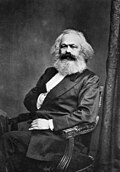

Hare Krishna Konar | |
|---|---|
হরেকৃষ্ণ কোঙার हरेकृष्ण कोंगारी | |
| File:1978615 305312579640429 709349804457241533 m.jpg | |
| Member of Central Committee of Communist Party of India (Marxist) | |
| In office 1964 - 1974 | |
| General Secretary of All India Kisan Sabha | |
| In office 1968 - 1974 | |
| Preceded by | N. G. Ranga |
| Succeeded by | Hannan Mollah |
| Minister of Land and Land Revenue, Government of West Bengal | |
| In office 1967 - 1970 | |
| Preceded by | Position Created |
| Succeeded by | Buddhadeb Bhattacharjee |
| Member of West Bengal State Committee of Communist Party of India (Marxist) | |
| In office 1964 - 1974 | |
| Member of West Bengal Legislative Assembly | |
| In office 1957 - 1972 | |
| Preceded by | Baidyanath Santal, Rash Behari Sen |
| Succeeded by | Anjali Mondal |
| Constituency | Kalna |
| Personal details | |
| Born | 5 August 1915 Kamargoria village, Raina sub-division, Bardhaman District, Bengal Presidency, British India (present-day Kamargoria village, West Bengal, India) |
| Died | 23 July 1974 (aged 58) Calcutta |
| Cause of death | Cancer |
| Citizenship | British Raj (1915–1947), Indian (1950–1974) |
| Nationality | Indian |
| Political party | Communist Party of India (Marxist) (1964 - 1974) Communist Party of India (1938 - 1964) |
| Spouse(s) | Biva Konar |
| Parent(s) | Sharatchandra Konar
(Father), Satyabala Devi (Mother) |
| Residence | Memari |
| Alma mater | Kamargoria Prathmik Bidyalay,
Memari Vidyasagar Smriti Vidyamandir, University of Calcutta |
| Occupation | Communist Leader •
politician • Minister • Revolutionary • |
| Religion | None (Atheism) Formerly (Hinduism) |
| Signature | File:Hare Krishna Konar Signature.jpg |
| Nickname(s) | Kasto, (কেষ্ট) |
| Part of a series on |
| Communism in India |
|---|
 |
| Anushilan Samiti |
|---|
 |
| Influence |
| Anushilan Samiti |
| Notable events |
| Related topics |
Hare Krishna Konar (August 5, 1915 – July 23, 1974) was an Indian politician, belonging to the Communist Party of India (Marxist) and one of the co-founders of communist party of India Marxist, who played a major role in land reforms in India and was the General Secretary of All India Kisan Sabha. He was the Minister of Land and Land Revenue in West Bengal and the Member of West Bengal Legislative Assembly. He was also the revolutionary Freedom Fighter of India for his Movement against British he was send to Cellular Jail for 6years at the age of 18.[1]
Early life
Hare Krishna Konar was the eldest son of Sharatchandra Konar and Satyabala Devi. He was born on 5 August 1915 in Kamargoria village, under Raina Police Station in Bardhaman District of Bengal in British India. Upto class 4 he used to study in Kamargoria Prathmik Bidyalay. At young age, he shifted to South Radhakantopur village of Memari with his father, mother and started education there. In 1930 while studying at Memari Vidyasagar Smriti Vidyamandir in class 9, he participated in the Indian Civil disobedience movement and was arrested for 6 months in 1930. While studying in Bangabasi College, under the University of Calcutta in 1932, at the age of 18 for 6 years he was condemned to the Cellular Jail in Andaman Islands for taking part in the Extremist Movement to uproot British Rule in India.[2][3]

Before being arrested in 1932, he was already in contact with communist leaders like Abdul Halim, Bankim Mukherjee, Bhupendranath Dutta. In Andaman jail, he met Satish Pakrashi, Narayan Ray, Somnath Lahiri, Niranjan Sengupta with many others and founded the Communist Consolidation with other communist prisoners and he was also the prominent member of Anushilan Samiti.[2][3]
After being released from jail in 1938 he met with M. N. Roy (Founder of CPI), Muzaffar Ahmed (Prominent member of CPI), Abdul Halim (Member of CPI) and earned the membership in 1938 of Communist Party of India (CPI) and from here his Communist struggles starts.[2][3]
Communist Party of India (Marxist)
He first worked among the workers in Calcutta and Howrah. After some months Comrade Benoy Chowdhury took him to Bardhaman district and he started working in the kisan (farmers) movement. In 1939, he participated in the Canal Tax protest in Bardhaman district. In 1940 he was banned by the British Government from entering Asansol, Burnpur area and later on from Bardhaman district. But he still worked from underground in Bardhaman, and he was once arrested for few months.[3]
In 1944 he was again arrested and he was banned by the government to step out of Bardhaman City. He played important role during the Ajay river Dam movement of 1943-1944 and second stage of Canal Tax protest of 1946–1947. While canvassing for elections in colliery area of Asansol he was physically assaulted by goons, and his legs were broken. In March 1948 when the CPI was banned, he was arrested immediately for 3 months. After being released he went into hiding and remained so until 1952. His chief role was maintaining communications between Kolkata, Bardhaman, Howrah and Hooghly in this time. He played an important role during the Food Movement of West Bengal in 1953, and Civil Disobedience movement in 1957, and was arrested both times. In 1962, when Sino-Indian War happened, he was arrested for a year under India Safety Act, and again for one and a half years in 1964 under the same Act.[4]
He was one of the co-founders of Communist Party of India (Marxist) when it was formed from Communist Party of India in 1964. From 1957 he was a member of the West Bengal State Council of CPI. From 1964 until his death he was a member of West Bengal State Committee of CPI(M). From 1958 he was a member of National Council of CPI and from 1964 until his death he was a member of Central Committee of CPI(M).[4][5] From 1954 until his death he was the Secretary of West Bengal Provincial Kisan Sabha (part of All India Kisan Sabha) and Member of central council of All India Kisan Sabha [CPI]. He was also the Member of Chinese Communist Party and Communist Party of Vietnam. From 1968 until his death He was the General Secretary of All India Kisan Sabha [CPI(M)].[5][6]
As an representative of the Communist Party of India, He had attended the Vietnam Communist Party's Conference in Hanoi, Vietnam in 1960; He had also attended Chinese Communist Party's Conference in Beijing, China in 1960 and The Trade Union International of Agricultural, Forestry and Plantation Worker's Conference at Nicosia, Cyprus in 1970; He attended the Communist Party of Cuba's Conference at Havana, Cuba in 1970; He attended the Lao People's Revolutionary Party's Conference at Vientiane, Laos in 1971; He attended the Communist Party of the Soviet Union's Conference at Moscow, Soviet Union (Present day Russia) in 1971; He had also attended Worker's Party of Korea's Conference at Pyongyang, North Korea in 1971; He attended Italian Communist Party's Conference at Rome, Italy in 1971; He had also attended the Czechoslovakia Communist Party's Conference at Prague, Czechoslovakia in 1972; He attended the Mexican Communist Party's Conference at Mexico City, Mexico in 1973 and Communist Party of Germany's Conference at Berlin, Germany in 1973.[6]
Land reforms
Hare Krishna Konar played a leading role in getting surplus land held by big land owners in excess of land ceiling laws and kept ‘benami’ (or false names) vested with the state. The quantum of land thus vested was around one million acres (4,000 km2) of good agricultural land. Subsequently, under the leadership of Hare Krishna Konar and Benoy Choudhury land was distributed amongst 2.4 million landless and poor farmers. It has been argued that this land reform along with Operation Barga formed the base for the Left Front victory in subsequent elections.[7]
It was a strange quirk of history that at each stage of West Bengal's two phase land reforms there was a stalwart to guide and lead the Program. One was Hare Krishna Konar, the other Benoy Choudhury Both of them were totally committed to the cause, profound believers in the principles of 'Scientific' Socialism. The fearsome volatility of Konar was necessary to remove the immobility of the administration and to break the stranglehold of the landed gentry of West Bengal on the society and the political establishment in the late sixties. The amiable Gandhian mode of accommodation of Benoy Chaudhury was equally essential in another socio-political setting to carry a large majority of people with him for the success of the massive 'Operation Barga'. Each performed his unique role to carry out land reforms in two different historical situations. Soon after the first United Front (UF) government came to power in 1967, the first arrow of the now famous Naxalbari movement was shot, killing inspector Wangeli of the West Bengal police. The countryside was seething with discontent. It was a troubled time Hare Krishna Konar became the land and land revenue minister. His talks with his old compatriot Kanu Sanyal, held in a jungle about 6km away from the Sukna forest bungalow from midnight to early morning, had failed. The new government faced a militant peasant movement. Konar was convinced that any attempt to suppress the movement by the brute force of the repressive machinery of the state would help spread the movement through underground channels. Being a practitioner of the militant peasant movement himself, he knew the fish in water tactics of armed partisan action. He was determined to evaporate the water by weaning away the landless and land-poor peasantry by substantially meeting their land hunger. And that could be done only through vesting of ceiling surplus land held clandestinely by the landed gentry of the state. Shortly after he assumed power Hare Krishna Konar had me appointed as director of land records and surveys and put in charge of unearthing land held 'Benami' in excess of the ceiling and vesting them in the state through due process of law.[8]
Ingenius strategy of Konar and Choudhury:-
Though the UF came to power with tremendous electoral support, it had to function strictly within the rigid parameters of the IndianConstitution, the established basic laws, Judicial review of executive action and set legal and administrative procedures and practises. Any threat to any of the established parameters would have led to a summary dismissal by the not so friendly central government. The political genius of Hare Krishna Konar lay in his ability to play his own ball game with the same set of rules which were apparently set against it. The Constitution of India guarantees the right to form associations and unions and to assemble peaceably. The Indian Evi-Dence Act permits disbelieving of documentary evidence on the strength of overwhelmingly reliable oral evidence. The Criminal Procedure Code (CrPC)(u/s 110) allows some sort of public participation for gathering evidence against a person allegedly engaged in "bad livelihood" in order to bind him down for good behaviour. Nowhere is it stated that the restraining powers under the CrPC should always be used against the peasantry and workers. If the agricultural workers and share-croppers assemble peacefully to espouse a cause, if public order was threatened by landowners, the latter could be restrained under the CrPC in the interest of maintenance of public order. Combine the essence of these constitutional and legal rights and procedures and you have the "Konar" recipe of legal reform with popular participation. It was so simple, so bold and so novel. Konar did not approve of the seizure and occupation by force of private property by peasants, even though such lands had in many cases been held 'benami'. Peasants, according to him, were conservative by nature. In their psyche private property was inviolable. Having lost their land through the process of exploitation, they hankered for their land as their own property. Hence illegal occupation of even illegally-held land would not absolve them of the sense of guilt for an illegal and even immoral action. Therefore they would not have the courage and determination to fight for their rights if threatened with eviction in a changed political situation. Konar, therefore, favoured the legal way of vesting land in the state. Once the land became the property of the state, what would happen to it would be a matter of state policy and no individual's property right would be involved. It may look strange for a revolutionary, but being a hard-headed realist, it made sense to Konar.[8]
Barga Operation was his notable contribution to the people from Left Front Government of West Bengal. To begin with, group meetings between Officials and Bargadars were organized during "settlement camps" (also called "Reorientation camps"), where the bargadars could discuss their grievances. The first such camp was held at Halusai in Polba taluk in Hooghly district from 18 to 20 May 1978. In noted camp two Adibashi Borgaders objected procedure adopted by the official for Barga Operation. They suggested to start it organising people in the field instead of sitting in the houses of rural rich people or the places dominated by them. Having that report Hare Krishna Konar immediately reorganised action plan and successful Barga Operation was done.[6]
Achievements
He won the elections to the state assembly from Kalna (Vidhan Sabha constituency) in 1957 - 1971.[9]
He was Minister for Land and Land Revenue in the United Front ministries in 1967, and 1969-1970.[2][6]
He was the General Secretary of All India Kisan Sabha from 1968 to 1974.
He was the Member of Central Committee of Communist Party of India (Marxist) from 1964 - 1974.
He was the Member of West Bengal Legislative Assembly from Kalna in 1957 to 1972.
He is one of the co-founders of Communist Party of India (Marxist).
He was the Founder of Communist Consolidation.
He was the main leader to successfully granted the Land Reform system in India.[10]
He was the Member of West Bengal State Committee of Communist Party of India (Marxist)from 1964 - 1974.
Death
A great loss for Communist Party of India (Marxist) on 23 July 1974 in Kolkata only at the age of 58[6]Legendary politician Hare Krishna Konar died due to his cancer. His sacrifice for Communist Party of India (Marxist) will never be forgoted.[11]
Album
Some old pictures of Hare Krishna Konar[12]
See also
• Communist Party of India (Marxist), Founder.
• Communist Consolidation, Founder.
• Left Front (West Bengal), First Left Front Government.
• Bangla Congress, History.
• Land reform in India, History.
• Andaman Cellular Jail, Notable Freedom Fighters.
• Bangabasi College, Notable Alumni.
• List of University of Calcutta people, Alumni Others.
• Benoy Choudhury, Companion and Friend.
• Benoy Krishna Konar, Sibling.
References
- ↑ "Remembrance:konar". ganashakti.tripod.com. Retrieved 31 March 2020.
- ↑ 2.0 2.1 2.2 2.3 Sansad Bangla Charitbhidhan, p. 622, ISBN 81-85626-65-0
- ↑ 3.0 3.1 3.2 3.3 Nirbachito Rochona Sonkolon Harekrishna Konar. Kolkata: National Book Agency. 1978. p. 7.
- ↑ 4.0 4.1 Nirbachito Rochona Sonkolon Harekrishna Konar. Kolkata: National Book Agency. 1978. p. 8.
- ↑ 5.0 5.1 "Present Stage of Peasant Movement". Communist Party of India (Marxist). 11 August 2015. Retrieved 31 March 2020.
- ↑ 6.0 6.1 6.2 6.3 6.4 Nirbachito Rochona Sonkolon Harekrishna Konar. Kolkata: National Book Agency. 1978. p. 9.
- ↑ "The story of a pretender". The Statesman, 9 February 2010. Archived from the original on 7 August 2011. Retrieved 12 November 2010.
- ↑ 8.0 8.1 Bandyopadhyay, D. (2000). "Land Reform in West Bengal: Remembering Hare Krishna Konar and Benoy Chaudhury". Economic and Political Weekly. 35 (21/22): 1795–1797. ISSN 0012-9976.
- ↑ "Statistical Reports of Assembly Elections". General Election Results and Statistics. Election Commission of India. Archived from the original on 5 October 2010. Retrieved 12 November 2010.
- ↑ "Present Stage of Peasant Movement". Cpim.org. 11 August 2015. Retrieved 2 January 2022.
- ↑ "The Birth Centenary of Comrade HareKrishna Konar | Peoples Democracy". Peoplesdemocracy.in. Retrieved 2 January 2022.
- ↑ "The Tribune, Chandigarh, India - Punjab". www.tribuneindia.com. Retrieved 11 January 2022.


.jpg)
.jpg)

.jpg)


.jpg)
.jpg)
.jpg)
.jpg)
.jpg)
.jpg)
.jpg)


- Pages using the JsonConfig extension
- 1974 deaths
- 1915 births
- West Bengal MLAs 1957–1962
- West Bengal MLAs 1962–1967
- West Bengal MLAs 1967–1969
- West Bengal MLAs 1969–1971
- West Bengal MLAs 1971–1972
- Communist Party of India (Marxist) politicians from West Bengal
- People from Purba Bardhaman district
- Bengali communists