


m Removed empty portal template using script |
No edit summary |
||
| Line 1: | Line 1: | ||
{{ | {{short description|2003 Indian film directed by Rajkumar Santoshi}} | ||
{{Use Indian English|date=March 2008}} | {{Use Indian English|date=March 2008}} | ||
{{Use dmy dates|date=March 2018}} | {{Use dmy dates|date=March 2018}} | ||
| Line 6: | Line 6: | ||
| image = The Legend of Bhagat Singh.jpg | | image = The Legend of Bhagat Singh.jpg | ||
| caption = Theatrical release poster | | caption = Theatrical release poster | ||
| alt = Theatrical release poster of ''The Legend of Bhagat Singh'' featuring Ajay | | alt = Theatrical release poster of ''The Legend of Bhagat Singh'' featuring Ajay Devgan as the titular character | ||
| director = [[Rajkumar Santoshi]] | | director = [[Rajkumar Santoshi]] | ||
| producer = {{Unbulleted_list|Kumar Taurani|Ramesh Taurani}} | | producer = {{Unbulleted_list|Kumar Taurani|Ramesh Taurani}} | ||
| writer = | | writer = '''Dialogues''':<br/>[[Piyush Mishra]] (Hindi)<br/>[[Anjum Rajabali]] (English) | ||
| starring = {{ | | screenplay = Rajkumar Santoshi | ||
| story = Rajkumar Santoshi | |||
| starring = {{unbulleted list|[[Ajay Devgn]]|[[Sushant Singh]]|[[Akhilendra Mishra]]|[[D. Santosh]]|[[Amrita Rao]]}} | |||
| music = [[A. R. Rahman]] | | music = [[A. R. Rahman]] | ||
| cinematography = [[K. V. Anand]] | | cinematography = [[K. V. Anand]] | ||
| editing = V. N. Mayekar | | editing = V. N. Mayekar | ||
| distributor = [[Tips Industries]] | | distributor = [[Tips Industries]] | ||
| released = {{Film date|df=yes| | | released = {{Film date|df=yes|2003|06|07}} | ||
| runtime = | | runtime = 156 minutes<ref>{{Cite web |title=The Legend Of Bhagat Singh |url=https://www.bbfc.co.uk/release/the-legend-of-bhagat-singh-film-qxnzzxq6vlgtnziyotiz |url-status=dead |archive-url=https://web.archive.org/web/20220201100059/https://www.bbfc.co.uk/release/the-legend-of-bhagat-singh-film-qxnzzxq6vlgtnziyotiz |archive-date=1 February 2022 |access-date=1 February 2022 |website= [[British Board of Film Classification]] }}</ref> | ||
| country = India | |||
| language = {{ubl|Hindi|English}} | |||
| gross = {{estimation}} {{INR|12.9 crore|link=yes}}{{efn|name=budget}} | |||
| budget = {{INR|20 crore|link=yes}}{{efn|name=budget}} | |||
}} | }} | ||
'''''The Legend of Bhagat Singh''''' is a | '''''The Legend of Bhagat Singh''''' is a 2003 Indian [[Biographical film|biographical drama]] film directed by [[Rajkumar Santoshi]]. The film is based on [[Bhagat Singh]], a [[Revolutionary movement for Indian independence|revolutionary]] who fought for [[Indian independence movement|Indian independence]] along with fellow members of the [[Hindustan Socialist Republican Association]]. It features [[Ajay Devgn]] as the titular character along with [[Sushant Singh]], [[Akhilendra Mishra]] and [[D. Santosh]] as the other lead characters. [[Raj Babbar]], [[Farida Jalal]] and [[Amrita Rao]] play supporting roles. The film chronicles Singh's life from his childhood where he witnesses the [[Jallianwala Bagh massacre]] until the day he was hanged to death before the official trial dated 24 March 1931. | ||
The film was produced by Kumar and Ramesh Taurani's [[Tips Industries]] on a budget of [[Indian rupee sign|{{INR}}]]200–250 million (about US$4.2–5.2 million in 2002).{{efn|name=exchange2002}} The story and dialogue were written by Santoshi and [[Piyush Mishra]] respectively, while [[Anjum Rajabali]] drafted the screenplay. [[K. V. Anand]], V. N. Mayekar and [[Nitin Chandrakant Desai]] were in charge of the cinematography, editing and production design respectively. [[Principal photography]] took place in [[Agra]], [[Manali, Himachal Pradesh|Manali]], [[Mumbai]] and [[Pune]] from January to May 2002. The soundtrack and film score | The film was produced by Kumar and Ramesh Taurani's [[Tips Industries]] on a budget of [[Indian rupee sign|{{INR}}]]200–250 million (about US$4.2–5.2 million in 2002).{{efn|The average exchange rate in 2002 was 48.23 [[Indian rupee]]s ({{INR}}) per 1 US dollar (US$).<ref>{{Cite web |date=18 May 2012 |title=Rupee vs dollar: From 1990 to 2012 |url=http://inwww.rediff.com/business/slide-show/slide-show-1-rupee-vs-dollar-in-the-last-2-decades/20120518.htm?print=true |url-status=dead |archive-url=https://web.archive.org/web/20150321115240/http://inwww.rediff.com/business/slide-show/slide-show-1-rupee-vs-dollar-in-the-last-2-decades/20120518.htm?print=true |archive-date=21 March 2015 |access-date=20 March 2018 |website=[[Rediff.com]] |df=dmy-all}}</ref>|name=exchange2002}} The story and dialogue were written by Santoshi and [[Piyush Mishra]] respectively, while [[Anjum Rajabali]] drafted the screenplay. [[K. V. Anand]], V. N. Mayekar and [[Nitin Chandrakant Desai]] were in charge of the cinematography, editing and production design respectively. [[Principal photography]] took place in [[Agra]], [[Manali, Himachal Pradesh|Manali]], [[Mumbai]] and [[Pune]] from January to May 2002. The soundtrack and film score were composed by [[A. R. Rahman]], with the songs "Mera Rang De Basanti" and "[[Sarfaroshi Ki Tamanna]]" being well received in particular. | ||
''The Legend of Bhagat Singh'' was released on 7 June 2002 to generally positive reviews, with the direction, story, screenplay, technical aspects and the performances of | ''The Legend of Bhagat Singh'' was released on 7 June 2002 to generally positive reviews, with the direction, story, screenplay, technical aspects, and the performances of Devgan and Sushant receiving the most attention. However, the film [[Box-office bomb|underperformed]] at the box office, grossing only {{INR}}129 million (US$2.7 million in 2002).{{efn|name=exchange2002}} It went on to win two [[National Film Awards]] – [[National Film Award for Best Feature Film in Hindi|Best Feature Film in Hindi]] and [[National Film Award for Best Actor|Best Actor]] for Devgn – and three [[Filmfare Awards]] from eight nominations. | ||
The film's release coincided with another film based on Bhagat Singh directed by [[Guddu Dhanoa]] and titled ''[[23rd March 1931: Shaheed]]''. Both films failed at the box office.<ref>{{Cite web|url=https://www.rediff.com/movies/2002/may/03bhag.htm|title=rediff.com: Movies: Which Bhagat Singh do we choose?|website=rediff.com}}</ref> | |||
== Plot == | == Plot == | ||
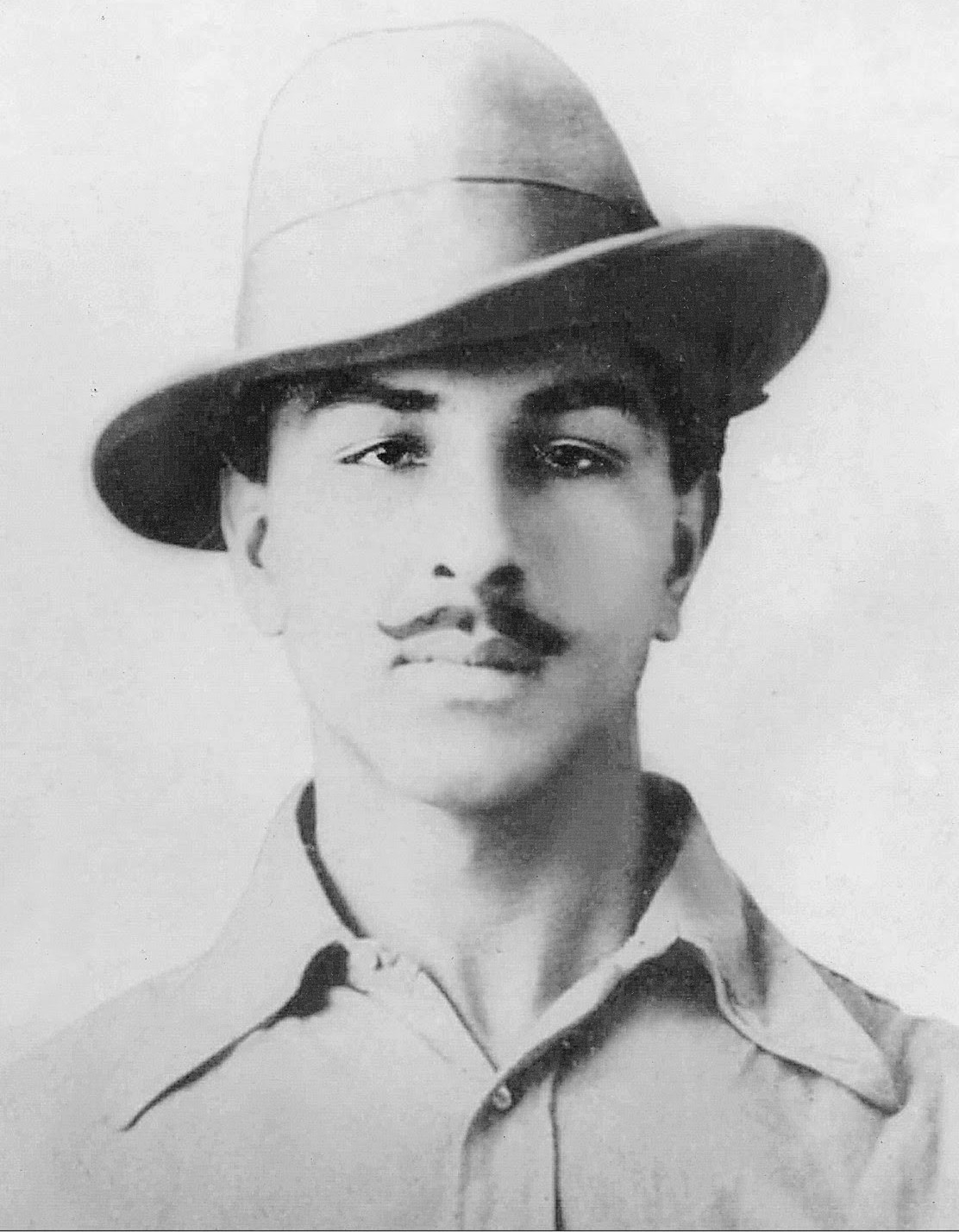
[[File:Bhagat Singh 1929.jpg|thumb|The film is about [[Bhagat Singh]], a [[Revolutionary socialism|socialist revolutionary]] who fought for [[Indian independence movement|Indian independence]].<ref>{{citation |last=Gupta|first=Amit Kumar |title=Defying Death: Nationalist Revolutionism in India, 1897–1938 |journal=Social Scientist |volume=25 |issue=9/10 |date=September–October 1997 |pages=3–27 |jstor=3517678|doi=10.2307/3517678 }} {{subscription required}}</ref>]] | [[File:Bhagat Singh 1929.jpg|thumb|The film is about [[Bhagat Singh]], a [[Revolutionary socialism|socialist revolutionary]] who fought for [[Indian independence movement|Indian independence]].<ref>{{citation |last=Gupta|first=Amit Kumar |title=Defying Death: Nationalist Revolutionism in India, 1897–1938 |journal=Social Scientist |volume=25 |issue=9/10 |date=September–October 1997 |pages=3–27 |jstor=3517678|doi=10.2307/3517678 }} {{subscription required}}</ref>]][[File:Bhagat Singh's execution Lahore Tribune Front page.jpg|thumb|[[The Tribune (India)|The Tribune (Lahore)]]'s front page headline on the 25th of March 1931: "BHAGAT SINGH, RAJGURU and SUKHDEV EXECUTED"]] | ||
[[Bhagat Singh]] | [[Bhagat Singh]] was born in [[British Raj|British India]] in 1907. From childhood, he witnesses numerous atrocities committed on fellow Indians by the British, who came to trade under the guise of the [[East India Company]] and ended up controlling most of the nation. Bhagat takes a solemn vow to free India from British rule after witnessing the aftermath of the [[Jallianwala Bagh massacre]]. Soon after the massacre, he learns of [[Mahatma Gandhi]]'s [[satyagraha]] policies, and is especially impressed by his call to launch the [[Non-cooperation movement (1919–1922)|non-cooperation movement]], which saw thousands of people burning British-made clothing and giving up school, college studies, and government jobs. In 1922, Gandhi calls off the movement after the [[Chauri Chaura incident]]. Undaunted, Bhagat decides to be a revolutionary. As an adult, joins the [[Hindustan Socialist Republican Association|Hindustan Republic Association]] in its struggle for India's independence, ending up in prison for it. Bhagat's father, Kishen, bails him out so that he can get him to run a [[Dairy farming|dairy farm]] and marry a girl named Mannewali. Bhagat runs away from home leaving a note saying that his love for the country comes first. | ||
When [[Lala Lajpat Rai]] is beaten to death by the police while protesting against the [[Simon Commission]], Bhagat, along with [[Shivaram Rajguru]], [[Sukhdev Thapar]] and [[Chandra Shekhar Azad]], | When [[Lala Lajpat Rai]] is beaten to death by the police while protesting against the [[Simon Commission]], Bhagat, along with [[Shivaram Rajguru]], [[Sukhdev Thapar]] and [[Chandra Shekhar Azad]], carry out the assassination of a police officer named Saunders. Later on in the year 1929, when the British propose the Trade Disputes and Public Safety Bills, Bhagat, along with [[Batukeshwar Dutt]], initiate a bombing at [[Old Parliament House, New Delhi|Council House in New Delhi]]. He and Dutt [[Bhagat Singh#Delhi Assembly bombing and arrest|throw the bombs]] on empty benches thereby not killing anyone. They are subsequently arrested and [[In open court|tried publicly]]. Bhagat then launches his [[Bhagat Singh#Assembly case trial|much publicised ideas of revolution]], stating that he wanted to tell the world know about the revolutionaries himself rather than let the British brand them as violent people, citing this as the reason for bombing the assembly. Bhagat soon becomes as popular as Gandhi among the masses, especially the younger generation, labourers and farmers. | ||
In [[Central Jail Lahore | In [[Central Jail Lahore]], Bhagat and all of the other fellow prisoners, including Thapar and Rajguru, undertake a 63-day [[hunger strike]] to improve the conditions of Indian political prisoners. However, the police try brutal methods to suppress the hunger strike by canings and forced feedings. Meanwhile, Azad, whom the British had repeatedly failed to capture, is ambushed at the [[Alfred Park]] in [[Allahabad]] on 27 February 1931. The police surround the entire park leading to a shootout; refusing to be captured by the British, Azad commits suicide with the last remaining bullet in his [[Colt Model 1903 Pocket Hammerless|Colt pistol]]. | ||
Fearing the growing popularity of the hunger strike amongst the | Fearing the growing popularity of the hunger strike amongst the people nationwide, [[Edward Wood, 1st Earl of Halifax|Lord Irwin]] orders the re-opening of the Saunders' murder case, which leads to death sentences being imposed on Bhagat, Thapar and Rajguru. The Indians hope that Gandhi will use his [[Gandhi–Irwin Pact|pact with Irwin]] as a bargaining chip to save Bhagat, Thapar and Rajguru's lives. Irwin refuses Gandhi's request for their release. Gandhi reluctantly agrees to sign a pact which includes the clause: "Release of political prisoners except for the ones involved in violence". Bhagat, Thapar and Rajguru are hanged in secrecy on 23 March 1931. | ||
== Cast == | == Cast == | ||
<!-- AS PER THE CLOSING CREDITS OF THE FILM --> | <!-- AS PER THE CLOSING CREDITS OF THE FILM --> | ||
{{div col|colwidth= | {{div col|colwidth=20em}} | ||
* [[Ajay | * [[Ajay Devgan]] as [[Bhagat Singh]] | ||
* [[Sushant Singh]] as [[Sukhdev Thapar]] | * [[Sushant Singh]] as [[Sukhdev Thapar]] | ||
* [[Akhilendra Mishra]] as [[Chandra Shekhar Azad]] | |||
* [[D. Santosh]] as [[Shivaram Rajguru]] | * [[D. Santosh]] as [[Shivaram Rajguru]] | ||
* [[ | * [[Bhaswar Chatterjee]] as [[Batukeshwar Dutt]] | ||
* [[Raj Babbar]] as | * [[Raj Babbar]] as Kishen Singh Sandhu, Bhagat's father | ||
* [[Farida Jalal]] as Vidyawati Kaur | * [[Farida Jalal]] as Vidyawati Kaur Sandhu, Bhagat's mother | ||
* [[Amrita Rao]] as Mannewali | * [[Amrita Rao]] as Mannewali, the girl Bhagat's family wanted him to marry | ||
* [[Mukesh Tiwari]] as Khan Bahadur Mohammad Akbar, Deputy | * [[Mukesh Tiwari]] as Khan Bahadur Mohammad Akbar, Deputy jailor at [[Kot Lakhpat Jail|Lahore Central Jail]] | ||
* Surendra Rajan as [[Mahatma Gandhi]] | * Surendra Rajan as [[Mahatma Gandhi|Mohandas Karamchand "M. K." Gandhi]] alias "Mahatma Gandhi" | ||
* [[ | * Saurabh Dubey as Pandit [[Jawaharlal Nehru]] | ||
* | * [[Swaroop Kumar]] as [[Motilal Nehru]] | ||
* Arun Patwardhan as [[Madan Mohan Malviya]] | |||
* Kenneth Desai as [[Subhas Chandra Bose|Subhash Chandra Bose]] | |||
* [[Sitaram Panchal]] as [[Lala Lajpat Rai]] | * [[Sitaram Panchal]] as [[Lala Lajpat Rai]] | ||
* [[ | * Amit Dhawan as [[Bhagwati Charan Vohra|Bhagwati Charan Vora]] | ||
* [[ | * [[Harsh Khurana]] as Jai Gopal | ||
*[[ | * Kapil Sharma as [[Shiv Verma]] | ||
* | * Indrani Banerjee as [[Durgawati Devi]] a.k.a. "''Durga Bhabhi''" | ||
* [[ | * [[Amitabh Bhattacharjee]] as [[Jatindra Nath Das]] a.k.a. "Jatin Das" | ||
* Shish Khan as Prem Dutt | |||
* Sanjay Sharma as Ajay Ghosh | |||
* Raja Tomar as [[Mahavir Singh (revolutionary)|Mahabir Singh]] | |||
* Deepak Kumar Bandhu as Ramsaran Das | |||
* Niraj Shah as Gaya Prasad | |||
* Pradeep Bajpai as [[Pandit Kishori Lal|Kishori Lal]] | |||
* Aditya Verma as Des Raj | |||
* Romie Jaspal as [[Sachindranath Sanyal]] | |||
* [[Sunil Grover]] as [[Jaidev Kapoor]] | * [[Sunil Grover]] as [[Jaidev Kapoor]] | ||
* [[Abir Goswami]] as | * [[Abir Goswami]] as Phanindra Nath Ghosh | ||
* Manu Malik as | * Pramod Pathak as Mahour | ||
* Aashu Mohil as [[Hans Raj Vohra]] | |||
* Manu Malik as Agya Ram | |||
* Navin Bhaskar as Kawalnath Tiwari | |||
* Shreyas Pandit as Surendra Nath Pandey | |||
* Rakesh Awan as Markand | |||
* Kiran Randhawa as Police Officer | |||
* Ganesh Yadav as [[Ram Prasad Bismil]] | * Ganesh Yadav as [[Ram Prasad Bismil]] | ||
* Tony Mirchandani as [[Ashfaqulla Khan]] | * Tony Mirchandani as [[Ashfaqulla Khan]] | ||
* Padam Singh as [[Thakur Roshan Singh]] | |||
* Ashok Sharma as [[Rajendra Nath Lahiri]] | |||
* Mahesh Raja as Sachindranath Bakshi | |||
* Vikky as Mukundilal | |||
* Piyush Chakravorthy as Banwarilal | |||
* Vasudevan as Murari Sharma | |||
* Narendra Rawal as [[Manmath Nath Gupta]] | |||
* Shamsher Singh as Arjan Singh | |||
* Oshima Rekhi as Jai Kaur | |||
* Sukhmani Kohli as Amar Kaur | |||
* Ankush as Kulbir Singh | |||
* Karanbir Singh as Kultar Singh | |||
* Renu Soni as Baddi Chachi | |||
* Anita as Choti Chachi | |||
* Gurucharan Channi as Chattar Singh | |||
* Mahajan Prashant as Justice Rai Sahib | |||
* Hayat Asif as Justice [[Asaf Ali]] | |||
* Sardar Sohi as Leader at [[Jallianwala Bagh]] | |||
* Rajesh Tripathi as Veerbhadra Tiwari | * Rajesh Tripathi as Veerbhadra Tiwari | ||
* [[Lalit Tiwari]] as | * [[Lalit Tiwari]] as Professor [[Acharya Balakrishna]] | ||
* [[Shehzad Khan]] as | * [[Shehzad Khan]] as Horse-cart driver Khairu | ||
* [[Gil Alon]] as [[Viceroy and Governor-General of India|Viceroy]] [[Edward Wood, 1st Earl of Halifax|Lord Irwin]] | * [[Gil Alon]] as [[Viceroy and Governor-General of India|Viceroy]] [[Edward Wood, 1st Earl of Halifax|Lord Irwin]] | ||
* Ryan Jonathan as [[Herbert William Emerson|Herbert Emerson]], Home Member, [[His Majesty's Government]] | * Ryan Jonathan as [[Herbert William Emerson|Herbert Emerson]], Home Member, [[Government of the United Kingdom|His Majesty's Government]] | ||
* Conrad as Assistant Superintendent of Police John P. Saunders | * Conrad as Assistant Superintendent of Police John P. Saunders | ||
* Tim as [[ | * Tim as [[Superintendent of police (India)|Superintendent of Police]] [[James Alexander Scott]] | ||
* Richard as [[Reginald Dyer]], who ordered Gurkha soldiers to open fire on an unarmed gathering of people at | * Richard as [[Colonel (United Kingdom)|Colonel]] [[Reginald Dyer]], who ordered his [[Nepalis|Nepalese]] soldiers ([[Gurkha]]s) and Indian soldiers ([[sepoy]]s) to [[Jallianwala Bagh massacre|open fire on an unarmed gathering of people at Jallianwala Bagh in 1919]] | ||
*Nakshdeep Singh as young Bhagat | |||
{{div col end}} | {{div col end}} | ||
== Production == | == Production == | ||
=== Development === | === Development === | ||
In 1998, the film director [[Rajkumar Santoshi]] read several books on the socialist revolutionary, Bhagat Singh, and felt that a [[biographical film|biopic]] would help revive interest in him.{{Sfn|Tips Official|2011|loc=Clip from 01:57 to 02:27}} Although | In 1998, the film director [[Rajkumar Santoshi]] read several books on the socialist revolutionary, Bhagat Singh, and felt that a [[biographical film|biopic]] would help revive interest in him.{{Sfn|Tips Official|2011|loc=Clip from 01:57 to 02:27}} Although S. Ram Sharma made a film about Bhagat in 1965, titled ''[[Shaheed (1965 film)|Shaheed]]'', Santoshi felt that despite being "a great source of inspiration on the lyrics and music front", it did not "dwell on Bhagat Singh's ideology and vision".<ref name="Eyes">{{Cite web |last=Lalwani |first=Vickey |date=18 May 2002 |title=A revolution in his eyes |url=http://www.rediff.com/movies/2002/may/18bhagat.htm |url-status=live |archive-url=https://web.archive.org/web/20180329075440/http://www.rediff.com/movies/2002/may/18bhagat.htm |archive-date=29 March 2018 |access-date=29 March 2018 |website=Rediff.com}}</ref> In August 2000,{{Sfn|Tips Official|2011|loc=Clip from 01:22 to 01:24}} the screenwriter [[Anjum Rajabali]] mentioned to Santoshi about his work on [[Har Dayal]], whose revolutionary activities inspired [[Udham Singh]] (on whom a [[Shaheed Udham Singh (film)|Punjabi film]] too had been released earlier that year).{{efn|Udham Singh was a revolutionary responsible for the assassination of [[Michael O'Dwyer]], the former [[lieutenant governor]] of [[Punjab Province (British India)|Punjab]] as a response to the [[Jallianwala Bagh massacre]] in 1919.<ref>{{Cite magazine |last=Swami |first=Praveen |date=November 1997 |title=Jallianwala Bagh revisited |url=https://frontline.thehindu.com/static/html/fl1422/14220500.htm |magazine=[[Frontline (magazine)|Frontline]] |volume=14 |issue=22 |archive-url=https://archive.today/20190505114741/https://frontline.thehindu.com/static/html/fl1422/14220500.htm |archive-date=5 May 2019 |access-date=5 May 2019 |url-status=live}}</ref>}} Santoshi then persuaded Rajabali to draft a script based on Bhagat's life as he was inspired by Udham Singh.<ref name="Legends">{{Cite web |last=Taliculam |first=Sharmila |date=15 September 2000 |title=Legends are made of these! |url=http://www.rediff.com/movies/2000/sep/15bhagat.htm |url-status=live |archive-url=https://web.archive.org/web/20180328152147/http://www.rediff.com/movies/2000/sep/15bhagat.htm |archive-date=28 March 2018 |access-date=28 March 2018 |website=Rediff.com}}</ref> | ||
Santoshi gave Rajabali a copy of ''Shaheed Bhagat Singh'', | Santoshi gave Rajabali a copy of ''Shaheed Bhagat Singh'', Kuldeep Khullar's biography of the revolutionary.<ref name="Quest">{{Cite web |last=Rajabali |first=Anjum |title=Why Bhagat Singh? A personal quest |url=http://www.legendofbhagatsingh.com/why.htm |archive-url=https://web.archive.org/web/20020602011737/http://www.legendofbhagatsingh.com/why.htm |archive-date=2 June 2002 |access-date=28 March 2018 |website=Legendofbhagatsingh.com}}</ref><ref>{{Cite book |last=Khullar |first=K. K. |url=https://books.google.com/books?id=4oEeAAAAMAAJ |title=Shaheed Bhagat Singh |publisher=Hem Publishers |year=1981 |location=[[New Delhi]] |oclc=644455912}}</ref> Rajabali said that reading the book "created an intense curiosity in me about the mind of this man. I definitely wanted to know more about him." His interest in Bhagat intensified after he read ''The Martyr: Bhagat Singh's Experiments in Revolution'' (2000) by journalist [[Kuldip Nayar]]. The following month, Rajabali formally began his research on Bhagat while admitting to Santoshi that it was "a difficult task". Gurpal Singh, a [[Film and Television Institute of India]] graduate, and internet blogger Sagar Pandya assisted him.<ref name="Quest" /> Santoshi received input from Kultar Singh, Bhagat's younger brother, who told the director he would have his full co-operation if the film accurately depicted Bhagat's ideologies.{{Sfn|Tips Official|2011|loc=Clip from 01:35 to 01:56}} | ||
Rajabali wanted to "recreate the world that Bhagat Singh lived in", and his research required him to "not only understand the man, but also the influences on him, the politics of that era".<ref name="Quest" /> In an interview with Sharmila Taliculam of [[Rediff.com]] in the year 2000, Rajabali said that the film would "deal with Bhagat Singh, the man, rather than the freedom fighter".<ref name="Legends" /> Many aspects of Bhagat's life, including his relationship with fiancée Mannewali, were derived from [[Piyush Mishra]]'s 1994 play ''Gagan Damama Bajyo''; Mishra was subsequently credited with writing the film's dialogues.<ref>{{Cite news |last=K |first=Kannan |date=1 July 2002 |title=The play which inspired a film |work=[[The Hindu]] |url=http://www.thehindu.com/thehindu/lf/2002/07/01/stories/2002070105790200.htm |url-status=dead |access-date=28 March 2018 |archive-url=https://web.archive.org/web/20180328171827/http://www.thehindu.com/thehindu/lf/2002/07/01/stories/2002070105790200.htm |archive-date=28 March 2018}}</ref> | Rajabali wanted to "recreate the world that Bhagat Singh lived in", and his research required him to "not only understand the man, but also the influences on him, the politics of that era".<ref name="Quest" /> In an interview with Sharmila Taliculam of [[Rediff.com]] in the year 2000, Rajabali said that the film would "deal with Bhagat Singh, the man, rather than the freedom fighter".<ref name="Legends" /> Many aspects of Bhagat's life, including his relationship with fiancée Mannewali, were derived from [[Piyush Mishra]]'s 1994 play ''Gagan Damama Bajyo''; Mishra was subsequently credited with writing the film's dialogues.<ref>{{Cite news |last=K |first=Kannan |date=1 July 2002 |title=The play which inspired a film |work=[[The Hindu]] |url=http://www.thehindu.com/thehindu/lf/2002/07/01/stories/2002070105790200.htm |url-status=dead |access-date=28 March 2018 |archive-url=https://web.archive.org/web/20180328171827/http://www.thehindu.com/thehindu/lf/2002/07/01/stories/2002070105790200.htm |archive-date=28 March 2018}}</ref> | ||
| Line 88: | Line 126: | ||
=== Casting === | === Casting === | ||
[[Sunny Deol]] was initially cast as Bhagat, but he left the project owing to schedule conflicts and differences with Santoshi | [[Sunny Deol]] was initially cast as Bhagat Singh, but he left the project owing to schedule conflicts and differences with Santoshi.<ref>{{Cite web |last=Surindernath |first=Nisha |date=September 2001 |title=Director's special |url=https://www.filmfare.com/site/september2001/ivw7.html |url-status=dead |archive-url=https://web.archive.org/web/20020213164200/http://www.filmfare.com/site/september2001/ivw7.html |archive-date=13 February 2002 |access-date=29 March 2018 |website=[[Filmfare]] |df=dmy-all}}</ref> Santoshi then preferred to cast new faces instead of established actors but was not pleased with the performers who auditioned.<ref name="Legends" /><ref name="Devgn Bhagat">{{Cite web |last=Lalwani |first=Vickey |date=4 June 2002 |title=Who was Bhagat Singh? |url=http://m.rediff.com/movies/2002/jun/04ajay.htm |url-status=live |archive-url=https://web.archive.org/web/20180329084522/http://m.rediff.com/movies/2002/jun/04ajay.htm |archive-date=29 March 2018 |access-date=29 March 2018 |website=Rediff.com}}</ref> [[Aamir Khan]] was also offered the role, but he declined, saying he wasn't young enough for the part.<ref>{{Cite web |title=Aamir Khan recalls his decision to reject The Legend of Bhagat Singh: “I told Rajkumar Santoshi to cast some young boy in his early twenties” |url=https://www.bollywoodhungama.com/news/features/aamir-khans-recalls-decision-reject-legend-bhagat-singh-told-rajkumar-santoshi-cast-young-boy-early-twenties/#:~:text=his%20early%20twenties%E2%80%9D-,Aamir%20Khan%20recalls%20his%20decision%20to%20reject%20The%20Legend%20of,boy%20in%20his%20early%20twenties%E2%80%9D&text=Khan's%20suggestion%20to%20cast%20a,the%20role%20to%20Ajay%20Devgn. |access-date=29 October 2024 |archive-date=10 October 2024 |archive-url=https://web.archive.org/web/20241010064541/https://www.bollywoodhungama.com/news/features/aamir-khans-recalls-decision-reject-legend-bhagat-singh-told-rajkumar-santoshi-cast-young-boy-early-twenties/#:~:text=his%20early%20twenties%E2%80%9D-,Aamir%20Khan%20recalls%20his%20decision%20to%20reject%20The%20Legend%20of,boy%20in%20his%20early%20twenties%E2%80%9D&text=Khan's%20suggestion%20to%20cast%20a,the%20role%20to%20Ajay%20Devgn. |url-status=live }}</ref> [[Ajay Devgn]] (then known as Ajay Devgan) was finally chosen for the lead character because Santoshi felt he had "the eyes of a revolutionary. His introvert nature conveys loud and clear signals that there is a volcano inside him ready to burst."<ref name="Eyes" /> After Devgn performed a [[screen test]] dressed as Bhagat, Santoshi was "pleasantly surprised" to see Devgn's face closely resemble Singh's and cast him in the part. ''The Legend of Bhagat Singh'' marked Devgn's second collaboration with Santoshi after ''[[Lajja (film)|Lajja]]''.{{Sfn|Tips Official|2011|loc=Clip from 05:52 to 06:12}} Devgn called the film "the most challenging assignment" in his career.<ref name="Eyes" /> He had not watched ''Shaheed'' before signing up for the project. To prepare for the role, Devgn studied all the references Santoshi and Rajabali had procured to develop the film's script. He also lost weight to more closely resemble Bhagat.<ref name="Devgn Bhagat" /><ref>{{Cite news |last=A. Siddiqui |first=Rana |date=28 October 2002 |title=Ajay Devgan: Little variety in Hindi films |url=http://www.thehindu.com/thehindu/mp/2002/10/28/stories/2002102800520200.htm |url-status=dead |access-date=29 March 2018 |archive-url=https://web.archive.org/web/20180329092522/http://www.thehindu.com/thehindu/mp/2002/10/28/stories/2002102800520200.htm |work=[[The Hindu]] |archive-date=29 March 2018}}</ref> | ||
{{ | {{Blockquote|text=Whatever we have read in school and learnt in history is not even 1% of the kind of person he [Bhagat] was. I don't think he got his due ... When Rajkumar Santoshi narrated the script to me, I was taken aback because this man had done so much and his motive was not just independence of India. He had predicted the challenges that we face in our country today. From riots to corruption, he had predicted that and he wanted to fight that.{{Sfn|Tips Official|2011|loc=Clip from 06:25 to 07:00}}|author= Devgn on his perception of Bhagat}} | ||
Santoshi chose [[Akhilendra Mishra]] to play Azad as he also resembled his character. In addition to reading Shiv Verma's ''Sansmritiyan'', Mishra read Bhagwan Das Mahore's and Sadashiv Rao Malkapurkar's accounts of the revolutionary. Because of his astrological beliefs, he even obtained Azad's horoscope to determine his personality. In an interview with Rediff.com's Lata Khubchandani, Mishra mentioned that while informing his father about his role of Azad, he revealed to him that they originally hailed from Kanpur, the same place where Azad's ancestors were from. This piece of information encouraged Mishra to play Azad.<ref>{{Cite web |last=Khubchandani |first=Lata |date=3 June 2002 |title=I am related to Azad |url=http://www.rediff.com/movies/2002/jun/03akhil.htm |url-status=live |archive-url=https://web.archive.org/web/20180330084043/http://www.rediff.com/movies/2002/jun/03akhil.htm |archive-date=30 March 2018 |access-date=30 March 2018 |website=Rediff.com}}</ref> | Santoshi chose [[Akhilendra Mishra]] to play Azad as he also resembled his character. In addition to reading Shiv Verma's ''Sansmritiyan'', Mishra read Bhagwan Das Mahore's and Sadashiv Rao Malkapurkar's accounts of the revolutionary. Because of his astrological beliefs, he even obtained Azad's horoscope to determine his personality. In an interview with Rediff.com's Lata Khubchandani, Mishra mentioned that while informing his father about his role of Azad, he revealed to him that they originally hailed from Kanpur, the same place where Azad's ancestors were from. This piece of information encouraged Mishra to play Azad.<ref>{{Cite web |last=Khubchandani |first=Lata |date=3 June 2002 |title=I am related to Azad |url=http://www.rediff.com/movies/2002/jun/03akhil.htm |url-status=live |archive-url=https://web.archive.org/web/20180330084043/http://www.rediff.com/movies/2002/jun/03akhil.htm |archive-date=30 March 2018 |access-date=30 March 2018 |website=Rediff.com}}</ref> | ||
[[Sushant Singh]] and [[D. Santosh]] (in his cinematic debut) were cast as Bhagat's friends and fellow members of the Hindustan Republican Association, Sukhdev Thapar and Shivaram Rajguru.<ref>{{Cite web |title=D. Santosh as Rajguru |url=http://www.legendofbhagatsingh.com/santosh.htm |url-status=dead |archive-url=https://web.archive.org/web/20020528132046/http://www.legendofbhagatsingh.com/santosh.htm |archive-date=28 May 2002 |access-date=30 March 2018 |website=Legendofbhagatsingh.com}}</ref> | [[Sushant Singh]] and [[D. Santosh]] (in his cinematic debut) were cast as Bhagat's friends and fellow members of the Hindustan Republican Association, Sukhdev Thapar and Shivaram Rajguru.<ref>{{Cite web |title=D. Santosh as Rajguru |url=http://www.legendofbhagatsingh.com/santosh.htm |url-status=dead |archive-url=https://web.archive.org/web/20020528132046/http://www.legendofbhagatsingh.com/santosh.htm |archive-date=28 May 2002 |access-date=30 March 2018 |website=Legendofbhagatsingh.com}}</ref><ref name="Spark">{{Cite news |last=Rajamani |first=Radhika |date=18 June 2002 |title=Full of spark |url=http://www.thehindu.com/thehindu/mp/2002/06/18/stories/2002061800350400.htm |url-status=dead |access-date=30 March 2018 |archive-url=https://web.archive.org/web/20180330082156/http://www.thehindu.com/thehindu/mp/2002/06/18/stories/2002061800350400.htm |work=[[The Hindu]] |archive-date=30 March 2018}}</ref> Santoshi believed their faces resembled those of the two revolutionaries.<ref name="Eyes" /> To learn about their characters, Sushant, like Mishra, read ''Sansmritiyan'' while Santosh visited Rajguru's family members.{{Sfn|Tips Official|2011|loc=Clip from 07:22 to 07:41}}<ref name="Spark"/> The actors were also chosen according to their characters' backgrounds. This was true in the case of Santosh and also [[Amitabh Bhattacharjee]], who played Jatin Das, the man who devised the bomb for Bhagat and Batukeshwar Dutt. Santosh and Bhattacharjee were from Maharashtra and West Bengal like Rajguru and Das.{{Sfn|Tips Official|2011|loc=Clip from 09:44 to 10:13}} [[Raj Babbar]] and [[Farida Jalal]] were cast as Bhagat's parents, Kishen Singh and Vidyawati Kaur, while [[Amrita Rao]] played Mannewali, Bhagat's fiancée.<ref name="CNCBH">{{Cite web |title=The Legend of Bhagat Singh Cast & Crew |url=https://www.bollywoodhungama.com/movie/the-legend-of-bhagat-singh/cast/ |url-status=live |archive-url=https://web.archive.org/web/20180330091002/http://www.bollywoodhungama.com/movie/the-legend-of-bhagat-singh/cast/ |archive-date=30 March 2018 |access-date=30 March 2018 |website=[[Bollywood Hungama]]|date=7 June 2002 }}</ref> | ||
=== Filming === | === Filming === | ||
[[Principal photography]] began in January 2002 and was completed in May.{{Sfn|Tips Official|2011|loc=Clip from 05:10 to 05:15}}<ref>{{Cite news |last=Salam |first=Ziya Us |date=1 February 2002 |title=Cashing in on the patriotic zeal |url=http://www.thehindu.com/thehindu/fr/2002/02/01/stories/2002020100790100.htm |url-status=dead |access-date=29 March 2018 |archive-url=https://web.archive.org/web/20180329081300/http://www.thehindu.com/thehindu/fr/2002/02/01/stories/2002020100790100.htm |work=[[The Hindu]] |archive-date=29 March 2018}}</ref> The first schedule of filming took place in [[Agra]] and [[Manali, Himachal Pradesh|Manali]] following which the unit moved to the [[Film City]] studio in [[Mumbai]].<ref name="Eyes" /> According to the film's cinematographer, [[K. V. Anand]], around 85 sets were constructed at Film City by [[Nitin Chandrakant Desai]] who was in charge of the production design, and "99 percent of the background" featured in the film was sets.{{Sfn|Tips Official|2011|loc=Clip from 05:17 to 05:42}} Desai used [[Film tinting#Common tints|sepia tint]] throughout the film to create a period feel.<ref name="The Hindu">{{Cite news |last=Mahesh |first=Chitra |date=14 June 2002 |title=The Legend of Bhagat Singh |url=http://www.thehindu.com/thehindu/fr/2002/06/14/stories/2002061400930200.htm |url-status=dead |access-date=18 March 2018 |archive-url=https://web.archive.org/web/20180318122732/http://www.thehindu.com/thehindu/fr/2002/06/14/stories/2002061400930200.htm |work=[[The Hindu]] |archive-date=18 March 2018}}</ref> | [[File:בתפקיד המושל בסרט "האגדה על בהגד סינג".jpg|thumb|Surendra Rajan (right) portraying [[Mahatma Gandhi|Gandhi]] and [[Gil Alon]] (left) as [[Governor-General of India|Viceroy]] [[Edward Wood, 1st Earl of Halifax|Lord Irwin]] at the film's shooting in the [[Savitribai Phule Pune University|University of Pune]].]] [[Principal photography]] began in January 2002 and was completed in May.{{Sfn|Tips Official|2011|loc=Clip from 05:10 to 05:15}}<ref>{{Cite news |last=Salam |first=Ziya Us |date=1 February 2002 |title=Cashing in on the patriotic zeal |url=http://www.thehindu.com/thehindu/fr/2002/02/01/stories/2002020100790100.htm |url-status=dead |access-date=29 March 2018 |archive-url=https://web.archive.org/web/20180329081300/http://www.thehindu.com/thehindu/fr/2002/02/01/stories/2002020100790100.htm |work=[[The Hindu]] |archive-date=29 March 2018}}</ref> The first schedule of filming took place in [[Agra]] and [[Manali, Himachal Pradesh|Manali]] following which the unit moved to the [[Film City, Mumbai|Film City]] studio in [[Mumbai]].<ref name="Eyes" /> According to the film's cinematographer, [[K. V. Anand]], around 85 sets were constructed at Film City by [[Nitin Chandrakant Desai]] who was in charge of the production design, and "99 percent of the background" featured in the film was sets.{{Sfn|Tips Official|2011|loc=Clip from 05:17 to 05:42}} Desai used [[Film tinting#Common tints|sepia tint]] throughout the film to create a period feel.<ref name="The Hindu">{{Cite news |last=Mahesh |first=Chitra |date=14 June 2002 |title=The Legend of Bhagat Singh |url=http://www.thehindu.com/thehindu/fr/2002/06/14/stories/2002061400930200.htm |url-status=dead |access-date=18 March 2018 |archive-url=https://web.archive.org/web/20180318122732/http://www.thehindu.com/thehindu/fr/2002/06/14/stories/2002061400930200.htm |work=[[The Hindu]] |archive-date=18 March 2018}}</ref> | ||
Additional scenes depicting the [[Jallianwala Bagh massacre|massacre of 1919]] were filmed at a set constructed to look like the Bagh as it was 83 years ago; some of them were shot between 9 pm and 6 am. The scenes at the Bagh set and other surrounding locations of [[Amritsar]] at the beginning of the film feature Nakshdeep Singh as the younger Bhagat. Santoshi selected Nakshdeep after receiving photographs of the boy from his father, Komal Singh, who played Mannewali's father.<ref>{{Cite news |last=Wadhwa |first=Manjula |date=13 July 2002 |title=Zeroing in On...Chhota Bhagat Singh |work=[[The Tribune (Chandigarh)|The Tribune]] |url=http://www.tribuneindia.com/2002/20020713/windows/main3.htm |url-status=live |access-date=30 March 2018 |archive-url=https://web.archive.org/web/20180330145308/http://www.tribuneindia.com/2002/20020713/windows/main3.htm |archive-date=30 March 2018}}</ref> | Additional scenes depicting the [[Jallianwala Bagh massacre|massacre of 1919]] were filmed at a set constructed to look like the Bagh as it was 83 years ago; some of them were shot between 9 pm and 6 am. The scenes at the Bagh set and other surrounding locations of [[Amritsar]] at the beginning of the film feature Nakshdeep Singh as the younger Bhagat. Santoshi selected Nakshdeep after receiving photographs of the boy from his father, Komal Singh, who played Mannewali's father.<ref>{{Cite news |last=Wadhwa |first=Manjula |date=13 July 2002 |title=Zeroing in On...Chhota Bhagat Singh |work=[[The Tribune (Chandigarh)|The Tribune]] |url=http://www.tribuneindia.com/2002/20020713/windows/main3.htm |url-status=live |access-date=30 March 2018 |archive-url=https://web.archive.org/web/20180330145308/http://www.tribuneindia.com/2002/20020713/windows/main3.htm |archive-date=30 March 2018}}</ref> | ||
Kultar stayed with the production unit for seven days during the outdoor location shooting in [[Pune]]. Both Santoshi and Devgn appreciated the interactions they had with Kultar, noting that he provided "deep insights into his brother's life".<ref name="Eyes" /><ref name="Devgn Bhagat" /> Kultar was pleased with the sincerity of the cast and crew and shared private letters written by Bhagat with them.<ref>{{Cite news |last=Salam |first=Ziya Us |date=3 June 2002 |title=A non-stop show... . |url=http://www.thehindu.com/thehindu/mp/2002/06/03/stories/2002060300500100.htm |url-status=dead |access-date=30 March 2018 |archive-url=https://web.archive.org/web/20180330160846/http://www.thehindu.com/thehindu/mp/2002/06/03/stories/2002060300500100.htm |work=[[The Hindu]] |archive-date=30 March 2018}}</ref> The song "Pagdi Sambhal Jatta" was the last part to be filmed. A sequence in the song featuring Devgn appearing between two factions of backup [[Bhangra (dance)|Bhangra]] dancers took three [[take]]s to be completed.<ref name="Eyes" /> ''The Legend of Bhagat Singh'' was made on a budget of [[Indian rupee sign|{{INR}}]]200 – 250 million (about US$4.15 – 5.18 million in 2002).{{efn|name=budget}}{{efn|name=exchange2002}} | Kultar stayed with the production unit for seven days during the outdoor location shooting in [[Pune]]. Both Santoshi and Devgn appreciated the interactions they had with Kultar, noting that he provided "deep insights into his brother's life".<ref name="Eyes" /><ref name="Devgn Bhagat" /> Kultar was pleased with the sincerity of the cast and crew and shared private letters written by Bhagat with them.<ref>{{Cite news |last=Salam |first=Ziya Us |date=3 June 2002 |title=A non-stop show... . |url=http://www.thehindu.com/thehindu/mp/2002/06/03/stories/2002060300500100.htm |url-status=dead |access-date=30 March 2018 |archive-url=https://web.archive.org/web/20180330160846/http://www.thehindu.com/thehindu/mp/2002/06/03/stories/2002060300500100.htm |work=[[The Hindu]] |archive-date=30 March 2018}}</ref> The song "Pagdi Sambhal Jatta" was the last part to be filmed. A sequence in the song featuring Devgn appearing between two factions of backup [[Bhangra (dance)|Bhangra]] dancers took three [[take]]s to be completed.<ref name="Eyes" /> ''The Legend of Bhagat Singh'' was made on a budget of [[Indian rupee sign|{{INR}}]]200 – 250 million (about US$4.15 – 5.18 million in 2002).{{efn|While the film's details on [[Box Office India]] state that the budget was {{INR}}200 million,<ref name="LOBSBOI">{{Cite web |title=The Legend of Bhagat Singh |url=https://www.boxofficeindia.com/movie.php?movieid=619 |url-status=live |archive-url=https://web.archive.org/web/20180320092303/https://www.boxofficeindia.com/movie.php?movieid=619 |archive-date=20 March 2018 |access-date=20 March 2018 |website=[[Box Office India]]}}</ref> Shubhra Gupta of ''[[Business Line]]'' says that {{INR}}250 million was spent on the film's making.<ref name="BL Bhagat">{{Cite news |last=Gupta |first=Shubhra |date=17 June 1998 |title=Problem of plenty? |work=[[Business Line]] |url=https://www.thehindubusinessline.com/life/2002/06/17/stories/2002061700120200.htm |url-status=live |access-date=20 March 2018 |archive-url=https://web.archive.org/web/20180320090832/https://www.thehindubusinessline.com/life/2002/06/17/stories/2002061700120200.htm |archive-date=20 March 2018}}</ref>|name=budget}}{{efn|name=exchange2002}} | ||
== Music == | == Music == | ||
{{ | {{Main|The Legend of Bhagat Singh (soundtrack)}} | ||
| | [[A. R. Rahman]] composed the soundtrack and score for ''The Legend of Bhagat Singh'',<ref>{{Cite web |title=The Legend of Bhagat Singh (Original Motion Picture Soundtrack) |date=7 June 2002 |url=https://itunes.apple.com/in/album/legend-bhagat-singh-original-motion-picture-soundtrack/493152083 |url-status=dead |archive-url=https://archive.today/20180318083835/https://itunes.apple.com/in/album/legend-bhagat-singh-original-motion-picture-soundtrack/493152083 |archive-date=18 March 2018 |access-date=18 March 2018 |publisher=[[iTunes]] |df=dmy-all}}</ref> marking his second collaboration with Santoshi after ''[[Pukar (2000 film)|Pukar]]'' (2000). [[Sameer (lyricist)|Sameer]] wrote the lyrics for the songs.<ref name="Rahman Rediff">{{Cite web |last=Pais |first=Arthur J. |date=4 June 2002 |title=The freedom song |url=http://www.rediff.com/movies/2002/jun/04rah.htm |url-status=live |archive-url=https://web.archive.org/web/20180318093749/http://www.rediff.com/movies/2002/jun/04rah.htm |archive-date=18 March 2018 |access-date=18 March 2018 |website=Rediff.com}}</ref> Rahman recalled that Santhoshi had suggested him to compose slow-paced songs, unlike ''Shaheed'' which had fast paced compositions and experimented with [[Music of Punjab|Punjabi music]] more than what he done in his previous films.<ref name="Rahman Rediff" /> The soundtrack was completed within two months,{{Sfn|Tips Official|2011|loc=Clip from 11:40 to 11:52}} and was released on 8 May 2002 in [[New Delhi]].<ref>{{Cite web |date=9 May 2002 |title=The Legend of Bhagat Singh Music Launch |url=http://www.rediff.com/news/2002/may/05pic3.htm |url-status=live |archive-url=https://web.archive.org/web/20180318084140/http://www.rediff.com/news/2002/may/05pic3.htm |archive-date=18 March 2018 |access-date=18 March 2018 |website=Rediff.com}}</ref> | ||
}} | |||
[[A. R. Rahman]] composed the soundtrack and score for ''The Legend of Bhagat Singh'',<ref>{{Cite web |title=The Legend of Bhagat Singh (Original Motion Picture Soundtrack) |url=https://itunes.apple.com/in/album/legend-bhagat-singh-original-motion-picture-soundtrack/493152083 |url-status= | |||
== Release == | == Release == | ||
| Line 172: | Line 150: | ||
A week before the film's release, Article 51 A Forum, a [[Non-governmental organization|non-governmental organisation]] in Delhi, believed ''The Legend of Bhagat Singh'' to be historically inaccurate, criticising the inclusion of Mannewali as Bhagat's widow, and stating the films were made "without any research or devotion" and the filmmakers were just looking at the box-office prospects to "make spicy films based on imaginary episodes".<ref>{{Cite web |last=Singh |first=Onkar |date=29 May 2002 |title=Bhagat Singh is not a brand name |url=http://www.rediff.com/movies/2002/may/29singh.htm |url-status=live |archive-url=https://web.archive.org/web/20180331080320/http://www.rediff.com/movies/2002/may/29singh.htm |archive-date=31 March 2018 |access-date=31 March 2018 |website=Rediff.com}}</ref> Kumar Taurani defended his film saying that he did not add Rao "for ornamental value", noting he would have opted for an established actress instead if that were the case. A press statement issued by Tips Industries said: "This girl from Manawali village loved Bhagat Singh so totally that she remained unmarried till death and was known as Bhagat Singh's widow."<ref>{{Cite web |last=Lalwani |first=Vickey |date=30 May 2002 |title='There was a woman in Bhagat Singh's life' |url=http://www.rediff.com/movies/2002/may/30bhagat.htm |url-status=live |archive-url=https://web.archive.org/web/20180331080324/http://www.rediff.com/movies/2002/may/30bhagat.htm |archive-date=31 March 2018 |access-date=31 March 2018 |website=Rediff.com}}</ref> The [[chief operating officer]] of Tips Industries, Raju Hingorani, pointed out that Kultar had authenticated the film, stating: "With his backing, why must we be afraid of other allegations?"<ref name="Martyr">{{Cite web |last=Singh |first=Onkar |date=4 June 2002 |title=The law and the martyr |url=http://www.rediff.com/movies/2002/jun/04singh.htm |url-status=live |archive-url=https://web.archive.org/web/20180331081402/http://www.rediff.com/movies/2002/jun/04singh.htm |archive-date=31 March 2018 |access-date=31 March 2018 |website=Rediff.com}}</ref> | A week before the film's release, Article 51 A Forum, a [[Non-governmental organization|non-governmental organisation]] in Delhi, believed ''The Legend of Bhagat Singh'' to be historically inaccurate, criticising the inclusion of Mannewali as Bhagat's widow, and stating the films were made "without any research or devotion" and the filmmakers were just looking at the box-office prospects to "make spicy films based on imaginary episodes".<ref>{{Cite web |last=Singh |first=Onkar |date=29 May 2002 |title=Bhagat Singh is not a brand name |url=http://www.rediff.com/movies/2002/may/29singh.htm |url-status=live |archive-url=https://web.archive.org/web/20180331080320/http://www.rediff.com/movies/2002/may/29singh.htm |archive-date=31 March 2018 |access-date=31 March 2018 |website=Rediff.com}}</ref> Kumar Taurani defended his film saying that he did not add Rao "for ornamental value", noting he would have opted for an established actress instead if that were the case. A press statement issued by Tips Industries said: "This girl from Manawali village loved Bhagat Singh so totally that she remained unmarried till death and was known as Bhagat Singh's widow."<ref>{{Cite web |last=Lalwani |first=Vickey |date=30 May 2002 |title='There was a woman in Bhagat Singh's life' |url=http://www.rediff.com/movies/2002/may/30bhagat.htm |url-status=live |archive-url=https://web.archive.org/web/20180331080324/http://www.rediff.com/movies/2002/may/30bhagat.htm |archive-date=31 March 2018 |access-date=31 March 2018 |website=Rediff.com}}</ref> The [[chief operating officer]] of Tips Industries, Raju Hingorani, pointed out that Kultar had authenticated the film, stating: "With his backing, why must we be afraid of other allegations?"<ref name="Martyr">{{Cite web |last=Singh |first=Onkar |date=4 June 2002 |title=The law and the martyr |url=http://www.rediff.com/movies/2002/jun/04singh.htm |url-status=live |archive-url=https://web.archive.org/web/20180331081402/http://www.rediff.com/movies/2002/jun/04singh.htm |archive-date=31 March 2018 |access-date=31 March 2018 |website=Rediff.com}}</ref> | ||
On 29 May 2002, a 14-page petition was filed by Paramjit Kaur, the daughter of Bhagat's youngest brother, Rajinder Singh, at the [[Punjab and Haryana High Court]] to stay the release of both ''The Legend of Bhagat Singh'' and ''23rd March 1931: Shaheed'', alleging that they "contained distorted versions" of the freedom fighter's life. Kaur's lawyer, Sandeep Bhansal, argued that Bhagat singing a duet with Mannewali and wearing [[garland]]s were "untrue and amounted to distortion of historical facts". Two days later, the petition came up for hearing before the Judges [[Jawahar Lal Gupta|Justice | On 29 May 2002, a 14-page petition was filed by Paramjit Kaur, the daughter of Bhagat's youngest brother, Rajinder Singh, at the [[Punjab and Haryana High Court]] to stay the release of both ''The Legend of Bhagat Singh'' and ''23rd March 1931: Shaheed'', alleging that they "contained distorted versions" of the freedom fighter's life. Kaur's lawyer, Sandeep Bhansal, argued that Bhagat singing a duet with Mannewali and wearing [[garland]]s were "untrue and amounted to distortion of historical facts". Two days later, the petition came up for hearing before the Judges [[Jawahar Lal Gupta|Justice Jawaharlal Gupta]] and Justice Narinder Kumar Sud; both refused to stay the films' release, observing that the petition was moved "too late and it would not be proper to stop the screening of the films".<ref>{{Cite web |last=Singh |first=Onkar |date=1 June 2002 |title=Court refuses to grant stay |url=http://www.rediff.com/movies/2002/jun/01singh.htm |url-status=live |archive-url=https://web.archive.org/web/20180331084628/http://www.rediff.com/movies/2002/jun/01singh.htm |archive-date=31 March 2018 |access-date=31 March 2018 |website=Rediff.com}}</ref> | ||
== Reception == | == Reception == | ||
| Line 194: | Line 172: | ||
| caption2 = | | caption2 = | ||
}} | }} | ||
''The Legend of Bhagat Singh'' received generally positive critical feedback, with praise for its direction, story, screenplay, cinematography, production design and the performances of Devgn and Sushant.<ref name="BL Bhagat" /><ref name="Ausaja" /><ref>{{Cite news |date=23 March 2018 |title=Bhagat Singh death anniversary: Bollywood films on Indian freedom fighters |work=[[Mid-Day]] |url=https://www.mid-day.com/photos/bhagat-singh-death-anniversary-bollywood-films-on-indian-freedom-fighters/7980 |url-status=live |access-date=31 March 2018 |archive-url=https://web.archive.org/web/20180331093743/https://www.mid-day.com/photos/bhagat-singh-death-anniversary-bollywood-films-on-indian-freedom-fighters/7980 |archive-date=31 March 2018}}</ref> Chitra Mahesh praised Santoshi's direction, noting in her review for ''The Hindu'' that he "shows some restraint in handling the narrative". She appreciated the film's technical aspects and Devgn's rendition, calling his interpretation of Bhagat "powerful, without being strident".<ref name="The Hindu" /> Writing for ''[[The Times of India]]'', Dominic Ferrao commended Devgn, Sushant, Babbar and Mishra, saying that they all come "off with flying colours".<ref name="TOI" /> A review carried by Sify labelled the film "slick and commendable"; it also termed Devgn's portrayal of Bhagat as "fabulous" but felt he "overrides" the character and that "the supporting characters make more impact than him."<ref name="Sify Review" /> | ''The Legend of Bhagat Singh'' received generally positive critical feedback, with praise for its direction, story, screenplay, cinematography, production design and the performances of Devgn and Sushant.<ref name="BL Bhagat" /><ref name="Ausaja" /><ref>{{Cite news |date=23 March 2018 |title=Bhagat Singh death anniversary: Bollywood films on Indian freedom fighters |work=[[Mid-Day]] |url=https://www.mid-day.com/photos/bhagat-singh-death-anniversary-bollywood-films-on-indian-freedom-fighters/7980 |url-status=live |access-date=31 March 2018 |archive-url=https://web.archive.org/web/20180331093743/https://www.mid-day.com/photos/bhagat-singh-death-anniversary-bollywood-films-on-indian-freedom-fighters/7980 |archive-date=31 March 2018}}</ref> Chitra Mahesh praised Santoshi's direction, noting in her review for ''The Hindu'' that he "shows some restraint in handling the narrative". She appreciated the film's technical aspects and Devgn's rendition, calling his interpretation of Bhagat "powerful, without being strident".<ref name="The Hindu" /> Writing for ''[[The Times of India]]'', Dominic Ferrao commended Devgn, Sushant, Babbar and Mishra, saying that they all come "off with flying colours".<ref name="TOI">{{Cite news |last=Ferrao |first=Dominic |date=8 June 2002 |title=At the movies: ''The Legend of Bhagat Singh'' |work=[[The Times of India]] |url=https://timesofindia.indiatimes.com/entertainment/hindi/bollywood/news/at-the-movies-the-legend-of-bhagat-singh/articleshow/12303758.cms |url-status=live |access-date=18 March 2018 |archive-url=https://archive.today/20180318081925/https://timesofindia.indiatimes.com/entertainment/hindi/bollywood/news/at-the-movies-the-legend-of-bhagat-singh/articleshow/12303758.cms |archive-date=18 March 2018 |df=dmy-all}}</ref> A review carried by Sify labelled the film "slick and commendable"; it also termed Devgn's portrayal of Bhagat as "fabulous" but felt he "overrides" the character and that "the supporting characters make more impact than him."<ref name="Sify Review">{{Cite web |date=6 June 2002 |title=The Legend of Bhagat Singh |url=http://www.sify.com/movies/the-legend-of-bhagat-singh-review-bollywood-pclurCjjbijij.html |url-status=dead |archive-url=https://web.archive.org/web/20180318130833/http://www.sify.com/movies/the-legend-of-bhagat-singh-review-bollywood-pclurCjjbijij.html |archive-date=18 March 2018 |access-date=18 March 2018 |website=[[Sify]]}}</ref> | ||
In a comparative analysis of ''The Legend of Bhagat Singh'' with ''23rd March 1931: Shaheed'', Ziya-Us-Salam of ''The Hindu'' found the former to be a better film because of the "clearly etched out" supporting characters, while opining Devgn was more "restrained and credible" than Bobby Deol. Salam admired Sushant's performance, opining that he has "a fine screen presence, good timing and an ability to hold his own in front of more celebrated actors".<ref>{{Cite news |last=Salam |first=Ziya Us |date=10 June 2002 |title=History through Bollywood eyes |url=http://www.thehindu.com/thehindu/mp/2002/06/10/stories/2002061000860400.htm |url-status=dead |access-date=31 March 2018 |archive-url=https://web.archive.org/web/20180331085427/http://www.thehindu.com/thehindu/mp/2002/06/10/stories/2002061000860400.htm |work=[[The Hindu]] |archive-date=31 March 2018}}</ref> In a more mixed comparison, Rediff.com's Amberish K. Diwanji, despite finding ''The Legend of Bhagat Singh'' and Devgn to be the better film and actor like Salam, criticised the "constant shouting and mouthing of dialogues". He responded negatively to the inclusion of Bhagat's fiancée, pointing out the film took liberties in using this "slim" piece of information "just to have a girl sing." Diwanji, however, commended the narrative structure of ''The Legend of Bhagat Singh'', saying that the film captured the revolutionary's life and journey well, thereby making it "worth watching and give[ing] it relevant historical background."<ref name="Diwanji Rediff">{{Cite web |last=Diwanji |first=Amberish K. |date=7 June 2002 |title=Ajay steals a march over Bobby |url=http://www.rediff.com/movies/2002/jun/07bhag.htm |url-status=live |archive-url=https://web.archive.org/web/20180331085433/http://www.rediff.com/movies/2002/jun/07bhag.htm |archive-date=31 March 2018 |access-date=31 March 2018 |website=Rediff.com}}</ref> | In a comparative analysis of ''The Legend of Bhagat Singh'' with ''23rd March 1931: Shaheed'', Ziya-Us-Salam of ''The Hindu'' found the former to be a better film because of the "clearly etched out" supporting characters, while opining Devgn was more "restrained and credible" than Bobby Deol. Salam admired Sushant's performance, opining that he has "a fine screen presence, good timing and an ability to hold his own in front of more celebrated actors".<ref>{{Cite news |last=Salam |first=Ziya Us |date=10 June 2002 |title=History through Bollywood eyes |url=http://www.thehindu.com/thehindu/mp/2002/06/10/stories/2002061000860400.htm |url-status=dead |access-date=31 March 2018 |archive-url=https://web.archive.org/web/20180331085427/http://www.thehindu.com/thehindu/mp/2002/06/10/stories/2002061000860400.htm |work=[[The Hindu]] |archive-date=31 March 2018}}</ref> In a more mixed comparison, Rediff.com's Amberish K. Diwanji, despite finding ''The Legend of Bhagat Singh'' and Devgn to be the better film and actor like Salam, criticised the "constant shouting and mouthing of dialogues". He responded negatively to the inclusion of Bhagat's fiancée, pointing out the film took liberties in using this "slim" piece of information "just to have a girl sing." Diwanji, however, commended the narrative structure of ''The Legend of Bhagat Singh'', saying that the film captured the revolutionary's life and journey well, thereby making it "worth watching and give[ing] it relevant historical background."<ref name="Diwanji Rediff">{{Cite web |last=Diwanji |first=Amberish K. |date=7 June 2002 |title=Ajay steals a march over Bobby |url=http://www.rediff.com/movies/2002/jun/07bhag.htm |url-status=live |archive-url=https://web.archive.org/web/20180331085433/http://www.rediff.com/movies/2002/jun/07bhag.htm |archive-date=31 March 2018 |access-date=31 March 2018 |website=Rediff.com}}</ref> | ||
| Line 203: | Line 181: | ||
=== Box office === | === Box office === | ||
''The Legend of Bhagat Singh'' had an average opening in its first week, grossing {{INR}}57.1 million (US$1.18 million in 2002) worldwide, with {{INR}}33 million (US$684,221 in 2002) in India alone.<ref name="LOBSBOI" />{{efn|name=exchange2002}} The film failed to cover its budget thus [[Box-office bomb|underperforming]] at the box office, collecting only {{INR}}129.35 million (US$2.68 million in 2002) by the end of its theatrical run.{{efn|name=exchange2002}}<ref name="LOBSBOI" /> Shubhra Gupta of ''[[Business Line]]'' attributed the film's commercial failure to its release on the same day as ''23rd March 1931: Shaheed'', opining that "the two Bhagats ate into each other's business".<ref name="BL Bhagat" /> | ''The Legend of Bhagat Singh'' had an average opening in its first week, grossing {{INR}}57.1 million (US$1.18 million in 2002) worldwide, with {{INR}}33 million (US$684,221 in 2002) in India alone.<ref name="LOBSBOI" />{{efn|name=exchange2002}} The film failed to cover its budget thus [[Box-office bomb|underperforming]] at the box office, collecting only {{INR}}129.35 million (US$2.68 million in 2002) by the end of its theatrical run.{{efn|name=exchange2002}}<ref name="LOBSBOI" /> Shubhra Gupta of ''[[Business Line]]'' attributed the film's commercial failure to its release on the same day as ''23rd March 1931: Shaheed'', opining that "the two Bhagats ate into each other's business".<ref name="BL Bhagat" /> Taurani acknowledged this as a reason for the film's failure, along with the release of another Bhagat Singh film ''[[Shaheed-E-Azam]]'' the week before.<ref>{{cite web |title=Ramesh Taurani reveals they lost Rs 22 crore on Ajay Devgn starrer 'The Legend Of Bhagat Singh' despite the National Award: 'Company ki economy hil jaati hai' |url=https://timesofindia.indiatimes.com/entertainment/hindi/bollywood/news/ramesh-taurani-reveals-they-lost-rs-22-crore-on-ajay-devgn-starrer-the-legend-of-bhagat-singh-despite-the-national-award-company-ki-economy-hil-jaati-hai/articleshow/111808769.cms |website=[[The Times of India]] |access-date=21 July 2024 |date=18 July 2024 |archive-date=21 July 2024 |archive-url=https://web.archive.org/web/20240721052806/https://timesofindia.indiatimes.com/entertainment/hindi/bollywood/news/ramesh-taurani-reveals-they-lost-rs-22-crore-on-ajay-devgn-starrer-the-legend-of-bhagat-singh-despite-the-national-award-company-ki-economy-hil-jaati-hai/articleshow/111808769.cms |url-status=live }}</ref> | ||
== Accolades == | == Accolades == | ||
At the [[50th National Film Awards]], ''The Legend of Bhagat Singh'' won the [[National Film Award for Best Feature Film in Hindi|Best Feature Film in Hindi]] and Devgn received the [[National Film Award for Best Actor|Best Actor]] award.<ref name="National Awards">{{Cite web |title=50th National Film Awards Function 2003 |url=http://iffi.nic.in/Dff2011/Frm50NFAAward.aspx |url-status=dead |archive-url=https://web.archive.org/web/20180319021843/http://iffi.nic.in/Dff2011/Frm50NFAAward.aspx |archive-date=19 March 2018 |access-date=19 March 2018 |publisher=[[Directorate of Film Festivals]] |format=PDF |pages=32–33, 72–73 |df=dmy-all}}</ref> The film received three nominations at the [[48th Filmfare Awards]] and won three—[[Filmfare Award for Best Background Score|Best Background Score]] (Rahman), [[Filmfare Critics Award for Best Film|Best Film (Critics)]] (Kumar Taurani, Ramesh Taurani) and [[Filmfare Critics Award for Best Actor|Best Actor (Critics)]] (Devgn).<ref name="Filmfare Awards">{{Cite web |title=Filmfare Nominees and Winners |url=https://sites.google.com/site/deep750/FilmfareAwards.pdf?attredirects=0 |url-status=live |archive-url=https://web.archive.org/web/20151019034032/https://sites.google.com/site/deep750/FilmfareAwards.pdf?attredirects=0 |archive-date=19 October 2015 |access-date=19 March 2018 |website=Filmfare |format=PDF |pages=113–116}}</ref> | At the [[50th National Film Awards]], ''The Legend of Bhagat Singh'' won the [[National Film Award for Best Feature Film in Hindi|Best Feature Film in Hindi]] and Devgn received the [[National Film Award for Best Actor|Best Actor]] award.<ref name="National Awards">{{Cite web |title=50th National Film Awards Function 2003 |url=http://iffi.nic.in/Dff2011/Frm50NFAAward.aspx |url-status=dead |archive-url=https://web.archive.org/web/20180319021843/http://iffi.nic.in/Dff2011/Frm50NFAAward.aspx |archive-date=19 March 2018 |access-date=19 March 2018 |publisher=[[Directorate of Film Festivals]] |format=PDF |pages=32–33, 72–73 |df=dmy-all}}</ref> The film received three nominations at the [[48th Filmfare Awards]] and won three—[[Filmfare Award for Best Background Score|Best Background Score]] (Rahman), [[Filmfare Critics Award for Best Film|Best Film (Critics)]] (Kumar Taurani, Ramesh Taurani) and [[Filmfare Critics Award for Best Actor|Best Actor (Critics)]] (Devgn).<ref name="Filmfare Awards">{{Cite web |title=Filmfare Nominees and Winners |url=https://sites.google.com/site/deep750/FilmfareAwards.pdf?attredirects=0 |url-status=live |archive-url=https://web.archive.org/web/20151019034032/https://sites.google.com/site/deep750/FilmfareAwards.pdf?attredirects=0 |archive-date=19 October 2015 |access-date=19 March 2018 |website=Filmfare |format=PDF |pages=113–116}}</ref> | ||
| Line 250: | Line 226: | ||
==See also== | ==See also== | ||
* [[ | {{Portal|Bollywood}} | ||
'''Other films based on [[Bhagat Singh]]''': | |||
* [[Shaheed (1965 film)|''Shaheed'']] - 1965 Indian film directed by S. Ram Sharma | |||
* ''[[23rd March 1931: Shaheed]]'' - 2002 Indian film directed by Guddu Dhanoa | |||
* ''[[Shaheed-E-Azam]]'' - 2002 Indian film directed by Sukumar Nair | |||
'''Other films based on Indian Independence Movement''': | |||
* ''[[Sardar Udham]]'' - 2021 film directed by Shoojit Sircar – based on the life of [[Udham Singh]] | |||
== Notes == | == Notes == | ||
| Line 262: | Line 247: | ||
== External links == | == External links == | ||
* [https://web.archive.org/web/20020607182704/http://www.legendofbhagatsingh.com/main.htm Official website] | * [https://web.archive.org/web/20020607182704/http://www.legendofbhagatsingh.com/main.htm Official website] | ||
* {{IMDb title|id=0319736|title=The Legend of Bhagat Singh}} | * {{IMDb title|id=0319736|title=The Legend of Bhagat Singh}} | ||
* {{Rotten Tomatoes|the_legend_of_bhagat_singh}} | * {{Rotten Tomatoes|the_legend_of_bhagat_singh}} | ||
| Line 275: | Line 258: | ||
{{DEFAULTSORT:Legend of Bhagat Singh, The}} | {{DEFAULTSORT:Legend of Bhagat Singh, The}} | ||
[[Category: | [[Category:2002 Hindi-language films]] | ||
[[Category:2000s biographical films]] | [[Category:2000s biographical films]] | ||
[[Category:2002 films]] | [[Category:2002 films]] | ||
| Line 283: | Line 266: | ||
[[Category:Films about Bhagat Singh]] | [[Category:Films about Bhagat Singh]] | ||
[[Category:Films directed by Rajkumar Santoshi]] | [[Category:Films directed by Rajkumar Santoshi]] | ||
[[Category:Films featuring a Best Actor National | [[Category:Films featuring a Best Actor National Award–winning performance]] | ||
[[Category:Films scored by A. R. Rahman]] | [[Category:Films scored by A. R. Rahman]] | ||
[[Category:Films set in 1931]] | [[Category:Films set in 1931]] | ||
[[Category:Films set in Lahore]] | [[Category:Films set in Lahore]] | ||
[[Category:Films | [[Category:Films about the Jallianwala Bagh massacre]] | ||
[[Category:Hindi-language films based on actual events]] | [[Category:Hindi-language films based on actual events]] | ||
[[Category:Indian films based on actual events]] | [[Category:Indian films based on actual events]] | ||
[[Category:Indian historical films]] | [[Category:Indian historical films]] | ||
[[Category:Tips Industries films]] | |||
Latest revision as of 12:07, 27 March 2026
| The Legend of Bhagat Singh | |
|---|---|
 Theatrical release poster | |
| Directed by | Rajkumar Santoshi |
| Produced by |
|
| Written by | Dialogues: Piyush Mishra (Hindi) Anjum Rajabali (English) |
| Screenplay by | Rajkumar Santoshi |
| Story by | Rajkumar Santoshi |
| Starring | |
| Music by | A. R. Rahman |
| Cinematography | K. V. Anand |
| Edited by | V. N. Mayekar |
| Distributed by | Tips Industries |
Release date |
|
Running time | 156 minutes[1] |
| Country | India |
| Language |
|
| Budget | ₹20 crore[lower-alpha 1] |
| Box office | est. ₹12.9 crore[lower-alpha 1] |
The Legend of Bhagat Singh is a 2003 Indian biographical drama film directed by Rajkumar Santoshi. The film is based on Bhagat Singh, a revolutionary who fought for Indian independence along with fellow members of the Hindustan Socialist Republican Association. It features Ajay Devgn as the titular character along with Sushant Singh, Akhilendra Mishra and D. Santosh as the other lead characters. Raj Babbar, Farida Jalal and Amrita Rao play supporting roles. The film chronicles Singh's life from his childhood where he witnesses the Jallianwala Bagh massacre until the day he was hanged to death before the official trial dated 24 March 1931.
The film was produced by Kumar and Ramesh Taurani's Tips Industries on a budget of ₹200–250 million (about US$4.2–5.2 million in 2002).[lower-alpha 2] The story and dialogue were written by Santoshi and Piyush Mishra respectively, while Anjum Rajabali drafted the screenplay. K. V. Anand, V. N. Mayekar and Nitin Chandrakant Desai were in charge of the cinematography, editing and production design respectively. Principal photography took place in Agra, Manali, Mumbai and Pune from January to May 2002. The soundtrack and film score were composed by A. R. Rahman, with the songs "Mera Rang De Basanti" and "Sarfaroshi Ki Tamanna" being well received in particular.
The Legend of Bhagat Singh was released on 7 June 2002 to generally positive reviews, with the direction, story, screenplay, technical aspects, and the performances of Devgan and Sushant receiving the most attention. However, the film underperformed at the box office, grossing only ₹129 million (US$2.7 million in 2002).[lower-alpha 2] It went on to win two National Film Awards – Best Feature Film in Hindi and Best Actor for Devgn – and three Filmfare Awards from eight nominations.
The film's release coincided with another film based on Bhagat Singh directed by Guddu Dhanoa and titled 23rd March 1931: Shaheed. Both films failed at the box office.[3]
Plot[edit | edit source]


Bhagat Singh was born in British India in 1907. From childhood, he witnesses numerous atrocities committed on fellow Indians by the British, who came to trade under the guise of the East India Company and ended up controlling most of the nation. Bhagat takes a solemn vow to free India from British rule after witnessing the aftermath of the Jallianwala Bagh massacre. Soon after the massacre, he learns of Mahatma Gandhi's satyagraha policies, and is especially impressed by his call to launch the non-cooperation movement, which saw thousands of people burning British-made clothing and giving up school, college studies, and government jobs. In 1922, Gandhi calls off the movement after the Chauri Chaura incident. Undaunted, Bhagat decides to be a revolutionary. As an adult, joins the Hindustan Republic Association in its struggle for India's independence, ending up in prison for it. Bhagat's father, Kishen, bails him out so that he can get him to run a dairy farm and marry a girl named Mannewali. Bhagat runs away from home leaving a note saying that his love for the country comes first.
When Lala Lajpat Rai is beaten to death by the police while protesting against the Simon Commission, Bhagat, along with Shivaram Rajguru, Sukhdev Thapar and Chandra Shekhar Azad, carry out the assassination of a police officer named Saunders. Later on in the year 1929, when the British propose the Trade Disputes and Public Safety Bills, Bhagat, along with Batukeshwar Dutt, initiate a bombing at Council House in New Delhi. He and Dutt throw the bombs on empty benches thereby not killing anyone. They are subsequently arrested and tried publicly. Bhagat then launches his much publicised ideas of revolution, stating that he wanted to tell the world know about the revolutionaries himself rather than let the British brand them as violent people, citing this as the reason for bombing the assembly. Bhagat soon becomes as popular as Gandhi among the masses, especially the younger generation, labourers and farmers.
In Central Jail Lahore, Bhagat and all of the other fellow prisoners, including Thapar and Rajguru, undertake a 63-day hunger strike to improve the conditions of Indian political prisoners. However, the police try brutal methods to suppress the hunger strike by canings and forced feedings. Meanwhile, Azad, whom the British had repeatedly failed to capture, is ambushed at the Alfred Park in Allahabad on 27 February 1931. The police surround the entire park leading to a shootout; refusing to be captured by the British, Azad commits suicide with the last remaining bullet in his Colt pistol.
Fearing the growing popularity of the hunger strike amongst the people nationwide, Lord Irwin orders the re-opening of the Saunders' murder case, which leads to death sentences being imposed on Bhagat, Thapar and Rajguru. The Indians hope that Gandhi will use his pact with Irwin as a bargaining chip to save Bhagat, Thapar and Rajguru's lives. Irwin refuses Gandhi's request for their release. Gandhi reluctantly agrees to sign a pact which includes the clause: "Release of political prisoners except for the ones involved in violence". Bhagat, Thapar and Rajguru are hanged in secrecy on 23 March 1931.
Cast[edit | edit source]
- Ajay Devgan as Bhagat Singh
- Sushant Singh as Sukhdev Thapar
- Akhilendra Mishra as Chandra Shekhar Azad
- D. Santosh as Shivaram Rajguru
- Bhaswar Chatterjee as Batukeshwar Dutt
- Raj Babbar as Kishen Singh Sandhu, Bhagat's father
- Farida Jalal as Vidyawati Kaur Sandhu, Bhagat's mother
- Amrita Rao as Mannewali, the girl Bhagat's family wanted him to marry
- Mukesh Tiwari as Khan Bahadur Mohammad Akbar, Deputy jailor at Lahore Central Jail
- Surendra Rajan as Mohandas Karamchand "M. K." Gandhi alias "Mahatma Gandhi"
- Saurabh Dubey as Pandit Jawaharlal Nehru
- Swaroop Kumar as Motilal Nehru
- Arun Patwardhan as Madan Mohan Malviya
- Kenneth Desai as Subhash Chandra Bose
- Sitaram Panchal as Lala Lajpat Rai
- Amit Dhawan as Bhagwati Charan Vora
- Harsh Khurana as Jai Gopal
- Kapil Sharma as Shiv Verma
- Indrani Banerjee as Durgawati Devi a.k.a. "Durga Bhabhi"
- Amitabh Bhattacharjee as Jatindra Nath Das a.k.a. "Jatin Das"
- Shish Khan as Prem Dutt
- Sanjay Sharma as Ajay Ghosh
- Raja Tomar as Mahabir Singh
- Deepak Kumar Bandhu as Ramsaran Das
- Niraj Shah as Gaya Prasad
- Pradeep Bajpai as Kishori Lal
- Aditya Verma as Des Raj
- Romie Jaspal as Sachindranath Sanyal
- Sunil Grover as Jaidev Kapoor
- Abir Goswami as Phanindra Nath Ghosh
- Pramod Pathak as Mahour
- Aashu Mohil as Hans Raj Vohra
- Manu Malik as Agya Ram
- Navin Bhaskar as Kawalnath Tiwari
- Shreyas Pandit as Surendra Nath Pandey
- Rakesh Awan as Markand
- Kiran Randhawa as Police Officer
- Ganesh Yadav as Ram Prasad Bismil
- Tony Mirchandani as Ashfaqulla Khan
- Padam Singh as Thakur Roshan Singh
- Ashok Sharma as Rajendra Nath Lahiri
- Mahesh Raja as Sachindranath Bakshi
- Vikky as Mukundilal
- Piyush Chakravorthy as Banwarilal
- Vasudevan as Murari Sharma
- Narendra Rawal as Manmath Nath Gupta
- Shamsher Singh as Arjan Singh
- Oshima Rekhi as Jai Kaur
- Sukhmani Kohli as Amar Kaur
- Ankush as Kulbir Singh
- Karanbir Singh as Kultar Singh
- Renu Soni as Baddi Chachi
- Anita as Choti Chachi
- Gurucharan Channi as Chattar Singh
- Mahajan Prashant as Justice Rai Sahib
- Hayat Asif as Justice Asaf Ali
- Sardar Sohi as Leader at Jallianwala Bagh
- Rajesh Tripathi as Veerbhadra Tiwari
- Lalit Tiwari as Professor Acharya Balakrishna
- Shehzad Khan as Horse-cart driver Khairu
- Gil Alon as Viceroy Lord Irwin
- Ryan Jonathan as Herbert Emerson, Home Member, His Majesty's Government
- Conrad as Assistant Superintendent of Police John P. Saunders
- Tim as Superintendent of Police James Alexander Scott
- Richard as Colonel Reginald Dyer, who ordered his Nepalese soldiers (Gurkhas) and Indian soldiers (sepoys) to open fire on an unarmed gathering of people at Jallianwala Bagh in 1919
- Nakshdeep Singh as young Bhagat
Production[edit | edit source]
Development[edit | edit source]
In 1998, the film director Rajkumar Santoshi read several books on the socialist revolutionary, Bhagat Singh, and felt that a biopic would help revive interest in him.[5] Although S. Ram Sharma made a film about Bhagat in 1965, titled Shaheed, Santoshi felt that despite being "a great source of inspiration on the lyrics and music front", it did not "dwell on Bhagat Singh's ideology and vision".[6] In August 2000,[7] the screenwriter Anjum Rajabali mentioned to Santoshi about his work on Har Dayal, whose revolutionary activities inspired Udham Singh (on whom a Punjabi film too had been released earlier that year).[lower-alpha 3] Santoshi then persuaded Rajabali to draft a script based on Bhagat's life as he was inspired by Udham Singh.[9]
Santoshi gave Rajabali a copy of Shaheed Bhagat Singh, Kuldeep Khullar's biography of the revolutionary.[10][11] Rajabali said that reading the book "created an intense curiosity in me about the mind of this man. I definitely wanted to know more about him." His interest in Bhagat intensified after he read The Martyr: Bhagat Singh's Experiments in Revolution (2000) by journalist Kuldip Nayar. The following month, Rajabali formally began his research on Bhagat while admitting to Santoshi that it was "a difficult task". Gurpal Singh, a Film and Television Institute of India graduate, and internet blogger Sagar Pandya assisted him.[10] Santoshi received input from Kultar Singh, Bhagat's younger brother, who told the director he would have his full co-operation if the film accurately depicted Bhagat's ideologies.[12]
Rajabali wanted to "recreate the world that Bhagat Singh lived in", and his research required him to "not only understand the man, but also the influences on him, the politics of that era".[10] In an interview with Sharmila Taliculam of Rediff.com in the year 2000, Rajabali said that the film would "deal with Bhagat Singh, the man, rather than the freedom fighter".[9] Many aspects of Bhagat's life, including his relationship with fiancée Mannewali, were derived from Piyush Mishra's 1994 play Gagan Damama Bajyo; Mishra was subsequently credited with writing the film's dialogues.[13]
A. G. Noorani's 1996 book, The Trial of Bhagat Singh: Politics of Justice, provided the basis for the trial sequences. Gurpal obtained additional information from 750 newspaper clippings of The Tribune dated from September 1928 to March 1931, and from Bhagat's prison notebooks. These gave Rajabali "an idea of what had appealed to the man, the literary and intellectual influences that impacted him in that period".[10] By the end of the year 2000, Santoshi and Rajabali completed work on the script and showed it to Kumar and Ramesh Taurani of Tips Industries; both were impressed by it. The Taurani brothers agreed to produce the film under their banner and commence filming after Santoshi had finished his work on Lajja (2001).[14][15]
Casting[edit | edit source]
Sunny Deol was initially cast as Bhagat Singh, but he left the project owing to schedule conflicts and differences with Santoshi.[16] Santoshi then preferred to cast new faces instead of established actors but was not pleased with the performers who auditioned.[9][17] Aamir Khan was also offered the role, but he declined, saying he wasn't young enough for the part.[18] Ajay Devgn (then known as Ajay Devgan) was finally chosen for the lead character because Santoshi felt he had "the eyes of a revolutionary. His introvert nature conveys loud and clear signals that there is a volcano inside him ready to burst."[6] After Devgn performed a screen test dressed as Bhagat, Santoshi was "pleasantly surprised" to see Devgn's face closely resemble Singh's and cast him in the part. The Legend of Bhagat Singh marked Devgn's second collaboration with Santoshi after Lajja.[19] Devgn called the film "the most challenging assignment" in his career.[6] He had not watched Shaheed before signing up for the project. To prepare for the role, Devgn studied all the references Santoshi and Rajabali had procured to develop the film's script. He also lost weight to more closely resemble Bhagat.[17][20]
Whatever we have read in school and learnt in history is not even 1% of the kind of person he [Bhagat] was. I don't think he got his due ... When Rajkumar Santoshi narrated the script to me, I was taken aback because this man had done so much and his motive was not just independence of India. He had predicted the challenges that we face in our country today. From riots to corruption, he had predicted that and he wanted to fight that.[21]
— Devgn on his perception of Bhagat
Santoshi chose Akhilendra Mishra to play Azad as he also resembled his character. In addition to reading Shiv Verma's Sansmritiyan, Mishra read Bhagwan Das Mahore's and Sadashiv Rao Malkapurkar's accounts of the revolutionary. Because of his astrological beliefs, he even obtained Azad's horoscope to determine his personality. In an interview with Rediff.com's Lata Khubchandani, Mishra mentioned that while informing his father about his role of Azad, he revealed to him that they originally hailed from Kanpur, the same place where Azad's ancestors were from. This piece of information encouraged Mishra to play Azad.[22]
Sushant Singh and D. Santosh (in his cinematic debut) were cast as Bhagat's friends and fellow members of the Hindustan Republican Association, Sukhdev Thapar and Shivaram Rajguru.[23][24] Santoshi believed their faces resembled those of the two revolutionaries.[6] To learn about their characters, Sushant, like Mishra, read Sansmritiyan while Santosh visited Rajguru's family members.[25][24] The actors were also chosen according to their characters' backgrounds. This was true in the case of Santosh and also Amitabh Bhattacharjee, who played Jatin Das, the man who devised the bomb for Bhagat and Batukeshwar Dutt. Santosh and Bhattacharjee were from Maharashtra and West Bengal like Rajguru and Das.[26] Raj Babbar and Farida Jalal were cast as Bhagat's parents, Kishen Singh and Vidyawati Kaur, while Amrita Rao played Mannewali, Bhagat's fiancée.[27]
Filming[edit | edit source]

Principal photography began in January 2002 and was completed in May.[28][29] The first schedule of filming took place in Agra and Manali following which the unit moved to the Film City studio in Mumbai.[6] According to the film's cinematographer, K. V. Anand, around 85 sets were constructed at Film City by Nitin Chandrakant Desai who was in charge of the production design, and "99 percent of the background" featured in the film was sets.[30] Desai used sepia tint throughout the film to create a period feel.[31]
Additional scenes depicting the massacre of 1919 were filmed at a set constructed to look like the Bagh as it was 83 years ago; some of them were shot between 9 pm and 6 am. The scenes at the Bagh set and other surrounding locations of Amritsar at the beginning of the film feature Nakshdeep Singh as the younger Bhagat. Santoshi selected Nakshdeep after receiving photographs of the boy from his father, Komal Singh, who played Mannewali's father.[32]
Kultar stayed with the production unit for seven days during the outdoor location shooting in Pune. Both Santoshi and Devgn appreciated the interactions they had with Kultar, noting that he provided "deep insights into his brother's life".[6][17] Kultar was pleased with the sincerity of the cast and crew and shared private letters written by Bhagat with them.[33] The song "Pagdi Sambhal Jatta" was the last part to be filmed. A sequence in the song featuring Devgn appearing between two factions of backup Bhangra dancers took three takes to be completed.[6] The Legend of Bhagat Singh was made on a budget of ₹200 – 250 million (about US$4.15 – 5.18 million in 2002).[lower-alpha 1][lower-alpha 2]
Music[edit | edit source]
A. R. Rahman composed the soundtrack and score for The Legend of Bhagat Singh,[36] marking his second collaboration with Santoshi after Pukar (2000). Sameer wrote the lyrics for the songs.[37] Rahman recalled that Santhoshi had suggested him to compose slow-paced songs, unlike Shaheed which had fast paced compositions and experimented with Punjabi music more than what he done in his previous films.[37] The soundtrack was completed within two months,[38] and was released on 8 May 2002 in New Delhi.[39]
Release[edit | edit source]
The Legend of Bhagat Singh was released on 7 June 2002 coinciding with the release of Sanjay Gadhvi's romance, Mere Yaar Ki Shaadi Hai,[40] and another film based on Bhagat, 23rd March 1931: Shaheed, which featured Bobby Deol as the revolutionary.[34][41]
A week before the film's release, Article 51 A Forum, a non-governmental organisation in Delhi, believed The Legend of Bhagat Singh to be historically inaccurate, criticising the inclusion of Mannewali as Bhagat's widow, and stating the films were made "without any research or devotion" and the filmmakers were just looking at the box-office prospects to "make spicy films based on imaginary episodes".[42] Kumar Taurani defended his film saying that he did not add Rao "for ornamental value", noting he would have opted for an established actress instead if that were the case. A press statement issued by Tips Industries said: "This girl from Manawali village loved Bhagat Singh so totally that she remained unmarried till death and was known as Bhagat Singh's widow."[43] The chief operating officer of Tips Industries, Raju Hingorani, pointed out that Kultar had authenticated the film, stating: "With his backing, why must we be afraid of other allegations?"[44]
On 29 May 2002, a 14-page petition was filed by Paramjit Kaur, the daughter of Bhagat's youngest brother, Rajinder Singh, at the Punjab and Haryana High Court to stay the release of both The Legend of Bhagat Singh and 23rd March 1931: Shaheed, alleging that they "contained distorted versions" of the freedom fighter's life. Kaur's lawyer, Sandeep Bhansal, argued that Bhagat singing a duet with Mannewali and wearing garlands were "untrue and amounted to distortion of historical facts". Two days later, the petition came up for hearing before the Judges Justice Jawaharlal Gupta and Justice Narinder Kumar Sud; both refused to stay the films' release, observing that the petition was moved "too late and it would not be proper to stop the screening of the films".[45]
Reception[edit | edit source]
Critical response[edit | edit source]


The Legend of Bhagat Singh received generally positive critical feedback, with praise for its direction, story, screenplay, cinematography, production design and the performances of Devgn and Sushant.[35][46][47] Chitra Mahesh praised Santoshi's direction, noting in her review for The Hindu that he "shows some restraint in handling the narrative". She appreciated the film's technical aspects and Devgn's rendition, calling his interpretation of Bhagat "powerful, without being strident".[31] Writing for The Times of India, Dominic Ferrao commended Devgn, Sushant, Babbar and Mishra, saying that they all come "off with flying colours".[48] A review carried by Sify labelled the film "slick and commendable"; it also termed Devgn's portrayal of Bhagat as "fabulous" but felt he "overrides" the character and that "the supporting characters make more impact than him."[49]
In a comparative analysis of The Legend of Bhagat Singh with 23rd March 1931: Shaheed, Ziya-Us-Salam of The Hindu found the former to be a better film because of the "clearly etched out" supporting characters, while opining Devgn was more "restrained and credible" than Bobby Deol. Salam admired Sushant's performance, opining that he has "a fine screen presence, good timing and an ability to hold his own in front of more celebrated actors".[50] In a more mixed comparison, Rediff.com's Amberish K. Diwanji, despite finding The Legend of Bhagat Singh and Devgn to be the better film and actor like Salam, criticised the "constant shouting and mouthing of dialogues". He responded negatively to the inclusion of Bhagat's fiancée, pointing out the film took liberties in using this "slim" piece of information "just to have a girl sing." Diwanji, however, commended the narrative structure of The Legend of Bhagat Singh, saying that the film captured the revolutionary's life and journey well, thereby making it "worth watching and give[ing] it relevant historical background."[51]
Among overseas reviewers, Dave Kehr of The New York Times complimented the placement of the film's song sequences, especially that of "Sarfaroshi Ki Tamanna" and "Mere Rang De Basanti". Kehr called Devgn's interpretation of Bhagat "glowering" while praising Sushant's "urbane and unpredictable" rendition of Sukhdev.[52] Although Variety's Derek Elley found The Legend of Bhagat Singh to be "drawn with more warmth" and approved of Devgn's and Sushant's performances, he was not pleased with the "choppy" screenplay in the film's first half. He concluded his review by saying that the film "has a stronger lead [thespian] and richer gallery of characters that triumph over often unsubtle direction".[53]
Some of the criticism was also directed towards the treatment of Gandhi. Mahesh notes that he "appears in rather poor light" and was depicted as making "little effort" to secure a pardon for Bhagat, Sukhdev and Rajguru.[31] Diwanji concurs with Mahesh while also saying that the Gandhi–Irwin Pact as seen in the film would make the audience think that Gandhi "condemned the trio to be hanged by inking the agreement" while pointing out the agreement itself "had a different history and context."[51] Kehr believed the film's depiction of Gandhi was its "most interesting aspect". He described Surendra Rajan's version of Gandhi as "a faintly ridiculous poseur, whose policies play directly into the hands of the British" and in that aspect, he was very different from "the serene sage" portrayed by Ben Kingsley in Richard Attenborough's Gandhi (1982).[52] Like Diwanji, Elley also notes how the film denounces Gandhi by blaming him "for not trying very hard" to prevent Bhagat's execution.[53]
Box office[edit | edit source]
The Legend of Bhagat Singh had an average opening in its first week, grossing ₹57.1 million (US$1.18 million in 2002) worldwide, with ₹33 million (US$684,221 in 2002) in India alone.[34][lower-alpha 2] The film failed to cover its budget thus underperforming at the box office, collecting only ₹129.35 million (US$2.68 million in 2002) by the end of its theatrical run.[lower-alpha 2][34] Shubhra Gupta of Business Line attributed the film's commercial failure to its release on the same day as 23rd March 1931: Shaheed, opining that "the two Bhagats ate into each other's business".[35] Taurani acknowledged this as a reason for the film's failure, along with the release of another Bhagat Singh film Shaheed-E-Azam the week before.[54]
Accolades[edit | edit source]
At the 50th National Film Awards, The Legend of Bhagat Singh won the Best Feature Film in Hindi and Devgn received the Best Actor award.[55] The film received three nominations at the 48th Filmfare Awards and won three—Best Background Score (Rahman), Best Film (Critics) (Kumar Taurani, Ramesh Taurani) and Best Actor (Critics) (Devgn).[56]
| Award | Date of ceremony[lower-alpha 4] | Category | Recipient(s) and nominee(s) | Result | Ref. |
|---|---|---|---|---|---|
| Filmfare Awards | 21 February 2003 | Best Background Score | A. R. Rahman | Won | [46] [56] |
| Best Film (Critics) | Kumar Taurani, Ramesh Taurani | Won | |||
| Best Actor (Critics) | Ajay Devgn | Won | |||
| National Film Awards | 29 December 2003 | Best Feature Film in Hindi | Rajkumar Santoshi, Kumar Taurani, Ramesh Taurani | Won | [55] |
| Best Actor | Ajay Devgn | Won |
Legacy[edit | edit source]
Since its release, The Legend of Bhagat Singh has been considered one of Santoshi's best works.[57] Devgan said in December 2014 that The Legend of Bhagat Singh along with Zakhm (1998) were the best films he ever worked on in his career. He also revealed he had not seen such a good script since.[58] In 2016, the film was included in Hindustan Times's list of "Bollywood's Top 5 Biopics".[59] The Legend of Bhagat Singh was added in both the SpotBoyE and The Free Press Journal lists of Bollywood films that can be watched to celebrate India's Independence Day in 2018.[60][61] The following year, Daily News and Analysis and Zee News also listed it among the films to watch on Republic Day.[62][63]
See also[edit | edit source]
Other films based on Bhagat Singh:
- Shaheed - 1965 Indian film directed by S. Ram Sharma
- 23rd March 1931: Shaheed - 2002 Indian film directed by Guddu Dhanoa
- Shaheed-E-Azam - 2002 Indian film directed by Sukumar Nair
Other films based on Indian Independence Movement:
- Sardar Udham - 2021 film directed by Shoojit Sircar – based on the life of Udham Singh
Notes[edit | edit source]
- ↑ 1.0 1.1 1.2 While the film's details on Box Office India state that the budget was ₹200 million,[34] Shubhra Gupta of Business Line says that ₹250 million was spent on the film's making.[35]
- ↑ 2.0 2.1 2.2 2.3 2.4 The average exchange rate in 2002 was 48.23 Indian rupees (₹) per 1 US dollar (US$).[2]
- ↑ Udham Singh was a revolutionary responsible for the assassination of Michael O'Dwyer, the former lieutenant governor of Punjab as a response to the Jallianwala Bagh massacre in 1919.[8]
- ↑ Date is linked to the article about the awards held that year, wherever possible.
References[edit | edit source]
- ↑ "The Legend Of Bhagat Singh". British Board of Film Classification. Archived from the original on 1 February 2022. Retrieved 1 February 2022.
- ↑ "Rupee vs dollar: From 1990 to 2012". Rediff.com. 18 May 2012. Archived from the original on 21 March 2015. Retrieved 20 March 2018.
- ↑ "rediff.com: Movies: Which Bhagat Singh do we choose?". rediff.com.
- ↑ Gupta, Amit Kumar (September–October 1997), "Defying Death: Nationalist Revolutionism in India, 1897–1938", Social Scientist, 25 (9/10): 3–27, doi:10.2307/3517678, JSTOR 3517678 (subscription required)
- ↑ Tips Official 2011, Clip from 01:57 to 02:27.
- ↑ 6.0 6.1 6.2 6.3 6.4 6.5 6.6 Lalwani, Vickey (18 May 2002). "A revolution in his eyes". Rediff.com. Archived from the original on 29 March 2018. Retrieved 29 March 2018.
- ↑ Tips Official 2011, Clip from 01:22 to 01:24.
- ↑ Swami, Praveen (November 1997). "Jallianwala Bagh revisited". Frontline. Vol. 14, no. 22. Retrieved 5 May 2019.
{{cite magazine}}: CS1 maint: deprecated archival service (link) - ↑ 9.0 9.1 9.2 Taliculam, Sharmila (15 September 2000). "Legends are made of these!". Rediff.com. Archived from the original on 28 March 2018. Retrieved 28 March 2018.
- ↑ 10.0 10.1 10.2 10.3 Rajabali, Anjum. "Why Bhagat Singh? A personal quest". Legendofbhagatsingh.com. Archived from the original on 2 June 2002. Retrieved 28 March 2018.
- ↑ Khullar, K. K. (1981). Shaheed Bhagat Singh. New Delhi: Hem Publishers. OCLC 644455912.
- ↑ Tips Official 2011, Clip from 01:35 to 01:56.
- ↑ K, Kannan (1 July 2002). "The play which inspired a film". The Hindu. Archived from the original on 28 March 2018. Retrieved 28 March 2018.
- ↑ Tips Official 2011, Clip from 01:24 to 01:39.
- ↑ "The Tricolour Envelopes The Big Screen". The Financial Express. 2 June 2002. Archived from the original on 1 April 2018. Retrieved 1 April 2018.
- ↑ Surindernath, Nisha (September 2001). "Director's special". Filmfare. Archived from the original on 13 February 2002. Retrieved 29 March 2018.
- ↑ 17.0 17.1 17.2 Lalwani, Vickey (4 June 2002). "Who was Bhagat Singh?". Rediff.com. Archived from the original on 29 March 2018. Retrieved 29 March 2018.
- ↑ "Aamir Khan recalls his decision to reject The Legend of Bhagat Singh: "I told Rajkumar Santoshi to cast some young boy in his early twenties"". Archived from the original on 10 October 2024. Retrieved 29 October 2024.
- ↑ Tips Official 2011, Clip from 05:52 to 06:12.
- ↑ A. Siddiqui, Rana (28 October 2002). "Ajay Devgan: Little variety in Hindi films". The Hindu. Archived from the original on 29 March 2018. Retrieved 29 March 2018.
- ↑ Tips Official 2011, Clip from 06:25 to 07:00.
- ↑ Khubchandani, Lata (3 June 2002). "I am related to Azad". Rediff.com. Archived from the original on 30 March 2018. Retrieved 30 March 2018.
- ↑ "D. Santosh as Rajguru". Legendofbhagatsingh.com. Archived from the original on 28 May 2002. Retrieved 30 March 2018.
- ↑ 24.0 24.1 Rajamani, Radhika (18 June 2002). "Full of spark". The Hindu. Archived from the original on 30 March 2018. Retrieved 30 March 2018.
- ↑ Tips Official 2011, Clip from 07:22 to 07:41.
- ↑ Tips Official 2011, Clip from 09:44 to 10:13.
- ↑ "The Legend of Bhagat Singh Cast & Crew". Bollywood Hungama. 7 June 2002. Archived from the original on 30 March 2018. Retrieved 30 March 2018.
- ↑ Tips Official 2011, Clip from 05:10 to 05:15.
- ↑ Salam, Ziya Us (1 February 2002). "Cashing in on the patriotic zeal". The Hindu. Archived from the original on 29 March 2018. Retrieved 29 March 2018.
- ↑ Tips Official 2011, Clip from 05:17 to 05:42.
- ↑ 31.0 31.1 31.2 Mahesh, Chitra (14 June 2002). "The Legend of Bhagat Singh". The Hindu. Archived from the original on 18 March 2018. Retrieved 18 March 2018.
- ↑ Wadhwa, Manjula (13 July 2002). "Zeroing in On...Chhota Bhagat Singh". The Tribune. Archived from the original on 30 March 2018. Retrieved 30 March 2018.
- ↑ Salam, Ziya Us (3 June 2002). "A non-stop show... ". The Hindu. Archived from the original on 30 March 2018. Retrieved 30 March 2018.
- ↑ 34.0 34.1 34.2 34.3 "The Legend of Bhagat Singh". Box Office India. Archived from the original on 20 March 2018. Retrieved 20 March 2018.
- ↑ 35.0 35.1 35.2 Gupta, Shubhra (17 June 1998). "Problem of plenty?". Business Line. Archived from the original on 20 March 2018. Retrieved 20 March 2018.
- ↑ "The Legend of Bhagat Singh (Original Motion Picture Soundtrack)". iTunes. 7 June 2002. Retrieved 18 March 2018.
{{cite web}}: CS1 maint: deprecated archival service (link) - ↑ 37.0 37.1 Pais, Arthur J. (4 June 2002). "The freedom song". Rediff.com. Archived from the original on 18 March 2018. Retrieved 18 March 2018.
- ↑ Tips Official 2011, Clip from 11:40 to 11:52.
- ↑ "The Legend of Bhagat Singh Music Launch". Rediff.com. 9 May 2002. Archived from the original on 18 March 2018. Retrieved 18 March 2018.
- ↑ "Mere Yaar Ki Shaadi Hai". Box Office India. Archived from the original on 20 March 2018. Retrieved 20 March 2018.
- ↑ "23rd March 1931 Shaheed". Box Office India. Archived from the original on 20 March 2018. Retrieved 20 March 2018.
- ↑ Singh, Onkar (29 May 2002). "Bhagat Singh is not a brand name". Rediff.com. Archived from the original on 31 March 2018. Retrieved 31 March 2018.
- ↑ Lalwani, Vickey (30 May 2002). "'There was a woman in Bhagat Singh's life'". Rediff.com. Archived from the original on 31 March 2018. Retrieved 31 March 2018.
- ↑ Singh, Onkar (4 June 2002). "The law and the martyr". Rediff.com. Archived from the original on 31 March 2018. Retrieved 31 March 2018.
- ↑ Singh, Onkar (1 June 2002). "Court refuses to grant stay". Rediff.com. Archived from the original on 31 March 2018. Retrieved 31 March 2018.
- ↑ 46.0 46.1 46.2 Ausaja, S. M. M. (2009). Bollywood in Posters. Noida: Om Books International. p. 243. ISBN 978-81-87108-55-9.
- ↑ "Bhagat Singh death anniversary: Bollywood films on Indian freedom fighters". Mid-Day. 23 March 2018. Archived from the original on 31 March 2018. Retrieved 31 March 2018.
- ↑ Ferrao, Dominic (8 June 2002). "At the movies: The Legend of Bhagat Singh". The Times of India. Retrieved 18 March 2018.
{{cite news}}: CS1 maint: deprecated archival service (link) - ↑ "The Legend of Bhagat Singh". Sify. 6 June 2002. Archived from the original on 18 March 2018. Retrieved 18 March 2018.
- ↑ Salam, Ziya Us (10 June 2002). "History through Bollywood eyes". The Hindu. Archived from the original on 31 March 2018. Retrieved 31 March 2018.
- ↑ 51.0 51.1 Diwanji, Amberish K. (7 June 2002). "Ajay steals a march over Bobby". Rediff.com. Archived from the original on 31 March 2018. Retrieved 31 March 2018.
- ↑ 52.0 52.1 Kehr, Dave (10 June 2002). "Film Review; Gandhi Is Eclipsed by Another Revolutionary Hero of India's Freedom Fight". The New York Times. Archived from the original on 31 March 2018. Retrieved 31 March 2018.
- ↑ 53.0 53.1 Elley, Derek (28 June 2002). "The Legend of Bhagat Singh / 23rd March 1931: Shaheed". Variety. Archived from the original on 15 August 2017. Retrieved 31 March 2018.
- ↑ "Ramesh Taurani reveals they lost Rs 22 crore on Ajay Devgn starrer 'The Legend Of Bhagat Singh' despite the National Award: 'Company ki economy hil jaati hai'". The Times of India. 18 July 2024. Archived from the original on 21 July 2024. Retrieved 21 July 2024.
- ↑ 55.0 55.1 "50th National Film Awards Function 2003". Directorate of Film Festivals. pp. 32–33, 72–73. Archived from the original (PDF) on 19 March 2018. Retrieved 19 March 2018.
- ↑ 56.0 56.1 "Filmfare Nominees and Winners" (PDF). Filmfare. pp. 113–116. Archived (PDF) from the original on 19 October 2015. Retrieved 19 March 2018.
- ↑ Varma, Sukanya (20 January 2004). "What makes Rajkumar Santoshi versatile?". Rediff.com. Archived from the original on 7 May 2019. Retrieved 7 May 2019.
Dedhia, Sonil (20 July 2018). "Sunny Deol and Rajkumar Santoshi bury the hatchet". Mid-Day. Archived from the original on 7 May 2019. Retrieved 7 May 2019.
Kher, Ruchika (3 November 2009). "I'm the trendsetter: Raj Kumar Santoshi". Hindustan Times. Indo-Asian News Service. Archived from the original on 7 May 2019. Retrieved 7 May 2019. - ↑ "There is a dearth of good scripts: Ajay Devgn". Hindustan Times. Press Trust of India. 13 December 2014. Archived from the original on 7 May 2019. Retrieved 7 May 2019.
- ↑ Vats, Rohit (30 September 2016). "Ready for Dhoni? We list Bollywood's top 5 biopics, from Bose to Shahid". Hindustan Times. Archived from the original on 7 May 2019. Retrieved 7 May 2019.
- ↑ Sur, Prateek (11 August 2018). "Independence Day Movies: Top 8 Patriotic Films To Watch On Independence Day 2018". SpotBoyE. Archived from the original on 7 May 2019. Retrieved 7 May 2019.
- ↑ "Independence Day 2018: Watch these patriotic movies to celebrate 72nd Independence day". The Free Press Journal. 14 August 2018. Archived from the original on 7 May 2019. Retrieved 7 May 2019.
- ↑ "Happy Republic Day: Swades, Rang De Basanti, Uri – 12 iconic Bollywood films that commemorate the spirit of being Indian". Daily News and Analysis. 26 January 2019. Archived from the original on 7 May 2019. Retrieved 7 May 2019.
- ↑ "Republic Day 2019: These Bollywood films will reignite the patriotic fervour in you". Zee News. 26 January 2019. Archived from the original on 7 May 2019. Retrieved 7 May 2019.
Film[edit | edit source]
- Tips Official (18 August 2011). The Legend of Bhagat Singh – Movie Making – Ajay Devgan. YouTube (Motion picture) (in हिन्दी). India. Archived from the original on 28 March 2018. Retrieved 28 March 2018.
{{cite AV media}}: CS1 maint: ref duplicates default (link)
External links[edit | edit source]