

No edit summary |
No edit summary |
||
| Line 1: | Line 1: | ||
{{Short description| | {{Short description|Dalit caste of the Indian subcontinent}} | ||
{{About|the Indian caste|the mountain in Nepal|Chamar (mountain)}} | {{About|the Indian caste|the mountain in Nepal|Chamar (mountain)}} | ||
{{Use dmy dates|date=February 2017}} | {{Use dmy dates|date=February 2017}} | ||
{{pp-extended|small=yes}} | |||
{{Infobox Ethnic group | {{Infobox Ethnic group | ||
|image=File:Leather-bottle makers. - Tashrih al-aqvam (1825), f.360v - BL Add. 27255.jpg | | image = File:Leather-bottle makers. - Tashrih al-aqvam (1825), f.360v - BL Add. 27255.jpg | ||
|caption=Leather-bottle makers (Presumably members of the | | caption = Leather-bottle makers (Presumably members of the 'Chamaar' caste), ''Tashrih al-aqvam'' (1825) | ||
|group=Chamar | | group = Chamar | ||
|population= | | population = | ||
|popplace = India • Pakistan | | popplace = India • Pakistan | ||
|langs =[[Hindi]] • [[Punjabi language|Punjabi]] | | langs = [[Hindi]] • [[Punjabi language|Punjabi]] | ||
|rels = | | rels = [[Hinduism]] • [[Islam]] • [[Sikhism]] • [[Ravidassia]] • [[Christianity]] | ||
|related = | | related = [[Jatav]] • [[Ramdasia]] • [[Ravidassia]] • [[Regar|Raigar]]<ref>{{cite web |url=https://socialjustice.gov.in/writereaddata/UploadFile/Compendium-2016.pdf |title=List of Scheduled Castes |publisher=Ministry of Social Justice & Empowerment |access-date=2023-02-27 |page=18 }}</ref> • [[Chambhar]] • [[Dhusia]] • [[Madiga]] • [[Ad-Dharmi]] • [[Ahirwar]] | ||
}} | }} | ||
'''Chamar''' ({{ipa|hi|tʃəmaːɾ|ipa}}, or '''Jatav''', {{ipa|hi|dʒaːt̪əʋ|ipa}})<ref>{{cite book|url=https://books.google.com/books?id=eF8sEAAAQBAJ&dq=Chamar+and+jatav+are+synonymous&pg=PA253|title=A Crusade for Social Justice|page=253|publisher=South Vision Books|author=Dr V.Vasanthi Devi|year=2021}}</ref> is a community classified as a [[Scheduled Caste]] under modern India's [[Reservation in India|system of affirmative action]] that originated from the group of trade persons who were involved in leather tanning and shoemaking.<ref>{{cite book |last1=Rawat |first1=Ramnarayan S. |title=Reconsidering Untouchability: Chamars and Dalit History in North India |date=23 March 2011 |publisher=Indiana University Press |isbn=978-0-253-22262-6 |url=https://books.google.com/books?id=bz5dKC81O3IC&dq=chamar+leather+tanning+shoe+making&pg=PA111 |access-date=21 September 2024 |language=en}}</ref> They are found throughout the [[Indian subcontinent]], mainly in the northern states of India and in [[Bangladesh]], [[Pakistan]] and [[Nepal]]. | |||
==History== | |||
The Chamars are traditionally associated with leather work.{{sfn|Sarah Beth Hunt|2014|p=23}} [[Ramnarayan Rawat]] posits that the association of the Chamar community with a traditional occupation of [[tanning (leather)|tanning]] was constructed, and that the Chamars were instead historically agriculturists.<ref>{{cite news |last=Yadav |first=Bhupendra |date=21 February 2012 |title=Aspirations of Chamars in North India |work=[[The Hindu]] |location=Chennai, India |url=http://www.thehindu.com/todays-paper/tp-features/tp-bookreview/article2914334.ece |access-date=14 January 2013 |archive-url=https://web.archive.org/web/20120223194005/https://www.thehindu.com/todays-paper/tp-features/tp-bookreview/article2914334.ece |archive-date=23 February 2012}}</ref> | |||
The term ''chamar'' is used as a pejorative word for [[Dalit]]s in general.<ref>{{Cite web|url=https://www.sabrangindia.in/article/caste-igated-how-indians-use-casteist-slurs-dehumanise-each-other|title=Caste-igated: How Indians use casteist slurs to dehumanise each other|last=Malu|first=Preksha|date=2018-07-21|website=[[Sabrang Communications]]|language=en|access-date=2020-02-29}}</ref><ref>{{Cite web|url=https://www.thequint.com/entertainment/hot-on-web/twitter-calls-out-netflix-original-jamtara-sabka-number-ayega-for-casteist-slur|title=Twitter Calls out Netflix's 'Jamtara' for Using Casteist Slur|date=2020-01-18|website=[[The Quint]]|language=en|access-date=2020-02-29}}</ref> It has been described as a [[Casteism|casteist]] slur by the [[Supreme Court of India]] and the use of the term to address a person as a violation of the [[Scheduled Caste and Scheduled Tribe (Prevention of Atrocities) Act, 1989]].<ref>{{cite news|last=Singh|first=Sanjay L.|title=Calling an SC 'chamar' offensive, punishable, says apex court|url=http://articles.economictimes.indiatimes.com/2008-08-20/news/28488600_1_upper-castes-insult-chamar|archive-url=https://web.archive.org/web/20140429200705/http://articles.economictimes.indiatimes.com/2008-08-20/news/28488600_1_upper-castes-insult-chamar|url-status=dead|archive-date=29 April 2014|work=The Economic Times|date=20 August 2008|access-date=12 August 2015}}</ref> | |||
=== Movement for upward social mobility === | |||
Between the 1830s and the 1950s, the Chamars in the [[United Provinces of Agra and Oudh|United Provinces]], especially in the [[Kanpur]] area, became prosperous as a result of their involvement in the British leather trade.{{sfn|Maren Bellwinkel-Schempp|2011|p=106}} | |||
By the late 19th century, the Chamars began rewriting their caste histories, claiming [[Kshatriya]] descent.{{sfn|Sarah Beth Hunt|2014|p=5}} For example, around 1910, U.B.S. Raghuvanshi published ''Shri Chanvar Purana'' from Kanpur, claiming that the Chamars were originally a community of Kshatriya rulers. He claimed to have obtained this information from ''Chanvar Purana'', an ancient Sanskrit-language text purportedly discovered by a sage in a Himalayan cave. According to Raghuvanshi's narrative, [[Vishnu]], one of the principal deities in Hinduism, once appeared in form of a [[Shudra]] before the community's ancient king Chamunda Rai. The king chastised Vishnu for reciting the [[Vedas]], an act forbidden for a Shudra. The god then revealed his true self, and cursed his lineage to become Chamars, who would be lower in status than the Shudras. When the king apologized, the god declared that the Chamars will get an opportunity to rise again in the [[Kaliyuga]] after the appearance of a new sage (whom Raghuvanshi identifies as [[Ravidas]]).{{sfn|Sarah Beth Hunt|2014|pp=28-29}} | |||
A section of Chamars claimed Kshatriya status as [[Jatav]]s, tracing their lineage to [[Krishna]], another major deity in Hinduism, and thus, associating them with the [[Yadav]]s. [[Jatav Mahasabha|Jatav Veer Mahasabha]], an association of Jatav men founded in 1917, published multiple pamphlets making such claims in the first half of the 20th century.{{sfn|Sarah Beth Hunt|2014|p=30}} The association discriminated against lower-status Chamars, such as the "Guliyas", who did not claim Kshatriya status.{{sfn|Sarah Beth Hunt|2014|p=73}} | |||
In the first half of the early 20th century, the most influential Chamar leader was [[Swami Achutanand]], who founded the anti-[[Brahmins|Brahmanical]] Adi Hindu movement, and portrayed the lower castes as the original inhabitants of India, who had been enslaved by [[Aryan invasion theory|Aryan invaders]].{{sfn|Sarah Beth Hunt|2014|p=5,33}}{{sfn|Maren Bellwinkel-Schempp|2011|p=104}} | |||
=== Political rise === | |||
{{See also|De-Sanskritisation}} | |||
In the 1940s, the [[Indian National Congress]] promoted the Chamar politician [[Jagjivan Ram]] to counteract the influence of [[B.R. Ambedkar]]; however, he remained an aberration in a party dominated by the upper castes.{{sfn|Sarah Beth Hunt|2014|pp=43,76}} In the second half of the 20th century, the Ambedkarite [[Republican Party of India]] (RPI) in Uttar Pradesh remained dominated by Chamars/Jatavs, despite attempts by leaders such as [[Buddha Priya Maurya|B.P. Maurya]] to expand its base.{{sfn|Sarah Beth Hunt|2014|p=45}} | |||
After the decline of the RPI in the 1970s, the [[Bahujan Samaj Party]] (BSP) attracted Chamar voter base. It experienced electoral success under the leadership of the Chamar leaders [[Kanshi Ram]] and [[Mayawati]]; Mayawati who eventually became the [[Chief Minister of Uttar Pradesh]].{{sfn|Sarah Beth Hunt|2014|pp=7,23}} Other Dalit communities, such as [[Bhangi]]s, complained of Chamar monopolisation of state benefits such as [[reservation in India|reservation]].{{sfn|Sarah Beth Hunt|2014|pp=8,24}} Several other Dalit castes, resenting the domination of Dalit politics by Chamars/Jatavs, came under the influence of the [[Sangh Parivar]].{{sfn|Sarah Beth Hunt|2014|p=55,72}} | |||
[[ | Nevertheless, with the rise of BSP in Uttar Pradesh, a collective solidarity and uniform [[Dalit]] identity was framed, which led to coming together of various antagonistic Dalit communities. In the past, Chamar had shared bitter relationship with the [[Pasi (caste)|Pasi]]s, another Dalit caste. The root cause of this bitter relationship was their roles in feudal society. The Pasis worked as ''lathail'' or stick wielders for the "Upper Caste" landlords and the later had compelled them in past to beat Chamars many a times. Under the unification drive of BSP, these rival castes came together for the cause of unity of Dalits under same political umbrella.<ref name="Dalit Assertion">{{cite book|author=Badri Narayan|url=https://books.google.com/books?id=iAQrpDW4-_YC&pg=PA89|title=Women Heroes and Dalit Assertion in North India: Culture, Identity and Politics|publisher=SAGE|year= 2012|isbn=9780761935377|pages=89–90}}</ref> | ||
===Social exploitation=== | |||
In reference to villages of [[Rohtas District|Rohtas]] and [[Bhojpur district, India|Bhojpur]] district of Bihar, prevalence of a practice was revealed, in which it was obligatory for the women of Chamar, [[Musahar]] and [[Paswan|Dusadh]] community to have sexual contacts with their [[Rajput]] landlords. In order to keep their men in submissive position, these upper-caste landlords raped these Dalit women, and often implicate the male members of latter's family in false cases, when they refused sexual contacts with them. The other form of oppression which was inflicted on them was disallowing them to walk on the pathways and draw water from the wells, which belonged to [[Rajput]]s. The "pinching of breast" by the upper caste landlords and the undignified teasings were also common form of oppression. In the 1970s, the activism of peasant organizations like "Kisan Samiti" is said to have brought an end to these practices and subsequently the dignity was restored to the women of lower castes. The oppression however was not fully stopped as the friction between upper-caste landlords and the tillers continued. There are reports which indicates that the upper-caste landlords often took the help of Police in order to beat the women of Chamar caste and draw them out of their villages on the question of parity in wages.<ref name="UN">{{cite book|url=https://books.google.com/books?id=T-s9SIp1-OsC&pg=PA73|title=Case Studies on Strengthening Co-ordination Between Non-governmental Organizations and Government Agencies in Promoting Social Development|publisher=United Nations (Economic and Social Commission for Asia and the Pacific)|year=1989|page=72,73,74,75 |access-date=22 January 2021}}</ref><ref name="SharmaSinghKumar1994">{{cite book | author1 = Kaushal Kishore Sharma | author2 = Prabhakar Prasad Singh | author3 = Ranjan Kumar | date = 1994 | title = Peasant Struggles in Bihar, 1831-1992: Spontaneity to Organisation | publisher = Centre for Peasant Studies | pages = 247| isbn = 9788185078885 | url = https://books.google.com/books?id=8tBHAAAAMAAJ|quote=According to them, before the emergence of Naxalism on the scene and consequent resistance on the part of these hapless fellows, "rape of lower caste women by Rajput and Bhumihar landlords used to cause so much anguish among the lower cates, who, owing to their hapless situation, could not dare oppose them. In their own words, "within the social constraints , the suppressed sexual hunger of the predominant castes often found unrestricted outlet among the poor, lower caste of Bhojpur-notably Chamars and Mushars.}}</ref><ref>{{cite book|url=https://books.google.com/books?id=mPKpCQAAQBAJ |title=Maoist Insurgency and India's Internal Security Architecture |author1=E M Rammohun|author2=Amritpal Singh|author3=A K Agarwal |publisher=Vij Books India Pvt Ltd|year= 2012|isbn=978-9381411636|pages=18}} Consider the oppression of the lower castes in Bihar. In Bhojpur district of Bihar, the lower castes lived in utter poverty and were also subjected to social exploitation. Kalyan Mukherjee and Rajender Singh Yadav described that the oppression of the lower castes at the hands of the upper castes did not flow from numerical superiority, but rather from niches in the economic hierarchy apropos land ownership and the monopoly over labour. Further the culture of violence ensured that the Chamar or the Musahar never raise their heads in protest. Though begar was a thing of the past, the banihar worked often for nothing. Wearing a clean dhoti, remaining seated in the presence of the master, even on a cot outside his own hut, walking erect were taboo. When the evenings fell or in lonely stretches of field, the rape of his womenfolk by the landlord's lathieths and scions complete a picture of unbridled Bumihar, Rajput over lordship.</ref> | |||
== | ==Chamar Caste in different States of India== | ||
== | ===Ad-Dharmi=== | ||
The '''[[Ad-Dharmi]]''' is a Chamar caste sect in the state of [[Punjab, India|Punjab]], in [[India]] and is an alternative term for the [[Ravidasia]] religion, meaning Primal Spiritual Path.<ref name="Ad Dharm">{{cite web | url=https://www.sikhiwiki.org/index.php/Ad_Dharm | title=Ad Dharm - SikhiWiki, free Sikh encyclopedia }}</ref><ref name="Mainstream Weekly 2009">{{cite web | title=Deras and Dalit Consciousness | website=Mainstream Weekly | date=13 June 2009 | url=http://www.mainstreamweekly.net/article1425.html | accessdate=6 January 2016}}</ref><ref>{{Cite web|title='Ad-Dharm Movement was the Revolt Against the Hinduism' – Saheb Kanshi Ram's Speech at Sikri, Punjab, 12th February 2001 {{!}} Velivada|url=https://velivada.com/2017/11/03/ad-dharm-movement-revolt-hinduism-saheb-kanshi-rams-speech-sikri-punjab-12th-february-2001/|access-date=2021-06-27|website=velivada.com|date=3 November 2017 }}</ref> The term Ad-Dharm came into popular usage in the early part of the 20th century, when many followers of Guru Ravidas converted to Sikhism and were severely discriminated against due to their low caste status (even though the Sikh religion is strictly against the caste system). Many of these converts stopped attending Sikh Gurdwaras controlled by Jat Sikhs and built their own shrines upon arrival in the UK, Canada, and Fiji Island.<ref>{{cite journal | url=https://www.jstor.org/stable/4412439 | jstor=4412439 | title=Punjabis in England: The Ad-Dharmi Experience | last1=Judge | first1=Paramjit S. | journal=Economic and Political Weekly | date=2002 | volume=37 | issue=31 | pages=3244–3250 }}</ref><ref name="Ad Dharm"/> Ad-Dharmis comprise 11.48% of the total of [[Scheduled Caste]] communities in Punjab.<ref>{{cite web|title=Punjab Data Highlights: The Scheduled Castes|url=http://censusindia.gov.in/Tables_Published/SCST/dh_sc_punjab.pdf}}</ref><ref>{{Cite web |date=July 13, 2020 |first=IP |last=Singh |title=Give 'Adi-dharmi' as religion in 2021 census: Ravidassia leaders |url=https://timesofindia.indiatimes.com/city/ludhiana/give-adi-dharmi-as-religion-in-2021-census-ravidassia-leaders/articleshow/76930915.cms |access-date=2022-09-12 |website=The Times of India |language=en}}</ref><ref>{{Cite web |date=2021-09-22 |title=Why Everyone in Punjab loves a Dalit CM |url=https://www.newsclick.in/why-everyone-punjab-loves-dalit-cm |access-date=2022-09-12 |website=NewsClick |language=en}}</ref> | |||
The | |||
== | ===Ahirwar=== | ||
The '''[[Ahirwar]]''', or '''Aharwar''' are [[Dalit]] members of a north Indian [[Caste system in India|caste]] categorised among the [[Scheduled Castes]] of Chamar. Predominantly are members of the Scheduled Castes with a higher population in [[Uttar Pradesh]], Madhya Pradesh.<ref>{{cite book | url=https://books.google.com/books?id=jUwFL3IipK0C&pg=PA255 |title=Dimensions of Human Cultures in Central India: Professor S.K. Tiwari Felicitation Volume | publisher=Sarup & Sons |editor-first=A. A. |editor-last=Abbasi |year=2001 |page=255 |isbn=978-8-17625-186-0}}</ref><ref>{{cite book |first=Shyam Nandan |last=Chaudhary|title=Dalit Agenda and Grazing Land to Scheduled Castes and Scheduled Tribes|url=https://books.google.com/books?id=5mme2OO0CKwC&pg=PA119 |year=2007|publisher=Concept Publishing Co. |page=119|isbn=9788180693816}}</ref><ref>{{cite book | url=https://books.google.com/books?id=BV0FuSXACbUC&pg=PA164 | title=Beyond Ambedkar: Essays on Dalits in India | publisher=Har Anand Publications | author=Nandu Ram | year=2009 | pages=164 | isbn=9788124114193}}</ref> | |||
They are present, for example, in the state of [[Madhya Pradesh]].<ref name="ahmad">{{cite book|last1=Ahmad|first1=Aijazuddin|title=Geography of the South Asian subcontinent : a critical approach|date=2009|publisher=Concept Pub. Co.|location=New Delhi|isbn=978-8-18069-568-1 |url=https://books.google.com/books?id=I2QmPHeIowoC&pg=PA231}}</ref> The [[2001 Census of India]] recorded them in the [[Bundelkhand]] area and as the largest caste group in [[Lalitpur district, India|Lalitpur district]], [[Uttar Pradesh]], with a total population of 138,167. | |||
== | ===Dhusia=== | ||
The | '''[[Dhusia]]''' is a caste in India, associated with Chamars, Ghusiya, Jhusia or [[Jatav]].<ref>{{cite web |title=Lokniti |url=http://www.lokniti.org/pdfs_dataunit/publications2010/subalterns-U-P.pdf |access-date=13 December 2020 |archive-date=4 March 2016 |archive-url=https://web.archive.org/web/20160304041117/http://www.lokniti.org/pdfs_dataunit/publications2010/subalterns-U-P.pdf |url-status=dead }}</ref><ref>{{cite web |url=http://sultanpur.nic.in/peo.htm |archive-url=https://web.archive.org/web/20090330034944/https://sultanpur.nic.in/peo.htm |archive-date=2009-03-30 |title=The Inhabitants |publisher=sultanpur.nic.in}}</ref> They are found in [[Uttar Pradesh]],<ref>{{cite web|title=Social Justice|url=http://socialjustice.nic.in/pdf/scorderuttarpradesh.pdf}}</ref> and elsewhere. | ||
Most of the Dhusia in Punjab and Haryana migrated from Pakistan after the [[partition of India]]. In Punjab, they are mainly found in Ludhiana, Patiala, Amritsar and Jalandhar cities. They are inspired by [[B. R. Ambedkar]] to adopt the [[surname]]s Rao<ref>{{cite journal |title= UP: BJP's Caste Card |first=A. K. |last=Verma |journal=Economic and Political Weekly |volume=36 |issue=48 |date=December 2001 |pages=4452–4455 |jstor=4411406 }}</ref> and Jatav. | |||
===Jatav=== | |||
'''[[Jatav]]''' (also known as '''Jatava''', '''Jatan''', '''Jatua''', '''Jhusia''', '''Jatia''', '''Jatiya''') is an Indian [[Dalit]] community that is a sub-caste of the Chamar caste,<ref>{{cite news |title=Chasing the Dalit vote in U.P. |url=https://www.thehindu.com/opinion/op-ed/chasing-the-dalit-vote-in-up/article5989868.ece |access-date=6 September 2024 |work=The Hindu |date=8 May 2014 |language=en-IN}}</ref> who are classified as a [[Scheduled Caste]] under modern India's [[Reservation in India|system of positive discrimination]]. | |||
According to the [[2011 Census of India]], the Jatav community of [[Uttar Pradesh]] comprised 54% of that state's total 22,496,047 Scheduled Caste population.<ref>{{cite news |url=https://timesofindia.indiatimes.com/city/lucknow/Jatavs-on-top-of-SC-population-in-UP/articleshow/47931787.cms |title=Jatavs on top of SC population in UP |date=4 July 2015 |work=The Times of India}}</ref> | |||
===Ravidassia/Ramdasia=== | |||
'''[[Ravidassia]]''' is sect of Chamar Sikhs from Punjab who worship Guru Ravidass<ref>{{cite book |last1=Chander |first1=Rajesh K. |title=Combating Social Exclusion: Inter-sectionalities of Caste, Gender, Class and Regions |date=1 July 2019 |publisher=Studera Press |isbn=978-93-85883-58-3 |url=https://books.google.com/books?id=8TvnDwAAQBAJ&dq=ravidasia+chamar&pg=PR21 |access-date=6 September 2024 |language=en}}</ref> and '''[[Ramdasia]]''' were historically a [[Sikh]], [[Hindu]] sub-group that originated from the [[Caste system in India|caste]] of leather tanners and shoemakers known as Chamar.<ref name="Rajesh K. Chander">{{cite book |title=Combating Social Exclusion: Intersectionalities of Caste, Class, Gender and Regions |first=Rajesh K I. |last=Chander |publisher=Studera Press |year=2019 |isbn=978-93-85883-58-3|page=64 |url=https://books.google.com/books?id=8TvnDwAAQBAJ&dq=ramdasia+caste+in+jammu&pg=PA64}}</ref><ref>{{cite book|last=Ghuman|first=Paul|title=British Untouchables A Study of Dalit Identity and Education|date=May 2011|publisher=Ashgate Publishing, Limited|isbn=978-0754648772|page=iX|url=https://books.google.com/books?id=eQZcI3FCxlEC&pg=PR9}}</ref> | |||
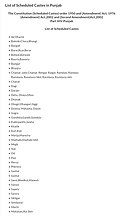
Both the words Ramdasia and Ravidasia are also used inter changeably while these also have regional context. In [[Puadh]] and [[Malwa (Punjab)|Malwa]], largely Ramdasia is used while Ravidasia is predominantly used in [[Doaba]].<ref name="toi">{{cite web|date=30 September 2021|title=Punjab's dalit conundrum: A look into Sikhs' caste identity|url=https://timesofindia.indiatimes.com/city/chandigarh/punjabs-dalit-conundrum-a-look-into-sikhs-caste-identity/articleshow/86607310.cms|work=[[The Times of India]]|accessdate=7 September 2024}}</ref>[[File:List of Scheduled Castes in Punjab.jpg|thumb|List of Scheduled Castes in Punjab]] | |||
==Chamar Diaspora== | |||
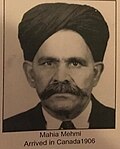
[[File:Mahia Mehmi.jpg|left|200px|thumb|Mahia Mehmi- One of the first Chamar settler in Canada in 1906.]] | |||
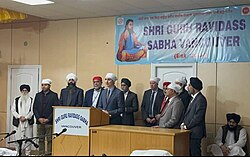
[[File:Canadian Prime Minister Justin Trudeau at Guru Ravidass Temple, Vancouver.jpg|thumb|Former Canadian Prime Minister Justin Trudeau at Guru Ravidass Temple, Vancouver]] | |||
The Chamar diaspora consists of different subcastes who have emigrated from the different states of British India, as well as modern India, to other countries and regions of the world, as well as their descendants.<ref>{{cite book |last1=Singh |first1=I. J. Bahadur |title=Indians in the Caribbean |date=1987 |publisher=Sterling |isbn=978-0-7465-0074-3 |url=https://books.google.com/books?id=4d0XAAAAYAAJ&q=chamar+caribbean |access-date=6 September 2024 |language=en}}</ref> | |||
Apart from the Indian subcontinent, there is a large and well-established community of Chamars throughout different continents of the world, including Malaysia, Canada, Singapore, Caribbean, USA and UK, where they have established themselves as a trade diaspora.<ref>{{cite news |title=Seattle: Why US city's ban on caste discrimination is historic for South Asian Americans |url=https://www.bbc.com/news/world-asia-india-64728356 |access-date=6 September 2024 |date=22 February 2023}}</ref> | |||
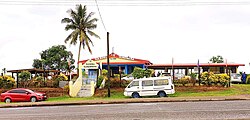
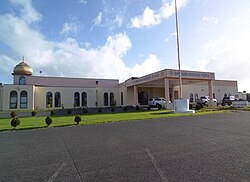
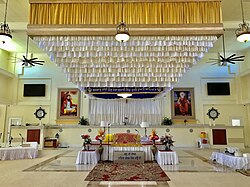
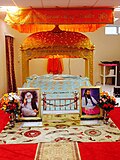
[[File:Gurdwara Guru Ravidass, Nasinu, Fiji.jpg|thumb|Gurdwara [[Guru Ravidass]], Nasinu, Fiji Established in 1939]] | |||
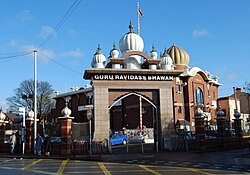
[[File:Gurdwara Guru Ravidass Bhavan, Birmingham.jpg|thumb|Gurdwara Guru Ravidass Bhavan, Birmingham]] | |||
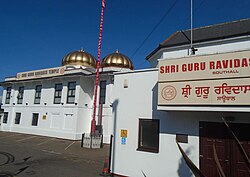
[[File:Gurdwara Guru Ravidass Sabha,Southall .jpg|thumb|[[Gurdwara Guru Ravidass Sabha]], Southall]] | |||
[[File:Gurdwara Guru Ravidass Temple, Auckland.jpg|thumb|Gurdwara Guru Ravidass Temple, Auckland]] | |||
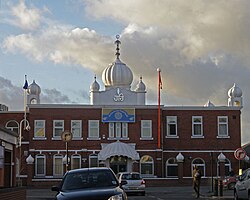
[[File:Shri Guru Ravidass Temple in the UK.jpg|thumb|Shri Guru Ravidass Temple in the UK]] | |||
[[File:Gurdwara_Guru_Ravidass_Temple,_Pittsburgh.jpg|thumb|Gurdwara Guru Ravidass Temple, Pittsburg, California]] | |||
[[File:Gurdwara Guru Ravidass Sabha, Oostende.jpg|thumb|Gurdwara Guru Ravidass Sabha, Oostende]] | |||
== | ===Italy=== | ||
According to the research paper of the [[European University Institute]], [[Fiesole]], [[Italy]], the Ravidassia Chamar community is the second largest group of Indian diaspora in Italy. The Ravidassia community's migration starts in the early 80s, and currently the community is operating 18 Guru Ravidass temples throughout Italy. But due to the lack of recognized independent religious identity by the Italian government, the local Italian community leaders assume Ravidasias are Hindu or Sikh.<ref>{{cite journal |last1=Laudini |first1=Annamaria |title=The Ravidassia in Italy: History, Geography, and Identity Politics of the Largest Punjabi Dalit Diaspora in the EU |journal=Religions |date=17 July 2025 |volume=16 |issue=7 |pages=922 |doi=10.3390/rel16070922 |doi-access=free |hdl=1814/94720 |hdl-access=free }}</ref> | |||
===North America=== | |||
Chamar diaspora emigrated from India and Pakistan is significant. There are Chamar Sikh settlers in Europe, as well as a sizable Chamar Sikh population in North America, primarily in the United States and Canada. Mahiya Ram Mehmi and Mahey were the very first people who landed in [[British Columbia]] in 1906 and in [[Lower Mainland]] area of British Colombia, there are around 25,000 people of Chamar origin residing. This makes the largest and oldest Chamar diaspora population in North America region. Both Mahiya ram Mehmi and Mahey were also involved in the foundation of the first Canadian Gurdwara, the Khalsa Diwan Society, Vancouver.<ref name="Iyengar 2022">{{cite web | last=Iyengar | first=Malathi | title=Punjabi, Sikh, and Dalit | website=South Asian American Digital Archive (SAADA) | date=2022-01-20 | url=https://www.saada.org/tides/article/punjabi-sikh-and-dalit | access-date=2022-09-14}}</ref> | |||
In the United States, an estimated 20,000 Ravidassia Chamars live in [[California]].<ref>{{cite news |date=29 May 2023 |title=What California's Ravidassia community believes and why they want caste bias outlawed |url=https://apnews.com/article/california-caste-discrimination-bill-ravidassia-sikh-explainer-b0383d1583670fc6cedfeebf6c943d25 |access-date=27 July 2025 |work=AP News |language=en}}</ref> | |||
===Mauritius=== | |||
[[Ravived]] is a caste that is mainly found among Hindus in Mauritius.<ref>{{cite web | url=https://medium.com/@shakunharris/understanding-the-caste-system-in-mauritius-c8fe9468c097 | title=Understanding the caste system in Mauritius | work=Medium | date=6 April 2021 | last1=Harris | first1=Dr Shakun }}</ref> The origin of this caste lay in an Indian caste named Chamar<ref>{{Cite journal |date=October–December 2015 |title=A Quarterly Journal of Multidisciplinary Research |url=http://mujournal.mewaruniversity.org/JIR%203-4/JIR3-4.pdf |journal=Journal of Indian Research |volume=3 |issue=4 |issn=2321-4155}}</ref> This same caste is referred to as [[Ravidassia]] outside Mauritius, and this terminology is very seldom used in Mauritius.<ref>{{cite journal | doi=10.4000/samaj.3886 | title=The 'Land of the Vaish'? Caste Structure and Ideology in Mauritius | year=2015 | last1=Claveyrolas | first1=Mathieu | journal=South Asia Multidisciplinary Academic Journal | doi-access=free | s2cid=143034648 | url=https://journals.openedition.org/samaj/3886 }}</ref> | |||
In the ship records on which Indian laborers migrated to [[Mauritius]], around ten percent of the boarded people mentioned their caste as Chamar. After the establishment of caste hierarchies in Mauritius, the Chamar community families turned to the religious songs of [[Kabir]] and [[Ravidass]] for their own religious outlet. Slowly, they started adopting religious-sounding names from these devotional songs.<ref>{{cite book |last1=Younger |first1=Paul |title=New Homelands: Hindu Communities in Mauritius, Guyana, Trinidad, South Africa, Fiji, and East Africa |date=30 November 2009 |publisher=Oxford University Press |isbn=978-0-19-974192-2 |url=https://books.google.com/books?id=F0X9eLq57ocC&dq=ravidass+mauritius&pg=PA32 |access-date=30 August 2024 |language=en}}</ref> | |||
===Oceania=== | |||
There is a sizeable population of [[Ravidassia|Chamar Sikhs]] in [[Oceania]] too. Ravidassia Chamars from Doaba established the second gurdwara in the Oceania region in Nasinu on Fiji Island in 1939.<ref name="Kahlon 2016 p. 337">{{cite book | last=Kahlon | first=S.S. | title=Sikhs in Asia Pacific: Travels Among the Sikh Diaspora from Yangon to Kobe | publisher=Taylor & Francis | year=2016 | isbn=978-1-351-98741-7 | url=https://books.google.com/books?id=5TslDwAAQBAJ&pg=PA337 | access-date=2024-09-06 | page=337}}</ref> A Classical Study by W.H. Briggs in his book Punjabis in New Zealand, Briggs penned down the precise number of Ravidassias in New Zealand during the very first wave of immigration.<ref name="Google 2006">{{cite web | title=Punjabis in New Zealand: A History of Punjabi Migration, 1890-1940 | website=Google | date=2006-12-05 | url=https://books.google.com/books?id=NoMhAAAAMAAJ&q=punjabis%20in%20new%20zealand | access-date=2024-09-06 | last1=McLeod | first1=W. H. }}</ref> | |||
=== | ===United Kingdom=== | ||
=== | Chamar community from [[Punjab]] started immigrating from Punjab to Britain in 1950, and according to a book named 'Sikhs in Britain: An Annotated Bibliography' published in 1987, the population of the Ravidassia community in the West Midlands was around 30,000 during that period.<ref>{{cite book |last1=Tatla |first1=Darshan Singh |last2=Nesbitt |first2=Eleanor M |title=Sikhs in Britain An Annotated Bibliography |date=1987 |publisher=Centre for Research in Ethnic Relations, University of Warwick |isbn=9780948303067 |page=66 |url=https://books.google.com/books?id=rKPfAAAAMAAJ&q=Sikhs+in+Britain:+An+Annotated+Bibliography+ravidass |access-date=14 January 2024}}</ref> As of 2021, it is estimated that the Ravidasia population in Britain is around 70,000.<ref>{{cite book |last1=Kumar |first1=Pramod |title=The Idea of New India Essays in Defence of Critical Thought |date=2021 |publisher=Taylor & Francis |isbn=9781000485714 |url=https://books.google.com/books?id=Y9s9EAAAQBAJ&dq=ravidasia+in+england&pg=PT164 |access-date=6 September 2024}}</ref> | ||
==Occupations== | |||
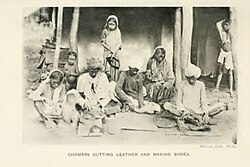
[[File:Photograph of Chamars with caption 'Chamars cutting leather and making shoes'.jpg|thumb|Photograph of Chamars with caption "Chamars cutting leather and making shoes"]] | |||
Chamars transitioning from tanning and leathercraft to the weaving profession adopt the identity of [[Julaha Chamar]], aspiring to be acknowledged as Julahas by other communities. According to R. K. Pruthi, this change reflects a desire to distance themselves from the perceived degradation associated with leatherwork.<ref>{{cite book|url=https://books.google.com/books?id=rC1bJcd-MDUC&pg=PA189 |title=Indian caste system |first=R. K. |last=Pruthi |year=2004 |publisher=Discovery |page=189 |isbn=9788171418473 |access-date=14 April 2012}}</ref> | |||
==Chamar Regiment== | |||
The 1st [[Chamar Regiment]] was an infantry regiment formed by the British during [[World War II]]. Officially, it was created on 1 March 1943, as the 27th Battalion 2nd Punjab Regiment. It was converted to the 1st Battalion and later disbanded shortly after World War II ended.{{sfn|Sharma|1990|p=28}} The Regiment, with one year of service, received three [[Military Cross]]es and three [[Military Medal]]s<ref name="Sharma1990">{{cite book |first=Gautam |last=Sharma |url=https://books.google.com/books?id=xLrTzZd0j1kC&pg=PA26 |title=Valour and Sacrifice: Famous Regiments of the Indian Army |publisher=Allied Publishers |year=1990 |isbn=978-81-7023-140-0 |pages=26–}}</ref> It fought in the [[Battle of Kohima]].<ref>{{Cite web|url=http://www.gautambookcenter.com/images/ww2_kohima.pdf|title=The Battle of Kohima}}</ref> In 2011, several politicians demanded that it be revived.<ref>{{cite web |url= http://www.indianexpress.com/news/rjd-man-raghuvansh-calls-for-reviving-chamar-regiment/759232/ |title=RJD man Raghuvansh calls for reviving Chamar Regiment |work=indianexpress.com |date=8 March 2011 |access-date=31 March 2011}}</ref> | |||
==Demographics== | ==Demographics== | ||
{{Update|date=July 2025|reason=Update it with the different state census ex- Bihar 2022}} | |||
Chamar caste population in different states of India as per the 2011 [[census of India]] | |||
{| | <!-- Please maintain alphabetical order. --> | ||
{|class="wikitable sortable" | |||
|- | |- | ||
! State, U.T | |||
! Population | |||
! Population % | |||
! Notes | |||
|- | |- | ||
| Bihar<ref>SC-14: Scheduled caste population by religious community, Bihar - 2011 (2021) India. Available at: https://censusindia.gov.in/nada/index.php/catalog/2115 (Accessed: 2 September 2024). </ref> | |||
| 4,900,048 | |||
| 4.7% | |||
| Counted along Rabidas, Rohidas, Chamar, Charamakar | |||
|- | |- | ||
| Chandigarh<ref>SC-14: Scheduled caste population by religious community, Chandigarh - 2011 (2021) India. Available at: https://censusindia.gov.in/nada/index.php/catalog/2109 (Accessed: 2 September 2024). </ref> | |||
| 59,957 | |||
| 5.68% | |||
| Counted along with other caste synonyms such as Chamars, Ramdasi, Ravidasi, Raigar and Jatia | |||
|- | |- | ||
| | | Chhattisgarh<ref>SC-14: Scheduled caste population by religious community, Chhattisgarh - 2011 (2021) India. Available at: https://censusindia.gov.in/nada/index.php/catalog/2125 (Accessed: 2 September 2024). </ref> | ||
| 2,318,964 | |||
| 9.07% | |||
| Counted as Chamar, Satnami, Ahirwar, Raidas, Rohidas, Jatav, Bhambi and Surjyabanshi | |||
|- | |- | ||
| | | NCT of Delhi<ref>SC-14: Scheduled caste population by religious community, NCT of Delhi - 2011 (2021) India. Available at: https://censusindia.gov.in/nada/index.php/catalog/2112 (Accessed: 2 September 2024). </ref> | ||
| 1,075,569 | |||
| 6.4 % | |||
| Counted along with other caste synonyms such as Jatav, Chamars, Ramdasia, Ravidasi, Raigar and Jatia | |||
|- | |- | ||
| | | Gujarat<ref>SC-14: Scheduled caste population by religious community, Gujarat - 2011 (2021) India. Available at: https://censusindia.gov.in/nada/index.php/catalog/2127 (Accessed: 2 September 2024). </ref> | ||
| 1,032,128 | |||
| 1.7% | |||
| Counted along with other caste synonyms such as Chamar, Bhambi, Asadaru, Chambhar, Haralaya, Rohidas, Rohit, Samgar | |||
|- | |- | ||
| | | Haryana<ref>SC-14: Scheduled caste population by religious community, Haryana - 2011 (2021) India. Available at: https://censusindia.gov.in/nada/index.php/catalog/2111 (Accessed: 2 September 2024). </ref> | ||
| 2,429,137 | |||
| 9.58% | |||
| Counted along with other caste synonyms such as Jatav, Chamars, Ramdasia, Ravidasi, Raigar and Jatia | |||
|- | |- | ||
| | | Himachal Pradesh<ref>SC-14: Scheduled caste population by religious community, Himachal Pradesh - 2011 (2021) India. Available at: https://censusindia.gov.in/nada/index.php/catalog/2107 (Accessed: 2 September 2024). </ref> | ||
| 458,838 | |||
| 6.68% | |||
| Counted along with other caste synonyms such as Chamars, Ramdasia, Raigar and Jatia | |||
|- | |- | ||
| | | Jammu and Kashmir<ref>SC-14: Scheduled caste population by religious community, Jammu & Kashmir - 2011 (2021) India. Available at: https://censusindia.gov.in/nada/index.php/catalog/2106 (Accessed: 2 September 2024). </ref> | ||
| 212,032 | |||
| 1.72% | |||
| Counted along with other caste synonyms such as Chamars, Ramdasia, Rohidas | |||
|- | |- | ||
| | | Jharkhand<ref>SC-14: Scheduled caste population by religious community, Jharkhand - 2011 (2021) India. Available at: https://censusindia.gov.in/nada/index.php/catalog/2123 (Accessed: 2 September 2024). </ref> | ||
| 1,008,507 | |||
| 3.05% | |||
| Counted as Chamar, Mochi | |||
|- | |- | ||
| | | Karnataka<ref>SC-14: Scheduled caste population by religious community, Karnataka - 2011 (2021) India. Available at: https://censusindia.gov.in/nada/index.php/catalog/2132 (Accessed: 2 September 2024). </ref> | ||
| | | 605,486 | ||
| 1% | |||
| Counted as Rohidas, Rohit, Samgar, Haralaya, Chambhar, Chamar, Bhambi | |||
|- | |- | ||
| | | Madhya Pradesh<ref>SC-14: Scheduled caste population by religious community, Madhya Pradesh - 2011 (2021) India. Available at: https://censusindia.gov.in/nada/index.php/catalog/2126 (Accessed: 2 September 2024). </ref> | ||
| | | 5,368,217 | ||
| 7.39% | |||
| Counted as Chamar, Jatav, Bairwa, Bhambi, Rohidas, Raidas, Ahirwar,Satnami, Ramnami, Surjyabanshi | |||
|- | |- | ||
| | | Maharashtra<ref>SC-14: Scheduled caste population by religious community, Maharashtra - 2011 (2021) India. Available at: https://censusindia.gov.in/nada/index.php/catalog/2130 (Accessed: 2 September 2024). </ref> | ||
| | | 1,411,072 | ||
| 1.25% | |||
| Counted as Rohidas, Chamar, Chambhar, Bhambi, Satnami, Ramnami, Haralaya, Rohit, Samagar, Bhambi | |||
|- | |- | ||
| | | Punjab<ref>SC-14: Scheduled caste population by religious community, Punjab - 2011 (2021) India. Available at: https://censusindia.gov.in/nada/index.php/catalog/2108 (Accessed: 2 September 2024). </ref> | ||
| 3,095,324 | |||
| 11.15% | |||
| During the 2011 census in Punjab, 1017192 people were counted as addharmi in a separate caste cluster, which is another term for Ravidassias.<ref>{{cite news |last1=Ashraf |first1=Ajaz |title=Why everyone in Punjab loves a Dalit C.M |url=https://www.newsclick.in/why-everyone-punjab-loves-dalit-cm |access-date=2 September 2024 |publisher=News Click |date=September 22, 2021}}</ref><ref>{{cite news |last1=Singh |first1=IP |title=Punjab ex-CM Charanjit Singh Channi's scheduled caste factor overlooked? |url=https://timesofindia.indiatimes.com/city/ludhiana/punjab-ex-cm-charanjit-singh-channis-scheduled-caste-factor-overlooked/articleshow/90140806.cms |access-date=2 September 2024 |publisher=TOI |date=March 11, 2022}}</ref> | |||
In the same census, the Ravidassias cluster population was 2078132, and both clusters together made a population of 3095324 in Punjab, which is an 11.15% population of Punjab. | |||
|- | |- | ||
| | | Rajasthan<ref>SC-14: Scheduled caste population by religious community, Rajasthan - 2011 (2021) India. Available at: https://censusindia.gov.in/nada/index.php/catalog/2113 (Accessed: 2 September 2024). </ref> | ||
| 2,491,551 | |||
| 3.63% | |||
| Counted along with other caste synonyms such as Chamars, Bhambi, Ramdasia, Ravidasi, Raigar, Haralaya, Chambhar and Jatia | |||
|- | |- | ||
| | | Uttarakhand<ref>SC-14: Scheduled caste population by religious community, Uttarakhand - 2011 (2021) India. Available at: https://censusindia.gov.in/nada/index.php/catalog/2110 (Accessed: 2 September 2024). </ref> | ||
| | | 548,813 | ||
| 5.44% | |||
| Counted as Chamar, Jatava, Dhusia, Jhusia | |||
|- | |- | ||
| | | Uttar Pradesh<ref>SC-14: Scheduled caste population by religious community, Uttar Pradesh - 2011 (2021) India. Available at: https://censusindia.gov.in/nada/index.php/catalog/2114 (Accessed: 2 September 2024). </ref> | ||
| 22,496,047 | |||
| 11.25% | |||
| Counted as Chamar, Jatava, Dhusia, Jhusia | |||
|- | |- | ||
| | | West Bengal<ref>SC-14: Scheduled caste population by religious community, West Bengal - 2011 (2021) India. Available at: https://censusindia.gov.in/nada/index.php/catalog/2122 (Accessed: 2 September 2024). </ref> | ||
| 1,039,591 | |||
| 1.13% | |||
| Counted as Chamar, Rabidas, Charamakar, Rishi | |||
|- | |- | ||
|} | |} | ||
==Caste reservation== | |||
{{Main|Reservation in India}} | |||
Chamar is classified as a scheduled caste in India. It is claimed that among the scheduled castes, Chamar benefitted more from the caste reservation system as compared to other Dalit castes due to larger political representation of the group.<ref>{{cite news|url=https://www.outlookindia.com/website/story/who-gains-from-reservation/237542|title=Who Gains From Reservation?|date=3 Feb 2022|work=[[Outlook India]]|author=Rajinder Puri}}</ref> However, due to significant regional variation and intra-community diversity,<ref name=":0">{{Cite web |last=JILP |date=2025-03-27 |title=Fragmentation or Fairness? The Indian Supreme Court's Judgment on Sub-Classification of SCs and STs – NYU JILP |url=https://nyujilp.org/fragmentation-or-fairness-the-indian-supreme-courts-judgment-on-sub-classification-of-scs-and-sts/ |access-date=2025-07-07 |language=en-US}}</ref> different communities end up disproportionately benefiting from the reservation across the country.<ref>{{Cite news |date=2023-10-05 |title=Caste census: The long and the short of new caste data and its politics |url=https://economictimes.indiatimes.com/news/india/caste-census-the-long-and-the-short-of-new-caste-data-and-its-politics/articleshow/104180858.cms |access-date=2025-07-07 |work=The Economic Times}}</ref><ref>{{Cite web |title=SC Sub-Quota Verdict: Revisiting the Long-Drawn Struggle for Reservation Justice |url=https://thewire.in/rights/sc-sub-quota-verdict-revisiting-the-long-drawn-struggle-for-reservation-justice |access-date=2025-07-07 |website=The Wire |language=en}}</ref> In 2024, the Supreme Court of India allowed further sub-categorisation within the Scheduled Caste and Scheduled Tribe categories, allowing states such as Punjab, Bihar, Tamil Nadu, and Andhra Pradesh to do targeted refinements to their reservation policies.<ref>{{Cite news |date=2024-08-02 |title=A historical journey of commission & omission |url=https://timesofindia.indiatimes.com/city/hyderabad/a-historical-journey-of-commission-omission/articleshow/112205764.cms |access-date=2025-07-07 |work=The Times of India}}</ref><ref name=":0" /> | |||
==Chamars in Nepal== | |||
The [[Central Bureau of Statistics (Nepal)|Central Bureau of Statistics]] of Nepal classifies the Chamar as a subgroup within the broader social group of [[Madheshi people|Madheshi]] [[Dalit]]s.<ref>[https://nepal.unfpa.org/sites/default/files/pub-pdf/Population%20Monograph%20V02.pdf Population Monograph of Nepal, Volume II]</ref> At the time of the [[2011 Nepal census]], 335,893 people (1.3% of the population of Nepal) were Chamar. The frequency of Chamars by province was as follows: | |||
* [[Madhesh Province]] (4.2%) | |||
* [[Lumbini Province]] (2.1%) | |||
* [[Koshi Province]] (0.3%) | |||
* [[Bagmati Province]] (0.0%) | |||
* [[Gandaki Province]] (0.0%) | |||
* [[Karnali Province]] (0.0%) | |||
* [[Sudurpashchim Province]] (0.0%) | |||
The frequency of Chamars was higher than national average (1.3%) in the following districts:<ref>{{Cite web |url=https://cbs.gov.np/wp-content/upLoads/2018/12/Volume05Part02.pdf |title=2011 Nepal Census, District Level Detail Report |access-date=11 April 2023 |archive-date=14 March 2023 |archive-url=https://web.archive.org/web/20230314170005/https://cbs.gov.np/wp-content/upLoads/2018/12/Volume05Part02.pdf |url-status=dead }}</ref> | |||
* [[Parasi District|Parasi]] (7.4%) | |||
* [[Siraha District|Siraha]] (5.7%) | |||
* [[Parsa District|Parsa]] (4.7%) | |||
* [[Bara District|Bara]] (4.4%) | |||
* [[Saptari District|Saptari]] (4.3%) | |||
* [[Dhanusha District|Dhanusha]] (3.8%) | |||
* [[Rautahat District|Rautahat]] (3.8%) | |||
* [[Kapilvastu District|Kapilvastu]] (3.7%) | |||
* [[Rupandehi District|Rupandehi]] (3.7%) | |||
* [[Mahottari District|Mahottari]] (3.6%) | |||
* [[Sarlahi District|Sarlahi]] (3.6%) | |||
* [[Banke District|Banke]] (1.9%) | |||
==Notable people== | ==Notable people== | ||
*[[Guru Ravidass]], was an Indian mystic poet-saint of the [[Bhakti movement]] during the 15th to 16th century CE. | |||
* [[Mayawati]], leader of [[Bahujan Samaj Party]] and [[Chief Minister of Uttar Pradesh]].<ref name="Mayawati">{{cite news |title=Mayawati talks of a secret successor |url=https://www.indiatoday.in/latest-headlines/story/mayawati-talks-of-a-secret-successor-28178-2008-08-09 |access-date=4 April 2019 |work=[[India Today]] |publisher=[[Indo-Asian News Service]] |date=9 August 2008 |archive-url=https://web.archive.org/web/20190404213026/https://www.indiatoday.in/latest-headlines/story/mayawati-talks-of-a-secret-successor-28178-2008-08-09 |archive-date=4 April 2019 |url-status=live |df=dmy-all}}</ref> | |||
* [[Meira Kumar]] - Former Diplomat, Former [[Speaker of the Lok Sabha]].<ref>{{cite news |title="'Chamar' Used As Slur For My Father, A Deputy PM": Ex-Speaker Meira Kumar |url=https://www.ndtv.com/india-news/chamar-used-as-slur-for-my-father-a-deputy-pm-ex-speaker-meira-kumar-3259910 |access-date=2 August 2025 |work=www.ndtv.com |language=en}}</ref> | |||
* [[Selja Kumari]] - Current [[Member of Parliament]], Former [[Union Cabinet Minister]]-[[Government of India]].<ref>{{cite news |title=Row Erupts Over Kumari Selja's Absence in Haryana Election Campaign |url=https://thewire.in/politics/row-over-kumari-selja-absence-campaign-haryana |access-date=2 August 2025 |work=The Wire |language=en}}</ref> | |||
* [[Atma Doolooa]] - Mauritian Politician, Former Director of State Trading Corporation Director of Development Works Corporation, Mauritius and Former Advisor at Ministry of Commerce and Cooperatives, Mauritius.<ref>{{cite news |title=PORTRAIT: Atma Doolooa, un chamar fier de l'être |url=https://www.lemauricien.com/actualites/societe/portrait-atma-doolooa-chamar-fier-letre/119171/ |access-date=2 August 2025 |work=Le Mauricien |date=8 July 2012 |language=fr-FR}}</ref> | |||
* [[Mata Prasad]] - Former Chief Secretary in Uttar Pradesh Government and former Chairman of the Union Public Service Commission.<ref>{{cite news |title=Mata Prasad takes over as UPSC chairman |url=https://timesofindia.indiatimes.com/india/mata-prasad-takes-over-as-upsc-chairman/articleshow/173304.cms |access-date=2 August 2025 |work=The Times of India |date=9 September 2003}}</ref> | |||
* [[Mohan Lal Kureel]], a [[British Indian Army]] officer who served in [[The Chamar Regiment]] and later an [[Indian National Congress]] politician in the Indian state of [[Uttar Pradesh]].<ref>{{Cite web|url=https://www.news18.com/news/india/sc-commission-asks-defence-secretary-why-chamar-regiment-shouldnt-be-reinstated-1355131.html|title=SC Commission Asks Defence Secretary Why 'Chamar Regiment' Shouldn't be reinstated|website=News18|date=March 2017 |access-date=2019-08-31}}</ref> | |||
*[[Jagjivan Ram]], former Deputy Prime Minister of India<ref name="Roy">{{cite book |author=Roy, Kaushik |editor-last=Pant |editor-first=Harsh V. |title=Handbook of Indian Defence Policy: Themes, structures and doctrines |date=2016 |publisher=Routledge |isbn=978-1138939608 |page=67 |chapter-url=https://books.google.com/books?id=9xG4CwAAQBAJ&pg=PA67 |access-date=12 July 2020 |chapter=Indian society and the soldier: will the twain ever meet? |quote=In 1970, when Babu Jagjivan Ram (himself, a chamar) became the defence minister, he attempted to raise the chamar regiment.}}</ref> | *[[Jagjivan Ram]], former Deputy Prime Minister of India<ref name="Roy">{{cite book |author=Roy, Kaushik |editor-last=Pant |editor-first=Harsh V. |title=Handbook of Indian Defence Policy: Themes, structures and doctrines |date=2016 |publisher=Routledge |isbn=978-1138939608 |page=67 |chapter-url=https://books.google.com/books?id=9xG4CwAAQBAJ&pg=PA67 |access-date=12 July 2020 |chapter=Indian society and the soldier: will the twain ever meet? |quote=In 1970, when Babu Jagjivan Ram (himself, a chamar) became the defence minister, he attempted to raise the chamar regiment.}}</ref> | ||
* [[Kanshi Ram]] (1934–2006), founder of [[Bahujan Samaj Party]] and mentor of Mayawati Kumari<ref>{{cite web|title=I will be the best PM and Mayawati is my chosen heir|url=http://www.indianexpress.com/storyOld.php?storyId=23080|quote=...I am a chamar from Punjab...|work=[[Indian Express]]|date=2 May 2003}}</ref> | * [[Kanshi Ram]] (1934–2006), founder of [[Bahujan Samaj Party]] and mentor of Mayawati Kumari<ref>{{cite web|title=I will be the best PM and Mayawati is my chosen heir|url=http://www.indianexpress.com/storyOld.php?storyId=23080|quote=...I am a chamar from Punjab...|work=[[Indian Express]]|date=2 May 2003}}</ref> | ||
* [[ | * [[Navneet Kaur Rana]], former actress and former Member of Parliament<ref>{{cite web |last1=Bawa |first1=Anmol Kaur |title=Can 'Sikh Chamar' Be Regarded As 'Mochi' Caste In Maharashtra? Supreme Court Considers In Navneet Kaur Rana's Case |url=https://www.livelaw.in/top-stories/can-sikh-chamar-be-regarded-as-mochi-caste-in-maharashtra-supreme-court-considers-in-navneet-kaur-ranas-case-250260 |website=www.livelaw.in |access-date=18 October 2024 |language=en |date=23 February 2024}}</ref> | ||
* [[ | * [[Ashok Tanwar]], former Member of Parliament<ref>{{cite news |last1=English |first1=The Mooknayak |title=How INLD is Leading the Charge for Deprived Scheduled Castes Empowerment in Haryana |url=https://en.themooknayak.com/politics/how-inld-is-leading-the-charge-for-deprived-scheduled-castes-empowerment-in-haryana |access-date=25 October 2024 |work=The Mooknayak English - Voice Of The Voiceless |date=18 September 2024 |language=en}}</ref> | ||
* [[Ram Dhan]] - Freedom fighter and former Member of Parliament.<ref>{{cite web |title=The Dalits lose their mirror & Ramdhan – Round Table India |url=https://www.roundtableindia.co.in/the-dalits-lose-their-mirror-a-ramdhan/ |access-date=2 August 2025 |date=16 October 2010}}</ref> | |||
* [[Charanjit Singh Channi]] - Current Member of Parliament and former Chief Minister of Punjab.<ref>{{cite web |title=Life and teachings of SANT RAVIDAS |url=https://www.esamskriti.com/e/History/Great-Indian-Leaders/Life-and-teachings-of-SANT-RAVIDAS--1.aspx |website=www.esamskriti.com |access-date=2 August 2025 |language=en-us}}</ref> | |||
* [[Ram Sundar Das]] - Former Chief Minister of Bihar.<ref>{{cite news |last1=Verma |first1=Nalin |title=Roping in ex-CM for Dalit votes |url=https://www.telegraphindia.com/india/roping-in-ex-cm-for-dalit-votes/cid/516247#goog_rewarded |access-date=2 August 2025}}</ref> | |||
* [[Ashok Khade]] - Indian Industrialist.<ref>{{cite book |last1=Khandekar |first1=Milind |title=Dalit Millionaires: 15 Inspiring Stories |date=15 December 2013 |publisher=Penguin UK |isbn=978-93-5118-583-3 |url=https://books.google.com/books?id=t2ZBAgAAQBAJ&pg=PT20 |access-date=2 August 2025 |language=en}}</ref> | |||
* [[Anju Bala]] - Former Member of Parliament.<ref>{{cite news |title=भाजपा प्रत्याशी पर फर्जी जाति प्रमाणपत्र का आरोप |url=https://www.amarujala.com/uttar-pradesh/hardoi/Hardoi-177600-37 |access-date=3 August 2025 |work=Amar Ujala |language=hi}}</ref> | |||
==See also== | ==See also== | ||
* [[Ahirwar]] | * [[Ahirwar]] | ||
* [[Ramdasia]] | |||
* [[Ravidassia]] | |||
* [[Jatav]] | |||
* [[Chambhar]] | |||
* [[Dhor (Caste)|Dhor]] | |||
* [[Mochi (Hindu)|Hindu Mochi]] | * [[Mochi (Hindu)|Hindu Mochi]] | ||
* [[Mochi (Muslim)|Muslim Mochi]] | * [[Mochi (Muslim)|Muslim Mochi]] | ||
| Line 138: | Line 263: | ||
==References== | ==References== | ||
{{Reflist|2}} | {{Reflist|2}} | ||
=== Bibliography === | |||
{{refbegin}} | |||
* {{cite book |author=Maren Bellwinkel-Schempp |editor=Peter Schalf |title=Neuer Buddhismus als gesellschaftlicher Entwurf |year=2011 |publisher=Uppsala University |isbn=978-91-554-8076-9 |doi=10.1515/olzg-2015-0120 |s2cid=164806488 |url=https://uu.diva-portal.org/smash/get/diva2:472905/FULLTEXT01.pdf }} | |||
* {{cite book |author=Sarah Beth Hunt |title=Hindi Dalit Literature and the Politics of Representation |year=2014 |publisher=Routledge |isbn=978-0-415-73629-9 |url=https://books.google.com/books?id=HHc9BAAAQBAJ }} | |||
{{refend}} | |||
==Further reading== | ==Further reading== | ||
*{{cite book |last=Briggs |first=George W. |year=1920 |title=The Religious Life of India — The Chamars|isbn=1-4067-5762-4 |location=Calcutta |publisher=Association Press|url=https://books.google.com/books?id=PTgsR0xjG4MC}} | *{{cite book |last=Briggs |first=George W. |year=1920 |title=The Religious Life of India — The Chamars|isbn=1-4067-5762-4 |location=Calcutta |publisher=Association Press|url=https://books.google.com/books?id=PTgsR0xjG4MC}} | ||
*{{cite book |title=Reconsidering Untouchability: Chamars and Dalit History in North India |first=Ramnarayan S. |last=Rawat |author-link=Ramnarayan Rawat |publisher=Indiana University Press |year=2011 |isbn=9780253222626 |url=https://books.google.com/books?id=bz5dKC81O3IC}} <!--NB: this is a controversial book: if converted to a source then some care may be required--> | *{{cite book |title=Reconsidering Untouchability: Chamars and Dalit History in North India |first=Ramnarayan S. |last=Rawat |author-link=Ramnarayan Rawat |publisher=Indiana University Press |year=2011 |isbn=9780253222626 |url=https://books.google.com/books?id=bz5dKC81O3IC}} <!--NB: this is a controversial book: if converted to a source then some care may be required--> | ||
*{{cite journal |title=A Bibliographic Essay on Hindu and Christian Dalit Religiosity |journal=[[Journal of Hindu-Christian Studies]] |volume=17 |pages=55–65 |year=2004 |first=Mathew N. |last=Schmalz |doi=10.7825/2164-6279.1318 |url=http://digitalcommons.butler.edu/cgi/viewcontent.cgi?article=1318&context=jhcs|doi-access=free }} | *{{cite journal |title=A Bibliographic Essay on Hindu and Christian Dalit Religiosity |journal=[[Journal of Hindu-Christian Studies]] |volume=17 |pages=55–65 |year=2004 |first=Mathew N. |last=Schmalz |doi=10.7825/2164-6279.1318 |url=http://digitalcommons.butler.edu/cgi/viewcontent.cgi?article=1318&context=jhcs|doi-access=free | issn=2164-6260}} | ||
{{Ethnic groups | {{Ethnic and social groups of the Punjab|state=expanded}} | ||
{{Authority control}} | {{Authority control}} | ||
[[Category:Dalit communities]] | [[Category:Dalit communities]] | ||
[[Category:Leatherworking castes]] | [[Category:Leatherworking castes]] | ||
[[Category:Ethnic groups in Nepal]] | |||
[[Category:Ethnic groups in India]] | |||
[[Category:Scheduled Castes of Assam]] | |||
[[Category:Scheduled Castes of Haryana]] | |||
[[Category:Scheduled Castes of Jharkhand]] | |||
[[Category:Scheduled Castes of Delhi]] | |||
[[Category:Scheduled Castes of Rajasthan]] | |||
[[Category:Social groups of Punjab, India]] | |||
[[Category:Scheduled Castes of Madhya Pradesh]] | |||
[[Category:Scheduled Castes of Odisha]] | |||
[[Category:Scheduled Castes of Gujarat]] | |||
[[Category:Scheduled Castes of Bihar]] | |||
[[Category:Scheduled Castes of West Bengal]] | |||
[[Category:Scheduled Castes of Andhra Pradesh]] | |||
[[Category:Scheduled Castes of Dadra and Nagar Haveli]] | |||
[[Category:Scheduled Castes of Himachal Pradesh]] | |||
[[Category:Scheduled Castes of Chhattisgarh]] | |||
[[Category:Scheduled Castes of Uttar Pradesh]] | |||
[[Category:Scheduled Castes of Uttarakhand]] | |||
[[Category:Scheduled Castes of Maharashtra]] | |||
[[Category:Scheduled Castes of Jammu and Kashmir]] | |||
[[Category:Scheduled Castes of Kerala]] | |||
[[Category:Scheduled Castes of Mizoram]] | |||
[[Category:Scheduled Castes of Meghalaya]] | |||
Latest revision as of 13:00, 20 March 2026
,_f.360v_-_BL_Add._27255.jpg) Leather-bottle makers (Presumably members of the 'Chamaar' caste), Tashrih al-aqvam (1825) | |
| Regions with significant populations | |
|---|---|
| India • Pakistan | |
| Languages | |
| Hindi • Punjabi | |
| Religion | |
| Hinduism • Islam • Sikhism • Ravidassia • Christianity | |
| Related ethnic groups | |
| Jatav • Ramdasia • Ravidassia • Raigar[1] • Chambhar • Dhusia • Madiga • Ad-Dharmi • Ahirwar |
Chamar (IPA: [tʃəmaːɾ], or Jatav, IPA: [dʒaːt̪əʋ])[2] is a community classified as a Scheduled Caste under modern India's system of affirmative action that originated from the group of trade persons who were involved in leather tanning and shoemaking.[3] They are found throughout the Indian subcontinent, mainly in the northern states of India and in Bangladesh, Pakistan and Nepal.
History[edit | edit source]
The Chamars are traditionally associated with leather work.[4] Ramnarayan Rawat posits that the association of the Chamar community with a traditional occupation of tanning was constructed, and that the Chamars were instead historically agriculturists.[5]
The term chamar is used as a pejorative word for Dalits in general.[6][7] It has been described as a casteist slur by the Supreme Court of India and the use of the term to address a person as a violation of the Scheduled Caste and Scheduled Tribe (Prevention of Atrocities) Act, 1989.[8]
Movement for upward social mobility[edit | edit source]
Between the 1830s and the 1950s, the Chamars in the United Provinces, especially in the Kanpur area, became prosperous as a result of their involvement in the British leather trade.[9]
By the late 19th century, the Chamars began rewriting their caste histories, claiming Kshatriya descent.[10] For example, around 1910, U.B.S. Raghuvanshi published Shri Chanvar Purana from Kanpur, claiming that the Chamars were originally a community of Kshatriya rulers. He claimed to have obtained this information from Chanvar Purana, an ancient Sanskrit-language text purportedly discovered by a sage in a Himalayan cave. According to Raghuvanshi's narrative, Vishnu, one of the principal deities in Hinduism, once appeared in form of a Shudra before the community's ancient king Chamunda Rai. The king chastised Vishnu for reciting the Vedas, an act forbidden for a Shudra. The god then revealed his true self, and cursed his lineage to become Chamars, who would be lower in status than the Shudras. When the king apologized, the god declared that the Chamars will get an opportunity to rise again in the Kaliyuga after the appearance of a new sage (whom Raghuvanshi identifies as Ravidas).[11]
A section of Chamars claimed Kshatriya status as Jatavs, tracing their lineage to Krishna, another major deity in Hinduism, and thus, associating them with the Yadavs. Jatav Veer Mahasabha, an association of Jatav men founded in 1917, published multiple pamphlets making such claims in the first half of the 20th century.[12] The association discriminated against lower-status Chamars, such as the "Guliyas", who did not claim Kshatriya status.[13]
In the first half of the early 20th century, the most influential Chamar leader was Swami Achutanand, who founded the anti-Brahmanical Adi Hindu movement, and portrayed the lower castes as the original inhabitants of India, who had been enslaved by Aryan invaders.[14][15]
Political rise[edit | edit source]
In the 1940s, the Indian National Congress promoted the Chamar politician Jagjivan Ram to counteract the influence of B.R. Ambedkar; however, he remained an aberration in a party dominated by the upper castes.[16] In the second half of the 20th century, the Ambedkarite Republican Party of India (RPI) in Uttar Pradesh remained dominated by Chamars/Jatavs, despite attempts by leaders such as B.P. Maurya to expand its base.[17]
After the decline of the RPI in the 1970s, the Bahujan Samaj Party (BSP) attracted Chamar voter base. It experienced electoral success under the leadership of the Chamar leaders Kanshi Ram and Mayawati; Mayawati who eventually became the Chief Minister of Uttar Pradesh.[18] Other Dalit communities, such as Bhangis, complained of Chamar monopolisation of state benefits such as reservation.[19] Several other Dalit castes, resenting the domination of Dalit politics by Chamars/Jatavs, came under the influence of the Sangh Parivar.[20]
Nevertheless, with the rise of BSP in Uttar Pradesh, a collective solidarity and uniform Dalit identity was framed, which led to coming together of various antagonistic Dalit communities. In the past, Chamar had shared bitter relationship with the Pasis, another Dalit caste. The root cause of this bitter relationship was their roles in feudal society. The Pasis worked as lathail or stick wielders for the "Upper Caste" landlords and the later had compelled them in past to beat Chamars many a times. Under the unification drive of BSP, these rival castes came together for the cause of unity of Dalits under same political umbrella.[21]
Social exploitation[edit | edit source]
In reference to villages of Rohtas and Bhojpur district of Bihar, prevalence of a practice was revealed, in which it was obligatory for the women of Chamar, Musahar and Dusadh community to have sexual contacts with their Rajput landlords. In order to keep their men in submissive position, these upper-caste landlords raped these Dalit women, and often implicate the male members of latter's family in false cases, when they refused sexual contacts with them. The other form of oppression which was inflicted on them was disallowing them to walk on the pathways and draw water from the wells, which belonged to Rajputs. The "pinching of breast" by the upper caste landlords and the undignified teasings were also common form of oppression. In the 1970s, the activism of peasant organizations like "Kisan Samiti" is said to have brought an end to these practices and subsequently the dignity was restored to the women of lower castes. The oppression however was not fully stopped as the friction between upper-caste landlords and the tillers continued. There are reports which indicates that the upper-caste landlords often took the help of Police in order to beat the women of Chamar caste and draw them out of their villages on the question of parity in wages.[22][23][24]
Chamar Caste in different States of India[edit | edit source]
Ad-Dharmi[edit | edit source]
The Ad-Dharmi is a Chamar caste sect in the state of Punjab, in India and is an alternative term for the Ravidasia religion, meaning Primal Spiritual Path.[25][26][27] The term Ad-Dharm came into popular usage in the early part of the 20th century, when many followers of Guru Ravidas converted to Sikhism and were severely discriminated against due to their low caste status (even though the Sikh religion is strictly against the caste system). Many of these converts stopped attending Sikh Gurdwaras controlled by Jat Sikhs and built their own shrines upon arrival in the UK, Canada, and Fiji Island.[28][25] Ad-Dharmis comprise 11.48% of the total of Scheduled Caste communities in Punjab.[29][30][31]
Ahirwar[edit | edit source]
The Ahirwar, or Aharwar are Dalit members of a north Indian caste categorised among the Scheduled Castes of Chamar. Predominantly are members of the Scheduled Castes with a higher population in Uttar Pradesh, Madhya Pradesh.[32][33][34]
They are present, for example, in the state of Madhya Pradesh.[35] The 2001 Census of India recorded them in the Bundelkhand area and as the largest caste group in Lalitpur district, Uttar Pradesh, with a total population of 138,167.
Dhusia[edit | edit source]
Dhusia is a caste in India, associated with Chamars, Ghusiya, Jhusia or Jatav.[36][37] They are found in Uttar Pradesh,[38] and elsewhere.
Most of the Dhusia in Punjab and Haryana migrated from Pakistan after the partition of India. In Punjab, they are mainly found in Ludhiana, Patiala, Amritsar and Jalandhar cities. They are inspired by B. R. Ambedkar to adopt the surnames Rao[39] and Jatav.
Jatav[edit | edit source]
Jatav (also known as Jatava, Jatan, Jatua, Jhusia, Jatia, Jatiya) is an Indian Dalit community that is a sub-caste of the Chamar caste,[40] who are classified as a Scheduled Caste under modern India's system of positive discrimination.
According to the 2011 Census of India, the Jatav community of Uttar Pradesh comprised 54% of that state's total 22,496,047 Scheduled Caste population.[41]
Ravidassia/Ramdasia[edit | edit source]
Ravidassia is sect of Chamar Sikhs from Punjab who worship Guru Ravidass[42] and Ramdasia were historically a Sikh, Hindu sub-group that originated from the caste of leather tanners and shoemakers known as Chamar.[43][44]
Both the words Ramdasia and Ravidasia are also used inter changeably while these also have regional context. In Puadh and Malwa, largely Ramdasia is used while Ravidasia is predominantly used in Doaba.[45]

Chamar Diaspora[edit | edit source]


The Chamar diaspora consists of different subcastes who have emigrated from the different states of British India, as well as modern India, to other countries and regions of the world, as well as their descendants.[46] Apart from the Indian subcontinent, there is a large and well-established community of Chamars throughout different continents of the world, including Malaysia, Canada, Singapore, Caribbean, USA and UK, where they have established themselves as a trade diaspora.[47]


Italy[edit | edit source]
According to the research paper of the European University Institute, Fiesole, Italy, the Ravidassia Chamar community is the second largest group of Indian diaspora in Italy. The Ravidassia community's migration starts in the early 80s, and currently the community is operating 18 Guru Ravidass temples throughout Italy. But due to the lack of recognized independent religious identity by the Italian government, the local Italian community leaders assume Ravidasias are Hindu or Sikh.[48]
North America[edit | edit source]
Chamar diaspora emigrated from India and Pakistan is significant. There are Chamar Sikh settlers in Europe, as well as a sizable Chamar Sikh population in North America, primarily in the United States and Canada. Mahiya Ram Mehmi and Mahey were the very first people who landed in British Columbia in 1906 and in Lower Mainland area of British Colombia, there are around 25,000 people of Chamar origin residing. This makes the largest and oldest Chamar diaspora population in North America region. Both Mahiya ram Mehmi and Mahey were also involved in the foundation of the first Canadian Gurdwara, the Khalsa Diwan Society, Vancouver.[49] In the United States, an estimated 20,000 Ravidassia Chamars live in California.[50]
Mauritius[edit | edit source]
Ravived is a caste that is mainly found among Hindus in Mauritius.[51] The origin of this caste lay in an Indian caste named Chamar[52] This same caste is referred to as Ravidassia outside Mauritius, and this terminology is very seldom used in Mauritius.[53]
In the ship records on which Indian laborers migrated to Mauritius, around ten percent of the boarded people mentioned their caste as Chamar. After the establishment of caste hierarchies in Mauritius, the Chamar community families turned to the religious songs of Kabir and Ravidass for their own religious outlet. Slowly, they started adopting religious-sounding names from these devotional songs.[54]
Oceania[edit | edit source]
There is a sizeable population of Chamar Sikhs in Oceania too. Ravidassia Chamars from Doaba established the second gurdwara in the Oceania region in Nasinu on Fiji Island in 1939.[55] A Classical Study by W.H. Briggs in his book Punjabis in New Zealand, Briggs penned down the precise number of Ravidassias in New Zealand during the very first wave of immigration.[56]
United Kingdom[edit | edit source]
Chamar community from Punjab started immigrating from Punjab to Britain in 1950, and according to a book named 'Sikhs in Britain: An Annotated Bibliography' published in 1987, the population of the Ravidassia community in the West Midlands was around 30,000 during that period.[57] As of 2021, it is estimated that the Ravidasia population in Britain is around 70,000.[58]
Occupations[edit | edit source]

Chamars transitioning from tanning and leathercraft to the weaving profession adopt the identity of Julaha Chamar, aspiring to be acknowledged as Julahas by other communities. According to R. K. Pruthi, this change reflects a desire to distance themselves from the perceived degradation associated with leatherwork.[59]
Chamar Regiment[edit | edit source]
The 1st Chamar Regiment was an infantry regiment formed by the British during World War II. Officially, it was created on 1 March 1943, as the 27th Battalion 2nd Punjab Regiment. It was converted to the 1st Battalion and later disbanded shortly after World War II ended.[60] The Regiment, with one year of service, received three Military Crosses and three Military Medals[61] It fought in the Battle of Kohima.[62] In 2011, several politicians demanded that it be revived.[63]
Demographics[edit | edit source]
 | This article needs to be updated. The reason given is: Update it with the different state census ex- Bihar 2022. (July 2025) |
Chamar caste population in different states of India as per the 2011 census of India
| State, U.T | Population | Population % | Notes |
|---|---|---|---|
| Bihar[64] | 4,900,048 | 4.7% | Counted along Rabidas, Rohidas, Chamar, Charamakar |
| Chandigarh[65] | 59,957 | 5.68% | Counted along with other caste synonyms such as Chamars, Ramdasi, Ravidasi, Raigar and Jatia |
| Chhattisgarh[66] | 2,318,964 | 9.07% | Counted as Chamar, Satnami, Ahirwar, Raidas, Rohidas, Jatav, Bhambi and Surjyabanshi |
| NCT of Delhi[67] | 1,075,569 | 6.4 % | Counted along with other caste synonyms such as Jatav, Chamars, Ramdasia, Ravidasi, Raigar and Jatia |
| Gujarat[68] | 1,032,128 | 1.7% | Counted along with other caste synonyms such as Chamar, Bhambi, Asadaru, Chambhar, Haralaya, Rohidas, Rohit, Samgar |
| Haryana[69] | 2,429,137 | 9.58% | Counted along with other caste synonyms such as Jatav, Chamars, Ramdasia, Ravidasi, Raigar and Jatia |
| Himachal Pradesh[70] | 458,838 | 6.68% | Counted along with other caste synonyms such as Chamars, Ramdasia, Raigar and Jatia |
| Jammu and Kashmir[71] | 212,032 | 1.72% | Counted along with other caste synonyms such as Chamars, Ramdasia, Rohidas |
| Jharkhand[72] | 1,008,507 | 3.05% | Counted as Chamar, Mochi |
| Karnataka[73] | 605,486 | 1% | Counted as Rohidas, Rohit, Samgar, Haralaya, Chambhar, Chamar, Bhambi |
| Madhya Pradesh[74] | 5,368,217 | 7.39% | Counted as Chamar, Jatav, Bairwa, Bhambi, Rohidas, Raidas, Ahirwar,Satnami, Ramnami, Surjyabanshi |
| Maharashtra[75] | 1,411,072 | 1.25% | Counted as Rohidas, Chamar, Chambhar, Bhambi, Satnami, Ramnami, Haralaya, Rohit, Samagar, Bhambi |
| Punjab[76] | 3,095,324 | 11.15% | During the 2011 census in Punjab, 1017192 people were counted as addharmi in a separate caste cluster, which is another term for Ravidassias.[77][78]
In the same census, the Ravidassias cluster population was 2078132, and both clusters together made a population of 3095324 in Punjab, which is an 11.15% population of Punjab. |
| Rajasthan[79] | 2,491,551 | 3.63% | Counted along with other caste synonyms such as Chamars, Bhambi, Ramdasia, Ravidasi, Raigar, Haralaya, Chambhar and Jatia |
| Uttarakhand[80] | 548,813 | 5.44% | Counted as Chamar, Jatava, Dhusia, Jhusia |
| Uttar Pradesh[81] | 22,496,047 | 11.25% | Counted as Chamar, Jatava, Dhusia, Jhusia |
| West Bengal[82] | 1,039,591 | 1.13% | Counted as Chamar, Rabidas, Charamakar, Rishi |
Caste reservation[edit | edit source]
Chamar is classified as a scheduled caste in India. It is claimed that among the scheduled castes, Chamar benefitted more from the caste reservation system as compared to other Dalit castes due to larger political representation of the group.[83] However, due to significant regional variation and intra-community diversity,[84] different communities end up disproportionately benefiting from the reservation across the country.[85][86] In 2024, the Supreme Court of India allowed further sub-categorisation within the Scheduled Caste and Scheduled Tribe categories, allowing states such as Punjab, Bihar, Tamil Nadu, and Andhra Pradesh to do targeted refinements to their reservation policies.[87][84]
Chamars in Nepal[edit | edit source]
The Central Bureau of Statistics of Nepal classifies the Chamar as a subgroup within the broader social group of Madheshi Dalits.[88] At the time of the 2011 Nepal census, 335,893 people (1.3% of the population of Nepal) were Chamar. The frequency of Chamars by province was as follows:
- Madhesh Province (4.2%)
- Lumbini Province (2.1%)
- Koshi Province (0.3%)
- Bagmati Province (0.0%)
- Gandaki Province (0.0%)
- Karnali Province (0.0%)
- Sudurpashchim Province (0.0%)
The frequency of Chamars was higher than national average (1.3%) in the following districts:[89]
- Parasi (7.4%)
- Siraha (5.7%)
- Parsa (4.7%)
- Bara (4.4%)
- Saptari (4.3%)
- Dhanusha (3.8%)
- Rautahat (3.8%)
- Kapilvastu (3.7%)
- Rupandehi (3.7%)
- Mahottari (3.6%)
- Sarlahi (3.6%)
- Banke (1.9%)
Notable people[edit | edit source]
- Guru Ravidass, was an Indian mystic poet-saint of the Bhakti movement during the 15th to 16th century CE.
- Mayawati, leader of Bahujan Samaj Party and Chief Minister of Uttar Pradesh.[90]
- Meira Kumar - Former Diplomat, Former Speaker of the Lok Sabha.[91]
- Selja Kumari - Current Member of Parliament, Former Union Cabinet Minister-Government of India.[92]
- Atma Doolooa - Mauritian Politician, Former Director of State Trading Corporation Director of Development Works Corporation, Mauritius and Former Advisor at Ministry of Commerce and Cooperatives, Mauritius.[93]
- Mata Prasad - Former Chief Secretary in Uttar Pradesh Government and former Chairman of the Union Public Service Commission.[94]
- Mohan Lal Kureel, a British Indian Army officer who served in The Chamar Regiment and later an Indian National Congress politician in the Indian state of Uttar Pradesh.[95]
- Jagjivan Ram, former Deputy Prime Minister of India[96]
- Kanshi Ram (1934–2006), founder of Bahujan Samaj Party and mentor of Mayawati Kumari[97]
- Navneet Kaur Rana, former actress and former Member of Parliament[98]
- Ashok Tanwar, former Member of Parliament[99]
- Ram Dhan - Freedom fighter and former Member of Parliament.[100]
- Charanjit Singh Channi - Current Member of Parliament and former Chief Minister of Punjab.[101]
- Ram Sundar Das - Former Chief Minister of Bihar.[102]
- Ashok Khade - Indian Industrialist.[103]
- Anju Bala - Former Member of Parliament.[104]
See also[edit | edit source]
References[edit | edit source]
- ↑ "List of Scheduled Castes" (PDF). Ministry of Social Justice & Empowerment. p. 18. Retrieved 27 February 2023.
- ↑ Dr V.Vasanthi Devi (2021). A Crusade for Social Justice. South Vision Books. p. 253.
- ↑ Rawat, Ramnarayan S. (23 March 2011). Reconsidering Untouchability: Chamars and Dalit History in North India. Indiana University Press. ISBN 978-0-253-22262-6. Retrieved 21 September 2024.
- ↑ Sarah Beth Hunt 2014, p. 23.
- ↑ Yadav, Bhupendra (21 February 2012). "Aspirations of Chamars in North India". The Hindu. Chennai, India. Archived from the original on 23 February 2012. Retrieved 14 January 2013.
- ↑ Malu, Preksha (21 July 2018). "Caste-igated: How Indians use casteist slurs to dehumanise each other". Sabrang Communications. Retrieved 29 February 2020.
- ↑ "Twitter Calls out Netflix's 'Jamtara' for Using Casteist Slur". The Quint. 18 January 2020. Retrieved 29 February 2020.
- ↑ Singh, Sanjay L. (20 August 2008). "Calling an SC 'chamar' offensive, punishable, says apex court". The Economic Times. Archived from the original on 29 April 2014. Retrieved 12 August 2015.
- ↑ Maren Bellwinkel-Schempp 2011, p. 106.
- ↑ Sarah Beth Hunt 2014, p. 5.
- ↑ Sarah Beth Hunt 2014, pp. 28-29.
- ↑ Sarah Beth Hunt 2014, p. 30.
- ↑ Sarah Beth Hunt 2014, p. 73.
- ↑ Sarah Beth Hunt 2014, p. 5,33.
- ↑ Maren Bellwinkel-Schempp 2011, p. 104.
- ↑ Sarah Beth Hunt 2014, pp. 43,76.
- ↑ Sarah Beth Hunt 2014, p. 45.
- ↑ Sarah Beth Hunt 2014, pp. 7,23.
- ↑ Sarah Beth Hunt 2014, pp. 8,24.
- ↑ Sarah Beth Hunt 2014, p. 55,72.
- ↑ Badri Narayan (2012). Women Heroes and Dalit Assertion in North India: Culture, Identity and Politics. SAGE. pp. 89–90. ISBN 9780761935377.
- ↑ Case Studies on Strengthening Co-ordination Between Non-governmental Organizations and Government Agencies in Promoting Social Development. United Nations (Economic and Social Commission for Asia and the Pacific). 1989. p. 72,73,74,75. Retrieved 22 January 2021.
- ↑ Kaushal Kishore Sharma; Prabhakar Prasad Singh; Ranjan Kumar (1994). Peasant Struggles in Bihar, 1831-1992: Spontaneity to Organisation. Centre for Peasant Studies. p. 247. ISBN 9788185078885.
According to them, before the emergence of Naxalism on the scene and consequent resistance on the part of these hapless fellows, "rape of lower caste women by Rajput and Bhumihar landlords used to cause so much anguish among the lower cates, who, owing to their hapless situation, could not dare oppose them. In their own words, "within the social constraints , the suppressed sexual hunger of the predominant castes often found unrestricted outlet among the poor, lower caste of Bhojpur-notably Chamars and Mushars.
- ↑ E M Rammohun; Amritpal Singh; A K Agarwal (2012). Maoist Insurgency and India's Internal Security Architecture. Vij Books India Pvt Ltd. p. 18. ISBN 978-9381411636. Consider the oppression of the lower castes in Bihar. In Bhojpur district of Bihar, the lower castes lived in utter poverty and were also subjected to social exploitation. Kalyan Mukherjee and Rajender Singh Yadav described that the oppression of the lower castes at the hands of the upper castes did not flow from numerical superiority, but rather from niches in the economic hierarchy apropos land ownership and the monopoly over labour. Further the culture of violence ensured that the Chamar or the Musahar never raise their heads in protest. Though begar was a thing of the past, the banihar worked often for nothing. Wearing a clean dhoti, remaining seated in the presence of the master, even on a cot outside his own hut, walking erect were taboo. When the evenings fell or in lonely stretches of field, the rape of his womenfolk by the landlord's lathieths and scions complete a picture of unbridled Bumihar, Rajput over lordship.
- ↑ 25.0 25.1 "Ad Dharm - SikhiWiki, free Sikh encyclopedia".
- ↑ "Deras and Dalit Consciousness". Mainstream Weekly. 13 June 2009. Retrieved 6 January 2016.
- ↑ "'Ad-Dharm Movement was the Revolt Against the Hinduism' – Saheb Kanshi Ram's Speech at Sikri, Punjab, 12th February 2001 | Velivada". velivada.com. 3 November 2017. Retrieved 27 June 2021.
- ↑ Judge, Paramjit S. (2002). "Punjabis in England: The Ad-Dharmi Experience". Economic and Political Weekly. 37 (31): 3244–3250. JSTOR 4412439.
- ↑ "Punjab Data Highlights: The Scheduled Castes" (PDF).
- ↑ Singh, IP (13 July 2020). "Give 'Adi-dharmi' as religion in 2021 census: Ravidassia leaders". The Times of India. Retrieved 12 September 2022.
- ↑ "Why Everyone in Punjab loves a Dalit CM". NewsClick. 22 September 2021. Retrieved 12 September 2022.
- ↑ Abbasi, A. A., ed. (2001). Dimensions of Human Cultures in Central India: Professor S.K. Tiwari Felicitation Volume. Sarup & Sons. p. 255. ISBN 978-8-17625-186-0.
- ↑ Chaudhary, Shyam Nandan (2007). Dalit Agenda and Grazing Land to Scheduled Castes and Scheduled Tribes. Concept Publishing Co. p. 119. ISBN 9788180693816.
- ↑ Nandu Ram (2009). Beyond Ambedkar: Essays on Dalits in India. Har Anand Publications. p. 164. ISBN 9788124114193.
- ↑ Ahmad, Aijazuddin (2009). Geography of the South Asian subcontinent : a critical approach. New Delhi: Concept Pub. Co. ISBN 978-8-18069-568-1.
- ↑ "Lokniti" (PDF). Archived from the original (PDF) on 4 March 2016. Retrieved 13 December 2020.
- ↑ "The Inhabitants". sultanpur.nic.in. Archived from the original on 30 March 2009.
- ↑ "Social Justice" (PDF).
- ↑ Verma, A. K. (December 2001). "UP: BJP's Caste Card". Economic and Political Weekly. 36 (48): 4452–4455. JSTOR 4411406.
- ↑ "Chasing the Dalit vote in U.P." The Hindu. 8 May 2014. Retrieved 6 September 2024.
- ↑ "Jatavs on top of SC population in UP". The Times of India. 4 July 2015.
- ↑ Chander, Rajesh K. (1 July 2019). Combating Social Exclusion: Inter-sectionalities of Caste, Gender, Class and Regions. Studera Press. ISBN 978-93-85883-58-3. Retrieved 6 September 2024.
- ↑ Chander, Rajesh K I. (2019). Combating Social Exclusion: Intersectionalities of Caste, Class, Gender and Regions. Studera Press. p. 64. ISBN 978-93-85883-58-3.
- ↑ Ghuman, Paul (May 2011). British Untouchables A Study of Dalit Identity and Education. Ashgate Publishing, Limited. p. iX. ISBN 978-0754648772.
- ↑ "Punjab's dalit conundrum: A look into Sikhs' caste identity". The Times of India. 30 September 2021. Retrieved 7 September 2024.
- ↑ Singh, I. J. Bahadur (1987). Indians in the Caribbean. Sterling. ISBN 978-0-7465-0074-3. Retrieved 6 September 2024.
- ↑ "Seattle: Why US city's ban on caste discrimination is historic for South Asian Americans". 22 February 2023. Retrieved 6 September 2024.
- ↑ Laudini, Annamaria (17 July 2025). "The Ravidassia in Italy: History, Geography, and Identity Politics of the Largest Punjabi Dalit Diaspora in the EU". Religions. 16 (7): 922. doi:10.3390/rel16070922. hdl:1814/94720.
- ↑ Iyengar, Malathi (20 January 2022). "Punjabi, Sikh, and Dalit". South Asian American Digital Archive (SAADA). Retrieved 14 September 2022.
- ↑ "What California's Ravidassia community believes and why they want caste bias outlawed". AP News. 29 May 2023. Retrieved 27 July 2025.
- ↑ Harris, Dr Shakun (6 April 2021). "Understanding the caste system in Mauritius". Medium.
- ↑ "A Quarterly Journal of Multidisciplinary Research" (PDF). Journal of Indian Research. 3 (4). October–December 2015. ISSN 2321-4155.
- ↑ Claveyrolas, Mathieu (2015). "The 'Land of the Vaish'? Caste Structure and Ideology in Mauritius". South Asia Multidisciplinary Academic Journal. doi:10.4000/samaj.3886. S2CID 143034648.
- ↑ Younger, Paul (30 November 2009). New Homelands: Hindu Communities in Mauritius, Guyana, Trinidad, South Africa, Fiji, and East Africa. Oxford University Press. ISBN 978-0-19-974192-2. Retrieved 30 August 2024.
- ↑ Kahlon, S.S. (2016). Sikhs in Asia Pacific: Travels Among the Sikh Diaspora from Yangon to Kobe. Taylor & Francis. p. 337. ISBN 978-1-351-98741-7. Retrieved 6 September 2024.
- ↑ McLeod, W. H. (5 December 2006). "Punjabis in New Zealand: A History of Punjabi Migration, 1890-1940". Google. Retrieved 6 September 2024.
- ↑ Tatla, Darshan Singh; Nesbitt, Eleanor M (1987). Sikhs in Britain An Annotated Bibliography. Centre for Research in Ethnic Relations, University of Warwick. p. 66. ISBN 9780948303067. Retrieved 14 January 2024.
- ↑ Kumar, Pramod (2021). The Idea of New India Essays in Defence of Critical Thought. Taylor & Francis. ISBN 9781000485714. Retrieved 6 September 2024.
- ↑ Pruthi, R. K. (2004). Indian caste system. Discovery. p. 189. ISBN 9788171418473. Retrieved 14 April 2012.
- ↑ Sharma 1990, p. 28.
- ↑ Sharma, Gautam (1990). Valour and Sacrifice: Famous Regiments of the Indian Army. Allied Publishers. pp. 26–. ISBN 978-81-7023-140-0.
- ↑ "The Battle of Kohima" (PDF).
- ↑ "RJD man Raghuvansh calls for reviving Chamar Regiment". indianexpress.com. 8 March 2011. Retrieved 31 March 2011.
- ↑ SC-14: Scheduled caste population by religious community, Bihar - 2011 (2021) India. Available at: https://censusindia.gov.in/nada/index.php/catalog/2115 (Accessed: 2 September 2024).
- ↑ SC-14: Scheduled caste population by religious community, Chandigarh - 2011 (2021) India. Available at: https://censusindia.gov.in/nada/index.php/catalog/2109 (Accessed: 2 September 2024).
- ↑ SC-14: Scheduled caste population by religious community, Chhattisgarh - 2011 (2021) India. Available at: https://censusindia.gov.in/nada/index.php/catalog/2125 (Accessed: 2 September 2024).
- ↑ SC-14: Scheduled caste population by religious community, NCT of Delhi - 2011 (2021) India. Available at: https://censusindia.gov.in/nada/index.php/catalog/2112 (Accessed: 2 September 2024).
- ↑ SC-14: Scheduled caste population by religious community, Gujarat - 2011 (2021) India. Available at: https://censusindia.gov.in/nada/index.php/catalog/2127 (Accessed: 2 September 2024).
- ↑ SC-14: Scheduled caste population by religious community, Haryana - 2011 (2021) India. Available at: https://censusindia.gov.in/nada/index.php/catalog/2111 (Accessed: 2 September 2024).
- ↑ SC-14: Scheduled caste population by religious community, Himachal Pradesh - 2011 (2021) India. Available at: https://censusindia.gov.in/nada/index.php/catalog/2107 (Accessed: 2 September 2024).
- ↑ SC-14: Scheduled caste population by religious community, Jammu & Kashmir - 2011 (2021) India. Available at: https://censusindia.gov.in/nada/index.php/catalog/2106 (Accessed: 2 September 2024).
- ↑ SC-14: Scheduled caste population by religious community, Jharkhand - 2011 (2021) India. Available at: https://censusindia.gov.in/nada/index.php/catalog/2123 (Accessed: 2 September 2024).
- ↑ SC-14: Scheduled caste population by religious community, Karnataka - 2011 (2021) India. Available at: https://censusindia.gov.in/nada/index.php/catalog/2132 (Accessed: 2 September 2024).
- ↑ SC-14: Scheduled caste population by religious community, Madhya Pradesh - 2011 (2021) India. Available at: https://censusindia.gov.in/nada/index.php/catalog/2126 (Accessed: 2 September 2024).
- ↑ SC-14: Scheduled caste population by religious community, Maharashtra - 2011 (2021) India. Available at: https://censusindia.gov.in/nada/index.php/catalog/2130 (Accessed: 2 September 2024).
- ↑ SC-14: Scheduled caste population by religious community, Punjab - 2011 (2021) India. Available at: https://censusindia.gov.in/nada/index.php/catalog/2108 (Accessed: 2 September 2024).
- ↑ Ashraf, Ajaz (22 September 2021). "Why everyone in Punjab loves a Dalit C.M". News Click. Retrieved 2 September 2024.
- ↑ Singh, IP (11 March 2022). "Punjab ex-CM Charanjit Singh Channi's scheduled caste factor overlooked?". TOI. Retrieved 2 September 2024.
- ↑ SC-14: Scheduled caste population by religious community, Rajasthan - 2011 (2021) India. Available at: https://censusindia.gov.in/nada/index.php/catalog/2113 (Accessed: 2 September 2024).
- ↑ SC-14: Scheduled caste population by religious community, Uttarakhand - 2011 (2021) India. Available at: https://censusindia.gov.in/nada/index.php/catalog/2110 (Accessed: 2 September 2024).
- ↑ SC-14: Scheduled caste population by religious community, Uttar Pradesh - 2011 (2021) India. Available at: https://censusindia.gov.in/nada/index.php/catalog/2114 (Accessed: 2 September 2024).
- ↑ SC-14: Scheduled caste population by religious community, West Bengal - 2011 (2021) India. Available at: https://censusindia.gov.in/nada/index.php/catalog/2122 (Accessed: 2 September 2024).
- ↑ Rajinder Puri (3 February 2022). "Who Gains From Reservation?". Outlook India.
- ↑ 84.0 84.1 JILP (27 March 2025). "Fragmentation or Fairness? The Indian Supreme Court's Judgment on Sub-Classification of SCs and STs – NYU JILP". Retrieved 7 July 2025.
- ↑ "Caste census: The long and the short of new caste data and its politics". The Economic Times. 5 October 2023. Retrieved 7 July 2025.
- ↑ "SC Sub-Quota Verdict: Revisiting the Long-Drawn Struggle for Reservation Justice". The Wire. Retrieved 7 July 2025.
- ↑ "A historical journey of commission & omission". The Times of India. 2 August 2024. Retrieved 7 July 2025.
- ↑ Population Monograph of Nepal, Volume II
- ↑ "2011 Nepal Census, District Level Detail Report" (PDF). Archived from the original (PDF) on 14 March 2023. Retrieved 11 April 2023.
- ↑ "Mayawati talks of a secret successor". India Today. Indo-Asian News Service. 9 August 2008. Archived from the original on 4 April 2019. Retrieved 4 April 2019.
- ↑ ""'Chamar' Used As Slur For My Father, A Deputy PM": Ex-Speaker Meira Kumar". www.ndtv.com. Retrieved 2 August 2025.
- ↑ "Row Erupts Over Kumari Selja's Absence in Haryana Election Campaign". The Wire. Retrieved 2 August 2025.
- ↑ "PORTRAIT: Atma Doolooa, un chamar fier de l'être". Le Mauricien (in français). 8 July 2012. Retrieved 2 August 2025.
- ↑ "Mata Prasad takes over as UPSC chairman". The Times of India. 9 September 2003. Retrieved 2 August 2025.
- ↑ "SC Commission Asks Defence Secretary Why 'Chamar Regiment' Shouldn't be reinstated". News18. March 2017. Retrieved 31 August 2019.
- ↑ Roy, Kaushik (2016). "Indian society and the soldier: will the twain ever meet?". In Pant, Harsh V. (ed.). Handbook of Indian Defence Policy: Themes, structures and doctrines. Routledge. p. 67. ISBN 978-1138939608. Retrieved 12 July 2020.
In 1970, when Babu Jagjivan Ram (himself, a chamar) became the defence minister, he attempted to raise the chamar regiment.
- ↑ "I will be the best PM and Mayawati is my chosen heir". Indian Express. 2 May 2003.
...I am a chamar from Punjab...
- ↑ Bawa, Anmol Kaur (23 February 2024). "Can 'Sikh Chamar' Be Regarded As 'Mochi' Caste In Maharashtra? Supreme Court Considers In Navneet Kaur Rana's Case". www.livelaw.in. Retrieved 18 October 2024.
- ↑ English, The Mooknayak (18 September 2024). "How INLD is Leading the Charge for Deprived Scheduled Castes Empowerment in Haryana". The Mooknayak English - Voice Of The Voiceless. Retrieved 25 October 2024.
- ↑ "The Dalits lose their mirror & Ramdhan – Round Table India". 16 October 2010. Retrieved 2 August 2025.
- ↑ "Life and teachings of SANT RAVIDAS". www.esamskriti.com. Retrieved 2 August 2025.
- ↑ Verma, Nalin. "Roping in ex-CM for Dalit votes". Retrieved 2 August 2025.
- ↑ Khandekar, Milind (15 December 2013). Dalit Millionaires: 15 Inspiring Stories. Penguin UK. ISBN 978-93-5118-583-3. Retrieved 2 August 2025.
- ↑ "भाजपा प्रत्याशी पर फर्जी जाति प्रमाणपत्र का आरोप". Amar Ujala (in हिन्दी). Retrieved 3 August 2025.
Bibliography[edit | edit source]
- Maren Bellwinkel-Schempp (2011). Peter Schalf (ed.). Neuer Buddhismus als gesellschaftlicher Entwurf (PDF). Uppsala University. doi:10.1515/olzg-2015-0120. ISBN 978-91-554-8076-9. S2CID 164806488.
- Sarah Beth Hunt (2014). Hindi Dalit Literature and the Politics of Representation. Routledge. ISBN 978-0-415-73629-9.
Further reading[edit | edit source]
- Briggs, George W. (1920). The Religious Life of India — The Chamars. Calcutta: Association Press. ISBN 1-4067-5762-4.
- Rawat, Ramnarayan S. (2011). Reconsidering Untouchability: Chamars and Dalit History in North India. Indiana University Press. ISBN 9780253222626.
- Schmalz, Mathew N. (2004). "A Bibliographic Essay on Hindu and Christian Dalit Religiosity". Journal of Hindu-Christian Studies. 17: 55–65. doi:10.7825/2164-6279.1318. ISSN 2164-6260.
- Pages with Hindi IPA
- Dalit communities
- Leatherworking castes
- Ethnic groups in Nepal
- Ethnic groups in India
- Scheduled Castes of Assam
- Scheduled Castes of Haryana
- Scheduled Castes of Jharkhand
- Scheduled Castes of Delhi
- Scheduled Castes of Rajasthan
- Social groups of Punjab, India
- Scheduled Castes of Madhya Pradesh
- Scheduled Castes of Odisha
- Scheduled Castes of Gujarat
- Scheduled Castes of Bihar
- Scheduled Castes of West Bengal
- Scheduled Castes of Andhra Pradesh
- Scheduled Castes of Dadra and Nagar Haveli
- Scheduled Castes of Himachal Pradesh
- Scheduled Castes of Chhattisgarh
- Scheduled Castes of Uttar Pradesh
- Scheduled Castes of Uttarakhand
- Scheduled Castes of Maharashtra
- Scheduled Castes of Jammu and Kashmir
- Scheduled Castes of Kerala
- Scheduled Castes of Mizoram
- Scheduled Castes of Meghalaya