





m Removing protection template from an unprotected page |
m minor edit |
||
| Line 1: | Line 1: | ||
{{Short description|Country in East Asia}} | {{Short description|Country in East Asia}} | ||
{{ | {{Redirects|Republic of Korea" and "ROK|the Democratic People's Republic of Korea|North Korea|the 1919–1945 government in exile that used the same name|Provisional Government of the Republic of Korea|other uses|ROK (disambiguation)}} | ||
<noinclude>{{pp-vandalism|small=yes}} | |||
{{ | |||
{{Use American English|date=January 2022}} | {{Use American English|date=January 2022}} | ||
{{Use mdy dates|date= | {{Use mdy dates|date=October 2025}} | ||
{{Infobox country | {{Infobox country | ||
| conventional_long_name = Republic of Korea | | conventional_long_name = Republic of Korea | ||
| common_name = South Korea | | common_name = South Korea | ||
| native_name = {{native name|ko|대한민국 | | native_name = {{native name|ko|대한민국}}<br />''{{Ko-translit|rr|^대한민국}}''<!--Please do not add official regional/minority languages here; use the langbox template directly below, included specifically for that purpose--> | ||
| image_flag = Flag of South Korea.svg | | image_flag = Flag of South Korea.svg | ||
| alt_flag = Centered taegeuk on a white rectangle inclusive of four black trigrams | | alt_flag = Centered taegeuk on a white rectangle inclusive of four black trigrams | ||
| image_coat = Emblem of South Korea.svg | | image_coat = Emblem of South Korea.svg | ||
| alt_coat = Centered taegeuk on a hibiscus syriacus surrounded by five stylized petals and a ribbon | | alt_coat = Centered taegeuk on a hibiscus syriacus surrounded by five stylized petals and a ribbon | ||
| other_symbol_type = [[Seal of South Korea|National | | other_symbol_type = [[Seal of South Korea|National Seal]]: | ||
| other_symbol = [[File:Seal of South Korea.svg|85px]] | | other_symbol = [[File:Seal of South Korea.svg|85px]] | ||
| symbol_type = Emblem | | symbol_type = Emblem | ||
| anthem = {{Korean/auto|hangul=^애국가|rr=yes|out=yes|labels=no}}<br />"[[Aegukga|Patriotic Song]]"{{parabr}}{{center|[[File:National anthem of South Korea, performed by the United States Navy Band.wav]]}} | |||
| anthem = {{ | |||
| image_map = Republic of Korea (orthographic projection).svg | | image_map = Republic of Korea (orthographic projection).svg | ||
| map_width = 250px | | map_width = 250px | ||
| alt_map = | | alt_map = | ||
| map_caption = {{Legend|#336733|Territory controlled}} | | map_caption = {{Legend|#336733|Territory controlled}} | ||
{{Legend|#49c946|Territory claimed but not controlled ( | {{Legend|#49c946|[[Committee for the Five Northern Korean Provinces|Territory claimed but not controlled (North Korea)]]}} | ||
| capital = [[Seoul]]<br />{{Coord|37|33|N|126|58|E|type:city}} | | capital = [[Seoul]]{{efn|A new administrative capital, [[Sejong City|Sejong]], has been under construction since 2007. Numerous ministries and agencies had relocated to Sejong. However, based on [[Constitutional Court of Korea|Constitutional Court]] decision in 2004, complete capital relocation from Seoul requires a constitutional referendum. As of 2026, Seoul remains the seat of the [[Blue House]], [[National Assembly (South Korea)|National Assembly]], [[Supreme Court of Korea|Supreme Court]], and Constitutional Court.}}<br />{{Coord|37|33|N|126|58|E|type:city}} | ||
| largest_city = capital | | largest_city = capital | ||
| official_languages = [[Korean language|Korean]] | | official_languages = [[Korean language|Korean]]<br />[[Korean Sign Language]]<ref>{{cite web |url=http://www.law.go.kr/%EB%B2%95%EB%A0%B9/%ED%95%9C%EA%B5%AD%EC%88%98%ED%99%94%EC%96%B8%EC%96%B4%EB%B2%95/(13978,20160203) |script-title=ko:[시행 2016.8.4.] [법률 제13978호, 2016.2.3., 제정] |trans-title=Enforcement 2016.8.4. Law No. 13978, enacted on 3 February 2016 |language=ko |year=2016 |access-date=July 26, 2017 |archive-date=March 11, 2016 |archive-url=https://web.archive.org/web/20160311124649/http://www.law.go.kr/%EB%B2%95%EB%A0%B9/%ED%95%9C%EA%B5%AD%EC%88%98%ED%99%94%EC%96%B8%EC%96%B4%EB%B2%95/(13978,20160203) |url-status=live }}</ref> | ||
| languages_type = [[Official script]] | | languages_type = [[Official script]] | ||
| languages = [[Hangul]] | | languages = [[Hangul]] | ||
| ethnic_groups = {{plainlist| | | ethnic_groups = {{plainlist| | ||
* | * 94.8% [[Koreans|Korean]] | ||
* | * 5.2% [[Demographics of South Korea#Ethnic groups|other]] | ||
}} | }} | ||
| ethnic_groups_year = | | ethnic_groups_year = 2024 | ||
| ethnic_groups_ref = <ref>{{ | | ethnic_groups_ref = <ref>{{cite web |script-title=ko:출입국통계 |url=https://www.moj.go.kr/moj/2412/subview.do |website=[[Ministry of Justice (South Korea)|Ministry of Justice]] |access-date=April 4, 2025 |language=ko}}</ref> | ||
| religion = {{unbulleted list | | religion = {{unbulleted list | ||
| | | 51% [[Irreligion|No religion]] | ||
| | | {{Tree list}} | ||
| | * 31% [[Christianity in Korea|Christianity]] | ||
| | ** 20% [[Protestant Christianity|Protestant]] | ||
| 2% other | ** 11% [[Catholic Church in Korea|Catholic]] | ||
{{Tree list/end}} | |||
| 17% [[Buddhism in South Korea|Buddhism]] | |||
| 2% [[Religion in South Korea|other]] | |||
}} | }} | ||
| religion_ref = <ref | | religion_year = 2024 | ||
| religion_ref = <ref name="2024 religion"/> | |||
| demonym = {{hlist|[[Demographics of South Korea|South Korean]]|[[Koreans|Korean]]}} | | demonym = {{hlist|[[Demographics of South Korea|South Korean]]|[[Koreans|Korean]]}} | ||
| government_type = | | government_type = Unitary [[presidential republic]] | ||
| leader_title1 = [[President of South Korea|President]] | | leader_title1 = [[President of South Korea|President]] | ||
| leader_name1 = [[ | | leader_name1 = [[Lee Jae Myung]] | ||
| leader_title2 = [[Prime Minister of South Korea|Prime Minister]] | | leader_title2 = [[Prime Minister of South Korea|Prime Minister]] | ||
| leader_name2 = [[ | | leader_name2 = [[Kim Min-seok (politician)|Kim Min-seok]] | ||
| leader_title3 = [[Speaker of the National Assembly of South Korea|Speaker of the National Assembly]] | | leader_title3 = [[Speaker of the National Assembly of South Korea|Speaker of the National Assembly]] | ||
| leader_name3 = [[ | | leader_name3 = [[Woo Won-shik]] | ||
| leader_title4 = [[Chief Justice of the Supreme Court of Korea|Chief Justice of the Supreme Court]] | | leader_title4 = [[Chief Justice of the Supreme Court of Korea|Chief Justice of the Supreme Court]] | ||
| leader_name4 = [[ | | leader_name4 = [[Cho Hee-dae]] | ||
| leader_title5 = [[President of the Constitutional Court of Korea|President of the Constitutional Court]] | | leader_title5 = [[President of the Constitutional Court of Korea|President of the Constitutional Court]] | ||
| leader_name5 = [[ | | leader_name5 = [[Kim Sanghwan]] | ||
| legislature = [[National Assembly (South Korea)|National Assembly]] | | legislature = [[National Assembly (South Korea)|National Assembly]] | ||
| sovereignty_type = [[History of Korea|Establishment history]] | | sovereignty_type = [[History of South Korea|Establishment history]] | ||
| established_event1 = [[ | <!-- Establishment history is for events immediately related to South Korea's formation as a state, NOT Korea as a whole. --> | ||
| established_date1 = | | established_event1 = [[Provisional Government of the Republic of Korea|Provisional Government in-exile]] | ||
| established_event2 = [[ | | established_date1 = 11 April 1919 | ||
| established_date2 = | | established_event2 = [[United States Army Military Government in Korea|American administration south of the 38th parallel]] | ||
| established_event3 = [[ | | established_date2 = 8 September 1945 | ||
| established_date3 = | | established_event3 = [[Constitution of South Korea|Constitution adopted]] | ||
| established_event4 = | | established_date3 = 17 July 1948 | ||
| established_date4 = | | established_event4 = ROK established | ||
| | | established_date4 = 15 August 1948 | ||
| | | area_label = | ||
| | | area_km2 = 100,363<ref>{{Cite web|url=https://www.cia.gov/the-world-factbook/countries/korea-south/#geography|title=South Korea|date=February 27, 2023|publisher=Central Intelligence Agency|via=CIA.gov|access-date=February 24, 2023|archive-date=January 10, 2021|archive-url=https://web.archive.org/web/20210110072816/https://www.cia.gov/the-world-factbook/countries/south-korea#geography|url-status=dead}}</ref><ref name="South Korea country profile">{{cite web |title=South Korea country profile |url=https://www.bbc.com/news/world-asia-pacific-15289563 |website=[[BBC News]] |access-date=October 17, 2023 |date=October 17, 2023 |archive-date=January 27, 2024 |archive-url=https://web.archive.org/web/20240127202409/https://www.bbc.com/news/world-asia-pacific-15289563 |url-status=live }}</ref><ref name="auto">{{cite encyclopedia|url=https://data.oecd.org/inequality/income-inequality.htm|title=Inequality – Income inequality – OECD Data|publisher=[[OECD]]|access-date=July 17, 2021|archive-date=July 1, 2022|archive-url=https://web.archive.org/web/20220701171540/https://data.oecd.org/inequality/income-inequality.htm|url-status=live}}</ref> | ||
| | |||
| | |||
| | |||
| | |||
| | |||
| | |||
| | |||
| | |||
| | |||
| | |||
| | |||
| | |||
| | |||
| | |||
| area_rank = 107th <!-- Area rank should match [[List of countries and dependencies by area]] --> | | area_rank = 107th <!-- Area rank should match [[List of countries and dependencies by area]] --> | ||
| area_sq_mi = 38, | | area_sq_mi = 38,770 | ||
| percent_water = 0.3 | | percent_water = 0.3 | ||
| population_estimate = {{IncreaseNeutral}} | | population_estimate = {{IncreaseNeutral}} 52,081,799<ref>{{Cite CIA World Factbook|country=Korea South|access-date=September 24, 2022}}</ref> | ||
| population_estimate_year = | | population_estimate_year = 2024 | ||
| population_estimate_rank = | | population_estimate_rank = 29th | ||
| population_density_km2 = 507 | | population_density_km2 = 507 | ||
| GDP_PPP = {{increase}} $ | | population_density_rank = 27th | ||
| GDP_PPP_year = | | GDP_PPP = {{increase}} $3.363 trillion<ref name="IMFWEO.KR">{{Cite web |title=World Economic Outlook Database October 2025 |url=https://data.imf.org/en/Data-Explorer?datasetUrn=IMF.RES:WEO(9.0.0) |access-date=2025-10-14 |website=www.imf.org}}</ref> | ||
| GDP_PPP_year = 2025 | |||
| GDP_PPP_rank = 14th | | GDP_PPP_rank = 14th | ||
| GDP_PPP_per_capita = {{increase}} $ | | GDP_PPP_per_capita = {{increase}} $65,080<ref name="IMFWEO.KR" /> | ||
| GDP_PPP_per_capita_rank = | | GDP_PPP_per_capita_rank = 29th | ||
| GDP_nominal = {{ | | GDP_nominal = {{decrease}} $1.859 trillion<ref name="IMFWEO.KR" /> | ||
| GDP_nominal_year = | | GDP_nominal_year = 2025 | ||
| GDP_nominal_rank = | | GDP_nominal_rank = 14th | ||
| GDP_nominal_per_capita = {{ | | GDP_nominal_per_capita = {{decrease}} $35,962<ref name="IMFWEO.KR" /> | ||
| GDP_nominal_per_capita_rank = 33rd | | GDP_nominal_per_capita_rank = 33rd | ||
| Gini = | | Gini = 33.3 | ||
| Gini_year = | | Gini_year = 2021 | ||
| Gini_change = decrease | | Gini_change = decrease | ||
| Gini_ref = <ref | | Gini_ref = <ref name="auto"/> | ||
| Gini_rank = | | Gini_rank = | ||
| HDI = 0. | | HDI = 0.937<!-- Number only, between 0 and 1. --> | ||
| HDI_year = | | HDI_year = 2023<!-- Please use the year to which the data refers, not the publication year. --> | ||
| HDI_change = increase<!-- Increase/decrease/steady. --> | | HDI_change = increase<!-- Increase/decrease/steady. --> | ||
| HDI_ref = <ref name="HDI">{{ | | HDI_ref = <ref name="HDI">{{Cite web |date=May 6, 2025 |title=Human Development Report 2025 |url=https://hdr.undp.org/system/files/documents/global-report-document/hdr2025reporten.pdf|url-status=live |archive-url=https://web.archive.org/web/20250506051232/https://hdr.undp.org/system/files/documents/global-report-document/hdr2025reporten.pdf |archive-date=May 6, 2025 |access-date=May 6, 2025 |publisher=[[United Nations Development Programme]] |language=en}}</ref> | ||
| HDI_rank = | | HDI_rank = 20th | ||
| currency = [[South Korean won|Korean Republic won]] (₩) | | currency = [[South Korean won|Korean Republic won]] (₩) | ||
| currency_code = KRW | | currency_code = KRW | ||
| time_zone = [[Time in South Korea|Korea Standard Time]] | | time_zone = [[Time in South Korea|Korea Standard Time]] | ||
| utc_offset = +9 | | utc_offset = +9 | ||
| calling_code = [[Telephone numbers in South Korea|+82]] | | calling_code = [[Telephone numbers in South Korea|+82]] | ||
| cctld = {{hlist|[[.kr]]|[[.kr|.한국]]}} | | cctld = {{hlist|[[.kr]]|[[.kr|.한국]]}} | ||
}} | }} | ||
The Korean | '''South Korea''',{{efn|South Koreans use the name {{Korean/auto|hangul=^한국|hanja=韓國|rr=yes|order=rhz|out=yes|labels=no}} when referring to South Korea or Korea as a whole. The literal translation of South Korea, {{Korean/auto|hangul=^남한|hanja=南韓|rr=yes|order=rhz|out=yes|labels=no}}, is rarely used. Since 2024 North Korean government also use the same term when referring to South Korea, but many North Koreans still use the former designation {{Korean/auto|hangul=^남조선|hanja=南朝鮮|mr=yes|rr=yes|order=mrhz|out=yes|labels=no}} when referring to South Korea, derived from the North Korean name for Korea, {{Korean/auto|hangul=^조선|hanja=朝鮮|mr=yes|rr=yes|order=mrhz|out=yes|labels=no}}.}} officially the '''Republic of Korea''' ('''ROK'''),{{efn|{{Korean/auto|hangul=^대한민국|hanja=大韓民國|rr=yes|lit="''Great [[Samhan|Han]] Republic''" or "''Great Korean Republic''"}}}} is a country in [[East Asia]]. It constitutes the southern half of the [[Korea|Korean Peninsula]] and borders [[North Korea]] along the [[Korean Demilitarized Zone]], with the [[Yellow Sea]] to the west and the [[Sea of Japan]] to the east. South Korea claims to be the sole legitimate government of the entire peninsula and [[List of islands of South Korea|adjacent islands]]. It has [[Demographics of South Korea|a population]] of about 52 million, of which half live in the [[Seoul metropolitan area]], the [[List of largest cities|ninth most populous metropolitan area in the world]], with other major cities being [[Busan]], [[Daegu]], and [[Incheon]]. | ||
The Korean Peninsula was inhabited as early as the [[Lower Paleolithic]] period. [[Old Chosŏn|Its first kingdom]] was noted in Chinese records in the early seventh century BC. From the mid first century BC,<ref>{{Cite web |title=Three Kingdoms period {{!}} Korea, History, Silla, Goguryeo, & Baekje {{!}} Britannica |url=https://www.britannica.com/topic/Three-Kingdoms-period |access-date=February 1, 2025 |website=www.britannica.com |language=en}}</ref> various [[Polity|polities]] consolidated into the rival [[Three Kingdoms of Korea|kingdoms]] of [[Goguryeo]], [[Baekje]], and [[Silla]]. The lattermost eventually [[Unified Silla|unified most of the peninsula]] for the first time in the late seventh century AD, while [[Balhae]] succeeded Goguryeo in the north. The [[Goryeo]] dynasty (918–1392) achieved lasting unification and established the basis for the modern [[Koreans|Korean identity]]. The subsequent [[Joseon]] dynasty (1392–1897) generated cultural, economic, and scientific achievements and also established [[isolationism]] starting from the mid-17th century. The succeeding [[Korean Empire]] (1897–1910) sought [[Gwangmu Reform|modernization and reform]] but was [[Japan–Korea Treaty of 1910|annexed in 1910]] into the [[Empire of Japan]]. [[Korea under Japanese rule|Japanese rule]] ended following [[Surrender of Japan|Japan's surrender]] in [[World War II]], after which Korea was [[Division of Korea|divided into two zones]]: the [[Soviet Civil Administration|Soviet-occupied northern zone]] and the [[United States Army Military Government in Korea|United States-occupied southern zone]]. | |||
After negotiations on [[Korean reunification|reunification]] failed, the southern zone became the Republic of Korea in August 1948, while the northern zone became the [[Communist state|communist]] [[North Korea|Democratic People's Republic of Korea]] the following month. In 1950, [[Operation Pokpung|a North Korean invasion]] triggered the [[Korean War]], one of the first major [[Proxy war|proxy conflicts]] of the [[Cold War]], which saw extensive fighting involving the [[United States in the Korean War|American-led]] [[United Nations Command]] and the [[Soviet Union in the Korean War|Soviet-backed]] [[People's Volunteer Army]] from China. The war ended in 1953 with an [[armistice]] and [[Aftermath of the Korean War|left three million Koreans dead and the economy in ruins]]; due to the lack of a [[peace treaty]], the [[Korean conflict]] is still ongoing. South Korea endured a series of dictatorships punctuated by coups, revolutions, and violent uprisings, but also experienced a [[Miracle on the Han River|soaring economy]] and [[List of countries by GDP (real) per capita growth rate|one of the fastest rises in average GDP per capita]], leading to its emergence as one of the [[Four Asian Tigers]]. The [[June Democratic Struggle]] of 1987 [[1987 South Korean presidential election|ended authoritarian rule]] and led to the establishment of the current [[Sixth Republic of South Korea|Sixth Republic]]. | |||
South Korea is now considered among the [[Democracy indices|most advanced democracies]] in Asia. Under the [[Constitution of South Korea|1987 constitution]], it maintains a [[unitary state|unitary]] [[presidential republic]] with a popularly elected unicameral legislature, the [[National Assembly (South Korea)|National Assembly]]. South Korea is a [[major non-NATO ally]] of the United States and is regarded as a [[regional power]] in East Asia and an [[emerging power]] in global affairs; its [[Conscription in South Korea|conscription]]-based [[Republic of Korea Armed Forces|armed forces]] are ranked as one of the strongest in the world and have the second highest number of [[List of countries by number of military and paramilitary personnel|military and paramilitary personnel]]. A highly [[developed country]], [[Economy of South Korea|South Korea's economy]] is ranked 14th largest in the world [[List of countries by GDP (nominal)|by nominal GDP]] and [[List of countries by GDP (PPP)|PPP-adjusted GDP]]; it is the world's [[List of countries by exports|eleventh-largest exporter]] and [[List of countries by imports|seventh-largest importer]]. The country performs well in metrics of [[Programme for International Student Assessment#PISA 2022 ranking summary|education]], [[Human Development Index|human development]], [[The Economist Democracy Index|democratic governance]], and [[Global Innovation Index|innovation]]. It has [[List of countries by life expectancy|one of the world's longest life expectances]], though its population is [[Aging of South Korea|aging rapidly]] and has the lowest fertility rate in the world. South Korea has some of the [[List of sovereign states by Internet connection speeds|fastest Internet connection speeds]] and [[List of high-speed railway lines|densest high-speed railway networks]]. Since the turn of the 21st century, the country has been renowned for its globally influential pop culture, particularly [[K-pop|in music]], [[Korean drama|TV dramas]], and [[Cinema of South Korea|cinema]], a phenomenon referred to as the [[Korean Wave]]. South Korea is a member of the [[OECD]]'s [[Development Assistance Committee]], the [[G20]], the [[Indo-Pacific Economic Framework|IPEF]], and the [[Paris Club]]. | |||
== Etymology == | == Etymology == | ||
{{See also|Names of Korea}} | {{See also|Names of Korea}} | ||
The name ''Korea'' is an [[Endonym and exonym|exonym]] derived from the historical Korean kingdom name ''[[Goryeo]]'' ({{Korean|hangul=고려|hanja=高麗|mr=Koryŏ}}). ''Goryeo'' was the shortened name officially adopted by [[Goguryeo]] in the 5th century<ref>{{cite book|last1=Roberts|first1=John Morris|last2=Westad|first2=Odd Arne|title=The History of the World|publisher=Oxford University Press|isbn=978-0-19-993676-2|page=443|url=https://books.google.com/books?id=A2cfZkU5aQgC&q=koguryo+powerful+empire|access-date=July 15, 2016|year=2013|archive-date=January 14, 2023|archive-url=https://web.archive.org/web/20230114234403/https://books.google.com/books?id=A2cfZkU5aQgC&q=koguryo+powerful+empire|url-status=live}}</ref><ref>{{cite book|last1=Gardner|first1=Hall|title=Averting Global War: Regional Challenges, Overextension, and Options for American Strategy|publisher=Palgrave Macmillan|isbn=978-0-230-60873-3|pages=158–159|url=https://books.google.com/books?id=acvGAAAAQBAJ&q=great+powers|archive-url=https://web.archive.org/web/20210417203941/https://books.google.com/books?id=acvGAAAAQBAJ&q=great+powers|url-status=dead|archive-date=April 17, 2021|access-date=July 15, 2016|date=November 27, 2007}}</ref><ref>{{cite book|last1=Laet|first1=Sigfried J. de|title=History of Humanity: From the seventh to the sixteenth century|publisher=UNESCO|isbn=978-92-3-102813-7|page=1133|url=https://books.google.com/books?id=PvlthkbFU1UC&pg=PA1133|access-date=November 8, 2016|year=1994|archive-date=January 14, 2023|archive-url=https://web.archive.org/web/20230114234404/https://books.google.com/books?id=PvlthkbFU1UC&pg=PA1133|url-status=live}}</ref> and the name of its 10th-century successor state Goryeo.<ref name="Koryo1">{{cite book|last1=Rossabi|first1=Morris|title=China Among Equals: The Middle Kingdom and Its Neighbors, 10th–14th Centuries|publisher=University of California Press|isbn=978-0-520-04562-0|page=323|url=https://books.google.com/books?id=sNpD5UKmkswC&q=%22As+the+self-proclaimed+successor+to+Koguryo+and+the+protector+of+Parhae+refugees%2C+many+of+them+of+Koguryo+origin%2C+Koryo+considered+the+northern+territories+in+Manchuria+its+rightful+legacy.%22|access-date=November 8, 2016|date=May 20, 1983|archive-date=January 14, 2023|archive-url=https://web.archive.org/web/20230114234928/https://books.google.com/books?id=sNpD5UKmkswC&q=%22As+the+self-proclaimed+successor+to+Koguryo+and+the+protector+of+Parhae+refugees%2C+many+of+them+of+Koguryo+origin%2C+Koryo+considered+the+northern+territories+in+Manchuria+its+rightful+legacy.%22|url-status=live}}</ref><ref name="Koryo2">{{cite book|last1=Yi|first1=Ki-baek|title=A New History of Korea|publisher=Harvard University Press|isbn=978-0-674-61576-2|page=103|url=https://books.google.com/books?id=g2mdVwXpMzwC&pg=PA103|access-date=November 8, 2016|year=1984|archive-date=January 14, 2023|archive-url=https://web.archive.org/web/20230114234927/https://books.google.com/books?id=g2mdVwXpMzwC&pg=PA103|url-status=live}}</ref> Visiting Arab and Persian merchants pronounced its name as "Korea".<ref>{{citation |last = Yunn |first = Seung-Yong |year = 1996 |title = Religious culture of Korea |chapter = Muslims earlier contact with Korea |publisher = Hollym International |page = 99}}</ref> The modern name of Korea appears in the first Portuguese [[Portolan chart|maps]] of 1568 by João vaz Dourado as ''Conrai''<ref>{{Cite web|last=Dourado|first=Fernão|title=Atlas de Fernão Vaz Dourado|url=https://digitarq.arquivos.pt/details?id=4162624|website=Arquivo nacional da Torre do Tombo|access-date=16 March 2026|archive-date=21 June 2020|archive-url=https://web.archive.org/web/20200621104001/http://digitarq.arquivos.pt/details?id=4162624|url-status=dead}}</ref> and later in the late 16th century and early 17th century as ''Corea'' (Korea) in the maps of Teixeira Albernaz of 1630.<ref>{{Cite web|title=1369MAPAS E ICONOGRAFIA DOS SÉCS. XVI E XVII|url=https://www.tdx.cat/bitstream/handle/10803/4951/fmpnro4de4.pdf?sequence=4&isAllowed=y|access-date=August 13, 2020|archive-date=February 6, 2021|archive-url=https://web.archive.org/web/20210206024701/https://www.tdx.cat/bitstream/handle/10803/4951/fmpnro4de4.pdf?sequence=4&isAllowed=y|url-status=live}}</ref> | |||
The name ''Korea'' is an [[Endonym and exonym|exonym]] | |||
The Kingdom of Goryeo became first known to Westerners when [[Afonso de Albuquerque]] [[Capture of Malacca (1511)|conquered Malacca]] in 1511 and described the people who traded in this part of the world as the ''Gores''.<ref>{{Cite web|last=pato|first=Raymundo|title=Cartas de Afonso de Albuquerque, vol. 1|url=https://pt.scribd.com/doc/123188359/Cartas-de-Afonso-de-Albuquerque-vol-1|access-date=August 13, 2020|archive-date=April 17, 2021|archive-url=https://web.archive.org/web/20210417213142/https://pt.scribd.com/doc/123188359/Cartas-de-Afonso-de-Albuquerque-vol-1|url-status=live}}</ref> Despite the coexistence of the spellings ''Corea'' and ''Korea'' in 19th-century publications, some Koreans believe that [[Empire of Japan|Imperial Japan]] intentionally standardized the spelling of ''Korea'' in order to make Japan appear first alphabetically during occupation.<ref name="UDN">{{cite web|date=July 5, 2008|script-title=zh:Korea原名Corea? 美國改的名|url=http://city.udn.com/54543/2933925|access-date=March 28, 2014|language=zh|newspaper=[[United Daily News]]|archive-date=October 6, 2014|archive-url=https://web.archive.org/web/20141006101951/http://city.udn.com/54543/2933925|url-status=live}}</ref><ref name="LATimes0309">{{cite news|url=https://www.latimes.com/archives/la-xpm-2003-sep-15-fg-corea15-story.html|title=A 'C' Change in Spelling Sought for the Koreas|author=Barbara Demick|newspaper=[[Los Angeles Times]]|date=September 15, 2003|access-date=March 28, 2016|author-link=Barbara Demick|archive-date=April 11, 2016|archive-url=https://web.archive.org/web/20160411062040/http://articles.latimes.com/2003/sep/15/world/fg-corea15|url-status=live}}</ref> | |||
After Goryeo was replaced by the Kingdom of [[Joseon]] ({{Korean|hangul=조선|hanja=朝鮮|mr=Chosŏn|labels=no}}) in 1392, Joseon became the official name for the entire territory, though it was not universally accepted. The new official name was derived from the ancient kingdom of [[Old Chosŏn|Gojoseon]]. In 1897, [[Gojong of Korea|King Gojong]] changed the country's official name from ''Joseon'' to the [[Korean Empire]] ({{Korean|hangul=대한제국|hanja=大韓帝國|rr=Daehan Jeguk|mr=Taehan Cheguk|labels=no|lit=Great Han Empire}}). The latter half of the Korean Empire's name ''Daehan'' ({{Korean|hangul=대한|hanja=大韓|labels=no|lit=Great Han}}) derives from [[Samhan]] (Three Han), referring to the [[Three Kingdoms of Korea]], not the ancient confederacies in the southern Korean Peninsula.<ref>{{cite web |last1=이기환 |script-title=ko:[이기환의 흔적의 역사]국호논쟁의 전말…대한민국이냐 고려공화국이냐 |url=http://news.khan.co.kr/kh_news/khan_art_view.html?artid=201708300913001&code=960100&www |script-website=ko:경향신문 |publisher=[[Kyunghyang Shinmun]] |access-date=July 2, 2018 |language=ko |date=August 30, 2017 |archive-date=August 12, 2019 |archive-url=https://web.archive.org/web/20190812154305/http://news.khan.co.kr/kh_news/khan_art_view.html?artid=201708300913001&code=960100&www |url-status=live }}</ref><ref>{{cite web |last1=이덕일 |script-title=ko:[이덕일 사랑] 대~한민국 |url=http://news.chosun.com/site/data/html_dir/2008/08/14/2008081401512.html |script-website=ko:조선닷컴 |publisher=[[The Chosun Ilbo]] |access-date=July 2, 2018 |language=ko |archive-date=February 18, 2020 |archive-url=https://web.archive.org/web/20200218134345/http://news.chosun.com/site/data/html_dir/2008/08/14/2008081401512.html |url-status=live }}</ref> However, the name ''Joseon'' was still widely used by Koreans to refer to their country, even though it was no longer the official name. Under [[Korea under Japanese rule|Japanese rule]], the two names ''Han'' and ''Joseon'' coexisted. | |||
Following the [[surrender of Japan]], in 1945, the "Republic of Korea" was adopted as the legal English name for the new country.<ref name=unloved /> The Korean name ''Daehan Minguk'' ({{Korean|hangul=대한민국|hanja=大韓民國|labels=no|lit=Great Han Republic}}) is sometimes used by South Koreans as a [[Metonymy|metonym]] to refer to the Korean nation as a whole, rather than just the South Korean state.<ref name="thefreelibrary.com">{{cite web|url=https://www.thefreelibrary.com/North+Korea%27s+state-loyalty+advantage.-a0274114570|archive-url=https://archive.today/20180520092751/https://www.thefreelibrary.com/North+Korea's+state-loyalty+advantage.-a0274114570|url-status=dead|last=Myers|first=Brian Reynolds|author-link=Brian Reynolds Myers|title=North Korea's state-loyalty advantage.|work=Free Online Library|date=May 20, 2018|archive-date=May 20, 2018|access-date=May 26, 2018}}</ref><ref name=unloved>{{Cite web|url=http://sthelepress.com/index.php/2016/12/28/still-the-unloved-republic/|title=Still the Unloved Republic|date=December 28, 2016|access-date=June 10, 2019|quote=''Taehan minguk''. In English it is translated as Republic of Korea or South Korea, names which to us foreigners denote the state as a political entity distinct from its northern neighbor. To most people here, however, ''Taehan minguk'' conveys that sense only when used in contrastive proximity with the word ''Pukhan'' (North Korea). Ask South Koreans when the ''Taehan minguk'' was established; more will answer '5000 years ago' than 'in 1948,' because to them it is simply the full name for ''Hanguk'', Korea, the homeland. That's all it meant to most people who shouted those four syllables so proudly during the World Cup in 2002.|last=Myers|first=Brian Reynolds|author-link=Brian Reynolds Myers|work=Sthele Press|archive-date=March 13, 2018|archive-url=https://web.archive.org/web/20180313210134/http://sthelepress.com/index.php/2016/12/28/still-the-unloved-republic/|url-status=dead}}</ref> | |||
== History == | == History == | ||
{{Main|History of Korea}} | {{Main|History of Korea|History of South Korea}} | ||
=== Ancient Korea === | === Ancient Korea === | ||
[[File:Front view of Seokguram from front chamber.jpg|thumb|[[Seokguram Grotto]] from the [[Silla]] era, a [[UNESCO World Heritage Site]]]] | |||
The Korean Peninsula was inhabited as early as the [[Lower Paleolithic]] period.<ref>{{cite press release|url=http://www.rom.on.ca/news/releases/public.php?mediakey=sg1yebpnv8|title=Ancient civilizations|publisher=Royal Ontario Museum|location=Canada|date=December 12, 2005|access-date=April 25, 2010|archive-date=January 8, 2010|archive-url=https://web.archive.org/web/20100108064155/http://www.rom.on.ca/news/releases/public.php?mediakey=sg1yebpnv8|url-status=live}}</ref><ref>{{cite web|url=http://www.opm.go.kr/warp/webapp/content/view?meta_id=english&id=35|title=Prehistoric Korea|website=About Korea|url-status=dead|archive-url=https://web.archive.org/web/20080302014245/http://www.opm.go.kr/warp/webapp/content/view?meta_id=english&id=35|archive-date=March 2, 2008|access-date=July 12, 2008}}, Office of the Prime Minister.</ref> According to Korea's [[Civil religion|founding mythology]], the history of Korea begins with the founding of Joseon (also known as "[[Old Chosŏn|Gojoseon]]", or "Old Joseon", to differentiate it from the 14th century dynasty) in 2333 BC by the legendary [[Dangun]].<ref name="koreashistory">{{cite web|url=http://www.asianinfo.org/asianinfo/korea/history.htm |title=Korea's History |publisher=Asian Shravan |access-date=February 17, 2009 |url-status=dead |archive-url=https://web.archive.org/web/20100128065300/http://www.asianinfo.org/asianinfo/korea/history.htm |archive-date=January 28, 2010}}</ref><ref name="DangunGija">*{{cite book|last=Seth|first=Michael J.|title=A History of Korea: From Antiquity to the Present|url=https://books.google.com/books?id=WJtMGXyGlUEC&pg=PA443|year=2010|publisher=Rowman & Littlefield Publishers|isbn=978-0-7425-6717-7|page=443|access-date=January 1, 2016|archive-date=January 24, 2023|archive-url=https://web.archive.org/web/20230124005645/https://books.google.com/books?id=WJtMGXyGlUEC&pg=PA443|url-status=live}} | |||
| | |||
The Korean Peninsula was inhabited as early as the [[Lower Paleolithic]] period.<ref>{{cite press release|url=http://www.rom.on.ca/news/releases/public.php?mediakey=sg1yebpnv8|title=Ancient civilizations|publisher=Royal Ontario Museum|location=Canada|date=December 12, 2005|access-date=April 25, 2010}}</ref><ref>{{cite web|url=http://www.opm.go.kr/warp/webapp/content/view?meta_id=english&id=35|title=Prehistoric Korea|website=About Korea|url-status=dead|archive-url=https://web.archive.org/web/20080302014245/http://www.opm.go.kr/warp/webapp/content/view?meta_id=english&id=35|archive-date=March 2, 2008|access-date=July 12, 2008}}, Office of the Prime Minister.</ref> | |||
According to Korea's [[Civil religion|founding mythology]], the | |||
:"An extreme manifestation of nationalism and the family cult was the revival of interest in Tangun, the mythical founder of the first Korean state... Most textbooks and professional historians, however, treat him as a myth." | :"An extreme manifestation of nationalism and the family cult was the revival of interest in Tangun, the mythical founder of the first Korean state... Most textbooks and professional historians, however, treat him as a myth." | ||
*{{cite book|last=Stark|first=Miriam T.|title=Archaeology of Asia|url=https://books.google.com/books?id=z4_bT2SJ-HUC&pg=PA49|year=2008|publisher=John Wiley & Sons|isbn=978-1-4051-5303-4|page=49}} | *{{cite book|last=Stark|first=Miriam T.|title=Archaeology of Asia|url=https://books.google.com/books?id=z4_bT2SJ-HUC&pg=PA49|year=2008|publisher=John Wiley & Sons|isbn=978-1-4051-5303-4|page=49|access-date=January 1, 2016|archive-date=January 24, 2023|archive-url=https://web.archive.org/web/20230124005645/https://books.google.com/books?id=z4_bT2SJ-HUC&pg=PA49|url-status=live}} | ||
:"Although Kija may have truly existed as a historical figure, Tangun is more problematical." | :"Although Kija may have truly existed as a historical figure, Tangun is more problematical." | ||
*{{cite book|last=Schmid|first=Andre|title=Korea Between Empires|url=https://books.google.com/books?id=lVgaAwAAQBAJ&pg=PA269|year=2013|publisher=Columbia University Press|isbn=978-0-231-50630-4|page=270}} | *{{cite book|last=Schmid|first=Andre|title=Korea Between Empires|url=https://books.google.com/books?id=lVgaAwAAQBAJ&pg=PA269|year=2013|publisher=Columbia University Press|isbn=978-0-231-50630-4|page=270|access-date=January 1, 2016|archive-date=January 24, 2023|archive-url=https://web.archive.org/web/20230124005645/https://books.google.com/books?id=lVgaAwAAQBAJ&pg=PA269|url-status=live}} | ||
:"Most [Korean historians] treat the [Tangun] myth as a later creation." | :"Most [Korean historians] treat the [Tangun] myth as a later creation." | ||
*{{cite book|last=Peterson|first=Mark|title=Brief History of Korea|url=https://books.google.com/books?id=ByIo1D9RY40C&pg=PA5|year=2009|publisher=Infobase Publishing|isbn=978-1-4381-2738-5|page=5}} | *{{cite book|last=Peterson|first=Mark|title=Brief History of Korea|url=https://books.google.com/books?id=ByIo1D9RY40C&pg=PA5|year=2009|publisher=Infobase Publishing|isbn=978-1-4381-2738-5|page=5|access-date=January 1, 2016|archive-date=January 24, 2023|archive-url=https://web.archive.org/web/20230124005701/https://books.google.com/books?id=ByIo1D9RY40C&pg=PA5|url-status=live}} | ||
:"The Tangun myth became more popular with groups that wanted Korea to be independent; the Kija myth was more useful to those who wanted to show that Korea had a strong affinity to China." | :"The Tangun myth became more popular with groups that wanted Korea to be independent; the Kija myth was more useful to those who wanted to show that Korea had a strong affinity to China." | ||
*{{cite book|last=Hulbert|first=H. B.|title=The History of Korea|url=https://books.google.com/books?id=WdusAgAAQBAJ&pg=PA73|year=2014|publisher=Routledge|isbn=978-1-317-84941-4|page=73}} | *{{cite book|last=Hulbert|first=H. B.|title=The History of Korea|url=https://books.google.com/books?id=WdusAgAAQBAJ&pg=PA73|year=2014|publisher=Routledge|isbn=978-1-317-84941-4|page=73|access-date=January 1, 2016|archive-date=January 24, 2023|archive-url=https://web.archive.org/web/20230124005646/https://books.google.com/books?id=WdusAgAAQBAJ&pg=PA73|url-status=live}} | ||
:"If a choice is to be made between them, one is faced with the fact that the Tangun, with his supernatural origin, is more clearly a mythological figure than Kija."</ref> Gojoseon was noted in Chinese records in the early 7th century.<ref>{{cite book| last1=Peterson|first1=Mark|first2=Phillip|last2=Margulies|title=A Brief History of Korea|publisher=Infobase Publishing|year=2009|isbn=978-1-4381-2738-5|page=6}}</ref> Gojoseon expanded until it controlled the northern Korean Peninsula and parts of [[Manchuria]]. [[Gija Joseon]] was purportedly founded in the 12th century | :"If a choice is to be made between them, one is faced with the fact that the Tangun, with his supernatural origin, is more clearly a mythological figure than Kija."</ref> Gojoseon was noted in Chinese records in the early 7th century.<ref>{{cite book| last1=Peterson|first1=Mark|first2=Phillip|last2=Margulies|title=A Brief History of Korea|publisher=Infobase Publishing|year=2009|isbn=978-1-4381-2738-5|page=6}}</ref> Gojoseon expanded until it controlled the northern Korean Peninsula and parts of [[Manchuria]]. [[Gija Joseon]] was purportedly founded in the 12th century BC, but its existence and role have been controversial in the modern era.<ref name="DangunGija" /><ref>{{cite book |last=Hwang |first=Kyung-moon |title=A History of Korea, An Episodic Narrative |title-link=A History of Korea: An Episodic Narrative |publisher=Palgrave Macmillan |year=2010 |isbn=978-0-230-36453-0 |page=4}}</ref> In 108 BC, the [[Han dynasty]] [[Gojoseon–Han War|defeated]] [[Wiman Joseon]] and installed [[Four Commanderies of Han|four commanderies]] in the northern Korean peninsula. Three of the commanderies fell or retreated westward within a few decades, but the [[Lelang commandery]] remained a center of cultural and economic exchange with successive Chinese dynasties ruling for four centuries,<ref>{{cite book |first1=Carter J. |last1=Eckert |last2=el. |title=Korea, Old and New: A History |year=1990 |page=[https://archive.org/details/isbn_9780962771309/page/14 14] |publisher=Korea Institute, Harvard University |isbn=978-0962771309 |url-access=registration |url=https://archive.org/details/isbn_9780962771309/page/14 }}</ref> until it was conquered by Goguryeo in 313.<ref name="Gojoseon">[http://www.shsu.edu/~his_ncp/Korea.html Early Korea] {{webarchive|url=https://web.archive.org/web/20150625032709/http://www.shsu.edu/~his_ncp/Korea.html |date=June 25, 2015 }}. Shsu.edu. Retrieved April 17, 2015.</ref><ref>{{Cite web|url=https://terms.naver.com/entry.nhn?cid=46620&docId=532555&categoryId=46620|script-title=ko:낙랑군|website=terms.naver.com|access-date=July 15, 2019|archive-date=May 23, 2020|archive-url=https://web.archive.org/web/20200523054820/https://terms.naver.com/entry.nhn?cid=46620&docId=532555&categoryId=46620|url-status=live}}</ref><ref>{{cite book|url=https://books.google.com/books?id=tR0FAQAAQBAJ&q=%EB%82%99%EB%9E%91%EA%B5%B0+%EC%B1%85&pg=PA52|script-title=ko:이야기보따리 삼국시대: 역사친구 004|last=이|first=문영|date=July 15, 2011|publisher=Sowadang|via=Google Books|isbn=978-89-93820-14-0|access-date=March 28, 2024|archive-date=March 28, 2024|archive-url=https://web.archive.org/web/20240328145154/https://books.google.com/books?id=tR0FAQAAQBAJ&q=%EB%82%99%EB%9E%91%EA%B5%B0+%EC%B1%85&pg=PA52|url-status=live}}</ref> | ||
The linguistic homeland of Proto-[[Koreans]] is located somewhere in southern [[Siberia]]/[[Manchuria]], such as the [[Liao River]] area or the [[Amur]] River area. Proto-Koreans arrived in the southern part of the Korean Peninsula at around 300 BC, replacing and assimilating [[Japonic languages|Japonic]]-speaking [[Yayoi people|Yayoi]] and likely causing their migration to the [[Japanese archipelago]].<ref>{{Cite journal|last=Janhunen|first=Juha|date=2010|title=RReconstructing the Language Map of Prehistorical Northeast Asia|journal=Studia Orientalia|quote=... there are strong indications that the neighbouring Baekje state (in the southwest) was predominantly Japonic-speaking until it was linguistically Koreanized.|number=108}}</ref><ref>{{cite book |surname=Vovin |given=Alexander |author-link=Alexander Vovin |title=Oxford Research Encyclopedia of Linguistics |publisher=Oxford University Press |year=2017 |isbn=978-0-19-938465-5 |chapter=Origins of the Japanese Language |doi=10.1093/acrefore/9780199384655.013.277 |doi-access=free}}</ref> | |||
=== Three Kingdoms of Korea === | === Three Kingdoms of Korea === | ||
During | During the [[Proto–Three Kingdoms period]], the states of [[Buyeo]], [[Okjeo]], [[Eastern Ye|Dongye]], and [[Samhan]] occupied the whole Korean peninsula and southern Manchuria. From them, the [[Three Kingdoms of Korea]] emerged: [[Goguryeo]], [[Baekje]], and [[Silla]]. | ||
Goguryeo, the largest and most powerful among them, was a highly militaristic state | Goguryeo, the largest and most powerful among them, was a highly militaristic state<ref>{{cite book|last1=Yi|first1=Ki-baek|title=A New History of Korea|publisher=Harvard University Press|isbn=978-0-674-61576-2|pages=23–24|url=https://books.google.com/books?id=g2mdVwXpMzwC&pg=PA23|access-date=November 21, 2016|year=1984}}</ref> and competed with various Chinese dynasties during its 700 years of history. Goguryeo experienced a golden age under [[Gwanggaeto the Great]] and his son [[Jangsu of Goguryeo|Jangsu]],<ref>{{cite book|last1=Yi|first1=Hyŏn-hŭi|last2=Pak|first2=Sŏng-su|last3=Yun|first3=Nae-hyŏn|title=New history of Korea|publisher=Jimoondang|isbn=978-89-88095-85-0|page=201|url=https://books.google.com/books?id=KO8MAQAAMAAJ|quote=He launched a military expedition to expand his territory, opening the golden age of Goguryeo.|year=2005|access-date=August 26, 2016|archive-date=January 14, 2023|archive-url=https://web.archive.org/web/20230114234407/https://books.google.com/books?id=KO8MAQAAMAAJ|url-status=live}}</ref><ref>{{cite book|last1=Hall|first1=John Whitney|title=The Cambridge History of Japan|publisher=Cambridge University Press|isbn=978-0-521-22352-2|page=362|url=https://books.google.com/books?id=A3_6lp8IOK8C&q=%22The+reign+of+King+Kwanggaet%27o+is+thought+of+as+Koguryo%27s+golden+age+of+political+might+and+Buddhist+splendor.%22|access-date=July 29, 2016|year=1988|archive-date=January 14, 2023|archive-url=https://web.archive.org/web/20230114234405/https://books.google.com/books?id=A3_6lp8IOK8C&q=%22The+reign+of+King+Kwanggaet%27o+is+thought+of+as+Koguryo%27s+golden+age+of+political+might+and+Buddhist+splendor.%22|url-status=live}}</ref><ref>{{cite book|last1=Embree|first1=Ainslie Thomas|title=Encyclopedia of Asian history|publisher=Scribner|isbn=978-0-684-18899-7|page=324|url=https://books.google.com/books?id=LtwpAQAAMAAJ&q=%22Nevertheless%2C+the+reigns+of+Kwanggaet%27o+and+his+successor+Changsu+%28413-491%29+constituted+the+golden+age+of+Koguryo.%22|access-date=July 29, 2016|year=1988|archive-date=March 28, 2024|archive-url=https://web.archive.org/web/20240328145304/https://books.google.com/books?id=LtwpAQAAMAAJ&q=%22Nevertheless%2C+the+reigns+of+Kwanggaet%27o+and+his+successor+Changsu+%28413-491%29+constituted+the+golden+age+of+Koguryo.%22|url-status=live}}</ref><ref>{{cite book|last1=Cohen|first1=Warren I.|title=East Asia at the Center: Four Thousand Years of Engagement with the World|publisher=Columbia University Press|isbn=978-0-231-50251-1|page=50|url=https://books.google.com/books?id=Okjd2rDwb8IC&q=%22Koguryo%27s+Golden+Age%22|access-date=July 29, 2016|date=December 20, 2000|archive-date=December 4, 2016|archive-url=https://web.archive.org/web/20161204041023/https://books.google.com/books?id=Okjd2rDwb8IC&q=%22Koguryo%27s+Golden+Age%22|url-status=live}}</ref> who both subdued Baekje and Silla during their respective reigns, achieving a brief unification of the Three Kingdoms and becoming the most dominant power on the Korean Peninsula.<ref name="Jinwung">{{cite book|last1=Kim|first1=Jinwung|title=A History of Korea: From "Land of the Morning Calm" to States in Conflict|publisher=Indiana University Press|isbn=978-0-253-00078-1|page=35|url=https://books.google.com/books?id=QFPsi3IK8gcC&pg=PA35|access-date=October 11, 2016|date=November 5, 2012|archive-date=January 14, 2023|archive-url=https://web.archive.org/web/20230114234408/https://books.google.com/books?id=QFPsi3IK8gcC&pg=PA35|url-status=live}}</ref><ref>{{cite web|title=Kings and Queens of Korea |url=http://world.kbs.co.kr/english/archive/program/program_dynasty.htm?no=10039827 |publisher=KBS World Radio |access-date=August 26, 2016 |url-status=dead |archive-url=https://web.archive.org/web/20160828051916/http://world.kbs.co.kr/english/archive/program/program_dynasty.htm?no=10039827 |archive-date=August 28, 2016}}</ref> In addition to contesting control of the Korean Peninsula, Goguryeo had many [[Military history of Goguryeo|military conflicts]] with various [[Dynasties of China|Chinese dynastie]]s, most notably the [[Goguryeo–Sui War]], in which Goguryeo defeated a huge force said to number over a million men.<ref>*{{cite book|last1=White|first1=Matthew|title=Atrocities: The 100 Deadliest Episodes in Human History|publisher=W. W. Norton & Company|isbn=978-0-393-08192-3|page=78|url=https://books.google.com/books?id=0-fQHlaIpR4C&pg=PA78|access-date=November 8, 2016|date=November 7, 2011|archive-date=January 14, 2023|archive-url=https://web.archive.org/web/20230114234918/https://books.google.com/books?id=0-fQHlaIpR4C&pg=PA78|url-status=live}} | ||
*{{cite book|last1=Grant|first1=Reg G.|title=1001 Battles That Changed the Course of World History|publisher=Universe Pub.|isbn=978-0-7893-2233-3|page=104|url=https://books.google.com/books?id=s4njwZGrZg4C&pg=PA104|access-date=November 8, 2016|year=2011|archive-date=January 24, 2023|archive-url=https://web.archive.org/web/20230124005647/https://books.google.com/books?id=s4njwZGrZg4C&pg=PA104|url-status=live}} | |||
*{{cite book|last1=Bedeski|first1=Robert|title=Human Security and the Chinese State: Historical Transformations and the Modern Quest for Sovereignty|publisher=Routledge|isbn=978-1-134-12597-5|page=90|url=https://books.google.com/books?id=iNl9AgAAQBAJ&pg=PA90|access-date=November 8, 2016|date=March 12, 2007|archive-date=January 14, 2023|archive-url=https://web.archive.org/web/20230114234920/https://books.google.com/books?id=iNl9AgAAQBAJ&pg=PA90|url-status=live}} | |||
*{{cite book|last1=Yi|first1=Ki-baek|title=A New History of Korea|publisher=Harvard University Press|isbn=978-0-674-61576-2|page=47|url=https://books.google.com/books?id=g2mdVwXpMzwC&pg=PA47|access-date=July 29, 2016|quote=Koguryŏ was the first to open hostilities, with a bold assault across the Liao River against Liao-hsi, in 598. The Sui emperor, Wen Ti, launched a retaliatory attack on Koguryŏ but met with reverses and turned back in mid-course. Yang Ti, the next Sui emperor, proceeded in 612 to mount an invasion of unprecedented magnitude, marshalling a huge force said to number over a million men. And when his armies failed to take Liao-tung Fortress (modern Liao-yang), the anchor of Koguryŏ's first line of defense, he had a nearly a third of his forces, some 300,000 strong, break off the battle there and strike directly at the Koguryŏ capital of P'yŏngyang. But the Sui army was lured into a trap by the famed Koguryŏ commander Ŭlchi Mundŏk, and suffered a calamitous defeat at the Salsu (Ch'ŏngch'ŏn) River. It is said that only 2,700 of the 300,000 Sui soldiers who had crossed the Yalu survived to find their way back, and the Sui emperor now lifted the siege of Liao-tung Fortress and withdrew his forces to China proper. Yang Ti continued to send his armies against Koguryŏ but again without success, and before long his war-weakened empire crumbled.|year=1984|archive-date=January 14, 2023|archive-url=https://web.archive.org/web/20230114234931/https://books.google.com/books?id=g2mdVwXpMzwC&pg=PA47|url-status=live}} | |||
*{{cite book|last1=Nahm|first1=Andrew C.|title=A Panorama of 5000 Years: Korean History|date=2005|publisher=Hollym International Corporation|location=Seoul|isbn=978-0-930878-68-9|page=[https://archive.org/details/panoramaof5000ye0000nahm/page/18 18]|edition=Second revised|quote=China, which had been split into many states since the early 3rd century, was reunified by the Sui dynasty at the end of the 6th century. Soon after that, Sui China mobilized a large number of troops and launched war against Koguryŏ. However, the people of Koguryŏ were united and they were able to repel the Chinese aggressors. In 612, Sui troops invaded Korea again, but Koguryŏ forces fought bravely and destroyed Sui troops everywhere. General Ŭlchi Mundŏk of Koguryŏ completely wiped out some 300,000 Sui troops which came across the Yalu River in the battles near the Salsu River (now Ch'ŏngch'ŏn River) with his ingenious military tactics. Only 2,700 Sui troops were able to flee from Korea. The Sui dynasty, which wasted so much energy and manpower in aggressive wars against Koguryŏ, fell in 618.|url=https://archive.org/details/panoramaof5000ye0000nahm/page/18}}</ref> | |||
[[File:SelectedTeachingsofBuddhistSagesandSonMasters1377.jpg|thumb| The oldest surviving metal movable type book, the ''[[Jikji]]'', was printed in 1377, and [[Goryeo]] created the world's first metal-based movable type in 1234.<ref name="print_c" />]] | |||
Baekje was a maritime power,<ref>{{cite book|last1=Ebrey|first1=Patricia Buckley|last2=Walthall|first2=Anne|last3=Palais|first3=James B.|title=East Asia: A Cultural, Social, and Political History|year=2006 |publisher=Houghton Mifflin|isbn=978-0-618-13384-0|page=123|url=https://books.google.com/books?id=0entAAAAMAAJ&q=%22Paekche+was+probably+the+most+important+maritime+nation+in+the+late+fourth+century%22|access-date=September 12, 2016}}</ref> | Baekje was a maritime power,<ref>{{cite book|last1=Ebrey|first1=Patricia Buckley|last2=Walthall|first2=Anne|last3=Palais|first3=James B.|title=East Asia: A Cultural, Social, and Political History|year=2006|publisher=Houghton Mifflin|isbn=978-0-618-13384-0|page=123|url=https://books.google.com/books?id=0entAAAAMAAJ&q=%22Paekche+was+probably+the+most+important+maritime+nation+in+the+late+fourth+century%22|access-date=September 12, 2016|archive-date=March 28, 2024|archive-url=https://web.archive.org/web/20240328145155/https://books.google.com/books?id=0entAAAAMAAJ&q=%22Paekche+was+probably+the+most+important+maritime+nation+in+the+late+fourth+century%22|url-status=live}}</ref> sometimes called the "[[Phoenicia]] of East Asia".<ref>{{cite book |last1=Kitagawa |first1=Joseph |url=https://books.google.com/books?id=9fyzAAAAQBAJ&q=%22the+Phoenicia+of+medieval+East+Asia%22 |title=The Religious Traditions of Asia: Religion, History, and Culture |date=September 5, 2013 |publisher=Routledge |isbn=978-1-136-87590-8 |page=348 |access-date=July 21, 2016}}</ref> Its maritime ability was instrumental in the dissemination of [[East Asian Buddhism|Buddhism throughout East Asia]] and spreading continental culture to Japan.<ref>{{cite book|last1=Kitagawa|first1=Joseph|title=The Religious Traditions of Asia: Religion, History, and Culture|publisher=Routledge|isbn=978-1-136-87590-8|page=348|url=https://books.google.com/books?id=9fyzAAAAQBAJ&q=%22Of+vital+importance+for+the+dissemination+of+Buddhism+throughout+East+Asia%2C+however%2C+was+Paekche%27s+nautical+skill%2C+which+made+the+kingdom+the+Phoenicia+of+medieval+East+Asia.%22|access-date=July 29, 2016|date=September 5, 2013|archive-date=December 3, 2016|archive-url=https://web.archive.org/web/20161203192409/https://books.google.com/books?id=9fyzAAAAQBAJ&q=%22Of+vital+importance+for+the+dissemination+of+Buddhism+throughout+East+Asia%2C+however%2C+was+Paekche%27s+nautical+skill%2C+which+made+the+kingdom+the+Phoenicia+of+medieval+East+Asia.%22|url-status=live}}</ref><ref>{{cite book|last1=Ebrey|first1=Patricia Buckley|last2=Walthall|first2=Anne|last3=Palais|first3=James B.|title=East Asia: A Cultural, Social, and Political History, Volume I: To 1800|year=2013|publisher=Cengage Learning|isbn=978-1-111-80815-0|page=104|url=https://books.google.com/books?id=CWE8AAAAQBAJ&pg=PA104|access-date=September 12, 2016|archive-date=January 24, 2023|archive-url=https://web.archive.org/web/20230124005701/https://books.google.com/books?id=CWE8AAAAQBAJ&pg=PA104|url-status=live}}</ref> Baekje was once a great military power on the Korean Peninsula, especially during the time of [[Geunchogo of Baekje|Geunchogo]],<ref>{{cite book|title=A Brief History of Korea|publisher=Ewha Womans University Press|isbn=978-89-7300-619-9|pages=29–30|url=https://books.google.com/books?id=o-WlUd3cjh0C&pg=PT29|access-date=November 21, 2016|date=January 1, 2005}}</ref> but was critically defeated by Gwanggaeto the Great and declined.<ref>{{cite web |title=King Gwanggaeto the Great (1) |url=http://world.kbs.co.kr/english/program/program_dynasty_detail.htm?lang=e¤t_page=3&No=10039827 |work=Kings and Queens of Korea (KBS World Radio) |publisher=Korea Communications Commission |archive-url=https://web.archive.org/web/20161012225405/http://world.kbs.co.kr/english/program/program_dynasty_detail.htm?lang=e¤t_page=3&No=10039827 |archive-date=October 12, 2016 |url-status=dead |access-date=October 7, 2016}}</ref> Silla was the smallest and weakest of the three, but used opportunistic pacts and alliances with the more powerful Korean kingdoms, and eventually [[Tang dynasty|Tang China]], to its advantage.<ref>{{cite book|last1=Kim|first1=Jinwung|title=A History of Korea: From "Land of the Morning Calm" to States in Conflict|publisher=Indiana University Press|isbn=978-0-253-00024-8|pages=44–45|url=https://books.google.com/books?id=s2EVi-MpnUsC&pg=PA44|access-date=September 12, 2016|year=2012|archive-date=January 24, 2023|archive-url=https://web.archive.org/web/20230124005648/https://books.google.com/books?id=s2EVi-MpnUsC&pg=PA44|url-status=live}}</ref><ref>{{cite book|last1=Wells|first1=Kenneth M.|title=Korea: Outline of a Civilisation|publisher=Brill|isbn=978-90-04-30005-7|pages=18–19|url=https://books.google.com/books?id=6zoLCgAAQBAJ&pg=PA18|access-date=September 12, 2016|date=July 3, 2015|archive-date=January 24, 2023|archive-url=https://web.archive.org/web/20230124005648/https://books.google.com/books?id=6zoLCgAAQBAJ&pg=PA18|url-status=live}}</ref> | ||
In 676, the unification of the Three Kingdoms by Silla led to the [[Northern and Southern States period]], in which relationships between Korea and China remained relatively peaceful. [[Balhae]], a Goguryeo successor state founded by a [[Go of Balhae|general]], controlled most of Manchuria and parts of the Russian Far East and was called the "Prosperous Country in the East".<ref>{{cite book |last1=Lee |first1=Injae |url=https://books.google.com/books?id=46OTBQAAQBAJ&pg=PA64 |title=Korean History in Maps |last2=Miller |first2=Owen |last3=Park |first3=Jinhoon |last4=Yi |first4=Hyun-Hae |date=December 15, 2014 |publisher=Cambridge University Press |isbn=978-1-107-09846-6 |pages=64–65 |access-date=February 24, 2017 |archive-url=https://web.archive.org/web/20230124005648/https://books.google.com/books?id=46OTBQAAQBAJ&pg=PA64 |archive-date=January 24, 2023 |url-status=live}}</ref> In addition to Koreans, there were many other ethnicities such as the [[Mohe people|Mohe]], [[Turkic peoples|Turkic]], and Chinese. | |||
[[Late Silla]] was a wealthy country,<ref>{{cite book |last1=MacGregor |first1=Neil |url=https://books.google.com/books?id=r3mUtaSxCncC&pg=PT408 |title=A History of the World in 100 Objects |date=October 6, 2011 |publisher=Penguin UK |isbn=978-0-14-196683-0 |access-date=September 30, 2016}}</ref> and its metropolitan capital of [[Gyeongju]]<ref>{{cite book |last1=Chŏng |first1=Yang-mo |url=https://books.google.com/books?id=DnaiYKYmQegC&pg=PA230 |title=Arts of Korea |last2=Smith |first2=Judith G. |publisher=Metropolitan Museum of Art |year=1998 |isbn=978-0-87099-850-8 |page=230 |access-date=September 30, 2016}}</ref> grew to become the fourth largest city in the world.<ref>{{cite book |last1=International |first1=Rotary |url=https://books.google.com/books?id=HjIEAAAAMBAJ&pg=PA28 |title=The Rotarian |date=April 1989 |publisher=Rotary International |page=28 |access-date=September 30, 2016}}</ref><ref>{{cite book |last1=Ross |first1=Alan |url=https://books.google.com/books?id=bur02Vwn9jgC&pg=PT20 |title=After Pusan |date=January 17, 2013 |publisher=Faber & Faber |isbn=978-0-571-29935-5 |access-date=September 30, 2016}}</ref><ref>{{cite web |last1=Mason |first1=David A. |title=Gyeongju, Korea's treasure house |url=http://www.korea.net/NewsFocus/Column/view?articleId=109953 |url-status=dead |archive-url=https://web.archive.org/web/20161003092928/http://www.korea.net/NewsFocus/Column/view?articleId=109953 |archive-date=October 3, 2016 |access-date=September 30, 2016 |publisher=[[Korean Culture and Information Service]]}}</ref><ref>{{cite book |last1=Adams |first1=Edward Ben |url=https://books.google.com/books?id=riLrAAAAMAAJ&q=%22Kyongju+City+became+one+of+the+most+influential+centers+of+Asia+and+fourth+largest+city+in+the+ancient+world+during+this+period%22 |title=Koreaʾs pottery heritage |publisher=Seoul International Pub. House |year=1990 |isbn=9788985113069 |page=53 |access-date=September 30, 2016 |archive-date=March 28, 2024 |archive-url=https://web.archive.org/web/20240328145304/https://books.google.com/books?id=riLrAAAAMAAJ&q=%22Kyongju+City+became+one+of+the+most+influential+centers+of+Asia+and+fourth+largest+city+in+the+ancient+world+during+this+period%22 |url-status=live }}</ref> It experienced a golden age of art and culture,<ref>{{cite book|last1=DuBois|first1=Jill|title=Korea|publisher=Marshall Cavendish|isbn=978-0-7614-1786-6|page=[https://archive.org/details/koreadubo00dubo/page/22 22]|url=https://archive.org/details/koreadubo00dubo|url-access=registration|quote=golden age of art and culture.|access-date=July 29, 2016|year=2004}}</ref><ref>{{cite book|last1=Randel|first1=Don Michael|title=The Harvard Dictionary of Music|publisher=Harvard University Press|isbn=978-0-674-01163-2|page=273|url=https://books.google.com/books?id=02rFSecPhEsC&q=%22golden+age+of+artistic+and+cultural+achievement%22|access-date=July 29, 2016|year=2003}}</ref><ref>{{cite book|last1=Hopfner|first1=Jonathan|title=Moon Living Abroad in South Korea|publisher=Avalon Travel|isbn=978-1-61238-632-4|page=21|url=https://books.google.com/books?id=MhwXBQAAQBAJ&q=%22cultural+and+political+golden+age%22|access-date=July 29, 2016|date=September 10, 2013}}</ref><ref>{{cite book|last1=Kim|first1=Djun Kil|title=The History of Korea|publisher=ABC-CLIO|isbn=978-0-313-03853-2|page=47|url=https://books.google.com/books?id=ci_iGuAAqmsC&pg=PA47|access-date=September 30, 2016|date=January 30, 2005}}</ref> exemplified by monuments such as [[Hwangnyongsa]], [[Seokguram]], and the [[Bell of King Seongdeok|Emille Bell]]. It also carried on the maritime legacy and prowess of Baekje, and during the 8th and 9th centuries dominated the seas of East Asia and the trade between China, Korea, and Japan, most notably during the time of [[Chang Pogo]]. In addition, Silla people made overseas communities in China on the [[Shandong Peninsula]] and the mouth of the [[Yangtze]] River.<ref>{{cite book|last1=Gernet|first1=Jacques|title=A History of Chinese Civilization|publisher=Cambridge University Press|isbn=978-0-521-49781-7|page=[https://archive.org/details/historyofchinese00gern/page/291 291]|url=https://archive.org/details/historyofchinese00gern|url-access=registration|quote=Korea held a dominant position in the north-eastern seas.|access-date=July 21, 2016|date=May 31, 1996}}</ref><ref>{{cite book|last1=Reischauer|first1=Edwin Oldfather|title=Ennins Travels in Tang China|publisher=John Wiley & Sons Canada, Limited|isbn=978-0-471-07053-5|pages=276–283|url=https://books.google.com/books?id=HXqEAAAACAAJ|access-date=July 21, 2016|quote=From what Ennin tells us, it seems that commerce between East China, Korea and Japan was, for the most part, in the hands of men from Silla. Here in the relatively dangerous waters on the eastern fringes of the world, they performed the same functions as did the traders of the placid Mediterranean on the western fringes. This is a historical fact of considerable significance but one which has received virtually no attention in the standard historical compilations of that period or in the modern books based on these sources. ... While there were limits to the influence of the Koreans along the eastern coast of China, there can be no doubt of their dominance over the waters off these shores. ... The days of Korean maritime dominance in the Far East actually were numbered, but in Ennin's time the men of Silla were still the masters of the seas in their part of the world.|date=May 1, 1955|archive-date=March 28, 2024|archive-url=https://web.archive.org/web/20240328145156/https://books.google.com/books?id=HXqEAAAACAAJ|url-status=live}}</ref><ref>{{cite book|last1=Kim|first1=Djun Kil|title=The History of Korea, 2nd Edition|publisher=ABC-CLIO|isbn=978-1-61069-582-4|page=3|url=https://books.google.com/books?id=IgxvBAAAQBAJ&q=%22Greater+Silla+dominated+the+Yellow+Sea%2C+the+East+China+Sea%2C+and+the+South+%28Korea%29+Sea+with+trade+between+Tang+China+and+Nara-Heian+Japan.%22|access-date=July 21, 2016|date=May 30, 2014}}</ref><ref>{{cite book|last1=Seth|first1=Michael J.|title=A Concise History of Korea: From the Neolithic Period Through the Nineteenth Century|publisher=Rowman & Littlefield|isbn=978-0-7425-4005-7|page=65|url=https://books.google.com/books?id=Qe4PoOd89XIC&q=%22Koreans+dominated+the+commerce+of+Northeast+Asia+in+the+eighth+and+ninth+centuries%22|access-date=July 21, 2016|year=2006}}</ref> However, Silla was later weakened due to internal strife and the revival of successor states [[Later Baekje|Baekje]] and [[Taebong|Goguryeo]], which culminated into the [[Later Three Kingdoms]] period in the late 9th century. | |||
Buddhism flourished during this time. Many [[Korean Buddhism|Korean Buddhists]] gained great fame among Chinese Buddhist circles<ref>{{cite book|last1=Mun|first1=Chanju|last2=Green|first2=Ronald S.|title=Buddhist Exploration of Peace and Justice|publisher=Blue Pine Books|isbn=978-0-9777553-0-1|page=147|url=https://books.google.com/books?id=au1oD1kKv94C&q=%22Korean+Buddhist+monks+such+as+Woncheuk%2C+Wonhyo+and+Uisang+enjoyed+a+very+high+fame+among+Chinese+Buddhists%22|access-date=July 29, 2016|year=2006}}</ref> and greatly contributed to [[Chinese Buddhism]].<ref>{{cite book|last1=McIntire|first1=Suzanne|last2=Burns|first2=William E.|title=Speeches in World History|publisher=Infobase Publishing|isbn=978-1-4381-2680-7|page=87|url=https://books.google.com/books?id=L-6ghsWDMTAC&q=%22Korean+thinkers+made+reciprocal+contributions+to+Chinese+Buddhism%22|access-date=July 29, 2016|date=June 25, 2010}}</ref> Examples of significant Korean Buddhists from this period include [[Woncheuk]], [[Wonhyo]], [[Uisang]], [[Kim Hwasang|Musang]],<ref>{{cite book|last1=Buswell|first1=Robert E. Jr.|last2=Lopez|first2=Donald S. Jr.|title=The Princeton Dictionary of Buddhism|publisher=Princeton University Press|isbn=978-1-4008-4805-8|page=187|url=https://books.google.com/books?id=DXN2AAAAQBAJ&pg=PA187|access-date=July 29, 2016|date=November 24, 2013}}</ref><ref>{{cite book|last1=Poceski|first1=Mario|title=Ordinary Mind as the Way: The Hongzhou School and the Growth of Chan Buddhism|publisher=Oxford University Press|isbn=978-0-19-804320-1|page=24|url=https://books.google.com/books?id=5fwRXrVPh-cC&pg=PA24|access-date=July 29, 2016|date=April 13, 2007}}</ref><ref>{{cite book|last1=Wu|first1=Jiang|last2=Chia|first2=Lucille|title=Spreading Buddha's Word in East Asia: The Formation and Transformation of the Chinese Buddhist Canon|publisher=Columbia University Press|isbn=978-0-231-54019-3|page=155|url=https://books.google.com/books?id=IX7ICgAAQBAJ&pg=PA155|access-date=July 29, 2016|date=December 15, 2015}}</ref><ref>{{cite book|last1=Wright|first1=Dale S.|title=The Zen Canon: Understanding the Classic Texts|publisher=Oxford University Press|isbn=978-0-19-988218-2|url=https://books.google.com/books?id=JfHQCwAAQBAJ&pg=PT124|access-date=July 29, 2016|date=March 25, 2004}}</ref> and [[Kim Gyo-gak]]. Kim was a Silla prince whose influence made [[Mount Jiuhua]] one of the Four [[Sacred Mountains of China|Sacred Mountains]] of Chinese Buddhism.<ref>*{{cite book|last1=Jeong|first1=Su-il|title=The Silk Road Encyclopedia|publisher=Seoul Selection|isbn=978-1-62412-076-3|url=https://books.google.com/books?id=UgOwDAAAQBAJ&pg=PT668|access-date=July 29, 2016|date=July 18, 2016}} | |||
*{{cite book|last1=Nikaido|first1=Yoshihiro|title=Asian Folk Religion and Cultural Interaction|publisher=Vandenhoeck & Ruprecht|isbn=978-3-8470-0485-1|page=137|url=https://books.google.com/books?id=TozUCgAAQBAJ&pg=PA137|access-date=July 29, 2016|date=October 28, 2015}} | *{{cite book|last1=Nikaido|first1=Yoshihiro|title=Asian Folk Religion and Cultural Interaction|publisher=Vandenhoeck & Ruprecht|isbn=978-3-8470-0485-1|page=137|url=https://books.google.com/books?id=TozUCgAAQBAJ&pg=PA137|access-date=July 29, 2016|date=October 28, 2015}} | ||
*{{cite book|last1=Leffman|first1=David|last2=Lewis|first2=Simon|last3=Atiyah|first3=Jeremy|title=China|publisher=Rough Guides|isbn=978-1-84353-019-0|page=519|url=https://books.google.com/books?id=dA_QbQiZkB4C&pg=PA519|access-date=July 29, 2016|year=2003}} | *{{cite book|last1=Leffman|first1=David|last2=Lewis|first2=Simon|last3=Atiyah|first3=Jeremy|title=China|publisher=Rough Guides|isbn=978-1-84353-019-0|page=519|url=https://books.google.com/books?id=dA_QbQiZkB4C&pg=PA519|access-date=July 29, 2016|year=2003}} | ||
*{{cite book|last1=Leffman|first1=David|title=The Rough Guide to China|publisher=Penguin|isbn=978-0-241-01037-2|url=https://books.google.com/books?id=FjqJAwAAQBAJ&pg=PT509|access-date=July 29, 2016|date=June 2, 2014}} | *{{cite book|last1=Leffman|first1=David|title=The Rough Guide to China|publisher=Penguin|isbn=978-0-241-01037-2|url=https://books.google.com/books?id=FjqJAwAAQBAJ&pg=PT509|access-date=July 29, 2016|date=June 2, 2014}} | ||
*{{cite book|last1=Su-il | *{{cite book|last1=Jeong|first1=Su-il|title=The Silk Road Encyclopedia|publisher=Seoul Selection|isbn=978-1-62412-076-3|url=https://books.google.com/books?id=UgOwDAAAQBAJ&pg=PT668|access-date=July 29, 2016|date=July 18, 2016}} | ||
</ref> | </ref> | ||
=== Unified dynasties === | === Unified dynasties === | ||
[[File:창덕궁 전경 ( | [[File:창덕궁 전경 (2012).jpg|thumb|[[Changdeokgung]], pictured in 2014, one of the Five Grand Palaces of Seoul built during the Joseon dynasty and a [[UNESCO World Heritage]] Site|upright=0.9]] | ||
[[File:아름다운 방화수류정.jpg|thumb|Banghwa Suryu Pavilion, part of [[Hwaseong Fortress]], a [[UNESCO World Heritage Site]] (2019)|upright=0.9]] | |||
In 936, the Later Three Kingdoms were united by [[Taejo of Goryeo|Wang Geon]], who established [[Goryeo]] as a successor state to Goguryeo.<ref name="Koryo1" /><ref name="Koryo2" /><ref name="Koryo3">{{cite book|last1=Kim|first1=Djun Kil|title=The History of Korea|publisher=ABC-CLIO|isbn=978-0-313-03853-2|page=57|url=https://books.google.com/books?id=ci_iGuAAqmsC&pg=PA57|access-date=November 8, 2016|date=January 30, 2005|archive-date=January 14, 2023|archive-url=https://web.archive.org/web/20230114234927/https://books.google.com/books?id=ci_iGuAAqmsC&pg=PA57|url-status=live}}</ref><ref name="Koryo4">{{cite book|last1=Grayson|first1=James H.|title=Korea – A Religious History|publisher=Routledge|isbn=978-1-136-86925-9|page=79|url=https://books.google.com/books?id=LU78AQAAQBAJ&pg=PA79|access-date=November 8, 2016|date=November 5, 2013|archive-date=January 14, 2023|archive-url=https://web.archive.org/web/20230114234958/https://books.google.com/books?id=LU78AQAAQBAJ&pg=PA79|url-status=live}}</ref> Balhae had fallen to the [[Khitan Empire]] in 926, and a decade later the [[Dae Gwang-hyeon|last crown prince of Balhae]] fled south to Goryeo, where he was warmly welcomed and included in the ruling family by Wang Geon, thus unifying the two successor nations of Goguryeo.<ref>{{cite book|last1=Lee|first1=Ki-Baik|title=A New History of Korea|date=1984|publisher=Harvard University Press|location=Cambridge|isbn=978-0-674-61576-2|page=103|quote=When Parhae perished at the hands of the Khitan around this same time, much of its ruling class, who were of Koguryŏ descent, fled to Koryŏ. Wang Kŏn warmly welcomed them and generously gave them land. Along with bestowing the name Wang Kye ("Successor of the Royal Wang") on the Parhae crown prince, Tae Kwang-hyŏn, Wang Kŏn entered his name in the royal household register, thus clearly conveying the idea that they belonged to the same lineage, and also had rituals performed in honor of his progenitor. Thus Koryŏ achieved a true national unification that embraced not only the Later Three Kingdoms but even survivors of Koguryŏ lineage from the Parhae kingdom.}}</ref> Like Silla, Goryeo was a highly cultural state, and invented the metal movable type [[printing press]].<ref name="print_c">{{cite web |title=Korea, 1000–1400 A.D. {{!}} Chronology {{!}} Heilbrunn Timeline of Art History |url=http://www.metmuseum.org/toah/ht/07/eak.html |publisher=The Metropolitan Museum of Art |access-date=August 19, 2016 |archive-date=August 18, 2016 |archive-url=https://web.archive.org/web/20160818174906/http://www.metmuseum.org/toah/ht/07/eak.html |url-status=live }}</ref> After defeating the Khitan Empire, which was the most powerful empire of its time<ref>{{cite book|last1=Bulliet|first1=Richard|last2=Crossley|first2=Pamela|last3=Headrick|first3=Daniel|last4=Hirsch|first4=Steven|last5=Johnson|first5=Lyman|title=The Earth and Its Peoples, Brief: A Global History|publisher=Cengage Learning|isbn=978-1-285-44551-9|page=264|url=https://books.google.com/books?id=E9sbCgAAQBAJ&pg=PA264|access-date=September 12, 2016|date=January 1, 2014|archive-date=January 24, 2023|archive-url=https://web.archive.org/web/20230124010152/https://books.google.com/books?id=E9sbCgAAQBAJ&pg=PA264|url-status=live}}</ref><ref>{{cite book|last1=Cohen|first1=Warren I.|title=East Asia at the Center: Four Thousand Years of Engagement with the World|publisher=Columbia University Press|isbn=978-0-231-50251-1|page=107|url=https://books.google.com/books?id=Okjd2rDwb8IC&pg=PA107|access-date=September 12, 2016|date=December 20, 2000|archive-date=January 24, 2023|archive-url=https://web.archive.org/web/20230124010157/https://books.google.com/books?id=Okjd2rDwb8IC&pg=PA107|url-status=live}}</ref> in the [[Goryeo–Khitan War]], Goryeo experienced a golden age that lasted a century, during which the [[Tripitaka Koreana]] was completed and significant developments in printing and publishing occurred. This promoted education and the dispersion of knowledge on philosophy, literature, religion, and science. By 1100, there were 12 universities that produced notable scholars.<ref>{{cite book|last1=Lee|first1=Kenneth B.|title=Korea and East Asia: The Story of a Phoenix|publisher=Greenwood Publishing Group|isbn=978-0-275-95823-7|page=61|url=https://books.google.com/books?id=XrZQs-6KswMC&pg=PA61|access-date=July 28, 2016|year=1997|archive-date=January 24, 2023|archive-url=https://web.archive.org/web/20230124010152/https://books.google.com/books?id=XrZQs-6KswMC&pg=PA61|url-status=live}}</ref><ref>{{cite book|last1=Bowman|first1=John|title=Columbia Chronologies of Asian History and Culture|publisher=Columbia University Press|isbn=978-0-231-50004-3|page=[https://archive.org/details/columbiachronolo00john/page/202 202]|url=https://archive.org/details/columbiachronolo00john|url-access=registration|quote=The Mongolian-Khitan invasions of the late tenth century challenge the stability of the Koryo government, but a period of prosperity follows the defeat of the Khitan in 1018..|access-date=August 1, 2016|date=September 5, 2000}}</ref> | |||
However, the [[Mongol invasions of Korea|Mongol invasions]] in the 13th century greatly weakened the kingdom. Goryeo was never conquered by the Mongols, but exhausted after three decades of fighting, the Korean court sent its [[Wonjong of Goryeo|crown prince]] to the [[Yuan dynasty|Yuan]] capital to swear allegiance to [[Kublai Khan]], who accepted and married one of his daughters to the Korean crown prince.<ref name="Mongols">{{cite book|last1=Lee|first1=Kenneth B.|title=Korea and East Asia: The Story of a Phoenix|publisher=Greenwood Publishing Group|isbn=978-0-275-95823-7|page=72|url=https://books.google.com/books?id=XrZQs-6KswMC&pg=PA72|access-date=November 12, 2016|year=1997|archive-date=January 24, 2023|archive-url=https://web.archive.org/web/20230124010152/https://books.google.com/books?id=XrZQs-6KswMC&pg=PA72|url-status=live}}</ref> Henceforth, Goryeo continued to rule Korea, though as a tributary ally to the Mongols for the next 86 years. During this period, the two nations' royalty became intertwined as all subsequent Korean kings married Mongol princesses.<ref name="Mongols" /> In the mid-14th century, Goryeo drove out the Mongols to regain its northern territories, briefly conquered [[Liaoyang]], and defeated invasions by the [[Red Turbans invasions of Goryeo|Red Turbans]]. However, in 1392, General [[Taejo of Joseon|Yi Seong-gye]], who had been ordered to attack China, turned his army around and staged a successful coup. | |||
In the 19th century, Joseon began experiencing economic difficulties and widespread uprisings, including the [[Donghak Peasant Revolution]]. The royal in-law families had gained control of the government, leading to mass corruption and weakening of the state.{{ | Yi Seong-gye established the [[House of Yi]], renamed the nation to [[Joseon]] in reference to Gojoseon, and moved the capital to Hanseong (one of the old names of [[Seoul]]).<ref>{{cite book|last1=Yi|first1=Ki-baek|title=A New History of Korea|publisher=Harvard University Press|isbn=978-0-674-61576-2|page=165|url=https://books.google.com/books?id=g2mdVwXpMzwC&q=%22Yi+Song-gye+named+his+dynasty+Choson%22|access-date=November 19, 2016|year=1984|archive-date=January 24, 2023|archive-url=https://web.archive.org/web/20230124010157/https://books.google.com/books?id=g2mdVwXpMzwC&q=%22Yi+Song-gye+named+his+dynasty+Choson%22|url-status=live}}</ref> The first 200 years of the Joseon dynasty were marked by peace and saw great advancements in science<ref>{{cite book|last1=Selin|first1=Helaine|title=Encyclopaedia of the History of Science, Technology, and Medicine in Non-Western Cultures|publisher=Springer Science & Business Media|isbn=978-94-017-1416-7|pages=505–506|url=https://books.google.com/books?id=GzjpCAAAQBAJ&pg=PA505|access-date=July 27, 2016|date=November 11, 2013|archive-date=January 24, 2023|archive-url=https://web.archive.org/web/20230124010157/https://books.google.com/books?id=GzjpCAAAQBAJ&pg=PA505|url-status=live}}</ref><ref>{{cite book|last1=Haralambous|first1=Yannis|last2=Horne|first2=P. Scott|title=Fonts & Encodings|publisher=O'Reilly Media, Inc.|isbn=978-0-596-10242-5|page=155|url=https://books.google.com/books?id=qrElYgVLDwYC&pg=PA155|access-date=November 8, 2016|date=November 28, 2007|archive-date=January 24, 2023|archive-url=https://web.archive.org/web/20230124010158/https://books.google.com/books?id=qrElYgVLDwYC&pg=PA155|url-status=live}}</ref> and education,<ref>{{cite book|last1=Lee|first1=Kenneth B.|title=Korea and East Asia: The Story of a Phoenix|publisher=Greenwood Publishing Group|isbn=978-0-275-95823-7|page=86|url=https://books.google.com/books?id=XrZQs-6KswMC&pg=PA86|access-date=July 27, 2016|year=1997|archive-date=January 24, 2023|archive-url=https://web.archive.org/web/20230124010158/https://books.google.com/books?id=XrZQs-6KswMC&pg=PA86|url-status=live}}</ref> among them the creation of [[Hangul]] by [[Sejong the Great]] to promote literacy among the common people.<ref name="Hangul">{{cite book|last1=Koerner|first1=E.F.K.|last2=Asher|first2=R. E.|title=Concise History of the Language Sciences: From the Sumerians to the Cognitivists|publisher=Elsevier|isbn=978-1-4832-9754-5|page=54|url=https://books.google.com/books?id=VCqLBQAAQBAJ&pg=PA54|access-date=November 8, 2016|date=June 28, 2014|archive-date=January 15, 2023|archive-url=https://web.archive.org/web/20230115045316/https://books.google.com/books?id=VCqLBQAAQBAJ&pg=PA54|url-status=live}}</ref> The prevailing ideology of the time was [[Korean Confucianism|Neo-Confucianism]], which was epitomized by the [[seonbi]] class: nobles who passed up positions of wealth and power to lead lives of study and integrity. Between 1592 and 1598, Japan under [[Toyotomi Hideyoshi]] launched [[Japanese invasions of Korea (1592–1598)|invasions of Korea]], but the advance was halted by Korean forces (most notably the [[Joseon Navy]] led by Admiral [[Yi Sun-sin]] and his renowned "[[turtle ship]]") with assistance from [[righteous army]] militias formed by Korean civilians, and [[Ming dynasty]] Chinese troops.<ref name="Perez 2013 140–141">{{cite book|title= Japan At War: An Encyclopedia|last= Perez|first= Louis|url= https://books.google.com/books?id=RHXG0JV9zEkC|year= 2013|publisher= ABC-CLIO|location= Santa Barbara, CA|pages= 140–141|isbn= 978-1-59884-741-3|access-date= June 19, 2015|archive-date= March 28, 2024|archive-url= https://web.archive.org/web/20240328145412/https://books.google.com/books?id=RHXG0JV9zEkC|url-status= live}}"Yi's successes gave Korea complete control of the sea lanes around the peninsula, and the Korean navy was able to intercept most of the supplies and communications between Japan and Korea"</ref> Through a series of successful battles of attrition, the Japanese forces were eventually forced to withdraw, and relations between all parties became normalized. However, the [[Manchu people|Manchus]] took advantage of Joseon's war-weakened state and [[Manchu invasion of Korea|invaded in 1627 and 1637]]. After normalizing relations with the new [[Qing dynasty]], Joseon experienced a nearly 200-year period of peace. Kings [[Yeongjo of Joseon|Yeongjo]] and [[Jeongjo of Joseon|Jeongjo]] particularly led a new renaissance of the Joseon dynasty during the 18th century.<ref>{{cite book|last1=신형식|title=A Brief History of Korea|publisher=Ewha Womans University Press|isbn=978-89-7300-619-9|url=https://books.google.com/books?id=o-WlUd3cjh0C&pg=PT98|access-date=November 8, 2016|date=January 2005|archive-date=January 24, 2023|archive-url=https://web.archive.org/web/20230124010158/https://books.google.com/books?id=o-WlUd3cjh0C&pg=PT98|url-status=live}}</ref><ref>{{cite book|last1=Beirne|first1=Paul|title=Su-un and His World of Symbols: The Founder of Korea's First Indigenous Religion|publisher=Routledge|isbn=978-1-317-04749-0|url=https://books.google.com/books?id=8OPeCwAAQBAJ&pg=PT38|access-date=November 8, 2016|date=April 2016|archive-date=January 24, 2023|archive-url=https://web.archive.org/web/20230124010159/https://books.google.com/books?id=8OPeCwAAQBAJ&pg=PT38|url-status=live}}</ref> | ||
In the 19th century, Joseon began experiencing economic difficulties and widespread uprisings, including the [[Donghak Peasant Revolution]]. The royal in-law families had gained control of the government, leading to mass corruption and weakening of the state.<ref>{{cite book |last=오 |first=영교 |date=2007 |script-title=ko:세도정권기 조선사회와 대전회통 |publisher=혜안 |isbn=978-8984943131}}</ref> Additionally, the strict isolationism of the Joseon government that earned it the nickname "the [[hermit kingdom]]" became increasingly ineffective due to increasing encroachment from powers such as Japan, Russia, and the United States. This was exemplified by the [[Joseon–United States Treaty of 1882]], which forced Joseon to open its borders. | |||
=== Japanese occupation and World War II === | === Japanese occupation and World War II === | ||
{{Main|Korea under Japanese rule}} | {{Main|Korea under Japanese rule}} | ||
In the late 19th century, Japan became a significant regional power after winning the [[First Sino-Japanese War]] against Qing China and the [[Russo-Japanese War]] against the [[Russian Empire]]. In 1897, King Gojong, the [[List of monarchs of Korea|last king of Korea]], proclaimed Joseon as the [[Korean Empire]]. However, Japan [[Japan–Korea Treaty of 1905|compelled Korea to become its protectorate]] in 1905 and [[Japan–Korea Treaty of 1910|formally annexed it]] in 1910. What followed was a period of forced assimilation, in which Korean language, culture, and history were suppressed.<ref>{{Cite web |title=Korea – Korea under Japanese rule {{!}} Britannica |url=https://www.britannica.com/place/Korea/Korea-under-Japanese-rule |access-date=April 27, 2022 |website=www.britannica.com |language=en}}</ref> This led to the [[March | [[File:L’Indépendance de la Corée et la Paix-02.jpg|thumb|[[March First Movement]] [[1919]], protests in [[Seoul]] against [[Korea under Japanese rule|Japanese colonial rule]]]] | ||
In the late 19th century, Japan became a significant regional power after winning the [[First Sino-Japanese War]] against Qing China and the [[Russo-Japanese War]] against the [[Russian Empire]]. In 1897, King Gojong, the [[List of monarchs of Korea|last king of Korea]], proclaimed Joseon as the [[Korean Empire]]. However, Japan [[Japan–Korea Treaty of 1905|compelled Korea to become its protectorate]] in 1905 and [[Japan–Korea Treaty of 1910|formally annexed it]] in 1910. What followed was a period of forced assimilation, in which Korean language, culture, and history were suppressed.<ref>{{Cite web |title=Korea – Korea under Japanese rule {{!}} Britannica |url=https://www.britannica.com/place/Korea/Korea-under-Japanese-rule |access-date=April 27, 2022 |website=www.britannica.com |language=en |archive-date=April 27, 2022 |archive-url=https://web.archive.org/web/20220427013718/https://www.britannica.com/place/Korea/Korea-under-Japanese-rule |url-status=live }}</ref> This led to the [[March First Movement]] protests in 1919 and the subsequent foundation of resistance groups in exile, primarily in China. Among the resistance groups was [[Provisional Government of the Republic of Korea]].<ref>"Korean-Provisional-Government". ''Encyclopædia Britannica''. August 8, 2023.</ref> | |||
Towards the end of [[World War II]], the U.S. proposed dividing the Korean peninsula into two occupation zones: a [[United States Army Military Government in Korea|U.S. zone]] and a [[Soviet Civil Administration|Soviet zone]]. [[Dean Rusk]] and [[Charles H. Bonesteel III]] suggested the [[38th parallel north|38th parallel]] as the dividing line, as it placed Seoul under U.S. control. To the surprise of Rusk and Bonesteel, the Soviets accepted their proposal and agreed to divide Korea.<ref>{{cite web |last1=Fry |first1=Michael |title=National Geographic, Korea, and the 38th Parallel |url=https://www.nationalgeographic.com/science/article/130805-korean-war-dmz-armistice-38-parallel-geography |archive-url=https://web.archive.org/web/20210225074751/https://www.nationalgeographic.com/science/article/130805-korean-war-dmz-armistice-38-parallel-geography |url-status=dead |archive-date=February 25, 2021 |publisher=National Geographic |access-date=May 15, 2021 |language=en |date=August 5, 2013}}</ref> | |||
=== Division of Korea === | |||
[[File:Ceremony inaugurating the government of the Republic of Korea (colored).jpg|thumb|Ceremony for the inauguration of the South Korean government (August 15, 1948)]] | |||
Despite intentions to liberate a unified peninsula in the [[1943 Cairo Declaration]], escalating tensions between the Soviet Union and the United States led to the [[division of Korea]] into two political entities in 1948: North Korea and South Korea. | |||
In the South, the United States appointed and supported the former head of the Korean Provisional Government [[Syngman Rhee]] as leader. Rhee won the first presidential elections of the newly declared Republic of Korea in May 1948. In the North, the Soviets backed a former anti-Japanese guerrilla and communist activist, [[Kim Il Sung]], who was appointed premier of the Democratic People's Republic of Korea in September.<ref>Malkasian, Carter (2001). ''The Korean War 1950–1953''. Chicago: Fitzroy Dearborn. p. 13. {{ISBN|978-1-57958-364-4}}.</ref> | |||
In October, the Soviet Union declared Kim Il Sung's government as sovereign over both the north and south. The UN declared Rhee's government as "a lawful government having effective control and jurisdiction over that part of Korea where the UN Temporary Commission on Korea was able to observe and consult" and the government "based on elections which was observed by the Temporary Commission" in addition to a statement that "this is the only such government in Korea."<ref name="UN195">[http://daccess-dds-ny.un.org/doc/RESOLUTION/GEN/NR0/043/66/IMG/NR004366.pdf?OpenElement "195 (III) The problem of the independence of Korea"] {{webarchive|url=https://web.archive.org/web/20131023061108/http://daccess-dds-ny.un.org/doc/RESOLUTION/GEN/NR0/043/66/IMG/NR004366.pdf?OpenElement |date=October 23, 2013 }}, December 12, 1948, ''Resolutions Adopted by the General Assembly During its Third Session'', p. 25.</ref> Both leaders engaged in authoritarian repression of political opponents.<ref>Regarding Syngman Rhee (South Korea):{{bulleted list|{{cite book |last1=Lee |first1=Gil-sang |title=Korea through the Ages |date=2005 |publisher=Center for Information on Korean Culture, the Academy of Korean Studies |location=Seongnam |pages=166–181}}|{{cite book |last1=Lee |first1=Hyun-hee |last2=Park |first2=Sung-soo |last3=Yoon |first3=Nae-hyun |title=New History of Korea |date=2005 |publisher=Jimoondang |location=Paju |pages=584–590}}}}Regarding Kim Il-sung (North Korea):{{bulleted list|{{cite book| title = The Making of Modern Korea | last = Buzo | first = Adrian | year = 2002| publisher = Routledge| location = London | isbn = 978-0-415-23749-9 |pages=71–91}}}}</ref> South Korea requested military support from the United States but was denied,<ref>{{cite book |last=Appleman |first=Roy E. |title=South to the Naktong, North to the Yalu |publisher=[[United States Army Center of Military History]] |year=1998 |orig-year=1961 |page=17 |url=http://www.history.army.mil/books/korea/20-2-1/toc.htm |isbn=978-0160019180 |archive-date=February 7, 2014 |archive-url=https://web.archive.org/web/20140207235336/http://www.history.army.mil/books/korea/20-2-1/toc.htm |url-status=dead }}</ref> while North Korea's military was heavily reinforced by the Soviet Union.<ref>{{cite book |last=Millett |first=Allan R. |series=The Essential Bibliography Series |title=The Korean War: The Essential Bibliography |year=2007 |publisher=Potomac Books Inc. |location=Dulles, VA |isbn=978-1574889765 |page=14}}</ref><ref>{{cite book|last=Stuecker|first=William|date=2004|title=Korean War: World History|publisher=University Press of Kentucky|pages=102–103}}</ref> | |||
=== Korean War === | |||
[[File:WarMemorialOfKorea.jpg|thumb|[[War Memorial of Korea]].]] | |||
On June 25, 1950, [[Operation Pokpung|North Korea invaded]] South Korea, sparking the [[Korean War]], the [[Cold War]]'s first major conflict, which continued until 1953. At the time, the Soviet Union had boycotted the UN, thus forfeiting [[United Nations Security Council veto power|their veto rights]]. This allowed the UN to intervene in a civil war when it became apparent that the superior North Korean forces would unify the entire country. The Soviet Union and China backed North Korea, with the later participation of millions of [[People's Volunteer Army|Chinese troops]]. After an ebb and flow that saw both sides facing defeat with massive losses among Korean civilians in both the north and the south, the war eventually reached a stalemate. During the war, Rhee's party promoted the [[Ilminism|One-People Principle]], an effort to build an obedient citizenry through ethnic homogeneity and authoritarian appeals to [[nationalism]].<ref name="Hwang93">Su-kyoung Hwang, ''[[Korea's Grievous War]].'' Philadelphia: University of Pennsylvania Press, 2016; pg. 90–95.</ref> | |||
The [[Korean Armistice Agreement|1953 armistice]], never signed by South Korea, split the peninsula along the [[Korean Demilitarized Zone|demilitarized zone]] near the original demarcation line. No peace treaty was ever signed, resulting in the two countries remaining technically at war. Approximately 3 million people died in the Korean War, with a higher proportional civilian death toll than [[World War II]] or the [[Vietnam War]], making it one of the deadliest conflicts of the Cold War era.<ref name="Kim p.45">{{cite book|last=Kim|first=Samuel S.|chapter=The Evolving Asian System|title=International Relations of Asia|publisher=[[Rowman & Littlefield]]|year=2014|isbn=978-1-4422-2641-8|page=45|quote=With three of the four major Cold War fault lines—divided Germany, divided Korea, divided China, and divided Vietnam—East Asia acquired the dubious distinction of having engendered the largest number of armed conflicts resulting in higher fatalities between 1945 and 1994 than any other region or sub-region. Even in Asia, while Central and South Asia produced a regional total of 2.8 million in human fatalities, East Asia's regional total is 10.4 million including the [[Chinese Civil War]] (1 million), the Korean War (3 million), the [[Vietnam War]] (2 million), and the [[Pol Pot]] [[Cambodian genocide|genocide]] in Cambodia (1 to 2 million).}}</ref><ref name="Cumings p. 35">{{cite book|last=Cumings|first=Bruce|author-link=Bruce Cumings|title=The Korean War: A History|publisher=[[Modern Library]]|year=2011|isbn=978-0-8129-7896-4|page=35|quote=Various encyclopedias state that the countries involved in the three-year conflict suffered a total of more than 4 million casualties, of which at least 2 million were civilians—a higher percentage than in World War II or Vietnam. A total of 36,940 Americans lost their lives in the Korean theater; of these, 33,665 were killed in action, while 3,275 died there of nonhostile causes. Some 92,134 Americans were wounded in action, and decades later, 8,176 were still reported as missing. South Korea sustained 1,312,836 casualties, including 415,004 dead. Casualties among other UN allies totaled 16,532, including 3,094 dead. Estimated North Korean casualties numbered 2 million, including about one million civilians and 520,000 soldiers. An estimated 900,000 Chinese soldiers lost their lives in combat.}}</ref> In addition, virtually all of Korea's major cities were destroyed by the war.<ref name="Lewy pp. 450-453">{{cite book|last=Lewy|first=Guenter|author-link=Guenter Lewy|title=America in Vietnam|publisher=[[Oxford University Press]]|year=1980|isbn=978-0-19-987423-1|pages=[https://archive.org/details/americainvietnam00lewy/page/450 450]–453|quote=The total number of Korean civilians who died in the fighting, which left almost every major city in North and South Korea in ruins, has been estimated at between 2 and 3 million. This adds up to almost 1 million military deaths and a possible 2.5 million civilians who were killed or died as a result of this extremely destructive conflict.|title-link=America in Vietnam}}</ref> | |||
=== | === Miracle on the Han River === | ||
{{ | {{main|Miracle on the Han River}} | ||
[[File:South Korea's GDP (PPP) growth from 1911 to 2008.png|thumb|Between 1962 and 1994, the [[Economy of South Korea|South Korean economy]] grew at an average of 10% annually, fueled by annual export growth of 20%,<ref name="worldbank.org">{{cite web |title=Republic of Korea |url=http://www.worldbank.org/en/country/korea/overview |url-status=dead |archive-url=https://web.archive.org/web/20140502130240/http://www.worldbank.org/en/country/korea/overview |archive-date=May 2, 2014 |work=worldbank.org}}</ref> in a period called the [[Miracle on the Han River]].]]In 1960, a student uprising (the "[[April Revolution]]") led to the resignation of the autocratic President Syngman Rhee. This was followed by 13 months of political instability as South Korea was led by the weak and ineffectual [[Second Republic of Korea|Second Republic]]. This instability was broken by the [[May 16 coup|May 16, 1961 coup]] led by General [[Park Chung Hee]]. As president, Park oversaw a period of rapid [[Export-oriented industrialization|export-led economic growth]] enforced by [[Political repression in South Korea|political repression]]. Under Park, South Korea [[South Korea in the Vietnam War|took an active role]] in the Vietnam War.<ref>{{Cite news |last=Griffiths |first=James |title=The 'forgotten' My Lai: South Korea's Vietnam War massacres|url=https://www.cnn.com/2018/02/23/asia/south-korea-vietnam-massacre-intl/index.html |date=February 23, 2018 |access-date=March 28, 2024 |archive-date=June 12, 2018 |archive-url=https://web.archive.org/web/20180612151022/https://www.cnn.com/2018/02/23/asia/south-korea-vietnam-massacre-intl/index.html |url-status=live }}</ref> | |||
Park was heavily criticized as a ruthless military dictator, who in 1972 extended his rule by creating a [[Yusin Constitution|new constitution]], which gave the president dictatorial powers and permitted him to run for an unlimited number of six-year terms. The [[Economy of South Korea|Korean economy]] developed significantly during Park's tenure, largely due to investment in [[Chaebol|family-run conglomerates]]. The government developed the [[Expressways in South Korea|nationwide expressway system]], the [[Seoul Metropolitan Subway|Seoul subway system]], and laid the foundation for economic development during his 17-year tenure, which ended with [[Assassination of Park Chung Hee|his assassination]] on 26 October, 1979. | |||
Park | The years after Park's assassination were marked again by political turmoil, as the previously suppressed opposition leaders all campaigned to run for president in the sudden political void. In 1979, General [[Chun Doo-hwan]] led the [[coup d'état of December Twelfth]]. On May 17, 1980, Chun forced the Cabinet to expand martial law to the whole nation, which had previously not applied to [[Jeju Island]]. The expanded martial law closed universities, banned political activities, and further curtailed the press. Chun's assumption of the presidency through the events of May 17 triggered nationwide protests demanding democracy; these protests were particularly widespread in [[Gwangju]], to which Chun sent special forces to violently suppress the 18–27 May 1980 [[Gwangju Uprising|Gwangju Democratization Movement]]<ref>[https://news.bbc.co.uk/2/hi/asia-pacific/752055.stm Flashback: The Kwangju massacre] , May 17, 2000.</ref> at the cost of probably 500 to 2,000 civilian lives<ref> BBC [http://news.bbc.co.uk/2/hi/asia-pacific/4557315.stm Lingering legacy of Korean massacre, 18 May 2005], retrieved 20 November 2025. [https://web.archive.org/web/20230117101726/http://news.bbc.co.uk/2/hi/asia-pacific/4557315.stm Archived] 17 January 2023.</ref> and 26 dead soldiers (half of them by [[friendly fire]]). | ||
Chun subsequently created the National Defense Emergency Policy Committee and took the presidency according to his political plan. Chun and his government held South Korea under a despotic rule until 1987, when a [[Seoul National University]] student, [[Park Jong-chul]], was tortured to death.<ref>[http://english.hani.co.kr/arti/english_edition/e_national/184219.html "20 years later, father still seeks truth in son's death"] {{webarchive|url=https://web.archive.org/web/20160303173203/http://english.hani.co.kr/arti/english_edition/e_national/184219.html |date=March 3, 2016 }}, ''The Hankyoreh'', January 15, 2007. Retrieved July 15, 2010.</ref> On {{Nowrap|June 10}}, the [[Catholic Priests Association for Justice]] revealed the incident, igniting the [[June Democratic Struggle]] across the country. Eventually, Chun's party, the [[Democratic Justice Party]], and its leader, [[Roh Tae-woo]], announced the [[June 29 Declaration]], which promised a democratic election of the president. | |||
=== Democracy === | |||
[[File:Kim Dae-jung (2001).tif|thumb|left|President [[Kim Dae-jung]], the 2000 [[Nobel Peace Prize]] recipient for advancing democracy and human rights in South Korea and East Asia and for reconciliation with North Korea, was sometimes called the "[[Nelson Mandela]] of Asia".<ref name="The Guardian-2009" />|226x226px]] | |||
Roh Tae-woo went on to win the [[1987 South Korean presidential election|1987 election]] by a narrow margin against the two main opposition leaders, [[Kim Dae-jung]] and [[Kim Young-sam]]. Seoul hosted the [[1988 Summer Olympics|Olympic Games in 1988]], which was widely regarded as successful and a significant boost for South Korea's global image and economy.<ref>{{cite news |url=https://www.koreatimes.co.kr/www/news/nation/2008/10/229_12790.html |title=Two Decedes [sic] After Seoul Olympics |date=October 30, 2007 |newspaper=[[The Korea Times]] |access-date=March 12, 2018 |archive-date=October 25, 2018 |archive-url=https://web.archive.org/web/20181025132245/http://www.koreatimes.co.kr/www/news/nation/2008/10/229_12790.html |url-status=live }}</ref> | |||
[[United Nations Security Council Resolution 702|South Korea was formally invited]] to become a member of the | [[United Nations Security Council Resolution 702|South Korea was formally invited]] to become a member of the United Nations in 1991. The transition of Korea from autocracy to modern democracy was marked in 1997 by the election of Kim Dae-jung, who was sworn in as the eighth president of South Korea on February 25, 1998. His election was significant given that he had in earlier years been a political prisoner sentenced to death (later commuted to exile). He won against the backdrop of the [[1997 Asian financial crisis]], where he took [[IMF]] advice to restructure the economy and the nation soon recovered its economic growth, albeit at a slower pace.<ref name="The Guardian-2009">{{cite news |url=https://www.theguardian.com/world/2009/aug/18/obituary-kim-dae-jung |title=Kim Dae-jung |date=August 18, 2009 |newspaper=The Guardian |access-date=March 12, 2018 |archive-date=October 10, 2018 |archive-url=https://web.archive.org/web/20181010123345/https://www.theguardian.com/world/2009/aug/18/obituary-kim-dae-jung |url-status=live }}</ref> | ||
In June 2000, as part of President Kim Dae-jung's "[[Sunshine Policy]]" of engagement, a [[Inter-Korean summit|North–South summit]] took place in [[Pyongyang]], the capital of North Korea, now ruled by Kim Il Sung's son [[Kim Jong Il]].<ref>{{cite news |agency=Associated Press |title=North and South Korean leaders meet |url=https://www.theguardian.com/world/2000/jun/13/northkorea1 |work=the Guardian |date=June 13, 2000 |language=en |access-date=October 31, 2022 |archive-date=February 14, 2018 |archive-url=https://web.archive.org/web/20180214015818/https://www.theguardian.com/world/2000/jun/13/northkorea1 |url-status=live }}</ref> Later that year, Kim received the [[Nobel Peace Prize]] "for his work for democracy and human rights in South Korea and in East Asia in general, and for peace and reconciliation with North Korea in particular".<ref>{{cite web |url= http://nobelprize.org/nobel_prizes/peace/laureates/2000/index.html |title= The Nobel Peace Prize 2000 |publisher= The Nobel Foundation |year= 2000 |access-date= February 17, 2009 |archive-date= February 3, 2012 |archive-url= https://web.archive.org/web/20120203175049/http://www.nobelprize.org/nobel_prizes/peace/laureates/2000/index.html |url-status= live }}</ref> However, because of discontent among the population for fruitless approaches to the North under the previous administrations and, amid North Korean provocations, a conservative government was elected in 2007 led by President [[Lee Myung-bak]], former [[mayor of Seoul]].<ref>{{cite news |title=South Korea's New President Sworn In – DW – 02/25/2008 |url=https://www.dw.com/en/south-koreas-new-president-sworn-in/a-5213894 |work=dw.com |language=en |access-date=October 31, 2022 |archive-date=October 31, 2022 |archive-url=https://web.archive.org/web/20221031125726/https://www.dw.com/en/south-koreas-new-president-sworn-in/a-5213894 |url-status=live }}</ref> While [[Japan–Korea relations|South Korean and Japanese relations]] improved when they jointly co-hosted the [[2002 FIFA World Cup]], it later [[Japan–Korea disputes|soured]] because of conflicting claims of sovereignty over the [[Liancourt Rocks dispute|Liancourt Rocks]].<ref>{{cite news |title=FIFA World Cup: When South Korea created history in 2002 {{!}} Goal.com |url=https://www.goal.com/en/news/fifa-world-cup-2002-south-korea-history-semifinal/blt7b0eedc7838c3dc9 |url-status=live |archive-url=https://web.archive.org/web/20221101084318/https://www.goal.com/en/news/fifa-world-cup-2002-south-korea-history-semifinal/blt7b0eedc7838c3dc9 |archive-date=November 1, 2022 |access-date=November 1, 2022 |work=www.goal.com}}</ref><ref>{{cite news |title=Rocky relations between Japan and South Korea over disputed islands |url=https://www.theguardian.com/world/2010/aug/18/japan-south-korea-disputed-islands |work=the Guardian |date=August 18, 2010 |language=en |access-date=November 1, 2022 |archive-date=March 16, 2023 |archive-url=https://web.archive.org/web/20230316055633/https://www.theguardian.com/world/2010/aug/18/japan-south-korea-disputed-islands |url-status=live }}</ref> | |||
In June 2000, as part of | |||
[[File:2010 G-20 Seoul summit.jpg|thumb|South Korea became the first non-[[G7]] chair of the [[G-20]] when it hosted the [[2010 G-20 Seoul summit|2010 Seoul summit]].<ref>Oliver, Christian. "Seoul: S Korea looks forward to its own party", ''Financial Times'' (UK). June 25, 2010.</ref>]] | [[File:2010 G-20 Seoul summit.jpg|thumb|South Korea became the first non-[[G7]] chair of the [[G-20]] when it hosted the [[2010 G-20 Seoul summit|2010 Seoul summit]].<ref>Oliver, Christian. "Seoul: S Korea looks forward to its own party", ''Financial Times'' (UK). June 25, 2010.</ref>]] | ||
In 2010, there was an [[List of border incidents involving North and South Korea|escalation in attacks]] by North Korea. In March 2010 the South Korean warship [[ROKS Cheonan sinking|ROKS Cheonan]] | In 2010, there was an [[List of border incidents involving North and South Korea|escalation in attacks]] by North Korea. In March 2010 the South Korean warship [[ROKS Cheonan sinking|ROKS ''Cheonan'' was sunk]] killing 46 South Korean sailors, allegedly by a North Korean submarine. In November 2010 [[Yeonpyeongdo]] [[Bombardment of Yeonpyeong|was attacked]] by a significant North Korean artillery barrage, with 4 people dying. The official UN report declined to explicitly name North Korea as the perpetrator for the ''Cheonan'' sinking. The lack of a strong response to these attacks from both South Korea and the international community caused significant anger with the South Korean public.<ref>{{Cite book|url=https://www.asiafoundation.org/resources/pdfs/201104SnyderandByun.pdf|title=Cheonan and Yeonpyeong. The Northeast Asian Response to North Korea's Provocations|date=May 1, 2011|publisher=[[Asia Foundation]]|access-date=March 13, 2018|archive-date=March 14, 2018|archive-url=https://web.archive.org/web/20180314174320/https://www.asiafoundation.org/resources/pdfs/201104SnyderandByun.pdf|url-status=live}}</ref> | ||
South Korea | === Contemporary history === | ||
The children of presidents Park Chung Hee and Kim Jong Il would take power in the two Koreas from 2011 to 2012. [[Kim Jong Un]] succeeded his father as leader of North Korea in 2011, while South Korea elected the first ever female president [[Park Geun-hye]] in the [[2012 South Korean presidential election|2012 election]].<ref>{{cite news |title=Park Geun-hye sworn in as South Korea president |url=https://www.bbc.com/news/world-asia-21570512 |work=[[BBC News]] |date=February 25, 2013 |access-date=October 31, 2022 |archive-date=October 31, 2022 |archive-url=https://web.archive.org/web/20221031121124/https://www.bbc.com/news/world-asia-21570512 |url-status=live }}</ref> The conservative Park Geun-hye administration was formally accused of corruption, bribery, and influence-peddling for the involvement of Park's close friend [[Choi Soon-sil]] in state affairs. There followed a series of [[2016–2017 South Korean protests|nationwide public demonstrations]] from November 2016,<ref>{{Cite news|url=https://asiatimes.com/article/long-will-south-koreas-protests-remain-peaceful/|title=How long will Seoul protests remain peaceful?|last=Langan|first=Peter|date=November 28, 2016|publisher=[[Asia Times]]|access-date=December 2, 2016|archive-date=March 28, 2024|archive-url=https://web.archive.org/web/20240328145415/https://asiatimes.com/2016/11/long-will-south-koreas-protests-remain-peaceful/|url-status=live}}</ref> and she was removed from office.<ref>{{Cite news|url=https://latimes.com/world/asia/la-fg-south-korea-park-impeach-2017-story.html|title=South Korea's president is removed from office as court upholds her impeachment|date=March 10, 2017|newspaper=[[Los Angeles Times]]|access-date=March 10, 2017|archive-date=March 9, 2017|archive-url=https://web.archive.org/web/20170309190803/http://www.latimes.com/world/asia/la-fg-south-korea-park-impeach-2017-story.html|url-status=live}}</ref> After the fallout of Park's impeachment and dismissal, elections were held and [[Moon Jae-in]] of the [[Democratic Party (South Korea, 2015)|Democratic Party]] won the presidency, immediately taking office on May 10, 2017.<ref>{{cite news |title=New Korean president willing to work with North – DW – 05/10/2017 |url=https://www.dw.com/en/new-south-korean-president-moon-sworn-in-and-willing-to-visit-north-korea/a-38779018 |work=dw.com |language=en |access-date=October 31, 2022 |archive-date=October 31, 2022 |archive-url=https://web.archive.org/web/20221031121333/https://www.dw.com/en/new-south-korean-president-moon-sworn-in-and-willing-to-visit-north-korea/a-38779018 |url-status=live }}</ref> His tenure saw an improving political relationship with North Korea, some increasing divergence in the military alliance with the United States, and the successful hosting of [[2018 Winter Olympics|the Winter Olympics in Pyeongchang]].<ref>{{Cite news|url=https://www.usatoday.com/story/sports/olympics/2018/02/11/south-koreas-moon-may-be-on-brink-of-legacy-defining-moment/110314864/|title=South Korea's Moon may be on brink of legacy-defining moment|date=February 11, 2018|newspaper=USA Today|access-date=March 28, 2024|archive-date=June 13, 2018|archive-url=https://web.archive.org/web/20180613051923/https://www.usatoday.com/story/sports/olympics/2018/02/11/south-koreas-moon-may-be-on-brink-of-legacy-defining-moment/110314864/|url-status=live}}</ref> In April 2018, Park Geun-hye was sentenced to 24 years in jail and convicted of abuse of power and corruption.<ref>{{cite news |title=Park Geun-hye: South Korea's ex-leader jailed for 24 years for corruption |url=https://www.bbc.com/news/world-asia-43666134 |work=[[BBC News]] |date=April 6, 2018 |access-date=October 31, 2022 |archive-date=November 1, 2020 |archive-url=https://web.archive.org/web/20201101144853/https://www.bbc.com/news/world-asia-43666134 |url-status=live }}</ref> [[COVID-19 pandemic in South Korea|The COVID-19 pandemic]] caused South Korea to record more deaths than births, resulting in a population decline for the first time on record.<ref>{{Cite web|url=https://www.nytimes.com/2021/01/04/world/asia/south-korea-population.html|title=As Birthrate Falls, South Korea's Population Declines, Posing Threat to Economy|last=Gladstone|first=Rick|website=[[The New York Times]]|date=January 4, 2021|access-date=January 5, 2021|archive-date=January 4, 2021|archive-url=https://web.archive.org/web/20210104222029/https://www.nytimes.com/2021/01/04/world/asia/south-korea-population.html|url-status=live}}</ref> | |||
In March 2022, [[Yoon Suk Yeol]], the candidate of conservative opposition [[People Power Party (South Korea)|People Power Party]], won a close [[2022 South Korean presidential election|election]] over [[ | In March 2022, [[Yoon Suk Yeol]], the candidate of the conservative opposition [[People Power Party (South Korea)|People Power Party]], won a close [[2022 South Korean presidential election|election]] over Democratic Party candidate [[Lee Jae-myung]] by the narrowest margin in the history of the Sixth Republic and was sworn in on May 10, 2022.<ref>{{cite news |title=Who is South Korea's new president Yoon Suk Yeol? |url=https://www.france24.com/en/asia-pacific/20220510-who-is-south-korea-s-new-president-yoon-suk-yeol |work=France 24 |date=May 10, 2022 |language=en |access-date=March 28, 2024 |archive-date=September 23, 2022 |archive-url=https://web.archive.org/web/20220923202013/https://www.france24.com/en/asia-pacific/20220510-who-is-south-korea-s-new-president-yoon-suk-yeol |url-status=live }}</ref> He declared [[2024 South Korean martial law|martial law]] on December 3, 2024, accusing the opposition of being pro-North Korean and conducting anti-state activities.<ref name="martial">[https://apnews.com/article/south-korea-yoon-martial-law-997c22ac93f6a9bece68454597e577c1 "South Korea lifts president's martial law decree after lawmakers reject military rule"]. ''[https://apnews.com/ Associated Press]''. December 3, 2024. Referenced December 3, 2024.</ref> After several hours, the National Assembly voted to nullify the declaration in a unanimous vote of 190/0, causing Yoon to end martial law early on December 4.<ref>{{cite news |title=South Korea cabinet lifts martial law - report |url=https://www.bbc.com/news/live/cn38321180et?post=asset%3A69e3ba8d-55f4-443e-9531-84ad91772741#post |access-date=December 3, 2024 |work=BBC News |date=December 3, 2024}}</ref> Yoon's actions resulted in [[Impeachment of Yoon Suk Yeol|his impeachment]] on December 14, 2024, followed by his unanimous removal from office on April 4, 2025.<ref>{{Cite news |date=December 14, 2024 |title=South Korean parliament votes to impeach President Yoon Suk Yeol |url=https://www.abc.net.au/news/2024-12-14/south-korean-parliament-votes-to-impeach-president/104726176 |access-date=December 14, 2024 |work=ABC News |language=en-AU}}</ref><ref>{{cite news |last1=Yeung |first1=Yoonjung Seo, Gawon Bae, Mike Valerio, Jessie |title=South Korea's impeached president is removed from office, four months after declaring martial law |url=https://edition.cnn.com/2025/04/03/asia/yoon-impeachment-verdict-south-korea-intl-hnk/index.html |work=CNN |date=April 4, 2025 |language=en}}</ref> Lee Jae-myung won the [[2025 South Korean presidential election|election]] to succeed Yoon, immediately taking office on June 4, 2025.<ref>{{cite web|title=National Election Commission of South Korea|url=http://info.nec.go.kr/electioninfo/electionInfo_report.xhtml?electionId=0020250603&requestURI=/electioninfo/0020250603/vc/vccp09.jsp&secondMenuId=VCCP09&statementId=VCCP09_%231&electionCode=1&cityCode=0}}</ref> | ||
== Geography | == Geography == | ||
{{Main|Geography of South Korea|Geology of South Korea}} | {{Main|Geography of South Korea|Geology of South Korea}} | ||
South Korea can be divided into four general regions: an eastern region of high mountain ranges and narrow | [[File:Dinosaur Ridge of Seoraksan.jpg|thumb|right|Dinosaur Ridge of [[Seoraksan]], the highest mountain in the [[Taebaek mountain range]] in the [[Gangwon Province, South Korea|Gangwon Province]].]] | ||
South Korea occupies the southern portion of the [[Korean Peninsula]], which extends some {{convert|1,100|km|mi|abbr=on}} from the Continental and East Asian mainland. This mountainous peninsula is flanked by the [[Yellow Sea]] to the west and the [[Sea of Japan]] to the east. Its southern tip lies on the [[Korea Strait]] and the [[East China Sea]]. The country, including all its islands, lies between latitudes [[33rd parallel north|33°]] and [[39th parallel north|39°N]], and longitudes [[124th meridian east|124°]] and [[130th meridian east|130°E]]. Its total area is {{convert|100,410|km2|sqmi|2|sp=us}}.<ref name="South Korea country profile"/> | |||
South Korea can be divided into four general regions: an eastern region of high mountain ranges and narrow coastal plains; a western region of broad coastal plains, [[drainage basin|river basins]], and rolling hills; a southwestern region of mountains and valleys; and a southeastern region dominated by the broad basin of the [[Nakdong River]].<ref name="korea geo">[http://www.asianinfo.org/asianinfo/korea/geography.htm#LAND Geography of Korea] {{Webarchive|url=https://web.archive.org/web/20170724134602/http://www.asianinfo.org/asianinfo/korea/geography.htm#LAND |date=July 24, 2017 }}, Asia Info Organization</ref> South Korea is home to three terrestrial ecoregions: [[Central Korean deciduous forests]], [[Manchurian mixed forests]], and [[Southern Korea evergreen forests]].<ref name="DinersteinOlson2017">{{cite journal|last1=Dinerstein|first1=Eric|last2=Olson|first2=David|last3=Joshi|first3=Anup|last4=Vynne|first4=Carly|last5=Burgess|first5=Neil D.|last6=Wikramanayake|first6=Eric|last7=Hahn|first7=Nathan|last8=Palminteri|first8=Suzanne|last9=Hedao|first9=Prashant|last10=Noss|first10=Reed|last11=Hansen|first11=Matt|last12=Locke|first12=Harvey|last13=Ellis|first13=Erle C|last14=Jones|first14=Benjamin|last15=Barber|first15=Charles Victor|last16=Hayes|first16=Randy|last17=Kormos|first17=Cyril|last18=Martin|first18=Vance|last19=Crist|first19=Eileen|last20=Sechrest|first20=Wes|last21=Price|first21=Lori|last22=Baillie|first22=Jonathan E. M.|last23=Weeden|first23=Don|last24=Suckling|first24=Kierán|last25=Davis|first25=Crystal|last26=Sizer|first26=Nigel|last27=Moore|first27=Rebecca|last28=Thau|first28=David|last29=Birch|first29=Tanya|last30=Potapov|first30=Peter|last31=Turubanova|first31=Svetlana|last32=Tyukavina|first32=Alexandra|last33=de Souza|first33=Nadia|last34=Pintea|first34=Lilian|last35=Brito|first35=José C.|last36=Llewellyn|first36=Othman A.|last37=Miller|first37=Anthony G.|last38=Patzelt|first38=Annette|last39=Ghazanfar|first39=Shahina A.|last40=Timberlake|first40=Jonathan|last41=Klöser|first41=Heinz|last42=Shennan-Farpón|first42=Yara|last43=Kindt|first43=Roeland|last44=Lillesø|first44=Jens-Peter Barnekow|last45=van Breugel|first45=Paulo|last46=Graudal|first46=Lars|last47=Voge|first47=Maianna|last48=Al-Shammari|first48=Khalaf F.|last49=Saleem|first49=Muhammad|display-authors=1|title=An Ecoregion-Based Approach to Protecting Half the Terrestrial Realm|journal=BioScience|volume=67|issue=6|year=2017|pages=534–545|issn=0006-3568|doi=10.1093/biosci/bix014|pmid=28608869|pmc=5451287}}</ref> South Korea's terrain is mostly mountainous, most of which is not [[arable land|arable]]. [[Upland and lowland|Lowlands]], located primarily in the west and southeast, make up only 30% of the total land area. South Korea has [[List of national parks of South Korea|20 national parks]] and popular natural areas such as the [[Boseong]] Tea Fields, [[Suncheon Bay Ecological Park]], and [[Jirisan]].<ref>{{cite web |url=http://english.knps.or.kr/ |title=Korea National Park Service official site |access-date=October 29, 2010 |archive-date=July 2, 2010 |archive-url=https://web.archive.org/web/20100702123827/http://english.knps.or.kr/ |url-status=live }}</ref> | |||
About 3,000 islands lie off the western and southern coasts of South Korea, the vast majority small and uninhabited. [[Jeju Island]], the country's largest island, is about {{convert|100|km|abbr=off|sp=us}} off the southern coast of South Korea. [[Hallasan]], a dormant [[volcano]], is South Korea's highest point and reaches {{convert|1,950|m|abbr=off|sp=us}} [[Above mean sea level|above sea level]]. The easternmost islands of South Korea are [[Ulleungdo]] and the [[Liancourt Rocks]] (Dokdo/Takeshima), while [[Marado]] and [[Socotra Rock]] are the southernmost islands of South Korea.<ref name="korea geo" /> | |||
=== Climate === | === Climate === | ||
{{Main|Climate of South Korea}} | {{Main|Climate of South Korea}} | ||
{{climate chart | {{climate chart | ||
|Seoul | |Seoul | ||
| Line 290: | Line 250: | ||
|2.9 |11.5 |53 | |2.9 |11.5 |53 | ||
|−3.4 |4.2 |25 | |−3.4 |4.2 |25 | ||
|source =<ref>[http://www.kma.go.kr/weather/climate/average_30years.jsp?yy_st=2001&stn=108&norm=M Climate data in seoul, 1971 | |source =<ref>[http://www.kma.go.kr/weather/climate/average_30years.jsp?yy_st=2001&stn=108&norm=M Climate data in seoul, 1971 – 2000] {{Webarchive|url=https://web.archive.org/web/20170709070202/http://www.kma.go.kr/weather/climate/average_30years.jsp?yy_st=2001&stn=108&norm=M |date=July 9, 2017 }}{{in lang|ko}}, [[Korea Meteorological Administration]].</ref> | ||
|float=right}} | |float=right}} | ||
South Korea tends to have a [[humid continental climate]] and a [[humid subtropical climate]], and is affected by the [[East Asian monsoon]], with [[precipitation (meteorology)|precipitation]] heavier in summer during a short rainy season called ''[[East Asian rainy season|jangma]]'', which begins end of June and lasts through the end of July. In Seoul, the average January temperature range is {{convert|-7|to|1|°C|°F}}, and the average August temperature range is {{convert|22|to|30|°C|°F}}. Winter temperatures are higher along the southern coast and considerably lower in the mountainous interior.<ref>[http://countrystudies.us/south-korea/31.htm South Korea climate] {{webarchive|url=https://web.archive.org/web/20140330071948/http://countrystudies.us/south-korea/31.htm |date=March 30, 2014 }}, U.S. Library of Congress, Country studies</ref> Summer can be uncomfortably hot and humid, with temperatures exceeding {{convert|30|°C|0}} in most parts of the country. South Korea has four distinct seasons; spring, summer, autumn and winter. Spring usually lasts from late March to early May, summer from mid-May to early September, autumn from mid-September to early November, and winter from mid-November to mid-March. | |||
Rainfall is concentrated in the summer months of June through September. The southern coast is subject to late summer [[tropical cyclone|typhoons]] that bring strong winds, heavy rains and sometimes floods. The average annual precipitation varies from {{convert|1370|mm|sp=us}} in | Rainfall is concentrated in the summer months of June through September. The southern coast is subject to late summer [[tropical cyclone|typhoons]] that bring strong winds, heavy rains and sometimes floods. The average annual precipitation varies from {{convert|1370|mm|sp=us}} in Seoul to {{convert|1470|mm|sp=us}} in Busan. | ||
=== Environment === | === Environment === | ||
{{Main|Environment of South Korea|Pollution in South Korea|Climate change in South Korea}} | {{Main|Environment of South Korea|Pollution in South Korea|Climate change in South Korea}} | ||
During the first 20 years of South Korea's growth surge, little effort was made to preserve the environment.<ref name="google.com">{{cite web|url=http://www1.american.edu/TED/KORPOLL.HTM |title=Korea Air Pollution Problems |publisher=American University of Washington |access-date=February 18, 2010 |url-status=dead |archive-url=https://web.archive.org/web/20100309142227/http://www1.american.edu/TED/KORPOLL.HTM |archive-date=March 9, 2010}}</ref> Unchecked industrialization and urban development have resulted in deforestation and | [[File:CheonggyecheonSeoul.jpg|thumb|[[Cheonggyecheon]] river is a modern public recreation space in [[downtown Seoul]]]] | ||
During the first 20 years of South Korea's growth surge, little effort was made to preserve the environment.<ref name="google.com">{{cite web|url=http://www1.american.edu/TED/KORPOLL.HTM |title=Korea Air Pollution Problems |publisher=American University of Washington |access-date=February 18, 2010 |url-status=dead |archive-url=https://web.archive.org/web/20100309142227/http://www1.american.edu/TED/KORPOLL.HTM |archive-date=March 9, 2010}}</ref> Unchecked industrialization and urban development have resulted in deforestation and destruction of wetlands such as the Songdo Tidal Flat.<ref>{{cite news|author=Randolph T. Hester |url=http://english.hani.co.kr/arti/english_edition/e_opinion/373552.html |title=Letter to Lee administration: Save the Songdo Tidal Flat |newspaper=[[The Hankyoreh]] |date=August 28, 2009 |access-date=February 18, 2010 |url-status=dead |archive-url=https://web.archive.org/web/20110511181051/http://english.hani.co.kr/arti/english_edition/e_opinion/373552.html |archive-date=May 11, 2011}}</ref> However, there have been recent efforts to balance these problems, including a government run {{Nowrap|$84 billion}} five-year [[green growth]] project that aims to boost energy efficiency and green technology.<ref>Wang, Ucilla (July 28, 2008 ) [https://web.archive.org/web/20081216145303/http://www.greentechmedia.com/articles/south-korea-to-boost-renewable-energy-investments-by-60-1191.html South Korea Boosts Renewable-Energy Investments by 60%]. Greentechmedia.com</ref> | |||
The | The climate initiative utilizes nearly two percent of the national GDP and facilitates creation of a nationwide bike network, solar and wind energy, decreasing combustion vehicles, backing daylight saving time and replacing obsolete lighting products in favor of environmentally friendly technologies such as LEDs.<ref name="South Korea's green new deal">{{cite news |url=http://edition.cnn.com/video/#/video/international/2009/10/18/eok.lah.greening.korea.cnn?iref=videosearch |title=South Korea's green new deal |work=CNN |date=October 18, 2009 |access-date=October 21, 2009 |archive-date=August 31, 2010 |archive-url=https://web.archive.org/web/20100831124519/http://edition.cnn.com/video/#/video/international/2009/10/18/eok.lah.greening.korea.cnn?iref=videosearch |url-status=dead }}</ref> The country plans to build a nationwide next-generation network that will be 10 times faster than broadband facilities, in order to reduce energy usage.<ref name="South Korea's green new deal" /> | ||
The [[renewable portfolio standard]] program with [[Renewable Energy Certificate (United States)|renewable energy certificates]] runs from 2012 to 2022.<ref>[https://web.archive.org/web/20131205044729/http://www.fuelcellseminar.com/media/5505/kim_10_19_2010.pdf R&D status and prospects on fuel cells in Korea]. fuelcellseminar.com</ref> | The [[renewable portfolio standard]] program with [[Renewable Energy Certificate (United States)|renewable energy certificates]] runs from 2012 to 2022.<ref>[https://web.archive.org/web/20131205044729/http://www.fuelcellseminar.com/media/5505/kim_10_19_2010.pdf R&D status and prospects on fuel cells in Korea]. fuelcellseminar.com</ref> | ||
Quota systems favor large, vertically integrated generators and multinational electric utilities | Quota systems favor large, vertically integrated generators and multinational electric utilities because certificates are generally denominated in units of one megawatt-hour. They are also more difficult to design and implement than a [[feed-in tariff]].<ref name="wind-works.org">[http://www.wind-works.org/FeedLaws/RenewableEnergyPolicyMechanismsbyPaulGipe.pdf Renewable Energy Policy Mechanisms by Paul Gipe] {{webarchive|url=https://web.archive.org/web/20120510072741/http://www.wind-works.org/FeedLaws/RenewableEnergyPolicyMechanismsbyPaulGipe.pdf |date=May 10, 2012 }} (1.3MB)<br />Lauber, V. (2004). "REFIT and RPS: Options for a harmonized Community framework", ''Energy Policy'', Vol. 32, Issue 12, pp. 1405–1414.<br />Lauber, V. (2008). "Certificate Trading – Part of the Solution or Part of the Problem?" | ||
Ljubljana Conference on the Future of GHG Emissions Trading in the EU, March 2008. Salzburg, Austria: University of Salzburg. Retrieved March 16, 2009, at www.uni-salzburg.at/politikwissenschaft/lauber</ref> Around 350 residential [[micro combined heat and power]] units were installed in 2012.<ref>[http://www.fuelcelltoday.com/media/1713685/fct_review_2012.pdf The fuel cell industry review 2012]. fuelcelltoday.com.</ref> | Ljubljana Conference on the Future of GHG Emissions Trading in the EU, March 2008. Salzburg, Austria: University of Salzburg. Retrieved March 16, 2009, at www.uni-salzburg.at/politikwissenschaft/lauber</ref> Around 350 residential [[micro combined heat and power]] units were installed in 2012.<ref>[http://www.fuelcelltoday.com/media/1713685/fct_review_2012.pdf The fuel cell industry review 2012] {{Webarchive|url=https://web.archive.org/web/20160701231144/http://www.fuelcelltoday.com/media/1713685/fct_review_2012.pdf |date=July 1, 2016 }}. fuelcelltoday.com.</ref> In 2017, South Korea was the world's seventh largest emitter of carbon emissions and the fifth largest emitter per capita. President Moon Jae-in pledged to reduce [[Greenhouse gas|greenhouse gas emissions]] to zero in 2050.<ref>{{Cite news|last=Cha|first=Josh Smith, Sangmi|date=June 8, 2020|title=Jobs come first in South Korea's ambitious 'Green New Deal' climate plan|language=en|work=Reuters|url=https://www.reuters.com/article/us-southkorea-environment-newdeal-analys-idUSKBN23F0SV|access-date=September 29, 2020|archive-date=September 21, 2020|archive-url=https://web.archive.org/web/20200921065008/https://www.reuters.com/article/us-southkorea-environment-newdeal-analys-idUSKBN23F0SV|url-status=live}}</ref><ref>{{Cite web|date=September 8, 2020|title=Moon vows to shut down 30 more coal plants to bring cleaner air and battle climate change|url=http://www.koreaherald.com/view.php?ud=20200908000676|access-date=September 29, 2020|website=[[The Korea Herald]]|language=en|archive-date=September 28, 2020|archive-url=https://web.archive.org/web/20200928142514/http://www.koreaherald.com/view.php?ud=20200908000676|url-status=live}}</ref> | ||
In 2017, South Korea was the world's seventh largest emitter of carbon emissions and the fifth largest emitter per capita. | |||
Seoul's [[tap water]] recently became safe to drink, with city officials branding it "[[Arisu]]" in a bid to convince the public.<ref>{{cite web|url= http://www.newsworld.co.kr/cont/0609/42.htm|archive-url= https://web.archive.org/web/20070928220932/http://www.newsworld.co.kr/cont/0609/42.htm|url-status=dead|archive-date= September 28, 2007|title=Seoul City holds second Arisu Festival to show tap water is safe to drink|publisher=Newsworld}}</ref> Efforts have also been made with [[afforestation]] projects | Seoul's [[tap water]] recently became safe to drink, with city officials branding it "[[Arisu]]" in a bid to convince the public.<ref>{{cite web|url= http://www.newsworld.co.kr/cont/0609/42.htm|archive-url= https://web.archive.org/web/20070928220932/http://www.newsworld.co.kr/cont/0609/42.htm|url-status=dead|archive-date= September 28, 2007|title=Seoul City holds second Arisu Festival to show tap water is safe to drink|publisher=Newsworld}}</ref> Efforts have also been made with [[afforestation]] projects; South Korea had a 2019 [[Forest Landscape Integrity Index]] mean score of 6.02/10, ranking it 87th globally out of 172 countries.<ref name="FLII-Supplementary">{{cite journal |last1=Grantham |first1=H. S. |last2=Duncan |first2=A. |last3=Evans |first3=T. D. |last4=Jones |first4=K. R. |last5=Beyer |first5=H. L. |last6=Schuster |first6=R. |last7=Walston |first7=J. |last8=Ray |first8=J. C. |last9=Robinson |first9=J. G. |last10=Callow |first10=M. |last11=Clements |first11=T. |last12=Costa |first12=H. M. |last13=DeGemmis |first13=A. |last14=Elsen |first14=P. R. |last15=Ervin |first15=J. |display-authors=1 |year=2020 |title=Anthropogenic modification of forests means only 40% of remaining forests have high ecosystem integrity – Supplementary Material |journal=Nature Communications |volume=11 |issue=1 |page=5978 |bibcode=2020NatCo..11.5978G |doi=10.1038/s41467-020-19493-3 |issn=2041-1723 |pmc=7723057 |pmid=33293507 |last16=Franco |first16=P. |last17=Goldman |first17=E. |last18=Goetz |first18=S. |last19=Hansen |first19=A. |last20=Hofsvang |first20=E. |last21=Jantz |first21=P. |last22=Jupiter |first22=S. |last23=Kang |first23=A. |last24=Langhammer |first24=P. |last25=Laurance |first25=W. F. |last26=Lieberman |first26=S. |last27=Linkie |first27=M. |last28=Malhi |first28=Y. |last29=Maxwell |first29=S. |last30=Mendez |first30=M. |last31=Mittermeier |first31=R. |last32=Murray |first32=N. J. |last33=Possingham |first33=H. |last34=Radachowsky |first34=J. |last35=Saatchi |first35=S. |last36=Samper |first36=C. |last37=Silverman |first37=J. |last38=Shapiro |first38=A. |last39=Strassburg |first39=B. |last40=Stevens |first40=T. |last41=Stokes |first41=E. |last42=Taylor |first42=R. |last43=Tear |first43=T. |last44=Tizard |first44=R. |last45=Venter |first45=O. |last46=Visconti |first46=P. |last47=Wang |first47=S. |last48=Watson |first48=J. E. M.}}</ref> Another multibillion-dollar project was the restoration of [[Cheonggyecheon]], a stream running through [[downtown Seoul]] that had previously been paved over by a motorway.<ref>{{Cite web|url=http://english.seoul.go.kr/gover/initiatives/inti_02cheon.htm|archive-url=https://web.archive.org/web/20090215093221/http://english.seoul.go.kr/gover/initiatives/inti_02cheon.htm|url-status=dead|title=Seoul Metropolitan Government – "A Clean, Attractive & Global City, Seoul!"|archive-date=February 15, 2009}}</ref> One major challenge is air quality, with acid rain, sulfur oxides, and annual yellow dust storms; however, many of these difficulties are a result of South Korea's proximity to China, which is a major air polluter.<ref name="google.com" /> | ||
South Korea is a member of the [[Protocol on Environmental Protection to the Antarctic Treaty|Antarctic-Environmental Protocol]], [[Antarctic Treaty System|Antarctic Treaty]], [[Convention on Biological Diversity|Biodiversity Treaty]], [[Kyoto Protocol]] (forming the Environmental Integrity Group (EIG), regarding [[United Nations Framework Convention on Climate Change|UNFCCC]],<ref>{{cite web|url=http://unfccc.int/parties_and_observers/parties/negotiating_groups/items/2714.php |title=Party Groupings |publisher=United Nations Framework Convention on Climate Change |date=November 28, 2007 |access-date=February 18, 2010 |url-status=dead |archive-url=https://web.archive.org/web/20130605182740/http://unfccc.int/parties_and_observers/parties/negotiating_groups/items/2714.php |archive-date=June 5, 2013}}</ref> with Mexico and Switzerland), [[United Nations Convention to Combat Desertification|Desertification]], [[CITES|Endangered Species]], [[Environmental Modification Convention|Environmental Modification]], [[Basel Convention|Hazardous Wastes]], [[United Nations Convention on the Law of the Sea|Law of the Sea]], [[Convention for the Prevention of Marine Pollution by Dumping from Ships and Aircraft|Marine Dumping]], [[Comprehensive Nuclear-Test-Ban Treaty]] (not into force), [[Montreal Protocol|Ozone Layer Protection]], [[MARPOL 73/78|Ship Pollution]], [[International Tropical Timber Agreement, 1983|Tropical Timber 83]], [[International Tropical Timber Agreement, 1994|Tropical Timber 94]], [[Ramsar Convention|Wetlands]], and [[International Convention for the Regulation of Whaling|Whaling]].<ref name="CIA">{{CIA World Factbook}}</ref> | South Korea is a member of the [[Protocol on Environmental Protection to the Antarctic Treaty|Antarctic-Environmental Protocol]], [[Antarctic Treaty System|Antarctic Treaty]], [[Convention on Biological Diversity|Biodiversity Treaty]], [[Kyoto Protocol]] (forming the Environmental Integrity Group (EIG), regarding [[United Nations Framework Convention on Climate Change|UNFCCC]],<ref>{{cite web|url=http://unfccc.int/parties_and_observers/parties/negotiating_groups/items/2714.php |title=Party Groupings |publisher=United Nations Framework Convention on Climate Change |date=November 28, 2007 |access-date=February 18, 2010 |url-status=dead |archive-url=https://web.archive.org/web/20130605182740/http://unfccc.int/parties_and_observers/parties/negotiating_groups/items/2714.php |archive-date=June 5, 2013}}</ref> with Mexico and Switzerland), [[United Nations Convention to Combat Desertification|Desertification]], [[CITES|Endangered Species]], [[Environmental Modification Convention|Environmental Modification]], [[Basel Convention|Hazardous Wastes]], [[United Nations Convention on the Law of the Sea|Law of the Sea]], [[Convention for the Prevention of Marine Pollution by Dumping from Ships and Aircraft|Marine Dumping]], [[Comprehensive Nuclear-Test-Ban Treaty]] (not into force), [[Montreal Protocol|Ozone Layer Protection]], [[MARPOL 73/78|Ship Pollution]], [[International Tropical Timber Agreement, 1983|Tropical Timber 83]], [[International Tropical Timber Agreement, 1994|Tropical Timber 94]], [[Ramsar Convention|Wetlands]], and [[International Convention for the Regulation of Whaling|Whaling]].<ref name="CIA">{{CIA World Factbook}}</ref> | ||
== Government == | == Government and politics == | ||
{{Main|Government of South Korea|Politics of South Korea}} | {{Main|Government of South Korea|Politics of South Korea}} | ||
{| class="wikitable" style="text-align:left; float:right; margin-right:9px; margin-left:2px;" | {| class="wikitable" style="text-align:left; float:right; margin-right:9px; margin-left:2px;" | ||
|- | |- | ||
| style="text-align:left;"| [[File: | | style="text-align:left;"| [[File:President Lee Jae-myung 2025 (cropped).jpg|173x173px]] | ||
| style="text-align:left;"| [[File: | | style="text-align:left;"| [[File:Kim Min-seok's Portrait (2024.7) (cropped).png|173x173px]] | ||
|- | |- | ||
| style="text-align:center;"|[[ | | style="text-align:center;"|[[Lee Jae Myung]]<br /><small>[[President of South Korea|President]]</small> | ||
| style="text-align:center;"|[[ | | style="text-align:center;"|[[Kim Min-seok (politician)|Kim Min-seok]]<br /><small>[[Prime Minister of South Korea|Prime Minister]]</small> | ||
|} | |} | ||
The South Korean government's structure is determined by the [[Constitution of South Korea|Constitution of the Republic of Korea]]. Like many democratic states,<ref>{{cite web|url=http://a330.g.akamai.net/7/330/25828/20081021185552/graphics.eiu.com/PDF/Democracy%20Index%202008.pdf |publisher=The Economist Intelligence Unit |title=Index of Democracy 2008 |access-date=April 25, 2010 |url-status=dead |archive-url=https://web.archive.org/web/20081214053945/http://a330.g.akamai.net/7/330/25828/20081021185552/graphics.eiu.com/PDF/Democracy%20Index%202008.pdf |archive-date=December 14, 2008}}</ref> South Korea has a government divided into three branches: [[executive (government)|executive]], [[judiciary|judicial]], and [[legislature|legislative]]. The executive and legislative branches operate primarily at the national level, although various ministries in the executive branch also carry out local functions. The [[ | The South Korean government's structure is determined by the [[Constitution of South Korea|Constitution of the Republic of Korea]]. Like many democratic states,<ref>{{cite web|url=http://a330.g.akamai.net/7/330/25828/20081021185552/graphics.eiu.com/PDF/Democracy%20Index%202008.pdf |publisher=The Economist Intelligence Unit |title=Index of Democracy 2008 |access-date=April 25, 2010 |url-status=dead |archive-url=https://web.archive.org/web/20081214053945/http://a330.g.akamai.net/7/330/25828/20081021185552/graphics.eiu.com/PDF/Democracy%20Index%202008.pdf |archive-date=December 14, 2008}}</ref> South Korea has a government divided into three branches: [[executive (government)|executive]], [[judiciary|judicial]], and [[legislature|legislative]]. The executive and legislative branches operate primarily at the national level, although various ministries in the executive branch also carry out local functions. The [[Judiciary of South Korea|judicial branch]] operates at both the national and local levels. Local governments are semi-autonomous and contain executive and legislative bodies of their own. South Korea is a constitutional democracy. | ||
[[File: | [[File:Yeouido2025.jpg|thumb|right|Panoramic view of [[Yeouido]] and the [[National Assembly of South Korea|National Assembly building]] from [[Dangsan Railway Bridge]].]] | ||
The constitution has been revised several times since its first promulgation in 1948 at independence. However, it has retained many broad characteristics and with the exception of the short-lived [[Second Republic of | The constitution has been revised several times since its first promulgation in 1948 at independence. However, it has retained many broad characteristics and with the exception of the short-lived [[Second Republic of Korea]], the country has always had a presidential system with an independent chief executive.<ref>{{cite web|url=http://www.servat.unibe.ch/icl/ks00000_.html|title=South Korea – Constitution|publisher=International Constitutional Law|access-date=February 16, 2009|archive-date=January 20, 2012|archive-url=https://web.archive.org/web/20120120192957/http://www.servat.unibe.ch/icl/ks00000_.html|url-status=live}}</ref> Under its current constitution the state is sometimes referred to as the [[Sixth Republic of South Korea|Sixth Republic of Korea]]. The first direct [[Elections in South Korea|election]] was also held in 1948. South Korean politics is broadly divided into the [[Liberalism in South Korea|liberal camp]], currently represented chiefly by the [[Democratic Party (South Korea, 2015)|Democratic Party]], and the [[Conservatism in South Korea|conservative camp]], represented by the [[People Power Party]].<ref>{{Cite web |last=Jun-tae |first=Ko |date=2022-04-09 |title=Defining political ideologies in South Korea |url=https://www.koreaherald.com/article/2834810 |access-date=2026-03-09 |website=The Korea Herald |language=ko}}</ref> | ||
Although South Korea experienced a series of military dictatorships from the 1960s until the 1980s, it has since developed into a successful [[liberal democracy]]. Today, the [[The World Factbook|CIA World Factbook]] describes South Korea's democracy as a "fully functioning modern democracy" | Although South Korea experienced a series of military dictatorships from the 1960s until the 1980s, it has since developed into a successful [[liberal democracy]]. Today, the [[The World Factbook|CIA World Factbook]] describes South Korea's democracy as a "fully functioning modern democracy",<ref name="ciawfb">{{cite web |url=https://www.cia.gov/the-world-factbook/countries/korea-south/ |title=Korea, South |publisher=Central Intelligence Agency |work=[[The World Factbook]] |date=February 10, 2009 |access-date=February 16, 2009 |archive-date=January 29, 2021 |archive-url=https://web.archive.org/web/20210129003620/https://www.cia.gov/the-world-factbook/countries/korea-south/ |url-status=dead }}</ref> while ''[[The Economist Democracy Index]]'' classifies it as a "flawed democracy", ranking at 32th out of 167 countries in 2024.<ref name="index2024">{{Cite web |title=Democracy Index 2024 |url=https://www.eiu.com/n/campaigns/democracy-index-2024/ |url-access=registration |access-date=27 February 2025 |website=[[Economist Intelligence Unit|EIU.com]]}}</ref> According to the [[V-Dem Democracy indices]] South Korea is the 46th most electoral democratic country in the world as of 2024.<ref name="l511">{{cite web |date=2025|title=The V-Dem Dataset – V-Dem|website=V-Dem|url=https://v-dem.net/data/the-v-dem-dataset/|access-date=14 March 2025|publisher=V-Dem Institute}}</ref> However, some political experts has argued that South Korea had experienced [[democratic backsliding]] and the reemergence of [[authoritarianism]], particularly under the presidency of [[Yoon Suk Yeol]], which culminated when he declared [[2024 South Korean martial law|martial law]] for the first time since the [[Coup d'état of May Seventeenth|1980 military coup d'état]] after the [[Assassination of Park Chung Hee|assassination]] of dictator [[Park Chung Hee]], and the first since [[June Democratic Struggle|democratization in 1987]].<ref>{{cite web |title=Clear Democratic Erosion in South Korea: How the Presidency of Yoon Suk-yeol is Undermining Democracy - Democratic Erosion |url=https://democratic-erosion.org/2024/11/04/clear-democratic-erosion-in-south-korea-how-the-presidency-of-yoon-suk-yeol-is-undermining-democracy/ |website=democratic-erosion.org |access-date=December 3, 2024 |date=November 4, 2024}}</ref><ref name=":1">{{Cite news |last1=Lowe |first1=Yohannes |last2=McEwen |first2=Kirsty |date=December 3, 2024 |title=South Korean military announces suspension of all parliamentary activity, says report – live |url=https://www.theguardian.com/world/live/2024/dec/03/south-korea-declares-emergency-martial-law-yoon-suk-yeol-north-korea-latest-updates |access-date=December 3, 2024 |work=[[The Guardian]] |language=en-GB |issn=0261-3077}}</ref> South Korea is ranked 31st on the [[Corruption Perceptions Index]] (7th in the [[Asia–Pacific]] region), with a score of 63 out of 100.<ref name="ti_2022">{{cite web |title=CPI 2022 |date=January 31, 2023 |url=https://www.transparency.org/en/cpi/2022 |access-date=January 31, 2023 |publisher=[[Transparency International]] |archive-date=April 16, 2023 |archive-url=https://web.archive.org/web/20230416180715/https://www.transparency.org/en/cpi/2022 |url-status=live }}</ref> | ||
== Administrative divisions == | === Administrative divisions === | ||
{{Main|Administrative divisions of South Korea}} | {{Main|Administrative divisions of South Korea}} | ||
{{See also|Provinces of South Korea|Special cities of South Korea|Provinces of Korea}} | {{See also|Provinces of South Korea|Special cities of South Korea|Provinces of Korea}} | ||
The major administrative divisions in South Korea are | The major administrative divisions in South Korea are eleven '''provinces''',{{efn|South Korea claims five of its provinces that are controlled by North Korea, which it does not control along with the two portions of its northern provinces controlled by North Korea. These are overseen by the [[Committee for the Five Northern Korean Provinces]].}} three '''special self-governing provinces''', six '''metropolitan cities''' (self-governing cities that are not part of any province), one '''special metropolitan city''' and one '''special self-governing city'''. | ||
{| class="wikitable" | {| class="wikitable" | ||
|- | |- | ||
!Map!!Name | !Map!!Name (city/ province)!![[Hangul]]!![[Hanja]]!![[Population]]<sup>c</sup> | ||
|- | |- | ||
|rowspan=" | |rowspan="28" |{{South Korea Provincial level Labelled Map}} | ||
! colspan=" | ! colspan="6"|Special metropolitan city (''Teukbyeol-si'')<sup>a</sup> | ||
|- | |- | ||
|[[Seoul]]||{{lang|ko|서울특별시}}||{{lang|ko|서울特別市}}<sup>b</sup>||9,830,452 | |[[Seoul]]||{{lang|ko|서울특별시}}||{{lang|ko|서울特別市}}<sup>b</sup>||9,830,452 | ||
|- | |- | ||
! colspan=" | ! colspan="6"|Metropolitan city (''Gwangyeok-si'')<sup>a</sup> | ||
|- | |- | ||
|[[Busan]]||{{lang|ko|부산광역시}}||{{lang|ko|釜山廣域市}}||3,460,707 | |[[Busan]]||{{lang|ko|부산광역시}}||{{lang|ko|釜山廣域市}}||3,460,707 | ||
| Line 360: | Line 320: | ||
|[[Ulsan]]||{{lang|ko|울산광역시}}||{{lang|ko|蔚山廣域市}}||1,161,303 | |[[Ulsan]]||{{lang|ko|울산광역시}}||{{lang|ko|蔚山廣域市}}||1,161,303 | ||
|- | |- | ||
! colspan=" | ! colspan="6"|Special self-governing city (''Teukbyeol-jachi-si'')<sup>a</sup> | ||
|- | |- | ||
|[[Sejong City|Sejong]]||{{lang|ko|세종특별자치시}}||{{lang|ko|世宗特別自治市}}||295,041 | |[[Sejong City|Sejong]]||{{lang|ko|세종특별자치시}}||{{lang|ko|世宗特別自治市}}||295,041 | ||
|- | |- | ||
! colspan=" | ! colspan="6"|Province (''Do'')<sup>a</sup> | ||
|- | |- | ||
|[[Gyeonggi Province|Gyeonggi]]||{{lang|ko|경기도}}||{{lang|ko|京畿道}}||12,941,604 | |[[Gyeonggi Province|Gyeonggi]]<sup>e</sup>||{{lang|ko|경기도}}||{{lang|ko|京畿道}}||12,941,604 | ||
|- | |- | ||
|[[North Chungcheong Province|North Chungcheong]]||{{lang|ko|충청북도}}||{{lang|ko|忠淸北道}}||1,595,164 | |[[North Chungcheong Province|North Chungcheong]]||{{lang|ko|충청북도}}||{{lang|ko|忠淸北道}}||1,595,164 | ||
|- | |- | ||
|[[South Chungcheong Province|South Chungcheong]]||{{lang|ko|충청남도}}||{{lang|ko|忠淸南道}}||2,120,666 | |[[South Chungcheong Province|South Chungcheong]]||{{lang|ko|충청남도}}||{{lang|ko|忠淸南道}}||2,120,666 | ||
|- | |- | ||
|[[South Jeolla Province|South Jeolla]]||{{lang|ko|전라남도}}||{{lang|ko|全羅南道}}||1,890,412 | |[[South Jeolla Province|South Jeolla]]||{{lang|ko|전라남도}}||{{lang|ko|全羅南道}}||1,890,412 | ||
| Line 382: | Line 338: | ||
|[[South Gyeongsang Province|South Gyeongsang]]||{{lang|ko|경상남도}}||{{lang|ko|慶尙南道}}||3,377,126 | |[[South Gyeongsang Province|South Gyeongsang]]||{{lang|ko|경상남도}}||{{lang|ko|慶尙南道}}||3,377,126 | ||
|- | |- | ||
! colspan=" | ! colspan="6"|Special self-governing province (''Teukbyeol-jachi-do'')<sup>a</sup> | ||
|- | |- | ||
|[[Jeju Province|Jeju]]||{{lang|ko|제주특별자치도}}||{{lang|ko|濟州特別自治道}}||661,511 | |[[Jeju Province|Jeju]]||{{lang|ko|제주특별자치도}}||{{lang|ko|濟州特別自治道}}||661,511 | ||
|- | |||
|[[Gangwon Province, South Korea|Gangwon]]<sup>e</sup>||{{lang|ko|강원특별자치도}}||{{lang|ko|江原特別自治道}}||1,545,452 | |||
|- | |||
|[[North Jeolla Province|North Jeolla]]||{{lang|ko|전북특별자치도}}||{{lang|ko|全北特別自治道}}||1,847,089 | |||
|- | |||
! colspan="6"|Claimed Province but not controlled (North Korea) | |||
|- | |||
|''[[North Hamgyeong Province (Republic of Korea)|North Hamgyeong]]'' | |||
||{{lang|ko|함경북도}}||{{lang|ko|咸鏡北道}}||— | |||
|- | |||
|''[[South Hamgyeong Province (Republic of Korea)|South Hamgyeong]]''||{{lang|ko|함경남도}}||{{lang|ko|咸鏡南道}}||— | |||
|- | |||
|''[[North Pyeongan Province (Republic of Korea)|North Pyeongan]]''||{{lang|ko|평안북도}}||{{lang|ko|平安北道}}||— | |||
|- | |||
|''[[South Pyeongan Province (Republic of Korea)|South Pyeongan]]'' | |||
|{{lang|ko|평안남도}}||{{lang|ko|平安南道}}||— | |||
|- | |||
|''[[Hwanghae Province (Republic of Korea)|Hwanghae]]''||{{lang|ko|황해도}}||{{lang|ko|黃海道}}||— | |||
|} | |} | ||
{{Smaller|<sup>a</sup> [[Revised Romanisation of Korean|Revised Romanisation]]; <sup>b</sup> See [[Names of Seoul]]; <sup>c</sup> | {{Smaller|<sup>a</sup> [[Revised Romanisation of Korean|Revised Romanisation]]; <sup>b</sup> See [[Names of Seoul]]; <sup>c</sup> {{As of|May 2018}}, does not include population in territory controlled by North Korea.;<ref>{{cite web|url=http://www.mois.go.kr/frt/sub/a05/totStat/screen.do|script-title=ko:행정안전부> 정책자료> 통계> 주민등록 인구통계|website=[[Ministry of the Interior and Safety (South Korea)|Ministry of the Interior and Safety]]|access-date=May 2, 2018|archive-date=April 20, 2018|archive-url=https://web.archive.org/web/20180420175139/http://www.mois.go.kr/frt/sub/a05/totStat/screen.do|url-status=dead}}</ref> <sup>d</sup> [[Committee for the Five Northern Korean Provinces|Areas that belong to the territory under the Constitution of the Republic of Korea but have not been recovered.]] <sup>e</sup> Partially controlled by North Korea.}} | ||
== | === Foreign relations === | ||
{{Main| | {{Main|Foreign relations of South Korea}} | ||
[[File:Ban Ki-moon MSC 2020 (cropped).jpg|upright|thumb|Former [[Secretary-General of the United Nations]] (2007–2016), [[Ban Ki-moon]]]] | |||
South Korea has been a member of the United Nations since 1991, when it became a member state at the same time as North Korea. South Korea has developed links with the [[Association of Southeast Asian Nations]] as both a member of ''ASEAN Plus three'', a body of observers, and the [[East Asia Summit]] (EAS). | |||
South Korea | A [[South Korea–United States relations|close relationship]] with the United States began directly after World War II, when the United States temporarily administered South Korea. Upon the onset of the Korean War in 1950, U.S. forces were sent to defend against an invasion from North Korea of the South and subsequently fought [[United States in the Korean War|as the largest contributor of UN troops]]. Following the Armistice, South Korea and the U.S. agreed to a "Mutual Defense Treaty", under which an attack on either party in the [[United States Indo-Pacific Command|Pacific area]] would summon a response from both.<ref>{{cite web |title=Mutual Defense Treaty Between the United States and the Republic of Korea; October 1, 1953 |url=http://avalon.law.yale.edu/20th_century/kor001.asp |publisher=Yale Law School |access-date=September 18, 2010 |archive-date=August 7, 2016 |archive-url=https://web.archive.org/web/20160807165304/http://avalon.law.yale.edu/20th_century/kor001.asp |url-status=live }}</ref> The two nations also share a close economic relationship,<ref name="MIT-2018">{{cite web |date=March 10, 2018 |title=South Korea Country Profile |url=https://atlas.media.mit.edu/en/profile/country/kor/ |url-status=dead |archive-url=https://web.archive.org/web/20190409050138/https://atlas.media.mit.edu/en/profile/country/kor/ |archive-date=April 9, 2019 |access-date=March 9, 2018 |work=MIT}}</ref> | ||
Historically, Korea had close relations with the dynasties in China, and some Korean kingdoms were members of the [[Tributary system of China|Imperial Chinese tributary system]]. The Korean kingdoms also ruled over some Chinese kingdoms including the Khitan people and the Manchurians before the Qing dynasty and received tributes from them.<ref>A New History of Korea p. 61</ref> Though at opposing sides during the Cold War, South Korean–Chinese relations have improved steadily since 1992.<ref name="Asia Times-2004">{{cite news |date=September 11, 2004 |title=Asia Times – News and analysis from Korea; North and South |work=Asia Times |location=Hong Kong |url=http://www.atimes.com/atimes/Korea/FI11Dg03.html |url-status=unfit |access-date=April 25, 2010 |archive-url=https://web.archive.org/web/20040911032145/http://atimes.com/atimes/Korea/FI11Dg03.html |archive-date=September 11, 2004}}</ref> China has become South Korea's largest trading partner by far.<ref name="MIT-2018" /> | |||
Korea and Japan have had ties since ancient times but also significant cultural exchange, with Korea acting as the gateway between East Asia and Japan Longstanding issues such as historical disputes over [[Korea under Japanese rule|Japan's 35-year colonization of Korea]] in the 20th century and [[Japanese war crimes]] against Korean civilians, the territorial disputes over the [[Liancourt Rocks]], known in South Korea as "Dokdo" and in Japan as "Takeshima",<ref>{{cite web |author=Kim Hee-sung |date=February 22, 2008 |title=Professor from Japan Discovers Map Proving Dokdo Island is Korean Territory |url=http://www.dynamic-korea.com/news/view_news.php?main=KTD&sub=&uid=200800220395&keyword= |url-status=usurped |archive-url=https://web.archive.org/web/20110514111833/http://www.dynamic-korea.com/news/view_news.php?main=KTD&sub=&uid=200800220395&keyword= |archive-date=May 14, 2011 |website=DYNAMIC-KOREA.COM}}</ref> and visits by Japanese politicians to the [[Yasukuni Shrine]] continue to trouble Korean-Japanese relations. Ties between the two countries have improved significantly in the 2020s, and polls show that public perceptions of each other have become much more positive, especially among younger generations.<ref>{{Cite news |date=5 September 2024|title=Could Japan and South Korea finally become friends?|url=https://www.economist.com/asia/2024/09/05/could-japan-and-south-korea-finally-become-friends|access-date=2026-02-22|work=[[The Economist]]|issn=0013-0613}}</ref> Japan is today South Korea's third largest trading partner.<ref name="MIT-2018" /> | |||
==== North Korea ==== | |||
{{Main|North Korea–South Korea relations}} | |||
{{ | [[File:070401 Panmunjeom3.jpg|thumb|left|The [[Joint Security Area]]]] | ||
Both North and South Korea claim complete sovereignty over the entire peninsula and outlying islands.<ref>{{cite news |date=March 21, 2018 |title=Can North Korea get South to join dispute with Japan over two islands in Asia? |work=Newsweek |url=http://www.newsweek.com/can-north-korea-get-south-join-dispute-japan-over-two-islands-asia-815076 |access-date=March 9, 2018 |archive-date=June 23, 2018 |archive-url=https://web.archive.org/web/20180623005232/http://www.newsweek.com/can-north-korea-get-south-join-dispute-japan-over-two-islands-asia-815076 |url-status=live }}</ref> North and South Korea are still technically at war (having never signed a peace treaty after the Korean War) and share the world's most heavily fortified border.<ref name="border">{{cite news |date=June 4, 2004 |title=Koreas agree to military hotline |work=CNN |url=http://edition.cnn.com/2004/WORLD/asiapcf/06/03/koreas.agree/index.html |access-date=February 18, 2010 |archive-date=November 30, 2009 |archive-url=https://web.archive.org/web/20091130235815/http://edition.cnn.com/2004/WORLD/asiapcf/06/03/koreas.agree/index.html |url-status=live }}</ref> Despite mutual animosity, reconciliation efforts have continued since the initial separation between North and South Korea.<ref>[http://modernkoreanhistory.weebly.com/ modern Korean history – Home] {{Webarchive|url=https://web.archive.org/web/20180626135653/https://modernkoreanhistory.weebly.com/ |date=June 26, 2018 }}. Modernkoreanhistory.weebly.com. Retrieved April 17, 2015.</ref> During the late 1990s and 2000s, South Korea pursued the [[Sunshine Policy]], promoting improved ties with North Korea.<ref name="Reuters-2007">{{cite news |date=October 4, 2007 |title=North, South Korea pledge peace, prosperity |work=Reuters |url=http://uk.reuters.com/article/worldNews/idUKSEO16392220071004 |access-date=February 17, 2009 |archive-date=December 23, 2007 |archive-url=https://web.archive.org/web/20071223105941/http://uk.reuters.com/article/worldNews/idUKSEO16392220071004 |url-status=dead }}</ref><ref name="Reuters-2007" /> | |||
=== | Despite the Sunshine Policy and efforts at reconciliation, the progress was complicated by [[List of North Korean missile tests|North Korean missile tests]] in [[1993 North Korean missile test|1993]], [[1998 North Korean missile test|1998]], [[2006 North Korean nuclear test|2006]], [[2009 North Korean nuclear test|2009]], and [[2013 North Korean missile tests|2013]]. By early 2009, relationships between North and South Korea were very tense; North Korea had been reported to have deployed missiles,<ref>{{cite news |date=February 23, 2009 |title=North Korea deploying more missiles |work=[[BBC News]] |url=https://news.bbc.co.uk/2/hi/asia-pacific/7905361.stm |access-date=March 9, 2009 |archive-date=August 24, 2010 |archive-url=https://web.archive.org/web/20100824214110/http://news.bbc.co.uk/2/hi/asia-pacific/7905361.stm |url-status=live }}</ref> ended its former agreements with South Korea,<ref>{{cite news |date=January 30, 2009 |title=North Korea tears up agreements |work=[[BBC News]] |url=https://news.bbc.co.uk/2/hi/asia-pacific/7859671.stm |access-date=March 8, 2009 |archive-date=March 6, 2009 |archive-url=https://web.archive.org/web/20090306071916/http://news.bbc.co.uk/2/hi/asia-pacific/7859671.stm |url-status=live }}</ref> and threatened South Korea and the United States not to interfere with a satellite launch it had planned.<ref>{{cite news |date=March 3, 2009 |title=North Korea warning over satellite |work=[[BBC News]] |url=https://news.bbc.co.uk/2/hi/asia-pacific/7931670.stm |access-date=March 8, 2009 |archive-date=March 9, 2009 |archive-url=https://web.archive.org/web/20090309171011/http://news.bbc.co.uk/2/hi/asia-pacific/7931670.stm |url-status=live }}</ref> Relations improved in the late 2010s but deteriorated again in the 2020s. In 2024, in response to increasing tensions, North Korea abandoned peaceful reunification plans and labeled South Korea as the most hostile country to North Korea.<ref>{{Cite web |date=December 31, 2023 |title=Reunification with South? No, says North Korea's Kim Jong-un |url=https://www.scmp.com/news/asia/east-asia/article/3246812/kim-jong-un-says-north-korea-no-longer-eyeing-reunification-south-warns-war-any-time |access-date=July 24, 2025 |website=South China Morning Post |language=en}}</ref><ref>{{Cite web |last=Zwirko |first=Colin |date=January 16, 2024 |title=North Korea to redefine border, purge unification language from constitution {{!}} NK News |url=https://www.nknews.org/2024/01/north-korea-to-destroy-inter-korean-links-redefine-borders-in-constitution/ |access-date=July 24, 2025 |website=NK News - North Korea News |language=en-US}}</ref> | ||
{{ | |||
[[ | |||
=== Military === | |||
{{Main|Republic of Korea Armed Forces}} | |||
[[File:ROKS Sejong the Great (DDG-991), broadside view in July 2010.jpg|thumb|[[Republic of Korea Navy|ROKN]] {{ROKS|Sejong the Great||2}}, a [[Sejong the Great-class destroyer|''Sejong the Great'']]-class [[guided-missile destroyer]] built by [[Hyundai Heavy Industries]]]] | |||
Unresolved tension with North Korea has prompted South Korea to allocate 2.6% of its GDP and 13.2% of all government spending to its military (government share of GDP: 14.967%), while maintaining compulsory conscription for men.<ref>{{Cite web |date=2024 |title=Defense Budget |url=https://www.mnd.go.kr/mbshome/mbs/mndEN/subview.jsp?id=mndEN_030900000000 |url-status=live |archive-url=https://web.archive.org/web/20240730225052/https://www.mnd.go.kr/mbshome/mbs/mndEN/subview.jsp?id=mndEN_030900000000 |archive-date=July 30, 2024 |access-date=August 4, 2024 |website=[[Ministry of National Defense (South Korea)]]}}</ref> Consequently, the ROK Armed Forces is one of the largest and most powerful standing armed forces in the world with a reported personnel strength of 3,600,000 in 2022 (500,000 active and 3,100,000 reserve).<ref>{{Cite web |title=Public Notebook |url=https://www.mnd.go.kr/user/mnd/upload/pblictn/PBLICTNEBOOK_202302161200208490.pdf |url-status=dead |archive-url=https://web.archive.org/web/20230216075613/https://www.mnd.go.kr/user/mnd/upload/pblictn/PBLICTNEBOOK_202302161200208490.pdf |archive-date=February 16, 2023 |access-date=February 16, 2023}}</ref> | |||
[[ | The South Korean military consists of the [[Republic of Korea Army|Army]] (ROKA), the [[Republic of Korea Navy|Navy]] (ROKN), the [[Republic of Korea Air Force|Air Force]] (ROKAF), and the [[Republic of Korea Marine Corps|Marine Corps]] (ROKMC), and reserve forces. Many of these forces are concentrated near the Korean Demilitarized Zone. All South Korean males are constitutionally required to serve in the military, typically 18 months.<ref>{{cite news |author=Lee Tae-hoon |date=September 30, 2009 |title=Military Duty Exemption for Biracial Koreans Will Be Scrapped |work=[[The Korea Times]] |location=Seoul |url=https://koreatimes.co.kr/www/news/nation/2009/10/116_52759.html |access-date=February 18, 2010 |archive-date=January 17, 2012 |archive-url=https://web.archive.org/web/20120117202320/http://koreatimes.co.kr/www/news/nation/2009/10/116_52759.html |url-status=live }}</ref> In addition [[Korean Augmentation to the United States Army]] is a branch of the Republic of Korea Army that consists of Korean enlisted personnel who are augmented to the Eighth United States Army. In 2010, South Korea spent [[South Korean won|₩]]1.68 trillion in a cost-sharing agreement with the U.S. to provide budgetary support to the U.S. forces in Korea, on top of the ₩29.6 trillion budget for its own military. | ||
From time to time, South Korea has sent its troops overseas to assist American forces. It has participated in most major conflicts that the United States has been involved in the past 50 years. South Korea dispatched 325,517 troops to fight in the [[Vietnam War]], with a peak strength of 50,000.<ref>{{cite journal |last1=Heo |first1=Man-ho |date=March 25, 2009 |title=North Korea's Continued Detention of South Korean POWs since the Korean and Vietnam Wars North Korea's Continued Detention of South Korean POWs since the Korean and Vietnam Wars |journal=Man-ho Heo |volume=14 |issue=2 |pages=141–165 |doi=10.1080/10163270209464030}}</ref> In 2004, South Korea sent 3,300 troops of the [[Zaytun Division]] to help rebuilding in northern [[Iraq]], and was the third largest contributor in the [[Multi-National Force – Iraq|coalition forces]] after the U.S. and Britain.<ref>{{Cite web |date=December 26, 2008 |title=Iraq: Lessons learned on both sides as Zaytun heads home |url=https://reliefweb.int/report/iraq/iraq-lessons-learned-both-sides-zaytun-heads-home |url-status=live |archive-url=https://archive.today/20240721234649/https://reliefweb.int/report/iraq/iraq-lessons-learned-both-sides-zaytun-heads-home |archive-date=July 21, 2024 |access-date=July 21, 2024 |website=reliefweb.int |language=en}}</ref> Beginning in 2001, South Korea had deployed 24,000 troops in the Middle East region to support the [[war on terror]]. | |||
The | The right to [[conscientious objection]] was not recognized in South Korea until recently. Over 400 men were typically imprisoned at any given time for refusing military service for political or religious reasons in the years before right to conscientious objection was established.<ref>{{cite web|url=https://www.wri-irg.org/en/programmes/world_survey/country_report/en/Korea,+South|title=Country report and updates: Korea, South – War Resisters' International|website=www.wri-irg.org|date=June 15, 2023|access-date=September 18, 2023|archive-date=September 30, 2022|archive-url=https://web.archive.org/web/20220930202934/https://www.wri-irg.org/en/programmes/world_survey/country_report/en/Korea,+South|url-status=live}}</ref> On June 28, 2018, the South Korean Constitutional Court ruled the Military Service Act unconstitutional and ordered the government to accommodate civilian forms of military service for conscientious objectors.<ref>{{cite news|url=https://www.nytimes.com/2018/06/28/world/asia/south-korea-military-service-conscientious-objectors.html|title=South Korea Must Offer Alternatives to Military Draft, Court Rules|last=Choe|first=Sang-Hun|date=June 28, 2018|website=[[The New York Times]]|access-date=March 17, 2019|archive-date=June 20, 2023|archive-url=https://web.archive.org/web/20230620165531/https://www.nytimes.com/2018/06/28/world/asia/south-korea-military-service-conscientious-objectors.html|url-status=live}}</ref> On November 1, 2018, the South Korean Supreme Court legalized conscientious objection as a basis for rejecting compulsory military service.<ref>{{cite web|url=https://edition.cnn.com/2018/11/01/asia/south-korea-conscientious-objectors-intl/index.html|title=South Korea's top court legalizes conscientious objection after decades-long fight|last1=Kwon|first1=Jake|last2=Griffiths|first2=James|date=November 1, 2018|publisher=CNN|archive-url=https://web.archive.org/web/20181107095357/https://edition.cnn.com/2018/11/01/asia/south-korea-conscientious-objectors-intl/index.html|archive-date=November 7, 2018|access-date=November 28, 2018}}</ref> | ||
=== | ==== United States contingent ==== | ||
{{ | There is a substantial [[List of United States Army installations in South Korea|United States military presence in South Korea]]. There are approximately 28,500 U.S. military personnel stationed in South Korea,<ref>{{cite news |date=February 26, 2007 |title=America's Unsinkable Fleet |work=Newsweek |location=New York |url=http://www.newsweek.com/id/68465 |access-date=February 17, 2009 |archive-date=January 30, 2012 |archive-url=https://web.archive.org/web/20120130152045/http://www.thedailybeast.com/newsweek/2007/02/25/america-s-unsinkable-fleet.html |url-status=live }}</ref> most of them serving one year unaccompanied tours. The U.S. troops, which are primarily ground and air units, are assigned to [[United States Forces Korea]] and mainly assigned to the [[Eighth United States Army|Eighth Army]], [[Seventh Air Force]], and [[United States Naval Forces Korea|Naval Forces Korea]]. They are stationed in installations at [[Osan]], [[Kunsan]], Yongsan, [[Dongducheon]], Sungbuk, [[Camp Humphreys]], and [[Daegu]], as well as at [[Camp Bonifas]] in the DMZ [[Joint Security Area]]. | ||
A fully functioning [[United Nations Command|UN Command]] is at the top of the [[chain of command]] of all forces in South Korea, including the U.S. forces and the entire South Korean military – if a sudden escalation of war between North and South Korea were to occur the United States would assume control of the South Korean armed forces in all military and paramilitary moves. There has been long-term agreement between the United States and South Korea that South Korea should eventually assume the lead for its own defense. This transition to a South Korean command has been slow and often postponed, although it is currently scheduled to occur in the 2020s.<ref>{{cite news |date=February 22, 2018 |title=Allies' future command to be led by S. Korean general: minister |work=[[Yonhap News Agency]] |url=http://english.yonhapnews.co.kr/news/2018/02/22/0200000000AEN20180222009000315.html |access-date=March 28, 2024 |archive-date=March 11, 2018 |archive-url=https://web.archive.org/web/20180311140722/http://english.yonhapnews.co.kr/news/2018/02/22/0200000000AEN20180222009000315.html |url-status=live }}</ref> | |||
== Economy == | |||
{{ | {{Main|Economy of South Korea}} | ||
{{See also|List of largest companies of South Korea}} | |||
{{multiple image | |||
{{See also| | | align = right | ||
{{ | | direction = vertical | ||
| | | image1 = BOK main office3.jpg | ||
| | | caption1 = The [[Bank of Korea]], the central bank of South Korea and issuer of the [[South Korean won]] | ||
| | | image2 = Samsung headquarters.jpg | ||
| caption2 = The Samsung headquarters in [[Samsung Town]], located in [[Seocho District]], Seoul | |||
| | | image3 = Lotte World morning view 8.jpg | ||
| caption3 = The [[Lotte World Tower]] in [[Songpa District]], Seoul, is the [[List of tallest buildings in South Korea|tallest building in South Korea]] and the [[List of tallest buildings|6th tallest in the world]]. | |||
| | |||
| | |||
| | |||
| | |||
}} | }} | ||
South Korea's [[mixed economy]]<ref>[http://globaledge.msu.edu/countries/south-korea South Korea: Introduction >> globalEDGE: Your source for Global Business Knowledge] {{Webarchive|url=https://web.archive.org/web/20180605194018/https://globaledge.msu.edu/countries/south-korea/ |date=June 5, 2018 }}. Globaledge.msu.edu. Retrieved October 5, 2016.</ref><ref>[http://www.tiq.qld.gov.au/wp-content/uploads/2014/08/TIQ-524-14-Market-Summary-SOUTH-KOREA.pdf SOUTH KOREA Market overview] {{webarchive|url=https://web.archive.org/web/20161025032539/http://www.tiq.qld.gov.au/wp-content/uploads/2014/08/TIQ-524-14-Market-Summary-SOUTH-KOREA.pdf |date=October 25, 2016 }}. tiq.qld.gov.au</ref><ref>{{cite book |author1=Kerr, Anne |author2=Wright, Edmund |title=A Dictionary of World History |url=https://books.google.com/books?id=POAwBwAAQBAJ&pg=PA367 |year=2015 |publisher=Oxford University Press |isbn=978-0-19-968569-1 |pages=367– |access-date=March 28, 2024 |archive-date=January 24, 2023 |archive-url=https://web.archive.org/web/20230124010159/https://books.google.com/books?id=POAwBwAAQBAJ&pg=PA367 |url-status=live }}</ref> is the [[List of countries by GDP (nominal)|14th largest by nominal GDP]] and the [[List of countries by GDP (nominal)|14th largest GDP]] by purchasing power parity in the world,<ref name="International Monetary Fund-2023">{{cite web |author= |date=April 2023 |title=World Economic Outlook Database, April 2023 |url=https://www.imf.org/en/Publications/WEO/weo-database/2023/April |access-date=May 16, 2023 |website=[[International Monetary Fund]] |publisher= |archive-date=April 13, 2023 |archive-url=https://web.archive.org/web/20230413194731/https://www.imf.org/en/Publications/WEO/weo-database/2023/April |url-status=live }}</ref> identifying it as one of the [[G20]] major economies. It is a [[developed country]] with a [[World Bank high-income economy|high-income economy]] and is the most industrialized member country of the OECD. South Korean brands such as [[LG Electronics]] and [[Samsung]] are internationally famous and garnered South Korea's reputation for its quality electronics and other manufactured goods.<ref>{{cite book |title= North Korea in Pictures|isbn= 978-0-8225-1908-9|publisher= Lerner Publishing Group |author=Behnke, Alison |year=2004 |pages=60}}</ref> South Korea became a member of the OECD in 1996.<ref>[http://www.oecd.org/about/0,3347,en_33873108_33873555_1_1_1_1_1,00.html "About Korea"] {{webarchive|url=https://web.archive.org/web/20160101130536/http://www.oecd.org/about/0%2C3347%2Cen_33873108_33873555_1_1_1_1_1%2C00.html |date=January 1, 2016 }}. Paris: OECD.</ref> | |||
Its massive investment in education has taken the country from mass illiteracy to a major international technological powerhouse. The country's national economy benefits from a highly skilled workforce and is among the most educated countries in the world with one of the highest percentages of its citizens holding a tertiary education degree.<ref name="OECD">{{cite web|title=OECD.Stat Education and Training > Education at a Glance > Educational attainment and labor-force status > Educational attainment of 25–64 year-olds |publisher=OECD |url=http://stats.oecd.org/# |url-status=dead |archive-url=https://web.archive.org/web/20160131154408/http://stats.oecd.org/ |archive-date=January 31, 2016}}</ref> South Korea's economy was one of the world's fastest-growing from the early 1960s to the late 1990s, and was still one of the fastest-growing developed countries in the 2000s, along with Hong Kong, Singapore and Taiwan, the other three [[Four Asian Tigers|Asian Tigers]].<ref>{{cite book |url= http://www.imf.org/external/pubs/ft/weo/2010/01/weodata/weorept.aspx?sy=2008&ey=2015&scsm=1&ssd=1&sort=country&ds=.&br=1&pr1.x=18&pr1.y=5&c=193%2C542%2C122%2C137%2C124%2C181%2C156%2C138%2C423%2C196%2C935%2C142%2C128%2C182%2C172%2C576%2C132%2C936%2C134%2C961%2C174%2C184%2C532%2C144%2C176%2C146%2C178%2C528%2C436%2C112%2C136%2C111%2C158&s=NGDP_RPCH&grp=0&a= |title= Economic Growth Rates of Advanced Economies |publisher= International Monetary Fund |access-date= September 8, 2010 |archive-date= April 30, 2011 |archive-url= https://web.archive.org/web/20110430000338/http://www.imf.org/external/pubs/ft/weo/2010/01/weodata/weorept.aspx?sy=2008&ey=2015&scsm=1&ssd=1&sort=country&ds=.&br=1&pr1.x=18&pr1.y=5&c=193%2C542%2C122%2C137%2C124%2C181%2C156%2C138%2C423%2C196%2C935%2C142%2C128%2C182%2C172%2C576%2C132%2C936%2C134%2C961%2C174%2C184%2C532%2C144%2C176%2C146%2C178%2C528%2C436%2C112%2C136%2C111%2C158&s=NGDP_RPCH&grp=0&a= |url-status= live }}</ref> It recorded the [[List of countries by GDP (real) per capita growth rate|fastest rise in average GDP per capita]] in the world between 1980 and 1990.<ref>{{cite web|url=https://data.worldbank.org/indicator/NY.GDP.PCAP.KD.ZG/|title=GDP per capita growth (annual %) – Data|website=data.worldbank.org|access-date=March 28, 2024|archive-date=August 10, 2019|archive-url=https://web.archive.org/web/20190810233015/https://data.worldbank.org/indicator/NY.GDP.PCAP.KD.ZG|url-status=live}}</ref> South Koreans refer to this growth as the [[Miracle on the Han River]].<ref>{{cite book |url= https://books.google.com/books?id=nTCC2ZheFu0C&q=han%20river%20miracle&pg=PA254 |title= Korea, A Century of Change |isbn=978-981-02-4657-0 |publisher=World Scientific |location =River Edge, NJ |author=Kleiner, Jürgen |year=2001}}</ref> The South Korean economy is heavily dependent on international trade, and in 2014, South Korea was the [[List of countries by exports|fifth-largest exporter]] and [[List of countries by imports|seventh-largest importer]] in the world. In addition, the country has one of the world's [[List of countries by foreign-exchange reserves|largest foreign-exchange reserves]].<ref>{{Cite web|title=The Korean Economy – the Miracle on the Hangang River |url=https://www.korea.net/AboutKorea/Economy/The-Miracle-on-The-Hangang |access-date=May 6, 2022 |website=[[Korea.net]] |language=en}}</ref> | |||
Despite the economy's high growth potential and apparent structural stability, the country suffers damage to its credit rating in the stock market because of the belligerence of North Korea in times of deep military crises, which has an adverse effect on its financial markets.<ref name="kcredit">{{cite news |url=http://english.chosun.com/site/data/html_dir/2010/08/02/2010080201090.html |title=Moody's Raises Korea's Credit Range |work=[[The Chosun Ilbo]] |location=Seoul |date=August 2, 2010 |access-date=August 14, 2010 |archive-date=August 15, 2016 |archive-url=https://web.archive.org/web/20160815014221/http://english.chosun.com/site/data/html_dir/2010/08/02/2010080201090.html |url-status=live }}</ref><ref>{{cite news |url=http://www.hani.co.kr/arti/english_edition/e_business/422572.html |title=Financial markets unstable in S.Korea following Cheonan sinking |work=Hankyeoreh |date=May 26, 2010 |access-date=August 14, 2010 |archive-date=September 4, 2016 |archive-url=https://web.archive.org/web/20160904073113/http://www.hani.co.kr/arti/english_edition/e_business/422572.html |url-status=live }}</ref> The [[International Monetary Fund]] compliments the resilience of the economy against various economic crises, citing low state debt and high fiscal reserves that can quickly be mobilized to address financial emergencies.<ref>{{cite news |url=http://news.xinhuanet.com/english2010/business/2010-09/07/c_13482842.htm |title=S Korea stands among world's highest-level fiscal reserve holders: IMF |work=Xinhua |location=Beijing |date=September 7, 2010 |access-date=September 8, 2010 |archive-date=November 14, 2010 |archive-url=https://web.archive.org/web/20101114065611/http://news.xinhuanet.com/english2010/business/2010-09/07/c_13482842.htm |url-status=dead }}</ref> Although it was severely harmed by the [[1997 Asian financial crisis]], the country managed a rapid recovery and subsequently tripled its GDP.<ref>{{cite news|title=Lessons from South Korea's Chaebol economy|url=http://theconversation.com/lessons-from-south-koreas-chaebol-economy-20158|access-date=December 15, 2013|newspaper=The Conversation Australia|date=December 6, 2013|author=Nattavud Pimpa|archive-date=December 15, 2013|archive-url=https://web.archive.org/web/20131215204138/http://theconversation.com/lessons-from-south-koreas-chaebol-economy-20158|url-status=live}}</ref> | |||
Furthermore, South Korea was one of the few developed countries that was able to avoid a recession during the [[2008 financial crisis]].<ref>{{cite news |url=https://www.newsweek.com/south-korea-survived-recession-ceo-tactics-216564 |title=South Korea Survived Recession With CEO Tactics |work=[[Newsweek]] |location=New York |date=May 10, 2010 |access-date=March 28, 2024 |archive-date=June 12, 2016 |archive-url=https://web.archive.org/web/20160612001203/http://www.newsweek.com/blogs/wealth-of-nations/2010/05/10/south-korea-survived-recession-with-ceo-tactics.html |url-status=live }}</ref> Its economic growth rate reached 6.2% in 2010 (the fastest growth for eight years after significant growth by 7.2% in 2002),<ref>{{cite news|url=http://www.brecorder.com/world/global-business-a-economy/9339-south-korea-gdp-grew-revised-62pc-in-2010.html |title=South Korea GDP grew revised 6.2pc in 2010 |work=Business Recorder |date=March 30, 2011 |agency=Agence France-Presse |location=Karachi |url-status=dead |archive-url=https://web.archive.org/web/20110427091206/http://www.brecorder.com/world/global-business-a-economy/9339-south-korea-gdp-grew-revised-62pc-in-2010.html |archive-date=April 27, 2011}}</ref> a sharp recovery from economic growth rates of 2.3% in 2008 and 0.2% in 2009 during the [[Great Recession]]. The unemployment rate also remained low in 2009 at 3.6%.<ref>{{cite web |url=https://2009-2017.state.gov/r/pa/ei/bgn/2800.htm |title=Background Note: South Korea |publisher=U.S. State Department |date=July 7, 2011 |access-date=May 21, 2019 |archive-date=June 4, 2019 |archive-url=https://web.archive.org/web/20190604192157/https://2009-2017.state.gov/r/pa/ei/bgn/2800.htm |url-status=live }}</ref> | |||
[[ | |||
=== Transportation === | |||
{{Main|Transport in South Korea}} | |||
[[File:Incheon Airport Maglev 1-04.jpg|thumb|[[Incheon International Airport]]'s [[Incheon Airport Maglev|Maglev]] station]] | |||
[[ | South Korea has a technologically advanced transport network consisting of high-speed railways, highways, bus routes, ferry services, and air routes that crisscross the country. [[Korea Expressway Corporation]] operates the toll highways and service amenities en route. [[Korail]] provides train services to all major South Korean cities. Two rail lines, [[Gyeongui Line|Gyeongui]] and [[Donghae Bukbu Line]], to North Korea are being reconnected. The Korean [[high-speed rail]] system, [[Korea Train Express|KTX]], provides high-speed service along [[Gyeongbu Line|Gyeongbu]] and [[Honam Line]]. Major cities such as [[Seoul Metropolitan Subway|Seoul]], [[Busan Metro|Busan]], and [[Daegu Metro|Daegu]] have urban rapid transit systems.<ref>{{cite web|url=http://www.visitkorea.or.kr/ena/TR/TR_EN_5_1_4.jsp|title=Subway|publisher=[[Korea Tourism Organization]]|access-date=July 18, 2010|archive-url=https://web.archive.org/web/20131203103436/http://www.visitkorea.or.kr/ena/TR/TR_EN_5_1_4.jsp|archive-date=December 3, 2013|url-status=dead}}</ref> Express bus terminals are available in most cities.<ref>[http://www.kobus.co.kr/web/eng/01_guide/guide02.jsp Express bus terminal guide] {{webarchive|url=https://web.archive.org/web/20100923233625/http://www.kobus.co.kr/web/eng/01_guide/guide02.jsp |date=September 23, 2010 }}, Korea Express Bus Lines Association.</ref> | ||
The main gateway and largest airport is [[Incheon International Airport]], serving {{Nowrap|58 million}} passengers in 2016.<ref>{{cite news |url=https://airlineweekly.com/surging-seoul-traffic-at-incheon-airport-is-booming-but-can-south-koreas-big-two-airlines-capitalize/ |title=Surging Seoul: Traffic at Incheon Airport is booming. But can South Korea's Big Two airlines capitalize? |date=October 23, 2017 |publisher=Airline Weekly |access-date=March 9, 2018 |archive-date=March 9, 2018 |archive-url=https://web.archive.org/web/20180309120455/https://airlineweekly.com/surging-seoul-traffic-at-incheon-airport-is-booming-but-can-south-koreas-big-two-airlines-capitalize/ |url-status=live }}</ref> Other international airports include [[Gimpo International Airport|Gimpo]], [[Gimhae International Airport|Busan]] and [[Jeju International Airport|Jeju]]. There are also many airports that were built as part of the infrastructure boom but are barely used.<ref>{{cite news |url=https://news.bbc.co.uk/2/hi/asia-pacific/8055957.stm |title=South Korea's abandoned airports |work=[[BBC News]] |date=May 18, 2009 |access-date=March 28, 2024 |archive-date=June 30, 2018 |archive-url=https://web.archive.org/web/20180630112638/http://news.bbc.co.uk/2/hi/asia-pacific/8055957.stm |url-status=live }}</ref> The national carrier [[Korean Air]] served over 26 million passengers, including almost 19 million international passengers in 2016.<ref>{{cite web |url=https://www.koreanair.com/global/en/about/who-we-are2/vision-statements-ethics/factsandfigures/ |title=Company Info |publisher=[[Korean Air]] |access-date=March 9, 2018 |archive-date=June 26, 2018 |archive-url=https://web.archive.org/web/20180626192613/https://www.koreanair.com/global/en/about/who-we-are2/vision-statements-ethics/factsandfigures/ |url-status=live }}</ref> [[Asiana Airlines]] also serves domestic and international traffic. Combined, South Korean airlines serve 297 international routes.<ref>{{cite web|url=http://english.mltm.go.kr/USR/WPGE0201/m_19549/DTL.jsp |title=International Aviation Policy |publisher=Ministry of Land, Transportation and Maritime Affairs |access-date=May 19, 2005 |url-status=dead |archive-url=https://web.archive.org/web/20090915184454/https://english.mltm.go.kr/USR/WPGE0201/m_19549/DTL.jsp |archive-date=September 15, 2009}}</ref> Smaller airlines, such as [[Jeju Air]], provide domestic service with lower fares.<ref>Lee Eun-joo (July 2, 2010). [http://joongangdaily.joins.com/article/view.asp?aid=2922592 "If you're looking for a ticket to Jeju, leave late"] {{Webarchive|url=https://web.archive.org/web/20101021040426/http://joongangdaily.joins.com/article/view.asp?aid=2922592 |date=October 21, 2010 }}. ''Joongang Daily'' (Seoul). Retrieved July 15, 2010.</ref> | |||
{{ | |||
=== Energy === | |||
{{Main|Energy in South Korea}} | |||
South Korea | South Korea is the world's fifth-largest [[Nuclear power in South Korea|nuclear power producer]] and the third-largest in Asia {{As of|2010|lc=y}}.<ref name="koreanuke">{{cite news |url=https://thediplomat.com/2010/07/19/another-korean-nuclear-issue/ |title=Another Korean Nuclear Issue |work=The Diplomat |date=July 19, 2010 |access-date=August 14, 2010 |archive-date=September 4, 2012 |archive-url=https://web.archive.org/web/20120904073323/http://thediplomat.com/2010/07/19/another-korean-nuclear-issue/ |url-status=live }}</ref> Supplying 45% of its electricity production, nuclear research is very active with research into a variety of advanced reactors, including small modular reactors, liquid-metal fast/[[nuclear transmutation#Artificial transmutation of nuclear waste|transmutation]] reactors and high-temperature [[hydrogen]] generation reactors. Fuel production and waste handling technologies have also been developed locally. It is also a member of the [[ITER]] project.<ref>{{cite news |url=http://www.iter.org/proj/Countries |title=ITER Members |newspaper=ITER |access-date=March 2, 2017 |archive-date=March 15, 2017 |archive-url=https://web.archive.org/web/20170315012916/http://www.iter.org/proj/Countries |url-status=live }}</ref> | ||
== | South Korea is an emerging exporter of [[nuclear reactors]], having concluded agreements with the United Arab Emirates to build and maintain four advanced nuclear reactors,<ref>{{cite news |url= https://www.reuters.com/article/idUSLDE5BQ05O20091227 |title= South Korea wins landmark Gulf nuclear power deal |work= Reuters |date= December 29, 2009 |access-date= March 28, 2024 |archive-date= October 22, 2020 |archive-url= https://web.archive.org/web/20201022112006/https://www.reuters.com/article/idUSLDE5BQ05O20091227 |url-status= live }}</ref> with [[Jordan]] for a research nuclear reactor,<ref>{{cite news |url=http://www.upi.com/Science_News/Resource-Wars/2010/03/31/South-Korea-Jordan-sign-130M-nuclear-deal/UPI-16251270062075/ |title=All systems go for Jordan's first nuclear reactor |publisher=UPI |date=March 31, 2010 |access-date=September 18, 2010 |archive-date=October 22, 2012 |archive-url=https://web.archive.org/web/20121022080755/http://www.upi.com/Science_News/Resource-Wars/2010/03/31/South-Korea-Jordan-sign-130M-nuclear-deal/UPI-16251270062075/ |url-status=live }}</ref><ref>{{cite news |url= http://www.world-nuclear-news.org/NN-All_systems_go_for_Jordans_first_nuclear_reactor-2707107.html |title= South Korea-Jordan sign $130M nuclear deal |work= World Nuclear News |date= July 27, 2010 |access-date= September 18, 2010 |archive-date= August 4, 2012 |archive-url= https://web.archive.org/web/20120804103858/http://www.world-nuclear-news.org/NN-All_systems_go_for_Jordans_first_nuclear_reactor-2707107.html |url-status= live }}</ref> and with Argentina for construction and repair of heavy-water nuclear reactors.<ref>{{cite news |url=http://english.chosun.com/site/data/html_dir/2010/09/17/2010091700995.html |title=Korea, Argentina Sign MOU for Nuclear Plant Project |work=[[The Chosun Ilbo]] |location=Seoul |date=September 18, 2010 |access-date=September 18, 2010 |archive-date=August 29, 2012 |archive-url=https://web.archive.org/web/20120829022619/http://english.chosun.com/site/data/html_dir/2010/09/17/2010091700995.html |url-status=live }}</ref><ref name="argentinanuke">{{cite news |url=http://www.upi.com/Top_News/Special/2010/09/17/Argentina-eyes-nuclear-role-in-S-America/UPI-72711284755722/ |title=Argentina eyes nuclear role in S. America |publisher=UPI |date=September 17, 2010 |access-date=September 18, 2010 |archive-date=August 4, 2012 |archive-url=https://web.archive.org/web/20120804103858/http://www.world-nuclear-news.org/NN-All_systems_go_for_Jordans_first_nuclear_reactor-2707107.html |url-status=live }}</ref> {{As of|2010}}, South Korea and Turkey are in negotiations regarding construction of two nuclear reactors.<ref>{{cite web |url=https://www.koreatimes.co.kr/www/news/biz/2010/08/123_67686.html |title=Korea nearing Turkey nuclear plant contract |work=[[The Korea Times]] |location=Seoul |date=June 15, 2010 |access-date=April 4, 2015 |archive-date=June 26, 2018 |archive-url=https://web.archive.org/web/20180626192346/https://www.koreatimes.co.kr/www/news/biz/2010/08/123_67686.html |url-status=dead }}</ref> South Korea is also preparing to bid on construction of a light-water nuclear reactor for Argentina.<ref name="argentinanuke" /> | ||
[[ | South Korea is not allowed to [[Enriched uranium|enrich uranium]] or develop traditional uranium enrichment technology on its own due to U.S. political pressure,<ref>{{cite news |url=https://www.nytimes.com/2010/07/14/world/asia/14seoul.html |work=[[The New York Times]] |title=U.S. Wary of South Korea's Plan to Reuse Nuclear Fuel |author=Choe Sang-Hun |date=July 14, 2010 |access-date=February 18, 2017 |archive-date=June 26, 2018 |archive-url=https://web.archive.org/web/20180626194133/https://www.nytimes.com/2010/07/14/world/asia/14seoul.html |url-status=live }}</ref> unlike most major nuclear powers such as Japan, Germany, and France, competitors in the international nuclear market. This impediment to South Korea's indigenous nuclear industrial undertaking has sparked occasional diplomatic rows between the two allies. While successful in exporting its electricity-generating nuclear technology and nuclear reactors, it cannot capitalize on the [[Uranium market|market for nuclear enrichment facilities and refineries]], preventing it from further expanding its export niche. South Korea has sought unique technologies such as [[Nuclear reprocessing#Pyroprocessing|pyroprocessing]] to circumvent these obstacles and seek a more advantageous competition.<ref>{{cite web |url=http://www.armscontrol.org/act/2009_07-08/SouthKorea |title=S. Korean Pyroprocessing Awaits U.S. Decision |publisher=Arms Control Association |date=October 6, 2010 |access-date=October 29, 2010 |archive-date=October 30, 2012 |archive-url=https://web.archive.org/web/20121030103028/http://www.armscontrol.org/act/2009_07-08/SouthKorea |url-status=live }}</ref> The U.S. has recently been wary of the burgeoning nuclear program, which South Korea insists will be for civilian use only.<ref name="koreanuke" /> | ||
South Korea is the 2nd highest ranked Continental Asian country in the World Economic Forum's [[Networked Readiness Index]] after Singapore—an indicator for determining the development level of a country's information and communication technologies. South Korea ranks 9th worldwide.<ref>{{Cite web |title=Countries – Network Readiness Index |url=https://networkreadinessindex.org/countries/ |access-date=October 1, 2023 |website=networkreadinessindex.org |archive-date=September 28, 2023 |archive-url=https://web.archive.org/web/20230928183112/https://networkreadinessindex.org/countries/ |url-status=live }}</ref> | |||
=== | === Tourism === | ||
{{Main| | {{Main|Tourism in South Korea}} | ||
[[File: | [[File:Busan City Haeundae Beach KOGL (01).jpg|thumb|Busan City Haeundae Beach]] | ||
South Korean tourism is driven by many factors, including the prominence of Korean pop culture such as [[K-pop|South Korean pop music]] and [[Korean drama|television dramas]], known as the [[Korean Wave]] or ''Hallyu'', has gained popularity throughout the world. The Hyundai Research Institute reported that the Korean Wave has a direct influence on encouraging direct foreign investment back into the country through demand for products, and the tourism industry.<ref name="Korea Times">{{cite news|url=https://www.koreatimes.co.kr/www/news/biz/2014/08/488_163871.html |title=Hallyu fuels foreign investment in Korea |newspaper=[[The Korea Times]] |access-date=January 20, 2015 |url-status=dead |archive-url=https://web.archive.org/web/20150120095450/https://www.koreatimes.co.kr/www/news/biz/2014/08/488_163871.html |archive-date=January 20, 2015}}</ref> Among East Asian countries, China was the most receptive, investing $1.4 billion in South Korea, with much of the investment within its service sector, a sevenfold increase from 2001. In 2019, more than 17 million foreign tourists visited South Korea.<ref>{{Cite book |last=UNTWO |url=https://tede.ufrrj.br/jspui/handle/jspui/5202 |title=UNWTO Tourism Highlights 2017 |date=July 2017 |isbn=978-92-844-1902-9 |doi=10.18111/9789284419029 |access-date=March 28, 2024 |archive-url=https://web.archive.org/web/20230404213946/https://tede.ufrrj.br/jspui/handle/jspui/5202 |archive-date=April 4, 2023 |url-status=live}}</ref> | |||
According to an analysis by economist Han Sang-Wan, a 1% increase in the exports of Korean cultural content pushes consumer goods exports up 0.083%, while a 1% increase in Korean pop content exports to a country produces a 0.019% bump in tourism.<ref name="Korea Times" /> | |||
=== | === National pension scheme === | ||
{{ | The [[Pension policy in South Korea|South Korean pension system]] was created to provide benefits to persons reaching old age, families and persons stricken with death of their primary breadwinner, and for the purposes of stabilizing the nation's [[welfare state]].<ref name="Korea Labor Institute 1998">Bang, Ha-Nam, Study of Korean Corporations' Retirement Allowance Schemes, Korea Labor Institute, 1998.</ref> The structure is primarily based on taxation and is income-related.<ref>{{Cite web|url=http://www.umdcipe.org/conferences/policy_exchanges/conf_papers/Papers/1051.pdf|archive-url=https://web.archive.org/web/20161220030655/http://www.umdcipe.org/conferences/policy_exchanges/conf_papers/Papers/1051.pdf|url-status=dead|archive-date=December 20, 2016|title=South Korea and Japan's Pension System Compared}}</ref> The system is divided into four categories distributing benefits to participants through national, military personnel, governmental, and private school teacher pension schemes.<ref>{{Cite web|url=http://www.oecd.org/finance/private-pensions/2763652.pdf|title=The Korean Pension System: Current State and Tasks Ahead|publisher=OECD|access-date=December 3, 2016|archive-date=November 3, 2018|archive-url=https://web.archive.org/web/20181103053303/http://www.oecd.org/finance/private-pensions/2763652.pdf|url-status=live}}</ref> The national pension scheme is the primary welfare system providing allowances to the majority of persons. Eligibility for the national pension scheme is not dependent on income but on age and residence, where those between the ages of 18 and 59 are covered.<ref name="National Pension Service">{{Cite web |title=Coverage |url=http://english.nps.or.kr/jsppage/english/scheme/scheme_01.jsp |url-status=dead |archive-url=https://web.archive.org/web/20160221082933/http://english.nps.or.kr/jsppage/english/scheme/scheme_01.jsp |archive-date=February 21, 2016 |access-date=December 1, 2016 |publisher=National Pension Service}}</ref> Anyone under 18 is a dependent of someone who is covered or under a special exclusion where they are allowed to alternative provisions.<ref name="SSA.GOV">{{Cite web|url=https://www.ssa.gov/policy/docs/progdesc/ssptw/2010-2011/asia/southkorea.html|title=Social Security Programs Throughout the World: Asia and the Pacific, 2010 – South Korea|publisher=U.S. Social Security Administration, Office of Retirement and Disability|access-date=December 1, 2016|archive-date=December 3, 2016|archive-url=https://web.archive.org/web/20161203131829/https://www.ssa.gov/policy/docs/progdesc/ssptw/2010-2011/asia/southkorea.html|url-status=live}}</ref> The national pension scheme is divided into four categories of insured persons – the workplace-based insured, the individually insured, the voluntarily insured, and the voluntarily and continuously insured. An old-age pension scheme covers individuals age 60 or older for the rest of their life as long as they have satisfied the minimum of 20 years of national pension coverage beforehand.<ref name="SSA.GOV" /> | ||
{{ | |||
=== Science and technology === | |||
{{Main|History of science and technology in Korea}} | |||
{{See also|List of Korean inventions and discoveries}} | |||
[[File:LG전자, 깜빡임 없는 55인치 3D OLED TV 공개(2).jpg|thumb|A 3D [[OLED]] TV made by Korean [[LG Display]], the world's largest [[LCD]] and [[OLED]] maker]] | |||
Scientific and technological development in South Korea at first did not occur largely because of more pressing matters such as the [[division of Korea]] and the [[Korean War]] that occurred right after its independence. It was not until the 1960s under the dictatorship of [[Park Chung Hee]] when South Korea's economy rapidly grew from industrialization and the [[chaebol]] corporations such as [[Samsung]], [[LG Corporation|LG]], and [[SK Group|SK]]. Ever since the industrialization of South Korea's economy, South Korea has placed its focus on technology-based corporations, which has been supported by infrastructure developments by the government. | |||
=== | South Korea leads the OECD in graduates in science and engineering.<ref name="Business Insider">{{cite web |url=http://www.businessinsider.com/most-technological-countries-lag-behind-in-science-2015-12/#7-estonia-26-has-one-of-the-highest-percentages-of-female-stem-graduates-at-41-in-2012-4 |title=These are the 10 smartest countries in the world when it comes to science |website=Business Insider |date=December 4, 2015 |access-date=October 26, 2016 |archive-date=October 27, 2016 |archive-url=https://web.archive.org/web/20161027055849/http://www.businessinsider.com/most-technological-countries-lag-behind-in-science-2015-12/#7-estonia-26-has-one-of-the-highest-percentages-of-female-stem-graduates-at-41-in-2012-4 |url-status=live }}</ref> From 2014 to 2019, the country ranked first among the most innovative countries in the [[Bloomberg Innovation Index]].<ref>{{cite news|url=https://www.bloomberg.com/news/articles/2019-01-22/germany-nearly-catches-korea-as-innovation-champ-u-s-rebounds|title=These Are the World's Most Innovative Countries|newspaper=Bloomberg|date=May 5, 2019|access-date=March 28, 2024|archive-date=February 7, 2022|archive-url=https://web.archive.org/web/20220207135624/https://www.bloomberg.com/news/articles/2019-01-22/germany-nearly-catches-korea-as-innovation-champ-u-s-rebounds|url-status=live}}</ref> It was ranked 4th in the [[Global Innovation Index]] in 2025.<ref>{{Cite web |title=GII Innovation Ecosystems & Data Explorer 2025 |url=https://www.wipo.int/gii-ranking/en/republic-of-korea |access-date=2025-10-16 |website=WIPO}}</ref><ref>{{Cite book |last1=Dutta |first1=Soumitra |url=https://www.wipo.int/web-publications/global-innovation-index-2025/en/index.html |title=Global Innovation Index 2025: Innovation at a Crossroads |last2=Lanvin |first2=Bruno |publisher=[[World Intellectual Property Organization]] |year=2025 |isbn=978-92-805-3797-0 |page=19 |language=en |doi=10.34667/tind.58864 |access-date=2025-10-17}}</ref> Republic of Korea South Korea today is known as a launchpad of a mature mobile market that allows developers to reap benefits of a market where very few technology constraints exist. There is a growing trend of inventions of new types of media or apps, utilizing the 4G and 5G internet infrastructure in South Korea. South Korea has the infrastructures to meet a high density of population and culture; this, along with high revenues, allows South Korean-only tech startups to reach valuations of $1 billion and above, a peak usually reserved for startups growing in several countries.<ref name="Tesla">{{cite web|url=http://www.innovationiseverywhere.com/south-korean-startups-save-conglomerates/|title=Can South Korean Startups (and the government) Save its Flailing Giant Tech Conglomerates?|work=Innovation is Everywhere|agency=Agence Tesla|date=June 22, 2016|access-date=July 18, 2016|archive-date=September 25, 2016|archive-url=https://web.archive.org/web/20160925080223/http://www.innovationiseverywhere.com/south-korean-startups-save-conglomerates/|url-status=live}}</ref> | ||
Total spending for research and development grew from about 3.9% of [[gross domestic product]] (GDP) in 2013 to more than 4.9% in 2022 and was thus the second-highest in the world, only behind Israel which spent 5.9%. In 2023 the government announced a spending cut by about 11% for 2024 and the intention to shift resources to new initiatives, such as efforts to build rockets, pursue biomedical research, and develop US-style biotech innovation.<ref>{{Cite journal |last=Normile |first=Dennis |date=September 22, 2023 |title=South Korea, a science spending champion, proposes cutbacks |url=https://www.science.org/doi/10.1126/science.adk9447 |journal=Science |language=en |volume=381 |issue=6664 |pages=1273 |doi=10.1126/science.adk9447 |pmid=37733868 |bibcode=2023Sci...381.1273N |s2cid=262084532 |issn=0036-8075 |access-date=September 22, 2023 |archive-date=December 6, 2023 |archive-url=https://web.archive.org/web/20231206221258/https://www.science.org/doi/10.1126/science.adk9447 |url-status=live |url-access=subscription }}</ref> | |||
=== | ==== Cyber security ==== | ||
{{ | {{See also|Internet censorship in South Korea}} | ||
[[ | Following [[2013 South Korea cyberattack|cyberattacks]] in the first half of 2013, whereby government, news-media, television station, and bank websites were compromised, the national government committed to the training of 5,000 new cybersecurity experts by 2017. The South Korean government [[Bureau 121|blamed North Korea]] for these attacks, as well as incidents that occurred in 2009, 2011 and 2012, but Pyongyang denies the accusations.<ref name="Jun">{{cite news|title=Seoul Puts a Price on Cyberdefense|url=https://blogs.wsj.com/korearealtime/2013/09/23/seoul-puts-a-price-on-cyberdefense/|access-date=September 24, 2013|newspaper=[[The Wall Street Journal]]|date=September 23, 2013|author=Kwanwoo Jun|archive-date=September 25, 2013|archive-url=https://web.archive.org/web/20130925102342/http://blogs.wsj.com/korearealtime/2013/09/23/seoul-puts-a-price-on-cyberdefense/|url-status=live}}</ref> South Korea's government maintains a broad-ranging approach toward the regulation of specific online content and imposes a substantial level of [[Censorship in South Korea|censorship]] on election-related discourse and on many websites that the government deems subversive or socially harmful.<ref>{{cite news |title=South Korean war on 'fake news' raises concern of censorship |url=https://www.apnews.com/3d14a9663b114644a36e123a7c7bf9b1 |work=Reuters |date=October 26, 2018 |access-date=September 14, 2019 |archive-date=November 11, 2019 |archive-url=https://web.archive.org/web/20191111160909/https://apnews.com/3d14a9663b114644a36e123a7c7bf9b1 |url-status=live }}</ref><ref>{{cite news |title=Is South Korea Sliding Toward Digital Dictatorship? |url=https://www.forbes.com/sites/davidvolodzko/2019/02/25/is-south-korea-sliding-toward-digital-dictatorship/ |work=[[Forbes]] |date=February 25, 2019 |access-date=September 14, 2019 |archive-date=February 5, 2021 |archive-url=https://web.archive.org/web/20210205192451/https://www.forbes.com/sites/davidvolodzko/2019/02/25/is-south-korea-sliding-toward-digital-dictatorship/ |url-status=live }}</ref> | ||
==== Aerospace engineering ==== | |||
{{Main|Korea Aerospace Research Institute}} | |||
[[File:KSLV-II Nuri Launch 2021-10-21.jpg|thumb|left|upright|[[Nuri (rocket)|KSLV-II Nuri]] during liftoff]] | |||
South Korea has sent up 10 satellites since 1992, all using foreign rockets and overseas launch pads, notably [[Arirang-1]] in 1999, and [[Arirang-2]] in 2006 as part of its space partnership with Russia.<ref>{{cite news|title=Korea, Russia Enter Full-Fledged Space Partnership|url=http://www.defencetalk.com/korea-russia-enter-full-fledged-space-partnership-12504/|newspaper=Defence Talk|date=July 5, 2007|access-date=June 7, 2013|archive-date=October 29, 2013|archive-url=https://web.archive.org/web/20131029212749/http://www.defencetalk.com/korea-russia-enter-full-fledged-space-partnership-12504/|url-status=live}}</ref> Arirang-1 was lost in space in 2008, after nine years in service.<ref>[http://www.spacedaily.com/reports/South_Korea_Confirms_Contact_With_Satellite_Lost_999.html South Korea Confirms Contact With Satellite Lost] {{Webarchive|url=https://web.archive.org/web/20140809123146/http://www.spacedaily.com/reports/South_Korea_Confirms_Contact_With_Satellite_Lost_999.html |date=August 9, 2014 }}, Space Daily, January 7, 2008. Retrieved July 15, 2010.</ref> In April 2008, [[Yi So-yeon]] became the first Korean to fly in space, aboard the Russian [[Soyuz TMA-12]].<ref>[http://www.timesonline.co.uk/tol/news/world/asia/article3708907.ece "Scientist Yi So Yeon becomes first Korean astronaut"] {{Webarchive|url=https://web.archive.org/web/20110629163430/http://www.timesonline.co.uk/tol/news/world/asia/article3708907.ece |date=June 29, 2011 }}, ''The Times'' (London), April 9, 2008</ref><ref>[https://news.bbc.co.uk/2/hi/7335874.stm "First S Korean astronaut launches"] . BBC News (April 8, 2008). Retrieved April 17, 2015.</ref> | |||
In June 2009, the first [[spaceport]] of South Korea, [[Naro Space Center]], was completed at [[Goheung]], [[South Jeolla Province]].<ref>[https://www.koreatimes.co.kr/www/news/nation/2009/09/113_46562.html "S. Korea Completes Work on Naro Space Center"] {{webarchive|url=https://web.archive.org/web/20150417164905/https://www.koreatimes.co.kr/www/news/nation/2009/09/113_46562.html |date=April 17, 2015 }}, ''The Korea Times'' (Seoul), June 10, 2009. Retrieved July 15, 2010.</ref> The launch of [[Naro-1]] in January 2013 was a success, after two previous failed attempts.<ref>{{cite web |author=Chris Bergin |url=http://www.nasaspaceflight.com/2013/01/south-korea-stsat-2c-via-kslv-1/ |title=South Korea launch STSAT-2C via KSLV-1 |publisher=NASASpaceFlight.com |date=January 30, 2013 |access-date=March 8, 2013 |archive-date=February 4, 2013 |archive-url=https://web.archive.org/web/20130204100245/http://www.nasaspaceflight.com/2013/01/south-korea-stsat-2c-via-kslv-1/ |url-status=live }}</ref> | |||
Efforts to build an indigenous space launch vehicle have been marred by persistent political pressure from the United States, who had for many decades hindered South Korea's indigenous rocket and missile development programs<ref>{{cite news |title=South Korea's first rocket ready – at last |url=http://www.atimes.com/atimes/Korea/KH11Dg01.html |archive-url=https://archive.today/20120724180258/http://www.atimes.com/atimes/Korea/KH11Dg01.html |url-status=dead |archive-date=July 24, 2012 |work=Asia Times |location=Hong Kong |date=August 11, 2009 |access-date=August 21, 2010 }}</ref> in fear of their possible connection to clandestine military ballistic missile programs, which Korea many times insisted did not violate the research and development guidelines stipulated by US-Korea agreements on restriction of rocket technology research and development.<ref>{{cite news |title= S. Korea DAPA commissioner confirms 500 km-range ballistic missile development research |url= http://english.hani.co.kr/arti/english_edition/e_international/381039.html |work= The Hankyeoreh |date= October 9, 2009 |access-date= August 21, 2010 |archive-date= May 11, 2011 |archive-url= https://web.archive.org/web/20110511182610/http://english.hani.co.kr/arti/english_edition/e_international/381039.html |url-status= live }}</ref> South Korea has sought the assistance of foreign countries such as Russia through [[MTCR]] commitments to supplement its restricted domestic rocket technology. The two failed KSLV-I [[launch vehicle]]s were based on the [[Universal Rocket Module]], the first stage of the Russian [[Angara rocket]], combined with a solid-fueled second stage built by South Korea. | |||
{{ | |||
On October 21, 2021, the [[KSLV-2]] Nuri was successfully launched, making South Korea a country with indigenous orbital launch capability.<ref>{{cite web |date=June 21, 2022 |title=South Korea succeeds in putting satellites into orbit, 7th in world |url=https://english.kyodonews.net/news/2022/06/292e01462a69-update1-s-korea-succeeds-in-putting-satellites-into-orbit-7th-in-world.html?phrase=masks&words= |publisher=Kyodo News |access-date=September 19, 2023 |archive-date=October 24, 2022 |archive-url=https://web.archive.org/web/20221024054314/https://english.kyodonews.net/news/2022/06/292e01462a69-update1-s-korea-succeeds-in-putting-satellites-into-orbit-7th-in-world.html?phrase=masks&words= |url-status=live }}</ref> | |||
==== Robotics ==== | |||
{{Main|South Korean robotics}} | |||
[[File:Einstein-Hubo.jpg|upright|thumb|right|Albert HUBO, developed by [[KAIST]], can make expressive gestures with its five separate fingers.]] | |||
[[ | [[Robotics]] has been included in the list of main national research and development projects since 2003.<ref>[http://www.mke.go.kr/language/eng/news/news_view.jsp?seq=7&srchType=1&srchWord=&tableNm=E_01_02&pageNo=1 Special Report: [Business Opportunities] R&D] {{Webarchive|url=https://web.archive.org/web/20120512174637/http://www.mke.go.kr/language/eng/news/news_view.jsp?seq=7&srchType=1&srchWord=&tableNm=E_01_02&pageNo=1 |date=May 12, 2012 }}. [[Ministry of Knowledge Economy]], September 3, 2007. Retrieved July 15, 2009.</ref> In 2009, the government announced plans to build robot-themed parks in Incheon and Masan with a mix of public and private funding.<ref>[http://joongangdaily.joins.com/article/view.asp?aid=2900986 "Robot parks, a world first"] {{Webarchive|url=https://web.archive.org/web/20110513042304/http://joongangdaily.joins.com/article/view.asp?aid=2900986 |date=May 13, 2011 }}. ''[[JoongAng Daily]]'', February 13, 2009. Retrieved July 15, 2009.</ref> In 2005, Korea Advanced Institute of Science and Technology ([[KAIST]]) developed the world's second walking [[humanoid robot]], [[HUBO]]. A team in the Korea Institute of Industrial Technology developed the first Korean [[android (robot)|android]], [[EveR-1]] in May 2006.<ref>[http://www.livescience.com/technology/060508_android.html Android Has Human-Like Skin and Expressions] {{Webarchive|url=https://web.archive.org/web/20210304105049/https://www.livescience.com/746-android-human-skin-expressions.html |date=March 4, 2021 }}, Live Science, May 8, 2006. Retrieved July 15, 2009.</ref> | ||
EveR-1 has been succeeded by more complex models with improved movement and vision.<ref>{{cite magazine|url=http://news.nationalgeographic.com/news/2006/05/android-korea-1.html |archive-url=https://web.archive.org/web/20060603150935/http://news.nationalgeographic.com/news/2006/05/android-korea-1.html |url-status=dead |archive-date=June 3, 2006 |title=Female Android Debuts in S. Korea, National Geographic, 15 May 2006 |magazine=National Geographic |date=October 28, 2010 |access-date=August 10, 2013}}</ref><ref>{{cite web |url=http://news.naver.com/main/read.nhn?mode=LSD&mid=sec&sid1=101&oid=001&aid=0002618693 |title=EveR-3, Yonhap News, 20 April 2009 |language=ko |publisher=[[Naver News]] |date=April 20, 2009 |access-date=August 10, 2013 |archive-date=September 7, 2013 |archive-url=https://web.archive.org/web/20130907021102/http://news.naver.com/main/read.nhn?mode=LSD&mid=sec&sid1=101&oid=001&aid=0002618693 |url-status=live }}</ref> | |||
Plans of creating English-teaching robot assistants to compensate for the shortage of teachers were announced in February 2010, with the robots being deployed to most preschools and kindergartens by 2013.<ref>[http://www.popsci.com/technology/article/2010-02/south-korea-gives-go-robot-english-teachers-classrooms South Korean Robot English Teachers Are Go] {{Webarchive|url=https://web.archive.org/web/20170115091955/http://www.popsci.com/technology/article/2010-02/south-korea-gives-go-robot-english-teachers-classrooms |date=January 15, 2017 }}, Popular Science, February 24, 2010. Retrieved July 15, 2010.</ref> Robotics are also incorporated in the entertainment sector; the ''Korean Robot Game Festival'' has been held every year since 2004 to promote science and robot technology.<ref>[http://www.robotwar.or.kr/ Korean Robot Game Festival] {{webarchive|url=https://web.archive.org/web/20110514221858/https://www.robotwar.or.kr/ |date=May 14, 2011 }}, Official Site</ref> | |||
==== Biotechnology ==== | |||
Since the 1980s, the government has invested in the development of a domestic [[biotechnology]] industry.<ref>{{cite web|url=http://www.bio2008.org/siteobjects/published/ec046034f6d7506aa06582be6902d018/af4810817445624b5dbc9d45f79c348b/file/Korea%20Country%20Profile.pdf |title=Bio International Convention Korea Country Profile |publisher=Bio2008.org |access-date=October 29, 2010 |url-status=dead |archive-url=https://web.archive.org/web/20110917091259/http://www.bio2008.org/siteobjects/published/ec046034f6d7506aa06582be6902d018/af4810817445624b5dbc9d45f79c348b/file/Korea%20Country%20Profile.pdf |archive-date=September 17, 2011}}</ref> The medical sector accounts for a large part of the production, including production of [[Hepatitis A vaccine|hepatitis vaccines]] and [[antibiotic]]s. Research and development in [[genetics]] and [[cloning]] has received increasing attention, with the first successful cloning of a dog, [[Snuppy]] in 2005, and the cloning of two females of an endangered species of [[gray wolves]] by the [[Seoul National University]] in 2007.<ref>{{cite web|author=AFP |url=http://dsc.discovery.com/news/2007/03/26/clonedwolf_ani.html |title=Discovery Channel :: News – Animals :: Endangered Wolf Cloned in South Korea |publisher=Dsc.discovery.com |access-date=April 25, 2010 |url-status=dead |archive-url=https://web.archive.org/web/20100109213341/http://dsc.discovery.com/news/2007/03/26/clonedwolf_ani.html |archive-date=January 9, 2010}}</ref> The rapid growth of the industry has resulted in significant voids in regulation of ethics, as was highlighted by the [[Hwang Woo-Suk#Controversies|scientific misconduct]] case involving [[Hwang Woo-Suk]].<ref>{{cite web|url=http://www.philau.edu/schools/liberalarts/news/documents/AbdulhaqqSSH.pdf|title=Biotechnology|access-date=April 25, 2010|archive-date=February 24, 2012|archive-url=https://web.archive.org/web/20120224054939/http://www.philau.edu/sciencehealthandtheliberalarts/|url-status=live}}</ref> | |||
Since late 2020, SK Bioscience Inc. (a division of [[SK Group]]) has been producing a major proportion of the [[Oxford–AstraZeneca COVID-19 vaccine|Vaxzevria]] vaccine (also known as COVID-19 Vaccine AstraZeneca), under license from the [[University of Oxford]] and [[AstraZeneca]], for worldwide distribution through the [[COVAX]] facility under the [[WHO]] hospice. A recent agreement with [[Novavax]] expands its production for a second vaccine to 40 million doses in 2022, with a $450 million investment in domestic and overseas facilities.<ref>Dunleavy, Kevin (February 25, 2021). [https://www.fiercepharma.com/manufacturing/ipo-sk-bioscience-has-big-plans-for-expansion "With $900M IPO, SK Bioscience has big plans for manufacturing expansion—even beyond COVID-19 vaccines"] {{Webarchive|url=https://web.archive.org/web/20210425061720/https://www.fiercepharma.com/manufacturing/ipo-sk-bioscience-has-big-plans-for-expansion |date=April 25, 2021 }} ''FiercePharma''. Retrieved April 24, 2021.</ref> | |||
== Demographics == | |||
{{Main|Demographics of South Korea}} | |||
[[File: | {{See also|Koreans|List of cities in South Korea}} | ||
[[File:Population density of South Korea provinces.png|thumb|Population density of South Korea provinces]] | |||
South Korea had an estimated population of roughly 51.7 million in 2022.<ref name="Kostat2016">{{cite web|url=http://kostat.go.kr/portal/english/news/1/17/1/index.board?bmode=download&bSeq=&aSeq=333103&ord=1|format=PDF|title=Population Projections for Provinces (2013~2040)|work=[[Statistics Korea]]|date=April 16, 2016|access-date=May 20, 2016|archive-date=September 27, 2015|archive-url=https://web.archive.org/web/20150927225248/http://kostat.go.kr/portal/english/news/1/17/1/index.board?bmode=download&bSeq=&aSeq=333103&ord=1|url-status=live}}</ref><ref name="KOSIS2015">{{cite web|url=http://kosis.kr/eng/|title=Major Indicators of Korea|work=Korean Statistical Information Service|access-date=September 9, 2016|archive-date=May 6, 2020|archive-url=https://web.archive.org/web/20200506185826/http://kosis.kr/eng/|url-status=live}}</ref> The population more than doubled from 21.5 million in 1955<ref>"[http://countrystudies.us/south-korea/33.htm South Korea – Population Trends] {{Webarchive|url=https://web.archive.org/web/20060927122442/http://countrystudies.us/south-korea/33.htm |date=27 September 2006 }}". [[Library of Congress Country Studies]].</ref> to 50 million by 2010.<ref name="chosun1">{{cite news |date=February 1, 2010 |title=Korea's Population Tops 50 Million |url=http://english.chosun.com/site/data/html_dir/2010/02/01/2010020100263.html |url-status=dead |archive-url=https://web.archive.org/web/20100430113522/http://english.chosun.com/site/data/html_dir/2010/02/01/2010020100263.html |archive-date=April 30, 2010 |access-date=April 25, 2010 |newspaper=[[The Chosun Ilbo]]}}</ref> However, it is expected to peak at 52 million in 2024 and decline to 36 million in 2072,<ref name=":0">{{Cite web |last=Reporter |first=Micah McCartney China News |date=July 2, 2024 |title=South Korea to create birth rate ministry for declining population |url=https://www.newsweek.com/south-korea-create-birth-rate-ministry-declining-population-1919971 |access-date=December 22, 2024 |website=Newsweek |language=en}}</ref> owing to a rapid decline in birth rates that began in 1960. South Korea's birth rate became the world's lowest in 2009,<ref>{{cite news |author=Kim Rahn |date=May 22, 2009 |title=South Korea's birthrate world's lowest |url=https://www.koreatimes.co.kr/www/news/nation/2009/05/113_45496.html |url-status=live |archive-url=https://web.archive.org/web/20100505171033/http://www.koreatimes.co.kr/www/news/nation/2009/05/113_45496.html |archive-date=May 5, 2010 |access-date=April 25, 2010 |work=[[The Korea Times]] |location=Seoul}}</ref> at an annual rate of approximately 9 births per 1000 people.<ref>{{cite web |date=June 26, 2009 |title=South Korea |url=https://www.cia.gov/the-world-factbook/countries/korea-south/ |url-status=dead |archive-url=https://web.archive.org/web/20210129003620/https://www.cia.gov/the-world-factbook/countries/korea-south/ |archive-date=January 29, 2021 |access-date=February 7, 2011 |work=[[CIA World Factbook]]}}</ref> Fertility saw some modest increase afterwards,<ref>[http://english.yonhapnews.co.kr/business/2011/08/24/7/0503000000AEN20110824003900320F.HTML "Childbirths in S. Korea grow 5.7 pct in 2010"] {{webarchive|url=https://web.archive.org/web/20120526020904/http://english.yonhapnews.co.kr/business/2011/08/24/7/0503000000AEN20110824003900320F.HTML|date=May 26, 2012}}</ref> but dropped to a new global low in 2017,<ref>{{cite news |date=June 30, 2018 |title=South Korea's fertility rate is the lowest in the world |url=https://www.economist.com/asia/2018/06/30/south-koreas-fertility-rate-is-the-lowest-in-the-world |url-status=live |archive-url=https://web.archive.org/web/20190123223517/https://www.economist.com/asia/2018/06/30/south-koreas-fertility-rate-is-the-lowest-in-the-world |archive-date=January 23, 2019 |access-date=November 24, 2019 |newspaper=The Economist}}</ref> with fewer than 30,000 births per month for the first time since records began,<ref>{{cite web |date=December 27, 2018 |title=S. Korea's childbirth tally drops to another historic low in October |url=https://pulsenews.co.kr/view.php?year=2018&no=805398 |url-status=dead |archive-url=https://archive.today/20190123040242/https://pulsenews.co.kr/view.php?year=2018&no=805398 |archive-date=January 23, 2019 |access-date=November 24, 2019}}</ref> and less than one child per woman in 2018.<ref>{{cite web |date=January 2019 |title=Fertility rate dips below 1 in 2018: official |url=https://www.koreatimes.co.kr/www/nation/2019/01/119_262267.html |url-status=dead |archive-url=https://archive.today/20190130015554/https://www.koreatimes.co.kr/www/nation/2019/01/119_262267.html |archive-date=January 30, 2019 |access-date=November 24, 2019 |website=[[The Korea Times]]}}</ref> In 2020, the country recorded more deaths than births, resulting in the first population decrease since modern records began.<ref>{{Cite news |last=Gladstone |first=Rick |date=January 4, 2021 |title=As Birthrate Falls, South Korea's Population Declines, Posing Threat to Economy |url=https://www.nytimes.com/2021/01/04/world/asia/south-korea-population.html |url-status=live |archive-url=https://web.archive.org/web/20210104222029/https://www.nytimes.com/2021/01/04/world/asia/south-korea-population.html |archive-date=January 4, 2021 |access-date=January 5, 2021 |website=[[The New York Times]]}}</ref><ref>{{Cite web |date=January 5, 2021 |title=South Korea is facing a crisis of extinction and it's not due to North's nukes |url=https://economictimes.indiatimes.com/news/international/world-news/south-korea-is-facing-a-crisis-of-extinction-and-its-not-due-to-norths-nukes/first-fall-in-population/slideshow/80111040.cms |url-status=live |archive-url=https://web.archive.org/web/20211129072605/https://economictimes.indiatimes.com/news/international/world-news/south-korea-is-facing-a-crisis-of-extinction-and-its-not-due-to-norths-nukes/first-fall-in-population/slideshow/80111040.cms |archive-date=November 29, 2021 |access-date=December 12, 2021 |website=The Economic Times}}</ref> | |||
By 2021, the fertility rate stood at just 0.81 children per woman,<ref>{{Cite web |date=January 3, 2021 |title=Korea marks first-ever decline in registered population |url=https://koreajoongangdaily.joins.com/2021/01/03/national/socialAffairs/population-decline-korea-aging-society/20210103165800619.html |url-status=live |archive-url=https://web.archive.org/web/20210103232912/https://koreajoongangdaily.joins.com/2021/01/03/national/socialAffairs/population-decline-korea-aging-society/20210103165800619.html |archive-date=January 3, 2021 |access-date=March 28, 2024}}</ref> well below the [[replacement rate]] of 2.1, falling to 0.78 in 2022 and 0.72 in 2023—the lowest in the world. Consequently, South Korea has seen the steepest decline in [[Working-age|working age population]] among [[OECD|OECD nations]];<ref>{{cite magazine |last1=Leipziger |first1=Danny |date=February 6, 2014 |title=South Korea's Japanese Mirror |url=https://thediplomat.com/2014/02/south-koreas-japanese-mirror/ |url-status=dead |archive-url=https://web.archive.org/web/20140211114438/https://thediplomat.com/2014/02/south-koreas-japanese-mirror/ |archive-date=February 11, 2014 |access-date=February 6, 2014 |magazine=The Diplomat}}</ref> the proportion of people aged 65 years and over is slated to reach over 20% by 2025 and close to 45% by 2050.<ref>{{Cite journal |last=The Lancet Regional Health – Western Pacific |date=2023 |title=South Korea's population shift: challenges and opportunities |journal=The Lancet Regional Health – Western Pacific |language=en |volume=36 |article-number=100865 |doi=10.1016/j.lanwpc.2023.100865 |pmc=10447181 |pmid=37621310 |doi-access=free}}</ref> The low birth rate has been declared a "national emergency" and prompted the creation of a new ministry in May 2024 dedicated to reversing the trend and addressing issues related to aging, immigration, and the workforce.<ref name=":0" /> The government has also launched various incentives to help entice families to have children, including a cash allowance for newborns and greater funding of childcare and fertility treatments.<ref name=":0" /> | |||
Government policy, along with a rebound in marriages delayed by COVID-19, may account for the Korean birth rate increasing in late 2024;<ref>{{Cite web |last=Choi |first=Jasmine |date=January 22, 2025 |title=South Korea's Birth Rates Show Significant Improvement |url=https://www.businesskorea.co.kr/news/articleView.html?idxno=234185 |access-date=February 1, 2025 |website=Businesskorea |language=ko}}</ref> total births in the third quarter were up 8% from the same period last year, marking the largest quarterly increase since the third quarter of 2012 and the first annual rise in total fertility since 2015.<ref>{{Cite web |title=South Korean births grow at highest rate in 14 years, reversing trend - UPI.com |url=https://www.upi.com/Top_News/World-News/2024/11/27/South-Korea-birth-rate-fertility-rise-reverse-trend/9411732702341/ |access-date=December 22, 2024 |website=UPI |language=en}}</ref> Data released in January 2025 show the number of births in November 2024 was 20,095, a 14.6% increase year-on-year, the highest growth rate since November 2010 (which recorded a 17.5% increase), and the third consecutive month of double-digit growth, following September's 10.1% and October's 13.4%.<ref>{{Cite web |last=Choi |first=Jasmine |date=January 22, 2025 |title=South Korea's Birth Rates Show Significant Improvement |url=https://www.businesskorea.co.kr/news/articleView.html?idxno=234185#google_vignette |access-date=February 1, 2025 |website=Businesskorea |language=ko}}</ref> | |||
Most South Koreans live in urban areas following rapid migration from the countryside during the country's rapid economic expansion in the 1970s through the 1990s.<ref>{{cite web|url=http://countrystudies.us/south-korea/33.htm|title=South Korea|work=CIA Country Studies|access-date=April 22, 2006|archive-date=September 27, 2006|archive-url=https://web.archive.org/web/20060927122442/http://countrystudies.us/south-korea/33.htm|url-status=live}}</ref> About half the population ({{Nowrap|24.5 million}}) is concentrated in the [[Seoul Metropolitan Area]], making it the world's second largest metropolitan area; other major cities include [[Busan]] ({{Nowrap|3.5 million}}), [[Incheon]] ({{Nowrap|3.0 million}}), [[Daegu]] ({{Nowrap|2.5 million}}), [[Daejeon]] ({{Nowrap|1.4 million}}), [[Gwangju]] ({{Nowrap|1.4 million}}) and [[Ulsan]] ({{Nowrap|1.1 million}}).<ref>Populations for all cities {{As of|2005|lc=y}}, {{cite web|url=http://kosis.kr/eng/database/database_001000.jsp?listid=B&subtitle=Population,%20Household |title=Summary of Census Population (by administrative district/sex/age) |work=NSO Database |access-date=May 11, 2009 |url-status=dead |archive-url=https://web.archive.org/web/20101005082140/http://kosis.kr/eng/database/database_001000.jsp?listid=B&subtitle=Population%2C%20Household |archive-date=October 5, 2010}}</ref> Population density is estimated at {{convert|514.6|/km2}} in 2022,<ref name="Kostat2016" /> more than 10 times the global average. | |||
[[File:Korea Spring of Insadong 23 (13326968084).jpg|thumb|South Koreans in [[Hanbok|traditional dress]]]] | |||
The population has been shaped by international migration. After World War II and the division of the Korean Peninsula, about four million people from North Korea crossed the border to South Korea. This trend of net entry reversed over the next 40 years because of emigration; large numbers of ethnic Koreans live overseas, sometimes in ethnic neighborhoods known as [[Koreatown]]s. The four largest diaspora populations are in [[Koreans in China|China]] (2.3 million), the [[Korean Americans|United States]] (1.8 million), [[Koreans in Japan|Japan]] (850,000), and [[Korean Canadians|Canada]] (250,000). | |||
=== | South Korea is among the most [[Homogeneity and heterogeneity|ethnically homogeneous]] societies in the world, with ethnic Koreans representing approximately 96% of the total population. Precise numbers are difficult to estimate since official statistics do not record ethnicity, and many [[Korean diaspora|immigrants are ethnically Korean]] while a growing number of South Korean citizens are not.<ref name="Korean Statistical Information Service">{{cite web |url=http://kosis.kr/eng/statisticsList/statisticsList_01List.jsp?vwcd=MT_ETITLE&parentId=A#SubCont |title=Population by Census (2016) |publisher=Korean Statistical Information Service |access-date=March 11, 2018 |archive-url=https://web.archive.org/web/20180228195947/http://kosis.kr/eng/statisticsList/statisticsList_01List.jsp?vwcd=MT_ETITLE&parentId=A#SubCont |archive-date=February 28, 2018 |url-status=dead}}</ref> The percentage of foreign nationals has been growing rapidly since the late 1990s,<ref>Choe Sang-Hun (November 2, 2009). [https://www.nytimes.com/2009/11/02/world/asia/02race.html?_r=3 "South Koreans Struggle With Race"] {{Webarchive|url=https://web.archive.org/web/20170701092108/http://www.nytimes.com/2009/11/02/world/asia/02race.html?_r=3 |date=July 1, 2017 }}. ''The New York Times''.</ref> with South Korea having one of the fastest-growing foreign-born populations: As of November 2023, there was an all-time high of 2.46 million foreign residents, accounting for nearly 5 percent of the total population, compared to 2016 figures of 1.4 million foreign residents (roughly 2.75 percent of the population).<ref name="Korean Statistical Information Service" /> Much of this growth was driven by foreign workers and international students.<ref name="Korean Statistical Information Service" /> | ||
{{ | |||
About 30,000 foreign born residents obtain South Korean citizenship every year since 2010; in 2023, the number of foreigners who had acquired Korean nationality was 234,506, an increase of 4.8 percent from the prior year. The number of children of foreign residents born in South Korea increased by 7,809, or 2.8 percent, to 289,886.<ref>{{Cite web |date=October 24, 2024 |title=Foreign residents in Korea reach record high of 2.46 million as international work force spikes |url=https://koreajoongangdaily.joins.com/news/2024-10-24/business/economy/Foreign-residents-in-Korea-reach-record-high-of-246-million-as-international-work-force-spikes/2162595 |access-date=February 1, 2025 |website=[[Korea JoongAng Daily]] |language=en}}</ref> Many foreign citizens are ethnic Koreans: [[Chinese people in Korea|migrants from China (PRC)]] are the largest foreign-born group both proportionally and numerically, accounting for 56.5% of foreign nationals, but approximately 70% of these Chinese citizens are {{lang|ko-Latn|[[Koreans in China|Joseonjok]]}} ({{lang|ko|조선족}}), PRC citizens of Korean ethnicity.<ref name="ChosunIlbo20090806">{{Cite news|newspaper=[[The Chosun Ilbo]] |date=August 6, 2009 |access-date=October 18, 2009 |title=More Than 1 Million Foreigners Live in Korea (According to the article, approximately 443,566 people are considered to be Chinese residents in South Korea with Korean ethnicity.) |url=http://english.chosun.com/site/data/html_dir/2009/08/06/2009080600243.html |url-status=dead |archive-url=https://web.archive.org/web/20090909061931/http://english.chosun.com/site/data/html_dir/2009/08/06/2009080600243.html |archive-date=September 9, 2009}}</ref> In addition, about 43,000 English teachers from [[English-speaking world|English-speaking countries]] reside temporarily in Korea.<ref>{{cite news |url=https://www.koreatimes.co.kr/www/news/nation/2009/11/117_56212.html |title=Foreign Teachers Unenthusiastic Over Culture Course |author=Kang Shin-Who |work=[[The Korea Times]] |location=Seoul |date=November 26, 2009 |access-date=February 18, 2010 |archive-date=February 4, 2010 |archive-url=https://web.archive.org/web/20100204114211/http://www.koreatimes.co.kr/www/news/nation/2009/11/117_56212.html |url-status=live }}</ref> | |||
Corresponding to its socioeconomic development, South Korea has experienced a dramatic increase in [[life expectancy]], from 79.10 years in 2008<ref>[https://www.cia.gov/library/publications/the-world-factbook/fields/2102.html CIA – The World Factbook 2008] {{Webarchive|url=https://web.archive.org/web/20140528191952/https://www.cia.gov/library/publications/the-world-factbook/fields/2102.html|date=May 28, 2014}} – Rank Order – Life expectancy at birth</ref> (which was [[List of countries by life expectancy|34th in the world]]),<ref>{{cite web |title=The World Factbook |url=https://www.cia.gov/library/publications/the-world-factbook/rankorder/2102rank.html |url-status=dead |archive-url=https://web.archive.org/web/20181229134543/https://www.cia.gov/library/publications/the-world-factbook/rankorder/2102rank.html |archive-date=December 29, 2018 |access-date=August 10, 2013 |publisher=CIA}}</ref> to 83.53 years in 2024—the fifth highest of any country or territory. | |||
| | |||
|- | |||
| | |||
|- | |||
{{Largest cities of South Korea|class=info}} | |||
=== Language === | |||
{{Main|Korean language|Korean dialects}} | |||
[[File:Koreandialects.png|thumb|200px|Dialects of the Korean language]] | |||
Korean is the official language of South Korea and is classified by most linguists as a [[language isolate]]. It incorporates a significant number of [[Loanword|loan words]] from Chinese. Korean uses an indigenous writing system called [[Hangul]], which was created in 1446 by [[Sejong the Great]] to provide a convenient alternative to the [[Classical Chinese]] [[Hanja]] characters that were difficult to learn and did not fit the Korean language well. South Korea still uses some Chinese Hanja characters in niche areas, such as print media and legal documentation. | |||
The Korean language in South Korea has a [[South Korean standard language|standard dialect]] known as the [[Gyeonggi dialect|Seoul dialect]], with an additional four dialects ([[Chungcheong dialect|Chungcheong]], [[Gangwon dialect|Gangwon]], [[Gyeongsang dialect|Gyeongsang]], and [[Jeolla dialect|Jeolla]]) and one language ([[Jeju language|Jeju]]) in use around the country. Almost all South Korean students today learn [[English language education in South Korea|English]] throughout their education.<ref>{{cite web | url=https://www.cia.gov/the-world-factbook/countries/korea-south/ | title=Korea, South | date=October 16, 2023 | access-date=January 23, 2021 | archive-date=January 29, 2021 | archive-url=https://web.archive.org/web/20210129003620/https://www.cia.gov/the-world-factbook/countries/korea-south/ | url-status=dead }}</ref><ref>{{cite web | url=https://www.ethnologue.com/country/KR/ | title=South Korea | Ethnologue Free | work=Ethnologue (Free All) | access-date=March 28, 2024 | archive-date=March 9, 2023 | archive-url=https://web.archive.org/web/20230309065922/https://www.ethnologue.com/country/KR/ | url-status=live }}</ref> | |||
=== Religion === | |||
{{Main|Religion in South Korea}} | |||
{{Pie chart | |||
|thumb = right | |||
| | |caption = Religion in South Korea (2024)<ref name="2024 religion">{{cite web |title= [2024 종교인식조사] 종교인구 현황과 종교 활동 |trans-title=[2024 Religious Awareness Survey] Status of religious population and religious activities |url=https://hrcopinion.co.kr/en/archives/31599 |access-date=November 9, 2024 |language=ko}}</ref> | ||
|label1 = [[Irreligion|No religion]] | |||
| | |value1 = 51 | ||
|color1 = Beige | |||
| | |label2 = [[Protestantism]] [[file:Christian cross.svg|20x20px]] | ||
|value2 = 20 | |||
| | |color2 = #BA55D3 | ||
|label3 = [[Catholic Church in Korea|Catholicism]] [[file:Christian cross.svg|20x20px]] | |||
| | |value3 = 11 | ||
|color3 = #7D007D | |||
|label4 = [[Buddhism in South Korea|Buddhism]] [[file:Dharma Wheel Rotating.svg|20x20px]] | |||
|value4 = 17 | |||
| | |color4 = Gold | ||
|label5 = Other religions | |||
| | |value5 = 2 | ||
|color5 = Gray | |||
| | |||
| | |||
| | |||
| | |||
| | |||
| | |||
| | |||
| | |||
}} | }} | ||
South Korea | According to the 2024 results of the Korea Research's regular survey 'Public Opinion Within Public Opinion', more than half of the South Korean population (51%) declared themselves not affiliated with any [[organized religion|religious organizations]].<ref name="2024 religion"/> In a 2012 survey, 52% declared themselves "religious", 31% said they were "not religious" and 15% identified themselves as "convinced [[atheism|atheists]]".<ref>WIN-Gallup International: [http://www.wingia.com/web/files/news/14/file/14.pdf "Global Index of Religiosity and Atheism 2012"] {{webarchive|url=https://web.archive.org/web/20131021065544/http://www.wingia.com/web/files/news/14/file/14.pdf |date=October 21, 2013 }}.</ref> Of the people who are affiliated with a religious organization, most are [[Christianity|Christians]] and [[Korean Buddhism|Buddhists]]. According to the survey, 31% of the population were Christians (20% identified themselves as Protestants, 11% as Roman Catholics) and 17% were Buddhists.<ref name="2024 religion"/> Other religions include [[Islam in South Korea|Islam]] (Approximately 130,000 Muslims, which includes 73% of migrant workers from Pakistan,Bangladesh and 27% accounting to 35,000 Korean Muslims<ref>{{cite news |title= Korea's Muslims Mark Ramadan |work=[[The Chosun Ilbo]] |location =Seoul |date=September 11, 2008 |url= http://english.chosun.com/w21data/html/news/200809/200809110016.html |archive-url= https://web.archive.org/web/20080913195801/http://english.chosun.com/w21data/html/news/200809/200809110016.html |archive-date=September 13, 2008}}</ref>), the homegrown sect of [[Won Buddhism]], and a variety of indigenous religions, including [[Cheondoism]] (a [[Confucianism|Confucianizing]] religion), [[Jeungsanism]], [[Daejongism]], [[Daesun Jinrihoe]], and others. [[Freedom of religion]] is guaranteed by the constitution, and there is no [[state religion]].<ref>{{cite web |url= http://www.ccourt.go.kr/home/english/welcome/republic.jsp |archive-url=https://web.archive.org/web/20080323052835/http://www.ccourt.go.kr/home/english/welcome/republic.jsp |archive-date=March 23, 2008 |title=Constitution of the Republic of Korea |publisher=[[Constitutional Court of Korea]]}}</ref> Overall, between 2015 and 2024, there has been a slight rise in Christianity (from 27.6% to 31%), a slow rise in Buddhism (from 15.5% to 17%), and a decline in the unaffiliated population (from 56.9% to 51%).<ref name="2024 religion"/><ref name="2015 Census">South Korea National Statistical Office's 19th Population and Housing Census (2015): [http://image.kmib.co.kr/online_image/2016/1219/201612191738_61220011145071_1.jpg "Religion organizations' statistics"] {{Webarchive|url=https://web.archive.org/web/20171010154915/http://image.kmib.co.kr/online_image/2016/1219/201612191738_61220011145071_1.jpg |date=October 10, 2017 }}. Retrieved December 20, 2016</ref><ref name="ABC-CLIO">{{cite book |last1=Quinn |first1=Joseph Peter |editor1-last=Demy |editor1-first=Timothy J. |editor2-last=Shaw |editor2-first=Jeffrey M. |title=Religion and Contemporary Politics: A Global Encyclopedia |date=2019 |publisher=ABC-CLIO |isbn=978-1-4408-3933-7 |page=365 |chapter-url=https://books.google.com/books?id=vt-vDwAAQBAJ&pg=PA365 |access-date=June 3, 2020 |chapter=South Korea |archive-date=April 12, 2024 |archive-url=https://web.archive.org/web/20240412162632/https://books.google.com/books?id=vt-vDwAAQBAJ&pg=PA365 |url-status=live }}</ref> | ||
[[ | [[File:Myeongdong Cathedral 3.jpg|thumb|The [[Myeongdong Cathedral]], seat of the [[Archdiocese of Seoul]].]] | ||
Christianity is South Korea's largest organized religion, accounting for more than half of all South Korean adherents of religious organizations. There are approximately 16 million Christians in South Korea today; about two thirds of them belonging to Protestant churches, and the rest to the Catholic Church.<ref name="2024 religion"/> The number of Protestants had been stagnant throughout the 1990s and the 2000s but increased to a peak level throughout the 2010s. Roman Catholics increased significantly between the 1980s and the 2000s but declined throughout the 2010s.<ref name="2024 religion"/> Christianity, unlike in other East Asian countries, found fertile ground in Korea in the 18th century, and by the end of the 18th century it persuaded a large part of the population, as the declining monarchy supported it and opened the country to widespread [[proselytism]] as part of a project of Westernization. The weakness of [[Korean shamanism]], which—unlike Japanese [[Shinto]] and [[Chinese folk religion|China's religious system]]—never developed into a national religion of high status,<ref>Ogata, Mamoru Billy (1984). ''A Comparative Study of Church Growth in Korea and Japan: With Special Application to Japan''. Fuller Theological Seminary. pp. 32 ff.</ref> combined with the impoverished state of [[Korean Buddhism]], (after 500 years of suppression at the hands of the Joseon state, by the 20th century it was virtually extinct) left a free hand to Christian churches. Christianity's similarity to native religious narratives has been studied as another factor that contributed to its success in the peninsula.<ref>{{cite journal|url=http://koreamosaic.net/articles/syncretism.pdf |title=Christianity, Shamanism, and Modernization in South Korea |last=Kim |first=Andrew Eungi |date=Spring–Summer 2000 |access-date=June 8, 2013 |journal=[[CrossCurrents]] |url-status=dead |archive-url=https://web.archive.org/web/20140110190338/http://koreamosaic.net/articles/syncretism.pdf |archive-date=January 10, 2014}}</ref> The [[Korea under Japanese rule|Japanese colonization]] of the first half of the 20th century further strengthened the identification of Christianity with [[Korean nationalism]], as the Japanese coopted native Korean shamanism into the Nipponic [[Shinto in Korea|Imperial Shinto]] that they tried to establish in the peninsula.<ref name="Korean Social Sciences Journal">''Korean Social Sciences Journal'', '''24''' (1997). Korean Social Science Research Council. pp. 33–53</ref> Widespread Christianization of the Koreans took place during State Shinto,<ref name="Korean Social Sciences Journal" /> after its abolition, and then in the independent South Korea as the newly established military government supported Christianity and [[Anti-shamanism movement in Korea|tried to utterly oust]] native shamanism. | |||
[[File:KOCIS Korea YeonDeungHoe 20130511 05 (8733836165).jpg|thumb|left|[[Buddha's Birthday]] celebration in Seoul]] | |||
Among Christian denominations, [[Presbyterianism in South Korea|Presbyterianism]] is the largest. About nine million people belong to one of the hundred different Presbyterian churches; the biggest ones are the [[Presbyterian Church in Korea (HapDong)|HapDong Presbyterian Church]], [[Presbyterian Church of Korea (TongHap)|TongHap Presbyterian Church]] and the [[Kosin Presbyterian Church in Korea|Koshin Presbyterian Church]]. South Korea is also the second-largest missionary-sending nation, after the United States.<ref>{{cite news |url=http://www.christianitytoday.com/ct/2006/003/16.28.html |title=Missions Incredible |last=Moll |first=Rob |work=Christianity Today |date=March 1, 2006 |location=Carol Stream, IL |access-date=February 17, 2009 |archive-date=January 25, 2012 |archive-url=https://web.archive.org/web/20120125053444/http://www.christianitytoday.com/ct/2006/march/16.28.html |url-status=live }}</ref> | |||
Buddhism was introduced to Korea in the 4th century.<ref>{{cite web|url=http://www.buddhismtoday.com/english/world/country/027-korea.htm |title=Buddhism in Korea |work=Korean Buddhism Magazine |location=Seoul |year=1997 |access-date=February 17, 2009 |url-status=dead |archive-url=https://web.archive.org/web/20090426080342/http://www.buddhismtoday.com/english/world/country/027-korea.htm |archive-date=April 26, 2009}}</ref> It soon became a dominant religion in the southeastern kingdom of Silla, the region that hitherto hosts the strongest concentration of Buddhists in South Korea. In the other states of the Three Kingdoms Period, Goguryeo and Baekje, it was made the state religion respectively in 372 and 528. It remained the state religion in Later Silla and Goryeo. It was later suppressed throughout much of the subsequent history under the unified kingdom of Joseon, which officially adopted a strict [[Korean Confucianism]]. Today, South Korea has about 8.7 million Buddhists,<ref name="2024 religion" /> most of them affiliated to the [[Jogye Order]]. Most of the [[National Treasure (South Korea)|National Treasures of South Korea]] are Buddhist artifacts. | |||
=== Education === | |||
{{Main|Education in South Korea}} | |||
[[File:SeoulNatlUnivMainGateAtNight.jpg|thumb|[[Seoul National University]] is considered to be the most prestigious university in South Korea.]] | |||
South Korea | A centralized administration in South Korea oversees the process for the education of children from kindergarten to the third and final year of high school. The school year is divided into two semesters, the first of which begins at the beginning of March and ends in mid-July, the second of which begins in late August and ends in mid-February. The country adopted a new educational program to increase the number of foreign students through 2010. According to the [[Ministry of Education, Science and Technology (South Korea)|Ministry of Education, Science and Technology]], the number of scholarships for foreign students in South Korea would have (under the program) doubled by that time, and the number of foreign students would have reached 100,000.<ref>{{cite web|url=http://www.education-blog.net/2008/08/28/south-korea-now-open-for-foreign-students|archive-url=https://web.archive.org/web/20190322134334/http://www.education-blog.net/2008/08/28/south-korea-now-open-for-foreign-students/|url-status=dead|archive-date=March 22, 2019|title=South Korea Now Open For Foreign Students|publisher=Education-blog.net|date=August 28, 2008|access-date=April 25, 2010}}</ref> | ||
South Korea is the | South Korea is one of the top-performing [[Organisation for Economic Co-operation and Development]] (OECD) countries in reading literacy, mathematics and sciences with the average student scoring 519, compared with the OECD average of 492, placing it ninth in the world. The country has one of the world's highest-educated labor forces among OECD countries.<ref>{{Cite news |url=https://www.economist.com/news/international/21711247-reforming-education-slow-and-hard-eminently-possible-what-world-can-learn?spc=scode&spv=xm&ah=9d7f7ab945510a56fa6d37c30b6f1709 |title=What the world can learn from the latest PISA test results |newspaper=[[The Economist]] |date=December 10, 2016 |access-date=September 14, 2017 |archive-date=March 22, 2018 |archive-url=https://web.archive.org/web/20180322025125/https://www.economist.com/news/international/21711247-reforming-education-slow-and-hard-eminently-possible-what-world-can-learn?spc=scode&spv=xm&ah=9d7f7ab945510a56fa6d37c30b6f1709 |url-status=live }}</ref><ref>{{cite web |url=http://www.oecdbetterlifeindex.org/topics/education/ |title=Education OECD Better Life |publisher=OECD |access-date=May 29, 2016 |url-status=dead |archive-url=https://web.archive.org/web/20160531152015/http://www.oecdbetterlifeindex.org/topics/education/ |archive-date=May 31, 2016 }}</ref> The country is well known for its highly feverish outlook on education, where its national obsession with education has been called "education fever".<ref>{{Cite magazine |url=http://content.time.com/time/magazine/article/0,9171,2094427-2,00.html |title=South Korea: Kids, Stop Studying So Hard! |magazine=Time |last=Ripley |first=Amanda |date=September 25, 2011 |access-date=December 1, 2016 |archive-date=March 11, 2019 |archive-url=https://web.archive.org/web/20190311163011/http://content.time.com/time/magazine/article/0,9171,2094427-2,00.html |url-status=live }}</ref><ref>{{Cite web|url=http://www.universityworldnews.com/article.php?story=20151208175803561 |title=The overeducated generation |last=Habibi |first=Nader |date=December 11, 2015 |url-status=dead |archive-url=https://web.archive.org/web/20161118100808/http://www.universityworldnews.com/article.php?story=20151208175803561 |archive-date=November 18, 2016}}</ref><ref>{{Cite web|url=http://www.saveourschools.com.au/national-issues/south-korea-education-success-has-a-dark-side |title=South Korea's Education Success Has a Dark Side |last=Cobbold |first=Trevor |date=November 14, 2013 |url-status=dead |archive-url=https://web.archive.org/web/20161118102555/http://www.saveourschools.com.au/national-issues/south-korea-education-success-has-a-dark-side |archive-date=November 18, 2016}}</ref> This obsession with education has catapulted the resource-poor nation consistently atop the global education rankings. In 2014, South Korea ranked second worldwide (after Singapore) in the national rankings of students' math and science scores by the OECD.<ref>{{Cite web |url=https://www.theatlantic.com/education/archive/2016/11/south-korean-seniors-have-been-preparing-for-today-since-kindergarten/508031/ |title=Why South Korea Is So Fixated With the College-Entrance Exam |last=Diamond |first=Anna |website=[[The Atlantic]] |date=November 17, 2016 |access-date=March 28, 2024 |archive-date=June 19, 2018 |archive-url=https://web.archive.org/web/20180619113236/https://www.theatlantic.com/education/archive/2016/11/south-korean-seniors-have-been-preparing-for-today-since-kindergarten/508031/ |url-status=live }}</ref> Higher education is a serious issue in South Korean society, where it is viewed as one of the fundamental cornerstones of South Korean life. Education is regarded with a high priority for South Korean families, as success in education is often a source of honor and pride for families and within South Korean society at large, and is seen as a fundamental necessity to channel one's [[social mobility]] to ultimately improve one's socioeconomic position in South Korean society.<ref>{{Cite web|url=http://www.uned.ac.cr/ocex/images/stories/SINAES_1103_%20by%20LJY%201.pdf |title=Vocational Education and Training in Korea: Achieving the Enhancement of National Competitiveness |last=Lee |first=Ji-Yeon |date=September 26, 2014 |publisher=KRIVET |url-status=dead |archive-url=https://web.archive.org/web/20161220214903/http://www.uned.ac.cr/ocex/images/stories/SINAES_1103_%20by%20LJY%201.pdf |archive-date=December 20, 2016}}</ref><ref>{{Cite journal |url=https://www.csmonitor.com/World/Asia-Pacific/2012/1110/Drive-for-education-drives-South-Korean-families-into-the-red |title=Drive for education drives South Korean families into the red |journal=Christian Science Monitor |last=Strother |first=Jason |date=November 10, 2012 |access-date=March 28, 2024 |archive-date=March 27, 2019 |archive-url=https://web.archive.org/web/20190327034517/https://www.csmonitor.com/World/Asia-Pacific/2012/1110/Drive-for-education-drives-South-Korean-families-into-the-red |url-status=live }}</ref> Due to the importance of education in Korean society, many students attend [[Hagwon|cram schools]].<ref>{{Cite news |last=Koo |first=Se-Woong |date=August 1, 2014 |title=Opinion {{!}} An Assault Upon Our Children |url=https://www.nytimes.com/2014/08/02/opinion/sunday/south-koreas-education-system-hurts-students.html |access-date=July 24, 2025 |work=The New York Times |language=en-US |issn=0362-4331}}</ref> | ||
[[File:KAIST fountains view.jpg|thumb|[[KAIST]] main campus in [[Daejeon]] ]] | |||
[[File: | |||
In 2015, the country spent 5.1% of its GDP on all levels of education—roughly 0.8 percentage points above the OECD average of 4.3%.<ref>{{cite web |title=Korea |publisher=OECD |url=http://gpseducation.oecd.org/Content/EAGCountryNotes/KOR.pdf |access-date=August 16, 2019 |archive-date=August 15, 2019 |archive-url=https://web.archive.org/web/20190815222742/http://gpseducation.oecd.org/Content/EAGCountryNotes/KOR.pdf |url-status=dead }}</ref> A strong investment in education, a militant drive to achieve academic success, as well as the passion for scholarly excellence has helped the resource-poor country rapidly grow its economy over the past 60 years from a war-torn land to a prosperous, developed country.<ref name="ICEF">{{cite web |url=http://monitor.icef.com/2014/01/high-performance-high-pressure-in-south-koreas-education-system/ |title=High performance, high pressure in South Korea's education system |publisher=ICEF Monitor |date=January 23, 2014 |access-date=May 29, 2016 |archive-date=July 9, 2017 |archive-url=https://web.archive.org/web/20170709074408/http://monitor.icef.com/2014/01/high-performance-high-pressure-in-south-koreas-education-system/ |url-status=live }}</ref> | |||
=== | === Health === | ||
{{ | {{Main|Health in South Korea}} | ||
[[File:Life expectancy in North Korea and South Korea.svg|thumb|Development of life expectancy in North Korea and South Korea]] | |||
South Korea has a [[universal health care]] system.<ref>{{in lang|fr}} [http://www.keepeek.com/Digital-Asset-Management/oecd/social-issues-migration-health/health-at-a-glance-2015_health_glance-2015-en#page26 Health at a Glance 2015 |OECD READ edition] {{Webarchive|url=https://web.archive.org/web/20180207185357/http://www.keepeek.com/Digital-Asset-Management/oecd/social-issues-migration-health/health-at-a-glance-2015_health_glance-2015-en#page26 |date=February 7, 2018 }}. Keepeek.com. Retrieved June 20, 2016.</ref> According to the Health Care Index ranking, it has the world's best healthcare system as of 2021.{{cn|date=February 2026}} South Korean hospitals have advanced medical equipment and facilities readily available, ranking 4th for [[MRI]] units per capita and 6th for [[CT scanner]]s per capita in the OECD.<ref>{{in lang|fr}} [http://www.keepeek.com/Digital-Asset-Management/oecd/social-issues-migration-health/health-at-a-glance-2015_health_glance-2015-en#page28 Health at a Glance 2015 |OECD READ edition] {{Webarchive|url=https://web.archive.org/web/20180207185357/http://www.keepeek.com/Digital-Asset-Management/oecd/social-issues-migration-health/health-at-a-glance-2015_health_glance-2015-en#page28 |date=February 7, 2018 }}. Keepeek.com. Retrieved June 20, 2016.</ref> It also had the OECD's [[List of countries by hospital beds|second largest number of hospital beds per 1000 people]] at 9.56 beds. [[Life expectancy]] has been rising rapidly and South Korea [[List of countries by life expectancy|ranked 6th in the world for life expectancy]] at 83.5 years in 2023.<ref>{{cite web |date=May 19, 2016 |title=Life expectancy increased by 5 years since 2000, but health inequalities persist |url=https://www.who.int/mediacentre/news/releases/2016/health-inequalities-persist/en/ |publisher=WHO |access-date=March 28, 2024 |archive-date=April 22, 2018 |archive-url=https://web.archive.org/web/20180422083122/http://www.who.int/mediacentre/news/releases/2016/health-inequalities-persist/en/ |url-status=live }}</ref> It also has the [[List of countries by life expectancy|third highest health adjusted life expectancy]] in the world.<ref>{{cite web |title=WHO – World Health Statistics 2016: Monitoring health for the SDGs |url=https://www.who.int/gho/publications/world_health_statistics/2016/Annex_B/en/ |url-status=dead |archive-url=https://web.archive.org/web/20160523041026/http://www.who.int/gho/publications/world_health_statistics/2016/Annex_B/en/ |archive-date=May 23, 2016 |website=WHO}}</ref> [[Suicide in South Korea]] is the [[List of countries by suicide rate|12th highest in the world]] according to the [[World Health Organization]], as well as the highest suicide rate in the [[OECD]].<ref>{{cite AV media |date=March 13, 2021 |url=https://www.youtube.com/watch?v=Ikx0T9wMWXg |title=Why South Korea has high suicide rates |publisher=[[Korea Now]] |via=[[YouTube]] |access-date=September 7, 2021 |archive-url=https://web.archive.org/web/20210808001505/https://www.youtube.com/watch?v=Ikx0T9wMWXg |archive-date=August 8, 2021 |url-status=live}}</ref><ref>{{cite web |url=http://apps.who.int/gho/data/node.main.MHSUICIDEASDR?lang=en |title=Suicide rates, age standardized – Data by country |publisher=[[World Health Organization]] |year=2015 |access-date=April 13, 2017 |archive-date=October 18, 2017 |archive-url=https://web.archive.org/web/20171018170407/http://apps.who.int/gho/data/node.main.MHSUICIDEASDR?lang=en |url-status=live }}</ref> | |||
{{clear}} | |||
== Culture == | |||
{{Main|Culture of South Korea}} | |||
{{Main| | |||
{{See also|Culture of Korea}} | {{See also|Culture of Korea}} | ||
[[File:Kayagumplayer2.jpg|thumb|A musician playing a ''[[gayageum]]'']] | [[File:Kayagumplayer2.jpg|thumb|A musician playing a ''[[gayageum]]'']] | ||
South Korea shares its traditional culture with | South Korea shares its traditional culture with North Korea, but the two Koreas have developed distinct contemporary forms of culture since the peninsula was divided in 1945. Historically, while the culture has been [[Chinese influence on Korean culture|heavily influenced by that of neighboring China]], it has nevertheless independently managed to develop a unique cultural identity in its own right that is distinct from its larger neighbors.<ref>{{cite book|author=Fairbank, John K. |author2= Reischauer, Edwin O. |author3= Craig, Albert M. |title=East Asia: Tradition & Transformation |publisher= Houghton Mifflin |location =Boston |year=1978 |isbn=978-0-395-25812-5}}</ref> {{As of|2024}}, South Korea has 24 [[UNESCO Intangible Cultural Heritage Lists|UNESCO Intangible Cultural Heritages of Humanity]],<ref>{{Cite web |title=Elements on the Lists of Intangible Cultural Heritage |url=https://ich.unesco.org/en/state/republic-of-korea-KR?info=elements-on-the-lists |access-date=February 13, 2025 |website=ich.unesco.org}}</ref> along with [[List of World Heritage Sites in South Korea|16 World Heritage Sites]].<ref>{{Cite web |title=Republic of Korea - UNESCO World Heritage Convention |url=https://whc.unesco.org/en/statesparties/kr |access-date=February 13, 2025 |website=UNESCO World Heritage Centre |language=en}}</ref> The [[Ministry of Culture, Sports and Tourism (South Korea)|Ministry of Culture, Sports and Tourism]] actively encourages the traditional arts, as well as modern forms, through funding and education programs.<ref>{{cite web|url=http://www.mct.go.kr/english/section/bureau/cultural_1.jsp |publisher=MCT |title=Associated Organisations |access-date=April 11, 2006 |archive-url=https://web.archive.org/web/20051224163415/http://www.mct.go.kr/english/section/bureau/cultural_1.jsp |archive-date=December 24, 2005 }} See also {{cite web|url=http://www.kcaf.or.kr/ehome3/mission.htm |title=Mission and Goal |publisher=Korea Cultural Administration |access-date=April 11, 2006 |url-status=dead |archive-url=https://web.archive.org/web/20060430184339/http://www.kcaf.or.kr/ehome3/mission.htm |archive-date=April 30, 2006}}</ref> According to the 2023 edition of the [[Press Freedom Index]], South Korea has the second highest level of press freedom in Continental and East Asia, behind Taiwan.<ref>{{cite web |title=Index 2023 – Global score |url=https://rsf.org/en/index?year=2023 |access-date=May 3, 2023 |website=[[Reporters Without Borders]]}}</ref> | ||
Industrialization and urbanization have brought many changes to the way modern Koreans live. Changing economic circumstances and lifestyles have led to a concentration of population in major cities, especially the capital Seoul, with multi-generational households separating into [[nuclear family]] living arrangements. A 2014 Euromonitor study on 44 countries found that South Koreans drink the most alcohol on a weekly basis compared to the rest of the world. South Koreans drink 13.7 shots of liquor per week on average with Russia, the Philippines, and Thailand following.<ref>{{cite news|title=South Koreans drink twice as much liquor as Russians and more than four times as much as Americans |url=http://qz.com/171191/south-koreans-drink-twice-as-much-liquor-as-russians-and-more-than-four-times-as-much-as-americans/ |access-date=February 9, 2014 |newspaper=Quartz |date=February 2, 2014 |author=Roberto A. Ferdman |author2=Ritchie King |url-status=dead |archive-url=https://web.archive.org/web/20140208074557/http://qz.com/171191/south-koreans-drink-twice-as-much-liquor-as-russians-and-more-than-four-times-as-much-as-americans/ |archive-date=February 8, 2014}}</ref> | |||
=== Art === | === Art === | ||
{{Main|Korean art}} | {{Main|Korean art}} | ||
Post-war modern Korean art started to flourish in the 1960s and 1970s, when South Korean artists took interest in geometrical shapes and intangible subjects. Establishing a harmony between [[man and nature]] was also a favorite of this time. Because of social instability, social issues appeared as main subjects in the 1980s. Art was influenced by various international events and exhibits in Korea, | [[File:청화백자진사채복숭아연적.jpg|upright|thumb|A blue and white porcelain peach-shaped water dropper from the Joseon dynasty in the 18th century]] | ||
Korean art has been highly influenced by [[Korean Buddhism|Buddhism]] and [[Korean Confucianism|Confucianism]], which can be seen in the many traditional paintings, sculptures, ceramics and the performing arts.<ref>[http://www.asia-art.net/korean_paint.html Korean painting] {{webarchive|url=https://web.archive.org/web/20100730065004/http://www.asia-art.net/korean_paint.html |date=July 30, 2010 }}, Asia Art</ref> [[Korean pottery and porcelain]], such as Joseon's ''[[Joseon white porcelain|baekja]]'' and [[buncheong]], and [[Goryeo]]'s [[celadon]] are well known throughout the world.<ref>[https://www.worldhistory.org/article/945/korean-celadon-pottery/ Korean Pottery and Celadon], worldhistory.org</ref> The [[Korean tea ceremony]], ''[[pansori]]'', ''[[talchum]],'' and ''[[buchaechum]]'' are also notable Korean performing arts. | |||
Post-war modern Korean art started to flourish in the 1960s and 1970s, when South Korean artists took interest in geometrical shapes and intangible subjects. Establishing a harmony between [[man and nature]] was also a favorite of this time. Because of social instability, social issues appeared as main subjects in the 1980s. Art was influenced by various international events and exhibits in Korea, which brought more diversity.<ref>[http://www.apexart.org/conference/lee.htm Contemporary Korean Art in 1990s] {{Webarchive|url=https://web.archive.org/web/20180911001355/https://apexart.org/conference/lee.htm |date=September 11, 2018 }}, apexart, 1999</ref> The [[Olympic Park, Seoul|Olympic Sculpture Garden]] in 1988, the transposition of the 1993 edition of the [[Whitney Biennial]] to Seoul,<ref>{{in lang|ko}} [http://www.seoul.co.kr/news/newsView.php?id=20100326020003 Whitney Biennal to come to Seoul again], ''Seoul News'', March 26, 2010. Retrieved July 13, 2010.</ref> the creation of the [[Gwangju Biennale]]<ref>{{cite web |url=http://gb.or.kr/?mid=main_eng |title=Gwangju Biennale |publisher=Gwangju Biennale |access-date=October 29, 2010 |url-status=dead |archive-url=https://web.archive.org/web/20100710205915/http://gb.or.kr/?mid=main_eng |archive-date=July 10, 2010}}</ref> and the Korean Pavilion at the [[Venice Biennale]] in 1995<ref>[http://www.korean-pavilion.or.kr/07pavilion/kpEN.html Korean Pavilion] {{Webarchive|url=http://arquivo.pt/wayback/20160516133140/http://www.korean-pavilion.or.kr/07pavilion/kpEN.html |date=May 16, 2016 }}, La Biennale di Venezia.</ref> were notable events. | |||
=== Architecture === | === Architecture === | ||
{{Main|Architecture of South Korea}} | {{Main|Architecture of South Korea}} | ||
{{See also|Korean architecture}} | {{See also|Korean architecture}} | ||
[[File:Sungnyemun Gate, front, 2013.jpg|thumb|left|[[Namdaemun]]]] | [[File:Sungnyemun Gate, front, 2013.jpg|thumb|left|[[Namdaemun]]]] | ||
Because of South Korea's tumultuous history, construction and destruction has been repeated endlessly, resulting in an interesting melange of architectural styles and designs.<ref>[http://www.asianinfo.org/asianinfo/korea/arc/modern_period.htm Korean architecture], Asian Info Organization</ref> | Because of South Korea's tumultuous history, construction and destruction has been repeated endlessly, resulting in an interesting melange of architectural styles and designs.<ref>[http://www.asianinfo.org/asianinfo/korea/arc/modern_period.htm Korean architecture], Asian Info Organization</ref> | ||
Korean | Traditional Korean architecture is characterized by its harmony with nature. Ancient architects adopted the [[Bracket (architecture)|bracket system]] characterized by [[Thatching|thatched roofs]] and heated floors called ''[[ondol]]''.<ref>Chung Ah-young (March 31, 2010). [https://www.koreatimes.co.kr/www/news/art/2010/03/148_63378.html "Exhibit Focuses on Traditional Architecture"] {{webarchive|url=https://web.archive.org/web/20141220224530/https://www.koreatimes.co.kr/www/news/art/2010/03/148_63378.html |date=December 20, 2014 }}, ''The Korea Times''; [http://park.org/Korea/Pavilions/PublicPavilions/KoreaImage/e-information/life/tradi-03.html Photos of traditional Korean shelters]</ref> People of the upper classes built bigger houses with elegantly curved tiled roofs and lifting eaves. Traditional architecture can be seen in the palaces and temples, preserved old houses called ''[[hanok]]'',<ref>[http://ata.hannam.ac.kr/korea/k-house1.htm List of traditional Korean houses], Asian Tradition in Architecture</ref> and special sites like [[Hahoe Folk Village]], [[Yangdong Folk Village]] and [[Korean Folk Village]]. Traditional architecture may also be seen at several of the [[List of World Heritage Sites in South Korea|UNESCO World Heritage Sites]].<ref>{{cite web |url=https://whc.unesco.org/en/statesparties/kr |title=UNESCO World Heritage: Republic of Korea |publisher=Unesco |access-date=October 29, 2010}}</ref> | ||
[[File:Yongungsa Coast View, Busan, Korea.jpg|thumb|right|[[Haedong Yonggungsa]]]] | |||
Western architecture was first introduced at the end of the 19th century. Churches, offices for foreign legislation, schools and university buildings were built in new styles. With the annexation by Japan in 1910 the colonial regime intervened in Korea's architectural heritage, and [[Japanese architecture|Japanese-style]] modern architecture was imposed. Anti-Japanese sentiment and the Korean War led to the destruction of most buildings constructed during that time.<ref>[https://web.archive.org/web/19990302080251/http://nongae.gsnu.ac.kr/%7Emirkoh/cob1.html Brief Review of Korea Modern Architecture], Prof. Park Kil-ryong (Kukmin University), modified by Architectural Design Lab, GSNU.</ref> | |||
[ | Modern Korean architecture entered a new phase of development during the post-Korean War reconstruction, incorporating modern architectural trends and styles. Stimulated by the economic growth in the 1970s and 1980s, active redevelopment saw new horizons in architectural design. In the aftermath of the 1988 Seoul Olympics, South Korea has witnessed a wide variation of styles in its architectural landscape with the opening up of the market to foreign architects.<ref>[http://www.asianinfo.org/asianinfo/korea/arc/contemporary_architecture.htm Contemporary Korean architecture], Asian Info Organization</ref> Contemporary architectural efforts have attempted to balance the traditional philosophy of "harmony with nature" and the fast-paced urbanization that the country has been going through in recent years.<ref>{{cite news|title=Korean buildings that captivate world|url=http://www.asianewsnet.net/news.php?id=9605&sec=10|url-status=usurped|archive-url=https://web.archive.org/web/20110429055554/http://www.asianewsnet.net/news.php?id=9605&sec=10|archive-date=April 29, 2011}}, ''Asia News'', January 15, 2010; Lee Hoo-nam (April 16, 2009).[http://joongangdaily.joins.com/article/view.asp?aid=2903625 "Still, slow waters of Korean architecture"], ''Joongang Daily'' (Seoul). Retrieved July 10, 2010.</ref> | ||
=== Entertainment === | |||
{{Main|Cinema of South Korea|Korean drama|Korean Wave|K-pop|Mass media in South Korea}} | |||
[[File:President Joe Biden and BTS in the Oval Office of the White House, May 31, 2022.jpg|thumb|K-pop group [[BTS]] has emerged as one of the country's most successful Korean boy bands since their rise to international prominence during the latter half of the 2010s.]] | |||
=== | In addition to domestic consumption, South Korea has a thriving entertainment industry where various facets of South Korean entertainment, including television dramas, films, and popular music, have garnered international popularity and generated significant export revenues for the nation's economy. The cultural phenomenon known as ''[[Korean Wave|Hallyu]]'' or the "Korean Wave", has swept many countries across Continental and East Asia making South Korea a major soft power as an exporter of popular culture and entertainment, rivaling Western nations such as the United States and the United Kingdom.<ref name="Kwave">{{cite news |url= https://news.bbc.co.uk/2/hi/business/1646903.stm |title='Korean Wave' piracy hits music industry |work=[[BBC News]] |date=November 9, 2001 |access-date=June 25, 2010}}</ref><ref>{{cite web |last1=Chow |first1=Kat |title=How The South Korean Government Made K-Pop A Thing |url=https://www.npr.org/sections/codeswitch/2015/04/13/399414351/how-the-south-korean-government-made-k-pop-a-thing |website=NPR |date=April 16, 2015 |publisher=National Public Radio |access-date=September 4, 2021}}</ref><ref>{{cite news |author=Lara Farrar |title='Korean Wave' of pop culture sweeps across Asia |language=en |work=CNN |url=http://edition.cnn.com/2010/WORLD/asiapcf/12/31/korea.entertainment/index.html}}</ref><ref>{{cite news |last1=Kim |first1=Harry |date=February 2, 2016 |title=Surfing the Korean Wave: How K-pop is taking over the world {{!}} The McGill Tribune |work=The McGill Tribune |url=http://www.mcgilltribune.com/a-e/surfing-the-korean-wave-how-k-pop-kpop-is-taking-over-the-world-012858/ |url-status=dead |access-date=May 31, 2019 |archive-url=https://web.archive.org/web/20181123200902/http://www.mcgilltribune.com/a-e/surfing-the-korean-wave-how-k-pop-kpop-is-taking-over-the-world-012858/ |archive-date=November 23, 2018}}</ref><ref>{{cite thesis |url=https://openaccess.leidenuniv.nl/bitstream/handle/1887/37300/Phuong_thesis_1.docx.pdf?sequence=1 |title=Korean Wave as Cultural Imperialism: A study of K-pop Reception in Vietnam |last=Nguyen Hoai Phuong |first=Duong |publisher=Leiden University}}</ref> | ||
{{ | |||
[[File:Blackpink Coachella 2023 02 (cropped).jpg|thumb|[[Blackpink]] has been one of the most popular K-pop girl groups in the world since the late 2010s.]] | |||
Until the 1990s, [[Trot (music)|trot]] and traditional [[Traditional music of Korea|folk-based]] ballads dominated the South Korean popular music scene. The emergence of the pop group [[Seo Taiji and Boys]] in 1992 marked a turning point for South Korean popular music, also known as [[K-pop]]. Since the 1990s, the genre of K-pop has continuously engaged in a process of ongoing reinvention and modernization by assimilating various elements of popular musical genres and trends from across the world such as [[Pop music|Western popular music]], [[Experimental music|experimental]], [[jazz]], [[Gospel music|gospel]], [[Latin music (genre)|Latin]], [[hip hop music|hip hop]], [[Contemporary R&B|rhythm and blues]], [[electronic dance]], [[reggae]], [[country music|country]], [[Contemporary folk music|folk]], and [[rock music|rock]] on top of its uniquely [[traditional Korean music]] roots.<ref>[http://rki.kbs.co.kr/english/entertainment/enter_artists_detail.htm?No=10058 Seo Taiji], KBS World</ref> Though Western-style pop, hip hop, rhythm and blues, rock, folk, electronic dance oriented acts have become dominant in the contemporary South Korean popular music scene, trot still continues to be appreciated and enjoyed by older South Koreans. [[Korean idol|K-pop idols]] are well known across Continental Asia, have found fame in the Western World, and have generated millions of dollars in export revenue beyond the confines of the traditional [[Music industry of East Asia#Ranking|East Asian music market]]. Many K-pop acts have also established themselves by securing a strong global following using online social media platforms such as [[YouTube]]. K-pop first began to make its mark outside of Continental and East Asia following the unexpected success of singer [[Psy]]'s international music sensation, "[[Gangnam Style]]", which topped global music charts in 2012.<!--Do not add a list of groups here without first suggesting it at the Talk page.--> | |||
Since the success of the film ''[[Shiri (film)|Shiri]]'' in 1999, the [[Cinema of Korea|Korean film]] industry has grown substantially, garnering recognition both nation-wide and across the globe. Domestic films have a dominant share of the South Korean film market, partly because of the existence of government [[screen quotas]] requiring cinemas to show Korean films for at least 73 days of the year.<ref>[http://rki.kbs.co.kr/english/news/news_Ec_detail.htm?No=74142 "S.Korea's Screen Quota Hinders Market Access"] {{Webarchive|url=https://web.archive.org/web/20180703133256/http://rki.kbs.co.kr/english/news/news_Ec_detail.htm?No=74142 |date=July 3, 2018 }}, KBS World, July 16, 2010.</ref> 2019's ''[[Parasite (2019 film)|Parasite]]'', directed by [[Bong Joon-ho]], became the [[List of highest-grossing films in South Korea|highest-grossing film in South Korea]] as well as the first non-English language film to win Best Picture at the United States-based [[Academy Awards]] [[92nd Academy Awards|that year]] amongst [[List of accolades received by Parasite|numerous other accolades]]. | |||
Korea | [[File:Cosplay of Squid Game Guards at Sutera Cosplay Fest 2021.jpg|thumb|right|People [[cosplay]]ing as guards from ''[[Squid Game]]'']] | ||
[[Television in South Korea|South Korean television shows]] have become popular outside of Korea. Television dramas, known as [[Korean drama|K-dramas]], have begun to find fame internationally. Many dramas tend to have a romantic focus. Historical dramas are also famous''.''<ref>{{cite web|url=http://www.koreandrama.org/ |title=List of Korean dramas |publisher=Koreandrama.org |date=June 4, 2007 |access-date=October 29, 2010}}</ref><ref>{{Cite web|script-title=ko:콘텐츠산업정보포털|url=https://portal.kocca.kr/portal/bbs/view/B0000204/1938980.do?searchCnd=&searchWrd=&cateTp1=&cateTp2=&useAt=&menuNo=200253&categorys=4&subcate=67&cateCode=0&type=&instNo=0&questionTp=&uf_Setting=&recovery=&option1=&option2=&year=&categoryCOM062=&categoryCOM063=&categoryCOM208=&categoryInst=&morePage=&delCode=&qtp=&pageIndex=1|access-date=March 27, 2021|website=portal.kocca.kr|language=ko|archive-date=April 17, 2021|archive-url=https://web.archive.org/web/20210417205707/https://portal.kocca.kr/portal/bbs/view/B0000204/1938980.do?searchCnd=&searchWrd=&cateTp1=&cateTp2=&useAt=&menuNo=200253&categorys=4&subcate=67&cateCode=0&type=&instNo=0&questionTp=&uf_Setting=&recovery=&option1=&option2=&year=&categoryCOM062=&categoryCOM063=&categoryCOM208=&categoryInst=&morePage=&delCode=&qtp=&pageIndex=1|url-status=dead}}</ref> The 2021 survival drama ''[[Squid Game]]'', created by [[Hwang Dong-hyuk]], received critical acclaim and widespread international attention upon its release, becoming [[Netflix]]'s most-watched series at launch and garnering a viewership of more than 142 million households during its first four weeks from launch.<ref>{{Cite web |last=Park |first=Ji-won |date=September 26, 2021 |title=Squid Game tops global Netflix chart |url=https://www.koreatimes.co.kr/www/art/2021/09/688_316008.html |url-status=live |archive-url=https://web.archive.org/web/20210926170632/https://www.koreatimes.co.kr/www/art/2021/09/688_316008.html |archive-date=September 26, 2021 |access-date=October 24, 2021 |website=[[The Korea Times]]}}</ref><ref>{{Cite web |last=Wong |first=Henry |date=September 28, 2021 |title=Squid Game: the hellish horrorshow taking the whole world by storm |url=https://www.theguardian.com/tv-and-radio/2021/sep/28/squid-game-the-hellish-horrorshow-taking-the-whole-world-by-storm |url-status=live |archive-url=https://web.archive.org/web/20210928102533/https://www.theguardian.com/tv-and-radio/2021/sep/28/squid-game-the-hellish-horrorshow-taking-the-whole-world-by-storm |archive-date=September 28, 2021 |access-date=October 24, 2021 |website=[[The Guardian]]}}</ref><ref>{{Cite web |last=White |first=Peter |date=October 19, 2021 |title='Squid Game': Netflix Reveals A "Mind-Boggling" 142M Households Have Watched Korean Drama |url=https://deadline.com/2021/10/squid-game-netflix-142m-households-1234858503/ |website=[[Deadline Hollywood]] |access-date=October 24, 2021}}</ref><ref>{{Cite web |last=Keck |first=Catie |date=October 12, 2021 |title=Netflix calls Squid Game its 'biggest ever series at launch' |url=https://www.theverge.com/2021/10/12/22723452/netflix-squid-game-biggest-ever-show-at-launch |website=[[The Verge]] |access-date=October 24, 2021}}</ref> | |||
=== | === Holidays === | ||
{{Main| | {{Main|Public holidays in South Korea}} | ||
The [[Korean New Year]], or "Seollal", is celebrated on the first day of the [[Korean calendar]]. Korean Independence Day falls on March 1 and commemorates the [[March First Movement]] of 1919. [[Memorial Day (South Korea)|Memorial Day]] is celebrated on June 6, and its purpose is to honor the men and women who died in South Korea's independence movement. [[Constitution Day (South Korea)|Constitution Day]] is on July 17, and it celebrates the promulgation of [[Constitution of South Korea|Constitution of the Republic of Korea]]. [[National Liberation Day of Korea|Liberation Day]], on August 15, celebrates Korea's liberation from the [[Empire of Japan]] in 1945. | |||
[[ | |||
Every 15th day of the 8th lunar month, Koreans celebrate the [[Chuseok|Midautumn Festival]], in which Koreans visit their ancestral hometowns and eat a variety of traditional Korean foods. On October 1, Armed Forces Day is celebrated, honoring the military forces of South Korea. October 3 is [[Gaecheonjeol|National Foundation Day]]. [[Hangul Day]] on October 9 commemorates the invention of [[hangul]], the native alphabet of the [[Korean language]]. | |||
=== Cuisine === | |||
{{Main|Korean cuisine|South Korean cuisine}} | |||
[[ | [[File:Dolsot-bibimbap.jpg|thumb|[[Bibimbap]]]] | ||
Korean cuisine, ''hanguk yori'', or ''hansik'', has evolved through centuries of social and political change. Ingredients and dishes vary by province. There are many significant regional dishes that have proliferated in different variations across the country in the present day. The [[Korean royal court cuisine]] once brought all of the unique regional specialties together for the royal family. Meals consumed both by the royal family and ordinary citizens have been regulated by a unique culture of etiquette. | |||
Korean cuisine is largely based on [[rice]], [[noodle]]s, [[tofu]], vegetables, fish and meats. Traditional meals are noted for the number of side dishes, ''[[banchan]]'', which accompany steam-cooked short-grain rice. Every meal is accompanied by numerous banchan. [[Kimchi]], a fermented, usually spicy vegetable dish, is commonly served at every meal and is one of the best-known dishes. Korean cuisine usually involves heavy seasoning with [[sesame oil]], ''[[doenjang]]'' (a type of [[fermented bean paste|fermented soybean paste]]), [[soy sauce]], salt, garlic, ginger, and ''[[gochujang]]'' (a hot pepper paste). Other well-known dishes are ''[[bulgogi]]'', grilled marinated beef; ''[[gimbap]]''; and ''[[tteokbokki]]'', a spicy snack consisting of rice cake seasoned with gochujang or a spicy chili paste. | |||
Soups are also a common part of a meal and are served as part of the main course rather than at the beginning or the end of the meal. Soups known as ''[[guk]]'' are often made with meats, shellfish and vegetables. Similar to guk, ''tang'' has less water and is more often served in restaurants. Another type is ''[[jjigae]]'', a [[stew]] that is typically heavily seasoned with chili pepper and served boiling hot. | |||
Popular [[Korean alcoholic drinks]] include ''[[Soju]]'', ''[[Makgeolli]]'' and ''[[Bokbunja ju]]''. Korea is unique among East Asian countries in its use of metal [[chopsticks]]. Metal chopsticks have been discovered in Goguryeo archaeological sites.<ref>[http://article.joins.com/news/blognews/article.asp?listid=12803159 재미있는 동양3국의 젓가락 문화비교] {{Webarchive|url=https://web.archive.org/web/20180619140049/http://article.joins.com/news/blognews/article.asp?listid=12803159 |date=June 19, 2018 }}. Article.joins.com (May 19, 2012). Retrieved October 5, 2016.</ref> | |||
=== Sports === | === Sports === | ||
{{Main|Sport in South Korea}} | {{Main|Sport in South Korea}} | ||
[[File: | [[File:Seoul Sports Complex.jpg|thumb|left|[[Seoul Sports Complex]], Korea's largest integrated sports center]] | ||
The [[martial arts|martial art]] [[taekwondo]] originated in Korea. In the 1950s and 1960s, modern rules were standardized, with taekwondo becoming an official [[Olympic Games|Olympic sport]] in 2000.<ref>{{cite web |url=http://www.wtf.org/wtf_eng/site/about_taekwondo/present_day.html |title=Taekwondo |publisher=World Taekwondo Federation |date=November 29, 2002 |access-date=August 10, 2013 |archive-date=January 21, 2010 |archive-url=https://web.archive.org/web/20100121165001/http://www.wtf.org/wtf_eng/site/about_taekwondo/present_day.html |url-status=dead }}</ref> Other Korean martial arts include [[taekkyeon|Taekkyon]], [[hapkido]], [[Tang Soo Do]], [[Kuk Sool Won]], [[kumdo]] and [[subak]].<ref>{{cite web|url=http://www.kmaf.kr/ |title=Korea Martial Arts Federation |language=ko |url-status=dead |archive-url=https://web.archive.org/web/20110719031130/https://www.kmaf.kr/ |archive-date=July 19, 2011}}</ref> | The [[martial arts|martial art]] [[taekwondo]] originated in Korea. In the 1950s and 1960s, modern rules were standardized, with taekwondo becoming an official [[Olympic Games|Olympic sport]] in 2000.<ref>{{cite web |url=http://www.wtf.org/wtf_eng/site/about_taekwondo/present_day.html |title=Taekwondo |publisher=World Taekwondo Federation |date=November 29, 2002 |access-date=August 10, 2013 |archive-date=January 21, 2010 |archive-url=https://web.archive.org/web/20100121165001/http://www.wtf.org/wtf_eng/site/about_taekwondo/present_day.html |url-status=dead }}</ref> Other Korean martial arts include [[taekkyeon|Taekkyon]], [[hapkido]], [[Tang Soo Do]], [[Kuk Sool Won]], [[kumdo]] and [[subak]].<ref>{{cite web|url=http://www.kmaf.kr/ |title=Korea Martial Arts Federation |language=ko |url-status=dead |archive-url=https://web.archive.org/web/20110719031130/https://www.kmaf.kr/ |archive-date=July 19, 2011}}</ref> | ||
[[Association football|Football]] has traditionally been regarded as the most popular sport in Korea, with [[ | [[Association football|Football]] has traditionally been regarded as the most popular sport in Korea, with [[baseball]] as the second.<ref>{{cite web|url=http://news1.kr/articles/?2139988 |script-title=ko:프로스포츠, 흥행 봄날 오나…야구·축구 인기몰이 중 |publisher=EBN |date=March 17, 2015 |access-date=April 13, 2016}}</ref> Recent polling indicates that a majority, 41% of South Korean sports fans continue to self-identify as football fans, with baseball ranked 2nd at 25% of respondents. However, the polling did not indicate the extent to which respondents follow both sports.<ref>{{cite web|url=http://www.gallup.co.kr/gallupdb/reportContent.asp?seqNo=211&pagePos=1&selectYear=0&search=0&searchKeyword=%BD%BA%C6%F7%C3%F7 |script-title=ko:한국갤럽조사연구소 |publisher=[[Gallup Korea]] |date=May 20, 2009 |access-date=August 10, 2013}}</ref> | ||
The [[South Korea national football team|national football team]] became the first team in the [[Asian Football Confederation]] to reach the [[FIFA World Cup]] semi-finals in the [[2002 FIFA World Cup]], jointly hosted by South Korea and Japan. The [[Korea Republic national football team|Korea Republic national team]] (as it is known) has qualified for every World Cup since [[1986 FIFA World Cup|Mexico 1986]], and has broken out of the group stage in 2002, in [[2010 FIFA World Cup|2010]], when it was defeated by eventual semi-finalist [[Uruguay national football team|Uruguay]] in the Round of 16, and in [[2022 FIFA World Cup|2022]]. At the [[2012 Summer Olympics]], South Korea won the bronze medal for football. | |||
[[File:Busan Sajik Stadium 20080706.JPG|thumb|[[Sajik Baseball Stadium]] in [[Busan]]. Baseball is one of the most popular sports in South Korea.]] | [[File:Busan Sajik Stadium 20080706.JPG|thumb|[[Sajik Baseball Stadium]] in [[Busan]]. Baseball is one of the most popular sports in South Korea.]] | ||
Baseball was first introduced to Korea in 1905 | Baseball was first introduced to Korea in 1905.<ref>{{Cite book|title=Handbook of Korea, 11th ed|author=KOIS ([[Korea Overseas Information Service]])|location=Seoul|publisher=[[Hollym (publishing house)|Hollym]]|year=2003|isbn=978-1-56591-212-0|page=632}}</ref><ref>Trading Markets.com. [https://web.archive.org/web/20101226170841/http://www.tradingmarkets.com/news/stock-alert/ncscf_s-korean-game-developer-ncsoft-interested-in-pro-baseball-1382602.html "S. Korean Game Developer NCsoft Interested in Pro Baseball"]. December 21, 2010. Accessed December 26, 2010.</ref><ref>{{cite news|author=Min-sik, Yoon|title=Baseball comes roaring back to Seoul|work= [[The Korea Herald]]|date= October 25, 2013|access-date= November 9, 2013|url= http://www.koreaherald.com/view.php?ud=20131025000840}}</ref> Recent years have been characterized by increasing attendance and ticket prices for professional baseball games.<ref>Kim Yang-hee (April 21, 2011). [http://english.hani.co.kr/arti/english_edition/e_entertainment/474168.html "Professional baseball rising in popularity"]. ''The Hankyoreh''. Accessed April 21, 2011.</ref><ref>[http://www.index.go.kr/potal/main/EachDtlPageDetail.do?idx_cd=1662 나라지표-프로스포츠 관중현황]. Index.go.kr (January 26, 2016). Retrieved June 20, 2016.</ref> The [[Korea Professional Baseball]] league, a 10-team circuit, was established in 1982. The [[South Korea national baseball team|South Korea national team]] finished third in the [[2006 World Baseball Classic]] and second in the [[2009 World Baseball Classic|2009 tournament]]. The team's 2009 final game against Japan was widely watched in Korea, with a large screen at [[Gwanghwamun]] crossing in Seoul broadcasting the game live.<ref>Wakabayashi, Daisuke; Park Sungha (March 24, 2009). [https://www.wsj.com/articles/SB123786547697822121 "Japan beats South Korea to be Baseball Champions"]. ''The Wall Street Journal'' (New York). November 20, 2010.</ref> In the [[2008 Summer Olympics]], South Korea won the gold medal in baseball.<ref>[http://latimesblogs.latimes.com/olympics_blog/2008/08/south-korea-tak.html "South Korea takes Olympics baseball gold"]. ''Los Angeles Times'' (blog). August 23, 2008. Retrieved July 7, 2010.</ref> Also in 1982, at the Baseball Worldcup, Korea won the gold medal. At the [[2010 Asian Games]], the Korean National Baseball team won the gold medal. Several Korean players have gone on to play in [[Major League Baseball]]. | ||
[[Basketball]] is a popular sport in the country as well. South Korea has traditionally had one of the top basketball teams in Asia and one of the continent's strongest basketball divisions. Seoul hosted the [[1967 ABC Championship|1967]] and [[1995 ABC Championship|1995 Asian Basketball Championship]]. The [[Korea national basketball team]] has won a record number of 23 medals at the event to date.<ref>{{cite web |title=FIBA Asia Competition Archives |work=Competition Archives |publisher=International Basketball Federation FIBA |date=September 26, 2011 |url=http://www.fibaasia.net/Competition_Archives.aspx?id=2 |access-date=April 15, 2012 |archive-url=https://web.archive.org/web/20140807225139/http://www.fibaasia.net/Competition_Archives.aspx?id=2 |archive-date=August 7, 2014 |url-status=dead }}</ref> | [[Basketball]] is a popular sport in the country as well. South Korea has traditionally had one of the top basketball teams in Asia and one of the continent's strongest basketball divisions. Seoul hosted the [[1967 ABC Championship|1967]] and [[1995 ABC Championship|1995 Asian Basketball Championship]]. The [[Korea national basketball team]] has won a record number of 23 medals at the event to date.<ref>{{cite web |title=FIBA Asia Competition Archives |work=Competition Archives |publisher=International Basketball Federation FIBA |date=September 26, 2011 |url=http://www.fibaasia.net/Competition_Archives.aspx?id=2 |access-date=April 15, 2012 |archive-url=https://web.archive.org/web/20140807225139/http://www.fibaasia.net/Competition_Archives.aspx?id=2 |archive-date=August 7, 2014 |url-status=dead }}</ref> | ||
[[File:Korea Taekwondo Hanmadang 70.jpg|thumb|left|[[Taekwondo]], a Korean martial art and Olympic sport]] | [[File:Korea Taekwondo Hanmadang 70.jpg|thumb|left|[[Taekwondo]], a Korean martial art and Olympic sport]] | ||
South Korea hosted the [[Asian Games]] in 1986 (Seoul), 2002 (Busan), and 2014 (Incheon). It also hosted the Winter [[Universiade]] in 1997, the [[Asian Winter Games]] in 1999, and the Summer Universiade in 2003 and 2015. In 1988, South Korea hosted the [[1988 Summer Olympics|Summer Olympics in Seoul]], coming fourth with 12 gold medals, 10 silver medals, and 11 bronze medals. South Korea regularly performs well in [[archery]], [[shooting]], [[table tennis]], [[badminton]], [[short track speed skating]], [[handball]], [[field hockey]], [[freestyle wrestling]], [[Greco-Roman wrestling]], [[baseball]], [[judo]], [[taekwondo]], [[speed skating]], [[figure skating]], and [[Olympic weightlifting|weightlifting]]. The [[Seoul Olympic Museum]] is dedicated to the 1988 Summer Olympics. | South Korea hosted the [[Asian Games]] in 1986 (Seoul), 2002 (Busan), and 2014 (Incheon). It also hosted the Winter [[Universiade]] in 1997, the [[Asian Winter Games]] in 1999, and the Summer Universiade in 2003 and 2015. In 1988, South Korea hosted the [[1988 Summer Olympics|Summer Olympics in Seoul]], coming fourth with 12 gold medals, 10 silver medals, and 11 bronze medals. South Korea regularly performs well in [[archery]], [[Shooting sports|shooting]], [[table tennis]], [[badminton]], [[short track speed skating]], [[handball]], [[field hockey]], [[freestyle wrestling]], [[Greco-Roman wrestling]], [[baseball]], [[judo]], [[taekwondo]], [[speed skating]], [[figure skating]], and [[Olympic weightlifting|weightlifting]]. The [[Seoul Olympic Museum]] is dedicated to the 1988 Summer Olympics. | ||
[[Pyeongchang County|Pyeongchang]] hosted the [[2018 Winter Olympics]]. South Korea has won more medals in the [[Winter Olympics]] than any other Asian country, with a total of 45 (23 gold, 14 silver, and 8 bronze). At the [[2010 Winter Olympics]], South Korea ranked fifth in the overall medal rankings. South Korea is especially strong in [[short track speed skating]]. [[Speed skating]] and [[figure skating]] are also popular, and [[ice hockey]] is an emerging sport, with [[Anyang Halla]] winning their first ever [[Asia League Ice Hockey]] title in March 2010.<ref>{{cite web|url=http://www.alhockey.com/ |title=Asia League Ice Hockey official site |publisher=alhockey.com |access-date=October 29, 2010}}</ref> | |||
In | Seoul hosted a professional [[triathlon]] race, which is part of the [[International Triathlon Union]] (ITU) World Championship Series in 2010.<ref>{{cite web|title=Dextro Energy International Triathlon Union World championship Series Seoul |url=http://seoul.triathlon.org/ |access-date=June 26, 2010 |url-status=dead |archive-url=https://web.archive.org/web/20100609041817/http://seoul.triathlon.org/ |archive-date=June 9, 2010}}</ref> In 2011, the South Korean city of Daegu hosted the [[2011 World Championships in Athletics|2011 IAAF World Championships in Athletics]].<ref>{{cite web|title=2011 World Championships Results|url=http://www.supersport.com/athletics/content.aspx?id=100421|work=SuperSport|publisher=MultiChoice (Pty) Ltd|access-date=December 27, 2013|year=2011}}</ref> In 2010, South Korea hosted its first [[Formula One]] race at the [[Korea International Circuit]] in [[Yeongam]].<ref>{{cite web|title=2013 Formula 1 Korean Grand Prix |url=http://www.formula1.com/races/in_detail/korea_907/circuit_history.html|work=Formula 1|publisher=Formula One World Championship Limited|access-date=December 27, 2013|year=2003–2013}}</ref> The [[Korean Grand Prix]] was held from 2010 to 2013.<ref>{{cite web |url=https://www.bbc.com/sport/0/formula1/25220593 |title=New Jersey, Mexico, and Korea dropped from 2014 F1 calendar |last1=Benson |first1=Andrew |date=December 4, 2013 |publisher=BBC Sport |access-date=December 27, 2013}}</ref> | ||
Domestic [[horse racing]] events are | Domestic [[horse racing]] events are followed by South Koreans and [[LetsRun Park Seoul|Seoul Race Park]] in [[Gwacheon]], [[Gyeonggi Province]] is located closest to Seoul out of the country's three tracks.<ref>{{cite web|title=Horse Racing|url=http://english.visitkorea.or.kr/enu/SI/SI_EN_3_1_2_4.jsp?recommCid=803724&folderId=19927|work=Korea Be Inspired|publisher=[[Korea Tourism Organization]]|access-date=December 27, 2013|year=2013|archive-date=December 28, 2013|archive-url=https://web.archive.org/web/20131228003001/http://english.visitkorea.or.kr/enu/SI/SI_EN_3_1_2_4.jsp?recommCid=803724&folderId=19927|url-status=dead}}</ref> | ||
Competitive [[video game|video gaming]], | Competitive [[video game|video gaming]], better known as [[esports]], has become more popular in South Korea in recent years, particularly among young people.<ref>{{cite book|title=Korea's Online Gaming Empire|url=https://archive.org/details/koreasonlinegami00jind|url-access=limited|first=Dal Yong|last=Jin|author-link=Dal Yong Jin|year=2010|publisher=The MIT Press|page=[https://archive.org/details/koreasonlinegami00jind/page/n64 59]|isbn=978-0-262-01476-2}}</ref> The two most popular games are ''[[League of Legends]]'' and ''[[StarCraft]]''. The gaming scene is managed by the [[Korean e-Sports Association]]. | ||
== See also == | == See also == | ||
| Line 859: | Line 708: | ||
* [http://english.visitkorea.or.kr/enu/index.kto Korea Tourism Guide website] {{Webarchive|url=https://web.archive.org/web/20170301031654/http://english.visitkorea.or.kr/enu/index.kto |date=March 1, 2017 }} | * [http://english.visitkorea.or.kr/enu/index.kto Korea Tourism Guide website] {{Webarchive|url=https://web.archive.org/web/20170301031654/http://english.visitkorea.or.kr/enu/index.kto |date=March 1, 2017 }} | ||
* [http://kostat.go.kr/portal/eng/index.action Korea National Statistical Office] | * [http://kostat.go.kr/portal/eng/index.action Korea National Statistical Office] | ||
* [https://www.cia.gov/the-world-factbook/countries/korea-south/ South Korea]. ''[[The World Factbook]]''. [[Central Intelligence Agency]]. | * [https://web.archive.org/web/20260117192946/https://www.cia.gov/the-world-factbook/countries/korea-south/ South Korea]. ''[[The World Factbook]]''. [[Central Intelligence Agency]]. | ||
* [http://lcweb2.loc.gov/frd/cs/krtoc.html A Country Study: South Korea] in the [[Library of Congress]] | * [http://lcweb2.loc.gov/frd/cs/krtoc.html A Country Study: South Korea] in the [[Library of Congress]] | ||
* [https://www.oecd.org/korea/ Korea] on the [[Organisation for Economic Co-operation and Development|OECD]] website | |||
* [ | |||
* [https://www.bbc.co.uk/news/world-asia-pacific-15289563 South Korea profile] from [[BBC News]] | * [https://www.bbc.co.uk/news/world-asia-pacific-15289563 South Korea profile] from [[BBC News]] | ||
* [http://www.britannica.com/EBchecked/topic/322280/South-Korea South Korea] ''Encyclopædia Britannica'' entry | * [http://www.britannica.com/EBchecked/topic/322280/South-Korea South Korea] ''Encyclopædia Britannica'' entry | ||
| Line 875: | Line 723: | ||
{{East Asian topics}} | {{East Asian topics}} | ||
{{G20}} | {{G20}} | ||
}} | }} | ||
| Line 883: | Line 730: | ||
[[Category:South Korea| ]]<!--Please leave the empty space as standard.--> | [[Category:South Korea| ]]<!--Please leave the empty space as standard.--> | ||
[[Category:1948 establishments in South Korea|*]] | [[Category:1948 establishments in South Korea|*]] | ||
[[Category:East | [[Category:Countries in East Asia]] | ||
[[Category:Former Japanese colonies]] | [[Category:Former Japanese colonies]] | ||
[[Category:G20 | [[Category:G20 members]] | ||
[[Category:Korea| ]]<!--Korean Peninsula--> | [[Category:Korea| ]]<!--Korean Peninsula--> | ||
[[Category: | [[Category:Countries and territories where Korean is an official language]] | ||
[[Category:Member states of the United Nations]] | [[Category:Member states of the United Nations]] | ||
[[Category:Northeast | [[Category:Countries in Northeast Asia]] | ||
[[Category:OECD members]] | [[Category:OECD members]] | ||
[[Category:Republics]] | [[Category:Republics]] | ||
[[Category:States and territories established in 1948]] | [[Category:States and territories established in 1948]] | ||
[[Category:States with limited recognition]] | |||
[[Category:Four Asian Tigers]] | |||
Latest revision as of 08:35, 16 March 2026
Republic of Korea | |
|---|---|
 Flag
 Emblem
| |
| Anthem: Template:Korean/auto "Patriotic Song" | |
National Seal: | |
.svg) Territory controlled
| |
| Capital and largest city | Seoul[lower-alpha 1] 37°33′N 126°58′E / 37.550°N 126.967°E |
| Official languages | Korean Korean Sign Language[1] |
| Official script | Hangul |
| Ethnic groups (2024)[2] | |
| Religion (2024)[3] |
|
| Demonyms | |
| Government | Unitary presidential republic |
| Lee Jae Myung | |
| Kim Min-seok | |
| Woo Won-shik | |
| Cho Hee-dae | |
| Kim Sanghwan | |
| Legislature | National Assembly |
| Establishment history | |
| 11 April 1919 | |
| 8 September 1945 | |
| 17 July 1948 | |
• ROK established | 15 August 1948 |
| Area | |
• Total | 100,363[4][5][6] km2 (38,750 sq mi) (107th) |
• Water (%) | 0.3 |
| Population | |
• 2024 estimate |  52,081,799[7] (29th) 52,081,799[7] (29th) |
• Density | 507/km2 (1,313.1/sq mi) (27th) |
| GDP (PPP) | 2025 estimate |
• Total |  $3.363 trillion[8] (14th) $3.363 trillion[8] (14th) |
• Per capita | $65,080[8] (29th) |
| GDP (nominal) | 2025 estimate |
• Total |  $1.859 trillion[8] (14th) $1.859 trillion[8] (14th) |
• Per capita | $35,962[8] (33rd) |
| Gini (2021) |  33.3[6] 33.3[6]medium inequality |
| HDI (2023) | 0.937[9] very high (20th) |
| Currency | Korean Republic won (₩) (KRW) |
| Time zone | UTC+9 (Korea Standard Time) |
| Calling code | +82 |
| ISO 3166 code | KR |
| Internet TLD | |
South Korea,[lower-alpha 2] officially the Republic of Korea (ROK),[lower-alpha 3] is a country in East Asia. It constitutes the southern half of the Korean Peninsula and borders North Korea along the Korean Demilitarized Zone, with the Yellow Sea to the west and the Sea of Japan to the east. South Korea claims to be the sole legitimate government of the entire peninsula and adjacent islands. It has a population of about 52 million, of which half live in the Seoul metropolitan area, the ninth most populous metropolitan area in the world, with other major cities being Busan, Daegu, and Incheon.
The Korean Peninsula was inhabited as early as the Lower Paleolithic period. Its first kingdom was noted in Chinese records in the early seventh century BC. From the mid first century BC,[10] various polities consolidated into the rival kingdoms of Goguryeo, Baekje, and Silla. The lattermost eventually unified most of the peninsula for the first time in the late seventh century AD, while Balhae succeeded Goguryeo in the north. The Goryeo dynasty (918–1392) achieved lasting unification and established the basis for the modern Korean identity. The subsequent Joseon dynasty (1392–1897) generated cultural, economic, and scientific achievements and also established isolationism starting from the mid-17th century. The succeeding Korean Empire (1897–1910) sought modernization and reform but was annexed in 1910 into the Empire of Japan. Japanese rule ended following Japan's surrender in World War II, after which Korea was divided into two zones: the Soviet-occupied northern zone and the United States-occupied southern zone.
After negotiations on reunification failed, the southern zone became the Republic of Korea in August 1948, while the northern zone became the communist Democratic People's Republic of Korea the following month. In 1950, a North Korean invasion triggered the Korean War, one of the first major proxy conflicts of the Cold War, which saw extensive fighting involving the American-led United Nations Command and the Soviet-backed People's Volunteer Army from China. The war ended in 1953 with an armistice and left three million Koreans dead and the economy in ruins; due to the lack of a peace treaty, the Korean conflict is still ongoing. South Korea endured a series of dictatorships punctuated by coups, revolutions, and violent uprisings, but also experienced a soaring economy and one of the fastest rises in average GDP per capita, leading to its emergence as one of the Four Asian Tigers. The June Democratic Struggle of 1987 ended authoritarian rule and led to the establishment of the current Sixth Republic.
South Korea is now considered among the most advanced democracies in Asia. Under the 1987 constitution, it maintains a unitary presidential republic with a popularly elected unicameral legislature, the National Assembly. South Korea is a major non-NATO ally of the United States and is regarded as a regional power in East Asia and an emerging power in global affairs; its conscription-based armed forces are ranked as one of the strongest in the world and have the second highest number of military and paramilitary personnel. A highly developed country, South Korea's economy is ranked 14th largest in the world by nominal GDP and PPP-adjusted GDP; it is the world's eleventh-largest exporter and seventh-largest importer. The country performs well in metrics of education, human development, democratic governance, and innovation. It has one of the world's longest life expectances, though its population is aging rapidly and has the lowest fertility rate in the world. South Korea has some of the fastest Internet connection speeds and densest high-speed railway networks. Since the turn of the 21st century, the country has been renowned for its globally influential pop culture, particularly in music, TV dramas, and cinema, a phenomenon referred to as the Korean Wave. South Korea is a member of the OECD's Development Assistance Committee, the G20, the IPEF, and the Paris Club.
Etymology[edit | edit source]
The name Korea is an exonym derived from the historical Korean kingdom name Goryeo (Template:Korean). Goryeo was the shortened name officially adopted by Goguryeo in the 5th century[11][12][13] and the name of its 10th-century successor state Goryeo.[14][15] Visiting Arab and Persian merchants pronounced its name as "Korea".[16] The modern name of Korea appears in the first Portuguese maps of 1568 by João vaz Dourado as Conrai[17] and later in the late 16th century and early 17th century as Corea (Korea) in the maps of Teixeira Albernaz of 1630.[18]
The Kingdom of Goryeo became first known to Westerners when Afonso de Albuquerque conquered Malacca in 1511 and described the people who traded in this part of the world as the Gores.[19] Despite the coexistence of the spellings Corea and Korea in 19th-century publications, some Koreans believe that Imperial Japan intentionally standardized the spelling of Korea in order to make Japan appear first alphabetically during occupation.[20][21]
After Goryeo was replaced by the Kingdom of Joseon (Template:Korean) in 1392, Joseon became the official name for the entire territory, though it was not universally accepted. The new official name was derived from the ancient kingdom of Gojoseon. In 1897, King Gojong changed the country's official name from Joseon to the Korean Empire (Template:Korean). The latter half of the Korean Empire's name Daehan (Template:Korean) derives from Samhan (Three Han), referring to the Three Kingdoms of Korea, not the ancient confederacies in the southern Korean Peninsula.[22][23] However, the name Joseon was still widely used by Koreans to refer to their country, even though it was no longer the official name. Under Japanese rule, the two names Han and Joseon coexisted.
Following the surrender of Japan, in 1945, the "Republic of Korea" was adopted as the legal English name for the new country.[24] The Korean name Daehan Minguk (Template:Korean) is sometimes used by South Koreans as a metonym to refer to the Korean nation as a whole, rather than just the South Korean state.[25][24]
History[edit | edit source]
Ancient Korea[edit | edit source]

The Korean Peninsula was inhabited as early as the Lower Paleolithic period.[26][27] According to Korea's founding mythology, the history of Korea begins with the founding of Joseon (also known as "Gojoseon", or "Old Joseon", to differentiate it from the 14th century dynasty) in 2333 BC by the legendary Dangun.[28][29] Gojoseon was noted in Chinese records in the early 7th century.[30] Gojoseon expanded until it controlled the northern Korean Peninsula and parts of Manchuria. Gija Joseon was purportedly founded in the 12th century BC, but its existence and role have been controversial in the modern era.[29][31] In 108 BC, the Han dynasty defeated Wiman Joseon and installed four commanderies in the northern Korean peninsula. Three of the commanderies fell or retreated westward within a few decades, but the Lelang commandery remained a center of cultural and economic exchange with successive Chinese dynasties ruling for four centuries,[32] until it was conquered by Goguryeo in 313.[33][34][35]
The linguistic homeland of Proto-Koreans is located somewhere in southern Siberia/Manchuria, such as the Liao River area or the Amur River area. Proto-Koreans arrived in the southern part of the Korean Peninsula at around 300 BC, replacing and assimilating Japonic-speaking Yayoi and likely causing their migration to the Japanese archipelago.[36][37]
Three Kingdoms of Korea[edit | edit source]
During the Proto–Three Kingdoms period, the states of Buyeo, Okjeo, Dongye, and Samhan occupied the whole Korean peninsula and southern Manchuria. From them, the Three Kingdoms of Korea emerged: Goguryeo, Baekje, and Silla.
Goguryeo, the largest and most powerful among them, was a highly militaristic state[38] and competed with various Chinese dynasties during its 700 years of history. Goguryeo experienced a golden age under Gwanggaeto the Great and his son Jangsu,[39][40][41][42] who both subdued Baekje and Silla during their respective reigns, achieving a brief unification of the Three Kingdoms and becoming the most dominant power on the Korean Peninsula.[43][44] In addition to contesting control of the Korean Peninsula, Goguryeo had many military conflicts with various Chinese dynasties, most notably the Goguryeo–Sui War, in which Goguryeo defeated a huge force said to number over a million men.[45]

Baekje was a maritime power,[47] sometimes called the "Phoenicia of East Asia".[48] Its maritime ability was instrumental in the dissemination of Buddhism throughout East Asia and spreading continental culture to Japan.[49][50] Baekje was once a great military power on the Korean Peninsula, especially during the time of Geunchogo,[51] but was critically defeated by Gwanggaeto the Great and declined.[52] Silla was the smallest and weakest of the three, but used opportunistic pacts and alliances with the more powerful Korean kingdoms, and eventually Tang China, to its advantage.[53][54]
In 676, the unification of the Three Kingdoms by Silla led to the Northern and Southern States period, in which relationships between Korea and China remained relatively peaceful. Balhae, a Goguryeo successor state founded by a general, controlled most of Manchuria and parts of the Russian Far East and was called the "Prosperous Country in the East".[55] In addition to Koreans, there were many other ethnicities such as the Mohe, Turkic, and Chinese.
Late Silla was a wealthy country,[56] and its metropolitan capital of Gyeongju[57] grew to become the fourth largest city in the world.[58][59][60][61] It experienced a golden age of art and culture,[62][63][64][65] exemplified by monuments such as Hwangnyongsa, Seokguram, and the Emille Bell. It also carried on the maritime legacy and prowess of Baekje, and during the 8th and 9th centuries dominated the seas of East Asia and the trade between China, Korea, and Japan, most notably during the time of Chang Pogo. In addition, Silla people made overseas communities in China on the Shandong Peninsula and the mouth of the Yangtze River.[66][67][68][69] However, Silla was later weakened due to internal strife and the revival of successor states Baekje and Goguryeo, which culminated into the Later Three Kingdoms period in the late 9th century.
Buddhism flourished during this time. Many Korean Buddhists gained great fame among Chinese Buddhist circles[70] and greatly contributed to Chinese Buddhism.[71] Examples of significant Korean Buddhists from this period include Woncheuk, Wonhyo, Uisang, Musang,[72][73][74][75] and Kim Gyo-gak. Kim was a Silla prince whose influence made Mount Jiuhua one of the Four Sacred Mountains of Chinese Buddhism.[76]
Unified dynasties[edit | edit source]
.jpg)

In 936, the Later Three Kingdoms were united by Wang Geon, who established Goryeo as a successor state to Goguryeo.[14][15][77][78] Balhae had fallen to the Khitan Empire in 926, and a decade later the last crown prince of Balhae fled south to Goryeo, where he was warmly welcomed and included in the ruling family by Wang Geon, thus unifying the two successor nations of Goguryeo.[79] Like Silla, Goryeo was a highly cultural state, and invented the metal movable type printing press.[46] After defeating the Khitan Empire, which was the most powerful empire of its time[80][81] in the Goryeo–Khitan War, Goryeo experienced a golden age that lasted a century, during which the Tripitaka Koreana was completed and significant developments in printing and publishing occurred. This promoted education and the dispersion of knowledge on philosophy, literature, religion, and science. By 1100, there were 12 universities that produced notable scholars.[82][83]
However, the Mongol invasions in the 13th century greatly weakened the kingdom. Goryeo was never conquered by the Mongols, but exhausted after three decades of fighting, the Korean court sent its crown prince to the Yuan capital to swear allegiance to Kublai Khan, who accepted and married one of his daughters to the Korean crown prince.[84] Henceforth, Goryeo continued to rule Korea, though as a tributary ally to the Mongols for the next 86 years. During this period, the two nations' royalty became intertwined as all subsequent Korean kings married Mongol princesses.[84] In the mid-14th century, Goryeo drove out the Mongols to regain its northern territories, briefly conquered Liaoyang, and defeated invasions by the Red Turbans. However, in 1392, General Yi Seong-gye, who had been ordered to attack China, turned his army around and staged a successful coup.
Yi Seong-gye established the House of Yi, renamed the nation to Joseon in reference to Gojoseon, and moved the capital to Hanseong (one of the old names of Seoul).[85] The first 200 years of the Joseon dynasty were marked by peace and saw great advancements in science[86][87] and education,[88] among them the creation of Hangul by Sejong the Great to promote literacy among the common people.[89] The prevailing ideology of the time was Neo-Confucianism, which was epitomized by the seonbi class: nobles who passed up positions of wealth and power to lead lives of study and integrity. Between 1592 and 1598, Japan under Toyotomi Hideyoshi launched invasions of Korea, but the advance was halted by Korean forces (most notably the Joseon Navy led by Admiral Yi Sun-sin and his renowned "turtle ship") with assistance from righteous army militias formed by Korean civilians, and Ming dynasty Chinese troops.[90] Through a series of successful battles of attrition, the Japanese forces were eventually forced to withdraw, and relations between all parties became normalized. However, the Manchus took advantage of Joseon's war-weakened state and invaded in 1627 and 1637. After normalizing relations with the new Qing dynasty, Joseon experienced a nearly 200-year period of peace. Kings Yeongjo and Jeongjo particularly led a new renaissance of the Joseon dynasty during the 18th century.[91][92]
In the 19th century, Joseon began experiencing economic difficulties and widespread uprisings, including the Donghak Peasant Revolution. The royal in-law families had gained control of the government, leading to mass corruption and weakening of the state.[93] Additionally, the strict isolationism of the Joseon government that earned it the nickname "the hermit kingdom" became increasingly ineffective due to increasing encroachment from powers such as Japan, Russia, and the United States. This was exemplified by the Joseon–United States Treaty of 1882, which forced Joseon to open its borders.
Japanese occupation and World War II[edit | edit source]

In the late 19th century, Japan became a significant regional power after winning the First Sino-Japanese War against Qing China and the Russo-Japanese War against the Russian Empire. In 1897, King Gojong, the last king of Korea, proclaimed Joseon as the Korean Empire. However, Japan compelled Korea to become its protectorate in 1905 and formally annexed it in 1910. What followed was a period of forced assimilation, in which Korean language, culture, and history were suppressed.[94] This led to the March First Movement protests in 1919 and the subsequent foundation of resistance groups in exile, primarily in China. Among the resistance groups was Provisional Government of the Republic of Korea.[95]
Towards the end of World War II, the U.S. proposed dividing the Korean peninsula into two occupation zones: a U.S. zone and a Soviet zone. Dean Rusk and Charles H. Bonesteel III suggested the 38th parallel as the dividing line, as it placed Seoul under U.S. control. To the surprise of Rusk and Bonesteel, the Soviets accepted their proposal and agreed to divide Korea.[96]
Division of Korea[edit | edit source]
.jpg)
Despite intentions to liberate a unified peninsula in the 1943 Cairo Declaration, escalating tensions between the Soviet Union and the United States led to the division of Korea into two political entities in 1948: North Korea and South Korea.
In the South, the United States appointed and supported the former head of the Korean Provisional Government Syngman Rhee as leader. Rhee won the first presidential elections of the newly declared Republic of Korea in May 1948. In the North, the Soviets backed a former anti-Japanese guerrilla and communist activist, Kim Il Sung, who was appointed premier of the Democratic People's Republic of Korea in September.[97]
In October, the Soviet Union declared Kim Il Sung's government as sovereign over both the north and south. The UN declared Rhee's government as "a lawful government having effective control and jurisdiction over that part of Korea where the UN Temporary Commission on Korea was able to observe and consult" and the government "based on elections which was observed by the Temporary Commission" in addition to a statement that "this is the only such government in Korea."[98] Both leaders engaged in authoritarian repression of political opponents.[99] South Korea requested military support from the United States but was denied,[100] while North Korea's military was heavily reinforced by the Soviet Union.[101][102]
Korean War[edit | edit source]

On June 25, 1950, North Korea invaded South Korea, sparking the Korean War, the Cold War's first major conflict, which continued until 1953. At the time, the Soviet Union had boycotted the UN, thus forfeiting their veto rights. This allowed the UN to intervene in a civil war when it became apparent that the superior North Korean forces would unify the entire country. The Soviet Union and China backed North Korea, with the later participation of millions of Chinese troops. After an ebb and flow that saw both sides facing defeat with massive losses among Korean civilians in both the north and the south, the war eventually reached a stalemate. During the war, Rhee's party promoted the One-People Principle, an effort to build an obedient citizenry through ethnic homogeneity and authoritarian appeals to nationalism.[103]
The 1953 armistice, never signed by South Korea, split the peninsula along the demilitarized zone near the original demarcation line. No peace treaty was ever signed, resulting in the two countries remaining technically at war. Approximately 3 million people died in the Korean War, with a higher proportional civilian death toll than World War II or the Vietnam War, making it one of the deadliest conflicts of the Cold War era.[104][105] In addition, virtually all of Korea's major cities were destroyed by the war.[106]
Miracle on the Han River[edit | edit source]
_growth_from_1911_to_2008.png)
In 1960, a student uprising (the "April Revolution") led to the resignation of the autocratic President Syngman Rhee. This was followed by 13 months of political instability as South Korea was led by the weak and ineffectual Second Republic. This instability was broken by the May 16, 1961 coup led by General Park Chung Hee. As president, Park oversaw a period of rapid export-led economic growth enforced by political repression. Under Park, South Korea took an active role in the Vietnam War.[108]
Park was heavily criticized as a ruthless military dictator, who in 1972 extended his rule by creating a new constitution, which gave the president dictatorial powers and permitted him to run for an unlimited number of six-year terms. The Korean economy developed significantly during Park's tenure, largely due to investment in family-run conglomerates. The government developed the nationwide expressway system, the Seoul subway system, and laid the foundation for economic development during his 17-year tenure, which ended with his assassination on 26 October, 1979.
The years after Park's assassination were marked again by political turmoil, as the previously suppressed opposition leaders all campaigned to run for president in the sudden political void. In 1979, General Chun Doo-hwan led the coup d'état of December Twelfth. On May 17, 1980, Chun forced the Cabinet to expand martial law to the whole nation, which had previously not applied to Jeju Island. The expanded martial law closed universities, banned political activities, and further curtailed the press. Chun's assumption of the presidency through the events of May 17 triggered nationwide protests demanding democracy; these protests were particularly widespread in Gwangju, to which Chun sent special forces to violently suppress the 18–27 May 1980 Gwangju Democratization Movement[109] at the cost of probably 500 to 2,000 civilian lives[110] and 26 dead soldiers (half of them by friendly fire).
Chun subsequently created the National Defense Emergency Policy Committee and took the presidency according to his political plan. Chun and his government held South Korea under a despotic rule until 1987, when a Seoul National University student, Park Jong-chul, was tortured to death.[111] On June 10, the Catholic Priests Association for Justice revealed the incident, igniting the June Democratic Struggle across the country. Eventually, Chun's party, the Democratic Justice Party, and its leader, Roh Tae-woo, announced the June 29 Declaration, which promised a democratic election of the president.
Democracy[edit | edit source]
Roh Tae-woo went on to win the 1987 election by a narrow margin against the two main opposition leaders, Kim Dae-jung and Kim Young-sam. Seoul hosted the Olympic Games in 1988, which was widely regarded as successful and a significant boost for South Korea's global image and economy.[113]
South Korea was formally invited to become a member of the United Nations in 1991. The transition of Korea from autocracy to modern democracy was marked in 1997 by the election of Kim Dae-jung, who was sworn in as the eighth president of South Korea on February 25, 1998. His election was significant given that he had in earlier years been a political prisoner sentenced to death (later commuted to exile). He won against the backdrop of the 1997 Asian financial crisis, where he took IMF advice to restructure the economy and the nation soon recovered its economic growth, albeit at a slower pace.[112]
In June 2000, as part of President Kim Dae-jung's "Sunshine Policy" of engagement, a North–South summit took place in Pyongyang, the capital of North Korea, now ruled by Kim Il Sung's son Kim Jong Il.[114] Later that year, Kim received the Nobel Peace Prize "for his work for democracy and human rights in South Korea and in East Asia in general, and for peace and reconciliation with North Korea in particular".[115] However, because of discontent among the population for fruitless approaches to the North under the previous administrations and, amid North Korean provocations, a conservative government was elected in 2007 led by President Lee Myung-bak, former mayor of Seoul.[116] While South Korean and Japanese relations improved when they jointly co-hosted the 2002 FIFA World Cup, it later soured because of conflicting claims of sovereignty over the Liancourt Rocks.[117][118]

In 2010, there was an escalation in attacks by North Korea. In March 2010 the South Korean warship ROKS Cheonan was sunk killing 46 South Korean sailors, allegedly by a North Korean submarine. In November 2010 Yeonpyeongdo was attacked by a significant North Korean artillery barrage, with 4 people dying. The official UN report declined to explicitly name North Korea as the perpetrator for the Cheonan sinking. The lack of a strong response to these attacks from both South Korea and the international community caused significant anger with the South Korean public.[120]
Contemporary history[edit | edit source]
The children of presidents Park Chung Hee and Kim Jong Il would take power in the two Koreas from 2011 to 2012. Kim Jong Un succeeded his father as leader of North Korea in 2011, while South Korea elected the first ever female president Park Geun-hye in the 2012 election.[121] The conservative Park Geun-hye administration was formally accused of corruption, bribery, and influence-peddling for the involvement of Park's close friend Choi Soon-sil in state affairs. There followed a series of nationwide public demonstrations from November 2016,[122] and she was removed from office.[123] After the fallout of Park's impeachment and dismissal, elections were held and Moon Jae-in of the Democratic Party won the presidency, immediately taking office on May 10, 2017.[124] His tenure saw an improving political relationship with North Korea, some increasing divergence in the military alliance with the United States, and the successful hosting of the Winter Olympics in Pyeongchang.[125] In April 2018, Park Geun-hye was sentenced to 24 years in jail and convicted of abuse of power and corruption.[126] The COVID-19 pandemic caused South Korea to record more deaths than births, resulting in a population decline for the first time on record.[127]
In March 2022, Yoon Suk Yeol, the candidate of the conservative opposition People Power Party, won a close election over Democratic Party candidate Lee Jae-myung by the narrowest margin in the history of the Sixth Republic and was sworn in on May 10, 2022.[128] He declared martial law on December 3, 2024, accusing the opposition of being pro-North Korean and conducting anti-state activities.[129] After several hours, the National Assembly voted to nullify the declaration in a unanimous vote of 190/0, causing Yoon to end martial law early on December 4.[130] Yoon's actions resulted in his impeachment on December 14, 2024, followed by his unanimous removal from office on April 4, 2025.[131][132] Lee Jae-myung won the election to succeed Yoon, immediately taking office on June 4, 2025.[133]
Geography[edit | edit source]

South Korea occupies the southern portion of the Korean Peninsula, which extends some 1,100 km (680 mi) from the Continental and East Asian mainland. This mountainous peninsula is flanked by the Yellow Sea to the west and the Sea of Japan to the east. Its southern tip lies on the Korea Strait and the East China Sea. The country, including all its islands, lies between latitudes 33° and 39°N, and longitudes 124° and 130°E. Its total area is 100,410 square kilometers (38,768.52 sq mi).[5] South Korea can be divided into four general regions: an eastern region of high mountain ranges and narrow coastal plains; a western region of broad coastal plains, river basins, and rolling hills; a southwestern region of mountains and valleys; and a southeastern region dominated by the broad basin of the Nakdong River.[134] South Korea is home to three terrestrial ecoregions: Central Korean deciduous forests, Manchurian mixed forests, and Southern Korea evergreen forests.[135] South Korea's terrain is mostly mountainous, most of which is not arable. Lowlands, located primarily in the west and southeast, make up only 30% of the total land area. South Korea has 20 national parks and popular natural areas such as the Boseong Tea Fields, Suncheon Bay Ecological Park, and Jirisan.[136]
About 3,000 islands lie off the western and southern coasts of South Korea, the vast majority small and uninhabited. Jeju Island, the country's largest island, is about 100 kilometers (62 miles) off the southern coast of South Korea. Hallasan, a dormant volcano, is South Korea's highest point and reaches 1,950 meters (6,400 feet) above sea level. The easternmost islands of South Korea are Ulleungdo and the Liancourt Rocks (Dokdo/Takeshima), while Marado and Socotra Rock are the southernmost islands of South Korea.[134]
Climate[edit | edit source]
| Seoul | ||||||||||||||||||||||||||||||||||||||||||||||||||||||||||||
|---|---|---|---|---|---|---|---|---|---|---|---|---|---|---|---|---|---|---|---|---|---|---|---|---|---|---|---|---|---|---|---|---|---|---|---|---|---|---|---|---|---|---|---|---|---|---|---|---|---|---|---|---|---|---|---|---|---|---|---|---|
| Climate chart (explanation) | ||||||||||||||||||||||||||||||||||||||||||||||||||||||||||||
| ||||||||||||||||||||||||||||||||||||||||||||||||||||||||||||
| ||||||||||||||||||||||||||||||||||||||||||||||||||||||||||||
South Korea tends to have a humid continental climate and a humid subtropical climate, and is affected by the East Asian monsoon, with precipitation heavier in summer during a short rainy season called jangma, which begins end of June and lasts through the end of July. In Seoul, the average January temperature range is −7 to 1 °C (19 to 34 °F), and the average August temperature range is 22 to 30 °C (72 to 86 °F). Winter temperatures are higher along the southern coast and considerably lower in the mountainous interior.[138] Summer can be uncomfortably hot and humid, with temperatures exceeding 30 °C (86 °F) in most parts of the country. South Korea has four distinct seasons; spring, summer, autumn and winter. Spring usually lasts from late March to early May, summer from mid-May to early September, autumn from mid-September to early November, and winter from mid-November to mid-March.
Rainfall is concentrated in the summer months of June through September. The southern coast is subject to late summer typhoons that bring strong winds, heavy rains and sometimes floods. The average annual precipitation varies from 1,370 millimeters (54 in) in Seoul to 1,470 millimeters (58 in) in Busan.
Environment[edit | edit source]

During the first 20 years of South Korea's growth surge, little effort was made to preserve the environment.[139] Unchecked industrialization and urban development have resulted in deforestation and destruction of wetlands such as the Songdo Tidal Flat.[140] However, there have been recent efforts to balance these problems, including a government run $84 billion five-year green growth project that aims to boost energy efficiency and green technology.[141]
The climate initiative utilizes nearly two percent of the national GDP and facilitates creation of a nationwide bike network, solar and wind energy, decreasing combustion vehicles, backing daylight saving time and replacing obsolete lighting products in favor of environmentally friendly technologies such as LEDs.[142] The country plans to build a nationwide next-generation network that will be 10 times faster than broadband facilities, in order to reduce energy usage.[142]
The renewable portfolio standard program with renewable energy certificates runs from 2012 to 2022.[143] Quota systems favor large, vertically integrated generators and multinational electric utilities because certificates are generally denominated in units of one megawatt-hour. They are also more difficult to design and implement than a feed-in tariff.[144] Around 350 residential micro combined heat and power units were installed in 2012.[145] In 2017, South Korea was the world's seventh largest emitter of carbon emissions and the fifth largest emitter per capita. President Moon Jae-in pledged to reduce greenhouse gas emissions to zero in 2050.[146][147]
Seoul's tap water recently became safe to drink, with city officials branding it "Arisu" in a bid to convince the public.[148] Efforts have also been made with afforestation projects; South Korea had a 2019 Forest Landscape Integrity Index mean score of 6.02/10, ranking it 87th globally out of 172 countries.[149] Another multibillion-dollar project was the restoration of Cheonggyecheon, a stream running through downtown Seoul that had previously been paved over by a motorway.[150] One major challenge is air quality, with acid rain, sulfur oxides, and annual yellow dust storms; however, many of these difficulties are a result of South Korea's proximity to China, which is a major air polluter.[139]
South Korea is a member of the Antarctic-Environmental Protocol, Antarctic Treaty, Biodiversity Treaty, Kyoto Protocol (forming the Environmental Integrity Group (EIG), regarding UNFCCC,[151] with Mexico and Switzerland), Desertification, Endangered Species, Environmental Modification, Hazardous Wastes, Law of the Sea, Marine Dumping, Comprehensive Nuclear-Test-Ban Treaty (not into force), Ozone Layer Protection, Ship Pollution, Tropical Timber 83, Tropical Timber 94, Wetlands, and Whaling.[152]
Government and politics[edit | edit source]
.jpg)
|
_(cropped).png)
|
| Lee Jae Myung President |
Kim Min-seok Prime Minister |
The South Korean government's structure is determined by the Constitution of the Republic of Korea. Like many democratic states,[153] South Korea has a government divided into three branches: executive, judicial, and legislative. The executive and legislative branches operate primarily at the national level, although various ministries in the executive branch also carry out local functions. The judicial branch operates at both the national and local levels. Local governments are semi-autonomous and contain executive and legislative bodies of their own. South Korea is a constitutional democracy.

The constitution has been revised several times since its first promulgation in 1948 at independence. However, it has retained many broad characteristics and with the exception of the short-lived Second Republic of Korea, the country has always had a presidential system with an independent chief executive.[154] Under its current constitution the state is sometimes referred to as the Sixth Republic of Korea. The first direct election was also held in 1948. South Korean politics is broadly divided into the liberal camp, currently represented chiefly by the Democratic Party, and the conservative camp, represented by the People Power Party.[155]
Although South Korea experienced a series of military dictatorships from the 1960s until the 1980s, it has since developed into a successful liberal democracy. Today, the CIA World Factbook describes South Korea's democracy as a "fully functioning modern democracy",[156] while The Economist Democracy Index classifies it as a "flawed democracy", ranking at 32th out of 167 countries in 2024.[157] According to the V-Dem Democracy indices South Korea is the 46th most electoral democratic country in the world as of 2024.[158] However, some political experts has argued that South Korea had experienced democratic backsliding and the reemergence of authoritarianism, particularly under the presidency of Yoon Suk Yeol, which culminated when he declared martial law for the first time since the 1980 military coup d'état after the assassination of dictator Park Chung Hee, and the first since democratization in 1987.[159][160] South Korea is ranked 31st on the Corruption Perceptions Index (7th in the Asia–Pacific region), with a score of 63 out of 100.[161]
Administrative divisions[edit | edit source]
The major administrative divisions in South Korea are eleven provinces,[lower-alpha 4] three special self-governing provinces, six metropolitan cities (self-governing cities that are not part of any province), one special metropolitan city and one special self-governing city.
| Map | Name (city/ province) | Hangul | Hanja | Populationc | ||
|---|---|---|---|---|---|---|
| Template:South Korea Provincial level Labelled Map | Special metropolitan city (Teukbyeol-si)a | |||||
| Seoul | 서울특별시 | 서울特別市b | 9,830,452 | |||
| Metropolitan city (Gwangyeok-si)a | ||||||
| Busan | 부산광역시 | 釜山廣域市 | 3,460,707 | |||
| Daegu | 대구광역시 | 大邱廣域市 | 2,471,136 | |||
| Incheon | 인천광역시 | 仁川廣域市 | 2,952,476 | |||
| Gwangju | 광주광역시 | 光州廣域市 | 1,460,972 | |||
| Daejeon | 대전광역시 | 大田廣域市 | 1,496,123 | |||
| Ulsan | 울산광역시 | 蔚山廣域市 | 1,161,303 | |||
| Special self-governing city (Teukbyeol-jachi-si)a | ||||||
| Sejong | 세종특별자치시 | 世宗特別自治市 | 295,041 | |||
| Province (Do)a | ||||||
| Gyeonggie | 경기도 | 京畿道 | 12,941,604 | |||
| North Chungcheong | 충청북도 | 忠淸北道 | 1,595,164 | |||
| South Chungcheong | 충청남도 | 忠淸南道 | 2,120,666 | |||
| South Jeolla | 전라남도 | 全羅南道 | 1,890,412 | |||
| North Gyeongsang | 경상북도 | 慶尙北道 | 2,682,897 | |||
| South Gyeongsang | 경상남도 | 慶尙南道 | 3,377,126 | |||
| Special self-governing province (Teukbyeol-jachi-do)a | ||||||
| Jeju | 제주특별자치도 | 濟州特別自治道 | 661,511 | |||
| Gangwone | 강원특별자치도 | 江原特別自治道 | 1,545,452 | |||
| North Jeolla | 전북특별자치도 | 全北特別自治道 | 1,847,089 | |||
| Claimed Province but not controlled (North Korea) | ||||||
| North Hamgyeong | 함경북도 | 咸鏡北道 | — | |||
| South Hamgyeong | 함경남도 | 咸鏡南道 | — | |||
| North Pyeongan | 평안북도 | 平安北道 | — | |||
| South Pyeongan | 평안남도 | 平安南道 | — | |||
| Hwanghae | 황해도 | 黃海道 | — | |||
a Revised Romanisation; b See Names of Seoul; c As of May 2018[update], does not include population in territory controlled by North Korea.;[162] d Areas that belong to the territory under the Constitution of the Republic of Korea but have not been recovered. e Partially controlled by North Korea.
Foreign relations[edit | edit source]
.jpg)
South Korea has been a member of the United Nations since 1991, when it became a member state at the same time as North Korea. South Korea has developed links with the Association of Southeast Asian Nations as both a member of ASEAN Plus three, a body of observers, and the East Asia Summit (EAS).
A close relationship with the United States began directly after World War II, when the United States temporarily administered South Korea. Upon the onset of the Korean War in 1950, U.S. forces were sent to defend against an invasion from North Korea of the South and subsequently fought as the largest contributor of UN troops. Following the Armistice, South Korea and the U.S. agreed to a "Mutual Defense Treaty", under which an attack on either party in the Pacific area would summon a response from both.[163] The two nations also share a close economic relationship,[164]
Historically, Korea had close relations with the dynasties in China, and some Korean kingdoms were members of the Imperial Chinese tributary system. The Korean kingdoms also ruled over some Chinese kingdoms including the Khitan people and the Manchurians before the Qing dynasty and received tributes from them.[165] Though at opposing sides during the Cold War, South Korean–Chinese relations have improved steadily since 1992.[166] China has become South Korea's largest trading partner by far.[164]
Korea and Japan have had ties since ancient times but also significant cultural exchange, with Korea acting as the gateway between East Asia and Japan Longstanding issues such as historical disputes over Japan's 35-year colonization of Korea in the 20th century and Japanese war crimes against Korean civilians, the territorial disputes over the Liancourt Rocks, known in South Korea as "Dokdo" and in Japan as "Takeshima",[167] and visits by Japanese politicians to the Yasukuni Shrine continue to trouble Korean-Japanese relations. Ties between the two countries have improved significantly in the 2020s, and polls show that public perceptions of each other have become much more positive, especially among younger generations.[168] Japan is today South Korea's third largest trading partner.[164]
North Korea[edit | edit source]

Both North and South Korea claim complete sovereignty over the entire peninsula and outlying islands.[169] North and South Korea are still technically at war (having never signed a peace treaty after the Korean War) and share the world's most heavily fortified border.[170] Despite mutual animosity, reconciliation efforts have continued since the initial separation between North and South Korea.[171] During the late 1990s and 2000s, South Korea pursued the Sunshine Policy, promoting improved ties with North Korea.[172][172]
Despite the Sunshine Policy and efforts at reconciliation, the progress was complicated by North Korean missile tests in 1993, 1998, 2006, 2009, and 2013. By early 2009, relationships between North and South Korea were very tense; North Korea had been reported to have deployed missiles,[173] ended its former agreements with South Korea,[174] and threatened South Korea and the United States not to interfere with a satellite launch it had planned.[175] Relations improved in the late 2010s but deteriorated again in the 2020s. In 2024, in response to increasing tensions, North Korea abandoned peaceful reunification plans and labeled South Korea as the most hostile country to North Korea.[176][177]
Military[edit | edit source]
,_broadside_view_in_July_2010.jpg)
Unresolved tension with North Korea has prompted South Korea to allocate 2.6% of its GDP and 13.2% of all government spending to its military (government share of GDP: 14.967%), while maintaining compulsory conscription for men.[178] Consequently, the ROK Armed Forces is one of the largest and most powerful standing armed forces in the world with a reported personnel strength of 3,600,000 in 2022 (500,000 active and 3,100,000 reserve).[179]
The South Korean military consists of the Army (ROKA), the Navy (ROKN), the Air Force (ROKAF), and the Marine Corps (ROKMC), and reserve forces. Many of these forces are concentrated near the Korean Demilitarized Zone. All South Korean males are constitutionally required to serve in the military, typically 18 months.[180] In addition Korean Augmentation to the United States Army is a branch of the Republic of Korea Army that consists of Korean enlisted personnel who are augmented to the Eighth United States Army. In 2010, South Korea spent ₩1.68 trillion in a cost-sharing agreement with the U.S. to provide budgetary support to the U.S. forces in Korea, on top of the ₩29.6 trillion budget for its own military.
From time to time, South Korea has sent its troops overseas to assist American forces. It has participated in most major conflicts that the United States has been involved in the past 50 years. South Korea dispatched 325,517 troops to fight in the Vietnam War, with a peak strength of 50,000.[181] In 2004, South Korea sent 3,300 troops of the Zaytun Division to help rebuilding in northern Iraq, and was the third largest contributor in the coalition forces after the U.S. and Britain.[182] Beginning in 2001, South Korea had deployed 24,000 troops in the Middle East region to support the war on terror.
The right to conscientious objection was not recognized in South Korea until recently. Over 400 men were typically imprisoned at any given time for refusing military service for political or religious reasons in the years before right to conscientious objection was established.[183] On June 28, 2018, the South Korean Constitutional Court ruled the Military Service Act unconstitutional and ordered the government to accommodate civilian forms of military service for conscientious objectors.[184] On November 1, 2018, the South Korean Supreme Court legalized conscientious objection as a basis for rejecting compulsory military service.[185]
United States contingent[edit | edit source]
There is a substantial United States military presence in South Korea. There are approximately 28,500 U.S. military personnel stationed in South Korea,[186] most of them serving one year unaccompanied tours. The U.S. troops, which are primarily ground and air units, are assigned to United States Forces Korea and mainly assigned to the Eighth Army, Seventh Air Force, and Naval Forces Korea. They are stationed in installations at Osan, Kunsan, Yongsan, Dongducheon, Sungbuk, Camp Humphreys, and Daegu, as well as at Camp Bonifas in the DMZ Joint Security Area.
A fully functioning UN Command is at the top of the chain of command of all forces in South Korea, including the U.S. forces and the entire South Korean military – if a sudden escalation of war between North and South Korea were to occur the United States would assume control of the South Korean armed forces in all military and paramilitary moves. There has been long-term agreement between the United States and South Korea that South Korea should eventually assume the lead for its own defense. This transition to a South Korean command has been slow and often postponed, although it is currently scheduled to occur in the 2020s.[187]
Economy[edit | edit source]


South Korea's mixed economy[188][189][190] is the 14th largest by nominal GDP and the 14th largest GDP by purchasing power parity in the world,[191] identifying it as one of the G20 major economies. It is a developed country with a high-income economy and is the most industrialized member country of the OECD. South Korean brands such as LG Electronics and Samsung are internationally famous and garnered South Korea's reputation for its quality electronics and other manufactured goods.[192] South Korea became a member of the OECD in 1996.[193]
Its massive investment in education has taken the country from mass illiteracy to a major international technological powerhouse. The country's national economy benefits from a highly skilled workforce and is among the most educated countries in the world with one of the highest percentages of its citizens holding a tertiary education degree.[194] South Korea's economy was one of the world's fastest-growing from the early 1960s to the late 1990s, and was still one of the fastest-growing developed countries in the 2000s, along with Hong Kong, Singapore and Taiwan, the other three Asian Tigers.[195] It recorded the fastest rise in average GDP per capita in the world between 1980 and 1990.[196] South Koreans refer to this growth as the Miracle on the Han River.[197] The South Korean economy is heavily dependent on international trade, and in 2014, South Korea was the fifth-largest exporter and seventh-largest importer in the world. In addition, the country has one of the world's largest foreign-exchange reserves.[198]
Despite the economy's high growth potential and apparent structural stability, the country suffers damage to its credit rating in the stock market because of the belligerence of North Korea in times of deep military crises, which has an adverse effect on its financial markets.[199][200] The International Monetary Fund compliments the resilience of the economy against various economic crises, citing low state debt and high fiscal reserves that can quickly be mobilized to address financial emergencies.[201] Although it was severely harmed by the 1997 Asian financial crisis, the country managed a rapid recovery and subsequently tripled its GDP.[202]
Furthermore, South Korea was one of the few developed countries that was able to avoid a recession during the 2008 financial crisis.[203] Its economic growth rate reached 6.2% in 2010 (the fastest growth for eight years after significant growth by 7.2% in 2002),[204] a sharp recovery from economic growth rates of 2.3% in 2008 and 0.2% in 2009 during the Great Recession. The unemployment rate also remained low in 2009 at 3.6%.[205]
Transportation[edit | edit source]

South Korea has a technologically advanced transport network consisting of high-speed railways, highways, bus routes, ferry services, and air routes that crisscross the country. Korea Expressway Corporation operates the toll highways and service amenities en route. Korail provides train services to all major South Korean cities. Two rail lines, Gyeongui and Donghae Bukbu Line, to North Korea are being reconnected. The Korean high-speed rail system, KTX, provides high-speed service along Gyeongbu and Honam Line. Major cities such as Seoul, Busan, and Daegu have urban rapid transit systems.[206] Express bus terminals are available in most cities.[207]
The main gateway and largest airport is Incheon International Airport, serving 58 million passengers in 2016.[208] Other international airports include Gimpo, Busan and Jeju. There are also many airports that were built as part of the infrastructure boom but are barely used.[209] The national carrier Korean Air served over 26 million passengers, including almost 19 million international passengers in 2016.[210] Asiana Airlines also serves domestic and international traffic. Combined, South Korean airlines serve 297 international routes.[211] Smaller airlines, such as Jeju Air, provide domestic service with lower fares.[212]
Energy[edit | edit source]
South Korea is the world's fifth-largest nuclear power producer and the third-largest in Asia as of 2010[update].[213] Supplying 45% of its electricity production, nuclear research is very active with research into a variety of advanced reactors, including small modular reactors, liquid-metal fast/transmutation reactors and high-temperature hydrogen generation reactors. Fuel production and waste handling technologies have also been developed locally. It is also a member of the ITER project.[214]
South Korea is an emerging exporter of nuclear reactors, having concluded agreements with the United Arab Emirates to build and maintain four advanced nuclear reactors,[215] with Jordan for a research nuclear reactor,[216][217] and with Argentina for construction and repair of heavy-water nuclear reactors.[218][219] As of 2010[update], South Korea and Turkey are in negotiations regarding construction of two nuclear reactors.[220] South Korea is also preparing to bid on construction of a light-water nuclear reactor for Argentina.[219]
South Korea is not allowed to enrich uranium or develop traditional uranium enrichment technology on its own due to U.S. political pressure,[221] unlike most major nuclear powers such as Japan, Germany, and France, competitors in the international nuclear market. This impediment to South Korea's indigenous nuclear industrial undertaking has sparked occasional diplomatic rows between the two allies. While successful in exporting its electricity-generating nuclear technology and nuclear reactors, it cannot capitalize on the market for nuclear enrichment facilities and refineries, preventing it from further expanding its export niche. South Korea has sought unique technologies such as pyroprocessing to circumvent these obstacles and seek a more advantageous competition.[222] The U.S. has recently been wary of the burgeoning nuclear program, which South Korea insists will be for civilian use only.[213]
South Korea is the 2nd highest ranked Continental Asian country in the World Economic Forum's Networked Readiness Index after Singapore—an indicator for determining the development level of a country's information and communication technologies. South Korea ranks 9th worldwide.[223]
Tourism[edit | edit source]
.jpg)
South Korean tourism is driven by many factors, including the prominence of Korean pop culture such as South Korean pop music and television dramas, known as the Korean Wave or Hallyu, has gained popularity throughout the world. The Hyundai Research Institute reported that the Korean Wave has a direct influence on encouraging direct foreign investment back into the country through demand for products, and the tourism industry.[224] Among East Asian countries, China was the most receptive, investing $1.4 billion in South Korea, with much of the investment within its service sector, a sevenfold increase from 2001. In 2019, more than 17 million foreign tourists visited South Korea.[225]
According to an analysis by economist Han Sang-Wan, a 1% increase in the exports of Korean cultural content pushes consumer goods exports up 0.083%, while a 1% increase in Korean pop content exports to a country produces a 0.019% bump in tourism.[224]
National pension scheme[edit | edit source]
The South Korean pension system was created to provide benefits to persons reaching old age, families and persons stricken with death of their primary breadwinner, and for the purposes of stabilizing the nation's welfare state.[226] The structure is primarily based on taxation and is income-related.[227] The system is divided into four categories distributing benefits to participants through national, military personnel, governmental, and private school teacher pension schemes.[228] The national pension scheme is the primary welfare system providing allowances to the majority of persons. Eligibility for the national pension scheme is not dependent on income but on age and residence, where those between the ages of 18 and 59 are covered.[229] Anyone under 18 is a dependent of someone who is covered or under a special exclusion where they are allowed to alternative provisions.[230] The national pension scheme is divided into four categories of insured persons – the workplace-based insured, the individually insured, the voluntarily insured, and the voluntarily and continuously insured. An old-age pension scheme covers individuals age 60 or older for the rest of their life as long as they have satisfied the minimum of 20 years of national pension coverage beforehand.[230]
Science and technology[edit | edit source]
.jpg)
Scientific and technological development in South Korea at first did not occur largely because of more pressing matters such as the division of Korea and the Korean War that occurred right after its independence. It was not until the 1960s under the dictatorship of Park Chung Hee when South Korea's economy rapidly grew from industrialization and the chaebol corporations such as Samsung, LG, and SK. Ever since the industrialization of South Korea's economy, South Korea has placed its focus on technology-based corporations, which has been supported by infrastructure developments by the government.
South Korea leads the OECD in graduates in science and engineering.[231] From 2014 to 2019, the country ranked first among the most innovative countries in the Bloomberg Innovation Index.[232] It was ranked 4th in the Global Innovation Index in 2025.[233][234] Republic of Korea South Korea today is known as a launchpad of a mature mobile market that allows developers to reap benefits of a market where very few technology constraints exist. There is a growing trend of inventions of new types of media or apps, utilizing the 4G and 5G internet infrastructure in South Korea. South Korea has the infrastructures to meet a high density of population and culture; this, along with high revenues, allows South Korean-only tech startups to reach valuations of $1 billion and above, a peak usually reserved for startups growing in several countries.[235]
Total spending for research and development grew from about 3.9% of gross domestic product (GDP) in 2013 to more than 4.9% in 2022 and was thus the second-highest in the world, only behind Israel which spent 5.9%. In 2023 the government announced a spending cut by about 11% for 2024 and the intention to shift resources to new initiatives, such as efforts to build rockets, pursue biomedical research, and develop US-style biotech innovation.[236]
Cyber security[edit | edit source]
Following cyberattacks in the first half of 2013, whereby government, news-media, television station, and bank websites were compromised, the national government committed to the training of 5,000 new cybersecurity experts by 2017. The South Korean government blamed North Korea for these attacks, as well as incidents that occurred in 2009, 2011 and 2012, but Pyongyang denies the accusations.[237] South Korea's government maintains a broad-ranging approach toward the regulation of specific online content and imposes a substantial level of censorship on election-related discourse and on many websites that the government deems subversive or socially harmful.[238][239]
Aerospace engineering[edit | edit source]

South Korea has sent up 10 satellites since 1992, all using foreign rockets and overseas launch pads, notably Arirang-1 in 1999, and Arirang-2 in 2006 as part of its space partnership with Russia.[240] Arirang-1 was lost in space in 2008, after nine years in service.[241] In April 2008, Yi So-yeon became the first Korean to fly in space, aboard the Russian Soyuz TMA-12.[242][243]
In June 2009, the first spaceport of South Korea, Naro Space Center, was completed at Goheung, South Jeolla Province.[244] The launch of Naro-1 in January 2013 was a success, after two previous failed attempts.[245]
Efforts to build an indigenous space launch vehicle have been marred by persistent political pressure from the United States, who had for many decades hindered South Korea's indigenous rocket and missile development programs[246] in fear of their possible connection to clandestine military ballistic missile programs, which Korea many times insisted did not violate the research and development guidelines stipulated by US-Korea agreements on restriction of rocket technology research and development.[247] South Korea has sought the assistance of foreign countries such as Russia through MTCR commitments to supplement its restricted domestic rocket technology. The two failed KSLV-I launch vehicles were based on the Universal Rocket Module, the first stage of the Russian Angara rocket, combined with a solid-fueled second stage built by South Korea.
On October 21, 2021, the KSLV-2 Nuri was successfully launched, making South Korea a country with indigenous orbital launch capability.[248]
Robotics[edit | edit source]

Robotics has been included in the list of main national research and development projects since 2003.[249] In 2009, the government announced plans to build robot-themed parks in Incheon and Masan with a mix of public and private funding.[250] In 2005, Korea Advanced Institute of Science and Technology (KAIST) developed the world's second walking humanoid robot, HUBO. A team in the Korea Institute of Industrial Technology developed the first Korean android, EveR-1 in May 2006.[251] EveR-1 has been succeeded by more complex models with improved movement and vision.[252][253]
Plans of creating English-teaching robot assistants to compensate for the shortage of teachers were announced in February 2010, with the robots being deployed to most preschools and kindergartens by 2013.[254] Robotics are also incorporated in the entertainment sector; the Korean Robot Game Festival has been held every year since 2004 to promote science and robot technology.[255]
Biotechnology[edit | edit source]
Since the 1980s, the government has invested in the development of a domestic biotechnology industry.[256] The medical sector accounts for a large part of the production, including production of hepatitis vaccines and antibiotics. Research and development in genetics and cloning has received increasing attention, with the first successful cloning of a dog, Snuppy in 2005, and the cloning of two females of an endangered species of gray wolves by the Seoul National University in 2007.[257] The rapid growth of the industry has resulted in significant voids in regulation of ethics, as was highlighted by the scientific misconduct case involving Hwang Woo-Suk.[258]
Since late 2020, SK Bioscience Inc. (a division of SK Group) has been producing a major proportion of the Vaxzevria vaccine (also known as COVID-19 Vaccine AstraZeneca), under license from the University of Oxford and AstraZeneca, for worldwide distribution through the COVAX facility under the WHO hospice. A recent agreement with Novavax expands its production for a second vaccine to 40 million doses in 2022, with a $450 million investment in domestic and overseas facilities.[259]
Demographics[edit | edit source]
South Korea had an estimated population of roughly 51.7 million in 2022.[260][261] The population more than doubled from 21.5 million in 1955[262] to 50 million by 2010.[263] However, it is expected to peak at 52 million in 2024 and decline to 36 million in 2072,[264] owing to a rapid decline in birth rates that began in 1960. South Korea's birth rate became the world's lowest in 2009,[265] at an annual rate of approximately 9 births per 1000 people.[266] Fertility saw some modest increase afterwards,[267] but dropped to a new global low in 2017,[268] with fewer than 30,000 births per month for the first time since records began,[269] and less than one child per woman in 2018.[270] In 2020, the country recorded more deaths than births, resulting in the first population decrease since modern records began.[271][272]
By 2021, the fertility rate stood at just 0.81 children per woman,[273] well below the replacement rate of 2.1, falling to 0.78 in 2022 and 0.72 in 2023—the lowest in the world. Consequently, South Korea has seen the steepest decline in working age population among OECD nations;[274] the proportion of people aged 65 years and over is slated to reach over 20% by 2025 and close to 45% by 2050.[275] The low birth rate has been declared a "national emergency" and prompted the creation of a new ministry in May 2024 dedicated to reversing the trend and addressing issues related to aging, immigration, and the workforce.[264] The government has also launched various incentives to help entice families to have children, including a cash allowance for newborns and greater funding of childcare and fertility treatments.[264]
Government policy, along with a rebound in marriages delayed by COVID-19, may account for the Korean birth rate increasing in late 2024;[276] total births in the third quarter were up 8% from the same period last year, marking the largest quarterly increase since the third quarter of 2012 and the first annual rise in total fertility since 2015.[277] Data released in January 2025 show the number of births in November 2024 was 20,095, a 14.6% increase year-on-year, the highest growth rate since November 2010 (which recorded a 17.5% increase), and the third consecutive month of double-digit growth, following September's 10.1% and October's 13.4%.[278]
Most South Koreans live in urban areas following rapid migration from the countryside during the country's rapid economic expansion in the 1970s through the 1990s.[279] About half the population (24.5 million) is concentrated in the Seoul Metropolitan Area, making it the world's second largest metropolitan area; other major cities include Busan (3.5 million), Incheon (3.0 million), Daegu (2.5 million), Daejeon (1.4 million), Gwangju (1.4 million) and Ulsan (1.1 million).[280] Population density is estimated at 514.6 per square kilometre (1,333/sq mi) in 2022,[260] more than 10 times the global average.
.jpg)
The population has been shaped by international migration. After World War II and the division of the Korean Peninsula, about four million people from North Korea crossed the border to South Korea. This trend of net entry reversed over the next 40 years because of emigration; large numbers of ethnic Koreans live overseas, sometimes in ethnic neighborhoods known as Koreatowns. The four largest diaspora populations are in China (2.3 million), the United States (1.8 million), Japan (850,000), and Canada (250,000).
South Korea is among the most ethnically homogeneous societies in the world, with ethnic Koreans representing approximately 96% of the total population. Precise numbers are difficult to estimate since official statistics do not record ethnicity, and many immigrants are ethnically Korean while a growing number of South Korean citizens are not.[281] The percentage of foreign nationals has been growing rapidly since the late 1990s,[282] with South Korea having one of the fastest-growing foreign-born populations: As of November 2023, there was an all-time high of 2.46 million foreign residents, accounting for nearly 5 percent of the total population, compared to 2016 figures of 1.4 million foreign residents (roughly 2.75 percent of the population).[281] Much of this growth was driven by foreign workers and international students.[281]
About 30,000 foreign born residents obtain South Korean citizenship every year since 2010; in 2023, the number of foreigners who had acquired Korean nationality was 234,506, an increase of 4.8 percent from the prior year. The number of children of foreign residents born in South Korea increased by 7,809, or 2.8 percent, to 289,886.[283] Many foreign citizens are ethnic Koreans: migrants from China (PRC) are the largest foreign-born group both proportionally and numerically, accounting for 56.5% of foreign nationals, but approximately 70% of these Chinese citizens are Joseonjok (조선족), PRC citizens of Korean ethnicity.[284] In addition, about 43,000 English teachers from English-speaking countries reside temporarily in Korea.[285]
Corresponding to its socioeconomic development, South Korea has experienced a dramatic increase in life expectancy, from 79.10 years in 2008[286] (which was 34th in the world),[287] to 83.53 years in 2024—the fifth highest of any country or territory.
Template:Largest cities of South Korea
Language[edit | edit source]

Korean is the official language of South Korea and is classified by most linguists as a language isolate. It incorporates a significant number of loan words from Chinese. Korean uses an indigenous writing system called Hangul, which was created in 1446 by Sejong the Great to provide a convenient alternative to the Classical Chinese Hanja characters that were difficult to learn and did not fit the Korean language well. South Korea still uses some Chinese Hanja characters in niche areas, such as print media and legal documentation.
The Korean language in South Korea has a standard dialect known as the Seoul dialect, with an additional four dialects (Chungcheong, Gangwon, Gyeongsang, and Jeolla) and one language (Jeju) in use around the country. Almost all South Korean students today learn English throughout their education.[288][289]
Religion[edit | edit source]
- No religion (51.0%)
- Protestantism
 (20.0%)
 - Catholicism (11.0%)
- Buddhism
 (17.0%)
 - Other religions (2.00%)


According to the 2024 results of the Korea Research's regular survey 'Public Opinion Within Public Opinion', more than half of the South Korean population (51%) declared themselves not affiliated with any religious organizations.[3] In a 2012 survey, 52% declared themselves "religious", 31% said they were "not religious" and 15% identified themselves as "convinced atheists".[290] Of the people who are affiliated with a religious organization, most are Christians and Buddhists. According to the survey, 31% of the population were Christians (20% identified themselves as Protestants, 11% as Roman Catholics) and 17% were Buddhists.[3] Other religions include Islam (Approximately 130,000 Muslims, which includes 73% of migrant workers from Pakistan,Bangladesh and 27% accounting to 35,000 Korean Muslims[291]), the homegrown sect of Won Buddhism, and a variety of indigenous religions, including Cheondoism (a Confucianizing religion), Jeungsanism, Daejongism, Daesun Jinrihoe, and others. Freedom of religion is guaranteed by the constitution, and there is no state religion.[292] Overall, between 2015 and 2024, there has been a slight rise in Christianity (from 27.6% to 31%), a slow rise in Buddhism (from 15.5% to 17%), and a decline in the unaffiliated population (from 56.9% to 51%).[3][293][294]

Christianity is South Korea's largest organized religion, accounting for more than half of all South Korean adherents of religious organizations. There are approximately 16 million Christians in South Korea today; about two thirds of them belonging to Protestant churches, and the rest to the Catholic Church.[3] The number of Protestants had been stagnant throughout the 1990s and the 2000s but increased to a peak level throughout the 2010s. Roman Catholics increased significantly between the 1980s and the 2000s but declined throughout the 2010s.[3] Christianity, unlike in other East Asian countries, found fertile ground in Korea in the 18th century, and by the end of the 18th century it persuaded a large part of the population, as the declining monarchy supported it and opened the country to widespread proselytism as part of a project of Westernization. The weakness of Korean shamanism, which—unlike Japanese Shinto and China's religious system—never developed into a national religion of high status,[295] combined with the impoverished state of Korean Buddhism, (after 500 years of suppression at the hands of the Joseon state, by the 20th century it was virtually extinct) left a free hand to Christian churches. Christianity's similarity to native religious narratives has been studied as another factor that contributed to its success in the peninsula.[296] The Japanese colonization of the first half of the 20th century further strengthened the identification of Christianity with Korean nationalism, as the Japanese coopted native Korean shamanism into the Nipponic Imperial Shinto that they tried to establish in the peninsula.[297] Widespread Christianization of the Koreans took place during State Shinto,[297] after its abolition, and then in the independent South Korea as the newly established military government supported Christianity and tried to utterly oust native shamanism.
.jpg)
Among Christian denominations, Presbyterianism is the largest. About nine million people belong to one of the hundred different Presbyterian churches; the biggest ones are the HapDong Presbyterian Church, TongHap Presbyterian Church and the Koshin Presbyterian Church. South Korea is also the second-largest missionary-sending nation, after the United States.[298]
Buddhism was introduced to Korea in the 4th century.[299] It soon became a dominant religion in the southeastern kingdom of Silla, the region that hitherto hosts the strongest concentration of Buddhists in South Korea. In the other states of the Three Kingdoms Period, Goguryeo and Baekje, it was made the state religion respectively in 372 and 528. It remained the state religion in Later Silla and Goryeo. It was later suppressed throughout much of the subsequent history under the unified kingdom of Joseon, which officially adopted a strict Korean Confucianism. Today, South Korea has about 8.7 million Buddhists,[3] most of them affiliated to the Jogye Order. Most of the National Treasures of South Korea are Buddhist artifacts.
Education[edit | edit source]

A centralized administration in South Korea oversees the process for the education of children from kindergarten to the third and final year of high school. The school year is divided into two semesters, the first of which begins at the beginning of March and ends in mid-July, the second of which begins in late August and ends in mid-February. The country adopted a new educational program to increase the number of foreign students through 2010. According to the Ministry of Education, Science and Technology, the number of scholarships for foreign students in South Korea would have (under the program) doubled by that time, and the number of foreign students would have reached 100,000.[300]
South Korea is one of the top-performing Organisation for Economic Co-operation and Development (OECD) countries in reading literacy, mathematics and sciences with the average student scoring 519, compared with the OECD average of 492, placing it ninth in the world. The country has one of the world's highest-educated labor forces among OECD countries.[301][302] The country is well known for its highly feverish outlook on education, where its national obsession with education has been called "education fever".[303][304][305] This obsession with education has catapulted the resource-poor nation consistently atop the global education rankings. In 2014, South Korea ranked second worldwide (after Singapore) in the national rankings of students' math and science scores by the OECD.[306] Higher education is a serious issue in South Korean society, where it is viewed as one of the fundamental cornerstones of South Korean life. Education is regarded with a high priority for South Korean families, as success in education is often a source of honor and pride for families and within South Korean society at large, and is seen as a fundamental necessity to channel one's social mobility to ultimately improve one's socioeconomic position in South Korean society.[307][308] Due to the importance of education in Korean society, many students attend cram schools.[309]

In 2015, the country spent 5.1% of its GDP on all levels of education—roughly 0.8 percentage points above the OECD average of 4.3%.[310] A strong investment in education, a militant drive to achieve academic success, as well as the passion for scholarly excellence has helped the resource-poor country rapidly grow its economy over the past 60 years from a war-torn land to a prosperous, developed country.[311]
Health[edit | edit source]

South Korea has a universal health care system.[312] According to the Health Care Index ranking, it has the world's best healthcare system as of 2021.[citation needed] South Korean hospitals have advanced medical equipment and facilities readily available, ranking 4th for MRI units per capita and 6th for CT scanners per capita in the OECD.[313] It also had the OECD's second largest number of hospital beds per 1000 people at 9.56 beds. Life expectancy has been rising rapidly and South Korea ranked 6th in the world for life expectancy at 83.5 years in 2023.[314] It also has the third highest health adjusted life expectancy in the world.[315] Suicide in South Korea is the 12th highest in the world according to the World Health Organization, as well as the highest suicide rate in the OECD.[316][317]
Culture[edit | edit source]

South Korea shares its traditional culture with North Korea, but the two Koreas have developed distinct contemporary forms of culture since the peninsula was divided in 1945. Historically, while the culture has been heavily influenced by that of neighboring China, it has nevertheless independently managed to develop a unique cultural identity in its own right that is distinct from its larger neighbors.[318] As of 2024[update], South Korea has 24 UNESCO Intangible Cultural Heritages of Humanity,[319] along with 16 World Heritage Sites.[320] The Ministry of Culture, Sports and Tourism actively encourages the traditional arts, as well as modern forms, through funding and education programs.[321] According to the 2023 edition of the Press Freedom Index, South Korea has the second highest level of press freedom in Continental and East Asia, behind Taiwan.[322]
Industrialization and urbanization have brought many changes to the way modern Koreans live. Changing economic circumstances and lifestyles have led to a concentration of population in major cities, especially the capital Seoul, with multi-generational households separating into nuclear family living arrangements. A 2014 Euromonitor study on 44 countries found that South Koreans drink the most alcohol on a weekly basis compared to the rest of the world. South Koreans drink 13.7 shots of liquor per week on average with Russia, the Philippines, and Thailand following.[323]
Art[edit | edit source]

Korean art has been highly influenced by Buddhism and Confucianism, which can be seen in the many traditional paintings, sculptures, ceramics and the performing arts.[324] Korean pottery and porcelain, such as Joseon's baekja and buncheong, and Goryeo's celadon are well known throughout the world.[325] The Korean tea ceremony, pansori, talchum, and buchaechum are also notable Korean performing arts.
Post-war modern Korean art started to flourish in the 1960s and 1970s, when South Korean artists took interest in geometrical shapes and intangible subjects. Establishing a harmony between man and nature was also a favorite of this time. Because of social instability, social issues appeared as main subjects in the 1980s. Art was influenced by various international events and exhibits in Korea, which brought more diversity.[326] The Olympic Sculpture Garden in 1988, the transposition of the 1993 edition of the Whitney Biennial to Seoul,[327] the creation of the Gwangju Biennale[328] and the Korean Pavilion at the Venice Biennale in 1995[329] were notable events.
Architecture[edit | edit source]

Because of South Korea's tumultuous history, construction and destruction has been repeated endlessly, resulting in an interesting melange of architectural styles and designs.[330]
Traditional Korean architecture is characterized by its harmony with nature. Ancient architects adopted the bracket system characterized by thatched roofs and heated floors called ondol.[331] People of the upper classes built bigger houses with elegantly curved tiled roofs and lifting eaves. Traditional architecture can be seen in the palaces and temples, preserved old houses called hanok,[332] and special sites like Hahoe Folk Village, Yangdong Folk Village and Korean Folk Village. Traditional architecture may also be seen at several of the UNESCO World Heritage Sites.[333]

Western architecture was first introduced at the end of the 19th century. Churches, offices for foreign legislation, schools and university buildings were built in new styles. With the annexation by Japan in 1910 the colonial regime intervened in Korea's architectural heritage, and Japanese-style modern architecture was imposed. Anti-Japanese sentiment and the Korean War led to the destruction of most buildings constructed during that time.[334]
Modern Korean architecture entered a new phase of development during the post-Korean War reconstruction, incorporating modern architectural trends and styles. Stimulated by the economic growth in the 1970s and 1980s, active redevelopment saw new horizons in architectural design. In the aftermath of the 1988 Seoul Olympics, South Korea has witnessed a wide variation of styles in its architectural landscape with the opening up of the market to foreign architects.[335] Contemporary architectural efforts have attempted to balance the traditional philosophy of "harmony with nature" and the fast-paced urbanization that the country has been going through in recent years.[336]
Entertainment[edit | edit source]

In addition to domestic consumption, South Korea has a thriving entertainment industry where various facets of South Korean entertainment, including television dramas, films, and popular music, have garnered international popularity and generated significant export revenues for the nation's economy. The cultural phenomenon known as Hallyu or the "Korean Wave", has swept many countries across Continental and East Asia making South Korea a major soft power as an exporter of popular culture and entertainment, rivaling Western nations such as the United States and the United Kingdom.[337][338][339][340][341]
.jpg)
Until the 1990s, trot and traditional folk-based ballads dominated the South Korean popular music scene. The emergence of the pop group Seo Taiji and Boys in 1992 marked a turning point for South Korean popular music, also known as K-pop. Since the 1990s, the genre of K-pop has continuously engaged in a process of ongoing reinvention and modernization by assimilating various elements of popular musical genres and trends from across the world such as Western popular music, experimental, jazz, gospel, Latin, hip hop, rhythm and blues, electronic dance, reggae, country, folk, and rock on top of its uniquely traditional Korean music roots.[342] Though Western-style pop, hip hop, rhythm and blues, rock, folk, electronic dance oriented acts have become dominant in the contemporary South Korean popular music scene, trot still continues to be appreciated and enjoyed by older South Koreans. K-pop idols are well known across Continental Asia, have found fame in the Western World, and have generated millions of dollars in export revenue beyond the confines of the traditional East Asian music market. Many K-pop acts have also established themselves by securing a strong global following using online social media platforms such as YouTube. K-pop first began to make its mark outside of Continental and East Asia following the unexpected success of singer Psy's international music sensation, "Gangnam Style", which topped global music charts in 2012.
Since the success of the film Shiri in 1999, the Korean film industry has grown substantially, garnering recognition both nation-wide and across the globe. Domestic films have a dominant share of the South Korean film market, partly because of the existence of government screen quotas requiring cinemas to show Korean films for at least 73 days of the year.[343] 2019's Parasite, directed by Bong Joon-ho, became the highest-grossing film in South Korea as well as the first non-English language film to win Best Picture at the United States-based Academy Awards that year amongst numerous other accolades.

South Korean television shows have become popular outside of Korea. Television dramas, known as K-dramas, have begun to find fame internationally. Many dramas tend to have a romantic focus. Historical dramas are also famous.[344][345] The 2021 survival drama Squid Game, created by Hwang Dong-hyuk, received critical acclaim and widespread international attention upon its release, becoming Netflix's most-watched series at launch and garnering a viewership of more than 142 million households during its first four weeks from launch.[346][347][348][349]
Holidays[edit | edit source]
The Korean New Year, or "Seollal", is celebrated on the first day of the Korean calendar. Korean Independence Day falls on March 1 and commemorates the March First Movement of 1919. Memorial Day is celebrated on June 6, and its purpose is to honor the men and women who died in South Korea's independence movement. Constitution Day is on July 17, and it celebrates the promulgation of Constitution of the Republic of Korea. Liberation Day, on August 15, celebrates Korea's liberation from the Empire of Japan in 1945.
Every 15th day of the 8th lunar month, Koreans celebrate the Midautumn Festival, in which Koreans visit their ancestral hometowns and eat a variety of traditional Korean foods. On October 1, Armed Forces Day is celebrated, honoring the military forces of South Korea. October 3 is National Foundation Day. Hangul Day on October 9 commemorates the invention of hangul, the native alphabet of the Korean language.
Cuisine[edit | edit source]

Korean cuisine, hanguk yori, or hansik, has evolved through centuries of social and political change. Ingredients and dishes vary by province. There are many significant regional dishes that have proliferated in different variations across the country in the present day. The Korean royal court cuisine once brought all of the unique regional specialties together for the royal family. Meals consumed both by the royal family and ordinary citizens have been regulated by a unique culture of etiquette.
Korean cuisine is largely based on rice, noodles, tofu, vegetables, fish and meats. Traditional meals are noted for the number of side dishes, banchan, which accompany steam-cooked short-grain rice. Every meal is accompanied by numerous banchan. Kimchi, a fermented, usually spicy vegetable dish, is commonly served at every meal and is one of the best-known dishes. Korean cuisine usually involves heavy seasoning with sesame oil, doenjang (a type of fermented soybean paste), soy sauce, salt, garlic, ginger, and gochujang (a hot pepper paste). Other well-known dishes are bulgogi, grilled marinated beef; gimbap; and tteokbokki, a spicy snack consisting of rice cake seasoned with gochujang or a spicy chili paste.
Soups are also a common part of a meal and are served as part of the main course rather than at the beginning or the end of the meal. Soups known as guk are often made with meats, shellfish and vegetables. Similar to guk, tang has less water and is more often served in restaurants. Another type is jjigae, a stew that is typically heavily seasoned with chili pepper and served boiling hot.
Popular Korean alcoholic drinks include Soju, Makgeolli and Bokbunja ju. Korea is unique among East Asian countries in its use of metal chopsticks. Metal chopsticks have been discovered in Goguryeo archaeological sites.[350]
Sports[edit | edit source]

The martial art taekwondo originated in Korea. In the 1950s and 1960s, modern rules were standardized, with taekwondo becoming an official Olympic sport in 2000.[351] Other Korean martial arts include Taekkyon, hapkido, Tang Soo Do, Kuk Sool Won, kumdo and subak.[352]
Football has traditionally been regarded as the most popular sport in Korea, with baseball as the second.[353] Recent polling indicates that a majority, 41% of South Korean sports fans continue to self-identify as football fans, with baseball ranked 2nd at 25% of respondents. However, the polling did not indicate the extent to which respondents follow both sports.[354]
The national football team became the first team in the Asian Football Confederation to reach the FIFA World Cup semi-finals in the 2002 FIFA World Cup, jointly hosted by South Korea and Japan. The Korea Republic national team (as it is known) has qualified for every World Cup since Mexico 1986, and has broken out of the group stage in 2002, in 2010, when it was defeated by eventual semi-finalist Uruguay in the Round of 16, and in 2022. At the 2012 Summer Olympics, South Korea won the bronze medal for football.

Baseball was first introduced to Korea in 1905.[355][356][357] Recent years have been characterized by increasing attendance and ticket prices for professional baseball games.[358][359] The Korea Professional Baseball league, a 10-team circuit, was established in 1982. The South Korea national team finished third in the 2006 World Baseball Classic and second in the 2009 tournament. The team's 2009 final game against Japan was widely watched in Korea, with a large screen at Gwanghwamun crossing in Seoul broadcasting the game live.[360] In the 2008 Summer Olympics, South Korea won the gold medal in baseball.[361] Also in 1982, at the Baseball Worldcup, Korea won the gold medal. At the 2010 Asian Games, the Korean National Baseball team won the gold medal. Several Korean players have gone on to play in Major League Baseball.
Basketball is a popular sport in the country as well. South Korea has traditionally had one of the top basketball teams in Asia and one of the continent's strongest basketball divisions. Seoul hosted the 1967 and 1995 Asian Basketball Championship. The Korea national basketball team has won a record number of 23 medals at the event to date.[362]

South Korea hosted the Asian Games in 1986 (Seoul), 2002 (Busan), and 2014 (Incheon). It also hosted the Winter Universiade in 1997, the Asian Winter Games in 1999, and the Summer Universiade in 2003 and 2015. In 1988, South Korea hosted the Summer Olympics in Seoul, coming fourth with 12 gold medals, 10 silver medals, and 11 bronze medals. South Korea regularly performs well in archery, shooting, table tennis, badminton, short track speed skating, handball, field hockey, freestyle wrestling, Greco-Roman wrestling, baseball, judo, taekwondo, speed skating, figure skating, and weightlifting. The Seoul Olympic Museum is dedicated to the 1988 Summer Olympics.
Pyeongchang hosted the 2018 Winter Olympics. South Korea has won more medals in the Winter Olympics than any other Asian country, with a total of 45 (23 gold, 14 silver, and 8 bronze). At the 2010 Winter Olympics, South Korea ranked fifth in the overall medal rankings. South Korea is especially strong in short track speed skating. Speed skating and figure skating are also popular, and ice hockey is an emerging sport, with Anyang Halla winning their first ever Asia League Ice Hockey title in March 2010.[363]
Seoul hosted a professional triathlon race, which is part of the International Triathlon Union (ITU) World Championship Series in 2010.[364] In 2011, the South Korean city of Daegu hosted the 2011 IAAF World Championships in Athletics.[365] In 2010, South Korea hosted its first Formula One race at the Korea International Circuit in Yeongam.[366] The Korean Grand Prix was held from 2010 to 2013.[367]
Domestic horse racing events are followed by South Koreans and Seoul Race Park in Gwacheon, Gyeonggi Province is located closest to Seoul out of the country's three tracks.[368]
Competitive video gaming, better known as esports, has become more popular in South Korea in recent years, particularly among young people.[369] The two most popular games are League of Legends and StarCraft. The gaming scene is managed by the Korean e-Sports Association.
See also[edit | edit source]
- Outline of South Korea
- State Council of South Korea ("cabinet" of South Korea)
Notes[edit | edit source]
- ↑ A new administrative capital, Sejong, has been under construction since 2007. Numerous ministries and agencies had relocated to Sejong. However, based on Constitutional Court decision in 2004, complete capital relocation from Seoul requires a constitutional referendum. As of 2026, Seoul remains the seat of the Blue House, National Assembly, Supreme Court, and Constitutional Court.
- ↑ South Koreans use the name Template:Korean/auto when referring to South Korea or Korea as a whole. The literal translation of South Korea, Template:Korean/auto, is rarely used. Since 2024 North Korean government also use the same term when referring to South Korea, but many North Koreans still use the former designation Template:Korean/auto when referring to South Korea, derived from the North Korean name for Korea, Template:Korean/auto.
- ↑ Template:Korean/auto
- ↑ South Korea claims five of its provinces that are controlled by North Korea, which it does not control along with the two portions of its northern provinces controlled by North Korea. These are overseen by the Committee for the Five Northern Korean Provinces.
References[edit | edit source]
- ↑ [시행 2016.8.4.] [법률 제13978호, 2016.2.3., 제정] [Enforcement 2016.8.4. Law No. 13978, enacted on 3 February 2016] (in 한국어). 2016. Archived from the original on March 11, 2016. Retrieved July 26, 2017.
- ↑ 출입국통계. Ministry of Justice (in 한국어). Retrieved April 4, 2025.
- ↑ 3.0 3.1 3.2 3.3 3.4 3.5 3.6 3.7 "[2024 종교인식조사] 종교인구 현황과 종교 활동" [[2024 Religious Awareness Survey] Status of religious population and religious activities] (in 한국어). Retrieved November 9, 2024.
- ↑ "South Korea". Central Intelligence Agency. February 27, 2023. Archived from the original on January 10, 2021. Retrieved February 24, 2023 – via CIA.gov.
- ↑ 5.0 5.1 "South Korea country profile". BBC News. October 17, 2023. Archived from the original on January 27, 2024. Retrieved October 17, 2023.
- ↑ 6.0 6.1 Inequality – Income inequality – OECD Data. OECD. Archived from the original on July 1, 2022. Retrieved July 17, 2021.
- ↑ "Korea South". The World Factbook (2024 ed.). Central Intelligence Agency. Retrieved September 24, 2022.
- ↑ 8.0 8.1 8.2 8.3 "World Economic Outlook Database October 2025". www.imf.org. Retrieved October 14, 2025.
- ↑ "Human Development Report 2025" (PDF). United Nations Development Programme. May 6, 2025. Archived (PDF) from the original on May 6, 2025. Retrieved May 6, 2025.
- ↑ "Three Kingdoms period | Korea, History, Silla, Goguryeo, & Baekje | Britannica". www.britannica.com. Retrieved February 1, 2025.
- ↑ Roberts, John Morris; Westad, Odd Arne (2013). The History of the World. Oxford University Press. p. 443. ISBN 978-0-19-993676-2. Archived from the original on January 14, 2023. Retrieved July 15, 2016.
- ↑ Gardner, Hall (November 27, 2007). Averting Global War: Regional Challenges, Overextension, and Options for American Strategy. Palgrave Macmillan. pp. 158–159. ISBN 978-0-230-60873-3. Archived from the original on April 17, 2021. Retrieved July 15, 2016.
- ↑ Laet, Sigfried J. de (1994). History of Humanity: From the seventh to the sixteenth century. UNESCO. p. 1133. ISBN 978-92-3-102813-7. Archived from the original on January 14, 2023. Retrieved November 8, 2016.
- ↑ 14.0 14.1 Rossabi, Morris (May 20, 1983). China Among Equals: The Middle Kingdom and Its Neighbors, 10th–14th Centuries. University of California Press. p. 323. ISBN 978-0-520-04562-0. Archived from the original on January 14, 2023. Retrieved November 8, 2016.
- ↑ 15.0 15.1 Yi, Ki-baek (1984). A New History of Korea. Harvard University Press. p. 103. ISBN 978-0-674-61576-2. Archived from the original on January 14, 2023. Retrieved November 8, 2016.
- ↑ Yunn, Seung-Yong (1996), "Muslims earlier contact with Korea", Religious culture of Korea, Hollym International, p. 99
- ↑ Dourado, Fernão. "Atlas de Fernão Vaz Dourado". Arquivo nacional da Torre do Tombo. Archived from the original on June 21, 2020. Retrieved March 16, 2026.
- ↑ "1369MAPAS E ICONOGRAFIA DOS SÉCS. XVI E XVII" (PDF). Archived (PDF) from the original on February 6, 2021. Retrieved August 13, 2020.
- ↑ pato, Raymundo. "Cartas de Afonso de Albuquerque, vol. 1". Archived from the original on April 17, 2021. Retrieved August 13, 2020.
- ↑ Korea原名Corea? 美國改的名. United Daily News (in 中文). July 5, 2008. Archived from the original on October 6, 2014. Retrieved March 28, 2014.
- ↑ Barbara Demick (September 15, 2003). "A 'C' Change in Spelling Sought for the Koreas". Los Angeles Times. Archived from the original on April 11, 2016. Retrieved March 28, 2016.
- ↑ 이기환 (August 30, 2017). [이기환의 흔적의 역사]국호논쟁의 전말…대한민국이냐 고려공화국이냐. 경향신문 (in 한국어). Kyunghyang Shinmun. Archived from the original on August 12, 2019. Retrieved July 2, 2018.
- ↑ 이덕일. [이덕일 사랑] 대~한민국. 조선닷컴 (in 한국어). The Chosun Ilbo. Archived from the original on February 18, 2020. Retrieved July 2, 2018.
- ↑ 24.0 24.1 Myers, Brian Reynolds (December 28, 2016). "Still the Unloved Republic". Sthele Press. Archived from the original on March 13, 2018. Retrieved June 10, 2019.
Taehan minguk. In English it is translated as Republic of Korea or South Korea, names which to us foreigners denote the state as a political entity distinct from its northern neighbor. To most people here, however, Taehan minguk conveys that sense only when used in contrastive proximity with the word Pukhan (North Korea). Ask South Koreans when the Taehan minguk was established; more will answer '5000 years ago' than 'in 1948,' because to them it is simply the full name for Hanguk, Korea, the homeland. That's all it meant to most people who shouted those four syllables so proudly during the World Cup in 2002.
- ↑ Myers, Brian Reynolds (May 20, 2018). "North Korea's state-loyalty advantage". Free Online Library. Retrieved May 26, 2018.
{{cite web}}: CS1 maint: deprecated archival service (link) - ↑ "Ancient civilizations" (Press release). Canada: Royal Ontario Museum. December 12, 2005. Archived from the original on January 8, 2010. Retrieved April 25, 2010.
- ↑ "Prehistoric Korea". About Korea. Archived from the original on March 2, 2008. Retrieved July 12, 2008., Office of the Prime Minister.
- ↑ "Korea's History". Asian Shravan. Archived from the original on January 28, 2010. Retrieved February 17, 2009.
- ↑ 29.0 29.1 *Seth, Michael J. (2010). A History of Korea: From Antiquity to the Present. Rowman & Littlefield Publishers. p. 443. ISBN 978-0-7425-6717-7. Archived from the original on January 24, 2023. Retrieved January 1, 2016.
- "An extreme manifestation of nationalism and the family cult was the revival of interest in Tangun, the mythical founder of the first Korean state... Most textbooks and professional historians, however, treat him as a myth."
- Stark, Miriam T. (2008). Archaeology of Asia. John Wiley & Sons. p. 49. ISBN 978-1-4051-5303-4. Archived from the original on January 24, 2023. Retrieved January 1, 2016.
- "Although Kija may have truly existed as a historical figure, Tangun is more problematical."
- Schmid, Andre (2013). Korea Between Empires. Columbia University Press. p. 270. ISBN 978-0-231-50630-4. Archived from the original on January 24, 2023. Retrieved January 1, 2016.
- "Most [Korean historians] treat the [Tangun] myth as a later creation."
- Peterson, Mark (2009). Brief History of Korea. Infobase Publishing. p. 5. ISBN 978-1-4381-2738-5. Archived from the original on January 24, 2023. Retrieved January 1, 2016.
- "The Tangun myth became more popular with groups that wanted Korea to be independent; the Kija myth was more useful to those who wanted to show that Korea had a strong affinity to China."
- Hulbert, H. B. (2014). The History of Korea. Routledge. p. 73. ISBN 978-1-317-84941-4. Archived from the original on January 24, 2023. Retrieved January 1, 2016.
- "If a choice is to be made between them, one is faced with the fact that the Tangun, with his supernatural origin, is more clearly a mythological figure than Kija."
- ↑ Peterson, Mark; Margulies, Phillip (2009). A Brief History of Korea. Infobase Publishing. p. 6. ISBN 978-1-4381-2738-5.
- ↑ Hwang, Kyung-moon (2010). A History of Korea, An Episodic Narrative. Palgrave Macmillan. p. 4. ISBN 978-0-230-36453-0.
- ↑ Eckert, Carter J.; el. (1990). Korea, Old and New: A History. Korea Institute, Harvard University. p. 14. ISBN 978-0962771309.
- ↑ Early Korea Archived June 25, 2015, at the Wayback Machine. Shsu.edu. Retrieved April 17, 2015.
- ↑ 낙랑군. terms.naver.com. Archived from the original on May 23, 2020. Retrieved July 15, 2019.
- ↑ 이, 문영 (July 15, 2011). 이야기보따리 삼국시대: 역사친구 004. Sowadang. ISBN 978-89-93820-14-0. Archived from the original on March 28, 2024. Retrieved March 28, 2024 – via Google Books.
- ↑ Janhunen, Juha (2010). "RReconstructing the Language Map of Prehistorical Northeast Asia". Studia Orientalia (108).
... there are strong indications that the neighbouring Baekje state (in the southwest) was predominantly Japonic-speaking until it was linguistically Koreanized.
- ↑ Vovin, Alexander (2017). "Origins of the Japanese Language". Oxford Research Encyclopedia of Linguistics. Oxford University Press. doi:10.1093/acrefore/9780199384655.013.277. ISBN 978-0-19-938465-5.
- ↑ Yi, Ki-baek (1984). A New History of Korea. Harvard University Press. pp. 23–24. ISBN 978-0-674-61576-2. Retrieved November 21, 2016.
- ↑ Yi, Hyŏn-hŭi; Pak, Sŏng-su; Yun, Nae-hyŏn (2005). New history of Korea. Jimoondang. p. 201. ISBN 978-89-88095-85-0. Archived from the original on January 14, 2023. Retrieved August 26, 2016.
He launched a military expedition to expand his territory, opening the golden age of Goguryeo.
- ↑ Hall, John Whitney (1988). The Cambridge History of Japan. Cambridge University Press. p. 362. ISBN 978-0-521-22352-2. Archived from the original on January 14, 2023. Retrieved July 29, 2016.
- ↑ Embree, Ainslie Thomas (1988). Encyclopedia of Asian history. Scribner. p. 324. ISBN 978-0-684-18899-7. Archived from the original on March 28, 2024. Retrieved July 29, 2016.
- ↑ Cohen, Warren I. (December 20, 2000). East Asia at the Center: Four Thousand Years of Engagement with the World. Columbia University Press. p. 50. ISBN 978-0-231-50251-1. Archived from the original on December 4, 2016. Retrieved July 29, 2016.
- ↑ Kim, Jinwung (November 5, 2012). A History of Korea: From "Land of the Morning Calm" to States in Conflict. Indiana University Press. p. 35. ISBN 978-0-253-00078-1. Archived from the original on January 14, 2023. Retrieved October 11, 2016.
- ↑ "Kings and Queens of Korea". KBS World Radio. Archived from the original on August 28, 2016. Retrieved August 26, 2016.
- ↑ *White, Matthew (November 7, 2011). Atrocities: The 100 Deadliest Episodes in Human History. W. W. Norton & Company. p. 78. ISBN 978-0-393-08192-3. Archived from the original on January 14, 2023. Retrieved November 8, 2016.
- Grant, Reg G. (2011). 1001 Battles That Changed the Course of World History. Universe Pub. p. 104. ISBN 978-0-7893-2233-3. Archived from the original on January 24, 2023. Retrieved November 8, 2016.
- Bedeski, Robert (March 12, 2007). Human Security and the Chinese State: Historical Transformations and the Modern Quest for Sovereignty. Routledge. p. 90. ISBN 978-1-134-12597-5. Archived from the original on January 14, 2023. Retrieved November 8, 2016.
- Yi, Ki-baek (1984). A New History of Korea. Harvard University Press. p. 47. ISBN 978-0-674-61576-2. Archived from the original on January 14, 2023. Retrieved July 29, 2016.
Koguryŏ was the first to open hostilities, with a bold assault across the Liao River against Liao-hsi, in 598. The Sui emperor, Wen Ti, launched a retaliatory attack on Koguryŏ but met with reverses and turned back in mid-course. Yang Ti, the next Sui emperor, proceeded in 612 to mount an invasion of unprecedented magnitude, marshalling a huge force said to number over a million men. And when his armies failed to take Liao-tung Fortress (modern Liao-yang), the anchor of Koguryŏ's first line of defense, he had a nearly a third of his forces, some 300,000 strong, break off the battle there and strike directly at the Koguryŏ capital of P'yŏngyang. But the Sui army was lured into a trap by the famed Koguryŏ commander Ŭlchi Mundŏk, and suffered a calamitous defeat at the Salsu (Ch'ŏngch'ŏn) River. It is said that only 2,700 of the 300,000 Sui soldiers who had crossed the Yalu survived to find their way back, and the Sui emperor now lifted the siege of Liao-tung Fortress and withdrew his forces to China proper. Yang Ti continued to send his armies against Koguryŏ but again without success, and before long his war-weakened empire crumbled.
- Nahm, Andrew C. (2005). A Panorama of 5000 Years: Korean History (Second revised ed.). Seoul: Hollym International Corporation. p. 18. ISBN 978-0-930878-68-9.
China, which had been split into many states since the early 3rd century, was reunified by the Sui dynasty at the end of the 6th century. Soon after that, Sui China mobilized a large number of troops and launched war against Koguryŏ. However, the people of Koguryŏ were united and they were able to repel the Chinese aggressors. In 612, Sui troops invaded Korea again, but Koguryŏ forces fought bravely and destroyed Sui troops everywhere. General Ŭlchi Mundŏk of Koguryŏ completely wiped out some 300,000 Sui troops which came across the Yalu River in the battles near the Salsu River (now Ch'ŏngch'ŏn River) with his ingenious military tactics. Only 2,700 Sui troops were able to flee from Korea. The Sui dynasty, which wasted so much energy and manpower in aggressive wars against Koguryŏ, fell in 618.
- ↑ 46.0 46.1 "Korea, 1000–1400 A.D. | Chronology | Heilbrunn Timeline of Art History". The Metropolitan Museum of Art. Archived from the original on August 18, 2016. Retrieved August 19, 2016.
- ↑ Ebrey, Patricia Buckley; Walthall, Anne; Palais, James B. (2006). East Asia: A Cultural, Social, and Political History. Houghton Mifflin. p. 123. ISBN 978-0-618-13384-0. Archived from the original on March 28, 2024. Retrieved September 12, 2016.
- ↑ Kitagawa, Joseph (September 5, 2013). The Religious Traditions of Asia: Religion, History, and Culture. Routledge. p. 348. ISBN 978-1-136-87590-8. Retrieved July 21, 2016.
- ↑ Kitagawa, Joseph (September 5, 2013). The Religious Traditions of Asia: Religion, History, and Culture. Routledge. p. 348. ISBN 978-1-136-87590-8. Archived from the original on December 3, 2016. Retrieved July 29, 2016.
- ↑ Ebrey, Patricia Buckley; Walthall, Anne; Palais, James B. (2013). East Asia: A Cultural, Social, and Political History, Volume I: To 1800. Cengage Learning. p. 104. ISBN 978-1-111-80815-0. Archived from the original on January 24, 2023. Retrieved September 12, 2016.
- ↑ A Brief History of Korea. Ewha Womans University Press. January 1, 2005. pp. 29–30. ISBN 978-89-7300-619-9. Retrieved November 21, 2016.
- ↑ "King Gwanggaeto the Great (1)". Kings and Queens of Korea (KBS World Radio). Korea Communications Commission. Archived from the original on October 12, 2016. Retrieved October 7, 2016.
- ↑ Kim, Jinwung (2012). A History of Korea: From "Land of the Morning Calm" to States in Conflict. Indiana University Press. pp. 44–45. ISBN 978-0-253-00024-8. Archived from the original on January 24, 2023. Retrieved September 12, 2016.
- ↑ Wells, Kenneth M. (July 3, 2015). Korea: Outline of a Civilisation. Brill. pp. 18–19. ISBN 978-90-04-30005-7. Archived from the original on January 24, 2023. Retrieved September 12, 2016.
- ↑ Lee, Injae; Miller, Owen; Park, Jinhoon; Yi, Hyun-Hae (December 15, 2014). Korean History in Maps. Cambridge University Press. pp. 64–65. ISBN 978-1-107-09846-6. Archived from the original on January 24, 2023. Retrieved February 24, 2017.
- ↑ MacGregor, Neil (October 6, 2011). A History of the World in 100 Objects. Penguin UK. ISBN 978-0-14-196683-0. Retrieved September 30, 2016.
- ↑ Chŏng, Yang-mo; Smith, Judith G. (1998). Arts of Korea. Metropolitan Museum of Art. p. 230. ISBN 978-0-87099-850-8. Retrieved September 30, 2016.
- ↑ International, Rotary (April 1989). The Rotarian. Rotary International. p. 28. Retrieved September 30, 2016.
- ↑ Ross, Alan (January 17, 2013). After Pusan. Faber & Faber. ISBN 978-0-571-29935-5. Retrieved September 30, 2016.
- ↑ Mason, David A. "Gyeongju, Korea's treasure house". Korean Culture and Information Service. Archived from the original on October 3, 2016. Retrieved September 30, 2016.
- ↑ Adams, Edward Ben (1990). Koreaʾs pottery heritage. Seoul International Pub. House. p. 53. ISBN 9788985113069. Archived from the original on March 28, 2024. Retrieved September 30, 2016.
- ↑ DuBois, Jill (2004). Korea. Marshall Cavendish. p. 22. ISBN 978-0-7614-1786-6. Retrieved July 29, 2016.
golden age of art and culture.
- ↑ Randel, Don Michael (2003). The Harvard Dictionary of Music. Harvard University Press. p. 273. ISBN 978-0-674-01163-2. Retrieved July 29, 2016.
- ↑ Hopfner, Jonathan (September 10, 2013). Moon Living Abroad in South Korea. Avalon Travel. p. 21. ISBN 978-1-61238-632-4. Retrieved July 29, 2016.
- ↑ Kim, Djun Kil (January 30, 2005). The History of Korea. ABC-CLIO. p. 47. ISBN 978-0-313-03853-2. Retrieved September 30, 2016.
- ↑ Gernet, Jacques (May 31, 1996). A History of Chinese Civilization. Cambridge University Press. p. 291. ISBN 978-0-521-49781-7. Retrieved July 21, 2016.
Korea held a dominant position in the north-eastern seas.
- ↑ Reischauer, Edwin Oldfather (May 1, 1955). Ennins Travels in Tang China. John Wiley & Sons Canada, Limited. pp. 276–283. ISBN 978-0-471-07053-5. Archived from the original on March 28, 2024. Retrieved July 21, 2016.
From what Ennin tells us, it seems that commerce between East China, Korea and Japan was, for the most part, in the hands of men from Silla. Here in the relatively dangerous waters on the eastern fringes of the world, they performed the same functions as did the traders of the placid Mediterranean on the western fringes. This is a historical fact of considerable significance but one which has received virtually no attention in the standard historical compilations of that period or in the modern books based on these sources. ... While there were limits to the influence of the Koreans along the eastern coast of China, there can be no doubt of their dominance over the waters off these shores. ... The days of Korean maritime dominance in the Far East actually were numbered, but in Ennin's time the men of Silla were still the masters of the seas in their part of the world.
- ↑ Kim, Djun Kil (May 30, 2014). The History of Korea, 2nd Edition. ABC-CLIO. p. 3. ISBN 978-1-61069-582-4. Retrieved July 21, 2016.
- ↑ Seth, Michael J. (2006). A Concise History of Korea: From the Neolithic Period Through the Nineteenth Century. Rowman & Littlefield. p. 65. ISBN 978-0-7425-4005-7. Retrieved July 21, 2016.
- ↑ Mun, Chanju; Green, Ronald S. (2006). Buddhist Exploration of Peace and Justice. Blue Pine Books. p. 147. ISBN 978-0-9777553-0-1. Retrieved July 29, 2016.
- ↑ McIntire, Suzanne; Burns, William E. (June 25, 2010). Speeches in World History. Infobase Publishing. p. 87. ISBN 978-1-4381-2680-7. Retrieved July 29, 2016.
- ↑ Buswell, Robert E. Jr.; Lopez, Donald S. Jr. (November 24, 2013). The Princeton Dictionary of Buddhism. Princeton University Press. p. 187. ISBN 978-1-4008-4805-8. Retrieved July 29, 2016.
- ↑ Poceski, Mario (April 13, 2007). Ordinary Mind as the Way: The Hongzhou School and the Growth of Chan Buddhism. Oxford University Press. p. 24. ISBN 978-0-19-804320-1. Retrieved July 29, 2016.
- ↑ Wu, Jiang; Chia, Lucille (December 15, 2015). Spreading Buddha's Word in East Asia: The Formation and Transformation of the Chinese Buddhist Canon. Columbia University Press. p. 155. ISBN 978-0-231-54019-3. Retrieved July 29, 2016.
- ↑ Wright, Dale S. (March 25, 2004). The Zen Canon: Understanding the Classic Texts. Oxford University Press. ISBN 978-0-19-988218-2. Retrieved July 29, 2016.
- ↑ *Jeong, Su-il (July 18, 2016). The Silk Road Encyclopedia. Seoul Selection. ISBN 978-1-62412-076-3. Retrieved July 29, 2016.
- Nikaido, Yoshihiro (October 28, 2015). Asian Folk Religion and Cultural Interaction. Vandenhoeck & Ruprecht. p. 137. ISBN 978-3-8470-0485-1. Retrieved July 29, 2016.
- Leffman, David; Lewis, Simon; Atiyah, Jeremy (2003). China. Rough Guides. p. 519. ISBN 978-1-84353-019-0. Retrieved July 29, 2016.
- Leffman, David (June 2, 2014). The Rough Guide to China. Penguin. ISBN 978-0-241-01037-2. Retrieved July 29, 2016.
- Jeong, Su-il (July 18, 2016). The Silk Road Encyclopedia. Seoul Selection. ISBN 978-1-62412-076-3. Retrieved July 29, 2016.
- ↑ Kim, Djun Kil (January 30, 2005). The History of Korea. ABC-CLIO. p. 57. ISBN 978-0-313-03853-2. Archived from the original on January 14, 2023. Retrieved November 8, 2016.
- ↑ Grayson, James H. (November 5, 2013). Korea – A Religious History. Routledge. p. 79. ISBN 978-1-136-86925-9. Archived from the original on January 14, 2023. Retrieved November 8, 2016.
- ↑ Lee, Ki-Baik (1984). A New History of Korea. Cambridge: Harvard University Press. p. 103. ISBN 978-0-674-61576-2.
When Parhae perished at the hands of the Khitan around this same time, much of its ruling class, who were of Koguryŏ descent, fled to Koryŏ. Wang Kŏn warmly welcomed them and generously gave them land. Along with bestowing the name Wang Kye ("Successor of the Royal Wang") on the Parhae crown prince, Tae Kwang-hyŏn, Wang Kŏn entered his name in the royal household register, thus clearly conveying the idea that they belonged to the same lineage, and also had rituals performed in honor of his progenitor. Thus Koryŏ achieved a true national unification that embraced not only the Later Three Kingdoms but even survivors of Koguryŏ lineage from the Parhae kingdom.
- ↑ Bulliet, Richard; Crossley, Pamela; Headrick, Daniel; Hirsch, Steven; Johnson, Lyman (January 1, 2014). The Earth and Its Peoples, Brief: A Global History. Cengage Learning. p. 264. ISBN 978-1-285-44551-9. Archived from the original on January 24, 2023. Retrieved September 12, 2016.
- ↑ Cohen, Warren I. (December 20, 2000). East Asia at the Center: Four Thousand Years of Engagement with the World. Columbia University Press. p. 107. ISBN 978-0-231-50251-1. Archived from the original on January 24, 2023. Retrieved September 12, 2016.
- ↑ Lee, Kenneth B. (1997). Korea and East Asia: The Story of a Phoenix. Greenwood Publishing Group. p. 61. ISBN 978-0-275-95823-7. Archived from the original on January 24, 2023. Retrieved July 28, 2016.
- ↑ Bowman, John (September 5, 2000). Columbia Chronologies of Asian History and Culture. Columbia University Press. p. 202. ISBN 978-0-231-50004-3. Retrieved August 1, 2016.
The Mongolian-Khitan invasions of the late tenth century challenge the stability of the Koryo government, but a period of prosperity follows the defeat of the Khitan in 1018..
- ↑ 84.0 84.1 Lee, Kenneth B. (1997). Korea and East Asia: The Story of a Phoenix. Greenwood Publishing Group. p. 72. ISBN 978-0-275-95823-7. Archived from the original on January 24, 2023. Retrieved November 12, 2016.
- ↑ Yi, Ki-baek (1984). A New History of Korea. Harvard University Press. p. 165. ISBN 978-0-674-61576-2. Archived from the original on January 24, 2023. Retrieved November 19, 2016.
- ↑ Selin, Helaine (November 11, 2013). Encyclopaedia of the History of Science, Technology, and Medicine in Non-Western Cultures. Springer Science & Business Media. pp. 505–506. ISBN 978-94-017-1416-7. Archived from the original on January 24, 2023. Retrieved July 27, 2016.
- ↑ Haralambous, Yannis; Horne, P. Scott (November 28, 2007). Fonts & Encodings. O'Reilly Media, Inc. p. 155. ISBN 978-0-596-10242-5. Archived from the original on January 24, 2023. Retrieved November 8, 2016.
- ↑ Lee, Kenneth B. (1997). Korea and East Asia: The Story of a Phoenix. Greenwood Publishing Group. p. 86. ISBN 978-0-275-95823-7. Archived from the original on January 24, 2023. Retrieved July 27, 2016.
- ↑ Koerner, E.F.K.; Asher, R. E. (June 28, 2014). Concise History of the Language Sciences: From the Sumerians to the Cognitivists. Elsevier. p. 54. ISBN 978-1-4832-9754-5. Archived from the original on January 15, 2023. Retrieved November 8, 2016.
- ↑ Perez, Louis (2013). Japan At War: An Encyclopedia. Santa Barbara, CA: ABC-CLIO. pp. 140–141. ISBN 978-1-59884-741-3. Archived from the original on March 28, 2024. Retrieved June 19, 2015."Yi's successes gave Korea complete control of the sea lanes around the peninsula, and the Korean navy was able to intercept most of the supplies and communications between Japan and Korea"
- ↑ 신형식 (January 2005). A Brief History of Korea. Ewha Womans University Press. ISBN 978-89-7300-619-9. Archived from the original on January 24, 2023. Retrieved November 8, 2016.
- ↑ Beirne, Paul (April 2016). Su-un and His World of Symbols: The Founder of Korea's First Indigenous Religion. Routledge. ISBN 978-1-317-04749-0. Archived from the original on January 24, 2023. Retrieved November 8, 2016.
- ↑ 오, 영교 (2007). 세도정권기 조선사회와 대전회통. 혜안. ISBN 978-8984943131.
- ↑ "Korea – Korea under Japanese rule | Britannica". www.britannica.com. Archived from the original on April 27, 2022. Retrieved April 27, 2022.
- ↑ "Korean-Provisional-Government". Encyclopædia Britannica. August 8, 2023.
- ↑ Fry, Michael (August 5, 2013). "National Geographic, Korea, and the 38th Parallel". National Geographic. Archived from the original on February 25, 2021. Retrieved May 15, 2021.
- ↑ Malkasian, Carter (2001). The Korean War 1950–1953. Chicago: Fitzroy Dearborn. p. 13. ISBN 978-1-57958-364-4.
- ↑ "195 (III) The problem of the independence of Korea" Archived October 23, 2013, at the Wayback Machine, December 12, 1948, Resolutions Adopted by the General Assembly During its Third Session, p. 25.
- ↑ Regarding Syngman Rhee (South Korea):Regarding Kim Il-sung (North Korea):
- Lee, Gil-sang (2005). Korea through the Ages. Seongnam: Center for Information on Korean Culture, the Academy of Korean Studies. pp. 166–181.
- Lee, Hyun-hee; Park, Sung-soo; Yoon, Nae-hyun (2005). New History of Korea. Paju: Jimoondang. pp. 584–590.
- Buzo, Adrian (2002). The Making of Modern Korea. London: Routledge. pp. 71–91. ISBN 978-0-415-23749-9.
- ↑ Appleman, Roy E. (1998) [1961]. South to the Naktong, North to the Yalu. United States Army Center of Military History. p. 17. ISBN 978-0160019180. Archived from the original on February 7, 2014.
- ↑ Millett, Allan R. (2007). The Korean War: The Essential Bibliography. The Essential Bibliography Series. Dulles, VA: Potomac Books Inc. p. 14. ISBN 978-1574889765.
- ↑ Stuecker, William (2004). Korean War: World History. University Press of Kentucky. pp. 102–103.
- ↑ Su-kyoung Hwang, Korea's Grievous War. Philadelphia: University of Pennsylvania Press, 2016; pg. 90–95.
- ↑ Kim, Samuel S. (2014). "The Evolving Asian System". International Relations of Asia. Rowman & Littlefield. p. 45. ISBN 978-1-4422-2641-8.
With three of the four major Cold War fault lines—divided Germany, divided Korea, divided China, and divided Vietnam—East Asia acquired the dubious distinction of having engendered the largest number of armed conflicts resulting in higher fatalities between 1945 and 1994 than any other region or sub-region. Even in Asia, while Central and South Asia produced a regional total of 2.8 million in human fatalities, East Asia's regional total is 10.4 million including the Chinese Civil War (1 million), the Korean War (3 million), the Vietnam War (2 million), and the Pol Pot genocide in Cambodia (1 to 2 million).
- ↑ Cumings, Bruce (2011). The Korean War: A History. Modern Library. p. 35. ISBN 978-0-8129-7896-4.
Various encyclopedias state that the countries involved in the three-year conflict suffered a total of more than 4 million casualties, of which at least 2 million were civilians—a higher percentage than in World War II or Vietnam. A total of 36,940 Americans lost their lives in the Korean theater; of these, 33,665 were killed in action, while 3,275 died there of nonhostile causes. Some 92,134 Americans were wounded in action, and decades later, 8,176 were still reported as missing. South Korea sustained 1,312,836 casualties, including 415,004 dead. Casualties among other UN allies totaled 16,532, including 3,094 dead. Estimated North Korean casualties numbered 2 million, including about one million civilians and 520,000 soldiers. An estimated 900,000 Chinese soldiers lost their lives in combat.
- ↑ Lewy, Guenter (1980). America in Vietnam. Oxford University Press. pp. 450–453. ISBN 978-0-19-987423-1.
The total number of Korean civilians who died in the fighting, which left almost every major city in North and South Korea in ruins, has been estimated at between 2 and 3 million. This adds up to almost 1 million military deaths and a possible 2.5 million civilians who were killed or died as a result of this extremely destructive conflict.
- ↑ "Republic of Korea". worldbank.org. Archived from the original on May 2, 2014.
- ↑ Griffiths, James (February 23, 2018). "The 'forgotten' My Lai: South Korea's Vietnam War massacres". Archived from the original on June 12, 2018. Retrieved March 28, 2024.
- ↑ Flashback: The Kwangju massacre , May 17, 2000.
- ↑ BBC Lingering legacy of Korean massacre, 18 May 2005, retrieved 20 November 2025. Archived 17 January 2023.
- ↑ "20 years later, father still seeks truth in son's death" Archived March 3, 2016, at the Wayback Machine, The Hankyoreh, January 15, 2007. Retrieved July 15, 2010.
- ↑ 112.0 112.1 "Kim Dae-jung". The Guardian. August 18, 2009. Archived from the original on October 10, 2018. Retrieved March 12, 2018.
- ↑ "Two Decedes [sic] After Seoul Olympics". The Korea Times. October 30, 2007. Archived from the original on October 25, 2018. Retrieved March 12, 2018.
- ↑ "North and South Korean leaders meet". the Guardian. Associated Press. June 13, 2000. Archived from the original on February 14, 2018. Retrieved October 31, 2022.
- ↑ "The Nobel Peace Prize 2000". The Nobel Foundation. 2000. Archived from the original on February 3, 2012. Retrieved February 17, 2009.
- ↑ "South Korea's New President Sworn In – DW – 02/25/2008". dw.com. Archived from the original on October 31, 2022. Retrieved October 31, 2022.
- ↑ "FIFA World Cup: When South Korea created history in 2002 | Goal.com". www.goal.com. Archived from the original on November 1, 2022. Retrieved November 1, 2022.
- ↑ "Rocky relations between Japan and South Korea over disputed islands". the Guardian. August 18, 2010. Archived from the original on March 16, 2023. Retrieved November 1, 2022.
- ↑ Oliver, Christian. "Seoul: S Korea looks forward to its own party", Financial Times (UK). June 25, 2010.
- ↑ Cheonan and Yeonpyeong. The Northeast Asian Response to North Korea's Provocations (PDF). Asia Foundation. May 1, 2011. Archived (PDF) from the original on March 14, 2018. Retrieved March 13, 2018.
- ↑ "Park Geun-hye sworn in as South Korea president". BBC News. February 25, 2013. Archived from the original on October 31, 2022. Retrieved October 31, 2022.
- ↑ Langan, Peter (November 28, 2016). "How long will Seoul protests remain peaceful?". Asia Times. Archived from the original on March 28, 2024. Retrieved December 2, 2016.
- ↑ "South Korea's president is removed from office as court upholds her impeachment". Los Angeles Times. March 10, 2017. Archived from the original on March 9, 2017. Retrieved March 10, 2017.
- ↑ "New Korean president willing to work with North – DW – 05/10/2017". dw.com. Archived from the original on October 31, 2022. Retrieved October 31, 2022.
- ↑ "South Korea's Moon may be on brink of legacy-defining moment". USA Today. February 11, 2018. Archived from the original on June 13, 2018. Retrieved March 28, 2024.
- ↑ "Park Geun-hye: South Korea's ex-leader jailed for 24 years for corruption". BBC News. April 6, 2018. Archived from the original on November 1, 2020. Retrieved October 31, 2022.
- ↑ Gladstone, Rick (January 4, 2021). "As Birthrate Falls, South Korea's Population Declines, Posing Threat to Economy". The New York Times. Archived from the original on January 4, 2021. Retrieved January 5, 2021.
- ↑ "Who is South Korea's new president Yoon Suk Yeol?". France 24. May 10, 2022. Archived from the original on September 23, 2022. Retrieved March 28, 2024.
- ↑ "South Korea lifts president's martial law decree after lawmakers reject military rule". Associated Press. December 3, 2024. Referenced December 3, 2024.
- ↑ "South Korea cabinet lifts martial law - report". BBC News. December 3, 2024. Retrieved December 3, 2024.
- ↑ "South Korean parliament votes to impeach President Yoon Suk Yeol". ABC News. December 14, 2024. Retrieved December 14, 2024.
- ↑ Yeung, Yoonjung Seo, Gawon Bae, Mike Valerio, Jessie (April 4, 2025). "South Korea's impeached president is removed from office, four months after declaring martial law". CNN.
{{cite news}}: CS1 maint: multiple names: authors list (link) - ↑ "National Election Commission of South Korea".
- ↑ 134.0 134.1 Geography of Korea Archived July 24, 2017, at the Wayback Machine, Asia Info Organization
- ↑ Dinerstein, Eric; et al. (2017). "An Ecoregion-Based Approach to Protecting Half the Terrestrial Realm". BioScience. 67 (6): 534–545. doi:10.1093/biosci/bix014. ISSN 0006-3568. PMC 5451287. PMID 28608869.
- ↑ "Korea National Park Service official site". Archived from the original on July 2, 2010. Retrieved October 29, 2010.
- ↑ Climate data in seoul, 1971 – 2000 Archived July 9, 2017, at the Wayback Machine(in Korean), Korea Meteorological Administration.
- ↑ South Korea climate Archived March 30, 2014, at the Wayback Machine, U.S. Library of Congress, Country studies
- ↑ 139.0 139.1 "Korea Air Pollution Problems". American University of Washington. Archived from the original on March 9, 2010. Retrieved February 18, 2010.
- ↑ Randolph T. Hester (August 28, 2009). "Letter to Lee administration: Save the Songdo Tidal Flat". The Hankyoreh. Archived from the original on May 11, 2011. Retrieved February 18, 2010.
- ↑ Wang, Ucilla (July 28, 2008 ) South Korea Boosts Renewable-Energy Investments by 60%. Greentechmedia.com
- ↑ 142.0 142.1 "South Korea's green new deal". CNN. October 18, 2009. Archived from the original on August 31, 2010. Retrieved October 21, 2009.
- ↑ R&D status and prospects on fuel cells in Korea. fuelcellseminar.com
- ↑ Renewable Energy Policy Mechanisms by Paul Gipe Archived May 10, 2012, at the Wayback Machine (1.3MB)
Lauber, V. (2004). "REFIT and RPS: Options for a harmonized Community framework", Energy Policy, Vol. 32, Issue 12, pp. 1405–1414.
Lauber, V. (2008). "Certificate Trading – Part of the Solution or Part of the Problem?" Ljubljana Conference on the Future of GHG Emissions Trading in the EU, March 2008. Salzburg, Austria: University of Salzburg. Retrieved March 16, 2009, at www.uni-salzburg.at/politikwissenschaft/lauber - ↑ The fuel cell industry review 2012 Archived July 1, 2016, at the Wayback Machine. fuelcelltoday.com.
- ↑ Cha, Josh Smith, Sangmi (June 8, 2020). "Jobs come first in South Korea's ambitious 'Green New Deal' climate plan". Reuters. Archived from the original on September 21, 2020. Retrieved September 29, 2020.
{{cite news}}: CS1 maint: multiple names: authors list (link) - ↑ "Moon vows to shut down 30 more coal plants to bring cleaner air and battle climate change". The Korea Herald. September 8, 2020. Archived from the original on September 28, 2020. Retrieved September 29, 2020.
- ↑ "Seoul City holds second Arisu Festival to show tap water is safe to drink". Newsworld. Archived from the original on September 28, 2007.
- ↑ Grantham, H. S.; et al. (2020). "Anthropogenic modification of forests means only 40% of remaining forests have high ecosystem integrity – Supplementary Material". Nature Communications. 11 (1): 5978. Bibcode:2020NatCo..11.5978G. doi:10.1038/s41467-020-19493-3. ISSN 2041-1723. PMC 7723057. PMID 33293507.
- ↑ "Seoul Metropolitan Government – "A Clean, Attractive & Global City, Seoul!"". Archived from the original on February 15, 2009.
- ↑ "Party Groupings". United Nations Framework Convention on Climate Change. November 28, 2007. Archived from the original on June 5, 2013. Retrieved February 18, 2010.
- ↑ Template:CIA World Factbook
- ↑ "Index of Democracy 2008" (PDF). The Economist Intelligence Unit. Archived from the original (PDF) on December 14, 2008. Retrieved April 25, 2010.
- ↑ "South Korea – Constitution". International Constitutional Law. Archived from the original on January 20, 2012. Retrieved February 16, 2009.
- ↑ Jun-tae, Ko (April 9, 2022). "Defining political ideologies in South Korea". The Korea Herald (in 한국어). Retrieved March 9, 2026.
- ↑ "Korea, South". The World Factbook. Central Intelligence Agency. February 10, 2009. Archived from the original on January 29, 2021. Retrieved February 16, 2009.
- ↑ "Democracy Index 2024". EIU.com. Retrieved February 27, 2025.
- ↑ "The V-Dem Dataset – V-Dem". V-Dem. V-Dem Institute. 2025. Retrieved March 14, 2025.
- ↑ "Clear Democratic Erosion in South Korea: How the Presidency of Yoon Suk-yeol is Undermining Democracy - Democratic Erosion". democratic-erosion.org. November 4, 2024. Retrieved December 3, 2024.
- ↑ Lowe, Yohannes; McEwen, Kirsty (December 3, 2024). "South Korean military announces suspension of all parliamentary activity, says report – live". The Guardian. ISSN 0261-3077. Retrieved December 3, 2024.
- ↑ "CPI 2022". Transparency International. January 31, 2023. Archived from the original on April 16, 2023. Retrieved January 31, 2023.
- ↑ 행정안전부> 정책자료> 통계> 주민등록 인구통계. Ministry of the Interior and Safety. Archived from the original on April 20, 2018. Retrieved May 2, 2018.
- ↑ "Mutual Defense Treaty Between the United States and the Republic of Korea; October 1, 1953". Yale Law School. Archived from the original on August 7, 2016. Retrieved September 18, 2010.
- ↑ 164.0 164.1 164.2 "South Korea Country Profile". MIT. March 10, 2018. Archived from the original on April 9, 2019. Retrieved March 9, 2018.
- ↑ A New History of Korea p. 61
- ↑ "Asia Times – News and analysis from Korea; North and South". Asia Times. Hong Kong. September 11, 2004. Archived from the original on September 11, 2004. Retrieved April 25, 2010.
- ↑ Kim Hee-sung (February 22, 2008). "Professor from Japan Discovers Map Proving Dokdo Island is Korean Territory". DYNAMIC-KOREA.COM. Archived from the original on May 14, 2011.
- ↑ "Could Japan and South Korea finally become friends?". The Economist. September 5, 2024. ISSN 0013-0613. Retrieved February 22, 2026.
- ↑ "Can North Korea get South to join dispute with Japan over two islands in Asia?". Newsweek. March 21, 2018. Archived from the original on June 23, 2018. Retrieved March 9, 2018.
- ↑ "Koreas agree to military hotline". CNN. June 4, 2004. Archived from the original on November 30, 2009. Retrieved February 18, 2010.
- ↑ modern Korean history – Home Archived June 26, 2018, at the Wayback Machine. Modernkoreanhistory.weebly.com. Retrieved April 17, 2015.
- ↑ 172.0 172.1 "North, South Korea pledge peace, prosperity". Reuters. October 4, 2007. Archived from the original on December 23, 2007. Retrieved February 17, 2009.
- ↑ "North Korea deploying more missiles". BBC News. February 23, 2009. Archived from the original on August 24, 2010. Retrieved March 9, 2009.
- ↑ "North Korea tears up agreements". BBC News. January 30, 2009. Archived from the original on March 6, 2009. Retrieved March 8, 2009.
- ↑ "North Korea warning over satellite". BBC News. March 3, 2009. Archived from the original on March 9, 2009. Retrieved March 8, 2009.
- ↑ "Reunification with South? No, says North Korea's Kim Jong-un". South China Morning Post. December 31, 2023. Retrieved July 24, 2025.
- ↑ Zwirko, Colin (January 16, 2024). "North Korea to redefine border, purge unification language from constitution | NK News". NK News - North Korea News. Retrieved July 24, 2025.
- ↑ "Defense Budget". Ministry of National Defense (South Korea). 2024. Archived from the original on July 30, 2024. Retrieved August 4, 2024.
- ↑ "Public Notebook" (PDF). Archived from the original (PDF) on February 16, 2023. Retrieved February 16, 2023.
- ↑ Lee Tae-hoon (September 30, 2009). "Military Duty Exemption for Biracial Koreans Will Be Scrapped". The Korea Times. Seoul. Archived from the original on January 17, 2012. Retrieved February 18, 2010.
- ↑ Heo, Man-ho (March 25, 2009). "North Korea's Continued Detention of South Korean POWs since the Korean and Vietnam Wars North Korea's Continued Detention of South Korean POWs since the Korean and Vietnam Wars". Man-ho Heo. 14 (2): 141–165. doi:10.1080/10163270209464030.
- ↑ "Iraq: Lessons learned on both sides as Zaytun heads home". reliefweb.int. December 26, 2008. Retrieved July 21, 2024.
{{cite web}}: CS1 maint: deprecated archival service (link) - ↑ "Country report and updates: Korea, South – War Resisters' International". www.wri-irg.org. June 15, 2023. Archived from the original on September 30, 2022. Retrieved September 18, 2023.
- ↑ Choe, Sang-Hun (June 28, 2018). "South Korea Must Offer Alternatives to Military Draft, Court Rules". The New York Times. Archived from the original on June 20, 2023. Retrieved March 17, 2019.
- ↑ Kwon, Jake; Griffiths, James (November 1, 2018). "South Korea's top court legalizes conscientious objection after decades-long fight". CNN. Archived from the original on November 7, 2018. Retrieved November 28, 2018.
- ↑ "America's Unsinkable Fleet". Newsweek. New York. February 26, 2007. Archived from the original on January 30, 2012. Retrieved February 17, 2009.
- ↑ "Allies' future command to be led by S. Korean general: minister". Yonhap News Agency. February 22, 2018. Archived from the original on March 11, 2018. Retrieved March 28, 2024.
- ↑ South Korea: Introduction >> globalEDGE: Your source for Global Business Knowledge Archived June 5, 2018, at the Wayback Machine. Globaledge.msu.edu. Retrieved October 5, 2016.
- ↑ SOUTH KOREA Market overview Archived October 25, 2016, at the Wayback Machine. tiq.qld.gov.au
- ↑ Kerr, Anne; Wright, Edmund (2015). A Dictionary of World History. Oxford University Press. pp. 367–. ISBN 978-0-19-968569-1. Archived from the original on January 24, 2023. Retrieved March 28, 2024.
- ↑ "World Economic Outlook Database, April 2023". International Monetary Fund. April 2023. Archived from the original on April 13, 2023. Retrieved May 16, 2023.
- ↑ Behnke, Alison (2004). North Korea in Pictures. Lerner Publishing Group. p. 60. ISBN 978-0-8225-1908-9.
- ↑ "About Korea" Archived January 1, 2016, at the Wayback Machine. Paris: OECD.
- ↑ "OECD.Stat Education and Training > Education at a Glance > Educational attainment and labor-force status > Educational attainment of 25–64 year-olds". OECD. Archived from the original on January 31, 2016.
- ↑ Economic Growth Rates of Advanced Economies. International Monetary Fund. Archived from the original on April 30, 2011. Retrieved September 8, 2010.
- ↑ "GDP per capita growth (annual %) – Data". data.worldbank.org. Archived from the original on August 10, 2019. Retrieved March 28, 2024.
- ↑ Kleiner, Jürgen (2001). Korea, A Century of Change. River Edge, NJ: World Scientific. ISBN 978-981-02-4657-0.
- ↑ "The Korean Economy – the Miracle on the Hangang River". Korea.net. Retrieved May 6, 2022.
- ↑ "Moody's Raises Korea's Credit Range". The Chosun Ilbo. Seoul. August 2, 2010. Archived from the original on August 15, 2016. Retrieved August 14, 2010.
- ↑ "Financial markets unstable in S.Korea following Cheonan sinking". Hankyeoreh. May 26, 2010. Archived from the original on September 4, 2016. Retrieved August 14, 2010.
- ↑ "S Korea stands among world's highest-level fiscal reserve holders: IMF". Xinhua. Beijing. September 7, 2010. Archived from the original on November 14, 2010. Retrieved September 8, 2010.
- ↑ Nattavud Pimpa (December 6, 2013). "Lessons from South Korea's Chaebol economy". The Conversation Australia. Archived from the original on December 15, 2013. Retrieved December 15, 2013.
- ↑ "South Korea Survived Recession With CEO Tactics". Newsweek. New York. May 10, 2010. Archived from the original on June 12, 2016. Retrieved March 28, 2024.
- ↑ "South Korea GDP grew revised 6.2pc in 2010". Business Recorder. Karachi. Agence France-Presse. March 30, 2011. Archived from the original on April 27, 2011.
- ↑ "Background Note: South Korea". U.S. State Department. July 7, 2011. Archived from the original on June 4, 2019. Retrieved May 21, 2019.
- ↑ "Subway". Korea Tourism Organization. Archived from the original on December 3, 2013. Retrieved July 18, 2010.
- ↑ Express bus terminal guide Archived September 23, 2010, at the Wayback Machine, Korea Express Bus Lines Association.
- ↑ "Surging Seoul: Traffic at Incheon Airport is booming. But can South Korea's Big Two airlines capitalize?". Airline Weekly. October 23, 2017. Archived from the original on March 9, 2018. Retrieved March 9, 2018.
- ↑ "South Korea's abandoned airports". BBC News. May 18, 2009. Archived from the original on June 30, 2018. Retrieved March 28, 2024.
- ↑ "Company Info". Korean Air. Archived from the original on June 26, 2018. Retrieved March 9, 2018.
- ↑ "International Aviation Policy". Ministry of Land, Transportation and Maritime Affairs. Archived from the original on September 15, 2009. Retrieved May 19, 2005.
- ↑ Lee Eun-joo (July 2, 2010). "If you're looking for a ticket to Jeju, leave late" Archived October 21, 2010, at the Wayback Machine. Joongang Daily (Seoul). Retrieved July 15, 2010.
- ↑ 213.0 213.1 "Another Korean Nuclear Issue". The Diplomat. July 19, 2010. Archived from the original on September 4, 2012. Retrieved August 14, 2010.
- ↑ "ITER Members". ITER. Archived from the original on March 15, 2017. Retrieved March 2, 2017.
- ↑ "South Korea wins landmark Gulf nuclear power deal". Reuters. December 29, 2009. Archived from the original on October 22, 2020. Retrieved March 28, 2024.
- ↑ "All systems go for Jordan's first nuclear reactor". UPI. March 31, 2010. Archived from the original on October 22, 2012. Retrieved September 18, 2010.
- ↑ "South Korea-Jordan sign $130M nuclear deal". World Nuclear News. July 27, 2010. Archived from the original on August 4, 2012. Retrieved September 18, 2010.
- ↑ "Korea, Argentina Sign MOU for Nuclear Plant Project". The Chosun Ilbo. Seoul. September 18, 2010. Archived from the original on August 29, 2012. Retrieved September 18, 2010.
- ↑ 219.0 219.1 "Argentina eyes nuclear role in S. America". UPI. September 17, 2010. Archived from the original on August 4, 2012. Retrieved September 18, 2010.
- ↑ "Korea nearing Turkey nuclear plant contract". The Korea Times. Seoul. June 15, 2010. Archived from the original on June 26, 2018. Retrieved April 4, 2015.
- ↑ Choe Sang-Hun (July 14, 2010). "U.S. Wary of South Korea's Plan to Reuse Nuclear Fuel". The New York Times. Archived from the original on June 26, 2018. Retrieved February 18, 2017.
- ↑ "S. Korean Pyroprocessing Awaits U.S. Decision". Arms Control Association. October 6, 2010. Archived from the original on October 30, 2012. Retrieved October 29, 2010.
- ↑ "Countries – Network Readiness Index". networkreadinessindex.org. Archived from the original on September 28, 2023. Retrieved October 1, 2023.
- ↑ 224.0 224.1 "Hallyu fuels foreign investment in Korea". The Korea Times. Archived from the original on January 20, 2015. Retrieved January 20, 2015.
- ↑ UNTWO (July 2017). UNWTO Tourism Highlights 2017. doi:10.18111/9789284419029. ISBN 978-92-844-1902-9. Archived from the original on April 4, 2023. Retrieved March 28, 2024.
- ↑ Bang, Ha-Nam, Study of Korean Corporations' Retirement Allowance Schemes, Korea Labor Institute, 1998.
- ↑ "South Korea and Japan's Pension System Compared" (PDF). Archived from the original (PDF) on December 20, 2016.
- ↑ "The Korean Pension System: Current State and Tasks Ahead" (PDF). OECD. Archived (PDF) from the original on November 3, 2018. Retrieved December 3, 2016.
- ↑ "Coverage". National Pension Service. Archived from the original on February 21, 2016. Retrieved December 1, 2016.
- ↑ 230.0 230.1 "Social Security Programs Throughout the World: Asia and the Pacific, 2010 – South Korea". U.S. Social Security Administration, Office of Retirement and Disability. Archived from the original on December 3, 2016. Retrieved December 1, 2016.
- ↑ "These are the 10 smartest countries in the world when it comes to science". Business Insider. December 4, 2015. Archived from the original on October 27, 2016. Retrieved October 26, 2016.
- ↑ "These Are the World's Most Innovative Countries". Bloomberg. May 5, 2019. Archived from the original on February 7, 2022. Retrieved March 28, 2024.
- ↑ "GII Innovation Ecosystems & Data Explorer 2025". WIPO. Retrieved October 16, 2025.
- ↑ Dutta, Soumitra; Lanvin, Bruno (2025). Global Innovation Index 2025: Innovation at a Crossroads. World Intellectual Property Organization. p. 19. doi:10.34667/tind.58864. ISBN 978-92-805-3797-0. Retrieved October 17, 2025.
- ↑ "Can South Korean Startups (and the government) Save its Flailing Giant Tech Conglomerates?". Innovation is Everywhere. Agence Tesla. June 22, 2016. Archived from the original on September 25, 2016. Retrieved July 18, 2016.
- ↑ Normile, Dennis (September 22, 2023). "South Korea, a science spending champion, proposes cutbacks". Science. 381 (6664): 1273. Bibcode:2023Sci...381.1273N. doi:10.1126/science.adk9447. ISSN 0036-8075. PMID 37733868. S2CID 262084532. Archived from the original on December 6, 2023. Retrieved September 22, 2023.
- ↑ Kwanwoo Jun (September 23, 2013). "Seoul Puts a Price on Cyberdefense". The Wall Street Journal. Archived from the original on September 25, 2013. Retrieved September 24, 2013.
- ↑ "South Korean war on 'fake news' raises concern of censorship". Reuters. October 26, 2018. Archived from the original on November 11, 2019. Retrieved September 14, 2019.
- ↑ "Is South Korea Sliding Toward Digital Dictatorship?". Forbes. February 25, 2019. Archived from the original on February 5, 2021. Retrieved September 14, 2019.
- ↑ "Korea, Russia Enter Full-Fledged Space Partnership". Defence Talk. July 5, 2007. Archived from the original on October 29, 2013. Retrieved June 7, 2013.
- ↑ South Korea Confirms Contact With Satellite Lost Archived August 9, 2014, at the Wayback Machine, Space Daily, January 7, 2008. Retrieved July 15, 2010.
- ↑ "Scientist Yi So Yeon becomes first Korean astronaut" Archived June 29, 2011, at the Wayback Machine, The Times (London), April 9, 2008
- ↑ "First S Korean astronaut launches" . BBC News (April 8, 2008). Retrieved April 17, 2015.
- ↑ "S. Korea Completes Work on Naro Space Center" Archived April 17, 2015, at the Wayback Machine, The Korea Times (Seoul), June 10, 2009. Retrieved July 15, 2010.
- ↑ Chris Bergin (January 30, 2013). "South Korea launch STSAT-2C via KSLV-1". NASASpaceFlight.com. Archived from the original on February 4, 2013. Retrieved March 8, 2013.
- ↑ "South Korea's first rocket ready – at last". Asia Times. Hong Kong. August 11, 2009. Retrieved August 21, 2010.
{{cite news}}: CS1 maint: deprecated archival service (link) - ↑ "S. Korea DAPA commissioner confirms 500 km-range ballistic missile development research". The Hankyeoreh. October 9, 2009. Archived from the original on May 11, 2011. Retrieved August 21, 2010.
- ↑ "South Korea succeeds in putting satellites into orbit, 7th in world". Kyodo News. June 21, 2022. Archived from the original on October 24, 2022. Retrieved September 19, 2023.
- ↑ Special Report: [Business Opportunities] R&D Archived May 12, 2012, at the Wayback Machine. Ministry of Knowledge Economy, September 3, 2007. Retrieved July 15, 2009.
- ↑ "Robot parks, a world first" Archived May 13, 2011, at the Wayback Machine. JoongAng Daily, February 13, 2009. Retrieved July 15, 2009.
- ↑ Android Has Human-Like Skin and Expressions Archived March 4, 2021, at the Wayback Machine, Live Science, May 8, 2006. Retrieved July 15, 2009.
- ↑ "Female Android Debuts in S. Korea, National Geographic, 15 May 2006". National Geographic. October 28, 2010. Archived from the original on June 3, 2006. Retrieved August 10, 2013.
- ↑ "EveR-3, Yonhap News, 20 April 2009" (in 한국어). Naver News. April 20, 2009. Archived from the original on September 7, 2013. Retrieved August 10, 2013.
- ↑ South Korean Robot English Teachers Are Go Archived January 15, 2017, at the Wayback Machine, Popular Science, February 24, 2010. Retrieved July 15, 2010.
- ↑ Korean Robot Game Festival Archived May 14, 2011, at the Wayback Machine, Official Site
- ↑ "Bio International Convention Korea Country Profile" (PDF). Bio2008.org. Archived from the original (PDF) on September 17, 2011. Retrieved October 29, 2010.
- ↑ AFP. "Discovery Channel :: News – Animals :: Endangered Wolf Cloned in South Korea". Dsc.discovery.com. Archived from the original on January 9, 2010. Retrieved April 25, 2010.
- ↑ "Biotechnology" (PDF). Archived from the original on February 24, 2012. Retrieved April 25, 2010.
- ↑ Dunleavy, Kevin (February 25, 2021). "With $900M IPO, SK Bioscience has big plans for manufacturing expansion—even beyond COVID-19 vaccines" Archived April 25, 2021, at the Wayback Machine FiercePharma. Retrieved April 24, 2021.
- ↑ 260.0 260.1 "Population Projections for Provinces (2013~2040)" (PDF). Statistics Korea. April 16, 2016. Archived from the original on September 27, 2015. Retrieved May 20, 2016.
- ↑ "Major Indicators of Korea". Korean Statistical Information Service. Archived from the original on May 6, 2020. Retrieved September 9, 2016.
- ↑ "South Korea – Population Trends Archived 27 September 2006 at the Wayback Machine". Library of Congress Country Studies.
- ↑ "Korea's Population Tops 50 Million". The Chosun Ilbo. February 1, 2010. Archived from the original on April 30, 2010. Retrieved April 25, 2010.
- ↑ 264.0 264.1 264.2 Reporter, Micah McCartney China News (July 2, 2024). "South Korea to create birth rate ministry for declining population". Newsweek. Retrieved December 22, 2024.
- ↑ Kim Rahn (May 22, 2009). "South Korea's birthrate world's lowest". The Korea Times. Seoul. Archived from the original on May 5, 2010. Retrieved April 25, 2010.
- ↑ "South Korea". CIA World Factbook. June 26, 2009. Archived from the original on January 29, 2021. Retrieved February 7, 2011.
- ↑ "Childbirths in S. Korea grow 5.7 pct in 2010" Archived May 26, 2012, at the Wayback Machine
- ↑ "South Korea's fertility rate is the lowest in the world". The Economist. June 30, 2018. Archived from the original on January 23, 2019. Retrieved November 24, 2019.
- ↑ "S. Korea's childbirth tally drops to another historic low in October". December 27, 2018. Retrieved November 24, 2019.
{{cite web}}: CS1 maint: deprecated archival service (link) - ↑ "Fertility rate dips below 1 in 2018: official". The Korea Times. January 2019. Retrieved November 24, 2019.
{{cite web}}: CS1 maint: deprecated archival service (link) - ↑ Gladstone, Rick (January 4, 2021). "As Birthrate Falls, South Korea's Population Declines, Posing Threat to Economy". The New York Times. Archived from the original on January 4, 2021. Retrieved January 5, 2021.
- ↑ "South Korea is facing a crisis of extinction and it's not due to North's nukes". The Economic Times. January 5, 2021. Archived from the original on November 29, 2021. Retrieved December 12, 2021.
- ↑ "Korea marks first-ever decline in registered population". January 3, 2021. Archived from the original on January 3, 2021. Retrieved March 28, 2024.
- ↑ Leipziger, Danny (February 6, 2014). "South Korea's Japanese Mirror". The Diplomat. Archived from the original on February 11, 2014. Retrieved February 6, 2014.
- ↑ The Lancet Regional Health – Western Pacific (2023). "South Korea's population shift: challenges and opportunities". The Lancet Regional Health – Western Pacific. 36 100865. doi:10.1016/j.lanwpc.2023.100865. PMC 10447181. PMID 37621310.
- ↑ Choi, Jasmine (January 22, 2025). "South Korea's Birth Rates Show Significant Improvement". Businesskorea (in 한국어). Retrieved February 1, 2025.
- ↑ "South Korean births grow at highest rate in 14 years, reversing trend - UPI.com". UPI. Retrieved December 22, 2024.
- ↑ Choi, Jasmine (January 22, 2025). "South Korea's Birth Rates Show Significant Improvement". Businesskorea (in 한국어). Retrieved February 1, 2025.
- ↑ "South Korea". CIA Country Studies. Archived from the original on September 27, 2006. Retrieved April 22, 2006.
- ↑ Populations for all cities as of 2005[update], "Summary of Census Population (by administrative district/sex/age)". NSO Database. Archived from the original on October 5, 2010. Retrieved May 11, 2009.
- ↑ 281.0 281.1 281.2 "Population by Census (2016)". Korean Statistical Information Service. Archived from the original on February 28, 2018. Retrieved March 11, 2018.
- ↑ Choe Sang-Hun (November 2, 2009). "South Koreans Struggle With Race" Archived July 1, 2017, at the Wayback Machine. The New York Times.
- ↑ "Foreign residents in Korea reach record high of 2.46 million as international work force spikes". Korea JoongAng Daily. October 24, 2024. Retrieved February 1, 2025.
- ↑ "More Than 1 Million Foreigners Live in Korea (According to the article, approximately 443,566 people are considered to be Chinese residents in South Korea with Korean ethnicity.)". The Chosun Ilbo. August 6, 2009. Archived from the original on September 9, 2009. Retrieved October 18, 2009.
- ↑ Kang Shin-Who (November 26, 2009). "Foreign Teachers Unenthusiastic Over Culture Course". The Korea Times. Seoul. Archived from the original on February 4, 2010. Retrieved February 18, 2010.
- ↑ CIA – The World Factbook 2008 Archived May 28, 2014, at the Wayback Machine – Rank Order – Life expectancy at birth
- ↑ "The World Factbook". CIA. Archived from the original on December 29, 2018. Retrieved August 10, 2013.
- ↑ "Korea, South". October 16, 2023. Archived from the original on January 29, 2021. Retrieved January 23, 2021.
- ↑ "South Korea | Ethnologue Free". Ethnologue (Free All). Archived from the original on March 9, 2023. Retrieved March 28, 2024.
- ↑ WIN-Gallup International: "Global Index of Religiosity and Atheism 2012" Archived October 21, 2013, at the Wayback Machine.
- ↑ "Korea's Muslims Mark Ramadan". The Chosun Ilbo. Seoul. September 11, 2008. Archived from the original on September 13, 2008.
- ↑ "Constitution of the Republic of Korea". Constitutional Court of Korea. Archived from the original on March 23, 2008.
- ↑ South Korea National Statistical Office's 19th Population and Housing Census (2015): "Religion organizations' statistics" Archived October 10, 2017, at the Wayback Machine. Retrieved December 20, 2016
- ↑ Quinn, Joseph Peter (2019). "South Korea". In Demy, Timothy J.; Shaw, Jeffrey M. (eds.). Religion and Contemporary Politics: A Global Encyclopedia. ABC-CLIO. p. 365. ISBN 978-1-4408-3933-7. Archived from the original on April 12, 2024. Retrieved June 3, 2020.
- ↑ Ogata, Mamoru Billy (1984). A Comparative Study of Church Growth in Korea and Japan: With Special Application to Japan. Fuller Theological Seminary. pp. 32 ff.
- ↑ Kim, Andrew Eungi (Spring–Summer 2000). "Christianity, Shamanism, and Modernization in South Korea" (PDF). CrossCurrents. Archived from the original (PDF) on January 10, 2014. Retrieved June 8, 2013.
- ↑ 297.0 297.1 Korean Social Sciences Journal, 24 (1997). Korean Social Science Research Council. pp. 33–53
- ↑ Moll, Rob (March 1, 2006). "Missions Incredible". Christianity Today. Carol Stream, IL. Archived from the original on January 25, 2012. Retrieved February 17, 2009.
- ↑ "Buddhism in Korea". Korean Buddhism Magazine. Seoul. 1997. Archived from the original on April 26, 2009. Retrieved February 17, 2009.
- ↑ "South Korea Now Open For Foreign Students". Education-blog.net. August 28, 2008. Archived from the original on March 22, 2019. Retrieved April 25, 2010.
- ↑ "What the world can learn from the latest PISA test results". The Economist. December 10, 2016. Archived from the original on March 22, 2018. Retrieved September 14, 2017.
- ↑ "Education OECD Better Life". OECD. Archived from the original on May 31, 2016. Retrieved May 29, 2016.
- ↑ Ripley, Amanda (September 25, 2011). "South Korea: Kids, Stop Studying So Hard!". Time. Archived from the original on March 11, 2019. Retrieved December 1, 2016.
- ↑ Habibi, Nader (December 11, 2015). "The overeducated generation". Archived from the original on November 18, 2016.
- ↑ Cobbold, Trevor (November 14, 2013). "South Korea's Education Success Has a Dark Side". Archived from the original on November 18, 2016.
- ↑ Diamond, Anna (November 17, 2016). "Why South Korea Is So Fixated With the College-Entrance Exam". The Atlantic. Archived from the original on June 19, 2018. Retrieved March 28, 2024.
- ↑ Lee, Ji-Yeon (September 26, 2014). "Vocational Education and Training in Korea: Achieving the Enhancement of National Competitiveness" (PDF). KRIVET. Archived from the original (PDF) on December 20, 2016.
- ↑ Strother, Jason (November 10, 2012). "Drive for education drives South Korean families into the red". Christian Science Monitor. Archived from the original on March 27, 2019. Retrieved March 28, 2024.
- ↑ Koo, Se-Woong (August 1, 2014). "Opinion | An Assault Upon Our Children". The New York Times. ISSN 0362-4331. Retrieved July 24, 2025.
- ↑ "Korea" (PDF). OECD. Archived from the original (PDF) on August 15, 2019. Retrieved August 16, 2019.
- ↑ "High performance, high pressure in South Korea's education system". ICEF Monitor. January 23, 2014. Archived from the original on July 9, 2017. Retrieved May 29, 2016.
- ↑ (in French) Health at a Glance 2015 |OECD READ edition Archived February 7, 2018, at the Wayback Machine. Keepeek.com. Retrieved June 20, 2016.
- ↑ (in French) Health at a Glance 2015 |OECD READ edition Archived February 7, 2018, at the Wayback Machine. Keepeek.com. Retrieved June 20, 2016.
- ↑ "Life expectancy increased by 5 years since 2000, but health inequalities persist". WHO. May 19, 2016. Archived from the original on April 22, 2018. Retrieved March 28, 2024.
- ↑ "WHO – World Health Statistics 2016: Monitoring health for the SDGs". WHO. Archived from the original on May 23, 2016.
- ↑ Why South Korea has high suicide rates. Korea Now. March 13, 2021. Archived from the original on August 8, 2021. Retrieved September 7, 2021 – via YouTube.
- ↑ "Suicide rates, age standardized – Data by country". World Health Organization. 2015. Archived from the original on October 18, 2017. Retrieved April 13, 2017.
- ↑ Fairbank, John K.; Reischauer, Edwin O.; Craig, Albert M. (1978). East Asia: Tradition & Transformation. Boston: Houghton Mifflin. ISBN 978-0-395-25812-5.
- ↑ "Elements on the Lists of Intangible Cultural Heritage". ich.unesco.org. Retrieved February 13, 2025.
- ↑ "Republic of Korea - UNESCO World Heritage Convention". UNESCO World Heritage Centre. Retrieved February 13, 2025.
- ↑ "Associated Organisations". MCT. Archived from the original on December 24, 2005. Retrieved April 11, 2006. See also "Mission and Goal". Korea Cultural Administration. Archived from the original on April 30, 2006. Retrieved April 11, 2006.
- ↑ "Index 2023 – Global score". Reporters Without Borders. Retrieved May 3, 2023.
- ↑ Roberto A. Ferdman; Ritchie King (February 2, 2014). "South Koreans drink twice as much liquor as Russians and more than four times as much as Americans". Quartz. Archived from the original on February 8, 2014. Retrieved February 9, 2014.
- ↑ Korean painting Archived July 30, 2010, at the Wayback Machine, Asia Art
- ↑ Korean Pottery and Celadon, worldhistory.org
- ↑ Contemporary Korean Art in 1990s Archived September 11, 2018, at the Wayback Machine, apexart, 1999
- ↑ (in Korean) Whitney Biennal to come to Seoul again, Seoul News, March 26, 2010. Retrieved July 13, 2010.
- ↑ "Gwangju Biennale". Gwangju Biennale. Archived from the original on July 10, 2010. Retrieved October 29, 2010.
- ↑ Korean Pavilion Archived May 16, 2016, at the Portuguese Web Archive, La Biennale di Venezia.
- ↑ Korean architecture, Asian Info Organization
- ↑ Chung Ah-young (March 31, 2010). "Exhibit Focuses on Traditional Architecture" Archived December 20, 2014, at the Wayback Machine, The Korea Times; Photos of traditional Korean shelters
- ↑ List of traditional Korean houses, Asian Tradition in Architecture
- ↑ "UNESCO World Heritage: Republic of Korea". Unesco. Retrieved October 29, 2010.
- ↑ Brief Review of Korea Modern Architecture, Prof. Park Kil-ryong (Kukmin University), modified by Architectural Design Lab, GSNU.
- ↑ Contemporary Korean architecture, Asian Info Organization
- ↑ "Korean buildings that captivate world". Archived from the original on April 29, 2011., Asia News, January 15, 2010; Lee Hoo-nam (April 16, 2009)."Still, slow waters of Korean architecture", Joongang Daily (Seoul). Retrieved July 10, 2010.
- ↑ "'Korean Wave' piracy hits music industry". BBC News. November 9, 2001. Retrieved June 25, 2010.
- ↑ Chow, Kat (April 16, 2015). "How The South Korean Government Made K-Pop A Thing". NPR. National Public Radio. Retrieved September 4, 2021.
- ↑ Lara Farrar. "'Korean Wave' of pop culture sweeps across Asia". CNN.
- ↑ Kim, Harry (February 2, 2016). "Surfing the Korean Wave: How K-pop is taking over the world | The McGill Tribune". The McGill Tribune. Archived from the original on November 23, 2018. Retrieved May 31, 2019.
- ↑ Nguyen Hoai Phuong, Duong. Korean Wave as Cultural Imperialism: A study of K-pop Reception in Vietnam (PDF) (Thesis). Leiden University.
- ↑ Seo Taiji, KBS World
- ↑ "S.Korea's Screen Quota Hinders Market Access" Archived July 3, 2018, at the Wayback Machine, KBS World, July 16, 2010.
- ↑ "List of Korean dramas". Koreandrama.org. June 4, 2007. Retrieved October 29, 2010.
- ↑ 콘텐츠산업정보포털. portal.kocca.kr (in 한국어). Archived from the original on April 17, 2021. Retrieved March 27, 2021.
- ↑ Park, Ji-won (September 26, 2021). "Squid Game tops global Netflix chart". The Korea Times. Archived from the original on September 26, 2021. Retrieved October 24, 2021.
- ↑ Wong, Henry (September 28, 2021). "Squid Game: the hellish horrorshow taking the whole world by storm". The Guardian. Archived from the original on September 28, 2021. Retrieved October 24, 2021.
- ↑ White, Peter (October 19, 2021). "'Squid Game': Netflix Reveals A "Mind-Boggling" 142M Households Have Watched Korean Drama". Deadline Hollywood. Retrieved October 24, 2021.
- ↑ Keck, Catie (October 12, 2021). "Netflix calls Squid Game its 'biggest ever series at launch'". The Verge. Retrieved October 24, 2021.
- ↑ 재미있는 동양3국의 젓가락 문화비교 Archived June 19, 2018, at the Wayback Machine. Article.joins.com (May 19, 2012). Retrieved October 5, 2016.
- ↑ "Taekwondo". World Taekwondo Federation. November 29, 2002. Archived from the original on January 21, 2010. Retrieved August 10, 2013.
- ↑ "Korea Martial Arts Federation" (in 한국어). Archived from the original on July 19, 2011.
- ↑ 프로스포츠, 흥행 봄날 오나…야구·축구 인기몰이 중. EBN. March 17, 2015. Retrieved April 13, 2016.
- ↑ 한국갤럽조사연구소. Gallup Korea. May 20, 2009. Retrieved August 10, 2013.
- ↑ KOIS (Korea Overseas Information Service) (2003). Handbook of Korea, 11th ed. Seoul: Hollym. p. 632. ISBN 978-1-56591-212-0.
- ↑ Trading Markets.com. "S. Korean Game Developer NCsoft Interested in Pro Baseball". December 21, 2010. Accessed December 26, 2010.
- ↑ Min-sik, Yoon (October 25, 2013). "Baseball comes roaring back to Seoul". The Korea Herald. Retrieved November 9, 2013.
- ↑ Kim Yang-hee (April 21, 2011). "Professional baseball rising in popularity". The Hankyoreh. Accessed April 21, 2011.
- ↑ 나라지표-프로스포츠 관중현황. Index.go.kr (January 26, 2016). Retrieved June 20, 2016.
- ↑ Wakabayashi, Daisuke; Park Sungha (March 24, 2009). "Japan beats South Korea to be Baseball Champions". The Wall Street Journal (New York). November 20, 2010.
- ↑ "South Korea takes Olympics baseball gold". Los Angeles Times (blog). August 23, 2008. Retrieved July 7, 2010.
- ↑ "FIBA Asia Competition Archives". Competition Archives. International Basketball Federation FIBA. September 26, 2011. Archived from the original on August 7, 2014. Retrieved April 15, 2012.
- ↑ "Asia League Ice Hockey official site". alhockey.com. Retrieved October 29, 2010.
- ↑ "Dextro Energy International Triathlon Union World championship Series Seoul". Archived from the original on June 9, 2010. Retrieved June 26, 2010.
- ↑ "2011 World Championships Results". SuperSport. MultiChoice (Pty) Ltd. 2011. Retrieved December 27, 2013.
- ↑ "2013 Formula 1 Korean Grand Prix". Formula 1. Formula One World Championship Limited. 2003–2013. Retrieved December 27, 2013.
- ↑ Benson, Andrew (December 4, 2013). "New Jersey, Mexico, and Korea dropped from 2014 F1 calendar". BBC Sport. Retrieved December 27, 2013.
- ↑ "Horse Racing". Korea Be Inspired. Korea Tourism Organization. 2013. Archived from the original on December 28, 2013. Retrieved December 27, 2013.
- ↑ Jin, Dal Yong (2010). Korea's Online Gaming Empire. The MIT Press. p. 59. ISBN 978-0-262-01476-2.
Further reading[edit | edit source]
- Amsden, Alice (1992). Asia's Next Giant: South Korea and Late Industrialization. Oxford University Press. ISBN 978-0195076035.
- Breen, Michael (2004). The Koreans: Who They Are, What They Want, Where Their Future Lies. St. Martin's Griffin. ISBN 978-0-312-32609-8.
- Hart, Dennis (2003). From Tradition to Consumption: Constructing a Capitalist Culture in South Korea. Seoul: Author. ISBN 978-89-88095-44-7.
- Cumings, Bruce (1997). Korea's place in the sun. New York: W.W. Norton. ISBN 978-0-393-31681-0.
- Lew, Yong Ick. The Making of the First Korean President: Syngman Rhee's Quest for Independence (University of Hawai'i Press; 2013); scholarly biography; 576 pages;
- Nahm, Andrew C. (1996). Korea: A history of the Korean people (2nd ed.). Seoul: Hollym. ISBN 978-1-56591-070-6.
- Schneidewind, Dieter K. (2016). Economic Miracle Market South Korea: A Blueprint for Economic Growth in Developing Nations. Springer. ISBN 978-981-10-0613-5.
- Yang Sung-chul (1999). The North and South Korean political systems: A comparative analysis (rev. ed.). Seoul: Hollym. ISBN 978-1-56591-105-5.
- Yonhap News Agency (2004). Korea Annual 2004. Seoul. ISBN 978-89-7433-070-5.
{{cite book}}: CS1 maint: location missing publisher (link) - Yuan, Robert T. (1988). Biotechnology in Singapore, South Korea, and Taiwan. Macmillan Publishers ltd. ISBN 978-1-349-10768-1.
External links[edit | edit source]
- www
.korea (Korea.net).net - Korea Tourism Guide website Archived March 1, 2017, at the Wayback Machine
- Korea National Statistical Office
- South Korea. The World Factbook. Central Intelligence Agency.
- A Country Study: South Korea in the Library of Congress
- Korea on the OECD website
- South Korea profile from BBC News
- South Korea Encyclopædia Britannica entry
- Key Development Forecasts for South Korea from International Futures
.svg)


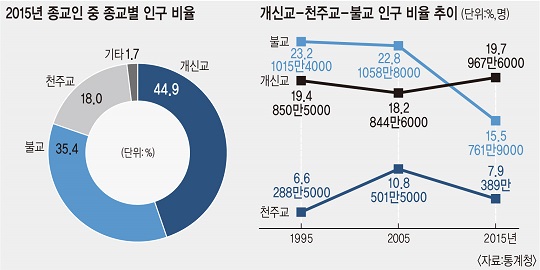

- Pages using the JsonConfig extension
- Webarchive template other archives
- South Korea
- 1948 establishments in South Korea
- Countries in East Asia
- Former Japanese colonies
- G20 members
- Korea
- Countries and territories where Korean is an official language
- Member states of the United Nations
- Countries in Northeast Asia
- OECD members
- Republics
- States and territories established in 1948
- States with limited recognition
- Four Asian Tigers