




robot: Create/upgrade articles. If there is a mistake please report on my talk page. |
No edit summary |
||
| Line 1: | Line 1: | ||
{{redirect|General Abdul Hamid Khan|other people named Abdul Hamid Khan|Abdul Hamid Khan | {{redirect|General Abdul Hamid Khan|other people named Abdul Hamid Khan|Abdul Hamid Khan (disambiguation)}} | ||
{{short description|Pakistani general}} | {{short description|Pakistani general}} | ||
{{ | {{Use Pakistani English|date=February 2023}} | ||
{{Infobox | {{Use dmy dates|date=February 2023}} | ||
{{Infobox officeholder | |||
| honorific_prefix = [[General (Pakistan)|General]] | | honorific_prefix = [[General (Pakistan)|General]] | ||
| name | | name = Abdul Hamid Khan | ||
| honorific_suffix = [[Civil decorations of Pakistan|HQA]] | | honorific_suffix = [[Civil decorations of Pakistan|HQA]] [[Sitara-e-Pakistan|SPk]] [[Sitara-i-Quaid-i-Azam|SQA]] | ||
| birth_date | | birth_date = 29 April 1917<ref name="ReferenceA">The Half Yearly Indian Army List April 1946</ref> | ||
| death_date | | birth_place = [[Pyin Oo Lwin|Maymyo]], [[British rule in Burma|Burma Province]], British India<br />{{small|(present-day [[Myanmar]])}} | ||
| native_name | | death_date = {{death year and age|1984|1917|}} | ||
| image | | death_place = [[Combined Military Hospital Rawalpindi|Combined Military Hospital]], [[Rawalpindi]], [[Punjab, Pakistan|Punjab]], Pakistan | ||
| caption | | death_cause = | ||
| nickname | | resting_place = [[Lahore Cantonment]], Punjab | ||
| allegiance | | office = 5th [[Chief of Staff (Pakistan Army)|Chief of Staff of the Pakistan Army]] | ||
| branch | | predecessor = [[Bakhtiar Rana]] | ||
| serviceyears | | successor = [[Sawar Khan]]<br>{{small|(As [[Vice Chief of the Army Staff (Pakistan)|Vice Chief of Army Staff]])}} | ||
| rank | | president = [[Yahya Khan]] | ||
| term_start = 25 March 1969 | |||
| term_end = 20 December 1971 | |||
| office2 = [[Interior Minister of Pakistan]] | |||
| predecessor2 = [[Afzal Rahman Khan]] | |||
| successor2 = [[Abdur Rashid Khan (politician)|Abdur Rashid Khan]] | |||
| president2 = [[Yahya Khan]] | |||
| deputy2 = Ghulam Umar | |||
| term_start2 = 25 March 1969 | |||
| term_end2 = 20 August 1969 | |||
| native_name = {{nobold|{{nq|عبد الحمید خاں}}}} | |||
| native_name_lang = pnb | |||
| image = General Abdul Hamid Khan.webp | |||
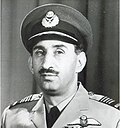
| caption = Official Military portrait {{circa|1971}} | |||
| nickname = ''Ham'' | |||
| allegiance = {{flag|British India}} {{small|(1939–1947)}}<br/>{{PAK}} {{small|(1947–1971)}} | |||
| branch = {{flagicon|British India|army}} [[British Indian Army]]<br/>{{Army|Pakistan}} | |||
| serviceyears = 1939 – 1971 | |||
| rank = [[General (Pakistan)|General]] | |||
| current position = | | current position = | ||
| commands | | commands = [[Chief of Army Staff (Pakistan)|Chief of Staff of the Army]]<br/>[[I Corps (Pakistan)|I Corps]]<br/>GOC, [[11th Infantry Division (Pakistan)|11th Infantry Division]]<br/>6th Baloch Regiment<br/> 3rd Baloch Regiment | ||
| unit | | unit = [[10th Baluch Regiment|10th]] [[Baloch Regiment]] | ||
| battles | | battles = {{tree list}} | ||
| | * [[World War II]] | ||
| laterwork | * [[Indo-Pakistani War of 1965]] | ||
** [[Battle of Kasur (1965)|Battle of Kasur]] | |||
* [[Bangladesh Liberation War]] | |||
**[[Operation Searchlight]] | |||
* [[Indo-Pakistani War of 1971]] | |||
**[[Operation Chengiz Khan]] | |||
{{tree list/end}} | |||
| mawards = [[File:Hilal-e-Quaid-e-Azam (1957-76).png|50px]] [[Civil decorations of Pakistan|Hilal-e-Quaid-e-Azam]]<br>[[File:Sitara-e-Pakistan (SPk) (1957-86).png|50px]] [[Civil decorations of Pakistan|Sitara-e-Pakistan]]<br>[[File:Sitara-e-Quaid-e-Azam (1957-76).png|50px]] [[Civil decorations of Pakistan|Sitara-e-Quaid-e-Azam]]<br>[[File:Order of Crown (Imperial Iran).png|50px]] [[Order of the Crown (Iran)|Order of the Crown]] | |||
| laterwork = | |||
| children = 3 | |||
| relations = Maj-Gen Tariq Hamid (son) | |||
| alma_mater = [[Indian Military Academy]]<br />[[Staff College, Quetta]] | |||
| nationality = [[British subject]] (1917–1947)<br>Pakistani (1947 onwards) | |||
| birth_name = Abdul Hamid Khan | |||
}} | }} | ||
'''Abdul Hamid Khan'''{{efn| | |||
*{{langx|pnb|{{nq|عبد الحمید خاں}}}} | |||
*{{Langx|ur|{{nq|عبد الحمید خان}}}} | |||
}} (29 April 1917 – 1984) was a Pakistani [[General (Pakistan)|military general]] who served as the [[de facto]] [[Commander-in-Chief (Pakistan Army)|Commander-in-Chief]] of the [[Pakistan army]] from 1969 to 1971. He led the Army during the [[Bangladesh Liberation War]] and the subsequent [[Indo-Pakistani war of 1971|Indo-Pakistani War]] in 1971. He was also the [[Chief Martial Law Administrator|Deputy Chief Martial Law Administrator]] under [[Yahya Khan]]. | |||
He is considered a chief architect of the 1971 [[Bangladesh genocide]], during the Bangladesh Liberation War, alongside Yahya Khan and [[Tikka Khan]].<ref>Riza, Maj Gen Shaukat. (1990). ''The Pakistan Army 1966-71''. Rawalpindi: Services Book Club 1990.</ref> | |||
== Early | == Early life and education == | ||
Abdul Hamid Khan was born 29 April 1917 | Abdul Hamid Khan was born on 29 April 1917 in [[Pyin Oo Lwin|Maymyo]], [[British rule in Burma|Burma]] to a [[Punjabi Muslims|Punjabi]]-[[Kashmiri Muslims|Kashmiri]] father and a [[Burmese people|Burmese]] mother. His father was an [[Colonial Service|administrative]] officer from [[Gujrat, Pakistan|Gujrat]] working for the [[British Indian Government]] in [[British rule in Burma|Burma]].<ref name=":0" /> Hamid Khan never publicly identified his mother who was a [[Maid|house servant]] from [[Mandalay]].<ref name="ReferenceA" /> | ||
Growing up in the colonial environment of Burma, Khan was exposed to a structured, disciplined life from an early age, which influenced his later career. He completed his early education in [[Mandalay]]<ref name=":1" /> before moving to India to pursue higher studies. He attended the [[Indian Military Academy]], [[Dehra Dun]]. He was commissioned as a second lieutenant on the Special List 15 July 1939.<ref name=":2" /> | |||
== Career == | |||
=== Early career === | |||
After being commissioned in July 1939, Hamid Khan was initially attached to the [[Somerset Light Infantry]] for experience from 11 August 1939.<ref name=":2">''July 1940 Indian Army List''.</ref> His date of commission was later antedated to 28 August 1938 and he was promoted to lieutenant 28 November 1940. He was admitted to the [[British Indian Army]] 27 August 1940. He was appointed acting captain then temporary captain on 23 December 1940.<ref name="ReferenceA" /> He had been posted to 3rd battalion [[10th Baluch Regiment]] by October 1942. He saw action in [[Italian campaign (World War II)|Italy]] towards the end of the war.<ref>''October 1942 Indian Army List Most Secret edition''.</ref> | |||
He was promoted to war substantive captain and temporary major 3 February 1944. He was briefly an acting lieutenant-colonel 15 August to 18 October 1945. He had attended a wartime staff course.<ref name="ReferenceA" /> | |||
During the [[partition of India]], he opted for [[Dominion of Pakistan|Pakistan]] and joined the newly created [[Pakistan Army]], in 1947 he was promoted to lieutenant-colonel and became commanding officer of 6th battalion, [[Baloch Regiment|Baluch Regiment]], he commanded from April 1948 to November 1948. Later he was appointed commanding officer of 3rd battalion, Baluch Regiment, he served in this post from November 1948 to December 1949.<ref>Riza, Maj Gen Shaukat. ''The Pakistan Army 1947-49'' Rawalpindi: Services Book Club 1989.</ref> | |||
== Awards and | ===1965 war=== | ||
{{Main|India–Pakistan war of 1965}} | |||
During the [[Indo-Pakistani War of 1965|1965 Indo-Pakistani War]], then Major General Khan served as the [[General Officer Commanding]] (GOC) of [[11th Infantry Division (Pakistan)|11th Infantry Division]] at [[Kasur District|Kasur]]. This division in addition to 10th Infantry Division under Major General Sarfaraz Khan repelled the [[Battle of Ichogil Bund|Indian thrust at Lahore]] on 6 September 1965. Following victory at the [[Battle of Kasur (1965)|Battle of Kasur]], his division pushed the Indians back to the border and captured the district of [[Khemkaran]] in [[Punjab, India|Indian Punjab]], though further advances were checked. He then was able to repel multiple counter-attacks by the [[Indian Army]] in an effort to retake [[Khemkaran]].<ref>Riza, Maj Gen Shaukat. (1984). ''The Pakistan Army: War 1965''. Rawalpindi: Services Book Club 1990.</ref><ref>{{cite web | first=Ravi | last=Rikhye | url=http://orbat.com/site/cimh/india/assaluttar.html | title=The Battle of Assal Uttar: Pakistan and India 1965 | archiveurl=https://web.archive.org/web/20160304113405/http://orbat.com/site/cimh/india/assaluttar.html | archivedate=2016-03-04 | work=Pakistan Orbat | date=24 February 2002}}</ref> | |||
===Yahya Khan dictatorship=== | |||
{{Main|Bangladesh Liberation War|India–Pakistan war of 1971|Bangladesh genocide}} | |||
After the [[Indo-Pak war of 1965]], Khan was promoted to lieutenant general and served as the commander of [[I Corps (Pakistan)|I Corps]], Pakistan's primary strike formation and a strategically important garrison town near the Indian border. Then based in [[Kharian]] (it is currently based in [[Mangla]]) his appointment as corps commander placed him in charge of key military operations and enhanced his prominence in the army hierarchy.<ref>[http://www.profile-bengal.com/0505_66_army_high_command.htm "Changes in the Army High Command"] {{webarchive|url=https://web.archive.org/web/20081122045608/http://www.profile-bengal.com/0505_66_army_high_command.htm|date=2008-11-22}} "British High Commission", 5 May 1966.</ref> | |||
Khan was a close and trusted ally of [[Yahya Khan|General Yahya Khan]], with their friendship tracing back to their early years in the military.<ref name=":3" /> Both officers shared a long-standing association, having served together in various capacities throughout their careers. This camaraderie and trust played a significant role in Hamid Khan’s rise through the ranks, particularly during Yahya Khan’s tenure as the Commander-in-Chief of the Pakistan Army and later as President of Pakistan.<ref name=":0" /> | |||
In March 1969, Pakistan experienced [[1968–69 Pakistan revolution|severe political unrest]] | |||
and street protests against the regime of [[Ayub Khan|President Ayub Khan]], largely driven by dissatisfaction with his policies and governance. Amid this chaos, [[Yahya Khan|General Yahya Khan]], the then Commander-in-Chief of the Pakistan Army, removed Ayub and imposed martial law on 25 March 1969. Yahya took over as President of Pakistan, and in recognition of his loyalty and leadership, Lt. Gen. Khan was appointed to multiple roles.<ref name=":4">{{Citation |last=Kazi |first=Dr. Ghulam Nabi |title=Pakistan’s Smallest Cabinet Ever |date=2008-05-21 |url=https://www.flickr.com/photos/pimu/2510812824/ |access-date=2025-01-26}}.</ref><ref name=":5" /> | |||
After martial law was imposed by General [[Yahya Khan]] on 25 March 1969, Lt Gen Hamid Khan was made the Chief of Staff (COS) of the Pakistan Army and Deputy Martial Law Administrator (DMLA) of the country.<ref name=":5" /> During that time he briefly held the cabinet portfolio of [[Interior Minister of Pakistan|Home Affairs]] for four months. He was promoted to full general in August 1969 and was appointed the [[Chief of Army Staff (Pakistan)|chief of staff of the Army]] or in another sense the [[de facto]] [[Commander-in-Chief of the Pakistan Army|commander-in-chief of the army]] in place of Yahya as he was the president. | |||
Hamid Khan was a central figure in Yahya's [[military dictatorship|military government]] along with several active duty military officials: | |||
{| class="wikitable sortable" | |||
|+ Yahya Khan administration | |||
|- | |||
! Ministers !!Portrait !![[Cabinet of Pakistan|Ministries and departments]] !! [[Pakistan Armed Forces|Inter-services]] | |||
|- | |||
|[[General Yahya Khan]]<ref name=":4" />||[[File:General Yahya Khan.png|50px]]||[[President of Pakistan|President]] and [[Chief Martial Law Administrator]]<br/>[[Ministry of Information and Broadcasting (Pakistan)|Information and Broadcasting]]<br/>[[Law Minister of Pakistan|Law]] and [[Ministry of Justice (Pakistan)|Justice]]<br/>[[Foreign Minister of Pakistan|Foreign]] and [[Defence Minister of Pakistan|Defence]] || {{Army|PAK}} | |||
|- | |||
|General Abdul Hamid Khan<ref name=":4" />||[[File:General Abdul Hamid Khan.webp|50px]]|| Deputy [[Chief Martial Law Administrator|CMLA]]<br/>[[Interior Minister of Pakistan|Interior]] and [[Ministry of States and Frontier Regions|Kashmir Affairs]] || {{Army|PAK}} | |||
|- | |||
|Vice-Admiral [[Syed Mohammad Ahsan]]<ref name=":4" />|| || Deputy [[Chief Martial Law Administrator|CMLA]]<br/>[[Finance Minister of Pakistan|Finance]] and [[Planning Commission (Pakistan)|Planning Commission]]<br/>[[Ministry of Statistics (Pakistan)|Statistics]], [[Ministry of Commerce (Pakistan)|Commerce]], and [[Industry Minister of Pakistan|Industry]] || [[File:Naval Jack of Pakistan.svg|20px]] [[Pakistan Navy]] | |||
|- | |||
|[[Air Marshal Nur Khan]]<ref name=":4" />||[[File:Noor khan.jpg|50px]] || Deputy [[Chief Martial Law Administrator|CMLA]]<br/>[[Ministry of Communications (Pakistan)|Communications]] and [[Ministry of Health (Pakistan)|Health]]<br/>[[Ministry of Labour (Pakistan)|Labour]] and [[Ministry of Science and Technology (Pakistan)|Science and Technology]]|| {{Air force|PAK}} | |||
|} | |||
As head of the army and the military operations during the [[Bangladesh Liberation War]] and the [[India–Pakistan war of 1971]],<ref name=":3">{{cite web |last1=Smith |first1=Robert M. |title=Old Friend of President |url=https://www.nytimes.com/1971/12/09/archives/old-friend-of-president.html |access-date=10 January 2025 |website=[[The New York Times]] |publisher=}}</ref><ref name=":4" /><ref name=":5">{{cite web |last1=Hughes |first1=Thomas L. |author-link=Thomas L. Hughes |date=26 March 1969 |title=Pakistan: Martial Law "Who's Who" |url=http://www.profile-bengal.com/0326_69_intelligence_note.htm |url-status=dead |archive-url=https://web.archive.org/web/20080923072142/http://www.profile-bengal.com/0326_69_intelligence_note.htm |archive-date=23 September 2008 |access-date=10 January 2025 |website= |series=The American Papers - Secret and Confidential India.Pakistan.Bangladesh Documents 1965-1973 |publisher=}}</ref> he played a central role in directing Pakistan's Western front campaigns.<ref name=":0">{{cite book |last1=Ahmad |first1=Riaz |author-link=Riaz Ahmed (academic) |title=The General's General: The Life and Times of General Abdul Hamid Khan |date=1993 |publisher=[[Oxford University Press]]}}</ref> He oversaw the launch of [[Operation Chengiz Khan]], a preemptive strike on Indian airbases, aimed at crippling Indian airpower and initiating hostilities. Despite extensive planning, the operation inflicted only limited damage.<ref>{{cite web |last1=Guttman |first1=Jon |title=Lessons Learned from Operation Chenghiz Khan |url=https://www.historynet.com/lessons-learned-from-operation-chenghiz-khan/?r |access-date=10 January 2025 |website=[[HistoryNet]] |publisher=}}</ref> | |||
On the Western front, General Hamid Khan commanded key offensives, including the assault towards [[Firozpur|Ferozepur]] and ordered the offensive in [[Battle of Chumb|Chhamb]] under [[Iftikhar Khan Janjua|Major General Iftikhar Janjua]], which resulted in territorial gains. He also directed the attempted advance towards [[Longewala]], though this effort was ultimately repelled by Indian forces.<ref>{{cite book |last1=Cohen |first1=Stephen P. |author-link=Stephen P. Cohen |title=The Pakistan Army |date=2004 |publisher=[[Oxford University Press]]}}</ref> | |||
Hamid Khan oversaw the [[II Corps (Pakistan)|II Corps]] offensive into the Indian Punjab. The plan involved advancing from [[Bahawalnagar]] towards [[Bathinda]] and [[Ludhiana]]. Under his directive, major elements of the 1st Armored Division began mobilization on December 15, 1971. Small advancements were made by Pakistani troops. However, due to subsequent orders to halt movements, the offensive was delayed and ultimately did not proceed before the ceasefire on December 17, 1971.<ref name=":1">{{cite book |last1=Riza |first1=Maj Gen Shaukat |title=The Pakistan Army 1966-71 |date=1990 |publisher=Services Book Club |location=Rawalpindi}}</ref> His leadership during the conflict, while marked by bold initiatives, has been subject to scrutiny in post-war analyses.<ref>{{cite web |last1=Mohan |first1=Vijay |title=First day of 1971 War |url=https://www.tribuneindia.com/news/anniversary/first-day-of-1971-war |access-date=10 January 2025 |website=[[Tribune India]] |publisher=}}</ref><ref>{{Cite journal |last=Ziring |first=Lawrence |author-link=Lawrence Ziring |date=1974 |title=Militarism in Pakistan: The Yahya Khan Interregnum |url=https://www.jstor.org/stable/30171339 |journal=[[Asian Affairs]] |volume=1 |issue=6 |pages=402–420 |issn=0092-7678}}</ref> | |||
He was also one of the chief architects of the [[Bangladesh genocide]], which took place during the Bangladesh Liberation War, alongside Yahya Khan and [[Tikka Khan]].<ref>{{Cite book |title=Tormenting 71 |publisher=jonmojuddho |year=1975}}</ref> | |||
==In popular culture== | |||
He is portrayed by [[Hobby Dhaliwal]] in the 2023 Indian film ''[[IB71|IB 71]]'', which is based on the [[1971 Indian Airlines hijacking]].<ref>{{Cite Instagram |postid=Cr5Poqkosyq |user=tseries.official |title=Pakistan General, Abdul Hamid Khan - The man who had only one goal- to change India's fate. |author=[[T-Series (company)|T-Series]] |date=May 6, 2023}}</ref> In the 2026 Indian film ''[[Border 2]]'', he is portrayed by Soumyarka Gupta.<ref>{{Cite AV media |title=[[Border 2]] |date=2026 |last=Singh |first=Anurag |author-link=Anurag Singh (director) |type=Motion picture |language=hi |publisher=[[T-Series Films]], [[J. P. Dutta|J. P. Films]]}}</ref> | |||
== Awards and decorations == | |||
{| style="margin:1em auto; text-align:center;" | {| style="margin:1em auto; text-align:center;" | ||
| colspan="4" |{{ribbon devices|ribbon=Hilal-e-Quaid-e-Azam (1957-76).png|width= | | colspan="4" |{{ribbon devices|ribbon=Hilal-e-Quaid-e-Azam (1957-76).png|width=100}} {{Ribbon devices|number=0|type=award-star|ribbon=Sitara-e-Pakistan (SPk) (1957-86).png|width=100}} {{ribbon devices|ribbon=Sitara-e-Quaid-e-Azam (1957-76).png|width=100}} | ||
|- | |- | ||
|{{Ribbon devices|number=0|type=award-star|ribbon=Sitara-e-Harb 1965 War Ribbon.png|width=130}} | |{{Ribbon devices|number=0|type=award-star|ribbon=Sitara-e-Harb 1965 War Ribbon.png|width=130}} | ||
|{{Ribbon devices|number=0|type=award-star|ribbon=Tamgha-e-Jang 1965 War.png|width=130}} | |{{Ribbon devices|number=0|type=award-star|ribbon=Tamgha-e-Jang 1965 War.png|width=130}} | ||
|{{Ribbon devices|number=0|type= | |{{Ribbon devices|number=0|type=award-star|ribbon=Pakistan Independence Medal 1947.png|width=130}} | ||
|{{Ribbon devices|number=0|type=award-star|ribbon=Republic Medal 1956 (Pakistan).png|width=130}} | |{{Ribbon devices|number=0|type=award-star|ribbon=Republic Medal 1956 (Pakistan).png|width=130}} | ||
|- | |- | ||
| Line 55: | Line 134: | ||
|- | |- | ||
|{{Ribbon devices|number=0|type=award-star|ribbon=Italy Star 1945.png|width=130}} | |{{Ribbon devices|number=0|type=award-star|ribbon=Italy Star 1945.png|width=130}} | ||
|{{Ribbon devices|number=0|type=award-star|ribbon=Defence Medal | |{{Ribbon devices|number=0|type=award-star|ribbon=Defence Medal BAR.svg|width=130}} | ||
|{{Ribbon devices|number=0|type=award-star|ribbon=Ribbon - War Medal.png|width=130}} | |{{Ribbon devices|number=0|type=award-star|ribbon=Ribbon - War Medal.png|width=130}} | ||
|{{Ribbon devices|number=0|type=award-star|ribbon=QE II Coronation Medal 1953.png|width=130}} | |{{Ribbon devices|number=0|type=award-star|ribbon=QE II Coronation Medal 1953.png|width=130}} | ||
| Line 64: | Line 143: | ||
''(Crescent of the Great Leader)'' | ''(Crescent of the Great Leader)'' | ||
''( | ''(HQA)'' | ||
| colspan="2" |'''[[Awards and decorations of the Pakistan Armed Forces#Commemorative medals|Sitara-e-Pakistan]]''' | | colspan="2" |'''[[Awards and decorations of the Pakistan Armed Forces#Commemorative medals|Sitara-e-Pakistan]]''' | ||
''(Star of Pakistan)'' | ''(Star of Pakistan)'' | ||
| Line 95: | Line 174: | ||
|'''[[1939-1945 Star]]''' | |'''[[1939-1945 Star]]''' | ||
|'''[[Africa Star]]''' | |'''[[Africa Star]]''' | ||
''(with [[Africa Star#Clasps| | ''(with [[Africa Star#Clasps|Rosette]])'' | ||
|'''[[Italy Star]]''' | |'''[[Italy Star]]''' | ||
|'''[[Defence Medal (United Kingdom)|Defence Medal]]''' | |'''[[Defence Medal (United Kingdom)|Defence Medal]]''' | ||
| Line 122: | Line 200: | ||
|- | |- | ||
|'''[[Defence Medal (United Kingdom)|Defence Medal]]''' | |'''[[Defence Medal (United Kingdom)|Defence Medal]]''' | ||
|{{Ribbon devices|number=0|type=award-star|ribbon=Defence Medal | |{{Ribbon devices|number=0|type=award-star|ribbon=Defence Medal BAR.svg|width=130}} | ||
|- | |- | ||
|'''[[War Medal 1939-1945]]''' | |'''[[War Medal 1939-1945]]''' | ||
| Line 134: | Line 212: | ||
|{{Ribbon devices|number=0|type=award-star|ribbon=Order of Crown (Imperial Iran).png|width=130}} | |{{Ribbon devices|number=0|type=award-star|ribbon=Order of Crown (Imperial Iran).png|width=130}} | ||
|} | |} | ||
==Notes== | |||
{{notelist}} | |||
==References== | ==References== | ||
{{ | {{Reflist}} | ||
==External links== | ==External links== | ||
| Line 150: | Line 231: | ||
{{Pakistan Army Staff Chief}} | {{Pakistan Army Staff Chief}} | ||
{{Interior Minister of Pakistan}} | |||
{{DEFAULTSORT:Khan, Abdul Hamid}} | {{DEFAULTSORT:Khan, Abdul Hamid}} | ||
[[Category:Pakistani generals]] | [[Category:Pakistani generals]] | ||
[[Category:Generals of the | [[Category:Generals of the India–Pakistan war of 1971]] | ||
[[Category:Baloch Regiment officers]] | [[Category:Baloch Regiment officers]] | ||
[[Category:Indian Military Academy alumni]] | [[Category:Indian Military Academy alumni]] | ||
| Line 159: | Line 241: | ||
[[Category:1917 births]] | [[Category:1917 births]] | ||
[[Category:1984 deaths]] | [[Category:1984 deaths]] | ||
[[Category:10th Baluch Regiment officers]] | |||
[[Category:Perpetrators of the Bangladesh genocide]] | |||
[[Category:Indian Army personnel of World War II]] | |||
[[Category:Commanders-in-chief of the Pakistan Army]] | |||
[[Category:People from Mandalay]] | |||
[[Category:Pakistani people of Burmese descent]] | |||
[[Category:Kashmiri people]] | |||
[[Category:Punjabi people by ethnicity]] | |||
[[Category:Military leaders of the India–Pakistan war of 1965]] | |||
[[Category:Generals of the Bangladesh Liberation War]] | |||
[[Category:Interior ministers of Pakistan]] | |||
[[Category:Recipients of Hilal-i-Quaid-i-Azam]] | |||
[[Category:Military personnel from Rawalpindi]] | |||
[[Category:Military personnel from Lahore]] | |||
Latest revision as of 23:10, 29 March 2026
Abdul Hamid Khan | |
|---|---|
عبد الحمید خاں | |
 Official Military portrait c. 1971 | |
| 5th Chief of Staff of the Pakistan Army | |
| In office 25 March 1969 – 20 December 1971 | |
| President | Yahya Khan |
| Preceded by | Bakhtiar Rana |
| Succeeded by | Sawar Khan (As Vice Chief of Army Staff) |
| Interior Minister of Pakistan | |
| In office 25 March 1969 – 20 August 1969 | |
| President | Yahya Khan |
| Deputy | Ghulam Umar |
| Preceded by | Afzal Rahman Khan |
| Succeeded by | Abdur Rashid Khan |
| Personal details | |
| Born | Abdul Hamid Khan 29 April 1917[1] Maymyo, Burma Province, British India (present-day Myanmar) |
| Died | 1984 (aged 66–67) Combined Military Hospital, Rawalpindi, Punjab, Pakistan |
| Resting place | Lahore Cantonment, Punjab |
| Nationality | British subject (1917–1947) Pakistani (1947 onwards) |
| Relations | Maj-Gen Tariq Hamid (son) |
| Children | 3 |
| Alma mater | Indian Military Academy Staff College, Quetta |
| Nickname(s) | Ham |
| Military service | |
| Allegiance |  British India British India
(1939–1947) |
| Branch/service |  British Indian Army British Indian Army Pakistan Army Pakistan Army |
| Years of service | 1939 – 1971 |
| Rank | General |
| Unit | 10th Baloch Regiment |
| Commands | Chief of Staff of the Army I Corps GOC, 11th Infantry Division 6th Baloch Regiment 3rd Baloch Regiment |
| Battles/wars | |
| Awards | .png) Hilal-e-Quaid-e-Azam Hilal-e-Quaid-e-Azam_(1957-86).png) Sitara-e-Pakistan Sitara-e-Pakistan.png) Sitara-e-Quaid-e-Azam Sitara-e-Quaid-e-Azam.png) Order of the Crown Order of the Crown |

Abdul Hamid Khan[lower-alpha 1] (29 April 1917 – 1984) was a Pakistani military general who served as the de facto Commander-in-Chief of the Pakistan army from 1969 to 1971. He led the Army during the Bangladesh Liberation War and the subsequent Indo-Pakistani War in 1971. He was also the Deputy Chief Martial Law Administrator under Yahya Khan.
He is considered a chief architect of the 1971 Bangladesh genocide, during the Bangladesh Liberation War, alongside Yahya Khan and Tikka Khan.[2]
Early life and education[edit | edit source]
Abdul Hamid Khan was born on 29 April 1917 in Maymyo, Burma to a Punjabi-Kashmiri father and a Burmese mother. His father was an administrative officer from Gujrat working for the British Indian Government in Burma.[3] Hamid Khan never publicly identified his mother who was a house servant from Mandalay.[1]
Growing up in the colonial environment of Burma, Khan was exposed to a structured, disciplined life from an early age, which influenced his later career. He completed his early education in Mandalay[4] before moving to India to pursue higher studies. He attended the Indian Military Academy, Dehra Dun. He was commissioned as a second lieutenant on the Special List 15 July 1939.[5]
Career[edit | edit source]
Early career[edit | edit source]
After being commissioned in July 1939, Hamid Khan was initially attached to the Somerset Light Infantry for experience from 11 August 1939.[5] His date of commission was later antedated to 28 August 1938 and he was promoted to lieutenant 28 November 1940. He was admitted to the British Indian Army 27 August 1940. He was appointed acting captain then temporary captain on 23 December 1940.[1] He had been posted to 3rd battalion 10th Baluch Regiment by October 1942. He saw action in Italy towards the end of the war.[6]
He was promoted to war substantive captain and temporary major 3 February 1944. He was briefly an acting lieutenant-colonel 15 August to 18 October 1945. He had attended a wartime staff course.[1]
During the partition of India, he opted for Pakistan and joined the newly created Pakistan Army, in 1947 he was promoted to lieutenant-colonel and became commanding officer of 6th battalion, Baluch Regiment, he commanded from April 1948 to November 1948. Later he was appointed commanding officer of 3rd battalion, Baluch Regiment, he served in this post from November 1948 to December 1949.[7]
1965 war[edit | edit source]
During the 1965 Indo-Pakistani War, then Major General Khan served as the General Officer Commanding (GOC) of 11th Infantry Division at Kasur. This division in addition to 10th Infantry Division under Major General Sarfaraz Khan repelled the Indian thrust at Lahore on 6 September 1965. Following victory at the Battle of Kasur, his division pushed the Indians back to the border and captured the district of Khemkaran in Indian Punjab, though further advances were checked. He then was able to repel multiple counter-attacks by the Indian Army in an effort to retake Khemkaran.[8][9]
Yahya Khan dictatorship[edit | edit source]
After the Indo-Pak war of 1965, Khan was promoted to lieutenant general and served as the commander of I Corps, Pakistan's primary strike formation and a strategically important garrison town near the Indian border. Then based in Kharian (it is currently based in Mangla) his appointment as corps commander placed him in charge of key military operations and enhanced his prominence in the army hierarchy.[10]
Khan was a close and trusted ally of General Yahya Khan, with their friendship tracing back to their early years in the military.[11] Both officers shared a long-standing association, having served together in various capacities throughout their careers. This camaraderie and trust played a significant role in Hamid Khan’s rise through the ranks, particularly during Yahya Khan’s tenure as the Commander-in-Chief of the Pakistan Army and later as President of Pakistan.[3]
In March 1969, Pakistan experienced severe political unrest and street protests against the regime of President Ayub Khan, largely driven by dissatisfaction with his policies and governance. Amid this chaos, General Yahya Khan, the then Commander-in-Chief of the Pakistan Army, removed Ayub and imposed martial law on 25 March 1969. Yahya took over as President of Pakistan, and in recognition of his loyalty and leadership, Lt. Gen. Khan was appointed to multiple roles.[12][13]
After martial law was imposed by General Yahya Khan on 25 March 1969, Lt Gen Hamid Khan was made the Chief of Staff (COS) of the Pakistan Army and Deputy Martial Law Administrator (DMLA) of the country.[13] During that time he briefly held the cabinet portfolio of Home Affairs for four months. He was promoted to full general in August 1969 and was appointed the chief of staff of the Army or in another sense the de facto commander-in-chief of the army in place of Yahya as he was the president.
Hamid Khan was a central figure in Yahya's military government along with several active duty military officials:
| Ministers | Portrait | Ministries and departments | Inter-services |
|---|---|---|---|
| General Yahya Khan[12] | File:General Yahya Khan.png | President and Chief Martial Law Administrator Information and Broadcasting Law and Justice Foreign and Defence |
Pakistan Army
|
| General Abdul Hamid Khan[12] | |
Deputy CMLA Interior and Kashmir Affairs |
Pakistan Army
|
| Vice-Admiral Syed Mohammad Ahsan[12] | Deputy CMLA Finance and Planning Commission Statistics, Commerce, and Industry |
 Pakistan Navy Pakistan Navy
| |
| Air Marshal Nur Khan[12] |  |
Deputy CMLA Communications and Health Labour and Science and Technology |
 Pakistan Air Force Pakistan Air Force
|

As head of the army and the military operations during the Bangladesh Liberation War and the India–Pakistan war of 1971,[11][12][13] he played a central role in directing Pakistan's Western front campaigns.[3] He oversaw the launch of Operation Chengiz Khan, a preemptive strike on Indian airbases, aimed at crippling Indian airpower and initiating hostilities. Despite extensive planning, the operation inflicted only limited damage.[14]
On the Western front, General Hamid Khan commanded key offensives, including the assault towards Ferozepur and ordered the offensive in Chhamb under Major General Iftikhar Janjua, which resulted in territorial gains. He also directed the attempted advance towards Longewala, though this effort was ultimately repelled by Indian forces.[15]
Hamid Khan oversaw the II Corps offensive into the Indian Punjab. The plan involved advancing from Bahawalnagar towards Bathinda and Ludhiana. Under his directive, major elements of the 1st Armored Division began mobilization on December 15, 1971. Small advancements were made by Pakistani troops. However, due to subsequent orders to halt movements, the offensive was delayed and ultimately did not proceed before the ceasefire on December 17, 1971.[4] His leadership during the conflict, while marked by bold initiatives, has been subject to scrutiny in post-war analyses.[16][17]
He was also one of the chief architects of the Bangladesh genocide, which took place during the Bangladesh Liberation War, alongside Yahya Khan and Tikka Khan.[18]
In popular culture[edit | edit source]
He is portrayed by Hobby Dhaliwal in the 2023 Indian film IB 71, which is based on the 1971 Indian Airlines hijacking.[19] In the 2026 Indian film Border 2, he is portrayed by Soumyarka Gupta.[20]
Awards and decorations[edit | edit source]
|
| |||

|
File:Tamgha-e-Jang 1965 War.png | 
|
.png)
|
|
|
.png)
|

|

|

|

|

|

|

| Hilal-e-Quaid-e-Azam
(Crescent of the Great Leader) (HQA) |
Sitara-e-Pakistan
(Star of Pakistan) (SPk) |
Sitara-e-Quaid-e-Azam
(Star of the Great Leader) (SQA) | |||||
| Sitara-e-Harb 1965 War
(War Star 1965) |
Tamgha-e-Jang 1965 War
(War Medal 1965) |
Pakistan Tamgha
1947 |
Tamgha-e-Jamhuria
(Republic Commemoration Medal) 1956 | ||||
| Order of the Crown | India General Service Medal | 1939-1945 Star | Africa Star
(with Rosette) |
Italy Star | Defence Medal | War Medal | Queen Elizabeth II
(1953) |
Foreign Decorations[edit | edit source]
| Foreign Awards | ||
|---|---|---|
 UK UK
|
1939-1945 Star |
|
| Africa Star | 
| |
| Italy Star |
| |
| Defence Medal |
| |
| War Medal 1939-1945 |
| |
| Queen Elizabeth II Coronation Medal |
| |
| Template:Country data Imperial Iran | Order of the Crown |
|
Notes[edit | edit source]
References[edit | edit source]
- ↑ 1.0 1.1 1.2 1.3 The Half Yearly Indian Army List April 1946
- ↑ Riza, Maj Gen Shaukat. (1990). The Pakistan Army 1966-71. Rawalpindi: Services Book Club 1990.
- ↑ 3.0 3.1 3.2 Ahmad, Riaz (1993). The General's General: The Life and Times of General Abdul Hamid Khan. Oxford University Press.
- ↑ 4.0 4.1 Riza, Maj Gen Shaukat (1990). The Pakistan Army 1966-71. Rawalpindi: Services Book Club.
- ↑ 5.0 5.1 July 1940 Indian Army List.
- ↑ October 1942 Indian Army List Most Secret edition.
- ↑ Riza, Maj Gen Shaukat. The Pakistan Army 1947-49 Rawalpindi: Services Book Club 1989.
- ↑ Riza, Maj Gen Shaukat. (1984). The Pakistan Army: War 1965. Rawalpindi: Services Book Club 1990.
- ↑ Rikhye, Ravi (24 February 2002). "The Battle of Assal Uttar: Pakistan and India 1965". Pakistan Orbat. Archived from the original on 4 March 2016.
- ↑ "Changes in the Army High Command" Archived 2008-11-22 at the Wayback Machine "British High Commission", 5 May 1966.
- ↑ 11.0 11.1 Smith, Robert M. "Old Friend of President". The New York Times. Retrieved 10 January 2025.
- ↑ 12.0 12.1 12.2 12.3 12.4 12.5 Kazi, Dr. Ghulam Nabi (21 May 2008), Pakistan’s Smallest Cabinet Ever, retrieved 26 January 2025.
- ↑ 13.0 13.1 13.2 Hughes, Thomas L. (26 March 1969). "Pakistan: Martial Law "Who's Who"". The American Papers - Secret and Confidential India.Pakistan.Bangladesh Documents 1965-1973. Archived from the original on 23 September 2008. Retrieved 10 January 2025.
- ↑ Guttman, Jon. "Lessons Learned from Operation Chenghiz Khan". HistoryNet. Retrieved 10 January 2025.
- ↑ Cohen, Stephen P. (2004). The Pakistan Army. Oxford University Press.
- ↑ Mohan, Vijay. "First day of 1971 War". Tribune India. Retrieved 10 January 2025.
- ↑ Ziring, Lawrence (1974). "Militarism in Pakistan: The Yahya Khan Interregnum". Asian Affairs. 1 (6): 402–420. ISSN 0092-7678.
- ↑ Tormenting 71. jonmojuddho. 1975.
- ↑ T-Series [@tseries.official]; (6 May 2023). "Pakistan General, Abdul Hamid Khan - The man who had only one goal- to change India's fate" – via Instagram.
- ↑ Singh, Anurag (2026). Border 2 (Motion picture) (in हिन्दी). T-Series Films, J. P. Films.
External links[edit | edit source]
| Political offices | ||
|---|---|---|
| Preceded by Afzal Rahman Khan |
Interior Minister of Pakistan 1969 |
Succeeded by Sardar Abdur Rashid Khan |
Template:Pakistan Army Staff Chief Template:Interior Minister of Pakistan
- Pages using the JsonConfig extension
- Pakistani generals
- Generals of the India–Pakistan war of 1971
- Baloch Regiment officers
- Indian Military Academy alumni
- British Indian Army officers
- 1917 births
- 1984 deaths
- 10th Baluch Regiment officers
- Perpetrators of the Bangladesh genocide
- Indian Army personnel of World War II
- Commanders-in-chief of the Pakistan Army
- People from Mandalay
- Pakistani people of Burmese descent
- Kashmiri people
- Punjabi people by ethnicity
- Military leaders of the India–Pakistan war of 1965
- Generals of the Bangladesh Liberation War
- Interior ministers of Pakistan
- Recipients of Hilal-i-Quaid-i-Azam
- Military personnel from Rawalpindi
- Military personnel from Lahore