



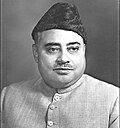
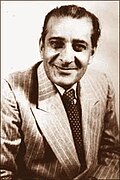
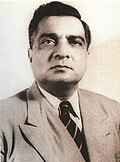
ImportMaster (talk | contribs) m robot: Creating new article from Special:WantedPages |
failed verification: not found in source cited |
||
| Line 1: | Line 1: | ||
{{Short description|1947–1956 monarchy in South Asia}} | |||
{{EngvarB|date=May 2013}} | |||
{{Use dmy dates|date=September 2017}} | |||
{{more citations needed|date=February 2014}} | |||
{{Infobox former country | {{Infobox former country | ||
| | | conventional_long_name = Pakistan | ||
| | | religion = | ||
|common_name = Pakistan | | common_name = Pakistan | ||
| | | government_type = [[Federation|Federal]] [[parliamentary]] [[constitutional monarchy]] | ||
| | | year_start = 1947<ref name="Vipul2009">{{cite book|author=Singh Vipul|title=Longman History & Civics Icse 10|url=https://books.google.com/books?id=RX4OiM0MGZUC&pg=PA132|date=1 September 2009|publisher=Pearson Education India|isbn=978-81-317-2042-4|pages=132–|access-date=9 November 2015|archive-date=17 January 2023|archive-url=https://web.archive.org/web/20230117055444/https://books.google.com/books?id=RX4OiM0MGZUC&pg=PA132|url-status=live}}</ref> | ||
| | | year_end = 1956 | ||
| | | life_span = 1947–1956<ref name="Timothy C. Winegard">{{cite book|title=Indigenous Peoples of the British Dominions and the First World War|publisher=Cambridge University Press|isbn=978-1107014930|page=2|url=https://books.google.com/books?id=qzIw-c1YOAIC&pg=PA2|author=Timothy C. Winegard|edition=1st|access-date=11 August 2013|date=29 December 2011|archive-date=17 January 2023|archive-url=https://web.archive.org/web/20230117055444/https://books.google.com/books?id=qzIw-c1YOAIC&pg=PA2|url-status=live}}</ref> | ||
| | | event_start = [[Independence Day (Pakistan)|Independence]] | ||
| | | date_start = 14 August | ||
| | | event_end = [[Constitution of Pakistan of 1956|Islamic Republic]] | ||
| | | date_end = 23 March | ||
| | | p1 = British Raj | ||
| | | flag_p1 = British Raj Red Ensign.svg | ||
| s1 = Pakistan{{!}}Islamic Republic of Pakistan | |||
| | | flag_s1 = Flag of Pakistan.svg | ||
| image_flag = Flag of Pakistan.svg | |||
| | | image_coat = Emblem of Pakistan (1947-1955).svg | ||
| | | symbol_type = [[State emblem of Pakistan|Emblem (1947–1955)]] | ||
| national_anthem = ''[[Qaumi Taranah]]'' (1954–56){{center|[[File:Pakistan anthem - United States Navy Band.ogg]]}} | |||
| | | image_map = Dominion of Pakistan & Indian Controlled Kashmir (orthographic projection).svg | ||
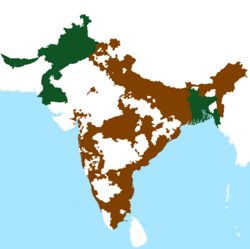
| | | image_map_caption = Land controlled by the Dominion of Pakistan shown in dark green; [[Kashmir conflict|land claimed but not controlled]] shown in light green | ||
| | | capital = [[Karachi]]<!--NOT ISLAMABAD: ISLAMABAD BECAME THE CAPITAL OF THE ISLAMIC REPUBLIC AND WAS NEVER THE CAPITAL OF THE DOMINION--> | ||
| | | official_languages = [[English language|English]]{{efn-lr|name=OffLang}} | ||
| | | national_languages = [[Urdu]]{{efn-lr|name=FirstLang}}, [[Bengali language|Bengali]]{{efn-lr|name=SecondLang}} | ||
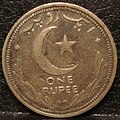
| | | currency = [[Indian rupee]] (1947–1948)<br>[[Pakistani rupee]] (1948–1956) | ||
| | | leader1 = [[George VI]] | ||
| | | leader2 = [[Elizabeth II]] | ||
| | | year_leader1 = 1947–1952 | ||
| | | year_leader2 = 1952–1956 | ||
| | | title_leader = [[Monarchy of Pakistan|Monarch]] | ||
| | | representative1 = [[Muhammad Ali Jinnah]] | ||
| | | representative2 = [[Khawaja Nazimuddin|Sir Khawaja Nazimuddin]] | ||
| | | representative3 = [[Malik Ghulam Muhammad|Sir Ghulam Muhammad]] | ||
| | | representative4 = [[Iskander Mirza]] | ||
| | | year_representative1 = 1947–1948 | ||
| | | year_representative2 = 1948–1951 | ||
| | | year_representative3 = 1951–1955 | ||
| | | year_representative4 = 1955–1956 | ||
| | | title_representative = [[Governor-General of Pakistan|Governor-General]] | ||
| deputy1 = [[Liaquat Ali Khan]] | |||
| | | deputy2 = [[Khawaja Nazimuddin|Sir Khawaja Nazimuddin]] | ||
| | | deputy3 = [[Mohammad Ali Bogra]] | ||
| | | deputy4 = [[Chaudhry Mohammad Ali]] | ||
| | | year_deputy1 = 1947–1951 | ||
| | | year_deputy2 = 1951–1953 | ||
| | | year_deputy3 = 1953–1955 | ||
| | | year_deputy4 = 1955–1956 | ||
| | | title_deputy = [[Prime Minister of Pakistan|Prime Minister]] | ||
| | | legislature = [[Constituent Assembly of Pakistan|Constituent Assembly]] | ||
| | | area_km2 = 1,030,373 | ||
| | | today = [[Pakistan]]<br>[[Bangladesh]] {{efn|name=IndBangla}} | ||
| | | footnotes = {{notelist-lr|refs= | ||
| | {{efn-lr|name=OffLang|Official Language: 14 August 1947}} | ||
| | {{efn-lr|name=FirstLang|First National Language: 23 February 1948}} | ||
| | {{efn-lr|name=SecondLang|Second National Language: 29 February 1956}} | ||
| | }} | ||
| iso3166code = omit | |||
| demonym = Pakistani | |||
| native_name = {{native name|ur|{{nq|پاکستان}}}}<br>{{native name|bn|পাকিস্তান}} | |||
}} | |||
The '''Dominion of Pakistan''', officially '''Pakistan''',<ref>As to official name being just "Pakistan" and not "Dominion of Pakistan": Indian Independence Act 1947, Section1.-(i) As from the fifteenth day of August, nineteen hundred and forty-seven, two independent Dominions shall be set up in India, to be known respectively as ''India'' and ''Pakistan''."</ref> was an independent federal [[dominion]] in the British [[Commonwealth of Nations]], existing between [[14 August 1947]] and [[Pakistan Day|23 March 1956]], created by the passing of the [[Indian Independence Act 1947]] by the [[Parliament of the United Kingdom|British parliament]], which also created an independent [[Dominion of India]]. | |||
Before its independence, Pakistan consisted of those [[Presidencies and provinces of British India]] which were allocated to it in the [[Partition of India]]. Until 1947, they had been ruled by the [[United Kingdom]] as a part of the [[British Empire]]. | |||
During the year that followed its independence, the new country was joined by the [[Princely states of Pakistan]] ruled by princes who had previously been in [[subsidiary alliance]]s with the British, which acceded to Pakistan, one by one, with their rulers signing [[Instrument of Accession|Instruments of Accession]]. For many years, these states enjoyed a special status within the dominion and later the republic, but they were slowly incorporated into the provinces. The last remnants of their internal self-government had been lost by 1974. | |||
Initially, the Dominion of Pakistan had two wings, one in the East, which is now [[Bangladesh]], and another in the West, which is now [[Pakistan]]. After the [[Constitution of Pakistan|Constitution of Pakistan of 1956]] came into effect, the [[Pakistani monarchy]] was abolished, when the [[Islamic Republic of Pakistan]] was proclaimed. | |||
The status as a federal dominion within the [[British Empire]] ended in 1956 with the completion of the [[Constitution of Pakistan of 1956|Constitution of Pakistan]], which established the country as a republic. The constitution also administratively split the nation into [[West Pakistan]] and [[East Pakistan]], which were until then governed as a singular entity, despite being separate geographic [[Enclave and exclave|exclaves]]. In 1971 following the [[Indo-Pakistani War of 1971]], East Pakistan seceded as the new nation of Bangladesh, whereas West Pakistan became Pakistan. | |||
== History == | |||
===Partition and independence=== | |||
{{main|Partition of India}} | |||
Section 1 of the [[Indian Independence Act 1947]] provided that from "the fifteenth day of August, nineteen hundred and forty-seven, two independent dominions shall be set up in India, to be known respectively as ''India'' and ''Pakistan''." The British monarch became the head of state of both the new dominions, with Pakistan sharing a king with the United Kingdom and the other [[dominion]]s of the British Commonwealth, and the monarch's constitutional roles in Pakistan were delegated to the [[Governor-General of Pakistan]]. | |||
Before August 1947, about half of the area of present-day Pakistan was part of [[Presidencies and provinces of British India|British India]], which was directly governed by the British in the name of the [[British Crown]], while the remainder were [[Princely states of Pakistan|princely states]] in [[subsidiary alliance]]s with the British, enjoying semi-autonomous self-government. The British abandoned these alliances in August 1947, leaving the states entirely independent, and between 1947 and 1948 the states all acceded to Pakistan, while retaining internal self-government for several years. | |||
More than ten million people migrated across the new borders and between 200,000–2,000,000<ref>{{cite journal|last1=Talbot|first1=Ian|title=Partition of India: The Human Dimension|journal=Cultural and Social History|date=2009|volume=6|issue=4|pages=403–410|quote=The number of casualties remains a matter of dispute, with figures being claimed that range from 200,000 to 2 million victims.|doi=10.2752/147800409X466254|s2cid=147110854}}</ref><ref>{{Cite news|url=http://www.dawn.com/news/1169309|title=Murder, rape and shattered families: 1947 Partition Archive effort underway|date=13 March 2015|work=Dawn|access-date=14 January 2017|quote=There are no exact numbers of people killed and displaced, but estimates range from a few hundred thousand to two million killed and more than 10 million displaced.|archive-url=https://web.archive.org/web/20170214050417/http://www.dawn.com/news/1169309|archive-date=14 February 2017|url-status=live}}</ref><ref>{{Cite book|url=https://books.google.com/books?id=yqAGKpOe9xMC&q=2+million+people+died+partition&pg=PA36|title=South Asia's Cold War: Nuclear Weapons and Conflict in Comparative Perspective|last=Basrur|first=Rajesh M.|publisher=Routledge|year=2008|isbn=978-1-134-16531-5|quote=An estimated 12–15 million people were displaced, and some 2 million died. The legacy of Partition (never without a capital P) remains strong today ...|access-date=24 October 2021|archive-date=16 January 2023|archive-url=https://web.archive.org/web/20230116113610/https://books.google.com/books?id=yqAGKpOe9xMC&q=2+million+people+died+partition&pg=PA36|url-status=live}}</ref><ref>{{Cite book|url=https://books.google.com/books?id=0Kne87aU7D0C&q=2+000+000+killed+partition&pg=PA3|title=Idols of the Tribe: Group Identity and Political Change|last=Isaacs|first=Harold Robert|publisher=Harvard University Press|year=1975|isbn=978-0-674-44315-0|quote=2,000,000 killed in the Hindu-Muslim holocaust during the partition of India and the creation of Pakistan|access-date=24 October 2021|archive-date=16 January 2023|archive-url=https://web.archive.org/web/20230116113610/https://books.google.com/books?id=0Kne87aU7D0C&q=2+000+000+killed+partition&pg=PA3|url-status=live}}</ref> people died in the spate of communal violence in the Punjab in what some scholars have described as a 'retributive genocide' between the religions.<ref>{{cite web|url=http://faculty.washington.edu/brass/Partition.pdf|title=The partition of India and retributive genocide in the Punjab, 1946–47: means, methods, and purposes|first=Paul R.|author-link=Paul Brass|date=2003|publisher=Carfax Publishing: Taylor and Francis Group|pages=81–82 (5(1), 71–101)|quote=In the event, largely but not exclusively as a consequence of their efforts, the entire Muslim population of the eastern Punjab districts migrated to West Punjab and the entire Sikh and Hindu populations moved to East Punjab in the midst of widespread intimidation, terror, violence, abduction, rape, and murder.|last=Brass|work=[[Journal of Genocide Research]]|access-date=16 August 2014|archive-url=https://web.archive.org/web/20150319072448/http://faculty.washington.edu/brass/Partition.pdf|archive-date=19 March 2015|url-status=dead}}</ref> The Pakistani government claimed that 50,000 Muslim women were abducted and raped by Hindu and Sikh men and similarly the Indian government claimed that Muslims abducted and raped 33,000 Hindu and Sikh women.<ref>{{Cite book|url=https://books.google.com/books?id=P7a-FuiMcTYC&q=50+000+Muslim+women+partition&pg=PA75|title=Violent Belongings: Partition, Gender, and National Culture in Postcolonial India|last=Daiya|first=Kavita|publisher=Temple University Press|year=2011|isbn=978-1-59213-744-2|pages=75|quote=The official estimate of the number of abducted women during Partition was placed at 33,000 non-Muslim (Hindu or Sikh predominantly) women in Pakistan, and 50,000 Muslim women in India.|access-date=24 October 2021|archive-date=16 January 2023|archive-url=https://web.archive.org/web/20230116113610/https://books.google.com/books?id=P7a-FuiMcTYC&q=50+000+Muslim+women+partition&pg=PA75|url-status=live}}</ref><ref>{{Cite book|url=https://books.google.com/books?id=tmA0DAAAQBAJ&q=50+000+Muslim+women+partition&pg=PA14|title=Revisiting India's Partition: New Essays on Memory, Culture, and Politics|last1=Singh|first1=Amritjit|last2=Iyer|first2=Nalini|last3=Gairola|first3=Rahul K.|publisher=Lexington Books|year=2016|isbn=978-1-4985-3105-4|pages=14|quote=The horrific statistics that surround women refugees-between 75,000–100,000 Hindu, Muslim and Sikh women who were abducted by men of the other communities, subjected to multiple rapes, mutilations, and, for some, forced marriages and conversions-is matched by the treatment of the abducted women in the hands of the nation-state. In the Constituent Assembly in 1949 it was recorded that of the 50,000 Muslim women abducted in India, 8,000 of then were recovered, and of the 33,000 Hindu and Sikh women abducted, 12,000 were recovered.|access-date=24 October 2021|archive-date=16 January 2023|archive-url=https://web.archive.org/web/20230116113610/https://books.google.com/books?id=tmA0DAAAQBAJ&q=50+000+Muslim+women+partition&pg=PA14|url-status=live}}</ref><ref>{{Cite book|url=https://books.google.com/books?id=cm4PBNdaFjYC&q=50+000+Muslim+women+partition&pg=PA131|title=Women and the Politics of Violence|last=Abraham|first=Taisha|publisher=Har-Anand Publications|year=2002|isbn=978-81-241-0847-5|pages=131|quote=In addition thousands of women on both sides of the newly formed borders (estimated range from 29,000 to 50,000 Muslim women and 15,000 to 35,000 Hindu and Sikh women) were abducted, raped, forced to convert, forced into marriage, forced back into what the two States defined as 'their proper homes,' torn apart from their families once during partition by those who abducted them, and again, after partition, by the State which tried to 'recover' and 'rehabilitate' them.|access-date=24 October 2021|archive-date=16 January 2023|archive-url=https://web.archive.org/web/20230116113853/https://books.google.com/books?id=cm4PBNdaFjYC&q=50+000+Muslim+women+partition&pg=PA131|url-status=live}}</ref> The two governments agreed to repatriate abducted women and thousands of Hindu, Sikh and Muslim women were repatriated to their families in the 1950s. The dispute over Kashmir escalated into the [[Indo-Pakistani War of 1947|first war]] between [[India]] and [[Pakistan]]. With the assistance of the [[United Nations]] (UN) the war was ended but it became the [[Kashmir dispute]], unresolved {{as of|lc=yes|2022}}. | |||
[[File:Pakistan.ogv|left|thumb|A 1950 documentary about Pakistan]] | |||
In 1947, the [[:Category:Leaders of the Pakistan Movement|founding fathers]] of Pakistan agreed to appoint Liaquat Ali Khan as the country's [[List of Prime Ministers of Pakistan|first]] [[Prime Minister of Pakistan|prime minister]], with Muhammad Ali Jinnah as both first [[Governor-General of Pakistan|governor-general]] and [[speaker of the National Assembly of Pakistan|speaker]] of the [[Parliament of Pakistan|State Parliament]].<ref name="Story of Pakistan press (1947 Government)">{{cite web|url=http://storyofpakistan.com/liaquat-ali-khan-as-prime-minister/|title=Government of Prime Minister Liaquat Ali Khan |date=June 2003 |display-authors=etal |publisher=Story of Pakistan press (1947 Government)|access-date=17 April 2013|archive-url=https://web.archive.org/web/20130407073822/http://storyofpakistan.com/liaquat-ali-khan-as-prime-minister/|archive-date=7 April 2013|url-status=live}}</ref> Mountbatten had offered to serve as Governor-general of both India and Pakistan but Jinnah refused this offer.<ref>{{Cite book|url=https://books.google.com/books?id=uJHTif-WA6oC&q=jinnah+refused+mountbatten%27s+offer+to+serve+as+governor+general+of+pakistan&pg=PA163|title=Shameful Flight: The Last Years of the British Empire in India|last=Wolpert|first=Stanley|publisher=Oxford University Press|year=2009|isbn=978-0-19-974504-3|pages=163|quote=Mountbatten tried to convince Jinnah of the value of accepting him, Mountbatten, as Pakistan's first governor-general, but Jinnah refused to be moved from his determination to take that job himself.|access-date=24 October 2021|archive-date=16 January 2023|archive-url=https://web.archive.org/web/20230116113853/https://books.google.com/books?id=uJHTif-WA6oC&q=jinnah+refused+mountbatten%27s+offer+to+serve+as+governor+general+of+pakistan&pg=PA163|url-status=live}}</ref> | |||
The first formal step to transform Pakistan into an ideological Islamic state was taken in March 1949 when Liaquat Ali Khan introduced the [[Objectives Resolution]] in the [[National Assembly of Pakistan|Constituent Assembly]]. The Objectives Resolution declared that sovereignty over the entire universe belongs to [[Allah]]. Support for the Objectives Resolution and the transformation of Pakistan into an Islamic state was led by Maulana Shabbir Ahmad Usmani, a respected ''Deobandi alim'' (scholar) who occupied the position of [[Shaykh al-Islam]] in Pakistan in 1949, and [[Abul A'la Maududi|Maulana Mawdudi]] of [[Jamaat-e-Islami|Jamaat-i Islami]].<ref>{{Cite book|url=http://www.oxfordislamicstudies.com/article/opr/t236/e0616|title=Pakistan|last=Hussain|first=Rizwan|work=The Oxford Encyclopedia of the Islamic World|quote=Mawlānā Shabbīr Ahmad Usmānī, a respected Deobandī ʿālim (scholar) who was appointed to the prestigious position of Shaykh al-Islām of Pakistan in 1949, was the first to demand that Pakistan become an Islamic state. But Mawdūdī and his Jamāʿat-i Islāmī played the central part in the demand for an Islamic constitution. Mawdūdī demanded that the Constituent Assembly make an unequivocal declaration affirming the "supreme sovereignty of God" and the supremacy of the sharīʿah as the basic law of Pakistan.|access-date=23 March 2017|archive-url=https://web.archive.org/web/20160329203725/http://oxfordislamicstudies.com/article/opr/t236/e0616|archive-date=29 March 2016|url-status=live}}</ref><ref name=":13">{{Cite book|url=http://www.oxfordislamicstudies.com/article/opr/t236/e0616|title=Pakistan|last=Hussain|first=Rizwan|work=The Oxford Encyclopedia of the Islamic World|quote=The first important result of the combined efforts of the Jamāʿat-i Islāmī and the ʿulamāʿ was the passage of the Objectives Resolution in March 1949, whose formulation reflected compromise between traditionalists and modernists. The resolution embodied "the main principles on which the constitution of Pakistan is to be based." It declared that "sovereignty over the entire universe belongs to God Almighty alone and the authority which He has delegated to the State of Pakistan through its people for being exercised within the limits prescribed by Him is a sacred trust," that "the principles of democracy, freedom, equality, tolerance and social justice, as enunciated by Islam shall be fully observed," and that "the Muslims shall be enabled to order their lives in the individual and collective spheres in accord with the teaching and requirements of Islam as set out in the Holy Qurʿan and Sunna." The Objectives Resolution has been reproduced as a preamble to the constitutions of 1956, 1962, and 1973.|access-date=23 March 2017|archive-url=https://web.archive.org/web/20160329203725/http://oxfordislamicstudies.com/article/opr/t236/e0616|archive-date=29 March 2016|url-status=live}}</ref> | |||
[[Indian Muslims]] from the [[United Provinces (1937–50)|United Provinces]], [[Bombay Province]], [[Central Provinces]] and other areas of India continued migrating to Pakistan throughout the 1950 and 1960s and settled mainly in urban [[Sindh]], particularly in the new country's first capital, [[Karachi]].<ref>{{Cite journal|last=KHALIDI|first=OMAR|title=From Torrent to Trickle: Indian Muslim Migration to Pakistan, 1947—97|date=1 January 1998|jstor=20837002|journal=Islamic Studies|volume=37|issue=3|pages=339–352}}</ref> Prime Minister Ali Khan established a strong government and had to face challenges soon after gaining the office.<ref name="Story of Pakistan press (1947 Government)" /> His Finance Secretary [[Victor Turner (civil servant)|Victor Turner]] announced the country's first monetary policy by establishing the [[State Bank of Pakistan|State Bank]], the [[Federal Bureau of Statistics]] and the [[Federal Board of Revenue (Pakistan)|Federal Board of Revenue]] to improve statistical knowledge, finance, taxation, and revenue collection in the country.<ref name="Chaudry">{{cite book|title=Political administrators : the story of the Civil Service of Pakistan|last=Chaudry|first=Aminullah|publisher=Oxford University Press|isbn=978-0-19-906171-6|location=Oxford|year=2011}}</ref> There were also problems because India cut off water supply to Pakistan from two canal headworks in its side of [[Punjab, India|Punjab]] on 1 April 1948 and also withheld delivering Pakistan its share of the assets and funds of United India, which the [[Indian government]] released after [[Gandhi]]'s pressurisation.<ref name="Pande20112">{{cite book|url=https://books.google.com/books?id=ceg-kSmft94C&pg=PA16|title=Explaining Pakistan's Foreign Policy: Escaping India|author=Aparna Pande|date=16 March 2011|publisher=Taylor & Francis|isbn=978-1-136-81894-3|pages=16–17|access-date=24 October 2021|archive-date=16 January 2023|archive-url=https://web.archive.org/web/20230116113853/https://books.google.com/books?id=ceg-kSmft94C&pg=PA16|url-status=live}}</ref> | |||
===Political unrest=== | |||
In a 1948 speech, Jinnah declared that "[[Urdu]] alone would be the state language and the [[lingua franca]] of the Pakistan state", although at the same time he called for the [[Bengali language]] to be the official language of the [[East Bengal|Bengal province]].<ref name="Pakistan Tea House">{{cite news|url=http://pakteahouse.net/2010/02/22/jinnah-and-urdu-bengali-controversy/|title=Jinnah And Urdu-Bengali Controversy|last=Yasser Latif Hamdani|date=22 February 2010|access-date=17 April 2013|newspaper=Pakistan Tea House|archive-url=https://web.archive.org/web/20130316170749/http://pakteahouse.net/2010/02/22/jinnah-and-urdu-bengali-controversy/|archive-date=16 March 2013|url-status=live}}</ref> Nonetheless, tensions began to grow in [[East Bengal]].<ref name="Pakistan Tea House" /> Jinnah's health further deteriorated and he died in 1948. Bengali leader, Sir [[Khawaja Nazimuddin]] succeeded as the governor general of Pakistan.<ref>{{cite news|url=http://storyofpakistan.com/khawaja-nazimuddin-becomes-governor-general/|title=Khawaja Nazimuddin Becomes Governor General|last=Administration|newspaper=Administration|access-date=23 March 2017|archive-url=https://web.archive.org/web/20170330205907/http://storyofpakistan.com/khawaja-nazimuddin-becomes-governor-general|archive-date=30 March 2017|url-status=live}}</ref> | |||
During a massive political rally in 1951, Prime Minister Ali Khan was [[Assassination of liaqat ali khan|assassinated]], and Nazimuddin became the second prime minister.<ref name="Story of Pakistan press (1947 Government)" /> Tensions in [[East Pakistan]] reached a climax in 1952, when the East Pakistani police opened fire on students [[Bengali language movement|protesting]] for the Bengali language to receive equal status with Urdu. The situation was controlled by Nazimuddin who issued a waiver granting the Bengali language equal status, a right codified in the 1956 constitution. In 1953 at the instigation of religious parties, anti-[[Ahmadiyya]] riots erupted, which led to many Ahmadi deaths.<ref name="1953riots">{{cite book|url=https://archive.org/details/pakistancountrys00bloo|url-access=registration|quote=Pakistan: A Country Study.|title=Pakistan: a country study|last=Blood|first=Peter R.|publisher=Federal Research Division, Library of Congress|year=1995|isbn=978-0-8444-0834-7|location=Washington, D.C.|pages=[https://archive.org/details/pakistancountrys00bloo/page/130 130]–131}}</ref> The riots were investigated by a two-member court of inquiry in 1954,<ref name="munir">{{cite book|url=http://www.thepersecution.org/dl/report_1953.pdf|title=Punjab. Court of Inquiry to Enquire into the Punjab Disturbances of 1953.|last=Munir|first=Muhammad|publisher=Superintendent, Government Printing, Punjab|year=1954|location=Lahore|author-link=Muhammad Munir|author2=Malik Rustam Kayani|author-link2=M. R. Kayani|access-date=23 March 2017|archive-url=https://web.archive.org/web/20170110165623/http://www.thepersecution.org/dl/report_1953.pdf|archive-date=10 January 2017|url-status=live}}</ref> which was criticised by the [[Jamaat-e-Islami Pakistan|Jamaat-e-Islami]], one of the parties accused of inciting the riots.<ref name="jiak">{{cite book|title=An Analysis of the Munir report; a critical study of the Punjab disturbances inquiry report.|last=Ahmad|first=Khurshid|publisher=Jamaat-e-Islami Publications|year=1956|location=Karachi}}</ref> This event led to the first instance of martial law in the country and began the history of military intervention into the politics and civilian affairs of the country.<ref name="rizvi">{{cite book|title=The military and politics in Pakistan|last=Rizvi|first=Hasan Askari|publisher=Progressive Publishers|year=1974|location=Lahore}}</ref> In 1954 the controversial [[One Unit|One Unit Program]] was imposed by the last [[Pakistan Muslim League]] (PML) Prime minister [[Mohammad Ali Bogra|Ali Bogra]] dividing Pakistan on the [[Germany|German]] [[History of Germany (1945–1990)|geopolitical model]].<ref name="One Unit">{{cite web|url=http://storyofpakistan.com/west-pakistan-established-as-one-unit/|title=One Unit Program|date=June 2003|publisher=One Unit|display-authors=etal|access-date=17 April 2013|archive-url=https://web.archive.org/web/20130411220248/http://storyofpakistan.com/west-pakistan-established-as-one-unit/|archive-date=11 April 2013|url-status=live}}</ref> The same year the first legislative elections were held in Pakistan, which saw the [[Communist Party of Pakistan|communists]] gaining control of East Pakistan.<ref name="Anthem">{{cite book|title=A history of Pakistan and its origins |editor-last=Jaffrelot |editor-first=Christophe |translator-last=Beaumont |translator-first=Gillian|publisher=Anthem|year=2004|isbn=1-84331-149-6|edition=New|location=London}}</ref> The 1954 election results clarified the differences in ideology between West and East Pakistan, with East Pakistan under the influence of the Communist Party allying with the [[Shramik Krishak Samajbadi Dal]] (Workers Party) and the [[Awami League]].<ref name="Anthem" /> The pro-American [[Republican Party (Pakistan)|Republican Party]] gained a majority in West Pakistan, ousting the PML government.<ref name="Anthem" /> After a vote of confidence in Parliament and the promulgation of the [[Constitution of Pakistan of 1956|1956 constitution]], which confirmed Pakistan as an [[Islamic republic]], two notable figures became prime minister and president, as the first Bengali leaders of the country. [[Huseyn Shaheed Suhrawardy|Huseyn Suhrawardy]] became the prime minister leading a [[Communist Party of Pakistan|communist]]-[[Awami League|socialist alliance]], and [[Iskander Mirza]] became the [[List of Presidents of Pakistan|first]] [[president of Pakistan]].<ref name="republic">{{cite book|url=https://archive.org/details/pakistancountrys00bloo|url-access=registration|quote=Pakistan: A Country Study.|title=Pakistan: a country study|last=Blood|first=Peter R.|publisher=Federal Research Division, Library of Congress|year=1995|isbn=978-0-8444-0834-7|location=Washington, D.C.|page=[https://archive.org/details/pakistancountrys00bloo/page/41 41]}}</ref> | |||
===Radcliffe Line and territory=== | |||
{{main|Radcliffe Line}} | |||
The dominion began as a federation of five provinces: [[East Bengal]] (later to become [[Bangladesh]]), [[Punjab, Pakistan|West Punjab]], [[Balochistan (Pakistan)|Balochistan]], [[Sindh]], and the [[Khyber Pakhtunkhwa|North-West Frontier Province]] (NWFP). Each province had its own governor, who was appointed by the Governor-General of Pakistan. In addition, over the following year the princely states of Pakistan, which covered a significant area of West Pakistan, acceded to Pakistan. They included [[Bahawalpur (princely state)|Bahawalpur]], [[Khairpur (princely state)|Khairpur]], [[Swat (princely state)|Swat]], [[Dir (princely state)|Dir]], [[Chitral (princely state)|Chitral]], and the [[Kalat (princely state)|Khanate of Kalat]]. | |||
The controversial [[Radcliffe Award]], not published until 17 August 1947 specified the Radcliffe Line which demarcated the border between the parts of British India allocated to the two new independent [[Dominion of India|dominions of India]] and Pakistan. The Radcliffe Boundary Commission sought to separate the Muslim-majority regions in the east and northwest from the areas with a Hindu majority. This entailed the partition of two British provinces which did not have a uniform majority — [[Bengal]] and [[Punjab region|Punjab]]. The western part of Punjab became the Pakistani province of [[Punjab, Pakistan|Punjab]] and the eastern part became the Indian state of [[Punjab, India|Punjab]]. Bengal was similarly divided into [[East Bengal]] (in Pakistan) and [[West Bengal]] (in India). | |||
===Monarchy and the Commonwealth=== | |||
{{main|Monarchy of Pakistan}} | |||
[[File:Bogra and the Commonwealth.jpg|thumb|left|The Prime minister of Pakistan, Mohammad Ali Bogra (second from left) with the Queen of Pakistan and other Commonwealth leaders, 1955]] | |||
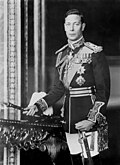
Under the [[Indian Independence Act 1947]], [[British India]] was to be divided into the independent sovereign states of India and Pakistan. From 1947 to 1952, George VI was the sovereign of Pakistan, which shared the same person as its sovereign with the [[United Kingdom]] and the other [[Dominion]]s in the British [[Commonwealth of Nations]].<ref>{{cite ODNB|url=http://www.oxforddnb.com/view/article/33370|title=George VI|access-date=20 April 2008|last=Matthew|first=H. C. G.|date=September 2004|doi=10.1093/ref:odnb/33370|quote=India and Pakistan remained among the king's dominions but both were set on republican courses, becoming republics within the Commonwealth in 1950 and 1956 respectively.}}</ref><ref name=harshan/> | |||
Following George VI's death on 6 February 1952, his elder daughter Princess Elizabeth, who was in Kenya at that time, became the new monarch of Pakistan. During the Queen's [[Coronation of Queen Elizabeth II|coronation]] in 1953, Elizabeth II was crowned as Queen of seven independent Commonwealth countries, including Pakistan.<ref>{{cite web|title=The Coronation of Queen Elizabeth II|website = [[YouTube]]|url=https://www.youtube.com/watch?v=aGLN1kREJ2Q&t=280s |archive-url=https://ghostarchive.org/varchive/youtube/20211221/aGLN1kREJ2Q |archive-date=2021-12-21 |url-status=live|access-date=16 May 2014}}</ref> In her [[Coronation]] Oath, the new Queen promised "to govern the Peoples of ... Pakistan ... according to their respective laws and customs".<ref>{{cite web |url=http://www.oremus.org/liturgy/coronation/cor1953b.html |title=The Form and Order of Service that is to be performed and the Ceremonies that are to be observed in the Coronation of Her Majesty Queen Elizabeth II in the Abbey Church of St. Peter, Westminster, on Tuesday, the second day of June, 1953 |publisher=Oremus.org |access-date=2013-02-03 |archive-date=7 October 2016 |archive-url=https://web.archive.org/web/20161007112304/http://www.oremus.org/liturgy/coronation/cor1953b.html |url-status=live }}</ref> The Standard of Pakistan at the Coronation was borne by [[Mirza Abol Hassan Ispahani]].<ref>{{Cite web |title=Page 6240 {{!}} Supplement 40020, 17 November 1953 {{!}} London Gazette {{!}} The Gazette |url=https://www.thegazette.co.uk/London/issue/40020/supplement/6240 |access-date=2022-04-28 |website=www.thegazette.co.uk |archive-date=14 August 2021 |archive-url=https://web.archive.org/web/20210814143532/https://www.thegazette.co.uk/London/issue/40020/supplement/6240 |url-status=live }}</ref> | |||
Pakistan abolished the monarchy on the adoption of a [[Constitution of Pakistan|republican constitution]] on [[Republic Day (Pakistan)|23 March 1956]].<ref name="Bowman2000">{{cite book|author=John Stewart Bowman|title=Columbia chronologies of Asian history and culture|url=https://archive.org/details/columbiachronolo00john|url-access=registration|access-date=22 March 2011|year=2000|publisher=Columbia University Press|isbn=978-0-231-11004-4|page=[https://archive.org/details/columbiachronolo00john/page/372 372]}}</ref> However, Pakistan became a [[Republics in the Commonwealth of Nations|republic within the Commonwealth of Nations]]. The Queen sent a message to President Mirza which said, "I have followed with close interest the progress of your country since its establishment ... It is a source of great satisfaction to me to know that your country intends to remain within the Commonwealth. I am confident that Pakistan and other countries of the Commonwealth will continue to thrive and to benefit from their mutual association".<ref>{{Cite book |url=https://books.google.com/books?id=gVEdAQAAMAAJ |title=Pakistan Affairs |date=1956 |publisher=Information Division, Embassy of Pakistan. |pages=7 |language=en |access-date=28 April 2022 |archive-date=17 January 2023 |archive-url=https://web.archive.org/web/20230117055444/https://books.google.com/books?id=gVEdAQAAMAAJ |url-status=live }}</ref> | |||
===Foreign relations=== | |||
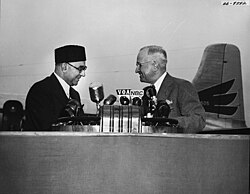
[[File:Nawabzada Liaquat Ali Khan President Truman.jpg|right|thumb|Prime Minister Liaquat Ali Khan meeting [[Harry Truman|President Harry Truman]]]] | |||
Territorial problems arose with neighbouring [[Communist Afghanistan|Afghanistan]] over the [[Durand Line|Pakistan–Afghanistan border]] in 1949, and with [[India]] over the [[Line of Control]] in [[Kashmir]].<ref name="Story of Pakistan press (1947 Government)" /> Diplomatic recognition became a problem when the [[Soviet Union]] led by [[Joseph Stalin]] did not welcome the partition which established Pakistan and India. The [[Imperial State of Iran]] was the first country to recognise Pakistan in 1947.<ref>{{cite news|title=See: Iran-Pakistan relations|title-link=Iran-Pakistan relations}}</ref> In 1948, [[Ben-Gurion]] of [[Israel]] sent a secret courier to Jinnah to establish the [[Israel–Pakistan relations|diplomatic relations]], but Jinnah did not give any response to Ben-Gurion. | |||
After gaining Independence, Pakistan vigorously pursued bilateral relations with other Muslim countries<ref>{{Cite book|url=https://books.google.com/books?id=FjJuAAAAMAAJ&q=islamistan|title=Islam in Pakistan's foreign policy|last=Pasha|first=Sayed Abdul Muneem|publisher=Global Media Publications|year=2005|isbn=978-81-88869-15-2|pages=225|quote=Pakistan's expression of solidarity was followed, after Independence, by a vigorous pursuit of bilateral relations with Muslim countries like Iran and Turkey.|access-date=24 October 2021|archive-date=16 January 2023|archive-url=https://web.archive.org/web/20230116113853/https://books.google.com/books?id=FjJuAAAAMAAJ&q=islamistan|url-status=live}}</ref> and made a wholehearted bid for leadership of the [[Muslim world]], or at least for leadership in achieving its unity.<ref>{{Cite book|url=https://books.google.com/books?id=FjJuAAAAMAAJ&q=islamistan|title=Islam in Pakistan's foreign policy|last=Pasha|first=Sayed Abdul Muneem|publisher=Global Media Publications|year=2005|isbn=978-81-88869-15-2|pages=37|quote=Pakistan was making a wholehearted bid for the leadership of the Muslim world, or at least for the leadership in achieving its unity.|access-date=24 October 2021|archive-date=16 January 2023|archive-url=https://web.archive.org/web/20230116113853/https://books.google.com/books?id=FjJuAAAAMAAJ&q=islamistan|url-status=live}}</ref> The [[Maulana Muhammad Ali Jauhar|Ali]] brothers had sought to project Pakistan as the natural leader of the Islamic world, in large part due to its [[Population of Pakistan|large population]] and [[Military of Pakistan|military strength]].<ref>{{Cite book|url=https://books.google.com/books?id=FjJuAAAAMAAJ&q=islamistan|title=Islam in Pakistan's foreign policy|last=Pasha|first=Sayed Abdul Muneem|publisher=Global Media Publications|year=2005|isbn=978-81-88869-15-2|pages=226|quote=Following Khaliquzzaman, the Ali brothers had sought to project Pakistan, with its comparatively larger manpower and military strength, as the natural leader of the Islamic world.|access-date=24 October 2021|archive-date=16 January 2023|archive-url=https://web.archive.org/web/20230116113853/https://books.google.com/books?id=FjJuAAAAMAAJ&q=islamistan|url-status=live}}</ref> A top ranking Muslim League leader, [[Chaudhry Khaliquzzaman|Khaliquzzaman]], declared that Pakistan would bring together all Muslim countries into [[Islamistan]] – a pan-Islamic entity.<ref>{{Cite book|url=https://books.google.com/books?id=1Z6TBQAAQBAJ&q=islamistan+hussain+haqqani&pg=PA18|title=Creating a New Medina|last=Dhulipala|first=Venkat|publisher=Cambridge University Press|year=2015|isbn=978-1-107-05212-3|pages=18|quote=As a top ranking ML leader Khaliquzzaman declared, 'Pakistan would bring all Muslim countries together into Islamistan- a pan-Islamic entity'.|access-date=24 October 2021|archive-date=16 January 2023|archive-url=https://web.archive.org/web/20230116113856/https://www.google.com/books/edition/Creating_a_New_Medina/1Z6TBQAAQBAJ?hl=en&gbpv=1&bsq=islamistan+hussain+haqqani&pg=PA18&printsec=frontcover|url-status=live}}</ref> The USA, which did not approve of Pakistan's creation, was against this idea and British Prime Minister [[Clement Attlee]] voiced international opinion at the time by stating that he wished that India and Pakistan would re-unite, as opposed to the hoped-for [[Pan Islamic Unity|unity of Muslim World]].<ref>{{Cite book|url=https://books.google.com/books?id=VNAiBQAAQBAJ&q=islamistan+hussain+haqqani&pg=PA20|title=Magnificent Delusions: Pakistan, the United States, and an Epic History of Misunderstanding|last=Haqqani|first=Husain|publisher=PublicAffairs|year=2013|isbn=978-1-61039-317-1|pages=20–21|quote=Within a few years the president of the Muslim League, Chaudhry Khaliq-uz-Zaman, announced that Pakistan would bring all Muslim countries together into Islamistan-a pan-Islamic entity. None of these developments within the new country elicited approval among Americans for the idea of India's partition ... British Prime Minister Clement Attlee voiced the international consensus at the time when he told the House of Commons of his hope that 'this severance may not endure.' He hoped that the proposed dominions of India and Pakistan would "in course of time, come together to form one great member state of the British Commonwealth of Nations."|access-date=24 October 2021|archive-date=16 January 2023|archive-url=https://web.archive.org/web/20230116113856/https://books.google.com/books?id=VNAiBQAAQBAJ&q=islamistan+hussain+haqqani&pg=PA20|url-status=live}}</ref> Since most of the [[Arab world]] was undergoing a nationalist awakening at the time, there was little attraction in Pakistan's pan-Islamic aspirations.<ref>{{Cite book|url=https://books.google.com/books?id=TyIVAgAAQBAJ&q=During+this+time+most+of+the+Arab+world+was+going+through+a+nationalist+awakening.+Pan-Islamic+dreams+involving+the+unification+of+Muslim+countries%2C+possibly+under+Pakistani+leadership%2C+had+little+attraction.&pg=PA22|title=Magnificent Delusions: Pakistan, the United States, and an Epic History of Misunderstanding|last=Haqqani|first=Husain|publisher=PublicAffairs|year=2013|isbn=978-1-61039-317-1|pages=22|quote=During this time most of the Arab world was going through a nationalist awakening. Pan-Islamic dreams involving the unification of Muslim countries, possibly under Pakistani leadership, had little attraction.|access-date=23 March 2017|archive-url=https://web.archive.org/web/20170512183023/https://books.google.com.au/books?id=TyIVAgAAQBAJ&pg=PA22&lpg=PA22&dq=During+this+time+most+of+the+Arab+world+was+going+through+a+nationalist+awakening.+Pan-Islamic+dreams+involving+the+unification+of+Muslim+countries,+possibly+under+Pakistani+leadership,+had+little+attraction.&source=bl&ots=yu8c0_IG8H&sig=kQmlTxjUC-Mj8tqaIkDguH1NOCo&hl=en&sa=X&ved=0ahUKEwjuwKiWkarRAhUBuJQKHYoDBl8Q6AEIGzAA#v=onepage&q=During%20this%20time%20most%20of%20the%20Arab%20world%20was%20going%20through%20a%20nationalist%20awakening.%20Pan-Islamic%20dreams%20involving%20the%20unification%20of%20Muslim%20countries%2C%20possibly%20under%20Pakistani%20leadership%2C%20had%20little%20attraction.&f=false|archive-date=12 May 2017|url-status=live}}</ref> Some of the Arab countries saw the 'Islamistan' project as a Pakistani attempt to dominate other Muslim states.<ref>{{Cite book|url=https://books.google.com/books?id=Pj8DIT_bva0C&q=muslim+countries+refused+islamistan&pg=PA134|title=The Origins of Conflict in Afghanistan|last=Roberts|first=Jeffery J.|publisher=Greenwood Publishing Group|year=2003|isbn=978-0-275-97878-5|pages=134|quote=The following year, Choudhry Khaliquzzaman toured the Middle East, pleading for the formation of an alliance or confederation of Muslim states. The Arab states, often citing Pakistan's inability to solve its problems with Muslim neighbor Afghanistan, showed little enthusiasm ... Some saw the effort to form 'Islamistan' as a Pakistani attempt to dominate other Muslim states.|access-date=24 October 2021|archive-date=16 January 2023|archive-url=https://web.archive.org/web/20230116113857/https://www.google.com/books/edition/The_Origins_of_Conflict_in_Afghanistan/Pj8DIT_bva0C?hl=en&gbpv=1&bsq=muslim+countries+refused+islamistan&pg=PA134&printsec=frontcover|url-status=live}}</ref> Pakistan vigorously championed the right of self-determination for Muslims around the world. Pakistan's efforts for the independence movements of [[Indonesia]], [[Algeria]], [[Tunisia]], [[Morocco]] and [[Eritrea]] were significant and initially led to close ties between these countries and Pakistan.<ref>{{Cite book|url=https://books.google.com/books?id=HPWrAgAAQBAJ&q=In+1949+Pakistan+held+an+International+Islamic+Conference&pg=PT178|title=Explaining Pakistan's Foreign Policy: Escaping India|last=Pande|first=Aparna|publisher=Routledge|year=2011|isbn=978-1-136-81893-6|quote=The belief that the creation of Pakistan made Pakistan the true leader of Muslim causes around the world led Pakistan's diplomats to vigorously champion the cause of self-determination for fellow Muslims at the United Nations. Pakistan's founders, including Jinnah, supported anti-colonial movements: ''Our heart and soul go out in sympathy with those who are struggling for their freedom ... If subjugation and exploitation are carried on, there will be no peace and there will be no end to wars.'' Pakistani efforts on behalf of Indonesia (1948), Algeria (1948–1949), Tunisia (1948–1949), Morocco (1948–1956) and Eritrea (1960–1991) were significant and initially led to close ties between these countries and Pakistan.|access-date=24 October 2021|archive-date=16 January 2023|archive-url=https://web.archive.org/web/20230116113857/https://books.google.com/books?id=HPWrAgAAQBAJ&q=In+1949+Pakistan+held+an+International+Islamic+Conference&pg=PT178|url-status=live}}</ref> | |||
==List of heads of state== | |||
{{Main|List of heads of state of Pakistan}} | |||
===Monarchs=== | |||
From 1947 to 1956, Pakistan was a constitutional monarchy. The Pakistani monarch was the same person as the sovereign of the nations in the British Commonwealth of Nations.<ref>{{citation|last=Winegard|first=Timothy C.|title=Indigenous Peoples of the British Dominions and the First World War|url=https://books.google.com/books?id=qzIw-c1YOAIC&pg=PA2|year=2011|publisher=Cambridge University Press|isbn=978-1-107-01493-0|pages=2|access-date=18 August 2019|archive-date=17 January 2023|archive-url=https://web.archive.org/web/20230117055444/https://books.google.com/books?id=qzIw-c1YOAIC&pg=PA2|url-status=live}}</ref><ref name=harshan>{{citation|last1=Kumarasingham|first1=Harshan|title=THE 'TROPICAL DOMINIONS': THE APPEAL OF DOMINION STATUS IN THE DECOLONISATION OF INDIA, PAKISTAN AND CEYLON, vol. 23|url=https://www.jstor.org/stable/23726109|year=2013|publisher=Transactions of the Royal Historical Society|pages=223|jstor=23726109|access-date=7 July 2021|archive-date=13 January 2022|archive-url=https://web.archive.org/web/20220113140314/https://www.jstor.org/stable/23726109|url-status=live}}</ref> | |||
{| class="wikitable" style="clear:right; text-align:center" | |||
|- | |||
! width="10%" |Portrait | |||
! width="20%" |Name | |||
! width="10%" |Birth | |||
! width="10%" |Reign | |||
! width="10%" |Death | |||
! width="15%" |Consort | |||
! width="15%" |Relationship with Predecessor(s) | |||
! width="10%" |Royal House | |||
|- | |||
| align="center" |[[File:King George VI LOC matpc.14736 (cleaned).jpg|164x164px]] | |||
| align="center" |<big>'''[[George VI]]'''</big> | |||
| align="center" |14 December 1895 | |||
| align="center" |14 August 1947<br>{{ndash}}<br>6 February 1952 | |||
| align="center" |6 February 1952 | |||
|[[File:Queen Elizabeth the Queen Mother portrait.jpg|131x131px]] | |||
[[Queen Elizabeth The Queen Mother|Queen Elizabeth]] | |||
| align="center" |None (position created); [[Emperor of India]] before [[partition of India|partition]] | |||
| rowspan="2" |[[House of Windsor|Windsor]] | |||
|- | |||
| align="center" |[[File:Queen Elizabeth II official portrait for 1959 tour (retouched) (cropped) (3-to-4 aspect ratio).jpg|159x159px]] | |||
| align="center" |<big>'''[[Elizabeth II]]'''</big> | |||
| align="center" |21 April 1926 | |||
| align="center" |6 February 1952<br>{{ndash}}<br>23 March 1956 | |||
| align="center" |8 September 2022 | |||
|[[File:Duke of Edinburgh 33 Allan Warren.jpg|107x107px]] | |||
[[Prince Philip, Duke of Edinburgh]] | |||
| align="center" |Daughter of George VI | |||
|} | |||
===Governors-General=== | |||
{{Main|Governor-General of Pakistan}} | |||
The Governor-General was the representative of the monarch in the Dominion of Pakistan.<ref>{{citation|url=https://books.google.com/books?id=bCpYAAAAMAAJ|title=Chief Justice Muhammad Munir: His Life, Writings, and Judgements|year=1973|publisher=Research Society of Pakistan|pages=341}}</ref> | |||
{| class="wikitable" width="100%" style="text-align:center;" | |||
! width="100px" |Picture | |||
!Name | |||
<small>(birth–death)</small> | |||
!Took office | |||
!Left office | |||
!Appointer | |||
|- align="center" | |||
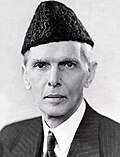
|[[File:Jinnah1945c.jpg|alt=|131x131px]] | |||
![[Muhammad Ali Jinnah]] | |||
<small>(1876–1948)</small> | |||
|15 August 1947 | |||
|11 September 1948 | |||
| rowspan="3" |[[File:King George VI LOC matpc.14736 (cleaned).jpg|109x109px]] | |||
'''[[George VI]]''' | |||
|- align="center" | |||
|[[File:Khawaja Nazimuddin.jpg|alt=|106x106px]] | |||
![[Khawaja Nazimuddin|Sir Khawaja Nazimuddin]] | |||
<small>(1894–1964)</small> | |||
|14 September 1948 | |||
|17 October 1951 | |||
|- | |||
| rowspan="2" |[[File:Malik Muhammad.jpg|alt=|150x150px]] | |||
! rowspan="2" |[[Ghulam Muhammad (governor-general)|Sir Ghulam Muhammad]] | |||
<small>(1895–1956)</small> | |||
| rowspan="2" |17 October 1951 | |||
| rowspan="2" |7 August 1955 | |||
|- | |||
| rowspan="2" |[[File:Queen Elizabeth II official portrait for 1959 tour (retouched) (cropped) (3-to-4 aspect ratio).jpg|106x106px]] | |||
'''[[Elizabeth II]]''' | |||
|- | |||
|[[File:Iskander Mirza.jpg|alt=|154x154px]] | |||
![[Iskandar Ali Mirza|Iskander Mirza]] | |||
<small>(1899–1969)</small> | |||
|7 August 1955 | |||
|23 March 1956 | |||
|} | |||
==See also== | |||
*[[Princely states of Pakistan]] | |||
==Notes== | |||
{{notelist|refs= | |||
{{efn|name=IndBangla|See territorial exchanges between India and Bangladesh ([[India–Bangladesh enclaves]]).}} | |||
}} | }} | ||
==References== | |||
{{Reflist}} | |||
==Further reading== | |||
* Chester, Lucy P. (2009) [https://archive.today/20160509144755/http://www.manchesteruniversitypress.co.uk/cgi-bin/indexer?product=9780719091360 Borders and Conflict in South Asia: The Radcliffe Boundary Commission and the Partition of Punjab.] Manchester: Manchester University Press. | |||
* Read, A. and Fisher, D. (1997). ''The Proudest Day: India's Long Road to Independence''. New York: Norton. | |||
{{ | {{Former Monarchies}} | ||
{{Elizabeth II|state=collapsed}} | |||
{{Commonwealth realms}} | |||
{{Portal bar|Monarchy|Pakistan}} | |||
[[Category: | {{DEFAULTSORT:Pakistan, Dominion of}} | ||
[[Category: | [[Category:Former Commonwealth realms|Pakistan]] | ||
[[Category:Former countries in South Asia]] | |||
[[Category:Muhammad Ali Jinnah]] | |||
[[Category:Pakistan and the Commonwealth of Nations]] | |||
[[Category:Pakistan–United Kingdom relations|Monarchy]] | |||
[[Category:Partition of India]] | [[Category:Partition of India]] | ||
[[Category:1947 | [[Category:Politics of Pakistan]] | ||
[[Category: | [[Category:States and territories established in 1947]] | ||
[[Category: | [[Category:1947 establishments in Pakistan]] | ||
[[Category:1956 disestablishments in Pakistan]] | |||
Revision as of 20:16, 3 August 2023
 | This article needs more citations. (February 2014) |
Pakistan | |||||||||
|---|---|---|---|---|---|---|---|---|---|
| 1947–1956[1] | |||||||||
| Anthem: Qaumi Taranah (1954–56) | |||||||||
.svg) Land controlled by the Dominion of Pakistan shown in dark green; land claimed but not controlled shown in light green | |||||||||
| Capital | Karachi | ||||||||
| Official languages | English[lower-roman 1] | ||||||||
| Recognised national languages | Urdu[lower-roman 2], Bengali[lower-roman 3] | ||||||||
| Demonym | Pakistani | ||||||||
| Government | Federal parliamentary constitutional monarchy | ||||||||
| Monarch | |||||||||
• 1947–1952 | George VI | ||||||||
• 1952–1956 | Elizabeth II | ||||||||
| Governor-General | |||||||||
• 1947–1948 | Muhammad Ali Jinnah | ||||||||
• 1948–1951 | Sir Khawaja Nazimuddin | ||||||||
• 1951–1955 | Sir Ghulam Muhammad | ||||||||
• 1955–1956 | Iskander Mirza | ||||||||
| Prime Minister | |||||||||
• 1947–1951 | Liaquat Ali Khan | ||||||||
• 1951–1953 | Sir Khawaja Nazimuddin | ||||||||
• 1953–1955 | Mohammad Ali Bogra | ||||||||
• 1955–1956 | Chaudhry Mohammad Ali | ||||||||
| Legislature | Constituent Assembly | ||||||||
| History | |||||||||
| 14 August 1947[2] | |||||||||
| 23 March 1956 | |||||||||
| Area | |||||||||
• Total | 1,030,373 km2 (397,829 sq mi) | ||||||||
| Currency | Indian rupee (1947–1948) Pakistani rupee (1948–1956) | ||||||||
| |||||||||
| Today part of | Pakistan Bangladesh [lower-alpha 1] | ||||||||

.svg)


The Dominion of Pakistan, officially Pakistan,[3] was an independent federal dominion in the British Commonwealth of Nations, existing between 14 August 1947 and 23 March 1956, created by the passing of the Indian Independence Act 1947 by the British parliament, which also created an independent Dominion of India.
Before its independence, Pakistan consisted of those Presidencies and provinces of British India which were allocated to it in the Partition of India. Until 1947, they had been ruled by the United Kingdom as a part of the British Empire.
During the year that followed its independence, the new country was joined by the Princely states of Pakistan ruled by princes who had previously been in subsidiary alliances with the British, which acceded to Pakistan, one by one, with their rulers signing Instruments of Accession. For many years, these states enjoyed a special status within the dominion and later the republic, but they were slowly incorporated into the provinces. The last remnants of their internal self-government had been lost by 1974.
Initially, the Dominion of Pakistan had two wings, one in the East, which is now Bangladesh, and another in the West, which is now Pakistan. After the Constitution of Pakistan of 1956 came into effect, the Pakistani monarchy was abolished, when the Islamic Republic of Pakistan was proclaimed.
The status as a federal dominion within the British Empire ended in 1956 with the completion of the Constitution of Pakistan, which established the country as a republic. The constitution also administratively split the nation into West Pakistan and East Pakistan, which were until then governed as a singular entity, despite being separate geographic exclaves. In 1971 following the Indo-Pakistani War of 1971, East Pakistan seceded as the new nation of Bangladesh, whereas West Pakistan became Pakistan.
History
Partition and independence
Section 1 of the Indian Independence Act 1947 provided that from "the fifteenth day of August, nineteen hundred and forty-seven, two independent dominions shall be set up in India, to be known respectively as India and Pakistan." The British monarch became the head of state of both the new dominions, with Pakistan sharing a king with the United Kingdom and the other dominions of the British Commonwealth, and the monarch's constitutional roles in Pakistan were delegated to the Governor-General of Pakistan.
Before August 1947, about half of the area of present-day Pakistan was part of British India, which was directly governed by the British in the name of the British Crown, while the remainder were princely states in subsidiary alliances with the British, enjoying semi-autonomous self-government. The British abandoned these alliances in August 1947, leaving the states entirely independent, and between 1947 and 1948 the states all acceded to Pakistan, while retaining internal self-government for several years.
More than ten million people migrated across the new borders and between 200,000–2,000,000[4][5][6][7] people died in the spate of communal violence in the Punjab in what some scholars have described as a 'retributive genocide' between the religions.[8] The Pakistani government claimed that 50,000 Muslim women were abducted and raped by Hindu and Sikh men and similarly the Indian government claimed that Muslims abducted and raped 33,000 Hindu and Sikh women.[9][10][11] The two governments agreed to repatriate abducted women and thousands of Hindu, Sikh and Muslim women were repatriated to their families in the 1950s. The dispute over Kashmir escalated into the first war between India and Pakistan. With the assistance of the United Nations (UN) the war was ended but it became the Kashmir dispute, unresolved as of 2022[update].
In 1947, the founding fathers of Pakistan agreed to appoint Liaquat Ali Khan as the country's first prime minister, with Muhammad Ali Jinnah as both first governor-general and speaker of the State Parliament.[12] Mountbatten had offered to serve as Governor-general of both India and Pakistan but Jinnah refused this offer.[13]
The first formal step to transform Pakistan into an ideological Islamic state was taken in March 1949 when Liaquat Ali Khan introduced the Objectives Resolution in the Constituent Assembly. The Objectives Resolution declared that sovereignty over the entire universe belongs to Allah. Support for the Objectives Resolution and the transformation of Pakistan into an Islamic state was led by Maulana Shabbir Ahmad Usmani, a respected Deobandi alim (scholar) who occupied the position of Shaykh al-Islam in Pakistan in 1949, and Maulana Mawdudi of Jamaat-i Islami.[14][15]
Indian Muslims from the United Provinces, Bombay Province, Central Provinces and other areas of India continued migrating to Pakistan throughout the 1950 and 1960s and settled mainly in urban Sindh, particularly in the new country's first capital, Karachi.[16] Prime Minister Ali Khan established a strong government and had to face challenges soon after gaining the office.[12] His Finance Secretary Victor Turner announced the country's first monetary policy by establishing the State Bank, the Federal Bureau of Statistics and the Federal Board of Revenue to improve statistical knowledge, finance, taxation, and revenue collection in the country.[17] There were also problems because India cut off water supply to Pakistan from two canal headworks in its side of Punjab on 1 April 1948 and also withheld delivering Pakistan its share of the assets and funds of United India, which the Indian government released after Gandhi's pressurisation.[18]
Political unrest
In a 1948 speech, Jinnah declared that "Urdu alone would be the state language and the lingua franca of the Pakistan state", although at the same time he called for the Bengali language to be the official language of the Bengal province.[19] Nonetheless, tensions began to grow in East Bengal.[19] Jinnah's health further deteriorated and he died in 1948. Bengali leader, Sir Khawaja Nazimuddin succeeded as the governor general of Pakistan.[20]
During a massive political rally in 1951, Prime Minister Ali Khan was assassinated, and Nazimuddin became the second prime minister.[12] Tensions in East Pakistan reached a climax in 1952, when the East Pakistani police opened fire on students protesting for the Bengali language to receive equal status with Urdu. The situation was controlled by Nazimuddin who issued a waiver granting the Bengali language equal status, a right codified in the 1956 constitution. In 1953 at the instigation of religious parties, anti-Ahmadiyya riots erupted, which led to many Ahmadi deaths.[21] The riots were investigated by a two-member court of inquiry in 1954,[22] which was criticised by the Jamaat-e-Islami, one of the parties accused of inciting the riots.[23] This event led to the first instance of martial law in the country and began the history of military intervention into the politics and civilian affairs of the country.[24] In 1954 the controversial One Unit Program was imposed by the last Pakistan Muslim League (PML) Prime minister Ali Bogra dividing Pakistan on the German geopolitical model.[25] The same year the first legislative elections were held in Pakistan, which saw the communists gaining control of East Pakistan.[26] The 1954 election results clarified the differences in ideology between West and East Pakistan, with East Pakistan under the influence of the Communist Party allying with the Shramik Krishak Samajbadi Dal (Workers Party) and the Awami League.[26] The pro-American Republican Party gained a majority in West Pakistan, ousting the PML government.[26] After a vote of confidence in Parliament and the promulgation of the 1956 constitution, which confirmed Pakistan as an Islamic republic, two notable figures became prime minister and president, as the first Bengali leaders of the country. Huseyn Suhrawardy became the prime minister leading a communist-socialist alliance, and Iskander Mirza became the first president of Pakistan.[27]
Radcliffe Line and territory
The dominion began as a federation of five provinces: East Bengal (later to become Bangladesh), West Punjab, Balochistan, Sindh, and the North-West Frontier Province (NWFP). Each province had its own governor, who was appointed by the Governor-General of Pakistan. In addition, over the following year the princely states of Pakistan, which covered a significant area of West Pakistan, acceded to Pakistan. They included Bahawalpur, Khairpur, Swat, Dir, Chitral, and the Khanate of Kalat.
The controversial Radcliffe Award, not published until 17 August 1947 specified the Radcliffe Line which demarcated the border between the parts of British India allocated to the two new independent dominions of India and Pakistan. The Radcliffe Boundary Commission sought to separate the Muslim-majority regions in the east and northwest from the areas with a Hindu majority. This entailed the partition of two British provinces which did not have a uniform majority — Bengal and Punjab. The western part of Punjab became the Pakistani province of Punjab and the eastern part became the Indian state of Punjab. Bengal was similarly divided into East Bengal (in Pakistan) and West Bengal (in India).
Monarchy and the Commonwealth

Under the Indian Independence Act 1947, British India was to be divided into the independent sovereign states of India and Pakistan. From 1947 to 1952, George VI was the sovereign of Pakistan, which shared the same person as its sovereign with the United Kingdom and the other Dominions in the British Commonwealth of Nations.[28][29]
Following George VI's death on 6 February 1952, his elder daughter Princess Elizabeth, who was in Kenya at that time, became the new monarch of Pakistan. During the Queen's coronation in 1953, Elizabeth II was crowned as Queen of seven independent Commonwealth countries, including Pakistan.[30] In her Coronation Oath, the new Queen promised "to govern the Peoples of ... Pakistan ... according to their respective laws and customs".[31] The Standard of Pakistan at the Coronation was borne by Mirza Abol Hassan Ispahani.[32]
Pakistan abolished the monarchy on the adoption of a republican constitution on 23 March 1956.[33] However, Pakistan became a republic within the Commonwealth of Nations. The Queen sent a message to President Mirza which said, "I have followed with close interest the progress of your country since its establishment ... It is a source of great satisfaction to me to know that your country intends to remain within the Commonwealth. I am confident that Pakistan and other countries of the Commonwealth will continue to thrive and to benefit from their mutual association".[34]
Foreign relations

Territorial problems arose with neighbouring Afghanistan over the Pakistan–Afghanistan border in 1949, and with India over the Line of Control in Kashmir.[12] Diplomatic recognition became a problem when the Soviet Union led by Joseph Stalin did not welcome the partition which established Pakistan and India. The Imperial State of Iran was the first country to recognise Pakistan in 1947.[35] In 1948, Ben-Gurion of Israel sent a secret courier to Jinnah to establish the diplomatic relations, but Jinnah did not give any response to Ben-Gurion.
After gaining Independence, Pakistan vigorously pursued bilateral relations with other Muslim countries[36] and made a wholehearted bid for leadership of the Muslim world, or at least for leadership in achieving its unity.[37] The Ali brothers had sought to project Pakistan as the natural leader of the Islamic world, in large part due to its large population and military strength.[38] A top ranking Muslim League leader, Khaliquzzaman, declared that Pakistan would bring together all Muslim countries into Islamistan – a pan-Islamic entity.[39] The USA, which did not approve of Pakistan's creation, was against this idea and British Prime Minister Clement Attlee voiced international opinion at the time by stating that he wished that India and Pakistan would re-unite, as opposed to the hoped-for unity of Muslim World.[40] Since most of the Arab world was undergoing a nationalist awakening at the time, there was little attraction in Pakistan's pan-Islamic aspirations.[41] Some of the Arab countries saw the 'Islamistan' project as a Pakistani attempt to dominate other Muslim states.[42] Pakistan vigorously championed the right of self-determination for Muslims around the world. Pakistan's efforts for the independence movements of Indonesia, Algeria, Tunisia, Morocco and Eritrea were significant and initially led to close ties between these countries and Pakistan.[43]
List of heads of state
Monarchs
From 1947 to 1956, Pakistan was a constitutional monarchy. The Pakistani monarch was the same person as the sovereign of the nations in the British Commonwealth of Nations.[44][29]
| Portrait | Name | Birth | Reign | Death | Consort | Relationship with Predecessor(s) | Royal House |
|---|---|---|---|---|---|---|---|
.jpg)
|
George VI | 14 December 1895 | 14 August 1947 – 6 February 1952 |
6 February 1952 | 
|
None (position created); Emperor of India before partition | Windsor |
_(cropped)_(3-to-4_aspect_ratio).jpg)
|
Elizabeth II | 21 April 1926 | 6 February 1952 – 23 March 1956 |
8 September 2022 | 
|
Daughter of George VI |
Governors-General
The Governor-General was the representative of the monarch in the Dominion of Pakistan.[45]
| Picture | Name
(birth–death) |
Took office | Left office | Appointer |
|---|---|---|---|---|

|
Muhammad Ali Jinnah
(1876–1948) |
15 August 1947 | 11 September 1948 |
|

|
Sir Khawaja Nazimuddin
(1894–1964) |
14 September 1948 | 17 October 1951 | |

|
Sir Ghulam Muhammad
(1895–1956) |
17 October 1951 | 7 August 1955 | |
|
| ||||

|
Iskander Mirza
(1899–1969) |
7 August 1955 | 23 March 1956 |
See also
Notes
- ↑ See territorial exchanges between India and Bangladesh (India–Bangladesh enclaves).
References
- ↑ Timothy C. Winegard (29 December 2011). Indigenous Peoples of the British Dominions and the First World War (1st ed.). Cambridge University Press. p. 2. ISBN 978-1107014930. Archived from the original on 17 January 2023. Retrieved 11 August 2013.
- ↑ Singh Vipul (1 September 2009). Longman History & Civics Icse 10. Pearson Education India. pp. 132–. ISBN 978-81-317-2042-4. Archived from the original on 17 January 2023. Retrieved 9 November 2015.
- ↑ As to official name being just "Pakistan" and not "Dominion of Pakistan": Indian Independence Act 1947, Section1.-(i) As from the fifteenth day of August, nineteen hundred and forty-seven, two independent Dominions shall be set up in India, to be known respectively as India and Pakistan."
- ↑ Talbot, Ian (2009). "Partition of India: The Human Dimension". Cultural and Social History. 6 (4): 403–410. doi:10.2752/147800409X466254. S2CID 147110854.
The number of casualties remains a matter of dispute, with figures being claimed that range from 200,000 to 2 million victims.
- ↑ "Murder, rape and shattered families: 1947 Partition Archive effort underway". Dawn. 13 March 2015. Archived from the original on 14 February 2017. Retrieved 14 January 2017.
There are no exact numbers of people killed and displaced, but estimates range from a few hundred thousand to two million killed and more than 10 million displaced.
- ↑ Basrur, Rajesh M. (2008). South Asia's Cold War: Nuclear Weapons and Conflict in Comparative Perspective. Routledge. ISBN 978-1-134-16531-5. Archived from the original on 16 January 2023. Retrieved 24 October 2021.
An estimated 12–15 million people were displaced, and some 2 million died. The legacy of Partition (never without a capital P) remains strong today ...
- ↑ Isaacs, Harold Robert (1975). Idols of the Tribe: Group Identity and Political Change. Harvard University Press. ISBN 978-0-674-44315-0. Archived from the original on 16 January 2023. Retrieved 24 October 2021.
2,000,000 killed in the Hindu-Muslim holocaust during the partition of India and the creation of Pakistan
- ↑ Brass, Paul R. (2003). "The partition of India and retributive genocide in the Punjab, 1946–47: means, methods, and purposes" (PDF). Journal of Genocide Research. Carfax Publishing: Taylor and Francis Group. pp. 81–82 (5(1), 71–101). Archived from the original (PDF) on 19 March 2015. Retrieved 16 August 2014.
In the event, largely but not exclusively as a consequence of their efforts, the entire Muslim population of the eastern Punjab districts migrated to West Punjab and the entire Sikh and Hindu populations moved to East Punjab in the midst of widespread intimidation, terror, violence, abduction, rape, and murder.
- ↑ Daiya, Kavita (2011). Violent Belongings: Partition, Gender, and National Culture in Postcolonial India. Temple University Press. p. 75. ISBN 978-1-59213-744-2. Archived from the original on 16 January 2023. Retrieved 24 October 2021.
The official estimate of the number of abducted women during Partition was placed at 33,000 non-Muslim (Hindu or Sikh predominantly) women in Pakistan, and 50,000 Muslim women in India.
- ↑ Singh, Amritjit; Iyer, Nalini; Gairola, Rahul K. (2016). Revisiting India's Partition: New Essays on Memory, Culture, and Politics. Lexington Books. p. 14. ISBN 978-1-4985-3105-4. Archived from the original on 16 January 2023. Retrieved 24 October 2021.
The horrific statistics that surround women refugees-between 75,000–100,000 Hindu, Muslim and Sikh women who were abducted by men of the other communities, subjected to multiple rapes, mutilations, and, for some, forced marriages and conversions-is matched by the treatment of the abducted women in the hands of the nation-state. In the Constituent Assembly in 1949 it was recorded that of the 50,000 Muslim women abducted in India, 8,000 of then were recovered, and of the 33,000 Hindu and Sikh women abducted, 12,000 were recovered.
- ↑ Abraham, Taisha (2002). Women and the Politics of Violence. Har-Anand Publications. p. 131. ISBN 978-81-241-0847-5. Archived from the original on 16 January 2023. Retrieved 24 October 2021.
In addition thousands of women on both sides of the newly formed borders (estimated range from 29,000 to 50,000 Muslim women and 15,000 to 35,000 Hindu and Sikh women) were abducted, raped, forced to convert, forced into marriage, forced back into what the two States defined as 'their proper homes,' torn apart from their families once during partition by those who abducted them, and again, after partition, by the State which tried to 'recover' and 'rehabilitate' them.
- ↑ 12.0 12.1 12.2 12.3 "Government of Prime Minister Liaquat Ali Khan". Story of Pakistan press (1947 Government). June 2003. Archived from the original on 7 April 2013. Retrieved 17 April 2013.
- ↑ Wolpert, Stanley (2009). Shameful Flight: The Last Years of the British Empire in India. Oxford University Press. p. 163. ISBN 978-0-19-974504-3. Archived from the original on 16 January 2023. Retrieved 24 October 2021.
Mountbatten tried to convince Jinnah of the value of accepting him, Mountbatten, as Pakistan's first governor-general, but Jinnah refused to be moved from his determination to take that job himself.
- ↑ Hussain, Rizwan. Pakistan. Archived from the original on 29 March 2016. Retrieved 23 March 2017.
Mawlānā Shabbīr Ahmad Usmānī, a respected Deobandī ʿālim (scholar) who was appointed to the prestigious position of Shaykh al-Islām of Pakistan in 1949, was the first to demand that Pakistan become an Islamic state. But Mawdūdī and his Jamāʿat-i Islāmī played the central part in the demand for an Islamic constitution. Mawdūdī demanded that the Constituent Assembly make an unequivocal declaration affirming the "supreme sovereignty of God" and the supremacy of the sharīʿah as the basic law of Pakistan.
{{cite book}}:|work=ignored (help) - ↑ Hussain, Rizwan. Pakistan. Archived from the original on 29 March 2016. Retrieved 23 March 2017.
The first important result of the combined efforts of the Jamāʿat-i Islāmī and the ʿulamāʿ was the passage of the Objectives Resolution in March 1949, whose formulation reflected compromise between traditionalists and modernists. The resolution embodied "the main principles on which the constitution of Pakistan is to be based." It declared that "sovereignty over the entire universe belongs to God Almighty alone and the authority which He has delegated to the State of Pakistan through its people for being exercised within the limits prescribed by Him is a sacred trust," that "the principles of democracy, freedom, equality, tolerance and social justice, as enunciated by Islam shall be fully observed," and that "the Muslims shall be enabled to order their lives in the individual and collective spheres in accord with the teaching and requirements of Islam as set out in the Holy Qurʿan and Sunna." The Objectives Resolution has been reproduced as a preamble to the constitutions of 1956, 1962, and 1973.
{{cite book}}:|work=ignored (help) - ↑ KHALIDI, OMAR (1 January 1998). "From Torrent to Trickle: Indian Muslim Migration to Pakistan, 1947—97". Islamic Studies. 37 (3): 339–352. JSTOR 20837002.
- ↑ Chaudry, Aminullah (2011). Political administrators : the story of the Civil Service of Pakistan. Oxford: Oxford University Press. ISBN 978-0-19-906171-6.
- ↑ Aparna Pande (16 March 2011). Explaining Pakistan's Foreign Policy: Escaping India. Taylor & Francis. pp. 16–17. ISBN 978-1-136-81894-3. Archived from the original on 16 January 2023. Retrieved 24 October 2021.
- ↑ 19.0 19.1 Yasser Latif Hamdani (22 February 2010). "Jinnah And Urdu-Bengali Controversy". Pakistan Tea House. Archived from the original on 16 March 2013. Retrieved 17 April 2013.
- ↑ Administration. "Khawaja Nazimuddin Becomes Governor General". Administration. Archived from the original on 30 March 2017. Retrieved 23 March 2017.
- ↑ Blood, Peter R. (1995). Pakistan: a country study. Washington, D.C.: Federal Research Division, Library of Congress. pp. 130–131. ISBN 978-0-8444-0834-7.
Pakistan: A Country Study.
- ↑ Munir, Muhammad; Malik Rustam Kayani (1954). Punjab. Court of Inquiry to Enquire into the Punjab Disturbances of 1953 (PDF). Lahore: Superintendent, Government Printing, Punjab. Archived (PDF) from the original on 10 January 2017. Retrieved 23 March 2017.
- ↑ Ahmad, Khurshid (1956). An Analysis of the Munir report; a critical study of the Punjab disturbances inquiry report. Karachi: Jamaat-e-Islami Publications.
- ↑ Rizvi, Hasan Askari (1974). The military and politics in Pakistan. Lahore: Progressive Publishers.
- ↑ "One Unit Program". One Unit. June 2003. Archived from the original on 11 April 2013. Retrieved 17 April 2013.
- ↑ 26.0 26.1 26.2 Jaffrelot, Christophe, ed. (2004). A history of Pakistan and its origins. Translated by Beaumont, Gillian (New ed.). London: Anthem. ISBN 1-84331-149-6.
- ↑ Blood, Peter R. (1995). Pakistan: a country study. Washington, D.C.: Federal Research Division, Library of Congress. p. 41. ISBN 978-0-8444-0834-7.
Pakistan: A Country Study.
- ↑ Matthew, H. C. G. (September 2004). "George VI". Oxford Dictionary of National Biography (online ed.). Oxford University Press. doi:10.1093/ref:odnb/33370. Retrieved 20 April 2008.
India and Pakistan remained among the king's dominions but both were set on republican courses, becoming republics within the Commonwealth in 1950 and 1956 respectively.
Template:ODNBsub - ↑ 29.0 29.1 Kumarasingham, Harshan (2013), THE 'TROPICAL DOMINIONS': THE APPEAL OF DOMINION STATUS IN THE DECOLONISATION OF INDIA, PAKISTAN AND CEYLON, vol. 23, Transactions of the Royal Historical Society, p. 223, JSTOR 23726109, archived from the original on 13 January 2022, retrieved 7 July 2021
- ↑ "The Coronation of Queen Elizabeth II". YouTube. Archived from the original on 21 December 2021. Retrieved 16 May 2014.
- ↑ "The Form and Order of Service that is to be performed and the Ceremonies that are to be observed in the Coronation of Her Majesty Queen Elizabeth II in the Abbey Church of St. Peter, Westminster, on Tuesday, the second day of June, 1953". Oremus.org. Archived from the original on 7 October 2016. Retrieved 3 February 2013.
- ↑ "Page 6240 | Supplement 40020, 17 November 1953 | London Gazette | The Gazette". www.thegazette.co.uk. Archived from the original on 14 August 2021. Retrieved 28 April 2022.
- ↑ John Stewart Bowman (2000). Columbia chronologies of Asian history and culture. Columbia University Press. p. 372. ISBN 978-0-231-11004-4. Retrieved 22 March 2011.
- ↑ Pakistan Affairs. Information Division, Embassy of Pakistan. 1956. p. 7. Archived from the original on 17 January 2023. Retrieved 28 April 2022.
- ↑ "See: Iran-Pakistan relations".
- ↑ Pasha, Sayed Abdul Muneem (2005). Islam in Pakistan's foreign policy. Global Media Publications. p. 225. ISBN 978-81-88869-15-2. Archived from the original on 16 January 2023. Retrieved 24 October 2021.
Pakistan's expression of solidarity was followed, after Independence, by a vigorous pursuit of bilateral relations with Muslim countries like Iran and Turkey.
- ↑ Pasha, Sayed Abdul Muneem (2005). Islam in Pakistan's foreign policy. Global Media Publications. p. 37. ISBN 978-81-88869-15-2. Archived from the original on 16 January 2023. Retrieved 24 October 2021.
Pakistan was making a wholehearted bid for the leadership of the Muslim world, or at least for the leadership in achieving its unity.
- ↑ Pasha, Sayed Abdul Muneem (2005). Islam in Pakistan's foreign policy. Global Media Publications. p. 226. ISBN 978-81-88869-15-2. Archived from the original on 16 January 2023. Retrieved 24 October 2021.
Following Khaliquzzaman, the Ali brothers had sought to project Pakistan, with its comparatively larger manpower and military strength, as the natural leader of the Islamic world.
- ↑ Dhulipala, Venkat (2015). Creating a New Medina. Cambridge University Press. p. 18. ISBN 978-1-107-05212-3. Archived from the original on 16 January 2023. Retrieved 24 October 2021.
As a top ranking ML leader Khaliquzzaman declared, 'Pakistan would bring all Muslim countries together into Islamistan- a pan-Islamic entity'.
- ↑ Haqqani, Husain (2013). Magnificent Delusions: Pakistan, the United States, and an Epic History of Misunderstanding. PublicAffairs. pp. 20–21. ISBN 978-1-61039-317-1. Archived from the original on 16 January 2023. Retrieved 24 October 2021.
Within a few years the president of the Muslim League, Chaudhry Khaliq-uz-Zaman, announced that Pakistan would bring all Muslim countries together into Islamistan-a pan-Islamic entity. None of these developments within the new country elicited approval among Americans for the idea of India's partition ... British Prime Minister Clement Attlee voiced the international consensus at the time when he told the House of Commons of his hope that 'this severance may not endure.' He hoped that the proposed dominions of India and Pakistan would "in course of time, come together to form one great member state of the British Commonwealth of Nations."
- ↑ Haqqani, Husain (2013). Magnificent Delusions: Pakistan, the United States, and an Epic History of Misunderstanding. PublicAffairs. p. 22. ISBN 978-1-61039-317-1. Archived from the original on 12 May 2017. Retrieved 23 March 2017.
During this time most of the Arab world was going through a nationalist awakening. Pan-Islamic dreams involving the unification of Muslim countries, possibly under Pakistani leadership, had little attraction.
- ↑ Roberts, Jeffery J. (2003). The Origins of Conflict in Afghanistan. Greenwood Publishing Group. p. 134. ISBN 978-0-275-97878-5. Archived from the original on 16 January 2023. Retrieved 24 October 2021.
The following year, Choudhry Khaliquzzaman toured the Middle East, pleading for the formation of an alliance or confederation of Muslim states. The Arab states, often citing Pakistan's inability to solve its problems with Muslim neighbor Afghanistan, showed little enthusiasm ... Some saw the effort to form 'Islamistan' as a Pakistani attempt to dominate other Muslim states.
- ↑ Pande, Aparna (2011). Explaining Pakistan's Foreign Policy: Escaping India. Routledge. ISBN 978-1-136-81893-6. Archived from the original on 16 January 2023. Retrieved 24 October 2021.
The belief that the creation of Pakistan made Pakistan the true leader of Muslim causes around the world led Pakistan's diplomats to vigorously champion the cause of self-determination for fellow Muslims at the United Nations. Pakistan's founders, including Jinnah, supported anti-colonial movements: Our heart and soul go out in sympathy with those who are struggling for their freedom ... If subjugation and exploitation are carried on, there will be no peace and there will be no end to wars. Pakistani efforts on behalf of Indonesia (1948), Algeria (1948–1949), Tunisia (1948–1949), Morocco (1948–1956) and Eritrea (1960–1991) were significant and initially led to close ties between these countries and Pakistan.
- ↑ Winegard, Timothy C. (2011), Indigenous Peoples of the British Dominions and the First World War, Cambridge University Press, p. 2, ISBN 978-1-107-01493-0, archived from the original on 17 January 2023, retrieved 18 August 2019
- ↑ Chief Justice Muhammad Munir: His Life, Writings, and Judgements, Research Society of Pakistan, 1973, p. 341
Further reading
- Chester, Lucy P. (2009) Borders and Conflict in South Asia: The Radcliffe Boundary Commission and the Partition of Punjab. Manchester: Manchester University Press.
- Read, A. and Fisher, D. (1997). The Proudest Day: India's Long Road to Independence. New York: Norton.
Template:Former Monarchies Template:Elizabeth II Template:Commonwealth realms
- Pages using the JsonConfig extension
- Articles needing additional references from February 2014
- Former Commonwealth realms
- Former countries in South Asia
- Muhammad Ali Jinnah
- Pakistan and the Commonwealth of Nations
- Pakistan–United Kingdom relations
- Partition of India
- Politics of Pakistan
- States and territories established in 1947
- 1947 establishments in Pakistan
- 1956 disestablishments in Pakistan