

No edit summary |
Matt Damon (talk | contribs) Added and expanded the article. |
||
| Line 1: | Line 1: | ||
{{ | {{short description|Hindu caste of South India}} | ||
{{pp-semi-indef}} | {{pp-semi-indef}} | ||
{{ | {{Use dmy dates|date=June 2020}} | ||
{{Infobox caste | |||
|caste_name=Kapu | |||
|country=India | |||
|region=[[South India]] | |||
|classification=[[Forward caste]] | |||
|populated_states=[[Andhra Pradesh]],<br>[[Telangana]] | |||
|languages=[[Telugu language|Telugu]] | |||
|religions=[[Hinduism]] | |||
}} | |||
'''Kapu''' is a [[Hindus|Hindu]] caste primarily found in the Indian state of [[Andhra Pradesh]]. They are classified as a [[Forward caste]].{{Refn|<ref name=SPI>{{Cite book |last1=Reddi |first1=Agarala Easwara |url=https://books.google.com/books?id=vaxxeoPUuqsC&pg=PA339 |title=State Politics in India: Reflections on Andhra Pradesh |last2=Ram |first2=D. Sundar |date=1994 |publisher=M. D. Publications |isbn=978-81-85880-51-8 |pages=339 |language=en |quote=The Kapus, concentrated in Guntur, Krishna, West and East Godavari districts are listed among the forward castes. In Rayalaseema districts they are known as Balijas.}}</ref><ref>{{Cite book |last=Guhan |first=Sanjivi |url=https://books.google.com/books?id=J1_uAAAAIAAJ&q=Kapu |title=India's Development Experience: Selected Writings of S. Guhan |date=2001 |publisher=[[Oxford University Press]] |isbn=978-0-19-565523-0 |pages=204 |language=en |quote=In Andhra Pradesh, the forward castes (mainly Brahmins, Kapu, and Kamma) ....}}</ref><ref>{{Cite book |last1=Jaffrelot |first1=Christophe |url=https://books.google.com/books?id=78rfCgAAQBAJ |title=Rise of the Plebeians?: The Changing Face of the Indian Legislative Assemblies |last2=Kumar |first2=Sanjay |date=2012-05-04 |publisher=[[Routledge]] |isbn=978-1-136-51662-7 |pages=280 |language=en |quote=The Forward Castes comprise the Brahmin, Kapus, Kamma, Reddys, Komati, Kshatriya, Velama. |author-link=Christophe Jaffrelot}}</ref><ref name=CoI71/><ref name=Singh-1992/><ref name=MIDS/><ref name=Gudavarthy/>|name=FC-K}} They are a community of land-owning agriculturists.{{Refn|<ref name=CoI61/><ref name=EnH/><ref name="MIDS"/><ref name=CIS>{{Cite book |url=https://books.google.com/books?id=XuUDAQAAIAAJ&q=Kapu |title=Contributions to Indian Sociology |date=1990 |publisher=Mouton |volume=24 |pages=37 |language=en |issue=1}}</ref><ref name=CRRID>{{Cite book |url=https://books.google.com/books?id=qwnsAAAAMAAJ |title=Man & Development |date=1991 |publisher=Centre for Research in Rural and Industrial Development |volume=13 |pages=68 |language=en}}</ref><ref>{{Cite book |last=Rao |first=Y. V. Krishna |url=https://books.google.com/books?id=6R_tAAAAMAAJ |title=Peasant Farming and Growth of Capitalism in Indian Agriculture |date=1984 |publisher=Visalaandhra Publishing House |pages=280 |language=en}}</ref><ref>{{Cite book |last1=Mukherjee |first1=S. |url=https://books.google.com/books?id=bO4aqix_0qkC&dq=Kapus+land-owning&pg=PA308 |title=Political Science Annual 1996 |last2=Ramaswamy |first2=S. |date=1996 |publisher=Deep & Deep Publications |isbn=978-81-7100-833-9 |pages=308 |language=en}}</ref><ref name=Gudavarthy/>|name=LO-K}} Historically, they have also been warriors in Hindu armies.{{Refn|name=wm}}<ref name="Sarma-1946" />{{Sfn|Kantha Rao|1999|p=50, 59, 66}} They are one of the [[Dominant caste|dominant castes]] of Andhra Pradesh.{{Refn|<ref name="EnH">{{Cite book |last=Gundemeda |first=Nagaraju |url=https://books.google.com/books?id=mitQBwAAQBAJ&pg=PA103 |title=Education and Hegemony: Social Construction of Knowledge in India in the Era of Globalisation |date=2014-10-02 |publisher=Cambridge Scholars Publishing |isbn=978-1-4438-6830-3 |pages=103, XV |language=en |quote=.... belongs to the Hindu upper (landed) caste Kapu, one of the dominant castes in coastal Andhra Pradesh.}}</ref><ref name=IJAE>{{Cite book |url=https://books.google.com/books?id=PjBHAAAAYAAJ&q=Telaga+dominant+caste |title=The Indian Journal of Agricultural Economics |date=2000 |publisher=Indian Society of Agricultural Economics |volume=55 |pages=707 |language=en |quote=In Andhra Pradesh, at the state level, one might mention a few castes such as Reddy, Velama, Kamma, Raju, Kapu / Telaga / Balija castes as the dominant (cultivator) castes.}}</ref><ref>{{Cite book |last1=Shastri |first1=Sandeep |url=https://books.google.com/books?id=tCVGEAAAQBAJ&dq=kapu&pg=PT207 |title=Electoral Dynamics in the States of India |last2=Kumar |first2=Ashutosh |last3=Sisodia |first3=Yatindra Singh |date=2021-11-22 |publisher=[[Taylor & Francis]] |isbn=978-1-000-47697-2 |language=en |quote=..... and all of them were contested against the dominant caste candidates like Reddy, Kamma, Kapu, etc.}}</ref><ref name=UNU>{{Cite book |last=Kuczyński |first=Janusz |url=https://books.google.com/books?id=jUGWAAAAIAAJ |title=Perspectives on Contemporary Youth |date=1988 |publisher=[[United Nations University]] |isbn=978-92-808-0643-4 |pages=253 |language=en}}</ref><ref name=CIS/><ref name=CRRID/><ref name="Srinivasulu-2002" /><ref>{{Cite journal |last=Gundimeda |first=Sambaiah |date=2009 |title=Dalits, Praja Rajyam Party and Caste Politics in Andhra Pradesh |url=https://www.jstor.org/stable/40279035 |journal=[[Economic and Political Weekly]] |volume=44 |issue=21 |pages=50–58 |jstor=40279035 |issn=0012-9976}}</ref><ref name=Gudavarthy/><ref>{{Cite book |url=https://books.google.com/books?id=HxNuAAAAMAAJ&q=kapu |title=South Asian Studies |date=2001 |publisher=Department of Political Science, University of Rajasthan |isbn=978-81-7304-377-2 |pages=249, 252, 255 |language=en |issue=36}}</ref>|name=DC}} | |||
''Kāpu'' means cultivator or protector in [[Telugu language|Telugu]].<ref name=":3" /> [[Telaga]] and Ontari are the subgroups of Kapu caste. Both were primarily warrior communities who later took up cultivation.{{Refn|name=wm}}<ref name="Singh-1998" /> The terms Kapu and Telaga are often used synonymously.{{Refn|name=terms}} Kapus commonly carry the title [[Naidu]].{{Refn|<ref name=":3">{{Cite book |last=Bhargav |first=Nimmagadda |url=https://books.google.com/books?id=NAymEAAAQBAJ&dq=Kapu+Naidu&pg=PT54 |title=Stringers and the Journalistic Field: Marginalities and Precarious News Labour in Small-Town India |date=2023-02-28 |publisher=[[Taylor & Francis]] |isbn=978-1-000-84035-3 |language=en |quote=The Telugu word kapu means protector or cultivator. They use the suffix – Naidu – in the East and West Godavari, Krishna and Guntur.}}</ref><ref name="K. C. Suri-2002" />{{Rp|page=11}}<ref name=JASI>{{Cite book |url=https://books.google.com/books?id=dn1CAAAAYAAJ&q=Kapu+Naidu |title=The Journal of the Anthropological Survey of India |date=1990 |publisher=[[Anthropological Survey of India]] |volume=39 |pages=70 |language=en |quote=The group is also known as Kapu, Naidu, Telaga in coastal districts of the state and is ethnically similar to Balija Naidus of Rayalaseema area of Andhra Pradesh.}}</ref><ref>{{Cite book |last=Rao |first=M. Prasada |url=https://books.google.com/books?id=MTbtAAAAMAAJ&q=Kapu+Naidu |title=Rural Non-farm Growth: Sign of Farm Success Or Failure? |date=2006 |publisher=Serials Publications |isbn=978-81-8387-009-2 |pages=215 |language=en}}</ref><ref>{{Cite book |url=https://books.google.com/books?id=kCMAmvDKCREC&q=kapu+caste |title=Indian Antiquary |date=1971 |publisher=Popular Prakashan |volume=3-4 |pages=2 |language=en}}</ref><ref>{{Cite book |last=Singh |first=K. S. |url=https://books.google.com/books?id=2xQwAQAAIAAJ&q=Kapu+Naidu |title=People of India: Maharashtra (3 pts.) |date=2004 |publisher=[[Anthropological Survey of India]] |isbn=978-81-7991-100-6 |pages=74 |language=en |author-link=Kumar Suresh Singh}}</ref><ref>{{Cite book |last=Yagati |first=Chinna Rao |url=https://books.google.com/books?id=zRNuAAAAMAAJ&q=Kapu+Naidu |title=Dalits Struggle for Identity: Andhra and Hyderabad 1900-1950 |date=2003 |publisher=Kanishka Publishers Distributors |isbn=978-81-7391-573-4 |pages=38, 53 |language=en}}</ref>}} | |||
Kapus are primarily present in [[Coastal Andhra]] with major concentration in the Godavari-Krishna delta region.<ref name="SPI" /><ref name=":0" /> [[Balija]] community of Rayalaseema are related to Kapus of Coastal Andhra and both are often enumerated together in government and sociological contexts.{{Refn|<ref name="JASI"/><ref name=SPI/><ref name="IJAE" /><ref name=":5" /><ref>{{Cite news |date=2017-08-20 |title=Nandyal bypoll: In Caste Matrix, Muslims, Vysyas Hold The Key |work=The Times of India |url=https://timesofindia.indiatimes.com/city/hyderabad/in-caste-matrix-muslims-vysyas-hold-the-key/articleshow/60140755.cms |access-date=2023-05-26 |issn=0971-8257 |quote=.... as there are good number of Balija voters in the constituency. The community is the equivalent of the Kapu community in the Rayalaseema region.}}</ref><ref name="PoI:AP" /><ref>{{Cite news |date=2021-07-22 |title=₹490.86 crore credited into accounts of Kapu Nestham beneficiaries |language=en-IN |work=The Hindu |url=https://www.thehindu.com/news/national/andhra-pradesh/49086-crore-credited-into-accounts-of-kapu-nestham-beneficiaries/article35479296.ece |access-date=2023-05-23 |issn=0971-751X}}</ref><ref>{{Cite news |date=2016-05-17 |title='State committed to welfare of Kapus, Balijas' |language=en-IN |work=The Hindu |url=https://www.thehindu.com/news/national/andhra-pradesh/state-committed-to-welfare-of-kapus-balijas/article8613072.ece |access-date=2023-05-23 |issn=0971-751X}}</ref>|name=Balija}} There also exist other Kapu communities like the [[Munnuru Kapu|Munnuru Kapus]] in [[Telangana]], and the [[Turpu Kapu|Turpu Kapus]] in [[Uttarandhra]].<ref name="Gudavarthy">{{cite book |title=Maoism, Democracy and Globalisation: Cross-currents in Indian Politics |first=Ajay |last=Gudavarthy |publisher=SAGE Publishing India |year=2014 |isbn=978-9-35150-425-2 |url=https://books.google.com/books?id=CxlBDwAAQBAJ&pg=PT81 |page=81}}</ref> | |||
==Origins== | |||
''Kāpu'' literally means cultivator or protector in [[Telugu language|Telugu]].{{sfn|Talbot|2001|p=74}}<ref name=":3" /> Various subgroups of Kapus branched off into separate communities in the post-Kakatiya period ([[Velama]]s, Panta Kapus and Pakanati Kapus—both of whom got labelled [[Reddy]]s, and Kapus of [[Kammanadu]]—eventually labelled Kammas).{{sfn|Talbot|2001|pp=192, 206}} The remaining Kapus continue to use the original label. All the cultivator caste clusters have a common ancestry in the legends.{{sfn|Talbot|2001|p=206}} In several places, the landowning cultivators are addressed by the agricultural labourers as 'Kapu'.<ref name="K. C. Suri-2002" />{{Rp|page=11}} According to Cynthia Talbot, the transformation of occupational identities as caste labels occurred in the [[Vijayanagara Empire|late Vijayanagara period]] (17th century) or later.{{sfn|Talbot|2001|p=86}} | |||
{{ | Kapus were one of the fiver major land-owning castes during the [[Qutb Shahi dynasty|Qutub Shahi]] (1518–1687) rule.{{Sfn|Kantha Rao|1999|p=58|loc=Chapter 2}} During the colonial era, Kapus along with other warrior castes dominated military occupations.{{Sfn|Kantha Rao|1999|p=59|loc=Chapter 2}} | ||
[[ | |||
'''Kapu''' | ==Subcastes== | ||
[[Telaga]] and Ontari are the subcastes of Kapu community. Kapu, Telaga, and Ontari are usually classed as a single unit.<ref name="Parthasarathy-1997">{{Cite book |last=Parthasarathy |first=D. |url=https://books.google.com/books?id=GevZAAAAMAAJ |title=Collective Violence in a Provincial City |date=1997 |publisher=[[Oxford University Press]] |isbn=978-0-19-564139-4 |language=en}}</ref>{{Rp|page=47}}{{Sfn|Kantha Rao|1999|p=43|loc=Chapter 2}} All three inter-dine and inter-marry.{{Sfn|Kantha Rao|1999|p=43|loc=Chapter 2}} | |||
===Telaga === | |||
{{Main|Telaga}} | |||
Telaga is a subcaste of Kapu and both terms are often used synonymously.{{refn|<ref>{{Cite book |last=Murty |first=K. Ramachandra |url=https://books.google.com/books?id=LSeOAAAAMAAJ&q=Telagas |title=Parties, Elections, and Mobilisation |date=2001 |publisher=Anmol Publications |isbn=978-81-261-0979-1 |pages=21 |language=en |quote=The Kapus of Godavari Districts are quite well off and politically dynamic. They proudly declare themselves as Telagas.}}</ref><ref name="Singh-1992">{{Cite book |last=Singh |first=K. S. |url=https://books.google.com/books?id=Iv5s-qwMw30C&q=Telaga+Forward+caste |title=People of India: Andhra Pradesh |date=1992 |publisher=[[Anthropological Survey of India]] |isbn=978-81-7671-006-0 |pages=851 |language=en |quote=The term Kapu is variously used in different regions of Andhra Pradesh. They are equated with Reddis in Rayalaseema districts (Thurston, 1909). In East Godavari, West Godavari, Krishna, and Guntur districts, the same term refers to a forward caste, often synonymously used with the Telaga and Ontari.|author-link=Kumar Suresh Singh}}</ref><ref name=D&D>{{Cite book |last1=Grover |first1=Verinder |url=https://books.google.com/books?id=gzpuAAAAMAAJ&q=Kapus |title=Encyclopaedia of India and Her States: Andhra Pradesh, West Bengal, Bihar and Orissa |last2=Arora |first2=Ranjana |date=1996 |publisher=Deep & Deep |isbn=978-81-7100-730-1 |pages=129 |language=en |quote=The Kapus constitute a separate caste in the Coastal districts of West Godavari, Visakhapatnam, Vijayanagaram and Srikakulam. The Kapus of Coastal regions are politically dynamic. They proudly declare themselves as Telagas.}}</ref><ref name=KR_Pedda>{{harvp|Kantha Rao, A Study of the Socio-Political Mobility of the Kapu Caste in Modern Andhra|1999|loc=Chapter 2, p. 67}}: "The Kapus are found all over Andhra Pradesh and they are sub-divided into the Turpu Kapus and Telagas. The Kapus of the East and West Godavari call themselves Telagas or Pedda (Big) Kapus and claim to be superior to the Turpu (East) Kapus. The Turpu Kapus are those belonging to the districts of Visakhapatnam, Vizianagaram and Srikakulam."</ref><ref name=YSS>{{Cite book |last=Subrahmanyam |first=Y. Subhashini |url=https://books.google.com/books?id=es4iAAAAMAAJ&q=Telaga |title=Social Change in Village India: An Andhra Case Study |date=1975 |publisher=Prithvi Raj Publishers |pages=74, 75 |language=en |quote=The Kapu form the bulk of the population and are agriculturists and horticulturists. The Kapus of the East Godavari call themselves Telaga or Pedda (Big) Kapus.}}</ref><ref name=DD/><ref>{{Cite book |last=Satyanarayana |first=A. |url=https://books.google.com/books?id=GultAAAAMAAJ&q=Godavari+telaga+mahasabha |title=Dalits and Upper Castes: Essays in Social History |date=2005 |publisher=Kanishka Publishers, Distributors |isbn=978-81-7391-703-5 |pages=152 |language=en}}</ref><ref name=PoI:AP>{{Cite book |last=Singh |first=K. S. |url=https://books.google.com/books?id=jA4uRbWoGfUC&q=Telaga |title=People of India: Andhra Pradesh |date=1992 |publisher=Anthropological Survey of India |isbn=978-81-7671-006-0 |pages=1817 |language=en |quote=The Telaga are a Telugu speaking dominant cultivator community, concentrated in all the coastal towns and hinterlands of East and West Godavari, Krishna, Guntur and Nellore districts of Coastal Andhra and in all the ..... Today we find the Kapu, Ontari and Balija of the state often call themselves Telaga, and the Telaga in some parts also use Kapu as synonym. |author-link=Kumar Suresh Singh}}</ref>|name=terms}} As per historians, [[Telugu Chodas|Telugu Choda]] dynasties like [[Velanati Chodas|Durjayas of Velanadu]] who ruled [[Coastal Andhra]], later came to be called Telagas over a period of time.<ref>{{citation |last=Lakshmanna |first=Chintamani |title=Caste dynamics in village India |url=https://books.google.com/books?id=KyRDAQAAIAAJ |page=28 |year=1973 |publisher=Nachiketa Publications |ref={{sfnref|Lakshmana, Caste dynamics in village India|1973}}}}: "...Velanadu (Krishna and Penna Doab) was ruled by Velanati Chodas and other areas were ruled by Telugu Chodas. In course of time, these were called Telagas, one of the important non-Brahman castes."</ref><ref>{{Cite book |last=ఏటుకూరు బలరామమూర్తి |url=http://archive.org/details/in.ernet.dli.2015.491430 |title=ఆంధ్రుల సంక్షిప్త చరిత్ర |date=1989-04-01 |publisher=Visalaandhra Publishing House |pages=97 |language=te |trans-title=A Brief History of the Andhras |quote=తాము చతుర్ధ వంశస్టులమని, దుర్జయ కులోద్భవులమని వెలనాటి చోడులు చెప్పుకున్నారు. మిగతా తెలుగు చోడులు తాము సూర్యవంశజులమని, కరికాల చోళుని వంశస్థులమని చెప్పుకున్నారు. కాని వాస్తవానికి అందరూ ఒకే కుదురునుండి ప్రారంభమైన చతుర్ధ వంశస్థులే తప్ప వేరు కారు. వీరందరికీ కాలక్రమేణా తెలగాలు లేక కాపులు అను పేరు స్థిరమైంది. |orig-date=1953}}</ref><ref>{{Cite book |last=ఏటుకూరు బలరామమూర్తి |url=http://archive.org/details/in.ernet.dli.2015.491430 |title=ఆంధ్రుల సంక్షిప్త చరిత్ర |date=1989-04-01 |publisher=Visalaandhra Publishing House |pages=114 |language=te |trans-title=A Brief History of the Andhras |quote=కోట బేతరాజు మొదలైనవారు తెలుగుచోడులు. వీరు క్రమంగా తెలగాలుగా మారారు. |orig-date=1953}}</ref> Telagas are classified as a [[Forward caste]].{{refn|<ref name="MIDS">{{Cite book |url=https://books.google.com/books?id=Tc5HAAAAYAAJ&q=Telaga |title=Bulletin |date=1990 |publisher=[[Madras Institute of Development Studies]] |pages=123 |language=en |quote=Taking Andhra Pradesh alone, all the populous land-owning castes such as Reddy, Kamma, Kapu, Telaga, Velama, Raju, etc. (which are among the forward sections), constitute definitely more than nine percent of the total population which is the proportion of the land-owning castes in the above extrapolation for northern India.}}</ref><ref name="Singh-1992" /><ref>{{citation |last=Murty |first=K. Ramachandra |title=Parties Elections And Mobilisation |url=https://books.google.com/books?id=LSeOAAAAMAAJ |page=158 |year=2001 |publisher=Anmol Publications Pvt. Limited |isbn=978-81-261-0979-1 |ref={{sfnref|Murty, Parties, Elections and Mobilisation|2001}}}}: "Srikakulam district: ... The Brahmins, Rajus (Kshatriya), Komati, and Telaga communities are considered to be forward communities and these castes constitute around 8 percent of the district."</ref><ref name=CoI71>{{Cite book |url=https://books.google.com/books?id=PkIvDwUCQeUC&q=Telaga+kapu+forward+caste |title=Census of India, 1971: Andhra Pradesh |date=1976 |publisher=[[Registrar General and Census Commissioner of India]] |volume=6 |pages=236 |language=en |quote=It is also seen that Brahmin, Vysya, Telaga, Kapu who are considered to be socially and economically forward castes .... |issue=2}}</ref><ref>{{Cite journal |last=Bernstorff |first=Dagmar |date=1973 |title=Eclipse of "Reddy-Raj"? The Attempted Restructuring of the Congress Party Leadership in Andhra Pradesh |url=https://www.jstor.org/stable/2643005 |journal=[[Asian Survey]] |volume=13 |issue=10 |pages=970 |doi=10.2307/2643005 |jstor=2643005 |issn=0004-4687 |quote=Other forward communities are Brahmins, Vaishyas, Kshatriyas, Telagas, Khaists.}}</ref><ref>{{Cite journal |last=Hauck |first=Gerhard |date=1973 |title=Gewaltlosigkeit und Gleichheit als Ideologie: Eine Studie über den Gandhiismus in Indien |trans-title=Nonviolence and Equality as Ideology: A Study of Gandhiism in India |url=https://www.jstor.org/stable/40877086 |journal=Soziale Welt |language=de |volume=24 |issue=1 |pages=102 |jstor=40877086 |issn=0038-6073}}</ref><ref>{{Cite book |last=Naidu |first=D. Suran |url=https://books.google.com/books?id=KVKKAAAAMAAJ&q=Telaga |title=The Congress Party in Transition: A Study in Srikakulam District of Andhra Pradesh |date=1991 |publisher=National Book Organisation |isbn=978-81-85135-64-9 |pages=27 |language=en |quote=The Brahmin, Raju (Kshatriya), Komati (Vaisya) and Telaga castes are considered 'forward communities' in the district.}}</ref><ref>{{Cite book |last=Raju |first=Rapaka Satya |url=https://books.google.com/books?id=K7fDs9fV3TsC&dq=Telaga&pg=PA158 |title=Urban Unorganised Sector in India |date=1989 |publisher=Mittal Publications |pages=158 |language=en |quote=Among the forward communities, Vysya, Telaga and Brahmin communities had higher representation in that order.}}</ref>|name=FC-T}} They are a land-owning agrarian community.{{Refn|<ref name=CoI61>{{Cite book |url=https://books.google.com/books?id=9dQcAQAAMAAJ&q=Telaga+land+owners+most+respected |title=Census of India, 1961 |date=1961 |publisher=[[Registrar General and Census Commissioner of India]] |series=6 |volume=2 |pages=8 |language=en |quote=The Kapus who are otherwise popularly known as Telagas in these parts primarily belong to a caste of cultivators and land owners. They are among the most respected of the non-Brahmins. It is said that in the past they were soldiers in the armies of the Hindu Sovereigns. |issue=16}}</ref><ref name=Deepa>{{Cite book |last1=Narayan-Parker |first1=Deepa |url=https://books.google.com/books?id=hv97bQ7cbOoC&dq=Telaga&pg=PA152 |title=From Many Lands |last2=Petesch |first2=Patti L. |date=2002-01-01 |publisher=[[World Bank Publications]] |isbn=978-0-8213-5049-2 |pages=152 |language=en |quote=About half the 153 households in the village are from the dominant Telaga caste of landed farmers ....}}</ref><ref name=Arnold>{{Cite book |last=Arnold |first=David |url=https://books.google.com/books?id=cTYFAQAAIAAJ&q=Telagas |title=Police Power and Colonial Rule, Madras, 1859-1947 |date=1986 |publisher=[[Oxford University Press]] |isbn=978-0-19-561893-8 |pages=48 |language=en |author-link=David Arnold (historian)}}</ref><ref name=KVR>{{Cite book |last=K. Veeram Reddy |url=https://books.google.com/books?id=G70sAAAAMAAJ&q=Telaga |title=Land Reforms and the Emergence of New Agrarian Structure in Andhra Pradesh: A Case Study of Chittoor District |date=1987 |pages=63 |language=en |quote=It was because of the caste composition of land ownership, for most of the agricultural land is owned by the dominant castes - Kamma, Reddy, Velama, Telaga, and Kshatriya communities.}}</ref><ref name="MIDS"/><ref>{{Cite book |url=http://archive.org/details/anotherharmonyne0000unse |title=Another Harmony: New Essays on the Folklore of India |date=1986 |publisher=[[University of California Press]] |isbn=978-0-520-05498-1 |editor-last=H. Blackburn |editor-first=Stuart |pages=143 |quote=Now let us look at the various castes associated with our epics. Those associated with the Palnati Katha are Telaga, Velamas, and Kammas—all traditionally landowning castes. |editor-last2=A. K. Ramanujan |editor-link2=A. K. Ramanujan}}</ref><ref>{{Cite book |last=Rao |first=Velcheru Narayana |url=https://books.google.com/books?id=iycmDwAAQBAJ&pg=PA310 |title=Text and Tradition in South India |date=2017-06-01 |publisher=[[State University of New York Press]] |isbn=978-1-4384-6777-1 |pages=310 |language=en |author-link=Velcheru Narayana Rao}}</ref><ref>{{Cite book |last=Jackson-Laufer |first=Guida Myrl |url=https://books.google.com/books?id=NZgYAAAAIAAJ&q=Telaga+warriors |title=Encyclopedia of Traditional Epics |date=1994 |publisher=[[ABC-CLIO]] |isbn=978-0-87436-724-9 |pages=463 |language=en}}</ref><ref>{{Cite book |last=Oddie |first=Geoffrey A. |url=https://books.google.com/books?id=hXEcAAAAMAAJ&q=Telaga+landowners |title=Religion in South Asia: Religious Conversion and Revival Movements in South Asia in Medieval and Modern Times |date=1977 |publisher=Curzon Press |isbn=978-0-7007-0103-2 |pages=81 |language=en}}</ref>|name=LO-T}} Historically, they were a warrior caste before taking up cultivation.{{Refn|<ref name=CoI61/><ref name=Baines>{{Cite book |last=Baines |first=Athelstane |url=https://books.google.com/books?id=5d0hEAAAQBAJ&dq=Telaga+army&pg=PA54 |title=Ethnography (Castes and Tribes): With a List of the More Important Works on Indian Ethnography by W. Siegling |date=2021-03-22 |publisher=[[De Gruyter]] |isbn=978-3-11-238388-9 |pages=54 |language=en |quote=The Telaga were once a military caste, and were till recently recruited for the native regiments of the British army, but now they are cultivators of a moderately high position, and only differ from their neighbours in being somewhat more fully Brahmanised.}}</ref><ref name="Parthasarathy-1997"/>{{Rp|page=46}}<ref name=Brand>{{Cite book |last=Brand |first=Coenraad M. |url=https://books.google.com/books?id=P5gzTp13AXQC&dq=Telagas&pg=PA110 |title=State and Society: A Reader in Comparative Political Sociology |date=1973 |publisher=[[University of California Press]] |isbn=978-0-520-02490-8 |pages=110 |language=en |quote=... local warrior castes such as Rajus, Kammas, Velamas, Kapus, and Telagas dominated military occupations.}}</ref><ref>{{Cite book |last=Price |first=Pamela |url=https://books.google.com/books?id=v8UeAgAAQBAJ&dq=Telagas+warrior&pg=PA34 |title=Religion and Public Culture: Encounters and Identities in Modern South India |date=2013-11-19 |publisher=Routledge |isbn=978-1-136-81801-1 |editor-last=Yandell |editor-first=Keith E. |editor-link=Keith Yandell |pages=34 |language=en |editor-last2=Paul |editor-first2=John J.}}</ref><ref>{{Cite book |last1=Rao |first1=Velcheru Narayana |url=https://books.google.com/books?id=X0RuAAAAMAAJ&q=Telagas |title=Textures of Time: Writing History in South India 1600-1800 |last2=Shulman |first2=David Dean |last3=Subrahmanyam |first3=Sanjay |date=2003 |publisher=[[Other Press]] |isbn=978-1-59051-044-5 |pages=8, 30, 83 |language=en |author-link=Velcheru Narayana Rao |author-link2=David Dean Shulman |author-link3=Sanjay Subrahmanyam}}</ref><ref name=Roghair>{{Cite book |last=Roghair |first=Gene Henry |url=https://books.google.com/books?id=4YoOAAAAYAAJ&q=Telaga+warriors |title=The Epic of Palnāḍu: A Study and Translation of Palnāṭi Vīrula Katha, a Telugu Oral Tradition from Andhra Pradesh, India |date=1982 |publisher=[[Clarendon Press]] |isbn=978-0-19-815456-3 |pages=375 |language=en}}</ref><ref>{{Cite book |last=Park |first=Richard Leonard |url=https://books.google.com/books?id=mdu1AAAAIAAJ&q=Telagas+warrior |title=Region and Nation in India |date=1985 |publisher=Oxford & IBH Publishing Company |isbn=978-81-204-0002-3 |pages=72 |language=en}}</ref><ref name=Fox>{{Cite book |last=Fox |first=Richard Gabriel |url=https://books.google.com/books?id=CAXULggU0QMC&q=Telaga |title=Realm and Region in Traditional India |date=1977 |publisher=Duke University, Program in Comparative Studies on Southern Asia |isbn=978-0-916994-12-9 |pages=121 |language=en}}</ref><ref>{{Cite book |url=https://books.google.com/books?id=XQ5uAAAAMAAJ&q=Telagas+warrior |title=Indo-British Review |date=1984 |publisher=Indo-British Historical Society |volume=11 |pages=22 |language=en}}</ref><ref>{{Cite book |last=Bawa |first=Vasant K. |url=https://books.google.com/books?id=i1HRAAAAMAAJ&q=Telagas+warriors |title=Aspects of Deccan History: Report of a Seminar |date=1975 |publisher=Institute of Asian Studies |pages=101 |language=en}}</ref>|name=wm}} Telaga are also referred to as Pedda Kapu.{{Refn|<ref name=KR_Pedda/><ref name=YSS/><ref name="Lakshmanna-1973">{{Cite book |last=Lakshmanna |first=Chintamani |url=https://books.google.com/books?id=KyRDAQAAIAAJ&q=Telaga+Naidu |title=Caste Dynamics in Village India |date=1973 |publisher=Nachiketa Publications |pages=26, 137 |language=en}}</ref><ref name=SSS>{{Cite book |last=Shashi |first=Shyam Singh |url=https://books.google.com/books?id=rOIjAQAAIAAJ&q=Telaga+naidu |title=Encyclopaedia of Indian Tribes: Andhra Pradesh |date=1994 |publisher=Anmol Publications |isbn=978-81-7041-836-8 |pages=196. 195 |language=en |quote=But Reddis, Kammas, and Telaga Naidu are equal in social rank. They are originally agricultural castes. |author-link=Shyam Singh Shashi}}</ref><ref name="Simhadri-1979">{{Cite book |last=Simhadri |first=Y. C. |url=https://books.google.com/books?id=ld61AAAAIAAJ&q=Telaga+naidu |title=The Ex-criminal Tribes of India |date=1979 |publisher=National |language=en |author-link=Y. C. Simhadri}}</ref><ref>{{Cite book |last=Rao |first=M. Prasada |url=https://books.google.com/books?id=MTbtAAAAMAAJ&q=Telaga+Naidu |title=Rural Non-farm Growth: Sign of Farm Success Or Failure? |date=2006 |publisher=Serials Publications |isbn=978-81-8387-009-2 |pages=215 |language=en}}</ref>|name=PK}} During the colonial era, Telagas were noted to be of a high social position.<ref name="Frykenberg">{{Cite journal |last=Frykenberg |first=Robert Eric |date=1965 |title=Elite Groups in a South Indian District: 1788-1858 |url=https://www.jstor.org/stable/2050565 |journal=[[The Journal of Asian Studies]] |volume=24 |issue=2 |pages=261–281 |doi=10.2307/2050565 |jstor=2050565 |s2cid=153984852 |issn=0021-9118}}</ref>{{Rp|page=274}}<ref>{{Cite book |url=https://books.google.com/books?id=DoMzAQAAMAAJ&q=Telaga+Naidu |title=Lutheran Woman's Work |date=1922 |publisher=Lutheran Publication Society |volume=15 |pages=322 |language=en}}</ref><ref name=":11">{{Cite book |last=Bhattacharya |first=Jogendra Nath |url=https://archive.org/details/hinducastesands00bhatgoog/page/286/mode/2up |title=Hindu Castes and Sects |date=1896 |publisher=Thacker, Spink and Co. |pages=286 |author-link=Jogendra Nath Bhattacharya}}</ref> | |||
===Ontari=== | |||
Ontari, also called Vontari, Ontarlu, Vontarlu, are a section of Kapu caste.<ref name="Singh-1998">{{Cite book |last=Singh |first=K. S. |url=https://books.google.com/books?id=jHQMAQAAMAAJ&q=Ontari |title=India's Communities |date=1998 |publisher=[[Anthropological Survey of India]] |isbn=978-0-19-563354-2 |pages=2673, 2674 |language=en |author-link=Kumar Suresh Singh}}</ref><ref>{{Cite book |url=https://books.google.com/books?id=PkIvDwUCQeUC&q=ontari+kapu |title=Census of India, 1971: Andhra Pradesh |date=1976 |publisher=[[Registrar General and Census Commissioner of India]] |pages=232 |language=en}}</ref><ref name="Sarma-1946" /> They are primarily found in the erstwhile districts of East Godavari and Visakhapatnam.{{Sfn|Kantha Rao|1999|p=69, 91|loc=Chapter 2}} Historically, Ontaris were exclusively into military service.<ref>{{Cite book |last=Sarma |first=Mallampalli Somasekhara |url=http://archive.org/details/in.ernet.dli.2015.32066 |title=History Of The Reddi Kingdoms |date=1946 |publisher=[[Andhra University]] |pages=277 |author-link=Mallampalli Somasekhara Sarma}}</ref>{{Sfn|Kantha Rao|1999|p=80, 81|loc=Chapter 2}} They were a clan of warriors in medieval Andhra who engaged in hand-to-hand combat and wielded heavy weapons like [[Gada (mace)|maces]].<ref name="Sarma-1946" /> M. L. Kantha Rao calls Ontaris 'a great warrior class'.{{Sfn|Kantha Rao|1999|p=80, 81|loc=Chapter 2}} Ontari literally means 'the lone one' which referred to their bravery in the context of historical warfare.<ref>{{Cite book |last=Singh |first=K. S. |url=https://books.google.com/books?id=Iv5s-qwMw30C&q=Ontari |title=People of India: Andhra Pradesh |date=1992 |publisher=[[Anthropological Survey of India]] |isbn=978-81-7671-006-0 |pages=1326 |language=en |author-link=Kumar Suresh Singh}}</ref>{{Sfn|Kantha Rao|1999|p=80, 81|loc=Chapter 2}} Currently, they are landholding agriculturists.<ref name="Singh-1998" /> | |||
[[Srinatha]] mentions ''Ontarlu'', also known as ''Ekkatlu'', in his ''Palnati-vira-charitra'' and ''Bhimeswara Puranam,'' written in early 15th century.<ref name="Sarma-1946">{{Cite book |last=Sarma |first=Mallampalli Somasekhara |url=http://archive.org/details/in.ernet.dli.2015.32066 |title=History Of The Reddi Kingdoms |date=1946 |publisher=[[Andhra University]] |pages=241 |quote=Another important division of the infantry was ''ekkatlu'', the plural form of the term ''ekkati'', a contracted form of Ekkatidu. ''Ekkati'', otherwise called ''Ontari'', was, as his name indicates, brought into the field of battle almost at the end of the fight, when it was a losing game, and was ordered to take part in hand to hand fight. ''Ekkati kayyamu'', the combat of singles, began only after every prospect of victory was lost. The ''ekkati'' forces served probably as the reserve army, and each fighter in this division was probably a great wrestler and wielded also heavy weapons like maces and the like. There were ''ekkatis'' in every important town and village in the kingdom. The ''ekkatis'' of Velanturu (Vellaturu), Tangeda and Polepalli are mentioned in the records of the Reddi period. From the way in which these ''ekkatis'' made gifts to local gods, we come to know that they were remunerated for their services by grants of land. All these sections of infantry are mentioned in the ''Palnativiracaritra'', produced in this period. In this work ''ekkatlu'' are referred to as ''Ontarlu'' (''Selagola prajalanu heccu vantarla''; ''Vantari'' is the corrupt form of ''Ontari''). ''Ekkati'' and its synonym ''Ontari'' seem to have been the vernacular equivalents of the Sanskrit word ''Ekangavira'', the hero who fights the combat singly. These ''ekkatis'' of the Reddi period gradually formed into a separate military caste or community, and are now popularly called ''Vantarlu''. These now form one of the three sections of the Telaga community, the other two being the Telaga (proper), and the Kapu. |author-link=Mallampalli Somasekhara Sarma}}</ref>{{Sfn|Kantha Rao|1999|p=81|loc=Chapter 2}} Inscriptions from [[Vellaturu]] (dated to 1418 CE) and Tangeda in former Guntur district register gifts of lands to temples by ''Ontarlu''.{{Sfn|Kantha Rao|1999|p=80|loc=Chapter 2}} Mallampalli Somasekhara Sarma notes that ''Ontari'' was the vernacular equivalent of the [[Sanskrit]] word ''Ekangavira'' {{Em dash}} the hero who fights the combat alone. Analysing literary sources, he notes that ''Ontaris'' or ''Ekkatis'' took part in hand-to-hand fight called ''Ekkati kayyamu'', the combat of singles. He adds:<blockquote>Ontari forces served as the reserve army, and each fighter in this division was probably a great wrestler and also wielded heavy weapons like maces and the like. The ''ekkatis'' of the 15th century gradually formed into a separate military caste or community, and are now popularly called ''Vantarlu''. These now form one of the three sections of the Telaga community, the other two being the Telaga (proper), and the Kapu.<ref name="Sarma-1946" /></blockquote>As per [[Kumar Suresh Singh|K. S. Singh]], "The title Ontari was awarded to them during the time of [[Krishnadevaraya|Sri Krishnadevaraya]] in the sixteenth century as a reward for their bravery in warfare. Prior to this, they were only known as Telaga."<ref name="Singh-1998" /> They received Inam (rent-free) lands for their services as warriors.<ref name="Sarma-1946" /> | |||
==Geographic distribution== | |||
Kapus are primarily present in the [[Coastal Andhra]] region with major concentration in the erstwhile districts of East Godavari, West Godavari, Krishna, Guntur, and Visakhapatnam.<ref name=":0" /><ref name=":2" /> They are present in smaller numbers in the former Srikakulam, Vizianagaram, and Prakasam districts of Andhra Pradesh.<ref name=":2">{{Cite web |last=Janyala |first=Sreenivas |date=2014-05-06 |title=The Kapus, 27% and key to Seemandhra |url=https://indianexpress.com/article/political-pulse/the-kapus-27-and-key-to-seemandhra/ |access-date=2023-04-07 |website=[[The Indian Express]] |language=en}}</ref><ref name=":0">{{Cite book |last=Kumari |first=A. Vijaya |url=https://books.google.com/books?id=r-ffeWmj2JUC&q=Guntur&pg=PA89 |title=Social Change Among Balijas: Majority Community of Andhra Pradesh |date=1998 |publisher=M.D. Publications |isbn=978-81-7533-072-6 |pages=14 |language=en}}</ref>{{Sfn|Kantha Rao|1999|p=67|loc=Chapter 2|ps=The term 'Kapu' which means a 'protector* is very broad in sense, and the Kapus consider themselves as those who look after or protect the soil. They are different from the Kammas and Reddis who are also agricultural castes though it has been pointed out that the term 'Kapu' can be broadly used for all agriculturists. It is loosely applied to all landed castes in the state in the context of the Jajmani system of inter-caste relations. However, the Kapus, are a separate caste in the Coastal districts of Guntur, Krishna, Prakasam, East and West Godavari, Visakhapatnam, Vizianagaram and Srikakulam.}} There are also significant number of Kapu settlers in the [[Hyderabad Metropolitan Region]] of Telangana.<ref>{{Cite web |last=S. N. C. N. Acharyulu |date=11 November 2018 |title=Settlers' role decisive in 25 Telangana Assembly seats |url=https://www.deccanchronicle.com/nation/current-affairs/111118/settlers-role-decisive-in-25-telangana-assembly-seats.html |access-date=19 May 2023 |website=[[Deccan Chronicle]]}}</ref><ref>{{Cite web |date=2018-11-09 |title=Which way will Andhra settlers in Telangana swing as TRS tries to woo them? |url=https://www.thenewsminute.com/article/which-way-will-andhra-settlers-telangana-swing-trs-tries-woo-them-91237 |access-date=2023-05-19 |website=[[The News Minute]] |language=en}}</ref> In the 19th and early 20th century, Kapus were among the Telugu migrants to [[Malaysia]] and [[Myanmar|Burma]].<ref name=":1">{{Cite book |last=Oonk |first=Gijsbert |url=https://books.google.com/books?id=BkwsMTyShi8C&dq=telugu+diaspora+kapu&pg=PA111 |title=Global Indian Diasporas: Exploring Trajectories of Migration and Theory |date=2007 |publisher=[[Amsterdam University Press]] |isbn=978-90-5356-035-8 |pages=95, 111 |language=en}}</ref> In recent decades, Kapus have migrated to the [[Anglophone]] countries like [[United States]].<ref>{{Cite book |last1=Chakravorty |first1=Sanjoy |url=https://books.google.com/books?id=aQ81DQAAQBAJ |title=The Other One Percent: Indians in America |last2=Kapur |first2=Devesh |last3=Singh |first3=Nirvikar |date=2017 |publisher=[[Oxford University Press]] |isbn=978-0-19-064874-9 |pages=68 |language=en |quote=High castes (like Brahmins) and dominant castes (like Patels in Gujarat and Kapu and Kamma in Andhra Pradesh) constitute over 90 percent of Indians in America. |author-link2=Devesh Kapur}}</ref><ref name=":1" /> | |||
[[Balija]] community of Rayalaseema are related to Kapus of Coastal Andhra and both are often enumerated together in government and sociological contexts.{{Refn|name=Balija}} There also exist other related Kapu communities like the [[Munnuru Kapu|Munnuru Kapus]] in [[Telangana]], and the [[Turpu Kapu|Turpu Kapus]] in [[Uttarandhra]] who are enumerated separately from Coastal Andhra Kapus.<ref name="Gudavarthy" /> [[Reddy]] caste is also known as Kapu in parts of Rayalaseema and Telangana due to ''Kāpu'' being a generic Telugu term for cultivator, but Reddys are distinct from the Kapus of Coastal Andhra.<ref name="Singh-1992" /><ref>{{Cite book |last=Singh |first=K. S. |url=https://books.google.com/books?id=jA4uRbWoGfUC&q=Reddy+kapu+distinct |title=People of India: Andhra Pradesh |date=1992 |publisher=[[Anthropological Survey of India]] |isbn=978-81-7671-006-0 |pages=1525 |language=en |quote=The Reddi, are also known as Kapu (different from the Kapu community of coastal Andhra). |author-link=Kumar Suresh Singh}}</ref>{{Sfn|Kantha Rao|1999|p=67|loc=Chapter 2|ps=The term 'Kapu' which means a 'protector* is very broad in sense, and the Kapus consider themselves as those who look after or protect the soil. They are different from the Kammas and Reddis who are also agricultural castes though it has been pointed out that the term 'Kapu' can be broadly used for all agriculturists. It is loosely applied to all landed castes in the state in the context of the Jajmani system of inter-caste relations. However, the Kapus, are a separate caste in the Coastal districts of Guntur, Krishna, Prakasam, East and West Godavari, Visakhapatnam, Vizianagaram and Srikakulam.}} | |||
==Kapu Zamindariss== | |||
In pre-independent India, many Kapu-Telaga [[Zamindar|zamindari]] families with extensive landholdings existed, especially in Godavari districts. Some of them were bestowed with [[Dewan Bahadur|Diwan Bahadur]] and [[Rao Bahadur]] titles.<ref>{{Cite book |last=Singh |first=K. S. |url=https://books.google.com/books?id=jA4uRbWoGfUC&q=telaga+zamindar |title=People of India: Andhra Pradesh |date=1992 |publisher=[[Anthropological Survey of India]] |isbn=978-81-7671-006-0 |pages=1817 |language=en |quote=In East and West Godavari districts, quite a few Telaga zamindari families exist, with extensive landholdings. Some of them were bestowed with Diwan Bahadur and Rao Bahadur titles. |author-link=Kumar Suresh Singh}}</ref> One of the wealthiest zamindaris in former Krishna district was the Vallur Estate of Bommadevara family.<ref name=":14" /><ref name=":11" /><ref name=":13" /> It also included a few areas in Eluru district.<ref>{{Cite book |last=Dr. Tumati Donappa |url=https://archive.org/details/andrasamstanamul025984mbp/page/384/mode/2up?q=%E0%B0%B5%E0%B0%B2%E0%B1%8D%E0%B0%B2%E0%B1%82%E0%B0%B0%E0%B1%81 |title=ఆంధ్ర సంస్థానములు - సాహిత్య పోషణము |date=1969 |publisher=[[Andhra University]] |pages=385 |trans-title=Andhra Samsthanamulu - Sahithya Poshanamu}}</ref><ref name=":14" /> | |||
Some of the Kapu zamindaris (samsthanams) include: | |||
*Vallur, [[Krishna district]]<ref name=":11" /><ref name=":13">{{Cite book |last=Venkataswami |first=Maidara Nagaya |url=https://books.google.com/books?id=SMoDAAAAMAAJ&q=kapu |title=Life of M. Nagloo (Maidara Nagaya) |date=1929 |publisher=Solden & Company |pages=11 |language=en}}</ref><ref name=":14">{{Cite book |last= |url=http://archive.org/details/in.ernet.dli.2015.109923 |title=Kistna District Manual |pages=339–341}}</ref> | |||
*Dharmavaram, [[East Godavari district]]<ref>{{Cite book |last=Vadivelu |first=A. |url=https://books.google.com/books?id=PeeRRf0EhnIC&q=telaga+zamindar |title=The Ruling Chiefs, Nobles & Zamindars of India |date=1915 |publisher=G.C. Loganadham |pages=671 |language=en |quote=K. V. S. Ramachandra Rao garu, Zamindar of Dharmavaram: This gentleman, born in 1870, comes of a respectable Telaga family of Merakaveedhi, Rajahmundry, in the Godavari District, Madras Presidency.}}</ref> | |||
*[[Attili]], [[West Godavari district]]<ref>{{Cite web |date=2 February 2016 |title=Election promises haunt Chandrababu Naidu |url=https://www.deccanchronicle.com/nation/current-affairs/020216/election-promises-haunt-chandrababu-naidu.html |access-date=14 May 2023 |website=[[Deccan Chronicle]] |quote=The community also has zamindars who are of the ruling class including the samsthans of Athili.}}</ref> | |||
*Sudhapalem, Konaseema district<ref>{{Cite book |last=Dr. Tumati Donappa |url=https://archive.org/details/andrasamstanamul025984mbp/page/594/mode/2up?q=%E0%B0%A4%E0%B1%86%E0%B0%B2%E0%B0%97%E0%B0%BE%E0%B0%A4%E0%B1%86%E0%B0%97 |title=ఆంధ్ర సంస్థానములు - సాహిత్య పోషణము |date=1969 |publisher=[[Andhra University]] |pages=595 |trans-title=Andhra Samsthanamulu - Sahithya Poshanamu}}</ref> | |||
==Politics== | |||
[[File:KVReddyNaidu.JPG|thumb|292x292px|Sir Kurma Venkata Reddy Naidu in 1940]] | |||
During the 1920s and 1930s, Kapus, along with other feudal landed castes, were major supporters of the [[Justice Party (India)|Justice Party]].<ref name="DIPP">{{Cite book |url=https://books.google.com/books?id=FBqeVaNk1TYC&q=Telaga |title=Andhra Pradesh |date=1962 |publisher=Director of Information and Public Relations, Andhra Pradesh |volume=7 |pages=6 |language=en |quote=The Kapu (Telaga) community in the Circar districts of Andhra was entirely in the grip of the Justice Party ... One of the staunch leaders of the Justice Party was Sir Kurma Venkata Reddy Naidu, a leading advocate of Eluru, who was closely related to the rich landlords of the Kapu community in the Circar districts. ... But it was felt that the backing of the Kapu community was also essential to the Congress, as that community was in a considerable position and status in the Circars.}}</ref><ref>{{Cite book |last=Gundemeda |first=Nagaraju |url=https://books.google.com/books?id=mitQBwAAQBAJ&pg=PA79 |title=Education and Hegemony: Social Construction of Knowledge in India in the Era of Globalisation |date=2014-10-02 |publisher=Cambridge Scholars Publishing |isbn=978-1-4438-6830-3 |pages=79 |language=en}}</ref><ref>{{Cite book |last=Innaiah |first=N. |url=https://books.google.com/books?id=wUduAAAAMAAJ |title=Between Charisma and Corruption: Politics in Indian States with Special Study of Andhra Pradesh, 1890-1990 |date=1991 |publisher= |pages=29 |language=en}}</ref> Prominent Kapu leader [[Kurma Venkata Reddy Naidu|Kurma Venkatareddy Naidu]]<ref name="DIPP" /><ref name="DD">{{Cite journal |last=Reddy |first=G. Samba Siva |date=2011 |title=Dethroning Dominance: Caste Associations in Colonial Andhra, 1901-1947 |url=https://www.jstor.org/stable/44146769 |journal=Proceedings of the Indian History Congress |volume=72 |page=771 |jstor=44146769 |issn=2249-1937 |quote=Telagas termed themselves as Kapus and by profession were agriculturists. The first Telaga Mahajana Sabha of the region met at Railway Kodur in Kadapa district in September 1920. The later Telaga Conferences were held mostly in the Coastal Andhra areas than in the Rayalaseema region since the population of Telagas was more in the former region than in the latter. But some of the leaders of the region participated in these conferences as they had good rapport, with the prominent Coastal Andhra leaders like Kurma Venkata Reddy Naidu, who seldom visited the region.}}</ref> was a member of the Justice Party and formulated policies that promoted social equality, abolition of [[untouchability]], and social reform.<ref>{{Cite book |last=Irschick |first=Eugene F. |url=https://books.google.com/books?id=fLY7v3tbM8kC&pg=PA175 |title=Politics and Social Conflict in South India |publisher=[[University of California Press]] |pages=175 |language=en |author-link=Eugene F. Irschick}}</ref><ref name="MM">{{Cite magazine |last=Randor Guy |author-link=Randor Guy |date=1-15 July 2009 |title=Justice Party policies owed much to him |url=https://madrasmusings.com/Vol%2019%20No%206/justice_party_owed_him_that_much.html |website=[[Madras Musings]] |volume=XIX |access-date=2023-05-03}}</ref> In 1920, the first legislative council elections to [[Madras Presidency]] were held after the passing of the [[Government of India Act 1919]]. Naidu was one of the three ministers in the Cabinet holding the portfolios of Development and Industries.<ref name="Saroja">{{cite book |author=Saroja Sundararajan |url=https://books.google.com/books?id=Nr5HAAAAMAAJ |title=March to freedom in Madras Presidency, 1916-1947 |publisher=Lalitha Publications |year=1989 |pages=329–332}}</ref><ref name="MM" /><ref>{{Cite book |last=Satyanārāyaṇa |first=Garimeḷḷa |url=https://books.google.com/books?id=YdhlAAAAMAAJ |title=Garimella's Heart of India |date=1994 |publisher=Shanu Publishers |pages=188 |language=en}}</ref> In 1936, he was appointed as the [[List of colonial governors and presidents of Madras Presidency|Governor of Madras Presidency]], one of the only two Indians in history to have held the post.<ref name="MM" /> In 1937, he was elected as the [[Chief Minister of Madras Presidency|Chief Minister of the Madras Presidency]].<ref name="MM" /> He was the only person to have held both the posts of Chief Minister and Governor of the Madras Presidency (which included all of present-day Andhra Pradesh and [[Tamil Nadu]] along with parts of [[Kerala]] and [[Karnataka]]).<ref>{{Cite book |last=Muthiah |first=S. |url=https://books.google.com/books?id=tbR_LLkqdI8C&dq=Kurma+Naidu&pg=PA336 |title=Madras, Chennai: A 400-year Record of the First City of Modern India |date=2008 |publisher=Palaniappa Brothers |isbn=978-81-8379-468-8 |pages=336 |language=en |author-link=S. Muthiah}}</ref> | |||
After Indian independence, Andhra State was formed in 1953. Pasala Suryachandra Rao, a Kapu from West Godavari district was the first deputy speaker of Andhra State Assembly from 1953 to 1954.<ref name=":7">{{Cite book |url=https://books.google.com/books?id=K0E5AAAAIAAJ&q=Pasala+Suryachandra+Rao+speaker |title=A.P. Year Book |date=1979 |publisher=Hyderabad Publications & Newspapers. |pages=295 |language=en}}</ref> Rokkam Lakshmi Narasimham Dora, a Telaga Kapu from Srikakulam district served as the second speaker of Andhra State Assembly from 1955 to 1956.<ref name=":8" /> In the 1955 Andhra State legislature, there were 16 Kapu legislators, the third-highest among all castes.<ref>{{citation |last=Harrison |first=Selig S. |title=Caste and the Andhra Communists |date=June 1956 |journal=The American Political Science Review |volume=50 |number=2 |pages=378–404 |doi=10.2307/1951675 |jstor=1951675 |s2cid=147317455 |author-link=Selig S. Harrison}}</ref> In [[Puducherry (union territory)|Pondicherry]], Kamisetty Parasuram Naidu, a Kapu leader from Yanam<ref name=":15" /> served as the first [[List of speakers of the Puducherry Legislative Assembly|deputy speaker of Pondicherry Assembly]] from 1963{{En dash}}1964.<ref name=":02">{{Cite web |title=Pondicherry Legislative Assembly |url=https://legislativebodiesinindia.nic.in/STATISTICAL/pondicherry.HTML |access-date=29 May 2023}}</ref><ref>{{cite web |year=1964 |title=India, A Reference Annual 1964 |url=https://books.google.com/books?id=8E3VAAAAMAAJ |work=Ministry of Information and Broadcasting, Government of India |publisher=Publications Division |page=398}}</ref> He also served as the speaker of Pondicherry Assembly from 1985{{En dash}}1989.<ref name=":02" /> | |||
In [[2009 Andhra Pradesh Legislative Assembly election|2009 Andhra Pradesh Assembly elections]], Kapu community had 19 MLAs {{Em dash}} the third-highest among unreserved communities.<ref name=":5">{{Cite book |last1=Ambagudia |first1=Jagannath |url=https://books.google.com/books?id=UJ0QEAAAQBAJ&pg=PA177 |title=Handbook of Tribal Politics in India |last2=Xaxa |first2=Virginius |date=2020-12-01 |publisher=[[SAGE Publishing|SAGE Publishing India]] |isbn=978-93-5388-460-4 |pages=177 |language=en}}</ref> In the [[2019 Andhra Pradesh Legislative Assembly election|2019 Andhra Pradesh Assembly elections]], 24 Kapus were elected as MLAs, next only to Reddys and higher than Kammas. Together, these three upper castes accounted for nearly two-thirds of unreserved seats in the Assembly.<ref name="Bhargav-2023">{{Cite book |last=Bhargav |first=Nimmagadda |url=https://books.google.com/books?id=NAymEAAAQBAJ&dq=Munnuru+Kapu&pg=PT48 |title=Stringers and the Journalistic Field: Marginalities and Precarious News Labour in Small-Town India |date=2023-02-28 |publisher=[[Taylor & Francis]] |isbn=978-1-000-84035-3 |language=en}}</ref><ref>{{Cite news |date=2019-05-30 |title=Two-third of AP MLAs belong to 3 upper castes |work=The Times of India |url=https://timesofindia.indiatimes.com/city/hyderabad/two-third-of-ap-mlas-belong-to-3-upper-castes/articleshow/69572059.cms |access-date=2023-05-07 |issn=0971-8257}}</ref> | |||
In the past decade, there have been three Kapu [[List of deputy chief ministers of Andhra Pradesh|Deputy Chief Ministers of Andhra Pradesh]] {{Em dash}} [[Nimmakayala Chinarajappa]] (2014{{En dash}}2019),<ref name=":12" /> [[Alla Nani]] (2019{{En dash}}2022), and Kottu Satyanarayana (2022{{En dash}}present).<ref name="Naidu-2022" /> | |||
==Status== | ==Status== | ||
The | The four-tier [[Varna (Hinduism)|varna]] system of ranking never really took hold in [[South India|South Indian]] society. In South India, on the other hand, there existed only three distinguishable classes{{Em dash}}the Brahmins, the non-Brahmins and the [[Dalit|Dalits]].{{Refn|<ref>{{citation |last=Fox |first=Richard G. |title=Varna Schemes and Ideological Integration in Indian Society |date=January 1969 |journal=Comparative Studies in Society and History |volume=11 |number=1 |pages=27–45 |doi=10.1017/S0010417500005132|s2cid=145053341 }}: "When recognition of a regional ''varna'' scheme has been unavoidable—such as the tripartite division into Brahmins, non-Brahmins, and Untouchables in much of the South— it has been explained in terms of a historical corruption or breakdown of the standard four-class system, rather than regarded as a functional entity in its own right."</ref><ref name="Jalal-1995">{{cite book |last=Jalal |first=Ayesha |url=https://books.google.com/books?id=mHPok4epvlIC&q=South+india |title=Democracy and Authoritarianism in South Asia: A Comparative and Historical Perspective |publisher=Cambridge University Press |year=1995 |isbn=978-0-521-47862-5 |page=204 |access-date=4 May 2021 |archive-url=https://web.archive.org/web/20230308054358/https://books.google.com/books?id=mHPok4epvlIC&q=South+india |archive-date=8 March 2023 |url-status=live}}</ref><ref name="Bernard-2001">{{cite book |last=Bernard |first=Jean Alphonse |url=https://books.google.com/books?id=dP9tAAAAMAAJ |title=From Raj to the Republic: A Political History of India, 1935–2000 |publisher=Har Anand Publications |year=2001 |isbn=9788124107669 |page=37}}</ref><ref name="isbn_978-0-521-22692-9 pages 27-28">{{cite book |last1=Raychaudhuri |first1=Tapan |url=https://books.google.com/books?id=L-s8AAAAIAAJ&pg=PA26 |title=The Cambridge Economic History of India: c.1200–c.1750 |last2=Habib |first2=Irfan |last3=Kumar |first3=Dharma |publisher=Cambridge University Press Archive |year=1982 |isbn=978-0-521-22692-9 |pages=27–28 |author-link2=Irfan Habib}}</ref>}} The two intermediate [[dvija]] varnas—the Kshatriyas and Vaishyas—did not exist.{{Refn|<ref name="Jalal-1995" /><ref name="Bernard-2001" /><ref name="isbn_978-0-521-22692-9 pages 27-28" /><ref name="Omvedt">{{Citation |author1=Omvedt, Gail |title=Dalits and the democratic revolution : Dr. Ambedkar and the Dalit movement in colonial India / Gail Omvedt |date=January 1994 |url=https://books.google.com/books?id=leuICwAAQBAJ&q=dalits+and+the+democratic+revolution+ksatriya+jatis+south&pg=PT56 |access-date=4 May 2021 |archive-url=https://web.archive.org/web/20230308054356/https://books.google.com/books?id=leuICwAAQBAJ&q=dalits+and+the+democratic+revolution+ksatriya+jatis+south&pg=PT56 |url-status=live |publisher=Sage Publications |language=English |isbn=0803991398 |archive-date=8 March 2023}}:”In addition the three way ' caste division (Brahman, non-Brahman, Untouchable) seems particularly prominent here. There are no recognized 'Ksatriya' jatis anywhere in the south, and the three states (in contrast to the more inequalitarian hierarchies of Tamil Nadu and Kerala) are characterized by the dominance of large peasant jatis with landholding rights who historically supplied many of the zamindars and rulers but remained classed remained classed as 'Shudra' in the varna scheme.”</ref><ref name="Castes and Tribes of Southern India, Volume 4">{{cite book |last=Thurston |first=Edgar |url=http://www.gutenberg.org/files/42994/42994-h/42994-h.htm |title=Castes and Tribes of Southern India, Volume 4 |publisher=Government Press |year=1909 |volume=4 |location=Madras |access-date=15 February 2021 |archive-url=https://web.archive.org/web/20210611230511/https://www.gutenberg.org/files/42994/42994-h/42994-h.htm |archive-date=11 June 2021 |url-status=live}}:"In the Madras Census Report, 1891, it is recorded that “the term Kshatriya is, of course, wholly inapplicable to the Dravidian races, who might with as much, perhaps more, accuracy call themselves Turks."</ref>}} Kapus are considered to be a "Sat Shudra" (also known as "upper/high-caste/clean Shudra")<ref>{{Cite book |last=Gundimeda |first=Sambaiah |url=https://books.google.com/books?id=FjjbCgAAQBAJ&dq=Sat+Shudra&pg=PA19 |title=Dalit Politics in Contemporary India |date=2015-10-14 |publisher=[[Routledge]] |isbn=978-1-317-38105-1 |pages=19 |language=en}}</ref> community in the traditional Hindu ritual ranking system.{{Refn|<ref>{{Cite book |last=Bhattacharya |first=Sabyasachi |url=https://books.google.com/books?id=f-jBIp3iWdEC&pg=PA54 |title=Education and the Disprivileged: Nineteenth and Twentieth Century India |date=2002 |publisher=[[Orient Blackswan]] |isbn=978-81-250-2192-6 |pages=54 |language=en}}</ref><ref name="Bhargav-2023" /><ref>{{cite book|first=Harnam Singh |last=Verma|title=The OBCs and the ruling classes in India|url=https://books.google.com/books?id=mG_aAAAAMAAJ|access-date=16 July 2011|year=2005|publisher=Rawat Publications|isbn=978-81-7033-885-7|page=309}}</ref><ref>{{cite book |last=Säävälä |first=Minna |url=https://books.google.com/books?id=c9FwQxGqwOUC&pg=PA16 |title=Fertility and Familial Power Relations: Procreation in South India |publisher=Psychology Press |others=[[Nordic Institute of Asian Studies]] |year=2001 |isbn=978-0-7007-1484-1 |page=16 |access-date=9 May 2011}}</ref>}} Kapus are referred to as a non-Brahmin upper-caste.{{Refn|<ref>{{Cite book |last=Bhattacharya |first=Sabyasachi |url=https://books.google.com/books?id=f-jBIp3iWdEC&dq=non-Brahmin+upper-caste+kapu&pg=PA58 |title=Education and the Disprivileged: Nineteenth and Twentieth Century India |date=2002 |publisher=[[Orient Blackswan]] |isbn=978-81-250-2192-6 |pages=58 |language=en}}</ref><ref>{{Cite book |last=Gundimeda |first=Sambaiah |url=https://books.google.com/books?id=FjjbCgAAQBAJ |title=Dalit Politics in Contemporary India |date=2015-10-14 |publisher=[[Routledge]] |isbn=978-1-317-38105-1 |pages=195 |language=en |quote=It is important to recognise here that 'farmers' refers to members of the non-Brahmin upper castes, particularly the Reddy, Kamma, and Kapu castes.}}</ref><ref>{{Cite book |last=Gundemeda |first=Nagaraju |url=https://books.google.com/books?id=mitQBwAAQBAJ&pg=PA79 |title=Education and Hegemony: Social Construction of Knowledge in India in the Era of Globalisation |date=2014-10-02 |publisher=Cambridge Scholars Publishing |isbn=978-1-4438-6830-3 |pages=79 |language=en |quote=She states that most of the non-Brahmin upper castes, such as Kamma, Reddi, Velama and Kapu, formed as an association under the political banner of the Justice Party to voice their interests.}}</ref><ref>{{Cite journal |last=Mohan |first=Ch. Uma |date=1984 |title=Social Mobility Trends in an Andhra Village: A Study in Occupational Changes |url=https://www.jstor.org/stable/41919486 |journal=Indian Anthropologist |volume=14 |issue=1 |pages=1–12 |jstor=41919486 |issn=0970-0927}}</ref><ref>{{Cite book |last=Satyanarayana |first=A. |url=https://books.google.com/books?id=GultAAAAMAAJ |title=Dalits and Upper Castes: Essays in Social History |date=2005 |publisher=Kanishka Publishers, Distributors |isbn=978-81-7391-703-5 |pages=55 |language=en}}</ref><ref>{{Cite book |last=Vaikuntham |first=Yallampalli |url=https://books.google.com/books?id=P_U5AAAAMAAJ |title=Education and Social Change in South India: Andhra, 1880-1920 |date=1982 |publisher=New Era Publications |pages=166 |language=en}}</ref><ref>{{Cite book |url=https://books.google.com/books?id=XRZI6a4BpE0C |title=Indian Anthropologist: Journal of the Indian Anthropological Association |date=1984 |publisher=Indian Anthropological Association |pages=9 |language=en}}</ref><ref>{{Cite book |last=Rajagopal |first=Indhu |url=https://books.google.com/books?id=gwxBAAAAMAAJ&q=kapu |title=The Tyranny of Caste: The Non-Brahman Movement and Political Development in South India |date=1985 |publisher=Vikas |isbn=978-0-7069-2663-7 |pages=15 |language=en}}</ref>}}{{Sfn|Kantha Rao|1999|p=59|loc=Chapter 2}} They are a community of land-owning cultivators{{Refn|name=LO-K}} and are one of the dominant castes of Andhra Pradesh.{{Refn|name=DC}} | ||
In 1982, Barbara D. Miller of [[Syracuse University]] remarked, "Generally the Telaga-Kapu rank fairly high in status".<ref>{{Cite journal |last=Miller |first=Barbara D. |date=1982 |title=Female Labor Participation and Female Seclusion in Rural India: A Regional View |url=https://www.jstor.org/stable/3203116 |journal=[[Economic Development and Cultural Change]] |volume=30 |issue=4 |pages=791 |doi=10.1086/452589 |jstor=3203116 |s2cid=154725772 |issn=0013-0079}}</ref> K. C. Suri notes that non-Brahman caste groups like Kapus, whose main occupation has been cultivation, are the most important social groups in Andhra Pradesh in terms of numerical strength, land control, and access to political power.<ref name="K. C. Suri-2002">{{Cite web |last=K. C. Suri |date=September 2002 |title=Democratic Process and Electoral Politics in Andhra Pradesh, India |url=https://cdn.odi.org/media/documents/2690.pdf |archive-url=https://web.archive.org/web/20210409214021/https://cdn.odi.org/media/documents/2690.pdf |archive-date=9 April 2021 |website=[[Overseas Development Institute]] |pages=}}</ref>{{Rp|page=10}} | |||
K. Srinisavulu notes that the Reddys and Kammas are the politically dominant communities of Andhra Pradesh and Telangana, and that the Kapus are among a group with lesser but still significant influence. They are particularly effective in the erstwhile districts of East Godavari and West Godavari.<ref name="Srinivasulu-2002">{{cite book |last=Srinivasulu |first=K. |url=http://www.odi.org.uk/livelihoodoptions/papers/wp179.pdf#search='caste%2C%20class%2C%20and%20social%20articulation |title=Caste & Class Articulation of Andhra Pradesh |date=September 2002 |publisher=Overseas Development Institute |isbn=0-85003-612-7 |location=London |page=3, 4 |access-date=20 December 2011 |archive-url=https://web.archive.org/web/20060720172106/https://www.odi.org.uk/livelihoodoptions/papers/wp179.pdf |archive-date=20 July 2006 |url-status=dead}}</ref> | |||
In early 2016, the Kapus of the residual Andhra Pradesh state launched an agitation demanding | ==Kapunadu movement== | ||
Kapunadu movement was formed in the early 1980s and under the leadership of [[Vangaveeti Mohana Ranga]] they demanded quotas for Kapu, Telaga, Balija, and Ontari communities.<ref>{{citation |last=Rao |first=M. L. Kantha |title=A Study of the Socio-Political Mobility of the Kapu Caste In Modern Andhra |date=2014 |url=http://shodhganga.inflibnet.ac.in/handle/10603/25437/ |at=Chapter 5 |publisher=University of Hyderabad/Shodhganga|hdl=10603/25437 }}</ref><ref name="Parthasarathy-1997" />{{Rp|page=48}} However, the N. K. Muralidhar Rao commission in 1982 did not recommend quotas for Kapus and noted as follows:<blockquote>"Kapus are land owners and enjoy social status in the villages. They are already politically conscious and socially forward. On the educational side also they are not backward as the students belonging to the Kapu Community are in considerable number in the educational institutions in the state. The literacy in this community is higher than the state average. There is a good representation from Kapu Community in the employment under the state government, semi-government and local bodies. The Commission thinks that it is not necessary to disturb this."{{Sfn|Kantha Rao|1999|p=220|loc=Chapter 5}}</blockquote>In early 2016, the Kapus of the residual Andhra Pradesh state launched an agitation demanding quotas, leading to violent protests.<ref>{{Cite web |date=2016-02-01 |title=5 things to know about Kapus, their reservation demand and protests |url=https://www.hindustantimes.com/india/5-things-to-know-about-kapus-their-reservation-demand-and-protests/story-LVqE8UAv88rsP319ZdaJ4L.html |access-date=2023-05-30 |website=Hindustan Times |language=en}} | |||
</ref> | </ref><ref>{{Cite news |date=2016-02-01 |title=Kapus in Andhra set 6 train bogies, 2 police stations ablaze for quota |work=The Times of India |url=https://timesofindia.indiatimes.com/india/Kapus-in-Andhra-set-6-train-bogies-2-police-stations-ablaze-for-quota/articleshow/50800081.cms |access-date=2023-05-30 |issn=0971-8257}} | ||
</ref> Due to the support provided by Kapus in the [[2014 Andhra Pradesh Legislative Assembly election|2014 assembly elections]] which helped it come to power, the [[Telugu Desam Party]]-led state government allocated 5% quota for Kapus in educational institutions and government jobs in the state. However, this was opposed by the Central Government and was found to be legally untenable.<ref>{{Cite web |date=16 February 2018 |title=After Centre's objection to quota, government tries to allay fears of Kapus |url=https://www.newindianexpress.com/states/andhra-pradesh/2018/feb/16/after-centres-objection-to-quota-government-tries-to-allay-fears-of--kapus-1774060.html |access-date=2023-04-28 |website=[[The New Indian Express]]}}</ref> In July 2019, the subsequent YSR Congress government reversed the decision.<ref>{{Cite web |last=Menon |first=Amarnath K. |date=30 July 2019 |title=Andhra Pradesh: Jagan scraps Kapu quota, says not legally tenable |url=https://www.indiatoday.in/india/story/andhra-pradesh-jagan-scraps-kapu-quota-says-not-legally-tenable-1575238-2019-07-30 |access-date=2023-04-28 |website=India Today |language=en}}</ref> As of 2023, Kapus do not avail any quotas and are classified as a Forward caste.<ref>{{Cite news |date=2023-03-29 |title=Andhra Pradesh high court notice to govt on Kapu reservation |work=The Times of India |url=https://timesofindia.indiatimes.com/city/vijayawada/andhra-pradesh-high-court-notice-to-govt-on-kapu-reservation/articleshow/99074978.cms?from=mdr |access-date=2023-05-01 |issn=0971-8257}}</ref> | |||
== Notable people== | ==Notable people== | ||
* [[Kurma Venkata Reddy Naidu]]<ref>{{Cite news|url=https://www.news18.com/blogs/politics/vvp-sharma/after-series-of-outsider-chief-ministers-sasikala-to-be-first-tamil-cm-after-29-years-14329-1345645.html|title= | <big>'''Politics'''</big> | ||
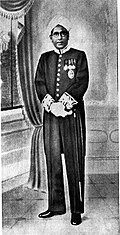
* [[ | *[[Kurma Venkata Reddy Naidu]], served as both the [[Chief Minister of Madras Presidency|Chief Minister]] and [[List of colonial governors and presidents of Madras Presidency|Governor]] of [[Madras Presidency]] (which included all of present-day Andhra Pradesh and [[Tamil Nadu]] along with parts of [[Kerala]] and [[Karnataka]]). Only person in history to have held both the offices.<ref>{{Cite news |title=After Series of 'Outsiders', Sasikala to be first Tamil CM in 29 Years |work=News18 |url=https://www.news18.com/blogs/politics/vvp-sharma/after-series-of-outsider-chief-ministers-sasikala-to-be-first-tamil-cm-after-29-years-14329-1345645.html |access-date=2017-02-12}}</ref><ref>{{Cite book |last=Seshadri |first=K. |url=https://books.google.com/books?id=tJ1AAAAAMAAJ&q=kv+reddy+naidu+kapu |title=Social Ethos of South India |date=1991 |publisher=Arihant Publishers |pages=73 |language=en}}</ref><ref>{{Cite book |last=Muthiah |first=S. |url=https://books.google.com/books?id=tbR_LLkqdI8C&dq=Kurma+Naidu&pg=PA336 |title=Madras, Chennai: A 400-year Record of the First City of Modern India |date=2008 |publisher=Palaniappa Brothers |isbn=978-81-8379-468-8 |pages=336 |language=en |author-link=S. Muthiah}}</ref> | ||
* [[ | *Pasala Suryachandra Rao, 1st deputy speaker of Andhra State Assembly (1953{{En dash}}1954)<ref name=":7" /> | ||
* [[ | *Rokkam Lakshmi Narasimham Dora, 2nd speaker of Andhra State Assembly (1955{{En dash}}1956)<ref name=":8">{{Cite book |last=Malhotra |first=G. C. |url=https://books.google.com/books?id=DFqbAAAAMAAJ&dq=rokkam+dora&pg=PA167 |title=Cabinet Responsibility to Legislature: Motions of Confidence and No-confidence in Lok Sabha and State Legislatures |date=2004 |publisher=Lok Sabha Secretariat |isbn=978-81-200-0400-9 |pages=167 |language=en}}</ref> | ||
* [[ | *Kamisetty Parasuram Naidu, 1st [[List of speakers of the Puducherry Legislative Assembly|deputy speaker of Pondicherry Assembly]] from 1963{{En dash}}1964 and later from 1972–1974. Speaker of Pondicherry Assembly (1985{{En dash}}1989)<ref name=":15">{{Cite book |last=More |first=J. B. Prashant |url=https://books.google.com/books?id=cQ1uAAAAMAAJ |title=The Telugus of Yanam and Masulipatnam: From French Rule to Integration with India |date=2007 |publisher= |pages=263 |language=en |author-link=J. B. Prashant More}}</ref> | ||
* [[ | *[[Mandali Venkata Krishna Rao]], former state minister. Chief organiser and convenor of the first [[World Telugu Conference]] in 1975<ref>{{Cite web |date=21 June 2014 |title=Buddha Prasad Set to Become Deputy Speaker of AP House |url=https://www.newindianexpress.com/states/telangana/2014/jun/21/Buddha-Prasad-Set-to-Become-Deputy-Speaker-of-AP-House-626915.html |access-date=2023-05-13 |website=[[The New Indian Express]]}}</ref> | ||
*[[M. S. Sanjeevi Rao]], former Union Minister and chairman of India's first electronics commission. Referred to as "India’s father of electronics"<ref name="Sankar-2019">{{Cite news |last=Sankar |first=K. N. Murali |date=2019-03-26 |title=Battle equally poised in port town Kakinada |language=en-IN |work=The Hindu |url=https://www.thehindu.com/elections/lok-sabha-2019/battle-equally-poised-in-port-town/article26646430.ece |access-date=2023-04-08 |issn=0971-751X}}</ref><ref>{{Cite web |last=Dey |first=Soumik |date=31 March 2018 |title=A tribute to MS Sanjeevi Rao, India's father of electronics |url=https://www.theweek.in/leisure/society/2018/03/31/tribute-ms-sanjeevi-rao-india-father-electronics.html |access-date=2021-07-13 |website=[[The Week (Indian magazine)|The Week ]] |language=en}}</ref> | |||
*P. V. Rangayya Naidu, former Union Minister of State for [[Ministry of Communications (India)|Communications]], [[Ministry of Power (India)|Power]], and [[Ministry of Water Resources, River Development and Ganga Rejuvenation|Water Resources]]; ex-[[Director general of police|Director General of Police]]<ref>{{Cite web |date=2022-09-08 |title=P.V Rangaiah Naidu book release :చురుగ్గా ఉండేందుకు రోజంతా ప్రయత్నిస్తా... |url=https://www.andhrajyothy.com/2022/navya/health-tips/trying-to-stay-active-all-day-ssdmrgsnavya-780423.html |access-date=2023-05-10 |website=[[Andhra Jyothi]] |language=te}}</ref> | |||
*[[Ummareddy Venkateswarlu]], former [[Ministry of Housing and Urban Affairs|Union Minister for Urban Development]]<ref>{{Cite web |date=2 May 2012 |title=Ummareddy to quit TDP, join YSR Congress? |url=https://www.newindianexpress.com/states/andhra-pradesh/2012/may/02/ummareddy-to-quit-tdp-join-ysr-congress-364118.html |access-date=2023-05-13 |website=[[The New Indian Express]]}}</ref> | |||
*Chegondi Harirama Jogaiah, former Home Minister of Andhra Pradesh<ref>{{Cite web |date=13 March 2023 |title=Kapu community leader Jogaiah wants 'Jagan Povali, Pawan Ravali' in Andhra Pradesh |url=https://www.newindianexpress.com/states/andhra-pradesh/2023/mar/13/kapu-community-leader-jogaiah-wants-jagan-povali-pawan-ravali-in-andhra-pradesh-2555568.html |access-date=2023-05-11 |website=The New Indian Express}}</ref> | |||
*[[Nimmakayala Chinarajappa]], [[List of deputy chief ministers of Andhra Pradesh|Deputy Chief Minister]] and Home Minister of [[Andhra Pradesh]] (2014{{En dash}}2019)<ref name=":12">{{Cite news |date=2014-06-04 |title=Naidu to grapple with Cabinet composition |language=en-IN |work=The Hindu |url=https://www.thehindu.com/news/national/andhra-pradesh/naidu-to-grapple-with-cabinet-composition/article6082781.ece |access-date=2023-05-07 |issn=0971-751X}}</ref> | |||
*Kottu Satyanarayana, Deputy Chief Minister of Andhra Pradesh (2022{{En dash}}present)<ref name="Naidu-2022">{{Cite news |last=Naidu |first=T. Appala |date=2022-10-31 |title=Kapu Ministers, MLAs to draw action plan to ensure political gain for the community |language=en-IN |work=The Hindu |url=https://www.thehindu.com/news/national/andhra-pradesh/kapu-ministers-mlas-to-draw-action-plan-to-ensure-political-gain-for-the-community/article66077915.ece |access-date=2023-05-15 |issn=0971-751X}}</ref> | |||
*[[M. M. Pallam Raju]], former [[Minister of Education (India)|Union Minister of Human Resources Development]] and [[Minister of Defence (India)|Minister of State for Defence]]<ref name="Sankar-2019" /> | |||
*[[Alla Nani]], Deputy Chief Minister of Andhra Pradesh (2019{{En dash}}2022)<ref name="Naidu-2022" /> | |||
*[[Pawan Kalyan]], founder of [[Jana Sena Party]]<ref name="The News Minute">{{Cite news |title=Andhra House of Cards: The political triangle between TDP, BJP and Kapu Padmanabham |work=The News Minute |url=https://www.thenewsminute.com/article/andhra-house-cards-political-triangle-between-tdp-bjp-and-kapu-padmanabham-76936.ece |access-date=2018-02-24}}</ref> | |||
<big>'''Social Activists'''</big> | |||
*[[Raghupathi Venkataratnam Naidu]], social reformer and educationist<ref>{{Cite book |last=Parthasarathy |first=D. |url=https://books.google.com/books?id=GevZAAAAMAAJ&q=Venkataratnam+Naidu+kapu |title=Collective Violence in a Provincial City |date=1997 |publisher=Oxford University Press |isbn=978-0-19-564139-4 |pages=116 |language=en}}</ref>{{Sfn|Kantha Rao|1999|p=62|loc=Chapter 2}} | |||
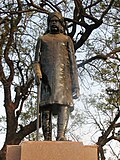
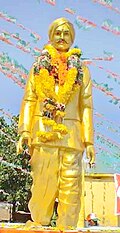
*Kanneganti Hanumanthu, freedom fighter who spearheaded the [[Palnadu]] Rebellion<ref name="Kumari-1998">{{Cite book |last=Kumari |first=A. Vijaya |url=https://books.google.com/books?id=r-ffeWmj2JUC&q=kapu&pg=PA89 |title=Social Change Among Balijas: Majority Community of Andhra Pradesh |date=1998 |publisher=M.D. Publications |isbn=978-81-7533-072-6 |pages=14 |language=en}}</ref> | |||
*Thota Narasayya Naidu, freedom fighter<ref name="Kumari-1998" /> | |||
'''<big>Film</big>''' | |||
*[[Raghupathi Venkaiah Naidu]], one of India's film pioneers; widely regarded as the "father of [[Telugu cinema]]"<ref>Srinivas, S.V.. (2010). [https://www.researchgate.net/publication/241643987_Making_of_a_Peasant_IndustryTelugu_Cinema_in_the_1930s-1950s Making of a Peasant Industry: Telugu Cinema in the 1930s–1950s]. Bioscope: South Asian Screen Studies. p. 173. 10.1177/097492761000100207. </ref><ref name="The Hindu Business Line-2011">{{Cite web |date=11 September 2011 |title=Telugu film industry turns 80 |url=https://www.thehindubusinessline.com/economy/Telugu-film-industry-turns-80/article20334643.ece |archive-url=https://web.archive.org/web/20210924164853/https://www.thehindubusinessline.com/economy/Telugu-film-industry-turns-80/article20334643.ece |archive-date=24 September 2021 |access-date=2022-10-11 |website=[[The Hindu Business Line]] |quote=Mr Raghupati Venkaiah, regarded as the father of Telugu film industry, laid the foundation stone for the industry in the South by setting up Glass Studio and bringing one of the first cameras into the country.}}</ref> | |||
*[[S. V. Ranga Rao]], actor<ref name="The Times of India-2016">{{Cite news |date=2016-05-22 |title=Kapu community says no to 'Chandranna' samkshema bhavan |work=The Times of India |url=https://timesofindia.indiatimes.com/city/hyderabad/kapu-community-says-no-to-chandranna-samkshema-bhavan/articleshow/52383519.cms |access-date=2023-04-08 |issn=0971-8257}}</ref><ref name=":4" /> | |||
*[[Allu Ramalingaiah]], actor, recipient of Padma Shri<ref name=":6" /> | |||
*[[Ramesh Naidu]], [[National Film Award for Best Music Direction|National Award]]-winning music composer | |||
*[[Kaikala Satyanarayana]], actor and politician, recipient of [[Filmfare Lifetime Achievement Award – South|Filmfare Lifetime Achievement Award]]<ref name=":4">{{Cite web |date=2 February 2016 |title=Election promises haunt Chandrababu Naidu |url=https://www.deccanchronicle.com/nation/current-affairs/020216/election-promises-haunt-chandrababu-naidu.html |access-date=14 May 2023 |website=[[Deccan Chronicle]]}}</ref> | |||
*[[Savitri (actress)|Savitri]], actress<ref name="The Times of India-2016" /><ref name=":4" /> | |||
*[[Dasari Narayana Rao]], director, actor, and former Union Minister<ref>{{Cite news |title=Kapu leaders rally behind Mudragada |work=The Hindu |url=https://www.thehindu.com/news/national/andhra-pradesh/Kapu-leaders-rally-behind-Mudragada/article14422051.ece |access-date=2018-12-21}}</ref> | |||
*[[Allu Aravind]], producer; founder of [[Geetha Arts]] and [[Aha (streaming service)|Aha]] [[Over-the-top media service|OTT]] platform<ref name=":6">{{Cite news |date=2009-03-29 |title=Cong changes list; Konathala fielded against Allu Aravind |work=The Times of India |url=https://timesofindia.indiatimes.com/city/hyderabad/cong-changes-list-konathala-fielded-against-allu-aravind/articleshow/4329087.cms |access-date=2023-05-07 |issn=0971-8257}}</ref> | |||
*[[Kodi Ramakrishna]], director; recipient of [[Raghupathi Venkaiah Award]]<ref name=":4" /> | |||
*[[Chiranjeevi]], actor<ref name="India Today">{{Cite news |title=Kapu card may cast(e) Chiranjeevi in the CM's role |work=India Today |url=https://www.indiatoday.in/india/south/story/chiranjeevi-kapu-praja-rajyam-card-caste-182770-2013-12-07.ece |access-date=2013-12-07}}</ref> | |||
*[[Pawan Kalyan]], actor<ref name="The News Minute" /> | |||
*[[Rambha (actress)|Rambha]], actress | |||
*[[Allu Arjun]], actor<ref>{{Cite web |last=Sreeja |first=Addla |date=2022-11-18 |title=Allu Arjun changes his name? Here's a viral photo |url=https://www.siasat.com/allu-arjun-changes-his-name-heres-a-viral-photo-2460231/ |access-date=2023-04-07 |website=[[The Siasat Daily]] |language=en-US |quote=Allu Arjun reportedly hails from the Kapu community ....}}</ref><ref name=":4" /> | |||
*[[Ram Charan]], actor<ref name="India Today" /> | |||
'''<big>Arts</big>''' | |||
*[[Dwaram Venkataswamy Naidu]], [[Carnatic music|Carnatic]] violinist, recipient of [[Padma Shri]] and [[Sangeet Natak Akademi Award]]<ref name="Kumari-1998" /> | |||
*[[Dwaram Durga Prasad Rao]], Carnatic violinist, recipient of Sangeet Natak Akademi Award<ref name="Kumari-1998" /> | |||
*Sobha Naidu, [[Kuchipudi]] exponent, recipient of Padma Shri and Sangeet Natak Akademi Award<ref>{{Cite web |last= |date=18 July 2019 |title=Personalities: Dwaram Venkataswami Naidu |url=http://andhraportal.org/personalities-dwaram-venkataswami-naidu/ |access-date=2023-05-13 |website=Andhra Cultural Portal |language=en-US}}</ref><ref name="Kumari-1998" /> | |||
'''<big>Sports</big>''' | |||
*[[Kodi Rammurthy Naidu]], bodybuilder, strongman, and wrestler<ref name="Kumari-1998" /> | |||
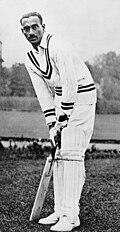
*[[C. K. Nayudu]], first captain of the [[India national cricket team|Indian cricket team]] and one of India's greatest cricketers<ref name="Kumari-1998" /><ref>{{Cite book |last=Majumdar |first=Boria |url=https://books.google.com/books?id=UGFFG_deJy4C&dq=Nayudu+universally+one+greatest+cricketers+ever+lived&pg=PA50 |title=Once Upon a Furore: Lost Pages of Indian Cricket |date=2004 |publisher=Yoda Press |isbn=978-81-902272-0-9 |pages=50 |language=en |quote=C. K. Nayudu is today universally acknowledged as one of the greatest Indian cricketers that ever lived. |author-link=Boria Majumdar}}</ref> | |||
*[[C. S. Nayudu]], represented India in [[Test cricket]] from 1934 to 1952<ref name="Kumari-1998" /> | |||
*[[Chandra Nayudu]], India's first female cricket commentator<ref name="Kumari-1998" /><ref>{{Cite news |last=Dani |first=Bipin |date=5 April 2021 |title=India's first woman commentator Chandra Nayudu no more |work=[[Mid-Day]] |url=https://www.mid-day.com/sports/cricket/article/indias-first-woman-commentator-chandra-nayudu-no-more-23166951}}</ref> | |||
*[[Ambati Rayudu]], represented [[India national cricket team]] from 2013 to 2019<ref>{{Cite news |last=Reddy |first=R. Ravikanth |date=2023-04-11 |title=From pitch to politics: cricketer Ambati Rayudu set to start new innings |language=en-IN |work=The Hindu |url=https://www.thehindu.com/news/cities/Hyderabad/from-pitch-to-politics-cricketer-ambati-rayudu-set-to-start-new-innings/article66725158.ece |access-date=2023-05-03 |issn=0971-751X}}</ref><ref>{{Cite news |date=2023-04-14 |title=Rayudu to debut on political pitch in AP |work=The Times of India |url=https://timesofindia.indiatimes.com/city/amaravati/rayudu-to-debut-on-political-pitch-in-ap/articleshow/99480277.cms?from=mdr |access-date=2023-05-03 |issn=0971-8257}}</ref> | |||
'''<big>Literature</big>''' | |||
*[[Tapi Dharma Rao|Thapi Dharma Rao Naidu]], writer and journalist, winner of [[List of Sahitya Akademi Award winners for Telugu|Sahitya Akademi Award]]<ref name="Kumari-1998" /> | |||
*[[M. Chalapathi Rau]], journalist and author regarded as one of India's greatest editors in [[English language|English]] journalism; recipient of [[Padma Bhushan]]<ref name="Kumari-1998" /><ref>{{Cite web |last=YV Ramakotaiah |date=2015-03-08 |title=The Great Indian Editor |url=https://www.thehansindia.com/posts/index/Hyderabad-Tab/2015-03-08/The-Great-Indian-Editor/136088 |access-date=2023-05-14 |website=[[The Hans India]] |language=en}}</ref> | |||
*[[:te:యర్రంశెట్టి_శాయి|Yarramsetti Sai]], [[Telugu language|Telugu]]-language novelist and short story writer | |||
'''<big>Sciences</big>''' | |||
*[[Sunkara Balaparameswara Rao]], father of neurosurgery in united [[Andhra Pradesh (1956–2014)|Andhra Pradesh]], recipient of [[Dr. B. C. Roy Award|Dr. B. C. Roy award]]<ref>{{Cite journal |last=Bhavaraju |first=Subba Rao |date=2019-05-01 |title=Obituary: Dr. Sunkara Balaparameswara Rao |url=https://www.neurologyindia.com/article.asp?issn=0028-3886;year=2019;volume=67;issue=3;spage=961;epage=962;aulast=Bhavaraju;type=0 |journal=[[Neurology India]] |language=en |volume=67 |issue=3 |pages=961 |doi=10.4103/0028-3886.263261 |doi-broken-date=28 May 2023 |issn=0028-3886 |pmid=31347608}}</ref><ref name="Bhattacharjee-2022" /> | |||
*[[M. V. Rao]], agricultural scientist considered as one of the key figures in [[Green Revolution in India|India’s Green Revolution]]. Recipient of Borlaug Award and [[Padma Shri]]<ref>{{Cite web |date=2016-03-09 |title=Noted agriculture scientist MV Rao passes away |url=https://www.thehindubusinessline.com/news/noted-agriculture-scientist-mv-rao-passes-away/article8331680.ece |access-date=2023-05-12 |website=[[Business Line]] |language=en}}</ref> | |||
*[[A. V. Rama Rao]], inventor and chemist; recipient of [[Padma Bhushan]]<ref>{{Cite web |date=2017-03-31 |title=Young industrialist feted |url=https://www.thehansindia.com/posts/index/Andhra-Pradesh/2017-03-31/Young-industrialist-feted/289983 |access-date=2023-04-10 |website=[[The Hans India]] |language=en}}</ref> | |||
*[[Sunkara Venkata Adinarayana Rao]], orthopaedic surgeon and recipient of Padma Shri<ref name="Bhattacharjee-2022">{{Cite news |last=Bhattacharjee |first=Sumit |date=2022-12-12 |title=Another attempt to bring Kapus onto one platform in Andhra Pradesh |language=en-IN |work=The Hindu |url=https://www.thehindu.com/news/cities/Visakhapatnam/another-attempt-to-bring-kapus-onto-one-platform-in-andhra-pradesh/article66254332.ece |access-date=2023-04-21 |issn=0971-751X}}</ref> | |||
==References== | ==References== | ||
| Line 39: | Line 132: | ||
'''Bibliography''' | '''Bibliography''' | ||
{{refbegin}} | {{refbegin}} | ||
* {{citation |title=Pre-colonial India in Practice: Society, Region, and Identity in Medieval Andhra |first=Cynthia |last=Talbot |publisher=Oxford University Press |isbn=978-0-19803-123-9 |year=2001 |url=https://books.google.com/books?id=pfAKljlCJq0C}} | * {{citation|title=Pre-colonial India in Practice: Society, Region, and Identity in Medieval Andhra|first=Cynthia|last=Talbot|publisher=Oxford University Press|isbn=978-0-19803-123-9|year=2001|url=https://books.google.com/books?id=pfAKljlCJq0C}} | ||
* {{citation|last=Kantha Rao|first=M. L.|title=A Study of the Socio-Political Mobility of the Kapu Caste in Modern Andhra|publisher=University of Hyderabad/Shodhganga|url=http://shodhganga.inflibnet.ac.in/handle/10603/25437/|date=July 1999|hdl=10603/25437|ref={{sfnref|Kantha Rao|1999}}}} | |||
{{refend}} | {{refend}} | ||
| Line 45: | Line 140: | ||
*{{cite book |title=Constructing the Colonial Encounter: Right and Left Hand Castes in Early Colonial South India |first=Niels |last=Brimnes |publisher=Routledge |year=1999 |isbn=9780700711062 |url=https://books.google.com/books?id=HdSABP70H9sC}} | *{{cite book |title=Constructing the Colonial Encounter: Right and Left Hand Castes in Early Colonial South India |first=Niels |last=Brimnes |publisher=Routledge |year=1999 |isbn=9780700711062 |url=https://books.google.com/books?id=HdSABP70H9sC}} | ||
*{{cite book|first=Konduri Sarojini |last=Devi|title=Religion in Vijayanagara Empire|url=https://archive.org/details/religioninvijaya0000saro|url-access=registration |access-date=9 May 2011|date=May 1990|publisher=Sterling Publishers}} | *{{cite book|first=Konduri Sarojini |last=Devi|title=Religion in Vijayanagara Empire|url=https://archive.org/details/religioninvijaya0000saro|url-access=registration |access-date=9 May 2011|date=May 1990|publisher=Sterling Publishers}} | ||
*{{cite book |first1=A. Vijaya |last1=Kumari |first2=Sepuri |last2=Bhaskar |title=Social Change Among Balijas: Majority Community of Andhra Pradesh |url=https://books.google.com/books?id=r-ffeWmj2JUC |access-date=9 May 2011 |date=1 March 1998 |publisher=M.D. Publications Pvt. Ltd. |isbn=978-81-7533-072-6}} | |||
*{{cite book|first1=A. Vijaya |last1=Kumari|first2=Sepuri |last2=Bhaskar|title=Social | |||
*{{cite book |title=The View from Below: Indigenous Society, Temples, and the Early Colonial State in Tamilnadu, 1700-1835 |first=Kanakalatha |last=Mukund |author-link=Kanakalatha Mukund|publisher=Orient Blackswan |year=2005 |isbn=9788125028000 |url=https://books.google.com/books?id=5BMljBxJXtoC}} | *{{cite book |title=The View from Below: Indigenous Society, Temples, and the Early Colonial State in Tamilnadu, 1700-1835 |first=Kanakalatha |last=Mukund |author-link=Kanakalatha Mukund|publisher=Orient Blackswan |year=2005 |isbn=9788125028000 |url=https://books.google.com/books?id=5BMljBxJXtoC}} | ||
*{{cite book |title=The Political Economy of Commerce: Southern India 1500-1650 |first=Sanjay |last=Subrahmanyam |edition=Reprinted |publisher=Cambridge University Press |year=2002 |isbn=9780521892261 |url=https://books.google.com/books?id=jgSMPKVh7f8C}} | *{{cite book |title=The Political Economy of Commerce: Southern India 1500-1650 |first=Sanjay |last=Subrahmanyam |edition=Reprinted |publisher=Cambridge University Press |year=2002 |isbn=9780521892261 |url=https://books.google.com/books?id=jgSMPKVh7f8C}} | ||
| Line 56: | Line 147: | ||
{{DEFAULTSORT:Kapu}} | {{DEFAULTSORT:Kapu}} | ||
[[Category:Telugu society]] | [[Category:Telugu society]] | ||
[[Category:Indian castes]] | [[Category:Indian castes]] | ||
[[Category:Social groups of Andhra Pradesh]] | [[Category:Social groups of Andhra Pradesh]] | ||
[[Category:Agricultural castes]] | [[Category:Agricultural castes]] | ||
Revision as of 14:16, 2 June 2023
| Kapu | |
|---|---|
| Classification | Forward caste |
| Religions | Hinduism |
| Languages | Telugu |
| Country | India |
| Populated states | Andhra Pradesh, Telangana |
| Region | South India |
Kapu is a Hindu caste primarily found in the Indian state of Andhra Pradesh. They are classified as a Forward caste.[8] They are a community of land-owning agriculturists.[15] Historically, they have also been warriors in Hindu armies.[16][17][18] They are one of the dominant castes of Andhra Pradesh.[25]
Kāpu means cultivator or protector in Telugu.[26] Telaga and Ontari are the subgroups of Kapu caste. Both were primarily warrior communities who later took up cultivation.[16][27] The terms Kapu and Telaga are often used synonymously.[28] Kapus commonly carry the title Naidu.[35]
Kapus are primarily present in Coastal Andhra with major concentration in the Godavari-Krishna delta region.[1][36] Balija community of Rayalaseema are related to Kapus of Coastal Andhra and both are often enumerated together in government and sociological contexts.[42] There also exist other Kapu communities like the Munnuru Kapus in Telangana, and the Turpu Kapus in Uttarandhra.[7]
Origins
Kāpu literally means cultivator or protector in Telugu.[43][26] Various subgroups of Kapus branched off into separate communities in the post-Kakatiya period (Velamas, Panta Kapus and Pakanati Kapus—both of whom got labelled Reddys, and Kapus of Kammanadu—eventually labelled Kammas).[44] The remaining Kapus continue to use the original label. All the cultivator caste clusters have a common ancestry in the legends.[45] In several places, the landowning cultivators are addressed by the agricultural labourers as 'Kapu'.[29](p11) According to Cynthia Talbot, the transformation of occupational identities as caste labels occurred in the late Vijayanagara period (17th century) or later.[46]
Kapus were one of the fiver major land-owning castes during the Qutub Shahi (1518–1687) rule.[47] During the colonial era, Kapus along with other warrior castes dominated military occupations.[48]
Subcastes
Telaga and Ontari are the subcastes of Kapu community. Kapu, Telaga, and Ontari are usually classed as a single unit.[49](p47)[50] All three inter-dine and inter-marry.[50]
Telaga
Telaga is a subcaste of Kapu and both terms are often used synonymously.[28] As per historians, Telugu Choda dynasties like Durjayas of Velanadu who ruled Coastal Andhra, later came to be called Telagas over a period of time.[57][58][59] Telagas are classified as a Forward caste.[65] They are a land-owning agrarian community.[73] Historically, they were a warrior caste before taking up cultivation.[16] Telaga are also referred to as Pedda Kapu.[87] During the colonial era, Telagas were noted to be of a high social position.[88](p274)[89][90]
Ontari
Ontari, also called Vontari, Ontarlu, Vontarlu, are a section of Kapu caste.[27][91][17] They are primarily found in the erstwhile districts of East Godavari and Visakhapatnam.[92] Historically, Ontaris were exclusively into military service.[93][94] They were a clan of warriors in medieval Andhra who engaged in hand-to-hand combat and wielded heavy weapons like maces.[17] M. L. Kantha Rao calls Ontaris 'a great warrior class'.[94] Ontari literally means 'the lone one' which referred to their bravery in the context of historical warfare.[95][94] Currently, they are landholding agriculturists.[27]
Srinatha mentions Ontarlu, also known as Ekkatlu, in his Palnati-vira-charitra and Bhimeswara Puranam, written in early 15th century.[17][96] Inscriptions from Vellaturu (dated to 1418 CE) and Tangeda in former Guntur district register gifts of lands to temples by Ontarlu.[97] Mallampalli Somasekhara Sarma notes that Ontari was the vernacular equivalent of the Sanskrit word Ekangavira — the hero who fights the combat alone. Analysing literary sources, he notes that Ontaris or Ekkatis took part in hand-to-hand fight called Ekkati kayyamu, the combat of singles. He adds:
Ontari forces served as the reserve army, and each fighter in this division was probably a great wrestler and also wielded heavy weapons like maces and the like. The ekkatis of the 15th century gradually formed into a separate military caste or community, and are now popularly called Vantarlu. These now form one of the three sections of the Telaga community, the other two being the Telaga (proper), and the Kapu.[17]
As per K. S. Singh, "The title Ontari was awarded to them during the time of Sri Krishnadevaraya in the sixteenth century as a reward for their bravery in warfare. Prior to this, they were only known as Telaga."[27] They received Inam (rent-free) lands for their services as warriors.[17]
Geographic distribution
Kapus are primarily present in the Coastal Andhra region with major concentration in the erstwhile districts of East Godavari, West Godavari, Krishna, Guntur, and Visakhapatnam.[36][98] They are present in smaller numbers in the former Srikakulam, Vizianagaram, and Prakasam districts of Andhra Pradesh.[98][36][99] There are also significant number of Kapu settlers in the Hyderabad Metropolitan Region of Telangana.[100][101] In the 19th and early 20th century, Kapus were among the Telugu migrants to Malaysia and Burma.[102] In recent decades, Kapus have migrated to the Anglophone countries like United States.[103][102]
Balija community of Rayalaseema are related to Kapus of Coastal Andhra and both are often enumerated together in government and sociological contexts.[42] There also exist other related Kapu communities like the Munnuru Kapus in Telangana, and the Turpu Kapus in Uttarandhra who are enumerated separately from Coastal Andhra Kapus.[7] Reddy caste is also known as Kapu in parts of Rayalaseema and Telangana due to Kāpu being a generic Telugu term for cultivator, but Reddys are distinct from the Kapus of Coastal Andhra.[5][104][99]
Kapu Zamindariss
In pre-independent India, many Kapu-Telaga zamindari families with extensive landholdings existed, especially in Godavari districts. Some of them were bestowed with Diwan Bahadur and Rao Bahadur titles.[105] One of the wealthiest zamindaris in former Krishna district was the Vallur Estate of Bommadevara family.[106][90][107] It also included a few areas in Eluru district.[108][106]
Some of the Kapu zamindaris (samsthanams) include:
- Vallur, Krishna district[90][107][106]
- Dharmavaram, East Godavari district[109]
- Attili, West Godavari district[110]
- Sudhapalem, Konaseema district[111]
Politics

During the 1920s and 1930s, Kapus, along with other feudal landed castes, were major supporters of the Justice Party.[112][113][114] Prominent Kapu leader Kurma Venkatareddy Naidu[112][55] was a member of the Justice Party and formulated policies that promoted social equality, abolition of untouchability, and social reform.[115][116] In 1920, the first legislative council elections to Madras Presidency were held after the passing of the Government of India Act 1919. Naidu was one of the three ministers in the Cabinet holding the portfolios of Development and Industries.[117][116][118] In 1936, he was appointed as the Governor of Madras Presidency, one of the only two Indians in history to have held the post.[116] In 1937, he was elected as the Chief Minister of the Madras Presidency.[116] He was the only person to have held both the posts of Chief Minister and Governor of the Madras Presidency (which included all of present-day Andhra Pradesh and Tamil Nadu along with parts of Kerala and Karnataka).[119]
After Indian independence, Andhra State was formed in 1953. Pasala Suryachandra Rao, a Kapu from West Godavari district was the first deputy speaker of Andhra State Assembly from 1953 to 1954.[120] Rokkam Lakshmi Narasimham Dora, a Telaga Kapu from Srikakulam district served as the second speaker of Andhra State Assembly from 1955 to 1956.[121] In the 1955 Andhra State legislature, there were 16 Kapu legislators, the third-highest among all castes.[122] In Pondicherry, Kamisetty Parasuram Naidu, a Kapu leader from Yanam[123] served as the first deputy speaker of Pondicherry Assembly from 1963–1964.[124][125] He also served as the speaker of Pondicherry Assembly from 1985–1989.[124]
In 2009 Andhra Pradesh Assembly elections, Kapu community had 19 MLAs — the third-highest among unreserved communities.[37] In the 2019 Andhra Pradesh Assembly elections, 24 Kapus were elected as MLAs, next only to Reddys and higher than Kammas. Together, these three upper castes accounted for nearly two-thirds of unreserved seats in the Assembly.[126][127]
In the past decade, there have been three Kapu Deputy Chief Ministers of Andhra Pradesh — Nimmakayala Chinarajappa (2014–2019),[128] Alla Nani (2019–2022), and Kottu Satyanarayana (2022–present).[129]
Status
The four-tier varna system of ranking never really took hold in South Indian society. In South India, on the other hand, there existed only three distinguishable classes—the Brahmins, the non-Brahmins and the Dalits.[134] The two intermediate dvija varnas—the Kshatriyas and Vaishyas—did not exist.[137] Kapus are considered to be a "Sat Shudra" (also known as "upper/high-caste/clean Shudra")[138] community in the traditional Hindu ritual ranking system.[142] Kapus are referred to as a non-Brahmin upper-caste.[151][48] They are a community of land-owning cultivators[15] and are one of the dominant castes of Andhra Pradesh.[25]
In 1982, Barbara D. Miller of Syracuse University remarked, "Generally the Telaga-Kapu rank fairly high in status".[152] K. C. Suri notes that non-Brahman caste groups like Kapus, whose main occupation has been cultivation, are the most important social groups in Andhra Pradesh in terms of numerical strength, land control, and access to political power.[29](p10)
K. Srinisavulu notes that the Reddys and Kammas are the politically dominant communities of Andhra Pradesh and Telangana, and that the Kapus are among a group with lesser but still significant influence. They are particularly effective in the erstwhile districts of East Godavari and West Godavari.[22]
Kapunadu movement
Kapunadu movement was formed in the early 1980s and under the leadership of Vangaveeti Mohana Ranga they demanded quotas for Kapu, Telaga, Balija, and Ontari communities.[153][49](p48) However, the N. K. Muralidhar Rao commission in 1982 did not recommend quotas for Kapus and noted as follows:
"Kapus are land owners and enjoy social status in the villages. They are already politically conscious and socially forward. On the educational side also they are not backward as the students belonging to the Kapu Community are in considerable number in the educational institutions in the state. The literacy in this community is higher than the state average. There is a good representation from Kapu Community in the employment under the state government, semi-government and local bodies. The Commission thinks that it is not necessary to disturb this."[154]
In early 2016, the Kapus of the residual Andhra Pradesh state launched an agitation demanding quotas, leading to violent protests.[155][156] Due to the support provided by Kapus in the 2014 assembly elections which helped it come to power, the Telugu Desam Party-led state government allocated 5% quota for Kapus in educational institutions and government jobs in the state. However, this was opposed by the Central Government and was found to be legally untenable.[157] In July 2019, the subsequent YSR Congress government reversed the decision.[158] As of 2023, Kapus do not avail any quotas and are classified as a Forward caste.[159]
Notable people
Politics
- Kurma Venkata Reddy Naidu, served as both the Chief Minister and Governor of Madras Presidency (which included all of present-day Andhra Pradesh and Tamil Nadu along with parts of Kerala and Karnataka). Only person in history to have held both the offices.[160][161][162]
- Pasala Suryachandra Rao, 1st deputy speaker of Andhra State Assembly (1953–1954)[120]
- Rokkam Lakshmi Narasimham Dora, 2nd speaker of Andhra State Assembly (1955–1956)[121]
- Kamisetty Parasuram Naidu, 1st deputy speaker of Pondicherry Assembly from 1963–1964 and later from 1972–1974. Speaker of Pondicherry Assembly (1985–1989)[123]
- Mandali Venkata Krishna Rao, former state minister. Chief organiser and convenor of the first World Telugu Conference in 1975[163]
- M. S. Sanjeevi Rao, former Union Minister and chairman of India's first electronics commission. Referred to as "India’s father of electronics"[164][165]
- P. V. Rangayya Naidu, former Union Minister of State for Communications, Power, and Water Resources; ex-Director General of Police[166]
- Ummareddy Venkateswarlu, former Union Minister for Urban Development[167]
- Chegondi Harirama Jogaiah, former Home Minister of Andhra Pradesh[168]
- Nimmakayala Chinarajappa, Deputy Chief Minister and Home Minister of Andhra Pradesh (2014–2019)[128]
- Kottu Satyanarayana, Deputy Chief Minister of Andhra Pradesh (2022–present)[129]
- M. M. Pallam Raju, former Union Minister of Human Resources Development and Minister of State for Defence[164]
- Alla Nani, Deputy Chief Minister of Andhra Pradesh (2019–2022)[129]
- Pawan Kalyan, founder of Jana Sena Party[169]
Social Activists
- Raghupathi Venkataratnam Naidu, social reformer and educationist[170][171]
- Kanneganti Hanumanthu, freedom fighter who spearheaded the Palnadu Rebellion[172]
- Thota Narasayya Naidu, freedom fighter[172]
Film
- Raghupathi Venkaiah Naidu, one of India's film pioneers; widely regarded as the "father of Telugu cinema"[173][174]
- S. V. Ranga Rao, actor[175][176]
- Allu Ramalingaiah, actor, recipient of Padma Shri[177]
- Ramesh Naidu, National Award-winning music composer
- Kaikala Satyanarayana, actor and politician, recipient of Filmfare Lifetime Achievement Award[176]
- Savitri, actress[175][176]
- Dasari Narayana Rao, director, actor, and former Union Minister[178]
- Allu Aravind, producer; founder of Geetha Arts and Aha OTT platform[177]
- Kodi Ramakrishna, director; recipient of Raghupathi Venkaiah Award[176]
- Chiranjeevi, actor[179]
- Pawan Kalyan, actor[169]
- Rambha, actress
- Allu Arjun, actor[180][176]
- Ram Charan, actor[179]
Arts
- Dwaram Venkataswamy Naidu, Carnatic violinist, recipient of Padma Shri and Sangeet Natak Akademi Award[172]
- Dwaram Durga Prasad Rao, Carnatic violinist, recipient of Sangeet Natak Akademi Award[172]
- Sobha Naidu, Kuchipudi exponent, recipient of Padma Shri and Sangeet Natak Akademi Award[181][172]
Sports
- Kodi Rammurthy Naidu, bodybuilder, strongman, and wrestler[172]
- C. K. Nayudu, first captain of the Indian cricket team and one of India's greatest cricketers[172][182]
- C. S. Nayudu, represented India in Test cricket from 1934 to 1952[172]
- Chandra Nayudu, India's first female cricket commentator[172][183]
- Ambati Rayudu, represented India national cricket team from 2013 to 2019[184][185]
Literature
- Thapi Dharma Rao Naidu, writer and journalist, winner of Sahitya Akademi Award[172]
- M. Chalapathi Rau, journalist and author regarded as one of India's greatest editors in English journalism; recipient of Padma Bhushan[172][186]
- Yarramsetti Sai, Telugu-language novelist and short story writer
Sciences
- Sunkara Balaparameswara Rao, father of neurosurgery in united Andhra Pradesh, recipient of Dr. B. C. Roy award[187][188]
- M. V. Rao, agricultural scientist considered as one of the key figures in India’s Green Revolution. Recipient of Borlaug Award and Padma Shri[189]
- A. V. Rama Rao, inventor and chemist; recipient of Padma Bhushan[190]
- Sunkara Venkata Adinarayana Rao, orthopaedic surgeon and recipient of Padma Shri[188]
References
Citations
- ↑ 1.0 1.1 1.2 Reddi, Agarala Easwara; Ram, D. Sundar (1994). State Politics in India: Reflections on Andhra Pradesh. M. D. Publications. p. 339. ISBN 978-81-85880-51-8.
The Kapus, concentrated in Guntur, Krishna, West and East Godavari districts are listed among the forward castes. In Rayalaseema districts they are known as Balijas.
- ↑ Guhan, Sanjivi (2001). India's Development Experience: Selected Writings of S. Guhan. Oxford University Press. p. 204. ISBN 978-0-19-565523-0.
In Andhra Pradesh, the forward castes (mainly Brahmins, Kapu, and Kamma) ....
- ↑ Jaffrelot, Christophe; Kumar, Sanjay (4 May 2012). Rise of the Plebeians?: The Changing Face of the Indian Legislative Assemblies. Routledge. p. 280. ISBN 978-1-136-51662-7.
The Forward Castes comprise the Brahmin, Kapus, Kamma, Reddys, Komati, Kshatriya, Velama.
- ↑ 4.0 4.1 Census of India, 1971: Andhra Pradesh. Vol. 6. Registrar General and Census Commissioner of India. 1976. p. 236.
It is also seen that Brahmin, Vysya, Telaga, Kapu who are considered to be socially and economically forward castes ....
- ↑ 5.0 5.1 5.2 5.3 Singh, K. S. (1992). People of India: Andhra Pradesh. Anthropological Survey of India. p. 851. ISBN 978-81-7671-006-0.
The term Kapu is variously used in different regions of Andhra Pradesh. They are equated with Reddis in Rayalaseema districts (Thurston, 1909). In East Godavari, West Godavari, Krishna, and Guntur districts, the same term refers to a forward caste, often synonymously used with the Telaga and Ontari.
- ↑ 6.0 6.1 6.2 6.3 Bulletin. Madras Institute of Development Studies. 1990. p. 123.
Taking Andhra Pradesh alone, all the populous land-owning castes such as Reddy, Kamma, Kapu, Telaga, Velama, Raju, etc. (which are among the forward sections), constitute definitely more than nine percent of the total population which is the proportion of the land-owning castes in the above extrapolation for northern India.
- ↑ 7.0 7.1 7.2 7.3 7.4 Gudavarthy, Ajay (2014). Maoism, Democracy and Globalisation: Cross-currents in Indian Politics. SAGE Publishing India. p. 81. ISBN 978-9-35150-425-2.
- ↑ [1][2][3][4][5][6][7]
- ↑ 9.0 9.1 9.2 Census of India, 1961. 6. Vol. 2. Registrar General and Census Commissioner of India. 1961. p. 8.
The Kapus who are otherwise popularly known as Telagas in these parts primarily belong to a caste of cultivators and land owners. They are among the most respected of the non-Brahmins. It is said that in the past they were soldiers in the armies of the Hindu Sovereigns.
- ↑ 10.0 10.1 Gundemeda, Nagaraju (2 October 2014). Education and Hegemony: Social Construction of Knowledge in India in the Era of Globalisation. Cambridge Scholars Publishing. pp. 103, XV. ISBN 978-1-4438-6830-3.
.... belongs to the Hindu upper (landed) caste Kapu, one of the dominant castes in coastal Andhra Pradesh.
- ↑ 11.0 11.1 Contributions to Indian Sociology. Vol. 24. Mouton. 1990. p. 37.
- ↑ 12.0 12.1 Man & Development. Vol. 13. Centre for Research in Rural and Industrial Development. 1991. p. 68.
- ↑ Rao, Y. V. Krishna (1984). Peasant Farming and Growth of Capitalism in Indian Agriculture. Visalaandhra Publishing House. p. 280.
- ↑ Mukherjee, S.; Ramaswamy, S. (1996). Political Science Annual 1996. Deep & Deep Publications. p. 308. ISBN 978-81-7100-833-9.
- ↑ 15.0 15.1 [9][10][6][11][12][13][14][7]
- ↑ 16.0 16.1 16.2 [9][74][49](p46)[75][76][77][78][79][80][81][82]
- ↑ 17.0 17.1 17.2 17.3 17.4 17.5 Sarma, Mallampalli Somasekhara (1946). History Of The Reddi Kingdoms. Andhra University. p. 241.
Another important division of the infantry was ekkatlu, the plural form of the term ekkati, a contracted form of Ekkatidu. Ekkati, otherwise called Ontari, was, as his name indicates, brought into the field of battle almost at the end of the fight, when it was a losing game, and was ordered to take part in hand to hand fight. Ekkati kayyamu, the combat of singles, began only after every prospect of victory was lost. The ekkati forces served probably as the reserve army, and each fighter in this division was probably a great wrestler and wielded also heavy weapons like maces and the like. There were ekkatis in every important town and village in the kingdom. The ekkatis of Velanturu (Vellaturu), Tangeda and Polepalli are mentioned in the records of the Reddi period. From the way in which these ekkatis made gifts to local gods, we come to know that they were remunerated for their services by grants of land. All these sections of infantry are mentioned in the Palnativiracaritra, produced in this period. In this work ekkatlu are referred to as Ontarlu (Selagola prajalanu heccu vantarla; Vantari is the corrupt form of Ontari). Ekkati and its synonym Ontari seem to have been the vernacular equivalents of the Sanskrit word Ekangavira, the hero who fights the combat singly. These ekkatis of the Reddi period gradually formed into a separate military caste or community, and are now popularly called Vantarlu. These now form one of the three sections of the Telaga community, the other two being the Telaga (proper), and the Kapu.
- ↑ Kantha Rao 1999, p. 50, 59, 66.
- ↑ 19.0 19.1 The Indian Journal of Agricultural Economics. Vol. 55. Indian Society of Agricultural Economics. 2000. p. 707.
In Andhra Pradesh, at the state level, one might mention a few castes such as Reddy, Velama, Kamma, Raju, Kapu / Telaga / Balija castes as the dominant (cultivator) castes.
- ↑ Shastri, Sandeep; Kumar, Ashutosh; Sisodia, Yatindra Singh (22 November 2021). Electoral Dynamics in the States of India. Taylor & Francis. ISBN 978-1-000-47697-2.
..... and all of them were contested against the dominant caste candidates like Reddy, Kamma, Kapu, etc.
- ↑ Kuczyński, Janusz (1988). Perspectives on Contemporary Youth. United Nations University. p. 253. ISBN 978-92-808-0643-4.
- ↑ 22.0 22.1 Srinivasulu, K. (September 2002). Caste & Class Articulation of Andhra Pradesh (PDF). London: Overseas Development Institute. p. 3, 4. ISBN 0-85003-612-7. Archived from the original (PDF) on 20 July 2006. Retrieved 20 December 2011.
- ↑ Gundimeda, Sambaiah (2009). "Dalits, Praja Rajyam Party and Caste Politics in Andhra Pradesh". Economic and Political Weekly. 44 (21): 50–58. ISSN 0012-9976. JSTOR 40279035.
- ↑ South Asian Studies. Department of Political Science, University of Rajasthan. 2001. pp. 249, 252, 255. ISBN 978-81-7304-377-2.
- ↑ 25.0 25.1 [10][19][20][21][11][12][22][23][7][24]
- ↑ 26.0 26.1 26.2 Bhargav, Nimmagadda (28 February 2023). Stringers and the Journalistic Field: Marginalities and Precarious News Labour in Small-Town India. Taylor & Francis. ISBN 978-1-000-84035-3.
The Telugu word kapu means protector or cultivator. They use the suffix – Naidu – in the East and West Godavari, Krishna and Guntur.
- ↑ 27.0 27.1 27.2 27.3 Singh, K. S. (1998). India's Communities. Anthropological Survey of India. pp. 2673, 2674. ISBN 978-0-19-563354-2.
- ↑ 28.0 28.1 [51][5][52][53][54][55][56][39]
- ↑ 29.0 29.1 29.2 K. C. Suri (September 2002). "Democratic Process and Electoral Politics in Andhra Pradesh, India" (PDF). Overseas Development Institute. Archived from the original (PDF) on 9 April 2021.
- ↑ 30.0 30.1 The Journal of the Anthropological Survey of India. Vol. 39. Anthropological Survey of India. 1990. p. 70.
The group is also known as Kapu, Naidu, Telaga in coastal districts of the state and is ethnically similar to Balija Naidus of Rayalaseema area of Andhra Pradesh.
- ↑ Rao, M. Prasada (2006). Rural Non-farm Growth: Sign of Farm Success Or Failure?. Serials Publications. p. 215. ISBN 978-81-8387-009-2.
- ↑ Indian Antiquary. Vol. 3–4. Popular Prakashan. 1971. p. 2.
- ↑ Singh, K. S. (2004). People of India: Maharashtra (3 pts.). Anthropological Survey of India. p. 74. ISBN 978-81-7991-100-6.
- ↑ Yagati, Chinna Rao (2003). Dalits Struggle for Identity: Andhra and Hyderabad 1900-1950. Kanishka Publishers Distributors. pp. 38, 53. ISBN 978-81-7391-573-4.
- ↑ [26][29](p11)[30][31][32][33][34]
- ↑ 36.0 36.1 36.2 Kumari, A. Vijaya (1998). Social Change Among Balijas: Majority Community of Andhra Pradesh. M.D. Publications. p. 14. ISBN 978-81-7533-072-6.
- ↑ 37.0 37.1 Ambagudia, Jagannath; Xaxa, Virginius (1 December 2020). Handbook of Tribal Politics in India. SAGE Publishing India. p. 177. ISBN 978-93-5388-460-4.
- ↑ "Nandyal bypoll: In Caste Matrix, Muslims, Vysyas Hold The Key". The Times of India. 20 August 2017. ISSN 0971-8257. Retrieved 26 May 2023.
.... as there are good number of Balija voters in the constituency. The community is the equivalent of the Kapu community in the Rayalaseema region.
- ↑ 39.0 39.1 Singh, K. S. (1992). People of India: Andhra Pradesh. Anthropological Survey of India. p. 1817. ISBN 978-81-7671-006-0.
The Telaga are a Telugu speaking dominant cultivator community, concentrated in all the coastal towns and hinterlands of East and West Godavari, Krishna, Guntur and Nellore districts of Coastal Andhra and in all the ..... Today we find the Kapu, Ontari and Balija of the state often call themselves Telaga, and the Telaga in some parts also use Kapu as synonym.
- ↑ "₹490.86 crore credited into accounts of Kapu Nestham beneficiaries". The Hindu. 22 July 2021. ISSN 0971-751X. Retrieved 23 May 2023.
- ↑ "'State committed to welfare of Kapus, Balijas'". The Hindu. 17 May 2016. ISSN 0971-751X. Retrieved 23 May 2023.
- ↑ 42.0 42.1 [30][1][19][37][38][39][40][41]
- ↑ Talbot 2001, p. 74.
- ↑ Talbot 2001, pp. 192, 206.
- ↑ Talbot 2001, p. 206.
- ↑ Talbot 2001, p. 86.
- ↑ Kantha Rao 1999, p. 58, Chapter 2.
- ↑ 48.0 48.1 Kantha Rao 1999, p. 59, Chapter 2.
- ↑ 49.0 49.1 49.2 Parthasarathy, D. (1997). Collective Violence in a Provincial City. Oxford University Press. ISBN 978-0-19-564139-4.
- ↑ 50.0 50.1 Kantha Rao 1999, p. 43, Chapter 2.
- ↑ Murty, K. Ramachandra (2001). Parties, Elections, and Mobilisation. Anmol Publications. p. 21. ISBN 978-81-261-0979-1.
The Kapus of Godavari Districts are quite well off and politically dynamic. They proudly declare themselves as Telagas.
- ↑ Grover, Verinder; Arora, Ranjana (1996). Encyclopaedia of India and Her States: Andhra Pradesh, West Bengal, Bihar and Orissa. Deep & Deep. p. 129. ISBN 978-81-7100-730-1.
The Kapus constitute a separate caste in the Coastal districts of West Godavari, Visakhapatnam, Vijayanagaram and Srikakulam. The Kapus of Coastal regions are politically dynamic. They proudly declare themselves as Telagas.
- ↑ 53.0 53.1 Kantha Rao, A Study of the Socio-Political Mobility of the Kapu Caste in Modern Andhra (1999), Chapter 2, p. 67: "The Kapus are found all over Andhra Pradesh and they are sub-divided into the Turpu Kapus and Telagas. The Kapus of the East and West Godavari call themselves Telagas or Pedda (Big) Kapus and claim to be superior to the Turpu (East) Kapus. The Turpu Kapus are those belonging to the districts of Visakhapatnam, Vizianagaram and Srikakulam."
- ↑ 54.0 54.1 Subrahmanyam, Y. Subhashini (1975). Social Change in Village India: An Andhra Case Study. Prithvi Raj Publishers. pp. 74, 75.
The Kapu form the bulk of the population and are agriculturists and horticulturists. The Kapus of the East Godavari call themselves Telaga or Pedda (Big) Kapus.
- ↑ 55.0 55.1 Reddy, G. Samba Siva (2011). "Dethroning Dominance: Caste Associations in Colonial Andhra, 1901-1947". Proceedings of the Indian History Congress. 72: 771. ISSN 2249-1937. JSTOR 44146769.
Telagas termed themselves as Kapus and by profession were agriculturists. The first Telaga Mahajana Sabha of the region met at Railway Kodur in Kadapa district in September 1920. The later Telaga Conferences were held mostly in the Coastal Andhra areas than in the Rayalaseema region since the population of Telagas was more in the former region than in the latter. But some of the leaders of the region participated in these conferences as they had good rapport, with the prominent Coastal Andhra leaders like Kurma Venkata Reddy Naidu, who seldom visited the region.
- ↑ Satyanarayana, A. (2005). Dalits and Upper Castes: Essays in Social History. Kanishka Publishers, Distributors. p. 152. ISBN 978-81-7391-703-5.
- ↑ Lakshmanna, Chintamani (1973), Caste dynamics in village India, Nachiketa Publications, p. 28: "...Velanadu (Krishna and Penna Doab) was ruled by Velanati Chodas and other areas were ruled by Telugu Chodas. In course of time, these were called Telagas, one of the important non-Brahman castes."
- ↑ ఏటుకూరు బలరామమూర్తి (1 April 1989) [1953]. ఆంధ్రుల సంక్షిప్త చరిత్ర [A Brief History of the Andhras] (in తెలుగు). Visalaandhra Publishing House. p. 97.
తాము చతుర్ధ వంశస్టులమని, దుర్జయ కులోద్భవులమని వెలనాటి చోడులు చెప్పుకున్నారు. మిగతా తెలుగు చోడులు తాము సూర్యవంశజులమని, కరికాల చోళుని వంశస్థులమని చెప్పుకున్నారు. కాని వాస్తవానికి అందరూ ఒకే కుదురునుండి ప్రారంభమైన చతుర్ధ వంశస్థులే తప్ప వేరు కారు. వీరందరికీ కాలక్రమేణా తెలగాలు లేక కాపులు అను పేరు స్థిరమైంది.
- ↑ ఏటుకూరు బలరామమూర్తి (1 April 1989) [1953]. ఆంధ్రుల సంక్షిప్త చరిత్ర [A Brief History of the Andhras] (in తెలుగు). Visalaandhra Publishing House. p. 114.
కోట బేతరాజు మొదలైనవారు తెలుగుచోడులు. వీరు క్రమంగా తెలగాలుగా మారారు.
- ↑ Murty, K. Ramachandra (2001), Parties Elections And Mobilisation, Anmol Publications Pvt. Limited, p. 158, ISBN 978-81-261-0979-1: "Srikakulam district: ... The Brahmins, Rajus (Kshatriya), Komati, and Telaga communities are considered to be forward communities and these castes constitute around 8 percent of the district."
- ↑ Bernstorff, Dagmar (1973). "Eclipse of "Reddy-Raj"? The Attempted Restructuring of the Congress Party Leadership in Andhra Pradesh". Asian Survey. 13 (10): 970. doi:10.2307/2643005. ISSN 0004-4687. JSTOR 2643005.
Other forward communities are Brahmins, Vaishyas, Kshatriyas, Telagas, Khaists.
- ↑ Hauck, Gerhard (1973). "Gewaltlosigkeit und Gleichheit als Ideologie: Eine Studie über den Gandhiismus in Indien" [Nonviolence and Equality as Ideology: A Study of Gandhiism in India]. Soziale Welt (in Deutsch). 24 (1): 102. ISSN 0038-6073. JSTOR 40877086.
- ↑ Naidu, D. Suran (1991). The Congress Party in Transition: A Study in Srikakulam District of Andhra Pradesh. National Book Organisation. p. 27. ISBN 978-81-85135-64-9.
The Brahmin, Raju (Kshatriya), Komati (Vaisya) and Telaga castes are considered 'forward communities' in the district.
- ↑ Raju, Rapaka Satya (1989). Urban Unorganised Sector in India. Mittal Publications. p. 158.
Among the forward communities, Vysya, Telaga and Brahmin communities had higher representation in that order.
- ↑ [6][5][60][4][61][62][63][64]
- ↑ Narayan-Parker, Deepa; Petesch, Patti L. (1 January 2002). From Many Lands. World Bank Publications. p. 152. ISBN 978-0-8213-5049-2.
About half the 153 households in the village are from the dominant Telaga caste of landed farmers ....
- ↑ Arnold, David (1986). Police Power and Colonial Rule, Madras, 1859-1947. Oxford University Press. p. 48. ISBN 978-0-19-561893-8.
- ↑ K. Veeram Reddy (1987). Land Reforms and the Emergence of New Agrarian Structure in Andhra Pradesh: A Case Study of Chittoor District. p. 63.
It was because of the caste composition of land ownership, for most of the agricultural land is owned by the dominant castes - Kamma, Reddy, Velama, Telaga, and Kshatriya communities.
- ↑ H. Blackburn, Stuart; A. K. Ramanujan, eds. (1986). Another Harmony: New Essays on the Folklore of India. University of California Press. p. 143. ISBN 978-0-520-05498-1.
Now let us look at the various castes associated with our epics. Those associated with the Palnati Katha are Telaga, Velamas, and Kammas—all traditionally landowning castes.
- ↑ Rao, Velcheru Narayana (1 June 2017). Text and Tradition in South India. State University of New York Press. p. 310. ISBN 978-1-4384-6777-1.
- ↑ Jackson-Laufer, Guida Myrl (1994). Encyclopedia of Traditional Epics. ABC-CLIO. p. 463. ISBN 978-0-87436-724-9.
- ↑ Oddie, Geoffrey A. (1977). Religion in South Asia: Religious Conversion and Revival Movements in South Asia in Medieval and Modern Times. Curzon Press. p. 81. ISBN 978-0-7007-0103-2.
- ↑ [9][66][67][68][6][69][70][71][72]
- ↑ Baines, Athelstane (22 March 2021). Ethnography (Castes and Tribes): With a List of the More Important Works on Indian Ethnography by W. Siegling. De Gruyter. p. 54. ISBN 978-3-11-238388-9.
The Telaga were once a military caste, and were till recently recruited for the native regiments of the British army, but now they are cultivators of a moderately high position, and only differ from their neighbours in being somewhat more fully Brahmanised.
- ↑ Brand, Coenraad M. (1973). State and Society: A Reader in Comparative Political Sociology. University of California Press. p. 110. ISBN 978-0-520-02490-8.
... local warrior castes such as Rajus, Kammas, Velamas, Kapus, and Telagas dominated military occupations.
- ↑ Price, Pamela (19 November 2013). Yandell, Keith E.; Paul, John J. (eds.). Religion and Public Culture: Encounters and Identities in Modern South India. Routledge. p. 34. ISBN 978-1-136-81801-1.
- ↑ Rao, Velcheru Narayana; Shulman, David Dean; Subrahmanyam, Sanjay (2003). Textures of Time: Writing History in South India 1600-1800. Other Press. pp. 8, 30, 83. ISBN 978-1-59051-044-5.
- ↑ Roghair, Gene Henry (1982). The Epic of Palnāḍu: A Study and Translation of Palnāṭi Vīrula Katha, a Telugu Oral Tradition from Andhra Pradesh, India. Clarendon Press. p. 375. ISBN 978-0-19-815456-3.
- ↑ Park, Richard Leonard (1985). Region and Nation in India. Oxford & IBH Publishing Company. p. 72. ISBN 978-81-204-0002-3.
- ↑ Fox, Richard Gabriel (1977). Realm and Region in Traditional India. Duke University, Program in Comparative Studies on Southern Asia. p. 121. ISBN 978-0-916994-12-9.
- ↑ Indo-British Review. Vol. 11. Indo-British Historical Society. 1984. p. 22.
- ↑ Bawa, Vasant K. (1975). Aspects of Deccan History: Report of a Seminar. Institute of Asian Studies. p. 101.
- ↑ Lakshmanna, Chintamani (1973). Caste Dynamics in Village India. Nachiketa Publications. pp. 26, 137.
- ↑ Shashi, Shyam Singh (1994). Encyclopaedia of Indian Tribes: Andhra Pradesh. Anmol Publications. pp. 196. 195. ISBN 978-81-7041-836-8.
But Reddis, Kammas, and Telaga Naidu are equal in social rank. They are originally agricultural castes.
- ↑ Simhadri, Y. C. (1979). The Ex-criminal Tribes of India. National.
- ↑ Rao, M. Prasada (2006). Rural Non-farm Growth: Sign of Farm Success Or Failure?. Serials Publications. p. 215. ISBN 978-81-8387-009-2.
- ↑ [53][54][83][84][85][86]
- ↑ Frykenberg, Robert Eric (1965). "Elite Groups in a South Indian District: 1788-1858". The Journal of Asian Studies. 24 (2): 261–281. doi:10.2307/2050565. ISSN 0021-9118. JSTOR 2050565. S2CID 153984852.
- ↑ Lutheran Woman's Work. Vol. 15. Lutheran Publication Society. 1922. p. 322.
- ↑ 90.0 90.1 90.2 Bhattacharya, Jogendra Nath (1896). Hindu Castes and Sects. Thacker, Spink and Co. p. 286.
- ↑ Census of India, 1971: Andhra Pradesh. Registrar General and Census Commissioner of India. 1976. p. 232.
- ↑ Kantha Rao 1999, p. 69, 91, Chapter 2.
- ↑ Sarma, Mallampalli Somasekhara (1946). History Of The Reddi Kingdoms. Andhra University. p. 277.
- ↑ 94.0 94.1 94.2 Kantha Rao 1999, p. 80, 81, Chapter 2.
- ↑ Singh, K. S. (1992). People of India: Andhra Pradesh. Anthropological Survey of India. p. 1326. ISBN 978-81-7671-006-0.
- ↑ Kantha Rao 1999, p. 81, Chapter 2.
- ↑ Kantha Rao 1999, p. 80, Chapter 2.
- ↑ 98.0 98.1 Janyala, Sreenivas (6 May 2014). "The Kapus, 27% and key to Seemandhra". The Indian Express. Retrieved 7 April 2023.
- ↑ 99.0 99.1 Kantha Rao 1999, p. 67, Chapter 2The term 'Kapu' which means a 'protector* is very broad in sense, and the Kapus consider themselves as those who look after or protect the soil. They are different from the Kammas and Reddis who are also agricultural castes though it has been pointed out that the term 'Kapu' can be broadly used for all agriculturists. It is loosely applied to all landed castes in the state in the context of the Jajmani system of inter-caste relations. However, the Kapus, are a separate caste in the Coastal districts of Guntur, Krishna, Prakasam, East and West Godavari, Visakhapatnam, Vizianagaram and Srikakulam.
- ↑ S. N. C. N. Acharyulu (11 November 2018). "Settlers' role decisive in 25 Telangana Assembly seats". Deccan Chronicle. Retrieved 19 May 2023.
- ↑ "Which way will Andhra settlers in Telangana swing as TRS tries to woo them?". The News Minute. 9 November 2018. Retrieved 19 May 2023.
- ↑ 102.0 102.1 Oonk, Gijsbert (2007). Global Indian Diasporas: Exploring Trajectories of Migration and Theory. Amsterdam University Press. pp. 95, 111. ISBN 978-90-5356-035-8.
- ↑ Chakravorty, Sanjoy; Kapur, Devesh; Singh, Nirvikar (2017). The Other One Percent: Indians in America. Oxford University Press. p. 68. ISBN 978-0-19-064874-9.
High castes (like Brahmins) and dominant castes (like Patels in Gujarat and Kapu and Kamma in Andhra Pradesh) constitute over 90 percent of Indians in America.
- ↑ Singh, K. S. (1992). People of India: Andhra Pradesh. Anthropological Survey of India. p. 1525. ISBN 978-81-7671-006-0.
The Reddi, are also known as Kapu (different from the Kapu community of coastal Andhra).
- ↑ Singh, K. S. (1992). People of India: Andhra Pradesh. Anthropological Survey of India. p. 1817. ISBN 978-81-7671-006-0.
In East and West Godavari districts, quite a few Telaga zamindari families exist, with extensive landholdings. Some of them were bestowed with Diwan Bahadur and Rao Bahadur titles.
- ↑ 106.0 106.1 106.2 Kistna District Manual. pp. 339–341.
- ↑ 107.0 107.1 Venkataswami, Maidara Nagaya (1929). Life of M. Nagloo (Maidara Nagaya). Solden & Company. p. 11.
- ↑ Dr. Tumati Donappa (1969). ఆంధ్ర సంస్థానములు - సాహిత్య పోషణము [Andhra Samsthanamulu - Sahithya Poshanamu]. Andhra University. p. 385.
- ↑ Vadivelu, A. (1915). The Ruling Chiefs, Nobles & Zamindars of India. G.C. Loganadham. p. 671.
K. V. S. Ramachandra Rao garu, Zamindar of Dharmavaram: This gentleman, born in 1870, comes of a respectable Telaga family of Merakaveedhi, Rajahmundry, in the Godavari District, Madras Presidency.
- ↑ "Election promises haunt Chandrababu Naidu". Deccan Chronicle. 2 February 2016. Retrieved 14 May 2023.
The community also has zamindars who are of the ruling class including the samsthans of Athili.
- ↑ Dr. Tumati Donappa (1969). ఆంధ్ర సంస్థానములు - సాహిత్య పోషణము [Andhra Samsthanamulu - Sahithya Poshanamu]. Andhra University. p. 595.
- ↑ 112.0 112.1 Andhra Pradesh. Vol. 7. Director of Information and Public Relations, Andhra Pradesh. 1962. p. 6.
The Kapu (Telaga) community in the Circar districts of Andhra was entirely in the grip of the Justice Party ... One of the staunch leaders of the Justice Party was Sir Kurma Venkata Reddy Naidu, a leading advocate of Eluru, who was closely related to the rich landlords of the Kapu community in the Circar districts. ... But it was felt that the backing of the Kapu community was also essential to the Congress, as that community was in a considerable position and status in the Circars.
- ↑ Gundemeda, Nagaraju (2 October 2014). Education and Hegemony: Social Construction of Knowledge in India in the Era of Globalisation. Cambridge Scholars Publishing. p. 79. ISBN 978-1-4438-6830-3.
- ↑ Innaiah, N. (1991). Between Charisma and Corruption: Politics in Indian States with Special Study of Andhra Pradesh, 1890-1990. p. 29.
- ↑ Irschick, Eugene F. Politics and Social Conflict in South India. University of California Press. p. 175.
- ↑ 116.0 116.1 116.2 116.3 Randor Guy (1–15 July 2009). "Justice Party policies owed much to him". Madras Musings. Vol. XIX. Retrieved 3 May 2023.
- ↑ Saroja Sundararajan (1989). March to freedom in Madras Presidency, 1916-1947. Lalitha Publications. pp. 329–332.
- ↑ Satyanārāyaṇa, Garimeḷḷa (1994). Garimella's Heart of India. Shanu Publishers. p. 188.
- ↑ Muthiah, S. (2008). Madras, Chennai: A 400-year Record of the First City of Modern India. Palaniappa Brothers. p. 336. ISBN 978-81-8379-468-8.
- ↑ 120.0 120.1 A.P. Year Book. Hyderabad Publications & Newspapers. 1979. p. 295.
- ↑ 121.0 121.1 Malhotra, G. C. (2004). Cabinet Responsibility to Legislature: Motions of Confidence and No-confidence in Lok Sabha and State Legislatures. Lok Sabha Secretariat. p. 167. ISBN 978-81-200-0400-9.
- ↑ Harrison, Selig S. (June 1956), "Caste and the Andhra Communists", The American Political Science Review, 50 (2): 378–404, doi:10.2307/1951675, JSTOR 1951675, S2CID 147317455
- ↑ 123.0 123.1 More, J. B. Prashant (2007). The Telugus of Yanam and Masulipatnam: From French Rule to Integration with India. p. 263.
- ↑ 124.0 124.1 "Pondicherry Legislative Assembly". Retrieved 29 May 2023.
- ↑ "India, A Reference Annual 1964". Ministry of Information and Broadcasting, Government of India. Publications Division. 1964. p. 398.
- ↑ 126.0 126.1 Bhargav, Nimmagadda (28 February 2023). Stringers and the Journalistic Field: Marginalities and Precarious News Labour in Small-Town India. Taylor & Francis. ISBN 978-1-000-84035-3.
- ↑ "Two-third of AP MLAs belong to 3 upper castes". The Times of India. 30 May 2019. ISSN 0971-8257. Retrieved 7 May 2023.
- ↑ 128.0 128.1 "Naidu to grapple with Cabinet composition". The Hindu. 4 June 2014. ISSN 0971-751X. Retrieved 7 May 2023.
- ↑ 129.0 129.1 129.2 Naidu, T. Appala (31 October 2022). "Kapu Ministers, MLAs to draw action plan to ensure political gain for the community". The Hindu. ISSN 0971-751X. Retrieved 15 May 2023.
- ↑ Fox, Richard G. (January 1969), "Varna Schemes and Ideological Integration in Indian Society", Comparative Studies in Society and History, 11 (1): 27–45, doi:10.1017/S0010417500005132, S2CID 145053341: "When recognition of a regional varna scheme has been unavoidable—such as the tripartite division into Brahmins, non-Brahmins, and Untouchables in much of the South— it has been explained in terms of a historical corruption or breakdown of the standard four-class system, rather than regarded as a functional entity in its own right."
- ↑ 131.0 131.1 Jalal, Ayesha (1995). Democracy and Authoritarianism in South Asia: A Comparative and Historical Perspective. Cambridge University Press. p. 204. ISBN 978-0-521-47862-5. Archived from the original on 8 March 2023. Retrieved 4 May 2021.
- ↑ 132.0 132.1 Bernard, Jean Alphonse (2001). From Raj to the Republic: A Political History of India, 1935–2000. Har Anand Publications. p. 37. ISBN 9788124107669.
- ↑ 133.0 133.1 Raychaudhuri, Tapan; Habib, Irfan; Kumar, Dharma (1982). The Cambridge Economic History of India: c.1200–c.1750. Cambridge University Press Archive. pp. 27–28. ISBN 978-0-521-22692-9.
- ↑ [130][131][132][133]
- ↑ Omvedt, Gail (January 1994), Dalits and the democratic revolution : Dr. Ambedkar and the Dalit movement in colonial India / Gail Omvedt, Sage Publications, ISBN 0803991398, archived from the original on 8 March 2023, retrieved 4 May 2021:”In addition the three way ' caste division (Brahman, non-Brahman, Untouchable) seems particularly prominent here. There are no recognized 'Ksatriya' jatis anywhere in the south, and the three states (in contrast to the more inequalitarian hierarchies of Tamil Nadu and Kerala) are characterized by the dominance of large peasant jatis with landholding rights who historically supplied many of the zamindars and rulers but remained classed remained classed as 'Shudra' in the varna scheme.”
- ↑ Thurston, Edgar (1909). Castes and Tribes of Southern India, Volume 4. Vol. 4. Madras: Government Press. Archived from the original on 11 June 2021. Retrieved 15 February 2021.:"In the Madras Census Report, 1891, it is recorded that “the term Kshatriya is, of course, wholly inapplicable to the Dravidian races, who might with as much, perhaps more, accuracy call themselves Turks."
- ↑ [131][132][133][135][136]
- ↑ Gundimeda, Sambaiah (14 October 2015). Dalit Politics in Contemporary India. Routledge. p. 19. ISBN 978-1-317-38105-1.
- ↑ Bhattacharya, Sabyasachi (2002). Education and the Disprivileged: Nineteenth and Twentieth Century India. Orient Blackswan. p. 54. ISBN 978-81-250-2192-6.
- ↑ Verma, Harnam Singh (2005). The OBCs and the ruling classes in India. Rawat Publications. p. 309. ISBN 978-81-7033-885-7. Retrieved 16 July 2011.
- ↑ Säävälä, Minna (2001). Fertility and Familial Power Relations: Procreation in South India. Nordic Institute of Asian Studies. Psychology Press. p. 16. ISBN 978-0-7007-1484-1. Retrieved 9 May 2011.
- ↑ [139][126][140][141]
- ↑ Bhattacharya, Sabyasachi (2002). Education and the Disprivileged: Nineteenth and Twentieth Century India. Orient Blackswan. p. 58. ISBN 978-81-250-2192-6.
- ↑ Gundimeda, Sambaiah (14 October 2015). Dalit Politics in Contemporary India. Routledge. p. 195. ISBN 978-1-317-38105-1.
It is important to recognise here that 'farmers' refers to members of the non-Brahmin upper castes, particularly the Reddy, Kamma, and Kapu castes.
- ↑ Gundemeda, Nagaraju (2 October 2014). Education and Hegemony: Social Construction of Knowledge in India in the Era of Globalisation. Cambridge Scholars Publishing. p. 79. ISBN 978-1-4438-6830-3.
She states that most of the non-Brahmin upper castes, such as Kamma, Reddi, Velama and Kapu, formed as an association under the political banner of the Justice Party to voice their interests.
- ↑ Mohan, Ch. Uma (1984). "Social Mobility Trends in an Andhra Village: A Study in Occupational Changes". Indian Anthropologist. 14 (1): 1–12. ISSN 0970-0927. JSTOR 41919486.
- ↑ Satyanarayana, A. (2005). Dalits and Upper Castes: Essays in Social History. Kanishka Publishers, Distributors. p. 55. ISBN 978-81-7391-703-5.
- ↑ Vaikuntham, Yallampalli (1982). Education and Social Change in South India: Andhra, 1880-1920. New Era Publications. p. 166.
- ↑ Indian Anthropologist: Journal of the Indian Anthropological Association. Indian Anthropological Association. 1984. p. 9.
- ↑ Rajagopal, Indhu (1985). The Tyranny of Caste: The Non-Brahman Movement and Political Development in South India. Vikas. p. 15. ISBN 978-0-7069-2663-7.
- ↑ [143][144][145][146][147][148][149][150]
- ↑ Miller, Barbara D. (1982). "Female Labor Participation and Female Seclusion in Rural India: A Regional View". Economic Development and Cultural Change. 30 (4): 791. doi:10.1086/452589. ISSN 0013-0079. JSTOR 3203116. S2CID 154725772.
- ↑ Rao, M. L. Kantha (2014), A Study of the Socio-Political Mobility of the Kapu Caste In Modern Andhra, University of Hyderabad/Shodhganga, Chapter 5, hdl:10603/25437
- ↑ Kantha Rao 1999, p. 220, Chapter 5.
- ↑ "5 things to know about Kapus, their reservation demand and protests". Hindustan Times. 1 February 2016. Retrieved 30 May 2023.
- ↑ "Kapus in Andhra set 6 train bogies, 2 police stations ablaze for quota". The Times of India. 1 February 2016. ISSN 0971-8257. Retrieved 30 May 2023.
- ↑ "After Centre's objection to quota, government tries to allay fears of Kapus". The New Indian Express. 16 February 2018. Retrieved 28 April 2023.
- ↑ Menon, Amarnath K. (30 July 2019). "Andhra Pradesh: Jagan scraps Kapu quota, says not legally tenable". India Today. Retrieved 28 April 2023.
- ↑ "Andhra Pradesh high court notice to govt on Kapu reservation". The Times of India. 29 March 2023. ISSN 0971-8257. Retrieved 1 May 2023.
- ↑ "After Series of 'Outsiders', Sasikala to be first Tamil CM in 29 Years". News18. Retrieved 12 February 2017.
- ↑ Seshadri, K. (1991). Social Ethos of South India. Arihant Publishers. p. 73.
- ↑ Muthiah, S. (2008). Madras, Chennai: A 400-year Record of the First City of Modern India. Palaniappa Brothers. p. 336. ISBN 978-81-8379-468-8.
- ↑ "Buddha Prasad Set to Become Deputy Speaker of AP House". The New Indian Express. 21 June 2014. Retrieved 13 May 2023.
- ↑ 164.0 164.1 Sankar, K. N. Murali (26 March 2019). "Battle equally poised in port town Kakinada". The Hindu. ISSN 0971-751X. Retrieved 8 April 2023.
- ↑ Dey, Soumik (31 March 2018). "A tribute to MS Sanjeevi Rao, India's father of electronics". The Week . Retrieved 13 July 2021.
- ↑ "P.V Rangaiah Naidu book release :చురుగ్గా ఉండేందుకు రోజంతా ప్రయత్నిస్తా..." Andhra Jyothi (in తెలుగు). 8 September 2022. Retrieved 10 May 2023.
- ↑ "Ummareddy to quit TDP, join YSR Congress?". The New Indian Express. 2 May 2012. Retrieved 13 May 2023.
- ↑ "Kapu community leader Jogaiah wants 'Jagan Povali, Pawan Ravali' in Andhra Pradesh". The New Indian Express. 13 March 2023. Retrieved 11 May 2023.
- ↑ 169.0 169.1 "Andhra House of Cards: The political triangle between TDP, BJP and Kapu Padmanabham". The News Minute. Retrieved 24 February 2018.
- ↑ Parthasarathy, D. (1997). Collective Violence in a Provincial City. Oxford University Press. p. 116. ISBN 978-0-19-564139-4.
- ↑ Kantha Rao 1999, p. 62, Chapter 2.
- ↑ 172.00 172.01 172.02 172.03 172.04 172.05 172.06 172.07 172.08 172.09 172.10 Kumari, A. Vijaya (1998). Social Change Among Balijas: Majority Community of Andhra Pradesh. M.D. Publications. p. 14. ISBN 978-81-7533-072-6.
- ↑ Srinivas, S.V.. (2010). Making of a Peasant Industry: Telugu Cinema in the 1930s–1950s. Bioscope: South Asian Screen Studies. p. 173. 10.1177/097492761000100207.
- ↑ "Telugu film industry turns 80". The Hindu Business Line. 11 September 2011. Archived from the original on 24 September 2021. Retrieved 11 October 2022.
Mr Raghupati Venkaiah, regarded as the father of Telugu film industry, laid the foundation stone for the industry in the South by setting up Glass Studio and bringing one of the first cameras into the country.
- ↑ 175.0 175.1 "Kapu community says no to 'Chandranna' samkshema bhavan". The Times of India. 22 May 2016. ISSN 0971-8257. Retrieved 8 April 2023.
- ↑ 176.0 176.1 176.2 176.3 176.4 "Election promises haunt Chandrababu Naidu". Deccan Chronicle. 2 February 2016. Retrieved 14 May 2023.
- ↑ 177.0 177.1 "Cong changes list; Konathala fielded against Allu Aravind". The Times of India. 29 March 2009. ISSN 0971-8257. Retrieved 7 May 2023.
- ↑ "Kapu leaders rally behind Mudragada". The Hindu. Retrieved 21 December 2018.
- ↑ 179.0 179.1 "Kapu card may cast(e) Chiranjeevi in the CM's role". India Today. Retrieved 7 December 2013.
- ↑ Sreeja, Addla (18 November 2022). "Allu Arjun changes his name? Here's a viral photo". The Siasat Daily. Retrieved 7 April 2023.
Allu Arjun reportedly hails from the Kapu community ....
- ↑ "Personalities: Dwaram Venkataswami Naidu". Andhra Cultural Portal. 18 July 2019. Retrieved 13 May 2023.
- ↑ Majumdar, Boria (2004). Once Upon a Furore: Lost Pages of Indian Cricket. Yoda Press. p. 50. ISBN 978-81-902272-0-9.
C. K. Nayudu is today universally acknowledged as one of the greatest Indian cricketers that ever lived.
- ↑ Dani, Bipin (5 April 2021). "India's first woman commentator Chandra Nayudu no more". Mid-Day.
- ↑ Reddy, R. Ravikanth (11 April 2023). "From pitch to politics: cricketer Ambati Rayudu set to start new innings". The Hindu. ISSN 0971-751X. Retrieved 3 May 2023.
- ↑ "Rayudu to debut on political pitch in AP". The Times of India. 14 April 2023. ISSN 0971-8257. Retrieved 3 May 2023.
- ↑ YV Ramakotaiah (8 March 2015). "The Great Indian Editor". The Hans India. Retrieved 14 May 2023.
- ↑ Bhavaraju, Subba Rao (1 May 2019). "Obituary: Dr. Sunkara Balaparameswara Rao". Neurology India. 67 (3): 961. doi:10.4103/0028-3886.263261 ( (inactive $1) 28 May 2023). ISSN 0028-3886. PMID 31347608.
{{cite journal}}: CS1 maint: DOI inactive as of May 2023 (link) - ↑ 188.0 188.1 Bhattacharjee, Sumit (12 December 2022). "Another attempt to bring Kapus onto one platform in Andhra Pradesh". The Hindu. ISSN 0971-751X. Retrieved 21 April 2023.
- ↑ "Noted agriculture scientist MV Rao passes away". Business Line. 9 March 2016. Retrieved 12 May 2023.
- ↑ "Young industrialist feted". The Hans India. 31 March 2017. Retrieved 10 April 2023.
Bibliography
- Talbot, Cynthia (2001), Pre-colonial India in Practice: Society, Region, and Identity in Medieval Andhra, Oxford University Press, ISBN 978-0-19803-123-9
- Kantha Rao, M. L. (July 1999), A Study of the Socio-Political Mobility of the Kapu Caste in Modern Andhra, University of Hyderabad/Shodhganga, hdl:10603/25437
{{citation}}: CS1 maint: ref duplicates default (link)
Further reading
- Brimnes, Niels (1999). Constructing the Colonial Encounter: Right and Left Hand Castes in Early Colonial South India. Routledge. ISBN 9780700711062.
- Devi, Konduri Sarojini (May 1990). Religion in Vijayanagara Empire. Sterling Publishers. Retrieved 9 May 2011.
- Kumari, A. Vijaya; Bhaskar, Sepuri (1 March 1998). Social Change Among Balijas: Majority Community of Andhra Pradesh. M.D. Publications Pvt. Ltd. ISBN 978-81-7533-072-6. Retrieved 9 May 2011.
- Mukund, Kanakalatha (2005). The View from Below: Indigenous Society, Temples, and the Early Colonial State in Tamilnadu, 1700-1835. Orient Blackswan. ISBN 9788125028000.
- Subrahmanyam, Sanjay (2002). The Political Economy of Commerce: Southern India 1500-1650 (Reprinted ed.). Cambridge University Press. ISBN 9780521892261.
- Swarnalatha, P. (2005). The World of the Weaver in Northern Coromandel, c. 1750 - c. 1850. New Delhi: Orient Blackswan. ISBN 9788125028680.
- Ziadi, Sunita (1989). "Mughal State and Tribes in 17th century". Indian Economic and Social History Review. 26: 343–362. doi:10.1177/001946468902600304. S2CID 144187179.