


imported>Vijay8808 |
robot: Update article (please report if you notice any mistake or error in this edit) |
||
| Line 10: | Line 10: | ||
| image_alt = | | image_alt = | ||
| image_caption = | | image_caption = | ||
| nickname = | | nickname = | ||
| pushpin_map = India Bihar | | pushpin_map = India Bihar | ||
| pushpin_label_position = | | pushpin_label_position = | ||
| Line 33: | Line 33: | ||
| unit_pref = Metric | | unit_pref = Metric | ||
| area_footnotes = | | area_footnotes = | ||
| area_total_km2 = | | area_total_km2 = 35 | ||
| area_rank = | | area_rank = 04 | ||
| elevation_footnotes = | | elevation_footnotes = | ||
| elevation_m = 62 | | elevation_m = 62 | ||
| population_total = | | population_total = 126158 | ||
| population_as_of 2011 | | population_as_of = 2011 | ||
| population_footnotes = <ref name="Census2011Gov"/> | | population_footnotes = <ref name="Census2011Gov"/> | ||
| population_density_km2 = auto | | population_density_km2 = auto | ||
| Line 71: | Line 71: | ||
| government_footnotes = | | government_footnotes = | ||
| seat_type = Municipality | | seat_type = Municipality | ||
| leader_name1 = | | leader_name1 = Anju Devi | ||
| leader_title1 = Mayor | | leader_title1 = Mayor | ||
| seat = Motihari | | seat = Motihari | ||
| Line 78: | Line 78: | ||
}} | }} | ||
'''Motihari''' is the headquarters of [[East Champaran district]] in the Indian [[States and territories of India|state]] of [[Bihar]]. It is located {{convert|152.2|km}} north of the state capital [[Patna]]. | '''Motihari''' is the headquarters of [[East Champaran district]] in the Indian [[States and territories of India|state]] of [[Bihar]]. It is located entry point 40 kilometres [[Mehsi]] {{convert|152.2|km}} north of the state capital [[Patna]]. | ||
==Geography== | ==Geography== | ||
| Line 84: | Line 84: | ||
Motihari is located on 26°39' N and 84°55' E in northwestern Bihar.<ref>{{Cite web|url=https://www.google.com/maps/place/Motihari,+Bihar/@26.6361719,84.8852545,13z/data=!3m1!4b1!4m5!3m4!1s0x399334f786408169:0x94579e553aba3627!8m2!3d26.6438482!4d84.9040337?shorturl=1|title=Google Maps|website=Google Maps|language=en|access-date=25 January 2020}}</ref> It is about {{cvt|165|km}} northwest from the state capital [[Patna]], {{cvt|45|km}} from [[Bettiah]], {{cvt|72|km}} from [[Muzaffarpur]], {{cvt|40|km}} from [[Mehsi]], {{cvt|30|km}} from [[Chakia, Bihar|Chakia]] and {{cvt|75|km}} from [[Sitamarhi]]. It is on the east bank of a lake, about {{cvt|40|km}} southeast of [[Bettiah]]. | Motihari is located on 26°39' N and 84°55' E in northwestern Bihar.<ref>{{Cite web|url=https://www.google.com/maps/place/Motihari,+Bihar/@26.6361719,84.8852545,13z/data=!3m1!4b1!4m5!3m4!1s0x399334f786408169:0x94579e553aba3627!8m2!3d26.6438482!4d84.9040337?shorturl=1|title=Google Maps|website=Google Maps|language=en|access-date=25 January 2020}}</ref> It is about {{cvt|165|km}} northwest from the state capital [[Patna]], {{cvt|45|km}} from [[Bettiah]], {{cvt|72|km}} from [[Muzaffarpur]], {{cvt|40|km}} from [[Mehsi]], {{cvt|30|km}} from [[Chakia, Bihar|Chakia]] and {{cvt|75|km}} from [[Sitamarhi]]. It is on the east bank of a lake, about {{cvt|40|km}} southeast of [[Bettiah]]. | ||
== | [[File:Birth-Place-George-Orwell-Motihari.jpg|thumb|alt=Birth Place George Orwell Motihari, Bihar|Birthplace of George Orwell, Motihari, District-East Champaran (Bihar)]] | ||
===Topography=== | |||
[[File:Motihari station, India, ca. 1906 (IMP-CSCNWW33-OS14-6).jpg|thumb|left|Motihari station, India, ca. 1906]] | [[File:Motihari station, India, ca. 1906 (IMP-CSCNWW33-OS14-6).jpg|thumb|left|Motihari station, India, ca. 1906]] | ||
The topography of Motihari has been described as scenic, with the "stunning beauty" (in classical terms) of Moti Jheel Lake dividing the town in two halves.<ref>{{Cite book |url=https://books.google.com/books?id=EzPYdQo3vZgC&q=dhanauti+motijhil&pg=PA374 |title = Wetlands Management in North Bihar|isbn = 9788180697074|last1 = Mandal|first1 = R. B.|year = 2010}}</ref> | The topography of Motihari has been described as scenic, with the "stunning beauty" (in classical terms) of Moti Jheel Lake dividing the town in two halves.<ref>{{Cite book |url=https://books.google.com/books?id=EzPYdQo3vZgC&q=dhanauti+motijhil&pg=PA374 |title = Wetlands Management in North Bihar|isbn = 9788180697074|last1 = Mandal|first1 = R. B.|year = 2010}}</ref> | ||
In Gangan Lit-Mag (Gangway Literary Magazine), Austria, wrote [[Anant Kumar]]: "The playgrounds of my childhood were the streets of Motihari. Back then that little East Indian town was not overpopulated, and the dry, clean streets of every part of town were ideal for our games: marbles, tops, badminton. And back then Motihari was a wide distance away from the big world. There were very many mango and lichee trees, fragrant lemon bushes, broad, large fields…and very few people. There were scattered decrepit hawelis and bungalows, in which frightening bhuts, geniis and juraels dwelled."<ref>http://www.gangan.com/lit-mag/36/index.shtml<nowiki/>{{ | In Gangan Lit-Mag (Gangway Literary Magazine), Austria, wrote [[Anant Kumar]]: "The playgrounds of my childhood were the streets of Motihari. Back then that little East Indian town was not overpopulated, and the dry, clean streets of every part of town were ideal for our games: marbles, tops, badminton. And back then Motihari was a wide distance away from the big world. There were very many mango and lichee trees, fragrant lemon bushes, broad, large fields…and very few people. There were scattered decrepit hawelis and bungalows, in which frightening bhuts, geniis and juraels dwelled."<ref>http://www.gangan.com/lit-mag/36/index.shtml<nowiki/> {{Webarchive|url=https://web.archive.org/web/20161212222900/http://www.gangan.com/lit-mag/36/index.shtml |date=12 December 2016 }}</ref> | ||
The Gandhi Sangrahalaya has a wide collection of relics and photographs of the [[Champaran Satyagraha]]. The Gandhian Memorial Pillar was designed by [[Nandalal Bose|Nand Lal Bose]], a famous artist of [[Shantiniketan]].<ref>{{cite news |last1=PTI |title=Champaran: Where mall meets Mahatma but there's reverence and remembrance too |url=https://www.business-standard.com/article/pti-stories/champaran-where-mall-meets-mahatma-but-there-s-reverence-and-remembrance-too-119100100369_1.html |access-date=7 January 2020 |work=Business Standard India |date=1 October 2019}}</ref> The foundation stone of the pillar was laid on 10 June 1972 by the then Governor, [[D. K. Barooah|D. K. Barooch]]. It is a {{convert|48|ft|adj=on}} tall stone pillar and is situated at the same site where [[Mahatma Gandhi]] was presented in court. | The Gandhi Sangrahalaya has a wide collection of relics and photographs of the [[Champaran Satyagraha]]. The Gandhian Memorial Pillar was designed by [[Nandalal Bose|Nand Lal Bose]], a famous artist of [[Shantiniketan]].<ref>{{cite news |last1=PTI |title=Champaran: Where mall meets Mahatma but there's reverence and remembrance too |url=https://www.business-standard.com/article/pti-stories/champaran-where-mall-meets-mahatma-but-there-s-reverence-and-remembrance-too-119100100369_1.html |access-date=7 January 2020 |work=Business Standard India |date=1 October 2019}}</ref> The foundation stone of the pillar was laid on 10 June 1972 by the then Governor, [[D. K. Barooah|D. K. Barooch]]. It is a {{convert|48|ft|adj=on}} tall stone pillar and is situated at the same site where [[Mahatma Gandhi]] was presented in court. | ||
"Kesariya Budhha Stup" | |||
World's tallest budhha stup is located in Kesariya, which makes maximum of tourism in Champaran. | |||
==Climate== | ===Climate=== | ||
Climate is characterised by high temperatures and evenly distributed precipitation throughout the year. The [[Köppen Climate Classification]] sub-type for this climate is "[[Humid subtropical climate|Cfa]]" (Humid Subtropical). | Climate is characterised by high temperatures and evenly distributed precipitation throughout the year. The [[Köppen Climate Classification]] sub-type for this climate is "[[Humid subtropical climate|Cfa]]" (Humid Subtropical). The highest maximum temperature ever recorded in Motihari was 44.4°C on May 24th 1903, while the lowest minimum temperature ever recorded in Motihari was 0.0°C on February 3rd 1905.<ref>{{Cite web|title=Climate of Bihar.pdf|url=https://www.imdpune.gov.in/library/public/Climate%20of%20Bihar.pdf}}</ref> The heaviest rainfall recorded in 24 hours in Motihari was 520.0mm on 25th August 2005. | ||
{{Weather box | {{Weather box | ||
|location = Motihari | | location = Motihari | ||
|single line = | | source = Indian Meteorological Department | ||
| | | single line = Y | ||
| | | width = 100% | ||
| | | Nov record high C = 35.6 | ||
| | | Nov rain mm = 2.8 | ||
| | | Nov mean C = 21.5 | ||
|May high | | Nov low C = 14.4 | ||
| | | Nov humidity = 71.0 | ||
| | | Nov high C = 28.7 | ||
| | | May record low C = 13.7 | ||
| | | May record high C = 44.4 | ||
|Oct high | | May rain mm = 51.9 | ||
| | | May mean C = 29.3 | ||
| | | May low C = 23.0 | ||
|year high | | May humidity = 52.0 | ||
| | | May high C = 35.7 | ||
| | | Mar record low C = 5.6 | ||
| | | Mar record high C = 42.9 | ||
| | | Mar rain mm = 12.4 | ||
| | | Mar mean C = 22.9 | ||
| | | Mar low C = 14.8 | ||
| | | Mar humidity = 49.0 | ||
| | | Mar high C = 31.0 | ||
|Sep low | | Jun record low C = 15.4 | ||
|Oct | | Nov record low C = 6.4 | ||
| | | Oct high C = 31.5 | ||
|Dec | | Jun record high C = 43.3 | ||
| | | Sep record high C = 37.2 | ||
| | | year record low C = 0.0 | ||
|Feb | | year record high C = 44.4 | ||
| | | year rain mm = 1277.9 | ||
|Apr | | year mean C = 24.4 | ||
| | | year low C = 18.5 | ||
| | | year humidity = 66.0 | ||
|Jul | | year high C = 30.5 | ||
| | | time day = 17:30 [[Indian Standard Time|IST]] | ||
| | | Sep record low C = 18.4 | ||
| | | Sep rain mm = 247.6 | ||
| | | Oct low C = 20.7 | ||
| | | Sep mean C = 28.3 | ||
| | | Sep low C = 24.5 | ||
| | | Sep humidity = 79.0 | ||
| Sep high C = 32.2 | |||
| | | rain colour = green | ||
| | | Oct record low C = 11.4 | ||
|year= | | Oct record high C = 38.4 | ||
| Oct rain mm = 50.8 | |||
| Oct mean C = 26.1 | |||
| Oct humidity = 73.0 | |||
| Jun mean C = 29.9 | |||
| Jun rain mm = 215.0 | |||
| Aug mean C = 28.9 | |||
| Dec record high C = 29.1 | |||
| Dec rain mm = 2.0 | |||
| Dec mean C = 17.1 | |||
| Dec low C = 9.8 | |||
| Dec humidity = 70.0 | |||
| Dec high C = 24.4 | |||
| Aug record low C = 19.9 | |||
| Aug record high C = 37.2 | |||
| Aug rain mm = 289.6 | |||
| Aug low C = 25.5 | |||
| Feb high C = 25.2 | |||
| Aug humidity = 80.0 | |||
| Aug high C = 32.4 | |||
| Apr record low C = 8.3 | |||
| Apr record high C = 42.2 | |||
| Apr rain mm = 13.1 | |||
| Apr mean C = 27.4 | |||
| Apr low C = 19.6 | |||
| Apr humidity = 46.0 | |||
| Apr high C = 35.3 | |||
| Dec record low C = 1.7 | |||
| Feb humidity = 58.0 | |||
| Jun low C = 25.1 | |||
| Jan record low C = 2.2 | |||
| Jun humidity = 68.0 | |||
| Jun high C = 34.8 | |||
| Jul record low C = 18.9 | |||
| Jul record high C = 42.8 | |||
| Jul rain mm = 366.4 | |||
| Jul mean C = 28.9 | |||
| Jul low C = 25.4 | |||
| Jul humidity = 80.0 | |||
| Jul high C = 32.4 | |||
| Jan record high C = 31.3 | |||
| Feb low C = 10.5 | |||
| Jan rain mm = 14.2 | |||
| Jan mean C = 15.4 | |||
| Jan low C = 8.4 | |||
| Jan humidity = 69.0 | |||
| Jan high C = 22.4 | |||
| Feb record low C = 0.0 | |||
| Feb record high C = 35.6 | |||
| Feb rain mm = 12.1 | |||
| Feb mean C = 17.8 | |||
| metric first = Y | |||
| Apr rain days = 0.8 | |||
| Jan rain days = 1.4 | |||
| Feb rain days = 1.1 | |||
| Mar rain days = 1.0 | |||
| May rain days = 3.0 | |||
| Jun rain days = 8.5 | |||
| Jul rain days = 13.8 | |||
| Aug rain days = 11.6 | |||
| Sep rain days = 8.8 | |||
| Oct rain days = 2.2 | |||
| Nov rain days = 0.3 | |||
| Dec rain days = 0.1 | |||
| year rain days = 52.6 | |||
}} | }} | ||
| | ==Demographics== | ||
{{bar box | |||
|title=Religions in Motihari | |||
|titlebar=#Fcd116 | |||
|left1=Religion | |||
|right1=Percent | |||
|float=right | |||
|bars= | |||
{{bar percent|[[Hindus]]|orange|85.80}} | |||
{{bar percent|[[Muslims]]|green|16.90}} | |||
{{bar percent|Others|black|0.2}} | |||
}} | }} | ||
As of [[2011 Indian Census]], Motihari had a total population of 126,158, of which 67,861 were males and 58,297 were females, with a sex ratio of 859. Population within the age group of 0 to 6 years was 16,870. The total number of literates in Motihari was 92,798, which constituted 73.6% of the population with male literacy of 76.2% and female literacy of 70.5%. The effective literacy rate of 7+ population of Motihari was 84.9%, of which male literacy rate was 88.1% and female literacy rate was 81.2%. The [[Scheduled Castes and Scheduled Tribes]] population was 7,373 and 333 respectively. Motihari had 22,224 households in 2011.<ref name="Census2011Gov">{{cite web |title=Census of India: Motihari |url=http://www.censusindia.gov.in/pca/SearchDetails.aspx?Id=247194 |website=www.censusindia.gov.in |access-date=20 December 2019}}</ref> | |||
{{As of|2001}} India [[census]], the population of Motihari in 2011 was 101,506, of which male and female were 54,629 and 46,877, respectively. The sex ratio of Motihari city is 858 per 1,000 males. Total literates in Motihari city are 69,576 of which 40,265 were males while 29,311 were females. The crude literacy rate of 68.5% and effective literacy (7+ population) per cent of 80.3%. The children aged 0–6 in Motihari city are 14,910, as per the Census India report, in 2001, with 7,811 males and 7,099 females. The child sex ratio of girls is 909 per 1,000 boys.<ref>{{cite web|url=http://www.censusindia.net/results/town.php?stad=A&state5=999|archive-url=https://web.archive.org/web/20040616075334/http://www.censusindia.net/results/town.php?stad=A&state5=999|archive-date=16 June 2004|title= Census of India 2001: Data from the 2001 Census, including cities, villages and towns (Provisional)|access-date=1 November 2008|publisher= Census Commission of India}}</ref> | |||
== | ==Transport== | ||
[[File:Bapudham Motihari Station Board.jpg|thumb|[[Bapudham Motihari railway station]]]] | [[File:Bapudham Motihari Station Board.jpg|thumb|[[Bapudham Motihari railway station]]]] | ||
Motihari is connected to different cities of India through railways and roadways. [[Bapudham Motihari railway station]] is the main railway station serving the city. Direct trains are available to [[New Delhi]], [[Mumbai]], [[Jammu]], [[Kolkatta|Kolkata]], and [[Guwahati]]. [[AH42|Asian Highway 42]], [[National Highway 28A (India, old numbering)|National Highway 28A]] and State Highway 54 passes through the city. The nearest airport is located in [[Darbhanga]] which is about {{cvt|140|km}} from Motihari. | Motihari is connected to different cities of India through railways and roadways. [[Bapudham Motihari railway station]] is the main railway station serving the city. Direct trains are available to [[New Delhi]], [[Mumbai]], [[Jammu]], [[Kolkatta|Kolkata]], and [[Guwahati]]. [[AH42|Asian Highway 42]], [[National Highway 28A (India, old numbering)|National Highway 28A]] and State Highway 54 passes through the city. The nearest airport is located in [[Darbhanga]] which is about {{cvt|140|km}} from Motihari. There is another halt railway station named [[Motihari Court railway station]]. | ||
==Education== | ==Education== | ||
| Line 170: | Line 249: | ||
[[File:Thakur Ramapati Singh.jpg|thumb|100px|[[Thakur Ramapati Singh]]]] | [[File:Thakur Ramapati Singh.jpg|thumb|100px|[[Thakur Ramapati Singh]]]] | ||
[[File:Anant_Kumar_Dresden_2008.jpg|thumb|100px|[[Anant Kumar]]]] | [[File:Anant_Kumar_Dresden_2008.jpg|thumb|100px|[[Anant Kumar]]]] | ||
*[[George Orwell]], author of ''[[Animal Farm]]'' and ''[[Nineteen Eighty-Four]]'', was born in Motihari in 1903. His father, Richard Walmesley Blair, was a deputy posted in the opium department in Bihar. When he was one year old, George left for England with his mother and sister. The town of Motihari was largely unaware of its connection with Orwell. In 2003, Motihari discovered its role in Orwell's life when a number of journalists arrived in the town for Orwell's hundredth birthday. Local officials are making plans for the construction of a museum on Orwell's life.<ref>{{cite news|url=http://www.netcharles.com/orwell/articles/col-not-well-with-orwell.htm |title=All's not well with Orwell |first=Debashis |last=Bhattacharyya |work=The Telegraph |location=Calcutta, India |date=14 November 2004|access-date=27 February 2021}}</ref><ref>{{cite news|url=http://www.netcharles.com/orwell/articles/col-motihari.htm |title=Makeover for Orwell's India home |first=Amarnath |last=Tewary |work=BBC News |location=Motihari, Bihar |date=1 August 2005|access-date=27 February 2021}}</ref><ref>{{cite news|url=http://articles.timesofindia.indiatimes.com/2013-06-23/special-report/40146158_1_motihari-indian-imperial-police-katha |archive-url=https://web.archive.org/web/20131012043121/http://articles.timesofindia.indiatimes.com/2013-06-23/special-report/40146158_1_motihari-indian-imperial-police-katha |url-status=dead |archive-date=12 October 2013 |work=[[The Times of India]] |title=Big Brother can't be bothered |access-date=27 February 2021}}</ref> Built on an area of 2.48-acre, Orwell's home was inaugurated as a museum in May 2015.<ref>{{cite news |work=BBC |url=https://www.bbc.co.uk/news/magazine-28739420 |title=The Indian Animal Farm where Orwell was born |first=Suhail |last=Haleem |date=12 August 2014 |access-date=12 August 2014}}</ref><ref>{{cite news |last1=Jha |first1=Giridhar |title=George Orwell's house in Bihar turned into museum|url=https://www.indiatoday.in/india/story/british-novelist-george-orwell-motihari-bihar-253292-2015-05-17 |access-date=27 February 2021 |work=India Today |date=17 May 2015 |language=en}}</ref> | *[[George Orwell]], author of ''[[Animal Farm]]'' and ''[[Nineteen Eighty-Four]]'', was born in Motihari in 1903. His father, Richard Walmesley Blair, was a deputy posted in the opium department in Bihar. When he was one year old, George left for England with his mother and sister. The town of Motihari was largely unaware of its connection with Orwell. In 2003, Motihari discovered its role in Orwell's life when a number of journalists arrived in the town for Orwell's hundredth birthday. Local officials are making plans for the construction of a museum on Orwell's life. At the beginning of 2021, some miscreants had stolen and vandalized the bust of George Orwell, which was soon recovered and restored at its place by the administration. Towards the end of 2021, the house of George Orwell was repaired and renovated by the administration, and now it wears a fresh look in 2022. Bihar's art, culture and youth affairs department has made the author's house in Motihari, where he was born on June 25, 1903, a protected site. In 1904, his wife Ida Blair along with her children including an infant Eric Blair, who would later become a famous novelist by the name of George Orwell, moved to England never to return to India.<ref>{{cite news|url=https://www.indiatimes.com/news/india/george-orwell-bust-vandalised-at-his-birthplace-motihari-in-bihar-531962.html |title='1984' Author George Orwell's Bust Vandalised At His Birthplace Motihari In Bihar |website=indiatimes.com |date=January 14, 2021}}</ref><ref>{{cite news|url=http://www.netcharles.com/orwell/articles/col-not-well-with-orwell.htm |title=All's not well with Orwell |first=Debashis |last=Bhattacharyya |work=The Telegraph |location=Calcutta, India |date=14 November 2004|access-date=27 February 2021}}</ref><ref>{{cite news|url=http://www.netcharles.com/orwell/articles/col-motihari.htm |title=Makeover for Orwell's India home |first=Amarnath |last=Tewary |work=BBC News |location=Motihari, Bihar |date=1 August 2005|access-date=27 February 2021}}</ref><ref>{{cite news|url=http://articles.timesofindia.indiatimes.com/2013-06-23/special-report/40146158_1_motihari-indian-imperial-police-katha |archive-url=https://web.archive.org/web/20131012043121/http://articles.timesofindia.indiatimes.com/2013-06-23/special-report/40146158_1_motihari-indian-imperial-police-katha |url-status=dead |archive-date=12 October 2013 |work=[[The Times of India]] |title=Big Brother can't be bothered |access-date=27 February 2021}}</ref> Built on an area of 2.48-acre, Orwell's home was inaugurated as a museum in May 2015.<ref>{{cite news |work=BBC |url=https://www.bbc.co.uk/news/magazine-28739420 |title=The Indian Animal Farm where Orwell was born |first=Suhail |last=Haleem |date=12 August 2014 |access-date=12 August 2014}}</ref><ref>{{cite news |last1=Jha |first1=Giridhar |title=George Orwell's house in Bihar turned into museum|url=https://www.indiatoday.in/india/story/british-novelist-george-orwell-motihari-bihar-253292-2015-05-17 |access-date=27 February 2021 |work=India Today |date=17 May 2015 |language=en}}</ref> | ||
*[[Azizul Haque (police officer)|Khan Bahadur Azizul Huq]], one of the two Indian police officers who worked with [[Edward Henry]] in the development of fingerprint classification, known as the [[Henry Classification System]], died in Motihari in 1933. "It was Khan Bahadur Azizul Huq who evolved a mathematical formula to supplement Henry's idea of sorting slips in 1024 pigeon holes, based on fingerprint patterns. Rai Bahadur [[Hem Chandra Bose]] made further contribution to the fingerprint science by evolving an extended system of sub classification, a telegraphic code for finger impression and a system of single-digit classification."<ref>{{Cite journal|url=http://www.jpgmonline.com/article.asp?issn=0022-3859;year=2000;volume=46;issue=4;spage=303;epage=8;aulast=Tewari;type=0|title=History and development of forensic science in India.|first1=R. K.|last1=Tewari|first2=K. V.|last2=Ravikumar|date=1 October 2000|journal=Journal of Postgraduate Medicine|volume=46|issue=4|pages=303–8|access-date=20 December 2019|via=www.jpgmonline.com|pmid=11435664}}</ref> | *[[Azizul Haque (police officer)|Khan Bahadur Azizul Huq]], one of the two Indian police officers who worked with [[Edward Henry]] in the development of fingerprint classification, known as the [[Henry Classification System]], died in Motihari in 1933. "It was Khan Bahadur Azizul Huq who evolved a mathematical formula to supplement Henry's idea of sorting slips in 1024 pigeon holes, based on fingerprint patterns. Rai Bahadur [[Hem Chandra Bose]] made further contribution to the fingerprint science by evolving an extended system of sub classification, a telegraphic code for finger impression and a system of single-digit classification."<ref>{{Cite journal|url=http://www.jpgmonline.com/article.asp?issn=0022-3859;year=2000;volume=46;issue=4;spage=303;epage=8;aulast=Tewari;type=0|title=History and development of forensic science in India.|first1=R. K.|last1=Tewari|first2=K. V.|last2=Ravikumar|date=1 October 2000|journal=Journal of Postgraduate Medicine|volume=46|issue=4|pages=303–8|access-date=20 December 2019|via=www.jpgmonline.com|pmid=11435664}}</ref> | ||
| Line 177: | Line 256: | ||
*[[Ramesh Chandra Jha]], a modern Hindi poet, author and freedom fighter belonged to Phulwariya village in Motihari. | *[[Ramesh Chandra Jha]], a modern Hindi poet, author and freedom fighter belonged to Phulwariya village in Motihari. | ||
*[[Thakur Ramapati Singh]], a freedom fighter, MLA, Minister, and MP from Motihari. | *[[Thakur Ramapati Singh]], a freedom fighter, MLA, Minister, and MP from Motihari. | ||
*[[Anant Kumar]] (born 1969 in [[Katihar]]/[[Bihar]]), a [[Germany|German]] author, translator and literary critic of [[India]]n descent. He spent his childhood in Motihari where his father Rajendra Prasad was Professor of Psychology at Munshi Singh College. He resides in [[Kassel]], [[Germany]]. Royal City Gotha (Free state Thueringia, Germany) honored Kumar as a Resident Writer in 2015.<ref>{{Cite web|url=https://www.gotha.de/leben-in-gotha/buergerengagement-ehrenamt-projekte/kurd-lasswitz-stipendium.html|title=Kurd-Laßwitz-Stipendium|website=www.gotha.de|access-date=20 December 2019}}</ref> Kumar worked 2016 as a fellow in the symposium for dramatic writing at Volturno, Italy.<ref>{{Cite web|url=http://nids.eu/?p=582|title=Summer School Südtirol 2016 Für Dramatisches Und Essayistisches Schreiben — Thema: Unsere Utopien | Nids | Neues Institut für dramatisches Schreiben|access-date=20 December 2019}}</ref> | *[[Anant Kumar]] (born 1969 in [[Katihar]]/[[Bihar]]), a [[Germany|German]] author, translator and literary critic of [[India]]n descent. He spent his childhood in Motihari where his father Rajendra Prasad was Professor of Psychology at Munshi Singh College. He resides in [[Kassel]], [[Germany]]. Royal City Gotha (Free state Thueringia, Germany) honored Kumar as a Resident Writer in 2015.<ref>{{Cite web|url=https://www.gotha.de/leben-in-gotha/buergerengagement-ehrenamt-projekte/kurd-lasswitz-stipendium.html|title=Kurd-Laßwitz-Stipendium|website=www.gotha.de|access-date=20 December 2019}}</ref> Kumar worked 2016 as a fellow in the symposium for dramatic writing at Volturno, Italy.<ref>{{Cite web|url=http://nids.eu/?p=582|title=Summer School Südtirol 2016 Für Dramatisches Und Essayistisches Schreiben — Thema: Unsere Utopien | Nids | Neues Institut für dramatisches Schreiben|access-date=20 December 2019}}</ref> University of Kassel has picked Kumar among prominent alumni on its diamond jubilee celebration 2021.<ref>{{Cite web|url=https://veranstaltungsmanager.uni-kassel.de/uploads/events/attachments/617699100b95b_Jubil%C3%A4um_Flyer_Geschichte_Web.pdf|title=Die Universität Kassel im Wandel der Zeit. Zeitzeugengespräche mit Alumni – Podiumsdiskussion | ||
|access-date=17 November 2021}}</ref> | |||
* [[Anuranjan Jha]], journalist, TV anchor and social worker. | * [[Anuranjan Jha]], journalist, TV anchor and social worker. | ||
* [[Ravish Kumar]], TV anchor and journalist, NDTV Delhi. | * [[Ravish Kumar]], TV anchor and journalist, NDTV Delhi. | ||
* [[Radha Mohan Singh]], Union Minister of Agriculture & Farmers Welfare. | * [[Radha Mohan Singh]], Union Minister of Agriculture & Farmers Welfare. | ||
* [[Sakibul Gani]], first cricketer in the world to score a Triple century on his [[First-class cricket|First class]] debut. | |||
== Connection with Gandhi == | == Connection with Gandhi == | ||
Motihari, at that time simply called '''Champaran''', was close to [[Mahatma Gandhi]]. He came to Motihari in 1917<ref>{{Cite web|title=Champaran Satyagraha {{!}} The Story of Gandhi {{!}} Students' Projects|url=https://www.mkgandhi.org/storyofg/chap15.htm|access-date=2021-07-15|website=www.mkgandhi.org}}</ref> with [[Raj Kumar Shukla]] to start the [[Satyagraha]] movement in | Motihari, at that time simply called '''Champaran''', was close to [[Mahatma Gandhi]]. He came to Motihari in 1917<ref>{{Cite web|title=Champaran Satyagraha {{!}} The Story of Gandhi {{!}} Students' Projects|url=https://www.mkgandhi.org/storyofg/chap15.htm|access-date=2021-07-15|website=www.mkgandhi.org}}</ref> with [[Raj Kumar Shukla]] to start the [[Satyagraha]] movement in Champaran, known as [[Champaran Satyagraha]], which concerned the exploitations of farmers.<ref>{{Cite web|title=Gandhi's Satyagraha in Champaran|url=http://indianculture.gov.in/stories/gandhis-satyagraha-champaran|access-date=2021-07-15|website=INDIAN CULTURE|language=en}}</ref><ref>{{Cite web|date=2020-12-01|title=Champaran Satyagraha- India's First Civil Disobedience Movement|url=https://www.jagranjosh.com/general-knowledge/champaran-satyagraha-india-first-civil-disobedience-movement-1529493459-1|access-date=2021-07-15|website=Jagranjosh.com}}</ref> Gandhi with his supporters held a big campaign in Champaran.<ref>{{Cite news|last=Lal|first=Vinay|date=2018-10-03|title=Gandhi and the printed image|language=en-IN|work=The Hindu|url=https://www.thehindu.com/society/gandhis-story-in-images/article25113640.ece|access-date=2021-07-15|issn=0971-751X}}</ref> His frequent visits to Champaran and its local areas showed the Gandhi's connection with land. He also understood the cultural and social backwardness of the area, he acted immediately by creating schools and ashrams.<ref>{{Cite book |author=Fischer, Louis |title=The life of Mahatma Gandhi |isbn=978-1-78470-040-9 |oclc=921185512}}</ref> | ||
The city has been synonymed after him. Many attractions in Motihari relate to him. The railway station has been named [[Bapudham Motihari railway station]] (Bapudham means "land of Bapu"). | The city has been synonymed after him. Many attractions in Motihari relate to him. The railway station has been named [[Bapudham Motihari railway station]] (Bapudham means "land of Bapu"). | ||
Revision as of 21:36, 30 June 2022
 | This article possibly contains original research. (January 2017) |
Motihari | |
|---|---|
City | |
 Coat of arms | |
  Motihari Location in Bihar, India | |
| Coordinates: 26°39′00″N 84°55′00″E / 26.65000°N 84.91667°E | |
| Country |  India India |
| State | Bihar |
| District | East Champaran |
| Ward(s) | 40 |
| Municipality | Motihari |
| Government | |
| • Type | Municipal corporation |
| • Body | Motihari Municipal Corporation[1] |
| • MLA | Pramod Kumar (BJP)[2] |
| • Mayor | Anju Devi |
| Area | |
| • Total | 35 km2 (14 sq mi) |
| • Rank | 04 |
| Elevation | 62 m (203 ft) |
| Population (2011)[3] | |
| • Total | 126,158 |
| • Density | 3,600/km2 (9,300/sq mi) |
| Demonym | Motiharivashi |
| Language | |
| • Official | Hindi[4] |
| • Additional official | Urdu[4] |
| • Regional | Bhojpuri[5] |
| Time zone | UTC+5:30 (IST) |
| PIN | 845401, 845435, 845437 |
| Telephone code | 06252 |
| ISO 3166 code | IN-BR |
| Vehicle registration | BR-05 |
| Lok Sabha constituency | Purvi Champaran |
| Vidhan Sabha constituency | Motihari |
| Website | eastchamparan |
Motihari is the headquarters of East Champaran district in the Indian state of Bihar. It is located entry point 40 kilometres Mehsi 152.2 kilometres (94.6 mi) north of the state capital Patna.
Geography
Motihari is located on 26°39' N and 84°55' E in northwestern Bihar.[6] It is about 165 km (103 mi) northwest from the state capital Patna, 45 km (28 mi) from Bettiah, 72 km (45 mi) from Muzaffarpur, 40 km (25 mi) from Mehsi, 30 km (19 mi) from Chakia and 75 km (47 mi) from Sitamarhi. It is on the east bank of a lake, about 40 km (25 mi) southeast of Bettiah.

Topography
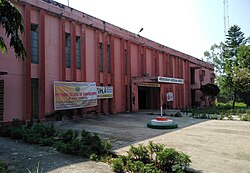
.jpg)
The topography of Motihari has been described as scenic, with the "stunning beauty" (in classical terms) of Moti Jheel Lake dividing the town in two halves.[7]
In Gangan Lit-Mag (Gangway Literary Magazine), Austria, wrote Anant Kumar: "The playgrounds of my childhood were the streets of Motihari. Back then that little East Indian town was not overpopulated, and the dry, clean streets of every part of town were ideal for our games: marbles, tops, badminton. And back then Motihari was a wide distance away from the big world. There were very many mango and lichee trees, fragrant lemon bushes, broad, large fields…and very few people. There were scattered decrepit hawelis and bungalows, in which frightening bhuts, geniis and juraels dwelled."[8]
The Gandhi Sangrahalaya has a wide collection of relics and photographs of the Champaran Satyagraha. The Gandhian Memorial Pillar was designed by Nand Lal Bose, a famous artist of Shantiniketan.[9] The foundation stone of the pillar was laid on 10 June 1972 by the then Governor, D. K. Barooch. It is a 48-foot (15 m) tall stone pillar and is situated at the same site where Mahatma Gandhi was presented in court.
"Kesariya Budhha Stup" World's tallest budhha stup is located in Kesariya, which makes maximum of tourism in Champaran.
Climate
Climate is characterised by high temperatures and evenly distributed precipitation throughout the year. The Köppen Climate Classification sub-type for this climate is "Cfa" (Humid Subtropical). The highest maximum temperature ever recorded in Motihari was 44.4°C on May 24th 1903, while the lowest minimum temperature ever recorded in Motihari was 0.0°C on February 3rd 1905.[10] The heaviest rainfall recorded in 24 hours in Motihari was 520.0mm on 25th August 2005.
| Climate data for Motihari | |||||||||||||
|---|---|---|---|---|---|---|---|---|---|---|---|---|---|
| Month | Jan | Feb | Mar | Apr | May | Jun | Jul | Aug | Sep | Oct | Nov | Dec | Year |
| Record high °C (°F) | 31.3 (88.3) |
35.6 (96.1) |
42.9 (109.2) |
42.2 (108.0) |
44.4 (111.9) |
43.3 (109.9) |
42.8 (109.0) |
37.2 (99.0) |
37.2 (99.0) |
38.4 (101.1) |
35.6 (96.1) |
29.1 (84.4) |
44.4 (111.9) |
| Average high °C (°F) | 22.4 (72.3) |
25.2 (77.4) |
31.0 (87.8) |
35.3 (95.5) |
35.7 (96.3) |
34.8 (94.6) |
32.4 (90.3) |
32.4 (90.3) |
32.2 (90.0) |
31.5 (88.7) |
28.7 (83.7) |
24.4 (75.9) |
30.5 (86.9) |
| Daily mean °C (°F) | 15.4 (59.7) |
17.8 (64.0) |
22.9 (73.2) |
27.4 (81.3) |
29.3 (84.7) |
29.9 (85.8) |
28.9 (84.0) |
28.9 (84.0) |
28.3 (82.9) |
26.1 (79.0) |
21.5 (70.7) |
17.1 (62.8) |
24.4 (75.9) |
| Average low °C (°F) | 8.4 (47.1) |
10.5 (50.9) |
14.8 (58.6) |
19.6 (67.3) |
23.0 (73.4) |
25.1 (77.2) |
25.4 (77.7) |
25.5 (77.9) |
24.5 (76.1) |
20.7 (69.3) |
14.4 (57.9) |
9.8 (49.6) |
18.5 (65.3) |
| Record low °C (°F) | 2.2 (36.0) |
0.0 (32.0) |
5.6 (42.1) |
8.3 (46.9) |
13.7 (56.7) |
15.4 (59.7) |
18.9 (66.0) |
19.9 (67.8) |
18.4 (65.1) |
11.4 (52.5) |
6.4 (43.5) |
1.7 (35.1) |
0.0 (32.0) |
| Average rainfall mm (inches) | 14.2 (0.56) |
12.1 (0.48) |
12.4 (0.49) |
13.1 (0.52) |
51.9 (2.04) |
215.0 (8.46) |
366.4 (14.43) |
289.6 (11.40) |
247.6 (9.75) |
50.8 (2.00) |
2.8 (0.11) |
2.0 (0.08) |
1,277.9 (50.31) |
| Average rainy days | 1.4 | 1.1 | 1.0 | 0.8 | 3.0 | 8.5 | 13.8 | 11.6 | 8.8 | 2.2 | 0.3 | 0.1 | 52.6 |
| Average relative humidity (%) (at 17:30 IST) | 69.0 | 58.0 | 49.0 | 46.0 | 52.0 | 68.0 | 80.0 | 80.0 | 79.0 | 73.0 | 71.0 | 70.0 | 66.0 |
| Source: Indian Meteorological Department | |||||||||||||
Demographics
As of 2011 Indian Census, Motihari had a total population of 126,158, of which 67,861 were males and 58,297 were females, with a sex ratio of 859. Population within the age group of 0 to 6 years was 16,870. The total number of literates in Motihari was 92,798, which constituted 73.6% of the population with male literacy of 76.2% and female literacy of 70.5%. The effective literacy rate of 7+ population of Motihari was 84.9%, of which male literacy rate was 88.1% and female literacy rate was 81.2%. The Scheduled Castes and Scheduled Tribes population was 7,373 and 333 respectively. Motihari had 22,224 households in 2011.[3]
As of 2001[update] India census, the population of Motihari in 2011 was 101,506, of which male and female were 54,629 and 46,877, respectively. The sex ratio of Motihari city is 858 per 1,000 males. Total literates in Motihari city are 69,576 of which 40,265 were males while 29,311 were females. The crude literacy rate of 68.5% and effective literacy (7+ population) per cent of 80.3%. The children aged 0–6 in Motihari city are 14,910, as per the Census India report, in 2001, with 7,811 males and 7,099 females. The child sex ratio of girls is 909 per 1,000 boys.[11]
Transport

Motihari is connected to different cities of India through railways and roadways. Bapudham Motihari railway station is the main railway station serving the city. Direct trains are available to New Delhi, Mumbai, Jammu, Kolkata, and Guwahati. Asian Highway 42, National Highway 28A and State Highway 54 passes through the city. The nearest airport is located in Darbhanga which is about 140 km (87 mi) from Motihari. There is another halt railway station named Motihari Court railway station.
Education

The city hosts a number of institutes and universities for higher education supported by both state and central governments.
- Motihari College of Engineering.
- Mahatma Gandhi Central University
- MS College (Munshi Singh College)
- Ayurvedic College
Notable people


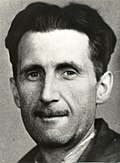
- George Orwell, author of Animal Farm and Nineteen Eighty-Four, was born in Motihari in 1903. His father, Richard Walmesley Blair, was a deputy posted in the opium department in Bihar. When he was one year old, George left for England with his mother and sister. The town of Motihari was largely unaware of its connection with Orwell. In 2003, Motihari discovered its role in Orwell's life when a number of journalists arrived in the town for Orwell's hundredth birthday. Local officials are making plans for the construction of a museum on Orwell's life. At the beginning of 2021, some miscreants had stolen and vandalized the bust of George Orwell, which was soon recovered and restored at its place by the administration. Towards the end of 2021, the house of George Orwell was repaired and renovated by the administration, and now it wears a fresh look in 2022. Bihar's art, culture and youth affairs department has made the author's house in Motihari, where he was born on June 25, 1903, a protected site. In 1904, his wife Ida Blair along with her children including an infant Eric Blair, who would later become a famous novelist by the name of George Orwell, moved to England never to return to India.[12][13][14][15] Built on an area of 2.48-acre, Orwell's home was inaugurated as a museum in May 2015.[16][17]
- Khan Bahadur Azizul Huq, one of the two Indian police officers who worked with Edward Henry in the development of fingerprint classification, known as the Henry Classification System, died in Motihari in 1933. "It was Khan Bahadur Azizul Huq who evolved a mathematical formula to supplement Henry's idea of sorting slips in 1024 pigeon holes, based on fingerprint patterns. Rai Bahadur Hem Chandra Bose made further contribution to the fingerprint science by evolving an extended system of sub classification, a telegraphic code for finger impression and a system of single-digit classification."[18]
- Both Haque and Bose eventually received honoraria and recognition from the Government of India. At the time of final approval of the honorarium for Haque, the Home Department (Government of India) noted, "It appears from the information now received that he (Haque) was Sir Edward Henry's principal helper in perfecting the scheme and he actually himself devised the method of classification which is in universal use. He thus contributed most materially to a discovery which is of worldwide importance and has brought a great credit to the police of India."[19] Upon retirement from the Police service in Bengal and Bihar, Khan Bahadur Azizul Huq settled in Motihari, and he is buried there.
- A.F. Salahuddin Ahmed, National Professor of Bangladesh, a grandson of Khan Bahadur Azizul Huq was born in Motihari in 1924. He was educated at Presidency University, Kolkata, University of Pennsylvania, and University of London, and taught at eminent universities in Bangladesh: Jagannath College, Rajshahi University, Jahangir Nagar University, Dhaka University, and Independent University, Bangladesh, and wrote many books and articles in professional journals and newspapers. In one of his books, Perspectives on History, Society and Politics, he argued that despite the political divisions that took place in South Asia in 1947, the people of this vast region belong to "one indivisible civilisation which is the product of over a thousand years of historical development" and that the destinies of the people inhabiting the subcontinent are closely interlinked. They must therefore learn to live together in peace, as this is essential for their development and progress.
- Ramesh Chandra Jha, a modern Hindi poet, author and freedom fighter belonged to Phulwariya village in Motihari.
- Thakur Ramapati Singh, a freedom fighter, MLA, Minister, and MP from Motihari.
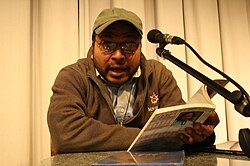
- Anant Kumar (born 1969 in Katihar/Bihar), a German author, translator and literary critic of Indian descent. He spent his childhood in Motihari where his father Rajendra Prasad was Professor of Psychology at Munshi Singh College. He resides in Kassel, Germany. Royal City Gotha (Free state Thueringia, Germany) honored Kumar as a Resident Writer in 2015.[20] Kumar worked 2016 as a fellow in the symposium for dramatic writing at Volturno, Italy.[21] University of Kassel has picked Kumar among prominent alumni on its diamond jubilee celebration 2021.[22]
- Anuranjan Jha, journalist, TV anchor and social worker.
- Ravish Kumar, TV anchor and journalist, NDTV Delhi.
- Radha Mohan Singh, Union Minister of Agriculture & Farmers Welfare.
- Sakibul Gani, first cricketer in the world to score a Triple century on his First class debut.
Connection with Gandhi
Motihari, at that time simply called Champaran, was close to Mahatma Gandhi. He came to Motihari in 1917[23] with Raj Kumar Shukla to start the Satyagraha movement in Champaran, known as Champaran Satyagraha, which concerned the exploitations of farmers.[24][25] Gandhi with his supporters held a big campaign in Champaran.[26] His frequent visits to Champaran and its local areas showed the Gandhi's connection with land. He also understood the cultural and social backwardness of the area, he acted immediately by creating schools and ashrams.[27]
The city has been synonymed after him. Many attractions in Motihari relate to him. The railway station has been named Bapudham Motihari railway station (Bapudham means "land of Bapu").
References
- ↑ "Motihari Municipal Corporation". eastchamparan.nic.in. Retrieved 31 December 2020.
- ↑ "Motihari Election Result 2020 Live Updates: Pramod Kumar of BJP Wins". News18. 10 November 2020. Retrieved 2 January 2021.
- ↑ 3.0 3.1 "Census of India: Motihari". www.censusindia.gov.in. Retrieved 20 December 2019.
- ↑ 4.0 4.1 "52nd Report of the Commissioner for Linguistic Minorities in India" (PDF). nclm.nic.in. Ministry of Minority Affairs. Archived from the original (PDF) on 25 May 2017. Retrieved 23 March 2019.
- ↑ "Bhojpuri". Ethnologue. Retrieved 8 September 2020.
- ↑ "Google Maps". Google Maps. Retrieved 25 January 2020.
- ↑ Mandal, R. B. (2010). Wetlands Management in North Bihar. ISBN 9788180697074.
- ↑ http://www.gangan.com/lit-mag/36/index.shtml Archived 12 December 2016 at the Wayback Machine
- ↑ PTI (1 October 2019). "Champaran: Where mall meets Mahatma but there's reverence and remembrance too". Business Standard India. Retrieved 7 January 2020.
- ↑ "Climate of Bihar.pdf" (PDF).
- ↑ "Census of India 2001: Data from the 2001 Census, including cities, villages and towns (Provisional)". Census Commission of India. Archived from the original on 16 June 2004. Retrieved 1 November 2008.
- ↑ "'1984' Author George Orwell's Bust Vandalised At His Birthplace Motihari In Bihar". indiatimes.com. 14 January 2021.
- ↑ Bhattacharyya, Debashis (14 November 2004). "All's not well with Orwell". The Telegraph. Calcutta, India. Retrieved 27 February 2021.
- ↑ Tewary, Amarnath (1 August 2005). "Makeover for Orwell's India home". BBC News. Motihari, Bihar. Retrieved 27 February 2021.
- ↑ "Big Brother can't be bothered". The Times of India. Archived from the original on 12 October 2013. Retrieved 27 February 2021.
- ↑ Haleem, Suhail (12 August 2014). "The Indian Animal Farm where Orwell was born". BBC. Retrieved 12 August 2014.
- ↑ Jha, Giridhar (17 May 2015). "George Orwell's house in Bihar turned into museum". India Today. Retrieved 27 February 2021.
- ↑ Tewari, R. K.; Ravikumar, K. V. (1 October 2000). "History and development of forensic science in India". Journal of Postgraduate Medicine. 46 (4): 303–8. PMID 11435664. Retrieved 20 December 2019 – via www.jpgmonline.com.
- ↑ Sodhi, GS, & Kaur, JK: The forgotten Indian pioneers of fingerprint science
- ↑ "Kurd-Laßwitz-Stipendium". www.gotha.de. Retrieved 20 December 2019.
- ↑ "Summer School Südtirol 2016 Für Dramatisches Und Essayistisches Schreiben — Thema: Unsere Utopien | Nids | Neues Institut für dramatisches Schreiben". Retrieved 20 December 2019.
- ↑ "Die Universität Kassel im Wandel der Zeit. Zeitzeugengespräche mit Alumni – Podiumsdiskussion" (PDF). Retrieved 17 November 2021.
- ↑ "Champaran Satyagraha | The Story of Gandhi | Students' Projects". www.mkgandhi.org. Retrieved 15 July 2021.
- ↑ "Gandhi's Satyagraha in Champaran". INDIAN CULTURE. Retrieved 15 July 2021.
- ↑ "Champaran Satyagraha- India's First Civil Disobedience Movement". Jagranjosh.com. 1 December 2020. Retrieved 15 July 2021.
- ↑ Lal, Vinay (3 October 2018). "Gandhi and the printed image". The Hindu. ISSN 0971-751X. Retrieved 15 July 2021.
- ↑ Fischer, Louis. The life of Mahatma Gandhi. ISBN 978-1-78470-040-9. OCLC 921185512.
External links
{{URL|example.com|optional display text}}- Official Website of Tirhut Division