



m robot: Update article (please report if you notice any mistake or error in this edit) |
m minor edit |
||
| Line 1: | Line 1: | ||
{{Short description|Scientific research institute in Bengaluru, India}} | |||
{{more footnotes needed|date=February 2013}} | |||
{{Use dmy dates|date=September 2018}} | {{Use dmy dates|date=September 2018}} | ||
{{Use Indian English|date=September 2018}} | {{Use Indian English|date=September 2018}} | ||
{{Infobox university | {{Infobox university | ||
|name = Raman Research Institute | |name = Raman Research Institute | ||
| Line 7: | Line 8: | ||
| image_size = 120px | | image_size = 120px | ||
| caption = | | caption = | ||
|established = 1948 | |established = {{start date and age|1948}} | ||
|type = [[Research]] [[Institution]] | |type = [[Research]] [[Institution]] | ||
|director = Tarun Souradeep<ref>{{cite web |url=https://www.rri.res.in/people.html |website= | |director = Tarun Souradeep<ref>{{cite web |url=https://www.rri.res.in/people.html |archive-date=Nov 3, 2021 |archive-url=https://web.archive.org/web/20211103204905/https://www.rri.res.in/people.html |website=www.rri.res.in |language=en |access-date=14 August 2023 |title=People}}</ref> | ||
|city = [[ | |city = [[Bengaluru]] | ||
|state = [[Karnataka]] | |state = [[Karnataka]] | ||
|country = [[India]] | |country = [[India]] | ||
| Line 22: | Line 23: | ||
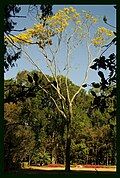
[[File:Raman Tree.jpg|thumb|right|Raman Tree]] | [[File:Raman Tree.jpg|thumb|right|Raman Tree]] | ||
'''Raman Research Institute''' ('''RRI''') is an institute | The '''Raman Research Institute''' ('''RRI''') is an institute for scientific research located in [[Bangalore|Bengaluru]], [[India]]. It was founded by [[Nobel Prize|Nobel]] laureate Sir [[C. V. Raman]] in 1948. Although it began as an institute privately owned by C. V. Raman, it became an autonomous institute in 1972, receiving funds from the [[Department of Science and Technology (India)|Department of Science and Technology]] of the Government of India.<ref>{{Cite news|url=https://www.deccanchronicle.com/lifestyle/viral-and-trending/280217/no-raman-effect-how-his-dream-died-a-quiet-death.html|title=No Raman effect: How his dream died a quiet death|last=Srikanth|first=B. R.|date=28 February 2017|newspaper=Deccan Chronicle|access-date=1 September 2018}}</ref> | ||
==History== | |||
[[File:Raman Research Institute 2023 stamp of India.jpg|thumb|2023 Indian stamp, featuring C. V. Raman and dedicated to the 75th anniversary of the institute]] | |||
Before Raman considered founding a research institute, he had approached the former Maharaja of [[Kingdom of Mysore|Mysore]] seeking land to build office and conference premises for the Indian Academy of Sciences (IAS). The Maharaja acceded to Raman's request and a {{convert|10|acre|m2|adj=on}} plot of land in the [[Malleshwaram]] suburb of Bengaluru was allotted to the [[Indian Academy of Sciences]] in 1934. However, the academy (then headed by Raman) made no use of the land for seven years. According to the terms of the deal with the Maharaja, the land could be to another use by the government of Mysore if it still remained unused at the end of 1941. | |||
Raman, as President of the IAS, held an extraordinary meeting of the academy in 1941, and proposed that a research institute (to be named after himself) be built on the land. The proposal was approved and a foundational stone was laid on the ground, signifying that the land was now in use. However, it was not until 1948 that the institute was opened. Raman had planned the institute much before he retired as the head of the Physics Department of the Indian Institute of Science. His idea had been to move directly to his newly founded institute when he retired from IISc. This happened in 1948 - Thus, the Raman Research Institute began under the umbrella of the Indian Academy of Sciences, and both under Raman's leadership.<ref>{{Cite web|url=http://www.dst.gov.in/autonomousstinstitutions/raman-research-institute-bangalore|title=Raman Research Institute, Bangalore|website=www.dst.gov.in}}</ref> | |||
Raman had an apparent hatred for writing project reports or having to give periodic status reports to project funders. For this reason, Raman refused to accept any funds from the Indian government and other sources. "He was of the firm belief that science could not be done that way,” said Prof. [[N. V. Madhusudana|N. V Madhusudana]], Dean of Research at the RRI and a liquid crystal scientist. As a Nobel Laureate, Raman enjoyed significant respect in Indian public life and was able to raise funds for the institute through private donations and fund-raisers without state involvement. Unashamed of his fundraising, Raman declared: "Our greatest men were beggars—the Buddha, Sankara and Mahatma Gandhi." Raman also found the scrutiny the Government was taking in funding scientific research in the 1950s and 1960s insufficient.<ref>{{Cite book |last=Venkataraman |first=G. |title=Raman and his effect |date=1995 |publisher=Universities Press |isbn=81-7371-008-2 |location=Hyderabad, India |chapter=The Final Years |oclc=36886428}}</ref> | |||
"Till Raman's death, this was his private research institute. He had a very small group of research students working with him and very few administrative staff”, said Prof. Madhusudana.{{Citation needed|date=April 2023}} | |||
Raman was clear that after his death, | Raman was clear that after his death, the Presidency of the IAS and Director of the RRI could pass to different individuals. Equally the Raman Research Institute should not remain subordinate to the Indian Academy of Sciences but enjoy autonomy and a distinct statutory identity of its own. Just before his death, Raman established a framework for the running of the institute, separating it completely from the Indian Academy of Sciences and giving it statutory autonomy. The Institute adopted the change immediately after Raman's death in 1971 with the consent of the government, and stepped into a new era as a statutory body, functioning since 1972 on annual grants received from the [[Department of Science and Technology (India)|Department of Science and Technology (DST)]], Government of India.<ref>{{Cite web|url=https://www.indiatoday.in/education-today/notification/story/raman-research-institute-304507-2016-01-19|title=Raman Research Institute opens admission for PhD programme : Notification|website=indiatoday.intoday.in|access-date=2017-10-30|archive-date=21 March 2016|archive-url=https://web.archive.org/web/20160321233541/http://indiatoday.intoday.in/education/story/raman-research-institute/1/574117.html|url-status=live}}</ref> | ||
[[File:Raman Research Institute front view, Bengaluru, India (2014).jpg|thumbnail|Raman Research Institute]] | |||
==Achievements== | ==Achievements== | ||
Despite | Despite budgetary and infrastructural constraints, scientists working under Raman carried out some ground-breaking work. For instance, [[S. Pancharatnam]], who joined the institute in 1954, discovered a fundamental quantum optic effect. This work, according to Jayaraman, was "the most outstanding original piece of research that came out of RRI at that time." | ||
This discovery proved for the first time that geometric phase exists in optics. But this work was not known to the world | This discovery proved for the first time that geometric phase exists in optics. But this work was not known to the world until similar discovery was made by scientists elsewhere about two decades later. Subsequently, RRI could convincingly prove that Pancharatnam discovered this long ago and today "this phase is called Pancharatnam Phase world over," said Madhusudana. Pancharatnam unfortunately did not live long enough to see this and his career was cut short when he died in 1969 while in Oxford. | ||
===Collections=== | ===Collections=== | ||
The institute also houses Raman's prized collection of gems, crystals, minerals, and rock specimens from all over the world. Raman, who was fascinated by the colours of the biological kingdom, also had a | The institute also houses Raman's prized collection of gems, crystals, minerals, and rock specimens from all over the world. Raman, who was fascinated by the colours of the biological kingdom, also had a wide collection of stuffed birds, beetles, and butterflies in the museum. Raman is reputed to have taken much pride in showing his precious collections to visitors to the institute. During Raman's time, many celebrated scientists from other countries paid a visit to the institute. Among them were: [[J. D. Bernal]], E. C. Bullard, [[Patrick Blackett]], [[Charles Galton Darwin]], [[Paul Dirac]], [[George Gamow|G. Gamow]], [[J. B. S. Haldane]], [[Linus Pauling]], [[C. F. Powell]], L. Rosenfeld, G. Wentzel and [[Norbert Wiener]]. | ||
The main areas of research are: | ==Research areas == | ||
The main areas of research are:<ref>{{Cite web|url=https://www.researchgate.net/institution/Raman_Research_Institute|title=Raman_Research_Institute}}</ref><ref>{{Cite news|url=http://www.firstpost.com/tech/news-analysis/isro-and-raman-research-institute-to-develop-quantum-technologies-for-isros-satellites-4178401.html|title=SRO and Raman Research Institute to develop quantum technologies for ISRO's satellites}}</ref> | |||
*[[Astronomy]] and [[Astrophysics]] | *[[Astronomy]] and [[Astrophysics]] | ||
*[[Theoretical Physics]] | *[[Theoretical Physics]] | ||
*[[Light and Matter Physics]] | *[[Light and Matter Physics]] | ||
*[[Soft Condensed Matter Physics]] | *[[Condensed matter physics|Soft Condensed Matter Physics]] | ||
==Soft | ===Soft condensed matter=== | ||
==== Liquid crystals ==== | |||
One of the current research priority areas of the institute is liquid crystals.<ref>{{Cite web|url=https://www.researchgate.net/institution/Raman_Research_Institute|title=Raman_Research_Institute}}</ref> This has been an active area of research at the Raman Research Institute for nearly three decades. The research programme covers a broad spectrum of activities ranging from the synthesis of new liquid crystalline materials to display electronics. Discoveries of the columnar phase formed by disc-like molecules and pressure induced mesomorphism are two of the early significant contributions made by the liquid crystal group. "Out of 36 liquid crystal materials discovered in the world, three were from this institute," Prof. Madhusudana has stated. Among them were two new liquid crystalline phases, namely the undulating twist grain boundary C phase and the biaxial smectic A phase. | |||
Techniques developed for driving passive matrix liquid crystal displays at the institute are now being widely used. In recent years the liquid crystal group has been working on electrochemical aspects of surface science and on other soft materials like surfactants, polymers, and on the physics of biological systems. | |||
===Astronomy and Astrophysics=== | |||
Astronomy and astrophysics have been another strong area of research for the RRI.<ref>{{Cite web|url=https://www.researchgate.net/institution/Raman_Research_Institute|title=Raman_Research_Institute}}</ref> According to Prof. Madhusudana, this department has the highest number of faculty and research students of the institute. In the first two decades of the twenty-first century, it has been carrying out observational programmes in radio astronomy, covering almost the entire radio spectrum. Besides having a millimetrewave telescope of 10.4 metre diameter on the campus, the RRI has set up the [[Gauribidanur Radio Observatory]], a decametrewave Radio telescope at Gauribidanur, about 80 kilometres from Bengaluru. This has been done jointly with the [[Indian Institute of Astrophysics]] (IIA), Bengaluru. This is one of the few largest telescopes that operate at the wavelength of 10 metre and is being used by RRI scientists to study radio emission from various types of celestial objects such as the sun, Jupiter and similar radio sources in Milky Way and other galaxies. | |||
Other radio telescopes being used by RRI scientists are the [[Ooty Radio Telescope]], at Ooty, and [[Giant Metrewave Radio Telescope]] (GMRT), near Pune, both set up by the [[Tata Institute of Fundamental Research]] (TIFR). RRI also played an active role in building the [[Mauritius Radio Telescope]], a low-frequency radio telescope in Mauritius jointly with the [[University of Mauritius]] and IIA. | |||
The major astronomical investigations pursued at the Institute can be broadly classified into the following categories: (i) [[Neutron star|Neutron Stars]] and [[Pulsar]]s; (ii) cosmology; (iii) Diffuse matter in space; and (iv) Radio Sky Surveys. | |||
===Theoretical physics=== | |||
{{Off topic|date=November 2022}} | |||
Activity in theoretical physics at the institute has focused on relativity and gravity, [[Quantum mechanics|quantum theory]], and optics.<ref>{{Cite web|url=https://www.researchgate.net/institution/Raman_Research_Institute|title=Raman_Research_Institute}}</ref> The current activity in gravitation concentrates on two themes, [[Gravitational wave|gravitational radiation]] and [[quantum gravity]]. Gravitation is known to be the weakest of all known forces of nature, but it dominates all structure and motion on the astronomical scale because of its attractive universality, its long range and the fact that matter on the large scale is essentially neutral. The correct theory of gravitation is now believed to be [[Albert Einstein|Einstein]]'s [[General Theory of Relativity]]. One of the fundamental predictions of General Theory of Relativity is that of gravitational waves — waves of distortion of spacetime itself - propagating at a finite speed of light. This replaces the Newtonian gravitations forces which was instantaneous. Such waves are expected to be emitted when, for example, two massive inspiralling stars tend to coalesce under their mutual gravitations attraction. Accurate calculation of this gravitational radiation — its waveform — has been one of the major research areas of the theoretical physics group at the institute. Their work is expected to be a crucial input towards its eventual detection. | |||
Another major activity of the theoretical physics group has been in studying the propagation of light waves in certain types of liquid crystals and minerals and their associated polarization phenomenon. The RRI has been a pioneer in this field of study, initiated by one of Raman's research students, Pancharatnam. | |||
== | ==== Quantum Information and Computing (QuIC) laboratory ==== | ||
During June 2020, QuIC was successful in developing the toolkit and ran a simulation that helps in safe [[quantum key distribution]] between devices. In February 2021, a team of researchers under the guidance of Prof. [[Urbasi Sinha]] in collaboration with Prof. Barry Sanders from the [[University of Calgary]] demonstrated the distribution of quantum key using free space between two buildings at a distance of 50 meters that used [[quantum entanglement]] based quantum-key distribution technique. It is part of the [[Quantum Experiments using Satellite Technology]] (QuEST) project supported by [[Indian Space Research Organisation|Indian Space Research Organization]] (ISRO). This work is part of the [[National Quantum Mission India|National Mission on Quantum Technologies and Applications]].<ref>{{cite web |title=Budget 2020 announces Rs 8000 cr National Mission on Quantum Technologies & Applications |url=https://dst.gov.in/budget-2020-announces-rs-8000-cr-national-mission-quantum-technologies-applications |website=Ministry of Science and Technology |publisher=DST |access-date=22 March 2021}}</ref><ref>{{Cite news|agency=PTI|date=2020-02-01|title=Budget 2020 {{!}} ₹8,000 crore outlay for national mission on quantum technology|language=en-IN|work=The Hindu|url=https://www.thehindu.com/business/budget/government-announces-8000-crore-outlay-for-national-mission-on-quantum-technology/article30711182.ece|access-date=2021-03-22|issn=0971-751X}}</ref> One of the objectives is to develop secure encrypted communication that are harder to break even with ongoing advances in [[computing technology]]. Prof. Urbasi Sinha and her team at RRI have been working on [[Quantum cryptography]] since 2017.<ref>{{Cite web|last=Goled|first=Shraddha|date=2021-02-24|title=Raman Research Institute Achieves Breakthrough In Quantum Communication|url=https://analyticsindiamag.com/raman-research-institute-achieves-breakthrough-in-quantum-communication/|access-date=2021-03-22|website=Analytics India Magazine|language=en-US}}</ref><ref>{{Cite web|title=RRI comes up with simulation toolkit to ensure safety in secure quantum communication platforms|url=http://pib.gov.in/Pressreleaseshare.aspx?PRID=1635294|access-date=2021-03-22|website=Press Trust of India}}</ref><ref>{{Cite web|last=Kadidal|first=Akhil|date=2021-02-23|title=Bengaluru scientists make quantum technology breakthrough|url=https://www.deccanherald.com/science-and-environment/bengaluru-scientists-make-quantum-technology-breakthrough-954329.html|access-date=2021-03-22|website=Deccan Herald|language=en}}</ref> | |||
==Research facilities== | |||
To support its wide-ranging research activities in astronomy, physics, and materials science, RRI maintains several specialized research facilities that provide both technical and infrastructural support to its scientific programs. | |||
===Electronics Engineering Group (EEG)=== | |||
The Electronics Engineering Group of RRI is particularly involved in the design, development, and construction of sophisticated instrumentation for experimental astronomy and physics. In close collaboration with the Astronomy & Astrophysics group and other research groups, EEG is dedicated to three principal lines of activity: millimeter-wave and RF system development, digital circuit design and signal processing, and X-ray astronomy instrumentation. In the first domain, the team creates high-performance feeds, receivers, broad-band antennas, and low-noise amplifiers, and test facilities cover wavelengths from decameters up to millimeters. The digital electronics team constructs general-purpose digital receivers, spectrometers, correlators, and FPGA-based signal processing systems, many of which are used overseas. Recently, EEG has diversified into X-ray astronomy instrumentation, working on the development of detectors, proportional counters, and X-ray polarization measurement systems with the backing of clean room facilities and special testing tools. EEG also participates actively in national and international scientific institutions.<ref>{{cite web |url=https://www.rri.res.in/facilities/electronics-engineering-services | |||
|title=Electronics Engineering Group |publisher=Raman Research Institute |access-date=21 September 2025}}</ref> | |||
== | ===Library=== | ||
RRI's library, originally founded by Sir C. V. Raman, has grown alongside the institute's research activities. Its collections are particularly strong in astronomy, astrophysics, theoretical physics, optics, and liquid crystals, while also covering computer science, electronics, scientific biographies, and general science. In addition to books, the library holds CDs, DVDs, and full-text access to over 4,000 online journals through the National Knowledge Resource Consortium. Services encompass circulation, interlibrary loans, reprography, literature search support, and daily reports on scientific advancements. The library is also computerized with KOHA software, allowing OPAC facility for internal and external users, and keeps the institute's academic output digitally through DSpace. It is extensively utilized by RRI researchers as well as researchers in other prominent institutes across India.<ref>{{cite web |url=https://www.rri.res.in/facilities/library | |||
|title=Library |publisher=Raman Research Institute |access-date=21 September 2025}}</ref> | |||
=== | ===Mechanical Engineering Services (MES)=== | ||
MES gives accurate mechanical support to the institute's research laboratories, such as the Radio Astronomy Lab, Light and Matter Physics Group, Soft Condensed Matter Group, and X-ray Lab. Its Engineering Workshop also produces intricate mechanical components for instruments like millimeter-wave and radio telescope antennas, X-ray polarimeters, and custom mounts for laboratory experiments. Some of the key works include the fabrication of the 10.4-m millimeter-wave telescope, the 12-m preloaded parabolic antenna, and Mauritius Radio Telescope and GMRT antenna systems. The Sheet Metal Fabrication Workshop is responsible for enclosures, system racks, and structural parts for electronic instrumentation such as multi-band feeds and experimental setup. MES integrates sophisticated machinery, clean environments, and experienced personnel to provide high-precision, tailor-made mechanical solutions that enable both astronomy and physics research at RRI.<ref>{{cite web |url=https://www.rri.res.in/facilities/mechanical-engineering-services | |||
|title=Mechanical Engineering Services |publisher=Raman Research Institute |access-date=21 September 2025}}</ref> | |||
==References== | ==References== | ||
| Line 89: | Line 102: | ||
[[Category:Research institutes established in 1948]] | [[Category:Research institutes established in 1948]] | ||
[[Category:Research institutes in | [[Category:Research institutes in Bengaluru]] | ||
[[Category:Physics institutes]] | [[Category:Physics research institutes]] | ||
[[Category:1948 establishments in India]] | [[Category:1948 establishments in India]] | ||
Latest revision as of 18:27, 17 March 2026
 | This article includes a list of general references, but it remains largely unverified because it lacks sufficient corresponding inline citations. (February 2013) |
 | |
| Type | Research Institution |
|---|---|
| Established | 1948 |
| Affiliation | Jawaharlal Nehru University |
| Director | Tarun Souradeep[1] |
| Students | 90 |
| Location | , , 13°0′46.51″N 77°34′51.78″E / 13.0129194°N 77.5810500°E |
| Campus | Urban |
| Website | www.rri.res.in |

The Raman Research Institute (RRI) is an institute for scientific research located in Bengaluru, India. It was founded by Nobel laureate Sir C. V. Raman in 1948. Although it began as an institute privately owned by C. V. Raman, it became an autonomous institute in 1972, receiving funds from the Department of Science and Technology of the Government of India.[2]
History[edit | edit source]

Before Raman considered founding a research institute, he had approached the former Maharaja of Mysore seeking land to build office and conference premises for the Indian Academy of Sciences (IAS). The Maharaja acceded to Raman's request and a 10-acre (40,000 m2) plot of land in the Malleshwaram suburb of Bengaluru was allotted to the Indian Academy of Sciences in 1934. However, the academy (then headed by Raman) made no use of the land for seven years. According to the terms of the deal with the Maharaja, the land could be to another use by the government of Mysore if it still remained unused at the end of 1941.
Raman, as President of the IAS, held an extraordinary meeting of the academy in 1941, and proposed that a research institute (to be named after himself) be built on the land. The proposal was approved and a foundational stone was laid on the ground, signifying that the land was now in use. However, it was not until 1948 that the institute was opened. Raman had planned the institute much before he retired as the head of the Physics Department of the Indian Institute of Science. His idea had been to move directly to his newly founded institute when he retired from IISc. This happened in 1948 - Thus, the Raman Research Institute began under the umbrella of the Indian Academy of Sciences, and both under Raman's leadership.[3]
Raman had an apparent hatred for writing project reports or having to give periodic status reports to project funders. For this reason, Raman refused to accept any funds from the Indian government and other sources. "He was of the firm belief that science could not be done that way,” said Prof. N. V Madhusudana, Dean of Research at the RRI and a liquid crystal scientist. As a Nobel Laureate, Raman enjoyed significant respect in Indian public life and was able to raise funds for the institute through private donations and fund-raisers without state involvement. Unashamed of his fundraising, Raman declared: "Our greatest men were beggars—the Buddha, Sankara and Mahatma Gandhi." Raman also found the scrutiny the Government was taking in funding scientific research in the 1950s and 1960s insufficient.[4]
"Till Raman's death, this was his private research institute. He had a very small group of research students working with him and very few administrative staff”, said Prof. Madhusudana.[citation needed]
Raman was clear that after his death, the Presidency of the IAS and Director of the RRI could pass to different individuals. Equally the Raman Research Institute should not remain subordinate to the Indian Academy of Sciences but enjoy autonomy and a distinct statutory identity of its own. Just before his death, Raman established a framework for the running of the institute, separating it completely from the Indian Academy of Sciences and giving it statutory autonomy. The Institute adopted the change immediately after Raman's death in 1971 with the consent of the government, and stepped into a new era as a statutory body, functioning since 1972 on annual grants received from the Department of Science and Technology (DST), Government of India.[5]
.jpg)
Achievements[edit | edit source]
Despite budgetary and infrastructural constraints, scientists working under Raman carried out some ground-breaking work. For instance, S. Pancharatnam, who joined the institute in 1954, discovered a fundamental quantum optic effect. This work, according to Jayaraman, was "the most outstanding original piece of research that came out of RRI at that time."
This discovery proved for the first time that geometric phase exists in optics. But this work was not known to the world until similar discovery was made by scientists elsewhere about two decades later. Subsequently, RRI could convincingly prove that Pancharatnam discovered this long ago and today "this phase is called Pancharatnam Phase world over," said Madhusudana. Pancharatnam unfortunately did not live long enough to see this and his career was cut short when he died in 1969 while in Oxford.
Collections[edit | edit source]
The institute also houses Raman's prized collection of gems, crystals, minerals, and rock specimens from all over the world. Raman, who was fascinated by the colours of the biological kingdom, also had a wide collection of stuffed birds, beetles, and butterflies in the museum. Raman is reputed to have taken much pride in showing his precious collections to visitors to the institute. During Raman's time, many celebrated scientists from other countries paid a visit to the institute. Among them were: J. D. Bernal, E. C. Bullard, Patrick Blackett, Charles Galton Darwin, Paul Dirac, G. Gamow, J. B. S. Haldane, Linus Pauling, C. F. Powell, L. Rosenfeld, G. Wentzel and Norbert Wiener.
Research areas[edit | edit source]
The main areas of research are:[6][7]
- Astronomy and Astrophysics
- Theoretical Physics
- Light and Matter Physics
- Soft Condensed Matter Physics
Soft condensed matter[edit | edit source]
Liquid crystals[edit | edit source]
One of the current research priority areas of the institute is liquid crystals.[8] This has been an active area of research at the Raman Research Institute for nearly three decades. The research programme covers a broad spectrum of activities ranging from the synthesis of new liquid crystalline materials to display electronics. Discoveries of the columnar phase formed by disc-like molecules and pressure induced mesomorphism are two of the early significant contributions made by the liquid crystal group. "Out of 36 liquid crystal materials discovered in the world, three were from this institute," Prof. Madhusudana has stated. Among them were two new liquid crystalline phases, namely the undulating twist grain boundary C phase and the biaxial smectic A phase.
Techniques developed for driving passive matrix liquid crystal displays at the institute are now being widely used. In recent years the liquid crystal group has been working on electrochemical aspects of surface science and on other soft materials like surfactants, polymers, and on the physics of biological systems.
Astronomy and Astrophysics[edit | edit source]
Astronomy and astrophysics have been another strong area of research for the RRI.[9] According to Prof. Madhusudana, this department has the highest number of faculty and research students of the institute. In the first two decades of the twenty-first century, it has been carrying out observational programmes in radio astronomy, covering almost the entire radio spectrum. Besides having a millimetrewave telescope of 10.4 metre diameter on the campus, the RRI has set up the Gauribidanur Radio Observatory, a decametrewave Radio telescope at Gauribidanur, about 80 kilometres from Bengaluru. This has been done jointly with the Indian Institute of Astrophysics (IIA), Bengaluru. This is one of the few largest telescopes that operate at the wavelength of 10 metre and is being used by RRI scientists to study radio emission from various types of celestial objects such as the sun, Jupiter and similar radio sources in Milky Way and other galaxies.
Other radio telescopes being used by RRI scientists are the Ooty Radio Telescope, at Ooty, and Giant Metrewave Radio Telescope (GMRT), near Pune, both set up by the Tata Institute of Fundamental Research (TIFR). RRI also played an active role in building the Mauritius Radio Telescope, a low-frequency radio telescope in Mauritius jointly with the University of Mauritius and IIA.
The major astronomical investigations pursued at the Institute can be broadly classified into the following categories: (i) Neutron Stars and Pulsars; (ii) cosmology; (iii) Diffuse matter in space; and (iv) Radio Sky Surveys.
Theoretical physics[edit | edit source]
Template:Off topic Activity in theoretical physics at the institute has focused on relativity and gravity, quantum theory, and optics.[10] The current activity in gravitation concentrates on two themes, gravitational radiation and quantum gravity. Gravitation is known to be the weakest of all known forces of nature, but it dominates all structure and motion on the astronomical scale because of its attractive universality, its long range and the fact that matter on the large scale is essentially neutral. The correct theory of gravitation is now believed to be Einstein's General Theory of Relativity. One of the fundamental predictions of General Theory of Relativity is that of gravitational waves — waves of distortion of spacetime itself - propagating at a finite speed of light. This replaces the Newtonian gravitations forces which was instantaneous. Such waves are expected to be emitted when, for example, two massive inspiralling stars tend to coalesce under their mutual gravitations attraction. Accurate calculation of this gravitational radiation — its waveform — has been one of the major research areas of the theoretical physics group at the institute. Their work is expected to be a crucial input towards its eventual detection.
Another major activity of the theoretical physics group has been in studying the propagation of light waves in certain types of liquid crystals and minerals and their associated polarization phenomenon. The RRI has been a pioneer in this field of study, initiated by one of Raman's research students, Pancharatnam.
Quantum Information and Computing (QuIC) laboratory[edit | edit source]
During June 2020, QuIC was successful in developing the toolkit and ran a simulation that helps in safe quantum key distribution between devices. In February 2021, a team of researchers under the guidance of Prof. Urbasi Sinha in collaboration with Prof. Barry Sanders from the University of Calgary demonstrated the distribution of quantum key using free space between two buildings at a distance of 50 meters that used quantum entanglement based quantum-key distribution technique. It is part of the Quantum Experiments using Satellite Technology (QuEST) project supported by Indian Space Research Organization (ISRO). This work is part of the National Mission on Quantum Technologies and Applications.[11][12] One of the objectives is to develop secure encrypted communication that are harder to break even with ongoing advances in computing technology. Prof. Urbasi Sinha and her team at RRI have been working on Quantum cryptography since 2017.[13][14][15]
Research facilities[edit | edit source]
To support its wide-ranging research activities in astronomy, physics, and materials science, RRI maintains several specialized research facilities that provide both technical and infrastructural support to its scientific programs.
Electronics Engineering Group (EEG)[edit | edit source]
The Electronics Engineering Group of RRI is particularly involved in the design, development, and construction of sophisticated instrumentation for experimental astronomy and physics. In close collaboration with the Astronomy & Astrophysics group and other research groups, EEG is dedicated to three principal lines of activity: millimeter-wave and RF system development, digital circuit design and signal processing, and X-ray astronomy instrumentation. In the first domain, the team creates high-performance feeds, receivers, broad-band antennas, and low-noise amplifiers, and test facilities cover wavelengths from decameters up to millimeters. The digital electronics team constructs general-purpose digital receivers, spectrometers, correlators, and FPGA-based signal processing systems, many of which are used overseas. Recently, EEG has diversified into X-ray astronomy instrumentation, working on the development of detectors, proportional counters, and X-ray polarization measurement systems with the backing of clean room facilities and special testing tools. EEG also participates actively in national and international scientific institutions.[16]
Library[edit | edit source]
RRI's library, originally founded by Sir C. V. Raman, has grown alongside the institute's research activities. Its collections are particularly strong in astronomy, astrophysics, theoretical physics, optics, and liquid crystals, while also covering computer science, electronics, scientific biographies, and general science. In addition to books, the library holds CDs, DVDs, and full-text access to over 4,000 online journals through the National Knowledge Resource Consortium. Services encompass circulation, interlibrary loans, reprography, literature search support, and daily reports on scientific advancements. The library is also computerized with KOHA software, allowing OPAC facility for internal and external users, and keeps the institute's academic output digitally through DSpace. It is extensively utilized by RRI researchers as well as researchers in other prominent institutes across India.[17]
Mechanical Engineering Services (MES)[edit | edit source]
MES gives accurate mechanical support to the institute's research laboratories, such as the Radio Astronomy Lab, Light and Matter Physics Group, Soft Condensed Matter Group, and X-ray Lab. Its Engineering Workshop also produces intricate mechanical components for instruments like millimeter-wave and radio telescope antennas, X-ray polarimeters, and custom mounts for laboratory experiments. Some of the key works include the fabrication of the 10.4-m millimeter-wave telescope, the 12-m preloaded parabolic antenna, and Mauritius Radio Telescope and GMRT antenna systems. The Sheet Metal Fabrication Workshop is responsible for enclosures, system racks, and structural parts for electronic instrumentation such as multi-band feeds and experimental setup. MES integrates sophisticated machinery, clean environments, and experienced personnel to provide high-precision, tailor-made mechanical solutions that enable both astronomy and physics research at RRI.[18]
References[edit | edit source]
- ↑ "People". www.rri.res.in. Archived from the original on 3 November 2021. Retrieved 14 August 2023.
- ↑ Srikanth, B. R. (28 February 2017). "No Raman effect: How his dream died a quiet death". Deccan Chronicle. Retrieved 1 September 2018.
- ↑ "Raman Research Institute, Bangalore". www.dst.gov.in.
- ↑ Venkataraman, G. (1995). "The Final Years". Raman and his effect. Hyderabad, India: Universities Press. ISBN 81-7371-008-2. OCLC 36886428.
- ↑ "Raman Research Institute opens admission for PhD programme : Notification". indiatoday.intoday.in. Archived from the original on 21 March 2016. Retrieved 30 October 2017.
- ↑ "Raman_Research_Institute".
- ↑ "SRO and Raman Research Institute to develop quantum technologies for ISRO's satellites".
- ↑ "Raman_Research_Institute".
- ↑ "Raman_Research_Institute".
- ↑ "Raman_Research_Institute".
- ↑ "Budget 2020 announces Rs 8000 cr National Mission on Quantum Technologies & Applications". Ministry of Science and Technology. DST. Retrieved 22 March 2021.
- ↑ "Budget 2020 | ₹8,000 crore outlay for national mission on quantum technology". The Hindu. PTI. 1 February 2020. ISSN 0971-751X. Retrieved 22 March 2021.
- ↑ Goled, Shraddha (24 February 2021). "Raman Research Institute Achieves Breakthrough In Quantum Communication". Analytics India Magazine. Retrieved 22 March 2021.
- ↑ "RRI comes up with simulation toolkit to ensure safety in secure quantum communication platforms". Press Trust of India. Retrieved 22 March 2021.
- ↑ Kadidal, Akhil (23 February 2021). "Bengaluru scientists make quantum technology breakthrough". Deccan Herald. Retrieved 22 March 2021.
- ↑ "Electronics Engineering Group". Raman Research Institute. Retrieved 21 September 2025.
- ↑ "Library". Raman Research Institute. Retrieved 21 September 2025.
- ↑ "Mechanical Engineering Services". Raman Research Institute. Retrieved 21 September 2025.


