


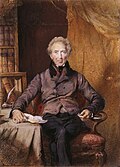

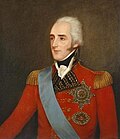


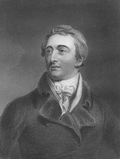


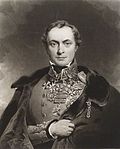













The Regulating Act 1773 created the office with the title of Governor-General of the Presidency of Fort William, or Governor-General of Bengal to be appointed by the Court of Directors of the East India Company (EIC). The Court of Directors assigned a Council of Four (based in India) to assist the Governor-General, and the decision of the council was binding on the Governor-General from 1773–1784.
The Charter Act 1833 re-designated the office with the title of Governor-General of India. William Bentinck was the first to be designated as the Governor-general of India in 1833.
After the Indian Rebellion of 1857, the company rule in India was brought to an end, but the British India along with princely states came under the direct rule of the British Crown. The Government of India Act 1858 created the office of Secretary of State for India in 1858 to oversee the affairs of India, which was advised by a new Council of India with 15 members (based in London). The existing Council of Four was formally renamed as the Council of Governor-General of India or Executive Council of India. The Council of India was later abolished by Government of India Act 1935.
Following the adoption of the Government of India Act 1858, the Governor-General representing the Crown became known as the Viceroy. The designation 'Viceroy', although it was most frequently used in ordinary parlance, had no statutory authority, and was never employed by Parliament. Although the Proclamation of 1858 announcing the assumption of the government of India by the Crown referred to Lord Canning as "first Viceroy and Governor-General", none of the Warrants appointing his successors referred to them as 'Viceroys', and the title, which was frequently used in Warrants dealing with precedence and in public notifications, was one of ceremonies used in connection with the state and social functions of the Sovereign's representative. The Governor-General continued to be the sole representative of the Crown, and the Government of India continued to be vested in the appointments of Governor-General of India which were made by the British Crown upon the advice of Secretary of State for India. The office of Governor-General continued to exist as a ceremonial post in each of the new dominions of India and Pakistan, until they adopted republican constitutions in 1950 and 1956 respectively.
List of governors-general[edit | edit source]
Fort William (Bengal) and India, 1773–1857[edit | edit source]
| Sr. No. | Governor-General (Lifespan) |
Term of office | Notable events | Appointed by | |
|---|---|---|---|---|---|
| Governors-General of the Presidency of Fort William (Bengal), 1773–1833 | |||||
| 1 |  Warren Hastings (1732–1818) |
20 October |
8 February |
|
George III |
_by_anonymous_(circa_1772-1792).jpg) Sir John Macpherson, 1st Baronet (acting) |
8 February |
12 September |
|||
| 2 |  Charles Cornwallis, 2nd Earl Cornwallis[nb 2] (1738–1805) |
12 September |
28 October |
| |
| 3 |  Sir John Shore, Bt. (1751–1834) |
28 October |
18 March |
| |
 Lt. Gen Alured Clarke (acting) |
18 March |
18 May |
|||
| 4 |  Richard Wellesley, 1st Marquess Wellesley[nb 3] (1760–1842) |
18 May |
30 July |
| |
| 5 | Charles Cornwallis, 1st Marquess Cornwallis (1738–1805) |
30 July |
5 October |
||
 Sir George Barlow, 1st Baronet (acting) |
10 October |
31 July |
| ||
| 6 |  Gilbert Elliot-Murray-Kynynmound, 1st Baron Minto (1751–1814) |
31 July |
4 October |
| |
| 7 | .jpg) Francis Rawdon-Hastings[nb 4] (1754–1826) |
4 October |
9 January |
| |
 John Adam (acting) |
9 January |
1 August |
|
George IV | |
| 8 |  William Amherst, 1st Earl Amherst[nb 5] (1773–1857) |
1 August |
13 March |
| |
 William Butterworth Bayley (acting) |
13 March |
4 July |
|||
| Governors-General of India, 1833–1858 | |||||
| 1 |  Lord William Bentinck (1774–1839) |
4 July |
20 March |
|
William IV |
 Charles Metcalfe, Baronet (acting) |
20 March |
4 March |
| ||
| 2 |  George Eden, 1st Earl of Auckland[nb 6] (1784–1849) |
4 March |
28 February |
| |
| 3 |  Edward Law, 2nd Baron Ellenborough (1790–1871) |
28 February |
June |
|
Victoria |
 William Wilberforce Bird (acting) |
June |
23 July |
|||
| 4 |  Henry Hardinge[nb 7] (1785–1856) |
23 July |
12 January |
| |
| 5 |  James Broun-Ramsay, 10th Earl of Dalhousie[nb 8] (1812–1860) |
12 January |
28 February |
| |
| 6 |  Charles Canning, 2nd Viscount Canning[nb 9] (1812–1862) |
28 February |
31 October |
| |
Governors-General and Viceroys of India, 1858–1947[edit | edit source]
| Sr. No. | Governor-General or Viceroy (Lifespan) |
Term of office | Notable events | Secretary of State for India | Prime Minister | |
|---|---|---|---|---|---|---|
| Governors-General and Viceroys of India, 1858–1947 | ||||||
| 1 | Charles Canning, 2nd Viscount Canning[nb 9] (1812–1862) |
1 November |
21 March |
|
||
| 2 |  James Bruce, 8th Earl of Elgin (1811–1863) |
21 March |
20 November |
2 July), Bombay High Court ( 14 August) and Madras High Court ( 15 August) (1862)
|
Charles Wood | Viscount Palmerston |
 Robert Napier (acting) |
21 November |
2 December |
||||
 William Denison (acting) |
2 December |
12 January |
||||
| 3 |  Sir John Lawrence, 1st Baronet (1811–1879) |
12 January |
12 January |
|
||
| 4 |  Richard Bourke, 6th Earl of Mayo (1822–1872) |
12 January |
8 February |
|
George Campbell, 8th Duke of Argyll | William Ewart Gladstone |
_(cropped).jpg) John Strachey (acting) |
9 February |
23 February |
||||
 Francis Napier, 10th Lord Napier (acting) |
24 February |
3 May |
||||
| 5 |  Thomas Baring, 2nd Baron Northbrook (1826–1904) |
3 May |
12 April |
|
||
| 6 |  Robert Bulwer-Lytton, 1st Earl of Lytton (1831–1891) |
12 April |
8 June |
|
||
| 7 |  George Robinson, 1st Marquess of Ripon (1827–1909) |
8 June |
13 December |
|
||
| 8 |  Frederick Hamilton-Temple-Blackwood, 1st Earl of Dufferin (1826–1902) |
13 December |
10 December |
|
||
| 9 |  Henry Petty-Fitzmaurice, 5th Marquess of Lansdowne (1845–1927) |
10 December |
21 January |
|
||
| 10 |  Victor Bruce, 9th Earl of Elgin (1849–1917) |
21 January |
6 January |
|
||
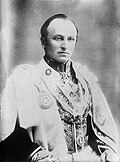
| 11 |  George Curzon, 1st Baron Curzon of Kedleston[nb 10] (1859–1925) |
6 January |
18 November |
|
||
| File:Coat of Arms of the United Kingdom (1837-1952).svg Appointed by Edward VII
(1901–1910) | ||||||
| 12 |  Gilbert Elliot-Murray-Kynynmound, 4th Earl of Minto (1845–1914) |
18 November |
23 November |
|
||
| File:Coat of Arms of the United Kingdom (1837-1952).svg Appointed by George V
(1910–1936) | ||||||
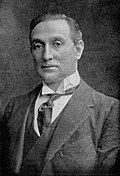
| 13 |  Charles Hardinge, 1st Baron Hardinge of Penshurst (1858–1944) |
23 November |
4 April |
|
||
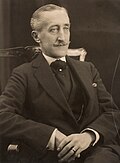
| 14 |  Frederic Thesiger, 1st Viscount Chelmsford (1868–1933) |
4 April |
2 April |
|
||
| 15 |  Rufus Isaacs, 1st Marquess of Reading (1860–1935) |
2 April |
3 April |
|
||
| 16 |  E. F. L. Wood, 1st Baron Irwin (1881–1959) |
3 April |
18 April |
|
||
 George Goschen, 2nd Viscount Goschen (acting) |
29 June |
11 November 1929 |
||||
| 17 |  Freeman Freeman-Thomas, 1st Earl of Willingdon (1866–1941) |
18 April |
18 April |
|
||
| File:Coat of Arms of the United Kingdom (1837-1952).svg Appointed by Edward VIII
(1936) | ||||||
| 18 |  Victor Hope, 2nd Marquess of Linlithgow (1887–1952) |
18 April |
1 October |
|
||
| File:Coat of Arms of the United Kingdom (1837-1952).svg Appointed by George VI
(1936–1947) (as Emperor of India) | ||||||
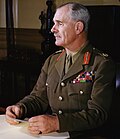
| 19 |  Archibald Wavell, 1st Viscount Wavell (1883–1950) |
1 October |
21 February |
|
||
| 20 | .jpg) Louis Mountbatten, 1st Viscount Mountbatten of Burma (1900–1979) |
21 February |
15 August |
|
||
Governors-General of the Dominion of India, 1947–1950[edit | edit source]
| Governor-General (Lifespan) |
Term of office | Notable events | Prime Minister | |
|---|---|---|---|---|
| Governors-General of the Dominion of India, 1947–1950 | ||||
.svg) Appointed by George VI Appointed by George VI
(1947–1950) (as King of India) | ||||
Louis Mountbatten, 1st Viscount Mountbatten of Burma[nb 11] (1900–1979) |
15 August |
21 June |
|
|
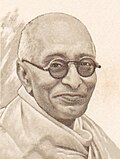
 Chakravarti Rajagopalachari (1878–1972) |
21 June |
26 January |
| |
Timeline and tenures[edit | edit source]
-
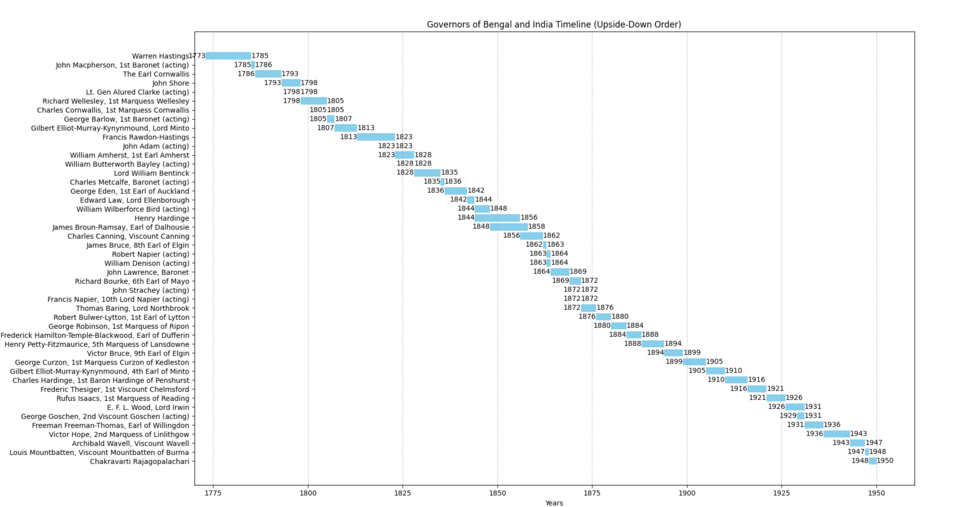 Timeline of governors and governors-general
 -
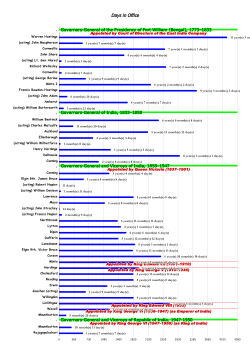 Tenures of governors and governors-general


.svg)
See also[edit | edit source]
- List of governors of Bengal Presidency
- Council of India
- Secretary of State for India
- List of presidents of India
- Governor-general
Notes[edit | edit source]
- ↑ Originally joined on 28 April 1772.
- ↑ Earl Cornwallis from 1762; created Marquess Cornwallis (1792).
- ↑ Created Marquess Wellesley (1799).
- ↑ Earl of Moira prior to being created Marquess of Hastings in 1816.
- ↑ Created Earl Amherst in 1826.
- ↑ Created Earl of Auckland in 1839.
- ↑ Created Viscount Hardinge in 1846.
- ↑ Created Marquess of Dalhousie 1849.
- ↑ 9.0 9.1 Created Earl Canning 1859.
- ↑ Oliver Russell, 2nd Baron Ampthill was acting Governor-General in 1904.
- ↑ Created Earl Mountbatten of Burma on 28 October 1947.
Citations[edit | edit source]
- ↑ "Amini Commission 1776 - Banglapedia". en.banglapedia.org. Retrieved 21 March 2022.
- ↑
 One or more of the preceding sentences incorporates text from a publication now in the public domain: Chisholm, Hugh, ed. (1911). "Rohilla". Encyclopædia Britannica. Vol. 23 (11th ed.). Cambridge University Press. p. 461.
- ↑ "Administrative Reforms of Robert clive". britannica.com. Retrieved 16 August 2020.
- ↑ Clarke, John James (1 January 1997). Oriental Enlightenment: The Encounter Between Asian and Western Thought. Psychology Press. ISBN 9780415133753.
- ↑ Reddy, Krishna (2017). Indian History (2nd ed.). Chennai: McGraw Hill Education (India) Pvt. Ltd. pp. C.53. ISBN 9789352606627.
- ↑ Reddy, Vinodh (28 October 2015). "Governors-General of India (1772–1857)". EduGeneral. Archived from the original on 1 July 2020. Retrieved 30 June 2020.
- ↑ "Treaty of Sagauli | British-Nepalese history [1816]". Encyclopædia Britannica. Retrieved 27 May 2020.
- ↑ "Lessons unlearned". The Economist. ISSN 0013-0613. Retrieved 16 July 2023.
- ↑ "Sind-British conflict". Britanica.com. Retrieved 21 March 2022.
- ↑ Information Management Group, IIT Roorkee. "Indian Institute of Technology Roorkee Index". www.iitr.ac.in.
- ↑ "India - Government of India Act of 1858". www.britannica.com. Retrieved 22 March 2022.
- ↑ "Police Act. 1861" (PDF). Ministry of Home Affairs. Retrieved 22 March 2022.
- ↑ 13.0 13.1 13.2 Reddy, Krishna (2017). Indian History (2nd ed.). Chennai: McGraw Hill Education (India) Pvt. Ltd. pp. C.55. ISBN 9789352606627.
- ↑ "How Viceroy Lord Mayo's Assassination Led To Creation Of India's First Intelligence Bureau". Outlook India. 14 February 2022. Retrieved 22 March 2022.
- ↑ "Arms Act, 1878" (PDF). myanmar-law-library.org. Retrieved 22 March 2022.
- ↑ "Lord Ripon: Father of Local Self Government in India". thenationaltv.com. Retrieved 22 March 2022.
- ↑ "Hunter Commission - Banglapedia". en.banglapedia.org. Retrieved 22 March 2022.
- ↑ "A Short History of Burma". New Internationalist. 18 April 2008. Retrieved 22 March 2022.
- ↑ "The internal administration of lord elgin in India, 1894 - 1898" (PDF). Archived from the original (PDF) on 11 December 2020.
- ↑ "Lee Commission". www.britannica.com. Retrieved 23 March 2022.
- ↑ "Hartog Committee Report, 1929". Your Article Library. 22 December 2014. Retrieved 23 March 2022.