


CleanupBot (talk | contribs) m →top: clean up |
adjusted section and updated info |
||
| Line 3: | Line 3: | ||
{{Use Indian English|date=May 2016}} | {{Use Indian English|date=May 2016}} | ||
{{Infobox project | {{Infobox project | ||
| image = Ayushman Bharat logo.png | | image = Ayushman Bharat logo.png | ||
| country = | | country = India | ||
| type = [[Health insurance]] | | type = [[Health insurance]] | ||
| budget = {{INRConvert| | | budget = {{INRConvert|17588|c}} (2026–27)<ref>{{cite web | url=https://health.economictimes.indiatimes.com/news/policy/budget-2020-healthcare-gets-rs-69000-crore-rs-6400-crore-for-ayushman-bharat/73833215 | title=Budget 2020: Healthcare gets Rs 69,000 crore; Rs 6,400 crore for Ayushman Bharat - ET HealthWorld | access-date=23 February 2024 | archive-date=8 January 2024 | archive-url=https://web.archive.org/web/20240108123853/https://health.economictimes.indiatimes.com/news/policy/budget-2020-healthcare-gets-rs-69000-crore-rs-6400-crore-for-ayushman-bharat/73833215 | url-status=live }}</ref> | ||
| primeminister = [[Narendra Modi]] | | primeminister = [[Narendra Modi]] | ||
| ministry = [[Ministry of Health and Family Welfare]] | | ministry = [[Ministry of Health and Family Welfare]] | ||
| launched = {{Start date and age|2018|09|23|df=y}} | | launched = {{Start date and age|2018|09|23|df=y}} | ||
| current_status = {{tick}} Active | | current_status = {{tick}} Active | ||
| website =https://www.pmjay.gov.in/ | | website = {{URL|https://www.pmjay.gov.in/}} | ||
}} | }} | ||
'''Ayushman Bharat Pradhan Mantri Jan Arogya Yojana''' (' | '''Ayushman Bharat Pradhan Mantri Jan Arogya Yojana''' ('''PM-JAY'''; {{Literal translation|Prime Minister's People's Health Scheme|i=yes}}, Ayushman Bharat PM-JAY {{Literal translation|Live Long India Prime Minister's People's Health Scheme|i=yes}}), also colloquially known as '''Modicare''',<ref>{{Cite news |last=Abraham |first=Rohan |date=2018-02-02 |title=What is 'Modicare' and how will it affect you? |url=https://www.thehindu.com/business/budget/what-is-modicare-and-how-will-it-affect-you/article22635372.ece |access-date=2024-11-10 |work=The Hindu |language=en-IN |issn=0971-751X |archive-date=12 November 2024 |archive-url=https://web.archive.org/web/20241112005733/https://www.thehindu.com/business/budget/what-is-modicare-and-how-will-it-affect-you/article22635372.ece |url-status=live }}</ref><ref>{{Cite web |last=Pandey |first=Kundan |title=What does Modicare mean for India's poor and sick? |url=https://www.downtoearth.org.in/health/what-does-modicare-mean-for-india-s-poor-and-sick--61612 |access-date=2024-11-10 |website=Down To Earth |date=13 September 2018 |language=en |archive-date=12 November 2024 |archive-url=https://web.archive.org/web/20241112014003/https://www.downtoearth.org.in/health/what-does-modicare-mean-for-india-s-poor-and-sick--61612 |url-status=live }}</ref> is a national public [[health insurance]] scheme of the [[Government of India]] that aims to provide free access to health insurance coverage for low income earners in the country. Roughly, the bottom 50% of the country qualifies for this scheme.<ref>{{Cite news|url=http://infnd.com/ayushman-bharat-yojana-in-hindi/|title=आयुष्मान भारत राष्ट्रीय स्वास्थ्य संरक्षण (नेशनल हेल्थ प्रोटेक्शन) योजना - Ayushman bharat|date=2015-06-17|work=Infnd|access-date=2018-11-28|language=en-US|archive-date=25 June 2018|archive-url=https://web.archive.org/web/20180625192255/http://infnd.com/ayushman-bharat-yojana-in-hindi/|url-status=live}}</ref> It was launched in September 2018 by [[Prime Minister]] [[Narendra Modi]]. | ||
Ayushman Bharat Pradhan Mantri Jan Arogya Yojana was later expanded to include all citizens aged 70 years and above, regardless of their economic status.<ref>{{Cite web | title=Request Rejected | url=https://mohfw.gov.in/?q=gu/node/7742 | archive-url=https://web.archive.org/web/20250122091835/https://mohfw.gov.in/%3Fq%3Dgu/node/7742 | access-date=2025-08-05 | archive-date=2025-01-22}}</ref> | |||
The programme is part of the Indian government's [[National Health Policy]] and is [[means-tested | People using the program access their own [[primary care]] services from a family doctor and when anyone needs additional care, PM-JAY provides free [[secondary health care]] for those needing specialist treatment and [[tertiary health care]] for those requiring hospitalization.<ref>{{Cite web |title=About Pradhan Mantri Jan Arogya Yojana (PM-JAY) |url=https://ayushmancarddownload.up.in/ |access-date=5 March 2025 |website=ayushmancarddownload.up.in}}</ref> | ||
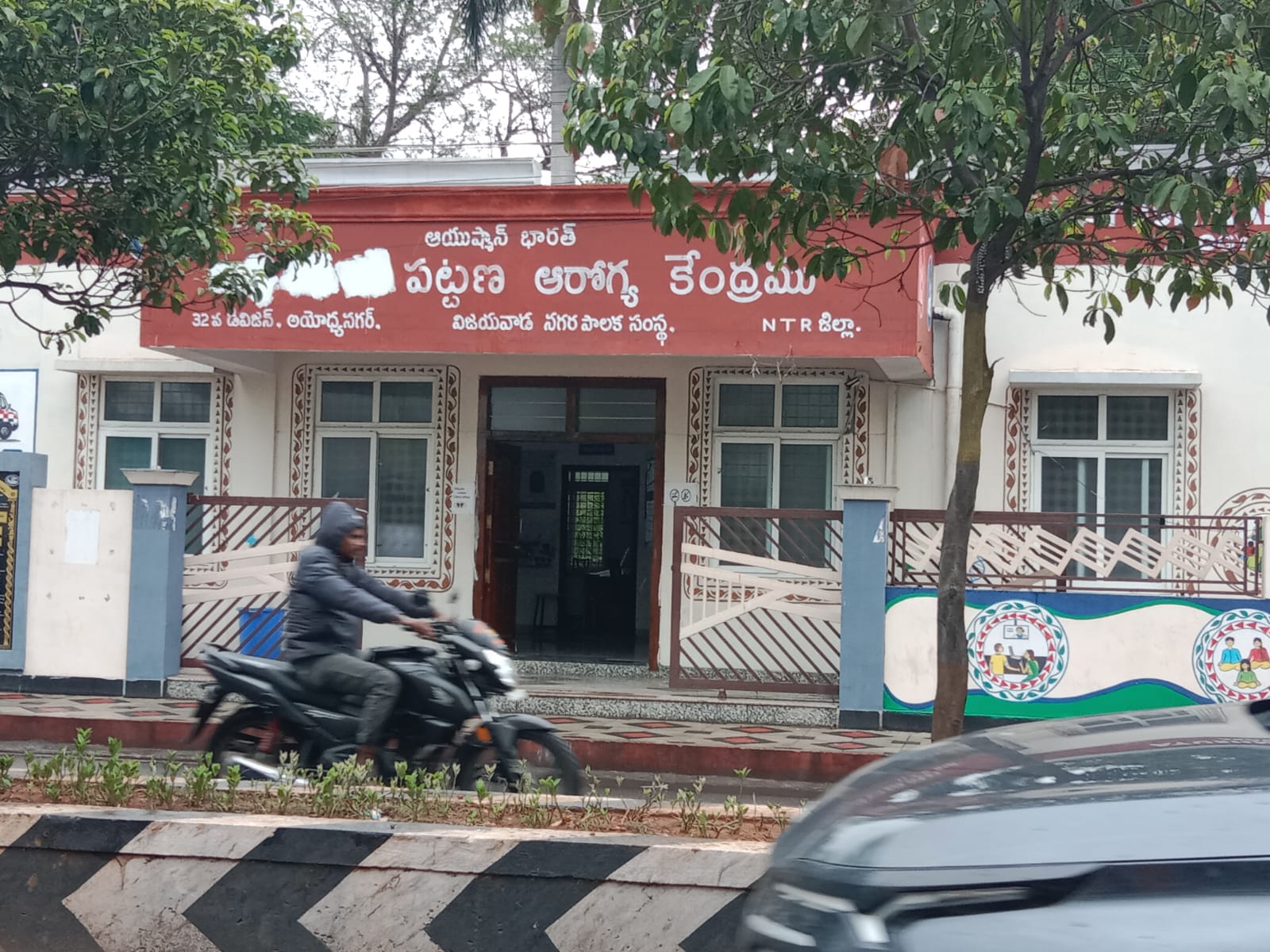
[[File:Urban healthcare centre.jpg|thumb|Urban healthcare center, 32nd Division Vijayawada, NTR District, [[Andhra Pradesh]]]] | |||
[[File:Urban Primary Health Centre Ayushman Bharat Bidipeth Nagpur.jpg|thumb|An Urban Primary Health Centre under Ayushman Bharat Yojana in Bidipeth, [[Nagpur]]]] | |||
The programme is part of the Indian government's [[National Health Policy]] and is [[means-tested]]. That ministry later established the [[National Health Authority]] as an organization to administer the program. It is a centrally sponsored scheme and is jointly funded by both the union government and the states. By offering services to 50 crore (500 million) people it is the world's largest government sponsored healthcare program.<ref>{{cite web|date=6 March 2019|agency=PTI|title=Ayushman Bharat on way to become world's largest free healthcare: Arun Jaitley|url=https://economictimes.indiatimes.com/industry/healthcare/biotech/healthcare/ayushman-bharat-on-way-to-become-worlds-largest-free-healthcare-scheme-arun-jaitley/articleshow/68288261.cms|url-status=live|archive-url=https://web.archive.org/web/20210220110302/https://economictimes.indiatimes.com/industry/healthcare/biotech/healthcare/ayushman-bharat-on-way-to-become-worlds-largest-free-healthcare-scheme-arun-jaitley/articleshow/68288261.cms |archive-date=20 February 2021 |access-date=15 February 2021|website=The Economic Times}}</ref> The program is a [[means-tested]] program, considering its users are people categorized as low [[income in India]].<ref>{{Cite web |title=About PM-JAY - National Health Authority {{!}} GOI |url=https://nha.gov.in/PM-JAY |access-date=2024-01-04 |website=nha.gov.in |archive-date=4 January 2024 |archive-url=https://web.archive.org/web/20240104113522/https://nha.gov.in/PM-JAY |url-status=live }}</ref> However it is not implemented in all state due to the state government's divergent views. | |||
==History== | ==History== | ||
In 2017 an Indian version of the [[Global Burden of Disease Study]] reported major diseases and risk factors from 1990 to 2016 for every state in India.<ref>{{cite journal|last1=Dandona|first1=Lalit|last2=Dandona|first2=Rakhi|last3=Kumar|first3=G Anil|last4=Shukla|first4=D K|last5=Paul|first5=Vinod K|last6=Balakrishnan|first6=Kalpana|last7=Prabhakaran|first7=Dorairaj|last8=Tandon|first8=Nikhil|last9=Salvi|first9=Sundeep|last10=Dash|first10=A P|last11=Nandakumar|first11=A|display-authors=4|date=December 2017|title=Nations within a nation: variations in epidemiological transition across the states of India, 1990–2016 in the Global Burden of Disease Study|url=|journal=The Lancet|volume=390|issue=10111|pages=2437–2460|doi=10.1016/S0140-6736(17)32804-0|pmc=5720596|pmid=29150201|via=NCBI|last119=Pati|last118=Parameswaran|first118=Sreejith|first12=Vikram|first119=Sanghamitra|last120=Prasad|last117=Pandya|first117=Sapan|last114=Nongmaithem|first116=Jeyaraj D|last116=Pandian|first115=Anu M|last115=Oommen|first114=Romi S|last121=Prasad|first113=Lipika|first120=Kameshwar|first124=Sreebhushan|first121=Narayan|first126=Thara|first129=Yogesh|last129=Sabde|first128=Ambuj|last128=Roy|first127=Goura K|last127=Rath|last126=Rangaswamy|last122=Purwar|first125=Siddarth|last125=Ramji|first112=Sreenivas A|last124=Raju|first123=Asma|last123=Rahim|first122=Manorama|last113=Nanda|last109=Murhekar|last112=Nair|first98=Raman K|first101=Laishram|last101=Ladusingh|first100=Anura|last100=Kurpad|first99=Rashmi|last99=Kumar|last98=Kumar|first102=Rakesh|first97=Avdhesh|last97=Kumar|first96=Anand|last96=Krishnan|first95=Parvaiz A|last95=Koul|first94=Sanjay|last102=Lodha|last103=Mahesh|first111=Sanjeev|last108=Mukhopadhyay|last111=Nair|first110=G V S|last110=Murthy|first109=Manoj|first130=K S|first108=Satinath|first107=Murali|first103=P A|last107=Mohan BV|first106=Dileep|last106=Mavalankar|first105=Matthews|last105=Mathai|first104=Rajesh|last104=Malhotra|last130=Sachdeva|last134=Sharma|last131=Sadhu|last155=Varughese|last158=Vijayakumar|first157=K|last157=Venugopal|first156=S|last156=Venkatesh|first155=Santosh|first154=Mathew|last159=Xavier|last154=Varghese|first153=Srikanth|last153=Tripathy|first152=Nihal|last152=Thomas|first151=Kavumpurathu R|last151=Thankappan|first158=Lakshmi|first159=Denis|last150=Thakur|first164=Theo|first167=Soumya|last167=Swaminathan|first166=Christopher J L|last166=Murray|first165=K Srinath|last165=Reddy|last164=Vos|last160=Yajnik|first163=J V R Prasada|last163=Rao|first162=Sanjay|last162=Zodpey|first161=Geevar|last161=Zachariah|first160=Chittaranjan S|first150=J S|first149=Babasaheb|first131=Harsiddha|last136=Shirude|last139=Singh|first138=Sharvari R|last138=Shukla|first137=Rajan|last137=Shukla|first136=Shreya|first135=Anita|last140=Singh|last135=Shet|first134=Rajendra|first93=Ajay|first133=Mari J|last133=Sankar|first132=Rajesh|last132=Sagar|first139=Gagandeep|first140=Narinder P|last149=Tandale|first145=A|first148=P N|last148=Sylaja|first147=Rajaraman|last147=Swaminathan|first146=Vanita|last146=Suri|last145=Srividya|last141=Singh|first144=R K|last144=Srivastava|first143=Dhirendra N|last143=Sinha|first142=Anju|last142=Sinha|first141=Virendra|last94=Kinra|last93=Khera|last13=Agarwal|last38=Furtado|first41=Ravi|last41=Mehrotra|first40=Chris M|last40=Varghese|first39=Eliza|last39=Dutta|first38=Melissa|first37=Puneet|first42=P|last37=Dewan|first36=Kirankumar|last36=Rade|first35=Raghuram|last35=Rao|first34=Sunil D|last34=Khaparde|last42=Jambulingam|last43=Kaur|last33=Chadha|last48=Anjana|first51=Arvind|last51=Chopra|first50=Anurag|last50=Agrawal|first49=Viswanathan|last49=Mohan|first48=Ranjit M|first47=Reeta|first43=Tanvir|last47=Rasaily|first46=Rashmi|last46=Arora|first45=Shalini|last45=Singh|first44=Meenakshi|last44=Sharma|first33=Vineet K|first32=Harvey|first52=Ashish J|first17=Avula|last21=Afshin|first20=Manu R|last20=Mathur|first19=Subhojit|last19=Dey|first18=Preet K|last18=Dhillon|last17=Laxmaiah|last22=Fitzmaurice|first16=Prashant|last16=Mathur|first15=R S|last15=Dhaliwal|first14=Prakash C|last14=Gupta|first13=Sanjay K|first21=Ashkan|first22=Christina|last32=Whiteford|last28=Lim|first31=Jeffrey D|last31=Stanaway|first30=Gregory A|last30=Roth|first29=Mohsen|last29=Naghavi|first28=Stephen S|first27=Hmwe|last23=Gakidou|last27=Kyu|first26=Nicholas J|last26=Kassebaum|first25=Simon I|last25=Hay|first24=Peter|last24=Gething|first23=Emmanuela|last52=Mathew|last53=Bhardwaj|first92=Tripti|first78=Rajeev|last82=Gururaj|first81=M D|last81=Gupte|first80=Tarun|last80=Gupta|first79=Subodh S|last79=Gupta|last78=Gupta|last83=Harikrishnan|first77=Randeep|last77=Guleria|first76=N|last76=Gopalakrishnan|first75=Aloke G|last75=Ghoshal|first74=Sagnik|first82=G|first83=Sivadasanpillai|first73=Paresh V|first88=Rajni|last92=Khanna|first91=Kiran|last91=Katoch|first90=Amal C|last90=Kataki|first89=Anita|last89=Kar|last88=Kant|last84=Iyer|last12=Patel|last87=Joshua|first86=Panniyamamkal|last86=Jeemon|first85=Sudhir K|last85=Jain|first84=Veena|last74=Dey|last73=Dave|first53=Deeksha|last58=Abdulkader|first61=Sandra|last61=Albert|first60=Rakesh|last60=Aggarwal|first59=Ashutosh N|last59=Aggarwal|first58=Rizwan S|first57=Scott|first62=Atul|last57=Glenn|first56=Kelly|last56=Bienhoff|first55=Parul|last55=Mutreja|first54=Pallavi|last54=Muraleedharan|last62=Ambekar|last63=Arora|first72=Siddharth K|first68=Anurag|last72=Das|first71=D J|last71=Christopher|first70=Bilali|last70=Camara|first69=Eesh|last69=Bhatia|last68=Bhargava|first63=Monika|first67=Anil|last67=Bhansali|first66=Gufran|last66=Beig|first65=Ashish|last65=Bavdekar|first64=Damodar|last64=Bachani|first87=Vasna}}</ref> This study brought | In 2017 an Indian version of the [[Global Burden of Disease Study]] reported major diseases and risk factors from 1990 to 2016 for every state in India.<ref>{{cite journal|last1=Dandona|first1=Lalit|last2=Dandona|first2=Rakhi|last3=Kumar|first3=G Anil|last4=Shukla|first4=D K|last5=Paul|first5=Vinod K|last6=Balakrishnan|first6=Kalpana|last7=Prabhakaran|first7=Dorairaj|last8=Tandon|first8=Nikhil|last9=Salvi|first9=Sundeep|last10=Dash|first10=A P|last11=Nandakumar|first11=A|display-authors=4|date=December 2017|title=Nations within a nation: variations in epidemiological transition across the states of India, 1990–2016 in the Global Burden of Disease Study|url=|journal=The Lancet|volume=390|issue=10111|pages=2437–2460|doi=10.1016/S0140-6736(17)32804-0|pmc=5720596|pmid=29150201|via=NCBI|last119=Pati|last118=Parameswaran|first118=Sreejith|first12=Vikram|first119=Sanghamitra|last120=Prasad|last117=Pandya|first117=Sapan|last114=Nongmaithem|first116=Jeyaraj D|last116=Pandian|first115=Anu M|last115=Oommen|first114=Romi S|last121=Prasad|first113=Lipika|first120=Kameshwar|first124=Sreebhushan|first121=Narayan|first126=Thara|first129=Yogesh|last129=Sabde|first128=Ambuj|last128=Roy|first127=Goura K|last127=Rath|last126=Rangaswamy|last122=Purwar|first125=Siddarth|last125=Ramji|first112=Sreenivas A|last124=Raju|first123=Asma|last123=Rahim|first122=Manorama|last113=Nanda|last109=Murhekar|last112=Nair|first98=Raman K|first101=Laishram|last101=Ladusingh|first100=Anura|last100=Kurpad|first99=Rashmi|last99=Kumar|last98=Kumar|first102=Rakesh|first97=Avdhesh|last97=Kumar|first96=Anand|last96=Krishnan|first95=Parvaiz A|last95=Koul|first94=Sanjay|last102=Lodha|last103=Mahesh|first111=Sanjeev|last108=Mukhopadhyay|last111=Nair|first110=G V S|last110=Murthy|first109=Manoj|first130=K S|first108=Satinath|first107=Murali|first103=P A|last107=Mohan BV|first106=Dileep|last106=Mavalankar|first105=Matthews|last105=Mathai|first104=Rajesh|last104=Malhotra|last130=Sachdeva|last134=Sharma|last131=Sadhu|last155=Varughese|last158=Vijayakumar|first157=K|last157=Venugopal|first156=S|last156=Venkatesh|first155=Santosh|first154=Mathew|last159=Xavier|last154=Varghese|first153=Srikanth|last153=Tripathy|first152=Nihal|last152=Thomas|first151=Kavumpurathu R|last151=Thankappan|first158=Lakshmi|first159=Denis|last150=Thakur|first164=Theo|first167=Soumya|last167=Swaminathan|first166=Christopher J L|last166=Murray|first165=K Srinath|last165=Reddy|last164=Vos|last160=Yajnik|first163=J V R Prasada|last163=Rao|first162=Sanjay|last162=Zodpey|first161=Geevar|last161=Zachariah|first160=Chittaranjan S|first150=J S|first149=Babasaheb|first131=Harsiddha|last136=Shirude|last139=Singh|first138=Sharvari R|last138=Shukla|first137=Rajan|last137=Shukla|first136=Shreya|first135=Anita|last140=Singh|last135=Shet|first134=Rajendra|first93=Ajay|first133=Mari J|last133=Sankar|first132=Rajesh|last132=Sagar|first139=Gagandeep|first140=Narinder P|last149=Tandale|first145=A|first148=P N|last148=Sylaja|first147=Rajaraman|last147=Swaminathan|first146=Vanita|last146=Suri|last145=Srividya|last141=Singh|first144=R K|last144=Srivastava|first143=Dhirendra N|last143=Sinha|first142=Anju|last142=Sinha|first141=Virendra|last94=Kinra|last93=Khera|last13=Agarwal|last38=Furtado|first41=Ravi|last41=Mehrotra|first40=Chris M|last40=Varghese|first39=Eliza|last39=Dutta|first38=Melissa|first37=Puneet|first42=P|last37=Dewan|first36=Kirankumar|last36=Rade|first35=Raghuram|last35=Rao|first34=Sunil D|last34=Khaparde|last42=Jambulingam|last43=Kaur|last33=Chadha|last48=Anjana|first51=Arvind|last51=Chopra|first50=Anurag|last50=Agrawal|first49=Viswanathan|last49=Mohan|first48=Ranjit M|first47=Reeta|first43=Tanvir|last47=Rasaily|first46=Rashmi|last46=Arora|first45=Shalini|last45=Singh|first44=Meenakshi|last44=Sharma|first33=Vineet K|first32=Harvey|first52=Ashish J|first17=Avula|last21=Afshin|first20=Manu R|last20=Mathur|first19=Subhojit|last19=Dey|first18=Preet K|last18=Dhillon|last17=Laxmaiah|last22=Fitzmaurice|first16=Prashant|last16=Mathur|first15=R S|last15=Dhaliwal|first14=Prakash C|last14=Gupta|first13=Sanjay K|first21=Ashkan|first22=Christina|last32=Whiteford|last28=Lim|first31=Jeffrey D|last31=Stanaway|first30=Gregory A|last30=Roth|first29=Mohsen|last29=Naghavi|first28=Stephen S|first27=Hmwe|last23=Gakidou|last27=Kyu|first26=Nicholas J|last26=Kassebaum|first25=Simon I|last25=Hay|first24=Peter|last24=Gething|first23=Emmanuela|last52=Mathew|last53=Bhardwaj|first92=Tripti|first78=Rajeev|last82=Gururaj|first81=M D|last81=Gupte|first80=Tarun|last80=Gupta|first79=Subodh S|last79=Gupta|last78=Gupta|last83=Harikrishnan|first77=Randeep|last77=Guleria|first76=N|last76=Gopalakrishnan|first75=Aloke G|last75=Ghoshal|first74=Sagnik|first82=G|first83=Sivadasanpillai|first73=Paresh V|first88=Rajni|last92=Khanna|first91=Kiran|last91=Katoch|first90=Amal C|last90=Kataki|first89=Anita|last89=Kar|last88=Kant|last84=Iyer|last12=Patel|last87=Joshua|first86=Panniyamamkal|last86=Jeemon|first85=Sudhir K|last85=Jain|first84=Veena|last74=Dey|last73=Dave|first53=Deeksha|last58=Abdulkader|first61=Sandra|last61=Albert|first60=Rakesh|last60=Aggarwal|first59=Ashutosh N|last59=Aggarwal|first58=Rizwan S|first57=Scott|first62=Atul|last57=Glenn|first56=Kelly|last56=Bienhoff|first55=Parul|last55=Mutreja|first54=Pallavi|last54=Muraleedharan|last62=Ambekar|last63=Arora|first72=Siddharth K|first68=Anurag|last72=Das|first71=D J|last71=Christopher|first70=Bilali|last70=Camara|first69=Eesh|last69=Bhatia|last68=Bhargava|first63=Monika|first67=Anil|last67=Bhansali|first66=Gufran|last66=Beig|first65=Ashish|last65=Bavdekar|first64=Damodar|last64=Bachani|first87=Vasna}}</ref> This study brought much interest in government health policy because it identified major health challenges which the government could address.<ref>{{cite journal |last1=Bhargava |first1=Balram |last2=Paul |first2=Vinod K |title=Informing NCD control efforts in India on the eve of Ayushman Bharat |journal=The Lancet |date=September 2018 |volume=399 |issue=10331 |pages=e17–e19 |doi=10.1016/S0140-6736(18)32172-X|pmid=30219331 |s2cid=52189318 |doi-access=free }}</ref> A large percentage of the population is left underserved by the Indian health system, which relies on out-of-pocket payments from patients to fund care.<ref>{{Cite journal |last1=Angell |first1=Blake J. |last2=Prinja |first2=Shankar |last3=Gupt |first3=Anadi |last4=Jha |first4=Vivekanand |last5=Jan |first5=Stephen |date=2019-03-07 |title=The Ayushman Bharat Pradhan Mantri Jan Arogya Yojana and the path to universal health coverage in India: Overcoming the challenges of stewardship and governance |journal=PLOS Medicine |volume=16 |issue=3 |article-number=e1002759 |doi=10.1371/journal.pmed.1002759 |pmid=30845199 |issn=1549-1676|pmc=6405049 |doi-access=free }}</ref> These payments hinder many patients from being able to receive healthcare services. In 2018, the Indian government described that every year, more than six crores Indians were pushed into poverty because of out-of-pocket medical expenses.<ref>{{cite web|date=17 November 2018|agency=Press Trust of India|title=Medical Expenses Push 6 Crore Indians To Poverty Annually: Top Official|url=https://www.ndtv.com/india-news/medical-expenses-push-6-crore-indians-to-poverty-annually-top-official-indu-bhushan-1949129|url-status=live|archive-url=https://web.archive.org/web/20181117210709/https://www.ndtv.com/india-news/medical-expenses-push-6-crore-indians-to-poverty-annually-top-official-indu-bhushan-1949129 |archive-date=17 November 2018 |access-date=15 February 2021|website=NDTV}}</ref> Despite various available regional and national programs for [[healthcare in India]], there was much more to be done. The Indian government first announced the Ayushman Bharat Yojana as a [[universal health care]] plan in February 2018 in the [[2018 Union budget of India]].<ref>{{Cite web |date=2018-02-01 |title=Union Budget 2018: Ayushman Bharat to be the world's biggest healthcare scheme, says PM Modi |url=https://www.businesstoday.in/business/news/story/union-budget-2018-19-live-updates-arun-jaitley-speech-parliament-102487-2018-02-01 |access-date=2024-01-04 |website=Business Today |language=en |archive-date=19 January 2024 |archive-url=https://web.archive.org/web/20240119164709/https://www.businesstoday.in/business/news/story/union-budget-2018-19-live-updates-arun-jaitley-speech-parliament-102487-2018-02-01 |url-status=live }}</ref> The [[Union Council of Ministers]] approved it in March. In his 2018 [[Independence Day (India)|Independence Day]] speech Prime Minister [[Narendra Modi]] announced that India would have a major national health program later that year on 25 September, also commemorating the birthday of Pandit [[Deendayal Upadhyaya]].<ref>{{cite journal |last1=Mukherjee |first1=Reema |last2=Arora |first2=Manisha |title=India's national health protection scheme: A preview |journal=Medical Journal of Dr. D.Y. Patil Vidyapeeth |date=2018 |volume=11 |issue=5 |page=385 |doi=10.4103/mjdrdypu.mjdrdypu_109_18|s2cid=169815602 |doi-access=free }}</ref> | ||
[[File:Stamp of India - 2019 - Colnect 926026 - 1st Anniversary Pradhan Mantri Jan Aarogya Yojana.jpeg|thumb|PM-JAY stamp]] | |||
In June 2018 the applications opened for hospitals through an "empanelment process". | In June 2018 the applications opened for hospitals through an "empanelment process".{{citation needed|date=September 2022}} In July 2018, the Ayushman Bharat Yojana recommended that people access benefits through [[Aadhaar]], but also said that there was a process for people to access without that identity card.{{citation needed|date=September 2022}} AB PM-JAY was first launched on 23 September 2018 at [[Ranchi]], [[Jharkhand]].<ref>{{cite web |title=PM Modi launches PMJAY- Ayushman Bharat in Ranchi |url=https://www.aninews.in/videos/national/pm-modi-launches-pmjay-ayushman-bharat-ranchi/ |website=ANInews |language=en |date=23 September 2018 |access-date=23 February 2024 |archive-date=14 April 2021 |archive-url=https://web.archive.org/web/20210414231717/https://www.aninews.in/videos/national/pm-modi-launches-pmjay-ayushman-bharat-ranchi/ |url-status=live }}</ref> By 26 December 2020 the scheme was extended to the Union Territories of Jammu Kashmir and Ladakh.<ref>{{Cite web|date=2020-12-24|title=PM Modi to launch Ayushman Bharat health insurance scheme for residents of Jammu and Kashmir on Dec 26|url=https://www.hindustantimes.com/india-news/pm-modi-to-launch-ayushman-bharat-health-insurance-scheme-for-residents-of-j-k-on-dec-26/story-W5tvJBES6MqyldUP3o2pOO.html|access-date=2020-12-26|website=Hindustan Times|language=en|archive-date=16 November 2023|archive-url=https://web.archive.org/web/20231116121230/https://www.hindustantimes.com/india-news/pm-modi-to-launch-ayushman-bharat-health-insurance-scheme-for-residents-of-j-k-on-dec-26/story-W5tvJBES6MqyldUP3o2pOO.html|url-status=live}}</ref> The program has been called "ambitious".<ref>{{cite web|last1=Singh|first1=Poonam Khetrapal|date=1 October 2018|title=Ayushman Bharat: An ambitious set of reforms that should benefit millions of India's poor and vulnerable|url=https://www.who.int/southeastasia/news/opinion-editorials/detail/ayushman-bharat-an-ambitious-set-of-reforms-that-should-benefit-millions-of-india-s-poor-and-vulnerable|url-status=live|archive-url=https://web.archive.org/web/20200222114648/https://www.who.int/southeastasia/news/opinion-editorials/detail/ayushman-bharat-an-ambitious-set-of-reforms-that-should-benefit-millions-of-india-s-poor-and-vulnerable |archive-date=22 February 2020 |access-date=15 February 2021|website=|publisher=World Health Organization|language=en}}</ref><ref>{{cite journal |last1=Zodpey |first1=S |last2=Farooqui |first2=HH |title=Universal health coverage in India: Progress achieved & the way forward. |journal=The Indian Journal of Medical Research |date=April 2018 |volume=147 |issue=4 |pages=327–329 |doi=10.4103/ijmr.IJMR_616_18 |pmid=29998865|pmc=6057252 |doi-access=free }}</ref> | ||
== Features == | == Features == | ||
[[File:Healthcare centre near Mahua.jpg|thumb|A health and wellness centre established as a part of Ayushman Bharat Yojna at Mahua community development bloc, [[Bihar]].]] | [[File:Healthcare centre near Mahua.jpg|thumb|A health and wellness centre established as a part of Ayushman Bharat Yojna at Mahua community development bloc, [[Bihar]].]] | ||
Features of PM-JAY include the following— providing health coverage | Features of PM-JAY include the following— providing health coverage to 10 crores households or 50 crores Indians;<ref>{{cite web |author1=Our Bureau |title=PM unveils Ayushman Bharat; 50 cr to get health cover of ₹5 lakh |url=https://www.thehindubusinessline.com/news/national/pm-unveils-ayushman-bharat-50-cr-to-get-health-cover-of-5-lakh/article25022030.ece |website=[[Business Line]] |language=en |date=23 September 2018 |access-date=23 February 2024 |archive-date=14 January 2024 |archive-url=https://web.archive.org/web/20240114161050/https://www.thehindubusinessline.com/news/national/pm-unveils-ayushman-bharat-50-cr-to-get-health-cover-of-5-lakh/article25022030.ece |url-status=live }}</ref> providing a cover of {{INRConvert|5|l|lk=on|year=2021}} per family per year for medical treatment in empaneled hospitals, both public and private; offering [[cashless payment]] and [[paperless]] recordkeeping through the hospital or doctor's office;<ref>{{cite web |last1=Sharma |first1=Yogima Seth |title=Labour ministry to provide cashless secondary and tertiary medical care services under AB-PMJAY |url=https://economictimes.indiatimes.com/industry/healthcare/biotech/healthcare/labour-ministry-to-provide-cashless-secondary-and-tertiary-medical-care-services-under-pmjay/articleshow/71114979.cms |website=[[The Economic Times]] |date=13 September 2019 |access-date=23 February 2024 |archive-date=1 July 2023 |archive-url=https://web.archive.org/web/20230701171549/https://economictimes.indiatimes.com/industry/healthcare/biotech/healthcare/labour-ministry-to-provide-cashless-secondary-and-tertiary-medical-care-services-under-pmjay/articleshow/71114979.cms |url-status=live }}</ref> using criteria from the [[Socio Economic and Caste Census 2011]] to determine eligibility for benefits;<ref>{{cite web |title=NHA issues circular advising states to identify eligible PMJAY beneficiaries |url=https://economictimes.indiatimes.com/news/politics-and-nation/nha-issues-circular-advising-states-to-identify-eligible-pmjay-beneficiaries/articleshow/66096010.cms |website=[[The Economic Times]] |date=6 October 2018 |access-date=23 February 2024 |archive-date=1 July 2023 |archive-url=https://web.archive.org/web/20230701171507/https://economictimes.indiatimes.com/news/politics-and-nation/nha-issues-circular-advising-states-to-identify-eligible-pmjay-beneficiaries/articleshow/66096010.cms |url-status=live }}</ref><ref>{{cite web |last1=Sharma |first1=Neetu Chandra |title=Govt looks beyond SECC 2011 to include more beneficiaries under Modicare |url=https://www.livemint.com/politics/policy/govt-looks-beyond-secc-2011-to-include-more-beneficiaries-under-modicare-1560187873216.html |website=[[Mint (newspaper)|Livemint]] |publisher=[[HT Media]] |language=en |date=10 June 2019 |access-date=23 February 2024 |archive-date=16 November 2023 |archive-url=https://web.archive.org/web/20231116120745/https://www.livemint.com/politics/policy/govt-looks-beyond-secc-2011-to-include-more-beneficiaries-under-modicare-1560187873216.html |url-status=live }}</ref> no restriction on family size, age or gender; all pre-existing medical conditions are covered under the scheme; it covers 3 days of pre-hospitalisation and 15 days of post-hospitalisation, including diagnostic care and expenses on medicines; the scheme is portable and a beneficiary can avail medical treatment at any PM-JAY empanelled hospital outside their state and anywhere in the country.<ref>{{cite web |last1=Sharma |first1=Neetu Chandra |title=Over 40,000 people availed portable treatment under Ayushman Bharat |url=https://www.livemint.com/politics/policy/over-42-000-people-availed-portable-treatment-under-ab-pmjay-1569476280775.html |website=[[Mint (newspaper)|Livemint]] |publisher=[[HT Media]] |language=en |date=26 September 2019 |access-date=23 February 2024 |archive-date=1 July 2023 |archive-url=https://web.archive.org/web/20230701171516/https://www.livemint.com/politics/policy/over-42-000-people-availed-portable-treatment-under-ab-pmjay-1569476280775.html |url-status=live }}</ref> | ||
In India, rather than focusing on strengthening essential primary, secondary, and tertiary healthcare in the public system, a shift toward an insurance-based system has been promoted.<ref>{{Cite journal |last=Hooda |first=Shailender Kumar |date=June 20, 2020 |title=Decoding Ayushman Bharat |journal=[[Economic and Political Weekly]] |volume=25}}</ref> Chronic underfunding of India's public health sector compared to private sector, and the liberalization of the market for private health insurance by the Indian government in the late 1990s resulted in increased health disparities, as private health insurance is primarily accessible to economically advantaged groups.<ref name=":0">{{Cite journal |last=Ecks |first=Stefan |date=2021-05-28 |title="Demand Side" Health Insurance in India: The Price of Obfuscation |journal=Medical Anthropology |volume=40 |issue=5 |pages=404–416 |doi=10.1080/01459740.2021.1929208 |issn=0145-9740|doi-access=free |pmid=34047660 |hdl=20.500.11820/a54dc9d7-0866-4d4d-9f38-66c4c7839e48 |hdl-access=free }}</ref> In the mid 2000s, government-funded health insurance emerged as a new type of healthcare financing, helping individuals prevent catastrophic out-of-pocket health expenditures.<ref name=":0" /> Through this model, the state would pay premiums to private insurers that would allow eligible individuals to receive free treatment at any public or private institution that has joined the PMJAY scheme. The Indian government recognized that individual out-of-pocket expenditures were pushing people into poverty and treatment in government hospitals could not protect people against catastrophic health expenditures.<ref name=":0" /> The alternative of government-funded health insurance allows poorer individuals to still be able to access private health care without the extra expenses.<ref name=":0" /> | |||
=== Impact === | |||
The revenue of government hospitals has increased due to the Ayushman scheme, patients are receiving better facilities. Previously patients hesitant to visit government hospitals due to the lack of healthcare amenities; people now flock to these hospitals as they trust them for treatment under the Ayushman scheme.<ref>{{Cite news |date=25 June 2023 |title=Revenue of government hospitals increased due to Ayushman scheme, patients are getting better facilities |url=https://www.prabhatkhabar.com/state/jharkhand/ranchi/ayushman-bharat-yojna-benefits-in-jharkhand-to-patients-and-government-hospital-ayushman-card-kaise-banaye-zzz |work=Prabhat Khabar |access-date=10 December 2024 |archive-date=2 April 2024 |archive-url=https://web.archive.org/web/20240402082430/https://www.prabhatkhabar.com/state/jharkhand/ranchi/ayushman-bharat-yojna-benefits-in-jharkhand-to-patients-and-government-hospital-ayushman-card-kaise-banaye-zzz |url-status=live }}</ref> | |||
[[The Lancet]] reported a 36% increase in early detection and treatment of cancer over six years, attributed to the PMJAY. Timely treatment, defined as starting within 30 days of diagnosis, improved significantly for the beneficiaries, who experienced a 90% increase in access compared to a 30% improvement for non-enrollees.<ref>{{Cite web |date=2024-12-23 |title=Lancet study hails India's Ayushman Bharat health scheme in fighting cancers |url=https://www.firstpost.com/india/lancet-study-hails-indias-ayushman-bharat-health-scheme-in-fighting-cancers-13847026.html |access-date=2024-12-25 |website=Firstpost |language=en-us}}</ref><ref>{{Cite web |last=Mishra |first=Abhinandan |date=2024-12-24 |title=Ayushman Bharat reduced cancer treatment delays by 90% |url=https://sundayguardianlive.com/tsg-on-weekdays/ayushman-bharat-reduced-cancer-treatment-delays-by-90 |access-date=2024-12-25 |website=The Sunday Guardian Live |language=en-US}}</ref> | |||
'''Ayushman Bharat Pradhan Mantri Jan Arogya Yojana (PM-JAY)''' has sanctioned hospital treatments worth ₹1.73 lakh crore, as informed in the [[Rajya Sabha]]. Since its launch, the scheme has recorded over 116.9 million hospital admissions. It provides health insurance coverage of up to ₹5 lakh per eligible family per year. The scheme targets nearly 40% of India’s economically vulnerable population and includes thousands of empaneled public and private hospitals.<ref>{{Cite web |date=2026-03-17 |title=Hospital treatments worth ₹1.73 lakh crore sanctioned under Ayushman Bharat, Rajya Sabha told - CNBC TV18 |url=https://www.cnbctv18.com/india/hospital-treatments-worth-%e2%82%b91-73-lakh-crore-sanctioned-under-ayushman-bharat-rajya-sabha-told-ws-el-19870108.htm |access-date=2026-03-18 |website=CNBCTV18 |language=en}}</ref> | |||
==Implementation== | ==Implementation== | ||
=== Participation by states and union territories === | |||
India's [[States and union territories of India|28 states and 8 union territories]] each make their own choice about whether to participate in Ayushman Bharat Yojana.{{citation needed|date=September 2022}} In February 2018, when the program was announced 20 states committed to join.{{citation needed|date=September 2022}} In September 2018, shortly after launch some states and territories declined to participate in the program.<ref>{{cite web |date=24 September 2018|title=5 states opted out of Ayushman Bharat: Here's why|url=https://www.moneycontrol.com/news/india/5-states-opted-out-of-ayushman-bharat-heres-why-2979691.html|url-status=live|archive-url=https://web.archive.org/web/20180924110836/https://www.moneycontrol.com/news/india/5-states-opted-out-of-ayushman-bharat-heres-why-2979691.html |archive-date=24 September 2018 |access-date=15 February 2021|website=Moneycontrol}}</ref> [[Maharashtra]] and [[Tamil Nadu]] initially declined to join because they each had their own state healthcare programmes.<ref>{{Cite news|last=|first=|date=9 October 2020|title=Ayushman Bharat Yojana and its impact on medical devices industry|work=Express healthcare|url=https://www.expresshealthcare.in/blogs/guest-blogs-healthcare/ayushman-bharat-yojana-and-its-impact-on-medical-devices-industry/425234/|access-date=15 February 2021|archive-date=15 April 2021|archive-url=https://web.archive.org/web/20210415010517/https://www.expresshealthcare.in/blogs/guest-blogs-healthcare/ayushman-bharat-yojana-and-its-impact-on-medical-devices-industry/425234/|url-status=live}}</ref><ref name="Porecha 2019">{{cite web|last1=Porecha|first1=Maitri|date=24 September 2019|title=A year on, Ayushman Bharat faces multiple challenges ahead|url=https://www.thehindubusinessline.com/economy/a-year-on-ayushman-bharat-faces-multiple-challenges-ahead/article29497106.ece#|url-status=live|archive-url=https://web.archive.org/web/20190924060558/https://www.thehindubusinessline.com/economy/a-year-on-ayushman-bharat-faces-multiple-challenges-ahead/article29497106.ece |archive-date=24 September 2019 |website=The Hindu Business Line|language=en}}</ref> Those programs, [[Mahatma Jyotiba Phule Jan Arogya Yojana]] and the programme for Tamil Nadu, were already functioning well. These states later both joined Ayushman Bharat Yojana with special exceptions to make it part of their existing infrastructure.<ref name="Porecha 2019" /> In a similar way, [[Kerala]], despite having its own health program agreed to begin using Ayushman Bharat Yojana from November 2019.<ref>{{cite news|date=9 June 2019|agency=PTI|title=Kerala govt joins issue with PM on Ayushman Bharat, says state member of scheme|url=https://www.business-standard.com/article/pti-stories/kerala-govt-joins-issue-with-pm-on-ayushman-bharat-says-state-member-of-scheme-119060900444_1.html|url-status=live|archive-url=https://web.archive.org/web/20190614221620/https://www.business-standard.com/article/pti-stories/kerala-govt-joins-issue-with-pm-on-ayushman-bharat-says-state-member-of-scheme-119060900444_1.html |archive-date=14 June 2019 |newspaper=Business Standard India|language=en}}</ref><ref>{{cite web|last1=Krishnakumar|first1=R.|date=12 April 2019|title=A better option in Kerala|url=https://frontline.thehindu.com/cover-story/article26641511.ece|url-status=live|archive-url=https://web.archive.org/web/20200830014959/https://frontline.thehindu.com/cover-story/article26641511.ece |archive-date=30 August 2020 |access-date=15 February 2021|website=Frontline|language=en}}</ref> [[West Bengal]] initially joined the program but then opted out in favor of establishing their own regional health programme.<ref>{{cite web|last1=Khanna|first1=Rohit|date=8 June 2019|title=Ayushman Bharat targets 3 crore beneficiaries if West Bengal rejoins the scheme|url=https://timesofindia.indiatimes.com/city/kolkata/ayushman-bharat-targets-3-crore-beneficiaries-if-west-bengal-rejoins-the-scheme/articleshow/69706045.cms|url-status=live|archive-url=https://web.archive.org/web/20200113142613/https://timesofindia.indiatimes.com/city/kolkata/ayushman-bharat-targets-3-crore-beneficiaries-if-west-bengal-rejoins-the-scheme/articleshow/69706045.cms |archive-date=13 January 2020 |website=The Times of India|language=en}}</ref> [[Telangana]] did the same, but later rejoined the scheme in May 2021.<ref>{{cite web|last1=Menon|first1=Amarnath K.|date=9 September 2019|title=Telangana CM rejects Centre's Ayushman Bharat for state medical health scheme|url=https://www.indiatoday.in/india/story/telangana-cm-rejects-centre-s-ayushman-bharat-for-state-medical-health-scheme-1597334-2019-09-09|url-status=live|archive-url=https://web.archive.org/web/20201221155801/https://www.indiatoday.in/india/story/telangana-cm-rejects-centre-s-ayushman-bharat-for-state-medical-health-scheme-1597334-2019-09-09 |archive-date=21 December 2020 |website=India Today|language=en}}</ref> But [[Odisha]] had not joined the scheme because Biju Swasthya Kalyana Jojana (BSKJ) launched in 2017 was more beneficiary than PM-JAY. In April 2025, [[Odisha]] joined the scheme after [[Bharatiya Janata Party|BJP]] won the [[2024 Odisha Legislative Assembly election|state election]] in 2024. But PM-JAY proved to be less beneficiary than BSKJ after implementation.<ref name="PTI December 20192">{{cite web |date=10 December 2019 |title=People in Delhi, WB, Odisha, Telangana not getting Ayushman Bharat scheme benefits: Harsh Vardhan |url=https://economictimes.indiatimes.com/news/politics-and-nation/people-in-delhi-wb-odisha-telangana-not-getting-ayushman-bharat-scheme-benefits-harsh-vardhan/articleshow/72458435.cms |url-status=live |archive-url=https://web.archive.org/web/20200815175106/https://economictimes.indiatimes.com/news/politics-and-nation/people-in-delhi-wb-odisha-telangana-not-getting-ayushman-bharat-scheme-benefits-harsh-vardhan/articleshow/72458435.cms |archive-date=15 August 2020 |website=The Economic Times |agency=PTI}}</ref> In March 2020, [[Aam Aadmi Party|AAP]] govt in [[Delhi]] announced that it would join the program but didn't.<ref>{{cite web|date=23 March 2020|agency=PTI|title=AAP govt will implement Ayushman Bharat scheme in Delhi: Sisodia|url=https://economictimes.indiatimes.com/news/politics-and-nation/aap-govt-will-implement-ayushman-bharat-scheme-in-delhi-sisodia/articleshow/74774988.cms|url-status=live|archive-url=https://web.archive.org/web/20200712101614/https://economictimes.indiatimes.com/news/politics-and-nation/aap-govt-will-implement-ayushman-bharat-scheme-in-delhi-sisodia/articleshow/74774988.cms |archive-date=12 July 2020 |website=The Economic Times}}</ref> However, in 2025, when the BJP won the [[2025 Delhi Legislative Assembly election|state election]], the scheme was formally implemented on April 2025.<ref>{{Cite web |last=Sehran |first=Sohil |date=20 Feb 2025 |title=Rekha Gupta approves implementation of ayushman bharat yojana |url=https://www.hindustantimes.com/india-news/delhi-cm-rekha-gupta-approves-ayushman-bharat-scheme-implementation-in-first-cabinet-meeting-101740060870324-amp.html |website=Hindustan Times}}</ref><ref>{{Cite news |date=2025-04-05 |title=Delhi implements Ayushman Bharat scheme in deal with Centre, card distribution from April 10 |url=https://timesofindia.indiatimes.com/india/delhi-implements-ayushman-bharat-scheme-in-deal-with-centre/articleshow/120012188.cms |access-date=2025-04-05 |work=The Times of India |issn=0971-8257}}</ref> | |||
India's [[States and union territories of India|28 states and 8 union territories]] each make their own choice about whether to participate in Ayushman Bharat Yojana. | |||
=== Participation by local people === | |||
In May 2020 Prime Minister [[Narendra Modi]] said in his radio show ''[[Mann Ki Baat]]'' that the Ayushman Bharat scheme had recently benefited more than one crore people.<ref>{{cite web|last1=Tandi|first1=Dev Narayan|date=31 May 2020|title=Prime Minister narendra modi addresses 12th Episode of 'Mann Ki Baat 2.0'|url=https://www.narendramodi.in/prime-minister-narendra-modi-addresses-12th-episode-of-mann-ki-baat-2-0-550037|url-status=live|archive-url= | In May 2020, Prime Minister [[Narendra Modi]] said in his radio show ''[[Mann Ki Baat]]'' that the Ayushman Bharat scheme had recently benefited more than one crore people.<ref>{{cite web|last1=Tandi|first1=Dev Narayan|date=31 May 2020|title=Prime Minister narendra modi addresses 12th Episode of 'Mann Ki Baat 2.0'|url=https://www.narendramodi.in/prime-minister-narendra-modi-addresses-12th-episode-of-mann-ki-baat-2-0-550037|url-status=live|archive-url=https://web.archive.org/web/20210414231717/https://www.narendramodi.in/prime-minister-narendra-modi-addresses-12th-episode-of-mann-ki-baat-2-0-550037 |archive-date=14 April 2021 |website=narendramodi.in}}</ref> By May 2020, the scheme had provided more than 1 crore treatments with a value of {{INR|13412}} crore.<ref>{{cite web|last1=Kumar|first1=Rajeev|date=20 May 2020|title=Ayushman Bharat-PMJAY crosses new milestone! WhatsApp chatbot, special e-cards planned for celebration|url=https://www.financialexpress.com/lifestyle/health/ayushman-bharat-pmjay-1-crore-treatment-milestone-whatsapp-chatbot-special-e-cards-for-celebrations/1964719/|url-status=live|archive-url=https://web.archive.org/web/20200522024027/https://www.financialexpress.com/lifestyle/health/ayushman-bharat-pmjay-1-crore-treatment-milestone-whatsapp-chatbot-special-e-cards-for-celebrations/1964719/ |archive-date=22 May 2020 |website=The Financial Express}}</ref> The number of public and private hospitals empanelled nationwide stands at 24,432.<ref>{{cite news |title=Ayushman Bharat: Fresh push by National Health Agency to get hospitals on board |url=https://indianexpress.com/article/delhi/ayushman-bharat-fresh-push-by-national-health-agency-to-get-hospitals-on-board-5464090/ |access-date=6 December 2018 |work=The Indian Express |date=26 November 2018 |archive-date=30 September 2019 |archive-url=https://web.archive.org/web/20190930160016/https://indianexpress.com/article/delhi/ayushman-bharat-fresh-push-by-national-health-agency-to-get-hospitals-on-board-5464090/ |url-status=live }}</ref> The Ayushman Bharat Yojana programme announced a special collaboration with the [[Employees' State Insurance]] programme in November 2019.<ref>{{cite web|last1=Sharma|first1=Yogima Seth|date=13 November 2019|title=ESIC partners with PMJAY to provide medical facilities to beneficiaries|url=https://economictimes.indiatimes.com/industry/healthcare/biotech/healthcare/esic-partners-with-pmjay-to-provide-medical-facilities-to-beneficiaries/articleshow/72041738.cms|url-status=live|archive-url=https://web.archive.org/web/20210420074521/https://economictimes.indiatimes.com/industry/healthcare/biotech/healthcare/esic-partners-with-pmjay-to-provide-medical-facilities-to-beneficiaries/articleshow/72041738.cms |archive-date=20 April 2021 |website=The Economic Times}}</ref> From June 2020, the program had entered a pilot to cover 120,000 workers with that insurance at 15 hospitals.<ref>{{cite web|last1=Sharma|first1=Yogima|date=23 June 2020|title=ESIC beneficiaries to soon get facilities of hospital empanelled under Ayushman Bharat|url=https://economictimes.indiatimes.com/industry/healthcare/biotech/healthcare/linking-of-ayushman-esic-schemes-in-102-districts-soon/articleshow/77115922.cms|archive-url=https://web.archive.org/web/20230701174529/https://economictimes.indiatimes.com/industry/healthcare/biotech/healthcare/linking-of-ayushman-esic-schemes-in-102-districts-soon/articleshow/77115922.cms|archive-date=1 July 2023|website=The Economic Times|url-status=live}}</ref><ref>{{Cite web |title=Health Ministry's eSanjeevani records 14 million consultations |url=https://www.business-standard.com/article/economy-policy/health-ministry-s-esanjeevani-records-14-million-consultations-121101800978_1.html |website=Business Standard |access-date=23 February 2024 |archive-date=19 January 2024 |archive-url=https://web.archive.org/web/20240119163753/https://www.business-standard.com/article/economy-policy/health-ministry-s-esanjeevani-records-14-million-consultations-121101800978_1.html |url-status=live }}</ref> | ||
==Challenges== | ==Challenges== | ||
When Ayushman Bharat Yojana began there were questions of how to reconcile its plans with other existing health development recommendations, such as from [[NITI Aayog]].<ref name="Hooda 2018">{{cite web|last1=Hooda|first1=Shailender Kumar|date=26 November 2018|title=With Inadequate Health Infrastructure, Can Ayushman Bharat Really Work?|url=https://thewire.in/health/with-inadequate-health-infrastructure-can-ayushman-bharat-really-work|url-status=live|archive-url=|archive-date=|access-date=| | When Ayushman Bharat Yojana (Ayushman Card) began there were questions of how to reconcile its plans with other existing health development recommendations, such as from [[NITI Aayog]].<ref name="Hooda 2018">{{cite web|last1=Hooda|first1=Shailender Kumar|date=26 November 2018|title=With Inadequate Health Infrastructure, Can Ayushman Bharat Really Work?|url=https://thewire.in/health/with-inadequate-health-infrastructure-can-ayushman-bharat-really-work|url-status=live|archive-url=https://web.archive.org/web/20181127123949/https://thewire.in/health/with-inadequate-health-infrastructure-can-ayushman-bharat-really-work |archive-date=27 November 2018 |website=The Wire}}</ref><ref>{{Cite web |title=Ayushman Card |date=29 December 2023 |url=https://compass.rauias.com/current-affairs/ayushman-card/ |access-date=23 February 2024 |archive-date=4 January 2024 |archive-url=https://web.archive.org/web/20240104114310/https://compass.rauias.com/current-affairs/ayushman-card/ |url-status=live }}</ref> A major challenge of implementing a national health care scheme would be starting with infrastructure in need of development to be part of a modern national system.<ref name="Hooda 2018"/> While Ayushman Bharat Yojana seeks to provide excellent healthcare, [[India]] still has some basic healthcare challenges including relatively few doctors, more cases of infectious disease, and a national budget with a comparatively low central government investment in health care. Some of the problems lay outside the [[Ministry of Health and Family Welfare|Health Ministry]] such as urban development or transport.<ref>{{cite journal |last1=Nirula |first1=SR |last2=Naik |first2=M |last3=Gupta |first3=SR |title=NHS vs Modicare: The Indian Healthcare v2.0. Are we ready to build the healthier India that we envisage? |journal=Journal of Family Medicine and Primary Care |date=June 2019 |volume=8 |issue=6 |pages=1835–1837 |doi=10.4103/jfmpc.jfmpc_309_19 |pmid=31334141|pmc=6618227 |doi-access=free }}</ref> While many government hospitals have joined the program, many private corporate hospitals have not. The private hospitals report that they would be unable to offer their special services at the government low price, even with a government subsidy.<ref name="Porecha 2019" /> | ||
Under the Ayushman Bharat scheme, concerns about the misuse of insurance benefits have prompted authorities to take action against non-compliant hospitals, including suspending or de-empaneling them. Such practices not only strain the scheme's resources but also compromise patient trust and the integrity of the healthcare system. To address these issues, authorities have implemented measures against hospitals involved in these malpractices, including suspending or de-empaneling them from the scheme. | |||
There | There has been misuse of the Ayushman Bharat scheme by private hospitals through submission of fake medical bills. Under the Scheme, surgeries have been claimed to be performed on persons who had been discharged long ago and [[Kidney dialysis|dialysis]] has been shown as performed at hospitals not having kidney transplant facility.<ref>{{cite news |title=Ayushman Bharat: Hospitals use Bizarre Ways to Siphon Off Public Funds |url=https://timesofindia.indiatimes.com/india/under-ayushman-bharat-how-hospitals-use-bizarre-ways-to-siphon-off-public-funds/articleshow/70654696.cms |access-date=18 August 2019 |work=The Times of India |date=15 August 2019 |archive-date=17 August 2019 |archive-url=https://web.archive.org/web/20190817012250/https://timesofindia.indiatimes.com/india/under-ayushman-bharat-how-hospitals-use-bizarre-ways-to-siphon-off-public-funds/articleshow/70654696.cms |url-status=live }}</ref> There are at least 697 fake cases in [[Uttarakhand]] State alone, where fine of {{INRConvert|1|c|lk=on|year=2021}} has been imposed on hospitals for frauds under the Scheme.<ref>{{cite news |title=Hospitals Penalised for Irregularities in Ayushman Bharat Scheme |url=https://www.thehindubusinessline.com/news/national/uttarakhand-hospitals-to-be-penalised-over-rs-1-cr-for-irregularities-in-ayushman-bharat-scheme/article28133763.ece |access-date=18 August 2019 |publisher=Hindu Business Line |date=25 June 2019 |archive-date=18 August 2019 |archive-url=https://web.archive.org/web/20190818101354/https://www.thehindubusinessline.com/news/national/uttarakhand-hospitals-to-be-penalised-over-rs-1-cr-for-irregularities-in-ayushman-bharat-scheme/article28133763.ece |url-status=live }}</ref> Initial analysis of high-value claims under PM-JAY has revealed that a relatively small number of districts and hospitals account for a high number of these, and some hint of an anti-women bias, with male patients getting more coverage. Despite all efforts to curb foul-play, the risk of unscrupulous private entities profiteering from gaming the system is clearly present in PM-JAY.<ref>{{cite news |title=Ayushman Bharat – PMJAY at one: A step closer to universal health coverage |url=https://www.orfonline.org/research/ayushman-bharat-pmjay-at-one-a-step-closer-to-universal-health-coverage-55807/ |publisher=ORF |date=24 September 2019 |access-date=23 February 2024 |archive-date=27 September 2019 |archive-url=https://web.archive.org/web/20190927193828/https://www.orfonline.org/research/ayushman-bharat-pmjay-at-one-a-step-closer-to-universal-health-coverage-55807/ |url-status=live }}</ref> | ||
==References== | ==References== | ||
{{reflist}} | {{reflist}} | ||
==External links== | ==External links== | ||
{{Scholia|Q55604588}} | {{Scholia|Q55604588}} | ||
*{{official website|https://pmjay.gov.in/}} | * {{official website|https://pmjay.gov.in/}} | ||
{{Government Schemes in India}} | {{Government Schemes in India}} | ||
| Line 65: | Line 74: | ||
[[Category:Social security in India]] | [[Category:Social security in India]] | ||
[[Category:2018 establishments in India]] | [[Category:2018 establishments in India]] | ||
[[Category:Government schemes in India]] | |||
[[Category:Modi administration initiatives]] | |||
Latest revision as of 01:51, 19 March 2026
| Ayushman Bharat Yojana | |
|---|---|
 | |
| Type of project | Health insurance |
| Country | India |
| Prime Minister(s) | Narendra Modi |
| Ministry | Ministry of Health and Family Welfare |
| Budget | ₹17,588 crore (US$2.5 billion) (2026–27)[1] |
| Status |  Active Active |
Ayushman Bharat Pradhan Mantri Jan Arogya Yojana (PM-JAY; lit. 'Prime Minister's People's Health Scheme', Ayushman Bharat PM-JAY lit. 'Live Long India Prime Minister's People's Health Scheme'), also colloquially known as Modicare,[2][3] is a national public health insurance scheme of the Government of India that aims to provide free access to health insurance coverage for low income earners in the country. Roughly, the bottom 50% of the country qualifies for this scheme.[4] It was launched in September 2018 by Prime Minister Narendra Modi.
Ayushman Bharat Pradhan Mantri Jan Arogya Yojana was later expanded to include all citizens aged 70 years and above, regardless of their economic status.[5]
People using the program access their own primary care services from a family doctor and when anyone needs additional care, PM-JAY provides free secondary health care for those needing specialist treatment and tertiary health care for those requiring hospitalization.[6]


The programme is part of the Indian government's National Health Policy and is means-tested. That ministry later established the National Health Authority as an organization to administer the program. It is a centrally sponsored scheme and is jointly funded by both the union government and the states. By offering services to 50 crore (500 million) people it is the world's largest government sponsored healthcare program.[7] The program is a means-tested program, considering its users are people categorized as low income in India.[8] However it is not implemented in all state due to the state government's divergent views.
History[edit | edit source]
In 2017 an Indian version of the Global Burden of Disease Study reported major diseases and risk factors from 1990 to 2016 for every state in India.[9] This study brought much interest in government health policy because it identified major health challenges which the government could address.[10] A large percentage of the population is left underserved by the Indian health system, which relies on out-of-pocket payments from patients to fund care.[11] These payments hinder many patients from being able to receive healthcare services. In 2018, the Indian government described that every year, more than six crores Indians were pushed into poverty because of out-of-pocket medical expenses.[12] Despite various available regional and national programs for healthcare in India, there was much more to be done. The Indian government first announced the Ayushman Bharat Yojana as a universal health care plan in February 2018 in the 2018 Union budget of India.[13] The Union Council of Ministers approved it in March. In his 2018 Independence Day speech Prime Minister Narendra Modi announced that India would have a major national health program later that year on 25 September, also commemorating the birthday of Pandit Deendayal Upadhyaya.[14]

In June 2018 the applications opened for hospitals through an "empanelment process".[citation needed] In July 2018, the Ayushman Bharat Yojana recommended that people access benefits through Aadhaar, but also said that there was a process for people to access without that identity card.[citation needed] AB PM-JAY was first launched on 23 September 2018 at Ranchi, Jharkhand.[15] By 26 December 2020 the scheme was extended to the Union Territories of Jammu Kashmir and Ladakh.[16] The program has been called "ambitious".[17][18]
Features[edit | edit source]

Features of PM-JAY include the following— providing health coverage to 10 crores households or 50 crores Indians;[19] providing a cover of ₹5 lakh (US$7,000) per family per year for medical treatment in empaneled hospitals, both public and private; offering cashless payment and paperless recordkeeping through the hospital or doctor's office;[20] using criteria from the Socio Economic and Caste Census 2011 to determine eligibility for benefits;[21][22] no restriction on family size, age or gender; all pre-existing medical conditions are covered under the scheme; it covers 3 days of pre-hospitalisation and 15 days of post-hospitalisation, including diagnostic care and expenses on medicines; the scheme is portable and a beneficiary can avail medical treatment at any PM-JAY empanelled hospital outside their state and anywhere in the country.[23]
In India, rather than focusing on strengthening essential primary, secondary, and tertiary healthcare in the public system, a shift toward an insurance-based system has been promoted.[24] Chronic underfunding of India's public health sector compared to private sector, and the liberalization of the market for private health insurance by the Indian government in the late 1990s resulted in increased health disparities, as private health insurance is primarily accessible to economically advantaged groups.[25] In the mid 2000s, government-funded health insurance emerged as a new type of healthcare financing, helping individuals prevent catastrophic out-of-pocket health expenditures.[25] Through this model, the state would pay premiums to private insurers that would allow eligible individuals to receive free treatment at any public or private institution that has joined the PMJAY scheme. The Indian government recognized that individual out-of-pocket expenditures were pushing people into poverty and treatment in government hospitals could not protect people against catastrophic health expenditures.[25] The alternative of government-funded health insurance allows poorer individuals to still be able to access private health care without the extra expenses.[25]
Impact[edit | edit source]
The revenue of government hospitals has increased due to the Ayushman scheme, patients are receiving better facilities. Previously patients hesitant to visit government hospitals due to the lack of healthcare amenities; people now flock to these hospitals as they trust them for treatment under the Ayushman scheme.[26]
The Lancet reported a 36% increase in early detection and treatment of cancer over six years, attributed to the PMJAY. Timely treatment, defined as starting within 30 days of diagnosis, improved significantly for the beneficiaries, who experienced a 90% increase in access compared to a 30% improvement for non-enrollees.[27][28]
Ayushman Bharat Pradhan Mantri Jan Arogya Yojana (PM-JAY) has sanctioned hospital treatments worth ₹1.73 lakh crore, as informed in the Rajya Sabha. Since its launch, the scheme has recorded over 116.9 million hospital admissions. It provides health insurance coverage of up to ₹5 lakh per eligible family per year. The scheme targets nearly 40% of India’s economically vulnerable population and includes thousands of empaneled public and private hospitals.[29]
Implementation[edit | edit source]
Participation by states and union territories[edit | edit source]
India's 28 states and 8 union territories each make their own choice about whether to participate in Ayushman Bharat Yojana.[citation needed] In February 2018, when the program was announced 20 states committed to join.[citation needed] In September 2018, shortly after launch some states and territories declined to participate in the program.[30] Maharashtra and Tamil Nadu initially declined to join because they each had their own state healthcare programmes.[31][32] Those programs, Mahatma Jyotiba Phule Jan Arogya Yojana and the programme for Tamil Nadu, were already functioning well. These states later both joined Ayushman Bharat Yojana with special exceptions to make it part of their existing infrastructure.[32] In a similar way, Kerala, despite having its own health program agreed to begin using Ayushman Bharat Yojana from November 2019.[33][34] West Bengal initially joined the program but then opted out in favor of establishing their own regional health programme.[35] Telangana did the same, but later rejoined the scheme in May 2021.[36] But Odisha had not joined the scheme because Biju Swasthya Kalyana Jojana (BSKJ) launched in 2017 was more beneficiary than PM-JAY. In April 2025, Odisha joined the scheme after BJP won the state election in 2024. But PM-JAY proved to be less beneficiary than BSKJ after implementation.[37] In March 2020, AAP govt in Delhi announced that it would join the program but didn't.[38] However, in 2025, when the BJP won the state election, the scheme was formally implemented on April 2025.[39][40]
Participation by local people[edit | edit source]
In May 2020, Prime Minister Narendra Modi said in his radio show Mann Ki Baat that the Ayushman Bharat scheme had recently benefited more than one crore people.[41] By May 2020, the scheme had provided more than 1 crore treatments with a value of ₹13,412 crore.[42] The number of public and private hospitals empanelled nationwide stands at 24,432.[43] The Ayushman Bharat Yojana programme announced a special collaboration with the Employees' State Insurance programme in November 2019.[44] From June 2020, the program had entered a pilot to cover 120,000 workers with that insurance at 15 hospitals.[45][46]
Challenges[edit | edit source]
When Ayushman Bharat Yojana (Ayushman Card) began there were questions of how to reconcile its plans with other existing health development recommendations, such as from NITI Aayog.[47][48] A major challenge of implementing a national health care scheme would be starting with infrastructure in need of development to be part of a modern national system.[47] While Ayushman Bharat Yojana seeks to provide excellent healthcare, India still has some basic healthcare challenges including relatively few doctors, more cases of infectious disease, and a national budget with a comparatively low central government investment in health care. Some of the problems lay outside the Health Ministry such as urban development or transport.[49] While many government hospitals have joined the program, many private corporate hospitals have not. The private hospitals report that they would be unable to offer their special services at the government low price, even with a government subsidy.[32]
Under the Ayushman Bharat scheme, concerns about the misuse of insurance benefits have prompted authorities to take action against non-compliant hospitals, including suspending or de-empaneling them. Such practices not only strain the scheme's resources but also compromise patient trust and the integrity of the healthcare system. To address these issues, authorities have implemented measures against hospitals involved in these malpractices, including suspending or de-empaneling them from the scheme.
There has been misuse of the Ayushman Bharat scheme by private hospitals through submission of fake medical bills. Under the Scheme, surgeries have been claimed to be performed on persons who had been discharged long ago and dialysis has been shown as performed at hospitals not having kidney transplant facility.[50] There are at least 697 fake cases in Uttarakhand State alone, where fine of ₹1 crore (US$140,000) has been imposed on hospitals for frauds under the Scheme.[51] Initial analysis of high-value claims under PM-JAY has revealed that a relatively small number of districts and hospitals account for a high number of these, and some hint of an anti-women bias, with male patients getting more coverage. Despite all efforts to curb foul-play, the risk of unscrupulous private entities profiteering from gaming the system is clearly present in PM-JAY.[52]
References[edit | edit source]
- ↑ "Budget 2020: Healthcare gets Rs 69,000 crore; Rs 6,400 crore for Ayushman Bharat - ET HealthWorld". Archived from the original on 8 January 2024. Retrieved 23 February 2024.
- ↑ Abraham, Rohan (2 February 2018). "What is 'Modicare' and how will it affect you?". The Hindu. ISSN 0971-751X. Archived from the original on 12 November 2024. Retrieved 10 November 2024.
- ↑ Pandey, Kundan (13 September 2018). "What does Modicare mean for India's poor and sick?". Down To Earth. Archived from the original on 12 November 2024. Retrieved 10 November 2024.
- ↑ "आयुष्मान भारत राष्ट्रीय स्वास्थ्य संरक्षण (नेशनल हेल्थ प्रोटेक्शन) योजना - Ayushman bharat". Infnd. 17 June 2015. Archived from the original on 25 June 2018. Retrieved 28 November 2018.
- ↑ "Request Rejected". Archived from the original on 22 January 2025. Retrieved 5 August 2025.
- ↑ "About Pradhan Mantri Jan Arogya Yojana (PM-JAY)". ayushmancarddownload.up.in. Retrieved 5 March 2025.
- ↑ "Ayushman Bharat on way to become world's largest free healthcare: Arun Jaitley". The Economic Times. PTI. 6 March 2019. Archived from the original on 20 February 2021. Retrieved 15 February 2021.
- ↑ "About PM-JAY - National Health Authority | GOI". nha.gov.in. Archived from the original on 4 January 2024. Retrieved 4 January 2024.
- ↑ Dandona, Lalit; Dandona, Rakhi; Kumar, G Anil; Shukla, D K; et al. (December 2017). "Nations within a nation: variations in epidemiological transition across the states of India, 1990–2016 in the Global Burden of Disease Study". The Lancet. 390 (10111): 2437–2460. doi:10.1016/S0140-6736(17)32804-0. PMC 5720596. PMID 29150201 – via NCBI.
- ↑ Bhargava, Balram; Paul, Vinod K (September 2018). "Informing NCD control efforts in India on the eve of Ayushman Bharat". The Lancet. 399 (10331): e17–e19. doi:10.1016/S0140-6736(18)32172-X. PMID 30219331. S2CID 52189318.
- ↑ Angell, Blake J.; Prinja, Shankar; Gupt, Anadi; Jha, Vivekanand; Jan, Stephen (7 March 2019). "The Ayushman Bharat Pradhan Mantri Jan Arogya Yojana and the path to universal health coverage in India: Overcoming the challenges of stewardship and governance". PLOS Medicine. 16 (3) e1002759. doi:10.1371/journal.pmed.1002759. ISSN 1549-1676. PMC 6405049. PMID 30845199.
- ↑ "Medical Expenses Push 6 Crore Indians To Poverty Annually: Top Official". NDTV. Press Trust of India. 17 November 2018. Archived from the original on 17 November 2018. Retrieved 15 February 2021.
- ↑ "Union Budget 2018: Ayushman Bharat to be the world's biggest healthcare scheme, says PM Modi". Business Today. 1 February 2018. Archived from the original on 19 January 2024. Retrieved 4 January 2024.
- ↑ Mukherjee, Reema; Arora, Manisha (2018). "India's national health protection scheme: A preview". Medical Journal of Dr. D.Y. Patil Vidyapeeth. 11 (5): 385. doi:10.4103/mjdrdypu.mjdrdypu_109_18. S2CID 169815602.
- ↑ "PM Modi launches PMJAY- Ayushman Bharat in Ranchi". ANInews. 23 September 2018. Archived from the original on 14 April 2021. Retrieved 23 February 2024.
- ↑ "PM Modi to launch Ayushman Bharat health insurance scheme for residents of Jammu and Kashmir on Dec 26". Hindustan Times. 24 December 2020. Archived from the original on 16 November 2023. Retrieved 26 December 2020.
- ↑ Singh, Poonam Khetrapal (1 October 2018). "Ayushman Bharat: An ambitious set of reforms that should benefit millions of India's poor and vulnerable". World Health Organization. Archived from the original on 22 February 2020. Retrieved 15 February 2021.
- ↑ Zodpey, S; Farooqui, HH (April 2018). "Universal health coverage in India: Progress achieved & the way forward". The Indian Journal of Medical Research. 147 (4): 327–329. doi:10.4103/ijmr.IJMR_616_18. PMC 6057252. PMID 29998865.
- ↑ Our Bureau (23 September 2018). "PM unveils Ayushman Bharat; 50 cr to get health cover of ₹5 lakh". Business Line. Archived from the original on 14 January 2024. Retrieved 23 February 2024.
- ↑ Sharma, Yogima Seth (13 September 2019). "Labour ministry to provide cashless secondary and tertiary medical care services under AB-PMJAY". The Economic Times. Archived from the original on 1 July 2023. Retrieved 23 February 2024.
- ↑ "NHA issues circular advising states to identify eligible PMJAY beneficiaries". The Economic Times. 6 October 2018. Archived from the original on 1 July 2023. Retrieved 23 February 2024.
- ↑ Sharma, Neetu Chandra (10 June 2019). "Govt looks beyond SECC 2011 to include more beneficiaries under Modicare". Livemint. HT Media. Archived from the original on 16 November 2023. Retrieved 23 February 2024.
- ↑ Sharma, Neetu Chandra (26 September 2019). "Over 40,000 people availed portable treatment under Ayushman Bharat". Livemint. HT Media. Archived from the original on 1 July 2023. Retrieved 23 February 2024.
- ↑ Hooda, Shailender Kumar (20 June 2020). "Decoding Ayushman Bharat". Economic and Political Weekly. 25.
- ↑ 25.0 25.1 25.2 25.3 Ecks, Stefan (28 May 2021). ""Demand Side" Health Insurance in India: The Price of Obfuscation". Medical Anthropology. 40 (5): 404–416. doi:10.1080/01459740.2021.1929208. hdl:20.500.11820/a54dc9d7-0866-4d4d-9f38-66c4c7839e48. ISSN 0145-9740. PMID 34047660.
- ↑ "Revenue of government hospitals increased due to Ayushman scheme, patients are getting better facilities". Prabhat Khabar. 25 June 2023. Archived from the original on 2 April 2024. Retrieved 10 December 2024.
- ↑ "Lancet study hails India's Ayushman Bharat health scheme in fighting cancers". Firstpost. 23 December 2024. Retrieved 25 December 2024.
- ↑ Mishra, Abhinandan (24 December 2024). "Ayushman Bharat reduced cancer treatment delays by 90%". The Sunday Guardian Live. Retrieved 25 December 2024.
- ↑ "Hospital treatments worth ₹1.73 lakh crore sanctioned under Ayushman Bharat, Rajya Sabha told - CNBC TV18". CNBCTV18. 17 March 2026. Retrieved 18 March 2026.
- ↑ "5 states opted out of Ayushman Bharat: Here's why". Moneycontrol. 24 September 2018. Archived from the original on 24 September 2018. Retrieved 15 February 2021.
- ↑ "Ayushman Bharat Yojana and its impact on medical devices industry". Express healthcare. 9 October 2020. Archived from the original on 15 April 2021. Retrieved 15 February 2021.
- ↑ 32.0 32.1 32.2 Porecha, Maitri (24 September 2019). "A year on, Ayushman Bharat faces multiple challenges ahead". The Hindu Business Line. Archived from the original on 24 September 2019.
- ↑ "Kerala govt joins issue with PM on Ayushman Bharat, says state member of scheme". Business Standard India. PTI. 9 June 2019. Archived from the original on 14 June 2019.
- ↑ Krishnakumar, R. (12 April 2019). "A better option in Kerala". Frontline. Archived from the original on 30 August 2020. Retrieved 15 February 2021.
- ↑ Khanna, Rohit (8 June 2019). "Ayushman Bharat targets 3 crore beneficiaries if West Bengal rejoins the scheme". The Times of India. Archived from the original on 13 January 2020.
- ↑ Menon, Amarnath K. (9 September 2019). "Telangana CM rejects Centre's Ayushman Bharat for state medical health scheme". India Today. Archived from the original on 21 December 2020.
- ↑ "People in Delhi, WB, Odisha, Telangana not getting Ayushman Bharat scheme benefits: Harsh Vardhan". The Economic Times. PTI. 10 December 2019. Archived from the original on 15 August 2020.
- ↑ "AAP govt will implement Ayushman Bharat scheme in Delhi: Sisodia". The Economic Times. PTI. 23 March 2020. Archived from the original on 12 July 2020.
- ↑ Sehran, Sohil (20 February 2025). "Rekha Gupta approves implementation of ayushman bharat yojana". Hindustan Times.
- ↑ "Delhi implements Ayushman Bharat scheme in deal with Centre, card distribution from April 10". The Times of India. 5 April 2025. ISSN 0971-8257. Retrieved 5 April 2025.
- ↑ Tandi, Dev Narayan (31 May 2020). "Prime Minister narendra modi addresses 12th Episode of 'Mann Ki Baat 2.0'". narendramodi.in. Archived from the original on 14 April 2021.
- ↑ Kumar, Rajeev (20 May 2020). "Ayushman Bharat-PMJAY crosses new milestone! WhatsApp chatbot, special e-cards planned for celebration". The Financial Express. Archived from the original on 22 May 2020.
- ↑ "Ayushman Bharat: Fresh push by National Health Agency to get hospitals on board". The Indian Express. 26 November 2018. Archived from the original on 30 September 2019. Retrieved 6 December 2018.
- ↑ Sharma, Yogima Seth (13 November 2019). "ESIC partners with PMJAY to provide medical facilities to beneficiaries". The Economic Times. Archived from the original on 20 April 2021.
- ↑ Sharma, Yogima (23 June 2020). "ESIC beneficiaries to soon get facilities of hospital empanelled under Ayushman Bharat". The Economic Times. Archived from the original on 1 July 2023.
- ↑ "Health Ministry's eSanjeevani records 14 million consultations". Business Standard. Archived from the original on 19 January 2024. Retrieved 23 February 2024.
- ↑ 47.0 47.1 Hooda, Shailender Kumar (26 November 2018). "With Inadequate Health Infrastructure, Can Ayushman Bharat Really Work?". The Wire. Archived from the original on 27 November 2018.
- ↑ "Ayushman Card". 29 December 2023. Archived from the original on 4 January 2024. Retrieved 23 February 2024.
- ↑ Nirula, SR; Naik, M; Gupta, SR (June 2019). "NHS vs Modicare: The Indian Healthcare v2.0. Are we ready to build the healthier India that we envisage?". Journal of Family Medicine and Primary Care. 8 (6): 1835–1837. doi:10.4103/jfmpc.jfmpc_309_19. PMC 6618227. PMID 31334141.
- ↑ "Ayushman Bharat: Hospitals use Bizarre Ways to Siphon Off Public Funds". The Times of India. 15 August 2019. Archived from the original on 17 August 2019. Retrieved 18 August 2019.
- ↑ "Hospitals Penalised for Irregularities in Ayushman Bharat Scheme". Hindu Business Line. 25 June 2019. Archived from the original on 18 August 2019. Retrieved 18 August 2019.
- ↑ "Ayushman Bharat – PMJAY at one: A step closer to universal health coverage". ORF. 24 September 2019. Archived from the original on 27 September 2019. Retrieved 23 February 2024.