





Ajay Kumar (talk | contribs) Created a new article Tag: nowiki added |
minor cleanup citations after review and fixed typos |
||
| Line 13: | Line 13: | ||
|label3 = [[Navayana|Buddhism]] | |label3 = [[Navayana|Buddhism]] | ||
|value3 = 5.81 | |value3 = 5.81 | ||
|color3 = | |color3 = Gold | ||
|label4 = [[Jainism in Maharashtra|Jainism]] | |label4 = [[Jainism in Maharashtra|Jainism]] | ||
|value4 = 1.25 | |value4 = 1.25 | ||
|color4 = | |color4 = Pink | ||
|label5 = [[Christianity in Maharashtra|Christianity]] | |label5 = [[Christianity in Maharashtra|Christianity]] | ||
|value5 = 0.96 | |value5 = 0.96 | ||
|color5 = | |color5 = DodgerBlue | ||
|label6 = [[Sikhism]] | |label6 = [[Sikhism]] | ||
|value6 = 0.2 | |value6 = 0.2 | ||
| Line 28: | Line 28: | ||
}} | }} | ||
'''Religion in Maharashtra''' is characterised by the diversity of religious beliefs and practices. | '''Religion in Maharashtra''' is characterised by the diversity of religious beliefs and practices. | ||
According to the 2011 census, [[Hinduism]] was the principal religion in the state at 79.83% of the total population, while [[Islam in India|Muslims]] constituted 11.54% of the total population. Maharashtra has India's largest Buddhist and Jain populations. [[Buddhism]] accounted for 5.81% in Maharashtra's total population, with 6.53 million followers, which is 77% of all [[Buddhism in India|Buddhists in India]]. [[Jainism|Jains]], [[Christianity|Christians]] and [[Sikhism|Sikhs]] constituted 1.25%, 0.96%, 0.2% of the population respectively.<ref name="census2011">{{cite web|title=Population by religion community – 2011|url=http://www.censusindia.gov.in/2011census/C-01/DDW00C-01%20MDDS.XLS|website=Census of India, 2011|publisher=The Registrar General & Census Commissioner, India|archive-url=https://web.archive.org/web/20150825155850/http://www.censusindia.gov.in/2011census/C-01/DDW00C-01%20MDDS.XLS|archive-date=25 August 2015}}</ref> | According to the 2011 census, [[Hinduism]] was the principal religion in the state at 79.83% of the total population, while [[Islam in India|Muslims]] constituted 11.54% of the total population. [[Maharashtra]] has India's largest Buddhist and Jain populations. [[Buddhism]] accounted for 5.81% in Maharashtra's total population, with 6.53 million followers, which is 77% of all [[Buddhism in India|Buddhists in India]]. [[Jainism|Jains]], [[Christianity|Christians]] and [[Sikhism|Sikhs]] constituted 1.25%, 0.96%, 0.2% of the population respectively.<ref name="census2011">{{cite web|title=Population by religion community – 2011|url=http://www.censusindia.gov.in/2011census/C-01/DDW00C-01%20MDDS.XLS|website=Census of India, 2011|publisher=The Registrar General & Census Commissioner, India|archive-url=https://web.archive.org/web/20150825155850/http://www.censusindia.gov.in/2011census/C-01/DDW00C-01%20MDDS.XLS|archive-date=25 August 2015}}</ref> Maharashtra also is home to the [[Parsi]] ([[Zoroastrian]]) community and has a community of Jews known as [[Bene Israel]]. | ||
==Statistics== | |||
{|class="wikitable sortable" style="text-align: right;" | |||
|+ Religion in Maharashtra as per census | |||
!Religion | |||
!1951 | |||
!1961!! 2001<ref name="religion1">{{cite web|url=http://www.censusindia.gov.in/Census_Data_2001/Census_data_finder/C_Series/Population_by_religious_communities.htm|title=Total population by religious communities|publisher=Censusindia.gov.in|access-date=20 November 2014|url-status=live|archive-url=https://web.archive.org/web/20080119031333/http://www.censusindia.gov.in/Census_Data_2001/Census_data_finder/C_Series/Population_by_religious_communities.htm|archive-date=19 January 2008|df=dmy-all}}</ref> !! 2011<ref name="religion2">{{cite web|publisher=Census Department, Government of India|url=http://www.censusindia.gov.in/2011census/c-01.html|title=Indian Census 2011|access-date=25 August 2015|url-status=live|archive-url=https://web.archive.org/web/20150913045700/http://www.censusindia.gov.in/2011census/C-01.html|archive-date=13 September 2015|df=dmy-all}}</ref> | |||
|- | |||
| Hinduism | |||
|28,642,304 | |||
|32,530,901|| 77,859,385 || 89,703,057 | |||
|- | |||
| Islam | |||
|2,436,357 | |||
|3,034,332 || 10,270,485 || 12,971,152 | |||
|- | |||
| Buddhism | |||
|2,487 | |||
|2,789,501|| 5,838,710 || 6,531,200 | |||
|- | |||
| Jainism | |||
|337,578 | |||
|485,672|| 1,301,843 || 1,400,349 | |||
|- | |||
| Christianity | |||
|433,290 | |||
|560,594|| 1,058,313 || 1,080,073 | |||
|- | |||
| Sikhism | |||
|41,434 | |||
|57,617|| 215,337 || 223,247 | |||
|- | |||
| Other | |||
|109,114 | |||
|95,101|| 236,841 || 178,965 | |||
|- | |||
| Not stated | |||
||n/a|| n/a||n/a|| 286,290 | |||
|- | |||
| '''Total''' | |||
|'''32,002,564''' | |||
|'''39,553,718'''|| '''96,878,627''' || '''112,374,333''' | |||
|} | |||
<nowiki>*</nowiki> starting in 1956 most people belonging mostly to the [[Mahar]] community have converted from Hinduism to Buddhism in Maharashtra | |||
{| class="wikitable sortable" style="text-align: right;" | |||
|+ Religion in Maharashtra (%) | |||
!Religion | |||
!1951 | |||
!1961!! 2001<ref name="religion1" /> !! 2011<ref name="religion1" /> | |||
|- | |||
| Hinduism | |||
|89.50 | |||
|82.24|| 80.37 || 79.83 | |||
|- | |||
| Islam | |||
|7.61 | |||
|7.67|| 10.60 || 11.54 | |||
|- | |||
| Buddhism | |||
|0.01 | |||
|7.05|| 6.03 || 5.81 | |||
|- | |||
| Jainism | |||
|1.06 | |||
|1.23|| 1.34 || 1.25 | |||
|- | |||
| Christianity | |||
|1.35 | |||
|1.42|| 1.09 || 0.96 | |||
|- | |||
| Sikhism | |||
|0.13 | |||
|0.15|| 0.22 || 0.20 | |||
|- | |||
| Other | |||
|0.34 | |||
|0.24|| 0.24 || 0.17 | |||
|- | |||
| Not stated ||n/a||n/a || 0.11 || 0.25 | |||
|- | |||
| '''Total''' | |||
|'''100''' | |||
|'''100'''|| '''100''' || '''100''' | |||
|} | |||
==Hinduism== | ==Hinduism== | ||
{{See also|Hinduism in Maharashtra}} | {{See also|Hinduism in Maharashtra}}{{multiple image|perrow = 3|total_width=400 | ||
{{multiple image|perrow = 3|total_width=400 | |||
| image1 = Alandi Palki 08.jpg | | image1 = Alandi Palki 08.jpg | ||
| image2 = Dagdusheth Ganpati, Pune.jpeg | | image2 = Dagdusheth Ganpati, Pune.jpeg | ||
| image3 = Sai gold full.jpg | | image3 = Sai gold full.jpg | ||
| image4 = | | image4 = Mahalaxmi of Kolhapur.jpg | ||
| image5 = Khandoba temple Pune.jpg | | image5 = Khandoba temple Pune.jpg | ||
| image6 = | | image6 = Trimbhakeshwar Temple.jpg | ||
| footer = [[Varkari]] saint Dnyaneshwar's palkhi (palanquin), Dagdusheth [[Ganpati]], Pune, Sai baba of [[Shirdi]], | | footer = [[Varkari]] saint Dnyaneshwar's palkhi (palanquin), Dagdusheth [[Ganpati]], Pune, Sai baba of [[Shirdi]], Mahalaxmi of Kolhapur, Khandoba temple Jejuri, [[Trimbakeshwar]] [[Jyotirlinga]] Temple | ||
}} | }} | ||
[[Hindus]] form 79.83% of the state's total population as per 2011 census and Hinduism plays an important role in the lives of the Maharashtrian people in their day-to-day life. [[Ganesh]]a, incarnations of [[Vishnu]] such as [[Vitthal]]a, [[Rama]], [[Krishna]] and [[Dattatreya]], as well as [[Hanuman]], [[Shiva]] and [[Parvati]] are popular with Hindus of Maharashtra. Shiva is worshipped mainly in the form of [[lingam]], with a metal mask covering it at some temples.<ref>Pattanaik, D. (2006). Shiva to Shankara: Decoding the phallic symbol. Indus Source.[https://books.google.com/books?id=Oka4ekgGDRoC&q=maharashtra&pg=PA1]</ref> The [[varkari|Warkari]] tradition holds a strong grip on the local Hindus of Maharashtra.<ref name="Berntsen1988">{{cite book|editor=Maxine Berntsen |title=The Experience of Hinduism: Essays on Religion in Maharashtra|url={{GBurl|id=7PDr-QF4YmYC|pg=PR7}}|year=1988|publisher=SUNY Press|isbn=978-0-88706-662-7}}</ref>{{rp|140–170}} The public [[Ganesh Chaturthi|Ganesha festival]] started by [[Bal Gangadhar Tilak]] in the late 19th century is very popular. Marathi Hindus also revere Bhakti saints associated with varkari sects such as [[Dnyaneshwar]], [[Savata Mali]], [[Tukaram]], [[Namdev]], [[Janabai]]<nowiki/>i and [[Chokhamela]]. Many religious figures from 19th and 20th century are revered.They include [[Swami Samarth]], [[Gajanan Maharaj]], [[Sai baba of Shirdi]], [[Tukdoji Maharaj]], [[Brahmachaitanya|Gondavalekar Maharaj]], and [[Gadge Maharaj]].<ref>Larios, B. (2022). Interleaf B:“This Is My Shirdi”. Devotional Spaces of a Global Saint: Shirdi Sai Baba's Presence.[https://books.google.com/books?id=hKyJEAAAQBAJ&q=AKKALKOT+gAJANAN+MAHARAJ+&pg=PT150]</ref> | |||
Maharashtra has significant Hindu populations with origins in other states and regions of India, which adds to the diversity of temples and traditions in the state. The state has numerous recently built temples by groups such as the [[Swaminarayan]] sect, [[ISKON|ISKCON]], and South Indian communities. | Maharashtra has significant Hindu populations with origins in other states and regions of India, which adds to the diversity of temples and traditions in the state. The state has numerous recently built temples by groups such as the [[Swaminarayan]] sect, [[ISKON|ISKCON]], and South Indian communities. | ||
=== Ceremonies, rituals, and festivals === | === Ceremonies, rituals, and festivals === | ||
[[File:Khandoba in a household shrine.JPG|right|thumb|A Marathi household shrine with [[Khandoba]] at the forefront. {{efn|Going clockwise from the statue of Khandoba, a copper container with Gangajal or water from the River [[Ganges]], bell used during Hindu rituals, oil lamp, Copper plate bearing images of the Eight Ganesh idols or [[Ashtavinayak]], a metal plate of a Goddess, Lead oxide coated image of Goddess [[Renuka]], conch shell or [[Shankh]], Goddess [[Annapurna]], [[Ganesh]], crawling Bal[[Krishna]], or baby Krishna, black [[Lingam|Shivling]], black sandals representing a saint revered by the family}}]] | |||
[[File:मंगल सूत्र बंधन.jpg|thumb|right|A groom tying a [[Mangalsutra|mangalasutra]] during their wedding ceremony]] | |||
[[File:Poonah - British Library X123(13).jpg|right|thumb|An old painting depicting Hindu cremation and death rituals at the confluence of two rivers in [[Pune]]]][[File:Kanifnath temple madhi.jpg|right|thumb|Kanifnath temple at Madhi]] | |||
The main life ceremonies in Hindu culture include those related to birth, weddings, initiation ceremonies, as well as death rituals. Other ceremonies for different occasions in Hindu life include ''Vastushanti'' and "Satyanarayan" which is performed before a family formally establishes residence in a new house. [[Satyanarayana Puja]] is a ceremony performed before commencing any new endeavour or for no particular reason. Invoking the name of the family's [[gotra]] and the {{transliteration|sa|kuladevata}} are important aspects of these ceremonies for many communities. | |||
Like most other Hindu communities, the Marathi people have a household shrine called a ''devaghar'' with idols, symbols, and pictures of various deities for daily worship. Ritual reading of religious texts known as ''[[Palm-leaf manuscript|pothi]]'' is also popular in some communities. | Like most other Hindu communities, the Marathi people have a household shrine called a ''devaghar'' with idols, symbols, and pictures of various deities for daily worship. Ritual reading of religious texts known as ''[[Palm-leaf manuscript|pothi]]'' is also popular in some communities. | ||
In some traditional families, food is first offered to the preferred deity in the household shrine, as ''[[naivedya]]'', before being consumed by family members and guests. Meals or snacks are not taken before this religious offering. In present times, the naivedya is offered by families only on days of special religious significance. | In some traditional families, food is first offered to the preferred deity in the household shrine, as ''[[naivedya]]'', before being consumed by family members and guests. Meals or snacks are not taken before this religious offering. In present times, the naivedya is offered by families only on days of special religious significance. | ||
Many Marathi people trace their paternal ancestors to one of the seven or eight sages, the [[saptarshi]]. They classify themselves as gotras, named after the ancestor [[rishi]]. Intra-marriage within gotras (Sagotra Vivaha) was uncommon until recently, being discouraged as it was likened to incest. | Many Marathi people trace their paternal ancestors to one of the seven or eight sages, the [[saptarshi]]. They classify themselves as gotras, named after the ancestor [[rishi]]. Intra-marriage within gotras (Sagotra Vivaha) was uncommon until recently, being discouraged as it was likened to incest. | ||
Most Marathi families have their own family patron or protective deity or the ''[[ | Most Marathi families have their own family patron or protective deity or the ''[[Kuladevata]]''.<ref name="Berntsen1988" />{{rp|1–27}} This deity is common to a lineage or a clan of several families who are connected to each other through a common ancestor.<ref>{{cite book |last=Walunjkar |first=T. N., Dr. |chapter=Religion |editor=A.S. Pathak |title=Maharashtra, Land and Its People |date=2009 |edition=rev. |location=Mumbai |publisher=Gazetteers Department, Govt. of Maharashtra |pages=285–287}}</ref> The [[Khandoba]] of Jejuri is an example of a Kuladaivat of some families; he is a common Kuladaivat to several castes ranging from Brahmins to [[Dalit]]s.<ref>{{cite web|access-date=10 October 2010|archive-date=14 January 2008|archive-url=https://web.archive.org/web/20080114040718/http://maharashtra.gov.in/english/gazetteer/RATNAGIRI/people_religions.html|last=Government of Maharashtra|title=The People: Religious Beliefs|url=http://maharashtra.gov.in/english/gazetteer/RATNAGIRI/people_religions.html|url-status=dead|work=Ratnagiri District Gazetteer|year=1962}}</ref> The practice of worshiping local or territorial deities as Kuladaivats began in the period of the [[Yadava dynasty]].{{sfn|Walunjkar|2009|pp=285–287}} Other family deities of the people of Maharashtra are [[Bhavani]] of [[Tuljapur]], [[Mahalakshmi Temple, Kolhapur|Mahalaxmi]] of [[Kolhapur]], Mahalaxmi of [[Amravati]], [[Renuka]] of [[Mahur, Maharashtra|Mahur]], [[Parashuram]]a in Konkan, [[Saptashringi]] on Saptashringa hill at Vani in Nasik district, and [[Venkateswara|Balaji]]. | ||
At birth, a child is initiated into the family ritually. The child's naming ceremony may happen many weeks or even months later, and it is called the ''barsa''. During the naming ceremony, the child's [[paternal aunt]] has the honor of naming the infant. When the child is 11 months old, they get their first hair-cut.{{sfn|Ghosal|2004|pp=478–480}} This is also an important ritual and is called ''Jawal''. In the Maratha community, the maternal uncle is given the honour of the first snip during the ceremony.<ref name="Reference B">{{cite journal|last1=Carter|first1=A. T.|title=A Comparative Analysis of Systems of Kinship and Marriage in South Asia|journal=Proceedings of the Royal Anthropological Institute of Great Britain and Ireland No. 1973 (1973), Pp. 29-54|date=1973|issue=1973|page=33|doi=10.2307/3031719 |jstor=3031719}}</ref> | At birth, a child is initiated into the family ritually. The child's naming ceremony may happen many weeks or even months later, and it is called the ''barsa''. During the naming ceremony, the child's [[paternal aunt]] has the honor of naming the infant. When the child is 11 months old, they get their first hair-cut.{{sfn|Ghosal|2004|pp=478–480}}{{full citation needed|date=January 2024}} This is also an important ritual and is called ''Jawal''. In the Maratha community, the maternal uncle is given the honour of the first snip during the ceremony.<ref name="Reference B">{{cite journal|last1=Carter|first1=A. T.|title=A Comparative Analysis of Systems of Kinship and Marriage in South Asia|journal=Proceedings of the Royal Anthropological Institute of Great Britain and Ireland No. 1973 (1973), Pp. 29-54|date=1973|issue=1973|page=33|doi=10.2307/3031719 |jstor=3031719}}</ref> | ||
In Brahman, CKP and Gaud Saraswat Brahman communities when a male child reaches his eighth birthday, he undergoes the initiation thread ceremony variously known as Munja ''Vratabandha'', or [[Upanayanam]].{{ | In Brahman, CKP and Gaud Saraswat Brahman communities when a male child reaches his eighth birthday, he undergoes the initiation thread ceremony variously known as Munja ''Vratabandha'', or [[Upanayanam]].<ref>{{cite book |title=Ancient Indian Education: Brahmanical and Buddhist |first=Radhakumud |last=Mookerji |isbn=978-81-208-0423-4 |publisher=Motilal Banarsidass |year=1989|url=https://books.google.com/books?id=mjFfqpq7HhkC |pages=174–175}}</ref> 96 kuli marathas generally conduct the [[Upanayanam]] ceremony before marriage. | ||
Marathi Hindu people are historically [[endogamous]] within their caste but exogamous with their clan ([[gotra]]).{{sfn|Ghosal|2004|pp=478–480}}[[Parallel and cross cousins|Cross-cousin]] alliances are allowed by most Marathi Hindu communities.<ref name="Reference B" /> [[Hindu wedding|Hindu marriages]], take place by negotiation.Studies show that most Indians' traditional views on caste, religion, and family background have remained unchanged when it came to marriage,that is, people marry within their own castes,<ref>Singh, J. P. (2005). The contemporary Indian family. Handbook of world families, 129-166.[{{GBurl|id=dl05DQAAQBAJ|p=129|dq=maharashtra caste marriage exogamous endogamy hindu|q=hindu endogamy}}]</ref> and matrimonial advertisements in newspapers are still classified by caste and sub-caste.{{ | Marathi Hindu people are historically [[endogamous]] within their caste but exogamous with their clan ([[gotra]]).{{sfn|Ghosal|2004|pp=478–480}}{{full citation needed|date=January 2024}} [[Parallel and cross cousins|Cross-cousin]] alliances are allowed by most Marathi Hindu communities.<ref name="Reference B" /> [[Hindu wedding|Hindu marriages]], take place by negotiation.Studies show that most Indians' traditional views on caste, religion, and family background have remained unchanged when it came to marriage, that is, people marry within their own castes,<ref>Singh, J. P. (2005). The contemporary Indian family. Handbook of world families, 129-166.[{{GBurl|id=dl05DQAAQBAJ|p=129|dq=maharashtra caste marriage exogamous endogamy hindu|q=hindu endogamy}}]</ref> and matrimonial advertisements in newspapers are still classified by caste and sub-caste.<ref>{{cite news |title=Caste in doubt: The perilous arithmetic of positive discrimination |newspaper=The Economist |url=https://www.economist.com/asia/2010/06/10/caste-in-doubt |date=10 June 2010 |access-date=10 October 2010}}</ref> | ||
Elements of a traditional Marathi Hindu wedding ceremony include ''seemant poojan'' on the wedding eve. The ''dharmic'' wedding includes the ''antarpat'' ceremony followed by the vedic ceremony which involves the bridegroom and the bride walking around the sacred fire seven times to complete the marriage. Modern urban wedding ceremonies conclude with an evening reception. A Marathi Hindu woman becomes part of her husband's family after marriage and adopts the gotra as well as the traditions of her husband's family. After weddings and after thread ceremonies, many Maratha and Deshastha Brahmin families arrange a traditional religious singing performance by a Gondali group.{{sfn|Zelliot|Berntsen|1988|pp=176}} Women from Hindu community are given a | Elements of a traditional Marathi Hindu wedding ceremony include ''seemant poojan'' on the wedding eve. The ''dharmic'' wedding includes the ''antarpat'' ceremony followed by the vedic ceremony which involves the bridegroom and the bride walking around the sacred fire seven times to complete the marriage. Modern urban wedding ceremonies conclude with an evening reception. A Marathi Hindu woman becomes part of her husband's family after marriage and adopts the gotra as well as the traditions of her husband's family. After weddings and after thread ceremonies, many Maratha and Deshastha Brahmin families arrange a traditional religious singing performance by a Gondali group.{{sfn|Zelliot|Berntsen|1988|pp=176}} Women from Hindu community are given a necklace called [[Mangalsutra|mangalasutra]] during the wedding ceremony by the groom. This is worn as a symbol of marriage by women throughout their married life.<ref>Agarwal, P. (2021). downloaded from Explore Bristol Research, http://research-information. bristol. ac. uk.[https://research-information.bris.ac.uk/ws/portalfiles/portal/324363399/Final_Copy_2021_12_02_Agarwal_P_PhD.pdf]</ref><ref>Gowda, G. (2018). Mangalasutra-The Sacred Pendant of Women As Symbol of Marriage in India. SAARC Culture, 22.[https://saarcculture.org/wp-content/uploads/2019/05/vol6_2018.pdf#page=27]</ref> | ||
Marathi Hindu people dispose their dead by [[Antyesti|cremation]].{{sfn|Ghosal|2004|p=479}} | Marathi Hindu people dispose their dead by [[Antyesti|cremation]].{{sfn|Ghosal|2004|p=479}}{{full citation needed|date=January 2024}} The ashes are gathered in an earthen pitcher and immersed in a river on the third day after death. This is a 13-day ritual with the ''pinda'' being offered to the dead soul on the 11th and a ''[[Śrāddha]]'' ceremony followed by a funeral feast on the 13th. Cremation is performed according to vedic rites, usually within a day of the individual's death. ''Śrāddha'' becomes an annual ritual in which all forefathers of the family who have passed on are remembered. | ||
Hindu [[Marathi people]] celebrate several festivals during the year. These include [[Gudi Padwa]], [[Ram Navami]], [[Hanuman Jayanti]], [[Rakshabandhan|Narali Pournima]], Mangala Gaur, [[Navaratri]], [[Janmashtami]], [[Ganeshotsav]], [[Kojagiri]], [[Diwali]], [[Khandoba]] Festival (Champa Shashthi), [[Makar Sankranti]], [[Maha Shivaratri|Shivaratri]], [[Holi]], [[Raksha Bandhan | |||
Hindu [[Marathi people]] celebrate several festivals during the year. These include [[Gudi Padwa]], [[Ram Navami|Rama Navami]], [[Hanuman Jayanti]], [[Rakshabandhan|Narali Pournima]], Mangala Gaur, [[Navaratri]], [[Janmashtami]], [[Ganeshotsav]], [[Kojagiri]], [[Diwali]], [[Khandoba]] Festival (Champa Shashthi), [[Makar Sankranti]], [[Maha Shivaratri|Shivaratri]], [[Holi]], [[Raksha Bandhan]] and [[Shiv Jayanti]]. Most villages in Maharashtra also have a Jatra or Urus in honor of the village deity. Most of these festivals are also celebrated by Hindu communities in the state who have origins in other regions of India. | |||
===Syncretic traditions=== | ===Syncretic traditions=== | ||
Maharashtra has shrines dedicated to saints and holy men all over the state that are revered by both Hindus and Muslims. The Naunaths of Hindus have counterparts among Muslims too. The shrine of Kanifnath is visited by both Hindus and Muslims. In modern times, [[Sai Baba of Shirdi]] has embodied this syncretic tradition.<ref name="Burman2002">{{cite book|author=J. J. Roy Burman|title=Hindu-Muslim Syncretic Shrines and Communities|url={{GBurl|id=yDZkX0PUEKQC|pg=PR7}}|year=2002|publisher=Mittal Publications|isbn=978-81-7099-839-6|pages=1–15}}</ref> | Maharashtra has shrines dedicated to saints and holy men all over the state that are revered by both Hindus and Muslims. The Naunaths of Hindus have counterparts among Muslims too. The shrine of Kanifnath is visited by both Hindus and Muslims. In modern times, [[Sai Baba of Shirdi]] has embodied this syncretic tradition.<ref name="Burman2002">{{cite book|author=J. J. Roy Burman|title=Hindu-Muslim Syncretic Shrines and Communities|url={{GBurl|id=yDZkX0PUEKQC|pg=PR7}}|year=2002|publisher=Mittal Publications|isbn=978-81-7099-839-6|pages=1–15}}</ref> | ||
| Line 79: | Line 166: | ||
{{See also|Islam in India}} | {{See also|Islam in India}} | ||
[[Islam in India|Islam]] is the second largest religion in the state, with 12,967,840 adherents comprising 11.54% of the population, per estimates.{{Citation needed|reason=Your explanation here|date=November 2019}}The Muslim population in the state is heterogeneous. | [[Islam in India|Islam]] is the second largest religion in the state, with 12,967,840 adherents comprising 11.54% of the population, per estimates.{{Citation needed|reason=Your explanation here|date=November 2019}}The Muslim population in the state is heterogeneous. | ||
The majority of Muslims are mostly [[Sunni Muslim]]s.{{Citation needed|date=February 2022|reason=Your explanation here}} | The majority of Muslims are mostly [[Sunni Muslim]]s.{{Citation needed|date=February 2022|reason=Your explanation here}}and [[Shia Muslims]] There are also regional differences with the Konkani muslim community having a distinct character because of their history. For millennia, the Konkan coast has had mercantile relations with major ports on the [[Red Sea]] and [[Persian Gulf]].Konkani Muslims can trace their ancestry to Arab traders who visited the konkan coast in the medieval era<ref>{{cite web |last1=Dr [[Omar Khalidi]] |title=History |url=http://www.ikokani.com/index.php?option=com_content&view=article&id=57&Itemid=68 |url-status=dead |archive-url=https://web.archive.org/web/20150705200106/http://www.ikokani.com/index.php?option=com_content&view=article&id=57&Itemid=68 |archive-date=5 July 2015 |access-date=19 April 2015 |website=www.ikonkani.com |publisher=i-konkani}} [http://www.ikokani.com/index.php?option=com_content&view=article&id=57&Itemid=68]</ref> | ||
Konkani Muslims follow also the [[Shafi'i]] school of [[Sunni]] Islamic law. This is in contrast to the rest of North India and Deccan regions whose Sunni Muslims adhere to the [[Hanafi]] school.<ref name="jnu_phd">{{cite thesis |type=Ph.D. |first=Md. Jalis Akhtar |last=Nasiri |date=2010 |title=Indian Muslims: Their Customs and Traditions during Last Fifty Years |publisher=Jawaharlal Nehru University |location=New Delhi }}</ref><ref>{{cite book |chapter=Margins or Center? Konkani Sufis, India and "Arabastan" |first1=Deepra |last1=Dandekar |pages=141–156 |title=Area Studies at the Crossroads: Knowledge Production after the Mobility Turn |editor1-first=Katja |editor1-last=Mielke |editor2-first=Anna-Katharina |editor2-last=Hornidge |year=2017 |publisher=Palgrave Macmillan}}</ref> | Konkani Muslims follow also the [[Shafi'i]] school of [[Sunni]] Islamic law. This is in contrast to the rest of North India and Deccan regions whose Sunni Muslims adhere to the [[Hanafi]] school.<ref name="jnu_phd">{{cite thesis |type=Ph.D. |first=Md. Jalis Akhtar |last=Nasiri |date=2010 |title=Indian Muslims: Their Customs and Traditions during Last Fifty Years |publisher=Jawaharlal Nehru University |location=New Delhi }}</ref><ref>{{cite book |chapter=Margins or Center? Konkani Sufis, India and "Arabastan" |first1=Deepra |last1=Dandekar |pages=141–156 |title=Area Studies at the Crossroads: Knowledge Production after the Mobility Turn |editor1-first=Katja |editor1-last=Mielke |editor2-first=Anna-Katharina |editor2-last=Hornidge |year=2017 |publisher=Palgrave Macmillan}}</ref> | ||
The population in the state is highly urbanised, and spread across different regions. The urban character of the community in Maharashtra can be seen from the fact that [[Mumbai]], the capital city of Maharashtra, is approximately 18.8% Muslim per the Census.<ref>{{cite web|title=Census GIS Household|work=Census of India|publisher=Office of the Registrar General|url=http://www.censusindiamaps.net/page/Religion_WhizMap1/housemap.htm|access-date=9 December 2008|url-status=dead|archive-url=https://web.archive.org/web/20100706213221/http://www.censusindiamaps.net/page/Religion_WhizMap1/housemap.htm|archive-date=6 July 2010}}</ref> Mumbai, the capital city of the state, has approximately over 3 million Muslims, and the Muslim population of Mumbai is the city with a large Muslim population among any city outside Muslim-majority countries. The Haji Ali Dargah in Mumbai which is situated on an island is a famous islamic shrine in Maharashtra. Similarly, Nagpur, the second capital of Maharashtra, has population that is 11% Muslim.[[Marathwada]] region which formerly was part of Nizam ruled [[Hyderabad state]] has much higher muslim population than other parts of the state. In the Marathwada city of [[Aurangabad, Maharashtra|Aurangabad]], Muslims form 30.79%<ref>{{cite web|title=Aurangabad District Religion Data - Census 2011|url=http://www.census2011.co.in/data/religion/district/353-aurangabad.html|website=www.census2011.co.in|access-date=26 July 2017}}</ref> of the population, while in the northern city of [[Malegaon]], Muslims are 79% of the population. | The population in the state is highly urbanised, and spread across different regions. The urban character of the community in Maharashtra can be seen from the fact that [[Mumbai]], the capital city of Maharashtra, is approximately 18.8% Muslim per the Census.<ref>{{cite web|title=Census GIS Household|work=Census of India|publisher=Office of the Registrar General|url=http://www.censusindiamaps.net/page/Religion_WhizMap1/housemap.htm|access-date=9 December 2008|url-status=dead|archive-url=https://web.archive.org/web/20100706213221/http://www.censusindiamaps.net/page/Religion_WhizMap1/housemap.htm|archive-date=6 July 2010}}</ref> Mumbai, the capital city of the state, has approximately over 3 million Muslims, and the Muslim population of Mumbai is the city with a large Muslim population among any city outside Muslim-majority countries. The Haji Ali Dargah in Mumbai which is situated on an island is a famous islamic shrine in Maharashtra. Similarly, Nagpur, the second capital of Maharashtra, has population that is 11% Muslim.[[Marathwada]] region which formerly was part of Nizam ruled [[Hyderabad state]] has much higher muslim population than other parts of the state. In the Marathwada city of [[Aurangabad, Maharashtra|Aurangabad]], Muslims form 30.79%<ref>{{cite web|title=Aurangabad District Religion Data - Census 2011|url=http://www.census2011.co.in/data/religion/district/353-aurangabad.html|website=www.census2011.co.in|access-date=26 July 2017}}</ref> of the population, while in the northern city of [[Malegaon]], Muslims are 79% of the population. | ||
The headquarters of Gujarati speaking [[Dawoodi Bohra|Bohra]] | The headquarters of Gujarati speaking [[Dawoodi Bohra|Bohra]] shia Muslims community is located in Mumbai.<ref>{{Cite book|last=Qutbuddin|first=Tahera|title=The Encyclopedia of Islam Three|publisher=Brill|year=2013|pages=58|language=English}}</ref> | ||
[[Eid-ul-Fitr]] (Ramzan Eid) and [[Eid-ul-Azha]] (Bakari Eid) are the two most important Muslim festivals in the state. Visiting the tombs ([[Dargah]]) of Sufi saints is an important part of cultural and religious life of Muslims in Maharashtra. The annual death anniversary of the saints is celebrated with fairs ([[Urs]]) that attracts thousands of visitors.<ref>J. J. Roy Burman. “Shivaji’s Myth and Maharashtra’s Syncretic Traditions.” Economic and Political Weekly 36, no. 14/15 (2001): 1226–34. http://www.jstor.org/stable/4410485.</ref> | [[Eid-ul-Fitr]] (Ramzan Eid) and [[Eid-ul-Azha]] (Bakari Eid) are the two most important Muslim festivals in the state. Visiting the tombs ([[Dargah]]) of Sufi saints is an important part of cultural and religious life of Muslims in Maharashtra. The annual death anniversary of the saints is celebrated with fairs ([[Urs]]) that attracts thousands of visitors.<ref>J. J. Roy Burman. “Shivaji’s Myth and Maharashtra’s Syncretic Traditions.” Economic and Political Weekly 36, no. 14/15 (2001): 1226–34. http://www.jstor.org/stable/4410485.</ref> | ||
| Line 90: | Line 177: | ||
{{See also|Navayana|Marathi Buddhists}} | {{See also|Navayana|Marathi Buddhists}} | ||
[[File:Diksha Bhumi.jpg|thumb|[[Deekshabhoomi]] is a major centre of the [[Dalit Buddhist movement]] in [[Maharashtra]]]] | [[File:Diksha Bhumi.jpg|thumb|[[Deekshabhoomi]] is a major centre of the [[Dalit Buddhist movement]] in [[Maharashtra]]]] | ||
[[File:Global Pagoda,Gorai,Meera Rd-Bhayandar - panoramio (12).jpg|thumb|left|[[Global Vipassana Pagoda]], [[Mumbai]]]] | [[File:Global Pagoda,Gorai,Meera Rd-Bhayandar - panoramio (12).jpg|thumb|left|[[Global Vipassana Pagoda]], [[Mumbai]][[File:Buddhism_in_Maharashtra_(2011).jpg|thumb|Buddhism percent in Maharashtra by district, 2011 census]]]] | ||
Buddhism is the third largest religion in the state. Buddhism accounts 5.81% in Maharashtra's total population. 6,531,200 people are followers of Buddhism in Maharashtra as per 2011 census. Maharashtra account for 77.36% of all Buddhists in India.<ref>{{cite news |last1=Moudgil |first1=Manu |title=Dalits Are Still Converting to Buddhism, but at a Dwindling Rate |url=https://www.thequint.com/news/india/dalits-converting-to-buddhism |access-date=10 November 2022 |work=TheQuint |date=17 June 2017 |archive-url=https://web.archive.org/web/20221109053113/https://www.thequint.com/news/india/dalits-converting-to-buddhism |archive-date=9 November 2022 |language=en}}</ref> [[Marathi Buddhists]] are followers of [[Navayana Buddhism]] of the [[Dalit Buddhist movement]], a 20th-century [[Buddhist]] revival movement in India that received its most substantial impetus from [[B. R. Ambedkar|Babasaheb Ambedkar]] born in Hindu [[Mahar]] family who called for the conversion of [[Dalit]]s to Buddhism in order to liberate themselves from the [[Caste system in India|caste-based society]] that have been [[Caste-related violence in India|harshly treated]] them in the hierarchy.<ref>{{cite book|title=Political Ideas in Modern India: thematic explorations |author1=Thomas Pantham |author2=Vrajendra Raj Mehta |author3=Vrajendra Raj Mehta |year= 2006|publisher=Sage Publications|isbn=0-7619-3420-0|url= {{GBurl|id=KJejtAaonsEC|dq="Self-respect movement"|p=48}}}}</ref> [[Dhammachakra Pravartan Din]] or Dhamma Wheel's Promulgation Day is also widely celebrated by the local Buddhist community for the Buddhist conversion of [[B. R. Ambedkar]] and his approximately 600,000 followers on 14 October 1956 at [[Deekshabhoomi]], Nagpur.<ref>{{cite web|title=53rd Dhammachakra Pravartan day celebrated in Nagpur|url=http://www.dnaindia.com/mumbai/report-53rd-dhammachakra-pravartan-day-celebrated-in-nagpur-1293580|work=[[Daily News and Analysis]]|date=28 September 2009|accessdate=21 April 2022}}</ref> | Buddhism is the third largest religion in the state. Buddhism accounts 5.81% in Maharashtra's total population. 6,531,200 people are followers of Buddhism in Maharashtra as per 2011 census. Maharashtra account for 77.36% of all Buddhists in India.<ref>{{cite news |last1=Moudgil |first1=Manu |title=Dalits Are Still Converting to Buddhism, but at a Dwindling Rate |url=https://www.thequint.com/news/india/dalits-converting-to-buddhism |access-date=10 November 2022 |work=TheQuint |date=17 June 2017 |archive-url=https://web.archive.org/web/20221109053113/https://www.thequint.com/news/india/dalits-converting-to-buddhism |archive-date=9 November 2022 |language=en}}</ref> [[Marathi Buddhists]] are followers of [[Navayana Buddhism]] of the [[Dalit Buddhist movement]], a 20th-century [[Buddhist]] revival movement in India that received its most substantial impetus from [[B. R. Ambedkar|Babasaheb Ambedkar]] born in Hindu [[Mahar]] family who called for the conversion of [[Dalit]]s to Buddhism in order to liberate themselves from the [[Caste system in India|caste-based society]] that have been [[Caste-related violence in India|harshly treated]] them in the hierarchy.<ref>{{cite book|title=Political Ideas in Modern India: thematic explorations |author1=Thomas Pantham |author2=Vrajendra Raj Mehta |author3=Vrajendra Raj Mehta |year= 2006|publisher=Sage Publications|isbn=0-7619-3420-0|url= {{GBurl|id=KJejtAaonsEC|dq="Self-respect movement"|p=48}}}}</ref> [[Dhammachakra Pravartan Din]] or Dhamma Wheel's Promulgation Day is also widely celebrated by the local Buddhist community for the Buddhist conversion of [[B. R. Ambedkar]] and his approximately 600,000 followers on 14 October 1956 at [[Deekshabhoomi]], Nagpur.<ref>{{cite web|title=53rd Dhammachakra Pravartan day celebrated in Nagpur|url=http://www.dnaindia.com/mumbai/report-53rd-dhammachakra-pravartan-day-celebrated-in-nagpur-1293580|work=[[Daily News and Analysis]]|date=28 September 2009|accessdate=21 April 2022}}</ref> | ||
| Line 97: | Line 184: | ||
{{Main|Jainism in Maharashtra}} | {{Main|Jainism in Maharashtra}} | ||
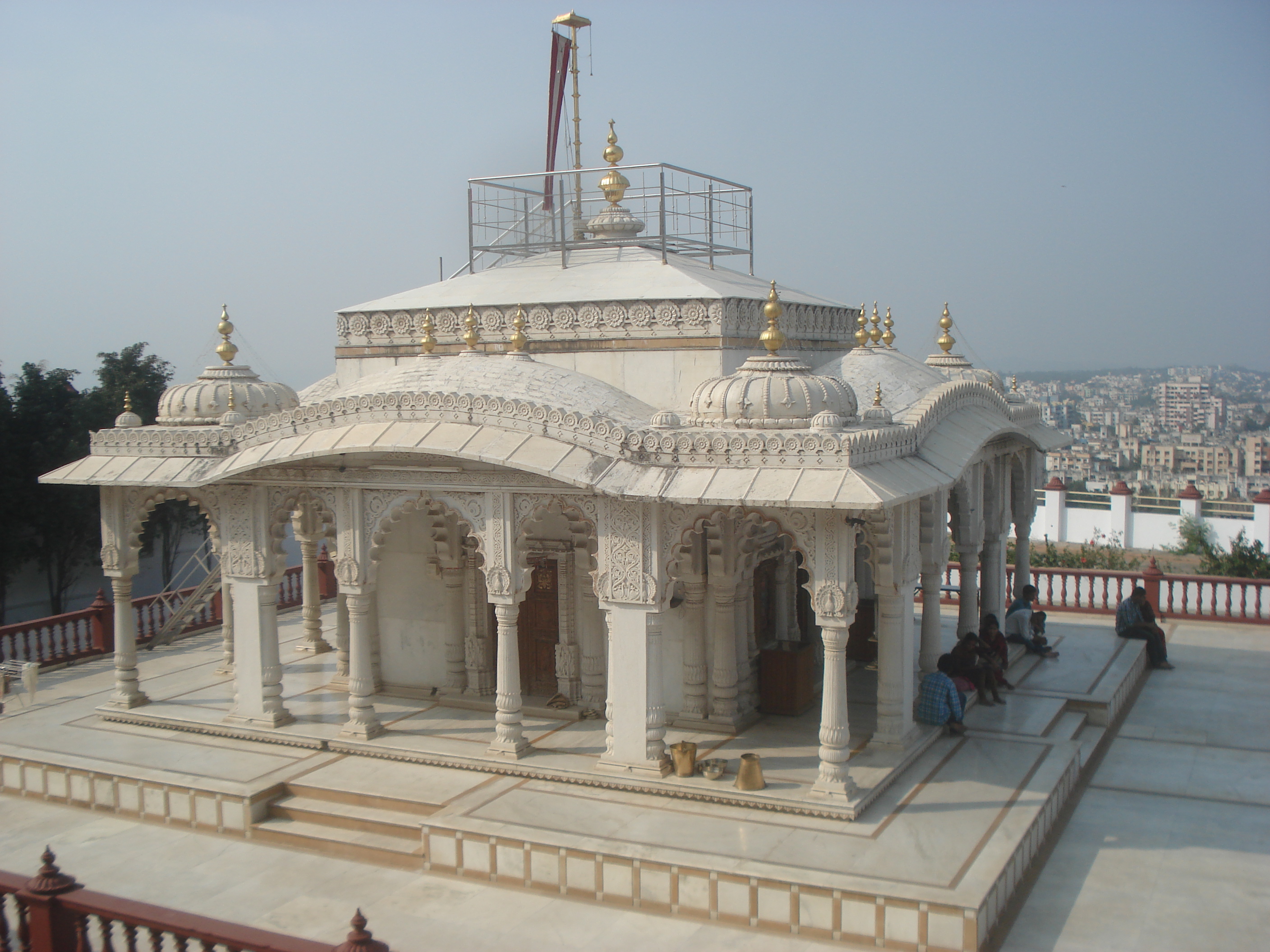
[[File:Jain Pavapuri Jal Mandir Katraj Pune.JPG|thumb|Jain Pavapuri Jal Mandir, Pune]] | [[File:Jain Pavapuri Jal Mandir Katraj Pune.JPG|thumb|Jain Pavapuri Jal Mandir, Pune]] | ||
[[File:Jainism in Maharashtra (2011).jpg|thumb|left|Jainism percent in Maharashtra by district, 2011 census]] | |||
Jains are a major group in Maharashtra. Jain community census for 2011 in Maharashtra area was 1,400,349 (1.25%). They are mostly concentrated in the urban cities in Western Maharashtra. | Jains are a major group in Maharashtra. Jain community census for 2011 in Maharashtra area was 1,400,349 (1.25%). They are mostly concentrated in the urban cities in Western Maharashtra. | ||
| Line 104: | Line 192: | ||
{{Main|Christianity in Maharashtra}} | {{Main|Christianity in Maharashtra}} | ||
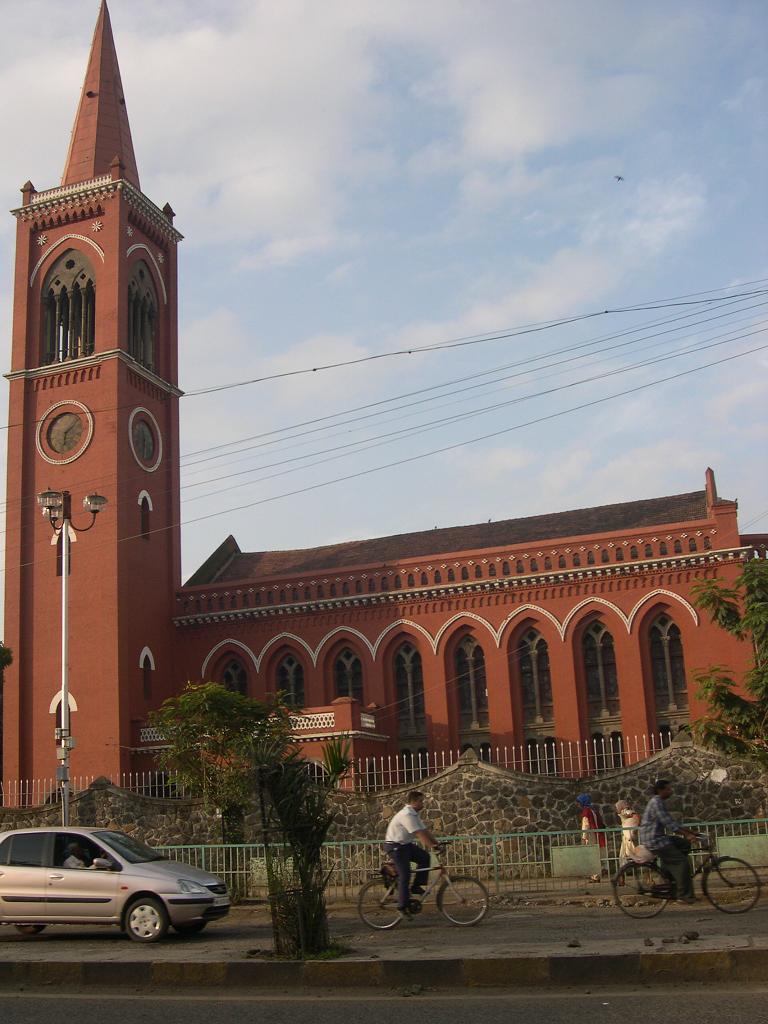
[[File:Mount Mary Church (Bombay).jpg|thumb|right|[[Mount Mary Church, Bandra]] This catholic church is well known for the Annual Feast,]] | [[File:Mount Mary Church (Bombay).jpg|thumb|right|[[Mount Mary Church, Bandra]] This catholic church is well known for the Annual Feast,]] | ||
[[File:Nevasa Church 20231101 222933 Gallery.jpg|thumb|left|Protestant church in the town of Nevasa in Maharashtra]] | |||
Christians account for 1,080,073 or 0.96% of Maharashtra's population. Most of the Christians are Catholics and Protestants. There are also Goan, Mangalorean, Keralite and Tamilian Christians in the urban pockets of Mumbai and Pune. | Christians account for 1,080,073 or 0.96% of Maharashtra's population. Most of the Christians are Catholics and Protestants. There are also Goan, Mangalorean, Keralite and Tamilian Christians in the urban pockets of Mumbai and Pune. | ||
There are two ethnic Christian communities in Maharashtra: | There are two ethnic Christian communities in Maharashtra: | ||
* [[East Indians]] – Majority Catholics, concentrated in Mumbai and in the neighbouring districts of [[Thane]] and [[Raigad district|Raigad]]. St Bartholomew preached to the natives of this region in the 1st century AD.{{Citation needed|reason=Your explanation here|date=December 2018}} | * [[Bombay East Indians]] – Majority Catholics, concentrated in Mumbai and in the neighbouring districts of [[Thane]] and [[Raigad district|Raigad]]. St Bartholomew preached to the natives of this region in the 1st century AD.{{Citation needed|reason=Your explanation here|date=December 2018}} | ||
* [[Marathi Christians]] – Majority Protestants found specially in [[Ahmednagar]] and [[Solapur]]. Protestantism was brought to these areas by American and Anglican missionaries during the 18th century. Marathi Christians have largely retained their pre-Christian cultural practices.{{Citation needed|reason=Your explanation here|date=December 2018}} | * [[Marathi Christians]] – Majority Protestants found specially in [[Ahmednagar]] and [[Solapur]]. Protestantism was brought to these areas by American and Anglican missionaries during the 18th century. Marathi Christians have largely retained their pre-Christian cultural practices.{{Citation needed|reason=Your explanation here|date=December 2018}} | ||
* In the early 19th century some people converted to Christianity during famine in [[Ahmednagar]] and [[Miraj]].<ref>{{cite book|last=Rege|first=Sharmila|author-link=Sharmila Rege|title=Writing caste, writing gender: Reading Dalit women's {{notatypo|testimonios}}|year=2006|publisher=Zubaan|location=New Delhi|isbn=8189013017|page=139|url={{GBurl|id=Msaki69NQHsC|p=139}}}}</ref> They converted after evangelization by [[American Missionary Association|American Marathi Mission]], [[Church Mission Society]] and [[United Society for the Propagation of the Gospel]] by the [[Church of England]] at Ahmednagar.<ref>{{cite web|url=http://www.maharashtra.gov.in/pdf/gazeetter_reprint/Ahmadnagar/pop_musalmans.html#2 |title=Gazetteers Of The Bombay Presidency – Ahmadnagar |publisher=Maharashtra.gov.in |access-date=2011-11-13}}</ref> In [[Ahmednagar]], Missionary travelled between villages to explain the Bible to locals.<ref>{{cite book|last=Shelke|first=Christopher|title=God the Creator : universality of inculturality.|year=2008|publisher=Pontificia università gregoriana|location=Roma|isbn=978-8878391284|page=167|url={{GBurl|id=_rM5g2ZmWPkC|p=178}}}}</ref> who brought these people to Christianity. However, this Christian conversion movement was overshadowed by the large-scale conversion to Buddhism of the Dalits under the leadership of B. R. Ambedkar.<ref>{{cite book |editor1-last=Stackhouse |editor1-first=Max L. |editor2-first=Lalsangkima |editor2-last=Pachuau |title=News of boundless riches: Interrogating, comparing, and reconstructing mission in a global era |date=2007 |publisher=ISPCK |location=Delhi |isbn=978-8184580136 |pages=230–232 |url={{GBurl|id=6OPJ1BJCLw8C|p=229}}}}</ref> | * In the early 19th century some people converted to Christianity during famine in [[Ahmednagar]] and [[Miraj]].<ref>{{cite book|last=Rege|first=Sharmila|author-link=Sharmila Rege|title=Writing caste, writing gender: Reading Dalit women's {{notatypo|testimonios}}|year=2006|publisher=Zubaan|location=New Delhi|isbn=8189013017|page=139|url={{GBurl|id=Msaki69NQHsC|p=139}}}}</ref> They converted after evangelization by [[American Missionary Association|American Marathi Mission]], [[Church Mission Society]] and [[United Society for the Propagation of the Gospel]] by the [[Church of England]] at Ahmednagar.<ref>{{cite web|url=http://www.maharashtra.gov.in/pdf/gazeetter_reprint/Ahmadnagar/pop_musalmans.html#2 |title=Gazetteers Of The Bombay Presidency – Ahmadnagar |publisher=Maharashtra.gov.in |access-date=2011-11-13}}</ref> In [[Ahmednagar]], Missionary travelled between villages to explain the Bible to locals.<ref>{{cite book|last=Shelke|first=Christopher|title=God the Creator : universality of inculturality.|year=2008|publisher=Pontificia università gregoriana|location=Roma|isbn=978-8878391284|page=167|url={{GBurl|id=_rM5g2ZmWPkC|p=178}}}}</ref> who brought these people to Christianity. However, this Christian conversion movement was overshadowed by the large-scale conversion to Buddhism of the Dalits under the leadership of B. R. Ambedkar.<ref>{{cite book |editor1-last=Stackhouse |editor1-first=Max L. |editor2-first=Lalsangkima |editor2-last=Pachuau |title=News of boundless riches: Interrogating, comparing, and reconstructing mission in a global era |date=2007 |publisher=ISPCK |location=Delhi |isbn=978-8184580136 |pages=230–232 |url={{GBurl|id=6OPJ1BJCLw8C|p=229}}}}</ref> | ||
==Sikhism== | ==Sikhism== | ||
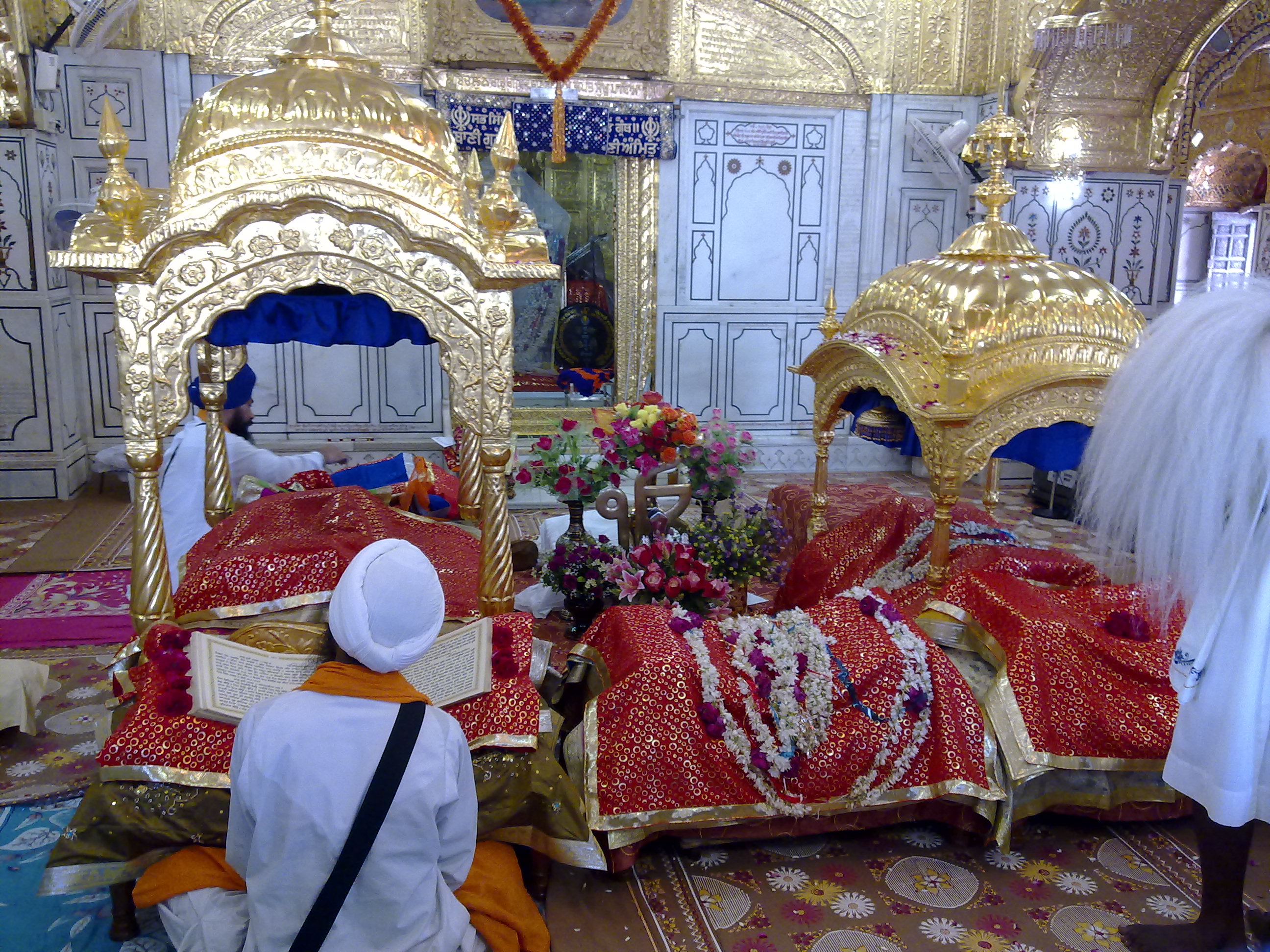
[[File:Hazur Sahib interior.jpg|thumb|alt=Shri Hazoor Sahib Gurudwara Nanded|Interior view of Gurdwara Sach-Khand Hazūr Sāhib,]] | [[File:Hazur Sahib interior.jpg|thumb|alt=Shri Hazoor Sahib Gurudwara Nanded|Interior view of Gurdwara Sach-Khand Hazūr Sāhib]] | ||
There is a sizeable [[Sikhism|Sikh]] population in Maharashtra, with the 2011 census indicating 223,247 or 0.20% adherents.<ref>{{cite web|url= http://censusindia.gov.in/Census_Data_2001/Census_data_finder/C_Series/Population_by_religious_communities.htm |title=Population by Religious communities|publisher=Ministry of Home Affairs, Government of India}}</ref> Major cities in the state such as [[Mumbai]], [[Pune]], [[Nagpur]], [[Nashik]] and [[Aurangabad, Maharashtra|Aurangabad]] have significant Sikh populations. [[Nanded]], the second largest city in the Marathwada region (after Aurangabad), is an important holy place for the Sikh faith and is famous for the [[Hazur Sahib Nanded|Hazur Sahib Gurudwara]]. Hazūr Sāhib ("presence of the master"), also spelled Hazoor Sahib, is one of the five {{ | [[File:Sikhism in Maharashtra.jpg|thumb|left|Sikhism percent in Maharashtra by district, 2011 census]] | ||
There is a sizeable [[Sikhism|Sikh]] population in Maharashtra, with the 2011 census indicating 223,247 or 0.20% adherents.<ref>{{cite web|url= http://censusindia.gov.in/Census_Data_2001/Census_data_finder/C_Series/Population_by_religious_communities.htm |title=Population by Religious communities|publisher=Ministry of Home Affairs, Government of India}}</ref> Major cities in the state such as [[Mumbai]], [[Pune]], [[Nagpur]], [[Nashik]] and [[Aurangabad, Maharashtra|Aurangabad]] have significant Sikh populations. [[Nanded]], the second largest city in the Marathwada region (after Aurangabad), is an important holy place for the Sikh faith and is famous for the [[Hazur Sahib Nanded|Hazur Sahib Gurudwara]]. Hazūr Sāhib ("presence of the master"), also spelled Hazoor Sahib, is one of the five {{transliteration|hi|takhts}} (seats of temporal authority) in Sikhism. Located on the banks of the River Godavari, it is where the 10th Guru, Gobind Singh died. The Gurudwara within the complex is known Sach-Khand, "Realm of Truth". | |||
At a stone-throw distance from the Hazoor Sahib Gurudwara, there lies the Langar Sahib Gurudwara which is very famous for its grand Langar. In all the city has 13 major Gurudwaras with historic significance. There is a significant Sikh population in Mumbai, Pune, Nagpur, Nashik and Aurangabad. | At a stone-throw distance from the Hazoor Sahib Gurudwara, there lies the Langar Sahib Gurudwara which is very famous for its grand Langar. In all the city has 13 major Gurudwaras with historic significance. There is a significant Sikh population in Mumbai, Pune, Nagpur, Nashik and Aurangabad. | ||
==Zoroastrians== | ==Zoroastrians== | ||
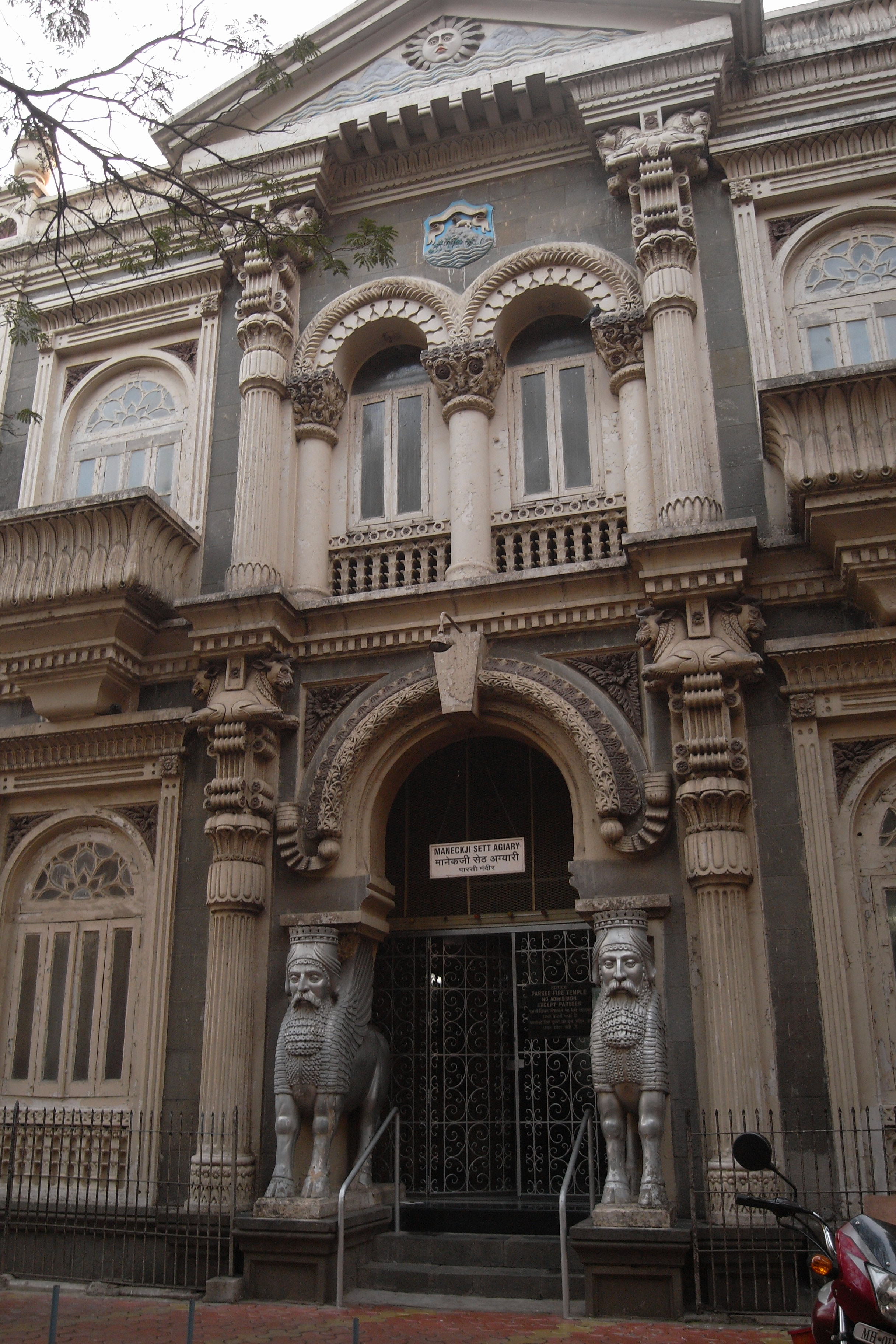
[[File:Maneckji Seth Agiary, Mumbai.jpg| | [[File:Maneckji Seth Agiary, Mumbai.jpg|right|thumb|Maneckji Seth Agiary (Parsi place of worship) in Mumbai.|150x150px]] | ||
There are two [[Zoroastrian]] communities in Maharashtra. | There are two [[Zoroastrian]] communities in Maharashtra. | ||
* [[Parsis]] - The 2011 census found that the vast majority of the tiny Parsi community of India live in Maharashtra, mainly in Mumbai.<ref>{{cite web|url=http://indianexpress.com/article/lifestyle/life-style/where-we-belong-the-fight-of-parsi-women-in-interfaith-marriages-4900480/|title=Where we belong: The fight of Parsi women in interfaith marriages}}</ref><ref>{{cite | * [[Parsis]] - The 2011 census found that the vast majority of the tiny Parsi community of India live in Maharashtra, mainly in Mumbai.<ref>{{cite web|url=http://indianexpress.com/article/lifestyle/life-style/where-we-belong-the-fight-of-parsi-women-in-interfaith-marriages-4900480/|title=Where we belong: The fight of Parsi women in interfaith marriages|date=22 October 2017 }}</ref><ref>{{cite news|url=http://www.thehindu.com/news/national/other-states/Parsi-population-dips-by-22-per-cent-between-2001-2011-study/article14508859.ece|title=Parsi population dips by 22 per cent between 2001-2011: study|website=[[The Hindu]]|date=25 July 2016 }}</ref> have descended from a group of Iranian Zoroastrians who immigrated to Western India during 10th century AD. | ||
* [[Irani (India)|Iranis]], are comparatively recent arrivals, and represent the smaller of the two Indian-Zoroastrian communities. Their descendants culturally and linguistically are closer to the [[Zoroastrians in Iran|Zoroastrians of Iran]], in particular to the Zoroastrians of [[Yazd]] and [[Kerman]]. Consequently, the [[Dari (Zoroastrian)|Dari]] dialect of the Zoroastrians of those provinces may also be heard amongst the Iranis. | * [[Irani (India)|Iranis]], are comparatively recent arrivals, and represent the smaller of the two Indian-Zoroastrian communities. Their descendants culturally and linguistically are closer to the [[Zoroastrians in Iran|Zoroastrians of Iran]], in particular to the Zoroastrians of [[Yazd]] and [[Kerman]]. Consequently, the [[Dari (Zoroastrian)|Dari]] dialect of the Zoroastrians of those provinces may also be heard amongst the Iranis. | ||
==Judaism== | ==Judaism== | ||
[[File:Ohel David Synagogue.jpg| | [[File:Ohel David Synagogue.jpg|left|thumb|120px|[[Ohel David Synagogue]] in Pune.]] | ||
The [[Bene Israel]] ("Sons of Israel") are a community of Marathi Jews originally from villages in the [[Konkan]] region. who migrated in the late 17th century to the nearby cities, primarily Mumbai, but also to Pune, and Ahmedabad.<ref>{{cite journal |last=Fischel |first=Walter |title=Bombay in Jewish History in the Light of New Documents from the Indian Archives |journal=Proceedings of the American Academy for Jewish Research |volume=38/39 |pages=119–144 |jstor=3622356 |date=1970|doi=10.2307/3622356 }}</ref> Prior to these waves of emigrations and to this day, the Bene Israel formed the largest sector of the subcontinent's Jewish population. The native language of the Bene Israel is [[Marathi language|Marathi]].<ref>{{Cite web|date=2019-02-18|title=Jews in Mumbai find new ways to keep religious traditions alive|url=https://www.hindustantimes.com/mumbai-news/jews-in-mumbai-find-new-ways-to-keep-religious-traditions-alive/story-CYBhfoOQ1qoGIjG90vOgSJ.html|access-date=2021-08-23|website=Hindustan Times|language=en}}</ref> Most Bene Israel have now [[aliyah|emigrated to Israel]], Canada and other Commonwealth countries. Before the Indian Independence this community numbered at least 80,000.<ref>{{Cite web|date=2020-02-11|title=Hailing from Maharashtra, a Community of Jews in Israel Celebrate Their Forefathers' Arrival in India|url=https://www.news18.com/news/world/hailing-from-maharashtra-a-community-of-jews-in-israel-celebrate-their-forefathers-arrival-in-india-2496475.html|access-date=2021-08-23|website=News18|language=en}}</ref> They are given minority status by [[Government of Maharashtra]].<ref>{{Cite news|last=Venkataraman|first=Ayesha|date=2016-06-22|title=Maharashtra State in India Grants Jews Minority Status|language=en-US|work=The New York Times|url=https://www.nytimes.com/2016/06/23/world/asia/jews-maharashtra-state-india.html|access-date=2021-08-23|issn=0362-4331}}</ref> | The [[Bene Israel]] ("Sons of Israel") are a community of Marathi Jews originally from villages in the [[Konkan]] region. who migrated in the late 17th century to the nearby cities, primarily Mumbai, but also to Pune, and Ahmedabad.<ref>{{cite journal |last=Fischel |first=Walter |title=Bombay in Jewish History in the Light of New Documents from the Indian Archives |journal=Proceedings of the American Academy for Jewish Research |volume=38/39 |pages=119–144 |jstor=3622356 |date=1970|doi=10.2307/3622356 }}</ref> Prior to these waves of emigrations and to this day, the Bene Israel formed the largest sector of the subcontinent's Jewish population. The native language of the Bene Israel is [[Marathi language|Marathi]].<ref>{{Cite web|date=2019-02-18|title=Jews in Mumbai find new ways to keep religious traditions alive|url=https://www.hindustantimes.com/mumbai-news/jews-in-mumbai-find-new-ways-to-keep-religious-traditions-alive/story-CYBhfoOQ1qoGIjG90vOgSJ.html|access-date=2021-08-23|website=Hindustan Times|language=en}}</ref> Most Bene Israel have now [[aliyah|emigrated to Israel]], Canada and other Commonwealth countries. Before the Indian Independence this community numbered at least 80,000.<ref>{{Cite web|date=2020-02-11|title=Hailing from Maharashtra, a Community of Jews in Israel Celebrate Their Forefathers' Arrival in India|url=https://www.news18.com/news/world/hailing-from-maharashtra-a-community-of-jews-in-israel-celebrate-their-forefathers-arrival-in-india-2496475.html|access-date=2021-08-23|website=News18|language=en}}</ref> They are given minority status by [[Government of Maharashtra]].<ref>{{Cite news|last=Venkataraman|first=Ayesha|date=2016-06-22|title=Maharashtra State in India Grants Jews Minority Status|language=en-US|work=The New York Times|url=https://www.nytimes.com/2016/06/23/world/asia/jews-maharashtra-state-india.html|access-date=2021-08-23|issn=0362-4331}}</ref> | ||
== Notable places of worship == | |||
{{Main|List of places of worship in Maharashtra }} | |||
== Notable | |||
{{Main|List | |||
Maharashtra has numerous places of worship that are more than a few centuries old. | Maharashtra has numerous places of worship that are more than a few centuries old. | ||
| Line 179: | Line 223: | ||
* [[Grishneshwar Temple]] was built before 13th Century CE | * [[Grishneshwar Temple]] was built before 13th Century CE | ||
* [[Bhimashankar Temple]] is believed to date back to 13th Century CE | * [[Bhimashankar Temple]] is believed to date back to 13th Century CE | ||
* [[Haji Ali Dargah]] was built in 1431 CE <ref>{{Cite web |date=2012-09-23 |title=Haji Ali dargah was built in 1431 » Haji Ali Dargah , Mosque in Mumbai |url=http://www.hajiali.org/2007/12/10/78625 |access-date=2023-03-26 |archive-url=https://web.archive.org/web/20120923115723/http://www.hajiali.org/2007/12/10/78625 |archive-date=2012-09-23 }}</ref> | * [[Haji Ali Dargah]] was built in 1431 CE <ref>{{Cite web |date=2012-09-23 |title=Haji Ali dargah was built in 1431 » Haji Ali Dargah, Mosque in Mumbai |url=http://www.hajiali.org/2007/12/10/78625 |access-date=2023-03-26 |archive-url=https://web.archive.org/web/20120923115723/http://www.hajiali.org/2007/12/10/78625 |archive-date=2012-09-23 }}</ref> | ||
* [[Ellora Caves#The Jain monuments: Caves 30–34|The Jain monuments in Ellora Caves (Caves 30–34)]] were built between 753-982 CE <ref>{{Cite web |date=2014-03-30 |title=Ellora Caves, Maharashtra - Archaeological Survey of India |url=http://asi.nic.in/asi_monu_whs_ellora.asp |access-date=2023-03-26 |archive-url=https://web.archive.org/web/20140330153626/http://asi.nic.in/asi_monu_whs_ellora.asp |archive-date=2014-03-30 }}</ref> | * [[Ellora Caves#The Jain monuments: Caves 30–34|The Jain monuments in Ellora Caves (Caves 30–34)]] were built between 753-982 CE <ref>{{Cite web |date=2014-03-30 |title=Ellora Caves, Maharashtra - Archaeological Survey of India |url=http://asi.nic.in/asi_monu_whs_ellora.asp |access-date=2023-03-26 |archive-url=https://web.archive.org/web/20140330153626/http://asi.nic.in/asi_monu_whs_ellora.asp |archive-date=2014-03-30 }}</ref> | ||
* [[Kumbhoj#Jain Temple|Jain Temple in Kumbhoj]] was built in 1156 CE | * [[Kumbhoj#Jain Temple|Jain Temple in Kumbhoj]] was built in 1156 CE | ||
| Line 190: | Line 234: | ||
* [[St. Andrew's Church, Mumbai|St. Andrew's Church in Mumbai]] was built in 1575 | * [[St. Andrew's Church, Mumbai|St. Andrew's Church in Mumbai]] was built in 1575 | ||
* [[St. John the Baptist Church, Mumbai|St. John the Baptist Church in Mumbai]] was built in 1579 | * [[St. John the Baptist Church, Mumbai|St. John the Baptist Church in Mumbai]] was built in 1579 | ||
* [[Basilica of Our Lady of the Mount, Bandra]] was built in the 16th century | |||
==See also== | ==See also== | ||
* [[Outline of Maharashtra]] | * [[Outline of Maharashtra]] | ||
* [[List of Maratha dynasties and states]] | * [[List of Maratha dynasties and states]] | ||
* [[List of Marathi people]] | * [[List of Marathi people]] | ||
* [[Religion in India]] | * [[Religion in India]] | ||
*[[Demographics of Maharashtra]] | * [[Demographics of Maharashtra]] | ||
{{reflist|group=note}} | {{reflist|group=note}} | ||
==References== | ==References== | ||
'''Notes''' | |||
{{notelist}} | |||
{{Reflist}} | {{Reflist}} | ||
==Sources== | ==Sources== | ||
* {{Citation | * {{Citation | ||
| Line 215: | Line 261: | ||
|url={{GBurl|id=Pyon3IOpX-AC}} | |url={{GBurl|id=Pyon3IOpX-AC}} | ||
}} | }} | ||
== External links == | == External links == | ||
{{Commons category}} | {{Commons category}} | ||
| Line 222: | Line 269: | ||
[[Category:Religion in Maharashtra| ]] | [[Category:Religion in Maharashtra| ]] | ||
[[Category:Religion in India by state or union territory|Maharashtra]] | [[Category:Religion in India by state or union territory|Maharashtra]] | ||
Latest revision as of 02:53, 25 March 2026
Religion in Maharashtra is characterised by the diversity of religious beliefs and practices.
According to the 2011 census, Hinduism was the principal religion in the state at 79.83% of the total population, while Muslims constituted 11.54% of the total population. Maharashtra has India's largest Buddhist and Jain populations. Buddhism accounted for 5.81% in Maharashtra's total population, with 6.53 million followers, which is 77% of all Buddhists in India. Jains, Christians and Sikhs constituted 1.25%, 0.96%, 0.2% of the population respectively.[2] Maharashtra also is home to the Parsi (Zoroastrian) community and has a community of Jews known as Bene Israel.
Statistics[edit | edit source]
| Religion | 1951 | 1961 | 2001[3] | 2011[4] |
|---|---|---|---|---|
| Hinduism | 28,642,304 | 32,530,901 | 77,859,385 | 89,703,057 |
| Islam | 2,436,357 | 3,034,332 | 10,270,485 | 12,971,152 |
| Buddhism | 2,487 | 2,789,501 | 5,838,710 | 6,531,200 |
| Jainism | 337,578 | 485,672 | 1,301,843 | 1,400,349 |
| Christianity | 433,290 | 560,594 | 1,058,313 | 1,080,073 |
| Sikhism | 41,434 | 57,617 | 215,337 | 223,247 |
| Other | 109,114 | 95,101 | 236,841 | 178,965 |
| Not stated | n/a | n/a | n/a | 286,290 |
| Total | 32,002,564 | 39,553,718 | 96,878,627 | 112,374,333 |
* starting in 1956 most people belonging mostly to the Mahar community have converted from Hinduism to Buddhism in Maharashtra
| Religion | 1951 | 1961 | 2001[3] | 2011[3] |
|---|---|---|---|---|
| Hinduism | 89.50 | 82.24 | 80.37 | 79.83 |
| Islam | 7.61 | 7.67 | 10.60 | 11.54 |
| Buddhism | 0.01 | 7.05 | 6.03 | 5.81 |
| Jainism | 1.06 | 1.23 | 1.34 | 1.25 |
| Christianity | 1.35 | 1.42 | 1.09 | 0.96 |
| Sikhism | 0.13 | 0.15 | 0.22 | 0.20 |
| Other | 0.34 | 0.24 | 0.24 | 0.17 |
| Not stated | n/a | n/a | 0.11 | 0.25 |
| Total | 100 | 100 | 100 | 100 |
Hinduism[edit | edit source]


Hindus form 79.83% of the state's total population as per 2011 census and Hinduism plays an important role in the lives of the Maharashtrian people in their day-to-day life. Ganesha, incarnations of Vishnu such as Vitthala, Rama, Krishna and Dattatreya, as well as Hanuman, Shiva and Parvati are popular with Hindus of Maharashtra. Shiva is worshipped mainly in the form of lingam, with a metal mask covering it at some temples.[5] The Warkari tradition holds a strong grip on the local Hindus of Maharashtra.[6]:140–170 The public Ganesha festival started by Bal Gangadhar Tilak in the late 19th century is very popular. Marathi Hindus also revere Bhakti saints associated with varkari sects such as Dnyaneshwar, Savata Mali, Tukaram, Namdev, Janabaii and Chokhamela. Many religious figures from 19th and 20th century are revered.They include Swami Samarth, Gajanan Maharaj, Sai baba of Shirdi, Tukdoji Maharaj, Gondavalekar Maharaj, and Gadge Maharaj.[7]
Maharashtra has significant Hindu populations with origins in other states and regions of India, which adds to the diversity of temples and traditions in the state. The state has numerous recently built temples by groups such as the Swaminarayan sect, ISKCON, and South Indian communities.
Ceremonies, rituals, and festivals[edit | edit source]


.jpg)

The main life ceremonies in Hindu culture include those related to birth, weddings, initiation ceremonies, as well as death rituals. Other ceremonies for different occasions in Hindu life include Vastushanti and "Satyanarayan" which is performed before a family formally establishes residence in a new house. Satyanarayana Puja is a ceremony performed before commencing any new endeavour or for no particular reason. Invoking the name of the family's gotra and the kuladevata are important aspects of these ceremonies for many communities.
Like most other Hindu communities, the Marathi people have a household shrine called a devaghar with idols, symbols, and pictures of various deities for daily worship. Ritual reading of religious texts known as pothi is also popular in some communities.
In some traditional families, food is first offered to the preferred deity in the household shrine, as naivedya, before being consumed by family members and guests. Meals or snacks are not taken before this religious offering. In present times, the naivedya is offered by families only on days of special religious significance.
Many Marathi people trace their paternal ancestors to one of the seven or eight sages, the saptarshi. They classify themselves as gotras, named after the ancestor rishi. Intra-marriage within gotras (Sagotra Vivaha) was uncommon until recently, being discouraged as it was likened to incest.
Most Marathi families have their own family patron or protective deity or the Kuladevata.[6]:1–27 This deity is common to a lineage or a clan of several families who are connected to each other through a common ancestor.[8] The Khandoba of Jejuri is an example of a Kuladaivat of some families; he is a common Kuladaivat to several castes ranging from Brahmins to Dalits.[9] The practice of worshiping local or territorial deities as Kuladaivats began in the period of the Yadava dynasty.[10] Other family deities of the people of Maharashtra are Bhavani of Tuljapur, Mahalaxmi of Kolhapur, Mahalaxmi of Amravati, Renuka of Mahur, Parashurama in Konkan, Saptashringi on Saptashringa hill at Vani in Nasik district, and Balaji.
At birth, a child is initiated into the family ritually. The child's naming ceremony may happen many weeks or even months later, and it is called the barsa. During the naming ceremony, the child's paternal aunt has the honor of naming the infant. When the child is 11 months old, they get their first hair-cut.[11][full citation needed] This is also an important ritual and is called Jawal. In the Maratha community, the maternal uncle is given the honour of the first snip during the ceremony.[12]
In Brahman, CKP and Gaud Saraswat Brahman communities when a male child reaches his eighth birthday, he undergoes the initiation thread ceremony variously known as Munja Vratabandha, or Upanayanam.[13] 96 kuli marathas generally conduct the Upanayanam ceremony before marriage.
Marathi Hindu people are historically endogamous within their caste but exogamous with their clan (gotra).[11][full citation needed] Cross-cousin alliances are allowed by most Marathi Hindu communities.[12] Hindu marriages, take place by negotiation.Studies show that most Indians' traditional views on caste, religion, and family background have remained unchanged when it came to marriage, that is, people marry within their own castes,[14] and matrimonial advertisements in newspapers are still classified by caste and sub-caste.[15]
Elements of a traditional Marathi Hindu wedding ceremony include seemant poojan on the wedding eve. The dharmic wedding includes the antarpat ceremony followed by the vedic ceremony which involves the bridegroom and the bride walking around the sacred fire seven times to complete the marriage. Modern urban wedding ceremonies conclude with an evening reception. A Marathi Hindu woman becomes part of her husband's family after marriage and adopts the gotra as well as the traditions of her husband's family. After weddings and after thread ceremonies, many Maratha and Deshastha Brahmin families arrange a traditional religious singing performance by a Gondali group.[16] Women from Hindu community are given a necklace called mangalasutra during the wedding ceremony by the groom. This is worn as a symbol of marriage by women throughout their married life.[17][18]
Marathi Hindu people dispose their dead by cremation.[19][full citation needed] The ashes are gathered in an earthen pitcher and immersed in a river on the third day after death. This is a 13-day ritual with the pinda being offered to the dead soul on the 11th and a Śrāddha ceremony followed by a funeral feast on the 13th. Cremation is performed according to vedic rites, usually within a day of the individual's death. Śrāddha becomes an annual ritual in which all forefathers of the family who have passed on are remembered.
Hindu Marathi people celebrate several festivals during the year. These include Gudi Padwa, Rama Navami, Hanuman Jayanti, Narali Pournima, Mangala Gaur, Navaratri, Janmashtami, Ganeshotsav, Kojagiri, Diwali, Khandoba Festival (Champa Shashthi), Makar Sankranti, Shivaratri, Holi, Raksha Bandhan and Shiv Jayanti. Most villages in Maharashtra also have a Jatra or Urus in honor of the village deity. Most of these festivals are also celebrated by Hindu communities in the state who have origins in other regions of India.
Syncretic traditions[edit | edit source]
Maharashtra has shrines dedicated to saints and holy men all over the state that are revered by both Hindus and Muslims. The Naunaths of Hindus have counterparts among Muslims too. The shrine of Kanifnath is visited by both Hindus and Muslims. In modern times, Sai Baba of Shirdi has embodied this syncretic tradition.[20]
Islam[edit | edit source]

Islam is the second largest religion in the state, with 12,967,840 adherents comprising 11.54% of the population, per estimates.[citation needed]The Muslim population in the state is heterogeneous. The majority of Muslims are mostly Sunni Muslims.[citation needed]and Shia Muslims There are also regional differences with the Konkani muslim community having a distinct character because of their history. For millennia, the Konkan coast has had mercantile relations with major ports on the Red Sea and Persian Gulf.Konkani Muslims can trace their ancestry to Arab traders who visited the konkan coast in the medieval era[21] Konkani Muslims follow also the Shafi'i school of Sunni Islamic law. This is in contrast to the rest of North India and Deccan regions whose Sunni Muslims adhere to the Hanafi school.[22][23]
The population in the state is highly urbanised, and spread across different regions. The urban character of the community in Maharashtra can be seen from the fact that Mumbai, the capital city of Maharashtra, is approximately 18.8% Muslim per the Census.[24] Mumbai, the capital city of the state, has approximately over 3 million Muslims, and the Muslim population of Mumbai is the city with a large Muslim population among any city outside Muslim-majority countries. The Haji Ali Dargah in Mumbai which is situated on an island is a famous islamic shrine in Maharashtra. Similarly, Nagpur, the second capital of Maharashtra, has population that is 11% Muslim.Marathwada region which formerly was part of Nizam ruled Hyderabad state has much higher muslim population than other parts of the state. In the Marathwada city of Aurangabad, Muslims form 30.79%[25] of the population, while in the northern city of Malegaon, Muslims are 79% of the population. The headquarters of Gujarati speaking Bohra shia Muslims community is located in Mumbai.[26]
Eid-ul-Fitr (Ramzan Eid) and Eid-ul-Azha (Bakari Eid) are the two most important Muslim festivals in the state. Visiting the tombs (Dargah) of Sufi saints is an important part of cultural and religious life of Muslims in Maharashtra. The annual death anniversary of the saints is celebrated with fairs (Urs) that attracts thousands of visitors.[27]
Buddhism[edit | edit source]

.jpg)
.jpg)
Buddhism is the third largest religion in the state. Buddhism accounts 5.81% in Maharashtra's total population. 6,531,200 people are followers of Buddhism in Maharashtra as per 2011 census. Maharashtra account for 77.36% of all Buddhists in India.[28] Marathi Buddhists are followers of Navayana Buddhism of the Dalit Buddhist movement, a 20th-century Buddhist revival movement in India that received its most substantial impetus from Babasaheb Ambedkar born in Hindu Mahar family who called for the conversion of Dalits to Buddhism in order to liberate themselves from the caste-based society that have been harshly treated them in the hierarchy.[29] Dhammachakra Pravartan Din or Dhamma Wheel's Promulgation Day is also widely celebrated by the local Buddhist community for the Buddhist conversion of B. R. Ambedkar and his approximately 600,000 followers on 14 October 1956 at Deekshabhoomi, Nagpur.[30]
Jainism[edit | edit source]

.jpg)
Jains are a major group in Maharashtra. Jain community census for 2011 in Maharashtra area was 1,400,349 (1.25%). They are mostly concentrated in the urban cities in Western Maharashtra.
The vast majority of Jains in Maharashtra originate from the Marwad and Mewad regions of Rajasthan and from the state of Gujarat.[31] There are also indigenous Marathi Jain communities such as Saitwal, Chaturtha, Panchama & Kumbhoja found in Maharashtra.[32] Rulers of Maharashtra from the 1st millennium CE such as Rashtrakuta and the Chalukya were followers of Jain religion. Along with Hindu and Buddhist caves, there are a number of Jain caves at the ancient cave complex of Ellora.
Christianity[edit | edit source]
.jpg)

Christians account for 1,080,073 or 0.96% of Maharashtra's population. Most of the Christians are Catholics and Protestants. There are also Goan, Mangalorean, Keralite and Tamilian Christians in the urban pockets of Mumbai and Pune. There are two ethnic Christian communities in Maharashtra:
- Bombay East Indians – Majority Catholics, concentrated in Mumbai and in the neighbouring districts of Thane and Raigad. St Bartholomew preached to the natives of this region in the 1st century AD.[citation needed]
- Marathi Christians – Majority Protestants found specially in Ahmednagar and Solapur. Protestantism was brought to these areas by American and Anglican missionaries during the 18th century. Marathi Christians have largely retained their pre-Christian cultural practices.[citation needed]
- In the early 19th century some people converted to Christianity during famine in Ahmednagar and Miraj.[33] They converted after evangelization by American Marathi Mission, Church Mission Society and United Society for the Propagation of the Gospel by the Church of England at Ahmednagar.[34] In Ahmednagar, Missionary travelled between villages to explain the Bible to locals.[35] who brought these people to Christianity. However, this Christian conversion movement was overshadowed by the large-scale conversion to Buddhism of the Dalits under the leadership of B. R. Ambedkar.[36]
Sikhism[edit | edit source]


There is a sizeable Sikh population in Maharashtra, with the 2011 census indicating 223,247 or 0.20% adherents.[37] Major cities in the state such as Mumbai, Pune, Nagpur, Nashik and Aurangabad have significant Sikh populations. Nanded, the second largest city in the Marathwada region (after Aurangabad), is an important holy place for the Sikh faith and is famous for the Hazur Sahib Gurudwara. Hazūr Sāhib ("presence of the master"), also spelled Hazoor Sahib, is one of the five takhts (seats of temporal authority) in Sikhism. Located on the banks of the River Godavari, it is where the 10th Guru, Gobind Singh died. The Gurudwara within the complex is known Sach-Khand, "Realm of Truth". At a stone-throw distance from the Hazoor Sahib Gurudwara, there lies the Langar Sahib Gurudwara which is very famous for its grand Langar. In all the city has 13 major Gurudwaras with historic significance. There is a significant Sikh population in Mumbai, Pune, Nagpur, Nashik and Aurangabad.
Zoroastrians[edit | edit source]

There are two Zoroastrian communities in Maharashtra.
- Parsis - The 2011 census found that the vast majority of the tiny Parsi community of India live in Maharashtra, mainly in Mumbai.[38][39] have descended from a group of Iranian Zoroastrians who immigrated to Western India during 10th century AD.
- Iranis, are comparatively recent arrivals, and represent the smaller of the two Indian-Zoroastrian communities. Their descendants culturally and linguistically are closer to the Zoroastrians of Iran, in particular to the Zoroastrians of Yazd and Kerman. Consequently, the Dari dialect of the Zoroastrians of those provinces may also be heard amongst the Iranis.
Judaism[edit | edit source]

The Bene Israel ("Sons of Israel") are a community of Marathi Jews originally from villages in the Konkan region. who migrated in the late 17th century to the nearby cities, primarily Mumbai, but also to Pune, and Ahmedabad.[40] Prior to these waves of emigrations and to this day, the Bene Israel formed the largest sector of the subcontinent's Jewish population. The native language of the Bene Israel is Marathi.[41] Most Bene Israel have now emigrated to Israel, Canada and other Commonwealth countries. Before the Indian Independence this community numbered at least 80,000.[42] They are given minority status by Government of Maharashtra.[43]
Notable places of worship[edit | edit source]
Maharashtra has numerous places of worship that are more than a few centuries old.
- Vithoba Temple in Pandharpur was built between 1108–1152 CE
- Tulja Bhavani Temple in Tuljapur was built in 12th Century CE
- Grishneshwar Temple was built before 13th Century CE
- Bhimashankar Temple is believed to date back to 13th Century CE
- Haji Ali Dargah was built in 1431 CE [44]
- The Jain monuments in Ellora Caves (Caves 30–34) were built between 753-982 CE [45]
- Jain Temple in Kumbhoj was built in 1156 CE
- Jain Temples in Mangi-Tungi are believed to date back to 595 CE
- Hazur Sahib Gurdwara in Nanded was built between 1832 and 1837 [46]
- Gate of Mercy Synagogue in Mumbai was built in 1796
- Knesset Eliyahoo Orthodox Jewish synagogue located in downtown Mumbai was built in 1884
- Magen David Synagogue (Byculla) in Mumbai was built in 1864
- Church of Our Lady of Health, Cavel in Mumbai was built in 1794
- St. Andrew's Church in Mumbai was built in 1575
- St. John the Baptist Church in Mumbai was built in 1579
- Basilica of Our Lady of the Mount, Bandra was built in the 16th century
See also[edit | edit source]
- Outline of Maharashtra
- List of Maratha dynasties and states
- List of Marathi people
- Religion in India
- Demographics of Maharashtra
References[edit | edit source]
Notes
- ↑ Going clockwise from the statue of Khandoba, a copper container with Gangajal or water from the River Ganges, bell used during Hindu rituals, oil lamp, Copper plate bearing images of the Eight Ganesh idols or Ashtavinayak, a metal plate of a Goddess, Lead oxide coated image of Goddess Renuka, conch shell or Shankh, Goddess Annapurna, Ganesh, crawling BalKrishna, or baby Krishna, black Shivling, black sandals representing a saint revered by the family
- ↑ "Population by religious community - 2011". 2011 Census of India. Office of the Registrar General & Census Commissioner. Archived from the original on 25 August 2015. Retrieved 25 August 2015.
- ↑ "Population by religion community – 2011". Census of India, 2011. The Registrar General & Census Commissioner, India. Archived from the original on 25 August 2015.
- ↑ 3.0 3.1 3.2 "Total population by religious communities". Censusindia.gov.in. Archived from the original on 19 January 2008. Retrieved 20 November 2014.
- ↑ "Indian Census 2011". Census Department, Government of India. Archived from the original on 13 September 2015. Retrieved 25 August 2015.
- ↑ Pattanaik, D. (2006). Shiva to Shankara: Decoding the phallic symbol. Indus Source.[1]
- ↑ 6.0 6.1 Maxine Berntsen, ed. (1988). The Experience of Hinduism: Essays on Religion in Maharashtra. SUNY Press. ISBN 978-0-88706-662-7.
- ↑ Larios, B. (2022). Interleaf B:“This Is My Shirdi”. Devotional Spaces of a Global Saint: Shirdi Sai Baba's Presence.[2]
- ↑ Walunjkar, T. N., Dr. (2009). "Religion". In A.S. Pathak (ed.). Maharashtra, Land and Its People (rev. ed.). Mumbai: Gazetteers Department, Govt. of Maharashtra. pp. 285–287.
{{cite book}}: CS1 maint: multiple names: authors list (link) - ↑ Government of Maharashtra (1962). "The People: Religious Beliefs". Ratnagiri District Gazetteer. Archived from the original on 14 January 2008. Retrieved 10 October 2010.
- ↑ Walunjkar 2009, pp. 285–287.
- ↑ 11.0 11.1 Ghosal 2004, pp. 478–480.
- ↑ 12.0 12.1 Carter, A. T. (1973). "A Comparative Analysis of Systems of Kinship and Marriage in South Asia". Proceedings of the Royal Anthropological Institute of Great Britain and Ireland No. 1973 (1973), Pp. 29-54 (1973): 33. doi:10.2307/3031719. JSTOR 3031719.
- ↑ Mookerji, Radhakumud (1989). Ancient Indian Education: Brahmanical and Buddhist. Motilal Banarsidass. pp. 174–175. ISBN 978-81-208-0423-4.
- ↑ Singh, J. P. (2005). The contemporary Indian family. Handbook of world families, 129-166.[3]
- ↑ "Caste in doubt: The perilous arithmetic of positive discrimination". The Economist. 10 June 2010. Retrieved 10 October 2010.
- ↑ Zelliot & Berntsen 1988, pp. 176.
- ↑ Agarwal, P. (2021). downloaded from Explore Bristol Research, http://research-information. bristol. ac. uk.[4]
- ↑ Gowda, G. (2018). Mangalasutra-The Sacred Pendant of Women As Symbol of Marriage in India. SAARC Culture, 22.[5]
- ↑ Ghosal 2004, p. 479.
- ↑ J. J. Roy Burman (2002). Hindu-Muslim Syncretic Shrines and Communities. Mittal Publications. pp. 1–15. ISBN 978-81-7099-839-6.
- ↑ Dr Omar Khalidi. "History". www.ikonkani.com. i-konkani. Archived from the original on 5 July 2015. Retrieved 19 April 2015. [6]
- ↑ Nasiri, Md. Jalis Akhtar (2010). Indian Muslims: Their Customs and Traditions during Last Fifty Years (Ph.D.). New Delhi: Jawaharlal Nehru University.
- ↑ Dandekar, Deepra (2017). "Margins or Center? Konkani Sufis, India and "Arabastan"". In Mielke, Katja; Hornidge, Anna-Katharina (eds.). Area Studies at the Crossroads: Knowledge Production after the Mobility Turn. Palgrave Macmillan. pp. 141–156.
- ↑ "Census GIS Household". Census of India. Office of the Registrar General. Archived from the original on 6 July 2010. Retrieved 9 December 2008.
- ↑ "Aurangabad District Religion Data - Census 2011". www.census2011.co.in. Retrieved 26 July 2017.
- ↑ Qutbuddin, Tahera (2013). The Encyclopedia of Islam Three. Brill. p. 58.
- ↑ J. J. Roy Burman. “Shivaji’s Myth and Maharashtra’s Syncretic Traditions.” Economic and Political Weekly 36, no. 14/15 (2001): 1226–34. http://www.jstor.org/stable/4410485.
- ↑ Moudgil, Manu (17 June 2017). "Dalits Are Still Converting to Buddhism, but at a Dwindling Rate". TheQuint. Archived from the original on 9 November 2022. Retrieved 10 November 2022.
- ↑ Thomas Pantham; Vrajendra Raj Mehta; Vrajendra Raj Mehta (2006). Political Ideas in Modern India: thematic explorations. Sage Publications. ISBN 0-7619-3420-0.
- ↑ "53rd Dhammachakra Pravartan day celebrated in Nagpur". Daily News and Analysis. 28 September 2009. Retrieved 21 April 2022.
- ↑ Gadgil, D.R., 1952. Poona: Socio-economic survey. Part II.
- ↑ B. V. Bhanu (2004). Maharashtra. Popular Prakashan. pp. 910–. ISBN 978-81-7991-101-3.
- ↑ Rege, Sharmila (2006). Writing caste, writing gender: Reading Dalit women's testimonios. New Delhi: Zubaan. p. 139. ISBN 8189013017.
- ↑ "Gazetteers Of The Bombay Presidency – Ahmadnagar". Maharashtra.gov.in. Retrieved 2011-11-13.
- ↑ Shelke, Christopher (2008). God the Creator : universality of inculturality. Roma: Pontificia università gregoriana. p. 167. ISBN 978-8878391284.
- ↑ Stackhouse, Max L.; Pachuau, Lalsangkima, eds. (2007). News of boundless riches: Interrogating, comparing, and reconstructing mission in a global era. Delhi: ISPCK. pp. 230–232. ISBN 978-8184580136.
- ↑ "Population by Religious communities". Ministry of Home Affairs, Government of India.
- ↑ "Where we belong: The fight of Parsi women in interfaith marriages". 22 October 2017.
- ↑ "Parsi population dips by 22 per cent between 2001-2011: study". The Hindu. 25 July 2016.
- ↑ Fischel, Walter (1970). "Bombay in Jewish History in the Light of New Documents from the Indian Archives". Proceedings of the American Academy for Jewish Research. 38/39: 119–144. doi:10.2307/3622356. JSTOR 3622356.
- ↑ "Jews in Mumbai find new ways to keep religious traditions alive". Hindustan Times. 2019-02-18. Retrieved 2021-08-23.
- ↑ "Hailing from Maharashtra, a Community of Jews in Israel Celebrate Their Forefathers' Arrival in India". News18. 2020-02-11. Retrieved 2021-08-23.
- ↑ Venkataraman, Ayesha (2016-06-22). "Maharashtra State in India Grants Jews Minority Status". The New York Times. ISSN 0362-4331. Retrieved 2021-08-23.
- ↑ "Haji Ali dargah was built in 1431 » Haji Ali Dargah, Mosque in Mumbai". 2012-09-23. Archived from the original on 2012-09-23. Retrieved 2023-03-26.
- ↑ "Ellora Caves, Maharashtra - Archaeological Survey of India". 2014-03-30. Archived from the original on 2014-03-30. Retrieved 2023-03-26.
- ↑ Singh, S. Harpal (2019-12-29). "Guru Nanak's centuries-old link with Nizam's Nirmal". The Hindu. ISSN 0971-751X. Retrieved 2023-03-26.
Sources[edit | edit source]
- Zelliot, Eleanor; Berntsen, Maxine (1988), The Experience of Hinduism: essays on religion in Maharashtra, SUNY Press, ISBN 978-0-88706-664-1
External links[edit | edit source]
- 2011 Census of India (2011). "2011 Census of India: Maharashtra". Census of India. Government of India.
{{cite web}}: CS1 maint: numeric names: authors list (link)
| Topics | |||||||||||||
|---|---|---|---|---|---|---|---|---|---|---|---|---|---|
| Regions | |||||||||||||
| Divisions and Districts |
| ||||||||||||
| Million-plus cities in Maharashtra | |||||||||||||
| Other cities with municipal corporations | |||||||||||||
