



m Bot: Delinking broken file(s) using script (info) |
adjusted structure further and improved wording to improve readability |
||
| Line 1: | Line 1: | ||
{{short description|Colonial pseudo-diocesan synod in 1599}} | |||
{{Use Indian English|date=October 2019}} | {{Use Indian English|date=October 2019}} | ||
{{Use dmy dates|date= | {{Use dmy dates|date=December 2024}} | ||
{{Nasrani people}} | {{Nasrani people}} | ||
{{Christianity in India sidebar}} | {{Christianity in India sidebar}} | ||
<!---please fill in edit summary about WHY you are making any change. For substantial changes, please discuss first on talk page---> | <!---please fill in edit summary about WHY you are making any change. For substantial changes, please discuss first on talk page---> | ||
<!---please keep the introduction short and precise. Don't add irrelevant info here---> | |||
The '''Synod of Diamper''' ({{langx|ml|ഉദയംപേരൂർ സൂനഹദോസ്| Udayampērūṟ Sūnahadōs}}) was a [[Catholic Church|Catholic]] diocesan [[synod]] held at [[Udayamperoor]] (Diamper in non-vernacular sources) in June 1599 that created rules and regulations for the ancient [[Saint Thomas Christians]] (also known as ''Mar Thoma Nasranis'') of the [[Malabar Coast]], a part of modern-day [[Kerala]], [[India]]. The synod formally subjugated them to [[Latin Church|Latin Catholic]] authorities, downgrading the [[India (East Syriac ecclesiastical province)|Metropolitanate of India]] to the [[Archdiocese of Cranganore|Archdiocese of Angamalé]], a [[Suffragan diocese|suffragan see]] to the [[Archdiocese of Goa]], which was administered by Portuguese ''[[Padroado]]'' missionaries.<ref>{{Cite book|last=Melton|first=J. Gordon|url=https://books.google.com/books?id=bI9_AwAAQBAJ&pg=PA1152|title=Faiths Across Time: 5,000 Years of Religious History [4 Volumes]: 5,000 Years of Religious History|year=2014|isbn=9781610690263|pages=1152|publisher=Abc-Clio }}</ref><ref>{{Cite book|editor-last=Nedungatt|editor-first=George|url=https://books.google.com/books?id=hgguAAAAYAAJ|title=The Synod of Diamper Revisited|publisher=Pontificio Istituto Orientale|year=2001|isbn=9788872103319|pages=155}}</ref> The synod also forced [[Latinisation of liturgy|liturgical latinisation]] and the eschewal of local practices and beliefs, leading to a significant protest known as the [[Coonan Cross Oath]] and a subsequent schism in the mid-17th century.<ref>{{cite web |url=https://www.britannica.com/event/Synod-of-Diamper|title=Synod of Diamper|work=Encyclopædia Britannica|access-date=10 January 2021|quote=The forced Latinization and disregard for local tradition were accompanied by violence and led to schism among Thomas Christians by the mid-17th century.}}</ref> | |||
The | [[File:The ancient roof structure of synod church,Udayamperror - panoramio.jpg|thumb|Interior of the [[Synodal church, Udayamperoor|Udayamperūr Syro-Malabar Church]] which had hosted the Synod of Diamper]] | ||
==Background== | |||
<!---please fill in edit summary about WHY you are making any change. For substantial changes, please discuss first on talk page---> | |||
The Saint Thomas Christians were in communion with the [[Church of the East]] of Persia and the [[Patriarch of the Church of the East|Patriarch of the Seleucia-Ctesiphon]], and relied on their bishops.<ref>{{cite encyclopedia |first=Sebastian P. |last=Brock|author-link=Sebastian Brock |title=Chaldean Syrian Church |encyclopedia=Gorgias Encyclopedic Dictionary of the Syriac Heritage: Electronic Edition | | ===Early history of Saint Thomas Christians=== | ||
The [[Saint Thomas Christians]], who trace their origins to the evangelistic activity of Thomas the Apostle in the 1st century, were in communion with the [[Church of the East]] of Persia and the [[Patriarch of the Church of the East|Patriarch of the Seleucia-Ctesiphon]], and relied on their bishops.<ref>{{cite encyclopedia |first=Sebastian P. |last=Brock|author-link=Sebastian Brock |title=Chaldean Syrian Church |encyclopedia=Gorgias Encyclopedic Dictionary of the Syriac Heritage: Electronic Edition |editor-first1=Sebastian P. |editor-last1=Brock |editor-first2=Aaron M. |editor-last2=Butts |editor-first3=George A. |editor-last3=Kiraz |editor-first4=Lucas |editor-last4=Van Rompay |url=https://gedsh.bethmardutho.org/Chaldean-Syrian-Church |publisher=Gorgias Press|year=2011c|access-date=22 September 2016}}</ref> | |||
Thus, while the bishops from the Middle East were the spiritual heads of the Church, the general administration of the Church of Kerala was governed by an indigenous priest known as ''Arkkadiyakkon'' or ''Archdeacon''.<ref>{{cite web |url=https://gedsh.bethmardutho.org/Thomas-Christians |title=Thomas Christians|publisher= e-GEDSH:Gorgias Encyclopedic Dictionary of the Syriac Heritage|quote=Although India was supplied with bishops from the Middle East, the effective control lay in the hands of the indigenous Archdeacon.|last1=Brock |first1=Sebastian P. }}</ref> He was the community leader of [[Saint Thomas Christians]]. Even in times when there were multiple foreign bishops, there was only one archdeacon for entire Saint Thomas Community.<ref name="Clara">{{cite book |last= Joseph|first= Clara. A.B|title=Christianity in India: The Anti-Colonial Turn |date=2019|publisher=Taylor & Francis |url=https://books.google.com/books?id=xEmMDwAAQBAJ|language=en |isbn=9781351123846|quote=Documents address him as the Jathikku Karthavyan [the head of the caste], that is, the head of the Thomas Christians.....even when there were more than one foreign bishop, there was only one Archdeacon for entire St.Thomas Community"}}</ref> | |||
===Portuguese missionaries and Saint Thomas Christians=== | |||
The Portuguese fleet led by [[Pedro Alvarez Cabral]], arrived in Malabar in 1500 with a missionary team of 19 members. More than half of them were [[Franciscans]].<ref name="Frykenberg_fleet">{{cite book |last= Frykenberg|first= Robert Erick |title=Christianity in India From Beginnings to the Present |date=2008 |publisher=Oxford University Press|page=122 |isbn= 978-0-19-154419-4 |url=https://books.google.com/books?id=sOrglHSX6rsC |language=en}}</ref> Later, most of the groups that came from Portugal included missionaries. Initially, the Portuguese missionaries were on good terms with the Saint Thomas Christians, but between 1520 and 1530, relations between them began to fall apart. This is because the Portuguese began to impose their church traditions on the Malabar Christians.<ref name=Perczel>{{cite book|last= Perczel|first=István|author-link=István Perczel|title=Syriac Christianity in India|series=The Syriac World|editor=Daniel King|url=https://books.google.com/books?id=e-GEDwAAQBAJ&pg=PA653|isbn=9781317482116|publisher=Routledge|pages=678–685|year=2018}}</ref> | |||
The [[Church of the East]] collapsed by 1552, through the [[schism of 1552]], and a faction (the modern day [[Chaldean Catholic Church]]) under the leadership of [[Yohannan Sulaqa]] joined in communion with the Church of Rome. It is difficult to say exactly how this split affected the Church of Saint Thomas Christians in Malabar. Following the split, both factions – the ''Nestorian'' and ''Chaldean Catholic'' – began sending their bishops to Kerala. Abraham, later known as [[Abraham of Angamaly]] was one of the last bishops from the Church of the East. Mar Abraham first arrived in India before 1556 as a Nestorian bishop from the traditional Nestorian Patriarchate. The Portuguese managed to arrest him and sent him off to Lisbon, but on the way he escaped at [[Mozambique]] and left to Mesopotamia and presented himself to Abdiso, the Chaldean patriarch who had declared allegiance to the Pope of Rome. The patriarch re-consecrated the Abraham, sent him with letters to Pope Pius IV.<ref name="neil_onAbraham">{{cite book |last= Neil|first= Stephen|title=A History of Christianity in India: The Beginnings to AD 1707 |date=2004 |publisher=Cambridge University Press|page=204 |isbn= 9780521548854|url=https://books.google.com/books?id=RH4VPgB__GQC |language=en}}</ref> Abraham received his episcopal ordination again, third time,<ref name="neil_onAbraham"/> in Rome in 1565 and returned in India in 1568. In spite of the express approbation by Pope, he was not welcomed by the Portuguese authorities in Goa and was arrested second time. However, Abraham escaped in 1570 and reached Malabar, there he directed his faithful in defiance of the Portuguese until his death in 1597.<ref>For details of the last days of Mar Abraham cf. Michael Geddes, "History of the Malabar Church &c.", London, 1694, repr. George Menachery, Ed.Indian Church History Classics, Vol.I, Ollur 1998 pp. 51–112</ref> | |||
After the | ===Preparations for the Synod=== | ||
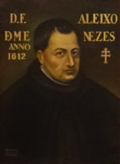
After the death of Abraham, [[Aleixo de Menezes]] the Archbishop of Goa began efforts to bring Archdiocese of Angamaly under Goa. Menezes nominated [[Francis Ros]] as Administrator of Angamaly.<ref name=":0">{{Cite book|last=Ninan|first=M.M|url=http://www.talentshare.org/~mm9n/articles/Indian%20Christianity/CHAPTER%20FIVE.htm|title=History of Christianity in India|chapter=5}}</ref> But by this time the [[Archdeacon George of the Cross|Archdeacon, George (of the Cross)]], according to the custom and by appointment of Abraham, took up the administration of the Archdiocese of Angamaly. Therefore, Menezes had to withdraw the administrator.<ref name="Neill_Menezes">{{cite book |last= Neil|first= Stephen|title=A History of Christianity in India: The Beginnings to AD 1707 |date=2004 |publisher=Cambridge University Press |page=208}}</ref> But Menesis decided that Saint Thomas Christians should be unconditionally placed under the spiritual authority of the Pope. For this, he sought the help of viceroy of Goa, the Portuguese Captain of Kochi and the King of Kochi.<ref name="Neill_Menezes"/> Also, the Portuguese were very careful at the ports to prevent any Eastern Bishops from entering Kerala. | |||
[[File:D. Frei Aleixo de Menezes - Galeria dos Arcebispos de Braga.png|alt=Archbishop Alexis de Menezes of Goa|thumb|341x341px|Archbishop Alexis de Menezes of Goa, who was the chief architect and driving force behind the Synod of Udayamperoor]] | |||
Archbishop Menezes visited Malabar in February 1599. Menezes threatened to depose Archdeacon George and appoint in his place Thomas Kurian, another nephew of George whose claims had been ignored in 1593. In order to prevent a division, George gave in to the demands of Menezes.<ref name=":0" /> After carrying out a visitation in various parishes of Saint Thomas Christians, gaining the support of the local rulers and some of the local clergy, also by ordaining a large number of new priests, and forcing Archdeacon, to submit to him, Menezes called for a synod to be convened in June 1599.<ref>{{cite web |url=https://gedsh.bethmardutho.org/Diamper-Synod-of|title=Thomas Christians|publisher= e-GEDSH:Gorgias Encyclopedic Dictionary of the Syriac Heritage|access-date=10 January 2022|last1=Takahashi |first1=Hidemi }}</ref> Instead of Angamaly, the headquarters of the diocese, a small place called Diamper (Udayamperur) near Kochi, the Portuguese stronghold, was chosen as the venue for the Synod. | |||
== | ==The Synod== | ||
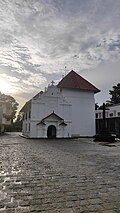
The synod solemnly began on the third Sunday after Pentecost, 20 June 1599, in the church of Diamper (Udayamperoor) and continued until 26 June 1599.<ref name="syondchurch">[http://www.synodofdiamper.com/synod.php Synod of Diamper Church], Garvasis and Protasis church and All Saints church.</ref> The synod, attended by 153 local priests and 660 lay representatives.<ref name="Diamp1">{{cite journal |url=https://gedsh.bethmardutho.org/Diamper-Synod-of |title=Diamper, Synod of |website=gedsh.bethmardutho.org|publisher=Gorgias Encyclopedic Dictionary of the Syriac Heritage|access-date=11 January 2022|quote=The synod, attended by 153 local priests and 660 lay representatives, lasted from the 20th to the 27th of June, and passed more than 200 decrees in rapid succession and evidently without any serious debate. |last1=Takahashi |first1=Hidemi }}</ref> Menezes presided over the synod. The [[Patriarch of Babylon]],<ref name="neil_PatriarchOfBabylon">{{cite book |last= Neil|first= Stephen|title=A History of Christianity in India: The Beginnings to AD 1707 |date=2004 |publisher=Cambridge University Press|page=213 |isbn= 9780521548854|url=https://books.google.com/books?id=RH4VPgB__GQC |language=en|quote=The second day was entirely taken up with receiving from the participants the profession and declaration of the faith. ...and to repudiate all Nestorian error and in particular all allegiance to the patriarch of Babylon, 'whom I condemn, reject and anathematize as being a Nestorian heretic and schismatic,...' }}</ref> was condemned as a heretic and schismatic, and they were made to swear that they would not accept any bishop except the one nominated by Rome.<ref name="ReferenceA">Dr. Thekkedath, History of Christianity in India"</ref> The controversial Synod of Diamper canonized the [[Liturgical Latinization|Latinization]] of the Church of Saint Thomas Christians.<ref name="J Thaliath, The Synod of Diamper">J Thaliath, The Synod of Diamper</ref> Academicians have raised doubts on the validity of the synod and whether it violated canon law on the facts that the synod was convened on threat of excommunication by an archbishop of nearby archdiocese who was permitted by pope to appoint an apostolic administrator with limited powers, not the ordinary diocesan archbishop.<ref>{{cite book |first=Paul |last=Pallath |date=1 January 2001 |title=The Synod of Diamper Revisited |editor-last=Nedungatt |editor-first=George |url=https://books.google.com/books?id=hgguAAAAYAAJ |publisher=Pontificio Istituto Orientale| pages=199–227| chapter=Chapter 8: The synod of Diamper valid or Invalid |isbn=9788872103319}}</ref> | |||
===Decrees of the Synod=== | |||
= | |||
<!---please fill in edit summary about WHY you are making any change. For substantial changes, please discuss first on talk page---> | <!---please fill in edit summary about WHY you are making any change. For substantial changes, please discuss first on talk page---> | ||
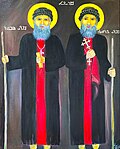
The synod issued 200 decrees distributed in nine actions (sessions).<ref name="ReferenceA"/> It has been suggest that the differences between the decrees of the synod, are due to translation. It has been suggested that these decrees were first formulated in the [[Portuguese language]] by Don Menezes and then translated to [[Malayalam]]. It has been suggested that the participants signed the Malayalam document, which lacks 35 of the Canons given in the Portuguese text.<ref name="J Thaliath, The Synod of Diamper"/> | The synod issued 200 decrees distributed in nine actions (sessions).<ref name="ReferenceA"/> It has been suggest that the differences between the decrees of the synod, are due to translation. It has been suggested that these decrees were first formulated in the [[Portuguese language]] by Don Menezes and then translated to [[Malayalam]]. It has been suggested that the participants signed the Malayalam document, which lacks 35 of the Canons given in the Portuguese text.<ref name="J Thaliath, The Synod of Diamper"/> | ||
[[File:Mar Sabor and Mar Proth East Syriac Persian Saints of the Malabar Church.jpg|thumb|Mar Sabor and Mar Proth]] | [[File:Mar Sabor and Mar Proth East Syriac Persian Saints of the Malabar Church.jpg|thumb|Mar Sabor and Mar Proth]] | ||
== | ===Changes in liturgy=== | ||
The | <!---please fill in edit summary about WHY you are making any change. For substantial changes, please discuss first on talk page---> | ||
The text on which the synod worked was a composite East Syriac text of [[Liturgy of Addai and Mari|Anaphora of Addai and Mari.]]<ref>D. Webb, " Versions of the Malabar Liturgy"</ref> The Anaphorae of [[Hallowing of Nestorius|Nestorius]], [[Hallowing of Theodore of Mopsuestia|Theodore]], and Diodore (the latter now lost) were abolished and their manuscripts were asked to brought to Menesis to be destroyed.<ref name=":1" /> The synod declared certain passages of the [[Holy Qurbana of Addai and Mari]] as 'impious, sacrilegious and resulting from Nestorian heresy'. The changes made by the synod consist of six in litanies, seven in hymns or anthems, four in formulae of the deacon, one in the response of the people, one in the text of the gospel lesson, and one affecting the whole creed. In the prayer of the priest, there are five changes in the pre-anaphora part of the Qurbana of Addai and Mari. There are four changes within the anaphora and eleven in the four variable ''hutame'' (Sealing prayers).<ref>Connolly, " Work of Menezes", Codrington, " The Malabar Liturgy and the Synod of Diamper"</ref> | |||
=== Decisions impacted social life === | |||
[[File:Synod of Diamper Church October 2023.jpg|thumb|Udayamperūr Syro-Malabar Church]] | |||
The Synod of Diamper condemned a multitude of [[Hindus]] beliefs, especially those related to transmigration, fate, and astrology. Hindu ceremonies and customs related to matrimony, death, birth, and purification on touching [[Lower Caste|lower castes]], which were prevalent among the Christians of Saint Thomas, were abandoned altogether. They were even banned from frequenting to Hindu festivities including [[Onam]]. The synod also condemned the belief that every man might be saved by his laws, all of which are good and lead to heaven, irrespective of his religion. The synod banned Christian teachers from installing or using any Hindu idols in their schools. [[Polygamy]] and [[concubinage]] were forbidden, and clergymen were banned from marital relations, military services to Hindu princes, and other secular indulgences. Previously, Hindu musicians had been used to conduct programs in Christian churches, but the synod banned the practice outright.<ref name=":1">The history of the church of Malabar: Together with the Synod of Diamper 1599 – Michael Geddes – the Bavarian State Library</ref> | |||
== | ===Prohibition of books=== | ||
The synod prohibited the use of many | The synod prohibited the use of many books deemed heretical. These books are listed below.<ref name="JamesHough">[https://books.google.com/books/download/The_history_of_Christianity_in_India.pdf?id=B3cOAAAAQAAJ&output=pdf&sig=ACfU3U3WePbgX3hFEwLoyk5H2M5EVAAHxw], The history of Christianity in India: Volume 2 By James Hough</ref><ref>Acts and Decrees of the Synod are exhaustively given by Michael Geddes, "A Short History of the Church of Malabar Together with the Synod of Diamper &c." London, 1694;Repr. in George Menachery, Ed., Indian Church History Classics, Vol.1, Ollur 1998, pp. 33–112. Also in James Hugh Vol.2. Cf.Relevant articles in The St. Thomas Christian Encyclopaedia of India, Ed. George Menachery, 1973, 1982, 2009</ref><ref name="Ferroli">Ferroli, "Jesuits in Malabar" Vol.1</ref><ref name="syonddata14">[http://nasrani.net/2007/11/10/save-syriac/ Save Syriac], NSC Network.</ref> | ||
*''The Infancy of our Saviour'' (The History of our Lady) (language: Syriac) | |||
*''Book of John Barialdan'' (language: Syriac) | |||
*''The Procession of the Holy Spirit'' (language: Persian) | |||
*Margarita Fidei (The Jewel) | |||
*Fathers (language: Unknown) | |||
*''Life of Abed Isho'' (language: Arabic) | |||
*Book of Synods (language: Syriac) | |||
*Book of 'Timothy the Patriarch' (language: Persian) | |||
*Domingo or Letter of the Lord's-day (language: Malayalam) | |||
*Maclamatas (language: Syriac) | |||
*Uguarda or Rose (language: Greek) | |||
*Camiz (language: Syriac) | |||
*Menra (language: Hebrew) | |||
*Book of Orders (language: Tamil) | |||
*Book of Homilies (language: Arabic) | |||
*''An Exposition of the Gospels'' (language: Syriac) | |||
*Book of Hormisda Raban (language: Greek) | |||
*''Book of Lots'' (language: Aramaic). | |||
*A book of unknown title which is a Nestorian version of ''Flos Sanctorum'' (language: Syriac) | |||
*Parisman or [[Ancient Iranian medicine|Persian Medicine]] (language: Persian) | |||
=== Destruction of books === | |||
The decree XVI ordered that all the Syriac manuscripts should be handed over to the Archbishop or his deputy on a visit to the Churches. Due to the lack of printed books, the Qurbana manuscripts were excluded from this.<ref name="Ferroli" /><ref name="syonddata14" /> | |||
There are only very few Syriac manuscripts that withstood the destruction. [[István Perczel|Dr. Istvan Perczel]], a Hungarian scholar researching Syrian Christians in India, found that certain texts survived the destruction of Syriac religious writings by the Portuguese missionaries.<ref>Nagarajan, Saraswathy (19 June 2009) [https://web.archive.org/web/20090623140400/http://www.hindu.com/fr/2009/06/19/stories/2009061951270300.htm Journey of discovery] The Hindu hindu.com</ref> | |||
== | == Reception of the synod == | ||
The Church authorities noted the result of the synod was not as helpful as they expected. As the [[Catholic Encyclopedia]] (1913) says, "The only case in which an ancient Eastern rite has been wilfully romanized is that of the ''Uniat'' Malabar Christians, where it was not Roman authority but the misguided zeal of Alexius de Menezes, Archbishop of Goa, and his Portuguese advisers at the Synod of Diamper (1599) which spoiled the old Malabar Rite." | |||
After the Synod of Diamper, on 25 November 1599, a letter was sent to Pope by the Archdeacon, giving information about the synod and its work. The letter praises the work of Menezes and requests the appointment of Menezes or Francis Ros as their bishop.<ref>Giuseppe Beltrami, La Chiesa Caldea pp. 253–6, Full text reproduced</ref> The letter does not fully represent the genuine sentiments of Archdeacon, as by that time he was completely at the mercy of the Portuguese and the only thing left for him to do was to follow their directives.<ref name="ReferenceA" /> | |||
In this way, the Synod of Diamper achieved one of the aims of the Portuguese policy in [[Kerala]], to separate the Syrian Christians of [[Malabar region|Malabar]] from the [[List of Chaldean Catholic Patriarchs of Babylon|Chaldean Patriarch]] and to extend the influence of [[Padroado|Portuguese Padroado]] in India. As a result, the King of Portugal got the right of nomination to the ancient See of Saint Thomas in Malabar. The Archbishopric of Angamale was degraded to a Portuguese ''Padroado'' diocese under [[Goa]] on 4 August 1600, AD.<ref name="ReferenceA" /> | |||
==Aftermath== | |||
== | |||
<!---please fill in edit summary about WHY you are making any change. For substantial changes, please discuss first on talk page---> | <!---please fill in edit summary about WHY you are making any change. For substantial changes, please discuss first on talk page---> | ||
After the Synod of Diamper, Menezes stayed in Kerala until November 1599, visited the churches, examined the traditional books preserved there and those deemed heretical were burned.<ref name="Diamp2">{{cite journal |url=https://gedsh.bethmardutho.org/Diamper-Synod-of |title=Diamper, Synod of |website=gedsh.bethmardutho.org|publisher=Gorgias Encyclopedic Dictionary of the Syriac Heritage|access-date=11 January 2022|quote=After the synod, Menezes remained in Kerala until Nov. 1599 and made a tour of the diocese, during which books preserved in the local churches were submitted to his entourage for examination and those deemed heretical were consigned to the flame.|last1=Takahashi |first1=Hidemi }}</ref> | |||
== | ===Change in Administration=== | ||
[[File:Tomb inside Kottakkavu Mar Thoma Syro-Malabar Pilgrim Church.jpg|thumb|Tomb of Francis Roz, first Jesuit Metropolitan of Kodungalloor Archeparchy, inside [[Kottakkavu Mar Thoma Syro-Malabar Pilgrim Church, North Paravur]].]] | [[File:Tomb inside Kottakkavu Mar Thoma Syro-Malabar Pilgrim Church.jpg|thumb|Tomb of Francis Roz, first Jesuit Metropolitan of Kodungalloor Archeparchy, inside [[Kottakkavu Mar Thoma Syro-Malabar Pilgrim Church, North Paravur]].]] | ||
< | The Archbishopric of [[Angamaly]] was downgraded to a [[bishopric]] under Goa in 1600. [[Portuguese Padroado]] rule was thus imposed and the bishops for Saint Thomas Christians were appointed by Portuguese Padroado.<ref name="syonddata12">[http://nasrani.net/2007/01/14/saint-thomas-christians-history-of-divisions-churches/ Divisions and Rite of the Churches- Syro Malabar Church, Malankara Syriac Orthodox Church, Malankara Orthodox Syriac Church, Thozhiyur Church, Malankara Mar Thoma Syrian Church, Syro Malankara Church, Chaldean Syrian Church- Synod of Diamper], NSC Network.</ref> | ||
Under [[Padroado|Portuguese Padroado]], Latin Bishops were appointed to govern the Saint Thomas Christians. [[Francis Ros]] was nominated as successor to Abraham on 5 November 1599. Bishop Ros, centralized in himself all the authority reducing almost to nothing the powers of Archdeacon. Roz died on 16 February 1624 and was succeeded by Bishop Britto | Under [[Padroado|Portuguese Padroado]], Latin Bishops were appointed to govern the Saint Thomas Christians. [[Francis Ros]] was nominated as successor to Abraham on 5 November 1599. Bishop Ros, centralized in himself all the authority reducing almost to nothing the powers of Archdeacon. Roz died on 16 February 1624 and was succeeded by Bishop Stephen Britto. George of the Cross died c. 1634 and was succeeded by Archdeacon Thomas. Britto died in 1641 and Bishop Garcia Francis succeeded him. A regular fight ensued between the Francis and Thomas.<ref name="Frykenberg_on_ThomasAnd_Garcia">{{cite book |last= Frykenberg|first= Robert Erick |title=Christianity in India From Beginnings to the Present |date=2008 |publisher=Oxford University Press |page=367 |isbn= 978-0-19-154419-4 |url=https://books.google.com/books?id=sOrglHSX6rsC |language=en |quote= Refusal of those loyal to the Church of the East to submit to dictates from the Church of the West entered a new phase with the rise of two new figures. The new Archdeacon, named Thomas, challenged the new Padroado Archbishop of Kodungallur (Cranganore), named Francis Garcia(SJ). Each claimed that the other could do nothing without his consent.}}</ref> | ||
== | |||
== | |||
=== Great Oath of Bent Cross (Coonan Cross Oath) === | === Great Oath of Bent Cross (Coonan Cross Oath) === | ||
The oppressive rule of the Portuguese Padroado provoked a violent reaction by the Saint Thomas Christian community. The first solemn protest occurred in 1653. Under the leadership of Archdeacon Thoma, [[Nasrani (India)|Nasrani]]s gathered at [[Mattancherry]] church on Friday, 24 January 1653 (M.E. 828 Makaram 3), and made an oath that is known as the [[Coonan Cross Oath|Great Oath of Bent Cross]]. Those who were not able to touch the cross-tied ropes on the cross held the rope in their hands and made the oath. Because of the weight, it is said that the cross bent a little and so it is known as ''[[Coonan Cross Oath|Oath of the bent cross (Coonen Kurisu Sathyam)]]''{{ | {{main|Coonan Cross Oath}} | ||
The oppressive rule of the Portuguese Padroado provoked a violent reaction by the Saint Thomas Christian community. The first solemn protest occurred in 1653. Under the leadership of Archdeacon Thoma, [[Nasrani (India)|Nasrani]]s gathered at [[Mattancherry]] church on Friday, 24 January 1653 (M.E. 828 Makaram 3), and made an oath that is known as the [[Coonan Cross Oath|Great Oath of Bent Cross]]. Those who were not able to touch the cross-tied ropes on the cross held the rope in their hands and made the oath. Because of the weight, it is said that the cross bent a little and so it is known as ''[[Coonan Cross Oath|Oath of the bent cross (Coonen Kurisu Sathyam)]]''.<ref name="EtmgyRef1">{{cite book |title=Eastern Churches Journal : A Journal of Eastern Christendom-Volume 10 |date=2003 |publisher=Society of Saint John Chrysostom|page=55 |isbn= 9780521548854|url=https://books.google.com/books?id=RH4VPgB__GQC |language=en |quote=The crowd outside shared in the oath by holding on to a rope tied to a cross in the Churchyard It is said that the cross bent as a result. Hence the oath is known as Coonan ( bent ) Cross Oath.}}</ref><ref name="EtmgyRef2">{{cite book |last=Oommen|first=M. A. |title=Rethinking Development – Kerala's Development Experience · Volume 1 |date=1999|publisher=Institute of Social Sciences and Concept Publishing Company|page=81 |url=https://books.google.com/books?id=RH4VPgB__GQC |language=en|isbn=9788170227649|quote=The oath is known in history as the Kunan Kurisu Satyam, an oath taken by holding a rope tied to a cross that consequently developed a bend.}}</ref> | |||
The exact wording of the oath is a matter of dispute | The exact wording of the oath is a matter of dispute. There are various versions about the wording of oath, one version being that the oath was directed against the Portuguese, another that it was directed against Jesuits, yet another version that it was directed against the authority of Church of Rome.<ref name=Gazette>{{cite book |title=Census of India (1961: Kerala|date=1965 |publisher=Office of the Registrar General|url=https://books.google.com/books?id=0JCaAAAAIAAJ|language=en|page=111|quote=There are various versions about the wording of swearing, one version being that it was directed against the Portuguese, another that it was directed against Jesuits, yet another that it was directed against the authority of church of Rome }}</ref> | ||
===Schism in Saint Thomas Christian Community=== | |||
Four months after the Coonan Cross Oath, twelve priests of the church laid their hands on Archdeacon Thomas and ordained him as [[Thoma I]]. The Portuguese missionaries attempted to reconcile with Saint Thomas Christians but were not successful. | |||
Francis Ros realised that there was resistance on the part of the Christians of St. Thomas, regarding the suppression of their ancient Metropolitan title. He decided to convoke a new Synod to substitute the Synod of Diampere.<ref>{{cite encyclopaedia |year=2011 |title="Diamper, Synod of," |encyclopaedia=Gorgias Encyclopedic Dictionary of the Syriac Heritage: Electronic Edition |publisher=Gorgias Press |url=https://gedsh.bethmardutho.org/Diamper-Synod-of. |last=Takahashi |first=Hidemi |editor1-last=Brock |editor1-first=Sebastian P. |editor1-link=Sebastian Brock |editor2-first=Aaron M. |editor2-last=Butts |editor3-first=George A. |editor3-last=Kiraz |editor3-link=George Kiraz |editor4-first=Lucas Van |editor4-last=Rompay }}</ref> The [[Second Synod of Angamaly]] met in 1603 and Angamaly became a separate Archdiocese again in 1608.<ref>[https://angamaly.org/angamaly/index.php/home/culture-heritage Angamaly Town official website]</ref> | |||
The | |||
=== | Later, [[Pope Alexander VII]] sent a Carmelite delegation under Joseph Sebastiani who succeeded in convincing the majority of Saint Thomas Christians, including [[Parambil Mar Chandy|Palliveettil Chandy]] Kathanar and [[Kadavil Chandy]] Kathanar that the consecration of the archdeacon as metropolitan was not legitimate.As the validity of Thoma I's consecration was questioned, he began to lose followers. In the meantime, Sebastiani returned to Rome and was ordained as bishop by Pope on 15 December 1659.<ref name="OnSebastiani">{{cite book |last= Neil|first= Stephen|title=A History of Christianity in India: The Beginnings to AD 1707 |date=2004 |publisher=Cambridge University Press|page=324 |isbn= 9780521548854|url=https://books.google.com/books?id=RH4VPgB__GQC |language=en |quote=To bring one of the cattanars to Rome for consecration would have resulted in endless delays...So at the age of thirty-six Joseph Sebastiani, in religion Fr Joseph of Saint Mary OCD, was consecrated secretly on 15 December 1659, and given the title bishop of Hierapolis.....He is appointed as apostolic commissary for the whole of the Serra}}</ref> Joseph Sebastiani returned to Kerala in 1661 and within a short time period he restored most of the churches that had been with Thoma I to Rome. Thus, by 1663, 84 of the 116 churches in existence were in favor of Sebastiani, leaving only 32 churches in favor of Thoma I. However, in 1663, with the conquest of Cochin by the [[Netherlands|Dutch]], the control of the Portuguese on the Malabar coast was lost. The Dutch declared that all other the Europeans had to leave Malabar. Before leaving Kerala, on 1 February 1663 Sebastiani consecrated [[Palliveettil Chandy]] as the Metran of the Thomas Christians who adhered to the Church of Rome.<ref name="neil_consecration">{{cite book |last= Neil|first= Stephen|title=A History of Christianity in India: The Beginnings to AD 1707 |date=2004 |publisher=Cambridge University Press|page=325 |isbn= 9780521548854|url=https://books.google.com/books?id=RH4VPgB__GQC |language=en|quote=The consecration took place on 1 February 1663....But Chandy was not consecrated as archbishop of Cranganore, but as bishop of Megara i.p.i., and with the title of vicar apostolic.}}</ref><ref name="frykenberg_consecration">{{cite book |last= Frykenberg|first= Robert Erick |title=Christianity in India From Beginnings to the Present |date=2008 |publisher=Oxford University Press|page=361 |isbn= 978-0-19-154419-4 |url=https://books.google.com/books?id=sOrglHSX6rsC |language=en}}</ref> | ||
Thoma I, meanwhile sent requests to various Oriental Churches to receive canonical consecration as bishop. In 1665, [[Gregorios Abdal Jaleel]], a bishop from [[Syriac Orthodox Church]], arrived in India and the faction under the leadership of [[Thoma I]] welcomed him. The bishop was sent in correspondence to the letter sent by Thoma to the [[Syriac Orthodox Church|Syriac Orthodox Patriarchate of Antioch]]. Bishop Abdul Jaleel regularized the Episcopal succession of Thoma I.<ref name="Geddes2">[[George Menachery|Menachery G]]; 1973, 1982, 1998; [[Placid J. Podipara|Podipara, Placid J.]] 1970; Leslie Brown, 1956; [[Eugene Tisserant|Tisserant, E.]] 1957</ref><ref>{{cite book|author1-last=Mundadan|author1-first=Anthony Mathias|author2-first=Joseph|author2-last=Thekkedath|author1-link=Mathias Mundadan|year=1982|title=History of Christianity in India|volume=2|location=Bangalore|publisher=Church History Association of India}}</ref> Thereafter the faction affiliated with the Catholic Church under [[Palliveettil Chandy]] was referred themselves as the ''[[Syrian Catholics of Malabar|Paḻayakūṟ]]'' or ''Pazhayakūttukar'' ("Old Party"), while the branch affiliated with [[Thoma I]] was called the ''Puthankūttukar'' ("Puthenkoor faction" or "New Party").<ref name="Vadakkekara86">Vadakkekara, p. 84; 86.</ref><ref name="Frykenberg, p. 361">Frykenberg, p. 361.</ref><ref>Fernando, p. 79.</ref><ref>Chaput, pp. 7–8.</ref> These appellations have been somewhat controversial, as both groups considered themselves the true heirs to the Saint Thomas tradition and saw each other as heretical.<ref>Vadakkekara, p. 84 and note.</ref><ref>[[Sebastian P. Brock]], "Thomas Christians," in Thomas Christians, edited by [[Sebastian P. Brock]], Aaron M. Butts, [[George A. Kiraz]] and Lucas Van Rompay, https://gedsh.bethmardutho.org/Thomas-Christians.</ref> | |||
By this process, Saint Thomas Christians were divided into [[East Syriac Rite|East Syriac]] and [[West Syriac Rite|West Syriac]] branches. | This visit of [[Gregorios Abdal Jaleel]] gradually introduced the [[West Syriac Rite|West Syriac]] liturgy, customs and script in the Puthenkoor faction. The visits of prelates from the [[Syriac Orthodox Church|Syriac Orthodox Church of Antioch]] continued since then and this led to gradual replacement of the East Syriac Rite liturgy with the [[West Syriac Rite]] and the faction affiliated to the [[Miaphysitism|Miaphysite Christology]] of the [[Oriental Orthodox Churches|Oriental Orthodox Communion]].<ref name=Gregorios285>Gregorios & Roberson, p. 285.</ref><ref name=Vadakkekara91>Vadakkekara, p. 91.</ref><ref>{{cite book|title=Jornada of Dom Alexis de Menezes: A Portuguese Account of the Sixteenth Century Malabar|last=Gouvea|first=Antonio de|year=2003|orig-date=1606|location=Coimbra|isbn=9788188979004|author-link=Antonio de Gouvea|editor-first=Pius|editor-last=Malekandathil|editor-link=Pius Malekandathil|url=https://books.google.com/books?id=cUKybwAACAAJ|edition=2003}}</ref><ref>{{Cite book|last=Vadakkekara|first=Benedict|title=Origin of Christianity in India: A Historiographical Critique|year=2007|location=Delhi|publisher=Media House|isbn=9788174952585|url=https://books.google.com/books?id=7f3YAAAAMAAJ |page=88}}</ref> The Pazhayakoor faction continued with the [[East Syriac Rite|East Syriac]] traditions and [[Diophysite]] faith and stayed within the Catholic Church. By this process, Saint Thomas Christians were divided into [[East Syriac Rite|East Syriac]] and [[West Syriac Rite|West Syriac]] branches. | ||
Successive divisions have taken place and as a result, Saint Thomas Christians currently belong to several different churches. The Pazhayakoor faction divided into [[Syro-Malabar Church]] and [[Chaldean Syrian Church]], while the Puthenkoor faction divided into the Syriac Orthodox Church in India ([[Jacobite Syrian Christian Church]]), [[Indian Orthodox Church]], [[Saint Thomas Anglicans]] of the [[Church of South India]], [[Mar Thoma Syrian Church]], [[St. Thomas Evangelical Church of India]], [[Syro-Malankara Catholic Church]] and [[Malabar Independent Syrian Church]].<ref>{{cite web |title=Thomas Christians: History & Tradition-Britannica |url=https://www.britannica.com/topic/Thomas-Christians |website=Encyclopædia Britannica |date=14 July 2023 |language=en}}</ref><ref>{{cite book |last1=Fahlbusch |first1=Erwin |last2=Lochman |first2=Jan Milič |last3=Bromiley |first3=Geoffrey William |last4=Mbiti |first4=John S. |last5=Pelikan |first5=Jaroslav |last6=Barrett |first6=David B. |last7=Vischer |first7=Lukas |title=The Encyclopedia of Christianity |date=1999 |publisher=Wm. B. Eerdmans Publishing |isbn=978-90-04-11695-5 |pages=686–687 |url=https://books.google.com/books?id=yaecVMhMWaEC |language=en}}</ref><ref>{{cite book |last1=Frykenberg |first1=Robert Eric |title=Christianity in India: From Beginnings to the Present |date=27 June 2008 |publisher=OUP Oxford |isbn=978-0-19-154419-4 |page=249 |url=https://books.google.com/books?id=VhRREAAAQBAJ |language=en}}</ref> | |||
==References== | ==References== | ||
| Line 308: | Line 110: | ||
== Books (Studies on Synod of Diamper) == | == Books (Studies on Synod of Diamper) == | ||
*Paul Pallath, "The Synod of Diamper: valid or invalid?" | *Paul Pallath, "The Synod of Diamper: valid or invalid?" | ||
*[[George Nedungatt]] S.J., "The Synod of Diamper Revisited", Pontifical Instituto Orientale, Rome, 2001. | *[[George Nedungatt]] S.J., "The Synod of Diamper Revisited", Pontifical Instituto Orientale, Rome, 2001. | ||
*Joseph Kuzhinjalil, "The disciplinary Legislation of Synod of Diamper" (1975) | *Joseph Kuzhinjalil, "The disciplinary Legislation of Synod of Diamper" (1975) | ||
*Jonas Thaliath, " The Synod of Diamper" (1958) | *Jonas Thaliath, "The Synod of Diamper" (1958) | ||
*Connolly, " The Work of Meneses" | *Connolly, "The Work of Meneses" | ||
*Codrington, " The Chaldean Liturgy" | *Codrington, "The Chaldean Liturgy" | ||
*Codrington," The Malabar Liturgy and Synod of Diamper" | *Codrington, "The Malabar Liturgy and Synod of Diamper" | ||
* Neill, Stephen – (1977) A history of Christian missions Neill, Stephen | * Neill, Stephen – (1977) A history of Christian missions Neill, Stephen – The story of the Christian church in India and Pakistan | ||
* Eric Frykenberg, Robert | * Eric Frykenberg, Robert – Christianity in India | ||
* Hough, James – 1845 | * Hough, James – 1845 – The history of Christianity in India: Volume 4 | ||
* Sir William Kaye, John | * Sir William Kaye, John – Christianity in India | ||
* Bruce Firth, Cyril | * Bruce Firth, Cyril – An introduction to Indian church history | ||
* Hunter, W.W. – (1886) The Indian Empire; Its People History and Products pp 240 | * Hunter, W.W. – (1886) The Indian Empire; Its People History and Products pp 240 | ||
* Logan, William – (1887) Malabar Manual pp 119 | * Logan, William – (1887) Malabar Manual pp 119 | ||
* Nangam Aiya, V. | * Nangam Aiya, V. – (1906) The Travancore State Manual Volume 2 pp 243 | ||
* Barton, John M. –(1872) The Syrian Christians: Narrative of a Tour in the Travancore Mission of the Church Missionary Society Mission Life, Vol. III * * Geddes, Michael | * Barton, John M. – (1872) The Syrian Christians: Narrative of a Tour in the Travancore Mission of the Church Missionary Society Mission Life, Vol. III * * Geddes, Michael – (1694) A short History of the Church of Malabar | ||
* Henry, J. & Parker, J | * Henry, J. & Parker, J – The Christians of St. Thomas and their liturgies | ||
* Milne Rae, George | * Milne Rae, George – Syrian Church in India Whitehouse, Thomas – (1873) Lingerings of light in a dark land: researches into the Syrian church of Malabar * * Brown, Leslie- The Indian Christians of St Thomas | ||
* David Macbride, John – (1856) | * David Macbride, John – (1856) – The Syrian church in India | ||
==External links== | ==External links== | ||
| Line 337: | Line 138: | ||
* [http://www.newadvent.org/cathen/14678a.htm#XIII Catholic Encyclopedia: St. Thomas Christians (Archbishop Menezes and the Synod of Diamper)] | * [http://www.newadvent.org/cathen/14678a.htm#XIII Catholic Encyclopedia: St. Thomas Christians (Archbishop Menezes and the Synod of Diamper)] | ||
* [http://www.newadvent.org/cathen/13064b.htm Catholic Encyclopedia: Rites] | * [http://www.newadvent.org/cathen/13064b.htm Catholic Encyclopedia: Rites] | ||
* | * https://thomaschristians.blogspot.com/2011/06/synod-of-diamper.html | ||
{{Christianity footer}} | {{Christianity footer}} | ||
| Line 354: | Line 155: | ||
[[Category:1599 in India]] | [[Category:1599 in India]] | ||
[[Category:16th-century church councils]] | [[Category:16th-century church councils]] | ||
[[Category: | [[Category:Portuguese in Kerala]] | ||
[[Category:Archdiocese of Ernakulam-Angamaly]] | [[Category:Archdiocese of Ernakulam-Angamaly]] | ||
[[Category:Kingdom of Cochin]] | |||
[[Category:16th century in Portuguese India]] | |||
Latest revision as of 08:56, 23 March 2026
| Part of a series on |
| Christianity in India |
|---|
 |
The Synod of Diamper (Malayalam: ഉദയംപേരൂർ സൂനഹദോസ്, romanized: Udayampērūṟ Sūnahadōs) was a Catholic diocesan synod held at Udayamperoor (Diamper in non-vernacular sources) in June 1599 that created rules and regulations for the ancient Saint Thomas Christians (also known as Mar Thoma Nasranis) of the Malabar Coast, a part of modern-day Kerala, India. The synod formally subjugated them to Latin Catholic authorities, downgrading the Metropolitanate of India to the Archdiocese of Angamalé, a suffragan see to the Archdiocese of Goa, which was administered by Portuguese Padroado missionaries.[1][2] The synod also forced liturgical latinisation and the eschewal of local practices and beliefs, leading to a significant protest known as the Coonan Cross Oath and a subsequent schism in the mid-17th century.[3]

Background[edit | edit source]
Early history of Saint Thomas Christians[edit | edit source]
The Saint Thomas Christians, who trace their origins to the evangelistic activity of Thomas the Apostle in the 1st century, were in communion with the Church of the East of Persia and the Patriarch of the Seleucia-Ctesiphon, and relied on their bishops.[4] Thus, while the bishops from the Middle East were the spiritual heads of the Church, the general administration of the Church of Kerala was governed by an indigenous priest known as Arkkadiyakkon or Archdeacon.[5] He was the community leader of Saint Thomas Christians. Even in times when there were multiple foreign bishops, there was only one archdeacon for entire Saint Thomas Community.[6]
Portuguese missionaries and Saint Thomas Christians[edit | edit source]
The Portuguese fleet led by Pedro Alvarez Cabral, arrived in Malabar in 1500 with a missionary team of 19 members. More than half of them were Franciscans.[7] Later, most of the groups that came from Portugal included missionaries. Initially, the Portuguese missionaries were on good terms with the Saint Thomas Christians, but between 1520 and 1530, relations between them began to fall apart. This is because the Portuguese began to impose their church traditions on the Malabar Christians.[8]
The Church of the East collapsed by 1552, through the schism of 1552, and a faction (the modern day Chaldean Catholic Church) under the leadership of Yohannan Sulaqa joined in communion with the Church of Rome. It is difficult to say exactly how this split affected the Church of Saint Thomas Christians in Malabar. Following the split, both factions – the Nestorian and Chaldean Catholic – began sending their bishops to Kerala. Abraham, later known as Abraham of Angamaly was one of the last bishops from the Church of the East. Mar Abraham first arrived in India before 1556 as a Nestorian bishop from the traditional Nestorian Patriarchate. The Portuguese managed to arrest him and sent him off to Lisbon, but on the way he escaped at Mozambique and left to Mesopotamia and presented himself to Abdiso, the Chaldean patriarch who had declared allegiance to the Pope of Rome. The patriarch re-consecrated the Abraham, sent him with letters to Pope Pius IV.[9] Abraham received his episcopal ordination again, third time,[9] in Rome in 1565 and returned in India in 1568. In spite of the express approbation by Pope, he was not welcomed by the Portuguese authorities in Goa and was arrested second time. However, Abraham escaped in 1570 and reached Malabar, there he directed his faithful in defiance of the Portuguese until his death in 1597.[10]
Preparations for the Synod[edit | edit source]
After the death of Abraham, Aleixo de Menezes the Archbishop of Goa began efforts to bring Archdiocese of Angamaly under Goa. Menezes nominated Francis Ros as Administrator of Angamaly.[11] But by this time the Archdeacon, George (of the Cross), according to the custom and by appointment of Abraham, took up the administration of the Archdiocese of Angamaly. Therefore, Menezes had to withdraw the administrator.[12] But Menesis decided that Saint Thomas Christians should be unconditionally placed under the spiritual authority of the Pope. For this, he sought the help of viceroy of Goa, the Portuguese Captain of Kochi and the King of Kochi.[12] Also, the Portuguese were very careful at the ports to prevent any Eastern Bishops from entering Kerala.

Archbishop Menezes visited Malabar in February 1599. Menezes threatened to depose Archdeacon George and appoint in his place Thomas Kurian, another nephew of George whose claims had been ignored in 1593. In order to prevent a division, George gave in to the demands of Menezes.[11] After carrying out a visitation in various parishes of Saint Thomas Christians, gaining the support of the local rulers and some of the local clergy, also by ordaining a large number of new priests, and forcing Archdeacon, to submit to him, Menezes called for a synod to be convened in June 1599.[13] Instead of Angamaly, the headquarters of the diocese, a small place called Diamper (Udayamperur) near Kochi, the Portuguese stronghold, was chosen as the venue for the Synod.
The Synod[edit | edit source]
The synod solemnly began on the third Sunday after Pentecost, 20 June 1599, in the church of Diamper (Udayamperoor) and continued until 26 June 1599.[14] The synod, attended by 153 local priests and 660 lay representatives.[15] Menezes presided over the synod. The Patriarch of Babylon,[16] was condemned as a heretic and schismatic, and they were made to swear that they would not accept any bishop except the one nominated by Rome.[17] The controversial Synod of Diamper canonized the Latinization of the Church of Saint Thomas Christians.[18] Academicians have raised doubts on the validity of the synod and whether it violated canon law on the facts that the synod was convened on threat of excommunication by an archbishop of nearby archdiocese who was permitted by pope to appoint an apostolic administrator with limited powers, not the ordinary diocesan archbishop.[19]
Decrees of the Synod[edit | edit source]
The synod issued 200 decrees distributed in nine actions (sessions).[17] It has been suggest that the differences between the decrees of the synod, are due to translation. It has been suggested that these decrees were first formulated in the Portuguese language by Don Menezes and then translated to Malayalam. It has been suggested that the participants signed the Malayalam document, which lacks 35 of the Canons given in the Portuguese text.[18]

Changes in liturgy[edit | edit source]
The text on which the synod worked was a composite East Syriac text of Anaphora of Addai and Mari.[20] The Anaphorae of Nestorius, Theodore, and Diodore (the latter now lost) were abolished and their manuscripts were asked to brought to Menesis to be destroyed.[21] The synod declared certain passages of the Holy Qurbana of Addai and Mari as 'impious, sacrilegious and resulting from Nestorian heresy'. The changes made by the synod consist of six in litanies, seven in hymns or anthems, four in formulae of the deacon, one in the response of the people, one in the text of the gospel lesson, and one affecting the whole creed. In the prayer of the priest, there are five changes in the pre-anaphora part of the Qurbana of Addai and Mari. There are four changes within the anaphora and eleven in the four variable hutame (Sealing prayers).[22]
Decisions impacted social life[edit | edit source]

The Synod of Diamper condemned a multitude of Hindus beliefs, especially those related to transmigration, fate, and astrology. Hindu ceremonies and customs related to matrimony, death, birth, and purification on touching lower castes, which were prevalent among the Christians of Saint Thomas, were abandoned altogether. They were even banned from frequenting to Hindu festivities including Onam. The synod also condemned the belief that every man might be saved by his laws, all of which are good and lead to heaven, irrespective of his religion. The synod banned Christian teachers from installing or using any Hindu idols in their schools. Polygamy and concubinage were forbidden, and clergymen were banned from marital relations, military services to Hindu princes, and other secular indulgences. Previously, Hindu musicians had been used to conduct programs in Christian churches, but the synod banned the practice outright.[21]
Prohibition of books[edit | edit source]
The synod prohibited the use of many books deemed heretical. These books are listed below.[23][24][25][26]
- The Infancy of our Saviour (The History of our Lady) (language: Syriac)
- Book of John Barialdan (language: Syriac)
- The Procession of the Holy Spirit (language: Persian)
- Margarita Fidei (The Jewel)
- Fathers (language: Unknown)
- Life of Abed Isho (language: Arabic)
- Book of Synods (language: Syriac)
- Book of 'Timothy the Patriarch' (language: Persian)
- Domingo or Letter of the Lord's-day (language: Malayalam)
- Maclamatas (language: Syriac)
- Uguarda or Rose (language: Greek)
- Camiz (language: Syriac)
- Menra (language: Hebrew)
- Book of Orders (language: Tamil)
- Book of Homilies (language: Arabic)
- An Exposition of the Gospels (language: Syriac)
- Book of Hormisda Raban (language: Greek)
- Book of Lots (language: Aramaic).
- A book of unknown title which is a Nestorian version of Flos Sanctorum (language: Syriac)
- Parisman or Persian Medicine (language: Persian)
Destruction of books[edit | edit source]
The decree XVI ordered that all the Syriac manuscripts should be handed over to the Archbishop or his deputy on a visit to the Churches. Due to the lack of printed books, the Qurbana manuscripts were excluded from this.[25][26]
There are only very few Syriac manuscripts that withstood the destruction. Dr. Istvan Perczel, a Hungarian scholar researching Syrian Christians in India, found that certain texts survived the destruction of Syriac religious writings by the Portuguese missionaries.[27]
Reception of the synod[edit | edit source]
The Church authorities noted the result of the synod was not as helpful as they expected. As the Catholic Encyclopedia (1913) says, "The only case in which an ancient Eastern rite has been wilfully romanized is that of the Uniat Malabar Christians, where it was not Roman authority but the misguided zeal of Alexius de Menezes, Archbishop of Goa, and his Portuguese advisers at the Synod of Diamper (1599) which spoiled the old Malabar Rite."
After the Synod of Diamper, on 25 November 1599, a letter was sent to Pope by the Archdeacon, giving information about the synod and its work. The letter praises the work of Menezes and requests the appointment of Menezes or Francis Ros as their bishop.[28] The letter does not fully represent the genuine sentiments of Archdeacon, as by that time he was completely at the mercy of the Portuguese and the only thing left for him to do was to follow their directives.[17]
In this way, the Synod of Diamper achieved one of the aims of the Portuguese policy in Kerala, to separate the Syrian Christians of Malabar from the Chaldean Patriarch and to extend the influence of Portuguese Padroado in India. As a result, the King of Portugal got the right of nomination to the ancient See of Saint Thomas in Malabar. The Archbishopric of Angamale was degraded to a Portuguese Padroado diocese under Goa on 4 August 1600, AD.[17]
Aftermath[edit | edit source]
After the Synod of Diamper, Menezes stayed in Kerala until November 1599, visited the churches, examined the traditional books preserved there and those deemed heretical were burned.[29]
Change in Administration[edit | edit source]

The Archbishopric of Angamaly was downgraded to a bishopric under Goa in 1600. Portuguese Padroado rule was thus imposed and the bishops for Saint Thomas Christians were appointed by Portuguese Padroado.[30] Under Portuguese Padroado, Latin Bishops were appointed to govern the Saint Thomas Christians. Francis Ros was nominated as successor to Abraham on 5 November 1599. Bishop Ros, centralized in himself all the authority reducing almost to nothing the powers of Archdeacon. Roz died on 16 February 1624 and was succeeded by Bishop Stephen Britto. George of the Cross died c. 1634 and was succeeded by Archdeacon Thomas. Britto died in 1641 and Bishop Garcia Francis succeeded him. A regular fight ensued between the Francis and Thomas.[31]
Great Oath of Bent Cross (Coonan Cross Oath)[edit | edit source]
The oppressive rule of the Portuguese Padroado provoked a violent reaction by the Saint Thomas Christian community. The first solemn protest occurred in 1653. Under the leadership of Archdeacon Thoma, Nasranis gathered at Mattancherry church on Friday, 24 January 1653 (M.E. 828 Makaram 3), and made an oath that is known as the Great Oath of Bent Cross. Those who were not able to touch the cross-tied ropes on the cross held the rope in their hands and made the oath. Because of the weight, it is said that the cross bent a little and so it is known as Oath of the bent cross (Coonen Kurisu Sathyam).[32][33] The exact wording of the oath is a matter of dispute. There are various versions about the wording of oath, one version being that the oath was directed against the Portuguese, another that it was directed against Jesuits, yet another version that it was directed against the authority of Church of Rome.[34]
Schism in Saint Thomas Christian Community[edit | edit source]
Four months after the Coonan Cross Oath, twelve priests of the church laid their hands on Archdeacon Thomas and ordained him as Thoma I. The Portuguese missionaries attempted to reconcile with Saint Thomas Christians but were not successful.
Francis Ros realised that there was resistance on the part of the Christians of St. Thomas, regarding the suppression of their ancient Metropolitan title. He decided to convoke a new Synod to substitute the Synod of Diampere.[35] The Second Synod of Angamaly met in 1603 and Angamaly became a separate Archdiocese again in 1608.[36]
Later, Pope Alexander VII sent a Carmelite delegation under Joseph Sebastiani who succeeded in convincing the majority of Saint Thomas Christians, including Palliveettil Chandy Kathanar and Kadavil Chandy Kathanar that the consecration of the archdeacon as metropolitan was not legitimate.As the validity of Thoma I's consecration was questioned, he began to lose followers. In the meantime, Sebastiani returned to Rome and was ordained as bishop by Pope on 15 December 1659.[37] Joseph Sebastiani returned to Kerala in 1661 and within a short time period he restored most of the churches that had been with Thoma I to Rome. Thus, by 1663, 84 of the 116 churches in existence were in favor of Sebastiani, leaving only 32 churches in favor of Thoma I. However, in 1663, with the conquest of Cochin by the Dutch, the control of the Portuguese on the Malabar coast was lost. The Dutch declared that all other the Europeans had to leave Malabar. Before leaving Kerala, on 1 February 1663 Sebastiani consecrated Palliveettil Chandy as the Metran of the Thomas Christians who adhered to the Church of Rome.[38][39]
Thoma I, meanwhile sent requests to various Oriental Churches to receive canonical consecration as bishop. In 1665, Gregorios Abdal Jaleel, a bishop from Syriac Orthodox Church, arrived in India and the faction under the leadership of Thoma I welcomed him. The bishop was sent in correspondence to the letter sent by Thoma to the Syriac Orthodox Patriarchate of Antioch. Bishop Abdul Jaleel regularized the Episcopal succession of Thoma I.[40][41] Thereafter the faction affiliated with the Catholic Church under Palliveettil Chandy was referred themselves as the Paḻayakūṟ or Pazhayakūttukar ("Old Party"), while the branch affiliated with Thoma I was called the Puthankūttukar ("Puthenkoor faction" or "New Party").[42][43][44][45] These appellations have been somewhat controversial, as both groups considered themselves the true heirs to the Saint Thomas tradition and saw each other as heretical.[46][47]
This visit of Gregorios Abdal Jaleel gradually introduced the West Syriac liturgy, customs and script in the Puthenkoor faction. The visits of prelates from the Syriac Orthodox Church of Antioch continued since then and this led to gradual replacement of the East Syriac Rite liturgy with the West Syriac Rite and the faction affiliated to the Miaphysite Christology of the Oriental Orthodox Communion.[48][49][50][51] The Pazhayakoor faction continued with the East Syriac traditions and Diophysite faith and stayed within the Catholic Church. By this process, Saint Thomas Christians were divided into East Syriac and West Syriac branches.
Successive divisions have taken place and as a result, Saint Thomas Christians currently belong to several different churches. The Pazhayakoor faction divided into Syro-Malabar Church and Chaldean Syrian Church, while the Puthenkoor faction divided into the Syriac Orthodox Church in India (Jacobite Syrian Christian Church), Indian Orthodox Church, Saint Thomas Anglicans of the Church of South India, Mar Thoma Syrian Church, St. Thomas Evangelical Church of India, Syro-Malankara Catholic Church and Malabar Independent Syrian Church.[52][53][54]
References[edit | edit source]
- ↑ Melton, J. Gordon (2014). Faiths Across Time: 5,000 Years of Religious History [4 Volumes]: 5,000 Years of Religious History. Abc-Clio. p. 1152. ISBN 9781610690263.
- ↑ Nedungatt, George, ed. (2001). The Synod of Diamper Revisited. Pontificio Istituto Orientale. p. 155. ISBN 9788872103319.
- ↑ "Synod of Diamper". Encyclopædia Britannica. Retrieved 10 January 2021.
The forced Latinization and disregard for local tradition were accompanied by violence and led to schism among Thomas Christians by the mid-17th century.
- ↑ Brock, Sebastian P. (2011c). "Chaldean Syrian Church". In Brock, Sebastian P.; Butts, Aaron M.; Kiraz, George A.; Van Rompay, Lucas (eds.). Gorgias Encyclopedic Dictionary of the Syriac Heritage: Electronic Edition. Gorgias Press. Retrieved 22 September 2016.
- ↑ Brock, Sebastian P. "Thomas Christians". e-GEDSH:Gorgias Encyclopedic Dictionary of the Syriac Heritage.
Although India was supplied with bishops from the Middle East, the effective control lay in the hands of the indigenous Archdeacon.
- ↑ Joseph, Clara. A.B (2019). Christianity in India: The Anti-Colonial Turn. Taylor & Francis. ISBN 9781351123846.
Documents address him as the Jathikku Karthavyan [the head of the caste], that is, the head of the Thomas Christians.....even when there were more than one foreign bishop, there was only one Archdeacon for entire St.Thomas Community"
- ↑ Frykenberg, Robert Erick (2008). Christianity in India From Beginnings to the Present. Oxford University Press. p. 122. ISBN 978-0-19-154419-4.
- ↑ Perczel, István (2018). Daniel King (ed.). Syriac Christianity in India. The Syriac World. Routledge. pp. 678–685. ISBN 9781317482116.
- ↑ 9.0 9.1 Neil, Stephen (2004). A History of Christianity in India: The Beginnings to AD 1707. Cambridge University Press. p. 204. ISBN 9780521548854.
- ↑ For details of the last days of Mar Abraham cf. Michael Geddes, "History of the Malabar Church &c.", London, 1694, repr. George Menachery, Ed.Indian Church History Classics, Vol.I, Ollur 1998 pp. 51–112
- ↑ 11.0 11.1 Ninan, M.M. "5". History of Christianity in India.
- ↑ 12.0 12.1 Neil, Stephen (2004). A History of Christianity in India: The Beginnings to AD 1707. Cambridge University Press. p. 208.
- ↑ Takahashi, Hidemi. "Thomas Christians". e-GEDSH:Gorgias Encyclopedic Dictionary of the Syriac Heritage. Retrieved 10 January 2022.
- ↑ Synod of Diamper Church, Garvasis and Protasis church and All Saints church.
- ↑ Takahashi, Hidemi. "Diamper, Synod of". gedsh.bethmardutho.org. Gorgias Encyclopedic Dictionary of the Syriac Heritage. Retrieved 11 January 2022.
The synod, attended by 153 local priests and 660 lay representatives, lasted from the 20th to the 27th of June, and passed more than 200 decrees in rapid succession and evidently without any serious debate.
- ↑ Neil, Stephen (2004). A History of Christianity in India: The Beginnings to AD 1707. Cambridge University Press. p. 213. ISBN 9780521548854.
The second day was entirely taken up with receiving from the participants the profession and declaration of the faith. ...and to repudiate all Nestorian error and in particular all allegiance to the patriarch of Babylon, 'whom I condemn, reject and anathematize as being a Nestorian heretic and schismatic,...'
- ↑ 17.0 17.1 17.2 17.3 Dr. Thekkedath, History of Christianity in India"
- ↑ 18.0 18.1 J Thaliath, The Synod of Diamper
- ↑ Pallath, Paul (1 January 2001). "Chapter 8: The synod of Diamper valid or Invalid". In Nedungatt, George (ed.). The Synod of Diamper Revisited. Pontificio Istituto Orientale. pp. 199–227. ISBN 9788872103319.
- ↑ D. Webb, " Versions of the Malabar Liturgy"
- ↑ 21.0 21.1 The history of the church of Malabar: Together with the Synod of Diamper 1599 – Michael Geddes – the Bavarian State Library
- ↑ Connolly, " Work of Menezes", Codrington, " The Malabar Liturgy and the Synod of Diamper"
- ↑ [1], The history of Christianity in India: Volume 2 By James Hough
- ↑ Acts and Decrees of the Synod are exhaustively given by Michael Geddes, "A Short History of the Church of Malabar Together with the Synod of Diamper &c." London, 1694;Repr. in George Menachery, Ed., Indian Church History Classics, Vol.1, Ollur 1998, pp. 33–112. Also in James Hugh Vol.2. Cf.Relevant articles in The St. Thomas Christian Encyclopaedia of India, Ed. George Menachery, 1973, 1982, 2009
- ↑ 25.0 25.1 Ferroli, "Jesuits in Malabar" Vol.1
- ↑ 26.0 26.1 Save Syriac, NSC Network.
- ↑ Nagarajan, Saraswathy (19 June 2009) Journey of discovery The Hindu hindu.com
- ↑ Giuseppe Beltrami, La Chiesa Caldea pp. 253–6, Full text reproduced
- ↑ Takahashi, Hidemi. "Diamper, Synod of". gedsh.bethmardutho.org. Gorgias Encyclopedic Dictionary of the Syriac Heritage. Retrieved 11 January 2022.
After the synod, Menezes remained in Kerala until Nov. 1599 and made a tour of the diocese, during which books preserved in the local churches were submitted to his entourage for examination and those deemed heretical were consigned to the flame.
- ↑ Divisions and Rite of the Churches- Syro Malabar Church, Malankara Syriac Orthodox Church, Malankara Orthodox Syriac Church, Thozhiyur Church, Malankara Mar Thoma Syrian Church, Syro Malankara Church, Chaldean Syrian Church- Synod of Diamper, NSC Network.
- ↑ Frykenberg, Robert Erick (2008). Christianity in India From Beginnings to the Present. Oxford University Press. p. 367. ISBN 978-0-19-154419-4.
Refusal of those loyal to the Church of the East to submit to dictates from the Church of the West entered a new phase with the rise of two new figures. The new Archdeacon, named Thomas, challenged the new Padroado Archbishop of Kodungallur (Cranganore), named Francis Garcia(SJ). Each claimed that the other could do nothing without his consent.
- ↑ Eastern Churches Journal : A Journal of Eastern Christendom-Volume 10. Society of Saint John Chrysostom. 2003. p. 55. ISBN 9780521548854.
The crowd outside shared in the oath by holding on to a rope tied to a cross in the Churchyard It is said that the cross bent as a result. Hence the oath is known as Coonan ( bent ) Cross Oath.
- ↑ Oommen, M. A. (1999). Rethinking Development – Kerala's Development Experience · Volume 1. Institute of Social Sciences and Concept Publishing Company. p. 81. ISBN 9788170227649.
The oath is known in history as the Kunan Kurisu Satyam, an oath taken by holding a rope tied to a cross that consequently developed a bend.
- ↑ Census of India (1961: Kerala. Office of the Registrar General. 1965. p. 111.
There are various versions about the wording of swearing, one version being that it was directed against the Portuguese, another that it was directed against Jesuits, yet another that it was directed against the authority of church of Rome
- ↑ Takahashi, Hidemi (2011). ""Diamper, Synod of,"". In Brock, Sebastian P.; Butts, Aaron M.; Kiraz, George A.; Rompay, Lucas Van (eds.). Gorgias Encyclopedic Dictionary of the Syriac Heritage: Electronic Edition. Gorgias Press.
- ↑ Angamaly Town official website
- ↑ Neil, Stephen (2004). A History of Christianity in India: The Beginnings to AD 1707. Cambridge University Press. p. 324. ISBN 9780521548854.
To bring one of the cattanars to Rome for consecration would have resulted in endless delays...So at the age of thirty-six Joseph Sebastiani, in religion Fr Joseph of Saint Mary OCD, was consecrated secretly on 15 December 1659, and given the title bishop of Hierapolis.....He is appointed as apostolic commissary for the whole of the Serra
- ↑ Neil, Stephen (2004). A History of Christianity in India: The Beginnings to AD 1707. Cambridge University Press. p. 325. ISBN 9780521548854.
The consecration took place on 1 February 1663....But Chandy was not consecrated as archbishop of Cranganore, but as bishop of Megara i.p.i., and with the title of vicar apostolic.
- ↑ Frykenberg, Robert Erick (2008). Christianity in India From Beginnings to the Present. Oxford University Press. p. 361. ISBN 978-0-19-154419-4.
- ↑ Menachery G; 1973, 1982, 1998; Podipara, Placid J. 1970; Leslie Brown, 1956; Tisserant, E. 1957
- ↑ Mundadan, Anthony Mathias; Thekkedath, Joseph (1982). History of Christianity in India. Vol. 2. Bangalore: Church History Association of India.
- ↑ Vadakkekara, p. 84; 86.
- ↑ Frykenberg, p. 361.
- ↑ Fernando, p. 79.
- ↑ Chaput, pp. 7–8.
- ↑ Vadakkekara, p. 84 and note.
- ↑ Sebastian P. Brock, "Thomas Christians," in Thomas Christians, edited by Sebastian P. Brock, Aaron M. Butts, George A. Kiraz and Lucas Van Rompay, https://gedsh.bethmardutho.org/Thomas-Christians.
- ↑ Gregorios & Roberson, p. 285.
- ↑ Vadakkekara, p. 91.
- ↑ Gouvea, Antonio de (2003) [1606]. Malekandathil, Pius (ed.). Jornada of Dom Alexis de Menezes: A Portuguese Account of the Sixteenth Century Malabar (2003 ed.). Coimbra. ISBN 9788188979004.
{{cite book}}: CS1 maint: location missing publisher (link) - ↑ Vadakkekara, Benedict (2007). Origin of Christianity in India: A Historiographical Critique. Delhi: Media House. p. 88. ISBN 9788174952585.
- ↑ "Thomas Christians: History & Tradition-Britannica". Encyclopædia Britannica. 14 July 2023.
- ↑ Fahlbusch, Erwin; Lochman, Jan Milič; Bromiley, Geoffrey William; Mbiti, John S.; Pelikan, Jaroslav; Barrett, David B.; Vischer, Lukas (1999). The Encyclopedia of Christianity. Wm. B. Eerdmans Publishing. pp. 686–687. ISBN 978-90-04-11695-5.
- ↑ Frykenberg, Robert Eric (27 June 2008). Christianity in India: From Beginnings to the Present. OUP Oxford. p. 249. ISBN 978-0-19-154419-4.
Books (Studies on Synod of Diamper)[edit | edit source]
- Paul Pallath, "The Synod of Diamper: valid or invalid?"
- George Nedungatt S.J., "The Synod of Diamper Revisited", Pontifical Instituto Orientale, Rome, 2001.
- Joseph Kuzhinjalil, "The disciplinary Legislation of Synod of Diamper" (1975)
- Jonas Thaliath, "The Synod of Diamper" (1958)
- Connolly, "The Work of Meneses"
- Codrington, "The Chaldean Liturgy"
- Codrington, "The Malabar Liturgy and Synod of Diamper"
- Neill, Stephen – (1977) A history of Christian missions Neill, Stephen – The story of the Christian church in India and Pakistan
- Eric Frykenberg, Robert – Christianity in India
- Hough, James – 1845 – The history of Christianity in India: Volume 4
- Sir William Kaye, John – Christianity in India
- Bruce Firth, Cyril – An introduction to Indian church history
- Hunter, W.W. – (1886) The Indian Empire; Its People History and Products pp 240
- Logan, William – (1887) Malabar Manual pp 119
- Nangam Aiya, V. – (1906) The Travancore State Manual Volume 2 pp 243
- Barton, John M. – (1872) The Syrian Christians: Narrative of a Tour in the Travancore Mission of the Church Missionary Society Mission Life, Vol. III * * Geddes, Michael – (1694) A short History of the Church of Malabar
- Henry, J. & Parker, J – The Christians of St. Thomas and their liturgies
- Milne Rae, George – Syrian Church in India Whitehouse, Thomas – (1873) Lingerings of light in a dark land: researches into the Syrian church of Malabar * * Brown, Leslie- The Indian Christians of St Thomas
- David Macbride, John – (1856) – The Syrian church in India
External links[edit | edit source]
- Udayamperoor Synod Church
- Pontifical Council For Promoting Christian Unity
- History of Udayamperoor Synodal Church in Malayalam
- History of the Syro-Malabar Church
- Catholic Encyclopedia: St. Thomas Christians (Archbishop Menezes and the Synod of Diamper)
- Catholic Encyclopedia: Rites
- https://thomaschristians.blogspot.com/2011/06/synod-of-diamper.html
| Bible | |||||||||
|---|---|---|---|---|---|---|---|---|---|
| Foundations | |||||||||
| History (timeline) |
| ||||||||
| Denominations (list) |
| ||||||||
| Theology | |||||||||
| Philosophy | |||||||||
| Other Features |
| ||||||||


- Pages using the JsonConfig extension
- 16th-century Eastern Catholicism
- Catholic Church in India
- Christianity in Kerala
- Saint Thomas Christians
- Church of the East in India
- Oriental Orthodoxy in India
- History of Eastern Catholicism
- 1599 in Christianity
- 1599 in India
- 16th-century church councils
- Portuguese in Kerala
- Archdiocese of Ernakulam-Angamaly
- Kingdom of Cochin
- 16th century in Portuguese India