



imported>TompaDompa Per Template:Infobox country/doc, "Present-day countries that overlap with the territorial extent of the former country. Do not use this parameter if there are more than four such countries." |
m small rework article based on references and improved wording for clarity |
||
| Line 1: | Line 1: | ||
{{ | {{Short description|Empire in Northern India between 1538/1540 and 1556}} | ||
{{ | {{protection padlock|small=yes}} | ||
{{Use dmy dates|date= | {{Use British English|date=September 2025}} | ||
{{Use dmy dates|date=September 2025}} | |||
{{Infobox country | {{Infobox country | ||
|conventional_long_name = Sur Empire | | conventional_long_name = Sur Empire | ||
|common_name = Sur Empire | | common_name = Sur Empire | ||
|year_start = | | status = [[Empire]] | ||
|year_end = | | year_start = 1538 | ||
|date_start = | | year_end = 1555 | ||
|date_end = | | event_start = [[Battle of Chausa]] | ||
| | | date_start = 6 April | ||
| | | event_end = [[Battle of Sirhind (1555)|Battle of Sirhind]] | ||
|p1 = Mughal Empire | | date_end = 22 June | ||
| event1 = [[Battle of Kannauj]] | |||
|p2 = | | date_event1 = 17 May 1540 | ||
| | | p1 = Mughal Empire | ||
| | | p2 = Bengal Sultanate | ||
| | | p3 = Portuguese Empire | ||
| | | p4 = Malwa Sultanate | ||
| | | p5 = Langah Sultanate | ||
| | | p6 = Rajputana | ||
| | | s2 = Bengal Sultanate | ||
| s3 = Malwa Sultanate | |||
|image_map = | | s1 = Mughal Empire | ||
|image_map_caption = | | image_map = The Sur Empire at its height.png | ||
|religion = [[Sunni Islam]] | | image_map_caption = Map of the Sur Empire at its greatest extent under [[Sher Shah Suri]] (1538/1540–1545) | ||
|capital = [[Sasaram]] | | religion = [[Sunni Islam]] | ||
|government_type = [[ | | capital = [[Sasaram]] <br/ > [[Delhi]] | ||
| government_type = [[Absolute monarchy]] | |||
|title_leader = [[ | | title_leader = [[Sur Empire#List of rulers|Sultan]] | ||
|leader1 = [[Sher Shah Suri]] <small>(first)</small> | | leader1 = [[Sher Shah Suri]] <small>(first)</small> | ||
|year_leader1 = | | year_leader1 = 1538/1540–1545 | ||
| leader2 = [[Adil Shah Suri]] <small>(last)</small> | |||
|leader2 = [[Adil Shah Suri]] <small>(last)</small> | | year_leader2 = 1555–1556 | ||
|year_leader2 = | | official_languages = [[Hindustani language|Hindavi]]<ref>{{cite journal|last=Alam|first=Muzaffar|s2cid=146630389|date=1998|title=The pursuit of Persian: Language in Mughal Politics|journal=Modern Asian Studies|publisher=Cambridge University Press|volume=32|issue=2|pages=317–349|quote=Hindavi was recognized as a semi-official language by the Sor Sultans (1540–55) and their chancellery rescripts bore transcriptions in the Devanagari script of the Persian contents. The practice is said to have been introduced by the Lodis (1451–1526).|doi=10.1017/s0026749x98002947}}</ref> | ||
| | | common_languages = [[Persian language|Persian]]<br>[[Bengali language|Bengali]]<br> [[Bhojpuri language|Bhojpuri]] | ||
}} | }} | ||
{{Part of History of India}} | {{Part of History of India|File:Isa Khan Niyazi tomb near Humayun's tomb, Delhi.jpg}} | ||
{{Pashtuns}} | {{Pashtuns}} | ||
The '''Sur Empire''' was an [[Afghan]] dynasty | The '''Sur Empire''' was an empire ruled by the [[Afghan (ethnonym)|Afghan]]-origin Sur dynasty in [[North India|northern India]] for nearly 16 or 18 years,{{sfn|Hartel|1997|p=262}} between 1538/1540 and 1556, with [[Sasaram]] (in modern-day [[Bihar]]) serving as its capital. It was founded by [[Sher Shah Suri]].{{sfn|Hartel|1997|p=262}}<ref name="Berndl">{{cite book|last1=Berndl|first1= Klaus|year=2005|title=National Geographic Visual History of the World|publisher=National Geographic Society|pages=318–320|isbn=978-0-7922-3695-5}}</ref> | ||
The Sur dynasty held control of nearly all the Mughal territories, from | The Sur dynasty held control of nearly all the [[Mughal Empire]] territories along the [[Indo-Gangetic Plain]], from [[Balochistan, Pakistan|eastern Balochistan]] in the west of [[Indus River]] to modern-day [[Rakhine State|Rakhine, Myanmar]] in the east. Even as Sher Shah Suri consolidated his power over North India, Eastern India was still considered to be the seat of Sur power in India. This is demonstrated by the fact that 8 of the 16 silver mint cities he established were in the region between [[Chunar]] and [[Padma Division|Fathabad]].{{sfn|Asher|1977}} | ||
== | == Reign of Sher Shah Suri == | ||
{{main|Sher Shah Suri}} | |||
[[Sher Shah Suri]] | ===War with the Bengal Sultanate and Mughal Empire (1537–1540)=== | ||
{{main|Battle of Chausa|Battle of Kannauj}} | |||
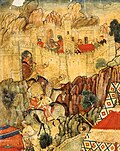
[[File:Sher Shah Suri's capture of Rohtasgarh fort.png|thumb|Depiction of Sher Shah's capture of Rohtasgarh fort through Stratagem]] | |||
[[Sher Shah Suri]]'s relentless campaigns on the [[Bengal Sultanate]] prompted its ruler to request aid from [[Humayun]], who in turn mobilized a [[Army of the Mughal Empire|Mughal army]] in July 1537, and advanced to Chunar. He reached the fort in November 1537 and laid siege to it. The siege of the fort at Chumar would last over six months until it finally fell despite the attempts from Rumi Khan to make quick work of the city. Sher Shah then led a second invasion into Bengal, and besieged [[Gauḍa (city)|Gauda]]. Gauda fell to the Afghan forces in April 1538. With the fort of [[Rohtas Fort, India|Rohtasgarh]] also falling under his control in March 1538, which he used as a place to situate Afghan families and the loot he had obtained during the war, also transferring the loot he obtained from Gaur to Rohtasgarh.{{sfn|Mahajan|1968|p=41}}<ref name="Rule of Afghans - Banglapedia">{{Cite web |title=Rule of Afghans |url=https://en.banglapedia.org/index.php?title=Rule_of_Afghans |access-date=2023-08-16 |website=Banglapedia |archive-date=25 September 2023 |archive-url=https://web.archive.org/web/20230925235607/https://en.banglapedia.org/index.php?title=Rule_of_Afghans |url-status=live }}</ref>{{sfn|Puri|Das|2003|p=113}} With this victory, Sher Shah held his first coronation.{{sfn|Jenkins|2015|p=64}}{{sfn|Bhattacherje|2009|p=52}} Following the fall of Gaur, Sher Shah offered favorable peace terms to Humayun, offering 10,000,000 dinars, and that he would surrender [[Bihar]] in exchange for control of Bengal. Humayun did not wish to leave Bengal in the hands of a hostile state, especially with its rich resources, as well as the contributing factor that [[Ghiyasuddin Mahmud Shah]], wounded, entered the camp of Humayun and requested the continuation of war against Sher Shah. Ghiyasuddin would die from his wounds not long after.{{sfn|Chandra|2007|p=215-216}}{{sfn|Mehta|p=168}} | |||
Following this, Humayun began his march to Bengal against Sher Khan, however the march of the Mughal army would be overwhelmed from poor weather conditions, with rains causing the loss of his baggage between [[Patna]] and [[Munger|Monghyr]]. Humayun eventually reached Gauda and seized it without any opposition on 8 September 1538. However, the city was abandoned by the Afghans, with no loot as they had stripped the treasury.<ref name="Rule of Afghans - Banglapedia"/> Humayun remained at Gaur for months, stuck there due to the weather, however he restored order into the city. However, as this was happening, Sher Khan drove deep into his territory, seizing [[Bihar]] and [[Varanasi]], while also recovering control over Chunar, and laying siege to Jaunpur, with other detachments of the Afghan army extending as far as [[Kannauj]].{{sfn|Mehta|p=168}} As a result, Humayun was effectively stranded at Gauda with no communication lines. After learning of disturbances at [[Agra]], Humayun rushed to settle for peace with Sher Khan, which was concluded. Humayun crossed the [[Karmanasa River]], where he could easily be attacked by the Afghans. Sher Khan, seeing the fragile state of the Mughal army, attacked the Mughal army led by Humayun at the [[Battle of Chausa]]. The Afghans descended on the Mughals and caught them off guard, and resulted in the complete [[rout]] of the Mughals. Humayun barely escaped with his life, and the Mughals suffered over 7,000 dead, with many prominent noblemen dead.{{sfn|Ali Khan|1925|p=34-36}}{{sfn|Chandra|2007|p=216-217}}{{sfn|Mahajan|1968|p=42}} | |||
Following his defeat, Humayun returned to [[Agra]], and restored order after disturbances from his brother, [[Hindal Mirza]]. Humayun mobilized a large force, and advanced with an army of 40,000, while Sher Shah amassed 15,000. Humayun met Sher Shah at [[Kannauj]], with both armies mirroring each other across the [[Ganges]] river. Humayun crossed the river and began skirmishing with Sher Shah's army. Amidst the fighting, Humayun's army saw many nobles hiding their insignia to prevent them from being recognized by the Afghans, with many nobles also fleeing from the battle. The Mughal army was defeated, which led to Humayun fleeing to [[Sindh]]. Following this victory, Sher Khan was crowned a second time on 17 May 1540 as Sher Shah, being declared as [[Emperor]] of Northern India, while also donning the epithet of Sultan Adil, meaning "Just King".{{sfn|Ali Khan|1925|p=38-41}}{{sfn|Chandra|2007|p=217}}{{sfn|Mehta|p=169}} | |||
With the defeat and flight of Humayun, Sher Shah captured [[Delhi]].{{sfn|Mikaberidze|2011|p=830}}{{sfn|Mehta|p=168}} | |||
{| class=" | ===Reforms in Bengal (1540–1541)=== | ||
! Name | Realizing the importance of [[Bengal]], Sher Shah focused much of his administrative efforts in the region. Khijir Khan, the governor of Bengal under Sher Shah, led a revolt in March 1541. Sher Shah mobilized an army and lead it himself, defeating Khijir Khan and restoring Bengal under his suzerainty. Bengal was divided into 47 smaller administrative divisions, appointing them under a [[Sikdar|shiqdar]], which would be oversighted by Kazi Fajilot as the chief supervisor of the [[Mukhtar|Muqtars]]. These reforms saw the prominence of Afghans in Bengal, with many Afghans moving and settling in the region. Some of the Afghans who settled in the region would go on to establish the [[Bengal Sultanate#List of dynasties|Muhammad Shahi dynasty]], which ruled Bengal from 1553 to 1563, and the [[Karrani dynasty]], which ruled from 1563 to 1576.<ref name="Rule of Afghans - Banglapedia"/>{{sfn|Mehta|p=169}} | ||
! | |||
! Reign | ===Advance into the Punjab and pacification of the Gakhars (1540–1542)=== | ||
! | Following the flight of [[Humayun]], Sher Shah continued in pursuit, advancing into the Punjab. Sher Shah advanced on [[Lahore]], and caused panic among the Mughals. [[Kamran Mirza]] was not prepared to face Sher Shah, and as a result, retreated to Kabul, leaving the region to Sher Shah. Sher Shah captured Lahore in November 1540, with Afghan armies advancing as far as the [[Khyber Pass]], but not extending his empire beyond the [[Indus]] as Sher Shah did not wish to incorporate many Afghans who enjoyed their independence and face difficulties with them. The Afghans also seized control of [[Multan]] in 1541, but did not pursue the retreat of the Mughals further, seeing them as no longer as a threat.{{sfn|Chandra|2005|p=77}}{{sfn|Mehta|p=170}} | ||
Not longer after, Sher Shah entered conflict with the [[Gakhars]], who had always been difficult to subjugate, and caused issues amongst former rulers in the region. Sher Shah resorted to diplomacy, inviting the Gakhar chief and asking him to acknowledge him as the emperor of India. The Gakhar chief gave an insulting response, which enraged Sher Shah. Sher Shah marched through the Punjab and subjugated the Gakhars, laying waste to much of the countryside and taking many prisoner. Sher Shah also constructed the [[Rohtas Fort]]. To further secure his rule over the Gakhars, and to wade off any threat of Mughal return, he left 50,000 men in the [[Punjab]], while he returned toward the Bengal, whose governor he placed was becoming unruly.{{sfn|Ali Khan|1925|p=41-45}}{{sfn|Chandra|2005|p=77}} | |||
===Conquest and consolidation of Gwalior and Malwa (1542)=== | |||
In 1542, Sher Shah embarked on his campaign to [[Malwa]]. This was a result of fears of Malwa joining with the Mughals against Sher Shah. Sher Shah also faced the external threat of Humayun, who was attempting to forge a kingdom in Gujarat, and a forged alliance with the [[Malwa Sultanate]] would be threatening. As a result, the Afghan armies first began their march on [[Gwalior]]. Led by Shujaat Khan, [[Gwalior]] was subjugated under Afghan rule. With this, the threat of being flanked as the Afghans advanced further into Malwa were extinguished. After gaining the submission of Abul Qasim Beg, the Mughal [[wali]] of [[Gwalior]], The Afghans continued their march to [[Sarangpur, Madhya Pradesh|Sarangpur]]. Qadir Khan, the ruler of the Malwa Sultanate, being abandoned by his vassals who refused to support him, begged for the mercy of Sher Shah, who treated him well.{{sfn|Ali Khan|1925|p=63-64}}{{sfn|Mehta|p=169}} | |||
Despite former grudges, Sher Shah reconciliated and gave him gifts, and even gave Qadir Khan a [[Jagir]] in [[Bengal]]. Despite this, Qadir Khan did not like the generous offer, and instead, fled to Gujarat, with an attempt to re-capture him in a pursuit led by Shujaat Khan ending in failure. Sher Shah consolidated his new territories before returning to [[Agra]]. While returning to Agra, he received submission from the ruler of [[Ranthambore Fort|Ranthambore]].{{sfn|Mehta|p=170}} Shujaat Khan was placed as the new governor of Malwa. Qadir Khan attempted to retrieve his lost territories, and entered in battle against Shujaat Khan on separate occasions. Despite numerical inferiority, Shujaat Khan decisively defeated the coalition of Qadir Khan. Shujaat Khan was awarded with over 12,000 horses due to his valiant efforts.{{sfn|Ali Khan|1925|p=65-66}} | |||
===Conquest of Raisen (1543)=== | |||
{{Main|Siege of Chanderi|Puran Mal}} | |||
After the death of Bahadur Shah of Gujarat, Puran Mall recovered control of Raisin after it was annexed by Bahadur Shah in 1532. Upon his restored rule in the region, he led many tyrannical actions on the Muslim populace of the city. The survivors of this occasion developed a grudge against Puran Mall. Sher Shah, hearing of this, and seeking to obtain control of [[Raisen]] himself, began preparing for war. Sher Shah remarked: | |||
{{blockquote|I did wrong when I said I would go towards Bengal. If Almighty God would vouchsafe me a recovery from this fever I will return with all speed, and Puran Mall who has enslaved the families of the Muslims in Chanderi and has made dancing girls of their daughters and did not accompany my son Qutab Khan — him will I so punish that he may be a warning to others.{{sfn|Ali Khan|1925|p=47}}}} | |||
Before resorting to war, Sher Shah offered [[Varanasi]] to Puran Mall if he ceded Raisin. Puran Mall refused to agree to any offer, and as a result, Sher Shah declared war. [[Islam Shah Suri|Jalal Khan]] led the Afghan army, reaching [[Vidisha]], where he merged forces with Sher Shah. The Afghan forces then advanced to Raisin, besieging it. The siege of the city lasted for six months until the artillery of Sher Shah destroyed the cities defenses, which led to Puran Mall surrendering. The treaty observed the points that: Free passage to himself [Puran Mall] and his family with their belongings, The retirement of Sher Shah to a distance of two marches from the fort, and Adil Khan and Qutab Khan to bind themselves by solemn oaths that Puran Mall and his family will not be molested in any way.{{sfn|Ali Khan|1925|p=47-52}}{{sfn|Mehta|p=170}} | |||
Sher Shah and his army withdrew a distance of two marches from the fort per the agreement. However, Sher Shah then encountered widows of the chiefs of Chanderi, with many others waiting for Sher Shah along the roadside. They called out to Sher Shah: | |||
{{blockquote|We have suffered from this inhuman and malignant infidel all kinds of tyranny and oppression. He has slain our husbands and our daughters he has enslaved, and made dancing girls of them, and has seized our lands, and all our worldly goods for a long time past. ... If you do not give us justice, hereafter, in the day of resurrection when the first and the last of all men shall be collected together, we will accuse you.{{sfn|Ali Khan|1925|p=53}}}} | |||
Upon hearing this, and further seeing the ruined families of Muslim survivors, Sher Shah was reported to have tears dropped from his eyes, and his idea of the destruction of oppression overtook him. Furthermore, demanded by his army to take action, Sher Shah ordered an army led by Isa Khan Hajjab to lead a forced march, which caught up to the retreating detachment of Puran Mal. The Rajput forces put up resistance, but were entirely annihilated.{{sfn|Ali Khan|1925|p=53-56}}{{sfn|Kennedy|1905|p=212}}{{sfn|Matta|2005|p=171}} | |||
===Second Punjab campaign and subjugation of upper Sindh (1543)=== | |||
After conquering [[Multan]] in 1541, it was later overrun by Baloch tribes. As a result, Sher Shah began assembling for a campaign in 1543. It also aligned with his ideas of building a new road from Lahore to Multan. During this, a certain raider named Fateh Khan Jat looted the routes between [[Lahore]] and [[Delhi]], which surmounted to numerous complaints in return. As a result, Sher Shah ordered [[Haibat Khan Niazi|Haibat Khan]] to put an end to the raids of Fateh Khan. Haibat Khan successfully trapped Fateh Khan in a mud fort around [[Fatehpur, Uttar Pradesh|Fatehpur]]. Seeking no possible way of escaping the situation, Fateh Khan surrendered to Haibat Khan. However, the garrison of the fort led by Hinda Baluch made a sortie, breaking out of the fort and successfully fleeing. Despite this, Hinda Baluch was captured during the sortie. With this, the Balochi leaders were executed. Following the campaign, Haibat Khan would subjugate upper Sindh as far as [[Sehwan]].{{sfn|Ali Khan|1925|p=67-68}}{{sfn|Chandra|2005|p=[https://books.google.com/books?id=0Rm9MC4DDrcC&pg=PA77 77-79]}} | |||
===Conquest of Marwar (1543–1544)=== | |||
{{Main|Battle of Sammel}} | |||
[[File:H0900-L185162829.jpg|Painting of Rao Maldeo Rathore.|thumb|right|150px]] | |||
In 1543, Sher Shah Suri with a force of 80,000 cavalry set out against [[Maldeo Rathore]], the [[Rajput]] king of [[Marwar]]. With an army of 50,000, Maldeo advanced to face Sher Shah's army.{{sfn|Chandra|2005|p=80}} Instead of marching to the enemy's capital Sher Shah halted in the village of Sammel in the pargana of [[Jaitaran]], ninety kilometres east of [[Jodhpur]].{{sfn|Hooja|2006|p=526-529}} After one month of skirmishing, Sher Shah's position became critical owing to the difficulties of food supplies for his huge army. To resolve this situation, Sher Shah resorted to a cunning ploy. One evening, he dropped forged letters near the Maldeo's camp in such a way that they were sure to be intercepted. These letters indicated, falsely, that some of Maldeo's army commanders were promising assistance to Sher Shah. This caused great consternation to Maldeo, who immediately suspected his commanders of disloyalty. Maldeo left for Jodhpur with his own men, abandoning his commanders to their fate. Following this, Maldeo's generals, Jaita and Kumpa, fought with a few thousand men against the Afghans, who wielded a force of 80,000 men and some cannons. In the ensuing battle of Sammel (also known as battle of Giri Sumel), Sher Shah emerged victorious, but several of his generals lost their lives and his army suffered thousands of casualties.{{sfn|Chaudhuri|2006|p=81-82}} | |||
After this victory, Sher Shah's general [[Khawas Khan Marwat]] took possession of Jodhpur and occupied the territory of Marwar from [[Ajmer]] to [[Mount Abu]] in 1544.{{sfn|Chaudhuri|2006|p=81-82}} Maldeo was initially forced to retreat to [[Siwana]], however after the death of Sher Shah he was able to recapture Jodhpur by July 1545 and the rest of his territories by 1546. In doing so he had to defeat the chain of garrisons that had been posted by Sher Shah before his death.<ref name=RH1>{{harvnb|Hooja|2006|p=531}} "Maldeo had been forced to retreat to the fortress of Siwana because of the consequences of the battle of Sammel in 1544, he soon retrieved his position after Sher Shah's death. By July 1545 Maldeo had recovered his ancestral capital of Jodhpur, and uprooted many of Sher Shah's chain of garrisons and outposts from Marwar. Within the next eighteen months (i.e. by the end of 1546) the Rathore king managed to take back practically all that he had lost to Sher Shah."</ref> | |||
===Death of Sher Shah (1545)=== | |||
[[File:Sher Shah Suri Tomb.jpg|thumb|[[Sher Shah Suri Tomb]] at [[Sasaram]]]] | |||
Following the conquest of Marwar, Sher Shah besieged [[Kalinjar Fort]] in 1544. While leading the siege, he was mortally wounded from a gunpowder explosion from one of his cannons bursting. Sher Shah was taken to his tent where he remained for two days. When he received the news that the fort finally fell, he remarked: "Thanks to Almighty god".{{sfn|Bhattacherje|2009|p=54}} Sher Shah succumbed to his wounds and died on 22 May 1545, at the age of 73 or 59.{{sfn|Mikaberidze|2011|p=830}}{{sfn|Ali Khan|1925|p=99-100}} He was succeeded by his son, Jalal Khan, who took the title of [[Islam Shah Suri]].{{sfn|Chandra|2007|p=220}} Sher Shah was buried in the [[Sher Shah Suri Tomb]] (122 ft high), which stands in the middle of an artificial lake at Sasaram, a town on the [[Grand Trunk Road]]. The tomb, whose construction Sher Shah had commissioned himself, was completed on 16 August 1545, three months after the death of Sher Shah.{{sfn|Asher|1977|p=273-298}} | |||
===Reign of Islam Shah Suri (1545—1554)=== | |||
{{main|Islam Shah Suri}} | |||
{{Expand section|date=July 2024}} | |||
===Civil war and Mughal reconquest (1554—1557)=== | |||
[[File:Afghan troops surrendering at the Siege of Mankot (1557).jpg|thumb|Afghan troops surrendering to Mughal forces at the [[Siege of Mankot (1557)]]. ''Akbarnama'' (1590–95)]] | |||
One of the last events of the Mughal reconquest occurred in the summer of 1557, with the [[Siege of Mankot (1557)]], where [[Sikandar Shah Suri]] had taken refuge. Sikandar surrendered to the Mughal forces led by [[Bairam Khan]] on 25 July 1557, after 6 months of stiff resistance using artillery and matchlocks. Sikandar was pardoned and entered the service of emperor [[Akbar]], but soon fell out of favour.<ref>{{cite book |last1=Nath |first1=Pratyay |title=The World of the Siege (Narratives of Akbar's Sieges and the Construction of Mughal Universal Sovereignty) |date=24 May 2019 |publisher=Brill |isbn=978-90-04-39569-5 |page=176- |url=https://doi.org/10.1163/9789004395695_008 |language=en |chapter=Narratives of Akbar’s Sieges and the Construction of Mughal Universal Sovereignty |doi=10.1163/9789004395695_008 |quote=Mankot (1557) was the first siege of Akbar’s career and was undertaken at a stage when he was still under the regency of Bairam Khan. Chased by Mughal troops, the Afghan chieftain Sikandar Sur had taken refuge in this fort in the Himalayan foothills near the Punjab Plains of North India. Sikandar was a member of the aristocracy of the Afghan sultanate that Mughal armies had defeated on the plains of Panipat the year before. This siege represented an important phase in the struggle of the emergent Mughal Empire against the increasingly-cornered Afghan aristocracy – one that would continue for decades to come. It was a keenly contested siege during which the garrison defended the fort valiantly with artillery and matchlocks. They sued for peace after almost six months, only after they were seriously threatened by rising desertions and a scarcity of food. Sikandar was pardoned by the young emperor and admitted into the Mughal officialdom.}}</ref><ref>Abu'l Fazl, Akbarnama, tr. H. Beveridge, reprint, Delhi, 2002, vol.2, p.90-91</ref><ref>{{cite web |title=Bairam Khan Petitions The Young Akbar Following The Siege of Mankot in 1557. First Akbarnama, Victoria and Albert Museum, circa 1590-95. Arts of the Islamic World 2019 |url=https://www.sothebys.com/en/buy/auction/2019/arts-of-the-islamic-world/bairam-khan-petitions-the-young-akbar-following |website=Sotheby's |language=en}}</ref> | |||
==Legacy== | |||
The Sur dynasty held control of nearly all the [[Mughal Empire|Mughal]] territories, from [[Balochistan]] in the west to modern-day [[Bangladesh]] in the east. | |||
Despite its short reign, the Sur Empire significantly influenced Mughal administrative reforms when they returned to power, most notably under Mughal Emperor [[Akbar]].<ref>{{Cite book |last=Chaurasia |first=Radhey Shyam |url=https://books.google.com/books?id=8XnaL7zPXPUC&q=akbar+sher+shah+suri |title=History of Medieval India: From 1000 A.D. to 1707 A.D. |date=2002 |publisher=Atlantic Publishers & Dist |isbn=978-81-269-0123-4 |language=en |page=190 |access-date=24 September 2023 |archive-date=16 October 2023 |archive-url=https://web.archive.org/web/20231016085456/https://books.google.com/books?id=8XnaL7zPXPUC&q=akbar+sher+shah+suri |url-status=live }}</ref> | |||
{{blockquote|It was at the time of this bounty of Sultán [[Bahlul Lodi|Bahlul]] [Lodi], that the grandfather of Sher Sháh, by name Ibráhím Khán Súr,*<small>The [[Sur (Pashtun)|Súr]] represent themselves as descendants of Muhammad Súr, one of the princes of the [[Ghurid dynasty|house of the Ghorian]], who left his native country, and married a daughter of one of the Afghán chiefs of Roh.</small> with his son Hasan Khán, the father of Sher Sháh, came to [[Hindustan|Hindu-stán]] from [[Name of Afghanistan|Afghánistán]], from a place which is called in the [[Pashto language|Afghán tongue]] "Shargarí",* but in the Multán tongue "Rohrí". It is a ridge, a spur of the [[Sulaiman Mountains|Sulaimán Mountains]], about six or seven kos in length, situated on the banks of the [[Gomal River|Gumal]]. They entered into the service of Muhabbat Khán Súr, Dáúd Sáhú-khail, to whom Sultán Bahlol had given in jágír the Parganas of Hariána and Bahkála, etc., in the [[Punjab region|Panjáb]], and they settled in the pargana of Bajwára.<ref>{{cite web |url=http://persian.packhum.org/persian/pf?file=80201014&ct=78 |title=Táríkh-i Sher Sháhí; or, Tuhfat-i Akbar Sháhí, of 'Abbás Khán Sarwání. CHAPTER I. Account of the reign of Sher Sháh Súr. |author=Abbas Khan Sarwani |publisher=[[Packard Humanities Institute]] |year=1580 |access-date=4 September 2010 |author-link=Tarikh-i-Sher Shahi |archive-date=2 June 2011 |archive-url=https://web.archive.org/web/20110602151817/http://persian.packhum.org/persian/pf?file=80201014&ct=78 |url-status=live }}</ref>|[[Tarikh-i-Sher Shahi|Abbas Khan Sarwani]]|1580}} | |||
==Government and administration== | |||
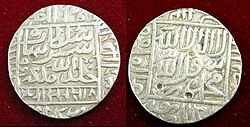
[[File:Sher shah's rupee.jpg|thumb|right|''Rupiya'' released by Sher Shah Suri, 1538–1545 CE, was the first [[Rupee]]]] | |||
The system of tri-metalism which came to characterize Mughal coinage was introduced by Sher Shah.{{sfn|Thomas|1967|p=403}} While the term ''rūpya'' had previously been used as a generic term for any silver coin, during his rule the term ''rūpee'' came to be used as the name for a silver coin of a standard weight of 178 grains, which was the precursor of the modern [[rupee]].<ref name="RBI">{{cite web |url=http://www.rbi.org.in/currency/museum/c-mogul.html |title=Mughal Coinage |website=[[RBI Monetary Museum]] |publisher=Reserve Bank of India |access-date=24 August 2010 |url-status=dead |archive-url=https://web.archive.org/web/20080516085855/http://www.rbi.org.in/currency/museum/c-mogul.html |archive-date=16 May 2008}}</ref> The ''Rupee'' is today used as the national currency in [[India]], [[Indonesia]], [[Maldives]], [[Mauritius]], [[Nepal]], [[Pakistan]], [[Seychelles]], and [[Sri Lanka]]. [[Gold coin]]s called the ''[[Mohur]]'' weighing 169 grains and copper [[coin]]s called Paisa were also minted during his reign.<ref name="RBI"/> According to numismatists Goron and Goenka, it is clear from coins dated AH 945 (1538 AD) that Sher Khan had assumed the royal title of Farid al-Din Sher Shah and had coins struck in his own name prior to the battle of Chausa.{{sfn|Goron|Goenka|2001|p=98}} | |||
Sher Shah was responsible for greatly rebuilding and modernizing the [[Grand Trunk Road]], a major artery which runs all the way from modern day Bangladesh to [[Afghanistan]]. Caravanserais (inns) and mosques were built and trees were planted along the entire stretch on both sides of the road to provide shade to travelers. Wells were also dug, especially along the western section. He also established an efficient postal system, with mail being carried by relays of horse riders.{{sfn|Dias|1996|p=216}}{{sfn|Sud|2016|p=74}} | |||
===Provincial and local administration=== | |||
The Sur empire consisted of many subdivisions, referred to as [[Iqtas]]. Some of these provinces were ruled by military governors, such as Haibat Khan, who governed the [[Punjab]]. Haibat Khan had control of over 30,000 men, and was able to give [[jagir]]s to his own soldiers. Khwas Khan was another military governor, who ruled over [[Rajasthan]], and assembled over 20,000 men. The head of Iqtas were known by different names, such as Hakim, [[Faujdar]], or Momin. These head of Iqtas had their own bodies of men, which were usually less than 5,000 men. The responsibility of these heads were instilling order and law in the subdivisions they controlled.{{sfn|Mehta|p=176}} | |||
Iqtas themselves were divided into districts, named Sarkars. Sarkars had two chief officers, the Shiqar, and Munsif. Shiqars were tasked with the responsibility of civil administration, and themselves could field 200-300 soldiers to maintain law and order in their districts. The Munsif of a Sarkar was responsible for revenue collection, and civil justice. The chief Shiqars would often handle cases of criminal justice.{{sfn|Mehta|p=176-177}} | |||
Sarkars were also in turn divided into two or three [[Parganas]]. A Pargana was a moderately sized town and surrounding villages. In every Pargana, there was a Shiqar, Munsif, and one treasurer who went under the title of Fotdar. They were also accompanied by a Karkun who could write in Hindi and Persian. The Shiqar of a Pargana would be a military officer under the oversight of the Shiqar of the Sarkar. The responsibilities of a Shiqar in a Pargana were to maintain stability, and assist the Munsif in collection of land revenues, and measuring land. While the Munsif in the Pargana would be under the oversight of the chief Munsif in the Sarkar.{{sfn|Mehta|p=177}} | |||
Villages were often autonomous and were governed by their own assemblies called [[Panchayati raj|Panchayats]]. This was respected by Sher Shah during his reign. Each assembly consisted of elders of a village who looked after the needs of villagers and instructed their own punishments in respect to the customs of the community. The chief of a village would be a form of a diplomat between the villages and the higher government.{{sfn|Mehta|p=177-178}} | |||
===Religious policy=== | |||
The religious policy of Sher Shah is debated amongst historians. Dr. Qanungo states that Sher Shah upheld religious tolerance toward [[Hindus]]. Ram Sharma states that Sher Shah Suri was heavily devoted to his faith, always praying the [[Salah|five prayers]]. And on other occasions, claimed that Sher Shah's wars against the Rajputs were a [[Jihad]]. The war against Puran Mall was described as a Jihad, and his treatment of Maldeo was argued as signs of [[religious intolerance]]. However, he was always tolerant of Hindus, and did not hold any grudges against them, or wage propaganda.{{sfn|Mahajan|1968|p=53}}<ref name="Britannica">{{Cite web |title=Shēr Shah of Sūr |url=http://www.britannica.com/eb/article-9067304/Sher-Shah-of-Sur |access-date=23 August 2010 |website=Encyclopædia Britannica |archive-date=4 June 2008 |archive-url=https://web.archive.org/web/20080604083938/http://www.britannica.com/eb/article-9067304/Sher-Shah-of-Sur |url-status=live }}</ref> | |||
According to Srivastava, Sher Shah's balance made his fellow Muslims content with his lenient treatment of Hindus. Sher Shah's evaluated policy was seen that Islam should hold supremacy over the lands he had conquered, but not to displace Hinduism.{{sfn|Mahajan|1968|p=53-54}} | |||
===Army=== | |||
Sher Shah's army defeated the [[Mughal Empire]] and drove them out of India. Sher Shah invited Afghans from across the empire and gave them high positions, with himself taking interest in recruiting troops. Sher Shah also promoted out of merit. The Afghan army utilized heavy emphasis on their [[cavalry]], while his infantry were armed with muskets. One of his reforms included splitting up his armies into divisions, which was led by a commander. Discipline was strict, with provisions being given by Banjaras, who accompanied the army. Men were also assigned roles, attributing to the system of the Dagh, with spies being able to be rooted out using this method.{{sfn|Mahajan|1968|p=49}} | |||
Sher Shah also considered [[Pashto]] a sign of friendliness, and gave higher salaries to Afghans who could speak Pashto in his army.<ref name="Sarwani">{{cite web |url=https://books.google.com/books?id=AFGTzQEACAAJ |title=Táríkh-i Sher Sháhí; or, Tuhfat-i Akbar Sháhí, of 'Abbás Khán Sarwání. CHAPTER I. Account of the reign of Sher Sháh Súr. |page=78 |author=Abbas Khan Sarwani |work=Sir H. M. Elliot |location=London |publisher=[[Packard Humanities Institute]] |year=1580 |access-date=4 September 2010 |author-link=Tarikh-i-Sher Shahi |archive-date=16 October 2023 |archive-url=https://web.archive.org/web/20231016085457/https://books.google.com/books?id=AFGTzQEACAAJ |url-status=live }}</ref> | |||
In 1540, Sher Shah's army consisted of over 150,000 cavalrymen, 25,000 infantrymen, and over 5,000 war elephants.{{sfn|Roy|2015|p=54}} | |||
===Social Justice=== | |||
One of the things Sher Shah Suri was renowned for was giving justice. Courts were held by [[Qadis]], with Sher Shah as well observing civil cases. Hindus settled their disputes in [[Panchayati raj|Panchayat]] assemblies, while in criminal cases, nobody was exempt from the law of the empire. The criminal law of the empire was extremely harsh, and done so to prevent others from doing a crime out of fear of the repercussions. Sher Shah gave heavy punishments for people in high posts, including government officials.{{sfn|Mahajan|1968|p=51}}{{sfn|Mehta|p=180-182}} | |||
The reputation of Sher Shah was formidable in this regard as a [[Justice|just]] ruler, to the point where merchants could travel through and sleep in deserts without fear of being harassed by bandits or robbers. The soldiers of Sher Shah acted as police, with the duty of these soldiers to look for thieves and robbers. Sher Shah Suri also implemented the reform of self-responsibility. It was the duty assigned to officials to find the culprits of different cases in examples such as murder, lest the officials be held responsible themselves and be hanged. As a result of these reforms, historians praise it for its effectiveness.{{sfn|Mahajan|1968|p=52}}{{sfn|Mehta|p=180-182}} | |||
===Buildings=== | |||
Sher Shah built several monuments including [[Rohtas Fort]] (now a [[UNESCO World Heritage Site]] in Pakistan), many structures in the [[Rohtasgarh Fort]] in Bihar, the [[Sher Shah Suri Masjid]] in [[Patna]], the [[Qila-i-Kuhna Mosque]] inside the [[Purana Qila]] complex in Delhi, and the Sher Mandal, an octagonal building also inside the Purana Qila complex, which later served as the library of Humayun. He built a new city, [[Bhera]], in present-day Pakistan in 1545, including within it a grand masjid named after him.{{sfn|Matta|2005|p=214}}{{sfn|Mahajan|1968|p=54}}{{sfn|Brown|1939|p=636-646}} | |||
The [[Tomb of Sher Shah Suri|mausoleum of Sher Shah Suri]] is described as one of the most beautiful monuments in India, due to its grandeur and dignity. Cunningham even was inclined to prefer it over the [[Taj Mahal]].{{sfn|Mahajan|1968|p=54}} | |||
===Trade=== | |||
Amongst his magnitude of reforms while consolidating the empire, Sher Shah Suri abolished taxes that were held on the borders of provinces. This was due to Sher Shah wishing to invigorate trade throughout India, and only two levies remaining in place, with them being upon goods being brought into the country, and the second for when goods were sold. Customs as a result, were entirely removed.{{sfn|Mahajan|1968|p=52}}{{sfn|Mehta|p=182}} | |||
== List of rulers == | |||
{| class=wikitable | |||
! width="4%" bgcolor="#CEDFF2"|S. n. | |||
! bgcolor="#CEDFF2"|Picture | |||
! bgcolor="#CEDFF2"|Name | |||
! bgcolor="#CEDFF2"|Birth date | |||
! bgcolor="#CEDFF2"|Death date | |||
! bgcolor="#CEDFF2"|Reign | |||
! bgcolor="#CEDFF2"|Notes | |||
|- | |- | ||
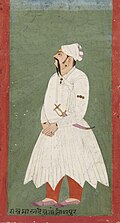
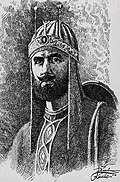
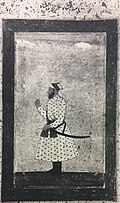
| | |1st | ||
|[[File:Shershah.jpg|70px]] | |||
| | |[[Sher Shah Suri]] | ||
'''(شےر شآہ سوریی)''' | |||
'''(शेर शाह सुरी)''' | |||
|1472 or 1486 | |||
|22 May 1545 | |||
|6 April 1538/17 May 1540<ref name=BangGMS>{{cite Banglapedia|author=Ahmed, ABM Shamsuddin|article=Ghiyasuddin Mahmud Shah}}</ref><ref name="p.83">Majumdar, R.C. (ed.) (2007). ''The Mughul Empire'', Mumbai: Bharatiya Vidya Bhavan, {{Listed Invalid ISBN|81-7276-407-1}}, p.83</ref> — 22 May 1545<ref name="p.83"/> | |||
| | |||
|- | |- | ||
| | |2nd | ||
|[[File:Islam Shah Suri.jpg|70px]] | |||
| | |[[Islam Shah Suri]] | ||
'''(یسلام شآہ سوری)''' | |||
'''(इस्लाम शाह सुरी)''' | |||
|1507 | |||
|22 November 1554 | |||
|26 May 1545<ref name="p.90-33">Majumdar, R.C. (ed.) (2007). ''The Mughul Empire'', Mumbai: Bharatiya Vidya Bhavan, {{Listed Invalid ISBN|81-7276-407-1}}, pp.90–93</ref> — 22 November 1554<ref name="p.90-33"/> | |||
|Son of Sher Shah Suri. | |||
|- | |- | ||
| | |3rd | ||
| | |'''N/A''' | ||
| | |[[Firuz Shah Suri]] | ||
| | '''(فیروز شآہ سوری)''' | ||
'''(फ़िरुज़ शाह सुरी)''' | |||
|4 May 1542 | |||
|22 November – December 1554 | |||
|December 1554<ref name="p.94">Majumdar, R.C. (ed.) (2007). ''The Mughul Empire'', Mumbai: Bharatiya Vidya Bhavan, {{Listed Invalid ISBN|81-7276-407-1}}, p.94</ref> | |||
|Son of Islam Shah Suri. | |||
|- | |- | ||
| | |4th | ||
| | |'''N/A''' | ||
| | |[[Muhammad Adil Shah (died 1557)|Muhammad Adil Shah]] | ||
'''(موہامد آدیل شآہ)''' | |||
'''(मुहाम्मद आदिल शाह)''' | |||
|unknown | |||
|1557 | |||
|December 1554 – January 1555<ref name="p.94"/> — 1555<ref name="p.94-96">Majumdar, R.C. (ed.) (2007). ''The Mughul Empire'', Mumbai: Bharatiya Vidya Bhavan, {{Listed Invalid ISBN|81-7276-407-1}}, pp.94–96</ref> | |||
|Son-in-law of Sher Shah Suri. | |||
|- | |- | ||
| | |5th | ||
| | |'''N/A''' | ||
| | |[[Ibrahim Shah Suri]] | ||
| | '''(یبرآہیم شاہ سوری)''' | ||
'''(इब्राहिम शाह सुरी)''' | |||
|unknown | |||
|1567/1568 | |||
|January – February 1555<ref name="p.94-96"/> | |||
|Brother-in-law of Sher Shah Suri. | |||
|- | |- | ||
| | |6th | ||
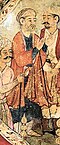
| | |[[File:Sikandar_Shah_Suri,_in_front_of_Akbar,_25_July_1557.jpg|center|70px|Sikandar_Shah_Suri,_in_front_of_Akbar,_25_July_1557.]] | ||
| | |[[Sikandar Shah Suri]] | ||
'''(سیکندر شآہ سوری)''' | |||
'''(सिकन्दर शाह सुरी)''' | |||
|unknown | |||
|1559 | |||
|February 1555<ref name="p.94-96"/> — 22 June 1555<ref name="p.94-96"/> | |||
|Brother-in-law of Sher Shah Suri. | |||
|- | |- | ||
| | |7th | ||
| | |'''N/A''' | ||
|[[Adil Shah Suri]] | |||
'''(آدیل شاہ سوری)''' | |||
'''(आदिल शाह सुरी)''' | |||
|unknown | |||
|April 1557 | |||
|22 June 1555<ref name="p.94-96"/> — 1556<ref name="p.94-96"/> | |||
|Brother of Sikandar Shah Suri. | |||
|} | |} | ||
== See also == | == See also == | ||
* [[Sur (Pashtun)]] | * [[Sur (Pashtun tribe)]] | ||
* [[Delhi Sultanate]] | * [[Delhi Sultanate]] | ||
* [[List of Sunni | * [[List of Sunni dynasties]] | ||
== Notes == | |||
{{notelist}} | |||
== References == | == References == | ||
{{reflist}} | {{reflist}} | ||
==Sources== | |||
{{refbegin}} | |||
* {{cite book |last1=Ali Khan |first1=Zulfiqar |year=1925 |title=Sher Shah Suri, Emperor of India |url=https://archive.org/details/in.ernet.dli.2015.73304/page/n4/mode/1up |location=Lahore |publisher=Civil and Military Gazette Press }} | |||
* {{Cite journal |last1=Asher |first1=Catherine B. |year=1977 |title=The Mausoleum of Sher Shāh Sūrī |journal=Artibus Asiae |volume=39 |issue=3/4 |pages=273–298 |doi=10.2307/3250169 |jstor=3250169}} | |||
* {{cite book |last1=Bhattacherje |first1=S. B. |year=2009 |title=Encyclopaedia of Indian Events & Dates |url=https://books.google.com/books?id=oGVSvXuCsyUC |publisher=Sterling Publishers |isbn=978-81-207-4074-7 |language=en |access-date=11 January 2024 |archive-date=21 January 2024 |archive-url=https://web.archive.org/web/20240121155826/https://books.google.com/books?id=oGVSvXuCsyUC |url-status=live }} | |||
* {{Cite journal |last1=Brown |first1=Percy |author-link=Percy Brown (art historian) |year=1939 |title=The Influence of Sher Shah Sur on the Islamic Architecture of India |url=https://www.jstor.org/stable/44252417 |journal=Proceedings of the Indian History Congress |volume=3 |pages=636–646 |jstor=44252417 |issn=2249-1937 |access-date=11 September 2023 |archive-date=6 September 2023 |archive-url=https://web.archive.org/web/20230906235602/https://www.jstor.org/stable/44252417 |url-status=live }} | |||
* {{cite book |last1=Chandra |first1=Satish |author-link=Satish Chandra (historian) |year=2005 |orig-year=First published 1999 |title=Medieval India: From Sultanat to the Mughals - Part Two: Mughal Empire (1526–1748) |url=https://books.google.com/books?id=0Rm9MC4DDrcC |edition=3rd |publisher=Har-Anand Publications |isbn=978-81-241-1066-9 |access-date=11 September 2023 |archive-date=21 January 2024 |archive-url=https://web.archive.org/web/20240121155815/https://books.google.com/books?id=0Rm9MC4DDrcC |url-status=live }} | |||
* {{Cite book |last=Chandra |first=Satish |url=https://books.google.com/books?id=qHnHHwAACAAJ |title=History of Medieval India: 800-1700 |date=2007 |publisher=Orient BlackSwan |isbn=978-81-250-3226-7 |language=en |access-date=11 January 2024 |archive-date=10 March 2023 |archive-url=https://web.archive.org/web/20230310204403/https://books.google.com/books?id=qHnHHwAACAAJ |url-status=live }} | |||
* {{cite book |last1=Chaudhuri |first1=J. N. |editor-last=Majumdar |editor-first=R. C. |editor-link=R. C. Majumdar |year=2006 |orig-year=First published 1974 |chapter=Sher Shāh and His Successors|title=The Mughal Empire |series=The History and Culture of the Indian People |volume=7 |location=Mumbai |publisher=Bharatiya Vidya Bhavan |oclc=3012164}} | |||
* {{Cite book |last1=Dias |first1=Peter |year=1996 |title=The Steward |url=https://books.google.com/books?id=SRx9I2BqSpMC |publisher=Orient Blackswan |isbn=978-81-250-0325-0 |language=en |access-date=11 January 2024 |archive-date=11 January 2024 |archive-url=https://web.archive.org/web/20240111182851/https://books.google.com/books?id=SRx9I2BqSpMC |url-status=live }} | |||
* {{Cite book |last1=Goron |first1=Stan |last2=Goenka |first2=J. P. |year=2001 |title=The Coins of the Indian Sultanates |publisher=Munshiram Manoharlal Publishers |isbn=978-81-215-1010-3}} | |||
*{{cite book |chapter=India under the Moghol Empire |first=Herbert |last=Hartel |title=The Last Great Muslim Empires |editor-first1=H. J. |editor-last1=Kissling |editor-first2=N. |editor-last2=Barbour |editor-first3=Bertold |editor-last3=Spuler |editor-first4=J. S. |editor-last4=Trimingham |editor-first5=F. R. C. |editor-last5=Bagley |year=1997 |publisher=BRILL |isbn=90-04-02104-3 |pages=262–263 |chapter-url=https://books.google.com/books?id=-AznJs58wtkC&pg=PA262 |access-date=20 July 2011 |archive-date=10 March 2023 |archive-url=https://web.archive.org/web/20230310204904/https://books.google.com/books?id=-AznJs58wtkC&pg=PA262 |url-status=live }} | |||
* {{Cite book |last1=Hooja |first1=Rima |year=2006 |title=A history of Rajasthan |url=https://books.google.com/books?id=qqd1RAAACAAJ&q=rima%20hooja%20rajasthan |publisher=Rupa and Company |isbn=978-81-291-1501-0 |access-date=11 January 2024 |archive-date=21 January 2024 |archive-url=https://web.archive.org/web/20240121155832/https://books.google.com/books?id=qqd1RAAACAAJ&q=rima%20hooja%20rajasthan |url-status=live }} | |||
* {{Cite book |last1=Jenkins |first1=Everett Jr |year=2015 |title=The Muslim Diaspora (Volume 2, 1500-1799): A Comprehensive Chronology of the Spread of Islam in Asia, Africa, Europe and the Americas |url=https://books.google.com/books?id=kSYkCQAAQBAJ |publisher=McFarland |isbn=978-1-4766-0889-1 |language=en |access-date=11 January 2024 |archive-date=11 January 2024 |archive-url=https://web.archive.org/web/20240111182852/https://books.google.com/books?id=kSYkCQAAQBAJ |url-status=live }} | |||
* {{Cite book |last1=Kennedy |first1=Pringle |author-link=Pringle Kennedy |year=1905 |title=A History of the Great Moghuls: Or, A History of the Badshahate of Delhi from 1398 A.D. to 1739, with an Introduction Concerning the Mongols and Moghuls of Central Asia |url=https://books.google.com/books?id=4Q4oAAAAYAAJ&pg=PA212 |publisher=Thacker, Spink |language=en |access-date=24 September 2023 |archive-date=16 October 2023 |archive-url=https://web.archive.org/web/20231016085456/https://books.google.com/books?id=4Q4oAAAAYAAJ&pg=PA212 |url-status=live }} | |||
* {{Cite book |last1=Mahajan |first1=Vidya Dhar |author-link=Vidya Dhar Mahajan |year=1968 |title=India Since 1526 |url=https://books.google.com/books?id=z5FcQwAACAAJ |edition=8th |publisher=S. Chand |language=en }} | |||
* {{cite book |last1=Matta |first1=Basheer Ahmad Khan |author-link=Basheer Matta |year=2005 |title=Sher Shah Suri: A Fresh Perspective |url=https://books.google.com/books?id=2VduAAAAMAAJ&q=sher+shah+Puran |publisher=Oxford University Press |isbn=978-0-19-597882-7 |language=en |access-date=24 September 2023 |archive-date=16 October 2023 |archive-url=https://web.archive.org/web/20231016085454/https://books.google.com/books?id=2VduAAAAMAAJ&q=sher+shah+Puran |url-status=live }} | |||
* {{Cite book |last1=Mehta |first1=J. L. |title=Advanced Study in the History of Medieval India |url=https://books.google.com/books?id=-TsMl0vSc0gC |publisher=Sterling Publishers Pvt. Ltd |isbn=978-81-207-1015-3 |language=en |access-date=24 September 2023 |archive-date=21 January 2024 |archive-url=https://web.archive.org/web/20240121155734/https://books.google.com/books?id=-TsMl0vSc0gC |url-status=live }} | |||
* {{Cite book |last1=Mikaberidze |first1=Alexander |author-link=Alexander Mikaberidze |year=2011 |title=Conflict and Conquest in the Islamic World: A Historical Encyclopedia [2 volumes]: A Historical Encyclopedia |url=https://books.google.com/books?id=jBBYD2J2oE4C |publisher=ABC-CLIO |isbn=978-1-59884-337-8 |language=en |access-date=11 January 2024 |archive-date=21 January 2024 |archive-url=https://web.archive.org/web/20240121155734/https://books.google.com/books?id=jBBYD2J2oE4C |url-status=live }} | |||
* {{Cite book |last1=Puri |first1=B. N. |last2=Das |first2=M. N. |year=2003 |title=A Comprehensive History of India: Comprehensive history of medieval India |url=https://books.google.com/books?id=Y7fUHMEDAyEC |publisher=Sterling Publishers |isbn=978-81-207-2508-9 |language=en |access-date=11 January 2024 |archive-date=21 January 2024 |archive-url=https://web.archive.org/web/20240121155815/https://books.google.com/books?id=Y7fUHMEDAyEC |url-status=live }} | |||
* {{Cite book |last1=Roy |first1=Kaushik |year=2015 |title=Military Manpower, Armies and Warfare in South Asia |url=https://books.google.com/books?id=q5JECgAAQBAJ&q=sher+shah+suri+150,000+cavalry |publisher=Routledge |isbn=978-1-317-32128-6 |language=en |access-date=24 September 2023 |archive-date=16 October 2023 |archive-url=https://web.archive.org/web/20231016085454/https://books.google.com/books?id=q5JECgAAQBAJ&q=sher+shah+suri+150,000+cavalry |url-status=live }} | |||
* {{Cite book |last1=Sud |first1=Anuradha |title=Transitions – History and Civics – 7 |url=https://books.google.com/books?id=vSgxDAAAQBAJ |publisher=Vikas Publishing House |isbn=978-93-259-9395-2 |date=2016 |edition=Revised |language=en |access-date=11 January 2024 |archive-date=11 January 2024 |archive-url=https://web.archive.org/web/20240111182851/https://books.google.com/books?id=vSgxDAAAQBAJ |url-status=live }} | |||
* {{Cite book |last1=Thomas |first1=Edward |year=1967 |title=The Chronicles of the Pathan Kings of Delhi |location=Delhi |publisher=Munshiram Manoharlal |isbn=978-81-215-0360-0}} | |||
{{refend}} | |||
{{Commons category|Sur Empire}}{{Authority control}} | {{Commons category|Sur Empire}} | ||
{{Authority control}} | |||
{{coord missing|West Bengal}} | {{coord missing|West Bengal}} | ||
{{Pashtun nationalism}} | |||
{{DEFAULTSORT:Suri Dynasty}} | {{DEFAULTSORT:Suri Dynasty}} | ||
| Line 116: | Line 288: | ||
[[Category:States and territories disestablished in 1556]] | [[Category:States and territories disestablished in 1556]] | ||
[[Category:History of Bengal]] | [[Category:History of Bengal]] | ||
[[Category: | [[Category:Kingdoms of Bihar]] | ||
[[Category:History of | [[Category:History of Punjab]] | ||
[[Category:1540 establishments in India]] | [[Category:1540 establishments in India]] | ||
[[Category:16th century in | [[Category:16th century in the Mughal Empire]] | ||
[[Category:Sunni dynasties]] | [[Category:Sunni dynasties]] | ||
Latest revision as of 18:21, 26 March 2026
Sur Empire | |||||||||||||||||||||||
|---|---|---|---|---|---|---|---|---|---|---|---|---|---|---|---|---|---|---|---|---|---|---|---|
| 1538–1555 | |||||||||||||||||||||||
 Map of the Sur Empire at its greatest extent under Sher Shah Suri (1538/1540–1545) | |||||||||||||||||||||||
| Status | Empire | ||||||||||||||||||||||
| Capital | Sasaram Delhi | ||||||||||||||||||||||
| Official languages | Hindavi[1] | ||||||||||||||||||||||
| Common languages | Persian Bengali Bhojpuri | ||||||||||||||||||||||
| Religion | Sunni Islam | ||||||||||||||||||||||
| Government | Absolute monarchy | ||||||||||||||||||||||
| Sultan | |||||||||||||||||||||||
• 1538/1540–1545 | Sher Shah Suri (first) | ||||||||||||||||||||||
• 1555–1556 | Adil Shah Suri (last) | ||||||||||||||||||||||
| History | |||||||||||||||||||||||
| 6 April 1538 | |||||||||||||||||||||||
| 17 May 1540 | |||||||||||||||||||||||
| 22 June 1555 | |||||||||||||||||||||||
| |||||||||||||||||||||||

| History of India |
|---|
 |
Template:Pashtuns The Sur Empire was an empire ruled by the Afghan-origin Sur dynasty in northern India for nearly 16 or 18 years,[2] between 1538/1540 and 1556, with Sasaram (in modern-day Bihar) serving as its capital. It was founded by Sher Shah Suri.[2][3]
The Sur dynasty held control of nearly all the Mughal Empire territories along the Indo-Gangetic Plain, from eastern Balochistan in the west of Indus River to modern-day Rakhine, Myanmar in the east. Even as Sher Shah Suri consolidated his power over North India, Eastern India was still considered to be the seat of Sur power in India. This is demonstrated by the fact that 8 of the 16 silver mint cities he established were in the region between Chunar and Fathabad.[4]
Reign of Sher Shah Suri[edit | edit source]
War with the Bengal Sultanate and Mughal Empire (1537–1540)[edit | edit source]

Sher Shah Suri's relentless campaigns on the Bengal Sultanate prompted its ruler to request aid from Humayun, who in turn mobilized a Mughal army in July 1537, and advanced to Chunar. He reached the fort in November 1537 and laid siege to it. The siege of the fort at Chumar would last over six months until it finally fell despite the attempts from Rumi Khan to make quick work of the city. Sher Shah then led a second invasion into Bengal, and besieged Gauda. Gauda fell to the Afghan forces in April 1538. With the fort of Rohtasgarh also falling under his control in March 1538, which he used as a place to situate Afghan families and the loot he had obtained during the war, also transferring the loot he obtained from Gaur to Rohtasgarh.[5][6][7] With this victory, Sher Shah held his first coronation.[8][9] Following the fall of Gaur, Sher Shah offered favorable peace terms to Humayun, offering 10,000,000 dinars, and that he would surrender Bihar in exchange for control of Bengal. Humayun did not wish to leave Bengal in the hands of a hostile state, especially with its rich resources, as well as the contributing factor that Ghiyasuddin Mahmud Shah, wounded, entered the camp of Humayun and requested the continuation of war against Sher Shah. Ghiyasuddin would die from his wounds not long after.[10][11]
Following this, Humayun began his march to Bengal against Sher Khan, however the march of the Mughal army would be overwhelmed from poor weather conditions, with rains causing the loss of his baggage between Patna and Monghyr. Humayun eventually reached Gauda and seized it without any opposition on 8 September 1538. However, the city was abandoned by the Afghans, with no loot as they had stripped the treasury.[6] Humayun remained at Gaur for months, stuck there due to the weather, however he restored order into the city. However, as this was happening, Sher Khan drove deep into his territory, seizing Bihar and Varanasi, while also recovering control over Chunar, and laying siege to Jaunpur, with other detachments of the Afghan army extending as far as Kannauj.[11] As a result, Humayun was effectively stranded at Gauda with no communication lines. After learning of disturbances at Agra, Humayun rushed to settle for peace with Sher Khan, which was concluded. Humayun crossed the Karmanasa River, where he could easily be attacked by the Afghans. Sher Khan, seeing the fragile state of the Mughal army, attacked the Mughal army led by Humayun at the Battle of Chausa. The Afghans descended on the Mughals and caught them off guard, and resulted in the complete rout of the Mughals. Humayun barely escaped with his life, and the Mughals suffered over 7,000 dead, with many prominent noblemen dead.[12][13][14]
Following his defeat, Humayun returned to Agra, and restored order after disturbances from his brother, Hindal Mirza. Humayun mobilized a large force, and advanced with an army of 40,000, while Sher Shah amassed 15,000. Humayun met Sher Shah at Kannauj, with both armies mirroring each other across the Ganges river. Humayun crossed the river and began skirmishing with Sher Shah's army. Amidst the fighting, Humayun's army saw many nobles hiding their insignia to prevent them from being recognized by the Afghans, with many nobles also fleeing from the battle. The Mughal army was defeated, which led to Humayun fleeing to Sindh. Following this victory, Sher Khan was crowned a second time on 17 May 1540 as Sher Shah, being declared as Emperor of Northern India, while also donning the epithet of Sultan Adil, meaning "Just King".[15][16][17]
With the defeat and flight of Humayun, Sher Shah captured Delhi.[18][11]
Reforms in Bengal (1540–1541)[edit | edit source]
Realizing the importance of Bengal, Sher Shah focused much of his administrative efforts in the region. Khijir Khan, the governor of Bengal under Sher Shah, led a revolt in March 1541. Sher Shah mobilized an army and lead it himself, defeating Khijir Khan and restoring Bengal under his suzerainty. Bengal was divided into 47 smaller administrative divisions, appointing them under a shiqdar, which would be oversighted by Kazi Fajilot as the chief supervisor of the Muqtars. These reforms saw the prominence of Afghans in Bengal, with many Afghans moving and settling in the region. Some of the Afghans who settled in the region would go on to establish the Muhammad Shahi dynasty, which ruled Bengal from 1553 to 1563, and the Karrani dynasty, which ruled from 1563 to 1576.[6][17]
Advance into the Punjab and pacification of the Gakhars (1540–1542)[edit | edit source]
Following the flight of Humayun, Sher Shah continued in pursuit, advancing into the Punjab. Sher Shah advanced on Lahore, and caused panic among the Mughals. Kamran Mirza was not prepared to face Sher Shah, and as a result, retreated to Kabul, leaving the region to Sher Shah. Sher Shah captured Lahore in November 1540, with Afghan armies advancing as far as the Khyber Pass, but not extending his empire beyond the Indus as Sher Shah did not wish to incorporate many Afghans who enjoyed their independence and face difficulties with them. The Afghans also seized control of Multan in 1541, but did not pursue the retreat of the Mughals further, seeing them as no longer as a threat.[19][20]
Not longer after, Sher Shah entered conflict with the Gakhars, who had always been difficult to subjugate, and caused issues amongst former rulers in the region. Sher Shah resorted to diplomacy, inviting the Gakhar chief and asking him to acknowledge him as the emperor of India. The Gakhar chief gave an insulting response, which enraged Sher Shah. Sher Shah marched through the Punjab and subjugated the Gakhars, laying waste to much of the countryside and taking many prisoner. Sher Shah also constructed the Rohtas Fort. To further secure his rule over the Gakhars, and to wade off any threat of Mughal return, he left 50,000 men in the Punjab, while he returned toward the Bengal, whose governor he placed was becoming unruly.[21][19]
Conquest and consolidation of Gwalior and Malwa (1542)[edit | edit source]
In 1542, Sher Shah embarked on his campaign to Malwa. This was a result of fears of Malwa joining with the Mughals against Sher Shah. Sher Shah also faced the external threat of Humayun, who was attempting to forge a kingdom in Gujarat, and a forged alliance with the Malwa Sultanate would be threatening. As a result, the Afghan armies first began their march on Gwalior. Led by Shujaat Khan, Gwalior was subjugated under Afghan rule. With this, the threat of being flanked as the Afghans advanced further into Malwa were extinguished. After gaining the submission of Abul Qasim Beg, the Mughal wali of Gwalior, The Afghans continued their march to Sarangpur. Qadir Khan, the ruler of the Malwa Sultanate, being abandoned by his vassals who refused to support him, begged for the mercy of Sher Shah, who treated him well.[22][17]
Despite former grudges, Sher Shah reconciliated and gave him gifts, and even gave Qadir Khan a Jagir in Bengal. Despite this, Qadir Khan did not like the generous offer, and instead, fled to Gujarat, with an attempt to re-capture him in a pursuit led by Shujaat Khan ending in failure. Sher Shah consolidated his new territories before returning to Agra. While returning to Agra, he received submission from the ruler of Ranthambore.[20] Shujaat Khan was placed as the new governor of Malwa. Qadir Khan attempted to retrieve his lost territories, and entered in battle against Shujaat Khan on separate occasions. Despite numerical inferiority, Shujaat Khan decisively defeated the coalition of Qadir Khan. Shujaat Khan was awarded with over 12,000 horses due to his valiant efforts.[23]
Conquest of Raisen (1543)[edit | edit source]
After the death of Bahadur Shah of Gujarat, Puran Mall recovered control of Raisin after it was annexed by Bahadur Shah in 1532. Upon his restored rule in the region, he led many tyrannical actions on the Muslim populace of the city. The survivors of this occasion developed a grudge against Puran Mall. Sher Shah, hearing of this, and seeking to obtain control of Raisen himself, began preparing for war. Sher Shah remarked:
I did wrong when I said I would go towards Bengal. If Almighty God would vouchsafe me a recovery from this fever I will return with all speed, and Puran Mall who has enslaved the families of the Muslims in Chanderi and has made dancing girls of their daughters and did not accompany my son Qutab Khan — him will I so punish that he may be a warning to others.[24]
Before resorting to war, Sher Shah offered Varanasi to Puran Mall if he ceded Raisin. Puran Mall refused to agree to any offer, and as a result, Sher Shah declared war. Jalal Khan led the Afghan army, reaching Vidisha, where he merged forces with Sher Shah. The Afghan forces then advanced to Raisin, besieging it. The siege of the city lasted for six months until the artillery of Sher Shah destroyed the cities defenses, which led to Puran Mall surrendering. The treaty observed the points that: Free passage to himself [Puran Mall] and his family with their belongings, The retirement of Sher Shah to a distance of two marches from the fort, and Adil Khan and Qutab Khan to bind themselves by solemn oaths that Puran Mall and his family will not be molested in any way.[25][20]
Sher Shah and his army withdrew a distance of two marches from the fort per the agreement. However, Sher Shah then encountered widows of the chiefs of Chanderi, with many others waiting for Sher Shah along the roadside. They called out to Sher Shah:
We have suffered from this inhuman and malignant infidel all kinds of tyranny and oppression. He has slain our husbands and our daughters he has enslaved, and made dancing girls of them, and has seized our lands, and all our worldly goods for a long time past. ... If you do not give us justice, hereafter, in the day of resurrection when the first and the last of all men shall be collected together, we will accuse you.[26]
Upon hearing this, and further seeing the ruined families of Muslim survivors, Sher Shah was reported to have tears dropped from his eyes, and his idea of the destruction of oppression overtook him. Furthermore, demanded by his army to take action, Sher Shah ordered an army led by Isa Khan Hajjab to lead a forced march, which caught up to the retreating detachment of Puran Mal. The Rajput forces put up resistance, but were entirely annihilated.[27][28][29]
Second Punjab campaign and subjugation of upper Sindh (1543)[edit | edit source]
After conquering Multan in 1541, it was later overrun by Baloch tribes. As a result, Sher Shah began assembling for a campaign in 1543. It also aligned with his ideas of building a new road from Lahore to Multan. During this, a certain raider named Fateh Khan Jat looted the routes between Lahore and Delhi, which surmounted to numerous complaints in return. As a result, Sher Shah ordered Haibat Khan to put an end to the raids of Fateh Khan. Haibat Khan successfully trapped Fateh Khan in a mud fort around Fatehpur. Seeking no possible way of escaping the situation, Fateh Khan surrendered to Haibat Khan. However, the garrison of the fort led by Hinda Baluch made a sortie, breaking out of the fort and successfully fleeing. Despite this, Hinda Baluch was captured during the sortie. With this, the Balochi leaders were executed. Following the campaign, Haibat Khan would subjugate upper Sindh as far as Sehwan.[30][31]
Conquest of Marwar (1543–1544)[edit | edit source]

In 1543, Sher Shah Suri with a force of 80,000 cavalry set out against Maldeo Rathore, the Rajput king of Marwar. With an army of 50,000, Maldeo advanced to face Sher Shah's army.[32] Instead of marching to the enemy's capital Sher Shah halted in the village of Sammel in the pargana of Jaitaran, ninety kilometres east of Jodhpur.[33] After one month of skirmishing, Sher Shah's position became critical owing to the difficulties of food supplies for his huge army. To resolve this situation, Sher Shah resorted to a cunning ploy. One evening, he dropped forged letters near the Maldeo's camp in such a way that they were sure to be intercepted. These letters indicated, falsely, that some of Maldeo's army commanders were promising assistance to Sher Shah. This caused great consternation to Maldeo, who immediately suspected his commanders of disloyalty. Maldeo left for Jodhpur with his own men, abandoning his commanders to their fate. Following this, Maldeo's generals, Jaita and Kumpa, fought with a few thousand men against the Afghans, who wielded a force of 80,000 men and some cannons. In the ensuing battle of Sammel (also known as battle of Giri Sumel), Sher Shah emerged victorious, but several of his generals lost their lives and his army suffered thousands of casualties.[34]
After this victory, Sher Shah's general Khawas Khan Marwat took possession of Jodhpur and occupied the territory of Marwar from Ajmer to Mount Abu in 1544.[34] Maldeo was initially forced to retreat to Siwana, however after the death of Sher Shah he was able to recapture Jodhpur by July 1545 and the rest of his territories by 1546. In doing so he had to defeat the chain of garrisons that had been posted by Sher Shah before his death.[35]
Death of Sher Shah (1545)[edit | edit source]

Following the conquest of Marwar, Sher Shah besieged Kalinjar Fort in 1544. While leading the siege, he was mortally wounded from a gunpowder explosion from one of his cannons bursting. Sher Shah was taken to his tent where he remained for two days. When he received the news that the fort finally fell, he remarked: "Thanks to Almighty god".[36] Sher Shah succumbed to his wounds and died on 22 May 1545, at the age of 73 or 59.[18][37] He was succeeded by his son, Jalal Khan, who took the title of Islam Shah Suri.[38] Sher Shah was buried in the Sher Shah Suri Tomb (122 ft high), which stands in the middle of an artificial lake at Sasaram, a town on the Grand Trunk Road. The tomb, whose construction Sher Shah had commissioned himself, was completed on 16 August 1545, three months after the death of Sher Shah.[39]
Reign of Islam Shah Suri (1545—1554)[edit | edit source]
![[icon]](/wiki/File:Wiki_letter_w_cropped.svg) | This section needs expansion. You can help by adding to it. (July 2024) |
Civil war and Mughal reconquest (1554—1557)[edit | edit source]
.jpg)
One of the last events of the Mughal reconquest occurred in the summer of 1557, with the Siege of Mankot (1557), where Sikandar Shah Suri had taken refuge. Sikandar surrendered to the Mughal forces led by Bairam Khan on 25 July 1557, after 6 months of stiff resistance using artillery and matchlocks. Sikandar was pardoned and entered the service of emperor Akbar, but soon fell out of favour.[40][41][42]
Legacy[edit | edit source]
The Sur dynasty held control of nearly all the Mughal territories, from Balochistan in the west to modern-day Bangladesh in the east.
Despite its short reign, the Sur Empire significantly influenced Mughal administrative reforms when they returned to power, most notably under Mughal Emperor Akbar.[43]
It was at the time of this bounty of Sultán Bahlul [Lodi], that the grandfather of Sher Sháh, by name Ibráhím Khán Súr,*The Súr represent themselves as descendants of Muhammad Súr, one of the princes of the house of the Ghorian, who left his native country, and married a daughter of one of the Afghán chiefs of Roh. with his son Hasan Khán, the father of Sher Sháh, came to Hindu-stán from Afghánistán, from a place which is called in the Afghán tongue "Shargarí",* but in the Multán tongue "Rohrí". It is a ridge, a spur of the Sulaimán Mountains, about six or seven kos in length, situated on the banks of the Gumal. They entered into the service of Muhabbat Khán Súr, Dáúd Sáhú-khail, to whom Sultán Bahlol had given in jágír the Parganas of Hariána and Bahkála, etc., in the Panjáb, and they settled in the pargana of Bajwára.[44]
— Abbas Khan Sarwani, 1580
Government and administration[edit | edit source]

The system of tri-metalism which came to characterize Mughal coinage was introduced by Sher Shah.[45] While the term rūpya had previously been used as a generic term for any silver coin, during his rule the term rūpee came to be used as the name for a silver coin of a standard weight of 178 grains, which was the precursor of the modern rupee.[46] The Rupee is today used as the national currency in India, Indonesia, Maldives, Mauritius, Nepal, Pakistan, Seychelles, and Sri Lanka. Gold coins called the Mohur weighing 169 grains and copper coins called Paisa were also minted during his reign.[46] According to numismatists Goron and Goenka, it is clear from coins dated AH 945 (1538 AD) that Sher Khan had assumed the royal title of Farid al-Din Sher Shah and had coins struck in his own name prior to the battle of Chausa.[47]
Sher Shah was responsible for greatly rebuilding and modernizing the Grand Trunk Road, a major artery which runs all the way from modern day Bangladesh to Afghanistan. Caravanserais (inns) and mosques were built and trees were planted along the entire stretch on both sides of the road to provide shade to travelers. Wells were also dug, especially along the western section. He also established an efficient postal system, with mail being carried by relays of horse riders.[48][49]
Provincial and local administration[edit | edit source]
The Sur empire consisted of many subdivisions, referred to as Iqtas. Some of these provinces were ruled by military governors, such as Haibat Khan, who governed the Punjab. Haibat Khan had control of over 30,000 men, and was able to give jagirs to his own soldiers. Khwas Khan was another military governor, who ruled over Rajasthan, and assembled over 20,000 men. The head of Iqtas were known by different names, such as Hakim, Faujdar, or Momin. These head of Iqtas had their own bodies of men, which were usually less than 5,000 men. The responsibility of these heads were instilling order and law in the subdivisions they controlled.[50]
Iqtas themselves were divided into districts, named Sarkars. Sarkars had two chief officers, the Shiqar, and Munsif. Shiqars were tasked with the responsibility of civil administration, and themselves could field 200-300 soldiers to maintain law and order in their districts. The Munsif of a Sarkar was responsible for revenue collection, and civil justice. The chief Shiqars would often handle cases of criminal justice.[51]
Sarkars were also in turn divided into two or three Parganas. A Pargana was a moderately sized town and surrounding villages. In every Pargana, there was a Shiqar, Munsif, and one treasurer who went under the title of Fotdar. They were also accompanied by a Karkun who could write in Hindi and Persian. The Shiqar of a Pargana would be a military officer under the oversight of the Shiqar of the Sarkar. The responsibilities of a Shiqar in a Pargana were to maintain stability, and assist the Munsif in collection of land revenues, and measuring land. While the Munsif in the Pargana would be under the oversight of the chief Munsif in the Sarkar.[52]
Villages were often autonomous and were governed by their own assemblies called Panchayats. This was respected by Sher Shah during his reign. Each assembly consisted of elders of a village who looked after the needs of villagers and instructed their own punishments in respect to the customs of the community. The chief of a village would be a form of a diplomat between the villages and the higher government.[53]
Religious policy[edit | edit source]
The religious policy of Sher Shah is debated amongst historians. Dr. Qanungo states that Sher Shah upheld religious tolerance toward Hindus. Ram Sharma states that Sher Shah Suri was heavily devoted to his faith, always praying the five prayers. And on other occasions, claimed that Sher Shah's wars against the Rajputs were a Jihad. The war against Puran Mall was described as a Jihad, and his treatment of Maldeo was argued as signs of religious intolerance. However, he was always tolerant of Hindus, and did not hold any grudges against them, or wage propaganda.[54][55]
According to Srivastava, Sher Shah's balance made his fellow Muslims content with his lenient treatment of Hindus. Sher Shah's evaluated policy was seen that Islam should hold supremacy over the lands he had conquered, but not to displace Hinduism.[56]
Army[edit | edit source]
Sher Shah's army defeated the Mughal Empire and drove them out of India. Sher Shah invited Afghans from across the empire and gave them high positions, with himself taking interest in recruiting troops. Sher Shah also promoted out of merit. The Afghan army utilized heavy emphasis on their cavalry, while his infantry were armed with muskets. One of his reforms included splitting up his armies into divisions, which was led by a commander. Discipline was strict, with provisions being given by Banjaras, who accompanied the army. Men were also assigned roles, attributing to the system of the Dagh, with spies being able to be rooted out using this method.[57]
Sher Shah also considered Pashto a sign of friendliness, and gave higher salaries to Afghans who could speak Pashto in his army.[58]
In 1540, Sher Shah's army consisted of over 150,000 cavalrymen, 25,000 infantrymen, and over 5,000 war elephants.[59]
Social Justice[edit | edit source]
One of the things Sher Shah Suri was renowned for was giving justice. Courts were held by Qadis, with Sher Shah as well observing civil cases. Hindus settled their disputes in Panchayat assemblies, while in criminal cases, nobody was exempt from the law of the empire. The criminal law of the empire was extremely harsh, and done so to prevent others from doing a crime out of fear of the repercussions. Sher Shah gave heavy punishments for people in high posts, including government officials.[60][61]
The reputation of Sher Shah was formidable in this regard as a just ruler, to the point where merchants could travel through and sleep in deserts without fear of being harassed by bandits or robbers. The soldiers of Sher Shah acted as police, with the duty of these soldiers to look for thieves and robbers. Sher Shah Suri also implemented the reform of self-responsibility. It was the duty assigned to officials to find the culprits of different cases in examples such as murder, lest the officials be held responsible themselves and be hanged. As a result of these reforms, historians praise it for its effectiveness.[62][61]
Buildings[edit | edit source]
Sher Shah built several monuments including Rohtas Fort (now a UNESCO World Heritage Site in Pakistan), many structures in the Rohtasgarh Fort in Bihar, the Sher Shah Suri Masjid in Patna, the Qila-i-Kuhna Mosque inside the Purana Qila complex in Delhi, and the Sher Mandal, an octagonal building also inside the Purana Qila complex, which later served as the library of Humayun. He built a new city, Bhera, in present-day Pakistan in 1545, including within it a grand masjid named after him.[63][64][65]
The mausoleum of Sher Shah Suri is described as one of the most beautiful monuments in India, due to its grandeur and dignity. Cunningham even was inclined to prefer it over the Taj Mahal.[64]
Trade[edit | edit source]
Amongst his magnitude of reforms while consolidating the empire, Sher Shah Suri abolished taxes that were held on the borders of provinces. This was due to Sher Shah wishing to invigorate trade throughout India, and only two levies remaining in place, with them being upon goods being brought into the country, and the second for when goods were sold. Customs as a result, were entirely removed.[62][66]
List of rulers[edit | edit source]
| S. n. | Picture | Name | Birth date | Death date | Reign | Notes |
|---|---|---|---|---|---|---|
| 1st | 
|
Sher Shah Suri
(شےر شآہ سوریی) (शेर शाह सुरी) |
1472 or 1486 | 22 May 1545 | 6 April 1538/17 May 1540[67][68] — 22 May 1545[68] | |
| 2nd | 
|
Islam Shah Suri
(یسلام شآہ سوری) (इस्लाम शाह सुरी) |
1507 | 22 November 1554 | 26 May 1545[69] — 22 November 1554[69] | Son of Sher Shah Suri. |
| 3rd | N/A | Firuz Shah Suri
(فیروز شآہ سوری) (फ़िरुज़ शाह सुरी) |
4 May 1542 | 22 November – December 1554 | December 1554[70] | Son of Islam Shah Suri. |
| 4th | N/A | Muhammad Adil Shah
(موہامد آدیل شآہ) (मुहाम्मद आदिल शाह) |
unknown | 1557 | December 1554 – January 1555[70] — 1555[71] | Son-in-law of Sher Shah Suri. |
| 5th | N/A | Ibrahim Shah Suri
(یبرآہیم شاہ سوری) (इब्राहिम शाह सुरी) |
unknown | 1567/1568 | January – February 1555[71] | Brother-in-law of Sher Shah Suri. |
| 6th |  |
Sikandar Shah Suri
(سیکندر شآہ سوری) (सिकन्दर शाह सुरी) |
unknown | 1559 | February 1555[71] — 22 June 1555[71] | Brother-in-law of Sher Shah Suri. |
| 7th | N/A | Adil Shah Suri
(آدیل شاہ سوری) (आदिल शाह सुरी) |
unknown | April 1557 | 22 June 1555[71] — 1556[71] | Brother of Sikandar Shah Suri. |
See also[edit | edit source]
Notes[edit | edit source]
References[edit | edit source]
- ↑ Alam, Muzaffar (1998). "The pursuit of Persian: Language in Mughal Politics". Modern Asian Studies. 32 (2). Cambridge University Press: 317–349. doi:10.1017/s0026749x98002947. S2CID 146630389.
Hindavi was recognized as a semi-official language by the Sor Sultans (1540–55) and their chancellery rescripts bore transcriptions in the Devanagari script of the Persian contents. The practice is said to have been introduced by the Lodis (1451–1526).
- ↑ 2.0 2.1 Hartel 1997, p. 262.
- ↑ Berndl, Klaus (2005). National Geographic Visual History of the World. National Geographic Society. pp. 318–320. ISBN 978-0-7922-3695-5.
- ↑ Asher 1977.
- ↑ Mahajan 1968, p. 41.
- ↑ 6.0 6.1 6.2 "Rule of Afghans". Banglapedia. Archived from the original on 25 September 2023. Retrieved 16 August 2023.
- ↑ Puri & Das 2003, p. 113.
- ↑ Jenkins 2015, p. 64.
- ↑ Bhattacherje 2009, p. 52.
- ↑ Chandra 2007, p. 215-216.
- ↑ 11.0 11.1 11.2 Mehta, p. 168.
- ↑ Ali Khan 1925, p. 34-36.
- ↑ Chandra 2007, p. 216-217.
- ↑ Mahajan 1968, p. 42.
- ↑ Ali Khan 1925, p. 38-41.
- ↑ Chandra 2007, p. 217.
- ↑ 17.0 17.1 17.2 Mehta, p. 169.
- ↑ 18.0 18.1 Mikaberidze 2011, p. 830.
- ↑ 19.0 19.1 Chandra 2005, p. 77.
- ↑ 20.0 20.1 20.2 Mehta, p. 170.
- ↑ Ali Khan 1925, p. 41-45.
- ↑ Ali Khan 1925, p. 63-64.
- ↑ Ali Khan 1925, p. 65-66.
- ↑ Ali Khan 1925, p. 47.
- ↑ Ali Khan 1925, p. 47-52.
- ↑ Ali Khan 1925, p. 53.
- ↑ Ali Khan 1925, p. 53-56.
- ↑ Kennedy 1905, p. 212.
- ↑ Matta 2005, p. 171.
- ↑ Ali Khan 1925, p. 67-68.
- ↑ Chandra 2005, p. 77-79.
- ↑ Chandra 2005, p. 80.
- ↑ Hooja 2006, p. 526-529.
- ↑ 34.0 34.1 Chaudhuri 2006, p. 81-82.
- ↑ Hooja 2006, p. 531 "Maldeo had been forced to retreat to the fortress of Siwana because of the consequences of the battle of Sammel in 1544, he soon retrieved his position after Sher Shah's death. By July 1545 Maldeo had recovered his ancestral capital of Jodhpur, and uprooted many of Sher Shah's chain of garrisons and outposts from Marwar. Within the next eighteen months (i.e. by the end of 1546) the Rathore king managed to take back practically all that he had lost to Sher Shah."
- ↑ Bhattacherje 2009, p. 54.
- ↑ Ali Khan 1925, p. 99-100.
- ↑ Chandra 2007, p. 220.
- ↑ Asher 1977, p. 273-298.
- ↑ Nath, Pratyay (24 May 2019). "Narratives of Akbar's Sieges and the Construction of Mughal Universal Sovereignty". The World of the Siege (Narratives of Akbar's Sieges and the Construction of Mughal Universal Sovereignty). Brill. p. 176-. doi:10.1163/9789004395695_008. ISBN 978-90-04-39569-5.
Mankot (1557) was the first siege of Akbar's career and was undertaken at a stage when he was still under the regency of Bairam Khan. Chased by Mughal troops, the Afghan chieftain Sikandar Sur had taken refuge in this fort in the Himalayan foothills near the Punjab Plains of North India. Sikandar was a member of the aristocracy of the Afghan sultanate that Mughal armies had defeated on the plains of Panipat the year before. This siege represented an important phase in the struggle of the emergent Mughal Empire against the increasingly-cornered Afghan aristocracy – one that would continue for decades to come. It was a keenly contested siege during which the garrison defended the fort valiantly with artillery and matchlocks. They sued for peace after almost six months, only after they were seriously threatened by rising desertions and a scarcity of food. Sikandar was pardoned by the young emperor and admitted into the Mughal officialdom.
- ↑ Abu'l Fazl, Akbarnama, tr. H. Beveridge, reprint, Delhi, 2002, vol.2, p.90-91
- ↑ "Bairam Khan Petitions The Young Akbar Following The Siege of Mankot in 1557. First Akbarnama, Victoria and Albert Museum, circa 1590-95. Arts of the Islamic World 2019". Sotheby's.
- ↑ Chaurasia, Radhey Shyam (2002). History of Medieval India: From 1000 A.D. to 1707 A.D. Atlantic Publishers & Dist. p. 190. ISBN 978-81-269-0123-4. Archived from the original on 16 October 2023. Retrieved 24 September 2023.
- ↑ Abbas Khan Sarwani (1580). "Táríkh-i Sher Sháhí; or, Tuhfat-i Akbar Sháhí, of 'Abbás Khán Sarwání. CHAPTER I. Account of the reign of Sher Sháh Súr". Packard Humanities Institute. Archived from the original on 2 June 2011. Retrieved 4 September 2010.
- ↑ Thomas 1967, p. 403.
- ↑ 46.0 46.1 "Mughal Coinage". RBI Monetary Museum. Reserve Bank of India. Archived from the original on 16 May 2008. Retrieved 24 August 2010.
- ↑ Goron & Goenka 2001, p. 98.
- ↑ Dias 1996, p. 216.
- ↑ Sud 2016, p. 74.
- ↑ Mehta, p. 176.
- ↑ Mehta, p. 176-177.
- ↑ Mehta, p. 177.
- ↑ Mehta, p. 177-178.
- ↑ Mahajan 1968, p. 53.
- ↑ "Shēr Shah of Sūr". Encyclopædia Britannica. Archived from the original on 4 June 2008. Retrieved 23 August 2010.
- ↑ Mahajan 1968, p. 53-54.
- ↑ Mahajan 1968, p. 49.
- ↑ Abbas Khan Sarwani (1580). "Táríkh-i Sher Sháhí; or, Tuhfat-i Akbar Sháhí, of 'Abbás Khán Sarwání. CHAPTER I. Account of the reign of Sher Sháh Súr". Sir H. M. Elliot. London: Packard Humanities Institute. p. 78. Archived from the original on 16 October 2023. Retrieved 4 September 2010.
- ↑ Roy 2015, p. 54.
- ↑ Mahajan 1968, p. 51.
- ↑ 61.0 61.1 Mehta, p. 180-182.
- ↑ 62.0 62.1 Mahajan 1968, p. 52.
- ↑ Matta 2005, p. 214.
- ↑ 64.0 64.1 Mahajan 1968, p. 54.
- ↑ Brown 1939, p. 636-646.
- ↑ Mehta, p. 182.
- ↑ Ahmed, ABM Shamsuddin (2012). "Ghiyasuddin Mahmud Shah". In Islam, Sirajul; Miah, Sajahan; Khanam, Mahfuza; Ahmed, Sabbir (eds.). Banglapedia: the National Encyclopedia of Bangladesh (Online ed.). Dhaka, Bangladesh: Banglapedia Trust, Asiatic Society of Bangladesh. ISBN 984-32-0576-6. OCLC 52727562. Retrieved 23 October 2026.
- ↑ 68.0 68.1 Majumdar, R.C. (ed.) (2007). The Mughul Empire, Mumbai: Bharatiya Vidya Bhavan, ISBN 81-7276-407-1, p.83
- ↑ 69.0 69.1 Majumdar, R.C. (ed.) (2007). The Mughul Empire, Mumbai: Bharatiya Vidya Bhavan, ISBN 81-7276-407-1, pp.90–93
- ↑ 70.0 70.1 Majumdar, R.C. (ed.) (2007). The Mughul Empire, Mumbai: Bharatiya Vidya Bhavan, ISBN 81-7276-407-1, p.94
- ↑ 71.0 71.1 71.2 71.3 71.4 71.5 Majumdar, R.C. (ed.) (2007). The Mughul Empire, Mumbai: Bharatiya Vidya Bhavan, ISBN 81-7276-407-1, pp.94–96
Sources[edit | edit source]
- Ali Khan, Zulfiqar (1925). Sher Shah Suri, Emperor of India. Lahore: Civil and Military Gazette Press.
- Asher, Catherine B. (1977). "The Mausoleum of Sher Shāh Sūrī". Artibus Asiae. 39 (3/4): 273–298. doi:10.2307/3250169. JSTOR 3250169.
- Bhattacherje, S. B. (2009). Encyclopaedia of Indian Events & Dates. Sterling Publishers. ISBN 978-81-207-4074-7. Archived from the original on 21 January 2024. Retrieved 11 January 2024.
- Brown, Percy (1939). "The Influence of Sher Shah Sur on the Islamic Architecture of India". Proceedings of the Indian History Congress. 3: 636–646. ISSN 2249-1937. JSTOR 44252417. Archived from the original on 6 September 2023. Retrieved 11 September 2023.
- Chandra, Satish (2005) [First published 1999]. Medieval India: From Sultanat to the Mughals - Part Two: Mughal Empire (1526–1748) (3rd ed.). Har-Anand Publications. ISBN 978-81-241-1066-9. Archived from the original on 21 January 2024. Retrieved 11 September 2023.
- Chandra, Satish (2007). History of Medieval India: 800-1700. Orient BlackSwan. ISBN 978-81-250-3226-7. Archived from the original on 10 March 2023. Retrieved 11 January 2024.
- Chaudhuri, J. N. (2006) [First published 1974]. "Sher Shāh and His Successors". In Majumdar, R. C. (ed.). The Mughal Empire. The History and Culture of the Indian People. Vol. 7. Mumbai: Bharatiya Vidya Bhavan. OCLC 3012164.
- Dias, Peter (1996). The Steward. Orient Blackswan. ISBN 978-81-250-0325-0. Archived from the original on 11 January 2024. Retrieved 11 January 2024.
- Goron, Stan; Goenka, J. P. (2001). The Coins of the Indian Sultanates. Munshiram Manoharlal Publishers. ISBN 978-81-215-1010-3.
- Hartel, Herbert (1997). "India under the Moghol Empire". In Kissling, H. J.; Barbour, N.; Spuler, Bertold; Trimingham, J. S.; Bagley, F. R. C. (eds.). The Last Great Muslim Empires. BRILL. pp. 262–263. ISBN 90-04-02104-3. Archived from the original on 10 March 2023. Retrieved 20 July 2011.
- Hooja, Rima (2006). A history of Rajasthan. Rupa and Company. ISBN 978-81-291-1501-0. Archived from the original on 21 January 2024. Retrieved 11 January 2024.
- Jenkins, Everett Jr (2015). The Muslim Diaspora (Volume 2, 1500-1799): A Comprehensive Chronology of the Spread of Islam in Asia, Africa, Europe and the Americas. McFarland. ISBN 978-1-4766-0889-1. Archived from the original on 11 January 2024. Retrieved 11 January 2024.
- Kennedy, Pringle (1905). A History of the Great Moghuls: Or, A History of the Badshahate of Delhi from 1398 A.D. to 1739, with an Introduction Concerning the Mongols and Moghuls of Central Asia. Thacker, Spink. Archived from the original on 16 October 2023. Retrieved 24 September 2023.
- Mahajan, Vidya Dhar (1968). India Since 1526 (8th ed.). S. Chand.
- Matta, Basheer Ahmad Khan (2005). Sher Shah Suri: A Fresh Perspective. Oxford University Press. ISBN 978-0-19-597882-7. Archived from the original on 16 October 2023. Retrieved 24 September 2023.
- Mehta, J. L. Advanced Study in the History of Medieval India. Sterling Publishers Pvt. Ltd. ISBN 978-81-207-1015-3. Archived from the original on 21 January 2024. Retrieved 24 September 2023.
- Mikaberidze, Alexander (2011). Conflict and Conquest in the Islamic World: A Historical Encyclopedia [2 volumes]: A Historical Encyclopedia. ABC-CLIO. ISBN 978-1-59884-337-8. Archived from the original on 21 January 2024. Retrieved 11 January 2024.
- Puri, B. N.; Das, M. N. (2003). A Comprehensive History of India: Comprehensive history of medieval India. Sterling Publishers. ISBN 978-81-207-2508-9. Archived from the original on 21 January 2024. Retrieved 11 January 2024.
- Roy, Kaushik (2015). Military Manpower, Armies and Warfare in South Asia. Routledge. ISBN 978-1-317-32128-6. Archived from the original on 16 October 2023. Retrieved 24 September 2023.
- Sud, Anuradha (2016). Transitions – History and Civics – 7 (Revised ed.). Vikas Publishing House. ISBN 978-93-259-9395-2. Archived from the original on 11 January 2024. Retrieved 11 January 2024.
- Thomas, Edward (1967). The Chronicles of the Pathan Kings of Delhi. Delhi: Munshiram Manoharlal. ISBN 978-81-215-0360-0.