



m Removed empty portal template using script |
m Updated article with clearer structure |
||
| Line 1: | Line 1: | ||
{{Short description|The 9 planets of vedic astrology}} | {{Short description|The 9 planets of vedic astrology}} | ||
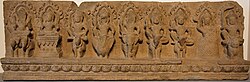
[[File:Navagraha.jpg|thumb|200px|''Navagraha'', | [[File:Les 9 devas.jpg|thumb|right|The Nine Devas, Khleang style of [[Angkor]].]] | ||
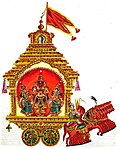
''' | [[File:Navagraha.jpg|thumb|200px|''Navagraha'', Sun at the center | ||
surrounded by the planets, Painting by [[Raja Ravi Varma]]]] | |||
The '''navagraha''' ({{langx|sa|नवग्रह}}, [[Nine planets]]) are nine heavenly bodies and deities that influence human life on Earth according to [[Hinduism]] and [[Hindu mythology]].<ref name="dalalnavagr">{{cite book|author=Roshen Dalal|url=https://books.google.com/books?id=DH0vmD8ghdMC|title=Hinduism: An Alphabetical Guide|publisher=Penguin Books|year=2010|isbn=978-0-14-341421-6|pages=280}}</ref> The term is derived from ''nava'' ({{langx|sa|नव}} "nine") and ''graha'' ({{langx|sa|ग्रह}} "planet, seizing, laying hold of, holding"). The nine parts of the navagraha are the Sun, Moon, planets Mercury, Venus, Mars, Jupiter, and Saturn, and the [[lunar node|two nodes of the Moon]].<ref>Sanskrit-English Dictionary by Monier-Williams, 1899</ref> | |||
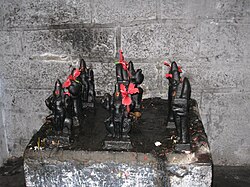
[[File:Navagraham.jpg|thumb|A typical navagraha shrine found inside a [[Hindu temple]]]] | |||
The term ''planet'' was applied originally only to the five planets known (i.e., visible to the [[naked eye]]) and excluded the [[Earth]]. The term was later generalized, particularly during the [[Post-classical history|Middle Ages]], to include the sun and the moon (sometimes referred to as "lights"), making a total of seven planets. The [[Seven days of the week#Hindu tradition|seven days of the week]] of the [[Hindu calendar]] also corresponds with the [[seven classical planets]] and European culture also following same patron and are [[Names of the days of the week#Hindu tradition|named accordingly]] in most languages of the [[Indian subcontinent]]. Most [[Hindu temples]] around the world have a designated place dedicated to the worship of the navagraha. | |||
== | ==List== | ||
{| class="wikitable" | {| class="wikitable" | ||
|+Navagrahas:<ref name="dalalnavagr" /> | |+Navagrahas:<ref name="dalalnavagr" /> | ||
| Line 13: | Line 16: | ||
!Western equivalent | !Western equivalent | ||
!Day | !Day | ||
!Stotra<ref>{{Cite web |title=Nava Graha Stotram |url=https://vignanam.org/english/nava-graha-stotram.html |access-date=2025-06-30 |website=Vignanam}}</ref> | |||
|- | |- | ||
|1. | |1. | ||
|[[File:Surya graha.JPG|90px]] | |[[File:Surya graha.JPG|90px]] | ||
|[[Surya | |[[Surya]] | ||
|[[Sun]] | |[[Sun]] | ||
|[[Sunday]] | |[[Sunday]] | ||
|japākusuma saṅkāśaṃ kāśyapēyaṃ mahādyutim । | |||
tamō'riṃ sarva pāpaghnaṃ praṇatōsmi divākaram ॥1॥ | |||
|- | |- | ||
|2. | |2. | ||
|[[File:Chandra graha.JPG|90px]] | |[[File:Chandra graha.JPG|90px]] | ||
|[[Chandra | |[[Chandra]] | ||
|[[Moon]] | |[[Moon]] | ||
|[[Monday]] | |[[Monday]] | ||
|dadhiśaṅkha tuṣārābhaṃ kṣīrōdārṇava sambhavam । | |||
namāmi śaśinaṃ sōmaṃ śambhō-rmakuṭa bhūṣaṇam ॥2॥ | |||
|- | |- | ||
|3. | |3. | ||
| Line 31: | Line 39: | ||
|[[Mars]] | |[[Mars]] | ||
|[[Tuesday]] | |[[Tuesday]] | ||
|dharaṇī garbha sambhūtaṃ vidyutkānti samaprabham । | |||
kumāraṃ śaktihastaṃ taṃ maṅgaḻaṃ praṇamāmyaham ॥3॥ | |||
|- | |- | ||
|4. | |4. | ||
| Line 37: | Line 47: | ||
|[[Mercury (planet)|Mercury]] | |[[Mercury (planet)|Mercury]] | ||
|[[Wednesday]] | |[[Wednesday]] | ||
|priyaṅgu kalikāśyāmaṃ rūpēṇā pratimaṃ budham । | |||
saumyaṃ saumya guṇōpētaṃ taṃ budhaṃ praṇamāmyaham ॥4॥ | |||
|- | |- | ||
|5. | |5. | ||
|[[File:Brihaspati graha.JPG|90px]] | |[[File:Brihaspati graha.JPG|90px]] | ||
|[[ | |[[Brihaspati]] | ||
|[[Jupiter]] | |[[Jupiter]] | ||
|[[Thursday]] | |[[Thursday]] | ||
|dēvānāṃ cha ṛṣīṇāṃ cha guruṃ kāñchanasannibham । | |||
buddhimantaṃ trilōkēśaṃ taṃ namāmi bṛhaspatim ॥5॥ | |||
|- | |- | ||
|6. | |6. | ||
| Line 49: | Line 63: | ||
|[[Venus]] | |[[Venus]] | ||
|[[Friday]] | |[[Friday]] | ||
|himakunda mṛṇāḻābhaṃ daityānaṃ paramaṃ gurum । | |||
sarvaśāstra pravaktāraṃ bhārgavaṃ praṇamāmyaham ॥6॥ | |||
|- | |- | ||
|7. | |7. | ||
| Line 55: | Line 71: | ||
|[[Saturn]] | |[[Saturn]] | ||
|[[Saturday]] | |[[Saturday]] | ||
| nīlāñjana samābhāsaṃ raviputraṃ yamāgrajam । | |||
Chāyā mārtāṇḍa sambhūtaṃ taṃ namāmi śanaiścharam ॥7॥ | |||
|- | |- | ||
|8. | |8. | ||
|[[File:Rahu graha.JPG|90px]] | |[[File:Rahu graha.JPG|90px]] | ||
|[[Rahu]] | |[[Rahu]] | ||
|Ascending [[Lunar node|node of the Moon]] | |Ascending [[Lunar node|node of the Moon]]/[[Uranus]] | ||
| | | | ||
|ardhakāyaṃ mahāvīraṃ chandrāditya vimardhanam । | |||
siṃhikā garbha sambhūtaṃ taṃ rāhuṃ praṇamāmyaham ॥8॥ | |||
|- | |- | ||
|9. | |9. | ||
|[[File:Ketu graha.JPG|90px]] | |[[File:Ketu graha.JPG|90px]] | ||
|[[Ketu (mythology)|Ketu]] | |[[Ketu (mythology)|Ketu]] | ||
|Descending node of the Moon | |Descending [[Lunar node|node of the Moon]]/[[Neptune]] | ||
| | | | ||
|palāśa puṣpa saṅkāśaṃ tārakāgrahamastakam । | |||
raudraṃ raudrātmakaṃ ghōraṃ taṃ kētuṃ praṇamāmyaham ॥9॥ | |||
|} | |} | ||
== | == Music == | ||
[[Muthuswami Dikshitar]], a [[Carnatic music]] composer from southern India composed the [[Navagraha Kritis]] in praise of the nine ''grahas''.<ref>{{Cite web|title=Dikshitar: Navagraha|url=http://www.medieval.org/music/world/carnatic/lyrics/navagraha.html|access-date=2020-06-12|website=www.medieval.org}}</ref> Each song is a prayer to one of the nine planets. The [[ | [[Muthuswami Dikshitar]] (1776–1835), a [[Carnatic music]] composer from southern India, composed the [[Navagraha Kritis]] in praise of the nine ''grahas''.<ref>{{Cite web|title=Dikshitar: Navagraha|url=http://www.medieval.org/music/world/carnatic/lyrics/navagraha.html|access-date=2020-06-12|website=www.medieval.org}}</ref> Each song is a prayer to one of the nine planets. The [[Sanskrit literature|Sahitya]] (lyrics) of the songs reflect a profound knowledge of the [[mantra]] and [[jyotisha]] [[Shastra|sastras]]. | ||
==See also== | ==See also== | ||
| Line 76: | Line 99: | ||
* [[Jyotisha]] | * [[Jyotisha]] | ||
* [[Nakshatra]] | * [[Nakshatra]] | ||
* [[ | * [[Saptarshi]] | ||
* [[List of Hindu deities]] | * [[List of Hindu deities]] | ||
* [[Hindu pilgrimage sites|List of Hindu pilgrimage sites]] | * [[Hindu pilgrimage sites|List of Hindu pilgrimage sites]] | ||
| Line 83: | Line 106: | ||
* [[List of Hindu temples]] | * [[List of Hindu temples]] | ||
* [[Planets in astrology]] | * [[Planets in astrology]] | ||
* [[Nine planets]] | |||
{{colend}} | {{colend}} | ||
== | ==References== | ||
{{reflist}} | {{reflist}} | ||
==External links== | |||
*{{Commons category-inline|Navagraha}} | |||
{{Navagraha}} | {{Navagraha}} | ||
{{HinduMythology}} | {{HinduMythology}} | ||
{{Portal bar|Hinduism|Astronomy}} | |||
{{Authority control}} | {{Authority control}} | ||
| Line 97: | Line 121: | ||
[[Category:Hindu astronomy]] | [[Category:Hindu astronomy]] | ||
[[Category:Technical factors of Hindu astrology]] | [[Category:Technical factors of Hindu astrology]] | ||
[[Category:Journey to the West characters]] | |||
[[Category:Planetary gods]] | |||
[[Category:Buddhist gods]] | |||
[[Category:Thai deities]] | |||
[[Category:Sinhalese Buddhist deities]] | |||
[[Category:Cambodian deities]] | |||
{{Myth-stub}} | {{Myth-stub}} | ||
Latest revision as of 02:24, 17 March 2026


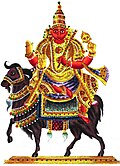
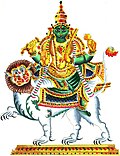
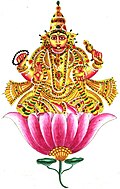
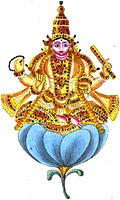
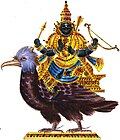
The navagraha (Sanskrit: नवग्रह, Nine planets) are nine heavenly bodies and deities that influence human life on Earth according to Hinduism and Hindu mythology.[1] The term is derived from nava (Sanskrit: नव "nine") and graha (Sanskrit: ग्रह "planet, seizing, laying hold of, holding"). The nine parts of the navagraha are the Sun, Moon, planets Mercury, Venus, Mars, Jupiter, and Saturn, and the two nodes of the Moon.[2]

The term planet was applied originally only to the five planets known (i.e., visible to the naked eye) and excluded the Earth. The term was later generalized, particularly during the Middle Ages, to include the sun and the moon (sometimes referred to as "lights"), making a total of seven planets. The seven days of the week of the Hindu calendar also corresponds with the seven classical planets and European culture also following same patron and are named accordingly in most languages of the Indian subcontinent. Most Hindu temples around the world have a designated place dedicated to the worship of the navagraha.
List[edit | edit source]
| No. | Image | Name | Western equivalent | Day | Stotra[3] |
|---|---|---|---|---|---|
| 1. | 
|
Surya | Sun | Sunday | japākusuma saṅkāśaṃ kāśyapēyaṃ mahādyutim ।
tamō'riṃ sarva pāpaghnaṃ praṇatōsmi divākaram ॥1॥ |
| 2. | 
|
Chandra | Moon | Monday | dadhiśaṅkha tuṣārābhaṃ kṣīrōdārṇava sambhavam ।
namāmi śaśinaṃ sōmaṃ śambhō-rmakuṭa bhūṣaṇam ॥2॥ |
| 3. | 
|
Mangala | Mars | Tuesday | dharaṇī garbha sambhūtaṃ vidyutkānti samaprabham ।
kumāraṃ śaktihastaṃ taṃ maṅgaḻaṃ praṇamāmyaham ॥3॥ |
| 4. | 
|
Budha | Mercury | Wednesday | priyaṅgu kalikāśyāmaṃ rūpēṇā pratimaṃ budham ।
saumyaṃ saumya guṇōpētaṃ taṃ budhaṃ praṇamāmyaham ॥4॥ |
| 5. | 
|
Brihaspati | Jupiter | Thursday | dēvānāṃ cha ṛṣīṇāṃ cha guruṃ kāñchanasannibham ।
buddhimantaṃ trilōkēśaṃ taṃ namāmi bṛhaspatim ॥5॥ |
| 6. | 
|
Shukra | Venus | Friday | himakunda mṛṇāḻābhaṃ daityānaṃ paramaṃ gurum ।
sarvaśāstra pravaktāraṃ bhārgavaṃ praṇamāmyaham ॥6॥ |
| 7. | 
|
Shani | Saturn | Saturday | nīlāñjana samābhāsaṃ raviputraṃ yamāgrajam ।
Chāyā mārtāṇḍa sambhūtaṃ taṃ namāmi śanaiścharam ॥7॥ |
| 8. | 
|
Rahu | Ascending node of the Moon/Uranus | ardhakāyaṃ mahāvīraṃ chandrāditya vimardhanam ।
siṃhikā garbha sambhūtaṃ taṃ rāhuṃ praṇamāmyaham ॥8॥ | |
| 9. | 
|
Ketu | Descending node of the Moon/Neptune | palāśa puṣpa saṅkāśaṃ tārakāgrahamastakam ।
raudraṃ raudrātmakaṃ ghōraṃ taṃ kētuṃ praṇamāmyaham ॥9॥ |
Music[edit | edit source]
Muthuswami Dikshitar (1776–1835), a Carnatic music composer from southern India, composed the Navagraha Kritis in praise of the nine grahas.[4] Each song is a prayer to one of the nine planets. The Sahitya (lyrics) of the songs reflect a profound knowledge of the mantra and jyotisha sastras.
See also[edit | edit source]
References[edit | edit source]
- ↑ Sanskrit-English Dictionary by Monier-Williams, 1899
- ↑ "Nava Graha Stotram". Vignanam. Retrieved 2025-06-30.
- ↑ "Dikshitar: Navagraha". www.medieval.org. Retrieved 2020-06-12.
External links[edit | edit source]
 | ||
Hindu deities and texts | ||
|---|---|---|
| Gods |  | |
| Goddesses | ||
| Other deities | ||
| Texts | ||

_-_The_Noun_Project.svg) | This mythology-related article is a stub. You can help Bharatpedia by expanding it. |