|
|
| Line 1: |
Line 1: |
| {{Short description|Country in Western Asia}} | | {{redirect|Persia}} |
| {{Distinguish|Iraq}}
| |
| {{Other uses}}
| |
| {{pp-semi-indef}}
| |
| {{pp-move-indef}}
| |
| {{Redirect-distinguish-text|Persia|[[Persis]]. For other uses, see [[Persia (disambiguation)]]}}
| |
| {{Use American English|date=January 2022}}
| |
| {{Use dmy dates|date=May 2021}}
| |
| {{coord|32|N|53|E|dim:1000km_type:country_region:IR|format=dms|display=title}}
| |
| {{Infobox country | | {{Infobox country |
| | conventional_long_name = Islamic Republic of Iran | | | conventional_long_name = Islamic Republic of Iran (Persia) |
| | common_name = Iran | | | common_name = Iran (Persia) |
| | native_name = {{nobold|{{native name|fa|جمهوری اسلامی ایران|italics=off}}}}<br /><small>{{transliteration|fa|Jomhuri-ye Eslâmi-ye Irân}}</small> | | | native_name = {{nobold|{{native name|fa|جمهوری اسلامی ایران|italics=off}}}}<br /><small>{{transl|fa|Jomhuri-ye Eslāmi-ye Irān}}</small> |
| | image_flag = Flag of Iran.svg | | | image_flag = Flag of Iran.svg |
| | | alt_flag = Flag of Iran (state) |
| | | image_flag2 = National flag of Iran.svg |
| | | alt_flag2 = Flag of Persia (Civil) |
| | image_coat = Emblem of Iran.svg | | | image_coat = Emblem of Iran.svg |
| | symbol_type = Emblem | | | symbol_type = Emblem |
| <!--maps-->| national_motto = <br />{{lang|fa|استقلال، آزادی، جمهوری اسلامی}}<br />{{small|{{transliteration|fa|Esteqlâl, Âzâdi, Jomhuri-ye Eslâmi}}}} | | <!--maps-->| national_motto = <br />{{lang|fa|استقلال، آزادی، جمهوری اسلامی}}<br />{{small|{{transl|fa|Esteqlāl, Āzādi, Jomhuri-ye Eslāmi}}}} |
| | national_anthem = {{lang|fa|سرود ملی جمهوری اسلامی ایران}}<br />{{nowrap|{{transliteration|fa|Sorud-e Melli-ye Jomhuri-ye Eslâmi-ye Irân}}}}<br />{{nowrap|({{lang|en|"[[National Anthem of the Islamic Republic of Iran]]"}})}}<br /> | | | national_anthem = {{lang|fa|سرود ملی جمهوری اسلامی ایران}}<br />{{nowrap|{{transl|fa|Sorud-e Melli-ye Jomhuri-ye Eslāmi-ye Irān}}}}<br />{{nowrap|({{lang|en|"[[National Anthem of the Islamic Republic of Iran]]"}})}}<br /> |
| <div style="display:inline-block;margin-top:0.4em;">[[File:Sorud-e Mellí-e Yomhurí-e Eslamí-e Irán (instrumental).oga]]</div> | | <div style="display:inline-block;margin-top:0.4em;">[[File:Sorud-e Mellí-e Yomhurí-e Eslamí-e Irán (instrumental).oga]]</div> |
| | image_map = Iran (orthographic projection).svg | | | image_map = Iran (orthographic projection).svg |
| Line 25: |
Line 20: |
| | regional_languages = {{Collapsible list | | | regional_languages = {{Collapsible list |
| | titlestyle = background:transparent;text-align:left;font-weight:normal;font-size:100%; | | | titlestyle = background:transparent;text-align:left;font-weight:normal;font-size:100%; |
| | title = List of languages | 53% [[Persian language|Persian]] | 18% [[Azerbaijani language|Azerbaijani]] and other [[Turkic languages|Turkic dialects]] {{midsize|(incl. [[Qashqai language|Qashqai]], [[Turkmen language|Turkmen]])<ref name="britannicalanguages">{{cite web |title=Iran - Languages |url=https://www.britannica.com/place/Iran/Languages |website=Encyclopedia Britannica |access-date=9 January 2020 |language=en}}</ref>}} | 10% [[Kurdish languages|Kurdish]] | 7% [[Gilaki language|Gilak]] and [[Mazanderani language|Mazanderani]] | 6% [[Luri language|Luri]] | 2% [[Balochi language|Balochi]] | 2% [[Arabic]] | 2% other<ref name="CIA"/> {{midsize|(incl. [[Armenian language|Armenian]], [[Assyrian Neo-Aramaic|Assyrian]], [[Georgian language|Georgian]], [[Laki language|Laki]], [[Semnani languages|Semnani]], [[Talysh language|Talysh]], [[Tati language (Iran)|Tati]])}}}} | | | title = List of languages | 53% [[Persian language|Persian]] | 18% [[Azerbaijani language|Azerbaijani]] and other [[Turkic languages|Turkic dialects]] {{midsize|(incl. [[Qashqai language|Qashqai]], [[Turkmen language|Turkmen]])<ref name="britannicalanguages">{{cite web |title=Iran - Languages |url=https://www.britannica.com/place/Iran/Languages |website=Encyclopædia Britannica |access-date=9 January 2020 |language=en}}</ref>}} | 10% [[Kurdish languages|Kurdish]] | 7% [[Gilaki language|Gilak]] and [[Mazanderani language|Mazanderani]] | 6% [[Luri language|Luri]] | 2% [[Balochi language|Balochi]] | 2% [[Arabic]] | 2% other<ref name="cia"/> {{midsize|(incl. [[Armenian language|Armenian]], [[Assyrian Neo-Aramaic|Assyrian]], [[Georgian language|Georgian]], [[Laki language|Laki]], [[Semnani languages|Semnani]], [[Talysh language|Talysh]], [[Tati language (Iran)|Tati]])}}}} |
| | ethnic_groups = {{Collapsible list | | | ethnic_groups = {{Collapsible list |
| | titlestyle = background:transparent;text-align:left;font-weight:normal;font-size:100%; | | | titlestyle = background:transparent;text-align:left;font-weight:normal;font-size:100%; |
| | title = List of ethnicities | 61% [[Persians|Persian]] | 16% [[Iranian Azerbaijanis|Azerbaijani]] | 10% [[Kurds in Iran|Kurd]] | 6% [[Lurs|Lur]] {{midsize|(incl. [[Bakhtiari people|Bakhtiari]])}} | 2% [[Iranian Turkmens|Turkmen]] and [[Turkic-speaking Iranians|other Turkic peoples]] | 2% [[Baloch of Iran|Baloch]] | 2% [[Iranian Arabs|Arab]] | 1% other<ref name="CIA"/>}} | | | title = List of ethnicities | 61% [[Persians|Persian]] | 16% [[Iranian Azerbaijanis|Azerbaijani]] | 10% [[Kurds in Iran|Kurd]] | 6% [[Lurs|Lur]] {{midsize|(incl. [[Bakhtiari people|Bakhtiari]])}} | 2% [[Iranian Turkmens|Turkmen]] and [[Turkic-speaking Iranians|other Turkic peoples]] | 2% [[Baloch of Iran|Baloch]] | 2% [[Iranian Arabs|Arab]] | 1% other<ref name="cia"/>}} |
| | religion = See [[Religion in Iran]] | | | religion = See [[Religion in Iran]] |
| | demonym = {{plainlist| | | | demonym = {{plainlist| |
| Line 53: |
Line 48: |
| | established_date3 = 247 BC | | | established_date3 = 247 BC |
| | established_event4 = [[Sasanian Empire]] | | | established_event4 = [[Sasanian Empire]] |
| | established_date4 = 224 AD<ref name="Sarkhosh">{{Citation |author1=Sarkhosh Curtis, Vesta |author2=Stewart, Sarah |date=2005 |title=Birth of the Persian Empire: The Idea of Iran |url=https://books.google.com/books?id=a0IF9IdkdYEC |publisher=I.B. Tauris |location=London |page=108 |quote=Similarly the collapse of Sassanian Eranshahr in AD 650 did not end Iranians' national idea. The name 'Iran' disappeared from official records of the Saffarids, Samanids, Buyids, Saljuqs and their successor. But one unofficially used the name Iran, Eranshahr, and similar national designations, particularly Mamalek-e Iran or 'Iranian lands', which exactly translated the old Avestan term Ariyanam Daihunam. On the other hand, when the Safavids (not Reza Shah, as is popularly assumed) revived a national state officially known as Iran, bureaucratic usage in the Ottoman empire and even Iran itself could still refer to it by other descriptive and traditional appellations.|isbn=978-1-84511-062-8 }}</ref> | | | established_date4 = 224 AD<ref name="Sarkhosh">{{Citation |author1=Sarkhosh Curtis, Vesta |author2=Stewart, Sarah |year=2005 |title=Birth of the Persian Empire: The Idea of Iran |url=https://books.google.com/books?id=a0IF9IdkdYEC |publisher=I.B. Tauris |location=London |page=108 |quote=Similarly the collapse of Sassanian Eranshahr in AD 650 did not end Iranians' national idea. The name 'Iran' disappeared from official records of the Saffarids, Samanids, Buyids, Saljuqs and their successor. But one unofficially used the name Iran, Eranshahr, and similar national designations, particularly Mamalek-e Iran or 'Iranian lands', which exactly translated the old Avestan term Ariyanam Daihunam. On the other hand, when the Safavids (not Reza Shah, as is popularly assumed) revived a national state officially known as Iran, bureaucratic usage in the Ottoman empire and even Iran itself could still refer to it by other descriptive and traditional appellations.|isbn=978-1-84511-062-8 }}</ref> |
| | established_event5 = [[Buyid dynasty]] | | | established_event5 = [[Buyid dynasty]] |
| | established_date5 = 934 | | | established_date5 = 934 |
| Line 76: |
Line 71: |
| | area_sq_mi = 636,372<!--Do not remove per [[Wikipedia:Manual of Style/Dates and Numbers]]--> | | | area_sq_mi = 636,372<!--Do not remove per [[Wikipedia:Manual of Style/Dates and Numbers]]--> |
| | percent_water = 1.63 (as of 2015)<ref>{{cite web|title=Surface water and surface water change|access-date=11 October 2020|publisher=Organisation for Economic Co-operation and Development (OECD) |url=https://stats.oecd.org/Index.aspx?DataSetCode=SURFACE_WATER#}}</ref> | | | percent_water = 1.63 (as of 2015)<ref>{{cite web|title=Surface water and surface water change|access-date=11 October 2020|publisher=Organisation for Economic Co-operation and Development (OECD) |url=https://stats.oecd.org/Index.aspx?DataSetCode=SURFACE_WATER#}}</ref> |
| | population_estimate = {{IncreaseNeutral}} 83,183,741<ref name="amar.org.ir">{{cite web |url= https://www.amar.org.ir/دادهها-و-اطلاعات-آماری |title= دادهها و اطلاعات آماری |website= www.amar.org.ir |access-date= 13 September 2017 |archive-url= https://web.archive.org/web/20180314233022/https://www.amar.org.ir/%D8%AF%D8%A7%D8%AF%D9%87%D9%87%D8%A7-%D9%88-%D8%A7%D8%B7%D9%84%D8%A7%D8%B9%D8%A7%D8%AA-%D8%A2%D9%85%D8%A7%D8%B1%DB%8C |archive-date= 14 March 2018 |url-status= dead }}</ref> | | | population_estimate = {{IncreaseNeutral}} 83,183,741<ref name="amar.org.ir">{{cite web |url= https://www.amar.org.ir/دادهها-و-اطلاعات-آماری |title= دادهها و اطلاعات آماری |website= amar.org.ir |access-date= 13 September 2017 |archive-url= https://web.archive.org/web/20180314233022/https://www.amar.org.ir/%D8%AF%D8%A7%D8%AF%D9%87%D9%87%D8%A7-%D9%88-%D8%A7%D8%B7%D9%84%D8%A7%D8%B9%D8%A7%D8%AA-%D8%A2%D9%85%D8%A7%D8%B1%DB%8C |archive-date= 14 March 2018 |url-status= dead }}</ref> |
| | population_estimate_year = 2019 | | | population_estimate_year = 2019 |
| | population_estimate_rank = 17th | | | population_estimate_rank = 17th |
| Line 82: |
Line 77: |
| | population_density_sq_mi = 124<!--Do not remove per [[Wikipedia:Manual of Style/Dates and Numbers]]--> | | | population_density_sq_mi = 124<!--Do not remove per [[Wikipedia:Manual of Style/Dates and Numbers]]--> |
| | population_density_rank = 162nd<!--Wiki source[?]--> | | | population_density_rank = 162nd<!--Wiki source[?]--> |
| | GDP_PPP = {{increase}} $1.573 trillion<ref name="IMFWEOIR">{{cite web|url=https://www.imf.org/en/Publications/WEO/weo-database/2022/April/weo-report?c=429,&s=NGDPD,PPPGDP,NGDPDPC,PPPPC,&sy=2021&ey=2022&ssm=0&scsm=1&scc=0&ssd=1&ssc=0&sic=0&sort=country&ds=.&br=1 |title=World Economic Outlook Database, April 2022 |publisher=International Monetary Fund |website=IMF.org |access-date=19 April 2022}}</ref> | | | GDP_PPP = {{increase}} $1.246,26 trillion<ref name="IMFWEOIR">{{cite web|url=https://www.imf.org/en/Publications/WEO/weo-database/2021/October/weo-report?c=512,914,612,614,311,213,911,314,193,122,912,313,419,513,316,913,124,339,638,514,218,963,616,223,516,918,748,618,624,522,622,156,626,628,228,924,233,632,636,634,238,662,960,423,935,128,611,321,243,248,469,253,642,643,939,734,644,819,172,132,646,648,915,134,652,174,328,258,656,654,336,263,268,532,944,176,534,536,429,433,178,436,136,343,158,439,916,664,826,542,967,443,917,544,941,446,666,668,672,946,137,546,674,676,548,556,678,181,867,682,684,273,868,921,948,943,686,688,518,728,836,558,138,196,278,692,694,962,142,449,564,565,283,853,288,293,566,964,182,359,453,968,922,714,862,135,716,456,722,942,718,724,576,936,961,813,726,199,733,184,524,361,362,364,732,366,144,146,463,528,923,738,578,537,742,866,369,744,186,925,869,746,926,466,112,111,298,927,846,299,582,487,474,754,698,&s=NGDPD,PPPGDP,NGDPDPC,PPPPC,&sy=2018&ey=2020&ssm=0&scsm=1&scc=0&ssd=1&ssc=0&sic=0&sort=subject&ds=.&br=1 |title=World Economic Outlook Database, October 2021 |website=IMF.org |publisher=International Monetary Fund |access-date=4 October 2021}}</ref> |
| | GDP_PPP_year = 2022 | | | GDP_PPP_year = 2022 |
| | GDP_PPP_rank = 21rd | | | GDP_PPP_rank = 23th |
| | GDP_PPP_per_capita = {{increase}} $18,332<ref name="IMFWEOIR"/> | | | GDP_PPP_per_capita = {{increase}} $14,520<ref name="IMFWEOIR"/> |
| | GDP_PPP_per_capita_rank = 66th | | | GDP_PPP_per_capita_rank = 66th |
| | GDP_nominal = {{increase}} $1.739 trillion<ref name="IMFWEOIR"/> | | | GDP_nominal = {{increase}} $1.136,68 trillion<ref name="IMFWEOIR"/> |
| | GDP_nominal_year = 2022 | | | GDP_nominal_year = 2022 |
| | GDP_nominal_rank = 14th | | | GDP_nominal_rank = 17st |
| | GDP_nominal_per_capita = {{increase}} $20,261<ref name="IMFWEOIR"/> | | | GDP_nominal_per_capita = {{increase}} $13,240<ref name="IMFWEOIR"/> |
| | GDP_nominal_per_capita_rank = 78th | | | GDP_nominal_per_capita_rank = 78th |
| | Gini = 42.0<!--number only--> | | | Gini = 42.0<!--number only--> |
| | Gini_year = 2018 | | | Gini_year = 2018 |
| | Gini_change = increase<!--increase/decrease/steady--> | | | Gini_change = increase<!--increase/decrease/steady--> |
| | Gini_ref = <ref name="Data.worldbank.org">{{cite web|url=https://data.worldbank.org/indicator/si.pov.gini |title=GINI index (World Bank estimate) |newspaper=Data.worldbank.org |access-date=10 July 2021|url-status=dead |archive-url=https://web.archive.org/web/20150209003326/https://data.worldbank.org/indicator/si.pov.gini |archive-date=9 February 2015}}</ref> | | | Gini_ref = <ref name="Data.worldbank.org">{{cite web|url=https://data.worldbank.org/indicator/si.pov.gini |title=GINI index (World Bank estimate) |publisher=World Bank |access-date=10 July 2021|url-status=dead |archive-url=https://web.archive.org/web/20150209003326/https://data.worldbank.org/indicator/si.pov.gini |archive-date=9 February 2015}}</ref> |
| | Gini_rank = | | | Gini_rank = |
| | HDI = 0.783<!--number only--> | | | HDI = 0.783<!--number only--> |
| Line 118: |
Line 113: |
| | today = | | | today = |
| }} | | }} |
| {{Contains special characters|Perso-Arabic|compact=yes|width=290px}} | | [[File:Khezr Beach, Hormoz Island, Persian Gulf, Iran, 02-09-2008.jpg|thumb| |
| | Khezr Beach, Hormoz Island, Persian Gulf, Iran, 02-09-2008 |
| | ]] |
| | '''Iran''' officially the '''Islamic Republic of Iran''' ({{lang-fa|ايران}}), historically known as '''Persia''', is a [[country]] in [[Western Asia]].<ref name="BBC">{{cite web |title=Iran Country Profile |work=[[BBC News]] |url=https://www.bbc.co.uk/news/world-middle-east-14541327 |accessdate=8 August 2012}}</ref><ref>{{cite web |url=http://cesww.fas.harvard.edu/ces_definition.html |title="CESWW" – Definition of Central Eurasia |publisher=Cesww.fas.harvard.edu |accessdate=1 August 2010 |archive-date=5 August 2010 |archive-url=https://web.archive.org/web/20100805052739/http://cesww.fas.harvard.edu/ces_definition.html |url-status=dead }}</ref><ref>{{cite web|url=http://travel.nationalgeographic.com/places/countries/country_iran.html |title=Iran Guide |work=National Geographic |date=14 June 2013 |accessdate=21 June 2013}}</ref> It is part of the [[Middle East]] region. It shares [[border]]s with [[Afghanistan]], [[Armenia]], [[Azerbaijan]], [[Iraq]], [[Pakistan]], [[Turkey]], and [[Turkmenistan]]. |
|
| |
|
| '''Iran''' ({{lang-fa|ایران}} {{transliteration|fa|Irân}} {{IPA-fa|ʔiːˈɾɒːn||Iran-Pronunciation.ogg}}), also called '''Persia''',<ref name="Fishman">{{cite book|last=A. Fishman|first=Joshua|title=Handbook of Language and Ethnic Identity: Disciplinary and Regional Perspectives (Volume 1)|year=2010|publisher=[[Oxford University Press]]|isbn=978-0-19-537492-6| page=266|quote=" "Iran" and "Persia" are synonymous" The former has always been used by the Iranian speaking peoples themselves, while the latter has served as the international name of the country in various languages}}</ref> and officially the '''Islamic Republic of Iran''',{{efn|{{lang-fa|جمهوری اسلامی ایران}} {{transliteration|fa|Jomhuri-ye Eslāmi-ye Irān}} {{pronunciation|Fa-ir-JEI_(1).ogg|listen|(|help=no}} {{IPA-fa|dʒomhuːˌɾije eslɒːˌmije ʔiːˈɾɒn|}}}} is a country in [[Western Asia]]. It is bordered by [[Iraq]] and [[Turkey]] to the west, by [[Azerbaijan]] and [[Armenia]] to the northwest, by the [[Caspian Sea]] and [[Turkmenistan]] to the north, by [[Afghanistan]] and [[Pakistan]] to the east, and by the [[Gulf of Oman]] and the [[Persian Gulf]] to the south. It covers an area of {{convert|1648195|km2|abbr=on}}, making it the [[List of Asian countries by area|fourth-largest country entirely in Asia]] and the second-largest country in Western Asia behind [[Saudi Arabia]]. Iran has a population of 85 million, making it the [[List of countries and dependencies by population|17th-most populous country]] in the world.<ref>{{cite web|title=Iran Population (2021) - Worldometer|url=https://www.worldometers.info/world-population/iran-population/#:~:text=The%20current%20population%20of%20the,the%20latest%20United%20Nations%20data.|access-date=2021-09-21|website=www.worldometers.info|language=en}}</ref> Its capital and largest city is [[Tehran]], followed by [[Mashhad]], [[Isfahan]], [[Karaj]], [[Shiraz]] and [[Tabriz]].
| | [[Tehran]] is the [[Capital (city)|capital]] and biggest [[city]]. Iran is the eighteenth largest country in the world. It has more than 84.9 million people. Iran has been a member of the [[United Nations]] since 1945. It is a member of the [[Organization of the Petroleum Exporting Countries]] (OPEC).<ref>http://www.un.org/en/members/index.shtml</ref> It is an [[Islamic republic]]. |
|
| |
|
| The country is home to one of the world's oldest civilizations,<ref>{{cite book |author=Whatley, Christopher |date=2001 |title=Bought and Sold for English Gold: The Union of 1707 |publisher=Tuckwell Press|author-link=Christopher Whatley }}</ref><ref>{{cite book|author=Lowell Barrington|title=Comparative Politics: Structures and Choices, 2nd ed.tr: Structures and Choices|url=https://books.google.com/books?id=yLLuWYL8gTsC&pg=PA121|access-date=21 June 2013|date=2012|publisher=Cengage Learning|isbn=978-1-111-34193-0|page=121}}</ref> beginning with the formation of the [[Elam]]ite kingdoms in the fourth millennium BC. It was first unified by the [[Medes]], an [[List of ancient Iranian peoples|ancient Iranian people]], in the seventh century BC,<ref name="Encyclopædia Britannica Encyclopedia Article: Media ancient region, Iran">{{cite encyclopedia|author=Encyclopædia Britannica|url=http://www.britannica.com/EBchecked/topic/372125/Media |title=Encyclopædia Britannica Encyclopedia Article: Media ancient region, Iran |encyclopedia=Britannica.com |access-date=25 August 2010}}</ref> and reached its territorial height in the sixth century BC, when [[Cyrus the Great]] founded the [[Achaemenid Empire|Achaemenid Persian Empire]], which became [[List of largest empires|one of the largest empires in history]] and has been described as the world's first effective [[superpower]].<ref name="book">{{cite book| author = David Sacks| author2 = Oswyn Murray| author3 = Lisa R. Brody|author4=Oswyn Murray |author5=Lisa R. Brody | title = Encyclopedia of the ancient Greek world| url = https://books.google.com/books?id=gsGmuQAACAAJ| year = 2005| publisher = Infobase Publishing| isbn = 978-0-8160-5722-1| pages = 256 (at the right portion of the page)| access-date = 17 August 2016 }}</ref> The Achaemenid Empire fell to [[Alexander the Great]] in the fourth century BC and was subsequently divided into several [[Hellenistic period|Hellenistic states]]. An Iranian rebellion established the [[Parthian Empire]] in the third century BC, which was succeeded in the third century AD by the [[Sasanian Empire|Sassanid Empire]], a major world power for the next four centuries.<ref name="Norman A. Stillman p. 22">{{cite book |author=Stillman, Norman A. |title=The Jews of Arab Lands |url=https://archive.org/details/jewsofarablands00stil |url-access=registration |page=[https://archive.org/details/jewsofarablands00stil/page/22 22] |publisher=Jewish Publication Society |date=1979 |isbn=978-0-8276-1155-9}}</ref><ref name="Byzantine Studies 2006, p. 29">{{cite book |author1=Jeffreys, Elizabeth |author2=Haarer, Fiona K. |title=Proceedings of the 21st International Congress of Byzantine Studies: London, 21–26 August, 2006, Volume 1 |page=29 |publisher=Ashgate Publishing |year=2006 |isbn=978-0-7546-5740-8}}</ref> [[Muslim conquest of Persia|Arab Muslims conquered the empire]] in the seventh century AD, which led to the [[Islamization of Iran]]. It subsequently became a major center of [[Islamic culture]] and learning, with [[Persian art|its art]], [[Iranian literature|literature]], [[Iranian philosophy|philosophy]], and [[Iranian architecture|architecture]] spreading across the [[Muslim world]] and beyond during the [[Islamic Golden Age]]. Over the next two centuries, a series of [[Iranian Intermezzo|native Iranian Muslim dynasties]] emerged before the [[Seljuk dynasty|Seljuk Turks]] and the [[Ilkhanate|Mongols]] conquered the region. In the 15th century, the native [[Safavid dynasty|Safavids]] re-established a unified Iranian state and national identity,<ref name="Sarkhosh"/> and [[Safavid conversion of Iran to Shia Islam|converted the country to Shia Islam]].<ref name="Andrew J. Newman 2006">{{cite book|author=Andrew J. Newman|title=Safavid Iran: Rebirth of a Persian Empire|url=https://books.google.com/books?id=afsYCq1XOewC|access-date=21 June 2013|date=2006|publisher=I.B. Tauris|isbn=978-1-86064-667-6}}</ref><ref name="savoryeiref">{{cite encyclopedia |author=Savory, R. M. |title=Safavids |encyclopedia=[[Encyclopaedia of Islam]] |edition=2nd}}</ref> Under the reign of [[Nader Shah]] in the 18th century, Iran once again became a major world power,<ref name="books.google.nl">{{cite book|url=https://books.google.com/books?id=9o0AAwAAQBAJ |title=The Sword of Persia: Nader Shah, from Tribal Warrior to Conquering Tyrant|last=Axworthy|first=Michael|author-link=Michael Axworthy|date=2006|publisher=I.B. Tauris|pages=xv, 284|isbn=978-0-85772-193-8}}</ref> though by the 19th century, a [[Russo-Persian Wars|series of conflicts]] with the [[Russian Empire]] led to significant territorial losses.{{sfn|Fisher|Avery|Hambly|Melville|1991|pp=329–330}}<ref name="Timothy C. Dowling pp. 728-730">{{cite book |author=Dowling, Timothy C. |url=https://books.google.com/books?id=KTq2BQAAQBAJ |title=Russia at War: From the Mongol Conquest to Afghanistan, Chechnya, and Beyond |pages=728–730 |publisher=ABC-CLIO |year=2014 |isbn=978-1-59884-948-6}}</ref> The early 20th century saw the [[Persian Constitutional Revolution]]. Efforts to nationalize [[Petroleum industry in Iran|its fossil fuel supply]] from [[Western world|Western]] companies led to an [[1953 Iranian coup d'état|Anglo-American coup in 1953]], which resulted in greater autocratic rule under [[Mohammad Reza Pahlavi]] and growing [[Western Bloc|Western political influence]].<ref name="Anthony H. Cordesman p 22">{{cite book |author=Cordesman, Anthony H. |url=https://books.google.com/books?id=3j6sZyByv8EC |title=Iran's Military Forces in Transition: Conventional Threats and Weapons of Mass Destruction |page=22 |date=1999|isbn=978-0-275-96529-7 |author-link = Anthony Cordesman}}</ref> He went on to launch [[White Revolution|a far-reaching series of reforms]] in 1963.<ref>{{Cite book |author=Graham, Robert |title=Iran: The Illusion of Power |url=https://books.google.com/books?id=inIfxTWgfegC |location=London |publisher=St. Martin's Press |year=1980|pages=19, 96 |isbn=978-0-312-43588-2}}</ref> After the [[Iranian Revolution]], the current [[Islamic republic|Islamic Republic]] was established in 1979<ref name="britannica1">{{cite encyclopedia|url=https://www.britannica.com/place/Iran|title=Iran|year=2012|publisher=Encyclopædia Britannica|encyclopedia=Encyclopædia Britannica|access-date=8 August 2012}}</ref> by [[Ruhollah Khomeini]], who became the country's first [[Supreme Leader of Iran|Supreme Leader]].
| | In Iran, Persians, Azerbaijanis, Kurds, Mazandaranis, Gilaks, Lurs and Bakhtiaris make up the nations minority ethnic groups. |
|
| |
|
| The [[Government of the Islamic Republic of Iran|government of Iran]] is an [[Islamic theocracy]] that includes elements of a [[Presidential system|presidential democracy]], with the ultimate authority vested in an autocratic "Supreme Leader";<ref name="politicalsystem">{{cite web |script-title=fa:قانون اساسی جمهوری اسلامی ایران |url=http://fa.wikisource.org/wiki/قانون_اساسی_جمهوری_اسلامی_ایران |language=fa |access-date=23 January 2008 |url-status=dead |archive-url=https://web.archive.org/web/20080410011625/http://fa.wikisource.org/wiki/%D9%82%D8%A7%D9%86%D9%88%D9%86_%D8%A7%D8%B3%D8%A7%D8%B3%DB%8C_%D8%AC%D9%85%D9%87%D9%88%D8%B1%DB%8C_%D8%A7%D8%B3%D9%84%D8%A7%D9%85%DB%8C_%D8%A7%DB%8C%D8%B1%D8%A7%D9%86 |archive-date=10 April 2008 }}</ref> a position held by [[Ali Khamenei]] since Khomeini's death in 1989. The Iranian government is widely considered to be [[Authoritarianism|authoritarian]], and has attracted widespread criticism for its significant constraints and abuses against [[Human rights in the Islamic Republic of Iran|human rights]] and civil liberties,<ref>{{cite web|url=https://www.amnesty.org/en/latest/news/2019/01/irans-year-of-shame-more-than-7000-arrested-in-chilling-crackdown-on-dissent-during-2018/|title=2018 will go down in history as a year of shame for Iran|website=www.amnesty.org|date=24 January 2019|language=en|access-date=14 March 2019}}</ref><ref>{{cite web|url=https://www.amnesty.org/en/latest/news/2019/03/iran-shocking-33-year-prison-term-and-148-lashes-for-womens-rights-defender-nasrin-sotoudeh/|title=Nasrin Sotoudeh sentenced to 33 years and 148 lashes in Iran|website=www.amnesty.org|date=11 March 2019|language=en|access-date=14 March 2019}}</ref><ref>{{cite web|url=https://www.hrw.org/news/2015/10/28/womens-rights-iran|title=Women's Rights in Iran |date=28 October 2015 |website=Human Rights Watch|language=en|access-date=14 March 2019}}</ref><ref>{{cite web|url=https://freedomhouse.org/report/freedom-world/2019/iran|title=Iran|date=30 January 2019|website=freedomhouse.org|access-date=30 April 2019|archive-date=30 April 2019|archive-url=https://web.archive.org/web/20190430053909/https://freedomhouse.org/report/freedom-world/2019/iran|url-status=dead}}</ref> including several violent suppressions of [[2016–2021 Iranian protests|mass protests]], [[Elections in Iran|unfair elections]], and [[Women's rights in Iran|limited rights for women]] and [[The Rights of the Child in Iran|for children]]. It is also a focal point for [[Shia Islam]] within the [[Middle East]], countering the long-existing [[Arabs|Arab]] and [[Sunni Islam|Sunni]] hegemony within the region. Since the Iranian Revolution, the country is widely considered to be the [[Iran–Israel proxy conflict|largest adversary of Israel]] and [[Iran–Saudi Arabia proxy conflict|also of Saudi Arabia]]. Iran is also considered to be one of the biggest players within Middle Eastern affairs, with its government being involved both directly and indirectly in the majority of [[List of modern conflicts in the Middle East|modern Middle Eastern conflicts]].
| | == History == |
| | {{main|History of Iran}} |
| | In the past, Iran was called "Persia" by people outside of the [[country]]. The people that lived there called the country "Iran". The official name was Persia, The name Persia was used when dealing with other countries and in [[government]] papers. |
|
| |
|
| Iran is a [[Regional power|regional]] and [[middle power]], with a geopolitically strategic location in the [[Asia|Asian continent]].<ref>{{cite magazine|url=https://thediplomat.com/2012/07/irans-strategy-in-the-strait-of-hormuz/ |title=Iran's Strategy in the Strait of Hormuz |magazine=The Diplomat |access-date=29 November 2015 |url-status=dead |archive-url=https://web.archive.org/web/20151208071232/https://thediplomat.com/2012/07/irans-strategy-in-the-strait-of-hormuz/|archive-date=8 December 2015}}</ref> It is a founding member of the [[United Nations]], the [[Economic Cooperation Organization|ECO]], the [[Organisation of Islamic Cooperation|OIC]], and the [[OPEC]]. It has large reserves of [[fossil fuel]]s—including the second-largest [[Natural gas reserves in Iran|natural gas supply]] and the [[List of countries by proven oil reserves|fourth-largest proven oil reserves]].<ref>{{cite web|url=https://apnews.com/a6adb7b30adb444998541b1b5aca4332|title=Iran's president: New oil field found with over 50B barrels|date=2019-11-10|website=AP NEWS|access-date=2019-11-10}}</ref> The country's rich cultural legacy is reflected in part by its 26 [[List of World Heritage Sites in Iran|UNESCO World Heritage Sites]].<ref>{{cite web |title=World Heritage List |url= https://whc.unesco.org/en/list/ |publisher=[[UNESCO]]}}</ref> Historically a [[multinational state]], Iran remains a pluralistic society comprising [[Demographics of Iran|numerous ethnic, linguistic, and religious groups]], with the largest of these being [[Persians]], [[Azerbaijanis|Azeris]], [[Kurds]], [[Mazanderani people|Mazandaranis]], and [[Lurs]].<ref name="CIA">{{cite web|title=Iran|url=https://www.cia.gov/the-world-factbook/countries/iran/|access-date=24 May 2018|work=The World Factbook|publisher=Central Intelligence Agency (United States)}}</ref>
| | In 1935, [[Reza Shāh Pahlavi]] was [[Shah]] of Iran. He officially asked foreigners to call the country "Iran". This was done to show that Iran belongs to all the non-Persian Iranians as well as to Persian Iranians. The name Iran means ''land of the [[Aryan]]s''. It is used in the ancient book of the [[Zoroastrian]]s, the [[Avesta (religious scripture)|Avesta]]. In the 19th and early 20th century, the name ''Aryan'' was used by [[Europe]]ans to mean ''all [[Indo-European people|Indo-European]]s''. The "Aryan Race" was a term that [[Adolph Hitler|Hitler]] used to describe his "Superior" or "perfect" race, but it first meant Iranians.<ref>Norton, 2002</ref> "Aryan" means "noble" in Iranian languages. |
|
| |
|
| ==Name== | | === Persian Empire === |
| {{Main|Name of Iran}}
| |
| [[File:Bas relief nagsh-e-rostam couronnement.jpg|250px|thumb|right|alt=Inscription of Ardeshir Babakan (ruling 224–242) in Naqsh-e Rostam|Inscription of [[Ardashir I|Ardeshir Babakan]] (r. 224–242) in [[Ahura Mazda and Ardashir I|Naqsh-e Rostam]]: "This is the figure of Mazdaworshiper, the lord Ardashir, Shahanshah of '''Iran'''..."<ref>The history of pre-Islamic literature of Persia, Ahmad Tafazzoli and Zhale Amoozgar, p 84, Sokhan publications, Tehran, {{ISBN|964-5983-14-2}}</ref>]]
| |
| [[File:Coin of Nader Shah, minted in Shiraz.jpg|250px|thumb|right|alt=An [[Ashrafi]] Coin of [[Nader Shah]]|An [[Ashrafi]] Coin of [[Nader Shah]] (r. 1736–1747), reverse:"Coined on gold the word of kingdom in the world, Nader of [[Greater Iran]] and the world-conquerer king."<ref>Numista: [https://en.numista.com/catalogue/pieces61657.html# Ashrafi - Nader Afshar Type A2; Širâz mint].</ref>]]
| |
| The term ''[[Iran (word)|Iran]]'' derives directly from [[Middle Persian]] {{transliteration|pal|Ērān}}, first attested in a third-century inscription at [[Naqsh-e Rostam]], with the accompanying [[Parthian language|Parthian]] inscription using the term {{transliteration|xpr|Aryān}}, in reference to the [[Iranian peoples|Iranians]].<ref name="MacKenzie">{{cite encyclopedia|last=MacKenzie |first=David Niel |title=Ērān, Ērānšahr |year=1998 |volume=8 |encyclopedia=Encyclopedia Iranica |publisher=Mazda |location=Costa Mesa |url=http://www.iranicaonline.org/articles/eran-eransah |url-status=dead |archive-url=https://web.archive.org/web/20170313095654/http://www.iranicaonline.org/articles/eran-eransah |archive-date=13 March 2017}}</ref> The [[Middle Iranian language|Middle Iranian]] ''ērān'' and ''aryān'' are oblique plural forms of [[Demonym|gentilic]] nouns ''ēr-'' (Middle Persian) and ''ary-'' (Parthian), both deriving from [[Proto-Iranian language]] ''*arya-'' (meaning "[[Aryan]]", i.e. "of the Iranians"),<ref name="MacKenzie"/><ref name="Schmitt_Aryans1">{{citation|last=Schmitt|first=Rüdiger|chapter=Aryans|pages=684–687|series=vol. 2|year=1987|title=Encyclopedia Iranica|location=New York|publisher=Routledge & Kegan Paul|chapter-url=http://www.iranicaonline.org/articles/aryans}}</ref> recognized as a derivative of [[Proto-Indo-European language]] ''{{PIE|*ar-yo-}}'', meaning "one who assembles (skilfully)".<ref>Laroche. 1957. Proto-Iranian ''*arya-'' descends from Proto-Indo-European (PIE) ''{{PIE|*ar-yo-}}'', a ''yo-''adjective to a root {{PIE|*ar}} "to assemble skillfully", present in Greek ''harma'' "chariot", Greek ''aristos'', (as in "[[aristocracy]]"), Latin ''ars'' "art", etc.</ref> In the [[Iranian languages]], the gentilic is attested as a self-identifier, included in ancient inscriptions and the literature of the [[Avesta]],<ref name="Bailey_Arya">{{cite encyclopedia|last=Bailey |first=Harold Walter |author-link=Harold Walter Bailey |title=Arya |pages=681–683 |year=1987 |volume=2 |encyclopedia=Encyclopedia Iranica |location=New York |publisher=Routledge & Kegan Paul |url=http://www.iranicaonline.org/articles/arya-an-ethnic-epithet |url-status=dead |archive-url=https://web.archive.org/web/20160303194904/http://www.iranicaonline.org/articles/arya-an-ethnic-epithet |archive-date=3 March 2016}}</ref>{{efn|In the Avesta, the ''airiia-'' are members of the ethnic group of the Avesta-reciters themselves, in contradistinction to the ''anairiia-'' (the "[[Aneran|non-Arya]]"). The word also appears four times in Old Persian: One is in the [[Behistun Inscription]], where ''ariya-'' is the name of a language (DB 4.89). The other three instances occur in [[Darius the Great]]'s inscription at [[Naqsh-e Rostam]] (DNa 14–15), in Darius I's inscription at Susa (DSe 13–14), and in the inscription of [[Xerxes I]] at [[Persepolis]] (XPh 12–13). In these, the two Achaemenid dynasties describe themselves as ''pārsa pārsahyā puça ariya ariyaciça'' "a Persian, son of a Persian, an Ariya, of Ariya origin."—The phrase with ''ciça'' ("origin, descendance") assures that ''ariya'' is an ethnic name wider in meaning than ''pārsa'' and not a simple adjectival epithet.<ref name="Bailey_Arya" />}} and remains also in other Iranian ethnic names ''[[Alans|Alan]]'' ({{lang-os|Ир}} {{transliteration|os|Ir}}) and ''[[Iron people|Iron]]'' ({{lang|os|Ирон}}).<ref name="Schmitt_Aryans1"/> According to the Iranian mythology, the country's name comes from the name of [[Iraj]], a legendary prince and shah who was killed by his brothers.<ref name=Iranica>{{cite web|last=Shapour Shahbazi|first=Alireza|title=IRAJ|url=http://www.iranicaonline.org/articles/iraj|publisher=[[Encyclopædia Iranica]] website|access-date=30 March 2014}}</ref>
| |
| Historically, Iran has been referred to as ''Persia'' by [[Western world|the West]],<ref name="Fishman"/> due mainly to the writings of [[Greeks|Greek]] historians who referred to all of Iran as {{transliteration|grc|Persís}} ([[Ancient Greek]]: Περσίς; from [[Old Persian]] {{lang|peo|𐎱𐎠𐎼𐎿}} {{transliteration|peo|Pârsa}}),<ref>[http://www.britannica.com/place/Persia Persia], ''[[Encyclopædia Britannica]]'', "The term Persia was used for centuries{{nbsp}}... [because] use of the name was gradually extended by the ancient Greeks and other peoples to apply to the whole Iranian plateau."</ref> meaning "land of the [[Persians]]", while [[Persis]] itself was one of the provinces of ancient Iran that is today known as [[Fars Province|Fars]].<ref name="Arnold Wilson">{{Cite book |chapter-url=https://books.google.com/books?id=FocirvdZKjcC |title=The Persian Gulf (RLE Iran A) |author=Wilson, Arnold |page=71 |chapter=The Middle Ages: Fars |isbn=978-1-136-84105-7 |date=2012 |publisher=Routledge}}</ref> As the most extensive interaction the [[Ancient Greece|ancient Greeks]] had with any outsider was with the Persians, the term persisted, even long after the [[Greco-Persian Wars]] (499–449 BC).
| |
|
| |
|
| In 1935, [[Reza Shah]] requested the international community to refer to the country by its native name, ''Iran'', on [[Nowruz]], falling on 21 March 1935; effective 22 March that year.<ref>{{cite news|url=https://www.chicagotribune.com/history/ct-aud-today-history-almanac-march-21-20210321-diloqzhmcvg2bhehhl3ytwwutq-story.html|title=This day in history, March 21: Social media website Twitter established with the sending of the first 'tweet' by co-founder Jack Dorsey|agency=Associated Press|website=chicagotribune.com}}</ref><ref>{{cite news|url=https://www.nytimes.com/1935/01/01/archives/persia-changes-its-name-to-be-iran-from-mar-22.html|title=Persia Changes Its Name; To Be 'Iran' From Mar. 22|newspaper=[[The New York Times]]|date=1 January 1935|access-date=26 December 2018}}</ref> Opposition to the name change led to the reversal of the decision in 1959, and Professor [[Ehsan Yarshater]], editor of ''[[Encyclopædia Iranica]]'', propagated a move to use ''Persia'' and ''Iran'' interchangeably.<ref>{{cite web|url=http://www.persiansarenotarabs.com/renaming-persia/|title=PERSIA changed to IRAN • Renaming Persia • why & when?|date=9 January 2020}}</ref> Today, both ''Iran'' and ''Persia'' are used in cultural contexts, while ''Iran'' remains irreplaceable in official state contexts.<ref name="artarena">{{cite web|url=http://www.art-arena.com/history.html |title=Persia or Iran, a brief history |publisher=Art-arena.com |access-date=21 June 2013 |url-status=dead |archive-url=https://web.archive.org/web/20130523020103/http://www.art-arena.com/history.html |archive-date=23 May 2013}}</ref>
| | Around 500 BC, the area that is now Iran was the center of the [[Achaemenid Empire]]. The [[Ancient Greece|Greek]] city states fought against the Persian armies led by [[Darius the Great]] and [[Xerxes]]. Then [[Alexander the Great]] took the country by fighting the Achaemenid dynasty of [[Persia]]. He ruled until he died,then the Greek Seleucids ruled until they were defeated by the Parthian Empire which later fought the [[Roman Empire]]. |
|
| |
|
| Historical and cultural usage of the word ''Iran'' is not restricted to the modern state proper.<ref>{{cite AV media|people=[[Richard N. Frye]] |title=interview by Asieh Namdar |url=http://azadegan.info/files/Dr.Frye-discusses-greater-Iran-on-CNN.mp4 |date=20 October 2007 |publisher=CNN |quote=I spent all my life working in Iran, and as you know I don't mean Iran of today, I mean Greater Iran, the Iran which in the past, extended all the way from China to borders of Hungary and from other Mongolia to Mesopotamia |url-status=dead |archive-url=https://web.archive.org/web/20160423185051/http://azadegan.info/files/Dr.Frye-discusses-greater-Iran-on-CNN.mp4 |archive-date=23 April 2016}}</ref><ref>{{cite book|author=Christoph Marcinkowski|title=Shi'ite Identities: Community and Culture in Changing Social Contexts|url=https://books.google.com/books?id=F9khRsDDuX8C&pg=PA83|access-date=21 June 2013|quote=The 'historical lands of Iran' – 'Greater Iran' – were always known in the Persian language as Irānshahr or Irānzamīn.|year=2010|publisher=LIT Verlag Münster|isbn=978-3-643-80049-7|page=83}}</ref><ref>{{cite journal|last=Frye|first=Richard Nelson|journal=The Harvard Theological Review|date=October 1962|volume=55|issue=4|pages=261–268|title=Reitzenstein and Qumrân Revisited by an Iranian|quote=I use the term Iran in an historical context [...] Persia would be used for the modern state, more or less equivalent to "western Iran". I use the term "Greater Iran" to mean what I suspect most Classicists and ancient historians really mean by their use of Persia – that which was within the political boundaries of States ruled by Iranians.|jstor=1508723|doi=10.1017/S0017816000007926}}</ref> "[[Greater Iran]]" (''Irānzamīn'' or ''Irān e Bozorg'')<ref>{{cite book|author=Richard Frye|title=Persia (RLE Iran A)|url=https://books.google.com/books?id=9QOfAvCP1jkC&pg=PA13|access-date=21 June 2013|quote=This 'greater Iran' included and still includes part of the Caucasus Mountains, Central Asia, Afghanistan, and Iraq; for Kurds, Baluchis, Afghans, Tajiks, Ossetes, and other smaller groups are Iranians|year=2012|publisher=Routledge|isbn=978-1-136-84154-5|page=13}}</ref> refers to territories of the Iranian cultural and linguistic zones. In addition to modern Iran, it includes portions of the [[Caucasus]], [[Anatolia]], [[Mesopotamia]], [[Afghanistan]], and [[Central Asia]].<ref>Farrokh, Kaveh. Shadows in the Desert: Ancient Persia at War. {{ISBN|1-84603-108-7}}</ref>{{page needed|date=November 2020}}
| | After the Parthians, the Sassanian dynasty (224-651) took over. Other people took Persia by [[war|fi\ghting]], like the [[Arab]]s (7th century), [[Turkic peoples|Turk]]s (10th century) and [[Mongols]] (13th century). However, Iran has always had a different [[culture]] and continued to survive. |
|
| |
|
| ===Pronunciation=== | | After the Arab Muslims conquered the Iranians, Persian women were enslaved as domestic servants while Persian men were forced to build and farm and engage hard labour.<ref>{{cite book |editor1-last=Fisher |editor1-first=William Bayne |editor2-last=Frye |editor2-first=Richard Nelson |editor3-last=Avery |editor3-first=Peter |editor4-last=Gershevitch |editor4-first=Ilya |editor5-last=Boyle |editor5-first=John Andrew |editor6-last=Yarshater |editor6-first=Ehsan |editor7-last=Jackson |editor7-first=Peter |title=The Cambridge History of Iran, Volume 4 |volume=The Cambridge History of Iran, Volume 4: From the Arab Invasion to the Saljuqs |date=1975 |publisher=Cambridge University Press |isbn=0521200938 |page=29 |edition=illustrated, reprint, reissue |chapter=CHAPTER I THE ARAB CONQUEST OF IRAN AND ITS AFTERMATH |chapter-url=https://books.google.com/books?id=hvx9jq_2L3EC&dq=%22farming+and+building+and+the+women+for+domestic+service%22&pg=PA29|archive-url=https://www.academia.edu/12554956|archive-date=2021}}</ref> The Arab Abbasid Harun caliph had Persian concubines like Marajil al-Badghisiyya whom the later Abbasid caliph Al-Ma'mun descended from in the maternal line. <ref>{{cite book |editor1-last=Fisher |editor1-first=William Bayne |editor2-last=Frye |editor2-first=Richard Nelson |editor3-last=Avery |editor3-first=Peter |editor4-last=Gershevitch |editor4-first=Ilya |editor5-last=Boyle |editor5-first=John Andrew |editor6-last=Yarshater |editor6-first=Ehsan |editor7-last=Jackson |editor7-first=Peter |title=The Cambridge History of Iran, Volume 4 |volume=The Cambridge History of Iran, Volume 4: From the Arab Invasion to the Saljuqs |date=1975 |publisher=Cambridge University Press |isbn=0521200938 |page=94 |edition=illustrated, reprint, reissue |chapter=CHAPTER I THE ARAB CONQUEST OF IRAN AND ITS AFTERMATH |chapter-url=https://books.google.com/books?id=hvx9jq_2L3EC&dq=%22Persian+concubines%2C+and+his+known%22&pg=PA94|archive-url=https://www.academia.edu/12554956|archive-date=2021}}</ref><ref>{{cite news |title=Al-Ma'mun vs. Al-Amin Clash and Crumbling Power of Abbasids |url=https://saednews.com/en/post/al-mamun-vs-al-amin-clash-and-crumbling-power-of-abbasids |agency=SAED News |date=February 27, 2021}}</ref> |
|
| |
|
| The Persian pronunciation of ''Iran'' is {{IPA-fa|ʔiːˈɾɒːn||}}. Common [[English in the Commonwealth of Nations|Commonwealth English]] pronunciations of ''Iran'' are listed in the ''[[Oxford English Dictionary]]'' as {{IPAc-en|ɪ|ˈ|r|ɑː|n}} and {{IPAc-en|ɪ|ˈ|r|æ|n}},<ref name="Oxford_Iran">{{cite web|url=https://en.oxforddictionaries.com/definition/iran |title=Iran |website=Oxford Dictionaries |access-date=7 February 2017 |url-status=dead |archive-url=https://web.archive.org/web/20161229033251/https://en.oxforddictionaries.com/definition/iran |archive-date=29 December 2016}}</ref> while [[American English]] dictionaries such as [[Merriam-Webster]]'s provide pronunciations which map to {{IPAc-en|ɪ|ˈ|r|ɑː|n|,_|-|ˈ|r|æ|n|,_|aɪ|ˈ|r|æ|n}},<ref name="MW_Iran">{{cite web|url=http://www.merriam-webster.com/dictionary/Iran|title=Iran|website=Merriam-Webster|access-date=7 February 2017}}</ref> or likewise in ''[[Random House Webster's Unabridged Dictionary]]'' as {{IPAc-en|ɪ|ˈ|r|æ|n|,_|ɪ|ˈ|r|ɑː|n|,_|aɪ|ˈ|r|æ|n}}. The ''[[Cambridge Advanced Learner's Dictionary|Cambridge Dictionary]]'' lists {{IPAc-en|ɪ|ˈ|r|ɑː|n}} as the British pronunciation and {{IPAc-en|ɪ|ˈ|r|æ|n}} as the American pronunciation. Similarly, Glasgow-based ''[[Collins English Dictionary]]'' provides both [[English language in England|English English]] and American English pronunciations. The pronunciation guide from [[Voice of America]] also provides {{IPAc-en|ɪ|ˈ|r|ɑː|n}}.<ref>{{cite web|url=http://pronounce.voanews.com/phrasedetail.php?name=IRAN |title=How do you say Iran? |website=Voice of America |access-date=7 February 2017 |url-status=dead |archive-url=https://web.archive.org/web/20170211080458/http://pronounce.voanews.com/phrasedetail.php?name=IRAN |archive-date=11 February 2017}}</ref>
| | === After World War II === |
| | {{further|Islamic Revolution}} |
| | The [[Central Intelligence Agency]] (CIA) worked in Iran to create 1953 [[riot]]s which led to the removal of [[Prime Minister]] Mosaddegh. The [[United States]] and [[Great Britain]] then made the [[Shah]] [[Mohammad Reza Pahlavi]] the most powerful person in Iran, again. The Shah left Iran in 1979 in the face of a revolt. The Iranian [[government]] was changed to an [[Islamic Republic]] by [[Islamic Revolution]]. Soon afterwards, the [[Iranian Students Movement]] (Tahkim Vahdat), with the backing of the new [[government]], took over the [[U.S.]] [[Embassy]] in [[Tehran]]. They held most of the [[diplomat]]s [[hostage]] for 444 days. |
|
| |
|
| The American English pronunciation {{IPAc-en|aɪ|ˈ|r|æ|n}} may be heard in U.S. media. Max Fisher in ''[[The Washington Post]]''<ref>{{Cite news|url=https://www.washingtonpost.com/news/worldviews/wp/2013/11/22/a-guide-to-26-foreign-countries-and-names-that-americans-mispronounce/|title= A guide to 26 foreign countries and names that Americans mispronounce|newspaper=The Washington Post|access-date=7 February 2017}}</ref> prescribed {{IPAc-en|iː|ˈ|r|ɑː|n}} for ''Iran'', while proscribing {{IPAc-en|aɪ|ˈ|r|æ|n}}. ''[[The American Heritage Dictionary of the English Language]]'', in the dictionary's 2014 Usage Ballot, addressed the topic of the pronunciations of Iran and Iraq.<ref>{{cite web |url=http://ahdictionary.tumblr.com/post/108171346728/american-english-pronunciations-of-iran-and-iraq |title=American English Pronunciations of Iran and Iraq |website=The American Heritage Dictionary |access-date=7 February 2017 |url-status=dead |archive-url=https://web.archive.org/web/20170211080112/http://ahdictionary.tumblr.com/post/108171346728/american-english-pronunciations-of-iran-and-iraq |archive-date=11 February 2017}}</ref> According to this survey, the pronunciations {{IPAc-en|ɪ|ˈ|r|ɑː|n}} and {{IPAc-en|ɪ|ˈ|r|æ|n}} were deemed almost equally acceptable, while {{IPAc-en|ɪ|ˈ|r|ɑː|n}} was preferred by most panelists participating in the ballot. With regard to the {{IPAc-en|aɪ|ˈ|r|æ|n}} pronunciation, more than 70% of the panelists deemed it unacceptable. Among the reasons given by those panelists were that {{IPAc-en|aɪ|ˈ|r|æ|n}} has "hawkish connotations" and sounds "angrier", "xenophobic", "ignorant", and "not{{nbsp}}... cosmopolitan". The {{IPAc-en|aɪ|ˈ|r|æ|n}} pronunciation remains standard and acceptable, reflected in the entry for ''Iran'' in the American Heritage Dictionary itself, as well as in each of the other major dictionaries of American English.
| | Relations between the two countries have not been good since. For example, the [[United States]] claims that Iran supports [[terrorist]] [[group]]s against [[Israel]]. Iran does not see Israel as a country. Iran, along with most [[Arab]] countries, believes that Israel does not have the [[Rights|right]] to exist. However, Iran has collaborated with the West at times. These deals have been about energy or about fighting terrorism. |
|
| |
|
| ==History==
| | Iran fought the [[Iran–Iraq War]] in the 1980s. Many foreign countries supported Iraq. |
|
| |
|
| {{Main|History of Iran}} {{See also|Timeline of Iranian history}}
| | Now, the [[Western world|West]] is trying to prevent Iran from using [[Nuclear engineering|nuclear technology]], even though Iran is a member of the [[Nuclear Non-Proliferation Treaty]]. The [[International Atomic Energy Agency]] (IAEA) has reported many times that there is no evidence that Iran is developing [[nuclear weapon]]s. However, it also says that it can not say for sure that Iran is not doing so in [[secret]]. |
|
| |
|
| ===Prehistory===
| | A December 2007 [[CIA]] report on nuclear activity in Iran said that Iran's [[secret]] program to get nuclear [[weapon]]s [[technology]] was stopped in 2003. It said that Iran will probably not be able to build a nuclear [[weapon]] soon. The [[Joint Comprehensive Plan of Action]] is a political strategy to deal with this issue. |
|
| |
|
| {{Further|Prehistory of Iran|Archaeological sites in Iran}}
| | == Economy == |
| [[File:Cave painting in Doushe cave, Lorstan, Iran, 8th millennium BC.JPG|thumb|A [[cave painting]] in Doushe cave, [[Lorestan Province|Lorestan]], from the 8th millennium BC<ref>{{cite web|url=https://www.realmofhistory.com/2016/03/14/7000-year-old-cemetery-khuzestan-iran/|title=Researchers Discover 7,000-Year-Old Cemetery in Khuzestan, Iran|last1=M|first1=Dattatreya|last2=al|date=14 March 2016|website=Realm of History|language=en-US|access-date=2 June 2019}}</ref>]] | | Iran has the [[natural resource]] of [[Petroleum|oil]]. It is a member of OPEC. Oil is one of its main exports. [[Rice]], handicrafts, [[carpet]]s and [[crocus]] are important local products. Iran is the world's largest exporter and producer of [[caviar]].<ref>{{cite web|url=http://www.russiran.com/en/iranian-products/foods/caviar.html|title=Caviar|publisher=Russia-Iran.com|accessdate=September 21, 2014|archive-date=April 1, 2015|archive-url=https://web.archive.org/web/20150401114103/http://www.russiran.com/en/iranian-products/foods/caviar.html|url-status=dead}}</ref> Iran is also one of the world's biggest exporters of pistachio nuts. |
|
| |
|
| The earliest attested archaeological artifacts in Iran, like those excavated at [[Kashafrud]] and [[Ganj Par]] in northern Iran, confirm a human presence in Iran since the [[Lower Paleolithic]].<ref>{{cite web| last = Biglari| first = Fereidoun| author-link = Fereidoun Biglari|author2=Saman Heydari |author3=Sonia Shidrang | title = Ganj Par: The first evidence for Lower Paleolithic occupation in the Southern Caspian Basin, Iran| publisher = [[Antiquity (journal)|Antiquity]]| url = http://www.antiquity.ac.uk/projgall/biglari302/| access-date =27 April 2011}}</ref> Iran's [[Neanderthal]] artifacts from the [[Middle Paleolithic]] have been found mainly in the [[Zagros Mountains|Zagros]] region, at sites such as [[Warwasi]] and [[Yafteh]].<ref name=Museum>{{cite web|url=http://www.pbase.com/k_amj/tehran_museum |title=National Museum of Iran |publisher=Pbase.com |access-date=21 June 2013 |url-status=dead |archive-url=https://web.archive.org/web/20130726032154/http://www.pbase.com/k_amj/tehran_museum |archive-date=26 July 2013}}</ref><ref>{{cite book|author1=J. D. Vigne|author2=J. Peters|author3=D. Helmer|title=First Steps of Animal Domestication, Proceedings of the 9th Conference of the International Council of Archaeozoology|date=2002|publisher=Oxbow Books, Limited|isbn=978-1-84217-121-9}}</ref>{{page needed|date=July 2013}} From the 10th to the seventh millennium BC, early agricultural communities began to flourish in and around the Zagros region in western Iran, including [[Chogha Golan]],<ref>{{cite web|url=http://www.nbcnews.com/science/science-news/early-humans-iran-were-growing-wheat-12-000-years-ago-f6C10536898|title=Early humans in Iran were growing wheat 12,000 years ago|author=Nidhi Subbaraman|work=NBC News|access-date=26 August 2015}}</ref><ref>"Emergence of Agriculture in the Foothills of the Zagros Mountains of Iran", by Simone Riehl, Mohsen Zeidi, Nicholas J. Conard – University of Tübingen, publication 10 May 2013</ref> [[Chogha Bonut]],<ref>{{cite web|url=http://oi.uchicago.edu/research/pubs/nn/spr97_alizadeh.html |title=Excavations at Chogha Bonut: The earliest village in Susiana |publisher=Oi.uchicago.edu |access-date=21 June 2013 |url-status=dead |archive-url=https://web.archive.org/web/20130725195537/http://oi.uchicago.edu/research/pubs/nn/spr97_alizadeh.html |archive-date=25 July 2013}}</ref><ref>{{cite encyclopedia|last=Hole |first=Frank |title=NEOLITHIC AGE IN IRAN |encyclopedia=Encyclopedia Iranica |publisher=Encyclopaedia Iranica Foundation |date=20 July 2004 |url=http://www.iranicaonline.org/articles/neolithic-age-in-iran |access-date=9 August 2012 |url-status=dead |archive-url=https://web.archive.org/web/20121023055952/http://www.iranicaonline.org/articles/neolithic-age-in-iran |archive-date=23 October 2012}}</ref> and [[Chogha Mish]].<ref>{{cite web|title=Chogha Mish (Iran) |author=K. Kris Hirst |url=http://archaeology.about.com/od/cterms/g/choghamish.htm |access-date=18 December 2013 |url-status=dead |archive-url=https://web.archive.org/web/20131106002737/http://archaeology.about.com/od/cterms/g/choghamish.htm |archive-date=6 November 2013}}</ref><ref>{{cite book|last=Collon|first=Dominique|title=Ancient Near Eastern Art|url=https://books.google.com/books?id=RTGc9YH-C38C|access-date=4 July 2013|year=1995|publisher=University of California Press|isbn=978-0-520-20307-5}}</ref>{{page needed|date=July 2013}}<ref name="xinhuaciv">{{cite web|url=http://news.xinhuanet.com/english/2007-08/10/content_6508609.htm |title=New evidence: modern civilization began in Iran |publisher=News.xinhuanet.com |date=10 August 2007 |access-date=21 June 2013}}</ref>
| | Iran has factories that produce industrial products. Iran is also involved in the field of biomedical sciences. |
|
| |
|
| The occupation of grouped hamlets in the area of [[Susa]], as determined by [[radiocarbon dating]], ranges from 4395–3955 to 3680–3490 BC.<ref>{{cite book|author=D. T. Potts|title=The Archaeology of Elam: Formation and Transformation of an Ancient Iranian State|url=https://books.google.com/books?id=mc4cfzkRVj4C&pg=PA45|access-date=21 June 2013|date=1999|publisher=Cambridge University Press|isbn=978-0-521-56496-0|pages=45–46}}</ref> There are dozens of prehistoric sites across the Iranian Plateau, pointing to the existence of ancient cultures and urban settlements in the fourth millennium BC.<ref name="xinhuaciv"/><ref name="iran-daily">{{cite news|url=http://www.iran-daily.com/1385/2795/html/panorama.htm|archive-url=https://web.archive.org/web/20070312120827/http://www.iran-daily.com/1385/2795/html/panorama.htm|archive-date=12 March 2007 |title=Panorama – 03/03/07 |newspaper=Iran Daily |access-date=21 June 2013}}</ref><ref name="iranian.ws">[http://www.iranian.ws/iran_news/publish/article_22427.shtml Iranian.ws, "Archaeologists: Modern civilization began in Iran based on new evidence", 12 August 2007. Retrieved 1 October 2007.] {{webarchive |url=https://web.archive.org/web/20150626145102/http://www.iranian.ws/iran_news/publish/article_22427.shtml |date=26 June 2015 }}</ref> During the [[Bronze Age]], the territory of present-day Iran was home to several civilizations, including [[Elam]], [[Jiroft culture|Jiroft]], and [[Zayandeh River Culture|Zayanderud]]. Elam, the most prominent of these civilizations, developed in the southwest alongside those in [[Mesopotamia]], and continued its existence until the emergence of the Iranian empires. The advent of writing in Elam was paralleled to [[Sumerian language#Writing system|Sumer]], and the [[Elamite cuneiform]] was developed since the third millennium BC.<ref>{{cite web|title=Ancient Scripts:Elamite |year=1996 |url=http://www.ancientscripts.com/elamite.html |access-date=28 April 2011 |url-status=dead |archive-url=https://web.archive.org/web/20110513235032/http://www.ancientscripts.com/elamite.html |archive-date=13 May 2011}}</ref>
| | [[Rial]] is the [[money]] used in Iran. |
|
| |
|
| From the 34th to the 20th century BC, northwestern Iran was part of the [[Kura-Araxes culture]], which stretched into the neighboring [[Caucasus]] and [[Anatolia]]. Since the earliest second millennium BC, [[Assyria]]ns settled in swaths of western Iran and incorporated the region into their territories.
| | == Religion in Iran == |
|
| |
|
| ===Classical antiquity=== | | About 90% of Iranian people are [[Muslim]]. The [[state religion]] is [[Shia Islam]]. It has been the state religion since the [[Safavid dynasty]] in the 16th century.<ref>{{cite book|author=Mark W. Janis, Carolyn Maree Evans|title=Religion and International Law|url=https://books.google.com/books?id=8CxMFjU12OUC&pg=PA381|page=381|publisher=Martinus Nijhoff Publishers|year=1999|isbn=9789041111746}}</ref> This is the religion of about 75% of Iranians.<ref name="cia">{{cite web |
| | | url = https://www.cia.gov/library/publications/the-world-factbook/geos/ir.html |
| | | title = CIA - The World Factbook -- Iran |
| | | accessdate = 2008-04-18 |
| | | author = U.S. Central Intelligence Agency |
| | | date = 2008-04-15 |
| | | publisher = U.S. Central Intelligence Agency |
| | | archive-date = 2019-05-28 |
| | | archive-url = https://web.archive.org/web/20190528014409/https://www.cia.gov/library/publications/the-world-factbook/geos/ir.html |
| | | url-status = dead |
| | }}</ref> They belong to the [[Twelver]] branch. About 9% of Iranians Muslim belong to the [[Sunni Islam|Sunni]] branch of Islam. The 9% of Iranians who are not Muslim are [[Bahá'í Faith|Bahá'ís]], [[Mandaeism|Mandeans]], [[Zoroastrian]]s, [[Christian]]s and [[Judaism|Jews]].<ref name="cia"/> It is thought that there are between 300,000 and 350,000 Persian (Iranian) Jews. |
|
| |
|
| {{Main|Medes|l1=Median Empire|Achaemenid Empire|Seleucid Empire|Parthian Empire|Sasanian Empire}} | | == Regions and provinces == |
| {{See also|Indo-European migrations}} | | {{main|Provinces of Iran}} |
| [[File:Medes and Persians at eastern stairs of the Apadana, Persepolis.JPG|thumb|A [[Relief#Bas-relief or low relief|bas-relief]] at [[Persepolis]], depicting the united [[Medes]] and [[Persians]]]]
| | {| |
| | | | valign="top" width="250" | |
| By the second millennium BC, the [[List of ancient Iranian peoples|ancient Iranian peoples]] arrived in what is now Iran from the [[Eurasian Steppe]],<ref>{{cite web|last=Basu |first=Dipak |title=Death of the Aryan Invasion Theory |url=http://www.ivarta.com/columns/OL_051212.htm |publisher=iVarta.com |access-date=6 May 2013 |url-status=dead |archive-url=https://web.archive.org/web/20121029171420/http://www.ivarta.com/columns/OL_051212.htm |archive-date=29 October 2012}}</ref> rivaling the native settlers of the region.<ref name="Panshin">{{cite web|author=Cory Panshin |url=http://www.panshin.com/trogholm/wonder/indoeuropean/indoeuropean3.html |title=The Palaeolithic Indo-Europeans |publisher=Panshin.com |access-date=21 June 2013 |url-status=dead |archive-url=https://web.archive.org/web/20130629140035/http://www.panshin.com/trogholm/wonder/indoeuropean/indoeuropean3.html |archive-date=29 June 2013}}</ref><ref>{{cite encyclopedia| last = Afary| first = Janet|author2=Peter William Avery |author3=Khosrow Mostofi | title = Iran (Ethnic Groups)| encyclopedia = Encyclopædia Britannica|url= https://www.britannica.com/place/Iran| access-date =28 April 2011}}</ref> As the [[Iranian peoples|Iranians]] dispersed into the wider area of [[Greater Iran]] and beyond, the boundaries of modern-day Iran were dominated by [[Medes|Median]], [[Persians|Persian]], and [[Parthia]]n tribes.
| | * [[Ardabil]] |
| | | * [[Kohgiluyeh and Boyer-Ahmad]] |
| From the late 10th to the late seventh century BC, the Iranian peoples, together with the "pre-Iranian" kingdoms, fell under the domination of the [[Assyria]]n Empire, based in northern [[Mesopotamia]].<ref name="Georges Roux – Ancient Iraq">{{cite book |author=Roux, Georges |title=Ancient Iraq |date=1992 |publisher=Penguin Adult |isbn=978-0-14-193825-7|author-link=Georges Roux }}</ref>{{page needed|date=November 2020}} Under king [[Cyaxares]], the Medes and Persians entered into an alliance with [[Babylonia]]n ruler [[Nabopolassar]], as well as the fellow Iranian [[Scythians]] and [[Cimmerians]], and together they attacked the Assyrian Empire. The civil war ravaged the Assyrian Empire between 616 and 605 BC, thus freeing their respective peoples from three centuries of Assyrian rule.<ref name="Georges Roux – Ancient Iraq"/> The unification of the Median tribes under king [[Deioces]] in 728 BC led to the foundation of the Median Empire which, by 612 BC, controlled almost the entire territory of present-day Iran and eastern [[Anatolia]].<ref>{{cite web|title=Median Empire |publisher=Iran Chamber Society |year=2001 |url=http://www.iranchamber.com/history/median/median.php |access-date=29 April 2011 |url-status=dead |archive-url=https://web.archive.org/web/20110514024224/http://www.iranchamber.com/history/median/median.php |archive-date=14 May 2011}}</ref> This marked the end of the Kingdom of [[Urartu]] as well, which was subsequently conquered and dissolved.<ref name="Sagona2006">{{cite book|author=A. G. Sagona|title=The Heritage of Eastern Turkey: From Earliest Settlements to Islam|url=https://books.google.com/books?id=bW06PE0GRXEC&pg=PA91|year=2006|publisher=Macmillan Education AU|isbn=978-1-876832-05-6|page=91}}</ref><ref>{{cite web|url=http://www.allaboutturkey.com/urartu.htm |title=Urartu civilization |work=allaboutturkey.com |access-date=26 August 2015 |url-status=dead |archive-url=https://web.archive.org/web/20150701005402/http://www.allaboutturkey.com/urartu.htm |archive-date=1 July 2015}}</ref>
| | * [[Hamadan]] |
| [[File:Pasargad Tomb Cyrus3.jpg|thumb|[[Tomb of Cyrus]] the Great, founder of the [[Achaemenid Empire]], in [[Pasargadae]]]]
| | * [[Kermanshah|Kerrmanshah]] |
| | | * [[Chaharmahal and Bakhtiari]] |
| In 550 BC, [[Cyrus the Great]], the son of [[Mandane of Media|Mandane]] and [[Cambyses I]], took over the Median Empire, and founded the [[Achaemenid Empire]] by unifying other city-states. The conquest of Media was a result of what is called the ''[[Persian Revolt]]''. The [[brouhaha]] was initially triggered by the actions of the Median ruler [[Astyages]], and was quickly spread to other provinces, as they allied with the Persians. Later conquests under Cyrus and his successors expanded the empire to include [[Lydia]], [[Babylon]], [[Ancient Egypt|Egypt]], parts of the [[Balkans]] and [[Eastern Europe]] proper, as well as the lands to the west of the [[Indus River|Indus]] and [[Amu Darya|Oxus]] rivers.
| | * [[Tehran]] |
| | | * [[Alborz]] |
| 539 BC was the year in which Persian forces defeated the Babylonian army at [[Opis]], and marked the end of around four centuries of Mesopotamian domination of the region by conquering the [[Neo-Babylonian Empire]]. Cyrus entered Babylon and presented himself as a traditional Mesopotamian monarch. Subsequent Achaemenid art and iconography reflect the influence of the new political reality in Mesopotamia.
| | * [[Markazi Province|Markazi]] |
| [[File:Achaemenid Empire (flat map).svg|thumb|left|The [[Achaemenid Empire]] (550 BC–330 BC) around the time of [[Darius the Great]] and [[Xerxes I]]]]
| | * [[Zanjan]] |
| [[File:Map of the Parthian Empire under Mithridates II.svg|thumb|left|The [[Parthian Empire]] (247 BC–224 AD) in 94 BC at its greatest extent, during the reign of Mithridates II]]
| | * [[Golestan]] |
| | | * [[Gilan]] |
| At its greatest extent, the Achaemenid Empire included territories of modern-day Iran, Republic of [[Azerbaijan]] ([[Arran (Caucasus)|Arran]] and [[Shirvan]]), [[Armenia]], [[Georgia (country)|Georgia]], Turkey ([[Classical Anatolia|Anatolia]]), much of the [[Black Sea]] coastal regions, northeastern Greece and southern [[Bulgaria]] ([[Thrace]]), northern Greece and [[North Macedonia]] ([[Paeonia (kingdom)|Paeonia]] and [[Macedonia (ancient kingdom)|Macedon]]), [[Iraq]], [[Syria]], [[Lebanon]], [[Jordan]], Israel and the [[Palestinian territories]], all significant population centers of [[ancient Egypt]] as far west as [[Libya]], [[Kuwait]], northern [[Saudi Arabia]], parts of the [[United Arab Emirates]] and [[Oman]], Pakistan, Afghanistan, and much of [[Central Asia]], making it the largest empire the world had yet seen.<ref name="book"/>
| | * [[Mazandaran]] |
| | | * [[Razavi Khorasan Province|Razavi Khorasan]] |
| It is estimated that in 480 BC, 50 million people lived in the Achaemenid Empire.<ref name="1996, p. 47">{{cite book |author=Ehsan Yarshater |url=https://books.google.com/books?id=WBAZAQAAIAAJ&q=%28Meyer+p.85%29 |title=Encyclopaedia Iranica |date=1996 |page=47 |publisher=[[Routledge]] & Kegan Paul|isbn=978-1-56859-028-8 }}</ref><ref name="Cook">While estimates for the Achaemenid Empire range from 10–80+ million, most prefer 50 million. Prevas ([https://books.google.com/books?id=1S-Q-6jDZ7AC&pg=PA14 2009, p. 14]) estimates 10 million. Strauss ([https://books.google.com/books?id=nQFtMcD5dOsC&pg=PA37 2004, p. 37]) estimates about 20 million. Ward ([https://books.google.com/books?id=8eUTLaaVOOQC&pg=PA16 2009, p. 16]) estimates at 20 million. Scheidel ([https://books.google.com/books?id=6vnkts2rOJUC&pg=PA99 2009, p. 99]) estimates 35 million. Daniel ([https://books.google.com/books?id=AzqbYf9Q_2UC&pg=PA41 2001, p. 41]) estimates at 50 million. Meyer and Andreades ([https://books.google.com/books?id=Uwn9d01zMvAC&pg=PA58 2004, p. 58]) estimates to 50 million. Jones ([https://books.google.com/books?id=75ueY2rqTYMC&pg=PA8 2004, p. 8]) estimates over 50 million. Richard ([https://books.google.com/books?id=toJI-Z_WAC0C&pg=PA34 2008, p. 34]) estimates nearly 70 million. Hanson ([https://archive.org/details/carnageculturela00hans 2001, p. 32]) estimates almost 75 million. Cowley ([https://books.google.com/books?id=l6JmAAAAMAAJ 1999 and 2001, p. 17]) estimates possibly 80 million.</ref> The empire at its peak ruled over 44% of the world's population, the highest such figure for any empire in history.<ref>{{cite web|title=Largest empire by percentage of world population|url=http://www.guinnessworldrecords.com/world-records/largest-empire-by-percentage-of-world-population/|publisher=Guinness World Records|access-date=11 March 2015}}</ref>
| | * [[South Khorasan Province|South Khorasan]] |
| | | * [[North Khorasan Province|North Khorasan]] |
| The Achaemenid Empire is noted for the release of the [[Babylonian captivity|Jewish exiles in Babylon]],<ref>{{Cite encyclopedia|url=https://www.britannica.com/biography/Cyrus-the-Great|title=Cyrus the Great |encyclopedia=Encyclopedia Britannica |access-date=2 November 2018 |language=en |quote=In the Bible (e.g., Ezra 1:1–4), Cyrus is famous for freeing the Jewish captives in Babylonia and allowing them to return to their homeland.}}</ref> building infrastructures such as the [[Royal Road]] and the [[Chapar Khaneh|Chapar]] (postal service), and the use of an [[official language]], [[Old Aramaic#Imperial Aramaic|Imperial Aramaic]], throughout its territories.<ref name=book/> The empire had a centralized, bureaucratic administration under the emperor, a large professional army, and civil services, inspiring similar developments in later empires.<ref>{{cite encyclopaedia|last=Schmitt |first=Rüdiger |title=Achaemenid dynasty |url=http://www.iranicaonline.org/articles/achaemenid-dynasty |encyclopedia=Encyclopaedia Iranica |volume=3 |publisher=Routledge & Kegan Paul |url-status=dead |archive-url=https://web.archive.org/web/20151203002422/http://www.iranicaonline.org/articles/achaemenid-dynasty |archive-date=3 December 2015}}</ref><ref name=schmitt-EI-i>Schmitt Achaemenid dynasty (i. The clan and dynasty)</ref>
| | *[[Fars Province|Fars]] |
| | | * [[Khuzestan]] |
| Eventual conflict on the western borders began with the [[Ionian Revolt]], which erupted into the [[Greco-Persian Wars]] and continued through the first half of the fifth century BC, and ended with the withdrawal of the Achaemenids from all of the territories in the [[Balkans]] and [[Eastern Europe]] proper.{{sfn|Roisman|Worthington|2011|pp=135–138, 342–345}}
| | | valign="top" width="250" | |
| | | *[[Isfahan Province|Isfahan]] |
| In 334 BC, [[Alexander the Great]] invaded the Achaemenid Empire, defeating the last Achaemenid emperor, [[Darius III]], at the [[Battle of Issus]]. Following the premature death of Alexander, Iran came under the control of the [[Hellenistic period|Hellenistic]] [[Seleucid Empire]]. In the middle of the second century BC, the [[Parthian Empire]] rose to become the main power in Iran, and the century-long geopolitical arch-rivalry between the Romans and the Parthians began, culminating in the [[Roman–Parthian Wars]]. The Parthian Empire continued as a feudal monarchy for nearly five centuries, until 224 CE, when it was succeeded by the [[Sasanian Empire]].<ref>{{cite web|last=Jakobsson |first=Jens |title=Seleucid Empire |publisher=Iran Chamber Society |year=2004 |url=http://www.iranchamber.com/history/seleucids/seleucids.php |access-date=29 April 2011 |url-status=dead |archive-url=https://web.archive.org/web/20110605054515/http://www.iranchamber.com/history/seleucids/seleucids.php |archive-date=5 June 2011}}</ref> Together with their neighboring arch-rival, the [[Roman Empire|Roman]]-[[Byzantine Empire|Byzantines]], they made up the world's two most dominant powers at the time, for over four centuries.<ref name="Norman A. Stillman p. 22"/><ref name="Byzantine Studies 2006, p. 29"/>
| | *[[Yazd Province|Yazd]] |
| | | * [[Kerman]] |
| The Sasanians established an empire within the frontiers achieved by the Achaemenids, with their capital at [[Ctesiphon]]. Late antiquity is considered one of Iran's most influential periods, as under the Sasanians their influence reached the [[culture of ancient Rome]] (and through that as far as [[Western Europe]]),<ref name="J. B. Bury, p. 109">{{cite book |author=Bury, J.B. |title=History of the Later Roman Empire from the Death of Theodosius I. to the Death of Justinian, Part 1 |date=1958 |publisher=[[Dover Publications|Courier Corporation]] |pages=90–92|author-link=J. B. Bury }}</ref><ref>{{cite book |author=Durant, Will |title=The Age of Faith: The Story of Civilization |publisher=[[Simon & Schuster]] |date=2011 |url=https://books.google.com/books?id=cusRoE1OJvEC&q=Repaying+its+debt |quote=Repaying its debt, Sasanian art exported its forms and motives eastward into India, Turkestan, and China, westward into Syria, Asia Minor, Constantinople, the Balkans, Egypt, and Spain.|isbn=978-1-4516-4761-7 }}</ref> [[Culture of Africa|Africa]],<ref>{{cite web|url=http://www.transoxiana.com.ar/0104/sasanians.html |title=Transoxiana 04: Sasanians in Africa |publisher=Transoxiana.com.ar |access-date=16 December 2013}}</ref> [[Chinese culture|China]], and [[Culture of India|India]],<ref>{{cite book |author=[[Romesh Chunder Dutt|Dutt, Romesh Chunder]], [[Vincent Arthur Smith|Smith, Vincent Arthur]]; [[Stanley Lane-Poole|Lane-Poole, Stanley]]; [[Henry Miers Elliot|Elliot, Henry Miers]]; [[William Wilson Hunter|Hunter, William Wilson]]; [[Alfred Comyn Lyall|Lyall, Alfred Comyn]] |title=History of India |volume=2 |date=1906 |publisher=[[Grolier]] Society |page=243}}</ref> and played a prominent role in the formation of the medieval art of both [[Medieval art|Europe]] and [[History of Asian art|Asia]].<ref name="Iransaga: The art of Sassanians">{{cite web|url=http://www.artarena.force9.co.uk/sass2.htm |title=Iransaga: The art of Sassanians |publisher=Artarena.force9.co.uk |access-date=16 December 2013}}</ref>
| | * [[Hormozgan]] |
| | | * [[Bushehr]] |
| Most of the era of the Sasanian Empire was overshadowed by the [[Roman–Persian Wars]], which raged on the western borders at Anatolia, the [[Western Caucasus]], Mesopotamia, and the [[Levant]], for over 700 years. These wars ultimately exhausted both the Romans and the Sasanians and led to the defeat of both by the Muslim invasion.{{Citation needed|date=November 2020}}
| | * [[Ilam]] |
| | | * [[Lorestan Province|Lorestan]] |
| Throughout the Achaemenid, Parthian, and Sasanian eras, several offshoots of the Iranian dynasties established [[eponym]]ous branches in Anatolia and the Caucasus, including the [[Kingdom of Pontus|Pontic Kingdom]], the [[Mihranids]], and the Arsacid dynasties of [[Arsacid dynasty of Armenia|Armenia]], [[Arsacid dynasty of Iberia|Iberia]] ([[Georgia (country)|Georgia]]), and [[Arsacid dynasty of Caucasian Albania|Caucasian Albania]] (present-day Republic of [[Azerbaijan]] and southern [[Dagestan]]).{{Citation needed|date=November 2020}}
| | * [[West Azarbaijan Province|West Azerbaijan]] |
| | | * [[East Azarbaijan Province|East Azerbaijan]] |
| ===Medieval period===
| | * [[Kurdistan]] |
| | | * [[Sistan and Baluchistan]] |
| {{Main|Muslim conquest of Persia|History of Iran#Medieval period{{!}}Medieval Iran}}
| |
| | |
| The prolonged [[Byzantine–Sasanian wars]], most importantly the climactic [[Byzantine–Sasanian War of 602–628|war of 602–628]], as well as the [[Muslim conquest of Persia#Social problems|social conflict within the Sasanian Empire]], opened the way for an Arab invasion of Iran in the seventh century.<ref>{{cite book|author=George Liska|title=Expanding Realism: The Historical Dimension of World Politics|year=1998|publisher=Rowman & Littlefield Pub Incorporated|isbn=978-0-8476-8680-3|page=170}}</ref><ref>{{cite web|url=https://docs.google.com/presentation/d/1Pf_SaxcKAt6VmIl7aNOi_cDPZoGyiAxOSWsOz0EtSSE/embed?size=l&slide=id.g47e99d68c_052 |title=The Rise and Spread of Islam, The Arab Empire of the Umayyads – Weakness of the Adversary Empires |publisher=Occawlonline.pearsoned.com |access-date=30 November 2015}}</ref> The empire was initially defeated by the [[Rashidun Caliphate]], which was succeeded by the [[Umayyad Caliphate]], followed by the [[Abbasid Caliphate]]. A prolonged and gradual process of state-imposed [[Islamization of Iran|Islamization]] followed, which targeted Iran's then Zoroastrian majority and included religious persecution,<ref>{{cite journal |doi=10.1353/pew.2002.0030 |last=Stepaniants |first=Marietta |title=The Encounter of Zoroastrianism with Islam |journal=Philosophy East and West |volume=52 |issue=2 |pages=159–172 |publisher=University of Hawai'i Press |year=2002 |issn=0031-8221 |jstor=1399963|s2cid=201748179 }}</ref><ref>{{cite book |last=Boyce|first=Mary |year=2001 |title=Zoroastrians: Their Religious Beliefs and Practices |url=https://books.google.com/books?id=a6gbxVfjtUEC |edition=2 |location=New York |page=252 |publisher=Routledge & Kegan Paul |isbn=978-0-415-23902-8}}</ref><ref>{{cite book |last1= Meri |first1=Josef W. |last2=Bacharach |first2=Jere L. |title=Medieval Islamic Civilization: L-Z, index |series=Medieval Islamic Civilization: An Encyclopedia |publisher=Taylor & Francis |year=2006 |edition=illustrated |volume=II |page=878 |url=https://books.google.com/books?id=LaV-IGZ8VKIC&pg=PP1 |isbn=978-0-415-96692-4}}</ref> demolition of libraries<ref name="bbc">{{cite web|url=http://www.bbc.co.uk/religion/religions/zoroastrian/history/persia_1.shtml#h4 |title=Under Persian rule|publisher=BBC|access-date=16 December 2009}}</ref> and fire temples,<ref name=khan29>{{cite book |last=Khanbaghi |first=Aptin |title=The Fire, the Star and the Cross: Minority Religions in Medieval and Early Modern Iran |url=https://books.google.com/books?id=7iAbUEaXnfEC |page=268 |year=2006 |edition=reprint |publisher=I.B. Tauris |isbn=978-1-84511-056-7}}</ref> a special tax penalty ("[[jizya]]"),<ref name="Hashemi2008">{{cite book |author=Kamran Hashemi |title=Religious Legal Traditions, International Human Rights Law and Muslim States |url=https://books.google.com/books?id=yj-MrJ_tOk4C&pg=PA142 |year=2008 |publisher=Brill |isbn=978-90-04-16555-7 |page=142}}</ref><ref>{{cite book |author=Suha Rassam |title=Iraq: Its Origins and Development to the Present Day |url=https://books.google.com/books?id=GYC93sfHXAEC&pg=PA77 |year=2005 |publisher=Gracewing Publishing |isbn=978-0-85244-633-1 |page=77}}</ref> and language shift.<ref>{{cite book |publisher=Cambridge University Press|editor=Frye, Richard N.|editor-link=Richard N. Frye|author-link=Abdolhossein Zarrinkoob|author=Zarrinkub,'Abd Al-Husain |title=Cambridge History of Iran|chapter=The Arab Conquest of Iran and Its Aftermath |volume=4 |date=1975 |location=London |page=46|isbn=978-0-521-20093-6}}</ref><ref>{{cite book |last=Spuler |first=Bertold |title=A History of the Muslim World: The age of the caliphs |url=https://books.google.com/books?id=bGqTkLUslDEC&pg=PP1 |page=138 |year=1994 |edition=Illustrated |publisher=Markus Wiener Publishers |isbn=978-1-55876-095-0}}</ref>
| |
| | |
| In 750, the Abbasids overthrew the Umayyads.<ref>{{cite web|title=Islamic History: The Abbasid Dynasty |publisher=Religion Facts |url=http://www.religionfacts.com/abbasid-caliphate |access-date=30 April 2011 |url-status=dead |archive-url=https://web.archive.org/web/20150907175311/http://www.religionfacts.com/abbasid-caliphate |archive-date=7 September 2015}}</ref> Arabs Muslims and Persians of all strata made up the rebel army, which was united by the converted Persian Muslim, [[Abu Muslim]].<ref name=wsu>{{cite web| last= Hooker| first= Richard| title= The Abbasid Dynasty| publisher= Washington State University| year= 1996| url= http://public.wsu.edu/~dee/ISLAM/ABASSID.HTM| archive-url= https://web.archive.org/web/20110629114400/http://public.wsu.edu/~dee/ISLAM/ABASSID.HTM| archive-date= 29 June 2011| access-date= 17 June 2011}}</ref><ref>{{cite book|author=Joel Carmichael|title=The Shaping of the Arabs|url=https://archive.org/details/shapingofarabs0000carm|url-access=registration|access-date=21 June 2013|quote=Abu Muslim, the Persian general and popular leader|year=1967|page=[https://archive.org/details/shapingofarabs0000carm/page/235 235]|isbn=9780025214200}}</ref><ref>{{cite book|last=Frye|first=Richard Nelson|title=Iran|url=https://books.google.com/books?id=4ZkfAAAAIAAJ|access-date=23 June 2013|edition=2, revised|year=1960|publisher=G. Allen & Unwin|page=47|quote=A Persian Muslim called Abu Muslim.}}</ref> In their struggle for power, the society in their times gradually became cosmopolitan and the old Arab simplicity and aristocratic dignity, bearing and prestige were lost. Persians and Turks began to replace the Arabs in most fields. The fusion of the Arab nobility with the subject races, the practice of polygamy and concubinage, made for a social amalgam wherein loyalties became uncertain and a hierarchy of officials emerged, a bureaucracy at first Persian and later Turkish which decreased Abbasid prestige and power for good.<ref name="Mahmud1988">{{cite book|author=Sayyid Fayyaz Mahmud|title=A Short History of Islam|publisher=Oxford University Press|year=1988|isbn=978-0-19-577384-2|page=125}}</ref>
| |
| | |
| After two centuries of Arab rule, semi-independent and independent Iranian kingdoms—including the [[Tahirid dynasty|Tahirids]], [[Saffarid dynasty|Saffarids]], [[Samanid Empire|Samanids]], and [[Buyid dynasty|Buyids]]—began to appear on the fringes of the declining Abbasid Caliphate.{{Citation needed|date=November 2020}}
| |
| [[File:Hafez 880714 095.jpg|thumb|Tomb of [[Hafez]], the medieval [[Persian literature|Persian poet]] whose works are regarded as a pinnacle in [[Persian literature]] and have left a considerable mark on later Western writers, most notably [[Johann Wolfgang von Goethe]], [[Henry David Thoreau]], and [[Ralph Waldo Emerson|Emerson]]<ref name="Paul Kane">{{cite journal|author=Paul Kane|title=Emerson and Hafiz: The Figure of the Religious Poet|journal=Religion & Literature|volume=41|issue=1|pages=111–139|jstor=25676860|year=2009}}</ref><ref name="Shafiq Shamel">{{cite book|author=Shafiq Shamel|title=Goethe and Hafiz: Poetry and History in the West-östlicher Diwan}}</ref><ref name="Adineh Khojasteh Pour and Behnam Mirza Baba Zadeh">{{cite book|author1=Adineh Khojasteh Pour |author2=Behnam Mirza Baba Zadeh |title=Socrates: Vol 2, No 1 (2014): Issue – March – Section 07. The Reception of Classical Persian Poetry in Anglophone World: Problems and Solutions|url=https://books.google.com/books?id=Ivk_CwAAQBAJ |access-date=26 October 2015|date=28 March 2014 }}</ref>]]
| |
| | |
| The blossoming [[Persian literature|literature]], [[Iranian philosophy|philosophy]], [[Islamic Golden Age#Mathematics|mathematics]], [[Ancient Iranian medicine|medicine]], [[Islamic Golden Age#Astronomy|astronomy]] and [[Persian art|art]] of Iran became major elements in the formation of a new age for the Iranian civilization, during a period known as the ''[[Islamic Golden Age]]''.<ref>{{cite book|author1=Richard G. Hovannisian|author2=Georges Sabagh|title=The Persian Presence in the Islamic World|url=https://books.google.com/books?id=39XZDnOWUXsC&pg=PA7|year=1998|publisher=Cambridge University Press|isbn=978-0-521-59185-0|page=7|quote=The Golden age of Islam [...] attributable, in no small measure, to the vital participation of Persian men of letters, philosophers, theologians, grammarians, mathematicians, musicians, astronomers, geographers, and physicians}}</ref><ref>{{cite book|author=Bernard Lewis|title=From Babel to Dragomans : Interpreting the Middle East: Interpreting the Middle East|url=https://archive.org/details/frombabeltodrago00lewi|url-access=registration|access-date=21 June 2013|quote=...{{nbsp}}the Iranian contribution to this new Islamic civilization is of immense importance.|date=2004|publisher=Oxford University Press|isbn=978-0-19-803863-4|page=[https://archive.org/details/frombabeltodrago00lewi/page/44 44]}}</ref> The Islamic Golden Age reached its peak by the 10th and 11th centuries, during which Iran was the main theater of scientific activities.<ref name="rnfrye">{{cite book|author=Richard Nelson Frye|title=The Cambridge History of Iran|url=https://books.google.com/books?id=hvx9jq_2L3EC&pg=PA396|access-date=21 June 2013|volume=4|year=1975|publisher=Cambridge University Press|isbn=978-0-521-20093-6|page=396}}</ref>
| |
| | |
| The cultural revival that began in the Abbasid period led to a resurfacing of the [[Iranian nationalism|Iranian national identity]]; thus, the attempts of [[Arabization]] never succeeded in Iran.{{Citation needed|date=November 2020}} The [[Shu'ubiyya]] movement became a catalyst for Iranians to regain independence in their relations with the Arab invaders.<ref>{{cite web|last=Bosworth|first=C. E.|title=ʿAjam|url=http://www.iranicaonline.org/articles/ajam-the-name-given-in-medieval-arabic-literature-to-the-non-arabs-of-the-islamic-empire-but-applied-especially-to-the-per|archive-url=https://web.archive.org/web/20160625194431/http://www.iranicaonline.org/articles/ajam-the-name-given-in-medieval-arabic-literature-to-the-non-arabs-of-the-islamic-empire-but-applied-especially-to-the-per |archive-date=25 June 2016|publisher=Encyclopaedia Iranica|access-date=23 June 2013}}</ref> The most notable effect of this movement was the continuation of the Persian language attested to the works of the epic poet [[Ferdowsi]], now considered the most prominent figure in Iranian literature.{{Citation needed|date=November 2020}}
| |
| | |
| The 10th century saw a mass migration of [[Turkic tribal confederations|Turkic tribes]] from [[Central Asia]] into the Iranian Plateau.<ref name=thePersians>{{cite book|author=Gene R. Garthwaite|title=The Persians|date=2008|publisher=Wiley|isbn=978-1-4051-4400-1}}</ref> Turkic tribesmen were first used in the Abbasid army as [[mamluk]]s (slave-warriors), replacing Iranian and Arab elements within the army.<ref name=wsu/> As a result, the Mamluks gained significant political power. In 999, large portions of Iran came briefly under the rule of the [[Ghaznavids]], whose rulers were of mamluk Turkic origin, and longer subsequently under the [[Seljuk Empire|Seljuk]] and [[Anushtegin dynasty|Khwarezmian]] empires.<ref name=thePersians/> The Seljuks subsequently gave rise to the [[Sultanate of Rum]] in Anatolia, while taking their thoroughly Persianized identity with them.<ref>Sigfried J. de Laet. [https://books.google.com/books?id=PvlthkbFU1UC&pg=PA734 ''History of Humanity: From the seventh to the sixteenth century''] UNESCO, 1994. {{ISBN|92-3-102813-8}} p. 734</ref><ref>Ga ́bor A ́goston, Bruce Alan Masters. [https://books.google.com/books?id=QjzYdCxumFcC&pg=PA322 ''Encyclopedia of the Ottoman Empire''] Infobase Publishing, 2009 {{ISBN|1-4381-1025-1}} p. 322</ref> The result of the adoption and patronage of Persian culture by Turkish rulers was the development of a distinct [[Turco-Persian tradition]].
| |
| | |
| From 1219 to 1221, under the Khwarazmian Empire, Iran suffered [[Mongol conquest of the Khwarazmian Empire|a devastating invasion]] by the [[Mongol Empire]] army of [[Genghis Khan]]. According to Steven R. Ward, "[[Mongol invasions and conquests|Mongol violence and depredations]] killed up to three-fourths of the population of the Iranian Plateau, possibly 10 to 15 million people. Some historians have estimated that Iran's population did not again reach its pre-Mongol levels until the mid-20th century."<ref name=Immortal>{{cite book|author=Steven R. Ward|title=Immortal: A Military History of Iran and Its Armed Forces|url=https://books.google.com/books?id=8eUTLaaVOOQC&pg=PA39|year=2009|publisher=Georgetown University Press|isbn=978-1-58901-587-6|page=39}}</ref> Most modern historians either outright dismiss or are highly skeptical of such statistics of colossal magnitude pertaining the Mongol onslaught on the Khwarazmian empire, mainland Iran and other Muslim regions and deem them to be exaggerations by Muslim chroniclers of that era (whose recordings were naturally of an anti-Mongol bent). Indeed, as far as the Iranian plateau was concerned the bulk of the Mongol onslaught and battles were in the north-east of what is modern day Iran. Such as the cities of [[Nishapur]] and [[Tus, Iran|Tus]].<ref>{{cite web|url=https://www.britannica.com/place/Iran|title=Iran - The Mongol invasion|website=Encyclopedia Britannica}}</ref><ref>{{cite web|url=https://iranicaonline.org/|title=Welcome to Encyclopaedia Iranica|first=Encyclopaedia Iranica|last=Foundation|website=iranicaonline.org}}</ref><ref>{{Cite journal|url=https://www.cambridge.org/core/journals/journal-of-the-royal-asiatic-society/article/abs/cambridge-history-of-iran-vol-v-the-saljuq-and-mongol-periods-edited-by-j-a-boyle-pp-xiii-762-16-pl-cambridge-university-press-1968-375/500FB3BC61352E3DF36AE63FD5D4CA16|doi = 10.1017/S0035869X0012965X|title = The Cambridge history of Iran. Vol. V: The Saljuq and Mongol periods. Edited by J. A. Boyle, pp. Xiii, 762, 16 pl. Cambridge University Press, 1968. £3.75.|year = 1972|last1 = Beckingham|first1 = C. F.|journal = Journal of the Royal Asiatic Society of Great Britain & Ireland|volume = 104|pages = 68–69}}</ref>
| |
| | |
| Following the fracture of the Mongol Empire in 1256, [[Hulagu Khan]], grandson of Genghis Khan, established the [[Ilkhanate]] in Iran. In 1370, yet another conqueror, [[Timur]], followed the example of Hulagu, establishing the [[Timurid Empire]] which lasted for another 156 years. In 1387, Timur ordered the complete massacre of [[Isfahan]], reportedly killing 70,000 citizens.<ref>{{cite web|url=http://www.smithsonianmag.com/people-places/Irans-Hidden-Jewel.html?c=y&page=2 |archive-url=https://archive.today/20120909120150/http://www.smithsonianmag.com/people-places/Irans-Hidden-Jewel.html?c=y&page=2 |url-status=dead |archive-date=9 September 2012 |title=Isfahan: Iran's Hidden Jewel |publisher=Smithsonianmag.com |access-date=21 June 2013 }}</ref> The Ilkhans and the Timurids soon came to adopt the ways and customs of the Iranians, surrounding themselves with a culture that was distinctively Iranian.<ref>{{cite book|last=Spuler|first=Bertold|title=The Muslim World. Vol. I The Age of the Caliphs|year=1960|publisher=E.J. Brill|isbn=978-0-685-23328-3|page=29}}</ref>
| |
| | |
| ===Early modern period===
| |
| ====Safavids====
| |
| | |
| {{Main|Safavid Iran}}
| |
| [[File:Сефи 1й 1629-42.jpg|thumb|right|upright|[[Venetian school (art)|Venetian]] portrait, kept at the [[Uffizi]], of [[Ismail I]], the founder of the [[Safavid dynasty|Safavid Empire]]]]
| |
| | |
| By the 1500s, [[Ismail I]] of [[Ardabil]] established the [[Safavid Iran|Safavid Empire]],<ref>{{cite book |first=Jackson J. |last=Spielvogel |title=World History, Volume I |date=2008 |publisher=Cengage Learning |isbn=978-0-495-56902-2 |page=466 |url=https://books.google.com/books?id=arxyJC05vScC&pg=PT498}}</ref> with his capital at [[Tabriz]].<ref name=thePersians/> Beginning with [[Azerbaijan (Iran)|Azerbaijan]], he subsequently extended his authority over all of the Iranian territories, and established an intermittent Iranian hegemony over the vast relative regions, reasserting the Iranian identity within large parts of [[Greater Iran]].<ref>''Why is there such confusion about the origins of this important dynasty, which reasserted Iranian identity and established an independent Iranian state after eight and a half centuries of rule by foreign dynasties?'' RM Savory, ''Iran under the Safavids'' (Cambridge University Press, Cambridge, 1980), p. 3.</ref> Iran was predominantly [[Sunni Islam|Sunni]],<ref name="Abdullah2014">{{cite book|author=Thabit Abdullah|title=A Short History of Iraq|url=https://books.google.com/books?id=ObeOAwAAQBAJ&pg=PT56|date=12 May 2014|publisher=Taylor & Francis|isbn=978-1-317-86419-6|page=56}}</ref> but Ismail instigated [[Safavid conversion of Iran to Shia Islam|a forced conversion]] to the [[Shia Islam|Shia]] branch of Islam,<ref name=BBCReligion>{{cite web| title= Safavid Empire (1501–1722)| work= BBC Religion| date= 7 September 2009| url= http://www.bbc.co.uk/religion/religions/islam/history/safavidempire_1.shtml| access-date= 20 June 2011}}</ref> spreading throughout the Safavid territories in the [[Caucasus]], Iran, [[Anatolia]], and [[Mesopotamia]]. As a result, modern-day Iran is the only official Shia nation of the world, with it holding an absolute majority in Iran and the Republic of [[Azerbaijan]], having there the first and the second highest number of Shia inhabitants by population percentage in the world.<ref>Juan Eduardo Campo, ''Encyclopedia of Islam'', p.625</ref><ref name="books.google.com.au">{{cite book|author=Shirin Akiner|title=The Caspian: Politics, Energy and Security|url=https://books.google.com/books?id=N8IKR0oqdRkC&pg=PA158|year=2004|publisher=Taylor & Francis|isbn=978-0-203-64167-5|page=158}}</ref> Meanwhile, the centuries-long geopolitical and ideological rivalry between Safavid Iran and the neighboring [[Ottoman Empire]] led to numerous [[Ottoman–Persian Wars|Ottoman–Iranian wars]].<ref name=Immortal/>
| |
| [[File:Portrait of Safavid ruler Abbas I.jpg|thumb|upright|left|A portrait of [[Abbas I of Persia|Abbas{{nbsp}}I]], the powerful, pragmatic [[Safavid dynasty|Safavid]] ruler who reinforced Iran's military, political, and economic power]]
| |
| | |
| The Safavid era peaked in the reign of [[Abbas the Great|Abbas I]] (1587–1629),<ref name=Immortal/><ref name="FattahCaso2009">{{cite book|author1=Hala Mundhir Fattah|author2=Frank Caso|title=A Brief History of Iraq|url=https://books.google.com/books?id=Q_-hrXU-mWYC&pg=PA126|year=2009|publisher=Infobase Publishing|isbn=978-0-8160-5767-2|page=126}}</ref> surpassing their Turkish archrivals in strength, and making Iran a leading science and art hub in western Eurasia. The Safavid era saw the start of mass integration from [[Peoples of the Caucasus|Caucasian populations]] into new layers of the society of Iran, as well as mass resettlement of them within the heartlands of Iran, playing a pivotal role in the history of Iran for centuries onwards. Following a gradual decline in the late 1600s and the early 1700s, which was caused by internal conflicts, the continuous wars with the Ottomans, and the foreign interference (most notably the Russian interference), the Safavid rule was ended by the [[Hotak dynasty|Pashtun rebels]] who besieged Isfahan and defeated [[Sultan Husayn]] in 1722.
| |
| | |
| ====Afsharids====
| |
| | |
| {{main||Afsharid dynasty}}
| |
| In 1729, [[Nader Shah]], a chieftain and military genius from [[Greater Khorasan|Khorasan]], successfully drove out and conquered the Pashtun invaders. He subsequently took back the annexed Caucasian territories which [[Treaty of Constantinople (1724)|were divided]] among the Ottoman and [[Russian Empire|Russian]] authorities by the ongoing chaos in Iran. During the reign of Nader Shah, Iran reached its greatest extent since the Sasanian Empire, reestablishing the Iranian hegemony all over the [[Caucasus]], as well as other major parts of the [[West Asia|west]] and [[central Asia]], and briefly possessing what was arguably the most powerful empire at the time.<ref name="books.google.nl"/>
| |
| [[File:Mooze Naderi.jpg|thumb|Statue of [[Nader Shah]], the powerful [[Afsharid dynasty|Afsharid]] ruler, at Naderi Museum]]
| |
| | |
| Nader Shah [[Nader Shah's invasion of the Mughal Empire|invaded India and sacked far off Delhi]] by the late 1730s. His territorial expansion, as well as his military successes, went into a decline following the final [[Nader's Dagestan campaign|campaigns in the Northern Caucasus]] against then revolting [[Lezgins]]. The assassination of Nader Shah sparked a brief period of civil war and turmoil, after which [[Karim Khan Zand|Karim Khan]] of the [[Zand dynasty]] came to power in 1750, bringing a period of relative peace and prosperity.<ref name=Immortal/>
| |
| | |
| ====Zands====
| |
| | |
| {{main|Zand dynasty}}
| |
| Compared to its preceding dynasties, the geopolitical reach of the Zand dynasty was limited. Many of the Iranian territories in the Caucasus gained ''de facto'' autonomy, and were locally ruled through various [[Khanates of the Caucasus|Caucasian khanates]]. However, despite the self-ruling, they all remained [[commoner|subjects]] and vassals to the Zand king.<ref>Encyclopedia of Soviet law By Ferdinand Joseph Maria Feldbrugge, Gerard Pieter van den Berg, William B. Simons, Page 457</ref> Another civil war ensued after the death of Karim Khan in 1779, out of which [[Agha Mohammad Khan Qajar|Agha Mohammad Khan]] emerged, founding the [[Qajar dynasty]] in 1794.
| |
| | |
| ====Qajars====
| |
| | |
| {{main|Qajar Iran}}
| |
| In 1795, following the disobedience of the [[Georgians|Georgian]] subjects and their [[Treaty of Georgievsk|alliance with the Russians]], the Qajars captured [[Tbilisi]] by the [[Battle of Krtsanisi]], and drove the Russians out of the entire Caucasus, reestablishing the Iranian [[suzerainty]] over the region.
| |
| | |
| [[File:Gulistan-Treaty.jpg|thumb|left|A map showing the 19th-century northwestern borders of Iran, comprising modern-day eastern [[Georgia (country)|Georgia]], [[Dagestan]], [[Armenia]], and the [[Azerbaijan|Republic of Azerbaijan]], before being ceded to the neighboring [[Russian Empire]] by the [[Russo-Persian Wars|Russo-Iranian wars]]]]
| |
| | |
| The Russo-Iranian wars of [[Russo-Persian War (1804–13)|1804–1813]] and [[Russo-Persian War (1826–28)|1826–1828]] resulted in large irrevocable territorial losses for Iran in the Caucasus, comprising all of the [[South Caucasus]] and [[Dagestan]], which made part of the very concept of Iran for centuries,{{sfn|Fisher|Avery|Hambly|Melville|1991|pp=329–330}} and thus substantial gains for the neighboring Russian Empire.
| |
| | |
| As a result of the 19th-century Russo-Iranian wars, the Russians took over the Caucasus, and Iran irrevocably lost control over its integral territories in the region (comprising modern-day Dagestan, [[Georgia (country)|Georgia]], [[Armenia]], and [[Azerbaijan|Republic of Azerbaijan]]), which got confirmed per the treaties of [[Treaty of Gulistan|Gulistan]] and [[Treaty of Turkmenchay|Turkmenchay]].<ref name="Timothy C. Dowling pp. 728-730"/><ref>Farrokh, Kaveh. Iran at War: 1500–1988. {{ISBN|1-78096-221-5}}</ref> The area to the north of [[Aras (river)|Aras River]], among which the contemporary Republic of Azerbaijan, eastern Georgia, Dagestan, and Armenia are located, were Iranian territory until they were occupied by Russia in the course of the 19th century.<ref name="Timothy C. Dowling pp. 728-730"/><ref name="Swietochowski Borderland">{{cite book |last=Swietochowski|first=Tadeusz |author-link= Tadeusz Swietochowski |year=1995|title=Russia and Azerbaijan: A Borderland in Transition|pages= 69, 133 |publisher=[[Columbia University Press]] |url= https://books.google.com/books?id=qj-UAgAAQBAJ |isbn=978-0-231-07068-3}}</ref><ref>{{cite book |last=L. Batalden|first=Sandra |year=1997|title=The newly independent states of Eurasia: handbook of former Soviet republics|page= 98 |publisher=Greenwood Publishing Group |url= https://books.google.com/books?id=WFjPAxhBEaEC|isbn=978-0-89774-940-4}}</ref><ref>{{cite book |author=E. Ebel |author2=Robert|author3=Menon, Rajan |year=2000|title=Energy and conflict in Central Asia and the Caucasus|page= 181 |publisher=Rowman & Littlefield |url= https://books.google.com/books?id=-sCpf26vBZ0C |isbn=978-0-7425-0063-1}}</ref><ref>{{cite book |last=Andreeva|first=Elena |year=2010|title=Russia and Iran in the great game: travelogues and orientalism|page= 6 |edition= reprint |publisher=Taylor & Francis | url= https://books.google.com/books?id=FfRYRwAACAAJ |isbn=978-0-415-78153-4}}</ref><ref>{{cite book |author=Çiçek, Kemal|author2=Kuran, Ercüment |year=2000|title=The Great Ottoman-Turkish Civilisation |publisher=University of Michigan |url=https://books.google.com/books?id=c5VpAAAAMAAJ |isbn=978-975-6782-18-7}}</ref><ref>{{cite book |author=Ernest Meyer, Karl |author2=Blair Brysac |author3= Shareen |year=2006|title=Tournament of Shadows: The Great Game and the Race for Empire in Central Asia|page= 66 |publisher=Basic Books |url=https://books.google.com/books?id=FPBn2KZWNuMC |isbn=978-0-465-04576-1}}</ref>
| |
| | |
| As Iran shrank, many [[South Caucasus|South Caucasian]] and [[North Caucasus|North Caucasian]] Muslims moved towards Iran,<ref name="Mansoori">{{cite book|last=Mansoori|first=Firooz|title=Studies in History, Language and Culture of Azerbaijan|year=2008|publisher=Hazar-e Kerman|location=Tehran|isbn=978-600-90271-1-8|page=245|chapter=17|language=fa}}</ref><ref name="ReferenceA">А. Г. Булатова. Лакцы (XIX — нач. XX вв.). Историко-этнографические очерки. — Махачкала, 2000.</ref> especially until the aftermath of the [[Circassian genocide|Circassian Genocide]],<ref name="ReferenceA"/> and the decades afterwards, while Iran's Armenians were encouraged to settle in the newly incorporated Russian territories,<ref>"Griboedov not only extended protection to those Caucasian captives who sought to go home but actively promoted the return of even those who did not volunteer. Large numbers of Georgian and Armenian captives had lived in Iran since 1804 or as far back as 1795." Fisher, William Bayne; Avery, Peter; Gershevitch, Ilya; Hambly, Gavin; Melville, Charles. ''The Cambridge History of Iran'', Cambridge University Press – 1991. p. 339</ref><ref>{{in lang|ru}} [http://feb-web.ru/feb/griboed/texts/piks3/3_4_v3.htm A. S. Griboyedov. "Записка о переселеніи армянъ изъ Персіи въ наши области"] {{webarchive|url=https://web.archive.org/web/20160113142046/http://feb-web.ru/feb/griboed/texts/piks3/3_4_v3.htm |date=13 January 2016 }}, Фундаментальная Электронная Библиотека</ref><ref>Bournoutian. ''Armenian People'', p. 105</ref> causing significant demographic shifts.
| |
| | |
| Around 1.5 million people—20 to 25% of the population of Iran—died as a result of the [[Persian famine of 1870-1872|Great Famine of 1870–1872]].<ref>{{cite book |last=Yeroushalmi |first=David |title=The Jews of Iran in the Nineteenth Century: Aspects of History, Community |url=https://books.google.com/books?id=XYlGS3s3zTQC&pg=PA327 |publisher=Brill |year=2009 |page=327 |isbn=978-90-04-15288-5}}</ref>
| |
| [[File:Parliamenttehran1906.jpg|thumb|The [[Baharestan|first national Iranian Parliament]] was established in 1906.]]
| |
| | |
| Between 1872 and 1905, a series of protests took place in response to the sale of [[Concession (contract)|concessions]] to foreigners by Qajar monarchs [[Naser al-Din Shah Qajar|Naser-ed-Din]] and [[Mozaffar ad-Din Shah Qajar|Mozaffar-ed-Din]], and led to the [[Persian Constitutional Revolution|Constitutional Revolution]] in 1905. The [[Persian Constitution of 1906|first Iranian constitution]] and the first national parliament of Iran were founded in 1906, through the ongoing revolution. The Constitution included the official recognition of Iran's three religious minorities, namely [[Christianity in Iran|Christians]], [[Persian Jews|Jews]], and [[Zoroastrians in Iran|Zoroastrians]],<ref name="Colin Brock p 99">Colin Brock, Lila Zia Levers. [https://books.google.com/books?id=rOJsCQAAQBAJ ''Aspects of Education in the Middle East and Africa''] Symposium Books Ltd., 7 mei 2007 {{ISBN|1-873927-21-5}} p. 99</ref> which has remained a basis in the legislation of Iran since then. The struggle related to the constitutional movement was followed by the [[Triumph of Tehran]] in 1909, when [[Mohammad Ali Shah Qajar|Mohammad Ali Shah]] was defeated and forced to abdicate. On the pretext of restoring order, the Russians occupied northern Iran in 1911 and maintained a military presence in the region for years to come. But this did not put an end to the civil uprisings and was soon followed by [[Mirza Kuchik Khan]]'s [[Jungle Movement of Gilan|Jungle Movement]] against both the Qajar monarchy and foreign invaders.
| |
| [[File:Reza-shah.jpg|thumb|left|upright|[[Reza Shah]] in military uniform]]
| |
| | |
| Despite Iran's neutrality during [[World War I]], the [[Ottoman Empire|Ottoman]], [[Russian Empire|Russian]] and [[British Empire|British]] empires occupied the territory of western Iran and fought the [[Persian campaign (World War I)|Persian Campaign]] before fully withdrawing their forces in 1921. At least 2 million Persian civilians died either directly in the fighting, the [[Armenian genocide|Ottoman perpetrated anti-Christian genocides]] or the war-induced [[Persian famine of 1917–1919|famine of 1917-1919]]. A large number of [[Iranian Assyrian]] and [[Iranian Armenian]] Christians, as well as those Muslims who tried to protect them, were victims of mass murders committed by the invading [[Military of the Ottoman Empire|Ottoman troops]], notably in and around [[Khoy]], [[Maku, Iran|Maku]], [[Salmas]], and [[Urmia]].<ref>{{cite book |first=Ryan |last=Gingeras |title=Fall of the Sultanate: The Great War and the End of the Ottoman Empire 1908–1922 |url=https://books.google.com/books?id=sGyMCwAAQBAJ&pg=PA166 |access-date=18 June 2016 |year=2016 |publisher=Oxford University Press, Oxford |isbn=978-0-19-166358-1 |page=166 |quote=By January, Ottoman regulars and cavalry detachments associated with the old Hamidiye had seized the towns of Urmia, Khoy, and Salmas. Demonstrations of resistance by local Christians, comprising Armenians, Nestorians, Syriacs, and Assyrians, led Ottoman forces to massacre civilians and torch villages throughout the border region of Iran.}}</ref><ref name="Kevorkian2011">{{cite book |first=Raymond |last=Kevorkian |author-link=Raymond Kévorkian |title=The Armenian Genocide: A Complete History |url=https://books.google.com/books?id=mZ33AgAAQBAJ&pg=PA710 |access-date=18 June 2016 |year=2011 |publisher=I.B. Tauris |isbn=978-0-85773-020-6 |page=710 |quote='In retaliation, we killed the Armenians of Khoy, and I gave the order to massacre the Armenians of Maku.'{{nbsp}}... Without distorting the facts, one can affirm that the centuries-old Armenian presence in the regions of Urmia, Salmast, Qaradagh, and Maku had been dealt a blow from which it would never recover.}}</ref><ref>{{cite journal |editor1-last=Yeghiayan |editor1-first=Vartkes |title=British Foreign Office Dossiers on Turkish War Criminals |date=1991 |publisher=American Armenian International College |quote=...{{nbsp}}Assyrians who were killed in Khoy, some 700 Armenian residents of Khoy were also massacred at the same time, June 1918.}}</ref><ref name="autogenerated2">{{cite book |first=Richard G. |last=Hovannisian |url=https://books.google.com/books?id=K3monyE4CVQC |title=The Armenian Genocide: Cultural and Ethical Legacies |pages=270–271 |publisher=Transaction Publishers |date=2011 |isbn=978-1-4128-3592-3}}</ref><ref name="Alexander Laban Hinton p. 117">{{cite book |first1=Alexander Laban |last1=Hinton |first2=Thomas |last2=La Pointe |first3=Douglas |last3=Irvin-Erickson |url=https://books.google.com/books?id=ZtcyAgAAQBAJ |title=Hidden Genocides: Power, Knowledge, Memory |page=117 |publisher=Rutgers University Press |date=2013 |isbn=978-0-8135-6164-6}}</ref>
| |
| | |
| Apart from the rule of Agha Mohammad Khan, the Qajar rule is characterized as a century of misrule.<ref name=thePersians/> The inability of [[Qajar Iran]]'s government to maintain the country's [[sovereignty]] during and immediately after World War I led to the British directed [[1921 Persian coup d'état]] and [[Reza Shah]]'s establishment of the [[Pahlavi dynasty]]. Reza Shah, became the new [[List of Prime Ministers of Iran|Prime Minister of Iran]] and was declared the new monarch in 1925.
| |
| | |
| ====Pahlavis====
| |
| {{main|Pahlavi Iran}}
| |
| {{see also|Anglo-Soviet invasion of Iran}}
| |
| | |
| In the midst of [[World War II]], in June 1941, [[Nazi Germany]] broke the [[Molotov–Ribbentrop Pact]] and [[Operation Barbarossa|invaded]] the [[Soviet Union]], Iran's northern neighbor. The Soviets quickly allied themselves with the [[Allies of World War II|Allied countries]] and in July and August, 1941 the British demanded that the Iranian government expel all Germans from Iran. Reza Shah refused to expel the Germans and on 25 August 1941, the British and Soviets launched a [[Anglo-Soviet invasion of Iran|surprise invasion]] and Reza Shah's government quickly surrendered.<ref>{{cite book|url=https://books.google.com/books?id=yPf_f7skJUYC |title=Iran: A Country Study|author=Glenn E. Curtis, Eric Hooglund|author2=US Government Printing Office|isbn=978-0-8444-1187-3|page=30|publisher=U.S. Government Printing Office|year=2008}}</ref> The invasion's strategic purpose was to secure a [[supply line]] to the USSR (later named the [[Persian Corridor]]), secure the oil fields and [[Abadan Refinery]] (of the UK-owned [[Anglo-Iranian Oil Company]]), prevent a German advance via Turkey or the USSR on Baku's oil fields, and limit German influence in Iran. Following the invasion, on 16 September 1941 Reza Shah abdicated and was replaced by [[Mohammad Reza Pahlavi]], his 21-year-old son.<ref name="Farrokh 03">{{cite book|last= Farrokh|first= Kaveh|title= Iran at War: 1500–1988|url= https://books.google.com/books?id=dUHhTPdJ6yIC|isbn= 978-1-78096-221-4|date= 2011}}</ref><ref>{{cite book|url=https://books.google.com/books?id=07o_BAAAQBAJ | title =An Introduction to the Modern Middle East: History, Religion, Political Economy, Politics | author =David S. Sorenson | isbn =978-0-8133-4922-0 | page =206 | publisher =Westview Press | year =2013}}</ref><ref>{{cite book | url=https://books.google.com/books?id=2h_Jfg1xRYEC | title =Iran: Foreign Policy & Government Guide | isbn = 978-0-7397-9354-1 | page =53| publisher =International Business Publications | year =2009}}</ref>
| |
| | |
| [[File:Teheran conference-1943.jpg|thumb|right|The [[Allies of World War II|Allied]] "Big Three" at the 1943 [[Tehran Conference]]]]
| |
| During the rest of World War II, Iran became [[Persian Corridor|a major conduit]] for [[Lend-Lease|British and American aid]] to the Soviet Union and an avenue through which [[Evacuation of Polish civilians from the USSR in World War II#Iran and the Middle East|over 120,000 Polish refugees]] and [[Anders' Army|Polish Armed Forces]] fled the Axis advance.<ref>{{cite book|url=http://www.history.army.mil/books/wwii/persian/chapter01.htm#b1|title=United States Army in World War II the Middle East Theater the Persian Corridor and Aid to Russia|author=T.H. Vail Motter|author2=United States Army Center of Military History|publisher=CMH|year=1952|author2-link=United States Army Center of Military History|access-date=15 November 2016|archive-date=23 December 2016|archive-url=https://web.archive.org/web/20161223171845/http://www.history.army.mil/books/wwii/persian/chapter01.htm#b1|url-status=dead}}</ref> At the 1943 [[Tehran Conference]], the [[Allies of World War II|Allied]] "Big Three"—[[Joseph Stalin]], [[Franklin D. Roosevelt]], and [[Winston Churchill]]—issued the [[Tehran Conference#Three powers come together|Tehran Declaration]] to guarantee the post-war independence and boundaries of Iran. However, at the end of the war, Soviet troops remained in Iran and established two puppet states in north-western Iran, namely the [[Azerbaijan People's Government|People's Government of Azerbaijan]] and the [[Republic of Mahabad]]. This led to the [[Iran crisis of 1946]], one of the first confrontations of the [[Cold War]], which ended after oil concessions were promised to the USSR and Soviet forces withdrew from Iran proper in May 1946. The two puppet states were soon overthrown and the oil concessions were later revoked.<ref>Louise Fawcett, "Revisiting the Iranian Crisis of 1946: How Much More Do We Know?." ''Iranian Studies'' 47#3 (2014): 379–399.</ref><ref>Gary R. Hess, "the Iranian Crisis of 1945–46 and the Cold War." ''Political Science Quarterly'' 89#1 (1974): 117–146. [https://web.archive.org/web/20160215211023/http://azargoshnasp.com/recent_history/atoor/theiraniancriris194546.pdf online]</ref>
| |
| | |
| ===1951–1978: Mosaddegh, Shah Reza Pahlavi===
| |
| | |
| {{Main|1953 Iranian coup d'état}}
| |
| [[File:Mohammad Pahlavi Coronation (cropped version).jpg|thumb|[[Mohammad Reza Pahlavi]] and the Imperial Family during the coronation ceremony of the Shah of Iran in 1967.|alt=]]
| |
| | |
| In 1951, [[Mohammad Mosaddegh]] was appointed as the [[Prime Minister of Iran|Prime Minister]]. He became enormously popular in Iran after he [[nationalization|nationalized]] [[Petroleum industry in Iran|Iran's petroleum industry]] and oil reserves. He was deposed in the [[1953 Iranian coup d'état]], an Anglo-American covert operation that marked the first time the United States had participated in the overthrow of a foreign government during the [[Cold War]].<ref name="Kinzer2011">{{cite book|author=Stephen Kinzer|title=All the Shah's Men|url=https://books.google.com/books?id=pNz-3o_GQwsC&pg=PT10|access-date=21 June 2013|date=2011|publisher=John Wiley & Sons|isbn=978-1-118-14440-4|page=10}}</ref>
| |
| | |
| After the coup, the Shah became increasingly [[autocracy|autocratic]] and [[Sultanism|sultanistic]], and Iran entered a decades-long phase of controversially close relations with the United States and some other foreign governments.<ref>Nikki R. Keddie, Rudolph P Matthee. [https://books.google.com/books?id=CdzFJIE7f5oC ''Iran and the Surrounding World: Interactions in Culture and Cultural Politics''] University of Washington Press, 2002 p. 366</ref> While the Shah increasingly modernized Iran and claimed to retain it as a fully [[secular state]],<ref name="Anthony H. Cordesman p 22" /> arbitrary arrests and torture by his secret police, the [[SAVAK]], were used to crush all forms of political opposition.<ref>{{cite journal |last1=Baraheni |first1=Reza |title=Terror in Iran |journal=[[The New York Review of Books]] |date=28 October 1976 |url=https://www.nybooks.com/articles/1976/10/28/terror-in-iran/}}</ref>
| |
| | |
| [[Ruhollah Khomeini]], a radical Muslim cleric,<ref>{{Cite book|last=Christoffel Coetzee|first=Salidor|title=The Eye of the Storm|publisher=Partridge Publishing Singapore|year=2021|isbn=978-1543759501}}</ref> became an active critic of the Shah's far-reaching series of reforms known as the ''[[White Revolution]]''. Khomeini publicly denounced the government, and was arrested and imprisoned for 18 months. After his release in 1964, he refused to apologize, and was eventually sent into exile.
| |
| | |
| Due to the [[1973 oil crisis|1973 spike in oil prices]], the economy of Iran was flooded with foreign currency, which caused [[inflation]]. By 1974, the economy of Iran was experiencing double digit inflation, and despite the many large projects to modernize the country, corruption was rampant and caused [[Background and causes of the Iranian Revolution#1970–1975|large amounts of waste]]. By 1975 and 1976, an [[recession|economic recession]] led to increased unemployment, especially among millions of youths who had migrated to the cities of Iran looking for construction jobs during the boom years of the early 1970s. By the late 1970s, many of these people opposed the Shah's regime and began to organize and join the protests against it.<ref name="Hurd2009">{{cite book|author-link1=Elizabeth Shakman Hurd|author=Elizabeth Shakman Hurd|title=The Politics of Secularism in International Relations|url=https://books.google.com/books?id=096dp4dthm0C&pg=PA75|year=2009|publisher=Princeton University Press|isbn=978-1-4008-2801-2|page=75|access-date=17 August 2016}}</ref>
| |
| | |
| ===Since the 1979 Islamic Revolution===
| |
| {{Main|History of the Islamic Republic of Iran}}
| |
| {{See also|Iranian Revolution|Iran–Iraq War|Human rights in the Islamic Republic of Iran}}
| |
| [[File:Imam Khomeini in Mehrabad.jpg|thumb|upright|[[Ruhollah Khomeini's return to Iran]] from exile, 1{{nbsp}}February 1979]]
| |
| | |
| The [[Iranian Revolution|1979 Revolution]], later known as the ''Islamic Revolution'',<ref>{{cite web|url=http://www.iranchamber.com/history/islamic_revolution/islamic_revolution.php |title=Islamic Revolution of 1979 |publisher=Iranchamber.com |access-date=18 June 2011 |url-status=dead |archive-url=https://web.archive.org/web/20110629064154/http://www.iranchamber.com/history/islamic_revolution/islamic_revolution.php |archive-date=29 June 2011}}</ref><ref>{{cite encyclopedia|url=http://encarta.msn.com/encyclopedia_761588431/Islamic_Revolution_of_Iran.html |title=Islamic Revolution of Iran |encyclopedia=Encarta |access-date=19 June 2011 |archive-url=https://web.archive.org/web/20091028082940/http://encarta.msn.com/encyclopedia_761588431/Islamic_Revolution_of_Iran.html |archive-date=28 October 2009 |url-status=dead }}</ref><ref>Fereydoun Hoveyda, ''The Shah and the Ayatollah: Iranian Mythology and Islamic Revolution'' {{ISBN|0-275-97858-3}}, Praeger Publishers</ref> began in January 1978 with the first major demonstrations against the Shah.<ref>{{cite web|url=http://www.fsmitha.com/h2/ch29ir.html |title=The Iranian Revolution |publisher=Fsmitha.com|date=22 March 1963|access-date=18 June 2011}}</ref> After [[Iranian Revolution#General strike, increasing opposition, and military government|a year of strikes]] and [[Iranian Revolution#Renewed protests (Aug–Sept)|demonstrations]] paralyzing the country and its economy, [[Iranian Revolution#The Shah's exile and Khomeini's return|Mohammad Reza Pahlavi fled to the United States, and Ruhollah Khomeini returned]] from exile to Tehran in February 1979, forming a new government.<ref name="BBC this day">{{cite news|title=BBC On this Day Feb 1 1979|url=http://news.bbc.co.uk/onthisday/hi/dates/stories/february/1/newsid_2521000/2521003.stm|access-date=25 November 2014|publisher=BBC}}</ref> After holding [[March 1979 Iranian Islamic Republic referendum|a referendum]], Iran officially became an [[Islamic republic]] in April 1979.<ref name="JohnsonUradnik2011">{{cite book|author1=Lori A. Johnson|author2=Kathleen Uradnik|author3=Sara Beth Hower|title=Battleground: Government and Politics [2 volumes]: Government and Politics|url=https://books.google.com/books?id=T9sdEOfoCWIC&pg=PA319|date=2011|publisher=ABC-CLIO|isbn=978-0-313-34314-8|page=319}}</ref> [[December 1979 Iranian constitutional referendum|A second referendum]] in December 1979 approved [[Constitution of the Islamic Republic of Iran|a theocratic constitution]].<ref>{{cite book|author=Jahangir Amuzegar|title=The Dynamics of the Iranian Revolution: The Pahlavis' Triumph and Tragedy|url=https://books.google.com/books?id=3KL5FvOejKkC&pg=PA4|year=1991|publisher=SUNY Press|isbn=978-0-7914-9483-7|pages=4, 9–12}}</ref>
| |
| | |
| The immediate nationwide uprisings against the new government began with the [[1979 Kurdish rebellion in Iran|1979 Kurdish rebellion]] and the [[1979 Khuzestan uprising|Khuzestan uprisings]], along with the uprisings in [[Sistan and Baluchestan Province|Sistan and Baluchestan]] and other areas. Over the next several years, these uprisings were [[Consolidation of the Iranian Revolution|subdued in a violent manner]] by the new Islamic government. The new government began [[Consolidation of the Iranian Revolution#Suppression of opposition|purging itself of the non-Islamist political opposition]], as well as of those Islamists who were not considered radical enough. Although both nationalists and Marxists had initially joined with Islamists to overthrow the Shah, tens of thousands were executed by the new regime afterwards.<ref name="Benard">{{cite book|author=Cheryl Benard|title="The Government of God": Iran's Islamic Republic|url=https://books.google.com/books?id=sKLCQgAACAAJ|year=1984|publisher=Columbia University Press|isbn=978-0-231-05376-1|page=18}}</ref> Many former ministers and officials in the Shah's government, including former prime minister [[Amir-Abbas Hoveyda]], were [[Casualties of the Iranian Revolution|executed]] following Khomeini's order to purge the new government of any remaining officials still loyal to the exiled Shah.
| |
| | |
| On 4 November 1979, [[Muslim Student Followers of the Imam's Line|a group of Muslim students]] seized the United States Embassy and [[Iran hostage crisis|took the embassy with 52 personnel and citizens hostage]],<ref name="carterpbs">{{cite web|url=https://www.pbs.org/wgbh/amex/carter/sfeature/sf_hostage.html|title=American Experience, Jimmy Carter, "444 Days: America Reacts"|publisher=Pbs.org|access-date=18 June 2011|archive-date=19 January 2011|archive-url=https://web.archive.org/web/20110119224031/https://www.pbs.org/wgbh/amex/carter/sfeature/sf_hostage.html|url-status=dead}}</ref> after the United States refused to extradite Mohammad Reza Pahlavi to Iran, where his execution was all but assured. Attempts by the [[Jimmy Carter]] administration to [[Iran hostage crisis negotiations|negotiate for the release of the hostages]], and a failed [[Operation Eagle Claw|rescue attempt]], helped force Carter out of office and brought [[Ronald Reagan]] to power. On Jimmy Carter's final day in office, the last hostages were finally set free as a result of the [[Algiers Accords]]. Mohammad Reza Pahlavi left the United States for Egypt, where he died of complications from cancer only months later, on 27 July 1980.
| |
| | |
| The [[Iranian Cultural Revolution|Cultural Revolution]] began in 1980, with an initial closure of universities for three years, in order to perform an inspection and clean up in the cultural policy of the education and training system.<ref name=autogenerated1>[http://www.globalsecurity.org/military/world/iran/scrc.htm Supreme Cultural Revolution Council] ''GlobalSecurity.org''</ref>
| |
| [[File:Chemical weapon1.jpg|thumb|left|An Iranian soldier wearing a gas mask on the front-line during the [[Iran–Iraq War]]]]
| |
| | |
| On 22 September 1980, the Iraqi army [[Iran–Iraq War#1980: Iraqi invasion|invaded the western Iranian province of Khuzestan]], launching the [[Iran–Iraq War]]. Although the forces of Saddam Hussein made several early advances, by mid 1982, the Iranian forces successfully managed to [[Iran–Iraq War#1982: Iraqi retreat, Iranian offensive|drive the Iraqi army back]] into Iraq. In July 1982, with Iraq thrown on the defensive, the regime of Iran took the decision to invade Iraq and conducted countless offensives in a bid to conquer Iraqi territory and capture cities, such as Basra. The war continued until 1988 when the Iraqi army defeated the Iranian forces inside Iraq and pushed the remaining Iranian troops back across the border. Subsequently, Khomeini accepted [[United Nations Security Council Resolution 598|a truce mediated by the United Nations]]. The total Iranian casualties in the war were estimated to be 123,220–160,000 [[killed in action|KIA]], 60,711 [[missing in action|MIA]], and 11,000–16,000 [[Civilian casualties|civilians killed]].<ref>{{cite book|last=Hiro|first=Dilip|author-link=Dilip Hiro|title=The Longest War: The Iran-Iraq Military Conflict|publisher=Routledge|location=New York|year=1991|page=[https://archive.org/details/longestwariranir00hiro/page/205 205]|isbn=978-0-415-90406-3|oclc=22347651|url=https://archive.org/details/longestwariranir00hiro/page/205}}</ref><ref>{{cite book|last=Abrahamian|first=Ervand|author-link=Ervand Abrahamian|title=A History of Modern Iran|url=https://archive.org/details/historymodernira00abra|url-access=limited|publisher=[[Cambridge University Press]]|location=Cambridge, UK; New York|year=2008|pages=[https://archive.org/details/historymodernira00abra/page/n202 171]–175, 212|isbn=978-0-521-52891-7|oclc=171111098}}</ref>
| |
| [[File:3rd Day - The Green Protest Rally.jpg|thumb|right|The [[Iranian Green Movement|Green Movement]]'s ''Silent Demonstration'' during the [[2009 Iranian presidential election protests|2009–10 Iranian election protests]]]]
| |
| | |
| Following the Iran–Iraq War, in 1989, [[Akbar Hashemi Rafsanjani]] and his administration concentrated on a pragmatic pro-business policy of rebuilding and strengthening the economy without making any dramatic break with the ideology of the revolution. In 1997, Rafsanjani was succeeded by moderate [[Iranian reform movement|reformist]] [[Mohammad Khatami]], whose government attempted, unsuccessfully, to make the country more free and democratic.<ref name="autogenerated3">{{cite news|author=Dan De Luce in Tehran |url=https://www.theguardian.com/world/2004/may/04/iran |title=Khatami blames clerics for failure |work=The Guardian |date=4 May 2004|access-date=25 August 2010 |location=London}}</ref>
| |
| | |
| The [[2005 Iranian presidential election|2005 presidential election]] brought conservative [[populist]] candidate, [[Mahmoud Ahmadinejad]], to power.<ref>{{Cite news|url=http://news.bbc.co.uk/2/hi/middle_east/4740441.stm|title=Iran hardliner becomes president|access-date=6 December 2006|date=3 August 2005|publisher=BBC}}</ref> By the time of the [[2009 Iranian presidential election]], the [[Ministry of Interior (Iran)|Interior Ministry]] announced incumbent President Ahmadinejad had won 62.63% of the vote, while [[Mir-Hossein Mousavi]] had come in second place with 33.75%.<ref>{{cite web|url=http://moi.ir/Portal/Home/ShowPage.aspx?Object=News&CategoryID=832a711b-95fe-4505-8aa3-38f5e17309c9&LayoutID=dd8faff4-f71b-4c65-9aef-a1b6d0160be3&ID=5e30ab89-e376-434b-813f-8c22255158e1 |script-title=fa:نتایج نهایی دهمین دورهٔ انتخابات ریاست جمهوری |publisher=[[Ministry of Interior (Iran)|Ministry of Interior of Iran]] |language=fa |date=13 June 2009 |access-date=27 June 2009 |url-status=dead |archive-url=https://web.archive.org/web/20090618051204/http://www.moi.ir/portal/Home/ShowPage.aspx?Object=News&CategoryID=832a711b-95fe-4505-8aa3-38f5e17309c9&LayoutID=dd8faff4-f71b-4c65-9aef-a1b6d0160be3&ID=5e30ab89-e376-434b-813f-8c22255158e1 |archive-date=18 June 2009}}</ref><ref name="The_Guardian_November_29_2015c">{{cite web |url=https://www.theguardian.com/world/2009/jun/13/iran-election-ahmadinejad-wins-president |title=Ahmadinejad wins surprise Iran landslide victory |newspaper=The Guardian |author=Ian Black |date=13 June 2009 |access-date= 29 November 2015}}</ref> The election results were widely disputed,<ref>{{cite news|url=http://news.bbc.co.uk/2/hi/middle_east/8134904.stm|title=Iran clerics defy election ruling|work=BBC News|date=5 July 2009|access-date=18 June 2011}}</ref><ref>{{cite web|url=http://www.bbc.co.uk/persian/iran/2009/07/090704_op_brief_majma_qom.shtml|title=Is this government legitimate?|work=BBC|date=7 September 2009|access-date=18 June 2011}}</ref> and resulted in [[2009 Iranian presidential election protests|widespread protests]], both within Iran and in major cities outside the country,<ref>{{cite web|last=Landry|first=Carole |url=https://www.google.com/hostednews/afp/article/ALeqM5jSWPwBGmOByDmvG6OPfqesxJ2O7Q|title=G8 calls on Iran to halt election violence|date=25 June 2009|access-date=18 June 2011}}</ref><ref>{{cite news|url=https://www.theguardian.com/world/2009/jun/17/iran-protests-day-five|location=London|work=The Guardian |first1=Robert|last1= Tait|first2=Ian|last2=Black|first3=Mark|last3=Tran|title=Iran protests: Fifth day of unrest as regime cracks down on critics|date=17 June 2009}}</ref> and the creation of the [[Iranian Green Movement]].
| |
| | |
| [[Hassan Rouhani]] was elected as the president on 15 June 2013, defeating [[Mohammad Bagher Ghalibaf]] and four other candidates.<ref name="BBCannouncedwinner">{{cite news|url=https://www.bbc.co.uk/news/world-middle-east-22916174|title=Hassan Rouhani wins Iran presidential election|date=15 June 2013|access-date=15 June 2013|work=BBC News}}</ref><ref name="WSJannouncedwinner">{{cite news|url=https://www.wsj.com/articles/SB10001424127887323734304578544912995560792|title=Moderate Candidate Wins Iran's Presidential Vote|date=15 June 2013|access-date=16 June 2013|newspaper=[[The Wall Street Journal]]|first=Farnaz|last=Fassihi}}</ref> The electoral victory of Rouhani relatively improved the relations of Iran with other countries.<ref>{{cite book |title=Strategic Asia 2013–14: Asia in the Second Nuclear Age |page=229 |author1=Denmark, Abraham M. |author2=Tanner, Travis |date=2013}}</ref>
| |
| [[File:Protests in Tehran by Fars News 03.jpg|thumb|left|The [[2017–18 Iranian protests]] were initiated on 31 December 2017 and continued for months.]]
| |
| | |
| The [[2017–18 Iranian protests]] swept across the country against the government and its longtime Supreme Leader in response to the economic and political situation.<ref>https://www.nytimes.com/2018/08/04/world/middleeast/iran-protests.html Protests Pop Up Across Iran, Fueled by Daily Dissatisfaction</ref> The scale of protests throughout the country and the number of people participating were significant,<ref>https://www.criticalthreats.org/analysis/more-chants-more-protests-the-dey-iranian-anti-regime-protests More Chants, More Protests: The Dey Iranian Anti-Regime Protests</ref> and it was formally confirmed that thousands of protesters were arrested.<ref>https://www.bbc.com/news/world-middle-east-46984649 Iran arrested 7,000 in the crackdown on dissent during 2018 - Amnesty</ref> The [[2019–20 Iranian protests]] started on 15 November in [[Ahvaz]], spreading across the country within hours, after the government announced increases in the fuel price of up to 300%.<ref>{{cite news |title=In Pictures: Iranians protest against the increase in fuel prices |url=https://www.aljazeera.com/indepth/inpictures/pictures-iranians-protest-increase-fuel-prices-191117091345643.html |work=Al-Jazeera |date=17 November 2019}}</ref> A [[2019 Internet blackout in Iran|week-long total Internet shutdown]] throughout the country marked one of the most severe Internet blackouts in any country, and in the bloodiest governmental crackdown of the protestors in the history of Islamic Republic,<ref>{{cite web|url=https://iran-shutdown.amnesty.org/|title=A web of impunity: The killings Iran's internet shutdown hid — Amnesty International|first=Iran Internet|last=Shutdown}}</ref> tens of thousands were arrested and hundreds were killed within a few days according to multiple international observers, including [[Amnesty International]].<ref>{{cite news |title=Special Report: Iran's leader ordered crackdown on unrest - 'Do whatever it takes to end it' |url=https://www.reuters.com/article/us-iran-protests-specialreport/special-report-irans-leader-ordered-crackdown-on-unrest-do-whatever-it-takes-to-end-it-idUSKBN1YR0QR |work=Reuters |access-date=23 December 2019 |archive-url=https://web.archive.org/web/20191223095916/https://www.reuters.com/article/us-iran-protests-specialreport/special-report-irans-leader-ordered-crackdown-on-unrest-do-whatever-it-takes-to-end-it-idUSKBN1YR0QR |archive-date=23 December 2019 |url-status=live}}</ref>
| |
| | |
| On 3 January 2020, the revolutionary guard's general, [[Qasem Soleimani]], was [[2020 Baghdad International Airport airstrike|assassinated by the United States in Iraq]], which considerably heightened the [[Iran–United States relations|existing tensions between the two countries]].<ref name=Roelants>Carolien Roelants, Iran expert of ''[[NRC Handelsblad]]'', in a debate on ''[[Buitenhof (TV series)|Buitenhof]]'' on Dutch television, 5 January 2020.</ref> Three days after, Iran's [[Islamic Revolutionary Guard Corps]] launched a [[2020 Iranian attack on U.S. forces in Iraq|retaliatory attack on US forces in Iraq]] and by accident shot down [[Ukraine International Airlines Flight 752]], killing 176 civilians and leading to [[Ukraine International Airlines Flight 752 protests|nation-wide protests]]. An international investigation led to the government admitting to the shootdown of the plane by a surface-to-air missile after three days of denial, calling it a "human error".<ref>{{cite news |url=https://www.reuters.com/article/us-iran-crash/ukrainian-airplane-with-180-aboard-crashes-in-iran-fars-idUSKBN1Z70EL |title=Ukrainian airplane with 180 aboard crashes in Iran: Fars |date=8 January 2020 |work=Reuters |url-status=live |archive-url=https://web.archive.org/web/20200108035747/https://www.reuters.com/article/us-iran-crash/ukrainian-airplane-with-180-aboard-crashes-in-iran-fars-idUSKBN1Z70EL |archive-date=8 January 2020 |access-date=8 January 2020}}</ref><ref>{{cite news |url=https://www.bbc.com/news/world-middle-east-51077788 |work=BBC |title=Demands for justice after Iran's plane admission |date=11 January 2020 |access-date=11 January 2020}}</ref>
| |
| | |
| ==Geography==
| |
| {{Main|Geography of Iran}}
| |
| {{See also|Borders of Iran|Agriculture in Iran|Environmental issues in Iran}}
| |
| [[File:981012-Damavand-South-IMG 9861-2.jpg|thumb|[[Mount Damavand]], Iran's highest point, is located in [[Amol County|Amol]], [[Mazandaran Province|Mazenderan]].]]
| |
| Iran has an area of {{convert|1648195|km2|mi2|abbr=on}}.<ref name="CIA"/> It lies between latitudes [[24th parallel north|24°]] and [[40th parallel north|40° N]], and longitudes [[44th meridian east|44°]] and [[64th meridian east|64° E]]. It is bordered to the northwest by [[Armenia]] ({{convert|35|km|mi|0|abbr=on|disp=or}}), the Azeri exclave of [[Nakhchivan Autonomous Republic|Nakhchivan]] ({{convert|179|km|mi|0|abbr=on|disp=or}}),<ref>{{cite web|url=https://www.cia.gov/the-world-factbook/countries/azerbaijan/|title=CIA – The World Factbook |publisher=Cia.gov |access-date=7 April 2012}}</ref> and the [[Azerbaijan|Republic of Azerbaijan]] ({{convert|611|km|mi|0|abbr=on|disp=or}}); to the north by the [[Caspian Sea]]; to the northeast by [[Turkmenistan]] ({{convert|992|km|mi|0|abbr=on|disp=or}}); to the east by [[Afghanistan]] ({{convert|936|km|mi|0|abbr=on|disp=or}}) and Pakistan ({{convert|909|km|mi|0|abbr=on|disp=or}}); to the south by the [[Persian Gulf]] and the [[Gulf of Oman]]; and to the west by [[Iraq]] ({{convert|1458|km|mi|0|abbr=on|disp=or}}) and Turkey ({{convert|499|km|mi|0|abbr=on|disp=or}}).
| |
| | |
| Iran located in seismically active area.<ref>{{cite web|url=https://www.usgs.gov/faqs/which-country-has-most-earthquakes|title=Which country has the most earthquakes? |publisher=[[United States Geological Survey]] |access-date=22 May 2021}}</ref> On average every 10 years one 7 Richter earthquake occurs in Iran.<ref>{{cite web|url=https://www.ilna.news/fa/tiny/news-11875 |publisher=[[Iranian Labour News Agency]] |access-date=22 May 2021}}</ref> Most earthquakes are shallow-focus and can be very devastating like the tragic [[2003 Bam earthquake]].
| |
| | |
| ===Climate===
| |
| | |
| [[File:Koppen-Geiger Map IRN present.svg|thumb|Climate map of Iran ([[Köppen-Geiger]])
| |
| {| style="width:100%;"
| |
| |-
| |
| | valign=top |<small>{{legend|#FF0000|[[Hot desert climate]]}}{{legend|#FF9696|[[Cold desert climate]]}}{{legend|#F5A500|[[Hot semi-arid climate]]}}{{legend|#FFDC64|[[Cold semi-arid climate]]}}{{legend|#FFFF00|[[Hot-summer Mediterranean climate]]}}{{legend|#FF00FF|[[Humid continental climate|Continental Mediterranean climate]]}}</small>
| |
| |}]]
| |
| Having 11 [[climate]]s out of the world's 13, Iran's climate is diverse,<ref name="en.journals.sid.ir">{{cite web |url=http://en.journals.sid.ir/ViewPaper.aspx?ID=457386 |title=Geographical Data |volume=23 |publisher=Scientific Information Database |date=2014}}</ref> ranging from [[Desert climate|arid]] and [[semi-arid climate|semi-arid]], to [[subtropics|subtropical]] along the Caspian coast and the northern forests.<ref name="HaftlangLang2003">{{cite book|author1=Kiyanoosh Kiyani Haftlang|author2=Kiyānūsh Kiyānī Haft Lang|title=The Book of Iran: A Survey of the Geography of Iran|url=https://books.google.com/books?id=Gecy7sqblqoC&pg=PA17|year=2003|publisher=Alhoda UK|isbn=978-964-94491-3-5|page=17}}</ref> On the northern edge of the country (the Caspian coastal plain), temperatures rarely fall below freezing and the area remains humid for the rest of the year. Summer temperatures rarely exceed {{convert|29|°C|°F|1}}.<ref name="Nagarajan2010"/><ref>{{cite web|url=https://weather-and-climate.com/average-monthly-Rainfall-Temperature-Sunshine-in-Iran |title=Weather and Climate: Iran, average monthly Rainfall, Sunshine, Temperature, Humidity, Wind Speed |newspaper=World Weather and Climate Information |access-date=29 November 2015 |url-status=dead |archive-url=https://web.archive.org/web/20150922105410/https://weather-and-climate.com/average-monthly-Rainfall-Temperature-Sunshine-in-Iran |archive-date=22 September 2015}}</ref> Annual precipitation is {{convert|680|mm|in|1|abbr=on}} in the eastern part of the plain and more than {{convert|1700|mm|in|1|abbr=on}} in the western part. Gary Lewis, the United Nations Resident Coordinator for Iran, has said that "[[Water scarcity]] poses the most severe human security challenge in Iran today".<ref>{{cite news|url=https://news.yahoo.com/farming-reforms-offer-hope-irans-water-crisis-131227395.html |title=Farming reforms offer hope for Iran's water crisis |last1=Moghtader |first1=Michelle |date=3 August 2014 |agency=Reuters |access-date=4 August 2014 |url-status=dead |archive-url=https://web.archive.org/web/20140807031853/http://news.yahoo.com/farming-reforms-offer-hope-irans-water-crisis-131227395.html |archive-date=7 August 2014 }}</ref>
| |
| | |
| To the west, settlements in the Zagros basin experience lower temperatures, severe winters with below zero average daily temperatures and heavy snowfall. The eastern and central basins are arid, with less than {{convert|200|mm|in|1|abbr=on}} of rain, and have occasional deserts.<ref name="Nicholson2011">{{cite book|author=Sharon E. Nicholson|title=Dryland Climatology|url=https://books.google.com/books?id=fqussIGJ0NcC&pg=PA367|year=2011|publisher=Cambridge University Press|isbn=978-1-139-50024-1|page=367}}</ref> Average summer temperatures rarely exceed {{convert|38|°C|1}}.<ref name="Nagarajan2010">{{cite book|author=R. Nagarajan|title=Drought Assessment|url=https://books.google.com/books?id=x1505bxl0EkC&pg=PA383|year=2010|publisher=Springer Science & Business Media|isbn=978-90-481-2500-5|page=383}}</ref> The coastal plains of the Persian Gulf and Gulf of Oman in southern Iran have mild winters, and very humid and hot summers. The annual precipitation ranges from {{convert|135|to|355|mm|in|1|abbr=on}}.<ref name="Nagarajan2010"/>
| |
| | |
| Despite [[Climate change in Iran|climate change in the region]], Iran is by far the largest of the few countries in the world which have not ratified the [[Paris Agreement]].<ref>{{cite web |url= https://treaties.un.org/Pages/ViewDetails.aspx?src=TREATY&mtdsg_no=XXVII-7-d&chapter=27&clang=_en
| |
| |website= United Nations Treaty Collection
| |
| |title= Status of Treaties, United Nations Framework Convention on Climate Change
| |
| |access-date=20 November 2019
| |
| }}</ref>
| |
| | |
| ===Habitats===
| |
| | |
| Iran consists of the [[Iranian Plateau]], with the exception of the coasts of the Caspian Sea and [[Khuzestan Province|Khuzestan]]. It is one of the world's most mountainous countries, its landscape dominated by rugged [[mountain range]]s that separate various [[drainage basin|basins]] or [[plateau]]x from one another. The populous western part is the most mountainous, with ranges such as the [[Caucasus Mountains|Caucasus]], [[Zagros Mountains|Zagros]], and [[Alborz]], the last containing [[Mount Damavand]], Iran's highest point at {{convert|5610|m|ft|0|abbr=on}}, which is also the highest mountain in Asia west of the [[Hindu Kush]].
| |
| | |
| The northern part of Iran is covered by the lush lowland [[Caspian Hyrcanian mixed forests]], located near the southern shores of the Caspian Sea. The eastern part consists mostly of [[desert]] basins, such as the [[Dasht-e Kavir|Kavir Desert]], which is the country's largest desert, and the [[Dasht-e Loot|Lut Desert]], as well as some [[salt lake]]s. Iran had a 2019 [[Forest Landscape Integrity Index]] mean score of 7.67/10, ranking it 34th globally out of 172 countries.<ref name="FLII-Supplementary">{{cite journal|last1=Grantham|first1=H. S.|last2=Duncan|first2=A.|last3=Evans|first3=T. D.|last4=Jones|first4=K. R.|last5=Beyer|first5=H. L.|last6=Schuster|first6=R.|last7=Walston|first7=J.|last8=Ray|first8=J. C.|last9=Robinson|first9=J. G.|last10=Callow|first10=M.|last11=Clements|first11=T.|last12=Costa|first12=H. M.|last13=DeGemmis|first13=A.|last14=Elsen|first14=P. R.|last15=Ervin|first15=J.|last16=Franco|first16=P.|last17=Goldman|first17=E.|last18=Goetz|first18=S.|last19=Hansen|first19=A.|last20=Hofsvang|first20=E.|last21=Jantz|first21=P.|last22=Jupiter|first22=S.|last23=Kang|first23=A.|last24=Langhammer|first24=P.|last25=Laurance|first25=W. F.|last26=Lieberman|first26=S.|last27=Linkie|first27=M.|last28=Malhi|first28=Y.|last29=Maxwell|first29=S.|last30=Mendez|first30=M.|last31=Mittermeier|first31=R.|last32=Murray|first32=N. J.|last33=Possingham|first33=H.|last34=Radachowsky|first34=J.|last35=Saatchi|first35=S.|last36=Samper|first36=C.|last37=Silverman|first37=J.|last38=Shapiro|first38=A.|last39=Strassburg|first39=B.|last40=Stevens|first40=T.|last41=Stokes|first41=E.|last42=Taylor|first42=R.|last43=Tear|first43=T.|last44=Tizard|first44=R.|last45=Venter|first45=O.|last46=Visconti|first46=P.|last47=Wang|first47=S.|last48=Watson|first48=J. E. M.|title=Anthropogenic modification of forests means only 40% of remaining forests have high ecosystem integrity - Supplementary Material|journal=Nature Communications|volume=11|issue=1|year=2020|page=5978|issn=2041-1723|doi=10.1038/s41467-020-19493-3|pmid=33293507|pmc=7723057}}</ref>
| |
| | |
| The only large [[plain]]s are found along the coast of the Caspian Sea and at the northern end of the Persian Gulf, where the country borders the mouth of the [[Shatt al-Arab|Arvand river]]. Smaller, discontinuous plains are found along the remaining coast of the Persian Gulf, the [[Strait of Hormuz]], and the Gulf of Oman.
| |
| | |
| ===Wildlife===
| |
| | |
| {{See also|Wildlife of Iran}}
| |
| [[File:Persian Leopard sitting.jpg|right|thumb|[[Persian leopard]], listed as [[Endangered species|Endangered]] on the [[IUCN Red List]].]]
| |
| The wildlife of Iran includes [[bear]]s, the [[Eurasian lynx]], [[fox]]es, [[gazelle]]s, [[gray wolf|gray wolves]], [[Golden jackal|jackals]], [[Leopard|panthers]], and [[wild boar|wild pigs]].<ref name="Fast2005">{{cite book|author=April Fast|title=Iran: The Land|url=https://archive.org/details/iranland0000fast|url-access=registration|year=2005|publisher=Crabtree Publishing Company|isbn=978-0-7787-9315-1|page=[https://archive.org/details/iranland0000fast/page/31 31]}}</ref><ref name="Firouz2005">{{cite book|author=Eskandar Firouz|title=The Complete Fauna of Iran|url=https://books.google.com/books?id=t2EZCScFXloC&pg=PP1|year=2005|publisher=I.B. Tauris|isbn=978-1-85043-946-2}}</ref> Domestic animals include [[water buffalo|Asian water buffaloes]], [[camel]]s, [[cattle]], [[donkey]]s, [[goat]]s, [[horse]]s, and [[sheep]]. [[Eagle]]s, [[falcon]]s, [[partridge]]s, [[pheasant]]s, and [[stork]]s are also native to Iran.
| |
| | |
| One of the most famous species of animal is the [[critically endangered]] [[Asiatic cheetah]], also known as the ''Iranian cheetah'', whose numbers were greatly reduced after the 1979 Revolution.<ref name="Borrini-FeyerabendFarvar2013">{{cite book|author1=Grazia Borrini-Feyerabend|author2=M. Taghi Farvar|author3=Yves Renard|author4=Michel P Pimbert |author5=Ashish Kothari|title=Sharing Power: A Global Guide to Collaborative Management of Natural Resources|url=https://books.google.com/books?id=MfS3AAAAQBAJ&pg=PA120|year=2013|publisher=Routledge|isbn=978-1-136-55742-2|page=120}}</ref> The [[Persian leopard]], which is the world's largest [[leopard]] subspecies and lives primarily in northern Iran, is also endangered.<ref name=iucn>{{cite iucn |author=Khorozyan, I. |year=2008 |url=https://www.iucnredlist.org/details/15961/0 |title=Panthera pardus ssp. saxicolor }}</ref> Iran lost all its [[Asiatic lion]]s and the now extinct [[Caspian tiger]]s by the earlier part of the 20th century.<ref>{{cite book | author=Guggisberg, C.A.W. |year=1961 |title= Simba: The Life of the Lion | publisher=Howard Timmins, Cape Town}}</ref>
| |
| | |
| At least 74 species of Iranian wildlife are on the red list of the [[International Union for Conservation of Nature]], a sign of serious threats against the country's biodiversity. The Iranian Parliament has been showing disregard for wildlife by passing laws and regulations such as the act that lets the [[Ministry of Industries and Mines (Iran)|Ministry of Industries and Mines]] exploit mines without the involvement of the [[Department of Environment (Iran)|Department of Environment]], and by approving large national development projects without demanding comprehensive study of their impact on wildlife habitats.<ref>{{cite web|url=http://www.payvand.com/news/14/feb/1191.html |title=74 Iranian wildlife species red-listed by Environment Department |work=payvand.com |access-date=26 August 2015 |url-status=dead |archive-url=https://web.archive.org/web/20150520013716/http://www.payvand.com/news/14/feb/1191.html |archive-date=20 May 2015}}</ref>
| |
| | |
| {{anchor|Provinces and cities|Regions, provinces and cities|Subdivisions|Administrative divisions}}
| |
| | |
| ===Administrative divisions===
| |
| | |
| {{Main|Regions of Iran|Provinces of Iran|Counties of Iran}}
| |
| {{See also|List of Iranian cities by population}}
| |
| {| class="wikitable" style="float: right; margin-left: 1em; clear: right; font-size: 88%"
| |
| |{{Provinces of Iran Labelled Map|width=350}}
| |
| |}
| |
| Iran is divided into [[Regions of Iran|five regions]] with [[Provinces of Iran|thirty-one provinces]] (''ostān''),<ref>{{Cite news|date=22 June 2014|title= همشهری آنلاین-استانهای کشور به ۵ منطقه تقسیم شدند (Provinces were divided into five regions)|language=fa|newspaper=Hamshahri Online|url=http://www.hamshahrionline.ir/details/263382/Iran/-provinces|archive-url=https://web.archive.org/web/20140623191332/http://www.hamshahrionline.ir/details/263382/Iran/-provinces|archive-date=23 June 2014|url-status=live}}</ref> each governed by an appointed governor (''ostāndār''). The provinces are divided into [[Counties of Iran|counties]] (''šahrestān''), and subdivided into districts (''[[bakhsh|baxš]]'') and sub-districts (''dehestān'').
| |
| | |
| The country has one of the highest urban growth rates in the world. From 1950 to 2002, the urban proportion of the population increased from 27% to 60%.<ref name="payvand2">{{cite web|url=http://www.payvand.com/news/03/nov/1135.html |title=Iran: Focus on reverse migration |author=Payvand |access-date=17 April 2006 |url-status=dead |archive-url=https://web.archive.org/web/20060326185508/http://www.payvand.com/news/03/nov/1135.html |archive-date=26 March 2006}}</ref> Most internal migrants have settled around the cities of [[Tehran]], [[Isfahan]], [[Ahvaz]], and [[Qom]]. The listed populations are from the 2006/07 (1385 [[Iranian calendars|AP]]) census.<ref>{{cite web|url=http://www.sci.org.ir/portal/faces/public/census85/census85.natayej/census85.abadipage|archive-url=https://web.archive.org/web/20071110154704/http://www.sci.org.ir/portal/faces/public/census85/census85.natayej/census85.abadipage|archive-date=10 November 2007 |title=Iranian National Portal of Statistics |date=10 November 2007 |access-date=21 June 2013}}</ref>{{Failed verification|date=June 2013}}
| |
| [[File:The most populated cities of iran.svg|thumb|Iran's most populated cities (2010)]]
| |
| | |
| Tehran, with a population of around 8.8 million (2016 census), is the capital and largest city of Iran. It is an economical and cultural center, and is the hub of the country's [[Communications in Iran|communication]] and [[Transport in Iran|transport]] network.
| |
| | |
| The country's second most populous city, [[Mashhad]], has a population of around 3.3 million (2016 census), and is capital of the province of [[Razavi Khorasan Province|Razavi Khorasan]]. Being the site of the [[Imam Reza Shrine]], it is a holy city in [[Shia Islam]]. About 15 to 20 million pilgrims visit the shrine every year.<ref>{{cite web|url=http://www.iran-daily.com/1383/2211/html/panorama.htm|archive-url=https://web.archive.org/web/20050309013442/http://www.iran-daily.com/1383/2211/html/panorama.htm|archive-date=9 March 2005|title=Religious Tourism Potentials Rich |work=Iran Daily}}</ref><ref>{{cite web|url=http://www.sacredsites.com/middle_east/iran/mashad.htm |title=Mashhad, Iran |publisher=Sacredsites.com |access-date=18 June 2011 |url-status=dead |archive-url=https://web.archive.org/web/20101127181619/http://sacredsites.com/middle_east/iran/mashad.htm |archive-date=27 November 2010}}</ref>
| |
| | |
| [[Isfahan]] has a population of around 2.2 million (2016 census), and is Iran's third most populous city. It is the capital of the province of [[Isfahan Province|Isfahan]], and was also the third capital of the [[Safavid dynasty|Safavid Empire]]. It is home to a wide variety of historical sites, including the famous [[Naqsh-e Jahan Square|Shah Square]], [[Si-o-se-pol|Siosepol]], and the churches at the Armenian district of [[New Julfa]]. It is also home to the [[List of largest shopping malls|world's seventh largest shopping mall]], [[Isfahan City Center]].
| |
| | |
| The fourth most populous city of Iran, [[Karaj]], has a population of around 1.9 million (2016 census). It is the capital of the province of [[Alborz Province|Alborz]], and is situated 20 km west of Tehran, at the foot of the [[Alborz]] mountain range. It is a major industrial city in Iran, with large factories producing sugar, textiles, wire, and alcohol.
| |
| | |
| With a population of around 1.7 million (2016 census), [[Tabriz]] is the fifth most populous city of Iran, and had been the second most populous until the late 1960s. It was the first capital of the Safavid Empire, and is now the capital of the province of [[East Azerbaijan Province|East Azerbaijan]]. It is also considered the country's second major industrial city (after Tehran).
| |
| | |
| [[Shiraz]], with a population of around 1.8 million (2016 census), is Iran's sixth most populous city. It is the capital of the province of [[Fars Province|Fars]], and was also the capital of Iran under the reign of the [[Zand dynasty]]. It is located near the ruins of [[Persepolis]] and [[Pasargadae]], two of the four capitals of the [[Achaemenid Empire]].
| |
| {{Largest cities of Iran|class=info}}
| |
| | |
| ==Government and politics==
| |
| {{Main|Politics of Iran}}
| |
| [[File:Iran gov power structure.svg|thumb|Iran's syncretic political system combines elements of an Islamic theocracy with vetted democracy.]]
| |
| | |
| The political system of the Islamic Republic is based on the [[Constitution of the Islamic Republic of Iran|1979 Constitution]].<ref name="servcons">{{cite web |url=http://www.servat.unibe.ch/icl/ir00000_.html |title=Constitution of Iran |publisher=[[University of Berne|University of Bern]] |location=Switzerland}}</ref>
| |
| | |
| ===Supreme Leader===
| |
| [[File:Ali Khamenei receives Xi Jinping in his house (7).jpg|thumbnail|[[Ali Khamenei]], the [[Supreme Leader of Iran]], meeting with his counterpart, China's [[paramount leader]] [[Xi Jinping]] on 23 January 2016. Iran and China are [[China–Iran relations|strategic allies]].<ref>{{cite web |url=http://news.xinhuanet.com/english/2016-01/23/c_135038615.htm |title=China, Iran lift ties to comprehensive strategic partnership |publisher=Xinhua News Agency |date=23 January 2016}}</ref><ref>{{cite news |url=http://www.timesofisrael.com/iran-china-vow-tighter-ties-as-president-xi-jinping-visits/ |title=Iran, China discuss $600b economic deals as Xi Jinping visits |archive-url=https://web.archive.org/web/20160827191050/http://www.timesofisrael.com/iran-china-vow-tighter-ties-as-president-xi-jinping-visits/ |archive-date=27 August 2016 |newspaper=The Times of Israel |url-status=dead |date=23 January 2016}}</ref>]]
| |
| | |
| The [[Supreme Leader of Iran|Leader of the Revolution]] ("Supreme Leader") is responsible for delineation and supervision of the policies of the Islamic Republic of Iran.<ref name="leader">{{cite web|url=http://www.leader.ir/langs/en/index.php?p=leader_law |title=Leadership in the Constitution of the Islamic Republic of Iran |publisher=Leader.ir |access-date=21 June 2013 |url-status=dead |archive-url=https://web.archive.org/web/20130612094341/http://www.leader.ir/langs/en/index.php?p=leader_law |archive-date=12 June 2013}}</ref> The Iranian president has limited power compared to the Supreme Leader Khamenei.<ref name="reuters.com">{{cite news|url=https://www.reuters.com/article/us-iran-rallies-rouhani/in-jab-at-hardliners-rouhani-says-iran-protests-were-not-only-economic-idUSKBN1EX0S9|title=In jab at rivals, Rouhani says Iran protests about more than economy|date=8 January 2018|newspaper=Reuters}}</ref> The current longtime Supreme Leader, [[Ali Khamenei]], has been issuing decrees and making the final decisions on the economy, environment, foreign policy, education, national planning, and everything else in the country.<ref name="english.aawsat.com">{{cite web|url=https://english.aawsat.com/amir-taheri/features/khamenei-orders-new-supervisory-body-curtail-government|title=Khamenei Orders New Supervisory Body to Curtail Government – ASHARQ AL-AWSAT English Archive|first=Asharq|last=Al-awsat|date=25 September 2017|access-date=23 October 2017|archive-url=https://web.archive.org/web/20171010083335/https://english.aawsat.com/amir-taheri/features/khamenei-orders-new-supervisory-body-curtail-government|archive-date=10 October 2017|url-status=dead}}</ref><ref name="Middle East Eye">{{cite web|url=http://www.middleeasteye.net/news/khamenei-lashes-out-rafsanjani-and-rouhani-rare-iran-public-spat-1261460510|title=Iran's Khamenei hits out at Rafsanjani in rare public rebuke|work=Middle East Eye}}</ref><ref name="al-monitor.com">{{cite web|url=http://www.al-monitor.com/pulse/originals/2015/11/iran-green-climate-change-khamenei.html|title=Khamenei says Iran must go green – Al-Monitor: the Pulse of the Middle East|work=Al-Monitor|url-status=dead|archive-url=https://web.archive.org/web/20151222135539/http://www.al-monitor.com/pulse/originals/2015/11/iran-green-climate-change-khamenei.html|archive-date=22 December 2015}}</ref><ref name="Louis Charbonneau and Parisa Hafezi">{{cite web|url=https://www.reuters.com/article/us-iran-nuclear-missiles-idUSBREA4E11V20140516|title=Exclusive: Iran pursues ballistic missile work, complicating nuclear talks|author=Louis Charbonneau and Parisa Hafezi|date=16 May 2014|work=Reuters}}</ref><ref name="en.iranwire.com">{{cite web|url=https://iranwire.com/en/features/273|title=Asking for a Miracle: Khamenei's Economic Plan|website=IranWire | خانه}}</ref><ref name="irpop"/><ref name="payjul"/><ref>{{cite web |url=http://www.thebaghdadpost.com/en/story/10259/Khamenei-slams-Rouhani-as-Iran-s-regime-adopted-UN-education-agenda |title=Khamenei slams Rouhani as Iran's regime adopted UN education agenda |author=The Baghdad Post |date=8 May 2017 |access-date=3 June 2017 |archive-date=31 May 2017 |archive-url=https://web.archive.org/web/20170531015311/http://www.thebaghdadpost.com/en/story/10259/Khamenei-slams-Rouhani-as-Iran-s-regime-adopted-UN-education-agenda |url-status=dead }}</ref> [[Ali Khamenei|Khamenei]] also outlines elections guidelines and urges for the transparency,<ref name="tehtrans"/> and has fired and reinstated presidential cabinet appointments.<ref name="stalbertgazette.com"/><ref name="news.bbc.co.uk">{{cite news|url=http://news.bbc.co.uk/2/hi/middle_east/8168202.stm|title=BBC NEWS – Middle East – Iranian vice-president 'sacked'|date=25 July 2009|publisher=BBC}}</ref> Key ministers are selected with the Supreme Leader Ali Khamenei's agreement and he has the ultimate say on Iran's foreign policy.<ref name="reuters.com"/> The president-elect is required to gain the Leader Khamenei's official approval before being sworn in before the Parliament (Majlis). Through this process, known as Tanfiz (validation), the Leader agrees to the outcome of the presidential election.{{citation needed|date=November 2020}} The Supreme Leader is directly involved in ministerial appointments for Defense, Intelligence and Foreign Affairs, as well as other top ministries after submission of candidates from the president.<ref name="MagriPerteghella2017">{{cite book|author1=Paolo Magri|author2=Annalisa Perteghella|title=Post-Vote Iran: Giving engagement a chance|url=https://boioks.google.com/books?id=Reg4DwAAQBAJ&pg=PA58|year=2017|publisher=Ledizioni|isbn=978-88-6705-653-8|pages=58–61}}{{Dead link|date=January 2020 |bot=InternetArchiveBot |fix-attempted=yes }}</ref> Iran's regional policy is directly controlled by the office of the Supreme Leader with the Ministry of Foreign Affairs' task limited to protocol and ceremonial occasions. All of Iran's ambassadors to Arab countries, for example, are chosen by the Quds Corps, which directly reports to the Supreme Leader.<ref name="english.aawsat.com"/> The budget bill for every year, as well as withdrawing money from the [[National Development Fund of Iran]], require Supreme Leader Ali Khamenei's approval and permission.{{citation needed|date=November 2020}} The Supreme Leader Khamenei can and did order laws to be amended.<ref>{{cite news |url=https://www.al-monitor.com/pulse/originals/2018/12/iran-retirement-law-reemployment-retirees-khamenei-order.html |title=Khamenei orders controversial retirement law amended |work=Al-Monitor |date=5 December 2018 |access-date=12 December 2018}}</ref> [[Setad]], estimated at $95 billion in 2013 by the Reuters, accounts of which are secret even to the [[Iranian parliament]],<ref>{{cite web|url=https://www.reuters.com/investigates/iran/|title=Reuters Investigates – Assets of the Ayatollah|website=Reuters|access-date=8 January 2018}}</ref><ref name=StephensOpinion>{{cite news|url=https://www.nytimes.com/2018/01/05/opinion/finding-the-way-forward-on-iran.html|title=Opinion – Finding the Way Forward on Iran|first=Bret|last=Stephens|newspaper=The New York Times|date=6 January 2018|url-status=live|archive-url=https://web.archive.org/web/20180106033146/https://www.nytimes.com/2018/01/05/opinion/finding-the-way-forward-on-iran.html|archive-date=6 January 2018}}</ref> is controlled only by the Supreme Leader.<ref>{{cite news|url=http://www.cnn.com/2018/01/03/opinions/iran-protest-motivation-opinion-panah/index.html|title=Listen to what Iran protesters are really saying|first=Hamid Yazdan|last=Panah|website=[[CNN]]|date=3 January 2018}}</ref><ref name=SetadWins>{{cite news|url=https://www.reuters.com/article/us-setad-sanctions-exclusive/exclusive-khameneis-business-empire-gains-from-iran-sanctions-relief-idUSBREA0L1CO20140122|title=Exclusive: Khamenei's business empire gains from Iran sanctions relief|work=Reuters|author=Steve Stecklow, Babak Dehghanpisheh|date=22 January 2014|access-date=14 January 2018}}</ref>
| |
| [[File:Ali Khamenei voting in the 2017 Presidential election20.jpg|thumb|Ali Khamenei voting in the 2017 presidential election]]
| |
| | |
| The [[Supreme Leader of Iran|Supreme Leader]] is the [[commander-in-chief]] of the [[Armed Forces of the Islamic Republic of Iran|armed forces]], controls the military intelligence and security operations, and has sole power to declare war or peace.<ref name="leader"/> The heads of the judiciary, the state radio and television networks, the commanders of the police and military forces, and six of the twelve members of the [[Guardian Council]] are directly appointed by the Supreme Leader.<ref name="leader"/>
| |
| | |
| The [[Assembly of Experts]] is responsible for electing the Supreme Leader, and has the power to dismiss him on the basis of qualifications and popular esteem.<ref name="loc">{{cite web|url=http://countrystudies.us/iran/81.htm |title=Iran – The Constitution |first=Library of Congress |last=Federal Research Division |access-date=14 April 2006 |url-status=dead |archive-url=https://web.archive.org/web/20060923063550/http://countrystudies.us/iran/81.htm |archive-date=23 September 2006}}</ref> To date, the Assembly of Experts has not challenged any of the Supreme Leader's decisions, nor has it attempted to dismiss him.<ref name="Judiciary"/> The previous head of the judicial system, [[Sadeq Larijani]], appointed by the [[Supreme Leader of Iran|Supreme Leader]], said that it is illegal for the Assembly of Experts to supervise the Supreme Leader.<ref name="Al-awsat">{{cite web|url=http://english.aawsat.com/2015/12/article55345842/55345842 |title=Controversy in Iran Surrounding the Supervision of the Supreme Leader's Performance – ASHARQ AL-AWSAT |first=Asharq |last=Al-awsat |date=15 December 2015 |access-date=1 July 2016 |url-status=dead |archive-url=https://web.archive.org/web/20160625141325/http://english.aawsat.com/2015/12/article55345842/55345842 |archive-date=25 June 2016}}</ref> Due to [[Ali Khamenei|Khamenei]]'s very longtime unchallenged rule, many believe the Assembly of Experts has become a ceremonial body without any real power.<ref>{{cite magazine|url=https://www.theatlantic.com/international/archive/2016/02/iran-parliamentary-elections-assembly-of-experts/470580/ |title=Myths and Realities of Iran's Parliamentary Elections |magazine=The Atlantic |date=23 February 2016 |access-date=26 February 2017}}</ref><ref>{{cite web|url=http://www.washingtoninstitute.org/policy-analysis/view/anomalies-and-results-from-irans-assembly-of-experts-election |title=Anomalies in Iran's Assembly of Experts Election – The Washington Institute for Near East Policy |website=Washingtoninstitute.org |date=22 March 2016 |access-date=26 February 2017}}</ref><ref>{{cite web|url=http://www.payvand.com/news/10/oct/1196.html |title=The Islamic Republic Before and After the 2009 Elections |website=Payvand.com |access-date=26 February 2017}}</ref><ref>{{cite web|url=http://english.alarabiya.net/en/views/news/middle-east/2016/06/24/Why-Khamenei-wants-the-next-Supreme-Leader-to-be-revolutionary-.html |title=Archived copy |access-date=3 June 2017 |url-status=dead |archive-url=https://web.archive.org/web/20170204170310/http://english.alarabiya.net/en/views/news/middle-east/2016/06/24/Why-Khamenei-wants-the-next-Supreme-Leader-to-be-revolutionary-.html |archive-date=4 February 2017}}</ref> There have been instances when the current Supreme Leader publicly criticized members of the Assembly of Experts, resulting in their arrest and dismissal. For example, [[Khamenei]] publicly called then-member of the Assembly of Experts [[Ahmad Azari Qomi]] a traitor, resulting in Qomi's arrest and eventual dismissal from the Assembly of Experts. Another instance is when Khamenei indirectly called [[Akbar Hashemi Rafsanjani]] a traitor for a statement he made, causing Rafsanjani to retract it.<ref>{{cite web|author=Arash Karami |url=http://www.al-monitor.com/pulse/originals/2016/03/khamenei-rafsanjani-treason-mohammadi-tweet-missiles.html |title=Rafsanjani missile tweet draws fire from Khamenei |website=Al-monitor.com |date=31 March 2016 |access-date=26 February 2017}}</ref>
| |
| | |
| ===Guardian Council===
| |
| Presidential candidates and parliamentary candidates must be approved by the [[Guardian Council]] (all members of which are directly or indirectly appointed by the Leader) or the Leader before running, in order to ensure their allegiance to the [[Supreme Leader of Iran|Supreme Leader]].<ref>{{cite book|author=Chibli Mallat|title=The Renewal of Islamic Law: Muhammad Baqer As-Sadr, Najaf and the Shi'i International|url=https://books.google.com/books?id=5oB4_tohQegC|access-date=21 June 2013|date=2004|publisher=Cambridge University Press|isbn=978-0-521-53122-1}}</ref> The Leader very rarely does the vetting himself directly, but has the power to do so, in which case additional approval of the Guardian Council would not be needed. The Leader can also revert the decisions of the Guardian Council.<ref>{{cite web|url=https://www.theguardian.com/world/2005/may/24/iran|title=Iran reverses ban on reformist candidates|last=Staff and agencies|date=24 May 2005|website=the Guardian}}</ref> The Guardian Council can, and has dismissed some elected members of the Iranian parliament in the past.<ref>{{cite web|url=https://www.theguardian.com/world/2016/apr/15/iran-bars-female-mp-for-shaking-hands-with-unrelated-man|title=Iran bars female MP for 'shaking hands with unrelated man'|first=Saeed Kamali|last=Dehghan|date=15 April 2016|website=the Guardian}}</ref> For example, [[Minoo Khaleghi]] was disqualified by Guardian Council even after winning election, as she had been photographed in a meeting without wearing headscarf.<ref>{{cite web|url=http://www.tehrantimes.com/news/402544/Minoo-Khaleghi-summoned-to-court|title=Minoo Khaleghi summoned to court|date=15 May 2016}}</ref>
| |
| | |
| ===President===
| |
| [[File:Hassan Rouhani and Vladimir Putin (1).jpg|thumb|Iranian former President [[Hassan Rouhani]] meeting with Russian President [[Vladimir Putin]]. Iran and Russia are strategic allies.<ref>{{cite journal|url=https://www.academia.edu/3215490|title= The limits of the Russian-Iranian strategic alliance: its history andgeopolitics, and the nuclear issue|author=Fatih Özbay|author2=Bulent Aras|journal= Korean Journal of Defense Analysis|name-list-style=amp|date=March 2008|volume= 20|issue= 1|pages= 47–62|doi= 10.1080/10163270802006321|access-date=24 April 2014}}</ref><ref>{{cite web|url=http://strategicstudiesinstitute.army.mil/pubs/parameters/articles/01winter/jalali.htm |title=The Strategic Partnership of Russia and Iran |author=Ali A. Jalali |author2=Voice of America |author2-link=Voice of America |author3=Washington, DC |date=2001 |access-date=24 April 2014 |url-status=dead |archive-url=https://web.archive.org/web/20140424192633/http://strategicstudiesinstitute.army.mil/pubs/parameters/articles/01winter/jalali.htm |archive-date=24 April 2014}}</ref><ref>{{cite web|url=http://www.studentpulse.com/articles/631/russia-and-iran-strategic-partners-or-competing-regional-hegemons-a-critical-analysis-of-russian-iranian-relations-in-the-post-soviet-space |title=Russia and Iran: Strategic Partners or Competing Regional Hegemons? A Critical Analysis of Russian-Iranian Relations in the Post-Soviet Space |date=2012 |access-date=24 April 2014 |url-status=dead |archive-url=https://web.archive.org/web/20140424174117/http://www.studentpulse.com/articles/631/russia-and-iran-strategic-partners-or-competing-regional-hegemons-a-critical-analysis-of-russian-iranian-relations-in-the-post-soviet-space |archive-date=24 April 2014}}</ref>]]
| |
| | |
| After the Supreme Leader, the Constitution defines the [[President of Iran]] as the highest state authority.<ref name="leader"/><ref name="photius">{{cite web|url=http://www.photius.com/countries/iran/government/iran_government_the_presidency.html |title=Iran The Presidency |publisher=Photius.com |access-date=18 June 2011}}</ref> The President is elected by [[universal suffrage]] for a term of four years, however, the president is still required to gain the Leader's official approval before being sworn in before the Parliament (Majlis). The Leader also has the power to dismiss the elected president anytime.<ref>{{cite news |last1=Gladstone |first1=Rick |title=Is Iran's Supreme Leader Truly Supreme? Yes, but President Is No Mere Figurehead |url=https://www.nytimes.com/2021/08/05/world/middleeast/iran-president-ebrahim-raisi.html |archive-url=https://ghostarchive.org/archive/20211228/https://www.nytimes.com/2021/08/05/world/middleeast/iran-president-ebrahim-raisi.html |archive-date=2021-12-28 |url-access=limited |access-date=27 September 2021 |work=The New York Times |date=5 August 2021}}{{cbignore}}</ref> The President can only be re-elected for one term.<ref name="photius"/>
| |
| | |
| The President is responsible for the implementation of the constitution, and for the exercise of executive powers in implementing the decrees and general policies as outlined by the Supreme Leader, except for matters directly related to the Supreme Leader, who has the final say in all matters.<ref name="leader" /> Unlike the executive in other countries, the President of Iran does not have full control over anything, as these are ultimately under the control of the Supreme Leader.<ref name="servcons"/> Chapter IX of the [[Constitution of the Islamic Republic of Iran]] sets forth the qualifications for presidential candidates. The procedures for presidential election and all other elections in Iran are outlined by the Supreme Leader.<ref name="tehtrans">{{Cite news|url=http://www.tehrantimes.com/news/407304/Leader-outlines-elections-guidelines-calls-for-transparency|title=Leader outlines elections guidelines, calls for transparency|date=15 October 2016|work=Tehran Times|access-date=21 May 2017|language=en-US}}</ref><ref name="Mahmoud Ahmadinejad">{{cite web |url=http://www.globalsecurity.org/military/world/iran/ahmadinejad.htm |title=Mahmoud Ahmadinejad |access-date=23 May 2008}}</ref> The President functions as the executive of affairs such as signing treaties and other international agreements, and administering national planning, budget, and state employment affairs, all as approved by the Supreme Leader.<ref name="Middle East Eye"/><ref name="al-monitor.com"/><ref name="Mahmoud Ahmadinejad"/><ref name="Louis Charbonneau and Parisa Hafezi"/><ref name="en.iranwire.com"/><ref name="irpop">{{Cite news|url=http://www.al-monitor.com/pulse/originals/2014/05/khamenei-plans-increase-iran-population.html|title=Khamenei outlines 14-point plan to increase population|date=22 May 2014|work=Al-Monitor|access-date=21 May 2017|language=en-us|url-status=dead|archive-url=https://web.archive.org/web/20170801000839/http://www.al-monitor.com/pulse/originals/2014/05/khamenei-plans-increase-iran-population.html|archive-date=1 August 2017}}</ref><ref name="payjul">{{cite web|url=http://www.payvand.com/news/06/jul/1055.html|title=Iran: Executive, legislative branch officials endorse privatization plan|website=www.payvand.com|access-date=21 May 2017}}</ref><ref>{{cite book|author=Ali Vafadar|title=The constitution and political change|year=1995|page=559}}</ref>
| |
| | |
| The President appoints the ministers, subject to the approval of the Parliament, as well as the approval of the Supreme Leader, who can dismiss or reinstate any of the ministers at any time, regardless of the decisions made by the President or the Parliament.<ref name="stalbertgazette.com">{{Cite news|url=http://www.stalbertgazette.com/article/GB/20110420/CP01/304209937/-1/sag0806/iranian-lawmakers-warn-ahmadinejad-to-back-intelligence-chief-as|title=Iranian lawmakers warn Ahmadinejad to accept intelligence chief as political feud deepens|work=CP|access-date=21 May 2017|url-status=dead|archive-url=https://web.archive.org/web/20170808034040/http://www.stalbertgazette.com/article/GB/20110420/CP01/304209937/-1/sag0806/iranian-lawmakers-warn-ahmadinejad-to-back-intelligence-chief-as|archive-date=8 August 2017}}</ref><ref name="news.bbc.co.uk"/><ref>{{cite book|author=Amir Saeed Vakil, Pouryya Askary|title=constitution in now law like order|date=2004|page=362}}</ref> The President supervises the [[Council of Ministers of Iran|Council of Ministers]], coordinates government decisions, and selects government policies to be placed before the legislature.<ref>{{cite web|url=http://countrystudies.us/iran/84.htm |title=Iran – The Prime Minister and the Council of Ministers |publisher=Countrystudies.us |access-date=18 June 2011 |url-status=dead |archive-url=https://web.archive.org/web/20110520124905/http://countrystudies.us/iran/84.htm |archive-date=20 May 2011}}</ref> The current Supreme Leader, Ali Khamenei, has fired as well as reinstated Council of Ministers members.<ref>{{cite news |url=http://www.stalbertgazette.com/article/GB/20110420/CP01/304209937/-1/sag0806/iranian-lawmakers-warn-ahmadinejad-to-back-intelligence-chief-as&template=cpArt |title=Iranian lawmakers warn Ahmadinejad to accept intelligence chief as political feud deepens |author=Ali Akbar Dareini |agency=Associated Press |url-status=dead |archive-url=https://web.archive.org/web/20131217073724/http://www.stalbertgazette.com/article/GB/20110420/CP01/304209937/-1/sag0806/iranian-lawmakers-warn-ahmadinejad-to-back-intelligence-chief-as%26template%3DcpArt |archive-date=17 December 2013 }}</ref><ref>{{cite news|url=http://news.bbc.co.uk/2/hi/middle_east/8168202.stm|title=BBC NEWS – Middle East – Iranian vice-president 'sacked'|publisher=BBC}}</ref> Eight Vice Presidents serve under the President, as well as a cabinet of twenty-two ministers, who must all be approved by the legislature.<ref>{{cite web|url=http://www.iranchamber.com/government/articles/structure_of_power.php |title=The Structure of Power in Iran |publisher=Iranchamber.com |date=24 June 2005 |access-date=18 June 2011 |url-status=dead |archive-url=https://web.archive.org/web/20110605074610/http://www.iranchamber.com/government/articles/structure_of_power.php |archive-date=5 June 2011}}</ref>
| |
| | |
| ===Legislature===
| |
| [[File:Iranian Majlis.jpg|thumb|The [[Islamic Consultative Assembly]], also known as the ''Iranian Parliament'']]
| |
| | |
| The legislature of Iran, known as the ''[[Islamic Consultative Assembly]]'', is a [[unicameralism|unicameral]] body comprising 290 members elected for four-year terms.<ref name="Majlis">{{cite web|url=http://www.electionguide.org/country.php?ID=103 |title=IFES Election Guide |publisher=Electionguide.org |access-date=18 June 2011 |url-status=dead |archive-url=https://web.archive.org/web/20110616042705/http://www.electionguide.org/country.php?ID=103 |archive-date=16 June 2011}}</ref> It drafts legislation, ratifies international [[treaty|treaties]], and approves the national budget. All parliamentary candidates and all legislation from the assembly must be approved by the Guardian Council.<ref>{{cite web|url=http://countrystudies.us/iran/86.htm |title=Iran – The Council of Guardians |publisher=Countrystudies.us |access-date=18 June 2011 |url-status=dead |archive-url=https://web.archive.org/web/20110520124440/http://countrystudies.us/iran/86.htm |archive-date=20 May 2011}}</ref>
| |
| | |
| The Guardian Council comprises twelve jurists, including six appointed by the Supreme Leader. Others are elected by the Parliament, from among the jurists nominated by the Head of the [[Judicial system of the Islamic Republic of Iran|Judiciary]].<ref name="autogenerated4">{{cite web|url=http://www.photius.com/countries/iran/government/iran_government_the_council_of_guard~276.html |title=Iran The Council of Guardians |publisher=Photius.com |access-date=18 June 2011 |url-status=dead |archive-url=https://web.archive.org/web/20110624023650/http://www.photius.com/countries/iran/government/iran_government_the_council_of_guard~276.html |archive-date=24 June 2011}}</ref><ref>{{cite web|author=Manou & Associates Inc. |url=http://www.iranonline.com/iran/iran-info/Government/constitution-6-2.html |title=Iranian Government Constitution, English Text |publisher=Iranonline.com |access-date=18 June 2011 |url-status=dead |archive-url=https://web.archive.org/web/20110617152445/http://www.iranonline.com/iran/iran-info/government/constitution-6-2.html |archive-date=17 June 2011}}</ref> The Council interprets the constitution and may veto the Parliament. If a law is deemed incompatible with the constitution or [[Sharia]] (Islamic law), it is referred back to the Parliament for revision.<ref name="photius" /> The [[Expediency Discernment Council|Expediency Council]] has the authority to mediate disputes between the Parliament and the Guardian Council, and serves as an advisory body to the Supreme Leader, making it one of the most powerful governing bodies in the country.<ref>{{cite news | url = http://news.bbc.co.uk/1/shared/spl/hi/middle_east/03/iran_power/html/expediency_council.stm | access-date =3 February 2008 |work=BBC News |title= Expediency council}}</ref> [[City and Village Councils of Iran|Local city councils]] are elected by public vote to four-year terms in all cities and villages of Iran.
| |
| | |
| ===Law===
| |
| {{main|Judicial system of the Islamic Republic of Iran}}
| |
| The Supreme Leader appoints the head of the country's judiciary, who in turn appoints the head of the Supreme Court and the chief public prosecutor.<ref name="Judiciary">{{cite web|url=http://www.iranchamber.com/government/articles/structure_of_power.php |title=Iran Chamber Society: The Structure of Power in Iran |publisher=Iranchamber.com |date=24 June 2005 |access-date=18 June 2011 |url-status=dead |archive-url=https://web.archive.org/web/20110605074610/http://www.iranchamber.com/government/articles/structure_of_power.php |archive-date=5 June 2011}}</ref> There are several types of courts, including public courts that deal with civil and criminal cases, and [[Islamic Revolutionary Court|revolutionary courts]] which deal with certain categories of offenses, such as crimes against [[national security]]. The decisions of the revolutionary courts are final and cannot be appealed.<ref name="Judiciary"/>
| |
| | |
| The Chief Justice of Iran is the head of the Judicial system of the Islamic Republic of Iran and is responsible for its administration and supervision. He is also the highest judge of the [[Supreme Court of Iran]]. The Supreme Leader of Iran appoints and can dismiss the Chief Justice. The Chief Justice nominates some candidates for serving as minister of justice and then the President select one of them. The Chief Justice can serve for two five-year terms.<ref>{{cite web|author=Prof. Dr. Axel Tschentscher, LL.M. |url=https://www.servat.unibe.ch/icl/ir00000_.html |title=ICL > Iran > Constitution |publisher=Servat.unibe.ch |date= |accessdate=2022-01-10}}</ref>
| |
| | |
| The [[Special Clerical Court]] handles crimes allegedly committed by [[cleric]]s, although it has also taken on cases involving [[laity|laypeople]]. The Special Clerical Court functions independently of the regular judicial framework, and is accountable only to the [[Supreme Leader of Iran|Supreme Leader]]. The Court's rulings are final and cannot be appealed.<ref name="Judiciary"/> The Assembly of Experts, which meets for one week annually, comprises 86 "virtuous and learned" clerics elected by adult suffrage for eight-year terms.
| |
| | |
| ===Foreign relations===
| |
| {{Main|Foreign relations of Iran}}
| |
| [[File:Iran–Saudi Arabia proxy conflict.png|thumb|left|{{leftlegend|#EC1C24|Major [[Iran–Saudi Arabia proxy conflict]] locations}}]]
| |
| | |
| Since the time of the 1979 Revolution, Iran's foreign relations have often been portrayed as being based on two strategic principles; eliminating outside influences in the region, and pursuing extensive diplomatic contacts with developing and [[Non-Aligned Movement|non-aligned countries]].<ref>{{cite book|title=Iran Country Study Guide Volume 1 Strategic Information and Developments |isbn=978-1-4387-7462-6 |page=141|publisher=IBP |date=3 March 2012 }}</ref>
| |
| | |
| Since 2005, [[Nuclear program of Iran|Iran's nuclear program]] has become the subject of contention with the international community, mainly the United States. Many countries have expressed concern that Iran's nuclear program could divert civilian nuclear technology into a [[Iran and weapons of mass destruction|weapons program]]. This has led the [[United Nations Security Council]] to impose [[sanctions against Iran]] which had further isolated Iran politically and economically from the rest of the global community. In 2009, the U.S. [[Director of National Intelligence]] said that Iran, if choosing to, would not be able to develop a nuclear weapon until 2013.<ref>{{cite news|url=https://www.reuters.com/article/idUSN25158068|title=RPT-EXCLUSIVE-Iran would need 18 months for atom bomb-diplomats|work=Reuters|access-date=1 August 2010 | first=Louis | last=Charbonneau | date=26 October 2009}}</ref>
| |
| [[File:Demonstrations and protests against United States recognition of Jerusalem in Tehran 032.jpg|thumb|Protest against [[United States recognition of Jerusalem as capital of Israel|U.S. recognition of Jerusalem as capital of Israel]]. Tehran, 11 December 2017.]]
| |
| | |
| {{As of|2009}}, the government of Iran maintains diplomatic relations with 99 members of the United Nations,<ref>{{cite web |url=http://www.mfa.gov.ir/cms/cms/Tehran/fa/mission/mission2.html |title=Ministry of Foreign Affairs, Islamic Republic of Iran|year=2008|archive-url=https://web.archive.org/web/20090228095004/http://www.mfa.gov.ir/cms/cms/Tehran/fa/mission/mission2.html |archive-date=28 February 2009|access-date=8 November 2011}}</ref> but not with the [[Iran–United States relations|United States]], and not with [[Iran–Israel relations|Israel]]—a state which Iran's government has derecognized since the 1979 Revolution.<ref name="MousavianShahidsaless2014">{{cite book|author1=Seyed Hossein Mousavian|author2=Shahir Shahidsaless|title=Iran and the United States: An Insider's View on the Failed Past and the Road to Peace|url=https://books.google.com/books?id=ppe9AwAAQBAJ&pg=PA33|year=2014|publisher=Bloomsbury Publishing|isbn=978-1-62892-870-9|page=33}}</ref> Among Muslim nations, Iran has an adversarial relationship with [[Iran–Saudi Arabia relations|Saudi Arabia]] due to different political and Islamic ideologies. While Iran is a [[Shia]] Islamic Republic, Saudi Arabia is a conservative [[Sunni]] monarchy.<ref>Guffey, Robert A. (2009). ''Saudi-Iranian Relations Since the Fall of Saddam: Rivalry, Cooperation and Implication for US Policy''. RAND Corporation. {{ISBN|978-0-8330-4657-4}}.</ref> Regarding the [[Israeli–Palestinian conflict]], the government of Iran has recognized [[Jerusalem]] as the capital of the [[State of Palestine]], after Trump recognized Jerusalem as the capital of Israel.<ref>{{cite web|url=http://aa.com.tr/en/middle-east/iran-assembly-recognizes-jerusalem-as-palestine-capital/1016460|title=Iran assembly recognizes Jerusalem as Palestine capital|website=Anadolu Agency|access-date=1 January 2018}}</ref><ref>{{cite web|url=https://www.aljazeera.com/news/2018/02/iran-jerusalem-unchangeable-capital-palestine-180201103316807.html|title=Iran says Jerusalem 'unchangeable' capital of Palestine|website=Al-Jazeera|access-date=12 May 2018}}</ref><ref>{{cite web|url=http://www.newsweek.com/iran-recognizes-jerusalem-capital-city-palestinians-response-trump-declaration-760356
| |
| |title=Iran Recognizes Jerusalem as Palestinian Capital City in Response to Trump Declaration|website=Newsweek|date=27 December 2017|access-date=12 May 2018}}</ref>
| |
| | |
| Since the 2000s, Iran's controversial [[Nuclear program of Iran|nuclear program]] has [[Views on the nuclear program of Iran|raised concerns]], which is part of the basis of the [[Sanctions against Iran|international sanctions against the country]]. On 14 July 2015, Tehran and the [[P5+1]] came to a historic [[Joint Comprehensive Plan of Action|agreement]] (''Joint Comprehensive Plan of Action'') to end [[United Nations Security Council Resolution 1929|economic sanctions]] in exchange for Iran's restriction in producing [[enriched uranium]] after demonstrating a peaceful nuclear research project that would meet the [[International Atomic Energy Agency]] standards.<ref>{{cite web |author=Kutsch, Tom |date=14 July 2015 |title=Iran, world powers strike historic nuclear deal |publisher=Aljazeera America |access-date=15 July 2015 |url=http://america.aljazeera.com/articles/2015/7/14/iran-world-powers-strike-historic-nuclear-deal.html |url-status=dead |archive-url=https://web.archive.org/web/20150715175516/http://america.aljazeera.com/articles/2015/7/14/iran-world-powers-strike-historic-nuclear-deal.html |archive-date=15 July 2015}}</ref>
| |
| | |
| Iran is a member of dozens of international organizations, including the [[Group of 15|G-15]], [[Group of 24|G-24]], [[Group of 77|G-77]], [[International Atomic Energy Agency|IAEA]], [[International Bank for Reconstruction and Development|IBRD]], [[International Development Association|IDA]], [[Islamic Development Bank|IDB]], [[International Finance Corporation|IFC]], [[International Labour Organization|ILO]], [[International Monetary Fund|IMF]], [[International Maritime Organization|IMO]], [[Interpol]], [[Organisation of Islamic Cooperation|OIC]], [[OPEC]],<ref name=rubin80>{{cite book|last=Rubin |first=Barry |title=Paved with Good Intentions |year=1980 |publisher=Penguin Books |location=New York |page=83 |url=http://www.gloria-center.org/wp-content/uploads/2013/02/Paved-with-Good-Intentions-final.pdf |url-status=dead |archive-url=https://web.archive.org/web/20131021121704/http://www.gloria-center.org/wp-content/uploads/2013/02/Paved-with-Good-Intentions-final.pdf |archive-date=21 October 2013}}</ref> [[World Health Organization|WHO]], and the [[United Nations]], and currently has observer status at the [[World Trade Organization]].
| |
| | |
| On the 17th September 2021 Iran begin the processes of becoming a full member of the [[Shanghai Cooperation Organisation|Shanghai Cooperation Organization]] (SCO), a [[Eurasia]]n [[Politics|political]], [[Economy|economic]], and [[security]] alliance.<ref>{{cite news |url=http://www.news.cn/english/2021-09/18/c_1310196298.htm |title=News Analysis: Why is Iran keen on full SCO membership? |date=18 September 2021 |work=Xinhua}}</ref><ref>{{cite news |url=https://financialtribune.com/articles/national/110317/iran-joins-sco |title=Iran Joins SCO |date=17 September 2021 |work=Financial Tribune}}</ref>
| |
| | |
| ===Military===
| |
| | |
| {{Main|Armed Forces of the Islamic Republic of Iran}}
| |
| {{See also|Iranian involvement in the Syrian Civil War}}
| |
| [[File:Bavar_Missile_by_Tasnimnews.jpg|alt=|thumb|Sophisticated indigenous long range missile system [[Bavar-373]] paraded in Tehran.]]
| |
| The Islamic Republic of Iran has two types of armed forces: the regular forces of the [[Islamic Republic of Iran Army|Army]], the [[Islamic Republic of Iran Air Force|Air Force]], and the [[Islamic Republic of Iran Navy|Navy]], and the [[Islamic Revolutionary Guard Corps|Revolutionary Guards]], totaling about 545,000 active troops. Iran also has around 350,000 Reserve Force, totaling around 900,000 trained troops.<ref>''[[IISS]] Military Balance 2006'', Routledge for the IISS, London, 2006, p.187</ref>
| |
| | |
| The government of Iran has a paramilitary, volunteer militia force within the [[Islamic Revolutionary Guard Corps]], called the ''[[Basij]]'', which includes about 90,000 full-time, active-duty uniformed members. Up to 11 million men and women are members of the Basij who could potentially be called up for service. GlobalSecurity.org estimates Iran could mobilize "up to one million men", which would be among the largest troop mobilizations in the world.<ref>{{cite web|author=John Pike |url=http://www.globalsecurity.org/intell/world/iran/basij.htm |title=Niruyeh Moghavemat Basij Mobilisation Resistance Force |publisher=Globalsecurity.org |access-date=18 June 2011}}</ref> In 2007, Iran's military spending represented 2.6% of the GDP or $102 per capita, the lowest figure of the [[Persian Gulf]] nations.<ref>{{cite web|url=http://www.payvand.com/news/06/jun/1011.html |title=Iran's defense spending 'a fraction of Persian Gulf neighbors' |publisher=Payvand.com |date=22 November 2006 |access-date=18 June 2011}}</ref> Iran's military doctrine is based on [[deterrence theory|deterrence]].<ref>{{cite web|url=http://www2.irna.com/en/news/view/line-24/0804185731142306.htm |title=Iran's doctrine based on deterrence |publisher=IRNA |access-date=18 June 2011 |url-status=dead |archive-url=https://web.archive.org/web/20110713061224/https://www2.irna.com/en/news/view/line-24/0804185731142306.htm |archive-date=13 July 2011 }}</ref> In 2014, the country spent $15 billion on arms, while the states of the [[Gulf Cooperation Council]] spent eight times more.<ref>Parsi, Trita and Cullis, Tyler. (10 July 2015) "The Myth of the Iranian Military Giant" ''Foreign Policy''. Retrieved 11 July 2015.[https://foreignpolicy.com/2015/07/10/the-myth-of-the-iranian-military-giant/ Foreign Policy website]</ref>
| |
| | |
| The government of Iran supports the military activities of [[Allies of Iran|its allies]] in Syria, Iraq, and Lebanon ([[Hezbollah]]) with military and financial aid.<ref>Karam, Joyce & Gutman, Roy, presenters. (5 August 2015) Middle East Institute: "Iran Nuclear Agreement and Middle East Relations". Washington, DC: Johns Hopkins School of Advanced International Studies. Retrieved 5 August 2015. [https://www.c-span.org/video/?327496-1/roy-gutman-middle-east-iran-nuclear-deal C-Span website] {{webarchive|url=https://web.archive.org/web/20160305014115/http://www.c-span.org/video/?327496-1%2Froy-gutman-middle-east-iran-nuclear-deal |date=5 March 2016 }}</ref> Iran and Syria are [[Iran–Syria relations|close strategic allies]], and Iran has provided [[Foreign involvement in the Syrian Civil War|significant support]] for the Syrian Government in the [[Syrian Civil War]].<ref name="syria">{{cite news |title=Iran's 80,000 militia men in Syria prime powder keg |url=https://www.thetimes.co.uk/article/iran-s-80-000-militia-men-in-syria-prime-powder-keg-86sgbpxzw |work=[[The Times]] |date=5 May 2018}}</ref> According to some estimates, Iran controlled over 80,000 pro-Assad [[Shia Islam|Shi'ite]] fighters in Syria.<ref name="syria"/><ref>{{cite news |title=How Iran enlists Afghans to fight for Assad in Syria |url=https://www.washingtonpost.com/world/asia_pacific/recruited-by-iran-to-fight-for-syrian-regime-young-afghans-bring-home-cash-and-scars/2018/07/29/ecf9e34c-64e0-11e8-81ca-bb14593acaa6_story.html |newspaper=The Washington Post |date=29 July 2018}}</ref>
| |
| | |
| Since the 1979 Revolution, to overcome foreign embargoes, the government of Iran has developed its own military industry, produced its own [[tank]]s, [[armoured personnel carrier|armored personnel carriers]], [[missile]]s, [[submarine]]s, military vessels, [[Iranian frigate Jamaran|missile destroyer]], [[radar]] systems, [[helicopter]]s, and [[fighter aircraft|fighter planes]].<ref name="AskariMohseni2010">{{cite book|author1=Hossein Askari|author2=Amin Mohseni|author3=Shahrzad Daneshvar|title=The Militarization of the Persian Gulf: An Economic Analysis|url=https://books.google.com/books?id=GxdtLyJZxDUC&pg=PA93|year=2010|publisher=Edward Elgar Publishing|isbn=978-1-84980-186-7|page=93}}</ref> In recent years, official announcements have highlighted the development of weapons such as the [[Hoot (torpedo)|Hoot]], [[Kowsar]], [[Zelzal]], [[Fateh-110]], [[Shahab-3]], [[Sejjil]], and a variety of [[unmanned aerial vehicle]]s (UAVs).<ref>{{Cite news|title=Iran tests new long-range missile|work=BBC|date=12 November 2008|url=http://news.bbc.co.uk/2/hi/middle_east/7725951.stm|access-date=12 November 2008}}</ref> Iran has the largest and most diverse [[ballistic missile]] arsenal in the Middle East.<ref>[https://www.bbc.com/news/world-middle-east-31984423 "Are the Iran nuclear talks heading for a deal?"]. [[BBC News Online]]. Retrieved: 4 August 2016.</ref> The [[Fajr-3 (missile)|Fajr-3]], a [[liquid fuel]] missile with an undisclosed range which was developed and produced domestically, is currently the most advanced ballistic missile of the country.
| |
| | |
| In June 1925, [[Reza Shah]] introduced conscription law at [[National Consultative Majlis]]. At that time every male person who had reached 21 years old must serve for military for two years. The conscription exempted women from military service after [[1979 revolution]]. Iranian constitution obliges all men of 18 years old and higher to serve in military or police bases. They cannot leave the country or be employed without completion of the service period.<ref>https://www.globalsecurity.org/military/world/iran/conscription.htm Iran - Military Conscription</ref> The period varies from 18 to 24 months.
| |
| | |
| ===Human rights===
| |
| {{Main|Human rights in Iran|Human rights in the Islamic Republic of Iran}}
| |
| According to international reports, Iran's [[Human rights in the Islamic Republic of Iran|human rights record]] is exceptionally poor. The regime in Iran is undemocratic,<ref>{{cite web|url=http://pages.eiu.com/rs/753-RIQ-438/images/Democracy_Index_2017.pdf|title=Democracy Index 2017 : Free Speech Under Attack|date=30 January 2018|website=www.eiu.com|access-date=24 February 2018}}</ref><ref>{{cite web|url=http://www.worldaffairsjournal.org/blog/michael-j-totten/no-iran-not-democracy|access-date=3 May 2018|publisher=World Affairs Institute|last=Totten|first=Michael J.|author-link=Michael Totten|date=16 February 2016|title=No, Iran is Not a Democracy|work=Dispatches|url-status=usurped|archive-url=https://web.archive.org/web/20180504005559/http://www.worldaffairsjournal.org/blog/michael-j-totten/no-iran-not-democracy|archive-date=4 May 2018}}</ref> has frequently persecuted and arrested critics of the government and its Supreme Leader, and severely restricts the participation of candidates in popular elections as well as other forms of political activity.<ref>{{cite web |last1=Schmidt |first1=Patrick |title=Iran's Election Procedures |url=https://www.washingtoninstitute.org/policy-analysis/view/irans-election-procedures |website=The Washington Institute |access-date=30 September 2018}}</ref><ref>{{cite web |last1=Bezhan |first1=Frud |title=Explainer: Iran's Process For Vetting Presidential Candidates |url=https://www.rferl.org/a/explainer-iran-candidate-vetting-process/24992823.html |website=Radio Free Europe/Radio Liberty |access-date=30 September 2018}}</ref> [[Women's rights in Iran]] are described as seriously inadequate,<ref>{{cite web|title=Iran: Stop Prosecuting Women Over Dress Code|date=2018|publisher=Human Rights Watch|access-date=18 March 2018|url=https://www.hrw.org/news/2018/02/24/iran-stop-prosecuting-women-over-dress-code}}</ref> and [[children's rights]] have been severely violated, with more child offenders being executed in Iran than in any other country in the world.<ref>{{cite web|title=Iran: Three Child Offenders Executed|date=2018|publisher=Human Rights Watch|url=https://www.hrw.org/news/2018/02/07/iran-three-child-offenders-executed}}</ref><ref>{{cite web|title=Iran|work=Freedom in the World 2017|author=Freedom House|date=2017|publisher=Freedom House|access-date=25 May 2017|url=https://freedomhouse.org/report/freedom-world/2017/iran|quote=The Islamic Republic of Iran holds elections regularly, but they fall short of democratic standards due to the role of the hard-line Guardian Council, which disqualifies all candidates deemed insufficiently loyal to the clerical establishment. Ultimate power rests in the hands of the country's [[Supreme Leader of Iran|supreme leader]], Ayatollah [[Ali Khamenei]], and the unelected institutions under his control. Human rights abuses continued unabated in 2016, with the authorities carrying out Iran's largest mass execution in years and launching a renewed crackdown on women's rights activists. The regime maintained restrictions on freedom of expression, both offline and online, and made further arrests of journalists, bloggers, labor union activists, and dual nationals visiting the country, with some facing heavy prison sentences. Hard-liners in control of powerful institutions, including the judiciary and the Islamic Revolutionary Guard Corps (IRGC), were behind many of the year's abuses. There were no indications that President Hassan Rouhani, a self-proclaimed moderate seeking reelection in 2017, was willing or able to push back against repressive forces and deliver the greater social freedoms he had promised. Opposition leaders Mir Hossein Mousavi, his wife Zahra Rahnavard, and reformist cleric Mehdi Karroubi remained under house arrest for a sixth year without being formally charged or put on trial. As in 2015, the media were barred from quoting or reporting on former president Mohammad Khatami, another important reformist figure.|archive-date=17 May 2017|archive-url=https://web.archive.org/web/20170517002547/https://freedomhouse.org/report/freedom-world/2017/iran|url-status=dead}}</ref> [[LGBT rights in Iran|Sexual activity]] between members of the same sex is illegal and is [[Death penalty for homosexuality|punishable]] by up to death.<ref>{{cite news |first=Daniel |last=Avery |title=71 Countries Where Homosexuality is Illegal |url=https://www.newsweek.com/73-countries-where-its-illegal-be-gay-1385974 |work=Newsweek |date=4 April 2019}}</ref><ref>{{cite news |title=Iran defends execution of gay people |url=https://www.dw.com/en/iran-defends-execution-of-gay-people/a-49144899 |work=Deutsche Welle |date=12 June 2019}}</ref>
| |
| | |
| Over the past decade, numbers of anti-government protests have broken out throughout Iran (such as the [[2019–20 Iranian protests]]), demanding reforms or the end to the Islamic Republic. However, the [[IRGC]] and police often suppressed mass protests by violent means, which resulted in thousands of protesters killed.
| |
| | |
| In January 2021, Iranian authorities added Signal to the list of blocked social media platforms, which included Facebook, Telegram, Twitter and YouTube. They carried out arbitrary arrests for social media postings deemed “counter-revolutionary” or “un-Islamic”.<ref>{{Cite web |title=Iran Archives |url=https://www.amnesty.org/en/location/middle-east-and-north-africa/iran/report-iran/ |access-date=2022-04-25 |website=Amnesty International |language=en}}</ref>
| |
| | |
| ==Economy==
| |
| | |
| {{Main|Economy of Iran}}
| |
| {{See also|Iranian subsidy reform plan|Banking and insurance in Iran|Transport in Iran|Communications in Iran}}
| |
| [[File:Provinces of Iran by contribution to national GDP.svg|thumb|[[Provinces of Iran|Iran's provinces]] by their contribution to national GDP (2014)]]
| |
| [[File:GPD per capita development of Iran.jpg|thumb|right|Historical GDP per capita development]]
| |
| [[File:Iran Product Exports (2019).svg|upright=1.35|thumb|right|A proportional representation of Iran exports, 2019]]
| |
| | |
| [[Economy of Iran|Iran's economy]] is a [[Mixed economy|mixture]] of [[Planned economy|central planning]], [[state ownership]] of oil and other large enterprises, village agriculture, and small-scale private trading and service ventures.<ref>{{cite web|url=http://www.traveldocs.com/ir/economy.htm|archive-url=https://web.archive.org/web/20110608192955/http://www.traveldocs.com/ir/economy.htm|archive-date=8 June 2011 |title=Iran economy |publisher=Traveldocs.com |access-date=18 June 2011}}</ref> In 2017, GDP was $427.7 billion ($1.631 trillion at PPP), or $20,000 at [[Purchasing power parity|PPP]] per capita.<ref name="CIA"/> Iran is ranked as an lower-middle income economy by the [[World Bank]].<ref>{{cite web|url=http://data.worldbank.org/country/iran-islamic-republic |title=Iran, Islamic Rep |publisher=World Bank |access-date=23 June 2013 |url-status=dead |archive-url=https://web.archive.org/web/20130620140232/http://data.worldbank.org/country/iran-islamic-republic |archive-date=20 June 2013}}</ref> In the early 21st century, the service sector contributed the largest percentage of the GDP, followed by industry ([[Mining in Iran|mining]] and manufacturing) and [[Agriculture in Iran|agriculture]].<ref>[http://www.turquoisepartners.com/iraninvestment/IIM-AprMay12.pdf ''Iran Investment Monthly''] {{Webarchive|url=https://web.archive.org/web/20131031023806/http://www.turquoisepartners.com/iraninvestment/IIM-AprMay12.pdf |date=31 October 2013 }}. Turquoise Partners (April 2012). Retrieved 24 July 2012.</ref>
| |
| | |
| The [[Central Bank of the Islamic Republic of Iran]] is responsible for developing and maintaining the [[Iranian rial]], which serves as the country's [[currency]]. The government does not recognize [[List of trade unions#Iran|trade unions]] other than the [[Iranian labor law|Islamic labour councils]], which are subject to the approval of employers and the security services.<ref name=ayatoil>{{cite news|title=Iran's banned trade unions: Aya-toiling|url=https://www.economist.com/news/middle-east-and-africa/21576408-though-watched-and-muzzled-independent-labour-unions-are-stirring-aya-toiling|access-date=23 June 2013|newspaper=The Economist|date=20 April 2013}}</ref> The minimum wage in June 2013 was 487 million rials a month ($134).<ref name=irannum>{{cite news|title=Iran in numbers: How cost of living has soared under sanctions|url=https://www.bbc.co.uk/news/world-middle-east-22765716|work=BBC News|access-date=23 June 2013}}</ref> Unemployment has remained above 10% since 1997, and the unemployment rate for women is almost double that of the men.<ref name=irannum/>
| |
| | |
| In 2006, about 45% of the government's budget came from oil and natural gas revenues, and 31% came from taxes and fees.<ref name="payvand.com">{{cite web|url=http://www.payvand.com/news/08/jan/1250.html |title=IRNA: Crude price pegged at dlrs 39.6 a barrel under next year's budget |publisher=Payvand.com |date=22 November 2006 |access-date=18 June 2011 |url-status=dead |archive-url=https://web.archive.org/web/20110622092858/http://www.payvand.com/news/08/jan/1250.html |archive-date=22 June 2011}}</ref> {{As of|2007}}, Iran had earned $70 billion in [[foreign-exchange reserves]], mostly (80%) from crude oil exports.<ref>{{cite web|url=http://www.iran-daily.com/1386/3068/html/economy.htm|archive-url=https://web.archive.org/web/20080327031549/http://www.iran-daily.com/1386/3068/html/economy.htm|archive-date=27 March 2008 |title=Iran Daily Forex Reserves Put at $70b |access-date=21 June 2013}}</ref> Iranian [[Government of Iran#Budget|budget deficits]] have been a chronic problem, mostly due to [[Iranian subsidy reform plan|large-scale state subsidies]], that include foodstuffs and especially gasoline, totaling more than $84 billion in 2008 for the energy sector alone.<ref>{{cite web|url=http://www.payvand.com/news/07/jan/1295.html |title=Ahmadinejad's Achilles Heel: The Iranian Economy |publisher=Payvand.com |access-date=18 June 2011}}</ref><ref>{{cite web|date=8 January 2007|url=http://www.iran-daily.com/1387/3111/html/economy.htm|title=Energy subsidies reach $84b|publisher=Iran-Daily|access-date=27 April 2008 |archive-url = https://web.archive.org/web/20080506122659/http://www.iran-daily.com/1387/3111/html/economy.htm |archive-date = 6 May 2008}}</ref> In 2010, the [[Iranian subsidy reform plan|economic reform plan]] was approved by parliament to [[Iranian subsidy reform plan|cut subsidies]] gradually and replace them with targeted social assistance. The objective is to move towards [[free market]] prices in a five-year period and increase productivity and [[social justice]].<ref>{{cite web|url=http://go.worldbank.org/KQD2RP3RX0 |archive-url=http://webarchive.loc.gov/all/20110210062245/http://go.worldbank.org/KQD2RP3RX0 |url-status=dead |archive-date=10 February 2011 |title=Iran – Country Brief |publisher=Go.worldbank.org |access-date=30 January 2010 }}</ref>
| |
| | |
| The administration continues to follow the [[Iranian subsidy reform plan|market reform plans]] of the previous one, and indicates that it will diversify Iran's oil-reliant economy. Iran has also developed a [[Science and technology in Iran#Biotechnology|biotechnology]], [[Science and technology in Iran#Chemistry and nanotechnology|nanotechnology]], and [[Pharmaceuticals in Iran|pharmaceutical]] industry.<ref>{{cite web|url=http://www.nanovip.com/nanotechnology-companies/iran|archive-url=https://web.archive.org/web/20061114070827/http://www.nanovip.com/nanotechnology-companies/iran|archive-date=14 November 2006 |title=List of Iranian Nanotechnology companies |access-date=21 June 2013}}</ref> However, nationalized industries such as the [[bonyad]]s have often been managed badly, making them ineffective and uncompetitive with years. Currently, the government is trying to [[Privatization in Iran|privatize these industries]], and, despite successes, there are still several problems to be overcome, such as the [[Corruption in Iran|lagging corruption in the public sector]] and lack of competitiveness.
| |
| | |
| Iran has leading manufacturing industries in the fields of automobile manufacture, transportation, construction materials, home appliances, food and agricultural goods, armaments, pharmaceuticals, information technology, and petrochemicals in the Middle East.<ref name="Economy">{{cite web|url=https://www.uktradeinvest.gov.uk/ukti/appmanager/ukti/countries?_nfls=false&_nfpb=true&_pageLabel=CountryType1&navigationPageId=/iran |archive-url=https://web.archive.org/web/20060213220829/https://www.uktradeinvest.gov.uk/ukti/appmanager/ukti/countries?_nfls=false&_nfpb=true&_pageLabel=CountryType1&navigationPageId=%2Firan |archive-date=13 February 2006 |title=UK Trade & Investment |date=13 February 2006 |access-date=21 June 2013 |url-status=dead}}</ref> According to the 2012 data from the [[Food and Agriculture Organization]], Iran has been among the world's top five producers of [[apricot]]s, [[cherry|cherries]], [[Sour cherry|sour cherries]], [[cucumber]]s and [[gherkin]]s, [[Date palm#Dates|dates]], [[eggplant]]s, [[common fig|figs]], [[pistachio]]s, [[quince]]s, [[walnut]]s, and [[watermelon]]s.<ref>{{cite web|title = FAOSTAT|url = http://faostat3.fao.org/browse/rankings/countries_by_commodity/E|website = faostat3.fao.org|access-date = 5 April 2015|archive-date = 28 July 2016|archive-url = https://web.archive.org/web/20160728060615/http://faostat3.fao.org/browse/rankings/countries_by_commodity/E|url-status = dead}}</ref>
| |
| | |
| Economic [[sanctions against Iran]], such as the embargo against Iranian crude oil, have injured the economy.<ref name=everend>{{cite news|title=Iran and sanctions: When will it ever end?|url=http://www.economist.com/node/21560596|newspaper=The Economist|access-date=23 June 2013|date=18 August 2012}}</ref> In 2015, Iran and the [[P5+1]] reached a [[Joint Comprehensive Plan of Action|deal on the nuclear program]] that removed the main sanctions pertaining to [[Nuclear program of Iran|Iran's nuclear program]] by 2016.<ref>[http://www.al-monitor.com/pulse/originals/2015/07/job-creation-highest-priority-post-sanctions-iran.html#ixzz3h73T6PXa Bijan Khajehpour: Preventing Iran's post-sanctions job crisis] {{webarchive|url=https://web.archive.org/web/20160811125700/http://www.al-monitor.com/pulse/originals/2015/07/job-creation-highest-priority-post-sanctions-iran.html |date=11 August 2016 }}. [[Al-Monitor]], 17 July 2015. Retrieved 27 July 2015.</ref> According to the BBC, [[United States sanctions against Iran|renewed U.S. sanctions against Iran]] "have led to a sharp downturn in Iran's economy, pushing the value of its currency to record lows, quadrupling its annual inflation rate, driving away foreign investors, and triggering protests."<ref>{{cite news |title=Iran oil: US to end sanctions exemptions for major importers |url=https://www.bbc.com/news/world-middle-east-48011496 |work=BBC News |date=22 April 2019}}</ref>
| |
| | |
| ===Tourism===
| |
| | |
| {{Main|Tourism in Iran}}
| |
| [[File:Kish beach 02.jpg|thumb|More than a million tourists visit [[Kish Island]] each year.<ref>{{cite news|url=https://www.nytimes.com/2002/04/15/world/kish-journal-a-little-leg-a-little-booze-but-hardly-gomorrah.html|title=Kish Journal; A Little Leg, a Little Booze, but Hardly Gomorrah|date=15 April 2002|work=The New York Times}}</ref>]]
| |
| | |
| Although tourism declined significantly during the war with Iraq, it has been subsequently recovered.<ref>{{Cite journal|last1=Butler|first1=Richard|last2=O'Gorman|first2=Kevin D.|last3=Prentice|first3=Richard|date=1 July 2012|title=Destination Appraisal for European Cultural Tourism to Iran|journal=International Journal of Tourism Research|language=en|volume=14|issue=4|pages=323–338|doi=10.1002/jtr.862|issn=1522-1970}}</ref> About 1,659,000 foreign tourists visited Iran in 2004, and 2.3 million in 2009, mostly from Asian countries, including the republics of [[Central Asia]], while about 10% came from the [[European Union]] and North America.<ref name="Encarta: Iran's entry">{{cite encyclopedia|encyclopedia=Microsoft Encarta |title=Iran's entry |url=http://encarta.msn.com/encyclopedia_761567300_6/Iran.html |access-date=24 July 2010 |year=2008 |url-status=dead |archive-url=https://web.archive.org/web/20091028171829/http://encarta.msn.com/encyclopedia_761567300_6/Iran.html |archive-date=28 October 2009 }}</ref><ref name="Tourism">{{Cite journal|title=Iran Travel And Tourism Forecast| journal=Economist Intelligence Unit | year=2008}}</ref> Since the removal of some sanctions against Iran in 2015, tourism has re-surged in the country. Over five million tourists visited Iran in the fiscal year of 2014–2015, four percent more than the previous year.<ref>{{cite web|url=http://www.azernews.az/region/89754.html |title=Nearly one million Azerbaijani tourists visit Iran annually |date=13 November 2015 |url-status=dead |archive-url=https://web.archive.org/web/20151114063343/http://www.azernews.az/region/89754.html |archive-date=14 November 2015 }}</ref><ref>{{cite web|url=http://www.azernews.az/region/89754.html |title=Nearly one million Azerbaijani tourists visit Iran annually |author=AzerNews |work=AzerNews |url-status=dead |archive-url=https://web.archive.org/web/20151114063343/http://www.azernews.az/region/89754.html |archive-date=14 November 2015 |date=13 November 2015 }}</ref>
| |
| | |
| Alongside the capital, the most popular tourist destinations are [[Isfahan]], [[Mashhad]], and [[Shiraz]].<ref>[http://www.tehrantimes.com/PDF/10978/10978-7.pdf Sightseeing and excursions in Iran] {{webarchive |url=https://web.archive.org/web/20150418212600/http://www.tehrantimes.com/PDF/10978/10978-7.pdf |date=18 April 2015 }}. Tehran Times, 28 September 2010. Retrieved 22 March 2011.</ref> In the early 2000s, the industry faced serious limitations in infrastructure, communications, industry standards, and personnel training.<ref name="LOC7">{{Cite book |last1=Curtis |first1=Glenn |url=https://archive.org/details/irancountrystudy00curt_2/page/354 |last2=Hooglund |first2=Eric |title=Iran, a country study |place=Washington, DC |publisher=Library of Congress |date=2008 |page=[https://archive.org/details/irancountrystudy00curt_2/page/354 354] |isbn=978-0-8444-1187-3 }}</ref> The majority of the 300,000 [[travel visa]]s granted in 2003 were obtained by Asian Muslims, who presumably intended to visit [[pilgrimage]] sites in [[Mashhad]] and [[Qom]].{{citation needed|date=November 2020}} Several organized tours from Germany, France, and other European countries come to Iran annually to visit archaeological sites and monuments. In 2003, Iran ranked 68th in tourism revenues worldwide.<ref name="IRNA5">[http://www.payvand.com/news/03/sep/1037.html Iran ranks 68th in tourism revenues worldwide] {{webarchive|url=https://web.archive.org/web/20130502003236/http://www.payvand.com/news/03/sep/1037.html |date=2 May 2013 }}. Payvand/IRNA, 7 September 2003. Retrieved 12 February 2008.</ref> According to the [[UNESCO]] and the deputy head of research for [[Cultural Heritage, Handicrafts and Tourism Organization of Iran|Iran's Tourism Organization]], Iran is rated fourth among the top 10 destinations in the [[Middle East]].<ref name="IRNA5"/> [[Domestic tourism]] in Iran is one of the largest in the world.<ref name="Tourism2">{{cite web|url=http://www.iran-daily.com/1384/2241/html/focus.htm |title=Iran-daily.com |access-date=7 November 2010 |archive-url = https://web.archive.org/web/20080513074502/http://www.iran-daily.com/1384/2241/html/focus.htm |archive-date = 13 May 2008}}</ref><ref name=BYI>{{Cite book | last1= Ayse | first1= Valentine | url= http://www.investiniran.ir/en/filepool/26?redirectpage=%2fen%2febook | last2= Nash | first2= Jason John | last3= Leland | first3= Rice | title= The Business Year 2013: Iran | place= London | publisher= The Business Year | date= 2013 | page= 166 | isbn= 978-1-908180-11-7 | access-date= 23 June 2014 | archive-url= https://web.archive.org/web/20161227193349/http://www.investiniran.ir/en/filepool/26?redirectpage=%2Fen%2Febook | archive-date= 27 December 2016 | url-status= dead }}</ref><ref name="MACooper2012">{{cite book|author1=Brian Boniface, MA|author2=Chris Cooper|author3=Robyn Cooper|title=Worldwide Destinations: The geography of travel and tourism|url=https://books.google.com/books?id=U9CzLp7n6mgC&pg=PA362|year=2012|publisher=Routledge|isbn=978-1-136-00113-0|page=362}}</ref> Weak advertising, unstable regional conditions, a poor public image in some parts of the world, and absence of efficient planning schemes in the tourism sector have all hindered the growth of tourism.
| |
| | |
| ===Transportation===
| |
| | |
| {{Main|Transport in Iran}}
| |
| | |
| Iran has a long paved road system linking most of its towns and all of its cities. In 2011 the country had {{Convert|173,000|km|mi|sp=us}} of roads, of which 73% were paved.<ref>{{cite web |url=http://www.thebusinessyear.com/publication/article/7/620/iran_2011/moving-around |title=Archived copy |access-date=2014-03-14 |archive-url=https://web.archive.org/web/20140314223909/http://www.thebusinessyear.com/publication/article/7/620/iran_2011/moving-around |archive-date=2014-03-14 |url-status=live }}</ref> In 2008 there were nearly 100 passenger cars for every 1,000 inhabitants.<ref name="iran-daily.com">http://iran-daily.com/1386/2865/html/economy.htm {{webarchive |url=https://web.archive.org/web/20090618004626/http://iran-daily.com/1386/2865/html/economy.htm |date=18 June 2009}}</ref>
| |
| | |
| Trains operate on 11,106 km (6,942 mi) of railroad track.<ref name="rai.ir">{{cite web |url=http://www.rai.ir/Site.aspx?ParTree=A01011 |title=Islamic Republic Of Iran Railroads :: راه آهن جمهوري اسلامي ايران |publisher=Rai.ir |access-date=2012-02-09 |archive-url=https://web.archive.org/web/20120815011811/http://www.rai.ir/Site.aspx?ParTree=A01011 |archive-date=2012-08-15 |url-status=dead }}</ref> The country's major port of entry is [[Bandar-Abbas]] on the [[Strait of Hormuz]]. After arriving in Iran, imported goods are distributed throughout the country by trucks and freight trains. The [[Tehran]]–[[Bandar-Abbas]] railroad, opened in 1995, connects Bandar-Abbas to the railroad system of Central Asia via Tehran and [[Mashhad]]. Other major ports include [[Bandar-e Anzali|Bandar e-Anzali]] and [[Bandar Torkaman|Bandar e-Torkeman]] on the [[Caspian Sea]] and [[Khorramshahr]] and [[Bandar Imam|Bandar-e Emam Khomeyni]] on the [[Persian Gulf]].
| |
| | |
| [[List of airports in Iran|Dozens of cities have airports]] that serve passenger and cargo planes. [[Iran Air]], the national airline, was founded in 1962 and operates [[Iran Air destinations|domestic and international flights]]. All large cities have mass transit systems using buses, and several private companies provide bus service between cities.
| |
| | |
| Transport in Iran is inexpensive because of [[Iranian Economic Reform Plan|the government's subsidization of the price of gasoline]]. The downside is a [[Iranian targeted subsidy plan|huge draw on government coffers]], economic inefficiency because of highly [[energy in Iran|wasteful consumption patterns]], [[2007 Gasoline Rationing Plan in Iran#Fuel smuggling|smuggling to neighboring countries]] and [[Environmental issues in Iran|air pollution]]. In 2008, more than one million people worked in the transportation sector, accounting for 9% of GDP.<ref name="ReferenceB">http://www.iran-daily.com/1387/3298/html/economy.htm {{webarchive |url=https://web.archive.org/web/20090603054002/http://www.iran-daily.com/1387/3298/html/economy.htm |date=3 June 2009}}</ref>
| |
| | |
| ===Energy===
| |
| | |
| {{Main|Energy in Iran|Petroleum industry in Iran|Nuclear program of Iran|Foreign direct investment in Iran}}
| |
| [[File:CIAIranKarteOelGas.jpg|thumb|Iran holds 10% of the world's proven [[oil reserves]] and 15% of its gas. It is [[OPEC]]'s second largest exporter and the world's 7th largest oil producer.<ref>{{cite web|url=https://money.cnn.com/interactive/news/economy/worlds-biggest-oil-producers/index.html|title=World's top oil producers|website=CNNMoney}}</ref>]]
| |
| | |
| Iran has the world's second largest proved [[Natural gas reserves in Iran|gas reserves]] after Russia, with 33.6 trillion [[cubic meter]]s,<ref name=wsjgas>{{cite news|title=BP Cuts Russia, Turkmenistan Natural Gas Reserves Estimates |url=http://www.rigzone.com/news/oil_gas/a/127044/BP_Cuts_Russia_Turkmenistan_Natural_Gas_Reserves_Estimates |access-date=24 June 2013 |newspaper=WSJ.com |date=12 June 2013 |url-status=dead |archive-url=https://web.archive.org/web/20130619152119/http://www.rigzone.com/news/oil_gas/a/127044/BP_Cuts_Russia_Turkmenistan_Natural_Gas_Reserves_Estimates |archive-date=19 June 2013}}</ref> and the [[List of countries by natural gas production|third largest natural gas production]] after [[Indonesia]] and Russia. It also ranks fourth in [[Oil reserves in Iran|oil reserves]] with an estimated 153,600,000,000 barrels.<ref name=":0">{{cite web|url=https://www.cia.gov/library/publications/the-world-factbook/rankorder/2178rank.html|archive-url=https://web.archive.org/web/20070613005503/https://www.cia.gov/library/publications/the-world-factbook/rankorder/2178rank.html|archive-date=13 June 2007 |title=CIA.gov |publisher=CIA.gov |access-date=7 April 2012}}</ref><ref>{{cite web|url=http://www.eia.doe.gov/emeu/cabs/Iran/Background.html|archive-url=https://web.archive.org/web/20090402152533/http://www.eia.doe.gov/emeu/cabs/Iran/Background.html|archive-date=2 April 2009 |title=Iran – U.S. Energy Information Administration (EIA) |publisher=Eia.doe.gov |access-date=7 April 2012}}</ref> It is [[OPEC]]'s second largest oil exporter, and is an [[Energy superpower#Iran|energy superpower]].<ref>{{cite web|url=http://www.eurasianhome.org/xml/t/opinion.xml?lang=en&nic=opinion&pid=558|archive-url=https://web.archive.org/web/20070829093530/http://www.eurasianhome.org/xml/t/opinion.xml?lang=en&nic=opinion&pid=558|archive-date=29 August 2007 |title=The EU should be playing Iran and Russia off against each other, by Julian Evans |access-date=21 June 2013}}</ref>
| |
| In 2005, Iran spent US$4 billion on fuel imports, because of [[Smuggling in Iran|contraband]] and inefficient domestic use.<ref>{{cite web|author=Kim Murphy – Los Angeles Times |url=http://www.heraldextra.com/content/view/205986/3/ |archive-url=https://web.archive.org/web/20070118000204/http://www.heraldextra.com/content/view/205986/3/ |archive-date=18 January 2007 |title=U.S. targets Iran's vulnerable oil |publisher=Heraldextra.com |date=7 January 2007 |access-date=18 June 2011}}</ref> Oil industry output averaged {{convert|4|Moilbbl/d|m3/d}} in 2005, compared with the peak of six million barrels per day reached in 1974. In the early 2000s, industry infrastructure was increasingly inefficient because of technological lags. Few exploratory [[Oil well|wells]] were drilled in 2005.
| |
| | |
| In 2004, a large share of [[natural gas reserves in Iran|Iran's natural gas reserves]] were untapped. The addition of new [[hydroelectricity|hydroelectric]] stations and the streamlining of conventional coal and oil-fired stations increased installed capacity to 33,000 megawatts. Of that amount, about 75% was based on natural gas, 18% on oil, and 7% on hydroelectric power. In 2004, Iran opened its first wind-powered and geothermal plants, and the first [[Solar power|solar]] thermal plant was to come online in 2009. Iran is the world's third country to have developed [[Gas to liquids|GTL]] technology.<ref>{{cite web|url=http://oilprice.com/Energy/Energy-General/Iran-Besieged-by-Gasoline-Sanctions-Develops-GTL-to-Extract-Gasoline-from-Natural-Gas.html |title=Iran, Besieged by Gasoline Sanctions, Develops GTL to Extract Gasoline from Natural Gas |publisher=Oilprice.com |access-date=7 February 2012}}</ref>
| |
| | |
| [[Demographics of Iran|Demographic]] trends and intensified industrialization have caused [[electric power]] demand to grow by 8% per year. The government's goal of 53,000 megawatts of installed capacity by 2010 is to be reached by bringing on line [[List of power stations in Iran|new gas-fired plants]], and adding hydropower and nuclear power generation capacity. [[Bushehr Nuclear Power Plant|Iran's first nuclear power plant]] at [[Bushire]] went online in 2011. It is the second [[nuclear power plant]] ever built in the Middle East after the [[Metsamor Nuclear Power Plant]] in [[Armenia]].<ref name="nuclear">{{cite web|url=http://lcweb2.loc.gov/frd/cs/profiles/Iran.pdf |title=Iran |access-date=18 June 2011}}</ref><ref name="MüllerMüller2015">{{cite book|author1=Daniel Müller|author2=Professor Harald Müller|title=WMD Arms Control in the Middle East: Prospects, Obstacles and Options|url=https://books.google.com/books?id=PoFTBgAAQBAJ&pg=PA140|date= 2015|publisher=Ashgate Publishing, Ltd.|isbn=978-1-4724-3593-4|page=140}}</ref>
| |
| | |
| ==Education, science and technology==
| |
| | |
| {{main|Education in Iran|Science and technology in Iran}}
| |
| [[File:UIS Literacy Rate Iran population plus 15 1975-2015.png|thumb|Literacy rate of Iran's population plus 15, 1975–2015, according to UNESCO Institute of Statistics]]
| |
| | |
| [[Education in Iran]] is highly centralized. [[K–12]] is supervised by the [[Ministry of Education (Iran)|Ministry of Education]], and higher education is under the supervision of the [[Ministry of Science, Research and Technology (Iran)|Ministry of Science and Technology]]. According to [[Fars News Agency]], the adult literacy rated 93.0% in September 2015,<ref>{{cite web|url=http://www.farsnews.com/newstext.php?nn=13940629000008|script-title=fa:معاون آموزشی سازمان نهضت سوادآموزی|work=farsnews.com|access-date=26 October 2015|archive-date=25 September 2015|archive-url=https://web.archive.org/web/20150925110055/http://www.farsnews.com/newstext.php?nn=13940629000008|url-status=dead}}</ref> while according to [[UNESCO]] it had rated 85.0% in 2008 (up from 36.5% in 1976).<ref name=unescolit>{{cite web|title=National adult literacy rates (15+), youth literacy rates (15–24) and elderly literacy rates (65+)|url=http://stats.uis.unesco.org/unesco/TableViewer/tableView.aspx?ReportId=210|publisher=UNESCO Institute for Statistics|access-date=18 December 2013|archive-date=29 October 2013|archive-url=https://web.archive.org/web/20131029183908/http://stats.uis.unesco.org/unesco/TableViewer/tableView.aspx?ReportId=210|url-status=dead}}</ref>
| |
| | |
| According to the data provided by [[UNESCO]], Iran's literacy rate among people aged 15 years and older was 85.54% as of 2016, with men (90.35%) being significantly more educated than women (80.79%), with the number of illiterate people of the same age amounting to around 8,700,000 of the country's 85 million population.<ref>{{cite web|date=2016-11-27|title=Iran (Islamic Republic of)|url=http://uis.unesco.org/en/country/ir|access-date=2020-07-29|website=uis.unesco.org}}</ref> According to this report, Iranian government's expenditure on education amounts to around 4% of the GDP.
| |
| | |
| The requirement to enter into higher education is to have a [[high school diploma]] and pass the [[Iranian University Entrance Exam]] (officially known as ''konkur'' (کنکور)), which is the equivalent of the [[SAT]] and [[ACT (test)|ACT]] exams of the United States. Many students do a 1–2-year course of [[University-preparatory school|pre-university]] (''piš-dānešgāh''), which is the equivalent of the [[General Certificate of Education|GCE]] [[GCE Advanced Level|A-levels]] and the [[International Baccalaureate]]. The completion of the pre-university course earns students the Pre-University Certificate.<ref>{{cite web|url=http://www.arabiancampus.com/studyiniran/edusys.htm|title=Study in Iran :: Iran Educational System|author=Peter Krol|work=arabiancampus.com|access-date=26 October 2015}}</ref>
| |
| [[File:Sharif University of Technology.jpg|thumb|left|[[Sharif University of Technology]] is one of Iran's most prestigious higher education institutions.]]
| |
| | |
| Iran's higher education is sanctioned by different levels of diplomas, including an [[associate degree]] (''kārdāni''; also known as ''fowq e diplom'') delivered in two years, a [[bachelor's degree]] (''kāršenāsi''; also known as ''lisāns'') delivered in four years, and a [[master's degree]] (''kāršenāsi e aršad'') delivered in two years, after which another exam allows the candidate to pursue a doctoral program ([[Doctor of Philosophy|PhD]]; known as ''doktorā'').<ref name="wes.org">{{cite web |url=http://www.wes.org/ca/wedb/iran/firedov.htm |title=WEP-Iran |publisher=Wes.org |access-date=7 February 2012 |url-status=dead |archive-url=https://web.archive.org/web/20120224011506/http://www.wes.org/ca/wedb/iran/firedov.htm |archive-date=24 February 2012 }}</ref>
| |
| | |
| According to the [[Webometrics Ranking of World Universities]] ({{as of|2017|January|lc=y}}), Iran's top five universities include [[Tehran University of Medical Sciences]] (478th worldwide), the [[University of Tehran]] (514th worldwide), [[Sharif University of Technology]] (605th worldwide), [[Amirkabir University of Technology]] (726th worldwide), and the [[Tarbiat Modares University]] (789th worldwide).<ref>{{cite web |title=Iran (Islamic Republic of) |url= http://www.webometrics.info/en/Asia/Iran%20%28Islamic%20Republic%20of%29 |publisher=Ranking Web of Universities |access-date=21 July 2017}}</ref> Iran was ranked 60th in the [[Global Innovation Index]] in 2021, up from 67th in 2020.<ref>{{Cite web |title=Global Innovation Index 2021 |url=https://www.wipo.int/global_innovation_index/en/2021/|work=[[World Intellectual Property Organization]]|publisher=[[United Nations]]|access-date=2022-03-05 |language=en}}</ref><ref>{{cite web|title=Release of the Global Innovation Index 2020: Who Will Finance Innovation?|url=https://www.wipo.int/global_innovation_index/en/2020/index.html|access-date=2021-09-02|website=www.wipo.int|language=en}}</ref><ref>{{cite web|title=Global Innovation Index 2019|url=https://www.wipo.int/global_innovation_index/en/2019/index.html|access-date=2021-09-02|website=www.wipo.int|language=en}}</ref>
| |
| | |
| Iran has increased its publication output nearly tenfold from 1996 through 2004, and has been ranked first in terms of output growth rate, followed by China.<ref>{{cite web |author= Expert:VSR.Subramaniam |url= http://experts.about.com/q/Economics-2301/economic.htm |archive-url= https://web.archive.org/web/20120426170542/http://en.allexperts.com/q/Economics-2301/economic.htm |archive-date=26 April 2012 |title= Economics: economic, medical uses of alcohol, uses of alcohol |publisher=Experts.about.com |date=18 October 2006 |access-date=18 June 2011}}</ref> According to a study by [[SCImago Journal Rank|SCImago]] in 2012, Iran would rank fourth in the world in terms of research output by 2018, if the current trend persists.<ref name="SCImago_December_2012c">{{cite web |url=http://www.scimagolab.com/blog/wp-content/uploads/2012/04/forecasting-excercise.pdf |title=Forecasting Exercise |newspaper=SCImago |date=2012 |access-date= 30 June 2017}}</ref>
| |
| [[File:Inside Aryogen.jpg|thumb|left|The production line for [[Recombinant factor VIIa|AryoSeven]] at the Iranian biopharmaceutical company of [[AryoGen]]]]
| |
| | |
| In 2009, a SUSE Linux-based HPC system made by the Aerospace Research Institute of Iran (ARI) was launched with 32 cores, and now runs 96 cores. Its performance was pegged at 192 [[FLOPS|GFLOPS]].<ref>{{cite web|author=Patrick Thibodeau |url=http://www.computerworld.com/article/2551125/government-it/amd-chips-used-in-iranian-hpc-for-rocket-research.html |title=AMD Chips Used in Iranian HPC for Rocket Research|publisher=Computerworld.com |date=22 June 2009 |access-date=7 April 2012}}</ref> The Iranian humanoid robot [[Surena (robot)|Sorena 2]], which was designed by engineers at the [[University of Tehran]], was unveiled in 2010. The [[Institute of Electrical and Electronics Engineers]] (IEEE) has placed the name of Surena among the five prominent robots of the world after analyzing its performance.<ref>{{cite web|url=http://www.iran-daily.com/1389/8/18/MainPaper/3817/Page/1/Index.htm# |title=No. 3817 | Front page | Page 1 |publisher=Irandaily |access-date=21 October 2011}}</ref>
| |
| | |
| In the biomedical sciences, Iran's [[Institute of Biochemistry and Biophysics]] has a UNESCO chair in biology.<ref>{{cite web|url=http://www.ibb.ut.ac.ir/ |title=Institute of Biochemistry and Biophysics |publisher=Ibb.ut.ac.ir |date=2 February 2011 |access-date=18 June 2011}}</ref> In late 2006, [[List of contemporary Iranian scientists, scholars, and engineers|Iranian scientists]] successfully [[Cloning|cloned]] a sheep by somatic cell nuclear transfer, at the [[Royan Institute|Royan Research Center]] in Tehran.<ref>{{cite web|url=http://www.middle-east-online.com/english/?id=17674 |title=The first successfully cloned animal in Iran |publisher=Middle-east-online.com |date=30 September 2006 |access-date=21 June 2013}}</ref>
| |
| | |
| According to a study by David Morrison and Ali Khadem Hosseini (Harvard-MIT and Cambridge), [[stem cell]] research in Iran is amongst the top 10 in the world.<ref>{{cite web|url=http://isg-mit.org/projects-storage/StemCell/stem_cell_iran.pdf |title=Iranian Studies Group at MIT |access-date=25 August 2010}}</ref> Iran ranks 15th in the world in [[nanotechnology|nanotechnologies]].<ref>{{cite web|url=http://nano.ir/?lang=2index.php/news/show/1477|title=INIC – News – 73% of Tehran's Students Acquainted with Nanotechnology|publisher=En.nano.ir|date=18 January 2010|access-date=1 August 2010|archive-url=https://web.archive.org/web/20151015234940/http://nano.ir/?lang=2index.php%2Fnews%2Fshow%2F1477|archive-date=15 October 2015|url-status=dead}}</ref><ref>{{cite web|url=http://www.bernama.com/bernama/v5/bm/newsworld.php?id=453647|title=Iran Ranks 15th in Nanotech Articles|publisher=Bernama|date=9 November 2009|access-date=1 August 2010}}</ref><ref>{{cite web|url=http://www.iran-daily.com/1388/3372/html/science.htm|archive-url=https://web.archive.org/web/20090415053429/http://www.iran-daily.com/1388/3372/html/science.htm|archive-date=15 April 2009 |title=Iran daily: Iranian Technology From Foreign Perspective |access-date=21 June 2013}}</ref>
| |
| [[File:سیمرغ - افتتاح پایگاه ملی فضایی امام خمینی(ره) (2).jpg|thumb|[[Simorgh (rocket)|Simorgh launch]], [[Iranian Space Agency]]]]
| |
| | |
| Iran placed its domestically built [[satellite]] [[Omid]] into orbit on the 30th anniversary of the 1979 Revolution, on 2{{nbsp}}February 2009,<ref name="HarveySmid2011">{{cite book|author1=Brian Harvey|author2=Henk H. F. Smid|author3=Theo Pirard|title=Emerging Space Powers: The New Space Programs of Asia, the Middle East and South-America|url=https://books.google.com/books?id=XD1ZaYbiWwMC&pg=PA293|year=2011|publisher=Springer Science & Business Media|isbn=978-1-4419-0874-2|page=293}}</ref> through its first expendable launch vehicle [[Safir (rocket)|Safir]], becoming the [[Timeline of first orbital launches by country|ninth country]] in the world capable of both producing a satellite and sending it into [[space]] from a domestically made [[launch pad|launcher]].<ref name="Hvac-conference.ir_November_29_2015c">{{cite web |url=http://www.hvac-conference.ir/files/content/ICHVAC5_Brochure.pdf |title=The 6th International Conference on Heating, Ventilating and Air Conditioning |website=Hvac-conference.ir |date=2015 |access-date=29 November 2015 |archive-url=https://web.archive.org/web/20151208142627/http://www.hvac-conference.ir/files/content/ICHVAC5_Brochure.pdf |archive-date=8 December 2015 |url-status=dead }}</ref>
| |
| | |
| The [[Iranian nuclear program]] was launched in the 1950s. Iran is the seventh country to produce [[uranium hexafluoride]], and controls the entire [[nuclear fuel cycle]].<ref>{{cite web|url=http://www.payvand.com/news/08/dec/1156.html|title=Iran, 7th in UF6 production – IAEO official|publisher=Payvand.com|date=22 November 2006|access-date=1 August 2010}}</ref><ref>{{cite news|url=http://usatoday30.usatoday.com/news/world/2009-04-11-iran-nuclear_N.htm|title=Iran says it controls entire nuclear fuel cycle|newspaper=USA Today|date=11 April 2009|access-date=18 December 2013}}</ref>
| |
| | |
| Iranian scientists outside Iran have also made some major contributions to science. In 1960, [[Ali Javan]] co-invented the first [[gas laser]], and [[Fuzzy set|fuzzy set theory]] was introduced by [[Lotfi A. Zadeh]].<ref>{{cite web|url=http://www-bisc.cs.berkeley.edu/Zadeh-1965.pdf |title=Project Retired – EECS at UC Berkeley |work=berkeley.edu |url-status=dead |archive-url=https://web.archive.org/web/20071127005930/http://www-bisc.cs.berkeley.edu/Zadeh-1965.pdf |archive-date=27 November 2007 }}</ref> Iranian cardiologist [[Tofy Mussivand|Tofigh Mussivand]] invented and developed the first artificial cardiac pump, the precursor of the [[artificial heart]] Furthering research and treatment of diabetes, the [[Glycated hemoglobin|HbA1c]] was discovered by [[Samuel Rahbar]]. A substantial number of papers in [[string theory]] are published in Iran.<ref name="Nasr2007">{{cite book|author=Vali Nasr|title=The Shia Revival: How Conflicts within Islam Will Shape the Future|url=https://books.google.com/books?id=a-QH_CxIFTEC&pg=PA213|year=2007|publisher=W.W. Norton|isbn=978-0-393-06640-1|page=213}}</ref> [[Iranian Americans|Iranian American]] string theorist [[Cumrun Vafa]] proposed the [[Vafa–Witten theorem]] together with [[Edward Witten]]. In August 2014, Iranian mathematician [[Maryam Mirzakhani]] became the first woman, as well as the first Iranian, to receive the [[Fields Medal]], the highest prize in mathematics.<ref>{{cite web|author1=Ben Mathis-Lilley|title=A Woman Has Won the Fields Medal, Math's Highest Prize, for the First Time|url=http://www.slate.com/blogs/the_slatest/2014/08/12/first_female_fields_medal_winner_maryam_mirzakhani_of_stanford.html|website=Slate|publisher=Graham Holdings Company|access-date=14 August 2014|date=12 August 2014}}</ref>
| |
| | |
| ==Demographics==
| |
| | |
| {{Main|Demographics of Iran}}
| |
| {{see also|Healthcare in Iran}}
| |
| {{multiple image|perrow = 1|total_width=300
| |
| | image1 = Provinces of Iran by population.svg
| |
| | image2 = Iran Counties by Population (2021).svg
| |
| | footer = Population of Iranian provinces and counties in 2021.
| |
| }}
| |
| [[File:Iran Population (1880-2016).jpg|thumb|Iran's population growth (1880–2016)]]
| |
| | |
| Iran is a diverse country, consisting of [[Ethnicities in Iran|numerous ethnic]] and linguistic groups that are unified through a shared Iranian nationality.<ref>{{cite web|url=http://www.iranicaonline.org/articles/iran-v1-peoples-survey |title=Encyclopaedia Iranica. R. N. Frye. Peoples of Iran |publisher=Iranicaonline.org |access-date=14 September 2011}}</ref>
| |
| | |
| Iran's population grew rapidly during the latter half of the 20th century, increasing from about 19 million in 1956 to more than 84 million by July 2020.<ref>{{cite web|title=Iran Population (2020) - Worldometer|url=https://www.worldometers.info/world-population/iran-population/|access-date=2020-07-11|website=www.worldometers.info|language=en}}</ref><ref name="una">{{cite web|url=https://www.un.org/Depts/escap/pop/journal/v10n1a1.htm|archive-url=https://web.archive.org/web/20090214041911/http://www.un.org/Depts/escap/pop/journal/v10n1a1.htm|archive-date=14 February 2009|title=A New Direction in Population Policy and Family Planning in the Islamic Republic of Iran|first=United Nations|last=Asia-Pacific Population Journal|access-date=14 April 2006}}</ref> However, Iran's [[Total fertility rate|fertility rate]] has dropped significantly in recent years, coming down from a fertility rate of 6.5 per woman to just a little more than 2 two decades later,<ref>{{Cite journal|last=Roser|first=Max|date=2014-02-19|title=Fertility Rate|url=https://ourworldindata.org/fertility-rate|journal=Our World in Data}}</ref><ref>{{cite web|title=Children per woman|url=https://ourworldindata.org/grapher/children-per-woman-UN|access-date=2020-07-11|website=Our World in Data}}</ref> leading to a population growth rate of about 1.39% as of 2018.<ref>{{cite web|title=Population growth (annual %) - Iran, Islamic Rep. {{!}} Data|url=https://data.worldbank.org/indicator/SP.POP.GROW?locations=IR&view=chart|access-date=2020-07-11|website=data.worldbank.org}}</ref> Due to its young population, studies project that the growth will continue to slow until it stabilizes around 105 million by 2050.<ref name="bureau">U.S. Bureau of the Census, 2005. Unpublished work tables for estimating Iran's mortality. Washington, D.C.:
| |
| Population Division, International Programs Center</ref><ref name="payvand">{{cite web|url=http://www.payvand.com/news/04/aug/1017.html|title=Iran's population growth rate falls to 1.5 percent: UNFP|first=Payvand.com|last=Iran News|access-date=18 October 2006}}</ref><ref>{{cite web|url=https://esa.un.org/unpd/wpp/DataQuery/|title=World Population Prospects – Population Division – United Nations|website=esa.un.org|access-date=25 August 2018|archive-url=https://web.archive.org/web/20160919061238/https://esa.un.org/unpd/wpp/DataQuery/|archive-date=19 September 2016|url-status=dead}}</ref>
| |
| | |
| Iran hosts one of the largest [[refugee]] populations in the world, with almost one million refugees,<ref>{{cite web|title=Refugee population by country or territory of asylum - Iran, Islamic Rep. {{!}} Data|url=https://data.worldbank.org/indicator/SM.POP.REFG?end=2019&locations=IR&start=1990&view=chart|access-date=2020-07-11|website=data.worldbank.org}}</ref> mostly from [[Afghan refugees|Afghanistan]] and [[Iraq]].<ref>{{cite web|url=http://www.irinnews.org/Report.aspx?ReportId=77107 |title=Afghanistan-Iran: Iran says it will deport over one million Afghans |publisher=Irinnews.org |date=4 March 2008 |access-date=21 June 2013}}</ref> Since 2006, Iranian officials have been working with the [[United Nations High Commissioner for Refugees|UNHCR]] and Afghan officials for their [[repatriation]].<ref name="bbcb">{{cite web|url=http://www.unhcr.org/news/NEWS/452b78394.html|title=Tripartite meeting on returns to Afghanistan|first=UNHCR|author-link=UNHCR|last=United Nations|access-date=14 April 2006}}</ref> According to estimates, about five million Iranian citizens have emigrated to other countries, mostly since the 1979 Revolution.<ref name="Ganji2002">{{cite book|author=Manouchehr Ganji|title=Defying the Iranian Revolution: From a Minister to the Shah to a Leader of Resistance|url=https://books.google.com/books?id=NboVl-CeYs0C&pg=PA210|year=2002|publisher=Greenwood Publishing Group|isbn=978-0-275-97187-8|page=210}}</ref><ref>{{cite web|url=http://www.migrationinformation.org/Profiles/display.cfm?ID=424 |title=Migration Information Institute: Characteristics of the Iranian Diaspora |publisher=Migrationinformation.org |access-date=18 June 2011}}</ref>
| |
| | |
| According to the [[Constitution of the Islamic Republic of Iran|Iranian Constitution]], the government is required to provide every citizen of the country with access to [[social security]], covering retirement, unemployment, old age, [[disability]], accidents, calamities, health and medical treatment and care services.<ref>{{cite web |url=http://info.worldbank.org/etools/docs/library/77421/june2003/ppt/w1/iran.pdf |title=Iran Social Security System |publisher=World Bank |date=2003 |access-date= 30 November 2015}}</ref> This is covered by [[Taxation in Iran|tax revenues]] and income derived from public contributions.<ref>{{cite journal |url=http://aprendeenlinea.udea.edu.co/revistas/index.php/lecturasdeeconomia/article/view/15770/17868 |title=Is tax funding of health care more likely to be regressive than systems based on social insurance in low and middle-income countries? |newspaper=Universidad de Antioquia |date=2013 |author=Aurelio Mejía |issue=78 |pages=229–239 |access-date=30 November 2015 |archive-date=16 December 2015 |archive-url=https://web.archive.org/web/20151216074956/http://aprendeenlinea.udea.edu.co/revistas/index.php/lecturasdeeconomia/article/view/15770/17868 |url-status=dead }}</ref>
| |
| | |
| ===Languages===
| |
| | |
| {{Main|Languages of Iran}}
| |
| | |
| The majority of the population speak [[Persian language|Persian]], which is also the [[official language]] of the country. Others include speakers of a number of other [[Iranian languages]] within the greater [[Indo-European languages|Indo-European]] family, and languages belonging to some other ethnicities living in Iran.
| |
| | |
| In northern Iran, mostly confined to [[Gilan Province|Gilan]] and [[Mazandaran Province|Mazenderan]], the [[Gilaki language|Gilaki]] and [[Mazanderani language|Mazenderani]] languages are widely spoken, both having affinities to the neighboring [[Languages of the Caucasus|Caucasian languages]]. In parts of Gilan, the [[Talysh language]] is also widely spoken, which stretches up to the neighboring [[Azerbaijan|Republic of Azerbaijan]]. Varieties of [[Kurdish languages|Kurdish]] are widely spoken in the province of [[Kurdistan Province|Kurdistan]] and nearby areas. In [[Khuzestan Province|Khuzestan]], [[Persian dialects in Khuzestan|several distinct varieties of Persian]] are spoken. [[Luri language|Luri]] and [[Achomi language|Lari]] are also spoken in southern Iran.
| |
| | |
| [[Azerbaijani language|Azerbaijani]], which is by far the most spoken language in the country after Persian,<ref>Annika Rabo, Bo Utas. [https://books.google.com/books?id=rWEbrv5oD8AC ''The Role of the State in West Asia''] Swedish Research Institute in Istanbul, 2005 {{ISBN|91-86884-13-1}}</ref> as well as a number of other [[Turkic languages]] and dialects, is spoken in various regions of Iran, especially in the region of [[Azerbaijan (Iran)|Azerbaijan]].
| |
| | |
| Notable minority languages in Iran include [[Armenian language|Armenian]], [[Georgian language|Georgian]], [[Neo-Aramaic languages|Neo-Aramaic]], and [[Arabic]]. [[Khuzestani Arabic|Khuzi Arabic]] is spoken by the [[Ahwazi Arabs|Arabs in Khuzestan]], as well as the wider group of [[Iranian Arabs]]. [[Circassian languages|Circassian]] was also once widely spoken by the large Circassian minority, but, due to assimilation over the many years, no sizable number of Circassians speak the language anymore.<ref>[https://books.google.com/books?id=stl97FdyRswC&pg=PA141&lpg=PA141 ''Encyclopedia of the Peoples of Africa and the Middle East''] Facts On File, Incorporated {{ISBN|1-4381-2676-X}} p. 141</ref><ref>{{cite web |url=http://www.iranicaonline.org/articles/georgia-iv--2 |title=Georgia viii: Georgian communities in Persia |last1=Oberling |first1=Pierre |date=7 February 2012 |website=[[Encyclopaedia Iranica]] |access-date=9 June 2014}}</ref><ref>{{cite web |url=http://mcha.kbsu.ru/english/m_hist_01E.htm.html |title=Circassian |publisher=Official Circassian Association |access-date=9 June 2014 |archive-url=https://web.archive.org/web/20160304035542/http://mcha.kbsu.ru/english/m_hist_01E.htm.html |archive-date=4 March 2016 |url-status=dead }}</ref><ref>{{cite journal |url=http://iranian.com/Travelers/June97/Chardin/index.shtml |title=Persians: Kind, hospitable, tolerant flattering cheats? |first1=Sir John |last1=Chardin |author-link=Jean Chardin |date=June 1997 |journal=[[Iranian.com|The Iranian]] |access-date=9 June 2014 |archive-url=https://web.archive.org/web/19970620173929/http://www.iranian.com/Travelers/June97/Chardin/index.shtml |archive-date=20 June 1997 |url-status=live}} Excerpted from:
| |
| *{{cite book |chapter-url=https://books.google.com/books?id=5jPL0A31H5MC&pg=PA183 |chapter=Book 2, Chapter XI: Of the Temper, Manners, and Customs of the Persians: A XVII th. Century Viewpoint |first1=Sir John |last1=Chardin |author-link=Jean Chardin |title=Travels in Persia, 1673–1677 |url=https://books.google.com/books?id=5jPL0A31H5MC |location=New York |publisher=Dover Publications |year=1988 |pages=183–197 |isbn=978-0-486-25636-8 |oclc=798310290 |access-date=9 June 2014}}</ref>
| |
| | |
| Percentages of spoken language continue to be a point of debate, as many opt that they are politically motivated; most notably regarding the largest and second largest ethnicities in Iran, the Persians and [[Azerbaijanis]]. Percentages given by the [[CIA]]'s [[World Factbook]] include 53% Persian, 16% [[Azerbaijani language|Azerbaijani]], 10% [[Kurdish languages|Kurdish]], 7% [[Mazanderani language|Mazenderani]] and [[Gilaki language|Gilaki]], 7% [[Luri language|Luri]], 2% [[Turkmen language|Turkmen]], 2% [[Balochi language|Balochi]], 2% [[Arabic]], and 2% the remainder [[Armenian language|Armenian]], [[Georgian language|Georgian]], [[Neo-Aramaic languages|Neo-Aramaic]], and [[Circassian languages|Circassian]].<ref name="CIA" />
| |
| | |
| ===Ethnic groups===
| |
| | |
| {{main|Ethnicities in Iran}}
| |
| | |
| [[File:Provinces of Iran by population density.svg|thumb|Iran's provinces by population density (2013)]]
| |
| | |
| As with the spoken languages, the ethnic group composition also remains a point of debate, mainly regarding the largest and second largest ethnic groups, the Persians and Azerbaijanis, due to the lack of Iranian state censuses based on ethnicity. [[The World Factbook|The CIA's World Factbook]] has estimated that around 79% of the population of Iran are a diverse [[Proto-Indo-Europeans|Indo-European]] [[ethnolinguistics|ethno-linguistic group]] that comprise speakers of various [[Iranian languages]],<ref>J. Harmatta in "History of Civilizations of Central Asia", Chapter 14, ''The Emergence of Indo-Iranians: The Indo-Iranian Languages'', ed. by A. H. Dani & V.N. Masson, 1999, p. 357</ref> with [[Persian people|Persians]] (including [[Mazanderani people|Mazenderanis]] and [[Gilaks]]) constituting 61% of the population, [[Kurds]] 10%, [[Lurs]] 6%, and [[Baloch people|Balochs]] 2%. Peoples of other ethno-linguistic groups make up the remaining 21%, with [[Iranian Azerbaijanis|Azerbaijanis]] constituting 16%, [[Arabs]] 2%, [[Turkmens]] and other [[Turkic peoples|Turkic tribes]] 2%, and others (such as [[Iranian Armenians|Armenians]], [[Talysh people|Talysh]], [[Iranian Georgians|Georgians]], [[Circassians in Iran|Circassians]], [[Iranian Assyrians|Assyrians]]) 1%.<ref name="CIA"/>
| |
| | |
| The [[Library of Congress]] issued slightly different estimates: 65% Persians (including Mazenderanis, Gilaks, and the Talysh), 16% Azerbaijanis, 7% Kurds, 6% Lurs, 2% Baloch, 1% Turkic tribal groups (incl. [[Qashqai people|Qashqai]] and [[Turkmens]]), and non-Iranian, non-Turkic groups (incl. Armenians, Georgians, Assyrians, Circassians, and Arabs) less than 3%. It determined that Persian is the first language of at least 65% of the country's population, and is the second language for most of the remaining 35%.<ref>{{cite web |url=https://www.loc.gov/rr/frd/cs/pdf/CS_Iran.pdf#27 |title=Country Profile: Iran |publisher=[[Federal Research Division]], [[Library of Congress]] |location=Washington, D.C. |date=May 2008 |page=xxvi|access-date=9 June 2014}}</ref>
| |
| | |
| ===Religion===
| |
| {{Main|Religion in Iran|Irreligion in Iran}}
| |
| {{see also|Islamization of Iran}}
| |
| {| class="wikitable" style="margin-left:1em; font-size: 88%; float:right; clear:right"
| |
| |+ '''Iranian people by religion, <br /> 2011 General Census Results'''<ref>{{Citation|url=http://www.amar.org.ir/Portals/0/Files/abstract/1390/n_sarshomari90_2.pdf|title=2011 General Census Selected Results|publisher=Statistical Center of Iran|isbn=978-964-365-827-4|page=26|year=2012}}</ref>
| |
| |- style="background:#ccf;"
| |
| | style="text-align:center" | '''Religion''' || style="background:#ccf; text-align:center" | '''Percent''' || style="background:#ccf; text-align:center" | '''Number'''
| |
| |-
| |
| | [[Islam in Iran|Muslim]] || style="text-align:center" | 99.3989%<br /><small>(90–95% Shia)</small> || style="text-align:right" | 74,682,938
| |
| |-
| |
| | [[Christianity in Iran|Christian]] || style="text-align:center" | 0.1566% || style="text-align:right" | 117,704
| |
| |-
| |
| | |
| | [[Zoroastrians in Iran|Zoroastrian]] || style="text-align:center" | 0.0336% || style="text-align:right" | 25,271
| |
| |-
| |
| | [[Persian Jews|Jewish]] || style="text-align:center" | 0.0117% || style="text-align:right" | 8,756
| |
| |-
| |
| | Other || style="text-align:center" | 0.0653% || style="text-align:right" | 49,101
| |
| |-
| |
| | Undeclared || style="text-align:center" | 0.3538% || style="text-align:right" | 205,317
| |
| |} | | |} |
| | [[File:Roof hafez tomb.jpg|alt=Roof hafez tomb|thumb|Roof hafez tomb]] |
|
| |
|
| [[Twelver]] Shia Islam is the official [[state religion]], to which about 90% to 95%<ref>{{cite book|author=Walter Martin|title=Kingdom of the Cults, The|url=https://books.google.com/books?id=Yra4KhlMBYQC&pg=PA421|access-date=24 June 2013|quote=Ninety-five percent of Iran's Muslims are Shi'ites.|year=2003|publisher=Baker Books|isbn=978-0-7642-2821-6|page=421}}</ref><ref>{{cite book|author=Bhabani Sen Gupta|title=The Persian Gulf and South Asia: prospects and problems of inter-regional cooperation|quote=Shias constitute seventy-five percent of the population of the Gulf. Of this, ninety-five percent of Iranians and sixty of Iraqis are Shias.|year=1987|publisher=South Asian Publishers|isbn=978-81-7003-077-5|page=[https://archive.org/details/persiangulfsouth0000unse/page/158 158]|url=https://archive.org/details/persiangulfsouth0000unse/page/158}}</ref> of the population adhere. About 4% to 8% of the population are Sunni Muslims, mainly [[Iranian Kurds|Kurds]] and Baloches. The remaining 2% are non-Muslim religious minorities, including [[Christianity in Iran|Christians]], [[Zoroastrians in Iran|Zoroastrians]], [[Persian Jews|Jews]], [[Baháʼí Faith in Iran|Baháʼís]], [[Mandeans]], and [[Yarsanism|Yarsanis]].<ref name="CIA" /><ref name="saving">{{cite web|last=Contrera |first=Russell |url=http://www.hollandsentinel.com/lifestyle/x1558731033/Saving-the-people-killing-the-faith |title=Saving the people, killing the faith |location=Holland, MI |work=The Holland Sentinel |access-date=7 March 2015 |url-status=dead |archive-url=https://web.archive.org/web/20120306012853/http://www.hollandsentinel.com/lifestyle/x1558731033/Saving-the-people-killing-the-faith |archive-date=6 March 2012 }}</ref>
| | == Related pages == |
| | | * [[Ancient Armenia]] |
| A 2020 survey by the [[World Values Survey]] found that 96.6% of Iranians believe in Islam.<ref name="worldvaluessurvey.org">{{Cite web|url=http://www.worldvaluessurvey.org/WVSDocumentationWV7.jsp|title = WVS Database}}</ref> On the other hand, another 2020 survey conducted online by an organization based outside of Iran found a much smaller percentage of Iranians identifying as Muslim (32.2% as Shia, 5.0% as Sunni, and 3.2% as [[Sufi]]), and a significant fraction not identifying with any organized religion (22.2% identifying as "None," and some others identifying as [[Atheism|atheists]], [[Spiritual but not religious|spiritual]], [[Agnosticism|agnostics]], and [[Secular humanism|secular humanists]]).<ref name=gamaan-attitudes>{{Cite web|date=2020-09-09|title=IRANIANS' ATTITUDES TOWARD RELIGION: A 2020 SURVEY REPORT|url=https://gamaan.org/2020/09/09/gamaan-iran-religion-survey-2020/|access-date=2020-09-10|website=گَمان - گروه مطالعات افکارسنجی ایرانیان|language=fa-IR}}</ref><ref name=conversation-shift>{{Cite web|last1=Maleki|first1=Ammar|last2=Arab|first2=Pooyan Tamimi|title=Iran's secular shift: new survey reveals huge changes in religious beliefs|url=http://theconversation.com/irans-secular-shift-new-survey-reveals-huge-changes-in-religious-beliefs-145253|access-date=2020-09-11|website=The Conversation|language=en}}</ref><ref name=iranint-lost-2020>{{Cite web|date=2020-08-25|title=Iranians have lost their faith according to survey|url=https://iranintl.com/en/iran/iranians-have-lost-their-faith-according-survey|access-date=2020-09-11|website=Iran International|language=en}}</ref><ref>{{Cite web|title=A secular Iran? Study links political discontent with religious decline|url=https://www.trtworld.com/magazine/a-secular-iran-study-links-political-discontent-with-religious-decline-40229|access-date=2020-12-03|website=TRT}}</ref><ref>{{Cite web|date=2020-11-05|title=Survey of 50,000 Iranians Finds Almost Half Are No Longer Religious|url=https://kayhanlife.com/authors/survey-of-50000-iranians-finds-almost-half-are-no-longer-religious/|access-date=2020-12-03|website=[[:fa:کیهان لندن|KAYHAN LIFE]]|language=en-US}}</ref> According to the [[CIA World Factbook]], around 90–95% of Iranian Muslims associate themselves with the Shia branch of Islam, the official state religion, and about 5–10% with the Sunni and Sufi branches of Islam.<ref name="cia.gov">{{Cite web|url=https://www.cia.gov/library/publications/the-world-factbook/index.html|title=The World Factbook - Central Intelligence Agency|website=www.cia.gov|access-date=2019-10-22|archive-date=12 August 2008|archive-url=https://web.archive.org/web/20080812233855/https://www.cia.gov/library/publications/the-world-factbook/index.html|url-status=dead}}</ref>
| |
| | |
| There are a large population of adherents of [[Yarsanism]], a [[Kurds in Iran|Kurdish]] indigenous religion, making it the largest (unrecognized) minority religion in Iran. Its followers are mainly [[Guran (Kurdish tribe)|Gorani Kurds]] and certain groups of [[Lurs]]. They are based in [[Kurdistan Province]], [[Kermanshah Province]] and [[Lorestan]] mainly.
| |
| | |
| Christianity, Judaism, Zoroastrianism, and the Sunni branch of Islam are officially recognized by the government, and have reserved seats in the Iranian Parliament.<ref name="Colin Brock p 99"/> Historically, early [[Iranian religions]] such as the Proto-Iranic religion and the subsequent [[Zoroastrianism]] and [[Manichaeism]] were the dominant religions in Iran, particularly during the Median, Achaemenid, Parthian, and Sasanian eras. This changed after the fall of the Sasanian Empire by the centuries-long [[Islamization of Iran|Islamization]] that followed the [[Muslim conquest of Persia|Muslim Conquest of Iran]]. Iran was predominantly Sunni until the conversion of the country (as well as the people of what is today the neighboring Republic of Azerbaijan) to [[Shia]] Islam by the order of the [[Safavid dynasty]] in the 16th century.<ref name="Abdullah2014"/>
| |
| | |
| [[History of the Jews in Iran|Judaism has a long history in Iran]], dating back to the [[Fall of Babylon|Achaemenid conquest of Babylonia]]. Although many left in the wake of the establishment of the State of Israel and the 1979 Revolution, about 8,756<ref name=IranCensusMurder>{{cite news|url=http://www.timesofisrael.com/jewish-woman-brutally-murdered-in-iran-over-property-dispute/#ixzz3Ac6duaqw |title=Jewish woman brutally murdered in Iran over property dispute|newspaper=The Times of Israel |date= 28 November 2012 |access-date=16 August 2014|quote=A government census published earlier this year indicated there were a mere 8,756 Jews left in Iran}}</ref> to 25,000<ref>{{cite web|last1=Sarshar|first1=Houman|title=JUDEO-PERSIAN COMMUNITIES i. INTRODUCTION|url=http://www.iranicaonline.org/articles/judeo-persian-communities-of-iran-i-introduction|publisher=Encyclopedia Iranica|access-date=23 October 2016|date=30 November 2012}}</ref> Jewish people live in Iran. Iran has the largest Jewish population in the Middle East outside of Israel.<ref>{{cite web|title=In Iran, Mideast's largest Jewish population outside Israel finds new acceptance by officials|website=[[Fox News]]|url=http://www.foxnews.com/world/2014/11/26/in-iran-mideast-largest-jewish-population-outside-israel-finds-new-acceptance|access-date=1 September 2015}}</ref>
| |
| | |
| Around 250,000 to 370,000 [[Christianity in Iran|Christians reside in Iran]],<ref name="Worldpopulationreview.com_November_29_2015c">{{cite web |url=http://worldpopulationreview.com/countries/iran-population/ |title=Iran Population 2015 |newspaper=World Population Review |date=2015 |access-date=29 November 2015}}</ref><ref>Country Information and Guidance "Christians and Christian converts, Iran" December 2014. p.9</ref> and Christianity is the country's largest recognized minority religion.<ref>{{citation |url=http://www.amar.org.ir/Portals/0/Files/abstract/1390/n_sarshomari90_2.pdf |title=2011 General Census Selected Results |publisher=Statistical Center of Iran |isbn=978-964-365-827-4 |page=26 |year=2012}}</ref> Most are of Armenian background, as well as a sizable minority of Assyrians.<ref name="IRFR2009-Iran">{{cite web |author=U.S. State Department |title=Iran – International Religious Freedom Report 2009 |publisher=The Office of Electronic Information, Bureau of Public Affair |date=26 October 2009 |url=https://www.state.gov/g/drl/rls/irf/2009/127347.htm|archive-url=https://web.archive.org/web/20091029231558/http://www.state.gov/g/drl/rls/irf/2009/127347.htm |url-status=dead |archive-date=29 October 2009}}</ref> A large number of Iranians have converted to Christianity from the predominant [[Shia Islam]].<ref name="Sanasarian200044">Sanasarian, Eliz (2000). ''Religious Minorities in Iran'' (Cambridge Middle East Studies). [[Cambridge University Press]] {{ISBN|0-521-77073-4}}</ref><ref>{{cite web|url=https://www.state.gov/reports/2019-report-on-international-religious-freedom/iran/|title=Iran}}</ref><ref>{{cite journal|last1=Johnstone|first1=Patrick|last2=Miller|first2=Duane Alexander|title=Believers in Christ from a Muslim Background: A Global Census|journal=Interdisciplinary Journal of Research on Religion|date=2015|volume=11|page=8|url=https://www.academia.edu/16338087|access-date=30 October 2015}}</ref><ref>{{cite web|url=https://www.justice.gov/eoir/page/file/1253351/download|title=Iran: Christians and Christian converts - Department of Justice}}</ref>
| |
| | |
| The [[Baháʼí Faith]] is not officially recognized and has been subject to official persecution.<ref name="fdih2">{{cite web|date=1 August 2003|title=Discrimination against religious minorities in Iran|author=International Federation for Human Rights|publisher=fdih.org|access-date=3 September 2020|url=http://www.fidh.org/IMG/pdf/ir0108a.pdf|page=6}}</ref> According to the [[United Nations Special Rapporteur on Human Rights in Iran]], Baháʼís are the largest non-Muslim religious minority in Iran, with an estimated 350,000 adherents.<ref name="UNSRHRI">{{cite conference |url=https://undocs.org/en/A/74/188 |title=Situation of human rights in the Islamic Republic of Iran |first=Javaid |last=Rehman |date=18 July 2019 |conference=74th Session of the United Nations General Assembly | publisher = United Nations| location = New York |access-date=3 September 2020 |page=13 }}</ref> Since the 1979 Revolution, the [[persecution of Baháʼís]] has increased with executions and denial of civil rights, especially the denial of access to higher education and employment.<ref name="fdih2" /><ref name="ihrdc">{{cite web|author=Iran Human Rights Documentation Center|publisher=Iran Human Rights Documentation Center|title=A Faith Denied: The Persecution of the Bahá'ís of Iran|year=2007|access-date=19 March 2007|url=http://www.iranhrdc.org/english/pdfs/Reports/bahai_report.pdf|archive-url=https://web.archive.org/web/20070611140854/http://www.iranhrdc.org/english/pdfs/Reports/bahai_report.pdf|archive-date=11 June 2007}}</ref><ref>{{cite news|last=Kamali |first=Saeed |url=https://www.theguardian.com/world/2013/feb/27/bahai-student-expelled-iranian-university |title=Bahá'í student expelled from Iranian university 'on grounds of religion' |newspaper=The Guardian|date=27 February 2013 |access-date=21 June 2013}}</ref>
| |
| | |
| Iranian officials have continued to support the rebuilding and renovation of Armenian churches in the Islamic Republic. The [[Armenian Monastic Ensembles of Iran]] has also received continued support. In 2019, the Iranian government registered the Holy Savior Cathedral, commonly referred to as [[Vank Cathedral]], in the [[New Julfa]] district of [[Isfahan]], as a [[UNESCO World Heritage Site]], with significant expenditures for its congregation. Currently three Armenian churches in Iran have been included in the [[UNESCO World Heritage List]].<ref>[https://ancawr.org/iran-to-register-armenian-cathedral-in-isfahan-as-unesco-world-heritage-site/ "Iran to Register Armenian Cathedral in Isfahan as UNESCO World Heritage Site"]. ''Armenian National Committee of America''. Retrieved 25 April 2021.</ref><ref>[https://whc.unesco.org/en/list/1262/ Armenian Monastic Ensembles of Iran]. ''Unesco.org''. Retrieved 25 April 2021.</ref>
| |
| | |
| ==Culture==
| |
| | |
| {{Main|Culture of Iran}}
| |
| The earliest attested cultures in Iran date back to the Lower Paleolithic. Owing to its geopolitical position, Iran has influenced cultures as far as Greece and Italy to the west, Russia to the north, the [[Arabian Peninsula]] to the south, and [[South Asia|south]] and [[east Asia]] to the east.
| |
| | |
| ===Art===
| |
| | |
| {{Main|Persian art{{!}}Iranian art|Arts of Iran}}
| |
| {{See also|Achaemenid architecture|Parthian art|Sasanian art|Safavid art|Qajar art|Iranian modern and contemporary art}}
| |
| [[File:Cup with a frieze of gazelles MET an62.84.R.jpg|thumb|[[Iron Age]] gold cup from [[Marlik]], kept at [[New York City]]'s [[Metropolitan Museum of Art]]]]
| |
| The art of Iran encompasses many disciplines, including [[Iranian architecture|architecture]], [[stonemasonry]], [[metalworking]], [[Persian carpet|weaving]], [[Persian pottery|pottery]], [[Persian miniature|painting]], and [[Persian calligraphy|calligraphy]]. Iranian works of art show a great variety in style, in different regions and periods.<ref>{{cite book |first1=F. |last1=Hole |first2=K. V. |last2=Flannery |title=Proceedings of the Prehistoric Society |date=1968}}</ref> The art of the Medes remains obscure, but has been theoretically attributed to the [[Scythian art|Scythian style]].<ref>{{cite encyclopedia |encyclopedia=[[Encyclopædia Iranica]] |url=http://www.iranicaonline.org/articles/art-in-iran-ii-median |title=Art in Iran |trans-title=ii. Median Art and Architecture |volume=II |pages=565–569 |access-date=18 July 2017}}</ref> The Achaemenids borrowed heavily from the art of their neighboring civilizations,<ref>{{cite book |url=https://books.google.com/books?id=FNLsjZuatMsC |title=Achaemenid Culture and Local Traditions in Anatolia, Southern Caucasus and Iran: New Discoveries |first1=Askolʹd Igorevich |first2=Vaxtang |last1=Ivanchik |last2=Ličʻeli |author-link=Askold Ivanchik |publisher=BRILL |page=117 |year=2007|isbn=978-90-04-16328-7 }}</ref> but produced a synthesis of a unique style,<ref>{{cite book| author1=Lipiński, Edward |author2=Van Lerberghe, Karel |author3=Schoors, Antoon |title=Immigration and emigration within the ancient Near East |url=https://books.google.com/books?id=thIxCmwfNoMC |year=1995 |publisher=Peeters Publishers |isbn=978-90-6831-727-5 |page=119}}</ref> with [[Achaemenid architecture|an eclectic architecture]] remaining at sites such as [[Persepolis]] and [[Pasargadae]]. Greek iconography was imported by the [[Seleucid Empire|Seleucids]], followed by the recombination of [[Hellenistic art|Hellenistic]] and earlier Near Eastern elements in the [[Parthian art|art of the Parthians]],<ref>{{cite encyclopedia |url=http://www.iranicaonline.org/articles/art-in-iran-iv-parthian |encyclopedia=[[Encyclopædia Iranica]] |volume=II |pages=580–585 |title=ART IN IRAN |trans-title=iv. Parthian Art }}</ref> with remains such as the [[Temple of Anahita, Kangavar|Temple of Anahita]] and the [[Statue, National Museum of Iran 2401|Statue of the Parthian Nobleman]]. By the time of the Sasanians, Iranian art came across a general renaissance.<ref>{{cite encyclopedia |url=https://www.britannica.com/topic/Sasanian-dynasty |title=Sāsānian dynasty |encyclopedia=Encyclopædia Britannica |date=18 July 2017 |quote=Under the Sāsānians Iranian art experienced a general renaissance.}}</ref> Although of unclear development,<ref>{{cite encyclopedia |encyclopedia=Encyclopædia Iranica |url=http://www.iranicaonline.org/articles/art-in-iran-v-sasanian |title=ART IN IRAN |trans-title=v. Sasanian Art |volume=II |pages=585–594 |access-date=18 July 2017}}</ref> [[Sasanian art]] was highly influential, and spread into far regions. [[Taq Bostan|Taq-e-Bostan]], [[Taq Kasra|Taq-e-Kasra]], [[Naqsh-e Rustam|Naqsh-e-Rostam]], and the [[Falak-ol-Aflak Castle|Shapur-Khwast Castle]] are among the surviving monuments from the Sasanian period.
| |
| | |
| During the Middle Ages, Sasanian art played a prominent role in the formation of both European and Asian medieval art,<ref name="Iransaga: The art of Sassanians" /> which carried forward to the [[Islamic world]], and much of what later became known as Islamic learning—including [[Medicine in the medieval Islamic world|medicine]], [[Islamic architecture|architecture]], [[Early Islamic philosophy|philosophy]], [[philology]], and [[Islamic literature|literature]]—were of Sasanian basis.<ref>{{cite web|url=http://www.parstimes.com/history/title.html |title=Iran – A country study |publisher=Parstimes.com |access-date=18 June 2011}}</ref><ref>{{cite web|url=http://www.levity.com/alchemy/islam16.html |title=History of Islamic Science 5 |publisher=Levity.com |access-date=18 June 2011}}</ref><ref name="Iran in Britannica">{{cite encyclopedia |last=Afary |first=Janet |title=Iran |year=2006 |encyclopedia=Encyclopædia Britannica |access-date=29 October 2007 |url=http://www.britannica.com/eb/article-9106324/Iran}}</ref><ref>{{cite encyclopedia |encyclopedia=Encyclopædia Iranica |url=http://www.iranicaonline.org/articles/art-in-iran-xii-iranian-pre-islamic-elements-in-islamic-art |title=Art in Iran |trans-title=xii. Iranian Pre-Islamic Elements in Islamic Art |volume=II |pages=549–646 |access-date=15 July 2017}}</ref>
| |
| | |
| The Safavid era is known as the ''Golden Age'' of Iranian art,<ref>{{cite book |url=https://books.google.com/books?id=Q6i8NQAACAAJ |author=Canby, Sheila R. |publisher=British Museum Press |year=2002 |title=The Golden Age of Persian Art: 1501–1722|isbn=978-0-7141-2404-9 }}</ref> and Safavid works of art show a far more unitary development than in any other period,<ref name="Safavable">{{cite encyclopedia |url=http://www.iranicaonline.org/articles/art-in-iran-ix-safavid |title=ART IN IRAN |trans-title=ix. Safavid To Qajar Periods |encyclopedia=[[Encyclopædia Iranica]] |access-date=18 July 2017}}</ref> as part of a political evolution that reunified Iran as a cultural entity.<ref name="Safavable"/> [[Safavid art]] exerted noticeable influences upon the neighboring [[Ottoman Empire|Ottomans]], the [[Mughal Empire|Mughals]], and the [[Deccan sultanates|Deccans]], and was also influential through its fashion and garden architecture on 11th–17th-century Europe.<ref name="Safavable"/>
| |
| [[File:Mirror Hall.jpg|thumb|right|[[Kamal-ol-molk|Kamal-ol-Molk]]'s ''[[Mirror Hall]]'', often considered a starting point in [[Iranian modern and contemporary art|Iranian modern art]]<ref>{{cite encyclopedia |encyclopedia=Encyclopædia Iranica|url=http://www.iranicaonline.org/articles/kamal-al-molk-mohammad-gaffari |title=Kamāl-al-Molk, Moḥammad Ḡaffāri |volume=XV |pages=417–433 |access-date=13 July 2017}}</ref>]]
| |
|
| |
|
| Iran's [[Iranian modern and contemporary art|contemporary art]] traces its origins back to the time of [[Kamal-ol-molk|Kamal-ol-Molk]],<ref name="IrMo">{{cite encyclopedia |encyclopedia=Encyclopædia Iranica|url=http://www.iranicaonline.org/articles/art-in-iran-xi-post-qajar- |title=Art in Iran|trans-title=xi. Post-Qajar (Painting) |volume=II |pages=640–646 |access-date=15 July 2017}}</ref> a prominent [[realism (arts)|realist]] painter at the court of the [[Qajar dynasty]] who affected the norms of painting and adopted a naturalistic style that would compete with photographic works. A new Iranian school of fine art was established by Kamal-ol-Molk in 1928,<ref name="IrMo"/> and was followed by the so-called "coffeehouse" style of painting.
| | == References == |
| | | {{reflist|refs= |
| Iran's [[avant-garde]] modernists emerged by the arrival of new western influences during World War II.<ref name="IrMo"/> The vibrant contemporary art scene originates in the late 1940s, and Tehran's first modern art gallery, Apadana, was opened in September 1949 by painters Mahmud Javadipur, Hosein Kazemi, and Hushang Ajudani.<ref>{{cite book |url=https://books.google.com/books?id=8NIwBwAAQBAJ |title=Translation, History and Arts |trans-title=New Horizons in Asian Interdisciplinary Humanities Research |year=2013 |publisher=Cambridge Scholars Publishing |author=Meng, Jl |page=92|isbn=978-1-4438-5117-6 }}</ref><ref>{{cite book |url=https://books.google.com/books?id=cSKMk4dmPVwC |title=Picturing Iran |trans-title=Art, Society and Revolution |first1=Lynn |last1=Gumpert |first2=Shiva |last2=Balaghi |page=48 |year=2002 |publisher=I.B. Tauris|isbn=978-1-86064-883-0 }}</ref> The new movements received official encouragement by the mid-1950s,<ref name="IrMo"/> which led to the emergence of artists such as [[Marcos Grigorian]], signaling a commitment to the creation of a form of modern art grounded in Iran.<ref>{{cite web|url=http://www.findarticles.com/p/articles/mi_m1248/is_2_91/ai_97551434|title=Art in America: Modernity and revolution: a recent show of Iranian art focused on the turbulent time from 1960 to 1980, juxtaposing formally inventive works of art with politically charged photographs and posters – Art & Politics – Between Word and Image: Modern Iranian Visual Culture|date=25 November 2004|url-status=bot: unknown|archive-url=https://web.archive.org/web/20041125121857/http://www.findarticles.com/p/articles/mi_m1248/is_2_91/ai_97551434|archive-date=25 November 2004}}</ref>
| | <ref name="Andrew J. Newman 2006">Andrew J. Newman, Safavid Iran: Rebirth of a Persian Empire, I. B. Tauris (30 March 2006)</ref> |
| | |
| ===Architecture===
| |
| | |
| {{Main|Iranian architecture|Persian gardens}}
| |
| {{multiple image
| |
| | width = 220
| |
| | direction= vertical
| |
| | image1 =Persepolis_06.jpg
| |
| | caption1 =Ruins of the [[Tachara]], part of the [[World Heritage Site]] of [[Persepolis]].
| |
| | image2= Naghshe Jahan Square Isfahan modified.jpg
| |
| | caption2 =[[Isfahan]]'s [[World Heritage Site]] of [[Naqsh-e Jahan Square]].
| |
| }} | | }} |
|
| |
|
| The history of architecture in Iran goes back to the seventh millennium BC.<ref>{{cite book |author=Pope, Arthur Upham |title=Introducing Persian Architecture |publisher=[[Oxford University Press]] |location=London |date=1971|author-link=Arthur Upham Pope }}</ref> Iranians were among the first to use [[mathematics]], [[geometry]] and [[astronomy]] in architecture. Iranian architecture displays great variety, both structural and aesthetic, developing gradually and coherently out of earlier traditions and experience.<ref>{{cite book |author=Pope, Arthur Upham |title=Persian Architecture |url=https://archive.org/details/persianarchitect0000unse |url-access=registration |publisher=[[George Braziller]] |location=New York |date=1965 |page=[https://archive.org/details/persianarchitect0000unse/page/266 266]|author-link=Arthur Upham Pope }}</ref> The guiding [[motif (visual arts)|motif]] of Iranian architecture is its cosmic symbolism, "by which man is brought into communication and participation with the powers of heaven".<ref>{{cite book |author1=Ardalan, Nader |author2=[[Laleh Bakhtiar|Bakhtiar, Laleh]]. |title=The Sense of Unity: The Sufi Tradition in Persian Architecture |date=2000 |isbn=978-1-871031-78-2}}</ref>
| | === External links === |
| | {{commons category}} |
| | * Akbarzadeh, P. (2003) [http://www.payvand.com/news/03/dec/1130.html "Iran or Persia? Farsi or Persian? Which Ones Should be Called ?!"]. Payvand News of Iran. |
| | * Norton, K. (2002) [http://kpearson.faculty.tcnj.edu/Dictionary/aryan.htm "ARYAN"] {{Webarchive|url=https://web.archive.org/web/20071213185740/http://kpearson.faculty.tcnj.edu/Dictionary/aryan.htm |date=2007-12-13 }}. Rhetoric of Race Dictionary Project. College of New Jersey. |
|
| |
|
| Iran ranks seventh among [[UNESCO]]'s list of countries with the most archaeological ruins and attractions from antiquity.<ref>{{cite web|url=http://www1.american.edu/ted/iran-tour.htm|archive-url=https://web.archive.org/web/20101124090123/http://www1.american.edu/ted/iran-tour.htm|archive-date=24 November 2010 |title=Virtual Conference |publisher=American.edu |access-date=18 June 2011}}</ref>
| | {{Middle East}} |
| | | {{Asia}} |
| Traditionally, the guiding formative motif of Iranian architecture has been its cosmic [[symbol]]ism "by which man is brought into communication and participation with the powers of heaven".<ref>[[Nader Ardalan]] and [[Laleh Bakhtiar]]. ''Sense of Unity; The Sufi Tradition in Persian Architecture''. 2000. {{ISBN|1-871031-78-8}}</ref> This theme has not only given unity and continuity to the architecture of Persia, but has been a primary source of its emotional character as well.
| |
| | |
| According to Persian historian and archaeologist [[Arthur Upham Pope|Arthur Pope]], the supreme Iranian art, in the proper meaning of the word, has always been its architecture. The supremacy of architecture applies to both pre- and post-Islamic periods.<ref>[[Arthur Pope]], ''Introducing Persian Architecture''. [[Oxford University Press]]. London. 1971.</ref>
| |
| | |
| ===Weaving===
| |
| | |
| {{Main|Persian carpet}}
| |
| Iran's carpet-weaving has its origins in the Bronze Age, and is one of the most distinguished manifestations of Iranian art. Iran is the world's largest producer and exporter of handmade carpets, producing three-quarters of the world's total output and having a share of 30% of world's export markets.<ref name="Goswami2009">{{cite book|author=K K Goswami|title=Advances in Carpet Manufacture|url=https://books.google.com/books?id=-cekAgAAQBAJ&pg=PA148|year=2009|publisher=Elsevier|isbn=978-1-84569-585-9|page=148}}</ref><ref>{{cite web|last=Khalaj |first=Mehrnosh |url=http://www.ft.com/cms/s/0/5a5c0444-1669-11df-bf44-00144feab49a.html?ftcamp=rss |title=Iran's oldest craft left behind |publisher=Financial Times |date=10 February 2010 |access-date=4 October 2013|url-access=subscription}}</ref>
| |
| | |
| ===Literature===
| |
| | |
| {{Main|Literature in Iran|Iranian literature|Persian literature}}
| |
| [[File:Ferdowsi tomb4.jpg|thumb|Tomb of the 10th-century Persian poet [[Ferdowsi]], author of ''[[Shahnameh|Šāhnāme]]'', the classical Persian composition of the Iranian [[national epic]]s, in [[Tus, Iran|Tus]]]]
| |
| | |
| Iran's oldest [[literature|literary tradition]] is that of [[Avestan]], the [[Old Iranian]] [[sacred language]] of the [[Avesta]], which consists of the legendary and religious texts of [[Zoroastrianism]] and the [[ancient Iranian religion]], with its earliest records dating back to the pre-Achaemenid times.<ref>{{cite journal |journal=Indo-Iranian Journal |title=A Glossary of Terms for Weapons and Armor in Old Iranian|first=W.W. |last=Malandra |volume=15 |issue=4|pages=264–289|year=1973 |location=Philadelphia |publisher=Brill |jstor=24651454|doi=10.1007/BF00161055|s2cid=162194727}}</ref>
| |
| | |
| Of the various modern languages used in Iran, [[Persian language|Persian]], various dialects of which are spoken throughout the Iranian Plateau,<ref>Arthur John Arberry, ''The Legacy of Persia'', Oxford: Clarendon Press, 1953, {{ISBN|0-19-821905-9}}, p. 200.</ref><ref>Von David Levinson; Karen Christensen, ''Encyclopedia of Modern Asia'', Charles Scribner's Sons. 2002 p. 48</ref> has the most influential literature. Persian has been dubbed as a worthy language to serve as a conduit for poetry, and is considered one of the four main bodies of world literature.<ref>{{cite book |author1=David Levinson |author2=Karen Christensen |title=Encyclopedia of Modern Asia: Iaido to Malay |url=https://archive.org/details/encyclopediamode02levi_463 |url-access=limited |year=2002 |publisher=Charles Scribner's Sons |isbn=978-0-684-80617-4 |page=[https://archive.org/details/encyclopediamode02levi_463/page/n97 48]}}</ref> In spite of originating from the region of [[Persis]] (better known as ''Persia'') in southwestern Iran, the Persian language was used and developed further through [[Persianate society|Persianate societies]] in [[Anatolia|Asia Minor]], [[Central Asia]], and [[South Asia]], leaving massive influences on [[Ottoman poetry|Ottoman]] and [[Persian language in the Indian subcontinent|Mughal literatures]], among others.
| |
| | |
| Iran has a number of famous medieval poets, most notably [[Rumi]], [[Ferdowsi]], [[Hafez]], [[Saadi Shirazi]], [[Omar Khayyam]], and [[Nizami Ganjavi|Nezami Ganjavi]].<ref>{{cite book|author=François de Blois|title=Persian Literature: A Bio-bibliographical Survey|url=https://books.google.com/books?id=F-lH8aQ9-HsC&pg=363|access-date=21 June 2013|volume=5|date=April 2004|publisher=Routledge|quote=Nizami Ganja'i, whose personal name was Ilyas, is the most celebrated native poet of the Persians after Firdausi.|isbn=978-0-947593-47-6|page=363}}</ref> Iranian literature also inspired writers such as [[Johann Wolfgang von Goethe]], [[Henry David Thoreau]], and [[Ralph Waldo Emerson]].<ref name="Paul Kane"/><ref name="Shafiq Shamel"/><ref name="Adineh Khojasteh Pour and Behnam Mirza Baba Zadeh"/>
| |
| | |
| ===Philosophy===
| |
| | |
| {{Main|Ancient philosophy#Ancient Iranian philosophy|Iranian philosophy}}
| |
| [[File:Raffael 071.jpg|thumb|left|[[Zoroaster]], the founder of [[Zoroastrianism]], depicted on [[Raphael]]'s ''[[The School of Athens]]'']]
| |
| | |
| Iranian philosophy originates from [[Proto-Indo-European religion|Indo-European]] roots, with [[Zoroaster]]'s reforms having major influences.
| |
| | |
| According to ''[[The Oxford Dictionary of Philosophy]]'', the chronology of the subject and science of philosophy starts with the Indo-Iranians, dating this event to 1500 BC. The Oxford dictionary also states, "Zarathushtra's philosophy entered to influence Western tradition through Judaism, and therefore on [[Middle Platonism]]."
| |
| | |
| While there are [[Proto-Indo-Iranian religion|ancient relations]] between the Indian [[Vedas]] and the Iranian [[Avesta]], the two main families of the Indo-Iranian philosophical traditions were characterized by fundamental differences, especially in their implications for the human being's position in society and their view of man's role in the universe.
| |
| | |
| The [[Cyrus Cylinder]], which is known as "the first charter of [[human rights]]", is often seen as a reflection of the questions and thoughts expressed by Zoroaster, and developed in Zoroastrian schools of the Achaemenid era.<ref>{{cite encyclopedia |editor=Kreyenbroek, Philip G. |title=Morals and Society in Zoroastrian Philosophy" in "Persian Philosophy |encyclopedia=Companion Encyclopedia of Asian Philosophy |first1=Brian |last1=Carr |first2=Indira |last2=Mahalingam |publisher=Routledge |year=2009}}</ref><ref>{{cite encyclopedia |editor=Boyce, Mary |title=The Origins of Zoroastrian Philosophy" in "Persian Philosophy |encyclopedia=Companion Encyclopedia of Asian Philosophy |first1=Brian |last1=Carr |first2=Indira |last2=Mahalingam |publisher=Routledge |year=2009}}</ref> The earliest tenets of Zoroastrian schools are part of the extant scriptures of the Zoroastrian religion in [[Avestan]]. Among them are treatises such as the Zatspram, [[Shikand-gumanig Vizar|Shkand-gumanik Vizar]], and [[Denkard]], as well as older passages of the Avesta and the [[Gathas]].<ref>{{cite book |title=An Anthology of Philosophy in Persia |volume=From Zoroaster to Omar Khayyam |first1=S.H. |last1=Nasr |first2=M. |last2=Aminrazavi |publisher=I.B. Tauris |year=2008 |isbn=978-1-84511-541-8}}</ref>
| |
| | |
| The current trends in Iranian philosophy have grown limited in scope because of Islamic frames of thought <ref>{{Cite journal|last=Ayatollahy|first=Hamidreza|title=Philosophy in Contemporary Iran|url=https://www.jstor.org/stable/40419494|journal=Revista Portuguesa de Filosofia|year=2006|volume=62|issue=2/4|pages=811–816|jstor=40419494}}</ref> although the liberal ways of thought remain open to be generated in Iranian publications by Iranian intellectuals, especially outside Iran, where the Iranian regime has less power to restrict Iranian thought and philosophy.
| |
| | |
| ===Mythology===
| |
| | |
| {{Main|Persian mythology|Iranian folklore}}
| |
| [[Persian mythology|Iranian mythology]] consists of ancient [[Iranian folklore]] and stories, all involving extraordinary beings, reflecting attitudes towards the confrontation of [[good and evil]], actions of the gods, and the exploits of heroes and fabulous creatures.
| |
| | |
| Myths play a crucial part in Iranian culture, and understanding of them is increased when they are considered within the context of actual events in Iranian history. The geography of Greater Iran, a vast area covering present-day Iran, the Caucasus, Anatolia, Mesopotamia and Central Asia, with its high mountain ranges, plays the main role in much of Iranian mythology.
| |
| | |
| Tenth-century Persian poet [[Ferdowsi]]'s long [[epic poetry|epic poem]] ''[[Shahnameh|Šāhnāme]]'' ("Book of Kings"), which is for the most part based on ''Xwadāynāmag'', a [[Middle Persian]] compilation of the history of Iranian kings and heroes from mythical times down to the reign of [[Khosrow II|Chosroes II]],<ref>{{cite encyclopedia |url=https://www.britannica.com/biography/Ferdowsi#ref69128 |title=Ferdowsī |author=Boyle, John Andrew |encyclopedia=Encyclopædia Britannica |access-date=18 July 2017}}</ref> is considered the [[national epic]] of Iran. It draws heavily on the stories and characters of the Zoroastrian tradition, from the texts of the [[Avesta]], the [[Denkard]], and the [[Bundahishn]].
| |
| | |
| ===Music===
| |
| | |
| {{Main|Music of Iran}}
| |
| | |
| Iran is the apparent birthplace of the earliest complex instruments, dating back to the third millennium BC.<ref>{{cite encyclopedia |url=http://www.iranicaonline.org/articles/music-history-i-pre-islamic-iran |title=Music History |trans-title=i. Third Millennium B.C.E. |encyclopedia=Encyclopædia Iranica}}</ref> The use of both vertical and horizontal angular [[harp]]s have been documented at the sites Madaktu and [[Kul-e Farah]], with the largest collection of [[Elam]]ite instruments documented at Kul-e Farah. Multiple depictions of horizontal harps were also sculpted in Assyrian palaces, dating back between 865 and 650 BC.
| |
| [[File:Karna-Persian-Instrument-Persepolis-Museum.JPG|thumb|[[Zurna|Karna]], an ancient Iranian musical instrument from the 6th century BC, kept at the Persepolis Museum]]
| |
| [[Xenophon]]'s ''[[Cyropaedia]]'' mentions a great number of singing women at the court of the [[Achaemenid Empire]]. [[Athenaeus]] of [[Naucratis]], in his ''[[Deipnosophistae]]'', points out to the capture of Achaemenid singing girls at the court of the last Achaemenid king [[Darius III]] (336–330 BC) by [[Macedonia (ancient kingdom)|Macedonian]] general [[Parmenion]]. Under the [[Parthian Empire]], the ''[[Gusans|gōsān]]'' ([[Parthian language|Parthian]] for "minstrel") had a prominent role in the society.<ref>{{cite encyclopedia |encyclopedia=[[Encyclopædia Iranica]] |url=http://www.iranicaonline.org/articles/gosan |title=GŌSĀN |volume=Xi |pages=167–170 |access-date=15 July 2017}}</ref> According to [[Plutarch]]'s ''Life of Crassus'' (32.3), they praised their national heroes and ridiculed their Roman rivals. Likewise, [[Strabo]]'s ''[[Geographica]]'' reports that the Parthian youth were taught songs about "the deeds both of the gods and of the noblest men".<ref>{{cite book |url=https://books.google.com/books?id=GMtfAAAAMAAJ |title=Geography |volume=7 |author=Strabo |publisher=Harvard University Press |date=1983 |location=London |page=179|isbn=978-0-674-99266-5 |author-link=Strabo }}</ref>
| |
| | |
| The history of [[Sasanian music]] is better documented than the earlier periods, and is especially more evident in Avestan texts.<ref name=EI-mhphi>{{harv|Lawergren|2009}} iv. First millennium C.E. (1) Sasanian music, 224–651.</ref> By the time of [[Khosrow II|Chosroes II]], the Sasanian royal court hosted a number of prominent musicians, namely Azad, [[Bamshad]], [[Barbad]], [[Nagisa (harpist)|Nagisa]], Ramtin, and [[Sarkash]].
| |
| | |
| Iranian traditional musical instruments include string instruments such as [[chang (instrument)|chang]] ([[harp]]), [[qanun (instrument)|qanun]], [[santur]], [[rud]] ([[oud]], [[barbat (lute)|barbat]]), [[tar (string instrument)|tar]], [[dutar|dotar]], [[setar]], [[tanbur]], and [[kamancheh|kamanche]], wind instruments such as [[sorna]] ([[zurna]], [[karnay|karna]]) and [[ney]], and percussion instruments such as [[tonbak|tompak]], [[kus]], [[daf]] ([[dayereh|dayere]]), and [[naqareh|naqare]].
| |
| | |
| Iran's first symphony orchestra, the [[Tehran Symphony Orchestra]], was founded by Qolam-Hoseyn Minbashian in 1933. It was reformed by [[Parviz Mahmoud]] in 1946, and is currently Iran's oldest and largest symphony orchestra. Later, by the late 1940s, [[Ruhollah Khaleqi]] founded the country's first national music society, and established the School of National Music in 1949.<ref>{{cite web|url=http://www.bbc.co.uk/persian/arts/story/2006/11/061113_pm-mk-khaleghi.shtml|title=BBCPersian.com|work=bbc.co.uk|access-date=26 October 2015}}</ref>
| |
| | |
| [[Iranian pop music]] has its origins in the Qajar era.<ref>{{cite web|url=http://www.iranchamber.com/music/articles/pop_music_iran.php|title=Iran Chamber Society: Music of Iran: Pop Music in Iran|work=iranchamber.com|access-date=26 October 2015}}</ref> It was significantly developed since the 1950s, using indigenous instruments and forms accompanied by [[electric guitar]] and other imported characteristics. The emergence of genres such as [[Iranian rock|rock]] in the 1960s and [[Iranian hip hop|hip hop]] in the 2000s also resulted in major movements and influences in Iranian music.<ref>{{cite web |url=http://observers.france24.com/content/20130826-iranian-youth-dance-hip-hop |title=Iran's underground hip hop dance scene | The FRANCE 24 Observers |publisher=Observers.france24.com |date=29 August 2013 |access-date=24 February 2014 |archive-date=28 February 2014 |archive-url=https://web.archive.org/web/20140228082137/http://observers.france24.com/content/20130826-iranian-youth-dance-hip-hop |url-status=dead }}</ref><ref>{{cite web |script-title=fa:'اسکورپیو' در آپارات |url=http://www.bbc.co.uk/persian/arts/2013/02/130227_aprat_week_09.shtml |publisher=BBC Persian }}</ref><ref>{{cite web|url=http://www.sfgate.com/news/article/Rebels-of-rap-reign-in-Iran-3287827.php|title=Rebels of rap reign in Iran|work=SFGate|date=16 April 2008|access-date=26 October 2015}}</ref><ref>{{cite news|url=https://www.independent.co.uk/news/world/middle-east/irans-illegal-rappers-want-cultural-revolution-774943.html|title=Iran's 'illegal' rappers want cultural revolution|author=Anuj Chopra in Tehran|date=28 January 2008|work=The Independent|access-date=26 October 2015|archive-date=3 October 2011|archive-url=https://web.archive.org/web/20111003200940/http://www.independent.co.uk/news/world/middle-east/irans-illegal-rappers-want-cultural-revolution-774943.html|url-status=dead}}</ref>
| |
| | |
| ===Theater===
| |
| | |
| {{Main|Persian theater|Persian dance}}
| |
| [[File:RudakiHall.jpg|thumb|The [[Roudaki Hall]], constructed between 1957 and 1967 in [[Tehran]]]]
| |
| | |
| The earliest recorded representations of dancing figures within Iran were found in prehistoric sites such as Tepe Sialk and Tepe Mūsīān.<ref>{{cite encyclopedia |url=http://www.iranicaonline.org/articles/dance-raqs |title=Dance |encyclopedia=Encyclopædia Iranica|access-date=26 October 2015}}</ref> The oldest Iranian initiation of theater and the phenomena of acting can be traced in the ancient epic ceremonial theaters such as ''Sug-e Siāvuš'' ("mourning of [[Siyâvash|Siāvaš]]"), as well as dances and theater narrations of Iranian mythological tales reported by [[Herodotus]] and [[Xenophon]].
| |
| | |
| Iran's traditional theatrical genres include Baqqāl-bāzi ("grocer play", a form of slapstick comedy), Ruhowzi (or ''Taxt-howzi'', comedy performed over a courtyard pool covered with boards), Siāh-bāzi (in which the central comedian appears in blackface), Sāye-bāzi ([[shadow play]]), Xeyme-šab-bāzi ([[marionette]]), and Arusak-bāzi ([[puppetry]]), and [[Ta'zieh|Ta'zie]] (religious tragedy plays).<ref>{{cite encyclopedia |url=http://www.iranicaonline.org/articles/drama |title=DRAMA |encyclopedia=Encyclopædia Iranica|access-date=20 July 2017 |volume=VII |pages=529–535}}</ref>
| |
| | |
| Before the 1979 Revolution, the Iranian national stage had become a famous performing scene for known international artists and troupes,<ref>{{cite book |author=Kiann, Nima |date=2015 |title=The History of Ballet in Iran |location=Wiesbaden |publisher=Reichert Publishing}}</ref> with the [[Roudaki Hall]] of Tehran constructed to function as the national stage for [[opera]] and [[ballet]]. Opened on 26 October 1967, the hall is home to the [[Tehran Symphony Orchestra]], the Tehran Opera Orchestra, and the [[Iranian National Ballet Company]], and was officially renamed ''Vahdat Hall'' after the 1979 Revolution.
| |
| | |
| [[Loris Tjeknavorian]]'s ''[[Rostam and Sohrab (opera)|Rostam and Sohrab]]'', based on the tragedy of ''[[Rostam and Sohrab]]'' from [[Ferdowsi]]'s epic poem ''[[Shahnameh|Šāhnāme]]'', is an example of opera with Persian [[libretto]]. Tjeknavorian, a celebrated [[Iranian Armenians|Iranian Armenian]] composer and conductor, composed it in 25 years, and it was finally performed for the first time at Tehran's Roudaki Hall, with [[Darya Dadvar]] in the role of [[Tahmina]].
| |
| | |
| ===Cinema and animation===
| |
| | |
| {{Main|Cinema of Iran|History of Iranian animation}}
| |
| [[File:Vase animation.svg|thumb|Reproduction of the 3rd-millennium BC goblet from southeastern Iran, possibly the world's oldest example of animation.<ref>{{cite web|date=2017-03-19|title=کهنترین انیمیشن جهان کجاست؟|url=https://www.isna.ir/news/95122817773/کهن-ترین-انیمیشن-جهان-کجاست|access-date=2020-06-02|website=ایسنا|language=fa}}</ref>]]
| |
| | |
| A third-millennium BC earthen goblet discovered at the [[Shahr-e Sukhteh|Burnt City]], a Bronze Age urban settlement in southeastern Iran, depicts what could possibly be the world's oldest example of animation. The artifact, associated with [[Jiroft culture|Jiroft]], bears five sequential images depicting a wild goat jumping up to eat the leaves of a tree.<ref>{{cite web|url=http://www.theheritagetrust.wordpress.com/2012/07/25/worlds-oldest-animation |archive-url=https://web.archive.org/web/20121003031547/http://theheritagetrust.wordpress.com/2012/07/25/worlds-oldest-animation/ |url-status=dead |archive-date=3 October 2012 |title=World's oldest animation? |work=The Heritage Trust |access-date=26 October 2015 }}</ref><ref>{{cite web|url=http://www.animationmagazine.net/article/8045|title=Oldest Animation Discovered in Iran|work=Animation Magazine|date=12 March 2008|access-date=4 August 2014|archive-date=20 June 2010|archive-url=https://web.archive.org/web/20100620141518/http://animationmagazine.net/article/8045|url-status=dead}}</ref> The earliest attested Iranian examples of visual representations, however, are traced back to the bas-reliefs of Persepolis, the ritual center of the [[Achaemenid Empire]]. The figures at Persepolis remain bound by the rules of grammar and syntax of visual language.<ref>Honour, Hugh and John Fleming, ''The Visual Arts: A History''. New Jersey, Prentice Hall Inc., 1992. Page: 96.</ref> The Iranian visual arts reached a pinnacle by the [[Sasanian Empire|Sasanian era]], and several works from this period have been found to articulate movements and actions in a highly sophisticated manner. It is even possible to see a progenitor of the cinematic close-up shot in one of these works of art, which shows a wounded wild pig escaping from the hunting ground.<ref name="horschamp1">{{cite web|url=http://www.horschamp.qc.ca/new_offscreen/preiran.html|title=Iranian Cinema: Before the Revolution|work=horschamp.qc.ca}}</ref>
| |
| [[File:Kiarostami-1940.jpg|thumb|upright|[[Abbas Kiarostami]] (1940–2016), an acclaimed Iranian film director]]
| |
| | |
| By the early 20th century, the five-year-old industry of cinema came to Iran. The first Iranian filmmaker was probably [[Mirza Ebrahim Khan Akkas Bashi|Mirza Ebrahim (Akkas Bashi)]], the court photographer of [[Mozaffar ad-Din Shah Qajar|Mozaffar-ed-Din Shah]] of the [[Qajar dynasty]]. Mirza Ebrahim obtained a camera and filmed the Qajar ruler's visit to Europe. Later in 1904, [[Mirza Ebrahim Khan Sahhafbashi|Mirza Ebrahim (Sahhaf Bashi)]], a businessman, opened the first public movie theater in Tehran.<ref name="massoudmehrabi1">{{cite web|url=http://www.massoudmehrabi.com/articles.asp?id=1414606616|title=Massoud Mehrabi – Articles|work=massoudmehrabi.com|access-date=26 October 2015|archive-url=https://web.archive.org/web/20180623113213/http://www.massoudmehrabi.com/articles.asp?id=1414606616|archive-date=23 June 2018|url-status=dead}}</ref> After him, several others like Russi Khan, Ardeshir Khan, and Ali Vakili tried to establish new movie theaters in Tehran. Until the early 1930s, there were around 15 cinema theaters in Tehran and 11 in other provinces.<ref name="horschamp1"/> The first Iranian feature film, ''[[Abi and Rabi]]'', was a silent comedy directed by [[Ovanes Ohanian]] in 1930. The first sounded one, ''[[Lor Girl]]'', was produced by [[Ardeshir Irani]] and [[Abdolhossein Sepanta|Abd-ol-Hosein Sepanta]] in 1932.
| |
| | |
| Iran's animation industry began by the 1950s, and was followed by the establishment of the influential [[Institute for the Intellectual Development of Children and Young Adults]] in January 1965.<ref>{{cite web|url=http://www.tehran-animafest.ir/|title=Tehran International Animation Festival (1st Festival 1999 )|work=tehran-animafest.ir|access-date=17 August 2016|archive-url=https://web.archive.org/web/20170928232127/http://www.tehran-animafest.ir/|archive-date=28 September 2017|url-status=dead}}</ref><ref>{{cite web|url=http://www.animation-festivals.com/festivals/tehran-international-animation-festival-tiaf |title=Tehran International Animation Festival (TIAF) |work=animation-festivals.com |access-date=26 October 2015 |url-status=dead |archive-url=https://web.archive.org/web/20151015234937/https://www.animation-festivals.com/festivals/tehran-international-animation-festival-tiaf/ |archive-date=15 October 2015 }}</ref> The 1960s was a significant decade for Iranian cinema, with 25 commercial films produced annually on average throughout the early 60s, increasing to 65 by the end of the decade. The majority of the production focused on melodrama and thrillers. With the screening of the films ''[[Qeysar (film)|Qeysar]]'' and ''[[The Cow (1969 film)|The Cow]]'', directed by [[Masoud Kimiai]] and [[Dariush Mehrjui]] respectively in 1969, alternative films set out to establish their status in the film industry and [[Bahram Beyzai]]'s ''[[Downpour (film)|Downpour]]'' and [[Nasser Taghvai]]'s ''[[Tranquility in the Presence of Others]]'' followed soon. Attempts to organize a film festival, which had begun in 1954 within the framework of the Golrizan Festival, resulted in the festival of Sepas in 1969. The endeavors also resulted in the formation of the Tehran's World Film Festival in 1973.<ref name="Esfandiary2012">{{cite book|author=Shahab Esfandiary|title=Iranian Cinema and Globalization: National, Transnational, and Islamic Dimensions|url=https://books.google.com/books?id=I2HpN2LohZwC&pg=PA69|year=2012|publisher=Intellect Books|isbn=978-1-84150-470-4|page=69}}</ref>
| |
| [[File:Behrouz Vossoughi.jpg|thumb|upright|[[Behrouz Vossoughi]], a well-known Iranian actor who has appeared in more than 90 films]]
| |
| After the Revolution of 1979, and following the [[Iranian Cultural Revolution|Cultural Revolution]], a new age emerged in Iranian cinema, starting with ''Long Live!'' by [[Khosrow Sinai]] and followed by many other directors, such as [[Abbas Kiarostami]] and [[Jafar Panahi]]. Kiarostami, an acclaimed Iranian director, planted Iran firmly on the map of world cinema when he won the [[Palme d'Or]] for ''[[Taste of Cherry]]'' in 1997.<ref name="Dabashi2007">{{cite book|author=Hamid Dabashi|title=Masters & Masterpieces of Iranian Cinema|year=2007|publisher=Mage Publishers|isbn=978-0-934211-85-7|page=intro}}</ref> The continuous presence of Iranian films in prestigious international festivals, such as the [[Cannes Film Festival]], the [[Venice Film Festival]], and the [[Berlin International Film Festival]], attracted world attention to Iranian masterpieces.<ref name="DecherneyAtwood2014">{{cite book|author1=Peter Decherney|author2=Blake Atwood|title=Iranian Cinema in a Global Context: Policy, Politics, and Form|url=https://books.google.com/books?id=p0ODBAAAQBAJ&pg=PA193|year=2014|publisher=Routledge|isbn=978-1-317-67520-4|page=193}}</ref> In 2006, six Iranian films, of six different styles, represented Iranian cinema at the Berlin International Film Festival. Critics considered this a remarkable event in the history of Iranian cinema.<ref>{{cite web|url=http://www.bbc.co.uk/persian/arts/story/2006/02/060209_pm-berlin-film-festival.shtml|title=Iran's strong presence in 2006 Berlin International Film Festival|work=bbc.co.uk}}</ref><ref>{{cite news|url=http://news.bbc.co.uk/2/hi/entertainment/4726682.stm|title=BBC NEWS – Entertainment – Iran films return to Berlin festival|work=bbc.co.uk|access-date=26 October 2015}}</ref>
| |
| | |
| [[Asghar Farhadi]], a well-known Iranian director, has received a [[Golden Globe Award]] and two [[Academy Award]]s, representing Iran for Best Foreign Language Film in 2012 and 2017. In 2012, he was named as one of the 100 Most Influential People in the world by the American news magazine ''[[Time (magazine)|Time]]''.
| |
| | |
| ===Observances===
| |
| | |
| {{See also|List of festivals in Iran}}
| |
| [[File:7SEEN 89.jpg|thumb|[[Haft-Seen]], a customary of [[Nowruz]], the Iranian New Year]]
| |
| | |
| Iran's official [[New Year]] begins with [[Nowruz]], an ancient Iranian tradition celebrated annually on the [[equinox|vernal equinox]]. It is enjoyed by people adhering to different religions, but is considered a holiday for the Zoroastrians. It was registered on the [[UNESCO]]'s list of [[Masterpieces of the Oral and Intangible Heritage of Humanity]] in 2009,<ref name="Unesco.org_November_29_2015c">{{cite web |url=http://www.unesco.org/culture/ich/en/proclamation-of-masterpieces-00103 |title=Proclamation of the Masterpieces of the Oral and Intangible Heritage of Humanity (2001–2005) – intangible heritage – Culture Sector – UNESCO |newspaper=Unesco.org |date=2000 |access-date= 29 November 2015}}</ref> described as the ''Persian New Year'',<ref>{{cite web|url=https://www.britishmuseum.org/whats_on/events_calendar/march_2010/norouz_persian_new_year.aspx|archive-url=https://web.archive.org/web/20100306060954/https://www.britishmuseum.org/whats_on/events_calendar/march_2010/norouz_persian_new_year.aspx|archive-date=6 March 2010|title=Norouz Persian New Year|publisher=British Museum|date=25 March 2010|access-date=6 April 2010}}</ref><ref>{{Cite news|url=https://www.un.org/spanish/aboutun/organs/ga/55/verbatim/a55pv94e.pdf |title=General Assembly Fifty-fifth session 94th plenary meeting Friday, 9 March 2001, 10 a.m. New York |publisher=United Nations General Assembly |date=9 March 2001 |access-date=6 April 2010 |url-status=dead |archive-url=https://web.archive.org/web/20060805065511/http://www.un.org/spanish/aboutun/organs/ga/55/verbatim/a55pv94e.pdf |archive-date=5 August 2006 }}</ref><ref>{{cite web|url=https://news.yahoo.com/s/time/20100317/wl_time/08599197278600|archive-url=https://web.archive.org/web/20100322222922/http://news.yahoo.com/s/time/20100317/wl_time/08599197278600|archive-date=22 March 2010|title=Nowrooz, a Persian New Year Celebration, Erupts in Iran – Yahoo!News|publisher=News.yahoo.com|date=16 March 2010|access-date=6 April 2010}}</ref><ref>{{cite web|url=https://washingtontimes.com/news/2010/mar/19/us-mulls-persian-new-year-outreach-to-iran/|title=US mulls Persian New Year outreach|work=Washington Times|date=19 March 2010|access-date=6 April 2010}}</ref> shared with a number of other countries in which it has historically been celebrated.
| |
| | |
| On the eve of the last Wednesday of the preceding year, as a prelude to Nowruz, the ancient festival of [[Chaharshanbe Suri|Čāršanbe Suri]] celebrates [[Atar|Ātar]] ("fire") by performing rituals such as jumping over [[bonfire]]s and lighting off [[firecracker]]s and [[fireworks]].<ref>{{cite news |url=http://financialtribune.com/articles/people/61234/call-for-safe-yearend-celebration |title=Call for Safe Yearend Celebration |date=12 March 2017 |newspaper=Financial Tribune |quote=The ancient tradition has transformed over time from a simple bonfire to the use of firecrackers{{nbsp}}...}}</ref><ref>{{cite news |url=https://www.nbcnews.com/news/world/north-korea-fires-ballistic-missile-toward-east-sea-official-says-n779401 |title=Light It Up! Iranians Celebrate Festival of Fire |date=19 March 2014 |work=NBC News}}</ref> The Nowruz celebrations last by the end of the 13th day of the Iranian year ([[Farvardin]] 13, usually coincided with 1{{nbsp}}or 2{{nbsp}}April), celebrating the festival of [[Sizdah Be-dar|Sizdebedar]], during which the people traditionally go outdoors to [[picnic]].{{Citation needed|date=November 2020}}
| |
| | |
| [[Yaldā Night|Yaldā]], another nationally celebrated ancient tradition,<ref>{{cite news |url=http://en.mehrnews.com/news/112907/Yalda-Iranian-celebration-of-winter-solstice |author=Rezaian, Lachin |publisher=[[Mehr News Agency]] |date=20 December 2015 |title=Yalda: Iranian celebration of winter solstice}}</ref> commemorates the ancient goddess [[Mithra]] and marks the longest night of the year on the eve of the [[winter solstice]] ({{transliteration|fa|čelle ye zemestān}}; usually falling on 20 or 21 December),<ref>{{cite book |url=https://books.google.com/books?id=yonOicJi5BEC |title=No More "us" and "them": Classroom Lessons and Activities to Promote Peer Respect |author=Roessing, Lesley |date=2012 |page=89|isbn=978-1-61048-812-9 }}</ref><ref>{{cite news |url=http://articles.latimes.com/2013/dec/20/local/la-me-adv-persian-winter-solstice-20131221 |title=In ancient tradition, Iranians celebrate winter solstice |author=Hamedy, Saba |newspaper=Los Angeles Times |date=20 December 2013}}</ref> during which families gather together to recite poetry and eat fruits—particularly the red fruits watermelon and [[pomegranate]], as well as [[mixed nuts]].<ref>{{cite book |url=https://books.google.com/books?id=Ti24AwAAQBAJ |title=Religions of Iran: From Prehistory to the Present |author=Foltz, Richard |publisher=Oneworld Publications |date=2013 |page=29|isbn=978-1-78074-307-3 |author-link=Foltz, Richard }}</ref><ref>{{cite book |url=https://books.google.com/books?id=OUtoJovyjMI| title=We Are Iran: The Persian Blogs |author=Alavi, Nasrin |date=8 November 2015 |publisher=Soft Skull Press |page=135}}</ref> In some regions of the provinces of [[Mazandaran Province|Mazanderan]] and [[Markazi Province|Markazi]],<ref>{{cite web |url=http://english.irib.ir/radioculture/iran/history/item/149883-historical-ceremonies-of-iran |title=Historical ceremonies of Iran |publisher=[[IRIB World Service|IRIB English Radio]] |date=29 April 2013 |quote=...{{nbsp}}people in Mazandaran province celebrate Tirgan. |url-status=dead |archive-url=https://web.archive.org/web/20171010055806/http://english.irib.ir/radioculture/iran/history/item/149883-historical-ceremonies-of-iran |archive-date=10 October 2017 }}</ref><ref>{{cite journal |url=http://kutaksam.karabuk.edu.tr/index.php/ilk/article/viewFile/774/582 |journal=Journal of History Culture and Art Research |title=Examining the Social Function of Dramatic Rituals of Mazandaran with Emphasis on Three Rituals of tir mā sizeŝu, bisto šeše aydimā, and čake se mā |last1=Ahmadzadeh |first1=Fatemeh |last2=Mohandespour |first2=Farhad |date=February 2017 |page=839 |quote=...{{nbsp}}Tirgan called tir mā sizeŝu (thirteen night of Tir) is still held in Mazandaran.}}</ref><ref>{{cite web |url=https://www.destinationiran.com/ceremonies-iran.htm |title=Ceremonies in Iran |date=22 March 2010 |author=Mehraby, Rahman |website=DestinationIran.com |quote=...{{nbsp}}people in Mazandaran province celebrate Tirgan.}}</ref><ref>{{cite news |url=http://old.iran-daily.com/1390/4/1/MainPaper/3986/Page/6/MainPaper_3986_6.pdf |date=22 June 2011 |title=Tirgan Festival in Markazi Province |newspaper=[[Iran (newspaper)|Iran Daily]]}}</ref> there is also the [[summer solstice|midsummer]] festival of [[Tirgan|Tirgān]],<ref>{{cite book |url=https://books.google.com/books?id=IhhOBAAAQBAJ |title=The Mertowney Mountain Interviews |publisher=[[iUniverse]] |author=Leviton, Richard |date=16 July 2014 |page=252 |quote=...{{nbsp}}the summer solstice festival, called ''Tiregan'',{{nbsp}}...|isbn=978-1-4917-4129-0 }}</ref> which is observed on [[Tir (month)|Tir]] 13 (2 or 3{{nbsp}}July) as a celebration of water.<ref>{{cite book |url=https://books.google.com/books?id=hPAnDwAAQBAJ |title=Revelation and the Environment, AD 95-1995 |author1=Hobson, Sarah |author2=Lubchenco, Jane |page=151 |date=5 August 1997 |publisher=[[World Scientific]] |quote=''Tirgan'', is a joyous celebration of water in the height of summer,{{nbsp}}...|isbn=978-981-4545-69-3 }}</ref><ref>{{cite book |url=https://books.google.com/books?id=ulb9CQAAQBAJ |title=Emotional Schema Therapy |author=Leahy, Robert L. |publisher=[[Guilford Press|Guilford Publications]] |date=2015 |page=212 |quote=...{{nbsp}}, Tirgan (thanksgiving for water),{{nbsp}}...|isbn=978-1-4625-2054-1 }}</ref>
| |
| | |
| Alongside the ancient Iranian celebrations, Islamic annual events such as [[Ramadan|Ramezān]], [[Eid al-Fitr|Eid e Fetr]], and [[Ashura|Ruz e Āšurā]] are marked by the country's large Muslim population, Christian traditions such as [[Christmas|Noel]],<ref>{{cite news |url=http://observers.france24.com/en/20131223-iran-muslim-youth-christmas-christians |title=In Iran, Muslim youth are 'even more excited about Christmas than Christians' |publisher=[[France 24]] |date=23 December 2013}}</ref> [[Lent|Čelle ye Ruze]], and [[Easter|Eid e Pāk]]<ref>{{cite news |url=https://www.tasnimnews.com/en/media/2017/04/17/1381730/iranian-christians-celebrate-easter |title=Iranian Christians cCelebrate Easter |date=17 April 2017 |publisher=[[Tasnim News Agency]]}}</ref> are observed by the Christian communities, Jewish traditions such as [[Purim]],<ref>{{cite magazine |url=http://www.tabletmag.com/jewish-life-and-religion/165094/reading-megillah-in-tehran |date=13 March 2014 |author=Secunda, Shai |title=Reading Megillah in Tehran: How Iranian Jews Celebrate Purim |magazine=[[Tablet (magazine)|Tablet]]}}</ref> [[Hanukkah|Hanukā]],<ref>{{cite news |url=http://www.al-monitor.com/pulse/galleries/iran-photo-of-the-day.html?displayTab=iranian-jews-observe-hanukkah |title=Iranian Jews observe Hanukkah |date=28 November 2013 |publisher=[[Al-Monitor]] |access-date=6 July 2017}}</ref> and [[Passover|Eid e Fatir]] (Pesah)<ref>{{cite news |url=http://www.haaretz.com/jewish/iran-jews-celebrate-passover-persian-style-1.358018 |title=Iran Jews Celebrate Passover, Persian-style |newspaper=[[Haaretz]] |date=25 April 2011}}</ref><ref>{{cite news |url=http://washingtonjewishweek.com/1107/persian-passover/special-focuses/holiday-calendar |author=Holzel, David |title=Persian Passover |date=24 May 2013 |publisher=[[Washington Jewish Week]]}}</ref> are observed by the Jewish communities, and Zoroastrian traditions such as [[Sadeh|Sade]]<ref>{{cite news |url=https://www.nbcnews.com/id/35170156/ns/technology_and_science-science/t/iranians-celebrate-ancient-persian-fire-fest |title=Iranians celebrate ancient Persian fire fest |date=31 January 2010 |author=Dareini, Ali Akbar |work=NBC News}}</ref> and [[Mehregan|Mehrgān]] are observed by the Zoroastrians.
| |
| | |
| ====Public holidays====
| |
| | |
| {{Main|Public holidays in Iran}}
| |
| {{See also|Iranian calendars}}
| |
| | |
| Iran's [[civil calendar|official calendar]] is the [[Solar Hijri calendar|Solar Hejri calendar]], beginning at the [[March equinox|vernal equinox]] in the [[Northern Hemisphere]], which was first enacted by the Iranian Parliament on 31 March 1925.<ref name="Calenica">{{cite encyclopedia |url=http://www.iranicaonline.org/articles/calendars |encyclopedia=Encyclopædia Iranica |title=Calendars |trans-title=The solar Hejrī (Š. = Šamsī) and Šāhanšāhī calendars |access-date=4 July 2017}}</ref> Each of the 12 months of the Solar Hejri calendar correspond with a [[astrological sign|zodiac sign]], and the length of each year is absolutely solar.<ref name="Calenica"/> The months are named after the ancient Iranian months,<ref name="Calenica"/> namely [[Farvardin]] ([[Fravashi|{{transliteration|ae|Fravaši}}]]), [[Ordibehesht|Ordibehešt]] ([[Asha|{{transliteration|ae|Aša Vahišta}}]]), [[Khordad|Xordād]] ([[Haurvatat|{{transliteration|ae|Haurvatāt}}]]), [[Tir (month)|Tir]] ([[Tishtrya|{{transliteration|ae|Tištrya}}]]), [[Mordad|Amordād]] ([[Ameretat|{{transliteration|ae|Amərətāt}}]]), [[Shahrivar|Šahrivar]] ([[Kshatra Vairya|{{transliteration|ae|Xšaθra Vairya}}]]), [[Mehr (month)|Mehr]] ([[Mithra|{{transliteration|ae|Miθra}}]]), [[Aban (month)|Ābān]] ([[Aban|{{transliteration|ae|Āpō}}]]), [[Azar|Āzar]] ([[Atar|{{transliteration|ae|Ātar}}]]), [[Dey (month)|Dey]] ([[Ahura Mazda|{{transliteration|ae|Daθuš}}]]), [[Bahman]] ([[Vohu Manah|{{transliteration|ae|Vohu Manah}}]]), and [[Esfand]] ([[Spenta Armaiti|{{transliteration|ae|Spəntā Ārmaiti}}]]).
| |
| | |
| Alternatively, the [[Islamic calendar|Lunar Hejri calendar]] is used to indicate Islamic events, and the [[Gregorian calendar]] remarks the international events.
| |
| | |
| Legal public holidays based on the Iranian solar calendar include the cultural celebrations of Nowruz ([[Farvardin]] 1–4; 21–24 March) and Sizdebedar ([[Farvardin]] 13; 2{{nbsp}}April), and the political events of [[Iranian Islamic Republic Day|Islamic Republic Day]] ([[Farvardin]] 12; 1{{nbsp}}April), the death of [[Ruhollah Khomeini]] ([[Khordad]] 14; 4{{nbsp}}June), the [[5 June 1963, demonstrations in Iran|Khordad 15 event]] ([[Khordad]] 15; 5{{nbsp}}June), the anniversary of the [[Iranian Revolution|1979 Revolution]] ([[Bahman]] 22; 10 February), and [[Nationalization of the Iranian oil industry|Oil Nationalization Day]] ([[Esfand]] 29; 19 March).<ref name="irmys">{{cite web |url=https://www.mysteryofiran.com/holidays-in-iran |title=Iran Public Holidays 2017 |publisher=Mystery of Iran |access-date=6 July 2017 |archive-date=10 October 2017 |archive-url=https://web.archive.org/web/20171010060510/https://www.mysteryofiran.com/holidays-in-iran |url-status=dead }}</ref>
| |
| | |
| Lunar Islamic public holidays include Tasua ([[Islamic calendar|Muharram]] 9; 30 September), Ashura ([[Islamic calendar|Muharram]] 10; 1{{nbsp}}October), Arba'een ([[Islamic calendar|Safar]] 20; 10 November), the death of Muhammad ([[Islamic calendar|Safar]] 28; 17 November), the death of Ali al-Ridha ([[Islamic calendar|Safar]] 29 or 30; 18 November), the birthday of Muhammad ([[Islamic calendar|Rabi-al-Awwal]] 17; 6{{nbsp}}December), the death of Fatimah ([[Islamic calendar|Jumada-al-Thani]] 3; 2{{nbsp}}March), the birthday of Ali ([[Islamic calendar|Rajab]] 13; 10 April), Muhammad's first revelation ([[Islamic calendar|Rajab]] 27; 24 April), the birthday of Muhammad al-Mahdi ([[Islamic calendar|Sha'ban]] 15; 12 May), the death of Ali ([[Islamic calendar|Ramadan]] 21; 16 June), Eid al-Fitr ([[Islamic calendar|Shawwal]] 1–2; 26–27 June), the death of Ja'far al-Sadiq ([[Islamic calendar|Shawwal]] 25; 20 July), Eid al-Qurban ([[Islamic calendar|Zulhijja]] 10; 1{{nbsp}}September), and Eid al-Qadir ([[Islamic calendar|Zulhijja]] 18; 9{{nbsp}}September).<ref name="irmys"/>
| |
| | |
| ===Cuisine===
| |
| | |
| {{Main|Iranian cuisine}}
| |
| [[File:Kebab Bakhtyari.jpg|thumb|[[Chelow kabab]] (rice and [[kebab]]), one of [[Iran's national dishes]]<ref>{{cite news |url=https://www.standard.co.uk/goingout/restaurants/dindin-kitchen-restaurant-review-9309786.html |newspaper=[[London Evening Standard]] |title=Dindin Kitchen – restaurant review |date=1 May 2014}}</ref><ref>{{cite news |url=https://www.examiner.co.uk/lifestyle/restaurant-review-apadana-huddersfield-4884705 |archive-url=https://web.archive.org/web/20171230083526/http://www.examiner.co.uk/lifestyle/restaurant-review-apadana-huddersfield-4884705 |url-status=dead |archive-date=30 December 2017 |newspaper=[[Huddersfield Daily Examiner]] |title=Restaurant review: Apadana, Huddersfield |date=21 June 2013 }}</ref><ref>{{cite news |url=https://www.thedailybeast.com/a-maple-syrup-mecca-for-irans-gays |title=A Maple Syrup Mecca for Iran's Gays |date=10 August 2014 |website=[[The Daily Beast]]|last1=Strochlic |first1=Nina }}</ref>]]
| |
| | |
| Due to its variety of ethnic groups and the influences from the neighboring cultures, the cuisine of Iran is diverse. Herbs are frequently used, along with fruits such as plums, pomegranate, quince, prunes, apricots, and raisins. To achieve a balanced taste, characteristic flavorings such as saffron, dried lime, cinnamon, and parsley are mixed delicately and used in some special dishes. Onion and garlic are commonly used in the preparation of the accompanying course, but are also served separately during meals, either in raw or pickled form.
| |
| | |
| Iranian cuisine includes a wide range of main dishes, including various types of [[kebab]], [[pilaf]], [[stew]] ([[khoresh]]), [[soup]] and [[āsh]], and [[omelette]]. Lunch and dinner meals are commonly accompanied by side dishes such as plain [[yogurt]] or [[tzatziki|mast-o-khiar]], [[sabzi khordan|sabzi]], [[Shirazi salad|salad Shirazi]], and [[tursu|torshi]], and might follow dishes such as [[borani]], [[Mirza Ghassemi|Mirza Qasemi]], or [[kashk e bademjan]] as the appetizer.
| |
| | |
| In Iranian culture, tea ({{transliteration|fa|čāy}}) is widely consumed.<ref>{{cite book |title=Iran – Culture Smart!: The Essential Guide to Customs & Culture |author=Williams, Stuart. |chapter=DRINKING |date=October 2008 |isbn=978-1-85733-598-9 |chapter-url=https://books.google.com/books?id=YXYFAQAAQBAJ |quote=Iranians are obsessive tea drinkers}}</ref><ref>{{cite book |url=https://archive.org/details/iranianrapperspe0000masl |url-access=registration |title=Iranian Rappers and Persian Porn: A Hitchhiker's Adventures in the New Iran |publisher=Skyhorse Publishing Inc. |author=Maslin, Jamie. |quote=Iran is a nation of obsessive tea drinkers |page=[https://archive.org/details/iranianrapperspe0000masl/page/58 58]|isbn=978-1-60239-791-0 |year=2009 }}</ref> Iran is the world's seventh major tea producer,<ref name=FAOSTAT>Food and Agriculture Organization of the United Nations—Production [http://faostat.fao.org/DesktopDefault.aspx?PageID=567&lang=en FAOSTAT]. Retrieved 30 April 2010.</ref> and a cup of tea is typically the first thing offered to a guest.<ref>{{cite book|url=https://archive.org/details/iran00burk_0 |url-access=registration |author1=Burke, Andrew |author2=Elliott, Mark |author3=Mohammadi, Kamin |author4=Yale, Pat |name-list-style=amp |title=Iran |publisher=Lonely Planet|year=2004 |isbn=978-1-74059-425-7 |pages=[https://archive.org/details/iran00burk_0/page/75 75]–76}}</ref> One of Iran's most popular desserts is the [[faloodeh|falude]],<ref>{{cite book |chapter-url=https://books.google.com/books?id=PswWAgAAQBAJ |title=The Foodspotting Field Guide |publisher=Chronicle Books |author=Foodspotting |date=18 March 2014 |chapter=24 / Dessert: Faloodeh|isbn=978-1-4521-3008-8 }}</ref> consisting of [[vermicelli]] in a [[rose water]] syrup, which has its roots in the fourth century BC.<ref>{{cite book |url=https://books.google.com/books?id=_EojCgAAQBAJ |title=Refrigeration: A History |author=Gantz, Carroll |publisher=McFarland |date=24 January 2015 |page=14|isbn=978-1-4766-1969-9 }}</ref><ref>{{cite book |chapter-url=https://books.google.com/books?id=qu97BwAAQBAJ |title=A History of The World in Five Menus |author=Belton, Howard |publisher=AuthorHouse |date=13 March 2015 |chapter=Ice cream|isbn=978-1-4817-9195-3 }}</ref> There is also the popular saffron ice cream, known as ''[[Bastani Sonnati|bastani sonnati]]'' ("traditional ice cream"),<ref>{{cite web |url=https://billypenn.com/2017/02/07/franklin-fountain-has-an-impeach-sundae-with-nuts-from-the-cabinet |author=Henninger, Danya |website=BillyPenn.com |title=Franklin Fountain has an ImPeach sundae with 'nuts from the cabinet' |date=7 February 2017}}</ref> which is sometimes accompanied with [[carrot juice]].<ref>{{Cite book |url=https://books.google.com/books?id=v-GACwAAQBAJ |title=Taste of Persia: A Cook's Travels Through Armenia, Azerbaijan, Georgia, Iran, and Kurdistan |author=Duguid, Naomi |page=353 |quote=...{{nbsp}}havij bastani, a kind of ice cream float, made with Persian ice cream and carrot juice |isbn=978-1-57965-727-7 |date=6 September 2016 }}</ref> Iran is also famous for its [[caviar]].<ref>{{cite web|url=http://www.iran-daily.com/1383/2228/html/focus.htm|archive-url=https://web.archive.org/web/20050716074736/http://www.iran-daily.com/1383/2228/html/focus.htm|archive-date=16 July 2005 |title=Sturgeon Stocks Slump |publisher=Iran-daily.com |access-date=21 June 2013}}</ref>
| |
| | |
| ===Sports===
| |
| | |
| {{Main|Sport in Iran}}
| |
| [[File:Dizin ski resort.jpg|thumb|Skiers at the [[Dizin|Dizin Ski Resort]] ]]
| |
| | |
| Iran is most likely the birthplace of [[polo]],<ref>{{cite web |url=http://www.polomuseum.com/history_of_polo.htm |title=The History of Polo |publisher=Polomuseum.com |access-date= 27 March 2015}}</ref><ref>{{cite web |url=http://www.historic-uk.com/CultureUK/The-Origins-of-Polo/ |title=The origins and history of Polo |publisher=Historic-uk.com |author= Ben Johnson |access-date= 27 March 2015}}</ref> locally known as ''čowgān'', with its earliest records attributed to the ancient [[Medes]].<ref>{{Cite book|author=Singh, Jaisal|year=2007|title=Polo in India|location=London|publisher=New Holland|page=[https://books.google.com/books?id=2ZF5EIfX9VwC&pg=PA10 10]|isbn=978-1-84537-913-1}}</ref> [[Freestyle wrestling]] is traditionally considered the [[national sport]] of Iran, and the [[Iran national freestyle wrestling athletes|national wrestlers]] have been world champions on many occasions. Iran's traditional wrestling, called ''[[Pahlevani and zoorkhaneh rituals|košti e pahlevāni]]'' ("heroic wrestling"), is registered on [[UNESCO]]'s [[Intangible Cultural Heritage]] list.
| |
| | |
| Being a mountainous country, Iran is a venue for [[skiing]], [[snowboarding]], [[hiking]], [[rock climbing]],<ref>{{cite web |url=http://www.rockclimbing.com/ |title=Rock Climbing Routes, Gear, Photos, Videos & Articles |publisher=Rockclimbing.com |date=27 October 2009 |access-date=18 June 2011 |archive-url=https://web.archive.org/web/20110615152628/http://www.rockclimbing.com/ |archive-date=15 June 2011 |url-status=dead }}</ref> and [[mountaineering|mountain climbing]].<ref>{{cite web|url=http://www.mountainzone.ir/ |title=Iran Mountain Zone (IMZ) |publisher=Mountainzone.ir |date=11 June 1966 |access-date=18 June 2011}}</ref><ref>{{cite web|url=http://www.abc-of-mountaineering.com/middle-east/iran/ |title=Mountaineering in Iran |publisher=Abc-of-mountaineering.com |access-date=18 June 2011 |url-status=dead |archive-url=https://web.archive.org/web/20110707072811/https://www.abc-of-mountaineering.com/middle-east/iran/ |archive-date=7 July 2011 }}</ref> It is home to several ski resorts, the most famous being [[Tochal Complex|Tochal]], [[Dizin]], and [[Shemshak (ski resort)|Shemshak]], all within one to three hours traveling from the capital city Tehran.<ref name="Snowseasoncentral.com_November_29_2015c">{{cite web |url=http://www.snowseasoncentral.com/work-a-winter-snow-season-iran |title=Iran – Guide to Skiing and Snowboarding |publisher=Snowseasoncentral.com |date=2015 |access-date= 29 November 2015}}</ref> The resort of Tochal, located in the [[Alborz]] mountain rage, is the world's fifth-highest ski resort ({{convert|3730|m|ft|0|abbr=on|disp=or}} at its highest station).
| |
| | |
| Iran's [[National Olympic Committee of the Islamic Republic of Iran|National Olympic Committee]] was founded in 1947. Wrestlers and [[Olympic weightlifting|weightlifters]] have achieved the country's highest [[Iran at the Olympics|records at the Olympics]]. In September 1974, Iran became the first country in West Asia to host the [[Asian Games]]. The [[Azadi Sport Complex]], which is the largest sport complex in Iran, was originally built for this occasion.
| |
| [[File:Persepolis fans at Azadi Stadium 1396.jpg|thumb|left|The [[Azadi Stadium]] in [[Tehran]] is [[list of association football stadiums by capacity|West Asia's largest football stadium]].]]
| |
| | |
| [[Football in Iran|Football]] has been regarded as the most popular sport in Iran, with the [[Iran national football team|men's national team]] having won the [[AFC Asian Cup|Asian Cup]] on three occasions. The men's national team has maintained its position as Asia's best team, ranking 1st in Asia and 22nd in the world according to the [[FIFA World Rankings]] ({{as of|September 2021|lc=y}}).<ref>{{cite web|url=https://www.fifa.com/fifa-world-ranking/associations/association/IRN/men/|title=Iran: FIFA/Coca-Cola World Ranking|publisher=FIFA.com |access-date=4 May 2020}}</ref>
| |
| | |
| Volleyball is the second most popular sport in Iran.<ref>{{cite web|url=http://www.aipsmedia.com/index.php?page=news&cod=16859&tp=n|title=AIPS Web Site – USA Volleyball president tips Iran to qualify for Rio|date=2 December 2011|work=aipsmedia.com|access-date=26 October 2015|archive-url=https://web.archive.org/web/20151015234936/http://www.aipsmedia.com/index.php?page=news&cod=16859&tp=n|archive-date=15 October 2015|url-status=dead}}</ref><ref>{{cite web|url=http://www.worldofvolley.com/News/Latest_news/170/volleyball-pioneer-ahmad-masajedi-says-irans-rise-to-the-top-wont-stop-.html|title=WorldofVolley :: Volleyball pioneer Ahmad Masajedi says Iran's rise to the top won't stop|work=worldofvolley.com|access-date=26 October 2015}}</ref> Having won the 2011 and 2013 [[Asian Men's Volleyball Championship]]s, the [[Iran men's national volleyball team|men's national team]] is currently the strongest team in Asia, and ranks eighth in the [[FIVB World Rankings]] ({{as of|2017|July|lc=y}}).
| |
| | |
| Kabaddi is one of the most popular sports played in Iran as '''[[Iran national kabaddi team]]''' are considered as one of the toughest and best team in Kabaddi having produced the greatest players namely [[Fazel Atrachali]], [[Meraj Sheykh]], [[Abolfazl Maghsoudlou]], [[Abozar Mohajer|Abozar Mohajer Mighani]], [[Mohammad Esmaeil Nabibakhsh]], [[Hadi Oshtorak]], [[Hadi Tajik]], [[Mohsen Maghsoudlou]] and many more international stars.
| |
| | |
| [[Basketball]] is also popular,<ref>{{cite news |url=http://sports.espn.go.com/espnmag/story?id=3671265 |access-date=21 April 2012 |work=ESPN |first=Sam |last=Alipour |title=Mission Improbable |date=21 April 2012}}</ref> with the [[Iran national basketball team|men's national team]] having won three [[FIBA Asia Championship|Asian Championships]] since 2007.
| |
| | |
| In 2016, Iran made global headlines for international female champions boycotting tournaments in Iran in chess (U.S. Woman Grandmaster [[Nazí Paikidze]])<ref>{{cite web|url=http://www.bbc.co.uk/newsbeat/article/37559853/the-22-year-old-chess-star-boycotting-iran-world-championships-over-hijab|title=The 22-year-old chess star boycotting Iran World Championships over hijab|work=BBC|date=5 October 2016|access-date=1 November 2016}}</ref><ref>{{cite news|url=https://www.washingtonpost.com/news/worldviews/wp/2016/10/06/i-will-not-wear-a-hijab-u-s-chess-star-refuses-to-attend-world-championships-in-iran/|title='I will NOT wear a hijab': U.S. chess star refuses to attend world championships in Iran|newspaper=The Washington Post|date=6 October 2016|access-date=1 November 2016}}</ref> and in shooting (Indian world champion [[Heena Sidhu]]),<ref>{{cite web|url=http://www.thenewsminute.com/article/shooter-heena-sidhu-withdraws-tournament-iran-says-wont-wear-hijab-52095|title=Shooter Heena Sidhu withdraws from tournament in Iran, says won't wear hijab|work=thenewsminute|date=29 October 2016|access-date=1 November 2016}}</ref> as they refused to enter a country where they would be forced to wear a [[hijab]].
| |
| | |
| ===Media===
| |
| | |
| {{Main|Media of Iran}}
| |
| Iran is one of the countries with the worst [[freedom of the press]] situation, ranking 174th out of 180 countries on the [[Press Freedom Index]] (as of 2021).<ref>{{cite web|date=2020|title=2020 World Press Freedom Index|url=https://rsf.org/en/ranking#|url-status=live}}</ref><ref>{{cite web |url=https://rsf.org/en/news/iranian-court-imposes-total-ban-telegram |work=Reporters Without Borders |title=Iranian court imposes total ban on Telegram |date=4 May 2018 |access-date=2 December 2018}}</ref> The [[Ministry of Culture and Islamic Guidance]] is Iran's main government department responsible for the [[cultural policy]], including activities regarding communications and information.<ref>{{cite web |url=http://www.unesco.org/new/en/tehran/about-this-office/single-view/news/irans_minister_of_culture_and_islamic_guidance_calls_for |title=Iran's Minister of Culture and Islamic Guidance calls for expansion of ties with UNESCO |work=UNESCO |access-date=2 December 2018 |date=15 December 2014}}</ref>
| |
| | |
| Iran's first newspapers were published during the reign of [[Naser al-Din Shah Qajar|Naser al-Din Shah]] of the [[Qajar dynasty]] in the mid-19th century.<ref>{{cite book |first=Abbas |last=Milani |title=Eminent Persians |url=https://books.google.com/books?id=ixU33FaG_dgC |year=2008 |publisher=Syracuse University Press |isbn=978-0-8156-0907-0 |page=395}}</ref> Most of the [[list of newspapers in Iran|newspapers published in Iran]] are in Persian, the country's official language. The country's most widely circulated periodicals are based in Tehran, among which are ''[[Etemad]]'', ''[[Ettela'at]]'', ''[[Kayhan]]'', ''[[Hamshahri]]'', ''[[Resalat (newspaper)|Resalat]]'', and ''[[Shargh]]''.<ref name=BYI/> ''[[Tehran Times]]'', ''[[Iran (newspaper)|Iran Daily]]'', and ''[[Financial Tribune]]'' are among English-language newspapers based in Iran.
| |
| | |
| Television was introduced in Iran in 1958.<ref name="FisherAvery1991p810">{{cite book|author1=William Bayne Fisher|author2=P. Avery|author3=G. R. G. Hambly|author4=C. Melville|title=The Cambridge History of Iran|url=https://books.google.com/books?id=H20Xt157iYUC&pg=PA811|date=10 October 1991|publisher=Cambridge University Press|isbn=978-0-521-20095-0|pages=810–811}}</ref> Although the [[1974 Asian Games]] were broadcast in color, full color programming began in 1978.<ref name="FisherAvery1991p810"/> Since the 1979 Revolution, Iran's largest media corporation is the [[Islamic Republic of Iran Broadcasting]] (IRIB).<ref name=BYI/> Despite the restrictions on non-domestic television, about 65% of the residents of the capital city and about 30 to 40% of the residents outside the capital city access worldwide television channels through [[satellite dish]]es, although observers state that the figures are likely to be higher.<ref>{{cite news |url=https://www.rferl.org/a/persian_letters_satellite_dishes_iran_police/24514665.html |title=Nothing Comes Between Iranians And Their Satellite Dishes – Not Even The Police |date=13 March 2012 |work=Radio Free Europe/Radio Liberty}}</ref><ref>{{cite web |work=France 24 |url=http://observers.france24.com/en/20121220-iran-dismantle-satellite-dishes-tv-tehran |title=Iran's war on satellite dishes: "We just buy new ones the next day" |date=20 December 2012}}</ref>
| |
| | |
| Iran received access to the Internet in 1993. According to Internet World Stats, {{as of|2017|lc=y}}, around 69.1% of the population of Iran are Internet users.<ref name="IWStats">{{cite web |work=Internet World Stats |url=http://www.internetworldstats.com/me/ir.htm |title=Iran Internet usage, broadband and telecommunications reports |access-date=2 December 2018}}</ref> Iran ranks 17th among [[List of countries by number of Internet users|countries by number of Internet users]]. According to the statistics provided by the web information company of [[Alexa Internet|Alexa]], [[Google Search]] is Iran's most widely used search engine and [[Instagram]] is the most popular online [[social networking service]].<ref name="Alexa Internet">{{cite web |work=Alexa Internet |url=http://www.alexa.com/topsites/countries/IR |title=Top Sites in Iran |access-date=2 December 2018}}</ref> Direct access to many worldwide mainstream websites has been blocked in Iran, including [[Facebook]], which has been blocked since 2009 due to the organization of anti-governmental protests on the website.<ref>{{cite web|access-date=30 April 2008|url=http://www.hamsaweb.org/crime/4.html|title=Facebook Faces Censorship in Iran|publisher=[[American Islamic Congress]]|date=29 August 2007|url-status=dead|archive-url=https://web.archive.org/web/20080424001859/http://www.hamsaweb.org/crime/4.html|archive-date=24 April 2008}}</ref> However, {{as of|2017|lc=y}}, Facebook has around 40 million subscribers based in Iran (48.8% of the population) who use [[virtual private network]]s and [[proxy server]]s to access the website.<ref name="IWStats"/> Some of the officials themselves have verified accounts on the social networking websites that are blocked by the authorities, including Facebook and [[Twitter]].<ref>{{cite news |work=France 24 |url=http://observers.france24.com/en/20160323-social-media-iranian-authorities-break-internet-laws |title=How Iranian authorities break their own censorship laws |date=23 March 2016}}</ref> About 90% of Iran's [[e-commerce]] takes place on the Iranian online store of Digikala, which has around 750,000 visitors per day and more than 2.3 million subscribers and is the most visited online store in the [[Middle East]].<ref>{{cite news |work=The Guardian |url=https://www.theguardian.com/technology/2015/may/31/amazon-iranian-style-digikala-other-startups-aparat-hamijoo-takhfifan |title=From Digikala to Hamijoo: the Iranian startup revolution, phase two |last=Kamali Dehghan |first=Saeed |date=13 May 2015}}</ref><ref name="Alexa Internet"/>
| |
| | |
| === Fashion and clothing ===
| |
| {{Main|Fashion in Iran}} | |
| [[Fashion in Iran]] is divided into several historical periods. The exact date of the emergence of [[weaving]] in Iran is not yet known, but it is likely to coincide with the emergence of [[civilization]]. Clothing in Iran is mentioned in [[Persian mythology]]. [[Ferdowsi]] and many historians have considered [[Keyumars]] to be the inventor of the use of [[Animal skin|animals' skin]] and hair as clothing. Some historians have also mentioned [[Hushang]] as the first inventor of the use of living skins as clothing.<ref name=":02">{{Cite book|title=پوشاک در ایران باستان، فریدون پوربهمن/ت: هاجر ضیاء سیکارودی، امیرکبیر|year=2007|pages=24, 25, 57}}</ref> Ferdowsi considers [[Tahmuras]] to be a kind of [[textile]] initiator in Iran. There are historical discoveries in northern Iran from about 6,000 BC that refer to [[wool]] weaving at the time. Other discoveries in central Iran dating back to 4200 BC have shown that the animals' skin has not been the only clothing worn on the [[Iranian Plateau]] since those years. The clothing of ancient Iran took an advanced form, and the fabric and color of clothing became very important at that time. Depending on the social status, eminence, climate of the region and the season, [[Persian clothing]] during the Achaemenian period took various forms. The philosophy used in this clothing, in addition to being functional, also had an aesthetic role.<ref name=":02" />
| |
| | |
| [[Beauty pageant]] festivals inside Iran were not held after the [[1979 revolution]], and the last selection ceremony of the "beauty queen of Iran" was held in 1978 in this country. Since then, a high number of Iranian girls participated in the Beauty pageant and Miss Universe outside of Iran. [[Sahar Biniaz]] ([[Miss Universe Canada 2012]]) and [[Shermine Shahrivar|Shermineh Shahrivar]] ([[Miss Germany]] and [[Miss Europe]]) are examples of Iranian models outside Iran.<ref>{{cite web|title=مسابقه ملکه زیبایی ایران در کانادا|url=https://www.radiofarda.com/a/f12-iranian-beauty-contest-hel-in-canda/25388427.html|access-date=2020-06-19|website=رادیو فردا|language=fa}}</ref><ref>{{cite web|last=Welle (www.dw.com)|first=Deutsche|title=ملکه زیبایی ایرانیتبار در شو تلویزیونی "آلمان میرقصد" {{!}} DW {{!}} 08.11.2016|url=https://www.dw.com/fa-ir/%D9%85%D9%84%DA%A9%D9%87-%D8%B2%DB%8C%D8%A8%D8%A7%DB%8C%DB%8C-%D8%A7%DB%8C%D8%B1%D8%A7%D9%86%DB%8C%D8%AA%D8%A8%D8%A7%D8%B1-%D8%AF%D8%B1-%D8%B4%D9%88-%D8%AA%D9%84%D9%88%DB%8C%D8%B2%DB%8C%D9%88%D9%86%DB%8C-%D8%A2%D9%84%D9%85%D8%A7%D9%86-%D9%85%DB%8C%D8%B1%D9%82%D8%B5%D8%AF/g-36311497|access-date=2020-06-19|website=DW.COM|language=fa-IR}}</ref> [[Girls of Enghelab Street]] was a series of protests in 2017–2019 against a [[Hijab by country#Iran|compulsory hijab]] in Iran.<ref>{{cite news |title=Iran hijab protester freed from jail: lawyer |url=https://www.france24.com/en/20190528-iran-hijab-protester-freed-jail-lawyer |work=France 24 |date=28 May 2019}}</ref>
| |
| | |
| ==See also==
| |
| {{Portal |Iran|Asia|Middle East|Shia Islam}}
| |
| *[[List of Iran-related topics]]
| |
| *[[Outline of Iran]]
| |
| *[[Name of Iran]]
| |
| | |
| == Explanatory notes ==
| |
| {{notelist}}
| |
| | |
| ==References==
| |
| {{reflist|colwidth=30em}}
| |
| | |
| ==Bibliography==
| |
| | |
| {{Refbegin}}
| |
| *{{cite book |last= Axworthy |first= Michael |title= A History of Iran: Empire of the Mind |publisher= Basic Books |year= 2008 |isbn= 978-0-465-09876-7 }}
| |
| *{{cite book |last= Foltz |first= Richard |title= Iran in World History |publisher= Oxford University Press |year= 2016 |isbn= 978-0-19-933550-3 }}
| |
| *''[http://lcweb2.loc.gov/frd/cs/pdf/CS_Iran.pdf Iran: A Country Study]''. 2008, Washington, DC: [[Library of Congress]], 354 pp.
| |
| *{{cite book |last= Mikaberidze |first= Alexander |title= Conflict and Conquest in the Islamic World: A Historical Encyclopedia |volume= 1 |publisher= ABC-CLIO |year= 2011 |isbn= 978-1-59884-336-1 }}
| |
| *{{cite book |last1= Fisher |first1= William Bayne |last2= Avery |first2= P. |last3= Hambly |first3= G.R.G |last4= Melville |first4= C. |title= The Cambridge History of Iran |volume= 7 |url= https://books.google.com/books?id=H20Xt157iYUC |publisher= Cambridge University Press |location= Cambridge |year= 1991 |isbn= 978-0-521-20095-0 }}
| |
| *{{cite book|last1=Roisman|first1=Joseph|last2=Worthington|first2=Ian|title=A Companion to Ancient Macedonia|publisher=John Wiley and Sons|year=2011|isbn=978-1-4443-5163-7|url=https://books.google.com/books?id=QsJ183uUDkMC}}
| |
| {{Refend}}
| |
| | |
| ==External links==
| |
| *[http://www.leader.ir/langs/en/ The e-office of the Supreme Leader of Iran]
| |
| *[http://president.ir/en/ The President of Iran]
| |
| *[http://en.iran.ir/ Iran.ir] {{Webarchive|url=https://web.archive.org/web/20090517064110/http://en.iran.ir/ |date=17 May 2009 }}
| |
| *[https://www.cia.gov/the-world-factbook/countries/iran/ Iran]. ''[[The World Factbook]]''. [[Central Intelligence Agency]].
| |
| *{{GovPubs|iran}}
| |
| *{{curlie|Regional/Middle_East/Iran}}
| |
| *{{Wikiatlas|Iran}}
| |
| | |
| {{Navboxes
| |
| | title = Articles related to Iran
| |
| | list =
| |
| {{Portal:Iran/Topics}}
| |
| {{Countries bordering the Persian Gulf}}
| |
| {{Countries bordering the Arabian Sea}}
| |
| {{Countries and territories of the Middle East}}
| |
| {{Countries of Asia}}
| |
| {{Economic Cooperation Organization}}
| |
| {{G15 nations}}
| |
| {{OPEC}}
| |
| {{GECF}}
| |
| {{Organisation of Islamic Cooperation|state=collapsed}}
| |
| }}
| |
| {{Sister bar|auto=1}}
| |
| {{Authority control}}
| |
|
| |
|
| [[Category:Iran| ]] | | [[Category:Iran| ]] |
| [[Category:6th-century BC establishments]] | | [[Category:Members of the Organisation of Islamic Cooperation]] |
| [[Category:Countries in Asia]]
| | [[Category:1979 establishments in Asia]] |
| [[Category:G15 nations]]
| |
| [[Category:Iranian countries and territories]]
| |
| [[Category:Iranian Plateau]]
| |
| [[Category:Islamic republics]]
| |
| [[Category:Member states of OPEC]]
| |
| [[Category:Member states of the Organisation of Islamic Cooperation]]
| |
| [[Category:Member states of the United Nations]]
| |
| [[Category:Middle Eastern countries]]
| |
| [[Category:Near Eastern countries]]
| |
| [[Category:Persian-speaking countries and territories]]
| |
| [[Category:Places in the deuterocanonical books|Persia]]
| |
| [[Category:States and territories established in the 6th century BC]]
| |
| [[Category:States and territories established in 1979]]
| |
| [[Category:Western Asian countries]]
| |
| [[Category:1979 establishments in Iran]] | |
| [[Category:Former monarchies of Western Asia]]
| |
| [[Category:Kurdish-speaking countries and territories]]
| |
| [[Category:Developing 8 Countries member states]]
| |


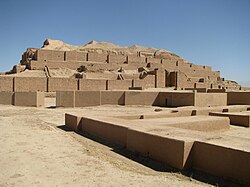


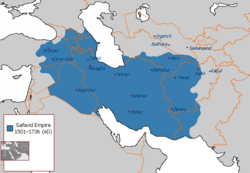
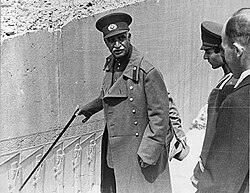


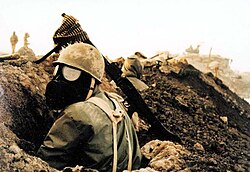


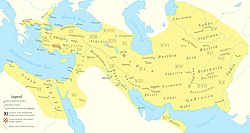

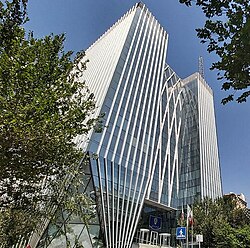

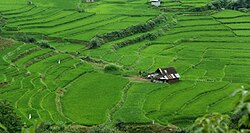


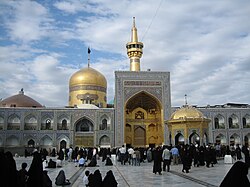


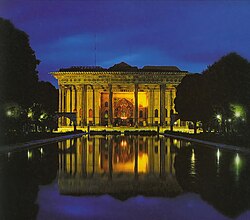




.svg)
 83,183,741[6] (17th)
 $1.246,26 trillion[7] (23th)
 42.0[8]
 0.783[9]

.svg)
.svg)

