
Saumyasingh (talk | contribs) Created page with "{{short description|Former kingdom located in present-day western Nepal}} {{Infobox former country |native_name = गोरखा राज्य |conventional_long_name = Ki..." |
No edit summary |
||
| Line 1: | Line 1: | ||
{{ | {{Short description|Former kingdom in present-day west Nepal}} | ||
{{Infobox former country | {{Infobox former country | ||
|native_name = गोरखा राज्य | |native_name = गोरखा राज्य | ||
| Line 39: | Line 39: | ||
{{History of Nepal}} | {{History of Nepal}} | ||
'''Gorkha Kingdom''' ({{lang-ne|गोरखा राज्य}}) was a kingdom in the confederation of 24 states known as [[Chaubisi rajya]], on the [[Indian subcontinent]], present-day western [[Nepal]].<ref>{{cite book | last = Hamilton| first = Francis Buchanan | url = http://www.gutenberg.org/files/30364/30364-h/30364-h.htm#page7| title = An Account of the Kingdom Of Nepal and of the Territories Annexed to This Dominion by the House of Gorkha| publisher = Edinburgh: Longman| year=1819| access-date = 12 January 2013}} Page 237.</ref> The Kingdom of Gorkha extended from the [[Marshyangdi|Marshyangdi River]] in the west to the [[Trishuli River]] in the east, which separated it from the kingdoms of Lamjung and Nepal respectively.<ref>{{cite book | last = Kirkpatrick| first = Colonel| url = https://archive.org/details/bub_gb_ijxAAAAAYAAJ| title = An Account of the Kingdom of Nepaul| publisher = London: William Miller| year=1811| access-date = 12 January 2013}} Page 123.</ref> The Gorkha Kingdom was established by Prince [[Dravya Shah]], second son of King [[Yasho Brahma Shah]] of [[Kingdom of Lamjung|Lamjung Kingdom]], in 1559 CE replacing the [[Khadka]] chiefs.{{citation needed|date=August 2020}} | '''Gorkha Kingdom''' ({{lang-ne|गोरखा राज्य}}) was a [[Khas people|Khas]] kingdom in the confederation of 24 states known as [[Chaubisi rajya]], on the [[Indian subcontinent]], present-day western [[Nepal]].<ref>{{cite book | last = Hamilton| first = Francis Buchanan | url = http://www.gutenberg.org/files/30364/30364-h/30364-h.htm#page7| title = An Account of the Kingdom Of Nepal and of the Territories Annexed to This Dominion by the House of Gorkha| publisher = Edinburgh: Longman| year=1819| access-date = 12 January 2013}} Page 237.</ref> The Kingdom of Gorkha extended from the [[Marshyangdi|Marshyangdi River]] in the west to the [[Trishuli River]] in the east, which separated it from the kingdoms of Lamjung and Nepal respectively.<ref>{{cite book | last = Kirkpatrick| first = Colonel| url = https://archive.org/details/bub_gb_ijxAAAAAYAAJ| title = An Account of the Kingdom of Nepaul| publisher = London: William Miller| year=1811| access-date = 12 January 2013}} Page 123.</ref> The Gorkha Kingdom was established by Prince [[Dravya Shah]], second son of King [[Yasho Brahma Shah]] of [[Kingdom of Lamjung|Lamjung Kingdom]], in 1559 CE replacing the [[Khadka]] chiefs.{{citation needed|date=August 2020}} | ||
== Origin == | == Origin == | ||
| Line 48: | Line 48: | ||
Manmath Rana-Ji Rava went to [[Ujjain]]. His son Bhupal Ranaji Rao went to [[Ridi]]{{citation needed|date=August 2020}} in the northern hills and in 1495 CE ([[Saka Era]] 1417), to [[Sargha]], and then to [[Khium]] in Bhirkot. There, he cultivated the land. The new ruler of Khium had sons, Kancha and Micha.<ref name=DW /> Their ''bartabandha'' (the taking of the Bharmanical thread) was performed. Plans for the boys to marry the daughters of the Raghuvanshi [[Rajputs]] were made. Kancha, the elder son went to [[Dhor]]. He conquered [[Magarat]] and reigned over [[Garhon]], [[Sathum]] and [[Birkot]]. Micha, the younger son, went to Nuwakot in the far west and became ruler there.<ref name=DW /> | Manmath Rana-Ji Rava went to [[Ujjain]]. His son Bhupal Ranaji Rao went to [[Ridi]]{{citation needed|date=August 2020}} in the northern hills and in 1495 CE ([[Saka Era]] 1417), to [[Sargha]], and then to [[Khium]] in Bhirkot. There, he cultivated the land. The new ruler of Khium had sons, Kancha and Micha.<ref name=DW /> Their ''bartabandha'' (the taking of the Bharmanical thread) was performed. Plans for the boys to marry the daughters of the Raghuvanshi [[Rajputs]] were made. Kancha, the elder son went to [[Dhor]]. He conquered [[Magarat]] and reigned over [[Garhon]], [[Sathum]] and [[Birkot]]. Micha, the younger son, went to Nuwakot in the far west and became ruler there.<ref name=DW /> | ||
From Micha, a dynasty of seven rajas commenced in Nuwakot. Kulamandan, the eldest son of Jagdeva, became ruler of [[Kaski District|Kaski]] displacing [[Gurung]] king. He was favoured and became ''Shah'' and succeeded his father. Kalu, the second son was sent to Dura Danda in [[Lamjung]] at the people's request to become their king. Kalu was killed by the Sekhant tribe, who were the ancestor of present-day [[Gurungs]]. In the 1500s, another son, Yasobramha, became the ruler of [[Lamjung]] after he compromised with the [[Gurungs]].<ref name=DW /> The second son of Yasobramha, [[Dravya Shah]] conquered the [[Ghale]] people of neighbouring Ligligkot, now in [[Gorkha District|Gorkha]]. Prince [[Dravya Shah]] in 1559 CE also replaced the [[Khadka]] chiefs | From Micha, a dynasty of seven rajas commenced in Nuwakot. Kulamandan, the eldest son of Jagdeva, became ruler of [[Kaski District|Kaski]] displacing [[Gurung]] king. He was favoured and became ''Shah'' and succeeded his father. Kalu, the second son was sent to Dura Danda in [[Lamjung]] at the people's request to become their king. Kalu was killed by the Sekhant tribe, who were the ancestor of present-day [[Gurungs]]. In the 1500s, another son, Yasobramha, became the ruler of [[Lamjung]] after he compromised with the [[Gurungs]].<ref name=DW /> The second son of Yasobramha, [[Dravya Shah]] conquered the [[Ghale]] people of neighbouring Ligligkot, now in [[Gorkha District|Gorkha]]. Prince [[Dravya Shah]] in 1559 CE also replaced the [[Khadka]] chiefs then named the newly found kingdom Gorkha.{{citation needed|date=August 2020}} | ||
The ancient name of Gor-kha is | The ancient name of Gor-kha is derived from Gorakhnath<ref>{{cite web|title=Bringing Aid To Gorkha's Poor {{!}} Features {{!}} ECS Nepal - The Nepali Way|url=http://ecs.com.np/features/bringing-aid-to-gorkhas-poor|website=ecs.com.np}}</ref> | ||
<gallery widths="200px" heights="200px"> | <gallery widths="200px" heights="200px"> | ||
| Line 99: | Line 99: | ||
| notes4 = Second son of Purna/Purendra Shah<br />adopted title of Svasti Sri Giriraj | | notes4 = Second son of Purna/Purendra Shah<br />adopted title of Svasti Sri Giriraj | ||
| family4 = Shah | | family4 = Shah | ||
| image4 = | | image4 = King Ram Shah.jpg | ||
| alt4 = Ram Shah of Gorkha | | alt4 = Ram Shah of Gorkha | ||
| name5 = '''[[Dambar Shah]]''' | | name5 = '''[[Dambar Shah]]''' | ||
| Line 164: | Line 164: | ||
==Expansion campaign== | ==Expansion campaign== | ||
{{main article|Unification of Nepal}} | |||
From 1736, the Gorkhalis engaged in a campaign of expansion begun by King [[Nara Bhupal Shah]], which was continued by his son, [[Prithvi Narayan Shah|King Prithvi Narayan Shah]] and grandson [[Bahadur Shah of Nepal|Prince Bahadur Shah]]. Over the years, they conquered huge tracts of land to the east and west of Gorkha.<ref>{{cite book | last = Hamilton| first = Francis Buchanan | url = http://www.gutenberg.org/files/30364/30364-h/30364-h.htm#page7| title = An Account of the Kingdom Of Nepal and of the Territories Annexed to This Dominion by the House of Gorkha| publisher = Edinburgh: Longman| year=1819| access-date = 6 January 2013}} Page 7.</ref><ref>Northey, William Brook and Morris, Charles John (1928). ''The Gurkhas: Nepal-Their Manners, Customs and Country.'' Asian Educational Services. {{ISBN|9788120615779}}. Pages 30-31.</ref> | From 1736, the Gorkhalis engaged in a campaign of expansion begun by King [[Nara Bhupal Shah]], which was continued by his son, [[Prithvi Narayan Shah|King Prithvi Narayan Shah]] and grandson [[Bahadur Shah of Nepal|Prince Bahadur Shah]]. Over the years, they conquered huge tracts of land to the east and west of Gorkha.<ref>{{cite book | last = Hamilton| first = Francis Buchanan | url = http://www.gutenberg.org/files/30364/30364-h/30364-h.htm#page7| title = An Account of the Kingdom Of Nepal and of the Territories Annexed to This Dominion by the House of Gorkha| publisher = Edinburgh: Longman| year=1819| access-date = 6 January 2013}} Page 7.</ref><ref>Northey, William Brook and Morris, Charles John (1928). ''The Gurkhas: Nepal-Their Manners, Customs and Country.'' Asian Educational Services. {{ISBN|9788120615779}}. Pages 30-31.</ref> | ||
| Line 174: | Line 175: | ||
A later [[Nepalese–Tibetan War]] was fought from 1855 to 1856 in [[Tibet]] between the forces of the Tibetan government ([[Ganden Phodrang]], then [[Tibet under Qing rule|under administrative rule]] of the [[Qing dynasty]]) and the invading Nepalese army, resulting in the victory of Nepal.<ref name="nepalarmy">{{Cite web |url=http://www.nepalarmy.mil.np/history.php?page=three |title=Archived copy |access-date=2017-02-05 |archive-url=https://web.archive.org/web/20161220102904/http://nepalarmy.mil.np/history.php?page=three |archive-date=2016-12-20 |url-status=dead }}</ref> | A later [[Nepalese–Tibetan War]] was fought from 1855 to 1856 in [[Tibet]] between the forces of the Tibetan government ([[Ganden Phodrang]], then [[Tibet under Qing rule|under administrative rule]] of the [[Qing dynasty]]) and the invading Nepalese army, resulting in the victory of Nepal.<ref name="nepalarmy">{{Cite web |url=http://www.nepalarmy.mil.np/history.php?page=three |title=Archived copy |access-date=2017-02-05 |archive-url=https://web.archive.org/web/20161220102904/http://nepalarmy.mil.np/history.php?page=three |archive-date=2016-12-20 |url-status=dead }}</ref> | ||
The Gorkha dominion reached its height at the beginning of the 19th century, extending all along the [[Himalaya]]n foothills from [[Kumaon Kingdom|Kumaon]] and [[Garhwal Kingdom|Garhwal]] in the west to [[Sikkim]] in the east. They were made to return much of the occupied territories after their defeat in the [[Anglo-Nepalese War]] (1814–1816) | The Gorkha dominion reached its height at the beginning of the 19th century, extending all along the [[Himalaya]]n foothills from [[Kumaon Kingdom|Kumaon]] and [[Garhwal Kingdom|Garhwal]] in the west to [[Sikkim]] in the east. They were made to return much of the occupied territories after their defeat in the [[Anglo-Nepalese War]] (1814–1816) .<ref>{{cite book | last = Pradhan| first = Kumar | url = https://books.google.com/books?id=Pz4bAAAAIAAJ | title = The Gorkha conquests: the process and consequences of the unification of Nepal, with particular reference to eastern Nepal |publisher = Oxford University Press | year=1991 | access-date = 6 February 2013}}</ref><ref>{{cite book | title = History of Sikkim, 1817–1904: Analysis of British Policy and Activities | last = Jha | first = Pranab Kumar | year = 1985 | publisher = O.P.S. Publishers | page = 11 | asin = B001OQE7EY }}</ref> | ||
==Gorkha to Nepal== | ==Gorkha to Nepal== | ||
[[File: | [[File:1907ca 4paisa Nepal Mi22.jpg|thumb|Postage stamp issued by Gorkha government in 1907]] | ||
[[File:Gorkhapatra masthead 9Jan33.jpg|thumb|''Gorkhapatra'' dated January 9, 1933]] | [[File:Gorkhapatra masthead 9Jan33.jpg|thumb|''Gorkhapatra'' dated January 9, 1933]] | ||
| Line 225: | Line 226: | ||
[[Category:16th-century establishments in Nepal]] | [[Category:16th-century establishments in Nepal]] | ||
[[Category:18th-century disestablishments in Nepal]] | [[Category:18th-century disestablishments in Nepal]] | ||
[[Category:Chaubisi Rajya]] | |||
[[Category:Former kingdoms]] | |||
Revision as of 11:28, 29 June 2022
Kingdom of Gorkha गोरखा राज्य | |||||||||
|---|---|---|---|---|---|---|---|---|---|
| 1559 CE–1768 CE | |||||||||
| Capital | Gorkha Darbar | ||||||||
| Common languages | Khas (later Nepali) | ||||||||
| Religion | Hinduism | ||||||||
| Government | Monarchy | ||||||||
| Māhārājādhirāj (Sovereign King) | |||||||||
• 1559–1570 CE | Dravya Shah (first) | ||||||||
• 1570–1605 CE | Purna Shah | ||||||||
• 1609–1633 CE | Ram Shah | ||||||||
• 1633–1645 CE | Dambar Shah | ||||||||
• 1645–1661 CE | Krishna Shah | ||||||||
• 1661–1673 CE | Rudra Shah | ||||||||
• 1673–1716 CE | Prithvipati Shah | ||||||||
• 1716–1743 CE | Nara Bhupal Shah | ||||||||
• 1743–1768 CE | Prithvi Narayan Shah (last) | ||||||||
| History | |||||||||
• Established | 1559 CE | ||||||||
• Disestablished | 1768 CE | ||||||||
| |||||||||
| Today part of | Nepal | ||||||||

| History of Nepal |
|---|
 |
Gorkha Kingdom (Nepali: गोरखा राज्य) was a Khas kingdom in the confederation of 24 states known as Chaubisi rajya, on the Indian subcontinent, present-day western Nepal.[1] The Kingdom of Gorkha extended from the Marshyangdi River in the west to the Trishuli River in the east, which separated it from the kingdoms of Lamjung and Nepal respectively.[2] The Gorkha Kingdom was established by Prince Dravya Shah, second son of King Yasho Brahma Shah of Lamjung Kingdom, in 1559 CE replacing the Khadka chiefs.[citation needed]
Origin
According to legends, one of the earliest Shah rulers was Rishi-raj Rana-Ji, of the Lunar dynasty. He was made the ruler of Chittorgarh and received the title of Bhattarak.[3] The lunar dynasty remained in power for thirteen generations. Then, the Muslim Yavanas took power. The Bhattarak had to abdicate and could only retain his caste family name, Rana-ji. The rajas were titled Rana-Ji for four generations and Rana-ji Rava for a further seventeen generations.
Akbar, the Mughal emperor, (1542-1605) wished to marry the daughter of Fatte Sinha Rana-Ji Rava. Akbar was refused because he was from a different religion (namely Islam) than Hindu religion altogether. This decision led to war. Many Rajput, including Fatte Sinha Rana-ji Rava, were killed. The survivors of the war were led by Udaybam Rana-Ji Rava. They founded a settlement, Udaipur.[3]
Manmath Rana-Ji Rava went to Ujjain. His son Bhupal Ranaji Rao went to Ridi[citation needed] in the northern hills and in 1495 CE (Saka Era 1417), to Sargha, and then to Khium in Bhirkot. There, he cultivated the land. The new ruler of Khium had sons, Kancha and Micha.[3] Their bartabandha (the taking of the Bharmanical thread) was performed. Plans for the boys to marry the daughters of the Raghuvanshi Rajputs were made. Kancha, the elder son went to Dhor. He conquered Magarat and reigned over Garhon, Sathum and Birkot. Micha, the younger son, went to Nuwakot in the far west and became ruler there.[3]
From Micha, a dynasty of seven rajas commenced in Nuwakot. Kulamandan, the eldest son of Jagdeva, became ruler of Kaski displacing Gurung king. He was favoured and became Shah and succeeded his father. Kalu, the second son was sent to Dura Danda in Lamjung at the people's request to become their king. Kalu was killed by the Sekhant tribe, who were the ancestor of present-day Gurungs. In the 1500s, another son, Yasobramha, became the ruler of Lamjung after he compromised with the Gurungs.[3] The second son of Yasobramha, Dravya Shah conquered the Ghale people of neighbouring Ligligkot, now in Gorkha. Prince Dravya Shah in 1559 CE also replaced the Khadka chiefs then named the newly found kingdom Gorkha.[citation needed] The ancient name of Gor-kha is derived from Gorakhnath[4]
-
The old king's Darbar at Gorkha
-
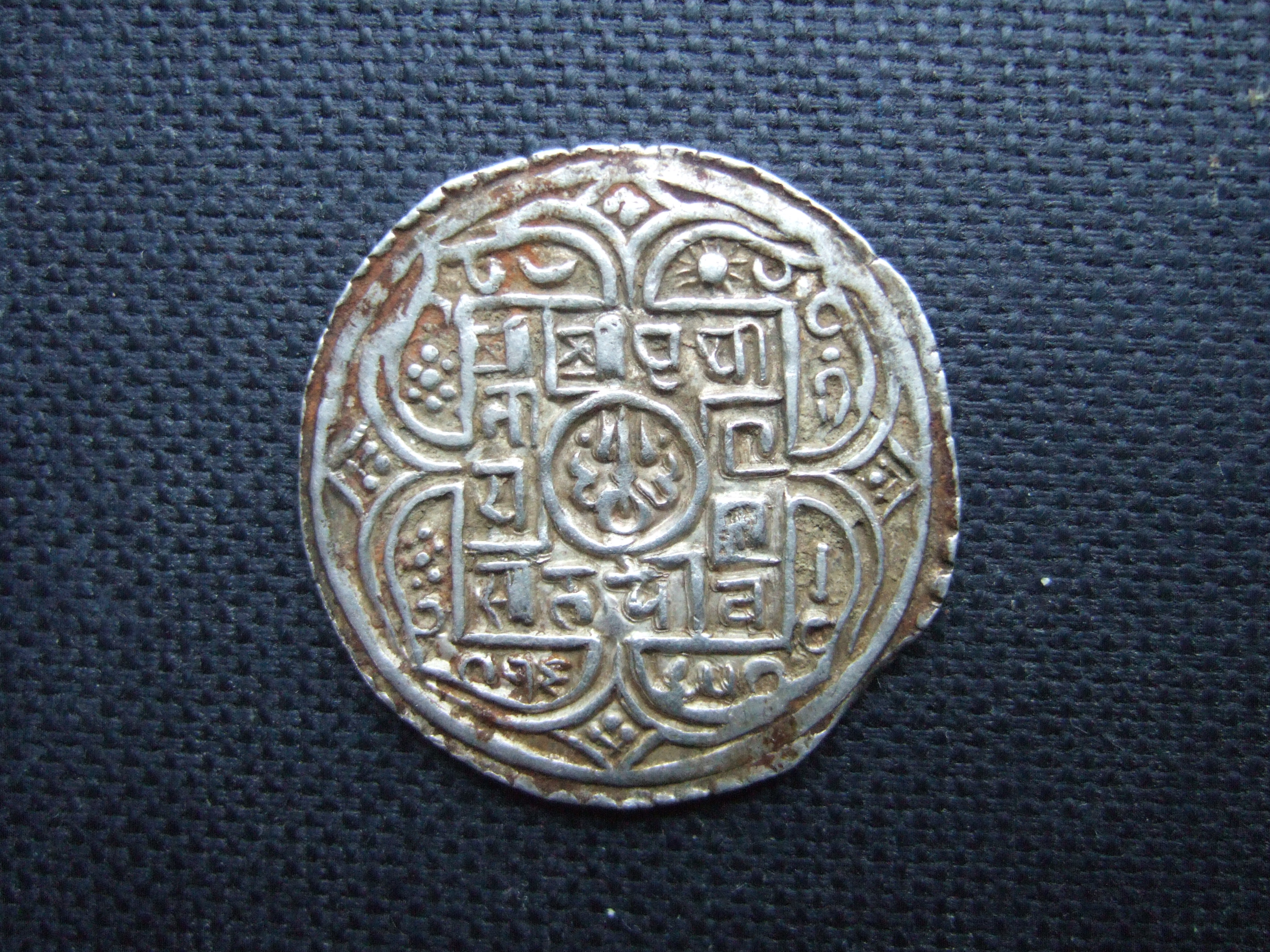 Mohar of Gorkha king Prithvi Narayan Shah dated Saka Era 1685 (1763 CE)

List of kings of Gorkha
The following is list of all ten kings of Gorkha hill principality[citation needed] Template:Succession table monarch
Expansion campaign
From 1736, the Gorkhalis engaged in a campaign of expansion begun by King Nara Bhupal Shah, which was continued by his son, King Prithvi Narayan Shah and grandson Prince Bahadur Shah. Over the years, they conquered huge tracts of land to the east and west of Gorkha.[5][6]
Among their conquests, the most important and valuable acquisition was the wealthy Newar confederacy of Nepal Mandala centered in the Kathmandu Valley. Starting in 1745, the Gorkhalis mounted a blockade in a bid to starve the population into submission, but the inhabitants held out.
The Newars appealed to the British East India Company to help, and in 1767, it sent an expedition under Captain Kinloch which ended in failure.[7] The three Newar capitals of Kathmandu, Lalitpur and Bhaktapur fell to the Gorkhalis between 1768 and 1769. The Gorkhali king subsequently moved his capital to Kathmandu.[8]
In 1788, the Gorkhalis turned their attention north and invaded Tibet.[9] They seized the border towns of Kyirong and Kuti, and forced the Tibetans to pay an annual tribute. When the Tibetans stopped paying it, the Gorkhalis invaded Tibet again in 1791 and plundered the Tashilhunpo Monastery in Shigatse. This time the Chinese army came to Tibet's defence and advanced close to Kathmandu but could not achieve success due to strong counterattack with khukuri.[10] The anxious Bahadur Shah asked for 10 howitzer mountain guns from the British East India Company. Captain William Kirkpatrick arrived in Kathmandu.[11] Eventually, the Fu Kanggan was keen to protect his army and the war being resultless was concluded by signing a peace treaty at Betrawati.[10][12][13]
A later Nepalese–Tibetan War was fought from 1855 to 1856 in Tibet between the forces of the Tibetan government (Ganden Phodrang, then under administrative rule of the Qing dynasty) and the invading Nepalese army, resulting in the victory of Nepal.[10]
The Gorkha dominion reached its height at the beginning of the 19th century, extending all along the Himalayan foothills from Kumaon and Garhwal in the west to Sikkim in the east. They were made to return much of the occupied territories after their defeat in the Anglo-Nepalese War (1814–1816) .[14][15]
Gorkha to Nepal

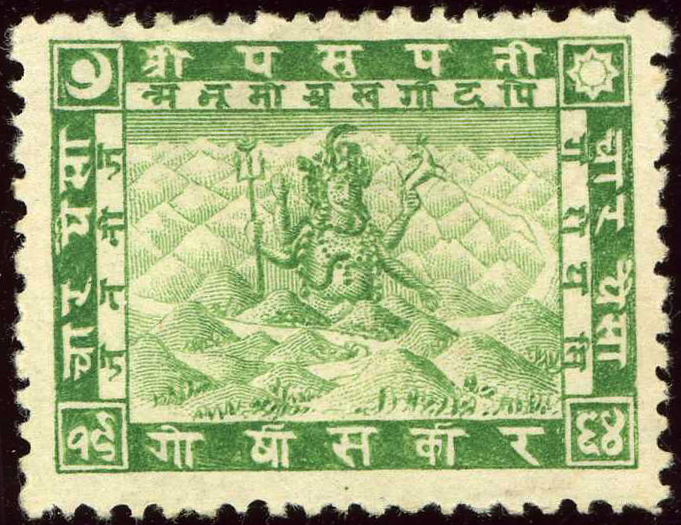
The Gorkha dominion continued to be known as Gorkha Rajya (meaning the Gorkha Kingdom) until the beginning of the 20th century. Historically, the name 'Nepal' referred mainly to Kathmandu valley, the homeland of the Newars. Since the 1930s, the state began using it to refer to the entire country and 'Nepal Khaldo' (Nepal Valley) became 'Kathmandu Valley'.[16][17] The name Gorkha Sarkar (meaning Gorkha government) was also changed to Nepal government.
Similarly, the Gorkhali language was renamed as Nepali in 1933.[18] The term Gorkhali in the former national anthem entitled "Shreeman Gambhir" was changed to Nepali in 1951.[19] The government newspaper, launched in 1901, is still known as Gorkhapatra (meaning Gorkha gazette).
The Shah dynasty ruled Nepal until 2008 when it became a republic following a people's movement.[20] Today, Gorkha District, roughly corresponding to the old kingdom, is one of the 77 administrative districts of Nepal.
Gurkhas and Gorkhas

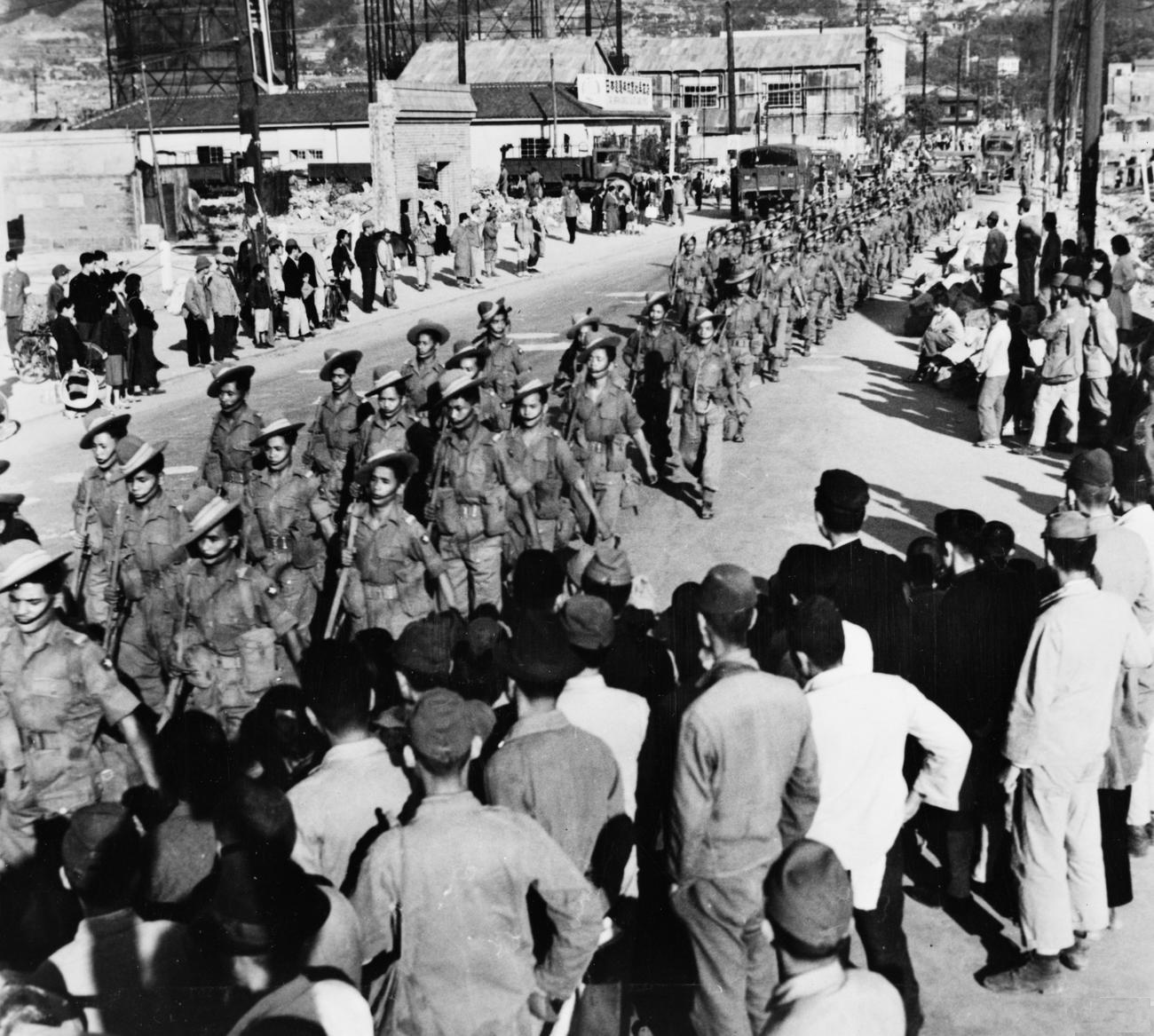
Not to be confused with the inhabitants of the old Gorkha Kingdom only, the Gurkhas are also military units in the British or the Indian army (where they are known as Gorkhas) enlisted in Nepal and India. Their history goes back to the Anglo-Gorkha War and the Sugauli Treaty of 1816. It allowed the British East India Company to recruit men from the Gorkha kingdom hills to serve as mercenaries.
During World War II (1939–45), a total of 250,280 Gurkhas served in 40 battalions, plus eight Nepalese Army battalions, plus parachute, training, garrison, and porter units. They earned 2,734 bravery awards, and suffered around 32,000 casualties in all theatres.[21]
Gallery
-
Metal Window
-
Stone history
-
Gorkha Durbar
-
King Prithavi Pal
-
Image of Goddess & Gorkha Palace
-
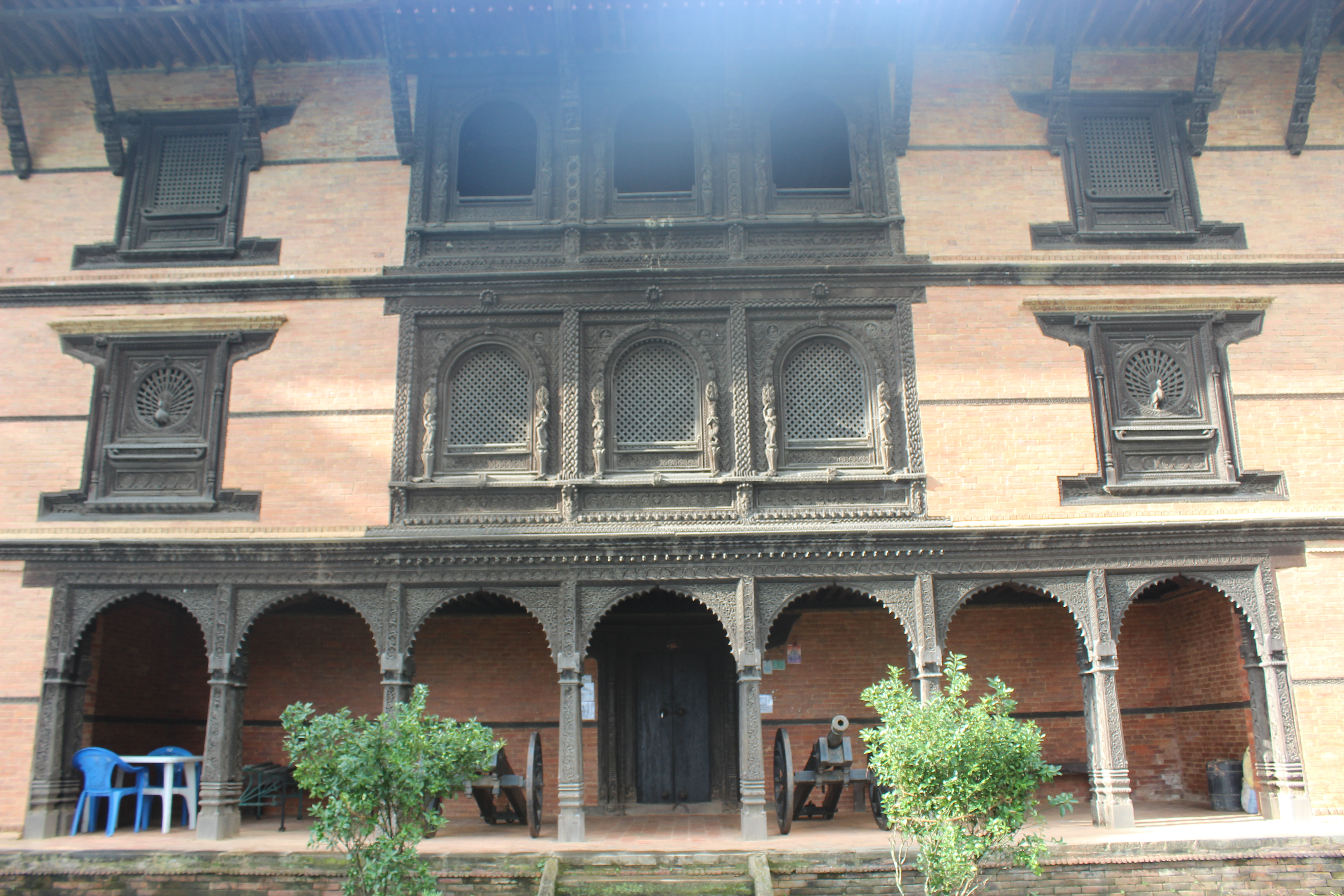 Gorkha Tallo Durbar
 -
Shree Panch Bada Maharajadhiraj Prithavi Narayan Shah Dev
-
Nepali Cannon
-
Nagada


See also
References
- ↑ Hamilton, Francis Buchanan (1819). An Account of the Kingdom Of Nepal and of the Territories Annexed to This Dominion by the House of Gorkha. Edinburgh: Longman. Retrieved 12 January 2013.
{{cite book}}: CS1 maint: publisher location (link) Page 237. - ↑ Kirkpatrick, Colonel (1811). An Account of the Kingdom of Nepaul. London: William Miller. Retrieved 12 January 2013.
{{cite book}}: CS1 maint: publisher location (link) Page 123. - ↑ 3.0 3.1 3.2 3.3 3.4 Daniel Wright, History of Nepāl, Cambridge University Press, 1877, Nepal. Chapter X, page 273
- ↑ "Bringing Aid To Gorkha's Poor | Features | ECS Nepal - The Nepali Way". ecs.com.np.
- ↑ Hamilton, Francis Buchanan (1819). An Account of the Kingdom Of Nepal and of the Territories Annexed to This Dominion by the House of Gorkha. Edinburgh: Longman. Retrieved 6 January 2013.
{{cite book}}: CS1 maint: publisher location (link) Page 7. - ↑ Northey, William Brook and Morris, Charles John (1928). The Gurkhas: Nepal-Their Manners, Customs and Country. Asian Educational Services. ISBN 9788120615779. Pages 30-31.
- ↑ Marshall, Julie G. (2005). "Gurkha Conquest of Nepal and the Kinloch and Logan Missions". Britain And Tibet 1765-1947. Routledge. p. 39. ISBN 9780415336475.
- ↑ Hamilton, Francis Buchanan (1819). An Account of the Kingdom Of Nepal and of the Territories Annexed to This Dominion by the House of Gorkha. Edinburgh: Longman. Retrieved 15 January 2013.
{{cite book}}: CS1 maint: publisher location (link) Page 7. - ↑ Marshall, Julie G. (2005). "Nepal 1788-1903". Britain And Tibet 1765-1947. Routledge. p. 57. ISBN 9780415336475.
- ↑ 10.0 10.1 10.2 "Archived copy". Archived from the original on 2016-12-20. Retrieved 2017-02-05.
{{cite web}}: CS1 maint: archived copy as title (link) - ↑ Kirkpatrick, Colonel (1811). An Account of the Kingdom of Nepaul. London: William Miller. Retrieved 11 February 2013.
{{cite book}}: CS1 maint: publisher location (link) - ↑ Boulnois, L. "Chinese Maps and Prints on the Tibet-Gorkha War of 1788-92" (PDF). Kailash. p. 86. Retrieved 21 January 2013.
- ↑ "The Enclosing of Nepal". U.S. Library of Congress. Retrieved 21 January 2013.
- ↑ Pradhan, Kumar (1991). The Gorkha conquests: the process and consequences of the unification of Nepal, with particular reference to eastern Nepal. Oxford University Press. Retrieved 6 February 2013.
- ↑ Jha, Pranab Kumar (1985). History of Sikkim, 1817–1904: Analysis of British Policy and Activities. O.P.S. Publishers. p. 11. ASIN B001OQE7EY.
- ↑ Planet, Lonely. "History of Nepal - Lonely Planet Travel Information". www.lonelyplanet.com. Retrieved 2016-05-08.
- ↑ Bindloss, Joseph (2010-09-15). Nepal 8. Lonely Planet. ISBN 9781742203614.
- ↑ Lienhard, Siegfried (1992). Songs of Nepal: An Anthology of Nevar Folksongs and Hymns. New Delhi: Motilal Banarsidas. ISBN 81-208-0963-7. Page 3.
- ↑ "The kings song". Himal Southasian. June 2003. Archived from the original on 25 October 2012. Retrieved 3 April 2012.
- ↑ "Nepal's Gorkha kingdom falls". The Times of India. 2 June 2008. Retrieved 11 February 2013.
{{cite news}}: CS1 maint: deprecated archival service (link) - ↑ Parker, John (2005). The Gurkhas: The Inside Story of the World's Most Feared Soldiers. Headline Book Publishing. ISBN 978-0-7553-1415-7.
State of Uttarakhand | |||||||||||||||||
|---|---|---|---|---|---|---|---|---|---|---|---|---|---|---|---|---|---|
| Government |  | ||||||||||||||||
| History |
| ||||||||||||||||
| Geography and Ecology |
| ||||||||||||||||
| Demographics |
| ||||||||||||||||
| Administrative divisions |
| ||||||||||||||||
| Politics | |||||||||||||||||
| Tourism |
| ||||||||||||||||
| Sports | |||||||||||||||||
| Other topics | |||||||||||||||||
| Districts |
| ||||||||||||||||
| Major cities | |||||||||||||||||