




m Bot: Delinking broken file(s) using script (info) |
mNo edit summary |
||
| Line 1: | Line 1: | ||
{{Short description|Former state of India (1953–56) in Andhra Pradesh}} | {{Short description|Former state of India (1953–56) in Andhra Pradesh}} | ||
{{for|the modern-day state|Andhra Pradesh}} | {{for|the modern-day state|Andhra Pradesh}} | ||
{{Use Indian English}} | {{Use Indian English|date=August 2016}} | ||
{{Use dmy dates}} | {{Use dmy dates|date=November 2020}} | ||
{{Infobox Indian state or territory | {{Infobox Indian state or territory | ||
| name = Andhra State | | name = Andhra State<br/>''Āndhra Rāṣṭramu'' | ||
| former = yes | | former = yes | ||
| type = Former State | | type = Former State | ||
| image_map = Andhra-India 1953.svg | | image_map = Andhra-India 1953.svg | ||
| region = South India | | region = South India | ||
| Line 21: | Line 21: | ||
| formation_date4 = 1 October 1953 | | formation_date4 = 1 October 1953 | ||
| dissolution = 1 November 1956 (by [[States Reorganisation Act, 1956]]) | | dissolution = 1 November 1956 (by [[States Reorganisation Act, 1956]]) | ||
| year_end = 1956 | | year_end = 1956 | ||
| p1 = Madras State | | p1 = Madras State | ||
| flag_p1 = South Indian territories.svg | | flag_p1 = South Indian territories.svg | ||
| s1 = | | s1 = Andhra Pradesh (1956–2014) | ||
| flag_s1 = United Andhra Pradesh | | flag_s1 = Flag of United Andhra Pradesh.svg | ||
| government_type = [[Federated state]] | | government_type = [[Federated state]] | ||
}} | }} | ||
'''Andhra State''' ([[IAST]]: {{IAST|Āndhra | '''Andhra State''' ([[IAST]]: {{IAST|Āndhra Rāṣṭramu}}; {{IPA|sa|ˈɑːndʰrʌ raːʂʈɾamu|}}), created in 1953, was the official name of the [[Administrative divisions of India#States and union territories|State]] of [[Andhra Pradesh]] until 1956.<ref>{{cite web|url=http://hyderabad-india-online.com/2011/03/madras-presidence/|title=Map of Madras Presidency in 1909|date=28 March 2011|access-date=15 October 2013}}</ref> The state was formed from [[Telugu language|Telugu]]-speaking districts of the erstwhile [[Madras State]], which form two distinct cultural regions – [[Rayalaseema]] and [[Coastal Andhra]]. | ||
Under the provisions of the [[States Reorganisation Act, 1956]], the [[Telugu language|Telugu]]-speaking territories of [[Hyderabad State (1948–1956)|Hyderabad State]] were merged with Andhra State, and its name was changed to [[Andhra Pradesh (1956–2014)|'Andhra Pradesh']].<ref>{{cite web|url=https://legislative.gov.in/sites/default/files/A1956-37.pdf|title=The States Reorganisation Act, 1956|website=legislative.gov.in|publisher=Government of India}}</ref> | |||
These newly added territories would later form the state of [[Telangana]] in 2014. | |||
==Creation of Andhra State== | ==Creation of Andhra State== | ||
{{See also|Andhra movement}} | |||
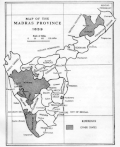
[[File:Madras Prov 1859.gif|thumb|Madras Province ]] | [[File:Madras Prov 1859.gif|thumb|Madras Province ]] | ||
[[File:South Indian territories.svg|thumb|Andhra State from 1953 to 1956 (Marked in Blue)]] | [[File:South Indian territories.svg|thumb|Andhra State from 1953 to 1956 (Marked in Blue)]] | ||
In an effort to protect the interests of the [[Telugu people]] of Madras State, [[Potti Sreeramulu]] attempted to force the Madras State government to listen to public demands for the separation of Telugu-speaking districts (Rayalaseema and Coastal Andhra) from Madras State to form Andhra State. He went on a lengthy fast and only stopped when Prime Minister [[Jawaharlal Nehru]] made a promise to form Andhra State. Later, after witnessing no real progress towards the creation of Andhra State, he started fasting again in Maharshi [[Bulusu Sambamurti]]'s house in Madras, on 19 October 1952. This caught people's attention despite the disapproval of the fast by the Andhra [[Indian National Congress|INC]]. The government did not make a clear statement about the formation of a new state, despite several strikes and demonstrations by Telugu people. | In an effort to protect the interests of the [[Telugu people]] of Madras State, [[Potti Sreeramulu]] attempted to force the Madras State government to listen to public demands for the separation of Telugu-speaking districts (Rayalaseema and Coastal Andhra) from Madras State to form Andhra State. He went on a lengthy fast and only stopped when Prime Minister [[Jawaharlal Nehru]] made a promise to form Andhra State. Later, after witnessing no real progress towards the creation of Andhra State, he started fasting again in Maharshi [[Bulusu Sambamurti]]'s house in Madras, on 19 October 1952. This caught people's attention despite the disapproval of the fast by the Andhra [[Indian National Congress|INC]]. The government did not make a clear statement about the formation of a new state, despite several strikes and demonstrations by Telugu people. At midnight of 15 December (i.e., early 16 December 1952), Sreeramulu died while fasting. The house has been preserved as a monument by the state government.<ref>[[Ramachandra Guha]]. ''[https://www.amazon.com/dp/0060958588 India After Gandhi: The History of the World's Largest Democracy]'' Harper Perennial; Reprint edition (12 August 2008) {{ISBN|0-06-095858-8}} {{ISBN|978-0330505543}}</ref> | ||
During Sreeramulu's death procession, people shouted slogans praising his sacrifice. Later, they went into a frenzy and began to destroy public property. The news spread quickly and created an uproar among the people in far off places like [[Chirala]], [[Srikakulam]], [[Visakhapatnam]], [[Vijayawada]], [[Rajahmundry]], [[Eluru]], [[Bhimavaram]], Ballary, [[Guntur]], [[Tenali]], [[Ongole]] and [[Nellore]]. Seven people were killed in clashes with police in [[Anakapalle]] and Vijayawada. The popular agitation continued for three to four days disrupting normal life in the Madras and Andhra regions. On 19 December 1952, the [[Prime Minister of India|Prime Minister]] of the country [[Jawaharlal Nehru]] made an announcement about the formation of a separate state for the [[Telugu language|Telugu]]-speaking people of Madras State. The central government appointed [[Kailas Nath Wanchoo|K. N. Wanchoo]], Chief Justice of the Rajasthan High Court,<ref name="Kumar V">{{Cite book |url=https://books.google.com/books?id=FrvZrPhUciAC&pg=PA244 |isbn=9788170221968|title=Committees and Commissions in India Vol. 1 : | During Sreeramulu's death procession, people shouted slogans praising his sacrifice. Later, they went into a frenzy and began to destroy public property. The news spread quickly and created an uproar among the people in far off places like [[Chirala]], [[Srikakulam]], [[Visakhapatnam]], [[Vijayawada]], [[Rajahmundry]], [[Eluru]], [[Bhimavaram]], Ballary, [[Guntur]], [[Tenali]], [[Ongole]] and [[Nellore]]. Seven people were killed in clashes with police in [[Anakapalle]] and Vijayawada. The popular agitation continued for three to four days disrupting normal life in the Madras and Andhra regions. On 19 December 1952, the [[Prime Minister of India|Prime Minister]] of the country [[Jawaharlal Nehru]] made an announcement about the formation of a separate state for the [[Telugu language|Telugu]]-speaking people of Madras State. The central government appointed [[Kailas Nath Wanchoo|K. N. Wanchoo]], Chief Justice of the Rajasthan High Court,<ref name="Kumar V">{{Cite book |url=https://books.google.com/books?id=FrvZrPhUciAC&pg=PA244 |isbn=9788170221968|title=Committees and Commissions in India Vol. 1 : 1947–1954|last1=Kumar|first1=Virendra|date=1 January 1976|publisher=Concept Publishing Company }}</ref> to look into issues related to formation of Andhra State. Parliament passed the [[Andhra State Act, 1953|Andhra State Act]] in September 1953.<ref>{{cite web|title=THE ANDHRA STATE ACT,1953|url=http://theindianlawyer.in/statutesnbareacts/acts/a46.html|access-date=26 August 2013|archive-date=16 August 2014|archive-url=https://web.archive.org/web/20140816123339/http://theindianlawyer.in/statutesnbareacts/acts/a46.html|url-status=dead}}</ref> | ||
On 1 October 1953, 11 districts in the Telugu-speaking portion of [[Madras State]] became the new Andhra State with [[Kurnool]] as the capital. [[Tanguturi Prakasam|Tanguturi Prakasam Pantulu]] (also known as Andhra Kesari – "The Lion of Andhra") became the first Chief Minister of the new state.<ref>{{cite web|title=Indian Express October 2, 1953|url=https://news.google.com/newspapers?nid=P9oYG7HA76QC&dat=19531002&printsec=frontpage&hl=en|access-date=26 August 2013}}</ref> | On 1 October 1953, 11 districts in the Telugu-speaking portion of [[Madras State]] became the new Andhra State with [[Kurnool]] as the capital. [[Tanguturi Prakasam|Tanguturi Prakasam Pantulu]] (also known as Andhra Kesari – "The Lion of Andhra") became the first Chief Minister of the new state.<ref>{{cite web|title=Indian Express October 2, 1953|url=https://news.google.com/newspapers?nid=P9oYG7HA76QC&dat=19531002&printsec=frontpage&hl=en|access-date=26 August 2013}}</ref> | ||
Formation of this first "linguistic state" paved the way to creation of more and provided an opportunity for these states to develop independently, linguistically and economically, each of them having a state to support.<ref>{{Cite web |url=http://www.aponline.gov.in/ |title=Welcome to APonline.gov.in, the official portal of Govt. Of a P |access-date=13 December 2011 |archive-url=https://web.archive.org/web/20080705021103/http://www.aponline.gov.in/ |archive-date=5 July 2008 |url-status=dead}}</ref><ref>{{cite web | url=http://www.sankalpindia.net/drupal/the-first-linguistic-state-andhra-pradesh-was-born | title=The First Linguistic State – Andhra Pradesh | This marked the first time a state was formed in independent India for linguistic reason (Odisha was formed before independence for Odia speakers). Formation of this first "linguistic state" paved the way to creation of more and provided an opportunity for these states to develop independently, linguistically and economically, each of them having a state to support.<ref>{{Cite web |url=http://www.aponline.gov.in/ |title=Welcome to APonline.gov.in, the official portal of Govt. Of a P |access-date=13 December 2011 |archive-url=https://web.archive.org/web/20080705021103/http://www.aponline.gov.in/ |archive-date=5 July 2008 |url-status=dead}}</ref><ref>{{cite web | url=http://www.sankalpindia.net/drupal/the-first-linguistic-state-andhra-pradesh-was-born | title=The First Linguistic State – Andhra Pradesh – was born: | Sankalp India Foundation }}</ref> | ||
== Government and administration == | |||
=== Governors === | |||
<!--Do NOT add counts or ordinals, as per [[WP:CONSENSUS]]--> | |||
Governors of Andhra State, Andhra State consisted of [[Coastal Andhra]] and [[Rayalaseema]] regions. This state was carved out of [[Madras State]] in 1953. | Governors of Andhra State, Andhra State consisted of [[Coastal Andhra]] and [[Rayalaseema]] regions. This state was carved out of [[Madras State]] in 1953. | ||
{| class="wikitable sortable" | |||
<!--Do NOT add counts or ordinals, as per [[WP:CONSENSUS]]--> | |||
{| class="wikitable sortable" | |||
!Name | !Name | ||
!Portrait | !Portrait | ||
| Line 53: | Line 61: | ||
!Term length | !Term length | ||
|- | |- | ||
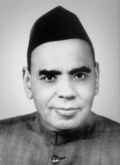
|[[Chandulal Madhavlal Trivedi]] | |||
| [[Chandulal Madhavlal Trivedi]] | |||
|[[File:Chandulal Madhavlal Trivedi.png|100px]] | |[[File:Chandulal Madhavlal Trivedi.png|100px]] | ||
| 1 October 1953 | |1 October 1953 | ||
| 31 October 1956 | |31 October 1956 | ||
| {{ | |{{age in years and days|1953|10|01|1956|10|31}} | ||
|-| | |-| | ||
|} | |} | ||
=== Chief ministers === | |||
{| class="wikitable" style="text-align:center" | <!--Do NOT add counts or ordinals, as per [[WP:CONSENSUS]]--> | ||
On 1 October 1953, 11 districts in the Telugu-speaking portion of [[Madras State]] became the new Andhra State with [[Kurnool]] as the capital.<ref>{{cite news|title=Indian Express October 2, 1953|url=https://news.google.com/newspapers?nid=P9oYG7HA76QC&dat=19531002&printsec=frontpage&hl=en|access-date=26 August 2013}}</ref> | |||
<!--Do NOT add counts or ordinals, as per [[WP:CONSENSUS]]--> | |||
{| class="wikitable" style="line-height:1.4em; text-align:center" | |||
! rowspan=2 colspan="2" |Portrait | |||
! rowspan=2 style="width:16em" |Chief Minister<br>{{small|(Lifespan)<br>Constituency}} | |||
! colspan="3" |Term of the office | |||
! rowspan=2 style="width:5em" |Election<br>{{small|(Assembly)}} | |||
! rowspan=2 style="width:8em" |Party | |||
! rowspan=2 style="width:8em" |Government | |||
! rowspan=2 style="width:10em" |Appointed by<br>([[List of governors of Andhra Pradesh|Governor]]) | |||
|- | |- | ||
! | !Term start | ||
!Term end | |||
!Duration | |||
! | |||
! | |||
|- | |- | ||
|bgcolor="{{party color|Indian National Congress}}"| | |||
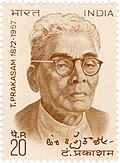
|[[File:Tanguturi Prakasam 1972 stamp of India.jpg|97x97px]] | |||
|'''[[Tanguturi Prakasam]]'''<br>{{small|(1872{{ndash}}1957)<br>{{ndash}}}} | |||
|1 October 1953 | |||
|15 November 1954 | |||
|'''{{ayd|1 October 1953|15 November 1954}}''' | |||
|[[1952 Madras State Legislative Assembly election|1952]]<br>{{small|(1st)}} | |||
|[[Indian National Congress]] | |||
|bgcolor="#87CEEB"| '''Prakasam''' | |||
|[[Chandulal Madhavlal Trivedi]] | |||
|- | |- | ||
!colspan="11"| {{nobold|''[[President's rule]] imposed during the period'' (15 November 1954 {{ndash}} 28 March 1955)}}{{efn|name=PR|''[[President's rule]]'' may be imposed when the "government in a state is not able to function as per the Constitution", which often happens because no party or coalition has a majority in the assembly. When the President's rule is in force in a state, its council of ministers stands dissolved. The office of chief minister thus lies vacant, and the administration is taken over by the governor, who functions on behalf of the central government. At times, the legislative assembly also stands dissolved.<ref>Amberish K. Diwanji. "[http://www.rediff.co.in/news/2005/mar/15spec1.htm A dummy's guide to President's rule]". [[Rediff.com]]. 15 March 2005.</ref>}} | |||
| | |||
|[[ | |||
|- | |- | ||
| | |bgcolor="{{party color|Indian National Congress}}"| | ||
|[[File: | |[[File:Bezawada Gopal Reddy (cropped).png|97x97px]] | ||
|' | |'''[[Bezawada Gopala Reddy]]'''<br>{{small|(1907{{ndash}}1997)<br>MLA for [[Atmakur Assembly constituency|Atmakur]]}} | ||
|28 March 1955 | |28 March 1955 | ||
|31 October 1956 | |31 October 1956 | ||
|{{ | |'''{{ayd|28 March 1955|31 October 1956}}''' | ||
| | |[[1955 Andhra State Legislative Assembly election|1955]]<br>{{small|(2nd)}} | ||
|[[Indian National Congress]] | |[[Indian National Congress]] | ||
| | |bgcolor="#87CEEB"| '''Gopala''' | ||
|[[Chandulal Madhavlal Trivedi]] | |||
|} | |} | ||
==Deputy Chief ministers | == Deputy Chief ministers == | ||
<!--Do NOT add counts or ordinals, as per [[WP:CONSENSUS]]--> | |||
Andhra State consisted of North Andhra, [[Coastal Andhra]] and [[Rayalaseema]] regions. This state was carved out of [[Madras State]] in 1953. Neelam Sanjeeva Reddy served as deputy CM under Prakasam and Bezawada Gopala Reddy.<ref>{{cite web |url=https://books.google.com/books?id=iBEYAQAAIAAJ |publisher=A. Mukherjee & Company|year=1963|pages=121|title=Current Affairs|access-date=13 August 2022}}</ref> Later, the Andhra state was merged with Telangana province of Hyderabad to form Andhra Pradesh in November 1956. | Andhra State consisted of North Andhra, [[Coastal Andhra]] and [[Rayalaseema]] regions. This state was carved out of [[Madras State]] in 1953. Neelam Sanjeeva Reddy served as deputy CM under Prakasam and Bezawada Gopala Reddy.<ref>{{cite web |url=https://books.google.com/books?id=iBEYAQAAIAAJ |publisher=A. Mukherjee & Company|year=1963|pages=121|title=Current Affairs|access-date=13 August 2022}}</ref> Later, the Andhra state was merged with Telangana province of Hyderabad to form Andhra Pradesh in November 1956. | ||
<!--Do NOT add counts or ordinals, as per [[WP:CONSENSUS]]--> | |||
{| class="wikitable" style="text-align:center" | {| class="wikitable" style="text-align:center" | ||
|- | |- | ||
! rowspan="2" | Portrait | ! rowspan="2" | Portrait | ||
! rowspan="2" | Name | ! rowspan="2" | Name | ||
| Line 136: | Line 136: | ||
|- | |- | ||
|- style="height: 60px;" | |- style="height: 60px;" | ||
|[[File:NeelamSanjeevaReddy.jpg|100px]] | |[[File:NeelamSanjeevaReddy.jpg|100px]] | ||
| [[Neelam Sanjiva Reddy]] | | [[Neelam Sanjiva Reddy]] | ||
| Line 142: | Line 141: | ||
| 1 October 1953 | | 1 October 1953 | ||
| 15 November 1954 | | 15 November 1954 | ||
| | | {{Age in years and days|1953|10|1|1954|11|15}} | ||
|1st | |1st | ||
<small>([[1952 Madras Legislative Assembly election|1952 election]])</small> | <small>([[1952 Madras Legislative Assembly election|1952 election]])</small> | ||
| Line 148: | Line 147: | ||
| width="4px" style="background-color: {{party color|Indian National Congress}}" | | | width="4px" style="background-color: {{party color|Indian National Congress}}" | | ||
|- | |- | ||
|[[File:Emblem_of_India.svg|122x122px]] | |[[File:Emblem_of_India.svg|122x122px]] | ||
|''Vacant''{{efn|name=PR}} | |''Vacant''{{efn|name=PR}} | ||
| Line 159: | Line 157: | ||
| | | | ||
|- | |- | ||
|[[File:NeelamSanjeevaReddy.jpg|100px]] | |[[File:NeelamSanjeevaReddy.jpg|100px]] | ||
| [[Neelam Sanjiva Reddy]] | | [[Neelam Sanjiva Reddy]] | ||
|[[Srikalahasti Assembly constituency|Kalahasti]] | |[[Srikalahasti Assembly constituency|Kalahasti]] | ||
|March 1955 | |30 March 1955 | ||
|31 October 1956 | |31 October 1956 | ||
| | |{{Age in years and days|1955|03|30|1956|10|31}} | ||
| | | | ||
([[1955 Andhra State Legislative Assembly election|<small>1955 election</small>]]) | ([[1955 Andhra State Legislative Assembly election|<small>1955 election</small>]]) | ||
|[[Indian National Congress]] | |[[Indian National Congress]] | ||
|width="4px" style="background-color: {{party color|Indian National Congress}}" | | |width="4px" style="background-color: {{party color|Indian National Congress}}" | | ||
|} | |||
=== Leaders of the Opposition === | |||
<!--Do NOT add counts or ordinals, as per [[WP:CONSENSUS]]--> | |||
{| class="wikitable sortable" | |||
|- | |||
!scope=col| Name<br />{{small|(Constituency)}} | |||
!scope=col| Portrait | |||
! colspan="2" scope="col" scope="col"| Term | |||
! colspan="2" scope="col" | Party | |||
!scope=col| Assembly<br />{{small|(Election)}} | |||
|- style="text-align:center; height:60px;" | |||
|- style="text-align:center; height:60px;" | |||
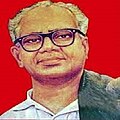
|[[Puchalapalli Sundarayya]]<br>{{small|([[Gannavaram, Krishna Assembly constituency|Gannavaram]])}} | |||
|[[File:Sundaraiah-Puchalapalli.jpg|120px]] | |||
| 1955 | |||
| 1956 | |||
|{{Full party name with color|Communist Party of India}} | |||
| First Assembly<br />{{small|[[1955 Andhra State Legislative Assembly election|(1955 election)]]}} | |||
|- style="text-align:center; height:60px;" | |||
|} | |} | ||
| Line 187: | Line 204: | ||
| subdivision = | | subdivision = | ||
}} | }} | ||
During the time of the formation of Andhra State, it had only eleven districts.<ref>{{Cite web |last=Team |first=HIOC |title=Formation of Andhra Pradesh – 1947 to 1956 |url=http://hyderabad-india-online.com/2009/10/formation-of-andhra-pradesh-–-1947-to-1956/ |access-date=2022-12-22 |website=Hyderabad India Online |language=en-US}}</ref><ref>{{Cite news |last=ANI |title=GoM on Andhra bifurcation to elicit views of political parties |work=Business Standard India |url=https://www.business-standard.com/article/politics/gom-on-andhra-bifurcation-to-elicit-views-of-political-parties-113111200303_1.html |access-date=2023-03-14}}</ref> | During the time of the formation of Andhra State, it had only eleven districts.<ref>{{Cite web |last=Team |first=HIOC |date=2009-10-08 |title=Formation of Andhra Pradesh – 1947 to 1956 |url=http://hyderabad-india-online.com/2009/10/formation-of-andhra-pradesh-–-1947-to-1956/ |access-date=2022-12-22 |website=Hyderabad India Online |language=en-US}}</ref><ref>{{Cite news |last=ANI |date=2013-11-12 |title=GoM on Andhra bifurcation to elicit views of political parties |work=Business Standard India |url=https://www.business-standard.com/article/politics/gom-on-andhra-bifurcation-to-elicit-views-of-political-parties-113111200303_1.html |access-date=2023-03-14}}</ref> | ||
{| class="wikitable sortable" style="text-align:left" border=1 width=50% | {| class="wikitable sortable" style="text-align:left" border=1 width=50% | ||
|- | |- | ||
! scope="col" | on map | |||
! scope="col" | Official name | ! scope="col" | Official name | ||
! scope="col" | Division | ! scope="col" | Division | ||
|- | |- | ||
! 1 | |||
![[Srikakulam district|Srikakulam]] | ![[Srikakulam district|Srikakulam]] | ||
|rowspan=7 |[[Coastal Andhra|Coastal Andhra Region]] | |rowspan=7 |[[Coastal Andhra|Coastal Andhra Region]] | ||
|- | |- | ||
! 2 | |||
![[Visakhapatnam district|Visakhapatnam]] | ![[Visakhapatnam district|Visakhapatnam]] | ||
|- | |- | ||
! 3 | |||
![[East Godavari]]{{efn|name=D1|[[Bhadrachalam]] and [[Venkatapuram, Jayashankar Bhupalpally district|Nuguru Venkatapuram]] ''taluks'' of [[East Godavari]] (part of coastal Andhra Pradesh), which are on the other side of the [[Godavari River]], were merged into [[Khammam district]] on grounds of geographical contiguity and administrative viability. Earlier, [[Aswaraopeta]] was also part of [[West Godavari District]] and was added to Khammam district in 1959}} | ![[East Godavari]]{{efn|name=D1|[[Bhadrachalam]] and [[Venkatapuram, Jayashankar Bhupalpally district|Nuguru Venkatapuram]] ''taluks'' of [[East Godavari]] (part of coastal Andhra Pradesh), which are on the other side of the [[Godavari River]], were merged into [[Khammam district]] on grounds of geographical contiguity and administrative viability. Earlier, [[Aswaraopeta]] was also part of [[West Godavari District]] and was added to Khammam district in 1959}} | ||
|- | |- | ||
! 4 | |||
![[West Godavari]] | ![[West Godavari]] | ||
|- | |- | ||
! 5 | |||
![[Krishna district|Krishna]]{{efn|name=D2|[[Munagala mandal|Munagala]] ''taluk'' was added to [[Nalgonda district]] from [[Krishna district]] in 1959}} | ![[Krishna district|Krishna]]{{efn|name=D2|[[Munagala mandal|Munagala]] ''taluk'' was added to [[Nalgonda district]] from [[Krishna district]] in 1959}} | ||
|- | |- | ||
! 6 | |||
![[Guntur district|Guntur]] | ![[Guntur district|Guntur]] | ||
|- | |- | ||
! 7 | |||
![[Nellore district|Nellore]] | ![[Nellore district|Nellore]] | ||
|- | |- | ||
! 8 | |||
![[Chittoor district|Chittoor]] | ![[Chittoor district|Chittoor]] | ||
|rowspan=5 |[[Rayalaseema|Rayalaseema Region]] | |rowspan=5 |[[Rayalaseema|Rayalaseema Region]] | ||
|- | |- | ||
! 9 | |||
![[Kadapa district|Kadapa]] | ![[Kadapa district|Kadapa]] | ||
|- | |- | ||
! 10 | |||
![[Anantapur district|Anantapuram]] | ![[Anantapur district|Anantapuram]] | ||
|- | |- | ||
! 11 | |||
![[Kurnool district|Kurnool]] | ![[Kurnool district|Kurnool]] | ||
|} | |} | ||
{{ | == Vishalandhra Movement == | ||
{{Main|Vishalandhra Movement}} | |||
The Visalandhra, Vishalandhra or Vishala Andhra was a movement in post-independence India for a united state for all Telugu speakers, a Greater Andhra. The movement succeeded and a separate state of Andhra Pradesh was formed by merging Telugu-speaking areas of Hyderabad State (Telangana) with Andhra State on 1 November 1956 as part of the States Reorganisation Act. (Andhra State had been previously carved out of Madras State on 1 October 1953.) However, on 2 June 2014, Telangana State was separated back out of Andhra Pradesh and the Vishalandhra experiment came to an end. The residual Andhra Pradesh now has approximately the same borders. | |||
== Formation of United Andhra Pradesh == | == Formation of United Andhra Pradesh == | ||
[[File:Andhra Pradesh and Telangana.png|thumb|Andhra State (yellow), which merged with Telangana (white) to form the State of Andhra Pradesh in 1956]] | [[File:Andhra Pradesh and Telangana.png|thumb|Andhra State (yellow), which merged with Telangana (white) to form the State of Andhra Pradesh in 1956]] | ||
On 1 November 1956 Andhra State and the [[Telangana]] region of [[Hyderabad State (1948–1956)|Hyderabad State]] were merged to form the united Telugu-speaking State of [[Andhra Pradesh]]. Non-Telugu-speaking parts of [[Hyderabad State (1948–1956)|Hyderabad State]] were merged with [[Bombay State]] and [[Karnataka]]. | On 1 November 1956 Andhra State and the [[Telangana]] region of [[Hyderabad State (1948–1956)|Hyderabad State]] were merged to form the united Telugu-speaking State of [[Andhra Pradesh]]. Non-Telugu-speaking parts of [[Hyderabad State (1948–1956)|Hyderabad State]] were merged with [[Bombay State]] and [[Karnataka]]. | ||
[[File:Hyderabad State reorganization 1956.png|thumb|left|[[Hyderabad State]] in 1956 (in yellowish green)]] | |||
After a reorganization in 1956, regions of the state west of the red and blue lines merged with [[Bombay State|Bombay]] and [[Mysore State]]s, respectively, and the rest of the state ([[Telangana]]) was merged with Andhra State to form [[Andhra Pradesh]] State. | After a reorganization in 1956, regions of the state west of the red and blue lines merged with [[Bombay State|Bombay]] and [[Mysore State]]s, respectively, and the rest of the state ([[Telangana]]) was merged with Andhra State to form [[Andhra Pradesh]] State. | ||
| Line 245: | Line 260: | ||
Paragraph 382 of the SRC report dated 30 September 1955 said, "opinion in Andhra is overwhelmingly in favour of the larger unit, public opinion in Telangana has still to crystallize itself. Important leaders of public opinion in Andhra themselves seem to appreciate that the unification of Telangana with Andhra, though desirable, should be based on a voluntary and willing association of the people and that it is primarily for the people of Telangana to make a decision about their future". | Paragraph 382 of the SRC report dated 30 September 1955 said, "opinion in Andhra is overwhelmingly in favour of the larger unit, public opinion in Telangana has still to crystallize itself. Important leaders of public opinion in Andhra themselves seem to appreciate that the unification of Telangana with Andhra, though desirable, should be based on a voluntary and willing association of the people and that it is primarily for the people of Telangana to make a decision about their future". | ||
While the Fazal Ali commission emphasizes the necessity and benefits [[Vishalandhra Movement|Visalandhra]]{{Clarify}}, the report suggests that the process of merging may only be done after 5 years. In Paragraph 386, it states, "...for the present the Telangana area is to constitute into a separate State, which may be known as Hyderabad State with provision for its unification with Andhra after the general elections likely to be held in or about 1961 if by a two-thirds majority the legislature of the residency Hyderabad State expresses itself in favor of such unification". | While the Fazal Ali commission emphasizes the necessity and benefits [[Vishalandhra Movement|Visalandhra]]{{Clarify|date=July 2014}}, the report suggests that the process of merging may only be done after 5 years. In Paragraph 386, it states, "...for the present the Telangana area is to constitute into a separate State, which may be known as Hyderabad State with provision for its unification with Andhra after the general elections likely to be held in or about 1961 if by a two-thirds majority the legislature of the residency Hyderabad State expresses itself in favor of such unification". | ||
Paragraph 387 goes on to say that the advantage of this arrangement will be that while the objective of the unification of the Andhras will neither be blurred nor impeded during a period of five or six years, the two governments may have stabilized their administrative machinery and, if possible, also reviewed their land revenue systems, etc., the object in view being the attainment of uniformity. The intervening period may incidentally provide an opportunity for allaying apprehensions and achieving the consensus of opinion necessary for a real union between the two states.<ref>[[s:India States Reorganisation Commission Report Telangana Andhra#The Case for Telangana]]</ref> | Paragraph 387 goes on to say that the advantage of this arrangement will be that while the objective of the unification of the Andhras will neither be blurred nor impeded during a period of five or six years, the two governments may have stabilized their administrative machinery and, if possible, also reviewed their land revenue systems, etc., the object in view being the attainment of uniformity. The intervening period may incidentally provide an opportunity for allaying apprehensions and achieving the consensus of opinion necessary for a real union between the two states.<ref>[[s:India States Reorganisation Commission Report Telangana Andhra#The Case for Telangana]]</ref> | ||
| Line 251: | Line 266: | ||
From the content of Paragraph 387, the commission's main objective was to attain uniformity by achieving adequate administrative machinery and proper land review systems in the recently formed Andhra State and the new State of Hyderabad being formed and this duration could also be incidentally utilized for gaining consensus opinion for the merger of the two states. In line with SRC opinion, the elected leaders of both states decided for an immediate merger by achieving consensus by two-thirds majority strength in both assemblies of these states. | From the content of Paragraph 387, the commission's main objective was to attain uniformity by achieving adequate administrative machinery and proper land review systems in the recently formed Andhra State and the new State of Hyderabad being formed and this duration could also be incidentally utilized for gaining consensus opinion for the merger of the two states. In line with SRC opinion, the elected leaders of both states decided for an immediate merger by achieving consensus by two-thirds majority strength in both assemblies of these states. | ||
The Hyderabad chief minister, in his letter to the INC president, said Communist parties supported the merger for their political calculations.<ref>{{Cite book|last=Hyderabad|first=Burgula Ramakrishna Rao, Chief Minister|url=https://en.wikisource.org/wiki/Hyderabad_CM_Burgula_Views_about_merger|title=Chief Minister of Hyderabad state, Burgula Ramakrishna Rao Views about merger of Telangana and Andhra.}}</ref> The Hyderabad PCC chief said the overwhelming majority of INC party members opposed the merger, that Communists were elected in special circumstances in 1951, that Visalandhra was not a political issue in 1951, and that the Assembly does not reflect the people's view on the issue. He also said 80% of INC delegates who were elected in 1955 opposed the merger. The government had to provide additional security for Communist leaders who supported the Visalandhra.<ref>{{cite web|url=https://news.google.com/newspapers?nid=P9oYG7HA76QC&dat=19551121&printsec=frontpage |title=No belief in Safeguards: Hyderabad PCC chief. - Page 4 of Nov 21, 1955 Indian Express |access-date=9 October 2011}}</ref> | The Hyderabad chief minister, in his letter to the INC president, said Communist parties supported the merger for their political calculations.<ref>{{Cite book|last=Hyderabad|first=Burgula Ramakrishna Rao, Chief Minister|url=https://en.wikisource.org/wiki/Hyderabad_CM_Burgula_Views_about_merger|title=Chief Minister of Hyderabad state, Burgula Ramakrishna Rao Views about merger of Telangana and Andhra.}}</ref> The Hyderabad PCC chief said the overwhelming majority of INC party members opposed the merger, that Communists were elected in special circumstances in 1951, that Visalandhra was not a political issue in 1951, and that the Assembly does not reflect the people's view on the issue. He also said 80% of INC delegates who were elected in 1955 opposed the merger. The government had to provide additional security for Communist leaders who supported the Visalandhra.<ref>{{cite web|url=https://news.google.com/newspapers?nid=P9oYG7HA76QC&dat=19551121&printsec=frontpage |title=No belief in Safeguards: Hyderabad PCC chief. - Page 4 of Nov 21, 1955 Indian Express |date=21 November 1955 |access-date=9 October 2011}}</ref> | ||
In the Hyderabad Assembly, on 3 December 1955, 147 of 174 MLAs expressed their view. 103 (including Marathi and Kannada MLAs) supported the merger, 16 were neutral, and 29 opposed it.{{Citation needed|reason=103+16+29 is 148, not 147}} Among Telangana MLAs, 59 supported the merger and 25 opposed it. Out of 94 Telangana MLAs in the assembly, 36 were Communists (PDF), 40 were INC, 11 were Socialist party (SP), and 9 were independents.{{Clarify|36+40+11+9 is 96, not 94. Also, 59+25 is 84; did 10 abstain or is this wrong, too?}} Voting did not take place on the resolution because Telangana proponents insisted on including the phrase "As per the wishes of people" in the resolution.<ref>{{cite web|title=Page 1 of the edition December 5, 1955|url=http://www.pressacademyarchives.ap.nic.in/Archive/STATE_CENTRAL_LIBRARY_AFZALGUNJ/ANDHRAPRABHA/800323_ANDHRAPRABHA_05_12_1955_Volume_No_18_Issue_No_283/00000001.pdf|publisher=Andhra Prabha dated 5 December 1955|access-date=15 August 2013|archive-url=https://web.archive.org/web/20131016130326/http://www.pressacademyarchives.ap.nic.in/Archive/STATE_CENTRAL_LIBRARY_AFZALGUNJ/ANDHRAPRABHA/800323_ANDHRAPRABHA_05_12_1955_Volume_No_18_Issue_No_283/00000001.pdf|archive-date=16 October 2013|url-status=dead}}</ref><ref>{{cite web|title=STATISTICAL REPORT ON GENERAL ELECTION, 1951 TO THE LEGISLATIVE ASSEMBLY OF HYDERABAD|url=http://eci.nic.in/eci_main/StatisticalReports/SE_1951/StatRep_51_HBD.pdf|publisher=Election Commission|access-date=15 August 2013}}</ref> | In the Hyderabad Assembly, on 3 December 1955, 147 of 174 MLAs expressed their view. 103 (including Marathi and Kannada MLAs) supported the merger, 16 were neutral, and 29 opposed it.{{Citation needed|date=July 2014|reason=103+16+29 is 148, not 147}} Among Telangana MLAs, 59 supported the merger and 25 opposed it. Out of 94 Telangana MLAs in the assembly, 36 were Communists (PDF), 40 were INC, 11 were Socialist party (SP), and 9 were independents.{{Clarify|date=July 2014|36+40+11+9 is 96, not 94. Also, 59+25 is 84; did 10 abstain or is this wrong, too?}} Voting did not take place on the resolution because Telangana proponents insisted on including the phrase "As per the wishes of people" in the resolution.<ref>{{cite web|title=Page 1 of the edition December 5, 1955|url=http://www.pressacademyarchives.ap.nic.in/Archive/STATE_CENTRAL_LIBRARY_AFZALGUNJ/ANDHRAPRABHA/800323_ANDHRAPRABHA_05_12_1955_Volume_No_18_Issue_No_283/00000001.pdf|publisher=Andhra Prabha dated 5 December 1955|access-date=15 August 2013|archive-url=https://web.archive.org/web/20131016130326/http://www.pressacademyarchives.ap.nic.in/Archive/STATE_CENTRAL_LIBRARY_AFZALGUNJ/ANDHRAPRABHA/800323_ANDHRAPRABHA_05_12_1955_Volume_No_18_Issue_No_283/00000001.pdf|archive-date=16 October 2013|url-status=dead}}</ref><ref>{{cite web|title=STATISTICAL REPORT ON GENERAL ELECTION, 1951 TO THE LEGISLATIVE ASSEMBLY OF HYDERABAD|url=http://eci.nic.in/eci_main/StatisticalReports/SE_1951/StatRep_51_HBD.pdf|publisher=Election Commission|access-date=15 August 2013}}</ref> | ||
To convince the leadership of Telangana to join the new state, an agreement was reached between the leaders of both sides. This came to be known as the [[Gentlemen's Agreement of 1956|Gentlemen's Agreement]]. The agreement allowed the formation of the State of [[Andhra Pradesh]] in 1956, against the SRC's recommendations of waiting until 1961 to get the approval of 2/3 of Telangana State assembly after the 2 cycles of elections in Telangana State. | To convince the leadership of Telangana to join the new state, an agreement was reached between the leaders of both sides. This came to be known as the [[Gentlemen's Agreement of 1956|Gentlemen's Agreement]]. The agreement allowed the formation of the State of [[Andhra Pradesh]] in 1956, against the SRC's recommendations of waiting until 1961 to get the approval of 2/3 of Telangana State assembly after the 2 cycles of elections in Telangana State. | ||
| Line 268: | Line 283: | ||
{{Coord|15.8|78.0|region:IN_type:adm1st|display=title}} | {{Coord|15.8|78.0|region:IN_type:adm1st|display=title}} | ||
[[Category: | [[Category:Former states and territories of India]] | ||
[[Category:History of Andhra Pradesh (1947–2014)]] | [[Category:History of Andhra Pradesh (1947–2014)]] | ||
Latest revision as of 22:12, 28 March 2026
Andhra State Āndhra Rāṣṭramu | |||||||||
|---|---|---|---|---|---|---|---|---|---|
Former State 1953–1956 | |||||||||
 Location of Andhra State Āndhra Rāṣṭramu in India | |||||||||
| Country |  India India | ||||||||
| Region | South India | ||||||||
| Before was | Part of Madras State | ||||||||
| Formation | 1 October 1953 | ||||||||
| Dissolution | 1 November 1956 (by States Reorganisation Act, 1956) | ||||||||
| Capital and largest city | Kurnool | ||||||||
| Government | |||||||||
| • Type | Federated state | ||||||||
| • Governor | |||||||||
• 1953–1956 | Chandulal Madhavlal Trivedi (First and Last) | ||||||||
| • Chief minister | |||||||||
• 1953–1954 | Tanguturi Prakasam (First) | ||||||||
• 1955–1956 | Bezawada Gopala Reddy (Last) | ||||||||
| Time zone | UTC+05:30 (IST) | ||||||||
| |||||||||


Andhra State (IAST: Āndhra Rāṣṭramu; [ˈɑːndʰrʌ raːʂʈɾamu]), created in 1953, was the official name of the State of Andhra Pradesh until 1956.[1] The state was formed from Telugu-speaking districts of the erstwhile Madras State, which form two distinct cultural regions – Rayalaseema and Coastal Andhra.
Under the provisions of the States Reorganisation Act, 1956, the Telugu-speaking territories of Hyderabad State were merged with Andhra State, and its name was changed to 'Andhra Pradesh'.[2]
These newly added territories would later form the state of Telangana in 2014.
Creation of Andhra State[edit | edit source]


In an effort to protect the interests of the Telugu people of Madras State, Potti Sreeramulu attempted to force the Madras State government to listen to public demands for the separation of Telugu-speaking districts (Rayalaseema and Coastal Andhra) from Madras State to form Andhra State. He went on a lengthy fast and only stopped when Prime Minister Jawaharlal Nehru made a promise to form Andhra State. Later, after witnessing no real progress towards the creation of Andhra State, he started fasting again in Maharshi Bulusu Sambamurti's house in Madras, on 19 October 1952. This caught people's attention despite the disapproval of the fast by the Andhra INC. The government did not make a clear statement about the formation of a new state, despite several strikes and demonstrations by Telugu people. At midnight of 15 December (i.e., early 16 December 1952), Sreeramulu died while fasting. The house has been preserved as a monument by the state government.[3]
During Sreeramulu's death procession, people shouted slogans praising his sacrifice. Later, they went into a frenzy and began to destroy public property. The news spread quickly and created an uproar among the people in far off places like Chirala, Srikakulam, Visakhapatnam, Vijayawada, Rajahmundry, Eluru, Bhimavaram, Ballary, Guntur, Tenali, Ongole and Nellore. Seven people were killed in clashes with police in Anakapalle and Vijayawada. The popular agitation continued for three to four days disrupting normal life in the Madras and Andhra regions. On 19 December 1952, the Prime Minister of the country Jawaharlal Nehru made an announcement about the formation of a separate state for the Telugu-speaking people of Madras State. The central government appointed K. N. Wanchoo, Chief Justice of the Rajasthan High Court,[4] to look into issues related to formation of Andhra State. Parliament passed the Andhra State Act in September 1953.[5]
On 1 October 1953, 11 districts in the Telugu-speaking portion of Madras State became the new Andhra State with Kurnool as the capital. Tanguturi Prakasam Pantulu (also known as Andhra Kesari – "The Lion of Andhra") became the first Chief Minister of the new state.[6]
This marked the first time a state was formed in independent India for linguistic reason (Odisha was formed before independence for Odia speakers). Formation of this first "linguistic state" paved the way to creation of more and provided an opportunity for these states to develop independently, linguistically and economically, each of them having a state to support.[7][8]
Government and administration[edit | edit source]
Governors[edit | edit source]
Governors of Andhra State, Andhra State consisted of Coastal Andhra and Rayalaseema regions. This state was carved out of Madras State in 1953.
| Name | Portrait | From | To | Term length |
|---|---|---|---|---|
| Chandulal Madhavlal Trivedi | 
|
1 October 1953 | 31 October 1956 | 3 years, 30 days |
Chief ministers[edit | edit source]
On 1 October 1953, 11 districts in the Telugu-speaking portion of Madras State became the new Andhra State with Kurnool as the capital.[9]
| Portrait | Chief Minister (Lifespan) |
Term of the office | Election (Assembly) |
Party | Government | Appointed by (Governor) | ||||
|---|---|---|---|---|---|---|---|---|---|---|
| Term start | Term end | Duration | ||||||||

|
Tanguturi Prakasam (1872–1957) |
1 October 1953 | 15 November 1954 | 1 year, 45 days | 1952 (1st) |
Indian National Congress | Prakasam | Chandulal Madhavlal Trivedi | ||
| President's rule imposed during the period (15 November 1954 – 28 March 1955)[lower-alpha 1] | ||||||||||
.png)
|
Bezawada Gopala Reddy (1907–1997) |
28 March 1955 | 31 October 1956 | 1 year, 217 days | 1955 (2nd) |
Indian National Congress | Gopala | Chandulal Madhavlal Trivedi | ||
Deputy Chief ministers[edit | edit source]
Andhra State consisted of North Andhra, Coastal Andhra and Rayalaseema regions. This state was carved out of Madras State in 1953. Neelam Sanjeeva Reddy served as deputy CM under Prakasam and Bezawada Gopala Reddy.[11] Later, the Andhra state was merged with Telangana province of Hyderabad to form Andhra Pradesh in November 1956.
| Portrait | Name | Constituency | Term of office | Assembly
(election) |
Party | |||
|---|---|---|---|---|---|---|---|---|
| From | To | Days in office | ||||||

|
Neelam Sanjiva Reddy | – | 1 October 1953 | 15 November 1954 | 1 year, 45 days | 1st | Indian National Congress | |

|
Vacant[lower-alpha 1] | N/A | 15 November 1954 | 28 March 1955 | 133 days | N/A | ||
|
|
Neelam Sanjiva Reddy | Kalahasti | 30 March 1955 | 31 October 1956 | 1 year, 215 days | Indian National Congress | ||
Leaders of the Opposition[edit | edit source]
| Name (Constituency) |
Portrait | Term | Party | Assembly (Election) | ||
|---|---|---|---|---|---|---|
| Puchalapalli Sundarayya |

|
1955 | 1956 | Communist Party of India | First Assembly | |
List of districts[edit | edit source]
| Districts of Andhra State | |
|---|---|
| Error creating thumbnail: File with dimensions greater than 12.5 MP Andhra State Political Map | |
| Category | Districts |
| Location | Andhra State |
| Number |
|
| Government | Government of Andhra State |
.png)
During the time of the formation of Andhra State, it had only eleven districts.[12][13]
| on map | Official name | Division |
|---|---|---|
| 1 | Srikakulam | Coastal Andhra Region |
| 2 | Visakhapatnam | |
| 3 | East Godavari[lower-alpha 2] | |
| 4 | West Godavari | |
| 5 | Krishna[lower-alpha 3] | |
| 6 | Guntur | |
| 7 | Nellore | |
| 8 | Chittoor | Rayalaseema Region |
| 9 | Kadapa | |
| 10 | Anantapuram | |
| 11 | Kurnool |
Vishalandhra Movement[edit | edit source]
The Visalandhra, Vishalandhra or Vishala Andhra was a movement in post-independence India for a united state for all Telugu speakers, a Greater Andhra. The movement succeeded and a separate state of Andhra Pradesh was formed by merging Telugu-speaking areas of Hyderabad State (Telangana) with Andhra State on 1 November 1956 as part of the States Reorganisation Act. (Andhra State had been previously carved out of Madras State on 1 October 1953.) However, on 2 June 2014, Telangana State was separated back out of Andhra Pradesh and the Vishalandhra experiment came to an end. The residual Andhra Pradesh now has approximately the same borders.
Formation of United Andhra Pradesh[edit | edit source]

On 1 November 1956 Andhra State and the Telangana region of Hyderabad State were merged to form the united Telugu-speaking State of Andhra Pradesh. Non-Telugu-speaking parts of Hyderabad State were merged with Bombay State and Karnataka.

After a reorganization in 1956, regions of the state west of the red and blue lines merged with Bombay and Mysore States, respectively, and the rest of the state (Telangana) was merged with Andhra State to form Andhra Pradesh State.
SRC (Fazal Ali Commission)[edit | edit source]
Paragraph 382 of the SRC report dated 30 September 1955 said, "opinion in Andhra is overwhelmingly in favour of the larger unit, public opinion in Telangana has still to crystallize itself. Important leaders of public opinion in Andhra themselves seem to appreciate that the unification of Telangana with Andhra, though desirable, should be based on a voluntary and willing association of the people and that it is primarily for the people of Telangana to make a decision about their future".
While the Fazal Ali commission emphasizes the necessity and benefits Visalandhra[clarification needed], the report suggests that the process of merging may only be done after 5 years. In Paragraph 386, it states, "...for the present the Telangana area is to constitute into a separate State, which may be known as Hyderabad State with provision for its unification with Andhra after the general elections likely to be held in or about 1961 if by a two-thirds majority the legislature of the residency Hyderabad State expresses itself in favor of such unification".
Paragraph 387 goes on to say that the advantage of this arrangement will be that while the objective of the unification of the Andhras will neither be blurred nor impeded during a period of five or six years, the two governments may have stabilized their administrative machinery and, if possible, also reviewed their land revenue systems, etc., the object in view being the attainment of uniformity. The intervening period may incidentally provide an opportunity for allaying apprehensions and achieving the consensus of opinion necessary for a real union between the two states.[14]
From the content of Paragraph 387, the commission's main objective was to attain uniformity by achieving adequate administrative machinery and proper land review systems in the recently formed Andhra State and the new State of Hyderabad being formed and this duration could also be incidentally utilized for gaining consensus opinion for the merger of the two states. In line with SRC opinion, the elected leaders of both states decided for an immediate merger by achieving consensus by two-thirds majority strength in both assemblies of these states.
The Hyderabad chief minister, in his letter to the INC president, said Communist parties supported the merger for their political calculations.[15] The Hyderabad PCC chief said the overwhelming majority of INC party members opposed the merger, that Communists were elected in special circumstances in 1951, that Visalandhra was not a political issue in 1951, and that the Assembly does not reflect the people's view on the issue. He also said 80% of INC delegates who were elected in 1955 opposed the merger. The government had to provide additional security for Communist leaders who supported the Visalandhra.[16]
In the Hyderabad Assembly, on 3 December 1955, 147 of 174 MLAs expressed their view. 103 (including Marathi and Kannada MLAs) supported the merger, 16 were neutral, and 29 opposed it.[citation needed] Among Telangana MLAs, 59 supported the merger and 25 opposed it. Out of 94 Telangana MLAs in the assembly, 36 were Communists (PDF), 40 were INC, 11 were Socialist party (SP), and 9 were independents.[clarification needed] Voting did not take place on the resolution because Telangana proponents insisted on including the phrase "As per the wishes of people" in the resolution.[17][18]
To convince the leadership of Telangana to join the new state, an agreement was reached between the leaders of both sides. This came to be known as the Gentlemen's Agreement. The agreement allowed the formation of the State of Andhra Pradesh in 1956, against the SRC's recommendations of waiting until 1961 to get the approval of 2/3 of Telangana State assembly after the 2 cycles of elections in Telangana State.
See also[edit | edit source]
Notes[edit | edit source]
- ↑ 1.0 1.1 President's rule may be imposed when the "government in a state is not able to function as per the Constitution", which often happens because no party or coalition has a majority in the assembly. When the President's rule is in force in a state, its council of ministers stands dissolved. The office of chief minister thus lies vacant, and the administration is taken over by the governor, who functions on behalf of the central government. At times, the legislative assembly also stands dissolved.[10]
- ↑ Bhadrachalam and Nuguru Venkatapuram taluks of East Godavari (part of coastal Andhra Pradesh), which are on the other side of the Godavari River, were merged into Khammam district on grounds of geographical contiguity and administrative viability. Earlier, Aswaraopeta was also part of West Godavari District and was added to Khammam district in 1959
- ↑ Munagala taluk was added to Nalgonda district from Krishna district in 1959
References[edit | edit source]
- ↑ "Map of Madras Presidency in 1909". 28 March 2011. Retrieved 15 October 2013.
- ↑ "The States Reorganisation Act, 1956" (PDF). legislative.gov.in. Government of India.
- ↑ Ramachandra Guha. India After Gandhi: The History of the World's Largest Democracy Harper Perennial; Reprint edition (12 August 2008) ISBN 0-06-095858-8 ISBN 978-0330505543
- ↑ Kumar, Virendra (1 January 1976). Committees and Commissions in India Vol. 1 : 1947–1954. Concept Publishing Company. ISBN 9788170221968.
- ↑ "THE ANDHRA STATE ACT,1953". Archived from the original on 16 August 2014. Retrieved 26 August 2013.
- ↑ "Indian Express October 2, 1953". Retrieved 26 August 2013.
- ↑ "Welcome to APonline.gov.in, the official portal of Govt. Of a P". Archived from the original on 5 July 2008. Retrieved 13 December 2011.
- ↑ "The First Linguistic State – Andhra Pradesh – was born: | Sankalp India Foundation".
- ↑ "Indian Express October 2, 1953". Retrieved 26 August 2013.
- ↑ Amberish K. Diwanji. "A dummy's guide to President's rule". Rediff.com. 15 March 2005.
- ↑ "Current Affairs". A. Mukherjee & Company. 1963. p. 121. Retrieved 13 August 2022.
- ↑ Team, HIOC (8 October 2009). "Formation of Andhra Pradesh – 1947 to 1956". Hyderabad India Online. Retrieved 22 December 2022.
- ↑ ANI (12 November 2013). "GoM on Andhra bifurcation to elicit views of political parties". Business Standard India. Retrieved 14 March 2023.
- ↑ s:India States Reorganisation Commission Report Telangana Andhra#The Case for Telangana
- ↑ Hyderabad, Burgula Ramakrishna Rao, Chief Minister. Chief Minister of Hyderabad state, Burgula Ramakrishna Rao Views about merger of Telangana and Andhra.
{{cite book}}: CS1 maint: multiple names: authors list (link) - ↑ "No belief in Safeguards: Hyderabad PCC chief. - Page 4 of Nov 21, 1955 Indian Express". 21 November 1955. Retrieved 9 October 2011.
- ↑ "Page 1 of the edition December 5, 1955" (PDF). Andhra Prabha dated 5 December 1955. Archived from the original (PDF) on 16 October 2013. Retrieved 15 August 2013.
- ↑ "STATISTICAL REPORT ON GENERAL ELECTION, 1951 TO THE LEGISLATIVE ASSEMBLY OF HYDERABAD" (PDF). Election Commission. Retrieved 15 August 2013.