|
|
| Line 1: |
Line 1: |
| {{short description|Country in Western Asia}}
| |
| {{About|the country}}
| |
| {{Use dmy dates|date=January 2020}}
| |
| {{Infobox country | | {{Infobox country |
| | conventional_long_name = Hashemite Kingdom of Jordan | | | conventional_long_name = Hashemite Kingdom of Jordan |
| | common_name = Jordan | | | common_name = Jordan |
| | native_name = {{native name|ar|المملكة الأردنية الهاشمية|italics=off}}<br/><small>''{{transl|ar|Al-Mamlakah al-’Urdunniyyah Al-Hāshimiyyah}}''</small> | | | native_name = {{native name|ar|المملكة الأردنية الهاشمية|italics=no}}<br>''{{transl|ar|Al-Mamlakah Al-Urdunnīyah Al-Hāshimīyah}}'' |
| | image_flag = Flag of Jordan.svg | | | image_flag = Flag of Jordan.svg |
| | image_coat = Coat_of_arms_of_Jordan.svg | | | image_coat = Coat of arms of Jordan.svg |
| | national_motto = "God, Country, King"<ref>{{cite book|first=Jeroen|last=Temperman|title=State-Religion Relationships and Human Rights Law: Towards a Right to Religiously Neutral Governance|access-date=12 June 2018|url=https://books.google.com/books?id=Khag6tbsIn4C&pg=PA87|year=2010|publisher=Brill|isbn=978-90-04-18148-9|page=87|archive-url=https://web.archive.org/web/20171012033444/https://books.google.com/books?id=Khag6tbsIn4C&pg=PA87|archive-date=12 October 2017|url-status=live}}</ref><br/>{{lang|ar|{{lower|0.1em|{{big|"الله، الوطن، الملك"}}}}|italics=no}}<br />''Al-Lāh, Al-Waṭan, Al-Malik'' | | | national_motto = "God, Country, King"<br/>{{lang|ar|{{lower|0.1em|{{big|الله، الوطن ، الملك"}}}}|italics=no}}<br/>''{{transl|ar|ALA|"Allah, Al-Waṭan, Al-Malik"}}''<ref name="king">{{cite book|last=Temperman|first=Jeroen|title=State-Religion Relationships and Human Rights Law: Towards a Right to Religiously Neutral Governance|accessdate=20 March 2016|url=https://books.google.com/books?id=Khag6tbsIn4C&pg=PA87|year=2010|publisher=Brill|isbn=978-90-04-18148-9|page=87}}</ref> |
| | national_anthem = [[The Royal Anthem of Jordan]]<br/>{{lang|ar|{{big|السلام الملكي الأردني}}}}<br />''As-Salām Al-Malakī Al-ʾUrdunī''<br/><br/>[[File:National anthem of Jordan instrumental.ogg|center]] | | | national_anthem = "[[The Royal Anthem of Jordan]]"<br/>{{lang|ar|{{big|السلام الملكي الأردني}}}}<br/>{{lower|0.1em|''{{transl|ar|ALA|Al-Salam Al-Malaki Al-Urdunni}}''}}<br/><br/><center>[[File:National anthem of Jordan instrumental.ogg]]</center> |
| | image_map = Jordan (orthographic projection).svg | | | image_map = Jordan (orthographic projection).svg |
| | image_map2 = | | | image_map2 = Jordan - Location Map (2013) - JOR - UNOCHA.svg |
| | capital = [[Amman]] | | | capital = [[Amman]] |
| | coordinates = {{Coord|31|57|N|35|56|E|type:city}} | | | coordinates = {{Coord|31|57|N|35|56|E|type:city}} |
| | largest_city = capital | | | largest_city = capital |
| | religion = {{unbulleted list |95% [[Islam in Jordan|Islam]] ([[State religion|official]]) |4% [[Christianity in Jordan|Christianity]] |1% [[Druze]], [[Baháʼí Faith|Baháʼí]]}} | | | religion = {{unbulleted list |95% [[Islam]] |4% [[Christianity]] |1% [[Druze]], [[Baha'i]]}} |
| | official_languages = [[Modern Standard Arabic|Arabic]]<ref>{{cite web |title=Jordanian Constitution |url=http://www.cco.gov.jo/en-us/Jordanian-Constitutional |website=Hashemite Kingdom of Jordan Constitutional Court |publisher=Hashemite Kingdom of Jordan Constitutional Court |access-date=31 August 2020}}</ref> | | | official_languages = [[Modern Standard Arabic|Arabic]] |
| | ethnic_groups = {{unbulleted list |98% [[Arab people|Arab]] | | | ethnic_groups = {{unbulleted list |98% [[Arab people|Arab]] |1% [[Circassians]] |1% [[Armenians]]}} |
| |1% [[Circassians in Jordan|Circassian]], [[Chechens in Jordan|Chechen]] | <1% [[Armenians in Jordan|Armenian]] }} | |
| | demonym = Jordanian | | | demonym = Jordanian |
| | government_type = {{nowrap|[[Unitary state|Unitary]] [[Parliamentary system|parliamentary]]<br />[[constitutional monarchy]]}} | | | government_type = {{nowrap|[[Unitary state|Unitary]] [[Parliamentary system|parliamentary]]<br />[[constitutional monarchy]]}} |
| Line 24: |
Line 20: |
| | leader_name1 = [[Abdullah II of Jordan|Abdullah II]] | | | leader_name1 = [[Abdullah II of Jordan|Abdullah II]] |
| | leader_title2 = [[Prime Minister of Jordan|Prime Minister]] | | | leader_title2 = [[Prime Minister of Jordan|Prime Minister]] |
| | leader_name2 = [[Bisher Khasawneh]] | | | leader_name2 = [[Bisher Al-Khasawneh]] |
| | legislature = [[Parliament of Jordan|Parliament]] | | | legislature = [[Parliament of Jordan|Parliament]] |
| | upper_house = [[Senate (Jordan)|Senate]] | | | upper_house = [[Jordanian Senate|Senate]] |
| | lower_house = {{nowrap|[[House of Representatives (Jordan)|House of Representatives]]}} | | | lower_house = {{nowrap|[[Jordanian House of Representatives|House of Representatives]]}} |
| | sovereignty_type = [[Independence]] | | | sovereignty_type = [[Independence]] |
| | sovereignty_note = from the [[United Kingdom]] | | | sovereignty_note = from the '''[[United Kingdom]]''' mandate |
| | established_event1 = [[Emirate of Transjordan|Emirate]] | | | established_event1 = [[Emirate of Transjordan|Emirate]] |
| | established_date1 = 11 April 1921 | | | established_date1 = 11 April 1921 |
| Line 36: |
Line 32: |
| | established_event3 = [[Constitution of Jordan|Constitution]] | | | established_event3 = [[Constitution of Jordan|Constitution]] |
| | established_date3 = 11 January 1952 | | | established_date3 = 11 January 1952 |
| | area_km2 = 89342 | | | area_km2 = 89,341 |
| | area_rank = 110th | | | area_rank = 110th |
| | area_sq_mi = | | | area_sq_mi = 35,637 |
| | percent_water = 0.6 | | | percent_water = 0.6 |
| | population_estimate = 10,658,123<ref>{{cite web|title=Population clock|access-date=21 May 2020|work=Jordan Department of Statistics|url=http://dosweb.dos.gov.jo/}}</ref> | | | population_estimate = 10,011,820<ref>{{cite web|title=Population clock|accessdate=14 November 2017|publisher=Department of Statistics|url=http://web.dos.gov.jo/|url-status=dead|archiveurl=https://web.archive.org/web/20171019205734/http://web.dos.gov.jo/|archivedate=19 October 2017|df=dmy-all}}</ref> |
| | population_estimate_year = 2020
| | | population_estimate_year = 2017 |
| | population_estimate_rank = 87th
| | | population_estimate_rank = 90th |
| | population_census = 9,531,712<ref name="census">{{cite web|url=http://www.jordantimes.com/news/local/population-stands-around-95-million-including-29-million-guests|title=Population stands at around 9.5 million, including 2.9 million guests|access-date=12 June 2018|work=The Jordan Times|last=Ghazal|first=Mohammad|date=22 January 2016|archive-url=https://web.archive.org/web/20180208092804/http://www.jordantimes.com/news/local/population-stands-around-95-million-including-29-million-guests|archive-date=8 February 2018|url-status=live}}</ref>
| | | population_census = 9,531,712 |
| | population_census_year = 2015 | | | population_census_year = 2015 |
| | population_density_km2 = 114 | | | population_density_km2 = 107 |
| | population_density_sq_mi = 295 | | | population_density_sq_mi = 276 |
| | population_density_rank = 70th | | | population_density_rank = 100th |
| | GDP_PPP = $102.158 billion<ref name=GDP>{{cite web|title=Jordan|work=IMF|access-date=24 November 2018|url=https://www.imf.org/external/pubs/ft/weo/2018/02/weodata/weorept.aspx?pr.x=77&pr.y=14&sy=2018&ey=2023&scsm=1&ssd=1&sort=country&ds=.&br=1&c=512%2C668%2C914%2C672%2C612%2C946%2C614%2C137%2C311%2C546%2C213%2C962%2C911%2C674%2C314%2C676%2C193%2C548%2C122%2C556%2C912%2C678%2C313%2C181%2C419%2C867%2C513%2C682%2C316%2C684%2C913%2C273%2C124%2C868%2C339%2C921%2C638%2C948%2C514%2C943%2C218%2C686%2C963%2C688%2C616%2C518%2C223%2C728%2C516%2C836%2C918%2C558%2C748%2C138%2C618%2C196%2C624%2C278%2C522%2C692%2C622%2C694%2C156%2C142%2C626%2C449%2C628%2C564%2C228%2C565%2C924%2C283%2C233%2C853%2C632%2C288%2C636%2C293%2C634%2C566%2C238%2C964%2C662%2C182%2C960%2C359%2C423%2C453%2C935%2C968%2C128%2C922%2C611%2C714%2C321%2C862%2C243%2C135%2C248%2C716%2C469%2C456%2C253%2C722%2C642%2C942%2C643%2C718%2C939%2C724%2C734%2C576%2C644%2C936%2C819%2C961%2C172%2C813%2C132%2C726%2C646%2C199%2C648%2C733%2C915%2C184%2C134%2C524%2C652%2C361%2C174%2C362%2C328%2C364%2C258%2C732%2C656%2C366%2C654%2C144%2C336%2C146%2C263%2C463%2C268%2C528%2C532%2C923%2C944%2C738%2C176%2C578%2C534%2C537%2C536%2C742%2C429%2C866%2C433%2C369%2C178%2C744%2C436%2C186%2C136%2C925%2C343%2C869%2C158%2C746%2C439%2C926%2C916%2C466%2C664%2C112%2C826%2C111%2C542%2C298%2C967%2C927%2C443%2C846%2C917%2C299%2C544%2C582%2C941%2C474%2C446%2C754%2C666%2C698&s=NGDPD%2CPPPGDP%2CNGDPDPC%2CPPPPC&grp=0&a=}}</ref> | | | GDP_PPP = $86.193 billion<ref name=imf2>{{cite web |url=http://www.imf.org/external/pubs/ft/weo/2016/02/weodata/weorept.aspx?pr.x=32&pr.y=11&sy=2016&ey=2019&scsm=1&ssd=1&sort=country&ds=.&br=1&c=439&s=NGDPD%2CNGDPDPC%2CPPPGDP%2CPPPPC%2CLP&grp=0&a=|title=Jordan |publisher=International Monetary Fund}}</ref> |
| | GDP_PPP_year = 2020 | | | GDP_PPP_year = 2016 |
| | GDP_PPP_rank = 84th | | | GDP_PPP_rank = 87th |
| | GDP_PPP_per_capita = $10,007<ref name=GDP/> | | | GDP_PPP_per_capita = $11,124<ref name=imf2/> |
| | GDP_PPP_per_capita_rank = 110th | | | GDP_PPP_per_capita_rank = 86th |
| | GDP_nominal = $42.609 billion<ref name=GDP/> | | | GDP_nominal = $39.453 billion<ref name=imf2/> |
| | GDP_nominal_year = 2020 | | | GDP_nominal_year = 2016 |
| | GDP_nominal_rank = 89th | | | GDP_nominal_rank = 92nd |
| | GDP_nominal_per_capita = $4,174<ref name=GDP/> | | | GDP_nominal_per_capita = $5,092<ref name=imf2/> |
| | GDP_nominal_per_capita_rank = 102th | | | GDP_nominal_per_capita_rank = 95th |
| | Gini = 35.4 <!--number only--> | | | Gini = 35.4 <!--number only--> |
| | Gini_year = 2011 | | | Gini_year = 2011 |
| | Gini_change = <!--increase/decrease/steady--> | | | Gini_change = <!--increase/decrease/steady--> |
| | Gini_ref = <ref>{{cite web|url=http://data.worldbank.org/indicator/SI.POV.GINI|title=Gini index|work=World Bank|access-date=12 June 2018|archive-url=https://web.archive.org/web/20150209003326/http://data.worldbank.org/indicator/SI.POV.GINI|archive-date=9 February 2015|url-status=live}}</ref> | | | Gini_ref = <ref>{{cite web |url=http://data.worldbank.org/indicator/SI.POV.GINI/|title=Gini index|publisher=World Bank|accessdate=14 June 2016}}</ref> |
| | Gini_rank = 79th | | | Gini_rank = |
| | HDI = 0.729 <!--number only--> | | | HDI = 0.748 <!--number only--> |
| | HDI_year = 2019<!-- Please use the year to which the data refers, not the publication year--> | | | HDI_year = 2014<!-- Please use the year to which the data refers, not the publication year--> |
| | HDI_change = increase<!--increase/decrease/steady--> | | | HDI_change = steady<!--increase/decrease/steady--> |
| | HDI_ref = <ref name="UNHDR">{{cite book|title=Human Development Report 2020 The Next Frontier: Human Development and the Anthropocene|date=15 December 2020|publisher=United Nations Development Programme|isbn=978-92-1-126442-5|pages=343–346|url=http://hdr.undp.org/sites/default/files/hdr2020.pdf|access-date=16 December 2020}}</ref> | | | HDI_ref = <ref name="HDI">{{cite web |url=http://hdr.undp.org/sites/default/files/2015_human_development_report.pdf|title=2015 Human Development Report Summary|date=1 January 2015|accessdate=6 June 2016|publisher=United Nations Development Programme|pages=21–25}}</ref> |
| | HDI_rank = 102nd | | | HDI_rank = 80th |
| | currency = [[Jordanian dinar]] | | | currency = [[Jordanian dinar]] |
| | currency_code = JOD | | | currency_code = JOD |
| Line 78: |
Line 74: |
| | cctld = [[.jo]]<br/>{{rtl-lang|ar|[[.الاردن]]}} | | | cctld = [[.jo]]<br/>{{rtl-lang|ar|[[.الاردن]]}} |
| | area_magnitude = | | | area_magnitude = |
| | official_website = [https://portal.jordan.gov.jo/wps/portal/Home?lang=en/ jordan.gov.jo] | | | official_website = [https://jordan.gov.jo/wps/portal/%5c?lang=en#/ jordan.gov.jo] |
| | today =
| |
| }} | | }} |
| | [[File:Jo-map.png|right|200px|thumb|A [[map]] of Jordan]]'''Jordan''' (Official name is the ''Hashemite Kingdom of Jordan'') is an [[Arab people|Arab]] country in southwest [[Asia]], in the [[Middle East]], in the southern part of the [[The Levant|Levant]] region, and the northern part of the [[Arabian Peninsula]]. Jordan has borders with [[Syria]] to the north, [[Palestine (region)|Palestine]] and [[Israel]] to the west, [[Iraq]] to the east, [[Saudi Arabia]] to the east and south, and the [[Gulf of Aqaba]] to the southwest, where the city of [[Aqaba]] is next to the [[Red Sea]]. |
|
| |
|
| '''Jordan''' ({{lang-ar|الأردن}}; [[Romanization of Arabic|tr.]] ''{{transl|ar|ALA|Al-ʾUrdunn}}'' {{IPA-ar|al.ʔur.dunː|}}), officially the '''Hashemite Kingdom of Jordan''',{{efn|{{lang-ar|المملكة الأردنية الهاشمية}}; [[Romanization of Arabic|tr.]] ''{{transl|ar|ALA|Al-Mamlakah al-’Urdunniyyah Al-Hāshimiyyah}}'')}} is a country in [[Western Asia]]. It is situated at the crossroads of Asia, Africa and Europe,<ref name="mattel"/> within the [[levant]] region, on the [[Transjordan (region)|East Bank]] of the [[Jordan River]]. Jordan is bordered by [[Saudi Arabia]], [[Iraq]], [[Syria]], [[Israel]] and the [[West Bank]] of [[State of Palestine|Palestine]]. The [[Dead Sea]] is located along its western [[border]]s, and the country has a {{convert|26|km|adj=on}} coastline on the [[Red Sea]] in its extreme south-west.<ref name="Jogeo">{{cite book|url=https://books.google.com/books?id=DJgnebGbAB8C&pg=PA498|page=498|title=Encyclopedia of World Geography|first=R. W.|last=McColl|publisher=Infobase Publishing|access-date=15 June 2016|date=14 May 2014|isbn=9780816072293|archive-url=https://web.archive.org/web/20161128074233/https://books.google.com/books?id=DJgnebGbAB8C&pg=PA498|archive-date=28 November 2016|url-status=live}}</ref> [[Amman]] is the nation's capital and [[List of cities in Jordan|largest city]], as well as the economic, political and cultural centre.<ref name="csbe">{{cite web|url=http://www.csbe.org/publications-and-resources/urban-crossroads/the-domination-of-amman/|first=Mohammad|last=Al-Asad|publisher=CSBE|title=The Domination of Amman Urban Crossroads|access-date=8 June 2016|date=22 April 2004|url-status=dead|archive-url=https://web.archive.org/web/20160802171231/http://www.csbe.org/publications-and-resources/urban-crossroads/the-domination-of-amman/|archive-date=2 August 2016}}</ref>
| | The [[Capital (city)|capital]] of Jordan is '''[[Amman]]'''. [[Aqaba]] is the only [[Port|sea port]] for Jordan. Jordan is named after [[Jordan River]], which passes on its western borders. Jordan is a country that combines different Arab cultures and dialects, and no natural borders separate it from its Arab neighbors except the Jordan River and the Yarmouk River, which form part of its borders with Palestine, Israel and Syria, respectively. As for the rest of the borders, it is an extension of the Levant Badia in the north and east, the Influence Desert in the south, and Wadi Araba to the southwest. |
|
| |
|
| Modern-day Jordan has been inhabited by humans since the [[Paleolithic]] period. Three stable kingdoms emerged there at the end of the [[Bronze Age]]: [[Ammon]], [[Moab]] and [[Edom]]. Later rulers include the [[Nabataean Kingdom]], the [[Persian Empire]], the [[Roman Empire]], the [[Rashidun Caliphate|Rashidun]], [[Umayyad Caliphate|Umayyad]], and [[Abbasid Caliphate]]s, and the [[Ottoman Empire]]. After the [[Arab Revolt|Great Arab Revolt]] against the Ottomans in 1916 during [[World War I]], the [[partitioning of the Ottoman Empire|Ottoman Empire was partitioned]] by Britain and France. The [[Emirate of Transjordan]] was [[Establishment of the Emirate of Transjordan|established in 1921]] by the [[Hashemite]], then [[Emir]], [[Abdullah I of Jordan|Abdullah I]], and the emirate became a British [[protectorate]]. In 1946, Jordan became an independent state officially known as the ''Hashemite Kingdom of Transjordan'', but was renamed in 1949 to the ''Hashemite Kingdom of Jordan'' after the country [[Jordanian annexation of the West Bank|captured]] the West Bank during the [[1948 Arab–Israeli War]] and annexed it until it was lost to Israel in [[Six-Day War|1967]]. Jordan renounced its claim to the territory in [[Jordanian disengagement from the West Bank|1988]], and became the second Arab state to sign a [[Israel–Jordan peace treaty|peace treaty]] with [[Israel]] in 1994.<ref name="HKJ"/> Jordan is a founding member of the [[Arab League]] and the [[Organisation of Islamic Co-operation]]. The sovereign state is a [[constitutional monarchy]], but the king holds wide [[Executive (government)|executive]] and [[Legislature|legislative]] powers.
| | The terrain in Jordan varies greatly, the most important of which are the [[Ajloun Mountains]] in the northwest, and the [[Shara Mountains]] in the south, the highest peak on [[Umm al-Dami Mountain]] is 1854 meters, and the lowest point in the [[Dead Sea]], which is the lowest point in the world. |
|
| |
|
| Jordan is a semi-arid country, covering an area of {{Convert|89,342|km2|abbr=on}}, with a population of 10 million, making it the [[List of Arab countries by population|eleventh-most populous Arab country]]. The dominant majority, or around 95% of the country's population, is [[Sunni Islam|Sunni Muslim]], with an indigenous [[Christianity in Jordan|Christian minority]]. Jordan has been repeatedly referred to as an "oasis of stability" in the turbulent region of the [[Middle East]]. It has been mostly unscathed by the violence that swept the region following the [[Arab Spring]] in 2010.<ref name="TDBC">{{cite web|url=http://www.thedailybeast.com/articles/2013/10/05/jordan-the-last-arab-safe-haven.html|title=Jordan: The Last Arab Safe Haven|work=The Daily Beast|date=5 October 2013|access-date=12 October 2015|first=Christopher|last=Dickey|archive-url=https://web.archive.org/web/20150930200255/http://www.thedailybeast.com/articles/2013/10/05/jordan-the-last-arab-safe-haven.html|archive-date=30 September 2015|url-status=live}}</ref> From as early as 1948, Jordan has accepted refugees from multiple neighbouring countries in conflict. An estimated 2.1 million [[Palestinian refugees|Palestinian]] and 1.4 million [[Syrian refugees|Syrian]] refugees are present in Jordan as of a 2015 census.<ref name="census"/> The kingdom is also a refuge to thousands of [[Iraqi Christians]] fleeing persecution by [[Islamic State of Iraq and the Levant|ISIL]].<ref name="thenational.ae">{{cite news|url=http://www.thenational.ae/world/middle-east/jordan-the-safe-haven-for-christians-fleeing-isil#full|title=Jordan: The safe haven for Christians fleeing ISIL|work=The National|date=14 February 2015|first=Justin|last=Vela|access-date=12 October 2015|archive-url=https://web.archive.org/web/20150930153700/http://www.thenational.ae/world/middle-east/jordan-the-safe-haven-for-christians-fleeing-isil#full|archive-date=30 September 2015|url-status=live}}</ref> While Jordan continues to accept refugees, the recent large influx from Syria placed substantial strain on national resources and infrastructure.<ref name="UNHCR">{{cite web|url=http://www.unhcr.org/pages/49e486566.html|access-date=12 October 2015|title=2015 UNHCR country operations profile – Jordan|publisher=UNHCR|archive-url=https://wayback.archive-it.org/all/20141002061205/http://www.unhcr.org/pages/49e486566.html|archive-date=2 October 2014}}</ref>
| | In 1921, Prince [[Abdullah I of Jordan|Abdullah bin Al-Hussein]] established the Emirate of [[Transjordan]] with the help of [[United Kingdom|Britain]], and it was then subject to British rule in the [[British Mandate of Palestine|Mandatory region of Palestine]]. The system in the Hashemite Kingdom of Jordan is a constitutional monarchy with a representative government. The king exercises his executive power through the Prime Minister and the Council of Ministers, who, at the same time, are accountable to the [[House of Representatives (Jordan)|House of Representatives]] (elected) and the [[Senate (Jordan)|Senate]] (appointed by the king) who are the [[Legislature|legislative branch]] of the state. There is also an [[Judiciary|independent judiciary]] system. |
|
| |
|
| Jordan ranks high in the [[Human Development Index]], and has an upper middle income economy. The [[Economy of Jordan|Jordanian economy]], one of the smallest economies in the region, is attractive to foreign investors based upon a skilled workforce.<ref name="skwf"/> The country is a major tourist destination, also attracting [[medical tourism]] due to its well developed [[Health in Jordan|health sector]].<ref name="tourists">{{cite news|url=http://www.petra.gov.jo/Public_News/Nws_NewsDetails.aspx?Site_Id=1&lang=2&NewsID=242529&CatID=13&Type=Home>ype=1|archive-url=https://web.archive.org/web/20160312061219/http://www.petra.gov.jo/Public_News/Nws_NewsDetails.aspx?Site_Id=1&lang=2&NewsID=242529&CatID=13&Type=Home>ype=1|url-status=dead|archive-date=12 March 2016|title=Jordan second top Arab destination to German tourists|publisher=Petra|agency=Jordan News|date=11 March 2016|access-date=12 March 2016}}</ref> Nonetheless, a lack of natural resources, large flow of refugees and regional turmoil have hampered economic growth.<ref name="washington"/> | | Jordan is a founding member of the [[Arab League|League of Arab States]] and the [[Organisation of Islamic Cooperation|Organization of Islamic Cooperation]]. Jordan is a sovereign constitutional monarchy, yet the king enjoys extensive executive and legislative powers. |
|
| |
|
| ==Etymology==
| | Jordan is frequently referred to as an "oasis of stability" in a turbulent region, given that it was mostly unaffected by the violence that engulfed the region in 2010. However, the country's population suffers from relatively high rates of unemployment and poverty. |
| {{See also|Jordan River#Etymology}}
| |
| Jordan takes its name from the [[Jordan River]] which forms much of the country's northwestern border.<ref name="CIA factbook">{{cite web|url= https://www.cia.gov/the-world-factbook/countries/jordan/|title= The World Fact book – Jordan|work= CIA World Factbook|access-date= 15 June 2018}}</ref> While several theories for the origin of the river's name have been proposed, it is most plausible that it derives from the [[Semitic languages|Semitic]] word ''Yarad'', meaning "the descender", reflecting the river's declivity.<ref name="etm1">{{cite book|url= https://books.google.com/books?id=goq0VWw9rGIC|title= Mercer Dictionary of the Bible|access-date= 15 June 2018|year= 1990|pages= 466–467, 928|first1= Watson E.|last1= Mills|first2= Roger Aubrey|last2= Bullard|publisher= Mercer University Press|isbn= 9780865543737|archive-url= https://web.archive.org/web/20171018095243/https://books.google.com/books?id=goq0VWw9rGIC|archive-date= 18 October 2017|url-status= live}}</ref> Much of the area that makes up modern Jordan was historically called ''[[Transjordan (region)|Transjordan]]'', meaning "across the Jordan", used to denote the lands east of the river.<ref name="etm1"/> The [[Old Testament]] refers to the area as "the other side of the Jordan".<ref name="etm1"/> Early Arab chronicles referred to the river as ''Al-Urdunn'', corresponding to the Semitic ''Yarden''.<ref name="etm2"/> ''[[Jund Al-Urdunn]]'' was a military district around the river in the early Islamic era.<ref name="etm2">{{cite book|url= https://archive.org/details/palestineundermo00lest|title= Palestine Under the Moslems: A Description of Syria and the Holy Land from A. D. 650 To 1500|page= [https://archive.org/details/palestineundermo00lest/page/52 52]|publisher= Alexander P. Watt for the Committee of the Palestine Exploration Fund|first= Guy|last= Le Strange|date= 1890|access-date= 15 June 2018|archive-url= https://web.archive.org/web/20101005052930/http://www.archive.org/details/palestineundermo00lest|archive-date= 5 October 2010|url-status= live}}</ref> Later, during the [[Kingdom of Jerusalem|Crusades]] in the beginning of the second millennium, a lordship was established in the area under the name of ''[[Oultrejordain]]''.<ref>{{cite book|url= https://books.google.com/books?id=nx4TAQAAIAAJ|title= Crusader Warfare: Muslims, Mongols and the struggle against the Crusades|first= David|last= Nicolle|publisher= Hambledon Continuum|date= 1 November 2008|access-date= 15 June 2018|page= 118|isbn= 9781847251466}}</ref>
| |
|
| |
|
| == History == | | ==Governorates== |
| {{Main|History of Jordan}} | | {{main|Governorates of Jordan}} |
| | | Jordan is divided into 12 [[Governorates]]. The governorates are divided into 54 departments or districts named Nahias. |
| ===Ancient period===
| | {| style="background:none; font-size:95%;" cellspacing="0" cellpadding="0" |
| [[File:20100923 amman37.JPG|thumb|left|The [['Ain Ghazal Statues]] (c. 7250 BC) of Amman are some of the oldest human statues ever found.]]
| | |- valign="top" |
| | | | |
| The oldest evidence of [[hominid]] habitation in Jordan dates back at least 200,000 years.<ref name="KOJ">{{cite book|url=https://books.google.com/books?id=-jfWCgAAQBAJ&pg=PA23|access-date=16 June 2018|date=8 December 2015|publisher=Princeton University Press|first=Raphael|last=Patai|title=Kingdom of Jordan|pages=23, 32|isbn=9781400877997|archive-url=https://web.archive.org/web/20171018095624/https://books.google.com/books?id=-jfWCgAAQBAJ&pg=PA23|archive-date=18 October 2017|url-status=live}}</ref> Jordan is rich in [[Paleolithic]] (up to 20,000 years ago) remains due to its location within the [[Levant]] where expansions of hominids [[Recent African origin of modern humans|out of Africa]] converged.<ref name="chap-paleolithic">{{cite book|chapter-url=http://books.openedition.org/ifpo/4877|title=Atlas of Jordan|access-date=16 June 2018|editor-first=Myriam|editor-last=Ababsa|chapter=The First Traces of Man. The Palaeolithic Period (<1.5 million – ca 20,000 years ago)|first=Maysoun|last=al-Nahar|date=11 June 2014|pages=94–99}}</ref> Past lakeshore environments attracted different hominids, and several remains of tools have been found from this period.<ref name="chap-paleolithic"/> The world's oldest evidence of bread-making was found in a 14,500 years old [[Natufian culture|Natufian]] site in Jordan's northeastern desert.<ref>{{cite web|url=https://www.bbc.co.uk/news/science-environment-44846874|title=Prehistoric bake-off: Scientists discover oldest evidence of bread|work=BBC|date=17 July 2018|access-date=17 July 2018|archive-url=https://web.archive.org/web/20180716234918/https://www.bbc.co.uk/news/science-environment-44846874|archive-date=16 July 2018|url-status=live}}</ref> The transition from [[hunter-gatherer]] to establishing populous agricultural villages occurred during the [[Neolithic]] period (10,000–4,500 BC).<ref>{{cite book|chapter-url=http://books.openedition.org/ifpo/4879|title=Atlas of Jordan|access-date=16 June 2018|editor-first=Myriam|editor-last=Ababsa|chapter=The Refining of Tools. The Epipalaeolithic Period (c 23,000 – 11,600 years ago)|first=Maysoun|last=al-Nahar|date=11 June 2014|pages=100–105}}</ref> [['Ain Ghazal]], one such village located in today's eastern [[Amman]], is one of the largest known prehistoric settlements in the [[Near East]].<ref>{{Cite book|last1=Betts|first1=Alison|title=The Oxford Handbook of the Archaeology of the Levant|publisher=Oxford University Press|doi=10.1093/oxfordhb/9780199212972.013.012|date=March 2014|chapter=The Southern Levant (Transjordan) During the Neolithic Period|isbn=9780199212972}}</ref> Dozens of [['Ain Ghazal Statues|plaster statues]] of the human form dating to 7250 BC or earlier were uncovered there and they are among the oldest ever found.<ref name="aingazal">{{cite web|url=https://www.britishmuseum.org/explore/highlights/highlight_objects/me/l/lime_plaster_statues.aspx|title=Lime Plaster statues|work=British Museum|publisher=Trustees of the British Museum|access-date=16 June 2018|archive-url=https://web.archive.org/web/20151018143147/https://www.britishmuseum.org/explore/highlights/highlight_objects/me/l/lime_plaster_statues.aspx|archive-date=18 October 2015|quote=Dating to the end of the eighth millennium BC, they are among the earliest large-scale representations of the human form.}}</ref> Other than the usual [[Chalcolithic]] (4500–3600 BC) villages such as [[Teleilat el Ghassul|Tulaylet Ghassul]] in the [[Jordan Valley (Middle East)|Jordan Valley]],<ref>{{cite book|chapter-url=http://books.openedition.org/ifpo/4885|title=Atlas of Jordan|access-date=16 June 2018|editor-first=Myriam|editor-last=Ababsa|chapter=The Copper Age. The Chalcolithic period (4500–3600 BC)|first=Maysoun|last=al-Nahar|date=11 June 2014|pages=114–116}}</ref> a series of circular stone enclosures in the eastern basalt desert−whose purpose remains uncertain–have baffled archaeologists.<ref>{{cite web|url=https://www.washingtonpost.com/news/morning-mix/wp/2014/11/03/the-giant-stone-circles-in-the-middle-east-no-one-can-explain/|title=The giant stone circles in the Middle East no one can explain|first=Terrence|last=McCoy|date=3 November 2014|access-date=16 June 2018|work=The Washington Post|archive-url=https://web.archive.org/web/20180710225346/https://www.washingtonpost.com/news/morning-mix/wp/2014/11/03/the-giant-stone-circles-in-the-middle-east-no-one-can-explain/|archive-date=10 July 2018|url-status=live}}</ref>
| | {| class="wikitable" |
| | |
| [[File:Mesha Stele (511142469) (cropped).jpg|thumb|right|upright|The [[Mesha Stele]] (c. 840 BC) recorded the glory of [[Mesha]], the King of [[Moab]].]]
| |
| | |
| Fortified towns and urban centers first emerged in the southern Levant early on in the [[Bronze Age]] (3600–1200 BC).<ref name="atlas11">{{cite book|chapter-url=http://books.openedition.org/ifpo/4885|title=Atlas of Jordan|access-date=2 July 2018|editor-first=Myriam|editor-last=Ababsa|chapter=The First Cities in Early Bronze Age (3600–2000 BC)|first=Maysoun|last=al-Nahar|date=11 June 2014|pages=117–118}}</ref> [[Wadi Feynan]] became a regional centre for copper extraction, which was exploited on a large-scale to produce bronze.<ref>{{cite web|url=https://pure.qub.ac.uk/portal/files/798584/158410_1_En_8_Chapter_ProofPDF[1].pdf|title=Human activity in the ancient metal-smelting and farming complex in the Wadi Faynan, SW Jordan, at the desert margin in the Middle East|publisher=Queen's University Belfast|year=2010|access-date=4 July 2018|page=2|quote=It was a key Middle Eastern industrial centre from the early 3rd millennium BC to the Byzantine period|archive-url=https://web.archive.org/web/20190924194946/https://pure.qub.ac.uk/portal/files/798584/158410_1_En_8_Chapter_ProofPDF|archive-date=24 September 2019|url-status=dead}}</ref> Trade and movement of people in the Middle East peaked, spreading and refining civilizations.<ref name="atlas12"/> Villages in Transjordan expanded rapidly in areas with reliable water resources and agricultural land.<ref name="atlas12">{{cite book|chapter-url=https://books.openedition.org/ifpo/4890|title=Atlas of Jordan|access-date=2 July 2018|editor-first=Myriam|editor-last=Ababsa|chapter=The Period of Small Cities. The Middle Bronze Age (ca 2000–1500 BC)|first=Maysoun|last=al-Nahar|date=11 June 2014|pages=122–123}}</ref> [[Ancient Egypt]]ians expanded towards the Levant and controlled both banks of the Jordan River.<ref name="atlas13">{{cite book|chapter-url=https://books.openedition.org/ifpo/4892|title=Atlas of Jordan|access-date=2 July 2018|editor-first=Myriam|editor-last=Ababsa|chapter=The Influence of Egypt. The Late Bronze Age (1500–1200 BC)|first=Maysoun|last=al-Nahar|date=11 June 2014|pages=124–125}}</ref> During the [[Iron Age]] (1200–332 BC) after the withdrawal of the Egyptians, Transjordan was home to [[Ammon]], [[Edom]] and [[Moab]].<ref name="AEM"/> They spoke Semitic languages of the [[Canaanite languages|Canaanite group]], and are considered to be tribal kingdoms rather than states.<ref name="AEM"/> Ammon was located in the Amman plateau; Moab in the highlands east of the Dead Sea; and Edom in the area around [[Wadi Araba]] down south.<ref name="AEM">{{cite conference|first1=Oystein S.|last1=LaBianca|first2=Randall W.|last2=Younker|title=The Kingdoms of Ammon, Moab, and Edom: The Archaeology of Society in Late Bronze/Iron Age Transjordan (ca. 1400–500 BCE)|book-title=The Archaeology of Society in the Holy Land|editor=Thomas Levy|page=114|publisher=Leicester University Press|date=1995|url=https://www.academia.edu/744029|access-date=16 June 2018}}</ref>
| |
| | |
| The Transjordanian kingdoms of Ammon, Edom and Moab were in continuous conflict with the neighboring Hebrew kingdoms of [[Kingdom of Israel (Samaria)|Israel]] and [[Kingdom of Judah|Judah]], centered west of the Jordan River.<ref name="harrison">{{Citation|last1=Harrison|first1=Timothy P.|contribution=`The land of Medeba' and Early Iron Age Mādabā|pages=27–45|url=http://sites.utoronto.ca/tmap/Harrison.2009.pdf|access-date=16 June 2018|year=2009|title=Studies on Iron Age Moab and Neighbouring Areas: In Honour of Michèle Daviau|editor-last=Bienkowski|editor-first=Piotr|place=Leuven|publisher=Peeters|archive-url=https://web.archive.org/web/20180516215108/http://sites.utoronto.ca/tmap/Harrison.2009.pdf|archive-date=16 May 2018|url-status=live}}</ref> One record of this is the [[Mesha Stele]] erected by the Moabite king [[Mesha]] in 840 BC on which he lauds himself for the building projects that he initiated in Moab and commemorates his glory and victory against the [[Israelites]].<ref name="rollston">{{cite book|page=54|title=Writing and Literacy in the World of Ancient Israel: Epigraphic Evidence from the Iron Age|url=https://books.google.com/books?id=kx9Uke_IfloC&pg=PA54|access-date=16 June 2018|first=Chris A.|last=Rollston|year=2010|publisher=Society of Biblical Lit|isbn=9781589831070|archive-url=https://web.archive.org/web/20171018095638/https://books.google.com/books?id=kx9Uke_IfloC&pg=PA54|archive-date=18 October 2017|url-status=live}}</ref> The stele constitutes one of the most important direct accounts of Biblical history.<ref name="mesha-louvre">{{cite web|url=http://www.louvre.fr/en/oeuvre-notices/mesha-stele|title=The Mesha Stele|access-date=16 June 2018|work=Department of Near Eastern Antiquities: Levant|publisher=Louvre Museum|archive-url=https://web.archive.org/web/20180616103247/https://www.louvre.fr/en/oeuvre-notices/mesha-stele|archive-date=16 June 2018|url-status=live}}</ref> Around 700 BC, the kingdoms benefited from trade between Syria and Arabia when the [[Neo-Assyrian Empire|Assyrian Empire]] increasingly controlled the Levant.<ref name="chap-iron">{{cite book|chapter-url=http://books.openedition.org/ifpo/5075|title=Atlas of Jordan|access-date=16 June 2018|editor-first=Myriam|editor-last=Ababsa|chapter=The Iron Age and the Persian Period (1200–332 BC)|first=Maysoun|last=al-Nahar|date=11 June 2014|pages=126–130}}</ref> [[Neo-Babylonian Empire|Babylonians]] took over the empire after its disintegration in 627 BC.<ref name="chap-iron"/> Although the kingdoms supported the Babylonians against Judah in the 597 BC [[Siege of Jerusalem (597 BC)|sack of Jerusalem]], they rebelled against them a decade later.<ref name="chap-iron"/> The kingdoms were reduced to [[vassal]]s, which they remained under the [[Achaemenid Empire|Persian]] and [[Macedonia (ancient kingdom)|Hellenic]] Empires.<ref name="chap-iron"/> By the beginning of [[Roman Empire|Roman rule]] around 63 BC, the kingdoms of Ammon, Edom and Moab had lost their distinct identities, and were assimilated into the Roman culture.<ref name="AEM"/>
| |
| | |
| ===Classical period===
| |
| [[File:Al Khazneh Petra edit 2 (cropped).jpg|thumb|left|upright|[[Al-Khazneh]] in [[Petra]] (c. 1st century AD), is believed to be the mausoleum of the Arab [[Nabataean]] King [[Aretas IV Philopatris|Aretas IV]].]] | |
| | |
| [[Alexander the Great]]'s [[Wars of Alexander the Great|conquest]] of the Persian Empire in 332 BC introduced [[Hellenistic period|Hellenistic]] culture to the Middle East.{{sfn|Salibi|1998|p=10}} After Alexander's death in 323 BC, the [[Partition of Babylon|empire split]] among his generals, and in the end much of Transjordan was disputed between the [[Ptolemaic kingdom|Ptolemies]] based in Egypt and the [[Seleucids]] based in Syria.{{sfn|Salibi|1998|p=10}} The [[Nabataeans]], nomadic Arabs based south of Edom, managed to establish an independent kingdom in 169 BC by exploiting the struggle between the two Greek powers.{{sfn|Salibi|1998|p=10}} The [[Nabataean Kingdom]] controlled much of the trade routes of the region, and it stretched south along the [[Red Sea]] coast into the [[Hejaz]] desert, up to as far north as [[Damascus]], which it controlled for a short period (85–71) BC.{{sfn|Taylor|2001|p=51}} The Nabataeans massed a fortune from their control of the trade routes, often drawing the envy of their neighbours.{{sfn|Taylor|2001|p=30}} [[Petra]], Nabataea's barren capital, flourished in the 1st century AD, driven by its extensive water irrigation systems and agriculture.{{sfn|Taylor|2001|p=70}} The Nabataeans were also talented [[stone carving|stone carvers]], building their most elaborate structure, [[Al-Khazneh]], in the first century AD.<ref name="petra"/> It is believed to be the [[mausoleum]] of the Arab Nabataean King [[Aretas IV Philopatris|Aretas IV]].<ref name="petra">{{cite web|url=https://www.nationalgeographic.com/archaeology-and-history/magazine/2016/01-02/petra/|title=Petra Lost and Found|work=National Geographic|date=2 January 2016|access-date=8 April 2018|archive-url=https://web.archive.org/web/20180408210210/https://www.nationalgeographic.com/archaeology-and-history/magazine/2016/01-02/petra/|archive-date=8 April 2018|url-status=live}}</ref>
| |
| | |
| Roman legions under [[Pompey]] conquered much of the [[Levant]] in 63 BC, inaugurating a period of Roman rule that lasted four centuries.<ref name="roman">{{Cite book|url=https://books.google.com/books?id=PVZfx3Y6o5IC&pg=PA573|page=573|title=The Roman Frontier in Central Jordan: Final Report on the Limes Arabicus Project|year=2006|publisher=Dumbarton Oaks|first1=Samuel|last1=Parker|first2=John|last2=Betlyon|access-date=3 July 2018|isbn=9780884022985}}</ref> In 106 AD, Emperor [[Trajan]] annexed Nabataea unopposed, and rebuilt the [[King's Highway (ancient)|King's Highway]] which became known as the [[Via Traiana Nova]] road.<ref name="roman"/> The Romans gave the Greek cities of Transjordan–Philadelphia (Amman), [[Jerash|Gerasa]] (Jerash), [[Umm Qays|Gedara]] (Umm Quays), [[Pella, Jordan|Pella]] (Tabaqat Fahl) and [[Irbid|Arbila]] (Irbid)–and other Hellenistic cities in Palestine and southern Syria, a level of autonomy by forming the ''[[Decapolis]]'', a ten-city league.<ref name="atlas15">{{cite book|chapter-url=https://books.openedition.org/ifpo/4903|title=Atlas of Jordan|access-date=2 July 2018|editor-first=Myriam|editor-last=Ababsa|chapter=Roman Arabia|first=Maysoun|last=al-Nahar|date=11 June 2014|pages=155–161}}</ref> Jerash is one of the best preserved Roman cities in the East; it was even visited by Emperor [[Hadrian]] during his journey to Palestine.<ref>{{cite book|url=https://books.google.com/books?id=--x-3W2R_QwC&pg=PA393|title=Ancient Cities: The Archaeology of Urban Life in the Ancient Near East and Egypt, Greece and Rome|access-date=9 April 2016|date=15 April 2013|first1=Charles|last1=Gates|publisher=Routledge|pages=392–393|isbn=9781134676620|archive-url=https://web.archive.org/web/20161128062152/https://books.google.com/books?id=--x-3W2R_QwC&pg=PA393|archive-date=28 November 2016|url-status=live}}</ref>
| |
| | |
| [[File:Jerash 01 (cropped).jpg|thumb|right|The Oval Forum of [[Jerash]] (c. 1st century AD), then member of the ten-city Roman league, the ''[[Decapolis]]''. Seven out of the ten Decapolis cities are present in modern-day Jordan.]]
| |
| | |
| In 324 AD, the [[Roman Empire]] split, and the Eastern Roman Empire–later known as the [[Byzantine Empire]]–continued to control or influence the region until 636 AD.<ref name="byzantine">{{cite book|url=https://books.google.com/books?id=vSwi2TYabS4C&pg=PA43|page=43|title=Government Leaders, Military Rulers, and Political Activists|publisher=Greenwood Publishing Group|year=2001|first1=Florence|last1=Lemoine|first2=John|last2=Strickland|access-date=4 July 2018|isbn=9781573561532}}</ref> Christianity had become legal within the empire in 313 AD after Emperor [[Constantine the Great|Constantine]] converted to Christianity.<ref name="byzantine"/> The [[Edict of Thessalonica|Edict of Thessalonka]] made Christianity the official state religion in 380 AD. Transjordan prospered during the Byzantine era, and Christian churches were built everywhere.{{sfn|Salibi|1998|p=14}} The [[Aqaba Church]] in [[Aqaba|Ayla]] was built during this era, it is considered to be the [[List of oldest church buildings|world's first purpose built Christian church]].<ref>{{cite web|url=http://www.guinnessworldrecords.com/world-records/first-purpose-built-church|title=First purpose-built church|access-date=4 July 2018|work=Guinness World Records|archive-url=https://web.archive.org/web/20180617193456/http://www.guinnessworldrecords.com/world-records/first-purpose-built-church|archive-date=17 June 2018|url-status=live}}</ref> [[Umm ar-Rasas]] in southern Amman contains at least 16 Byzantine churches.<ref>{{cite web|url=https://whc.unesco.org/en/list/1093|publisher=UNESCO|access-date=4 July 2018|title=Um er-Rasas (Kastrom Mefa'a)|date=1 January 2004|archive-url=https://web.archive.org/web/20180704001404/http://whc.unesco.org/en/list/1093|archive-date=4 July 2018|url-status=live}}</ref> Meanwhile, Petra's importance declined as sea trade routes emerged, and after a [[Galilee earthquake of 363|363 earthquake]] destroyed many structures, it declined further, eventually being abandoned.<ref name="petra"/> The [[Sassanian Empire]] in the east became the Byzantines' rivals, and [[Byzantine–Sasanian wars|frequent confrontations]] sometimes led to the Sassanids controlling some parts of the region, including Transjordan.<ref>{{cite book|url=https://books.google.com/books?id=2aTFAgAAQBAJ&pg=PA302|title=The Byzantine-Islamic Transition in Palestine: An Archaeological Approach|access-date=4 July 2018|date=30 January 2014|first=Gideon|last=Avni|publisher=Oxford University Press|location=Oxford|page=302|isbn=9780191507342|archive-url=https://web.archive.org/web/20171018100348/https://books.google.com/books?id=2aTFAgAAQBAJ&pg=PA302|archive-date=18 October 2017|url-status=live}}</ref>
| |
| | |
| ===Islamic era===
| |
| In 629 AD, during the [[Battle of Mu'tah]] in what is today [[Al-Karak]], the Byzantines and their Arab Christian clients, the [[Ghassanids]], staved off an attack by a Muslim [[Rashidun]] force that marched northwards towards the Levant from the Hejaz (in modern-day Saudi Arabia).<ref name="Bowersock">{{cite book|last1=Bowersock|first1=G. W.|last2=Brown|first2=Peter|last3=Grabar|first3=Oleg|title=Late Antiquity: A guide to the Postclassical World|publisher=Harvard University Press|access-date=17 June 2018|url=https://books.google.com/books?id=c788wWR_bLwC&pg=PA468|isbn=9780674511736|year=1999|pages=468–469}}</ref> The Byzantines however were defeated by the Muslims in 636 AD at the decisive [[Battle of Yarmouk]] just north of Transjordan.<ref name="Bowersock"/> Transjordan was an essential territory for the conquest of Damascus.<ref name="mus"/> The first, or Rashidun, [[caliphate]] was followed by that of the [[Ummayad Caliphate|Ummayads]] (661–750).<ref name="mus"/> Under the Umayyad Caliphate, several [[desert castles]] were constructed in Transjordan, including: [[Qasr Al-Mshatta]] and [[Qasr Al-Hallabat]].<ref name="mus">{{cite book|url=https://books.google.com/books?id=d-_OBAAAQBAJ&pg=PT54|title=Near Eastern Tribal Societies During the Nineteenth Century: Economy, Society and Politics Between Tent and Town|page=54|date=14 October 2014|publisher=Routledge|first=Eveline|last=van der Steen|access-date=18 June 2018|isbn=9781317543473}}</ref> The [[Abbasid Caliphate]]'s campaign to take over the Umayyad's began in Transjordan.<ref name="atlas">{{cite book|chapter-url=http://books.openedition.org/ifpo/4913|title=Atlas of Jordan|access-date=16 June 2018|editor-first=Myriam|editor-last=Ababsa|chapter=The Abbasid Caliphate|first=Maysoun|last=al-Nahar|date=11 June 2014|pages=178–179}}</ref> A powerful [[749 Galilee earthquake|749 AD earthquake]] is thought to have contributed to the Umayyads defeat to the Abbasids, who moved the caliphate's capital from Damascus to [[Baghdad]].<ref name="atlas"/> During Abbasid rule (750–969), several Arab tribes moved northwards and settled in the Levant.<ref name="mus"/> As had happened during the Roman era, growth of maritime trade diminished Transjordan's central position, and the area became increasingly impoverished.{{sfn|Salibi|1998|p=21}} After the decline of the Abbasids, Transjordan was ruled by the [[Fatimid Caliphate]] (969–1070), then by the [[Crusades|Crusader]] [[Kingdom of Jerusalem]] (1115–1187).{{sfn|Salibi|1998|p=22}}
| |
| | |
| {{multiple image
| |
| |image1=Kerak BW 1 (cropped).JPG
| |
| |caption1=The [[Kerak Castle|Karak Castle]] (c. 12th century AD) built by the [[Kingdom of Jerusalem|Crusaders]], and later expanded under the Muslim [[Ayyubids]] and [[Mamluks]]
| |
| |image2=Ajloun Castle 1.jpg
| |
| |caption2=The [[Ajloun Castle]] (c. 12th century AD) built by the Ayyubid leader [[Saladin]] for use against the [[Crusades]]
| |
| |width1=165
| |
| |width2=215
| |
| }}
| |
| | |
| The Crusaders constructed several Crusader castles as part of the [[Lordship of Oultrejordain]], including those of [[Montreal (Crusader castle)|Montreal]] and Al-Karak.<ref>{{cite book|url=https://books.google.com/books?id=-_NbE5obqRMC|title=Secular Buildings in the Crusader Kingdom of Jerusalem: An Archaeological Gazetteer|page=2|publisher=Cambridge University Press|date=11 December 1997|access-date=18 June 2018|first1=Denys|last1=Pringle|isbn=9780521460101|archive-url=https://web.archive.org/web/20170204034437/https://books.google.com/books?id=-_NbE5obqRMC|archive-date=4 February 2017|url-status=live}}</ref> The Ayyubids built the [[Ajloun Castle]] and rebuilt older castles, to be used as military outposts against the Crusaders.{{sfn|Salibi|1998|p=23}} During the [[Battle of Hattin]] (1187) near [[Lake Tiberias]] just north of Transjordan, the Crusaders lost to [[Saladin]], the founder of the [[Ayyubid dynasty]] (1187–1260).{{sfn|Salibi|1998|p=23}} Villages in Transjordan under the Ayyubids became important stops for Muslim pilgrims going to [[Mecca]] who travelled along the route that connected Syria to the [[Hejaz]].<ref name="atlas1">{{cite book|chapter-url=http://books.openedition.org/ifpo/4998|title=Atlas of Jordan|access-date=16 June 2018|editor-first=Myriam|editor-last=Ababsa|chapter=Ayyubid and Mamluk Jordan|first=Maysoun|last=al-Nahar|date=11 June 2014|pages=184–187}}</ref> Several of the Ayyubid castles were used and expanded by the [[Mamluk Sultanate (Cairo)|Mamluks]] (1260–1516), who divided Transjordan between the provinces of Karak and Damascus.{{sfn|Salibi|1998|p=25}} During the next century Transjordan experienced Mongol attacks, but the Mongols were ultimately repelled by the Mamluks after the [[Battle of Ain Jalut]] (1260).<ref>{{cite book|url=https://books.google.com/books?id=-OmCfNI_SxAC&pg=PA11|title=Trade, Travel, and Exploration in the Middle Ages: An Encyclopedia|first1=John|last1=Friedman|first2=Kristen|last2=Figg|publisher=Routledge|date=4 July 2013|access-date=18 June 2018|page=11|isbn=9781135590949}}</ref>
| |
| | |
| In 1516, the [[Ottoman Empire|Ottoman Caliphate]]'s forces [[Ottoman–Mamluk War (1516–17)|conquered Mamluk territory]].{{sfn|Salibi|1998|p=26}} Agricultural villages in Transjordan witnessed a period of relative prosperity in the 16th century, but were later abandoned.<ref name="VSS">{{cite book|pages=37, 47|url=https://books.google.com/books?id=lh1_ernmsnwC|title=Village, Steppe and State: The Social Origins of Modern Jordan|first1=Eugene|last1=Rogan|first2=Tariq|last2=Tell|publisher=British Academic Press|year=1994|access-date=8 June 2016|isbn=9781850438298|archive-url=https://web.archive.org/web/20161128110615/https://books.google.com/books?id=lh1_ernmsnwC|archive-date=28 November 2016|url-status=live}}</ref> Transjordan was of marginal importance to the Ottoman authorities.<ref name="atlas10">{{cite book|chapter-url=https://books.openedition.org/ifpo/5002|title=The Impact of Ottoman Reforms|access-date=19 June 2018|editor-first=Myriam|editor-last=Ababsa|chapter=The Abbasid Caliphate|first=Maysoun|last=al-Nahar|date=11 June 2014|pages=198–201}}</ref> As a result, Ottoman presence was virtually absent and reduced to annual tax collection visits.<ref name="VSS"/> More Arab [[Bedouin]] tribes moved into Transjordan from Syria and the Hejaz during the first three centuries of Ottoman rule, including the [[Banu 'Adwan|Adwan]], the [[Bani Sakhr]] and the [[Howeitat]].{{sfn|Salibi|1998|pp=26, 27}} These tribes laid claims to different parts of the region, and with the absence of a meaningful Ottoman authority, Transjordan slid into a state of anarchy that continued till the 19th century.{{sfn|Salibi|1998|p=27}} This led to a short-lived occupation by the [[Wahhabi]] forces (1803–1812), an ultra-orthodox Islamic movement that emerged in [[Emirate of Diriyah|Najd]] (in modern-day Saudi Arabia).{{sfn|Salibi|1998|p=30}} [[Ibrahim Pasha of Egypt|Ibrahim Pasha]], son of the [[Muhammad Ali of Egypt|governor]] of the [[Egypt Eyalet]] under the request of the Ottoman sultan, [[Ottoman–Wahhabi War|rooted out the Wahhabis]] by 1818.{{sfn|Salibi|1998|p=31}} In 1833 Ibrahim Pasha turned on the Ottomans and established his rule over the Levant.<ref name="cup"/> His oppressive policies led to the unsuccessful [[peasants' revolt in Palestine]] in 1834.<ref name="cup"/> Transjordanian cities of [[Al-Salt]] and Al-Karak were [[Siege of Al-Karak (1834)|destroyed]] by Ibrahim Pasha's forces for harboring a [[Qasim al-Ahmad|peasants' revolt leader]].<ref name="cup"/> Egyptian rule was [[Egyptian–Ottoman War (1839–41)|forcibly ended]] in 1841, with Ottoman rule restored.<ref name="cup">{{cite book|url=https://books.google.com/books?id=AMAbXGQDmDYC&pg=PA31|page=31|title=Frontiers of the State in the Late Ottoman Empire: Transjordan, 1850–1921|access-date=8 June 2016|date=11 April 2002|publisher=Cambridge University Press|first=Eugene|last=Rogan|isbn=9780521892230|archive-url=https://web.archive.org/web/20161128110537/https://books.google.com/books?id=AMAbXGQDmDYC&pg=PA31|archive-date=28 November 2016|url-status=live}}</ref>
| |
| | |
| [[File:Jordan, in Burckhardt's map of Syria and Holy Land.jpg |thumb|The earliest detailed map of the land which became Jordan, showing the travels of [[Johann Ludwig Burckhardt]] (the first European to see [[Petra]] since the Crusades) in 1822]]
| |
| | |
| Only after Ibrahim Pasha's campaign did the Ottoman Empire try to solidify its presence in the [[Syria Vilayet]], which Transjordan was part of.{{sfn|Salibi|1998|p=37}} A series of tax and land reforms (''[[Tanzimat]]'') in 1864 brought some prosperity back to agriculture and to abandoned villages; the end of virtually autonomy predictably provoked a backlash in other areas of Transjordan.{{sfn|Salibi|1998|p=37}} Muslim [[Circassians]] and [[Chechens]], fleeing Russian [[Ethnic cleansing of Circassians|persecution]], sought refuge in the Levant.<ref name="leg"/> In Transjordan and with Ottoman support, Circassians first settled in the long-abandoned vicinity of Amman in 1867, and later in the surrounding villages.<ref name="leg">{{cite book|url=https://books.google.com/books?id=HRV9AgAAQBAJ&pg=PA14|page=14−15|access-date=7 June 2016|title=Jordan: A Hashemite Legacy|first1=Beverley|last1=Milton-Edwards|first2=Peter|last2=Hinchcliffe|publisher=Routledge|date=5 June 2009|isbn=9781134105465|archive-url=https://web.archive.org/web/20161128072708/https://books.google.com/books?id=HRV9AgAAQBAJ&pg=PA14|archive-date=28 November 2016|url-status=live}}</ref> After having established its administration, conscription and heavy taxation policies by the Ottoman authorities led to revolts in the areas it controlled.{{sfn|Salibi|1998|p=38}} Transjordan's tribes in particular revolted during the [[Shoubak Revolt|Shoubak]] (1905) and the [[Karak Revolt]]s (1910), which were brutally suppressed.<ref name="leg"/> The construction of the [[Hejaz Railway]] in 1908–stretching across the length of Transjordan and linking [[Mecca]] with [[Istanbul]] helped the population economically, as Transjordan became a stopover for pilgrims.<ref name="leg"/> However, increasing policies of [[Turkification]] and centralization adopted by the Ottoman Empire disenchanted the Arabs of the Levant.
| |
| | |
| ===Modern era===
| |
| {{Main|Emirate of Transjordan}}
| |
| [[File:030Arab (cropped).jpg|thumb|left|Soldiers of the Hashemite-led [[Arab Army]] holding the [[Flag of the Arab Revolt|flag]] of the [[Arab Revolt|Great Arab Revolt]] in 1916]]
| |
| | |
| Four centuries of stagnation during Ottoman rule came to an end during [[World War I]] by the 1916 [[Arab Revolt]], driven by long-term resentment towards the Ottoman authorities and growing [[Arab nationalism]].<ref name="leg"/> The revolt was led by [[Sharif of Mecca|Sharif]] [[Hussein bin Ali, Sharif of Mecca|Hussein]] of [[Mecca]], and his sons [[Abdullah I of Jordan|Abdullah]], [[Faisal I of Iraq|Faisal]] and [[Ali of Hejaz|Ali]], members of the [[Hashemites|Hashemite family]] of the [[Hejaz]], descendants of the Prophet [[Muhammad]].<ref name="leg"/> Locally, the revolt garnered the support of the Transjordanian tribes, including Bedouins, Circassians and [[Jordanian Christians|Christians]].{{sfn|Salibi|1998|p=41}} The [[Allies of World War I]], including Britain and France, whose imperial interests converged with the Arabist cause, offered support.{{sfn|Salibi|1998|p=40}} The revolt started on 5 June 1916 from [[Medina]] and pushed northwards until the fighting reached Transjordan in the [[Battle of Aqaba]] on 6 July 1917.<ref name="revolt">{{cite book|url=https://books.google.com/books?id=2YqjfHLyyj8C&pg=PA117|page=117|title=World War I: Encyclopedia, Volume 1|publisher=ABC-CLIO|first=Spencer|last=Tucker|year=2005|access-date=5 July 2018|isbn=9781851094202}}</ref> The revolt reached its climax when Faisal entered [[Damascus]] in October 1918, and established an Arab-led military administration in [[Occupied Enemy Territory Administration|OETA East]], later declared as the [[Arab Kingdom of Syria]], both of which Transjordan was part of.{{sfn|Salibi|1998|p=41}} During this period, the southernmost region of the country, including [[Ma'an]] and [[Aqaba]], was also [[Occupation of Ma'an|claimed]] by the neighbouring [[Kingdom of Hejaz]].
| |
| | |
| The nascent Hashemite Kingdom over [[Greater Syria]] was forced to surrender to French troops on 24 July 1920 during the [[Battle of Maysalun]];<ref>{{Cite book|url=https://books.google.com/books?id=6I7FBQAAQBAJ&pg=PT396|title=The Making of the Modern Near East 1792–1923|first=Malcolm|last=Yapp|publisher=Routledge|date=9 January 2014|access-date=23 July 2018|page=396|isbn=9781317871064}}</ref> the French occupied only the northern part of the Syrian Kingdom, leaving [[Interregnum (Transjordan)|Transjordan in a period of interregnum]]. Arab aspirations failed to gain international recognition, due mainly to the secret 1916 [[Sykes–Picot Agreement]], which divided the region into French and British spheres of influence, and the 1917 [[Balfour Declaration]], which promised Palestine to Jews.{{sfn|Salibi|1998|p=34}} This was seen by the Hashemites and the Arabs as a betrayal of their previous agreements with the British,{{sfn|Salibi|1998|p=71}} including the 1915 [[McMahon–Hussein Correspondence]], in which the British stated their willingness to recognize the independence of a unified Arab state stretching from [[Aleppo]] to [[Aden]] under the rule of the Hashemites.<ref>{{cite book|url=https://books.google.com/books?id=XR56Jup9hwwC&pg=PT55|title=The Social and Economic Origins of Monarchy in Jordan|publisher=Springer|first=Tariq Moraiwed|last=Tell|doi=10.1057/9781137015655|access-date=23 July 2018|date=7 January 2013|isbn=978-1-349-29089-5|page=55}}</ref>
| |
| | |
| [[File:The high commissioner's first visit to Transjordan, in Es-Salt..jpg|thumb|left|[[Al-Salt]] residents gather on 20 August 1920 during the [[British Mandate for Palestine (legal instrument)|British]] [[High Commissioners for Palestine and Transjordan|High Commissioner]]'s visit to Transjordan.]]
| |
| The [[British Mandate for Palestine (legal instrument)|British]] [[High Commissioners for Palestine and Transjordan|High Commissioner]], [[Herbert Samuel, 1st Viscount Samuel|Herbert Samuel]], travelled to Transjordan on 21 August 1920 to meet with Al-Salt's residents. He there declared to a crowd of six hundred Transjordanian notables that the British government would aid the establishment of local governments in Transjordan, which is to be kept separate from that of Palestine. The second meeting took place in [[Umm Qais]] on 2 September, where the British government representative Major [[FitzRoy Somerset, 4th Baron Raglan|Fitzroy Somerset]] received a petition that demanded: an independent Arab government in Transjordan to be led by an Arab prince (emir); land sale in Transjordan to Jews be stopped as well as the prevention of Jewish immigration there; that Britain establish and fund a national army; and that free trade be maintained between Transjordan and the rest of the region.<ref name="tj">{{cite book|url=https://books.google.com/books?id=HXNnEkLRtSoC&pg=PA35|page=35|title=Nationalist Voices in Jordan: The Street and the State|publisher=University of Texas Press|date=15 September 2009|first=Betty S.|last=Anderson|isbn=9780292783959}}</ref>
| |
| | |
| Abdullah, the second son of Sharif Hussein, [[Establishment of the Emirate of Transjordan|arrived from Hejaz by train in Ma'an]] in southern Transjordan on 21 November 1920 to redeem the Greater Syrian Kingdom his brother had lost.{{sfn|Salibi|1998|p=82}} Transjordan then was in disarray, widely considered to be ungovernable with its dysfunctional local governments.{{sfn|Salibi|1998|p=91}} Abdullah gained the trust of Transjordan's tribal leaders before scrambling to convince them of the benefits of an organized government.{{sfn|Salibi|1998|p=100}} Abdullah's successes drew the envy of the British, even when it was in their interest.{{sfn|Salibi|1998|p=101}} The British reluctantly accepted Abdullah as ruler of Transjordan after having given him a six-month trial.{{sfn|Salibi|1998|p=96}} In March 1921, the British decided to add Transjordan to their [[Mandate for Palestine]], in which they would implement their "[[Sharifian Solution]]" policy without applying the provisions of the mandate dealing with Jewish settlement. On 11 April 1921, the [[Emirate of Transjordan]] was established with Abdullah as Emir.{{sfn|Salibi|1998|p=93}}
| |
| | |
| In September 1922, the Council of the [[League of Nations]] recognized Transjordan as a state under the terms of the [[Transjordan memorandum]].<ref>{{cite web|url=http://www.historynet.com/creating-chaos-lawrence-of-arabia-and-the-1916-arab-revolt.htm|title=Creating Chaos: Lawrence of Arabia and the 1916 Arab Revolt|access-date=15 October 2015|date=10 August 2010|first=O'Brien|last=Browne|publisher=HistoryNet|archive-url=https://web.archive.org/web/20151013070030/http://www.historynet.com/creating-chaos-lawrence-of-arabia-and-the-1916-arab-revolt.htm|archive-date=13 October 2015|url-status=live}}</ref><ref>''League of Nations Official Journal'', Nov. 1922, pp. 1188–1189, 1390–1391.</ref> Transjordan remained a British mandate until 1946, but it had been granted a greater level of autonomy than the region west of the Jordan River.<ref name="protectorate">Marjorie M. Whiteman, Digest of International Law, vol. 1, U.S. State Department (Washington, D.C.: U.S. Government Printing Office, 1963) pp 636, 650–652</ref> Multiple difficulties emerged upon the assumption of power in the region by the Hashemite leadership.{{sfn|Salibi|1998|pp=10, 30, 31, 49, 104}} In Transjordan, small local rebellions at [[Kura Rebellion|Kura]] in 1921 and 1923 were suppressed by the Emir's forces with the help of the British.{{sfn|Salibi|1998|pp=10, 30, 31, 49, 104}} Wahhabis from Najd regained strength and [[Ikhwan raids on Transjordan|repeatedly raided]] the southern parts of his territory in (1922–1924), seriously threatening the Emir's position.{{sfn|Salibi|1998|pp=10, 30, 31, 49, 104}} The Emir was unable to repel those raids without the aid of the local Bedouin tribes and the British, who maintained a military base with a small [[Royal Air Force|RAF]] detachment close to Amman.{{sfn|Salibi|1998|pp=10, 30, 31, 49, 104}}
| |
| | |
| ===Post-independence===
| |
| {{Main|Timeline of the Hashemite Kingdom of Jordan}}
| |
| [[File:King Abdullah I of Jordan declaring independence, 25 May 1946.jpg|thumb|right|[[Abdullah I of Jordan|King Abdullah I]] on 25 May 1946 reading the declaration of independence.]]
| |
| | |
| The [[Treaty of London (1946)|Treaty of London]], signed by the British Government and the Emir of Transjordan on 22 March 1946, recognised the independence of Transjordan upon ratification by both countries' parliaments.<ref name="FRUS1946">{{cite book|title=Foreign relations of the United States, 1946. The Near East and Africa, Vol. 7|date=1946|publisher=United States Department of State|pages=794–800|url=http://digital.library.wisc.edu/1711.dl/FRUS.FRUS1946v07|access-date=13 March 2016}}</ref> On 25 May 1946, the day that the treaty was ratified by the Transjordan parliament, Transjordan was raised to the status of a kingdom under the name of the ''Hashemite Kingdom of Transjordan'', with Abdullah as its first king.<ref>{{cite book|first=N.H.|last=Aruri|title=Jordan: a study in political development (1921–1965)|access-date=20 March 2016|url=https://books.google.com/books?id=GVaG4WGKj9MC&pg=PA90|year=1972|publisher=Springer Netherlands|isbn=978-90-247-1217-5|page=90|archive-url=https://web.archive.org/web/20160311153453/https://books.google.com/books?id=GVaG4WGKj9MC&pg=PA90|archive-date=11 March 2016|url-status=live}}</ref> The name was shortened to the ''Hashemite Kingdom of Jordan'' on 26 April 1949.<ref name="HKJ"/> 25 May is now celebrated as the nation's [[Independence Day (Jordan)|Independence Day]], a [[Public holidays in Jordan|public holiday]].<ref>{{Cite news |url=https://www.telegraph.co.uk/travel/destinations/middle-east/jordan/articles/things-you-probably-didnt-know-about-jordan/ |title=10 curious facts about Jordan, home to the Red Sea resort you've never heard of |last=Chris |first=Leadbeater |date=28 May 2015 |work=[[The Daily Telegraph]] |access-date=8 May 2019 |archive-url=https://web.archive.org/web/20190508184521/https://www.telegraph.co.uk/travel/destinations/middle-east/jordan/articles/things-you-probably-didnt-know-about-jordan/ |archive-date=8 May 2019 |url-status=live }}</ref> Jordan became a member of the United Nations on 14 December 1955.<ref name="HKJ">{{cite book|last=Khalil|first=Muhammad|year=1962|publisher=Khayats|place=Beirut|pages=53–54|title=The Arab States and the Arab League: a Documentary Record}}</ref>
| |
| | |
| On 15 May 1948, as part of the [[1948 Arab–Israeli War]], Jordan intervened in [[Palestine (region)|Palestine]] together with many other Arab states.<ref>{{cite book|url=https://books.google.com/books?id=CC7381HrLqcC|title=A History of the First Arab-Israeli War|first=Benny|last=Morris|publisher=Yale University Press|date=1 October 2008|pages=214, 215|access-date=15 June 2016|isbn=978-0300145243|archive-url=https://web.archive.org/web/20171018103047/https://books.google.com/books?id=CC7381HrLqcC|archive-date=18 October 2017|url-status=live}}</ref> Following the war, Jordan controlled the West Bank and on 24 April 1950 Jordan formally [[Jordanian annexation of the West Bank|annexed these territories]] after the [[Jericho conference]].<ref name=autogenerated2/><ref>{{cite book|last=Sicker|first=Martin|title=The Middle East in the Twentieth Century|access-date=20 March 2016|url=https://books.google.com/books?id=gHfw0Mv_uFUC&pg=PA187|year=2001|publisher=Greenwood Publishing Group|isbn=978-0-275-96893-9|page=187|archive-url=https://web.archive.org/web/20160315081606/https://books.google.com/books?id=gHfw0Mv_uFUC&pg=PA187|archive-date=15 March 2016|url-status=live}}</ref> In response, some Arab countries demanded Jordan's expulsion from the [[Arab League]].<ref name=autogenerated2>{{cite book|last=Aruri|first=Naseer Hasan|title=Jordan: a study in political development (1921–1965)|url=https://books.google.com/books?id=GVaG4WGKj9MC&pg=PA90|year=1972|publisher=Springer|isbn=978-90-247-1217-5|page=90|access-date=20 March 2016|archive-url=https://web.archive.org/web/20160311153453/https://books.google.com/books?id=GVaG4WGKj9MC&pg=PA90|archive-date=11 March 2016|url-status=live}}</ref> On 12 June 1950, the Arab League declared that the annexation was a temporary, practical measure and that Jordan was holding the territory as a "trustee" pending a future settlement.<ref>{{cite book|last=El-Hasan|first=Hasan Afif|title=Israel Or Palestine? Is the Two-state Solution Already Dead?: A Political and Military History of the Palestinian-Israeli Conflict|url=https://books.google.com/books?id=CjuzDY-WBr8C&pg=PA64|year=2010|publisher=Algora Publishing|access-date=20 March 2016|isbn=978-0-87586-793-9|page=64|archive-url=https://web.archive.org/web/20160312181041/https://books.google.com/books?id=CjuzDY-WBr8C&pg=PA64|archive-date=12 March 2016|url-status=live}}</ref> King Abdullah was assassinated at the [[Al-Aqsa Mosque]] in 1951 by a Palestinian militant, amid rumors he intended to sign a peace treaty with Israel.<ref name="kaiofh"/>
| |
| | |
| Abdullah was succeeded by his son [[Talal of Jordan|Talal]], who would soon abdicate due to illness in favour of his eldest son [[Hussein of Jordan|Hussein]].<ref name="kojt">{{cite web|url=http://www.jordantimes.com/news/local/jordan-remembers-king-talal|title=Jordan remembers King Talal|work=The Jordan Times|access-date=1 June 2017|date=6 July 2014|archive-url=https://web.archive.org/web/20170803133637/http://www.jordantimes.com/news/local/jordan-remembers-king-talal|archive-date=3 August 2017|url-status=live}}</ref> Talal established the [[Constitution of Jordan|country's modern constitution]] in 1952.<ref name="kojt"/> Hussein ascended to the throne in 1953 at the age of 17.<ref name="kaiofh">{{cite news|url=https://www.theguardian.com/theguardian/1951/jul/21/fromthearchive|title=Assassination of King Abdullah|work=The Guardian|access-date=15 October 2015|date=21 July 1951|archive-url=https://web.archive.org/web/20151223003730/http://www.theguardian.com/theguardian/1951/jul/21/fromthearchive|archive-date=23 December 2015|url-status=live}}</ref> Jordan witnessed great political uncertainty in the following period.<ref name="poinjk"/> The 1950s were a period of political upheaval, as [[Nasserism]] and [[Pan-Arabism]] swept the Arab World.<ref name="poinjk">{{cite book|url=https://books.google.com/books?id=RI0o-bfRAvIC&pg=PA90|title=The Mirage of Peace: Understanding the Never-Ending Conflict in the Middle East|page=90|first=David|last=Aikman|access-date=1 June 2017|date=14 August 2009|publisher=Gospel Light Publications|isbn=9780830746057|archive-url=https://web.archive.org/web/20171018103427/https://books.google.com/books?id=RI0o-bfRAvIC&pg=PA90|archive-date=18 October 2017|url-status=live}}</ref> On 1 March 1956, King Hussein [[Arabization of the Jordanian Army command|Arabized the command of the Army]] by dismissing a number of senior British officers, an act made to remove remaining foreign influence in the country.<ref>{{cite book|url=https://books.google.com/books?id=UhJBhHhpcBUC&pg=PA91|page=91|title=Democracy in the Arab World: Explaining the Deficit|access-date=15 October 2015|year=2011|first1=Samir|last1=Makdisi|first2=Ibrahim|last2=Elbadawi|publisher=IDRC|isbn=9780415779999|archive-url=https://web.archive.org/web/20161128075112/https://books.google.com/books?id=UhJBhHhpcBUC&pg=PA91|archive-date=28 November 2016|url-status=live}}</ref> In 1958, Jordan and neighboring Hashemite [[Kingdom of Iraq|Iraq]] formed the [[Arab Federation]] as a response to the formation of the rival [[United Arab Republic]] between Nasser's Egypt and Syria.<ref name="jejok"/> The union lasted only six months, being dissolved after Iraqi [[Faisal II of Iraq|King Faisal II]] (Hussein's cousin) was deposed by a bloody [[14 July Revolution|military coup]] on 14 July 1958.<ref name="jejok">{{cite book|first=Bruce|last=Maddy-Weitzman|chapter=Jordan and Iraq: Efforts at Intra-Hashimite Unity|title=Middle Eastern Studies|volume=26|issue=1|pages=65–75|date=3 January 1990|jstor=4283349|publisher=Taylor & Francis}}</ref>
| |
| | |
| [[File:Karama aftermath 1.jpg|thumb|right|[[Hussein of Jordan|King Hussein]] on 21 March 1968 checking an abandoned [[Israel]]i tank in the aftermath of the [[Battle of Karameh]].]]
| |
| | |
| Jordan signed a military pact with Egypt just before [[Israel]] launched a [[Preemptive war|preemptive strike]] on Egypt to begin the [[Six-Day War]] in June 1967, where Jordan and Syria joined the war.<ref name="jowars"/> The Arab states were defeated and Jordan lost control of the [[West Bank]] to Israel.<ref name="jowars"/> The [[War of Attrition]] with Israel followed, which included the 1968 [[Battle of Karameh]] where the combined forces of the [[Jordanian Armed Forces]] and the [[Palestine Liberation Organization]] (PLO) repelled an Israeli attack on the [[Karameh]] camp on the Jordanian border with the West Bank.<ref name="jowars">{{cite book|url=https://books.google.com/books?id=-bXMBQAAQBAJ|title=Aviation and Airport Security: Terrorism and Safety Concerns, Second Edition|access-date=27 October 2015|first=Kathleen|last=Sweet|publisher=CRC Press|date=23 December 2008|page=79|isbn=9781439894736|archive-url=https://web.archive.org/web/20161128095216/https://books.google.com/books?id=-bXMBQAAQBAJ|archive-date=28 November 2016|url-status=live}}</ref> Despite the fact that the Palestinians had limited involvement against the Israeli forces, the events at Karameh gained wide recognition and acclaim in the Arab world.<ref name="Muzaffar Husain Syed, Syed Saud Akhtar, B D Usmani"/> As a result, the time period following the battle witnessed an upsurge of support for Palestinian paramilitary elements (the [[Palestinian fedayeen|fedayeen]]) within Jordan from other Arab countries.<ref name="Muzaffar Husain Syed, Syed Saud Akhtar, B D Usmani"/> The fedayeen activities soon became a threat to Jordan's rule of law.<ref name="Muzaffar Husain Syed, Syed Saud Akhtar, B D Usmani"/> In September 1970, the Jordanian army targeted the ''fedayeen'' and the resultant fighting led to the expulsion of Palestinian fighters from various PLO groups into [[Lebanon]], in a conflict that became known as [[Black September]].<ref name="Muzaffar Husain Syed, Syed Saud Akhtar, B D Usmani">{{cite book|url=https://books.google.com/books?id=eACqCQAAQBAJ|title=Concise History of Islam|access-date=15 October 2015|date=24 September 2011|first1=Muzaffar Husain|last1=Syed|first2=Syed Saud|last2=Akhtar|first3=B D|last3=Usmani|publisher=Vij Books India|page=378|isbn=9789382573470|archive-url=https://web.archive.org/web/20160617211200/https://books.google.com/books?id=eACqCQAAQBAJ|archive-date=17 June 2016|url-status=live}}</ref>
| |
| | |
| In 1973, Egypt and Syria waged the [[Yom Kippur War]] on Israel, and fighting occurred along the 1967 [[Jordan River]] cease-fire line.<ref name="Muzaffar Husain Syed, Syed Saud Akhtar, B D Usmani"/> Jordan sent a brigade to Syria to attack Israeli units on Syrian territory but did not engage Israeli forces from Jordanian territory.<ref name="Muzaffar Husain Syed, Syed Saud Akhtar, B D Usmani"/> At the [[Rabat summit conference]] in 1974, in the aftermath of the Yom-Kippur War, Jordan agreed, along with the rest of the Arab League, that the PLO was the "sole legitimate representative of the Palestinian people".<ref name="Muzaffar Husain Syed, Syed Saud Akhtar, B D Usmani"/> Subsequently, Jordan [[Jordanian disengagement from the West Bank|renounced]] its claims to the West Bank in 1988.<ref name="Muzaffar Husain Syed, Syed Saud Akhtar, B D Usmani"/>
| |
| | |
| At the 1991 [[Madrid Conference]], Jordan agreed to negotiate a peace treaty sponsored by the US and the Soviet Union.<ref name="Muzaffar Husain Syed, Syed Saud Akhtar, B D Usmani"/> The [[Israel-Jordan Treaty of Peace]] was signed on 26 October 1994.<ref name="Muzaffar Husain Syed, Syed Saud Akhtar, B D Usmani"/> In 1997, in retribution for [[1997 Mahane Yehuda Market bombings|a bombing]], Israeli agents entered Jordan using [[Canadian passport]]s and poisoned [[Khaled Meshal]], a senior [[Hamas]] leader living in Jordan.<ref name="Muzaffar Husain Syed, Syed Saud Akhtar, B D Usmani"/> Bowing to intense international pressure, Israel provided an antidote to the poison and released dozens of political prisoners, including [[Sheikh Ahmed Yassin]], after [[Hussein of Jordan|King Hussein]] threatened to annul the peace treaty.<ref name="Muzaffar Husain Syed, Syed Saud Akhtar, B D Usmani"/>
| |
| | |
| [[File:HabisAlMajali&WasfiAlTall.jpg|thumb|right|Army Chief [[Habis Majali]] and Prime Minister [[Wasfi Tal]] during a military parade in 1970, two widely acclaimed national figures.]]
| |
| | |
| On 7 February 1999, [[Abdullah II of Jordan|Abdullah II]] ascended the throne upon the death of his father Hussein, who had ruled for nearly 50 years.<ref>{{cite web|url=http://www.kingabdullah.jo/index.php/en_US/pages/view/id/148.html|title=His majesty King Abdullah II ibn Al-Hussein|work=King Abdullah II Official Website|access-date=15 June 2016|archive-url=https://web.archive.org/web/20160603162828/http://kingabdullah.jo/index.php/en_US/pages/view/id/148.html|archive-date=3 June 2016|url-status=live}}</ref> Abdullah embarked on economic liberalization when he assumed the throne, and his reforms led to an economic boom which continued until 2008.<ref name="IMFjohk"/> Abdullah II has been credited with increasing foreign investment, improving public-private partnerships and providing the foundation for [[Aqaba]]'s free-trade zone and Jordan's flourishing [[information and communication technology]] (ICT) sector.<ref name="IMFjohk"/> He also set up five other special economic zones.<ref name="IMFjohk">{{cite web |url=http://www.imf.org/external/np/ms/2006/112806.htm |title=Jordan—Concluding Statement for the 2006 Article IV Consultation and Fourth Post-Program Monitoring Discussions |publisher=International Monetary Fund |date=28 November 2006 |access-date=15 June 2016 |archive-url=https://web.archive.org/web/20130408031341/http://www.imf.org/external/np/ms/2006/112806.htm |archive-date=8 April 2013 |url-status=live }}</ref> However, during the following years Jordan's economy experienced hardship as it dealt with the effects of the [[Great Recession]] and spillover from the [[Arab Spring]].<ref name="instability1">{{cite web|url=http://carnegieendowment.org/sada/?fa=63061|title=Jordan is Sliding Toward Insolvency|access-date=20 March 2016|date=18 March 2016|first=Kirk|last=Sowell|publisher=Carnegie Endowment for International Peace|archive-url=https://web.archive.org/web/20160321092157/http://carnegieendowment.org/sada/?fa=63061|archive-date=21 March 2016|url-status=live}}</ref>
| |
| | |
| [[Al-Qaeda]] under [[Abu Musab al-Zarqawi]]'s leadership launched [[2005 Amman bombings|coordinated explosions]] in three hotel lobbies in Amman on 9 November 2005, resulting in 60 deaths and 115 injured.<ref name="acbsya"/> The bombings, which targeted civilians, caused widespread outrage among Jordanians.<ref name="acbsya">{{cite book|url=https://books.google.com/books?id=3eZK7cm6pjoC&pg=PA228|title=Arab-Israeli Military Forces in an Era of Asymmetric Wars|first=Anthony|last=Cordesman|access-date=23 September 2015|publisher=[[Greenwood Publishing Group]]|date=1 January 2006|page=228|isbn=9780275991869|archive-url=https://web.archive.org/web/20161128095212/https://books.google.com/books?id=3eZK7cm6pjoC&pg=PA228|archive-date=28 November 2016|url-status=live}}</ref> The attack is considered to be a rare event in the country, and Jordan's [[General Intelligence Directorate (Jordan)|internal security]] was dramatically improved afterwards.<ref name="acbsya"/> No major terrorist attacks have occurred since then.<ref>{{cite web|url=https://www.foreignaffairs.com/articles/jordan/2016-02-17/isis-meets-its-match|access-date=16 March 2016|date=17 February 2016|title=ISIS Meets Its Match? How Jordan Has Prevented Large-Scale Attacks|work=Foreign Affairs|first=Aaron|last=Magid|publisher=Council on Foreign Relations|archive-url=https://web.archive.org/web/20170222044928/https://www.foreignaffairs.com/articles/jordan/2016-02-17/isis-meets-its-match|archive-date=22 February 2017|url-status=live}}</ref> Abdullah and Jordan are viewed with contempt by Islamic extremists for the country's peace treaty with Israel and its relationship with the West.<ref name="ahbbnyt">{{cite web|url=https://www.nytimes.com/2005/11/10/world/middleeast/3-hotels-bombed-in-jordan-at-least-57-die.html|title=3 Hotels Bombed in Jordan; At Least 57 Die|first1=Hassan|last1=Fattah|first2=Michael|last2=Slackmannov|date=10 November 2005|access-date=13 February 2017|work=The New York Times|archive-url=https://web.archive.org/web/20160819230258/http://www.nytimes.com/2005/11/10/world/middleeast/3-hotels-bombed-in-jordan-at-least-57-die.html|archive-date=19 August 2016|url-status=live}}</ref>
| |
| | |
| The Arab Spring were large-scale protests that erupted in the [[Arab World]] in 2011, demanding economic and political reforms.<ref name="jkfchh"/> Many of these protests tore down regimes in some Arab nations, leading to instability that ended with violent civil wars.<ref name="jkfchh"/> In Jordan, in response to [[2011–12 Jordanian protests|domestic unrest]], Abdullah replaced his prime minister and introduced a number of reforms including: reforming the Constitution, and laws governing public freedoms and elections.<ref name="jkfchh">{{cite news|title=Jordan's king fires Cabinet amid protests|url=http://usatoday30.usatoday.com/news/world/2011-02-02-jordan-cabinet_N.htm|access-date=13 March 2016|agency=The Associated Press|work=USA Today|date=2 February 2011|archive-url=https://web.archive.org/web/20160314070559/http://usatoday30.usatoday.com/news/world/2011-02-02-jordan-cabinet_N.htm|archive-date=14 March 2016|url-status=live}}</ref> Proportional representation was re-introduced to the Jordanian parliament in the [[2016 Jordanian general election|2016 general election]], a move which he said would eventually lead to establishing [[Parliamentary system|parliamentary governments]].<ref name="hhjdrp">{{cite web|url=http://www.jordantimes.com/news/local/new-elections-bill-sheds-one-vote-system|title=New elections bill sheds one-vote system|date=31 August 2015|work=The Jordan Times|access-date=13 July 2016|archive-url=https://web.archive.org/web/20160423030020/http://www.jordantimes.com/news/local/new-elections-bill-sheds-one-vote-system|archive-date=23 April 2016|url-status=live}}</ref> Jordan was left largely unscathed from the violence that swept the region despite an influx of 1.4 million Syrian refugees into the natural resources-lacking country and the emergence of the [[Islamic State of Iraq and the Levant]] (ISIL).<ref name="hhjdrp"/>
| |
| | |
| == Geography ==
| |
| {{Main|Geography of Jordan}}
| |
| [[File:Mountain in Wadi Rum, Jordan.jpg|thumb|left|[[Wadi Rum]]'s resemblance to the surface of [[Mars]] has made it a popular filming and tourist attraction.]]
| |
| Jordan sits strategically at the crossroads of the continents of Asia, Africa and Europe,<ref name="mattel"/> in the [[Levant]] area of the [[Fertile Crescent]], a [[cradle of civilization]].<ref name="geo"/> It is {{convert|89341|sqkm|sqmi}} large, and {{convert|400|km|mi}} long between its northernmost and southernmost points; [[Umm Qais]] and [[Aqaba]] respectively.<ref name="CIA factbook"/> The kingdom lies between [[29th parallel north|29°]] and [[34th parallel north|34° N]], and [[34th meridian east|34°]] and [[40th meridian east|40° E]]. It is bordered by [[Saudi Arabia]] to [[Jordan–Saudi Arabia border|the south]] and the east, [[Iraq]] to [[Iraq–Jordan border|the north-east]], [[Syria]] to [[Jordan–Syria border|the north]], and [[Israel]] and [[State of Palestine|Palestine]] ([[West Bank]]) to the west
| |
| | |
| The east is an arid plateau irrigated by [[oasis|oases]] and seasonal water streams.<ref name="CIA factbook" /> Major cities are overwhelmingly located on the north-western part of the kingdom due to its fertile soils and relatively abundant rainfall.<ref name="gbdss" /> These include Irbid, Jerash and [[Zarqa]] in the northwest, the capital [[Amman]] and [[Al-Salt]] in the central west, and Madaba, [[Al-Karak]] and Aqaba in the southwest.<ref name="gbdss">{{cite book|url=https://books.google.com/books?id=-Hw_XY6VPm0C&pg=PA1|page=1|title=Diplomacy on Springer Science & Business Media|access-date=14 June 2016|year=2002|first=Munther J.|last=Haddadin|publisher=Springer Science & Business Media|isbn=9780792375272|archive-url=https://web.archive.org/web/20161128093649/https://books.google.com/books?id=-Hw_XY6VPm0C&pg=PA1|archive-date=28 November 2016|url-status=live}}</ref> Major towns in the eastern part of the country are the oasis towns of [[Azraq]] and [[Ruwaished]].<ref name="geo">{{cite book|title=Geo-data: The World Geographical Encyclopedia|pages=281–283|access-date=10 March 2016|publisher=Gale Research Company|year=2003|first=John|last=McCoy|url=https://books.google.com/books?id=tVIRAQAAMAAJ|isbn=9780787655815|archive-url=https://web.archive.org/web/20161128060211/https://books.google.com/books/about/Geo_data.html?id=tVIRAQAAMAAJ|archive-date=28 November 2016|url-status=live}}</ref>
| |
| | |
| In the west, a highland area of arable land and Mediterranean evergreen forestry drops suddenly into the [[Jordan Rift Valley]].<ref name="geo"/> The rift valley contains the [[Jordan River]] and the [[Dead Sea]], which separates Jordan from Israel.<ref name="geo"/> Jordan has a {{convert|26|km|mi}} shoreline on the [[Gulf of Aqaba]] in the [[Red Sea]], but is otherwise landlocked.<ref name="Jogeo"/> The [[Yarmouk River]], an eastern tributary of the Jordan, forms part of the boundary between Jordan and Syria (including the occupied [[Golan Heights]]) to the north.<ref name="Jogeo"/> The other boundaries are formed by several international and local agreements and do not follow well-defined natural features.<ref name="geo"/> The highest point is [[Jabal Umm al Dami]], at {{convert|1854|m|ft|0|abbr=on}} above sea level, while the lowest is the Dead Sea {{convert|-420|m|ft|0|abbr=on}}, the [[Extreme points of Earth|lowest land point on earth]].<ref name="geo"/>[[File:Dead sea newspaper.jpg|thumb|right|The [[Dead Sea]] is the lowest point on earth.]]
| |
| | |
| Jordan has a diverse range of habitats, ecosystems and biota due to its varied landscapes and environments.<ref name="jordan-chm">{{cite web|title=The Main Jordanian Ecosystems|url=http://www.jeis.gov.jo/chm/menu_11.html|archive-url=https://web.archive.org/web/20160312063256/http://www.jeis.gov.jo/chm/menu_11.html|url-status=dead|archive-date=12 March 2016|website=Jordanian Clearinghouse Mechanism|publisher=Jordanian Ministry of Environment|access-date=12 March 2016}}</ref> The [[Royal Society for the Conservation of Nature]] was set up in 1966 to protect and manage Jordan's natural resources.<ref name="tgjobd"/> [[Nature reserves in Jordan]] include the [[Dana Biosphere Reserve]], the [[Azraq Wetland Reserve]], the [[Shaumari Wildlife Reserve]] and the [[Wadi Mujib|Mujib Nature Reserve]].<ref name="tgjobd">{{cite web|url=https://www.theguardian.com/travel/2010/sep/04/jordan-nature-parks-eco-tourism|access-date=9 April 2016|date=4 September 2010|work=The Guardian|title=Jordan's green crusade|first=Gemma|last=Bowes|archive-url=https://web.archive.org/web/20160412113834/http://www.theguardian.com/travel/2010/sep/04/jordan-nature-parks-eco-tourism|archive-date=12 April 2016|url-status=live}}</ref>
| |
| | |
| ===Climate===
| |
| {{Main|Climate of Jordan}}
| |
| The climate in Jordan varies greatly. Generally, the further inland from the Mediterranean, there are greater contrasts in temperature and less rainfall.<ref name="CIA factbook"/> The country's average elevation is {{convert|812|m|ft|0|abbr=on}} (SL).<ref name="CIA factbook"/> The highlands above the Jordan Valley, mountains of the Dead Sea and Wadi Araba and as far south as Ras Al-Naqab are dominated by a [[Mediterranean climate]], while the eastern and northeastern areas of the country are arid desert.<ref name="majocw"/> Although the desert parts of the kingdom reach high temperatures, the heat is usually moderated by low humidity and a daytime breeze, while the nights are cool.<ref name="obgjo">{{cite book|url=https://books.google.com/books?id=lmPVOL9_r7MC&pg=PA11|title=The Report: Jordan 2011|page=11|publisher=Oxford|author=Oxford Business Group|access-date=18 June 2016|year=2011|isbn=9781907065439|archive-url=https://web.archive.org/web/20171018104458/https://books.google.com/books?id=lmPVOL9_r7MC&pg=PA11|archive-date=18 October 2017|url-status=live}}</ref>
| |
| | |
| Summers, lasting from May to September, are hot and dry, with temperatures averaging around {{convert|32|°C|0|abbr=on}} and sometimes exceeding {{convert|40|°C|0|abbr=on}} between July and August.<ref name="obgjo"/> The winter, lasting from November to March, is relatively cool, with temperatures averaging around {{convert|13|°C|°F|0|abbr=on}}.<ref name="majocw"/> Winter also sees frequent showers and occasional snowfall in some western elevated areas.<ref name="majocw">{{cite book|url=https://books.google.com/books?id=LbdAnZft2F4C&pg=PA404|page=404|access-date=14 June 2016|date=21 April 2011|title=Water, Life and Civilisation: Climate, Environment and Society in the Jordan Valley|publisher=Cambridge University Press|first1=Emily|last1=Black|first2=Steven|last2=Mithen|isbn=9781139496674|archive-url=https://web.archive.org/web/20161128080255/https://books.google.com/books?id=LbdAnZft2F4C&pg=PA404|archive-date=28 November 2016|url-status=live}}</ref>
| |
| | |
| ===Ecology===
| |
| {{Main|Wildlife of Jordan}}
| |
| [[File:Ajlun Green.jpg|thumb|A forest in [[Ajloun]], northern Jordan.]]
| |
| Over 2,000 plant species have been recorded in Jordan.<ref>{{cite book |last=Cordova |first=Carlos E. |title=Millennial Landscape Change in Jordan: Geoarchaeology and Cultural Ecology |url=https://books.google.com/books?id=1eWaveyEIlcC&pg=PA47 |year=2007 |publisher=University of Arizona Press |isbn=978-0-8165-2554-6 |pages=47–55 |access-date=15 June 2016 |archive-url=https://web.archive.org/web/20161128061113/https://books.google.com/books?id=1eWaveyEIlcC&pg=PA47 |archive-date=28 November 2016 |url-status=live }}</ref> Many of the flowering plants bloom in the spring after the winter rains and the type of vegetation depends largely on the levels of precipitation. The mountainous regions in the northwest are clothed in forests, while further south and east the vegetation becomes more scrubby and transitions to steppe-type vegetation.<ref>{{cite book|last1=Mallon|first1=David P.|last2=Kingswood|first2=Steven Charles|title=Antelopes: North Africa, the Middle East, and Asia|url=https://books.google.com/books?id=uFo03Nd2oj8C&pg=PA103|year=2001|publisher=IUCN|isbn=978-2-8317-0594-1|pages=103–104|access-date=31 August 2016|archive-url=https://web.archive.org/web/20161128091212/https://books.google.com/books?id=uFo03Nd2oj8C&pg=PA103|archive-date=28 November 2016|url-status=live}}</ref> Forests cover 1.5 million [[dunam|dunums]] ({{convert|1500000|dunam|km2|disp=out}}), less than 2% of Jordan, making Jordan among the world's least forested countries, the international average being 15%.<ref>{{cite news|last=Namrouqa|first=Hana|url=http://www.jordantimes.com/news/local/green-cover-increases-15000-dunums-three-years#sthash.lGaoiX1k.aMrxTrjE.dpuf|title=Green cover increases by 15,000 dunums in three years|access-date=11 January 2016|date=10 January 2016|work=The Jordan Times|archive-url=https://web.archive.org/web/20160111131522/http://www.jordantimes.com/news/local/green-cover-increases-15000-dunums-three-years#sthash.lGaoiX1k.aMrxTrjE.dpuf|archive-date=11 January 2016|url-status=live}}</ref>
| |
| | |
| Plant species and genera include the [[Pinus halepensis|Aleppo pine]], ''[[Sarcopoterium]]'', ''[[Salvia dominica]]'', [[black iris]], ''[[Tamarix]]'', ''[[Anabasis (plant)|Anabasis]]'', ''[[Artemisia (genus)|Artemisia]]'', ''[[Acacia]]'', [[Cupressus sempervirens|Mediterranean cypress]] and [[Juniperus phoenicea|Phoenecian juniper]].<ref>{{cite book |last=Cordova |first=Carlos E. |title=Millennial Landscape Change in Jordan: Geoarchaeology and Cultural Ecology |url=https://books.google.com/books?id=1eWaveyEIlcC&pg=PA47 |year=2007 |publisher=University of Arizona Press |isbn=978-0-8165-2554-6 |pages=47–55 |access-date=18 April 2016 |archive-url=https://web.archive.org/web/20161128061113/https://books.google.com/books?id=1eWaveyEIlcC&pg=PA47 |archive-date=28 November 2016 |url-status=live }}</ref> The mountainous regions in the northwest are clothed in natural forests of [[pine]], [[Deciduous|deciduous oak]], [[Quercus ilex|evergreen oak]], [[pistachio]] and wild [[olive]].<ref name=Jordan>{{cite web |url=http://www.kinghussein.gov.jo/geo_env2.html |title=Wildlife and vegetation |work=Jordan: Geography and Environment |access-date=18 December 2015 |archive-url=https://web.archive.org/web/20181020095858/http://www.kinghussein.gov.jo/geo_env2.html |archive-date=20 October 2018 |url-status=live }}</ref> Mammal and reptile species include, the [[long-eared hedgehog]], [[Nubian ibex]], [[wild boar]], [[fallow deer]], [[Arabian wolf]], [[desert monitor]], [[honey badger]], [[glass snake]], [[caracal]], [[golden jackal]] and the [[roe deer]], among others.<ref>{{Cite web |url= http://www.jtb.com.jo/brochures/eco_shumari.html |title= Shaumari Wildlife Reserve |publisher= Jordan Tourism Board |url-status=dead |archive-url= https://web.archive.org/web/20160303223038/http://www.jtb.com.jo/brochures/eco_shumari.html |archive-date= 3 March 2016 |df= dmy-all }}</ref><ref>{{cite book |last1=Mallon |first1=David P. |last2=Kingswood |first2=Steven Charles |title=Antelopes: North Africa, the Middle East, and Asia |url=https://books.google.com/books?id=uFo03Nd2oj8C&pg=PA103 |year=2001 |publisher=IUCN |isbn=978-2-8317-0594-1 |pages=103–104 |access-date=18 April 2016 |archive-url=https://web.archive.org/web/20161128091212/https://books.google.com/books?id=uFo03Nd2oj8C&pg=PA103 |archive-date=28 November 2016 |url-status=live }}</ref><ref name=Qumsiyeh>{{cite book|first=Mazin B.|last=Qumsiyeh|title=Mammals of the Holy Land|url=https://books.google.com/books?id=Amr2oLxnR10C&pg=PA332|year=1996|publisher=Texas Tech University Press|isbn=978-0-89672-364-1|access-date=19 July 2017|archive-url=https://web.archive.org/web/20171018104828/https://books.google.com/books?id=Amr2oLxnR10C&pg=PA332|archive-date=18 October 2017|url-status=live}}</ref> Bird include the [[hooded crow]], [[Eurasian jay]], [[lappet-faced vulture]], [[barbary falcon]], [[hoopoe]], [[pharaoh eagle-owl]], [[common cuckoo]], [[Tristram's starling]], [[Palestine sunbird]], [[Sinai rosefinch]], [[lesser kestrel]], [[house crow]] and the [[white-spectacled bulbul]].<ref>{{cite web |url=http://www.rscn.org.jo/content/mujib-biosphere-reserve-1 |title=Mujib Biosphere Reserve |publisher=Royal Society for the Conservation of Nature |access-date=19 December 2015 |archive-url=https://web.archive.org/web/20181020155345/http://www.rscn.org.jo/content/mujib-biosphere-reserve-1 |archive-date=20 October 2018 |url-status=live }}</ref>
| |
| | |
| Four terrestrial ecoregions lie with Jordan's borders: [[Syrian xeric grasslands and shrublands]], [[Eastern Mediterranean conifer-sclerophyllous-broadleaf forests]], [[Mesopotamian shrub desert]], and [[Red Sea Nubo-Sindian tropical desert and semi-desert]].<ref name="DinersteinOlson2017">{{cite journal|last1=Dinerstein|first1=Eric|last2=Olson|first2=David|last3=Joshi|first3=Anup|last4=Vynne|first4=Carly|last5=Burgess|first5=Neil D.|last6=Wikramanayake|first6=Eric|last7=Hahn|first7=Nathan|last8=Palminteri|first8=Suzanne|last9=Hedao|first9=Prashant|last10=Noss|first10=Reed|last11=Hansen|first11=Matt|last12=Locke|first12=Harvey|last13=Ellis|first13=Erle C|last14=Jones|first14=Benjamin|last15=Barber|first15=Charles Victor|last16=Hayes|first16=Randy|last17=Kormos|first17=Cyril|last18=Martin|first18=Vance|last19=Crist|first19=Eileen|last20=Sechrest|first20=Wes|last21=Price|first21=Lori|last22=Baillie|first22=Jonathan E. M.|last23=Weeden|first23=Don|last24=Suckling|first24=Kierán|last25=Davis|first25=Crystal|last26=Sizer|first26=Nigel|last27=Moore|first27=Rebecca|last28=Thau|first28=David|last29=Birch|first29=Tanya|last30=Potapov|first30=Peter|last31=Turubanova|first31=Svetlana|last32=Tyukavina|first32=Alexandra|last33=de Souza|first33=Nadia|last34=Pintea|first34=Lilian|last35=Brito|first35=José C.|last36=Llewellyn|first36=Othman A.|last37=Miller|first37=Anthony G.|last38=Patzelt|first38=Annette|last39=Ghazanfar|first39=Shahina A.|last40=Timberlake|first40=Jonathan|last41=Klöser|first41=Heinz|last42=Shennan-Farpón|first42=Yara|last43=Kindt|first43=Roeland|last44=Lillesø|first44=Jens-Peter Barnekow|last45=van Breugel|first45=Paulo|last46=Graudal|first46=Lars|last47=Voge|first47=Maianna|last48=Al-Shammari|first48=Khalaf F.|last49=Saleem|first49=Muhammad|title=An Ecoregion-Based Approach to Protecting Half the Terrestrial Realm|journal=BioScience|volume=67|issue=6|year=2017|pages=534–545|issn=0006-3568|doi=10.1093/biosci/bix014|pmid=28608869|pmc=5451287|doi-access=free}}</ref>
| |
| | |
| ==Politics and government==
| |
| {{Main|Politics of Jordan}}
| |
| | |
| Jordan is a [[unitary state]] under a [[constitutional monarchy]]. Jordan's [[Constitution of Jordan|constitution]], adopted in 1952 and amended a number of times since, is the legal framework that governs the monarch, government, bicameral legislature and judiciary.<ref name="const">{{cite web|url=http://www.constitutionnet.org/country/constitutional-history-jordan|title=Constitutional history of Jordan|work=Constitutionnet|access-date=5 October 2017|date=28 April 2016|archive-url=https://web.archive.org/web/20171004170552/http://www.constitutionnet.org/country/constitutional-history-jordan|archive-date=4 October 2017|url-status=live}}</ref> The king retains wide executive and legislative powers from the [[Government of Jordan|government]] and [[Parliament of Jordan|parliament]].<ref>{{cite web|url=https://freedomhouse.org/report/freedom-world/2016/jordan|title=Jordan|work=Freedom House|date=1 January 2016|access-date=5 October 2017|archive-url=https://web.archive.org/web/20170221010223/https://freedomhouse.org/report/freedom-world/2016/jordan|archive-date=21 February 2017|url-status=live}}</ref> The king exercises his powers through the government that he appoints for a four-year term, which is responsible before the parliament that is made up of two chambers: the [[Senate (Jordan)|Senate]] and the [[House of Representatives (Jordan)|House of Representatives]]. The judiciary is independent according to the constitution.<ref name="const"/>
| |
| | |
| {{multiple image
| |
| |total_width = 310
| |
| |image1 = King Abdullah II of Jordan portrait.jpeg
| |
| |caption1 = [[Abdullah II of Jordan|Abdullah II]]<br /><small>[[List of kings of Jordan|Monarch]] since 1999</small>
| |
| |image2 = Bisher Al-Khasawneh (cropped).jpg
| |
| |caption2 = [[Bisher Khasawneh]]<br /><small>[[List of Prime Ministers of Jordan|Prime Minister]] since 2020</small>
| |
| }}
| |
| | |
| The king is the [[head of state]] and [[commander-in-chief]] of the [[Jordanian Armed Forces|army]]. He can declare war and peace, ratify laws and treaties, convene and close legislative sessions, call and postpone elections, dismiss the government and dissolve the parliament.<ref name="const"/> The appointed government can also be dismissed through a [[Majority rule|majority]] [[vote of no confidence]] by the elected House of Representatives. After a bill is proposed by the government, it must be approved by the House of Representatives then the Senate, and becomes law after being ratified by the king. A royal veto on legislation can be overridden by a [[Supermajority#Two-thirds vote|two-thirds vote]] in a joint session of both houses. The parliament also has the right of [[Interpellation (politics)|interpellation]].<ref name="const"/>
| |
| | |
| The 65 members of the upper Senate are directly appointed by the king, the constitution mandates that they be veteran politicians, judges and generals who previously served in the government or in the House of Representatives.<ref name="jopseaf">{{cite web|url=https://portal.cor.europa.eu/arlem/jordan/general-division/Pages/default.aspx|title=General Division of Powers|publisher=Euro-Mediterranean Regional and Local Assembly|access-date=16 March 2016|archive-url=https://web.archive.org/web/20160324014342/https://portal.cor.europa.eu/arlem/jordan/general-division/Pages/default.aspx|archive-date=24 March 2016|url-status=live}}</ref> The 130 members of the lower House of Representatives are elected through [[party-list proportional representation]] in 23 constituencies for a 4-year term.<ref>{{cite web|url=http://www.jordantimes.com/news/local/house-passes-elections-bill-minor-changes|title=House passes elections bill with minor changes|access-date=1 May 2016|date=23 February 2016|work=The Jordan Times|first=Raed|last=Omari|archive-url=https://web.archive.org/web/20160601033708/http://www.jordantimes.com/news/local/house-passes-elections-bill-minor-changes|archive-date=1 June 2016|url-status=live}}</ref> Minimum quotas exist in the House of Representatives for women (15 seats, though they won 20 seats in the 2016 election), Christians (9 seats) and [[Circassians in Jordan|Circassians]] and [[Chechens in Jordan|Chechens]] (3 seats).<ref>{{cite web|url=https://www.theguardian.com/global-development/2016/sep/23/jordan-election-women-gain-ground-gender-gap|title=Women gain ground in Jordan election despite yawning gender gap|access-date=24 September 2016|date=23 September 2016|first=Olivia|last=Cuthbert|work=The Guardian|archive-url=https://web.archive.org/web/20160923182151/https://www.theguardian.com/global-development/2016/sep/23/jordan-election-women-gain-ground-gender-gap|archive-date=23 September 2016|url-status=live}}</ref>
| |
| | |
| Courts are divided into three categories: civil, religious, and special.<ref name=women-jordan/> The civil courts deal with civil and criminal matters, including cases brought against the government.<ref name=women-jordan/> The civil courts include Magistrate Courts, Courts of First Instance, Courts of Appeal,<ref name=women-jordan>{{cite web|last=Husseini|first=Rana|title=Jordan|url=http://www.freedomhouse.org/sites/default/files/inline_images/Jordan.pdf|work=Women's Rights in the Middle East and North Africa: Progress Amid Resistance|publisher=Freedom House|page=3|access-date=16 June 2016|archive-url=https://web.archive.org/web/20160311112153/https://freedomhouse.org/sites/default/files/inline_images/Jordan.pdf|archive-date=11 March 2016|url-status=live}}</ref> High Administrative Courts which hear cases relating to administrative matters,<ref>{{cite web|url=http://www.njq-ip.com/2014-newsletters/september-2014-issue/653-jordan-administrative-courts-replace-high-court-of-justice.html|title=Jordan – Administrative Courts Replace High Court of Justice|access-date=16 June 2016|date=1 September 2014|publisher=NJQ & Associates|archive-date=18 January 2016 |archive-url=https://web.archive.org/web/20160118011504/http://www.njq-ip.com/2014-newsletters/september-2014-issue/653-jordan-administrative-courts-replace-high-court-of-justice.html|url-status=dead|work=njq-ip.com}}</ref> and the Constitutional Court which was set up in 2012 in order to hear cases regarding the constitutionality of laws.<ref>{{cite news|url=http://www.dailystar.com.lb/News/Middle-East/2012/Oct-07/190450-jordans-king-abdullah-sets-up-constitutional-court.ashx|title=Jordan's King Abdullah sets up constitutional court|access-date=15 October 2015|date=7 October 2012|work=The Daily Star|agency=Agence France Presse|archive-url=https://web.archive.org/web/20150925231331/http://www.dailystar.com.lb//News/Middle-East/2012/Oct-07/190450-jordans-king-abdullah-sets-up-constitutional-court.ashx|archive-date=25 September 2015|url-status=live}}</ref> Although [[Islam]] is the [[state religion]], the constitution preserves [[freedom of religion|religious]] and personal freedoms. Religious law only extends to matters of personal status such as divorce and inheritance in religious courts, and is partially based on Islamic [[Sharia]] law.<ref>{{cite web|url=http://www.infoprod.co.il/country/jordan2a.htm|title=Jordan – Legal Information – Judiciary|publisher=Infoprod.co.il|date=25 April 2010|access-date=2 July 2015|archive-url=https://web.archive.org/web/20150924034831/http://www.infoprod.co.il/country/jordan2a.htm|archive-date=24 September 2015|url-status=live}}</ref> The special court deals with cases forwarded by the civil one.<ref name="unesco1">{{cite web|url=http://www.unesco.org/new/fileadmin/MULTIMEDIA/HQ/SHS/pdf/Women_in_Personal_Status_Laws.pdf|title=Women In Personal Status Laws: Iraq, Jordan, Lebanon, Palestine, Syria|publisher=UNESCO|date=July 2005|access-date=16 June 2016|archive-url=https://web.archive.org/web/20171010052503/http://www.unesco.org/new/fileadmin/MULTIMEDIA/HQ/SHS/pdf/Women_in_Personal_Status_Laws.pdf|archive-date=10 October 2017|url-status=live}}</ref>
| |
| | |
| The capital city of Jordan is [[Amman]], located in north-central Jordan.<ref name="csbe"/> Jordan is divided into 12 [[Governorates of Jordan|governorates]] (muhafazah) (informally grouped into three regions: northern, central, southern). These are subdivided into a total of 52 [[Districts of Jordan|districts]] (Liwaa'), which are further divided into neighbourhoods in urban areas or into towns in rural ones.<ref>{{cite web|url=http://www.rjgc.gov.jo/Page_Images/Books/Repeated%20Names%20of%20inhabited%20centers%20in%20Jordan%20-%20rjgc%20-%20%20ibrahim%20al%20jaber%20obaid.pdf|title=Repeated Names of inhabited centers in Jordan|first=Ibrahim Abdullah|last=Al-Jaber|publisher=Royal Jordanian Geographic Centre|access-date=16 March 2016|date=2 January 2010|archive-url=https://web.archive.org/web/20161026170113/http://www.rjgc.gov.jo/Page_Images/Books/Repeated%20Names%20of%20inhabited%20centers%20in%20Jordan%20-%20rjgc%20-%20%20ibrahim%20al%20jaber%20obaid.pdf|archive-date=26 October 2016|url-status=dead}}</ref>
| |
| | |
| [[File:مجلس النواب جلسة 16-9-2018 (12).jpg|thumb|right|The [[Jordanian House of Representatives|House of Representatives]] during a [[Parliament of Jordan|parliamentary session]]]]
| |
| | |
| The current monarch, [[Abdullah II of Jordan|Abdullah II]], ascended to the throne in February 1999 after the death of his father King [[Hussein of Jordan|Hussein]]. Abdullah re-affirmed Jordan's commitment to the [[Israel-Jordan Treaty of Peace|peace treaty]] with [[Israel]] and its relations with the United States. He refocused the government's agenda on economic reform, during his first year. King Abdullah's eldest son, [[Hussein, Crown Prince of Jordan|Prince Hussein]], is the current Crown Prince of Jordan.<ref name="hamzah">{{cite news|url=http://in.reuters.com/article/worldNews/idINIndia-40771520090702|title=Jordan's king names son, 15, as crown prince|work=Reuters|access-date=20 March 2016|date=3 July 2009|archive-url=https://web.archive.org/web/20170730144525/http://in.reuters.com/article/worldNews/idINIndia-40771520090702|archive-date=30 July 2017|url-status=live}}</ref> The current prime minister is [[Omar Razzaz]] who received his position on 4 June 2018 after his predecessor's austerity measures forced [[2018 Jordanian protests|widespread protests]].<ref>{{cite news|url=http://jordantimes.com/news/local/king-dissolves-house-appoints-mulki-new-premier|title=King dissolves House, appoints Mulki as new premier|access-date=29 May 2016|date=29 May 2016|work=The Jordan Times|archive-url=https://web.archive.org/web/20180225124428/http://jordantimes.com/news/local/king-dissolves-house-appoints-mulki-new-premier|archive-date=25 February 2018|url-status=live}}</ref> Abdullah had announced his intentions of turning Jordan into a [[parliamentary system]], where the largest bloc in parliament forms a government. However, the underdevelopment of political parties in the country has hampered such moves.<ref>{{cite web|url=http://www.jordantimes.com/news/local/stage-not-mature-parliamentary-gov%E2%80%99t-analysts-say-gov%E2%80%99t-says-road-paved|title=Stage not mature for parliamentary gov't, analysts say; gov't says road paved|work=The Jordan Times|access-date=5 October 2017|date=5 June 2016|archive-url=https://web.archive.org/web/20171010124114/http://www.jordantimes.com/news/local/stage-not-mature-parliamentary-gov%E2%80%99t-analysts-say-gov%E2%80%99t-says-road-paved|archive-date=10 October 2017|url-status=live}}</ref> Jordan has around 50 political parties representing nationalist, leftist, Islamist, and liberal ideologies.<ref>{{cite web|url=http://jordantimes.com/news/local/four-new-political-parties-licensed|title=Four new political parties licensed|work=The Jordan Times|access-date=24 September 2016|date=21 March 2016|archive-url=https://web.archive.org/web/20160925020107/http://jordantimes.com/news/local/four-new-political-parties-licensed|archive-date=25 September 2016|url-status=live}}</ref> Political parties contested a fifth of the seats in the [[2016 Jordanian general election|2016 elections]], the remainder belonging to independent politicians.<ref>{{cite web|url=http://jordantimes.com/news/local/preliminary-election-results-announced-legislature-makeup-takes-shape|title=Preliminary election results announced, legislature makeup takes shape|access-date=24 September 2016|date=23 September 2016|first=Laila|last=Azzeh|work=The Jordan Times|archive-url=https://web.archive.org/web/20160923210648/http://jordantimes.com/news/local/preliminary-election-results-announced-legislature-makeup-takes-shape|archive-date=23 September 2016|url-status=live}}</ref>
| |
| | |
| According to [[Freedom House]], Jordan is ranked as the 3rd freest Arab country, and as "partly free" in the [[Freedom in the World]] 2019 report.<ref>{{cite web|url=https://freedomhouse.org/report/freedom-world/2019/jordan|title=Jordan country report|work=Freedom House|access-date=26 February 2019|date=1 February 2019|archive-url=https://web.archive.org/web/20190227060316/https://freedomhouse.org/report/freedom-world/2019/jordan|archive-date=27 February 2019|url-status=live}}</ref> The 2010 Arab Democracy Index from the Arab Reform Initiative ranked Jordan first in the state of democratic reforms out of 15 Arab countries.<ref>{{cite web|url=http://www.voanews.com/a/report-card-on-democratic-reforms-in-arab-world-issued-89461557/160141.html|title=Report Card on Democratic Reforms in Arab World Issued|publisher=Voice of America|date=29 March 2010|access-date=16 June 2016|archive-url=https://web.archive.org/web/20160913101617/http://www.voanews.com/a/report-card-on-democratic-reforms-in-arab-world-issued-89461557/160141.html|archive-date=13 September 2016|url-status=live}}</ref> Jordan ranked first among the Arab states and 78th globally in the [[Index of Freedom in the World|Human Freedom Index]] in 2015,<ref>{{cite news|title=Jordan tops Arab countries in freedom index|access-date=15 October 2015|date=31 August 2015|work=The Jordan Times|url=http://www.jordantimes.com/news/local/jordan-tops-arab-countries-freedom-index|first=Mohammad|last=Ghazal|archive-url=https://web.archive.org/web/20150926024156/http://www.jordantimes.com/news/local/jordan-tops-arab-countries-freedom-index|archive-date=26 September 2015|url-status=live}}</ref> and ranked 55th out of 175 countries in the [[Corruption Perceptions Index]] (CPI) issued by [[Transparency International]] in 2014, where 175th is most corrupt.<ref>{{cite web|url=http://www.transparency.org/cpi2014/results/|title=Corruption Perceptions Index 2015 Results|publisher=Transparency International|date=1 January 2015|access-date=9 September 2015|archive-url=https://web.archive.org/web/20180718083411/https://www.transparency.org/cpi2014/results|archive-date=18 July 2018|url-status=live}}</ref> In the [[Press Freedom Index|2016 Press Freedom Index]] maintained by [[Reporters Without Borders]], Jordan ranked 135th out of 180 countries worldwide, and 5th of 19 countries in the Middle East and North Africa region. Jordan's score was 44 on a scale from 0 (most free) to 105 (least free). The report added "the Arab Spring and the Syrian conflict have led the authorities to tighten their grip on the media and, in particular, the Internet, despite an outcry from civil society".<ref>{{cite news|title=Jordan drops seven places in press freedom index|work=The Jordan Times|access-date=13 March 2016|date=6 January 2015|url=http://www.jordantimes.com/news/local/jordan-drops-seven-places-press-freedom-index#sthash.pwss27C3.dpuf|first=Khetam|last=Malkawi|archive-url=https://web.archive.org/web/20160312010819/http://www.jordantimes.com/news/local/jordan-drops-seven-places-press-freedom-index#sthash.pwss27C3.dpuf|archive-date=12 March 2016|url-status=live}}</ref> Jordanian media consists of public and private institutions. Popular Jordanian newspapers include [[Al Ghad]] and the [[Jordan Times]]. [[Al-Mamlaka]], [[Ro'ya]] and [[Jordan Radio and Television Corporation|Jordan TV]] are some Jordanian TV channels.<ref>{{cite web|url=https://www.bbc.com/news/world-middle-east-14636310|title=Jordan media profile|date=4 June 2013|access-date=15 June 2016|publisher=BBC|archive-url=https://web.archive.org/web/20160607095020/http://www.bbc.com/news/world-middle-east-14636310|archive-date=7 June 2016|url-status=live}}</ref> Internet penetration in Jordan reached 76% in 2015.<ref>{{cite news|title=Internet penetration rises to 76 per cent in Q1|access-date=13 March 2016|date=20 June 2015|work=The Jordan Times|url=http://www.jordantimes.com/news/local/internet-penetration-rises-76-cent-q1|first=Mohammad|last=Ghazal|archive-url=https://web.archive.org/web/20160312020801/http://www.jordantimes.com/news/local/internet-penetration-rises-76-cent-q1|archive-date=12 March 2016|url-status=live}}</ref> There are concerns that the government will use the [[COVID-19 pandemic in Jordan]] to silence dissidents.<ref>{{cite news |title=Jordan military arrests TV executives for airing virus complaints |url=https://www.aljazeera.com/news/2020/04/jordan-military-arrests-tv-executives-airing-virus-complaints-200410085723853.html |work=Al Jazeera |date=10 April 2020}}</ref><ref>{{cite news |title=In Jordan, the Day After Coronavirus May Be No Less Dangerous Than the Pandemic |url=https://www.haaretz.com/middle-east-news/jordan/.premium-in-jordan-the-day-after-coronavirus-may-be-no-less-dangerous-than-the-pandemic-1.8756339 |work=Haaretz |date=11 April 2020}}</ref>
| |
| | |
| ===Largest cities===
| |
| {{Largest cities of Jordan}}
| |
| | |
| ===Administrative divisions===
| |
| The first level subdivision in Jordan is the ''[[muhafazah]]'' or [[Governorates of Jordan|governorate]]. The governorates are divided into [[Liwa (Arabic)|''liwa'']] or districts, which are often further subdivided into [[Kaza|''qda'']] or sub-districts.<ref name="Muni">{{Cite web|title=Annex B: Analysis of the municipal sector |work=Third Tourism Development Project, Secondary Cities Revitalization Study |date=24 May 2005 |page=4 |publisher=Ministry of Antiquities and Tourism, Hashemite Kingdom of Jordan |url=http://www.mota.gov.jo/Documents/Municipal_sector.pdf |archive-url=https://web.archive.org/web/20160419052114/http://mota.gov.jo/Documents/Municipal_sector.pdf |archive-date=19 April 2016 |url-status=live }}</ref> Control for each administrative unit is in a "chief town" ([[administrative centre]]) known as a [[Nahias of Jordan|''nahia'']].<ref name="Muni" />
| |
| <div class="left">
| |
| {|class="wikitable" | |
| |- | | |- |
| !Map !! !! Governorate !! Capital !! Population
| | ! Governorate !! Capital !! Region |
| |- | | |- |
| |rowspan="15"|{{Jordan Labelled Map}} | | | [[Ajloun Governorate]] || [[Ajloun]] || North |
| !colspan="5"|Northern region
| |
| |- | | |- |
| |1 ||[[Irbid Governorate|Irbid]] ||[[Irbid]] ||1,770,158
| | | [[Aqaba Governorate]] || [[Aqaba]] || South |
| |- | | |- |
| |2 ||[[Mafraq Governorate|Mafraq]] ||[[Mafraq]] ||549,948
| | | [[Balqa Governorate]] || [[Salt, Jordan|Salt]] || Central |
| |- | | |- |
| |3 ||[[Jerash Governorate|Jerash]] ||[[Jerash]] ||237,059
| | | [[Amman Governorate|Capital Governorate]] || [[Amman]] || Central |
| |- | | |- |
| |4 ||[[Ajloun Governorate|Ajloun]] ||[[Ajloun]] ||176,080
| | | [[Irbid Governorate]] || [[Irbid]] || North |
| |- | | |- |
| !colspan="5"|Central region
| | | [[Jerash Governorate]] || [[Jerash]] || North |
| | |} |
| | | |
| | {| class="wikitable" |
| |- | | |- |
| |5 ||[[Amman Governorate|Amman]] ||[[Amman]] ||4,007,256
| | ! Governorate !! Capital !! Location |
| |- | | |- |
| |6 ||[[Zarqa Governorate|Zarqa]] ||[[Zarqa]] ||1,364,878
| | | [[Karak Governorate]] || [[Al Karak]] || South |
| |- | | |- |
| |7 ||[[Balqa Governorate|Balqa]] ||[[Al-Salt]] ||491,709
| | | [[Ma'an Governorate]] || [[Ma'an]] || South |
| |- | | |- |
| |8 ||[[Madaba Governorate|Madaba]] ||[[Madaba]] ||189,192
| | | [[Madaba Governorate]] || [[Madaba]] || Central |
| |- | | |- |
| !colspan="5"|Southern region
| | | [[Mafraq Governorate]] || [[Mafraq]] || North |
| |- | | |- |
| |9 ||[[Karak Governorate|Karak]] ||[[Al-Karak]] ||316,629
| | | [[Tafilah Governorate]] || [[Tafilah]] || South |
| |- | | |- |
| |10 ||[[Aqaba Governorate|Aqaba]] ||[[Aqaba]] ||188,160
| | | [[Zarqa Governorate]] || [[Zarqa]] || Central |
| |- | | |} |
| |11 ||[[Ma'an Governorate|Ma'an]] ||[[Ma'an]] ||144,083
| | |style="padding-top:8px;"| |
| |- | |
| |12 ||[[Tafilah Governorate|Tafila]] ||[[Tafila]] ||96,291
| |
| |} | | |} |
| </div>
| |
|
| |
| ===Foreign relations===
| |
| {{Main|Foreign relations of Jordan}}
| |
| [[File:Queen Rania and King Abdullah II of Jordan, Donald and Melania Trump in the Oval Office, April 2017.jpg|thumb|U.S. President [[Donald Trump]] and First Lady [[Melania Trump]] meet with [[King Abdullah II]] and [[Queen Rania]] of Jordan in Washington, D.C., 2017.]]
| |
|
| |
| The kingdom has followed a pro-Western [[foreign policy]] and maintained close relations with the United States and the United Kingdom. During the first [[Gulf War]] (1990), these relations were damaged by Jordan's neutrality and its maintenance of relations with Iraq. Later, Jordan restored its relations with Western countries through its participation in the enforcement of [[Sanctions against Iraq|UN sanctions against Iraq]] and in the Southwest Asia peace process. After King Hussein's death in 1999, relations between Jordan and the Persian Gulf countries greatly improved.<ref>{{cite news|url=http://www.rubincenter.org/2002/06/swaidan-and-nica-2002-06-07/|title=The 1991 Gulf War and Jordan's Economy|access-date=20 March 2016|date=7 June 2002|publisher=Rubin Center Research in International Affairs|first1=Ziad|last1=Swaidan|first2=Mihai|last2=Nica|archive-url=https://web.archive.org/web/20160402024624/http://www.rubincenter.org/2002/06/swaidan-and-nica-2002-06-07/|archive-date=2 April 2016|url-status=live}}</ref>
| |
|
| |
| Jordan is a key ally of the US and UK and, together with Egypt and the United Arab Emirates, is one of only three [[Arab world|Arab nations]] to have signed peace treaties with Israel, Jordan's direct neighbour.<ref>{{cite news|title=Peace first, normalcy with Israel later: Egypt|work=Al Arabiya News|date=17 August 2009|url=http://www.alarabiya.net/articles/2009/08/17/82112.html|access-date=16 June 2016|agency=Washington|archive-url=https://web.archive.org/web/20160603125441/http://www.alarabiya.net/articles/2009/08/17/82112.html|archive-date=3 June 2016|url-status=live}}</ref> Jordan views an independent Palestinian state with the [[Green Line (Israel)|1967 borders]], as part of the [[two-state solution]] and of supreme national interest.<ref>{{cite web|last=Azoulay|first=Yuval|url=http://www.haaretz.com/hasen/spages/1088343.html|access-date=20 March 2016|title=Israel disavows MK's proposal to turn West Bank over to Jordan|work=Ha'aretz|date=26 May 2009|archive-url=https://web.archive.org/web/20100406163238/http://www.haaretz.com/hasen/spages/1088343.html|archive-date=6 April 2010|url-status=live}}</ref> The ruling Hashemite dynasty has had custodianship over holy sites in Jerusalem since 1924, a position re-inforced in the [[Israel–Jordan peace treaty]]. Turmoil in Jerusalem's [[Al Aqsa Mosque|Al-Aqsa]] mosque between Israelis and Palestinians created tensions between Jordan and Israel concerning the former's role in protecting the Muslim and Christian sites in Jerusalem.<ref>{{cite web|url=http://www.aljazeera.com/news/2015/10/israel-jordan-agree-al-aqsa-mosque-surveillance-151025013415209.html|title=Israel and Jordan agree on Al-Aqsa Mosque surveillance|work=Al Jazeera|date=25 October 2015|access-date=12 March 2016|first=Patrick|last=Strickland|archive-url=https://web.archive.org/web/20160310081913/http://www.aljazeera.com/news/2015/10/israel-jordan-agree-al-aqsa-mosque-surveillance-151025013415209.html|archive-date=10 March 2016|url-status=live}}</ref>
| |
|
| |
| Jordan is a founding member of the [[Organisation of Islamic Cooperation]] and of the [[Arab League]].<ref name="ALO">{{cite web|url=http://iinanews.org/page/public/news_details.aspx?id=152675#|title=Jordan signs new charter of OIC|publisher=IINA|access-date=4 June 2016|date=12 April 2016|archive-url=https://web.archive.org/web/20160701182330/http://iinanews.org/page/public/news_details.aspx?id=152675|archive-date=1 July 2016|url-status=live}}</ref><ref>{{Cite book|url=https://books.google.com/books?id=NVKsCQAAQBAJ&pg=PA65|title=The Organization of Islamic Cooperation: Politics, Problems, and Potential|first=Turan|last=Kayaoglu|publisher=Routledge|date=22 May 2015|access-date=12 March 2016|page=65|isbn=9781317615231|archive-url=https://web.archive.org/web/20161128093654/https://books.google.com/books?id=NVKsCQAAQBAJ&pg=PA65|archive-date=28 November 2016|url-status=live}}</ref> It enjoys "advanced status" with the [[European Union]] and is part of the [[European Neighbourhood Policy]] (ENP), which aims to increase links between the EU and its neighbours.<ref name="EU">{{cite web|url=http://www.jordantimes.com/?news=31315|title=Jordan obtains 'advanced status' with EU |work=The Jordan Times|date=27 October 2010 |access-date=16 June 2016|url-status=dead |archive-url=https://web.archive.org/web/20110220083621/http://www.jordantimes.com/?news=31315 |archive-date=20 February 2011}}</ref> Jordan and [[Morocco]] tried to join the [[Gulf Cooperation Council]] (GCC) in 2011, but the Gulf countries offered a five-year development aid programme instead.<ref>{{cite news|access-date=13 March 2016|date=13 September 2016|work=The National|title=GCC agrees five-year aid plan for Morocco and Jordan|url=http://www.thenational.ae/news/world/middle-east/gcc-agrees-five-year-aid-plan-for-morocco-and-jordan|archive-url=https://web.archive.org/web/20160510210855/http://www.thenational.ae/news/world/middle-east/gcc-agrees-five-year-aid-plan-for-morocco-and-jordan|archive-date=10 May 2016|url-status=live}}</ref>
| |
|
| |
| ===Military===
| |
| {{Main|Jordanian Armed Forces}}
| |
| The first organised army in Jordan was established on 22 October 1920, and was named the "[[Arab Legion]]".{{sfn|Salibi|1998|pp=10, 30, 31, 49, 104}} The Legion grew from 150 men in 1920 to 8,000 in 1946.<ref name="encmew"/> Jordan's capture of the [[West Bank]] during the [[1948 Arab–Israeli War]] proved that the Arab Legion, known today as the Jordan Armed Forces, was the most effective among the Arab troops involved in the war.<ref name="encmew">{{Cite book|url=https://books.google.com/books?id=U05OvsOPeKMC&pg=PA662|title=The Encyclopedia of Middle East Wars: The United States in the Persian Gulf|publisher=ABC-CLIO|date=10 August 2010|first=Spencer|last=Tucker|access-date=13 March 2016|page=662|isbn=9781851099481|archive-url=https://web.archive.org/web/20171018103019/https://books.google.com/books?id=U05OvsOPeKMC&pg=PA662|archive-date=18 October 2017|url-status=live}}</ref> The [[Royal Jordanian Army]], which boasts around 110,000 personnel, is considered to be among the most professional in the region, due to being particularly well-trained and organised.<ref name="encmew"/> The Jordanian military enjoys strong support and aid from the United States, the United Kingdom and France. This is due to Jordan's critical position in the Middle East.<ref name="encmew"/> The development of [[Joint Special Operations Command (Jordan)|Special Operations Forces]] has been particularly significant, enhancing the capability of the military to react rapidly to threats to homeland security, as well as training special forces from the region and beyond.<ref>{{cite news|url=http://en.ammonnews.net/article.aspx?articleNO=7869|title=Jordan trained 2,500 Afghan special forces: minister|agency=AFP|work=Ammonnews|date=13 May 2010|access-date=17 March 2016|archive-url=https://web.archive.org/web/20160324230554/http://en.ammonnews.net/article.aspx?articleNO=7869|archive-date=24 March 2016|url-status=live}}</ref> Jordan provides extensive training to the security forces of several Arab countries.<ref>{{cite web|url=http://www.menewsline.com/article-4380-Jordan-Trains-GCC-States.aspx|title=Jordan Trains GCC States|work=Middle East News Line|date=19 August 2009|access-date=16 June 2016|archive-url=https://web.archive.org/web/20160609184943/http://www.menewsline.com/article-4380-Jordan-Trains-GCC-States.aspx|archive-date=9 June 2016|url-status=dead}}</ref>
| |
|
| |
| There are about 50,000 Jordanian troops working with the United Nations in [[peacekeeping]] missions across the world. Jordan ranks third internationally in participation in U.N. peacekeeping missions,<ref>{{cite web|url=http://www.zawya.com/story.cfm/sidZAWYA20110426042611/Jordan_working_to_achieve_comprehensive_reform_in_all_fields|title=Bakhit highlighted that Jordan ranks third internationally in taking part in UN peacekeeping missions.|publisher=Zawya|access-date=16 June 2016|url-status=dead |archive-url=https://web.archive.org/web/20120119005828/http://www.zawya.com/story.cfm/sidZAWYA20110426042611/Jordan_working_to_achieve_comprehensive_reform_in_all_fields|archive-date=19 January 2012}}</ref> with one of the highest levels of peacekeeping troop contributions of all U.N. member states.<ref>{{cite web|title=Monthly Summary of Contributors to UN Peacekeeping Operations|url=https://www.un.org/en/peacekeeping/contributors/2013/dec13_1.pdf|access-date=16 June 2016|publisher=United Nations|archive-url=https://web.archive.org/web/20160729221040/http://www.un.org/en/peacekeeping/contributors/2013/dec13_1.pdf|archive-date=29 July 2016|url-status=live}}</ref> Jordan has dispatched several field hospitals to conflict zones and areas affected by natural disasters across the region.<ref>{{cite news|agency=Petra|url=http://www.jordantimes.com/news/local/egypt-honours-jordanian-field-hospital-team|title=Egypt honours Jordanian field hospital team|access-date=15 June 2016|date=13 May 2014|work=The Jordan Times|archive-url=https://web.archive.org/web/20160808103828/http://www.jordantimes.com/news/local/egypt-honours-jordanian-field-hospital-team|archive-date=8 August 2016|url-status=live}}</ref>
| |
|
| |
| In 2014, Jordan joined an aerial bombardment campaign by an international coalition led by the [[United States]] against the [[Islamic State of Iraq and the Levant|Islamic State]] as part of its intervention in the [[Syrian Civil War]].<ref>{{cite web|url=http://www.jordantimes.com/news/local/jordan-confirms-its-planes-joined-strikes-syria|title=Jordan confirms its planes joined strikes on IS in Syria|work=The Jordan Times|date=23 September 2014|access-date=12 March 2016|archive-url=https://web.archive.org/web/20160317032644/http://www.jordantimes.com/news/local/jordan-confirms-its-planes-joined-strikes-syria|archive-date=17 March 2016|url-status=live}}</ref> In 2015, Jordan participated in the [[Saudi Arabian-led intervention in Yemen|Saudi Arabian-led military intervention in Yemen]] against the [[Houthis]] and forces loyal to former President [[Ali Abdullah Saleh]], who was deposed in the 2011 uprising.<ref>{{cite web|last=Botelho|first=Greg|url=http://edition.cnn.com/2015/03/26/middleeast/yemen-saudi-arabia-airstrikes/|title=Saudis lead air campaign against rebels in Yemen|work=CNN|date=27 March 2015|access-date=12 March 2016|archive-url=https://web.archive.org/web/20171116051636/http://edition.cnn.com/2015/03/26/middleeast/yemen-saudi-arabia-airstrikes/|archive-date=16 November 2017|url-status=live}}</ref>
| |
|
| |
| ===Law enforcement===
| |
| {{Main|Law enforcement in Jordan|Law of Jordan}}
| |
| [[File:Jordanian Police automobile (Audi).JPG|thumb|right|An [[Amman]] City Centre Police patrol vehicle.]]
| |
| Jordan's law enforcement is under the purview of the [[Public Security Directorate]] (which includes approximately 50,000 persons) and the [[General Directorate of Gendarmerie]], both of which are subordinate to the country's [[Ministry of Interior (Jordan)|Ministry of Interior]]. The first police force in the Jordanian state was organised after the fall of the Ottoman Empire on 11 April 1921.<ref name="PSD"/> Until [[Arabization of the Jordanian Army command|1956]] police duties were carried out by the [[Arab Legion]] and the [[Transjordan Frontier Force]]. After that year the Public Safety Directorate was established.<ref name="PSD">{{cite web|url=http://www.psd.gov.jo/index.php/ar/2015-03-17-07-10-12|title=لمحة عن المركز|language=ar|publisher=Public Security Directorate|date=3 January 2010|access-date=12 March 2016|trans-title=About the Center|archive-url=https://web.archive.org/web/20150811003945/http://psd.gov.jo/index.php/ar/2015-03-17-07-10-12|archive-date=11 August 2015|url-status=dead}}</ref> The number of female police officers is increasing. In the 1970s, it was the first Arab country to include females in its police force.<ref>{{cite news|url=http://www.alarabiya.net/articles/2012/01/11/187768.html|title=Women police officers lead the way in Jordan|access-date=15 October 2015|date=11 January 2012|work=Al Arabiya News|first=Noora|last=Faraj|archive-url=https://web.archive.org/web/20160118011504/http://www.alarabiya.net/articles/2012/01/11/187768.html|archive-date=18 January 2016|url-status=live}}</ref> Jordan's law enforcement was ranked 37th in the world and 3rd in the Middle East, in terms of police services' performance, by the 2016 World Internal Security and Police Index.<ref name="TDBC"/><ref>{{cite web|url=http://wispindex.org/#/global-rankings/|title=Global Rankings|work=World Internal Security and Police Index|access-date=15 June 2016|date=1 January 2016|url-status=dead|archive-url=https://web.archive.org/web/20160610053500/http://wispindex.org/#/global-rankings/|archive-date=10 June 2016}}</ref>
| |
|
| |
| ==Economy==
| |
| {{Main|Economy of Jordan}}
| |
| [[File:Jordan Product Exports (2019).svg|upright=1.35|thumb|right|A proportional representation of Jordan exports, 2019]]
| |
| Jordan is classified by the [[World Bank]] as an "upper-middle income" country.<ref name="data.worldbank.org">{{cite web|url=http://data.worldbank.org/country/jordan|title=Jordan Data|publisher=World Bank|access-date=14 June 2016|archive-url=https://web.archive.org/web/20191014193114/https://data.worldbank.org/country/jordan|archive-date=14 October 2019|url-status=live}}</ref> However, approximately 14.4% of the population lives below the national poverty line on a longterm basis ({{as of|2010|lc=yes}}),<ref name="data.worldbank.org" /> while almost a third fell below the national poverty line during some time of the year—known as [[transient poverty]].<ref>{{cite web|url=http://www.jordantimes.com/news/local/third-jordan%E2%80%99s-population-lives-below-poverty-line-some-point-one-year-%E2%80%94-study|title=Third of Jordan's population lives below poverty line at some point of one year — study|access-date=1 January 2017|date=2 July 2014|work=The Jordan Times|first=Omar|last=Obeidat|archive-url=https://web.archive.org/web/20170101231919/http://www.jordantimes.com/news/local/third-jordan%E2%80%99s-population-lives-below-poverty-line-some-point-one-year-%E2%80%94-study|archive-date=1 January 2017|url-status=live}}</ref> The economy, which has a GDP of $39.453 billion ({{as of|2016|lc=yes}}),<ref name=GDP/> grew at an average rate of 8% per annum between 2004 and 2008, and around 2.6% 2010 onwards.<ref name="CIA factbook"/> GDP per capita rose by 351% in the 1970s, declined 30% in the 1980s, and rose 36% in the 1990s—currently $9,406 per capita by [[purchasing power parity]].<ref>{{cite web |author1=International Monetary Fund. Fiscal Affairs Dept |title=Jordan : Technical Assistance Report – Public Investment Management Assessment (PIMA) |url=https://www.imf.org/en/Publications/CR/Issues/2017/12/18/Jordan-Technical-Assistance-Report-Public-Investment-Management-Assessment-PIMA-45461 |website=IMF |language=en |access-date=25 November 2018 |archive-url=https://web.archive.org/web/20181125115629/https://www.imf.org/en/Publications/CR/Issues/2017/12/18/Jordan-Technical-Assistance-Report-Public-Investment-Management-Assessment-PIMA-45461 |archive-date=25 November 2018 |url-status=live }}</ref> The Jordanian economy is one of the smallest economies in the region, and the country's populace suffers from relatively high rates of unemployment and poverty.<ref name="CIA factbook"/>
| |
|
| |
| Jordan's economy is relatively well diversified. Trade and finance combined account for nearly one-third of GDP; transportation and communication, public utilities, and construction account for one-fifth, and mining and manufacturing constitute nearly another fifth.<ref name=washington>{{cite web|title=Jordan's Economy Surprises|url=http://www.washingtoninstitute.org/policy-analysis/view/jordans-economy-surprises|publisher=Washington Institute|access-date=9 April 2016|date=29 June 2015|work=Washington Institute|archive-url=https://web.archive.org/web/20171010122524/http://www.washingtoninstitute.org/policy-analysis/view/jordans-economy-surprises|archive-date=10 October 2017|url-status=live}}</ref> Net [[official development assistance]] to Jordan in 2009 totalled US$761 million; according to the government, approximately two-thirds of this was allocated as grants, of which half was direct budget support.<ref name=oecd-jord>{{cite web |title=Jordan |url=http://www.oecd.org/dac/aideffectiveness/Jordan%203.pdf |date=2012|access-date=20 March 2016|publisher=OECD}}</ref>
| |
|
| |
| The official currency is the [[Jordanian dinar]], which is pegged to the IMF's [[special drawing rights]] (SDRs), equivalent to an exchange rate of {{nowrap|1 US$ ≡}} 0.709 dinar, or approximately {{nowrap|1 dinar ≡}} 1.41044 dollars.<ref>{{cite web|access-date=20 March 2016|title=Exchange Rate Fluctuations|url=http://www.pmu.gov.jo/FinanceExcahngeratefulc.htm|publisher=Programme Management Unit |archive-url=https://web.archive.org/web/20040719135641/http://www.pmu.gov.jo/FinanceExcahngeratefulc.htm|date=1 February 2004|archive-date=19 July 2004}}</ref> In 2000, Jordan joined the [[World Trade Organization]] and signed the [[Jordan–United States Free Trade Agreement]], thus becoming the first Arab country to establish a free trade agreement with the United States. Jordan enjoys advanced status with the EU, which has facilitated greater access to export to European markets.<ref>{{cite web|url=http://www.jordantimes.com/?news=31315 |title=Jordan obtains 'advanced status' with EU|work=The Jordan Times|access-date=16 June 2016|archive-url=https://web.archive.org/web/20110220083621/http://www.jordantimes.com/?news=31315 |archive-date=20 February 2011|date=27 October 2010}}</ref> Due to slow domestic growth, high energy and food subsidies and a bloated [[Public sector|public-sector]] workforce, Jordan usually runs annual [[budget deficit]]s.<ref name=congresser/>[[File:Jamal Abdul Nasser Circle Amman Jordan.jpg|thumb|right|View of a part of the capital [[Amman]]]]
| |
|
| |
| The [[Great Recession]] and the turmoil caused by the [[Arab Spring]] have depressed Jordan's GDP growth, damaging trade, industry, construction and tourism.<ref name="CIA factbook"/> Tourist arrivals have dropped sharply since 2011.<ref name="ftharsh">{{cite web|access-date=20 March 2016|title=Harsh blow to Jordanian economy|url=http://www.ft.com/cms/s/0/7c904b80-a1a8-11e0-b9f9-00144feabdc0.html#axzz2Ii3L4rS7|work=Financial Times|date=28 June 2011|archive-url=https://web.archive.org/web/20131021024940/http://www.ft.com/cms/s/0/7c904b80-a1a8-11e0-b9f9-00144feabdc0.html#axzz2Ii3L4rS7|archive-date=21 October 2013|url-status=live}}{{subscription required}}</ref> Since 2011, the [[Arab Gas Pipeline|natural gas pipeline]] in [[Sinai Peninsula|Sinai]] supplying Jordan from Egypt was attacked 32 times by Islamic State affiliates. Jordan incurred billions of dollars in losses because it had to substitute more expensive heavy-fuel oils to generate electricity.<ref>{{cite news|title=تفجير خط غاز للمرة الـ30 غرب العريش|language=ar|access-date=13 March 2016|date=8 January 2016|work=Al Arabiya|url=http://www.alarabiya.net/ar/arab-and-world/egypt/2016/01/08/%D8%AA%D9%81%D8%AC%D9%8A%D8%B1-%D8%AE%D8%B7-%D8%BA%D8%A7%D8%B2-%D9%84%D9%84%D9%85%D8%B1%D8%A9-%D8%A7%D9%84%D9%8030-%D8%BA%D8%B1%D8%A8-%D8%A7%D9%84%D8%B9%D8%B1%D9%8A%D8%B4.html|trans-title=The bombing of gas pipeline for the 30th time west of El Arish|archive-url=https://web.archive.org/web/20160307190117/http://www.alarabiya.net/ar/arab-and-world/egypt/2016/01/08/%D8%AA%D9%81%D8%AC%D9%8A%D8%B1-%D8%AE%D8%B7-%D8%BA%D8%A7%D8%B2-%D9%84%D9%84%D9%85%D8%B1%D8%A9-%D8%A7%D9%84%D9%8030-%D8%BA%D8%B1%D8%A8-%D8%A7%D9%84%D8%B9%D8%B1%D9%8A%D8%B4.html|archive-date=7 March 2016|url-status=live}}</ref> In November 2012, the government cut subsidies on fuel, increasing its price.<ref name=oxbiz>{{cite web|title=Jordan: Year in Review 2012|access-date=20 March 2016|url=http://www.oxfordbusinessgroup.com/economic_updates/jordan-year-review-2012|publisher=Oxford Business Group|date=20 December 2012|archive-url=https://web.archive.org/web/20140905223641/http://www.oxfordbusinessgroup.com/economic_updates/jordan-year-review-2012|archive-date=5 September 2014|url-status=live}}</ref> The decision, which was later revoked, caused large scale protests to break out across the country.<ref name=congresser>{{cite web |last=Sharp |first=Jeremy M. |title=Jordan: Background and US Relations |access-date=20 March 2016 |url=https://fpc.state.gov/documents/organization/199396.pdf |publisher=Congressional Research Service |pages=7–8 |date=3 October 2012 |archive-url=https://web.archive.org/web/20160307235140/http://fpc.state.gov/documents/organization/199396.pdf |archive-date=7 March 2016 |url-status=live }}</ref><ref name=ftharsh/>
| |
|
| |
| Jordan's total foreign debt in 2011 was $19 billion, representing 60% of its GDP. In 2016, the debt reached $35.1 billion representing 93% of its GDP.<ref name="instability1"/> This substantial increase is attributed to effects of regional instability causing: decrease in tourist activity; decreased foreign investments; increased military expenditure; attacks on Egyptian pipeline; the collapse of trade with Iraq and Syria; expenses from hosting Syrian refugees and accumulated interests from loans.<ref name="instability1"/> According to the World Bank, Syrian refugees have cost Jordan more than $2.5 billion a year, amounting to 6% of the GDP and 25% of the government's annual revenue.<ref>{{cite news|url=http://www.jordantimes.com/news/local/syrian-refugees-cost-kingdom-25-billion-year-%E2%80%94-report|title=Syrian refugees cost Kingdom $2.5 billion a year — report|work=The Jordan Times|access-date=30 July 2016|date=6 February 2016|first=Khetam|last=Malkawi|archive-url=https://web.archive.org/web/20160612040635/http://jordantimes.com/news/local/syrian-refugees-cost-kingdom-25-billion-year-%E2%80%94-report|archive-date=12 June 2016|url-status=live}}</ref> Foreign aid covers only a small part of these costs, 63% of the total costs are covered by Jordan.<ref>{{cite news|url=http://www.jordantimes.com/news/local/gov%E2%80%99t-readying-refugee-donor-conference|access-date=12 October 2015|date=5 October 2015|work=The Jordan Times|title=Gov't readying for refugee donor conference|archive-url=https://web.archive.org/web/20160106061021/http://www.jordantimes.com/news/local/gov%E2%80%99t-readying-refugee-donor-conference|archive-date=6 January 2016|url-status=live}}</ref> An austerity programme was adopted by the government which aims to reduce Jordan's [[debt-to-GDP ratio]] to 77 percent by 2021.<ref>{{cite web|work=The Jordan Times|access-date=9 March 2017|first=Omar|last=Obeidat|title=IMF programme to yield budget surplus in 2019|url=http://www.jordantimes.com/news/local/imf-programme-yield-budget-surplus-2019%E2%80%99|date=21 June 2016|archive-url=https://web.archive.org/web/20170111022238/http://jordantimes.com/news/local/imf-programme-yield-budget-surplus-2019%E2%80%99|archive-date=11 January 2017|url-status=live}}</ref> The programme succeeded in preventing the debt from rising above 95% in 2018.<ref>{{cite web|url=http://carnegieendowment.org/sada/75865|title=Slowing Jordan's Slide Into Debt|access-date=31 May 2018|date=22 March 2018|work=Kirk Sowell|publisher=Carnegie|archive-url=https://web.archive.org/web/20180525102243/http://carnegieendowment.org/sada/75865|archive-date=25 May 2018|url-status=live}}</ref>
| |
|
| |
| The proportion of well-educated and skilled workers in Jordan is among the highest in the region in sectors such as ICT and industry, due to a relatively modern educational system. This has attracted large foreign investments to Jordan and has enabled the country to export its workforce to [[Arab states of the Persian Gulf|Persian Gulf countries]].<ref name="skwf">{{cite book|url=https://books.google.com/books?id=IYosBgAAQBAJ&pg=PA88|page=88|title=Management and International Business Issues in Jordan|first1=Hamed|last1=El-Said|first2=Kip|last2=Becker|access-date=15 June 2016|date=11 January 2013|publisher=Routledge|isbn=9781136396366|archive-url=https://web.archive.org/web/20161128083534/https://books.google.com/books?id=IYosBgAAQBAJ&pg=PA88|archive-date=28 November 2016|url-status=live}}</ref> Flows of [[remittances]] to Jordan grew rapidly, particularly during the end of the 1970s and 1980s, and remains an important source of external funding.<ref>Al-Assaf, G. and Al-Malki, A., (2014), "Modelling the Macroeconomic Determinants of Workers' Remittances: The Case of Jordan", ''International Journal of Economics and Financial Issues'', Vol. 4, issue 3, p. 514–526.</ref> Remittances from Jordanian expatriates were $3.8 billion in 2015, a notable rise in the amount of transfers compared to 2014 where remittances reached over $3.66 billion listing Jordan as fourth largest recipient in the region.<ref>{{cite news|url=http://www.jordantimes.com/news/local/jordan-ranks-fourth-region-recipient-remittances#sthash.F8OBJNnd.dpuf|title=Jordan ranks fourth in the region in recipient remittances|access-date=11 January 2016|date=11 January 2016|work=The Jordan Times|first=Khetam|last=Malkawi|archive-url=https://web.archive.org/web/20160111104952/http://www.jordantimes.com/news/local/jordan-ranks-fourth-region-recipient-remittances#sthash.F8OBJNnd.dpuf|archive-date=11 January 2016|url-status=live}}</ref>
| |
|
| |
| ===Transportation===
| |
| {{Main|Transport in Jordan}}
| |
| [[File:Queen Alia International Airport Terminal.jpg|thumb|right|[[Queen Alia International Airport]] near [[Amman]] was chosen as the best airport in the Middle East for 2014 and 2015 by [[List of Airport Service Quality Award winners|ASQ]].]]
| |
|
| |
| Jordan is ranked as having the 35th best infrastructure in the world, one of the highest rankings in the developing world, according to the 2010 World Economic Forum's Index of Economic Competitiveness. This high infrastructural development is necessitated by its role as a transit country for goods and services to Palestine and Iraq. Palestinians use Jordan as a transit country due to the Israeli restrictions and Iraqis use Jordan due to the instability in Iraq.<ref name="www3.weforum.org">{{cite web|url=http://www3.weforum.org/docs/WEF_GlobalCompetitivenessReport_2010-11.pdf|title=The Global Competitiveness Report 2010–2011|publisher=World Economic Forum|access-date=7 January 2016|archive-url=https://web.archive.org/web/20101206104835/http://www3.weforum.org//docs//WEF_GlobalCompetitivenessReport_2010-11.pdf|archive-date=6 December 2010|url-status=live}}</ref>
| |
|
| |
| According to data from the Jordanian Ministry of Public Works and Housing, {{As of|2011|lc=y}}, the Jordanian road network consisted of {{convert|2878|km|0|abbr=on}} of main roads; {{convert|2592|km|0|abbr=on}} of rural roads and {{convert|1733|km|0|abbr=on}} of side roads. The [[Hejaz Railway]] built during the Ottoman Empire which extended from Damascus to Mecca will act as a base for future railway expansion plans. Currently, the railway has little civilian activity; it is primarily used for transporting goods. A national railway project is currently undergoing studies and seeking funding sources.<ref>{{cite web|url=http://www.oxfordbusinessgroup.com/overview/moving-forward-well-developed-road-and-air-networks-compensate-weak-rail-system|title=Moving forward: Well-developed road and air networks compensate for a weak rail system|publisher=Oxford Business Group|date=1 March 2012|access-date=12 March 2016|archive-url=https://web.archive.org/web/20160313115524/http://www.oxfordbusinessgroup.com/overview/moving-forward-well-developed-road-and-air-networks-compensate-weak-rail-system|archive-date=13 March 2016|url-status=live}}</ref>
| |
|
| |
| Jordan has three commercial airports, all receiving and dispatching international flights. Two are in [[Amman]] and the third is in [[Aqaba]], [[King Hussein International Airport]]. [[Amman Civil Airport]] serves several regional routes and charter flights while [[Queen Alia International Airport]] is the major [[international airport]] in Jordan and is the [[airline hub|hub]] for [[Royal Jordanian Airlines]], the [[flag carrier]]. Queen Alia International Airport expansion was completed in 2013 with new terminals costing $700 million, to handle over 16 million passengers annually.<ref>{{cite web|url=http://www.jordantimes.com/news/local/queen-alia-airport-launches-second-phase-expansion-project|title=Queen Alia airport launches second phase of expansion project|work=The Jordan Times|date=20 January 2014|access-date=16 June 2016|archive-url=https://web.archive.org/web/20160808224831/http://www.jordantimes.com/news/local/queen-alia-airport-launches-second-phase-expansion-project|archive-date=8 August 2016|url-status=live}}</ref> It is now considered a state-of-the-art airport and was awarded 'the best airport by region: Middle East' for 2014 and 2015 by [[List of Airport Service Quality Award winners|Airport Service Quality]] (ASQ) survey, the world's leading airport passenger satisfaction benchmark programme.<ref>{{cite news|title=QAIA maintains ranking as best airport in Middle East|access-date=1 March 2016|date=1 March 2016|work=The Jordan Times|url=http://www.jordantimes.com/news/local/qaia-maintains-ranking-best-airport-middle-east|first=Mohammad|last=Ghazal|archive-url=https://web.archive.org/web/20160302053618/http://www.jordantimes.com/news/local/qaia-maintains-ranking-best-airport-middle-east|archive-date=2 March 2016|url-status=live}}</ref>
| |
|
| |
| The [[Port of Aqaba]] is the only port in Jordan. In 2006, the port was ranked as being the "Best Container Terminal" in the Middle East by ''[[Lloyd's List]]''. The port was chosen due to it being a transit cargo port for other neighbouring countries, its location between four countries and three continents, being an exclusive gateway for the local market and for the improvements it has recently witnessed.<ref>{{cite web|url=http://www.arabiansupplychain.com/article-76-top-10-middle-east-ports/4/#.UNdNYLRVjR0|title=Top 10 Middle East Ports|work=Arabian Supply Chain|date=31 October 2006|access-date=31 December 2015|archive-url=https://web.archive.org/web/20160118011505/http://www.arabiansupplychain.com/article-76-top-10-middle-east-ports/4/#.UNdNYLRVjR0|archive-date=18 January 2016|url-status=live}}</ref>
| |
|
| |
| ===Tourism===
| |
| {{Main|Tourism in Jordan}}
| |
| [[File: Bethany (5).JPG|thumb|left|[[Al-Maghtas]] ruins on the Jordanian side of the [[Jordan River]], believed by many to have been the location of the [[Baptism of Jesus]] and the ministry of [[John the Baptist]]]]
| |
|
| |
| The tourism sector is considered a cornerstone of the economy and is a large source of employment, hard currency, and economic growth. In 2010, there were 8 million visitors to Jordan. The majority of tourists coming to Jordan are from European and Arab countries.<ref name="tourists"/> The tourism sector in Jordan has been severely affected by regional turbulence.<ref name="Jordan in transition">{{cite book|pages=212, 308|url=https://books.google.com/books?id=VRmR7vr9SboC&pg=PA212|title=Jordan in Transition|first=E. George|last=H. Joffé|access-date=15 October 2015|year=2002|publisher=C. Hurst & Co. Publishers|isbn=9781850654889|archive-url=https://web.archive.org/web/20161128060645/https://books.google.com/books?id=VRmR7vr9SboC&pg=PA212|archive-date=28 November 2016|url-status=live}}</ref> The most recent blow to the tourism sector was caused by the Arab Spring. Jordan experienced a 70% decrease in the number of tourists from 2010 to 2016.<ref name="Tourism AJ"/> Tourist numbers started to recover as of 2017.<ref name="Tourism AJ"/>
| |
|
| |
| According to the Ministry of Tourism and Antiquities, Jordan is home to around 100,000 archaeological and tourist sites.<ref>{{cite news|url=http://www.jordantimes.com/news/local/jordan-home-more-100000-archaeological-tourist-sites%E2%80%99|access-date=9 April 2016|date=4 March 2014|work=The Jordan Times|title=Jordan home to more than 100,000 archaeological, tourist sites|agency=Petra|archive-url=https://web.archive.org/web/20160423044235/http://jordantimes.com/news/local/jordan-home-more-100000-archaeological-tourist-sites%E2%80%99|archive-date=23 April 2016|url-status=live}}</ref> Some very well preserved historical cities include [[Petra]] and [[Jerash]], the former being Jordan's most popular tourist attraction and an icon of the kingdom.<ref name="Tourism AJ">{{cite news|url=http://america.aljazeera.com/articles/2015/6/11/surrounded-by-fire-jordans-tourists-scared-away.html|access-date=9 April 2016|date=11 June 2015|title=Surrounded by fire, Jordan's tourists scared away|work=Al Jazeera|first=Michael|last=Pizzi|archive-url=https://web.archive.org/web/20160406123859/http://america.aljazeera.com/articles/2015/6/11/surrounded-by-fire-jordans-tourists-scared-away.html|archive-date=6 April 2016|url-status=live}}</ref> Jordan is part of the [[Holy Land]] and has several biblical attractions that attract pilgrimage activities. Biblical sites include: [[Al-Maghtas]]—a traditional location for the [[Baptism of Jesus]], [[Mount Nebo]], [[Umm ar-Rasas]], [[Madaba]] and [[Machaerus]].<ref>{{cite web|url=http://www.christianpost.com/news/jordans-historical-and-christian-sites-are-worth-a-middle-eastern-journey-106409/|title=Jordan's Historical and Christian Sites Are Worth a Middle Eastern Journey|access-date=9 April 2016|date=3 October 2013|work=The Christian Post|first=Paul|last=Stanely|archive-url=https://web.archive.org/web/20160424214335/http://www.christianpost.com/news/jordans-historical-and-christian-sites-are-worth-a-middle-eastern-journey-106409/|archive-date=24 April 2016|url-status=live}}</ref> Islamic sites include shrines of the prophet [[Muhammad]]'s companions such as [['Abd Allah ibn Rawahah]], [[Zayd ibn Harithah]] and [[Muadh ibn Jabal]].<ref>{{cite news|url=http://www.jordantimes.com/news/local/over-30000-people-visited-shrines-prophet%E2%80%99s-companions-2014%E2%80%99#sthash.QOJpiypQ.dpuf|title='Over 30,000 people visited shrines of Prophet's companions in 2014'|access-date=9 April 2016|date=4 January 2015|work=The Jordan Times|agency=Petra|archive-url=https://web.archive.org/web/20160424100225/http://www.jordantimes.com/news/local/over-30000-people-visited-shrines-prophet%E2%80%99s-companions-2014%E2%80%99#sthash.QOJpiypQ.dpuf|archive-date=24 April 2016|url-status=live}}</ref> [[Ajlun Castle]] built by Muslim Ayyubid leader [[Saladin]] in the 12th century AD during his wars with the Crusaders, is also a popular tourist attraction.<ref name="mattel">{{cite book|url=https://books.google.com/books?id=tI9L9gepYAUC|pages=173, 408|title=Jordan|first=Matthew|last=Teller|publisher=Rough Guides|year=2002|access-date=9 April 2016|isbn=9781858287409|archive-url=https://web.archive.org/web/20160530225119/https://books.google.com/books?id=tI9L9gepYAUC|archive-date=30 May 2016|url-status=live}}</ref>
| |
|
| |
| [[File: Dana Reserve 07.jpg|thumb|left|The [[Dana Biosphere Reserve]] in southern Jordan lies along the [[Jordan Trail]], a hiking path that is gaining popularity]]
| |
|
| |
| Modern entertainment, recreation and souqs in urban areas, mostly in Amman, also attract tourists. Recently, the nightlife in Amman, [[Aqaba]] and [[Irbid]] has started to emerge and the number of bars, discos and nightclubs is on the rise.<ref>{{cite news|url=https://www.telegraph.co.uk/expat/expatnews/7306813/Amman-develops-serious-nightlife.html|title=Amman develops serious nightlife|work=[[The Daily Telegraph]]|access-date=9 April 2016|date=24 February 2010|first=Ahmad|last=Khatib|agency=AFP|archive-url=https://web.archive.org/web/20160416145439/http://www.telegraph.co.uk/expat/expatnews/7306813/Amman-develops-serious-nightlife.html|archive-date=16 April 2016|url-status=live}}</ref> Alcohol is widely available in tourist restaurants, liquor stores and even some supermarkets.<ref name="lpgw"/> Valleys including [[Wadi Mujib]] and hiking trails in different parts of the country attract adventurers. Hiking is getting more and more popular among tourists and locals. Places such as Dana Biosphere Reserve and Petra offer numerous signposted hiking trails. Moreover, seaside recreation is present on the shores of [[Aqaba]] and the [[Dead Sea]] through several international resorts.<ref>{{cite news|url=http://www.jordantimes.com/news/local/aqaba-dead-sea-hotels-fully-booked-eid%E2%80%99|title=Aqaba, Dead Sea hotels fully booked for Eid|access-date=15 June 2016|date=2 October 2014|work=The Jordan Times|archive-url=https://web.archive.org/web/20161104040314/http://www.jordantimes.com/news/local/aqaba-dead-sea-hotels-fully-booked-eid%E2%80%99|archive-date=4 November 2016|url-status=live}}</ref>
| |
|
| |
| Jordan has been a [[medical tourism]] destination in the Middle East since the 1970s. A study conducted by [[Private Hospitals Association (Jordan)|Jordan's Private Hospitals Association]] found that 250,000 patients from 102 countries received treatment in Jordan in 2010, compared to 190,000 in 2007, bringing over $1 billion in revenue. Jordan is the region's top medical tourism destination, as rated by the World Bank, and fifth in the world overall.<ref name=" Ha'aretz medical">{{cite news|url=http://www.haaretz.com/news/jordan-launches-medical-tourism-advertising-campaign-in-u-s-1.279922|title=Jordan launches medical tourism advertising campaign in U.S.|work=Ha'aretz|access-date=16 June 2016|date=13 July 2009|agency=The Associated Press|archive-url=https://web.archive.org/web/20160613224125/http://www.haaretz.com/news/jordan-launches-medical-tourism-advertising-campaign-in-u-s-1.279922|archive-date=13 June 2016|url-status=live}}</ref> The majority of patients come from Yemen, Libya and Syria due to the ongoing civil wars in those countries. Jordanian doctors and medical staff have gained experience in dealing with war patients through years of receiving such cases from various conflict zones in the region.<ref>{{cite web|url=http://www.jordantimes.com/news/local/bill-treating-yemeni-patients-reaches-jd15-million|title=Bill for treating Yemeni patients reaches JD15 million|access-date=16 October 2015|date=15 October 2015|work=The Jordan Times|first=Dana|last=Al Emam|archive-url=https://web.archive.org/web/20151016224505/http://www.jordantimes.com/news/local/bill-treating-yemeni-patients-reaches-jd15-million|archive-date=16 October 2015|url-status=live}}</ref> Jordan also is a hub for natural treatment methods in both [[Ma'in Hot Springs]] and the Dead Sea. The Dead Sea is often described as a 'natural spa'. It contains 10 times more salt than the average ocean, which makes it impossible to sink in. The high salt concentration of the Dead Sea has been proven therapeutic for many skin diseases.{{citation needed|date=January 2020}} The uniqueness of this lake attracts several Jordanian and foreign vacationers, which boosted investments in the hotel sector in the area.<ref>{{cite news|url=http://www.al-monitor.com/pulse/originals/2015/03/israel-jordan-palestine-absence-bahrain-canal-project.html|title=Canal project from Dead Sea to Red Sea makes waves|work=Al-Monitor|access-date=15 October 2015|date=9 December 2013|first=Ahmad|last=Melhem|url-status=dead|archive-url=https://web.archive.org/web/20151005070255/http://www.al-monitor.com/pulse/originals/2015/03/israel-jordan-palestine-absence-bahrain-canal-project.html|archive-date=5 October 2015}}</ref> The [[Jordan Trail]], a {{convert|650|km|abbr=on}} hiking trail stretching the entire country from north to south, crossing several of Jordan's attractions was established in 2015.<ref name=" JT1"/> The trail aims to revive the Jordanian tourism sector.<ref name="JT1">{{cite web|url=http://www.jordantimes.com/news/local/registration-jordan-trail%E2%80%99s-thru-hike-opens|title=Registration for Jordan Trail's Thru-Hike opens|work=The Jordan Times|date=17 February 2018|access-date=12 March 2018|archive-url=https://web.archive.org/web/20180313031746/http://www.jordantimes.com/news/local/registration-jordan-trail%E2%80%99s-thru-hike-opens|archive-date=13 March 2018|url-status=live}}</ref>
| |
|
| |
| ===Natural resources===
| |
| {{See also|Energy in Jordan}}
| |
| Jordan is among the most water-scarce nations on earth. At 97 cubic meters of water per person per year, it is considered to face "absolute [[water scarcity]]" according to the [[Falkenmark Classification]].<ref name=":1">{{Cite journal|last=Barnes|first=Jessica|date=Fall 2020|title=Water in the Middle East: A Primer|url=https://merip.org/wp-content/uploads/2020/09/MERIP-Primer-on-Water-in-the-Middle-East.pdf|journal=Middle East Report|volume=296|pages=1–9|via=Middle East Research and Information Project (MERIP)}}</ref> Scarce resources to begin with have been aggravated by the massive influx of Syrian refugees into Jordan, many of whom face issues of access to clean water due to living in informal settlements (see "Immigrants and Refugees" below).<ref>{{cite web|title=Jordan world's second water-poorest country|date=1 January 2014|last=Namrouqa|first=Hana|access-date=14 February 2016|work=The Jordan Times|url=http://www.jordantimes.com/news/local/jordan-world%E2%80%99s-second-water-poorest-country|archive-url=https://web.archive.org/web/20160219122306/http://www.jordantimes.com/news/local/jordan-world%E2%80%99s-second-water-poorest-country|archive-date=19 February 2016|url-status=live}}</ref> Jordan shares both of its two main surface water resources, the [[Jordan River|Jordan]] and [[Yarmouk River|Yarmouk]] rivers, with neighbouring countries, adding complexity to water allocation decisions.<ref name=":1" /> Water from [[Disi Water Conveyance Project|Disi aquifer]] and ten major dams historically played a large role in providing Jordan's need for fresh water.<ref name="jordan-water">{{cite journal|last1=Haladin|first1=Nidal|title=Dams in Jordan Current and Future Perspective|journal=Canadian Journal of Pure and Applied Sciences|date=2015|volume=9|issue=1|pages=3279–3290|url=http://www.cjpas.net/wp-content/uploads/pdfs/9/1/12-Nidal-7040%20POK%20Dec%2031%20F.pdf|access-date=12 March 2016|archive-url=https://web.archive.org/web/20160312124051/http://www.cjpas.net/wp-content/uploads/pdfs/9/1/12-Nidal-7040%20POK%20Dec%2031%20F.pdf|archive-date=12 March 2016|url-status=live}}</ref> The [[Jawa Dam (Jordan)|Jawa Dam]] in northeastern Jordan, which dates back to the fourth millennium BC, is the world's oldest dam.<ref>Günther Garbrecht: "Wasserspeicher (Talsperren) in der Antike", ''Antike Welt'', 2nd special edition: ''Antiker Wasserbau'' (1986), pp.51–64 (52)</ref> The [[Dead Sea]] is receding at an alarming rate. Multiple canals and pipelines were proposed to reduce its recession, which had begun causing [[sinkholes]]. The [[Red Sea–Dead Sea Water Conveyance]] project, carried out by Jordan, will provide water to the country and to Israel and Palestine, while the brine will be carried to the Dead Sea to help stabilise its levels. The first phase of the project is scheduled to begin in 2019 and to be completed in 2021.<ref name="JT">{{cite web|url=http://www.jordantimes.com/news/local/5-alliances-shortlisted-execute-red-dead%E2%80%99s-phase-i|title=5 alliances shortlisted to execute Red-Dead's phase I|access-date=3 December 2016|date=27 November 2016|work=The Jordan Times|archive-url=https://web.archive.org/web/20161129214035/http://jordantimes.com/news/local/5-alliances-shortlisted-execute-red-dead%E2%80%99s-phase-i|archive-date=29 November 2016|url-status=live}}</ref>
| |
|
| |
| [[File:Aqaba Railway Corporation BW 1.JPG|thumb|A phosphate train at Ram station]]
| |
|
| |
| Natural gas was discovered in Jordan in 1987, however, the estimated size of the reserve discovered was about 230 billion [[Cubic foot|cubic feet]], a minuscule quantity compared with its oil-rich neighbours. The Risha field, in the eastern desert beside the Iraqi border, produces nearly 35 million cubic feet of gas a day, which is sent to a nearby power plant to generate a small amount of Jordan's electricity needs.<ref>{{cite news|url=http://www.jordantimes.com/news/local/energy-minister-calls-raising-risheh-gas-field-production|title=Energy minister calls for raising Risheh gas field production|work=The Jordan Times|access-date=20 March 2016|date=11 August 2014|agency=Petra|archive-url=https://web.archive.org/web/20160401125754/http://www.jordantimes.com/news/local/energy-minister-calls-raising-risheh-gas-field-production|archive-date=1 April 2016|url-status=live}}</ref> This led to a reliance on importing oil to generate almost all of its electricity. Regional instability over the decades halted oil and gas supply to the kingdom from various sources, making it incur billions of dollars in losses. Jordan built a [[liquified natural gas]] port in Aqaba in 2012 to temporarily substitute the supply, while formulating a strategy to rationalize energy consumption and to diversify its energy sources. Jordan receives 330 days of sunshine per year, and wind speeds reach over 7 m/s in the mountainous areas, so renewables proved a promising sector.<ref>{{cite web|access-date=20 March 2016|url=http://www.greenprophet.com/2011/12/jordan-atomic-energy/|title=Jordan Jumps Forward on Energy Development|last=Balbo|first=Laurie|date=12 December 2011|work=Green Prophet|archive-url=https://web.archive.org/web/20160328205453/http://www.greenprophet.com/2011/12/jordan-atomic-energy/|archive-date=28 March 2016|url-status=live}}</ref> King Abdullah inaugurated large-scale renewable energy projects in the 2010s including: the 117 MW [[Tafila Wind Farm]], the 53 MW [[Shams Ma'an Solar Power Plant|Shams Ma'an]] and the 103 MW [[Quweira Solar Power Plant|Quweira]] solar power plants, with several more projects planned. By early 2019, it was reported that more than 1090 MW of renewable energy projects had been completed, contributing to 8% of Jordan's electricity up from 3% in 2011, while 92% was generated from gas.<ref>{{cite web|url=http://www.hala.jo/2019/01/10/1090-ميجاواط-الاستطاعة-الكلية-لمشاريع-ال|title=1090 MW produced from renewable energy|work=Hala Akhbar|access-date=10 January 2019|date=10 January 2019|language=ar|archive-url=https://web.archive.org/web/20190112201123/http://www.hala.jo/2019/01/10/1090-%D9%85%D9%8A%D8%AC%D8%A7%D9%88%D8%A7%D8%B7-%D8%A7%D9%84%D8%A7%D8%B3%D8%AA%D8%B7%D8%A7%D8%B9%D8%A9-%D8%A7%D9%84%D9%83%D9%84%D9%8A%D8%A9-%D9%84%D9%85%D8%B4%D8%A7%D8%B1%D9%8A%D8%B9-%D8%A7%D9%84/|archive-date=12 January 2019|url-status=live}}</ref> After having initially set the percentage of renewable energy Jordan aimed to generate by 2020 at 10%, the government announced in 2018 that it sought to beat that figure and aim for 20%.<ref>{{cite web|url=https://www.bloomberg.com/news/articles/2018-04-23/jordan-eyes-power-storage-as-next-step-in-green-energy-drive|title=Jordan Eyes Power Storage as Next Step in Green Energy Drive|first=Brian|last=Parkin|access-date=23 April 2018|date=23 April 2018|work=Bloomberg|archive-url=https://web.archive.org/web/20180423232548/https://www.bloomberg.com/news/articles/2018-04-23/jordan-eyes-power-storage-as-next-step-in-green-energy-drive|archive-date=23 April 2018|url-status=live}}</ref>
| |
|
| |
| Jordan has the 5th largest [[oil-shale]] reserves in the world, which could be commercially exploited in the central and northwestern regions of the country.<ref name="economist.com">{{cite news|url=https://www.economist.com/news/business/21605928-second-shale-revolution-may-be-coming-squeezing-out-yet-more-oil-flaming-rocks|title=Flaming rocks|work=The Economist|date=28 June 2014|access-date=12 March 2016|archive-url=https://web.archive.org/web/20160311212007/http://www.economist.com/news/business/21605928-second-shale-revolution-may-be-coming-squeezing-out-yet-more-oil-flaming-rocks|archive-date=11 March 2016|url-status=live}}</ref> Official figures estimate the kingdom's oil shale reserves at more than 70 billion tonnes. The extraction of oil-shale had been delayed a couple of years due to technological difficulties and the relatively higher costs.<ref>{{cite news|url=https://www.economist.com/news/special-report/21580630-even-rich-arab-countries-cannot-squander-their-resources-indefinitely-haves-and|title=The economy: The haves and the have-nots|work=The Economist|date=13 July 2013|access-date=16 June 2016|archive-url=https://web.archive.org/web/20160730121558/http://www.economist.com/news/special-report/21580630-even-rich-arab-countries-cannot-squander-their-resources-indefinitely-haves-and|archive-date=30 July 2016|url-status=live}}</ref> The government overcame the difficulties and in 2017 laid the groundbreaking for the [[Attarat Power Plant]], a $2.2 billion oil shale-dependent power plant that is expected to generate 470 MW after it is completed in 2020.<ref>{{cite web|url=http://jordantimes.com/news/local/all-set-building-oil-shale-fired-power-plant|title=All set for building oil shale-fired power plant|access-date=17 March 2017|date=16 March 2017|work=The Jordan Times|archive-url=https://web.archive.org/web/20170316234009/http://jordantimes.com/news/local/all-set-building-oil-shale-fired-power-plant|archive-date=16 March 2017|url-status=live}}</ref> Jordan also aims to benefit from its large uranium reserves by tapping nuclear energy. The original plan involved constructing two 1000 MW reactors but has been scrapped due to financial constraints.<ref>{{cite web|url=http://jordantimes.com/news/local/jordan-replace-planned-nuclear-plant-smaller-cheaper-facility|title=Jordan to replace planned nuclear plant with smaller, cheaper facility|date=26 May 2018|access-date=27 May 2018|work=The Jordan Times|archive-url=https://web.archive.org/web/20180527015408/http://www.jordantimes.com/news/local/jordan-replace-planned-nuclear-plant-smaller-cheaper-facility|archive-date=27 May 2018|url-status=live}}</ref> Currently, the country's [[Jordan Atomic Energy Commission|Atomic Energy Commission]] is considering building [[small modular reactors]] instead, whose capacities hover below 500 MW and can provide new water sources through [[desalination]]. In 2018, the commission announced that Jordan was in talks with multiple companies to build the country's first commercial nuclear plant, a Helium-cooled reactor that is scheduled for completion by 2025.<ref>{{cite web|url=http://www.jordantimes.com/news/local/jordan-china-serious-talks%E2%80%99-build-gas-cooled-1b-reactor|title=Jordan, China in 'serious talks' to build gas-cooled $1b reactor|first=Mohammad|last=Ghazal|work=The Jordan Times|date=28 April 2018|access-date=8 May 2018|archive-url=https://web.archive.org/web/20180507101738/http://www.jordantimes.com/news/local/jordan-china-serious-talks%E2%80%99-build-gas-cooled-1b-reactor|archive-date=7 May 2018|url-status=live}}</ref> [[Rock phosphate|Phosphate]] mines in the south have made Jordan one of the largest producers and exporters of the mineral in the world.<ref>{{cite book|url=https://books.google.com/books?id=yQb4l-C9zs0C&pg=PA64|page=64|title=Economic Policy and Performance in the Arab World|access-date=15 June 2016|first=Paul|last=Rivlin|publisher=Lynne Rienner Publishers|year=2001|isbn=9781555879327|archive-url=https://web.archive.org/web/20161128100803/https://books.google.com/books?id=yQb4l-C9zs0C&pg=PA64|archive-date=28 November 2016|url-status=live}}</ref>
| |
|
| |
| ===Industry===
| |
| [[File:Aqaba.jpg|thumb|The [[Aqaba Flagpole]] in the southernmost city of [[Aqaba]], Jordan's only coastal outlet]]
| |
| Jordan's well developed industrial sector, which includes mining, manufacturing, construction, and power, accounted for approximately 26% of the GDP in 2004 (including manufacturing, 16.2%; construction, 4.6%; and mining, 3.1%). More than 21% of Jordan's labor force was employed in industry in 2002. In 2014, industry accounted for 6% of the GDP.<ref>{{cite web|url=http://www.oxfordbusinessgroup.com/jordan-2015/industry-retail|title=Jordan's industry and retail|access-date=9 April 2016|date=1 January 2015|publisher=Oxford Business Group|archive-url=https://web.archive.org/web/20160416093738/http://www.oxfordbusinessgroup.com/jordan-2015/industry-retail|archive-date=16 April 2016|url-status=live}}</ref> The main industrial products are potash, phosphates, cement, clothes, and fertilisers. The most promising segment of this sector is construction. Petra Engineering Industries Company, which is considered to be one of the main pillars of Jordanian industry, has gained international recognition with its air-conditioning units reaching [[NASA]].<ref>{{cite web|title=Remarks at Middle East Commercial Center Leadership Dinner|access-date=15 October 2015|date=8 December 2014|publisher=U.S. Department of State|url=https://2009-2017.state.gov/secretary/remarks/2014/12/234830.htm|archive-url=https://web.archive.org/web/20170121034724/https://2009-2017.state.gov/secretary/remarks/2014/12/234830.htm|archive-date=21 January 2017|url-status=live}}</ref> Jordan is now considered to be a leading pharmaceuticals manufacturer in the [[MENA]] region led by Jordanian pharmaceutical company [[Hikma Pharmaceuticals|Hikma]].<ref>{{cite news|url=http://www.jordantimes.com/news/local/hikma-pharmaceuticals-founder-remembered-man-who-believed-invested-jordan|title=Hikma Pharmaceuticals founder remembered as man who believed, invested in Jordan|first=Omar|last=Obeidat|work=The Jordan Times|access-date=6 August 2016|date=16 May 2015|archive-url=https://web.archive.org/web/20160819022605/http://www.jordantimes.com/news/local/hikma-pharmaceuticals-founder-remembered-man-who-believed-invested-jordan|archive-date=19 August 2016|url-status=live}}</ref>
| |
|
| |
| Jordan's military industry thrived after the [[King Abdullah Design and Development Bureau]] (KADDB) defence company was established by King Abdullah II in 1999, to provide an indigenous capability for the supply of scientific and technical services to the [[Jordanian Armed Forces]], and to become a global hub in security research and development. It manufactures all types of military products, many of which are presented at the bi-annually held international military exhibition [[Special Operations Forces Exhibition|SOFEX]]. In 2015, KADDB exported $72 million worth of industries to over 42 countries.<ref>{{cite news|url=http://www.jordantimes.com/news/local/kaddb-become-main-provider-army%E2%80%99s-weapons-defence-equipment%E2%80%99|access-date=16 June 2016|date=28 April 2015|title=KADDB to become main provider of army's weapons, defence equipment|work=The Jordan Times|archive-url=https://web.archive.org/web/20161103221216/http://www.jordantimes.com/news/local/kaddb-become-main-provider-army%E2%80%99s-weapons-defence-equipment%E2%80%99|archive-date=3 November 2016|url-status=live}}</ref>
| |
|
| |
| ===Science and technology===
| |
| {{Main|Science and technology in Jordan}}
| |
| [[File:Tafila Wind Farm 2.jpg|left|thumb|The 117 MW [[Tafila Wind Farm]] in southern Jordan is the first and largest onshore wind farm in the Middle East.<ref>{{cite web|url=http://www.petra.gov.jo/Public_News/Nws_NewsDetails.aspx?Site_Id=1&lang=2&NewsID=285654|title=Masdar appoints IFC to oversee funding of Jordan's largest solar power project|work=Petra News Agency|access-date=18 January 2017|date=18 January 2017|archive-url=https://web.archive.org/web/20170131185448/http://www.petra.gov.jo/Public_News/Nws_NewsDetails.aspx?Site_Id=1&lang=2&NewsID=285654|archive-date=31 January 2017|url-status=dead}}</ref>]]
| |
|
| |
| [[Science]] and [[technology]] is the country's fastest developing economic sector. This growth is occurring across multiple industries, including information and communications technology (ICT) and nuclear technology. Jordan contributes 75% of the Arabic content on the Internet.<ref name="usdpict"/> In 2014, the [[Information and communications technology|ICT]] sector accounted for more than 84,000 jobs and contributed to 12% of the GDP. More than 400 companies are active in telecom, information technology and video game development. There are 600 companies operating in active technologies and 300 start-up companies.<ref name="usdpict">{{cite web|url=https://photos.state.gov/libraries/jordan/444376/pdf/2014CCGFinal.pdf|title=Doing Business in Jordan|access-date=14 October 2015|publisher=U.S. Department of Commerce|date=1 January 2014|archive-url=https://web.archive.org/web/20150714023814/http://photos.state.gov/libraries/jordan/444376/pdf/2014CCGFinal.pdf|archive-date=14 July 2015|url-status=live}}</ref>
| |
|
| |
| Nuclear science and technology is also expanding. The [[Jordan Research and Training Reactor]], which began working in 2016, is a 5 MW training reactor located at the [[Jordan University of Science and Technology]] in [[Ar Ramtha]].<ref name="jrtrjt"/> The facility is the first nuclear reactor in the country and will provide Jordan with radioactive isotopes for medical usage and provide training to students to produce a skilled workforce for the country's planned commercial nuclear reactors.<ref name="jrtrjt">{{cite web|title=Korean soft loan to fund safety features of nuclear research reactor|access-date=15 June 2016|date=28 October 2015|url=http://www.jordantimes.com/news/local/korean-soft-loan-fund-safety-features-nuclear-research-reactor|work=The Jordan Times|first=Dana|last=Al Emam|archive-url=https://web.archive.org/web/20160422043442/http://jordantimes.com/news/local/korean-soft-loan-fund-safety-features-nuclear-research-reactor|archive-date=22 April 2016|url-status=live}}</ref>
| |
|
| |
| Jordan was also selected as the location for the [[Synchrotron-Light for Experimental Science and Applications in the Middle East]] (SESAME) facility, supported by [[UNESCO]] and [[CERN]].<ref name="nytsrf"/> This particle accelerator that was opened in 2017 will allow collaboration between scientists from various rival Middle Eastern countries.<ref name="nytsrf"/> The facility is the only particle accelerator in the Middle East, and one of only 60 [[synchrotron]] radiation facilities in the world.<ref name="nytsrf">{{cite web|url=https://www.nytimes.com/2017/05/08/science/sesame-institute-jordan-synchrotron.html|title=A Light for Science, and Cooperation, in the Middle East|work=The New York Times|first=Dennis|last=Overbye|access-date=16 May 2017|date=14 May 2017|archive-url=https://web.archive.org/web/20170512221423/https://www.nytimes.com/2017/05/08/science/sesame-institute-jordan-synchrotron.html|archive-date=12 May 2017|url-status=live}}</ref>
| |
|
| |
| ==Demographics==
| |
| {{Main|Demographics of Jordan}}
| |
| {{Historical populations
| |
| |title = Historical populations
| |
| |source = Department of Statistics<ref name="census report">{{cite web|title=2015 census report|publisher=Government of Jordan, Department of statistics|access-date=15 June 2016|date=1 January 2016|url=http://census.dos.gov.jo/wp-content/uploads/sites/2/2016/02/Census_results_2016.pdf|url-status=dead|archive-url=https://web.archive.org/web/20160328114309/http://census.dos.gov.jo/wp-content/uploads/sites/2/2016/02/Census_results_2016.pdf|archive-date=28 March 2016}}</ref>
| |
| |percentages = pagr
| |
| |1920 |200000
| |
| |1922 |225000
| |
| |1948 |400000
| |
| |1952 |586200
| |
| |1961 |900800
| |
| |1979 |2133000
| |
| |1994 |4139500
| |
| |2004 |5100000
| |
| |2015 |9531712
| |
| |2018 |10171480
| |
| }}The 2015 census showed Jordan's population to be 9,531,712 (Female: 47%; Males: 53%). Around 2.9 million (30%) were non-citizens, a figure including refugees, and illegal immigrants.<ref name="census"/> There were 1,977,534 households in Jordan in 2015, with an average of 4.8 persons per household (compared to 6.7 persons per household for the census of 1979).<ref name="census" /> The capital and largest city of Jordan is [[Amman]], which is one of the world's oldest continuously inhabited cities and one of the most modern in the Arab world.<ref>{{Cite web|url=http://worldpopulationreview.com/countries/jordan-population/|title=Jordan Population 2017 (Demographics, Maps, Graphs)|website=worldpopulationreview.com|access-date=7 December 2017|archive-url=https://web.archive.org/web/20190305145442/http://worldpopulationreview.com/countries/jordan-population/|archive-date=5 March 2019|url-status=dead}}</ref> The population of Amman was 65,754 in 1946, but exceeded 4 million by 2015.
| |
|
| |
| [[Arabs]] make up about 98% of the population. The remaining 2% consist largely of peoples from the Caucasus including [[Circassians]], [[Armenians]], and [[Chechens]], along with smaller minority groups.<ref name="CIA factbook"/> About 84.1% of the population live in urban areas.<ref name="CIA factbook"/>
| |
|
| |
| ===Immigrants and refugees===
| |
| Jordan was home to 2,175,491 Palestinian refugees as of December 2016; most of them, but not all, had been granted Jordanian citizenship.<ref name="wwwj" /> The first wave of Palestinian refugees arrived during the [[1948 Arab–Israeli War]] and peaked in the 1967 Six-Day War and the [[1990 Gulf War]]. In the past, Jordan had given many Palestinian refugees citizenship, however recently Jordanian citizenship is given only in rare cases. 370,000 of these Palestinians live in UNRWA refugee camps.<ref name="wwwj">{{cite web|date=1 December 2015|url=http://www.unrwa.org/where-we-work/jordan|title=Jordan|publisher=UNRWA|access-date=14 June 2016|archive-url=https://web.archive.org/web/20190331181426/https://www.unrwa.org/where-we-work/jordan|archive-date=31 March 2019|url-status=live}}</ref> Following the capture of the West Bank by Israel in 1967, Jordan revoked the citizenship of thousands of Palestinians to thwart any attempt to permanently resettle from the West Bank to Jordan. West Bank Palestinians with family in Jordan or Jordanian citizenship were issued yellow cards guaranteeing them all the rights of Jordanian citizenship if requested.<ref name="revokecitizen">{{cite news|last1=Abu Toameh|first1=Khaled|title=Amman revoking Palestinians' citizenship|url=http://www.jpost.com/Middle-East/Amman-revoking-Palestinians-citizenship|access-date=13 March 2016|work=Jerusalem Post|date=20 July 2009|archive-url=https://web.archive.org/web/20160314055827/http://www.jpost.com/Middle-East/Amman-revoking-Palestinians-citizenship|archive-date=14 March 2016|url-status=live}}</ref>
| |
|
| |
| [[File:An Aerial View of the Za'atri Refugee Camp.jpg|thumb|left|An aerial view of a portion of the [[Zaatari refugee camp]] which contains a population of 80,000 [[Syrians in Jordan|Syrian refugees]], the largest Syrian refugee camp in the world.]]
| |
|
| |
| Up to 1,000,000 [[Iraqis in Jordan|Iraqis]] moved to Jordan following the [[Iraq War]] in 2003,<ref>{{cite news|last=Leyne|first=Jon|url=http://news.bbc.co.uk/2/hi/middle_east/6293807.stm|title=Doors closing on fleeing Iraqis|publisher=BBC|date=24 January 2007|access-date=16 June 2016|archive-url=https://web.archive.org/web/20190403063927/http://news.bbc.co.uk/2/hi/middle_east/6293807.stm|archive-date=3 April 2019|url-status=live}}</ref> and most of them have returned. In 2015, their number in Jordan was 130,911. Many Iraqi Christians ([[Assyrian people|Assyrians/Chaldeans]]) however settled temporarily or permanently in Jordan.<ref>{{cite web|url=http://www.catholiccourier.com/cc/index.cfm/news/world-nation/iraqi-refugees-in-jordan-are-guests-with-few-privileges|title=Iraqi refugees in Jordan are 'guests' with few privileges|access-date=20 March 2016 |last=Pattison|first=Mark|work=Catholic Courier|date=29 September 2010|url-status=dead |archive-url=https://web.archive.org/web/20130723023721/http://www.catholiccourier.com/cc/index.cfm/news/world-nation/iraqi-refugees-in-jordan-are-guests-with-few-privileges/ |archive-date=23 July 2013}}</ref> Immigrants also include 15,000 Lebanese who arrived following the [[2006 Lebanon War]].<ref>{{cite document|url=https://www.academia.edu/664362|title=The Impact of the Summer 2006 War on Migration in Lebanon: Emigration, Re-Migration, Evacuation, and Returning|publisher=Lebanese Emigration Research Center|year=2006|access-date=16 June 2016|first=Guita|last=Hourani|page=231}}</ref> Since 2010, over 1.4 million [[Refugees of the Syrian civil war|Syrian refugees]] have fled to Jordan to escape the violence in Syria,<ref name="census" /> the largest population being in the [[Zaatari refugee camp]]. The kingdom has continued to demonstrate hospitality, despite the substantial strain the flux of Syrian refugees places on the country. The effects are largely affecting Jordanian communities, as the vast majority of Syrian refugees do not live in camps. The refugee crisis effects include competition for job opportunities, water resources and other state provided services, along with the strain on the national infrastructure.<ref name="UNHCR" />
| |
|
| |
| In 2007, there were up to 150,000 [[Assyrian People|Assyrian]] [[Christians]]; most are [[Eastern Aramaic]] speaking refugees from Iraq.<ref>{{cite news|last1=Ireland|first1=Michael|title=Assyrian and Chaldean Christians Flee Iraq to Neighboring Jordan|url=http://www.christianheadlines.com/news/assyrian-and-chaldean-christians-flee-iraq-to-neighboring-jordan-11542438.html|access-date=15 March 2016|work=Christian Headlines|date=29 May 2007|archive-url=https://web.archive.org/web/20160315112811/http://www.christianheadlines.com/news/assyrian-and-chaldean-christians-flee-iraq-to-neighboring-jordan-11542438.html|archive-date=15 March 2016|url-status=live}}</ref> [[Kurds]] number some 30,000, and like the Assyrians, many are refugees from Iraq, Iran and Turkey.<ref name="kurd-language">{{cite journal|last1=Al-Khatib|first1=Mahmoud A.|last2=Al-Ali|first2=Mohammed N.|title=Language and Cultural Shift Among the Kurds of Jordan|journal=SKY Journal of Linguistics|date=2010|volume=23|pages=7–36}}</ref> Descendants of [[Armenians]] that sought refuge in the Levant during the 1915 [[Armenian genocide]] number approximately 5,000 persons, mainly residing in Amman.<ref>{{cite web|title=مئة عام على مجزرة الأرمن: ما بقي للأحفاد|url=http://7iber.com/2015/04/photos-stories-armenian-genocide-centennial/|work=7iber|access-date=16 June 2016|date=23 April 2015|language=ar|trans-title=One hundred years after the Armenian Genocide: what is left for the descendants|archive-url=https://web.archive.org/web/20160817002043/http://7iber.com/2015/04/photos-stories-armenian-genocide-centennial/|archive-date=17 August 2016|url-status=live}}</ref> A small number of ethnic [[Mandeans]] also reside in Jordan, again mainly refugees from Iraq.<ref>{{citation|url=http://www.genocidewatch.org/images/Syria_09_11_xx_Mandaean_human_rights_annual_report.pdf|title=Mandaean Human Rights Annual Report|access-date=16 July 2016|date=1 November 2009|work=Mandaean Human Rights Group|page=4|archive-url=https://web.archive.org/web/20161026193629/http://www.genocidewatch.org/images/Syria_09_11_xx_Mandaean_human_rights_annual_report.pdf|archive-date=26 October 2016|url-status=live}}</ref> Around 12,000 [[Iraqi Christians]] have sought refuge in Jordan after the [[Islamic State of Iraq and the Levant|Islamic State]] took the city of [[Mosul]] in 2014.<ref>{{cite web|url=http://www.aljazeera.com/news/2016/10/mosul-christian-exiles-hope-return-161031083345637.html|title=Mosul's Christian exiles have little hope of return|access-date=5 November 2016|work=Aljazeera|date=4 November 2016|first=Alisa|last=Reznick|archive-url=https://web.archive.org/web/20161104151037/http://www.aljazeera.com/news/2016/10/mosul-christian-exiles-hope-return-161031083345637.html|archive-date=4 November 2016|url-status=live}}</ref> Several thousand Libyans, Yemenis and Sudanese have also sought asylum in Jordan to escape instability and violence in their respective countries.<ref name="UNHCR" /> The 2015 Jordanian census recorded that there were 1,265,000 Syrians, 636,270 Egyptians, 634,182 Palestinians, 130,911 Iraqis, 31,163 Yemenis, 22,700 Libyans and 197,385 from other nationalities residing in the country.<ref name="census" />
| |
|
| |
| There are around 1.2 million illegal, and 500,000 legal, migrant workers in the kingdom.<ref>{{cite news |url=http://jordantimes.com/jordan-faces-challenge-of-meeting-migrants-health-demands----study |title=Jordan faces challenge of meeting migrants' health demands –– study|work=The Jordan Times|date=28 August 2012 |access-date=16 June 2016|last=Malkawi|first=Khetam |url-status=dead|archive-date=30 April 2015 |archive-url=https://web.archive.org/web/20150430080659/http://jordantimes.com/jordan-faces-challenge-of-meeting-migrants-health-demands----study}}</ref> Thousands of foreign women, mostly from the Middle East and Eastern Europe, work in nightclubs, hotels and bars across the kingdom.<ref name="N. Zaqqa 2006, p. 11">{{cite book |last=Zaqqa |first=Nadim |title=Economic Development and Export of Human Capital – a Contradiction? |access-date=20 March 2016 |url=https://books.google.com/books?id=mbhHcOzn32EC&pg=PA11 |year=2006 |publisher=Kassel University Press |isbn=978-3-89958-205-5 |page=11 |archive-url=https://web.archive.org/web/20160412171218/https://books.google.com/books?id=mbhHcOzn32EC&pg=PA11 |archive-date=12 April 2016 |url-status=live }}</ref><ref name="womendialogue1">{{cite web|last=Abimourched|first=Rola |url=http://www.womendialogue.org/magazine/conditions-domestic-workers-middle-east|title=The conditions of domestic workers in the Middle East|publisher=WoMen Dialogue|date=26 November 2010|access-date=16 June 2016|url-status=dead |archive-url=https://web.archive.org/web/20141009191849/http://www.womendialogue.org/magazine/conditions-domestic-workers-middle-east|archive-date=9 October 2014}}</ref><ref>{{cite web|url=http://en.ammonnews.net/article.aspx?articleNO=11349|title=3% of Nightclub women are Jordanian|work=Ammonnews|date=19 January 2011|access-date=16 June 2016|archive-url=https://web.archive.org/web/20160430050157/http://en.ammonnews.net/article.aspx?articleNO=11349|archive-date=30 April 2016|url-status=live}}</ref> American and European expatriate communities are concentrated in the capital, as the city is home to many international organizations and diplomatic missions.<ref name="lpgw" />
| |
|
| |
| ===Religion===
| |
| {{Main|Religion in Jordan}}
| |
|
| |
| [[Sunni Islam]] is the dominant religion in Jordan. Muslims make up about 95% of the country's population; in turn, 93% of those self-identify as Sunnis.<ref name="pewforum">{{cite web|url=http://www.pewforum.org/2012/08/09/the-worlds-muslims-unity-and-diversity-1-religious-affiliation/|title=Chapter 1: Religious Affiliation|publisher=[[Pew Research Center]]|work=The World's Muslims: Unity and Diversity|date=9 August 2012|access-date=26 October 2015|archive-url=https://web.archive.org/web/20161226113158/http://www.pewforum.org/2012/08/09/the-worlds-muslims-unity-and-diversity-1-religious-affiliation/|archive-date=26 December 2016|url-status=live}}</ref> There are also a small number of [[Ahmadiyya|Ahmadi]] Muslims,<ref>{{cite web|url=https://www.alislam.org/library/history/ahmadiyya/56.html|title=Propagation of Islam|work=Al Islam|first=Ahmad|last=Kurshid|access-date=16 June 2016|archive-url=https://web.archive.org/web/20160513024917/https://www.alislam.org/library/history/ahmadiyya/56.html|archive-date=13 May 2016|url-status=live}}</ref> and some [[Shiite]]s. Many Shia are Iraqi and Lebanese refugees.<ref>{{cite news|url=http://www.jewishjournal.com/live_from_the_arab_spring/article/shiites_in_jordan_maintained_low_profile_while_marking_ashura_observance|title=Shiites in Jordan maintained low profile while marking Ashura observance|access-date=16 March 2016|date=27 November 2012|work=The Jewish Journal|first=Adam|last=Nicky|archive-url=https://web.archive.org/web/20160325000103/http://www.jewishjournal.com/live_from_the_arab_spring/article/shiites_in_jordan_maintained_low_profile_while_marking_ashura_observance|archive-date=25 March 2016|url-status=live}}</ref> Muslims who convert to another religion as well as missionaries from other religions face societal and legal discrimination.<ref>{{cite web|url=https://2009-2017.state.gov/documents/organization/238674.pdf|publisher=U.S. Department of State|title=Jordan 2014 International Religious Freedom Report|date=1 January 2014|access-date=16 June 2016|archive-url=https://web.archive.org/web/20170328070414/https://2009-2017.state.gov/documents/organization/238674.pdf|archive-date=28 March 2017|url-status=live}}</ref>
| |
|
| |
| {{multiple image
| |
| |width1 = 200
| |
| |width2 = 200
| |
| |image1 = Aqaba Mosque.jpg
| |
| |caption1 = [[Marsa Zayed]] mosque in [[Aqaba]]
| |
| |image2 = Orthodox church in Amman1.jpg
| |
| |caption2 = [[Christianity in Jordan|An eastern Orthodox church]] during a snowstorm in [[Amman]]
| |
| }}
| |
|
| |
| Jordan contains some of the [[Christianity in Jordan|oldest Christian communities]] in the world, dating as early as the 1st century AD after the [[crucifixion of Jesus]].<ref>{{cite web|url=http://www.ucc.org/news_middle_east_delegation_refugee_families_04292015|title=Four refugee families living in Jordan share their stories with Mid-East delegation|first=Anthony|last=Moujaes|publisher=United Church of Christ|access-date=27 July 2016|date=29 April 2015|url-status=dead|archive-url=https://web.archive.org/web/20160924072503/http://www.ucc.org/news_middle_east_delegation_refugee_families_04292015|archive-date=24 September 2016}}</ref> Christians today make up about 4% of the population,<ref name="abouna"/> down from 20% in 1930, though their absolute number has grown.<ref name="thenational.ae"/> This is due to high immigration rates of Muslims into Jordan, higher emigration rates of Christians to the [[Western world|West]] and higher birth rates for Muslims.<ref name=lat>{{cite news |first=Jeffrey |last=Fleishman |title=For Christian enclave in Jordan, tribal lands are sacred |url=https://articles.latimes.com/2009/may/10/world/fg-tribal-catholic10 |work=Los Angeles Times |date=10 May 2009 |access-date=10 May 2016 |archive-url=https://web.archive.org/web/20160303184643/http://articles.latimes.com/2009/may/10/world/fg-tribal-catholic10 |archive-date=3 March 2016 |url-status=live }}</ref> Jordanian Christians number around 250,000, all of whom are Arabic-speaking, according to a 2014 estimate by the Orthodox Church, though the study excluded minority Christian groups and the thousands of Western, Iraqi and Syrian Christians residing in Jordan.<ref name="abouna">{{cite web|title=الأب د. حنا كلداني: نسبة الأردنيين المسيحيين المقيمين 3.68%|first=Hanna|last=Kildani|publisher=Abouna.org|access-date=17 July 2016|date=8 July 2015|url=http://www.abouna.org/holylands/%D8%A7%D9%84%D8%A3%D8%A8-%D8%AF-%D8%AD%D9%86%D8%A7-%D9%83%D9%84%D8%AF%D8%A7%D9%86%D9%8A-%D9%86%D8%B3%D8%A8%D8%A9-%D8%A7%D9%84%D8%A3%D8%B1%D8%AF%D9%86%D9%8A%D9%8A%D9%86-%D8%A7%D9%84%D9%85%D8%B3%D9%8A%D8%AD%D9%8A%D9%8A%D9%86-%D8%A7%D9%84%D9%85%D9%82%D9%8A%D9%85%D9%8A%D9%86-368-%D8%A7%D9%86%D9%81%D9%88%D8%AC%D8%B1%D8%A7%D9%81%D9%8A%D9%83|language=ar|trans-title=Father Hanna Kildani: the percentage of Christians residing in Jordan is 3.68%|archive-url=https://web.archive.org/web/20161005230434/http://www.abouna.org/holylands/%D8%A7%D9%84%D8%A3%D8%A8-%D8%AF-%D8%AD%D9%86%D8%A7-%D9%83%D9%84%D8%AF%D8%A7%D9%86%D9%8A-%D9%86%D8%B3%D8%A8%D8%A9-%D8%A7%D9%84%D8%A3%D8%B1%D8%AF%D9%86%D9%8A%D9%8A%D9%86-%D8%A7%D9%84%D9%85%D8%B3%D9%8A%D8%AD%D9%8A%D9%8A%D9%86-%D8%A7%D9%84%D9%85%D9%82%D9%8A%D9%85%D9%8A%D9%86-368-%D8%A7%D9%86%D9%81%D9%88%D8%AC%D8%B1%D8%A7%D9%81%D9%8A%D9%83|archive-date=5 October 2016|url-status=dead}}</ref> Christians are exceptionally well integrated in the Jordanian society and enjoy a high level of freedom.<ref name="angilican">{{cite journal|last=Miller|first=Duane Alexander|title=The Episcopal Church in Jordan: Identity, Liturgy, and Mission|journal=Journal of Anglican Studies|date=November 2011|volume=9|issue=2|pages=134–153|url=https://www.academia.edu/1482555|access-date=16 June 2016|doi=10.1017/S1740355309990271|s2cid=144069423}}</ref> Christians traditionally occupy two cabinet posts, and are reserved nine seats out of the 130 in the parliament.<ref>{{cite web|url=http://www.europeanforum.net/country/jordan|title=Jordan|publisher=European Forum for Democracy and Solidarity|access-date=12 October 2015|date=16 January 2014|url-status=dead|archive-url=https://web.archive.org/web/20130930075539/http://www.europeanforum.net/country/jordan|archive-date=30 September 2013}}</ref> The highest political position reached by a Christian is the Deputy Prime Minister, currently held by [[Rajai Muasher]].<ref>{{cite web|url=https://www.huffingtonpost.com/sultan-sooud-alqassemi/shameful-plight-of-the-mi_b_203319.html|title=Shameful Plight of the Middle East's Christians|work=The Huffington Post|date=14 June 2009|access-date=26 October 2015|first=Sultan Sooud|last=Al-Qassemi|archive-url=https://web.archive.org/web/20150925010959/http://www.huffingtonpost.com/sultan-sooud-alqassemi/shameful-plight-of-the-mi_b_203319.html|archive-date=25 September 2015|url-status=live}}</ref> Christians are also influential in the media.<ref>{{cite news|url=https://www.nytimes.com/1987/01/07/world/jordan-s-christian-arabs-a-small-minority-play-a-major-role.html|title=Jordan's Christian Arabs, A Small Minority, Play A Major Role|work=The New York Times|date=7 January 1987|access-date=9 April 2016|archive-url=https://web.archive.org/web/20160526214650/http://www.nytimes.com/1987/01/07/world/jordan-s-christian-arabs-a-small-minority-play-a-major-role.html|archive-date=26 May 2016|url-status=live}}</ref> Smaller religious minorities include [[Druze]], [[Baháʼí Faith|Baháʼís]] and [[Mandaeans]]. Most Jordanian Druze live in the eastern oasis town of [[Azraq]], some villages on the [[Syrian]] border, and the city of [[Zarqa]], while most Jordanian Baháʼís live in the village of Adassiyeh bordering the [[Jordan Rift Valley|Jordan Valley]].<ref>{{cite book|url=https://books.google.com/books?id=S5mRxprCL9MC&pg=PA135|title=Minority Rights in the Middle East|access-date=12 October 2015|date=25 April 2013|first1=Joshua|last1=Castellino|first2=Kathleen A.|last2=Cavanaugh|publisher=Oxford University Press|page=135|isbn=9780199679492|archive-url=https://web.archive.org/web/20160516201435/https://books.google.com/books?id=S5mRxprCL9MC&pg=PA135|archive-date=16 May 2016|url-status=live}}</ref> It is estimated that 1,400 Mandaeans live in Amman, they came from Iraq after the 2003 invasion fleeing persecution.<ref>{{cite web|url=https://www.thenational.ae/world/mena/jordan-s-mandaean-minority-fear-returning-to-post-isis-iraq-1.738337|title=Jordan's Mandaean minority fear returning to post-ISIS Iraq|work=The National|access-date=9 June 2018|date=9 June 2018|archive-url=https://web.archive.org/web/20180612142228/https://www.thenational.ae/world/mena/jordan-s-mandaean-minority-fear-returning-to-post-isis-iraq-1.738337|archive-date=12 June 2018|url-status=live}}</ref>
| |
|
| |
| ===Languages===
| |
| The official language is [[Modern Standard Arabic]], a literary language taught in the schools.<ref name="lang">{{cite book|url=https://books.google.com/books?id=LMZm0w0k1c4C&pg=PA1921|page=1921|title=Sociolinguistics: An International Handbook of the Science of Language and Society|access-date=15 June 2016|year=2006|publisher=Ulrich Ammon|first=Walter|last=de Gruyter|isbn=9783110184181|archive-url=https://web.archive.org/web/20161128110448/https://books.google.com/books?id=LMZm0w0k1c4C&pg=PA1921|archive-date=28 November 2016|url-status=live}}</ref> Most Jordanians natively speak one of the non-standard Arabic dialects known as [[Jordanian Arabic]]. [[Jordanian Sign Language]] is the language of the deaf community. [[English language|English]], though without official status, is widely spoken throughout the country and is the ''de facto'' language of commerce and banking, as well as a co-official status in the education sector; almost all university-level classes are held in English and almost all public schools teach English along with Standard Arabic.<ref name="lang"/> [[Chechen language|Chechen]], [[Circassian language|Circassian]], [[Armenian language|Armenian]], [[Tagalog language|Tagalog]], and [[Russian language|Russian]] are popular among their communities.<ref name="John A. Shoup 2007">{{cite book|page=45|url=https://books.google.com/books?id=dm7Ups_zsbcC&pg=PA45|access-date=12 October 2015|year=2007|title=Culture and Customs of Jordan|publisher=Greenwood Publishing Group|first=John|last=Shoup|isbn=9780313336713|archive-url=https://web.archive.org/web/20160603020705/https://books.google.com/books?id=dm7Ups_zsbcC&pg=PA45|archive-date=3 June 2016|url-status=live}}</ref> [[French language|French]] is offered as an elective in many schools, mainly in the private sector.<ref name="lang"/> [[German language|German]] is an increasingly popular language; it has been introduced at a larger scale since the establishment of the [[German-Jordanian University]] in 2005.<ref>{{cite web|url=http://www.jordantimes.com/news/local/german-language-becoming-opportunity-professional-development%E2%80%99|title=German language becoming opportunity for professional development|work=The Jordan Times|date=12 February 2015|access-date=7 March 2016|first=Sascha|last=Luebbe|archive-url=https://web.archive.org/web/20160322073423/http://www.jordantimes.com/news/local/german-language-becoming-opportunity-professional-development%E2%80%99|archive-date=22 March 2016|url-status=live}}</ref>
| |
|
| |
|
| == Culture == | | == Culture == |
| {{Main|Culture of Jordan}} | | {{Main|Islam in Jordan}} |
| | People from Jordan are called '''Jordanians'''. Most of them speak [[Arabic language|Arabic]] as their first language. The [[population]] of Jordan is about 10.5 million people. |
|
| |
|
| ===Art and museums===
| | Jordan is a [[constitutional monarchy]] and has a [[king]]. The King is the [[head of state]], but he does not have all the power in the country. King [[Abdullah II of Jordan|Abdullah II]] has been the King of Jordan since February 1999. Most Jordanians are [[Muslim]]. There are around 200-400,000 [[Christian]]s. |
| {{Main|Jordanian art|Cinema of Jordan|Music of Jordan}}
| |
| [[File:Pipers jordaniens (Jerash) (6949582694).jpg|thumb|left|Jordanian folklore band playing [[bagpipes]] in [[Jerash]].]]
| |
|
| |
|
| Many institutions in Jordan aim to increase cultural awareness of Jordanian Art and to represent Jordan's artistic movements in fields such as paintings, sculpture, graffiti and photography.<ref>{{cite web|url=http://culture.gov.jo/new/%D8%AA%D8%A7%D8%B1%D9%8A%D8%AE-%D8%A7%D9%84%D9%81%D9%86%D9%88%D9%86-%D9%81%D9%8A-%D8%A7%D9%84%D8%A3%D8%B1%D8%AF%D9%86/%D8%A7%D9%84%D9%81%D9%86-%D8%A7%D9%84%D8%AA%D8%B4%D9%83%D9%8A%D9%84%D9%8A|title=الفن التشكيلي|language=ar|access-date=16 July 2016|archive-url=https://web.archive.org/web/20140715045842/http://culture.gov.jo/new/%D8%AA%D8%A7%D8%B1%D9%8A%D8%AE-%D8%A7%D9%84%D9%81%D9%86%D9%88%D9%86-%D9%81%D9%8A-%D8%A7%D9%84%D8%A3%D8%B1%D8%AF%D9%86/%D8%A7%D9%84%D9%81%D9%86-%D8%A7%D9%84%D8%AA%D8%B4%D9%83%D9%8A%D9%84%D9%8A|archive-date=15 July 2014|work=Jordan Ministry of Culture|trans-title=Fine Arts}}</ref> The art scene has been developing in the past few years<ref>{{cite news|title=Jordanian artists seeks to connect local, int'l art scenes|work=The Jordan Times|date=24 February 2015|first=Saeb|last=Rawashdeh|access-date=13 March 2016|url=http://www.jordantimes.com/news/local/jordanian-artist-seeks-connect-local-int%E2%80%99l-art-scenes|archive-url=https://web.archive.org/web/20160312020833/http://www.jordantimes.com/news/local/jordanian-artist-seeks-connect-local-int%E2%80%99l-art-scenes|archive-date=12 March 2016|url-status=live}}</ref> and Jordan has been a haven for artists from surrounding countries.<ref>{{cite news|last1=Boarini|first1=Silvia|title=Jordan a 'haven' for regional artists|url=http://www.aljazeera.com/indepth/inpictures/2015/04/jordan-haven-regional-artists-150429061445164.html|access-date=15 March 2016|work=Al Jazeera|date=24 May 2015|archive-url=https://web.archive.org/web/20160315100159/http://www.aljazeera.com/indepth/inpictures/2015/04/jordan-haven-regional-artists-150429061445164.html|archive-date=15 March 2016|url-status=live}}</ref> In January 2016, for the first time ever, a Jordanian film called [[Theeb]] was nominated for the [[List of submissions to the 88th Academy Awards for Best Foreign Language Film|Academy Awards for Best Foreign Language Film]].<ref>{{cite news|url=http://www.jordantimes.com/news/local/theeb%E2%80%99-becomes-first-jordanian-film-receive-oscar-nod|title='Theeb' becomes first Jordanian film to receive Oscar nod|work=The Jordan Times|agency=Agencies|date=14 January 2016|access-date=18 June 2016|archive-url=https://web.archive.org/web/20160417080114/http://www.jordantimes.com/news/local/theeb%E2%80%99-becomes-first-jordanian-film-receive-oscar-nod|archive-date=17 April 2016|url-status=live}}</ref>
| | Jordan's national meal is mansaf. The most popular sport is [[Football (soccer)|football]]. |
|
| |
|
| The largest museum in Jordan is [[The Jordan Museum]]. It contains much of the valuable archaeological findings in the country, including some of the [[Dead Sea Scrolls]], the Neolithic limestone statues of [['Ain Ghazal]] and a copy of the [[Mesha Stele]].<ref>{{cite web|url=http://www.thenational.ae/arts-culture/scrolling-through-the-millennia-at-the-new-jordan-museum-in-amman|title=Scrolling through the millennia at the new Jordan Museum in Amman|access-date=25 September 2015|date=13 March 2014|work=The National|archive-url=https://web.archive.org/web/20150926083840/http://www.thenational.ae/arts-culture/scrolling-through-the-millennia-at-the-new-jordan-museum-in-amman|archive-date=26 September 2015|url-status=live}}</ref> Most museums in Jordan are located in Amman including [[The Children's Museum Jordan]], [[The Martyr's Memorial and Museum]] and the [[Royal Automobile Museum]]. Museums outside Amman include the [[Aqaba Archaeological Museum]].<ref name="Bradt" /> The [[Jordan National Gallery of Fine Arts]] is a major contemporary art museum located in Amman.<ref name="Bradt">{{cite book|url=https://books.google.com/books?id=KcGcDdi20SwC&pg=PA122|title=Jordan|first=Carole|last=French|publisher=Bradt Travel Guides|year=2012|pages=122, 35, 81|access-date=15 October 2015|isbn=9781841623986|archive-url=https://web.archive.org/web/20160603014622/https://books.google.com/books?id=KcGcDdi20SwC&pg=PA122|archive-date=3 June 2016|url-status=live}}</ref>
| | == Economy == |
| | Unlike some of the countries around it, Jordan has little [[petroleum]] and [[natural gas]]. Some of its [[economy]] comes from [[mining]] instead. Jordan is the largest producer of the mineral phosphate in the world.<ref>{{cite book| title = Economic Impact on the U.S. of a U.S.-Jordan Free Trade Agreement, Inv. 332-418| url = https://books.google.com/books?id=D-8_3w4ENSAC| publisher = DIANE Publishing| isbn = 978-1-4578-2335-0 }}</ref> |
| | Jordan is a Member of the [[OECD]] since 2019 as the first Arab Country to do so. |
|
| |
|
| Music in Jordan is now developing with a lot of new bands and artists, who are now popular in the Middle East. Artists such as [[Omar Al-Abdallat]], [[Toni Qattan]], [[Diana Karazon]] and [[Hani Mitwasi]] have increased the popularity of Jordanian music.<ref name="jf" /> The [[Jerash Festival]] is an annual music event that features popular Arab singers.<ref name="jf">{{cite web|url=http://www.albawaba.com/entertainment/stars-come-out-jordans-jerash-festival-720188|access-date=15 June 2016|date=16 July 2016|title=The stars come out for Jordan's Jerash Festival|work=Al Bawaba|archive-url=https://web.archive.org/web/20160504115943/http://www.albawaba.com/entertainment/stars-come-out-jordans-jerash-festival-720188|archive-date=4 May 2016|url-status=live}}</ref> Pianist and composer [[Zade Dirani]] has gained wide international popularity.<ref>{{cite web|url=http://articles.chicagotribune.com/2010-06-19/travel/sc-trav-0615-celeb-20100615_1_favorite-weekend-getaways-positano-amalfi-coast|title=Pianist finds Positano enchanting|access-date=14 June 2016|date=19 June 2010|work=Chicago Tribune|archive-url=https://web.archive.org/web/20160809081917/http://articles.chicagotribune.com/2010-06-19/travel/sc-trav-0615-celeb-20100615_1_favorite-weekend-getaways-positano-amalfi-coast|archive-date=9 August 2016|url-status=live}}</ref> There is also an increasing growth of alternative [[Arabic rock]] bands, who are dominating the scene in the [[Arab World]], including: [[El Morabba3]], [[Autostrad (band)|Autostrad]], [[JadaL]], [[Akher Zapheer]] and [[Aziz Maraka]].<ref>{{cite news|url=http://www.yourmiddleeast.com/culture/the-promise-of-ammans-independent-music-scene_32052|title=The promise of Amman's independent music scene|first=Madeline|last=Edwards|access-date=23 September 2015|work=Your Middle East|date=13 May 2015|archive-url=https://web.archive.org/web/20150923055934/http://www.yourmiddleeast.com/culture/the-promise-of-ammans-independent-music-scene_32052|archive-date=23 September 2015|url-status=live}}</ref>
| | The [[currency]] of Jordan is called the '''Jordanian dinar'''. |
|
| |
|
| Jordan unveiled its first underwater military museum off the coast of Aqaba. Several military vehicles, including tanks, troop carriers and a helicopter are in the museum.<ref>{{Cite news|url=https://www.bbc.com/news/world-middle-east-49102824|title=Jordan unveils underwater military museum|date=24 July 2019|access-date=2 August 2019|language=en-GB|archive-url=https://web.archive.org/web/20190726120812/https://www.bbc.com/news/world-middle-east-49102824|archive-date=26 July 2019|url-status=live}}</ref>
| | ==Related pages== |
| | | * [[Jordan at the Olympics]] |
| ===Literature===
| | * [[Jordan national football team]] |
| [[File:Arar.jpg|thumb|right|Portrait of [[Mustafa Wahbi Tal]] (1899–1949), or Arar, considered to be Jordan's most prominent poet.]]
| | * [[List of rivers of Jordan]] |
| Several Jordanian writers and poets have gained fame in the [[Arab world]] including [[Mustafa Wahbi Tal]] (Arar), [[Tayseer Sboul]], [[Nahed Hattar]], [[Fadi Zaghmout]] and others.
| |
| | |
| ===Sports===
| |
| {{Main|Sport in Jordan}}
| |
| While both team and individual sports are widely played in Jordan, the Kingdom has enjoyed its biggest international achievements in [[Taekwondo]]. The highlight came at the [[2016 Summer Olympics|2016 Rio Olympic Games]] when [[Ahmad Abughaush|Ahmad Abu Ghaush]] won Jordan's first ever medal<ref>{{Cite web|url=https://www.olympic.org/news/jordan-s-first-ever-olympic-champion-ahmad-abughaush-looks-forward-to-tokyo-2020|title=Jordan's first ever Olympic champion Ahmad Abughaush looks forward to Tokyo 2020 – Olympic News|date=8 April 2019|website=International Olympic Committee|language=en|access-date=3 June 2019|archive-url=https://web.archive.org/web/20190603231445/https://www.olympic.org/news/jordan-s-first-ever-olympic-champion-ahmad-abughaush-looks-forward-to-tokyo-2020|archive-date=3 June 2019|url-status=live}}</ref> of any colour at the Games by taking gold in the −67 kg weight.<ref>{{Cite web|url=https://www.beinsports.com/ar/other-sports/%D9%81%D9%8A%D8%AF%D9%8A%D9%88/%D8%B1%D9%8A%D9%88-2016-%D8%AA%D8%A7%D9%8A%D9%83%D9%88%D8%A7%D9%86%D8%AF%D9%88-%D8%A7%D9%84%D8%A3%D8%B1%D8%AF%D9%86%D9%8A/320133|title=ريو 2016 – تايكواندو: الأردني أحمد أبوغوش يحرز الميدالية الذهبية في وزن 68 كغ|website=beIN SPORTS|language=ar|access-date=3 June 2019|archive-url=https://web.archive.org/web/20180709183815/http://www.beinsports.com/ar/other-sports/%D9%81%D9%8A%D8%AF%D9%8A%D9%88/%D8%B1%D9%8A%D9%88-2016-%D8%AA%D8%A7%D9%8A%D9%83%D9%88%D8%A7%D9%86%D8%AF%D9%88-%D8%A7%D9%84%D8%A3%D8%B1%D8%AF%D9%86%D9%8A/320133|archive-date=9 July 2018|url-status=live}}</ref> Medals have continued to be won at World and Asian level in the sport since to establish Taekwondo as the Kingdom's favourite sport alongside [[association football|football]]<ref name="lpgw" /> and [[basketball]].<ref>{{Cite web|url=https://www.joc.jo/en/federations/jordan-basketball-federation/|title=Jordan Basketball Federation|website=Jordan Olympic Committee|language=en|access-date=3 June 2019|archive-url=https://web.archive.org/web/20190603231458/https://www.joc.jo/en/federations/jordan-basketball-federation/|archive-date=3 June 2019|url-status=live}}</ref>
| |
| | |
| [[Association football|Football]] is the most popular sport in Jordan.<ref>{{Cite web|url=https://www.topendsports.com/world/countries/jordan.htm|title=Sport in Jordan|website=www.topendsports.com|access-date=3 June 2019|archive-url=https://web.archive.org/web/20190603231447/https://www.topendsports.com/world/countries/jordan.htm|archive-date=3 June 2019|url-status=live}}</ref> The [[Jordan national football team|national football team]] came within a play-off of reaching the 2014 World Cup in Brazil<ref>{{Cite news|url=https://www.bbc.com/sport/football/25027589|title=World Cup 2014: Uruguay clinch final spot with Jordan win|date=21 November 2013|access-date=3 June 2019|language=en-GB|archive-url=https://web.archive.org/web/20190603231445/https://www.bbc.com/sport/football/25027589|archive-date=3 June 2019|url-status=live}}</ref> when they lost a [[2014 FIFA World Cup qualification (inter-confederation play-offs)|two-legged play-off]] against [[Uruguay]].<ref>{{cite news|url=http://www.jordantimes.com/news/sports/jordan-remains-82nd-spot-fifa-world-rankings#sthash.jQnvTJE1.dpuf|title=Jordan remains in 82nd spot in FIFA World Rankings|last=Bannayan|first=Aline|date=5 March 2016|access-date=13 March 2016|work=The Jordan Times|archive-url=https://web.archive.org/web/20160313111319/http://www.jordantimes.com/news/sports/jordan-remains-82nd-spot-fifa-world-rankings#sthash.jQnvTJE1.dpuf|archive-date=13 March 2016|url-status=live}}</ref> They previously reached the quarter-finals of the Asian Cup in 2004 and 2011. | |
| | |
| Jordan has a strong policy for inclusive sport and invests heavily in encouraging girls and women to participate in all sports. The [[Jordan women's national football team|women's football team]] gaining reputation,<ref>{{cite news|url=http://www.aljazeera.com/news/2015/06/jordan-giant-strides-women-football-150623122130302.html|title=Jordan taking giant strides in women's football|last=El-Shamayleh|first=Nisreen|date=23 June 2015|access-date=13 March 2016|work=Al Jazeera|archive-url=https://web.archive.org/web/20160312003804/http://www.aljazeera.com/news/2015/06/jordan-giant-strides-women-football-150623122130302.html|archive-date=12 March 2016|url-status=live}}</ref> and in March 2016 ranked 58th in the world.<ref>{{cite web|url=https://www.fifa.com/fifa-world-ranking/ranking-table/women/|title=Fifa world ranking for women|date=1 March 2016|publisher=FIFA|access-date=13 March 2016|archive-url=https://web.archive.org/web/20190220063018/https://www.fifa.com/fifa-world-ranking/ranking-table/women/|archive-date=20 February 2019|url-status=live}}</ref> In 2016, Jordan hosted the [[2016 FIFA U-17 Women's World Cup|FIFA U-17 Women's World Cup]], with 16 teams representing six continents. The tournament was held in four stadiums in the three Jordanian cities of Amman, Zarqa and Irbid. It was the first women's sports tournament in the Middle East.<ref>{{cite news|url=http://english.alarabiya.net/en/sports/2014/04/21/Women-s-football-increasingly-popular-in-Jordan.html|title=Women's football increasingly popular in Jordan|last=Omari|first=Raed|date=1 January 2014|access-date=8 March 2016|work=Al Arabiya|archive-url=https://web.archive.org/web/20160309015004/http://english.alarabiya.net/en/sports/2014/04/21/Women-s-football-increasingly-popular-in-Jordan.html|archive-date=9 March 2016|url-status=live}}</ref>
| |
| | |
| Basketball is another sport that Jordan continues to punch above its weight in, having qualified to the [[2010 FIBA World Championship|FIBA 2010 World Basketball Cup]] and more recently reaching the [[2019 FIBA Basketball World Cup|2019 World Cup in China]].<ref>{{Cite journal|date=2017|title=Transmission Strategy of the Competition −2017 FIBA 3X3 U18 Basketball World Cup|journal=2017 4th International Conference on Literature, Linguistics and Arts (ICLLA 2017)|publisher=Francis Academic Press|doi=10.25236/iclla.2017.43|isbn=9781912407064|doi-access=free}}</ref> Jordan came within a point of reaching the [[2012 Summer Olympics|2012 Olympics]] after losing the final of the 2010 Asian Cup to China by the narrowest of margins, 70–69, and settling for silver instead. Jordan's [[Jordan national basketball team|national basketball team]] is participating in various international and Middle Eastern tournaments. Local [[basketball]] teams include: Al-Orthodoxi Club, Al-Riyadi, Zain, Al-Hussein and Al-Jazeera.<ref>{{cite news|url=http://www.jordantimes.com/news/sports/jordan-counts-down-asian-basketball-tourney|title=Jordan counts down to Asian basketball tourney|last=Bannayan|first=Aline|date=14 September 2015|access-date=15 October 2015|work=The Jordan Times|archive-url=https://web.archive.org/web/20160118011504/http://www.jordantimes.com/news/sports/jordan-counts-down-asian-basketball-tourney|archive-date=18 January 2016|url-status=live}}</ref>
| |
| | |
| [[Boxing]], [[Karate]], [[Kickboxing]], [[Muay Thai|Muay-Thai]] and [[Jujutsu|Ju-Jitsu]] are also popular. Less common sports are gaining popularity. [[Rugby football|Rugby]] is increasing in popularity, a Rugby Union is recognized by the Jordan Olympic Committee which supervises three national teams.<ref>{{cite news|url=http://www.albawaba.com/sport/jordan-rugby-dubai-sevens-619023|title=Against all odds, Jordan's rugby greats are set to storm the Dubai Sevens|access-date=9 April 2016|date=4 November 2014|work=Al Bawaba|first=Jack|last=Eastwood|archive-url=https://web.archive.org/web/20151026154217/http://www.albawaba.com/sport/jordan-rugby-dubai-sevens-619023|archive-date=26 October 2015|url-status=live}}</ref> Although [[cycling]] is not widespread in Jordan, the sport is developing as a lifestyle and a new way to travel especially among the youth.<ref>{{cite web|url=http://www.alghad.com/articles/575226-%D9%85%D8%B4%D8%B1%D9%88%D8%B9-%D8%A8%D8%B3%D9%83%D9%84%D9%8A%D8%AA%D8%A7%D8%AA-%D8%A7%D9%84%D9%85%D8%AF%D9%8A%D9%86%D8%A9-%D8%A7%D9%84%D8%B1%D9%8A%D8%A7%D8%B6%D9%8A%D8%A9-%D9%8A%D8%AC%D9%85%D8%B9-%D9%87%D9%88%D8%A7%D8%A9-%D8%A7%D9%84%D8%AF%D8%B1%D8%A7%D8%AC%D8%A7%D8%AA-%D9%84%D9%85%D9%85%D8%A7%D8%B1%D8%B3%D8%A9-%D8%A7%D9%84%D8%B1%D9%8A%D8%A7%D8%B6%D8%A9-%D9%88%D8%A7%D9%84%D8%AA%D8%B1%D9%81%D9%8A%D9%87|title=مشروع "بسكليتات المدينة الرياضية" يجمع هواة الدراجات لممارسة الرياضة والترفيه|language=ar|access-date=16 July 2016|work=Al-Ghad|date=30 September 2013|trans-title="Project" Bisklitat Sports City "brings together amateur cycling for exercise and recreation|archive-url=https://web.archive.org/web/20160520050951/http://www.alghad.com/articles/575226-%D9%85%D8%B4%D8%B1%D9%88%D8%B9-%D8%A8%D8%B3%D9%83%D9%84%D9%8A%D8%AA%D8%A7%D8%AA-%D8%A7%D9%84%D9%85%D8%AF%D9%8A%D9%86%D8%A9-%D8%A7%D9%84%D8%B1%D9%8A%D8%A7%D8%B6%D9%8A%D8%A9-%D9%8A%D8%AC%D9%85%D8%B9-%D9%87%D9%88%D8%A7%D8%A9-%D8%A7%D9%84%D8%AF%D8%B1%D8%A7%D8%AC%D8%A7%D8%AA-%D9%84%D9%85%D9%85%D8%A7%D8%B1%D8%B3%D8%A9-%D8%A7%D9%84%D8%B1%D9%8A%D8%A7%D8%B6%D8%A9-%D9%88%D8%A7%D9%84%D8%AA%D8%B1%D9%81%D9%8A%D9%87|archive-date=20 May 2016|url-status=live}}</ref> In 2014, a NGO [[Make Life Skate Life]] completed construction of the [[7Hills Skatepark]], the first skatepark in the country located in [[Downtown Amman]].<ref>{{cite news|url=http://www.aljazeera.com/indepth/inpictures/2015/02/volunteers-open-jordan-skate-park-150206102827914.html|title=Volunteers open Jordan's first skate park|date=12 February 2015|work=Al Jazeera|access-date=30 September 2015|first1=Zab|last1=Mustefa|first2=Alisa|last2=Reznick|archive-url=https://web.archive.org/web/20151001071615/http://www.aljazeera.com/indepth/inpictures/2015/02/volunteers-open-jordan-skate-park-150206102827914.html|archive-date=1 October 2015|url-status=live}}</ref>
| |
| | |
| ===Cuisine===
| |
| {{Main|Jordanian cuisine}}
| |
| [[File:Préparation du mansaf-Jordanie (8).jpg|thumb|right|[[Mansaf]], the traditional dish of Jordan. Inspired from Bedouin culture, it is a symbol of Jordanian hospitality.]]
| |
| As the 8th largest producer of [[olive]]s in the world, [[olive oil]] is the main cooking oil in Jordan.<ref>{{cite news|url=http://www.jordantimes.com/news/local/jordan-among-world%E2%80%99s-top-10-producers-olive-olive-oil%E2%80%99|title=Jordan among world's top 10 producers of olive, olive oil|work=The Jordan Times|access-date=18 June 2016|date=21 March 2015|archive-url=https://web.archive.org/web/20160421035637/http://www.jordantimes.com/news/local/jordan-among-world%E2%80%99s-top-10-producers-olive-olive-oil%E2%80%99|archive-date=21 April 2016|url-status=live}}</ref> A common appetizer is [[hummus]], which is a puree of [[chick peas]] blended with [[tahini]], lemon, and garlic. [[Ful medames]] is another well-known appetiser. A typical worker's meal, it has since made its way to the tables of the upper class. A typical Jordanian [[meze]] often contains [[kebbeh|koubba maqliya]], [[labaneh]], [[baba ghanoush]], [[tabbouleh]], [[olive]]s and [[Pickled cucumber|pickles]].<ref name="Mansaf">{{cite book|url=https://books.google.com/books?id=zG1H75z0EYYC&pg=PA269|access-date=13 October 2015|title=Food Cultures of the World Encyclopedia|date=25 May 2012|first=Ken|last=Albala|publisher=ABC-CLIO|pages=269, 273|isbn=9780313376276|archive-url=https://web.archive.org/web/20160603021656/https://books.google.com/books?id=zG1H75z0EYYC&pg=PA269|archive-date=3 June 2016|url-status=live}}</ref> [[Meze]] is generally accompanied by the [[Levant]]ine alcoholic drink [[Arak (drink)|arak]], which is made from grapes and aniseed and is similar to [[ouzo]], [[rakı]] and [[pastis]]. [[Jordanian wine]] and [[Beer in Jordan|beer]] are also sometimes used. The same dishes, served without alcoholic drinks, can also be termed "muqabbilat" (starters) in Arabic.<ref name="lpgw">{{cite book|url=https://books.google.com/books?id=5x2pJuvWeOQC&pg=PA77|title=Jordan|access-date=13 October 2015|first1=Anthony|last1=Ham|first2=Paul|last2=Greenway|publisher=Lonely Planet|pages=26, 76|year=2003|isbn=9781740591652|archive-url=https://web.archive.org/web/20160118011504/https://books.google.com/books?id=5x2pJuvWeOQC&pg=PA77|archive-date=18 January 2016|url-status=live}}</ref>
| |
| | |
| The most distinctive Jordanian dish is [[mansaf]], the national dish of Jordan. The dish is a symbol for Jordanian hospitality and is influenced by the Bedouin culture. Mansaf is eaten on different occasions such as funerals, weddings and on religious holidays. It consists of a plate of rice with meat that was boiled in thick yogurt, sprayed with pine nuts and sometimes herbs. As an old tradition, the dish is eaten using one's hands, but the tradition is not always used.<ref name="Mansaf"/> Simple fresh fruit is often served towards the end of a Jordanian meal, but there is also dessert, such as [[baklava]], hareeseh, [[knafeh]], [[halva]] and [[qatayef]], a dish made specially for [[Ramadan]]. In Jordanian cuisine, drinking coffee and tea flavoured with [[Mentha|na'na]] or [[Salvia officinalis|meramiyyeh]] is almost a ritual.<ref>{{cite web|url=http://www.alghad.com/articles/879262-%D8%A7%D9%84%D8%AD%D9%84%D9%88%D9%8A%D8%A7%D8%AA-%D9%81%D9%8A-%D8%B1%D9%85%D8%B6%D8%A7%D9%86-%D9%85%D8%AA%D8%B9%D8%A9-%D9%85%D8%A7-%D8%A8%D8%B9%D8%AF-%D8%A7%D9%84%D8%A5%D9%81%D8%B7%D8%A7%D8%B1|title=الحلويات في رمضان.. متعة ما بعد الإفطار|language=ar|work=Al-Ghad|date=30 June 2015|access-date=16 June 2016|trans-title=Sweets in Ramadan .. what fun after breakfast|archive-url=https://web.archive.org/web/20161026183115/http://www.alghad.com/articles/879262-%D8%A7%D9%84%D8%AD%D9%84%D9%88%D9%8A%D8%A7%D8%AA-%D9%81%D9%8A-%D8%B1%D9%85%D8%B6%D8%A7%D9%86-%D9%85%D8%AA%D8%B9%D8%A9-%D9%85%D8%A7-%D8%A8%D8%B9%D8%AF-%D8%A7%D9%84%D8%A5%D9%81%D8%B7%D8%A7%D8%B1|archive-date=26 October 2016|url-status=live}}</ref>
| |
| | |
| ==Health and education==
| |
| {{Main|Health in Jordan|Education in Jordan}}
| |
| [[File:Young girls reading - Government primary school in Amman, Jordan.jpg|left|thumb|Jordanian school girls pictured reading in a public school. Jordan's total youth female literacy rate (15 – 24 years) was 99.37% in 2015.<ref name=":0">{{Cite web|url=http://litbase.uil.unesco.org/?menu=12&country=JO&programme=162|title=Country Profile: Jordan|last=Learning|first=UNESCO Institute for Lifelong|date=8 September 2017|website=litbase.uil.unesco.org|language=en|access-date=27 January 2018|archive-url=https://web.archive.org/web/20180727021307/http://litbase.uil.unesco.org/|archive-date=27 July 2018|url-status=live}}</ref>]]
| |
| Life expectancy in Jordan was around 74.8 years in 2017.<ref name="CIA factbook"/> The leading cause of death is cardiovascular diseases, followed by cancer.<ref>{{cite news|title=Cancer second most common cause of death in Jordan|url=http://www.jordantimes.com/news/local/cancer-second-most-common-cause-death-jordan%E2%80%99|access-date=13 March 2016|date=14 March 2015|work=The Jordan Times|first=Khetam|last=Malkawi|archive-url=https://web.archive.org/web/20160522185351/http://www.jordantimes.com/news/local/cancer-second-most-common-cause-death-jordan%E2%80%99|archive-date=22 May 2016|url-status=live}}</ref> Childhood [[immunization]] rates have increased steadily over the past 15 years; by 2002 immunisations and [[vaccine]]s reached more than 95% of children under five.<ref name=cp/> In 1950, [[Water supply and sanitation in Jordan|water and sanitation]] was available to only 10% of the population; in 2015 it reached 98% of Jordanians.<ref>{{cite web|url=http://www.wssinfo.org/documents/?tx_displaycontroller[type]=country_files|title=Jordan: estimates on the use of water sources and sanitation facilities (1980–2015)|access-date=17 June 2016|date=1 June 2015|publisher=World Health Organization|url-status=dead|archive-url=https://web.archive.org/web/20150930232903/http://www.wssinfo.org/documents/?tx_displaycontroller|archive-date=30 September 2015}}</ref>
| |
| | |
| Jordan prides itself on its health services, some of the best in the region.<ref name="autogenerated1">{{cite web|url=https://www.bbc.co.uk/news/world-middle-east-14631981|title=Jordan profile – Overview|publisher=BBC|date=18 November 2012|access-date=11 December 2016|archive-url=https://web.archive.org/web/20161211063859/http://www.bbc.co.uk/news/world-middle-east-14631981|archive-date=11 December 2016|url-status=live}}</ref> Qualified medics, a favourable investment climate and Jordan's stability has contributed to the success of this sector.<ref>{{cite news|title=Sector leaders highlight potential for further growth in medical tourism|access-date=13 March 2016|date=30 May 2015|work=The Jordan Times|url=http://www.jordantimes.com/news/local/sector-leaders-highlight-potential-further-growth-medical-tourism#sthash.yz9kdu6B.dpuf|first=Khetam|last=Malkawi|archive-url=https://web.archive.org/web/20160313030324/http://www.jordantimes.com/news/local/sector-leaders-highlight-potential-further-growth-medical-tourism#sthash.yz9kdu6B.dpuf|archive-date=13 March 2016|url-status=live}}</ref> The country's health care system is divided between public and private institutions. On 1 June 2007, [[Jordan Hospital]] (as the biggest private hospital) was the first general specialty hospital to gain the international accreditation [[JCAHO]].<ref name=cp>{{cite web |url=http://lcweb2.loc.gov/frd/cs/profiles/Jordan.pdf |title=Jordan country profile |work=US Library of Congress |access-date=17 January 2016 |archive-url=https://web.archive.org/web/20150616000931/http://lcweb2.loc.gov/frd/cs/profiles/Jordan.pdf |archive-date=16 June 2015 |url-status=live }}</ref> The [[King Hussein Cancer Center]] is a leading cancer treatment centre.<ref>{{cite book|url=https://books.google.com/books?id=eIiECgAAQBAJ|page=640|title=The SAGE Encyclopedia of Cancer and Society|access-date=13 October 2015|date=11 August 2015|publisher=SAGE Publications|first=Graham|last=Colditz|isbn=9781506316635|archive-url=https://web.archive.org/web/20161128080327/https://books.google.com/books?id=eIiECgAAQBAJ|archive-date=28 November 2016|url-status=live}}</ref> 66% of Jordanians have medical insurance.<ref name="census"/>
| |
| | |
| The Jordanian educational system comprises 2 years of pre-school education, 10 years of compulsory basic education, and two years of secondary academic or vocational education, after which the students sit for the General Certificate of Secondary Education Exam (''[[Tawjihi]])'' exams.<ref>{{Cite web|url=http://www.moe.gov.jo/en/MenuDetails.aspx?MenuID=32|title=المملكة الاردنية الهاشمية – وزارة التربية و التعليم Ministry of Education – Hashemit Kingdom of Jordan|website=www.moe.gov.jo|access-date=13 February 2018|archive-url=https://web.archive.org/web/20180213141843/http://www.moe.gov.jo/en/MenuDetails.aspx?MenuID=32|archive-date=13 February 2018|url-status=live}}</ref> Scholars may attend either private or public schools. According to the [[UNESCO]], the literacy rate in 2015 was 98.01% and is considered to be the highest in the Middle East and the Arab world, and one of the highest in the world.<ref name=":0" /> UNESCO ranked Jordan's educational system 18th out of 94 nations for providing gender equality in education.<ref>{{cite web|url=http://www.english.globalarabnetwork.com/200910213278/Culture/education-system-in-jordan-scoring-well.html|archive-url=https://archive.today/20120729054824/http://www.english.globalarabnetwork.com/200910213278/Culture/education-system-in-jordan-scoring-well.html|url-status=dead|archive-date=29 July 2012|title=Education system in Jordan scoring well|date=21 October 2009|publisher=[[Global Arab Network]]|access-date=15 June 2016}}</ref> Jordan has the highest number of researchers in [[research and development]] per million people among all the 57 countries that are members of the [[Organisation of Islamic Cooperation]] (OIC). In Jordan there are 8060 researchers per million people, while the world average is 2532 per million.<ref>{{Cite web|url=http://www.sesric.org/files/article/394.pdf|title=RESEARCH AND SCIENTIFIC DEVELOPMENT IN OIC COUNTRIES|archive-url=https://web.archive.org/web/20190808043707/http://www.sesric.org/files/article/394.pdf|archive-date=8 August 2019|url-status=live}}</ref> Primary education is free in Jordan.<ref>{{cite book|url=https://books.google.com/books?id=Ak35WB7jX8IC&pg=PA61|title=The Politics of Education Reform in the Middle East: Self and Other in Textbooks and Curricula|last1=Alayan|first1=Samira|last2=Rohde|first2=Achim|last3=Dhouib|first3=Sarhan|date=15 June 2015|publisher=Berghahn Books|isbn=9780857454614|page=61|access-date=13 March 2016|archive-url=https://web.archive.org/web/20161128080225/https://books.google.com/books?id=Ak35WB7jX8IC&pg=PA61|archive-date=28 November 2016|url-status=live}}</ref>
| |
| | |
| Jordan has 10 public universities, 19 private universities and 54 community colleges, of which 14 are public, 24 private and others affiliated with the [[Jordanian Armed Forces]], the Civil Defense Department, the Ministry of Health and UNRWA.<ref>{{cite web |url=http://www.ameinfo.com/225199.html |archive-url=https://web.archive.org/web/20100301103617/http://www.ameinfo.com/225199.html|archive-date=1 March 2010|title=Jordan raises admission scores for private universities|work=AMEinfo.com|access-date=15 June 2016}}</ref> There are over 200,000 Jordanian students enrolled in universities each year. An additional 20,000 Jordanians pursue higher education abroad primarily in the United States and Europe.<ref>{{cite book|url=https://books.google.com/books?id=JPEWDAAAQBAJ&pg=PT45|page=45|title=Youth and Education in the Middle East: Assessing the Performance and Practice of Urban Environments|access-date=16 June 2016|date=27 January 2011|publisher=I.B.Tauris|first=Daniele|last=Cantini|isbn=9780857729378|archive-url=https://web.archive.org/web/20161128063240/https://books.google.com/books?id=JPEWDAAAQBAJ&pg=PT45|archive-date=28 November 2016|url-status=live}}</ref> According to the [[Webometrics Ranking of World Universities]], the top-ranking universities in the country are the [[University of Jordan]] (UJ) (1,220th worldwide), [[Jordan University of Science & Technology]] (JUST) (1,729th) and [[Hashemite University]] (2,176th).<ref>{{cite web|title=Jordan|url=http://www.webometrics.info/en/aw/Jordan|publisher=Ranking Web of Universities|access-date=6 March 2018|date=1 January 2018|archive-url=https://web.archive.org/web/20171112171528/http://www.webometrics.info/en/aw/Jordan|archive-date=12 November 2017|url-status=live}}</ref> UJ and JUST occupy 8th and 10th between Arab universities.<ref>{{cite web|url=http://www.iu.qs.com/arab-region-rankings|archive-url=https://web.archive.org/web/20141118032549/http://www.iu.qs.com/arab-region-rankings/|archive-date=18 November 2014 |url-status=dead|title=2014 QS University Rankings – Arab Region|date=1 January 2016|access-date=13 March 2016}}</ref> Jordan has 2,000 researchers per million people.<ref>{{Cite journal|doi=10.1038/444026a|pmid=17080058|title=Islam and Science: The data gap|journal=Nature|volume=444|issue=7115|pages=26–7|year=2006|last1=Butler|first1=D.|bibcode=2006Natur.444...26B|s2cid=4417096|doi-access=free}}</ref>
| |
| | |
| ==See also==
| |
| {{Portal|Jordan}}
| |
| * [[Index of Jordan-related articles]] | |
| * [[Outline of Jordan]]
| |
| | |
| == Notes ==
| |
| {{Notelist}}
| |
|
| |
|
| == References == | | == References == |
| {{Reflist}} | | {{Reflist}} |
|
| |
|
| ===Sources=== | | ==Gallery== |
| * {{cite book |last1=Salibi |first1=Kamal S. |title=The Modern History of Jordan |date=1998 |publisher=I. B. Tauris |location=London |isbn=978-1860643316}}
| | <gallery> |
| * {{cite book|last=Taylor|first=Jane|title=Petra and the Lost Kingdom of the Nabataeans|url=https://books.google.com/books?id=FcAoBq4_EnEC|year=2001|publisher=I. B. Tauris|isbn=978-1-86064-508-2}}
| | Gold district, Amman, Jordan2.jpg|Gold district in Amman |
| | Byzantine Church, Amman Citadel, Jordan1.jpg|Citadel in Amman |
| | Umayyad Qasr, Amman, Jordan5.jpg|Umayyad Qasr in Amman |
| | [[File:The Monastery, Petra, Jordan8.jpg|thumbnail|The Monastery in Petra]] |
| | Great Temple, Petra, Jordan7.jpg|Great Temple in Petra |
| | Nymphaeum, Jerash, Jordan2.jpg|Nymphaeum in Jerash |
| | Oval Forum, Jerash, Jordan2.jpg|Oval Forum in Jerash |
| | </gallery> |
|
| |
|
| == Further reading == | | ==External links== |
| {{refbegin}} | | {{Commons category-inline|Jordan}} |
| * {{cite book|ref=none|last=Ashton|first=Nigel|title=King Hussein of Jordan: A Political Life|publisher=Yale University Press|date=2008}} [https://www.amazon.com/King-Hussein-Jordan-Political-Life-ebook/dp/B001IDZMA6/ref=sr_1_1?Adv-Srch-Books-Submit.x=0&Adv-Srch-Books-Submit.y=0&qid=1585749018&refinements=p_28%3AKing+Hussein+of+Jordan%3A+A+Political+Life&s=books&sr=1-1&unfiltered=1 excerpt]
| |
| * {{cite book|ref=none |last1=El-Anis |first1=Imad H. |title=Jordan and the United States : the political economy of trade and economic reform in the Middle East |date=2011 |publisher=Tauris Academic Studies |location=London |isbn=9781848854710}} case studies of trade in textiles, pharmaceuticals, and financial services.
| |
| * Goichon, Amélie-Marie. ''Jordanie réelle''. Paris: Desclée de Brouwer (1967–1972). 2 vol., ill.
| |
| * {{cite book|ref=none |last1=Robins |first1=Philip |title=A history of Jordan |date=2004 |publisher=Cambridge University Press |location=Cambridge |isbn=9780521598958}}
| |
| * {{cite book|ref=none |last1=Ryan |first1=Curtis R. |title=Jordan in transition : from Hussein to Abdullah |date=2002 |publisher=Lynne Rienner Publishers |location=Boulder, CO |isbn=9781588261038}}
| |
| * {{cite book|ref=none |last1=Teller |first1=Matthew |title=The Rough Guide to Jordan |date=1998 |publisher=Rough Guides |location=London}} Sixth edition 2016.
| |
| {{refend}}
| |
|
| |
|
| == External links ==
| | {{Asia}} |
| {{Sister project links|voy=Jordan|Jordan|collapsible=collapsed}} | |
| * [https://www.welcome2jordan.com/ Jordan Travel Guide]
| |
| * [http://www.jordan.gov.jo/wps/portal Government of Jordan]
| |
| * [https://www.cia.gov/the-world-factbook/countries/jordan/ Jordan]. ''[[The World Factbook]]''. [[Central Intelligence Agency]].
| |
| * [https://www.bbc.co.uk/news/world-middle-east-14631981 Jordan profile] from the [[BBC News]]
| |
| * {{Wikiatlas|Jordan}}
| |
| * [https://www.google.com/maps/streetview/#jordan-highlights Google Street View locations]
| |
| {{Jordan topics}}
| |
| {{Navboxes
| |
| |title = Articles related to Jordan
| |
| |list =
| |
| {{Middle East}} | | {{Middle East}} |
| {{Countries of Asia}}
| |
| {{Arabian Plate}}
| |
| {{Countries bordering the Red Sea}}
| |
| {{Arab League}}
| |
| {{Organisation of Islamic Cooperation |collapsed}}
| |
| }}
| |
| {{Authority control}}
| |
| {{Good article}}
| |
|
| |
| {{coord|31.24|36.51|display=title}}
| |
|
| |
|
| [[Category:Jordan| ]]<!--please leave the empty space as standard--> | | [[Category:Jordan| ]] |
| [[Category:1946 establishments in Jordan]]
| | [[Category:Current monarchies]] |
| [[Category:Arabic-speaking countries and territories]]
| | [[Category:Members of the Organisation of Islamic Cooperation]] |
| [[Category:Countries in Asia]]
| | [[Category:1946 establishments in Asia]] |
| [[Category:Member states of the Arab League]] | |
| [[Category:Member states of the Organisation of Islamic Cooperation]] | |
| [[Category:Member states of the United Nations]] | |
| [[Category:Middle Eastern countries]]
| |
| [[Category:Near Eastern countries]]
| |
| [[Category:States and territories established in 1946]]
| |
| [[Category:Western Asian countries]]
| |


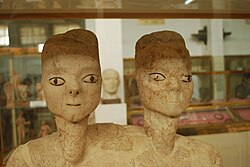
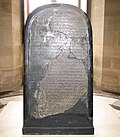
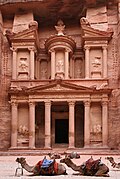
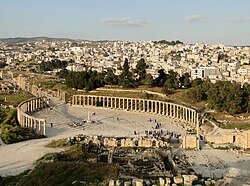
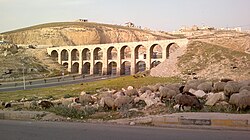
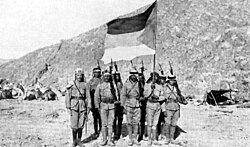
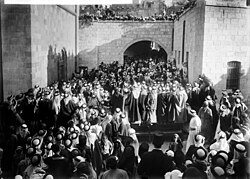
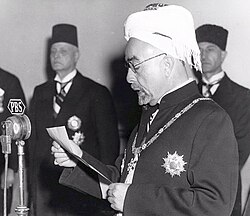
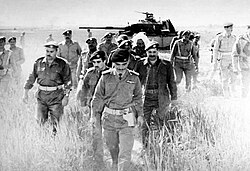
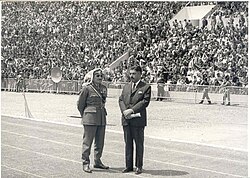
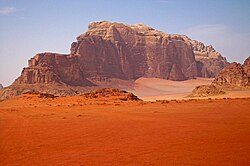
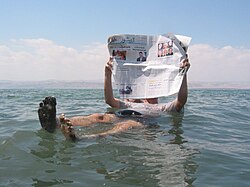
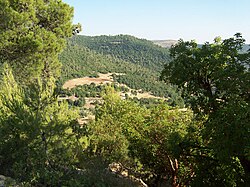
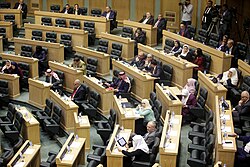
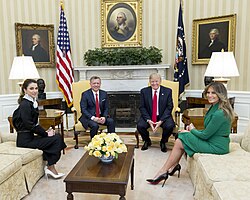
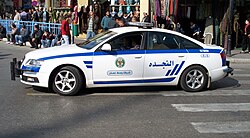
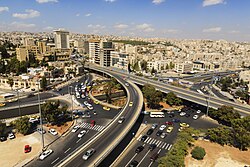
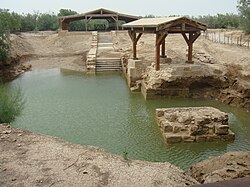
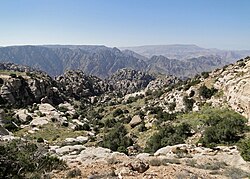
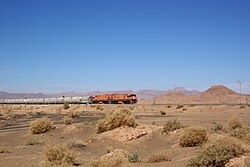
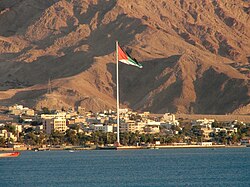
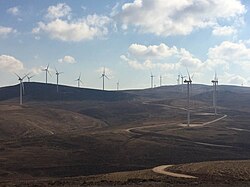
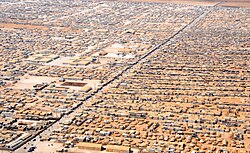
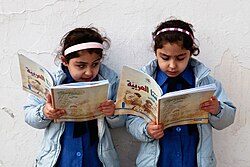
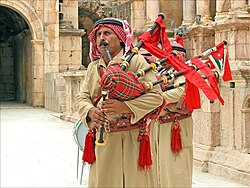
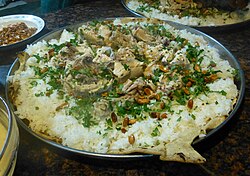


.svg)
_-_JOR_-_UNOCHA.svg)
 0.748[5]
 Gold district in Amman
 Citadel in Amman
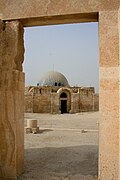 Umayyad Qasr in Amman
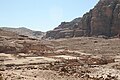 Great Temple in Petra
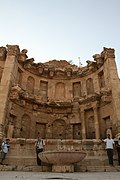 Nymphaeum in Jerash
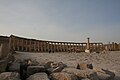 Oval Forum in Jerash


.svg)


.svg)