


imported>Billjones94 No edit summary |
m slightly fix citations as per guidelines and fixed typos |
||
| Line 1: | Line 1: | ||
{{ | {{Short description|Merchant and Treasurer of Baghdad (1792–1864)}} | ||
{{ | {{Use dmy dates|date=June 2022}} | ||
{{EngvarB|date=June 2022}} | |||
{{Infobox person | |||
| name = David Sassoon | |||
{{Infobox person | | image = David Sassoon.jpg | ||
| name | | alt = <!-- descriptive text for use by speech synthesis (text-to-speech) software --> | ||
| image | | caption = David Sassoon | ||
| alt | | birth_name = | ||
| caption | | birth_date = October 1792 | ||
| birth_name | | birth_place = Baghdad, [[Baghdad Eyalet]], [[Ottoman Iraq]] | ||
| birth_date | | death_date = 7 November 1864 (aged 72) | ||
| birth_place = | | death_place = [[Pune|Poona]], [[Bombay Presidency]], [[British India]] | ||
| death_date | | resting_place = [[Ohel David Synagogue]] Complex, [[Pune]] | ||
| death_place = [[Pune]], [[Bombay Presidency]], [[British India]] | |||
| resting_place = [[Ohel David Synagogue]] Complex, [[Pune]] | |||
| resting_place_coordinates = | | resting_place_coordinates = | ||
| other_names = | |||
| known_for = | |||
| other_names = | | education = | ||
| known_for | | employer = | ||
| education | | occupation = {{Hlist|Merchant|philanthropist}} | ||
| employer | | title = | ||
| occupation | | term = | ||
| | | predecessor = | ||
| | | successor = | ||
| | | party = | ||
| term | | boards = | ||
| predecessor = | | spouse = {{plainlist| | ||
| successor | *{{marriage|Hannah Joseph|1818|1826|end=died}} | ||
| party | *{{marriage|Farha Hyeem|1828}} | ||
| boards | |||
| spouse | |||
}} | }} | ||
'''David Sassoon''' (October 1792 – November | | children = 14, including [[Albert Sassoon|Albert]], [[Elias David Sassoon|Elias]], [[Sassoon David Sassoon|Sassoon David]], [[Reuben Sassoon|Rueben]], [[Arthur Sassoon|Arthur]], [[Solomon David Sassoon (1841–1894)|Solomon]], and [[Frederick David Sassoon|Fredrick]] | ||
| parents = Saleh Sassoon (father) <br/> Amam Gabbai (mother) | |||
== | | relatives = [[Sassoon family]] | ||
Sassoon was | }} | ||
'''David Sassoon''' (October 1792 – 7 November 1864)<ref>{{cite web |last1=Jacobs |first1=Joseph |title=SASSOON |url=http://www.jewishencyclopedia.com/articles/13218-sassoon |website=Jewish Encyclopedia |access-date=20 May 2020}}</ref> was a [[Baghdadi Jews|Baghdadi Jewish]] merchant and philanthropist in [[Ottoman Iraq]]. David Sassoon served as the treasurer of Baghdad between 1817 and 1829.<ref name=":3" /><ref name=":10" /> Fleeing persecution, Sassoon and his family emigrated to [[Mumbai|Bombay]], [[Presidencies and provinces of British India|British India]].<ref name=":3" /><ref name=":4" /> He became the leader of the [[History of the Jews in India|Jewish community in Mumbai]] after the Baghdadi Jews emigrated to the city.<ref name=":7">{{Cite book |last=Green |first=Robert L. |url=https://www.google.co.in/books/edition/A_Jewish_Heart/tKEHEQAAQBAJ?hl=en&gbpv |title=A Jewish Heart: The Struggle for Status and Identity in Asia |date= |publisher=Lexington Books |year=2024 |isbn=978-1-6669-1181-7 |location=Lanham |pages=13–19 |language=en}}</ref> Sassoon was the founder of the [[Sassoon family]] and the founder of David Sassoon and Sons, which later became [[David Sassoon & Co.]], a trading company owned by his family.<ref name=":3">{{Cite web |last=Philpot |first=Robert |date=26 November 2022 |title=The rise and fall of the opium-fueled Sassoon dynasty, the ‘Rothschilds of the East’ |url=https://www.timesofisrael.com/the-rise-and-fall-of-the-opium-fueled-sassoon-dynasty-the-rothschilds-of-the-east/ |access-date=4 June 2025 |website=The Times of Israel}}</ref><ref name=":02">{{Cite web |last=Kamalakaran |first=Ajay |date=9 November 2024 |title=How the Sassoons of Bombay became one of China’s wealthiest families |url=https://scroll.in/magazine/1075379/how-the-sassoons-of-bombay-became-one-of-chinas-wealthiest-families |access-date=4 June 2025 |website=Scroll.in}}</ref> Sassoon's success as a merchant, in which opium played a key role, made him known as the "Merchant Prince of Bombay".<ref>{{Cite web |last=Inamdar |first=Nadeem |date=10 December 2024 |title=Ohel David Synagogue and David Sassoon Tomb join Maharashtra’s Jewish Heritage Tourism Circuit |url=https://www.hindustantimes.com/cities/pune-news/ohel-david-synagogue-and-david-sassoon-tomb-join-maharashtra-s-jewish-heritage-tourism-circuit-101733770054357.html |access-date=4 June 2025 |website=Hindustan Times}}</ref><ref>{{Cite web |last=Mishra |first=Ashish K. |date=29 May 2015 |title=Premchand Roychand: Mumbai’s original share king |url=https://www.livemint.com/Sundayapp/R5BUHntOmItyIJ2yE4G09M/Premchand-Roychand-Mumbais-original-share-king.html |access-date=11 June 2025 |website=Mint}}</ref> Sassoon also used his wealth for various philanthropic and architectural projects.<ref name=":12">{{Cite web |last=Khanna |first=Sundeep |date=22 March 2025 |title=The merchant who built Bombay: How David Sassoon shaped a global city |url=https://www.livemint.com/opinion/online-views/david-sassoon-sassoon-docks-mumbai-history-of-mumbai-trade-mumbai-jewish-heritage-david-sassoon-legacy-sassoon-buildings-11742539456434.html |access-date=4 June 2025 |website=Mint}}</ref><ref name=":13">{{Cite web |last=Rashid |first=Atikh |last2=Mascarehnas |first2=Anuradha |date=9 September 2023 |title=Sassoon Hospital, a Jewish merchant’s enduring gift to Pune which he didn’t live to see |url=https://indianexpress.com/article/cities/pune/sassoon-hospital-a-jewish-merchants-enduring-gift-to-pune-which-he-didnt-live-to-see-8931738/ |access-date=4 June 2025 |website=The Indian Express}}</ref> | |||
The | ==Early life and career== | ||
David Sassoon was born in 1792 in Baghdad, [[Ottoman Empire]].<ref name=":1" /> His father, [[Sheikh]] Sassoon ben Saleh (1750–1830),<ref>The ''[[Oxford Dictionary of National Biography|DNB]]'' gives "Sason ben Saleh".</ref> was a wealthy businessman, who had also served as the chief treasurer to the [[pasha]]s (the governors of Baghdad), and served as the president (''Nasi'') of [[Baghdadi Jews|the city's Jewish community]].<ref name=":1">{{Cite web |date=10 November 2020 |title=The Sassoons in Baghdad & India |url=https://www.sothebys.com/en/articles/the-sassoons-in-baghdad-india |access-date=3 June 2025 |website=Sotheby's |language=}}</ref> His father also held the [[honorific]] title of Sheikh.<ref>{{Cite book |last=England |first=Vaudine |url=https://www.google.co.in/books/edition/Fortune_s_Bazaar/uM2ZEAAAQBAJ?hl=en&gbpv |title=Fortune's Bazaar: The Making of Hong Kong |date= |publisher=Little, Brown Book Group |year=2023 |isbn=978-1-4721-5716-4 |location=London |language=en}}</ref><ref name=":2">{{Cite book |last=Wilson |first=Jean Moorcroft |url=https://www.google.co.in/books/edition/Siegfried_Sassoon/wvYiEQAAQBAJ?hl=en&gbpv |title=Siegfried Sassoon: The Making of a War Poet, A Biography (1886-1918) |date= |publisher=Roudedge |year=1999 |isbn=978-1-040-27753-9 |location=Oxfordshire |language=en}}</ref> His mother was Amam Gabbai and Sassoon was one of seven children.<ref name=":4">{{Cite book |last=Jackson |first=Stanley |url=http://archive.org/details/sassoons00jack |title=The Sassoons |date= |publisher=E.P. Dutton & Co |year=1968 |location=New York |pages=5–12}}</ref><ref name=":2" /> Sassoon and his [[Sassoon family|family]] have Iraqi [[Baghdadi Jews|Baghdadi Jewish]] origin.<ref name=":1" /> Sassoon had an education in the Hebrew language.<ref name=":1" /> | |||
Between 1817 and 1829, Sassoon served as the treasurer of Baghdad.<ref name=":3" /><ref name=":10" /> Sassoon and his father, Sassoon ben Saleh, were persecuted by [[Dawud Pasha of Baghdad]], which prompted Sassoon and his family to move to [[Bushehr]], [[Qajar Iran|Iran]], and after his father's death in 1830, the family relocated to [[Mumbai|Bombay]], [[Presidencies and provinces of British India|British India]].<ref name=":3" /><ref name=":4" /> | |||
== Career in Bombay == | |||
Sassoon and his family arrived in Bombay in 1832 and in the same year, he founded [[David Sassoon & Co.]], a trading company.<ref name=":42">{{Cite book |last=Jackson |first=Stanley |url=http://archive.org/details/sassoons00jack |title=The Sassoons |date= |publisher=E.P. Dutton & Co |year=1968 |location=New York |pages=17–19}}</ref><ref>{{Cite book |last=Kaufman |first=Jonathan |url=http://archive.org/details/the-last-kings-of-shanghai-the-rival-jewish-dynasties-that-helped-create-modern- |title=The Last Kings Of Shanghai: The Rival Jewish Dynasties That Helped Create Modern China |publisher=Penguin Random House |year=2020 |location=New York |pages=31–32}}</ref> Originally, Sassoon acted as a middleman between British textile firms and the Persian Gulf's commodity merchants.<ref name=":42" /> He would then invest his profits in valuable harbour properties in Bombay, gaining early access to the best commodities of the merchants using his harbour docks, and used the additional funds earned from his harbour properties to finance other foreign trader's Indian purchases before their return journeys.<ref name=":42" /> | |||
He also learned Hindi and developed a working command of the language.<ref name=":42" /> His major competitors were [[Parsi people|Parsis]], whose profits were built on their domination of the [[History of opium in China|Sino-Indian opium trade]] since the 1820s.<ref name="Palsetia2001">{{cite book |author=Palsetia |first=Jesse S. |url=https://books.google.com/books?id=R6oNt3M_yLgC&pg=PA55 |title=The Parsis of India: Preservation of Identity in Bombay City |publisher=Brill |year=2001 |isbn=978-90-04-12114-0 |location=Leiden |pages=55–57 |language=en |access-date=6 March 2013}}</ref> By the 1830s, Sassoon had become one of the wealthiest people in India.<ref name=":5">{{Cite book |last=Kaufman |first=Jonathan |url=http://archive.org/details/the-last-kings-of-shanghai-the-rival-jewish-dynasties-that-helped-create-modern- |title=The Last Kings Of Shanghai: The Rival Jewish Dynasties That Helped Create Modern China |publisher=Penguin Random House |year=2020 |location=New York |pages=35–36}}</ref> [[File:David Sassoon and sons.jpg|thumb|David Sassoon (seated) and his sons [[Elias David Sassoon|Elias David]], [[Albert Abdallah David Sassoon|Albert Abdallah]] and [[Sassoon David Sassoon|Sassoon David]].]] | |||
Sassoon began searching for opportunities in China during the 1840s.<ref name=":02" /> Following the 1842 [[Treaty of Nanking]], which opened China to British traders in, Sassoon and his family began business operations in China in 1844.<ref name=":02" /> Sassoon sent his son [[Elias David Sassoon|Elias]] to Canton (now known as Guangzhou) to look for business opportunities in China, and Elias later set up business operations in Shanghai and in Hong Kong as well.<ref name=":02" /><ref name=":422">{{Cite book |last=Jackson |first=Stanley |url=http://archive.org/details/sassoons00jack |title=The Sassoons |date= |publisher=E.P. Dutton & Co |year=1968 |location=New York |pages=23–24}}</ref><ref name=":9">{{Cite book |last=Marlow |first=Eugene |url=https://www.google.co.in/books/edition/Jazz_in_China/FfNjDwAAQBAJ?hl=en&gbpv |title=Jazz in China: From Dance Hall Music to Individual Freedom of Expression |date= |publisher=University Press of Mississippi |year=2018 |isbn=978-1-4968-1800-3 |language=en}}</ref> In 1844, his son Elias, opened a David Sassoon & Co. branch office in Hong Kong.<ref name=":9" /><ref>{{Cite book |last=Katz |first=Nathan |url=https://www.google.co.in/books/edition/The_Oxford_Handbook_of_Global_Religions/EsMVDAAAQBAJ?hl=en&gbpv |title=The Oxford Handbook of Global Religions |date= |publisher=Oxford University Press |year=2006 |isbn=978-0-19-976764-9 |editor-last=Juergensmeyer |editor-first=Mark |page=237 |language=en |chapter=Jewish Communities in Asia}}</ref> His company, David Sassoon & Co., opened an office in [[The Bund (Shanghai)|The Bund]], in Shanghai's [[Shanghai International Settlement|British concession]], by 1845.<ref>{{Cite book |last=Norris |first=Jacob |url=https://www.google.co.in/books/edition/Land_of_Progress/xRFpAgAAQBAJ?hl=en&gbpv |title=Land of Progress: Palestine in the Age of Colonial Development, 1905-1948 |date= |publisher=Oxford University Press |year=2013 |isbn=978-0-19-164811-3 |location=Oxford |page=82 |language=en}}</ref> | |||
Sassoon, in his business, developed a lucrative triangular trade.<ref name=":8">{{Cite news |last=Green |first=David B. |date=7 November 2012 |title=1864: Global trade tycoon David Sassoon dies |url=https://www.haaretz.com/jewish/2012-11-07/ty-article/1864-tycoon-david-sassoon-dies/0000017f-e919-df2c-a1ff-ff5929f30000 |archive-url=https://web.archive.org/web/20250604190534/https://www.haaretz.com/jewish/2012-11-07/ty-article/1864-tycoon-david-sassoon-dies/0000017f-e919-df2c-a1ff-ff5929f30000 |archive-date=4 June 2025 |access-date=10 June 2025 |work=Haaretz}}</ref> In the triangular trade, Indian opium and cotton was brought to China, in return for which Sassoon received silver, tea and silk.<ref name=":8" /> Sassoon would then send these products to England.<ref name=":8" /> From Britain, finished products and cash were brought back to India and used to purchase more opium.<ref name=":8" /> | |||
According to various historical accounts, by the 1860s, Sassoon had accumulated more wealth than the [[Parsis]].<ref name=":10">{{Cite web |last=Bhaskar |first=R.N. |date=4 February 2020 |title=David Sassoon – The Biggest Wealth Generator In Bombay |url=https://www.moneycontrol.com/news/business/david-sassoon-the-biggest-wealth-generator-in-bombay-4523271.html |archive-url=https://web.archive.org/web/20210109030359/https://www.moneycontrol.com/news/business/david-sassoon-the-biggest-wealth-generator-in-bombay-4523271.html |archive-date=9 January 2021 |access-date=9 June 2025 |website=Moneycontrol}}</ref><ref>{{Cite book |last=Xun |first=Zhou |url=https://www.google.co.in/books/edition/Judaism_Christianity_and_Islam/d3AfBQAAQBAJ?hl=en&gbpv |title=Judaism, Christianity, and Islam: Collaboration and Conflict in the Age of Diaspora |date= |publisher=Hong Kong University Press |year=2014 |isbn=978-988-8208-27-2 |editor-last=Gilman |editor-first=Sander L. |location=Hong Kong |page=100 |language=en |chapter=Collaborating and Conflicted: Being Jewish in Secular and Multicultural Hong Kong}}</ref> Sassoon also capitalized on an opportunity that presented itself due to the [[American Civil War]].<ref name=":11">{{Cite book |last=Wakeman |first=Rosemary |url=https://www.google.co.in/books/edition/The_Worlds_of_Victor_Sassoon/07sIEQAAQBAJ?hl=en&gbpv |title=The Worlds of Victor Sassoon: Bombay, London, Shanghai, 1918–1941 |date= |publisher=University of Chicago Press |year=2024 |isbn=978-0-226-83419-1 |location=Chicago |page=24 |language=en}}</ref> Due to the American Civil War, American cotton exports to [[Lancashire]]'s textile mills were interrupted. This led Sassoon to expand his textile business to include exports of cotton and cotton yarn.<ref name=":11" /> The factories in Lancashire [[Lancashire Cotton Famine|replaced American cotton imports]] with Sassoon's Indian cotton and cotton yarn imports.<ref name=":11" /> Sassoon and his family's success made them among the wealthiest and most influential business families in Bombay.<ref name=":6">{{Cite book |last=Katz |first=Nathan |url=https://www.google.co.in/books/edition/Who_Are_the_Jews_of_India/ZWX6pF2PTJwC?hl=en&gbpv |title=Who Are the Jews of India? |date= |publisher=University of California Press |year=2000 |isbn=978-0-520-92072-9 |location=Berkeley and Los Angeles |page=139 |language=en}}</ref> Sassoon's achievements earned him a reputation within the Jewish community in Asia as someone who would offer employment to any Jew in need.<ref name=":6" /> By the 1870s, Sassoon had come to dominate the opium trade to China, having outcompeted [[History of Jardine Matheson & Co.|Jardine Matheson]], a British company, and the Bombay-based Parsi traders, to the extent that they were pushed out of the business of opium trading to China.<ref name=":8" /> | |||
David Sassoon, | == Personal life and family == | ||
Sassoon was married to Hannah Joseph and they had four children before she died in 1826.<ref name=":1" /> Sassoon later married Farha Hyeem and they had 10 children.<ref name=":1" /> Sassoon's sons were [[Albert Sassoon|Albert]], [[Elias David Sassoon|Elias]], [[Sassoon David Sassoon|Sassoon David]], [[Reuben Sassoon|Rueben]], [[Arthur Sassoon|Arthur]], Aaron, [[Solomon David Sassoon (1841–1894)|Solomon]], and [[Frederick David Sassoon|Fredrick]], and his daughters were Mazaltob, Amam, Kate, Rebecca, and Mozelle.<ref name=":423">{{Cite book |last=Jackson |first=Stanley |url=http://archive.org/details/sassoons00jack |title=The Sassoons |date= |publisher=E.P. Dutton & Co |year=1968 |location=New York |pages=xiv–xv}}</ref> In Bombay, Sassoon continued to dress and have the manners of Baghdadi Jews; however, Sassoon's sons were allowed by him to adopt English manners.<ref>{{Cite web |date=19 November 2018 |title=Generosity of a Jew saving thousands of lives |url=https://www.deccanherald.com/features/generosity-jew-saving-thousands-lives-2476243 |access-date=13 June 2025 |website=Deccan Herald}}</ref> In 1853, Sassoon became a [[British subject]], and signed his [[Oath of Allegiance (United Kingdom)|Oath of Allegiance]] to [[Queen Victoria]] in Hebrew due to his poor command of English; however, he was still based in Pune.<ref>{{Cite book |last=Miller |first=Christopher |url=https://www.google.co.in/books/edition/Decolonization_and_the_Cold_War/JipmBgAAQBAJ?hl=en&gbpv |title=Decolonization and the Cold War: Negotiating Independence |last2=Leake |first2=Elisabeth |date= |publisher=Bloomsbury Publishing |year=2015 |isbn=978-1-4725-7121-2 |editor-last=James |editor-first=Leslie |location=London |page=239 |language=en |chapter=Chapter 12 - From Foreign Concessions to Special Economic Zones: Decolonization and Foreign Investment in Twentieth-Century Asia |editor-last2=Leake |editor-first2=Elisabeth}}</ref><ref name=":3" /><ref name=":8" /> Sassoon was a devout [[Orthodox Judaism|Orthodox Jew]] and observed religious practices, including the [[Sabbath]].<ref name=":4222">{{Cite book |last=Jackson |first=Stanley |url=http://archive.org/details/sassoons00jack |title=The Sassoons |date= |publisher=E.P. Dutton & Co |year=1968 |location=New York |page=8 |pages=}}</ref><ref name=":42222">{{Cite book |last=Jackson |first=Stanley |url=http://archive.org/details/sassoons00jack |title=The Sassoons |date= |publisher=E.P. Dutton & Co |year=1968 |location=New York |page=33 |pages=}}</ref> In Bombay, Sassoon first lived on 9 Tamarind Street and later with his family, moved to [[Byculla]] where he lived in ''Sans Souci'', the former palace of Shin Sangoo.<ref name="PMG 1875">{{cite news |date=19 November 1875 |title=The Prince of Wales in India |url=https://www.newspapers.com/clip/66482079/ |access-date=31 December 2020 |publisher=The Pall Mall Gazette |page=5 |via=NewspaperArchive.com |quote=The Prince of Wales, accompanied by the Duke of Sutherland, Sir Bartle Frere, Lord Suffield, Major-General Probyn, and Messrs. Henderson, FitzGeorge, and Knollys, landed from the Serapis at three o'clock this afternoon, and was met by Mr. Sourer and an escort of the 3rd Hussars. The Royal party drove to ... He paid a visit to Lady Sassoon, at Sans Souci, and remained a quarter of an hour. The Prince then lunched' and returned to the ''[[HMS Serapis (1866)|Serapis]]''}}</ref><ref name=":52">{{Cite book |last=Weil |first=Shalva |url=https://www.google.co.in/books/edition/The_Baghdadi_Jews_in_India/05mfDwAAQBAJ?hl=en&gbpv |title=The Baghdadi Jews in India: Maintaining Communities, Negotiating Identities and Creating Super-Diversity |date= |publisher=Routledge |year=2019 |isbn=978-0-429-53387-7 |editor-last=Weil |editor-first=Shalva |location=Oxfordshire |language=en |chapter=Super-diversity among the Baghdadi Jews of India}}</ref> Sassoon's Sans Souci home was later donated to the Parsi Trust and later became the [[Masina Hospital]].<ref>{{Cite news |last=Shelar |first=Jyoti |date=6 November 2018 |title=Parsis, Jews join hands for Masina Hospital restoration |url=https://www.thehindu.com/news/cities/mumbai/parsis-jews-join-hands-for-masina-hospital-restoration/article25430298.ece |access-date=13 June 2025 |work=The Hindu |language= |issn=0971-751X}}</ref><ref>{{Cite news |last=Deshpande |first=Alok |date=29 June 2021 |title=Pandemic spurs revamp of iconic Byculla hospital |url=https://www.thehindu.com/news/national/other-states/pandemic-spurs-revamp-of-iconic-byculla-hospital/article35017304.ece |access-date=13 June 2025 |work=The Hindu |language= |issn=0971-751X}}</ref><ref>{{Cite web |last=Pal |first=Somita |date=22 August 2022 |title=120-year-old Masina Hospital gets ₹22 crore facelift |url=https://www.hindustantimes.com/cities/mumbai-news/120yearold-masina-hospital-gets-22-crore-facelift-101661190184846.html |access-date=13 June 2025 |website=Hindustan Times}}</ref> | |||
His son Albert moved to London, England, in 1874, became a [[Sassoon baronets|Baronet]] and married into the [[Rothschild family]].<ref name=":3" /> Sassoon's eight sons all entered various areas of the Sassoon family’s businesses.<ref name=":8" /> Sassoon died on 7 November 1864.<ref name=":8" /> Albert was given control of David Sassoon & Co after Sassoon's death, which led to Elias separating from the family business due to a feud with Albert and founding [[E. D. Sassoon & Co.]], Elias' own trading company.<ref name=":3" /> Sassoon's grandson, [[David Solomon Sassoon]], was a [[bibliophile]].<ref name=":522">{{Cite book |last=Manasseh |first=Sara |url=https://www.google.co.in/books/edition/The_Baghdadi_Jews_in_India/05mfDwAAQBAJ?hl=en&gbpv |title=The Baghdadi Jews in India: Maintaining Communities, Negotiating Identities and Creating Super-Diversity |date= |publisher=Routledge |year=2019 |isbn=978-0-429-53387-7 |editor-last=Weil |editor-first=Shalva |location=Oxfordshire |language=en |chapter=Music traditions in the Baghdadi Jewish communities of Bombay and Poona: Continuity, new horizons}}</ref><ref>{{Cite web |date=10 November 2020 |title=David Solomon Sassoon |url=https://www.sothebys.com/en/articles/david-solomon-sassoon |access-date=13 June 2025 |website=Sotheby's |language=}}</ref> His other grandson, Edward Sassoon also served as a [[Member of Parliament (United Kingdom)|Member]] of the [[House of Commons of the United Kingdom|House of Commons]].<ref>{{Cite news |date=26 March 2022 |title=The Sassoons were once Asia’s top business dynasty |url=https://www.economist.com/culture/2022/03/26/the-sassoons-were-once-asias-top-business-dynasty |access-date=13 June 2025 |work=The Economist |issn=0013-0613}}</ref> | |||
== | == Philanthropy and legacy == | ||
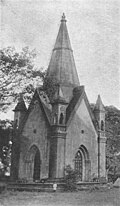
[[ | [[File:David Sassoon tomb.jpg|right|210px|thumb|Tomb of David Sassoon, [[Ohel David Synagogue]] (Lal Deval), [[Pune]], India]] | ||
[[File:Sassoon Hospital Pune | [[File:KITLV 100093 - Unknown - Sassoon Hospital in Pune in India - Around 1875.tif|alt=Historical image of Sassoon Hospital in Pune|thumb|Sassoon Hospital, Pune in around 1875]] | ||
Sassoon used his wealth to undertake various philanthropic initiatives and architectural projects.<ref name=":12" /><ref name=":13" /> Sassoon built the [[Magen David Synagogue (Byculla)|Magen David synagogue]] in [[Byculla]], Bombay, and he also built the [[Ohel David Synagogue]] in [[Pune]].<ref>{{Cite news |last=Gopinath |first=P. Krishna |date=7 March 2020 |title=Mumbai’s last minyans |url=https://www.thehindu.com/society/history-and-culture/mumbais-last-minyans/article31008065.ece |access-date=12 June 2025 |work=The Hindu |issn=0971-751X}}</ref><ref>{{Cite web |last=Inamdar |first=Nadeem |date=10 December 2024 |title=Ohel David Synagogue and David Sassoon Tomb join Maharashtra’s Jewish Heritage Tourism Circuit |url=https://www.hindustantimes.com/cities/pune-news/ohel-david-synagogue-and-david-sassoon-tomb-join-maharashtra-s-jewish-heritage-tourism-circuit-101733770054357.html |access-date=12 June 2025 |website=Hindustan Times}}</ref> Sassoon also established a school, a Mechanics' Institute, a library and a convalescent home in Pune.<ref name=":7" /> He also donated for the construction of Victoria and Albert museum, which was later renamed as the [[Dr. Bhau Daji Lad Museum]] in [[Jijamata Udyaan|Jijamata Udyann]], a zoo and gardens.<ref>{{Cite web |last=Gehi |first=Reema |date=8 December 2012 |title=The green revelation |url=https://mumbaimirror.indiatimes.com/mumbai/other/the-green-revelation/articleshow/17862207.cms |access-date=13 June 2025 |website=Mumbai Mirror |language=}}</ref> Through his wealth and philanthropic initiatives, Sassoon became the leader of the [[History of the Jews in India|Jewish community of Bombay]] by the 1860s.<ref name=":7" /> He helped to arouse a sense of Jewish identity among the [[Bene Israel]]i and [[Cochin Jew]]ish communities. Various charity trusts, which continue in existence today, were funded from his private income and named after him and other members of his family.<ref>{{Cite news |last=Datta |first=Pronoti |date=16 April 2011 |title=David Sassoon's kin is a chip of the old block |url=https://timesofindia.indiatimes.com/city/mumbai/david-sassoons-kin-is-a-chip-of-the-old-block/articleshow/7995846.cms |access-date=12 June 2025 |work=The Times of India |issn=0971-8257}}</ref><ref>{{Cite news |last=Gujar |first=Aseem |date=8 August 2022 |title=Mumbai: A Baghdadi Jew revisits childhood haunts to relive 200-year legacy |url=https://timesofindia.indiatimes.com/city/mumbai/mumbai-a-baghdadi-jew-revisits-childhood-haunts-to-relive-200-year-legacy/articleshow/93418338.cms |access-date=12 June 2025 |work=The Times of India |issn=0971-8257}}</ref><ref>{{Cite web |last=Biraia |first=Pooja |date=23 February 2019 |title=Faith gets a facelift |url=https://www.theweek.in/theweek/leisure/2019/02/23/faith-gets-a-facelift.html |access-date=12 June 2025 |website=The Week |language=}}</ref> | |||
David Sassoon | Sassoon's businesses and philanthropic institutions helped him develop a social, educational and commercial network for Jewish immigrants in Bombay.<ref name=":5" /> He established the David Sassoon Benevolent Institution to educate young Jewish men who had immigrated from areas that included Baghdad, Syria, Iran, and Afghanistan in various subjects such as Arabic, bookkeeping, and Hebrew.<ref name=":5" /> Sassoon would later employ these people in his businesses.<ref name=":5" /> Sassoon's philanthropic institutions, which included a hospital, synagogue, library, and cemetery, all funded and endowed by Sassoon, offered his workers a range of services that supported them throughout their lives, including retirement and burial services.<ref name=":5" /> This contributed to the functioning of his business operations and earned him the loyalty of his workers.<ref name=":5" /> The [[Sassoon Docks]], completed in 1875 and owned by his son Albert, and the [[David Sassoon Library]] are named after him.<ref>[http://asianjewishlife.org/images/issues/Issue14-April2014/PDFs/AJL-Issue14-Allinone.pdf Shalva Weil, "The Legacy of David Sassoon: Building a Community Bridge", Asian Jewish Life, 14:4-6 (April 2014).]</ref><ref name=":10" /> | ||
Some of the prominent | Some of the prominent buildings built by David Sassoon and the Sassoon family are: | ||
*[[David Sassoon Library]] & reading room, Fort Mumbai | *[[David Sassoon Library]] & reading room, Fort Mumbai | ||
*[[Magen David Synagogue (Byculla)|Magen David Synagogue]], Byculla, Mumbai | *[[Magen David Synagogue (Byculla)|Magen David Synagogue]], Byculla, Mumbai | ||
| Line 89: | Line 85: | ||
*Sassoon Building of Elphinstone Technical High School, Mumbai<ref name=":0" /> | *Sassoon Building of Elphinstone Technical High School, Mumbai<ref name=":0" /> | ||
*[[The Institute of Science, Mumbai]] | *[[The Institute of Science, Mumbai]] | ||
*Clock Tower at | *Clock Tower at the [[Jijamata Udyaan|Victoria Gardens]]<ref>{{Cite web|url=https://ejewishphilanthropy.com/the-legacy-of-david-sassoon/|title=The Legacy of David Sassoon|website=ejewishphilanthropy.com|date=30 May 2014 |language=en-US|access-date=2018-06-10}}</ref> | ||
*[[Dr. Bhau Daji Lad Museum| | *The [[Dr. Bhau Daji Lad Museum|Victoria and Albert Museum]] | ||
<gallery widths="260px" heights="200px" perrow="3"> | <gallery widths="260px" heights="200px" perrow="3"> | ||
Image:Sassoon family tree.jpg|Family tree of the Sassoon family | Image:Sassoon family tree.jpg|Family tree of the Sassoon family | ||
Image:Sassoon Docks.jpg| [[Sassoon Docks]], in | Image:Sassoon Docks.jpg| [[Sassoon Docks]], in Mumbai | ||
</gallery> | </gallery> | ||
| Line 107: | Line 103: | ||
{{Reflist}} | {{Reflist}} | ||
*Chiara Betta 'Marginal Westerners in Shanghai: the Baghdadi Jewish community, 1845-1931' in [[Robert Bickers]] and Christian Henriot ''New Frontiers: imperialism's new communities in East Asia, 1842-1953'' (Manchester University Press 2000: pp. 38–54), [https://books.google.com/books?id=OmW7AAAAIAAJ | *Chiara Betta 'Marginal Westerners in Shanghai: the Baghdadi Jewish community, 1845-1931' in [[Robert Bickers]] and Christian Henriot ''New Frontiers: imperialism's new communities in East Asia, 1842-1953'' (Manchester University Press 2000: pp. 38–54), [https://books.google.com/books?id=OmW7AAAAIAAJ&dq=%22David+Sassoon%22+opium&pg=PA39 p.38ff.] | ||
*[[Oxford Dictionary of National Biography]], ''Sassoon family'' | *[[Oxford Dictionary of National Biography]], ''Sassoon family'' | ||
*[http://theory.tifr.res.in/bombay/persons/david-sassoon.html Biography from the Tata Institute of Fundamental Research] | *[http://theory.tifr.res.in/bombay/persons/david-sassoon.html Biography from the Tata Institute of Fundamental Research] | ||
| Line 123: | Line 119: | ||
[[Category:1792 births]] | [[Category:1792 births]] | ||
[[Category:1864 deaths]] | [[Category:1864 deaths]] | ||
[[Category:Iraqi Jews]] | [[Category:Iraqi Jews]] | ||
[[Category:People from Baghdad]] | [[Category:People from Baghdad]] | ||
[[Category:Sassoon family|David]] | [[Category:Sassoon family|David]] | ||
[[Category:Founders of Indian schools and colleges]] | [[Category:Founders of Indian schools and colleges]] | ||
[[Category:Immigrants to British India]] | |||
[[Category:Emigrants from the Ottoman Empire]] | |||
[[Category:Baghdadi Jews]] | |||
[[Category:Businesspeople from Baghdad]] | |||
[[Category:Businesspeople from Mumbai]] | |||
[[Category:People from Bombay Presidency]] | |||
Latest revision as of 09:00, 17 February 2026
David Sassoon | |
|---|---|
 David Sassoon | |
| Born | October 1792 Baghdad, Baghdad Eyalet, Ottoman Iraq |
| Died | 7 November 1864 (aged 72) |
| Resting place | Ohel David Synagogue Complex, Pune |
| Occupation |
|
| Spouse(s) | Hannah Joseph
( m. 1818; died 1826)Farha Hyeem ( m. 1828) |
| Children | 14, including Albert, Elias, Sassoon David, Rueben, Arthur, Solomon, and Fredrick |
| Parent(s) | Saleh Sassoon (father) Amam Gabbai (mother) |
| Relatives | Sassoon family |
David Sassoon (October 1792 – 7 November 1864)[1] was a Baghdadi Jewish merchant and philanthropist in Ottoman Iraq. David Sassoon served as the treasurer of Baghdad between 1817 and 1829.[2][3] Fleeing persecution, Sassoon and his family emigrated to Bombay, British India.[2][4] He became the leader of the Jewish community in Mumbai after the Baghdadi Jews emigrated to the city.[5] Sassoon was the founder of the Sassoon family and the founder of David Sassoon and Sons, which later became David Sassoon & Co., a trading company owned by his family.[2][6] Sassoon's success as a merchant, in which opium played a key role, made him known as the "Merchant Prince of Bombay".[7][8] Sassoon also used his wealth for various philanthropic and architectural projects.[9][10]
Early life and career[edit | edit source]
David Sassoon was born in 1792 in Baghdad, Ottoman Empire.[11] His father, Sheikh Sassoon ben Saleh (1750–1830),[12] was a wealthy businessman, who had also served as the chief treasurer to the pashas (the governors of Baghdad), and served as the president (Nasi) of the city's Jewish community.[11] His father also held the honorific title of Sheikh.[13][14] His mother was Amam Gabbai and Sassoon was one of seven children.[4][14] Sassoon and his family have Iraqi Baghdadi Jewish origin.[11] Sassoon had an education in the Hebrew language.[11]
Between 1817 and 1829, Sassoon served as the treasurer of Baghdad.[2][3] Sassoon and his father, Sassoon ben Saleh, were persecuted by Dawud Pasha of Baghdad, which prompted Sassoon and his family to move to Bushehr, Iran, and after his father's death in 1830, the family relocated to Bombay, British India.[2][4]
Career in Bombay[edit | edit source]
Sassoon and his family arrived in Bombay in 1832 and in the same year, he founded David Sassoon & Co., a trading company.[15][16] Originally, Sassoon acted as a middleman between British textile firms and the Persian Gulf's commodity merchants.[15] He would then invest his profits in valuable harbour properties in Bombay, gaining early access to the best commodities of the merchants using his harbour docks, and used the additional funds earned from his harbour properties to finance other foreign trader's Indian purchases before their return journeys.[15]
He also learned Hindi and developed a working command of the language.[15] His major competitors were Parsis, whose profits were built on their domination of the Sino-Indian opium trade since the 1820s.[17] By the 1830s, Sassoon had become one of the wealthiest people in India.[18]

Sassoon began searching for opportunities in China during the 1840s.[6] Following the 1842 Treaty of Nanking, which opened China to British traders in, Sassoon and his family began business operations in China in 1844.[6] Sassoon sent his son Elias to Canton (now known as Guangzhou) to look for business opportunities in China, and Elias later set up business operations in Shanghai and in Hong Kong as well.[6][19][20] In 1844, his son Elias, opened a David Sassoon & Co. branch office in Hong Kong.[20][21] His company, David Sassoon & Co., opened an office in The Bund, in Shanghai's British concession, by 1845.[22]
Sassoon, in his business, developed a lucrative triangular trade.[23] In the triangular trade, Indian opium and cotton was brought to China, in return for which Sassoon received silver, tea and silk.[23] Sassoon would then send these products to England.[23] From Britain, finished products and cash were brought back to India and used to purchase more opium.[23]
According to various historical accounts, by the 1860s, Sassoon had accumulated more wealth than the Parsis.[3][24] Sassoon also capitalized on an opportunity that presented itself due to the American Civil War.[25] Due to the American Civil War, American cotton exports to Lancashire's textile mills were interrupted. This led Sassoon to expand his textile business to include exports of cotton and cotton yarn.[25] The factories in Lancashire replaced American cotton imports with Sassoon's Indian cotton and cotton yarn imports.[25] Sassoon and his family's success made them among the wealthiest and most influential business families in Bombay.[26] Sassoon's achievements earned him a reputation within the Jewish community in Asia as someone who would offer employment to any Jew in need.[26] By the 1870s, Sassoon had come to dominate the opium trade to China, having outcompeted Jardine Matheson, a British company, and the Bombay-based Parsi traders, to the extent that they were pushed out of the business of opium trading to China.[23]
Personal life and family[edit | edit source]
Sassoon was married to Hannah Joseph and they had four children before she died in 1826.[11] Sassoon later married Farha Hyeem and they had 10 children.[11] Sassoon's sons were Albert, Elias, Sassoon David, Rueben, Arthur, Aaron, Solomon, and Fredrick, and his daughters were Mazaltob, Amam, Kate, Rebecca, and Mozelle.[27] In Bombay, Sassoon continued to dress and have the manners of Baghdadi Jews; however, Sassoon's sons were allowed by him to adopt English manners.[28] In 1853, Sassoon became a British subject, and signed his Oath of Allegiance to Queen Victoria in Hebrew due to his poor command of English; however, he was still based in Pune.[29][2][23] Sassoon was a devout Orthodox Jew and observed religious practices, including the Sabbath.[30][31] In Bombay, Sassoon first lived on 9 Tamarind Street and later with his family, moved to Byculla where he lived in Sans Souci, the former palace of Shin Sangoo.[32][33] Sassoon's Sans Souci home was later donated to the Parsi Trust and later became the Masina Hospital.[34][35][36]
His son Albert moved to London, England, in 1874, became a Baronet and married into the Rothschild family.[2] Sassoon's eight sons all entered various areas of the Sassoon family’s businesses.[23] Sassoon died on 7 November 1864.[23] Albert was given control of David Sassoon & Co after Sassoon's death, which led to Elias separating from the family business due to a feud with Albert and founding E. D. Sassoon & Co., Elias' own trading company.[2] Sassoon's grandson, David Solomon Sassoon, was a bibliophile.[37][38] His other grandson, Edward Sassoon also served as a Member of the House of Commons.[39]
Philanthropy and legacy[edit | edit source]

Sassoon used his wealth to undertake various philanthropic initiatives and architectural projects.[9][10] Sassoon built the Magen David synagogue in Byculla, Bombay, and he also built the Ohel David Synagogue in Pune.[40][41] Sassoon also established a school, a Mechanics' Institute, a library and a convalescent home in Pune.[5] He also donated for the construction of Victoria and Albert museum, which was later renamed as the Dr. Bhau Daji Lad Museum in Jijamata Udyann, a zoo and gardens.[42] Through his wealth and philanthropic initiatives, Sassoon became the leader of the Jewish community of Bombay by the 1860s.[5] He helped to arouse a sense of Jewish identity among the Bene Israeli and Cochin Jewish communities. Various charity trusts, which continue in existence today, were funded from his private income and named after him and other members of his family.[43][44][45]
Sassoon's businesses and philanthropic institutions helped him develop a social, educational and commercial network for Jewish immigrants in Bombay.[18] He established the David Sassoon Benevolent Institution to educate young Jewish men who had immigrated from areas that included Baghdad, Syria, Iran, and Afghanistan in various subjects such as Arabic, bookkeeping, and Hebrew.[18] Sassoon would later employ these people in his businesses.[18] Sassoon's philanthropic institutions, which included a hospital, synagogue, library, and cemetery, all funded and endowed by Sassoon, offered his workers a range of services that supported them throughout their lives, including retirement and burial services.[18] This contributed to the functioning of his business operations and earned him the loyalty of his workers.[18] The Sassoon Docks, completed in 1875 and owned by his son Albert, and the David Sassoon Library are named after him.[46][3]
Some of the prominent buildings built by David Sassoon and the Sassoon family are:
- David Sassoon Library & reading room, Fort Mumbai
- Magen David Synagogue, Byculla, Mumbai
- Jacob Sasooon High School, Byculla, Mumbai
- E.E.E. Sassoon High School, Byculla, Mumbai
- David Sassoon Hospital, JJ Hospital Premises, Byculla, Mumbai
- Masina Hospital, Byculla, Mumbai
- Knesset Eliyahoo Synagogue, Colaba, Mumbai
- Sassoon Dock, Colaba, Mumbai
- The Bank of India, Fort (head office), Mumbai
- The David Sassoon Reformary and Deaf school, Matunga, Mumbai
- Ohel David Synagogue, Pune
- Sassoon Hospital, Pune
- Lady Rachel Sassoon Dispensary, Pune
- David Sassoon Elderly and Destitute Persons Home (1863), Pune (today's Nivara Old Age Home)
- Sassoon House
They have contributed to the construction of:
- Gateway of India[47]
- Sassoon Building of Elphinstone Technical High School, Mumbai[47]
- The Institute of Science, Mumbai
- Clock Tower at the Victoria Gardens[48]
- The Victoria and Albert Museum
-
 Family tree of the Sassoon family
 -
 Sassoon Docks, in Mumbai


See also[edit | edit source]
References[edit | edit source]
- ↑ Jacobs, Joseph. "SASSOON". Jewish Encyclopedia. Retrieved 20 May 2020.
- ↑ 2.0 2.1 2.2 2.3 2.4 2.5 2.6 2.7 Philpot, Robert (26 November 2022). "The rise and fall of the opium-fueled Sassoon dynasty, the 'Rothschilds of the East'". The Times of Israel. Retrieved 4 June 2025.
- ↑ 3.0 3.1 3.2 3.3 Bhaskar, R.N. (4 February 2020). "David Sassoon – The Biggest Wealth Generator In Bombay". Moneycontrol. Archived from the original on 9 January 2021. Retrieved 9 June 2025.
- ↑ 4.0 4.1 4.2 Jackson, Stanley (1968). The Sassoons. New York: E.P. Dutton & Co. pp. 5–12.
- ↑ 5.0 5.1 5.2 Green, Robert L. (2024). A Jewish Heart: The Struggle for Status and Identity in Asia. Lanham: Lexington Books. pp. 13–19. ISBN 978-1-6669-1181-7.
- ↑ 6.0 6.1 6.2 6.3 Kamalakaran, Ajay (9 November 2024). "How the Sassoons of Bombay became one of China's wealthiest families". Scroll.in. Retrieved 4 June 2025.
- ↑ Inamdar, Nadeem (10 December 2024). "Ohel David Synagogue and David Sassoon Tomb join Maharashtra's Jewish Heritage Tourism Circuit". Hindustan Times. Retrieved 4 June 2025.
- ↑ Mishra, Ashish K. (29 May 2015). "Premchand Roychand: Mumbai's original share king". Mint. Retrieved 11 June 2025.
- ↑ 9.0 9.1 Khanna, Sundeep (22 March 2025). "The merchant who built Bombay: How David Sassoon shaped a global city". Mint. Retrieved 4 June 2025.
- ↑ 10.0 10.1 Rashid, Atikh; Mascarehnas, Anuradha (9 September 2023). "Sassoon Hospital, a Jewish merchant's enduring gift to Pune which he didn't live to see". The Indian Express. Retrieved 4 June 2025.
- ↑ 11.0 11.1 11.2 11.3 11.4 11.5 "The Sassoons in Baghdad & India". Sotheby's. 10 November 2020. Retrieved 3 June 2025.
- ↑ The DNB gives "Sason ben Saleh".
- ↑ England, Vaudine (2023). Fortune's Bazaar: The Making of Hong Kong. London: Little, Brown Book Group. ISBN 978-1-4721-5716-4.
- ↑ 14.0 14.1 Wilson, Jean Moorcroft (1999). Siegfried Sassoon: The Making of a War Poet, A Biography (1886-1918). Oxfordshire: Roudedge. ISBN 978-1-040-27753-9.
- ↑ 15.0 15.1 15.2 15.3 Jackson, Stanley (1968). The Sassoons. New York: E.P. Dutton & Co. pp. 17–19.
- ↑ Kaufman, Jonathan (2020). The Last Kings Of Shanghai: The Rival Jewish Dynasties That Helped Create Modern China. New York: Penguin Random House. pp. 31–32.
- ↑ Palsetia, Jesse S. (2001). The Parsis of India: Preservation of Identity in Bombay City. Leiden: Brill. pp. 55–57. ISBN 978-90-04-12114-0. Retrieved 6 March 2013.
- ↑ 18.0 18.1 18.2 18.3 18.4 18.5 Kaufman, Jonathan (2020). The Last Kings Of Shanghai: The Rival Jewish Dynasties That Helped Create Modern China. New York: Penguin Random House. pp. 35–36.
- ↑ Jackson, Stanley (1968). The Sassoons. New York: E.P. Dutton & Co. pp. 23–24.
- ↑ 20.0 20.1 Marlow, Eugene (2018). Jazz in China: From Dance Hall Music to Individual Freedom of Expression. University Press of Mississippi. ISBN 978-1-4968-1800-3.
- ↑ Katz, Nathan (2006). "Jewish Communities in Asia". In Juergensmeyer, Mark (ed.). The Oxford Handbook of Global Religions. Oxford University Press. p. 237. ISBN 978-0-19-976764-9.
- ↑ Norris, Jacob (2013). Land of Progress: Palestine in the Age of Colonial Development, 1905-1948. Oxford: Oxford University Press. p. 82. ISBN 978-0-19-164811-3.
- ↑ 23.0 23.1 23.2 23.3 23.4 23.5 23.6 23.7 Green, David B. (7 November 2012). "1864: Global trade tycoon David Sassoon dies". Haaretz. Archived from the original on 4 June 2025. Retrieved 10 June 2025.
- ↑ Xun, Zhou (2014). "Collaborating and Conflicted: Being Jewish in Secular and Multicultural Hong Kong". In Gilman, Sander L. (ed.). Judaism, Christianity, and Islam: Collaboration and Conflict in the Age of Diaspora. Hong Kong: Hong Kong University Press. p. 100. ISBN 978-988-8208-27-2.
- ↑ 25.0 25.1 25.2 Wakeman, Rosemary (2024). The Worlds of Victor Sassoon: Bombay, London, Shanghai, 1918–1941. Chicago: University of Chicago Press. p. 24. ISBN 978-0-226-83419-1.
- ↑ 26.0 26.1 Katz, Nathan (2000). Who Are the Jews of India?. Berkeley and Los Angeles: University of California Press. p. 139. ISBN 978-0-520-92072-9.
- ↑ Jackson, Stanley (1968). The Sassoons. New York: E.P. Dutton & Co. pp. xiv–xv.
- ↑ "Generosity of a Jew saving thousands of lives". Deccan Herald. 19 November 2018. Retrieved 13 June 2025.
- ↑ Miller, Christopher; Leake, Elisabeth (2015). "Chapter 12 - From Foreign Concessions to Special Economic Zones: Decolonization and Foreign Investment in Twentieth-Century Asia". In James, Leslie; Leake, Elisabeth (eds.). Decolonization and the Cold War: Negotiating Independence. London: Bloomsbury Publishing. p. 239. ISBN 978-1-4725-7121-2.
- ↑ Jackson, Stanley (1968). The Sassoons. New York: E.P. Dutton & Co. p. 8.
- ↑ Jackson, Stanley (1968). The Sassoons. New York: E.P. Dutton & Co. p. 33.
- ↑ "The Prince of Wales in India". The Pall Mall Gazette. 19 November 1875. p. 5. Retrieved 31 December 2020 – via NewspaperArchive.com.
The Prince of Wales, accompanied by the Duke of Sutherland, Sir Bartle Frere, Lord Suffield, Major-General Probyn, and Messrs. Henderson, FitzGeorge, and Knollys, landed from the Serapis at three o'clock this afternoon, and was met by Mr. Sourer and an escort of the 3rd Hussars. The Royal party drove to ... He paid a visit to Lady Sassoon, at Sans Souci, and remained a quarter of an hour. The Prince then lunched' and returned to the Serapis
- ↑ Weil, Shalva (2019). "Super-diversity among the Baghdadi Jews of India". In Weil, Shalva (ed.). The Baghdadi Jews in India: Maintaining Communities, Negotiating Identities and Creating Super-Diversity. Oxfordshire: Routledge. ISBN 978-0-429-53387-7.
- ↑ Shelar, Jyoti (6 November 2018). "Parsis, Jews join hands for Masina Hospital restoration". The Hindu. ISSN 0971-751X. Retrieved 13 June 2025.
- ↑ Deshpande, Alok (29 June 2021). "Pandemic spurs revamp of iconic Byculla hospital". The Hindu. ISSN 0971-751X. Retrieved 13 June 2025.
- ↑ Pal, Somita (22 August 2022). "120-year-old Masina Hospital gets ₹22 crore facelift". Hindustan Times. Retrieved 13 June 2025.
- ↑ Manasseh, Sara (2019). "Music traditions in the Baghdadi Jewish communities of Bombay and Poona: Continuity, new horizons". In Weil, Shalva (ed.). The Baghdadi Jews in India: Maintaining Communities, Negotiating Identities and Creating Super-Diversity. Oxfordshire: Routledge. ISBN 978-0-429-53387-7.
- ↑ "David Solomon Sassoon". Sotheby's. 10 November 2020. Retrieved 13 June 2025.
- ↑ "The Sassoons were once Asia's top business dynasty". The Economist. 26 March 2022. ISSN 0013-0613. Retrieved 13 June 2025.
- ↑ Gopinath, P. Krishna (7 March 2020). "Mumbai's last minyans". The Hindu. ISSN 0971-751X. Retrieved 12 June 2025.
- ↑ Inamdar, Nadeem (10 December 2024). "Ohel David Synagogue and David Sassoon Tomb join Maharashtra's Jewish Heritage Tourism Circuit". Hindustan Times. Retrieved 12 June 2025.
- ↑ Gehi, Reema (8 December 2012). "The green revelation". Mumbai Mirror. Retrieved 13 June 2025.
- ↑ Datta, Pronoti (16 April 2011). "David Sassoon's kin is a chip of the old block". The Times of India. ISSN 0971-8257. Retrieved 12 June 2025.
- ↑ Gujar, Aseem (8 August 2022). "Mumbai: A Baghdadi Jew revisits childhood haunts to relive 200-year legacy". The Times of India. ISSN 0971-8257. Retrieved 12 June 2025.
- ↑ Biraia, Pooja (23 February 2019). "Faith gets a facelift". The Week. Retrieved 12 June 2025.
- ↑ Shalva Weil, "The Legacy of David Sassoon: Building a Community Bridge", Asian Jewish Life, 14:4-6 (April 2014).
- ↑ 47.0 47.1 GatewayHouse (7 February 2014). "The story of the Sassoons". Gateway House. Retrieved 10 June 2018.
- ↑ "The Legacy of David Sassoon". ejewishphilanthropy.com. 30 May 2014. Retrieved 10 June 2018.
- Chiara Betta 'Marginal Westerners in Shanghai: the Baghdadi Jewish community, 1845-1931' in Robert Bickers and Christian Henriot New Frontiers: imperialism's new communities in East Asia, 1842-1953 (Manchester University Press 2000: pp. 38–54), p.38ff.
- Oxford Dictionary of National Biography, Sassoon family
- Biography from the Tata Institute of Fundamental Research
- Jewish Encyclopedia.com