

m Removed empty portal template using script |
m basic add details to improve readability and added references |
||
| Line 1: | Line 1: | ||
{{Short description| | {{Short description|(1932–1947) military force}} | ||
{{about|the air force of the British | {{about|the air force of the British Indian Empire (1932–1947) and the air force of the Dominion of India (1947–1950)|the current air force of the Republic of India|Indian Air Force}} | ||
{{Use dmy dates|date=January | {{Use dmy dates|date=January 2020}} | ||
{{Use Indian English|date=January | {{Use Indian English|date=January 2020}} | ||
{{Infobox military unit | {{Infobox military unit | ||
| unit_name = Royal Indian Air Force | | unit_name = Royal Indian Air Force | ||
| Line 16: | Line 16: | ||
| nickname = ''RIAF'' | | nickname = ''RIAF'' | ||
| motto = {{native phrase|la|"[[Per Ardua ad Astra]]"|italics=on}} <br /> (Through Adversity to the Stars) | | motto = {{native phrase|la|"[[Per Ardua ad Astra]]"|italics=on}} <br /> (Through Adversity to the Stars) | ||
| size = 25,000 personnel by [[VJ Day]] (1945)<ref name=rafmuseum>{{cite web |url=https://www.rafmuseum.org.uk/blog/royal-indian-air-force/|title=Royal Indian Air Force |publisher=RAF Museum |access-date=12 May | | size = 25,000 personnel by [[VJ Day]] (1945)<ref name="rafmuseum">{{cite web |url=https://www.rafmuseum.org.uk/blog/royal-indian-air-force/|title=Royal Indian Air Force |publisher=RAF Museum |access-date=12 May 2020}}</ref> | ||
| battles = {{Collapsible list | | battles = {{Collapsible list | ||
| framestyle = border:none; padding:0; | | framestyle = border:none; padding:0; | ||
| Line 29: | Line 29: | ||
*[[Sir Thomas Elmhirst]] | *[[Sir Thomas Elmhirst]] | ||
}} | }} | ||
<!-- Insignia -->| identification_symbol = [[File: | <!-- Insignia --> | ||
| identification_symbol = [[File:RAF Far East Command roundel.svg|80px]] | |||
| identification_symbol_label = [[Military aircraft insignia#Former insignia of national air forces|Roundel]] | | identification_symbol_label = [[Military aircraft insignia#Former insignia of national air forces|Roundel]] | ||
| identification_symbol_2 = [[File: | | identification_symbol_2 = [[File:RAF Type B SEA Fin Flash.svg|80px]] | ||
| identification_symbol_2_label = [[Fin flash]] | | identification_symbol_2_label = [[Fin flash]] | ||
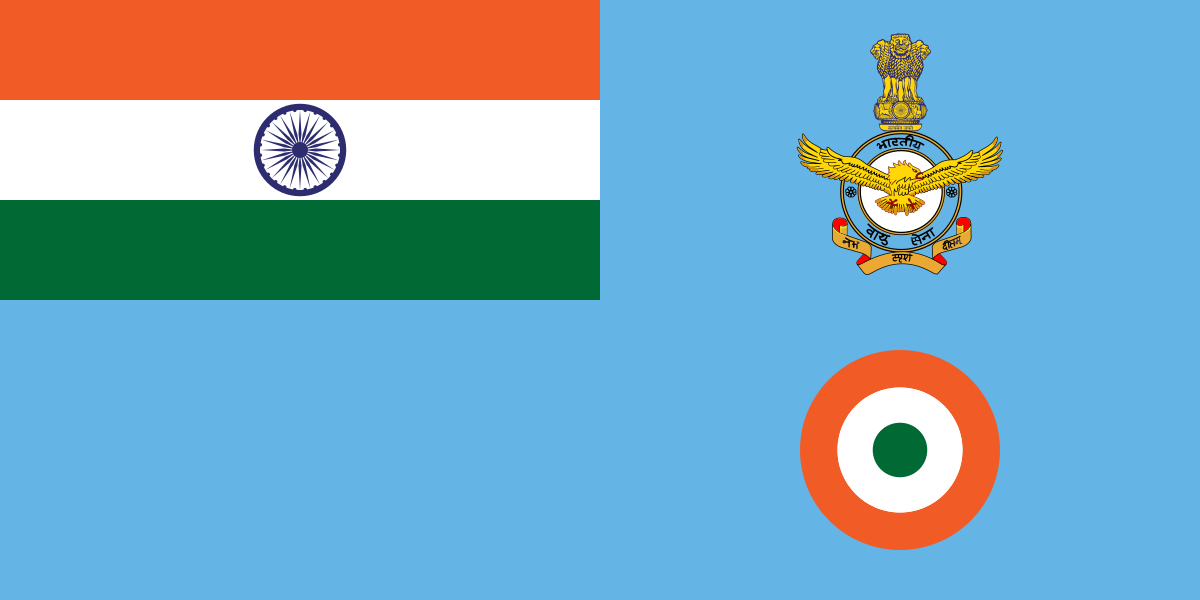
| identification_symbol_3 = [[File:Air Force Ensign of India (1945–1947).svg|160px]] | | identification_symbol_3 = [[File:Air Force Ensign of India (1945–1947).svg|160px]] | ||
| Line 37: | Line 38: | ||
}} | }} | ||
The ''' | The '''Indian Air Force''' (1932–1945) and the '''Royal Indian Air Force''' (1945–1950) were the air forces of [[British Raj|British India]]. Granted the 'Royal' prefix in March 1945 during the final months of the [[Second World War]], the Royal Indian Air Force continued as the air force of the [[Dominion of India]] until it became a republic in 1950, when the [[President of India|Indian president]] became India's head of state; replacing the [[George VI|British monarch]]. It was replaced by the [[Indian Air Force]] thereafter. | ||
The Indian Air Force | Alongside the [[British Indian Army|Indian Army]] and the [[Royal Indian Navy]], it comprised the armed forces of [[British Raj|British India]] and the [[Dominion of India]] between 1932 and 1950. | ||
The Royal Indian Air Force's first flight came into being on 1 April 1933 with six [[RAF]]-trained officers and 19 ''Havai Sepoys'' (air soldiers). The aircraft inventory consisted of four [[Westland Wapiti|Westland Wapiti IIA]] army co-operation biplanes at [[Shahrah-e-Faisal|Drigh Road]], [[Karachi]] as the "A" Flight nucleus of the planned [[No. 1 Squadron IAF|No.1 (Army Co-operation) Squadron]]. | |||
==History== | ==History== | ||
{{See also|RAF India}} | {{See also|RAF India}} | ||
During the [[ | During the [[First World War]], four Indian volunteers – Lieutenants [[Shrikrishna Chandra Welinkar|Shri Krishna Chandra Welinkar]], [[Hardit Malik|Hardit Singh Malik]], [[Erroll Chunder Sen|Errol Suvo Chunder Sen]] and [[Indra Lal Roy]] – served as fighter pilots with the [[Royal Flying Corps]]. In September 1917, Sen was shot down and became a prisoner-of-war; and over the next 10 months, Malik was wounded and Welinkar and Roy were killed. ‘Laddie’ Roy destroyed 10 enemy aircraft before he fell, and on 21 September 1918, he was posthumously awarded the RAF’s new [[Distinguished Flying Cross (United Kingdom)|Distinguished Flying Cross]]. | ||
In the [[inter-war years]], the idea of self-determination gained widespread support in [[British India]]. In keeping with this, a committee chaired by [[Andrew Skeen|General Sir Andrew Skeen]] met at [[Simla]], in August 1925, to investigate the ‘Indianisation’ of the [[British Indian Army|Indian Army’s]] officer corps. The creation of a military academy equivalent to [[Royal Military Academy Sandhurst|Sandhurst]] was also examined. The Skeen Committee reported in April 1927, and one of its recommendations was that Indian cadets be accepted for officer training at [[RAF Cranwell]]. The bravery of the [[Royal Flying Corps|RFC’s]] South Asian pilots was referenced in support of this, and veteran Hardit Singh Malik’s impressive appearance before the committee lent added weight. Discussions between the British and Indian governments continued until [[Lord Birkenhead]], [[Secretary of State for India]], approved the creation of an Indian Air Force on 5 April 1928. The new service would be open to men of all faiths and castes drawn from every part of the [[Indian subcontinent|subcontinent]]. | In the [[inter-war years]], the idea of [[self-determination]] gained widespread support in [[British India]]. In keeping with this, a committee chaired by [[Andrew Skeen|General Sir Andrew Skeen]] met at [[Simla]], in August 1925, to investigate the ‘Indianisation’ of the [[British Indian Army|Indian Army’s]] officer corps. The creation of a military academy equivalent to [[Royal Military Academy Sandhurst|Sandhurst]] was also examined. The Skeen Committee reported in April 1927, and one of its recommendations was that Indian cadets be accepted for officer training at [[RAF Cranwell]]. The bravery of the [[Royal Flying Corps|RFC’s]] South Asian pilots was referenced in support of this, and veteran Hardit Singh Malik’s impressive appearance before the committee lent added weight. Discussions between the British and Indian governments continued until [[Lord Birkenhead]], [[Secretary of State for India]], approved the creation of an Indian Air Force on 5 April 1928. The new service would be open to men of all faiths and castes drawn from every part of the [[Indian subcontinent|subcontinent]]. | ||
===Formation and early pilots=== | ===Formation and early pilots=== | ||
{{main|History of the Indian Air Force}} | {{main|History of the Indian Air Force}} | ||
The Indian Air Force was established in [[British India]] as an auxiliary air force<ref name="clause4">{{cite book|contribution= CLAUSE 4.—(Relations between Royal Air Force and Indian Air Force, and attachment of personnel.) | url= | The Indian Air Force was established in [[British India]] as an auxiliary air force<ref name="clause4">{{cite book|contribution= CLAUSE 4.—(Relations between Royal Air Force and Indian Air Force, and attachment of personnel.) | url=https://api.parliament.uk/historic-hansard/commons/1933/apr/03/clause-4-relations-between-royal-air |title=HC Deb vol 276 cc1473-501|work=[[Hansard|Parliamentary Debates (Hansard)]] |date= 3 April 1933 | access-date=8 April 2009}}</ref> of the [[Royal Air Force]] with the enactment of the Indian Air Force Act 1932 on 8 October that year<ref name="IAF">{{cite web| title=History of the IAF| url=http://indianairforce.nic.in/show_page.php?pg_id=98| work=Official Website| publisher=Webmaster IAF – Air Headquarters| access-date=7 April 2009| archive-url=https://web.archive.org/web/20090409235005/http://indianairforce.nic.in/show_page.php?pg_id=98| archive-date=9 April 2009| url-status=dead| df=dmy-all}}</ref><ref name="airpower3">{{cite journal |last=Bedi |first=Sanjeev |date=Summer 2008 |title=Strategic Role of Air Power |journal=Air Power Journal |volume=3 |publisher=Center for Air Power Studies |issue=2 |pages=27–45 |url=http://www.aerospaceindia.org/Journals/Summer%202008/Sanjeev%20Bedi.pdf |archive-url=https://web.archive.org/web/20190723023345/http://www.aerospaceindia.org/Journals/Summer%202008/Sanjeev%20Bedi.pdf |url-status=usurped |archive-date=2019-07-23 |access-date=8 April 2009 }}</ref> and adopted the Royal Air Force uniforms, badges, brevets and insignia.<ref name="Heraldry">{{cite web|url=http://www.bharat-rakshak.com/IAF/Museum/Palam/Heraldry.html |title=INDIAN AIR FORCE MUSEUM – Heraldry (Badges and Insignia) |publisher=Bharat Rakshak |url-status=dead |archive-url=https://web.archive.org/web/20100329193739/http://www.bharat-rakshak.com/IAF/Museum/Palam/Heraldry.html |archive-date=29 March 2010 |df=dmy-all }}</ref> On 1 April 1933, the IAF commissioned its first squadron, [[No. 1 Squadron IAF|No.1 Squadron]], with four [[Westland Wapiti|Westland Wapiti biplanes]] and five Indian pilots. The Indian pilots were led by [[Royal Air Force|RAF]] Commanding officer Flight Lieutenant (later Air Vice Marshal) [[Sir Cecil Bouchier|Cecil Bouchier]].<ref name="Goyal">{{cite web|last=Goyal |first=S.N. |title=1939–45 Second World War: Air Force Reminiscences |url=http://www.bharat-rakshak.com/IAF/History/1940s/Goyal.html |work=Sainik Samachar |publisher=Indian Air Force |date=October 1993 |access-date=8 April 2009 |url-status=dead |archive-url=https://web.archive.org/web/20091006180501/http://www.bharat-rakshak.com/IAF/History/1940s/Goyal.html |archive-date=6 October 2009 |df=dmy-all }}</ref> | ||
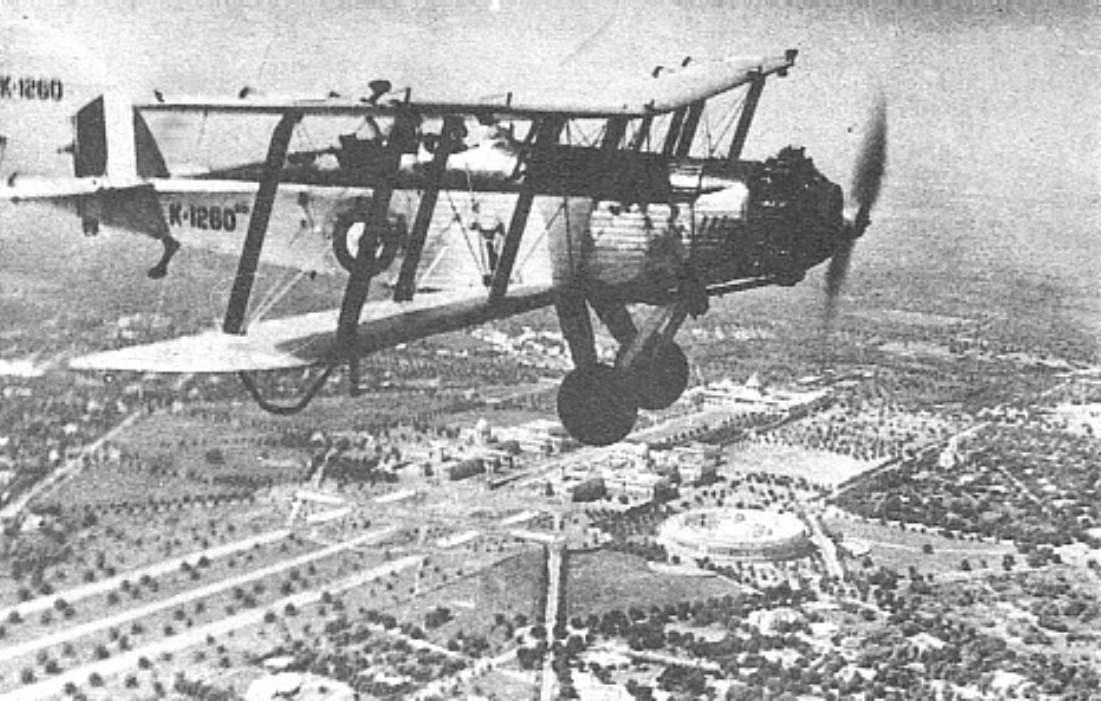
The first five pilots commissioned into the IAF were Harish Chandra Sircar, [[Subroto Mukerjee]], Bhupendra Singh, Aizad Baksh Awan and Amarjeet Singh. A sixth officer, J N Tandon had to revert to logistics duties as he was too short. All of them were commissioned as [[Pilot Officer]]s in 1932 from [[RAF Cranwell]]. [[Subroto Mukerjee]] later went on to become the IAF's first [[Chief of the Air Staff (India)|Chief of the Air Staff]]. Subsequent batches inducted before [[World War II]] included [[Aspy Engineer]], K K Majumdar, Narendra, Daljit Singh, Henry Runganadhan, R H D Singh, Baba Mehar Singh, S N Goyal, Prithpal Singh and [[Arjan Singh]].[[File:IAF Wapiti K1260.jpg|right|thumb|A [[Westland Wapiti]], one of the first aircraft of the Indian Air Force.]] | The first five pilots commissioned into the IAF were Harish Chandra Sircar, [[Subroto Mukerjee]], Bhupendra Singh, Aizad Baksh Awan and Amarjeet Singh. A sixth officer, J N Tandon had to revert to logistics duties as he was too short. All of them were commissioned as [[Pilot Officer]]s in 1932 from [[RAF Cranwell]]. [[Subroto Mukerjee]] later went on to become the IAF's first [[Chief of the Air Staff (India)|Chief of the Air Staff]]. Subsequent batches inducted before [[World War II]] included [[Aspy Engineer]], K K Majumdar, Narendra, Daljit Singh, Henry Runganadhan, R H D Singh, Baba Mehar Singh, S N Goyal, Prithpal Singh and [[Arjan Singh]].[[File:IAF Wapiti K1260.jpg|right|thumb|A [[Westland Wapiti]], one of the first aircraft of the Indian Air Force.]] | ||
Among the earliest fully Indian-trained flying batches was the 4th Pilot Course, commissioned in the 1940s. This group included several future leaders of the Indian Air Force and played a key role in operationalising squadrons during World War II and the immediate post-independence years.<ref>{{cite web |last=Gupta |first=Anchit |title=Trailblazers in the Skies: The Inspiring Journey of the 4th Pilot Course |url=https://iafhistory.in/2022/12/03/trailblazers-in-the-skies-the-inspiring-journey-of-the-4th-pilot-course/ |website=IAFHistory |date=3 December 2022 |access-date=5 May 2025}}</ref> | |||
===World War II (1939–1945)=== | ===World War II (1939–1945)=== | ||
{{main|India in World War II}} | {{main|India in World War II}} | ||
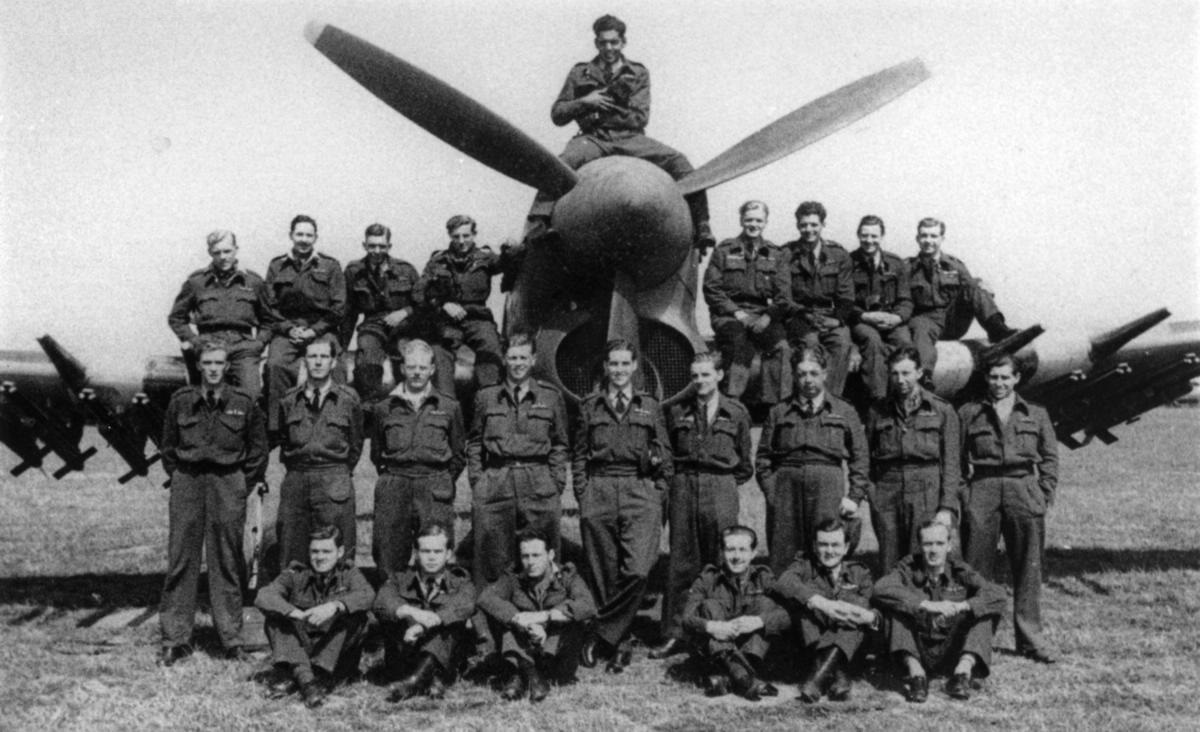
[[File:Pilots of No.263 Squadron RAF.jpg|thumb|left|Pilots of [[No. 263 Squadron RAF|No. 263 Squadron]] pose in front of their Typhoon. Pilot Officer Thyagarajan, an Indian pilot is seated on the engine cowling]] | [[File:Pilots of No.263 Squadron RAF.jpg|thumb|left|Pilots of [[No. 263 Squadron RAF|No. 263 Squadron]] pose in front of their Typhoon. Pilot Officer Thyagarajan, an Indian pilot is seated on the engine cowling]] | ||
[[File:kk jumbo majumdar.jpg|thumb|Karun Krishna "Jumbo" Majumdar was the first Indian officer to be awarded the Distinguished Flying Cross.]] | [[File:kk jumbo majumdar.jpg|thumb|[[Karun Krishna Majumdar|Karun Krishna "Jumbo" Majumdar]] was the first Indian officer to be awarded the Distinguished Flying Cross.]] | ||
[[File:Pilots of No. 83 Squadron RAF.jpg|thumb|left|{{center|83 Squadron aircrew in front of their [[List of surviving Avro Lancasters#Surviving_aircraft_2|Lancaster R5868]], Squadron Leader Shailendra Eknath Sukthankar, an Indian Navigator stands in the middle.}}]] | [[File:Pilots of No. 83 Squadron RAF.jpg|thumb|left|{{center|83 Squadron aircrew in front of their [[List of surviving Avro Lancasters#Surviving_aircraft_2|Lancaster R5868]], Squadron Leader Shailendra Eknath Sukthankar, an Indian Navigator stands in the middle.}}]] | ||
[[File:Sqn Ldr Shivdev Singh and Flt Lt Asghar Khan, WWII Mission Planning (1945).jpg|thumb|right|Sqn Ldr [[Shivdev Singh]], second from left, is flanked by a British Indian Army officer of the FF Regt, while F/L [[Asghar Khan]], third from the left, is flanked by a Wg Cdr during a mission planning session in [[World War II]] (1945)]] | |||
[[File:No. 4 Squadron RIAF officers at Miho (1945-46).jpg|left|thumb|200px|Pilots of [[No. 4 Squadron RIAF]] in [[Miho, Ibaraki]] (1945).<br><br>Standing from left: AIK Suares, Toric Zachariah, Leslie Prince Foster, [[FS Hussain]], Rusi Cawasji Bahadurji, and Devaiah Subia<br><br>Sitting: Muthukumarasami Balan, Andrew Wiseman with a local stray dog, and Joseph Anthony Martin]] | |||
[[File:Royal Air Force Operations in the Far East, 1941-1945. CI204.jpg|thumb|Personnel of the RAF, Indian Air Force and Women's Auxiliary Corps (India) at work in the Operations Room at a Group Headquarters in North-eastern India.]] | [[File:Royal Air Force Operations in the Far East, 1941-1945. CI204.jpg|thumb|Personnel of the RAF, Indian Air Force and Women's Auxiliary Corps (India) at work in the Operations Room at a Group Headquarters in North-eastern India.]] | ||
[[File:Indian Airforce Pilots after a mission in Burma during WW2.jpg|thumb|Indian Airforce Pilots after a mission in Burma during WW2]] | [[File:Indian Airforce Pilots after a mission in Burma during WW2.jpg|thumb|Indian Airforce Pilots after a mission in Burma during WW2]] | ||
[[File:RIAF Pilots circa 1944.jpg|thumb|right|From left: [[Nur Khan]], [[Asghar Khan]], [[Abdur Rahim Khan]], [[Om Prakash Mehra]], Minoo Merwan, and an unidentified officer, circa 1944.]] | |||
During [[World War II]], the IAF played an instrumental role in halting the advance of the [[Imperial Japan|Japanese army]] in [[Myanmar|Burma]], where the first IAF air strike was executed. The target for this first mission was the Japanese military base in [[Rakhine State|Arakan]], after which IAF strike missions continued against the Japanese airbases at [[Mae Hong Son]], [[Chiang Mai]] and [[Chiang Rai]] in northern [[Thailand]]. | During [[World War II]], the IAF played an instrumental role in halting the advance of the [[Imperial Japan|Japanese army]] in [[Myanmar|Burma]], where the first IAF air strike was executed. The target for this first mission was the Japanese military base in [[Rakhine State|Arakan]], after which IAF strike missions continued against the Japanese airbases at [[Mae Hong Son]], [[Chiang Mai]] and [[Chiang Rai]] in northern [[Thailand]]. | ||
The IAF was mainly involved in [[Airstrike|strike]], [[close air support]], [[aerial reconnaissance]], [[bomber escort]] and pathfinding missions for RAF and [[China Burma India Theater#USAAF Order of Battle|USAAF]] heavy bombers. RAF and IAF pilots would train by flying with their non-native air wings to gain combat experience and communication proficiency. Besides operations in the [[Burma campaign|Burma Theatre]] IAF pilots participated in air operations in [[North African campaign|North Africa]] and [[European theatre of World War II|Europe]].<ref name=rafmuseum | The IAF was mainly involved in [[Airstrike|strike]], [[close air support]], [[aerial reconnaissance]], [[bomber escort]] and pathfinding missions for RAF and [[China Burma India Theater#USAAF Order of Battle|USAAF]] heavy bombers. RAF and IAF pilots would train by flying with their non-native air wings to gain combat experience and communication proficiency. Besides operations in the [[Burma campaign|Burma Theatre]] IAF pilots participated in air operations in [[North African campaign|North Africa]] and [[European theatre of World War II|Europe]].<ref name="rafmuseum"/><ref>{{Cite web|url=http://www.mgtrust.org/w2.htm|title=Second World War – Europe|website=www.mgtrust.org}}</ref> | ||
In addition to the IAF, many native Indians and some 200 Indians resident in Britain volunteered to join the [[RAF]] and [[Women's Auxiliary Air Force]]. One such volunteer was Sergeant Shailendra Eknath Sukthankar, who served as a navigator with No. 83 Squadron. Sukthankar was commissioned as an officer, and on 14 September 1943, received the [[Distinguished Flying Cross (United Kingdom)|DFC]]. Squadron Leader Sukthankar eventually completed 45 operations, 14 of them on board the [[List_of_surviving_Avro_Lancasters#Surviving_aircraft_2|RAF Museum’s Avro Lancaster R5868]]. Another volunteer was Assistant Section Officer [[Noor Inayat Khan]] a Muslim pacifist and Indian nationalist who joined the WAAF, in November 1940, to fight against Nazism. Noor Khan served bravely as a secret agent with the [[Special Operations Executive]] (SOE) in France, but was eventually betrayed and captured.<ref name=rafmuseum></ref> Many of these Indian airmen were seconded or transferred to the expanding IAF such as Squadron Leader [[Mohinder Singh Pujji]] DFC who led [[No. 4 Squadron IAF]] in Burma. | In addition to the IAF, many native Indians and some 200 Indians resident in Britain volunteered to join the [[RAF]] and [[Women's Auxiliary Air Force]]. One such volunteer was Sergeant Shailendra Eknath Sukthankar, who served as a navigator with No. 83 Squadron. Sukthankar was commissioned as an officer, and on 14 September 1943, received the [[Distinguished Flying Cross (United Kingdom)|DFC]]. Squadron Leader Sukthankar eventually completed 45 operations, 14 of them on board the [[List_of_surviving_Avro_Lancasters#Surviving_aircraft_2|RAF Museum’s Avro Lancaster R5868]]. Another volunteer was Assistant Section Officer [[Noor Inayat Khan]], a Muslim pacifist and Indian nationalist who joined the WAAF, in November 1940, to fight against Nazism. Noor Khan served bravely as a secret agent with the [[Special Operations Executive]] (SOE) in France, but was eventually betrayed and captured.<ref name=rafmuseum></ref> Many of these Indian airmen were seconded or transferred to the expanding IAF such as Squadron Leader [[Mohinder Singh Pujji]] DFC who led [[No. 4 Squadron IAF]] in Burma. | ||
During the war, the IAF experienced a phase of steady expansion. New aircraft added to the fleet included the US-built [[Vultee A-31 Vengeance|Vultee Vengeance]], [[Douglas C-47 Skytrain|Douglas Dakota]], the British [[Hawker Hurricane]], [[Supermarine Spitfire]], [[Bristol Blenheim]], and [[Westland Lysander]]. | During the war, the IAF experienced a phase of steady expansion. New aircraft added to the fleet included the US-built [[Vultee A-31 Vengeance|Vultee Vengeance]], [[Douglas C-47 Skytrain|Douglas Dakota]], the British [[Hawker Hurricane]], [[Supermarine Spitfire]], [[Bristol Blenheim]], and [[Westland Lysander]]. | ||
[[Subhas Chandra Bose]] sent [[Indian National Army]] [[Tokyo | [[Subhas Chandra Bose]] sent a group of [[Indian National Army]] cadets, known as the "[[Tokyo Boys]]", to Japan to train as pilots. They went on to attend the [[Imperial Japanese Army Air Force Academy]] in 1944.<ref>[http://www.bharat-rakshak.com/IAF/Books/Reviews/810-Burma-to-Japan.html BURMA to JAPAN with Azad Hind: A War Memoir (1941–1945)] {{Webarchive|url=https://web.archive.org/web/20220713173707/http://www.bharat-rakshak.com/IAF/Books/Reviews/810-Burma-to-Japan.html |date=13 July 2022 }} Air Cmde R S Benegal MVC AVSM</ref> | ||
In recognition of the valiant service by the IAF, [[George VI of the United Kingdom|King George VI]] conferred the [[Prefix (linguistics)|prefix]] "Royal" on 12 March 1945. Thereafter the IAF was referred to as the ''Royal Indian Air Force''. In 1950, when India became a republic, the prefix was dropped and it reverted to being the Indian Air Force.<ref name=Ahluwalia2012>{{Cite book|url=https://books.google.com/books?id=sabUQ7zKUvsC&pg=PA41|title=Airborne to Chairborne: Memoirs of a War Veteran Aviator-Lawyer of the Indian Air Force|last=Ahluwalia|first=A.|date=2012|publisher=Xlibris Corporation|isbn=978-1-4691-9657-2|page=41|language=en}}</ref> | In recognition of the valiant service by the IAF, [[George VI of the United Kingdom|King George VI]] conferred the [[Prefix (linguistics)|prefix]] "Royal" on 12 March 1945. Thereafter the IAF was referred to as the ''Royal Indian Air Force''. In 1950, when India became a republic, the prefix was dropped and it reverted to being the Indian Air Force.<ref name=Ahluwalia2012>{{Cite book|url=https://books.google.com/books?id=sabUQ7zKUvsC&pg=PA41|title=Airborne to Chairborne: Memoirs of a War Veteran Aviator-Lawyer of the Indian Air Force|last=Ahluwalia|first=A.|date=2012|publisher=Xlibris Corporation|isbn=978-1-4691-9657-2|page=41|language=en}}</ref> | ||
Post war, [[No. 4 Squadron IAF]] was sent to [[Japan]] as part of the [[Occupation of Japan|Allied Occupation forces]].<ref>http://indianairforce.nic.in/show_unit.php?ch=7 | Post war, [[No. 4 Squadron IAF]] was sent to [[Japan]] as part of the [[Occupation of Japan|Allied Occupation forces]].<ref>{{Cite web |title=No 4 Squadron (OOrials) |url=http://indianairforce.nic.in/show_unit.php?ch=7 |archive-url=https://web.archive.org/web/20090619092930/http://indianairforce.nic.in/show_unit.php?ch=7 |archive-date=June 19, 2009 |access-date=October 5, 2023 |website=Indian Air Force}}</ref> | ||
===Partition of India (1947)=== | ===Partition of India (1947)=== | ||
| Line 82: | Line 89: | ||
{{See also|Indo-Pakistani War of 1947–1948}} | {{See also|Indo-Pakistani War of 1947–1948}} | ||
[[File:Dakotas in Poonch 1947.jpg|thumb|Refugees awaiting [[Military operations in Poonch (1948)|evacuation]] by IAF [[Douglas C-47 Skytrain|Dakota]] on [[Poonch district, India|Poonch]] airstrip, December 1947]] | [[File:Dakotas in Poonch 1947.jpg|thumb|Refugees awaiting [[Military operations in Poonch (1948)|evacuation]] by IAF [[Douglas C-47 Skytrain|Dakota]] on [[Poonch district, India|Poonch]] airstrip, December 1947]] | ||
After it became independent from the [[British Empire]] in 1947, [[British Raj|British India]] was [[partition of India|partitioned]] into the new states of the [[Dominion of India]] and the [[Dominion of Pakistan]]. Along the lines of the geographical partition, the assets of the air force were divided between the new countries. India's air force retained the name of the Royal Indian Air Force, but three of the ten operational squadrons and facilities, located within the borders of Pakistan, were transferred to the [[Pakistan Air Force|Royal Pakistan Air Force]].<ref name="Engineer">{{cite web|last=Engineer |first=Aspy M. |author-link=Aspy Engineer|title=Air Marshal Aspy Engineer's Recollections |url=http://www.bharat-rakshak.com/IAF/History/1940s/Aspy01.html |date=February 1993 |publisher=Bharat Rakshak |access-date=8 April 2010 |url-status=dead |archive-url=https://web.archive.org/web/20091230140314/http://bharat-rakshak.com/IAF/History/1940s/Aspy01.html |archive-date=30 December | After it became independent from the [[British Empire]] in 1947, [[British Raj|British India]] was [[partition of India|partitioned]] into the new states of the [[Dominion of India]] and the [[Dominion of Pakistan]]. Along the lines of the geographical partition, the assets of the air force were divided between the new countries. India's air force retained the name of the Royal Indian Air Force, but three of the ten operational squadrons and facilities, located within the borders of Pakistan, were transferred to the [[Pakistan Air Force|Royal Pakistan Air Force]].<ref name="Engineer">{{cite web|last=Engineer |first=Aspy M. |author-link=Aspy Engineer|title=Air Marshal Aspy Engineer's Recollections |url=http://www.bharat-rakshak.com/IAF/History/1940s/Aspy01.html |date=February 1993 |publisher=Bharat Rakshak |access-date=8 April 2010 |url-status=dead |archive-url=https://web.archive.org/web/20091230140314/http://bharat-rakshak.com/IAF/History/1940s/Aspy01.html |archive-date=30 December 2009}}</ref> The RIAF Roundel was changed to an interim 'Chakra' roundel derived from the [[Ashoka Chakra]].<ref name="Heraldry"/> | ||
Around the same time, conflict broke out between them over the control of the [[Jammu and Kashmir (princely state)|princely state of Jammu & Kashmir]]. With Pakistani forces moving into the state, its Maharaja decided to accede to India in order to receive military help.<ref name=Lyon79>{{ | Around the same time, conflict broke out between them over the control of the [[Jammu and Kashmir (princely state)|princely state of Jammu & Kashmir]]. With Pakistani forces moving into the state, its Maharaja decided to accede to India in order to receive military help.<ref name=Lyon79>{{cite book |last1=Lyon |first1=Peter |title=Conflict Between India and Pakistan: An Encyclopedia |url=https://books.google.com/books?id=vLwOck15eboC |edition=illustrated |year=2008 |publisher=ABC-CLIO|isbn=978-1-57607-712-2 |page=79}}</ref> The day after, the [[Instrument of Accession (Jammu and Kashmir)|Instrument of Accession]] was signed, the RIAF was called upon to transport troops into the war zone. And this was when a good management of logistics came into help.<ref name=Lyon79/> This led to the eruption of full-scale war between India and Pakistan, though there was no formal declaration of war.<ref>{{cite book |last1=Massey |first1=Reginald |title=Azaadi! |url=https://books.google.com/books?id=fkWcmnro4fkC |year=2005 |publisher=Abhinav Publications |isbn=978-81-7017-469-1 |page=97}}</ref> During the war, the RIAF did not engage the Pakistan Air Force in air-to-air combat; however, it did provide effective transport and close air support to the Indian troops.<ref>{{cite book |last1=Barua |first1=Pradeep |title=The State at War in South Asia |url=https://books.google.com/books?id=FIIQhuAOGaIC |year=2005 |publisher=University of Nebraska Press |isbn=978-0-8032-1344-9 |page=192}}{</ref> | ||
[[File:Consolidated-Vultee B-24 Liberator heavy bomber over the Deccan plateau in the early 1950s.jpg|thumb|An IAF [[Consolidated B-24 Liberator]] heavy bomber over the [[Deccan | [[File:Consolidated-Vultee B-24 Liberator heavy bomber over the Deccan plateau in the early 1950s.jpg|thumb|An IAF [[Consolidated B-24 Liberator]] heavy bomber over the [[Deccan Plateau]] in the early 1950s]] | ||
When India became a republic in 1950, the prefix 'Royal' was dropped from the Indian Air Force.<ref name="airpower4">{{cite journal |last=Bedi |first=Sanjeev |date=Summer 2008 |title=Strategic Role of Air Power |journal=Air Power Journal|volume=3 |publisher=Center for Air Power Studies|issue=2 |pages=27–45 |url=http://www.aerospaceindia.org/Journals/Summer%202008/Sanjeev%20Bedi.pdf|archive-url=https://web.archive.org/web/20190723023345/http://www.aerospaceindia.org/Journals/Summer%202008/Sanjeev%20Bedi.pdf|url-status= | When India became a republic in 1950, the prefix 'Royal' was dropped from the Indian Air Force.<ref name="airpower4">{{cite journal |last=Bedi |first=Sanjeev |date=Summer 2008 |title=Strategic Role of Air Power |journal=Air Power Journal|volume=3 |publisher=Center for Air Power Studies|issue=2 |pages=27–45 |url=http://www.aerospaceindia.org/Journals/Summer%202008/Sanjeev%20Bedi.pdf|archive-url=https://web.archive.org/web/20190723023345/http://www.aerospaceindia.org/Journals/Summer%202008/Sanjeev%20Bedi.pdf|url-status=usurped|archive-date=2019-07-23}}</ref> At the same time, the current IAF roundel was adopted.<ref name="Heraldry"/> | ||
== Aircraft == | == Aircraft == | ||
| Line 132: | Line 139: | ||
|[[Hawker Hurricane]]||UK||fighter-bomber||1942–1945||?|| | |[[Hawker Hurricane]]||UK||fighter-bomber||1942–1945||?|| | ||
|- | |- | ||
|[[Hawker Tempest II]]||UK||fighter||1945–1955||235||<ref> | |[[Hawker Tempest II]]||UK||fighter||1945–1955||235||<ref>{{Cite web|url=http://www.bharat-rakshak.com/IAF/History/Aircraft/Tempest.html|archiveurl=https://web.archive.org/web/20140824063237/http://www.bharat-rakshak.com/IAF/History/Aircraft/Tempest.html|url-status=dead|title=IAF-Tempest|archivedate=24 August 2014}}</ref> | ||
|- | |- | ||
|[[North American Harvard]] Mk.II and 4||Canada||trainer||1942–1973||?|| | |[[North American Harvard]] Mk.II and 4||Canada||trainer||1942–1973||?|| | ||
| Line 138: | Line 145: | ||
|[[Percival Prentice]] T.3||UK||trainer||1947–1963||62||<ref group=note>includes 42 built by HAL.</ref> | |[[Percival Prentice]] T.3||UK||trainer||1947–1963||62||<ref group=note>includes 42 built by HAL.</ref> | ||
|- | |- | ||
|[[Supermarine Spitfire]] Vc & VIIIc||UK||fighter/reconnaissance||1943–1948||19||<ref name=spitfire> | |[[Supermarine Spitfire]] Vc & VIIIc||UK||fighter/reconnaissance||1943–1948||19||<ref name=spitfire>{{Cite web|url=http://www.bharat-rakshak.com/IAF/History/Aircraft/Spitfire.html|archiveurl=https://web.archive.org/web/20071206042942/http://www.bharat-rakshak.com/IAF/History/Aircraft/Spitfire.html|url-status=dead|title=IAF-Spitfire|archivedate=6 December 2007}}</ref> | ||
|- | |- | ||
|[[Supermarine Spitfire]] FR.XIVE & FR.XVIII||UK||fighter reconnaissance||1945–1957||120||<ref name="spitfire"/> | |[[Supermarine Spitfire]] FR.XIVE & FR.XVIII||UK||fighter reconnaissance||1945–1957||120||<ref name="spitfire"/> | ||
| Line 146: | Line 153: | ||
|[[Supermarine Spitfire]] T.IX||UK||trainer||1947–1955||10|| | |[[Supermarine Spitfire]] T.IX||UK||trainer||1947–1955||10|| | ||
|- | |- | ||
|[[Westland Lysander]] II||UK||army co-operation||1941–1943||25 ca.||<ref name="ReferenceB"> | |[[Westland Lysander]] II||UK||army co-operation||1941–1943||25 ca.||<ref name="ReferenceB">{{Cite web|url=http://www.bharat-rakshak.com/IAF/History/1940s/Lysander.html|archiveurl=https://web.archive.org/web/20080115184540/http://www.bharat-rakshak.com/IAF/History/1940s/Lysander.html|url-status=dead|title=Westland Lysander in Indian Air Force Service|archivedate=15 January 2008}}</ref> | ||
|- | |- | ||
|[[Westland Lysander]] III.T||UK||target tug||1941–1942||48 ca.||<ref name="ReferenceB"/> | |[[Westland Lysander]] III.T||UK||target tug||1941–1942||48 ca.||<ref name="ReferenceB"/> | ||
|- | |- | ||
|[[Westland Wapiti]]||UK||army co-operation||1933–1942||28||<ref> | |[[Westland Wapiti]]||UK||army co-operation||1933–1942||28||<ref>{{Cite web|url=http://www.bharat-rakshak.com/IAF/History/Aircraft/Wapiti.html|archiveurl=https://web.archive.org/web/20130728123414/http://www.bharat-rakshak.com/IAF/History/Aircraft/Wapiti.html|url-status=dead|title=The Westland Wapiti in Indian Air Force|archivedate=28 July 2013}}</ref> | ||
|} | |} | ||
| Line 162: | Line 169: | ||
| File:RAF roundel.svg | | File:RAF roundel.svg | ||
| 1933–1942 | | 1933–1942 | ||
| File: | | File:RAF Far East Command roundel.svg | ||
| 1943–1945 | | 1943–1945 | ||
| File:Ashoka Chakra.svg | | File:Ashoka Chakra.svg | ||
| 1947–1950 | | 1947–1950 | ||
| File:Roundel of India 1947-1948 (variant).svg | |||
| 1947-1950 (variant) | |||
| File:Roundel of India.svg | | File:Roundel of India.svg | ||
| 1950 | | 1950 | ||
| Line 182: | Line 191: | ||
| File:RAF-Finflash-Noncombat.svg | | File:RAF-Finflash-Noncombat.svg | ||
| 1933–1942 | | 1933–1942 | ||
| File: | | File:RAF Type B SEA Fin Flash.svg | ||
| | | 1943–1947 | ||
| File:IAF Fin Flash (1947-1948).jpg | | File:IAF Fin Flash (1947-1948).jpg | ||
| 1947–1948 | | 1947–1948 | ||
| Line 216: | Line 225: | ||
==Commanders== | ==Commanders== | ||
{{See also|RAF India#Commanders|Chief of the Air Staff (India)}} | {{See also|RAF India#Commanders|Chief of the Air Staff (India)}} | ||
At Independence, the head of the Air Force designated as the "'''Air Marshal Commanding, Royal Indian Air Force'''". On 1 March 1948, the title of "Chief of the Air Staff" was added,<ref>{{cite web|title=Press Communique|url=http://pibarchive.nic.in/archive/ArchiveSecondPhase/DEFENCE/1948-JAN-JUNE-DEFENCE/PDF/DEF-1948-02-28_119.pdf|website=Press Information Bureau of India – Archive|date=28 February 1948|access-date=16 February | At Independence, the head of the Air Force designated as the "'''Air Marshal Commanding, Royal Indian Air Force'''". On 1 March 1948, the title of "Chief of the Air Staff" was added,<ref>{{cite web|title=Press Communique|url=http://pibarchive.nic.in/archive/ArchiveSecondPhase/DEFENCE/1948-JAN-JUNE-DEFENCE/PDF/DEF-1948-02-28_119.pdf|website=Press Information Bureau of India – Archive|date=28 February 1948|access-date=16 February 2020}}</ref> with a further re-designation to "'''Chief of the Air Staff and Commander-in-Chief, Royal Indian Air Force'''" on 21 June to maintain uniformity across the three armed services.<ref>{{cite web|title=Press Communique|url=http://pibarchive.nic.in/archive/ArchiveSecondPhase/DEFENCE/1948-JAN-JUNE-DEFENCE/PDF/DEF-1948-06-21_287.pdf|website=Press Information Bureau of India – Archive|date=21 June 1948|access-date=16 February 2020}}</ref> | ||
The "Royal" designation was dropped when India became a republic on 26 January 1950. Thus re-designating the head of IAF to "'''Chief of the Air Staff and Commander-in-Chief, Indian Air Force'''". | The "Royal" designation was dropped when India became a republic on 26 January 1950. Thus re-designating the head of IAF to "'''Chief of the Air Staff and Commander-in-Chief, Indian Air Force'''". | ||
| Line 292: | Line 301: | ||
| term_end = 6 October 1939 | | term_end = 6 October 1939 | ||
| timeinoffice = {{ayd|1938|12|27|1939|10|06}} | | timeinoffice = {{ayd|1938|12|27|1939|10|06}} | ||
| ref = <ref> | | ref = <ref>{{Cite web|url=http://www.bharat-rakshak.com/IAF/History/Air-Chiefs/Chiefs-Air-Old.html|archiveurl=https://web.archive.org/web/20070202204805/http://www.bharat-rakshak.com/IAF/History/Air-Chiefs/Chiefs-Air-Old.html|url-status=dead|title=Chiefs of the Indian Air Force 1931 to 1947|archivedate=2 February 2007}}</ref> | ||
}} | }} | ||
{{Officeholder table | {{Officeholder table | ||
| Line 449: | Line 458: | ||
==See also== | ==See also== | ||
{{Portal|India|Aviation}} | |||
*[[Royal Air Force]] | *[[Royal Air Force]] | ||
*[[Royal Canadian Air Force]] | *[[Royal Canadian Air Force]] | ||
| Line 465: | Line 474: | ||
==External links== | ==External links== | ||
* [https://books.google. | * [https://books.google.com/books?id=7SufDwAAQBAJ&q=editions:KonQ9SC7sP0C The Forgotten Few; The Indian Air Force in World War II] – KS Nair | ||
* [https://books.google. | * [https://books.google.com/books?id=_p_fAAAAMAAJ The Eagle strikes : the Royal Indian Air Force, 1932–1950] – Rana Chhina | ||
* [https://books.google. | * [https://books.google.com/books?id=IaEDAAAAMAAJ History of the Indian Air Force, 1933–45] – SC Gupta | ||
* [https://www.rafmuseum.org.uk/blog/royal-indian-air-force/ The Royal Indian Air Force, 1932 – 1947] – RAF Museum | * [https://www.rafmuseum.org.uk/blog/royal-indian-air-force/ The Royal Indian Air Force, 1932 – 1947] – RAF Museum | ||
| Line 476: | Line 485: | ||
[[Category:1931 establishments in India]] | [[Category:1931 establishments in India]] | ||
[[Category:Military history of India during World War II]] | [[Category:Military history of India during World War II]] | ||
[[Category:History of the Indian Air Force]] | |||
[[Category:Organisations based in India with royal patronage]] | |||
Latest revision as of 06:04, 25 March 2026
| Royal Indian Air Force | |
|---|---|
 | |
| Active | 1932–1950 |
| Country | India |
| Type | Air Force |
| Size | 25,000 personnel by VJ Day (1945)[1] |
| Command | RAF India |
| Nickname(s) | RIAF |
| Motto(s) | "Per Ardua ad Astra" (Latin) (Through Adversity to the Stars) |
| Engagements | Notable operations
|
| Commanders | |
| Notable commanders | |
| Insignia | |
| Roundel |  |
| Fin flash |  |
| Ensign | .svg) |

The Indian Air Force (1932–1945) and the Royal Indian Air Force (1945–1950) were the air forces of British India. Granted the 'Royal' prefix in March 1945 during the final months of the Second World War, the Royal Indian Air Force continued as the air force of the Dominion of India until it became a republic in 1950, when the Indian president became India's head of state; replacing the British monarch. It was replaced by the Indian Air Force thereafter.
Alongside the Indian Army and the Royal Indian Navy, it comprised the armed forces of British India and the Dominion of India between 1932 and 1950.
The Royal Indian Air Force's first flight came into being on 1 April 1933 with six RAF-trained officers and 19 Havai Sepoys (air soldiers). The aircraft inventory consisted of four Westland Wapiti IIA army co-operation biplanes at Drigh Road, Karachi as the "A" Flight nucleus of the planned No.1 (Army Co-operation) Squadron.
History[edit | edit source]
During the First World War, four Indian volunteers – Lieutenants Shri Krishna Chandra Welinkar, Hardit Singh Malik, Errol Suvo Chunder Sen and Indra Lal Roy – served as fighter pilots with the Royal Flying Corps. In September 1917, Sen was shot down and became a prisoner-of-war; and over the next 10 months, Malik was wounded and Welinkar and Roy were killed. ‘Laddie’ Roy destroyed 10 enemy aircraft before he fell, and on 21 September 1918, he was posthumously awarded the RAF’s new Distinguished Flying Cross.
In the inter-war years, the idea of self-determination gained widespread support in British India. In keeping with this, a committee chaired by General Sir Andrew Skeen met at Simla, in August 1925, to investigate the ‘Indianisation’ of the Indian Army’s officer corps. The creation of a military academy equivalent to Sandhurst was also examined. The Skeen Committee reported in April 1927, and one of its recommendations was that Indian cadets be accepted for officer training at RAF Cranwell. The bravery of the RFC’s South Asian pilots was referenced in support of this, and veteran Hardit Singh Malik’s impressive appearance before the committee lent added weight. Discussions between the British and Indian governments continued until Lord Birkenhead, Secretary of State for India, approved the creation of an Indian Air Force on 5 April 1928. The new service would be open to men of all faiths and castes drawn from every part of the subcontinent.
Formation and early pilots[edit | edit source]
The Indian Air Force was established in British India as an auxiliary air force[2] of the Royal Air Force with the enactment of the Indian Air Force Act 1932 on 8 October that year[3][4] and adopted the Royal Air Force uniforms, badges, brevets and insignia.[5] On 1 April 1933, the IAF commissioned its first squadron, No.1 Squadron, with four Westland Wapiti biplanes and five Indian pilots. The Indian pilots were led by RAF Commanding officer Flight Lieutenant (later Air Vice Marshal) Cecil Bouchier.[6]
The first five pilots commissioned into the IAF were Harish Chandra Sircar, Subroto Mukerjee, Bhupendra Singh, Aizad Baksh Awan and Amarjeet Singh. A sixth officer, J N Tandon had to revert to logistics duties as he was too short. All of them were commissioned as Pilot Officers in 1932 from RAF Cranwell. Subroto Mukerjee later went on to become the IAF's first Chief of the Air Staff. Subsequent batches inducted before World War II included Aspy Engineer, K K Majumdar, Narendra, Daljit Singh, Henry Runganadhan, R H D Singh, Baba Mehar Singh, S N Goyal, Prithpal Singh and Arjan Singh.

Among the earliest fully Indian-trained flying batches was the 4th Pilot Course, commissioned in the 1940s. This group included several future leaders of the Indian Air Force and played a key role in operationalising squadrons during World War II and the immediate post-independence years.[7]
World War II (1939–1945)[edit | edit source]


.jpg)
.jpg)
Standing from left: AIK Suares, Toric Zachariah, Leslie Prince Foster, FS Hussain, Rusi Cawasji Bahadurji, and Devaiah Subia
Sitting: Muthukumarasami Balan, Andrew Wiseman with a local stray dog, and Joseph Anthony Martin


During World War II, the IAF played an instrumental role in halting the advance of the Japanese army in Burma, where the first IAF air strike was executed. The target for this first mission was the Japanese military base in Arakan, after which IAF strike missions continued against the Japanese airbases at Mae Hong Son, Chiang Mai and Chiang Rai in northern Thailand.
The IAF was mainly involved in strike, close air support, aerial reconnaissance, bomber escort and pathfinding missions for RAF and USAAF heavy bombers. RAF and IAF pilots would train by flying with their non-native air wings to gain combat experience and communication proficiency. Besides operations in the Burma Theatre IAF pilots participated in air operations in North Africa and Europe.[1][8]
In addition to the IAF, many native Indians and some 200 Indians resident in Britain volunteered to join the RAF and Women's Auxiliary Air Force. One such volunteer was Sergeant Shailendra Eknath Sukthankar, who served as a navigator with No. 83 Squadron. Sukthankar was commissioned as an officer, and on 14 September 1943, received the DFC. Squadron Leader Sukthankar eventually completed 45 operations, 14 of them on board the RAF Museum’s Avro Lancaster R5868. Another volunteer was Assistant Section Officer Noor Inayat Khan, a Muslim pacifist and Indian nationalist who joined the WAAF, in November 1940, to fight against Nazism. Noor Khan served bravely as a secret agent with the Special Operations Executive (SOE) in France, but was eventually betrayed and captured.[1] Many of these Indian airmen were seconded or transferred to the expanding IAF such as Squadron Leader Mohinder Singh Pujji DFC who led No. 4 Squadron IAF in Burma.
During the war, the IAF experienced a phase of steady expansion. New aircraft added to the fleet included the US-built Vultee Vengeance, Douglas Dakota, the British Hawker Hurricane, Supermarine Spitfire, Bristol Blenheim, and Westland Lysander.
Subhas Chandra Bose sent a group of Indian National Army cadets, known as the "Tokyo Boys", to Japan to train as pilots. They went on to attend the Imperial Japanese Army Air Force Academy in 1944.[9]
In recognition of the valiant service by the IAF, King George VI conferred the prefix "Royal" on 12 March 1945. Thereafter the IAF was referred to as the Royal Indian Air Force. In 1950, when India became a republic, the prefix was dropped and it reverted to being the Indian Air Force.[10]
Post war, No. 4 Squadron IAF was sent to Japan as part of the Allied Occupation forces.[11]
Partition of India (1947)[edit | edit source]
With the partition of the Indian sub-continent into two separate nations—India and Pakistan—the military forces were also partitioned. This gave a reduced Royal Indian Air Force and a new Royal Pakistan Air Force in 1947.
Dominion of India (1947–1950)[edit | edit source]

After it became independent from the British Empire in 1947, British India was partitioned into the new states of the Dominion of India and the Dominion of Pakistan. Along the lines of the geographical partition, the assets of the air force were divided between the new countries. India's air force retained the name of the Royal Indian Air Force, but three of the ten operational squadrons and facilities, located within the borders of Pakistan, were transferred to the Royal Pakistan Air Force.[12] The RIAF Roundel was changed to an interim 'Chakra' roundel derived from the Ashoka Chakra.[5]
Around the same time, conflict broke out between them over the control of the princely state of Jammu & Kashmir. With Pakistani forces moving into the state, its Maharaja decided to accede to India in order to receive military help.[13] The day after, the Instrument of Accession was signed, the RIAF was called upon to transport troops into the war zone. And this was when a good management of logistics came into help.[13] This led to the eruption of full-scale war between India and Pakistan, though there was no formal declaration of war.[14] During the war, the RIAF did not engage the Pakistan Air Force in air-to-air combat; however, it did provide effective transport and close air support to the Indian troops.[15]

When India became a republic in 1950, the prefix 'Royal' was dropped from the Indian Air Force.[16] At the same time, the current IAF roundel was adopted.[5]
Aircraft[edit | edit source]
| Name | Origin | Primary role(s) |
Service period |
# used |
Notes |
|---|---|---|---|---|---|
| Airspeed Oxford | UK | transport | 1946–1949 | 5 | |
| Armstrong Whitworth Atalanta | UK | transport | 1941–1944 | 5 | |
| Auster AOP.6 | UK | army co-operation | 1946–1970 | 20 ca. | |
| Avro Anson I | UK | trainer | 1942–1945 | 7 | [17] |
| Boulton Paul Defiant TT.III | UK | target tug | 1944–1945 | small # | |
| Bristol Blenheim I | UK | bomber | 1941–1942 | 5 | |
| Consolidated B-24J Liberator | US | bomber | 1948–1967 | 45 | [note 1][18] |
| de Havilland Devon | UK | transport | 1947–1991 | 22 | |
| de Havilland D.H.86B | UK | transport | 1940–1942 | 2 | |
| de Havilland Dragon Rapide | UK | transport | 1941–1945 | 4 | |
| de Havilland Tiger Moth | UK | trainer | 1939–1957 | 192 | |
| de Havilland Vampire F.3 | UK | day fighter | 1948–1955 | 3 | |
| Douglas Dakota | US | transport | 1946–1987 | 206 | |
| Fairchild PT-19 | US | trainer | 1943–1946 | 40 | [19][20] |
| Harlow PC-5A | US | transport | 1941–1942 | 4 | |
| Hawker Audax | UK | army co-operation | 1939–1945 | 7 | |
| Hawker Hart (India) | UK | bomber | 1939–1942 | 7 | |
| Hawker Hind | UK | bomber | 1939–1941 | 6 | |
| Hawker Hurricane | UK | fighter-bomber | 1942–1945 | ? | |
| Hawker Tempest II | UK | fighter | 1945–1955 | 235 | [21] |
| North American Harvard Mk.II and 4 | Canada | trainer | 1942–1973 | ? | |
| Percival Prentice T.3 | UK | trainer | 1947–1963 | 62 | [note 2] |
| Supermarine Spitfire Vc & VIIIc | UK | fighter/reconnaissance | 1943–1948 | 19 | [22] |
| Supermarine Spitfire FR.XIVE & FR.XVIII | UK | fighter reconnaissance | 1945–1957 | 120 | [22] |
| Supermarine Spitfire PR.XI & XIX | UK | photo reconnaissance | 1947–1959 | 15 | [22] |
| Supermarine Spitfire T.IX | UK | trainer | 1947–1955 | 10 | |
| Westland Lysander II | UK | army co-operation | 1941–1943 | 25 ca. | [23] |
| Westland Lysander III.T | UK | target tug | 1941–1942 | 48 ca. | [23] |
| Westland Wapiti | UK | army co-operation | 1933–1942 | 28 | [24] |
Symbols, flags and emblems[edit | edit source]
Roundel[edit | edit source]
-
 1933–1942
 -
 1943–1945
 -
 1947–1950
 -
 1947-1950 (variant)
 -
 1950
1950


.svg)

- 1933–1942: The RAF roundel was used from 1933 to 1942 as the IAF was first established as an auxiliary air force of the Royal Air Force.
- 1943–1945: This roundel was used from 1943–1945 in the Burma Sector during World War II. The central red disc was removed to eliminate confusion with the Japanese Rising Sun Emblem.
- 1947–1950: The Ashoka Chakra was an interim roundel used from Indian independence in 1947 till India became a republic in 1950.
- 1950: This roundel was adapted by the IAF in 1950 and kept it after India became a republic and is used to this day.
Fin flash[edit | edit source]
-
 1933–1942
 -
 1943–1947
 -
 1947–1948
 -
 1948–1950

.jpg)

Ensign[edit | edit source]

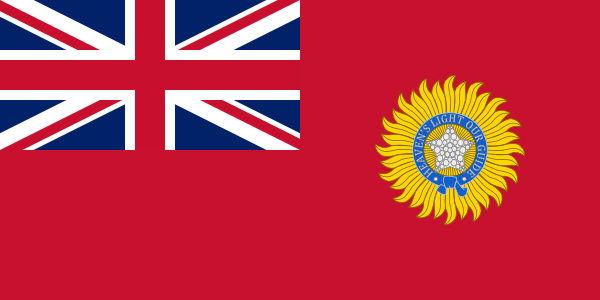
The ensign had a field of air force blue with the Union Jack in the canton and the roundel of Royal Air Force superimposed in centre of inside of Star of India in the fly.
Badge[edit | edit source]
-
 post-1945
 -
 pre-1945

The badge had Tudor crown on top of ring with an eagle augmented in center. A ribbon in fly below with the force motto PER ARDUA AD ASTRA.
Commanders[edit | edit source]
At Independence, the head of the Air Force designated as the "Air Marshal Commanding, Royal Indian Air Force". On 1 March 1948, the title of "Chief of the Air Staff" was added,[26] with a further re-designation to "Chief of the Air Staff and Commander-in-Chief, Royal Indian Air Force" on 21 June to maintain uniformity across the three armed services.[27]
The "Royal" designation was dropped when India became a republic on 26 January 1950. Thus re-designating the head of IAF to "Chief of the Air Staff and Commander-in-Chief, Indian Air Force".
Air Officer Commanding RAF, India (1932–1938)[edit | edit source]
| No. | Portrait | Name | Took office | Left office | Time in office |
|---|---|---|---|---|---|
| 1 | Air Marshal Sir John Miles Steel KCB, KBE, CMG (1877–1965) | 8 October 1932 | 2 March 1935 | 4 years, 24 days | |
| 2 | Air Chief Marshal Sir Edgar Ludlow-Hewitt KCB, CMG, DSO, MC (1886–1973) | 2 March 1935 | 29 September 1937 | 2 years, 211 days | |
| 3 | Air Marshal Sir Philip Joubert de la Ferté KCB, CMG, DSO (1886–1973) | 29 September 1937 | 27 December 1938 | 1 year, 89 days |

.jpg)

Air Officer Commanding-in-Chief, Air Forces in India (1938–1947)[edit | edit source]
| No. | Portrait | Name | Took office | Left office | Time in office | Ref |
|---|---|---|---|---|---|---|
| 1 | Air Marshal Sir Philip Joubert de la Ferté Lua error: expandTemplate: template "post-nominals/UK" does not exist. (1886–1973) | 27 December 1938 | 6 October 1939 | 283 days | [28] | |
| 2 | Air Marshal Sir John Higgins Lua error: expandTemplate: template "post-nominals/UK" does not exist. (1875–1948) | 6 October 1939 | 26 September 1940 | 356 days | — | |
| 3 | Air Marshal Sir Patrick Playfair Lua error: expandTemplate: template "post-nominals/UK" does not exist. (1889–1974) | 26 September 1940 | 6 March 1942 | 1 year, 161 days | — | |
| 4 | Air Chief Marshal Sir Richard Peirse Lua error: expandTemplate: template "post-nominals/UK" does not exist. (1892–1970) | 6 March 1942 | 27 April 1943 | 1 year, 52 days | — | |
| 5 | Air Marshal Sir Guy Garrod Lua error: expandTemplate: template "post-nominals/UK" does not exist. (1891–1965) | 27 April 1943 | 8 March 1944 | 316 days | — | |
| 6 | Air Vice Marshal Meredith Thomas Lua error: expandTemplate: template "post-nominals/UK" does not exist. (1892–1984) | 8 March 1944 | 1 April 1946 | 2 years, 24 days | — | |
| 7 | Air Marshal Sir Roderick Carr Lua error: expandTemplate: template "post-nominals/UK" does not exist. (1891–1971) | 1 April 1946 | 22 November 1946 | 235 days | — | |
| 8 | Air Marshal Sir Hugh Walmsley Lua error: expandTemplate: template "post-nominals/UK" does not exist. (1898–1985) | 22 November 1946 | 15 August 1947 | 252 days | — |


(On 15 August 1947, the unified RIAF was separated into the Royal Indian Air Force and the Royal Pakistan Air Force)
(**Seconded from the Royal Air Force)
Air Marshal Commanding, Royal Indian Air Force (1947–1948)[edit | edit source]
| No. | Portrait | Name | Took office | Left office | Time in office |
|---|---|---|---|---|---|
| 1 | Air Marshal Sir Thomas Elmhirst Lua error: expandTemplate: template "post-nominals/UK" does not exist. (1895–1982) [lower-alpha 1] | 15 August 1947 | 20 June 1948 | 310 days |

Chief of the Air Staff and Commander-in-Chief, Royal Indian Air Force (1948–1950)[edit | edit source]
| No. | Portrait | Name | Took office | Left office | Time in office |
|---|---|---|---|---|---|
| 1 | Air Marshal Sir Thomas Elmhirst Lua error: expandTemplate: template "post-nominals/UK" does not exist. (1895–1982) [lower-alpha 1] | 21 June 1948 | 25 January 1950 | 1 year, 218 days |
See also[edit | edit source]

References[edit | edit source]
Notes[edit | edit source]
Citations[edit | edit source]
- ↑ 1.0 1.1 1.2 "Royal Indian Air Force". RAF Museum. Retrieved 12 May 2020.
- ↑ "CLAUSE 4.—(Relations between Royal Air Force and Indian Air Force, and attachment of personnel.)". HC Deb vol 276 cc1473-501. 3 April 1933. Retrieved 8 April 2009.
{{cite book}}:|work=ignored (help) - ↑ "History of the IAF". Official Website. Webmaster IAF – Air Headquarters. Archived from the original on 9 April 2009. Retrieved 7 April 2009.
- ↑ Bedi, Sanjeev (Summer 2008). "Strategic Role of Air Power" (PDF). Air Power Journal. 3 (2). Center for Air Power Studies: 27–45. Archived from the original on 23 July 2019. Retrieved 8 April 2009.
- ↑ 5.0 5.1 5.2 5.3 "INDIAN AIR FORCE MUSEUM – Heraldry (Badges and Insignia)". Bharat Rakshak. Archived from the original on 29 March 2010.
- ↑ Goyal, S.N. (October 1993). "1939–45 Second World War: Air Force Reminiscences". Sainik Samachar. Indian Air Force. Archived from the original on 6 October 2009. Retrieved 8 April 2009.
- ↑ Gupta, Anchit (3 December 2022). "Trailblazers in the Skies: The Inspiring Journey of the 4th Pilot Course". IAFHistory. Retrieved 5 May 2025.
- ↑ "Second World War – Europe". www.mgtrust.org.
- ↑ BURMA to JAPAN with Azad Hind: A War Memoir (1941–1945) Archived 13 July 2022 at the Wayback Machine Air Cmde R S Benegal MVC AVSM
- ↑ Ahluwalia, A. (2012). Airborne to Chairborne: Memoirs of a War Veteran Aviator-Lawyer of the Indian Air Force. Xlibris Corporation. p. 41. ISBN 978-1-4691-9657-2.
- ↑ "No 4 Squadron (OOrials)". Indian Air Force. Archived from the original on 19 June 2009. Retrieved 5 October 2023.
- ↑ Engineer, Aspy M. (February 1993). "Air Marshal Aspy Engineer's Recollections". Bharat Rakshak. Archived from the original on 30 December 2009. Retrieved 8 April 2010.
- ↑ 13.0 13.1 Lyon, Peter (2008). Conflict Between India and Pakistan: An Encyclopedia (illustrated ed.). ABC-CLIO. p. 79. ISBN 978-1-57607-712-2.
- ↑ Massey, Reginald (2005). Azaadi!. Abhinav Publications. p. 97. ISBN 978-81-7017-469-1.
- ↑ Barua, Pradeep (2005). The State at War in South Asia. University of Nebraska Press. p. 192. ISBN 978-0-8032-1344-9.{
- ↑ Bedi, Sanjeev (Summer 2008). "Strategic Role of Air Power" (PDF). Air Power Journal. 3 (2). Center for Air Power Studies: 27–45. Archived from the original on 23 July 2019.
- ↑ "No.1 Service Flying Training School (India)". Archived from the original on 3 August 2012.
- ↑ Consolidated B-24 Liberator [www.bharat-rakshak.com] Archived 2012-01-12 at the Wayback Machine. Bharat-rakshak.com (2007-01-18). Retrieved on 2010-09-08.
- ↑ Andrade 1979, p. 239
- ↑ "Indian Air Force Gallery :: Training in the IAF".
- ↑ "IAF-Tempest". Archived from the original on 24 August 2014.
- ↑ 22.0 22.1 22.2 "IAF-Spitfire". Archived from the original on 6 December 2007.
- ↑ 23.0 23.1 "Westland Lysander in Indian Air Force Service". Archived from the original on 15 January 2008.
- ↑ "The Westland Wapiti in Indian Air Force". Archived from the original on 28 July 2013.
- ↑ "Indian Air Force Flags". www.crwflags.com. Retrieved 12 January 2022.
- ↑ "Press Communique" (PDF). Press Information Bureau of India – Archive. 28 February 1948. Retrieved 16 February 2020.
- ↑ "Press Communique" (PDF). Press Information Bureau of India – Archive. 21 June 1948. Retrieved 16 February 2020.
- ↑ "Chiefs of the Indian Air Force 1931 to 1947". Archived from the original on 2 February 2007.
External links[edit | edit source]
- The Forgotten Few; The Indian Air Force in World War II – KS Nair
- The Eagle strikes : the Royal Indian Air Force, 1932–1950 – Rana Chhina
- History of the Indian Air Force, 1933–45 – SC Gupta
- The Royal Indian Air Force, 1932 – 1947 – RAF Museum
| Leadership | |||||||||||||||||||||||||||||||||||||||||||||
|---|---|---|---|---|---|---|---|---|---|---|---|---|---|---|---|---|---|---|---|---|---|---|---|---|---|---|---|---|---|---|---|---|---|---|---|---|---|---|---|---|---|---|---|---|---|
| Components & Commands |
| ||||||||||||||||||||||||||||||||||||||||||||
| Military Academies |
| ||||||||||||||||||||||||||||||||||||||||||||
| Insignia | |||||||||||||||||||||||||||||||||||||||||||||
| History & Future | |||||||||||||||||||||||||||||||||||||||||||||
| Other | |||||||||||||||||||||||||||||||||||||||||||||