



cleaned up content additionally and cleaned formatting |
|||
| Line 1: | Line 1: | ||
{{short description|Texts related to the religion of Jainism}} | {{short description|Texts related to the religion of Jainism}} | ||
{{redirect|Aagam|the 2016 Tamil-language film|Aagam (film)}} | |||
{{use dmy dates|date=June 2016}} | {{use dmy dates|date=June 2016}} | ||
{{use Indian English|date=June 2016}} | {{use Indian English|date=June 2016}} | ||
{{Jainism}} | |||
[[File:12th-century Yogasastra, Hemachandra Jainism, Sanskrit, 1 mm Devanagari script.jpg|thumb|right|upright=1.25|A 12th-century manuscript of [[Hemachandra]]'s ''[[Yogaśāstra]]'' in Sanskrit. The text is notable for using 1 mm miniaturized Devanagari script.]] | |||
'''Jain literature''' ({{langx|sa|जैन साहित्य}}) refers to the literature of the [[Jainism|Jain religion]]. It is a vast and ancient literary tradition, which was initially transmitted orally. The oldest surviving material is contained in the canonical ''Jain Agamas'', which are written in [[Ardhamagadhi Prakrit|Ardhamagadhi]], a [[Prakrit]] ([[Middle Indo-Aryan languages|Middle-Indo Aryan]]) language. Various commentaries were written on these canonical texts by later [[Jain monasticism|Jain monks]]. Later works were also written in other languages, like Sanskrit and [[Maharashtri Prakrit]]. | |||
Jain literature is primarily divided between the canons of the ''[[Digambara]]'' and ''[[Śvētāmbara]]'' orders. These two main sects of Jainism do not always agree on which texts should be considered authoritative. | |||
More recent Jain literature has also been written in other languages, like [[Marathi language|Marathi]], [[Tamil language|Tamil]], [[Rajasthani language|Rajasthani]], [[Dhundari language|Dhundari]], [[Marwari language|Marwari]], [[Hindi language|Hindi]], [[Gujarati language|Gujarati]], [[Kannada]], [[Malayalam]] and more recently in [[English language|English]]. | |||
'''Jain | ==Origins: The Oral Tradition (''Śrutajñāna'')== | ||
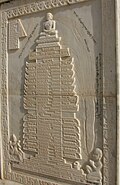
[[File:Jain Agamas.jpeg|thumb|upright|Stela depicting ''Śhrut Jnāna'', "the knowledge which is heard" (directly from the omniscient fordmakers)]] | |||
According to Jain tradition, the teachings that form the basis of their scriptures are eternal.{{sfn|von Glasenapp|1925|pp= 109–110}} It's believed that in each universal time cycle, twenty-four ''[[tīrthaṅkara]]s'' reveal these truths.{{sfn|von Glasenapp|1925|pp= 109–110}} The first ''tīrthaṅkara'' of the current cycle, [[Ṛṣabhanātha]], is considered the original source of the teachings in this era, millions of years ago.{{sfn|von Glasenapp|1925|pp= 109–110}} | |||
Jains believe the ''tīrthaṅkaras'' deliver their teachings in a divine preaching hall called the ''[[samavasaraṇa]]'', which are heard simultaneously by gods, ascetics, and laypersons.{{sfn|Champat Rai Jain|1929b|p=135}} This divine discourse itself is known as ''śrutajñāna'' ("heard knowledge").{{sfn|Champat Rai Jain|1929b|p=135}} Crucially, this initial form is not a written text but an oral transmission.{{sfn|Champat Rai Jain|1929b|p=136}}{{sfn|Natubhai Shah|2004|pp=39–40}} | |||
The tradition holds that the chief disciples (''[[Gaṇadhara]]s'') of a ''tīrthaṅkara'' possess the unique ability to perfectly understand and recall this divine discourse.{{sfn|Champat Rai Jain|1929b|p=136}} They are credited with converting the ''śrutajñāna'' into structured scriptures (''[[sutra|sutta]]s''), initially comprising the fourteen ''Pūrvas'' (ancient or prior texts) and the eleven ''Aṅgas'' ("limbs").{{sfn|Dundas|2002|pp=60–61}} The complete structure is often referred to as the "twelve-limbed basket" (''duvala samgagani pidaga''), as the twelfth ''Aṅga'' contained the ''Pūrvas''.{{sfn|Dundas|2002|pp=60–61}}{{sfn|von Glasenapp|1925|pp=109–110}}{{sfn|Vijay K. Jain|2012|p=xi}} | |||
For many centuries, these foundational scriptures were meticulously transmitted orally from teacher (guru) to disciple (shishya) through rigorous memorization and chanting.{{cn|date=October 2025}} This emphasis on oral transmission was a defining characteristic of the early literary tradition.{{cn|date=October 2025}} | |||
== | ==Datings== | ||
While some authors date the composition of the Jain Agamas starting from the 6th century BCE,<ref>Nagendra Kr. Singh. (2001). Encyclopedia of Jainism (Edited by Nagendra Kr. Singh). New Delhi: Anmol Publications. {{ISBN|81-261-0691-3}} page 4308</ref> some western scholars, such as Ian Whicher and David Carpenter, argue that the earliest portions of Jain canonical works were composed around the 4th or 3rd century BCE.<ref>Yoga: The Indian Tradition. Edited by Ian Whicher and David Carpenter. London: Routledgecurzon, 2003. {{ISBN|0-7007-1288-7}} page 64</ref><ref>C. Chappie (1993) Nonviolence to Animals, Earth and Self in Asian Traditions. Albany: State University of New York Press. {{ISBN|0-7914-1497-3}} page 5</ref> According to [[Johannes Bronkhorst]] it is extremely difficult to determine the age of the Jain Agamas, however:<blockquote>Mainly on linguistic grounds, it has been argued that the [[Ācārāṅga Sūtra]], the [[Sutrakritanga|Sūtrakṛtāṅga Sūtra]], and the [[Uttaradhyayana|Uttarādhyayana Sūtra]] are among the oldest texts in the canon.<ref name=":3">{{cite encyclopedia |last=Bronkhorst |first=Johannes |title=The Formative Period of Jainism (c. 500 BCE – 200 CE) |encyclopedia=Brill's Encyclopedia of Jainism Online |others=Denison University University of Edinburgh University of Bergen University of California, Berkeley John E. Cort, Paul Dundas, Knut A. Jacobsen, Kristi L. Wiley |doi=10.1163/2590-2768_BEJO_COM_047082|url=https://serval.unil.ch/resource/serval:BIB_4E6A35E6B579.P001/REF.pdf |language=en}}</ref></blockquote>Elsewhere, Bronkhorst states that the Sūtrakṛtāṅga "dates from the 2nd century BCE at the very earliest," based on how it references the Buddhist theory of momentariness, which is a later scholastic development.<ref name=":3" /> | |||
==The Great Schism and the Divergence of Canons== | |||
The Jaina congregation gradually split into the two sects. While Śvetāmbaras maintain that the schism happened in the 1st century CE, Digambaras hold that it happened in 2nd century BCE. Śvetāmbaras hold that the theory of Jain monks migrating from North to South is a fabricated account.<ref>{{Cite book |last=Dikshitar |first=V. r Ramachandra |url=http://archive.org/details/in.ernet.dli.2015.530078 |title=Mauryan Polity |date=1932 |language=en}}</ref> Some scholars specifically state that the said lore was developed after 600 CE and is inauthentic.<ref>{{Cite web |last=Jansari |first=Sushma |title=Chandragupta Maurya: The creation of a national hero in India |url=https://discovery.ucl.ac.uk/id/eprint/10170898/1/Chandragupta-Maurya.pdf |page=23}}</ref> | |||
=== ''Śvetāmara'' Efforts to Preserve the Canon === | |||
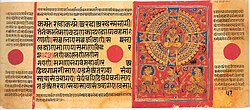
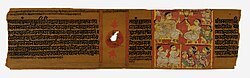
[[File:Samosarana Mahaviras enlightenment.jpg|thumb|[Top illustration] Mahavira attains [[Kevala Jnana|kevala jñāna (complete knowledge)]]; [Bottom] a [[Samavasarana|samosarana]] (divine preaching hall). Folio 60 from Kalpasutra series, loose leaf manuscript, Patan, Gujarat. {{Circa|1472}}.]] | |||
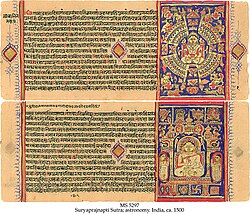
[[File:Suryaprajnapati Sutra.jpg|thumb|The ''Suryaprajnaptisūtra'', a 4th or 3rd century BCE Śvētāmbara astronomical and mathematical text.<ref>{{cite web |url=http://www.schoyencollection.com/23-religions/living-religions/23-17-jainism/astronomy/ms-5297 |title=Suryaprajnapti Sūtra |url-status=live |archive-url=https://web.archive.org/web/20170615024618/http://www.schoyencollection.com/23-religions/living-religions/23-17-jainism/astronomy/ms-5297 |archive-date=15 June 2017 |publisher=The Schoyen Collection}}</ref> The top illustration depicts Mahavira, while the bottom one illustrates his great disciple [[Gautama Swami|Gautama]].]] | |||
Śvetāmbaras convened the First Council at Pataliputra (modern Patna) around 300 BCE (traditional dating varies).{{sfn|Jacobi|1884|p=xlii}} During this council, the monks pooled their collective memory to compile the eleven ''Aṅgas''.{{sfn|Jacobi|1884|p=xlii}} However, the twelfth ''Aṅga'', the ''[[Drstivada|Dṛṣṭivāda]]'', which contained the fourteen ''Pūrvas'', was found to be incomplete or lost, as Bhadrabāhu, the only master who knew it fully, was absent.{{sfn|Leumann|2010|p=69}} While Sthulabhadra learned 10 of the 14 purvas from Bhadrabāhu when the latter was in Nepal, the full transmission was broken.{{sfn|Kapadia|1941|p=}}{{pn|date=October 2025}}{{sfn|Dundas|2002|p=}}{{pn|date=October 2025}} | |||
Further efforts to consolidate the texts occurred, possibly including a council in the [[Udayagiri and Khandagiri Caves]] under King [[Kharavela]] in the 2nd century BCE.{{sfn|Natubhai Shah|2004|p=40}} | |||
The | The most definitive step for the Śvetāmbara tradition was the Council of [[Vallabhi]] (in [[Gujarat]]) held around 454 or 466 CE, presided over by [[Devardhigaṇi Kṣamāśramaṇa]].{{sfn|Natubhai Shah|2004|p=40}}{{sfn|Upinder Singh|2016|p=26}}{{sfn|von Glasenapp|1925|pp=110–111}} Faced with the ongoing weakening of memory, the council made the historic decision to commit the entire remembered canon to writing in manuscript form.{{sfn|Natubhai Shah|2004|p=40}}{{sfn|Upinder Singh|2016|p=26}}{{sfn|von Glasenapp|1925|pp=110–111}} | ||
The ''Śvetāmbara'' sect considers this written canon, based on the Vallabhi council texts, to be the authentic ''Agamas'', derived from the original oral tradition passed down from [[Mahavira]], even while acknowledging that the twelfth ''Aṅga'' and parts of the ''Pūrvas'' are missing.{{sfn|Dundas|2002|pp=60–61}}{{sfn|von Glasenapp|1925|pp=112–113}} | |||
== The | === ''Digambara'' View: The Canon Was Lost === | ||
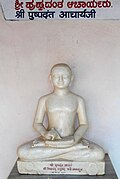
[[File: | [[File:Acharya Pushpadant.jpg|thumb|upright|Āchārya Pushpadanta, depicted writing down the ''Ṣaṭkhaṅḍāgama'']] | ||
[[File: | [[File:Acharya KundaKunda.jpg|thumb|upright|Āchārya [[Kundakunda]], one of the most important Digambara philosophers]] | ||
The ''Digambara'' tradition holds a fundamentally different view.{{sfn|Vijay K. Jain|2012|p=xii}}{{sfn|Upinder Singh|2016|p=444}} They believe that due to the famine and the passage of time, the original ''Aṅgas'' and ''Pūrvas'' were completely lost by around the 2nd century CE.{{sfn|Vijay K. Jain|2012|p=xii}}{{sfn|Upinder Singh|2016|p=444}} They state that ''Āchārya'' [[Bhutabali]] (1st century CE) was the last ascetic with even partial knowledge of the original canon.{{sfn|Vijay K. Jain|2012|p=xii}} They maintain that ''Āchārya'' Pushpadanta and Bhutabali wrote the ''[[Ṣaṭkhaṅḍāgama]]'' (Six Part Scripture) under guidance of [[Dharasena]], which is held to be one of the oldest Digambara texts (2nd to 3rd century CE).{{sfn|Vijay K. Jain|2012|p=xii}}{{sfn|Jaini|1998|p=50}} Around the same time, ''Āchārya'' [[Gunadhar]] wrote ''[[Kasayapahuda]]'' (Treatise on the Passions).{{sfn|Vijay K. Jain|2012|p=xii}}{{sfn|Sagarmal Jain|Shreeprakash Pandey|1998|p=239}}{{sfn|Jaini|1998|p=50}} | |||
Consequently, ''Digambaras'' reject the scriptures compiled by the ''Śvetāmbaras'' at Pataliputra and Vallabhi, viewing them as incomplete and corrupted.{{sfn|Vijay K. Jain|2012|p=xii}} This disagreement over the authenticity and survival of the ''Agamas'' is a central reason for the historical schism between the two major sects.{{sfn|von Glasenapp|1925|pp=121–122}} Lacking the original Agamas, the Digambara tradition instead came to hold authoritative a set of later texts, believed to encapsulate the essence of the lost teachings.{{sfn|Vijay K. Jain|2016|p=xii}}{{sfn|Jaini|1998|p=78–81}}{{sfn|von Glasenapp|1925|p=124}} | |||
== | ==''Svetambara'' Canon (The ''Agamas'')== | ||
The canons (''Siddhāntha'') of the Śvētāmbaras are generally composed of the following texts:{{sfn|Upinder Singh|2016|p=26}} | The canons (''Siddhāntha'') of the Śvētāmbaras are generally composed of the following texts:{{sfn|Upinder Singh|2016|p=26}}{{sfn|Winternitz|1972|pp=428–430}} | ||
* Twelve ''Angās (limbs)'' | * Twelve ''Angās (limbs)'' | ||
** ''[[Acaranga Sutra|Āyāraṃga]]'' (Sanskrit: ''Ācāranga'', meaning: | ** ''[[Acaranga Sutra|Āyāraṃga]]'' ([[Prakrit|Jain Prakrit]]; Sanskrit: ''Ācāranga'', meaning: 'On monastic conduct') | ||
** ''[[Sutrakritanga|Sūyagaḍa]]'' (''Sūtrakṛtāṅga'', | ** ''[[Sutrakritanga|Sūyagaḍa]]'' (''Sūtrakṛtāṅga'', 'On heretical systems and views') | ||
** ''[[Sthananga Sutra|Ṭhāṇaṃga]]'' (''Sthānāṅga'', | ** ''[[Sthananga Sutra|Ṭhāṇaṃga]]'' (''Sthānāṅga'', 'On different points [of the teaching]') | ||
** ''[[Samavayanga Sutra|Samavāyaṃga]]'' (''Samavāyāṅga'', | ** ''[[Samavayanga Sutra|Samavāyaṃga]]'' (''Samavāyāṅga'', 'On "rising numerical groups"') | ||
** ''[[Vyakhyaprajnapti|Viyāha-pannatti / Bhagavaī]]'' (''Vyākhyā-prajñapti'' or ''Bhagavatī'', | ** ''[[Vyakhyaprajnapti|Viyāha-pannatti / Bhagavaī]]'' (''Vyākhyā-prajñapti'' or ''Bhagavatī'', 'Exposition of explanations' or 'the holy one') | ||
** ''[[Jnatrdharmakathah|Nāyā-dhamma-kahāo]]'' (''Jñāta-dharmakathānga'', | ** ''[[Jnatrdharmakathah|Nāyā-dhamma-kahāo]]'' (''Jñāta-dharmakathānga'', 'Parables and religious stories') | ||
** ''[[Upasakadasah|Uvāsaga-dasāo]]'' (''Upāsaka-daśāḥ'', | ** ''[[Upasakadasah|Uvāsaga-dasāo]]'' (''Upāsaka-daśāḥ'','Ten chapters on the Jain lay follower') | ||
** ''[[Antakrddaasah|Aṇuttarovavāiya-dasāo]]'' (''Antakṛd-daśāḥ'', | ** ''[[Antakrddaasah|Aṇuttarovavāiya-dasāo]]'' (''Antakṛd-daśāḥ'', 'Ten chapters on those who put an end to rebirth in this very life') | ||
** ''[[Anuttaraupapatikadasah|Anuttaraupapātikadaśāh]]'' (''Anuttaropapātika-daśāḥ'', | ** ''[[Anuttaraupapatikadasah|Anuttaraupapātikadaśāh]]'' (''Anuttaropapātika-daśāḥ'', 'Ten chapters on those who were reborn in the uppermost heavens') | ||
** ''[[Prasnavyakaranani|Paṇha-vāgaraṇa]]'' (''Praśna-vyākaraṇa'', | ** ''[[Prasnavyakaranani|Paṇha-vāgaraṇa]]'' (''Praśna-vyākaraṇa'', 'Questions and explanations') | ||
** ''[[Vipakasruta|Vivāga-suya]]'' (''Vipākaśruta'', | ** ''[[Vipakasruta|Vivāga-suya]]'' (''Vipākaśruta'','Bad or good results of deeds performed') | ||
** Diṭhīvāya (''Dṛṣṭivāda'') - this text was lost after 1000 years of [[Mahavira]].<ref>{{Cite book |last=Burgess |first=Jas |url=https://archive.org/details/in.gov.ignca.25358/page/279/mode/2up?view=theater |title=Indian antiquary a journal of oriental research vol.17 |date=1888 |language=English}}</ref> | |||
*Twelve ''Upāṅgas (auxiliary limbs)'' | *Twelve ''Upāṅgas (auxiliary limbs)'' | ||
**''Uvavāiya-sutta'' (Sanskrit: ''Aupapātika-sūtra'', | **''Uvavāiya-sutta'' (Sanskrit: ''Aupapātika-sūtra'','Places of rebirth') | ||
**''Rāya-paseṇaijja'' or ''Rāyapaseṇiya'' (''Rāja-praśnīya'', | **''Rāya-paseṇaijja'' or ''Rāyapaseṇiya'' (''Rāja-praśnīya'', 'Questions of the king') | ||
**''Jīvājīvābhigama'' (''Jīvājīvābhigama'', | **''Jīvājīvābhigama'' (''Jīvājīvābhigama'', 'Classification of animate and inanimate entities') | ||
**''Pannavaṇā'' (''Prajñāpanā'', | **''Pannavaṇā'' (''Prajñāpanā'', 'Enunciation on topics of philosophy and ethics') | ||
**''Sūriya-pannatti'' (''Sūrya-prajñapti'', | **''Sūriya-pannatti'' (''Sūrya-prajñapti'', 'Exposition on the sun') | ||
**''Jambūdvīpa-pannatti'' (''Jambūdvīpa-prajñapti'', | **''Jambūdvīpa-pannatti'' (''Jambūdvīpa-prajñapti'', 'Exposition on the Jambū continent and the Jain universe') | ||
**''Canda-pannatti'' (''Candra-prajñapti'', | **''Canda-pannatti'' (''Candra-prajñapti'', 'Exposition on the moon and the Jain universe') | ||
**''Nirayāvaliyāo or Kappiya'' (''Narakāvalikā'', | **''Nirayāvaliyāo or Kappiya'' (''Narakāvalikā'', 'Series of stories on characters reborn in hells') | ||
**''Kappāvaḍaṃsiāo'' (''Kalpāvataṃsikāḥ'', | **''Kappāvaḍaṃsiāo'' (''Kalpāvataṃsikāḥ'', 'Series of stories on characters reborn in the kalpa heavens') | ||
**''Pupphiāo'' (''Puṣpikāḥ'', | **''Pupphiāo'' (''Puṣpikāḥ'', 'Flowers' refers to one of the stories') | ||
**''Puppha-cūliāo'' (''Puṣpa-cūlikāḥ'', | **''Puppha-cūliāo'' (''Puṣpa-cūlikāḥ'', 'The nun Puṣpacūlā') | ||
**''Vaṇhi-dasāo'' (''Vṛṣṇi-daśāh'', | **''Vaṇhi-dasāo'' (''Vṛṣṇi-daśāh'', 'Stories on characters from the legendary dynasty known as Andhaka-Vṛṣṇi') | ||
* Six ''Chedasūtras'' (Texts relating to the conduct and behaviour of monks and nuns) | * Six ''Chedasūtras'' (Texts relating to the conduct and behaviour of monks and nuns) | ||
** ''Āyāra-dasāo'' (Sanskrit: ''Ācāradaśāh'', | ** ''Āyāra-dasāo'' (Sanskrit: ''Ācāradaśāh'', 'Ten [chapters] about monastic conduct', chapter 8 is the famed [[Kalpa Sūtra|Kalpa-sūtra]].) | ||
** ''Bihā Kappa'' (''Bṛhat Kalpa'', | ** ''Bihā Kappa'' (''Bṛhat Kalpa'', '[Great] Religious code') | ||
** ''[[Vyavahāra|Vavahāra]]'' (Vyavahāra, | ** ''[[Vyavahāra|Vavahāra]]'' (Vyavahāra, 'Procedure') | ||
** ''[[Niśītha|Nisīha]]'' (Niśītha, | ** ''[[Niśītha|Nisīha]]'' (Niśītha, 'Interdictions') | ||
** ''Jīya-kappa'' (''Jīta-kalpa'', Customary rules), only accepted as canonical by Mūrti-pūjaks | ** ''Jīya-kappa'' (''Jīta-kalpa'', Customary rules), only accepted as canonical by Mūrti-pūjaks | ||
** ''Mahā-nisīha'' (''Mahā-niśītha'', Large Niśītha), only accepted as canonical by Mūrti-pūjaks | ** ''Mahā-nisīha'' (''Mahā-niśītha'', Large Niśītha), only accepted as canonical by Mūrti-pūjaks | ||
* Four ''Mūlasūtras'' ( | * Four ''Mūlasūtras'' ('Fundamental texts' which are foundational works studied by new monastics) | ||
** ''Dasaveyāliya-sutta'' (Sanskrit: ''Daśavaikālika-sūtra''), this is memorized by all new Jain mendicants | ** ''Dasaveyāliya-sutta'' (Sanskrit: ''Daśavaikālika-sūtra''), this is memorized by all new Jain mendicants | ||
** ''[[Uttarādhyayana|Uttarajjhayaṇa-sutta]]'' (''Uttarādhyayana-sūtra'') | ** ''[[Uttarādhyayana|Uttarajjhayaṇa-sutta]]'' (''Uttarādhyayana-sūtra'') | ||
** ''Āvassaya-sutta'' (''Āvaśyaka-sūtra'') | ** ''Āvassaya-sutta'' (''[[Āvaśyaka-sūtra]]'') | ||
** ''Piṇḍa-nijjutti'' and ''Ogha-nijjutti'' (''Piṇḍa-niryukti'' and ''Ogha-niryukti''), only accepted as canonical by Mūrti-pūjaks | ** ''Piṇḍa-nijjutti'' and ''Ogha-nijjutti'' (''Piṇḍa-niryukti'' and ''Ogha-niryukti''), only accepted as canonical by Mūrti-pūjaks | ||
* Two ''Cūlikasūtras'' ("appendixes") | * Two ''Cūlikasūtras'' ("appendixes") | ||
** ''Nandī-sūtra'' | ** ''Nandī-sūtra'' – discusses the five types of knowledge | ||
** ''Anuyogadvāra-sūtra'' | ** ''Anuyogadvāra-sūtra'' – a technical treatise on analytical methods, discusses [[Anekantavada]] | ||
===Miscellaneous collections=== | |||
To reach the number 45, Mūrtipūjak Śvētāmbara canons contain a "Miscellaneous" collection of supplementary texts, called the ''Paiṇṇaya suttas'' (Sanskrit: ''Prakīrnaka sūtras'', "Miscellaneous"). This section varies in number depending on the individual sub-sect (from 10 texts to over 20). They also often included extra works (often of disputed authorship) named "supernumerary Prakīrṇakas".<ref>{{Cite web|last=Balbir|first=Nalini|title=Prakīrṇaka-sūtras|url=http://www.jainpedia.org/themes/principles/sacred-writings/svetambara-canon/prakirnaka-sutras/index.html | To reach the number 45, Mūrtipūjak Śvētāmbara canons contain a "Miscellaneous" collection of supplementary texts, called the ''Paiṇṇaya suttas'' (Sanskrit: ''Prakīrnaka sūtras'', "Miscellaneous"). This section varies in number depending on the individual sub-sect (from 10 texts to over 20). They also often included extra works (often of disputed authorship) named "supernumerary Prakīrṇakas".<ref name="Balbir">{{Cite web|last=Balbir|first=Nalini|title=Prakīrṇaka-sūtras|url=http://www.jainpedia.org/themes/principles/sacred-writings/svetambara-canon/prakirnaka-sutras/index.html|website=JAINpedia}}</ref> The Paiṇṇaya texts are generally not considered to have the same kind of authority as the other works in the canon. Most of these works are in Jaina Māhārāṣṭrī Prakrit, unlike the other Śvetāmbara scriptures which tend to be in Ardhamāgadhī. They are therefore most likely later works than the Aṅgas and Upāṅgas.<ref name="Balbir"/> | ||
Mūrtipūjak Jain canons will generally accept 10 Paiṇṇayas as canonical, but there is widespread disagreement on which 10 scriptures are given canonical status. The most widely accepted list of ten scriptures are the following:<ref | Mūrtipūjak Jain canons will generally accept 10 Paiṇṇayas as canonical, but there is widespread disagreement on which 10 scriptures are given canonical status. The most widely accepted list of ten scriptures are the following:<ref name="Balbir"/> | ||
*''Cau-saraṇa'' (Sanskrit: ''Catuḥśaraṇa'', The | *''Cau-saraṇa'' (Sanskrit: ''Catuḥśaraṇa'', The 'four refuges') | ||
*''Āura-paccakkhāṇa'' (''Ātura-pratyākhyāna'', | *''Āura-paccakkhāṇa'' (''Ātura-pratyākhyāna'', 'Sick man's renunciation') | ||
*''Bhatta-parinnā'' (''Bhakta-parijñā'', | *''Bhatta-parinnā'' (''Bhakta-parijñā'', 'Renunciation of food') | ||
*''Saṃthāraga'' (''Saṃstāraka'', | *''Saṃthāraga'' (''Saṃstāraka'', 'Straw bed') | ||
*''Tandula-veyāliya'' (''Taṇḍula-vaicārika'', | *''Tandula-veyāliya'' (''Taṇḍula-vaicārika'', 'Reflection on rice grains') | ||
*''Canda-vejjhaya'' (''Candravedhyaka'', | *''Canda-vejjhaya'' (''Candravedhyaka'', 'Hitting the mark') | ||
*''Devinda-tthaya'' (''Devendra-stava'', | *''Devinda-tthaya'' (''Devendra-stava'', 'Praise of the kings of gods') | ||
*''Gaṇi-vijjā'' (''Gaṇi-vidyā'', | *''Gaṇi-vijjā'' (''Gaṇi-vidyā'', 'A Gaṇi's knowledge') | ||
*''Mahā-paccakkhāṇa'' (''Mahā-pratyākhyāna'', | *''Mahā-paccakkhāṇa'' (''Mahā-pratyākhyāna'', 'Great renunciation') | ||
*''Vīra-tthava'' (''Vīra-stava'', | *''Vīra-tthava'' (''Vīra-stava'', 'Great renunciation') | ||
From the 15th century onwards, various Śvetāmbara subsects began to disagree on the composition of the canon. [[Murtipujaka|Mūrtipūjaks]] ("idol-worshippers") accept 45 texts, while the [[Sthānakavāsī|Sthānakavāsins]] and [[Svetambar Terapanth|Terāpanthins]] only accept 32.<ref>{{Cite web|last=Balbir|first=Nalini|title=Śvetāmbara canon|url=http://www.jainpedia.org/themes/principles/sacred-writings/svetambara-canon/index.html|website=JAINpedia}}</ref> | |||
[[ | |||
[[ | |||
The Digambara canon of scriptures includes these two main texts, three commentaries on the main texts, and four (later) ''Anuyogas'' (expositions), consisting of more than 20 texts.{{sfn|Dundas|2002|p=80}}{{sfn|Vijay K. Jain|2012|p= | ==''Digambara'' Canon (The ''Siddhanta'')== | ||
The Digambara canon of scriptures includes these two main texts, three commentaries on the main texts, and four (later) ''Anuyogas'' (expositions), consisting of more than 20 texts.{{sfn|Dundas|2002|p=80}}{{sfn|Vijay K. Jain|2012|p=xi–xii}} | |||
The great commentator [[Virasena]] wrote two commentary texts on the ''Ṣaṭkhaṅḍāgama'', the ''Dhaval‑tika'' on the first five volumes and ''Maha‑dhaval‑tika'' on the sixth volume of the ''Ṣaṭkhaṅḍāgama'', around 780 CE. [[Virasena]] and his disciple, [[Jinasena]], also wrote a commentary on the ''[[Kasayapahuda|Kaşāyapāhuda]],'' known as ''Jaya‑dhavala‑tika''. | The great commentator [[Virasena]] wrote two commentary texts on the ''Ṣaṭkhaṅḍāgama'', the ''Dhaval‑tika'' on the first five volumes and ''Maha‑dhaval‑tika'' on the sixth volume of the ''Ṣaṭkhaṅḍāgama'', around 780 CE.{{sfn|Jaini|1998|p=50}} [[Virasena]] and his disciple, [[Jinasena]], also wrote a commentary on the ''[[Kasayapahuda|Kaşāyapāhuda]],'' known as ''Jaya‑dhavala‑tika''.{{sfn|Sagarmal Jain|Shreeprakash Pandey|1998|p=239}}{{sfn|Jaini|1998|p=50}} | ||
There is no agreement on the canonical Anuyogas ("Expositions"). The Anuyogas were written between the 2nd and the 11th centuries <dfn>CE</dfn>, either in Jaina [[Shauraseni Prakrit|Śaurasenī]] Prakrit or in <dfn>Sanskrit</dfn>.<ref name=":2" /> | There is no agreement on the canonical Anuyogas ("Expositions"). The Anuyogas were written between the 2nd and the 11th centuries <dfn>CE</dfn>, either in Jaina [[Shauraseni Prakrit|Śaurasenī]] Prakrit or in <dfn>Sanskrit</dfn>.<ref name=":2">{{Cite web|last=Balbir|first=Nalini|title=Digambara canon|url=http://www.jainpedia.org/themes/principles/sacred-writings/digambara-canon/index.html|website=JAINpedia}}</ref> | ||
The expositions (''Anuyogas'') are divided into four literary categories:{{sfn|Dundas|2002|p=80}} | The expositions (''Anuyogas'') are divided into four literary categories:{{sfn|Dundas|2002|p=80}} | ||
* The 'first' (''Prathamānuyoga'') category contains various works such as Jain versions of the ''Rāmāyaṇa'' (like the 7th-century ''Padma-purāṇa'' by [[Ravisena|Raviṣeṇa]]) and ''Mahābhārata'' (like [[Jinasena| | * The 'first' (''Prathamānuyoga'') category contains various works such as Jain versions of the ''Rāmāyaṇa'' (like the 7th-century ''Padma-purāṇa'' by [[Ravisena|Raviṣeṇa]]) and ''Mahābhārata'' (like [[Jinasena|Jinasena's]] 8th century ''Harivaṃśa-purāṇa''), as well as 'Jain universal histories' (like Jinasena's 8th-century ''Ādi-purāṇa''). | ||
* The 'calculation' (''Karaṇānuyoga'') expositions are mainly works on [[Jain cosmology]] (such as ''Tiloya-paṇṇatti'' of Yati Vṛṣabha, dating from the 6th to 7th century) and karma (for example, Nemicandra's ''[[Gommatsāra|Gommaṭa-sāra]]''). The ''Gommatsāra'' of [[Nemichandra]] ([[Floruit|fl.]] 10th century) is one of the most important Digambara works and provides a detailed summary of Digambara doctrine.{{sfn|Jaini|1927|p=5}} | * The 'calculation' (''Karaṇānuyoga'') expositions are mainly works on [[Jain cosmology]] (such as ''Tiloya-paṇṇatti'' of Yati Vṛṣabha, dating from the 6th to 7th century) and karma (for example, Nemicandra's ''[[Gommatsāra|Gommaṭa-sāra]]''). The ''Gommatsāra'' of [[Nemichandra]] ([[Floruit|fl.]] 10th century) is one of the most important Digambara works and provides a detailed summary of Digambara doctrine.{{sfn|Jaini|1927|p=5}} | ||
* The 'behaviour' (''Caraṇānuyoga'') expositions are texts about proper behaviour, such as | * The 'behaviour' (''Caraṇānuyoga'') expositions are texts about proper behaviour, such as Vaṭṭakera's ''Mūlācāra'' (on monastic conduct, 2nd century) and the ''[[Ratnakaranda śrāvakācāra|Ratnakaraṇḍaka-Śrāvakācāra]]'' by [[Samantabhadra (Jain monk)|Samantabhadra]] (5th-century) which focuses on the ethics of a layperson.{{sfn|Jaini|1991|p=32–33}} Works in this category also treat the purity of the soul, such as the work of Kundakunda like the ''[[Samayasāra|Samaya-sāra]],'' the ''[[Pancastikayasara]],'' and ''[[Niyamasara]].'' These works by [[Kundakunda]] (2nd century CE or later) are highly revered and have been historically influential.''{{sfn|Finegan|1989|p=221}}{{sfn|Balcerowicz|2003|pp=25–34}}{{sfn|Chatterjee|2000|p=282–283}}'' | ||
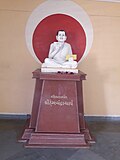
* The 'substance' (''Dravyānuyoga'') exposition includes texts about [[ontology]] of the universe and self. [[Umaswati| | * The 'substance' (''Dravyānuyoga'') exposition includes texts about [[ontology]] of the universe and self. [[Umaswati|Umāsvāmin's]] comprehensive ''[[Tattvartha Sutra| Tattvārtha-sūtra]]'' is the standard work on ontology and [[Pujyapada|Pūjyapāda's]] (464–524 CE) ''[[Sarvārthasiddhi]]'' is one of the most influential Digambara commentaries on the ''Tattvārtha''. This collection also includes various works on epistemology and reasoning, such as Samantabhadra's ''[[Aptamimamsa|Āpta-mīmāṃsā]]'' and the works of [[Akalanka|Akalaṅka]] (720–780 CE), such as his commentary on the ''Apta-mīmāṃsā'' and his ''Nyāya-viniścaya.'' | ||
==Post-Canonical literature== | ==Post-Canonical literature== | ||
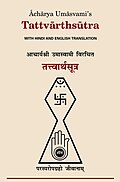
[[File:Tattvarthsutra.jpg|thumb|The [[Tattvartha Sutra|Tattvārthsūtra]] is regarded as the most authoritative book on Jainism, and the only text authoritative in both the Svetambara and Digambara sects]] | [[File:Tattvarthsutra.jpg|thumb|upright|The [[Tattvartha Sutra|Tattvārthsūtra]] is regarded as the most authoritative book on Jainism, and the only text authoritative in both the Svetambara and Digambara sects]] | ||
[[File:Bust of Acharya Hemachandra.jpg|thumb|upright|Bust of Hemachandra at [[Hemchandracharya North Gujarat University]]]] | |||
===Philosophy and Logic=== | |||
=== | |||
There are various later Jain works that are considered post-canonical, that is to say, they were written after the closure of the Jain canons, though the different canons were closed at different historical eras, and so this category is ambiguous. | There are various later Jain works that are considered post-canonical, that is to say, they were written after the closure of the Jain canons, though the different canons were closed at different historical eras, and so this category is ambiguous. | ||
Thus, [[Umaswati]]'s (c. between 2nd-century and 5th-century CE) ''[[Tattvarthasūtra]]'' ("On the Nature of Reality") is included in the Digambara canon, but not in the Śvētāmbara canons (though they do consider the work authoritative). Indeed, the ''[[Tattvarthasūtra]]'' is considered ''the'' authoritative Jain philosophy text by all traditions of Jainism.{{Sfn|Jones|Ryan|2007|pp=439–440}}{{Sfn|Umāsvāti|1994|p=xi–xiii, Quote: "That Which Is, known as the ''Tattvartha Sūtra'' to Jains, is recognized by all four Jain traditions as the earliest, most authoritative and comprehensive summary of their religion."}}{{sfn|Dundas|2006|pp=395–396}} It has the same importance in Jainism as ''[[Vedanta Sūtras]]'' and ''[[Yogasūtras]]'' have in [[Hinduism]].{{ | Thus, [[Umaswati|Umasvāti]]'s (c. between 2nd-century and 5th-century CE) ''[[Tattvarthasūtra]]'' ("On the Nature of Reality") is included in the Digambara canon, but not in the Śvētāmbara canons (though they do consider the work authoritative). Indeed, the ''[[Tattvarthasūtra]]'' is considered ''the'' authoritative Jain philosophy text by all traditions of Jainism.{{Sfn|Jones|Ryan|2007|pp=439–440}}{{Sfn|Umāsvāti|1994|p=xi–xiii, Quote: "That Which Is, known as the ''Tattvartha Sūtra'' to Jains, is recognized by all four Jain traditions as the earliest, most authoritative and comprehensive summary of their religion."}}{{sfn|Dundas|2006|pp=395–396}} It has the same importance in Jainism as ''[[Vedanta Sūtras]]'' and ''[[Yogasūtras]]'' have in [[Hinduism]].{{sfn|Jones|Ryan|2007|pp=439–440}}{{Sfn|Umāsvāti|1994|p=xiii}}{{sfn|Johnson|1995|pp=46–51, 91–96}} | ||
Other non-canonical works include various texts attributed to Bhadrabahu ( | Other non-canonical works include various texts attributed to Bhadrabahu ({{Circa|300 BCE}}) which are called the ''Niryuktis'' and ''Samhitas''. | ||
According to Winternitz, after the 8th century or so, Svetambara Jain writers, who had previously worked in Prakrit, began to use Sanskrit. The Digambaras also adopted Sanskrit somewhat earlier. | According to Winternitz, after the 8th century or so, Svetambara Jain writers, who had previously worked in Prakrit, began to use Sanskrit. The Digambaras also adopted Sanskrit somewhat earlier.{{sfn|Winternitz|1972|p=427}} The earliest Jain works in Sanskrit include the writings of [[Siddhasena Divakara|Siddhasēna Divākara]] ({{Circa|650 CE}}), who wrote the ''Sanmatitarka'' ('The Logic of the True Doctrine') is the first major Jain work on logic written in [[Sanskrit]].<ref>Qvarnström, Olle; Jainism and Early Buddhism: Essays in Honor of Padmanabh S. Jaini, page 154.</ref> | ||
Other later works and writers include: | Other later works and writers include: | ||
* [[Jinabhadra]] (6th–7th century) – author of ''Avasyaksutra'' (Jain tenets) ''Visesanavati'' and ''Visesavasyakabhasya'' (Commentary on Jain essentials). | * [[Jinabhadra]] (6th–7th century) – author of ''[[Avasyaksutra]]'' (Jain tenets) ''Visesanavati'' and ''Visesavasyakabhasya'' (Commentary on Jain essentials). | ||
* Mallavadin (8th century) – author of ''Nayacakra'' and ''Dvadasaranayacakra'' (Encyclopedia of Philosophy) which discusses the schools of [[Indian philosophy]].<ref name=" | * Mallavadin (8th century) – author of ''Nayacakra'' and ''Dvadasaranayacakra'' (Encyclopedia of Philosophy) which discusses the schools of [[Indian philosophy]].<ref name="Jaini852">{{harvnb|Jaini|1998|p=85}}</ref> | ||
* <dfn>[[Haribhadra|Haribhadra-s]]</dfn>[[Haribhadra|ūri]] (c 8th century) is an important Svetambara scholar who wrote commentaries on the Agamas. He also wrote the ''[[Yogadṛṣṭisamuccaya]]'', a key Jain text on Yoga which compares the Yoga systems of Buddhists, Hindus and Jains. Gunaratna ( | * <dfn>[[Haribhadra|Haribhadra-s]]</dfn>[[Haribhadra|ūri]] (c 8th century) is an important Svetambara scholar who wrote commentaries on the Agamas. He also wrote the ''[[Yogadṛṣṭisamuccaya]]'', a key Jain text on Yoga which compares the Yoga systems of Buddhists, Hindus and Jains. Gunaratna ({{Circa|1400 CE}}) wrote a commentary on Haribhadra's work. | ||
* [[Prabhācandra|Prabhacandra]] (8th–9th century) – Jain philosopher, composed a 106-Sutra Tattvarthasutra and exhaustive commentaries on two key works on Jain Nyaya, ''Prameyakamalamartanda'', based on Manikyanandi's ''Parikshamukham'' and ''Nyayakumudacandra'' on Akalanka's ''Laghiyastraya''. | * [[Prabhācandra|Prabhacandra]] (8th–9th century) – Jain philosopher, composed a 106-Sutra Tattvarthasutra and exhaustive commentaries on two key works on Jain Nyaya, ''Prameyakamalamartanda'', based on Manikyanandi's ''Parikshamukham'' and ''Nyayakumudacandra'' on Akalanka's ''Laghiyastraya''. | ||
* Abhayadeva ( | * [[Abhaydevsuri]] (1057–1135 CE) – A significant phase in the development of medieval Śvetāmbara Jain literature is marked by the Sanskrit commentaries attributed to [[Abhaydevsuri]]. His works form part of a continuous exegetical tradition that sought to systematise the interpretation of canonical texts transmitted in Ardhamāgadhī and other Prakrits through Sanskrit scholastic prose. Abhayadeva Suri is credited with authoritative ''vṛttis'' (commentaries) on several major texts of the Śvetāmbara canon. His commentary on the ''[[Sthānāṅga Sūtra]]'', an encyclopaedic text organised through numerical classifications, plays a central role in clarifying its compressed doctrinal lists and is treated in modern scholarship as indispensable for its interpretation. A Sanskrit ''vṛtti'' is also attributed to him on the ''[[Bhagavatī Sūtra]]'' (''Viyāhapannatti''), one of the most extensive Jain Āgamas, in which canonical dialogues on karma theory, cosmology, ethics, and monastic discipline are explained and harmonised within broader doctrinal frameworks. In addition to canonical Āgamas, Abhayadeva Suri is associated with a commentary on Sanmatitarka, the foundational Jain philosophical treatise attributed to Siddhasena Divākara. Through this work, he contributed to the transmission and clarification of Jain logical and epistemological concepts alongside scriptural exegesis. Taken together, these commentaries illustrate a mature stage of Śvetāmbara exegetical practice in which grammatical analysis, doctrinal harmonisation, and cross-referencing across the canon were employed to stabilise interpretation and support monastic pedagogy. Abhayadeva Suri’s works circulated widely in manuscript and printed form and were incorporated into later Śvetāmbara scholastic curricula, including those associated with Tapāgaccha traditions. His commentarial corpus continues to be cited in modern academic studies of Jain canon formation, manuscript culture, and medieval Sanskritisation of Jain literature. author of ''Vadamahrnava'' (Ocean of Discussions) which is a 2,500 verse ''tika'' (Commentary) of ''Sanmartika'' and a great treatise on logic.<ref name="Jaini852"/> | ||
* [[Hemachandra]] ( | |||
* [[Hemachandra]] ({{Circa|1088|1172 CE}}) wrote the ''[[Yogaśāstra]]'', a textbook on yoga and ''Adhyatma Upanishad''. His minor work ''Anyayogavyvaccheda'' gives outlines of the Jaina doctrine in form of hymns. This was later detailed by Mallisena ({{Circa|1292 CE}}) in his work ''Syadavadamanjari''. | |||
* Vadideva (11th century) – He was a senior contemporary of Hemacandra and is said to have authored ''Paramananayatattavalokalankara'' and its voluminous commentary ''syadvadaratnakara'' that establishes the supremacy of doctrine of [[Syādvāda]]. | * Vadideva (11th century) – He was a senior contemporary of Hemacandra and is said to have authored ''Paramananayatattavalokalankara'' and its voluminous commentary ''syadvadaratnakara'' that establishes the supremacy of doctrine of [[Syādvāda]]. | ||
* There are also other important commentators on the Agamas, including Abhayadeva-sūri ( | * There are also other important commentators on the Agamas, including Abhayadeva-sūri ({{Circa|11th century}}) and Malayagiri (c. the 12th century). | ||
* Vidyanandi (11th century) – Jain philosopher, composed the brilliant commentary on Acarya Umasvami's Tattvarthasutra, known as ''Tattvarthashlokavartika''. | * Vidyanandi (11th century) – Jain philosopher, composed the brilliant commentary on Acarya Umasvami's Tattvarthasutra, known as ''Tattvarthashlokavartika''. | ||
* Devendrasuri wrote the ''Karmagrantha'' which is an exposition of the [[Karma in Jainism|Jain theory of Karma]]. | * Devendrasuri wrote the ''Karmagrantha'' which is an exposition of the [[Karma in Jainism|Jain theory of Karma]]. | ||
| Line 144: | Line 152: | ||
* The ''Lokaprakasa'' of Vinayavijaya was written in the 17th century CE. | * The ''Lokaprakasa'' of Vinayavijaya was written in the 17th century CE. | ||
* Srivarddhaeva (aka Tumbuluracarya) wrote a Kannada commentary on ''Tattvarthadigama-sutra''. | * Srivarddhaeva (aka Tumbuluracarya) wrote a Kannada commentary on ''Tattvarthadigama-sutra''. | ||
*[[Atmasiddhi|Atmasiddhi Shastra]] is a spiritual treatise in verse, composed in [[Gujarati language|Gujarati]] by the nineteenth century [[Jainism|Jain]] saint, philosopher poet [[Shrimad Rajchandra]]ji (1867–1901) which comprises 142 verses explaining the fundamental philosophical truths about the [[soul]] and its [[Moksha|liberation]]. It propounds six fundamental truth on soul which are also known as ''Satapada'' (six steps). | |||
*The [[Saman Suttam]] is a compilation of ancient texts and doctrines recognised by all Jain sects, assembled primarily by Jinendra Varni and then examined and approved by monks of different sects and other scholars in 1974. | |||
=== Grammar and Linguistics === | |||
''Jainendra Vyākaraṇa'' of Acharya [[Pujyapada]] and ''Śākaṭāyana-vyākaraṇa'' of ''Śākaṭāyana'' (also called Pālyakīrti)<ref name=":1">{{Cite book |last=Hartmut Scharfe |url=https://archive.org/details/in.ernet.dli.2015.202747/page/n97/mode/2up |title=Grammatical Literature |date=1977}}</ref> are both works on grammar written in {{Circa|9th century CE}}.<ref>{{Citation |last=Deshpande |first=Madhav M. |title=Non-Pāṇinian Grammars on Savarṇa |date=1975 |work=Critical Studies in Indian Grammarians I |pages=109–126 |url=https://www.jstor.org/stable/10.3998/mpub.19360.15 |access-date=2025-03-02 |series=The Theory of Homogeneity (Savar?ya) |publisher=University of Michigan Press |doi=10.3998/mpub.19360 |jstor=10.3998/mpub.19360 |isbn=978-0-89148-052-5}}</ref> | |||
''Pañcagranthi ''by Ācārya Buddhisāgarasūri (10th century) in poetic form'','' complemented with auto-commentary.<ref>{{Cite journal |last=Bollée |first=Willem |date=2006 |title=Review of Pañcagranthī Vyākaraṇa of Buddhisāgarsūri. A Critical Edition. [B. L. Series 18] |url=https://www.jstor.org/stable/24007750 |journal=Wiener Zeitschrift für die Kunde Südasiens / Vienna Journal of South Asian Studies |volume=50 |pages=211–212 |jstor=24007750 |issn=0084-0084}}</ref> ''Siddha-Hema-Śabdānuśāsana'' by Acharya [[Hemachandra]] ({{Circa|12th century CE}}) is considered by [[F. Kielhorn]] as the best grammar work of the Indian middle ages.<ref>{{Cite journal |last=Kielhorn |first=F. |date=1888 |title=A brief account of Hêmachandras Sanskrit Grammar |url=https://www.jstor.org/stable/23861252 |journal=Wiener Zeitschrift für die Kunde des Morgenlandes |volume=2 |pages=18–24 |jstor=23861252 |issn=0084-0076}}</ref> Hemacandra's book Kumarapalacaritra is also noteworthy.<ref>{{Cite book |last=Board |first=Pratiyogita Darpan Editorial |url=https://books.google.com/books?id=TTcCKkY7NLMC&dq=kumarpal+charitra&pg=PA32 |title=Pratiyogita Darpan Extra Issue Series-3 Indian History |publisher=Upkar Prakashan |language=en}}</ref><ref>{{Cite book |last=Barodia |first=U. D. |url=https://books.google.com/books?id=ScFKAAAAMAAJ&dq=kumarpal+charitra&pg=PA69 |title=History and Literature of Jainism |date=1909 |publisher=Jain Graduates' Association |language=en}}</ref> Malayagiri, a contemporary to [[Hemachandra]], also authored a Śabdānuśāsana, accompanied with an auto-commentary.<ref name=":1" /> | |||
[[File:Tamil palm-leaf manuscript of Tolkāppiyam.jpg|upright=2|thumb|Palm leaf manuscript of Tolkappiyam]] | |||
[[Tamil language|Tamil]] grammar is extensively described in the oldest available grammar book for Tamil, the ''[[Tolkaappiyam|Tolkāppiyam]]'' (dated between 300 BCE and 300 CE) whose author was a Jain.<ref>{{Cite book |last=Hartmut Scharfe |url=https://archive.org/details/in.ernet.dli.2015.202747/page/n107/mode/2up? |title=Grammatical Literature |date=1977}}</ref> [[S. Vaiyapuri Pillai]] suggests that Tolkappiyar was a Jain scholar well-versed in the Aintiram grammatical system and posits a later date, placing him in southern Kerala around the 5th century CE. Notably, Tolkappiyam incorporates several Sanskrit and Prakrit loanwords, reflecting its historical and linguistic context.<ref>{{cite book |title=History of Tamil Language and Literature (Beginning to 1000 A.D.) |author=Prof. S. Vaiyapuri Pillai |publisher= |year=1956 |page=62-68}}</ref> | |||
Another grammatical text Naṉṉūl (Tamil: நன்னூல்) is a work on Tamil grammar written by a Jain ascetic Pavananthi Munivar around 13th century CE. It is the most significant work on Tamil grammar after Tolkāppiyam.<ref name="Sadasivan2011">{{cite web|last=Sadasivan|first=M. P.|publisher=[[State Institute of Encyclopaedic Publications]]|url=http://mal.sarva.gov.in/index.php?|title=Nannūl|archive-url=https://web.archive.org/web/20140820221313/http://mal.sarva.gov.in/index.php?title=%E0%B4%A8%E0%B4%A8%E0%B5%8D%E0%B4%A8%E0%B5%82%E0%B4%B2%E0%B5%8D%E2%80%8D|url-status=live|archive-date=2014-08-20|access-date=2014-08-20|date=2011-01-13|language=Malayalam}}</ref> | |||
Prākṛta-Lakṣaṇa (''The characteristic of Prakrit'') is one of the earliest extant specialised grammar of [[Prakrit]]. [[Rudolf Hoernlé|A. F. Rudolf Hoernle]] opines that the grammar was written by a Jaina author.<ref>{{Cite book |last=Hoernle |first=A. F. Rudolf |url=https://archive.org/details/in.ernet.dli.2015.104147/page/n27/mode/2up?view=theater |title=Prakrita Lakshanam |publisher=Asiatic Society, Calcutta |year=1880 |edition=1st |location=Calcutta |trans-title=The Characteristic of Prakrit}}</ref> | |||
Jain acharya Hemchandra also contributed to grammar. He wrote ''Siddha-Hema-Śabdanuśāśana'', which includes six languages: [[Sanskrit]], the "standard" [[Prakrit]] (virtually [[Maharashtri Prakrit|Mahārāṣṭrī Prākrit]]), [[Shauraseni language|Śaurasenī]], [[Magahi language|Māgadhī]], [[Paiśācī]], the otherwise-unattested Cūlikāpaiśācī and [[Apabhraṃśa]] (virtually Gurjar Apabhraṃśa, prevalent in the area of Gujarat and [[Rajasthan]] at that time and the precursor of [[Gujarati language]]). He gave a detailed grammar of Apabhraṃśa and also illustrated it with the folk literature of the time for better understanding. It is the only known Apabhraṃśa grammar. He wrote the grammar in the form of rules, with eight adhyayas (chapters) and its auto-commentaries, namely "Tattvaprakāśikā Bṛhadvṛtti" with "Śabdamahārṇava Nyāsa" in one year. [[Jayasimha Siddharaja]] had installed the grammar work in Patan's (historically Aṇahilavāḍa) state library. Many copies were made of it, and many schemes were announced for the study of the grammar. Scholars like Kākala Kāyastha were invited to teach it.<ref>'Prastaavna', Haim Sanskrit Praveshika by Pandit Shivlal Nemchand Shah, Bhadrankar Prakashan.</ref> Moreover, an annual public examination was organized on the day of Jñāna-pañcamī.<ref>{{cite book |last=Buhler |first=g |url=https://archive.org/details/in.ernet.dli.2015.141999/page/n29/mode/2up?view=theater |title=The Life Of Hemacandracarya |date=1936}}</ref> [[Lorenz Franz Kielhorn|Kielhorn]] regards this as best grammar of Indian middle ages.<ref>{{cite journal |last=Kielhorn |first=F. |date=1888 |title=A brief account of Hêmachandras Sanskrit Grammar |jstor=23861252 |journal=Wiener Zeitschrift für die Kunde des Morgenlandes |volume=2 |pages=18–24}}</ref> | |||
'' | [[File:Instruction by Monks, Folio from a Jain text of Sanskrit Grammar, the Siddhahemashabdanushasana by Hemachandra (1089-1172) LACMA M.88.62.2.jpg|thumb|upright=1.25|Hemacandra's grammar text ''Siddhahemashabdanushasana'' in Sanskrit]] | ||
The German scholar [[Georg Buhler]] wrote, "In grammar, in astronomy as well as in all branches of belles letters the achievements of the Jains have been so great that even their opponents have taken notice of them and that some of their work are of importance for European science even today. In the south where they have worked among the Dravidian peoples, they have also promoted the development of these languages. The Kanarese, Tamil, Telugu literary languages rest on the foundations erected by the Jain monks."<ref>{{cite book |author=Sailendra Nath Sen |title=Ancient Indian History and Civilization|year=1999 |publisher=New Age International|page=74|isbn=978-81-224-1198-0 }}</ref> | |||
===Narrative | ===Narrative, Poetics, and Puranas=== | ||
Jaina narrative literature mainly contains stories about sixty-three prominent figures known as ''[[Salakapurusa]]'', and people who were related to them. Some of the important works are ''Harivamshapurana'' of [[Jinasena]] ( | Jaina narrative literature mainly contains stories about sixty-three prominent figures known as ''[[Salakapurusa]]'', and people who were related to them. Some of the important works are ''Harivamshapurana'' of [[Jinasena]] ({{Circa|8th century CE}}), Vikramarjuna-Vijaya (also known as Pampa-Bharata) of Kannada poet named [[Adi Pampa]] ({{Circa|10th century CE}}), ''Pandavapurana'' of [[Shubhachandra]] ({{Circa|16th century CE}}). | ||
==Mathematics== | ===Mathematics and Cosmology=== | ||
Jain literature covered multiple topics of mathematics around 150 | Jain literature covered multiple topics of mathematics around 150 CE including the theory of numbers, arithmetical operations, geometry, operations with fractions, simple equations, cubic equations, bi-quadric equations, permutations, combinations and logarithms.{{sfn|Gheverghese|2016|p=23}} | ||
== Languages == | == Languages == | ||
Jains literature exists mainly in [[Jain Prakrit]], [[Sanskrit]], [[Marathi language|Marathi]], [[Tamil language|Tamil]], [[Rajasthani language|Rajasthani]], [[Dhundari language|Dhundari]], [[Marwari language|Marwari]], [[Hindi language|Hindi]], [[Gujarati language|Gujarati]], [[Kannada]], [[Malayalam]],<ref>{{Cite book | last = Banerjee| first = Satya Ranjan| title = Prolegomena to Prakritica et Jainica| publisher = [[The Asiatic Society]]| year = 2005| page = 61| url = https://books.google.com/books?id=cnxjAAAAMAAJ}}</ref> | The spoken scriptural language is believed to be [[Magadhi Prakrit]] by [[Śvetāmbara]] Jains, and a form of divine sound or sonic resonance by [[Digambara]]s.{{sfn|Dundas|2002|pp=60–61}} The Jain Agamas and their commentaries were composed mainly in [[Prakrit|Ardhamagadhi Prakrit]] as well as in [[Maharashtri Prakrit]].{{sfn|Winternitz|1972|p=427}} | ||
Jains literature exists mainly in [[Jain Prakrit]], [[Sanskrit]], [[Marathi language|Marathi]], [[Tamil language|Tamil]], [[Rajasthani language|Rajasthani]], [[Dhundari language|Dhundari]], [[Marwari language|Marwari]], [[Hindi language|Hindi]], [[Gujarati language|Gujarati]], [[Kannada]], [[Malayalam]], [[Telugu language|Telugu]]<ref>{{Cite book | last = Banerjee| first = Satya Ranjan| title = Prolegomena to Prakritica et Jainica| publisher = [[The Asiatic Society]]| year = 2005| page = 61| url = https://books.google.com/books?id=cnxjAAAAMAAJ}}</ref> and more recently in [[English language|English]].<ref>{{Cite web |title=Jaina Sutras, Part II (SBE45) Index |url=https://sacred-texts.com/jai/sbe45/index.htm |access-date=2025-03-02 |website=sacred-texts.com}}</ref> | |||
Jains have contributed to [[Indian literature|India's classical and popular literature]]. For example, almost all early [[Kannada literature]] and many [[Tamil language|Tamil]] works were written by Jains. Some of the oldest known books in Hindi and Gujarati were written by Jain scholars.{{citation needed|date=April 2016}} | Jains have contributed to [[Indian literature|India's classical and popular literature]]. For example, almost all early [[Kannada literature]] and many [[Tamil language|Tamil]] works were written by Jains. Some of the oldest known books in Hindi and Gujarati were written by Jain scholars.{{citation needed|date=April 2016}} | ||
| Line 163: | Line 187: | ||
The first autobiography in the ancestor of Hindi, [[Braj Bhasha]], is called Ardhakathānaka and was written by a Jain, [[Banarasidas]]a, an ardent follower of Acarya [[Kundakunda]] who lived in [[Agra]]. Many [[Tamil language|Tamil]] [[Sangam literature|classics]] are written by Jains or with Jain beliefs and values as the core subject. Practically all the known texts in the [[Apabhramsha]] language are Jain works.{{citation needed|date=April 2016}} | The first autobiography in the ancestor of Hindi, [[Braj Bhasha]], is called Ardhakathānaka and was written by a Jain, [[Banarasidas]]a, an ardent follower of Acarya [[Kundakunda]] who lived in [[Agra]]. Many [[Tamil language|Tamil]] [[Sangam literature|classics]] are written by Jains or with Jain beliefs and values as the core subject. Practically all the known texts in the [[Apabhramsha]] language are Jain works.{{citation needed|date=April 2016}} | ||
The oldest Jain literature is in [[ | The oldest Jain literature is in [[Ardhamagadhi Prakrit]]<ref>{{Cite journal |last=Clark |first=Walter Eugene |date=1924 |title=Māgadhī and Ardhamāgadhī |url=https://www.jstor.org/stable/593543 |journal=Journal of the American Oriental Society |volume=44 |pages=81–121 |doi=10.2307/593543 |jstor=593543 |issn=0003-0279|url-access=subscription }}</ref> and the [[Jain Prakrit]] (the [[Jain Agamas]], Agama-Tulya, the Siddhanta texts, etc.). Many classical texts are in Sanskrit (Tattvartha Sutra, [[Puranas]], Kosh, Sravakacara, mathematics, Nighantus etc.). "Abhidhana Rajendra Kosha" written by [[Acharya Rajendrasuri]], is only one available Jain encyclodaedic dictionary to understand the technical Jain terms in [[Ardhamagadhi Prakrit]] and other languages, with specific reference to Jain literature.{{citation needed|date=April 2016}} | ||
Jain literature was written in [[Apabhraṃśa]] (Kahas, rasas, and grammars), [[Standard Hindi]] (Chhahadhala, [[Moksh Marg Prakashak]], and others), Tamil ([[Nālaṭiyār]], [[Civaka Cintamani]], [[Valayapathi]], and others), and [[Kannada language|Kannada]] ([[Vaddaradhane]] and various other texts). Jain versions of the [[Ramayana]] and [[Mahabharata]] are found in Sanskrit, the Prakrits, Apabhraṃśa and Kannada.{{citation needed|date=April 2016}} | Jain literature was written in [[Apabhraṃśa]] (Kahas, rasas, and grammars), [[Standard Hindi]] (Chhahadhala, [[Moksh Marg Prakashak]], and others), Tamil ([[Nālaṭiyār]], [[Civaka Cintamani]], [[Valayapathi]], and others), and [[Kannada language|Kannada]] ([[Vaddaradhane]] and various other texts). Jain versions of the [[Ramayana]] and [[Mahabharata]] are found in Sanskrit, the Prakrits, Apabhraṃśa and Kannada.{{citation needed|date=April 2016}} | ||
Jain Prakrit is a term loosely used for the language of the ''Jain Agamas'' (canonical texts). The books of [[Jainism]] were written in the popular vernacular dialects (as opposed to [[Sanskrit | Jain Prakrit is a term loosely used for the language of the ''Jain Agamas'' (canonical texts). The books of [[Jainism]] were written in the popular vernacular dialects (as opposed to [[Sanskrit]]), and therefore encompass a number of related dialects. Chief among these is [[Magadhi Prakrit|Ardha Magadhi]], which due to its extensive use has also come to be identified as the definitive form of [[Prakrit]]. Other dialects include versions of [[Maharashtri]] and [[Sauraseni]].{{sfn|Upinder Singh|2016|p=26}} | ||
==Manuscript Heritage and Preservation== | |||
The Jain literary tradition is notable for its large and ancient body of manuscripts.{{sfn|Cort|1995|p=77}} The act of commissioning and donating texts, known as ''shastra-dana'' (the "gift of knowledge"), has been a traditional act of religious merit for centuries.{{cn|date=November 2025}} This practice, by both ascetics and the laity, led to the accumulation of large manuscript collections, many of which remain unstudied.{{sfn|Cort|1995|p=78}} | |||
===The Bhandaras (Knowledge Warehouses)=== | |||
Jain manuscript libraries, or ''jñāna bhaṇḍāras'' ('knowledge warehouses'), are among the oldest surviving libraries in India.{{sfn|Cort|1995|p=77}} They were often housed in temple basements for preservation and managed by the lay community or designated monks.{{sfn|Cort|1995|p=80}} | |||
These ''bhandaras'' hold hundreds of thousands of documents, including some of the earliest-known palm-leaf manuscripts from the 11th century.{{cn|date=November 2025}} Significant historical collections are located in [[Patan, Gujarat|Patan]] ([[Gujarat]]), [[Jaisalmer]] ([[Rajasthan]]), and [[Moodabidri]] ([[Karnataka]]), among others.{{cn|date=November 2025}} These collections are a primary source for the literary, religious, and social history of the regions.{{cn|date=November 2025}} | |||
===Modern Preservation and Digitization=== | |||
The manuscript collections, written on organic materials like palm leaf and paper, face constant threats from disintegration, moisture, and insect damage.{{sfn|Cort|1995|p=81}} This has led to modern conservation and digitization efforts to preserve the texts.{{sfn|Cort|1995|p=81}} | |||
National and international institutions are involved in this work.{{cn|date=November 2025}} For example, the [[Government of India]] has supported the establishment of a Centre for Jain Manuscriptology at [[Gujarat University]], a facility dedicated to the conservation, digitization, and research of these manuscripts.{{cn|date=November 2025}} | |||
==Influence on Indian literature== | ==Influence on Indian literature== | ||
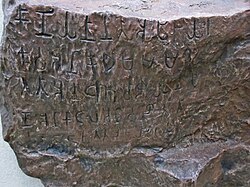
[[File:Mangulam inscription.jpg|thumb | [[File:Mangulam inscription.jpg|thumb|[[Mangulam]] inscription dated 3rd century BCE]] | ||
Parts of the [[Sangam literature]] in Tamil are attributed to Jains. | Parts of the [[Sangam literature]] in Tamil are attributed to Jains. Tamil Jain texts such as the ''[[Cīvaka Cintāmaṇi]]'' and ''[[Nālaṭiyār]]'' are credited to Digambara Jain authors.{{sfn|Cort|1998|p=163}}{{sfn|Dundas|2002|p=116–117}} These texts have seen interpolations and revisions. For example, it is generally accepted now that the Jain nun Kanti inserted a 445-verse poem into ''Cīvaka Cintāmaṇi'' in the 12th century.{{sfn|Zvelebil|1992|pp=37–38}}{{sfn|Spuler|1952|pp=24–25, context: 22–27}} The Tamil Jain literature, according to Dundas, has been "lovingly studied and commented upon for centuries by Hindus as well as Jains".{{sfn|Dundas|2002|p=116–117}} The themes of two of the Tamil epics, including the ''Silapadikkaram'', have an embedded influence of Jainism.{{sfn|Dundas|2002|p=116–117}} | ||
Some scholars believe that the author of the oldest extant work of literature in Tamil (3rd century BCE), [[Tolkāppiyam]], was a Jain.<ref name=Encyclopaedia>{{Cite book | last = Singh | first = Narendra | title = Encyclopaedia of Jainism | publisher = Anmol Publications | year = 2001 | pages = 3144 | url = https://books.google.com/books?id=pHZwgrLlOkUC | isbn = 978-81-261-0691-2}}</ref> | |||
[[S. Vaiyapuri Pillai]] suggests that Tolkappiyar was a Jain scholar well-versed in the Aintiram grammatical system and posits a later date, placing him in southern Kerala around the 5th century CE. Notably, Tolkappiyam incorporates several Sanskrit and Prakrit loanwords, reflecting its historical and linguistic context.<ref>{{cite book |title=History of Tamil Language and Literature (Beginning to 1000 A.D.) |author=Prof. S. Vaiyapuri Pillai |publisher= |year=1956 |page=62-68}}</ref> | |||
A number of Tamil-Brahmi inscriptions have been found in Tamil Nadu that date from the 3rd century BCE. They are regarded to be associated with Jain monks and lay devotees.<ref>Early Tamil epigraphy from the earliest times to the sixth century A.D. Iravatham Mahadevan, Harvard University Press, 2003</ref><ref>http://jainsamaj.org/rpg_site/literature2.php?id=595&cat=42 Recent Discoveries of Jaina Cave Inscriptions in Tamilnadu by Iravatham Mahadevan</ref> | |||
Some scholars consider the [[Tirukkural]] by [[Valluvar]] to be the work by a Jain.<ref>Tirukkural, Vol. 1, S.M. Diaz, Ramanatha Adigalar Foundation, 2000,</ref><ref>Tiruvalluvar and his Tirukkural, Bharatiya Jnanapith, 1987</ref><ref>The Kural, P. S. Sundaram, Penguin Classics, 1987</ref> It emphatically supports [[moral vegetarianism]] (Chapter 26) and states that giving up animal sacrifice is worth more than a thousand offerings in fire (verse 259).<ref>{{cite book|last=Das|first= G. N.|year= 1997| title= Readings from Thirukkural | publisher=Abhinav Publications|isbn= 8-1701-7342-6|url= https://books.google.com/books?id=pDZilIimNRIC&pg=PA11 |pages=11–12}}</ref><ref>{{cite book |author=A. A. Manavalan |title=Essays and Tributes on Tirukkural (1886–1986 AD) |year=2009 |publisher=International Institute of Tamil Studies |location = Chennai|edition = 1|page=128}}</ref> | |||
[[Silappatikaram]], a major work in Tamil literature, was written by a Samaṇa(jain), [[Ilango Adigal]]. It describes the historical events of its time and also of the then-prevailing religions, Jainism, and [[Shaivism]]. The main characters of this work, [[Kannagi (Tamil mythology)|Kannagi]] and [[Kovalan]], who have a divine status among Tamils, were Jains. | |||
According to [[George L. Hart]], the legend of the [[Tamil Sangams]] or "literary assemblies" was based on the Jain ''sangham'' at [[Madurai]]: | |||
<blockquote>There was a permanent Jaina assembly called a Sangha established about 604 CE in Maturai. It seems likely that this assembly was the model upon which tradition fabricated the cangkam legend."<ref>The Milieu of the Ancient Tamil Poems, Prof. George Hart</ref></blockquote> | |||
Jainism began to decline around the 8th century, with many Tamil kings embracing Hindu religions, especially [[Shaivism]]. Still, the [[Chalukya dynasty|Chalukya]], [[Pallava dynasty|Pallava]] and [[Pandya Dynasty|Pandya]] dynasties embraced Jainism. | |||
Jain scholars also contributed to [[Kannada literature]].{{sfn|Cort|1998|p=164}} The Digambara Jain texts in Karnataka are unusual in having been written under the patronage of kings and regional aristocrats. They describe warrior violence and martial valor as equivalent to a "fully committed Jain ascetic", setting aside Jainism's absolute non-violence.{{sfn|Dundas|2002|pp=118–120}} | Jain scholars also contributed to [[Kannada literature]].{{sfn|Cort|1998|p=164}} The Digambara Jain texts in Karnataka are unusual in having been written under the patronage of kings and regional aristocrats. They describe warrior violence and martial valor as equivalent to a "fully committed Jain ascetic", setting aside Jainism's absolute non-violence.{{sfn|Dundas|2002|pp=118–120}} | ||
| Line 178: | Line 227: | ||
== See also == | == See also == | ||
{{Portal|Literature}} | |||
* [[List of Jain texts]] | |||
* [[Champat Rai Jain]] | * [[Champat Rai Jain]] | ||
* [[A.N. Upadhye]] | * [[A.N. Upadhye]] | ||
| Line 183: | Line 234: | ||
* [[Agama (Hinduism)]] | * [[Agama (Hinduism)]] | ||
* [[Āgama (Buddhism)]] | * [[Āgama (Buddhism)]] | ||
==References== | ==References== | ||
| Line 192: | Line 240: | ||
===Sources=== | ===Sources=== | ||
* {{citation |last=Balcerowicz |first=Piotr |author-link=Piotr Balcerowicz |title=Essays in Jaina Philosophy and Religion|url={{Google books|NcRpfZcIhLoC|page | * {{citation |last=Balcerowicz |first=Piotr |author-link=Piotr Balcerowicz |title=Essays in Jaina Philosophy and Religion|url={{Google books|NcRpfZcIhLoC|page=|plainurl=yes}} |year=2003|publisher=[[Motilal Banarsidass]] |isbn=978-81-208-1977-1 }} | ||
* {{citation | | * {{citation |last=Chatterjee |first=Asim Kumar |title=A Comprehensive History of Jainism: From the Earliest Beginnings to AD 1000|url={{Google books|IH7XAAAAMAAJ|page=|plainurl=yes}}|year=2000|publisher=Munshiram Manoharlal|isbn=978-81-215-0931-2 }} | ||
* {{citation | * {{citation |last=Cort |first=John E. |author-link=John E. Cort |year=1995 |title=The Jaina Knowledge Warehouses: Traditional Libraries in India |publisher=Journal of the American Oriental Society |volume=115 |issue=1 }} | ||
* {{citation |editor-last=Cort |editor-first=John E. |title=Open Boundaries: Jain Communities and Cultures in Indian History |url={{Google books|yoHfm7BgqTgC|plainurl=yes}} |publisher=SUNY Press |date=1998 |isbn=978-0-7914-3785-8 }} | * {{citation |editor-last=Cort |editor-first=John E. |editor-link=John E. Cort |title=Open Boundaries: Jain Communities and Cultures in Indian History |url={{Google books|yoHfm7BgqTgC|plainurl=yes}} |publisher=SUNY Press |date=1998 |isbn=978-0-7914-3785-8 }} | ||
* {{citation|last=Cort|first=John E.|title=Framing the Jina: Narratives of Icons and Idols in Jain History|date=2010|url=https://books.google.com/books?id=MDBpq23-0QoC|orig-year=1953|publisher=[[Oxford University Press]]|isbn=978-0-19-538502-1 | * {{citation |last=Cort |first=John E. |author-link=John E. Cort |title=Framing the Jina: Narratives of Icons and Idols in Jain History |date=2010 |url=https://books.google.com/books?id=MDBpq23-0QoC |orig-year=1953 |publisher=[[Oxford University Press]] |isbn=978-0-19-538502-1 }} | ||
*{{citation |last1=Cush |first1=Denise |last2=Robinson |first2=Catherine |last3=York |first3=Michael |title=Encyclopedia of Hinduism |url={{Google books|3N4mGlbutbgC|plainurl=yes}} |year=2012 |publisher=Routledge |isbn=978-1-135-18978-5 | * {{citation |last1=Cush |first1=Denise |last2=Robinson |first2=Catherine |last3=York |first3=Michael |title=Encyclopedia of Hinduism |url={{Google books|3N4mGlbutbgC|plainurl=yes}} |year=2012 |publisher=Routledge |isbn=978-1-135-18978-5 }} | ||
* {{citation |last=Dalal |first=Roshen |author-link=Roshen Dalal |title=The Religions of India: A Concise Guide to Nine Major Faiths |url={{Google books|pNmfdAKFpkQC|page | * {{citation |last=Dalal |first=Roshen |author-link=Roshen Dalal |title=The Religions of India: A Concise Guide to Nine Major Faiths |url={{Google books|pNmfdAKFpkQC|page=|plainurl=yes}} |date=2010 |orig-year=2006 |publisher=Penguin books|isbn=978-0-14-341517-6 }} | ||
* {{citation |last=Dundas |first=Paul |author-link=Paul Dundas |title=The Jains |url={{Google books|X8iAAgAAQBAJ|page=|plainurl=yes}} |edition=2nd |date=2002 |orig-year=1992 |publisher=Routledge |isbn=978-0-415-26605-5 |location=London and New York }} | |||
* {{citation |last=Dundas |first=Paul |author-link=Paul Dundas |title=The Jains |url={{Google books|X8iAAgAAQBAJ|page | * {{citation |last=Dundas |first=Paul |editor-last=Olivelle |editor-first=Patrick |title=Between the Empires : Society in India 300 BCE to 400 CE |url={{Google books|efaOR_-YsIcC|page=|plainurl=yes}} |year=2006 |publisher=Oxford University Press |isbn=978-0-19-977507-1 }} | ||
* {{citation |first=Paul | * {{citation |last=Finegan |first=Jack |title=An Archaeological History of Religions of Indian Asia|url={{Google books|BrDXAAAAMAAJ|page=|plainurl=yes}}|year=1989|publisher=Paragon House|isbn=978-0-913729-43-4 }} | ||
* {{citation |first=Jack | * {{citation |last=Gheverghese |first=Joseph George |title=Indian Mathematics: Engaging With The World From Ancient To Modern Times |url=https://books.google.com/books?id=XIj4DAAAQBAJ |year=2016 |publisher=World Scientific |isbn=9781786340603 }} | ||
* {{citation |title= | * {{citation |last=Jacobi |first=Hermann |author-link=Hermann Jacobi |url=http://www.sacred-texts.com/jai/sbe22/sbe2200.htm |title=The Ācāranga Sūtra |publisher=The Clarendon Press |year=1884 |isbn=0-7007-1538-X |editor-first=F. Max |editor-last=Müller |editor-link=Max Müller |series=[[Sacred Books of the East]] |volume=22, Part 1 |location=Oxford |language=en }} | ||
* {{citation |first=Champat Rai |last=Jain |author-link=Champat Rai Jain |title=Risabha Deva - The Founder of Jainism |publisher=The Indian Press Limited |location=[[Allahabad]] |date=1929 |url=https://archive.org/details/RisabhaDeva-TheFounderOfJainism |quote={{PD-notice}} |ref={{sfnref|Champat Rai Jain|1929}} }} | |||
* {{citation |last=Jain |first=Champat Rai |title=The Practical Dharma |url=https://archive.org/details/ThePracticalDharma |year=1929 |publisher=The Indian Press Ltd. |quote={{PD-notice}} |ref={{sfnref|Champat Rai Jain|1929b}} }} | * {{citation |last=Jain |first=Champat Rai |title=The Practical Dharma |url=https://archive.org/details/ThePracticalDharma |year=1929 |publisher=The Indian Press Ltd. |quote={{PD-notice}} |ref={{sfnref|Champat Rai Jain|1929b}} }} | ||
*{{citation|last=Jain|first=Vijay K.|title=Acharya Umasvami's Tattvarthsutra|date=2011|url=https://books.google.com/books?id=zLmx9bvtglkC|edition=1st|location=[[Uttarakhand]]|publisher=[[Vikalp Printers]]|isbn=81-903639-2-1|quote={{PD-notice}}|ref={{sfnref|Vijay K. Jain|2011}}|author-link=Vijay K. Jain}} | * {{citation |last1=Jain |first1=Sagarmal |author-link1=Sagarmal Jain |last2=Pandey |first2=Shreeprakash |author-link2=Shreeprakash Pandey |title=Jainism in a Global Perspective Collection of Jain papers of 1993 Parliament of World Religions, Chicago |year=1998 |publisher=Parshwanath Vidyapith Pubs. |ref={{sfnref|Sagarmal Jain|Shreeprakash Pandey|1998}} }} | ||
* {{citation |last=Jain|first=Vijay K.|title=Acharya Umasvami's Tattvarthsutra|date=2011|url=https://books.google.com/books?id=zLmx9bvtglkC|edition=1st|location=[[Uttarakhand]]|publisher=[[Vikalp Printers]]|isbn=978-81-903639-2-1|quote={{PD-notice}}|ref={{sfnref|Vijay K. Jain|2011}}|author-link=Vijay K. Jain}} | |||
* {{citation |last=Jain |first=Vijay K. |author-link=Vijay K. Jain |title=Acharya Amritchandra's Purushartha Siddhyupaya: Realization of the Pure Self, With Hindi and English Translation |url=https://books.google.com/books?id=4iyUu4Fc2-YC |date=2012 |publisher=[[Vikalp Printers]] |isbn=978-81-903639-4-5 |quote={{PD-notice}} |ref={{sfnref|Vijay K. Jain|2012}} }} | * {{citation |last=Jain |first=Vijay K. |author-link=Vijay K. Jain |title=Acharya Amritchandra's Purushartha Siddhyupaya: Realization of the Pure Self, With Hindi and English Translation |url=https://books.google.com/books?id=4iyUu4Fc2-YC |date=2012 |publisher=[[Vikalp Printers]] |isbn=978-81-903639-4-5 |quote={{PD-notice}} |ref={{sfnref|Vijay K. Jain|2012}} }} | ||
* {{citation |last=Jain |first=Vijay K. |title=Ācārya Samantabhadra's Ratnakarandaka-śrāvakācāra: The Jewel-casket of Householder's Conduct |date=2016 |publisher=[[Vikalp Printers]] |isbn=978-81-903639-9-0 |url={{Google books|87AnDAAAQBAJ|page | * {{citation |last=Jain |first=Vijay K. |title=Ācārya Samantabhadra's Ratnakarandaka-śrāvakācāra: The Jewel-casket of Householder's Conduct |date=2016 |publisher=[[Vikalp Printers]] |isbn=978-81-903639-9-0 |url={{Google books|87AnDAAAQBAJ|page=|plainurl=yes}} |quote={{PD-notice}} |ref={{sfnref|Vijay K. Jain|2016}} }} | ||
*{{ | * {{citation |last=Jaini |first=Jagmandar-lāl |url=https://books.google.com/books?id=qN82XwAACAAJ |title=Gommatsara Jiva-kanda |year=1927 }} [https://archive.org/download/sacredbooksofthe029558mbp Alt URL] | ||
* {{citation |last=Jaini |first=Padmanabh S. |author-link=Padmanabh Jaini |title=Gender and Salvation: Jaina Debates on the Spiritual Liberation of Women |url={{Google books|GRA-uoUFz3MC|plainurl=yes}} |date=1991 |isbn=978-0-520-06820-9 |publisher=University of California Press }} | * {{citation |last=Jaini |first=Padmanabh S. |author-link=Padmanabh Jaini |title=Gender and Salvation: Jaina Debates on the Spiritual Liberation of Women |url={{Google books|GRA-uoUFz3MC|plainurl=yes}} |date=1991 |isbn=978-0-520-06820-9 |publisher=University of California Press }} | ||
* {{citation |last=Jaini |first=Padmanabh S. |title=The Jaina Path of Purification |url={{Google books|wE6v6ahxHi8C|page | * {{citation |last=Jaini |first=Padmanabh S. |title=The Jaina Path of Purification |url={{Google books|wE6v6ahxHi8C|page=|plainurl=yes}} |date=1998 |orig-year=1979 |publisher=[[Motilal Banarsidass]] |location=Delhi |isbn=978-81-208-1578-0 }} | ||
* {{citation |first=W.J. | * {{citation |last=Johnson |first=W.J. |title=Harmless Souls: Karmic Bondage and Religious Change in Early Jainism with Special Reference to Umāsvāti and Kundakunda|url={{Google books|vw8OUSfQbV4C|page=|plainurl=yes}}|year=1995|publisher=Motilal Banarsidass |isbn=978-81-208-1309-0 }} | ||
* {{Citation | last1 =Jones | first1 =Constance | last2 =Ryan | first2 =James D. | year =2007 | title =Encyclopedia of Hinduism | publisher =Infobase Publishing | url={{Google books|OgMmceadQ3gC|page | * {{Citation |last1=Jones |first1=Constance |last2=Ryan |first2=James D. |year=2007 |title=Encyclopedia of Hinduism |publisher=Infobase Publishing |url={{Google books|OgMmceadQ3gC|page=|plainurl=yes}} |isbn=978-0-8160-5458-9}} | ||
* {{citation |editor-last=Melton |editor-first=J. Gordon |editor-link=J. Gordon Melton |editor-last2=Baumann |editor-first2=Martin | * {{citation |last=Kapadia |first=Hiralal Rasikdas |title=A History Of The Canonical Literature Of The Jainas |url=https://archive.org/details/in.ernet.dli.2015.236903/page/n87/mode/2up?view=theate |date=1941 }} | ||
* {{citation |last=Leumann |first=Ernst |title=An outline of the Āvaśyaka literature |publisher=L. D. Institute of Indology |year=2010 |isbn=978-81-85857-32-9 }} | |||
* {{citation |editor-last=Melton |editor-first=J. Gordon |editor-link=J. Gordon Melton |editor-last2=Baumann |editor-first2=Martin |title=Religions of the World: A Comprehensive Encyclopedia of Beliefs and Practices |url=https://books.google.com/books?id=v2yiyLLOj88C |edition=2nd |series=Vol. One: A-B |publisher=[[ABC-CLIO]] |date=2010 |isbn=978-1-59884-204-3}} | |||
* {{citation |last=Shah |first=Natubhai |title=Jainism: The World of Conquerors |url={{Google books|qLNQKGcDIhsC|plainurl=yes}} |volume=I |date=2004 |orig-year=First published in 1998 |publisher=[[Motilal Banarsidass]] |isbn=978-81-208-1938-2 |ref={{sfnref|Natubhai Shah|2004}} }} | * {{citation |last=Shah |first=Natubhai |title=Jainism: The World of Conquerors |url={{Google books|qLNQKGcDIhsC|plainurl=yes}} |volume=I |date=2004 |orig-year=First published in 1998 |publisher=[[Motilal Banarsidass]] |isbn=978-81-208-1938-2 |ref={{sfnref|Natubhai Shah|2004}} }} | ||
* {{citation |last=Singh |first=Upinder |author-link=Upinder Singh |title=A History of Ancient and Early Medieval India: From the Stone Age to the 12th Century |url=https://books.google.com/books?id=Pq2iCwAAQBAJ |publisher=[[Pearson Education]] |date=2016 |isbn=978-93-325-6996-6 |ref={{sfnref|Upinder Singh|2016}} }} | * {{citation |last=Singh |first=Upinder |author-link=Upinder Singh |title=A History of Ancient and Early Medieval India: From the Stone Age to the 12th Century |url=https://books.google.com/books?id=Pq2iCwAAQBAJ |publisher=[[Pearson Education]] |date=2016 |isbn=978-93-325-6996-6 |ref={{sfnref|Upinder Singh|2016}} }} | ||
* {{citation |last=Spuler |first=Bertold |title=Handbook of Oriental Studies |url={{Google books|Kx4uqyts2t4C|plainurl=yes}} |year=1952 |publisher=Brill |isbn=978-90-04-04190-5 }} | * {{citation |last=Spuler |first=Bertold |title=Handbook of Oriental Studies |url={{Google books|Kx4uqyts2t4C|plainurl=yes}} |year=1952 |publisher=Brill |isbn=978-90-04-04190-5 }} | ||
* {{citation |last=Umāsvāti |first= Umaswami |title=That which is (Translator: Nathmal Tatia) |url={{Google books|0Rw4RwN9Q1kC|page | * {{citation |last=Umāsvāti |first= Umaswami |title=That which is (Translator: Nathmal Tatia) |url={{Google books|0Rw4RwN9Q1kC|page=|plainurl=yes}} |year=1994 |publisher=Rowman & Littlefield |isbn=978-0-06-068985-8 }} | ||
* {{citation |last=von Glasenapp |first=Helmuth |author-link=Helmuth von Glasenapp |others=[[Shridhar B. Shrotri]] (trans.) |title=Jainism: An Indian Religion of Salvation |trans-title=Der Jainismus: Eine Indische Erlosungsreligion |url={{Google books|WzEzXDk0v6sC|page | * {{citation |last=von Glasenapp |first=Helmuth |author-link=Helmuth von Glasenapp |others=[[Shridhar B. Shrotri]] (trans.) |title=Jainism: An Indian Religion of Salvation |trans-title=Der Jainismus: Eine Indische Erlosungsreligion |url={{Google books|WzEzXDk0v6sC|page=|plainurl=yes}} |publisher=[[Motilal Banarsidass]] (Reprint: 1999) |year=1925 |location=Delhi |isbn=978-81-208-1376-2 }} | ||
*Winternitz | * {{citation |last=Winternitz |first=Maurice |year=1972 |title=A History of Indian Literature Vol. II. Buddhist Literature and Jaina Literature |edition=2nd |publisher=[[University of Calcutta]]}} | ||
* {{citation |last=Zvelebil |first=Kamil |title=Companion Studies to the History of Tamil Literature|url={{Google books|qAPtq49DZfoC|page | * {{citation |last=Zvelebil |first=Kamil |title=Companion Studies to the History of Tamil Literature|url={{Google books|qAPtq49DZfoC|page=|plainurl=yes}}|year=1992|publisher=Brill Academic|isbn=978-90-04-09365-2}} | ||
== Further reading == | == Further reading == | ||
| Line 228: | Line 280: | ||
* {{citation|last=Dalal|first=Roshen|title=The Religions of India: A Concise Guide to Nine Major Faiths|url=https://books.google.com/books?id=pNmfdAKFpkQC|year=2010|publisher=[[Penguin books]]|isbn=978-0-14-341517-6|author-link=Roshen Dalal}} | * {{citation|last=Dalal|first=Roshen|title=The Religions of India: A Concise Guide to Nine Major Faiths|url=https://books.google.com/books?id=pNmfdAKFpkQC|year=2010|publisher=[[Penguin books]]|isbn=978-0-14-341517-6|author-link=Roshen Dalal}} | ||
* {{citation|last=Stevenson|first=John|title=The Kalpa Sutra and Nava Tatva (tr. from Magadhi)|url=https://archive.org/stream/kalpasutranavata00stevrich#page/n3/mode/2up|year=1848|publisher=Bernard Quaritch, London}} | * {{citation|last=Stevenson|first=John|title=The Kalpa Sutra and Nava Tatva (tr. from Magadhi)|url=https://archive.org/stream/kalpasutranavata00stevrich#page/n3/mode/2up|year=1848|publisher=Bernard Quaritch, London}} | ||
* {{citation| | * {{citation|first=Edward|last=Thomas|title=Jainism|url=https://archive.org/stream/jainism_00thom#page/n3/mode/2up|year=1877|publisher=London, Trübner & co.}} | ||
* {{citation| | * {{citation|first=Hermann|last=Jacobi|title=Jaina Sutras Part I (Akaranga Sutra & Kalpa Sutra)|url=https://archive.org/stream/gainastras01aco#page/n7/mode/2up|year=1884|publisher=Oxford, The Clarendon press|author-link=Hermann Jacobi |ref=none}} | ||
* {{citation| | * {{citation|first=Hermann|last=Jacobi|title=Jaina Sutras Part II (Uttarâdhyayana Sutra & Sutrakritanga Sutra)|url=https://archive.org/stream/gainastras02jaco#page/n7/mode/2up|year=1884|publisher=Oxford, The Clarendon press|author-link=Hermann Jacobi |ref=none}} | ||
* {{citation| | * {{citation|first=Sinclair|last=Stevenson|title=The Heart of Jainism|url=https://archive.org/stream/theheartofjainis00stevuoft#page/n5/mode/2up|year=1915|publisher=H. Milford: Oxford University Press}} | ||
* {{citation|author=M. S. Ramaswami Ayyangar|title=Studies in South Indian Jainism|url=https://archive.org/stream/studiesinsouthin00ramarich#page/n5/mode/2up|year=1922|publisher=Premier Press, Madras|author2=B. | * {{citation|author=M. S. Ramaswami Ayyangar|title=Studies in South Indian Jainism|url=https://archive.org/stream/studiesinsouthin00ramarich#page/n5/mode/2up|year=1922|publisher=Premier Press, Madras|author2=B. Seshagiri Rao}} | ||
=== Jain texts === | |||
Bibliography of Sanskrit and Prakrit Jain texts (primary sources), from Dundas (2002): | |||
*[[Haribhadra]]. ''Anekāntajayapatākā'', ed. H.R. Kapadia, 2 vols, Baroda, 1940 and 1947. | |||
*Āśādhara. ''Anagāradharmāmṛta'', ed. K. Shastri, New Delhi, 1975. | |||
*[[Jinasena]]. ''[[Ādipurāṇa]]'', ed. Pannalal Jain, 2 vols, Kashi, 1964 and 1965. | |||
*''[[Ācārāṅgasūtra]]'' with Śīlāṅka’s commentary, in Muni Jambūvijaya (ed.). ''[[Ācārāṅgasūtra]]m'' and ''[[Sūtrakṛtāṅgasūtra]]m'' (re-edition of Āgamodaya Samiti edition), Delhi, 1978. | |||
*[[Haribhadra]]. ''Aṣṭakaprakaraṇa'', Ahmedabad, 1918. | |||
*''Uvavāiya Suttam'', ed. G. Lalwani with English trans. by K. C. Lalwani, Jaipur, 1988. | |||
*Jinadāsa. ''Āvaśyakacūrṇi'', 2 vols, Ratlam, 1928 and 1929. | |||
*[[Bhadrabāhu]]. ''Āvaśyakaniryukti'' with [[Haribhadra]]’s commentary (reprint of Āgamodaya Samiti edition), vol. 1, Bombay, 1981. | |||
*''Āvaśyakasūtra'' in ''Dasaveyāliyasuttaṃ, Uttarajjhayaṇāiṃand Āvassayasuttaṃ'', ed. Muni Puṇyavijaya and A. M. Bhojak (Jaina Āgama Series 15), Bombay, 1977. | |||
*''Viyāhapaṇṇatti (Bhagavaī)'', in Pupphabhikkhū (ed.), ''Suttāgame'', vol. 1, Gurgaon, 1953. | |||
*Śivārya. ''Bhagavatī Ārādhanā'' with Aparājita Sūri’s commentary, ed. K. Siddhantashastri, Sholapur, 1978. | |||
*Siddhicandra. ''Bhānucandragaṇicarita'', ed. M. D. Desai, Ahmedabad/Calcutta, 1941. | |||
*[[Harisena (Jain monk)|Hariṣeṇa]]. ''Bṛhatkathākoṣa'', ed. [[A. N. Upadhye]], Bombay, 1943. | |||
*Śīlāṅka. ''Cauppannamahāpurisacariyaṃ'', ed. A. M. Bhojak, Varanasi, 1961. | |||
*[[Haribhadra]]. ''[[Dhūrtākhyāna]]'', ed. [[A. N. Upadhye]], Bombay, 1944. | |||
*[[Udayaprabha Sūri]]. ''[[Dharmābhyudayamahākāvya]]'', ed. Muni Caturavijaya and Muni Puṇyavijaya, Bombay, 1949. | |||
*Jayasiṃha Sūri. ''[[Dharmopadeśamālāvivaraṇa]]'', ed. P. L. B. Gandhi, Bombay, 1940. | |||
*Bhāskaranandi. ''[[Dhyānastava]]'', ed. S. Ohira, New Delhi, 1973. | |||
*[[Devasena (Jain monk)|Devasena]]. ''[[Darśanasāra]]'', ed. [[A. N. Upadhye]], Annals of the Bhandarkar Oriental Institute 15 (1935):198–206. | |||
*[[Siddhasena Divākara]]. ''[[Dvātriṃśikā]]'', in [[A. N. Upadhye]] (1971). | |||
*''[[Daśavaikālikasūtra]]'', ed. E. Leumann and trans. W. Schubring, in Schubring (1977). | |||
*[[Jinadatta Sūri]]. ''[[Gaṇadharasārdhaśataka]]'', ed. Gandhi, Three Apabhraṃśa Works. | |||
*[[Jinabhadra]]. ''[[Gaṇadharavāda]]'', ed. and trans. E. A. Solomon, Ahmedabad, 1966. | |||
*Punnāta Jinasena. ''[[Harivaṃśapurāṇa]]'', ed. P. Jain, Kashi, 1962. | |||
*''[[Isibhasiyaim|Isibhāsiyāiṃ]]: A Jaina Text of Early Period'', ed. W. Schubring, Ahmedabad, 1974. | |||
*Śubhacandra. ''[[Jñānārṇava]]'', ed. H. L. Jain, Kailashchandra Siddhantacharya and [[A. N. Upadhye]], Sholapur, 1977. | |||
*''[[Jñātādharmakathāḥ]]'', in Pupphabhikkhū (ed.), ''Suttāgame'', vol. 1, Gurgaon, 1953. | |||
*[[Yaśovijaya]]. ''[[Jñānasāra]]'', ed. G. P. Shah, Bombay, 1986. | |||
*''[[Jainaśilālekhasaṃgraha]]'', vol. 1, Bombay, 1928. | |||
*Svāmikumāra. ''[[Kārttikeyānuprekṣā]]'', ed. [[A. N. Upadhye]], Agas, 1978. | |||
*Jinapāla. ''[[Kharataragacchabṛhadgurvāvalī]]'', ed. Muni Jinavijaya, Bombay, 1956. | |||
*''[[Kharataragacchapaṭṭāvalīsaṃgraha]]'', ed. Muni Jinavijaya, Calcutta, 1932. | |||
*''[[Kundakunda-Bhāratī]]'', ed. Pannalal Sahityacarya, Phaltan, 1970. | |||
*Jineśvara Sūri. ''[[Kathākoṣaprakaraṇa]]'', ed. Muni Jinavijaya, Bombay, 1949. | |||
*Guṇadhara. ''[[Kaṣāyapāhuḍa]]'' with Vīrasena’s ''Jayadhavalā'' commentary, vol. 1, ed. Phulcandra, Mahendrakumar and Kailashcandra, Mathura, 1974. | |||
*[[Bhadrabāhu]]. ''[[Kalpasūtra]]'', ed. H. Jacobi, Leipzig, 1879. | |||
*[[Haribhadra]]. ''[[Lalitavistarā]]'', ed. Muni Bhānuvijaya, Ahmedabad, 1963. | |||
*[[Vaṭṭakera]]. ''[[Mūlācāra]]'', ed. K. Shastri, J. Shastri and P. Jain, 2 vols, New Delhi, 1984 and 1986. | |||
*Pradyumna Sūri. ''[[Mūlaśuddhiprakaraṇa]]'' with Devacandra Sūri’s commentary, vol. 1, ed. A. M. Bhojak, Ahmedabad, 1971. | |||
*''[[Niśīthasūtra]] with bhāṣya and cūrṇi'', ed. Amaramuni and Muni Kanhaiyalal, 4 vols, Agra, 1957–60. | |||
*[[Kundakunda]]. ''[[Niyamasāra]]'', ed. and trans. U. Sain, Lucknow, 1931. | |||
*[[Prabhācandra]]. ''[[Nyāyakumudacandra]]'', ed. M. K. Jain, Bombay, 1941. | |||
*Kakka Sūri. ''[[Nābhinandanajinoddhāraprabandha]]'', ed. B. Harakchand, Ahmedabad, 1928. | |||
*''[[Nandisuttaṃand Aṇuogaddārāiṃ]]'', ed. Muni Puṇyavijaya, D. Malvania and A. M. Bhojak (Jaina Āgama Series 1), Bombay, 1968. | |||
*Devavācaka. ''[[Nandisūtra]]m'' with [[Haribhadra]]’s commentary, ed. Muni Puṇyavijaya, Varanasi/Ahmedabad, 1966. | |||
*[[Raviṣeṇa]]. ''[[Padmapurāṇa]]'', ed. P. Jain, 3 vols, Kashi, 1958–9. | |||
*[[Hemacandra]]. ''[[Sthavirāvalīcarita]]'' or ''[[Pariśiṣṭaparvan]]'', ed. H. Jacobi, Calcutta, 1883; trans. Fynes (1998). | |||
*Yogīndu. ''[[Paramātmaprakāśa]]'', ed. [[A. N. Upadhye]], Bombay, 1937. | |||
*[[Prabhācandra]]. ''[[Prabhāvakacarita]]'', ed. Jinavijaya, Ahmedabad/Calcutta, 1940. | |||
*''[[Paiṇṇayasuttaṃ]]: Part 1'', ed. Muni Puṇyavijaya and Amritlal Mohanlal Bhojak (Jaina Āgama Series 17.1), Bombay, 1984. | |||
*Dharmasāgara. ''[[Pravacanaparīkṣā]]'', Surat, 1937. | |||
*''[[Purātanaprabandhasaṃgraha]]'', ed. Jinavijaya, Shantiniketan, 1936. | |||
*''[[Paṇṇavaṇāsuttaṃ]]'', ed. Muni Punyavijaya, D. Malvania and A. M. Bhojak (Jaina Āgama Series 9.2), Bombay, 1971. | |||
*[[Kundakunda]]. ''[[Pravacanasāra]]'' with Amṛtacandra’s commentary, ed. [[A. N. Upadhye]], Bombay, 1935. | |||
*''[[Rājapraśnīyasūtra]]'', in Pupphabhikkhū (ed.), ''Suttāgame'', vol. 2, Gurgaon, 1954. | |||
*''[[Samavāyāṅgasūtra]]m'', in Muni Jambūvijaya (ed.), ''[[Sthānāṅga Sūtra]]m'' and ''[[Samavāyāṅga Sūtra]]m'' with Abhayadeva Sūri’s commentary (re-edition of Āgamodaya Samiti Series edition), Delhi, 1985. | |||
*[[Haribhadra]]. ''[[Samarāiccakahā]]'', ed. H. Jacobi, Calcutta, 1926. | |||
*''[[Sūtrakṛtāṅgasūtra]]m'', in Muni Jambūvijaya (ed.), ''[[Ācārāṅgasūtra]]m'' and ''[[Sūtrakṛtāṅga]]m'' with Śīlāṅka’s commentary (re-edition of Āgamodaya Samiti Series edition), Delhi, 1978. | |||
*''[[Ṣaṭkhaṇḍāgama]]'', vols 2 and 3, ed. H. Jain, [[A. N. Upadhye]] and K. Siddhantashastri, Sholapur, 1976 and 1980. | |||
*''[[Sūrimantrakalpasamuccaya anekapūrvācāryapraṇīta]]'', pt. 2, ed. Muni Jambūvijaya, Bombay, 1977. | |||
*[[Śākaṭāyana]]. ''[[Strīnirvāṇakevalibhuktiprakaraṇe]]'', ed. Muni Jambūvijaya, Bhavnagar, 1974. | |||
*Jinavallabha Sūri. ''[[Saṅghapaṭṭaka]]'', in Gandhi, Three Apabhraṃśa Works. | |||
*''[[Ṣaṭprābhṛtādisaṃgraha]]'', ed. P. Soni, Bombay, 1920. | |||
*Indranandi. ''[[Śrutāvatāra]]'', in M. Shastri (ed.), ''[[Tattvānuśāsanādisaṃgrahaḥ]]'', Bombay, 1918. | |||
*Samayasundara. ''[[Sāmācārīśataka]]'', Surat, 1939. | |||
*[[Kundakunda]]. ''[[Samayasāra]]'', text, trans. and comm. by A. Chakravarti, Banaras, 1930. | |||
*''[[Sthānāṅgasūtra]]m'', in Muni Jambūvijaya (ed.), ''[[Sthānāṅga Sūtra]]m'' and ''[[Samavāyāṅga Sūtra]]m'' with Abhayadeva Sūri’s commentary (re-edition of Āgamodaya Samiti Series edition), Delhi, 1985. | |||
*Anantavīrya. ''[[Siddhiviniścayaṭīkā]]'', ed. M. K. Jain, Varanasi, 1959. | |||
*Dharmasāgara. ''[[Sūtravyākhyānavidhiśataka]]'', ed. Muni Lābhasāgara, Kapadvanj, 1961. | |||
*[[Umāsvāti]]. ''[[Tattvarthasūtra]]'', in Sanghvi, S. (1974). ''Pt. Sukhlalji’s Commentary on Tattvārthasūtra of Vācaka Umāsvāti'', trans. K. K. Dixit. Ahmedabad. | |||
*[[Akalaṅka]]. ''[[Tattvārthavārttikā]] ([[Rājavārttikam]])'', ed. Mahendrakumar, 2 vols, Kashi, 1953 and 1957. | |||
*''[[Upāsakadaśāḥ]]'', text and trans. in Hoernle, A. F. R. (1890). ''The Uvāsagadasāo or the Religious Experience of an Uvāsaga''. Calcutta. | |||
*''[[Uttarādhyayanasūtra]]'', in Pupphabhikkhū (ed.), ''Suttāgame'', vol. 2, Gurgaon, 1954. | |||
*[[Asaga]]. ''[[Vardhamānacarita]]'', ed. P. Jain, Sholapur, 1974. | |||
*Saṅghadāsa. ''[[Vasudevahiṇḍi]]'', ed. Muni Caturavijaya and Muni Puṇyavijaya, Gandhinagar, 1989. | |||
*[[Jinabhadra]]. ''[[Viśeṣāvaśyakabhāṣya]]'', ed. D. Malvania, 3 vols, Ahmedabad, 1966–8. | |||
*Hemavijaya. ''[[Vijayapraśasti]]'', ed. Hargovinddas and Bechardas, Benares, 1911. | |||
*Jinaprabha Sūri. ''[[Vidhimārgaprapā nāma Suvihitasāmācārī]]'', ed. Muni Jinavijaya, Bombay, 1941. | |||
*''[[Vipākaśrutasūtra]]'', in Pupphabhikkhū (ed.), ''Suttāgame'', vol. 1, Gurgaon, 1953. | |||
*Jinaprabha Sūri. ''[[Vividhatīrthakalpa]]'', ed. Muni Jinavijaya, Shantiniketan, 1934. | |||
*[[Bhāvasena]]. ''[[Viśvatattvaprakāśa]]'', ed. V. Johrapurkar, Sholapur, 1964. | |||
*[[Haribhadra]]. ''[[Yogabindu]]'', ed. and trans. K. K. Dixit, Ahmedabad, 1968. | |||
*[[Haribhadra]]. ''[[Yogadṛṣṭisamuccaya]]'', ed. and trans. K. K. Dixit, Ahmedabad, 1970. | |||
*[[Hemacandra]]. ''[[Yogaśāstra]]'', ed. Muni Jambūvijaya, 3 vols, Bombay, 1977–86. | |||
==External links== | ==External links== | ||
* [https://www.wisdomlib.org/jainism Jainism books – Wisdom Library] | |||
* [http://www.atmadharma.com/jainbooks.html Jain Shastras | * [https://jainelibrary.org/ Jain eLibrary – Online collection of Jain Literature] | ||
* [https://jainqq.org/ Jain Quantum - Jain Literature Search Engine] | |||
* [http://www.claysanskritlibrary.org/ Clay Sanskrit Library] | * [http://www.atmadharma.com/jainbooks.html Jain Shastras] | ||
* | * {{Cite web|title=Jain Agams|url=http://jainworld.com/literature/jain_agams.asp|url-status=live|website=JainWorld.com|archive-url=https://web.archive.org/web/20150214085724/http://jainworld.com/literature/jain_agams.asp|archive-date=14 February 2015}} | ||
* [http://www.claysanskritlibrary.org/ Clay Sanskrit Library] {{Webarchive|url=https://web.archive.org/web/20190707040843/http://www.claysanskritlibrary.org/ |date=7 July 2019 }} | |||
*{{Cite web|title=Sacred texts (Jainism)|url=https://www.bl.uk/sacred-texts/themes/jainism|website=[[The British Library]]|access-date=9 October 2019|archive-date=12 July 2023|archive-url=https://web.archive.org/web/20230712072655/https://www.bl.uk/sacred-texts/themes/jainism|url-status=dead}} | |||
{{Jain Agamas}} | {{Jain Agamas}} | ||
Latest revision as of 18:44, 6 January 2026
| Part of a series on |
| Jainism |
|---|
 |

Jain literature (Sanskrit: जैन साहित्य) refers to the literature of the Jain religion. It is a vast and ancient literary tradition, which was initially transmitted orally. The oldest surviving material is contained in the canonical Jain Agamas, which are written in Ardhamagadhi, a Prakrit (Middle-Indo Aryan) language. Various commentaries were written on these canonical texts by later Jain monks. Later works were also written in other languages, like Sanskrit and Maharashtri Prakrit.
Jain literature is primarily divided between the canons of the Digambara and Śvētāmbara orders. These two main sects of Jainism do not always agree on which texts should be considered authoritative.
More recent Jain literature has also been written in other languages, like Marathi, Tamil, Rajasthani, Dhundari, Marwari, Hindi, Gujarati, Kannada, Malayalam and more recently in English.
Origins: The Oral Tradition (Śrutajñāna)[edit | edit source]

According to Jain tradition, the teachings that form the basis of their scriptures are eternal.[1] It's believed that in each universal time cycle, twenty-four tīrthaṅkaras reveal these truths.[1] The first tīrthaṅkara of the current cycle, Ṛṣabhanātha, is considered the original source of the teachings in this era, millions of years ago.[1]
Jains believe the tīrthaṅkaras deliver their teachings in a divine preaching hall called the samavasaraṇa, which are heard simultaneously by gods, ascetics, and laypersons.[2] This divine discourse itself is known as śrutajñāna ("heard knowledge").[2] Crucially, this initial form is not a written text but an oral transmission.[3][4]
The tradition holds that the chief disciples (Gaṇadharas) of a tīrthaṅkara possess the unique ability to perfectly understand and recall this divine discourse.[3] They are credited with converting the śrutajñāna into structured scriptures (suttas), initially comprising the fourteen Pūrvas (ancient or prior texts) and the eleven Aṅgas ("limbs").[5] The complete structure is often referred to as the "twelve-limbed basket" (duvala samgagani pidaga), as the twelfth Aṅga contained the Pūrvas.[5][1][6]
For many centuries, these foundational scriptures were meticulously transmitted orally from teacher (guru) to disciple (shishya) through rigorous memorization and chanting.[citation needed] This emphasis on oral transmission was a defining characteristic of the early literary tradition.[citation needed]
Datings[edit | edit source]
While some authors date the composition of the Jain Agamas starting from the 6th century BCE,[7] some western scholars, such as Ian Whicher and David Carpenter, argue that the earliest portions of Jain canonical works were composed around the 4th or 3rd century BCE.[8][9] According to Johannes Bronkhorst it is extremely difficult to determine the age of the Jain Agamas, however:
Mainly on linguistic grounds, it has been argued that the Ācārāṅga Sūtra, the Sūtrakṛtāṅga Sūtra, and the Uttarādhyayana Sūtra are among the oldest texts in the canon.[10]
Elsewhere, Bronkhorst states that the Sūtrakṛtāṅga "dates from the 2nd century BCE at the very earliest," based on how it references the Buddhist theory of momentariness, which is a later scholastic development.[10]
The Great Schism and the Divergence of Canons[edit | edit source]
The Jaina congregation gradually split into the two sects. While Śvetāmbaras maintain that the schism happened in the 1st century CE, Digambaras hold that it happened in 2nd century BCE. Śvetāmbaras hold that the theory of Jain monks migrating from North to South is a fabricated account.[11] Some scholars specifically state that the said lore was developed after 600 CE and is inauthentic.[12]
Śvetāmara Efforts to Preserve the Canon[edit | edit source]


Śvetāmbaras convened the First Council at Pataliputra (modern Patna) around 300 BCE (traditional dating varies).[14] During this council, the monks pooled their collective memory to compile the eleven Aṅgas.[14] However, the twelfth Aṅga, the Dṛṣṭivāda, which contained the fourteen Pūrvas, was found to be incomplete or lost, as Bhadrabāhu, the only master who knew it fully, was absent.[15] While Sthulabhadra learned 10 of the 14 purvas from Bhadrabāhu when the latter was in Nepal, the full transmission was broken.[16][page needed][17][page needed]
Further efforts to consolidate the texts occurred, possibly including a council in the Udayagiri and Khandagiri Caves under King Kharavela in the 2nd century BCE.[18]
The most definitive step for the Śvetāmbara tradition was the Council of Vallabhi (in Gujarat) held around 454 or 466 CE, presided over by Devardhigaṇi Kṣamāśramaṇa.[18][19][20] Faced with the ongoing weakening of memory, the council made the historic decision to commit the entire remembered canon to writing in manuscript form.[18][19][20]
The Śvetāmbara sect considers this written canon, based on the Vallabhi council texts, to be the authentic Agamas, derived from the original oral tradition passed down from Mahavira, even while acknowledging that the twelfth Aṅga and parts of the Pūrvas are missing.[5][21]
Digambara View: The Canon Was Lost[edit | edit source]


The Digambara tradition holds a fundamentally different view.[22][23] They believe that due to the famine and the passage of time, the original Aṅgas and Pūrvas were completely lost by around the 2nd century CE.[22][23] They state that Āchārya Bhutabali (1st century CE) was the last ascetic with even partial knowledge of the original canon.[22] They maintain that Āchārya Pushpadanta and Bhutabali wrote the Ṣaṭkhaṅḍāgama (Six Part Scripture) under guidance of Dharasena, which is held to be one of the oldest Digambara texts (2nd to 3rd century CE).[22][24] Around the same time, Āchārya Gunadhar wrote Kasayapahuda (Treatise on the Passions).[22][25][24]
Consequently, Digambaras reject the scriptures compiled by the Śvetāmbaras at Pataliputra and Vallabhi, viewing them as incomplete and corrupted.[22] This disagreement over the authenticity and survival of the Agamas is a central reason for the historical schism between the two major sects.[26] Lacking the original Agamas, the Digambara tradition instead came to hold authoritative a set of later texts, believed to encapsulate the essence of the lost teachings.[27][28][29]
Svetambara Canon (The Agamas)[edit | edit source]
The canons (Siddhāntha) of the Śvētāmbaras are generally composed of the following texts:[19][30]
- Twelve Angās (limbs)
- Āyāraṃga (Jain Prakrit; Sanskrit: Ācāranga, meaning: 'On monastic conduct')
- Sūyagaḍa (Sūtrakṛtāṅga, 'On heretical systems and views')
- Ṭhāṇaṃga (Sthānāṅga, 'On different points [of the teaching]')
- Samavāyaṃga (Samavāyāṅga, 'On "rising numerical groups"')
- Viyāha-pannatti / Bhagavaī (Vyākhyā-prajñapti or Bhagavatī, 'Exposition of explanations' or 'the holy one')
- Nāyā-dhamma-kahāo (Jñāta-dharmakathānga, 'Parables and religious stories')
- Uvāsaga-dasāo (Upāsaka-daśāḥ,'Ten chapters on the Jain lay follower')
- Aṇuttarovavāiya-dasāo (Antakṛd-daśāḥ, 'Ten chapters on those who put an end to rebirth in this very life')
- Anuttaraupapātikadaśāh (Anuttaropapātika-daśāḥ, 'Ten chapters on those who were reborn in the uppermost heavens')
- Paṇha-vāgaraṇa (Praśna-vyākaraṇa, 'Questions and explanations')
- Vivāga-suya (Vipākaśruta,'Bad or good results of deeds performed')
- Diṭhīvāya (Dṛṣṭivāda) - this text was lost after 1000 years of Mahavira.[31]
- Twelve Upāṅgas (auxiliary limbs)
- Uvavāiya-sutta (Sanskrit: Aupapātika-sūtra,'Places of rebirth')
- Rāya-paseṇaijja or Rāyapaseṇiya (Rāja-praśnīya, 'Questions of the king')
- Jīvājīvābhigama (Jīvājīvābhigama, 'Classification of animate and inanimate entities')
- Pannavaṇā (Prajñāpanā, 'Enunciation on topics of philosophy and ethics')
- Sūriya-pannatti (Sūrya-prajñapti, 'Exposition on the sun')
- Jambūdvīpa-pannatti (Jambūdvīpa-prajñapti, 'Exposition on the Jambū continent and the Jain universe')
- Canda-pannatti (Candra-prajñapti, 'Exposition on the moon and the Jain universe')
- Nirayāvaliyāo or Kappiya (Narakāvalikā, 'Series of stories on characters reborn in hells')
- Kappāvaḍaṃsiāo (Kalpāvataṃsikāḥ, 'Series of stories on characters reborn in the kalpa heavens')
- Pupphiāo (Puṣpikāḥ, 'Flowers' refers to one of the stories')
- Puppha-cūliāo (Puṣpa-cūlikāḥ, 'The nun Puṣpacūlā')
- Vaṇhi-dasāo (Vṛṣṇi-daśāh, 'Stories on characters from the legendary dynasty known as Andhaka-Vṛṣṇi')
- Six Chedasūtras (Texts relating to the conduct and behaviour of monks and nuns)
- Āyāra-dasāo (Sanskrit: Ācāradaśāh, 'Ten [chapters] about monastic conduct', chapter 8 is the famed Kalpa-sūtra.)
- Bihā Kappa (Bṛhat Kalpa, '[Great] Religious code')
- Vavahāra (Vyavahāra, 'Procedure')
- Nisīha (Niśītha, 'Interdictions')
- Jīya-kappa (Jīta-kalpa, Customary rules), only accepted as canonical by Mūrti-pūjaks
- Mahā-nisīha (Mahā-niśītha, Large Niśītha), only accepted as canonical by Mūrti-pūjaks
- Four Mūlasūtras ('Fundamental texts' which are foundational works studied by new monastics)
- Dasaveyāliya-sutta (Sanskrit: Daśavaikālika-sūtra), this is memorized by all new Jain mendicants
- Uttarajjhayaṇa-sutta (Uttarādhyayana-sūtra)
- Āvassaya-sutta (Āvaśyaka-sūtra)
- Piṇḍa-nijjutti and Ogha-nijjutti (Piṇḍa-niryukti and Ogha-niryukti), only accepted as canonical by Mūrti-pūjaks
- Two Cūlikasūtras ("appendixes")
- Nandī-sūtra – discusses the five types of knowledge
- Anuyogadvāra-sūtra – a technical treatise on analytical methods, discusses Anekantavada
Miscellaneous collections[edit | edit source]
To reach the number 45, Mūrtipūjak Śvētāmbara canons contain a "Miscellaneous" collection of supplementary texts, called the Paiṇṇaya suttas (Sanskrit: Prakīrnaka sūtras, "Miscellaneous"). This section varies in number depending on the individual sub-sect (from 10 texts to over 20). They also often included extra works (often of disputed authorship) named "supernumerary Prakīrṇakas".[32] The Paiṇṇaya texts are generally not considered to have the same kind of authority as the other works in the canon. Most of these works are in Jaina Māhārāṣṭrī Prakrit, unlike the other Śvetāmbara scriptures which tend to be in Ardhamāgadhī. They are therefore most likely later works than the Aṅgas and Upāṅgas.[32]
Mūrtipūjak Jain canons will generally accept 10 Paiṇṇayas as canonical, but there is widespread disagreement on which 10 scriptures are given canonical status. The most widely accepted list of ten scriptures are the following:[32]
- Cau-saraṇa (Sanskrit: Catuḥśaraṇa, The 'four refuges')
- Āura-paccakkhāṇa (Ātura-pratyākhyāna, 'Sick man's renunciation')
- Bhatta-parinnā (Bhakta-parijñā, 'Renunciation of food')
- Saṃthāraga (Saṃstāraka, 'Straw bed')
- Tandula-veyāliya (Taṇḍula-vaicārika, 'Reflection on rice grains')
- Canda-vejjhaya (Candravedhyaka, 'Hitting the mark')
- Devinda-tthaya (Devendra-stava, 'Praise of the kings of gods')
- Gaṇi-vijjā (Gaṇi-vidyā, 'A Gaṇi's knowledge')
- Mahā-paccakkhāṇa (Mahā-pratyākhyāna, 'Great renunciation')
- Vīra-tthava (Vīra-stava, 'Great renunciation')
From the 15th century onwards, various Śvetāmbara subsects began to disagree on the composition of the canon. Mūrtipūjaks ("idol-worshippers") accept 45 texts, while the Sthānakavāsins and Terāpanthins only accept 32.[33]
Digambara Canon (The Siddhanta)[edit | edit source]
The Digambara canon of scriptures includes these two main texts, three commentaries on the main texts, and four (later) Anuyogas (expositions), consisting of more than 20 texts.[34][35]
The great commentator Virasena wrote two commentary texts on the Ṣaṭkhaṅḍāgama, the Dhaval‑tika on the first five volumes and Maha‑dhaval‑tika on the sixth volume of the Ṣaṭkhaṅḍāgama, around 780 CE.[24] Virasena and his disciple, Jinasena, also wrote a commentary on the Kaşāyapāhuda, known as Jaya‑dhavala‑tika.[25][24]
There is no agreement on the canonical Anuyogas ("Expositions"). The Anuyogas were written between the 2nd and the 11th centuries CE, either in Jaina Śaurasenī Prakrit or in Sanskrit.[36]
The expositions (Anuyogas) are divided into four literary categories:[34]
- The 'first' (Prathamānuyoga) category contains various works such as Jain versions of the Rāmāyaṇa (like the 7th-century Padma-purāṇa by Raviṣeṇa) and Mahābhārata (like Jinasena's 8th century Harivaṃśa-purāṇa), as well as 'Jain universal histories' (like Jinasena's 8th-century Ādi-purāṇa).
- The 'calculation' (Karaṇānuyoga) expositions are mainly works on Jain cosmology (such as Tiloya-paṇṇatti of Yati Vṛṣabha, dating from the 6th to 7th century) and karma (for example, Nemicandra's Gommaṭa-sāra). The Gommatsāra of Nemichandra (fl. 10th century) is one of the most important Digambara works and provides a detailed summary of Digambara doctrine.[37]
- The 'behaviour' (Caraṇānuyoga) expositions are texts about proper behaviour, such as Vaṭṭakera's Mūlācāra (on monastic conduct, 2nd century) and the Ratnakaraṇḍaka-Śrāvakācāra by Samantabhadra (5th-century) which focuses on the ethics of a layperson.[38] Works in this category also treat the purity of the soul, such as the work of Kundakunda like the Samaya-sāra, the Pancastikayasara, and Niyamasara. These works by Kundakunda (2nd century CE or later) are highly revered and have been historically influential.[39][40][41]
- The 'substance' (Dravyānuyoga) exposition includes texts about ontology of the universe and self. Umāsvāmin's comprehensive Tattvārtha-sūtra is the standard work on ontology and Pūjyapāda's (464–524 CE) Sarvārthasiddhi is one of the most influential Digambara commentaries on the Tattvārtha. This collection also includes various works on epistemology and reasoning, such as Samantabhadra's Āpta-mīmāṃsā and the works of Akalaṅka (720–780 CE), such as his commentary on the Apta-mīmāṃsā and his Nyāya-viniścaya.
Post-Canonical literature[edit | edit source]


Philosophy and Logic[edit | edit source]
There are various later Jain works that are considered post-canonical, that is to say, they were written after the closure of the Jain canons, though the different canons were closed at different historical eras, and so this category is ambiguous.
Thus, Umasvāti's (c. between 2nd-century and 5th-century CE) Tattvarthasūtra ("On the Nature of Reality") is included in the Digambara canon, but not in the Śvētāmbara canons (though they do consider the work authoritative). Indeed, the Tattvarthasūtra is considered the authoritative Jain philosophy text by all traditions of Jainism.[42][43][44] It has the same importance in Jainism as Vedanta Sūtras and Yogasūtras have in Hinduism.[42][45][46]
Other non-canonical works include various texts attributed to Bhadrabahu (c. 300 BCE) which are called the Niryuktis and Samhitas.
According to Winternitz, after the 8th century or so, Svetambara Jain writers, who had previously worked in Prakrit, began to use Sanskrit. The Digambaras also adopted Sanskrit somewhat earlier.[47] The earliest Jain works in Sanskrit include the writings of Siddhasēna Divākara (c. 650 CE), who wrote the Sanmatitarka ('The Logic of the True Doctrine') is the first major Jain work on logic written in Sanskrit.[48]
Other later works and writers include:
- Jinabhadra (6th–7th century) – author of Avasyaksutra (Jain tenets) Visesanavati and Visesavasyakabhasya (Commentary on Jain essentials).
- Mallavadin (8th century) – author of Nayacakra and Dvadasaranayacakra (Encyclopedia of Philosophy) which discusses the schools of Indian philosophy.[49]
- Haribhadra-sūri (c 8th century) is an important Svetambara scholar who wrote commentaries on the Agamas. He also wrote the Yogadṛṣṭisamuccaya, a key Jain text on Yoga which compares the Yoga systems of Buddhists, Hindus and Jains. Gunaratna (c. 1400 CE) wrote a commentary on Haribhadra's work.
- Prabhacandra (8th–9th century) – Jain philosopher, composed a 106-Sutra Tattvarthasutra and exhaustive commentaries on two key works on Jain Nyaya, Prameyakamalamartanda, based on Manikyanandi's Parikshamukham and Nyayakumudacandra on Akalanka's Laghiyastraya.
- Abhaydevsuri (1057–1135 CE) – A significant phase in the development of medieval Śvetāmbara Jain literature is marked by the Sanskrit commentaries attributed to Abhaydevsuri. His works form part of a continuous exegetical tradition that sought to systematise the interpretation of canonical texts transmitted in Ardhamāgadhī and other Prakrits through Sanskrit scholastic prose. Abhayadeva Suri is credited with authoritative vṛttis (commentaries) on several major texts of the Śvetāmbara canon. His commentary on the Sthānāṅga Sūtra, an encyclopaedic text organised through numerical classifications, plays a central role in clarifying its compressed doctrinal lists and is treated in modern scholarship as indispensable for its interpretation. A Sanskrit vṛtti is also attributed to him on the Bhagavatī Sūtra (Viyāhapannatti), one of the most extensive Jain Āgamas, in which canonical dialogues on karma theory, cosmology, ethics, and monastic discipline are explained and harmonised within broader doctrinal frameworks. In addition to canonical Āgamas, Abhayadeva Suri is associated with a commentary on Sanmatitarka, the foundational Jain philosophical treatise attributed to Siddhasena Divākara. Through this work, he contributed to the transmission and clarification of Jain logical and epistemological concepts alongside scriptural exegesis. Taken together, these commentaries illustrate a mature stage of Śvetāmbara exegetical practice in which grammatical analysis, doctrinal harmonisation, and cross-referencing across the canon were employed to stabilise interpretation and support monastic pedagogy. Abhayadeva Suri’s works circulated widely in manuscript and printed form and were incorporated into later Śvetāmbara scholastic curricula, including those associated with Tapāgaccha traditions. His commentarial corpus continues to be cited in modern academic studies of Jain canon formation, manuscript culture, and medieval Sanskritisation of Jain literature. author of Vadamahrnava (Ocean of Discussions) which is a 2,500 verse tika (Commentary) of Sanmartika and a great treatise on logic.[49]
- Hemachandra (c. 1088 – c. 1172 CE) wrote the Yogaśāstra, a textbook on yoga and Adhyatma Upanishad. His minor work Anyayogavyvaccheda gives outlines of the Jaina doctrine in form of hymns. This was later detailed by Mallisena (c. 1292 CE) in his work Syadavadamanjari.
- Vadideva (11th century) – He was a senior contemporary of Hemacandra and is said to have authored Paramananayatattavalokalankara and its voluminous commentary syadvadaratnakara that establishes the supremacy of doctrine of Syādvāda.
- There are also other important commentators on the Agamas, including Abhayadeva-sūri (c. 11th century) and Malayagiri (c. the 12th century).
- Vidyanandi (11th century) – Jain philosopher, composed the brilliant commentary on Acarya Umasvami's Tattvarthasutra, known as Tattvarthashlokavartika.
- Devendrasuri wrote the Karmagrantha which is an exposition of the Jain theory of Karma.
- Yaśovijaya (1624–1688) was a Jain scholar of Navya-Nyāya and wrote Vrttis (commentaries) on most of the earlier Jain Nyāya works by Samantabhadra, Akalanka, Manikyanandi, Vidyānandi, Prabhācandra and others in the then-prevalent Navya-Nyāya style. Yaśovijaya has to his credit a prolific literary output – more than 100 books in Sanskrit, Prakrit, Gujarati and Rajasthani. He is also famous for Jnanasara (essence of knowledge) and Adhayatmasara (essence of spirituality).
- The Lokaprakasa of Vinayavijaya was written in the 17th century CE.
- Srivarddhaeva (aka Tumbuluracarya) wrote a Kannada commentary on Tattvarthadigama-sutra.
- Atmasiddhi Shastra is a spiritual treatise in verse, composed in Gujarati by the nineteenth century Jain saint, philosopher poet Shrimad Rajchandraji (1867–1901) which comprises 142 verses explaining the fundamental philosophical truths about the soul and its liberation. It propounds six fundamental truth on soul which are also known as Satapada (six steps).
- The Saman Suttam is a compilation of ancient texts and doctrines recognised by all Jain sects, assembled primarily by Jinendra Varni and then examined and approved by monks of different sects and other scholars in 1974.
Grammar and Linguistics[edit | edit source]
Jainendra Vyākaraṇa of Acharya Pujyapada and Śākaṭāyana-vyākaraṇa of Śākaṭāyana (also called Pālyakīrti)[50] are both works on grammar written in c. 9th century CE.[51]
Pañcagranthi by Ācārya Buddhisāgarasūri (10th century) in poetic form, complemented with auto-commentary.[52] Siddha-Hema-Śabdānuśāsana by Acharya Hemachandra (c. 12th century CE) is considered by F. Kielhorn as the best grammar work of the Indian middle ages.[53] Hemacandra's book Kumarapalacaritra is also noteworthy.[54][55] Malayagiri, a contemporary to Hemachandra, also authored a Śabdānuśāsana, accompanied with an auto-commentary.[50]

Tamil grammar is extensively described in the oldest available grammar book for Tamil, the Tolkāppiyam (dated between 300 BCE and 300 CE) whose author was a Jain.[56] S. Vaiyapuri Pillai suggests that Tolkappiyar was a Jain scholar well-versed in the Aintiram grammatical system and posits a later date, placing him in southern Kerala around the 5th century CE. Notably, Tolkappiyam incorporates several Sanskrit and Prakrit loanwords, reflecting its historical and linguistic context.[57]
Another grammatical text Naṉṉūl (Tamil: நன்னூல்) is a work on Tamil grammar written by a Jain ascetic Pavananthi Munivar around 13th century CE. It is the most significant work on Tamil grammar after Tolkāppiyam.[58]
Prākṛta-Lakṣaṇa (The characteristic of Prakrit) is one of the earliest extant specialised grammar of Prakrit. A. F. Rudolf Hoernle opines that the grammar was written by a Jaina author.[59]
Jain acharya Hemchandra also contributed to grammar. He wrote Siddha-Hema-Śabdanuśāśana, which includes six languages: Sanskrit, the "standard" Prakrit (virtually Mahārāṣṭrī Prākrit), Śaurasenī, Māgadhī, Paiśācī, the otherwise-unattested Cūlikāpaiśācī and Apabhraṃśa (virtually Gurjar Apabhraṃśa, prevalent in the area of Gujarat and Rajasthan at that time and the precursor of Gujarati language). He gave a detailed grammar of Apabhraṃśa and also illustrated it with the folk literature of the time for better understanding. It is the only known Apabhraṃśa grammar. He wrote the grammar in the form of rules, with eight adhyayas (chapters) and its auto-commentaries, namely "Tattvaprakāśikā Bṛhadvṛtti" with "Śabdamahārṇava Nyāsa" in one year. Jayasimha Siddharaja had installed the grammar work in Patan's (historically Aṇahilavāḍa) state library. Many copies were made of it, and many schemes were announced for the study of the grammar. Scholars like Kākala Kāyastha were invited to teach it.[60] Moreover, an annual public examination was organized on the day of Jñāna-pañcamī.[61] Kielhorn regards this as best grammar of Indian middle ages.[62]
_LACMA_M.88.62.2.jpg)
The German scholar Georg Buhler wrote, "In grammar, in astronomy as well as in all branches of belles letters the achievements of the Jains have been so great that even their opponents have taken notice of them and that some of their work are of importance for European science even today. In the south where they have worked among the Dravidian peoples, they have also promoted the development of these languages. The Kanarese, Tamil, Telugu literary languages rest on the foundations erected by the Jain monks."[63]
Narrative, Poetics, and Puranas[edit | edit source]
Jaina narrative literature mainly contains stories about sixty-three prominent figures known as Salakapurusa, and people who were related to them. Some of the important works are Harivamshapurana of Jinasena (c. 8th century CE), Vikramarjuna-Vijaya (also known as Pampa-Bharata) of Kannada poet named Adi Pampa (c. 10th century CE), Pandavapurana of Shubhachandra (c. 16th century CE).
Mathematics and Cosmology[edit | edit source]
Jain literature covered multiple topics of mathematics around 150 CE including the theory of numbers, arithmetical operations, geometry, operations with fractions, simple equations, cubic equations, bi-quadric equations, permutations, combinations and logarithms.[64]
Languages[edit | edit source]
The spoken scriptural language is believed to be Magadhi Prakrit by Śvetāmbara Jains, and a form of divine sound or sonic resonance by Digambaras.[5] The Jain Agamas and their commentaries were composed mainly in Ardhamagadhi Prakrit as well as in Maharashtri Prakrit.[47]
Jains literature exists mainly in Jain Prakrit, Sanskrit, Marathi, Tamil, Rajasthani, Dhundari, Marwari, Hindi, Gujarati, Kannada, Malayalam, Telugu[65] and more recently in English.[66]
Jains have contributed to India's classical and popular literature. For example, almost all early Kannada literature and many Tamil works were written by Jains. Some of the oldest known books in Hindi and Gujarati were written by Jain scholars.[citation needed]
The first autobiography in the ancestor of Hindi, Braj Bhasha, is called Ardhakathānaka and was written by a Jain, Banarasidasa, an ardent follower of Acarya Kundakunda who lived in Agra. Many Tamil classics are written by Jains or with Jain beliefs and values as the core subject. Practically all the known texts in the Apabhramsha language are Jain works.[citation needed]
The oldest Jain literature is in Ardhamagadhi Prakrit[67] and the Jain Prakrit (the Jain Agamas, Agama-Tulya, the Siddhanta texts, etc.). Many classical texts are in Sanskrit (Tattvartha Sutra, Puranas, Kosh, Sravakacara, mathematics, Nighantus etc.). "Abhidhana Rajendra Kosha" written by Acharya Rajendrasuri, is only one available Jain encyclodaedic dictionary to understand the technical Jain terms in Ardhamagadhi Prakrit and other languages, with specific reference to Jain literature.[citation needed]
Jain literature was written in Apabhraṃśa (Kahas, rasas, and grammars), Standard Hindi (Chhahadhala, Moksh Marg Prakashak, and others), Tamil (Nālaṭiyār, Civaka Cintamani, Valayapathi, and others), and Kannada (Vaddaradhane and various other texts). Jain versions of the Ramayana and Mahabharata are found in Sanskrit, the Prakrits, Apabhraṃśa and Kannada.[citation needed]
Jain Prakrit is a term loosely used for the language of the Jain Agamas (canonical texts). The books of Jainism were written in the popular vernacular dialects (as opposed to Sanskrit), and therefore encompass a number of related dialects. Chief among these is Ardha Magadhi, which due to its extensive use has also come to be identified as the definitive form of Prakrit. Other dialects include versions of Maharashtri and Sauraseni.[19]
Manuscript Heritage and Preservation[edit | edit source]
The Jain literary tradition is notable for its large and ancient body of manuscripts.[68] The act of commissioning and donating texts, known as shastra-dana (the "gift of knowledge"), has been a traditional act of religious merit for centuries.[citation needed] This practice, by both ascetics and the laity, led to the accumulation of large manuscript collections, many of which remain unstudied.[69]
The Bhandaras (Knowledge Warehouses)[edit | edit source]
Jain manuscript libraries, or jñāna bhaṇḍāras ('knowledge warehouses'), are among the oldest surviving libraries in India.[68] They were often housed in temple basements for preservation and managed by the lay community or designated monks.[70]
These bhandaras hold hundreds of thousands of documents, including some of the earliest-known palm-leaf manuscripts from the 11th century.[citation needed] Significant historical collections are located in Patan (Gujarat), Jaisalmer (Rajasthan), and Moodabidri (Karnataka), among others.[citation needed] These collections are a primary source for the literary, religious, and social history of the regions.[citation needed]
Modern Preservation and Digitization[edit | edit source]
The manuscript collections, written on organic materials like palm leaf and paper, face constant threats from disintegration, moisture, and insect damage.[71] This has led to modern conservation and digitization efforts to preserve the texts.[71]
National and international institutions are involved in this work.[citation needed] For example, the Government of India has supported the establishment of a Centre for Jain Manuscriptology at Gujarat University, a facility dedicated to the conservation, digitization, and research of these manuscripts.[citation needed]
Influence on Indian literature[edit | edit source]

Parts of the Sangam literature in Tamil are attributed to Jains. Tamil Jain texts such as the Cīvaka Cintāmaṇi and Nālaṭiyār are credited to Digambara Jain authors.[72][73] These texts have seen interpolations and revisions. For example, it is generally accepted now that the Jain nun Kanti inserted a 445-verse poem into Cīvaka Cintāmaṇi in the 12th century.[74][75] The Tamil Jain literature, according to Dundas, has been "lovingly studied and commented upon for centuries by Hindus as well as Jains".[73] The themes of two of the Tamil epics, including the Silapadikkaram, have an embedded influence of Jainism.[73] Some scholars believe that the author of the oldest extant work of literature in Tamil (3rd century BCE), Tolkāppiyam, was a Jain.[76] S. Vaiyapuri Pillai suggests that Tolkappiyar was a Jain scholar well-versed in the Aintiram grammatical system and posits a later date, placing him in southern Kerala around the 5th century CE. Notably, Tolkappiyam incorporates several Sanskrit and Prakrit loanwords, reflecting its historical and linguistic context.[77]
A number of Tamil-Brahmi inscriptions have been found in Tamil Nadu that date from the 3rd century BCE. They are regarded to be associated with Jain monks and lay devotees.[78][79]
Some scholars consider the Tirukkural by Valluvar to be the work by a Jain.[80][81][82] It emphatically supports moral vegetarianism (Chapter 26) and states that giving up animal sacrifice is worth more than a thousand offerings in fire (verse 259).[83][84]
Silappatikaram, a major work in Tamil literature, was written by a Samaṇa(jain), Ilango Adigal. It describes the historical events of its time and also of the then-prevailing religions, Jainism, and Shaivism. The main characters of this work, Kannagi and Kovalan, who have a divine status among Tamils, were Jains.
According to George L. Hart, the legend of the Tamil Sangams or "literary assemblies" was based on the Jain sangham at Madurai:
There was a permanent Jaina assembly called a Sangha established about 604 CE in Maturai. It seems likely that this assembly was the model upon which tradition fabricated the cangkam legend."[85]
Jainism began to decline around the 8th century, with many Tamil kings embracing Hindu religions, especially Shaivism. Still, the Chalukya, Pallava and Pandya dynasties embraced Jainism.
Jain scholars also contributed to Kannada literature.[86] The Digambara Jain texts in Karnataka are unusual in having been written under the patronage of kings and regional aristocrats. They describe warrior violence and martial valor as equivalent to a "fully committed Jain ascetic", setting aside Jainism's absolute non-violence.[87]
Jain manuscript libraries called bhandaras inside Jain temples are the oldest surviving in India.[88] Jain libraries, including the Śvētāmbara collections at Patan, Gujarat and Jaiselmer, Rajasthan, and the Digambara collections in Karnataka temples, have a large number of well-preserved manuscripts.[88][89] These include Jain literature and Hindu and Buddhist texts. Almost all have been dated to about, or after, the 11th century CE.[90] The largest and most valuable libraries are found in the Thar Desert, hidden in the underground vaults of Jain temples. These collections have witnessed insect damage, and only a small portion have been published and studied by scholars.[90]
See also[edit | edit source]
References[edit | edit source]
Citations[edit | edit source]
- ↑ 1.0 1.1 1.2 1.3 von Glasenapp 1925, pp. 109–110.
- ↑ 2.0 2.1 Champat Rai Jain 1929b, p. 135.
- ↑ 3.0 3.1 Champat Rai Jain 1929b, p. 136.
- ↑ Natubhai Shah 2004, pp. 39–40.
- ↑ 5.0 5.1 5.2 5.3 Dundas 2002, pp. 60–61.
- ↑ Vijay K. Jain 2012, p. xi.
- ↑ Nagendra Kr. Singh. (2001). Encyclopedia of Jainism (Edited by Nagendra Kr. Singh). New Delhi: Anmol Publications. ISBN 81-261-0691-3 page 4308
- ↑ Yoga: The Indian Tradition. Edited by Ian Whicher and David Carpenter. London: Routledgecurzon, 2003. ISBN 0-7007-1288-7 page 64
- ↑ C. Chappie (1993) Nonviolence to Animals, Earth and Self in Asian Traditions. Albany: State University of New York Press. ISBN 0-7914-1497-3 page 5
- ↑ 10.0 10.1 Bronkhorst, Johannes. "The Formative Period of Jainism (c. 500 BCE – 200 CE)" (PDF). Brill's Encyclopedia of Jainism Online. Denison University University of Edinburgh University of Bergen University of California, Berkeley John E. Cort, Paul Dundas, Knut A. Jacobsen, Kristi L. Wiley. doi:10.1163/2590-2768_BEJO_COM_047082.
- ↑ Dikshitar, V. r Ramachandra (1932). Mauryan Polity.
- ↑ Jansari, Sushma. "Chandragupta Maurya: The creation of a national hero in India" (PDF). p. 23.
- ↑ "Suryaprajnapti Sūtra". The Schoyen Collection. Archived from the original on 15 June 2017.
- ↑ 14.0 14.1 Jacobi 1884, p. xlii.
- ↑ Leumann 2010, p. 69.
- ↑ Kapadia 1941.
- ↑ Dundas 2002.
- ↑ 18.0 18.1 18.2 Natubhai Shah 2004, p. 40.
- ↑ 19.0 19.1 19.2 19.3 Upinder Singh 2016, p. 26.
- ↑ 20.0 20.1 von Glasenapp 1925, pp. 110–111.
- ↑ von Glasenapp 1925, pp. 112–113.
- ↑ 22.0 22.1 22.2 22.3 22.4 22.5 Vijay K. Jain 2012, p. xii.
- ↑ 23.0 23.1 Upinder Singh 2016, p. 444.
- ↑ 24.0 24.1 24.2 24.3 Jaini 1998, p. 50.
- ↑ 25.0 25.1 Sagarmal Jain & Shreeprakash Pandey 1998, p. 239.
- ↑ von Glasenapp 1925, pp. 121–122.
- ↑ Vijay K. Jain 2016, p. xii.
- ↑ Jaini 1998, p. 78–81.
- ↑ von Glasenapp 1925, p. 124.
- ↑ Winternitz 1972, pp. 428–430.
- ↑ Burgess, Jas (1888). Indian antiquary a journal of oriental research vol.17.
- ↑ 32.0 32.1 32.2 Balbir, Nalini. "Prakīrṇaka-sūtras". JAINpedia.
- ↑ Balbir, Nalini. "Śvetāmbara canon". JAINpedia.
- ↑ 34.0 34.1 Dundas 2002, p. 80.
- ↑ Vijay K. Jain 2012, p. xi–xii.
- ↑ Balbir, Nalini. "Digambara canon". JAINpedia.
- ↑ Jaini 1927, p. 5.
- ↑ Jaini 1991, p. 32–33.
- ↑ Finegan 1989, p. 221.
- ↑ Balcerowicz 2003, pp. 25–34.
- ↑ Chatterjee 2000, p. 282–283.
- ↑ 42.0 42.1 Jones & Ryan 2007, pp. 439–440.
- ↑ Dundas 2006, pp. 395–396.
- ↑ Umāsvāti 1994, p. xiii.
- ↑ Johnson 1995, pp. 46–51, 91–96.
- ↑ 47.0 47.1 Winternitz 1972, p. 427.
- ↑ Qvarnström, Olle; Jainism and Early Buddhism: Essays in Honor of Padmanabh S. Jaini, page 154.
- ↑ 49.0 49.1 Jaini 1998, p. 85
- ↑ 50.0 50.1 Hartmut Scharfe (1977). Grammatical Literature.
- ↑ Deshpande, Madhav M. (1975), "Non-Pāṇinian Grammars on Savarṇa", Critical Studies in Indian Grammarians I, The Theory of Homogeneity (Savar?ya), University of Michigan Press, pp. 109–126, doi:10.3998/mpub.19360, ISBN 978-0-89148-052-5, JSTOR 10.3998/mpub.19360, retrieved 2 March 2025
{{citation}}: CS1 maint: work parameter with ISBN (link) - ↑ Bollée, Willem (2006). "Review of Pañcagranthī Vyākaraṇa of Buddhisāgarsūri. A Critical Edition. [B. L. Series 18]". Wiener Zeitschrift für die Kunde Südasiens / Vienna Journal of South Asian Studies. 50: 211–212. ISSN 0084-0084. JSTOR 24007750.
- ↑ Kielhorn, F. (1888). "A brief account of Hêmachandras Sanskrit Grammar". Wiener Zeitschrift für die Kunde des Morgenlandes. 2: 18–24. ISSN 0084-0076. JSTOR 23861252.
- ↑ Board, Pratiyogita Darpan Editorial. Pratiyogita Darpan Extra Issue Series-3 Indian History. Upkar Prakashan.
- ↑ Barodia, U. D. (1909). History and Literature of Jainism. Jain Graduates' Association.
- ↑ Hartmut Scharfe (1977). Grammatical Literature.
- ↑ Prof. S. Vaiyapuri Pillai (1956). History of Tamil Language and Literature (Beginning to 1000 A.D.). p. 62-68.
- ↑ Sadasivan, M. P. (13 January 2011). "Nannūl" (in Malayalam). State Institute of Encyclopaedic Publications. Archived from the original on 20 August 2014. Retrieved 20 August 2014.
{{cite web}}: CS1 maint: unrecognized language (link) - ↑ Hoernle, A. F. Rudolf (1880). Prakrita Lakshanam [The Characteristic of Prakrit] (1st ed.). Calcutta: Asiatic Society, Calcutta.
- ↑ 'Prastaavna', Haim Sanskrit Praveshika by Pandit Shivlal Nemchand Shah, Bhadrankar Prakashan.
- ↑ Buhler, g (1936). The Life Of Hemacandracarya.
- ↑ Kielhorn, F. (1888). "A brief account of Hêmachandras Sanskrit Grammar". Wiener Zeitschrift für die Kunde des Morgenlandes. 2: 18–24. JSTOR 23861252.
- ↑ Sailendra Nath Sen (1999). Ancient Indian History and Civilization. New Age International. p. 74. ISBN 978-81-224-1198-0.
- ↑ Gheverghese 2016, p. 23.
- ↑ Banerjee, Satya Ranjan (2005). Prolegomena to Prakritica et Jainica. The Asiatic Society. p. 61.
- ↑ "Jaina Sutras, Part II (SBE45) Index". sacred-texts.com. Retrieved 2 March 2025.
- ↑ Clark, Walter Eugene (1924). "Māgadhī and Ardhamāgadhī". Journal of the American Oriental Society. 44: 81–121. doi:10.2307/593543. ISSN 0003-0279. JSTOR 593543.
- ↑ 68.0 68.1 Cort 1995, p. 77.
- ↑ Cort 1995, p. 78.
- ↑ Cort 1995, p. 80.
- ↑ 71.0 71.1 Cort 1995, p. 81.
- ↑ Cort 1998, p. 163.
- ↑ 73.0 73.1 73.2 Dundas 2002, p. 116–117.
- ↑ Zvelebil 1992, pp. 37–38.
- ↑ Spuler 1952, pp. 24–25, context: 22–27.
- ↑ Singh, Narendra (2001). Encyclopaedia of Jainism. Anmol Publications. p. 3144. ISBN 978-81-261-0691-2.
- ↑ Prof. S. Vaiyapuri Pillai (1956). History of Tamil Language and Literature (Beginning to 1000 A.D.). p. 62-68.
- ↑ Early Tamil epigraphy from the earliest times to the sixth century A.D. Iravatham Mahadevan, Harvard University Press, 2003
- ↑ http://jainsamaj.org/rpg_site/literature2.php?id=595&cat=42 Recent Discoveries of Jaina Cave Inscriptions in Tamilnadu by Iravatham Mahadevan
- ↑ Tirukkural, Vol. 1, S.M. Diaz, Ramanatha Adigalar Foundation, 2000,
- ↑ Tiruvalluvar and his Tirukkural, Bharatiya Jnanapith, 1987
- ↑ The Kural, P. S. Sundaram, Penguin Classics, 1987
- ↑ Das, G. N. (1997). Readings from Thirukkural. Abhinav Publications. pp. 11–12. ISBN 8-1701-7342-6.
- ↑ A. A. Manavalan (2009). Essays and Tributes on Tirukkural (1886–1986 AD) (1 ed.). Chennai: International Institute of Tamil Studies. p. 128.
- ↑ The Milieu of the Ancient Tamil Poems, Prof. George Hart
- ↑ Cort 1998, p. 164.
- ↑ Dundas 2002, pp. 118–120.
- ↑ 88.0 88.1 Dundas 2002, p. 83.
- ↑ Guy, John (January 2012), "Jain Manuscript Painting", The Metropolitan Museum of Art, Heilburnn Timeline of Art History, archived from the original on 2 April 2013, retrieved 25 April 2013
- ↑ 90.0 90.1 Dundas 2002, pp. 83–84.
Sources[edit | edit source]
- Balcerowicz, Piotr (2003), Essays in Jaina Philosophy and Religion, Motilal Banarsidass, ISBN 978-81-208-1977-1
- Chatterjee, Asim Kumar (2000), A Comprehensive History of Jainism: From the Earliest Beginnings to AD 1000, Munshiram Manoharlal, ISBN 978-81-215-0931-2
- Cort, John E. (1995), The Jaina Knowledge Warehouses: Traditional Libraries in India, vol. 115, Journal of the American Oriental Society
- Cort, John E., ed. (1998), Open Boundaries: Jain Communities and Cultures in Indian History, SUNY Press, ISBN 978-0-7914-3785-8
- Cort, John E. (2010) [1953], Framing the Jina: Narratives of Icons and Idols in Jain History, Oxford University Press, ISBN 978-0-19-538502-1
- Cush, Denise; Robinson, Catherine; York, Michael (2012), Encyclopedia of Hinduism, Routledge, ISBN 978-1-135-18978-5
- Dalal, Roshen (2010) [2006], The Religions of India: A Concise Guide to Nine Major Faiths, Penguin books, ISBN 978-0-14-341517-6
- Dundas, Paul (2002) [1992], The Jains (2nd ed.), London and New York: Routledge, ISBN 978-0-415-26605-5
- Dundas, Paul (2006), Olivelle, Patrick (ed.), Between the Empires : Society in India 300 BCE to 400 CE, Oxford University Press, ISBN 978-0-19-977507-1
- Finegan, Jack (1989), An Archaeological History of Religions of Indian Asia, Paragon House, ISBN 978-0-913729-43-4
- Gheverghese, Joseph George (2016), Indian Mathematics: Engaging With The World From Ancient To Modern Times, World Scientific, ISBN 9781786340603
- Jacobi, Hermann (1884), Müller, F. Max (ed.), The Ācāranga Sūtra, Sacred Books of the East, vol. 22, Part 1, Oxford: The Clarendon Press, ISBN 0-7007-1538-X
- Jain, Champat Rai (1929), Risabha Deva - The Founder of Jainism, Allahabad: The Indian Press Limited,
 This article incorporates text from this source, which is in the public domain.
 - Jain, Champat Rai (1929), The Practical Dharma, The Indian Press Ltd., This article incorporates text from this source, which is in the public domain.
- Jain, Sagarmal; Pandey, Shreeprakash (1998), Jainism in a Global Perspective Collection of Jain papers of 1993 Parliament of World Religions, Chicago, Parshwanath Vidyapith Pubs.
- Jain, Vijay K. (2011), Acharya Umasvami's Tattvarthsutra (1st ed.), Uttarakhand: Vikalp Printers, ISBN 978-81-903639-2-1, This article incorporates text from this source, which is in the public domain.
- Jain, Vijay K. (2012), Acharya Amritchandra's Purushartha Siddhyupaya: Realization of the Pure Self, With Hindi and English Translation, Vikalp Printers, ISBN 978-81-903639-4-5, This article incorporates text from this source, which is in the public domain.
- Jain, Vijay K. (2016), Ācārya Samantabhadra's Ratnakarandaka-śrāvakācāra: The Jewel-casket of Householder's Conduct, Vikalp Printers, ISBN 978-81-903639-9-0, This article incorporates text from this source, which is in the public domain.
- Jaini, Jagmandar-lāl (1927), Gommatsara Jiva-kanda Alt URL
- Jaini, Padmanabh S. (1991), Gender and Salvation: Jaina Debates on the Spiritual Liberation of Women, University of California Press, ISBN 978-0-520-06820-9
- Jaini, Padmanabh S. (1998) [1979], The Jaina Path of Purification, Delhi: Motilal Banarsidass, ISBN 978-81-208-1578-0
- Johnson, W.J. (1995), Harmless Souls: Karmic Bondage and Religious Change in Early Jainism with Special Reference to Umāsvāti and Kundakunda, Motilal Banarsidass, ISBN 978-81-208-1309-0
- Jones, Constance; Ryan, James D. (2007), Encyclopedia of Hinduism, Infobase Publishing, ISBN 978-0-8160-5458-9
- Kapadia, Hiralal Rasikdas (1941), A History Of The Canonical Literature Of The Jainas
- Leumann, Ernst (2010), An outline of the Āvaśyaka literature, L. D. Institute of Indology, ISBN 978-81-85857-32-9
- Melton, J. Gordon; Baumann, Martin, eds. (2010), Religions of the World: A Comprehensive Encyclopedia of Beliefs and Practices, Vol. One: A-B (2nd ed.), ABC-CLIO, ISBN 978-1-59884-204-3
- Shah, Natubhai (2004) [First published in 1998], Jainism: The World of Conquerors, vol. I, Motilal Banarsidass, ISBN 978-81-208-1938-2
- Singh, Upinder (2016), A History of Ancient and Early Medieval India: From the Stone Age to the 12th Century, Pearson Education, ISBN 978-93-325-6996-6
- Spuler, Bertold (1952), Handbook of Oriental Studies, Brill, ISBN 978-90-04-04190-5
- Umāsvāti, Umaswami (1994), That which is (Translator: Nathmal Tatia), Rowman & Littlefield, ISBN 978-0-06-068985-8
- von Glasenapp, Helmuth (1925), Jainism: An Indian Religion of Salvation [Der Jainismus: Eine Indische Erlosungsreligion], Shridhar B. Shrotri (trans.), Delhi: Motilal Banarsidass (Reprint: 1999), ISBN 978-81-208-1376-2
- Winternitz, Maurice (1972), A History of Indian Literature Vol. II. Buddhist Literature and Jaina Literature (2nd ed.), University of Calcutta
- Zvelebil, Kamil (1992), Companion Studies to the History of Tamil Literature, Brill Academic, ISBN 978-90-04-09365-2
Further reading[edit | edit source]
- Rishabhanatha, in Encyclopaedia Britannica, Editors of the Encyclopaedia Britannica, 2010
- Dalal, Roshen (2010), Hinduism: An Alphabetical Guide, Penguin Books, ISBN 978-0-14-341421-6
- Dalal, Roshen (2010), The Religions of India: A Concise Guide to Nine Major Faiths, Penguin books, ISBN 978-0-14-341517-6
- Stevenson, John (1848), The Kalpa Sutra and Nava Tatva (tr. from Magadhi), Bernard Quaritch, London
- Thomas, Edward (1877), Jainism, London, Trübner & co.
- Jacobi, Hermann (1884), Jaina Sutras Part I (Akaranga Sutra & Kalpa Sutra), Oxford, The Clarendon press
- Jacobi, Hermann (1884), Jaina Sutras Part II (Uttarâdhyayana Sutra & Sutrakritanga Sutra), Oxford, The Clarendon press
- Stevenson, Sinclair (1915), The Heart of Jainism, H. Milford: Oxford University Press
- M. S. Ramaswami Ayyangar; B. Seshagiri Rao (1922), Studies in South Indian Jainism, Premier Press, Madras
Jain texts[edit | edit source]
Bibliography of Sanskrit and Prakrit Jain texts (primary sources), from Dundas (2002):
- Haribhadra. Anekāntajayapatākā, ed. H.R. Kapadia, 2 vols, Baroda, 1940 and 1947.
- Āśādhara. Anagāradharmāmṛta, ed. K. Shastri, New Delhi, 1975.
- Jinasena. Ādipurāṇa, ed. Pannalal Jain, 2 vols, Kashi, 1964 and 1965.
- Ācārāṅgasūtra with Śīlāṅka’s commentary, in Muni Jambūvijaya (ed.). Ācārāṅgasūtram and Sūtrakṛtāṅgasūtram (re-edition of Āgamodaya Samiti edition), Delhi, 1978.
- Haribhadra. Aṣṭakaprakaraṇa, Ahmedabad, 1918.
- Uvavāiya Suttam, ed. G. Lalwani with English trans. by K. C. Lalwani, Jaipur, 1988.
- Jinadāsa. Āvaśyakacūrṇi, 2 vols, Ratlam, 1928 and 1929.
- Bhadrabāhu. Āvaśyakaniryukti with Haribhadra’s commentary (reprint of Āgamodaya Samiti edition), vol. 1, Bombay, 1981.
- Āvaśyakasūtra in Dasaveyāliyasuttaṃ, Uttarajjhayaṇāiṃand Āvassayasuttaṃ, ed. Muni Puṇyavijaya and A. M. Bhojak (Jaina Āgama Series 15), Bombay, 1977.
- Viyāhapaṇṇatti (Bhagavaī), in Pupphabhikkhū (ed.), Suttāgame, vol. 1, Gurgaon, 1953.
- Śivārya. Bhagavatī Ārādhanā with Aparājita Sūri’s commentary, ed. K. Siddhantashastri, Sholapur, 1978.
- Siddhicandra. Bhānucandragaṇicarita, ed. M. D. Desai, Ahmedabad/Calcutta, 1941.
- Hariṣeṇa. Bṛhatkathākoṣa, ed. A. N. Upadhye, Bombay, 1943.
- Śīlāṅka. Cauppannamahāpurisacariyaṃ, ed. A. M. Bhojak, Varanasi, 1961.
- Haribhadra. Dhūrtākhyāna, ed. A. N. Upadhye, Bombay, 1944.
- Udayaprabha Sūri. Dharmābhyudayamahākāvya, ed. Muni Caturavijaya and Muni Puṇyavijaya, Bombay, 1949.
- Jayasiṃha Sūri. Dharmopadeśamālāvivaraṇa, ed. P. L. B. Gandhi, Bombay, 1940.
- Bhāskaranandi. Dhyānastava, ed. S. Ohira, New Delhi, 1973.
- Devasena. Darśanasāra, ed. A. N. Upadhye, Annals of the Bhandarkar Oriental Institute 15 (1935):198–206.
- Siddhasena Divākara. Dvātriṃśikā, in A. N. Upadhye (1971).
- Daśavaikālikasūtra, ed. E. Leumann and trans. W. Schubring, in Schubring (1977).
- Jinadatta Sūri. Gaṇadharasārdhaśataka, ed. Gandhi, Three Apabhraṃśa Works.
- Jinabhadra. Gaṇadharavāda, ed. and trans. E. A. Solomon, Ahmedabad, 1966.
- Punnāta Jinasena. Harivaṃśapurāṇa, ed. P. Jain, Kashi, 1962.
- Isibhāsiyāiṃ: A Jaina Text of Early Period, ed. W. Schubring, Ahmedabad, 1974.
- Śubhacandra. Jñānārṇava, ed. H. L. Jain, Kailashchandra Siddhantacharya and A. N. Upadhye, Sholapur, 1977.
- Jñātādharmakathāḥ, in Pupphabhikkhū (ed.), Suttāgame, vol. 1, Gurgaon, 1953.
- Yaśovijaya. Jñānasāra, ed. G. P. Shah, Bombay, 1986.
- Jainaśilālekhasaṃgraha, vol. 1, Bombay, 1928.
- Svāmikumāra. Kārttikeyānuprekṣā, ed. A. N. Upadhye, Agas, 1978.
- Jinapāla. Kharataragacchabṛhadgurvāvalī, ed. Muni Jinavijaya, Bombay, 1956.
- Kharataragacchapaṭṭāvalīsaṃgraha, ed. Muni Jinavijaya, Calcutta, 1932.
- Kundakunda-Bhāratī, ed. Pannalal Sahityacarya, Phaltan, 1970.
- Jineśvara Sūri. Kathākoṣaprakaraṇa, ed. Muni Jinavijaya, Bombay, 1949.
- Guṇadhara. Kaṣāyapāhuḍa with Vīrasena’s Jayadhavalā commentary, vol. 1, ed. Phulcandra, Mahendrakumar and Kailashcandra, Mathura, 1974.
- Bhadrabāhu. Kalpasūtra, ed. H. Jacobi, Leipzig, 1879.
- Haribhadra. Lalitavistarā, ed. Muni Bhānuvijaya, Ahmedabad, 1963.
- Vaṭṭakera. Mūlācāra, ed. K. Shastri, J. Shastri and P. Jain, 2 vols, New Delhi, 1984 and 1986.
- Pradyumna Sūri. Mūlaśuddhiprakaraṇa with Devacandra Sūri’s commentary, vol. 1, ed. A. M. Bhojak, Ahmedabad, 1971.
- Niśīthasūtra with bhāṣya and cūrṇi, ed. Amaramuni and Muni Kanhaiyalal, 4 vols, Agra, 1957–60.
- Kundakunda. Niyamasāra, ed. and trans. U. Sain, Lucknow, 1931.
- Prabhācandra. Nyāyakumudacandra, ed. M. K. Jain, Bombay, 1941.
- Kakka Sūri. Nābhinandanajinoddhāraprabandha, ed. B. Harakchand, Ahmedabad, 1928.
- Nandisuttaṃand Aṇuogaddārāiṃ, ed. Muni Puṇyavijaya, D. Malvania and A. M. Bhojak (Jaina Āgama Series 1), Bombay, 1968.
- Devavācaka. Nandisūtram with Haribhadra’s commentary, ed. Muni Puṇyavijaya, Varanasi/Ahmedabad, 1966.
- Raviṣeṇa. Padmapurāṇa, ed. P. Jain, 3 vols, Kashi, 1958–9.
- Hemacandra. Sthavirāvalīcarita or Pariśiṣṭaparvan, ed. H. Jacobi, Calcutta, 1883; trans. Fynes (1998).
- Yogīndu. Paramātmaprakāśa, ed. A. N. Upadhye, Bombay, 1937.
- Prabhācandra. Prabhāvakacarita, ed. Jinavijaya, Ahmedabad/Calcutta, 1940.
- Paiṇṇayasuttaṃ: Part 1, ed. Muni Puṇyavijaya and Amritlal Mohanlal Bhojak (Jaina Āgama Series 17.1), Bombay, 1984.
- Dharmasāgara. Pravacanaparīkṣā, Surat, 1937.
- Purātanaprabandhasaṃgraha, ed. Jinavijaya, Shantiniketan, 1936.
- Paṇṇavaṇāsuttaṃ, ed. Muni Punyavijaya, D. Malvania and A. M. Bhojak (Jaina Āgama Series 9.2), Bombay, 1971.
- Kundakunda. Pravacanasāra with Amṛtacandra’s commentary, ed. A. N. Upadhye, Bombay, 1935.
- Rājapraśnīyasūtra, in Pupphabhikkhū (ed.), Suttāgame, vol. 2, Gurgaon, 1954.
- Samavāyāṅgasūtram, in Muni Jambūvijaya (ed.), Sthānāṅga Sūtram and Samavāyāṅga Sūtram with Abhayadeva Sūri’s commentary (re-edition of Āgamodaya Samiti Series edition), Delhi, 1985.
- Haribhadra. Samarāiccakahā, ed. H. Jacobi, Calcutta, 1926.
- Sūtrakṛtāṅgasūtram, in Muni Jambūvijaya (ed.), Ācārāṅgasūtram and Sūtrakṛtāṅgam with Śīlāṅka’s commentary (re-edition of Āgamodaya Samiti Series edition), Delhi, 1978.
- Ṣaṭkhaṇḍāgama, vols 2 and 3, ed. H. Jain, A. N. Upadhye and K. Siddhantashastri, Sholapur, 1976 and 1980.
- Sūrimantrakalpasamuccaya anekapūrvācāryapraṇīta, pt. 2, ed. Muni Jambūvijaya, Bombay, 1977.
- Śākaṭāyana. Strīnirvāṇakevalibhuktiprakaraṇe, ed. Muni Jambūvijaya, Bhavnagar, 1974.
- Jinavallabha Sūri. Saṅghapaṭṭaka, in Gandhi, Three Apabhraṃśa Works.
- Ṣaṭprābhṛtādisaṃgraha, ed. P. Soni, Bombay, 1920.
- Indranandi. Śrutāvatāra, in M. Shastri (ed.), Tattvānuśāsanādisaṃgrahaḥ, Bombay, 1918.
- Samayasundara. Sāmācārīśataka, Surat, 1939.
- Kundakunda. Samayasāra, text, trans. and comm. by A. Chakravarti, Banaras, 1930.
- Sthānāṅgasūtram, in Muni Jambūvijaya (ed.), Sthānāṅga Sūtram and Samavāyāṅga Sūtram with Abhayadeva Sūri’s commentary (re-edition of Āgamodaya Samiti Series edition), Delhi, 1985.
- Anantavīrya. Siddhiviniścayaṭīkā, ed. M. K. Jain, Varanasi, 1959.
- Dharmasāgara. Sūtravyākhyānavidhiśataka, ed. Muni Lābhasāgara, Kapadvanj, 1961.
- Umāsvāti. Tattvarthasūtra, in Sanghvi, S. (1974). Pt. Sukhlalji’s Commentary on Tattvārthasūtra of Vācaka Umāsvāti, trans. K. K. Dixit. Ahmedabad.
- Akalaṅka. Tattvārthavārttikā (Rājavārttikam), ed. Mahendrakumar, 2 vols, Kashi, 1953 and 1957.
- Upāsakadaśāḥ, text and trans. in Hoernle, A. F. R. (1890). The Uvāsagadasāo or the Religious Experience of an Uvāsaga. Calcutta.
- Uttarādhyayanasūtra, in Pupphabhikkhū (ed.), Suttāgame, vol. 2, Gurgaon, 1954.
- Asaga. Vardhamānacarita, ed. P. Jain, Sholapur, 1974.
- Saṅghadāsa. Vasudevahiṇḍi, ed. Muni Caturavijaya and Muni Puṇyavijaya, Gandhinagar, 1989.
- Jinabhadra. Viśeṣāvaśyakabhāṣya, ed. D. Malvania, 3 vols, Ahmedabad, 1966–8.
- Hemavijaya. Vijayapraśasti, ed. Hargovinddas and Bechardas, Benares, 1911.
- Jinaprabha Sūri. Vidhimārgaprapā nāma Suvihitasāmācārī, ed. Muni Jinavijaya, Bombay, 1941.
- Vipākaśrutasūtra, in Pupphabhikkhū (ed.), Suttāgame, vol. 1, Gurgaon, 1953.
- Jinaprabha Sūri. Vividhatīrthakalpa, ed. Muni Jinavijaya, Shantiniketan, 1934.
- Bhāvasena. Viśvatattvaprakāśa, ed. V. Johrapurkar, Sholapur, 1964.
- Haribhadra. Yogabindu, ed. and trans. K. K. Dixit, Ahmedabad, 1968.
- Haribhadra. Yogadṛṣṭisamuccaya, ed. and trans. K. K. Dixit, Ahmedabad, 1970.
- Hemacandra. Yogaśāstra, ed. Muni Jambūvijaya, 3 vols, Bombay, 1977–86.
External links[edit | edit source]
- Jainism books – Wisdom Library
- Jain eLibrary – Online collection of Jain Literature
- Jain Quantum - Jain Literature Search Engine
- Jain Shastras
- "Jain Agams". JainWorld.com. Archived from the original on 14 February 2015.
- Clay Sanskrit Library Archived 7 July 2019 at the Wayback Machine
- "Sacred texts (Jainism)". The British Library. Archived from the original on 12 July 2023. Retrieved 9 October 2019.
Fourteen Purvas (The Prior Knowledge – considered totally lost) | |||||||||||||||
| Śvētāmbara Canonical Texts |
|  | |||||||||||||
| Digambara Texts |
| ||||||||||||||
Tattvartha Sutra is accepted by both Digambara and Śvetāmbara as their texts although Śvetāmbaras do not include it under canonical texts. | |||||||||||||||
| Gods | |||||
|---|---|---|---|---|---|
| Philosophy | |||||
| Branches |
| ||||
| Practices | |||||
| Literature | |||||
| Symbols |
| ||||
| Ascetics | |||||
| Scholars | |||||
| Community | |||||
| Jainism in |
| ||||
| Jainism and | |||||
| Dynasties and empires | |||||
| Related | |||||
| Lists | |||||
| Navboxes | |||||
