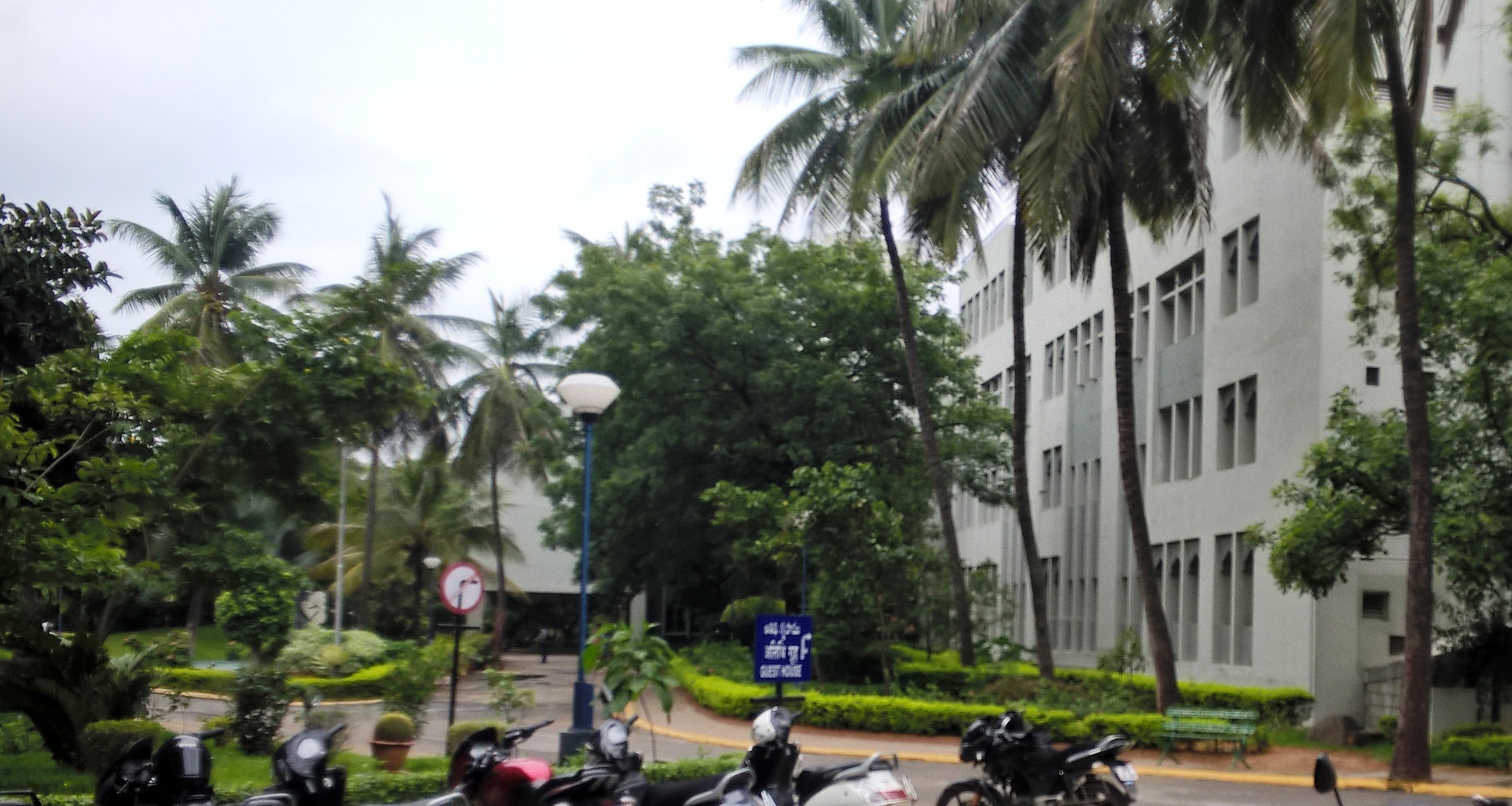
The '''Centre for Cellular and Molecular Biology''' ({{lang-hi| कोशिकीय एवं आण्विक जीवविज्ञान केंद्र}}, [[IAST]]: ''Kośikīya evam āṇavik jīvavijñāna kendra'') or '''CCMB''' is an Indian fundamental [[biotechnology|life science]] research establishment located in [[Hyderabad]] that operates under the aegis of the [[Council of Scientific and Industrial Research]]. CCMB is a designated "Centre of Excellence" by the Global Molecular and Cell Biology Network, [[UNESCO]].<ref>{{cite news |url=http://www.thehindubusinessline.in/2003/04/30/stories/2003043001921900.htm |title=CCMB develops DNA test to identify animal species |newspaper=The Hindu Business Line |date=2003-04-30 |access-date=2012-08-22 |archive-date=20 August 2012 |archive-url=https://web.archive.org/web/20120820030129/http://www.thehindubusinessline.in/2003/04/30/stories/2003043001921900.htm |url-status=dead }}</ref><ref>{{cite news|author=TNN 10 May 2006, 01.54am IST |url=http://articles.timesofindia.indiatimes.com/2006-05-10/science/27823408_1_ccmb-scientists-milk-mice-strain |archive-url=https://web.archive.org/web/20110811025557/http://articles.timesofindia.indiatimes.com/2006-05-10/science/27823408_1_ccmb-scientists-milk-mice-strain |url-status=dead |archive-date=2011-08-11 |title=CCMB identifies milk gene |date=2006-05-10 |work=[[The Times of India]] |access-date=2012-08-22}}</ref>
The '''Centre for Cellular and Molecular Biology''' ({{langx|hi| कोशिकीय एवं आण्विक जीवविज्ञान केंद्र}}, [[IAST]]: ''Kośikīya evam āṇavik jīvavijñāna kendra'') or '''CCMB''' is an Indian fundamental [[biotechnology|life science]] research establishment located in [[Hyderabad]] that operates under the aegis of the [[Council of Scientific and Industrial Research]]. CCMB is a designated "Centre of Excellence" by the Global Molecular and Cell Biology Network, [[UNESCO]].<ref>{{cite news |url=http://www.thehindubusinessline.in/2003/04/30/stories/2003043001921900.htm |title=CCMB develops DNA test to identify animal species |newspaper=Business Line|location=Chennai |date=2003-04-30 |access-date=2012-08-22 |archive-date=20 August 2012 |archive-url=https://web.archive.org/web/20120820030129/http://www.thehindubusinessline.in/2003/04/30/stories/2003043001921900.htm }}</ref><ref>{{cite news|agency=Times News Network|url=https://timesofindia.indiatimes.com/home/science/CCMB-identifies-milk-gene/articleshow/1523231.cms |archive-url=https://web.archive.org/web/20110811025557/http://articles.timesofindia.indiatimes.com/2006-05-10/science/27823408_1_ccmb-scientists-milk-mice-strain |url-status=live |archive-date=2011-08-11 |title=CCMB identifies milk gene |date=2006-05-10 |work=[[The Times of India]] |access-date=2012-08-22}}</ref>
The center collaborates with the [[University of Nebraska Medical Center]] for translational research on [[glaucoma]].<ref>{{cite press release|url=http://www.ccmb.res.in/news/2010-11/collaboration-press.pdf |title=Glaucoma Research |access-date=2012-12-01}}</ref> In addition, the centre receives funding for specific collaborative projects from establishments outside India, such as the [[National Institutes of Health]], [[Harvard Medical School]] and the [[Massachusetts Institute of Technology]] in the United States,<ref>{{cite news|url=http://www.hsph.harvard.edu/news/press-releases/new-research-reveals-the-ancestral-populations-of-india-and-their-relationships-to-modern-groups/ |title=Harvard School of Public Health » HSPH News » New research reveals the ancestral populations of India and their relationships to modern groups |newspaper=News |publisher=Hsph.harvard.edu |date=2009-09-23 |access-date=2013-04-16}}</ref><ref>{{cite web |url=http://news.webindia123.com/news/articles/India/20090924/1348386.html |archive-url=https://web.archive.org/web/20150923175219/http://news.webindia123.com/news/articles/India/20090924/1348386.html |archive-date=23 September 2015 |title=caste system existed from 'Founder' race: CCMB-Harvard-MIT study |publisher=News.webindia123.com |date=2009-09-24 |access-date=2013-04-16 }}</ref> the [[Imperial Cancer Research Fund]] and [[Cambridge University]] in the United Kingdom,<ref>{{cite web|url=http://epaper.timesofindia.com/Repository/ml.asp?Ref=TU1JUi8yMDA5LzAxLzIxI0FyMDE1MDA=&Mode=HTML&Locale=english-skin-custom |archive-url=https://web.archive.org/web/20101229105041/http://epaper.timesofindia.com/Repository/ml.asp?Ref=TU1JUi8yMDA5LzAxLzIxI0FyMDE1MDA=&Mode=HTML&Locale=english-skin-custom |archive-date=29 December 2010 |title=Modern man went into the world via India |work=The Times of India |date=2009-01-21 |access-date=2013-04-16}}</ref> the India-Japan Science Council and the [[University of Ryukyus]] in [[Japan]],<ref name="b172">{{cite book | last1=K. | first1=Shailendra | last2=Tiwari | first2=Sneham | last3=Saxena | first3=Rakhi | last4=Mathur | first4=Asha | last5=P.N. | first5=Madhavan | title=Flavivirus Encephalitis | chapter=Japanese Encephalitis: An Emerging and Spreading Arbovirosis | publisher=InTech | date=2011-09-30 | isbn=978-953-307-669-0 | doi=10.5772/22145 | doi-access=free | chapter-url=https://cdn.intechopen.com/pdfs/20874/InTech-Japanese_encephalitis_an_emerging_and_spreading_arbovirosis.pdf}}</ref><ref>{{cite journal|title=HTLV-1 Tax Specific CD8+ T Cells Express Low Levels of Tim-3 in HTLV-1 Infection: Implications for Progression to Neurological Complications |pmc=3082508 | pmid=21541358 |doi=10.1371/journal.pntd.0001030 |volume=5 |year=2011 |journal=PLOS Negl Trop Dis |article-number=e1030 | last1 = Ndhlovu | first1 = LC | last2 = Leal | first2 = FE | last3 = Hasenkrug | first3 = AM | last4 = Jha | first4 = AR | last5 = Carvalho | first5 = KI | last6 = Eccles-James | first6 = IG | last7 = Bruno | first7 = FR | last8 = Vieira | first8 = RG | last9 = York | first9 = VA | last10 = Chew | first10 = GM | last11 = Jones | first11 = RB | last12 = Tanaka | first12 = Y | last13 = Neto | first13 = WK | last14 = Sanabani | first14 = SS | last15 = Ostrowski | first15 = MA | last16 = Segurado | first16 = AC | last17 = Nixon | first17 = DF | last18 = Kallas | first18 = EG|issue=4 |doi-access=free }}</ref> [[French National Centre for Scientific Research|Centre Nationale de la Recherche Scientifique]] and the [[Pasteur Institute]] in [[France]] and the [[Volkswagen]] Foundation in [[Germany]].<ref>{{cite web |url=http://www.ccmb.res.in/about_associations.html |title=Research > Research Partners |publisher=Ccmb.res.in |access-date=2013-04-16 |archive-url=https://web.archive.org/web/20131218041613/http://www.ccmb.res.in/about_associations.html |archive-date=2013-12-18 }}</ref><ref>{{cite news |url=http://www.hindu.com/edu/2011/05/31/stories/2011053150050200.htm |title=Education Plus: Opening new vistas of research in biology |work=The Hindu |date=2011-05-31 |access-date=2013-04-16 |location=Chennai, India |archive-date=29 June 2013 |archive-url=https://archive.today/20130629115341/http://www.hindu.com/edu/2011/05/31/stories/2011053150050200.htm }}</ref>
== History ==
== History ==
CCMB was set up initially as a semi-autonomous Centre on 1 April 1977 with the Biochemistry Division of the then Regional Research Laboratory (presently, [[Indian Institute of Chemical Technology]], IICT) in [[Habsiguda]], Hyderabad forming its nucleus and Dr [[Pushpa Mittra Bhargava|P M Bhargava]] heading the new Centre. Earlier, the Governing Board of the [[Council of Scientific and Industrial Research]] (CSIR) [[New Delhi]], the apex body which constituted 44 research institutions (now 38) in the country, approved the proposal in 1976 to establish such a Centre in view of the importance of research in the frontier and multi-disciplinary areas of modern biology. During 1981-82, the CCMB was accorded the status of a full-fledged national laboratory with its own Executive Committee and Scientific Advisory Council. With major expansion plans, it was decided to relocate the Centre to a spacious campus.
CCMB was set up initially as a semi-autonomous Centre on 1 April 1977 with the Biochemistry Division of the then Regional Research Laboratory (presently, [[Indian Institute of Chemical Technology]], IICT) in [[Habsiguda]], Hyderabad forming its nucleus and Dr [[Pushpa Mittra Bhargava|P M Bhargava]] heading the new Centre. Earlier, the Governing Board of the [[Council of Scientific and Industrial Research]] (CSIR) [[New Delhi]], the apex body which constituted 44 research institutions (now 38) in the country, approved the proposal in 1976 to establish such a Centre in view of the importance of research in the frontier and multi-disciplinary areas of modern biology. During 1981–82, the CCMB was accorded the status of a full-fledged national laboratory with its own Executive Committee and Scientific Advisory Council. With major expansion plans, it was decided to relocate the centre to a spacious campus.{{citation needed|date=September 2022}}
==Former directors==
==Former directors==
The list of former directors.<ref>{{cite web|url=http://www.ccmb.res.in/about_people1.html |title=Archived copy |access-date=2014-02-23 |url-status=dead |archive-url=https://web.archive.org/web/20120722014557/http://ccmb.res.in/about_people1.html |archive-date=2012-07-22 }}</ref><ref name="Dr Rakesh Mishra appointed as the new Director of CCMB, Hyderabad">{{cite web | url=http://www.biovoicenews.com/dr-rakesh-kumar-mishra-appointed-director-centre-cellular-molecular-biology/ | title=Dr Rakesh Mishra appointed as the new Director of CCMB, Hyderabad | publisher=Bio Voice | date=21 May 2016 | access-date=10 October 2016}}</ref>
The list of former directors.<ref>{{cite web|url=http://www.ccmb.res.in/about_people1.html |title=About CCMB > Organisation Structure |access-date=2014-02-23 |archive-url=https://web.archive.org/web/20120722014557/http://ccmb.res.in/about_people1.html |archive-date=2012-07-22 }}</ref><ref name="Dr Rakesh Mishra appointed as the new Director of CCMB, Hyderabad">{{cite web | url=http://www.biovoicenews.com/dr-rakesh-kumar-mishra-appointed-director-centre-cellular-molecular-biology/ | title=Dr Rakesh Mishra appointed as the new Director of CCMB, Hyderabad | publisher=Bio Voice | date=21 May 2016 | access-date=10 October 2016}}</ref>
|[[Dorairajan Balasubramanian]] || May 1992 || May 1998
|-
|-
|[[Lalji Singh]] || May 1998 || July 2009
|[[Lalji Singh]] || May 1998 || July 2009
Line 44:
Line 49:
|[[Rakesh Mishra|Rakesh Kumar Mishra]] || May 2016 || Apr 2021
|[[Rakesh Mishra|Rakesh Kumar Mishra]] || May 2016 || Apr 2021
|-
|-
|[[Vinay Kumar Nandicoori]] || June 2021 || -
|}
|}
==Research==
==Research==
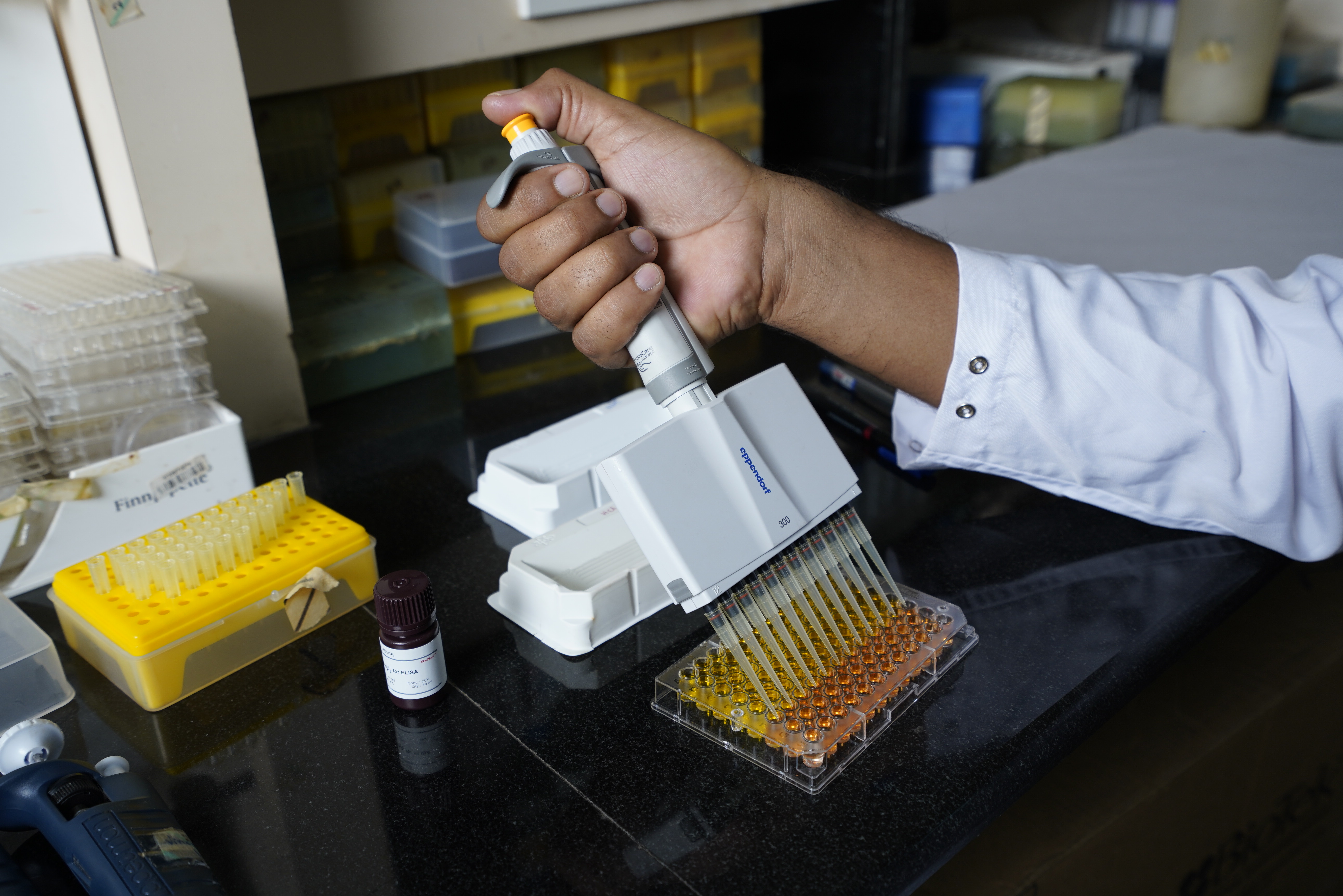
[[File:RMP2495 - Copy.jpg|thumb|<small>Work on antimicrobial peptides at CCMB</small>]]
[[File:RMP2495 - Copy.jpg|thumb|<small>Work on antimicrobial peptides at CCMB</small>]]
The ongoing research programmes at the CCMB are in three major categories – high quality basic research in the frontier areas of modern biology, research relevant to societal needs, and application-oriented research towards commercialization. These include the areas of evolution & development, gene regulation in [[Prokaryote|prokaryotes]] and [[Eukaryote|eukaryotes]], host-parasite interactions, [[membrane biology]], [[protein structure]], [[Stem cell|stem cell biology]], [[Neuroscience|neurobiology]], bioinformatics, [[functional genomics]], ecology and ecosystems.
The ongoing research programmes at the CCMB are in three major categories – high quality basic research in the frontier areas of modern biology, research relevant to societal needs, and application-oriented research towards commercialization. These include the areas of evolution & development, gene regulation in [[prokaryote]]s and [[eukaryote]]s, host-parasite interactions, [[membrane biology]], [[protein structure]], [[Stem cell|stem cell biology]], [[Neuroscience|neurobiology]], bioinformatics, [[functional genomics]], ecology and ecosystems.{{citation needed|date=September 2022}}
==Annexe I – LaCONES==
==Annexe I – LaCONES==
[[File:RMP2093.jpg|thumb|<small>Working with animal samples in LaCONES-CCMB</small>]]
[[File:RMP2093.jpg|thumb|<small>Working with animal samples in LaCONES-CCMB</small>]]
The [[Laboratory for conservation of endangered species|Laboratory for Conservation of Endangered Species]] is an annexe with the aim to conserve the Indian wildlife by using modern biological techniques and assisted reproductive technologies. It has worked extensively with various departments of the [[Government of India]] to curb wildlife crime. They have helped identify the source of animal meat in cases of doubt, sources of smuggled animals, and study stress among wild animals via non-invasive measures. They have helped the Directorate of Aerospace Safety to identify the reason on bird hits, and help them in canopy engineering of their airports. They host the National Wildlife Genetic Resource Bank with currently 250 genetic samples of animals, collected from zoos across the country. They can contain upto 17,000 samples. In the past few years, they have worked with the [[Nehru Zoological Park]], Hyderabad to protect the mouse deer from extinction. In August 2018, they started with the phased release of these animals into their original habitats of Amrabad Tiger Reserve.
The [[Laboratory for the Conservation of Endangered Species]] is an annexe with the aim to conserve the Indian wildlife by using modern biological techniques and assisted reproductive technologies. It has worked extensively with various departments of the [[Government of India]] to curb wildlife crime. They have helped identify the source of animal meat in cases of doubt, sources of smuggled animals, and study stress among wild animals via non-invasive measures. They have helped the Directorate of Aerospace Safety to identify the reason on bird hits, and help them in canopy engineering of their airports. They host the National Wildlife Genetic Resource Bank with currently 250 genetic samples of animals, collected from zoos across the country. They can contain up to 17,000 samples. In the past few years, they have worked with the [[Nehru Zoological Park]], Hyderabad to protect the mouse deer from extinction. In August 2018, they started with the phased release of these animals into their original habitats of Amrabad Tiger Reserve.{{citation needed|date=September 2022}}
==Annexe II – Medical Biotechnology Complex==
==Annexe II – Medical Biotechnology Complex==
CCMB carries out molecular diagnostic tests for 30 genetic disorders and wildlife forensics its medical biotechnology complex, also known as Innovation Hub (iHUB). It also hosts the [http://aic.ccmb.res.in/aic.html Atal Incubation Centre-CCMB (AIC-CCMB)] to support early stage life science startups. This initiative is supported by [[NITI Aayog]] and [[Atal Innovation Mission]]. They have been supporting startups working in drug discovery, drug repurposing, vaccine development, diagnostics, nutrition and nanomaterial development. They now host a [[Ministry of Electronics and Information Technology|Meity]] Startup Hub to incubate startups that look into big data in life sciences/healthcare sector.
CCMB carries out molecular diagnostic tests for 30 genetic disorders and wildlife forensics its medical biotechnology complex, also known as Innovation Hub (iHUB). It also hosts the [http://aic.ccmb.res.in/aic.html Atal Incubation Centre-CCMB (AIC-CCMB)] to support early stage life science startups. This initiative is supported by [[NITI Aayog]] and [[Atal Innovation Mission]]. They have been supporting startups working in drug discovery, [[drug repositioning|drug repurposing]], vaccine development, diagnostics, nutrition and nanomaterial development. They now host a [[Ministry of Electronics and Information Technology|Meity]] Startup Hub to incubate startups that look into big data in life sciences/healthcare sector.{{citation needed|date=September 2022}}
== PhD program in CCMB ==
== PhD program in CCMB ==
To join CCMB's PhD program one needs to apply for their application test followed by interviews. Most students join in with their own fellowships from CSIR, UGC or DST. There are two rounds of intake each year, one in January, and the other in August.
To join CCMB's PhD program one needs to apply for their application test followed by interviews. Most students join in with their own fellowships from CSIR, UGC, DBT, ICMR, or DST. There are two rounds of intake each year, one in January (interviews are held in December), and the other in July (interviews are held in June).{{citation needed|date=September 2022}}
Most alumni from CCMB's PhD program have continued in academia or joined the life science industry in India and abroad. They are present in premier research and educational institutes of India including [[Indian Institute of Science|IISc]], [[Indian Institutes of Science Education and Research|IISERs]], [[National Institute of Science Education and Research|NISER]] and [[Indian Institutes of Technology|IITs]] and many central and state universities.
Most alumni from CCMB's PhD program have continued in academia or joined the life science industry in India and abroad. They are present in premier research and educational institutes of India including [[Indian Institute of Science|IISc]], [[Indian Institutes of Science Education and Research|IISERs]], [[National Institute of Science Education and Research|NISER]] and [[Indian Institutes of Technology|IITs]] and many central and state universities.{{citation needed|date=September 2022}}
== Collaborations ==
== Collaborations ==
The centre actively collaborates with life scientists in India and abroad. The list of national collaborations run with premier research institutes as well as universities. This list of present and past collaborations includes [https://www.tifr.res.in/ Tata Institute of Fundamental Research], [https://www.instem.res.in/ inStem], [http://www.icar-iirr.org/ ICAR-Indian Institute of Rice Research], [http://www.uohyd.ac.in/ University of Hyderabad], [https://www.igib.res.in/ CSIR-Institute of Genomics and Integrative Biology], [https://nrcmeat.icar.gov.in/ ICAR-National Research Centre on Meat] among multiple others.
The centre actively collaborates with life scientists in India and abroad. The list of national collaborations run with premier research institutes as well as universities. This list of present and past collaborations includes [https://www.tifr.res.in/ Tata Institute of Fundamental Research], [https://www.instem.res.in/ inStem], [http://www.icar-iirr.org/ ICAR-Indian Institute of Rice Research], [http://www.uohyd.ac.in/ University of Hyderabad], [https://www.igib.res.in/ CSIR-Institute of Genomics and Integrative Biology], [https://nrcmeat.icar.gov.in/ ICAR-National Research Centre on Meat] among multiple others.
The centre has collaborated with the [[University of Nebraska Medical Center]] for translational research on [[glaucoma]]<ref>{{cite press release|url=http://www.ccmb.res.in/news/2010-11/collaboration-press.pdf|title=Glaucoma Research|access-date=2012-12-01}}</ref> In addition, the centre receives funding for specific collaborative projects from establishments outside India, such as the [[National Institutes of Health]], [[Harvard Medical School]] and [[Massachusetts Institute of Technology]] in United States,<ref>{{cite web|url=http://www.hsph.harvard.edu/news/press-releases/new-research-reveals-the-ancestral-populations-of-india-and-their-relationships-to-modern-groups/|title=Harvard School of Public Health » HSPH News » New research reveals the ancestral populations of India and their relationships to modern groups|date=2009-09-23|publisher=Hsph.harvard.edu|access-date=2013-04-16}}</ref><ref>{{cite web|url=http://news.webindia123.com/news/articles/India/20090924/1348386.html|title=caste system existed from 'Founder' race: CCMB-Harvard-MIT study|date=2009-09-24|publisher=News.webindia123.com|access-date=2013-04-16}}</ref> the [[Imperial Cancer Research Fund]] and [[Cambridge University]] in United Kingdom,<ref>{{cite web|url=http://epaper.timesofindia.com/Repository/ml.asp?Ref=TU1JUi8yMDA5LzAxLzIxI0FyMDE1MDA=&Mode=HTML&Locale=english-skin-custom|title=Modern man went into the world via India|date=2009-01-21|publisher=Epaper.timesofindia.com|access-date=2013-04-16}}</ref> the India-Japan Science Council and the [[University of Ryukyus]] in [[Japan]],<ref>{{cite journal|last1=Ndhlovu|first1=LC|last2=Leal|first2=FE|last3=Hasenkrug|first3=AM|last4=Jha|first4=AR|last5=Carvalho|first5=KI|last6=Eccles-James|first6=IG|last7=Bruno|first7=FR|last8=Vieira|first8=RG|last9=York|first9=VA|last10=Chew|first10=GM|last11=Jones|first11=RB|year=2011|title=HTLV-1 Tax Specific CD8+ T Cells Express Low Levels of Tim-3 in HTLV-1 Infection: Implications for Progression to Neurological Complications|journal=PLOS Negl Trop Dis|volume=5|pages=e1030|doi=10.1371/journal.pntd.0001030|pmc=3082508|pmid=21541358|first15=MA|last18=Kallas|first17=DF|last17=Nixon|first16=AC|last16=Segurado|last14=Sanabani|last15=Ostrowski|first14=SS|first13=WK|last13=Neto|first12=Y|last12=Tanaka|first18=EG|issue=4}}</ref> [[French National Centre for Scientific Research|Centre Nationale de la Recherche Scientifique]] and the [[Pasteur Institute]] in [[France]] and the [[Volkswagen]] Foundation in [[Germany]].<ref>{{cite web|url=http://www.ccmb.res.in/about_associations.html|title=Research > Research Partners|publisher=Ccmb.res.in|url-status=dead|archive-url=https://web.archive.org/web/20131218041613/http://www.ccmb.res.in/about_associations.html|archive-date=2013-12-18|access-date=2013-04-16}}</ref><ref>{{cite news|url=http://www.hindu.com/edu/2011/05/31/stories/2011053150050200.htm|archive-url=https://archive.today/20130629115341/http://www.hindu.com/edu/2011/05/31/stories/2011053150050200.htm|url-status=dead|archive-date=2013-06-29|title=Education Plus : Opening new vistas of research in biology|date=2011-05-31|access-date=2013-04-16|newspaper=[[The Hindu]]|location=Chennai, India}}</ref>
The centre has collaborated with the [[University of Nebraska Medical Center]] for translational research on [[glaucoma]]<ref>{{cite press release|url=http://www.ccmb.res.in/news/2010-11/collaboration-press.pdf|title=Glaucoma Research|access-date=2012-12-01}}</ref> In addition, the centre receives funding for specific collaborative projects from establishments outside India, such as the [[National Institutes of Health]], [[Harvard Medical School]] and [[Massachusetts Institute of Technology]] in United States,<ref>{{cite web|url=http://www.hsph.harvard.edu/news/press-releases/new-research-reveals-the-ancestral-populations-of-india-and-their-relationships-to-modern-groups/|title=Harvard School of Public Health » HSPH News » New research reveals the ancestral populations of India and their relationships to modern groups|date=2009-09-23|publisher=Hsph.harvard.edu|access-date=2013-04-16}}</ref><ref>{{cite web|url=http://news.webindia123.com/news/articles/India/20090924/1348386.html|archive-url=https://web.archive.org/web/20150923175219/http://news.webindia123.com/news/articles/India/20090924/1348386.html|archive-date=23 September 2015|title=caste system existed from 'Founder' race: CCMB-Harvard-MIT study|date=2009-09-24|publisher=News.webindia123.com|access-date=2013-04-16}}</ref> the [[Imperial Cancer Research Fund]] and [[Cambridge University]] in United Kingdom,<ref>{{cite web|url=http://epaper.timesofindia.com/Repository/ml.asp?Ref=TU1JUi8yMDA5LzAxLzIxI0FyMDE1MDA=&Mode=HTML&Locale=english-skin-custom|archive-url=https://web.archive.org/web/20101229105041/http://epaper.timesofindia.com/Repository/ml.asp?Ref=TU1JUi8yMDA5LzAxLzIxI0FyMDE1MDA=&Mode=HTML&Locale=english-skin-custom|archive-date=29 December 2010|title=Modern man went into the world via India|date=2009-01-21|work=The Times of India|access-date=2013-04-16}}</ref> the India-Japan Science Council and the [[University of Ryukyus]] in [[Japan]],<ref>{{cite journal|last1=Ndhlovu|first1=LC|last2=Leal|first2=FE|last3=Hasenkrug|first3=AM|last4=Jha|first4=AR|last5=Carvalho|first5=KI|last6=Eccles-James|first6=IG|last7=Bruno|first7=FR|last8=Vieira|first8=RG|last9=York|first9=VA|last10=Chew|first10=GM|last11=Jones|first11=RB|year=2011|title=HTLV-1 Tax Specific CD8+ T Cells Express Low Levels of Tim-3 in HTLV-1 Infection: Implications for Progression to Neurological Complications|journal=PLOS Negl Trop Dis|volume=5|article-number=e1030|doi=10.1371/journal.pntd.0001030|pmc=3082508|pmid=21541358|first15=MA|last18=Kallas|first17=DF|last17=Nixon|first16=AC|last16=Segurado|last14=Sanabani|last15=Ostrowski|first14=SS|first13=WK|last13=Neto|first12=Y|last12=Tanaka|first18=EG|issue=4 |doi-access=free }}</ref> [[French National Centre for Scientific Research|Centre Nationale de la Recherche Scientifique]] and the [[Pasteur Institute]] in [[France]] and the [[Volkswagen]] Foundation in [[Germany]].<ref>{{cite web|url=http://www.ccmb.res.in/about_associations.html|title=Research > Research Partners|publisher=Ccmb.res.in|archive-url=https://web.archive.org/web/20131218041613/http://www.ccmb.res.in/about_associations.html|archive-date=2013-12-18|access-date=2013-04-16}}</ref><ref>{{cite news|url=http://www.hindu.com/edu/2011/05/31/stories/2011053150050200.htm|archive-url=https://archive.today/20130629115341/http://www.hindu.com/edu/2011/05/31/stories/2011053150050200.htm|archive-date=2013-06-29|title=Education Plus: Opening new vistas of research in biology|date=2011-05-31|access-date=2013-04-16|newspaper=[[The Hindu]]|location=Chennai, India}}</ref>
== Technological achievements ==
== Technological achievements ==
* [[File:The first DNA Fingerprinting picture reported in Indian judiciary.jpg|thumb|<small>The first DNA Fingerprinting picture reported in Indian judiciary</small>]]Developed the DNA Fingerprinting Technology in India; and made India the third country in the world to have its own fingerprinting technology
*[[File:The first DNA Fingerprinting picture reported in Indian judiciary.jpg|thumb|<small>The first DNA Fingerprinting picture reported in Indian judiciary</small>]]Developed the DNA Fingerprinting Technology in India; and made India the third country in the world to have its own fingerprinting technology
* Developed the universal primer technology that can identify the species of source animal from any animal product
*Developed the universal primer technology that can identify the species of source animal from any animal product
* Discovered the heart disease mutation, carried by 6 [[crore]] people among Indians<ref>[http://www.sanger.ac.uk/about/press/2009/090118.html The worst luck in the world? – Wellcome Trust Sanger Institute<!-- Bot generated title -->]</ref>
*Discovered the heart disease mutation, carried by 6 [[crore]] people among Indians<ref>[http://www.sanger.ac.uk/about/press/2009/090118.html The worst luck in the world? - Wellcome Trust Sanger Institute<!-- Bot generated title -->]</ref>
* Developed the first genetically engineered, [[gene knockout]] [[Knockout mouse|mouse]] in India<ref>{{cite news|url=http://www.hindu.com/2006/05/10/stories/2006051009080700.htm|archive-url=https://archive.today/20130629111128/http://www.hindu.com/2006/05/10/stories/2006051009080700.htm|archive-date=2013-06-29|title=Scientists complete work on gene knockout technology|date=2006-05-10|work=[[The Hindu]]|location=Chennai, India}}</ref>
* Developed the first genetically engineered, [[gene knockout]] [[Knockout mouse|mouse]] in India<ref>{{cite news|url=http://www.hindu.com/2006/05/10/stories/2006051009080700.htm|archive-url=https://archive.today/20130629111128/http://www.hindu.com/2006/05/10/stories/2006051009080700.htm|url-status=dead|archive-date=2013-06-29|title=Scientists complete work on gene knockout technology|date=2006-05-10|work=[[The Hindu]]|location=Chennai, India}}</ref>
* Demonstrated the first [[artificial insemination]] in spotted [[deer]]<ref>[http://www.dnaindia.com/india/1020582/report-ccmb-implements-artificial-insemination-in-deer CCMB implements artificial insemination in deer – India – DNA<!-- Bot generated title -->]</ref>
* Demonstrated the first [[artificial insemination]] in spotted [[deer]]<ref>[http://www.dnaindia.com/india/1020582/report-ccmb-implements-artificial-insemination-in-deer CCMB implements artificial insemination in deer - India - DNA<!-- Bot generated title -->]</ref>
* Developed a systematic screening and validation programme for anti-cancer drugs in India<ref>{{cite news|url=https://timesofindia.indiatimes.com/home/science/CCMB-scientists-develop-new-drug-assay-system/articleshow/1252647788.cms|archive-url=https://archive.today/20130629133154/http://articles.timesofindia.indiatimes.com/2001-11-03/science/27238017_1_ccmb-drosophila-system-show-anti-cancer-properties|url-status=live|archive-date=2013-06-29|work=[[The Times of India]]|title=CCMB scientists develop new drug assay system|date=2001-11-03}}</ref>
* Developed a systematic screening and validation programme for anti-cancer drugs in India<ref>{{cite news|url=http://articles.timesofindia.indiatimes.com/2001-11-03/science/27238017_1_ccmb-drosophila-system-show-anti-cancer-properties|archive-url=https://archive.today/20130629133154/http://articles.timesofindia.indiatimes.com/2001-11-03/science/27238017_1_ccmb-drosophila-system-show-anti-cancer-properties|url-status=dead|archive-date=2013-06-29|work=[[The Times of India]]|title=CCMB scientists develop new drug assay system|date=2001-11-03}}</ref>
* Discovered the uniqueness of Indian population through genomic studies
*Discovered the uniqueness of Indian population through genomic studies
* Discovered the origin of the [[Andaman Islands|Andaman]] tribes<ref>{{cite news|url=http://www.thehindu.com/todays-paper/tp-national/tp-andhrapradesh/dna-fingerprinting-has-come-a-long-way-says-lalji-singh/article4424035.ece|title=DNA fingerprinting has come a long way, says Lalji Singh|date=2013-02-17|work=The Hindu|location=Chennai, India}}</ref>
* Discovered the origin of the [[Andaman Islands|Andaman]] tribes<ref>{{cite news|url=http://www.thehindu.com/todays-paper/tp-national/tp-andhrapradesh/dna-fingerprinting-has-come-a-long-way-says-lalji-singh/article4424035.ece|title=DNA fingerprinting has come a long way, says Lalji Singh|date=2013-02-17|work=The Hindu|location=Chennai, India}}</ref>
* Commercially delivered, [[recombinant DNA]] technology based diagnostic kit for detection of pathogens causing ophthalmic infections<ref>{{cite news|url=http://articles.timesofindia.indiatimes.com/2001-11-04/hyderabad/27237029_1_ccmb-colon-cancer|archive-url=https://archive.today/20130629121934/http://articles.timesofindia.indiatimes.com/2001-11-04/hyderabad/27237029_1_ccmb-colon-cancer|url-status=dead|archive-date=2013-06-29|work=[[The Times of India]]|title=CCMB scientists develop new method to test cancer|date=2001-11-04}}</ref>
* Commercially delivered, [[recombinant DNA]] technology based diagnostic kit for detection of pathogens causing ophthalmic infections<ref>{{cite news|url=https://timesofindia.indiatimes.com/city/hyderabad/CCMB-scientists-develop-new-method-to-test-cancer/articleshow/1665138572.cms|archive-url=https://archive.today/20130629121934/http://articles.timesofindia.indiatimes.com/2001-11-04/hyderabad/27237029_1_ccmb-colon-cancer|url-status=live|archive-date=2013-06-29|work=[[The Times of India]]|title=CCMB scientists develop new method to test cancer|date=2001-11-04}}</ref>
* Discovered high yielding disease resistant Improve Samba Mahsuri [[rice]]<ref>{{cite news|url=http://articles.timesofindia.indiatimes.com/2011-11-29/hyderabad/30453881_1_samba-masuri-ccmb-farmers|archive-url=https://archive.today/20130629123520/http://articles.timesofindia.indiatimes.com/2011-11-29/hyderabad/30453881_1_samba-masuri-ccmb-farmers|url-status=dead|archive-date=2013-06-29|work=[[The Times of India]]|title=CCMB grows pest-resistant Samba Masuri rice strain|date=2011-11-29}}</ref>
* Discovered high yielding and Bacterial Leaf Blight (BLB) disease resistant Improved Samba Mahsuri [[rice]]<ref>{{cite news|url=https://timesofindia.indiatimes.com/city/hyderabad/CCMB-grows-pest-resistant-Samba-Masuri-rice-strain/articleshow/10912558.cms|archive-url=https://archive.today/20130629123520/http://articles.timesofindia.indiatimes.com/2011-11-29/hyderabad/30453881_1_samba-masuri-ccmb-farmers|url-status=live|archive-date=2013-06-29|work=[[The Times of India]]|title=CCMB grows pest-resistant Samba Masuri rice strain|date=2011-11-29}}</ref>
* Discovered native bacteria, Indibacter alkaliphilus used to generate enzymes and bio-molecules in the industrial biotechnology sector<ref>{{cite news|last=Mallikarjun|first=Y.|url=http://www.thehindu.com/news/national/new-found-bacteria-get-indian-nomenclatures/article2622358.ece|title=New found bacteria get Indian nomenclatures|date=2011-11-13|work=The Hindu|location=Chennai, India}}</ref>
* Discovered native bacteria, Indibacter alkaliphilus used to generate enzymes and bio-molecules in the industrial biotechnology sector<ref>{{cite news|last=Mallikarjun|first=Y.|url=http://www.thehindu.com/news/national/new-found-bacteria-get-indian-nomenclatures/article2622358.ece|title=New found bacteria get Indian nomenclatures|date=2011-11-13|work=The Hindu|location=Chennai, India}}</ref>
* Discovered the functionality of [[microsatellite]]s (simple sequence repeats) among non-coding DNA<ref>[http://newindianexpress.com/cities/hyderabad/DNA-CCMB-scientists-achieve-breakthrough/2013/05/16/article1591902.ece DNA: CCMB scientists achieve breakthrough - The New Indian Express<!-- Bot generated title -->]</ref>
* Discovered the functionality of [[microsatellite]]s (simple sequence repeats) among non-coding DNA<ref>[https://web.archive.org/web/20130608154009/http://newindianexpress.com/cities/hyderabad/DNA-CCMB-scientists-achieve-breakthrough/2013/05/16/article1591902.ece DNA: CCMB scientists achieve breakthrough – The New Indian Express<!-- Bot generated title -->]</ref>
* Discovered the gene CPA1, which causes chronic [[pancreatitis]], in collaboration with Asian Institute of Gastroenterology<ref>[http://www.jagranjosh.com/current-affairs/scientists-from-ccmb-and-aig-discovered-gene-causing-chronic-pancreatitis-1376893389-1 Scientists from CCMB and AIG Discovered Gene Causing Chronic Pancreatitis<!-- Bot generated title -->]</ref>
* Discovered the gene CPA1, which causes chronic [[pancreatitis]], in collaboration with Asian Institute of Gastroenterology<ref>[http://www.jagranjosh.com/current-affairs/scientists-from-ccmb-and-aig-discovered-gene-causing-chronic-pancreatitis-1376893389-1 Scientists from CCMB and AIG Discovered Gene Causing Chronic Pancreatitis<!-- Bot generated title -->]</ref>
== Societal Relevance of CCMB ==
== Societal Relevance of CCMB ==
* CCMB's students have formed an instrumental workforce in Indian academia.
* CCMB's students have formed an instrumental workforce in Indian academia.
* CCMB's present and past scientists have also been important in founding and leading many research and educational institutes in India. This includes establishment of the [http://www.cdfd.org.in/ Centre for DNA Fingerprinting and Diagnostics] (CDFD) in Hyderabad after the success of DNA fingerprinting technology as an accepted form of evidence in [[Judiciary of India|Indian judicial system]]. Other institutes include [https://www.instem.res.in/ InStem], [https://www.iiserpune.ac.in/ IISER-Pune], [http://www.iisertirupati.ac.in/ IISER-Tirupati] and [https://www.lvpei.org/ LV Prasad Eye Institute].
* CCMB's present and past scientists have also been important in founding and leading many research and educational institutes in India. This includes establishment of the [http://www.cdfd.org.in/ Centre for DNA Fingerprinting and Diagnostics] (CDFD) in Hyderabad after the success of DNA fingerprinting technology as an accepted form of evidence in [[Judiciary of India|Indian judicial system]]. Other institutes include [https://www.instem.res.in/ InStem], [https://www.iiserpune.ac.in/ IISER-Pune], [http://www.iisertirupati.ac.in/ IISER-Tirupati] and [https://www.lvpei.org/ LV Prasad Eye Institute].
* CCMB incubated India's first biotechnology company, [[Shantha Biotechnics]] Ltd in the 1990s, and helped them develop their recombinant vaccine against [[Hepatitis B vaccine|Hepatitis-B]], affordable for Indian masses.
* CCMB incubated India's first biotechnology company, [[Shantha Biotechnics]] Ltd in the 1990s, and helped them develop their recombinant vaccine against [[Hepatitis B vaccine|Hepatitis-B]], affordable for Indian masses.
* The elite varieties of rice development project aims to help farmers in multiple states of India. The current Improved Samba Mahsuri rice in the market is suited for areas affected by bacterial blight infection.
* The elite varieties of rice development project aims to help farmers in multiple states of India. The current Improved Samba Mahsuri rice in the market is suited for areas affected by bacterial blight infection.
* CCMB has solved multiple high profile criminal cases of murders, assassinations and rape using the DNA fingerprinting technology. This includes cases of [[Rajiv Gandhi]], [[Beant Singh (politician)|Beant Singh]], Naina Sehwal, [[Priyadarshini Mattoo]], [[Swami Shraddhanand|Swami Shraddhananda]]'s wife and [[Swami Premananda (guru)|Swami Premananda]].
* CCMB has solved multiple high-profile criminal cases of murders, assassinations and rape using the DNA fingerprinting technology. This includes cases of [[Rajiv Gandhi]], [[Beant Singh (politician)|Beant Singh]], Naina Sehwal, [[Priyadarshini Mattoo]], [[Swami Shraddhanand]]a's wife and [[Swami Premananda (guru)|Swami Premananda]].
* The DNA fingerprinting technology also helped in identification of the victims of [[Singapore Airlines]] plane crash in 2000.
* The DNA fingerprinting technology also helped in identification of the victims of [[Singapore Airlines]] plane crash in 2000.
* The genetic disorder testing facilities offer services at nominal rates, and benefits patients from [[India]] as well as the [[Foreign relations of India|neighbouring countries]].
* The genetic disorder testing facilities offer services at nominal rates, and benefits patients from [[India]] as well as the [[Foreign relations of India|neighbouring countries]].
* CCMB trains people in industries as well as for industries through its skill development programs.
* CCMB trains people in industries as well as for industries through its skill development programs.
* CCMB trains forest and judiciary officials in understanding the [[DNA profiling|DNA fingerprinting]] technology and the universal primer technology, and how to effectively use them for justice.
* CCMB trains forest and judiciary officials in understanding the [[DNA profiling|DNA fingerprinting]] technology and the universal primer technology, and how to effectively use them for justice.
*The state of the art instrumentation facilities at CCMB is open for users outside the institute at reasonable costs.
* The state of the art instrumentation facilities at CCMB is open for users outside the institute at reasonable costs.
*It is attempting to develop affordable techniques for lab-grown meat.
* It is attempting to develop affordable techniques for lab-grown meat.
*It has been instrumental in the fight of [[COVID-19 pandemic in India|COVID-19 in India]]. It is one of the testing centres for patient samples in [[Telangana]]. It also aims to contribute in the basic understanding of the [[Severe acute respiratory syndrome coronavirus 2|SARS-CoV2]] biology to help develop vaccines and drugs.
* It has been instrumental in the fight of [[COVID-19 pandemic in India|COVID-19 in India]]. It is one of the testing centres for patient samples in [[Telangana]]. It also aims to contribute in the basic understanding of the [[Severe acute respiratory syndrome coronavirus 2|SARS-CoV2]] biology to help develop vaccines and drugs.
== Awards and Honours ==
== Awards and honours ==
In recognition for its contribution to modern biology, CCMB has been chosen as a Centre of Excellence by [[UNESCO]] Global Network for Molecular and Cell Biology (MCBN), and has been designated as a South Centre for Excellence for Research and Training by the Third World Academy of Sciences TWAS, Italy. Many prestigious international and national awards have come to CCMB including the CSIR Technology Award (four times) and [[Federation of Indian Chambers of Commerce & Industry|FICCI]] Award for outstanding achievements in Science & Technology.
In recognition for its contribution to modern biology, CCMB has been chosen as a Centre of Excellence by [[UNESCO]] Global Network for Molecular and Cell Biology (MCBN), and has been designated as a South Centre for Excellence for Research and Training by the Third World Academy of Sciences TWAS, Italy. Many prestigious international and national awards have come to CCMB including the CSIR Technology Award (four times) and [[Federation of Indian Chambers of Commerce & Industry|FICCI]] Award for outstanding achievements in Science & Technology.{{citation needed|date=September 2022}}
CCMB scientists have 1 [[Padma Bhushan]], 4 [[Padma Shri]], 3 [[Infosys Prize]], 11 [[Shanti Swarup Bhatnagar Prize for Science and Technology|Shanti Swarup Bhatnagar]] awardees along with 14 JC Bose, 3 [[The World Academy of Sciences|Third World Academy of Sciences]], 24 [[Indian Academy of Sciences]], 20 [[National Academy of Sciences, India|National Academy of Sciences]], and 21 [[Indian National Science Academy]] fellows. 10 CCMB scientists have become Directors of educational or research institutes and 6 Vice-Chancellors or Deans in universities or educational institutes of India.
CCMB scientists have 1 [[Padma Bhushan]], 4 [[Padma Shri]], 3 [[Infosys Prize]], 11 [[Shanti Swarup Bhatnagar Prize for Science and Technology|Shanti Swarup Bhatnagar]] awardees along with 14 JC Bose, 3 [[The World Academy of Sciences|Third World Academy of Sciences]], 24 [[Indian Academy of Sciences]], 20 [[National Academy of Sciences, India|National Academy of Sciences]], and 21 [[Indian National Science Academy]] fellows. 10 CCMB scientists have become Directors of educational or research institutes and 6 Vice-Chancellors or Deans in universities or educational institutes of India.{{citation needed|date=September 2022}}
== Reaching CCMB ==
== Reaching CCMB ==
The main campus of CCMB is located on the inner ring road of Hyderabad, connecting the areas [[Secunderabad]] and Uppal. CCMB can be reached very conveniently by the city road transport buses and the new [[Hyderabad metro]] at [[Habsiguda]].
The main campus of CCMB is located on the inner ring road of Hyderabad, connecting the areas [[Secunderabad]] and Uppal. CCMB can be reached very conveniently by the city road transport buses and the new [[Hyderabad metro]] at [[Habsiguda]].{{citation needed|date=September 2022}}
LaCONES is located at [[Attapur]] Ring Road, and [https://www.ccmb.res.in/lacones/contact.html here] are the directions to reach.
Medical Biotechnology Complex is situated at Uppal, and [http://aic.ccmb.res.in/contact.php here] are the directions to reach.
The Centre for Cellular and Molecular Biology (Script error: The function "langx" does not exist., IAST: Kośikīya evam āṇavik jīvavijñāna kendra) or CCMB is an Indian fundamental life science research establishment located in Hyderabad that operates under the aegis of the Council of Scientific and Industrial Research. CCMB is a designated "Centre of Excellence" by the Global Molecular and Cell Biology Network, UNESCO.[1][2]
CCMB was set up initially as a semi-autonomous Centre on 1 April 1977 with the Biochemistry Division of the then Regional Research Laboratory (presently, Indian Institute of Chemical Technology, IICT) in Habsiguda, Hyderabad forming its nucleus and Dr P M Bhargava heading the new Centre. Earlier, the Governing Board of the Council of Scientific and Industrial Research (CSIR) New Delhi, the apex body which constituted 44 research institutions (now 38) in the country, approved the proposal in 1976 to establish such a Centre in view of the importance of research in the frontier and multi-disciplinary areas of modern biology. During 1981–82, the CCMB was accorded the status of a full-fledged national laboratory with its own Executive Committee and Scientific Advisory Council. With major expansion plans, it was decided to relocate the centre to a spacious campus.[citation needed]
The ongoing research programmes at the CCMB are in three major categories – high quality basic research in the frontier areas of modern biology, research relevant to societal needs, and application-oriented research towards commercialization. These include the areas of evolution & development, gene regulation in prokaryotes and eukaryotes, host-parasite interactions, membrane biology, protein structure, stem cell biology, neurobiology, bioinformatics, functional genomics, ecology and ecosystems.[citation needed]
The Laboratory for the Conservation of Endangered Species is an annexe with the aim to conserve the Indian wildlife by using modern biological techniques and assisted reproductive technologies. It has worked extensively with various departments of the Government of India to curb wildlife crime. They have helped identify the source of animal meat in cases of doubt, sources of smuggled animals, and study stress among wild animals via non-invasive measures. They have helped the Directorate of Aerospace Safety to identify the reason on bird hits, and help them in canopy engineering of their airports. They host the National Wildlife Genetic Resource Bank with currently 250 genetic samples of animals, collected from zoos across the country. They can contain up to 17,000 samples. In the past few years, they have worked with the Nehru Zoological Park, Hyderabad to protect the mouse deer from extinction. In August 2018, they started with the phased release of these animals into their original habitats of Amrabad Tiger Reserve.[citation needed]
Annexe II – Medical Biotechnology Complex[edit | edit source]
CCMB carries out molecular diagnostic tests for 30 genetic disorders and wildlife forensics its medical biotechnology complex, also known as Innovation Hub (iHUB). It also hosts the Atal Incubation Centre-CCMB (AIC-CCMB) to support early stage life science startups. This initiative is supported by NITI Aayog and Atal Innovation Mission. They have been supporting startups working in drug discovery, drug repurposing, vaccine development, diagnostics, nutrition and nanomaterial development. They now host a Meity Startup Hub to incubate startups that look into big data in life sciences/healthcare sector.[citation needed]
To join CCMB's PhD program one needs to apply for their application test followed by interviews. Most students join in with their own fellowships from CSIR, UGC, DBT, ICMR, or DST. There are two rounds of intake each year, one in January (interviews are held in December), and the other in July (interviews are held in June).[citation needed]
Most alumni from CCMB's PhD program have continued in academia or joined the life science industry in India and abroad. They are present in premier research and educational institutes of India including IISc, IISERs, NISER and IITs and many central and state universities.[citation needed]
The first DNA Fingerprinting picture reported in Indian judiciaryDeveloped the DNA Fingerprinting Technology in India; and made India the third country in the world to have its own fingerprinting technology
Developed the universal primer technology that can identify the species of source animal from any animal product
Discovered the heart disease mutation, carried by 6 crore people among Indians[20]
CCMB incubated India's first biotechnology company, Shantha Biotechnics Ltd in the 1990s, and helped them develop their recombinant vaccine against Hepatitis-B, affordable for Indian masses.
The elite varieties of rice development project aims to help farmers in multiple states of India. The current Improved Samba Mahsuri rice in the market is suited for areas affected by bacterial blight infection.
The DNA fingerprinting technology also helped in identification of the victims of Singapore Airlines plane crash in 2000.
The genetic disorder testing facilities offer services at nominal rates, and benefits patients from India as well as the neighbouring countries.
CCMB trains people in industries as well as for industries through its skill development programs.
CCMB trains forest and judiciary officials in understanding the DNA fingerprinting technology and the universal primer technology, and how to effectively use them for justice.
The state of the art instrumentation facilities at CCMB is open for users outside the institute at reasonable costs.
It is attempting to develop affordable techniques for lab-grown meat.
It has been instrumental in the fight of COVID-19 in India. It is one of the testing centres for patient samples in Telangana. It also aims to contribute in the basic understanding of the SARS-CoV2 biology to help develop vaccines and drugs.
In recognition for its contribution to modern biology, CCMB has been chosen as a Centre of Excellence by UNESCO Global Network for Molecular and Cell Biology (MCBN), and has been designated as a South Centre for Excellence for Research and Training by the Third World Academy of Sciences TWAS, Italy. Many prestigious international and national awards have come to CCMB including the CSIR Technology Award (four times) and FICCI Award for outstanding achievements in Science & Technology.[citation needed]
The main campus of CCMB is located on the inner ring road of Hyderabad, connecting the areas Secunderabad and Uppal. CCMB can be reached very conveniently by the city road transport buses and the new Hyderabad metro at Habsiguda.[citation needed]