
















>SdkbBot m →top: Removed overlinked country wikilink and general fixes (task 2) |
No edit summary |
||
| Line 1: | Line 1: | ||
{{Short description| automobile manufacturer company | {{Short description|Indian automobile manufacturer company}} | ||
}} | |||
{{Use dmy dates|date=May 2020}} | {{Use dmy dates|date=May 2020}} | ||
{{Use Indian English|date=January 2021}} | {{Use Indian English|date=January 2021}} | ||
{{Infobox company | {{Infobox company | ||
| name = Maruti Suzuki India Limited | | name = Maruti Suzuki India Limited | ||
| logo = | | logo = | ||
| logo_size = | Maruti Suzuki logo.svg | ||
| logo_size = 280px | |||
| former_name = Maruti Udyog Limited | | former_name = Maruti Udyog Limited | ||
| type = [[Public | | type = [[Public]] [[subsidiary]] | ||
| traded_as = {{Unbulleted list|{{BSE|532500}}|{{NSE|MARUTI}}|[[BSE SENSEX|BSE SENSEX Constituent]]|[[NIFTY 50|NSE NIFTY 50 Constituent]]}} | | traded_as = {{Unbulleted list|{{BSE|532500}}|{{NSE|MARUTI}}|[[BSE SENSEX|BSE SENSEX Constituent]]|[[NIFTY 50|NSE NIFTY 50 Constituent]]}} | ||
| founder = [[Government of India]] | | founder = [[Government of India]] | ||
| ISIN = INE585B01010 | | ISIN = {{ISIN|sl=n|pl=y|INE585B01010}} | ||
| key_people = {{ | | key_people = {{ubl | ||
| [[R. C. Bhargava]]<br>{{small|([[chairman]])}} | |||
| Hisashi Takeuchi<br>{{small|([[Managing Director]] & [[CEO]])}}<ref name="Board of Directors">{{Cite web|url=https://www.marutisuzuki.com/corporate/about-us/leadership|title=Our Leadership - Maruti Suzuki India Limited|website=Marutisuzuki.com}}</ref> | |||
| Kenichi Ayukawa<ref name="Board of Directors"/> <br>{{small|(Executive [[Vice Chairman]])}} | |||
| Shasank Srivastava<br>{{small|(Executive Director)}} | |||
}} | |||
| industry = [[Automotive industry|Automotive]] | | industry = [[Automotive industry|Automotive]] | ||
| products = {{unbulleted list | | products = {{unbulleted list | ||
| Line 22: | Line 24: | ||
| [[List of auto parts|Automotive parts]] | | [[List of auto parts|Automotive parts]] | ||
}} | |||
| services = {{unbulleted list | | services = {{unbulleted list | ||
| [[Finance|Automotive finance]] | | [[Finance|Automotive finance]] | ||
| [[Service (motor vehicle)|Vehicle service]] | | [[Service (motor vehicle)|Vehicle service]] | ||
}} | |||
| production = {{Increase}} | | production = {{Increase}} 2,135,323 units (2024)<ref name="Maruti Suzuki 2016-17">{{cite web|url=https://www.bseindia.com/xml-data/corpfiling/AttachLive/987ffe0b-6de7-4497-b857-16ade74f8bc4.pdf|title=Maruti Suzuki Annual Report 2024 |publisher=Maruti Suzuki Limited}}</ref> | ||
| revenue = {{ | | revenue = {{increase}} {{INRConvert|145952|c}} (2024)<ref name="marutistoragenew.blob.core.windows.net">{{Cite web|url=https://www.bseindia.com/xml-data/corpfiling/AttachLive/987ffe0b-6de7-4497-b857-16ade74f8bc4.pdf|title=SEBI Standalone and Consolidated FY2023-24}}</ref> | ||
| operating_income = {{ | | operating_income = {{increase}} {{INRConvert|17424|c}} (2024)<ref name="marutistoragenew.blob.core.windows.net"/> | ||
| net_income = {{ | | net_income = {{increase}} {{INRConvert|13488|c}} (2024)<ref name="marutistoragenew.blob.core.windows.net"/> | ||
| assets = {{ | | assets = {{Increase}} {{INRConvert|115353|c}} (2024)<ref name="marutistoragenew.blob.core.windows.net"/> | ||
| equity = {{Increase}} {{INRConvert| | | equity = {{Increase}} {{INRConvert|85636|c}} (2024)<ref name="marutistoragenew.blob.core.windows.net"/> | ||
| num_employees = | | num_employees = 40,004 (including 21,776 non permanent) (2024)<ref name="auto">{{Cite web|url=https://www.bseindia.com/xml-data/corpfiling/AttachHis/4b14c577-1d8d-4eb0-a79e-f94640af8a67.pdf|title=Annual Integrated Report 2023-24|publisher=Maruti Suzuki}}</ref> | ||
| parent = {{Unbulleted list|[[Suzuki|Suzuki Motor Corporation]] | | parent = {{Unbulleted list|[[Suzuki|Suzuki Motor Corporation]]<ref>{{Cite web|url=https://www.financialexpress.com/market/stock-market/maruti-suzuki-india-ltd-stock-price/share-holdings/|date=12 May 2021|website=Financial Express|title=MARUTI SUZUKI INDIA LTD SHARE HOLDINGS | ||
}}</ref>}} | }}</ref>}} | ||
| foundation = {{Start date and age|1981|02|24|df=yes}}<ref>{{Cite web|url=https://www.thehindubusinessline.com/specials/auto-focus/suzuki-drives-indias-car-manufacturing-story/article9532545.ece|title=Suzuki drives India's car manufacturing story|first=Wilfried|last=Aulbur|website= | | foundation = {{Start date and age|1981|02|24|df=yes}}<ref>{{Cite web|url=https://www.thehindubusinessline.com/specials/auto-focus/suzuki-drives-indias-car-manufacturing-story/article9532545.ece|title=Suzuki drives India's car manufacturing story|first=Wilfried|last=Aulbur|website=Thehindubusinessline.com|date=9 February 2017 }}</ref> | ||
| location = [[New Delhi]], India<ref name="marutisuzuki1">{{cite web|url=https://www.marutisuzuki.com/corporate/reach-us/all-offices|title=Office Addresses - Maruti Suzuki India Limited| | | location = [[New Delhi]], India<ref name="marutisuzuki1">{{cite web|url=https://www.marutisuzuki.com/corporate/reach-us/all-offices|title=Office Addresses - Maruti Suzuki India Limited|website=Marutisuzuki.com|access-date=13 September 2018}}</ref> | ||
| homepage = {{URL|http://www.marutisuzuki.com/}} | | homepage = {{URL|http://www.marutisuzuki.com/}} | ||
| area_served = India | | area_served = India | ||
}} | }} | ||
'''Maruti Suzuki India Limited''' | '''Maruti Suzuki India Limited''' is the Indian [[subsidiary]] of Japanese automaker [[Suzuki|Suzuki Motor Corporation]]. It is the largest automobile manufacturer in India, specialising in [[Subcompact car|small cars]]. The company was established by the [[Government of India]] as Maruti Udyog Limited in February 1981 as a joint venture with Suzuki, the latter becoming the first Japanese automaker, as well as the first major foreign automaker, to invest in India.<ref>{{cite news|url=https://www.reuters.com/world/asia-pacific/obituary-osamu-suzuki-who-led-japanese-automaker-into-india-dies-94-2024-12-27/|title=Osamu Suzuki, who led Japanese automaker into India, dies at 94|first=Chang-Ran|last=Kim|publisher=Reuters|date=December 27, 2024|accessdate=December 27, 2024}}</ref><ref>{{cite news|url=https://www.nytimes.com/2024/12/27/business/osamu-suzuki-dies-94.html|title=Osamu Suzuki, Who Led Japanese Carmaker for Over 4 Decades, Dies at 94|first1=River Akira|last1=Davis|first2=Kiuko|last2=Notoya|work=New York Times|date=27 December 2024|accessdate=27 December 2024}}</ref><ref>{{cite news|url=https://economictimes.indiatimes.com/industry/auto/auto-news/osamu-suzuki-the-legend-who-was-instrumental-in-helping-india-kickstart-its-automotive-journey/articleshow/116709084.cms?from=mdr|title=Osamu Suzuki: The legend who was instrumental in helping India kickstart its automotive journey|publisher=The Economic Times|date=27 December 2024}}</ref> | ||
Maruti opened its first production facility in [[Gurgaon|Gurugram, Haryana]], in 1982.<ref>{{Cite web |date=2021-08-27 |title=Maruti Suzuki Case Study - History and Success in India |url=https://startuptalky.com/maruti-suzuki-case-study-india/ |access-date=2023-04-07 |website=StartupTalky |language=en}}</ref> Initially, Maruti was majority-owned by the Indian government, with Suzuki only taking a 26% stake during its establishment in 1982. The Indian government gradually reduced its stake, partially departed the business in 2003 by making it a public company and then sold all of its remaining shares to Suzuki Motor Corporation in 2007.<ref name="marutisuzuki1" /><ref name="corpinfo">[http://marutisuzuki.com/corporate.aspx Maruti Suzuki Corporate Information] {{webarchive|url=https://web.archive.org/web/20130126163908/http://marutisuzuki.com/corporate.aspx|date=26 January 2013}}. Retrieved 2013-02-01.</ref><ref>{{Cite news |date=2007-05-10 |title=Govt exits Maruti, sells residual stake for 2,360 cr |work=The Times of India |url=https://timesofindia.indiatimes.com/business/india-business/govt-exits-maruti-sells-residual-stake-for-2360-cr/articleshow/2027888.cms |access-date=2023-04-07 |issn=0971-8257}}</ref> | |||
==History== | Maruti Suzuki has emerged as the largest Suzuki subsidiary in terms of production volume and sales. As of September 2022, the company had a leading market share of 42% in the [[Automotive industry in India|Indian passenger car market]].<ref>{{Cite web |date=21 November 2022 |title=Maruti Suzuki chases market share but losing 'mind share' to Tata Motors |url=https://www.moneycontrol.com/news/business/markets/maruti-suzuki-chases-market-share-but-losing-mind-share-to-tata-motors-9572511.html |access-date=2022-12-14 |website=Moneycontrol |language=en}}</ref> | ||
== {{anchor|Timeline}}History == | |||
=== Pre-Suzuki affiliation === | |||
The Maruti name can be traced back to a previous company that was established by the third Indian Prime Minister [[Indira Gandhi]]'s son, [[Sanjay Gandhi]]. In the early 1970s, the Indian government initiated the search for a small car manufacturer. At that time, India had already been manufacturing cars for several years, and the idea of a more affordable "people's car" had been discussed since the 1950s. | |||
Sanjay Gandhi, known for his passion for cars, apprenticed with [[Rolls-Royce]] in [[Crewe]] of UK for three years. Upon his return in 1968, he recognized the potential of small car production in the private sector. Both the government and the [[Planning Commission (India)|Planning Commission]] endorsed the concept. Sanjay Gandhi subsequently initiated his automotive project, establishing operations in a rented garage near [[Roshanara Bagh]] in [[Old Delhi]]. | |||
The government issued a [[letter of intent]] in September 1970, with plan to produce up to 50,000 cars in a year. In August 1971, '''Maruti Motors Limited''' was established with [[Sanjay Gandhi]] becoming its first [[managing director]]. He acquired 297 acres of land in [[Gurgaon]] at a cost of approximately Rs 12,000 per acre to establish his Maruti factory.<ref name=":2">{{Cite web |date=2015-04-14 |title=Maruti and Sanjay Gandhi: The history of an illicit, extraordinary love affair |url=https://www.motoroids.com/features/maruti-and-sanjay-gandhi-the-history-of-an-illicit-extraordinary-love-affair/ |access-date=2024-04-12 |website=Motoroids |language=en-GB}}</ref> Initially, plans were laid out to manufacture an indigenous car priced at around Rs 8,000. However, the cost of the vehicle escalated to approximately Rs 16,500 (ex-showroom) and about Rs 21,000 on the road in Haryana. Despite the increase in price, the Maruti car remained competitively priced, being Rs 5,000-10,000 cheaper than its counterparts. | |||
The first prototype of the Maruti car was completed in 1972, with production anticipated to commence by April 1973, as promised by Sanjay Gandhi.<ref>{{Cite book |last=Sen |first=Gautam |title=A million cars for a billion people: the story of India's 'millionaire' cars, - from the iconic Maruti 800 to what went horribly wrong with the Tata Nano |date=2014 |publisher=Platinum Press |isbn=978-93-84027-74-2 |location=Mumbai, India}}</ref> He made the [[chassis]] by himself at his workshop, and a [[Triumph Motorcycles Ltd|Triumph]] motorcycle engine was used to propel the car.<ref name=":2" /> the prototype car underwent a feasibility test by the Vehicle Research & Development Establishment in [[Ahmednagar]]. The prototype failed the test, being deemed unsuitable for road use. Nonetheless, in July 1974, Maruti was granted an industrial license to produce 50,000 cars.<ref>{{Cite web |last=Bhandari |first=Bhupesh |date=2015-07-11 |title=Emergency and Sanjay Gandhi: How Maruti's origin lies in cronyism, corruption and blackmail |url=https://www.business-standard.com/article/beyond-business/emergency-and-the-maruti-story-start-of-a-small-wonder-115070900758_1.html}}</ref> However, the actual production output at Sanjay Gandhi's factory fell short of the initial target. Despite the projection to commence production at a rate of 12-20 units per month and escalate to 200 units per day, only 21 units were manufactured by 31 March 1976.<ref name=":0">{{Cite news |date=2023-12-14 |title=Was Maruti 800 truly the brainchild of Sanjay Gandhi? |url=https://economictimes.indiatimes.com/news/new-updates/was-maruti-800-truly-the-brainchild-of-sanjay-gandhi/articleshow/105978938.cms?from=mdr |access-date=2024-04-12 |work=The Economic Times |issn=0013-0389}}</ref> | |||
Sanjay Gandhi's involvement in politics during [[The Emergency (India)|the Emergency]] further complicated the project's progress. Following Indira Gandhi's defeat in the 1977 election and a [[court order]] for Maruti's dissolution in 1978, the project faced uncertain prospects. With Indira's return to office in 1980 and Sanjay's death in a plane crash, the Government of India intervened and assumed control of Maruti through [[legislative]] measures.<ref name=":0" /> | |||
=== Tie-up with Suzuki === | |||
[[File:Maruti Old Logo.JPG|thumb|Logo of Maruti Udyog]] | [[File:Maruti Old Logo.JPG|thumb|Logo of Maruti Udyog]] | ||
Maruti Udyog | Following Sanjay's death, his mother Indira tasked [[Arun Nehru]] with evaluating the feasibility of resurrecting her son's vision to develop India's affordable car. Nehru acknowledged the project's potential but emphasized the need for expertise from an experienced manufacturer. Subsequently, a team was assembled to explore potential collaborations with manufacturers globally.<ref name=":2" /> The Indian government started engaging in negotiations with [[Suzuki]] in April 1982. Following several months of preparations, Suzuki of Japan and '''Maruti Udyog Ltd.''' signed a license and [[joint venture]] agreement in October 1982. Initially, Suzuki acquired a modest 26 percent stake in the joint venture, owing to their constrained capital and perceived risks, despite the Indian government's preference for Suzuki to take a 40 percent [[Foreign direct investment|foreign equity share]]. Both parties reached a consensus, stipulating that Suzuki would increase its stake to 40 percent after five years.<ref name=":1">{{Cite web |last=Sorabjee |first=Hormazd |date=2023-12-15 |title=No one knew what Maruti 800's launch would lead to: RC Bhargava |url=https://www.autocarindia.com/auto-features/no-one-knew-what-maruti-800s-launch-would-lead-to-rc-bhargava-430104 |access-date=2024-04-12 |website=Autocar India}}</ref> Both the venture partners also entered into an agreement to nominate their candidate for the post of managing director and every managing director would have a tenure of five years.<ref>"[http://www.rediff.com/business/sep/19maru.htm Rediff on the Net: A successful marriage goes to court]", 19 September 1997</ref><ref>{{cite web |date=3 September 1997 |title=Rediff |url=http://www.rediff.com/business/sep/03mul.htm |access-date=10 October 2010 |work=Rediff.com}}</ref> Suzuki later increased its equity to 50% in 1992, and further to 56.21% as of 2013.<ref>{{Cite web |date=2013-04-01 |title=The Times of India |url=http://timesofindia.indiatimes.com/business/india-business/Suzuki-Motors-stake-in-Maruti-Suzuki-goes-up-to-56-21/articleshow/19323285.cms |website=[[The Times of India]]}}</ref> | ||
Maruti was granted permission to import two Suzuki vehicles that were completely assembled in the first two years of India's closed market, with an initial target of using just 33% domestic components. This greatly displeased the nearby manufacturers. There were some concerns that the Indian market would not support Maruti Suzuki's relatively high production levels, and the government even considered changing the petrol tariff and decreasing the excise fee to increase sales.<ref name="correspondent2">{{cite journal |author=B M |date=2021-08-30 |title=Message of Maruti-Suzuki |journal=Economic and Political Weekly |location=Mumbai, India |publisher=Sameeksha Trust |volume=XVII |pages=1524–1525 |number=38}}</ref> | |||
[[File:Suzuki Maruti 800 1996 (14855426712).jpg|thumb|A 1996 [[Maruti 800]] photographed in Chile]] | |||
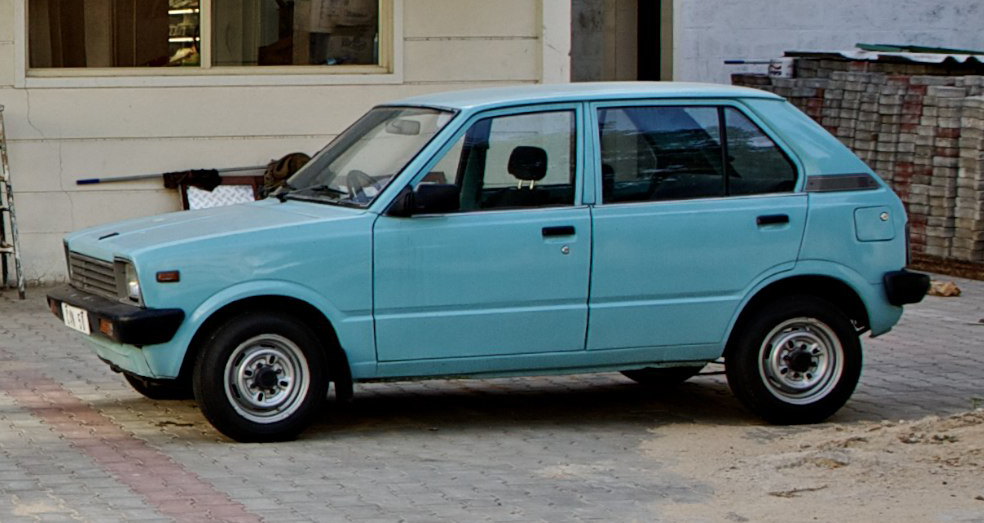
Local production commenced in December 1983 with the introduction of the [[Suzuki Fronte#SS30/SS40|SS30/SS40 Suzuki Fronte/Alto]]-based [[Maruti 800]].<ref name="crore2">{{cite web |title=Maruti's domestic sales crosses 1 cr mark |url=http://www.indianexpress.com/news/maruti-suzuki-sales-cross-1-cr-mark/909976/ |access-date=9 February 2021 |work=[[The Indian Express]]}}</ref> In 1984, the [[Suzuki Carry|Maruti Van]] with the same three-cylinder engine as the 800 was released. Maruti targeted annual production of 20,000 cars in the first year, and 40,000 in the second year at the [[Gurgaon]] plant. However, the rapid success of Maruti exceeded expectations of Suzuki. Within the first year, the company received an 120,000 bookings, much to Suzuki's surprise. Despite facing overwhelming demand, Maruti encountered challenges in meeting orders due to capacity limitations. The surge in demand necessitated a complete overhaul of its production strategy, by adjusting the ratio between the 800 and the van.<ref name=":1" /> | |||
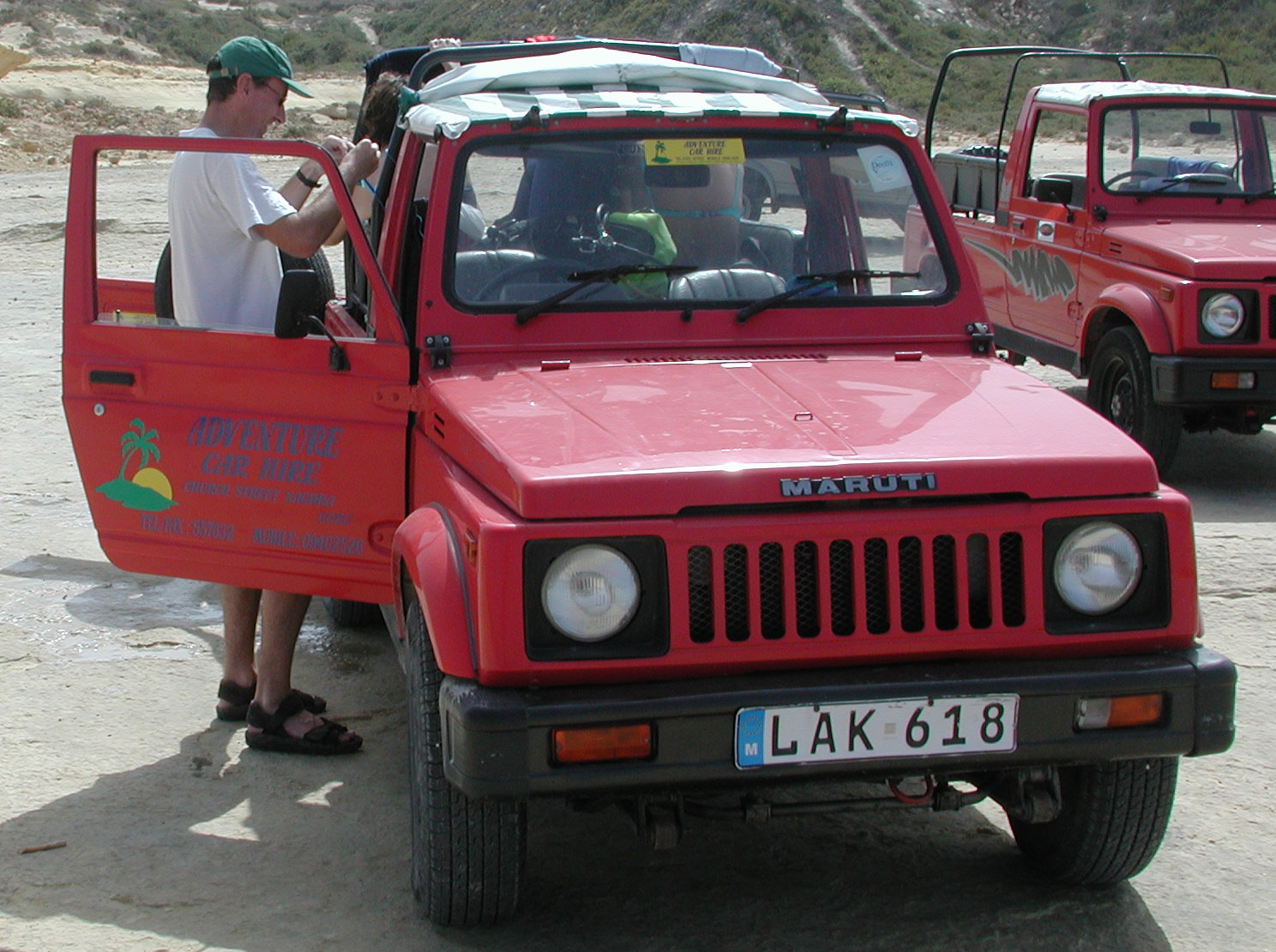
The [[Maruti Suzuki Gypsy|Suzuki SJ410-based Gypsy]], a 970 cc 4-wheel drive off-road vehicle, was introduced in 1985. The 100,000th car manufactured by the firm was the 796 cc hatchback [[Suzuki Alto|Suzuki Alto (SS80)]], which succeeded the original 800 in 1986.<ref name="marutiwebsite">{{Cite web |title=The Maruti Udyog official Website Timeline Page |url=http://www.marutiudyog.com/ab/aboutus.asp?ch=1&ct=1&sc=6 |archive-url=https://web.archive.org/web/20071012122151/http://www.marutiudyog.com/ab/aboutus.asp?ch=1&ct=1&sc=6 |archive-date=12 October 2007}}</ref> In 1987, the company started exporting to western markets, when a lot of 500 cars were sent to Hungary. By 1988, the capacity of the Gurgaon plant was increased to 100,000 units per annum. | |||
Until 1992–1993, Maruti faced constraints in increasing capacity due to the need for [[foreign exchange]]. Moreover, securing funding for expansion was challenging, especially during the [[1991 Indian economic crisis|Indian economic crisis of 1991]]. The Indian government stipulated that expansion could only proceed with foreign loans to cover costs. Eventually, Maruti secured aid from Axiom Bank in Japan, allowing them to finance the [[foreign exchange]] component of their expansion. This enabled Maruti to establish a new production line in the Gurgaon plant, addressing the persistent issue of shortages.<ref name=":1" /> | |||
In | In 1989, the [[Maruti 1000]] was introduced and the 970 cc, [[Three-box styling|three-box]] was India's first contemporary [[sedan (car)|sedan]]. By 1991, 65 percent of the components, for all vehicles produced, were indigenized. After the liberalization of the [[Economy of India|Indian economy]] in 1991, Suzuki increased its stake in Maruti to 50 percent, making the company a 50-50 joint venture with the government of India as the other stakeholder. | ||
In 1993, the [[Maruti Suzuki Zen|Zen]], a 993 cc engine hatchback was launched, and in 1994 the 1,298 cc [[Suzuki Cultus Crescent|Esteem]] sedan was introduced. Maruti produced its 1 millionth vehicle since the commencement of production in 1994. Maruti's second plant was opened with an annual capacity reaching 200,000 units. Maruti launched a 24-hour emergency on-road vehicle service. In 1998, the new Maruti 800 was released, being the first change in design since 1986. Zen D, a 1,527 cc diesel hatchback, Maruti's first diesel vehicle, and a redesigned Omni were introduced. In 1999, the 1.6-litre [[Maruti Baleno]] three-box sedan and [[Suzuki Wagon R|Wagon R]] were also launched. | |||
In | |||
In | In 2000, Maruti became the first car company in India to launch a [[Call Center|call center]] for internal and customer services. The new [[Maruti Suzuki Alto|Alto]] model was released. In 2001, [[#Maruti TrueValue|Maruti True Value]], selling and buying used cars was launched. In October of the same year, the [[Suzuki Carry|Maruti Versa]] was launched. In 2002, [[Suzuki Cultus Crescent|Esteem]] Diesel was introduced. Two new subsidiaries were also started: Maruti Insurance Distributor Services and Maruti Insurance Brokers Limited. Suzuki Motor Corporation increased its stake in Maruti to 54.2 percent. | ||
In | In 2003, the new [[Suzuki Vitara|Suzuki Grand Vitara]] XL-7 was introduced while the [[Maruti Suzuki Zen|Zen]] and the [[Suzuki Wagon R|Wagon R]] were upgraded and redesigned. The four millionth Maruti vehicle was built and they entered into a partnership with the [[State Bank of India]]. Maruti Udyog Ltd. was listed on BSE and NSE after a public issue, which was oversubscribed tenfold. In 2004, the [[Maruti Suzuki Alto|Alto]] became India's best-selling car overtaking the [[Maruti 800]] after nearly two decades. The five-seater [[Suzuki Carry|Versa]] 5-seater, a new variant, was created while the Esteem was re-launched. Maruti Udyog closed the financial year 2003–04 with an annual sale of 472,122 units, the highest ever since the company began operations, and the fiftieth lakh (5 millionth) car rolled out in April 2005. The 1.3-litre [[Suzuki Swift]] five-door hatchback was introduced in 2005.<ref name=smooth>{{cite journal | title = Maruti Udyog: Smooth Drive | journal = Economic and Political Weekly | number = 8 | volume = XLI | location = Mumbai, India | publisher = Sameeksha Trust | page = 672 | date = 2006-02-25 }}</ref> | ||
[[File:Maruti Suzuki logo (2009).svg|thumb|Maruti Suzuki's former logo, used in 2009-2018]] | |||
In 2006 Suzuki and Maruti set up another joint venture | In 2006, Suzuki and Maruti set up another joint venture called Maruti Suzuki Automobiles India to build two new manufacturing plants, one for vehicles and one for engines.<ref name=smooth/> Cleaner cars were also introduced, with several new models meeting the new [[Bharat Stage emission standards|Bharat Stage III emission standards]].<ref name=smooth/> In February 2012, Maruti Suzuki sold its ten millionth vehicle in India.<ref name="crore2"/> In July 2014 it had a market share of more than 45%.<ref>{{Cite web|url=http://www.team-bhp.com/forum/indian-car-scene/154170-july-2014-indian-car-sales-figures-analysis.html|title=July 2014: Indian Car Sales Figures & Analysis - Team-BHP|access-date=2016-06-28}}</ref> In May 2015, the company produced its fifteen millionth vehicle in India, a Swift Dzire.<ref>{{cite web|title=Maruti Suzuki rolls out 15 million cars {{!}} Team-BHP|url=http://www.team-bhp.com/news/maruti-suzukis-manesar-plant-rolls-out-15-million-cars|access-date=10 May 2020|website=Team-BHP.com|language=en}}</ref> | ||
On 25 April 2019, Maruti Suzuki announced that it would phase out production of [[Diesel engine|diesel cars]] by 1 April 2020, when the [[Bharat Stage emission standards|Bharat Stage VI emission standards]] come into effect. The new standards would require a significant investment from the company to upgrade its existing diesel engines to comply with the more stringent emission standards. Chairman [[R. C. Bhargava|R.C. Bhargava]] stated, "We have taken this decision so that in 2022 we are able to meet the corporate average fuel efficiency (CAFE) norms and higher share of [[Compressed natural gas|CNG]] vehicles will help us comply with the norms. I hope the union government's policies will help grow the market for CNG vehicles." | On 25 April 2019, Maruti Suzuki announced that it would phase out production of [[Diesel engine|diesel cars]] by 1 April 2020, when the [[Bharat Stage emission standards|Bharat Stage VI emission standards]] come into effect. The new standards would require a significant investment from the company to upgrade its existing diesel engines to comply with the more stringent emission standards. Chairman [[R. C. Bhargava|R.C. Bhargava]] stated, "We have taken this decision so that in 2022 we are able to meet the corporate average fuel efficiency (CAFE) norms and a higher share of [[Compressed natural gas|CNG]] vehicles will help us comply with the norms. I hope the union government's policies will help grow the market for CNG vehicles." At that time, diesel cars accounted for about 23 percent of Maruti Suzuki's annual sales.<ref>{{cite web |last1=Ghosh |first1=Malyaban |title=Maruti to phase out all diesel cars from April next year |url=https://www.livemint.com/auto-news/maruti-to-phase-out-all-diesel-cars-from-april-next-year-1556184892655.html |website=Mint |access-date=26 April 2019 |language=en |date=25 April 2019}}</ref> | ||
The company | The company planned to launch its first [[electric car]] in the second half of 2021, the Maruti Suzuki Wagon R Electric, before cancelling its plan.<ref>{{Cite web|title=Maruti Suzuki WagonR electric test mule spotted yet again|url=https://www.timesnownews.com/auto/car-news/article/maruti-suzuki-wagonr-electric-test-mule-spotted-yet-again/774784|access-date=2021-06-25|website=Timesnownews.com|date=23 June 2021 |language=en}}</ref> | ||
The company now produces the eVitara (unveiled in Milan and based on eVX concept shown in 2023) since 2025.<ref>{{Cite web|title=Maruti Suzuki e Vitara unveiled: All about company's first-ever electric vehicle, set for 2025 production|url=https://www.livemint.com/auto-news/maruti-suzuki-e-vitara-unveiled-all-about-companys-first-ever-electric-vehicle-set-for-2025-production/-11730811769761.html|access-date=2024-11-12|website=live mint|date=2024-11-05 |language=en}}</ref> | |||
== | == Leadership == | ||
* [[Sanjay Gandhi]] (1971–1977) | |||
* [[R. C. Bhargava]] (1981–1997) | |||
* S. S. L. N. Bhaskarudu (1997–1999) | |||
* [[Jagdish Khattar]] (1999–2007)<ref>{{cite web | url=https://www.afaqs.com/news/marketing/19527_Khattar-retires-from-Maruti-Suzuki-top-management-reshuffled | title=Khattar retires from Maruti Suzuki; top management reshuffled | publisher=afaqs.com | date=30 October 2007 | accessdate=3 September 2020 }}</ref> | |||
* Shinzo Nakanishi (2007–2013)<ref>{{cite web | title=Maruti Suzuki India makes changes in top management; Jagdish Khattar to retire in December - Exchange4media | date=30 October 2007 | url=https://www.exchange4media.com/people-movement-news/maruti-suzuki-india-makes-changes-in-top-managementjagdish-khattar-to-retire-in-december-28385.html }}</ref> | |||
* Kenichi Ayukawa (2013–2022)<ref>https://www.bloomberg.com/news/articles/2013-03-15/maruti-suzuki-names-ayukawa-ceo-amid-indian-car-market-slump#:~:text=Gift%20this%20article,March%202003%2C%20the%20group%20said.</ref> | |||
* Hisashi Takeuchi (2022–present)<ref>{{cite web | title=Maruti Suzuki Board Appoints Mr Hisashi Takeuchi as MD & CEO starting 1st April '22 | url=https://www.marutisuzuki.com/corporate/media/press-releases/2022/march/maruti-suzuki-board-appoints-mr-hisashi-takeuchi-as-md-and-ceo-starting-1st-april-22#:~:text=Maruti%20Suzuki%20is%20a%20great,By%20Year }}</ref> | |||
==Manufacturing facilities== | ==Manufacturing facilities== | ||
Maruti Suzuki has two manufacturing facilities in [[Haryana]] ([[Gurgaon]] and [[Manesar]]), and [[Suzuki Motor Gujarat|one manufacturing complex in Gujarat]] | Maruti Suzuki has two manufacturing facilities in [[Haryana]] ([[Gurgaon|Gurugram]] and [[Manesar]]), and [[Suzuki Motor Gujarat|one manufacturing complex in Gujarat]]. All manufacturing facilities have a combined production capacity of 2,250,000 vehicles annually. | ||
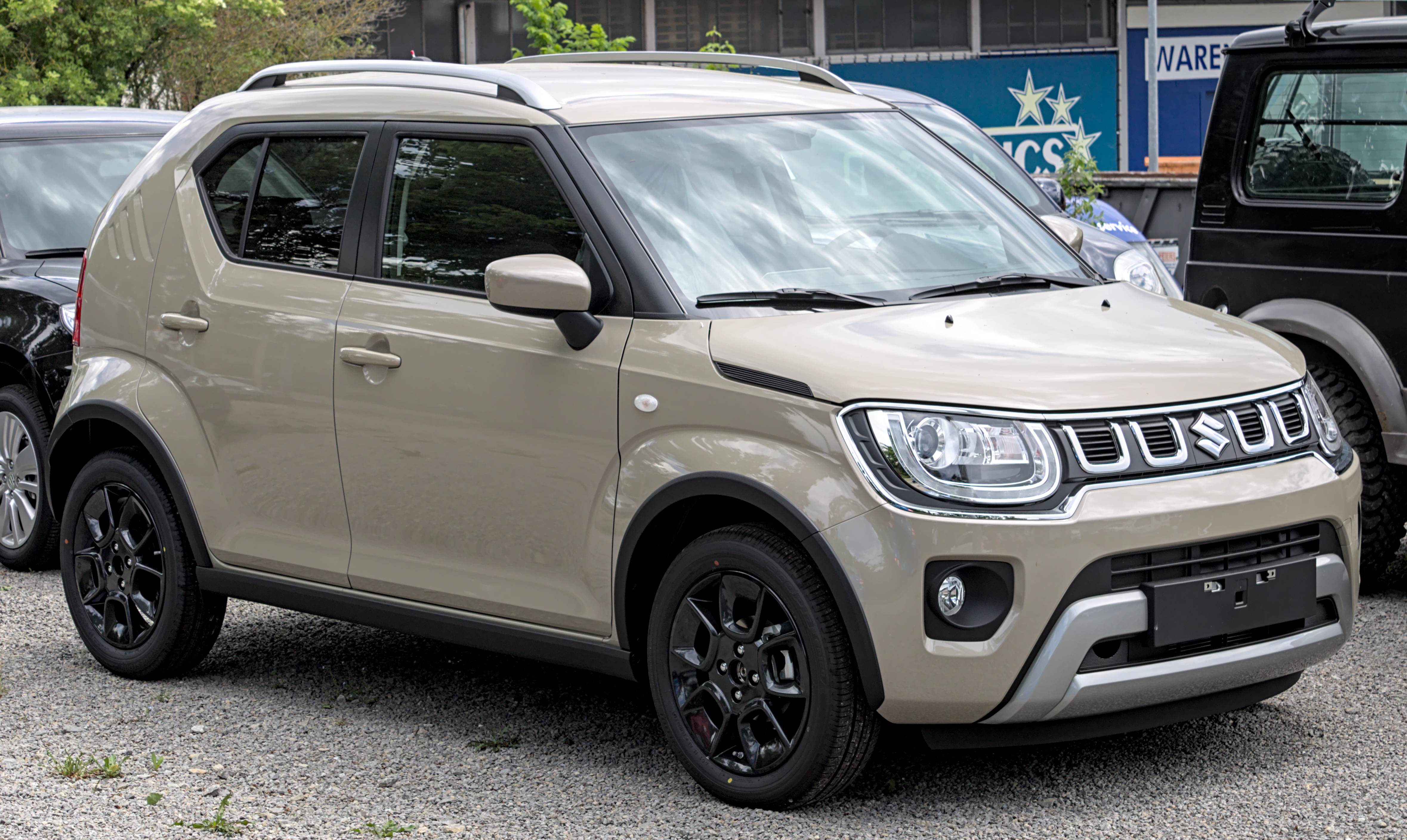
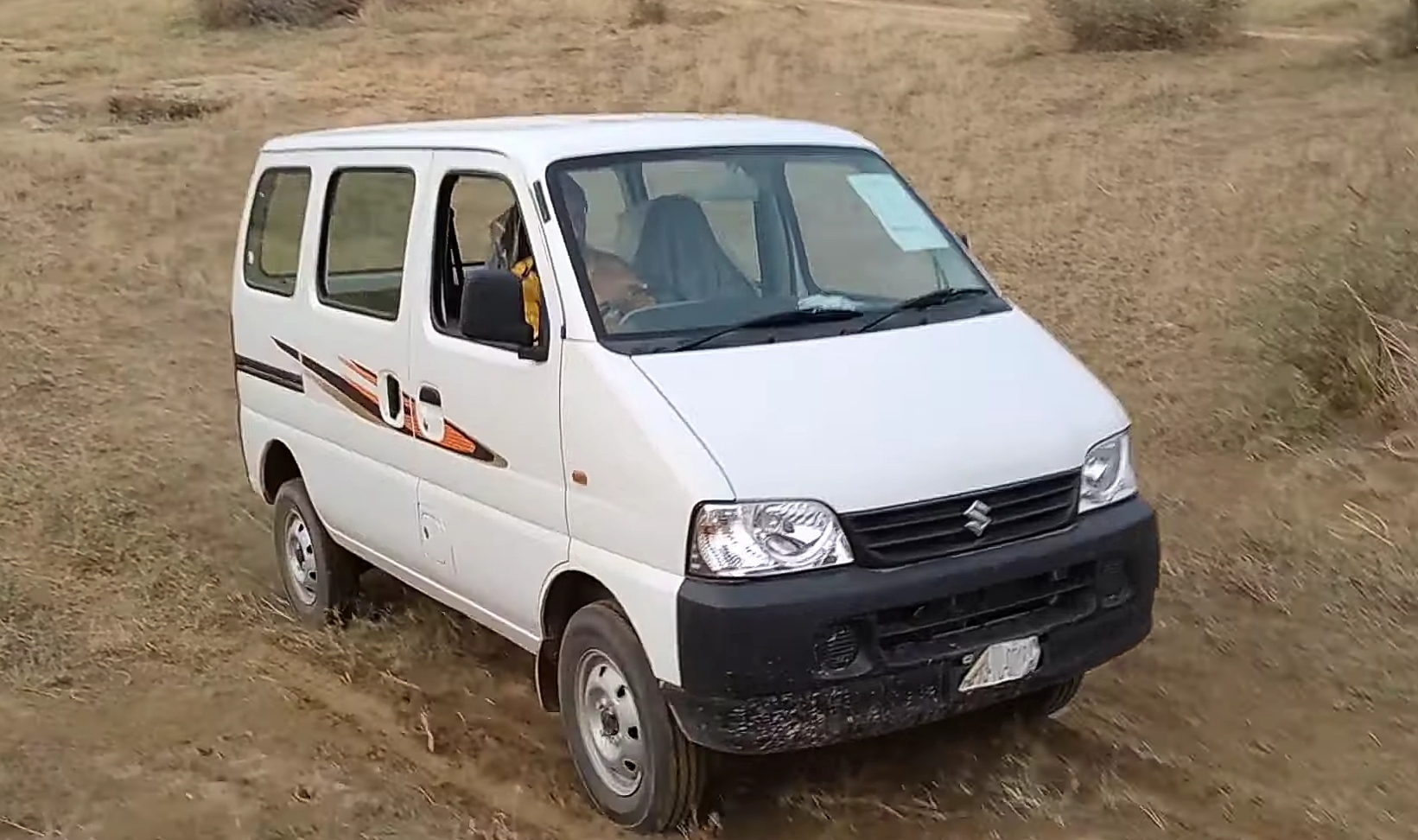
The [[Gurgaon|Gurugram]] manufacturing facility has three fully integrated manufacturing plants and is spread over {{convert|300|acre|km2}}.<ref name="businesstoday.intoday.in">{{Cite web|url=https://www.businesstoday.in/magazine/cover-story/maruti-suzuki-on-recovery-route-after-2012-labour-troubles/story/202165.html|title=How Maruti bounced back after its labour strife of 2012|website=Businesstoday.in|date=15 January 2014 }}</ref> The Gurugram facilities also manufacture 240,000 ''[[List of Suzuki engines#K engine|K-Series]]'' engines annually. The Gurugram facility manufactures the [[Suzuki Alto|Alto 800]], [[Maruti Suzuki Wagon R|Wagon R]], [[Suzuki Ertiga|Ertiga]], XL6, [[Suzuki SX4|S-Cross]], [[Suzuki Brezza|Vitara Brezza]], [[Suzuki Ignis|Ignis]], and [[Suzuki Eeco|Eeco]]. The Gurugram facility also assembles the [[Suzuki Jimny|Jimny]] starting from January 2021 solely for export markets. It was reported the Indian-assembled Jimny will be exported to African markets and countries in the Middle East.<ref>{{Cite web|title=Maruti Suzuki starts exporting the Jimny SUV from India|url=https://www.autocarindia.com/car-news/maruti-suzuki-starts-exporting-the-jimny-suv-from-india-419712|access-date=2021-01-20|website=Autocar India|language=en}}</ref> | |||
The [[Manesar]] manufacturing plant was inaugurated in February 2007 and is spread over {{convert|600|acre|km2}}.<ref name="businesstoday.intoday.in"/> Initially, it had a production capacity of 100,000 vehicles annually but this was increased to 300,000 vehicles annually in October 2008. The production capacity was further increased by 250,000 vehicles taking the total production capacity to 800,000 vehicles annually.<ref>{{Cite web |url=http://www.marutisuzuki.com/press-release-16-sep-2014.aspx |title=Maruti Suzuki India LTD. Maruti Udyog Ltd Best Selling Car Maruti True Value Maruti Udyog |access-date=24 February 2015 |archive-url=https://web.archive.org/web/20150225025355/http://www.marutisuzuki.com/press-release-16-sep-2014.aspx |archive-date=25 February 2015 |url-status=dead }}</ref> The Manesar plant produces the [[Maruti Suzuki Alto|Alto]], [[Suzuki Swift|Swift]], [[Suzuki Ciaz|Ciaz]], [[Suzuki Baleno (2015)|Baleno]] and [[Suzuki Celerio|Celerio]]. On 25 June 2012, Haryana State Industries and Infrastructure Development Corporation demanded Maruti Suzuki pay an additional ₹235 crore for enhanced land acquisition for its Haryana plant expansion. The agency reminded Maruti that failure to pay the amount would lead to further proceedings and vacating the enhanced land acquisition.<ref>{{cite news|title=Haryana government asks Maruti to pay Rs 235 crore for farmer compensation|work=The Economic Times|date=24 July 2012|url=http://economictimes.indiatimes.com/news/politics/nation/haryana-government-asks-maruti-to-pay-rs-235-crore-for-farmer-compensation/articleshow/15123404.cms}}</ref> | |||
In 2012, the company decided to merge Suzuki Powertrain India Limited (SPIL) with itself.<ref>{{Cite web|title=Maruti to merge Suzuki Powertrain with itself; Suzuki to increase stake to 56.21%|url=http://articles.economictimes.indiatimes.com/2012-06-13/news/32215543_1_diesel-engine-powertrain-india-maruti-suzuki|archive-url=https://web.archive.org/web/20150602045356/http://articles.economictimes.indiatimes.com/2012-06-13/news/32215543_1_diesel-engine-powertrain-india-maruti-suzuki|url-status=dead|archive-date=2 June 2015|access-date=2016-07-13}}</ref> SPIL was started as a JV by Suzuki Motor Corp. along with Maruti Suzuki. It has the facilities available for manufacturing diesel engines and transmissions. The demand for transmissions for all Maruti Suzuki cars is met by the production from SPIL. | |||
In 2017, the new [[Suzuki Motor Gujarat]] facility was opened. This third facility is not owned by Maruti Suzuki, but instead wholly owned by Suzuki Motor Corporation. Despite that, the plant supplied vehicles to Maruti without any additional cost. Located in Hansalpur, [[Ahmedabad]], the plant has a total annual capacity of 750,000 units. | |||
In | In November 2021 Maruti Suzuki announce to set up of a big plant in [[Kharkhoda, Haryana|IMT Kharkhoda]] in Sonipat district across 900 acres with an investment of ₹18,000 crores.<ref>{{Cite web|date=2021-11-14|title=Maruti Suzuki gets green signal to set up new plant at Sonepat|url=https://indianexpress.com/article/cities/delhi/maruti-suzuki-new-plant-sonepat-7621639/|access-date=2021-11-15|website=The Indian Express|language=en}}</ref> | ||
[[Haryana State Industrial and Infrastructure Development Corporation]] gives 900 acres of land to Maruti Suzuki for setting up a new plant in Industrial Model Township at [[Kharkhoda, Haryana]].<ref>{{Cite web|author=Manvir Saini|date=Nov 13, 2021|title=Haryana: 900 acres of land given to Maruti for the new plant in Sonipat's Kharkhoda district {{!}} Chandigarh News |url=https://timesofindia.indiatimes.com/city/chandigarh/haryana-900-acres-of-land-given-to-maruti-for-new-plant-in-sonipats-kharkhoda-district/articleshow/87688976.cms|access-date=2021-11-15|website=The Times of India|language=en}}</ref> | |||
In | In August 2022 [[Prime Minister of India]] [[Narendra Modi]] virtually laid the foundation stone of Maruti Suzuki's new manufacturing plant in [[Kharkhoda, Haryana|Kharkhoda]]. It will be one of the largest automobile manufacturing plant in the world with the capacity of making a million cars per year.<ref>{{Cite web |date=2022-08-28 |title=सोनीपत के खरखौदा में मारुति का नया प्लांट, पीएम मोदी ने किया शिलान्यास, CM खट्टर बोले-युवाओं को मिलेगा रोजगार |url=https://hindi.news18.com/news/haryana/sonipat-pm-modi-foundation-stone-of-maruti-suzuki-plant-in-kharkhoda-10-lakh-cars-will-be-made-nodelsp-4510425.html |access-date=2023-01-12 |website=News18 हिंदी |language=hi}}</ref><ref>{{Cite web |last=Service |first=Tribune News |title=Modi to lay stone of Maruti plant at Kharkhoda: Haryana Deputy CM Dushyant Chautala |url=https://www.tribuneindia.com/news/haryana/modi-to-lay-stone-of-maruti-plant-at-kharkhoda-deputy-cm-423458 |access-date=2023-01-12 |website=Tribuneindia News Service |language=en}}</ref> | ||
[[ | The Maruti Suzuki's [[Gurgaon|Gurugram]] manufacturing facility will shift to new manufacturing facility in [[Kharkhoda|Kharkhoda, Haryana]] will have four manufacturing plants in which a million cars will be produced annually and the [[Kharkhoda, Haryana]] plant will be third largest car producing facility in world.<ref>{{Cite web |title=Gurugram news: दुनिया का तीसरा सबसे बड़ा कार उत्पादक बनेगा भारत, मारुति सुजुकी के चेयरमेन भार्गव ने दिया बयान |url=https://www.jagran.com/haryana/gurgaon-ncr-gurugram-india-will-become-worlds-3rd-largest-car-producer-maruti-suzuki-chairman-bhargava-gave-statement-23251880.html |access-date=2023-01-12 |website=Dainik Jagran |language=hi}}</ref> Along with this, the carmaker will invest 35,000 crores into building second manufacturing plant close to their [[Gujarat]] plant in the state with a million cars capacity per annum. The operations will commence in 2028-29 taking the production capacity combined to 4.35 million units annually. | ||
==Controversies== | ==Controversies== | ||
===Industrial relations=== | ===Industrial relations=== | ||
Since its founding in 1983, Maruti Udyog Limited has experienced problems with its | Since its founding in 1983, Maruti Udyog Limited has experienced problems with its labor force. The [[Labour in India|Indian labor]] it hired readily accepted Japanese work culture and the modern manufacturing process. In 1997, there was a change in ownership, and Maruti became predominantly government controlled. Shortly thereafter, conflict between the [[United Front (India, 1996)|United Front Government]] and Suzuki started. In 2000, a major industrial relations issue began and employees of Maruti went on an indefinite strike, demanding among other things, major revisions to their wages, incentives and pensions.<ref name=mathur>{{cite book|title=Retail Management: Text And Cases|author=U.C. Mathur|year=2010|isbn=978-9380578668|pages=471–472|publisher=I. K. International Pvt }}</ref><ref>{{cite news|title=Maruti staff to continue strike|publisher=The Hindu Business Line|date=28 September 2000|url=http://hindu.com/businessline/2000/09/28/stories/142807a6.htm|url-status=dead|archive-url=https://web.archive.org/web/20140219115123/http://hindu.com/businessline/2000/09/28/stories/142807a6.htm|archive-date=19 February 2014}}</ref> | ||
Employees used [[slowdown]] in October 2000, to press a revision to their incentive-linked pay. In parallel, after elections and a new central government led by [[National Democratic Alliance (India)|NDA alliance]], India pursued a disinvestment policy. Along with many other government owned companies, the new administration proposed to sell part of its stake in Maruti Suzuki in a public offering. The worker's union opposed this sell-off plan on the grounds that the company will lose a major business advantage of being | Employees used [[slowdown]] in October 2000, to press a revision to their incentive-linked pay. In parallel, after elections and a new central government led by [[National Democratic Alliance (India)|NDA alliance]], India pursued a [[Disinvestment|disinvestment policy]]. Along with many other government owned companies, the new administration proposed to sell part of its stake in Maruti Suzuki in a public offering. The worker's union opposed this sell-off plan on the grounds that the company will lose a major business advantage of being subsidized by the Government, and the union has better protection while the company remains in control of the government.<ref name=mathur/><ref>{{cite news|title=MUL union leaders on hunger strike|publisher=The Hindu Business Line|date=19 December 2000|url=http://www.hindu.com/businessline/2000/12/19/stories/141907a6.htm|archive-url=https://archive.today/20130125111847/http://www.hindu.com/businessline/2000/12/19/stories/141907a6.htm|url-status=dead|archive-date=25 January 2013}}</ref> | ||
The standoff between the union and the management continued through 2001. The management refused union demands citing increased competition and lower margins. The central government privatized Maruti in 2002 and Suzuki became the majority owner of Maruti Udyog Limited.<ref>{{cite web|url=http://www.hartford-hwp.com/archives/52a/index-db.html|title=Article Timeline of Maruti Suzuki Labour Unrest, World History Archive|publisher=Hartford-hwp.com|access-date=10 October 2010}}</ref><ref>{{cite news|title=Maruti disinvestment - Releasing the clutch|publisher=The Hindu Business Line|date=19 May 2002|url=http://www.thehindubusinessline.in/iw/2002/05/19/stories/2002051900060700.htm}}</ref> | The standoff between the [[Trade union|union]] and the management continued through 2001. The management refused union demands citing increased competition and lower margins. The central government privatized Maruti in 2002 and Suzuki became the majority owner of Maruti Udyog Limited.<ref>{{cite web|url=http://www.hartford-hwp.com/archives/52a/index-db.html|title=Article Timeline of Maruti Suzuki Labour Unrest, World History Archive|publisher=Hartford-hwp.com|access-date=10 October 2010}}</ref><ref>{{cite news|title=Maruti disinvestment - Releasing the clutch|publisher=The Hindu Business Line|date=19 May 2002|url=http://www.thehindubusinessline.in/iw/2002/05/19/stories/2002051900060700.htm}}</ref> | ||
===Manesar violence=== | ===Manesar violence=== | ||
On 18 July 2012, Maruti's [[Manesar]] plant was hit by violence. According to Maruti management, the production workers attacked supervisors and started a fire that killed company's General Manager of Human Resources Avineesh Dev and injured 100 other managers, including two Japanese [[expatriate]]s. The workers also allegedly injured nine policemen.<ref>{{cite news|title=Riot Hits Big India Auto Maker|author=Nikhil Gulati and Santanu Choudhury|date=19 July 2012|publisher=The Wall Street Journal|url=https://www.wsj.com/articles/SB10000872396390444464304577535851555867244 }}</ref><ref name=wsj22july>{{cite news|title=Indian Car Maker Declares Lockout|author=Nikhil Gulati|date=22 July 2012|url=https://www.wsj.com/articles/SB10000872396390443437504577542433812209206|website=Wsj.com}}</ref> However Maruti Suzuki Workers Union (MSWU) President Sam Meher alleged that management ordered 300 hired security guards to attack the workforce during the violence.<ref>{{Cite news|url=http://www.thehindu.com/business/companies/violence-has-implications-beyond-one-company-region-maruti/article3658207.ece|title=Violence has implications beyond one company, region: Maruti|newspaper=[[The Hindu]]|access-date=2017-02-26|language=en}}</ref> The incident is the worst-ever for Suzuki since the company began operations in India in 1983.<ref name=wsj20jul>{{cite news|title=Maruti Manager Died in Fire After Limbs Broken|author=Santanu Choudhury|date=20 July 2012|newspaper=[[The Wall Street Journal]]|url=https://www.wsj.com/articles/SB10000872396390444464304577535851555867244 }}</ref> | |||
Since April 2012, the Manesar union had demanded a three-fold increase in basic salary, a monthly conveyance allowance of {{Indian Rupee}}10,000, a laundry allowance of {{Indian Rupee}}3,000, a gift with every new car launch, and a house for every worker who wants one, or cheaper home loans for those who want to build their own houses.<ref name=NYT72012>{{cite news|title=Clash at an Auto Plant in India Turns Deadly|url=https://www.nytimes.com/2012/07/20/business/global/clash-at-india-auto-factory-leaves-one-dead-and-scores-wounded.html|access-date=20 July 2012|newspaper=The New York Times|date=19 July 2012|author=Vikas Bajaj|author2=Sruthi Gottipati}}</ref><ref>{{cite news| url= https://timesofindia.indiatimes.com/india/Marutis-Manesar-plant-GMHR-burned-to-death-91-workers-arrested-government-says-business-confidence-intact/articleshow/15045097.cms| archive-url= https://web.archive.org/web/20131021050950/http://articles.timesofindia.indiatimes.com/2012-07-19/india/32745786_1_maruti-suzuki-plant-maruti-s-manesar-violence| url-status= live| archive-date= 21 October 2013| work= [[The Times of India]]| title= Maruti's Manesar plant GM(HR) burned to death, 91 workers arrested; government says business confidence intact| date=19 July 2012}}</ref> According to the Maruti Suzuki Workers Union a supervisor had abused and made discriminatory comments to a [[Caste system in India|low-caste]] worker, Jiya Lal.<ref name=HP72112>{{cite news|title=India's Maruti Suzuki shuts riot-hit car plant|url=http://www.huffingtonpost.com/huff-wires/20120721/as-india-suzuki/|access-date=23 July 2012|newspaper=Huffington Post|date=21 July 2012|author=Ashok Sharma}}</ref> These claims were denied by the company and the police.<ref name=wsj22july/> Maruti said the unrest began, not over wage discussions, but after the workers' union demanded the reinstatement of Jiya Lal who had been suspended for allegedly beating a supervisor.<ref name=wsj20jul/> The workers claim harsh working conditions and extensive hiring of low-paid contract workers which are paid about $126 a month, about half the minimum wage of permanent employees.<ref name=HP72112 /> On 27 June 2013, an international delegation from the International Commission for Labor Rights (ICLR) released a [http://www.laborcommission.org/files/uploads/2FINAL_Merchants_of_Menace_lo_res.pdf report] alleging serious violations of the industrial right of workers by the Maruti Suzuki management.<ref>{{Cite web|url=http://lawcha.org/wordpress/2013/06/28/international-delegation-releases-report-and-calls-on-the-indian-government-to-address-violations-of-the-labor-and-human-rights-of-maruti-suzuki-workers/|title=Violations of the Labor and Human Rights of Maruti Suzuki Workers in India|last=Ness|first=Immanuel|date=2013-06-28|website=Labor and Working-Class History Association}}</ref> Company executives denied harsh conditions and claim they hired entry-level workers on contracts and made them permanent as they gained experience.<ref name=NYT72012 /> Maruti employees currently earn allowances in addition to their base wage.<ref name="et26jul">{{cite web|url=http://www.hindustantimes.com/India-news/NewDelhi/Maruti-workers-want-lakh-a-month/Article1-895806.aspx|title=Maruti workers want lakh a month|date=26 July 2012|work=The Hindustan Times|author=Sumant Banerji|url-status=dead|archive-url=https://web.archive.org/web/20120726062828/http://www.hindustantimes.com/India-news/NewDelhi/Maruti-workers-want-lakh-a-month/Article1-895806.aspx|archive-date=26 July 2012}}</ref> | |||
Since April 2012, the Manesar union had demanded a three-fold increase in basic salary, a monthly conveyance allowance of {{Indian Rupee}}10,000, a laundry allowance of {{Indian Rupee}}3,000, a gift with every new car launch, and a house for every worker who wants one, or cheaper home loans for those who want to build their own houses.<ref name=NYT72012>{{cite news|title=Clash at an Auto Plant in India Turns Deadly|url=https://www.nytimes.com/2012/07/20/business/global/clash-at-india-auto-factory-leaves-one-dead-and-scores-wounded.html|access-date=20 July 2012|newspaper=The New York Times|date=19 July 2012|author=Vikas Bajaj|author2=Sruthi Gottipati}}</ref><ref>{{cite news| url= | |||
The police, in its [[First Information Report]] (FIR), claimed on 21 July that Manesar violence is the result of a planned violence by a section of workers and union leaders and arrested 91 people.<ref>{{cite news|title=Maruti violence may be planned: cops|date=21 July 2011|author=Indo Asian News Service|work=[[Daily News (New York)|New York Daily News]]|url=http://india.nydailynews.com/business/bf1ca28fe5063ac58d52d38d88dda279/maruti-violence-may-be-planned-cops|url-status=dead|archive-url=https://web.archive.org/web/20120723093052/http://india.nydailynews.com/business/bf1ca28fe5063ac58d52d38d88dda279/maruti-violence-may-be-planned-cops|archive-date=23 July 2012}}</ref><ref>{{cite news|date=21 July 2012|title=Police collect CCTV clips from Manesar MSIL plant|url= | The police, in its [[First Information Report]] (FIR), claimed on 21 July that Manesar violence is the result of a planned violence by a section of workers and union leaders and arrested 91 people.<ref>{{cite news|title=Maruti violence may be planned: cops|date=21 July 2011|author=Indo Asian News Service|work=[[Daily News (New York)|New York Daily News]]|url=http://india.nydailynews.com/business/bf1ca28fe5063ac58d52d38d88dda279/maruti-violence-may-be-planned-cops|url-status=dead|archive-url=https://web.archive.org/web/20120723093052/http://india.nydailynews.com/business/bf1ca28fe5063ac58d52d38d88dda279/maruti-violence-may-be-planned-cops|archive-date=23 July 2012}}</ref><ref>{{cite news|date=21 July 2012|title=Police collect CCTV clips from Manesar MSIL plant|url=https://timesofindia.indiatimes.com/city/gurgaon/Police-collect-CCTV-clips-from-Manesar-MSIL-plant/articleshow/15066957.cms|archive-url=https://archive.today/20130126155702/http://articles.timesofindia.indiatimes.com/2012-07-21/gurgaon/32775947_1_cctv-cameras-footages-cctv-clips|url-status=live|work=[[The Times of India]]|archive-date=26 January 2013}}</ref> Maruti Suzuki in its statement on the unrest,<ref>{{cite news|title=Maruti Suzuki's statement on Manesar unrest|publisher=CNN-IBN|date=19 July 2012|url=http://ibnlive.in.com/news/maruti-suzukis-statement-on-manesar-unrest/272307-3-240.html|archive-url=https://web.archive.org/web/20120722052549/http://ibnlive.in.com/news/maruti-suzukis-statement-on-manesar-unrest/272307-3-240.html|url-status=dead|archive-date=22 July 2012}}</ref> announced that all work at the Manesar plant has been suspended indefinitely.<ref name=wsj20jul/> The shut down of Manesar plant is leading to a loss of about ₹75 crore<ref name=ET72212 /> per day.<ref>{{cite news|url=https://timesofindia.indiatimes.com/india/Marutis-Manesar-plant-closed-for-third-day-Rs-210cr-loss-so-far/articleshow/15073919.cms|archive-url=https://archive.today/20130126040434/http://articles.timesofindia.indiatimes.com/2012-07-21/india/32776480_1_manesar-plant-plant-rolls-maruti-s-manesar|url-status=live|archive-date=26 January 2013|work=[[The Times of India]]|title=Maruti's Manesar plant closed for third day, Rs 210cr loss so far |date=21 July 2012 |access-date=21 July 2012}}</ref> On 21 July 2012, citing safety concerns, the company announced a [[Lockout (industry)|lockout]] under [[The Industrial Disputes Act, 1947]] pending results of an inquiry the company has requested of the [[Haryana government]] into the causes of the disorder. Under the provisions of The Industrial Disputes Act for wages, the report claimed, employees are expected to be paid for the duration of the lockout.<ref name=ET72212>{{cite news|title=Maruti Suzuki declares lockout at Manesar factory|url=http://economictimes.indiatimes.com/news/news-by-industry/auto/automobiles/maruti-suzuki-declares-lockout-at-manesar-factory/articleshow/15082063.cms|access-date=21 July 2012|newspaper=The Economic Times|date=22 July 2012|author=Chanchal Pal Chauhan}}</ref> On 26 July 2012, Maruti announced employees would not be paid for the period of lock-out in accordance with [[Indian labour laws|Indian labor laws]]. The company further announced that it will stop using contract workers by March 2013. The report claimed the salary difference between contract workers and permanent workers has been much smaller than initial media reports – the contract worker at Maruti received about {{Indian Rupee}}11,500 per month, while a permanent worker received about {{Indian Rupee}}12,500 a month at start, which increased in three years to {{Indian Rupee}}21,000-₹22,000 per month.<ref>{{cite news|title=Maruti Suzuki to Stop Using Contract Workers in Direct Manufacturing|publisher=The Wall Street Journal|date=26 July 2012|url=https://www.wsj.com/articles/SB10000872396390443343704577550231319101386}}</ref> In a separate report, a contractor who was providing contract employees to Maruti claimed the company gave its contract employees<ref>{{cite web|url=https://www.livemint.com/auto-news/maruti-suzuki-cuts-3-000-contract-jobs-1566885517366.html |title=Maruti Suzuki cuts 3,000 contract jobs | ||
|date=27 August 2019 | |date=27 August 2019 | ||
|publisher=livemint.com |access-date=2019-08-27}}</ref> the best wage, allowances and benefits package in the region.<ref>{{cite news|title=Violence at Maruti's Manesar plant: Bloodlust had taken over, eyewitness says|work=[[The Times of India]]|date=26 July 2012|url=http://timesofindia.indiatimes.com/business/india-business/Violence-at-Marutis-Manesar-plant-Bloodlust-had-taken-over-eyewitness-says/articleshow/15159529.cms}}</ref> | |publisher=livemint.com |access-date=2019-08-27}}</ref> the best wage, allowances and benefits package in the region.<ref>{{cite news|title=Violence at Maruti's Manesar plant: Bloodlust had taken over, eyewitness says|work=[[The Times of India]]|date=26 July 2012|url=http://timesofindia.indiatimes.com/business/india-business/Violence-at-Marutis-Manesar-plant-Bloodlust-had-taken-over-eyewitness-says/articleshow/15159529.cms}}</ref> | ||
Shinzo Nakanishi, managing director and chief executive of Maruti Suzuki India, said this type of violence has never happened in Suzuki Motor Corp's global operations in Hungary, Indonesia, Spain, Pakistan, Thailand, Malaysia, China and the Philippines. Nakanishi | Shinzo Nakanishi, managing director and chief executive of Maruti Suzuki India, said this type of violence has never happened in Suzuki Motor Corp's global operations in Hungary, Indonesia, Spain, Pakistan, Thailand, Malaysia, China and the Philippines. Nakanishi apologized to affected workers on behalf of the company, and in press interview requested the central and Haryana state governments to help stop further violence by legislating decisive rules to restore corporate confidence amid emergence of this new 'militant workforce' in Indian factories. He announced, "we are going to de-recognize Maruti Suzuki Workers' Union and dismiss all workers named in connection with the incident. We will not compromise at all in such instances of barbaric, unprovoked violence." He also announced Maruti plans to continue manufacturing in Manesar, that [[Gujarat]] was an expansion opportunity and not an alternative to Manesar.<ref>{{cite news|title=Maruti to stay put at Manesar, planning new plant|date=21 July 2012|author=Chanchal Pal Chauhan|work=[[The Economic Times]]|url=http://economictimes.indiatimes.com/news/news-by-industry/auto/automobiles/maruti-to-stay-put-at-manesar-planning-new-plant/articleshow/15064245.cms}}</ref><ref>{{cite news|title=We will de-recognise Maruti Suzuki Workers' Union: Shinzo Nakanishi|author=Sharmistha Mukherjee & Surajeet Das Gupta|work=[[Business Standard]]|date=22 July 2012|url=http://business-standard.com/india/news/we-will-de-recognise-maruti-suzuki-workers-union-shinzo-nakanishi/481032/}}</ref> | ||
The company dismissed 500 workers accused of causing the violence and re-opened the plant on 21 August, saying it would produce 150 vehicles on the first day, less than 10% of its capacity. Analysts said that the shutdown was costing the company 1 billion rupees ($18 million) a day and costing the company market share.<ref>{{Cite news |url=http://www.timescolonist.com/business/Maruti+Suzuki+riot+plant+reopens+only+partial+capacity/7121376/story.html |archive-url=https://archive.today/20130204114233/http://www.timescolonist.com/business/Maruti+Suzuki+riot+plant+reopens+only+partial+capacity/7121376/story.html |url-status=dead |archive-date=4 February 2013 |title=Maruti Suzuki's riot-hit plant reopens but only at partial capacity |author=The Times Colonist |date=21 August 2012 |access-date=22 August 2012 |author-link=The Times Colonist }}</ref> In July 2013, the workers went on hunger strike to protest the continuing jailing of their colleagues and launched an online campaign to support their demands.<ref>{{Cite news |url=http://www.labourstartcampaigns.net/show_campaign.cgi?c=1889 |title=India: Free 147 jailed workers - support the hunger strikers |author= LabourStart |date=15 July 2013 |access-date=15 July 2013|author-link=LabourStart }}</ref> | The company dismissed 500 workers accused of causing the violence and re-opened the plant on 21 August, saying it would produce 150 vehicles on the first day, less than 10% of its capacity. Analysts said that the shutdown was costing the company 1 billion rupees ($18 million) a day and costing the company market share.<ref>{{Cite news |url=http://www.timescolonist.com/business/Maruti+Suzuki+riot+plant+reopens+only+partial+capacity/7121376/story.html |archive-url=https://archive.today/20130204114233/http://www.timescolonist.com/business/Maruti+Suzuki+riot+plant+reopens+only+partial+capacity/7121376/story.html |url-status=dead |archive-date=4 February 2013 |title=Maruti Suzuki's riot-hit plant reopens but only at partial capacity |author=The Times Colonist |date=21 August 2012 |access-date=22 August 2012 |author-link=The Times Colonist }}</ref> In July 2013, the workers went on hunger strike to protest the continuing jailing of their colleagues and launched an online campaign to support their demands.<ref>{{Cite news |url=http://www.labourstartcampaigns.net/show_campaign.cgi?c=1889 |title=India: Free 147 jailed workers - support the hunger strikers |author= LabourStart |date=15 July 2013 |access-date=15 July 2013|author-link=LabourStart }}</ref> | ||
A total of 148 workers were charged with the murder of Human Resources Manager Avineesh Dev. The court dismissed charges against 117 of the workers. On 17 March 2017, 31 workers were found guilty of variety of offences. 18 were convicted on charges of rioting, trespassing, causing hurt and other related offences under Indian Penal Code sections. The remaining 13 workers were sentenced to life in imprisonment after being found guilty of the murder of General Manager of Human Resources Avineesh Dev. Twelve of the thirteen sentenced were office-bearers of the Maruti Suzuki Workers Union at the time of the alleged offences. The prosecution had sought the death penalty for the thirteen.<ref>{{Cite news|url= | A total of 148 workers were charged with the murder of Human Resources Manager Avineesh Dev. The court dismissed charges against 117 of the workers. On 17 March 2017, 31 workers were found guilty of variety of offences. 18 were convicted on charges of rioting, trespassing, causing hurt and other related offences under Indian Penal Code sections. The remaining 13 workers were sentenced to life in imprisonment after being found guilty of the [[murder]] of General Manager of Human Resources Avineesh Dev. Twelve of the thirteen sentenced were office-bearers of the Maruti Suzuki Workers Union at the time of the alleged offences. The prosecution had sought the death penalty for the thirteen.<ref>{{Cite news|url=https://www.deccanchronicle.com/nation/current-affairs/100317/31-maruti-employees-convicted-for-2012-manesar-violence.html|title=31 Maruti employees convicted for 2012 Manesar violence|date=2017-03-10|work=Deccan Chronicle}}</ref> | ||
Both prosecution and | Both prosecution and defense have announced they will appeal against the sentences. Defense counsel [[Vrinda Grover]] stated, "We will file appeals against all convictions in the HC. The evidence, as it stands, cannot withstand legal scrutiny. There is no evidence to link these workers to the murder. The 13 who have been convicted, it’s important to remember that they were the leaders of the union. Therefore, it is clear that this is targeted framing of these persons. We hope for justice in the superior court".<ref>{{Cite news|url=http://indianexpress.com/article/india/in-maruti-plant-violence-13-get-life-sentence-worker-unions-to-hold-rally-4575457/|title=In Maruti plant violence: 13 sentenced to life, worker unions to hold rally|last=Sakshi|first=Dayal|date=2017-03-19|work=Indian Express}}</ref> | ||
The Maruti Suzuki Workers Union is continuing to | The Maruti Suzuki Workers Union is continuing to organize industrial action and protests calling for the workers to be released and criticizing the judgement and sentences an unjust.<ref>{{Cite web|url=https://marutisuzukiworkersunion.wordpress.com/2017/03/19/free-the-maruti-workers-13-maruti-union-members-given-life-sentence-for-struggling-for-union-formation-abolition-of-the-contract-worker-system/|title=Free the Maruti Workers! 13 Maruti Union members given 'Life Sentence' for Struggling for Union Formation &Abolition of the Contract Worker System|date=2017-03-19|website=Maruti Suzuki Workers Union}}</ref> An international appeal for the release of the workers has been made by the International Committee for the Fourth International (ICFI) and other organizations such as the People's Alliance for Democracy and Secularism (PADS).<ref>{{Cite web|url=http://www.wsws.org/en/articles/2017/03/20/pers-m20.html|title=Free the framed-up Maruti Suzuki workers!|date=2017-03-20|website=World Socialist Website}}</ref><ref>{{Cite web|url=http://www.countercurrents.org/2017/03/19/demanding-justice-for-convicted-workers-of-maruti-suzuki/|title=Demanding Justice For Convicted Workers of Maruti Suzuki|last=Rao|first=Battini|website=Countercurrents.org|date=19 March 2017 }}</ref> | ||
===Automotive safety=== | ===Automotive safety=== | ||
Maruti Suzuki | Maruti Suzuki has been criticized for compromising safety in their products by automotive enthusiasts, journalists, and the [[Global NCAP]], as they are made lighter in terms of kerb weight to achieving higher fuel economy. Starting from January 2014, several of their made for India cars were crash tested at Global NCAP through the [[Global NCAP#Safer Cars for India|Safer Cars for India]] campaign, most of which have given disappointing results. Cars like [[Suzuki Alto|Alto]], [[Suzuki Swift|Swift]], [[Suzuki Celerio|Celerio]], [[Suzuki S-Presso|S-Presso]] (with driver's airbag), and [[Suzuki Eeco|Eeco]] which had no safety features like [[airbag]]s were awarded 0 stars, while [[Suzuki Wagon R|Wagon-R]] and [[Suzuki Swift|Swift]] (2018 model year) which had dual front airbags were awarded 2 stars out of 5. Only the [[Suzuki Vitara|Vitara]], [[suzuki Brezza|Brezza]] (4 stars) and [[Suzuki Ertiga|Ertiga]] (3 stars) have been awarded decent safety ratings.<ref>{{Cite web|url=https://www.globalncap.org/safercarsforindia|title=#SaferCarsForIndia|website=Globalncap.org|access-date=5 March 2022|archive-date=20 March 2022|archive-url=https://web.archive.org/web/20220320025108/https://www.globalncap.org/safercarsforindia|url-status=dead}}</ref> Though Maruti Suzuki claimed that they were following the safety standards mandated by the Government of India, it however only implied with the safety features included in their cars and not the strong body shell or build quality which suffers the impact of the crash.<ref>{{Cite web|url=https://www.indiacarnews.com/news/crash-test-results-of-maruti-suzuki-cars-global-ncap-42873/|title=Crash Test Results of Maruti Suzuki Cars – Global NCAP|date=13 November 2020}}</ref> Maruti Suzuki has also come under fire for discrimination with customers in India, by making cars safe meant for exports to European and African markets.<ref>{{Cite web|url=https://news.abplive.com/news/auto/maruti-suzuki-s-presso-safer-in-africa-as-compared-to-india-reports-1400820|title=Maruti Suzuki S-Presso Safer In Africa As Compared To India: Reports|website=News.abplive.com|date=30 November 2020}}</ref> | ||
In November 2014, [[R. C. Bhargava|RC Bhargava]], the chairman of Maruti Suzuki, stated that "''If carmakers incorporate such features in even entry-level cars, obviously the price would go up, which would lead consumers to opt for two-wheelers, which would be more unsafe''", which attracted criticism.<ref>{{Cite news|date=2014-11-12|title=More safety features in cars will mean less road safety, says Maruti chief|url=https://indianexpress.com/article/business/companies/more-safety-features-in-cars-will-mean-less-road-safety-says-maruti-chief/|access-date=2021-07-12|newspaper=[[The Indian Express]]|language=en}}</ref> The company, in February 2020, decided not to send their cars to Global NCAP for testing, as they only believe in the Safety Standards set by the Government of India.<ref>{{Cite web|url=https://www.news18.com/news/auto/maruti-suzuki-believes-only-in-indian-vehicle-safety-standards-will-not-send-cars-for-global-ncap-test-2503779.html|title=Maruti Suzuki Believes Only in Indian Vehicle Safety Standards, Will Not Send Cars for Global NCAP Test|website=News18.com|date=19 February 2020}}</ref> Following the crash test results of S-Presso, Alejandro Furas, Secretary General of [[Global NCAP]] said, “It is very disappointing that Maruti Suzuki, the manufacturer with the largest share of the Indian market, offers such low safety performance for Indian consumers. Domestic manufacturers like [[Mahindra & Mahindra|Mahindra]] and [[Tata Motors Cars|Tata]] have demonstrated high levels of safety and protection for their customers, both achieving five star performance. Surely it’s time for Maruti Suzuki to demonstrate this commitment to safety for its customers?” Alongside, David Ward, President of the Towards Zero Foundation said, "''We have seen important progress on car safety in India, with new legislation introduced by the government and manufacturers like Mahindra and Tata accepting the Global NCAP five star challenge and producing models which go well beyond minimum regulatory requirements. There is no place for zero rated cars in the Indian market. It remains a great disappointment that an important manufacturer like Maruti Suzuki does not recognize this.''"<ref>{{Cite web|url=https://www.globalncap.org/news/s-presso-gck5a|title=Maruti Suzuki Rated ZERO In Latest Global NCAP Crash Tests|website=Globalncap.org|date=20 November 2020 |access-date=5 March 2022}}</ref> | |||
For FY 2022 and 2023, Global NCAP crash tested the [[Suzuki Swift|Swift]], [[Suzuki S-Presso|S-Presso]], [[Suzuki Ignis|Ignis]], and [[Suzuki Wagon R|Wagon-R]], each of which received 1-star rating, while the [[Maruti Suzuki Alto#Third generation (2022)|Alto K10]] received 2-star rating.<ref>{{Cite web|url=https://www.globalncap.org/safercarsforindia|title=#SaferCarsForIndia|website=Global NCAP|access-date=11 July 2021|archive-date=20 March 2022|archive-url=https://web.archive.org/web/20220320025108/https://www.globalncap.org/safercarsforindia|url-status=dead}}</ref> While these cars came with basic safety features such as ABS and Dual Front Airbags, as mandated by the Government of India, the body structure was rated unstable with inability to withstand further loads.<ref>{{Cite web|url= https://auto.hindustantimes.com/auto/cars/indian-cars-with-unexpectedly-poor-safety-ratings-at-global-ncap-maruti-and-hyundai-top-list-41692610946486.html|title= Indian cars with unexpectedly poor safety ratings at global ncap maruti and hyundai top-list|date= 22 August 2023}}</ref> Maruti Suzuki has faced ire by auto enthusiasts and media for prioritizing sales over safety by pricing the unsafe cars much lower than competitors, eventually earning the name "Tin Cans" for the unsafe cars.<ref>{{Cite web|url= https://www.indiatoday.in/visualstories/auto/3-cars-with-poor-safety-rating-but-high-sales-78614-27-11-2023|title= 3 cars with poor safety rating but high sales|date= 27 November 2023}}</ref> | |||
By 2023, consumer surveys indicated a shift in car-buying priorities in India, with 92% of respondents reporting that they preferred safer cars over more fuel-efficient ones.<ref>{{Cite web |url=https://timesofindia.indiatimes.com/92-indians-want-safer-cars-than-fuel-efficient-ones-survey/articleshow/101335342.cms|title=92% Indians want safer cars than fuel-efficient ones: Survey |date=28 June 2023 |website=Times of India}}</ref> Responding to this growing emphasis on vehicle safety, Maruti Suzuki implemented a strategic shift in 2024, standardizing six airbags and electronic stability control across much of its lineup. This approach culminated in the compact sedan [[Suzuki Dzire|Dzire]] earning a 5-star rating from both [[Global NCAP]] and [[Bharat NCAP]], marking a turning point in the company’s safety performance and setting a new benchmark for mass-market Indian sedans.<ref>{{Cite web |url=https://www.globalncap.org/news/new-dzire-from-maruti-suzuki-achieves-five-star-rating-in-global-ncap-voluntary-test|title=New Dzire from Maruti Suzuki achieves five star rating in Global NCAP voluntary test |date=8 November 2024 |website=Global NCAP}}</ref><ref>{{Cite web |url=https://www.autocarpro.in/news/maruti-suzuki-makes-6-airbags-standard-in-97-of-lineup-targets-safety-perception-shift-126763|title=Maruti Suzuki makes 6 airbags standard in 97% of lineup, targets safety perception shift |website=Autocar Pro}}</ref> | |||
=== Anti-competitive dealer policies === | === Anti-competitive dealer policies === | ||
In Aug 2021, Maruti Suzuki was fined [[Indian rupee|₹]]200 Crore (US$28.57 million) by the [[Competition Commission of India|Competition Commission of India (CCI)]] for implementing its Discount Control Policy that restrains dealers from offering customer discounts beyond those prescribed by the carmaker.<ref>{{Cite web|title=Maruti Suzuki fined Rs 200 crore for anti-competitive dealer policies|url=https://www.autocarindia.com/car-news/maruti-suzuki-fined-rs-200-crore-for-anti-competitive-dealer-policies-421826|access-date=2021-08-25|website=Autocar India|language=en}}</ref><ref>{{Cite web | In Aug 2021, Maruti Suzuki was fined [[Indian rupee|₹]]200 Crore (US$28.57 million) by the [[Competition Commission of India|Competition Commission of India (CCI)]] for implementing its Discount Control Policy that restrains dealers from offering customer discounts beyond those prescribed by the carmaker.<ref>{{Cite web|title=Maruti Suzuki fined Rs 200 crore for anti-competitive dealer policies|url=https://www.autocarindia.com/car-news/maruti-suzuki-fined-rs-200-crore-for-anti-competitive-dealer-policies-421826|access-date=2021-08-25|website=Autocar India|language=en}}</ref><ref>{{Cite web|title=Here's why CCI imposed Rs 200 crore penalty on Maruti Suzuki|url=https://www.indiatoday.in/business/story/explained-why-cci-imposed-rs-200-crore-fine-on-maruti-suzuki-1844645-2021-08-24|access-date=2021-08-25|newspaper=[[India Today]]|date=24 August 2021 |language=en}}</ref><ref>{{Cite web|last=Prasad|first=Gireesh Chandra|date=2021-08-24|title=How Maruti got a ₹200-crore competition penalty|url=https://www.livemint.com/companies/news/lessons-in-cci-s-fine-on-maruti-for-other-companies-11629825735996.html|access-date=2021-08-25|website=Livemint.com|language=en}}</ref> | ||
==Models== | |||
===Current models=== | ===Current models=== | ||
{| class="wikitable" style="text-align:center" | ====ICE vehicles==== | ||
! Model | {| class="wikitable sortable" style="text-align: center; width: 55%" | ||
! | |- | ||
! Image | ! colspan="2" |Model | ||
! | ! rowspan="2" width="20%" |Indian introduction | ||
| | ! colspan="2" scope="col" |Current model | ||
| colspan=" | ! rowspan="2" width="25%" |Dealer outlet | ||
|- | |||
! class="unsortable" |Image | |||
!Name | |||
! width="20%" |Introduction | |||
! width="20%" |Update/[[Facelift (automotive)|facelift]] | |||
|- | |||
! colspan="6" |[[Hatchback]] | |||
|- | |||
| [[File:Suzuki Alto 1.0 GL 2024.jpg|200x200px]] | |||
! [[Maruti Suzuki Alto#Third generation (2022)|Alto K10]] | |||
| 2000 (as Alto) | |||
| 2022 | |||
| — | |||
| Arena | |||
|- | |||
| [[File:Suzuki S-presso 1.0 GLX Adventure 2021.jpg|199x199px]] | |||
! [[Suzuki S-Presso|S-Presso]] | |||
| 2019 | |||
| 2019 | |||
| — | |||
| Arena | |||
|- | |||
| [[File:2021 Maruti Suzuki Celerio ZXi (India) front view 02.png|200x200px]] | |||
! [[Suzuki Celerio|Celerio]] | |||
| 2014 | |||
| 2021 | |||
| — | |||
| Arena | |||
|- | |||
| [[File:2020 Maruti Suzuki Wagon R VXi (O) (India) front view.png|200x200px]] | |||
! [[Maruti Suzuki Wagon R|Wagon R]] | |||
| 1999 | |||
| 2019 | |||
| 2022 | |||
| Arena | |||
|- | |- | ||
|[[ | | [[File:Suzuki Ignis (third generation) Facelift IMG 4450.jpg|200x200px]] | ||
| | ! [[Suzuki Ignis|Ignis]] | ||
|[[File: | | 2017 | ||
|Arena | | 2017 | ||
| 2019 | |||
| Nexa | |||
|- | |||
| [[File:Suzuki Swift (2024) hybrid IMG 8820.jpg|200x200px]] | |||
! scope="row" |[[Suzuki Swift|Swift]] | |||
| 2005 | |||
| 2024 | |||
| — | |||
| Arena | |||
|- | |- | ||
|[[Suzuki | | [[File:2022 Maruti Suzuki Baleno Alpha (India) front view.jpg|200x200px]] | ||
! [[Suzuki Baleno (subcompact)|Baleno]] | |||
| 2015 | |||
| | | 2022 | ||
| — | |||
| Nexa | |||
|- | |- | ||
|[[ | ! colspan="6" |[[Sedan (automobile)|Sedan]] | ||
|- | |- | ||
|[[ | | [[File:Suzuki Dzire 2024 ZXI+.jpg|200x200px]] | ||
! scope="row" |[[Suzuki Dzire|Dzire]] | |||
|[[ | | 2008 (as Swift Dzire) | ||
|Arena | | 2024 | ||
| – | |||
| Arena | |||
|- | |- | ||
|[[ | ! colspan="6" |[[Crossover SUV|SUV/Crossover]] | ||
|- | |- | ||
|[[Suzuki | | [[File:2023 Suzuki Fronx 1.2 Delta+ (India) front view.png|200x200px]] | ||
! [[Suzuki Fronx|Fronx]] | |||
| 2023 | |||
| | | 2023 | ||
| — | |||
| Nexa | |||
|- | |- | ||
| | | [[File:2022 Maruti Suzuki Brezza ZXi+ (India) front view 02.png|200x200px]] | ||
! [[Suzuki Brezza|Brezza]] | |||
| 2016 (as Vitara Brezza) | |||
| 2022 | |||
| — | |||
| Arena | |||
|- | |- | ||
|[[ | | [[File:Suzuki Victoris CBG.jpg|200x200px]] | ||
! [[Suzuki Victoris|Victoris]] | |||
| 2025 | |||
|Arena | | 2025 | ||
| — | |||
| Arena | |||
|- | |- | ||
|[[Maruti Suzuki | | [[File:2022 Maruti Suzuki Grand Vitara Zeta Smart Hybrid (India) front view.jpg|200x200px]] | ||
! [[Suzuki Grand Vitara (2022)|Grand Vitara]] | |||
| 2022 | |||
| | | 2022 | ||
| — | |||
| Nexa | |||
|- | |- | ||
! colspan="6" |[[Off-road vehicle|Off-Road SUV]] | |||
|- | |- | ||
|[[Suzuki | | [[File:Suzuki Jimny 1.5 GLX 5-Door 2024 (1).jpg|200x200px]] | ||
! [[Suzuki Jimny|Jimny]] | |||
| 2023 | |||
| | | 2023 | ||
| — | |||
| Nexa | |||
|- | |- | ||
|[[ | ! colspan="6" |[[Multi Purpose Vehicle|MPV]] | ||
|- | |- | ||
|[[Suzuki | | [[File:2022 Suzuki Ertiga GX Hybrid.jpg|200x200px]] | ||
! [[Suzuki Ertiga|Ertiga]] | |||
| 2012 | |||
| | | 2018 | ||
| 2022 | |||
| Arena | |||
|- | |- | ||
| | | [[File:2023 Suzuki XL7 Zeta.jpg|200x200px]] | ||
! [[Suzuki XL6|XL6]] | |||
| 2019 | |||
| 2019 | |||
| 2022 | |||
| Nexa | |||
|- | |- | ||
| | | | ||
| | ! [[Suzuki Invicto|Invicto]] | ||
| 2023 | |||
| 2023 | |||
| — | |||
| Nexa | |||
|- | |||
! colspan="6" |[[Van]] | |||
|- | |- | ||
|[[Maruti | | [[File:White Maruti Eeco 01.jpg|200x200px]] | ||
! [[Suzuki Eeco|Eeco]] | |||
| 2010 | |||
|Arena | | 2010 | ||
| — | |||
| Arena | |||
|- | |- | ||
|[[ | ! colspan="6" |[[Pickup truck]] | ||
|- | |- | ||
| [[File:2018 Suzuki Carry Futura Flat Deck 1.5 SL415 (20190826).jpg|200x200px]] | |||
! [[Suzuki Carry#Futura|Super Carry]] | |||
| 2016 | |||
| 2016 | |||
| — | |||
| Maruti Suzuki Commercial | |||
|} | |||
====Electric vehicles==== | |||
{| class="wikitable sortable" style="text-align: center; width: 55%" | |||
|- | |||
! colspan="2" |Model | |||
! rowspan="2" width="20%" |Indian introduction | |||
! colspan="2" scope="col" |Current model | |||
! rowspan="2" width="25%" |Dealer outlet | |||
|- | |||
! class="unsortable" |Image | |||
!Name | |||
! width="20%" |Introduction | |||
! width="20%" |Update/[[Facelift (automotive)|facelift]] | |||
|- | |||
! colspan="6" |[[Crossover SUV|SUV/Crossover]] | |||
|- | |||
| [[File:2025 Suzuki e Vitara front view.jpg|200x200px]] | |||
! [[Suzuki e Vitara|e Vitara]] | |||
| 2025 | |||
| 2025 | |||
| — | |||
| Nexa | |||
|} | |} | ||
| Line 224: | Line 346: | ||
! Image | ! Image | ||
|- | |- | ||
|[[Maruti 800|800]] | |'''[[Maruti 800|800]]''' | ||
|1983 | |1983 | ||
|2014 | |2014 | ||
|[[File:Maruti 800 first.jpg| | |[[File:Maruti 800 first.jpg|200px]] | ||
|- | |- | ||
|[[Maruti Omni|Omni]] | |'''[[Maruti Omni|Omni]]''' | ||
|1984 | |1984 | ||
|2019 | |2019 | ||
|[[File:Omni Lpg.jpg| | |[[File:Omni Lpg.jpg|200px]] | ||
|- | |- | ||
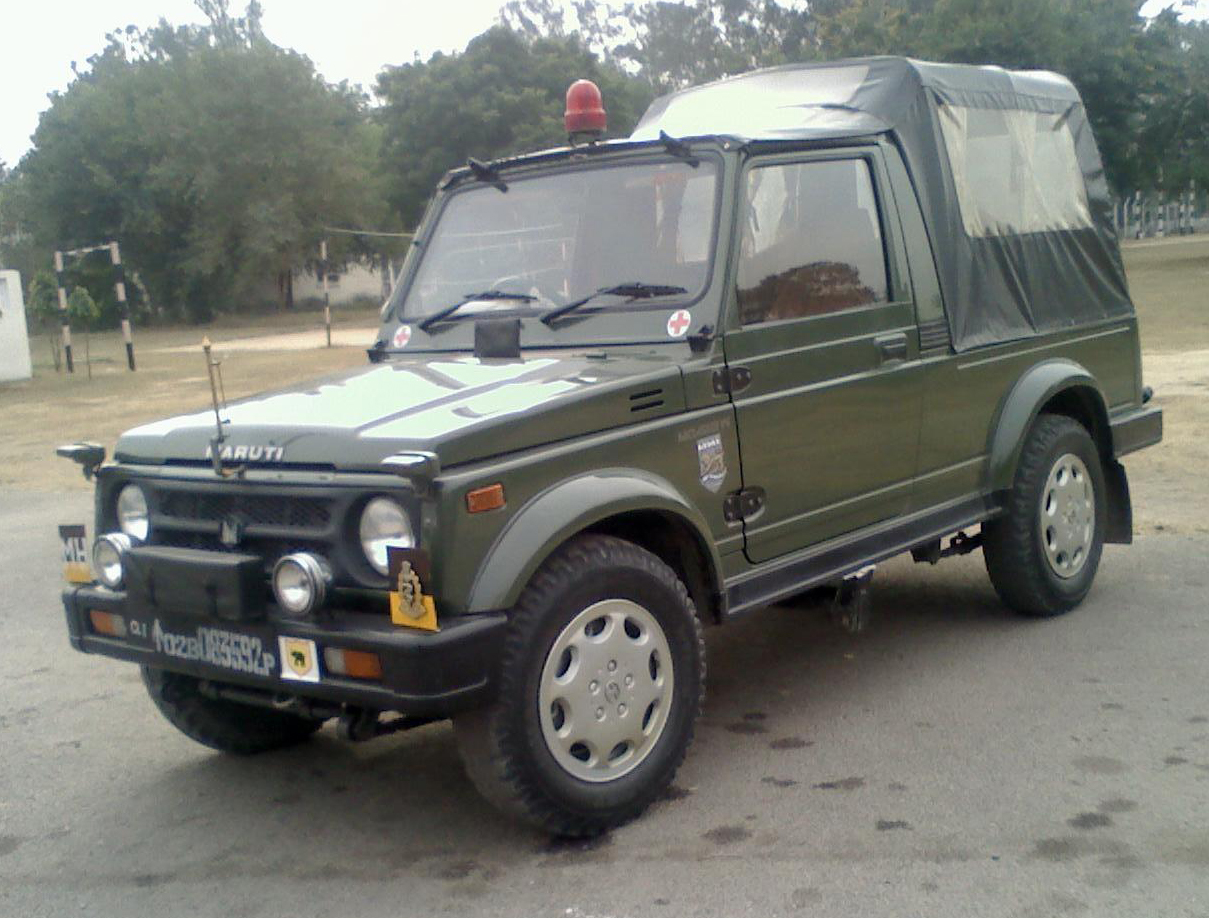
|[[Maruti Gypsy|Gypsy E]] | |'''[[Maruti Gypsy|Gypsy E]]''' | ||
|1985 | |1985 | ||
|2000 | |2000 | ||
|[[File:Maruti Gypsy.jpg| | |[[File:Maruti Gypsy.jpg|200px]] | ||
|- | |- | ||
|[[Maruti Gypsy|Gypsy King]] | |'''[[Maruti Gypsy|Gypsy King]]''' | ||
|1985 | |1985 | ||
| | |2019 | ||
|[[File:Maruti jeep.jpg| | |[[File:Maruti jeep.jpg|200px]] | ||
|- | |- | ||
|[[Maruti 1000|1000]] | |'''[[Maruti 1000|1000]]''' | ||
|1990 | |1990 | ||
|2000 | |2000 | ||
|[[File:Suzuki Swift 4door red vl.jpg| | |[[File:Suzuki Swift 4door red vl.jpg|200px]] | ||
|- | |- | ||
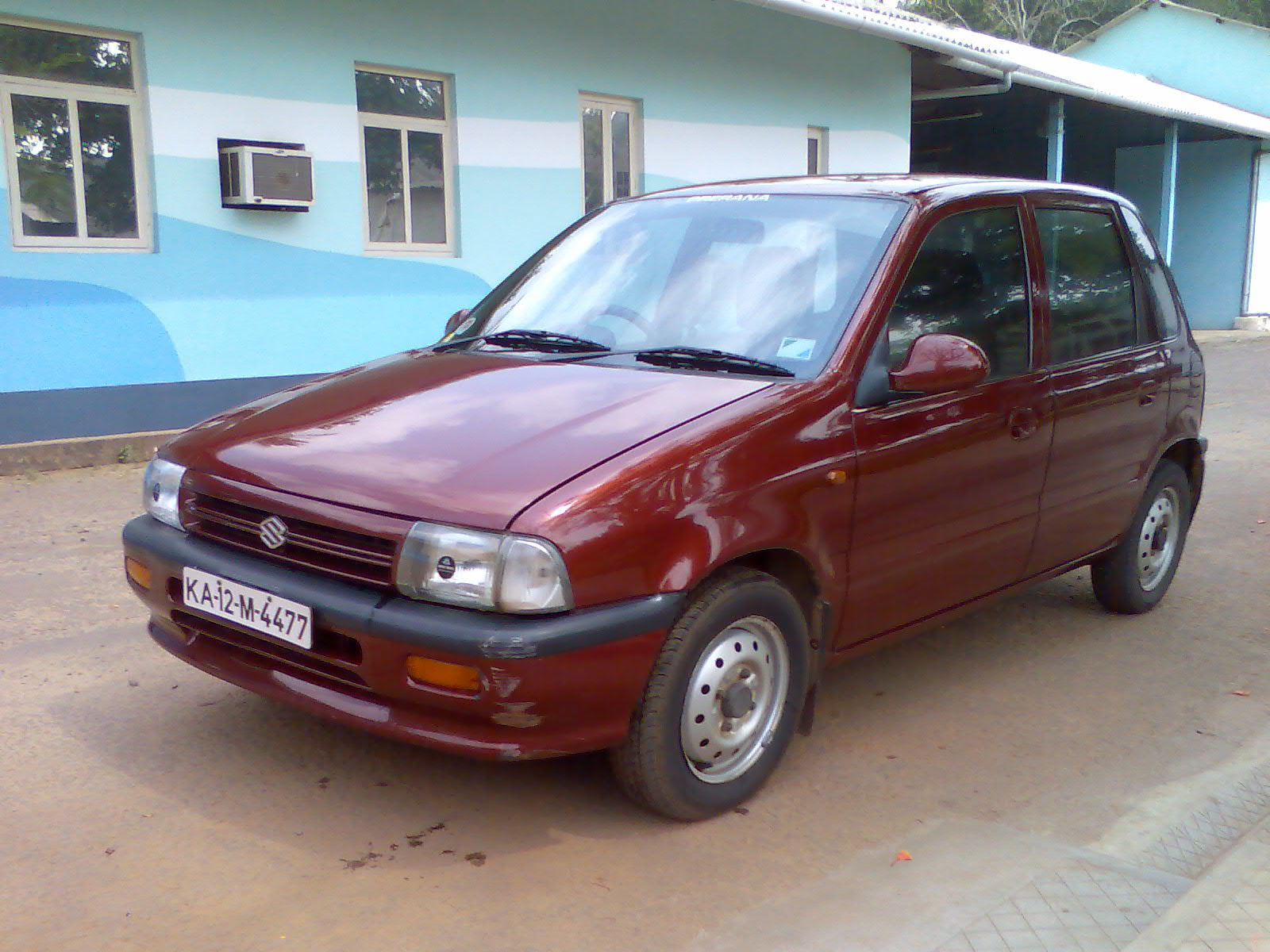
|[[Maruti Zen|Zen]] | |'''[[Maruti Zen|Zen]]''' | ||
|1993 | |1993 | ||
|2006 | |2006 | ||
|[[File:1993 Maruti Zen 001.jpg| | |[[File:1993 Maruti Zen 001.jpg|200px]] | ||
|- | |- | ||
|[[Maruti Esteem|Esteem]] | |'''[[Maruti Esteem|Esteem]]''' | ||
|1994 | |1994 | ||
|2007 | |2007 | ||
|[[File:Maruti Esteem VXi.jpg| | |[[File:Maruti Esteem VXi.jpg|200px]] | ||
|- | |- | ||
|[[Suzuki Cultus Crescent|Baleno]] | |'''[[Suzuki Cultus Crescent|Baleno]]''' | ||
|1999 | |1999 | ||
|2006 | |2006 | ||
|[[File:99-00 Suzuki Esteem sedan.jpg| | |[[File:99-00 Suzuki Esteem sedan.jpg|200px]] | ||
|- | |- | ||
|[[Suzuki Cultus Crescent|Baleno Altura]] | |'''[[Suzuki Cultus Crescent|Baleno Altura]]''' | ||
|2000 | |2000 | ||
|2006 | |2006 | ||
|[[File:Suzuki Cultus 004.JPG| | |[[File:Suzuki Cultus 004.JPG|200px]] | ||
|- | |- | ||
|[[Maruti Versa|Versa]] | |'''[[Maruti Versa|Versa]]''' | ||
|2001 | |2001 | ||
|2010 | |2010 | ||
|[[File:Suzuki Every + 001.JPG| | |[[File:Suzuki Every + 001.JPG|200px]] | ||
|- | |- | ||
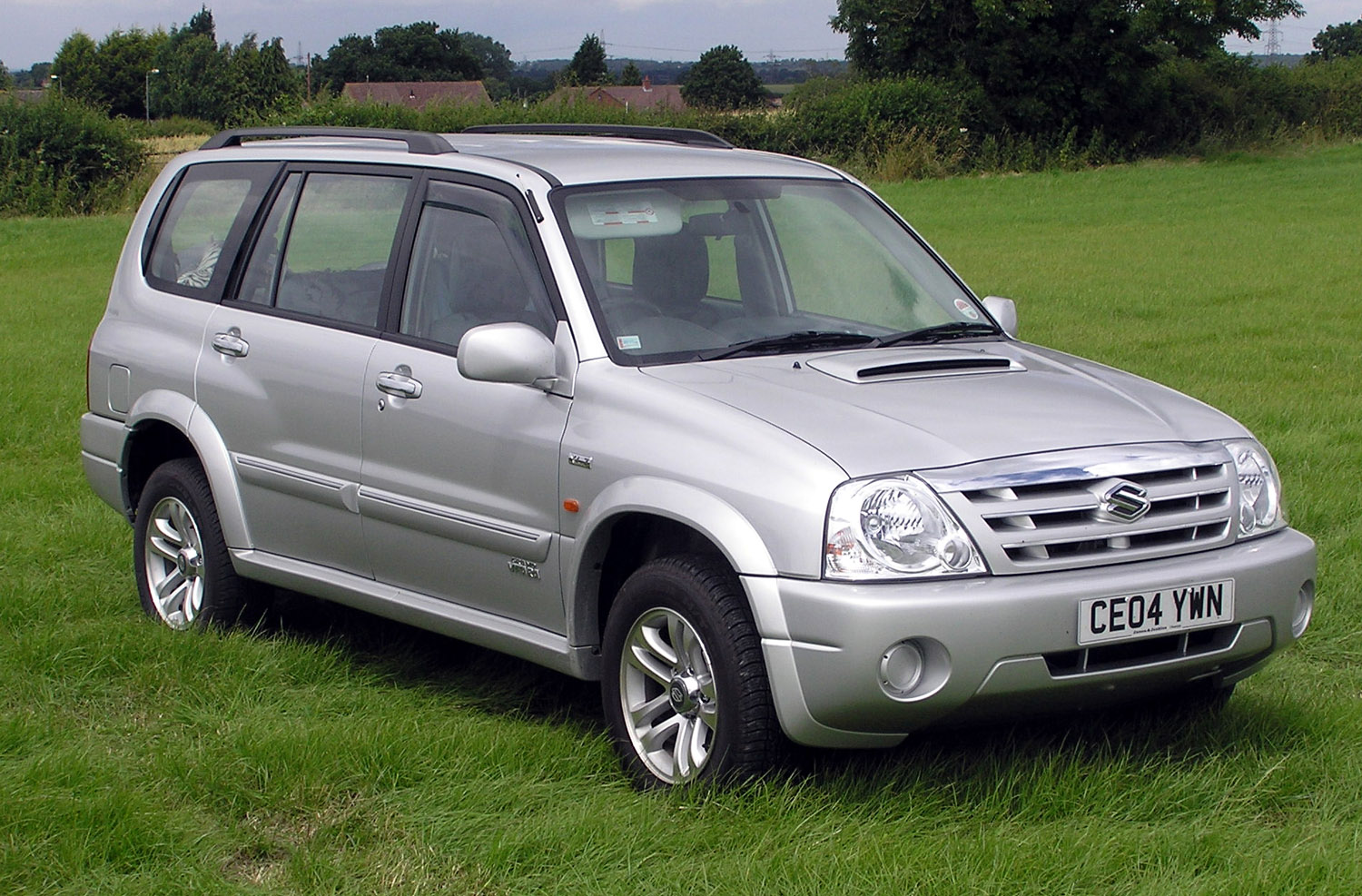
|[[Suzuki XL-7|Grand Vitara XL-7]]<br/>(imported) | |'''[[Suzuki XL-7|Grand Vitara XL-7]]'''<br />(imported) | ||
|2003 | |2003 | ||
|2007 | |2007 | ||
|[[File:2004.suzuki.grand.vitara.2point0td.arp.jpg| | |[[File:2004.suzuki.grand.vitara.2point0td.arp.jpg|200px]] | ||
|- | |- | ||
|[[Suzuki Grand Vitara|Grand Vitara]]<br/>(imported) | |'''[[Suzuki MR Wagon|Zen Estilo]]''' | ||
|2006 | |||
|2013 | |||
|[[File:Maruti Suzuki - ZEN ESTILO LXi (front).JPG|200px]] | |||
|- | |||
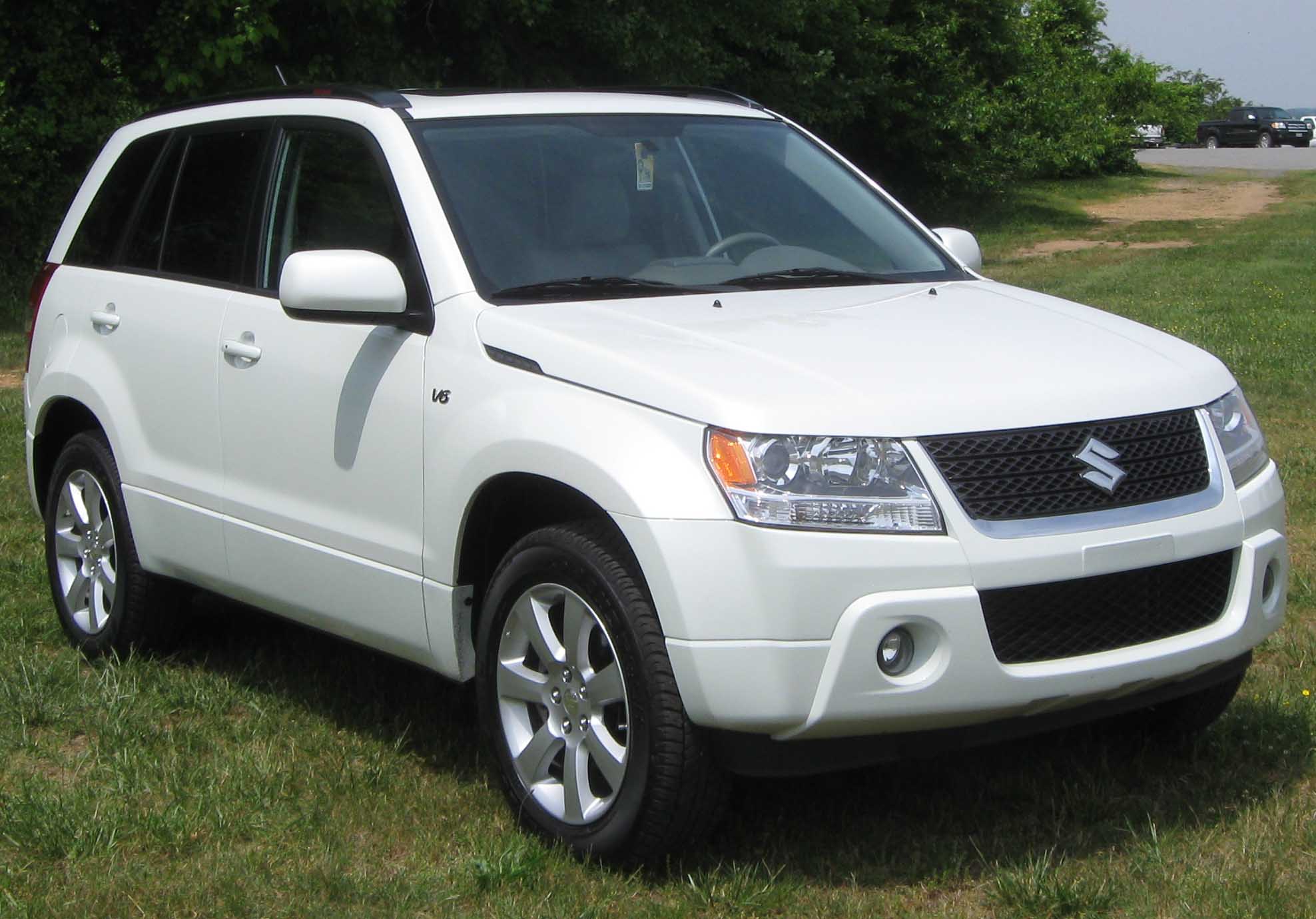
|'''[[Suzuki Grand Vitara|Grand Vitara]]'''<br />(imported) | |||
|2007 | |2007 | ||
|2014 | |2014 | ||
|[[File:2010 Suzuki Grand Vitara Limited 3 -- 05-12-2010.jpg| | |[[File:2010 Suzuki Grand Vitara Limited 3 -- 05-12-2010.jpg|200px]] | ||
|- | |- | ||
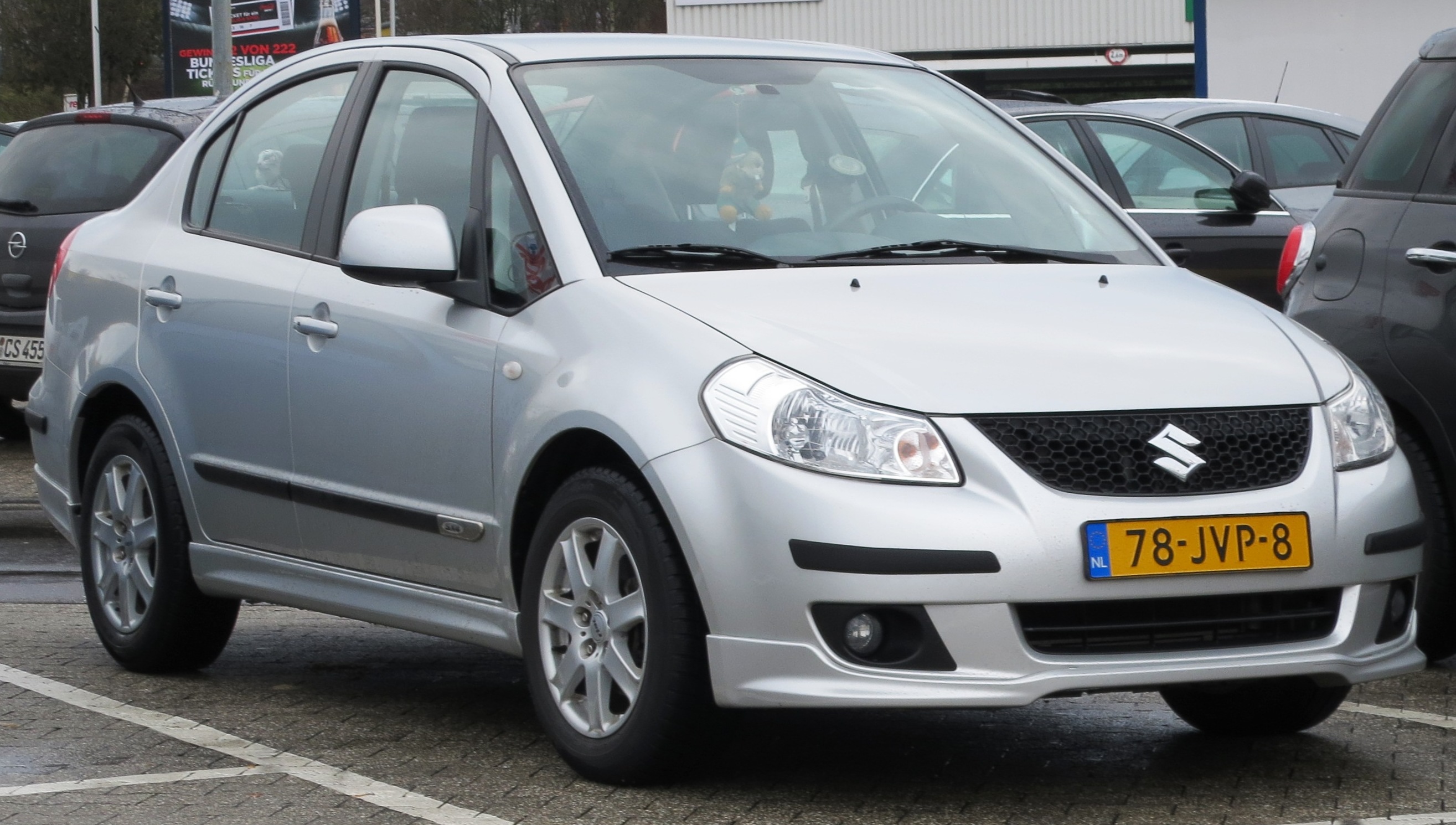
| | |'''[[Maruti Suzuki SX4|SX4]]''' | ||
|2007 | |2007 | ||
|2014 | |2014 | ||
|[[File:Suzuki SX4 sedan (NL).JPG| | |[[File:Suzuki SX4 sedan (NL).JPG|200px]] | ||
|- | |- | ||
|[[Maruti Suzuki A-STAR|A-star]] | |'''[[Maruti Suzuki A-STAR|A-star]]''' | ||
|2008 | |2008 | ||
|2014 | |2014 | ||
|[[File:2014 Suzuki Alto SZ 1.0 Front (1).jpg| | |[[File:2014 Suzuki Alto SZ 1.0 Front (1).jpg|200px]] | ||
|- | |- | ||
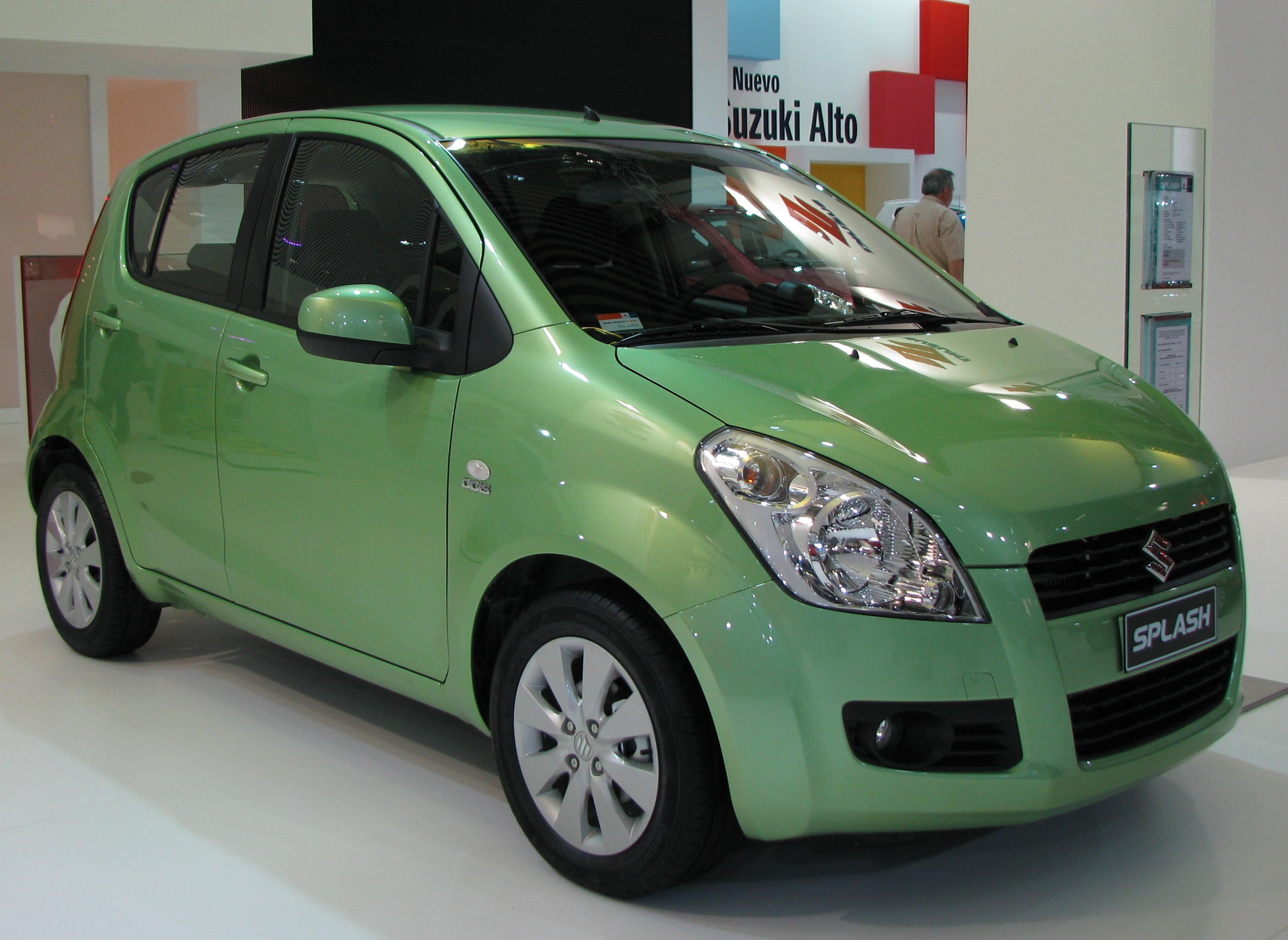
|[[ | |'''[[Suzuki Splash|Ritz]]'''<ref>{{Cite web |last=Gupta |first=Ritvik |date=2020-04-26 |title=Remembering The Maruti Suzuki Ritz: The Unstoppable Hatchback |url=https://gomechanic.in/blog/maruti-suzuki-ritz-hatchback/ |access-date=2024-02-23 |website=The GoMechanic Blog |language=en-US}}</ref> | ||
| | |2009 | ||
|2017 | |2017 | ||
|[[File: | |[[File:Suzuki Splash BCN2009.jpg|200px]] | ||
|- | |- | ||
|[[Suzuki | |'''[[Suzuki Kizashi|Kizashi]]'''<br />(imported) | ||
| | |2011 | ||
| | |2014 | ||
|[[File:Suzuki | |[[File:2010 Suzuki Kizashi SE 3 -- 03-13-2010.jpg|200px]] | ||
|- | |- | ||
|[[ | |'''[[Suzuki Ciaz|Ciaz]]''' | ||
| | |2014 | ||
| | |2025 | ||
|[[File:Suzuki | |[[File:2020 Suzuki Ciaz RS.jpg|200x200px]] | ||
|- | |- | ||
|[[Suzuki | |'''[[Suzuki SX4|S-Cross]]''' | ||
| | |2015 | ||
| | |2022 | ||
|[[File: | |[[File:2018 Suzuki SX4 S-Cross SZ5 DDIS Allgrip 1.6 Front.jpg|200x200px]] | ||
|- | |- | ||
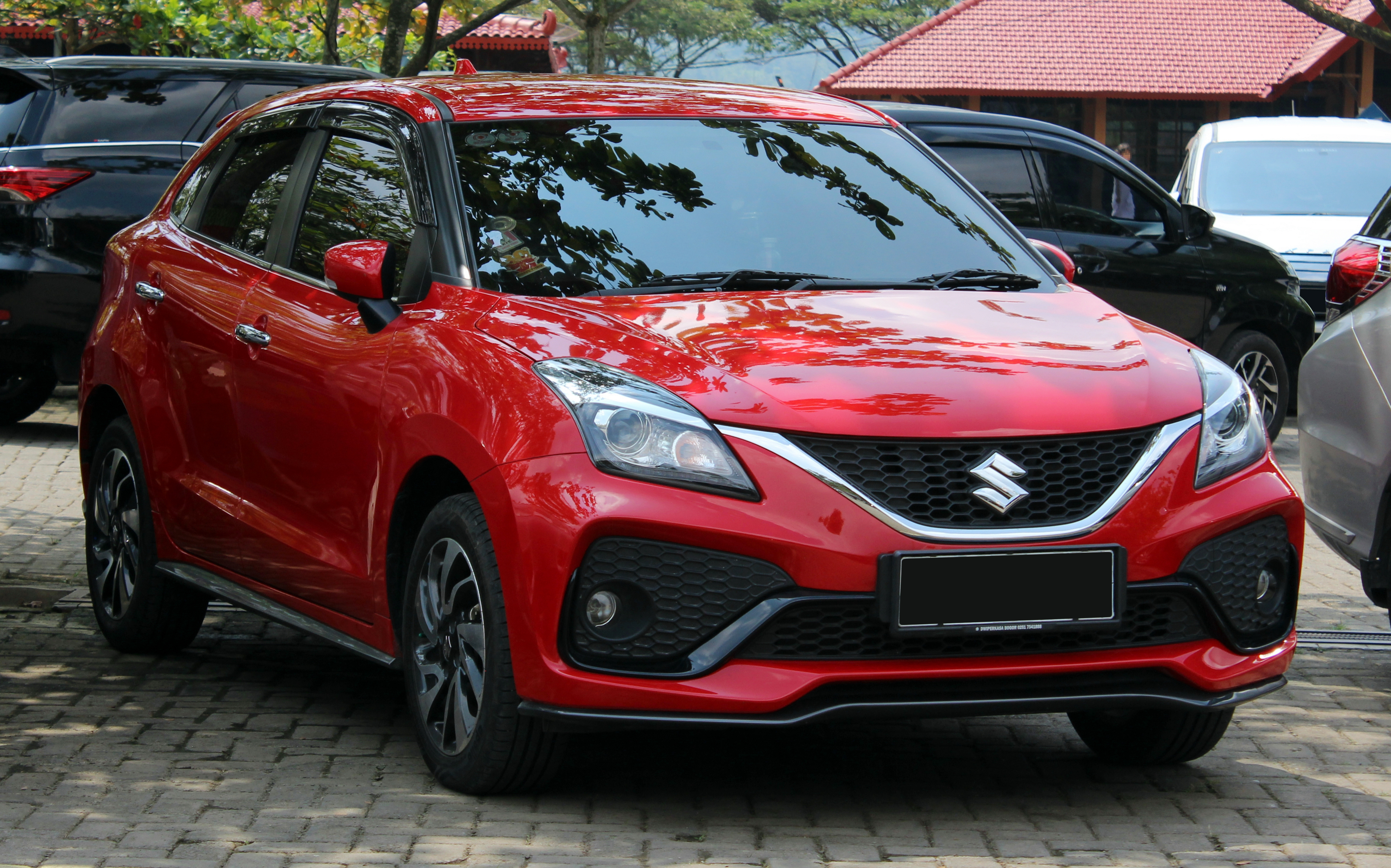
|[[Suzuki Baleno ( | |'''[[Suzuki Baleno (subcompact)|Baleno RS]]''' | ||
|2017 | |2017 | ||
|2020 | |2020 | ||
|[[File: | |[[File:2020 Suzuki Baleno 1.4 WB52S (20220506).jpg|200px]] | ||
|} | |} | ||
== Services == | |||
===Sales and service network=== | ===Sales and service network=== | ||
[[File: | [[File:Mallika Auto - Maruti Suzuki ARENA & NEXA Authorised Service Center in Sagara, Karnataka.jpg|alt=A daytime view of a Maruti Suzuki ARENA & NEXA authorized service center located in Sagara Karnataka, India|thumb|Maruti Suzuki Authorised Service Centre [[Sagara, Karnataka|Sagara]], [[Karnataka]], India.]] | ||
Maruti Suzuki has | As of August 2024, Maruti Suzuki has 2,987 Arena sales outlets across 2,522 cities and 495 Nexa sales outlets across 301 cities in India.<ref name="auto"/> The company aims to increase its sales network to 4,000 outlets by 2020.<ref>{{Cite news|url=https://economictimes.indiatimes.com/industry/auto/news/industry/maruti-aims-to-double-sales-network-to-4000-outlets-by-2020/articleshow/51668820.cms|title=Maruti aims to double sales network to 4,000 outlets by 2020|date=4 April 2016|newspaper=The Economic Times}}</ref> It has 4964 service stations (defined as "touchpoints) across 2,519 cities throughout India, alongside 781 Quick Response Vehicles and 409 mobile workshops.<ref>{{cite web |title=Maruti storage new |url=http://marutistoragenew.blob.core.windows.net/msilintiwebimages/images_company-glance-banner.jpg |format=JPG|website=Marutistoragenew.blob.core.windows.net|access-date=10 May 2020}}</ref> Most of the service stations are managed on franchise basis, where Maruti Suzuki trains the local staff. Also, The Express Service stations exist, sending across their repairman to the vehicle if it is away from a normal service center.<ref>5 Paise Stock Broking's report on Maruti Udyog Limited before the IPO (.pdf file) {{cite web|url=http://www.indiainfoline.com/sect/maru.pdf |title=Archived copy |access-date=2006-02-15 |url-status=dead |archive-url=https://web.archive.org/web/20060219060244/http://www.indiainfoline.com/sect/maru.pdf |archive-date=19 February 2006}}</ref><ref>{{cite web|url=http://www.marutisuzuki.com/our-network.aspx |title=Archived copy |access-date=2012-07-24 |url-status=dead |archive-url=https://web.archive.org/web/20120520144759/http://www.marutisuzuki.com/our-network.aspx |archive-date=20 May 2012}}</ref> | ||
In 2015, Maruti Suzuki launched Nexa, a new dealership network for its premium cars which stands for New Exclusive Automotive Experience.<ref>{{Cite web |url=http://www.nexaexperience.com/about-nexa.html |title=About Us | NEXA Experience |access-date=7 October 2015 |archive-url=https://web.archive.org/web/20151008061558/http://www.nexaexperience.com/about-nexa.html |archive-date=8 October 2015 |url-status=dead}}</ref> | |||
In 2015, Maruti Suzuki launched | |||
Maruti Suzuki currently sells | Maruti Suzuki currently sells [[Fronx]], [[Suzuki Baleno|Baleno]], [[Suzuki Grand Vitara (2022)|Grand Vitara]], [[Maruti Ertiga|XL6]], [[Suzuki Ciaz|Ciaz]], [[Suzuki Ignis|Ignis]] and [[Suzuki Jimny#fourth generation (2018)|Jimny]] through Nexa outlets.<ref>{{Cite news|last=Desk|first=Internet|title=Ignis: a premium hatchback for millennials from Maruti|language=en|work=The Hindu|url=http://www.thehindu.com/business/Industry/Ignis-a-premium-hatchback-for-millennials-from-Maruti/article17033890.ece|access-date=2017-02-26}}</ref> S-Cross was the first car to be sold through Nexa outlets. The company recently achieved a milestone of selling 1.5 million cars from over 350 dealerships across the country and is the third largest automobile retail channel of India.<ref>{{cite web|url=https://marutistoragenew.blob.core.windows.net/nexaexperience/maruti-suzuki-launches-NEXA-a-new-premium-automotive-experience.pdf|title=Maruti Suzuki launches NEXA: A New Premium Automotive Experience : Relationship Managers, Digital-enabled customer care and Showroom Design are among high points|website=Marutistoragenew.blob.core.windows.net|access-date=5 March 2022}}</ref> | ||
===Maruti Insurance=== | ===Maruti Insurance=== | ||
Launched in 2002 Maruti Suzuki provides vehicle insurance to its customers with the help of the National Insurance Company, Bajaj Allianz, New India Assurance and Royal Sundaram. The service was set up the company with the inception of two subsidiaries Maruti Insurance Distributors Services Pvt. Ltd and Maruti Insurance Brokers Pvt. Limited<ref>The Hindu | Launched in 2002 Maruti Suzuki provides vehicle insurance to its customers with the help of the [[National Insurance Company]], [[Bajaj Finserv|Bajaj Allianz]], [[New India Assurance]] and [[Royal Sundaram General Insurance|Royal Sundaram]]. The service was set up the company with the inception of two subsidiaries Maruti Insurance Distributors Services Pvt. Ltd and Maruti Insurance Brokers Pvt. Limited.<ref>{{Cite web |url=http://www.hinduonnet.com/thehindu/2002/05/11/stories/2002051101531800.htm |title=The Hindu : Maruti launches car insurance |date=27 May 2005 |website= |access-date=5 March 2022 |archive-url=https://web.archive.org/web/20050527233446/http://www.hinduonnet.com/thehindu/2002/05/11/stories/2002051101531800.htm |archive-date=27 May 2005 |url-status=dead}}</ref> | ||
This service started as a benefit or value addition to customers and was able to ramp up easily. By December 2005 they were able to sell more than two million insurance policies since its inception.<ref>The Hindu Business Line Sunday, 18 December 2005 -Maruti Insurance ramps up sales [http://www.blonnet.com/iw/2005/12/18/stories/2005121800831501.htm] {{Webarchive|url=https://web.archive.org/web/20070929111109/http://www.blonnet.com/iw/2005/12/18/stories/2005121800831501.htm |date=29 September 2007 }}</ref> | This service started as a benefit or value addition to customers and was able to ramp up easily. By December 2005 they were able to sell more than two million insurance policies since its inception.<ref>The Hindu Business Line Sunday, 18 December 2005 -Maruti Insurance ramps up sales [http://www.blonnet.com/iw/2005/12/18/stories/2005121800831501.htm] {{Webarchive|url=https://web.archive.org/web/20070929111109/http://www.blonnet.com/iw/2005/12/18/stories/2005121800831501.htm|date=29 September 2007}}</ref> | ||
===Maruti Finance=== | ===Maruti Finance=== | ||
To promote its bottom line growth, Maruti Suzuki launched Maruti Finance in January 2002. Prior to the start of this service Maruti Suzuki had started two joint ventures Citicorp Maruti and Maruti Countrywide with Citi Group and GE Countrywide respectively to assist its client in securing loan.<ref name="72.14.207.104">{{Cite web|url=http://www.prdomain.com/companies/m/maruti_udyog/news_releases/pr_maruti_nr_20020107.htm|title=Maruti launches venture for car finance|date=18 November 2004|archive-url=https://web.archive.org/web/20041118114638/http://www.prdomain.com/companies/m/maruti_udyog/news_releases/pr_maruti_nr_20020107.htm|archive-date=18 November 2004}}</ref> Maruti Suzuki tied up with ABN Amro Bank, HDFC Bank, ICICI Limited, Kotak Mahindra, Standard Chartered Bank, and Sundaram to start this venture including its strategic partners in car finance. Again the company entered into a strategic partnership with SBI in March 2003<ref>Business Line | To promote its bottom line growth, Maruti Suzuki launched Maruti Finance in January 2002. Prior to the start of this service Maruti Suzuki had started two joint ventures Citicorp Maruti and Maruti Countrywide with Citi Group and GE Countrywide respectively to assist its client in securing loan.<ref name="72.14.207.104">{{Cite web|url=http://www.prdomain.com/companies/m/maruti_udyog/news_releases/pr_maruti_nr_20020107.htm|title=Maruti launches venture for car finance|date=18 November 2004|url-status=usurped|archive-url=https://web.archive.org/web/20041118114638/http://www.prdomain.com/companies/m/maruti_udyog/news_releases/pr_maruti_nr_20020107.htm|archive-date=18 November 2004}}</ref> Maruti Suzuki tied up with [[ABN AMRO|ABN Amro Bank]], [[HDFC Bank]], [[ICICI Bank|ICICI]] Limited, [[Kotak Mahindra Bank|Kotak Mahindra]], [[Standard Chartered|Standard Chartered Bank]], and [[Sundaram Finance|Sundaram]] to start this venture including its strategic partners in car finance. Again the company entered into a strategic partnership with [[State Bank of India|SBI]] in March 2003<ref>{{Cite web |url=http://www.blonnet.com/bline/2003/03/15/stories/2003031500381300.htm |title=The Hindu Business Line : SBI ties up with Maruti for car loans |access-date=16 February 2006 |archive-date=29 September 2007 |archive-url=https://web.archive.org/web/20070929111258/http://www.blonnet.com/bline/2003/03/15/stories/2003031500381300.htm |url-status=dead }}</ref> Since March 2003, Maruti has sold over 12,000 vehicles through SBI-Maruti Finance. SBI-Maruti Finance is currently available in 166 cities across India.<ref>Retail Yatra. Com, 8 August 2003 -Maruti Suzuki, State Bank of Bikaner & Jaipur join hands for car financing Jaipur {{cite web|url=http://www.retailyatra.info/PageDetails.asp?Cat_Id%3D1%26SubCat_ID%3D52%26Page_ID%3D876 |title=Retailyatra.info |access-date=2006-02-16 |url-status=dead |archive-url=https://web.archive.org/web/20071009185223/http://www.retailyatra.info/PageDetails.asp?Cat_Id=1&SubCat_ID=52&Page_ID=876 |archive-date=9 October 2007}}</ref> | ||
Citicorp Maruti Finance Limited is a joint venture between Citicorp Finance India and Maruti Udyog Limited its primary business stated by the company is "hire-purchase financing of Maruti Suzuki vehicles". Citi Finance India Limited is a wholly owned subsidiary of Citibank Overseas Investment Corporation, [[Delaware]], which in turn is a 100% wholly owned subsidiary of Citibank N.A. Citi Finance India Limited holds 74% of the stake and Maruti Suzuki holds the remaining 26%.<ref>The Hindu | Citicorp Maruti Finance Limited is a joint venture between Citicorp Finance India and Maruti Udyog Limited its primary business stated by the company is "hire-purchase financing of Maruti Suzuki vehicles". Citi Finance India Limited is a wholly owned subsidiary of Citibank Overseas Investment Corporation, [[Delaware]], which in turn is a 100% wholly owned subsidiary of Citibank N.A. Citi Finance India Limited holds 74% of the stake and Maruti Suzuki holds the remaining 26%.<ref>{{Cite web |url=http://hindu.com/thehindu/2001/07/26/stories/0626000h.htm |title=The Hindu : Citicorp Maruti Finance gets P1 plus |date=22 January 2002 |website= |access-date=5 March 2022 |archive-url=https://web.archive.org/web/20020122084858/http://hindu.com/thehindu/2001/07/26/stories/0626000h.htm |archive-date=22 January 2002 |url-status=dead}}</ref> GE Capital, HDFC and Maruti Suzuki came together in 1995 to form Maruti Countrywide. Maruti claims that its finance program offers most competitive interest rates to its customers, which are lower by 0.25% to 0.5% from the market rates.<ref>{{cite web |last1=Jebin |first1=Nujhat |title=MARUTI Institutional Ownership - MARUTI SUZUKI INDIA LTD. Stock |url=https://fintel.io/so/in/maruti |website=Fintel.io |language=en}}</ref> | ||
===Maruti TrueValue=== | ===Maruti TrueValue=== | ||
Maruti True service offered by Maruti Suzuki to its customers. It is a | Maruti True service offered by Maruti Suzuki to its customers. It is a marketplace for used Maruti Suzuki Vehicles. One can buy, sell or exchange used Maruti or non-Maruti vehicles with the help of this service in India. As of 10 August 2017 there are 1,190 outlets across 936 cities.<ref>{{Cite web|url=https://www.autocarpro.in/news-national/maruti-suzuki-pep-true-value-pre-owned-car-biz-plans-revamp-expansion-25740|title=Maruti Suzuki to pep up True Value pre-owned car biz, plans revamp and expansion|website=Autocarpro.in}}</ref> | ||
===N2N Fleet Management=== | ===N2N Fleet Management=== | ||
| Line 354: | Line 474: | ||
Many of the auto component companies, other than Maruti Suzuki, started to offer compatible components and accessories. This caused a serious threat and loss of revenue to Maruti Suzuki. Maruti Suzuki started a new initiative under the brand name ''Maruti Genuine Accessories'' to offer accessories like alloy wheels, body cover, carpets, door visors, fog lamps, stereo systems, seat covers and other car care products. These products are sold through dealer outlets and authorized service stations throughout India.<ref>{{Cite web|url=http://www.marutiudyog.com/bp/mga.asp?ch=2&ct=10&sc=1|archive-url=https://web.archive.org/web/20050421080921/http://www.marutiudyog.com/bp/mga.asp?ch=2&ct=10&sc=1|url-status=dead|title=Maruti Genuine Accessories|archive-date=21 April 2005}}</ref> | Many of the auto component companies, other than Maruti Suzuki, started to offer compatible components and accessories. This caused a serious threat and loss of revenue to Maruti Suzuki. Maruti Suzuki started a new initiative under the brand name ''Maruti Genuine Accessories'' to offer accessories like alloy wheels, body cover, carpets, door visors, fog lamps, stereo systems, seat covers and other car care products. These products are sold through dealer outlets and authorized service stations throughout India.<ref>{{Cite web|url=http://www.marutiudyog.com/bp/mga.asp?ch=2&ct=10&sc=1|archive-url=https://web.archive.org/web/20050421080921/http://www.marutiudyog.com/bp/mga.asp?ch=2&ct=10&sc=1|url-status=dead|title=Maruti Genuine Accessories|archive-date=21 April 2005}}</ref> | ||
===Maruti Driving School=== | ===Maruti Suzuki Driving School=== | ||
[[File:Maruti Suzuki driving school.jpg|thumb|265x265px|A Maruti Driving School in [[Chennai]]]] | [[File:Maruti Suzuki driving school.jpg|thumb|265x265px|A Maruti Driving School in [[Chennai]]]] | ||
As part of its corporate social responsibility Maruti Suzuki launched the Maruti Driving School in Delhi. Later the services were extended to other cities of India as well. These schools are modelled on international standards, where learners go through classroom and practical sessions. Many international practices like road | As part of its corporate social responsibility Maruti Suzuki launched the Maruti Driving School in Delhi. Later the services were extended to other cities of India as well. These schools are modelled on international standards, where learners go through classroom and practical sessions. Many international practices like road behavior and attitudes are also taught in these schools. Before driving actual vehicles participants are trained on simulators.<ref>Deccan Herald, Online edition of Sunday, 20 March 2007 "Maruti Suzuki's first driving school in Bangalore"{{cite web|url=http://www.deccanherald.com/deccanherald/mar202005/b1.asp |title=Maruti's first driving school in Bangalore - Deccan Herald |access-date=2006-02-15 |url-status=dead |archive-url=https://web.archive.org/web/20060327173757/http://www.deccanherald.com/deccanherald/mar202005/b1.asp |archive-date=27 March 2006}}</ref> | ||
At the launch ceremony for the school Jagdish Khattar stated "We are very concerned about mounting deaths on Indian roads. These can be brought down if government, industry and the voluntary sector work together in an integrated manner. But we felt that Maruti should first do something in this regard and hence this initiative of Maruti Driving Schools."<ref>{{Cite news|url=https://www.thehindu.com/todays-paper/tp-business/mul-sets-up-driving-school-in-bangalore/article27334473.ece|title=MUL sets up driving school in Bangalore | At the launch ceremony for the school [[Jagdish Khattar]] stated "We are very concerned about mounting deaths on Indian roads. These can be brought down if government, industry and the voluntary sector work together in an integrated manner. But we felt that Maruti should first do something in this regard and hence this initiative of Maruti Driving Schools."<ref>{{Cite news|url=https://www.thehindu.com/todays-paper/tp-business/mul-sets-up-driving-school-in-bangalore/article27334473.ece|title=MUL sets up driving school in Bangalore|newspaper=[[The Hindu]]|date=20 March 2005}}</ref> | ||
==Awards and recognition== | ==Awards and recognition== | ||
The Brand Trust Report published by Trust Research Advisory, a brand analytics company, has ranked Maruti Suzuki in the thirty seventh position in 2013<ref>{{Cite web|url=http://www.trustadvisory.info/allindia_2013.htm |title=India's Most Trusted Brands 2013 |url-status=dead |archive-url=https://web.archive.org/web/20130828143802/http://www.trustadvisory.info/allindia_2013.htm |archive-date=28 August 2013 }}</ref> and ninth position in 2019<ref>{{Cite web|url=http://www.trustadvisory.info/allindia_2019.html|title=2019|website=Trustadvisory.info|access-date=5 March 2022}}{{Dead link|date=December 2025 |bot=InternetArchiveBot }}</ref> among the most trusted brands of India. It received the Gold Recognition at LACP 2020/21 Vision Awards,<ref>{{Cite news |last=Mukherjee |first=Sharmistha |date=2022-03-07 |title=Maruti Suzuki receives gold recognition at the prestigious LACP 2020/21 Vision Awards |url=https://economictimes.indiatimes.com/industry/auto/cars-uvs/maruti-suzuki-receives-gold-recognition-at-the-prestigious-lacp-2020/21-vision-awards/articleshow/90059146.cms |access-date=2025-02-16 |work=The Economic Times |issn=0013-0389}}</ref> Open Innovation Leader Award (2023),<ref name="Awards - Maruti Suzuki Innovation">{{Cite web |title=Awards - Maruti Suzuki Innovation |url=https://www.marutisuzukiinnovation.com/awards |access-date=2025-02-16 |website=marutisuzukiinnovation |language=en}}</ref> Best Innovative Company of the Year (2023),<ref name="Awards - Maruti Suzuki Innovation"/> and Best Use of AI in Customer Service (2023).<ref name="Awards - Maruti Suzuki Innovation"/> | |||
==References and notes== | ==References and notes== | ||
{{Reflist | {{Reflist}} | ||
==External links== | ==External links== | ||
Latest revision as of 17:28, 28 January 2026
 | |
Formerly | Maruti Udyog Limited |
|---|---|
| Traded as | |
| ISIN | Template:ISIN |
| Industry | Automotive |
| Founded | 24 February 1981[1] |
| Founder(s) | Government of India |
| Headquarters | New Delhi, India[2] |
Area served | India |
Key people |
|
| Products | |
Production output |  2,135,323 units (2024)[4] 2,135,323 units (2024)[4] |
| Services | |
| Revenue | ₹145,952 crore (US$20 billion) (2024)[5] |
| ₹17,424 crore (US$2.4 billion) (2024)[5] | |
| ₹13,488 crore (US$1.9 billion) (2024)[5] | |
| Total assets | ₹115,353 crore (US$16 billion) (2024)[5] |
| Total equity | ₹85,636 crore (US$12 billion) (2024)[5] |
Number of employees | 40,004 (including 21,776 non permanent) (2024)[6] |
| Parent | |
| Website | www |
Maruti Suzuki India Limited is the Indian subsidiary of Japanese automaker Suzuki Motor Corporation. It is the largest automobile manufacturer in India, specialising in small cars. The company was established by the Government of India as Maruti Udyog Limited in February 1981 as a joint venture with Suzuki, the latter becoming the first Japanese automaker, as well as the first major foreign automaker, to invest in India.[8][9][10]
Maruti opened its first production facility in Gurugram, Haryana, in 1982.[11] Initially, Maruti was majority-owned by the Indian government, with Suzuki only taking a 26% stake during its establishment in 1982. The Indian government gradually reduced its stake, partially departed the business in 2003 by making it a public company and then sold all of its remaining shares to Suzuki Motor Corporation in 2007.[2][12][13]
Maruti Suzuki has emerged as the largest Suzuki subsidiary in terms of production volume and sales. As of September 2022, the company had a leading market share of 42% in the Indian passenger car market.[14]
History[edit | edit source]
Pre-Suzuki affiliation[edit | edit source]
The Maruti name can be traced back to a previous company that was established by the third Indian Prime Minister Indira Gandhi's son, Sanjay Gandhi. In the early 1970s, the Indian government initiated the search for a small car manufacturer. At that time, India had already been manufacturing cars for several years, and the idea of a more affordable "people's car" had been discussed since the 1950s.
Sanjay Gandhi, known for his passion for cars, apprenticed with Rolls-Royce in Crewe of UK for three years. Upon his return in 1968, he recognized the potential of small car production in the private sector. Both the government and the Planning Commission endorsed the concept. Sanjay Gandhi subsequently initiated his automotive project, establishing operations in a rented garage near Roshanara Bagh in Old Delhi.
The government issued a letter of intent in September 1970, with plan to produce up to 50,000 cars in a year. In August 1971, Maruti Motors Limited was established with Sanjay Gandhi becoming its first managing director. He acquired 297 acres of land in Gurgaon at a cost of approximately Rs 12,000 per acre to establish his Maruti factory.[15] Initially, plans were laid out to manufacture an indigenous car priced at around Rs 8,000. However, the cost of the vehicle escalated to approximately Rs 16,500 (ex-showroom) and about Rs 21,000 on the road in Haryana. Despite the increase in price, the Maruti car remained competitively priced, being Rs 5,000-10,000 cheaper than its counterparts.
The first prototype of the Maruti car was completed in 1972, with production anticipated to commence by April 1973, as promised by Sanjay Gandhi.[16] He made the chassis by himself at his workshop, and a Triumph motorcycle engine was used to propel the car.[15] the prototype car underwent a feasibility test by the Vehicle Research & Development Establishment in Ahmednagar. The prototype failed the test, being deemed unsuitable for road use. Nonetheless, in July 1974, Maruti was granted an industrial license to produce 50,000 cars.[17] However, the actual production output at Sanjay Gandhi's factory fell short of the initial target. Despite the projection to commence production at a rate of 12-20 units per month and escalate to 200 units per day, only 21 units were manufactured by 31 March 1976.[18]
Sanjay Gandhi's involvement in politics during the Emergency further complicated the project's progress. Following Indira Gandhi's defeat in the 1977 election and a court order for Maruti's dissolution in 1978, the project faced uncertain prospects. With Indira's return to office in 1980 and Sanjay's death in a plane crash, the Government of India intervened and assumed control of Maruti through legislative measures.[18]
Tie-up with Suzuki[edit | edit source]

Following Sanjay's death, his mother Indira tasked Arun Nehru with evaluating the feasibility of resurrecting her son's vision to develop India's affordable car. Nehru acknowledged the project's potential but emphasized the need for expertise from an experienced manufacturer. Subsequently, a team was assembled to explore potential collaborations with manufacturers globally.[15] The Indian government started engaging in negotiations with Suzuki in April 1982. Following several months of preparations, Suzuki of Japan and Maruti Udyog Ltd. signed a license and joint venture agreement in October 1982. Initially, Suzuki acquired a modest 26 percent stake in the joint venture, owing to their constrained capital and perceived risks, despite the Indian government's preference for Suzuki to take a 40 percent foreign equity share. Both parties reached a consensus, stipulating that Suzuki would increase its stake to 40 percent after five years.[19] Both the venture partners also entered into an agreement to nominate their candidate for the post of managing director and every managing director would have a tenure of five years.[20][21] Suzuki later increased its equity to 50% in 1992, and further to 56.21% as of 2013.[22]
Maruti was granted permission to import two Suzuki vehicles that were completely assembled in the first two years of India's closed market, with an initial target of using just 33% domestic components. This greatly displeased the nearby manufacturers. There were some concerns that the Indian market would not support Maruti Suzuki's relatively high production levels, and the government even considered changing the petrol tariff and decreasing the excise fee to increase sales.[23]
.jpg)
Local production commenced in December 1983 with the introduction of the SS30/SS40 Suzuki Fronte/Alto-based Maruti 800.[24] In 1984, the Maruti Van with the same three-cylinder engine as the 800 was released. Maruti targeted annual production of 20,000 cars in the first year, and 40,000 in the second year at the Gurgaon plant. However, the rapid success of Maruti exceeded expectations of Suzuki. Within the first year, the company received an 120,000 bookings, much to Suzuki's surprise. Despite facing overwhelming demand, Maruti encountered challenges in meeting orders due to capacity limitations. The surge in demand necessitated a complete overhaul of its production strategy, by adjusting the ratio between the 800 and the van.[19]
The Suzuki SJ410-based Gypsy, a 970 cc 4-wheel drive off-road vehicle, was introduced in 1985. The 100,000th car manufactured by the firm was the 796 cc hatchback Suzuki Alto (SS80), which succeeded the original 800 in 1986.[25] In 1987, the company started exporting to western markets, when a lot of 500 cars were sent to Hungary. By 1988, the capacity of the Gurgaon plant was increased to 100,000 units per annum.
Until 1992–1993, Maruti faced constraints in increasing capacity due to the need for foreign exchange. Moreover, securing funding for expansion was challenging, especially during the Indian economic crisis of 1991. The Indian government stipulated that expansion could only proceed with foreign loans to cover costs. Eventually, Maruti secured aid from Axiom Bank in Japan, allowing them to finance the foreign exchange component of their expansion. This enabled Maruti to establish a new production line in the Gurgaon plant, addressing the persistent issue of shortages.[19]
In 1989, the Maruti 1000 was introduced and the 970 cc, three-box was India's first contemporary sedan. By 1991, 65 percent of the components, for all vehicles produced, were indigenized. After the liberalization of the Indian economy in 1991, Suzuki increased its stake in Maruti to 50 percent, making the company a 50-50 joint venture with the government of India as the other stakeholder.
In 1993, the Zen, a 993 cc engine hatchback was launched, and in 1994 the 1,298 cc Esteem sedan was introduced. Maruti produced its 1 millionth vehicle since the commencement of production in 1994. Maruti's second plant was opened with an annual capacity reaching 200,000 units. Maruti launched a 24-hour emergency on-road vehicle service. In 1998, the new Maruti 800 was released, being the first change in design since 1986. Zen D, a 1,527 cc diesel hatchback, Maruti's first diesel vehicle, and a redesigned Omni were introduced. In 1999, the 1.6-litre Maruti Baleno three-box sedan and Wagon R were also launched.
In 2000, Maruti became the first car company in India to launch a call center for internal and customer services. The new Alto model was released. In 2001, Maruti True Value, selling and buying used cars was launched. In October of the same year, the Maruti Versa was launched. In 2002, Esteem Diesel was introduced. Two new subsidiaries were also started: Maruti Insurance Distributor Services and Maruti Insurance Brokers Limited. Suzuki Motor Corporation increased its stake in Maruti to 54.2 percent.
In 2003, the new Suzuki Grand Vitara XL-7 was introduced while the Zen and the Wagon R were upgraded and redesigned. The four millionth Maruti vehicle was built and they entered into a partnership with the State Bank of India. Maruti Udyog Ltd. was listed on BSE and NSE after a public issue, which was oversubscribed tenfold. In 2004, the Alto became India's best-selling car overtaking the Maruti 800 after nearly two decades. The five-seater Versa 5-seater, a new variant, was created while the Esteem was re-launched. Maruti Udyog closed the financial year 2003–04 with an annual sale of 472,122 units, the highest ever since the company began operations, and the fiftieth lakh (5 millionth) car rolled out in April 2005. The 1.3-litre Suzuki Swift five-door hatchback was introduced in 2005.[26]
.svg)
In 2006, Suzuki and Maruti set up another joint venture called Maruti Suzuki Automobiles India to build two new manufacturing plants, one for vehicles and one for engines.[26] Cleaner cars were also introduced, with several new models meeting the new Bharat Stage III emission standards.[26] In February 2012, Maruti Suzuki sold its ten millionth vehicle in India.[24] In July 2014 it had a market share of more than 45%.[27] In May 2015, the company produced its fifteen millionth vehicle in India, a Swift Dzire.[28]
On 25 April 2019, Maruti Suzuki announced that it would phase out production of diesel cars by 1 April 2020, when the Bharat Stage VI emission standards come into effect. The new standards would require a significant investment from the company to upgrade its existing diesel engines to comply with the more stringent emission standards. Chairman R.C. Bhargava stated, "We have taken this decision so that in 2022 we are able to meet the corporate average fuel efficiency (CAFE) norms and a higher share of CNG vehicles will help us comply with the norms. I hope the union government's policies will help grow the market for CNG vehicles." At that time, diesel cars accounted for about 23 percent of Maruti Suzuki's annual sales.[29]
The company planned to launch its first electric car in the second half of 2021, the Maruti Suzuki Wagon R Electric, before cancelling its plan.[30] The company now produces the eVitara (unveiled in Milan and based on eVX concept shown in 2023) since 2025.[31]
Leadership[edit | edit source]
- Sanjay Gandhi (1971–1977)
- R. C. Bhargava (1981–1997)
- S. S. L. N. Bhaskarudu (1997–1999)
- Jagdish Khattar (1999–2007)[32]
- Shinzo Nakanishi (2007–2013)[33]
- Kenichi Ayukawa (2013–2022)[34]
- Hisashi Takeuchi (2022–present)[35]
Manufacturing facilities[edit | edit source]
Maruti Suzuki has two manufacturing facilities in Haryana (Gurugram and Manesar), and one manufacturing complex in Gujarat. All manufacturing facilities have a combined production capacity of 2,250,000 vehicles annually.
The Gurugram manufacturing facility has three fully integrated manufacturing plants and is spread over 300 acres (1.2 km2).[36] The Gurugram facilities also manufacture 240,000 K-Series engines annually. The Gurugram facility manufactures the Alto 800, Wagon R, Ertiga, XL6, S-Cross, Vitara Brezza, Ignis, and Eeco. The Gurugram facility also assembles the Jimny starting from January 2021 solely for export markets. It was reported the Indian-assembled Jimny will be exported to African markets and countries in the Middle East.[37]
The Manesar manufacturing plant was inaugurated in February 2007 and is spread over 600 acres (2.4 km2).[36] Initially, it had a production capacity of 100,000 vehicles annually but this was increased to 300,000 vehicles annually in October 2008. The production capacity was further increased by 250,000 vehicles taking the total production capacity to 800,000 vehicles annually.[38] The Manesar plant produces the Alto, Swift, Ciaz, Baleno and Celerio. On 25 June 2012, Haryana State Industries and Infrastructure Development Corporation demanded Maruti Suzuki pay an additional ₹235 crore for enhanced land acquisition for its Haryana plant expansion. The agency reminded Maruti that failure to pay the amount would lead to further proceedings and vacating the enhanced land acquisition.[39]
In 2012, the company decided to merge Suzuki Powertrain India Limited (SPIL) with itself.[40] SPIL was started as a JV by Suzuki Motor Corp. along with Maruti Suzuki. It has the facilities available for manufacturing diesel engines and transmissions. The demand for transmissions for all Maruti Suzuki cars is met by the production from SPIL.
In 2017, the new Suzuki Motor Gujarat facility was opened. This third facility is not owned by Maruti Suzuki, but instead wholly owned by Suzuki Motor Corporation. Despite that, the plant supplied vehicles to Maruti without any additional cost. Located in Hansalpur, Ahmedabad, the plant has a total annual capacity of 750,000 units.
In November 2021 Maruti Suzuki announce to set up of a big plant in IMT Kharkhoda in Sonipat district across 900 acres with an investment of ₹18,000 crores.[41]
Haryana State Industrial and Infrastructure Development Corporation gives 900 acres of land to Maruti Suzuki for setting up a new plant in Industrial Model Township at Kharkhoda, Haryana.[42]
In August 2022 Prime Minister of India Narendra Modi virtually laid the foundation stone of Maruti Suzuki's new manufacturing plant in Kharkhoda. It will be one of the largest automobile manufacturing plant in the world with the capacity of making a million cars per year.[43][44]
The Maruti Suzuki's Gurugram manufacturing facility will shift to new manufacturing facility in Kharkhoda, Haryana will have four manufacturing plants in which a million cars will be produced annually and the Kharkhoda, Haryana plant will be third largest car producing facility in world.[45] Along with this, the carmaker will invest 35,000 crores into building second manufacturing plant close to their Gujarat plant in the state with a million cars capacity per annum. The operations will commence in 2028-29 taking the production capacity combined to 4.35 million units annually.
Controversies[edit | edit source]
Industrial relations[edit | edit source]
Since its founding in 1983, Maruti Udyog Limited has experienced problems with its labor force. The Indian labor it hired readily accepted Japanese work culture and the modern manufacturing process. In 1997, there was a change in ownership, and Maruti became predominantly government controlled. Shortly thereafter, conflict between the United Front Government and Suzuki started. In 2000, a major industrial relations issue began and employees of Maruti went on an indefinite strike, demanding among other things, major revisions to their wages, incentives and pensions.[46][47]
Employees used slowdown in October 2000, to press a revision to their incentive-linked pay. In parallel, after elections and a new central government led by NDA alliance, India pursued a disinvestment policy. Along with many other government owned companies, the new administration proposed to sell part of its stake in Maruti Suzuki in a public offering. The worker's union opposed this sell-off plan on the grounds that the company will lose a major business advantage of being subsidized by the Government, and the union has better protection while the company remains in control of the government.[46][48]
The standoff between the union and the management continued through 2001. The management refused union demands citing increased competition and lower margins. The central government privatized Maruti in 2002 and Suzuki became the majority owner of Maruti Udyog Limited.[49][50]
Manesar violence[edit | edit source]
On 18 July 2012, Maruti's Manesar plant was hit by violence. According to Maruti management, the production workers attacked supervisors and started a fire that killed company's General Manager of Human Resources Avineesh Dev and injured 100 other managers, including two Japanese expatriates. The workers also allegedly injured nine policemen.[51][52] However Maruti Suzuki Workers Union (MSWU) President Sam Meher alleged that management ordered 300 hired security guards to attack the workforce during the violence.[53] The incident is the worst-ever for Suzuki since the company began operations in India in 1983.[54]
Since April 2012, the Manesar union had demanded a three-fold increase in basic salary, a monthly conveyance allowance of ₹10,000, a laundry allowance of ₹3,000, a gift with every new car launch, and a house for every worker who wants one, or cheaper home loans for those who want to build their own houses.[55][56] According to the Maruti Suzuki Workers Union a supervisor had abused and made discriminatory comments to a low-caste worker, Jiya Lal.[57] These claims were denied by the company and the police.[52] Maruti said the unrest began, not over wage discussions, but after the workers' union demanded the reinstatement of Jiya Lal who had been suspended for allegedly beating a supervisor.[54] The workers claim harsh working conditions and extensive hiring of low-paid contract workers which are paid about $126 a month, about half the minimum wage of permanent employees.[57] On 27 June 2013, an international delegation from the International Commission for Labor Rights (ICLR) released a report alleging serious violations of the industrial right of workers by the Maruti Suzuki management.[58] Company executives denied harsh conditions and claim they hired entry-level workers on contracts and made them permanent as they gained experience.[55] Maruti employees currently earn allowances in addition to their base wage.[59]
The police, in its First Information Report (FIR), claimed on 21 July that Manesar violence is the result of a planned violence by a section of workers and union leaders and arrested 91 people.[60][61] Maruti Suzuki in its statement on the unrest,[62] announced that all work at the Manesar plant has been suspended indefinitely.[54] The shut down of Manesar plant is leading to a loss of about ₹75 crore[63] per day.[64] On 21 July 2012, citing safety concerns, the company announced a lockout under The Industrial Disputes Act, 1947 pending results of an inquiry the company has requested of the Haryana government into the causes of the disorder. Under the provisions of The Industrial Disputes Act for wages, the report claimed, employees are expected to be paid for the duration of the lockout.[63] On 26 July 2012, Maruti announced employees would not be paid for the period of lock-out in accordance with Indian labor laws. The company further announced that it will stop using contract workers by March 2013. The report claimed the salary difference between contract workers and permanent workers has been much smaller than initial media reports – the contract worker at Maruti received about ₹11,500 per month, while a permanent worker received about ₹12,500 a month at start, which increased in three years to ₹21,000-₹22,000 per month.[65] In a separate report, a contractor who was providing contract employees to Maruti claimed the company gave its contract employees[66] the best wage, allowances and benefits package in the region.[67]
Shinzo Nakanishi, managing director and chief executive of Maruti Suzuki India, said this type of violence has never happened in Suzuki Motor Corp's global operations in Hungary, Indonesia, Spain, Pakistan, Thailand, Malaysia, China and the Philippines. Nakanishi apologized to affected workers on behalf of the company, and in press interview requested the central and Haryana state governments to help stop further violence by legislating decisive rules to restore corporate confidence amid emergence of this new 'militant workforce' in Indian factories. He announced, "we are going to de-recognize Maruti Suzuki Workers' Union and dismiss all workers named in connection with the incident. We will not compromise at all in such instances of barbaric, unprovoked violence." He also announced Maruti plans to continue manufacturing in Manesar, that Gujarat was an expansion opportunity and not an alternative to Manesar.[68][69]
The company dismissed 500 workers accused of causing the violence and re-opened the plant on 21 August, saying it would produce 150 vehicles on the first day, less than 10% of its capacity. Analysts said that the shutdown was costing the company 1 billion rupees ($18 million) a day and costing the company market share.[70] In July 2013, the workers went on hunger strike to protest the continuing jailing of their colleagues and launched an online campaign to support their demands.[71]
A total of 148 workers were charged with the murder of Human Resources Manager Avineesh Dev. The court dismissed charges against 117 of the workers. On 17 March 2017, 31 workers were found guilty of variety of offences. 18 were convicted on charges of rioting, trespassing, causing hurt and other related offences under Indian Penal Code sections. The remaining 13 workers were sentenced to life in imprisonment after being found guilty of the murder of General Manager of Human Resources Avineesh Dev. Twelve of the thirteen sentenced were office-bearers of the Maruti Suzuki Workers Union at the time of the alleged offences. The prosecution had sought the death penalty for the thirteen.[72]
Both prosecution and defense have announced they will appeal against the sentences. Defense counsel Vrinda Grover stated, "We will file appeals against all convictions in the HC. The evidence, as it stands, cannot withstand legal scrutiny. There is no evidence to link these workers to the murder. The 13 who have been convicted, it’s important to remember that they were the leaders of the union. Therefore, it is clear that this is targeted framing of these persons. We hope for justice in the superior court".[73]
The Maruti Suzuki Workers Union is continuing to organize industrial action and protests calling for the workers to be released and criticizing the judgement and sentences an unjust.[74] An international appeal for the release of the workers has been made by the International Committee for the Fourth International (ICFI) and other organizations such as the People's Alliance for Democracy and Secularism (PADS).[75][76]
Automotive safety[edit | edit source]
Maruti Suzuki has been criticized for compromising safety in their products by automotive enthusiasts, journalists, and the Global NCAP, as they are made lighter in terms of kerb weight to achieving higher fuel economy. Starting from January 2014, several of their made for India cars were crash tested at Global NCAP through the Safer Cars for India campaign, most of which have given disappointing results. Cars like Alto, Swift, Celerio, S-Presso (with driver's airbag), and Eeco which had no safety features like airbags were awarded 0 stars, while Wagon-R and Swift (2018 model year) which had dual front airbags were awarded 2 stars out of 5. Only the Vitara, Brezza (4 stars) and Ertiga (3 stars) have been awarded decent safety ratings.[77] Though Maruti Suzuki claimed that they were following the safety standards mandated by the Government of India, it however only implied with the safety features included in their cars and not the strong body shell or build quality which suffers the impact of the crash.[78] Maruti Suzuki has also come under fire for discrimination with customers in India, by making cars safe meant for exports to European and African markets.[79]
In November 2014, RC Bhargava, the chairman of Maruti Suzuki, stated that "If carmakers incorporate such features in even entry-level cars, obviously the price would go up, which would lead consumers to opt for two-wheelers, which would be more unsafe", which attracted criticism.[80] The company, in February 2020, decided not to send their cars to Global NCAP for testing, as they only believe in the Safety Standards set by the Government of India.[81] Following the crash test results of S-Presso, Alejandro Furas, Secretary General of Global NCAP said, “It is very disappointing that Maruti Suzuki, the manufacturer with the largest share of the Indian market, offers such low safety performance for Indian consumers. Domestic manufacturers like Mahindra and Tata have demonstrated high levels of safety and protection for their customers, both achieving five star performance. Surely it’s time for Maruti Suzuki to demonstrate this commitment to safety for its customers?” Alongside, David Ward, President of the Towards Zero Foundation said, "We have seen important progress on car safety in India, with new legislation introduced by the government and manufacturers like Mahindra and Tata accepting the Global NCAP five star challenge and producing models which go well beyond minimum regulatory requirements. There is no place for zero rated cars in the Indian market. It remains a great disappointment that an important manufacturer like Maruti Suzuki does not recognize this."[82]
For FY 2022 and 2023, Global NCAP crash tested the Swift, S-Presso, Ignis, and Wagon-R, each of which received 1-star rating, while the Alto K10 received 2-star rating.[83] While these cars came with basic safety features such as ABS and Dual Front Airbags, as mandated by the Government of India, the body structure was rated unstable with inability to withstand further loads.[84] Maruti Suzuki has faced ire by auto enthusiasts and media for prioritizing sales over safety by pricing the unsafe cars much lower than competitors, eventually earning the name "Tin Cans" for the unsafe cars.[85]
By 2023, consumer surveys indicated a shift in car-buying priorities in India, with 92% of respondents reporting that they preferred safer cars over more fuel-efficient ones.[86] Responding to this growing emphasis on vehicle safety, Maruti Suzuki implemented a strategic shift in 2024, standardizing six airbags and electronic stability control across much of its lineup. This approach culminated in the compact sedan Dzire earning a 5-star rating from both Global NCAP and Bharat NCAP, marking a turning point in the company’s safety performance and setting a new benchmark for mass-market Indian sedans.[87][88]
Anti-competitive dealer policies[edit | edit source]
In Aug 2021, Maruti Suzuki was fined ₹200 Crore (US$28.57 million) by the Competition Commission of India (CCI) for implementing its Discount Control Policy that restrains dealers from offering customer discounts beyond those prescribed by the carmaker.[89][90][91]
Models[edit | edit source]
Current models[edit | edit source]
ICE vehicles[edit | edit source]
| Model | Indian introduction | Current model | Dealer outlet | ||
|---|---|---|---|---|---|
| Image | Name | Introduction | Update/facelift | ||
| Hatchback | |||||

|
Alto K10 | 2000 (as Alto) | 2022 | — | Arena |

|
S-Presso | 2019 | 2019 | — | Arena |
_front_view_02.png)
|
Celerio | 2014 | 2021 | — | Arena |
_(India)_front_view.png)
|
Wagon R | 1999 | 2019 | 2022 | Arena |
_Facelift_IMG_4450.jpg)
|
Ignis | 2017 | 2017 | 2019 | Nexa |
_hybrid_IMG_8820.jpg)
|
Swift | 2005 | 2024 | — | Arena |
_front_view.jpg)
|
Baleno | 2015 | 2022 | — | Nexa |
| Sedan | |||||

|
Dzire | 2008 (as Swift Dzire) | 2024 | – | Arena |
| SUV/Crossover | |||||
_front_view.png)
|
Fronx | 2023 | 2023 | — | Nexa |
_front_view_02.png)
|
Brezza | 2016 (as Vitara Brezza) | 2022 | — | Arena |

|
Victoris | 2025 | 2025 | — | Arena |
_front_view.jpg)
|
Grand Vitara | 2022 | 2022 | — | Nexa |
| Off-Road SUV | |||||
.jpg)
|
Jimny | 2023 | 2023 | — | Nexa |
| MPV | |||||

|
Ertiga | 2012 | 2018 | 2022 | Arena |

|
XL6 | 2019 | 2019 | 2022 | Nexa |
| Invicto | 2023 | 2023 | — | Nexa | |
| Van | |||||

|
Eeco | 2010 | 2010 | — | Arena |
| Pickup truck | |||||
.jpg)
|
Super Carry | 2016 | 2016 | — | Maruti Suzuki Commercial |
Electric vehicles[edit | edit source]
| Model | Indian introduction | Current model | Dealer outlet | ||
|---|---|---|---|---|---|
| Image | Name | Introduction | Update/facelift | ||
| SUV/Crossover | |||||

|
e Vitara | 2025 | 2025 | — | Nexa |
Discontinued models[edit | edit source]
| Model | Released | Discontinued | Image |
|---|---|---|---|
| 800 | 1983 | 2014 | 
|
| Omni | 1984 | 2019 | 
|
| Gypsy E | 1985 | 2000 | 
|
| Gypsy King | 1985 | 2019 | 
|
| 1000 | 1990 | 2000 | 
|
| Zen | 1993 | 2006 | 
|
| Esteem | 1994 | 2007 | 
|
| Baleno | 1999 | 2006 | 
|
| Baleno Altura | 2000 | 2006 | 
|
| Versa | 2001 | 2010 | 
|
| Grand Vitara XL-7 (imported) |
2003 | 2007 | 
|
| Zen Estilo | 2006 | 2013 | .JPG)
|
| Grand Vitara (imported) |
2007 | 2014 | 
|
| SX4 | 2007 | 2014 | .JPG)
|
| A-star | 2008 | 2014 | .jpg)
|
| Ritz[92] | 2009 | 2017 | 
|
| Kizashi (imported) |
2011 | 2014 | 
|
| Ciaz | 2014 | 2025 | 
|
| S-Cross | 2015 | 2022 | 
|
| Baleno RS | 2017 | 2020 | .jpg)
|
Services[edit | edit source]
Sales and service network[edit | edit source]

As of August 2024, Maruti Suzuki has 2,987 Arena sales outlets across 2,522 cities and 495 Nexa sales outlets across 301 cities in India.[6] The company aims to increase its sales network to 4,000 outlets by 2020.[93] It has 4964 service stations (defined as "touchpoints) across 2,519 cities throughout India, alongside 781 Quick Response Vehicles and 409 mobile workshops.[94] Most of the service stations are managed on franchise basis, where Maruti Suzuki trains the local staff. Also, The Express Service stations exist, sending across their repairman to the vehicle if it is away from a normal service center.[95][96] In 2015, Maruti Suzuki launched Nexa, a new dealership network for its premium cars which stands for New Exclusive Automotive Experience.[97]
Maruti Suzuki currently sells Fronx, Baleno, Grand Vitara, XL6, Ciaz, Ignis and Jimny through Nexa outlets.[98] S-Cross was the first car to be sold through Nexa outlets. The company recently achieved a milestone of selling 1.5 million cars from over 350 dealerships across the country and is the third largest automobile retail channel of India.[99]
Maruti Insurance[edit | edit source]
Launched in 2002 Maruti Suzuki provides vehicle insurance to its customers with the help of the National Insurance Company, Bajaj Allianz, New India Assurance and Royal Sundaram. The service was set up the company with the inception of two subsidiaries Maruti Insurance Distributors Services Pvt. Ltd and Maruti Insurance Brokers Pvt. Limited.[100]
This service started as a benefit or value addition to customers and was able to ramp up easily. By December 2005 they were able to sell more than two million insurance policies since its inception.[101]
Maruti Finance[edit | edit source]
To promote its bottom line growth, Maruti Suzuki launched Maruti Finance in January 2002. Prior to the start of this service Maruti Suzuki had started two joint ventures Citicorp Maruti and Maruti Countrywide with Citi Group and GE Countrywide respectively to assist its client in securing loan.[102] Maruti Suzuki tied up with ABN Amro Bank, HDFC Bank, ICICI Limited, Kotak Mahindra, Standard Chartered Bank, and Sundaram to start this venture including its strategic partners in car finance. Again the company entered into a strategic partnership with SBI in March 2003[103] Since March 2003, Maruti has sold over 12,000 vehicles through SBI-Maruti Finance. SBI-Maruti Finance is currently available in 166 cities across India.[104]
Citicorp Maruti Finance Limited is a joint venture between Citicorp Finance India and Maruti Udyog Limited its primary business stated by the company is "hire-purchase financing of Maruti Suzuki vehicles". Citi Finance India Limited is a wholly owned subsidiary of Citibank Overseas Investment Corporation, Delaware, which in turn is a 100% wholly owned subsidiary of Citibank N.A. Citi Finance India Limited holds 74% of the stake and Maruti Suzuki holds the remaining 26%.[105] GE Capital, HDFC and Maruti Suzuki came together in 1995 to form Maruti Countrywide. Maruti claims that its finance program offers most competitive interest rates to its customers, which are lower by 0.25% to 0.5% from the market rates.[106]
Maruti TrueValue[edit | edit source]
Maruti True service offered by Maruti Suzuki to its customers. It is a marketplace for used Maruti Suzuki Vehicles. One can buy, sell or exchange used Maruti or non-Maruti vehicles with the help of this service in India. As of 10 August 2017 there are 1,190 outlets across 936 cities.[107]
N2N Fleet Management[edit | edit source]
N2N is the short form of End to End Fleet Management and provides lease and fleet management to corporates. Clients who have signed up of this service include Gas Authority of India Ltd, DuPont, Reckitt Benckiser, Doordarshan, Singer India, National Stock Exchange of India and Transworld. This fleet management service include Leasing, Maintenance, Convenience services and Remarketing.[108]
Maruti Accessories[edit | edit source]
Many of the auto component companies, other than Maruti Suzuki, started to offer compatible components and accessories. This caused a serious threat and loss of revenue to Maruti Suzuki. Maruti Suzuki started a new initiative under the brand name Maruti Genuine Accessories to offer accessories like alloy wheels, body cover, carpets, door visors, fog lamps, stereo systems, seat covers and other car care products. These products are sold through dealer outlets and authorized service stations throughout India.[109]
Maruti Suzuki Driving School[edit | edit source]

As part of its corporate social responsibility Maruti Suzuki launched the Maruti Driving School in Delhi. Later the services were extended to other cities of India as well. These schools are modelled on international standards, where learners go through classroom and practical sessions. Many international practices like road behavior and attitudes are also taught in these schools. Before driving actual vehicles participants are trained on simulators.[110]
At the launch ceremony for the school Jagdish Khattar stated "We are very concerned about mounting deaths on Indian roads. These can be brought down if government, industry and the voluntary sector work together in an integrated manner. But we felt that Maruti should first do something in this regard and hence this initiative of Maruti Driving Schools."[111]
Awards and recognition[edit | edit source]
The Brand Trust Report published by Trust Research Advisory, a brand analytics company, has ranked Maruti Suzuki in the thirty seventh position in 2013[112] and ninth position in 2019[113] among the most trusted brands of India. It received the Gold Recognition at LACP 2020/21 Vision Awards,[114] Open Innovation Leader Award (2023),[115] Best Innovative Company of the Year (2023),[115] and Best Use of AI in Customer Service (2023).[115]
References and notes[edit | edit source]
- ↑ Aulbur, Wilfried (9 February 2017). "Suzuki drives India's car manufacturing story". Thehindubusinessline.com.
- ↑ 2.0 2.1 "Office Addresses - Maruti Suzuki India Limited". Marutisuzuki.com. Retrieved 13 September 2018.
- ↑ 3.0 3.1 "Our Leadership - Maruti Suzuki India Limited". Marutisuzuki.com.
- ↑ "Maruti Suzuki Annual Report 2024" (PDF). Maruti Suzuki Limited.
- ↑ 5.0 5.1 5.2 5.3 5.4 "SEBI Standalone and Consolidated FY2023-24" (PDF).
- ↑ 6.0 6.1 "Annual Integrated Report 2023-24" (PDF). Maruti Suzuki.
- ↑ "MARUTI SUZUKI INDIA LTD SHARE HOLDINGS". Financial Express. 12 May 2021.
- ↑ Kim, Chang-Ran (27 December 2024). "Osamu Suzuki, who led Japanese automaker into India, dies at 94". Reuters. Retrieved 27 December 2024.
- ↑ Davis, River Akira; Notoya, Kiuko (27 December 2024). "Osamu Suzuki, Who Led Japanese Carmaker for Over 4 Decades, Dies at 94". New York Times. Retrieved 27 December 2024.
- ↑ "Osamu Suzuki: The legend who was instrumental in helping India kickstart its automotive journey". The Economic Times. 27 December 2024.
- ↑ "Maruti Suzuki Case Study - History and Success in India". StartupTalky. 27 August 2021. Retrieved 7 April 2023.
- ↑ Maruti Suzuki Corporate Information Archived 26 January 2013 at the Wayback Machine. Retrieved 2013-02-01.
- ↑ "Govt exits Maruti, sells residual stake for 2,360 cr". The Times of India. 10 May 2007. ISSN 0971-8257. Retrieved 7 April 2023.
- ↑ "Maruti Suzuki chases market share but losing 'mind share' to Tata Motors". Moneycontrol. 21 November 2022. Retrieved 14 December 2022.
- ↑ 15.0 15.1 15.2 "Maruti and Sanjay Gandhi: The history of an illicit, extraordinary love affair". Motoroids. 14 April 2015. Retrieved 12 April 2024.
- ↑ Sen, Gautam (2014). A million cars for a billion people: the story of India's 'millionaire' cars, - from the iconic Maruti 800 to what went horribly wrong with the Tata Nano. Mumbai, India: Platinum Press. ISBN 978-93-84027-74-2.
- ↑ Bhandari, Bhupesh (11 July 2015). "Emergency and Sanjay Gandhi: How Maruti's origin lies in cronyism, corruption and blackmail".
- ↑ 18.0 18.1 "Was Maruti 800 truly the brainchild of Sanjay Gandhi?". The Economic Times. 14 December 2023. ISSN 0013-0389. Retrieved 12 April 2024.
- ↑ 19.0 19.1 19.2 Sorabjee, Hormazd (15 December 2023). "No one knew what Maruti 800's launch would lead to: RC Bhargava". Autocar India. Retrieved 12 April 2024.
- ↑ "Rediff on the Net: A successful marriage goes to court", 19 September 1997
- ↑ "Rediff". Rediff.com. 3 September 1997. Retrieved 10 October 2010.
- ↑ "The Times of India". The Times of India. 1 April 2013.
- ↑ B M (30 August 2021). "Message of Maruti-Suzuki". Economic and Political Weekly. XVII (38). Mumbai, India: Sameeksha Trust: 1524–1525.
- ↑ 24.0 24.1 "Maruti's domestic sales crosses 1 cr mark". The Indian Express. Retrieved 9 February 2021.
- ↑ "The Maruti Udyog official Website Timeline Page". Archived from the original on 12 October 2007.
- ↑ 26.0 26.1 26.2 "Maruti Udyog: Smooth Drive". Economic and Political Weekly. XLI (8). Mumbai, India: Sameeksha Trust: 672. 25 February 2006.
- ↑ "July 2014: Indian Car Sales Figures & Analysis - Team-BHP". Retrieved 28 June 2016.
- ↑ "Maruti Suzuki rolls out 15 million cars | Team-BHP". Team-BHP.com. Retrieved 10 May 2020.
- ↑ Ghosh, Malyaban (25 April 2019). "Maruti to phase out all diesel cars from April next year". Mint. Retrieved 26 April 2019.
- ↑ "Maruti Suzuki WagonR electric test mule spotted yet again". Timesnownews.com. 23 June 2021. Retrieved 25 June 2021.
- ↑ "Maruti Suzuki e Vitara unveiled: All about company's first-ever electric vehicle, set for 2025 production". live mint. 5 November 2024. Retrieved 12 November 2024.
- ↑ "Khattar retires from Maruti Suzuki; top management reshuffled". afaqs.com. 30 October 2007. Retrieved 3 September 2020.
- ↑ "Maruti Suzuki India makes changes in top management; Jagdish Khattar to retire in December - Exchange4media". 30 October 2007.
- ↑ https://www.bloomberg.com/news/articles/2013-03-15/maruti-suzuki-names-ayukawa-ceo-amid-indian-car-market-slump#:~:text=Gift%20this%20article,March%202003%2C%20the%20group%20said.
- ↑ "Maruti Suzuki Board Appoints Mr Hisashi Takeuchi as MD & CEO starting 1st April '22".
- ↑ 36.0 36.1 "How Maruti bounced back after its labour strife of 2012". Businesstoday.in. 15 January 2014.
- ↑ "Maruti Suzuki starts exporting the Jimny SUV from India". Autocar India. Retrieved 20 January 2021.
- ↑ "Maruti Suzuki India LTD. Maruti Udyog Ltd Best Selling Car Maruti True Value Maruti Udyog". Archived from the original on 25 February 2015. Retrieved 24 February 2015.
- ↑ "Haryana government asks Maruti to pay Rs 235 crore for farmer compensation". The Economic Times. 24 July 2012.
- ↑ "Maruti to merge Suzuki Powertrain with itself; Suzuki to increase stake to 56.21%". Archived from the original on 2 June 2015. Retrieved 13 July 2016.
- ↑ "Maruti Suzuki gets green signal to set up new plant at Sonepat". The Indian Express. 14 November 2021. Retrieved 15 November 2021.
- ↑ Manvir Saini (13 November 2021). "Haryana: 900 acres of land given to Maruti for the new plant in Sonipat's Kharkhoda district | Chandigarh News". The Times of India. Retrieved 15 November 2021.
- ↑ "सोनीपत के खरखौदा में मारुति का नया प्लांट, पीएम मोदी ने किया शिलान्यास, CM खट्टर बोले-युवाओं को मिलेगा रोजगार". News18 हिंदी (in हिन्दी). 28 August 2022. Retrieved 12 January 2023.
- ↑ Service, Tribune News. "Modi to lay stone of Maruti plant at Kharkhoda: Haryana Deputy CM Dushyant Chautala". Tribuneindia News Service. Retrieved 12 January 2023.
- ↑ "Gurugram news: दुनिया का तीसरा सबसे बड़ा कार उत्पादक बनेगा भारत, मारुति सुजुकी के चेयरमेन भार्गव ने दिया बयान". Dainik Jagran (in हिन्दी). Retrieved 12 January 2023.
- ↑ 46.0 46.1 U.C. Mathur (2010). Retail Management: Text And Cases. I. K. International Pvt. pp. 471–472. ISBN 978-9380578668.
- ↑ "Maruti staff to continue strike". The Hindu Business Line. 28 September 2000. Archived from the original on 19 February 2014.
- ↑ "MUL union leaders on hunger strike". The Hindu Business Line. 19 December 2000.
{{cite news}}: CS1 maint: deprecated archival service (link) - ↑ "Article Timeline of Maruti Suzuki Labour Unrest, World History Archive". Hartford-hwp.com. Retrieved 10 October 2010.
- ↑ "Maruti disinvestment - Releasing the clutch". The Hindu Business Line. 19 May 2002.
- ↑ Nikhil Gulati and Santanu Choudhury (19 July 2012). "Riot Hits Big India Auto Maker". The Wall Street Journal.
- ↑ 52.0 52.1 Nikhil Gulati (22 July 2012). "Indian Car Maker Declares Lockout". Wsj.com.
- ↑ "Violence has implications beyond one company, region: Maruti". The Hindu. Retrieved 26 February 2017.
- ↑ 54.0 54.1 54.2 Santanu Choudhury (20 July 2012). "Maruti Manager Died in Fire After Limbs Broken". The Wall Street Journal.
- ↑ 55.0 55.1 Vikas Bajaj; Sruthi Gottipati (19 July 2012). "Clash at an Auto Plant in India Turns Deadly". The New York Times. Retrieved 20 July 2012.
- ↑ "Maruti's Manesar plant GM(HR) burned to death, 91 workers arrested; government says business confidence intact". The Times of India. 19 July 2012. Archived from the original on 21 October 2013.
- ↑ 57.0 57.1 Ashok Sharma (21 July 2012). "India's Maruti Suzuki shuts riot-hit car plant". Huffington Post. Retrieved 23 July 2012.
- ↑ Ness, Immanuel (28 June 2013). "Violations of the Labor and Human Rights of Maruti Suzuki Workers in India". Labor and Working-Class History Association.
- ↑ Sumant Banerji (26 July 2012). "Maruti workers want lakh a month". The Hindustan Times. Archived from the original on 26 July 2012.
- ↑ Indo Asian News Service (21 July 2011). "Maruti violence may be planned: cops". New York Daily News. Archived from the original on 23 July 2012.
- ↑ "Police collect CCTV clips from Manesar MSIL plant". The Times of India. 21 July 2012.
{{cite news}}: CS1 maint: deprecated archival service (link) - ↑ "Maruti Suzuki's statement on Manesar unrest". CNN-IBN. 19 July 2012. Archived from the original on 22 July 2012.
- ↑ 63.0 63.1 Chanchal Pal Chauhan (22 July 2012). "Maruti Suzuki declares lockout at Manesar factory". The Economic Times. Retrieved 21 July 2012.
- ↑ "Maruti's Manesar plant closed for third day, Rs 210cr loss so far". The Times of India. 21 July 2012. Retrieved 21 July 2012.
{{cite news}}: CS1 maint: deprecated archival service (link) - ↑ "Maruti Suzuki to Stop Using Contract Workers in Direct Manufacturing". The Wall Street Journal. 26 July 2012.
- ↑ "Maruti Suzuki cuts 3,000 contract jobs". livemint.com. 27 August 2019. Retrieved 27 August 2019.
- ↑ "Violence at Maruti's Manesar plant: Bloodlust had taken over, eyewitness says". The Times of India. 26 July 2012.
- ↑ Chanchal Pal Chauhan (21 July 2012). "Maruti to stay put at Manesar, planning new plant". The Economic Times.
- ↑ Sharmistha Mukherjee & Surajeet Das Gupta (22 July 2012). "We will de-recognise Maruti Suzuki Workers' Union: Shinzo Nakanishi". Business Standard.
- ↑ The Times Colonist (21 August 2012). "Maruti Suzuki's riot-hit plant reopens but only at partial capacity". Retrieved 22 August 2012.
{{cite news}}: CS1 maint: deprecated archival service (link) - ↑ LabourStart (15 July 2013). "India: Free 147 jailed workers - support the hunger strikers". Retrieved 15 July 2013.
- ↑ "31 Maruti employees convicted for 2012 Manesar violence". Deccan Chronicle. 10 March 2017.
- ↑ Sakshi, Dayal (19 March 2017). "In Maruti plant violence: 13 sentenced to life, worker unions to hold rally". Indian Express.
- ↑ "Free the Maruti Workers! 13 Maruti Union members given 'Life Sentence' for Struggling for Union Formation &Abolition of the Contract Worker System". Maruti Suzuki Workers Union. 19 March 2017.
- ↑ "Free the framed-up Maruti Suzuki workers!". World Socialist Website. 20 March 2017.
- ↑ Rao, Battini (19 March 2017). "Demanding Justice For Convicted Workers of Maruti Suzuki". Countercurrents.org.
- ↑ "#SaferCarsForIndia". Globalncap.org. Archived from the original on 20 March 2022. Retrieved 5 March 2022.
- ↑ "Crash Test Results of Maruti Suzuki Cars – Global NCAP". 13 November 2020.
- ↑ "Maruti Suzuki S-Presso Safer In Africa As Compared To India: Reports". News.abplive.com. 30 November 2020.
- ↑ "More safety features in cars will mean less road safety, says Maruti chief". The Indian Express. 12 November 2014. Retrieved 12 July 2021.
- ↑ "Maruti Suzuki Believes Only in Indian Vehicle Safety Standards, Will Not Send Cars for Global NCAP Test". News18.com. 19 February 2020.
- ↑ "Maruti Suzuki Rated ZERO In Latest Global NCAP Crash Tests". Globalncap.org. 20 November 2020. Retrieved 5 March 2022.
- ↑ "#SaferCarsForIndia". Global NCAP. Archived from the original on 20 March 2022. Retrieved 11 July 2021.
- ↑ "Indian cars with unexpectedly poor safety ratings at global ncap maruti and hyundai top-list". 22 August 2023.
- ↑ "3 cars with poor safety rating but high sales". 27 November 2023.
- ↑ "92% Indians want safer cars than fuel-efficient ones: Survey". Times of India. 28 June 2023.
- ↑ "New Dzire from Maruti Suzuki achieves five star rating in Global NCAP voluntary test". Global NCAP. 8 November 2024.
- ↑ "Maruti Suzuki makes 6 airbags standard in 97% of lineup, targets safety perception shift". Autocar Pro.
- ↑ "Maruti Suzuki fined Rs 200 crore for anti-competitive dealer policies". Autocar India. Retrieved 25 August 2021.
- ↑ "Here's why CCI imposed Rs 200 crore penalty on Maruti Suzuki". India Today. 24 August 2021. Retrieved 25 August 2021.
- ↑ Prasad, Gireesh Chandra (24 August 2021). "How Maruti got a ₹200-crore competition penalty". Livemint.com. Retrieved 25 August 2021.
- ↑ Gupta, Ritvik (26 April 2020). "Remembering The Maruti Suzuki Ritz: The Unstoppable Hatchback". The GoMechanic Blog. Retrieved 23 February 2024.
- ↑ "Maruti aims to double sales network to 4,000 outlets by 2020". The Economic Times. 4 April 2016.
- ↑ "Maruti storage new" (JPG). Marutistoragenew.blob.core.windows.net. Retrieved 10 May 2020.
- ↑ 5 Paise Stock Broking's report on Maruti Udyog Limited before the IPO (.pdf file) "Archived copy" (PDF). Archived from the original (PDF) on 19 February 2006. Retrieved 15 February 2006.
{{cite web}}: CS1 maint: archived copy as title (link) - ↑ "Archived copy". Archived from the original on 20 May 2012. Retrieved 24 July 2012.
{{cite web}}: CS1 maint: archived copy as title (link) - ↑ "About Us | NEXA Experience". Archived from the original on 8 October 2015. Retrieved 7 October 2015.
- ↑ Desk, Internet. "Ignis: a premium hatchback for millennials from Maruti". The Hindu. Retrieved 26 February 2017.
{{cite news}}:|last=has generic name (help) - ↑ "Maruti Suzuki launches NEXA: A New Premium Automotive Experience : Relationship Managers, Digital-enabled customer care and Showroom Design are among high points" (PDF). Marutistoragenew.blob.core.windows.net. Retrieved 5 March 2022.
- ↑ "The Hindu : Maruti launches car insurance". 27 May 2005. Archived from the original on 27 May 2005. Retrieved 5 March 2022.
- ↑ The Hindu Business Line Sunday, 18 December 2005 -Maruti Insurance ramps up sales [1] Archived 29 September 2007 at the Wayback Machine
- ↑ "Maruti launches venture for car finance". 18 November 2004. Archived from the original on 18 November 2004.
- ↑ "The Hindu Business Line : SBI ties up with Maruti for car loans". Archived from the original on 29 September 2007. Retrieved 16 February 2006.
- ↑ Retail Yatra. Com, 8 August 2003 -Maruti Suzuki, State Bank of Bikaner & Jaipur join hands for car financing Jaipur "Retailyatra.info". Archived from the original on 9 October 2007. Retrieved 16 February 2006.
- ↑ "The Hindu : Citicorp Maruti Finance gets P1 plus". 22 January 2002. Archived from the original on 22 January 2002. Retrieved 5 March 2022.
- ↑ Jebin, Nujhat. "MARUTI Institutional Ownership - MARUTI SUZUKI INDIA LTD. Stock". Fintel.io.
- ↑ "Maruti Suzuki to pep up True Value pre-owned car biz, plans revamp and expansion". Autocarpro.in.
- ↑ Writeup about the Maruti N2N Fleet Management Solution Archived 21 October 2006 at the Wayback Machine
- ↑ "Maruti Genuine Accessories". Archived from the original on 21 April 2005.
- ↑ Deccan Herald, Online edition of Sunday, 20 March 2007 "Maruti Suzuki's first driving school in Bangalore""Maruti's first driving school in Bangalore - Deccan Herald". Archived from the original on 27 March 2006. Retrieved 15 February 2006.
- ↑ "MUL sets up driving school in Bangalore". The Hindu. 20 March 2005.
- ↑ "India's Most Trusted Brands 2013". Archived from the original on 28 August 2013.
- ↑ "2019". Trustadvisory.info. Retrieved 5 March 2022.[dead link]
- ↑ Mukherjee, Sharmistha (7 March 2022). "Maruti Suzuki receives gold recognition at the prestigious LACP 2020/21 Vision Awards". The Economic Times. ISSN 0013-0389. Retrieved 16 February 2025.
- ↑ 115.0 115.1 115.2 "Awards - Maruti Suzuki Innovation". marutisuzukiinnovation. Retrieved 16 February 2025.
External links[edit | edit source]
Template:Maruti Suzuki India Limited Template:Suzuki vehicles Template:Maruti Suzuki Timeline Template:Cars in India
Template:BSE Sensex Template:S&P CNX Nifty companies
| Indian manufacturers |
| ||||
|---|---|---|---|---|---|
| Foreign JV manufacturers |
| ||||
| Components | |||||
| Subsidiaries of foreign companies | |||||
| Design studios | |||||
| Other | |||||


