No edit summary |
Ajay Kumar (talk | contribs) Added citation |
||
| Line 3: | Line 3: | ||
{{Use Indian English|date=April 2019}} | {{Use Indian English|date=April 2019}} | ||
{{infobox ethnic group| | {{infobox ethnic group| | ||
| group | |group= Kewat | ||
| caption | |image=File:Mallah men selling fishes.jpg | ||
| poptime | |caption=Mallah a sub caste of Kewat, a boatmen-fishermen community. | ||
| popplace | |poptime = | ||
| langs | |popplace = India | ||
| rels | |langs = • [[Hindi language|Hindi]] | ||
| related | |rels= • [[Hinduism]] 100% • | ||
|related= [[Mallah]] • [[Jhora]] | |||
}} | }} | ||
The '''Kewat''' | The '''Kewat''', also spelled '''Kevat''', is a [[Hindu]] [[caste]], found in the states of [[Rajasthan]], Madhya Pradesh, [[Chhattisgarh]], [[Odisha]], Bihar and [[Uttar Pradesh]] in India. They are the traditional boatmen of northern India, and also in neighbouring country [[Nepal]]. | ||
Kewat are recognised as [[Other backward class]] in central list but were promised [[Scheduled Caste]] status by [[Samajwadi party]]. <ref name=":0">People of India Uttar Pradesh Volume XLII Part Two edited by A Hasan & J C Das pages 776 to 783</ref><ref>People of India Rajasthan Volume XXXVIII Part Two edited by B.K Lavania, D. K Samanta, S K Mandal & N.N Vyas pages 515 to 519 Popular Prakashan</ref> | |||
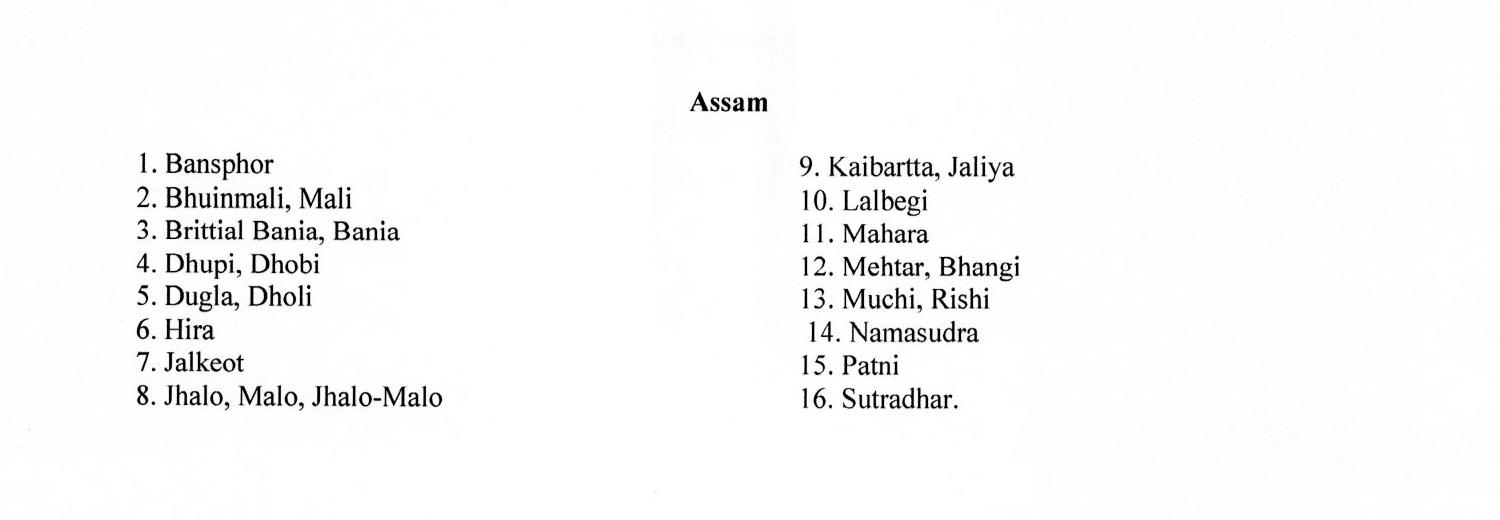
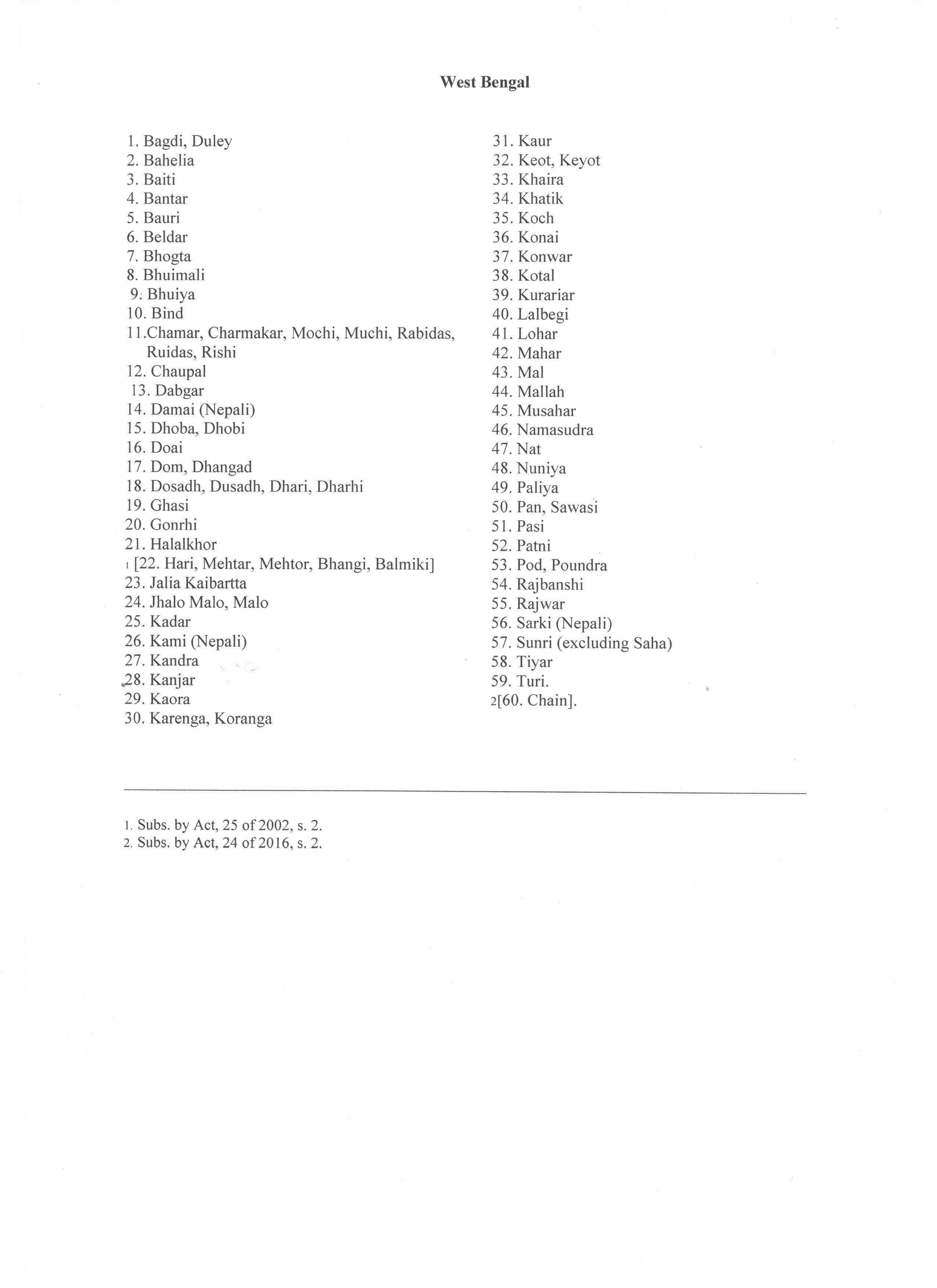
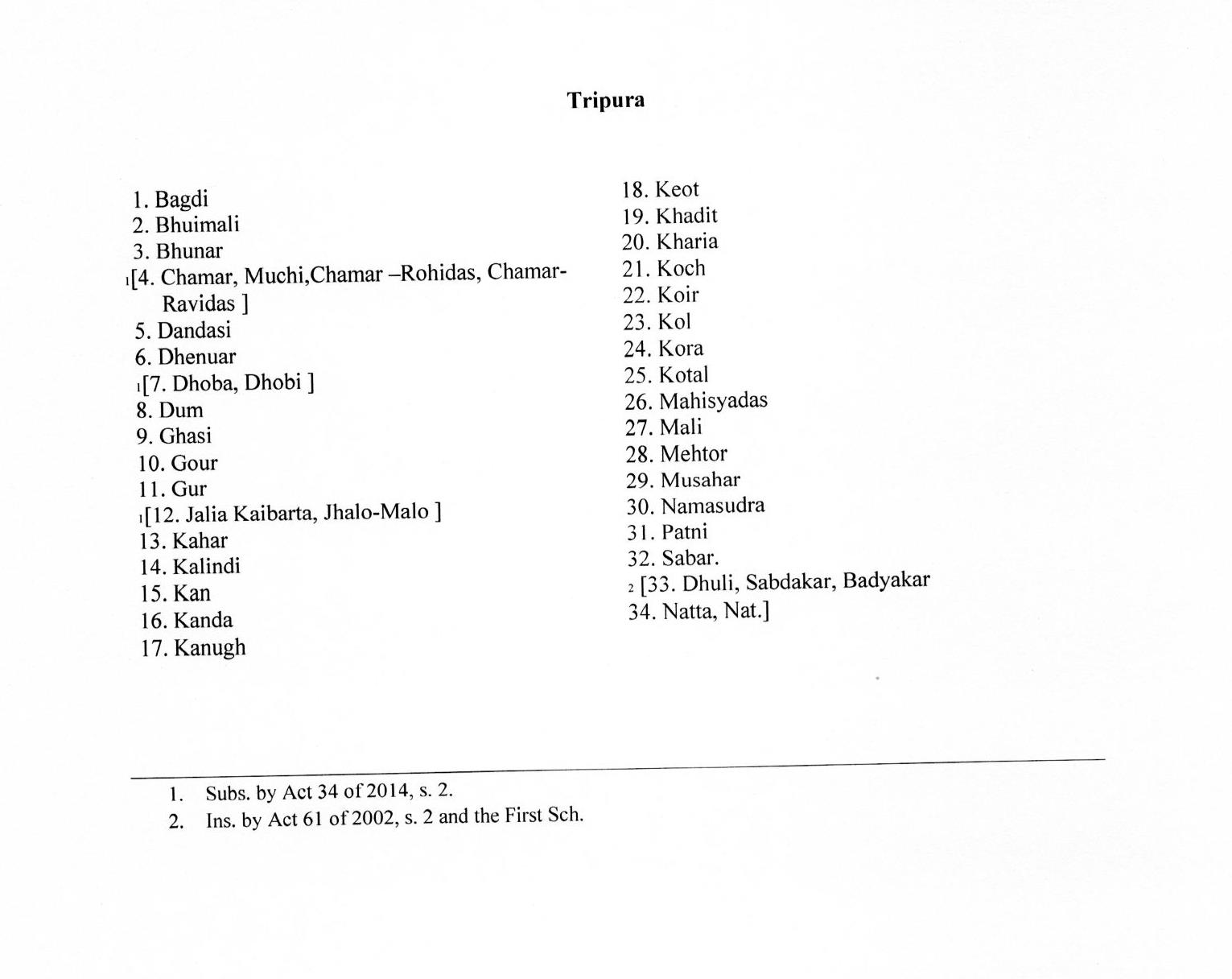
Kewats are recognised as [[Scheduled Castes and Scheduled Tribes|Scheduled Caste]] in the states of Assam, West Bengal and Tripura as Keot, Keyot or Jalkeot.<ref>{{Cite web |title=Scheduled Caste list of Assam, India |url=https://socialjustice.gov.in/writereaddata/UploadFile/Scan-0002.jpg}}</ref><ref>{{Cite web |title=Scheduled Caste list of West Bengal, India |url=https://socialjustice.gov.in/writereaddata/UploadFile/Scan-0020636052301055616230.jpg}}</ref><ref>{{Cite web |title=Scheduled Caste list of Tripura, India |url=https://socialjustice.gov.in/writereaddata/UploadFile/Scan-0018.jpg}}</ref> | |||
== Origin == | |||
The name "Kevata" was first appeared in the [[Delhi-Topra pillar|Pillar Edict V]] of Emperor [[Ashoka]].<ref>{{Cite book |last=Bhaumik |first=Sudarshana |url=https://books.google.com/books?id=bKh4EAAAQBAJ&q=sudarshana+bhaumik |title=The Changing World of Caste and Hierarchy in Bengal: Depiction from the Mangalkavyas c. 1700–1931 |date=2022-08-26 |publisher=Taylor & Francis |isbn=978-1-000-64143-1 |pages=60 |language=en}}</ref> "Kevata-bhoga" referred to places or bhuktis where this community resided. The people whose livelihoods centred around water or aquatic bodies used to be called Kevat.<ref>{{Cite book |title=Amulyacharan Vidyabhushan Rachanavali |year=1990 |edition=Vol 3 |pages=189–191}}</ref> | |||
==Divisions== | ==Divisions== | ||
Their main sub-groups are the Banaphar, Dhivar, Balavarna, [[Chain (caste)|Chay]], Sorahiya, Kairata, and [[Tiar]]. The | Their main sub-groups are the Banaphar, Dhivar, Balavarna, [[Chain (caste)|Chay]], Sorahiya, Kairata, and [[Tiar]]. The Banaphar consider themselves to be superior to the other groups.<ref name=":1">People of India Uttar Pradesh Volume XLII edited by A Hasan & J C Das page 777</ref> | ||
==Present circumstances== | ==Present circumstances== | ||
| Line 26: | Line 32: | ||
===In Rajasthan=== | ===In Rajasthan=== | ||
The Kewat in Rajasthan are found in along the banks of the rivers [[Chambal River|Chambal]], Benas and Kalinath rivers, in the districts of [[Kota District|Kota]] and [[Sawai Madhopur]]. They are divided into eighty four clans, and their origin myth refers to them being created by god [[Vishnu]]. The community speak the Hadoti dialect of [[Rajasthani language|Rajasthani]]. There traditional occupation of being boatmen has declined | The Kewat in Rajasthan are found in along the banks of the rivers [[Chambal River|Chambal]], Benas and Kalinath rivers, in the districts of [[Kota District|Kota]] and [[Sawai Madhopur]]. They are divided into eighty four clans, and their origin myth refers to them being created by god [[Vishnu]]. The community speak the Hadoti dialect of [[Rajasthani language|Rajasthani]]. There traditional occupation of being boatmen has declined.<ref>People of India Rajasthan Volume XXXVIII Part Two edited by B.K Lavania, D. K Samanta, S K Mandal & N.N Vyas pages 515 to 519 Popular Prakashan</ref> | ||
===In Bihar=== | ===In Bihar=== | ||
| Line 34: | Line 40: | ||
A major population of kewat/keot/kaut live in the district of Madhubani. The farmers of the Jhanjharpur region are more prosperous while those belonging to the kosi (the flood effected) belt not so prosperous with many of them taken to jobs outside the state. Maithili is the major language spoken in the district of Madhubani, Darbhanga, Jhajharpur etc.<ref>People of India Bihar Volume XVI Part One edited by S Gopal & Hetukar Jha pages 507 to 511 Seagull Books</ref> | A major population of kewat/keot/kaut live in the district of Madhubani. The farmers of the Jhanjharpur region are more prosperous while those belonging to the kosi (the flood effected) belt not so prosperous with many of them taken to jobs outside the state. Maithili is the major language spoken in the district of Madhubani, Darbhanga, Jhajharpur etc.<ref>People of India Bihar Volume XVI Part One edited by S Gopal & Hetukar Jha pages 507 to 511 Seagull Books</ref> | ||
== | ==The Kewat in Nepal== | ||
The [[Central Bureau of Statistics (Nepal)|Central Bureau of Statistics]] of Nepal classifies the Kewat as a subgroup within the broader social group of [[Madheshi people|Madheshi]] Other Caste.<ref> Population Monograph of Nepal, Volume II [https://nepal.unfpa.org/sites/default/files/pub-pdf/Population%20Monograph%20V02.pdf]</ref> At the time of the [[2011 Nepal census]], 153,772 people (0.6% of the population of Nepal) were Kewat. The frequency of Kewat by province was as follows: | |||
* [[Madhesh Province]] (1.4%) | |||
* [[Lumbini Province]] (1.0%) | |||
* [[Koshi Province]] (0.6%) | |||
* [[Bagmati Province]] (0.0%) | |||
* [[Gandaki Province]] (0.0%) | |||
* [[Sudurpashchim Province]] (0.0%) | |||
* [[Karnali Province]] (0.0%) | |||
The frequency of Kewat was higher than national average (0.6%) in the following districts:<ref>[https://cbs.gov.np/wp-content/upLoads/2018/12/Volume05Part02.pdf 2011 Nepal Census, District Level Detail Report]</ref> | |||
* [[Dhanusha District|Dhanusha]] (6.1%) | |||
* [[Parasi District|Parasi]] (3.5%) | |||
* [[Morang District|Morang]] (2.7%) | |||
* [[Rupandehi District|Rupandehi]] (2.5%) | |||
* [[Siraha District|Siraha]] (2.2%) | |||
* [[Kapilvastu District|Kapilvastu]] (2.1%) | |||
* [[Mahottari District|Mahottari]] (1.1%) | |||
==References== | ==References== | ||
| Line 44: | Line 65: | ||
[[Category:Social groups of Uttar Pradesh]] | [[Category:Social groups of Uttar Pradesh]] | ||
[[Category:Indian castes]] | [[Category:Indian castes]] | ||
[[Category:Hindu communities]] | |||
[[Category:Social groups of Rajasthan]] | [[Category:Social groups of Rajasthan]] | ||
[[Category:Social groups of Bihar]] | [[Category:Social groups of Bihar]] | ||
[[Category:Other Backward Classes]] | [[Category:Other Backward Classes]] | ||
Revision as of 20:22, 23 July 2023
 Mallah a sub caste of Kewat, a boatmen-fishermen community. | |
| Regions with significant populations | |
|---|---|
| India | |
| Languages | |
| • Hindi | |
| Religion | |
| • Hinduism 100% • | |
| Related ethnic groups | |
| Mallah • Jhora |
The Kewat, also spelled Kevat, is a Hindu caste, found in the states of Rajasthan, Madhya Pradesh, Chhattisgarh, Odisha, Bihar and Uttar Pradesh in India. They are the traditional boatmen of northern India, and also in neighbouring country Nepal. Kewat are recognised as Other backward class in central list but were promised Scheduled Caste status by Samajwadi party. [1][2] Kewats are recognised as Scheduled Caste in the states of Assam, West Bengal and Tripura as Keot, Keyot or Jalkeot.[3][4][5]
Origin
The name "Kevata" was first appeared in the Pillar Edict V of Emperor Ashoka.[6] "Kevata-bhoga" referred to places or bhuktis where this community resided. The people whose livelihoods centred around water or aquatic bodies used to be called Kevat.[7]
Divisions
Their main sub-groups are the Banaphar, Dhivar, Balavarna, Chay, Sorahiya, Kairata, and Tiar. The Banaphar consider themselves to be superior to the other groups.[8]
Present circumstances
In Uttar Pradesh
The Kewat of Uttar Pradesh mostly live near the river Ganges. They are the traditional businessman.[9] They are among 17 OBC communities that have been proposed for Scheduled Caste status by the Samajwadi Party-controlled Government of Uttar Pradesh. However, this proposal, which relates to votebank politics and has been made in the past, has been stayed by the courts; a prior attempt was also rejected by the Government of India.[10][11]
In Rajasthan
The Kewat in Rajasthan are found in along the banks of the rivers Chambal, Benas and Kalinath rivers, in the districts of Kota and Sawai Madhopur. They are divided into eighty four clans, and their origin myth refers to them being created by god Vishnu. The community speak the Hadoti dialect of Rajasthani. There traditional occupation of being boatmen has declined.[12]
In Bihar
In Bihar, they are both cultivators and businessman. The community are also known as Kewat Kaut. There is considerable difference of opinion as to the origin of the word Kewat. They are found in almost all the districts of Bihar but mostly in Madhubani , Jhanjharpur, Nirmalli, Bhagalpur, Purnea, Katihar, Darbhanga, Munger, Muzaffarpur and Khagaria, Saharsa, Supaul, Madhepura . Their villages are found mainly along the near of the Ganges river, and many have taken to cultivation. They speak Maithili, Magadhi and Bhojpuri.[citation needed]
A major population of kewat/keot/kaut live in the district of Madhubani. The farmers of the Jhanjharpur region are more prosperous while those belonging to the kosi (the flood effected) belt not so prosperous with many of them taken to jobs outside the state. Maithili is the major language spoken in the district of Madhubani, Darbhanga, Jhajharpur etc.[13]
The Kewat in Nepal
The Central Bureau of Statistics of Nepal classifies the Kewat as a subgroup within the broader social group of Madheshi Other Caste.[14] At the time of the 2011 Nepal census, 153,772 people (0.6% of the population of Nepal) were Kewat. The frequency of Kewat by province was as follows:
- Madhesh Province (1.4%)
- Lumbini Province (1.0%)
- Koshi Province (0.6%)
- Bagmati Province (0.0%)
- Gandaki Province (0.0%)
- Sudurpashchim Province (0.0%)
- Karnali Province (0.0%)
The frequency of Kewat was higher than national average (0.6%) in the following districts:[15]
- Dhanusha (6.1%)
- Parasi (3.5%)
- Morang (2.7%)
- Rupandehi (2.5%)
- Siraha (2.2%)
- Kapilvastu (2.1%)
- Mahottari (1.1%)
References
- ↑ People of India Uttar Pradesh Volume XLII Part Two edited by A Hasan & J C Das pages 776 to 783
- ↑ People of India Rajasthan Volume XXXVIII Part Two edited by B.K Lavania, D. K Samanta, S K Mandal & N.N Vyas pages 515 to 519 Popular Prakashan
- ↑ "Scheduled Caste list of Assam, India".
- ↑ "Scheduled Caste list of West Bengal, India".
- ↑ "Scheduled Caste list of Tripura, India".
- ↑ Bhaumik, Sudarshana (26 August 2022). The Changing World of Caste and Hierarchy in Bengal: Depiction from the Mangalkavyas c. 1700–1931. Taylor & Francis. p. 60. ISBN 978-1-000-64143-1.
- ↑ Amulyacharan Vidyabhushan Rachanavali (Vol 3 ed.). 1990. pp. 189–191.
- ↑ People of India Uttar Pradesh Volume XLII edited by A Hasan & J C Das page 777
- ↑ People of India Uttar Pradesh Volume XLII edited by A Hasan & J C Das page 778
- ↑ "Setback for Akhilesh government as High Court stays their order to include 17 sub-castes in the SC category". Financial Express. 24 January 2017. Retrieved 4 February 2017.
- ↑ "UP govt to include 17 other backward castes in SC list". Hindustan Times. PTI. 22 December 2016. Retrieved 4 February 2017.
- ↑ People of India Rajasthan Volume XXXVIII Part Two edited by B.K Lavania, D. K Samanta, S K Mandal & N.N Vyas pages 515 to 519 Popular Prakashan
- ↑ People of India Bihar Volume XVI Part One edited by S Gopal & Hetukar Jha pages 507 to 511 Seagull Books
- ↑ Population Monograph of Nepal, Volume II [1]
- ↑ 2011 Nepal Census, District Level Detail Report