

Updating Tags: Mobile edit Mobile web edit |
No edit summary |
||
| Line 1: | Line 1: | ||
{{Short description|Igniter of the first fire in Meitei mythology}} | |||
{{Contains special characters}} | |||
{{Infobox deity | {{Infobox deity | ||
| type = Meitei | | type = Meitei | ||
| Line 4: | Line 6: | ||
| deity_of = Igniter of the first fire <br /> Protector of crops (paddy) from hailstorm and thunder | | deity_of = Igniter of the first fire <br /> Protector of crops (paddy) from hailstorm and thunder | ||
| member_of = [[Umang Lai]]s | | member_of = [[Umang Lai]]s | ||
| image = | | image = PANAM_NINGTHOU.jpg | ||
| alt = <!-- for alternate text of the title image per [[WP:ALT]] --> | | alt = <!-- for alternate text of the title image per [[WP:ALT]] --> | ||
| caption = "Panam Ningthou", the sacred name of the God, written in archaic Meetei Mayek abugida | | caption = "Panam Ningthou", the sacred name of the God, written in archaic Meetei Mayek abugida | ||
| Line 13: | Line 15: | ||
| script = | | script = | ||
| affiliation = [[Meitei mythology]] ([[Manipuri mythology]]) and [[Meitei religion]] ([[Sanamahism]]) | | affiliation = [[Meitei mythology]] ([[Manipuri mythology]]) and [[Meitei religion]] ([[Sanamahism]]) | ||
| cult_center = [[Andro, Manipur]]<ref name=":0">{{Cite book|url=https://books.google.com/books?id=XScmdGvMf7IC&q=panam+ningthou+andro+village&pg=PA182|title=Encyclopaedia of North-East India|last=Bareh|first=Hamlet|date=2001|publisher=Mittal Publications|isbn=978-81-7099-790-0|language=en}}</ref><ref name=":1">{{Cite book|url=https://books.google.com/books?id=PgHgCwAAQBAJ&q=Panam+Ningthou+at+Andro+village++umanglaism&pg=PA80|title=Meeyamgi Kholao: Sprout of Consciousness|last=Birajit|first=Soibam|date=2014-12-01|publisher=ARECOM ( Advanced Research Consortium, Manipur)|language=en}}</ref><ref name=":2">{{Cite book|url=https://books.google.com/books?id=HGI9DwAAQBAJ&q=Panam+Ningthou+Umanglai-kon+at+Andro+village+Imphal+East+district&pg=PA55|title=NEScholar Magazine Vol 02 Issue 03|last=Singh|first=Dr RK Nimai|publisher=NE Brothers|language=en}}</ref> | | cult_center = [[Andro, Imphal East]], [[Manipur]]<ref name=":0">{{Cite book|url=https://books.google.com/books?id=XScmdGvMf7IC&q=panam+ningthou+andro+village&pg=PA182|title=Encyclopaedia of North-East India|last=Bareh|first=Hamlet|date=2001|publisher=Mittal Publications|isbn=978-81-7099-790-0|language=en}}</ref><ref name=":1">{{Cite book|url=https://books.google.com/books?id=PgHgCwAAQBAJ&q=Panam+Ningthou+at+Andro+village++umanglaism&pg=PA80|title=Meeyamgi Kholao: Sprout of Consciousness|last=Birajit|first=Soibam|date=2014-12-01|publisher=ARECOM ( Advanced Research Consortium, Manipur)|language=en}}</ref><ref name=":2">{{Cite book|url=https://books.google.com/books?id=HGI9DwAAQBAJ&q=Panam+Ningthou+Umanglai-kon+at+Andro+village+Imphal+East+district&pg=PA55|title=NEScholar Magazine Vol 02 Issue 03|last=Singh|first=Dr RK Nimai|publisher=NE Brothers|language=en}}</ref> | ||
| abode = [[Andro, Manipur]]<ref name=":0" /><ref name=":1" /><ref name=":2" /> | | abode = [[Andro, Imphal East]], [[Manipur]]<ref name=":0" /><ref name=":1" /><ref name=":2" /> | ||
| planet = <!-- or | world = --> | | planet = <!-- or | world = --> | ||
| weapon = <!-- or | weapons = --> | | weapon = <!-- or | weapons = --> | ||
| Line 36: | Line 38: | ||
| army = | | army = | ||
| mount = | | mount = | ||
| texts = [[Poireiton Khunthok]]pa | | texts = [[:simple:Poireiton Khunthok|Poireiton Khunthok]]pa | ||
| gender = Male | | gender = Male | ||
| Greek_equivalent = [[Hephaestus]], [[Prometheus]] | | Greek_equivalent = [[Hephaestus]], [[Prometheus]] | ||
| Line 53: | Line 55: | ||
| festivals = Chakpa Haraoba (one of the 4 types of [[Lai Haraoba]] festival)<ref name="Himalayan Bridge">{{Cite book|url=https://books.google.com/books?id=f-TzDwAAQBAJ&q=Panam+Ningthou+for+Chakpa+Haraoba+four+types+Lai+Haraoba&pg=PT308|title=Himalayan Bridge|last1=Kumar|first1=Niraj|last2=Driem|first2=George van|last3=Stobdan|first3=Phunchok|date=2020-11-18|publisher=Routledge|isbn=978-1-000-21551-9|language=en}}</ref> | | festivals = Chakpa Haraoba (one of the 4 types of [[Lai Haraoba]] festival)<ref name="Himalayan Bridge">{{Cite book|url=https://books.google.com/books?id=f-TzDwAAQBAJ&q=Panam+Ningthou+for+Chakpa+Haraoba+four+types+Lai+Haraoba&pg=PT308|title=Himalayan Bridge|last1=Kumar|first1=Niraj|last2=Driem|first2=George van|last3=Stobdan|first3=Phunchok|date=2020-11-18|publisher=Routledge|isbn=978-1-000-21551-9|language=en}}</ref> | ||
}} | }} | ||
{{Meitei | {{Infobox Sanamahist term | ||
'''Panam Ningthou''' ({{lang-mni|ꯄꯅꯝ ꯅꯤꯡꯊꯧ}}) is a God in [[Meitei mythology]] and [[Meitei religion|religion]]. He is the protector of [[crops]], especially [[paddy]] from hailstorm and thunder.<ref>{{Cite book|url=https://books.google.com/books?id=LVpuAAAAMAAJ&q=panam+Ningthou|title=Recent Researches in Oriental Indological Studies: Including Meiteilogy|last=Singh|first=Moirangthem Kirti|date=1998|publisher=Parimal Publications|language=en}}</ref> According to legends, He ignited fire for the first time by rubbing [[flint]]s.<ref name=":3">Constantine, R. (1981). Manipur, Maid of the Mountains. Lancers. p. 43.</ref><ref name=":4">Panchani, Chander Sheikhar (1987). Manipur, Religion, Culture, and Society. Konark Publishers. p. 73. ISBN 978-81-220-0047-4.</ref> He is one of the [[Umang Lai]] deities.<ref>{{Cite book|url=https://archive.org/details/dli.ernet.108375/page/15/mode/2up?q=Panam+Ningthou+Umang+Lai+Andro|title=Religion Of Manipur|last=Parratt|first=Saroj Nalini|date=1980|publisher=Firma Klm|pages=15}}</ref><ref>{{Cite book|url=https://books.google.com/books?id=tIBymmBWqgsC&q=panam+ningthou+umang+lais&pg=PA59|title=The Lois of Manipur: Andro, Khurkhul, Phayeng and Sekmai|last=Devi|first=Lairenlakpam Bino|date=2002|publisher=Mittal Publications|isbn=978-81-7099-849-5|pages=59|language=en}}</ref><ref>{{Cite book|url=https://books.google.com/books?id=yi_XAAAAMAAJ&q=panam+Ningthou|title=Tribal Religion and Rituals: Accounts of Superstition, Sorcery and Spirits|last=Mahapatra|first=Mary D.|date=2001|publisher=Dominant Pub.|isbn=978-81-87336-69-3|language=en}}</ref> | | title = Panam Ningthou | ||
| en = Panam Ningthou | |||
| omp = ꯄꯅꯝ ꯅꯤꯡꯊꯧ | |||
| omp-Latn = pa-nam ning-thou | |||
| mni = ꯄꯅꯝ ꯅꯤꯪꯊꯧ | |||
| mni-Latn = pa-nam ning-thou | |||
| as = পনম নিংথৌ | |||
| as-Latn = pa-nam ning-thou | |||
| bn = পনম নিঙথৌ | |||
| bn-Latn = pa-nam ning-thou | |||
| my = | |||
| my-Latn = | |||
| hi = पनम निंथौ | |||
| hi-Latn = pa-nam ning-thou | |||
}} | |||
{{Meitei mythology}} | |||
{{Sanamahism}} | |||
'''Panam Ningthou''' ({{lang-mni|ꯄꯅꯝ ꯅꯤꯡꯊꯧ}}) is a God in [[Meitei mythology]] and [[Meitei religion|religion]]. He is the protector of [[crops]], especially [[Paddy (unmilled rice)|paddy]] from [[hailstorm]] and [[thunder]].<ref>{{Cite book|url=https://books.google.com/books?id=LVpuAAAAMAAJ&q=panam+Ningthou|title=Recent Researches in Oriental Indological Studies: Including Meiteilogy|last=Singh|first=Moirangthem Kirti|date=1998|publisher=Parimal Publications|language=en}}</ref> According to legends, He [[Combustion|ignited]] fire for the first time by rubbing [[flint]]s.<ref name=":3">Constantine, R. (1981). Manipur, Maid of the Mountains. Lancers. p. 43.</ref><ref name=":4">Panchani, Chander Sheikhar (1987). Manipur, Religion, Culture, and Society. Konark Publishers. p. 73. ISBN 978-81-220-0047-4.</ref> He is one of the [[Umang Lai]] deities.<ref>{{Cite book|url=https://archive.org/details/dli.ernet.108375/page/15/mode/2up?q=Panam+Ningthou+Umang+Lai+Andro|title=Religion Of Manipur|last=Parratt|first=Saroj Nalini|date=1980|publisher=Firma Klm|pages=15}}</ref><ref>{{Cite book|url=https://books.google.com/books?id=tIBymmBWqgsC&q=panam+ningthou+umang+lais&pg=PA59|title=The Lois of Manipur: Andro, Khurkhul, Phayeng and Sekmai|last=Devi|first=Lairenlakpam Bino|date=2002|publisher=Mittal Publications|isbn=978-81-7099-849-5|pages=59|language=en}}</ref><ref>{{Cite book|url=https://books.google.com/books?id=yi_XAAAAMAAJ&q=panam+Ningthou|title=Tribal Religion and Rituals: Accounts of Superstition, Sorcery and Spirits|last=Mahapatra|first=Mary D.|date=2001|publisher=Dominant Pub.|isbn=978-81-87336-69-3|language=en}}</ref> | |||
== History == | == History == | ||
God Panam Ningthou has his major cult center in [[Andro, | God Panam Ningthou has his major cult center in [[Andro, Imphal East|Andro village]].<ref name=":0" /><ref name=":1" /><ref name=":2" /> The [[Andro, Imphal East|Andro village]] in [[Imphal East|Imphal East district]] of present day [[Manipur]] is an ancient village. People of this village worship fire that is kept burning from the time of [[:simple:Poireiton Khunthok|Poireiton Khunthok]]pa (34 BC-18 BC). The fire is kept in the Chakpa Panam Ningthou Meihoupirol (lit. ''Panam Ningthou sacred burning fireplace'').<ref>{{Cite book|url=https://books.google.com/books?id=Z6d-IyINtk4C&q=Chakpa+Panam+Ningthou+Meihoupirol+Andro+ancient+village+worship+fire+burning+time+Poireiton+Khunthokpa+34+18+BC&pg=PA587|title=Encyclopaedia Of Manipur (3 Vol.)|last=Lisam|first=Khomdan Singh|date=2011|publisher=|isbn=978-81-7835-864-2|pages=587|language=en}}</ref> | ||
According to R. Constantine, the fire burning in [[Andro, Imphal East|Andro]] is the oldest man-made fire in [[India]]. It has been burning without break for centuries.<ref name=":3" /><ref name=":4" /> | |||
== Description == | == Description == | ||
According to [[Thomas Callan Hodson|Thomas Callan Hodson (T.C. Hodson)]], Panam Ningthou is a rain and weather God of the [[Meitei people]] of [[Manipur]]. He recorded his description in his monograph | According to [[Thomas Callan Hodson|Thomas Callan Hodson (T.C. Hodson)]], Panam Ningthou is a rain and weather God of the [[Meitei people]] of [[Manipur]]. He recorded his description in his monograph "The Meitheis" published in 1908.<ref>{{Cite book|url=https://archive.org/details/guidetogods0000leac/page/212/mode/2up?q=Panam+Ningthou|title=Guide to the gods|last=Leach|first=Marjorie|date=1992|publisher=Santa Barbara, Calif. : ABC-CLIO|others=Internet Archive|isbn=978-0-87436-591-7|pages=212}}</ref> | ||
== Mythology == | == Mythology == | ||
When it was one or two days before the [[Lai Haraoba]] festival of God [[Lainingthou]] Panam Ningthou begins, the God came to his temple in the form of a ball of light. He came flying from the east. He landed at a part of the [[Nongmaiching Hill]]. Sometimes, some people of [[Andro, | When it was one or two days before the [[Lai Haraoba]] festival of God [[Lainingthou]] Panam Ningthou begins, the God came to his temple in the form of a ball of light. He came flying from the east. He landed at a part of the [[Nongmaiching Hill]]. Sometimes, some people of [[Andro, Imphal East|Andro]] claimed to see that ball of light, even at other times of the year.<ref name="archive.org">{{Cite book|url=https://archive.org/details/dli.language.1357/page/n124/mode/2up?q=Panam+Ningthou|title=A collection of Essays in Manipuri Folklore|last1=Dr. Chirom Rajketan Singh|last2=Sadananda Mayanglambam|date=2013|pages=124}}</ref> | ||
God [[Lainingthou]] Panam Ningthou has a wife named Leimaren Sanarik Chaning Khombi. Some people believed that she might be of Burmese origin. So, the God went to [[Burma]] ({{lang-mni|Awa Leipak}}) to meet her from time to time.<ref name="archive.org"/> | God [[Lainingthou]] Panam Ningthou has a wife named Leimaren Sanarik Chaning Khombi. Some people believed that she might be of Burmese origin, though it's not certain. So, the God went to [[Burma]] ({{lang-mni|Awa Leipak}}) to meet her from time to time.<ref name="archive.org"/> | ||
== Festival and worship == | == Festival and worship == | ||
God Panam Ningthou is mainly worshipped by the people of Loi caste of [[Meitei ethnicity]] in [[Manipur]].<ref>{{Cite book|url=https://books.google.com/books?id=fXDiAAAAMAAJ&q=panam+Ningthou|title=Manipur|last1=Singh|first1=Kumar Suresh|last2=Horam|first2=M.|last3=Rizvi|first3=S. H. M.|date=1998|publisher=Anthropological Survey of India|isbn=978-81-7046-127-2|language=en}}</ref> He has his major cult center in [[Andro, | God Panam Ningthou is mainly worshipped by the people of [[Loi]] caste of [[Meitei ethnicity]] in [[Manipur]].<ref>{{Cite book|url=https://books.google.com/books?id=fXDiAAAAMAAJ&q=panam+Ningthou|title=Manipur|last1=Singh|first1=Kumar Suresh|last2=Horam|first2=M.|last3=Rizvi|first3=S. H. M.|date=1998|publisher=Anthropological Survey of India|isbn=978-81-7046-127-2|language=en}}</ref> He has his major cult center in [[Andro, Imphal East|Andro village]] of [[Imphal East|Imphal East district]] of [[Manipur]].<ref name=":0" /><ref name=":1" /><ref name=":2" /> | ||
Shakespeare noted that the Loi people regarded God Panam Ningthou as a special deity of the Meitei king. He further noted that the King himself provided sacrificial animals to the God. Buffalo was one among the sacrificial animals used to be sacrificed during the [[Lai Haraoba]] festival. Pigs were sacrificed when there was no [[Lai Haraoba]] festival.<ref>{{Cite book|url=https://archive.org/details/dli.ernet.108375/page/119/mode/2up?q=Panam+Ningthou|title=Religion Of Manipur|last=Parratt|first=Saroj Nalini|date=1980|publisher=Firma Klm|pages=119}}</ref> Whenever there was any suspicion of danger to the Meitei king, the King would send a pig and a cock to be sacrificed to God Panam Ningthou of [[Andro, | Shakespeare noted that the Loi people regarded God Panam Ningthou as a special deity of the Meitei king. He further noted that the King himself provided sacrificial animals to the God. Buffalo was one among the sacrificial animals used to be sacrificed during the [[Lai Haraoba]] festival. Pigs were sacrificed when there was no [[Lai Haraoba]] festival.<ref>{{Cite book|url=https://archive.org/details/dli.ernet.108375/page/119/mode/2up?q=Panam+Ningthou|title=Religion Of Manipur|last=Parratt|first=Saroj Nalini|date=1980|publisher=Firma Klm|pages=119}}</ref> Whenever there was any suspicion of danger to the Meitei king, the King would send a pig and a [[Cock (bird)|cock]] to be sacrificed to God Panam Ningthou of [[Andro, Imphal East|Andro]].<ref>{{Cite book|url=https://archive.org/details/dli.ernet.108375/page/120/mode/2up?q=Panam+Ningthou|title=Religion Of Manipur|last=Parratt|first=Saroj Nalini|date=1980|publisher=Firma Klm|pages=120}}</ref> | ||
The Chakpa Haraoba (one of the 4 types of [[Lai Haraoba]] festival) is annually celebrated in honor of God Panam Ningthou.<ref name="Himalayan Bridge"/> The festive occasion falls in the [[Meitei calendar|Meitei lunar month]] of Lamta (''March-April interface month'').<ref>{{Cite book|url=https://books.google.com/books?id=FH4Bb7dD4qYC&q=permissible+to+make+one+only+during+festive+month+Lamta+%28+March+%2F+April+%29+worship+their+deity+Panam+Ningthou+tradition+still+in+continuance+today+Shelluk+type+of+container+used+by+Meiteis+&pg=PA118|title=Bamboo: The Wonderful Grass|last=Ghosh|first=G. K.|date=2008|publisher=APH Publishing|isbn=978-81-313-0369-6|language=en}}</ref><ref>{{Cite book|url=https://books.google.com/books?id=NPrbAAAAMAAJ&q=panam+Ningthou|title=Cane & Bamboo Crafts of Manipur|last=Bahadur|first=Mutua|date=1994|publisher=Mutua Museum|language=en}}</ref> The festival starts from the first Sunday of the ''Lamta'' month.<ref name=":6">{{Cite book|url=https://archive.org/details/dli.language.1357/page/n123/mode/2up?q=Panam+Ningthou|title=A collection of Essays in Manipuri Folklore|last1=Dr. Chirom Rajketan Singh|last2=Sadananda Mayanglambam|date=2013|pages=123}}</ref> | The Chakpa Haraoba (one of the 4 types of [[Lai Haraoba]] festival) is annually celebrated in honor of God Panam Ningthou.<ref name="Himalayan Bridge"/> The festive occasion falls in the [[Meitei calendar|Meitei lunar month]] of Lamta (''March-April interface month'').<ref>{{Cite book|url=https://books.google.com/books?id=FH4Bb7dD4qYC&q=permissible+to+make+one+only+during+festive+month+Lamta+%28+March+%2F+April+%29+worship+their+deity+Panam+Ningthou+tradition+still+in+continuance+today+Shelluk+type+of+container+used+by+Meiteis+&pg=PA118|title=Bamboo: The Wonderful Grass|last=Ghosh|first=G. K.|date=2008|publisher=APH Publishing|isbn=978-81-313-0369-6|language=en}}</ref><ref>{{Cite book|url=https://books.google.com/books?id=NPrbAAAAMAAJ&q=panam+Ningthou|title=Cane & Bamboo Crafts of Manipur|last=Bahadur|first=Mutua|date=1994|publisher=Mutua Museum|language=en}}</ref> The festival starts from the first Sunday of the ''Lamta'' month.<ref name=":6">{{Cite book|url=https://archive.org/details/dli.language.1357/page/n123/mode/2up?q=Panam+Ningthou|title=A collection of Essays in Manipuri Folklore|last1=Dr. Chirom Rajketan Singh|last2=Sadananda Mayanglambam|date=2013|pages=123}}</ref> | ||
During the 9 day long festival, no outsiders of [[Andro, | During the 9 day long festival, no outsiders of [[Andro, Imphal East|Andro]] are allowed to stay at the village. In modern times, notice is issued one month before the festival begins through mass media like television, newspaper and radio. The notice informs outsiders to leave the place as it is about to begin the festival. Natives of Andro may come to Andro before the festival starts. Once the festival begins, no one is allowed to either leave from or come to the village. People who have converted into another religion are not allowed to participate in the religious festival even if they are native of Andro. There are some Christian converts and Hindu converts in Andro.<ref name=":6" /> | ||
During the festival, people of ''Andro village'' wear black clothes as a custom.<ref>{{Cite book|url=https://books.google.com/books?id=tIBymmBWqgsC&q=panam+Ningthou&pg=PA55|title=The Lois of Manipur: Andro, Khurkhul, Phayeng and Sekmai|last=Devi|first=Lairenlakpam Bino|date=2002|publisher=Mittal Publications|isbn=978-81-7099-849-5|pages=55|language=en}}</ref> Besides Panam Ningthou, there are twelve other deities worshipped in Andro. During the [[Lai Haraoba]] festivals of these deities, outsiders of Andro can witness the event. The festivals in their honor are done separately from that of Panam Ningthou. But the festival of [[Pureiromba]] can be done together with that of Panam Ningthou. At this too, outsiders can witness the event but the place of worship is different from the exclusive one of Panam Ningthou.<ref name=":6" /> | During the festival, people of ''Andro village'' wear black clothes as a custom.<ref>{{Cite book|url=https://books.google.com/books?id=tIBymmBWqgsC&q=panam+Ningthou&pg=PA55|title=The Lois of Manipur: Andro, Khurkhul, Phayeng and Sekmai|last=Devi|first=Lairenlakpam Bino|date=2002|publisher=Mittal Publications|isbn=978-81-7099-849-5|pages=55|language=en}}</ref> Besides Panam Ningthou, there are twelve other deities worshipped in Andro. During the [[Lai Haraoba]] festivals of these deities, outsiders of Andro can witness the event. The festivals in their honor are done separately from that of Panam Ningthou. But the festival of [[Pureiromba]] can be done together with that of Panam Ningthou. At this too, outsiders can witness the event but the place of worship is different from the exclusive one of Panam Ningthou.<ref name=":6" /> | ||
| Line 81: | Line 101: | ||
== Temple == | == Temple == | ||
The '''Temple of Panam Ningthou''' is in [[Andro, Manipur]]. It is also the Loishang (English: Office) to the representatives of the ''pana''s (English: State Divisions). Sacred items are kept inside the temple. One house each for two ''Pana''s was constructed near the Loishang. Two dormitories for boys and girls are also built.<ref name=":5">{{Cite book|url=https://archive.org/details/dli.language.1357/page/n122/mode/2up?q=Panam+Ningthou|title=A collection of Essays in Manipuri Folklore|last1=Dr. Chirom Rajketan Singh|last2=Sadananda Mayanglambam|date=2013|pages=122}}</ref> | The '''Temple of Panam Ningthou''' is in [[Andro, Imphal East]], [[Manipur]]. It is also the Loishang (English: Office) to the representatives of the ''pana''s (English: State Divisions). Sacred items are kept inside the temple. One house each for two ''Pana''s was constructed near the Loishang. Two dormitories for boys and girls are also built.<ref name=":5">{{Cite book|url=https://archive.org/details/dli.language.1357/page/n122/mode/2up?q=Panam+Ningthou|title=A collection of Essays in Manipuri Folklore|last1=Dr. Chirom Rajketan Singh|last2=Sadananda Mayanglambam|date=2013|pages=122}}</ref> | ||
The sanctum of God [[Lainingthou]] Panam Ningthou and Goddess Leimaren Sanarik Chaning Khombi are located in the right side corner and the left side corner respectively as one enters the room.<ref name=":5" /> | The sanctum of God [[Lainingthou]] Panam Ningthou and Goddess Leimaren Sanarik Chaning Khombi are located in the right side corner and the left side corner respectively as one enters the room.<ref name=":5" /> | ||
== Association with other gods == | == Association with other gods == | ||
According to the [[Thalon]] text, Panam Ningthou was one of the 5 gods of 5 different places of the [[Nongmaiching Hill|Selloi Langmai Hill]]. The cults of these five gods were integrated into that of a single God with the name "Langmai Ningthou" (lit. ''King of the Langmais''). The personal names became the aliases or various forms of the God. With this, the tribal society of the Selloi Langmai people evolved into a chiefdom. This chiefdom later rose to the [[Angom|Angom clan]].<ref>{{Cite book|url=https://books.google.com/books?id=PgHgCwAAQBAJ&dq=panam+ningthou&pg=PA79|title=Meeyamgi Kholao: Sprout of Consciousness|last=Birajit|first=Soibam|date=2014-12-01|publisher=ARECOM ( Advanced Research Consortium, Manipur)|language=en|pages=79}}</ref> | According to the [[:simple:Thalon|Thalon]] text, Panam Ningthou was one of the 5 gods of 5 different places of the [[Nongmaiching Hill|Selloi Langmai Hill]]. The cults of these five gods were integrated into that of a single God with the name "Langmai Ningthou" (lit. ''King of the Langmais''). The personal names became the aliases or various forms of the God. With this, the tribal society of the Selloi Langmai people evolved into a chiefdom. This chiefdom later rose to the [[Angom|Angom clan]].<ref>{{Cite book|url=https://books.google.com/books?id=PgHgCwAAQBAJ&dq=panam+ningthou&pg=PA79|title=Meeyamgi Kholao: Sprout of Consciousness|last=Birajit|first=Soibam|date=2014-12-01|publisher=ARECOM ( Advanced Research Consortium, Manipur)|language=en|pages=79}}</ref> | ||
[[File:FUSION OF THE 5 DEITIES INTO ONE WITH THE NAME "LANGMAI NINGTHOU".jpg|thumb|300px|center|Panam Ningthou was one of the 5 gods worshipped in the 5 divisions of the [[Nongmaiching Hill|Selloi Langmai hills]] that gradually merged into one God with the name "Langmai Ningthou" (lit. ''King of the Langmais'').]] | [[File:FUSION OF THE 5 DEITIES INTO ONE WITH THE NAME "LANGMAI NINGTHOU".jpg|thumb|300px|center|Panam Ningthou was one of the 5 gods worshipped in the 5 divisions of the [[Nongmaiching Hill|Selloi Langmai hills]] that gradually merged into one God with the name "Langmai Ningthou" (lit. ''King of the Langmais'').]] | ||
| Line 106: | Line 126: | ||
{{Reflist}} | {{Reflist}} | ||
== | == External links == | ||
{{Commons}} | |||
{{Wiktionary|Panam Ningthou}} | |||
* [https://archive.org/search.php?query=Panam%20Ningthou&sin=TXT INTERNET ARCHIVE, Panam Ningthou] | * [https://archive.org/search.php?query=Panam%20Ningthou&sin=TXT INTERNET ARCHIVE, Panam Ningthou] | ||
* [http://e-pao.net/epSearchResults.asp?cx=partner-pub-3342616103029311%3A3788634109&cof=FORID%3A10&ie=UTF-8&q=Panam+Ningthou&sa.x=19&sa.y=10 E-PAO, Panam Ningthou] | * [http://e-pao.net/epSearchResults.asp?cx=partner-pub-3342616103029311%3A3788634109&cof=FORID%3A10&ie=UTF-8&q=Panam+Ningthou&sa.x=19&sa.y=10 E-PAO, Panam Ningthou] | ||
| Line 112: | Line 134: | ||
* {{Cite book|url=https://archive.org/details/dli.language.0061/page/n58/mode/2up?q=Panam+Ningthou|title=Traditional Dress of the Meiteis|last=Dr. K. Sobita Devi|date=1998|pages=58}} | * {{Cite book|url=https://archive.org/details/dli.language.0061/page/n58/mode/2up?q=Panam+Ningthou|title=Traditional Dress of the Meiteis|last=Dr. K. Sobita Devi|date=1998|pages=58}} | ||
* {{Cite book|url=https://archive.org/details/dli.language.0061/page/n62/mode/2up?q=Panam+Ningthou|title=Traditional Dress of the Meiteis|last=Dr. K. Sobita Devi|date=1998|pages=62}} | * {{Cite book|url=https://archive.org/details/dli.language.0061/page/n62/mode/2up?q=Panam+Ningthou|title=Traditional Dress of the Meiteis|last=Dr. K. Sobita Devi|date=1998|pages=62}} | ||
* {{Cite book|url=https://books.google.com/books?id=gxqeDwAAQBAJ&q=+a+Loi+village%2C+Andro+where+Panam+Ningthou&pg=PA23|title=Glimpses of Manipuri Culture|last=Devi|first=Dr Yumlembam Gopi | * {{Cite book|url=https://books.google.com/books?id=gxqeDwAAQBAJ&q=+a+Loi+village%2C+Andro+where+Panam+Ningthou&pg=PA23|title=Glimpses of Manipuri Culture|last=Devi|first=Dr Yumlembam Gopi|isbn=978-0-359-72919-7|pages=23|language=en}} | ||
{{Sanamahi1}} | |||
[[Category:Abundance gods]] | |||
[[Category:Agricultural gods]] | |||
[[Category:Arts gods]] | |||
[[Category:Crafts gods]] | |||
[[Category:Creator gods]] | |||
[[Category:Domestic and hearth gods]] | |||
[[Category:Earth gods]] | |||
[[Category:Fertility gods]] | |||
[[Category:Fire gods]] | |||
[[Category:Food gods]] | |||
[[Category:Fortune gods]] | |||
[[Category:Harvest gods]] | |||
[[Category:Health gods]] | |||
[[Category:Kings in Meitei mythology]] | |||
[[Category:Life-death-rebirth gods]] | |||
[[Category:Maintenance gods]] | |||
[[Category:Meitei gods and goddesses]] | [[Category:Meitei gods and goddesses]] | ||
[[Category:Names of God in Sanamahism]] | |||
[[Category:Nature gods]] | |||
[[Category:Ningthou]] | |||
[[Category:Peace gods]] | |||
[[Category:Savior gods]] | |||
[[Category:Time and fate deities]] | |||
[[Category:Time and fate gods]] | |||
[[Category:Tutelary gods]] | |||
Latest revision as of 14:15, 27 June 2022
| Panam Ningthou | |
|---|---|
Igniter of the first fire Protector of crops (paddy) from hailstorm and thunder | |
| Member of Umang Lais | |
 "Panam Ningthou", the sacred name of the God, written in archaic Meetei Mayek abugida | |
| Affiliation | Meitei mythology (Manipuri mythology) and Meitei religion (Sanamahism) |
| Major cult center | Andro, Imphal East, Manipur[1][2][3] |
| Abode | Andro, Imphal East, Manipur[1][2][3] |
| Symbol | burning fire |
| Texts | Poireiton Khunthokpa |
| Gender | Male |
| Region | Ancient Kangleipak (Antique Manipur) |
| Ethnic group | Meitei ethnicity |
| Festivals | Chakpa Haraoba (one of the 4 types of Lai Haraoba festival)[4] |
| Greek equivalent | Hephaestus, Prometheus |
| Roman equivalent | Vulcan |
| Term | |
|---|---|
| English | Panam Ningthou |
| Ancient Meitei | ꯄꯅꯝ ꯅꯤꯡꯊꯧ (pa-nam ning-thou) |
| Modern Meitei | ꯄꯅꯝ ꯅꯤꯪꯊꯧ (pa-nam ning-thou) |
| Assamese | পনম নিংথৌ (pa-nam ning-thou) |
| Bengali | পনম নিঙথৌ (pa-nam ning-thou) |
| Hindi | पनम निंथौ (pa-nam ning-thou) |
| Sanamahism | |
| Part of a series on |
| Meitei mythology |
|---|
 |
Template:Sanamahism Panam Ningthou (Meitei: ꯄꯅꯝ ꯅꯤꯡꯊꯧ) is a God in Meitei mythology and religion. He is the protector of crops, especially paddy from hailstorm and thunder.[5] According to legends, He ignited fire for the first time by rubbing flints.[6][7] He is one of the Umang Lai deities.[8][9][10]
History[edit | edit source]
God Panam Ningthou has his major cult center in Andro village.[1][2][3] The Andro village in Imphal East district of present day Manipur is an ancient village. People of this village worship fire that is kept burning from the time of Poireiton Khunthokpa (34 BC-18 BC). The fire is kept in the Chakpa Panam Ningthou Meihoupirol (lit. Panam Ningthou sacred burning fireplace).[11]
According to R. Constantine, the fire burning in Andro is the oldest man-made fire in India. It has been burning without break for centuries.[6][7]
Description[edit | edit source]
According to Thomas Callan Hodson (T.C. Hodson), Panam Ningthou is a rain and weather God of the Meitei people of Manipur. He recorded his description in his monograph "The Meitheis" published in 1908.[12]
Mythology[edit | edit source]
When it was one or two days before the Lai Haraoba festival of God Lainingthou Panam Ningthou begins, the God came to his temple in the form of a ball of light. He came flying from the east. He landed at a part of the Nongmaiching Hill. Sometimes, some people of Andro claimed to see that ball of light, even at other times of the year.[13]
God Lainingthou Panam Ningthou has a wife named Leimaren Sanarik Chaning Khombi. Some people believed that she might be of Burmese origin, though it's not certain. So, the God went to Burma (Meitei: Awa Leipak) to meet her from time to time.[13]
Festival and worship[edit | edit source]
God Panam Ningthou is mainly worshipped by the people of Loi caste of Meitei ethnicity in Manipur.[14] He has his major cult center in Andro village of Imphal East district of Manipur.[1][2][3]
Shakespeare noted that the Loi people regarded God Panam Ningthou as a special deity of the Meitei king. He further noted that the King himself provided sacrificial animals to the God. Buffalo was one among the sacrificial animals used to be sacrificed during the Lai Haraoba festival. Pigs were sacrificed when there was no Lai Haraoba festival.[15] Whenever there was any suspicion of danger to the Meitei king, the King would send a pig and a cock to be sacrificed to God Panam Ningthou of Andro.[16]
The Chakpa Haraoba (one of the 4 types of Lai Haraoba festival) is annually celebrated in honor of God Panam Ningthou.[4] The festive occasion falls in the Meitei lunar month of Lamta (March-April interface month).[17][18] The festival starts from the first Sunday of the Lamta month.[19]
During the 9 day long festival, no outsiders of Andro are allowed to stay at the village. In modern times, notice is issued one month before the festival begins through mass media like television, newspaper and radio. The notice informs outsiders to leave the place as it is about to begin the festival. Natives of Andro may come to Andro before the festival starts. Once the festival begins, no one is allowed to either leave from or come to the village. People who have converted into another religion are not allowed to participate in the religious festival even if they are native of Andro. There are some Christian converts and Hindu converts in Andro.[19] During the festival, people of Andro village wear black clothes as a custom.[20] Besides Panam Ningthou, there are twelve other deities worshipped in Andro. During the Lai Haraoba festivals of these deities, outsiders of Andro can witness the event. The festivals in their honor are done separately from that of Panam Ningthou. But the festival of Pureiromba can be done together with that of Panam Ningthou. At this too, outsiders can witness the event but the place of worship is different from the exclusive one of Panam Ningthou.[19]
During the Haraoba of Panam Ningthou, there is no shortage of meat and wine. Boys and girls play important role in the festival.[21]
Temple[edit | edit source]
The Temple of Panam Ningthou is in Andro, Imphal East, Manipur. It is also the Loishang (English: Office) to the representatives of the panas (English: State Divisions). Sacred items are kept inside the temple. One house each for two Panas was constructed near the Loishang. Two dormitories for boys and girls are also built.[22]
The sanctum of God Lainingthou Panam Ningthou and Goddess Leimaren Sanarik Chaning Khombi are located in the right side corner and the left side corner respectively as one enters the room.[22]
Association with other gods[edit | edit source]
According to the Thalon text, Panam Ningthou was one of the 5 gods of 5 different places of the Selloi Langmai Hill. The cults of these five gods were integrated into that of a single God with the name "Langmai Ningthou" (lit. King of the Langmais). The personal names became the aliases or various forms of the God. With this, the tribal society of the Selloi Langmai people evolved into a chiefdom. This chiefdom later rose to the Angom clan.[23]

Namesake[edit | edit source]
Panam Ningthou Semba[edit | edit source]
There is a real servant class named Panam Ningthou Semba. It takes care of the articles (things) related to polo (Meitei: Sagol Kangjei) for the Meitei royalty. There are seven grades of officers in this group. The grades are (1) Sellungba Ahal, (2) Sellungba Naha, (3) Pakhan-lakpa, (4) Naharakpa, (5) Yaphi Ahal, (6) Yaphi Naha and (7) Sennakhal.[24][25][26][27]
Gallery[edit | edit source]
-
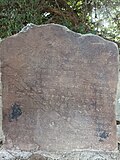 Meitei Stone inscription inside the Panam Ningthou Sacred Site about a royal decree
 -
 A Sacred Grove in the Panam Ningthou Sacred Site
 -
 A temple (rebuilt) inside the Panam Ningthou Sacred Site
 -
 Two official buildings (rebuilt) in the Panam Ningthou Sacred Site
 -
 A Mini Museum in the Panam Ningthou Sacred Site


References[edit | edit source]
- ↑ 1.0 1.1 1.2 1.3 Bareh, Hamlet (2001). Encyclopaedia of North-East India. Mittal Publications. ISBN 978-81-7099-790-0.
- ↑ 2.0 2.1 2.2 2.3 Birajit, Soibam (2014-12-01). Meeyamgi Kholao: Sprout of Consciousness. ARECOM ( Advanced Research Consortium, Manipur).
- ↑ 3.0 3.1 3.2 3.3 Singh, Dr RK Nimai. NEScholar Magazine Vol 02 Issue 03. NE Brothers.
- ↑ 4.0 4.1 Kumar, Niraj; Driem, George van; Stobdan, Phunchok (2020-11-18). Himalayan Bridge. Routledge. ISBN 978-1-000-21551-9.
- ↑ Singh, Moirangthem Kirti (1998). Recent Researches in Oriental Indological Studies: Including Meiteilogy. Parimal Publications.
- ↑ 6.0 6.1 Constantine, R. (1981). Manipur, Maid of the Mountains. Lancers. p. 43.
- ↑ 7.0 7.1 Panchani, Chander Sheikhar (1987). Manipur, Religion, Culture, and Society. Konark Publishers. p. 73. ISBN 978-81-220-0047-4.
- ↑ Parratt, Saroj Nalini (1980). Religion Of Manipur. Firma Klm. p. 15.
- ↑ Devi, Lairenlakpam Bino (2002). The Lois of Manipur: Andro, Khurkhul, Phayeng and Sekmai. Mittal Publications. p. 59. ISBN 978-81-7099-849-5.
- ↑ Mahapatra, Mary D. (2001). Tribal Religion and Rituals: Accounts of Superstition, Sorcery and Spirits. Dominant Pub. ISBN 978-81-87336-69-3.
- ↑ Lisam, Khomdan Singh (2011). Encyclopaedia Of Manipur (3 Vol.). p. 587. ISBN 978-81-7835-864-2.
- ↑ Leach, Marjorie (1992). Guide to the gods. Internet Archive. Santa Barbara, Calif. : ABC-CLIO. p. 212. ISBN 978-0-87436-591-7.
- ↑ 13.0 13.1 Dr. Chirom Rajketan Singh; Sadananda Mayanglambam (2013). A collection of Essays in Manipuri Folklore. p. 124.
- ↑ Singh, Kumar Suresh; Horam, M.; Rizvi, S. H. M. (1998). Manipur. Anthropological Survey of India. ISBN 978-81-7046-127-2.
- ↑ Parratt, Saroj Nalini (1980). Religion Of Manipur. Firma Klm. p. 119.
- ↑ Parratt, Saroj Nalini (1980). Religion Of Manipur. Firma Klm. p. 120.
- ↑ Ghosh, G. K. (2008). Bamboo: The Wonderful Grass. APH Publishing. ISBN 978-81-313-0369-6.
- ↑ Bahadur, Mutua (1994). Cane & Bamboo Crafts of Manipur. Mutua Museum.
- ↑ 19.0 19.1 19.2 Dr. Chirom Rajketan Singh; Sadananda Mayanglambam (2013). A collection of Essays in Manipuri Folklore. p. 123.
- ↑ Devi, Lairenlakpam Bino (2002). The Lois of Manipur: Andro, Khurkhul, Phayeng and Sekmai. Mittal Publications. p. 55. ISBN 978-81-7099-849-5.
- ↑ Dr. Chirom Rajketan Singh; Sadananda Mayanglambam (2013). A collection of Essays in Manipuri Folklore. p. 128.
- ↑ 22.0 22.1 Dr. Chirom Rajketan Singh; Sadananda Mayanglambam (2013). A collection of Essays in Manipuri Folklore. p. 122.
- ↑ Birajit, Soibam (2014-12-01). Meeyamgi Kholao: Sprout of Consciousness. ARECOM ( Advanced Research Consortium, Manipur). p. 79.
- ↑ Das, Tarakchandra (1945). The Purums an old Kuki tribe of Manipur. University of Calcutta, Calcutta. p. 219.
- ↑ Hodson, Thomas Callan (1908). The Meitheis. D. Nutt. ISBN 978-81-7536-149-2.
- ↑ Sanajaoba, Naorem (2003). Manipur: Law, customs, hill-men, language and religion. Akansha Publishing House. ISBN 978-81-87606-31-4.
- ↑ Muni-Lakra, Paula (2000). Tribal India: Communities, Customs & Culture. Dominant Publishers and Distributors. ISBN 978-81-87336-61-7.
External links[edit | edit source]
- INTERNET ARCHIVE, Panam Ningthou
- E-PAO, Panam Ningthou
- Dr. K. Sobita Devi (1998). Traditional Dress of the Meiteis. p. 22.
- Dr. K. Sobita Devi (1998). Traditional Dress of the Meiteis. p. 58.
- Dr. K. Sobita Devi (1998). Traditional Dress of the Meiteis. p. 62.
- Devi, Dr Yumlembam Gopi. Glimpses of Manipuri Culture. p. 23. ISBN 978-0-359-72919-7.
- Pages using the JsonConfig extension
- Articles containing Assamese-language text
- Pages using Lang-xx templates
- Abundance gods
- Agricultural gods
- Arts gods
- Crafts gods
- Creator gods
- Domestic and hearth gods
- Earth gods
- Fertility gods
- Fire gods
- Food gods
- Fortune gods
- Harvest gods
- Health gods
- Kings in Meitei mythology
- Life-death-rebirth gods
- Maintenance gods
- Meitei gods and goddesses
- Names of God in Sanamahism
- Nature gods
- Ningthou
- Peace gods
- Savior gods
- Time and fate deities
- Time and fate gods
- Tutelary gods