|
|
| Line 1: |
Line 1: |
| {{short description|First President of South Africa and anti-apartheid activist}} | | {{pp-semi-protected|small=yes}} |
| {{redirect|Mandela||Mandela (disambiguation)|and|Nelson Mandela (disambiguation)}}
| | {{Redirect|Mandela}} |
| | |
| | |
| {{featured article}}
| |
| {{EngvarB|date=March 2019}}
| |
| {{use dmy dates|date=February 2020}} | |
| {{Infobox officeholder | | {{Infobox officeholder |
| | honorific_prefix = [[His Excellency]] | | | honorific-prefix = [[His Excellency]] |
| | honorific_suffix = {{post-nominals|list=[[List of awards and honours received by Nelson Mandela|OMP SBG SBS CLS DMG MMS MMB]]|size=100%}} | | | name = Nelson Mandela |
| | image = Nelson Mandela 1994.jpg | | | honorific-suffix = {{small|[[Order of Mapungubwe|OMP]] [[Order of Merit|OM]] [[Order of the Federal Republic|GCFR]] [[Order of Australia|AC]] [[Order of Canada|CC]] [[Order of Jamaica|OJ]] [[Venerable Order of Saint John|GCStJ]] [[Queen's Counsel|QC]] [[Order of Prince Henry|GCIH]] [[Royal Order of the Seraphim|RSerafO]] [[Nishan-e-Pakistan|NPk]]}} |
| | alt = Portrait photograph of a 76-year-old President Mandela | | | image = Nelson Mandela 1994 (2).jpg |
| | caption = Mandela in [[Washington, D.C.]], 1994 | | | image_upright = |
| | order = 1st | | | caption = Mandela in 1994 |
| | office = President of South Africa | | | order = 1st |
| | term_start = 10 May 1994 | | | office = President of South Africa |
| | term_end = 16 June 1999 | | | term_start = 10 May 1994 |
| | deputy = {{plainlist| | | | term_end = 16 June 1999 |
| * [[Thabo Mbeki]]
| | | deputy = [[Thabo Mbeki]]<br>[[F. W. de Klerk]] |
| * [[F. W. de Klerk]]
| | | predecessor = [[F. W. de Klerk]] <small>(''[[State President of South Africa|State President]]'')</small> |
| }}
| | | successor = [[Thabo Mbeki]] |
| | predecessor = F. W. de Klerk {{nowrap|(''[[State President of South Africa|State Pres.]]'')}} | | | office1 = {{nowrap|11th President of the<br />[[African National Congress]]}} |
| | successor = Thabo Mbeki | | | deputy1 = [[Walter Sisulu]]<br />[[Thabo Mbeki]] |
| | office1 = {{nowrap|11th President of the<br />[[African National Congress]]}} | | | term_start1 = 7 July 1991 |
| | deputy1 = {{plainlist| | | | term_end1 = 20 December 1997 |
| * [[Walter Sisulu]]
| | | predecessor1 = [[Oliver Tambo]] |
| * Thabo Mbeki
| | | successor1 = [[Thabo Mbeki]] |
| }}
| | | office2 = 19th [[Secretary General]] of the<br />[[Non-Aligned Movement]] |
| | term_start1 = 7 July 1991 | | | term_start2 = 2 September 1998 |
| | term_end1 = 20 December 1997 | | | term_end2 = 16 June 1999 |
| | predecessor1 = [[Oliver Tambo]] | | | predecessor2 = [[Andrés Pastrana Arango]] |
| | successor1 = Thabo Mbeki | | | successor2 = [[Thabo Mbeki]] |
| | office2 = 19th Secretary General of the<br />[[Non-Aligned Movement]] | | | birth_date = {{Birth date|df=y|1918|7|18}} |
| | term_start2 = 2 September 1998 | | | birth_place = [[Mvezo]], Cape Province, [[Union of South Africa|South Africa]] |
| | term_end2 = 16 June 1999 | | | death_date = {{death date and age|df=y|2013|12|05|1918|7|18}} |
| | predecessor2 = [[Andrés Pastrana Arango]] | | | death_cause = [[Respiratory infection]] |
| | successor2 = Thabo Mbeki | | | death_place = [[Johannesburg]], Gauteng, South Africa |
| | birth_name = Rolihlahla Mandela
| | | restingplace = Mandela Graveyard<br>[[Qunu]], Eastern Cape, South Africa |
| | birth_date = {{Birth date|df=y|1918|7|18}} | | | birthname = Rolihlahla Mandela |
| | birth_place = [[Mvezo]], [[Cape Province]], [[Union of South Africa]] (now [[Eastern Cape]]) | | | party = [[African National Congress]] |
| | death_date = {{death date and age|df=y|2013|12|05|1918|7|18}} | | | otherparty = [[South African Communist Party]] |
| | death_place = [[Johannesburg]], [[Gauteng]], [[South Africa|Republic of South Africa]] | | | spouse = {{unbulleted list|{{marriage|[[Evelyn Mase|Evelyn Ntoko Mase]]|5 October 1944|19 March 1958|reason=divorced}}|{{marriage|[[Winnie Madikizela-Mandela|Winnie Madikizela]]|14 June 1958|19 March 1996|reason=divorced}}|{{marriage|[[Graça Machel]]|18 July 1998|05 December 2013|reason=his death}}}} |
| | death_cause = <!--[[Respiratory infection]]--> | | | children = 6 (including [[Thembekile Mandela|Thembekile]], [[Makgatho Mandela|Makgatho]], [[Makaziwe Mandela|Makaziwe]], [[Zenani Mandela-Dlamini|Zenani]] and [[Zindzi Mandela-Hlongwane|Zindziswa]]) |
| | resting_place = Mandela Graveyard<br />[[Qunu, Eastern Cape]], South Africa
| | | parents = Nosekeni Fanny<br>Gadla Henry Mphakanyiswa |
| | party = [[African National Congress]] | | | alma_mater = {{plain list| |
| | otherparty = [[South African Communist Party|South African Communist]] | |
| | spouse = {{plainlist| | |
| * {{marriage|[[Evelyn Mase|Evelyn Ntoko Mase]]|5 October 1944|19 March 1958|reason=divorced}}
| |
| * {{marriage|[[Winnie Madikizela-Mandela|Winnie Madikizela]]|14 June 1958|19 March 1996|reason=divorced}}
| |
| * {{marriage|[[Graça Machel]]|18 July 1998<!--Omission per Template:Marriage instructions-->}}
| |
| }} | |
| | children = 7, including [[Makgatho Mandela|Makgatho]], [[Makaziwe Mandela|Makaziwe]], [[Zenani Mandela-Dlamini|Zenani]], [[Zindzi Mandela|Zindziswa]] and [[Josina Z. Machel|Josina]] (step-daughter) | |
| | parents = {{plainlist| | |
| * Nosekeni Fanny (mother)
| |
| * Gadla Henry Mphakanyiswa (father)
| |
| }}
| |
| | alma_mater = {{plainlist| | |
| * [[University of Fort Hare]] | | * [[University of Fort Hare]] |
| * [[University of London]] | | * [[University of London]] |
| Line 61: |
Line 44: |
| * [[University of the Witwatersrand]] | | * [[University of the Witwatersrand]] |
| }} | | }} |
| | occupation = {{flatlist| | | | occupation = {{flatlist| |
| * Activist | | * Activist |
| * {{lcfirst:Politician}} | | * Politician |
| * {{lcfirst:Philanthropist}} | | * Philanthropist |
| * {{lcfirst:Lawyer}} | | * Lawyer |
| }} | | }} |
| | website = {{official website|nelsonmandela.org}} | | | website = {{url|nelsonmandela.org}} |
| | nickname = {{flatlist| | | | nickname = {{flatlist| |
| * Madiba | | * Madiba |
| * Dalibunga | | * Dalibunga |
| }} | | }} |
| | known_for = [[Internal resistance to apartheid]] | | | blank1 = Known for |
| | awards = {{plainlist| | | | data1 = [[Internal resistance to apartheid|Anti-Apartheid Movement]] |
| | | blank2 = Awards |
| | | data2 = {{plain list| |
| * [[Sakharov Prize]] (1988) | | * [[Sakharov Prize]] (1988) |
| * [[Bharat Ratna]] (1990) | | * [[Bharat Ratna]] (1990) |
| * [[Nishan-e-Pakistan]] (1992) | | * [[Nishan-e-Pakistan]] (1992) |
| * [[Nobel Peace Prize]] (1993) | | * [[Nobel Peace Prize]] (1993) |
| * [[Lenin Peace Prize]] (1990) | | * [[Order of Lenin]] |
| * [[Presidential Medal of Freedom]] | | * [[Presidential Medal of Freedom]] |
| * ''([[List of awards and honours bestowed upon Nelson Mandela|more...]])'' | | * [[List of awards and honours bestowed upon Nelson Mandela|(hundreds more ...)]] |
| }}
| |
| | module = {{Infobox writer | embed=yes
| |
| | notableworks = ''[[Long Walk to Freedom]]''
| |
| }}
| |
| }}
| |
| <!--Basic introduction; name, dates, why he was notable-->
| |
| | |
| '''Nelson Rolihlahla Mandela''' ({{IPAc-en|m|æ|n|ˈ|d|ɛ|l|ə}};<ref>{{cite web| title=Mandela| url=http://www.collinsdictionary.com/dictionary/english/mandela| publisher=[[Collins English Dictionary]]| access-date=17 December 2013 |archive-url=https://web.archive.org/web/20160405011219/http://www.collinsdictionary.com/dictionary/english/mandela |archive-date=5 April 2016 |url-status=live}}</ref> {{IPA-xh|xolíɬaɬa mandɛ̂ːla|lang}}; 18 July 1918 – 5 December 2013) was a South African [[Internal resistance to apartheid|anti-apartheid]] revolutionary, statesman and [[philanthropist]] who served as [[President of South Africa]] from 1994 to 1999. He was the country's first black head of state and the first elected in a [[Universal suffrage|fully representative]] democratic election. [[Presidency of Nelson Mandela|His government]] focused on dismantling the legacy of [[apartheid]] by tackling institutionalised racism and fostering racial [[Conflict resolution|reconciliation]]. Ideologically an [[African nationalist]] and [[socialist]], he served as the president of the [[African National Congress]] (ANC) party from 1991 to 1997.
| |
| | |
| <!--Early life and revolutionary activity-->
| |
| A [[Xhosa language|Xhosa speaker]], Mandela was born into the [[Thembu]] royal family in [[Mvezo]], [[Union of South Africa]]. He studied law at the [[University of Fort Hare]] and the [[University of Witwatersrand]] before working as a lawyer in [[Johannesburg]]. There he became involved in [[anti-colonial]] and African nationalist politics, joining the ANC in 1943 and co-founding its [[African National Congress Youth League|Youth League]] in 1944. After the [[National Party (South Africa)|National Party]]'s [[Dominant minority|white-only government]] established apartheid, a system of [[racial segregation]] that privileged [[White South African|whites]], Mandela and the ANC committed themselves to its overthrow. He was appointed president of the ANC's [[Transvaal Province|Transvaal]] branch, rising to prominence for his involvement in the 1952 [[Defiance Campaign]] and the 1955 [[Congress of the People (1955)|Congress of the People]]. He was repeatedly arrested for [[seditious]] activities and was unsuccessfully prosecuted in the [[1956 Treason Trial]]. Influenced by [[Marxism]], he secretly joined the banned [[South African Communist Party]] (SACP). Although initially committed to non-violent protest, in association with the SACP he co-founded the militant [[Umkhonto we Sizwe]] in 1961 and led a [[sabotage]] campaign against the government. He was arrested and imprisoned in 1962, and subsequently sentenced to life imprisonment for conspiring to overthrow the state following the [[Rivonia Trial]].
| |
| | |
| <!--Imprisonment and Mandela's government-->
| |
| Mandela served 27 years in prison, split between [[Robben Island]], [[Pollsmoor Prison]] and [[Victor Verster Prison]]. Amid growing domestic and international pressure and fears of racial civil war, President [[F. W. de Klerk]] released him in 1990. Mandela and de Klerk led efforts to negotiate an end to apartheid, which resulted in the [[1994 South African general election|1994 multiracial general election]] in which Mandela led the ANC to victory and became president. Leading a [[Government of National Unity (South Africa)|broad coalition government]] which promulgated a [[Constitution of South Africa|new constitution]], Mandela emphasised reconciliation between the country's racial groups and created the [[Truth and Reconciliation Commission (South Africa)|Truth and Reconciliation Commission]] to investigate past [[Human rights in South Africa|human rights]] abuses. Economically, his administration retained its predecessor's [[Economic liberalism|liberal framework]] despite his own socialist beliefs, also introducing measures to encourage [[land reform]], [[Poverty reduction|combat poverty]] and expand healthcare services. Internationally, Mandela acted as mediator in the [[Pan Am Flight 103 bombing trial]] and served as secretary-general of the [[Non-Aligned Movement]] from 1998 to 1999. He declined a second presidential term and was succeeded by his deputy, [[Thabo Mbeki]]. Mandela became an elder statesman and focused on combating poverty and [[HIV/AIDS]] through the charitable [[Nelson Mandela Foundation]].
| |
| | |
| <!--Reception and legacy-->
| |
| Mandela was a controversial figure for much of his life. Although critics on [[Right-wing politics|the right]] denounced him as a [[communist terrorist]] and those on the [[far left]] deemed him too eager to negotiate and reconcile with apartheid's supporters, he gained international acclaim for his activism. Widely regarded as an icon of democracy and [[social justice]], he received [[List of Nelson Mandela awards and honours|more than 250 honours]], including the [[Nobel Peace Prize]]. He is held in deep respect within South Africa, where he is often referred to by his [[Xhosa clan names|Thembu clan name]], [[Madiba]], and described as the "[[Father of the Nation]]".
| |
| | |
| ==Early life==
| |
| ===Childhood: 1918–1934===
| |
| Mandela was born on 18 July 1918 in the village of Mvezo in [[Umtata]], then part of South Africa's [[Cape Province]].{{sfnm|1a1=Mandela|1y=1994|1p=3|2a1=Boehmer|2y=2008|2p=21|3a1=Smith|3y=2010|3p=17|4a1=Sampson|4y=2011|4p=3}} Given the forename Rolihlahla,<ref>Mandela used the spelling Rolihlahla, see for example [http://www.mandela.gov.za/ official website]. [[Peter Mtuze]] notes that the orthography of [[Xhosa language|Xhosa]] names has changed since the time of Mandela's schooling, and that it would now be written Rholihlahla. (''Mandela's Long Walk to Freedom: the isiXhosa translator's tall order. Southern African Linguistics and Applied Language Studies 2003, 21(3), 141–152.'')</ref> a [[Xhosa language|Xhosa]] term colloquially meaning "troublemaker",{{sfnm|1a1=Benson|1y=1986|1p=16|2a1=Mandela|2y=1994|2p=3|3a1=Smith|3y=2010|3p=17|4a1=Meredith|4y=2010|4p=2|5a1=Sampson|5y=2011|5p=3}} in later years he became known by his clan name, Madiba.{{sfnm|1a1=Mandela|1y=1994|1p=4|2a1=Lodge|2y=2006|2p=2|3a1=Smith|3y=2010|3p=16}} His patrilineal great-grandfather, [[Ngubengcuka]], was king of the [[Thembu]] people in the [[Transkei]]an Territories of South Africa's modern [[Eastern Cape]] province.{{sfnm|1a1=Meer|1y=1988|1p=3|2a1=Guiloineau|2a2=Rowe|2y=2002|2p=23|3a1=Meredith|3y=2010|3p=1}} One of Ngubengcuka's sons, named Mandela, was Nelson's grandfather and the source of his surname.{{sfnm|1a1=Guiloineau|1a2=Rowe|1y=2002|1p=26}} Because Mandela was the king's child by a wife of the Ixhiba clan, a so-called "Left-Hand House", the descendants of his [[cadet branch]] of the royal family were [[morganatic marriage|morganatic]], ineligible to inherit the throne but recognised as hereditary royal councillors.{{sfnm|1a1=Guiloineau|1a2=Rowe|1y=2002|1p=26|2a1=Lodge|2y=2006|2p=1|3a1=Mafela|3y=2008|3pp=102–103}}
| |
| | |
| Nelson Mandela's father, Gadla Henry Mphakanyiswa Mandela (1880–1928), was a local chief and councillor to the monarch; he was appointed to the position in 1915, after his predecessor was accused of corruption by a governing white magistrate.{{sfn|Smith|2010|p=19}} In 1926, Gadla was also sacked for corruption, but Nelson was told that his father had lost his job for standing up to the magistrate's unreasonable demands.{{sfnm|1a1=Mandela|1y=1994|1pp=8–9|2a1=Smith|2y=2010|2pp=21–22|3a1=Sampson|3y=2011|3p=4}} A devotee of the god [[Qamata]],{{sfnm|1a1=Mandela|1y=1994|1p=17|2a1=Meredith|2y=2010|2p=1}} Gadla was a polygamist with four wives, four sons and nine daughters, who lived in different villages. Nelson's mother was Gadla's third wife, Nosekeni Fanny, daughter of Nkedama of the Right Hand House and a member of the amaMpemvu clan of the Xhosa.{{sfnm|1a1=Benson|1y=1986|1p=15|2a1=Mandela|2y=1994|2pp=7–8|3a1=Smith|3y=2010|3pp=16, 23–24|4a1=Meredith|4y=2010|4pp=1, 3|5a1=Sampson|5y=2011|5p=4}}
| |
| | |
| {{Quote box|width=25em|align=left|quote=No one in my family had ever attended school ... On the first day of school my teacher, Miss Mdingane, gave each of us an English name. This was the custom among Africans in those days and was undoubtedly due to the British bias of our education. That day, Miss Mdingane told me that my new name was Nelson. Why this particular name, I have no idea.|salign=right |source=—Mandela, 1994{{sfn|Mandela|1994|p=19}} }}
| |
| | |
| Mandela later stated that his early life was dominated by traditional Thembu custom and taboo.{{sfnm|1a1=Mandela|1y=1994|1p=15|2a1=Meredith|2y=2010|2p=3}} He grew up with two sisters in his mother's ''[[homestead (small African settlement)|kraal]]'' in the village of [[Qunu]], where he tended herds as a cattle-boy and spent much time outside with other boys.{{sfnm|1a1=Benson|1y=1986|1p=16|2a1=Mandela|2y=1994|2p=12|3a1=Smith|3y=2010|3pp=23–24|4a1=Meredith|4y=2010|4pp=2, 4}} Both his parents were illiterate, but being a devout Christian, his mother sent him to a local [[Methodism|Methodist]] school when he was about seven. Baptised a Methodist, Mandela was given the English forename of "Nelson" by his teacher.{{sfnm|1a1=Mandela|1y=1994|1pp=18–19|2a1=Lodge|2y=2006|2p=3|3a1=Smith|3y=2010|3p=24|4a1=Meredith|4y=2010|4pp=2, 4–5|5a1=Sampson|5y=2011|5pp=5,7|6a1=Forster|6y=2014|6pp=91–92}} When Mandela was about nine, his father came to stay at Qunu, where he died of an undiagnosed ailment which Mandela believed to be lung disease.{{sfnm|1a1=Mandela|1y=1994|1p=20|2a1=Lodge|2y=2006|2p=3|3a1=Smith|3y=2010|3p=25|4a1=Meredith|4y=2010|4p=5|5a1=Sampson|5y=2011|5p=7}} Feeling "cut adrift", he later said that he inherited his father's "proud rebelliousness" and "stubborn sense of fairness".{{sfn|Mandela|1994|pp=8, 20}}
| |
| | |
| Mandela's mother took him to the "Great Place" palace at Mqhekezweni, where he was entrusted to the guardianship of the Thembu [[Regency (government)|regent]], Chief Jongintaba Dalindyebo. Although he did not see his mother again for many years, Mandela felt that Jongintaba and his wife Noengland treated him as their own child, raising him alongside their son, Justice, and daughter, Nomafu.{{sfnm|1a1=Benson|1y=1986|1p=17|2a1=Meer|2y=1988|2p=4|3a1=Mandela|3y=1994|3pp=22–25|4a1=Lodge|4y=2006|4p=3|5a1=Smith|5y=2010|5pp=26–27|6a1=Meredith|6y=2010|6p=5|7a1=Sampson|7y=2011|7pp=7–9}} As Mandela attended church services every Sunday with his guardians, Christianity became a significant part of his life.{{sfnm|1a1=Meer|1y=1988|1p=7|2a1=Mandela|2y=1994|2pp=27–29|3a1=Meredith|3y=2010|3pp=8–9}} He attended a Methodist mission school located next to the palace, where he studied English, Xhosa, history and geography.{{sfnm|1a1=Meer|1y=1988|1p=7|2a1=Mandela|2y=1994|2p=25|3a1=Smith|3y=2010|3p=27|4a1=Meredith|4y=2010|4p=9}} He developed a love of [[African history]], listening to the tales told by elderly visitors to the palace, and was influenced by the [[Anti-imperialism|anti-imperialist]] rhetoric of a visiting chief, Joyi.{{sfnm|1a1=Meer|1y=1988|1pp=11–12|2a1=Mandela|2y=1994|2pp=31–34|3a1=Lodge|3y=2006|3p=3|4a1=Smith|4y=2010|4p=18|5a1=Meredith|5y=2010|5p=8}} Nevertheless, at the time he considered the [[Scramble for Africa|European colonizers]] not as oppressors but as benefactors who had brought education and other benefits to southern Africa.{{sfnm|1a1=Mandela|1y=1994|1p=43|2a1=Meredith|2y=2010|2p=11}} Aged 16, he, Justice and several other boys travelled to Tyhalarha to undergo the [[ulwaluko]] [[circumcision]] ritual that symbolically marked their transition from boys to men; afterwards he was given the name ''Dalibunga''.{{sfnm|1a1=Benson|1y=1986|1p=17|2a1=Mandela|2y=1994|2pp=36–42|3a1=Lodge|3y=2006|3p=8|4a1=Smith|4y=2010|4pp=29–31|5a1=Meredith|5y=2010|5pp=9–11|6a1=Sampson|6y=2011|6p=14}}
| |
| | |
| ===Clarkebury, Healdtown, and Fort Hare: 1934–1940===
| |
| | |
| [[File:Young Mandela.jpg|thumb|right|upright|Photograph of Mandela, taken in Umtata in 1937]]
| |
| | |
| Intending to gain skills needed to become a [[privy council]]lor for the Thembu royal house, in 1933 Mandela began his secondary education at [[Clarkebury]] Methodist High School in [[Engcobo]], a Western-style institution that was the largest school for Black Africans in [[Thembuland]].{{sfnm|1a1=Mandela|1y=1994|1pp=45–47|2a1=Smith|2y=2010|2pp=27, 31|3a1=Meredith|3y=2010|3pp=12–13|4a1=Sampson|4y=2011|4p=15}} Made to socialise with other students on an equal basis, he claimed that he lost his "stuck up" attitude, becoming best friends with a girl for the first time; he began playing sports and developed his lifelong love of gardening.{{sfn|Mandela|1994|pp=48–50}} He completed his Junior Certificate in two years,{{sfn|Sampson|2011|p=17}} and in 1937 moved to [[Healdtown Comprehensive School|Healdtown]], the Methodist college in [[Fort Beaufort]] attended by most Thembu royalty, including Justice.{{sfnm|1a1=Mandela|1y=1994|1p=52|2a1=Smith|2y=2010|2pp=31–32|3a1=Meredith|3y=2010|3p=14|4a1=Sampson|4y=2011|4pp=17–18}} The headmaster emphasised the superiority of [[Culture of Europe|European culture]] and [[government]], but Mandela became increasingly interested in native [[Culture of Africa|African culture]], making his first non-Xhosa friend, a speaker of [[Sotho language|Sotho]], and coming under the influence of one of his favourite teachers, a Xhosa who broke taboo by marrying a Sotho.{{sfnm|1a1=Mandela|1y=1994|1pp=53–54|2a1=Smith|2y=2010|2p=32|3a1=Meredith|3y=2010|3pp=14–15|4a1=Sampson|4y=2011|4pp=18–21}} Mandela spent much of his spare time at Healdtown as a long-distance runner and boxer, and in his second year he became a [[prefect]].{{sfnm|1a1=Mandela|1y=1994|1p=56|2a1=Smith|2y=2010|2p=32|3a1=Meredith|3y=2010|3p=15}}
| |
| | |
| With Jongintaba's backing, in 1939 Mandela began work on a [[Bachelor of Arts|BA degree]] at the [[University of Fort Hare]], an elite Black institution in [[Alice, Eastern Cape]], with around 150 students. There he studied English, [[anthropology]], politics, "native administration", and [[Roman Dutch law]] in his first year, desiring to become an interpreter or clerk in the [[INTAF|Native Affairs Department]].{{sfnm|1a1=Mandela|1y=1994|1pp=62–65|2a1=Lodge|2y=2006|2p=9|3a1=Smith|3y=2010|3pp=33–34|4a1=Meredith|4y=2010|4pp=15–18|5a1=Sampson|5y=2011|5pp=21, 25}} Mandela stayed in the Wesley House dormitory, befriending his own kinsman, [[Kaiser Matanzima|K. D. Matanzima]], as well as [[Oliver Tambo]], who became a close friend and comrade for decades to come.{{sfnm|1a1=Mandela|1y=1994|1pp=62–63|2a1=Smith|2y=2010|2pp=33–34|3a1=Meredith|3y=2010|3pp=17–19|4a1=Sampson|4y=2011|4pp=24–25}} He took up ballroom dancing,{{sfnm|1a1=Mandela|1y=1994|1pp=67–69|2a1=Smith|2y=2010|2p=34|3a1=Meredith|3y=2010|3p=18|4a1=Sampson|4y=2011|4p=25}} performed in a drama society play about [[Abraham Lincoln]],{{sfnm|1a1=Mandela|1y=1994|1p=68|2a1=Lodge|2y=2006|2p=10|3a1=Smith|3y=2010|3p=35|4a1=Meredith|4y=2010|4p=18|5a1=Sampson|5y=2011|5p=25}} and gave [[Bible]] classes in the local community as part of the Student Christian Association.{{sfnm|1a1=Mandela|1y=1994|1p=68|2a1=Lodge|2y=2006|2p=10|3a1=Meredith|3y=2010|3p=18|4a1=Forster|4y=2014|4p=93}} Although he had friends who held connections to the [[African National Congress]] (ANC) who wanted South Africa to be independent of the [[British Empire]], Mandela avoided any involvement with the nascent movement,{{sfn|Sampson|2011|p=25}} and became a vocal supporter of the [[British Empire in World War II|British war effort]] when the [[Second World War]] broke out.{{sfnm|1a1=Mandela|1y=1994|1pp=70–71|2a1=Lodge|2y=2006|2p=11|3a1=Meredith|3y=2010|3p=19|4a1=Sampson|4y=2011|4p=26}} He helped establish a first-year students' house committee which challenged the dominance of the second-years,{{sfnm|1a1=Mandela|1y=1994|1p=66|2a1=Smith|2y=2010|2p=34}} and at the end of his first year became involved in a [[Students' Representative Council]] (SRC) boycott against the quality of food, for which he was suspended from the university; he never returned to complete his degree.{{sfnm|1a1=Benson|1y=1986|1p=21|2a1=Mandela|2y=1994|2pp=78–86|3a1=Lodge|3y=2006|3pp=11–12|4a1=Smith|4y=2010|4pp=34–35|5a1=Meredith|5y=2010|5pp=19–20|6a1=Sampson|6y=2011|6pp=26–27}}
| |
| | |
| ===Arriving in Johannesburg: 1941–1943===
| |
| Returning to Mqhekezweni in December 1940, Mandela found that Jongintaba had [[arranged marriage]]s for him and Justice; dismayed, they fled to [[Johannesburg]] via [[Queenstown, Eastern Cape|Queenstown]], arriving in April 1941.{{sfnm|1a1=Benson|1y=1986|1p=21|2a1=Mandela|2y=1994|2pp=73–76|3a1=Lodge|3y=2006|3p=12|4a1=Smith|4y=2010|4pp=36–39|5a1=Meredith|5y=2010|5pp=20–22|6a1=Sampson|6y=2011|6pp=27–28}} Mandela found work as a night watchman at Crown Mines, his "first sight of South African capitalism in action", but was fired when the ''induna'' (headman) discovered that he was a runaway.{{sfnm|1a1=Benson|1y=1986|1p=23|2a1=Meer|2y=1988|2pp=25–26|3a1=Mandela|3y=1994|3pp=89–94|4a1=Lodge|4y=2006|4pp=12–13|5a1=Smith|5y=2010|5p=40|6a1=Meredith|6y=2010|6pp=27–28|7a1=Sampson|7y=2011|7pp=29–30}} He stayed with a cousin in George Goch Township, who introduced Mandela to realtor and ANC activist [[Walter Sisulu]]. The latter secured Mandela a job as an [[articled clerk]] at the law firm of Witkin, Sidelsky and Eidelman, a company run by Lazar Sidelsky, a [[Liberalism|liberal]] Jew sympathetic to the ANC's cause.{{sfnm|1a1=Mandela|1y=1994|1pp=96–101|2a1=Lodge|2y=2006|2pp=13, 19–21|3a1=Smith|3y=2010|3p=41|4a1=Meredith|4y=2010|4pp=28–30|5a1=Sampson|5y=2011|5pp=30–31}} At the firm, Mandela befriended Gaur Radebe—a Hlubi member of the ANC and [[South African Communist Party|Communist Party]]—and Nat Bregman, a Jewish [[communism|communist]] who became his first white friend.{{sfnm|1a1=Mandela|1y=1994|1pp=104–105|2a1=Lodge|2y=2006|2pp=22, 31–32|3a1=Smith|3y=2010|3pp=43, 48|4a1=Meredith|4y=2010|4pp=31–32|5a1=Sampson|5y=2011|5pp=32–33}} Mandela attended Communist Party gatherings, where he was impressed that [[White South Africans|Europeans]], [[Bantu peoples|Africans]], [[Asian South Africans|Indians]], and [[Coloured]]s mixed as equals. He later stated that he did not join the party because its [[atheism]] conflicted with his Christian faith, and because he saw the South African struggle as being racially based rather than as [[class conflict|class warfare]].{{sfnm|1a1=Mandela|1y=1994|1p=106|2a1=Smith|2y=2010|2pp=48–49}} To continue his higher education, Mandela signed up to a [[University of South Africa]] correspondence course, working on his bachelor's degree at night.{{sfnm|1a1=Mandela|1y=1994|1p=100|2a1=Smith|2y=2010|2p=44|3a1=Meredith|3y=2010|3p=33|4a1=Sampson|4y=2011|4p=34}}
| |
| | |
| Earning a small wage, Mandela rented a room in the house of the Xhoma family in the [[Alexandra, Gauteng|Alexandra]] township; despite being rife with poverty, crime and pollution, Alexandra always remained a special place for him.{{sfnm|1a1=Benson|1y=1986|1p=23|2a1=Meer|2y=1988|2p=26|3a1=Mandela|3y=1994|3pp=99, 108–110|4a1=Smith|4y=2010|4pp=44–45|5a1=Meredith|5y=2010|5p=33|6a1=Sampson|6y=2011|6p=33}} Although embarrassed by his poverty, he briefly dated a [[Swazi people|Swati]] woman before unsuccessfully courting his landlord's daughter.{{sfnm|1a1=Mandela|1y=1994|1pp=113–116|2a1=Lodge|2y=2006|2p=23|3a1=Smith|3y=2010|3pp=45–46|4a1=Sampson|4y=2011|4p=33}} To save money and be closer to downtown Johannesburg, Mandela moved into the compound of the [[Witwatersrand Native Labour Association]], living among miners of various tribes; as the compound was visited by various chiefs, he once met the [[Regent|Queen Regent]] of [[Basutoland]].{{sfnm|1a1=Mandela|1y=1994|1pp=118–119|2a1=Lodge|2y=2006|2p=24|3a1=Meredith|3y=2010|3p=33|4a1=Sampson|4y=2011|4p=34}} In late 1941, Jongintaba visited Johannesburg—there forgiving Mandela for running away—before returning to Thembuland, where he died in the winter of 1942. Mandela and Justice arrived a day late for the funeral.{{sfnm|1a1=Mandela|1y=1994|1pp=116–117, 119–120|2a1=Lodge|2y=2006|2p=22|3a1=Smith|3y=2010|3p=47|4a1=Meredith|4y=2010|4pp=33–34|5a1=Sampson|5y=2011|5p=33}} After he passed his BA exams in early 1943, Mandela returned to Johannesburg to follow a political path as a lawyer rather than become a privy councillor in Thembuland.{{sfnm|1a1=Mandela|1y=1994|1pp=122, 126–27|2a1=Smith|2y=2010|2p=49|3a1=Meredith|3y=2010|3p=34|4a1=Sampson|4y=2011|4p=34}} He later stated that he experienced no epiphany, but that he "simply found [himself] doing so, and could not do otherwise."{{sfn|Mandela|1994|p=135}}
| |
| | |
| ==Revolutionary activity==
| |
| ===Law studies and the ANC Youth League: 1943–1949===
| |
| Mandela began studying law at the [[University of the Witwatersrand]], where he was the only black African student and faced racism. There, he befriended liberal and communist European, Jewish, and Indian students, among them [[Joe Slovo]] and [[Ruth First]].{{sfnm|1a1=Meer|1y=1988|1pp=33–34|2a1=Mandela|2y=1994|2pp=127–131|3a1=Smith|3y=2010|3pp=64–65|4a1=Meredith|4y=2010|4pp=34–35|5a1=Sampson|5y=2011|5pp=34–35}} Becoming increasingly politicised, in August 1943 Mandela marched in support of a successful bus boycott to reverse fare rises.{{sfnm|1a1=Mandela|1y=1994|1pp=122–123|2a1=Lodge|2y=2006|2pp=27–28|3a1=Smith|3y=2010|3p=48|4a1=Meredith|4y=2010|4p=44|5a1=Sampson|5y=2011|5p=37}} Joining the ANC, he was increasingly influenced by Sisulu, spending time with other activists at Sisulu's [[Orlando, Soweto|Orlando]] house, including his old friend Oliver Tambo.{{sfnm|1a1=Mandela|1y=1994|1p=136|2a1=Smith|2y=2010|2p=53|3a1=Meredith|3y=2010|3pp=36, 43}} In 1943, Mandela met [[Anton Lembede]], an ANC member affiliated with the "Africanist" branch of [[African nationalism]], which was virulently opposed to a racially united front against colonialism and imperialism or to an alliance with the communists.{{sfnm|1a1=Mandela|1y=1994|1pp=137–139|2a1=Lodge|2y=2006|2pp=33–34|3a1=Smith|3y=2010|3p=53|4a1=Meredith|4y=2010|4pp=42–43|5a1=Sampson|5y=2011|5pp=38–39}} Despite his friendships with non-blacks and communists, Mandela embraced Lembede's views, believing that Black Africans should be entirely independent in their struggle for political self-determination.{{sfnm|1a1=Benson|1y=1986|1p=31|2a1=Meer|2y=1988|2pp=34–35|3a1=Mandela|3y=1994|3pp=142–143|4a1=Smith|4y=2010|4p=54}} Deciding on the need for a youth wing to mass-mobilise Africans in opposition to their subjugation, Mandela was among a delegation that approached ANC President [[Alfred Bitini Xuma]] on the subject at his home in [[Sophiatown]]; the [[African National Congress Youth League]] (ANCYL) was founded on Easter Sunday 1944 in the [[Bantu Men's Social Centre]], with Lembede as president and Mandela as a member of its executive committee.{{sfnm|1a1=Benson|1y=1986|1pp=28–29|2a1=Mandela|2y=1994|2pp=139–143|3a1=Lodge|3y=2006|3p=35|4a1=Smith|4y=2010|4pp=52–56|5a1=Meredith|5y=2010|5pp=44–46|6a1=Sampson|6y=2011|6pp=39–41}}
| |
| | |
| [[File:Mandela e Evelyn 1944.jpg|thumb|left|Mandela and Evelyn in July 1944, at Walter and Albertina Sisulu's wedding party in the Bantu Men's Social Centre.{{sfn|Smith|2010|p=inset photographs}}]]
| |
| | |
| At Sisulu's house, Mandela met [[Evelyn Mase]], a trainee nurse and ANC activist from [[Engcobo]], [[Transkei]]. Entering a relationship and marrying in October 1944, they initially lived with her relatives until moving into a rented house in the township of [[Orlando, Soweto|Orlando]] in early 1946.{{sfnm|1a1=Benson|1y=1986|1p=24|2a1=Meer|2y=1988|2pp=39–40|3a1=Mandela|3y=1994|3pp=144, 148–149|4a1=Lodge|4y=2006|4pp=24, 25|5a1=Smith|5y=2010|5pp=59–62|6a1=Meredith|6y=2010|6p=47|7a1=Sampson|7y=2011|7p=36}} Their first child, Madiba "Thembi" Thembekile, was born in February 1945; a daughter, Makaziwe, was born in 1947 but died of [[meningitis]] nine months later.{{sfnm|1a1=Meer|1y=1988|1pp=40–41|2a1=Mandela|2y=1994|2pp=149, 152|3a1=Lodge|3y=2006|3p=29|4a1=Smith|4y=2010|4pp=60–64|5a1=Meredith|5y=2010|5p=48|6a1=Sampson|6y=2011|6p=36}} Mandela enjoyed home life, welcoming his mother and his sister, Leabie, to stay with him.{{sfnm|1a1=Meer|1y=1988|1p=40|2a1=Mandela|2y=1994|2pp=150, 210|3a1=Lodge|3y=2006|3p=30|4a1=Smith|4y=2010|4p=67|5a1=Meredith|5y=2010|5p=48|6a1=Sampson|6y=2011|6p=36}} In early 1947, his three years of articles ended at Witkin, Sidelsky and Eidelman, and he decided to become a full-time student, subsisting on loans from the Bantu Welfare Trust.{{sfnm|1a1=Mandela|1y=1994|1p=151|2a1=Smith|2y=2010|2p=64|3a1=Meredith|3y=2010|3pp=48–49}}
| |
| | |
| In July 1947, Mandela rushed Lembede, who was ill, to hospital, where he died; he was succeeded as ANCYL president by the more moderate [[A.P. Mda|Peter Mda]], who agreed to co-operate with communists and non-blacks, appointing Mandela ANCYL secretary.{{sfnm|1a1=Benson|1y=1986|1p=36|2a1=Meer|2y=1988|2p=43|3a1=Mandela|3y=1994|3pp=153–154|4a1=Smith|4y=2010|4p=66|5a1=Sampson|5y=2011|5p=48}} Mandela disagreed with Mda's approach, and in December 1947 supported an unsuccessful measure to expel communists from the ANCYL, considering their ideology un-African.{{sfnm|1a1=Mandela|1y=1994|1p=154|2a1=Sampson|2y=2011|2p=42}} In 1947, Mandela was elected to the executive committee of the ANC's [[Transvaal Province]] branch, serving under regional president C. S. Ramohanoe. When Ramohanoe acted against the wishes of the committee by co-operating with Indians and communists, Mandela was one of those who forced his resignation.{{sfnm|1a1=Mandela|1y=1994|1pp=154–157|2a1=Lodge|2y=2006|2p=37|3a1=Smith|3y=2010|3p=66|4a1=Sampson|4y=2011|4p=49}}
| |
| | |
| In the [[1948 South African general election|South African general election in 1948]], in which only whites were permitted to vote, the Afrikaner-dominated [[Herenigde Nasionale Party]] under [[Daniel François Malan]] took power, soon uniting with the [[Afrikaner Party]] to form the [[National Party (South Africa)|National Party]]. Openly [[Racialism (Racial categorization)|racialist]], the party codified and expanded racial segregation with new [[apartheid legislation]].{{sfnm|1a1=Benson|1y=1986|1p=35|2a1=Mandela|2y=1994|2pp=159–162|3a1=Lodge|3y=2006|3pp=41–42|4a1=Smith|4y=2010|4pp=70–72|5a1=Meredith|5y=2010|5pp=76–78|6a1=Sampson|6y=2011|6pp=51–52}} Gaining increasing influence in the ANC, Mandela and his party cadre allies began advocating [[direct action]] against apartheid, such as boycotts and strikes, influenced by the tactics already employed by South Africa's Indian community. Xuma did not support these measures and was removed from the presidency in a [[Motion of no confidence|vote of no confidence]], replaced by [[James Moroka]] and a more militant executive committee containing Sisulu, Mda, Tambo, and Godfrey Pitje.{{sfnm|1a1=Benson|1y=1986|1pp=36–37|2a1=Mandela|2y=1994|2pp=162–165|3a1=Lodge|3y=2006|3p=44|4a1=Smith|4y=2010|4pp=72–73|5a1=Meredith|5y=2010|5pp=78–79|6a1=Sampson|6y=2011|6pp=53–55}} Mandela later related that he and his colleagues had "guided the ANC to a more radical and revolutionary path."{{sfn|Mandela|1994|p=165}} Having devoted his time to politics, Mandela failed his final year at Witwatersrand three times; he was ultimately denied his degree in December 1949.{{sfnm|1a1=Smith|1y=2010|1pp=68–70|2a1=Sampson|2y=2011|2p=35}}
| |
| | |
| ===Defiance Campaign and Transvaal ANC Presidency: 1950–1954===
| |
| | |
| [[File:Flag of the African National Congress.svg|thumb|The ANC's tricolour flag; black for the people, green for the land, and gold for the resources of Africa{{sfn|Benson|1986|p=26}}]]
| |
| | |
| Mandela took Xuma's place on the ANC national executive in March 1950,{{sfnm|1a1=Mandela|1y=1994|1p=168|2a1=Lodge|2y=2006|2p=44|3a1=Sampson|3y=2011|3pp=55–56}} and that same year was elected national president of the ANCYL.{{sfnm|1a1=Benson|1y=1986|1p=41|2a1=Mandela|2y=1994|2p=176|3a1=Lodge|3y=2006|3p=47|4a1=Smith|4y=2010|4p=78|5a1=Meredith|5y=2010|5p=88|6a1=Sampson|6y=2011|6pp=63–64}} In March, the Defend Free Speech Convention was held in Johannesburg, bringing together African, Indian, and communist activists to call a [[International Workers' Day|May Day]] [[general strike]] in protest against apartheid and white minority rule. Mandela opposed the strike because it was multi-racial and not ANC-led, but a majority of Black workers took part, resulting in increased police repression and the introduction of the [[Suppression of Communism Act, 1950]], affecting the actions of all protest groups.{{sfnm|1a1=Benson|1y=1986|1pp=38–40|2a1=Meer|2y=1988|2pp=48–49|3a1=Mandela|3y=1994|3pp=165–167|4a1=Smith|4y=2010|4pp=74–75|5a1=Meredith|5y=2010|5pp=81–83|6a1=Sampson|6y=2011|6pp=61–62}} At the ANC national conference of December 1951, he continued arguing against a racially united front, but was outvoted.{{sfnm|1a1=Mandela|1y=1994|1p=176|2a1=Smith|2y=2010|2p=78|3a1=Sampson|3y=2011|3pp=63–64}}
| |
| | |
| Thereafter, Mandela rejected Lembede's Africanism and embraced the idea of a multi-racial front against apartheid.{{sfnm|1a1=Benson|1y=1986|1p=42|2a1=Meer|2y=1988|2p=55|3a1=Lodge|3y=2006|3p=48|4a1=Meredith|4y=2010|4p=94}} Influenced by friends like [[Moses Kotane]] and by the [[Soviet Union]]'s support for [[wars of national liberation]], his mistrust of communism broke down and he began reading literature by [[Karl Marx]], [[Vladimir Lenin]], and [[Mao Zedong]], eventually embracing the [[Marxist philosophy]] of [[dialectical materialism]].{{sfnm|1a1=Mandela|1y=1994|1pp=177–172|2a1=Lodge|2y=2006|2pp=45, 47|3a1=Smith|3y=2010|3pp=75–76|4a1=Meredith|4y=2010|4p=87|5a1=Sampson|5y=2011|5pp=64–65}} Commenting on communism, he later stated that he "found [himself] strongly drawn to the idea of a classless society which, to [his] mind, was similar to traditional African culture where life was shared and communal."{{sfn|Mandela|1994|p=172}} In April 1952, Mandela began work at the H.M. Basner law firm, which was owned by a communist,{{sfnm|1a1=Mandela|1y=1994|1p=165|2a1=Lodge|2y=2006|2p=53|3a1=Smith|3y=2010|3p=77|4a1=Meredith|4y=2010|4p=92}} although his increasing commitment to work and activism meant he spent less time with his family.{{sfnm|1a1=Mandela|1y=1994|1p=170|2a1=Smith|2y=2010|2p=94|3a1=Meredith|3y=2010|3p=103}}
| |
| | |
| In 1952, the ANC began preparation for a joint [[Defiance Campaign]] against apartheid with Indian and communist groups, founding a National Voluntary Board to recruit volunteers. The campaign was designed to follow the path of [[nonviolent resistance]] influenced by [[Mahatma Gandhi]]; some supported this for ethical reasons, but Mandela instead considered it pragmatic.{{sfnm|1a1=Benson|1y=1986|1pp=44–46|2a1=Meer|2y=1988|2pp=56–58|3a1=Mandela|3y=1994|3pp=182–183|4a1=Smith|4y=2010|4pp=77, 80|5a1=Meredith|5y=2010|5pp=88–89|6a1=Sampson|6y=2011|6pp=66–67}} At a [[Durban]] rally on 22 June, Mandela addressed an assembled crowd of 10,000 people, initiating the campaign protests for which he was arrested and briefly interned in Marshall Square prison.{{sfnm|1a1=Mandela|1y=1994|1pp=183–188|2a1=Lodge|2y=2006|2p=52, 53|32a1=Smith|3y=2010|3pp=81–83|4a1=Meredith|4y=2010|4pp=88–89|5a1=Sampson|5y=2011|5p=69}} These events established Mandela as one of the best-known Black political figures in South Africa.{{sfn|Lodge|2006|p=47}} With further protests, the ANC's membership grew from 20,000 to 100,000 members; the government responded with mass arrests and introduced the [[Public Safety Act, 1953]] to permit [[martial law]].{{sfnm|1a1=Mandela|1y=1994|1pp=188–192|2a1=Sampson|2y=2011|2p=68}} In May, authorities banned Transvaal ANC President [[J. B. Marks]] from making public appearances; unable to maintain his position, he recommended Mandela as his successor. Although Africanists opposed his candidacy, Mandela was elected to be regional president in October.{{sfnm|1a1=Benson|1y=1986|1p=51|2a1=Mandela|2y=1994|2pp=194–195|3a1=Lodge|3y=2006|3p=54|4a1=Smith|4y=2010|4p=85|5a1=Sampson|5y=2011|5pp=72–73}}
| |
| | |
| [[File:The Nelson Mandela House.jpg|thumb|left|[[Mandela House|Mandela's former home]] in the Johannesburg township of [[Soweto]]]]
| |
| | |
| In July 1952, Mandela was arrested under the [[Suppression of Communism Act]] and stood trial as one of the 21 accused—among them Moroka, Sisulu, and [[Yusuf Dadoo]]—in Johannesburg. Found guilty of "statutory communism", a term that the government used to describe most opposition to apartheid, their sentence of nine months' [[hard labour]] was [[Suspended sentence|suspended]] for two years.{{sfnm|1a1=Benson|1y=1986|1pp=50–51|2a1=Mandela|2y=1994|2pp=195–198|3a1=Lodge|3y=2006|3p=54|4a1=Smith|4y=2010|4pp=83–84|5a1=Meredith|5y=2010|5p=92|6a1=Sampson|6y=2011|6pp=71–72}} In December, Mandela was given a six-month ban from attending meetings or talking to more than one individual at a time, making his Transvaal ANC presidency impractical, and during this period the Defiance Campaign petered out.{{sfnm|1a1=Meer|1y=1988|1p=64|2a1=Mandela|2y=1994|2pp=199–200, 204|3a1=Smith|3y=2010|3p=86|4a1=Sampson|4y=2011|4p=73}} In September 1953, Andrew Kunene read out Mandela's "No Easy Walk to Freedom" speech at a Transvaal ANC meeting; the title was taken from a quote by Indian independence leader [[Jawaharlal Nehru]], a seminal influence on Mandela's thought. The speech laid out a contingency plan for a scenario in which the ANC was banned. This Mandela Plan, or M-Plan, involved dividing the organisation into a [[Clandestine cell system|cell structure]] with a more centralised leadership.{{sfnm|1a1=Benson|1y=1986|1pp=58–59|2a1=Meer|2y=1988|2p=60|3a1=Mandela|3y=1994|3pp=205–207, 231|4a1=Lodge|4y=2006|4p=58|5a1=Meredith|5y=2010|5pp=107–108|6a1=Smith|6y=2010|6pp=116–117|7a1=Sampson|7y=2011|7pp=81–82, 84–85}}
| |
| | |
| Mandela obtained work as an attorney for the firm Terblanche and Briggish, before moving to the liberal-run Helman and Michel, passing qualification exams to become a full-fledged attorney.{{sfnm|1a1=Mandela|1y=1994|1pp=209–210|2a1=Smith|2y=2010|2p=87|3a1=Meredith|3y=2010|3p=95|4a1=Sampson|4y=2011|4p=7}} In August 1953, Mandela and Tambo opened their own law firm, [[Mandela and Tambo]], operating in downtown Johannesburg. The only African-run law firm in the country, it was popular with aggrieved Black people, often dealing with cases of [[police brutality]]. Disliked by the authorities, the firm was forced to relocate to a remote location after their office permit was removed under the [[Group Areas Act]]; as a result, their clientele dwindled.{{sfnm|1a1=Benson|1y=1986|1pp=54–57|2a1=Meer|2y=1988|2p=61|3a1=Mandela|3y=1994|3pp=210–216|4a1=Lodge|4y=2006|4p=73|5a1=Smith|5y=2010|5pp=87–93|6a1=Meredith|6y=2010|6pp=95–101|7a1=Sampson|7y=2011|7pp=77–80}} As a lawyer of aristocratic heritage, Mandela was part of Johannesburg's elite Black middle-class, and accorded much respect from the Black community.{{sfn|Lodge|2006|pp=28–29, 75}} Although a second daughter, [[Makaziwe Mandela|Makaziwe Phumia]], was born in May 1954, Mandela's relationship with Evelyn became strained, and she accused him of adultery. He may have had affairs with ANC member [[Lillian Ngoyi]] and secretary Ruth Mompati; various individuals close to Mandela in this period have stated that the latter bore him a child.{{sfnm|1a1=Meredith|1y=2010|1pp=103–104|2a1=Smith|2y=2010|2pp=95–99, 105–106}} Disgusted by her son's behaviour, Nosekeni returned to Transkei, while Evelyn embraced the [[Jehovah's Witnesses]] and rejected Mandela's preoccupation with politics.{{sfnm|1a1=Mandela|1y=1994|1pp=293–294|2a1=Meredith|2y=2010|2pp=104–105|3a1=Smith|3y=2010|3pp=98–99, 105–106|4a1=Sampson|4y=2011|4pp=76–77}}
| |
| | |
| ===Congress of the People and the Treason Trial: 1955–1961===
| |
| {{Main|Treason Trial}}
| |
| {{Quote box
| |
| | width = 25em
| |
| | align = right
| |
| | quote = We, the people of South Africa, declare for all our country and the world to know:<br />That South Africa belongs to all who live in it, Black and white, and that no government can justly claim authority unless it is based on the will of the people.
| |
| | salign = right
| |
| | source = —Opening words of the [[Freedom Charter]]{{sfnm|1a1=Benson|1y=1986|1p=66|2a1=Sampson|2y=2011|2p=92}}
| |
| }} | | }} |
| | | | blank3 = Notable work(s) |
| After taking part in the unsuccessful protest to prevent the forced relocation of all Black people from the Sophiatown suburb of Johannesburg in February 1955, Mandela concluded that violent action would prove necessary to end apartheid and white minority rule.{{sfnm|1a1=Mandela|1y=1994|1pp=218–233, 234–236|2a1=Lodge|2y=2006|2pp=59–60|3a1=Meredith|3y=2010|3pp=114–117|4a1=Smith|4y=2010|4p=120–123|5a1=Sampson|5y=2011|5pp=82–84}} On his advice, Sisulu requested weaponry from the People's Republic of China, which was denied. Although the Chinese government supported the anti-apartheid struggle, they believed the movement insufficiently prepared for [[guerrilla warfare]].{{sfnm|1a1=Mandela|1y=1994|1pp=226–227|2a1=Lodge|2y=2006|2p=60|3a1=Meredith|3y=2010|3pp=108–109|4a1=Smith|4y=2010|4p=118|5a1=Sampson|5y=2011|5p=84}} With the involvement of the [[South African Indian Congress]], the Coloured People's Congress, the [[South African Congress of Trade Unions]] and the [[South African Congress of Democrats|Congress of Democrats]], the ANC planned a [[Congress of the People (1955)|Congress of the People]], calling on all South Africans to send in proposals for a post-apartheid era. Based on the responses, a [[Freedom Charter]] was drafted by [[Rusty Bernstein]], calling for the creation of a democratic, non-racialist state with the [[nationalisation]] of major industry. The charter was adopted at a June 1955 conference in [[Kliptown]]; 3,000 delegates attended the event, which was forcibly closed down by police.{{sfnm|1a1=Benson|1y=1986|1pp=64–67|2a1=Meer|2y=1988|2pp=71–75|3a1=Mandela|3y=1994|3pp=243–249|4a1=Lodge|4y=2006|4pp=65–66|5a1=Meredith|5y=2010|5pp=129–133|6a1=Smith|6y=2010|6pp=118–120, 125–128|7a1=Sampson|7y=2011|7pp=87–95}} The tenets of the Freedom Charter remained important for Mandela, and in 1956 he described it as "an inspiration to the people of South Africa".{{sfn|Meredith|2010|p=134}}
| | | data3 = ''[[Long Walk to Freedom]]'' |
| | |
| Following the end of a second ban in September 1955, Mandela went on a working holiday to [[Transkei]] to discuss the implications of the [[Bantu Authorities Act, 1951]] with local tribal leaders, also visiting his mother and Noengland before proceeding to [[Cape Town]].{{sfnm|1a1=Mandela|1y=1994|1pp=253–274|2a1=Smith|2y=2010|2pp=130–132|3a1=Sampson|3y=2011|3pp=96–99}} In March 1956 he received his third ban on public appearances, restricting him to Johannesburg for five years, but he often defied it.{{sfnm|1a1=Mandela|1y=1994|1p=275|2a1=Meredith|2y=2010|2p=147|3a1=Sampson|3y=2011|3pp=101–102}} Mandela's marriage broke down and Evelyn left him, taking their children to live with her brother. Initiating divorce proceedings in May 1956, she claimed that Mandela had physically abused her; he denied the allegations, and fought for custody of their children.{{sfnm|1a1=Meer|1y=1988|1pp=79–80|2a1=Meredith|2y=2010|2pp=143–144|3a1=Smith|3y=2010|3pp=100–102|4a1=Sampson|4y=2011|4p=110}} She withdrew her petition of separation in November, but Mandela filed for divorce in January 1958; the divorce was finalised in March, with the children placed in Evelyn's care.{{sfnm|1a1=Meer|1y=1988|1pp=79–80|2a1=Mandela|2y=1994|2p=296|3a1=Smith|3y=2010|3pp=102–104|4a1=Sampson|4y=2011|4p=110}} During the divorce proceedings, he began courting a social worker, [[Winnie Madikizela-Mandela|Winnie Madikizela]], whom he married in [[Bizana, Eastern Cape|Bizana]] in June 1958. She later became involved in ANC activities, spending several weeks in prison.{{sfnm|1a1=Benson|1y=1986|1pp=74–76|2a1=Meer|2y=1988|2p=93|3a1=Mandela|3y=1994|3pp=306–311|4a1=Lodge|4y=2006|4pp=75–77|5a1=Meredith|5y=2010|5pp=144–149|6a1=Smith|6y=2010|6pp=104, 132–145|7a1=Sampson|7y=2011|7pp=110–113}} Together they had two children: [[Zenani Mandela-Dlamini|Zenani]], born in February 1959, and [[Zindzi Mandela-Hlongwane|Zindziswa]] (1960–2020).{{sfn|Meredith|2010|pp=165, 186}}
| |
| | |
| [[File:ApartheidSignEnglishAfrikaans.jpg|thumb|left|An apartheid sign; apartheid legislation impacted all areas of life]]
| |
| | |
| In December 1956, Mandela was arrested alongside most of the ANC national executive, and accused of "high treason" against the state. Held in Johannesburg Prison amid mass protests, they underwent a preparatory examination before being granted bail.{{sfnm|1a1=Benson|1y=1986|1pp=68, 71–72|2a1=Meer|2y=1988|2p=83|3a1=Mandela|3y=1994|3pp=283–292|4a1=Meredith|4y=2010|4pp=136–141|5a1=Smith|5y=2010|5pp=163–164|6a1=Sampson|6y=2011|6pp=103–106}} The defence's refutation began in January 1957, overseen by defence lawyer [[Vernon Berrangé]], and continued until the case was adjourned in September. In January 1958, [[Oswald Pirow]] was appointed to prosecute the case, and in February the judge ruled that there was "sufficient reason" for the defendants to go on trial in the [[Gauteng Division|Transvaal Supreme Court]].{{sfnm|1a1=Mandela|1y=1994|1pp=299–305|2a1=Meredith|2y=2010|2p=142|3a1=Smith|3y=2010|3pp=167–168|4a1=Sampson|4y=2011|4pp=116–117}} The formal [[Treason Trial]] began in [[Pretoria]] in August 1958, with the defendants successfully applying to have the three judges—all linked to the governing National Party—replaced. In August, one charge was dropped, and in October the prosecution withdrew its indictment, submitting a reformulated version in November which argued that the ANC leadership committed high treason by advocating violent revolution, a charge the defendants denied.{{sfnm|1a1=Mandela|1y=1994|1pp=331–334|2a1=Meredith|2y=2010|2pp=162, 165|3a1=Smith|3y=2010|3p=167|4a1=Sampson|4y=2011|4pp=122–123}}
| |
| | |
| In April 1959, Africanists dissatisfied with the ANC's united front approach founded the [[Pan-Africanist Congress]] (PAC); Mandela disagreed with the PAC's racially exclusionary views, describing them as "immature" and "naïve".{{sfnm|1a1=Benson|1y=1986|1p=79|2a1=Meer|2y=1988|2pp=90–92, 141–143|3a1=Mandela|3y=1994|3pp=327–330|4a1=Meredith|4y=2010|4pp=167–168|5a1=Smith|5y=2010|5pp=171–173|6a1=Sampson|6y=2011|6pp=117–122}} Both parties took part in an anti-pass campaign in early 1960, in which Africans burned [[Pass laws|the passes that they were legally obliged to carry]]. One of the PAC-organised demonstrations was fired upon by police, resulting in the deaths of 69 protesters in the [[Sharpeville massacre]]. The incident brought international condemnation of the government and resulted in rioting throughout South Africa, with Mandela publicly burning his pass in solidarity.{{sfnm|1a1=Benson|1y=1986|1pp=83–84|2a1=Meer|2y=1988|2pp=144–147|3a1=Mandela|3y=1994|3pp=342–346|4a1=Lodge|4y=2006|4pp=81–82|5a1=Meredith|5y=2010|5pp=167–170|6a1=Smith|6y=2010|6pp=173–175|7a1=Sampson|7y=2011|7pp=130–131}}
| |
| | |
| Responding to the unrest, the government implemented state of emergency measures, declaring [[martial law]] and banning the ANC and PAC; in March, they arrested Mandela and other activists, imprisoning them for five months without charge in the unsanitary conditions of the Pretoria Local prison.{{sfnm|1a1=Benson|1y=1986|1pp=85–86|2a1=Mandela|2y=1994|2pp=347–357|3a1=Meredith|3y=2010|3pp=172–175|4a1=Smith|4y=2010|4p=175|5a1=Sampson|5y=2011|5pp=132–133}} Imprisonment caused problems for Mandela and his co-defendants in the Treason Trial; their lawyers could not reach them, and so it was decided that the lawyers would withdraw in protest until the accused were freed from prison when the state of emergency was lifted in late August 1960.{{sfnm|1a1=Mandela|1y=1994|1pp=357–364|2a1=Meredith|2y=2010|2pp=176, 184|3a1=Smith|3y=2010|3p=177|4a1=Sampson|4y=2011|4pp=134–135}} Over the following months, Mandela used his free time to organise an All-In African Conference near [[Pietermaritzburg]], [[Natal Province|Natal]], in March 1961, at which 1,400 anti-apartheid delegates met, agreeing on a stay-at-home strike to mark 31 May, the day South Africa became a republic.{{sfnm|1a1=Benson|1y=1986|1p=98|2a1=Mandela|2y=1994|2pp=373–374|3a1=Lodge|3y=2006|3pp=83–84|4a1=Meredith|4y=2010|4pp=187–188|5a1=Smith|5y=2010|5pp=183–185|6a1=Sampson|6y=2011|6pp=140–143}} On 29 March 1961, six years after the Treason Trial began, the judges produced a verdict of not guilty, ruling that there was insufficient evidence to convict the accused of "high treason", since they had advocated neither communism nor violent revolution; the outcome embarrassed the government.{{sfnm|1a1=Benson|1y=1986|1p=94|2a1=Meer|2y=1988|2p=151|3a1=Mandela|3y=1994|3pp=377–380|4a1=Lodge|4y=2006|4p=84|5a1=Meredith|5y=2010|5pp=188–189|6a1=Smith|6y=2010|6p=178|7a1=Sampson|7y=2011|7p=143}}
| |
| | |
| ===MK, the SACP, and African tour: 1961–62===
| |
| [[File:liliesleaf hut1.jpg|thumb|right|Thatched room at Liliesleaf Farm, where Mandela hid]]
| |
| Disguised as a chauffeur, Mandela travelled around the country incognito, organising the ANC's new cell structure and the planned mass stay-at-home strike. Referred to as the "Black Pimpernel" in the press—a reference to [[Emma Orczy]]'s 1905 novel ''[[The Scarlet Pimpernel]]''—a warrant for his arrest was put out by the police.{{sfnm|1a1=Benson|1y=1986|1p=99|2a1=Mandela|2y=1994|2pp=283–287|3a1=Meredith|3y=2010|3pp=192–193|4a1=Smith|4y=2010|4pp=186–188, 193|5a1=Sampson|5y=2011|5pp=144–146, 154}} Mandela held secret meetings with reporters, and after the government failed to prevent the strike, he warned them that many anti-apartheid activists would soon resort to violence through groups like the PAC's [[Azanian People's Liberation Army|Poqo]].{{sfnm|1a1=Mandela|1y=1994|1pp=289–291|2a1=Smith|2y=2010|2pp=188–189|3a1=Sampson|3y=2011|3pp=147–149}} He believed that the ANC should form an armed group to channel some of this violence in a controlled direction, convincing both ANC leader [[Albert Luthuli]]—who was morally opposed to violence—and allied activist groups of its necessity.{{sfnm|1a1=Mandela|1y=1994|1pp=393–396|2a1=Meredith|2y=2010|2pp=199–200|3a1=Smith|3y=2010|3pp=206–210|4a1=Sampson|4y=2011|4pp=150–151}}
| |
| | |
| Inspired by the actions of [[Fidel Castro]]'s [[26th of July Movement]] in the [[Cuban Revolution]], in 1961 Mandela, Sisulu, and Slovo co-founded [[Umkhonto we Sizwe]] ("Spear of the Nation", abbreviated MK). Becoming chairman of the militant group, Mandela gained ideas from literature on guerrilla warfare by Marxist militants Mao and [[Che Guevara]] as well as from the military theorist [[Carl von Clausewitz]].{{sfnm|1a1=Benson|1y=1986|1p=107|2a1=Mandela|2y=1994|2pp=397–398|3a1=Meredith|3y=2010|3pp=197–198, 200–201|4a1=Smith|4y=2010|4pp=209–214|5a1=Sampson|5y=2011|5pp=151–154}} Although initially declared officially separate from the ANC so as not to taint the latter's reputation, MK was later widely recognised as the party's armed wing.{{sfnm|1a1=Smith|1y=2010|1pp=209–210|2a1=Sampson|2y=2011|2p=151}} Most early MK members were white communists who were able to conceal Mandela in their homes; after hiding in communist Wolfie Kodesh's flat in [[Berea, Gauteng|Berea]], Mandela moved to the communist-owned [[Liliesleaf Farm]] in [[Rivonia]], there joined by [[Raymond Mhlaba]], Slovo, and Bernstein, who put together the MK constitution.{{sfnm|1a1=Benson|1y=1986|1p=107|2a1=Mandela|2y=1994|2pp=397–409|3a1=Lodge|3y=2006|3pp=92–93|4a1=Meredith|4y=2010|4pp=201–204|5a1=Smith|5y=2010|5pp=191, 222–229|6a1=Sampson|6y=2011|6pp=154–156}} Although in later life Mandela denied, for political reasons, ever being a member of the Communist Party, historical research published in 2011 strongly suggested that he had joined in the late 1950s or early 1960s.{{sfn|Ellis|2011|pp=667–668}} This was confirmed by both the SACP and the ANC after Mandela's death. According to the SACP, he was not only a member of the party, but also served on its Central Committee.{{sfn|Ellis|2016|p=1}}<ref name="Mandela'sCommunism">{{cite web |url=http://www.sacp.org.za/main.php?ID=4151%20 |title=SACP statement on the passing away of Madiba |website=South African Communist Party |date=6 December 2013 |access-date=29 June 2016 |archive-url=https://web.archive.org/web/20160303223354/http://www.sacp.org.za/main.php?ID=4151%20 |archive-date=3 March 2016 |url-status=dead }}; {{cite news |last=Marrian |first=Natasha |title=SACP confirms Nelson Mandela was a member |url=http://www.bdlive.co.za/national/politics/2013/12/06/sacp-confirms-nelson-mandela-was-a-member |access-date=7 December 2013 |newspaper=Business Day |location=South Africa |date=6 December 2013 |archive-url=https://web.archive.org/web/20160306232040/http://www.bdlive.co.za/national/politics/2013/12/06/sacp-confirms-nelson-mandela-was-a-member |archive-date=6 March 2016 |url-status=dead }}</ref>
| |
| | |
| {{Quote box|width=25em|align=left|quote=We of Umkhonto have always sought to achieve liberation without bloodshed and civil clash. Even at this late hour, we hope that our first actions will awaken everyone to a realization of the dangerous situation to which Nationalist policy is leading. We hope that we will bring the Government and its supporters to their senses before it is too late so that both government and its policies can be changed before matters reach the desperate stage of civil war.|salign=right |source=—Statement released by MK to announce the start of their sabotage campaign{{sfnm|1a1=Meer|1y=1988|1p=171|2a1=Meredith|2y=2010|2p=207}}}}
| |
| | |
| Operating through a cell structure, MK planned to carry out acts of sabotage that would exert maximum pressure on the government with minimum casualties; they sought to bomb military installations, power plants, telephone lines, and transport links at night, when civilians were not present. Mandela stated that they chose sabotage because it was the least harmful action, did not involve killing, and offered the best hope for racial reconciliation afterwards; he nevertheless acknowledged that should this have failed then guerrilla warfare might have been necessary.{{sfnm|1a1=Benson|1y=1986|1p=108|2a1=Meer|2y=1988|2p=171|3a1=Mandela|3y=1994|3pp=411–412|4a1=Lodge|4y=2006|4p=90|5a1=Meredith|5y=2010|5p=204}} Soon after ANC leader Luthuli was awarded the [[Nobel Peace Prize]], MK publicly announced its existence with 57 bombings on [[Day of the Vow|Dingane's Day]] (16 December) 1961, followed by further attacks on New Year's Eve.{{sfnm|1a1=Benson|1y=1986|1p=110|2a1=Meer|2y=1988|2p=170|3a1=Mandela|3y=1994|3pp=413–415|4a1=Lodge|4y=2006|4p=95|5a1=Meredith|5y=2010|5p=206|6a1=Smith|6y=2010|6pp=239–246|7a1=Sampson|7y=2011|7pp=158–159}}
| |
| | |
| The ANC decided to send Mandela as a delegate to the February 1962 meeting of the Pan-African Freedom Movement for East, Central and Southern Africa (PAFMECSA) in [[Addis Ababa]], Ethiopia.{{sfnm|1a1=Benson|1y=1986|1p=111|2a1=Meer|2y=1988|2pp=171–172, 176|3a1=Mandela|3y=1994|3pp=418–425|4a1=Lodge|4y=2006|4p=95|5a1=Smith|5y=2010|5pp=251–254|6a1=Benneyworth|6y=2011|6p=81|7a1=Sampson|7y=2011|7pp=160–162}} Leaving South Africa in secret via [[Bechuanaland Protectorate|Bechuanaland]], on his way Mandela visited [[Tanganyika (1961–1964)|Tanganyika]] and met with its president, [[Julius Nyerere]].{{sfnm|1a1=Meer|1y=1988|1pp=173–175|2a1=Lodge|2y=2006|2p=97|3a1=Meredith|3y=2010|3p=209|4a1=Benneyworth|4y=2011|4pp=81, 84}} Arriving in Ethiopia, Mandela met with Emperor [[Haile Selassie I]], and gave his speech after Selassie's at the conference.{{sfnm|1a1=Meer|1y=1988|1pp=176–177, 180|2a1=Mandela|2y=1994|2pp=427–432|3a1=Smith|3y=2010|3pp=255–256|4a1=Sampson|4y=2011|4pp=163–165}} After the symposium, he travelled to [[Cairo]], Egypt, admiring the political reforms of President [[Gamal Abdel Nasser]], and then went to [[Tunis]], Tunisia, where President [[Habib Bourguiba]] gave him £5,000 for weaponry. He proceeded to Morocco, Mali, Guinea, Sierra Leone, Liberia, and Senegal, receiving funds from Liberian President [[William Tubman]] and Guinean President [[Ahmed Sékou Touré]].{{sfnm|1a1=Meer|1y=1988|1pp=185–194|2a1=Mandela|2y=1994|2pp=432–440|3a1=Meredith|3y=2010|3p=210|4a1=Smith|4y=2010|4pp=256–259|5a1=Sampson|5y=2011|5pp=165–167}} He left Africa for London, England, where he met anti-apartheid activists, reporters, and prominent politicians.{{sfnm|1a1=Benson|1y=1986|1p=114|2a1=Meer|2y=1988|2pp=196–197|3a1=Mandela|3y=1994|3pp=441–443|4a1=Meredith|4y=2010|4pp=210–211|5a1=Smith|5y=2010|5pp=259–261|6a1=Sampson|6y=2011|6pp=167–169}} Upon returning to Ethiopia, he began a six-month course in guerrilla warfare, but completed only two months before being recalled to South Africa by the ANC's leadership.{{sfnm|1a1=Mandela|1y=1994|1pp=443–445|2a1=Lodge|2y=2006|2p=100|3a1=Meredith|3y=2010|3p=211|4a1=Smith|4y=2010|4pp=261–262|5a1=Benneyworth|5y=2011|5pp=91–93|6a1=Sampson|6y=2011|6pp=169–170}}
| |
| | |
| ==Imprisonment==
| |
| ===Arrest and Rivonia trial: 1962–1964===
| |
| {{main|Rivonia Trial}}
| |
| | |
| On 5 August 1962, police captured Mandela along with fellow activist [[Cecil Williams (anti-apartheid activist)|Cecil Williams]] near [[Howick, KwaZulu-Natal|Howick]].{{sfnm|1a1=Benson|1y=1986|1pp=116–117|2a1=Meer|2y=1988|2pp=201–202|3a1=Mandela|3y=1994|3pp=435–435|4a1=Meredith|4y=2010|4pp=215–216|5a1=Smith|5y=2010|5pp=275–276|6a1=Sampson|6y=2011|6pp=170–172}} Many MK members suspected that the authorities had been tipped off with regard to Mandela's whereabouts, although Mandela himself gave these ideas little credence.{{sfnm|1a1=Mandela|1y=1994|1pp=278–279|2a1=Meredith|2y=2010|2p=216|3a1=Sampson|3y=2011|3p=172}} In later years, [[Donald Rickard]], a former American diplomat revealed that the [[Central Intelligence Agency]], who feared Mandela's associations with communists, had informed the South African police of his location.{{sfnm|1a1=Meredith|1y=2010|1pp=216–217|2a1=Sampson|2y=2011|2p=172}}<ref>{{cite web |title=Ex-CIA spy admits tip led to Nelson Mandela's long imprisonment |date=15 May 2016 |website=The Guardian |url=https://www.theguardian.com/us-news/2016/may/15/cia-operative-nelson-mandela-1962-arrest |access-date=20 May 2016 |url-status=live |archive-url=https://web.archive.org/web/20160516104658/http://www.theguardian.com/us-news/2016/may/15/cia-operative-nelson-mandela-1962-arrest |archive-date=16 May 2016 }}</ref> Jailed in Johannesburg's Marshall Square prison, Mandela was charged with inciting workers' strikes and leaving the country without permission. Representing himself with Slovo as legal advisor, Mandela intended to use the trial to showcase "the ANC's moral opposition to racism" while supporters demonstrated outside the court.{{sfnm|1a1=Mandela|1y=1994|1pp=456–459|2a1=Sampson|2y=2011|2pp=172–173}} Moved to [[Pretoria]], where Winnie could visit him, he began correspondence studies for a [[Bachelor of Laws]] (LLB) degree from the [[University of London International Programmes]].{{sfnm|1a1=Mandela|1y=1994|1pp=463–465|2a1=Smith|2y=2010|2pp=292–293|3a1=Sampson|3y=2011|3pp=173–174}} His hearing began in October, but he disrupted proceedings by wearing a traditional ''[[kaross]]'', refusing to call any witnesses, and turning his plea of mitigation into a political speech. Found guilty, he was sentenced to five years' imprisonment; as he left the courtroom, supporters sang "[[Nkosi Sikelel iAfrika]]".{{sfnm|1a1=Benson|1y=1986|1pp=120–134|2a1=Meer|2y=1988|2pp=210–213|3a1=Mandela|3y=1994|3pp=468–482|4a1=Lodge|4y=2006|4pp=104–106|5a1=Meredith|5y=2010|5pp=218–426|6a1=Sampson|6y=2011|6pp=174–176}}
| |
| | |
| {{Quote box
| |
| | width = 25em
| |
| | align = right
| |
| | quote = I have fought against white domination, and I have fought against Black domination. I have cherished the ideal of a democratic and free society in which all persons will live together in harmony and with equal opportunities. It is an ideal which I hope to live for and to see realised. But if it needs be, it is an ideal for which I am prepared to die.
| |
| | salign = right
| |
| | source = —Mandela's [[I Am Prepared to Die|Rivonia Trial Speech]], 1964{{sfnm|1a1=Benson|1y=1986|1p=159|2a1=Meer|2y=1988|2p=258|3a1=Meredith|3y=2010|3p=265|4a1=Smith|4y=2010|4p=302|5a1=Sampson|5y=2011|5p=193|6a1=Broun|6y=2012|6p=74}}<ref>{{cite web |author=Nelson Mandela |title=I am prepared to die |url=http://db.nelsonmandela.org/speeches/pub_view.asp?pg=item&ItemID=NMS010 |work=Nelson Mandela Centre of Memory |publisher=Nelson Mandela Foundation |access-date=16 December 2013 |archive-url=https://web.archive.org/web/20160201092557/http://db.nelsonmandela.org/speeches/pub_view.asp?pg=item&ItemID=NMS010 |archive-date=1 February 2016 |url-status=dead }}</ref>
| |
| }}
| |
| | |
| On 11 July 1963, police raided [[Liliesleaf Farm]], arresting those they found there and uncovering paperwork documenting MK's activities, some of which mentioned Mandela. The [[Rivonia Trial]] began at [[Supreme Court of South Africa|Pretoria Supreme Court]] in October, with Mandela and his comrades charged with four counts of sabotage and conspiracy to violently overthrow the government; their chief prosecutor was [[Percy Yutar]].{{sfnm|1a1=Benson|1y=1986|1pp=134–137|2a1=Meer|2y=1988|2pp=223–226|3a1=Mandela|3y=2004|3pp=27–32|4a1=Lodge|4y=2006|4pp=108–109|5a1=Meredith|5y=2010|5pp=242–250|6a1=Smith|6y=2010|6pp=292–295|7a1=Sampson|7y=2011|7pp=183–186|8a1=Broun|8y=2012|8pp=6–10, 19–20}} Judge [[Quartus de Wet]] soon threw out the prosecution's case for insufficient evidence, but Yutar reformulated the charges, presenting his new case from December 1963 until February 1964, calling 173 witnesses and bringing thousands of documents and photographs to the trial.{{sfnm|1a1=Benson|1y=1986|1pp=138–139|2a1=Meer|2y=1988|2p=226|3a1=Mandela|3y=2004|3pp=33–42|4a1=Meredith|4y=2010|4pp=252–254, 256|5a1=Sampson|5y=2011|5pp=186–190|6a1=Broun|6y=2012|6pp=43–49}}
| |
| | |
| Although four of the accused denied involvement with MK, Mandela and the other five accused admitted sabotage but denied that they had ever agreed to initiate guerrilla war against the government.{{sfnm|1a1=Benson|1y=1986|1p=160|2a1=Meer|2y=1988|2pp=232–233|3a1=Mandela|3y=2004|3pp=42–44|4a1=Meredith|4y=2010|4pp=252, 259}} They used the trial to highlight their political cause; at the opening of the defence's proceedings, Mandela gave his three-hour "[[I Am Prepared to Die]]" speech. That speech—which was inspired by Castro's "[[History Will Absolve Me]]"—was widely reported in the press despite official censorship.{{sfnm|1a1=Benson|1y=1986|1p=140|2a1=Mandela|2y=2004|2pp=43–57|3a1=Meredith|3y=2010|3pp=258–265|4a1=Smith|4y=2010|4pp=298–302|5a1=Sampson|5y=2011|5pp=191–194|6a1=Broun|6y=2012|6pp=68–75}} The trial gained international attention; there were global calls for the release of the accused from the [[United Nations]] and [[World Peace Council]], while the [[University of London Union]] voted Mandela to its presidency.{{sfnm|1a1=Mandela|1y=2004|1p=62|2a1=Meredith|2y=2010|2p=268|3a1=Smith|3y=2010|3p=303|4a1=Sampson|4y=2011|4pp=194–195|5a1=Broun|5y=2012|5pp=102–104, 107}} On 12 June 1964, justice De Wet found Mandela and two of his co-accused guilty on all four charges; although the prosecution had called for the [[death sentence]] to be applied, the judge instead condemned them to [[life imprisonment]].{{sfnm|1a1=Benson|1y=1986|1pp=161, 163|2a1=Mandela|2y=2004|2pp=63–68|3a1=Meredith|3y=2010|3pp=268–272|4a1=Smith|4y=2010|4p=306|5a1=Sampson|5y=2011|5pp=196–197|6a1=Broun|6y=2012|6pp=116–128}}
| |
| | |
| ===Robben Island: 1964–1982===
| |
| | |
| In 1964, Mandela and his co-accused were transferred from Pretoria to the prison on [[Robben Island]], remaining there for the next 18 years.{{sfnm|1a1=Benson|1y=1986|1p=165|2a1=Meer|2y=1988|2p=262|3a1=Mandela|3y=2004|3pp=75–78|4a1=Smith|4y=2010|4pp=307–308|5a1=Sampson|5y=2011|5p=204}} Isolated from non-political prisoners in Section B, Mandela was imprisoned in a damp concrete cell measuring {{convert|8|ft|m}} by {{convert|7|ft|m}}, with a straw mat on which to sleep.{{sfnm|1a1=Mandela|1y=2004|1pp=79–80|2a1=Meredith|2y=2010|2p=279|3a1=Sampson|3y=2011|3p=205}} Verbally and physically harassed by several white prison wardens, the Rivonia Trial prisoners spent their days breaking rocks into gravel, until being reassigned in January 1965 to work in a lime quarry. Mandela was initially forbidden to wear sunglasses, and the glare from the lime permanently damaged his eyesight.{{sfnm|1a1=Benson|1y=1986|1p=166, 182|2a1=Meer|2y=1988|2p=266|3a1=Mandela|3y=2004|3pp=82–84, 108–116|4a1=Meredith|4y=2010|4pp=281–283, 290–291|5a1=Sampson|5y=2011|5pp=206–207}} At night, he worked on his LLB degree which he was obtaining from the [[University of London]] through a correspondence course with [[Wolsey Hall, Oxford]], but newspapers were forbidden, and he was locked in [[solitary confinement]] on several occasions for the possession of smuggled news clippings.{{sfnm|1a1=Benson|1y=1986|1p=174|2a1=Mandela|2y=2004|2p=126|3a1=Meredith|3y=2010|3p=299|4a1=Sampson|4y=2011|4pp=205, 258}} He was initially classified as the lowest grade of prisoner, Class D, meaning that he was permitted one visit and one letter every six months, although all mail was heavily censored.{{sfnm|1a1=Benson|1y=1986|1p=169|2a1=Mandela|2y=2004|2pp=102–108|3a1=Meredith|3y=2010|3p=283|4a1=Sampson|4y=2011|4p=205}}
| |
| | |
| [[File:RobbenIslandSteinbruchA.JPG|thumb|left|Lime quarry on Robben Island where Mandela and other prisoners were forced to carry out hard labour]]
| |
| | |
| The political prisoners took part in work and [[hunger strike]]s—the latter considered largely ineffective by Mandela—to improve prison conditions, viewing this as a microcosm of the anti-apartheid struggle.{{sfnm|1a1=Benson|1y=1986|1p=175|2a1=Mandela|2y=2004|2pp=83, 90, 136–138|3a1=Lodge|3y=2006|3p=124|4a1=Meredith|4y=2010|4pp=284, 296–298}} ANC prisoners elected him to their four-man "High Organ" along with Sisulu, [[Govan Mbeki]], and [[Raymond Mhlaba]], and he involved himself in a group representing all political prisoners (including [[Eddie Daniels (political activist)|Eddie Daniels]]) on the island, Ulundi, through which he forged links with PAC and [[Yu Chi Chan Club]] members.{{sfnm|1a1=Meredith|1y=2010|1pp=298–299|2a1=Sampson|2y=2011|2pp=210–214}} Initiating the "University of Robben Island", whereby prisoners lectured on their own areas of expertise, he debated socio-political topics with his comrades.{{sfnm|1a1=Lodge|1y=2006|1pp=130–131|2a1=Meredith|2y=2010|2pp=292–295|3a1=Sampson|3y=2011|3pp=236–241, 288–294}}
| |
| | |
| Though attending Christian Sunday services, Mandela studied Islam.{{sfnm|1a1=Meredith|1y=2010|1pp=301, 313|2a1=Sampson|2y=2011|2p=232}} He also studied [[Afrikaans]], hoping to build a mutual respect with the warders and convert them to his cause.{{sfnm|1a1=Meredith|1y=2010|1pp=295, 299–301|2a1=Sampson|2y=2011|2p=229}} Various official visitors met with Mandela, most significantly the liberal parliamentary representative [[Helen Suzman]] of the [[Progressive Party (South Africa)|Progressive Party]], who championed Mandela's cause outside of prison.{{sfnm|1a1=Meredith|1y=2010|1pp=301–302|2a1=Sampson|2y=2011|2p=221}} In September 1970, he met British [[Labour Party (UK)|Labour Party]] politician [[Denis Healey]].{{sfnm|1a1=Meredith|1y=2010|1p=337|2a1=Sampson|2y=2011|2p=222}} South African Minister of Justice [[Jimmy Kruger]] visited in December 1974, but he and Mandela did not get along with each other.{{sfnm|1a1=Meredith|1y=2010|1p=334|2a1=Sampson|2y=2011|2p=241}} His mother visited in 1968, dying shortly after, and his firstborn son Thembi died in a car accident the following year; Mandela was forbidden from attending either funeral.{{sfnm|1a1=Lodge|1y=2006|1pp=142, 145|2a1=Meredith|2y=2010|2pp=303–304|3a1=Sampson|3y=2011|3pp=246–247}} His wife was rarely able to see him, being regularly imprisoned for political activity, and his daughters first visited in December 1975. Winnie was released from prison in 1977 but was forcibly settled in [[Brandfort]] and remained unable to see him.{{sfnm|1a1=Benson|1y=1986|1pp=192–194|2a1=Meer|2y=1988|2pp=306–307|3a1=Meredith|3y=2010|3pp=287–288, 304–310|4a1=Sampson|4y=2011|4pp=248–254, 302}}
| |
| | |
| From 1967 onwards, prison conditions improved. Black prisoners were given trousers rather than shorts, games were permitted, and the standard of their food was raised.{{sfnm|1a1=Meredith|1y=2010|1p=301|2a1=Sampson|2y=2011|2pp=222, 235}} In 1969, an escape plan for Mandela was developed by Gordon Bruce, but it was abandoned after the conspiracy was infiltrated by an agent of the [[South African Bureau of State Security]] (BOSS), who hoped to see Mandela shot during the escape.{{sfnm|1a1=Meer|1y=1988|1pp=207–208|2a1=Sampson|2y=2011|2p=231}} In 1970, Commander Piet Badenhorst became commanding officer. Mandela, seeing an increase in the physical and mental abuse of prisoners, complained to visiting judges, who had Badenhorst reassigned.{{sfnm|1a1=Lodge|1y=2006|1pp=127–128|2a1=Meredith|2y=2010|2pp=308–310|3a1=Sampson|3y=2011|3pp=223–225}} He was replaced by Commander Willie Willemse, who developed a co-operative relationship with Mandela and was keen to improve prison standards.{{sfnm|1a1=Lodge|1y=2006|1pp=128–129|2a1=Sampson|2y=2011|2pp=226–227}}
| |
| | |
| {{multiple image
| |
| | align = right
| |
| | image1 = Physiological needs.jpg
| |
| | width1 = 190
| |
| | alt1 =
| |
| | caption1 =
| |
| | image2 = Robben Island fængslet Sektion B.jpg
| |
| | width2 = 205
| |
| | alt2 =
| |
| | caption2 =
| |
| | footer = The inside of Mandela's prison cell as it was when he was imprisoned in 1964 and his open cell window facing the prison yard on Robben Island, now a [[National heritage sites (South Africa)|national]] and [[World Heritage Site]]. Mandela's cell later contained more furniture, including a bed from around 1973.{{sfn|Hutton|1994|p=60}}
| |
| }} | | }} |
| | {{nobelprize|Peace}}'''Nelson Rolihlahla Mandela''' (18 July 1918 – 5 December 2013)<ref name=death>{{cite web|url=http://www.ctvnews.ca/world/nelson-mandela-hero-of-south-africa-dies-at-95-1.1576465 |title=Nelson Mandela, hero of South Africa, dies at 95 |publisher=ctvnews.ca |date=5 December 2013 |accessdate=5 December 2013}}</ref> was a [[South Africa]]n politician and activist. On April 27, 1994, he was made the first [[President of South Africa]] elected in a [[universal suffrage|fully represented]] [[democracy|democratic]] [[election]]. He was also the first [[black people|black]] President of his country, South Africa. |
|
| |
|
| By 1975, Mandela had become a Class A prisoner,{{sfn|Sampson|2011|p=228}} which allowed him greater numbers of visits and letters. He corresponded with anti-apartheid activists like [[Mangosuthu Buthelezi]] and [[Desmond Tutu]].{{sfn|Sampson|2011|pp=314–315}} That year, he began his autobiography, which was smuggled to London, but remained unpublished at the time; prison authorities discovered several pages, and his LLB study privileges were revoked for four years.{{sfnm|1a1=Meer|1y=1988|1p=268|2a1=Lodge|2y=2006|2p=139|3a1=Meredith|3y=2010|3p=317|4a1=Sampson|4y=2011|4pp=242–243}} Instead, he devoted his spare time to gardening and reading until the authorities permitted him to resume his LLB degree studies in 1980.{{sfn|Sampson|2011|pp=285–286}}
| | Mandela was born in [[Mvezo]], South Africa to a [[Thembu people|Thembu]] royal family.<ref name="Prize">{{cite web |url=http://nobelprize.org/nobel_prizes/peace/laureates/1993/mandela-bio.html |title=The Nobel Peace Prize 1993 Nelson Mandela, F.W. de Klerk |work=nobelprize.org |accessdate=14 January 2011}}</ref> |
| | |
| By the late 1960s, Mandela's fame had been eclipsed by [[Steve Biko]] and the [[Black Consciousness Movement]] (BCM). Seeing the ANC as ineffectual, the BCM called for militant action, but following the [[Soweto uprising]] of 1976, many BCM activists were imprisoned on Robben Island.{{sfnm|1a1=Benson|1y=1986|1pp=186–188|2a1=Meer|2y=1988|2pp=304–306|3a1=Meredith|3y=2010|3pp=324–327|4a1=Sampson|4y=2011|4pp=259–276}} Mandela tried to build a relationship with these young radicals, although he was critical of their racialism and contempt for white anti-apartheid activists.{{sfnm|1a1=Lodge|1y=2006|1p=135|2a1=Meredith|2y=2010|2pp=327–328|3a1=Sampson|3y=2011|3pp=277–283|4a1=Soudien|4y=2015|4pp=363–364}} Renewed international interest in his plight came in July 1978, when he celebrated his 60th birthday.{{sfn|Sampson|2011|p=296}} He was awarded an honorary doctorate in [[Lesotho]], the [[Jawaharlal Nehru Award|Jawaharlal Nehru Award for International Understanding]] in India in 1979, and the [[Freedom of the City]] of [[Glasgow]], Scotland in 1981.{{sfnm|1a1=Meer|1y=1988|1pp=313, 314|2a1=Sampson|2y=2011|2pp=315–316}} In March 1980, the slogan "Free Mandela!" was developed by journalist [[Percy Qoboza]], sparking an international campaign that led the [[UN Security Council]] to call for his release.{{sfnm|1a1=Lodge|1y=2006|1p=155|2a1=Meredith|2y=2010|2pp=338–339|3a1=Sampson|3y=2011|3pp=319–320}} Despite increasing foreign pressure, the government refused, relying on its [[Cold War]] allies US President [[Ronald Reagan]] and UK Prime Minister [[Margaret Thatcher]]; both considered Mandela's ANC a terrorist organisation sympathetic to communism, and supported its suppression.{{sfnm|1a1=Barber|1y=2004|1p=24|2a1=Sampson|2y=2011|2p=321}}
| |
| | |
| ===Pollsmoor Prison: 1982–1988===
| |
| In April 1982, Mandela was transferred to [[Pollsmoor Prison]] in [[Tokai, Cape Town]], along with senior ANC leaders Walter Sisulu, Andrew Mlangeni, [[Ahmed Kathrada]], and Raymond Mhlaba; they believed that they were being isolated to remove their influence on younger activists at Robben Island.{{sfnm|1a1=Benson|1y=1986|1p=218|2a1=Lodge|2y=2006|2pp=147–149|3a1=Meredith|3y=2010|3p=340|4a1=Sampson|4y=2011|4pp=324–325}} Conditions at Pollsmoor were better than at Robben Island, although Mandela missed the camaraderie and scenery of the island.{{sfnm|1a1=Lodge|1y=2006|1p=148|2a1=Meredith|2y=2010|2pp=346–347|3a1=Sampson|3y=2011|3pp=324–325}} Getting on well with Pollsmoor's commanding officer, Brigadier Munro, Mandela was permitted to create a [[roof garden]];{{sfnm|1a1=Meredith|1y=2010|1p=347|2a1=Sampson|2y=2011|2p=326}} he also read voraciously and corresponded widely, now permitted 52 letters a year.{{sfn|Sampson|2011|pp=329}} He was appointed patron of the multi-racial [[United Democratic Front (South Africa)|United Democratic Front]] (UDF), founded to combat [[South African Constitution of 1983|reforms]] implemented by South African President [[P. W. Botha]]. Botha's National Party government had permitted Coloured and Indian citizens to vote for their own parliaments, which had control over education, health, and housing. But, Black Africans were excluded from the system. Like Mandela, the UDF saw this as an attempt to divide the anti-apartheid movement on racial lines.{{sfnm|1a1=Benson|1y=1986|1p=224|2a1=Barber|2y=2004|2pp=20, 23, 26–27|3a1=Meredith|3y=2010|3pp=341–346|4a1=Sampson|4y=2011|4pp=335–336}}
| |
| | |
| [[File:Mandela Bust at Southbank.jpg|thumb|left|Bust of Mandela erected on London's [[South Bank]] by the [[Greater London Council]] administration of [[Ken Livingstone]] in 1985]]
| |
| | |
| The early 1980s witnessed an escalation of violence across the country, and many predicted civil war. This was accompanied by economic stagnation as various multinational banks—under pressure from an international lobby—had stopped investing in South Africa. Numerous banks and Thatcher asked Botha to release Mandela—then at the height of his international fame—to defuse the volatile situation.{{sfnm|1a1=Benson|1y=1986|1pp=247–248|2a1=Barber|2y=2004|2p=30|3a1=Lodge|3y=2006|3pp=152–153, 156|4a1=Meredith|4y=2010|4pp=249–256|5a1=Sampson|5y=2011|5pp=338–342}} Although considering Mandela a dangerous "arch-Marxist",{{sfnm|1a1=Benson|1y=1986|1p=210|2a1=Meredith|2y=2010|2p=340}} in February 1985 Botha offered him a release from prison if he "unconditionally rejected violence as a political weapon". Mandela spurned the offer, releasing a statement through his daughter Zindzi stating, "What freedom am I being offered while the organisation of the people [ANC] remains banned? Only free men can negotiate. A prisoner cannot enter into contracts."{{sfnm|1a1=Benson|1y=1986|1pp=237–238|2a1=Meer|2y=1988|2pp=315–318|3a1=Barber|3y=2004|3p=36|4a1=Lodge|4y=2006|4p=157|5a1=Meredith|5y=2010|5pp=351–352|6a1=Sampson|6y=2011|6pp=330–332}}<ref>{{cite web|url=http://www.anc.org.za/ancdocs/history/mandela/64-90/jabulani.html|title=Mandela's response to being offered freedom|publisher=ANC|access-date=28 October 2008 |archive-url = https://web.archive.org/web/20080622004124/http://www.anc.org.za/ancdocs/history/mandela/64-90/jabulani.html <!-- Bot retrieved archive --> |archive-date = 22 June 2008}}</ref>
| |
| | |
| In 1985, Mandela underwent surgery on an enlarged prostate gland, before being given new solitary quarters on the ground floor.{{sfnm|1a1=Benson|1y=1986|1p=254|2a1=Lodge|2y=2006|2pp=157–158|3a1=Meredith|3y=2010|3p=358|4a1=Sampson|4y=2011|4pp=343–345}} He was met by "seven eminent persons", an international delegation sent to negotiate a settlement, but Botha's government refused to co-operate, calling a state of emergency in June and initiating a police crackdown on unrest.{{sfnm|1a1=Meredith|1y=2010|1pp=359–360|2a1=Sampson|2y=2011|2pp=347–355}} The anti-apartheid resistance fought back, with the ANC committing 231 attacks in 1986 and 235 in 1987.{{sfn|Sampson|2011|p=355}} The violence escalated as the government used the army and police to combat the resistance and provided covert support for vigilante groups and the [[Zulu people|Zulu]] nationalist movement [[Inkatha Freedom Party|Inkatha]], which was involved in an increasingly violent struggle with the ANC.{{sfn|Sampson|2011|pp=354–357}} Mandela requested talks with Botha but was denied, instead secretly meeting with Minister of Justice [[Kobie Coetsee]] in 1987, and having a further 11 meetings over the next three years. Coetsee organised negotiations between Mandela and a team of four government figures starting in May 1988; the team agreed to the release of political prisoners and the legalisation of the ANC on the condition that they permanently renounce violence, break links with the Communist Party, and not insist on [[majority rule]]. Mandela rejected these conditions, insisting that the ANC would end its armed activities only when the government renounced violence.{{sfnm|1a1=Lodge|1y=2006|1p=160|2a1=Meredith|2y=2010|2pp=362–368|3a1=Sampson|3y=2011|3pp=363–378}}
| |
| | |
| Mandela's 70th birthday in July 1988 attracted international attention, including [[Nelson Mandela 70th Birthday Tribute|a tribute concert]] at London's [[Wembley Stadium (1923)|Wembley Stadium]] that was televised and watched by an estimated 200 million viewers.{{sfnm|1a1=Barber|1y=2004|1p=35|2a1=Sampson|2y=2011|2p=368}} Although presented globally as a heroic figure, he faced personal problems when ANC leaders informed him that Winnie had set herself up as head of a gang, the "Mandela United Football Club," which had been responsible for torturing and killing opponents—including children—in Soweto. Though some encouraged him to divorce her, he decided to remain loyal until she was found guilty by trial.{{sfnm|1a1=Meer|1y=1988|1pp=20–23|2a1=Lodge|2y=2006|2pp=183–184|3a1=Meredith|3y=2010|3pp=371–383|4a1=Sampson|4y=2011|4pp=373–380}}
| |
| | |
| ===Victor Verster Prison and release: 1988–1990===
| |
| | |
| [[File:Bundesarchiv Bild 183-1986-0920-016, Berlin, Weltgewerkschaftskongress, Probe des Festprogramms.jpg|thumb|right|"Free Mandela" protest in [[East Berlin]], 1986]]
| |
| | |
| Recovering from [[tuberculosis]] exacerbated by the damp conditions in his cell,{{sfnm|1a1=Meer|1y=1988|1pp=318–319|2a1=Lodge|2y=2006|2p=160|3a1=Meredith|3y=2010|3p=369|4a1=Sampson|4y=2011|4pp=369–370}} in December 1988, Mandela was moved to [[Victor Verster Prison]] near [[Paarl]]. He was housed in the relative comfort of a warder's house with a personal cook, and he used the time to complete his LLB degree.{{sfnm|1a1=Meer|1y=1988|1p=320|2a1=Lodge|2y=2006|2p=160|3a1=Meredith|3y=2010|3pp=369–370|4a1=Sampson|4y=2011|4p=381}} While there, he was permitted many visitors and organised secret communications with exiled ANC leader Oliver Tambo.{{sfn|Sampson|2011|pp=384–385, 392–393}}<ref>{{cite news|url=https://www.nytimes.com/1988/12/08/world/mandela-moved-to-house-at-prison-farm.html |title=Mandela Moved to House at Prison Farm |author=Christopher S. Wren |date=8 December 1988 |work=The New York Times |access-date=13 February 2013 |archive-date=14 February 2013 |archive-url=https://www.webcitation.org/6EQXYZIzp?url=http://www.nytimes.com/1988/12/08/world/mandela-moved-to-house-at-prison-farm.html |url-status=live }}</ref>
| |
| | |
| In 1989, Botha suffered a stroke; although he would retain the state presidency, he stepped down as leader of the National Party, to be replaced by [[F. W. de Klerk]].{{sfnm|1a1=Barber|1y=2004|1p=41|2a1=Lodge|2y=2006|2p=62|3a1=Meredith|3y=2010|3p=388|4a1=Sampson|4y=2011|4p=386}} In a surprise move, Botha invited Mandela to a meeting over tea in July 1989, an invitation Mandela considered genial.{{sfnm|1a1=Lodge|1y=2006|1pp=161–162|2a1=Meredith|2y=2010|2pp=387–388|3a1=Sampson|3y=2011|3pp=390–392}} Botha was replaced as state president by de Klerk six weeks later; the new president believed that apartheid was unsustainable and released a number of ANC prisoners.{{sfnm|1a1=Barber|1y=2004|1pp=41–42|2a1=Sampson|2y=2011|2pp=392–397}} Following the fall of the [[Berlin Wall]] in November 1989, de Klerk called his cabinet together to debate legalising the ANC and freeing Mandela. Although some were deeply opposed to his plans, de Klerk met with Mandela in December to discuss the situation, a meeting both men considered friendly, before legalising all formerly banned political parties in February 1990 and announcing Mandela's unconditional release.{{sfnm|1a1=Glad|1a2=Blanton|1y=1997|1p=567|2a1=Barber|2y=2004|2p=1|3a1=Lodge|3y=2006|3pp=165–166|4a1=Meredith|4y=2010|4pp=369–397|5a1=Sampson|5y=2011|5pp=399–402}}<ref>{{cite news|url=http://news.bbc.co.uk/onthisday/hi/dates/stories/february/11/newsid_2539000/2539947.stm |title=1990: Freedom for Nelson Mandela |date=11 February 1990 |publisher=BBC |access-date=28 October 2008 |archive-date=26 February 2013 |archive-url=https://www.webcitation.org/6EilzLNPU?url=http://news.bbc.co.uk/onthisday/hi/dates/stories/february/11/newsid_2539000/2539947.stm |url-status=live }}</ref> Shortly thereafter, for the first time in 20 years, photographs of Mandela were allowed to be published in South Africa.{{sfn|Sampson|2011|p=403}}
| |
| | |
| Leaving Victor Verster Prison on 11 February, Mandela held Winnie's hand in front of amassed crowds and the press; the event was broadcast live across the world.{{sfnm|1a1=Lodge|1y=2006|1p=167|2a1=Meredith|2y=2010|2pp=399–402|3a1=Sampson|3y=2011|3p=407}}<ref>{{cite news |url=http://century.guardian.co.uk/1990-1999/Story/0,,112389,00.html |title=Mandela free after 27 years |last=Ormond |first=Roger |date=12 February 1990 |work=The Guardian |access-date=28 October 2008 |location=London |archive-date=26 February 2013 |archive-url=https://www.webcitation.org/6EilzkcH7?url=http://century.guardian.co.uk/1990-1999/Story/0,,112389,00.html |url-status=dead }}</ref> Driven to [[Cape Town City Hall|Cape Town's City Hall]] through crowds, he gave a speech declaring his commitment to peace and reconciliation with the white minority, but he made it clear that the ANC's armed struggle was not over and would continue as "a purely defensive action against the violence of apartheid". He expressed hope that the government would agree to negotiations, so that "there may no longer be the need for the armed struggle", and insisted that his main focus was to bring peace to the Black majority and give them the right to vote in national and local elections.{{sfnm|1a1=Barber|1y=2004|1p=2|2a1=Meredith|2y=2010|2pp=400–402|3a1=Sampson|3y=2011|3pp=408–409}}<ref>The text of Mandela's speech can be found at {{cite web|url=http://www.anc.org.za/ancdocs/history/mandela/1990/release.html|title=Nelson Mandela's address to Rally in Cape Town on his Release from Prison|date=11 February 1990|publisher=ANC|access-date=28 October 2008 |archive-url = https://web.archive.org/web/20080728021713/http://www.anc.org.za/ancdocs/history/mandela/1990/release.html <!-- Bot retrieved archive --> |archive-date = 28 July 2008}}</ref> Staying at Tutu's home, in the following days Mandela met with friends, activists, and press, giving a speech to an estimated 100,000 people at Johannesburg's [[FNB Stadium]].{{sfnm|1a1=Lodge|1y=2006|1p=171|2a1=Meredith|2y=2010|2pp=403–405|3a1=Sampson|3y=2011|3pp=409–410}}
| |
| | |
| ==End of apartheid==
| |
| {{Main|Negotiations to end apartheid in South Africa}}
| |
| | |
| ===Early negotiations: 1990–91===
| |
| [[File:Luthuli House.jpg|thumb|right|upright|[[Luthuli House]] in Johannesburg, which became the ANC headquarters in 1991]]
| |
| Mandela proceeded on an African tour, meeting supporters and politicians in Zambia, Zimbabwe, Namibia, Libya and Algeria, and continuing to Sweden, where he was reunited with Tambo, and London, where he appeared at the [[Nelson Mandela: An International Tribute for a Free South Africa]] concert at [[Wembley Stadium (1923)|Wembley Stadium]].{{sfnm|1a1=Barber|1y=2004|1pp=57|2a1=Lodge|2y=2006|2p=172|3a1=Meredith|3y=2010|3pp=409–410|4a1=Sampson|4y=2011|4pp=412–414}} Encouraging foreign countries to support sanctions against the apartheid government, he met President [[François Mitterrand]] in France, [[Pope John Paul II]] in the Vatican, and Thatcher in the United Kingdom. In the United States, he met President [[George H.W. Bush]], addressed both Houses of Congress and visited eight cities, being particularly popular among the [[African American|African-American]] community.{{sfnm|1a1=Barber|1y=2004|1pp=58–59|2a1=Sampson|2y=2011|2pp=415–418}} In Cuba, he became friends with President Castro, whom he had long admired.{{sfnm|1a1=Barber|1y=2004|1p=60|2a1=Meredith|2y=2010|2p=410|3a1=Sampson|3y=2011|3p=420}} He met President [[R. Venkataraman]] in India, President [[Suharto]] in Indonesia, Prime Minister [[Mahathir Mohamad]] in Malaysia, and Prime Minister [[Bob Hawke]] in Australia. He visited Japan, but not the [[Soviet Union]], a longtime ANC supporter.{{sfnm|1a1=Barber|1y=2004|1p=60|2a1=Sampson|2y=2011|2pp=418–420}}
| |
| | |
| In May 1990, Mandela led a multiracial ANC delegation into preliminary negotiations with a government delegation of 11 Afrikaner men. Mandela impressed them with his discussions of Afrikaner history, and the negotiations led to the [[Groote Schuur Minute|Groot Schuur Minute]], in which the government lifted the state of emergency.{{sfnm|1a1=Meredith|1y=2010|1pp=412–413|2a1=Sampson|2y=2011|2pp=424–427}} In August, Mandela—recognising the ANC's severe military disadvantage—offered a ceasefire, the Pretoria Minute, for which he was widely criticised by MK activists.{{sfnm|1a1=Meredith|1y=2010|1pp=412–413|2a1=Sampson|2y=2011|2pp=424–427}} He spent much time trying to unify and build the ANC, appearing at a Johannesburg conference in December attended by 1600 delegates, many of whom found him more moderate than expected.{{sfnm|1a1=Meredith|1y=2010|1p=439|2a1=Sampson|2y=2011|2pp=428–429}} At the ANC's July 1991 national conference in Durban, Mandela admitted that the party had faults and announced his aim to build a "strong and well-oiled task force" for securing majority rule.{{sfnm|1a1=Barber|1y=2004|1p=47|2a1=Lodge|2y=2006|2p=173|3a1=Meredith|3y=2010|3pp=439–440|4a1=Sampson|4y=2011|4pp=429–430}} At the conference, he was elected ANC President, replacing the ailing Tambo, and a 50-strong multiracial, mixed gendered national executive was elected.{{sfnm|1a1=Barber|1y=2004|1p=47|2a1=Lodge|2y=2006|2p=173|3a1=Meredith|3y=2010|3pp=439–440|4a1=Sampson|4y=2011|4pp=429–430}}
| |
| | |
| Mandela was given an office in the newly purchased ANC headquarters at [[Shell House (Johannesburg)|Shell House]], Johannesburg, and moved into Winnie's large Soweto home.{{sfnm|1a1=Meredith|1y=2010|1p=409|2a1=Sampson|2y=2011|2pp=431, 448}} Their marriage was increasingly strained as he learned of her affair with Dali Mpofu, but he supported her during her trial for kidnapping and assault. He gained funding for her defence from the International Defence and Aid Fund for Southern Africa and from Libyan leader [[Muammar Gaddafi]], but in June 1991, she was found guilty and sentenced to six years in prison, reduced to two on appeal. On 13 April 1992, Mandela publicly announced his separation from Winnie. The ANC forced her to step down from the national executive for misappropriating ANC funds; Mandela moved into the mostly white Johannesburg suburb of [[Houghton Estate|Houghton]].{{sfnm|1a1=Meredith|1y=2010|1pp=429–436, 435–460|2a1=Sampson|2y=2011|2pp=431, 448}} Mandela's prospects for a peaceful transition were further damaged by an increase in "Black-on-Black" violence, particularly between ANC and Inkatha supporters in [[KwaZulu-Natal]], which resulted in thousands of deaths. Mandela met with Inkatha leader Buthelezi, but the ANC prevented further negotiations on the issue. Mandela argued that there was a "[[Third Force (South Africa)|third force]]" within the state intelligence services fuelling the "slaughter of the people" and openly blamed de Klerk—whom he increasingly distrusted—for the [[Sebokeng]] massacre.{{sfnm|1a1=Tomaselli|1a2=Tomaselli|1y=2003|1p=6|2a1=Lodge|2y=2006|2p=174|3a1=Meredith|3y=2010|3pp=418–424|4a1=Sampson|4y=2011|4pp=436–442}} In September 1991, a national peace conference was held in Johannesburg at which Mandela, Buthelezi and de Klerk signed a peace accord, though the violence continued.{{sfnm|1a1=Meredith|1y=2010|1pp=425–426|2a1=Sampson|2y=2011|2p=444}}
| |
| | |
| ===CODESA talks: 1991–92===
| |
| The [[Convention for a Democratic South Africa]] (CODESA) began in December 1991 at the Johannesburg World Trade Centre, attended by 228 delegates from 19 political parties. Although [[Cyril Ramaphosa]] led the ANC's delegation, Mandela remained a key figure. After de Klerk used the closing speech to condemn the ANC's violence, he took to the stage to denounce de Klerk as the "head of an illegitimate, discredited minority regime". Dominated by the National Party and ANC, little negotiation was achieved.{{sfnm|1a1=Barber|1y=2004|1pp=45, 69|2a1=Lodge|2y=2006|2pp=174–175|3a1=Meredith|3y=2010|3pp=443–446|4a1=Sampson|4y=2011|4pp=456–459}} CODESA 2 was held in May 1992, at which de Klerk insisted that post-apartheid South Africa must use a [[federalism|federal system]] with a rotating presidency to ensure the protection of ethnic minorities; Mandela opposed this, demanding a [[unitary state|unitary system]] governed by majority rule.<ref>{{harvnb|Sampson|2011|p=460}}; {{harvnb|Meredith|2010|pp=448, 452}}.</ref> Following the [[Boipatong massacre]] of ANC activists by government-aided Inkatha militants, Mandela called off the negotiations, before attending a meeting of the [[Organisation of African Unity]] in Senegal, at which he called for a special session of the UN Security Council and proposed that a [[United Nations peacekeeping|UN peacekeeping force]] be stationed in South Africa to prevent "[[state terrorism]]".{{sfnm|1a1=Barber|1y=2004|1pp=72–73|2a1=Lodge|2y=2006|2p=177|3a1=Meredith|3y=2010|3pp=462–463|4a1=Sampson|4y=2011|4pp=461–462}} Calling for domestic mass action, in August the ANC organised the largest-ever strike in South African history, and supporters marched on Pretoria.<ref>{{harvnb|Sampson|2011|pp=462–463}}; {{harvnb|Meredith|2010|pp=466–467}}.</ref> | |
| | |
| [[File:Frederik de Klerk with Nelson Mandela - World Economic Forum Annual Meeting Davos 1992.jpg|left|thumb|[[F. W. de Klerk|De Klerk]] and Mandela at the [[World Economic Forum]], 1992]]
| |
| | |
| Following the [[Bisho massacre]], in which 28 ANC supporters and one soldier were shot dead by the [[Ciskei Defence Force]] during a protest march, Mandela realised that mass action was leading to further violence and resumed negotiations in September. He agreed to do so on the conditions that all political prisoners be released, that Zulu traditional weapons be banned, and that Zulu hostels would be fenced off, the latter two measures intended to prevent further Inkatha attacks; de Klerk reluctantly agreed.{{sfnm|1a1=Lodge|1y=2006|1pp=177–178|2a1=Meredith|2y=2010|2pp=467–471|3a1=Sampson|3y=2011|3pp=463–466}} The negotiations agreed that a multiracial general election would be held, resulting in a five-year [[National unity government|coalition government of national unity]] and a constitutional assembly that gave the National Party continuing influence. The ANC also conceded to safeguarding the jobs of white civil servants; such concessions brought fierce internal criticism.{{sfnm|1a1=Barber|1y=2004|1p=79|2a1=Lodge|2y=2006|2p=180|3a1=Sampson|3y=2011|3pp=467–468}} The duo agreed on [[South African Constitution of 1993|an interim constitution]] based on a [[liberal democracy|liberal democratic]] model, guaranteeing separation of powers, creating a constitutional court, and including a US-style [[bill of rights]]; it also divided the country into nine provinces, each with its own [[premier]] and civil service, a concession between de Klerk's desire for [[federalism]] and Mandela's for unitary government.{{sfnm|1a1=Barber|1y=2004|1p=80|2a1=Meredith|2y=2010|2pp=489–491|3a1=Sampson|3y=2011|3p=472}}
| |
| | |
| The democratic process was threatened by the Concerned South Africans Group (COSAG), an alliance of Black ethnic-secessionist groups like Inkatha and far-right Afrikaner parties; in June 1993, one of the latter—the [[Afrikaner Weerstandsbeweging]] (AWB)—[[Storming of Kempton Park World Trade Centre|attacked the Kempton Park World Trade Centre]].{{sfnm|1a1=Barber|1y=2004|1p=46|2a1=Meredith|2y=2010|2pp=449–450, 488|3a1=Sampson|3y=2011|3pp=466, 470–471}} Following the murder of ANC activist [[Chris Hani]], Mandela made a publicised speech to calm rioting, soon after appearing at a mass funeral in Soweto for Tambo, who had died of a stroke.{{sfnm|1a1=Lodge|1y=2006|1pp=180–181|2a1=Meredith|2y=2010|2pp=476–480|3a1=Sampson|3y=2011|3pp=468–469}} In July 1993, both Mandela and de Klerk visited the US, independently meeting President [[Bill Clinton]] and each receiving the [[Liberty Medal]].{{sfn|Sampson|2011|p=471}} Soon after, Mandela and de Klerk were jointly awarded the Nobel Peace Prize in Norway.{{sfnm|1a1=Barber|1y=2004|1p=68|2a1=Lodge|2y=2006|2p=182|3a1=Meredith|3y=2010|3p=494|4a1=Sampson|4y=2011|4p=474}} Influenced by [[Thabo Mbeki]], Mandela began meeting with big business figures, and played down his support for nationalisation, fearing that he would scare away much-needed foreign investment. Although criticised by socialist ANC members, he had been encouraged to embrace private enterprise by members of the Chinese and Vietnamese Communist parties at the January 1992 [[World Economic Forum]] in Switzerland.{{sfnm|1a1=Lodge|1y=2006|1p=182|2a1=Meredith|2y=2010|2p=497|3a1=Sampson|3y=2011|3pp=434–445, 473}}
| |
| | |
| ===General election: 1994===
| |
| | |
| {{Main|1994 South African general election}}
| |
| | |
| [[File:Mandela voting in 1994.jpg|thumb|right|upright|Mandela casting his vote in the [[1994 South African general election|1994 election]]]]
| |
| | |
| With the election set for 27 April 1994, the ANC began campaigning, opening 100 election offices and orchestrating People's Forums across the country at which Mandela could appear, as a popular figure with great status among Black South Africans.{{sfnm|1a1=Meredith|1y=2010|1p=495|2a1=Sampson|2y=2011|2pp=467–477}} The ANC campaigned on a [[Reconstruction and Development Programme]] (RDP) to build a million houses in five years, introduce universal free education and extend access to water and electricity. The party's slogan was "a better life for all", although it was not explained how this development would be funded.{{sfnm|1a1=Barber|1y=2004|1pp=76–77|2a1=Meredith|2y=2010|2pp=495–496|3a1=Sampson|3y=2011|3p=478}} With the exception of the ''[[Weekly Mail]]'' and the ''[[New Nation]]'', South Africa's press opposed Mandela's election, fearing continued ethnic strife, instead supporting the National or [[Democratic Party (South Africa)|Democratic Party]].{{sfn|Sampson|2011|p=479}} Mandela devoted much time to fundraising for the ANC, touring North America, Europe and Asia to meet wealthy donors, including former supporters of the apartheid regime.{{sfnm|Sampson|2011|pp=479–480}} He also urged a reduction in the voting age from 18 to 14; rejected by the ANC, this policy became the subject of ridicule.{{sfnm|1a1=Lodge|1y=2006|1p=188|2a1=Sampson|2y=2011|2pp=477–478|3a1=Meredith|3y=2010|3p=484}}
| |
| | |
| Concerned that COSAG would undermine the election, particularly in the wake of the [[Bophuthatswana conflict (1994)|conflict in Bophuthatswana]] and the [[Shell House massacre]]—incidents of violence involving the AWB and Inkatha, respectively—Mandela met with Afrikaner politicians and generals, including P. W. Botha, [[Pik Botha]] and [[Constand Viljoen]], persuading many to work within the democratic system. With de Klerk, he also convinced Inkatha's Buthelezi to enter the elections rather than launch a war of secession.{{sfnm|1a1=Meredith|1y=2010|1pp=488–489, 504–510|2a1=Sampson|2y=2011|2pp=480–489}} As leaders of the two major parties, de Klerk and Mandela appeared on a televised debate; although de Klerk was widely considered the better speaker at the event, Mandela's offer to shake his hand surprised him, leading some commentators to deem it a victory for Mandela.{{sfnm|1a1=Meredith|1y=2010|1pp=500–501|2a1=Sampson|2y=2011|2p=488}} The election went ahead with little violence, although an AWB cell killed 20 with car bombs. As widely expected, the ANC won a sweeping victory, taking 63% of the vote, just short of the two-thirds majority needed to unilaterally change the constitution. The ANC was also victorious in seven provinces, with Inkatha and the National Party each taking one.{{sfnm|1a1=Barber|1y=2004|1p=82|2a1=Meredith|2y=2010|2p=512|3a1=Sampson|3y=2011|3p=491}}<ref>{{cite news |url=http://www.time.com/time/specials/packages/article/0,28804,2024558_2024522_2024462,00.html |title=Top 10 Political Prisoners |first=Glen |last=Levy |date=15 November 2010 |work=Time |access-date=25 March 2013 |archive-date=25 March 2013 |archive-url=https://www.webcitation.org/6FNwiR3bn?url=http://www.time.com/time/specials/packages/article/0,28804,2024558_2024522_2024462,00.html |url-status=live }}</ref> Mandela voted at the [[Ohlange High School]] in Durban, and though the ANC's victory assured his election as president, he publicly accepted that the election had been marred by instances of fraud and sabotage.{{sfnm|1a1=Meredith|1y=2010|1pp=510–512|2a1=Sampson|2y=2011|2p=490}}<ref>{{cite web|url=http://www.history.com/this-day-in-history/south-africa-holds-first-multiracial-elections |title=This Day in History: April 27, 1994: South Africa holds first multiracial elections |publisher=History |access-date=26 February 2013 |archive-date=26 February 2013 |archive-url=https://www.webcitation.org/6EimSsBID?url=http://www.history.com/this-day-in-history/south-africa-holds-first-multiracial-elections |url-status=live }}</ref>
| |
| | |
| ==Presidency of South Africa: 1994–1999==
| |
| {{main|Presidency of Nelson Mandela}}
| |
| The newly elected National Assembly's first act was to formally elect Mandela as South Africa's first Black chief executive. His inauguration took place in Pretoria on 10 May 1994, televised to a billion viewers globally. The event was attended by four thousand guests, including world leaders from a wide range of geographic and ideological backgrounds.{{sfnm|1a1=Meredith|1y=2010|1p=514|2a1=Sampson|2y=2011|2pp=492–493}} Mandela headed a [[Government of National Unity (South Africa)|Government of National Unity]] dominated by the ANC—which had no experience of governing by itself—but containing representatives from the National Party and Inkatha. Under the Interim Constitution, Inkatha and the National Party were entitled to seats in the government by virtue of winning at least 20 seats. In keeping with earlier agreements, both de Klerk and Thabo Mbeki were given the position of [[Deputy President of South Africa|Deputy President]].{{sfnm|1a1=Barber|1y=2004|1p=3|2a1=Sampson|2y=2011|2pp=491–492}}<ref>{{cite news|title=Mandela becomes SA's first black president |publisher=BBC |url=http://news.bbc.co.uk/onthisday/hi/dates/stories/may/10/newsid_2661000/2661503.stm |access-date=26 May 2008 |date=10 May 1994 |archive-date=25 February 2013 |archive-url=https://www.webcitation.org/6EhlKsRKm?url=http://news.bbc.co.uk/onthisday/hi/dates/stories/may/10/newsid_2661000/2661503.stm |url-status=live }}</ref> Although Mbeki had not been his first choice for the job, Mandela grew to rely heavily on him throughout his presidency, allowing him to shape policy details.{{sfnm|1a1=Barber|1y=2004|1p=87|2a1=Lodge|2y=2006|2p=210|3a1=Meredith|3y=2010|3p=566|4a1=Sampson|4y=2011|4pp=508–511}} Moving into the presidential office at [[Tuynhuys]] in Cape Town, Mandela allowed de Klerk to retain the presidential residence in the [[Groote Schuur]] estate, instead settling into the nearby Westbrooke manor, which he renamed "[[Genadendal Residence|Genadendal]]", meaning "Valley of Mercy" in Afrikaans.{{sfnm|1a1=Meredith|1y=2010|1pp=523, 543|2a1=Sampson|2y=2011|2pp=496–497}} Retaining his Houghton home, he also had a house built in his home village of Qunu, which he visited regularly, walking around the area, meeting with locals, and judging tribal disputes.{{sfn|Sampson|2011|p=502}}
| |
| | |
| Aged 76, he faced various ailments, and although exhibiting continued energy, he felt isolated and lonely.{{sfn|Sampson|2011|pp=497–499, 510}} He often entertained celebrities, such as [[Michael Jackson]], [[Whoopi Goldberg]], and the [[Spice Girls]], and befriended ultra-rich businessmen, like [[Harry Oppenheimer]] of [[Anglo American plc|Anglo-American]]. He also met with [[Elizabeth II|Queen Elizabeth II]] on her March 1995 [[state visit]] to South Africa, which earned him strong criticism from ANC anti-capitalists.{{sfn|Sampson|2011|pp=501, 504}} Despite his opulent surroundings, Mandela lived simply, donating a third of his [[South African rand|R]] 552,000 annual income to the [[Nelson Mandela Children's Fund]], which he had founded in 1995.{{sfnm|1a1=Lodge|1y=2006|1p=209|2a1=Meredith|2y=2010|2p=543|3a1=Sampson|3y=2011|3p=517}} Although dismantling press censorship, speaking out in favour of [[freedom of the press]], and befriending many journalists, Mandela was critical of much of the country's media, noting that it was overwhelmingly owned and run by middle-class whites and believing that it focused too heavily on scaremongering about crime.{{sfnm|1a1=Lodge|1y=2006|1pp=208–209|2a1=Meredith|2y=2010|2pp=547–548|3a1=Sampson|3y=2011|3pp=525–527}}
| |
| | |
| In December 1994, Mandela published ''[[Long Walk to Freedom]]'', an autobiography based around a manuscript he had written in prison, augmented by interviews conducted with American journalist [[Richard Stengel]].{{sfnm|1a1=Lodge|1y=2006|1p=186|2a1=Meredith|2y=2010|2p=517}} In late 1994, he attended the 49th conference of the ANC in [[Bloemfontein]], at which a more militant national executive was elected, among them Winnie Mandela; although she expressed an interest in reconciling, Nelson initiated divorce proceedings in August 1995.{{sfnm|1a1=Meredith|1y=2010|1pp=539–542|2a1=Sampson|2y=2011|2pp=500, 507}} By 1995, he had entered into a relationship with [[Graça Machel]], a Mozambican political activist 27 years his junior who was the widow of former president [[Samora Machel]]. They had first met in July 1990 when she was still in mourning, but their friendship grew into a partnership, with Machel accompanying him on many of his foreign visits. She turned down Mandela's first marriage proposal, wanting to retain some independence and dividing her time between Mozambique and Johannesburg.{{sfnm|1a1=Lodge|1y=2006|1pp=222–223|2a1=Meredith|2y=2010|2pp=574–575|3a1=Sampson|3y=2011|3pp=546–549}}
| |
| | |
| ===National reconciliation===
| |
| {{Quote box|width=25em|align=right|quote=Gracious but steely, [Mandela] steered a country in turmoil toward a negotiated settlement: a country that days before its first democratic election remained violent, riven by divisive views and personalities. He endorsed national reconciliation, an idea he did not merely foster in the abstract, but performed with panache and conviction in reaching out to former adversaries. He initiated an era of hope that, while not long-lasting, was nevertheless decisive, and he garnered the highest international recognition and affection.|salign=right |source=—Rita Barnard, ''The Cambridge Companion to Nelson Mandela''{{sfn|Barnard|2014|p=1}} }}
| |
| | |
| Presiding over the transition from apartheid minority rule to a multicultural democracy, Mandela saw national reconciliation as the primary task of his presidency.{{sfn|Sampson|2011|p=524}} Having seen other post-colonial African economies damaged by the departure of white elites, Mandela worked to reassure South Africa's white population that they were protected and represented in "the [[Rainbow Nation]]".{{sfnm|1a1=Lodge|1y=2006|1p=213|2a1=Meredith|2y=2010|2p=517|3a1=Sampson|3y=2011|3pp=495–496}} Although his Government of National Unity would be dominated by the ANC,{{sfnm|1a1=Barber|1y=2004|1p=88|2a1=Lodge|2y=2006|2p=204}} he attempted to create a broad coalition by appointing de Klerk as Deputy President and appointing other National Party officials as ministers for Agriculture, Environment, and Minerals and Energy, as well as naming Buthelezi as Minister for Home Affairs.{{sfn|Sampson|2011|pp=507–511}} The other cabinet positions were taken by ANC members, many of whom—like [[Joe Modise]], [[Alfred Nzo]], Joe Slovo, [[Mac Maharaj]] and [[Dullah Omar]]—had long been comrades of Mandela, although others, such as [[Tito Mboweni]] and [[Jeff Radebe]], were far younger.{{sfn|Sampson|2011|p=508}} Mandela's relationship with de Klerk was strained; Mandela thought that de Klerk was intentionally provocative, and de Klerk felt that he was being intentionally humiliated by the president.{{sfnm|1a1=Lodge|1y=2006|1pp=204–205|2a1=Meredith|2y=2010|2p=528|3a1=Sampson|3y=2011|3pp=511, 534}} In January 1995, Mandela heavily chastised him for awarding amnesty to 3,500 police officers just before the election, and later criticised him for defending former Minister of Defence [[Magnus Malan]] when the latter was charged with murder.{{sfnm|1a1=Lodge|1y=2006|1pp=204–205|2a1=Meredith|2y=2010|2p=528|3a1=Sampson|3y=2011|3pp=511, 534}}
| |
| | |
| Mandela personally met with senior figures of the apartheid regime, including [[Hendrik Verwoerd]]'s widow, [[Betsie Schoombie]], and lawyer [[Percy Yutar]], also laying a wreath by the statue of Afrikaner hero [[Daniel Theron]].{{sfnm|1a1=Lodge|1y=2006|1p=212|2a1=Meredith|2y=2010|2pp=523–524|3a1=Sampson|3y=2011|3pp=520, 522–523}} Emphasising personal forgiveness and reconciliation, he announced that "courageous people do not fear forgiving, for the sake of peace."{{sfnm|1a1=Meredith|1y=2010|1pp=523–524|2a1=Sampson|2y=2011|2pp=520, 522–523}} He encouraged Black South Africans to get behind the previously hated national rugby team, the [[South African national rugby union team|Springboks]], as South Africa hosted the [[1995 Rugby World Cup]]. Mandela wore a Springbok shirt at the [[1995 Rugby World Cup Final|final]] against New Zealand, and after the Springboks won the match, Mandela presented the trophy to captain [[Francois Pienaar]], an Afrikaner. This was widely seen as a major step in the reconciliation of white and Black South Africans; as de Klerk later put it, "Mandela won the hearts of millions of white rugby fans."{{sfnm|1a1=Lodge|1y=2006|1p=212|2a1=Meredith|2y=2010|2pp=525–527|3a1=Sampson|3y=2011|3pp=516, 524}}<ref>{{cite news|url=http://news.bbc.co.uk/sport1/hi/rugby_union/rugby_world_cup/team_pages/south_africa/3167692.stm |title=Mandela rallies Springboks |date=6 October 2003 |publisher=BBC Sport |access-date=28 October 2008 |archive-date=25 February 2013 |archive-url=https://www.webcitation.org/6EhlM6rLh?url=http://news.bbc.co.uk/sport2/hi/rugby_union/rugby_world_cup/team_pages/south_africa/3167692.stm |url-status=live }}; {{cite news|url=https://www.telegraph.co.uk/portal/main.jhtml?view=DETAILS&grid=&xml=/portal/2007/10/19/ftmandela119.xml |title=How Nelson Mandela won the rugby World Cup |date=19 October 2007 |work=The Daily Telegraph |location=London |access-date=28 October 2008 |first=John |last=Carlin |archive-date=25 February 2013 |archive-url=https://www.webcitation.org/6EhlMWoPg?url=http://www.telegraph.co.uk/news/features/3634426/How-Nelson-Mandela-won-the-rugby-World-Cup.html |url-status=dead }}</ref> Mandela's efforts at reconciliation assuaged the fears of white people, but also drew criticism from more militant Black people.{{sfnm|1a1=Lodge|1y=2006|1p=213|2a1=Meredith|2y=2010|2pp=517, 536|3a1=Sampson|3y=2011|3pp=491, 496, 524}} Among the latter was his estranged wife, Winnie, who accused the ANC of being more interested in appeasing the white community than in helping the Black majority.{{sfnm|1a1=Meredith|1y=2010|1pp=517, 536|2a1=Sampson|2y=2011|2pp=491, 496, 524}}
| |
| | |
| Mandela oversaw the formation of a [[Truth and Reconciliation Commission (South Africa)|Truth and Reconciliation Commission]] to investigate crimes committed under apartheid by both the government and the ANC, appointing Tutu as its chair. To prevent the creation of martyrs, the commission granted individual amnesties in exchange for testimony of crimes committed during the apartheid era. Dedicated in February 1996, it held two years of hearings detailing rapes, torture, bombings, and assassinations, before issuing its final report in October 1998. Both de Klerk and Mbeki appealed to have parts of the report suppressed, though only de Klerk's appeal was successful.{{sfnm|1a1=Meredith|1y=2010|1pp=527, 551–564|2a1=Sampson|2y=2011|2pp=528–532}} Mandela praised the commission's work, stating that it "had helped us move away from the past to concentrate on the present and the future".{{sfnm|1a1=Meredith|1y=2010|1p=563|2a1=Sampson|2y=2011|2p=532}}
| |
| | |
| ===Domestic programmes===
| |
| [[File:Rdphouses.jpg|thumb|left|Houses in Soweto constructed under the RDP program]]
| |
| | |
| Mandela's administration inherited a country with a huge disparity in wealth and services between white and black communities. Of a population of 40 million, around 23 million lacked electricity or adequate sanitation, and 12 million lacked clean water supplies, with 2 million children not in school and a third of the population illiterate. There was 33% unemployment, and just under half of the population lived below the poverty line.{{sfn|Meredith|2010|pp=518–520}} Government financial reserves were nearly depleted, with a fifth of the national budget being spent on debt repayment, meaning that the extent of the promised Reconstruction and Development Programme (RDP) was scaled back, with none of the proposed nationalisation or job creation.{{sfnm|1a1=Meredith|1y=2010|1p=519|2a1=Sampson|2y=2011|2pp=514–515}} In 1996, the RDP was replaced with a new policy, Growth, Employment and Redistribution (GEAR), which maintained South Africa's [[mixed economy]] but placed an emphasis on economic growth through a framework of [[market economics]] and the encouragement of foreign investment; many in the ANC derided it as a [[neo-liberalism|neo-liberal]] policy that did not address social inequality, no matter how Mandela defended it.{{sfn|Barber|2004|pp=122–124, 162}} In adopting this approach, Mandela's government adhered to the "[[Washington consensus]]" advocated by the [[World Bank]] and [[International Monetary Fund]].{{sfnm|1a1=Muthien|1a2=Khosa|1a3=Magubane|1y=2000|1pp=369–370|2a1=Meredith|2y=2010|2pp=520–521}}
| |
| | |
| [[File:Nelson Mandela 1998.JPG|thumb|right|Mandela on a visit to Brazil in 1998]]
| |
| | |
| Under Mandela's presidency, welfare spending increased by 13% in 1996/97, 13% in 1997/98, and 7% in 1998/99.{{sfn|Houston|Muthien|2000|p=62}} The government introduced parity in grants for communities, including disability grants, child maintenance grants, and old-age pensions, which had previously been set at different levels for South Africa's different racial groups.{{sfn|Houston|Muthien|2000|p=62}} In 1994, free healthcare was introduced for children under six and pregnant women, a provision extended to all those using primary level public sector health care services in 1996.{{sfnm|1a1=Lodge|1y=2006|1p=205|2a1=Meredith|2y=2010|2p=521}}<ref>{{cite web |url=http://www.ci.org.za/depts/ci/pubs/pdf/general/gauge2006/gauge2006_healing.pdf |title=Healing inequalities: The free health care policy |publisher=Children's Institute |access-date=15 May 2011 |author1=Leatt, Annie |author2=Shung-King, Maylene |author3=Monson, Jo |name-list-style=amp |archive-date=26 February 2013 |archive-url=https://www.webcitation.org/6EiCq5xbh?url=http://www.ci.org.za/depts/ci/pubs/pdf/general/gauge2006/gauge2006_healing.pdf |url-status=dead }}</ref> By the 1999 election, the ANC could boast that due to their policies, 3 million people were connected to telephone lines, 1.5 million children were brought into the education system, 500 clinics were upgraded or constructed, 2 million people were connected to the electricity grid, water access was extended to 3 million people, and 750,000 houses were constructed, housing nearly 3 million people.{{sfn|Herbst|2003|p=312}}
| |
| | |
| The Land Reform Act 3 of 1996 safeguarded the rights of labour tenants living on farms where they grew crops or grazed livestock. This legislation ensured that such tenants could not be evicted without a court order or if they were over the age of 65.<ref>{{cite web |url=http://www.nmmu.ac.za/documents/theses/AAFabbriciani.pdf |title=Land Reform Policies in South Africa Compare To Human Rights Internationally |access-date=11 February 2012 |url-status=dead |archive-url=https://web.archive.org/web/20120331101705/http://www.nmmu.ac.za/documents/theses/AAFabbriciani.pdf |archive-date=31 March 2012 }}; {{cite web |url=http://www.info.gov.za/gazette/acts/1996/a3-96.htm |title=No. 3 of 1996: Land Reform (Labour Tenants) Act, 1996 |date=22 March 1996 |publisher=South African Government Online |access-date=26 February 2013 |archive-date=26 February 2013 |archive-url=https://www.webcitation.org/6EiD8JvCc?url=http://www.info.gov.za/gazette/acts/1996/a3-96.htm |url-status=dead }}</ref> Recognising that arms manufacturing was a key industry for the South African economy, Mandela endorsed the trade in weapons but brought in tighter regulations surrounding [[Armscor (South Africa)|Armscor]] to ensure that South African weaponry was not sold to authoritarian regimes.{{sfn|Barber|2004|pp=102–194}} Under Mandela's administration, tourism was increasingly promoted, becoming a major sector of the South African economy.{{sfn|Barber|2004|p=130}}
| |
| | |
| Critics like [[Edwin Cameron]] accused Mandela's government of doing little to stem the [[HIV/AIDS]] pandemic in the country; by 1999, 10% of South Africa's population were HIV positive. Mandela later admitted that he had personally neglected the issue, in part due to public reticence in discussing issues surrounding sex in South Africa, and that he had instead left the issue for Mbeki to deal with.{{sfnm|1a1=Barber|1y=2004|1pp=135–137|2a1=Lodge|2y=2006|2p=219|3a1=Meredith|3y=2010|3pp=571–573}}<ref>{{cite news|url=https://www.theguardian.com/world/2003/jul/06/nelsonmandela.southafrica |title=Mandela at 85 |work=The Observer |location=London |first=Anthony |last=Sampson |author-link=Anthony Sampson |date=6 July 2003 |access-date=26 May 2008 |archive-date=26 February 2013 |archive-url=https://www.webcitation.org/6EiCWnTJS?url=http://www.guardian.co.uk/world/2003/jul/06/nelsonmandela.southafrica |url-status=live }}; {{cite web|title=Can Mandela's AIDS Message Pierce the Walls of Shame? |publisher=Peninsula Peace and Justice Center |date=9 January 2005 |url=http://peaceandjustice.org/article.php?story=20050109125126110&mode=print |access-date=26 May 2008 |archive-date=26 February 2013 |archive-url=https://www.webcitation.org/6EiCWr1mK?url=http://peaceandjustice.org/article.php?story=20050109125126110&mode=print |url-status=dead }}; {{cite news|title=South Africa: Mandela Deluged With Tributes as He Turns 85 |url=http://allafrica.com/stories/200307190001.html |work=[[AllAfrica]] |first=Ofeibea |last=Quist-Arcton |author-link=Ofeibea Quist-Arcton|date=19 July 2003 |access-date=26 May 2008 |archive-date=26 February 2013 |archive-url=https://www.webcitation.org/6Eile2xQ7?url=http://allafrica.com/stories/200307190001.html |url-status=live }}</ref> Mandela also received criticism for failing to sufficiently combat crime; South Africa had one of the world's highest crime rates,{{sfnm|1a1=Meredith|1y=2010|1p=573|2a1=Sampson|2y=2011|2pp=510, 565–68}} and the activities of international crime syndicates in the country grew significantly throughout the decade.{{sfn|Barber|2004|pp=137–138}} Mandela's administration was also perceived as having failed to deal with the problem of corruption.{{sfnm|1a1=Meredith|1y=2010|1pp=544–547|2a1=Sampson|2y=2011|2p=510}}
| |
| | |
| Further problems were caused by the exodus of thousands of skilled white South Africans from the country, who were escaping the increasing crime rates, higher taxes, and the impact of [[positive discrimination]] toward Black people in employment. This exodus resulted in a [[brain drain]], and Mandela criticised those who left.{{sfnm|1a1=Barber|1y=2004|1p=131|2a1=Meredith|2y=2010|2p=573|3a1=Sampson|3y=2011|3pp=510, 565–68}} At the same time, South Africa experienced an influx of millions of [[Illegal immigration|illegal migrants]] from poorer parts of Africa; although public opinion toward these illegal immigrants was generally unfavourable, characterising them as disease-spreading criminals who were a drain on resources, Mandela called on South Africans to embrace them as "brothers and sisters".{{sfn|Barber|2004|p=133}}
| |
| | |
| ===Foreign affairs===
| |
| Mandela expressed the view that "South Africa's future foreign relations [should] be based on our belief that human rights should be the core of international relations".{{sfnm|1a1=Barber|1y=2004|1p=89|2a1=Lodge|2y=2006|2p=214}} Following the South African example, Mandela encouraged other nations to resolve conflicts through diplomacy and reconciliation.{{sfn|Sampson|2011|p=555}} In September 1998, Mandela was appointed secretary-general of the [[Non-Aligned Movement]], who held their annual conference in Durban. He used the event to criticise the "narrow, chauvinistic interests" of the Israeli government in stalling negotiations to end the [[Israeli–Palestinian conflict]] and urged India and Pakistan to negotiate to end the [[Kashmir conflict]], for which he was criticised by both Israel and India.{{sfn|Sampson|2011|p=559}} Inspired by the region's economic boom, Mandela sought greater economic relations with East Asia, in particular with Malaysia, although this was prevented by the [[1997 Asian financial crisis]].<ref>{{harvnb|Sampson|2011|pp=560–561}}.</ref> He extended diplomatic recognition to the People's Republic of China (PRC), who were growing as an economic force, and initially also to [[Taiwan]], who were already longstanding investors in the South African economy. However, under pressure from the PRC, in November 1996 he cut recognition of Taiwan, and in May 1999 paid an official visit to Beijing.{{sfn|Barber|2004|pp=107–108}}
| |
| | |
| [[File:President Bill Clinton with Nelson Mandela.jpg|thumb|left|Mandela with US President [[Bill Clinton]]. Despite publicly criticising him on several occasions, Mandela liked Clinton, and personally supported him during [[Impeachment of Bill Clinton|his impeachment proceedings]].{{sfnm|1a1=Lodge|1y=2006|1p=216|2a1=Sampson|2y=2011|2pp=561–567}}]]
| |
| | |
| Mandela attracted controversy for his close relationship with Indonesian president [[Suharto]], whose regime was responsible for mass human rights abuses, although on a July 1997 visit to Indonesia he privately urged Suharto to withdraw from the [[Indonesian occupation of East Timor|occupation of East Timor]].{{sfnm|1a1=Barber|1y=2004|1pp=104–105|2a1=Sampson|2y=2011|2p=560}} He also faced similar criticism from the West for his government's trade links to Syria, Cuba, and Libya,{{sfn|Lodge|2006|p=214}} and for his personal friendships with Castro and Gaddafi.{{sfn|Sampson|2011|pp=562–563}} Castro visited in 1998 to widespread popular acclaim, and Mandela met Gaddafi in Libya to award him the [[Order of Good Hope]].{{sfn|Sampson|2011|pp=562–563}} When Western governments and media criticised these visits, Mandela lambasted such criticism as having racist undertones,{{sfn|Sampson|2011|p=564}} and stated that "the enemies of countries in the West are not our enemies."{{sfn|Lodge|2006|p=214}} Mandela hoped to resolve the long-running dispute between Libya and the US and Britain over bringing to trial the two Libyans, [[Abdelbaset al-Megrahi]] and [[Lamin Khalifah Fhimah]], who were indicted in November 1991 and accused of sabotaging [[Pan Am Flight 103]]. Mandela proposed that they be tried in a third country, which was agreed to by all parties; governed by [[Scots law]], the trial was held at [[Camp Zeist, Netherlands|Camp Zeist]] in the Netherlands in April 1999, and found one of the two men guilty.{{sfnm|1a1=Barber|1y=2004|1p=144|2a1=Lodge|2y=2006|2pp=215–216|3a1=Sampson|3y=2011|3pp=563–564}}<ref>{{cite news|url=http://news.bbc.co.uk/1/hi/world/1144147.stm |title=Analysis: Lockerbie's long road |publisher=BBC |access-date=26 May 2008 |date=31 January 2001 |archive-date=25 February 2013 |archive-url=https://www.webcitation.org/6Ehl149mt?url=http://news.bbc.co.uk/2/hi/1144147.stm |url-status=live }}</ref>
| |
| | |
| Mandela echoed Mbeki's calls for an "[[African Renaissance]]", and was greatly concerned with issues on the continent.{{sfnm|1a1=Barber|1y=2004|1pp=124–125|2a1=Sampson|2y=2011|2pp=556–557}} He took a [[soft power|soft diplomatic]] approach to removing [[Sani Abacha]]'s military junta in Nigeria but later became a leading figure in calling for sanctions when Abacha's regime increased human rights violations.{{sfnm|1a1=Barber|1y=2004|1pp=108–110|2a1=Lodge|2y=2006|2p=215|3a1=Sampson|3y=2011|3pp=556–557}} In 1996, he was appointed chairman of the [[Southern African Development Community]] (SADC) and initiated unsuccessful negotiations to end the [[First Congo War]] in [[Zaire]].{{sfnm|1a1=Barber|1y=2004|1pp=176–177|2a1=Lodge|2y=2006|2p=216|3a1=Sampson|3y=2011|3p=558}} He also played a key role as a mediator in the ethnic conflict between [[Tutsi]] and [[Hutu]] political groups in the [[Burundian Civil War]], helping to initiate a settlement which brought increased stability to the country but did not end the ethnic violence.{{sfn|Lodge|2006|pp=217–218}} In [[South African intervention in Lesotho|South Africa's first post-apartheid military operation]], troops were ordered in September 1998 into Lesotho to protect the government of Prime Minister [[Pakalitha Mosisili]] after a disputed election prompted opposition uprisings. The action was not authorised by Mandela himself, who was out of the country at the time, but by Buthelezi, who was serving as acting president during Mandela's absence.{{sfnm|1a1=Barber|1y=2004|1pp=111–113|2a1=Sampson|2y=2011|2pp=558–559}}
| |
| | |
| ===Withdrawing from politics===
| |
| [[File:Thabo-mbeki-district-six.jpg|thumb|upright=0.7|right|In the latter part of his presidency, Mandela increasingly relied on his Deputy President, Thabo Mbeki (pictured)]]
| |
| The new [[Constitution of South Africa]] was agreed upon by parliament in May 1996, enshrining a series of institutions to place checks on political and administrative authority within a constitutional democracy.{{sfn|Muthien|Khosa|Magubane|2000|p=366}} De Klerk opposed the implementation of this constitution, and that month he and the National Party withdrew from the coalition government in protest, claiming that the ANC were not treating them as equals.{{sfnm|1a1=Barber|1y=2004|1pp=128–129|2a1=Lodge|2y=2006|2p=204|3a1=Meredith|3y=2010|3pp=529–530|4a1=Sampson|4y=2011|4p=534}} The ANC took over the cabinet positions formerly held by the Nationalists, with Mbeki becoming sole Deputy President.{{sfn|Sampson|2011|p=535}} Inkatha remained part of the coalition,{{sfn|Barber|2004|pp=128–129}} and when both Mandela and Mbeki were out of the country in September 1998, Buthelezi was appointed "Acting President", marking an improvement in his relationship with Mandela.{{sfnm|1a1=Lodge|1y=2006|1p=207|2a1=Sampson|2y=2011|2p=536}} Although Mandela had often governed decisively in his first two years as president,{{sfn|Lodge|2006|p=211}} he had subsequently increasingly delegated duties to Mbeki, retaining only a close personal supervision of intelligence and security measures.{{sfnm|1a1=Barber|1y=2004|1p=130|2a1=Lodge|2y=2006|2p=211}} During a 1997 visit to London, he said that "the ruler of South Africa, the ''de facto'' ruler, is Thabo Mbeki" and that he was "shifting everything to him".{{sfn|Lodge|2006|p=211}}
| |
| | |
| Mandela stepped down as ANC President at the party's December 1997 conference. He hoped that Ramaphosa would succeed him, believing Mbeki to be too inflexible and intolerant of criticism, but the ANC elected Mbeki regardless.{{sfnm|1a1=Lodge|1y=2006|1p=211|2a1=Meredith|2y=2010|2p=568|3a1=Sampson|3y=2011|3pp=537–543}} Mandela and the Executive supported [[Jacob Zuma]], a Zulu who had been imprisoned on Robben Island, as Mbeki's replacement for Deputy President. Zuma's candidacy was challenged by Winnie, whose populist rhetoric had gained her a strong following within the party, although Zuma defeated her in a landslide victory vote at the election.{{sfnm|1a1=Meredith|1y=2010|1p=568|2a1=Sampson|2y=2011|2pp=537–543}}
| |
| | |
| Mandela's relationship with Machel had intensified; in February 1998, he publicly stated that he was "in love with a remarkable lady", and under pressure from Tutu, who urged him to set an example for young people, he organised a wedding for his 80th birthday, in July that year.{{sfnm|1a1=Meredith|1y=2010|1p=576|2a1=Sampson|2y=2011|2pp=549–551}} The following day, he held a grand party with many foreign dignitaries.{{sfn|Sampson|2011|pp=551–552}} Although the 1996 constitution allowed the president to serve two consecutive five-year terms, Mandela had never planned to stand for a second term in office. He gave his farewell speech to Parliament on 29 March 1999 when it adjourned prior to the 1999 general elections, after which he retired.{{sfn|Sampson|2011|p=578}} Although opinion polls in South Africa showed wavering support for both the ANC and the government, Mandela himself remained highly popular, with 80% of South Africans polled in 1999 expressing satisfaction with his performance as president.{{sfn|Lodge|2006|p=219}}
| |
| | |
| ==Retirement==
| |
| ===Continued activism and philanthropy: 1999–2004===
| |
|
| |
|
| [[File:Nelson Mandela, 2000 (4).jpg|thumb|right|Mandela visiting the [[London School of Economics]] in 2000]] | | His [[government]] focused on throwing out the [[legacy]] of [[apartheid]] by ending [[racism]], [[poverty]], [[inequality]], and on improving racial [[conflict resolution|understanding]] in South Africa. Politically a believer in [[socialism]], he served as the President of the [[African National Congress]] (ANC) from 1991 to 1997 and adopted new Constitution of South African in 1996 that prohibits all discrimination, based on [[languages of South Africa|language]], [[religion]], [[handicap]] and [[sexual orientation]], not only on [[racism]]. Internationally, Mandela was the [[Non-Aligned movement|Secretary General of the Non-Aligned Movement]] from 1998 to 1999. |
|
| |
|
| Retiring in June 1999, Mandela aimed to lead a quiet family life, divided between Johannesburg and Qunu. Although he set about authoring a sequel to his first autobiography, to be titled ''The Presidential Years'', it was abandoned before publication.{{sfnm|1a1=Meredith|1y=2010|1p=576|2a1=Battersby|2y=2011|2pp=587–588}} Mandela found such seclusion difficult and reverted to a busy public life involving daily programme of tasks, meetings with world leaders and celebrities, and—when in Johannesburg—working with the Nelson Mandela Foundation, founded in 1999 to focus on rural development, school construction, and combating HIV/AIDS.{{sfnm|1a1=Meredith|1y=2010|1p=576|2a1=Battersby|2y=2011|2pp=588–589}} Although he had been heavily criticised for failing to do enough to fight the HIV/AIDS pandemic during his presidency, he devoted much of his time to the issue following his retirement, describing it as "a war" that had killed more than "all previous wars"; affiliating himself with the [[Treatment Action Campaign]], he urged Mbeki's government to ensure that HIV-positive South Africans had access to [[anti-retrovirals]].{{sfnm|1a1=Lodge|1y=2006|1pp=219–220|2a1=Meredith|2y=2010|2pp=584–586|3a1=Battersby|3y=2011|3pp=590–591}} Meanwhile, Mandela was successfully treated for [[prostate cancer]] in July 2001.{{sfn|Battersby|2011|p=598}}<ref>{{cite news|work=BBC News|url=http://news.bbc.co.uk/2/hi/africa/1492865.stm |title=Mandela 'responding well to treatment' |date=15 August 2001 |access-date=26 May 2008 |archive-date=25 February 2013 |archive-url=https://www.webcitation.org/6EhSMPxao?url=http://news.bbc.co.uk/2/hi/africa/1492865.stm |url-status=live }}</ref>
| | Mandela received more than 250 honors, including the 1993 [[Nobel Peace Prize]], the [[Presidential Medal of Freedom|US Presidential Medal of Freedom]], and the [[Order of Lenin|Soviet Order of Lenin]]. He is often referred to by his [[Xhosa people|Xhosa]] clan name, Madiba, or as Tata ("Father"). Mandela was described as a hero, and his actions gave thousands of people hope. |
|
| |
|
| In 2002, Mandela inaugurated the Nelson Mandela Annual Lecture, and in 2003 the [[Mandela Rhodes Foundation]] was created at [[Rhodes House]], [[University of Oxford]], to provide postgraduate scholarships to African students. These projects were followed by the Nelson Mandela Centre of Memory and the [[46664 (concerts)|46664 campaign]] against HIV/AIDS.{{sfn|Battersby|2011|pp=589–590}} He gave the closing address at the [[XIII International AIDS Conference, 2000|XIII International AIDS Conference]] in Durban in 2000,<ref>{{cite web |url=http://www.thebody.com/content/art16140.html |title=Closing Ceremony |first=Pablo |last=Tebas |date=13 July 2000 |publisher=The Body |access-date=25 February 2013 |archive-date=25 February 2013 |archive-url=https://www.webcitation.org/6EhRW0hQl?url=http://www.thebody.com/content/art16140.html |url-status=dead }}</ref> and in 2004, spoke at the [[XV International AIDS Conference, 2004|XV International AIDS Conference]] in [[Bangkok]], Thailand, calling for greater measures to tackle tuberculosis as well as HIV/AIDS.<ref>{{cite news |first=Chris |last=Hogg |title=Mandela urges action to fight TB |work=BBC News|date=15 July 2004 |url=http://news.bbc.co.uk/1/hi/world/asia-pacific/3895525.stm |archive-url=https://web.archive.org/web/20040718030822/http://news.bbc.co.uk/1/hi/world/asia-pacific/3895525.stm |archive-date=18 July 2004 |url-status=live }}</ref> Mandela publicised AIDS as the cause of his son [[Makgatho Mandela|Makgatho]]'s death in January 2005, to defy the stigma about discussing the disease.<ref>{{cite news |last=Nolen |first=Stephanie |url=https://www.theglobeandmail.com/news/world/nelson-mandela/mandela-arrived-late-to-the-fight-against-hiv-aids/article548193/ |work=The Globe and Mail |location=Toronto |date=5 December 2013 |title=Mandela arrived late to the fight against HIV-AIDS |access-date=11 May 2017 }}</ref>
| | Mandela was sick for several years during his retirement. He was hospitalized in late summer of 2013 from a continuous [[lung]] [[infection]].<ref name="Death"/> Mandela died on 5 December 2013 in [[Houghton Estate]], Johannesburg from a [[respiratory tract infection]].<ref name="Death"/> He was 95 years old.<ref name="Death"/> |
|
| |
|
| Publicly, Mandela became more vocal in criticising Western powers. He strongly opposed the 1999 [[War in Kosovo|NATO intervention in Kosovo]] and called it an attempt by the world's powerful nations to police the entire world.<ref>{{cite news |url=http://www.derechos.org/nizkor/iraq/doc/mandela1.html |title=Equipo Nizkor – Mandela slams Western action in Kosovo, Iraq |agency=Reuters |last=Weir |first=Keith |date=13 April 2003 |publisher=Derechos.org |access-date=3 October 2010 |archive-date=25 February 2013 |archive-url=https://www.webcitation.org/6EhQi33OL?url=http://www.derechos.org/nizkor/iraq/doc/mandela1.html |url-status=dead }}</ref> In 2003, he spoke out against the plans for the United States to launch a [[war in Iraq]], describing it as "a tragedy" and lambasting US President [[George W. Bush]] and UK Prime Minister [[Tony Blair]] (whom he referred to as an "American foreign minister") for undermining the UN, saying, "All that (Mr. Bush) wants is [[Iraqi oil]]".<ref>{{cite news |first=Jarrett |last=Murphy |url=http://www.cbsnews.com/news/mandela-slams-bush-on-iraq |title=Mandela Slams Bush on Iraq |work=CBS News |date=30 January 2003 |access-date=13 December 2013 |archive-url=https://web.archive.org/web/20160115202751/http://www.cbsnews.com/news/mandela-slams-bush-on-iraq/ |archive-date=15 January 2016}}</ref> He attacked the US more generally, asserting that "If there is a country that has committed unspeakable atrocities in the world, it is the United States of America", citing the [[Atomic bombings of Hiroshima and Nagasaki|atomic bombing of Japan]]; this attracted international controversy, although he later improved his relationship with Bush.{{sfn|Battersby|2011|pp=591–592}}<ref>{{cite news|url=http://news.bbc.co.uk/1/hi/world/middle_east/2228971.stm |title=Mandela warns Bush over Iraq |date=1 September 2002 |publisher=BBC |access-date=27 October 2008 |first=John |last=Pienaar |archive-date=25 February 2013 |archive-url=https://www.webcitation.org/6EhQjsYTq?url=http://news.bbc.co.uk/2/hi/middle_east/2228971.stm |url-status=live }}; {{cite news|last=Fenton |first=Tom |publisher=CBS |title=Mandela Slams Bush on Iraq |date=30 January 2003 |url=http://www.cbsnews.com/stories/2003/01/30/iraq/main538607.shtml |access-date=26 May 2008 |archive-date=25 February 2013 |archive-url=https://www.webcitation.org/6EhQr4N5U?url=http://www.cbsnews.com/stories/2003/01/30/iraq/main538607.shtml |url-status=live }}</ref> Retaining an interest in the Lockerbie suspect, he visited Megrahi in [[Barlinnie prison]] and spoke out against the conditions of his treatment, referring to them as "psychological persecution".{{sfn|Battersby|2011|p=593}}
| | == Early life == |
| | [[File:Young Mandela.jpg|left|thumb|225x225px| |
| | Mandela during his younger years, c. 1937 |
| | ]] |
| | '''Nelson Rolihlahla Mandela''' was born on 18 July 1918 in Mvezo, Umtata (now [[Mthatha]]), [[Transkei]], South Africa.<ref name="Prize" /> He had thirteen [[sibling]]s by the same father, and two mothers.<ref>{{cite web|url=https://www.telegraph.co.uk/news/worldnews/africaandindianocean/southafrica/9049099/Nelson-Mandelas-last-remaining-sibling-dies-in-South-Africa.html|title=Nelson Mandela's last remaining sibling dies in South Africa|publisher=Telegraph.co.uk|date=30 January 2012|accessdate=7 September 2013}}</ref> His parents were Gadla Henry Mphakanyiswa<ref>{{cite web|url=http://www.whoislog.info/profile/gadla-henry-mphakanyiswa.html|title=Gadla Henry Mphakanyiswa|publisher=Whoislog.com|accessdate=21 August 2013}}{{Dead link|date=September 2021 |bot=InternetArchiveBot |fix-attempted=yes }}</ref> and Nosekeni Nonqaphi .<ref>{{cite web|url=http://www.geni.com/people/Nosekeni-Fanny/6000000008670988114|title=Nosekeni Nonqaphi Fanny, Right Hand Wife (b. – 1968)|publisher=Geni.com|accessdate=21 August 2013}}</ref> His given name was Rolihlahla, a [[Xhosa language|Xhosa]] name meaning ''pulling the branch of a tree'' or informally, ''troublemaker''. He was a member of the [[Thembu people|Thembu]] royal family.<ref>{{cite web|url=http://www.shortbiography.net/nelson-mandela/|title=Nelson Mandela Short Biography|publisher=Short Biography.net|accessdate=14 September 2013|archive-date=11 December 2013|archive-url=https://web.archive.org/web/20131211135209/http://www.shortbiography.net/nelson-mandela/|url-status=dead}}</ref> On his first day of school, he was given the name Nelson by his teacher Miss Mdingane.<ref name="NMMM">{{cite web|url=http://www.nelsonmandela.org/content/page/names|title=Names-Nelson Mandela|publisher=Nelson Mandela.org|accessdate=13 August 2013}}</ref> Giving children in Africa English names was a custom among Africans during that period.<ref name="NMMM" /> |
|
| |
|
| ==="Retiring from retirement": 2004–2013=== | | Mandela's father died when he was twelve.<ref>{{cite web|url=http://www.barnesandnoble.com/w/nelson-mandela-kadir-nelson/1108621107?ean=9780061783746|title=Nelson Mandela by Kadir Nelson|publisher=Barnes and Noble.com|accessdate=21 August 2013}}</ref> Mandela then lived with the local [[regent]] who sent him to school. He was the first member of his family to go to a school.<ref>{{cite web|url=http://www.qotd.org/quotes/Nelson.Mandela|title=Nelson Mandela quotes from QOTD.com|publisher=QODT.com|accessdate=21 August 2013|archive-date=10 December 2013|archive-url=https://web.archive.org/web/20131210204655/http://www.qotd.org/quotes/Nelson.Mandela|url-status=dead}}</ref> He was expelled from [[Fort Hare University]] in 1941, because he led a group of students on [[political]] [[strike action|strike]].<ref>{{cite web|url=http://www.notablebiographies.com/Lo-Ma/Mandela-Nelson.html|title=Nelson Mandela Biography|publisher=Notable Biographies.com|accessdate=22 August 2013}}</ref><ref>{{cite news|url=https://www.bbc.co.uk/news/world-africa-21441746|title=BBC News – South Africa's Fort Hare closed after violent protests|work=BBC News |date=13 February 2013 |accessdate=22 August 2013}}</ref> After he was expelled, Nelson found a job as a night watchman.<ref>{{cite web|url=http://www.thenagain.info/WebChron/Africa/Mandela.html|title=Nelson Mandela: 1918–|accessdate=22 August 2013|publisher=Then Again.com}}</ref> |
| {{anchor|"Retiring from retirement": 2004–2013}} | |
|
| |
|
| [[File:George W. Bush and Nelson Mandela - walking - Oval Office - May 17 2005.jpg|thumb|right|Nelson Mandela and President [[George W. Bush]] in the [[Oval Office]], May 2005]]
| | == Anti-apartheid activity == |
| In June 2004, aged 85 and amid failing health, Mandela announced that he was "retiring from retirement" and retreating from public life, remarking, "Don't call me, I will call you."{{sfnm|1a1=Meredith|1y=2010|1p=593|2a1=Battersby|2y=2011|2p=598}} Although continuing to meet with close friends and family, the foundation discouraged invitations for him to appear at public events and denied most interview requests.{{sfn|Battersby|2011|p=598}}
| | In 1944, Mandela helped start the [[African National Congress Youth League]].<ref name="NMANC">{{cite web|url=http://www.anc.org.za/showpeople.php?p=19|title=African National Congress Home Page|publisher=ANC.org.za|accessdate=21 August 2013|archive-date=27 April 2014|archive-url=https://web.archive.org/web/20140427234903/http://www.anc.org.za/showpeople.php?p=19|url-status=dead}}</ref> He was soon a high-ranked leader of the group.<ref name="NMANC" /> |
|
| |
|
| He retained some involvement in international affairs. In 2005, he founded the Nelson Mandela Legacy Trust,<ref name=NPR>{{cite news|title=Mandela, Bush Discuss Education, AIDS in Africa |first=Allison |last=Keyes |url=https://www.npr.org/templates/story/story.php?storyId=4654914 |publisher=NPR |date=17 May 2005 |archive-url=https://www.webcitation.org/6HeUQkPps?url=http://www.npr.org/templates/story/story.php?storyId=4654914 |archive-date=26 June 2013 |url-status=live }}</ref> travelling to the US to speak before the [[Brookings Institution]] and the [[NAACP]] on the need for economic assistance to Africa.<ref name=NPR/><ref name=LAT>{{cite news |title=The Obama-Mandela dynamic, reflected in a photo |first=Kathleen |last=Hennessey |url=http://www.latimes.com/news/nationworld/nation/la-na-obama-mandela-20130625,0,6170889,full.story |website=Los Angeles Times |archive-url=https://www.webcitation.org/6HeUdFS94?url=http://www.latimes.com/news/nationworld/nation/la-na-obama-mandela-20130625,0,6170889,full.story |archive-date=26 June 2013 |url-status=dead }}</ref> He spoke with US Senator [[Hillary Clinton]] and President George W. Bush and first met the then-Senator [[Barack Obama]].<ref name=LAT/> Mandela also encouraged Zimbabwean President [[Robert Mugabe]] to resign over growing [[Human rights in Zimbabwe|human rights]] abuses in the country. When this proved ineffective, he spoke out publicly against Mugabe in 2007, asking him to step down "with residual respect and a modicum of dignity."{{sfn|Battersby|2011|p=594}} That year, Mandela, Machel, and Desmond Tutu convened a group of world leaders in Johannesburg to contribute their wisdom and independent leadership to some of the world's toughest problems. Mandela announced the formation of this new group, [[The Elders (organization)|The Elders]], in a speech delivered on his 89th birthday.<ref>{{harvnb|Battersby|2011|p=600}}; {{cite news |url=http://www.nbcnews.com/id/19836050 |title=Mandela joins 'Elders' on turning 89 |work=[[NBC News]] |agency=Associated Press |access-date=26 May 2008 |date=20 July 2007 |archive-date=25 February 2013 |archive-url=https://www.webcitation.org/6EhRqC1M4?url=http://www.nbcnews.com/id/19836050 |url-status=live }}; {{cite web |url=http://www.southafrica.info/mandela/theelders.htm |title=Mandela launches The Elders |date=19 July 2007 |publisher=SAinfo |access-date=27 October 2008 |archive-date=25 February 2013 |archive-url=https://www.webcitation.org/6EhRpoERW?url=http://www.southafrica.info/mandela/theelders.htm |url-status=dead }}</ref> | | He wanted to free [[South Africa]] without violence, but the government started killing and hurting [[protest]]ers. He then started [[Umkhonto we Sizwe]] with [[Walter Sisulu]] and other people in the African National Congress that he admired, such as [[Mahatma Gandhi]].<ref>{{cite web|url=http://www.sa-venues.com/nelson_mandela.htm|title=Nelson Mandela Tribute|publisher=Sa-Venues.com|accessdate=13 August 2013}}</ref> |
|
| |
|
| [[File: Nelson Mandela - full (cropped).jpg|thumb|left|Mandela receiving the freedom of the city of [[Tshwane]], 2008]] | | A trial was later held and became known as the [[Rivonia Trial]]. Mandela was on trial because of his involvement in [[w:sabotage|sabotage]] and [[violence]] in 1962.<ref>{{cite web|url=http://law2.umkc.edu/faculty/projects/ftrials/mandela/indictment.html |title= Nelson Mandela |work= Law2.com |accessdate=4 July 2013}}</ref> He was sentenced to life in prison,<ref name="NMANC" /> and was sent to [[Robben Island]], but was transferred to Victor Verster Prison in 1988. In 1990, he was let out of Victor Verster Prison after 26.5 years. He left prison after de Klerk removed a ban on the [[African National Congress]]. He ordered Mandela's release. He then received the [[Nobel Peace Prize]] in 1993, with former State President of South Africa, [[Frederik Willem de Klerk]].<ref name="Prize" /> |
|
| |
|
| Mandela's 90th birthday was marked across the country on 18 July 2008, with the main celebrations held at Qunu,<ref name="FOXNews">{{cite news |url=http://www.foxnews.com/story/0,2933,385561,00.html |title=Nelson Mandela Celebrates 90th Birthday by Urging Rich to Help Poor |date=18 July 2008 |publisher=Fox News Channel |access-date=27 October 2008 |archive-date=25 February 2013 |archive-url=https://www.webcitation.org/6EhSkmQUE?url=http://www.foxnews.com/story/0,2933,385561,00.html |url-status=dead}}</ref> and a [[Nelson Mandela 90th Birthday Tribute|concert in his honour]] in [[Hyde Park, London|Hyde Park]], London.<ref>{{cite news|url=https://www.independent.co.uk/arts-entertainment/music/news/hyde-park-concert-to-mark--mandelas-90th-821776.html |title=Hyde Park concert to mark Mandela's 90th |last=Bingham |first=John |date=6 May 2008 |website=The Independent |access-date=27 October 2008 |archive-date=25 February 2013 |archive-url=https://www.webcitation.org/6EhSlCa27?url=http://www.independent.co.uk/arts-entertainment/music/news/hyde-park-concert-to-mark--mandelas-90th-821776.html |url-status=live }}</ref> In a speech marking the event, Mandela called for the rich to help the poor across the world.<ref name="FOXNews"/> Throughout Mbeki's presidency, Mandela continued to support the ANC, usually overshadowing Mbeki at any public events that the two attended. Mandela was more at ease with Mbeki's successor, Zuma,{{sfnm|1a1=Meredith|1y=2010|1p=598|2a1=Battersby|2y=2011|2pp=594–597}} although the Nelson Mandela Foundation was upset when his grandson, [[Mandla Mandela]], flew him out to the Eastern Cape to attend a pro-Zuma rally in the midst of a storm in 2009.{{sfnm|1a1=Meredith|1y=2010|1p=598|2a1=Battersby|2y=2011|2pp=594–597}} | | == Presidency == |
| | [[File:Detuynhuys.jpg|left|thumb| |
| | Mandela moved into the Presidential Office of Tuynhuys, Cape Town. |
| | ]] |
| | Mandela won the [[South African general election, 1994|general election]] in April 1994. His [[inauguration]] was in [[Pretoria]] on 10 May 1994. Many people around the world saw his inauguration on [[television]]. The event had 4000 guests, including world leaders from different backgrounds. Mandela was the first [[South Africa]]n [[President of South Africa|President]] elected in a completely [[democratic]] election.<ref name="CNNMandela">{{cite web|url=http://www.cnn.com/2013/03/28/world/africa/soujth-africa-mandela-hospitalized |title= Mandela 'responding positively' to medical treatment| work= [[CNN]].com|date= 28 March 2013| accessdate= 4 July 2013}}</ref> |
| | [[File:ClintonMandela.jpg|right|thumb|Mandela with US President [[Bill Clinton]] in July 1993]] |
| | As South Africa's first black [[President of South Africa|President]],<ref name="CNNMandela" /><ref>{{cite web|url=http://www.bbc.co.uk/schools/primaryhistory/famouspeople/nelson_mandela |title= Nelson Mandela |work= [[BBC News]].com |accessdate=4 July 2013}}</ref> Mandela became head of the Government of National Unity which was under controlled by the African National Congress (or ANC). The ANC had no knowledge in politics, but had representatives from the [[National Party of South Africa|National Party]] and [[Inkatha Freedom Party|Inkatha]]. In keeping with earlier promises, de Klerk became first Deputy President, while [[Thabo Mbeki]] was chosen second.<ref>{{cite news |title=Mandela becomes SA's first black president |publisher=BBC |url=http://news.bbc.co.uk/onthisday/hi/dates/stories/may/10/newsid_2661000/2661503.stm |accessdate=26 May 2008 |date=10 May 1994 |archivedate=25 February 2013 |archiveurl=https://www.webcitation.org/6EhlKsRKm?url=http://news.bbc.co.uk/onthisday/hi/dates/stories/may/10/newsid_2661000/2661503.stm |url-status=live }}</ref> |
|
| |
|
| In 2004, Mandela successfully campaigned for South Africa to host the [[2010 FIFA World Cup]], declaring that there would be "few better gifts for us" in the year marking a decade since the fall of apartheid.<ref>{{cite news |title=World Cup 'perfect gift for SA' |url=http://news.bbc.co.uk/1/hi/world/africa/3703261.stm |date=11 May 2004 |work=BBC News|archive-url=https://web.archive.org/web/20160316182537/http://news.bbc.co.uk/2/hi/africa/3703261.stm |archive-date=16 March 2016 |url-status=live |access-date=13 September 2016}}</ref> Despite maintaining a low profile during the event due to ill-health, Mandela made his final public appearance during the World Cup closing ceremony, where he received much applause.{{sfn|Battersby|2011|p=600}}<ref>{{cite news|url=https://www.theguardian.com/world/2010/jul/11/nelson-mandela-world-cup-final |website=The Guardian |title=Nelson Mandela attends World Cup closing ceremony |date=11 July 2010 |first=David |last=Batty |archive-date=25 February 2013 |archive-url=https://www.webcitation.org/6EhSlkRAr?url=http://www.guardian.co.uk/world/2010/jul/11/nelson-mandela-world-cup-final |url-status=live }}</ref> Between 2005 and 2013, Mandela, and later his family, were embroiled in a series of legal disputes regarding money held in family trusts for the benefit of his descendants.<ref>{{cite news |last=Polgreen |first=Lydia |title=Messy Fight Over Mandela Trust Goes Public |url=https://www.nytimes.com/2013/05/25/world/africa/messy-legal-fight-over-mandela-trust-goes-public.html |website=The New York Times |date=24 May 2013 |access-date=13 September 2016 }}</ref> In mid-2013, as Mandela was hospitalised for a lung infection in Pretoria, his descendants were involved in an intra-family legal dispute relating to the burial place of Mandela's children, and ultimately Mandela himself.<ref>{{cite news |first=David |last=Smith |url=https://www.theguardian.com/world/2013/jul/03/south-african-courts-mandela-burial |title=South African courts step in over Mandela family burial row |website=The Guardian |access-date=13 September 2016 |date=3 July 2013 |archive-url=https://web.archive.org/web/20130709230415/http://www.guardian.co.uk/world/2013/jul/03/south-african-courts-mandela-burial |archive-date=9 July 2013}}; {{cite news |last=Moreton |first=Cole |url=https://www.telegraph.co.uk/news/worldnews/nelson-mandela/10155807/Nelson-Mandelas-grandson-Mandla-accused-of-grave-tampering.html |title=Nelson Mandela's grandson Mandla accused of grave tampering |website=The Telegraph |access-date=13 September 2016 |date=2 July 2013 |archive-url=https://web.archive.org/web/20160127022518/http://www.telegraph.co.uk/news/worldnews/nelson-mandela/10155807/Nelson-Mandelas-grandson-Mandla-accused-of-grave-tampering.html |archive-date=27 January 2016 }}</ref>
| | Although Mbeki had not been his first choice for president, Mandela soon trusted Mbeki throughout his presidency. This allowed Mbeki to organize policy details. Mandela moved into the presidential office at Tuynhuys in [[Cape Town]]. He would settle into the nearby Westbrooke Manor. Westbrooke was renamed ''Genadendal''.<ref>{{cite web|url=http://www.rondebosch.net/static/schuur.htm|title=Rondebosh – Cape Town – South Africa|publisher=Rondebosh.com|accessdate=14 August 2013|archive-date=10 October 2013|archive-url=https://web.archive.org/web/20131010225249/http://www.rondebosch.net/static/schuur.htm|url-status=dead}}</ref> Preserving his [[Houghton]] home, he also had a house built in his home village of [[Qunu]].<ref>{{cite web|url=https://www.telegraph.co.uk/news/worldnews/nelson-mandela/9766628/Nelson-Mandela-released-from-hospital.html|title=Nelson Mandela released from hospital|publisher=Telegraph.co.uk|accessdate=14 August 2013}}</ref> He visited Qunu regularly, walking around the area, meeting with local people who lived there, and judging tribal problems.<ref>{{cite web|url=http://snapshotmandela.co.za/About-Us/|title=Snapshot With Mandela – About Us|publisher=Snapshotmandela.co.za|accessdate=14 August 2013}}{{Dead link|date=January 2021 |bot=InternetArchiveBot |fix-attempted=yes }}</ref> |
|
| |
|
| ===Illness and death: 2011–2013=== | | He faced many [[illness]] at age 76. Although having energy, he felt left out and lonely.<ref>{{cite web|url=http://www.hellomagazine.com/royalty/2013071813576/nelson-mandela-birthday-graca-machel/|title=Nelson Mandela spends birthday and wedding anniversary with Graça Machel, the wife who will never give up on him|date=18 July 2013 |publisher=Hello Magazine.com|accessdate=13 August 2013}}</ref> He often entertained [[celebrity|celebrities]], such as [[Michael Jackson]], [[Whoopi Goldberg]], and the [[Spice Girls]]. He became friends with a number of rich [[businessperson|business people]], like [[Harry Oppenheimer]] and [[British monarchs|British monarch]] [[Elizabeth II]] on her March 1995 state visit to South Africa. This resulted in strong judgment from ANC anti-capitalists. Despite his surroundings, Mandela lived simply, [[donation|donating]] a third of his $552,000 wealth to the Nelson Mandela Children's Fund, which he had founded in 1995.<ref>{{cite web|url=http://www.nelsonmandelachildrensfund.com/who-we-are/about-the-fund/|title=About the Fund|accessdate=13 August 2013|archive-date=11 August 2013|archive-url=https://web.archive.org/web/20130811035555/http://www.nelsonmandelachildrensfund.com/who-we-are/about-the-fund/|url-status=dead}}</ref> In that same year, Mandela published his [[autobiography]], ''[[Long Walk to Freedom]]''.<ref>{{cite web|url=http://archives.obs-us.com/obs/english/books/Mandela/Mandela.html|title=Excerpts from Long Walk To Freedom|publisher=Archives.obs-us.com|accessdate=31 October 2013}}</ref> |
| {{anchor|Death}}
| |
| {{main|Death of Nelson Mandela}}
| |
| [[File:Madiba's house 3.jpg|thumb|right|Members of the public paying their respects outside Mandela's Houghton home]] | |
|
| |
|
| In February 2011, Mandela was briefly hospitalised with a [[respiratory infection]], attracting international attention,{{sfn|Battersby|2011|p=607}}<ref>{{cite web |url=http://www.news24.com/SouthAfrica/News/Nelson-Mandela-breathing-on-his-own-20110128 |title=Nelson Mandela 'breathing on his own' |date=18 January 2011 |website=News 24 |access-date=30 January 2011 |archive-date=25 February 2013 |archive-url=https://www.webcitation.org/6EhSmCBmZ?url=http://www.news24.com/SouthAfrica/News/Nelson-Mandela-breathing-on-his-own-20110128 |url-status=dead }}</ref> before being re-admitted for a lung infection and [[gallstone]] removal in December 2012.<ref>{{cite news|title=Nelson Mandela has lung infection|url=https://www.bbc.com/news/world-africa-20677168|access-date=16 December 2017|work=BBC News|date=11 December 2012}}</ref><ref>{{cite news|title=Mandela Has Surgery for Gallstones |url=https://www.nytimes.com/2012/12/16/world/africa/mandela-has-surgery-to-remove-gallstones.html?partner=rss&emc=rss&smid=tw-nytimes&_r=0 |website=The New York Times |access-date=15 December 2012 |archive-date=25 February 2013 |archive-url=https://www.webcitation.org/6EhSuaglG?url=http://www.nytimes.com/2012/12/16/world/africa/mandela-has-surgery-to-remove-gallstones.html?partner=rss&emc=rss&smid=tw-nytimes&_r=1& |url-status=live |date=15 December 2012 }}</ref> After a successful medical procedure in early March 2013,<ref>{{cite web |url=http://www.ctvnews.ca/world/nelson-mandela-94-responding-positively-to-treatment-in-hospital-1.1214585 |title=Nelson Mandela, 94, responding positively to treatment in hospital |website=CTV News |date=28 March 2013 |access-date=10 June 2013 |archive-url=https://web.archive.org/web/20160419135607/http://www.ctvnews.ca/world/nelson-mandela-94-responding-positively-to-treatment-in-hospital-1.1214585 |archive-date=19 April 2016 |url-status=live }}</ref> his lung infection recurred and he was briefly hospitalised in Pretoria.<ref>{{cite news|title=Nelson Mandela arrives home in ambulance|url=https://www.telegraph.co.uk/news/worldnews/nelson-mandela/9976102/Nelson-Mandela-arrives-home-in-ambulance.html|archive-url=https://web.archive.org/web/20130408004826/http://www.telegraph.co.uk/news/worldnews/nelson-mandela/9976102/Nelson-Mandela-arrives-home-in-ambulance.html|url-status=dead|archive-date=8 April 2013|work=The Telegraph|access-date=6 April 2013|location=London|date=6 April 2013}}</ref> In June 2013, his lung infection worsened and he was readmitted to a Pretoria hospital in serious condition.<ref>{{cite news|title=Nelson Mandela hospitalized in serious condition|url=http://www.cnn.com/2013/06/08/world/africa/south-africa-mandela-sick/index.html|publisher=CNN|access-date=8 June 2013|date=8 June 2013}}</ref> The [[Anglican Diocese of Cape Town|Archbishop of Cape Town]] [[Thabo Makgoba]] visited Mandela at the hospital and prayed with Machel,<ref>{{cite news |author=AFP 2|url=https://www.telegraph.co.uk/news/worldnews/nelson-mandela/10142863/Nelson-Mandela-wished-a-peaceful-end.html |title=Mandela wished a 'peaceful end' by Cape Town Archbishop |website=The Telegraph |date=26 June 2013 |access-date=5 July 2013 |archive-url=https://web.archive.org/web/20160127022518/http://www.telegraph.co.uk/news/worldnews/nelson-mandela/10142863/Nelson-Mandela-wished-a-peaceful-end.html |archive-date=27 January 2016 |url-status=dead}}</ref> while Zuma cancelled a trip to Mozambique to visit him the following day.<ref>{{Cite news|title=Nelson Mandela condition worsens as Zuma cancels trip |url=https://www.bbc.co.uk/news/world-africa-23076057 |work=BBC News|access-date=27 June 2013 |archive-url=https://web.archive.org/web/20140126133047/http://www.bbc.co.uk/news/world-africa-23076057 |archive-date=26 January 2014 |url-status=live|date=27 June 2013 }}</ref> In September 2013, Mandela was discharged from hospital,<ref>{{cite news|title=Nelson Mandela released from hospital |url=http://edition.cnn.com/2013/09/01/world/africa/nelson-mandela-hospital-release/ |access-date=1 September 2013 |publisher=CNN| date=1 September 2013 |archive-url=https://web.archive.org/web/20160304094240/http://edition.cnn.com/2013/09/01/world/africa/nelson-mandela-hospital-release/ |archive-date=4 March 2016 |url-status=live}}</ref> although his condition remained unstable.<ref>{{cite news |title=Mandela discharged from South Africa hospital |url=http://www.aljazeera.com/news/africa/2013/09/20139185614590114.html |access-date=1 September 2013 |publisher=Al Jazeera |date=1 September 2013 |archive-url=https://web.archive.org/web/20160304114444/http://www.aljazeera.com/news/africa/2013/09/20139185614590114.html |archive-date=4 March 2016 |url-status=live}}</ref>
| | Although in favor of [[freedom of the press]], Mandela was important of much of the country's [[Mass media|media]] because it was owned and run by many middle-class whites. Mandela became known for his use of [[Batik]] [[shirt]]s, known as ''Madiba shirts'', even on normal events.<ref>{{cite news|url=http://news.bbc.co.uk/2/hi/africa/3532916.stm|title=How Mandela changed SA fashion|last=Khumalo|first=Fred|date=5 August 2004|publisher=BBC|accessdate=28 October 2008|archivedate=25 February 2013|archiveurl=https://www.webcitation.org/6EhlMxe4g?url=http://news.bbc.co.uk/2/hi/africa/3532916.stm|url-status=live}}</ref> Mandela had never planned on serving a second term in office. Mandela gave his [[wikt:goodbye|farewell]] [[speech]] on 29 March 1999, after which he [[retired]].<ref>{{cite web|url=http://worldhistoryproject.org/1999/6/nelson-mandela-retires|title=Nelson Mandel retires|publisher=World History Project|accessdate=1 August 2013}}</ref> Mandela's term ended on 14 June 1999. [[Thabo Mbeki]] succeeded Mandela as [[President of South Africa]]. |
|
| |
|
| After suffering from a prolonged respiratory infection, Mandela died on 5 December 2013 at the age of 95, at around 20:50 [[South African Standard Time|local time]] at his home in Houghton, surrounded by his family.<ref name="BBCD">{{cite news |url=https://www.bbc.co.uk/news/world-africa-25249520 |title=South Africa's Nelson Mandela dies in Johannesburg |date=5 December 2013 |work=BBC News|access-date=5 December 2013 |archive-url=https://web.archive.org/web/20160415152143/http://www.bbc.co.uk/news/world-africa-25249520 |archive-date=15 April 2016 |url-status=live}}</ref><ref>{{cite news|title=Nelson Mandela dies|url=https://mg.co.za/article/2013-12-05-nelson-mandela-dies|work=Mail & Guardian|date=5 December 2013}}</ref> Zuma publicly announced his death on television,<ref name="BBCD"/><ref>{{cite news|url=https://www.nytimes.com/2013/12/06/world/africa/nelson-mandela.html|title=Mandela's Death Leaves South Africa Without Its Moral Center |website=The New York Times |last=Polgreen |first=Lydia |date=5 December 2013 |access-date=5 December 2013}}</ref> proclaiming ten days of national mourning, a memorial service held at Johannesburg's [[FNB Stadium]] on 10 December 2013, and 8 December as a national day of prayer and reflection. Mandela's body [[Lying in state|lay in state]] from 11 to 13 December at the [[Union Buildings]] in Pretoria and a [[state funeral]] was held on 15 December in Qunu.<ref>{{cite news|last=Pillay|first=Verashni|title=Mandela's memorial service to be held on December 10|url=http://mg.co.za/article/2013-12-06-mandelas-memorial-service-to-be-held-on-december-10|access-date=6 December 2013|newspaper=Mail & Guardian|date=6 December 2013}}</ref><ref>{{cite news|last1=Vecchiatto|first1=Paul|last2=Stone|first2=Setumo|last3=Magubane|first3=Khulekani|title=Nelson Mandela to be laid to rest on December 15|url=http://www.bdlive.co.za/national/2013/12/06/nelson-mandela-to-be-laid-to-rest-on-december-15|access-date=6 December 2013|newspaper=Business Day|location=South Africa|date=6 December 2013}}</ref> Approximately 90 representatives of foreign states travelled to South Africa to attend memorial events.<ref>{{cite news|last=Mount|first=Harry|title=Nelson Mandela: the long goodbye|url=https://www.telegraph.co.uk/news/worldnews/nelson-mandela/10506010/Nelson-Mandela-the-long-goodbye.html|access-date=11 December 2013|newspaper=The Telegraph|date=9 December 2013|location=London}}</ref> It was later revealed that 300 million rand originally earmarked for humanitarian development projects had been redirected to finance the funeral.<ref>{{cite news|title=Nelson Mandela funeral: 'Millions misspent'|url=https://www.bbc.com/news/world-africa-42224937|work=BBC News|date=4 December 2017|access-date=4 December 2017}}</ref> The media was awash with tributes and reminiscences,{{sfn|Ndlovu-Gatsheni|2014|p=917}} while images of tributes to Mandela proliferated across [[social media]].{{sfn|Nelson|2014|p=130}} His US$4.1 million estate was left to his widow, other family members, staff, and educational institutions.<ref>{{cite news |url=http://www.latimes.com/world/worldnow/la-fg-wn-nelson-mandela-will-20140203,0,4680742.story |title=Nelson Mandela leaves $4.1-million estate to family, staff, schools |first=Robyn |last=Dixon |website=Los Angeles Times |date=3 February 2014 |archive-url=https://web.archive.org/web/20160127022523/http://www.latimes.com/world/worldnow/la-fg-wn-nelson-mandela-will-20140203-story.html |archive-date=27 January 2016 |url-status=live}}</ref>
| | == Nobel Prize == |
| | [[File:Nelson Mandela 1998.JPG|right|thumb|258x258px| |
| | Mandela visiting [[Brazil]] in July 1998 |
| | ]] |
| | He won the [[Nobel Peace Prize]] for his [[leadership]] for his anti-apartheid activism in 1993.<ref name="Prize" /> After receiving the prize he said: |
|
| |
|
| ==Political ideology==
| | <blockquote>"We stand here today as nothing more than a representative of the millions of our people who dared to rise up against a social operation whose very essence is war, violence, racism, oppression, repression and the impoverishment of an entire people."<ref name="Prize"/></p> |
| {{Quote box|width=25em|align=right|quote=A friend once asked me how I could reconcile my creed of African nationalism with a belief in dialectical materialism. For me, there was no contradiction. I was first and foremost an African nationalist fighting for our emancipation from minority rule and the right to control our own destiny. But at the same time, South Africa and the African continent were part of the larger world. Our problems, while distinctive and special, were not unique, and a philosophy that placed those problems in an international and historical context of the greater world and the course of history was valuable. I was prepared to use whatever means necessary to speed up the erasure of human prejudice and the end of chauvinistic and violent nationalism.|salign=right |source=—Nelson Mandela, 1994{{sfn|Mandela|1994|p=173}} }}
| | </blockquote> |
|
| |
|
| Mandela identified as both an [[African nationalism|African nationalist]], an ideological position he held since joining the ANC,{{sfnm|1a1=Benson|1y=1986|1pp=25, 232|2a1=Lodge|2y=2006|2p=220|3a1=Meredith|3y=2010|3p=241|4a1=Sampson|4y=2011|4pp=37, 584}} and as a socialist.{{sfnm|1a1=Benson|1y=1986|1pp=231–232|2a1=Smith|2y=2010|2p=231}} He was a practical politician, rather than an intellectual scholar or political theorist.{{sfnm|1a1=Boehmer|1y=2008|1p=13|2a1=Barnard|2y=2014|2p=14}} According to biographer Tom Lodge, "for Mandela, politics has always been primarily about enacting stories, about making narratives, primarily about morally exemplary conduct, and only secondarily about ideological vision, more about means rather than ends."{{sfn|Lodge|2006|p=ix}} | | == Personal life == |
| | Mandela was [[marriage|married]] three times and has six children. He had seventeen [[grandchildren]],<ref>{{cite web|author=Geoffrey York |url=http://m.theglobeandmail.com/news/world/south-africans-express-disgust-as-mandela-family-members-cash-in-on-icons-name/article11299841/?service=mobile |title=South Africans express disgust as Mandela family members cash in on icon's name |publisher=The Globe and Mail |date=2013-04-16 |accessdate=28 June 2006}}</ref> and a growing number of great-grandchildren.<ref>{{cite news |url=http://www.highbeam.com/doc/1P2-590332.html |title=In S. Africa, a President Replaces an Icon; Mbeki Takes Over From Mandela, Nation's 'Saintly Man' |author=Jon Jeter |date=17 June 1999 |newspaper=The Washington Post |publisher={{Subscription required|via=[[HighBeam Research]]}} |accessdate=3 February 2013 |archive-date=2 May 2013 |archive-url=https://web.archive.org/web/20130502034120/http://www.highbeam.com/doc/1P2-590332.html |url-status=dead }}</ref> Though physically non-emotional with his children, he could be stern and demanding.<ref>{{cite web|url=http://www.genderlinks.org.za/article/south-africa-nelson-mandela-and-fatherhood-please-dont-call-me-a-saint-2013-07-11|title=South Africa: Nelson Mandela and fatherhood – "Please don't call me a saint!" |publisher=Genderlinks.com|accessdate=13 August 2013}}</ref> |
|
| |
|
| The historian Sabelo J. Ndlovu-Gatsheni described Mandela as a "liberal African nationalist–decolonial humanist",{{sfn|Ndlovu-Gatsheni|2014|p=907}} while political analyst [[Raymond Suttner]] cautioned against labelling Mandela a liberal and stated that Mandela displayed a "hybrid socio-political make-up".{{sfn|Suttner|2007|p=122}} Mandela adopted some of his political ideas from other thinkers—among them Indian independence leaders like Gandhi and Nehru, African-American civil rights activists, and African nationalists like [[Kwame Nkrumah|Nkrumah]]—and applied them to the South African situation. At the same time he rejected other aspects of their thought, such as the anti-white sentiment of many African nationalists.{{sfn|Boehmer|2008|p=109}} In doing so he synthesised both counter-cultural and hegemonic views, for instance by drawing upon ideas from the then-dominant [[Afrikaner nationalism]] in promoting his anti-apartheid vision.{{sfn|Boehmer|2008|p=102}}
| | Mandela married Evelyn Ntoko Mase in October 1944. They had two children.<ref>{{cite web |url=http://www.dailymail.co.uk/femail/article-1321130/Nelson-Mandelas-daughter-I-dont-know-father-loves-Sometimes-children-really-loved-parents.html#axzz2JsOrwQu3 |title=Nelson Mandela's daughter: I don't know if my father loves me |author=Sharon Feinstein |date=16 October 2010 |work=Daily Mail |accessdate=3 February 2013 |archivedate=3 February 2013 |archiveurl=https://www.webcitation.org/6EAJmMpWt?url=http://www.dailymail.co.uk/femail/article-1321130/Nelson-Mandelas-daughter-I-dont-know-father-loves-Sometimes-children-really-loved-parents.html#axzz2JsOrwQu3 |url-status=live }}</ref> Mandela remained married to Evelyn until they [[divorced]] in 1957. Evelyn died in 2004.<ref>{{cite web|url=http://www.iol.co.za/index.php?from=rss_General&set_id=1&click_id=139&art_id=qw1084030021347B211|title=Madiba bids final farewell to his first wife|date=8 May 2004|work=Independent Online|accessdate=28 October 2008|archivedate=25 February 2013|archiveurl=https://www.webcitation.org/6Ehkf7cVB?url=http://www.iol.co.za/news/south-africa/madiba-bids-final-farewell-to-his-first-wife-1.212332|url-status=live}}</ref> He then married [[Winnie Madikizela-Mandela|Winnie Madikizela]] in 1958. They had two daughters. The couple filed for separation in 1992. They divorced in 1996.<ref name="ANCWinnie">{{cite web|url=http://www.anc.org.za/people/mandela_nw.html|title=Winnie Mandela|publisher=ANC|accessdate=27 October 2008 |archiveurl = https://web.archive.org/web/20080722092427/http://www.anc.org.za/people/mandela_nw.html <!-- Bot retrieved archive --> |archivedate = 22 July 2008}}</ref> Mandela married again to Graça Machel, on his 80th birthday in 1998. She was the widow of Samora Machel. Machel was the former [[Mozambique|Mozambican]] president and ANC ally who was [[killed]] in an air crash 12 years earlier.<ref>{{cite news|url=http://www.cnn.com/WORLD/africa/9807/18/mandela.wedding.02/|title=Mandela gets married on 80th birthday|date=18 July 1998|publisher=CNN|accessdate=27 October 2008 |archiveurl = https://web.archive.org/web/20080614111828/http://www.cnn.com/WORLD/africa/9807/18/mandela.wedding.02/ <!-- Bot retrieved archive --> |archivedate = 14 June 2008}}</ref> |
|
| |
|
| His political development was strongly influenced by his legal training and practice, in particular his hope to achieve change not through violence but through "legal revolution".{{sfn|Lodge|2006|p=viii}} Over the course of his life, he began by advocating a path of non-violence, later embracing violence, and then adopting a non-violent approach to negotiation and reconciliation.{{sfn|Boehmer|2008|p=107}} When endorsing violence, he did so because he saw no alternative, and was always pragmatic about it, perceiving it as a means to get his opponent to the negotiating table.{{sfn|Boehmer|2008|pp=105, 108}} He sought to target symbols of white supremacy and racist oppression rather than white people as individuals, and was anxious not to inaugurate a race war in South Africa.{{sfn|Ndlovu-Gatsheni|2014|p=914}} This willingness to use violence distinguishes Mandela from the ideology of [[Gandhism]], with which some commentators have sought to associate him.{{sfn|Suttner|2007|pp=119–120}}
| | Though publicly [[criticize|criticizing]] him on several events, Mandela liked [[United States President]] [[Bill Clinton]]. Mandela personally supported him during his [[impeachment]] [[trial]] in 1998.<ref>{{cite web|url=http://news.bbc.co.uk/2/hi/africa/178056.stm|title=Mandela supports Clinton|accessdate=13 August 2013|publisher=[[BBC News]].com}}</ref> |
|
| |
|
| ===Democracy=== | | === Public retirement === |
| | In June 2004, Mandela announced that he was [[retirement|retiring]] from public life. Mandela said "Don't call me, I will call you".<ref>{{cite web | title=I'll call you | publisher=SouthAfrica.info | date=2 June 2004 | url=http://www.southafrica.info/mandela/mandela-retirement.htm | accessdate=26 May 2008 | archivedate=25 February 2013 | archiveurl=https://www.webcitation.org/6EhSNBc53?url=http://www.southafrica.info/mandela/mandela-retirement.htm | url-status=dead }}</ref> Although continuing to meet with close friends and family, the Nelson Mandela Foundation denied invitations for him to appear at public events and most interview requests.<ref>{{cite web|url=http://www.southafrica.info/mandela/mandela-retirement.htm#.UgXG1U7n_IU|title='I'll call you' – Nelson Mandela|publisher=South African.info|date=2 June 2004|accessdate=10 August 2013|archive-date=25 February 2013|archive-url=https://www.webcitation.org/6EhSNBc53?url=http://www.southafrica.info/mandela/mandela-retirement.htm#.UgXG1U7n_IU|url-status=dead}}</ref> |
|
| |
|
| Although he presented himself in an autocratic manner in several speeches, Mandela was a devout believer in democracy and abided by majority decisions even when deeply disagreeing with them.{{sfn|Sampson|2011|p=433}} He had exhibited a commitment to the values of democracy and human rights since at least the 1960s.{{sfn|Ndlovu-Gatsheni|2014|pp=906–907}} He held a conviction that "inclusivity, accountability and freedom of speech" were the fundamentals of democracy,{{sfn|Battersby|2011|p=605}} and was driven by a belief in [[natural and legal rights|natural]] and human rights.{{sfn|Kalumba|1995|p=162}} Suttner argued that there were "two modes of leadership" that Mandela adopted. On one side he adhered to ideas about collective leadership, although on the other believed that there were scenarios in which a leader had to be decisive and act without consultation to achieve a particular objective.{{sfn|Suttner|2007|pp=113–114}}
| | == Health == |
| | [[File:Nelson Mandela, 2000 (2).jpg|right|thumb|200x200px| |
| | Mandela giving a speech at the [[w:Peacock Theatre|Peacock Theatre]] in [[London]], [[England]], April 2000 |
| | ]] |
| | On 27 March 2013, Mandela was hospitalized in [[Pretoria]] from a [[lung]] [[infection]]. It was reported on 28 March that he was responding well to [[treatment]].<ref name="CNNMandela" /><ref>{{cite news|url=https://www.thestar.com/news/world/2013/03/28/nelson_mandela_back_in_hospital_with_recurring_lung_infection.html |title= Nelson Mandela back in hospital with recurring lung infection |work = The Star.com|date= 28 March 2013 | accessdate= 4 July 2013}}</ref> Mandela was again hospitalized on 7 June from another lung infection,<ref>{{cite web|title=Mandela, 94, hospitalized in 'serious' condition with lung infection|url=http://worldnews.nbcnews.com/_news/2013/06/08/18839518-mandela-94-hospitalized-in-serious-condition-with-lung-infection?lite>1=43001|work=[[MSN]].com|accessdate=4 July 2013}}</ref> On 23 June, his condition was announced to be critical. On 26 June, it was announced that Mandela was put on [[w:life support|life-support]].<ref>{{cite web |url=http://news.msn.com/world/tribal-chief-hints-that-mandela-is-on-life-support |title=Tribal chief hints that Mandela is on life support |work=[[MSN]].com |accessdate=4 July 2013 |archive-date=1 July 2013 |archive-url=https://web.archive.org/web/20130701021511/http://news.msn.com/world/tribal-chief-hints-that-mandela-is-on-life-support |url-status=dead }}</ref> On 4 July, Mandela's family announced that Mandela was under life-support<ref>{{cite web |url= http://news.msn.com/world/mandela-on-life-support-as-family-grave-restored?ocid=ansnews11 |title= Mandela on life support as family grave restored |work= [[MSN]].com |accessdate= 4 July 2013 }}{{Dead link|date=September 2022 |bot=InternetArchiveBot |fix-attempted=yes }}{{Dead link|date=January 2021 |bot=InternetArchiveBot |fix-attempted=yes }}</ref><ref>{{cite web|url=http://www.nypost.com/p/news/international/nelsona_mandela_being_documents_eWhFrOSxccqQOejROmSqKL | title= Nelson Mandela being kept alive by breathing machine, facing 'impending death': documents |work=New York Post| date= 4 July 2013 |accessdate = 4 July 2013}}</ref> and he was in a permanent [[persistent vegetative state]].<ref>{{cite web|url=http://www.nydailynews.com/news/world/mandela-permanent-vegetative-state-reports-article-1.1390289 |title= Nelson Mandela in permanent vegetative state: reports |work= [[New York Daily News]].com| accessdate= 4 July 2013}}</ref> The next day, the South African government denied the fact that Mandela was in a vegetative state.<ref>{{cite web|url=http://www.foxnews.com/world/2013/07/05/south-african-government-denies-mandela-is-in-vegetative-state/ |title=South African government denies Mandela is in 'vegetative' state |work= [[Fox News Channel|Fox News]].com |accessdate=5 July 2013}}</ref> Mandela was discharged from the hospital on 1 September 2013.<ref>{{cite web|url=https://www.usatoday.com/story/news/world/2013/09/01/nelson-mandela-south-africa/2752731/|title=South Africa: Nelson Mandela out of hospital|publisher=USA Today.com|accessdate=1 September 2013|date=1 September 2013}}</ref> |
|
| |
|
| According to Lodge, Mandela's political thought reflected tensions between his support for [[liberal democracy]] and pre-colonial African forms of consensus decision making.{{sfn|Lodge|2006|p=xi}} He was an admirer of British-style [[parliamentary democracy]],{{sfn|Ndlovu-Gatsheni|2014|p=907}} stating that "I regard the British Parliament as the most democratic institution in the world, and the independence and impartiality of its judiciary never fail to arouse my admiration."{{sfn|Ndlovu-Gatsheni|2014|p=907}} In this he has been described as being committed to "the Euro-North American modernist project of emancipation", something which distinguishes him from other African nationalist and socialist leaders like Nyerere who were concerned about embracing styles of democratic governance that were Western, rather than African, in origin.{{sfn|Ndlovu-Gatsheni|2014|p=907}} Mandela nevertheless also expressed admiration for what he deemed to be indigenous forms of democracy, describing Xhosa traditional society's mode of governance as "democracy in its purest form".{{sfn|Ndlovu-Gatsheni|2014|p=907}} He also spoke of an influential African ethical tenet, [[Ubuntu (philosophy)|Ubuntu]], which is a [[Nguni languages|Ngnuni term]] meaning "A person is a person through other persons" or "I am because we are."{{sfn|Oppenheim|2012|pp=369–370}}
| | === 2013 death rumor === |
| | [[File:Mandela ceremony 2013, Cape Town 4.JPG|thumb|left|200px|A crowd gathering at the old Cape Town City Hall the day after Mandela's death]] |
| | Many South Africans thought that Mandela died overnight on 26 June after he was removed from his life support.<ref name="NMTGE">{{cite web|url=http://guardianlv.com/2013/06/nelson-mandela-life-support-shut-down-as-respected-humanitarian-dies-age-94 |title= Nelson Mandela Life Support Shut Down as Respected Humanitarian Dies Age 94? (UPDATE) |work= [[The Guardian|The Guardian Express]].com |date= 26 June 2013 |accessdate= 27 June 2013}}</ref> The [[South Africa]]n government said that Mandela is still alive despite the rumor that he died.<ref name="NMTGE"/> It was later reported that the rumor was just a death hoax. [[CNN]] also reported that Mandela died, but later fixed the report soon afterwards. [[Photos]] were taken with Mandela and [[First Lady of the United States|First Lady]] [[Michelle Obama]] as [[Evidence|proof]] that Mandela was still alive. |
|
| |
|
| ===Socialism and Marxism=== | | ==Death== |
|
| |
|
| [[File:The Soviet Union 1988 CPA 5971 stamp (70th birth anniversary of Nelson Mandela, South African anti-apartheid revolutionary, political leader and philanthropist).jpg|thumb|upright|1988 Soviet commemorative stamp, captioned "The fighter for freedom of South Africa Nelson Mandela" in Russian]] | | Mandela died on 5 December 2013 at his home at [[Houghton Estate]], Johannesburg from complications of a [[respiratory tract infection]], aged 95.<ref name="Death"/> He was surrounded by his family when he died.<ref name="Death"/> His death was announced by President [[Jacob Zuma]].<ref name=C4-death>{{cite web|title=Nelson Mandela, father of a nation, dies aged 95|url=http://www.channel4.com/news/nelson-mandela-dies-dead-madiba-south-africa-president|accessdate=5 December 2013|date=5 December 2013}}</ref> |
| | [[File:Obama Madiba Memorial.jpg|thumb|right|US President [[Barack Obama]] delivers his speech at Mandela's state memorial service]] |
| | On 6 December, Zuma announced a national [[mourning]] for ten days.<ref name="NMTM"/> An event for an official memorial service was held at the [[FNB Stadium]] in Johannesburg on Tuesday 10 December.<ref name="NMTM">{{cite web|url=http://www.nydailynews.com/news/world/nelson-mandela-funeral-south-africa-enters-10-days-mourning-article-1.1539676|title=Nelson Mandela funeral: South Africa enters 10 days of national mourning|publisher=New York Daily News.com|accessdate=8 December 2013|date=6 December 2013}}</ref> He declared Sunday 8 December a national day of prayer: "We call upon all our people to gather in halls, churches, mosques, temples, synagogues and in their homes to pray and hold prayer services and meditation reflecting on the life of ''Madiba'' and his contribution to our country and the world."<ref name="NMTM"/> |
|
| |
|
| Mandela advocated the ultimate establishment of a classless society,{{sfnm|1a1=Benson|1y=1986|1pp=231, 232|2a1=Ellis|2y=2016|2p=7}} with Sampson describing him as being "openly opposed to capitalism, private land-ownership and the power of big money".{{sfn|Sampson|2011|p=298}} Mandela was influenced by [[Marxism]], and during the revolution he advocated [[scientific socialism]].{{sfn|Sampson|2011|p=282}} He denied being a communist at the Treason Trial,{{sfnm|1a1=Mandela|1y=1994|1p=365|2a1=Sampson|2y=2011|2pp=135–138}} and maintained this stance both when later talking to journalists,{{sfn|Benson|1986|p=232}} and in his autobiography.{{sfn|Ellis|2016|p=18}} According to the sociologist Craig Soudien, "sympathetic as Mandela was to socialism, a communist he was not."{{sfn|Soudien|2015|p=361}} Conversely, the biographer David Jones Smith stated that Mandela "embraced communism and communists" in the late 1950s and early 1960s,{{sfn|Smith|2010|pp=217–218}} while the historian Stephen Ellis commented that Mandela had assimilated much of the [[Marxism–Leninism|Marxist–Leninist]] ideology by 1960.{{sfn|Ellis|2016|p=7}}
| | ==Funeral== |
| | {{main|Death and state funeral of Nelson Mandela}} |
| | Mandela's body lay in state from 11 to 13 December at the [[w:Union Buildings|Union Buildings]] in Pretoria. A [[funeral|state funeral]] was held on Sunday 15 December in Qunu.<ref>{{cite news|last=Pillay|first=Verashni|title=Mandela's memorial service to be held on December 10|url=http://mg.co.za/article/2013-12-06-mandelas-memorial-service-to-be-held-on-december-10|accessdate=6 December 2013|newspaper=Mail & Guardian|date=6 December 2013}}</ref><ref>{{cite news|last1=Vecchiatto|first1=Paul|last2=Stone|first2=Setumo|last3=Magubane|first3=Khulekani|title=Nelson Mandela to be laid to rest on December 15|url=http://www.bdlive.co.za/national/2013/12/06/nelson-mandela-to-be-laid-to-rest-on-december-15|accessdate=6 December 2013|newspaper=Business Day|date=6 December 2013}}</ref> [[David Cameron]], [[Barack Obama]], [[Raul Castro]], [[Bill Gates]], and [[Oprah Winfrey]] were there.<ref name="Death">{{cite web|url=https://www.theguardian.com/world/2013/dec/06/nelson-mandela-death-giant-among-men|title=South Africa's week of mourning for 'outstanding son' Mandela|publisher=The Guardian.com|accessdate=6 December 2013|date=6 December 2013}}</ref><ref>{{cite web|url=https://www.telegraph.co.uk/news/worldnews/nelson-mandela/10499692/Nelson-Mandela-funeral-what-happens-now.html |title= Nelson Mandela funeral: what happens now|publisher=Telegraph.co.uk|accessdate=6 December 2013|date=6 December 2013}}</ref> |
|
| |
|
| Ellis also found evidence that Mandela had been an active member of the South African Communist Party during the late 1950s and early 1960s,{{sfn|Ellis|2011|pp=667–668}} something that was confirmed after his death by both the ANC and the SACP, the latter of which claimed that he was not only a member of the party, but also served on its Central Committee.<ref name="Mandela'sCommunism"/> His membership had been hidden by the ANC, aware that knowledge of Mandela's former SACP involvement might have been detrimental to his attempts to attract support from Western countries.{{sfn|Ellis|2016|p=17}} Mandela's view of these Western governments differed from those of Marxist–Leninists, for he did not believe that they were anti-democratic or reactionary and remained committed to democratic systems of governance.{{sfn|Smith|2010|p=231}}
| | ===Burial=== |
| | On 28 June Mandela's family were arguing about where to [[bury]] Mandela.<ref>{{cite web |url=http://news.msn.com/world/family-argues-over-where-to-bury-nelson-mandela?ocid=ansnews11 |title=Family argues over where to bury Nelson Mandela |work=[[MSN]].com |accessdate=4 July 2013 |archive-date=3 July 2013 |archive-url=https://web.archive.org/web/20130703162019/http://news.msn.com/world/family-argues-over-where-to-bury-nelson-mandela?ocid=ansnews11 |url-status=dead }}</ref> On 29 June the [[South Africa]]n government announced that a memorial service for Mandela will be held 10 to 14 days after his death at [[Soccer City]].<ref>{{cite web|url=http://www.ibtimes.co.uk/articles/484631/20130629/nelson-mandela-death-funeral-plans-memorial-soccer.htm |title=Nelson Mandela Death Fears: Government Reveals Plan for Memorial Service at Soccer City| work= International Business Times.com|date=29 June 2013| accessdate= 29 June 2013}}</ref> On 1 July it was announced that if Mandela were to die he might become the first non-[[British people|British person]] to be honored at [[Westminster Abbey]].<ref>{{cite web|url=http://www.dnaindia.com/world/1855235/report-nelson-mandela-could-be-first-non-briton-honoured-in-westminster-abbey|title=Nelson Mandela could be first non-Briton honoured in Westminster Abbey|publisher=Dnindia.com|date=1 July 2013|accessdate=7 September 2013}}</ref><ref>{{cite news|url=https://www.independent.co.uk/news/uk/home-news/queen-to-miss-nelson-mandela-funeral-over-security-and-longhaul-flight-concerns-8991359.html|title=Queen to miss Nelson Mandela funeral over security and long-haul flight concerns|work=The Independent|date=2013-12-08|accessdate=2013-12-08|archive-date=2014-04-19|archive-url=https://www.webcitation.org/query?url=http%3A%2F%2Fwww.independent.co.uk%2Fnews%2Fuk%2Fhome-news%2Fqueen-to-miss-nelson-mandela-funeral-over-security-and-longhaul-flight-concerns-8991359.html&date=2014-04-19|url-status=dead}}</ref> Queen [[Elizabeth II]] honored Mandela with a thanksgiving service at [[Westminster Abbey]] in early 2014. This made Mandela the first non-British person to be honored at Westminster Abbey.<ref>{{cite web|url=https://www.mirror.co.uk/news/world-news/nelson-mandela-westminster-abbey-service-2903779|title=Nelson Mandela service at Westminster Abbey will be first for non-British citizen|publisher=The Mirror|date=2013-12-08|accessdate=2013-12-08}}</ref><ref>{{cite web|url=http://www.dailymail.co.uk/news/article-2520127/Queen-miss-Nelson-Mandelas-funeral-send-Prince-Charles-place.html|title=Queen will miss Nelson Mandela's funeral and send Prince Charles in her place, say Buckingham Palace as David Cameron prepares to fly out for memorial service|publisher=The Daily Mail|date=2013-12-08|accessdate=2013-12-08}}</ref> Mandela was buried in the village of [[Qunu]] in the [[Eastern Cape]] of South Africa.<ref name="Death"/> Qunu is where he grew up.<ref name="Death"/> |
|
| |
|
| The 1955 Freedom Charter, which Mandela had helped create, called for the nationalisation of banks, gold mines and land, to ensure equal distribution of wealth.{{sfn|Kalumba|1995|pp=164–165}} Despite these beliefs, Mandela initiated a programme of privatisation during his presidency in line with trends in other countries of the time.{{sfn|Freund|2014|p=294}} It has been repeatedly suggested that Mandela would have preferred to develop a [[social democracy|social democratic]] economy in South Africa but that this was not feasible as a result of the international political and economic situation during the early 1990s.{{sfn|Freund|2014|p=294}} This decision was in part influenced by the fall of the [[socialist states]] in the Soviet Union and [[Eastern Bloc]] during the early 1990s.{{sfn|Sampson|2011|pp=433–435}}
| | == Honors == |
| | [[File:1988 CPA 5971.jpg|thumb|right|150px|A [[postage stamp]] of Nelson Mandela was published in the [[Soviet Union]] to honor his 70th birthday<ref>{{cite web|url=http://everydaysaholiday.org/nelson-mandelas-birthday |title = Nelson Mandela's Birthday | work= Everydaysaholiday.com |date = 17 July 2011 |accessdate= 3 July 2013}}</ref>]]In [[South Africa]], Mandela is sometimes called by his Xhosa clan name of '''''Madiba'''''.<ref>{{cite web |url=https://www.bbc.co.uk/news/world-africa-22052593 |title=Nelson Mandela discharged from South Africa hospital |date=6 April 2013 |publisher=BBC News |accessdate=9 April 2013 |archivedate=9 April 2013 |archiveurl=https://www.webcitation.org/6Fl4RyNbI?url=http://www.bbc.co.uk/news/world-africa-22052593 |url-status=live }}</ref><ref>{{cite web |url=http://www.guardian.co.uk/world/2013/mar/31/nelson-mandela-what-follows |title=South Africans pray for Nelson Mandela, but dismiss fears his death will mean chaos |author=David Smith |date=30 March 2013 |work=The Guardian |accessdate=9 April 2013 |archivedate=9 April 2013 |archiveurl=https://www.webcitation.org/6Fl4aC2Gz?url=http://www.guardian.co.uk/world/2013/mar/31/nelson-mandela-what-follows |url-status=live }}</ref> |
| | Nelson Mandela was honored with the following: |
| | * In 1990, Mandela received the [[Bharat Ratna]] Award in [[India]].<ref>{{cite web |url=http://www.ndtv.com/article/india/list-of-all-bharat-ratna-award-winners-81336 |title=List of all Bharat Ratna award winners |date=21 January 2011 |publisher=NDTV |accessdate=14 February 2013 |archivedate=14 February 2013 |archiveurl=https://www.webcitation.org/6EQat3ntQ?url=http://www.ndtv.com/article/india/list-of-all-bharat-ratna-award-winners-81336 |url-status=live }}</ref> |
| | * In 1992 received [[Pakistan]]'s [[Nishan-e-Pakistan]].<ref>{{Cite news | title = Mandela in Pakistan | newspaper = The Independent | publisher = Independent Print Limited | date = 3 October 1992 | url = https://www.independent.co.uk/news/world/mandela-in-pakistan-1555096.html | accessdate = 7 June 2010 | archivedate = 14 February 2013 | archiveurl = https://www.webcitation.org/6EQa80Py9?url=http://www.independent.co.uk/news/world/mandela-in-pakistan-1555096.html | url-status = live }}</ref> |
| | * In 1992, he was awarded the Atatürk Peace Award by [[Turkey]]. He refused the award, because of human rights violations committed by Turkey at the time.<ref name=ataturk>{{cite web |url=http://www.anc.org.za/ancdocs/pr/1992/pr0412a.html |title=Statement on the Ataturk Award given to Nelson Mandela |date=12 April 1992 |publisher=African National Congress |accessdate=2 January 2007 |archiveurl = https://web.archive.org/web/20061001161737/http://www.anc.org.za/ancdocs/pr/1992/pr0412a.html <!-- Bot retrieved archive --> |archivedate = 1 October 2006}}</ref> He later accepted the award in 1999.<ref name=CT12>{{cite web |url=http://www.highbeam.com/doc/1G1-296964849.html |title=How the awards have just kept flooding in |date=18 July 2012 |work=The Cape Times |publisher={{Subscription required|via=[[HighBeam Research]]}} |accessdate=14 February 2013 |archive-date=19 October 2017 |archive-url=https://web.archive.org/web/20171019220215/https://www.highbeam.com/doc/1G1-296964849.html |url-status=dead }}</ref> |
| | * In 1993, Mandela won the [[Nobel Peace Prize]] with [[F. W. de Klerk]] for their work during the [[civil rights]] revolution in [[South Africa]].<ref name="Prize"/> |
| | * In 1993, Mandela received the key of the city of [[Chicago]], [[Illinois]] from Mayor [[Richard M. Daley]].<ref>{{cite web|url=http://www.nbcchicago.com/news/local/Nelson-Mandela-in-Chicago-234705961.html|title=Nelson Mandela in Chicago|publisher=[[NBC]].com|accessdate=23 December 2014}}</ref> |
| | * In 2007, Mandela was honored with a statue in [[Westminster Abbey]], [[London]], [[England]].<ref>{{cite web|url=http://www.sweetspeeches.com/s/2493-nelson-mandela-speech-at-unveiling-of-statue-london|title=Speech at unveiling of Statue, London|accessdate=13 August 2013|publisher=Sweet Speeches.com}}{{Dead link|date=January 2021 |bot=InternetArchiveBot |fix-attempted=yes }}</ref> |
| | * In 2009, the [[United Nations]] made 18 July [[Mandela Day]].<ref>{{cite news |url=http://news.bbc.co.uk/1/hi/world/africa/8353853.stm |title=UN gives backing to 'Mandela Day' |publisher=BBC News |accessdate=11 November 2009 |date=11 November 2009 |archivedate=14 February 2013 |archiveurl=https://www.webcitation.org/6EQbCaUWz?url=http://news.bbc.co.uk/2/hi/africa/8353853.stm |url-status=live }}</ref> |
| | * In 2012, the [[Praia International Airport]] in [[Cape Verde]] was renamed as the [[Nelson Mandela International Airport]].<ref>{{cite web|url=http://allafrica.com/stories/201201170346.html|title=Cape Verde Names Airport After Nelson Mandela|publisher=All Africa.com|accessdate=31 December 2013}}</ref> |
| | * In 2013, a statue of Mandela was unveiled in the [[South African]] embassy outside of [[Washington, D.C.]].<ref>{{cite web|url=http://www.voanews.com/content/statue-of-nelson-mandela-unveiled-in-washington-dc/1754581.html|title=Mandela Statue Unveiled in Washington|publisher=Voanews.com|accessdate=23 September 2013|date=22 September 2013}}</ref> |
| | * The city of [[Johannesburg]] awarded him Freedom of the City.<ref>{{cite web |url=http://www.gpg.gov.za/docs/nz/2004/nz0727.html |title=Madiba conferred freedom of Johannesburg |date=27 July 2004 |publisher=Gauteng Provincial Government |accessdate=26 October 2008|archiveurl=https://web.archive.org/web/20080621081749/http://www.gpg.gov.za/docs/nz/2004/nz0727.html|archivedate=21 June 2008}}</ref> |
| | * Sandton Square in Johannesburg was renamed [[Nelson Mandela Square]] in March 2004.<ref>{{cite news |url=http://www.highbeam.com/doc/1P2-16564833.html |title=S. Africa renames Sandton Square as Nelson Mandela Square |date=31 March 2004 |agency=Xinhua News Agency |accessdate=28 October 2008 |archive-date=3 January 2013 |archive-url=https://archive.today/20130103054447/http://www.highbeam.com/Search?searchTerm=S.+Africa+renames+Sandton+Square+as+Nelson+Mandela+Square&searchType=Article¤tPage=0&orderBy= |url-status=dead }}</ref> |
| | * The [[Nelson Mandela Bay Stadium]] was named in his honor.<ref>{{cite web|url=http://www.nelsonmandelabay.gov.za/FIFAWORLDCUP/Content.aspx?objID=258|title=Stadium Info|publisher=Nelson Mandela Bay Metropolitan Municipality|accessdate=19 March 2010|archive-date=17 November 2015|archive-url=https://web.archive.org/web/20151117141941/http://www.nelsonmandelabay.gov.za/FIFAWORLDCUP/Content.aspx?objID=258|url-status=dead}}</ref> |
| | * The [[Nelson Mandela Bridge]], in Johannesburg was also named in his honor.<ref>{{cite web|url=http://www.southafrica.info/doing_business/economy/infrastructure/mandelabridge.htm|title=The Nelson Mandela Bridge|work=South Africa info.com|archiveurl=https://web.archive.org/web/20111020000352/http://www.southafrica.info/business/economy/infrastructure/mandelabridge.htm|archivedate=20 October 2011}}</ref> |
| | * Mandela was awarded the US [[Presidential Medal of Freedom]] by then-[[President of the United States]] [[George W. Bush]].<ref>{{cite web |url=https://georgewbush-whitehouse.archives.gov/news/releases/2002/07/20020709-8.html |title=President Honors Recipients of the Presidential Medal of Freedom |date=9 July 2002 |publisher=The White House |accessdate=26 October 2008 |archivedate=14 February 2013 |archiveurl=https://www.webcitation.org/6EQa6Gnu1?url=http://georgewbush-whitehouse.archives.gov/news/releases/2002/07/20020709-8.html |url-status=live }}</ref> |
| | * Mandela was awarded the [[Order of Canada]].<ref>{{cite web |url=http://www.canadainternational.gc.ca/southafrica-afriquedusud/eyes_abroad-coupdoeil/NelsonMandelaDJ.aspx?lang=eng&view=d |title=Canada presents Nelson Mandela with the Queen Elizabeth II Diamond Jubilee medal |date=23 August 2012 |publisher=Government of Canada |accessdate=14 February 2013 |archivedate=14 February 2013 |archiveurl=https://www.webcitation.org/6EQaTXONi?url=http://www.canadainternational.gc.ca/southafrica-afriquedusud/eyes_abroad-coupdoeil/NelsonMandelaDJ.aspx?lang=eng |url-status=dead }}</ref> |
| | * Mandela was the first living person made an honorary Canadian citizen.<ref>{{cite news|url=http://store.ottawacitizen.com/collections/nelson-mandela/products/nelson-mandela-honourary-canadian-1|title=Nelson Mandela – Honourary Canadian|date=19 November 2001|publisher=Ottawa Citizen.com|accessdate=4 September 2013|archive-date=17 October 2013|archive-url=https://web.archive.org/web/20131017142116/http://store.ottawacitizen.com/collections/nelson-mandela/products/nelson-mandela-honourary-canadian-1|url-status=dead}}</ref> |
| | * Mandela was the last recipient of the [[Soviet Union]]'s Lenin Peace Prize from the Soviet Union.<ref name=CT12 /> |
| | * Mandela first recipient of the Al-Gaddafi International Prize for Human Rights<ref name="TimeGadafiPrize">{{cite news|title=List of recipients of the International Prize for Human Rights|url=http://www.algaddafi.org/al-gaddafiinternationalprizeforhumanrights/list-of-recipients-of-the-international-prize-for-human-rights|publisher=Algaddafi.org|accessdate=5 September 2013|archive-date=9 March 2014|archive-url=https://web.archive.org/web/20140309234644/http://www.algaddafi.org/al-gaddafiinternationalprizeforhumanrights/list-of-recipients-of-the-international-prize-for-human-rights|url-status=dead}}</ref> |
| | * Mandela was honored with the [[Order of the Aztec Eagle]] by the [[Mexico|Mexican]] government.<ref>{{cite web|url=http://news.brown.edu/pressreleases/2011/12/ortega|title=Julio Ortega awarded Mexico's highest honor|publisher=News.Brown.edu|accessdate=13 August 2013}}</ref> |
| | * A [[park]] in [[Leicester]], [[England]] was named [[Nelson Mandela Park]] was named after Mandela.<ref>[http://www.bbc.co.uk/leicester/content/image_galleries/nelson_mandela_sports_festival_gallery.shtml?1 BBC Leicester] {{Webarchive|url=https://archive.today/20120803175630/http://www.bbc.co.uk/leicester/content/image_galleries/nelson_mandela_sports_festival_gallery.shtml?1 |date=2012-08-03 }} – Nelson Mandela Sports Festival.</ref> |
| | * [[Elizabeth II]] awarded him the Bailiff Grand Cross of the [[Order of St John]].<ref name="NMEII"/> |
| | * Mandela was also awarded the [[Order of Merit]] by Elizabeth II.<ref name="NMEII">{{cite web |url=http://www.royal.gov.uk/output/Page1880.asp |archiveurl=https://web.archive.org/web/20050105152154/http://www.royal.gov.uk/output/Page1880.asp |archivedate=5 January 2005 |title=The Order of Merit |date = November 2002|publisher=Royal Insight |accessdate=26 October 2008}}</ref> |
|
| |
|
| ==Personality and personal life== | | ==Movies== |
| [[File:Nelson Mandela (cropped).jpg|thumb|right|Mandela on a visit to Australia in 2009; he is wearing one of the brightly coloured garments that became known as "Madiba shirts"]] | | Mandela has been portrayed in [[movies]] and [[television]]. In the 1997 movie, ''[[Mandela and de Klerk]]'', [[Sidney Poitier]] plays Mandela.<ref>{{cite news |url=http://movies.nytimes.com/movie/161621/Mandela-and-de-Klerk/overview |title=''Mandela and de Klerk'' (1997) |work=[[The New York Times]] |accessdate=26 October 2008 |first=Bill |last=Keller |archivedate=14 February 2013 |archiveurl=https://www.webcitation.org/6EQYHy0Jt?url=http://movies.nytimes.com/movie/161621/Mandela-and-de-Klerk/overview |url-status=live }}</ref> [[Dennis Haysbert]] plays Mandela in ''[[Goodbye Bafana]]'' (2007).<ref>{{cite web |url=http://movies.nytimes.com/movie/389360/The-Color-of-Freedom/overview |title=The Color of Freedom (2007) |work=The New York Times |accessdate=14 February 2013 |archivedate=14 February 2013 |archiveurl=https://www.webcitation.org/6EQYamA8l?url=http://movies.nytimes.com/movie/389360/The-Color-of-Freedom/overview |url-status=live }}</ref> In the 2009 [[BBC]] television movie, ''Mrs Mandela'', Nelson Mandela is played by [[David Harewood]].<ref>{{cite news |author=Dowell, Ben |url=http://www.guardian.co.uk/media/2009/mar/11/bbc-commissions-winnie-mandela-drama |title=BBC commissions Winnie Mandela drama |work=The Guardian |date=11 March 2009 |accessdate=11 March 2009 |archivedate=14 February 2013 |archiveurl=https://www.webcitation.org/6EQYJKH21?url=http://www.guardian.co.uk/media/2009/mar/11/bbc-commissions-winnie-mandela-drama |url-status=live }}</ref> In 2009, [[Morgan Freeman]] plays Mandela in ''[[Invictus (movie)|Invictus]]'' (2009).<ref>{{cite news |url=https://www.nytimes.com/2008/08/17/books/review/Keller-t.html?_r=0 |title=Entering the Scrum |author=Keller, Bill |date=15 August 2008 |work=The New York Times |accessdate=14 February 2013 |archivedate=14 February 2013 |archiveurl=https://www.webcitation.org/6EQYJlUbx?url=http://www.nytimes.com/2008/08/17/books/review/Keller-t.html?_r=1 |url-status=live }}</ref> [[Terrence Howard]] also plays Mandela in the 2011 movie ''[[Winnie Mandela (movie)|Winnie Mandela]]''.<ref>{{cite web|url=http://social.entertainment.msn.com/movies/blogs/post--exclusive-photos-jennifer-hudson-and-terrence-howard-in-winnie-mandela|title=Exclusive photos: Jennifer Hudson and Terrence Howard in 'Winnie Mandela'|publisher=[[MSN]].com|accessdate=8 August 2013|date=7 August 2013|archive-date=5 August 2014|archive-url=https://web.archive.org/web/20140805132126/http://social.entertainment.msn.com/movies/blogs/post--exclusive-photos-jennifer-hudson-and-terrence-howard-in-winnie-mandela|url-status=dead}}</ref> Mandela appeared as himself in the 1992 American movie ''[[Malcolm X (movie)|Malcolm X]]''.<ref name=NYT111592>{{cite news|first=Sheila|last=Rule|url=https://www.nytimes.com/1992/11/15/movies/film-malcolm-x-the-facts-the-fictions-the-film.html?pagewanted=all|title=FILM; Malcolm X: The Facts, the Fictions, the Film|work=The New York Times|date=15 November 1992|accessdate=24 February 2010}}</ref> In ''[[Mandela: Long Walk to Freedom]]'' he was played by [[Idris Elba]].<ref>{{cite web|url=http://www.huffingtonpost.com/2013/09/09/idris-elba-mandela-long-walk-to-freedom_n_3893293.html|title=Idris Elba's 'Mandela: Long Walk To Freedom' Performance Showed To Nelson Mandela On iPad|publisher=[[The Huffington Post]].com|date=8 September 2013|accessdate=21 October 2013}}</ref> |
|
| |
|
| Mandela was widely considered a [[charismatic leader]],{{sfnm|1a1=Glad|1a2=Blanton|1y=1997|1p=570|2a1=Read|2y=2010|2p=326}} described by biographer [[Mary Benson (campaigner)|Mary Benson]] as "a born mass leader who could not help magnetizing people".{{sfn|Benson|1986|p=51}} He was highly image conscious and throughout his life always sought out fine quality clothes, with many commentators believing that he carried himself in a regal manner.{{sfn|Sampson|2011|pp=432, 554}} His aristocratic heritage was repeatedly emphasised by supporters, thus contributing to his "charismatic power".{{sfn|Lodge|2006|p=2}} While living in Johannesburg in the 1950s, he cultivated the image of the "African gentleman", having "the pressed clothes, correct manners, and modulated public speech" associated with such a position.{{sfn|Boehmer|2008|p=111}} In doing so, Lodge argued that Mandela became "one of the first media politicians ... embodying a glamour and a style that projected ''visually'' a brave new African world of modernity and freedom".{{sfn|Lodge|2006|p=ix}} Mandela was known to change his clothes several times a day, and he became so associated with highly coloured [[Batik]] shirts after assuming the presidency that they came to be known as "[[Madiba shirt]]s".{{sfnm|1a1=Boehmer|1y=2008|1p=133|2a1=Meredith|2y=2010|2p=495|3a1=Sampson|3y=2011|3p=503}}<ref>{{cite news|url=http://news.bbc.co.uk/2/hi/africa/3532916.stm |title=How Mandela changed SA fashion |last=Khumalo |first=Fred |date=5 August 2004 |publisher=BBC |access-date=28 October 2008 |archive-date=25 February 2013 |archive-url=https://www.webcitation.org/6EhlMxe4g?url=http://news.bbc.co.uk/2/hi/africa/3532916.stm |url-status=live }}</ref> | | ==Legacy== |
| | By the time of his death, Mandela had come to be widely considered "the father of the nation" within South Africa.<ref>{{cite web |url=https://www.bbc.co.uk/news/world-africa-20839504 |title=Nelson Mandela to spend Christmas in S Africa hospital |date=24 December 2012 |publisher=BBC News |accessdate=3 February 2013 |archivedate=3 February 2013 |archiveurl=https://www.webcitation.org/6EAEkVVsN?url=http://www.bbc.co.uk/news/world-africa-20839504 |url-status=live }}</ref> He is also seen as "the national liberator, the savior, its [[George Washington|Washington]] and [[Abraham Lincoln|Lincoln]] rolled into one".<ref>{{cite web |url=http://www.thedailybeast.com/newsweek/2009/08/27/father-disfigure.html |title=Father Disfigure |author=Fairbanks, Eve |date=26 August 2009 |work=Newsweek |accessdate=14 February 2013 |archivedate=14 February 2013 |archiveurl=https://www.webcitation.org/6EQb9p87k?url=http://www.thedailybeast.com/newsweek/2009/08/27/father-disfigure.html |url-status=live }}</ref> Throughout his life, Mandela had also faced criticism. [[Margaret Thatcher]] attracted international attention for describing the ANC as "a typical terrorist organization" in 1987.<ref name="MTNM">{{cite web|url=https://www.independent.co.uk/news/world/politics/the-terrorist-and-the-tories-what-did-nelson-mandela-really-think-of-margaret-thatcher-8990872.html|title=The 'terrorist' and the Tories: What did Nelson Mandela really think of Margaret Thatcher?|publisher=Independent.co.uk|accessdate=8 December 2013|date=8 December 2013|archive-date=8 December 2013|archive-url=https://web.archive.org/web/20131208093841/http://www.independent.co.uk/news/world/politics/the-terrorist-and-the-tories-what-did-nelson-mandela-really-think-of-margaret-thatcher-8990872.html|url-status=dead}}</ref> She later made favors to release Mandela from prison.<ref name="MTNM"/> Mandela has also been criticized for his friendship with political leaders such as [[Fidel Castro]], [[Muammar Gaddafi]], [[Akbar Hashemi Rafsanjani]], and [[Suharto]].<ref>{{cite web|url=http://www.ibtimes.com/mandela-dictators-freedom-fighter-complicated-past-725667 |title=Mandela And The Dictators: A Freedom Fighter With A Complicated Past |work=International Business Times |date=18 July 2012 |accessdate=6 December 2013}}</ref><ref>{{cite web|url=http://thebackbencher.co.uk/3-things-you-didnt-want-to-know-about-nelson-mandela |title=3 Things You Didn't (Want To) Know About Nelson Mandela |publisher=The Backbencher |date=27 June 2013 |accessdate=6 December 2013}}</ref> |
|
| |
|
| For political scientists [[Betty Glad]] and Robert Blanton, Mandela was an "exceptionally intelligent, shrewd, and loyal leader".{{sfn|Glad|Blanton|1997|p=577}} His official biographer, [[Anthony Sampson]], commented that he was a "master of imagery and performance", excelling at presenting himself well in press photographs and producing sound bites.{{sfn|Sampson|2011|pp=582–583}} His public speeches were presented in a formal, stiff manner, and often consisted of clichéd set phrases.{{sfn|Boehmer|2008|pp=128, 134}} He typically spoke slowly, and carefully chose his words.{{sfn|Glad|Blanton|1997|p=576}} Although he was not considered a great orator, his speeches conveyed "his personal commitment, charm and humour".{{sfn|Barber|2004|p=87}}
| | ==Poem== |
| | On 29 September 2022, [[Isaiah Oghenevwegba O.|Isaiah Ogedegbe]] wrote a [[poem]] on Nelson Mandela honouring his life.<ref>{{cite web|url=https://naijaonpoint.com.ng/poem-nelson-mandela-and-apartheid-by-isaiah-ogedegbe/|title=POEM: Nelson Mandela And Apartheid -By Isaiah Ogedegbe|last=Dubem|first=Colins|date=29 September 2022|accessdate=25 October 2022|publisher=NaijaOnPoint}}</ref> |
| | == References == |
| | {{Reflist|2}} |
|
| |
|
| Mandela was a private person who often concealed his emotions and confided in very few people.{{sfnm|1a1=Suttner|1y=2007|1p=119|2a1=Meredith|2y=2010|2pp=xv–xvi}} Privately, he lived an austere life, refusing to drink alcohol or smoke, and even as president made his own bed.{{sfn|Meredith|2010|p=xvi}} Renowned for his mischievous sense of humour,{{sfn|Battersby|2011|p=599}} he was known for being both stubborn and loyal,{{sfnm|1a1=Meredith|1y=2010|1p=xvi|2a1=Sampson|2y=2011|2p=583}} and at times exhibited a quick temper.{{sfnm|1a1=Glad|1a2=Blanton|1y=1997|1p=582|2a1=Meredith|2y=2010|2p=xvi}} He was typically friendly and welcoming, and appeared relaxed in conversation with everyone, including his opponents.{{sfn|Sampson|2011|pp=411, 498}} A self-described [[Anglophile]], he claimed to have lived by the "trappings of British style and manners".{{sfnm|1a1=Glad|1a2=Blanton|1y=1997|1p=581|2a1=Ndlovu-Gatsheni|2y=2014|2p=907}} Constantly polite and courteous, he was attentive to all, irrespective of their age or status, and often talked to children or servants.{{sfn|Meredith|2010|pp=xvi, 482–483}} He was known for his ability to find common ground with very different communities.{{sfn|Barnard|2014|pp=5–6}} In later life, he always looked for the best in people, even defending political opponents to his allies, who sometimes thought him too trusting of others.{{sfn|Sampson|2011|pp=431, 582}} He was fond of [[Indian cuisine]],{{sfn|Meredith|2010|p=164}} and had a lifelong interest in archaeology{{sfn|Meer|1988|p=189}} and boxing.{{sfn|Lodge|2006|p=29}}
| | == External links == |
| | |
| {{Quote box|width=25em|align=left|quote=The significance of Mandela can be considered in two related ways. First, he has provided through his personal presence as a benign and honest conviction politician, skilled at exerting power but not obsessed with it to the point of view of excluding principles, a man who struggled to display respect to all ... Second, in so doing he was able to be a hero and a symbol to an array of otherwise unlikely mates through his ability, like all brilliant nationalist politicians, to speak to very different audiences effectively at once.|salign=right |source=—[[Bill Freund (historian)|Bill Freund]], academic{{sfn|Freund|2014|p=295}} }}
| |
| | |
| He was raised in the Methodist denomination of Christianity; the [[Methodist Church of Southern Africa]] claimed that he retained his allegiance to them throughout his life.{{sfn|Forster|2014|p=89}} On analysing Mandela's writings, the theologian [[Dion Forster]] described him as a [[Christian humanist]], although added that his thought relied to a greater extent on the Southern African concept of [[Ubuntu philosophy|Ubuntu]] than on [[Christian theology]].{{sfn|Forster|2014|pp=106–107}} According to Sampson, Mandela never had "a strong religious faith" however,{{sfn|Sampson|2011|p=65}} while Boehmer stated that Mandela's religious belief was "never robust".{{sfn|Boehmer|2008|p=86}}
| |
| | |
| Mandela was very self-conscious about being a man and regularly made references to [[manhood]].{{sfn|Suttner|2014|p=342}} He was [[heterosexual]],{{sfn|Boehmer|2008|p=142}} and biographer [[Fatima Meer]] said that he was "easily tempted" by women.{{sfn|Meer|1988|p=78}} Another biographer, [[Martin Meredith]], characterised him as being "by nature a romantic", highlighting that he had relationships with various women.{{sfn|Meredith|2010|p=21}} Mandela was married three times, fathered six children, and had seventeen grandchildren and at least seventeen great-grandchildren.<ref name="genealogy">{{cite web|publisher=Nelson Mandela Foundation|title=The Life and Times of Nelson Mandela: Genealogy |url=http://www.nelsonmandela.org/content/page/genealogy |access-date=13 July 2016 |archive-date=16 January 2016 |archive-url=https://web.archive.org/web/20160116020637/https://www.nelsonmandela.org/content/page/genealogy }}</ref> He could be stern and demanding of his children, although he was more affectionate with his grandchildren.{{sfnm|1a1=Meredith|1y=2010|1p=481|2a1=Smith|2y=2010|2p=147|3a1=Sampson|3y=2011|3p=246}} His first marriage was to Evelyn Ntoko Mase in October 1944;{{sfnm|1a1=Mandela|1y=1994|1pp=144, 148–149|2a1=Smith|2y=2010|2pp=59–62|3a1=Sampson|3y=2011|3p=36}} they divorced in March 1958 under the multiple strains of his adultery and constant absences, devotion to revolutionary agitation, and the fact that she was a Jehovah's Witness, a religion requiring political neutrality.{{sfnm|1a1=Mandela|1y=1994|1p=296|2a1=Smith|2y=2010|2pp=102–104|3a1=Sampson|3y=2011|3p=110}} Mandela's second wife was the social worker Winnie Madikizela-Mandela, whom he married in June 1958.{{sfnm|1a1=Benson|1y=1986|1pp=74–76|2a1=Meer|2y=1988|2p=93|3a1=Mandela|3y=1994|3pp=306–311|4a1=Meredith|4y=2010|4pp=144–149|5a1=Smith|5y=2010|5pp=104, 132–145|6a1=Sampson|6y=2011|6pp=110–113}} They divorced in March 1996.{{sfnm|1a1=Meredith|1y=2010|1pp=539–542|2a1=Sampson|2y=2011|2p=500}} Mandela married his third wife, Graça Machel, on his 80th birthday in July 1998.{{sfnm|1a1=Meredith|1y=2010|1pp=xvii, 576|2a1=Sampson|2y=2011|2pp=549–551}}
| |
| | |
| ==Reception and legacy==
| |
| [[File:Nelson Mandela tributes in Parliament Square - London - DSCF0404.jpg|thumb|Flowers left at the [[Statue of Nelson Mandela, Parliament Square|Mandela statue]] in London's Parliament Square following his death]]
| |
| By the time of his death, within South Africa Mandela was widely considered both "the father of the nation"<ref>{{cite news|url=https://www.bbc.co.uk/news/world-africa-20839504 |title=Nelson Mandela to spend Christmas in S Africa hospital |date=24 December 2012 |work=BBC News|access-date=13 July 2016 |archive-date= 3 February 2013 |archive-url=https://www.webcitation.org/6EAEkVVsN?url=http://www.bbc.co.uk/news/world-africa-20839504 |url-status=live }}</ref> and "the founding father of democracy".{{sfn|Meredith|2010|p=565}} Outside of South Africa, he was a "global icon",{{sfnm|1a1=Barnard|1y=2014|1pp=1, 2|2a1=Ndlovu-Gatsheni|2y=2014|2p=906}} with the scholar of South African studies Rita Barnard describing him as "one of the most revered figures of our time".{{sfn|Barnard|2014|pp=1, 2}} One biographer considered him "a modern democratic hero".{{sfn|Lodge|2006|p=225}} Some have portrayed Mandela in messianic terms,{{sfn|Suttner|2007|pp=125–126}} in contrast to his own statement that "I was not a messiah, but an ordinary man who had become a leader because of extraordinary circumstances."{{sfnm|1a1=Meredith|1y=2010|1p=599|2a1=Barnard|2y=2014|2p=4}} He is often cited alongside [[Mahatma Gandhi]] and [[Martin Luther King, Jr.]] as one of the 20th century's exemplary anti-racist and anti-colonial leaders.{{sfnm|1a1=Boehmer|1y=2008|1p=82|2a1=Ndlovu-Gatsheni|2y=2014|2p=918}} Boehmer described him as "a totem of the totemic values of our age: toleration and liberal democracy"{{sfn|Boehmer|2008|p=16}} and "a universal symbol of social justice".{{sfn|Boehmer|2008|p=1}}
| |
| | |
| Mandela's international fame had emerged during his incarceration in the 1980s, when he became the world's most famous prisoner, a symbol of the anti-apartheid cause, and an icon for millions who embraced the ideal of human equality.{{sfn|Barnard|2014|p=1}} In the years since been described as world's most famous [[political prisoner]].<ref>{{Cite web|last=Hooper|first=Simon|title=The world's most famous political prisoner|url=https://www.aljazeera.com/features/2013/12/6/the-worlds-most-famous-political-prisoner|access-date=2021-06-29|website=www.aljazeera.com|language=en}}</ref><ref>{{Cite web|last=|last2=|last3=|first3=|last4=|last5=|last6=|last7=|last8=|first8=|last9=|date=2018-07-13|title=Nelson Mandela's letters detail his 27 years as the world's most famous political prisoner|url=https://www.latimes.com/books/la-ca-jc-prison-letters-mandela-20180713-story.html|access-date=2021-06-29|website=Los Angeles Times|language=en-US}}</ref><ref>{{Cite news|date=2013-12-07|title=Mandela death: How a prisoner became a legend|language=en-GB|work=BBC News|url=https://www.bbc.com/news/magazine-25256818|access-date=2021-06-29}}</ref> In 1986, Mandela's biographer characterised him as "the embodiment of the struggle for liberation" in South Africa.{{sfn|Benson|1986|p=13}} Meredith stated that in becoming "a potent symbol of resistance" to apartheid during the 1980s, he had gained "mythical status" internationally.{{sfn|Meredith|2010|p=xv}} Sampson commented that even during his life, this myth had become "so powerful that it blurs the realities", converting Mandela into "a secular saint".{{sfn|Sampson|2011|p=xxvi}} Within a decade of the end of his presidency, Mandela's era was being widely thought of as "a golden age of hope and harmony",{{sfn|Meredith|2010|p=599}} with much [[nostalgia]] being expressed for it.{{sfn|Freund|2014|p=296}} His name was often invoked by those criticising his successors like Mbeki and Zuma.{{sfn|Mangcu|2013|p=101}} Across the world, Mandela earned international acclaim for his activism in overcoming apartheid and fostering racial reconciliation,{{sfn|Meredith|2010|p=xvi}} coming to be viewed as "a moral authority" with a great "concern for truth".{{sfn|Sampson|2011|p=582}} Mandela's iconic status has been blamed for concealing the complexities of his life.{{sfn|Suttner|2016|p=17}}
| |
| | |
| Mandela generated controversy throughout his career as an activist and politician,{{sfn|Barnard|2014|p=2}} having detractors on both the right and the radical left.{{sfn|Boehmer|2008|p=173}} During the 1980s, Mandela was widely labelled a terrorist by prominent political figures in the Western world for his embrace of political violence.{{sfn|Boehmer|2005|p=46}} According to Thatcher, for instance, the ANC was "a typical terrorist organisation".{{sfn|Sampson|2011|p=360}} The US government's [[United States Department of State|State]] and [[United States Department of Defense|Defense]] departments officially designated the ANC as a terrorist organisation, resulting in Mandela remaining on their terrorism watch-list until 2008.<ref>{{cite news |title=US government considered Nelson Mandela a terrorist until 2008 |date=7 December 2013 |work=NBC News |last=Windrem |first=Robert |url=https://www.nbcnews.com/news/other/us-government-considered-nelson-mandela-terrorist-until-2008-f2D11708787 |archive-url=https://web.archive.org/web/20160303200951/https://www.nbcnews.com/news/other/us-government-considered-nelson-mandela-terrorist-until-2008-f2D11708787 |archive-date=3 March 2016 |url-status=live}}</ref> On the left, some voices in the ANC—among them [[Frank B. Wilderson III]]—accused him of [[selling out]] for agreeing to enter negotiations with the apartheid government and for not implementing the reforms of the Freedom Charter during his presidency.{{sfnm|1a1=Barnard|1y=2014|1p=2|2a1=Ndlovu-Gatsheni|2y=2014|2p=918}} According to Barnard, "there is also a sense in which his chiefly bearing and mode of conduct, the very respect and authority he accrued in representing his nation in his own person, went against the spirit of democracy",{{sfn|Barnard|2014|p=2}} and concerns were similarly expressed that he placed his own status and celebrity above the transformation of his country.{{sfn|Ndlovu-Gatsheni|2014|p=918}} His government would be criticised for its failure to deal with both the HIV/AIDS pandemic and the high levels of poverty in South Africa.{{sfn|Barnard|2014|p=2}} Mandela was also criticised for his friendship with political leaders such as Castro, Gaddafi, and Suharto—deemed [[dictators]] by critics—as well as his refusal to condemn their governments' human rights violations.<ref>{{cite web|url=http://www.ibtimes.com/mandela-dictators-freedom-fighter-complicated-past-725667 |title=Mandela and the Dictators: A Freedom Fighter With A Complicated Past |first=Jacey |last=Fortin |website=International Business Times |date=18 July 2012 |access-date=13 July 2016 |archive-url=https://web.archive.org/web/20160419032439/http://www.ibtimes.com/mandela-dictators-freedom-fighter-complicated-past-725667 |archive-date=19 April 2016 |url-status=live}}</ref>
| |
| | |
| ===Orders, decorations, monuments, and honours===
| |
| {{Main|List of awards and honours bestowed upon Nelson Mandela}}
| |
| Over the course of his life, Mandela was given over 250 awards, accolades, prizes, honorary degrees and citizenships in recognition of his political achievements.<ref name=CT12>{{Cite news |url=https://www.questia.com/read/1G1-296964849 |title=How the awards have just kept flooding in |date=18 July 2012 |work=The Cape Times |via=[[Questia Online Library]] |url-status=dead|access-date=14 February 2013|archive-url=https://web.archive.org/web/20190207130510/https://www.questia.com/read/1G1-296964849/how-the-awards-have-just-kept-flooding-in|archive-date=7 February 2019}}</ref>
| |
| Among his awards were the Nobel Peace Prize,{{sfnm|1a1=Barber|1y=2004|1p=68|2a1=Lodge|2y=2006|2p=182|3a1=Meredith|3y=2010|3p=494|4a1=Sampson|4y=2011|4p=474}} the US [[Presidential Medal of Freedom]],<ref>{{cite web|url=https://georgewbush-whitehouse.archives.gov/news/releases/2002/07/20020709-8.html |title=President Honors Recipients of the Presidential Medal of Freedom |date=9 July 2002 |publisher=The White House |access-date=26 October 2008 |archive-date=14 February 2013 |archive-url=https://www.webcitation.org/6EQa6Gnu1?url=http://georgewbush-whitehouse.archives.gov/news/releases/2002/07/20020709-8.html |url-status=live }}</ref> the Soviet Union's [[Lenin Peace Prize]],<ref name=CT12/> and the Libyan [[Al-Gaddafi International Prize for Human Rights]].<ref name="TimeGadafiPrize">{{cite news|title=Prizes: And the Winner Is ...|url=http://www.time.com/time/magazine/article/0,9171,957634,00.html|work=[[Time (magazine)|Time]]|date=8 May 1989|access-date=24 October 2012}}</ref> In 1990, India awarded him the [[Bharat Ratna]],<ref>{{cite web|url=http://www.ndtv.com/article/india/list-of-all-bharat-ratna-award-winners-81336 |title=List of all Bharat Ratna award winners |date=21 January 2011 |publisher=NDTV |access-date=14 February 2013 |archive-date=14 February 2013 |archive-url=https://www.webcitation.org/6EQat3ntQ?url=http://www.ndtv.com/article/india/list-of-all-bharat-ratna-award-winners-81336 |url-status=live }}</ref> and in 1992 Pakistan gave him their [[Nishan-e-Pakistan]].<ref>{{Cite news|title=Mandela in Pakistan |newspaper=The Independent |publisher=Independent Print Limited |date=3 October 1992 |url=https://www.independent.co.uk/news/world/mandela-in-pakistan-1555096.html |access-date=7 June 2010 |archive-date=14 February 2013 |archive-url=https://www.webcitation.org/6EQa80Py9?url=http://www.independent.co.uk/news/world/mandela-in-pakistan-1555096.html |url-status=live |location=London }}</ref> The same year, he was awarded the Atatürk Peace Award by Turkey; he at first refused the award, citing human rights violations committed by Turkey at the time,<ref name=ataturk>{{cite web |url=http://www.anc.org.za/ancdocs/pr/1992/pr0412a.html |title=Statement on the Ataturk Award given to Nelson Mandela |date=12 April 1992 |publisher=African National Congress |access-date=2 January 2007 |archive-url = https://web.archive.org/web/20061001161737/http://www.anc.org.za/ancdocs/pr/1992/pr0412a.html <!-- Bot retrieved archive --> |archive-date = 1 October 2006}}</ref> but later accepted the award in 1999.<ref name=CT12/> He was appointed to the [[Order of Isabella the Catholic]]<ref>{{cite web|url=https://boe.es/diario_boe/txt.php?id=BOE-A-1999-3755 |title=Royal Decree 270/1999, 12th February 1999 |date=13 February 1999 |work=Spanish Official State Gazette|access-date=13 September 2017 }}</ref> and the [[Order of Canada]],<ref>{{cite web |url=http://www.canadainternational.gc.ca/southafrica-afriquedusud/eyes_abroad-coupdoeil/NelsonMandelaDJ.aspx?lang=eng&view=d |title=Canada presents Nelson Mandela with the Queen Elizabeth II Diamond Jubilee medal |date=23 August 2012 |publisher=Queen's Printer for Canada |access-date=14 February 2013 |archive-date=14 February 2013 |archive-url=https://www.webcitation.org/6EQaTXONi?url=http://www.canadainternational.gc.ca/southafrica-afriquedusud/eyes_abroad-coupdoeil/NelsonMandelaDJ.aspx?lang=eng&view=d |url-status=dead}}</ref> and was the first living person to be made an [[Honorary Citizenship of Canada|honorary Canadian citizen]].<ref>{{cite news|url=http://www.cbc.ca/canada/story/2001/11/19/mandela_011119.html |title=Mandela to be honoured with Canadian citizenship |date=19 November 2001 |publisher=CBC News |access-date=26 October 2008 |archive-date=14 February 2013 |archive-url=https://www.webcitation.org/6EQa6zuKU?url=http://www.cbc.ca/news/canada/story/2001/11/19/mandela_011119.html |url-status=live }}</ref> Queen Elizabeth II appointed him as a Bailiff Grand Cross of the [[Order of Saint John (chartered 1888)|Order of St. John]] and granted him membership in the [[Order of Merit]].<ref>{{cite web |url=http://www.royal.gov.uk/output/Page1880.asp |archive-url=https://web.archive.org/web/20050105152154/http://www.royal.gov.uk/output/Page1880.asp |archive-date=5 January 2005 |title=The Order of Merit |date = November 2002|publisher=Royal Insight |access-date=26 October 2008}}</ref>
| |
| | |
| In 2004, Johannesburg granted Mandela the [[Freedom of the City]],<ref>{{cite web |url=http://www.gpg.gov.za/docs/nz/2004/nz0727.html |title=Madiba conferred freedom of Johannesburg |date=27 July 2004 |publisher=Gauteng Provincial Government |access-date=26 October 2008|archive-url=https://web.archive.org/web/20080621081749/http://www.gpg.gov.za/docs/nz/2004/nz0727.html|archive-date=21 June 2008}}</ref> and in 2008 a Mandela statue was unveiled at the spot where Mandela was released from prison.<ref>{{cite web |url=http://www.mediaclubsouthafrica.com/index.php?option=com_content&view=article&id=703:mandelastatue270808&catid=42:land_news&Itemid=110 |title=Long walk immortalised in bronze |last=Stern |first=Jennifer |date=27 August 2008 |publisher=Media Club South Africa |access-date=30 November 2009 |archive-date=14 February 2013 |archive-url=https://www.webcitation.org/6EQY5DhSw?url=http://www.mediaclubsouthafrica.com/index.php?option=com_content&view=article&id=703:mandelastatue270808&catid=42:land_news&Itemid=110 |url-status=dead }}</ref> On the [[Day of Reconciliation]] 2013, a bronze statue of Mandela was unveiled at Pretoria's Union Buildings.<ref>{{cite news|title=Nelson Mandela statue unveiled in Pretoria by Zuma|url=https://www.bbc.co.uk/news/world-africa-25399709|work=BBC News|access-date=23 December 2013|date=16 December 2013}}</ref>
| |
| In November 2009, the [[United Nations General Assembly]] proclaimed Mandela's birthday, 18 July, as "[[Mandela Day]]", marking his contribution to the anti-apartheid struggle. It called on individuals to donate 67 minutes to doing something for others, commemorating the 67 years that Mandela had been a part of the movement.<ref>{{harvnb|Battersby|2011|p=601}}; {{cite news
| |
| |url=http://news.bbc.co.uk/1/hi/world/africa/8353853.stm
| |
| |title=UN gives backing to 'Mandela Day'
| |
| |work=BBC News|access-date=11 November 2009
| |
| |date=11 November 2009
| |
| |archive-date=14 February 2013
| |
| |archive-url=https://www.webcitation.org/6EQbCaUWz?url=http://news.bbc.co.uk/2/hi/africa/8353853.stm
| |
| |url-status=live
| |
| }}</ref> In 2015 the UN General Assembly named the amended [[Standard Minimum Rules for the Treatment of Prisoners]] as "the Mandela Rules" to honour his legacy.<ref>{{cite report |url=https://www.un.org/ga/search/viewm_doc.asp?symbol=A/C.3/70/L.3 |title=Standard Minimum Rules for the Treatment of Prisoners from the United Nations General Assembly |publisher=United Nations |date=29 September 2015 |page=6}}</ref>
| |
| <!--
| |
| NOTE:
| |
| Rather than expanding this section, please add information about awards to [[List of Nelson Mandela awards and honours]].
| |
| -->
| |
| | |
| ===Biographies and popular media===
| |
| | |
| The first biography of Mandela was authored by [[Mary Benson (campaigner)|Mary Benson]], based on brief interviews with him that she had conducted in the 1960s.{{sfn|Lodge|2006|p=8}} Two authorised biographies were later produced by friends of Mandela.{{sfn|Lodge|2006|p=vii}} The first was Fatima Meer's ''Higher Than Hope'', which was heavily influenced by Winnie and thus placed great emphasis on Mandela's family.{{sfn|Lodge|2006|pp=vii, 13–14}} The second was Anthony Sampson's ''Mandela'', published in 1999.{{sfn|Lodge|2006|p=vii}} Other biographies included Martin Meredith's ''Mandela'', first published in 1997, and Tom Lodge's ''Mandela'', brought out in 2006.{{sfn|Lodge|2006|p=vii}}
| |
| | |
| Since the late 1980s, Mandela's image began to appear on a proliferation of items, among them "photographs, paintings, drawings, statues, public murals, buttons, t-shirts, refrigerator magnets, and more",{{sfn|Nelson|2014|p=130}} items that have been characterised as "Mandela kitsch".{{sfn|Nelson|2014|p=138}} In the 1980s he was the subject of several songs, such as [[The Specials]]' "[[Free Nelson Mandela]]", [[Hugh Masekela]]'s "[[Bring Him Back Home (Nelson Mandela)]]", and [[Johnny Clegg]]'s "[[Asimbonanga|Asimbonanga (Mandela)]]", which helped to bring awareness of his imprisonment to an international audience.<ref>{{cite news |first=Dorian |last=Lynskey |date=6 December 2013 |title=Nelson Mandela: The Triumph of the Protest Song |website=The Guardian |url=https://www.theguardian.com/music/2013/dec/06/nelson-mandela-protest-song-special-aka |access-date=23 January 2017 }}</ref>
| |
| | |
| Following his death, many [[internet meme]]s appeared featuring images of Mandela with his inspirational quotes superimposed onto them.{{sfn|Nelson|2014|p=130}} Mandela has also been depicted in films on multiple occasions.{{sfn|Bromley|2014|p=41}} Some of these, such as the 2013 feature film ''[[Mandela: Long Walk to Freedom]]'' and the 1996 documentary ''Mandela'', have focused on covering his long life, whereas others, such as the 2009 feature film ''[[Invictus (film)|Invictus]]'' and the 2010 documentary ''[[The 16th Man]]'', have focused on specific events in his life.{{sfn|Bromley|2014|p=41}} It has been argued that in ''Invictus'' and other films, "the America film industry" has played a significant part in "the crafting of Mandela's global image".{{sfn|Lukhele|2012|p=289}}
| |
| | |
| ==See also==
| |
| * [[List of peace activists]]
| |
| | |
| ==References==
| |
| ===Footnotes===
| |
| {{Reflist|25em}}
| |
| | |
| ==External links== | |
| {{Sister project links
| |
| |wikt=no
| |
| |commons=Nelson Mandela
| |
| |b=no
| |
| |n=Category:Nelson Mandela
| |
| |q=Nelson Mandela
| |
| |s=Author:Nelson Mandela
| |
| |v=no
| |
| |species=no
| |
| |d=Q8023
| |
| }}
| |
| * [http://archive.nelsonmandela.org/ Nelson Mandela Centre of Memory]
| |
| * [http://www.nelsonmandelachildrensfund.com/ Nelson Mandela Children's Fund]
| |
| * [https://web.archive.org/web/20130707224033/http://www.nelsonmandela.org/ Nelson Mandela Foundation]
| |
| * [http://www.mandelarhodes.org/ Mandela Rhodes Foundation]
| |
| * [http://www.theelders.org/ The Elders]
| |
| * [http://www.nelsonmandelamuseum.org.za/ Nelson Mandela Museum]
| |
| * [https://web.archive.org/web/20120305110400/http://www.mandeladay.com/ Nelson Mandela Day]
| |
| * [https://southafrica-info.com/history/nelson-mandela-genealogy-family-tree/ Nelson Mandela's family tree]
| |
| * {{Worldcat id|lccn-n85-153068}}
| |
|
| |
|
| | {{wikiquote}} |
| | *[http://www.nelsonmandela.org/ Nelson Mandela Centre of Memory] |
| | *[https://www.npr.org/templates/story/story.php?storyId=1851882 Mandela: An Audio History] |
| | *[http://www.theelders.org/ The Elders] |
| | *[http://www.cbc.ca/archives/categories/politics/international-politics/nelson-mandela-prisoner-president-peacemaker/nelson-mandela-addresses-canadian-parliament.html CBC Digital Archives – Nelson Mandela: Prisoner, president, peacemaker] |
| | *[http://www.mandeladay.com/ Nelson Mandela Day – official site] |
| | * {{IMDb name|541691}} |
|
| |
|
| | {{SAPresidents}} |
| | {{Nobel Peace Prize}} |
| | {{Nelson Mandela}} |
| | {{Time Persons of the Year 1976–2000}} |
| | {{Authority control}} |
|
| |
|
| {{DEFAULTSORT:Mandela, Nelson}} | | {{DEFAULTSORT:Mandela, Nelson}} |
| <!--please leave the empty space as standard-->[[Category:Nelson Mandela| ]]
| |
| [[Category:1918 births]] | | [[Category:1918 births]] |
| [[Category:2013 deaths]] | | [[Category:2013 deaths]] |
| [[Category:20th-century Methodists]] | | [[Category:Activists]] |
| [[Category:20th-century philanthropists]] | | [[Category:People associated with Apartheid]] |
| [[Category:20th-century South African lawyers]] | | [[Category:Autobiographers]] |
| [[Category:20th-century South African male writers]] | | [[Category:Christians]] |
| [[Category:20th-century South African politicians]] | | [[Category:Deaths from respiratory tract infection]] |
| [[Category:21st-century Methodists]] | | [[Category:Disease-related deaths in South Africa]] |
| [[Category:21st-century philanthropists]]
| | [[Category:Knights of the Order of St John]] |
| [[Category:21st-century South African politicians]]
| | [[Category:Mthatha]] |
| [[Category:African and Black nationalists]]
| | [[Category:Nelson Mandela| ]] |
| [[Category:Alumni of the University of London]]
| | [[Category:Order of Merit]] |
| [[Category:Alumni of University of London Worldwide]]
| | [[Category:Order of Prince Henry]] |
| [[Category:Anti-apartheid activists]]
| | [[Category:Recipients of the Nishan-e-Pakistan]] |
| [[Category:Bailiffs Grand Cross of the Order of St John]] | | [[Category:Recipients of the Order of the Aztec Eagle]] |
| [[Category:Burials in South Africa]] | | [[Category:Presidential Medal of Freedom recipients]] |
| [[Category:Collars of the Order of Isabella the Catholic]]
| | [[Category:Presidents of South Africa]] |
| [[Category:Congressional Gold Medal recipients]]
| | [[Category:South African Nobel Prize winners]] |
| [[Category:Deaths from lung disease]] | | [[Category:South African political writers]] |
| [[Category:Grand Commanders of the Order of the Federal Republic]] | | [[Category:Time People of the Year]] |
| [[Category:Honorary Companions of the Order of Australia]] | |
| [[Category:Honorary Companions of the Order of Canada]] | |
| [[Category:Honorary Companions of the Order of the Star of Ghana]] | |
| [[Category:Honorary members of the Order of Merit]] | |
| [[Category:Honorary Queen's Counsel]]
| |
| [[Category:Inmates of Robben Island]] | |
| [[Category:Lenin Peace Prize recipients]] | |
| [[Category:Marxist writers]] | |
| [[Category:Members of the National Assembly of South Africa]] | |


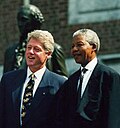


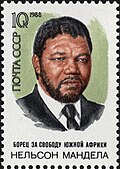
.jpg)


.jpg)


