

| Garcinia pedunculata | |
|---|---|

| |
Scientific classification 
| |
| : | [[Template:Taxonomy/Garcinia]] |
| Species: | Template:Taxonomy/GarciniaG. pedunculata
|
| Binomial name | |
| Template:Taxonomy/GarciniaGarcinia pedunculata Roxb. ex Buch.-Ham.
| |
| Synonyms[2] | |
|
Garcinia planchonii Pierre | |
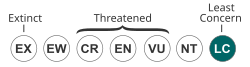
Garcinia pedunculata is an evergreen tree related to the purple mangosteen (Garcinia mangostana). The tree is native to south-eastern Asia, including northeastern India, Bangladesh, the eastern Himalayas southeastern Tibet, northern Indochina (Laos, Myanmar, Thailand, and Vietnam), and western Yunnan in south-central China.[2] It is popularly known in India as Amlavetasa, in Bangladesh as Thoikor or Taikor and in Assam as Bor Thekera(বৰ থেকেৰা ).[3][4] It is a large evergreen tree which grows in mixed deciduous forests, dry evergreen forests, lower montane rain forests, at dry evergreen and tropical evergreen rain forest edges, and along streams, from sea level to 1,200 metres elevation.[1]
Tree and fruit[edit | edit source]
Garcinia pedunculata is a large evergreen tree with a fluted trunk and short spreading branches. Leaves are lanceolate with prominent midribs. Male flowers are light green in sparsely flowered panicles. The female flowers are solitary. The roundish fruit has a diameter ranging between 8 and 12 cm. It has a juicy interior with edible arils.[5]
Uses[edit | edit source]

The ripe fruit is eaten cooked or raw. Usually the ripe or raw fruits are sliced, sun-dried and preserved. In the state of Assam the fruit is used in cooking to add a sour flavour.
References[edit | edit source]
- ↑ 1.0 1.1 IUCN SSC Global Tree Specialist Group.; Botanic Gardens Conservation International (BGCI). (2025). "Garcinia pedunculata". IUCN Red List of Threatened Species. 2025 e.T250632008A250632010. doi:10.2305/IUCN.UK.2025-1.RLTS.T250632008A250632010.en. Retrieved 21 April 2026.
- ↑ 2.0 2.1 "Garcinia pedunculata Roxb. ex Buch.-Ham". Plants of the World Online. Royal Botanic Gardens, Kew. Retrieved 21 April 2026.
- ↑ Islam, Jasmin; Devi, Vivekanandini; Langching, Jyoti (November 2021). "Medicinal and antioxidant activity of Garcinia pedunculata: a valuable underutilized fruit of Assam" (PDF). Journal of Postharvest Technology. 9 (4): 11–22. Retrieved 14 April 2023.
- ↑ Paul, S; Ali, MY; Rumpa, NE; Tanvir, EM; Hossen, MS; Saha, M; Bhoumik, NC; Gan, SH; Khalil, MI (2017). "Assessment of Toxicity and Beneficiary Effects of Garcinia pedunculata on the Hematological, Biochemical, and Histological Homeostasis in Rats". Evidence-Based Complementary and Alternative Medicine. 2017 4686104. doi:10.1155/2017/4686104. PMC 5294221. PMID 28243309.
- ↑ "Wild Edible Plants of Assam" (PDF). Director, Forest Communication, Forest Department, Assam, India. Archived from the original (PDF) on 2014-06-29. Retrieved 2013-11-14.