




 Charles Darwin (1809-1882), whose theory of evolution by natural selection founded modern evolutionary biology | |
| Field | Biology |
|---|---|
| Scope | Notable scientists from antiquity to the present |
| Organised by | Historical era and sub-discipline |
This is a list of scientists who have made significant contributions to the field of biology, the natural science that studies life and living organisms. The list is organized broadly by historical era and by major sub-disciplines of biology, though many of these scientists worked across multiple fields.
Founders of biology (Ancient Greece)[edit | edit source]

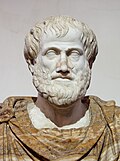
- Aristotle (384–322 BCE) – Often referred to as the "Father of Biology". He contributed the beginnings of biology, zoology, comparative anatomy, embryology, teratology, and physiology. His greatest biological work was *Historia Animalium*, in which he described 500 kinds of animals and recognized species and genera. He also studied the reproduction of sharks and cephalopods and observed the development of the chick.[1]
- Theophrastus (c. 371–287 BCE) – A student of Aristotle and often called the "Father of Botany". His *De Historia Plantarium* carried on Aristotle's tradition and made a classification of plants into trees, shrubs, and herbs, anticipating the work of Linnaeus. He is also regarded by some scholars as the "first ecologist" for discussing plants and their environments in a systematic way.[2]
Evolutionary biology, genetics, and heredity[edit | edit source]

- Carl Linnaeus (1707–1778) – A Swedish naturalist who was the first to frame principles for defining natural genera and species of organisms and to create a uniform system for naming them: binomial nomenclature.[4]
- Jean-Baptiste Lamarck (1744–1829) – A pioneering French biologist best known for his idea that acquired characters are inheritable, an idea known as Lamarckism.[5]
- Charles Darwin (1809–1882) – An English naturalist whose scientific theory of evolution by natural selection became the foundation of modern evolutionary studies. In 1859 he published *On the Origin of Species*.[6][3]
- Alfred Russel Wallace (1823–1913) – A British naturalist who independently arrived at the theory of evolution by natural selection, which he and Darwin first presented together in 1858.[3]
- Gregor Mendel (1822–1884) – An Augustinian friar and botanist who published his research on peas in 1866, laying the foundation for the study of genetics. His work revealed how traits are passed from generation to generation.[3][7]
- Thomas Hunt Morgan (1866–1945) – An American zoologist and geneticist famous for his experimental research with the fruit fly (*Drosophila*), by which he established the chromosome theory of heredity. He was awarded the Nobel Prize in 1933.[8]
- Theodosius Dobzhansky (1900–1975) – A key figure in the modern synthesis, bringing together genetics, paleontology, and evolutionary theory.[3]
- Barbara McClintock (1902–1992) – An American scientist whose discovery of mobile genetic elements, or "jumping genes," won her the Nobel Prize in Physiology or Medicine in 1983.[9]
Microbiology and immunology[edit | edit source]

- Antonie van Leeuwenhoek (1632–1723) – A Dutch microscopist regarded as the "father of microbiology" for being the first person to observe bacteria and protozoa using a self-made light microscope in 1676.[11]
- Edward Jenner (1749–1823) – An English physician who pioneered the use of cowpox for successful immunization against smallpox in 1796.[12]
- Louis Pasteur (1822–1895) – A French chemist and microbiologist who was one of the most important founders of medical microbiology. His contributions include the development of vaccines against anthrax, fowl cholera, and rabies, and the use of pasteurization for food preservation in 1857.[10]
- Robert Koch (1843–1910) – A German physician credited with establishing the discipline of medical microbiology in 1876–84 with the formulation of germ theory, isolation of bacteria in pure culture, and development of Koch's postulates. He received the Nobel Prize in 1905 for his investigations into tuberculosis.[13]
- Joseph Lister (1827–1912) – An English surgeon who introduced the use of diluted carbolic acid to sterilize instruments and clean wounds in 1867, leading to a reduction in postoperative infections.[14]
- Hans Christian Gram (1853–1938) – A Danish bacteriologist who developed the Gram stain for bacterial visualization and differentiation in 1884.[15]
- Emil von Behring (1854–1917) – A German physiologist who won the first Nobel Prize in Physiology or Medicine in 1901 for his work on serum therapy, especially its application against diphtheria. He also characterized polyclonal antibodies with Kitasato Shibasaburo in 1890.[13]
- Paul Ehrlich (1854–1915) – A German physician and scientist who developed the first theory of humoral immunity and of natural self-tolerance. He also developed the first antibacterial, Salvarsan, in 1910 for the treatment of syphilis.[16]
- Alexander Fleming (1881–1955) – A Scottish physician and microbiologist who accidentally discovered penicillin in 1928, revolutionizing the treatment of bacterial infections.[17]
- Albert Bruce Sabin (1906–1993) – A Polish-American physician and microbiologist best known for developing the oral polio vaccine.[18]
Molecular biology and biochemistry[edit | edit source]

- Friedrich Miescher (1844–1895) – A Swiss physician and biologist who isolated "nuclein" (DNA) from pus cells in 1869.[20]
- Hans Adolf Krebs (1900–1981) – A German-British physician and biochemist who elucidated the citric acid cycle (Krebs cycle) and the urea cycle. He was awarded the Nobel Prize in Physiology or Medicine in 1953.[21]
- Melvin Calvin (1911–1997) – An American biochemist who won the Nobel Prize in Chemistry in 1961 for his research on carbon dioxide assimilation in plants (the Calvin cycle).[22]
- Dorothy Crowfoot Hodgkin (1910–1994) – A British biochemist who used X-ray crystallography to analyse the structure of biologically relevant molecules such as pepsin, cholesterol, penicillin, vitamin B12, and insulin. She was awarded the Nobel Prize in Chemistry in 1964.[23]
- Rosalind Franklin (1920–1958) – A British chemist and X-ray crystallographer whose X-ray diffraction images (particularly Photograph 51) provided the key data for deriving the double helix structure of DNA. Watson and Crick used her unpublished results to arrive at the correct DNA structure.[19][24]
- James Watson (born 1928) and Francis Crick (1916–2004) – Published the double helix structure of DNA in *Nature* on 25 April 1953. They, along with Maurice Wilkins, were awarded the Nobel Prize in Physiology or Medicine in 1962.[19][3]
- Har Gobind Khorana (1922–2011) – An Indian-American chemist who shared the 1968 Nobel Prize in Physiology or Medicine for the interpretation of the genetic code and its function in protein synthesis.[25]
Cell biology and physiology[edit | edit source]

- William Harvey (1578–1657) – An English physician who made seminal contributions to anatomy and physiology, particularly the circulatory system.[27]
- Albrecht von Haller (1708–1777) – A Swiss biologist known as the father of experimental physiology, who made prolific contributions to physiology, anatomy, botany, and embryology.[28]
- Claude Bernard (1813–1878) – A French physiologist known chiefly for his discoveries concerning the role of the pancreas in digestion, the glycogenic function of the liver, and the regulation of the blood supply.[29]
- Ivan Pavlov (1849–1936) – A Russian physiologist known chiefly for his development of the concept of the conditioned reflex. He won the Nobel Prize in 1904 for his work on digestion.[26][13]
- John Gurdon (born 1933) and Shinya Yamanaka (born 1962) – Awarded the 2012 Nobel Prize for the discovery that mature cells can be reprogrammed to become pluripotent stem cells.[30]
- Yoshinori Ohsumi (born 1945) – A Japanese cell biologist known for elucidating the mechanisms of autophagy.[31]
Neuroscience[edit | edit source]
- Camillo Golgi (1843–1926) and Santiago Ramón y Cajal (1852–1934) – Shared the 1906 Nobel Prize for their work on the structure of the nervous system. By developing and using methods that stain key components of nerve cells with silver, they revealed the complexity of the nervous system.[32]
- Charles Scott Sherrington (1857–1952) and Edgar Adrian (1889–1977) – Awarded the 1932 Nobel Prize for their discoveries regarding the functions of neurons.[33][32]
- Henry Hallett Dale (1875–1968) and Otto Loewi (1873–1961) – Awarded the 1936 Nobel Prize for their discoveries relating to chemical transmission of nerve impulses.[32]
- Alan Hodgkin (1914–1998), Andrew Huxley (1917–2012), and John Eccles (1903–1997) – Awarded the 1963 Nobel Prize for their discoveries concerning the ionic mechanisms involved in excitation and inhibition in the peripheral and central portions of the nerve cell membrane.[32][34]
- Rita Levi-Montalcini (1909–2012) and Stanley Cohen (1922–2020) – Awarded the 1986 Nobel Prize for their discovery of nerve growth factor (NGF) and epidermal growth factor (EGF).[32]
- Erwin Neher (born 1944) and Bert Sakmann (born 1942) – Awarded the 1991 Nobel Prize for their discoveries concerning the function of single ion channels in cells.[32]
Ecology and conservation biology[edit | edit source]

- Rachel Carson (1907–1964) – An American biologist well known for her writings on environmental pollution and the natural history of the sea, particularly her book *Silent Spring*.[36]
- E.O. Wilson (1929–2021) – An American biologist recognized as the world's leading authority on ants and a foremost proponent of sociobiology. He was partially responsible for coining the term "biological diversity."[37][35]
- Thomas Lovejoy (1941–2021) – Often referred to as the "godfather of biodiversity," he was a prominent conservation biologist who worked at the intersection of environmental policy and science and was one of the first to direct attention to tropical deforestation.[35]
- Jane Goodall (born 1934) – A British primatologist who became a household name for her research at the Gombe forest in the 1960s, revealing unknown knowledge on chimpanzees, including their use of tools.[35]
- Biruté Galdikas (born 1946) – A Lithuanian-Canadian primatologist, conservationist, and ethologist known as a leading authority on orangutans.[35]
- Sylvia Earle (born 1935) – An American marine biologist and oceanographer who was the first female chief scientist at the U.S. National Oceanic and Atmospheric Administration (NOAA).[35]
- Sandra Myrna Diaz – An Argentinian ecologist among the top 1% of most cited scientists in the world, focusing on biodiversity, plant ecology, and the effect of environmental change.[35]
Botany and plant science[edit | edit source]
- Robert Brown (1773–1858) – A Scottish botanist best known for his descriptions of cell nuclei and of the continuous motion of minute particles in solution, which came to be called Brownian motion.[38]
- Jagadish Chandra Bose (1858–1937) – An Indian physicist and plant physiologist who studied plant responses to external stimuli and invented the crescograph.[39]
- Julius von Sachs (1832–1897) – A German botanist whose experimental study of nutrition, tropism, and transpiration of water greatly advanced the knowledge of plant physiology.[40]
- Ferdinand Cohn (1828–1898) – A German naturalist and botanist known for his studies of algae, bacteria, and fungi. He is considered one of the founders of bacteriology.[41]
Zoology and animal behavior[edit | edit source]
- Georges Cuvier (1769–1832) – A French zoologist and statesman who established the sciences of comparative anatomy and paleontology.[42]
- Konrad Lorenz (1903–1989) – An Austrian zoologist and the founder of modern ethology, the study of animal behaviour by means of comparative zoological methods.[43]
- Richard Dawkins (born 1941) – A British evolutionary biologist and ethologist who emphasized the gene as the driving force of evolution and popularized the concept of the meme.[44]
- Eugenie Clark (1922–2015) – An American ichthyologist noted for her research on poisonous fishes of the tropical seas and on the behaviour of sharks.[45]
Medicine and physiology (Nobel laureates)[edit | edit source]
The Nobel Prize in Physiology or Medicine has been awarded to numerous scientists whose work advanced biology and medicine. Notable early laureates include:[13]
- Emil von Behring (1901) – Diphtheria
- Ronald Ross (1902) – Malaria
- Niels Ryberg Finsen (1903) – Lupus
- Ivan Pavlov (1904) – Digestion
- Robert Koch (1905) – Tuberculosis
- Camillo Golgi and Santiago Ramón y Cajal (1906) – Central nervous system
- Charles Laveran (1907) – Protozoa
- Ilya Mechnikov and Paul Ehrlich (1908) – Immunity
See also[edit | edit source]
- List of biologists
- List of Nobel laureates in Physiology or Medicine
- History of biology
- Timeline of biology and organic chemistry
References[edit | edit source]
- ↑ 1.0 1.1 "Aristotle contributed the beginnings of biology, zoology, comparative anatomy". Journal of UOEH. Retrieved 17 October 2026.
- ↑ "Theophrastus". Britannica. Retrieved 18 October 2026.
- ↑ 3.0 3.1 3.2 3.3 3.4 3.5 "Life as We Know It". The New York Times. 25 June 2007. Retrieved 17 October 2026.
- ↑ "Carolus Linnaeus". Britannica. Retrieved 17 October 2026.
- ↑ "Jean-Baptiste Lamarck". Britannica. Retrieved 17 October 2026.
- ↑ "Charles Darwin". Britannica. Retrieved 17 October 2026.
was an English naturalist whose scientific theory of evolution by natural selection became the foundation of modern evolutionary studies.
- ↑ "Gregor Mendel". Britannica. Retrieved 17 October 2026.
the first person to lay the mathematical foundation of the science of genetics, in what came to be called Mendelism.
- ↑ "Thomas Hunt Morgan". Britannica. Retrieved 17 October 2026.
- ↑ "Barbara McClintock". Britannica. Retrieved 17 October 2026.
- ↑ 10.0 10.1 "Louis Pasteur". Britannica. Retrieved 17 October 2026.
was a French chemist and microbiologist who was one of the most important founders of medical microbiology.
- ↑ "Antonie van Leeuwenhoek". Britannica. Retrieved 17 October 2026.
- ↑ "Edward Jenner". Britannica. Retrieved 18 October 2026.
- ↑ 13.0 13.1 13.2 13.3 The First 100 Nobel Prizes in Physiology or Medicine. Retrieved 17 October 2026.
- ↑ "Biographical Sketch: Baron Joseph Lister, FRCS, 1827–1912". Clinical Orthopaedics and Related Research. Retrieved 18 October 2026.
The influence and importance of Lister's work cannot be understated: his principles of aseptic surgery made surgery practical.
- ↑ "A Defective and Imperfect Method: H. Christian Gram and the History of the Gram Stain" (PDF). The Pediatric Infectious Disease Journal. Retrieved 18 October 2026.
- ↑ Biographies. NCBI Bookshelf. Retrieved 17 October 2026.
- ↑ "Alexander Fleming". Britannica. Retrieved 18 October 2026.
was a Scottish bacteriologist best known for his discovery of penicillin in 1928, which started the antibiotic revolution.
- ↑ "Albert Bruce Sabin". Britannica. Retrieved 17 October 2026.
- ↑ 19.0 19.1 19.2 "The Nobel Prize in Physiology or Medicine 1962". Nobel Prize. Retrieved 17 October 2026.
The Nobel Prize in Physiology or Medicine in 1962 was awarded to James Watson, Francis Crick and Maurice Wilkins for their discovery of the molecular structure of DNA, which helped solve one of the most important of all biological riddles.
- ↑ "Friedrich Miescher". Britannica. Retrieved 18 October 2026.
- ↑ "Sir Hans Adolf Krebs". Leopoldina. Retrieved 17 October 2026.
- ↑ "Melvin Calvin". Britannica. Retrieved 18 October 2026.
- ↑ "Dorothy Crowfoot Hodgkin". Leopoldina. Retrieved 17 October 2026.
- ↑ "Rosalind Franklin and the Advent of Molecular Biology". Cell. Retrieved 17 October 2026.
- ↑ "H. Gobind Khorana". Leopoldina. Retrieved 17 October 2026.
- ↑ 26.0 26.1 "Ivan Pavlov". Britannica. Retrieved 17 October 2026.
- ↑ "William Harvey". Britannica. Retrieved 18 October 2026.
- ↑ "Albrecht von Haller". Britannica. Retrieved 17 October 2026.
- ↑ "Claude Bernard". Britannica. Retrieved 17 October 2026.
- ↑ "The boundary-spanning mechanisms of Nobel Prize winning papers". PLoS ONE. Retrieved 17 October 2026.
- ↑ "Yoshinori Ohsumi". Britannica. Retrieved 17 October 2026.
- ↑ 32.0 32.1 32.2 32.3 32.4 32.5 "Nobel Prizes in nerve signaling". Nobel Prize. Retrieved 17 October 2026.
- ↑ "Sir Charles Scott Sherrington". Britannica. Retrieved 17 October 2026.
- ↑ "Sir John Carew Eccles". Britannica. Retrieved 17 October 2026.
- ↑ 35.0 35.1 35.2 35.3 35.4 35.5 35.6 "22 biodiversity scientists" (PDF). Retrieved 17 October 2026.
- ↑ "Rachel Carson". Britannica. Retrieved 17 October 2026.
- ↑ "E.O. Wilson". Britannica. Retrieved 17 October 2026.
- ↑ "Robert Brown". Britannica. Retrieved 17 October 2026.
- ↑ "Jagadish Chandra Bose". Britannica. Retrieved 17 October 2026.
- ↑ "Julius von Sachs". Britannica. Retrieved 17 October 2026.
- ↑ "Ferdinand Cohn". Britannica. Retrieved 17 October 2026.
- ↑ "Georges Cuvier". Britannica. Retrieved 17 October 2026.
- ↑ "Konrad Lorenz". Britannica. Retrieved 17 October 2026.
- ↑ "Richard Dawkins". Britannica. Retrieved 17 October 2026.
- ↑ "Eugenie Clark". Britannica. Retrieved 17 October 2026.