




| Sikyong of the Central Tibetan Administration | |
|---|---|
| སྲིད་སྐྱོང༌ | |
 Emblem of Tibet | |
| Style | His Excellency |
| Residence | Kashag Dharamsala, India |
| Appointer | Direct popular vote |
| Term length | Five years |
| Formation | 1907 as Kalön Tripa of Tibet 8 August 2011 Sikyong |
| First holder | Chankhyim Trekhang Thupten Shakya |
| Website | www |

The Sikyong (Tibetan: སྲིད་སྐྱོང༌, Wylie: srid-skyong, Lhasa dialect: Template:IPA-bo) is the head of the Central Tibetan Administration, a Tibetan exile organisation also known as the Tibetan Government-in-Exile. The title was created in 2012.
The current Sikyong is Penpa Tsering. The Sikyong is the head of the Kashag, part of the executive branch of the Central Tibetan Administration. This office should not be confused with the "Chairman of the Government of the Tibet Autonomous Region".[1]
The first directly elected Kalön Tripa was Lobsang Tenzin, the Samdhong Rinpoche, who was elected August 20, 2001.[2] Based on the 13-Article Ordinance for the More Effective Governing of Tibet, Kashag should be composed of three temporal officials and one monk official. Each of them held the title of Kalön (Tibetan: བཀའ་བློན་, Wylie: bkaʼ-blon, Lhasa dialect: Template:IPA-bo; Chinese: 噶倫; pinyin: gálún), should seek appointment from the Central Government.[3]
Before 2011, the Kalön Tripa position was subordinate to the 14th Dalai Lama[4] who presided over the government in exile from its founding.[5] In 2011, the Dalai Lama announced that his political authority would be transferred to Sangay.[6]
Kalön Tripa
On September 20, 2012, the 15th Tibetan Parliament-in-Exile unanimously voted to change the title of Kalön Tripa to Sikyong in Article 19 of the Charter of the Tibetans in exile and relevant articles.[7] The Dalai Lama had previously referred to the Kalon Tripa as Sikyong, and this usage was cited as the primary justification for the name change. According to Tibetan Review, "Sikyong" translates to "political leader", as distinct from "spiritual leader".[8] Foreign affairs Kalon Dicki Chhoyang claimed that the term "Sikyong" has had a precedent dating back to the 7th Dalai Lama, and that the name change "ensures historical continuity and legitimacy of the traditional leadership from the fifth Dalai Lama".[9] The online Dharma Dictionary translates sikyong (srid skyong) as "secular ruler; regime, regent"[1]. The title sikyong had previously been used by regents who ruled Tibet during the Dalai Lama's minority. It is also used in Tibetan to refer to the governors of the states of the United States.[2]
List of Kalön Tripas and Sikyongs[citation needed]
Tibet | ||||||||
|---|---|---|---|---|---|---|---|---|
| # | Name | Took Office | Left Office | Monarch | ||||
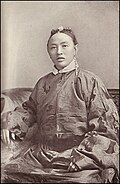
| 1 | Chankhyim Trekhang Thupten Shakya |  |
1907 | 1920 |  Thubten Gyatso | |||
| 2 | Paljor Dorje Shatra |  |
1907 | 1923 | ||||
| 3 | Sholkhang Dhondup Phuntsog |  |
1907 | 1926 | ||||
| 4 | Langdun Kunga Wangchuk |  |
1926 | 1940 | ||||
| 5 | Lobsang Tashi |  |
1950 | 1952 | ||||
| Lukhangwa Tsewang Rabden |  |
1950 | 1952 |  Tenzin Gyatso | ||||
Central Tibetan Administration — Kalön Tripa | ||||||||
| # | Name | Took Office | Left Office | Monarch | ||||
| 1 | Jangsa Tsangy |  |
1959 | 1960 |  Tenzin Gyatso | |||
| 2 | Surkhang Wangchen Gelek |  |
1960 | 1964 | ||||
| 3 | Gyurme Sonam Topgyal | File:先喀·居美多吉(夏苏)、洛桑扎西、柳霞·土登塔巴.jpg | 1965 | 1970 | ||||
| 4 | Garang Lobsang Rigzin | |
1970 | 1975 | ||||
| 5 | Kunling Woeser Gyaltsen | |
1975 | 1980 | ||||
| 6 | Wangdue Dorjee | |
1980 | 1985 | ||||
| 7 | Juchen Thupten Namgyal |  |
1985 | 1990 | ||||
| 8 | Kalsang Yeshi | |
1990 | 1991 | ||||
| 9 | Gyalo Thondup |  |
1991 | 1993 | ||||
| 10 | Tenzin Tethong |  |
1993 | 1996 | ||||
| 11 | Sonam Topgyal |  |
1996 | 2001 | ||||
| 12 | Lobsang Tenzin |  |
2001 | 2011 | ||||
| 13 | Lobsang Sangay |  |
2011 | 2012 | ||||
Central Tibetan Administration — Sikyong | ||||||||
| # | Name | Took Office | Left Office | Head of State | ||||
| 13 | Lobsang Sangay | |
2012 | 21 May 2021 | ||||
| 14 | Penpa Tsering | File:Penpa Tsering - Sikyong.jpg | 21 May 2021 | Present | Himself | |||

References
- ↑ 西藏自治区人民政府主席
- ↑ Donovan Roebert, Samdhong Rinpoche: Uncompromising Truth for a Compromised World (World Wisdom, 2006) ISBN 978-1-933316-20-8 (On August 20, 2001, Venerable Professor Samdhong Rinpoche was elected Kalon Tripa (Prime Minister) of the Tibetan Government in Exile, receiving 84.5% of the popular exile vote.)
- ↑ Jiawei Wang; Gyaincain Nyima; Jiawei Wang (1997). The Historical Status of China's Tibet. pp. 58–. ISBN 978-7-80113-304-5.
- ↑ The Charter of Tibetans in-Exile, Article 20 of the Constitution of Tibet, retrieved 2010-03-19.
- ↑ The Charter of Tibetans in-Exile, Articles 19, 30, & 31 of the Constitution of Tibet, retrieved 2010-03-19.
- ↑ Dean Nelson Lobsang Sangay: profile, The Telegraph, 08 Aug 2011
- ↑ Tibetan Parliament changes 'Kalon Tripa' to 'Sikyong'
- ↑ "Kalon Tripa to be now referred to as Sikyong". Tibetan Review. 2012-09-22. Archived from the original on 2013-10-17. Retrieved 2012-12-11.
- ↑ "International Support Groups Meet in Dharamsala to Deal with Critical Situation In Tibet". Central Tibetan Administration. 2012-11-16.
External links
- Speech/transcription
See also
- Elections
Template:Central Tibetan Administration Template:Prime Ministers of Tibet Template:Tibetan elections