
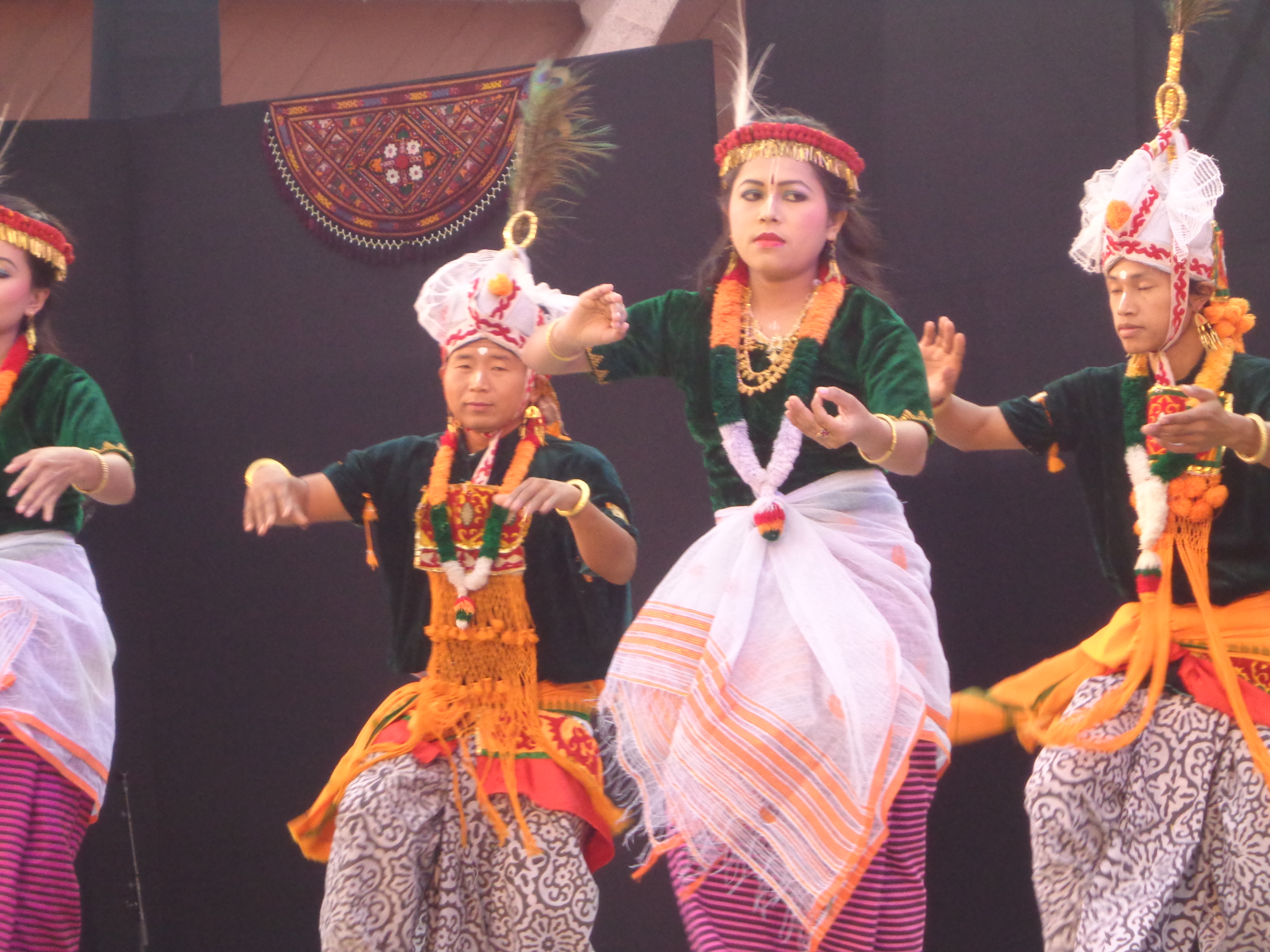


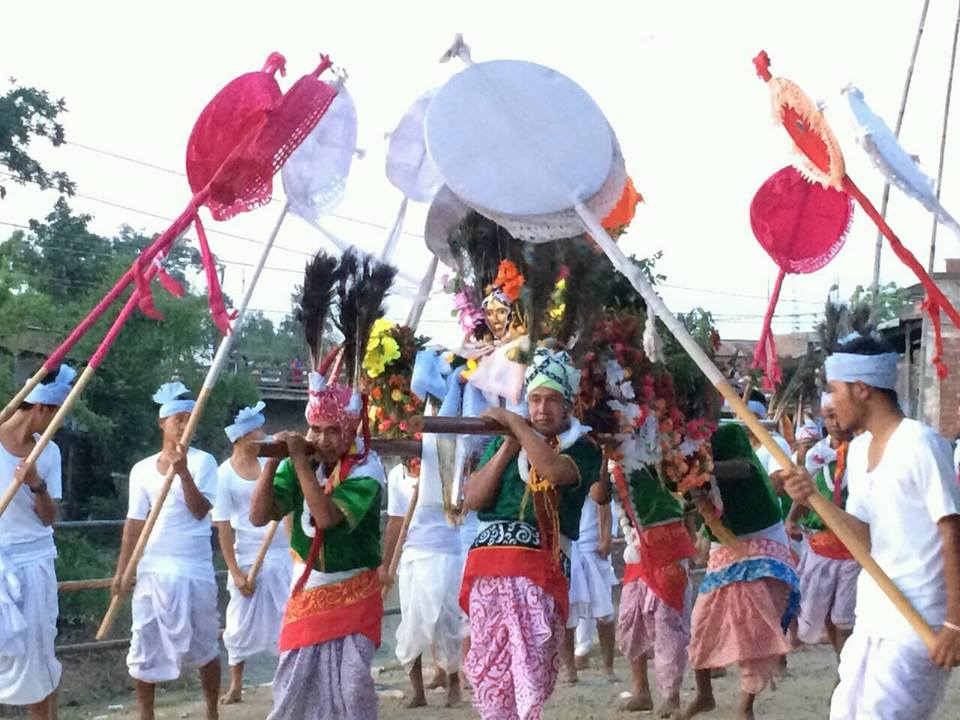
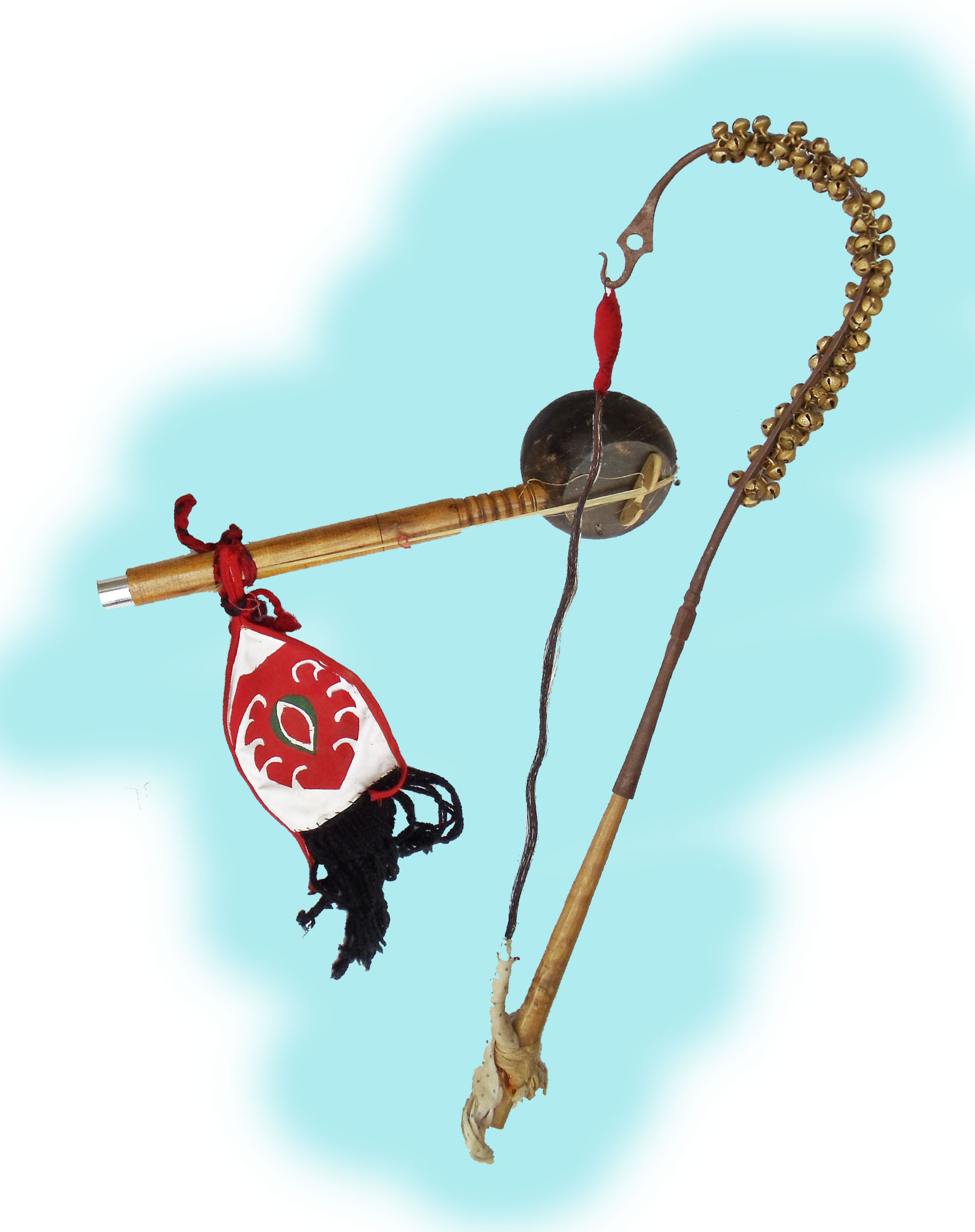

Lai Haraoba is a festival associated with the Meetei people, celebrated to please the Umang Lai, the traditional deities of Sanamahism.[1] Translated, Lai Haraoba means "merry making of the Gods"[2] in Meetei.


Origin
The rituals within the festival are the same except in some items or hymns, such as ikouba, ikourol, and yakairol at the beginning and mikon thagonba, ngaprum tanba at the end of the festival. In the performances, the evolution story with the amorous love-affairs of Nongpok Ninghthou and Panthoibi is depicted and played equally in all kinds of lai haraoba.

Lai Haraoba is a ritualistic festival of the Meiteis observing from the ancient times. It is a ritual enactment of the creation myth. It mirrors the entire culture of Manipur and depicts the close affinities between the hill and plain people. It is in fact the combination of religious recitations, traditional music and dance, traditional social values and ancient cultural aspects.

Lai Haraoba Ishei
Lai Haraoba Ishei is a famous folk song played mainly during Lai Haraoba. This song contains lyrics with veiled references to erotic mysticism. The main quality of the song is the rhythm in its tune.[3]

Dance forms
The following are the dance forms included in the sacred festival of Lai Haraoba.
C
K
L
M
P
T
See also
References
- ↑ Ayyappapanicker, K.; Sahitya Akademi (1997). Medieval Indian Literature: An Anthology. Sahitya Akademi. p. 330. ISBN 978-81-260-0365-5.
- ↑ Acharya, Amitangshu; Soibam Haripriya (2007-07-27). "Respect to foster unity in cultural mosaic - festival/lai haraoba". The Telegraph. Retrieved 2008-11-05.
- ↑ "Lai Haraoba Ishei". India9.com. 2005-06-07. Retrieved 2008-11-05.
- Parratt, Saroj Nalini; John Parratt (1997). The Pleasing of the Gods: Meitei Lai Haraoba. Vikas Publishing House.
Further reading
- Kshetrimayum, Otojit. (2014). Ritual, Politics and Power in North East India: Contexualising the Lai Haraoba of Manipur. New Delhi: Ruby Press & Co.