
>WikiCleanerBot m v2.04b - Bot T20 CW#61 - Fix errors for CW project (Reference before punctuation) |
CleanupBot (talk | contribs) m →References: clean up, add source tag |
||
| Line 28: | Line 28: | ||
{{India-culture-stub}} | {{India-culture-stub}} | ||
{{en-Wikipedia}} | |||
Revision as of 02:11, 2 June 2021

Tulasi Chaura or Tulasi Vrindavan (Odia: ତୁଳସୀ ଚଉରା) is a small podium-like stone or cement construction in front of traditional Hindu houses containing Tulasi in many regions of India including Odisha
Significance in Hinduism
Tulasī or Holy Basil is an aromatic plant in the family Lamiaceae which is native throughout the Old World tropics and widespread as a cultivated plant and an escaped weed.[1] and considered as a holy plant by the Hindus and is worshiped as Brunda debi (Vrunda devi) or Brundabati. Every morning after bath the Odia people worship the plant by pouring water and take few leaves as prasada. Tulasi is a sacred plant for Hindus. Water mixed with tulsi petals is given to the dying to raise their departing souls to heaven.[2] In Pana Sankranti a tiny hole is made in a small earthen pot filled with Pana and hung in a stick so that the drops of Pana fall on the roots of Tulasi which signifies the beginning of Asadha in rainy season. Chatua, Guda (jaggery) and yogurt are served as prasada in the Tulasi chaura on that day.[3]
Gallery
-
 Tulsi Vrindavan in Kerala
 -
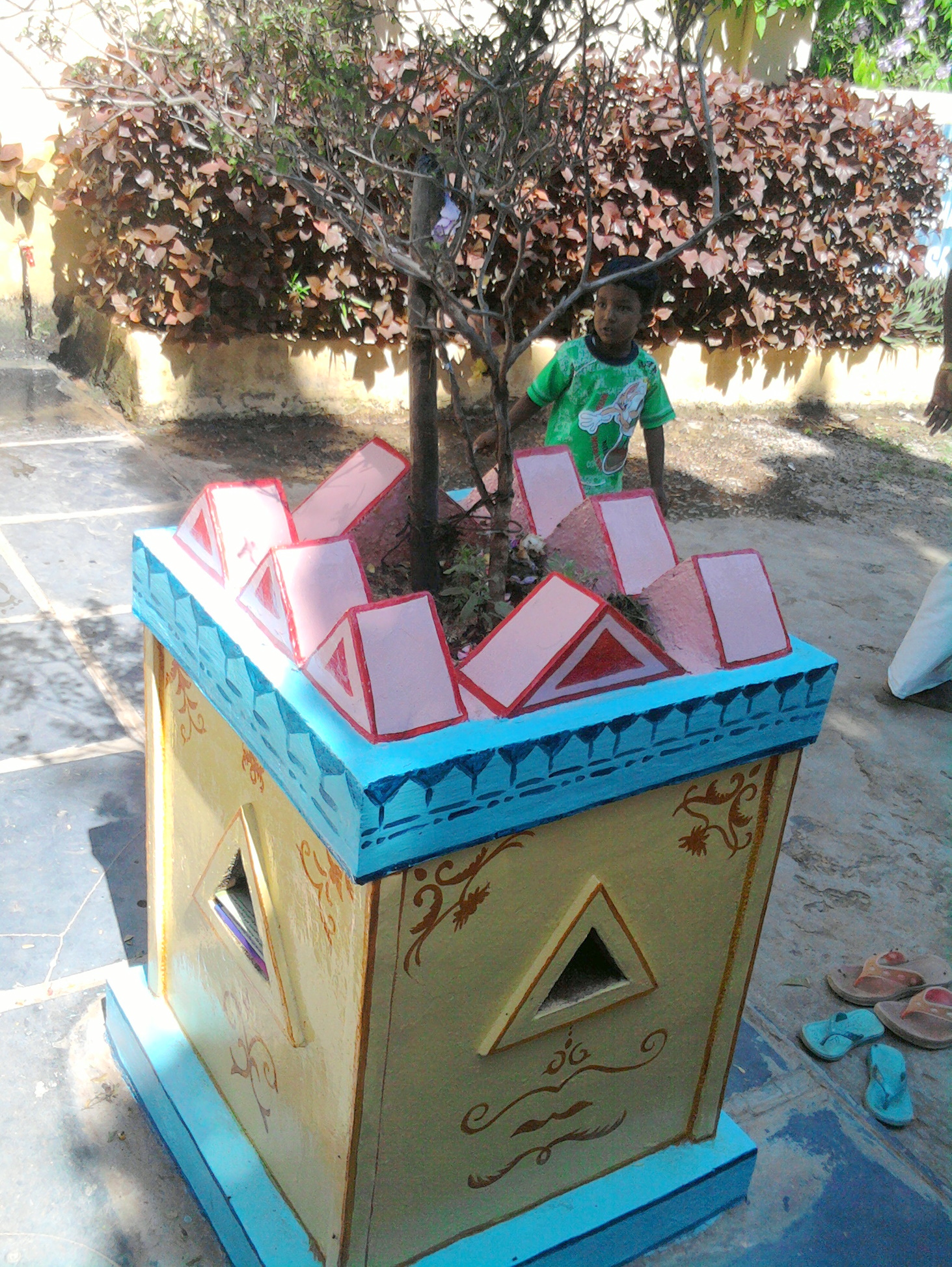 Tulsi Vrindavan in a Telugu household
 -
 Tulsi Vrindavan in Kerala
 -
 Tulsi Mancha at Radhamadhab Temple in West Bengal
 -
 Tulasi Vrindavan in a rural house.
 -
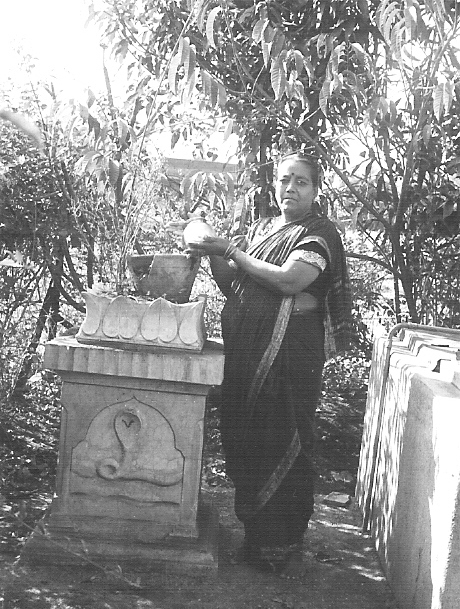 A woman from Maharashtra watering Tulsi in 1970s


References
- ↑ Staples, George; Michael S. Kristiansen (1999). Ethnic Culinary Herbs. University of Hawaii Press. p. 73. ISBN 978-0-8248-2094-7.
- ↑ "Why do we consider Tulsi sacred?". Hindunet.org. Archived from the original on 11 November 2004. Retrieved 16 April 2015.
- ↑ Rajendran, Abhilash (6 June 2007). "Maha Vishuba Sankranti – Orissa New Year ~ Hindu Blog". Hindu-blog.com. Retrieved 16 April 2015.
 | This article about the culture of India is a stub. You can help Bharatpedia by expanding it. |