

Ajay Kumar (talk | contribs) Created a new article Tag: Disambiguation links |
Svetlanayrd (talk | contribs) small changes |
||
| Line 1: | Line 1: | ||
{{Short description|Species of | {{Short description|Species of flowering plant}} | ||
{{Use dmy dates|date=April 2025}} | |||
{{Use British English|date=April 2025}} | |||
{{excessive citations|date=September 2025}} | |||
{{Speciesbox | {{Speciesbox | ||
|image = Alstonia | |image = Alstonia scholaris.jpg | ||
|image_caption = | |image_caption = | ||
|status = LC | |status = LC | ||
|status_system = IUCN3.1 | |status_system = IUCN3.1 | ||
|status_ref = <ref name=IUCN>{{cite iucn | | |status_ref = <ref name=IUCN>{{cite iucn |author=Lakhey, P. |author2=Pathak, J. |year=2021 |title=''Alstonia scholaris'' |article-number=e.T32295A2812825 |doi=10.2305/IUCN.UK.2021-3.RLTS.T32295A2812825.en}}</ref> | ||
|genus = Alstonia | |genus = Alstonia | ||
|species = scholaris | |species = scholaris | ||
|authority = ([[Carl Linnaeus|L.]]) [[Robert Brown (botanist, born 1773)|R.Br.]] | |authority = ([[Carl Linnaeus|L.]]) [[Robert Brown (botanist, born 1773)|R.Br.]]{{R|POWO}} | ||
|range_map = Alstoniascholaris1.png | |range_map = Alstoniascholaris1.png | ||
|range_map_caption = Occurrence data from [[GBIF]]<ref | |range_map_caption = Occurrence data from [[GBIF]]<ref>{{cite web |title=GBIF Occurrence download for ''Alstonia scholaris'' (L.) R.Br. |website=Global Biodiversity Information Facility |date=2018 |doi=10.15468/dl.eokqvq |access-date=7 June 2018 |url=https://doi.org/10.15468/dl.eokqvq}}</ref> | ||
| | |synonyms = {{species list|hidden=yes|header=10 synonyms | ||
|synonyms | |Echites scholaris |L. | ||
|Nerium septaparna |Jones | |||
|Pala scholaris |(L.) Roberty | |||
|Alstonia kurzii |Hook.f. | |||
|Alstonia scholaris var. avae |A.DC. | |||
|Alstonia scholaris var. blumei |A.DC. | |||
|Alstonia scholaris var. velutina |Monach. | |||
|Alstonia spectabilis |Kurz | |||
|Echites pala |Buch.-Ham. ex Spreng. | |||
|Aeschynomene laevis |Noronha | |||
}} | |||
|synonyms_ref = {{R|POWO}} | |||
}} | }} | ||
'''''Alstonia scholaris''''', commonly called '''blackboard tree''', '''scholar tree''', '''milkwood''' or '''devil's tree''' in English,<ref name=GRIN/> is an [[evergreen]] | '''''Alstonia scholaris''''', commonly called '''blackboard tree''', '''scholar tree''', '''milkwood''' or '''devil's tree''' in English,<ref name=GRIN>{{GRIN |access-date=2012-03-30}}</ref> is an [[evergreen]] tree in the oleander and frangipani family [[Apocynaceae]]. Its natural range is from Pakistan to China, and south to northern Australia. It is a toxic plant, but is used traditionally for myriad diseases and complaints. It is called 'Saptaparna' in India and is the sacred tree of the 2nd Jain tirthankar [[Ajitnatha]].{{Not verified in body|date=April 2025}} It was first described by [[Linnaeus]] in 1767, who gave it the name ''Echites scholaris''. | ||
==Description== | ==Description== | ||
''Alstonia scholaris'' is a | ''Alstonia scholaris'' is a large tree growing up to {{cvt|40|m}} tall (rarely to 60 m), with narrow [[buttress root|buttressess]] that extend well up the trunk, giving it a fluted appearance. The bark is gray to pale gray with numerous [[lenticel]]s, and all parts of the plant exude copious amounts of white sap when broken or cut.{{R|FOA|FOC|NPSING|RFK|ORWA}}{{excessive citations inline|date=April 2025}} | ||
The leaves are glossy dark green above and pale below, and they are arranged in [[Whorl (botany)|whorls]] of four to eight, with [[Petiole (botany)|petioles]] (leaf stalks) around {{cvt|5-15|mm|2}} long. The leaves are usually [[Glossary of leaf morphology#obovate|obovate]] (i.e. broadest near the apex) to [[Glossary of leaf morphology#elliptic|elliptic]], tapering towards the base and with a rounded tip, and there are 25 to 40 pairs of lateral veins at 80–90° to the midvein.{{R|FOA|FOC|NPSING|RFK|ORWA}}{{excessive citations inline|date=April 2025}} | |||
The inflorescences are much branched ({{botanygloss|cyme|cymose}}), with [[Peduncle (botany)|peduncles]] up to {{cvt|7|cm|1}} long, and are produced at the ends of the branches. The small tubular flowers are cream or white and strongly scented. They are about {{cvt|10|mm|2}} long and wide, with five {{botanygloss|ovate}} lobes. The [[calyx (botany)|calyx]] is about {{cvt|2|mm|2}} long, and the flower stalks are usually as long as or shorter. The [[Corolla (flower)|corolla]] is white and tube-like, {{convert|6–10|mm|abbr=on|sigfig=1}} long. The lobes are broadly [[Glossary of botanical terms#ovate|ovate]] or broadly obovate, {{convert|2-4.5|mm|abbr=on|sigfig=1}}, overlapping to the left.{{R|FOA|FOC|NPSING|RFK|ORWA}}{{excessive citations inline|date=April 2025}} | |||
The | The fruit is a pair of long papery [[Follicle (fruit)|follicles]] measuring up to about {{cvt|30|cm}} long and {{cvt|6|mm|2}} diameter. They contain numerous flat, brown seeds about {{cvt|5|mm|2}} long and {{cvt|1.2|mm|2}} wide, which have long tufts of hairs at each end.{{R|FOA|FOC|NPSING|RFK|ORWA}}{{excessive citations inline|date=April 2025}} | ||
Flowers | [[File:Flowers of Alstonia scholaris.jpg|thumb|Flowers of ''Alstonia scholaris'']] | ||
[[File:Fruit of Alstonia scholaris.jpg|thumb|Fruits of ''Alstonia scholaris'']] | |||
==Taxonomy== | |||
This plant was originally named ''Echites scholaris'' by [[Carl Linnaeus]] in 1767.{{R|POWO|LINNEAUS}} The Scottish botanist [[Robert Brown (botanist, born 1773)|Robert Brown]] transferred it to the genus ''Alstonia'' in 1810, as part of his work on the taxonomy of [[Apocynaceae]].{{R|BROWN}} | |||
== | ===Etymology=== | ||
'' | The genus was named in honour of botanist [[Charles Alston (botanist)|Charles Alston]], and the [[Botanical name#Binary name|species epithet]] ''scholaris'' is a reference to the traditional use of the timber of this tree for blackboards in Myanmar.{{R|ORWA}} | ||
==Distribution and habitat== | |||
''Alstonia scholaris'' grows in a broad range of habitats in tropical and subtropical areas, in a range of forest types from [[rainforest]] to [[savannah]], on a variety of soils including alluvial, volcanic and metamorphic, and at altitudes from sea level to more than {{cvt|1000|m}}.{{R|FOC|NPSING|RFK|ORWA}} | |||
The tree is native to tropical and subtropical areas in the following countries/regions:{{R|POWO}} | |||
* China: China South-Central, China Southeast | |||
* [[Indian subcontinent]]: Assam, Bangladesh, East Himalaya, India, Laccadive Islands, Nepal, Pakistan, Sri Lanka, West Himalaya | |||
* [[Indo-China]]: Andaman Islands, Cambodia, Laos, Myanmar, Nicobar Islands, Thailand, Vietnam | |||
* [[Malesia]]: Borneo, Jawa, Lesser Sunda Islands, Malaya, Maluku, Philippines, Sulawesi, Sumatera | |||
* [[Papuasia]]: Bismarck Archipelago, New Guinea, Solomon Islands | |||
* Australia: Northern Territory, Queensland, Western Australia | |||
==Toxicity== | ==Toxicity== | ||
This is a toxic plant. At high doses, an extract of the plant exhibited marked damage to all the major organs of the body in both rats and mice. The toxicity appears to depend on the plant organ studied, as well as the season it is harvested, with the bark collected in the monsoon season being the least toxic, and bark in the summer the most. Intraperitoneal administration is much more toxic than oral. Rats were more susceptible to the poison than mice, and pure-bred mice strains were more susceptible than crossbred. The toxic effects may be due to the [[ | This is a toxic plant. At high doses, an extract of the plant exhibited marked damage to all the major organs of the body in both rats and mice. The toxicity appears to depend on the plant organ studied, as well as the season it is harvested, with the bark collected in the monsoon season being the least toxic, and bark in the summer the most. Intraperitoneal administration is much more toxic than oral. Rats were more susceptible to the poison than mice, and pure-bred mice strains were more susceptible than crossbred. The toxic effects may be due to the [[alkaloid]] [[echitamine]] in the bark.<ref name=Baliga2004>{{cite journal |last1=Baliga |first1=Manjeshwar Shrinath |last2=Jagetia |first2=Ganesh Chandra |last3=Ulloor |first3=Jagadish N. |last4=Baliga |first4=Manjeshwar Poonam |last5=Ponemone |first5=Venkatesh |last6=Reddy |first6=Rosi |last7=Rao |first7=Mallikarjun K. V. N. |last8=Baliga |first8=Shivanada Bantwal |last9=Devi |first9=Sulochana |last10=Raju |first10=Sudheer Kumar |last11=Veeresh |first11=Veerapura |last12=Reddy |first12=Tiyyagura Koti |last13=Bairy |first13=Laxminarayana K. |date=2004 |title=The evaluation of the acute toxicity and long term safety of hydroalcoholic extract of Sapthaparna (''Alstonia scholaris'') in mice and rats |url=http://eprints.manipal.edu/314 |journal=Toxicology Letters |volume=151 |issue=2 |pages=317–326 |doi=10.1016/j.toxlet.2004.01.015|pmid=15183456 |url-access=subscription }}</ref> | ||
== | ===Chemistry=== | ||
[[ | The bark contains the [[alkaloid]]s [[ditamine]], [[alschomine]],<ref>{{cite journal|last1=ABE|first1=Fumiko|last2=CHEN|first2=Rong-Fu|last3=YAMAUCHI|first3=Tatsuo|last4=MARUBAYASHI|first4=Nobuhiro|last5=UEDA|first5=Ikuhiko|title=Alschomine and isoalschomine, new alkaloids from the leaves of Alstonia scholaris.|journal=Chemical & Pharmaceutical Bulletin|volume=37|issue=4|year=1989|pages=887–890|issn=0009-2363|doi=10.1248/cpb.37.887|doi-access=free}}</ref> [[echitenine]],<ref>{{cite journal |title=The evaluation of the acute toxicity and long term safety of hydroalcoholic extract of Sapthaparna (Alstonia scholaris) in mice and rats |date=2004 |last1=Baliga |first1=M. |last2=Jagetia |first2=G. C. |last3=Ulloor |first3=J. N. |last4=Baliga |first4=M. P. |last5=Venkatesh |first5=P. |last6=Reddy |first6=R. |last7=Rao |first7=K. V. |last8=Baliga |first8=B. S. |last9=Devi |first9=S. |last10=Raju |first10=S. K. |last11=Veeresh |first11=V. |last12=Reddy |first12=T. K. |last13=Bairy |first13=K. L. |journal=Toxicology Letters |volume=151 |issue=2 |pages=317–326 |doi=10.1016/j.toxlet.2004.01.015 |pmid=15183456 }}</ref> echitamine<ref name=Baliga2004/> and [[strictamine]].<ref>{{cite journal | pmid = 500142 | year = 1979 | last1 = Bhattacharya | first1 = S. K. | title = Neuropharmacological studies on strictamine isolated from ''Alstonia scholaris'' | journal = Indian Journal of Experimental Biology | volume = 17 | issue = 6 | pages = 598–600 | last2 = Bose | first2 = R. | last3 = Dutta | first3 = S. C. | last4 = Ray | first4 = A. B. | last5 = Guha | first5 = S. R. }}</ref> Echitamine is the most important alkaloid found in the bark, as it has been detected in all samples studied and collected from several locations. It is commercially sold as a [[herbal medicine]].<ref>{{cite journal |last1=Yamauchi |first1=Tatsuo |last2=Abe |first2=Fumiko |last3=Padolina |first3=William G. |last4=Dayrit |first4=Fabian M. |date=1990 |title=Alkaloids from leaves and bark of ''Alstonia scholaris'' in the Philippines |url=https://www.academia.edu/7426110 |journal=Phytochemistry |volume=29 |issue=10 |pages=3321–3325 |doi=10.1016/0031-9422(90)80208-X |bibcode=1990PChem..29.3321Y |access-date=1 July 2021}}</ref> The alkaloid [[picralinal]] has been found in the leaves.<ref>{{cite journal |author1=Rastogi, R. C. |author2=Kapil, R. S. |author3=Popli, S. P. | journal=Experientia | title=Picralinal — A key alkaloid of picralima group fromAlstonia scholaris R. Br. | volume=26 | issue=10 | pages=1056–1056 | date= October 1970 | url=http://link.springer.com/10.1007/BF02112667 | doi=10.1007/BF02112667}}</ref> | ||
==Culture== | |||
''Alstonia scholaris'' is the state tree of [[West Bengal#Flora and fauna|West Bengal]], India, where it is called the chhaatim tree (in [[Bengali language|Bengali]], {{lang|bn|ছাতিম}}).<ref>{{cite report|url=http://rajbhavankolkata.gov.in/pdf/occasional%20paper5.pdf|title=Occastional Paper-5, Plant Wealth of The Raj Bhavan, Kolkata|date=March 2008|page=16|publisher=[[Government of West Bengal]]| access-date=23 May 2008|archive-url=https://web.archive.org/web/20110719075808/http://rajbhavankolkata.gov.in/pdf/occasional%20paper5.pdf |archive-date=19 July 2011}}</ref> | |||
During convocation the leaves of ''Alstonia scholaris'' (''saptaparni'') are awarded to graduates and postgraduates of [[Visva-Bharati University]] by the chancellor, given to him in turn by the Prime Minister of India. In recent years, supposedly to prevent excessive damage to the environment, the vice-chancellor of the University accepts one ''saptaparni'' leaf from the chancellor on behalf of all the students. This tradition was initiated by the founder of the University, [[Rabindranath Tagore]].<ref name="The Hindu">{{cite news | author = Abhishek Gulshan | date = 22 October 2019 | title = Why the Saptaparni is called the devil's tree | url = https://www.thehindu.com/sci-tech/energy-and-environment/why-the-saptaparni-is-called-the-devils-tree/article29767114.ece | newspaper = [[The Hindu]] | access-date = 14 February 2023}}</ref> | During convocation the leaves of ''Alstonia scholaris'' (''saptaparni'') are awarded to graduates and postgraduates of [[Visva-Bharati University]] by the chancellor, given to him in turn by the Prime Minister of India. In recent years, supposedly to prevent excessive damage to the environment, the vice-chancellor of the University accepts one ''saptaparni'' leaf from the chancellor on behalf of all the students. This tradition was initiated by the founder of the University, [[Rabindranath Tagore]].<ref name="The Hindu">{{cite news | author = Abhishek Gulshan | date = 22 October 2019 | title = Why the Saptaparni is called the devil's tree | url = https://www.thehindu.com/sci-tech/energy-and-environment/why-the-saptaparni-is-called-the-devils-tree/article29767114.ece | newspaper = [[The Hindu]] | access-date = 14 February 2023}}</ref> | ||
The tree blossoms in the Northern Hemisphere subtropical [[autumn]], and its flowers are thus widely regarded as a herald of autumn in Vietnam, especially in [[Hanoi]]. Called {{lang|vi|hoa sữa}}, literally 'milk flower' in reference to the color, its associations with romantic love and fleeting passion have become culturally embedded in poetry and popular music.<ref name="ArtTimes.vn">{{cite web |last1=Nguyễn |first1=Nguyễn |title=Hoa sữa vẫn nồng nàn trong thi ca |url=https://arttimes.vn/du-lich/hoa-sua-c43a4580.html |website=Thời báo văn học nghệ thuật |access-date=25 September 2025 |language=vi}}</ref> However, its heady aroma has been a source of complaint and division, with some households even filing lawsuits against urban planning departments, for example in a case in 2011 in what was then [[Trà Vinh]] province.<ref>{{cite web |title=Hoa sữa - từ nồng nàn trong thơ ca đến nỗi ám ảnh mùi nồng nặc muốn chặt bỏ |url=https://vietnammoi.vn/hoa-sua-tu-nong-nan-trong-tho-ca-den-noi-am-anh-mui-nong-nac-muon-chat-bo-64481.htm |website=VIET NAM MOI |access-date=25 September 2025 |language=vi |date=30 November 2017}}</ref> | |||
==Uses== | |||
The wood of ''Alstonia scholaris'' has been recommended for the manufacture of [[Pencil#Wood holders added|pencil]]s, as it is suitable in nature and the tree grows rapidly and is easy to cultivate.<ref>Tonanont, N. Wood used in pencil making. Vanasarn 1974 Vol. 32 No. 3 pp. 225–227</ref> In Sri Lanka its light wood was used for [[coffin]]s. The wood close to the root is very light and of white colour, and in [[Borneo]] was used for net floats, household [[food utensil|utensil]]s, [[Trencher (tableware)|trencher]]s, corks, etc.<ref>{{cite book|chapter-url=http://www.botanical.com/botanical/mgmh/a/alsto028.html |last=Grieve |first=M. |chapter=''Alstonia'' |title=A Modern Botanical |date=1931 |location= |publisher= |access-date=29 June 2007}}</ref> In [[Theravada Buddhism]], the first [[Buddha]] is said to have used ''A. scholaris'' as the tree for achieving enlightenment. | |||
The 1889 book ''The Useful Native Plants of Australia'' states that "the powerfully bitter bark of this tree is used by the natives of India in bowel complaints (''Treasury of Botany''). It has proved a valuable remedy in chronic diarrhoea and the advanced stages of dysentery. It has also been found effectual in restoring the tone of the stomach and of the system generally in debility after fevers and other exhausting diseases (''Pharmacopoeia of India''). It is described in the ''Pharmacopoeia of India'' as an astringent tonic, anthelmintic, and antiperiodic. It is held in the highest repute in the Phillippine Islands [''sic'']."<ref name="MAIDEN">{{cite book |author1=J. H. Maiden |title=The Useful Native Plants of Australia, (Including Tasmania) |date=1889 |publisher=The Technological Museum of New South Wales |location=Sydney |page=154 |access-date=15 Sep 2025 |url=https://archive.org/details/usefulnativeplan1889maid/page/154/mode/2up }}</ref> Despite its widespread traditional use as an 'antiperiodic' (a medicine which was supposed to cure the effects of malaria), it was found to have little to very weak activity against the cause of the disease, ''[[Plasmodium falciparum]]''.<ref name=Wright1993>{{cite journal |last1=Wright |first1=Colin W. |last2=Allen |first2=David |last3=Phillipson |first3=J. David |last4=Kirby |first4=Geoffrey C. |last5=Warhurst |first5=David C. |last6=Massiot |first6=Georges |last7=Le Men-Olivier |first7=Louisette |date=September 1993 |title=''Alstonia'' species: are they effective in malaria treatment? |journal=Journal of Ethnopharmacology |volume=40 |issue=1 |pages=41–45 |doi=10.1016/0378-8741(93)90087-L|pmid=8246529 }}</ref><ref name=Wright1992>{{cite journal |last1=Wright |first1=C. W. |last2=Allen |first2=D. |last3=Cai |first3=Ya |last4=Phillipson |first4=J. D. |last5=Said |first5=I. M. |last6=Kirby |first6=G. C. |last7=Warhurst |first7=D. C. |date=June 1992 |title=In vitro antiamoebic and antiplasmodial activities of alkaloids isolated from ''Alstonia angustifolia'' roots |journal=Phytotherapy Research |volume=6 |issue=3 |pages=121–124 |doi=10.1002/ptr.2650060303|s2cid=86802484 }}</ref> It had no effect against ''[[Giardia intestinalis]]'',<ref name=Wright1993/> and weak effect against ''[[Entamoeba histolytica]]'', which both cause diarrhoea.<ref name=Wright1992/> | |||
The bark | |||
==Gallery== | ==Gallery== | ||
{{gallery |mode=packed | |||
File: | |File:Alstonia-scholaris-SF24353-01.jpg |Mature tree in [[Cairns]], Queensland | ||
File:Alstonia | |File:Alstonia scholaris 01.JPG|Trunk of a large tree | ||
Image:Alstonia scholaris by kadavoor.JPG|Arrangement of leaves | |File:Alstonia-scholaris-SF22086-6.jpg|Fluted trunk | ||
|Image:Alstonia scholaris by kadavoor.JPG |Arrangement of leaves | |||
|File:Alstonia - Kolkata 2011-10-20 5923.JPG |Flowers | |||
|File:Devil Tree - Alstonia scholaris - ഏഴിലം പാല 04.jpg |Fruit | |||
|File:Alstonia scholaris seed.jpg |Seed | |||
|File:Alstonia.scholaris.jpg |Botanical illustration | |||
}} | |||
==References== | ==References== | ||
{{ | {{Reflist|refs= | ||
{{ | <ref name="POWO">{{cite web |url=https://powo.science.kew.org/taxon/urn:lsid:ipni.org:names:60445977-2 |title=''Alstonia scholaris'' (L.) R.Br. |website=[[Plants of the World Online]] |publisher=Board of Trustees of the Royal Botanic Gardens, Kew |year=2025 |access-date=22 April 2025}}</ref> | ||
<ref name="NPSING">{{cite web |title=''Alstonia scholaris'' (L.) R.Br. |url=https://www.nparks.gov.sg/florafaunaweb/flora/2/7/2705 |website=Flora and Fauna Web |publisher=[[Singapore Government]] |access-date=23 April 2025 }}</ref> | |||
<ref name="FOA">{{cite web |url=https://profiles.ala.org.au/opus/foa/profile/Alstonia%20scholaris |title=''Alstonia scholaris'' |last1=Forster |first1=P.I. |year=2022 |website=[[Flora of Australia]] |publisher=[[Australian Biological Resources Study]], Department of Climate Change, Energy, the Environment and Water: Canberra |access-date=23 April 2025}}</ref> | |||
<ref name="ORWA">{{cite web |last1=Orwa |first1=C. |last2=Mutua |first2=A. |last3=Kindt |first3=R. |last4=Jamnadass |first4=R. |last5=Simons |first5=A. |title=Agroforestree Database:a tree reference and selection guide |url=https://apps.worldagroforestry.org/treedb2/AFTPDFS/Alstonia_scholaris.PDF |website=Agroforestry |publisher=Agroforestry Net, Inc. |access-date=22 April 2025}}</ref> | |||
<ref name="RFK">{{cite web |url=https://apps.lucidcentral.org/rainforest/text/entities/Alstonia_scholaris.htm |title=''Alstonia scholaris'' |author1=F.A.Zich |author2=B.P.M.Hyland |author3=T.Whiffen |author4=R.A.Kerrigan |author2-link=Bernard Hyland |year=2020 |website=[[Australian Tropical Rainforest Plants]] Edition 8 (RFK8) |publisher=Centre for Australian National Biodiversity Research (CANBR), [[Australian Government]] |access-date=23 April 2025}}</ref> | |||
<ref name="FOC">{{cite web |url=http://www.efloras.org/florataxon.aspx?flora_id=2&taxon_id=200018323 |title=Alstonia scholaris |website=Flora of China |access-date=29 June 2007}}</ref> | |||
<ref name="LINNEAUS">{{cite book |last1=Linné |first1=Carl von |title=Mantissa plantarum |date=1767 |publisher=Laurentii Salvii |location=Stockholm |edition=1 |url=https://www.biodiversitylibrary.org/page/44260794}}</ref> | |||
<ref name="BROWN">{{cite journal |last1=Brown |first1=Robert |title=On the Asclepiadeae. A Natural Order of Plants Separated from the Apocineae of Jussieu |journal=Mem. Werner Soc. |date=1810}}</ref> | |||
}} | |||
{{Taxonbar|from=Q135307}} | {{Taxonbar|from=Q135307}} | ||
Latest revision as of 23:08, 28 March 2026
 | This article may contain an excessive number of citations. (September 2025) |
| Alstonia scholaris | |
|---|---|

| |
Scientific classification 
| |
| : | [[Template:Taxonomy/Alstonia]] |
| Species: | Template:Taxonomy/AlstoniaA. scholaris
|
| Binomial name | |
| Template:Taxonomy/AlstoniaAlstonia scholaris | |

| |
| Occurrence data from GBIF[3] | |
| Synonyms[2] | |
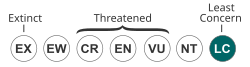
Alstonia scholaris, commonly called blackboard tree, scholar tree, milkwood or devil's tree in English,[4] is an evergreen tree in the oleander and frangipani family Apocynaceae. Its natural range is from Pakistan to China, and south to northern Australia. It is a toxic plant, but is used traditionally for myriad diseases and complaints. It is called 'Saptaparna' in India and is the sacred tree of the 2nd Jain tirthankar Ajitnatha.[not verified in body] It was first described by Linnaeus in 1767, who gave it the name Echites scholaris.
Description[edit | edit source]
Alstonia scholaris is a large tree growing up to 40 m (130 ft) tall (rarely to 60 m), with narrow buttressess that extend well up the trunk, giving it a fluted appearance. The bark is gray to pale gray with numerous lenticels, and all parts of the plant exude copious amounts of white sap when broken or cut.[5][6][7][8][9][excessive citations]
The leaves are glossy dark green above and pale below, and they are arranged in whorls of four to eight, with petioles (leaf stalks) around 5–15 mm (0.20–0.59 in) long. The leaves are usually obovate (i.e. broadest near the apex) to elliptic, tapering towards the base and with a rounded tip, and there are 25 to 40 pairs of lateral veins at 80–90° to the midvein.[5][6][7][8][9][excessive citations]
The inflorescences are much branched (Template:Botanygloss), with peduncles up to 7 cm (2.8 in) long, and are produced at the ends of the branches. The small tubular flowers are cream or white and strongly scented. They are about 10 mm (0.39 in) long and wide, with five Template:Botanygloss lobes. The calyx is about 2 mm (0.08 in) long, and the flower stalks are usually as long as or shorter. The corolla is white and tube-like, 6–10 mm (0.2–0.4 in) long. The lobes are broadly ovate or broadly obovate, 2–4.5 mm (0.08–0.2 in), overlapping to the left.[5][6][7][8][9][excessive citations]
The fruit is a pair of long papery follicles measuring up to about 30 cm (12 in) long and 6 mm (0.24 in) diameter. They contain numerous flat, brown seeds about 5 mm (0.20 in) long and 1.2 mm (0.05 in) wide, which have long tufts of hairs at each end.[5][6][7][8][9][excessive citations]


Taxonomy[edit | edit source]
This plant was originally named Echites scholaris by Carl Linnaeus in 1767.[2][10] The Scottish botanist Robert Brown transferred it to the genus Alstonia in 1810, as part of his work on the taxonomy of Apocynaceae.[11]
Etymology[edit | edit source]
The genus was named in honour of botanist Charles Alston, and the species epithet scholaris is a reference to the traditional use of the timber of this tree for blackboards in Myanmar.[9]
Distribution and habitat[edit | edit source]
Alstonia scholaris grows in a broad range of habitats in tropical and subtropical areas, in a range of forest types from rainforest to savannah, on a variety of soils including alluvial, volcanic and metamorphic, and at altitudes from sea level to more than 1,000 m (3,300 ft).[6][7][8][9]
The tree is native to tropical and subtropical areas in the following countries/regions:[2]
- China: China South-Central, China Southeast
- Indian subcontinent: Assam, Bangladesh, East Himalaya, India, Laccadive Islands, Nepal, Pakistan, Sri Lanka, West Himalaya
- Indo-China: Andaman Islands, Cambodia, Laos, Myanmar, Nicobar Islands, Thailand, Vietnam
- Malesia: Borneo, Jawa, Lesser Sunda Islands, Malaya, Maluku, Philippines, Sulawesi, Sumatera
- Papuasia: Bismarck Archipelago, New Guinea, Solomon Islands
- Australia: Northern Territory, Queensland, Western Australia
Toxicity[edit | edit source]
This is a toxic plant. At high doses, an extract of the plant exhibited marked damage to all the major organs of the body in both rats and mice. The toxicity appears to depend on the plant organ studied, as well as the season it is harvested, with the bark collected in the monsoon season being the least toxic, and bark in the summer the most. Intraperitoneal administration is much more toxic than oral. Rats were more susceptible to the poison than mice, and pure-bred mice strains were more susceptible than crossbred. The toxic effects may be due to the alkaloid echitamine in the bark.[12]
Chemistry[edit | edit source]
The bark contains the alkaloids ditamine, alschomine,[13] echitenine,[14] echitamine[12] and strictamine.[15] Echitamine is the most important alkaloid found in the bark, as it has been detected in all samples studied and collected from several locations. It is commercially sold as a herbal medicine.[16] The alkaloid picralinal has been found in the leaves.[17]
Culture[edit | edit source]
Alstonia scholaris is the state tree of West Bengal, India, where it is called the chhaatim tree (in Bengali, ছাতিম).[18]
During convocation the leaves of Alstonia scholaris (saptaparni) are awarded to graduates and postgraduates of Visva-Bharati University by the chancellor, given to him in turn by the Prime Minister of India. In recent years, supposedly to prevent excessive damage to the environment, the vice-chancellor of the University accepts one saptaparni leaf from the chancellor on behalf of all the students. This tradition was initiated by the founder of the University, Rabindranath Tagore.[19]
The tree blossoms in the Northern Hemisphere subtropical autumn, and its flowers are thus widely regarded as a herald of autumn in Vietnam, especially in Hanoi. Called hoa sữa, literally 'milk flower' in reference to the color, its associations with romantic love and fleeting passion have become culturally embedded in poetry and popular music.[20] However, its heady aroma has been a source of complaint and division, with some households even filing lawsuits against urban planning departments, for example in a case in 2011 in what was then Trà Vinh province.[21]
Uses[edit | edit source]
The wood of Alstonia scholaris has been recommended for the manufacture of pencils, as it is suitable in nature and the tree grows rapidly and is easy to cultivate.[22] In Sri Lanka its light wood was used for coffins. The wood close to the root is very light and of white colour, and in Borneo was used for net floats, household utensils, trenchers, corks, etc.[23] In Theravada Buddhism, the first Buddha is said to have used A. scholaris as the tree for achieving enlightenment.
The 1889 book The Useful Native Plants of Australia states that "the powerfully bitter bark of this tree is used by the natives of India in bowel complaints (Treasury of Botany). It has proved a valuable remedy in chronic diarrhoea and the advanced stages of dysentery. It has also been found effectual in restoring the tone of the stomach and of the system generally in debility after fevers and other exhausting diseases (Pharmacopoeia of India). It is described in the Pharmacopoeia of India as an astringent tonic, anthelmintic, and antiperiodic. It is held in the highest repute in the Phillippine Islands [sic]."[24] Despite its widespread traditional use as an 'antiperiodic' (a medicine which was supposed to cure the effects of malaria), it was found to have little to very weak activity against the cause of the disease, Plasmodium falciparum.[25][26] It had no effect against Giardia intestinalis,[25] and weak effect against Entamoeba histolytica, which both cause diarrhoea.[26]
Gallery[edit | edit source]
-
 Mature tree in Cairns, Queensland
 -
 Trunk of a large tree
 -
 Fluted trunk
 -
 Arrangement of leaves
 -
 Flowers
 -
 Fruit
Fruit -
 Seed
Seed -
 Botanical illustration


References[edit | edit source]
- ↑ Lakhey, P.; Pathak, J. (2021). "Alstonia scholaris". IUCN Red List of Threatened Species. 2021 e.T32295A2812825. doi:10.2305/IUCN.UK.2021-3.RLTS.T32295A2812825.en.
- ↑ 2.0 2.1 2.2 2.3 "Alstonia scholaris (L.) R.Br". Plants of the World Online. Board of Trustees of the Royal Botanic Gardens, Kew. 2025. Retrieved 22 April 2025.
- ↑ "GBIF Occurrence download for Alstonia scholaris (L.) R.Br". Global Biodiversity Information Facility. 2018. doi:10.15468/dl.eokqvq. Retrieved 7 June 2018.
- ↑ [{{#property:P1421|}} "{{#Property:P225}}"]. Germplasm Resources Information Network (GRIN). Agricultural Research Service (ARS), United States Department of Agriculture (USDA). Retrieved 30 March 2012.
{{citation}}: Check|url=value (help) - ↑ 5.0 5.1 5.2 5.3 Forster, P.I. (2022). "Alstonia scholaris". Flora of Australia. Australian Biological Resources Study, Department of Climate Change, Energy, the Environment and Water: Canberra. Retrieved 23 April 2025.
- ↑ 6.0 6.1 6.2 6.3 6.4 "Alstonia scholaris". Flora of China. Retrieved 29 June 2007.
- ↑ 7.0 7.1 7.2 7.3 7.4 "Alstonia scholaris (L.) R.Br". Flora and Fauna Web. Singapore Government. Retrieved 23 April 2025.
- ↑ 8.0 8.1 8.2 8.3 8.4 F.A.Zich; B.P.M.Hyland; T.Whiffen; R.A.Kerrigan (2020). "Alstonia scholaris". Australian Tropical Rainforest Plants Edition 8 (RFK8). Centre for Australian National Biodiversity Research (CANBR), Australian Government. Retrieved 23 April 2025.
- ↑ 9.0 9.1 9.2 9.3 9.4 9.5 Orwa, C.; Mutua, A.; Kindt, R.; Jamnadass, R.; Simons, A. "Agroforestree Database:a tree reference and selection guide" (PDF). Agroforestry. Agroforestry Net, Inc. Retrieved 22 April 2025.
- ↑ Linné, Carl von (1767). Mantissa plantarum (1 ed.). Stockholm: Laurentii Salvii.
- ↑ Brown, Robert (1810). "On the Asclepiadeae. A Natural Order of Plants Separated from the Apocineae of Jussieu". Mem. Werner Soc.
- ↑ 12.0 12.1 Baliga, Manjeshwar Shrinath; Jagetia, Ganesh Chandra; Ulloor, Jagadish N.; Baliga, Manjeshwar Poonam; Ponemone, Venkatesh; Reddy, Rosi; Rao, Mallikarjun K. V. N.; Baliga, Shivanada Bantwal; Devi, Sulochana; Raju, Sudheer Kumar; Veeresh, Veerapura; Reddy, Tiyyagura Koti; Bairy, Laxminarayana K. (2004). "The evaluation of the acute toxicity and long term safety of hydroalcoholic extract of Sapthaparna (Alstonia scholaris) in mice and rats". Toxicology Letters. 151 (2): 317–326. doi:10.1016/j.toxlet.2004.01.015. PMID 15183456.
- ↑ ABE, Fumiko; CHEN, Rong-Fu; YAMAUCHI, Tatsuo; MARUBAYASHI, Nobuhiro; UEDA, Ikuhiko (1989). "Alschomine and isoalschomine, new alkaloids from the leaves of Alstonia scholaris". Chemical & Pharmaceutical Bulletin. 37 (4): 887–890. doi:10.1248/cpb.37.887. ISSN 0009-2363.
- ↑ Baliga, M.; Jagetia, G. C.; Ulloor, J. N.; Baliga, M. P.; Venkatesh, P.; Reddy, R.; Rao, K. V.; Baliga, B. S.; Devi, S.; Raju, S. K.; Veeresh, V.; Reddy, T. K.; Bairy, K. L. (2004). "The evaluation of the acute toxicity and long term safety of hydroalcoholic extract of Sapthaparna (Alstonia scholaris) in mice and rats". Toxicology Letters. 151 (2): 317–326. doi:10.1016/j.toxlet.2004.01.015. PMID 15183456.
- ↑ Bhattacharya, S. K.; Bose, R.; Dutta, S. C.; Ray, A. B.; Guha, S. R. (1979). "Neuropharmacological studies on strictamine isolated from Alstonia scholaris". Indian Journal of Experimental Biology. 17 (6): 598–600. PMID 500142.
- ↑ Yamauchi, Tatsuo; Abe, Fumiko; Padolina, William G.; Dayrit, Fabian M. (1990). "Alkaloids from leaves and bark of Alstonia scholaris in the Philippines". Phytochemistry. 29 (10): 3321–3325. Bibcode:1990PChem..29.3321Y. doi:10.1016/0031-9422(90)80208-X. Retrieved 1 July 2021.
- ↑ Rastogi, R. C.; Kapil, R. S.; Popli, S. P. (October 1970). "Picralinal — A key alkaloid of picralima group fromAlstonia scholaris R. Br". Experientia. 26 (10): 1056–1056. doi:10.1007/BF02112667.
- ↑ Occastional Paper-5, Plant Wealth of The Raj Bhavan, Kolkata (PDF) (Report). Government of West Bengal. March 2008. p. 16. Archived from the original (PDF) on 19 July 2011. Retrieved 23 May 2008.
- ↑ Abhishek Gulshan (22 October 2019). "Why the Saptaparni is called the devil's tree". The Hindu. Retrieved 14 February 2023.
- ↑ Nguyễn, Nguyễn. "Hoa sữa vẫn nồng nàn trong thi ca". Thời báo văn học nghệ thuật (in Tiếng Việt). Retrieved 25 September 2025.
- ↑ "Hoa sữa - từ nồng nàn trong thơ ca đến nỗi ám ảnh mùi nồng nặc muốn chặt bỏ". VIET NAM MOI (in Tiếng Việt). 30 November 2017. Retrieved 25 September 2025.
- ↑ Tonanont, N. Wood used in pencil making. Vanasarn 1974 Vol. 32 No. 3 pp. 225–227
- ↑ Grieve, M. (1931). "Alstonia". A Modern Botanical. Retrieved 29 June 2007.
- ↑ J. H. Maiden (1889). The Useful Native Plants of Australia, (Including Tasmania). Sydney: The Technological Museum of New South Wales. p. 154. Retrieved 15 September 2025.
- ↑ 25.0 25.1 Wright, Colin W.; Allen, David; Phillipson, J. David; Kirby, Geoffrey C.; Warhurst, David C.; Massiot, Georges; Le Men-Olivier, Louisette (September 1993). "Alstonia species: are they effective in malaria treatment?". Journal of Ethnopharmacology. 40 (1): 41–45. doi:10.1016/0378-8741(93)90087-L. PMID 8246529.
- ↑ 26.0 26.1 Wright, C. W.; Allen, D.; Cai, Ya; Phillipson, J. D.; Said, I. M.; Kirby, G. C.; Warhurst, D. C. (June 1992). "In vitro antiamoebic and antiplasmodial activities of alkaloids isolated from Alstonia angustifolia roots". Phytotherapy Research. 6 (3): 121–124. doi:10.1002/ptr.2650060303. S2CID 86802484.
- Pages using the JsonConfig extension
- Wikipedia references cleanup from September 2025
- Articles covered by WikiProject Wikify from September 2025
- IUCN Red List least concern species
- Citation overkill
- Alstonia
- Flora of Guangxi
- Flora of Yunnan
- Flora of tropical Asia
- Trees of Australia
- Gentianales of Australia
- Flora of Queensland
- Least concern flora of Australia
- Least concern biota of Queensland
- Symbols of West Bengal