



robot: Create/update articles. If there is a mistake please report on my talk page. |
small changes |
||
| Line 1: | Line 1: | ||
{{Use dmy dates|date=July 2020}} | {{Use dmy dates|date=July 2020}} | ||
{{Use Indian English|date=July 2020}} | {{Use Indian English|date=July 2020}} | ||
{{Short description|Indian pilot (1906–1942)}} | |||
{{Infobox military person | {{Infobox military person | ||
|honorific_prefix = | |honorific_prefix = | ||
| Line 20: | Line 21: | ||
|rank_label = | |rank_label = | ||
|unit=[[No. 205 Squadron RAF]] | |unit=[[No. 205 Squadron RAF]] | ||
|battles = *[[Battle of the Atlantic]] | |battles = | ||
*[[Battle of Singapore]] | {{tree list}} | ||
*[[Attack on Broome]] | * [[World War II]] | ||
** [[Battle of the Atlantic]] | |||
** [[Battle of Singapore]] | |||
** [[Attack on Broome]] | |||
{{tree list/end}} | |||
|battles_label = | |battles_label = | ||
|awards = | |awards = | ||
|memorials = | |memorials = [[Darwin Military Museum]] Memorial Wall<br>Engravings in Singapore | ||
}} | }} | ||
'''Man Mohan Singh''' (21 March 1906 – 3 March 1942), also spelled '''Manmohan Singh''', was an early Indian [[aircraft pilot]] who, in 1930, was the first Indian to fly solo from [[Croydon Airport]], England, to [[PAF Base Faisal|Karachi]], India. | '''Man Mohan Singh''' (21 March 1906 – 3 March 1942), also spelled '''Manmohan Singh''', was an early Indian [[aircraft pilot]] who, in 1930, was the first Indian to fly solo from [[Croydon Airport]], England, to [[PAF Base Faisal|Karachi]], [[British India|India]]. | ||
Singh was born in [[Loralai District]] (now in Pakistan). He later travelled to England and trained in [[civil engineering]], [[aeronautical engineering]] and learnt to [[flight|fly]]. | Singh was born in [[Loralai District]] (now in Pakistan). He later travelled to England and trained in [[civil engineering]], [[aeronautical engineering]] and learnt to [[flight|fly]]. He was of one of the contestants who participated in a competition set by the [[Aga Khan III|Aga Khan]] in 1929, who offered a prize to the first Indian to fly the England-India journey (either way), solo and within a one-month time frame. In 1930, Singh was the first to complete the journey solo, in his [[de Havilland DH.60 Moth|aircraft]] which he named "Miss India". However, he missed the deadline by one day and the prize was awarded to pilot [[Aspy Engineer]]. Singh later also became the first Indian to fly solo to South Africa from England. | ||
He was of one of the contestants who participated in a competition set by the [[Aga Khan III|Aga Khan]] in 1929, who offered a prize to the first Indian to fly the England-India journey (either way), solo and within a one-month time frame. In 1930, Singh was the first to complete the journey solo, in his [[de Havilland DH.60 Moth|aircraft]] which he named "Miss India". However, he missed the deadline by one day and the prize was awarded to pilot [[Aspy Engineer]]. Singh later also became the first Indian to fly solo to South Africa from England. | |||
Singh joined the [[Indian Air Force#History|Indian Air Force]] Volunteer Reserve as a [[pilot officer]] at the onset of the [[Second World War]], following which he joined the [[RAF Coastal Command]] and took command of a [[Sunderland flying boat|Sunderland]] flying boat during the [[Battle of the Atlantic]]. He later became a [[flying officer]] with the British Indian Air Force. In 1942, he was with the [[flying boats]] that arrived at [[Broome, Western Australia]] when a [[Attack on Broome|Japanese air attack]] destroyed them all. Singh survived the attack only to drown in the harbour. | Singh joined the [[Indian Air Force#History|Indian Air Force]] Volunteer Reserve as a [[pilot officer]] at the onset of the [[Second World War]], following which he joined the [[RAF Coastal Command]] and took command of a [[Sunderland flying boat|Sunderland]] flying boat during the [[Battle of the Atlantic]]. He later became a [[flying officer]] with the British Indian Air Force. In 1942, he was with the [[flying boats]] that arrived at [[Broome, Western Australia]] when a [[Attack on Broome|Japanese air attack]] destroyed them all. Singh survived the attack only to drown in the harbour. | ||
| Line 43: | Line 45: | ||
Man Mohan Singh was born in [[Loralai District|Loralai]] (now in Pakistan), on 21 March 1906,<ref name=RAC1928>{{cite web |title=Great Britain, Royal Aero Club Aviator's certificates, 1910-1950|url=https://www.ancestry.co.uk/discoveryui-content/view/12502:1283?tid=&pid=&queryId=3c6e6ea7cb39a07d2bd5ac81a163143a&_phsrc=Kyb1&_phstart=successSource|access-date=8 November 2022 |work=1928 Faculty of Engineering, University of Bristol|date=4 September 1928|via=ancestry.co.uk|url-access=subscription}}</ref> to physician Makhan Singh, who had at one time received the [[Kaisar-i-Hind Medal]].<ref name=Chowdhry2018/><ref name="WhoswhoIndia1914">{{Cite book|url=https://archive.org/details/secondsupplement00luckrich|title=Second supplement to Who's who in India [microform] : brought up to 1914|date=1914|publisher=Lucknow : Newul Kishore Press|others=University of California Libraries}}</ref> | Man Mohan Singh was born in [[Loralai District|Loralai]] (now in Pakistan), on 21 March 1906,<ref name=RAC1928>{{cite web |title=Great Britain, Royal Aero Club Aviator's certificates, 1910-1950|url=https://www.ancestry.co.uk/discoveryui-content/view/12502:1283?tid=&pid=&queryId=3c6e6ea7cb39a07d2bd5ac81a163143a&_phsrc=Kyb1&_phstart=successSource|access-date=8 November 2022 |work=1928 Faculty of Engineering, University of Bristol|date=4 September 1928|via=ancestry.co.uk|url-access=subscription}}</ref> to physician Makhan Singh, who had at one time received the [[Kaisar-i-Hind Medal]].<ref name=Chowdhry2018/><ref name="WhoswhoIndia1914">{{Cite book|url=https://archive.org/details/secondsupplement00luckrich|title=Second supplement to Who's who in India [microform] : brought up to 1914|date=1914|publisher=Lucknow : Newul Kishore Press|others=University of California Libraries}}</ref> | ||
He completed his early education in Rawalpindi, first attending Denny's High School and then [[Gordon College (Pakistan)|Gordon College]]. At the age of 17 years, in 1923, he travelled to England to study [[civil engineering]] and received his [[bachelor's degree]] four years later from the [[University of Bristol|Bristol University]]. In addition, with a scholarship from the Government of British India, he studied [[aeronautical engineering]] and learnt to fly<ref name="AustralianSikhHeritage">{{cite web |title=Remembering Flying Officer Manmohan Singh |url=http://www.australiansikhheritage.com/flying-officer-manmohan-singh/ |website=Australian Sikh Heritage |access-date=16 November 2022 |archive-url=https://web.archive.org/web/20221116163438/http://www.australiansikhheritage.com/flying-officer-manmohan-singh/ |archive-date=16 November 2022 |language=en-AU}}</ref> while a member of [[Bristol and Wessex Aeroplane Club]].<ref name=Chowdhry2018>{{cite book |last1=Chowdhry |first1=Mohindra S. |title=Defence of Europe by Sikh Soldiers in the World Wars |date=2018 |publisher=Troubador Publishing Ltd |location=Leicestershire |isbn=978-1788037-983 |pages=365–369 |url=https://books.google.com/books?id=twFQDwAAQBAJ | He completed his early education in Rawalpindi, first attending Denny's High School and then [[Gordon College (Pakistan)|Gordon College]]. At the age of 17 years, in 1923, he travelled to England to study [[civil engineering]] and received his [[bachelor's degree]] four years later from the [[University of Bristol|Bristol University]]. In addition, with a scholarship from the Government of British India, he studied [[aeronautical engineering]] and learnt to fly<ref name="AustralianSikhHeritage">{{cite web |title=Remembering Flying Officer Manmohan Singh |url=http://www.australiansikhheritage.com/flying-officer-manmohan-singh/ |website=Australian Sikh Heritage |access-date=16 November 2022 |archive-url=https://web.archive.org/web/20221116163438/http://www.australiansikhheritage.com/flying-officer-manmohan-singh/ |archive-date=16 November 2022 |language=en-AU}}</ref> while a member of [[Bristol and Wessex Aeroplane Club]].<ref name=Chowdhry2018>{{cite book |last1=Chowdhry |first1=Mohindra S. |title=Defence of Europe by Sikh Soldiers in the World Wars |date=2018 |publisher=Troubador Publishing Ltd |location=Leicestershire |isbn=978-1788037-983 |pages=365–369 |chapter-url=https://books.google.com/books?id=twFQDwAAQBAJ&pg=PA365 |language=en |chapter=7. Sikhs in the Second World War}}</ref> He received his [[Pilot licensing and certification|pilot certificate]] from [[Bristol Filton Airport|Filton]] on 4 September 1928.<ref name=AeroCert1928/><ref name="Flight10Jan1930">{{Cite journal |date=10 January 1930 |title=Private Flying and Club News |url=https://archive.org/details/Flight_International_Magazine_1930-01-10-pdf/page/n7/mode/2up?q=singh |journal=Flight |pages=103}}</ref> He lived in Bristol for five years, residing at 24 Woodfield Road with the Leate family.<ref name=Chowdhry2018/> | ||
== Career in aviation == | == Career in aviation == | ||
| Line 51: | Line 53: | ||
In November 1929, keen to promote aviation, the [[Aga Khan III|Aga Khan]], 48th Imam of the [[Isma'ilism|Ismaili]] sect of Muslims<ref name=Chowdhry2018/> announced a prize of £500<ref name=Chowdhry2018/> to the first Indian pilot who could fly solo between England and India.<ref name="Rao2000"/> The contestants in 1930 included; [[J. R. D. Tata]], who later founded [[Tata Motors]] and [[Air India#History|Air India]], [[Aspy Engineer]], who would later be appointed head of the Indian Air Force, [[Ram Nath Chawla]], who was Engineer's friend, and Singh.<ref name=Chowdhry2018/><ref name="Rao2000">{{Cite book|url=https://books.google.com/books?id=pBCIAwAAQBAJ&q=Aga+Khan+1929+flight+prize&pg=PP8|title=J. R. D. TATA|last=Rao|first=Prof L. S. Seshagiri|date=2000|publisher=Sapna Book House (P) Ltd.|isbn=9788128017438|language=en}}</ref><ref>{{Cite web|url=https://www.airspacemag.com/history-of-flight/karachi-to-bombay-to-calcutta-77003851/|title=Karachi to Bombay to Calcutta|last=Shaftel|first=David|date=November 2011|website=Air & Space Magazine|language=en|access-date=30 December 2018}}</ref> | In November 1929, keen to promote aviation, the [[Aga Khan III|Aga Khan]], 48th Imam of the [[Isma'ilism|Ismaili]] sect of Muslims<ref name=Chowdhry2018/> announced a prize of £500<ref name=Chowdhry2018/> to the first Indian pilot who could fly solo between England and India.<ref name="Rao2000"/> The contestants in 1930 included; [[J. R. D. Tata]], who later founded [[Tata Motors]] and [[Air India#History|Air India]], [[Aspy Engineer]], who would later be appointed head of the Indian Air Force, [[Ram Nath Chawla]], who was Engineer's friend, and Singh.<ref name=Chowdhry2018/><ref name="Rao2000">{{Cite book|url=https://books.google.com/books?id=pBCIAwAAQBAJ&q=Aga+Khan+1929+flight+prize&pg=PP8|title=J. R. D. TATA|last=Rao|first=Prof L. S. Seshagiri|date=2000|publisher=Sapna Book House (P) Ltd.|isbn=9788128017438|language=en}}</ref><ref>{{Cite web|url=https://www.airspacemag.com/history-of-flight/karachi-to-bombay-to-calcutta-77003851/|title=Karachi to Bombay to Calcutta|last=Shaftel|first=David|date=November 2011|website=Air & Space Magazine|language=en|access-date=30 December 2018}}</ref> | ||
The [[Indira Devi|Maharani of Cooch Bihar]] presided over the naming ceremony of Singh's aircraft, a [[de Havilland DH.60|Gipsy Moth]] he named ''Miss India''.<ref name=Chowdhry2018/><ref name="Wings">{{Cite web|url=http://www.tatasteel100.com/people/wings-for-nation.asp|title=JRD Tata :: Wings for a nation|website=www.tatasteel100.com|access-date=30 December 2018}}</ref> It was fitted with an additional 20-gallon fuel tank.<ref name=Flight10Jan1930/> Singh, a self-confessed poor navigator, had a map of India painted on its rudder because,<ref name=Chowdhry2018/> he jokingly claimed, he frequently lost his way.<ref name=Lala2017>{{Cite book|url=https://books.google.com/books?id=LcUDAQAAQBAJ&q=man+mohan+singh+miss+india+1930+flight&pg=PT102|title=Beyond the Last Blue Mountain|last=Lala|first=R. M.|date=2017|publisher=Penguin UK|isbn=9788184753318|language=en}}</ref><ref name=Bhattacharya2013>{{Cite book|url=https://books.google.com/books?id=xj-VAgAAQBAJ&q=man+mohan+singh+croydon+flight&pg=PA126|title=Nothing But!: Book Two: the Long Road to Freedom|last=Bhattacharya|first=Brigadier Samir|date=2013|publisher=Partridge Publishing|isbn=9781482814743|pages=126|language=en}}</ref> One editor of a flight journal reported, "Mr Man Mohan Singh called his aeroplane ''Miss India'' and he is likely to!"<ref name=Lala2017/> | The [[Indira Devi|Maharani of Cooch Bihar]] presided over the naming ceremony of Singh's aircraft, a [[de Havilland DH.60|Gipsy Moth]] he named ''Miss India''.<ref name=Chowdhry2018/><ref name="Wings">{{Cite web|url=http://www.tatasteel100.com/people/wings-for-nation.asp|title=JRD Tata :: Wings for a nation|website=www.tatasteel100.com|access-date=30 December 2018|archive-date=27 September 2018|archive-url=https://web.archive.org/web/20180927035727/http://www.tatasteel100.com/people/wings-for-nation.asp|url-status=dead}}</ref> It was fitted with an additional 20-gallon fuel tank.<ref name=Flight10Jan1930/> Singh, a self-confessed poor navigator, had a map of India painted on its rudder because,<ref name=Chowdhry2018/> he jokingly claimed, he frequently lost his way.<ref name=Lala2017>{{Cite book|url=https://books.google.com/books?id=LcUDAQAAQBAJ&q=man+mohan+singh+miss+india+1930+flight&pg=PT102|title=Beyond the Last Blue Mountain|last=Lala|first=R. M.|date=2017|publisher=Penguin UK|isbn=9788184753318|language=en}}</ref><ref name=Bhattacharya2013>{{Cite book|url=https://books.google.com/books?id=xj-VAgAAQBAJ&q=man+mohan+singh+croydon+flight&pg=PA126|title=Nothing But!: Book Two: the Long Road to Freedom|last=Bhattacharya|first=Brigadier Samir|date=2013|publisher=Partridge Publishing|isbn=9781482814743|pages=126|language=en}}</ref> One editor of a flight journal reported, "Mr Man Mohan Singh called his aeroplane ''Miss India'' and he is likely to!"<ref name=Lala2017/> | ||
On 11 January 1930 Singh made his first attempt to fly to India.<ref name=C&MG1930>{{cite news |title=England - India flight accomplished|work= Civil & Military Gazette|location=Lahore|date=12 May 1930|page=1|url=https://www.britishnewspaperarchive.co.uk/viewer/bl/0003221/19300512/002/0001|via=[[British Newspaper Archive]]|url-access=subscription}}</ref> That day, he departed from [[Croydon Airport]] near London, but smashed his propeller when landing at [[Noyon]], France, the following evening.<ref name=C&MG1930/> His second attempt, from [[Lympne Airport|Lympne]] on 24 January 1930, was also abandoned before completion.<ref name=C&MG1930/> After flying for six days, he reached Rome and after reaching Naples, thick fog forced him to land on a mountain road in [[Paola, Calabria|Paola]], southern Italy, damaging his aircraft and injuring his left eye.<ref name="AustralianSikhHeritage" /><ref name=C&MG1930/> Both times, he returned to Croydon.<ref name="Wings" /> | On 11 January 1930 Singh made his first attempt to fly to India.<ref name=C&MG1930>{{cite news |title=England - India flight accomplished|work= Civil & Military Gazette|location=Lahore|date=12 May 1930|page=1|url=https://www.britishnewspaperarchive.co.uk/viewer/bl/0003221/19300512/002/0001|via=[[British Newspaper Archive]]|url-access=subscription}}</ref> That day, he departed from [[Croydon Airport]] near London, but smashed his propeller when landing at [[Noyon]], France, the following evening.<ref name=C&MG1930/> His second attempt, from [[Lympne Airport|Lympne]] on 24 January 1930, was also abandoned before completion.<ref name=C&MG1930/> After flying for six days, he reached Rome and after reaching Naples, thick fog forced him to land on a mountain road in [[Paola, Calabria|Paola]], southern Italy, damaging his aircraft and injuring his left eye.<ref name="AustralianSikhHeritage" /><ref name=C&MG1930/> Both times, he returned to Croydon.<ref name="Wings" /> | ||
It was at his third attempt that he completed the journey from Croydon to India, starting off on 8 April 1930,<ref name=C&MG1930/><ref name=Flight1930>{{Cite journal|date=23 May 1930|title=The Aga Khan Prize|url=https://www.flightglobal.com/FlightPDFArchive/1930/UNTITLED0%20-%200583.PDF|journal=Flight|pages=559}}</ref> and was the first to land at [[PAF Base Faisal|RAF Drigh Road, Karachi]] on 9 May 1930, one day after the one-month deadline.<ref name=Chowdhry2018/><ref name=Sapru/> As he had not completed the journey within the specified time frame due to a forced landing near [[ | It was at his third attempt that he completed the journey from Croydon to India, starting off on 8 April 1930,<ref name=C&MG1930/><ref name=Flight1930>{{Cite journal|date=23 May 1930|title=The Aga Khan Prize|url=https://www.flightglobal.com/FlightPDFArchive/1930/UNTITLED0%20-%200583.PDF|journal=Flight|pages=559}}</ref> and was the first to land at [[PAF Base Faisal|RAF Drigh Road, Karachi]] on 9 May 1930, one day after the one-month deadline.<ref name=Chowdhry2018/><ref name=Sapru/> As he had not completed the journey within the specified time frame due to a forced landing near [[Marseille]],<ref name="AustralianSikhHeritage" /> the prize was awarded at the decision of the [[Royal Aero Club]],<ref name=Sapru/> to Aspy Engineer, who completed the journey solo and within a month.<ref name="AustralianSikhHeritage" /><ref name=Sapru>{{Cite book|url=https://books.google.com/books?id=SEa6DQAAQBAJ&q=Aga+Khan+1929+flight+prize&pg=PT95|title=Combat Lore: Indian Air Force 1930–1945: Indian Air Force 1930–1945|last=Sapru|first=Somnath|date=2014|publisher=KW Publishers Pvt Ltd|isbn=9789383649259|language=en}}</ref><ref name=Sapru2014>{{Cite book|url=https://books.google.com/books?id=k35_SlDMyUsC&q=Aga+Khan+1929+flight+prize&pg=PA153|title=Services Chiefs of India|last1=Abidi|first1=S. Sartaj Alam|last2=Sharma|first2=Satinder|date=2007|publisher=Northern Book Centre|isbn=9788172111625|pages=153|language=en}}</ref> | ||
J. R. D. Tata did the journey starting in Karachi and arrived at Croydon one day after Engineer made his landmark arrival at Karachi. He later recalled that while refuelling, he came across Singh at Gaza, where he described Singh's "split-arse landing" and as he "turned to park alongside my aeroplane, just missed crashing into it by inches! It was Man Mohan Singh". He described Singh as "enthusiastic" and explained how Singh hunted desert gazelles while flying close to ground.<ref name=Lala2017/> | J. R. D. Tata did the journey starting in Karachi and arrived at Croydon one day after Engineer made his landmark arrival at Karachi. He later recalled that while refuelling, he came across Singh at Gaza, where he described Singh's "split-arse landing" and as he "turned to park alongside my aeroplane, just missed crashing into it by inches! It was Man Mohan Singh". He described Singh as "enthusiastic" and explained how Singh hunted desert gazelles while flying close to ground.<ref name=Lala2017/> | ||
| Line 66: | Line 68: | ||
As a result of his achievement, [[Maharaja Bhupinder Singh]], ruler of [[Patiala|Patiala state]], appointed Singh as his chief personal pilot and he subsequently became the first Indian to fly solo the journey from England to South Africa, albeit following his fourth attempt to do so and after a crash which resulted in a broken leg and a wrecked "Miss India".<ref name=Chowdhry2018/><ref name="AustralianSikhHeritage" /> By this time, he was a familiar and popular figure at Croydon airport.<ref name="Flight22Aug1935">{{Cite journal|date=22 August 1935|title=A Week at Croydon|url=https://www.flightglobal.com/pdfarchive/view/1935/1935%20-2-%200238.html?search=man%20Mohan%20singh|journal=Flight|pages=212|via=Flightglobal Archive}}</ref> | As a result of his achievement, [[Maharaja Bhupinder Singh]], ruler of [[Patiala|Patiala state]], appointed Singh as his chief personal pilot and he subsequently became the first Indian to fly solo the journey from England to South Africa, albeit following his fourth attempt to do so and after a crash which resulted in a broken leg and a wrecked "Miss India".<ref name=Chowdhry2018/><ref name="AustralianSikhHeritage" /> By this time, he was a familiar and popular figure at Croydon airport.<ref name="Flight22Aug1935">{{Cite journal|date=22 August 1935|title=A Week at Croydon|url=https://www.flightglobal.com/pdfarchive/view/1935/1935%20-2-%200238.html?search=man%20Mohan%20singh|journal=Flight|pages=212|via=Flightglobal Archive}}</ref> | ||
=== Air Force pilot during Second World War === | === Air Force pilot during the Second World War === | ||
[[File:Broome B-24 destroyed P02039.jpg|thumb|Aftermath of the Japanese attack on Broome.]] | [[File:Broome B-24 destroyed P02039.jpg|thumb|Aftermath of the Japanese attack on Broome.]] | ||
Singh joined the [[History of the Indian Air Force|Indian Air Force]] Volunteer Reserve as a [[pilot officer]] at the onset of the Second World War. He was one of the [[24 Indian pilots (1940)|24 Indian pilots]] seconded to England for training and action, where he was affectionately referred to by colleagues as "Chacha Man Mohan Singh" (uncle).<ref name="AustralianSikhHeritage" /><ref>{{cite web |title=Indian Air Force Gallery :: IAFVR pilots in UK |url=https://www.bharat-rakshak.com/IAF/Galleries/History/WW2/RAF24/ |website=Bharat Rakshak |access-date=8 November 2022 |archive-url=https://web.archive.org/web/20221108051828/https://www.bharat-rakshak.com/IAF/Galleries/History/WW2/RAF24/ |archive-date=8 November 2022}}</ref> | Singh joined the [[History of the Indian Air Force|Indian Air Force]] Volunteer Reserve as a [[pilot officer]] at the onset of the Second World War.<ref name=Nair2019.2>{{cite book |last1=Nair |first1=K. S. |title=The Forgotten Few; The Indian Air Force in World War II |date=2019 |publisher=Harper Collins |location=Noida, UP |isbn=978-93-5357-067-5 |pages=42–70 |chapter-url=https://books.google.com/books?id=7SufDwAAQBAJ|chapter= 2. 1939-40: War in Europe |language=en}}</ref> He was one of the [[24 Indian pilots (1940)|24 Indian pilots]] seconded to England for training and action, where he was affectionately referred to by colleagues as "Chacha Man Mohan Singh" (uncle).<ref name="AustralianSikhHeritage" /><ref>{{cite web |title=Indian Air Force Gallery :: IAFVR pilots in UK |url=https://www.bharat-rakshak.com/IAF/Galleries/History/WW2/RAF24/ |website=Bharat Rakshak |access-date=8 November 2022 |archive-url=https://web.archive.org/web/20221108051828/https://www.bharat-rakshak.com/IAF/Galleries/History/WW2/RAF24/ |archive-date=8 November 2022}}</ref> | ||
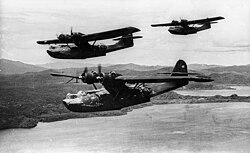
He was appointed to the [[RAF Coastal Command]] and took command of a [[Sunderland flying boat]] during the [[Battle of the Atlantic]]. His role was to find submarines. Later, he became a [[flying officer]] in the British Indian Air Force based in Singapore, taking responsibility for a [[Consolidated PBY Catalina|Catalina]] flying boat in operations in Indonesia and the Philippines. After withdrawing from Singapore due to the extent of their losses in the [[Battle of Singapore|Japanese invasion]], his squadron moved to Java and then to [[Broome, Western Australia|Broome]], Western Australia, where he contributed to the rescue of Dutch civilians.<ref name="AustralianSikhHeritage" /><ref name=Chowdhry2018/> | He was appointed to the [[RAF Coastal Command]] and took command of a [[Sunderland flying boat]] during the [[Battle of the Atlantic]]. His role was to find submarines. Later, he became a [[flying officer]] in the British Indian Air Force based in Singapore, taking responsibility for a [[Consolidated PBY Catalina|Catalina]] flying boat in operations in Indonesia and the Philippines. After withdrawing from Singapore due to the extent of their losses in the [[Battle of Singapore|Japanese invasion]], his squadron moved to Java and then to [[Broome, Western Australia|Broome]], Western Australia, where he contributed to the rescue of Dutch civilians.<ref name="AustralianSikhHeritage" /><ref name=Chowdhry2018/> | ||
| Line 77: | Line 79: | ||
== Legacy == | == Legacy == | ||
Singh is remembered on the [[Darwin Military Museum]] Memorial Wall<ref name="AustralianSikhHeritage" /> and | Singh is remembered on the [[Darwin Military Museum]] Memorial Wall<ref name="AustralianSikhHeritage" /> and his name is also inscribed on the [[Kranji War Memorial]] in Singapore.<ref name=Chowdhry2018/> His story is recounted in ''Defence of Europe by Sikh Soldiers in the World Wars'', written by his nephew Mohindra S Chowdhry and published by Troubador in 2018.<ref name=Chowdhry2018/><ref>{{Cite web|url=https://www.troubador.co.uk/bookshop/history-politics-society/defence-of-europe-by-sikh-soldiers-in-the-world-wars/|title=Defence Of Europe By Sikh Soldiers In The World Wars – Troubador Book Publishing|website=www.troubador.co.uk|access-date=1 January 2019}}</ref> | ||
== See also == | == See also == | ||
| Line 89: | Line 91: | ||
{{Commons category|Man Mohan Singh}} | {{Commons category|Man Mohan Singh}} | ||
*{{YouTube|QtLwn5sSmsI|Indian Air Force Volunteer Reserve Pilots In England 1940}} | *{{YouTube|QtLwn5sSmsI|Indian Air Force Volunteer Reserve Pilots In England 1940}} | ||
*[https://player.bfi.org.uk/free/film/watch-for-the-aga-khans-prize-1930-online For the Aga Khan's Prize] | *[https://player.bfi.org.uk/free/film/watch-for-the-aga-khans-prize-1930-online For the Aga Khan's Prize], Stag Lane, 1930 | ||
{{Authority control}} | {{Authority control}} | ||
{{DEFAULTSORT:Singh, Man Mohan}} | {{DEFAULTSORT:Singh, Man Mohan}} | ||
[[Category: | [[Category:1906 births]] | ||
[[Category:1942 deaths]] | [[Category:1942 deaths]] | ||
[[Category: | [[Category:Aviation pioneers]] | ||
[[Category:Indian Air Force officers]] | [[Category:Indian Air Force officers]] | ||
[[Category:Indian military aviators]] | |||
[[Category:Indian World War II pilots]] | |||
[[Category:Military personnel killed in World War II]] | |||
[[Category:Indian Sikhs]] | [[Category:Indian Sikhs]] | ||
[[Category: | [[Category:Alumni of the University of Bristol]] | ||
[[Category:People from Rawalpindi]] | |||
[[Category: | |||
[[Category:Deaths by drowning in Australia]] | [[Category:Deaths by drowning in Australia]] | ||
[[Category: | [[Category:24 Indian pilots]] | ||
Latest revision as of 18:44, 15 December 2025
Man Mohan Singh | |
|---|---|
.jpg) | |
| Nickname(s) | "Chacha Man Mohan Singh" |
| Born | 21 March 1906 Loralai District, British India |
| Died | 3 March 1942 Broome, Western Australia |
| Allegiance | British Indian Air Force |
| Unit | No. 205 Squadron RAF |
| Battles/wars | |
| Memorials | Darwin Military Museum Memorial Wall Engravings in Singapore |
Man Mohan Singh (21 March 1906 – 3 March 1942), also spelled Manmohan Singh, was an early Indian aircraft pilot who, in 1930, was the first Indian to fly solo from Croydon Airport, England, to Karachi, India.
Singh was born in Loralai District (now in Pakistan). He later travelled to England and trained in civil engineering, aeronautical engineering and learnt to fly. He was of one of the contestants who participated in a competition set by the Aga Khan in 1929, who offered a prize to the first Indian to fly the England-India journey (either way), solo and within a one-month time frame. In 1930, Singh was the first to complete the journey solo, in his aircraft which he named "Miss India". However, he missed the deadline by one day and the prize was awarded to pilot Aspy Engineer. Singh later also became the first Indian to fly solo to South Africa from England.
Singh joined the Indian Air Force Volunteer Reserve as a pilot officer at the onset of the Second World War, following which he joined the RAF Coastal Command and took command of a Sunderland flying boat during the Battle of the Atlantic. He later became a flying officer with the British Indian Air Force. In 1942, he was with the flying boats that arrived at Broome, Western Australia when a Japanese air attack destroyed them all. Singh survived the attack only to drown in the harbour.
Early life[edit | edit source]


Man Mohan Singh was born in Loralai (now in Pakistan), on 21 March 1906,[2] to physician Makhan Singh, who had at one time received the Kaisar-i-Hind Medal.[3][4]
He completed his early education in Rawalpindi, first attending Denny's High School and then Gordon College. At the age of 17 years, in 1923, he travelled to England to study civil engineering and received his bachelor's degree four years later from the Bristol University. In addition, with a scholarship from the Government of British India, he studied aeronautical engineering and learnt to fly[5] while a member of Bristol and Wessex Aeroplane Club.[3] He received his pilot certificate from Filton on 4 September 1928.[1][6] He lived in Bristol for five years, residing at 24 Woodfield Road with the Leate family.[3]
Career in aviation[edit | edit source]
The Aga Khan contest[edit | edit source]
In November 1929, keen to promote aviation, the Aga Khan, 48th Imam of the Ismaili sect of Muslims[3] announced a prize of £500[3] to the first Indian pilot who could fly solo between England and India.[7] The contestants in 1930 included; J. R. D. Tata, who later founded Tata Motors and Air India, Aspy Engineer, who would later be appointed head of the Indian Air Force, Ram Nath Chawla, who was Engineer's friend, and Singh.[3][7][8]
The Maharani of Cooch Bihar presided over the naming ceremony of Singh's aircraft, a Gipsy Moth he named Miss India.[3][9] It was fitted with an additional 20-gallon fuel tank.[6] Singh, a self-confessed poor navigator, had a map of India painted on its rudder because,[3] he jokingly claimed, he frequently lost his way.[10][11] One editor of a flight journal reported, "Mr Man Mohan Singh called his aeroplane Miss India and he is likely to!"[10]
On 11 January 1930 Singh made his first attempt to fly to India.[12] That day, he departed from Croydon Airport near London, but smashed his propeller when landing at Noyon, France, the following evening.[12] His second attempt, from Lympne on 24 January 1930, was also abandoned before completion.[12] After flying for six days, he reached Rome and after reaching Naples, thick fog forced him to land on a mountain road in Paola, southern Italy, damaging his aircraft and injuring his left eye.[5][12] Both times, he returned to Croydon.[9]
It was at his third attempt that he completed the journey from Croydon to India, starting off on 8 April 1930,[12][13] and was the first to land at RAF Drigh Road, Karachi on 9 May 1930, one day after the one-month deadline.[3][14] As he had not completed the journey within the specified time frame due to a forced landing near Marseille,[5] the prize was awarded at the decision of the Royal Aero Club,[14] to Aspy Engineer, who completed the journey solo and within a month.[5][14][15]
J. R. D. Tata did the journey starting in Karachi and arrived at Croydon one day after Engineer made his landmark arrival at Karachi. He later recalled that while refuelling, he came across Singh at Gaza, where he described Singh's "split-arse landing" and as he "turned to park alongside my aeroplane, just missed crashing into it by inches! It was Man Mohan Singh". He described Singh as "enthusiastic" and explained how Singh hunted desert gazelles while flying close to ground.[10]
The whole series of events was regularly reported by The Times and Flight.[16] Singh received a hero's welcome upon his return to Bristol when he was greeted at the station by his landlords Mr and Mrs Leate and their daughters Jean and Margaret with garlands of flowers. The president of the Bristol Indian Student Society, G. A. Ahmad recalled his students from university holidays to attend a special reception.[3]
Aviator for Patiala state[edit | edit source]

As a result of his achievement, Maharaja Bhupinder Singh, ruler of Patiala state, appointed Singh as his chief personal pilot and he subsequently became the first Indian to fly solo the journey from England to South Africa, albeit following his fourth attempt to do so and after a crash which resulted in a broken leg and a wrecked "Miss India".[3][5] By this time, he was a familiar and popular figure at Croydon airport.[17]
Air Force pilot during the Second World War[edit | edit source]

Singh joined the Indian Air Force Volunteer Reserve as a pilot officer at the onset of the Second World War.[18] He was one of the 24 Indian pilots seconded to England for training and action, where he was affectionately referred to by colleagues as "Chacha Man Mohan Singh" (uncle).[5][19]
He was appointed to the RAF Coastal Command and took command of a Sunderland flying boat during the Battle of the Atlantic. His role was to find submarines. Later, he became a flying officer in the British Indian Air Force based in Singapore, taking responsibility for a Catalina flying boat in operations in Indonesia and the Philippines. After withdrawing from Singapore due to the extent of their losses in the Japanese invasion, his squadron moved to Java and then to Broome, Western Australia, where he contributed to the rescue of Dutch civilians.[5][3]
On 3 March 1942, after the flying boats reached Broome, a Japanese air attack by nine Japanese Mitsubishi Zeroes began just before 10 am and caused the destruction of all the flying boats remaining on the water in Broome harbour. Singh is believed to have survived the initial attack only to drown in the harbour, being unable to swim.[5] Eighty-seven other people were also killed.[20]
Legacy[edit | edit source]
Singh is remembered on the Darwin Military Museum Memorial Wall[5] and his name is also inscribed on the Kranji War Memorial in Singapore.[3] His story is recounted in Defence of Europe by Sikh Soldiers in the World Wars, written by his nephew Mohindra S Chowdhry and published by Troubador in 2018.[3][21]
See also[edit | edit source]
References[edit | edit source]
- ↑ 1.0 1.1 "Pictures from overseas". www.trove.nla.gov.au. 1 March 1930.
- ↑ "Great Britain, Royal Aero Club Aviator's certificates, 1910-1950". 1928 Faculty of Engineering, University of Bristol. 4 September 1928. Retrieved 8 November 2022 – via ancestry.co.uk.
- ↑ 3.00 3.01 3.02 3.03 3.04 3.05 3.06 3.07 3.08 3.09 3.10 3.11 3.12 3.13 Chowdhry, Mohindra S. (2018). "7. Sikhs in the Second World War". Defence of Europe by Sikh Soldiers in the World Wars. Leicestershire: Troubador Publishing Ltd. pp. 365–369. ISBN 978-1788037-983.
- ↑ Second supplement to Who's who in India [microform] : brought up to 1914. University of California Libraries. Lucknow : Newul Kishore Press. 1914.
{{cite book}}: CS1 maint: others (link) CS1 maint: publisher location (link) - ↑ 5.0 5.1 5.2 5.3 5.4 5.5 5.6 5.7 5.8 "Remembering Flying Officer Manmohan Singh". Australian Sikh Heritage. Archived from the original on 16 November 2022. Retrieved 16 November 2022.
- ↑ 6.0 6.1 "Private Flying and Club News". Flight: 103. 10 January 1930.
- ↑ 7.0 7.1 Rao, Prof L. S. Seshagiri (2000). J. R. D. TATA. Sapna Book House (P) Ltd. ISBN 9788128017438.
- ↑ Shaftel, David (November 2011). "Karachi to Bombay to Calcutta". Air & Space Magazine. Retrieved 30 December 2018.
- ↑ 9.0 9.1 "JRD Tata :: Wings for a nation". www.tatasteel100.com. Archived from the original on 27 September 2018. Retrieved 30 December 2018.
- ↑ 10.0 10.1 10.2 Lala, R. M. (2017). Beyond the Last Blue Mountain. Penguin UK. ISBN 9788184753318.
- ↑ Bhattacharya, Brigadier Samir (2013). Nothing But!: Book Two: the Long Road to Freedom. Partridge Publishing. p. 126. ISBN 9781482814743.
- ↑ 12.0 12.1 12.2 12.3 12.4 "England - India flight accomplished". Civil & Military Gazette. Lahore. 12 May 1930. p. 1 – via British Newspaper Archive.
- ↑ "The Aga Khan Prize" (PDF). Flight: 559. 23 May 1930.
- ↑ 14.0 14.1 14.2 Sapru, Somnath (2014). Combat Lore: Indian Air Force 1930–1945: Indian Air Force 1930–1945. KW Publishers Pvt Ltd. ISBN 9789383649259.
- ↑ Abidi, S. Sartaj Alam; Sharma, Satinder (2007). Services Chiefs of India. Northern Book Centre. p. 153. ISBN 9788172111625.
- ↑ Fyzee, Murad (1991). Aircraft and engine perfect: the story of JRD Tata who opened up skies for his country. Tata McGraw-Hill Pub. Co. ISBN 9780074601204.
- ↑ "A Week at Croydon". Flight: 212. 22 August 1935 – via Flightglobal Archive.
- ↑ Nair, K. S. (2019). "2. 1939-40: War in Europe". The Forgotten Few; The Indian Air Force in World War II. Noida, UP: Harper Collins. pp. 42–70. ISBN 978-93-5357-067-5.
- ↑ "Indian Air Force Gallery :: IAFVR pilots in UK". Bharat Rakshak. Archived from the original on 8 November 2022. Retrieved 8 November 2022.
- ↑ "On this day in history: WWII Broome air raid". Australian Geographic. 3 March 2015. Retrieved 28 January 2019.
- ↑ "Defence Of Europe By Sikh Soldiers In The World Wars – Troubador Book Publishing". www.troubador.co.uk. Retrieved 1 January 2019.
External links[edit | edit source]
- Indian Air Force Volunteer Reserve Pilots In England 1940 at YouTube
- For the Aga Khan's Prize, Stag Lane, 1930
- Pages using the JsonConfig extension
- 1906 births
- 1942 deaths
- Aviation pioneers
- Indian Air Force officers
- Indian military aviators
- Indian World War II pilots
- Military personnel killed in World War II
- Indian Sikhs
- Alumni of the University of Bristol
- People from Rawalpindi
- Deaths by drowning in Australia
- 24 Indian pilots