



>Kritesh1412 |
Kanchin789 (talk | contribs) m added references |
||
| Line 1: | Line 1: | ||
{{short description|Main radial road in New Delhi}} | {{short description|Main radial road in New Delhi}} | ||
{{EngvarB|date=September 2013}} | {{EngvarB|date=September 2013}} | ||
{{Use dmy dates|date= | {{Use dmy dates|date=August 2024}} | ||
{{ | {{More citations needed|date=July 2009}} | ||
{{coord|28.6278172|77.2189594|display=title}} | {{coord|28.6278172|77.2189594|display=title}} | ||
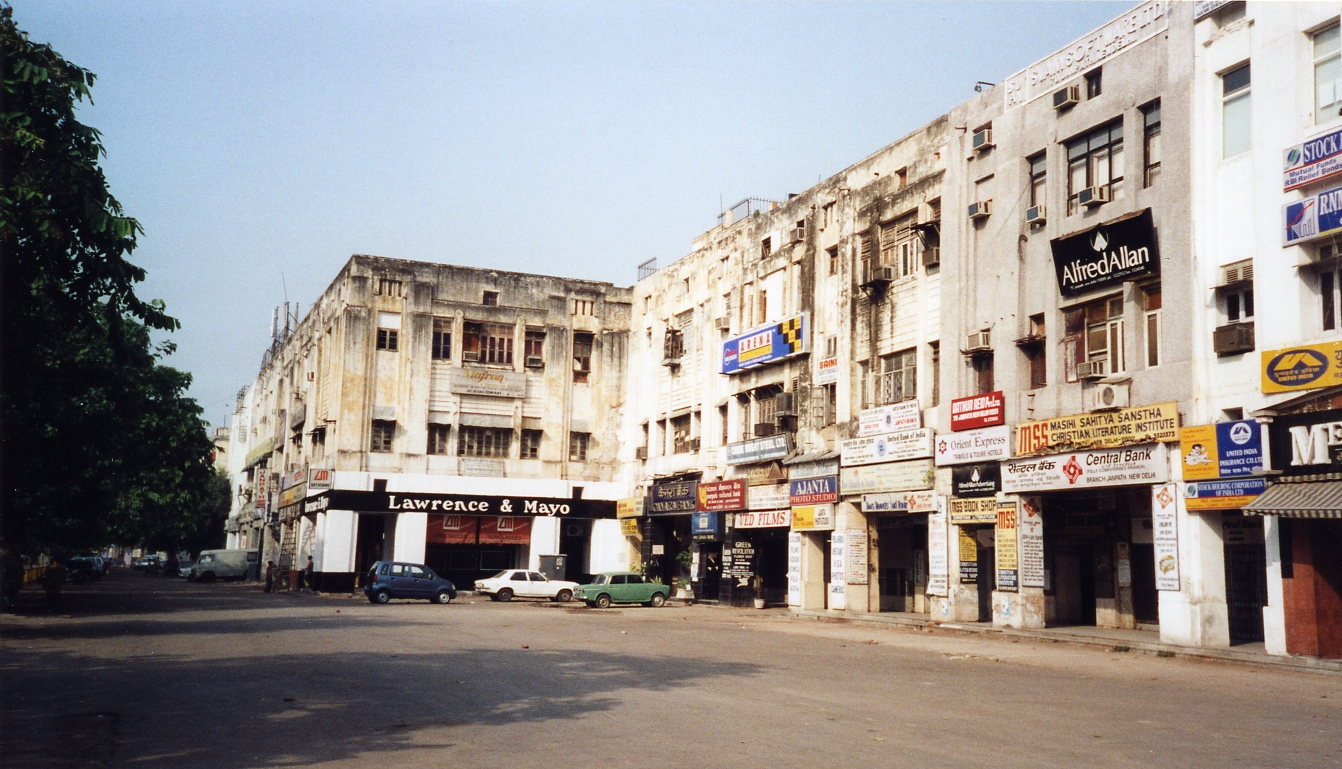
[[Image:CrossingJanpath.jpg|right|224px|thumb|View south while crossing Janpath on foot with care, 2006.]] [[Image:JanpathOfficeBuildings.jpg|225px|thumb|Commercial offices along Janpath, 2006.]] | [[Image:CrossingJanpath.jpg|right|224px|thumb|View south while crossing Janpath on foot with care, 2006.]] [[Image:JanpathOfficeBuildings.jpg|225px|thumb|Commercial offices along Janpath, 2006.]] | ||
'''Janpath''' (meaning '''People's Path''', [[British Raj | formerly]] known as '''Queensway''') | '''Janpath''' (meaning '''People's Path''', [[British Raj|formerly]] known as '''Queensway''') is one of the main roads in New Delhi. It starts out as Radial Road 1 in [[Connaught Place, New Delhi|Connaught Place]], adjacent to [[Palika Bazaar]], and runs north–south perpendicular to [[Rajpath|Kartavya Path]] (earlier Rajpath or the "Rulers' path"). Originally called Queen's Way, it was an important part of [[Edwin Lutyens|Lutyens]]' design of the administrative [[New Delhi]], upon the inauguration of new capital of India in 1931. Janpath Market is one of the most famous markets for tourists (both Indian and foreign) in New Delhi. The market essentially is a long line of boutique stores selling products which are hard to find in the malls and multi-chain stores of the city. The long line of boutiques is for budget travellers and shoppers, buyers of handicrafts and garments, curio and numerous Indian-style fast-food places.<ref>{{Cite web |url=http://www.wcities.com/en/record/62,319640/684/record.html |title=Janpath Market |access-date=21 August 2009 |archive-date=17 July 2009 |archive-url=https://web.archive.org/web/20090717102534/http://www.wcities.com/en/record/62,319640/684/record.html |url-status=dead }}</ref> It was created during the [[Construction of New Delhi]]. | ||
==Overview== | ==Overview== | ||
| Line 15: | Line 15: | ||
==Janpath market== | ==Janpath market== | ||
[[File:Shop1.JPG|thumb|Popular Shawl boutique in Janpath.]] | [[File:Shop1.JPG|thumb|Popular Shawl boutique in Janpath.]] | ||
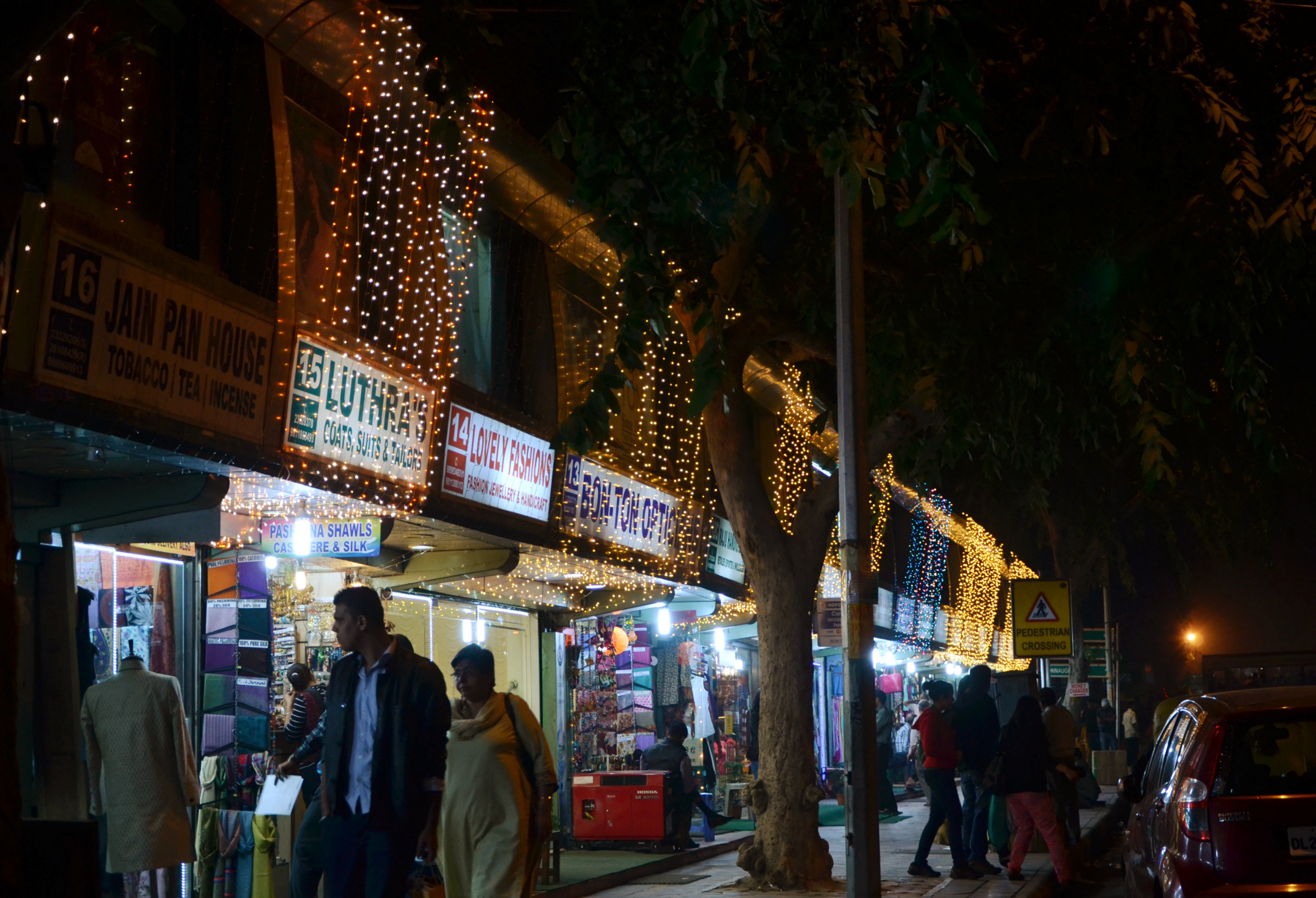
The Janpath market stretches around 1.5 | The Janpath market stretches around {{convert|1.5|km|abbr=on|adj=on}} from the Outer Circle of Connaught Place to Windsor Place.<ref name=bus04>{{cite news |title=Janpath: Oxford Street in the making |url=http://www.thehindubusinessline.in/2004/04/10/stories/2004041001710100.htm |work=Business Line|location=Chennai |date=10 April 2004 }}</ref> Janpath Market is one of the most famous markets for tourists (both Indian and foreign) in New Delhi. The market essentially is a long line of boutique stores selling products which cannot be found in today's malls and showrooms of the city. It is also one of the oldest markets of New Delhi with establishment of some boutiques dating back to 1950. It is most popular for the exquisite ''Pashmina'' Shawl from Kashmir. Most markets in Delhi are known to carry duplicates however one can find the original quality here. Among other exquisite items are the ''Kashmiri'' wool shawls and scarves, Indian ''Kurtis'' and ''Churidars'' brass ornaments and artefacts, carpets and other gift items. The Indian Tourist Office is on the corner of Janpath and Connaught Lane, and good maps can be purchased there. Between Fire Lane and the Imperial Hotel, the [[Tibet]]an Market can be found which has a wide range of Himalayan arts and crafts. Musical instruments, wall hangings and bead shops are in abundance. Behind the Tibetan Market, on [[Tolstoy Marg]], is the [[Jantar Mantar]], an astrological instrument of immense proportions. | ||
[[File:Night view of Janpath, 2012.JPG|thumb|left|Night view of Janpath]] | [[File:Night view of Janpath, 2012.JPG|thumb|left|Night view of Janpath]] | ||
The Janpath Market also has an abundance of walking [[vendor]]s who sell trinkets, such as necklaces, chunky jewellery, [[jooti]]s, handicraft items. drums, horns and postcards, particularly to foreigners, most of whom now know about the bargaining required.<ref>{{cite news|title=Foreigners throng Janpath market |url=http://www.hindu.com/thehindu/holnus/015200811161340.htm | | The Janpath Market also has an abundance of walking [[vendor]]s who sell trinkets, such as necklaces, chunky jewellery, [[jooti]]s, handicraft items. drums, horns and postcards, particularly to foreigners, most of whom now know about the bargaining required.<ref>{{cite news|title=Foreigners throng Janpath market |url=http://www.hindu.com/thehindu/holnus/015200811161340.htm |work=The Hindu |date=16 November 2008 |url-status=dead |archive-url=https://web.archive.org/web/20130709234243/http://www.hindu.com/thehindu/holnus/015200811161340.htm |archive-date= 9 July 2013 }}</ref> | ||
==Junctions & intersections== | ==Junctions & intersections== | ||
| Line 26: | Line 26: | ||
==Janpath Metro Station== | ==Janpath Metro Station== | ||
[[Janpath metro station|Janpath Metro Station]]; part of Phase III of the Delhi Metro Project by The Delhi Metro Rail Corporation (DMRC). The Janpath Metro Station is a part of the [[Violet Line (Delhi Metro)]]. The Janpath metro station opened on 26 June 2014. | |||
==Important buildings== | ==Important buildings== | ||
| Line 33: | Line 33: | ||
* [[Indira Gandhi National Centre for the Arts]] (IGNCA) | * [[Indira Gandhi National Centre for the Arts]] (IGNCA) | ||
* [[National Archives of India]] | * [[National Archives of India]] | ||
* [[10 Janpath]], official residence of the [[Indian National Congress|Congress Party]] president. | * [[10 Janpath]], official residence of the former [[Indian National Congress|Congress Party]] president. | ||
* [[1, Janpath]], official residence of the [[Chief Minister of Andhra Pradesh]], [[Nara Chandrababu Naidu]] | |||
* Hungarian Cultural Centre, 1 Janpath | * Hungarian Cultural Centre, 1 Janpath | ||
* Hotels: [[The Imperial, New Delhi|The Imperial]], Hotel Janpath, Le Merdien Hotel, Shangrila, Claridges hotel | * Hotels: [[The Imperial, New Delhi|The Imperial]], Hotel Janpath, Le Merdien Hotel, Shangrila, Claridges hotel | ||
| Line 41: | Line 42: | ||
==In popular culture== | ==In popular culture== | ||
In popular culture it became the title, of noted play, titled ''Janpath Kiss'' (1976).<ref>''The Janpath kiss'', by Akhileshwar Jha. Sterling Publishers, 1976.</ref> | In popular culture it became the title, of noted play, titled ''Janpath Kiss'' (1976).<ref>''The Janpath kiss'', by Akhileshwar Jha. Sterling Publishers, 1976.</ref> It is mentioned in [[Daniel Odier]]'s ''Tantric Quest, Encounter With Absolute Love'' (1996).<ref>{{cite web | url=https://es.scribd.com/document/536294294/Tantric-Quest-Encounter-With-Absolute-Love-Daniel-Odier# | title=Tantric Quest, Encounter with Absolute Love-Daniel Odier | PDF }}</ref> | ||
==References== | ==References== | ||
| Line 48: | Line 49: | ||
==External links== | ==External links== | ||
{{commons category|Janpath}} | {{commons category|Janpath}} | ||
* [http://www.delhihelp.com/janpath-market-Shopping-article-48.aspx Janpath Market] | * [http://www.delhihelp.com/janpath-market-Shopping-article-48.aspx Janpath Market] {{Webarchive|url=https://web.archive.org/web/20100131161946/http://www.delhihelp.com/janpath-market-Shopping-article-48.aspx |date=31 January 2010 }} | ||
* [http://www.bharatonline.com/delhi/shopping-places/janpath.html Janpath Shopping] | * [http://www.bharatonline.com/delhi/shopping-places/janpath.html Janpath Shopping] | ||
Latest revision as of 09:01, 1 July 2025
 | This article needs additional citations for verification. (July 2009) |
28°37′40″N 77°13′08″E / 28.6278172°N 77.2189594°E


Janpath (meaning People's Path, formerly known as Queensway) is one of the main roads in New Delhi. It starts out as Radial Road 1 in Connaught Place, adjacent to Palika Bazaar, and runs north–south perpendicular to Kartavya Path (earlier Rajpath or the "Rulers' path"). Originally called Queen's Way, it was an important part of Lutyens' design of the administrative New Delhi, upon the inauguration of new capital of India in 1931. Janpath Market is one of the most famous markets for tourists (both Indian and foreign) in New Delhi. The market essentially is a long line of boutique stores selling products which are hard to find in the malls and multi-chain stores of the city. The long line of boutiques is for budget travellers and shoppers, buyers of handicrafts and garments, curio and numerous Indian-style fast-food places.[1] It was created during the Construction of New Delhi.
Overview[edit | edit source]
In the north this road stretches from the Connaught Place. In the south it ends up at the intersection of Dr APJ Abdul Kalam Road and junction of South end road and Tees January Marg, where Hotel Claridges lies.
Commercial offices can be found along Janpath, as its central location accounts for high real estate values. Also on the stretch are the Western Court and Eastern Court buildings, the former serves as a transit hostel for members of parliament, while the latter is a post office and Mahanagar Telephone Nigam Ltd (MTNL) office.[2] To the south of Rajpath, the road is largely residential, with the exception of the National Museum, and large Lutyen's bungalow of Ministers.
Janpath market[edit | edit source]

The Janpath market stretches around 1.5 km (0.93 mi) from the Outer Circle of Connaught Place to Windsor Place.[2] Janpath Market is one of the most famous markets for tourists (both Indian and foreign) in New Delhi. The market essentially is a long line of boutique stores selling products which cannot be found in today's malls and showrooms of the city. It is also one of the oldest markets of New Delhi with establishment of some boutiques dating back to 1950. It is most popular for the exquisite Pashmina Shawl from Kashmir. Most markets in Delhi are known to carry duplicates however one can find the original quality here. Among other exquisite items are the Kashmiri wool shawls and scarves, Indian Kurtis and Churidars brass ornaments and artefacts, carpets and other gift items. The Indian Tourist Office is on the corner of Janpath and Connaught Lane, and good maps can be purchased there. Between Fire Lane and the Imperial Hotel, the Tibetan Market can be found which has a wide range of Himalayan arts and crafts. Musical instruments, wall hangings and bead shops are in abundance. Behind the Tibetan Market, on Tolstoy Marg, is the Jantar Mantar, an astrological instrument of immense proportions.

The Janpath Market also has an abundance of walking vendors who sell trinkets, such as necklaces, chunky jewellery, jootis, handicraft items. drums, horns and postcards, particularly to foreigners, most of whom now know about the bargaining required.[3]
Junctions & intersections[edit | edit source]

- Intersection with Rajpath
- Intersection of Akbar road and Motilal Nehru Marg, Dr. Rajendra Prashad road and Maulana Azad road.
- One junction is at Windsor place, where intersection of Ashok road is made by junction of Ferozshah road and Raisina road.
Janpath Metro Station[edit | edit source]
Janpath Metro Station; part of Phase III of the Delhi Metro Project by The Delhi Metro Rail Corporation (DMRC). The Janpath Metro Station is a part of the Violet Line (Delhi Metro). The Janpath metro station opened on 26 June 2014.
Important buildings[edit | edit source]

- National Museum
- Indira Gandhi National Centre for the Arts (IGNCA)
- National Archives of India
- 10 Janpath, official residence of the former Congress Party president.
- 1, Janpath, official residence of the Chief Minister of Andhra Pradesh, Nara Chandrababu Naidu
- Hungarian Cultural Centre, 1 Janpath
- Hotels: The Imperial, Hotel Janpath, Le Merdien Hotel, Shangrila, Claridges hotel
- Restaurants: Beer Cafe, Pind Balluchi Janpath, CCD, 52 Janpath, Informal, Bunta Bar
- Central Cottage Industries Emporium
- Scindia House
In popular culture[edit | edit source]
In popular culture it became the title, of noted play, titled Janpath Kiss (1976).[4] It is mentioned in Daniel Odier's Tantric Quest, Encounter With Absolute Love (1996).[5]
References[edit | edit source]
- ↑ "Janpath Market". Archived from the original on 17 July 2009. Retrieved 21 August 2009.
- ↑ 2.0 2.1 "Janpath: Oxford Street in the making". Business Line. Chennai. 10 April 2004.
- ↑ "Foreigners throng Janpath market". The Hindu. 16 November 2008. Archived from the original on 9 July 2013.
- ↑ The Janpath kiss, by Akhileshwar Jha. Sterling Publishers, 1976.
- ↑ "Tantric Quest, Encounter with Absolute Love-Daniel Odier | PDF".
External links[edit | edit source]
- Janpath Market Archived 31 January 2010 at the Wayback Machine
- Janpath Shopping